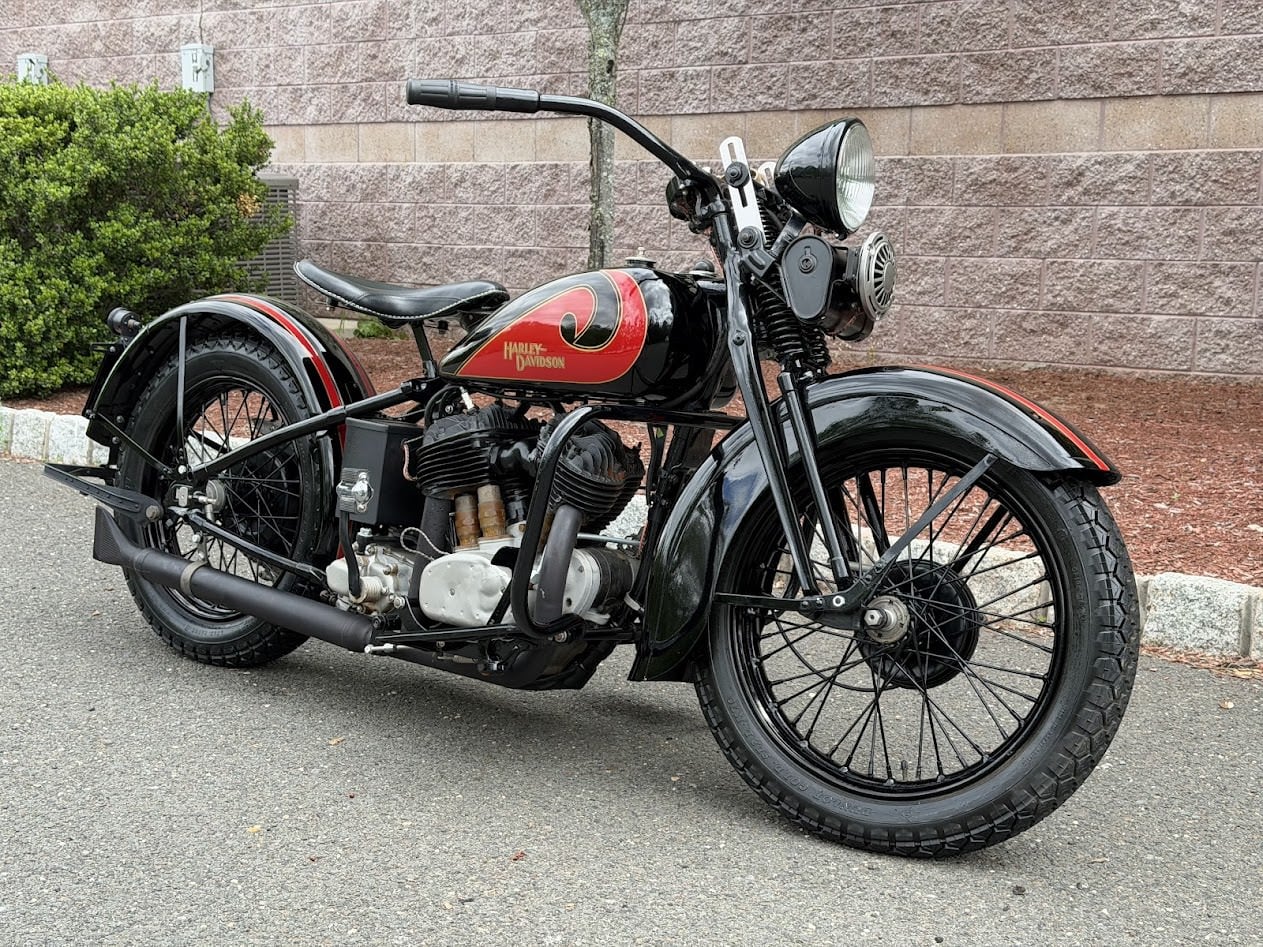
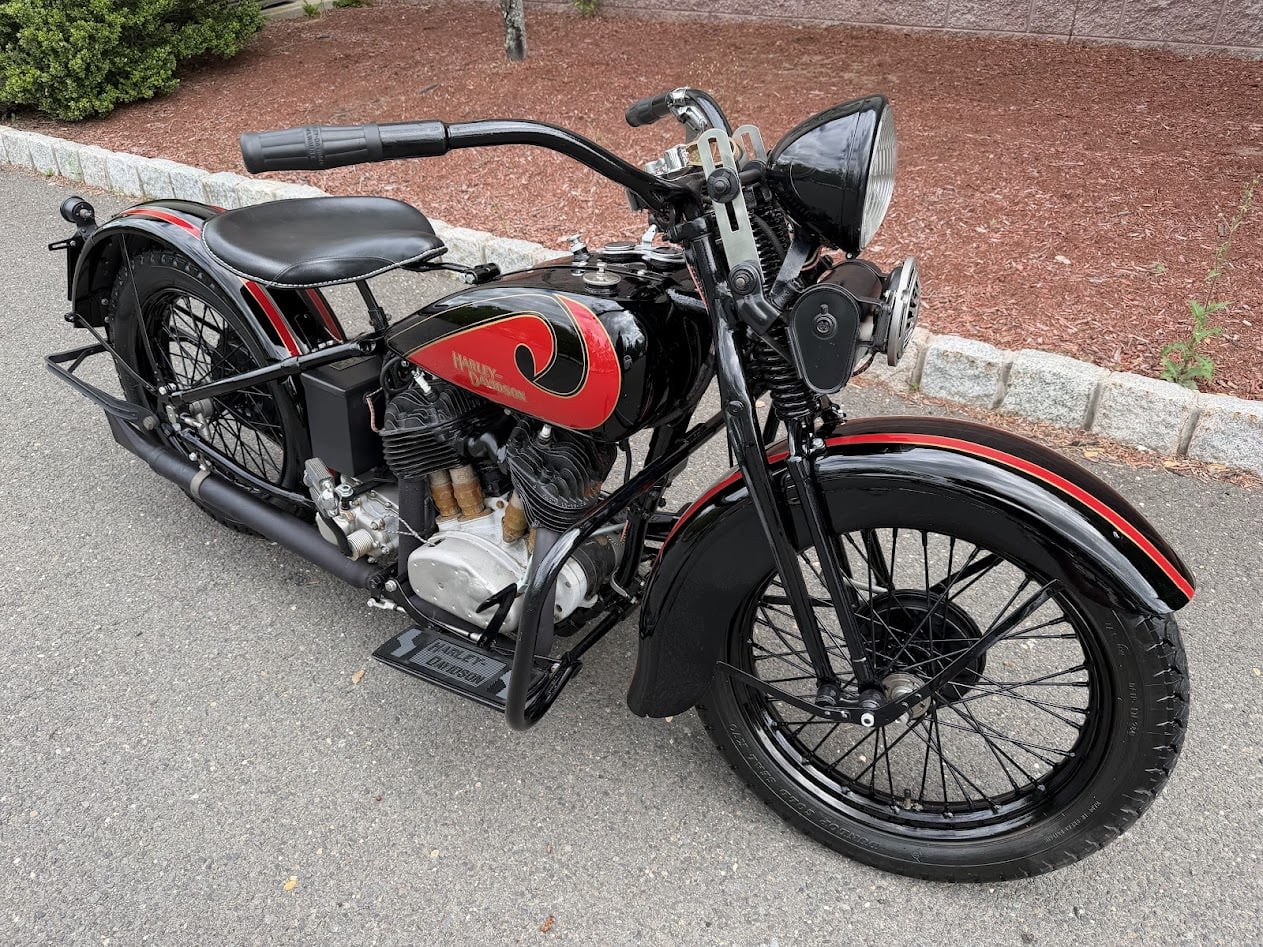
This is a 1931 Harley-Davidson VL that formerly belonged to Hollywood legend Steve McQueen. He kept the bike right up until his passing in 1980, perhaps a sign of how much it meant to him, and it’s now being offered for sale out of New Jersey.
The bike now benefits from a restoration, though the listing notes that it’s not currently in running condition, so it’ll need some work before any riding is attempted. Ex-McQueen vehicles like this are always highly sought after, so it’ll be interesting to see what this one sells for.
Fast Facts: An Ex-Steve McQueen 1931 Harley-Davidson VL
- Steve McQueen owned this 1931 Harley-Davidson VL until his death in 1980, with the bike awaiting restoration at his private Ventura County hangar and garage. It was later acquired in the 2000s by McQueen memorabilia collector Mike Eisenberg, who carried out a cosmetic refurbishment of the motorcycle.
- The 1931 VL is the corrected version of Harley’s troubled 74 cubic inch flathead Big Twin, which launched in 1930 with undersized flywheels, weak valve springs, and cracking frames. Production halted after roughly 1,300 examples while engineers reworked the bottom end, with dealers absorbing the retrofit labor cost.
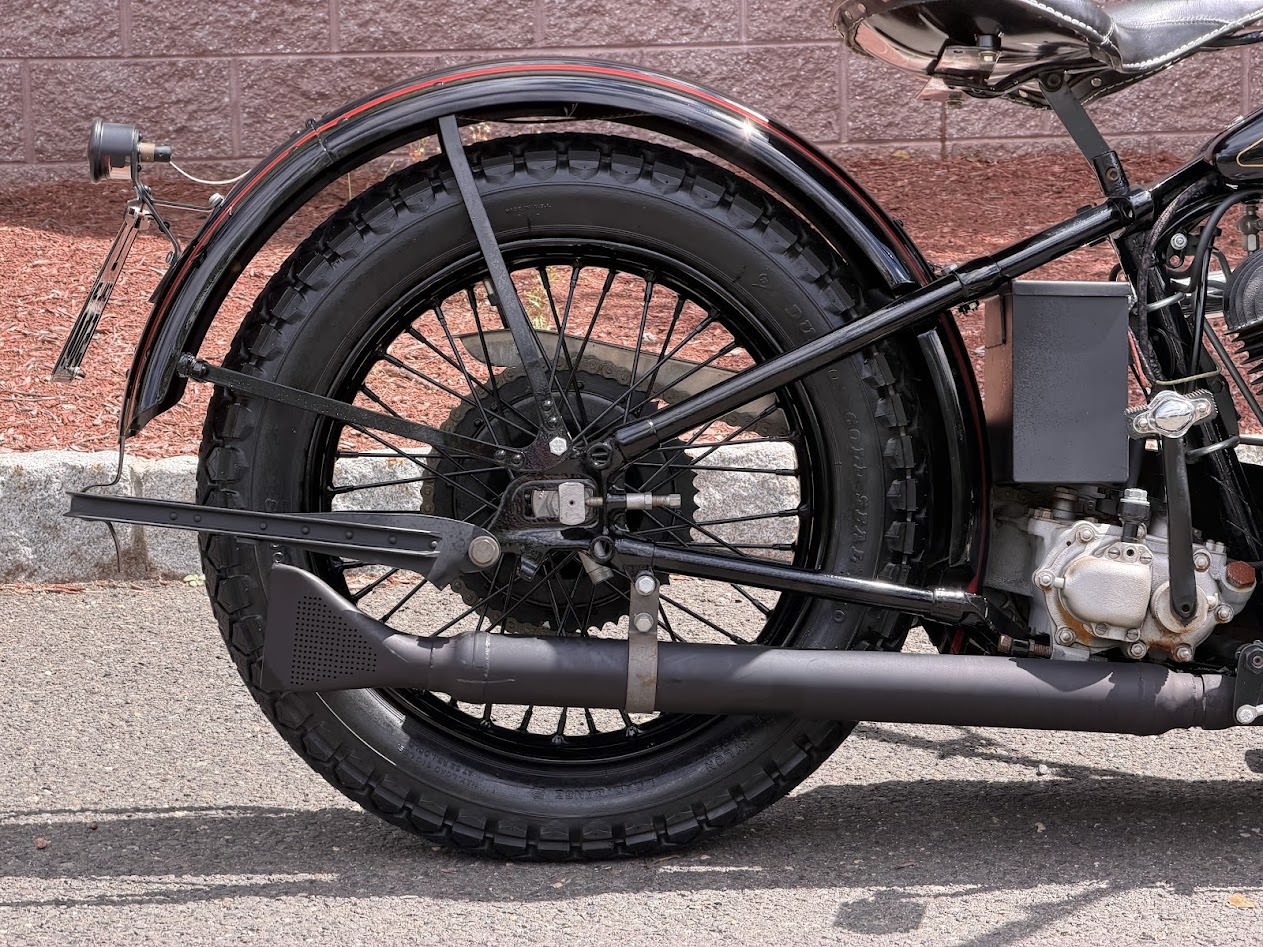
- The 74 cubic inch side-valve V-twin produced 30 bhp at 4,000 rpm with a 4.5:1 compression ratio, drove a 3-speed hand-shifted transmission through a multi-plate dry clutch, and was good for around 85 mph. This example wears a Linkert M51 carburetor and a two-into-one fishtail exhaust, though the engine is currently non-running.
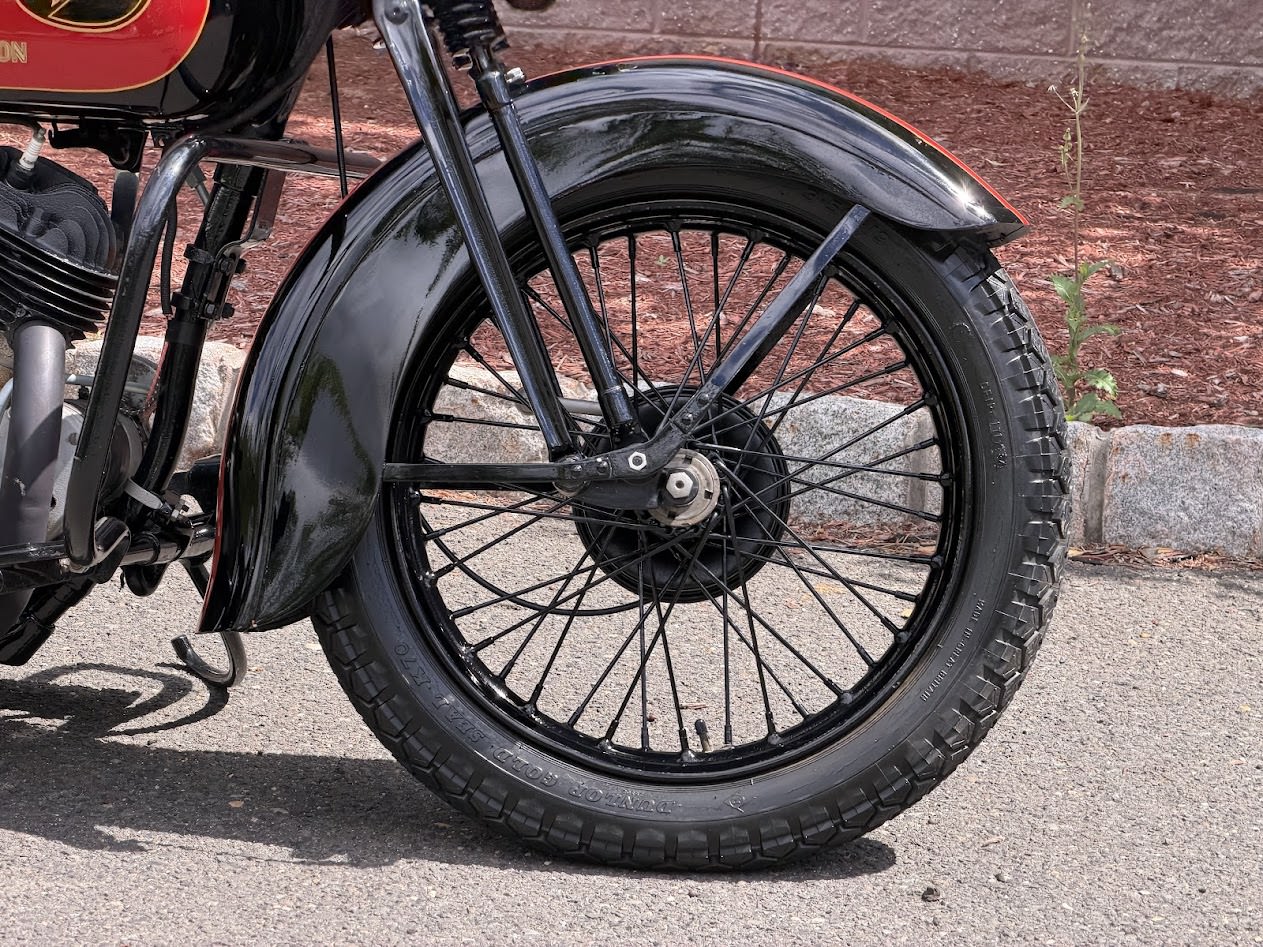
- The bike is finished in black with red and gold tank striping over a black hardtail frame, riding on black wire-spoke wheels with Dunlop K70 tires. It’s titled to engine number 31VL6590 and comes with a framed 1984 McQueen estate auction Certificate of Authenticity signed by the actor’s daughter and son.
History Speedrun: The Harley-Davidson VL
In late 1929, William H. Davidson rushed to Buffalo with a small factory team and a crate of replacement parts. He had to. The Buffalo Police Department had taken delivery of a fleet of new VLE machines, Harley-Davidson’s freshly announced 74 cubic inch flathead Big Twin, equipped for police duty, and the bikes were falling apart. Mufflers were clogging. Valve springs were collapsing. The frames were cracking. Davidson and his team worked through the fleet in the field, replacing mufflers, springs, valves, and pistons. It was a preview of what was about to engulf the company.
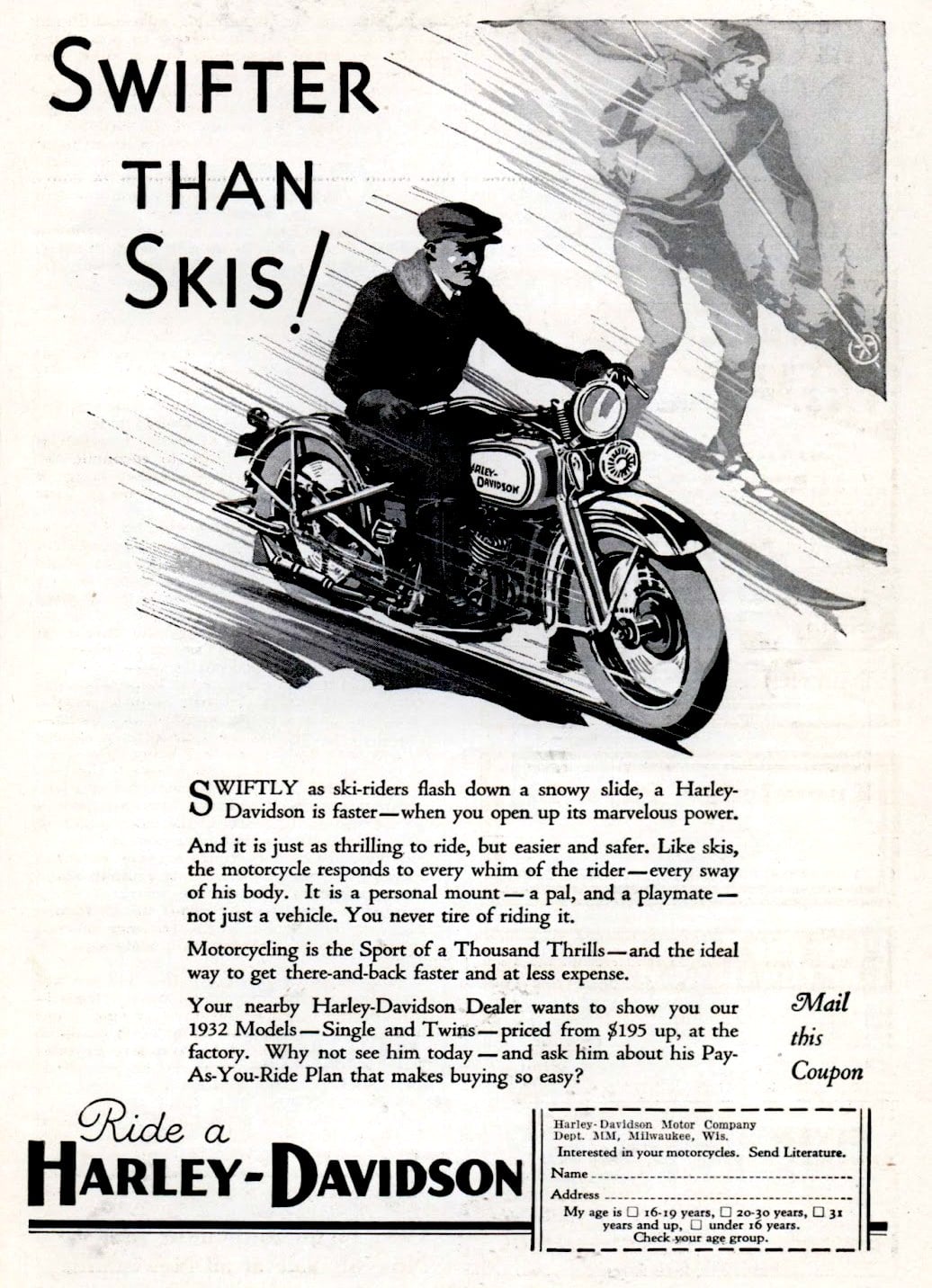
 Underneath, the VL engine had the same fundamental architecture that would carry Harley into the post-WWII era. With a bore of 3 7/16 inches, a stroke of 4 inches, and a compression ratio of 4.5:1 on the VL. Image courtesy of Harley-Davidson.
Harley had been late to the flathead party, Indian had been building side-valve V-twins for years and was making real inroads with the Chief and Scout. Harley’s own J series Big Twin still used the inlet-over-exhaust “pocket valve” top end first introduced in 1911. The 45 cubic inch D-series in 1929 was Milwaukee’s warm-up act, a direct Scout competitor. The Big Twin replacement was the V series, announced in July of 1929 as a 1930 model. Two months later, the stock market collapsed – the Great Depression had just landed.
Even setting aside the Depression, the 1930 launch was a disaster all by itself. The new 74 cubic inch (1,213 cc) side-valve twin was, on paper, a major step forward. Harley’s brochure boasted of “a 20% more powerful motor with Ricardo removable heads, interchangeable wheels, bigger tires, drop-center rims, lower riding position, greater road clearance…100 percent stronger frame.” The “Ricardo removable heads” referred to detachable cylinder heads incorporating combustion-chamber thinking associated with Sir Harry Ricardo, it was a major service improvement over the non-detachable heads of the J.
But the new engine used undersized flywheels. The valve springs were too weak. The clutch wasn’t up to par. And the frame could crack under the V’s added weight, which ran close to 100 lbs heavier than the J it replaced.
After roughly 1,300 examples had left Milwaukee, the line stopped. Harley pulled the V series out of production for four months while engineers reworked the bottom end. The fix was structural – the revised version had larger flywheels, which forced larger crankcases to house them, which forced a re-dimensioned frame to accept the new crankcases. Existing V-series machines had to be partially disassembled and rebuilt. In an unpopular call, Harley made the dealers absorb the labor cost. The Buffalo job had been a preview – this was the recall.
By the time the 1931 model year began (Harley historically rolled new models in August of the preceding year) the engineering was sorted. Crucially, 1931 VLs left the factory with the corrected geometry already built in, not retrofitted in a dealer’s shop. They also brought a list of detail updates that distinguish a 1931 from a 1930 at a glance to the expert eye.
The twin bullet headlights and round toolbox carried over from the JD were gone. In their place was a single 7-inch John Brown Motolamp and a restyled toolbox to match the slimmer front end. The four-pipe muffler, a fussy and clog-prone holdover, was replaced by a single-pipe Burgess-style system new for 1931. A transmission interlock prevented gear changes without the clutch. The Klaxon horn made way for one with a chromed sunburst face.
A larger rear brake migrated over from the old 1929 JD, a new die-cast Schebler carburetor was fitted, complete with a timing plug on the crankcase for setting the ignition. And 1931 marked the first appearance of chrome plating on a Harley-Davidson, though only on small parts initially.
Underneath, this engine had the same fundamental architecture that would carry Harley into the post-WWII era. With a bore of 3 7/16 inches, a stroke of 4 inches, and a compression ratio of 4.5:1 on the VL. The high-compression VL used Dow metal pistons – Dow Chemical’s magnesium alloy, light and a little fragile, eventually replaced by aluminum as the platform evolved through the early 1930s.
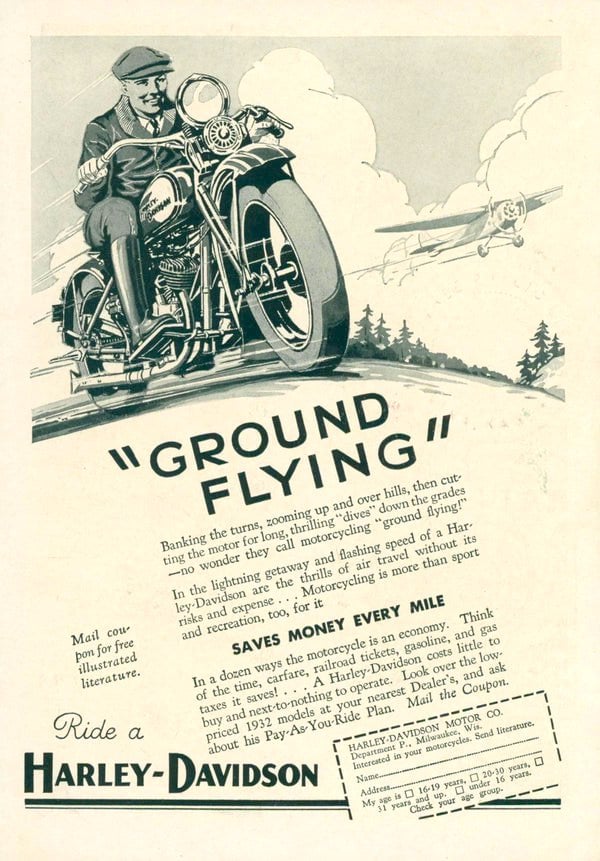
By the time the 1931 Harley Vl model year began (Harley historically rolled new models in August of the preceding year) the engineering was sorted. Image courtesy of Harley-Davidson.
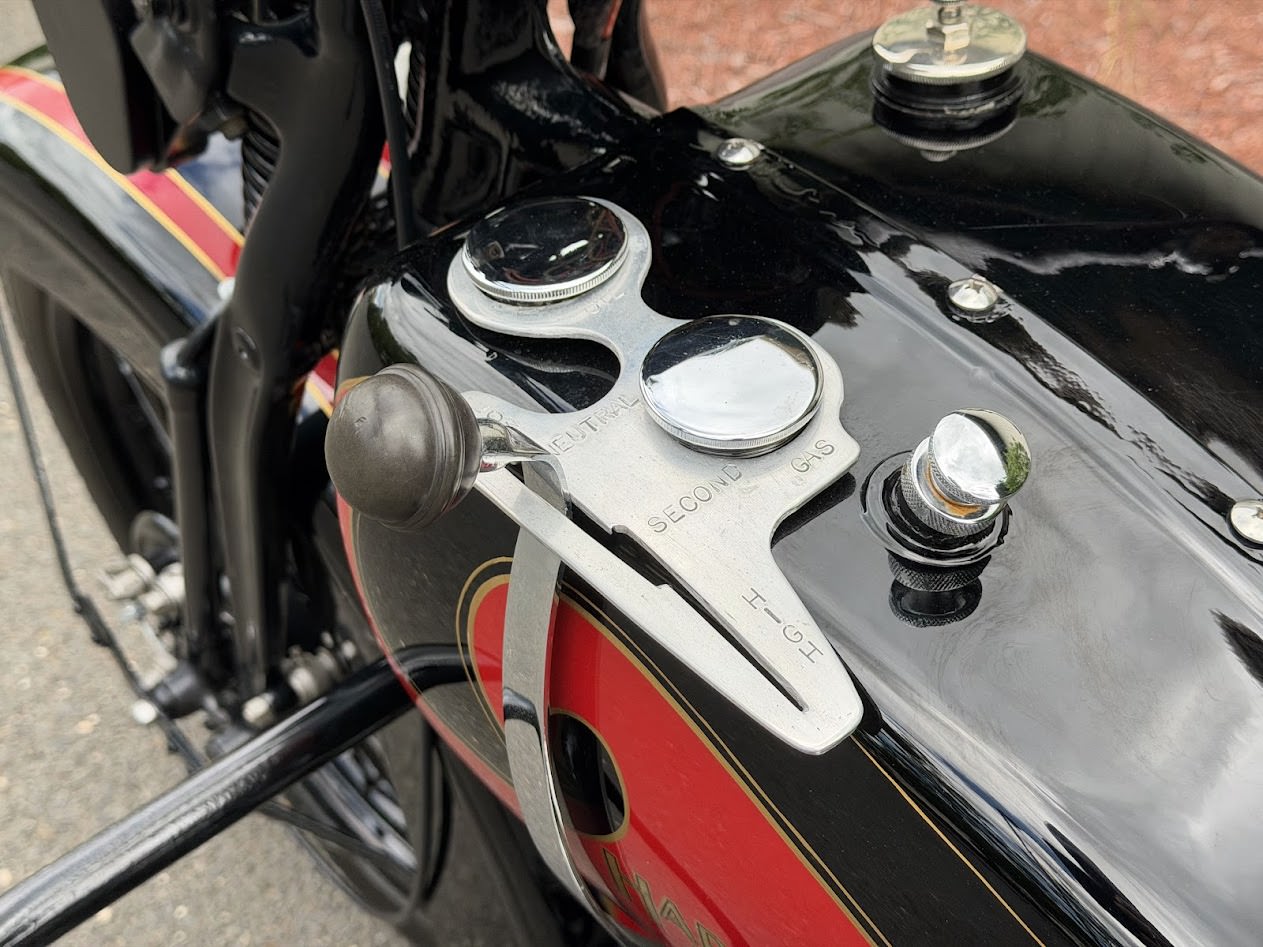
Power was 30 bhp at 4,000 rpm for the VL, with the lower-compression V down at 28 bhp. Lubrication was still total-loss, recirculating dry-sump oiling would not arrive until the U-series rework in 1937. A 3-speed transmission shifted by hand on the tank, with a foot-operated clutch on the left. Leading-link springer fork up front, hardtail rear, leaf-sprung saddle. Top speed for a VL was a decent 85 mph.
The 1931 lineup spread the platform across several sub-variants – the V was the standard low-compression solo, the VL was the high-compression Sport Solo, and the VC was the Big Twin Commercial. The VS model was geared for sidecar duty. Various VM, VLM, and VMG codes denoted magneto-equipped specials, while police machines were built to department specification. Across the range, pricing held the line through the economic downturn – the 1930 VL had listed at $340, and 1931 sat in the same pricing area.
Harley built around 21,000 motorcycles in 1929. The 1931 total across the entire lineup came in at roughly 10,500, and the floor was not yet in sight – by 1933, Milwaukee would be down to 3,703 units, with the factory on a two-day work week to avoid layoffs. Only Harley and Indian made it through dozens of other American motorcycle manufacturers went under and would never be seen again. The flathead the company had nearly killed itself launching turned out to be one of the things that saved it.
The 74 cubic inch flathead continued through 1936, when it was joined by the overhead-valve 61 cubic inch Knucklehead. Alfred Rich Child set up a licensed VL production line in Japan in the mid-1930s, after his Japanese partner severed ties in 1936, the design continued there under the Rikuo name well into the postwar era.
Steve McQueen famously owned a 1931 VL, awaiting restoration at his Ventura County warehouse when he was diagnosed with cancer in December of 1979 – the bike sold at his estate auction in 1984.
The Ex-Steve McQueen 1931 Harley-Davidson VL Shown Here
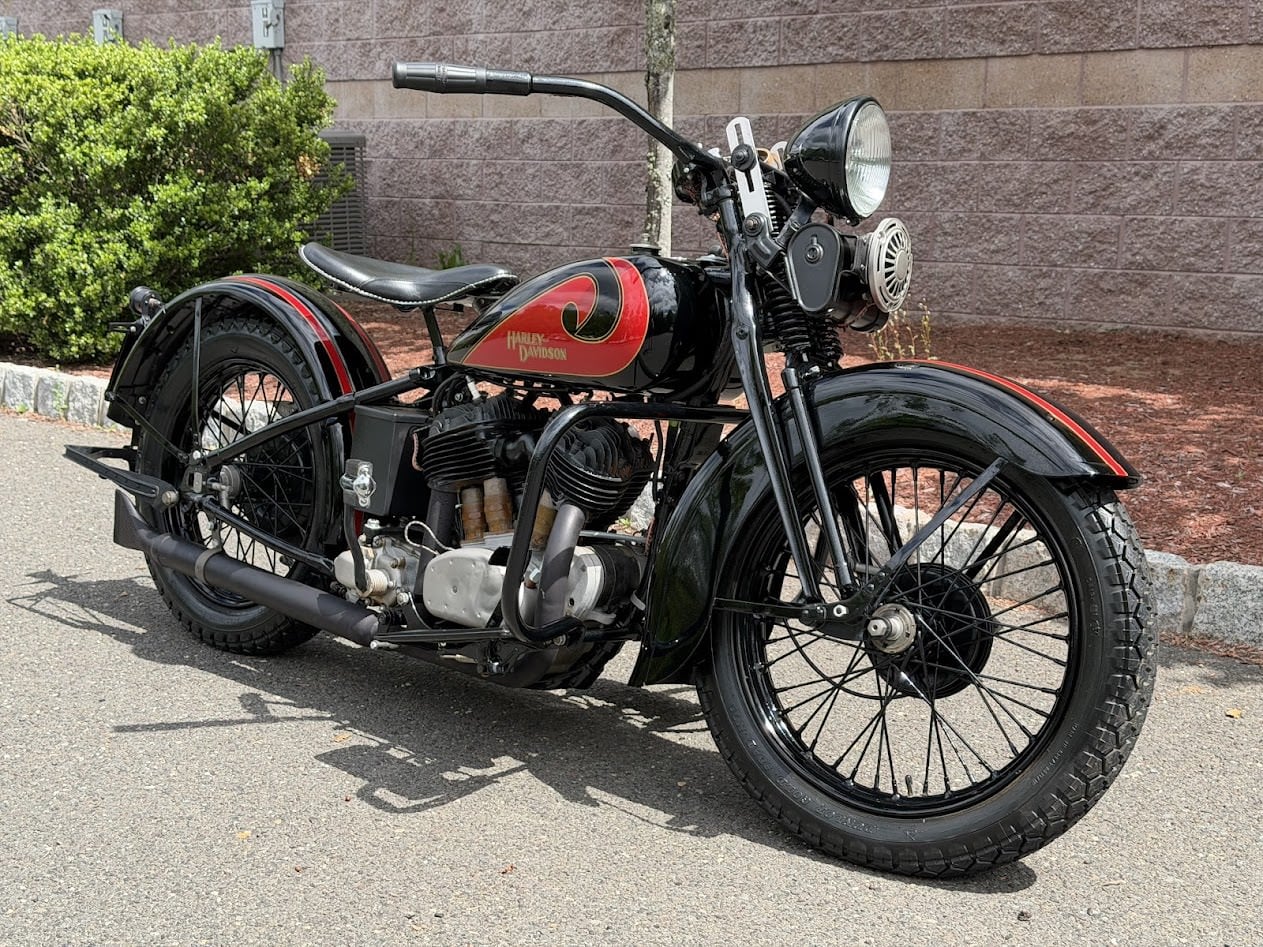
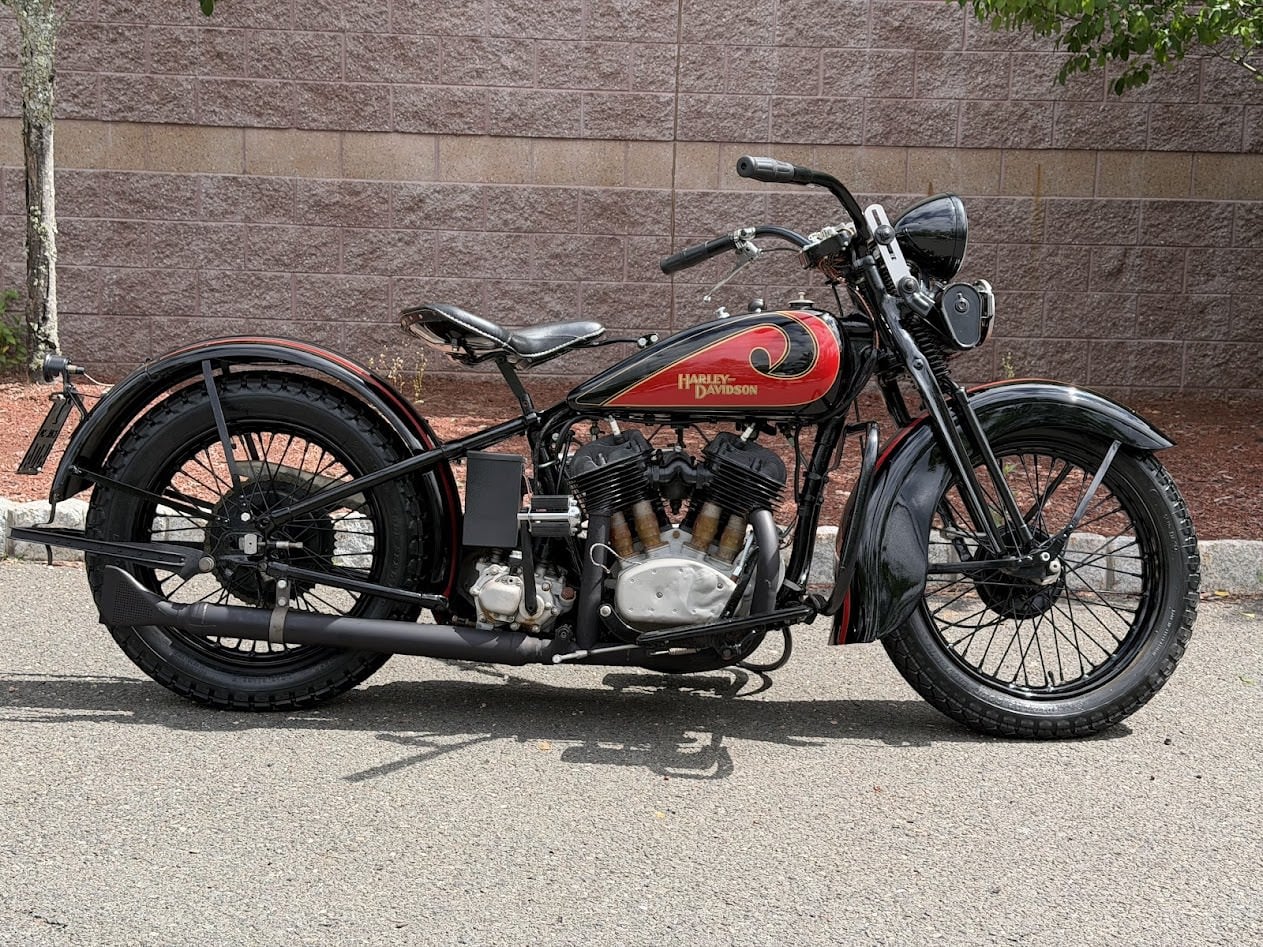
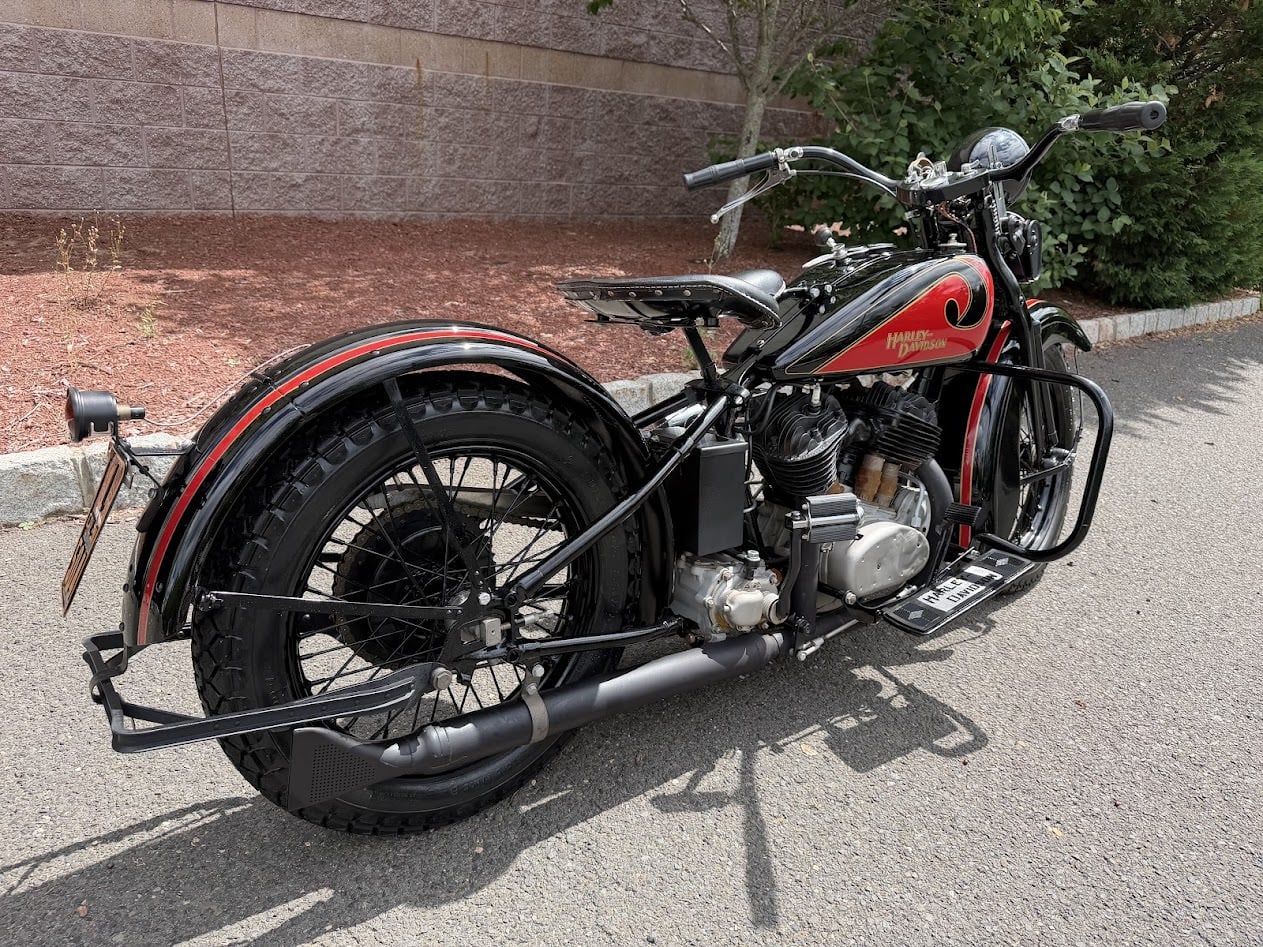
This 1931 Harley-Davidson VL was owned by Steve McQueen and was awaiting restoration at his private Ventura County, California, hangar and garage at the time of his death in 1980. It was acquired in the 2000s by McQueen memorabilia collector Mike Eisenberg, who carried out a cosmetic refurb.
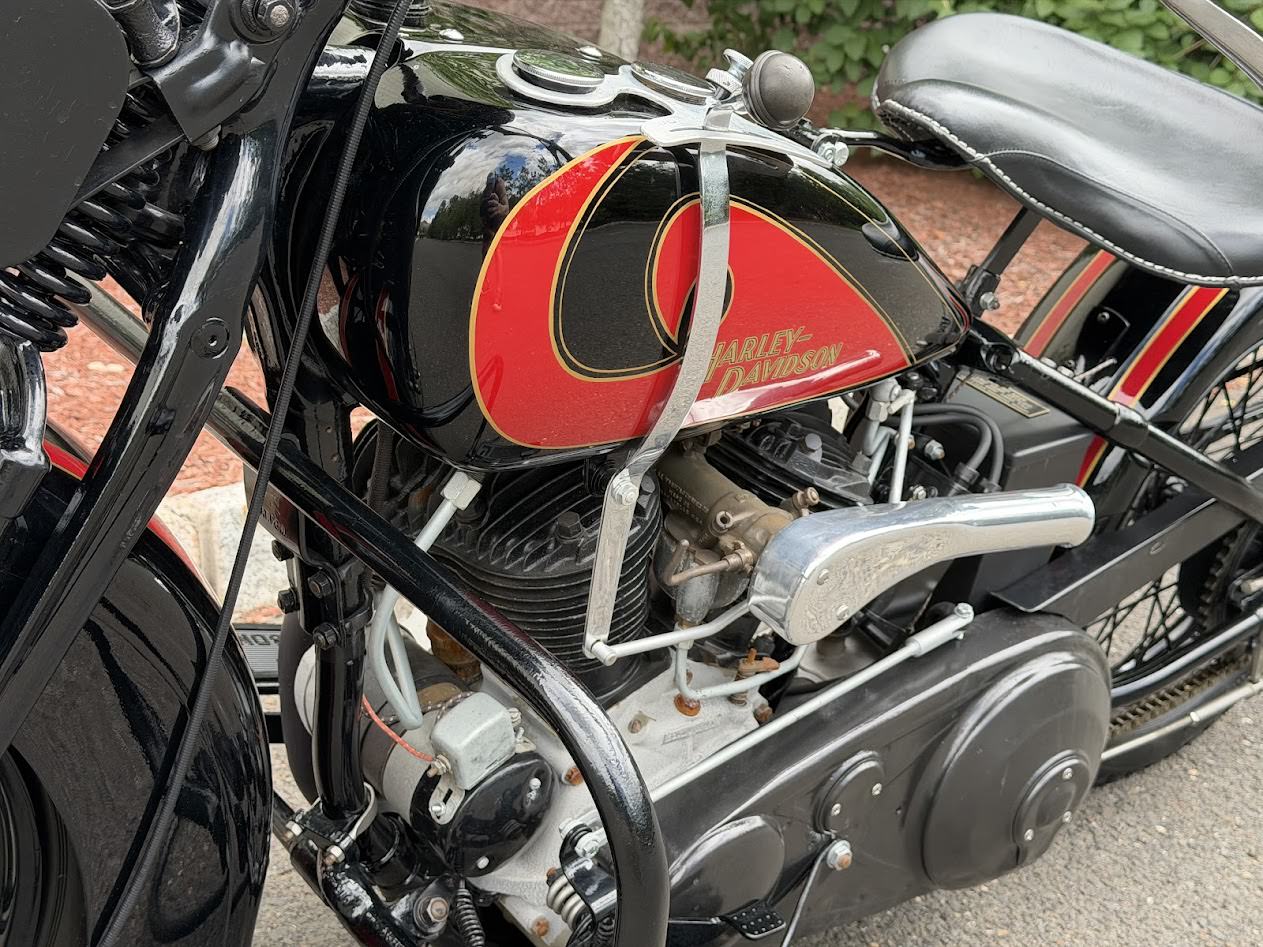
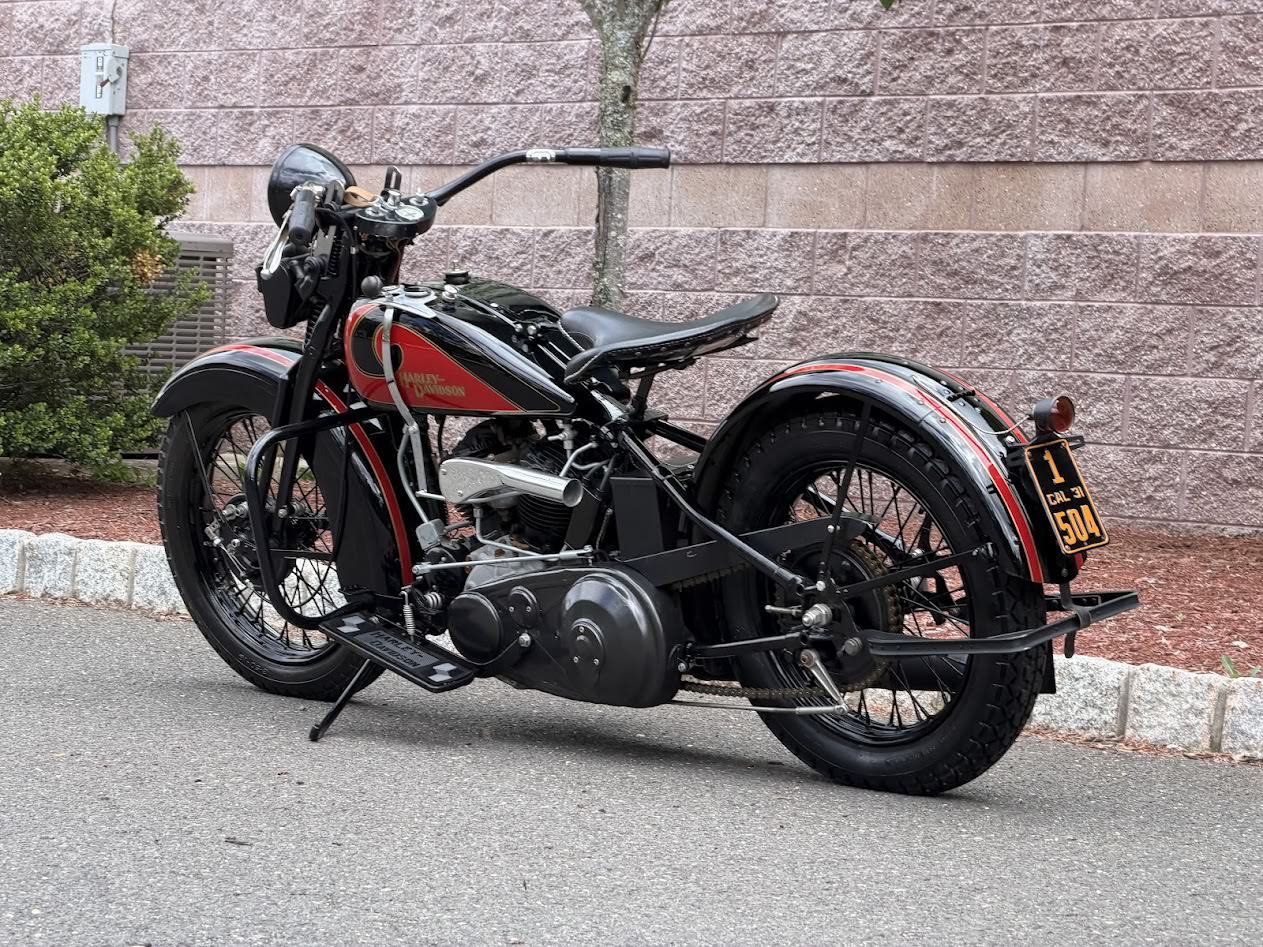
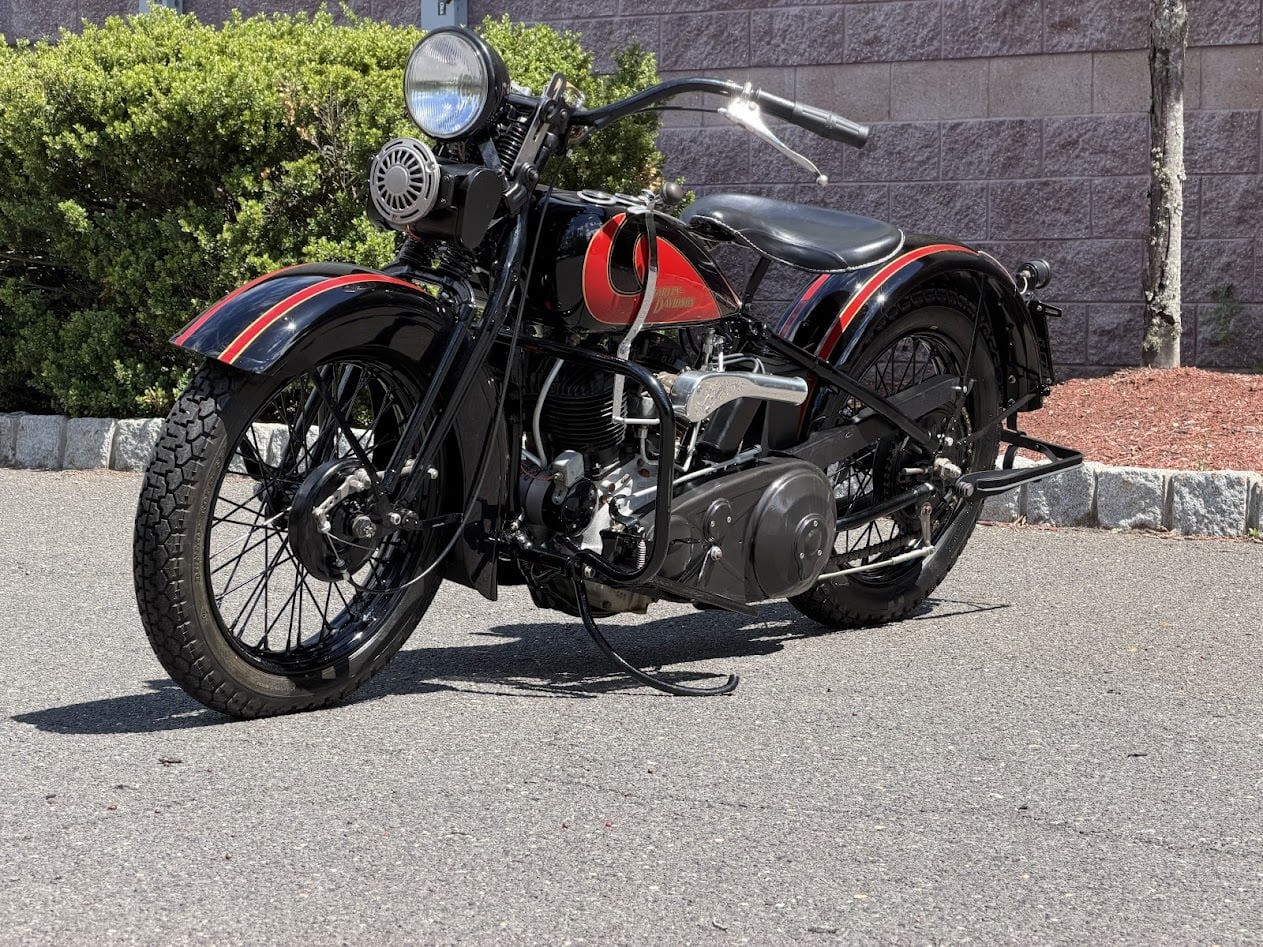
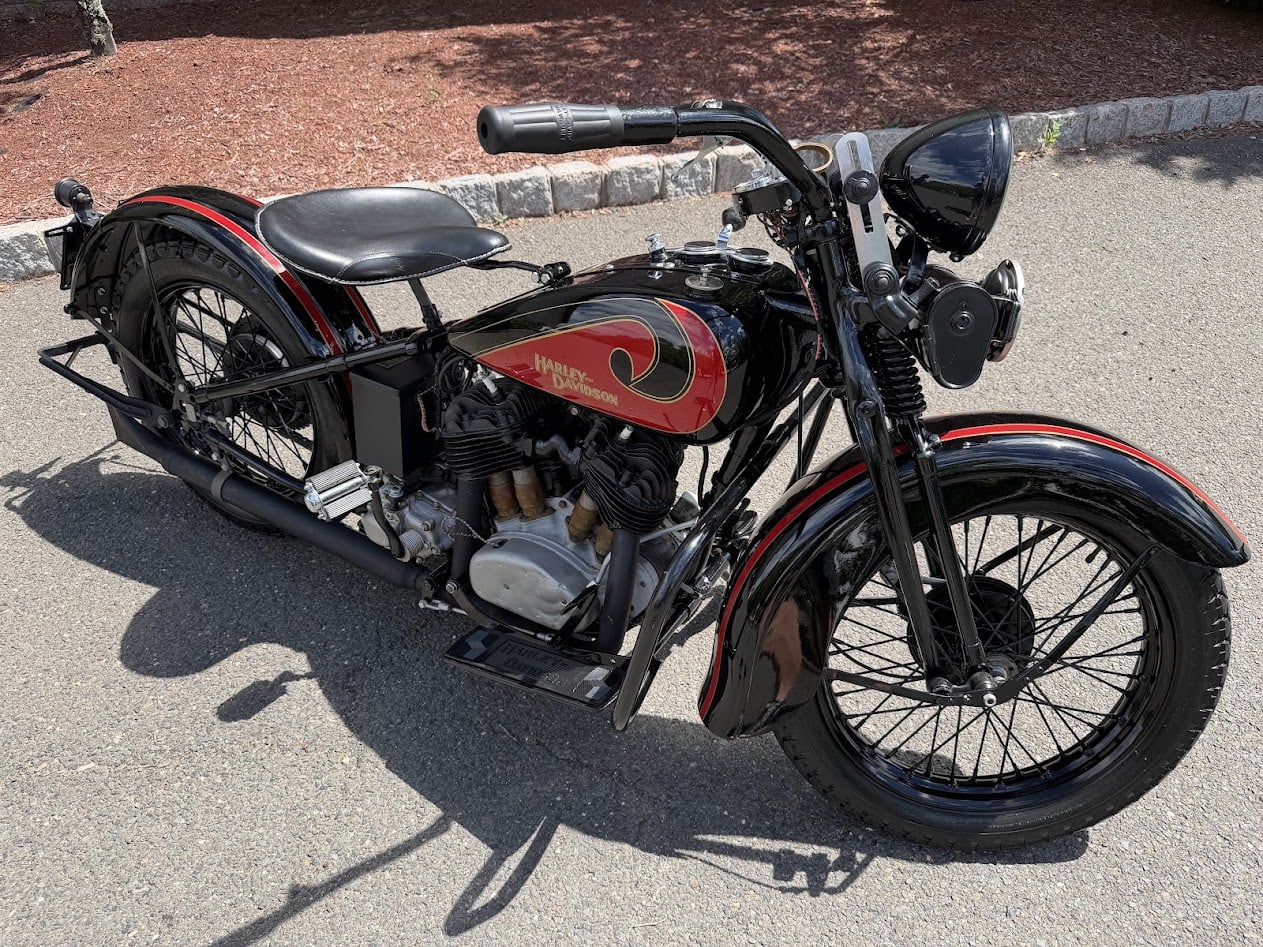
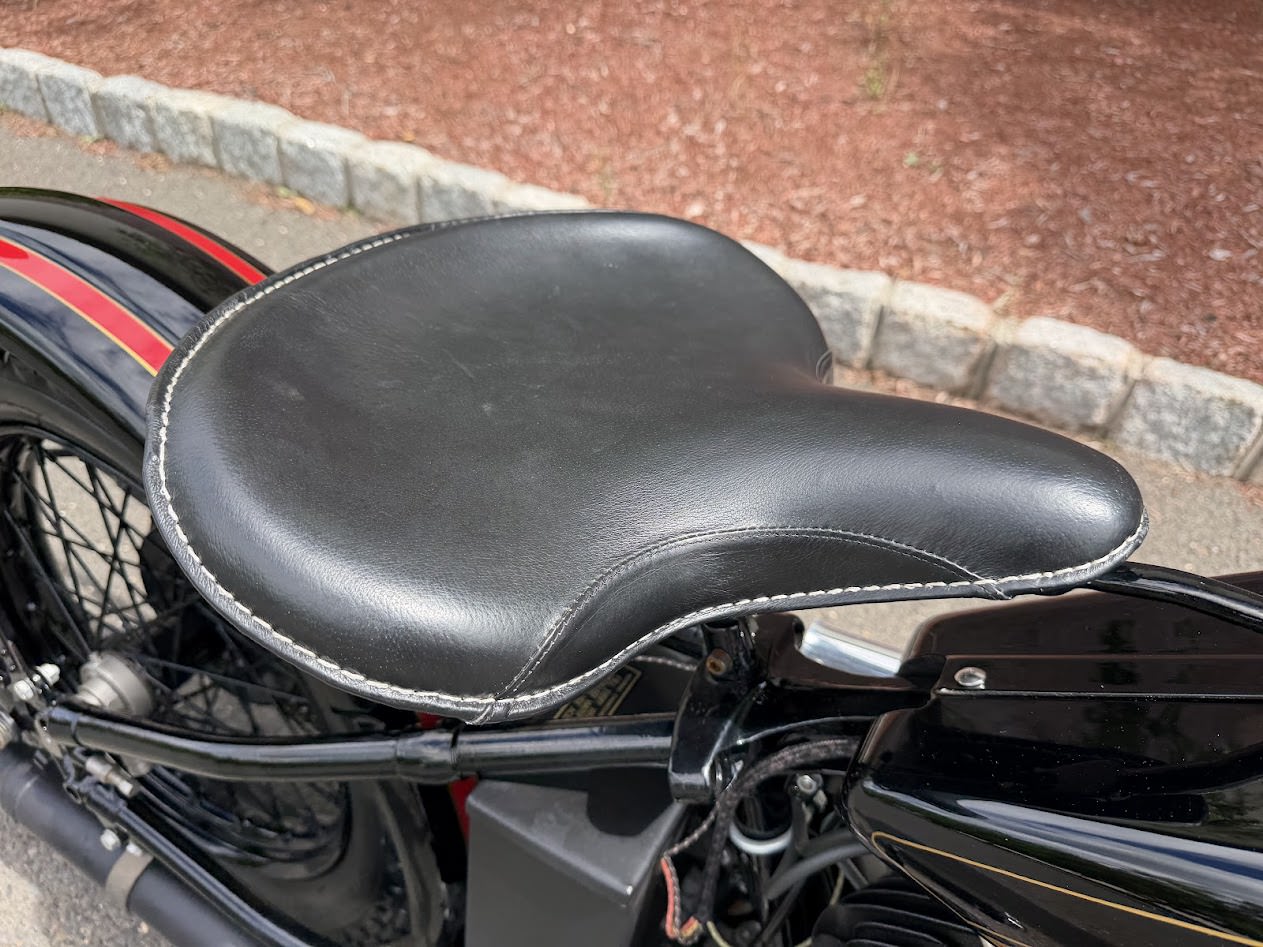
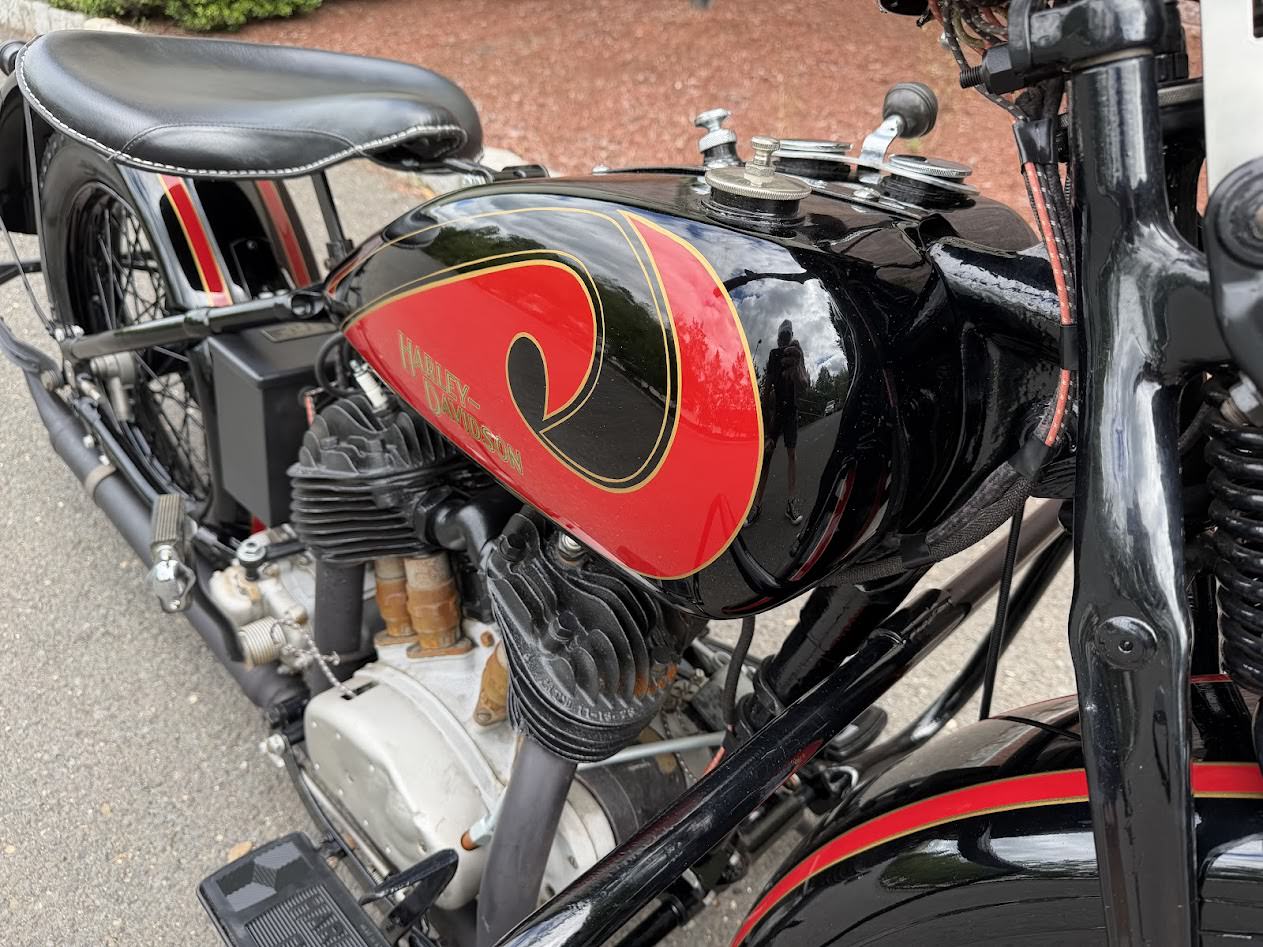
The fuel tank has been refinished in black with red side-panel stripes outlined in gold, with valanced fenders painted to match – the rear fender is hinged. The black-painted hardtail frame carries a front-hinged, post-sprung solo saddle with a black leather cover. Equipment includes an electric horn, a fork-mounted toolbox, footboards, a Model-2 taillight, and both side and rear-wheel stands.
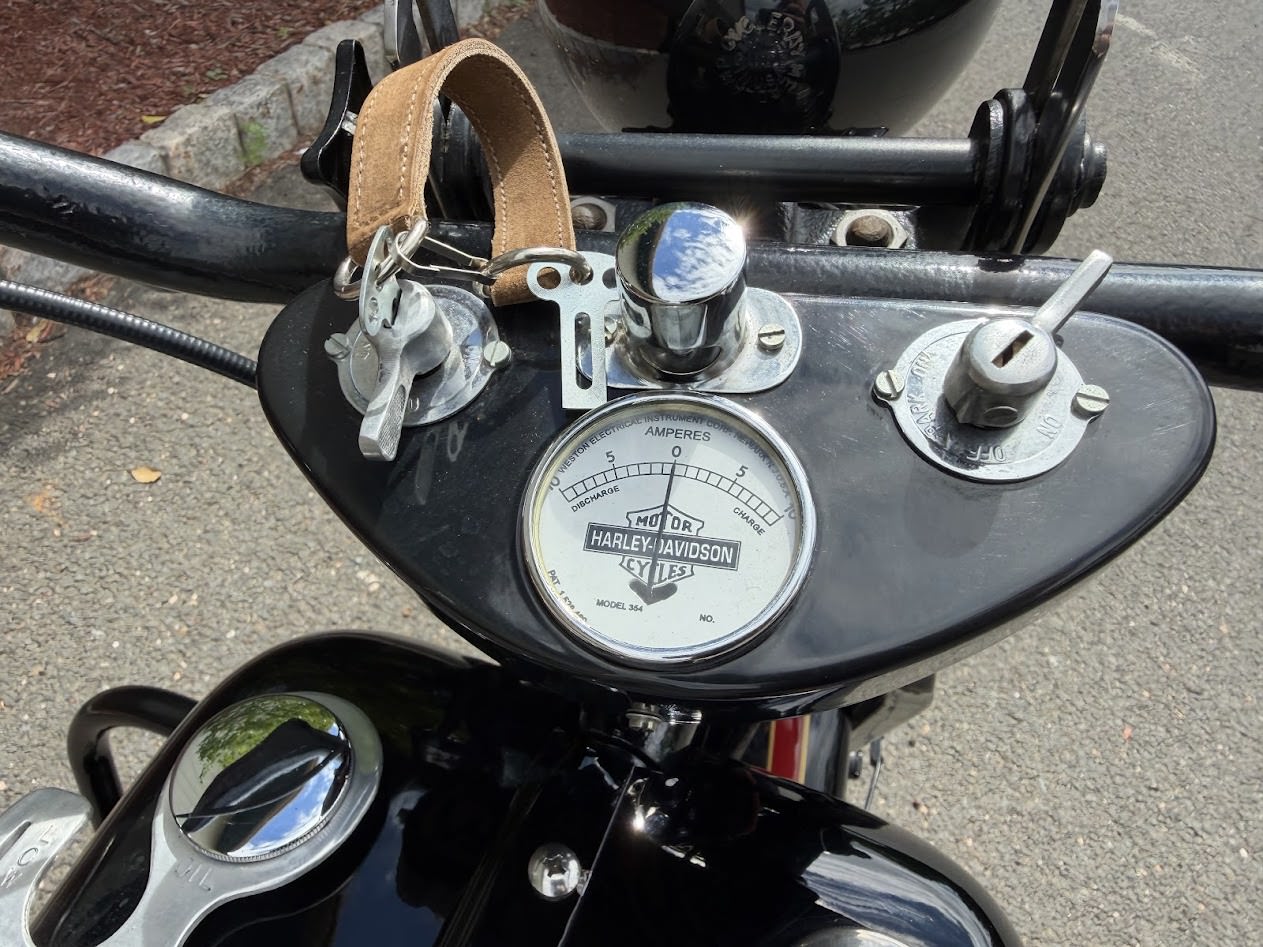
Black-painted steel rims are laced to drum-brake hubs and mounted with Dunlop Gold Seal K70 tires showing sidewall cracks. Suspension is limited to an adjustable leading-link springer fork up front. The handlebar uses through-the-bar cable routing, with a twist-grip spark advance on the left and twist-grip throttle on the right. The dash panel houses a Weston Electrical Instrument ammeter, keyed ignition and light switches, and a chrome dash lamp. The bike has no odometer, so true mileage is unknown.
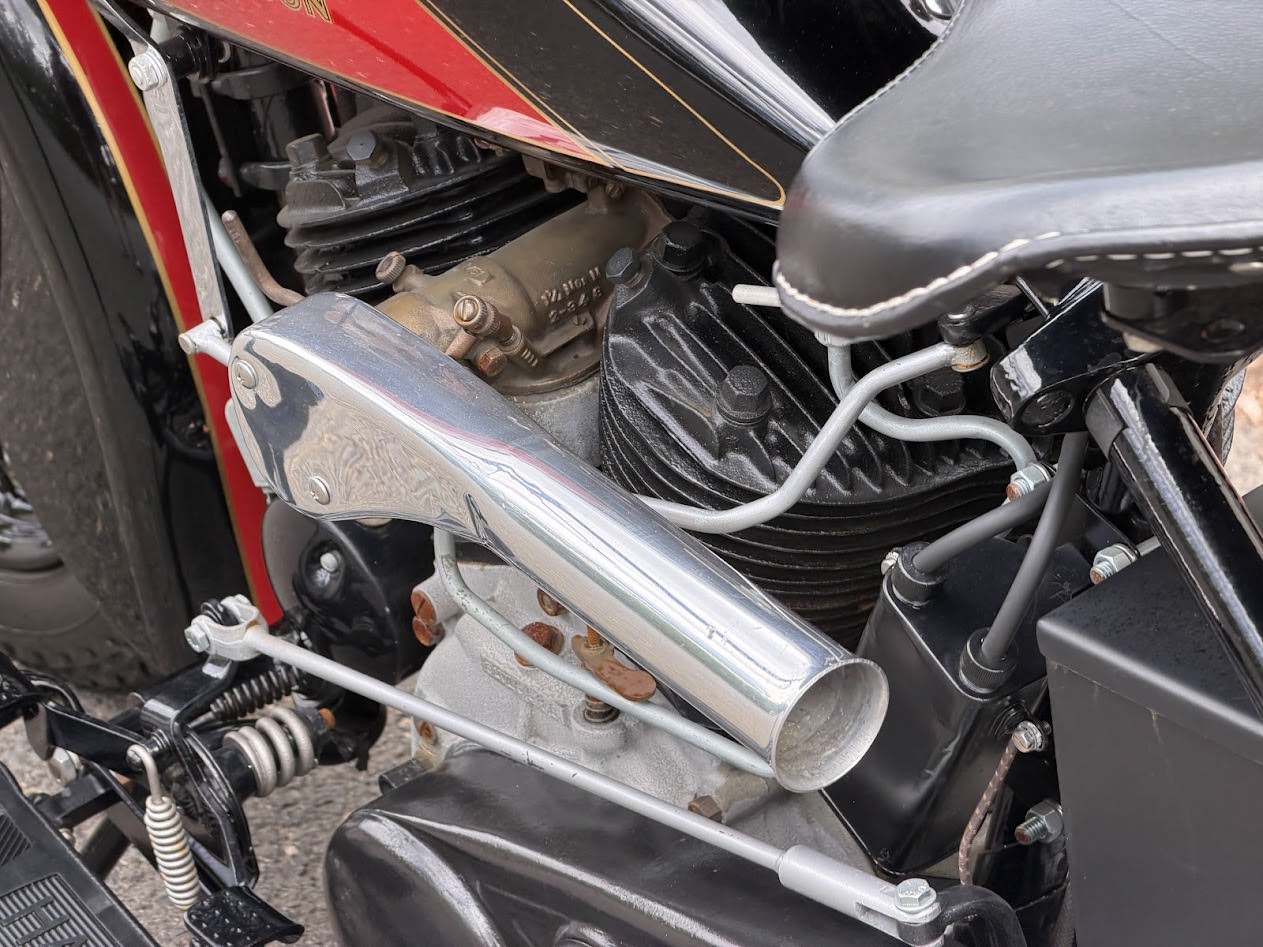
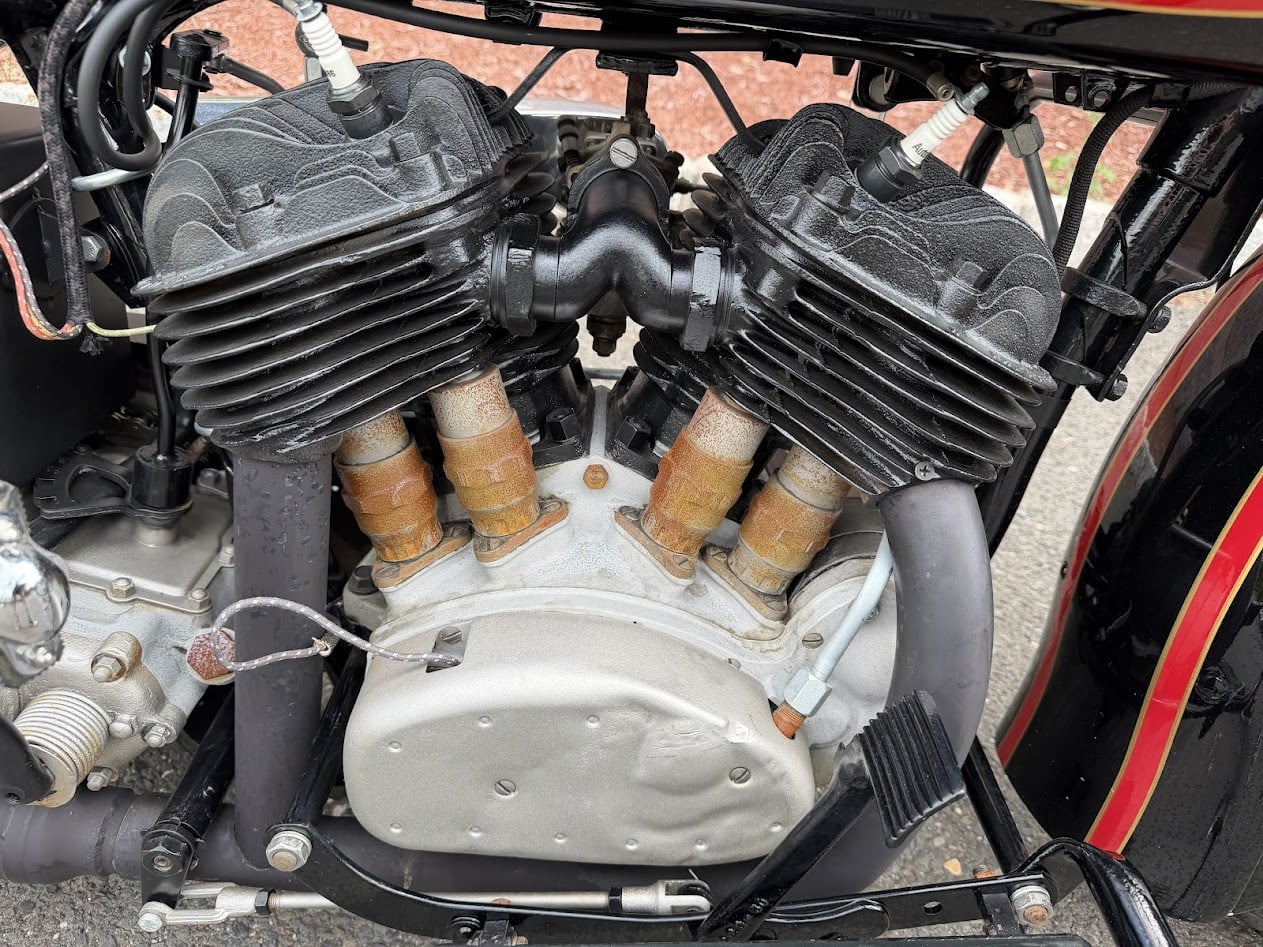
The 74 cubic inch side-valve V-twin is fitted with a Linkert M51 carburetor wearing a polished air horn and a black two-into-one exhaust system with a fishtail muffler. The cylinders, heads, and intake manifold have been painted black, and there is rust on the pushrod tubes and various fasteners. The engine is currently non-running – when it’s back to running condition – power goes through a multi-plate dry clutch with a rocker foot pedal, a 3-speed transmission with a gated hand shifter, and chain final drive.
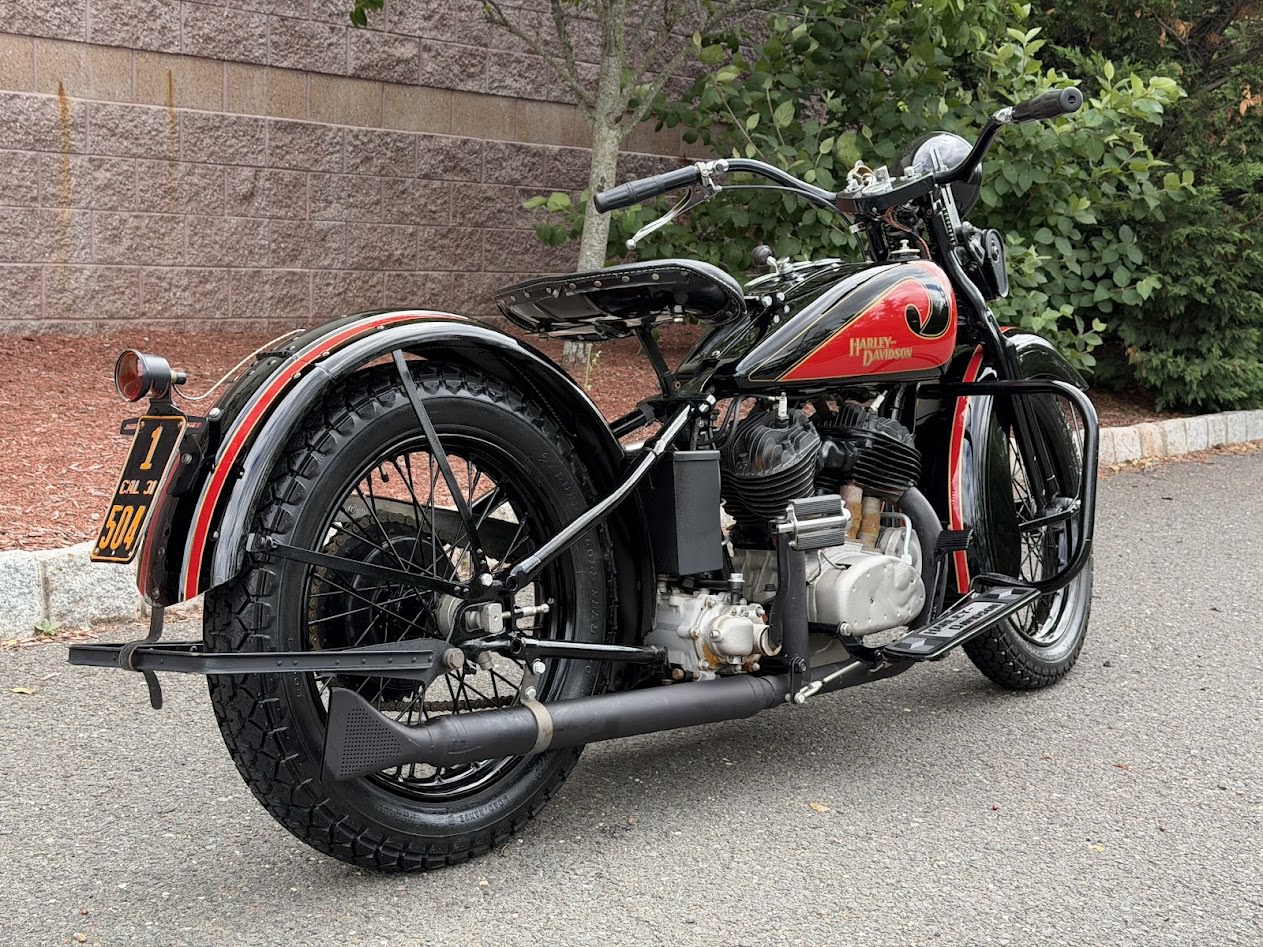
This is a 1931 Harley-Davidson VL that formerly belonged to Hollywood legend Steve McQueen. He kept the bike right up until his passing in 1980, perhaps a sign of how much it meant to him, and it’s now being offered for sale out of New Jersey.
It comes with a framed McQueen Certificate of Authenticity from the November of 1984 Steve McQueen estate auction in Las Vegas, signed by the actor’s daughter and son, along with a framed bill of sale, bidder card, bidder ID, and odometer statement from the same auction. Also included are a show placard, a 1931 California license plate, and a clean New Jersey title.
The bike was bought by the selling dealer in May of 2026 and is now being offered for sale at no reserve out of Neptune, New Jersey, and you can visit the listing here if you’d like to read more about it or register to bid.
Images courtesy of Bring a Trailer
Articles that Ben Branch has written have been covered on CNN, Popular Mechanics, Smithsonian Magazine, Road & Track Magazine, the official Pinterest blog, the official eBay Motors blog, BuzzFeed, Autoweek Magazine, Wired Magazine, Autoblog, Gear Patrol, Jalopnik, The Verge, and many more.
Silodrome was founded by Ben back in 2010, in the years since the site has grown to become a world leader in the alternative and vintage motoring sector, with well over a million monthly readers from around the world and many hundreds of thousands of followers on social media.