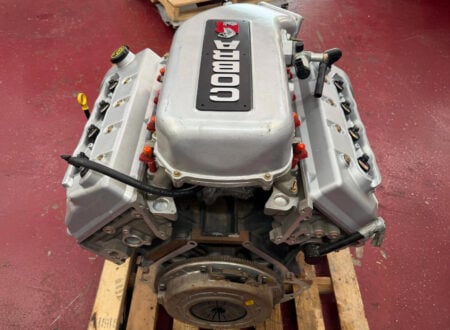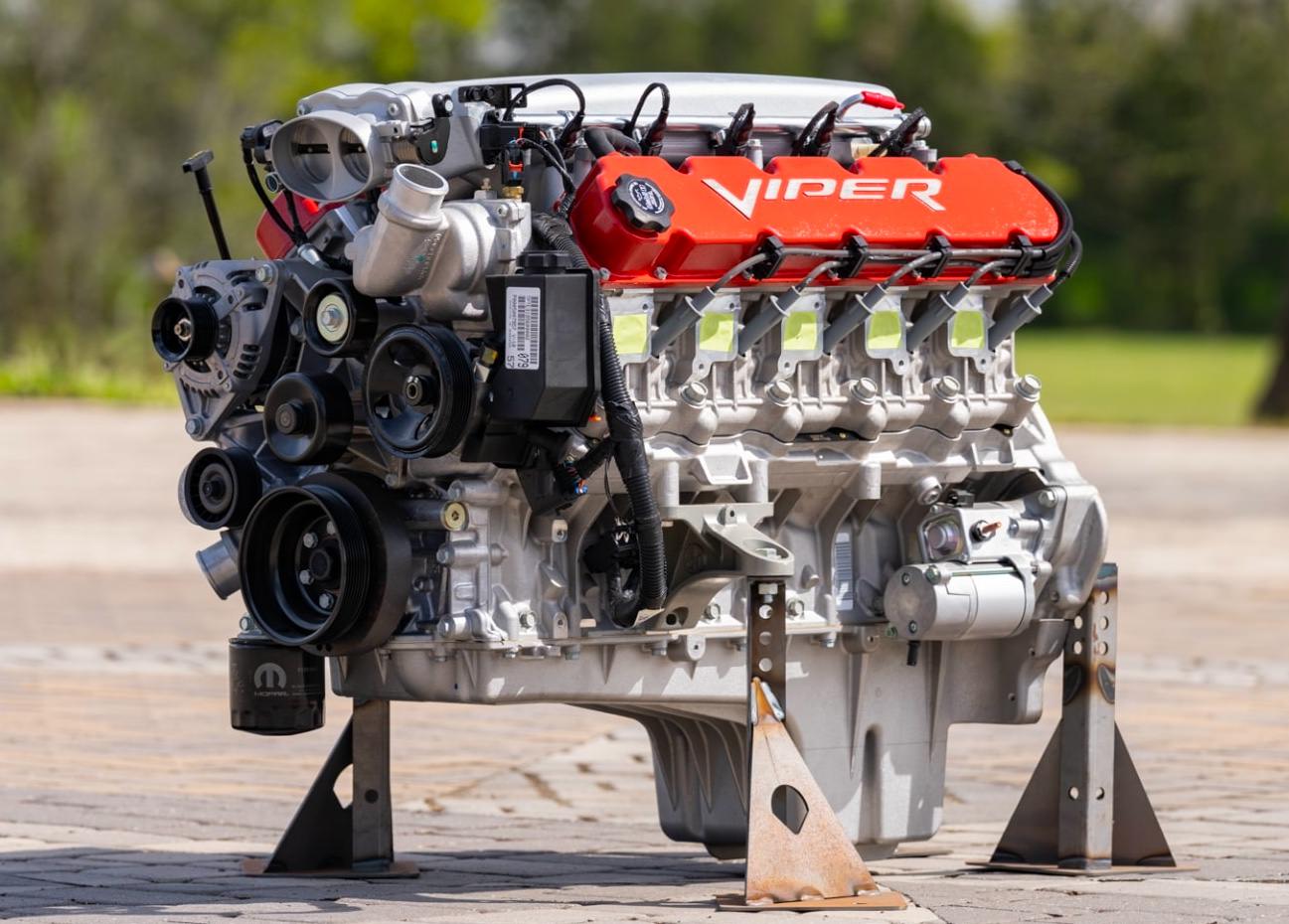
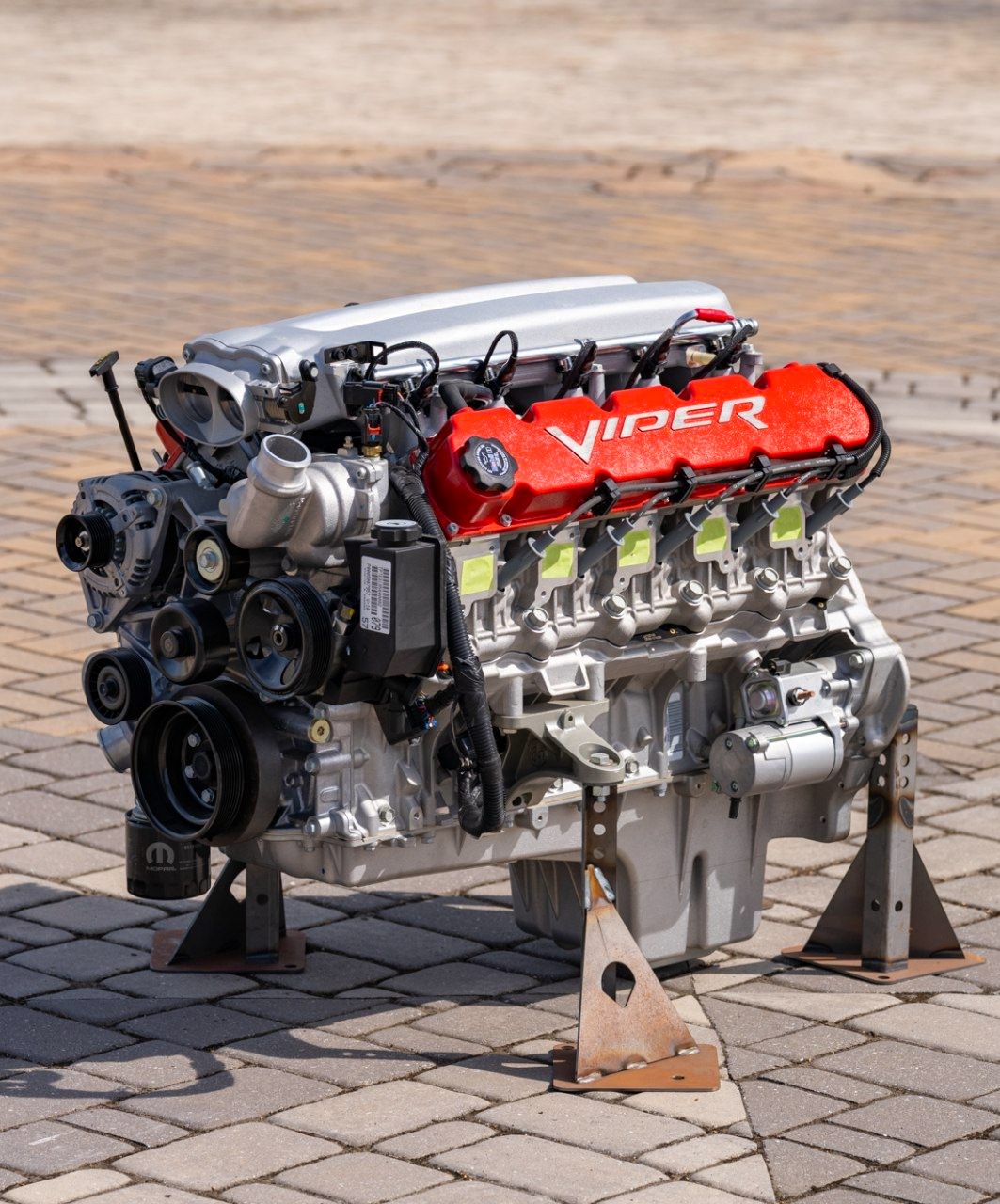
This is a Gen III Viper V10 crate engine built by Ilmor Engineering, it has a displacement of 8.3 liters (505 cubic inches) and it’s good for 625 bhp at 5,800 rpm and 600 lb ft of torque at 4,700 rpm.
The Dodge Viper V10 was one of the more preposterous American engines of its time, offering a look, sound, and torque output unlike anything else on the road.
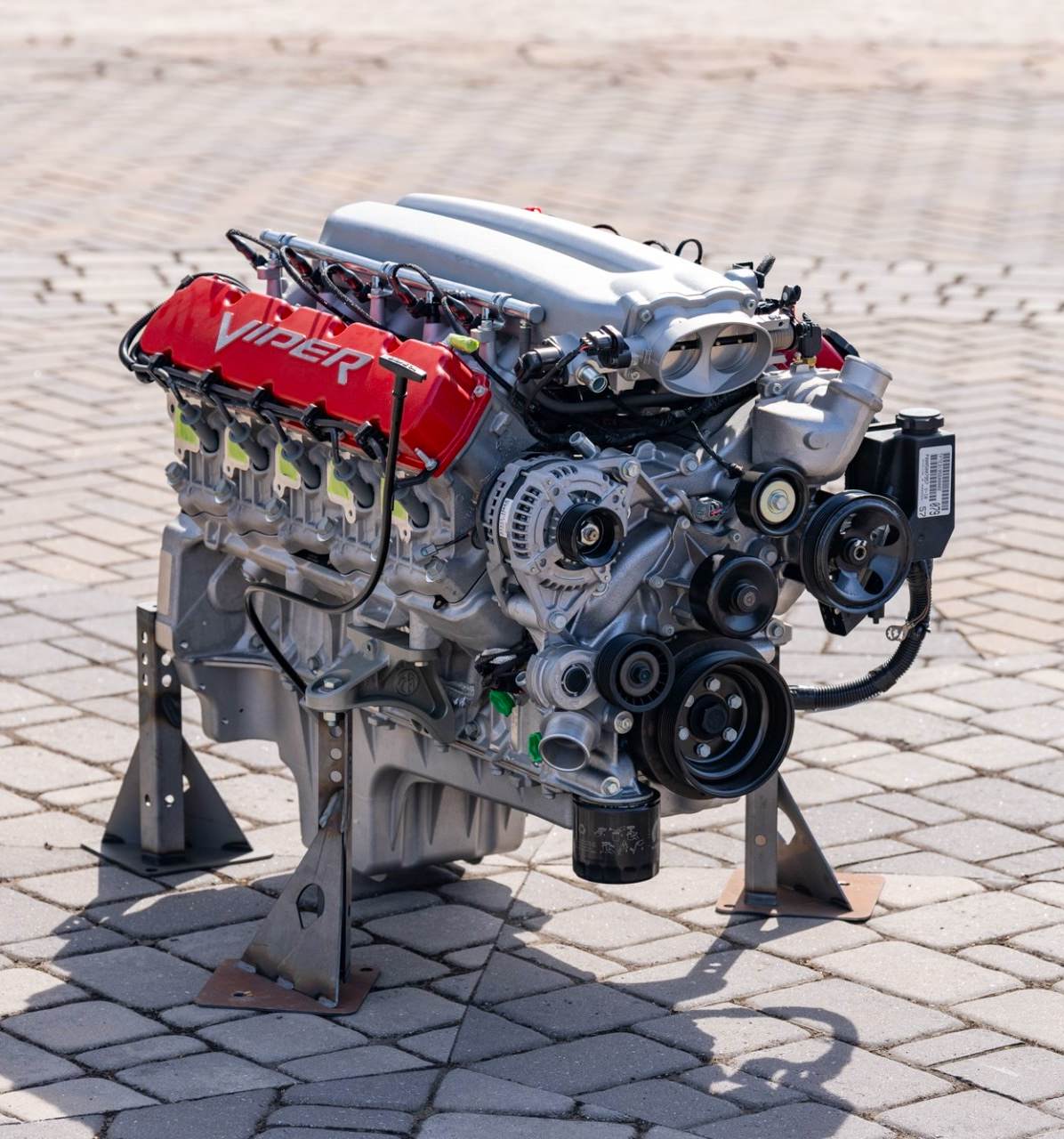
 This is a Gen III Viper V10 crate engine built by Ilmor Engineering, it has a displacement of 8.3 liters (505 cubic inches) and it’s good for 625 bhp at 5,800 rpm and 600 lb ft of torque at 4,700 rpm.
History Speedrun: The Ilmor Engineering Viper V10
The way Ilmor president Paul Ray tells it, sometime during 2001 or 2002, the British engineering firm’s Plymouth, Michigan facility had a Dodge Viper V10 sitting on one dynamometer and an APBA Super Cat offshore powerboat racing engine running in a cell down the hall.
Ilmor was consulting on oiling-system work on the Viper V10 for DaimlerChrysler. Looking at the torque curves and comparing the two engines side by side, Ilmor’s engineers realized the big bore pushrod V10 had real potential as a marine powerplant. That observation became they key catalyst for Ilmor’s high-performance marine program.
Ilmor doesn’t normally end up in stories about pushrod American engines. The British engineering firm, founded in 1983 by Mario Illien and Paul Morgan, spent its early years building turbocharged Indy car engines for Chevrolet before moving to Formula 1, where Ilmor-designed Mercedes-Benz V10s helped Mika Häkkinen win the 1998 and 1999 World Championships with McLaren.
After Paul Morgan’s death in a vintage aircraft crash in 2001, Mercedes-Benz (a stakeholder in Ilmor since 1994) began consolidating control, taking a majority stake in 2002 and full ownership by 2005.
The consulting work that centered on the Viper V10’s oiling system through 2001 and 2002, also overlapped with the development window for the Gen III road engine. Ilmor has not publicly itemized which specific changes, if any, made it into the production SRT-10.
What is well-documented is that Ilmor came away convinced of the V10’s potential, later approached DaimlerChrysler about marinizing it, and eventually launched its own MV10 line of high-performance boat engines, which used Viper-derived blocks and ran from 550 to 725 bhp in factory trim.
For Dodge the Gen III V10’s entire job was to keep the Viper relevant, the car had launched in 1992 with an 8.0 liter V10 making 400 bhp – it was an engine that used aluminum block castings designed by Lamborghini (then a Chrysler subsidiary), with an architecture derived from Chrysler’s long-running LA V8 family.
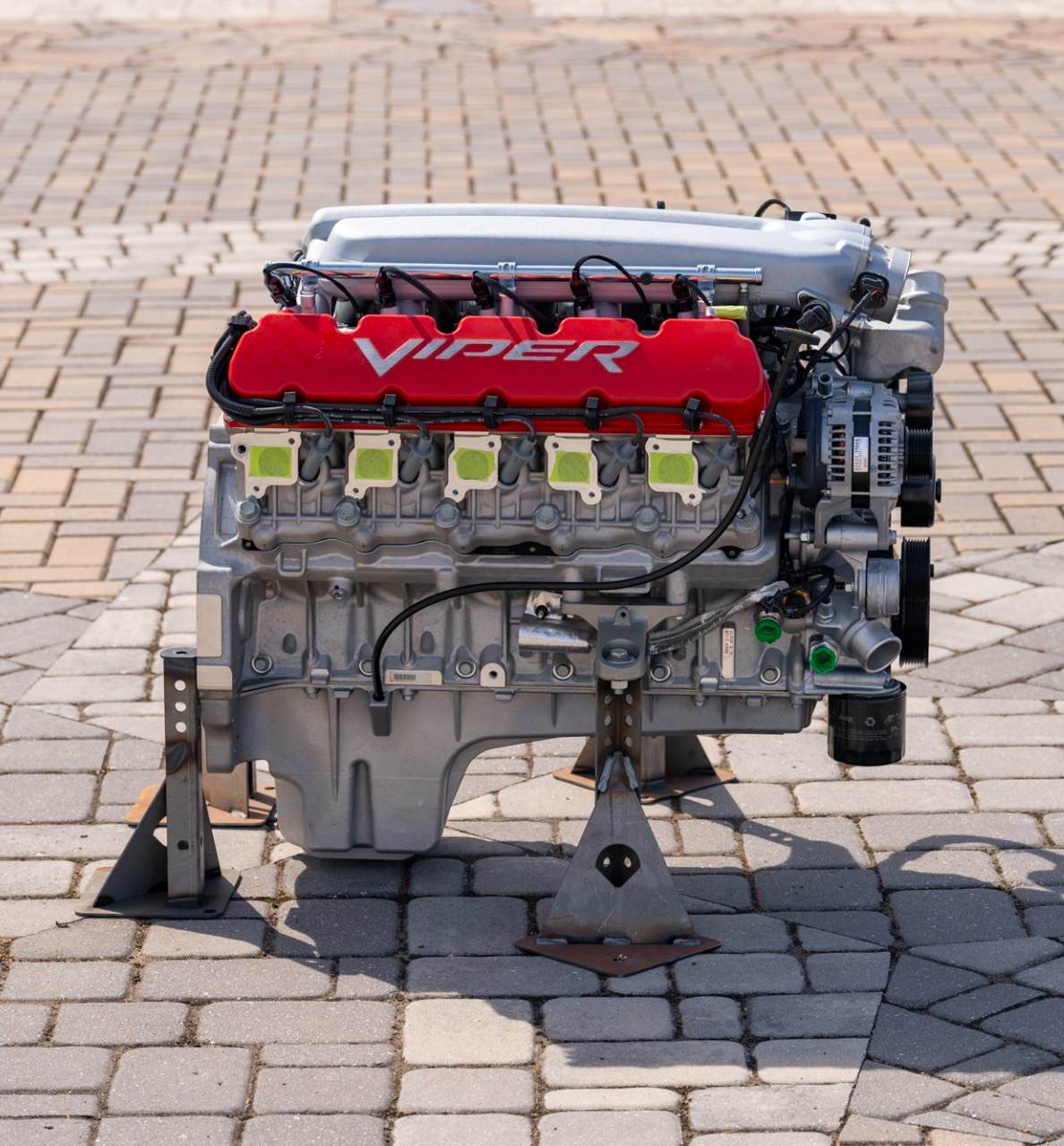
The Dodge Viper V10 was one of the more hare-brained American engines of its time, offering a look, sound, and torque output unlike anything else on the road.
By the turn of the new century, that engine had been refined through the Gen II cars to 450 bhp, but cars like the Corvette and Porsche 911 had seen their power levels keep rising, and the Viper needed more.
The Gen III V10 was the answer – built for the new ZB I chassis, it kept the original architecture (90º V, pushrod-actuated two valves per cylinder, aluminum block with cast-iron bore liners, aluminum heads) but reworked nearly everything else.
The bore grew from 4.00 to 4.03 inches and stroke from 3.88 to 3.96 inches, pushing displacement from 487.6 to 505.6 cubic inches. Compression sat at 9.6:1 and the factory rating jumped to 500 bhp at 5,600 rpm and 525 lb ft of torque at 4,200 rpm – that was up 50 bhp and 35 lb ft on the engine it replaced.
The Gen III V10 also came in significantly lighter than its predecessors, most sources put the engine’s weight at around 500 lbs (about 230 kgs). That reduction came through new castings, lighter accessories, and revised internals. In a front-mid-engined sports car where the V10 dominates the front clip, lower engine mass was crucial for balance, for front tire load, and for the chassis engineers trying to make the thing turn in and not just slide right into the gravel.
Dodge dropped the Gen III into the 2003 Viper SRT-10 roadster and ran it through 2006, when an SRT-10 coupe finally rejoined the lineup. For 2006, the rated output rose to 510 bhp at 5,600 rpm and 535 lb ft at 4,200 rpm. Period reporting attributed the change to SAE recertification under updated power-rating procedures, not to any specific mechanical revision. Either way, the most important number became 510, and the Viper coupe arrived with five more horsepower on paper than the new C6 Corvette Z06.
The same engine also ended up in the Dodge Ram SRT-10, the 154 mph factory pickup that paired the 8.3 liter V10 with a Tremec T-56 6-speed in regular-cab form. Production ran from 2004 to 2006, with a Quad Cab version added in 2005 – automatic only, and aimed squarely at Viper owners who wanted something to tow their car to the track with.
By the end of 2006, the Gen III V10 had served its purpose. Chrysler skipped the 2007 model year entirely to roll out an 8.4 liter Gen IV V10 making 600 bhp for the 2008 Viper, complete with variable valve timing – highly unusual on a pushrod engine.
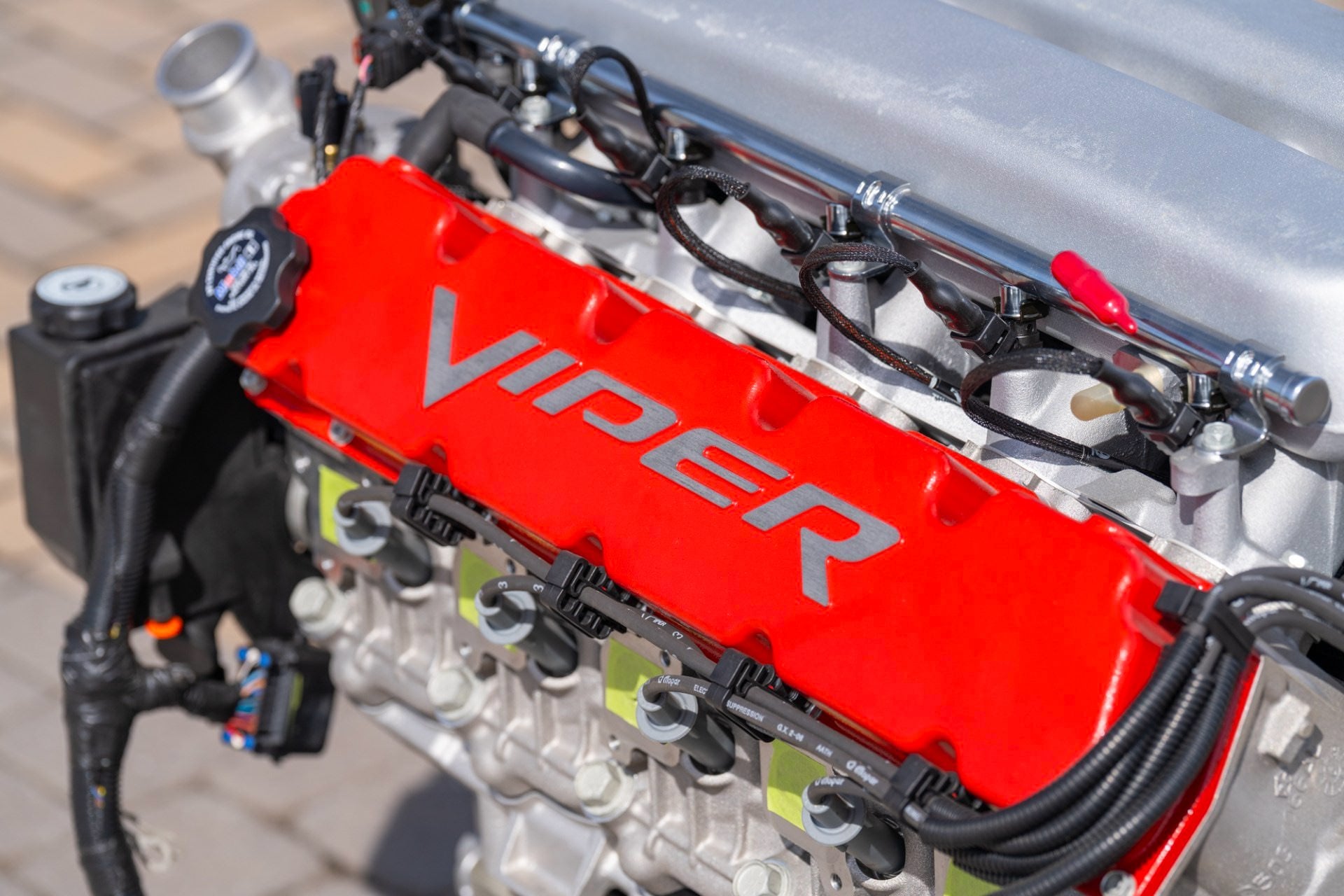
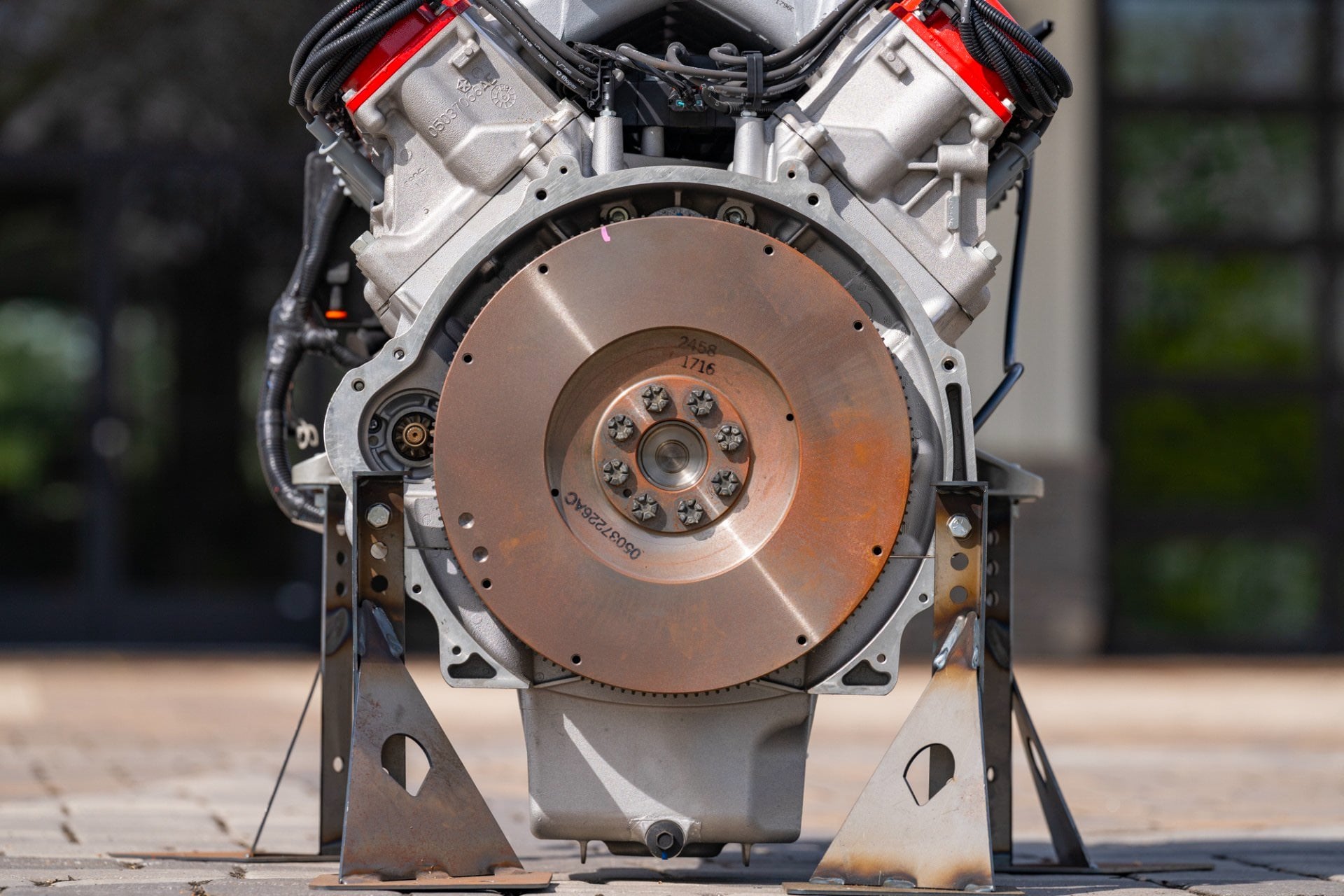
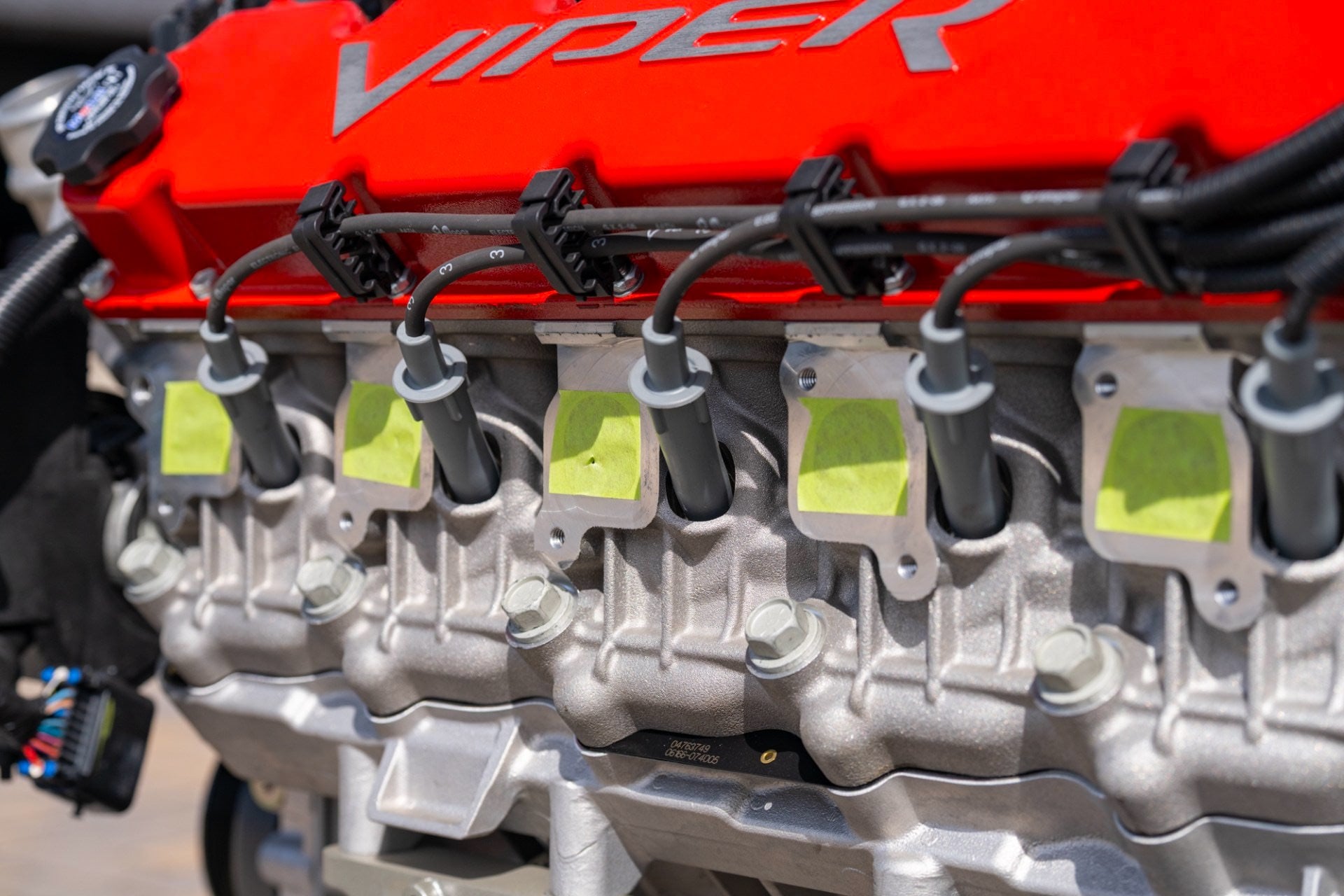
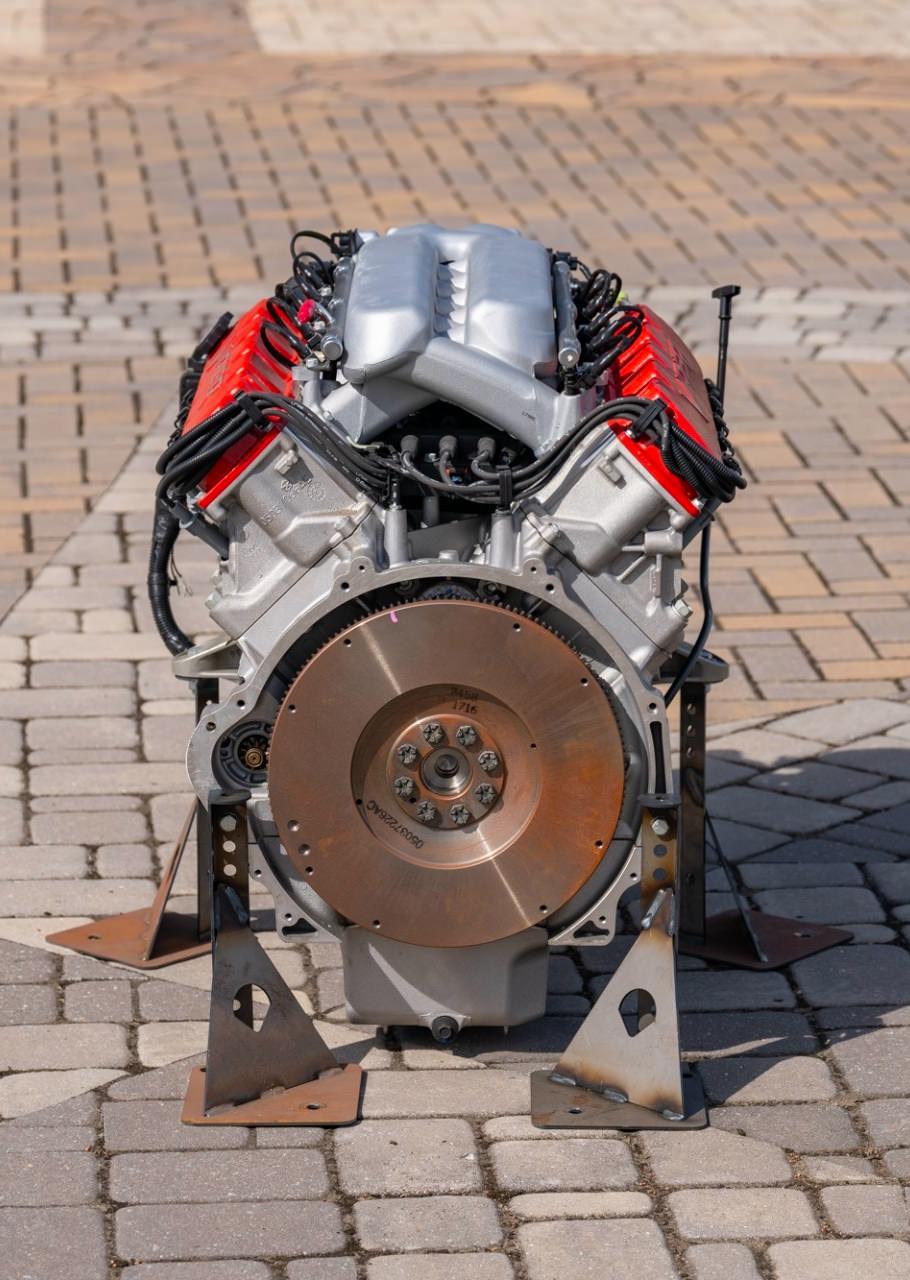
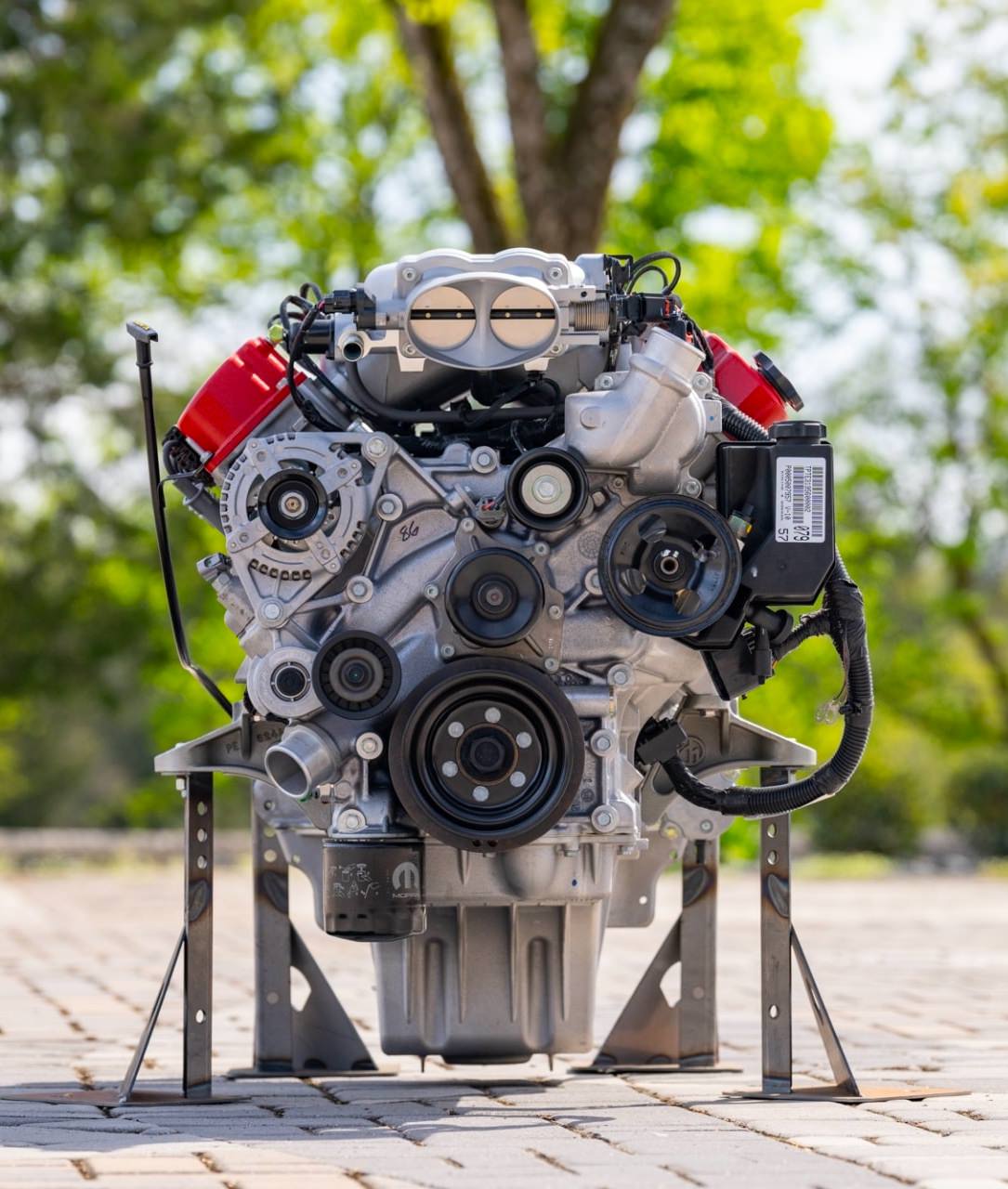
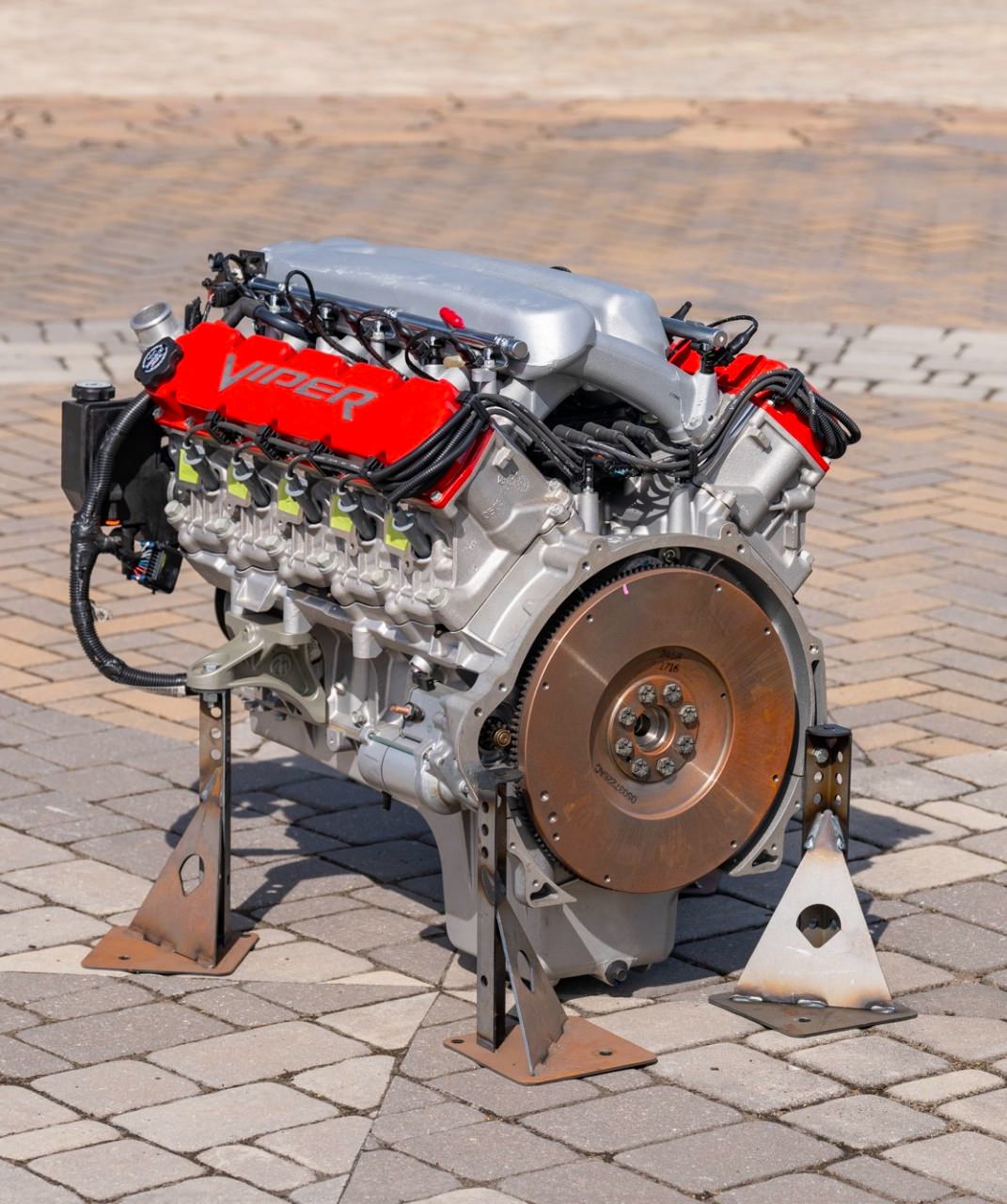
This is an Ilmor Engineering 8.3 liter (505 cubic inch) V10 crate engine derived from the Gen III Dodge Viper powerplant, supplied as a factory-built long-block. Output is rated at 625 bhp at 5,800 rpm and 600 lb ft of torque at 4,700 rpm, with a peak operating range of 5,500 rpm. Compression is set at 10.2:1, and Ilmor recommends premium 93 octane fuel.
The Ilmor connection, meanwhile, kept paying dividends in places most Viper owners never really saw. Ilmor’s marine MV10-625s eventually powered the Fountain Worldwide team to the 2007 and 2008 Powerboat P1 Evolution Class World Championships. Which is to say, the engine that started life as DaimlerChrysler’s slightly over-the-top answer to the Corvette went on to win offshore powerboat titles in another country, in a body of water, under another company’s badge.
The Ilmor Engineering Viper V10 Shown Here
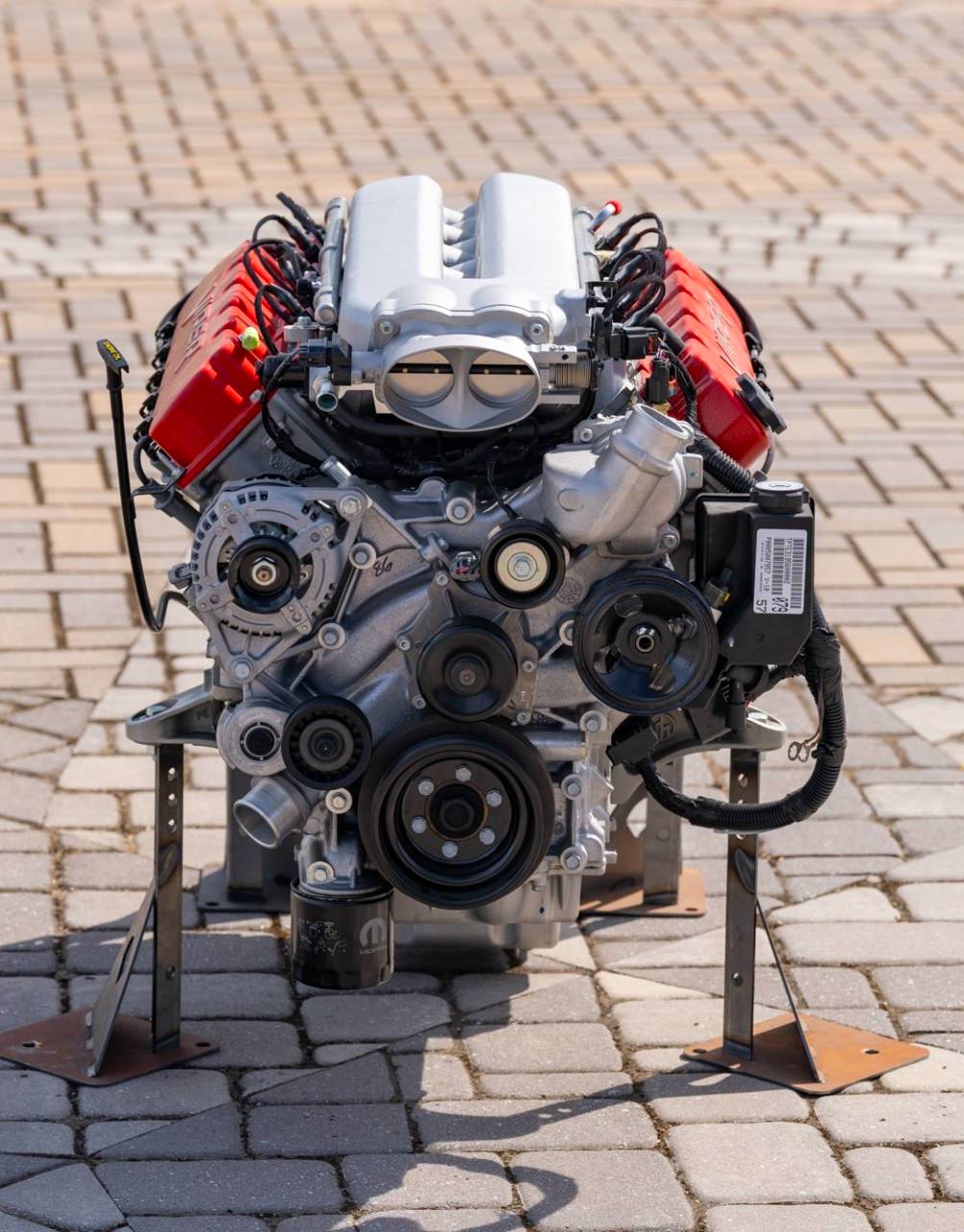
This is an Ilmor Engineering 8.3 liter (505 cubic inch) V10 crate engine derived from the Gen III Dodge Viper powerplant, supplied as a factory-built long-block. Output is rated at 625 bhp at 5,800 rpm and 600 lb ft of torque at 4,700 rpm, with a peak operating range of 5,500 rpm. Compression is set at 10.2:1, and Ilmor recommends premium 93 octane fuel.
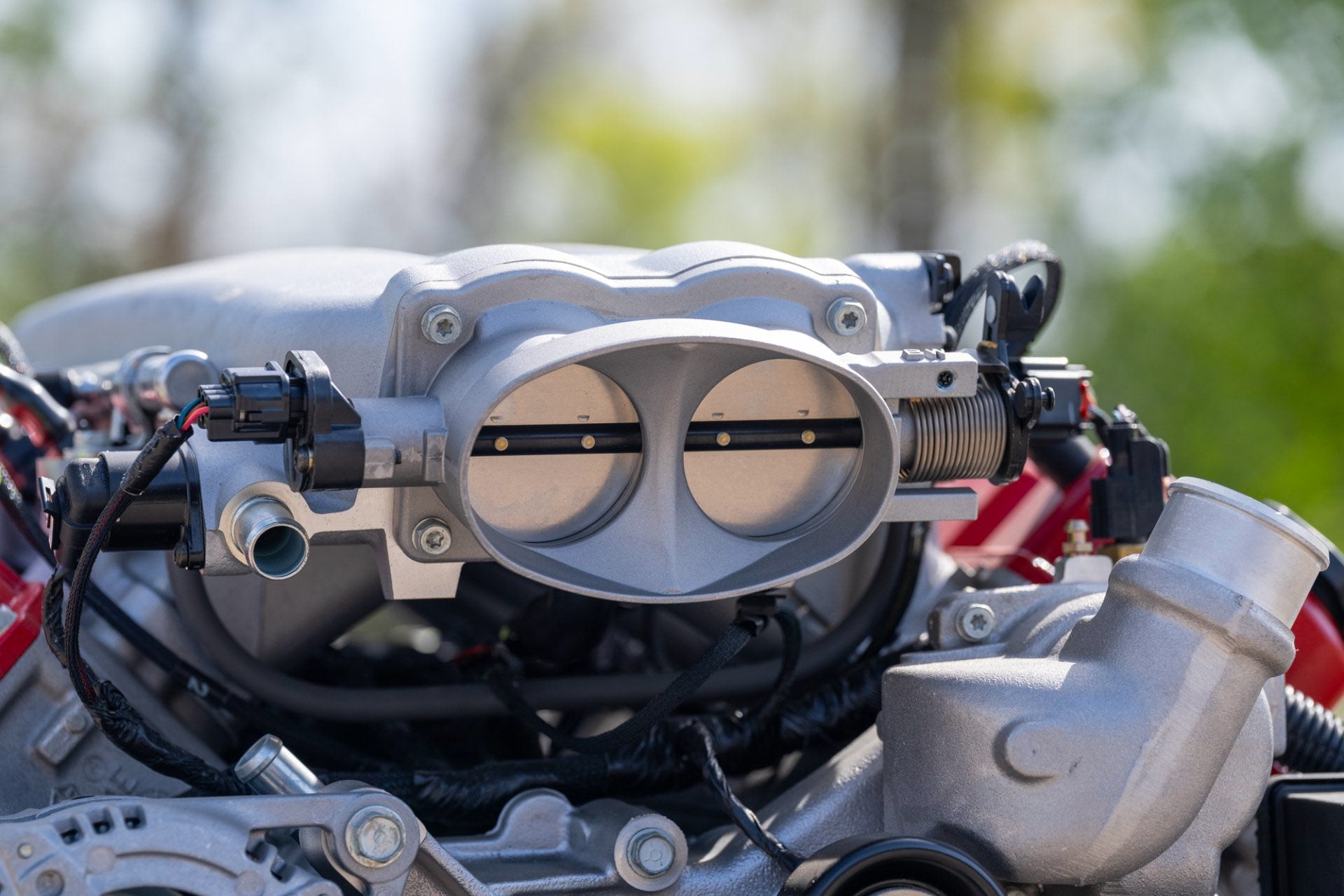
Internally, the engine has a forged 4340 steel crankshaft, forged pistons, and a hydraulic roller camshaft. Architecture is the familiar 90º OHV V10 with two valves per cylinder, fed through a 67 mm throttle body.
The block and cylinder heads are precision-cast aluminum, and the engine incorporates a closed-cooling system with integrated knock control. Dry weight comes in at approximately 800 lbs with headers fitted.
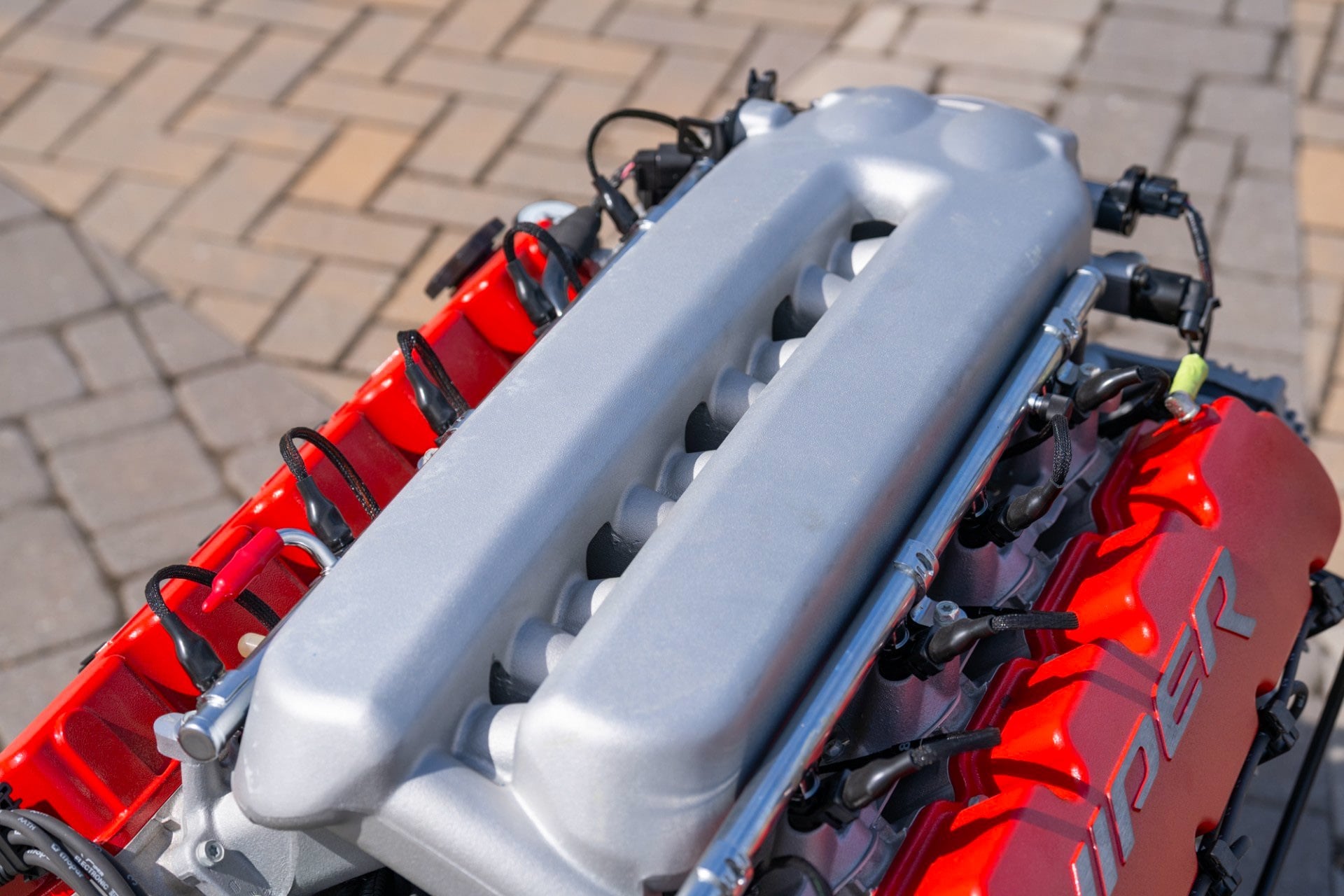
Internally, the engine has a forged 4340 steel crankshaft, forged pistons, and a hydraulic roller camshaft. Architecture is the familiar 90º OHV V10 with two valves per cylinder, fed through a 67 mm throttle body.
Built by Ilmor Engineering (a firm with deep ties to the Viper program and to top-level motorsport) this is a rare high-performance crate engine based on the Gen III Dodge Viper V10.
This engine is now due to roll across the auction block with Mecum at the end of September and you can visit the listing here if you’d like to read more or register to bid.
Images courtesy of Mecum

Articles that Ben Branch has written have been covered on CNN, Popular Mechanics, Smithsonian Magazine, Road & Track Magazine, the official Pinterest blog, the official eBay Motors blog, BuzzFeed, Autoweek Magazine, Wired Magazine, Autoblog, Gear Patrol, Jalopnik, The Verge, and many more.
Silodrome was founded by Ben back in 2010, in the years since the site has grown to become a world leader in the alternative and vintage motoring sector, with well over a million monthly readers from around the world and many hundreds of thousands of followers on social media.