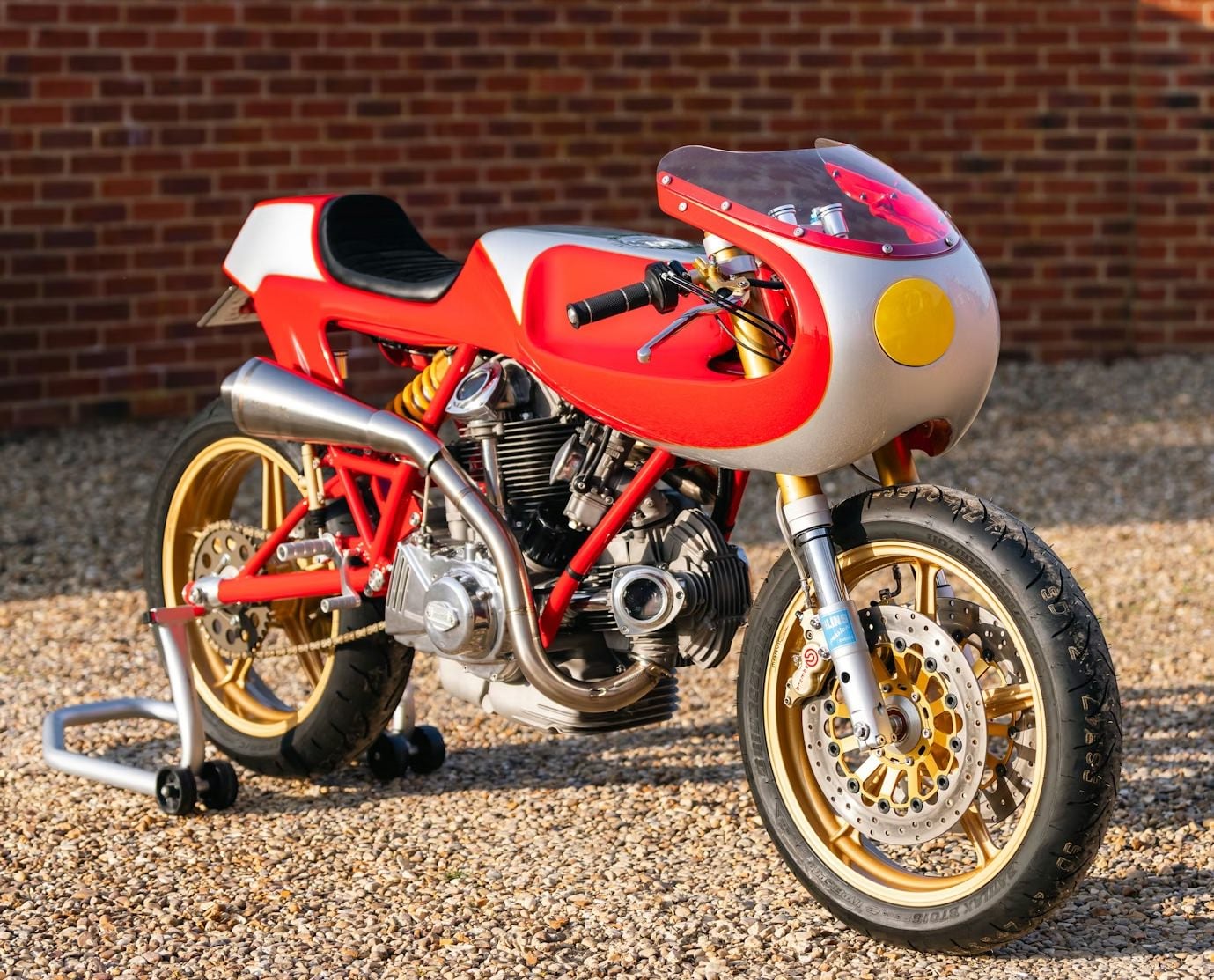
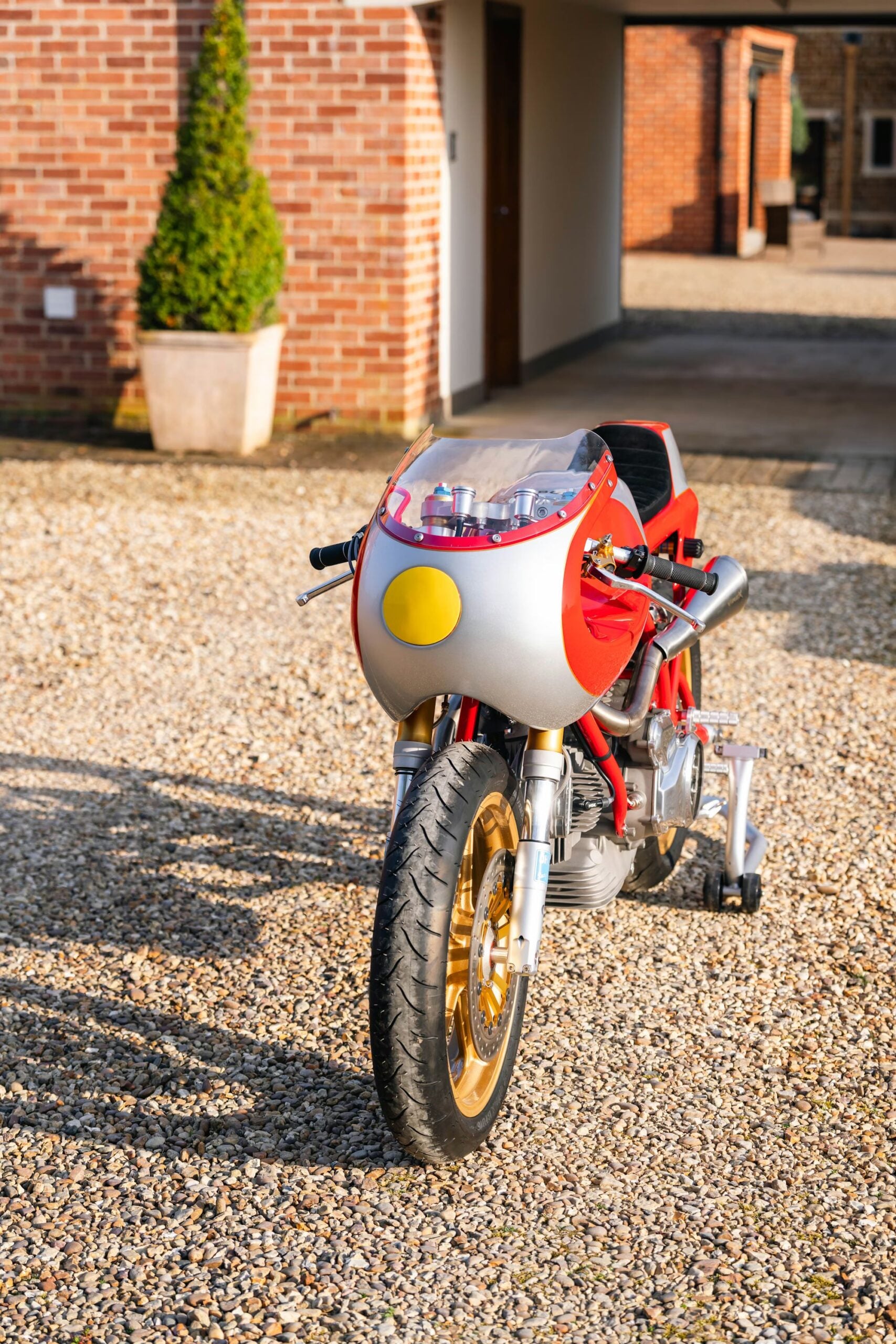
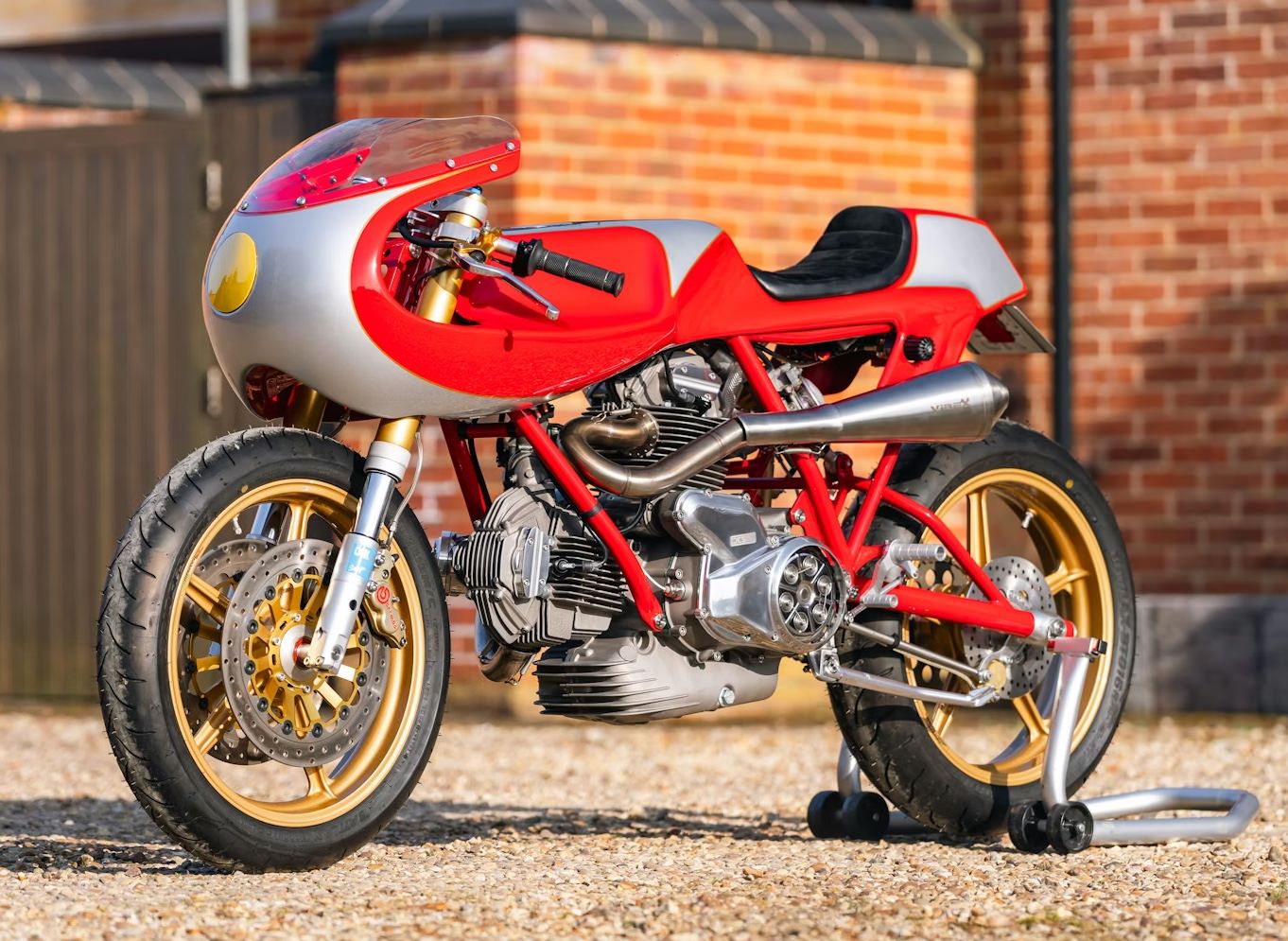
This is a 1984 Ducati MHR1000 has you’ve never seen it before, thanks to a series of upgrades to the engine swingarm, wheels, suspension, brakes, and exhaust system.
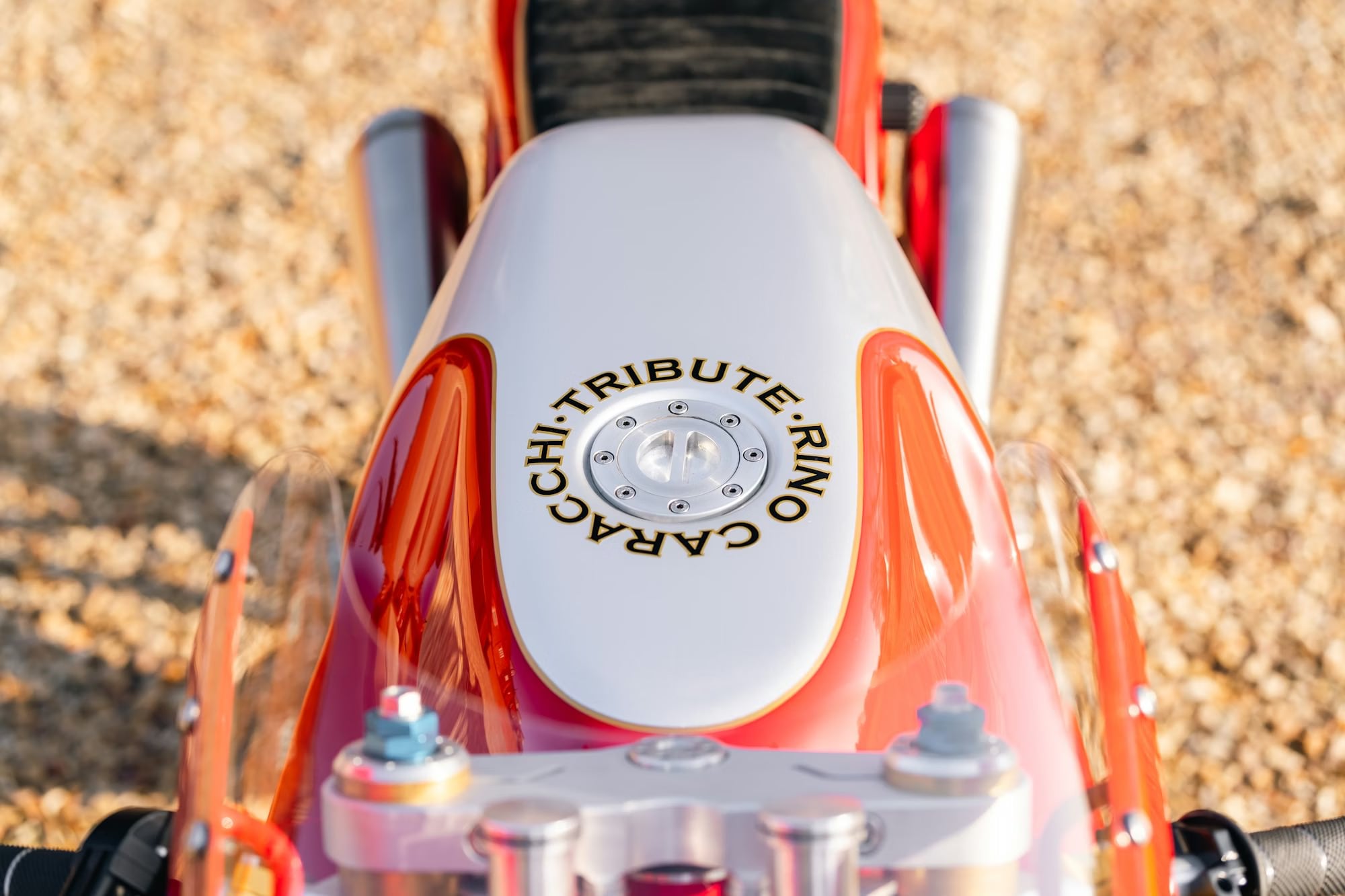
It was built by world-famous Italian specialist Stile Italiano, inspired by NCR legend Rino Caracchi. The bike now looks well-and-truly unique, but its Ducati character remains front and center, and it’s now both quicker and better handling than the bike it started out as.
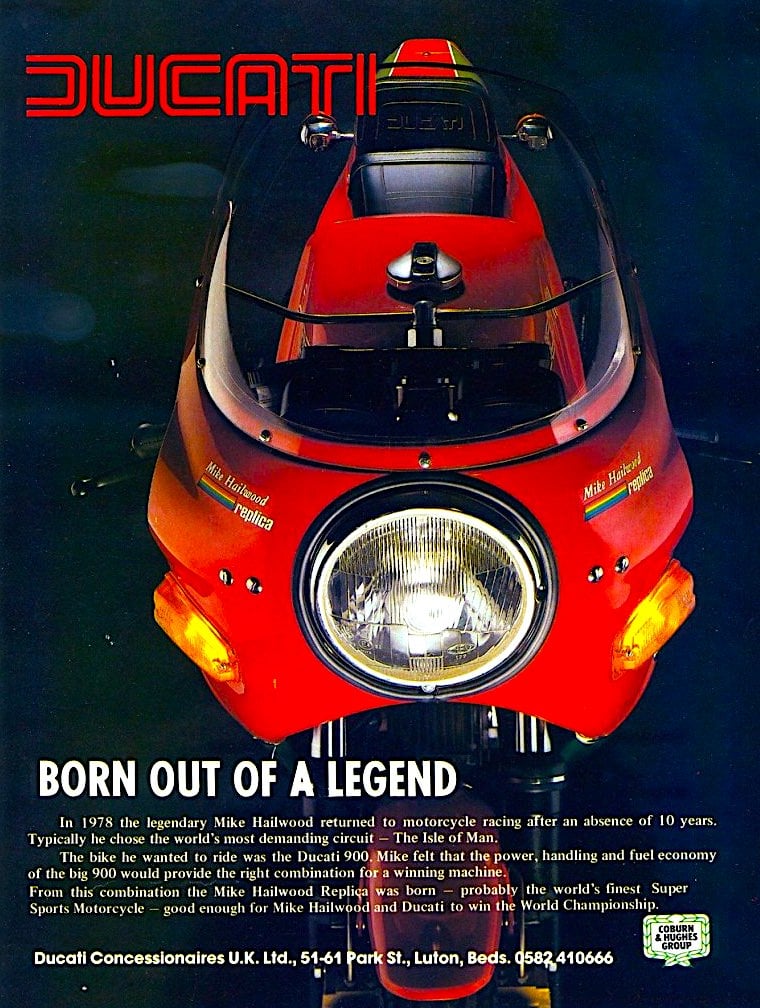
 Riding an NCR-prepared Ducati 900 entered by Sports Motor Cycles, a Manchester-based Ducati dealership, Hailwood won the Formula 1 TT at an average speed of 108.51 mph. He returned in 1979 and won the Senior TT aboard a Suzuki RG 500, just to prove the previous year’s result was no fluke. Image courtesy of Ducati.
History Speedrun: The Ducati MHR1000
In 1978, Mike Hailwood did something most of the motorcycling world had considered completely impossible. The 9-time world champion, then 38 years old, came out of an 11 year retirement to race at the Isle of Man TT – the most dangerous motorcycle race in the world.
Riding an NCR-prepared Ducati 900 entered by Sports Motor Cycles, a Manchester-based Ducati dealership, Hailwood won the Formula 1 TT at an average speed of 108.51 mph. He returned in 1979 and won the Senior TT aboard a Suzuki RG 500, just to prove the previous year’s result was no fluke.
Ducati, which was in serious financial trouble at the time, wasted no time capitalizing on the victory. The factory announced a street-legal Mike Hailwood Replica, and the first production examples arrived late in 1979.
These early bikes were aimed primarily at the British market and were, beneath the full fairing and red, white, and green Castrol-inspired livery, essentially stock Ducati 900SS machines. The engine was the familiar 864cc air-cooled 90º L-twin with bevel gear-driven single overhead camshafts operating desmodromic valves – a proven (but more complex) design dating back in fundamental layout to the early 1970s.
Early MHRs came with kick-start only, Speedline or Campagnolo magnesium wheels, and a one-piece fiberglass fairing that famously made routine maintenance frustratingly difficult.
Despite being more of a cosmetic exercise than a true race replica, the MHR proved to be an enormous commercial success. It quickly became the most popular model in Ducati’s bevel-drive lineup and would remain so throughout the early 1980s. Successive revisions brought a two-piece fairing, side covers that tidied up the exposed battery and rear carburetor, quieter Silentium silencers in place of the original Conti mufflers, and finally in 1983, an electric starter.
The final (and perhaps most significant) evolution of the MHR arrived for the 1984 model year – the MHR Mille. “Mille” is Italian for “thousand,” a nod to the enlarged engine displacement – the Mille looked visually identical to the last iteration of the 900, but underneath the bodywork, Ducati had made substantial changes to the drivetrain.
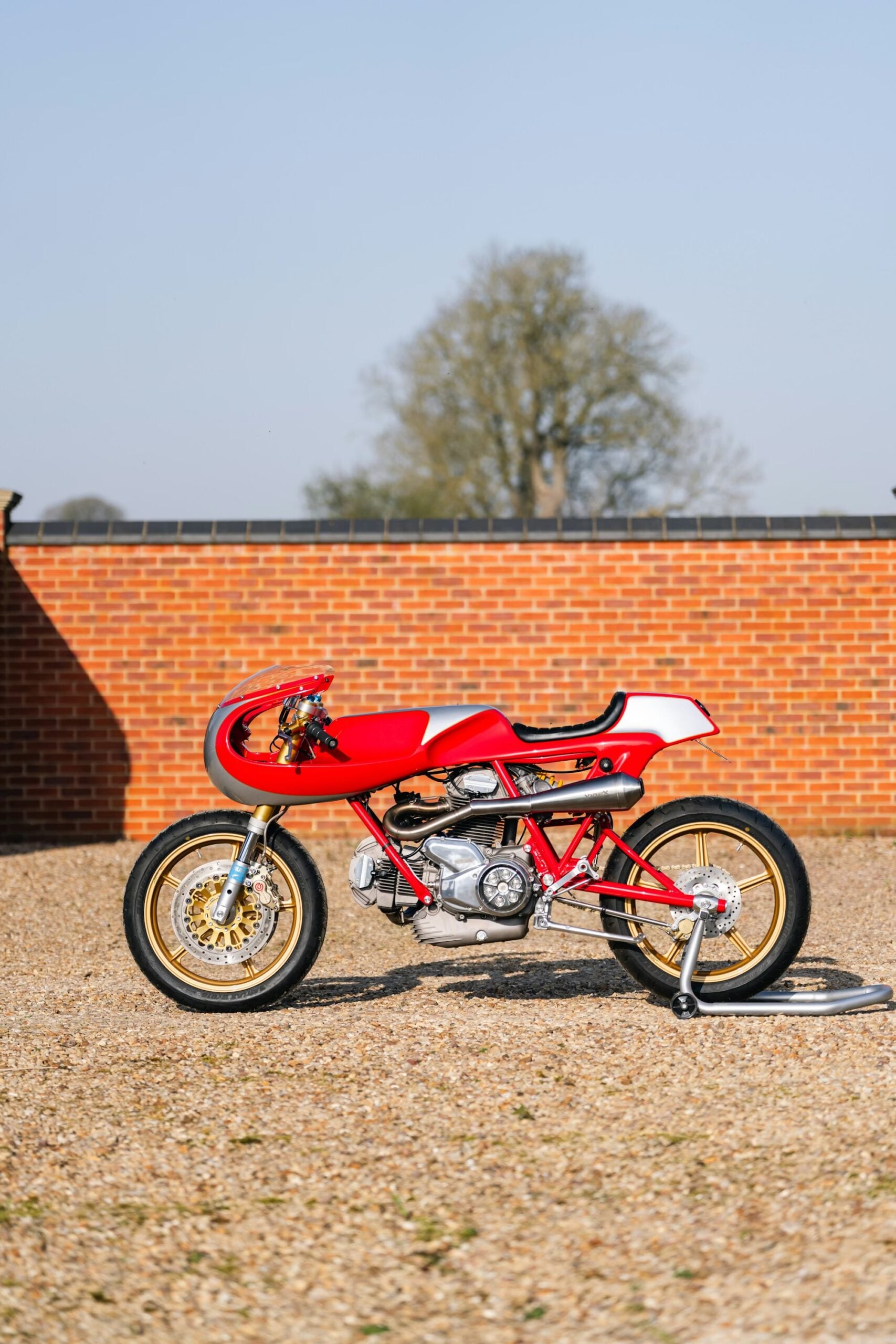
This is a 1984 Ducati MHR1000 has you’ve never seen it before, thanks to a series of upgrades to the engine swingarm, wheels, suspension, brakes, and exhaust system.
The bore was increased by 2mm to 88mm and paired with a longer 80mm stroke, bringing displacement to 973cc. Valve diameters grew by 2mm as well, to 42mm on the intake side and 38mm on the exhaust, though the 40mm Dell’Orto carburetors carried over unchanged. The most meaningful improvement was a new one-piece forged crankshaft running on plain main bearings, replacing the older pressed-up roller-bearing assembly. Ducati also revised the primary gears and fitted a completely reworked gearbox.
The result was a claimed 76 bhp at 6,700 rpm and 62 lb ft of torque at 5,800 rpm – a ~10% improvement in torque over the outgoing 900. Top speed was quoted at 138 mph, the same figure Ducati had cited for the 900, thanks to revised gearing that favored mid-range usability over outright speed.
Suspension consisted of 38mm non-adjustable Marzocchi telescopic forks up front and twin preload-adjustable Marzocchi shock absorbers out back. Brakes included dual 280mm Brembo front discs with twin-piston calipers and a 260mm rear disc. The dry weight of the bike was approximately 198 kgs (436 lbs).
From a technological standpoint, the MHR Mille was already obsolete when it launched. Japanese manufacturers had moved to DOHC four-cylinder engines, monoshock rear suspension, 16-inch front wheels, and sharper steering geometry. The Mille’s twin-shock chassis and slow-steering front end were fundamentally the same architecture Ducati had been using since its 750 twin nearly a decade earlier.
None of that seemed to matter to buyers however. The MHR’s appeal had never been about cutting-edge technology – it was all about character, presence, heritage, and a direct link to one of motorcycle racing’s most romantic victories. In 1984, a remarkable 1,728 of the 1,965 motorcycles Ducati produced were bevel-drive MHRs, representing 88% of the factory’s total output – the bike was, in a very real sense, keeping the lights on at Borgo Panigale.
Cagiva, which had begun sourcing Ducati engines in 1983, completed its acquisition of the company in 1985. The new owners initially planned to discontinue the expensive-to-produce bevel-drive engine entirely, but the MHR’s sustained popularity convinced Cagiva to allow production to continue into 1985 and 1986, with an additional 549 MHRs built after the takeover.
Total Mille production ran to approximately 1,100 units. Across all 900 and 1000 variants from 1979 to 1986, Ducati built approximately 7,000 Mike Hailwood Replicas (though some specialist accounts put the figure somewhat lower) making it the most numerous bevel-drive twin model the factory ever produced.
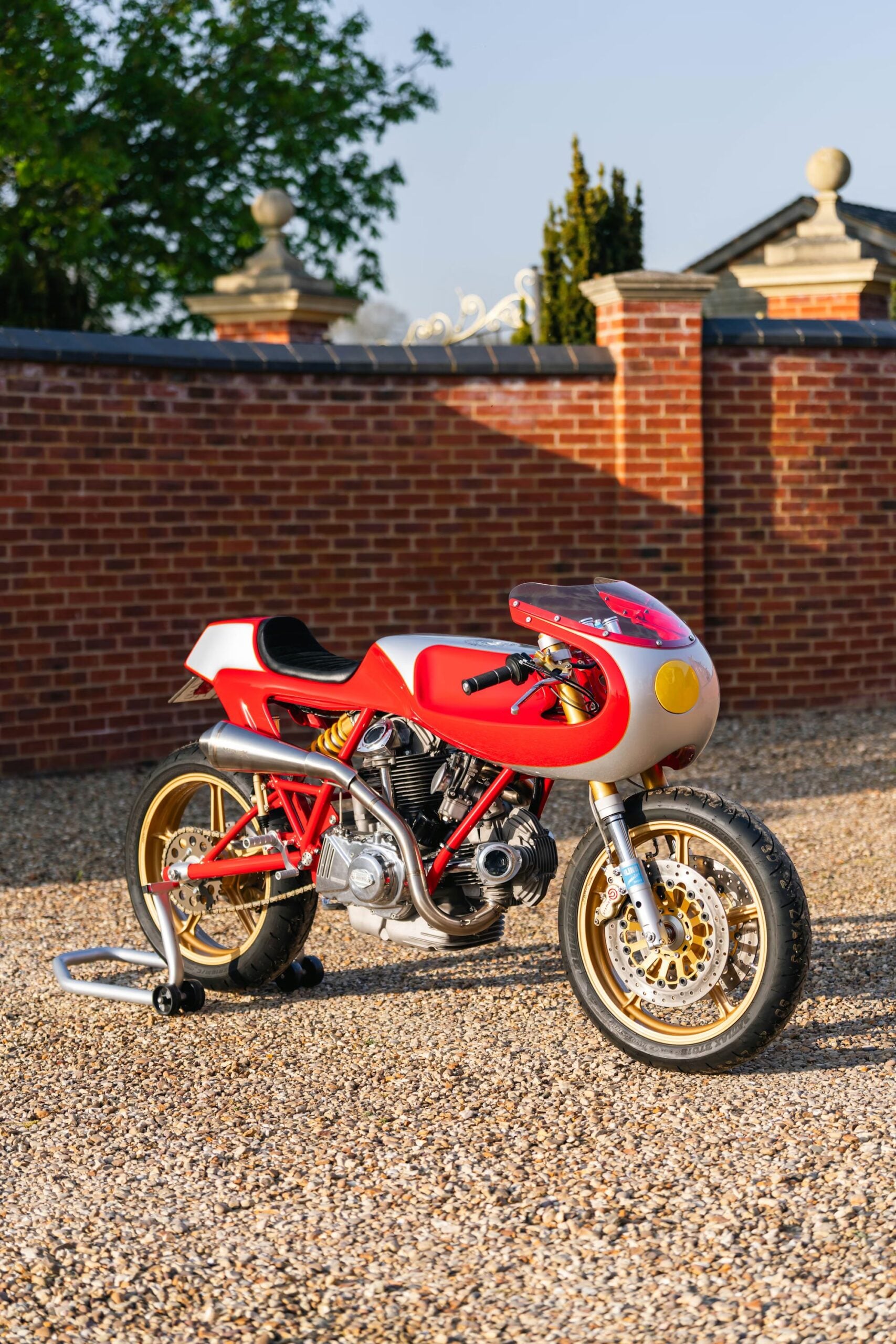
This bike was built by world-famous Italian specialist Stile Italiano, inspired by NCR legend Rino Caracchi. The bike now looks well-and-truly unique, but its Ducati character remains front and center, and it’s now both quicker and better handling than the bike it started out as.
The MHR Mille still holds a unique place in Ducati history as the last bevel-drive twin the company ever made. It was neither a state-of-the-art superbike or a faithful race replica, but it closed out an engineering lineage that had defined the marque for well over a decade and it helped the company survive one of the darkest chapters in its history.
The Ducati MHR1000 By Stile Italiano Shown Here
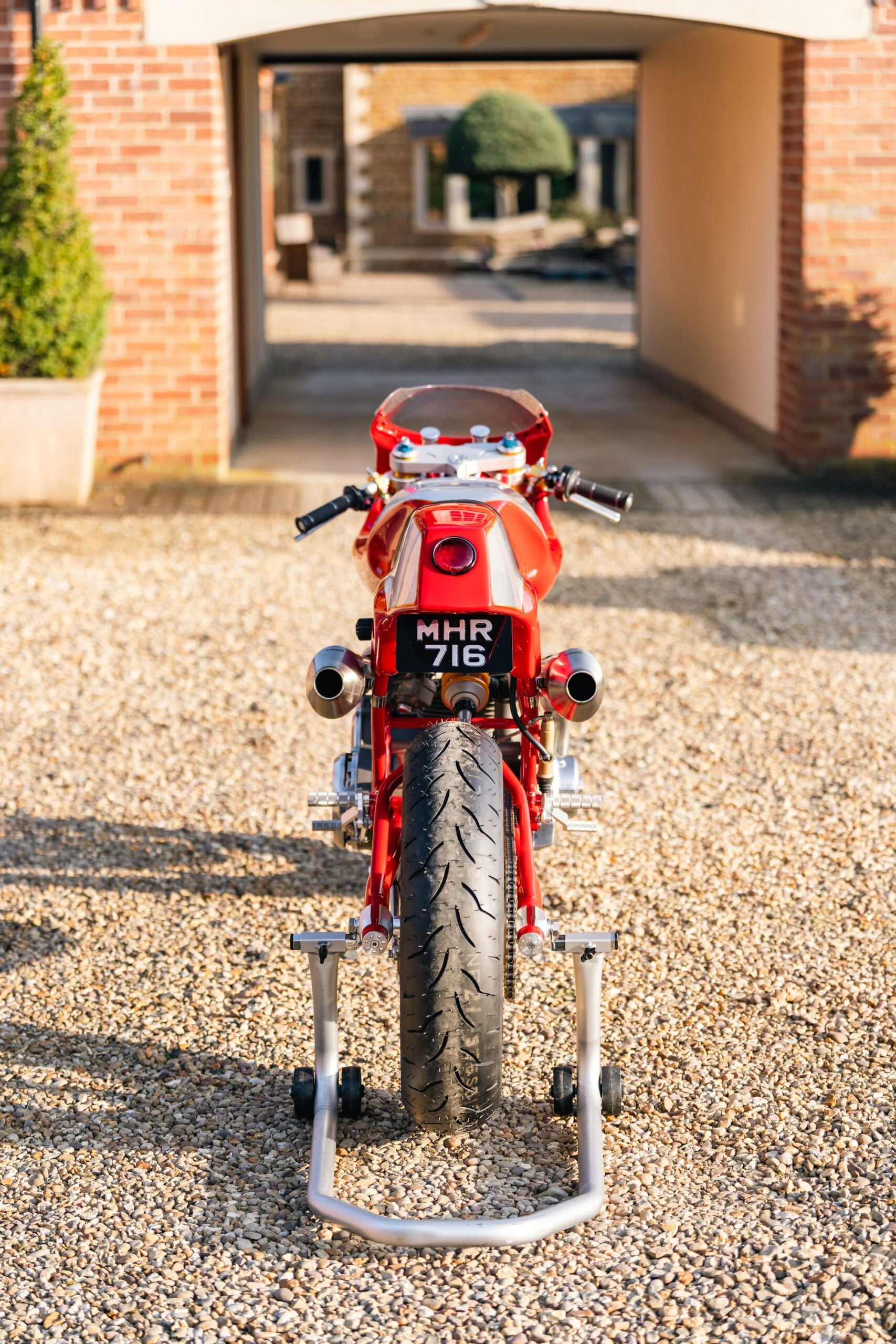
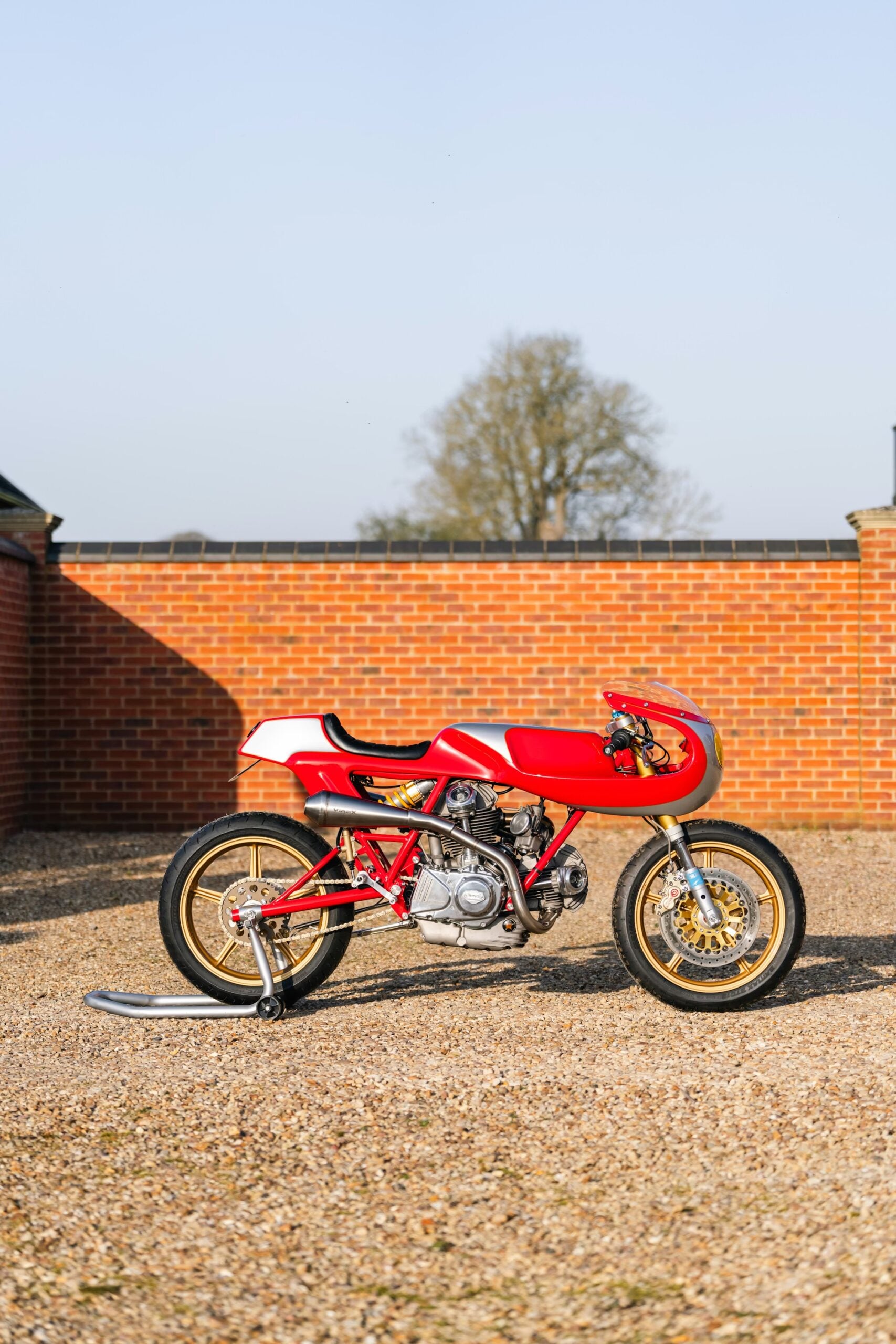
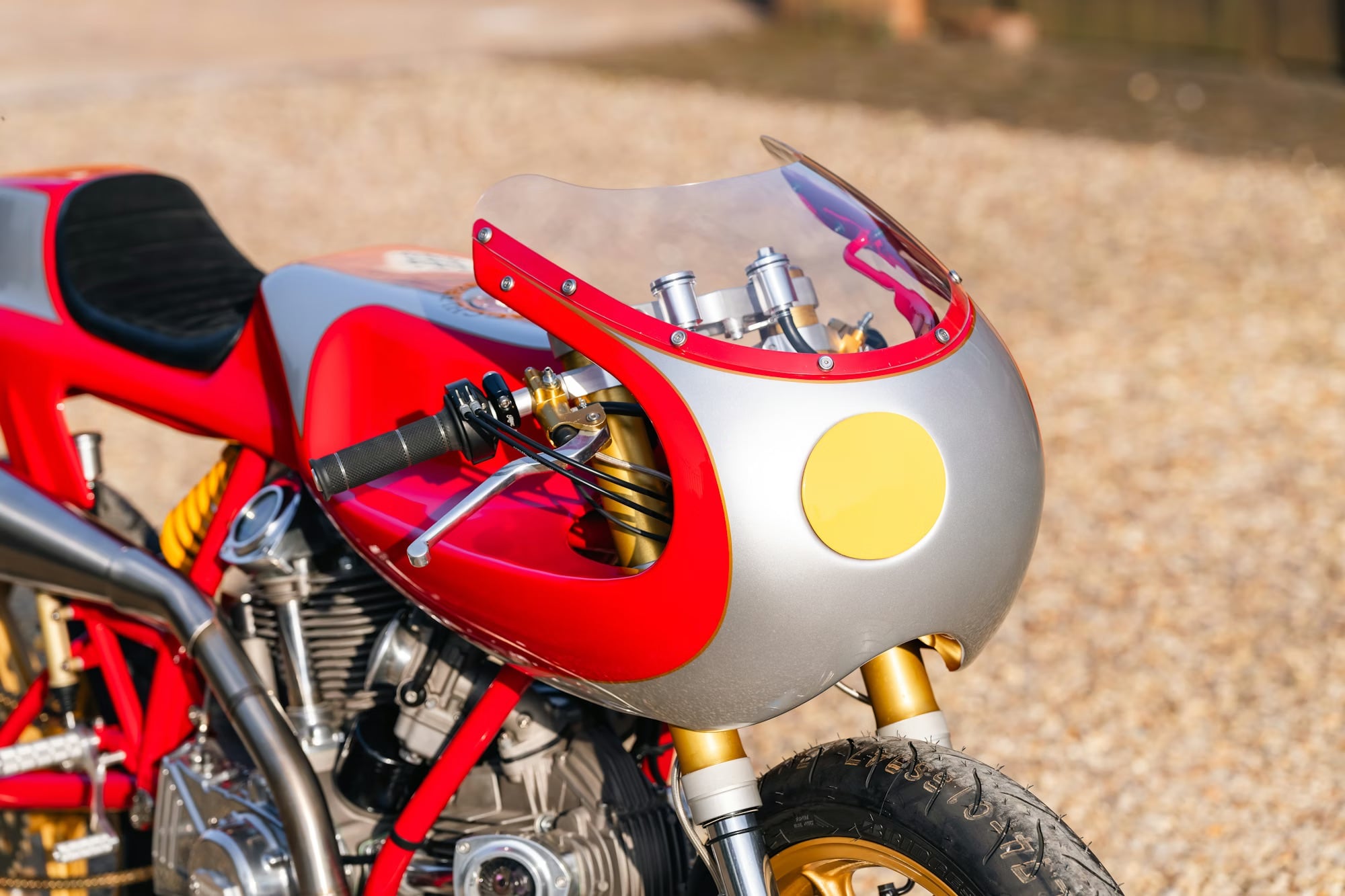
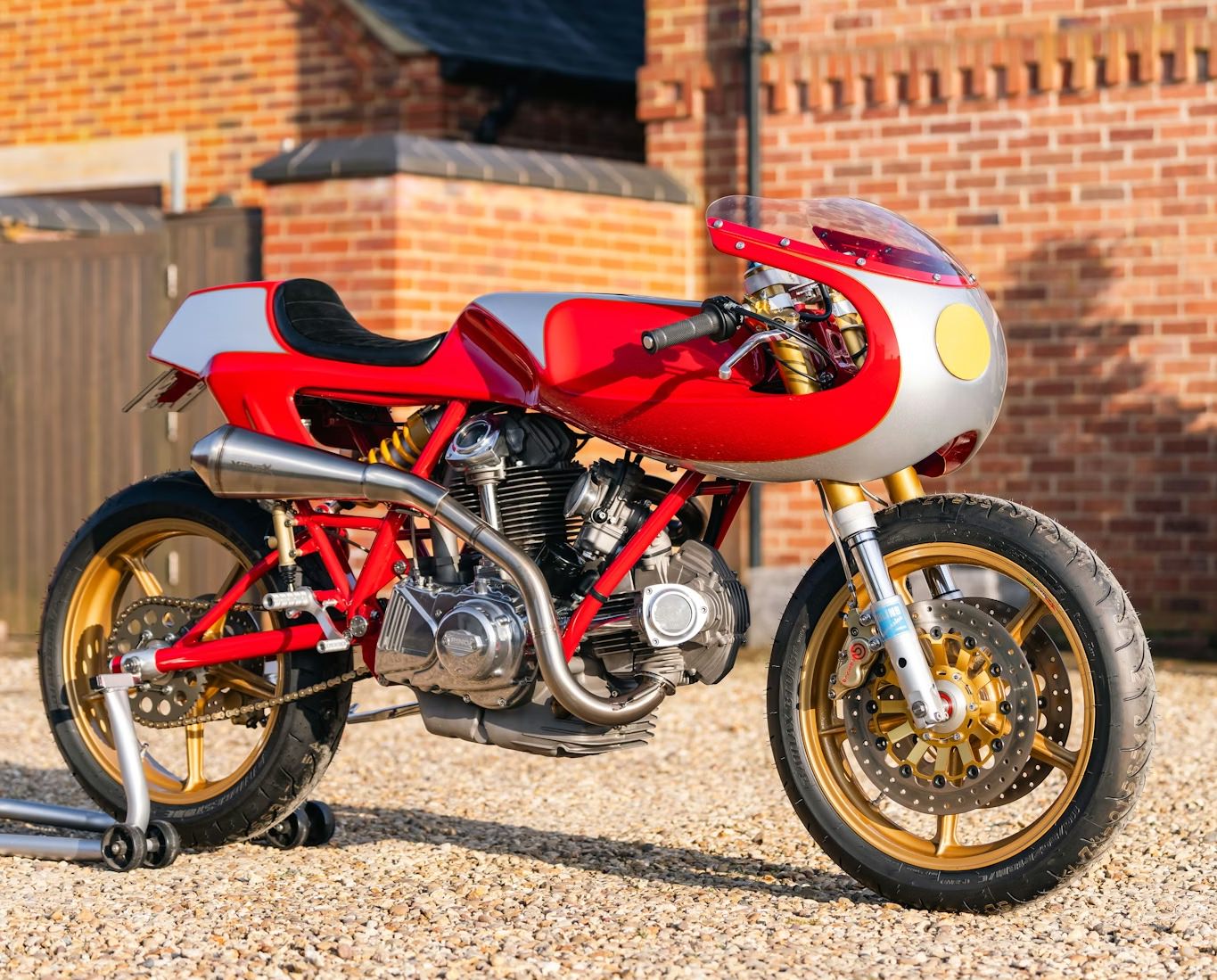
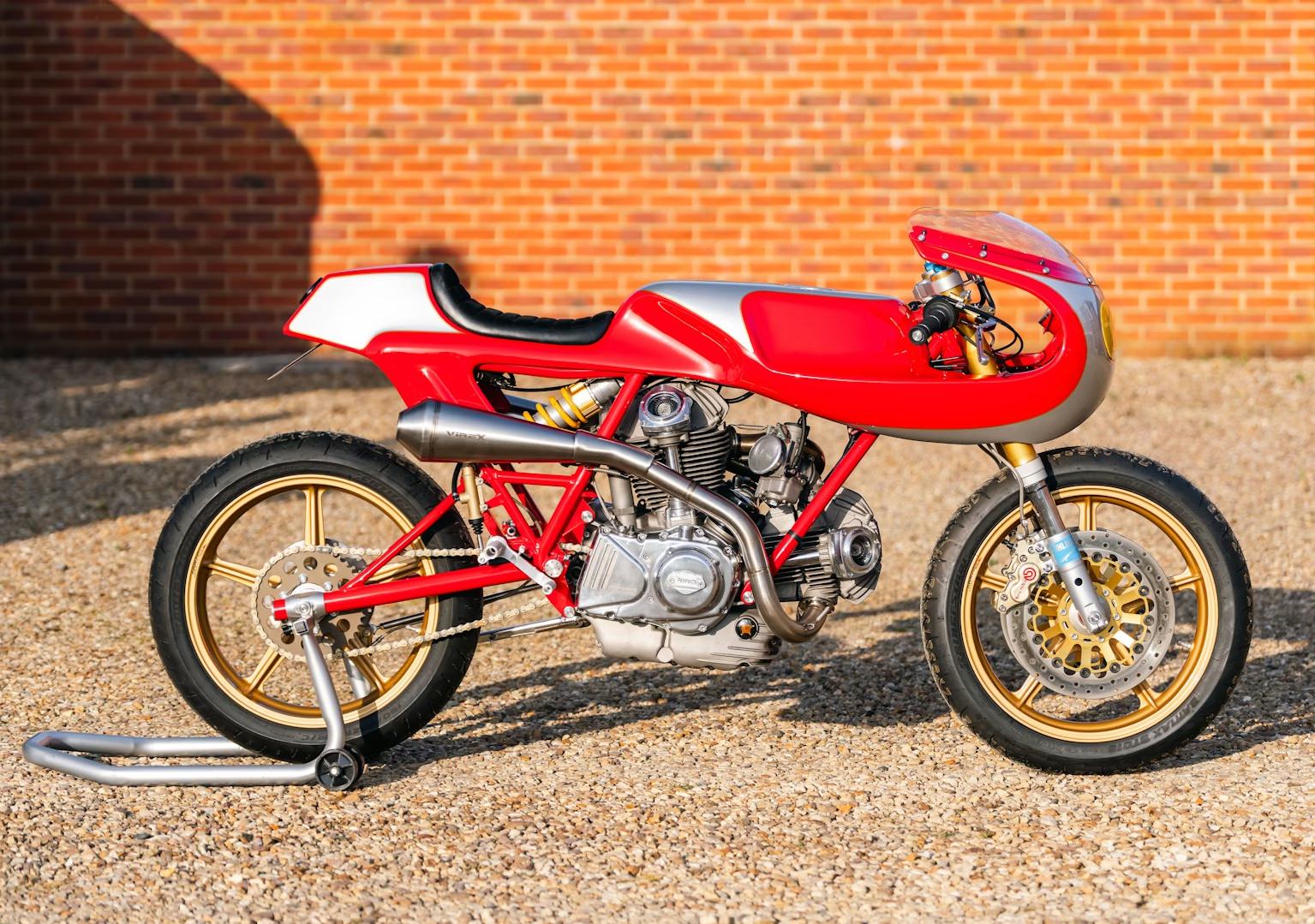
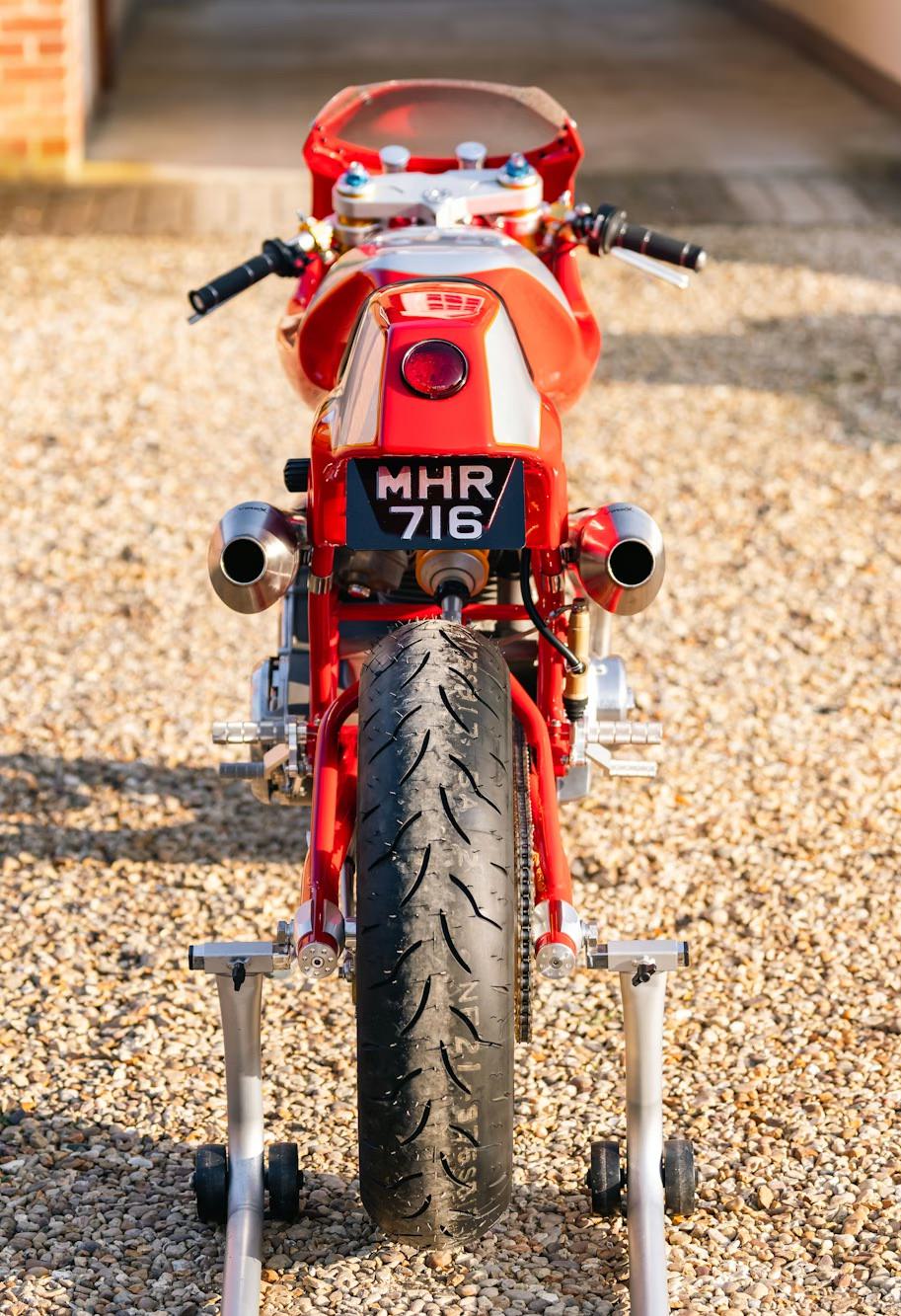
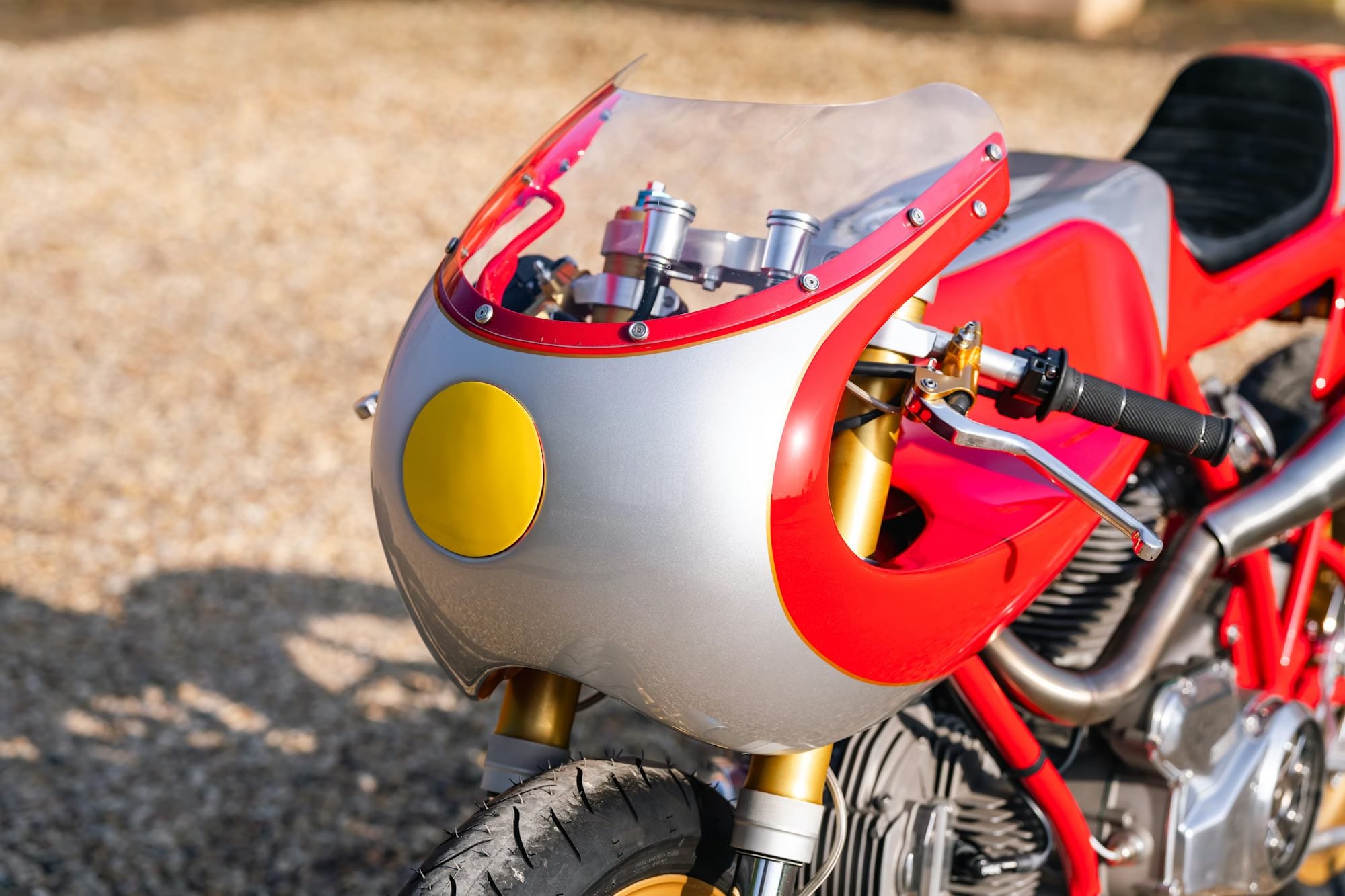
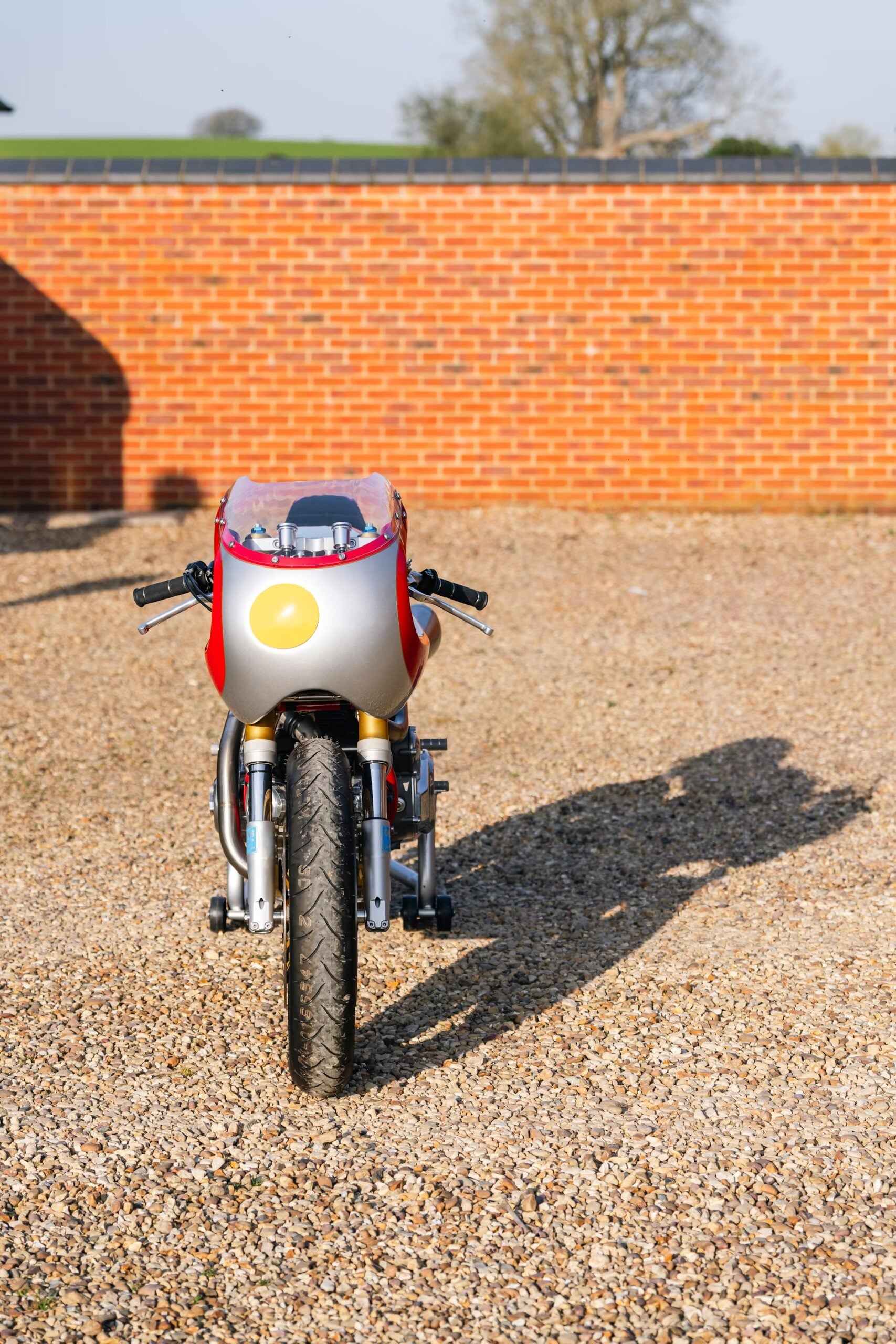
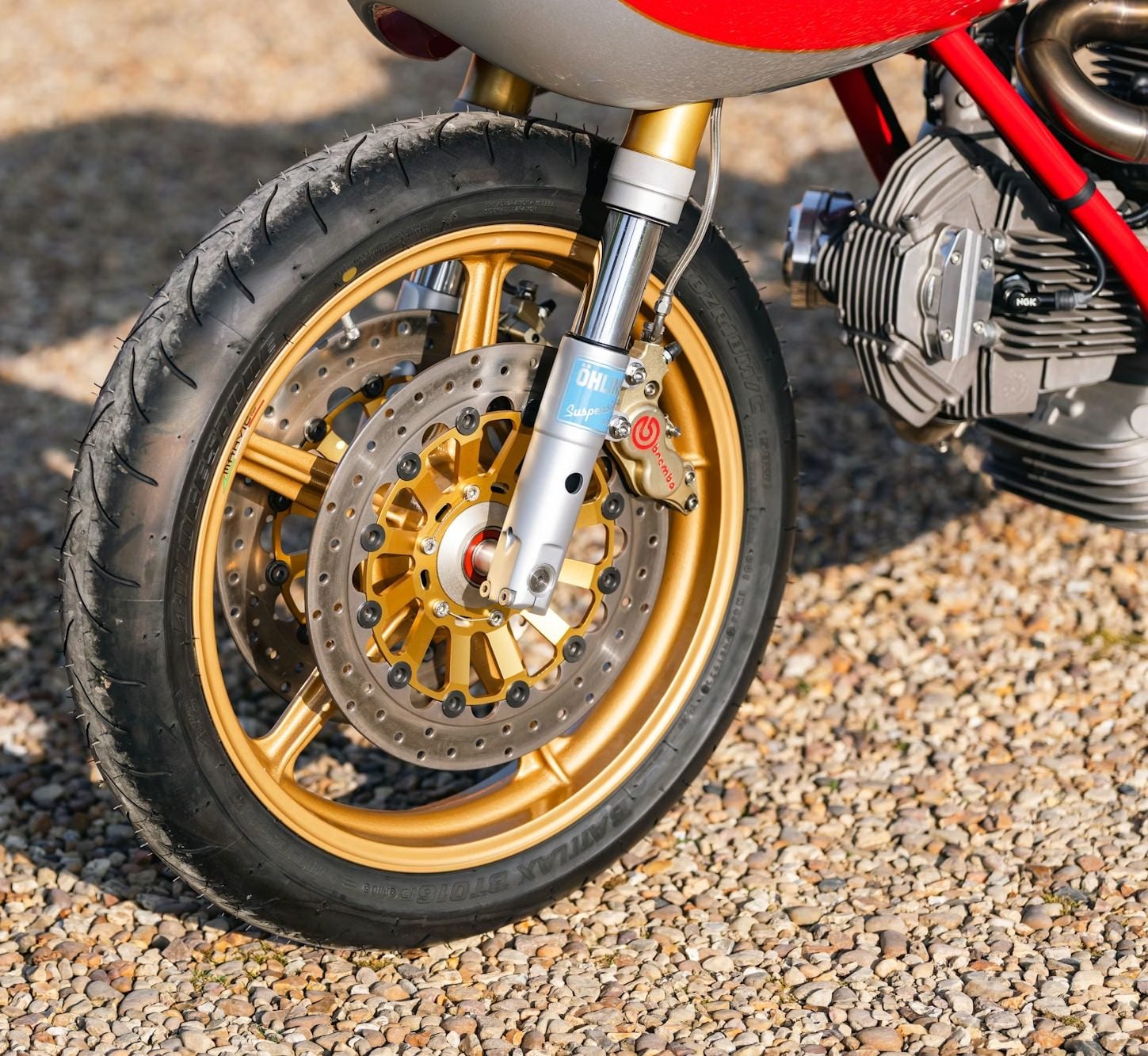
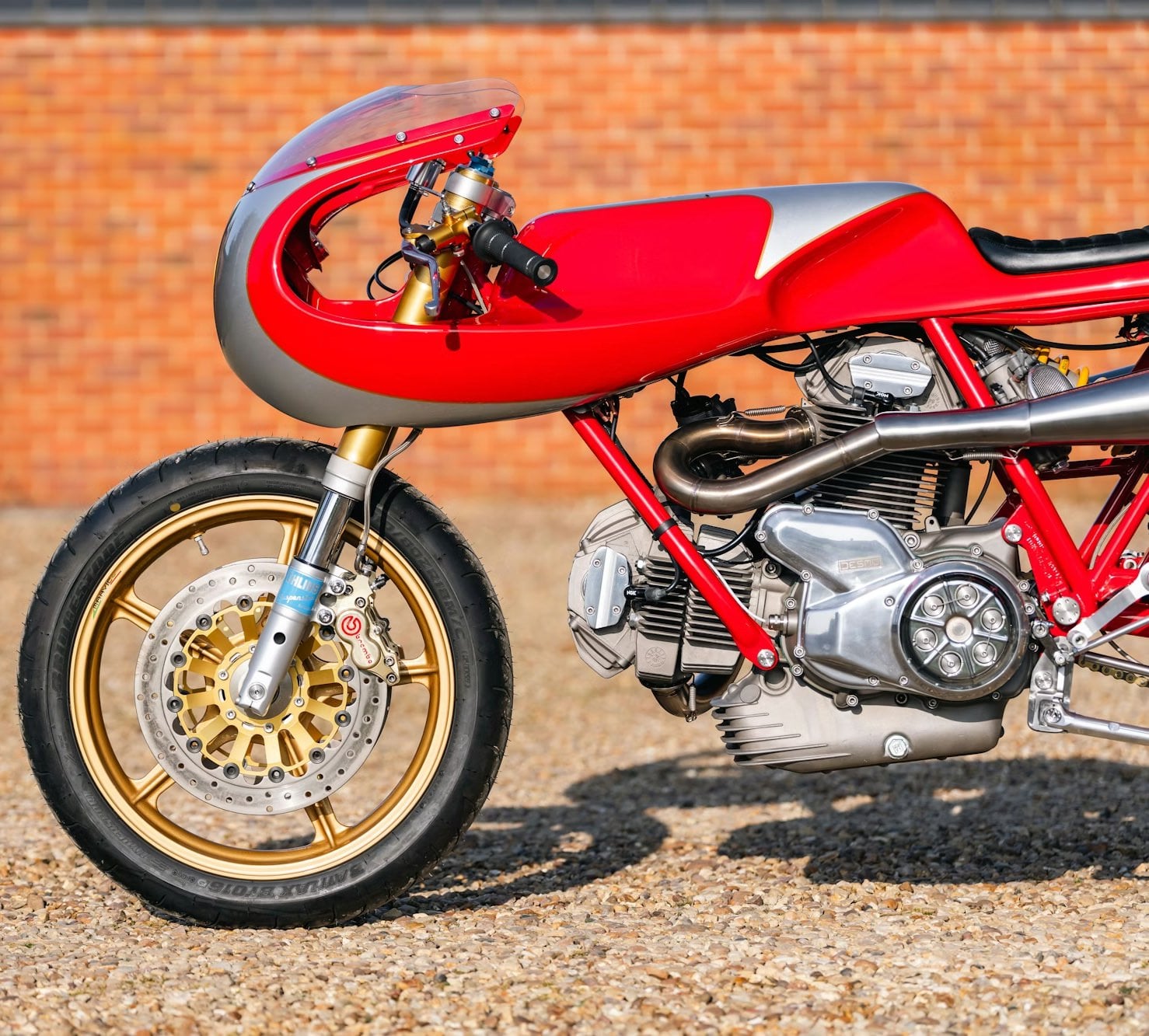
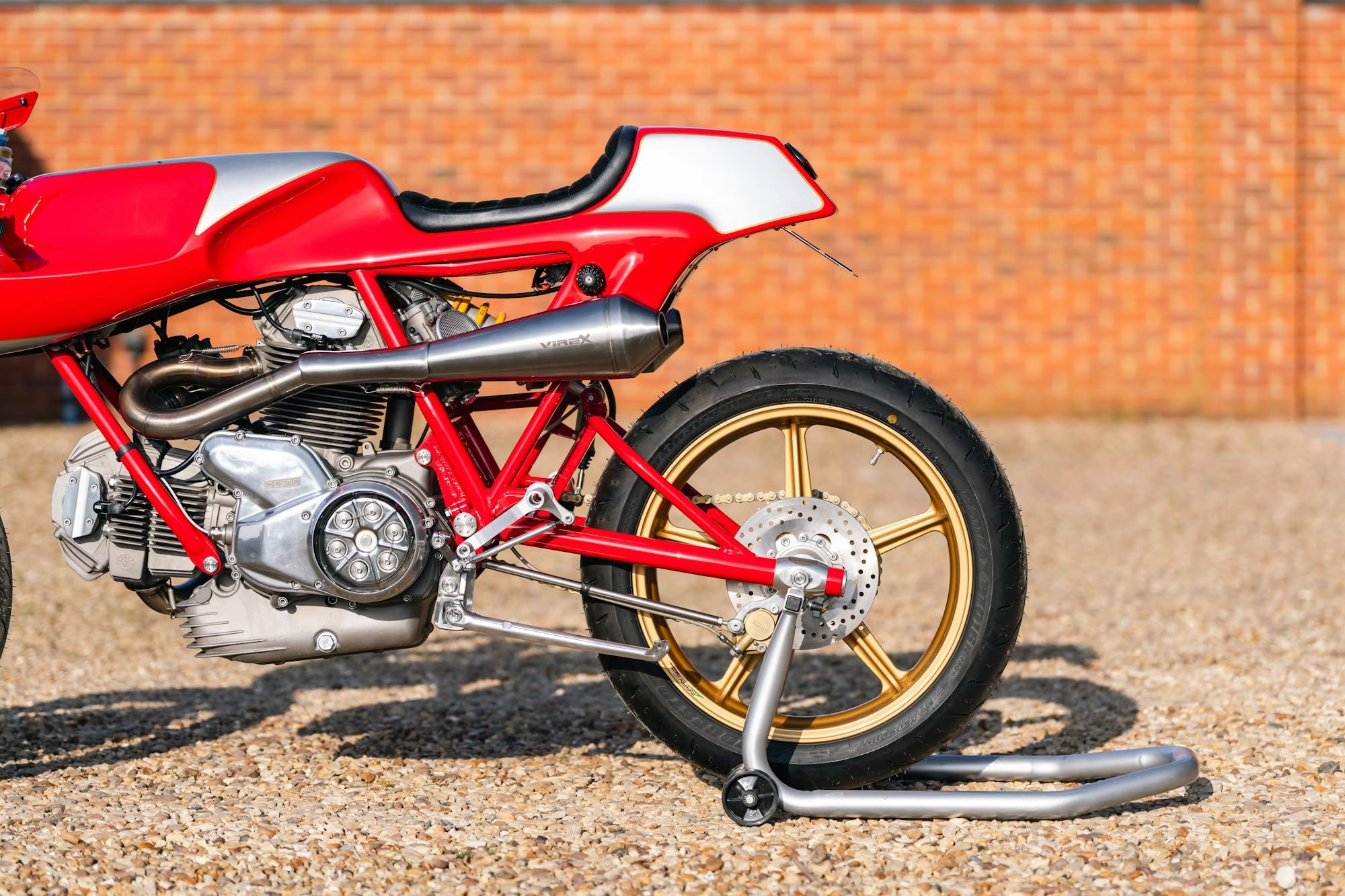
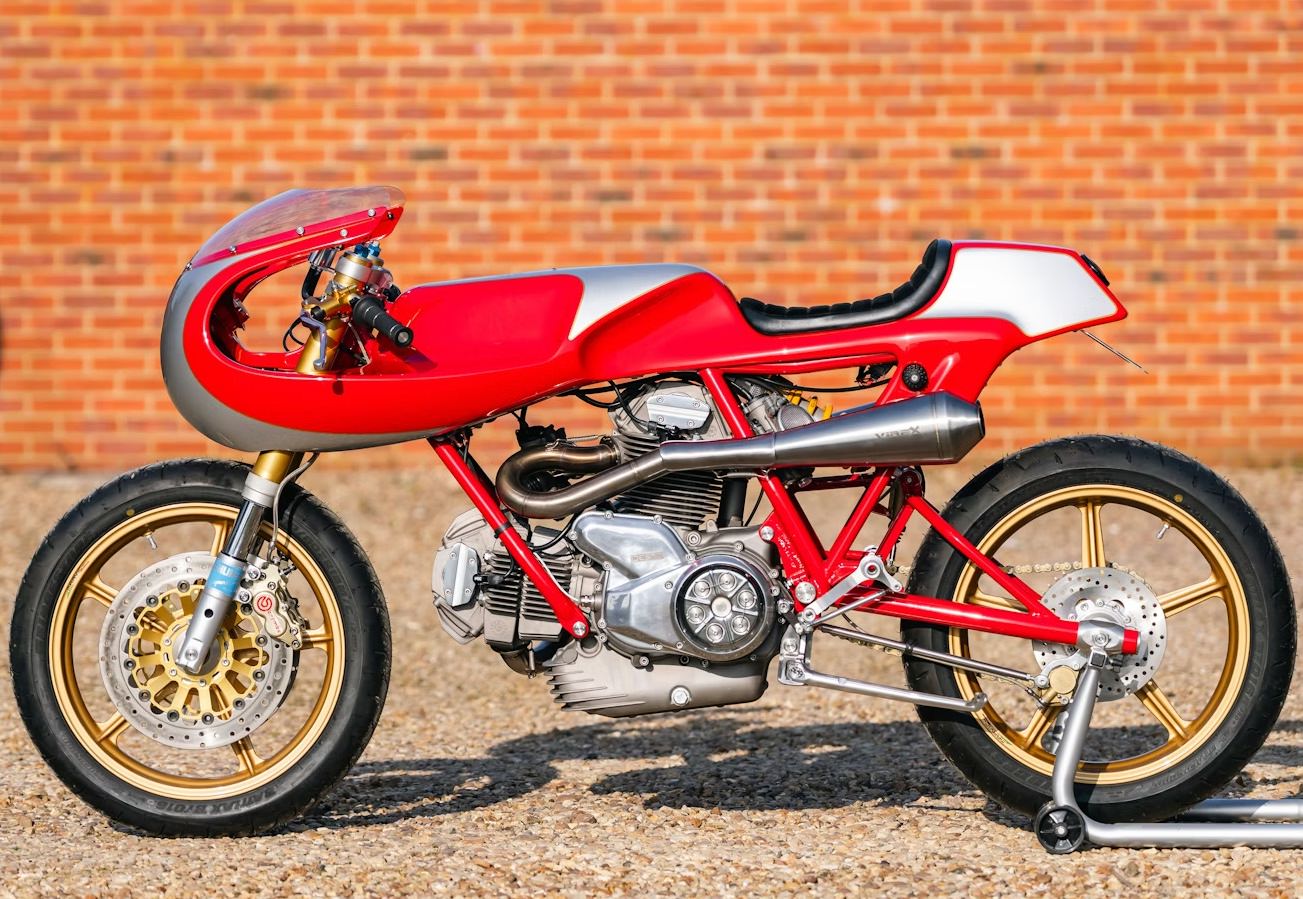
This Ducati MHR1000 is a one-off custom build by Italian specialist Stile Italiano, it was developed as a tribute to NCR legend Rino Caracchi. Based on a 1984 model, the bike was previously registered overseas before being registered with the DVLA in August of 2024.
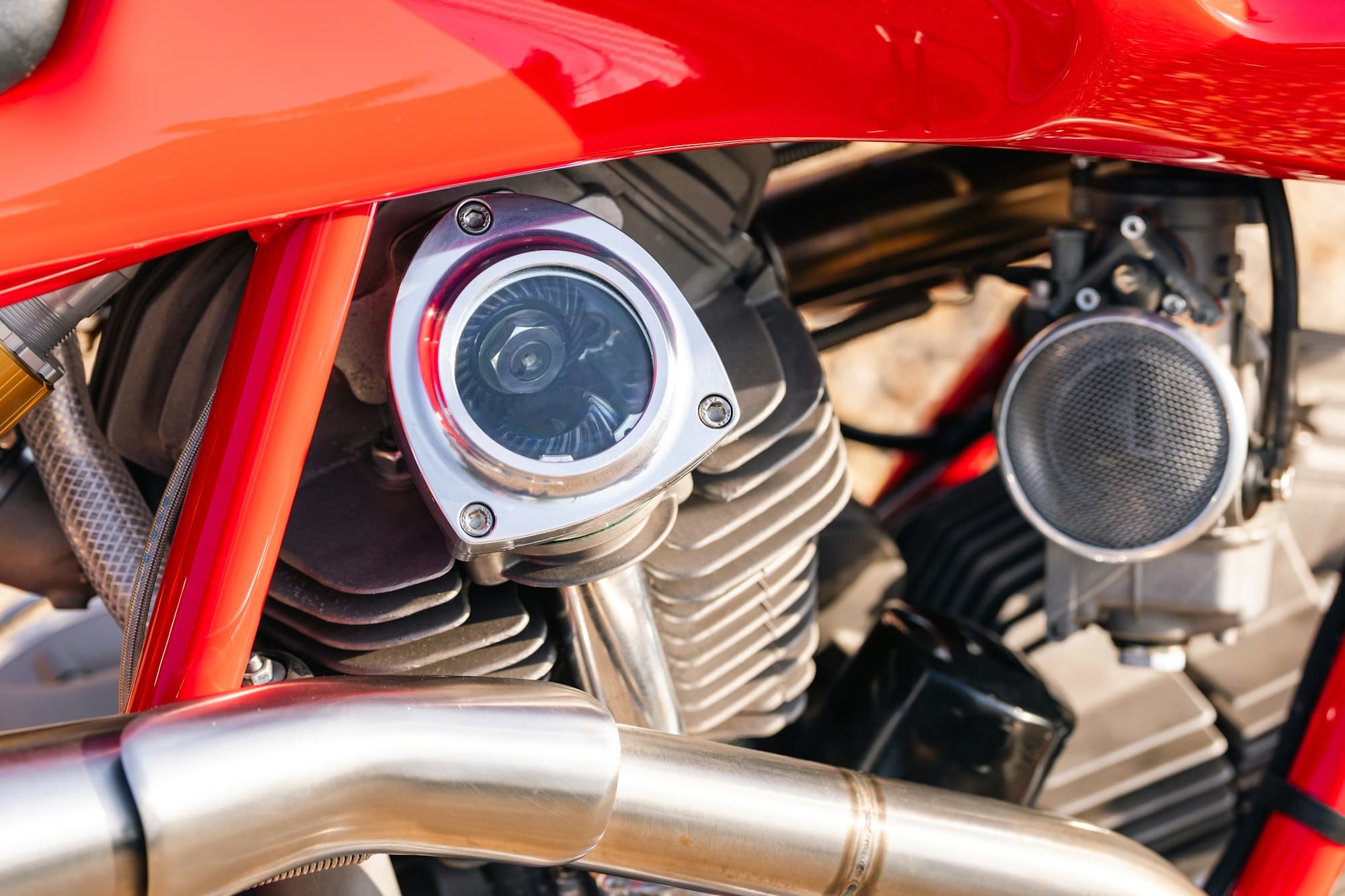
At its heart is an air-cooled 973cc bevel-drive Ducati L-twin fed by carburetors and paired with a 5-speed transmission. The seller notes that the large, high-compression engine benefits from the included Gooloo starter pack when firing from cold, though it starts more readily once up to temperature. The starter pack plugs into the wiring beneath the seat, and the included CTEK charger connects via the same point.
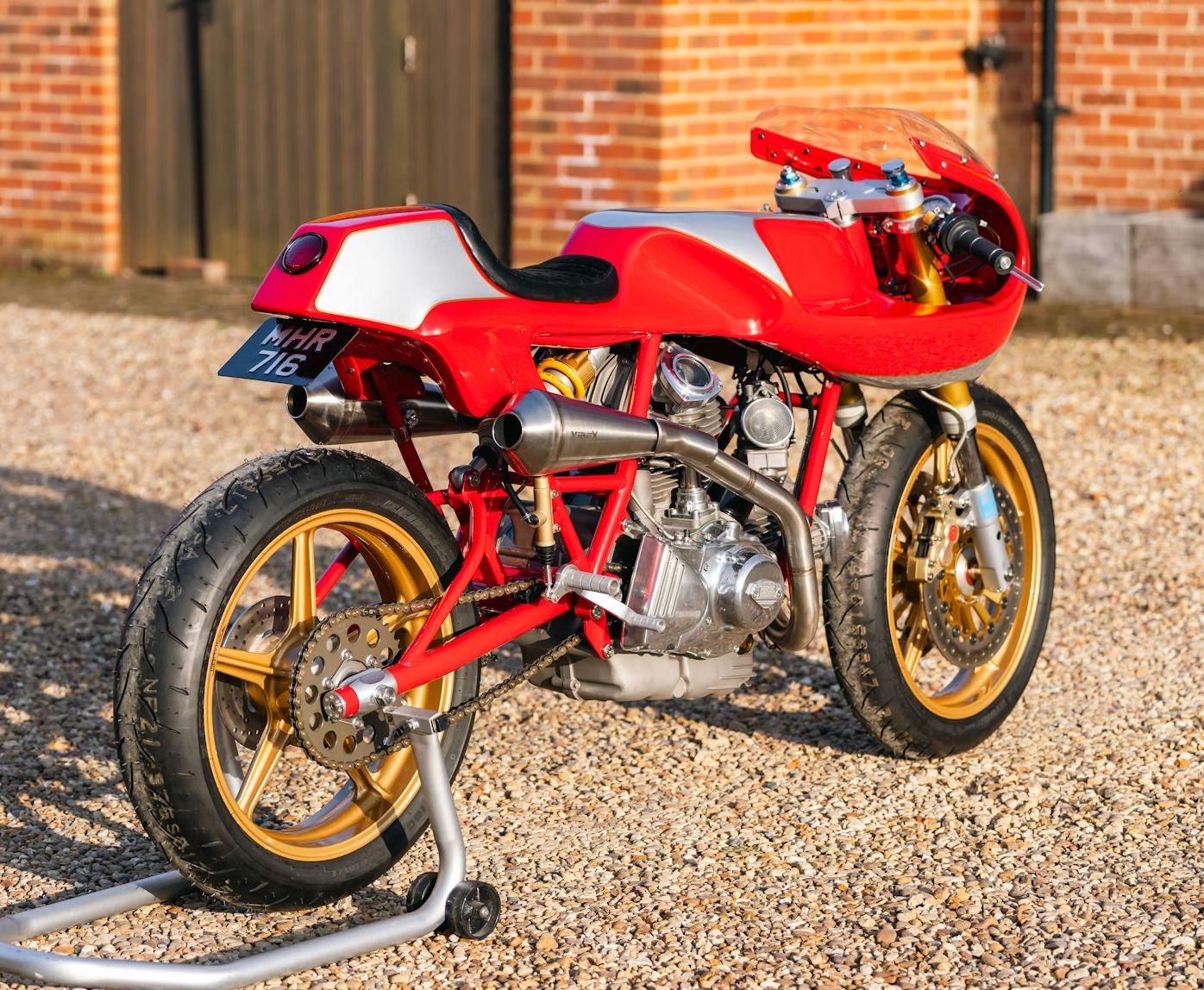
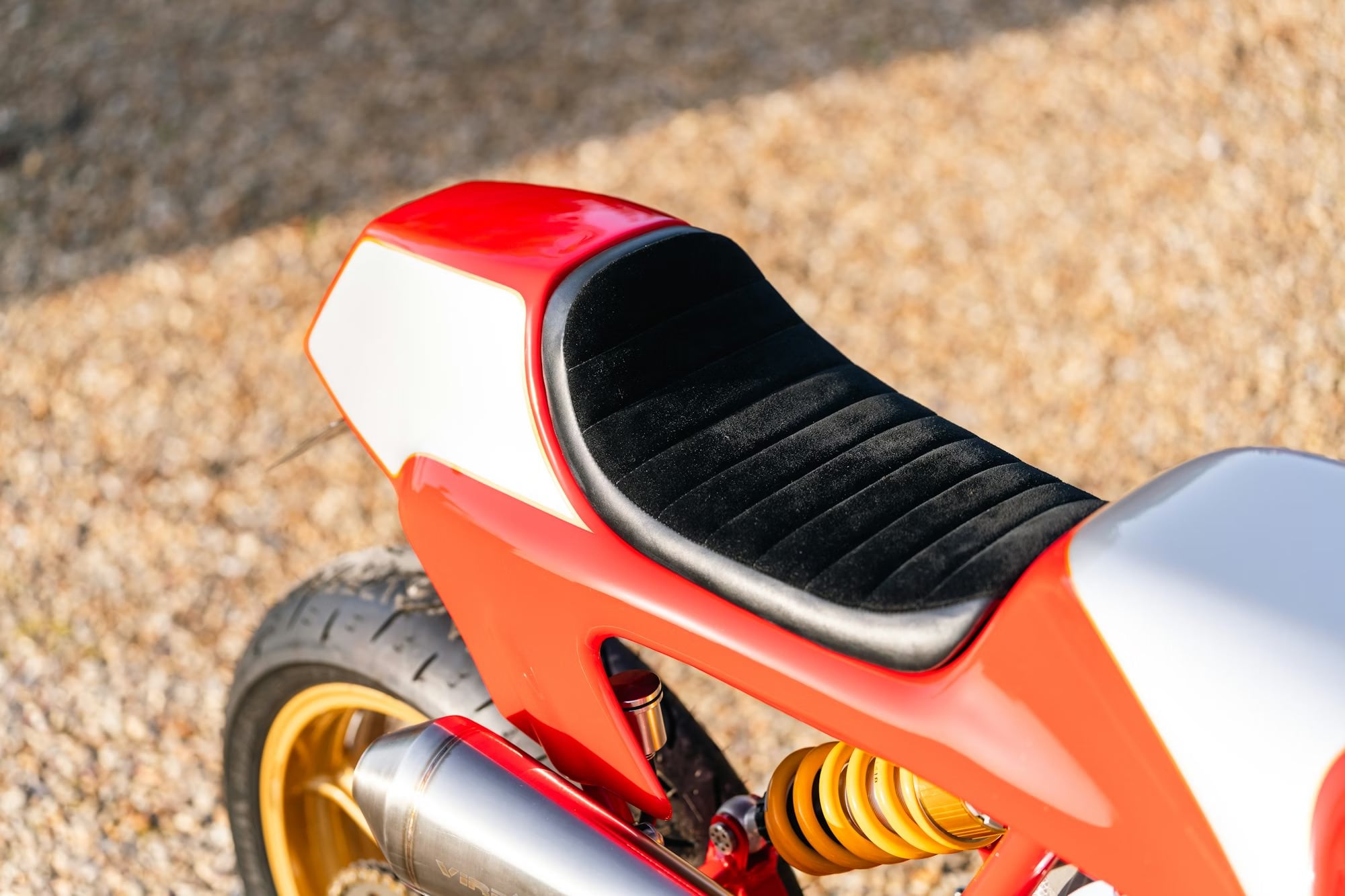
The bodywork is a single-piece aluminum assembly finished in red with silver accents and gold borders, topped with a black seat pad. Beyond the bespoke bodywork, the bike has been comprehensively re-engineered with a modified swingarm, upgraded wheels, suspension, brakes, and exhaust – making it far more than merely a cosmetic exercise.
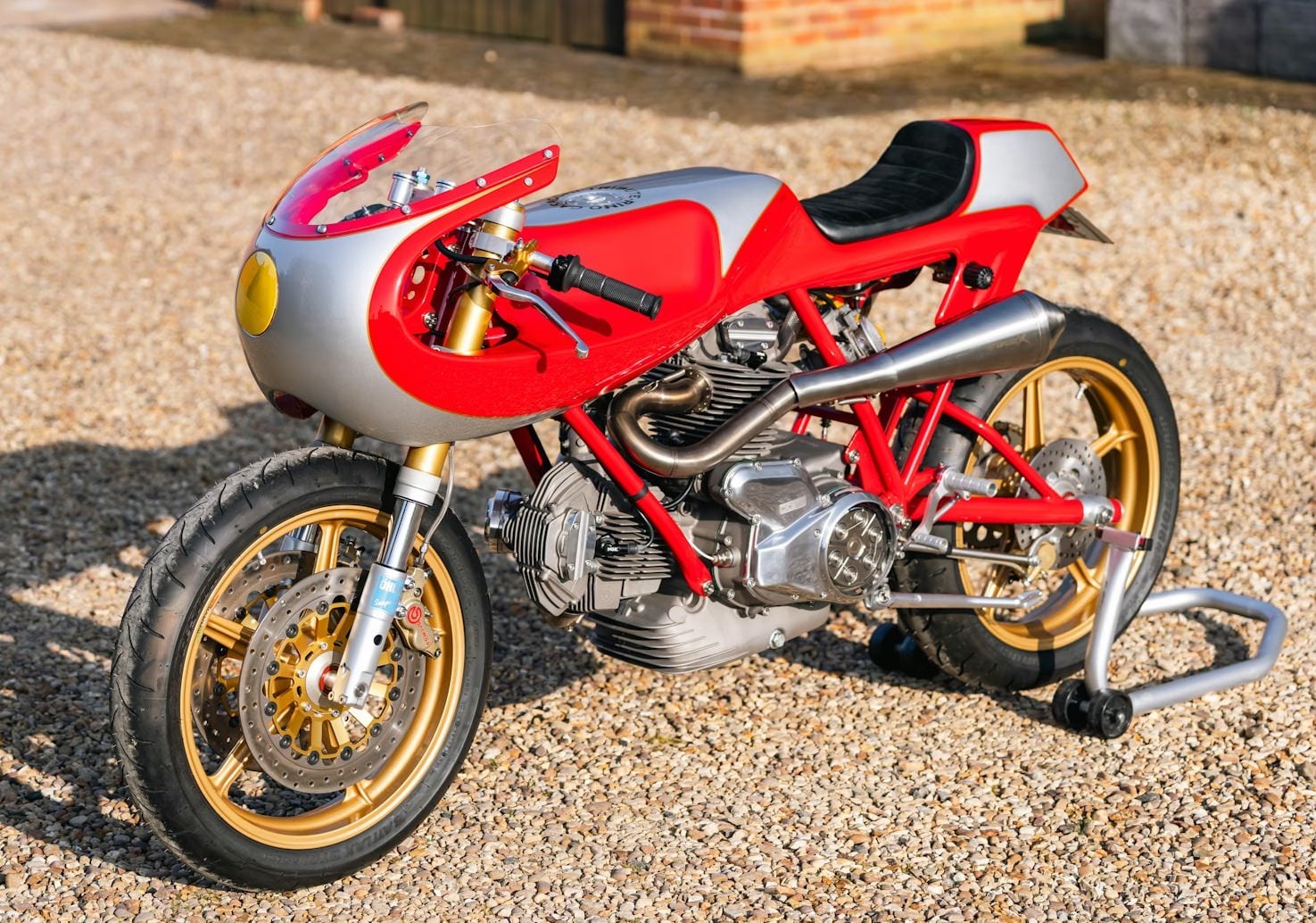
This Ducati MHR1000 is a one-off custom build by Italian specialist Stile Italiano, it was developed as a tribute to NCR legend Rino Caracchi. Based on a 1984 model, the bike was previously registered overseas before being registered with the DVLA in August of 2024.
The last recorded maintenance on the bike was in November of 2025, when the engine oil and fluids were changed. A new battery has also been fitted during the current seller’s ownership. The bike comes with a paddock stand, a bike cover, and magazines in which it’s been featured.
The bike is now being offered for sale on Collecting Cars out of Leicestershire in the United Kingdom, and you can visit the listing here to read more about it or register to bid.
Images courtesy of Collecting Cars
Articles that Ben Branch has written have been covered on CNN, Popular Mechanics, Smithsonian Magazine, Road & Track Magazine, the official Pinterest blog, the official eBay Motors blog, BuzzFeed, Autoweek Magazine, Wired Magazine, Autoblog, Gear Patrol, Jalopnik, The Verge, and many more.
Silodrome was founded by Ben back in 2010, in the years since the site has grown to become a world leader in the alternative and vintage motoring sector, with well over a million monthly readers from around the world and many hundreds of thousands of followers on social media.