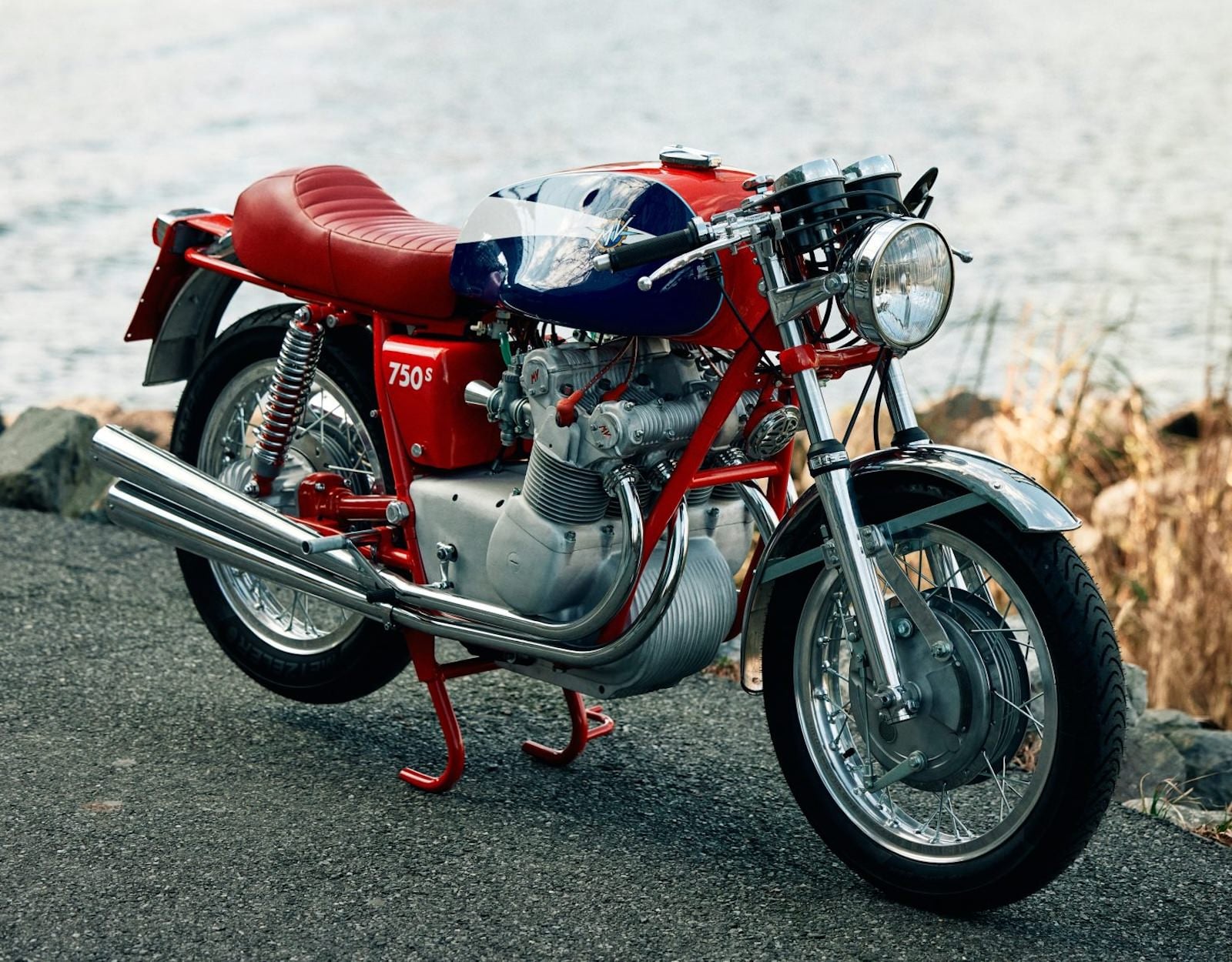
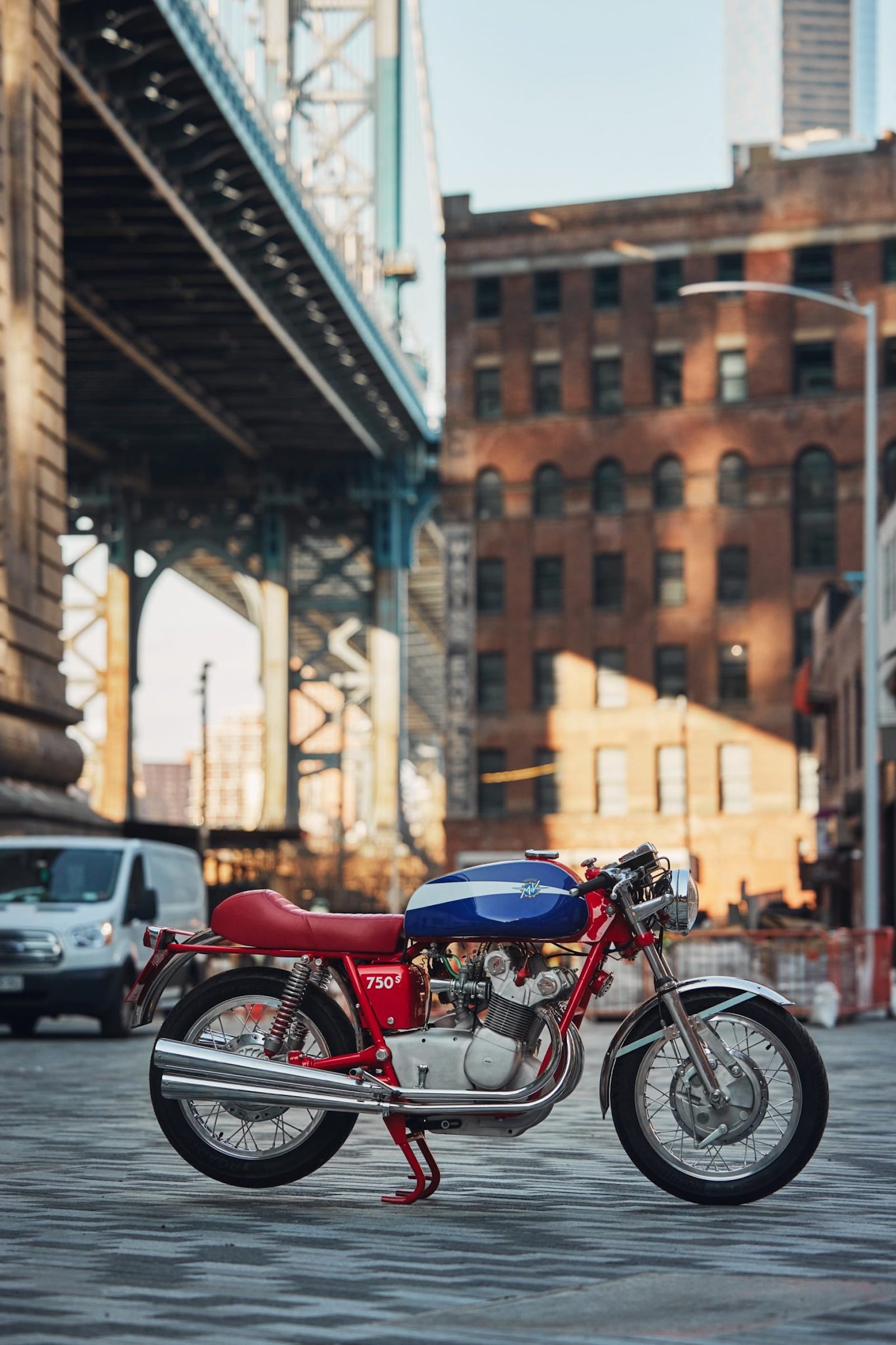
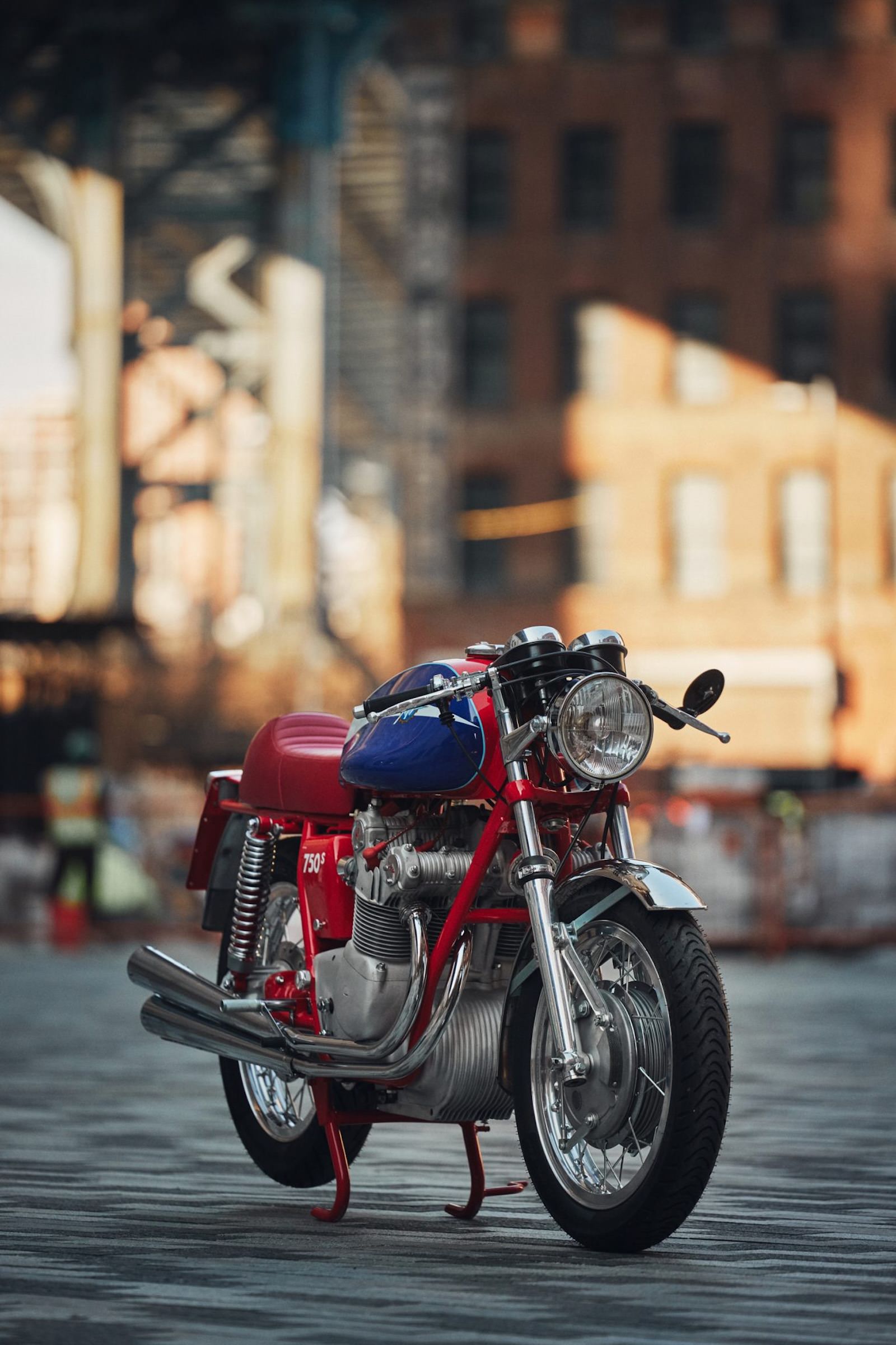
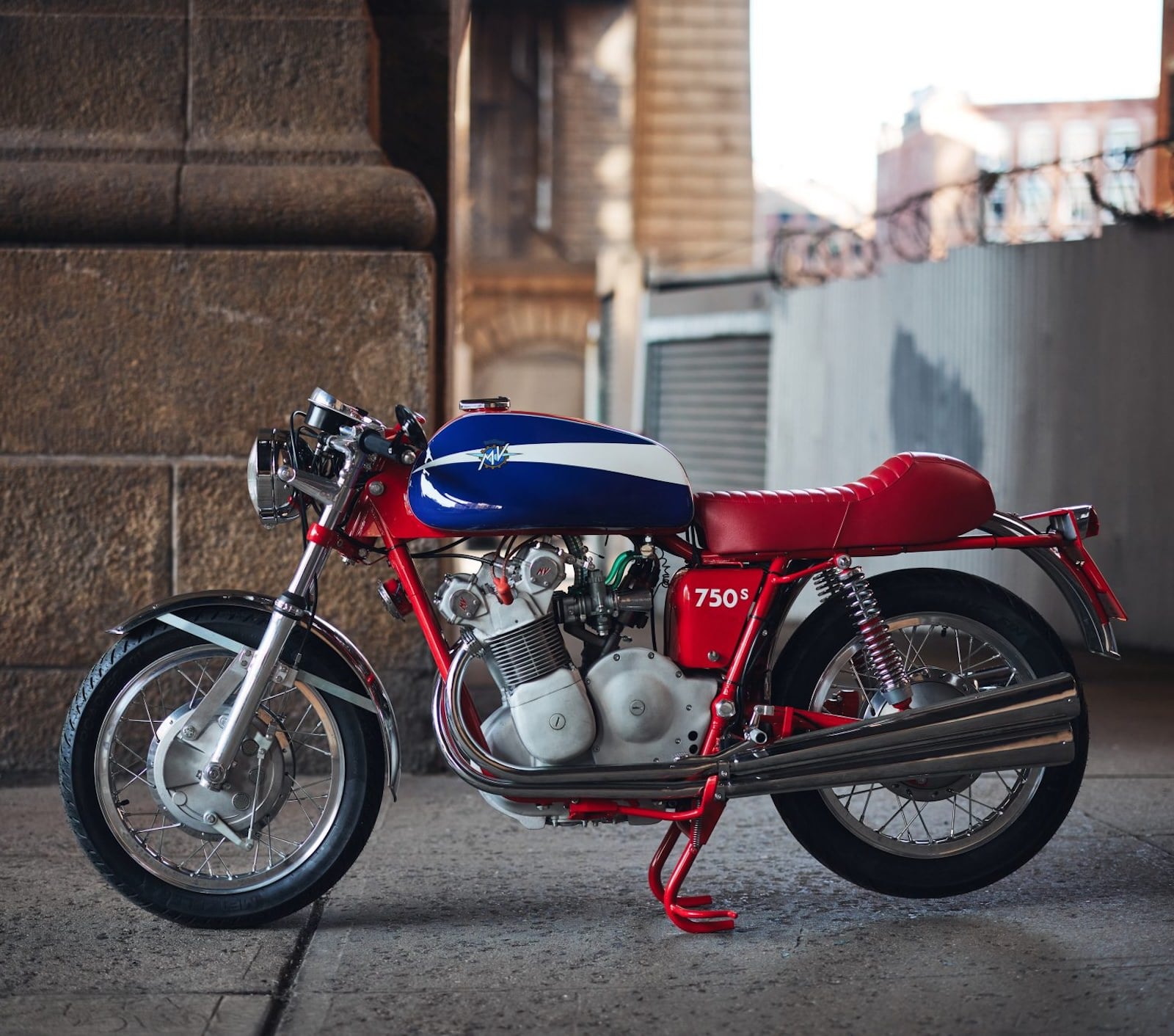
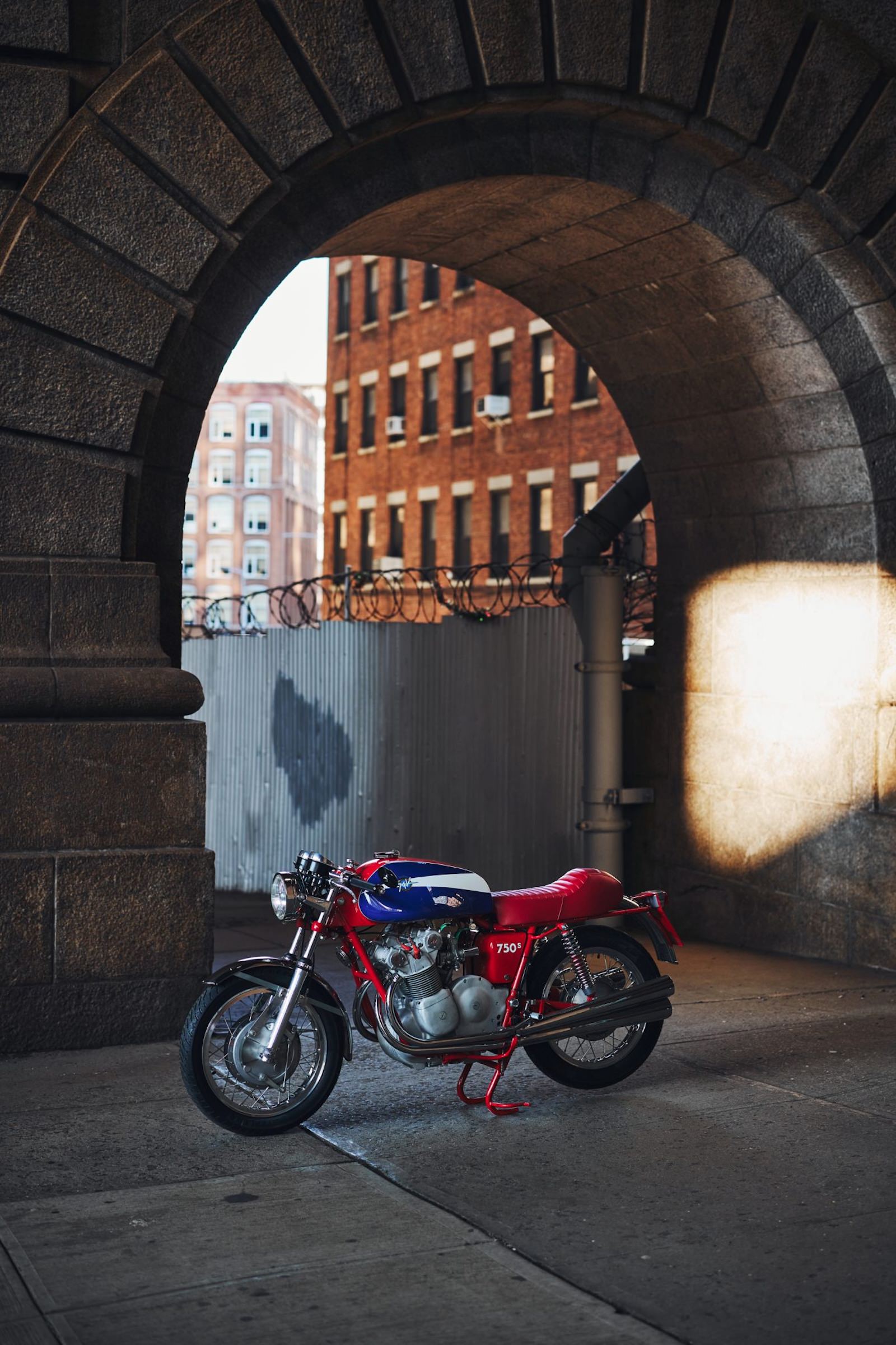
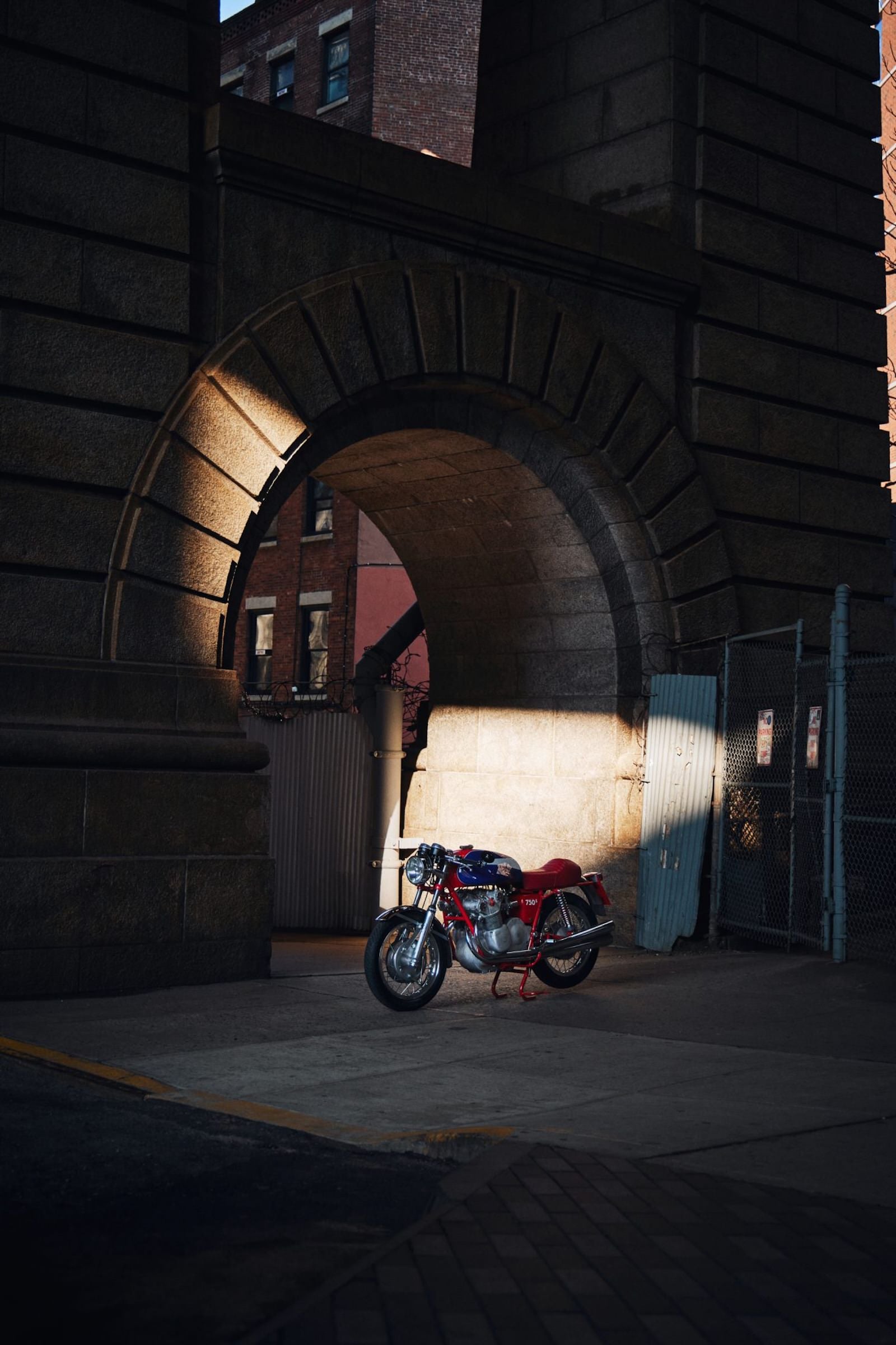
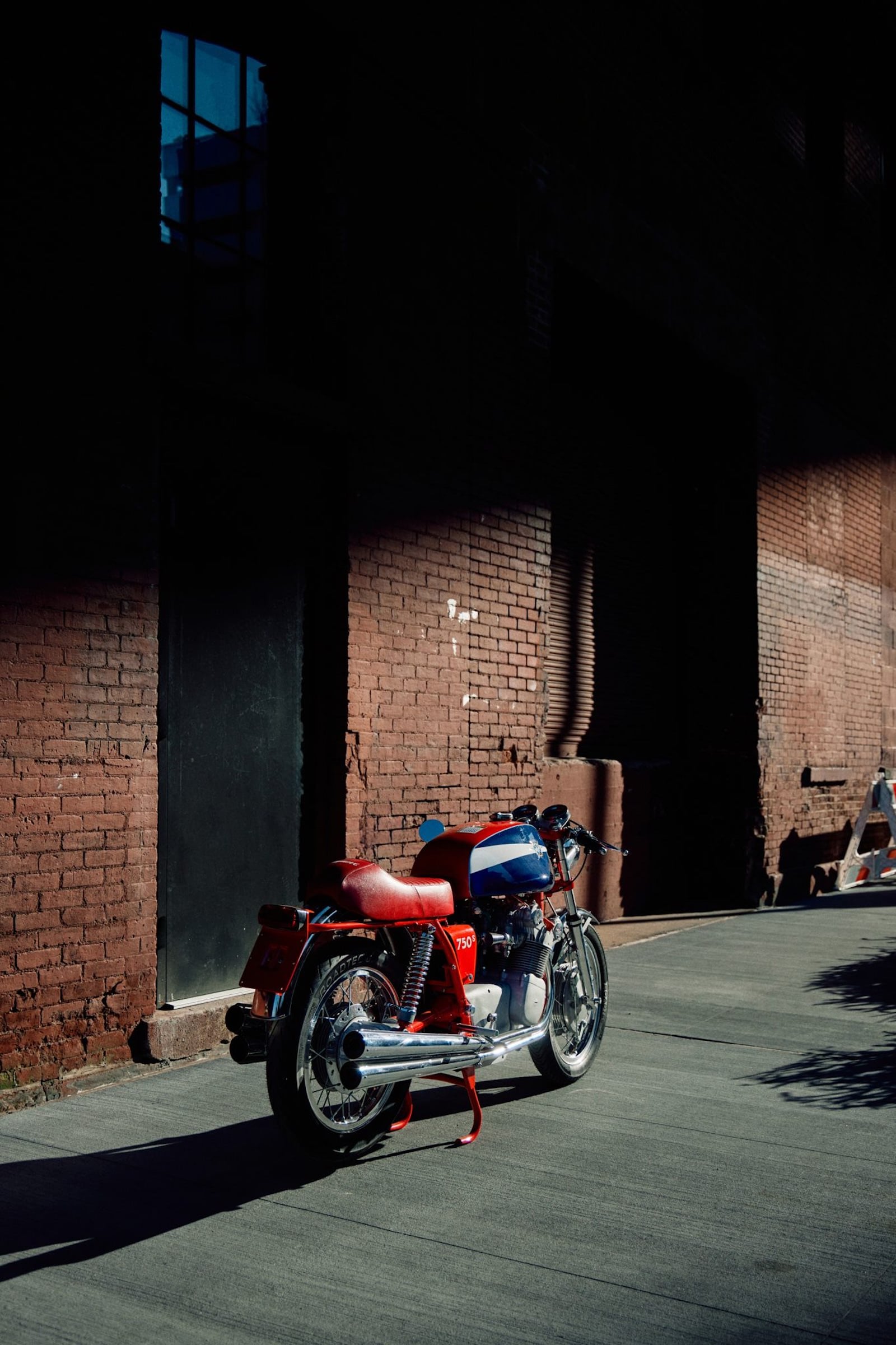
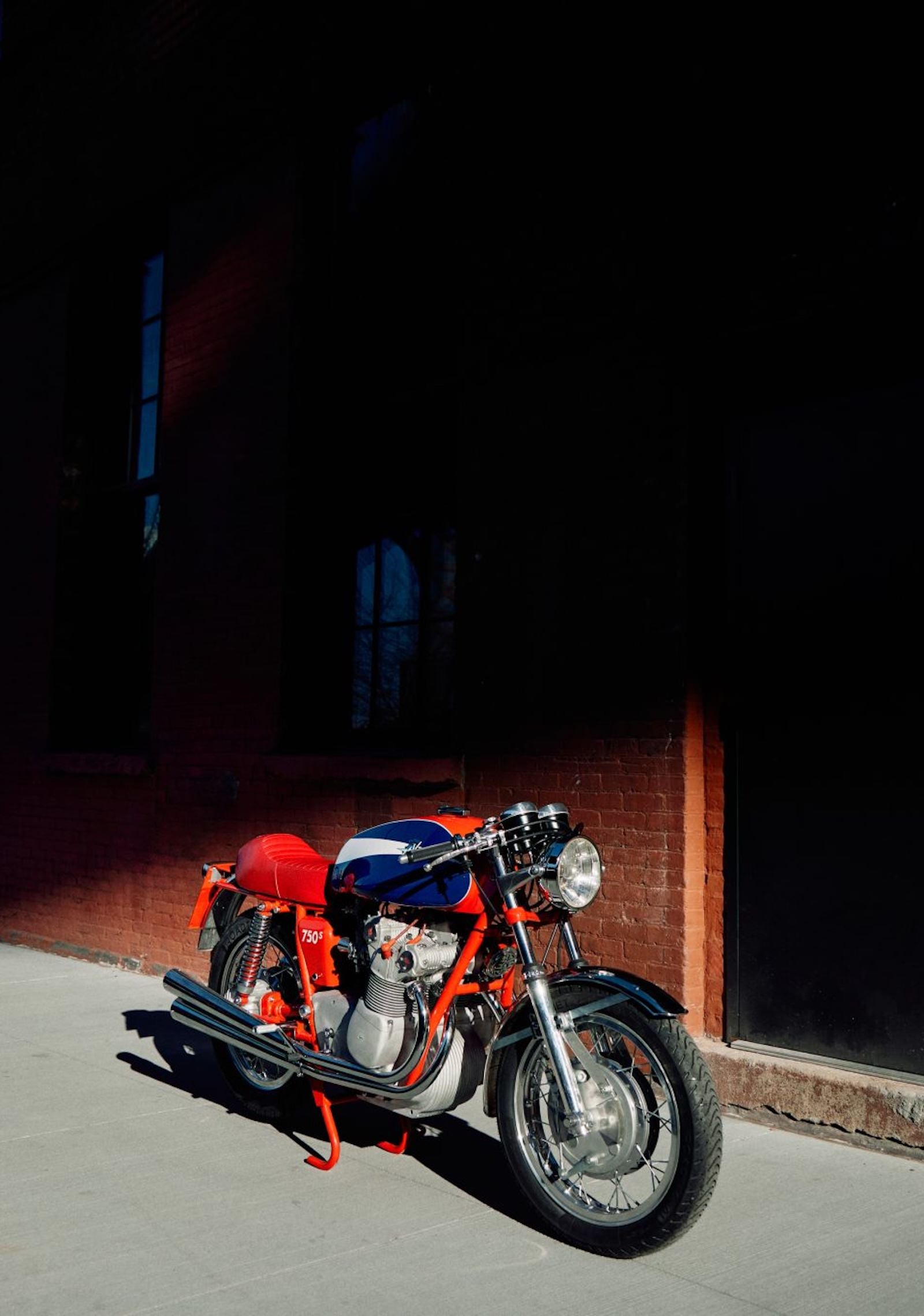
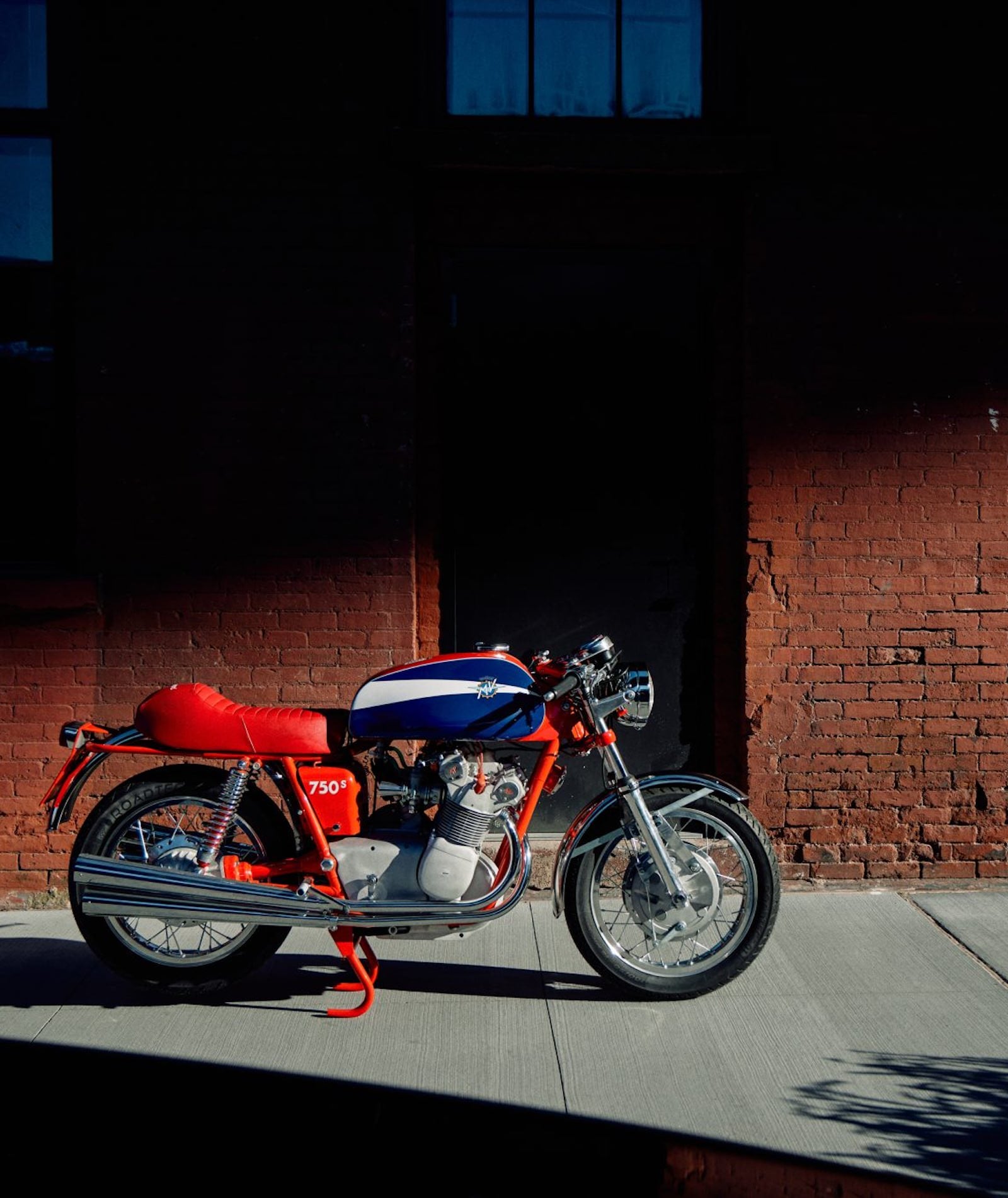
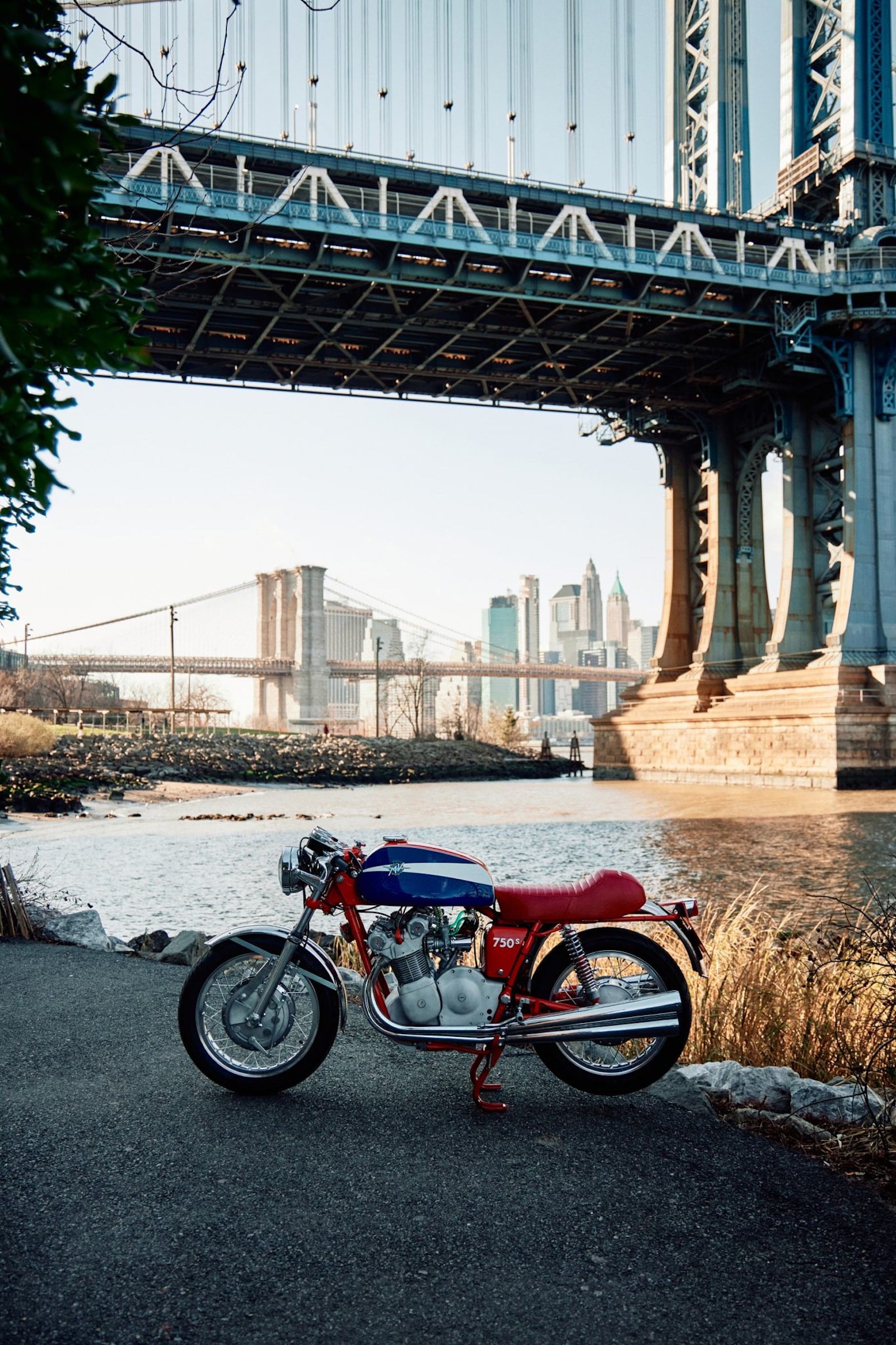
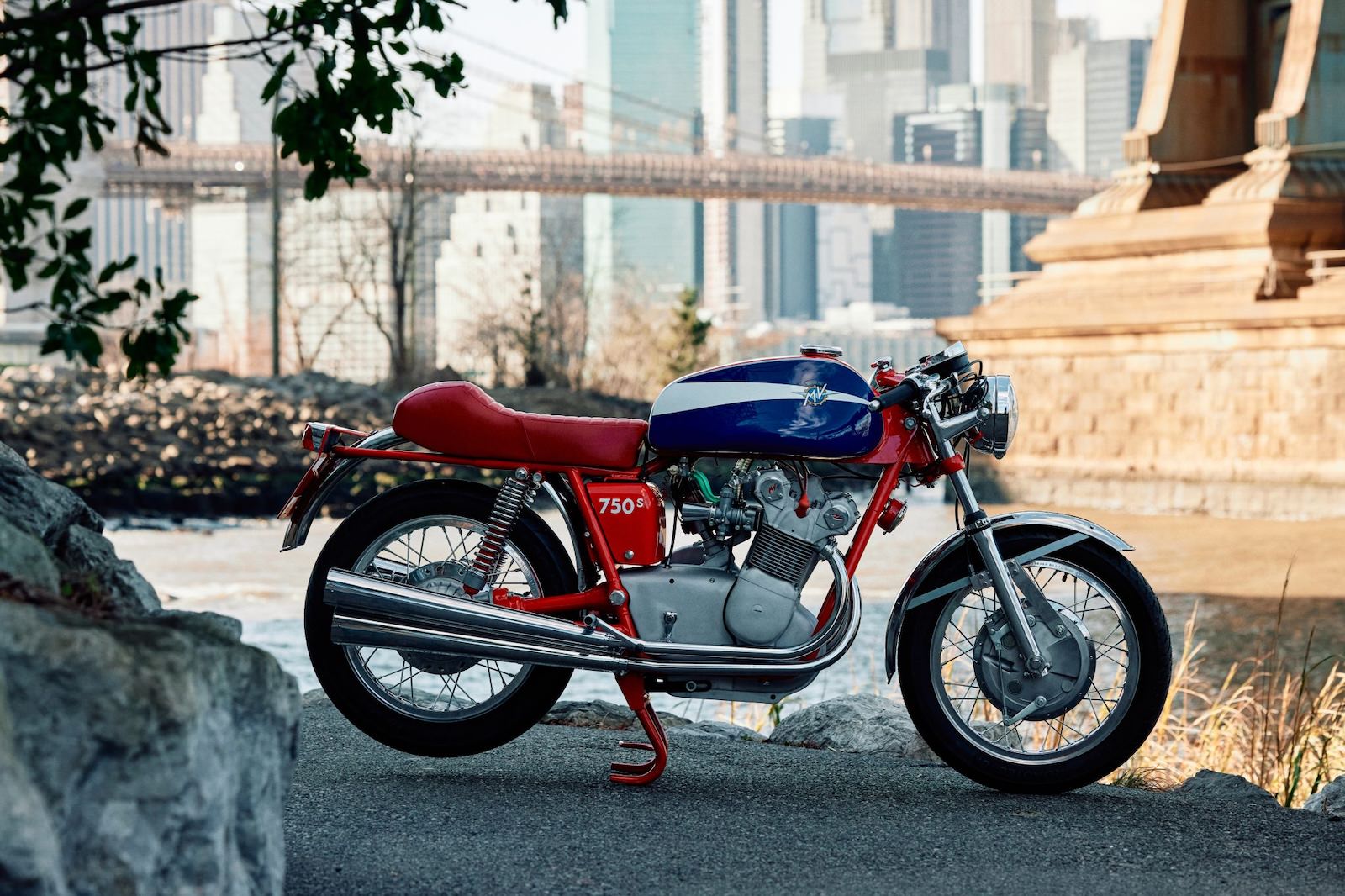
This is an original 1970 MV Agusta 750S, it’s one of the most desirable four-cylinder motorcycles of the age, or of any age for that matter, and it helped set the layout that the “Big Four” Japanese motorcycle manufacturers would follow with so much success.
Relatively few examples of the 750S would be built and far fewer would survive to the current day, as a result they’re now much sought after by collectors and enthusiasts alike.
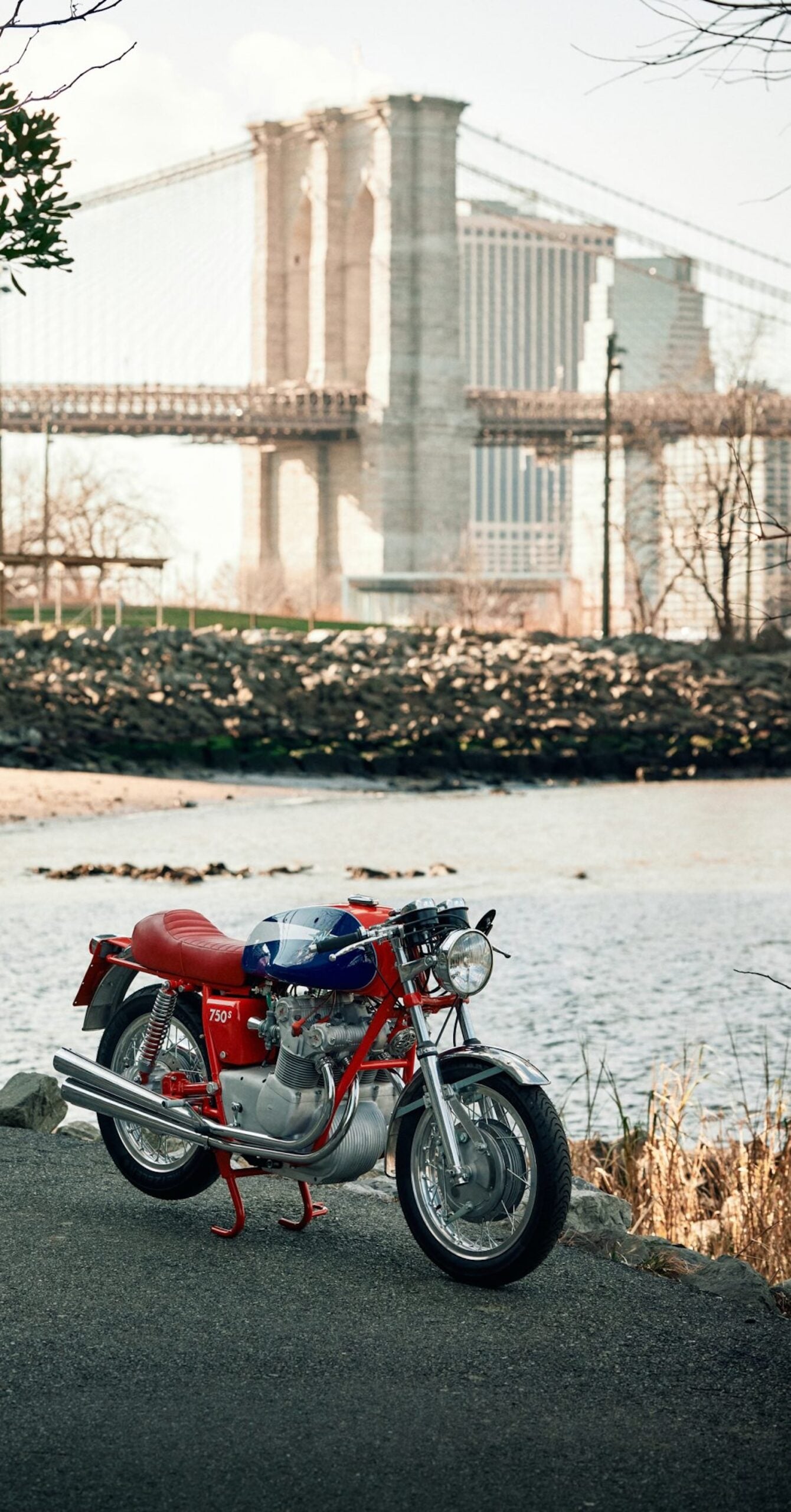
 This is an original 1970 MV Agusta 750S, it’s one of the most desirable four-cylinder motorcycles of the age, or of any age for that matter, and it helped set the layout that the “Big Four” Japanese motorcycle manufacturers would follow with so much success.
History Speedrun: The MV Agusta 750S
The remarkable journey of the MV Agusta 750S started out all the way back in the 1920s, when Carlo Gianini and Piero Remor, two legendary Italian engineers, designed a cutting-edge 500cc SOHC inline-four cylinder motorcycle engine capable of 28 bhp – a remarkable accomplishment by the standards of the era.
Their creation was not the first inline-four mounted on a motorcycle, but it was the first transversely fitted inline-four, or in more simple terms, the engine was fitted sideways across the frame rather than inline. The predecessors with inline-fours were assembled longitudinally, causing an extended wheelbase and oftentimes inadequate cooling for the rear cylinders.
Although Gianini and Remor had demonstrated the viability of their concept, they were held back by an insufficient funding. Thankfully, aircraft engine manufacturer C.N.A. intervened, taking charge of the project. They further improved the engine into a DOHC inline-four, introducing liquid-cooling and a supercharger, improving its output to more than 80 bhp.
Dubbed “Rondine,” this innovative aero/motorcycle engine powered the bikes that clinched the first and second places at the 1935 Tripoli Grand Prix in Italy. Following this triumph, Guiseppe Gilera of the Gilera motorcycle company, purchased the design, rights, and tooling to the engine.
Gilera’s team of engineers modified the Rondine engine and continued its use in competition until the onset of WWII in Europe in 1939.
Post-WWII a fresh transverse inline-four was designed from scratch. It was considered one of the most sophisticated motorcycle engines at that time, propelling Gilera riders to numerous race victories and championships in Europe.
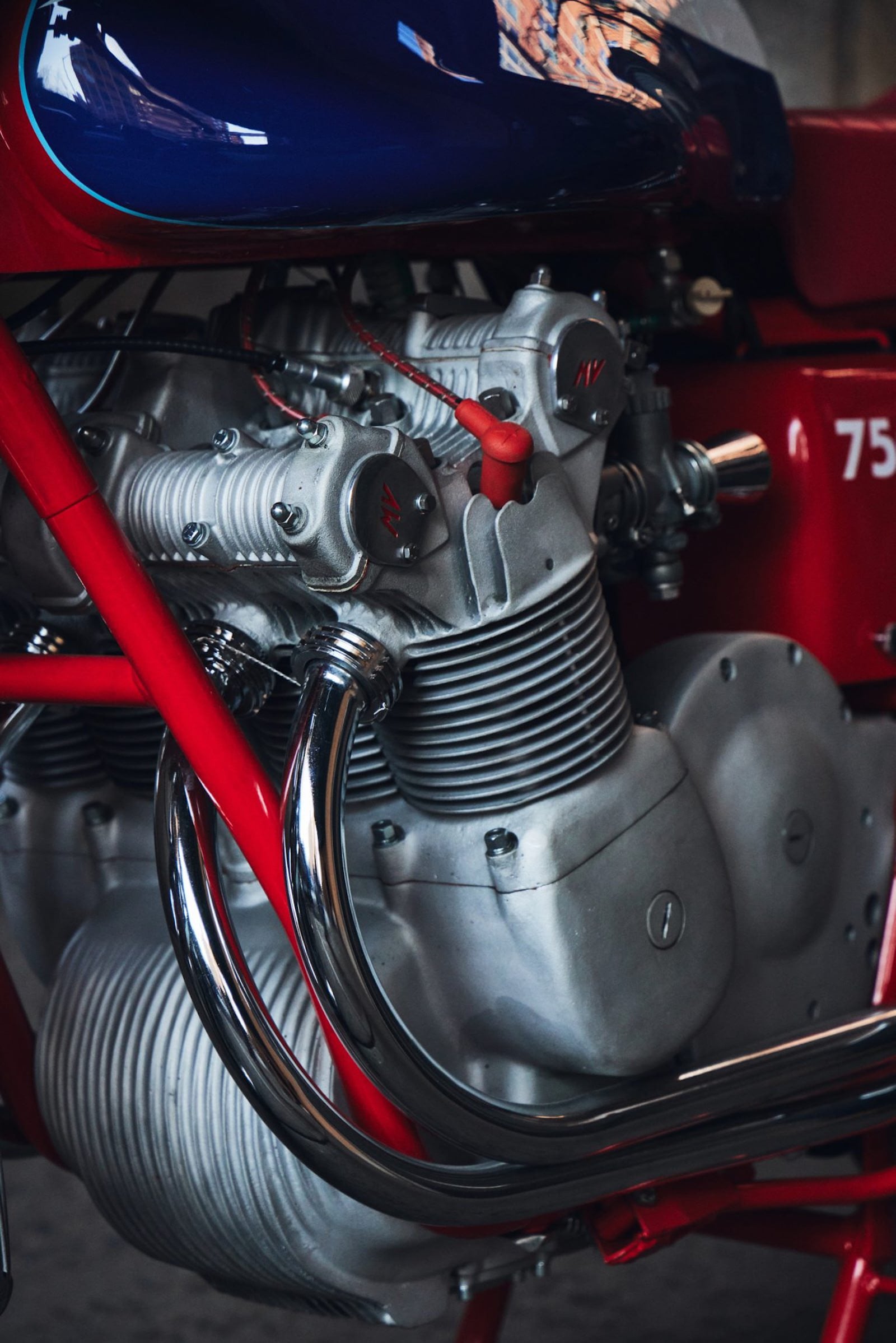
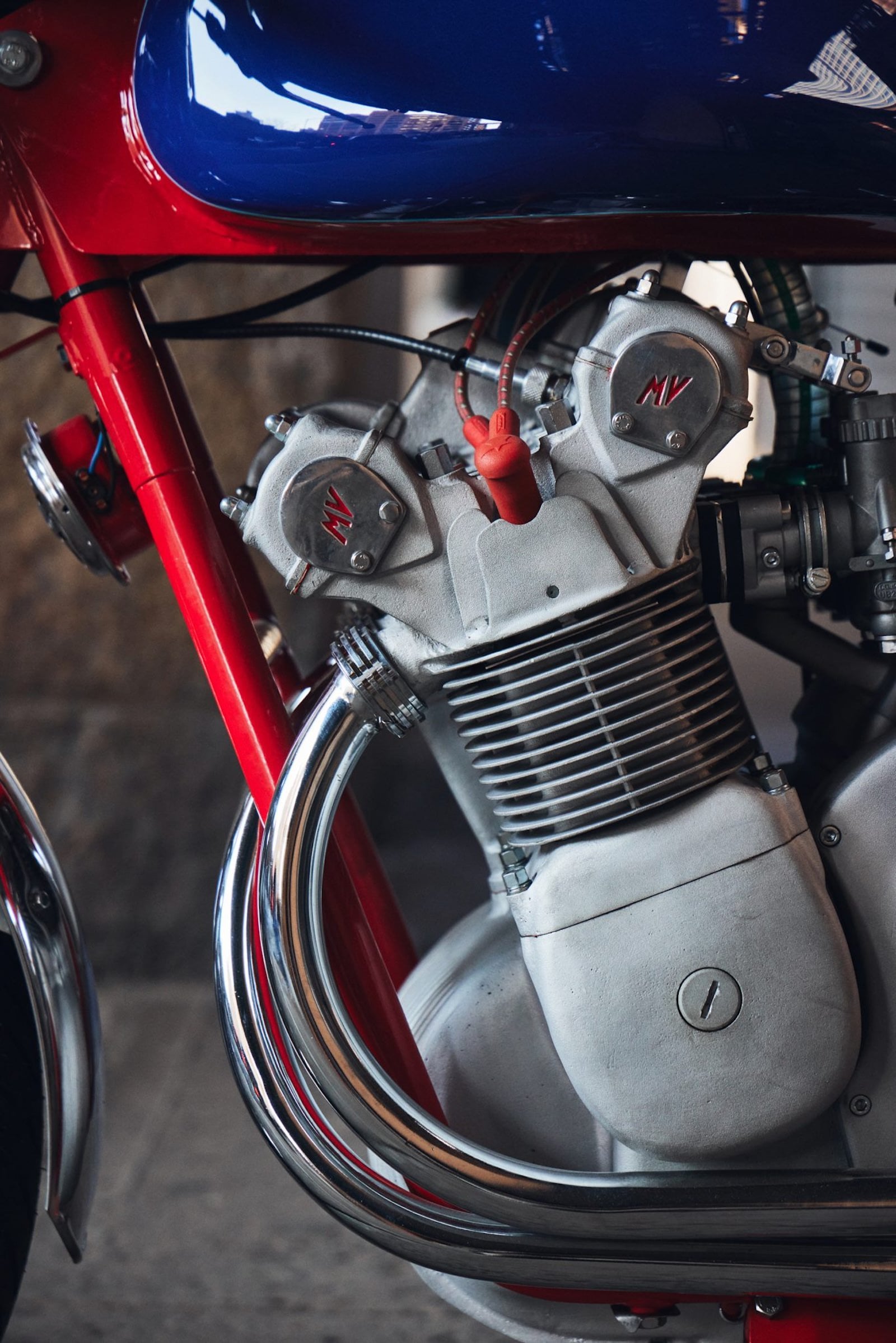
The 743cc DOHC transverse four in the MV Agusta 750S churned out 72 bhp at 9,200 rpm and boasted a top speed of 200 km/h, or 120 mph. Priced three times higher than the Honda CB750, a Japanese motorcycle directly inspired by the formidable Italian transverse fours, it was a luxury product for a wealthy few.
MV Augusta – Headhunters Extraordinare
In a strategic move in 1949, MV Agusta managed to lure both the chief engine designer and chief mechanic from the Gilera team – Piero Remor and Arturo Magni. Remor was one of the initial creators of the first transverse inline-four back in the 1920s.
This marked a significant triumph for MV Agusta. Both men embarked on a project to design a new 500cc transverse four that, an engine that was so similar looking to their earlier Gilera design that observers speculated that parts may have been interchangeable.
The newly developed engine demonstrated its mettle repeatedly in competition. Along with other MV Agustas of the period it powered the company to 270 Grand Prix motorcycle race victories, 38 World Riders’ Championship wins, and 37 World Constructors’ Championship triumphs.
A Street-Legal MV Agusta Transverse Four
For years, motorcycle Grand Prix racing fans had been advocating for a street-legal version of the dominating MV Agusta race bikes. Despite the pressure, the company refused. The probable rationale was their reluctance to have private racers compete alongside factory race bikes and potentially beat them.
Finally, in 1965, MV Agusta conceded and unveiled the MV Agusta 600, a cruiser type motorcycle fitted with a 600cc version of their acclaimed transverse four. Unfortunately, the bike was widely regarded as lacking in aesthetic appeal performance, and it carried a hefty price tag – as a result it didn’t resonate well with buyers.
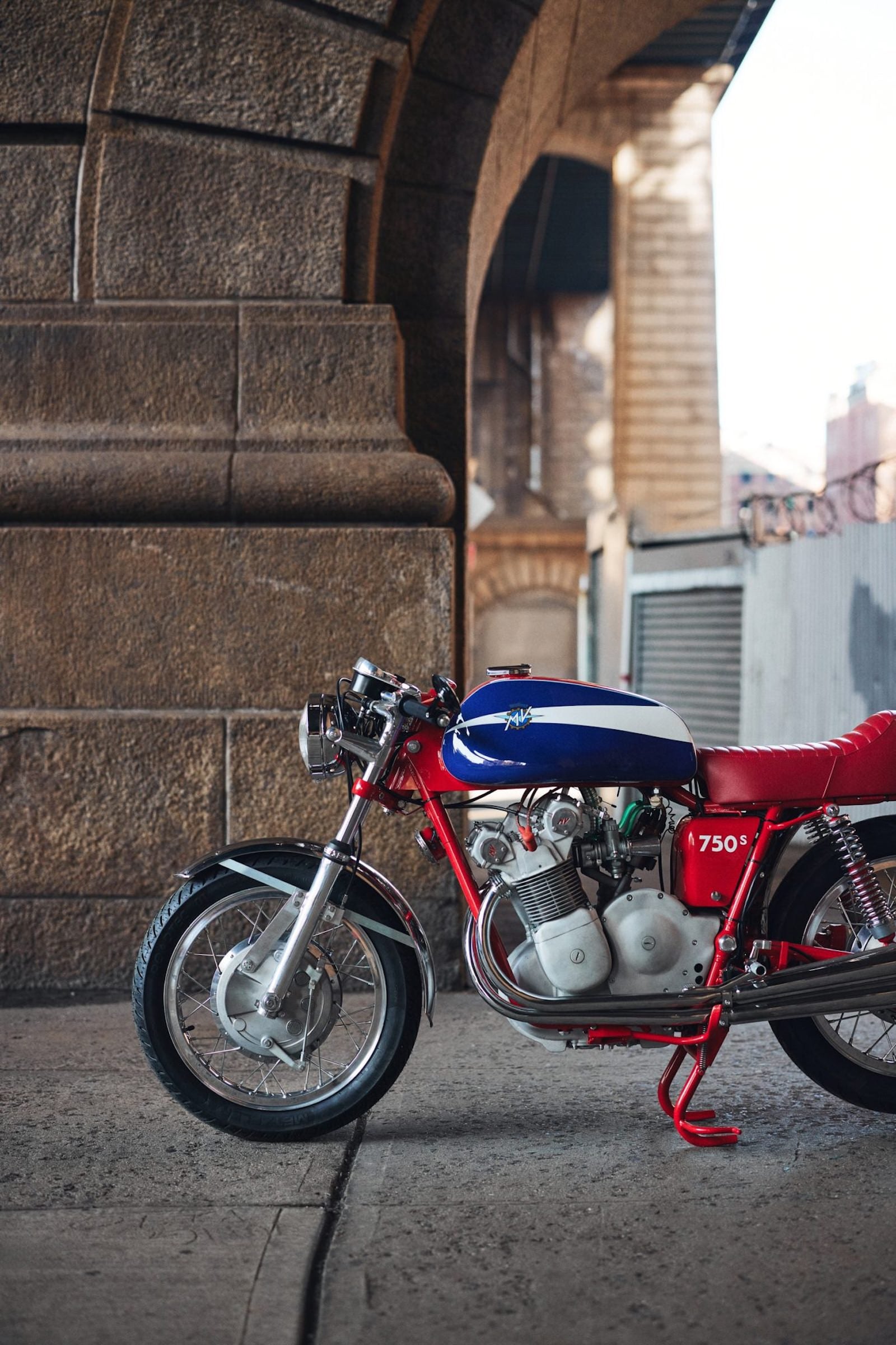
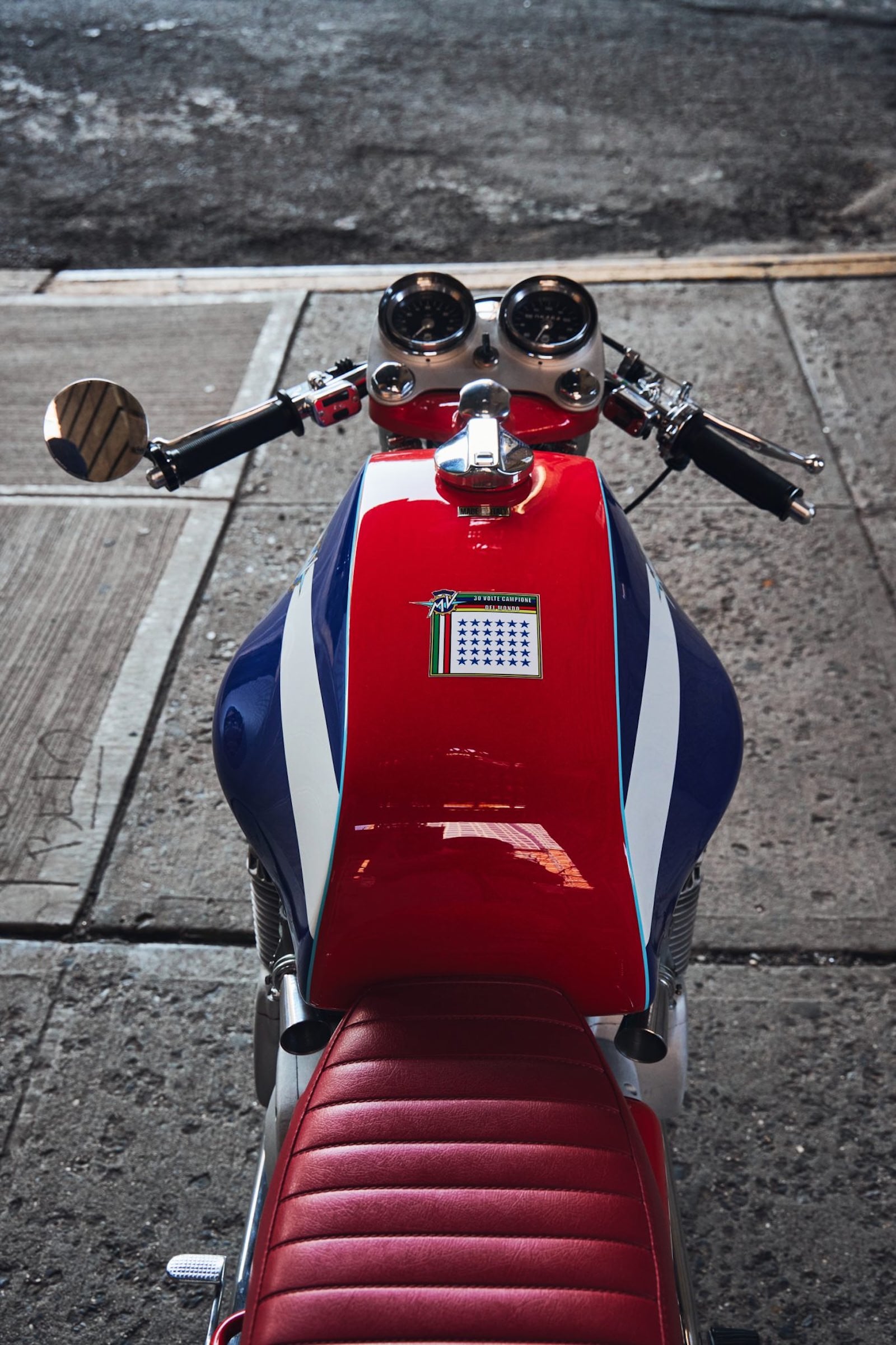
Between August 2022 and May 2023, this bike underwent a €23,400 (approximately $26,700 USD) refurbishment at Magni di Magni Giovanni in Samarate, Italy. The duplex frame was refinished in red, and the second-series steel fuel tank was rust-treated and repainted red and blue with white stripes and the 37-star graphic marking MV Agusta’s 37 world championships.
The 600 witnessed dismal sales, prompting the company to deliver what the public had been longing for – the MV Agusta 750S, in 1970.
With its engine bored out to 743cc, the DOHC transverse four churned out 72 bhp at 9,200 rpm and boasted a top speed of 200 km/h, or 120 mph. Priced three times higher than the Honda CB750, a Japanese motorcycle directly inspired by the formidable Italian transverse fours, it was a luxury product for a wealthy few.
Despite the performance capabilities of the MV Agusta 750S, sales were severely moderated by the cost, with just over 100 units produced annually over five years, culminating in a total of 583. Today, these motorcycles are considered some of the most collectible superbikes from the era and they typically command the kind of hefty prices you might expect.
The 1970 MV Agusta 750S Shown Here
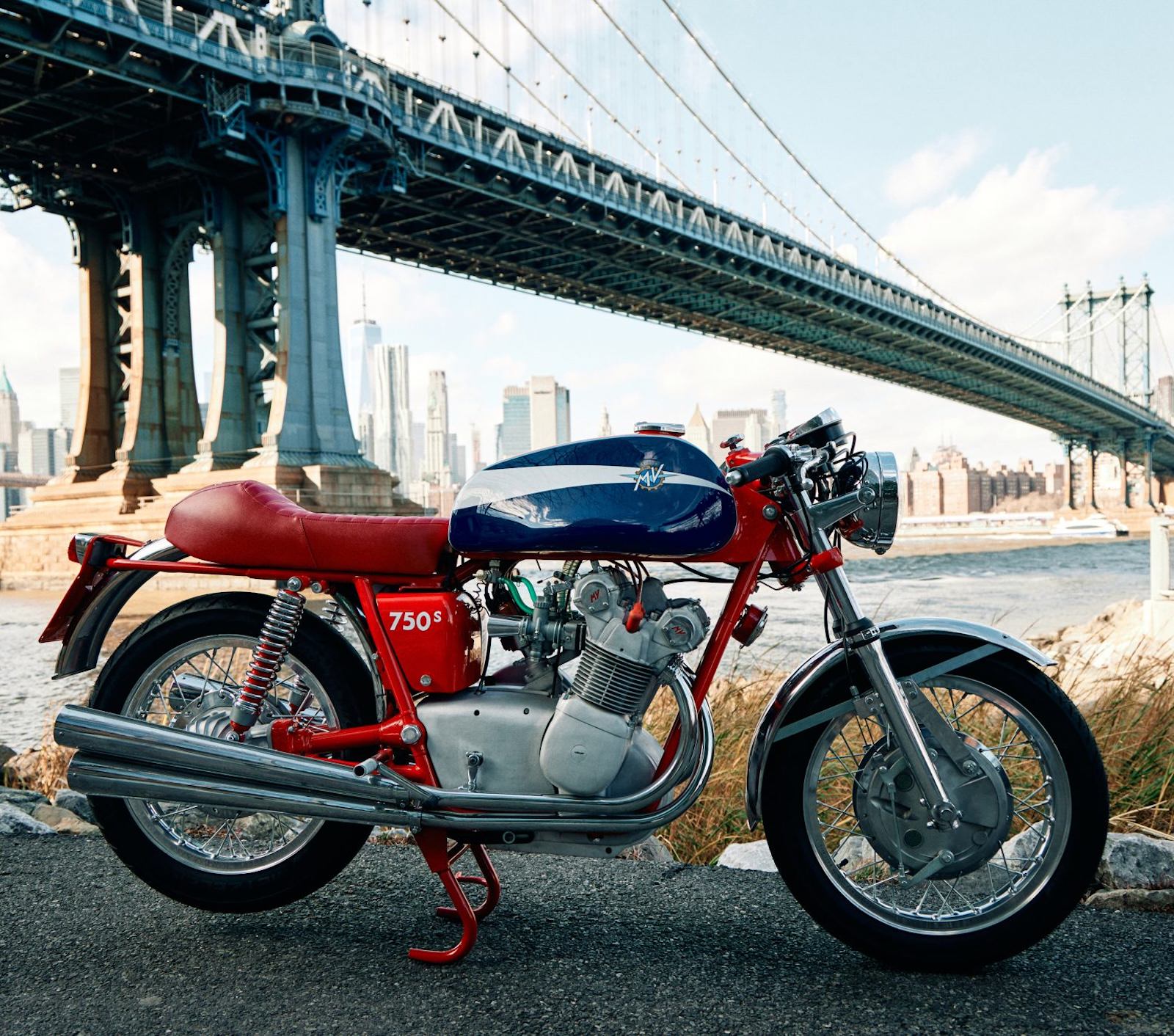
This 1970 MV Agusta 750S was built in October of 1970 and delivered new that same month to its first owner near Turin in Italy. It moved to a UK collection in 1994 and remained there until August of 2022, when the seller bought it in non-running condition.
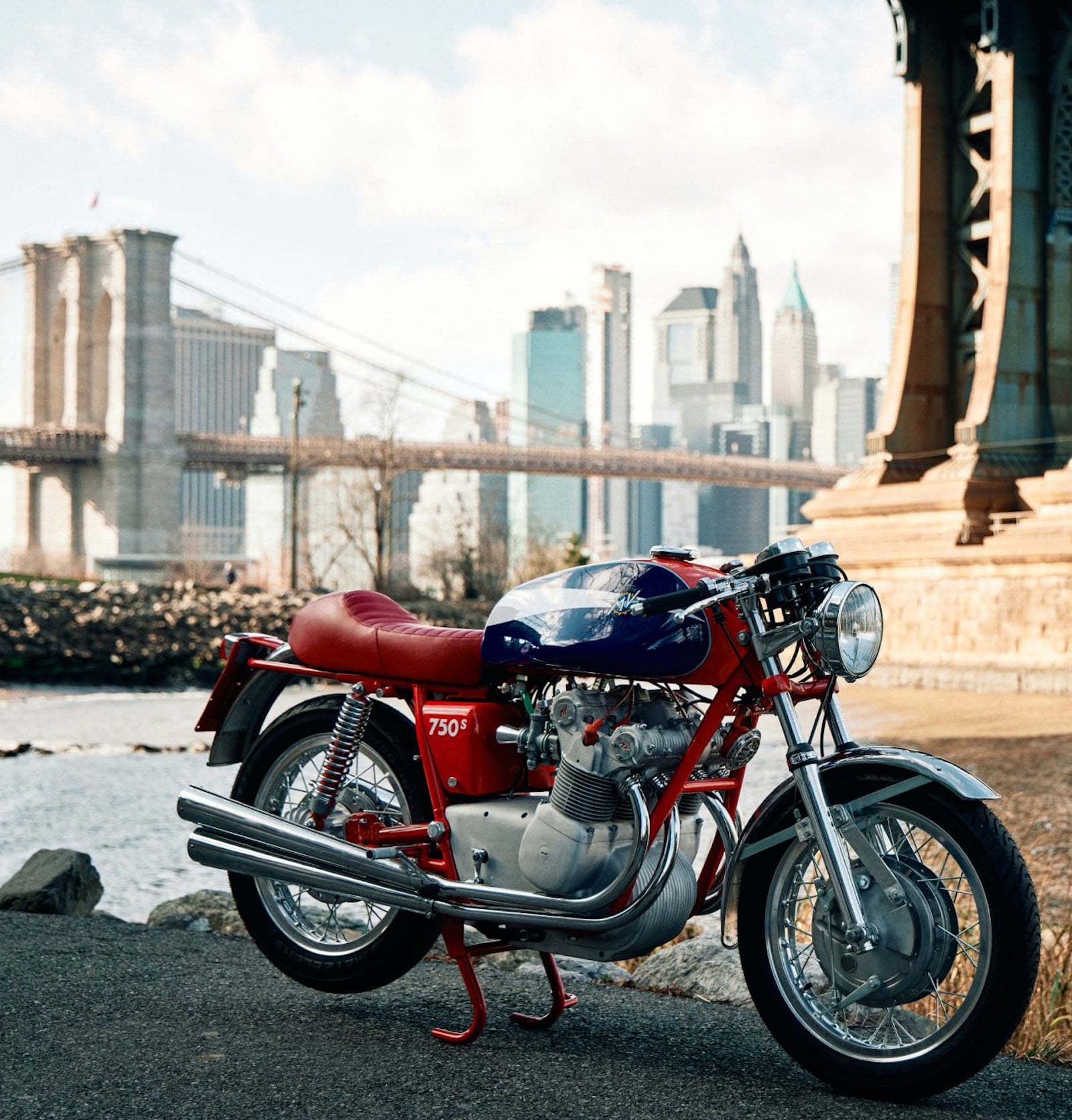
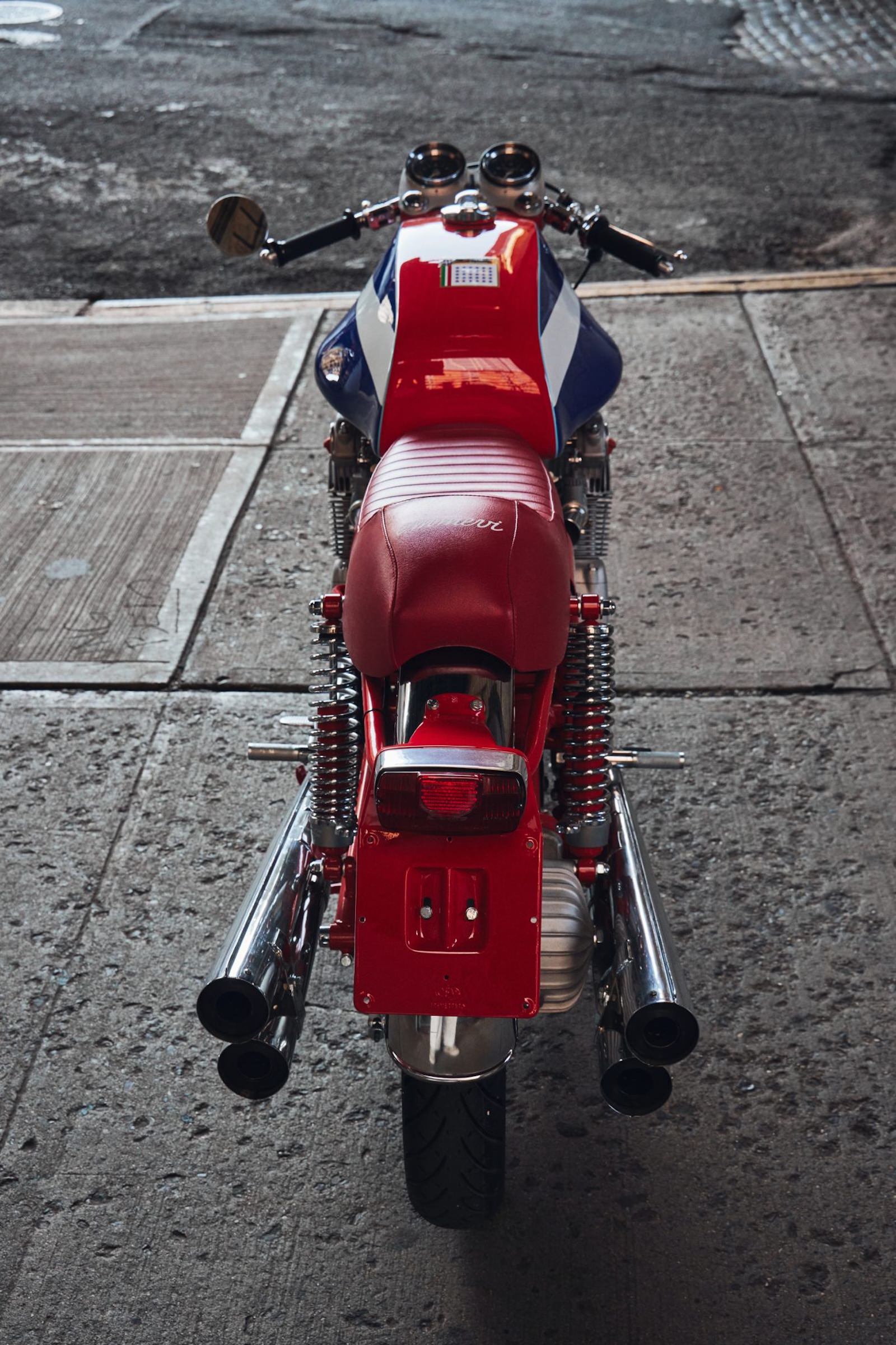
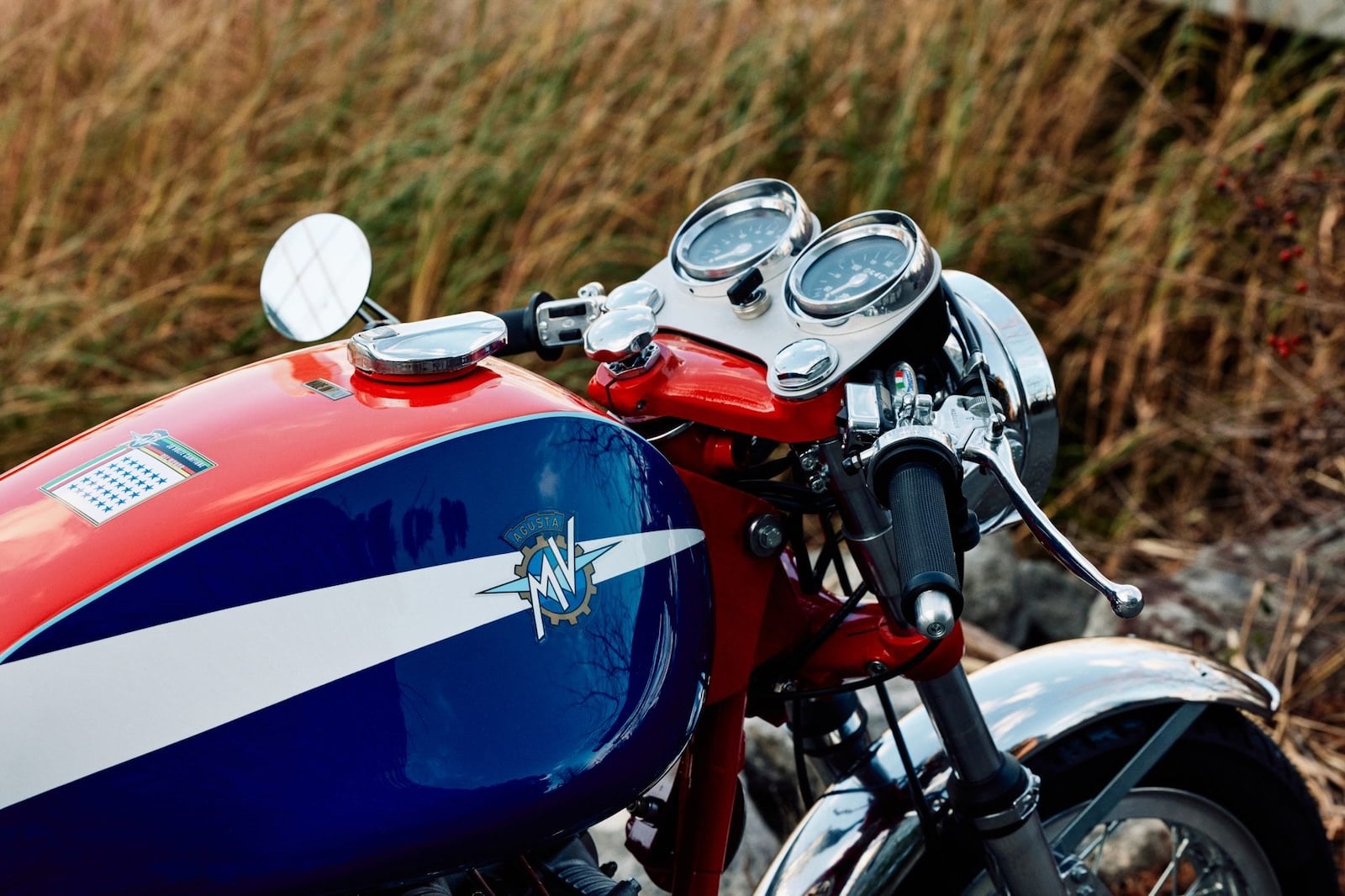
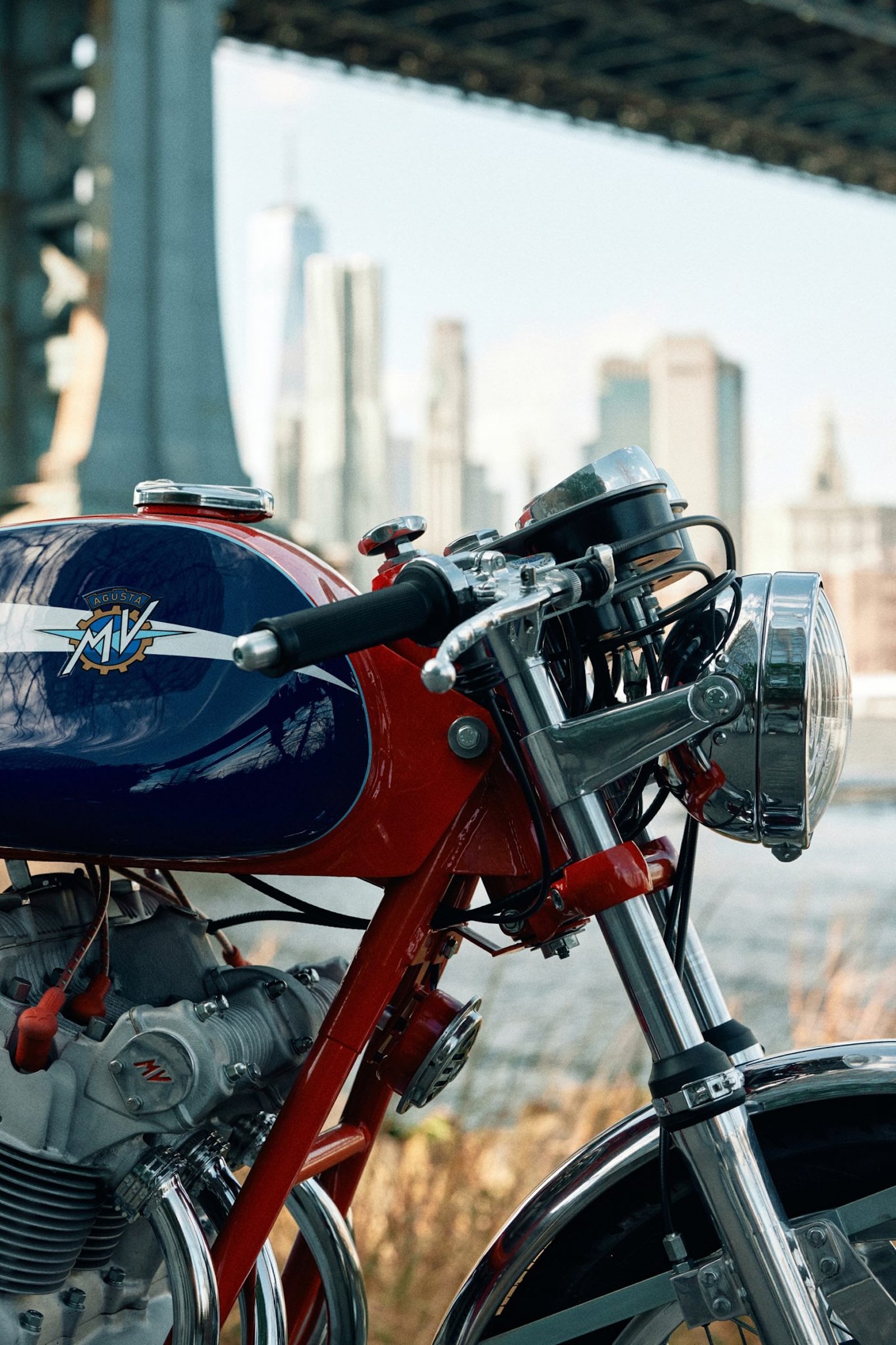
Between August 2022 and May 2023, the bike underwent a €23,400 (approximately $26,700 USD) refurbishment at Magni di Magni Giovanni in Samarate, Italy. The duplex frame was refinished in red, and the second-series steel fuel tank was rust-treated and repainted red and blue with white stripes and the 37-star graphic marking MV Agusta’s 37 world championships.
Despite the performance capabilities of the MV Agusta 750S, sales were severely moderated by the cost, with just over 100 units produced annually over five years, culminating in a total of 583. Today, these motorcycles are considered some of the most collectible superbikes from the era and they typically command the kind of hefty prices you might expect.
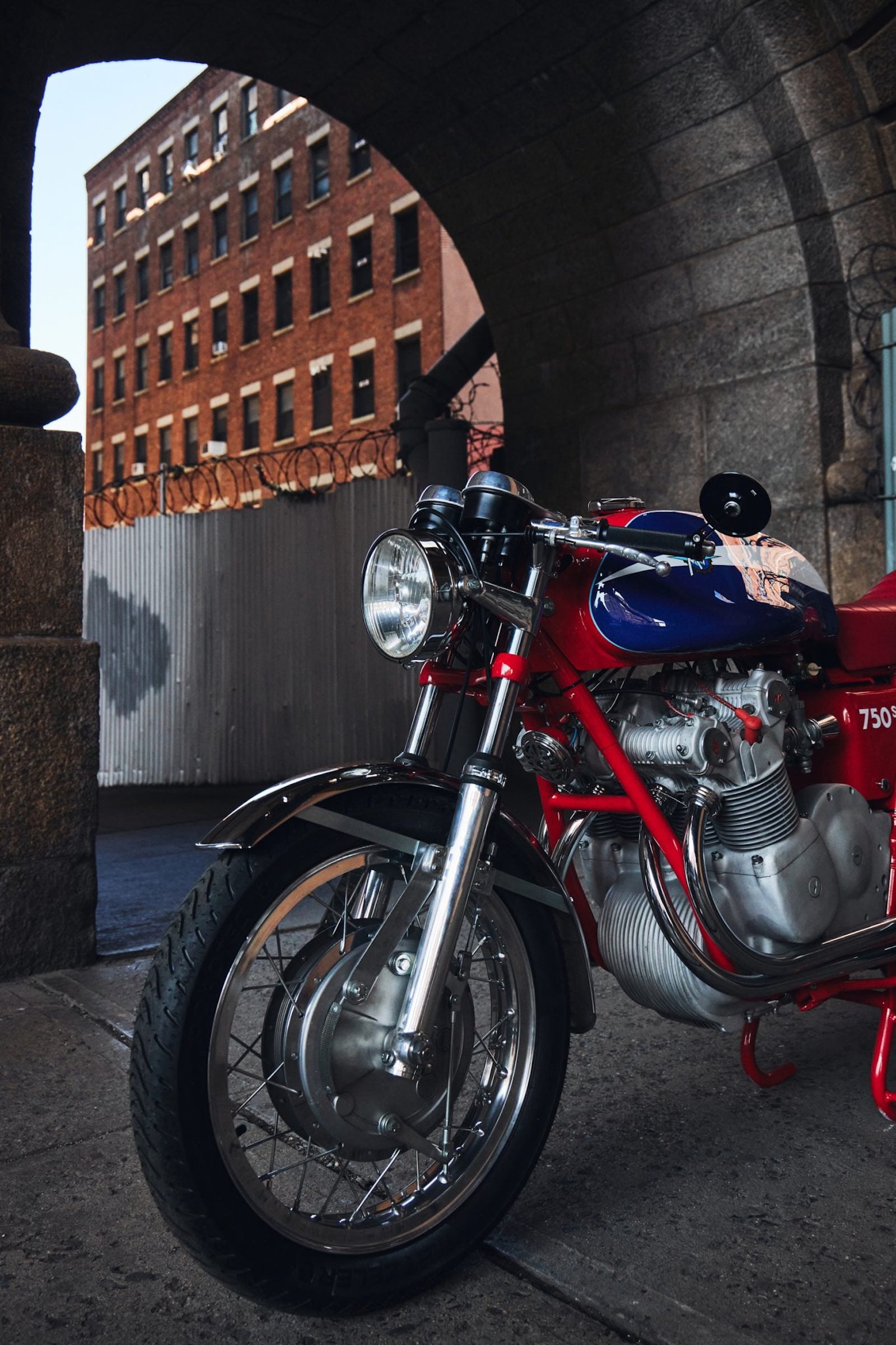
Engine work included media-blasting the cases, rebuilding the crankshaft, modifying the cylinder head oilways, and replacing bearings, seals, and piston rings. The four 24mm Dell’Orto UB-series carburetors were rebuilt, the Ceriani fork was gone through, and the Borrani 18-inch alloy rims were relaced to rebuilt drum-brake hubs.
New Metzeler Roadtec 01 tires, Tommaselli clip-on bars and grips, control and instrument cables, and a new seat were fitted at the same time. More recent service at the seller’s shop, Moto Borgotaro of Brooklyn, New York, in February of 2026 covered a battery replacement and an oil change.
Induction comes from the four rebuilt 24mm Dell’Orto UB carburetors, exhaust runs through a chrome four-into-four system, and the engine drives the rear wheel through a multi-disc wet clutch, 5-speed gearbox, and enclosed driveshaft.
Additional equipment includes gear-driven cams, a combined electric starter and dynamo, and a Bosch automotive-style distributor. Braking at the front is handled by a 230mm Grimeca four-leading-shoe drum, suspension consists of the 35mm Ceriani fork with Brevetti cup clamps and preload-adjustable Sebac shocks, and the cockpit uses Tommaselli bars, Matador lever perches, and a Daytona throttle.
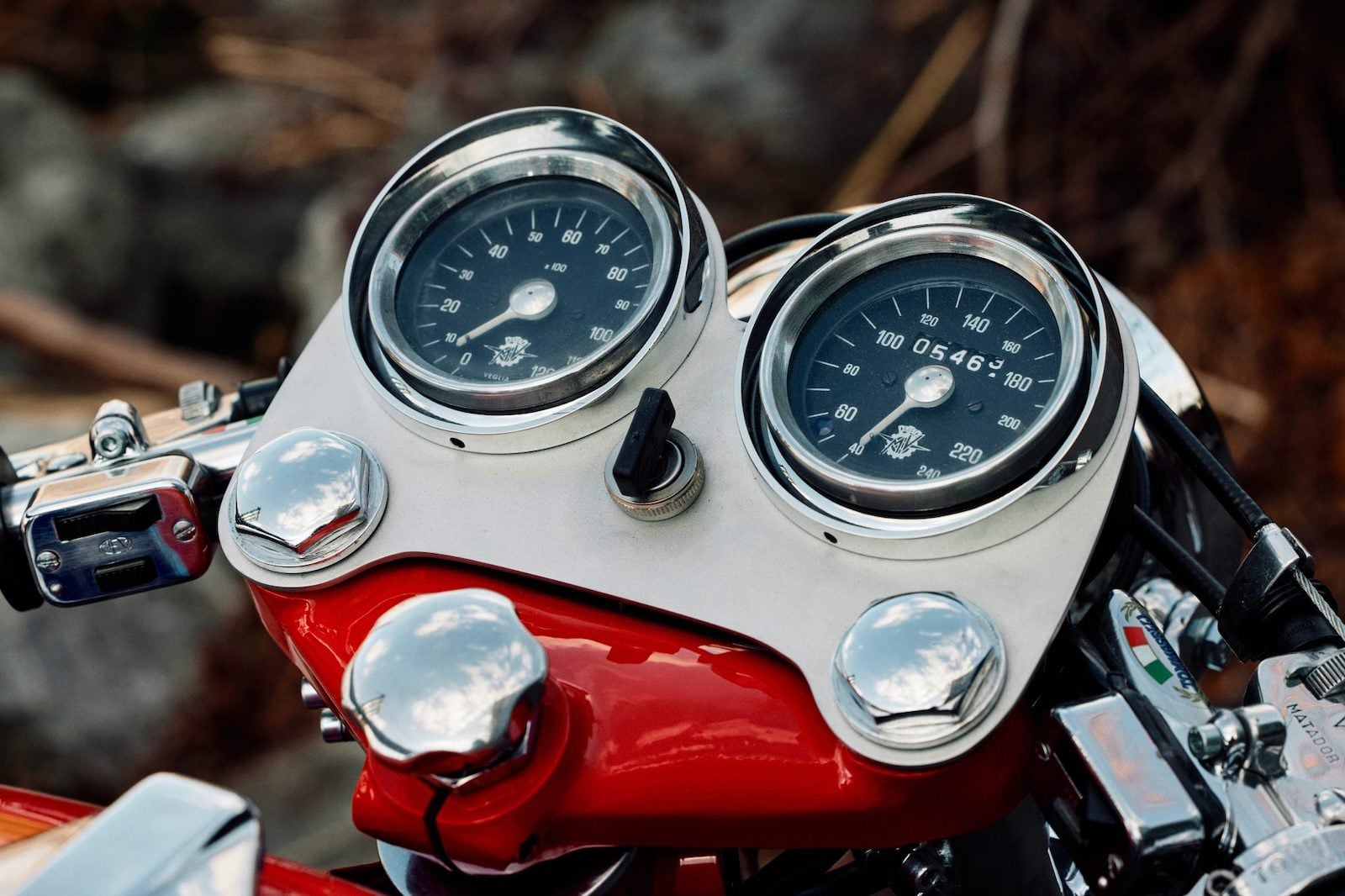
The silver-finished dashboard has visored Veglia instruments including a 12,000 rpm tachometer and a 250 km/h speedometer. Other details include a side-hinged red leather bump seat with “emmevi” lettering on the rear, chrome fenders, CEV horn and lighting, rear-set foot controls, both center and side stands, and a polished aluminum knob on the top triple clamp for the steering-stem friction damper.
This 1970 MV Agusta 750S was built in October of 1970 and delivered new that same month to its first owner near Turin in Italy. It moved to a UK collection in 1994 and remained there until August of 2022, when the seller bought it in non-running condition.
This is one of just nine 750S bikes built for the 1970 model year, it’s been inspected and documented by MV Agusta authority Ian Falloon, whose 20-page report accompanies the sale along with refurbishment records, historical documents, and a clean New Mexico title in the current owner’s name.
It’s now being offered for sale out of Miami, Florida and you can visit the listing here if you’d like to read more about it or register to bid.
Images courtesy of Bring a Trailer

Articles that Ben Branch has written have been covered on CNN, Popular Mechanics, Smithsonian Magazine, Road & Track Magazine, the official Pinterest blog, the official eBay Motors blog, BuzzFeed, Autoweek Magazine, Wired Magazine, Autoblog, Gear Patrol, Jalopnik, The Verge, and many more.
Silodrome was founded by Ben back in 2010, in the years since the site has grown to become a world leader in the alternative and vintage motoring sector, with well over a million monthly readers from around the world and many hundreds of thousands of followers on social media.