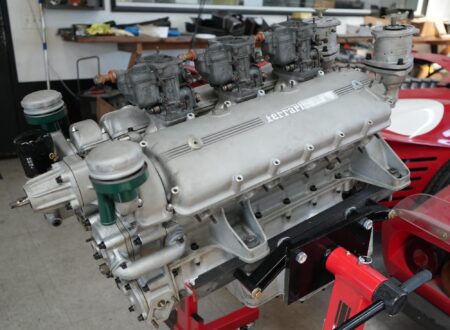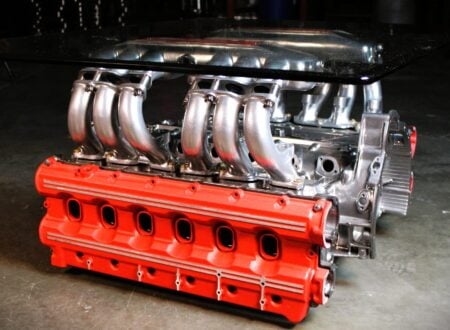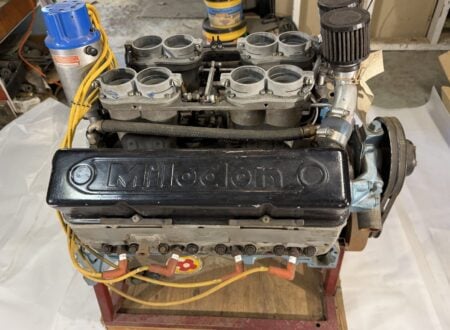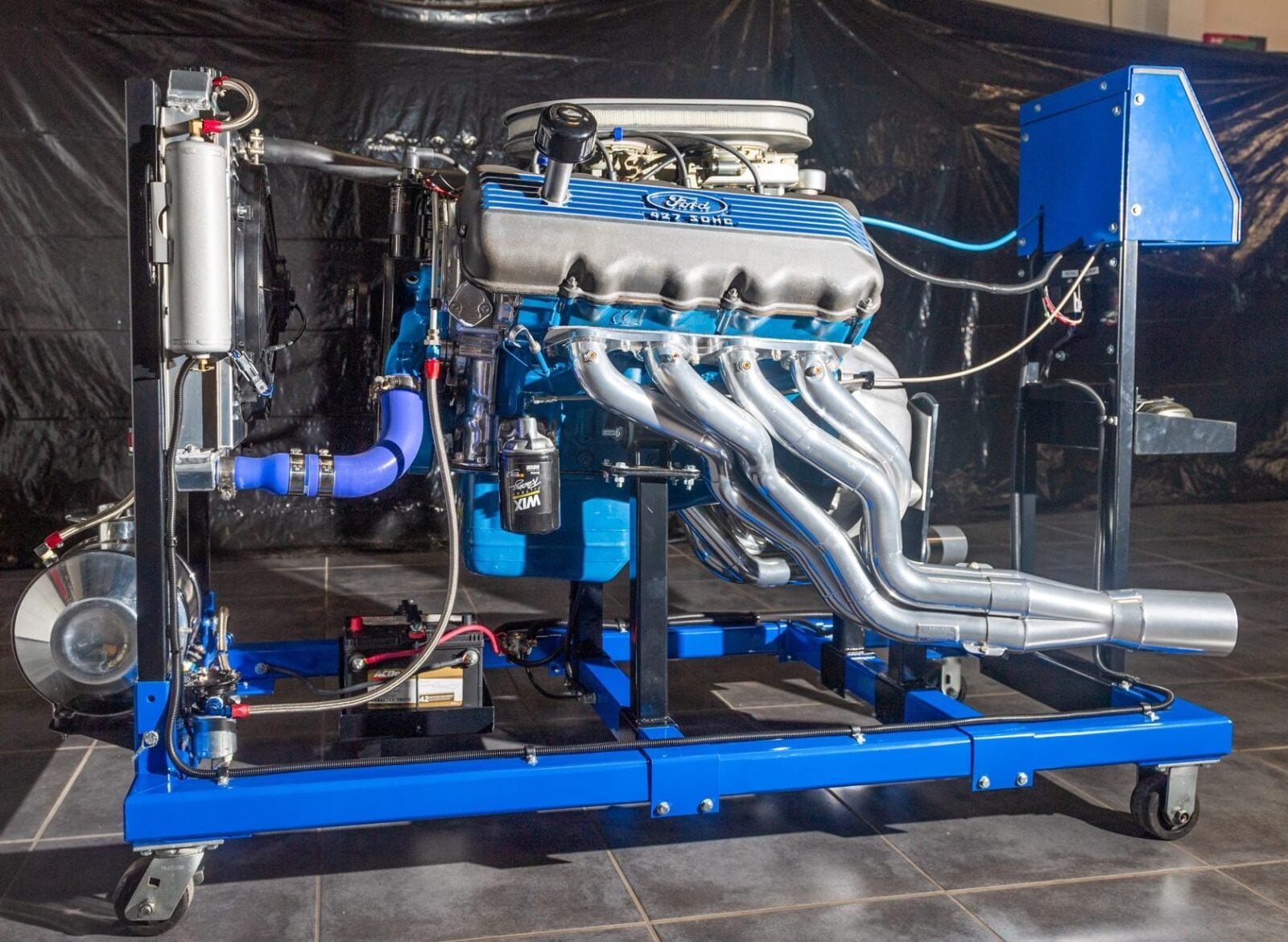
This is a Ford 427 SOHC “Cammer” V8, one of the most memorable Ford engines of the 1960s, despite the fact that only 500 or so were ever made.
Originally intended for use in NASCAR to defeat the all-conquering 426 Hemis, the Cammer was banned from competing and instead found a home in NHRA drag racing competition, where it quickly became a legend.
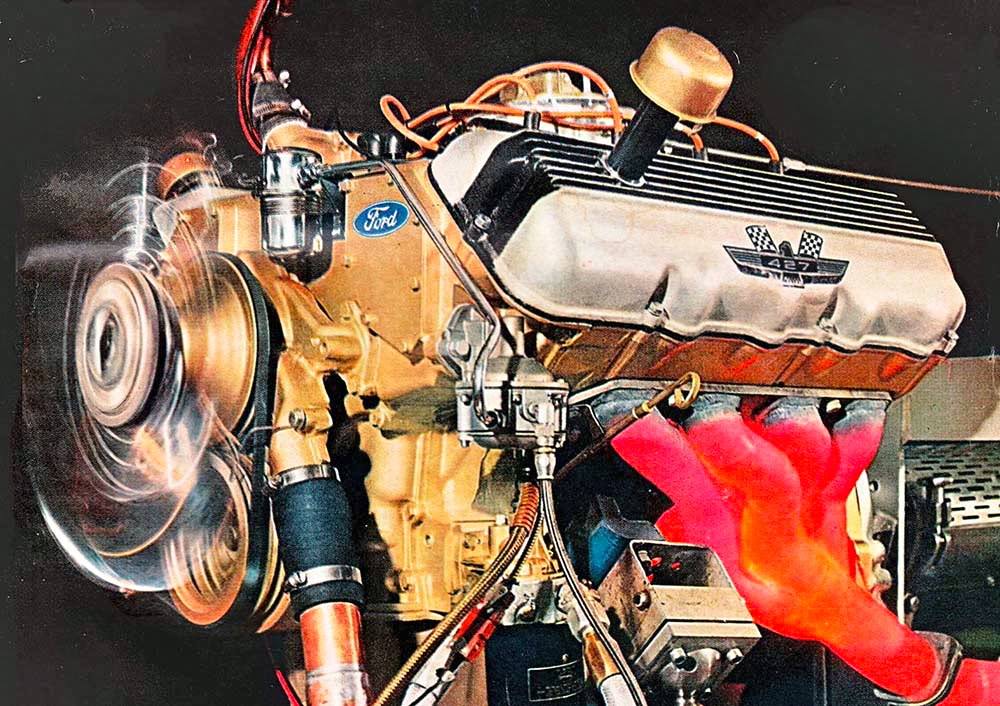
 Thanks in part to the fact that the Cammer could be run to higher-RPMs due to its overhead cams, it could run rather hot – as is demonstrated here. Image courtesy of Ford.
History Speedrun: The Ford 427 SOHC “Cammer” V8
Ford first introduced its plans for an overhead cam 427 cubic inch V8 with the NASCAR big wigs in February of 1964, NASCAR founder and president Bill France summarily rejected the idea the same month, and the finished engine would never turn a single lap in the series it had been designed for. It spent the rest of the decade in drag racing instead, where it competed (and won) at the very top echelons of the sport before Ford walked away from it.
Why Ford’s Cammer V8 Was Developed
Chrysler brought their 426 Hemi V8 to Daytona in early 1964, using the new engine Richard Petty’s Plymouth led a 1-2-3 finish in the Daytona 500 that year. It was a clear shot across the bow of the other US automakers who competed – perhaps none more so than Ford.
Ford’s pushrod 427 V8 had won the previous season and was suddenly outgunned, and worse still, it had been publicly outgunned. According to the Daytona Beach Morning Journal of February the 23rd, Ford asked Bill France whether NASCAR would permit an overhead cam engine it had in development, and France said no.
Some put his objection down to taste, as overhead cams were still the stuff of European exotica, and considered out of place in the rough and tumble, blue collar world of American stock car racing.
Ford went ahead and built it anyway. Inside the company, the program was known as the “90 day wonder,” it was to be a cheaper parallel to the rather costly DOHC Indianapolis engine then being developed from Ford’s small block V8.
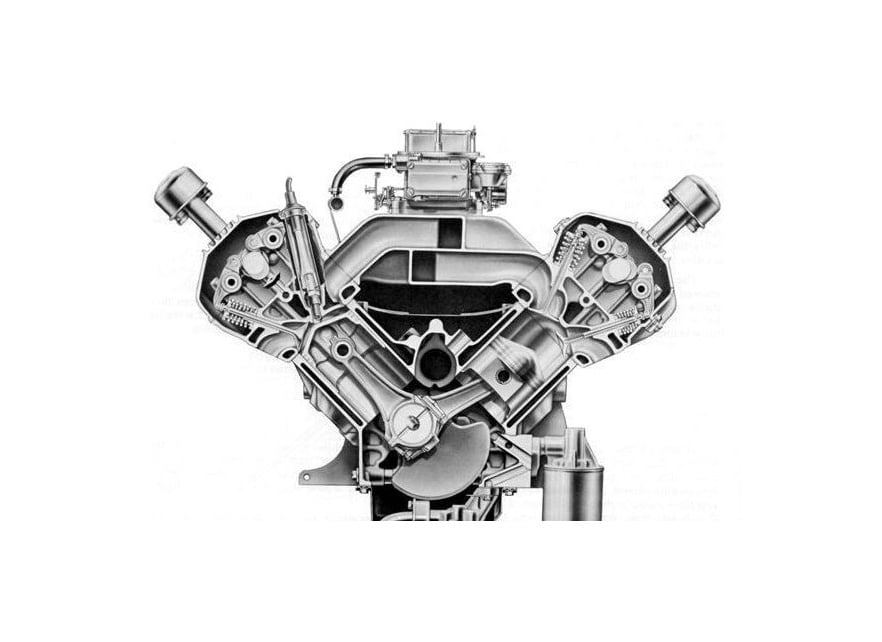
This is a cutaway illustration of the Ford 427 SOHC V8, showing the internal layout of the engine. Image courtesy of Ford.
The 90 Day Wonder
The Cammer started out as a 427 FE side-oiler short block, with a 4.23 inch bore and a 3.78 inch stroke. the real work went into the new cylinder heads.
Each cast-iron head now carried a single camshaft above two valves per cylinder in a hemispherical chamber, with shaft-mounted rockers. Removing the pushrods also allowed larger, straighter intake ports for improved power. Where the in-block camshaft used to be, an idler shaft turns the distributor and oil pump.
The cam drive was where the low budget and the compressed development timeline really showed through – Ford used a roller chain that was more than six feet long to drive both cams at the same time. Because the chain turns both cams in the same direction, each bank needed a mirror-image camshaft.
Now, anyone who’s spent any time around overhead cam engines with chain drives will already see the issue here. All timing chains have to deal with the issues caused by stretching, though some chains are much better designed than others.
With Ford’s Cammer V8, racers eventually learned to stagger cam timing four to 8º between banks to compensate for chain slack. Pete Robinson, working with Harvey Crane, eventually built a gear drive system that replaced the chain entirely.
Ford rated the single four-barrel version of the engine at 616 bhp at 7,000 rpm and 515 lb ft at 3,800 rpm, and the dual-quad version at 657 bhp at 7,500 rpm and 575 lb ft at 4,200 rpm, and the complete engine weighed 680 lbs.
By the standards of the mid-1960s, this power output was extraordinary, even accounting for its prodigious displacement.
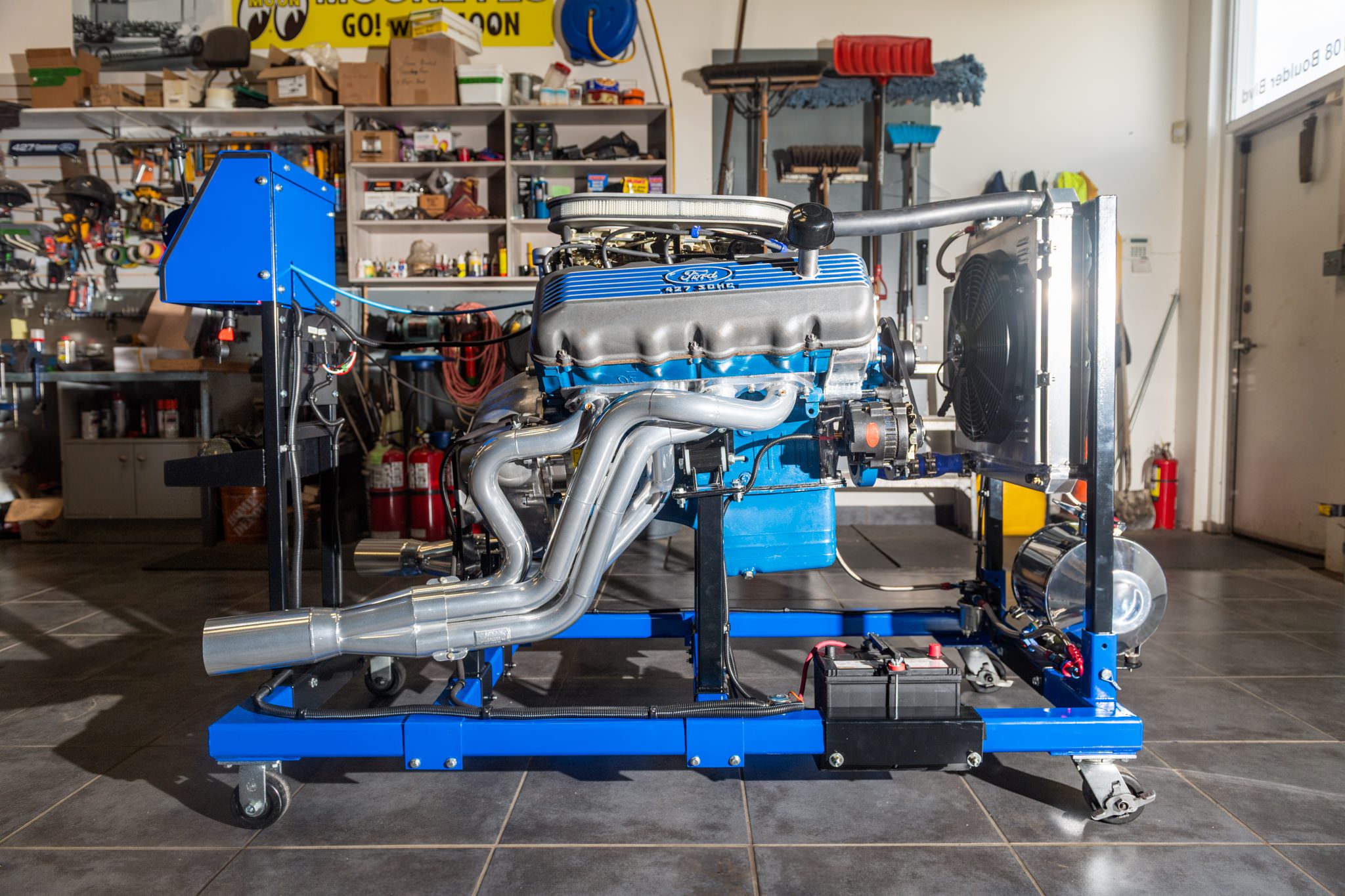
This is a Ford 427 SOHC “Cammer” V8, one of the most memorable Ford engines of the 1960s, despite the fact that only 500 or so were ever made.
The NASCAR Ban
On October the 19th, 1964, NASCAR barred all “special racing engines” for 1965, taking out the Hemi as well as Ford’s brand new Cammer.
Chrysler withdrew from the series in protest, but Ford kept racing its pushrod 427. NASCAR refused the Cammer again in December that year, and USAC followed. In April of 1966 the series relented, on paper at least – the engine could run, but only in the full-size Galaxie, using one small four-barrel carburetor, at a minimum weight of roughly 4,400 lbs, about 430 lbs more than the Hemi Dodges and Plymouths. Unsurprisingly, Ford declined.
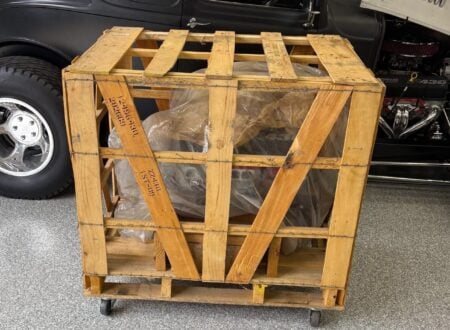
The same pushrod 427 went on to win the 24 Hours of Le Mans in 1966 and 1967 in the GT40 Mk II and Mk IV. The Cammer was never fitted to a Le Mans car or to any showroom Fords. Ford sold it via the parts counter instead, and Gratiot Auto Supply in Detroit was moving them new in the crate for around $2,300 or around $23,000 in 2026 dollars – not exactly chump change.
A Home At Last – One 1/4 Mile At A Time
The first Cammers went into factory-backed 1965 Mustangs and Mercury Comets in NHRA’s A/FX drag racing class, the Factory Experimental category for production bodies with race-only parts, then into the 1966 Logghe-chassis flip-top Comets of Don Nicholson and Eddie Schartman that reshaped the Funny Car class. Ford also put engines in the hands of nitro dragster racers including Robinson, Connie Kalitta, and Lou Baney.
1967 was the engine’s peak – Kalitta’s Cammer-powered Bounty Hunter won the AHRA, NHRA, and NASCAR Winternationals in a single season. At the NHRA Springnationals at Bristol, Don Prudhomme drove Baney’s car, with an Ed Pink-built engine, to NHRA’s first official six-second Top Fuel run and beat Robinson’s similarly powered car in the final. In 1968 the car was renamed Shelby’s Super Snake.
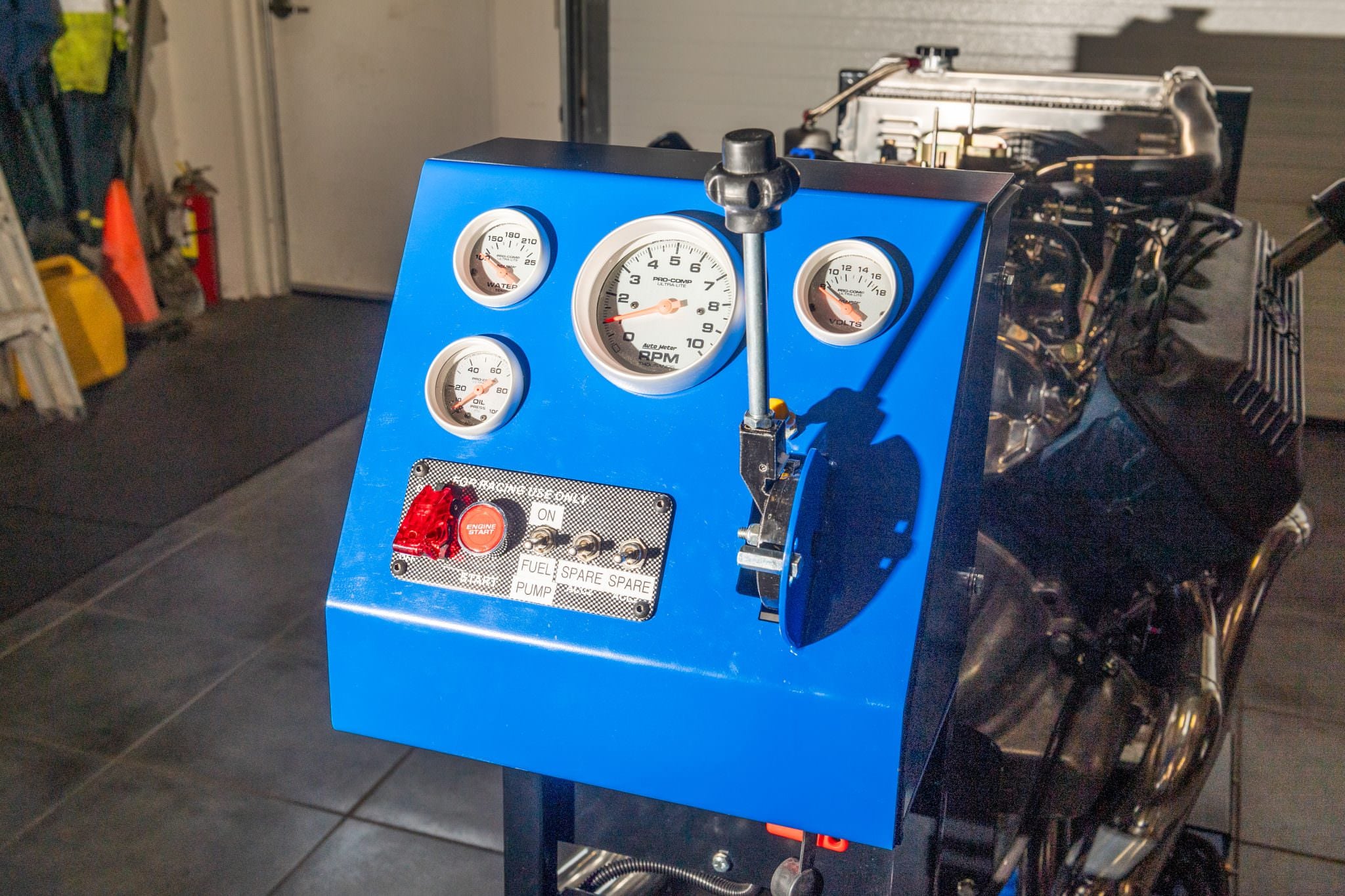
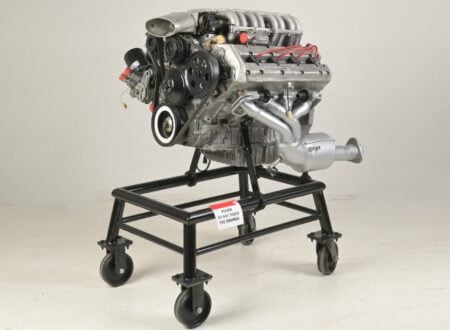
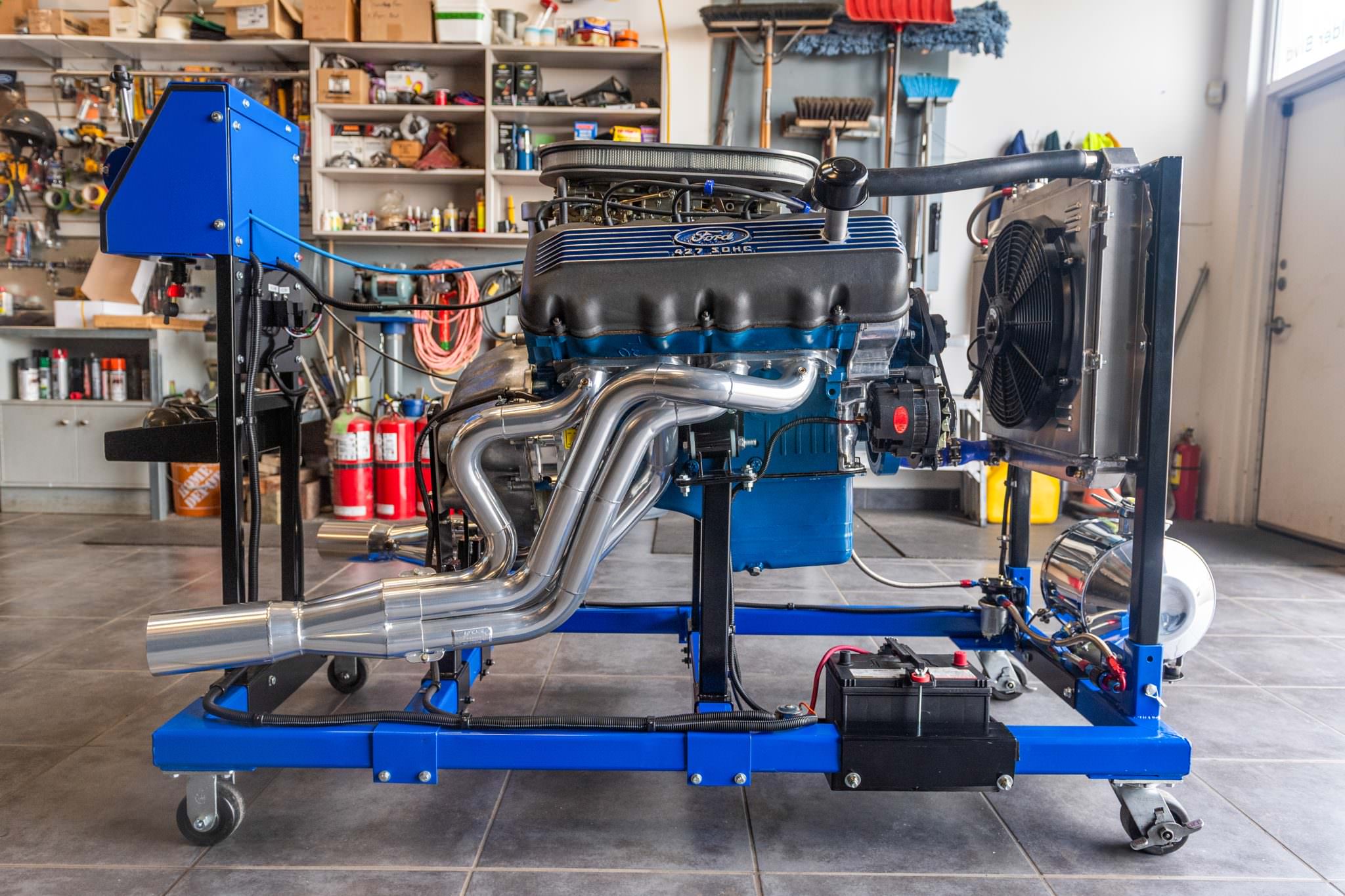
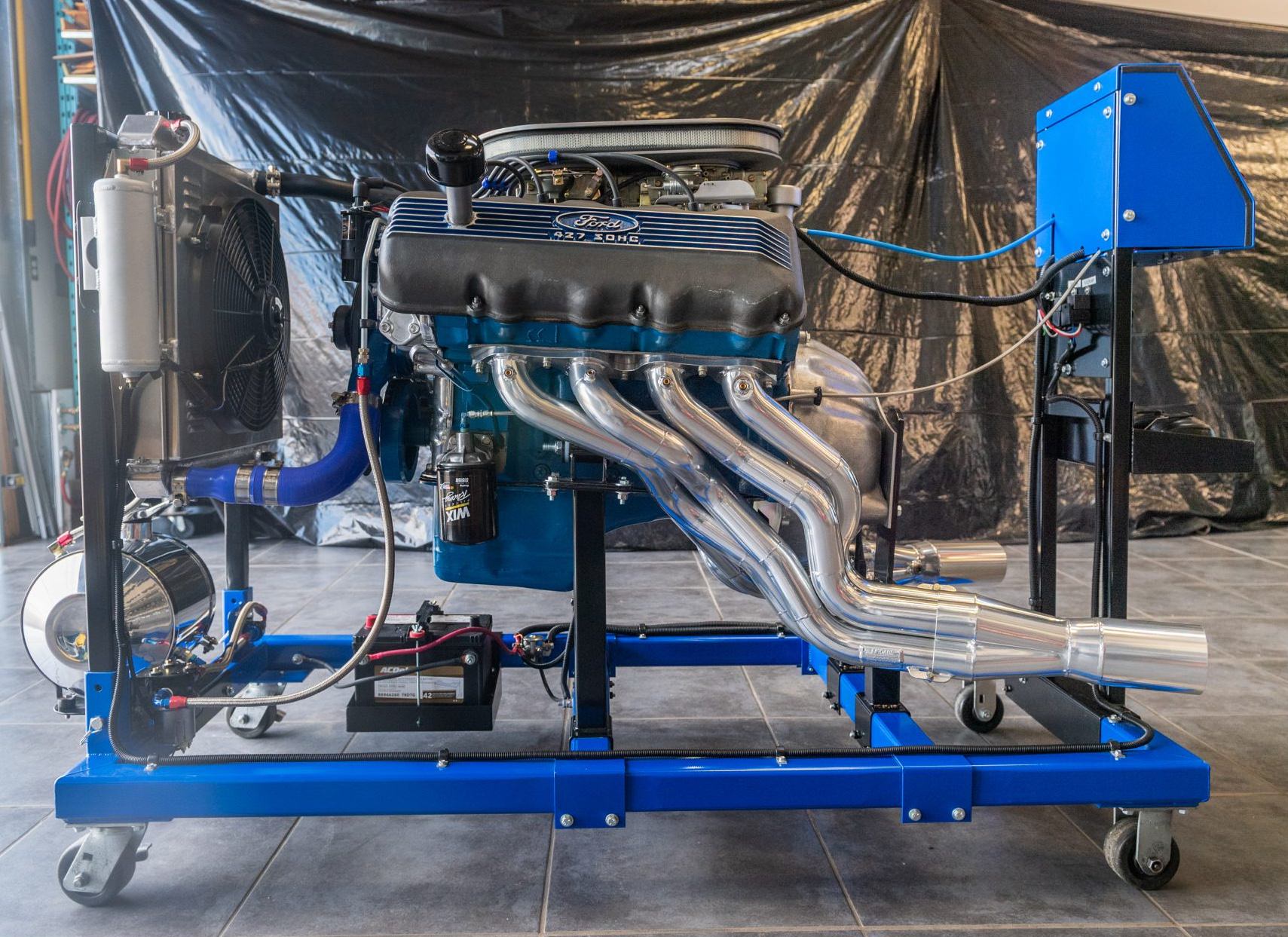
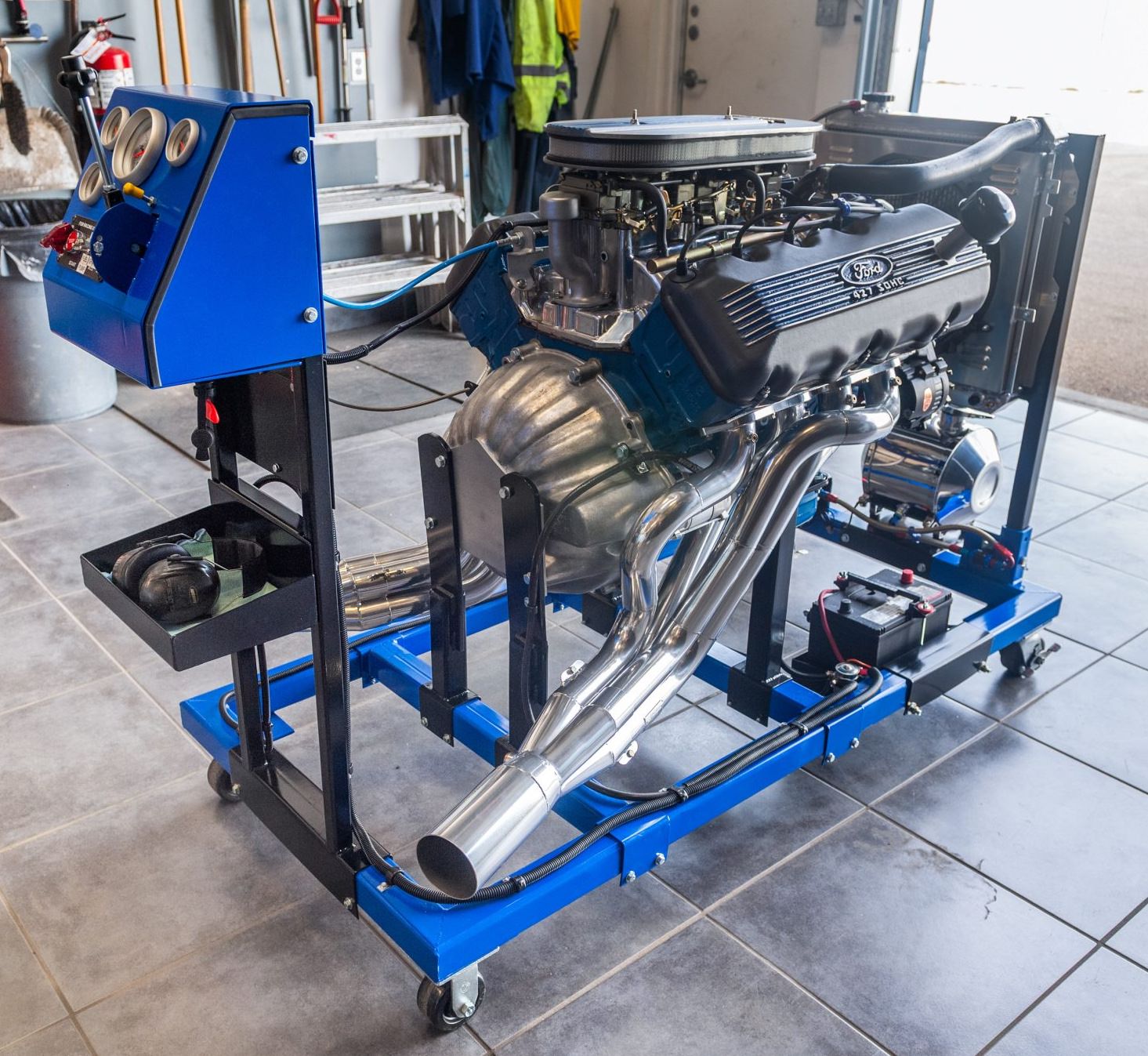
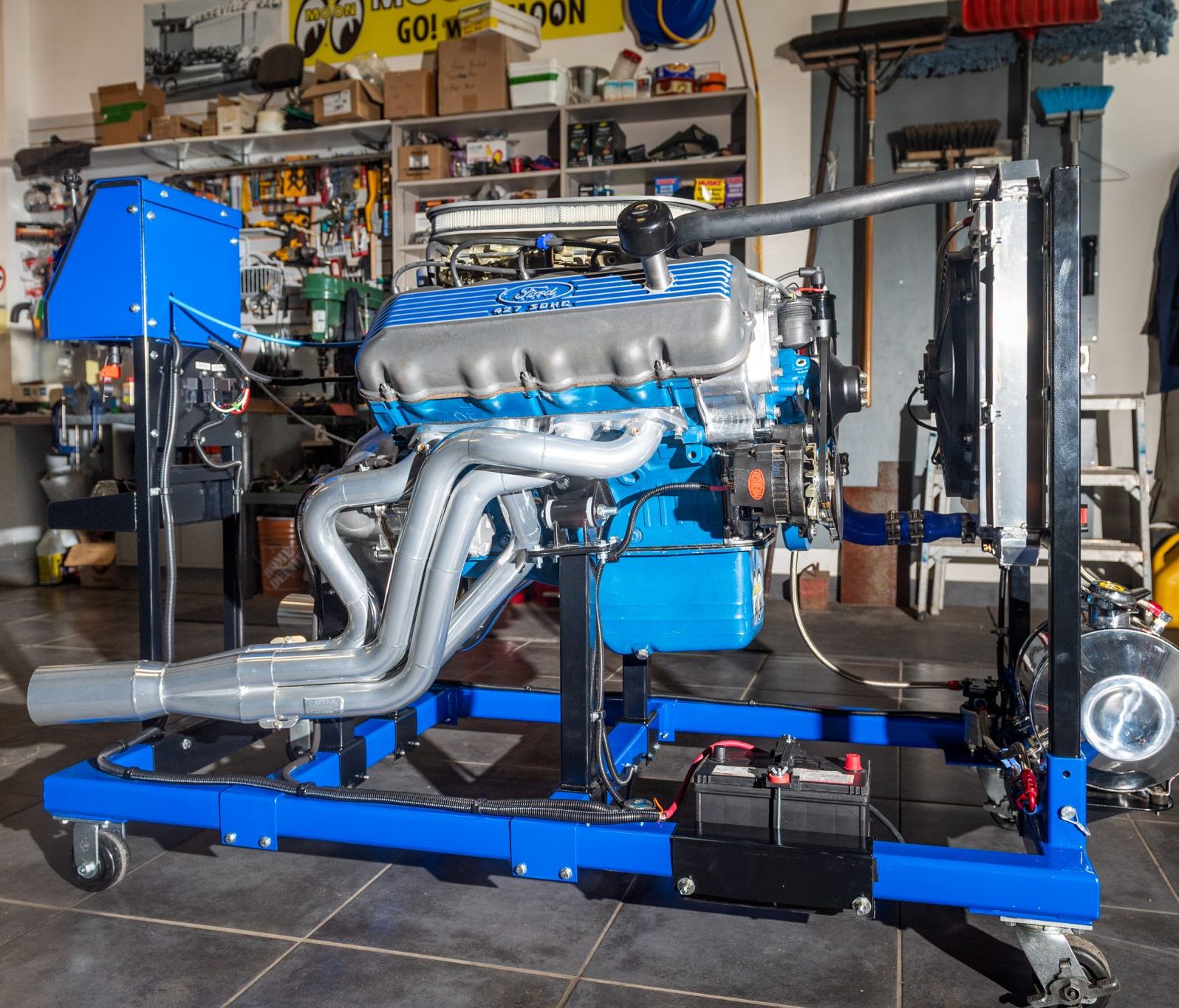
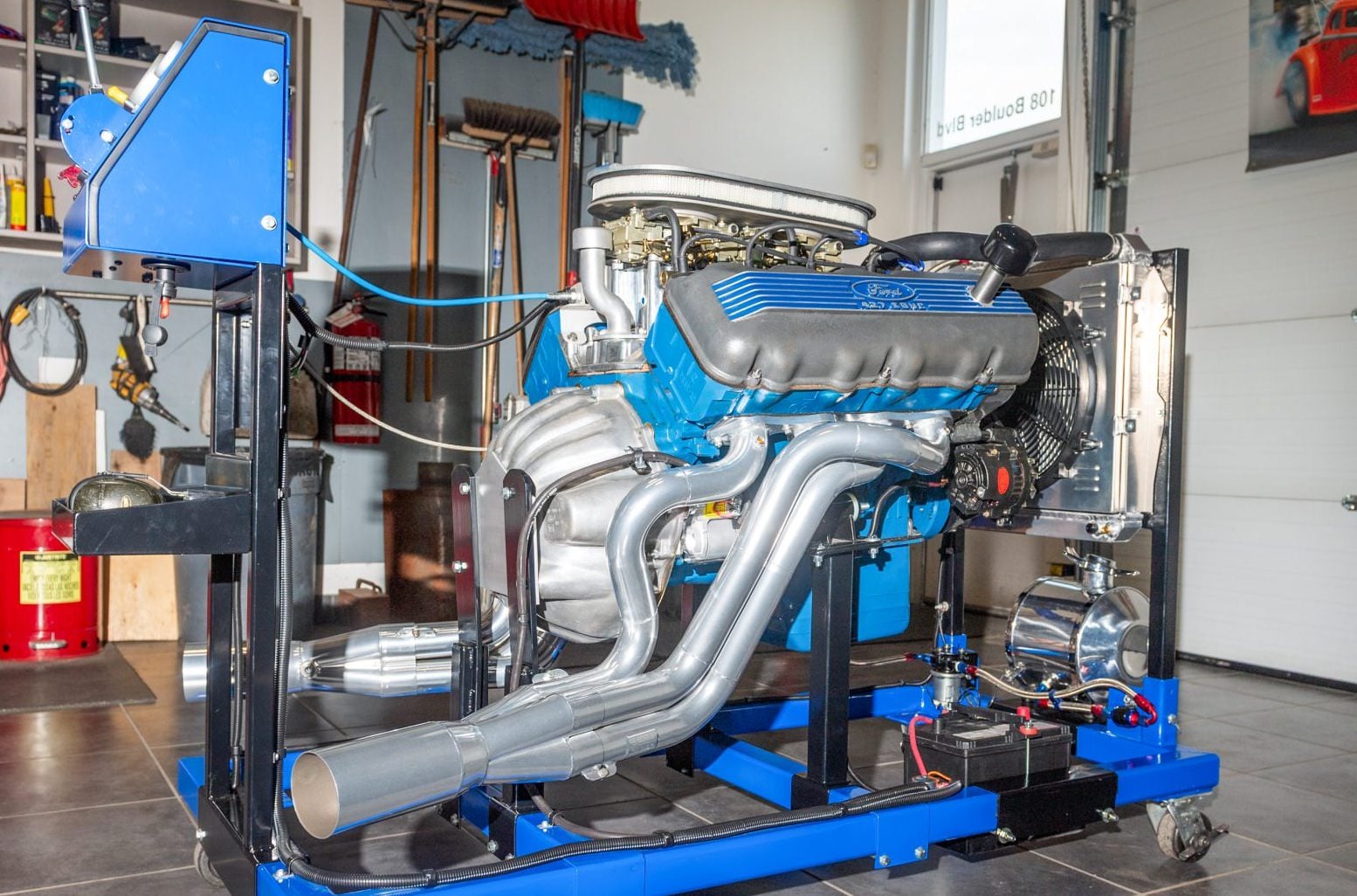
The car that it was installed into accumulated only about 800 miles over the following 18 years. After January of 2025, the engine was removed and installed on the rolling test stand that now accompanies the sale.
Ed Pink was always blunt about what he was working with, the block of the Cammer, he said, was probably designed for 750 bhp and his supercharged nitro engines were making 2,500 bhp. “The block was the weakest link.” Kalitta solved his bearing failures by using Chrysler rods on a turned-down crank.
Mickey Thompson’s pair of SOHC Mustang Funny Cars, driven by Danny Ongais and Pat Foster, won the 1969 March Meet, the NHRA Springnationals and the U.S. Nationals. Ford ended its support at the close of that season and shifted to the Boss 429. Nicholson gave the engine a late win in 1971, taking the NHRA Summernationals in a Cammer Maverick, the first Pro Stock national-event victory for a Ford.
Ford never published a production total for the engine, most estimates put it at around 500, but many (if not most) of them got blown to pieces on the drag strip, and as a result surviving engines are now a bit of a holy grail for Ford guys.
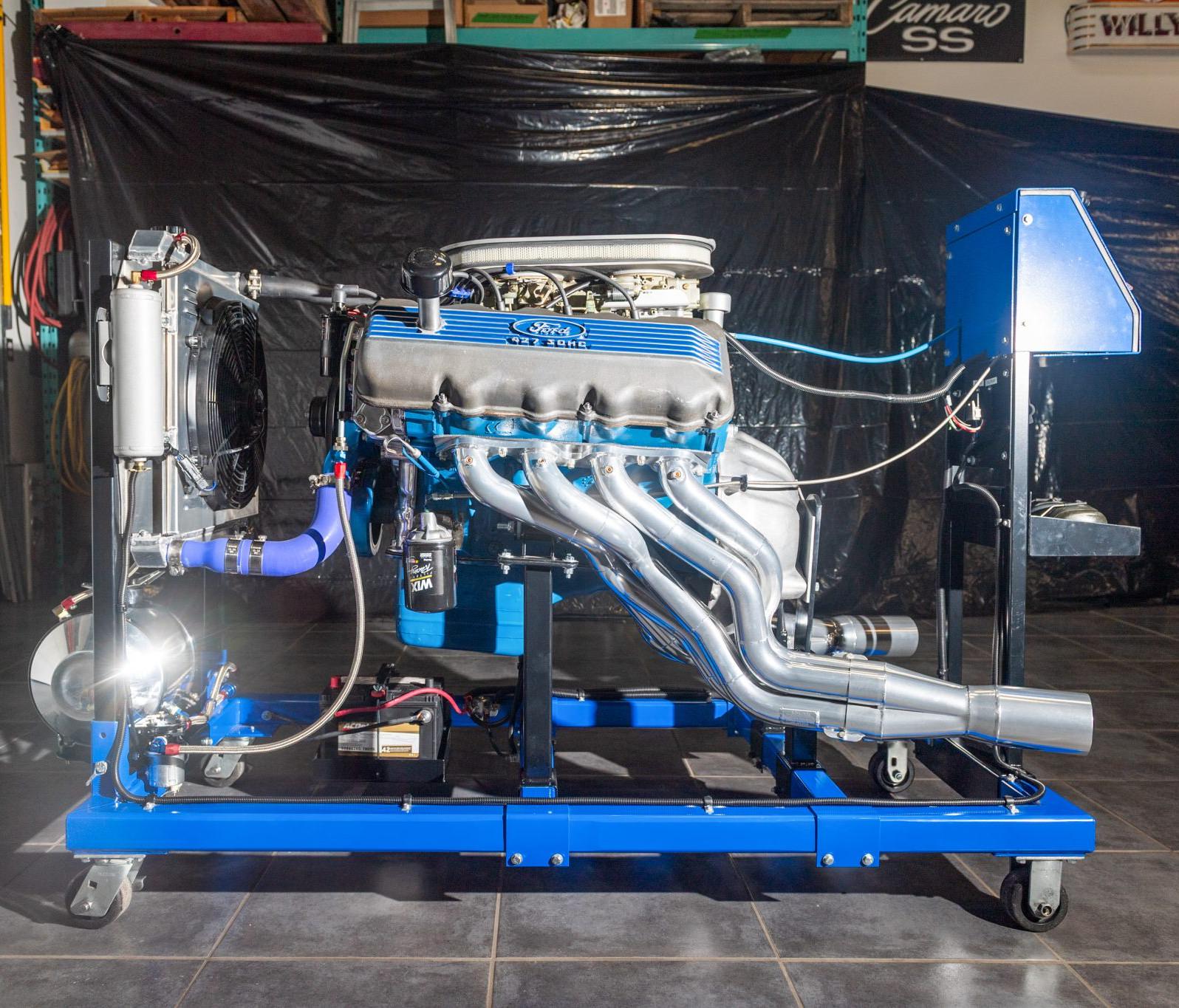
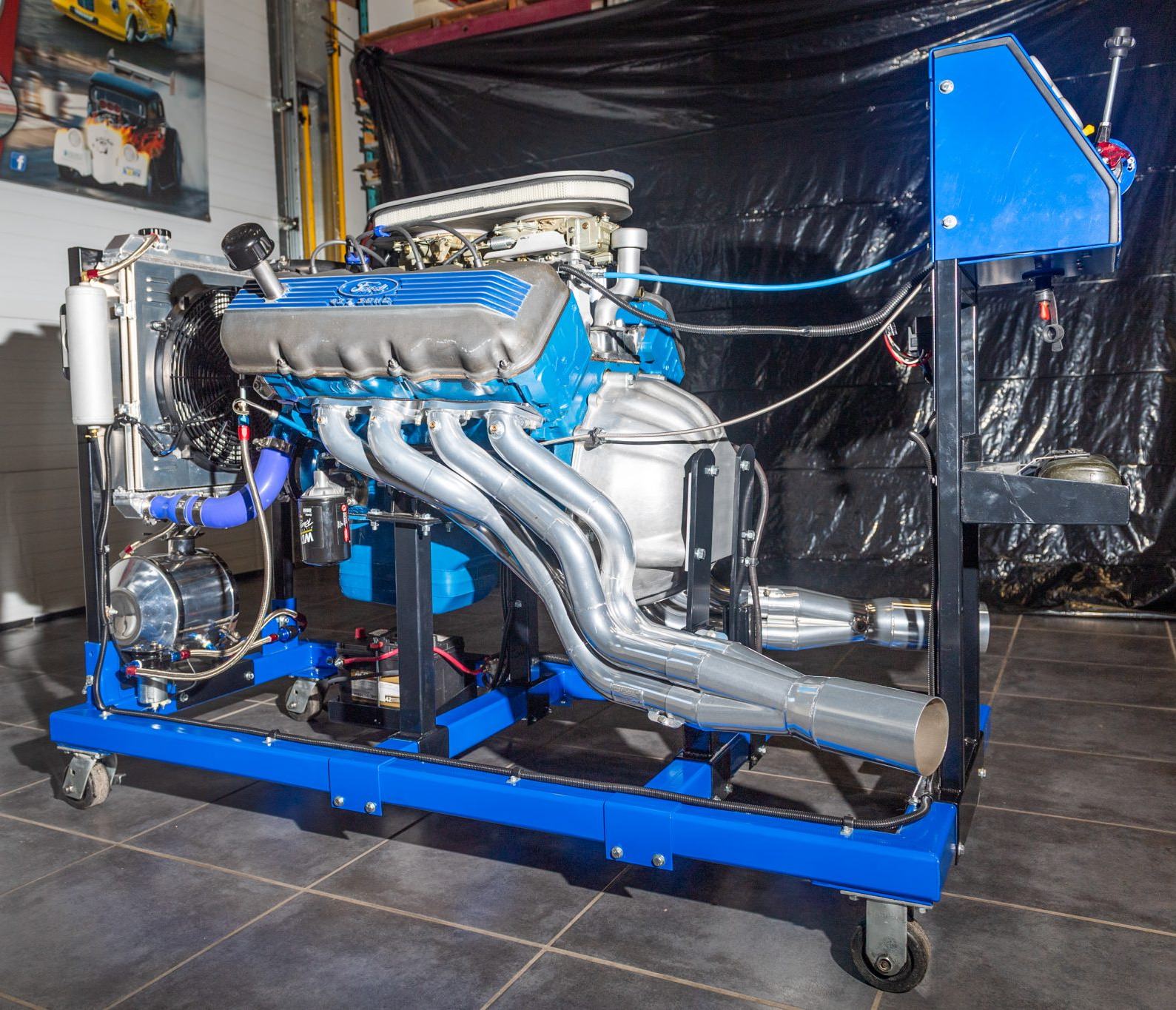
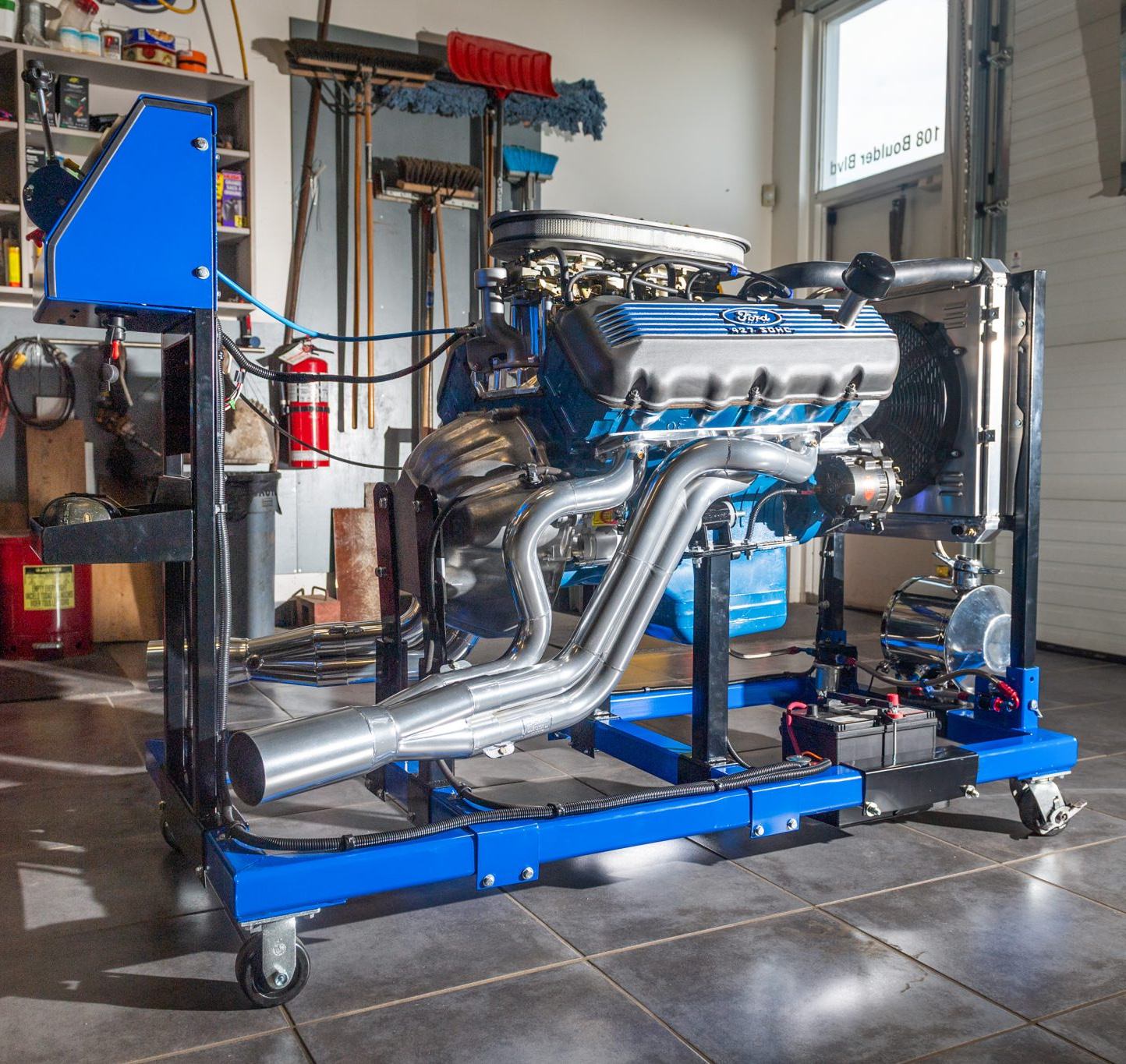
The Cammer V8 Shown Here
The Ford 427 SOHC “Cammer” V8 shown here was built by B.E. Motorsports of San Diego and then bought by the current seller roughly 18 years ago. After the long-block was assembled, it was transported uncovered through the desert to McCabe Racing in Chino Valley, Arizona, where installation was reportedly refused because dust had contaminated the inside of the engine.
It was then sent to BeL Engine Services in Edmonton, Alberta, where it was completely disassembled and rebuilt before returning to McCabe Racing for installation and final assembly.
The car that it was installed into accumulated only about 800 miles over the following 18 years. After January of 2025, the engine was removed and installed on the rolling test stand that now accompanies the sale.
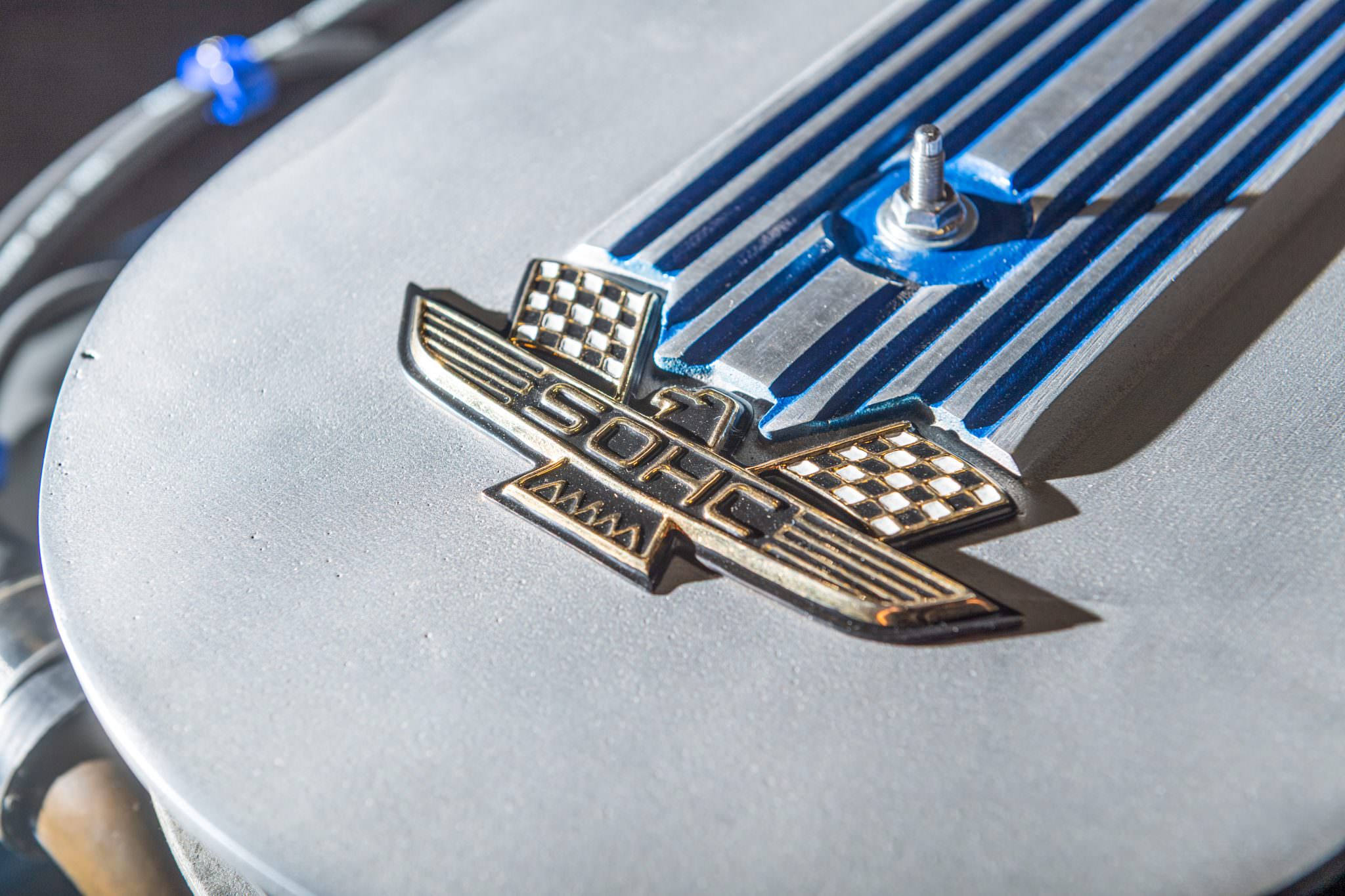
The seller then began converting its appearance toward a more period-correct spec, sourcing a dual-quad intake, C5AF-9510-BU and C5AF-9510-BT carburetors, a matching 2×4 air-cleaner assembly, magnesium Ford 427 SOHC valve covers, water pump, fuel lines, filter canister, and other parts.
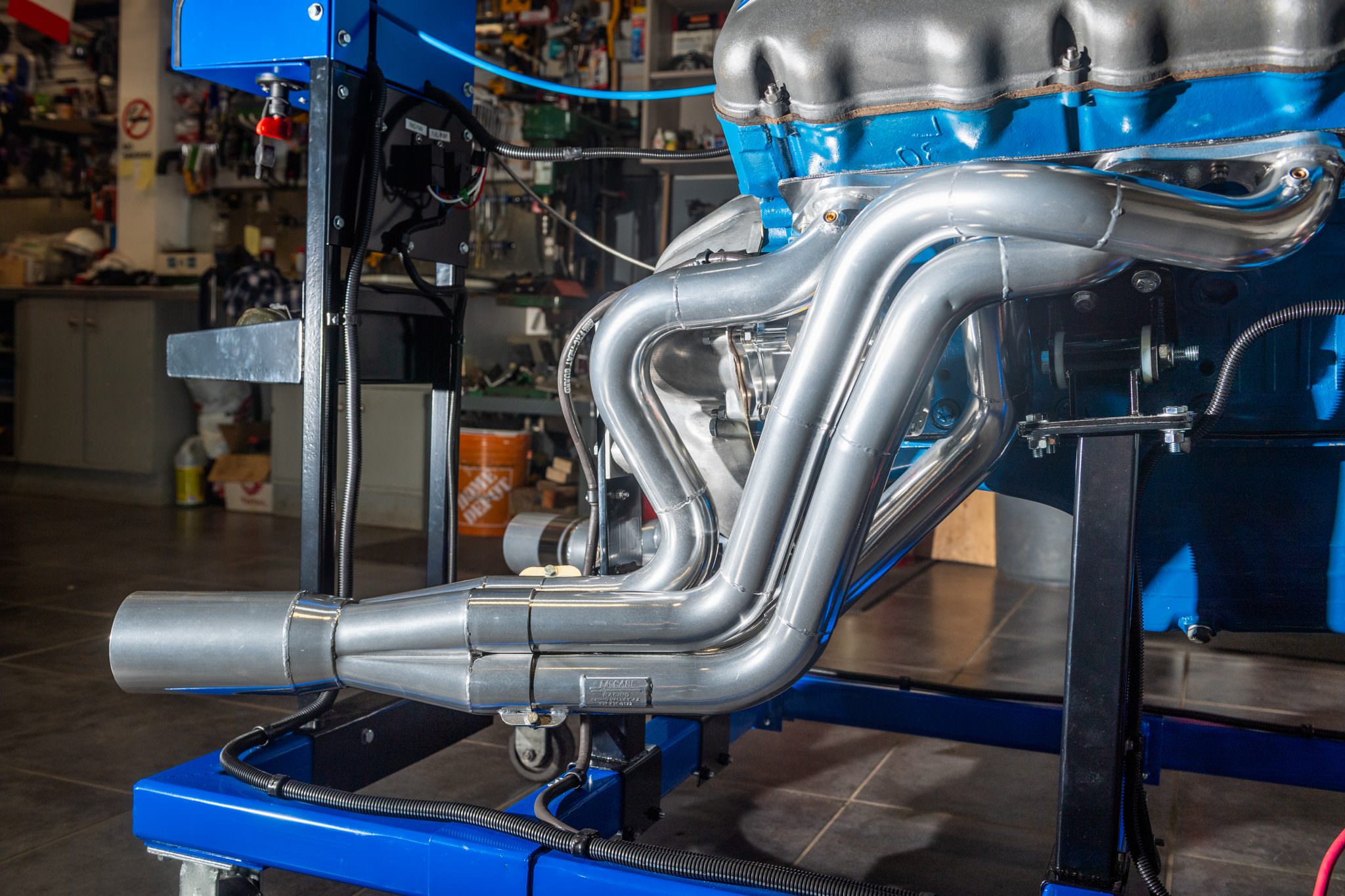
The seller then began converting its appearance toward a more period-correct spec, sourcing a dual-quad intake, C5AF-9510-BU and C5AF-9510-BT carburetors, a matching 2×4 air-cleaner assembly, magnesium Ford 427 SOHC valve covers, water pump, fuel lines, filter canister, and other parts.
More recently, Brent Lykins of Lykins Motorsports was consulted when replacement camshafts were ordered, with BeL Engine Services handling their installation. The carburetors were reportedly rebuilt by Hardcore Holley Carb Rebuilders several years ago, while the starter was replaced approximately two months before the sale.
It’s now being offered for sale out of Stony Plain, Alberta, along with its test stand, BeL build notes, COMP Cams paperwork, and a selection of spare and associated parts. If you’d like to read more about it or register to bid you can visit the listing here.
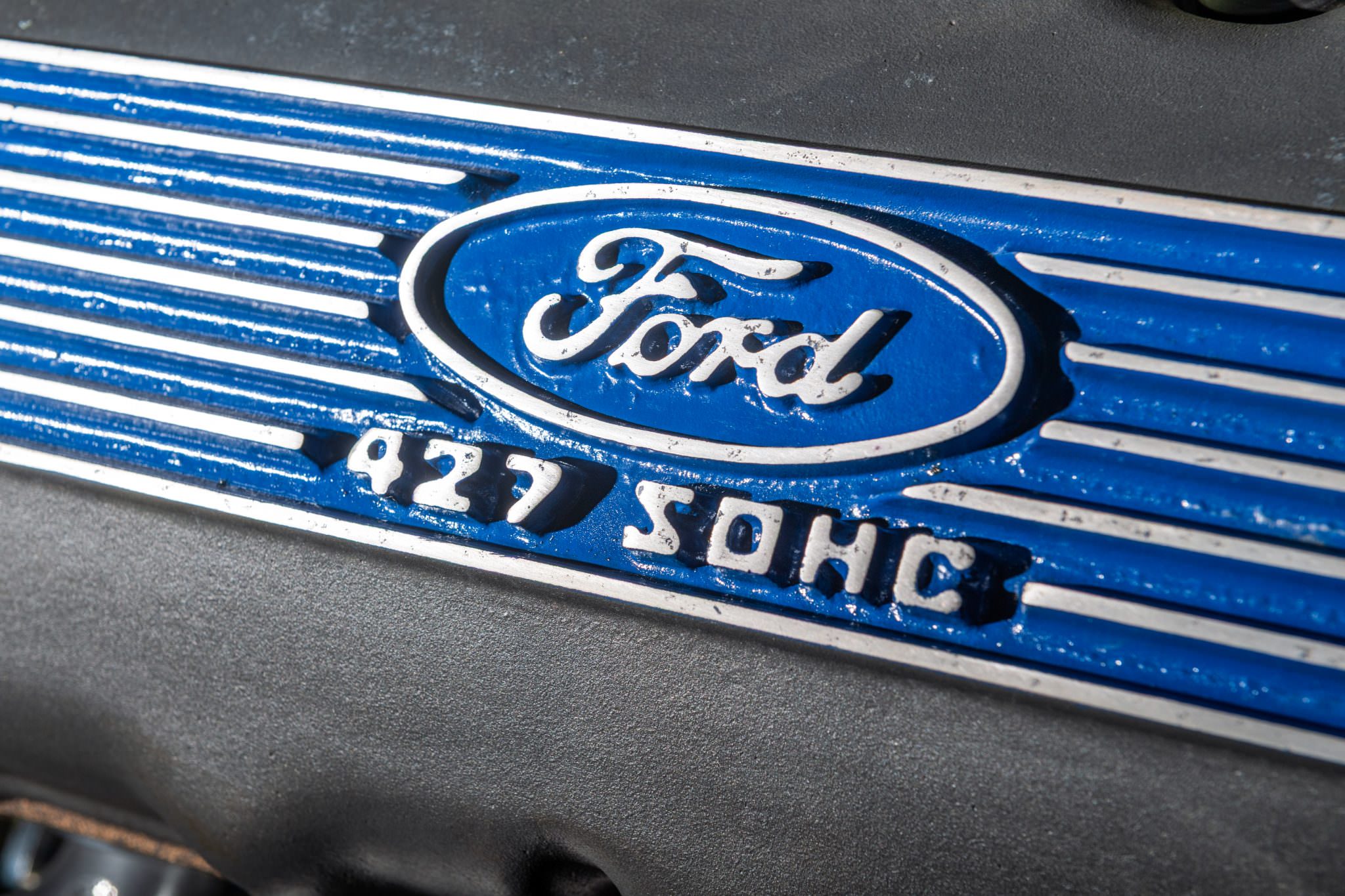
Images courtesy of Bring a Trailer + Ford

Articles that Ben Branch has written have been covered on CNN, Popular Mechanics, Smithsonian Magazine, Road & Track Magazine, the official Pinterest blog, the official eBay Motors blog, BuzzFeed, Autoweek Magazine, Wired Magazine, Autoblog, Gear Patrol, Jalopnik, The Verge, and many more.
Silodrome was founded by Ben back in 2010, in the years since the site has grown to become a world leader in the alternative and vintage motoring sector, with well over a million monthly readers from around the world and many hundreds of thousands of followers on social media.