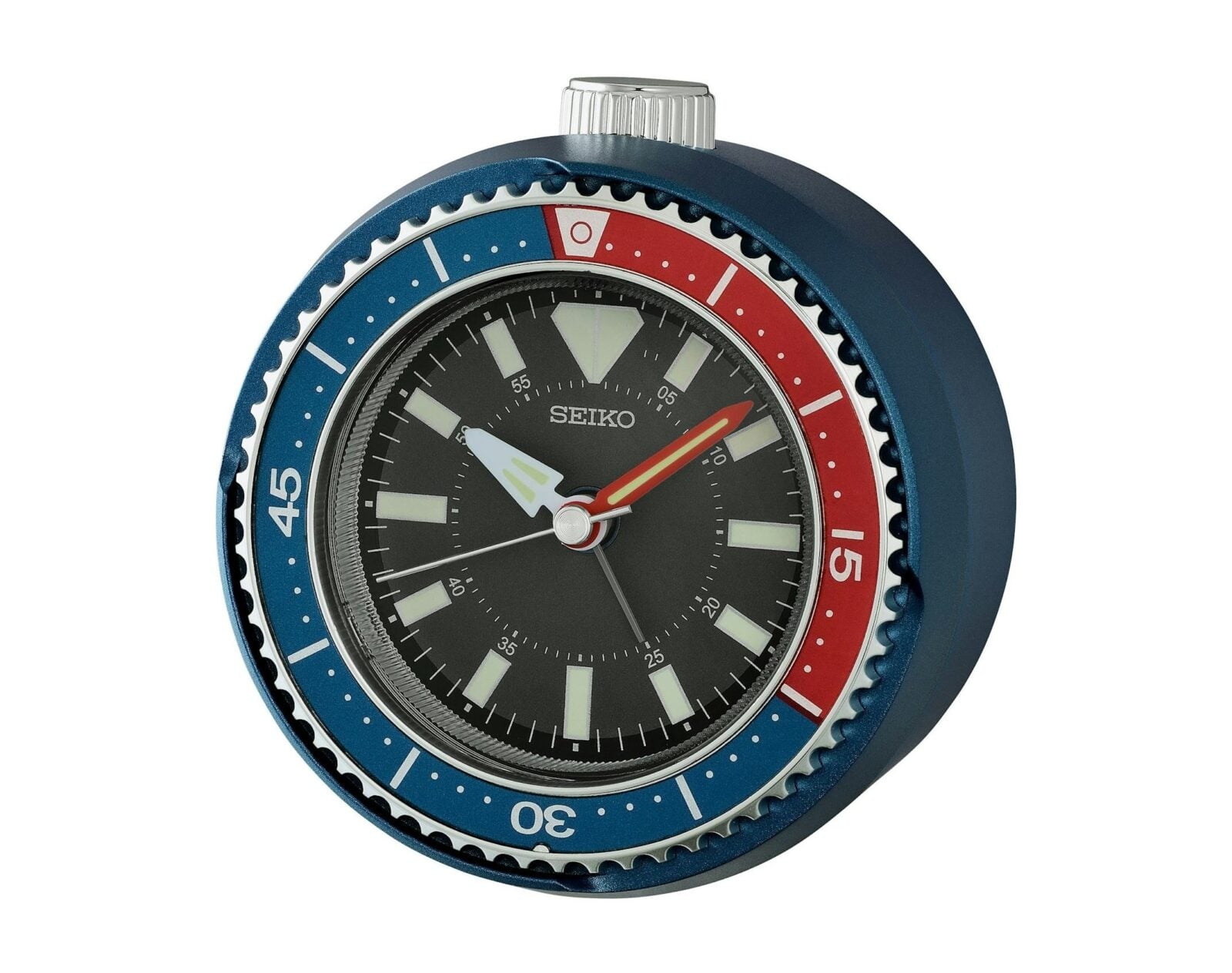
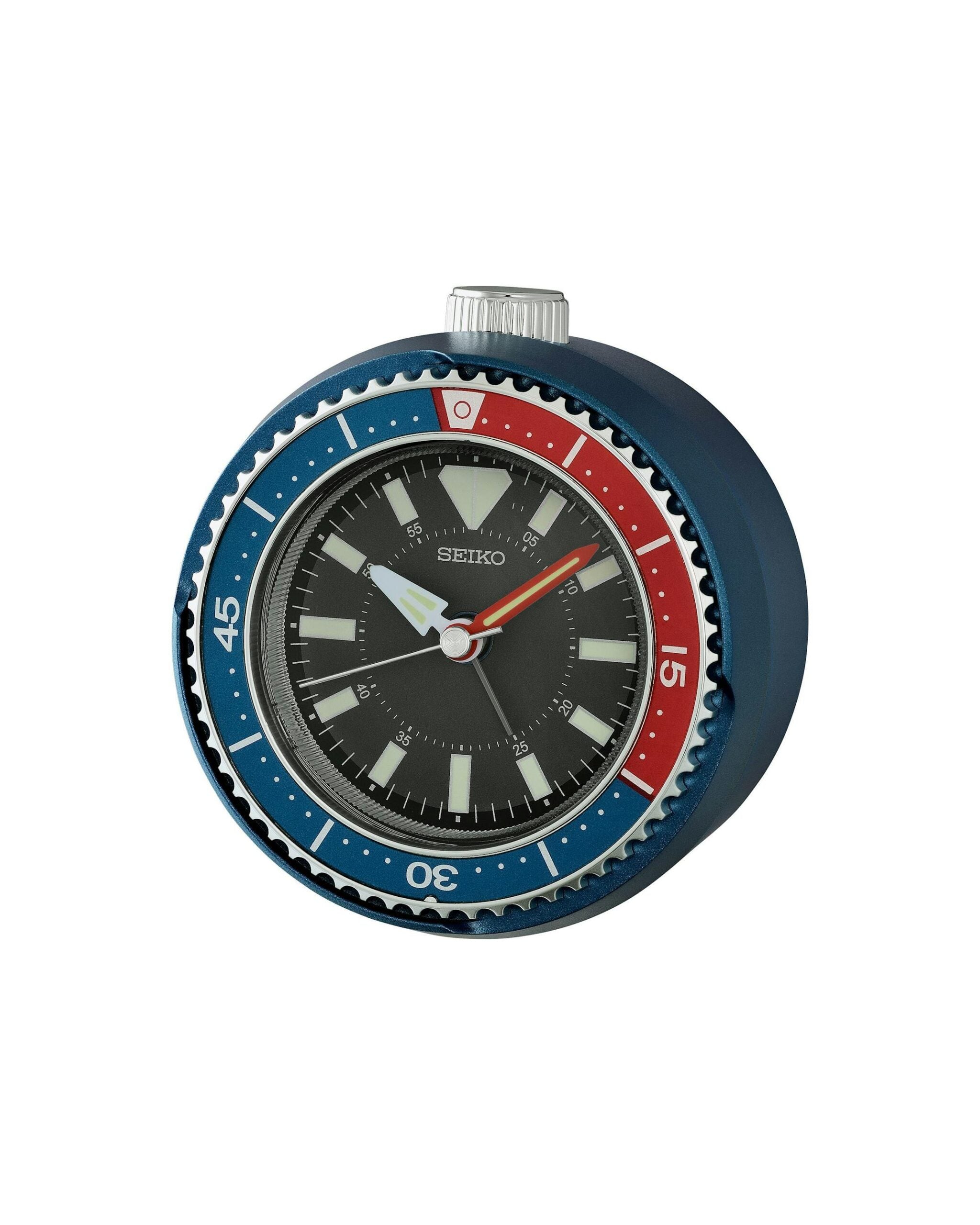
This is the Heritage Design Seiko Alarm Clock, it was designed to pay homage to the Japanese watchmaker’s most iconic dive watches, and it comes in three colorways to match the real watches.
This clock is meant to sit by your bed, or on your desk if you prefer, to tell the time and optionally, to ring at your pre-chosen time to wake you up, or just to remind you about a time-sensitive task. It measures in at 4.1″ x 3.8″ x 2.2″ and it’s powered by a single AA battery.
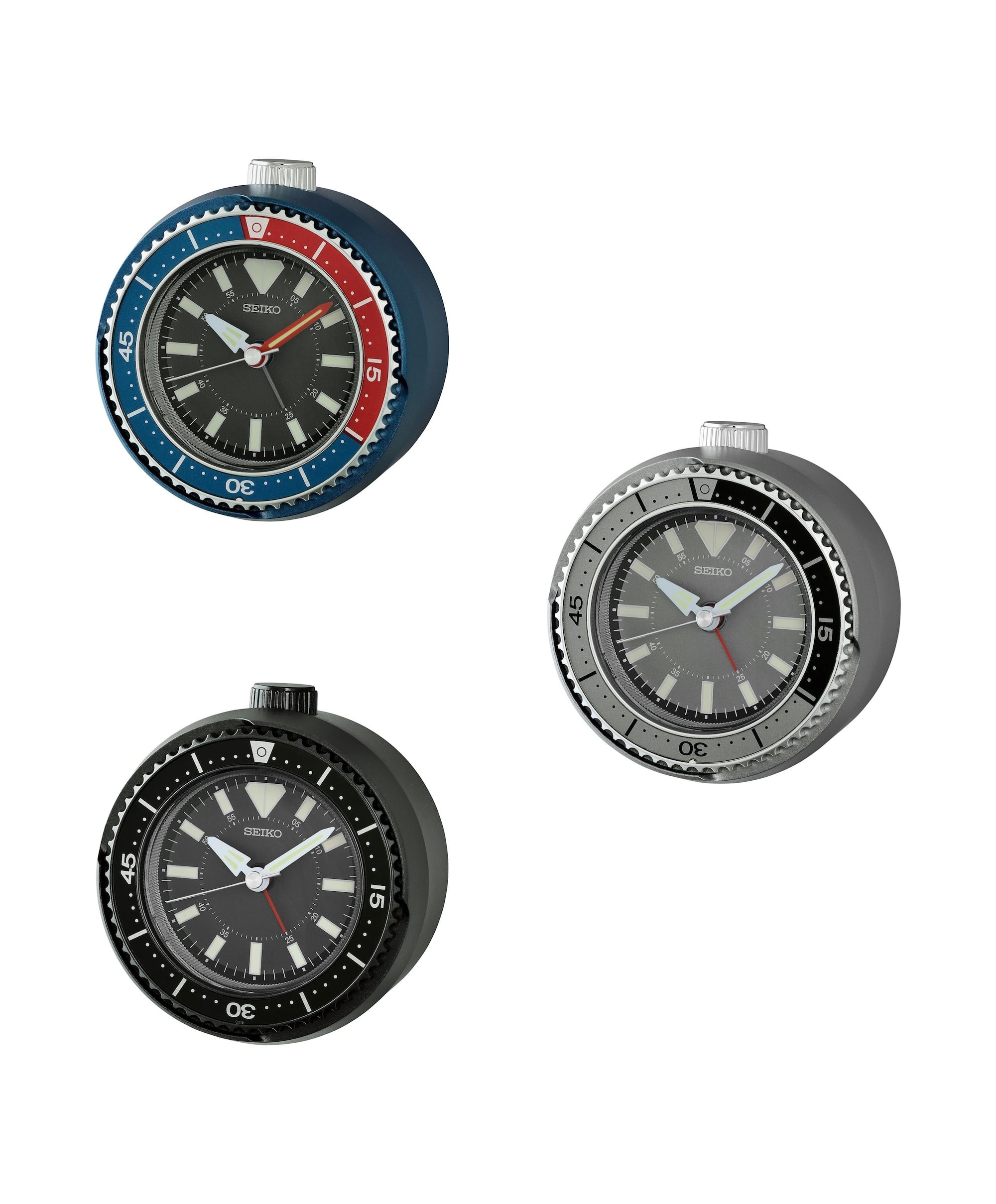
 This is the Heritage Design Seiko Alarm Clock, it was designed to pay homage to the Japanese watchmaker’s most iconic dive watches, and it comes in three colorways to match the real watches.
History Speedrun: Seiko
Kintaro Hattori opened a watch repair and retail shop in Tokyo’s Kyobashi district in 1881, no one knew it at the time, but it would set in motion a series of events that would result in one of Japan’s, and one of the world’s, most famous watch companies.
In 1892 Hattori set up the Seikosha factory and began making clocks. The company made its first pocket watch, the Timekeeper, in 1895, and Japan’s first wristwatch, the Laurel, in 1913. The Great Kanto Earthquake of 1923 destroyed Seikosha’s factories and offices, but Hattori resumed operations within months, replacing every customer watch lost in the disaster free of charge. The first watch bearing the Seiko name on its dial appeared 102 years ago in 1924.
Through the 1950s, Seiko developed increasingly precise mechanical movements, the Marvel (released in 1956) was its first fully in-house-designed caliber. In 1960, the company launched Grand Seiko to compete directly with Swiss luxury watchmakers on accuracy and finishing.
Seiko served as official timekeeper for the 1964 Tokyo Olympics, which drove major advances in precision timing technology for the company. In 1969, Seiko released the Quartz Astron, the world’s first commercially available quartz wristwatch, triggering the Quartz Revolution that nearly destroyed the Swiss watch industry through the 1970s and early 1980s.
The same year saw the debut of one of the world’s first automatic chronographs, the 6139. Later creations included the Kinetic movement (1986), Spring Drive (1999), and the GPS Solar Astron (2012). Today, Seiko is one of the most respected watch makers in the world, and Grand Seiko is an equal of the Swiss watch makers still dominate the upper levels of the industry.
Seiko Dive Watch History
Seiko’s first true dive watch was the 62MAS, released in 1965. This was a 150m-rated automatic that doubled as the official watch of the 8th Japanese Antarctic Research Expedition in 1966. The 300M Diver’s followed in 1967 with a monobloc case, and the hi-beat 6159 “Professional” arrived in 1968 using a Grand Seiko-grade caliber.
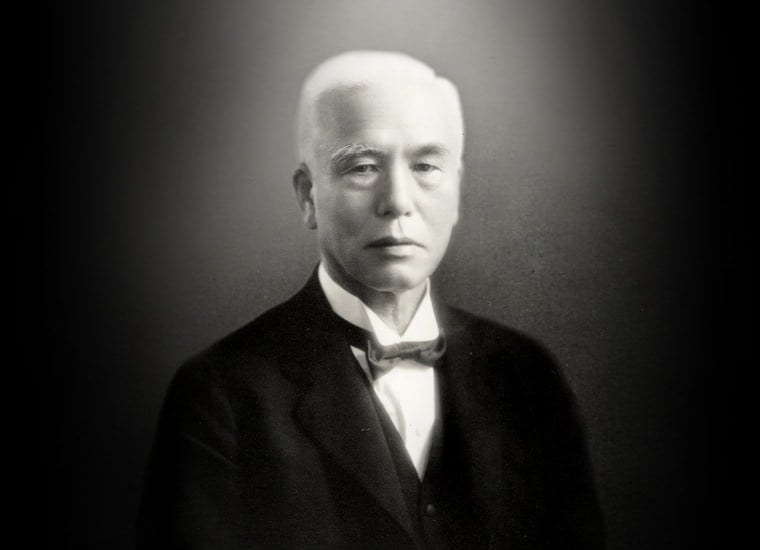
Kintaro Hattori, the founder of Seiko.
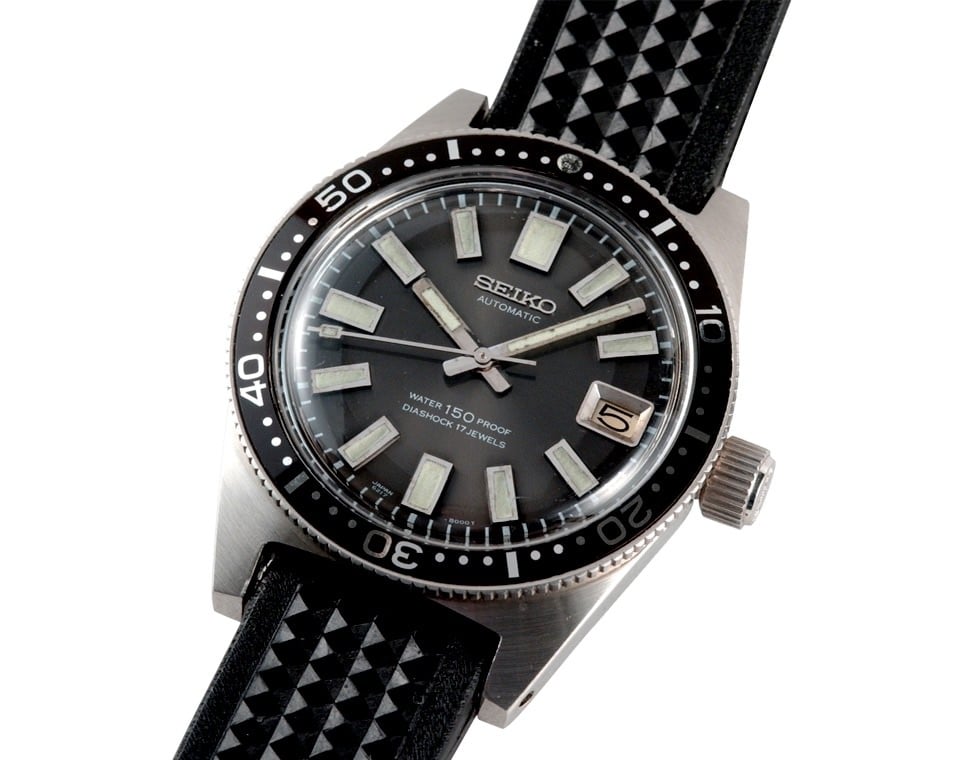
Seiko’s first true dive watch was the 62MAS, released in 1965. This was a 150m-rated automatic that doubled as the official watch of the 8th Japanese Antarctic Research Expedition in 1966.
The 6105 became a legend when American GIs in Vietnam adopted it as an affordable replacement for their less-than-reliable standard-issue watches. Martin Sheen wore one in Apocalypse Now, earning it the “Willard” nickname.
The pivotal moment came from a letter written by a saturation diver in Hiroshima, who told Seiko that helium was destroying watches at depth. After seven years of R&D, Seiko launched the Professional Diver’s 600M in 1975, this was the world’s first titanium-cased dive watch, including over 20 patents including an L-shaped gasket that blocked helium from entering without requiring a release valve.
Seiko would release first quartz saturation diver in 1978, the first ceramic-cased 1,000m diver in 1986 (under the new Prospex branding), the first computerized dive watch, and the first Kinetic diver. Many of these innovations were formally incorporated into the ISO 6425 dive watch standard in 1996.
The modern Prospex lineup spans entry-level to high-end, with collector-nicknamed models, like the Turtle, Samurai, Monster, Sumo, Shogun, making Seiko one of the few brands whose dive watches can be bought at nearly every price point.
The Heritage Design Seiko Alarm Clock
This is the Heritage Design Seiko Alarm Clock, as noted above it was developed to evoke the styling of classic Seiko dive watches, but unlike them, it’s really meant for your bedside table, desk, or shelf.
Importantly, it has a a second hand that moves in a smooth, continuous motion with no ticking – at some point we’ve all been kept awake in a quiet room with a loudly ticking clock. It has a standard beeping alarm function with a snooze function and a built-in light.
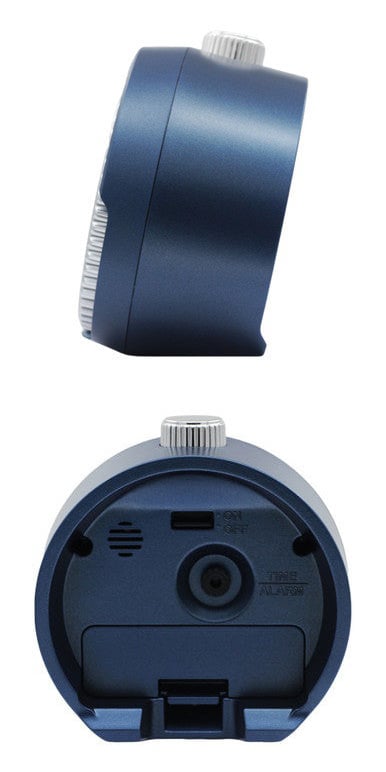
Importantly, the Heritage Design Seiko Alarm Clock has a a second hand that moves in a smooth, continuous motion with no ticking – at some point we’ve all been kept awake in a quiet room with a loudly ticking clock. It has a standard beeping alarm function with a snooze function and a built-in light.
It’s powered by a single AA battery and it measures in at 4.1″ x 3.8″ x 2.2″ and 0.5 lbs in weight. It comes in three colorways including metallic blue and red, black, and dark silver – but I suspect that the blue and red version will be the best seller.
The clock is now available to buy in the USA from Huckberry with free and easy US returns and an MSRP of $59 USD, you can visit the store listing here if you’d like to read more.
Images courtesy of Seiko + Huckberry

Articles that Ben Branch has written have been covered on CNN, Popular Mechanics, Smithsonian Magazine, Road & Track Magazine, the official Pinterest blog, the official eBay Motors blog, BuzzFeed, Autoweek Magazine, Wired Magazine, Autoblog, Gear Patrol, Jalopnik, The Verge, and many more.
Silodrome was founded by Ben back in 2010, in the years since the site has grown to become a world leader in the alternative and vintage motoring sector, with well over a million monthly readers from around the world and many hundreds of thousands of followers on social media.