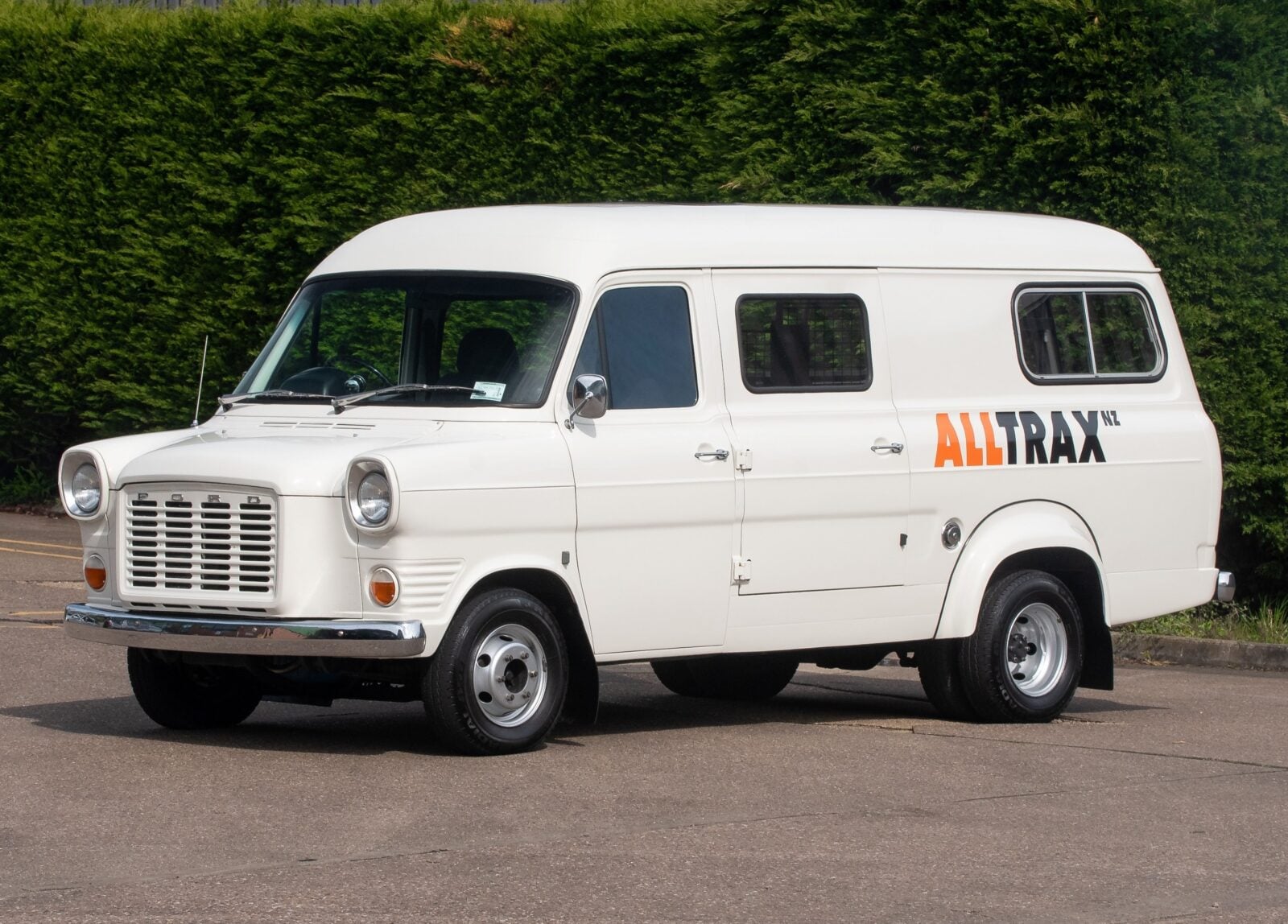
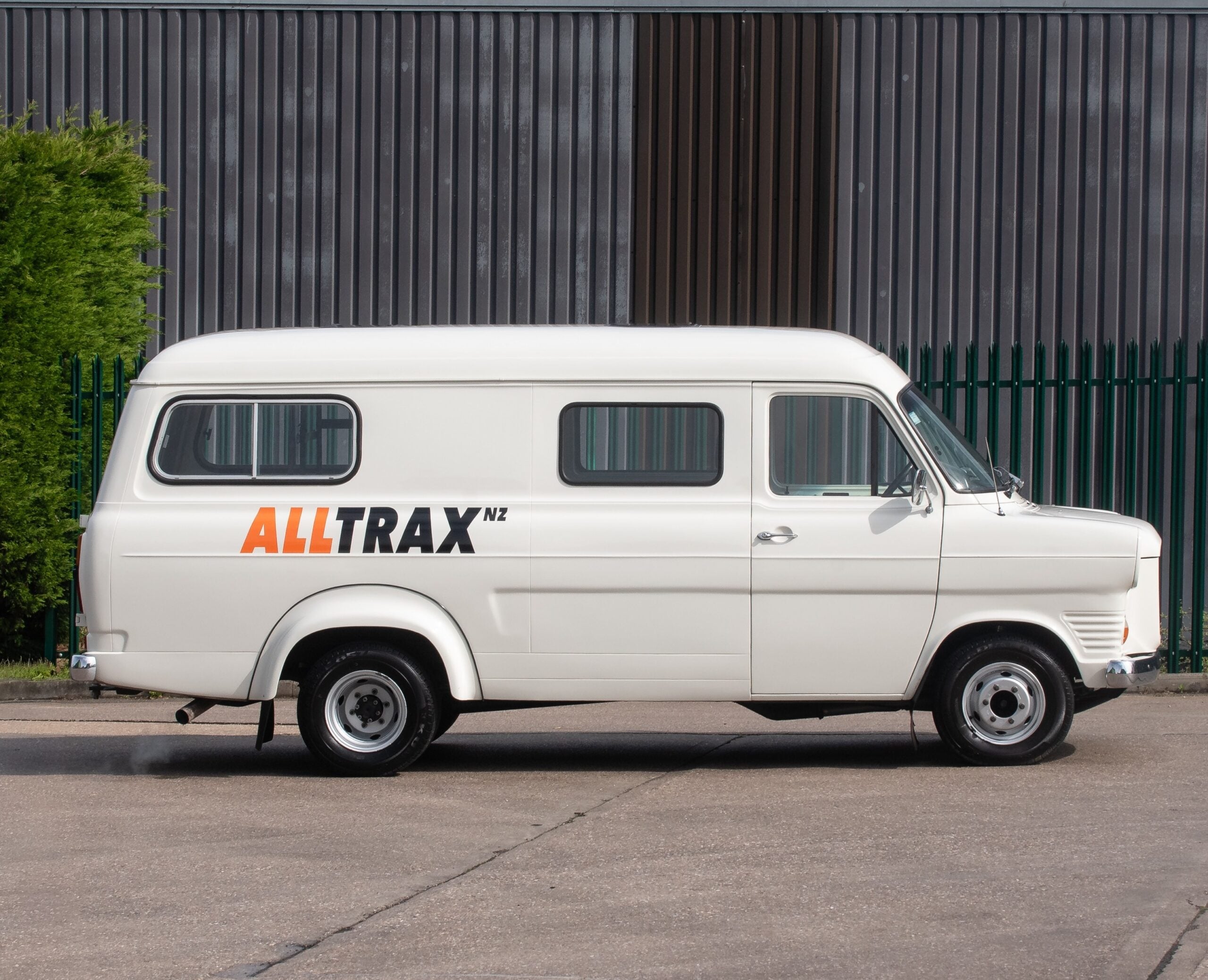
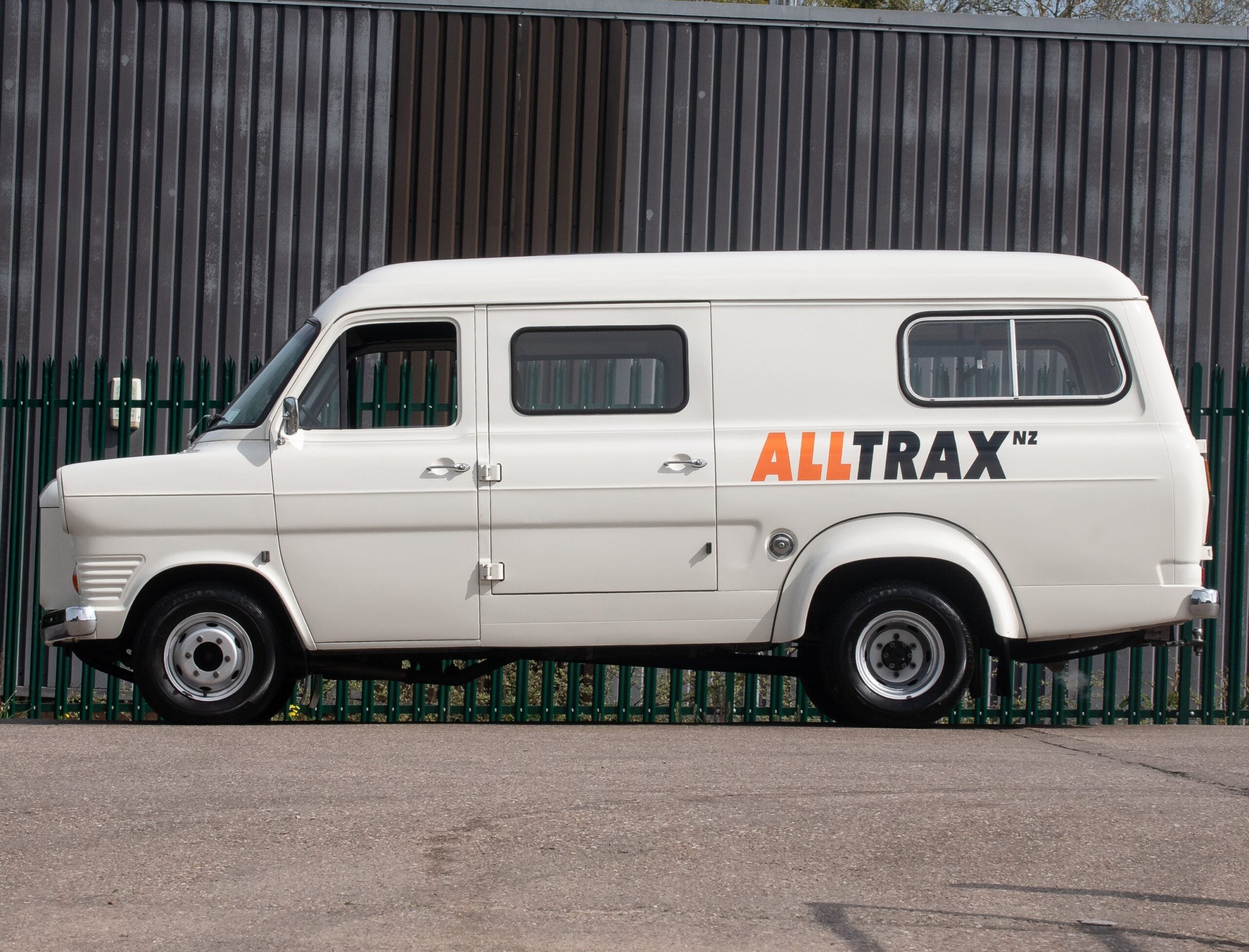
This is a 1975 Ford Transit Mk1 that benefits from a series of major upgrades, the most notable of which is the 5.0 liter V8 that now sits under the hood.
This Transit Mk1 sleeper was built at a cost of over $122,000 by ALLTRA NZ, a race and rally preparation company. It’s now being offered for sale as one of the fastest Mk1 Transits in the world.
Fast Facts: A 5.0 Liter V8 Ford Transit Mk1
- The Ford Transit Mk1 was born from Project Redcap, a joint effort between Ford of Britain and Ford-Werke AG that produced the first Ford designed for all of Europe. Launched in 1965 with the remarkably compact Essex V4 engine, it revolutionized the light commercial vehicle market by moving the engine ahead of the cabin.
- The Mk1 offered an unprecedented range of body styles on a steel unibody with leaf-sprung beam axles, Lockheed drum brakes, and a four-speed manual gearbox. The 1.7 liter V4 produced 73 bhp and topped out at 81 mph, these were modest figures, but enough for the Metropolitan Police to dub it “Britain’s Most Wanted Van” in 1972 due to its frequent use in bank robberies.
- Ford built 422,766 Mk1 Transits between 1965 and 1977, and the platform underpinned both the Mk1 and facelifted Mk2 for over two decades before the VE6-based Mk3 replaced them in 1986. Its key competitors included the Bedford CA, BMC J4, Morris Commercial J2, and Commer PB, none of which could match its versatility.
- This particular 1975 long-wheelbase example is a dual-rear-wheel van that’s been rebuilt by New Zealand rally preparation company ALLTRA NZ at a cost of over $122,000. It now has a 5.0 liter fuel-injected V8 behind its stock-looking Ermine White exterior, and it’s heading to auction with Historics Auctioneers on May 16th.
History Speedrun: The Ford Transit Mk1
The Ford Transit story starts more than a decade before its 1965 introduction, in Cologne, Germany, where Ford-Werke AG introduced the FK 1000 van in 1953 – a light delivery van competing directly with the Volkswagen Type 2 Transporter. Powered by a 1.2 liter sidevalve engine from the Taunus passenger car (enlarged to 1.5 liters for 1955), the FK 1000 was rebadged the Ford Taunus Transit in 1961 and it stayed in production until the Transit arrived.
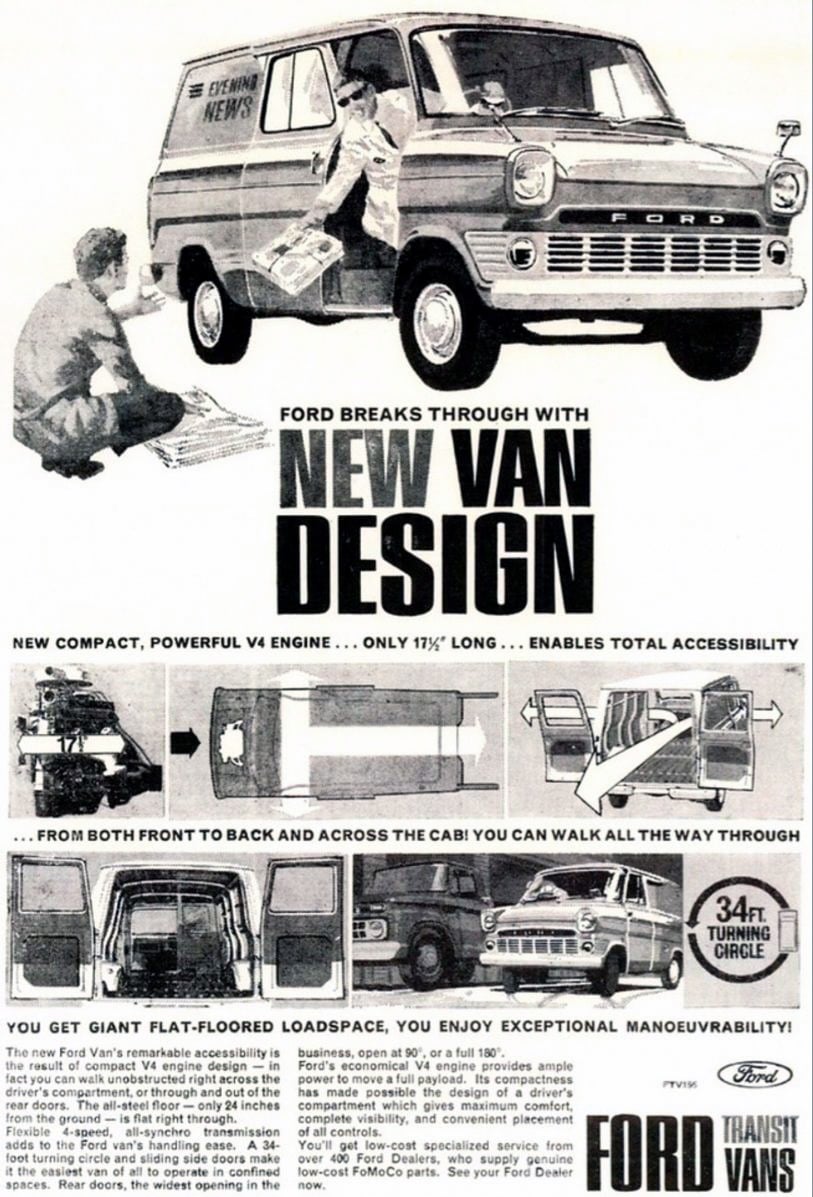
 The first production Transits began rolling off the line at Ford’s Langley plant in Berkshire, a former WWII Hawker Hurricane fighter aircraft factory, in August of 1965, with the van officially introduced to the public in October the same year. Image courtesy of Ford.
Meanwhile, across the Channel, Ford of Britain had its own light commercial vehicle – the Thames 400E, launched in 1957. It was a mid-engined, forward-control van with a narrow track, and while it sold in respectable numbers, its restricted cargo area failed to win over fleet buyers in a UK market then dominated by the Bedford CA.
The Thames 400E and the Taunus Transit were increasingly bumping into each other on the continent – and with the newly formed EEC (European Economic Community) effectively dissolving trade barriers, this internal competition became expensive and pointless.
The Transit Gets The Green Light
Henry Ford II’s solution was to force Ford of Britain and Ford-Werke AG into a joint development program. Codenamed “Project Redcap,” the effort launched in 1963 and became the first Ford product designed for all of Europe – even predating the formal creation of Ford of Europe by two years.
The original plan was to call the new van the “V-series,” but a last-minute decision borrowed the Transit name from the outgoing German model. A £14 million investment was approved to retool the Dagenham plant for the unusual new engine that would sit under its hood.
The first production Transits began rolling off the line at Ford’s Langley plant in Berkshire, a former WWII Hawker Hurricane fighter aircraft factory, in August of 1965, with the van officially introduced to the public in October the same year.
Demand was immediate and overwhelming, within just a few months Ford had picked up orders worth £33 million, and Bedford reportedly canceled a competing project outright. Bodies were supplied from Ford’s Southampton plant from the beginning, and additional assembly took place at Ford’s Genk factory in Belgium, at an Otosan plant in Istanbul, and in Australia, New Zealand, the Netherlands, and South Africa.
The genius of the Transit’s design was actually pretty simple – the engineers put the engine in front of the driver, not underneath (or next to) them. British and European vans of the era used forward-control layouts that placed occupants above or next to the engine, which resulted in brutal cabin heat, noise, and fumes. Image courtesy of Ford.
The genius of the Transit’s design was actually pretty simple – the engineers put the engine in front of the driver, not underneath (or next to) them. British and European vans of the era used forward-control layouts that placed occupants above or next to the engine, which resulted in brutal cabin heat, noise, and fumes.
Ford adopted a classic front-engine, rear-wheel-drive layout headed up by the Essex V4 – a compact 60º OHV petrol engine with a block that measured in at just 20 inches long – short enough to fit beneath the Transit’s stubby nose.
The Essex V4
The Essex V4 engine was offered in two displacements using the same 93.66 mm bore. The 1.7 liter version (the standard Transit engine) produced 73 bhp at 4,750 rpm and 91 lb ft at 3,000 rpm in low-compression tune.
The 2.0 liter version made 85 bhp in Transit spec, though high-compression passenger car applications like the Corsair 2000E squeezed out 93 bhp and 122 lb ft. An internal balance shaft spun at engine speed to tame the inherent roughness of the 60º V4.
A 43 bhp Perkins diesel was also available, but it was too long for the standard nose, so diesel Transits received an extended bonnet that earned the nickname the “pig snout.” The underpowered Perkins was replaced by Ford’s own York diesel in 1972.
That same long-nose front also had room for the 3.0 liter Essex V6 for high-performance police and ambulance applications. European-market Transits used the German Ford Taunus V4 in 1.3, 1.5, and 1.7 liter forms. All models ran a 4-speed manual gearbox.
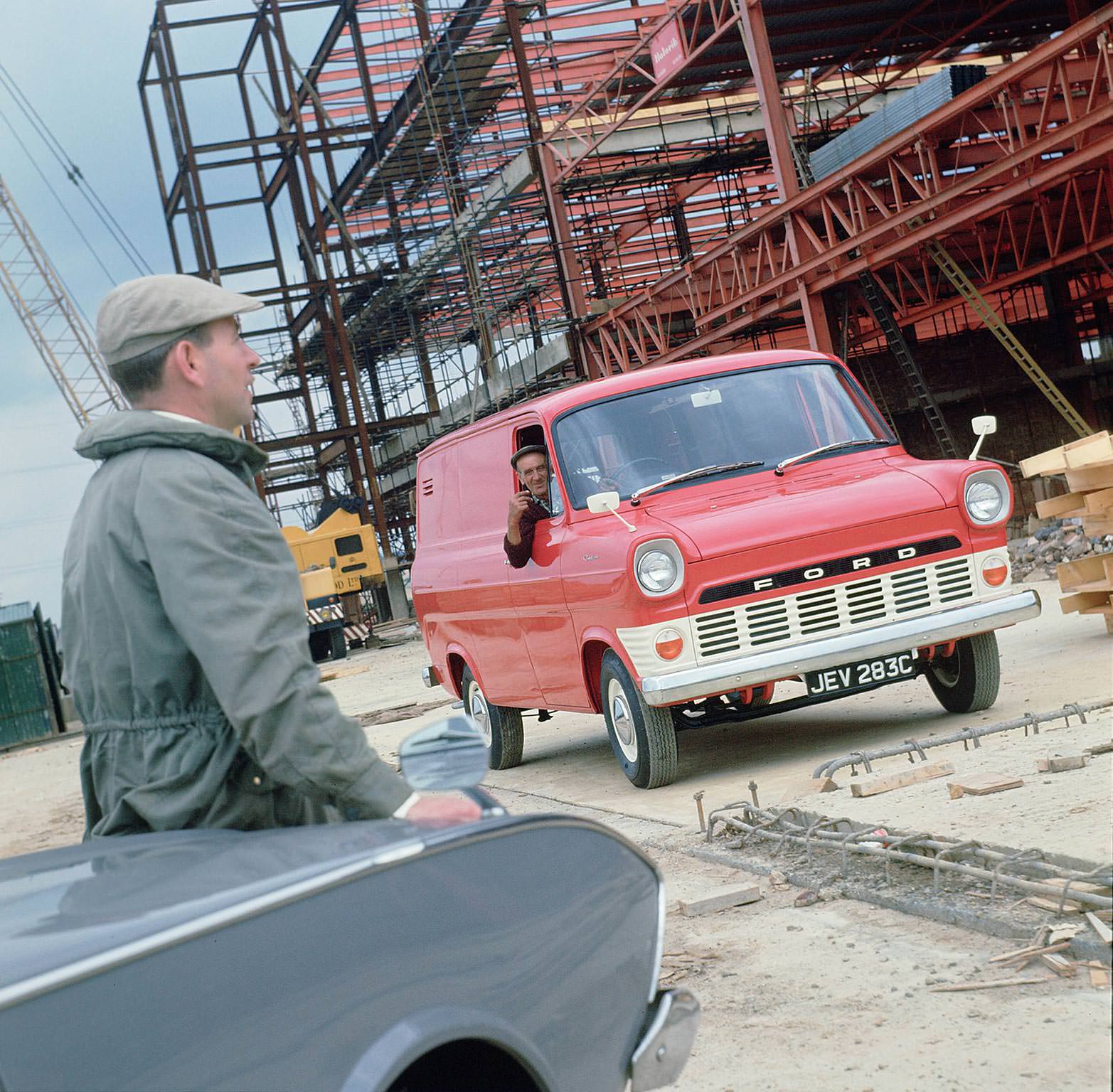
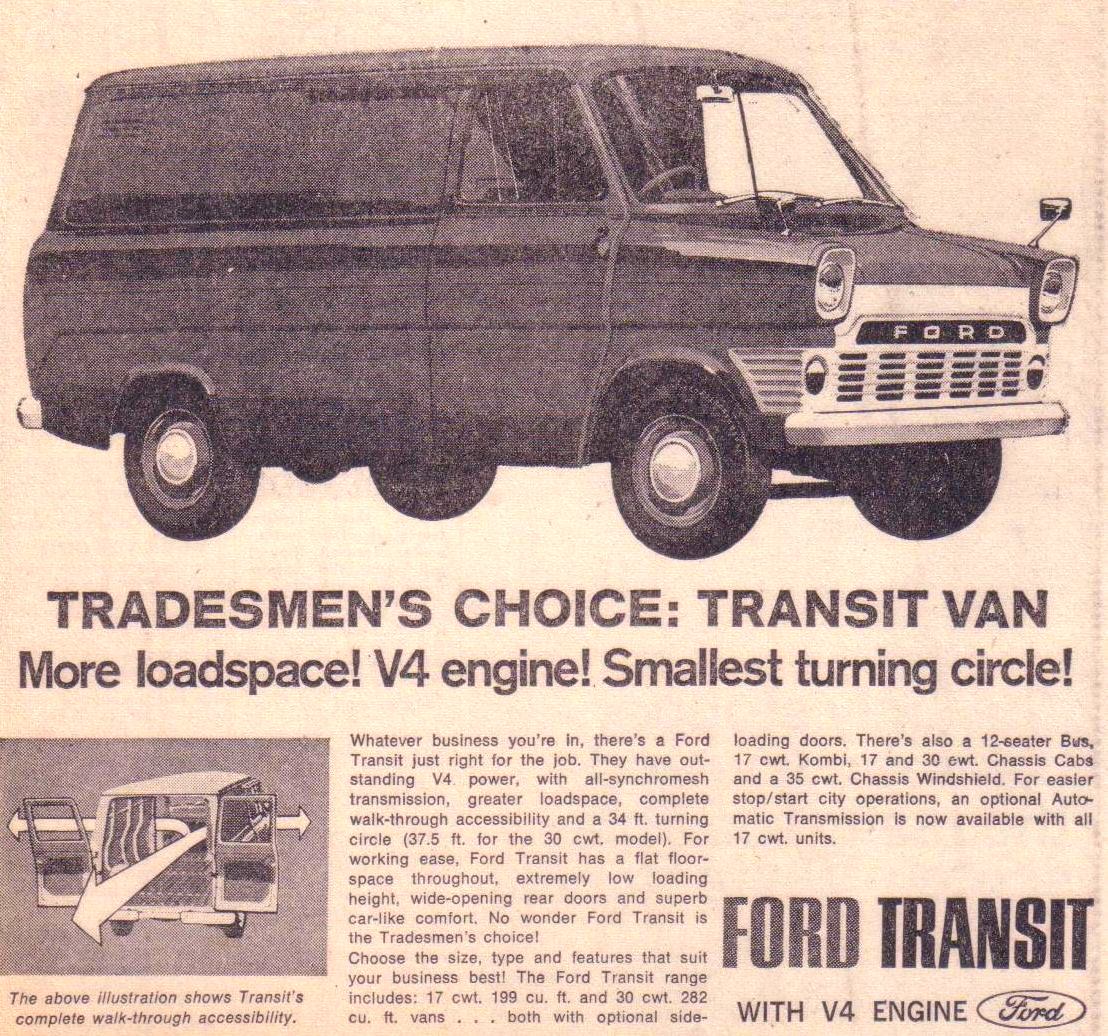
The Transit was built around a steel unibody with beam axle front suspension and a live rear axle, both on semi-elliptic leaf springs. Steering was recirculating ball, and braking was by Lockheed drums all around. Image courtesy of Ford.
Mk1 Ford Transit Specifications
The Transit was built around a steel unibody with beam axle front suspension and a live rear axle, both on semi-elliptic leaf springs. Steering was recirculating ball, and braking was by Lockheed drums all around. The short-wheelbase van weighed 2,613 lbs, carried a payload of 1,907 lbs, and topped out at 81 mph – with a somewhat glacial 0-50 mph time of 32.5 seconds. Fuel economy ranged from 17 to 25 mpg, which wasn’t bad given the size and lack of any appreciable aerodynamics.
The huge number of body styles on offer was a key selling point from day one. Panel vans came in short and long wheelbase, alongside pickup trucks, minibuses, chassis-cabs, crew-cabs, kombis, and campervan conversions. The entry-level short-wheelbase petrol van started at just £542, while the top-spec 15-seat Custom bus listed at £997.
The Transit’s main competitors in the UK included the Bedford CA (and its successor, the Bedford CF), the BMC J4 and Morris Commercial J2, and the Commer PB from Rootes Group. The Transit’s wider track, larger cargo volume, more car-like driving experience, and unprecedented configurability gave it an insurmountable edge over all of them.
“Britain’s Most Wanted Van”
In 1972 the Metropolitan Police famously declared the Transit was “Britain’s Most Wanted Van,” noting that Transits were used in 95% of bank robberies thanks to their car-like performance and 1.75 ton cargo (and loot) carrying capacity.
The Mk1 received a single minor facelift for the 1971 model year, updating the front-end styling on V4 models and adding a safety-padded dashboard. Otherwise, it ran essentially unchanged for 12 years. Ford built 422,766 of them between 1965 and 1977, the one-millionth Transit overall was produced in 1976.
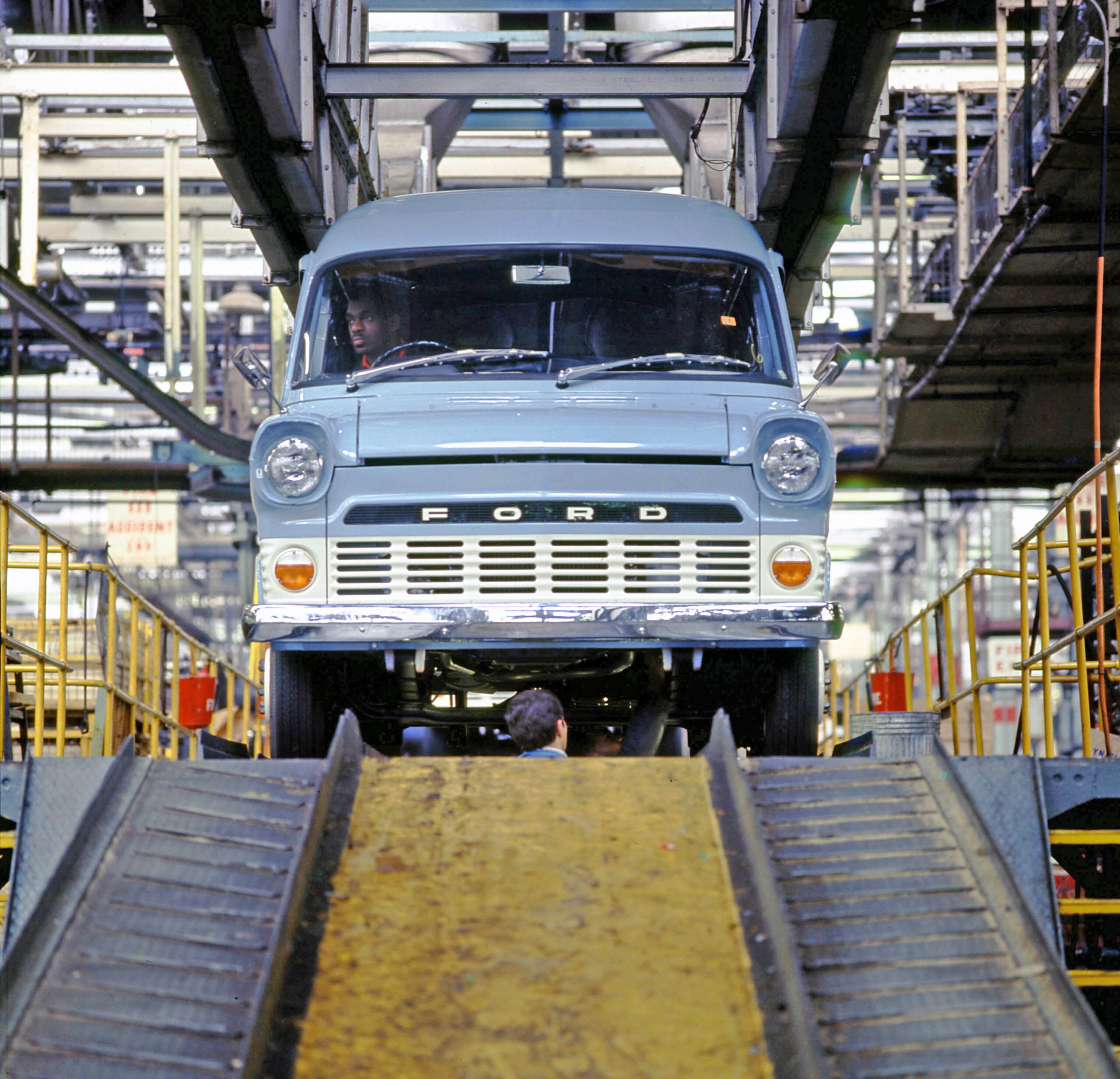
In 1972 the Metropolitan Police famously declared the Transit was “Britain’s Most Wanted Van,” noting that Transits were used in 95% of bank robberies thanks to their car-like performance and 1.75 ton cargo (and loot) carrying capacity. Image courtesy of Ford.
The face-lifted Ford Transit Mk2 debuted in August of 1977 for the 1978 model year, sharing the same body from the B-pillars back but introducing a restyled longer nose, the overhead-cam Pinto engine from the Cortina, and a far more comprehensive dashboard.
The Mk1 and Mk2 shared their underlying platform for over two decades before the all-new VE6-based Transit Mk3 finally replaced them in 1986.
The 1975 Ford Transit Mk1 V8 Sleeper Shown Here
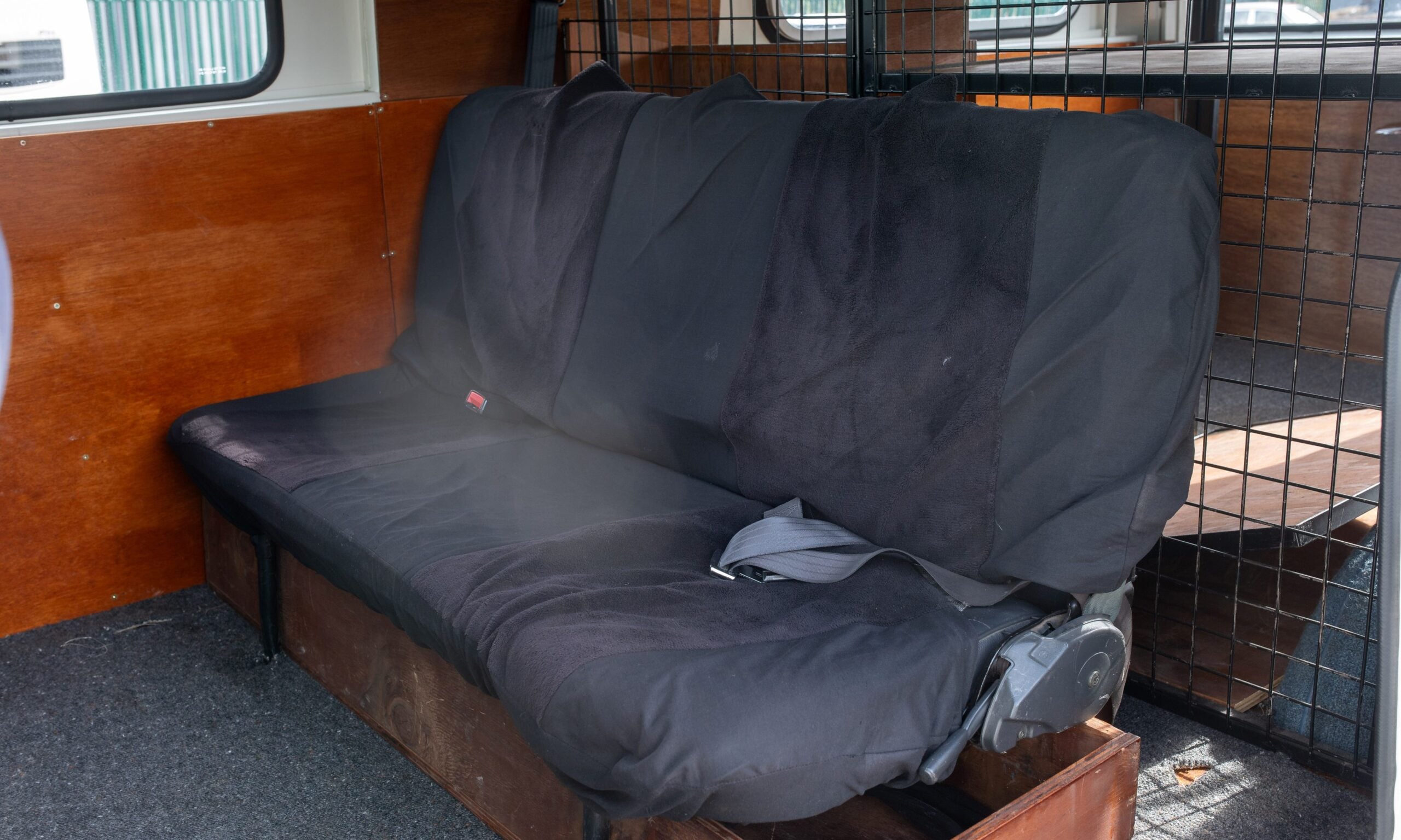
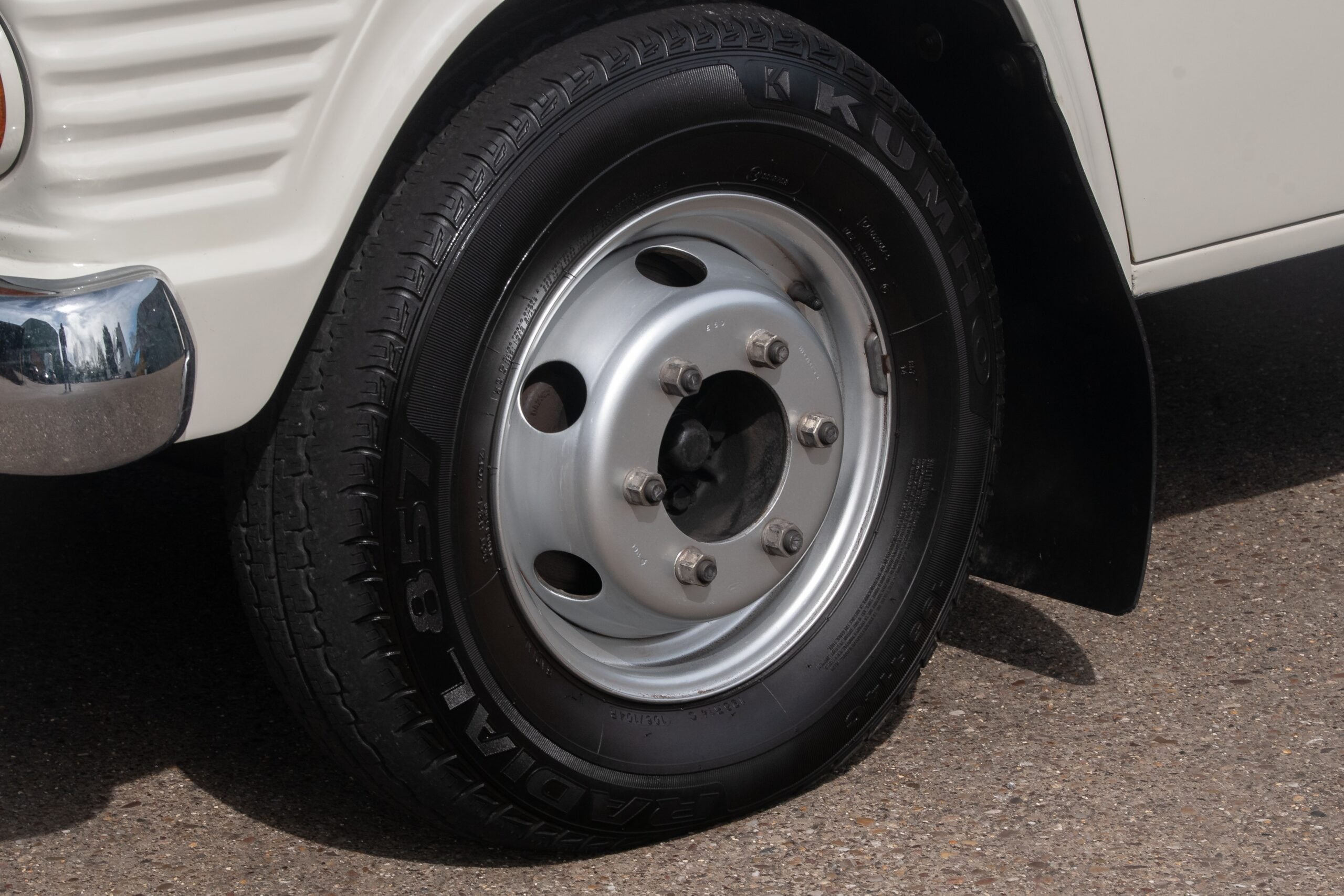
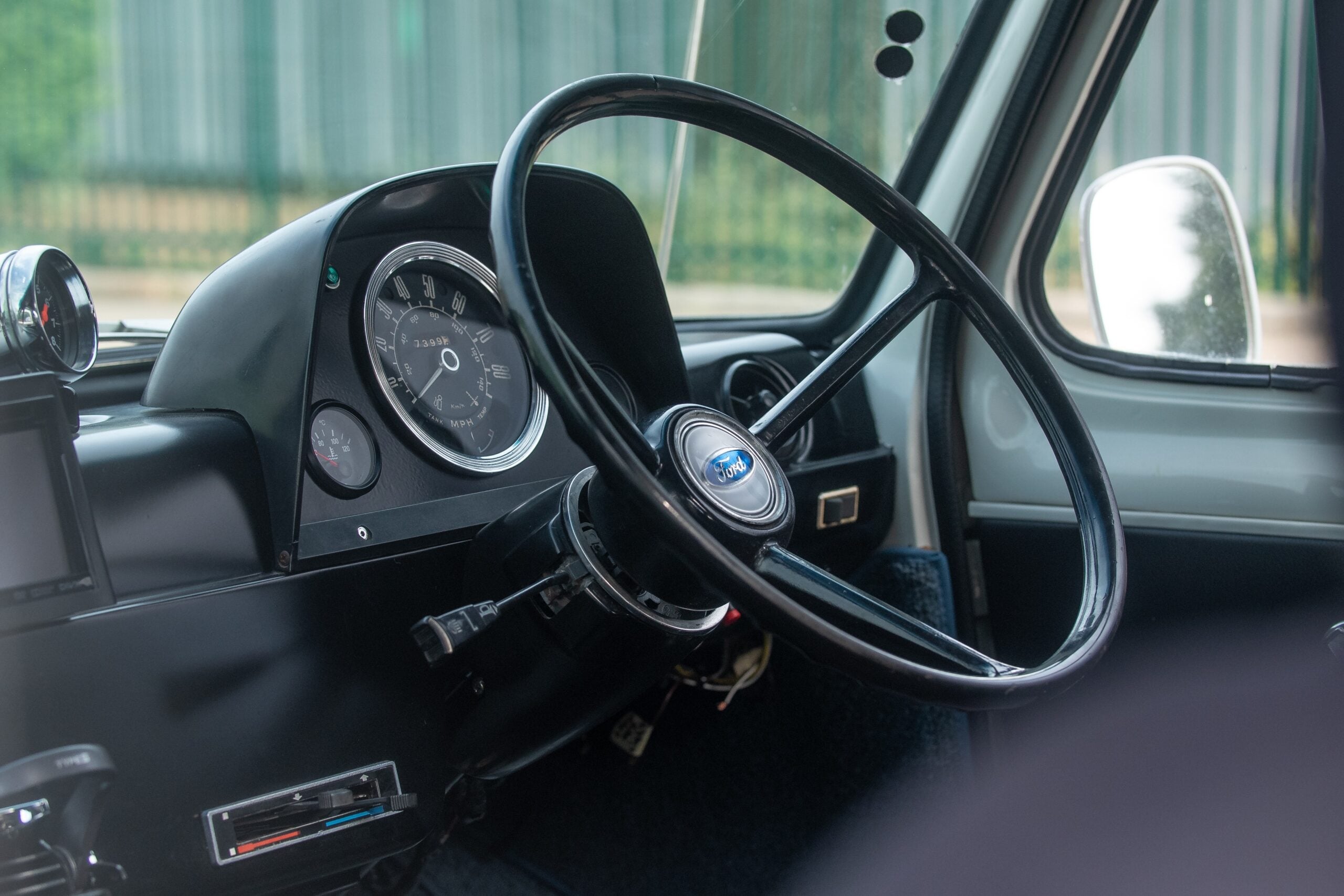
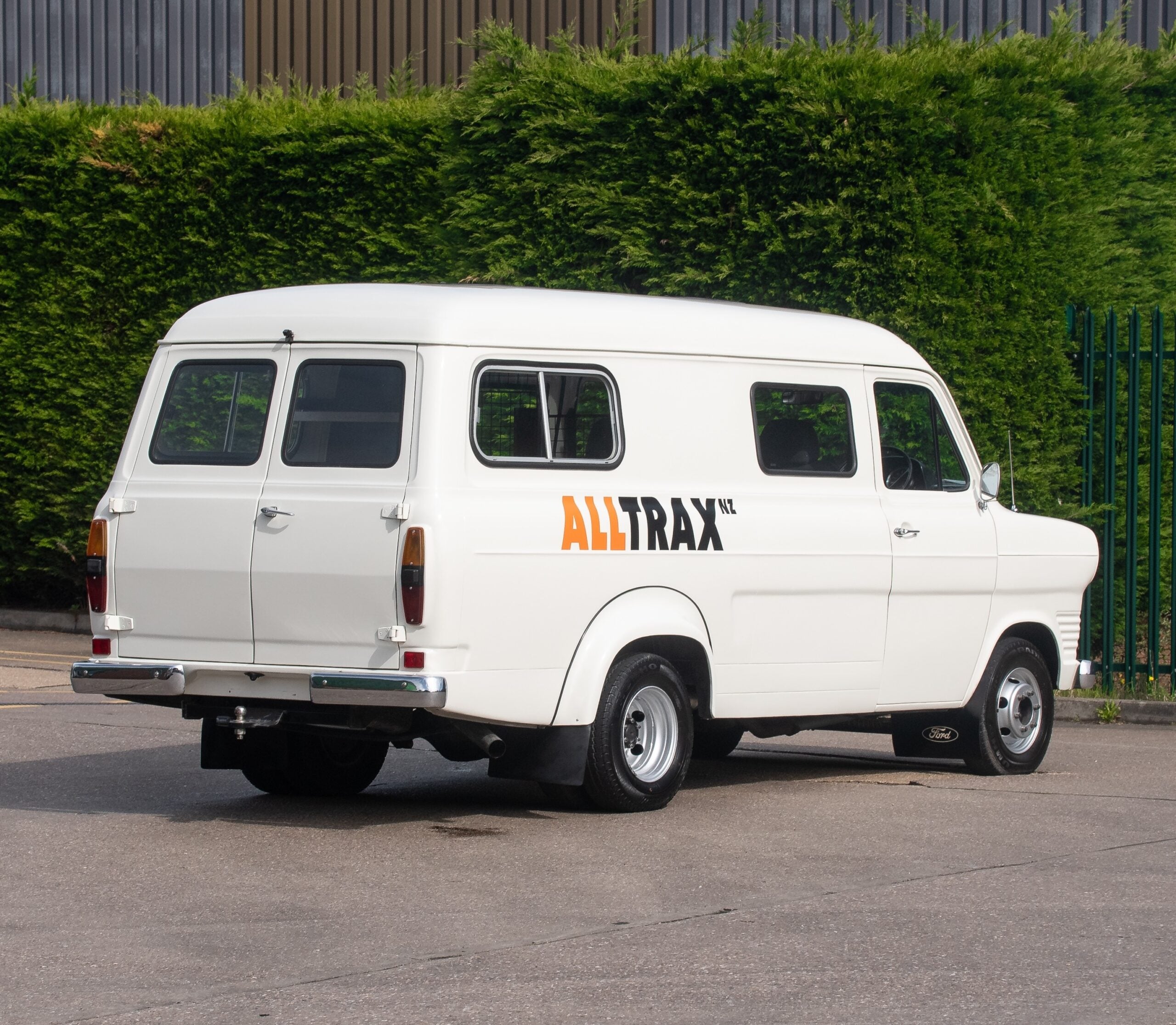
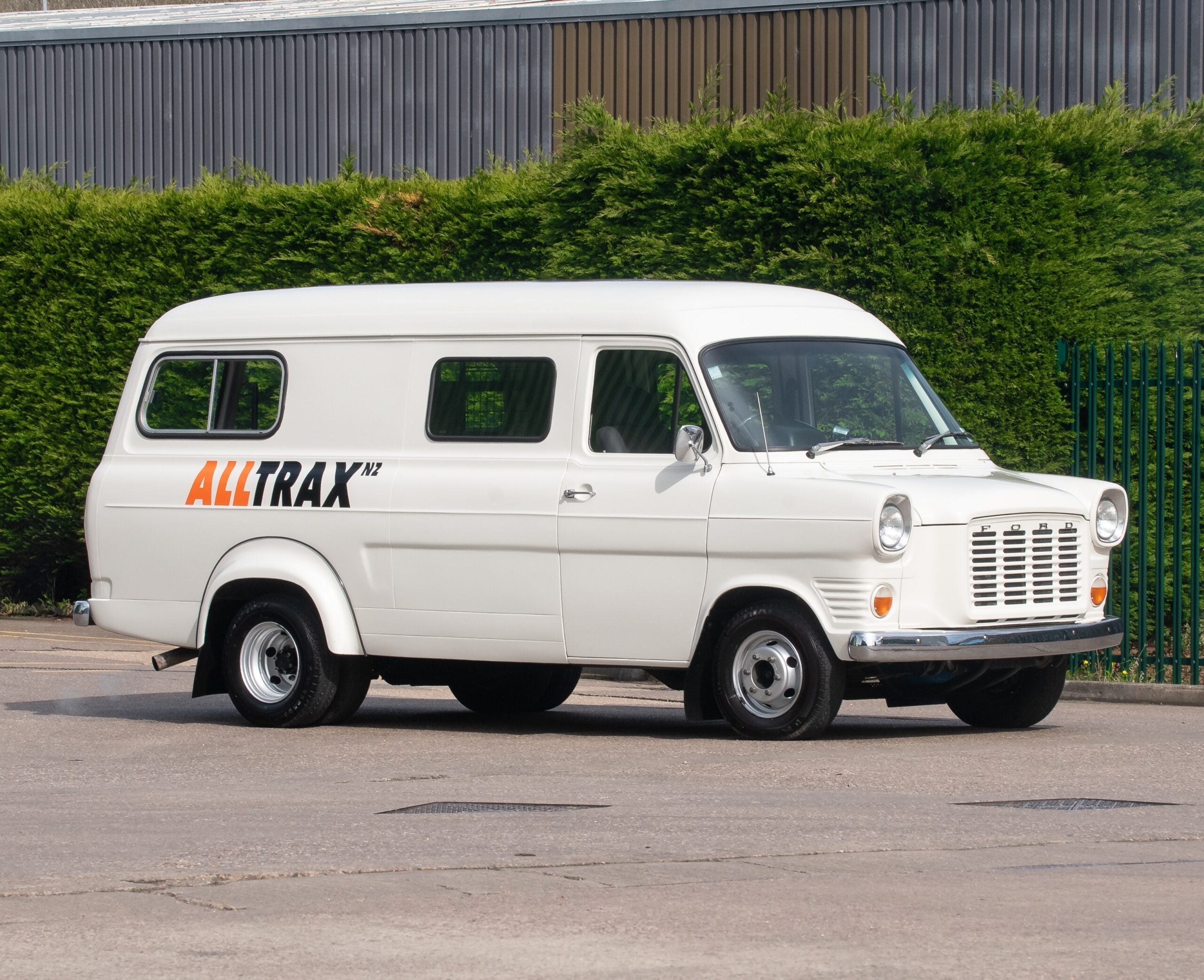
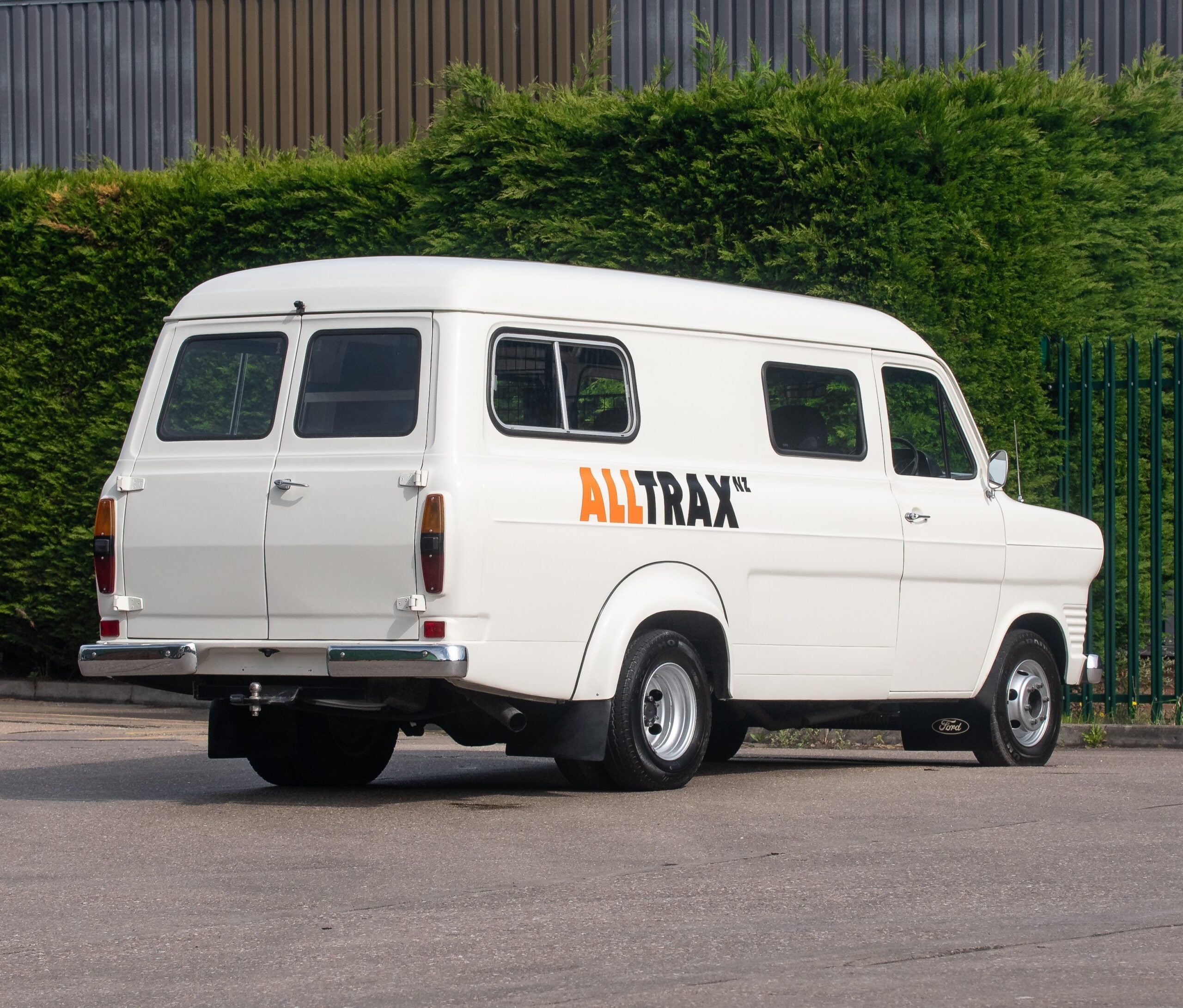
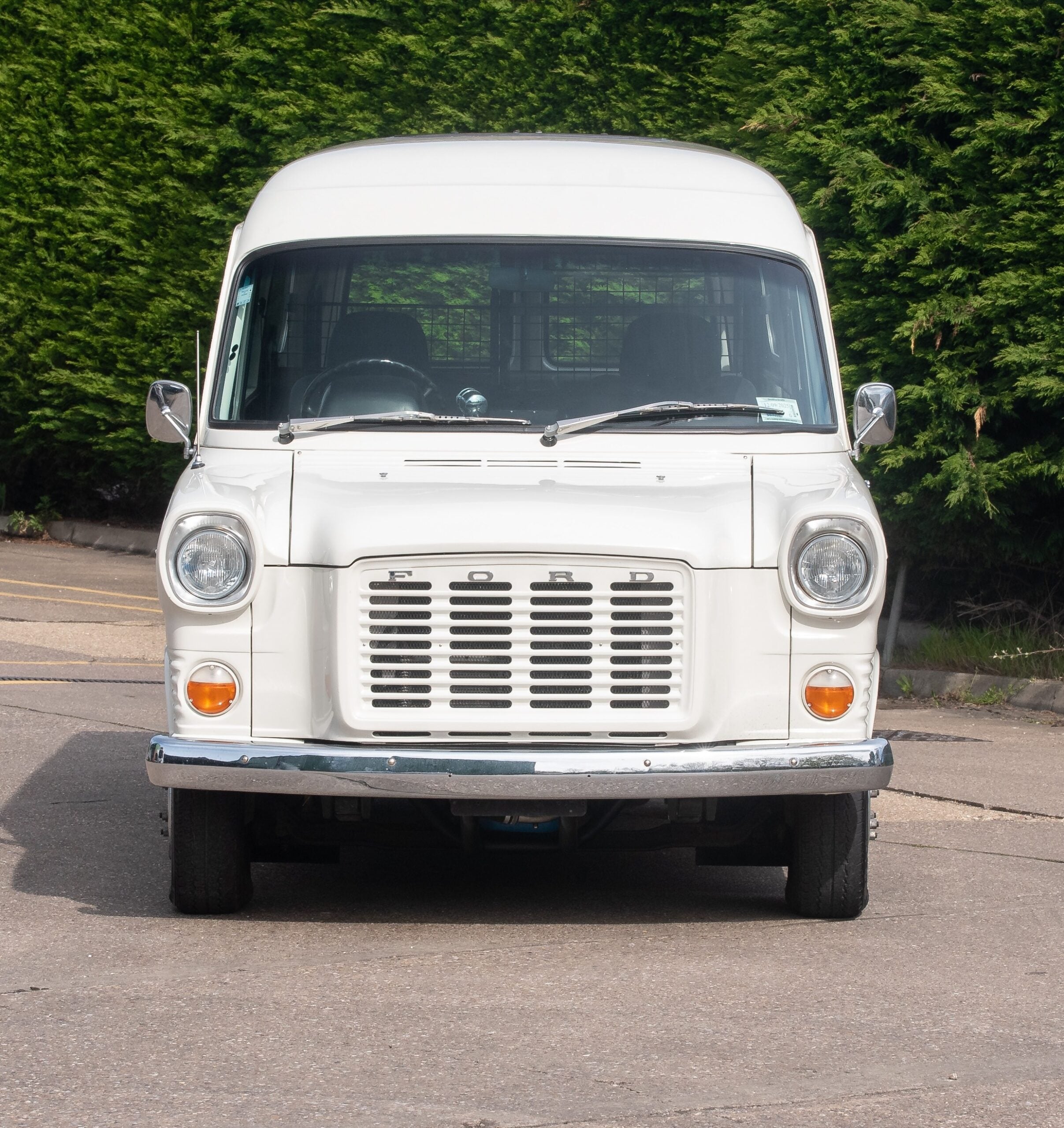
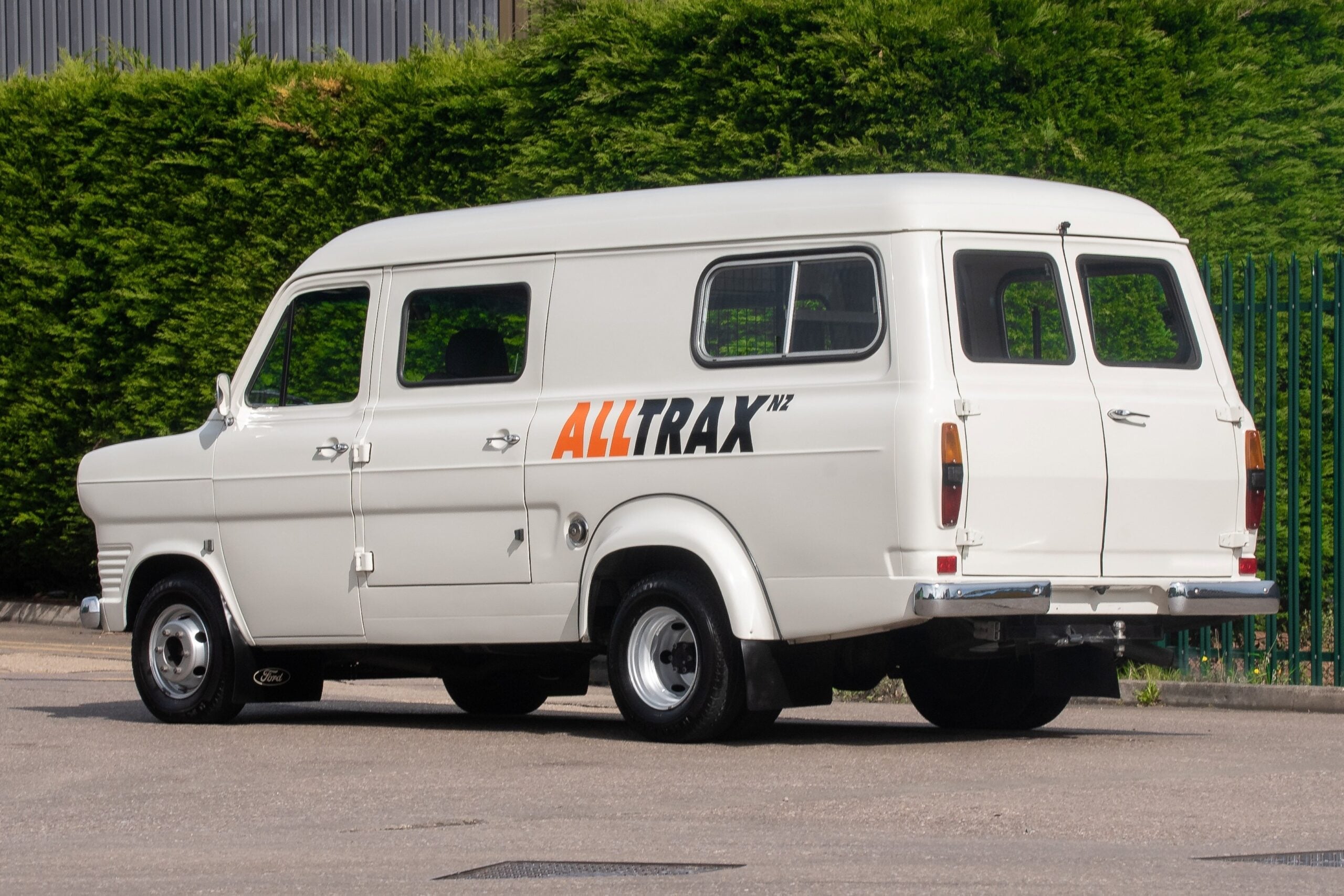
This is a 1975 Ford Transit Mk1 dual-rear-wheel model finished in Ermine White that’s been comprehensively rebuilt into a motorsport-ready service van with a decidedly non-standard powertrain. Originally registered in New Zealand, this van spent its early life as a post office vehicle on New Zealand’s South Island before being converted to a camper at some point prior to the current owner taking custody in 2018.
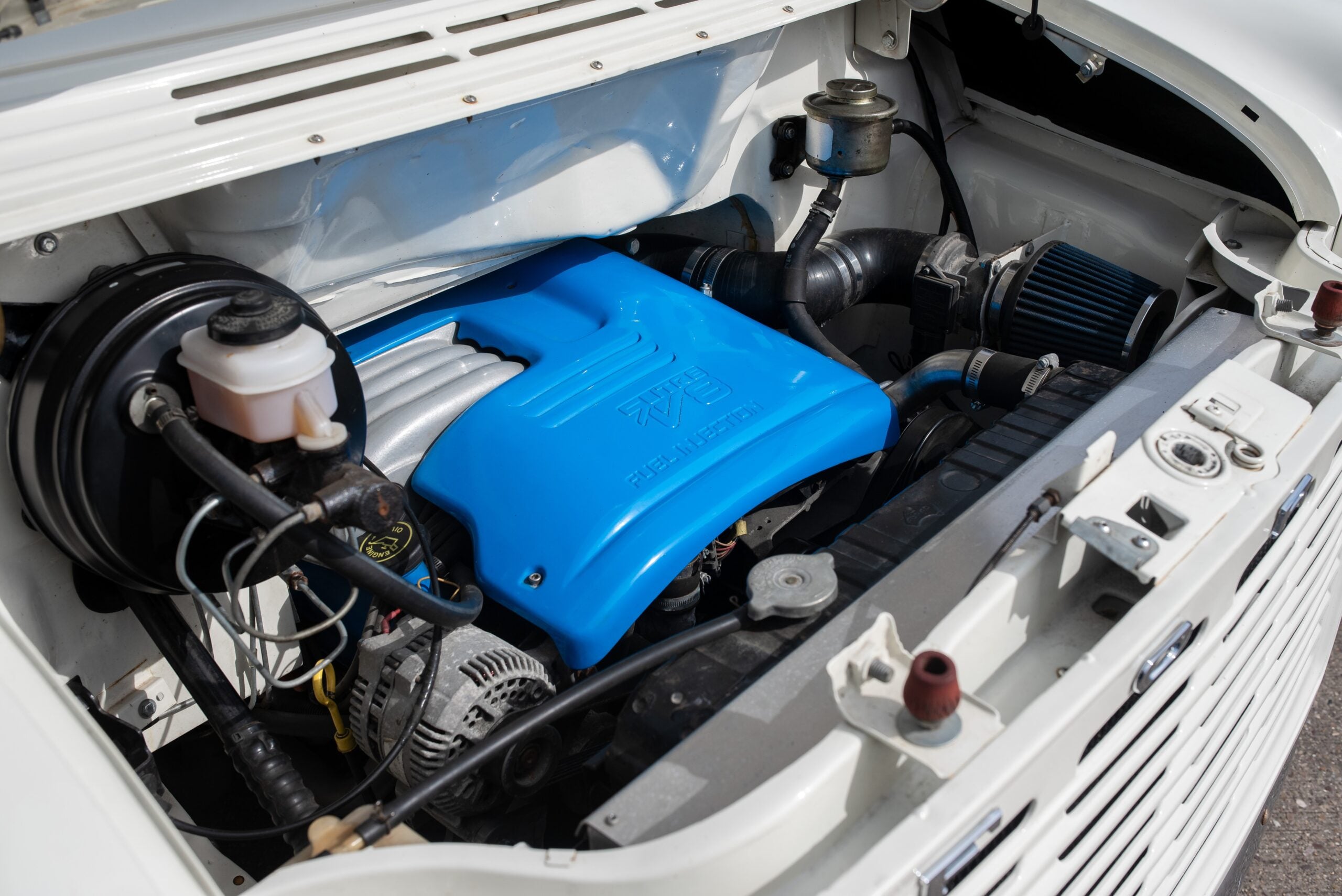
The current owner commissioned a ground-up restoration of the van by ALLTRA NZ, a race and rally preparation company, at a reported cost of £90,000 ($122,607 USD). The centerpiece of the project is a 5.0 liter fuel-injected V8, mated to a new transmission, the van also now has power steering and a Ford 9-inch differential running a 3.5:1 ratio.
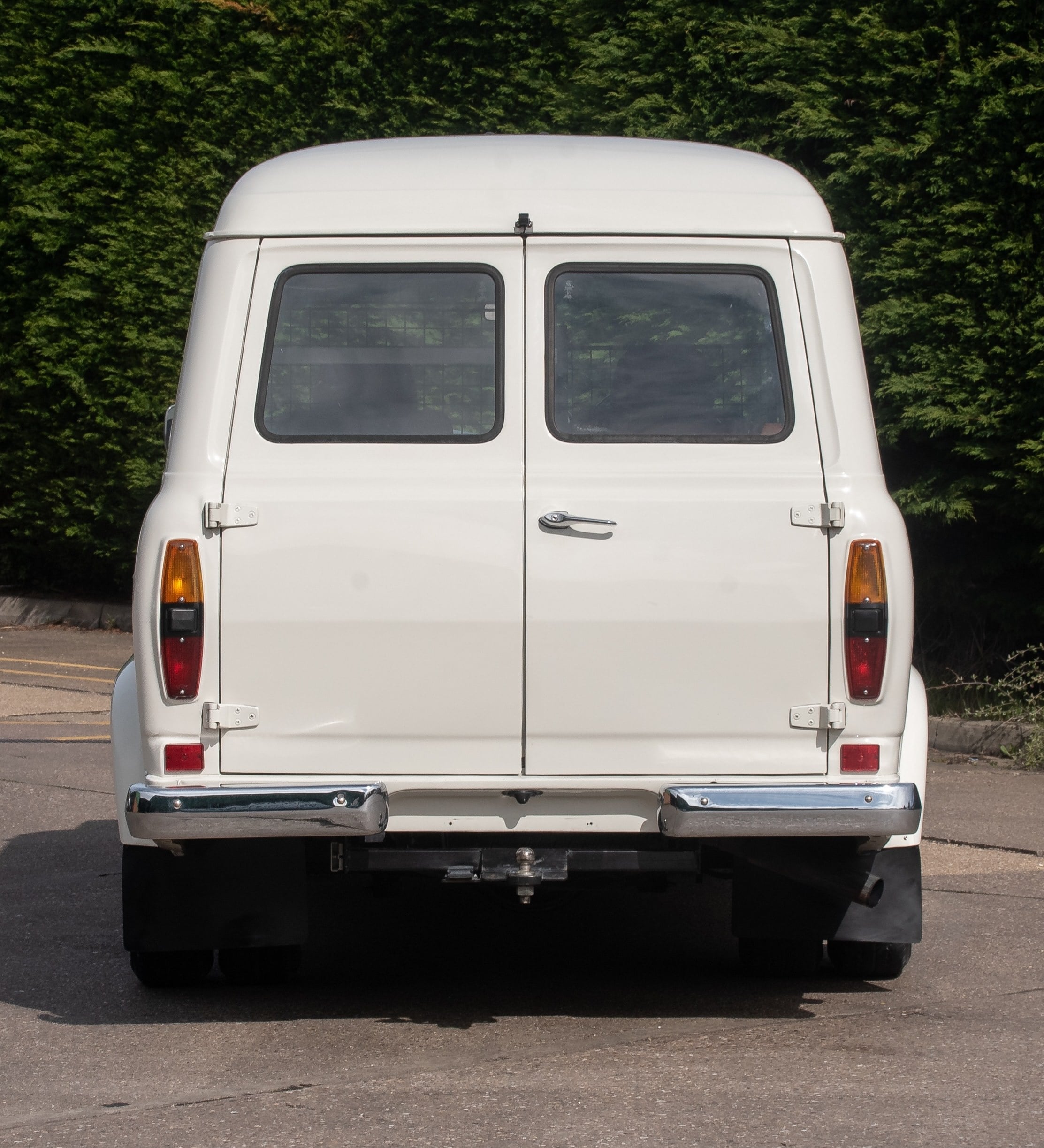
The project brief was to keep the Transit’s standard external appearance while fitting thoroughly modern (and far more powerful) running gear underneath, and the result is a van that looks largely stock bar its flared wheel arches – making it one of the only “sleeper” Ford Transits ever made.
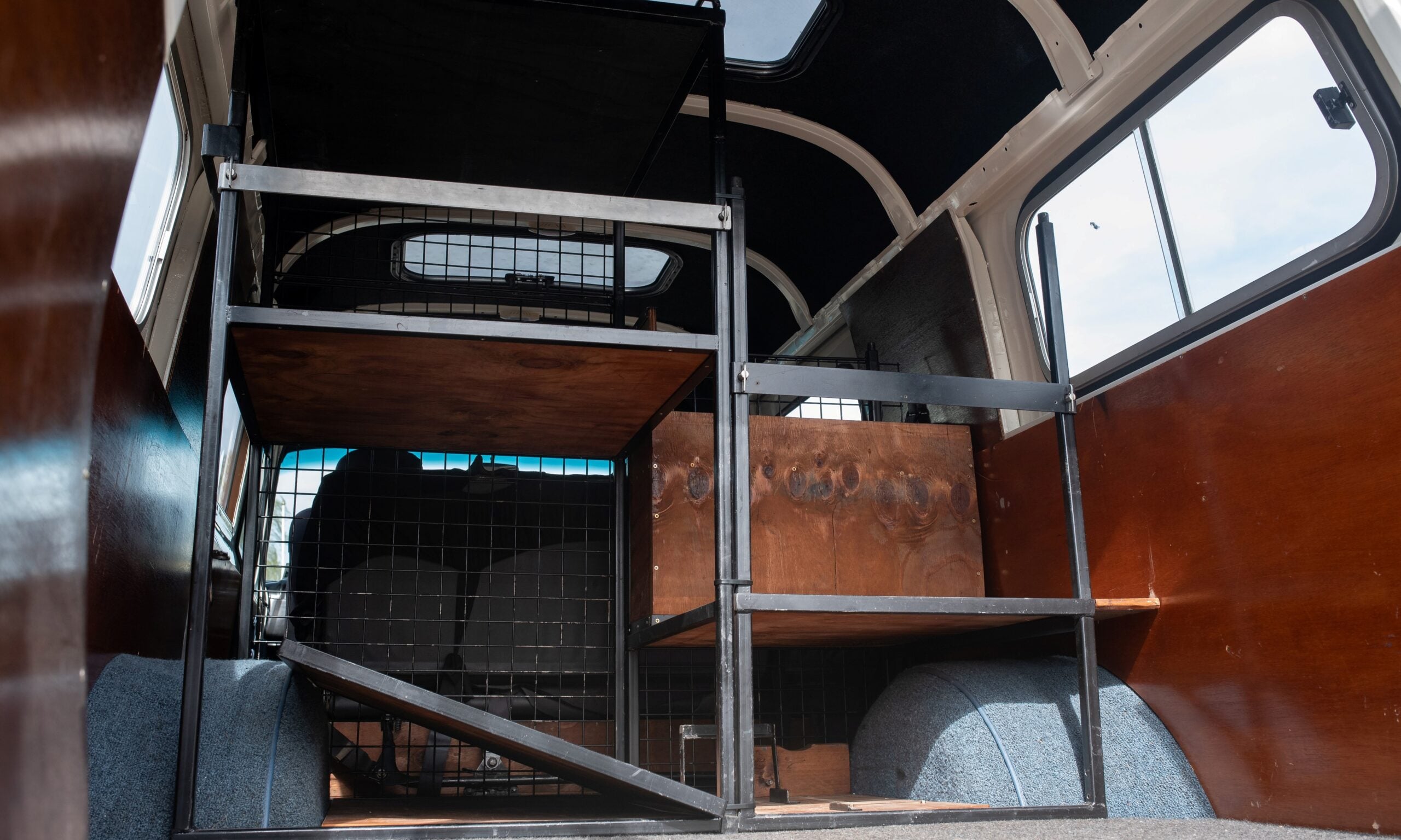
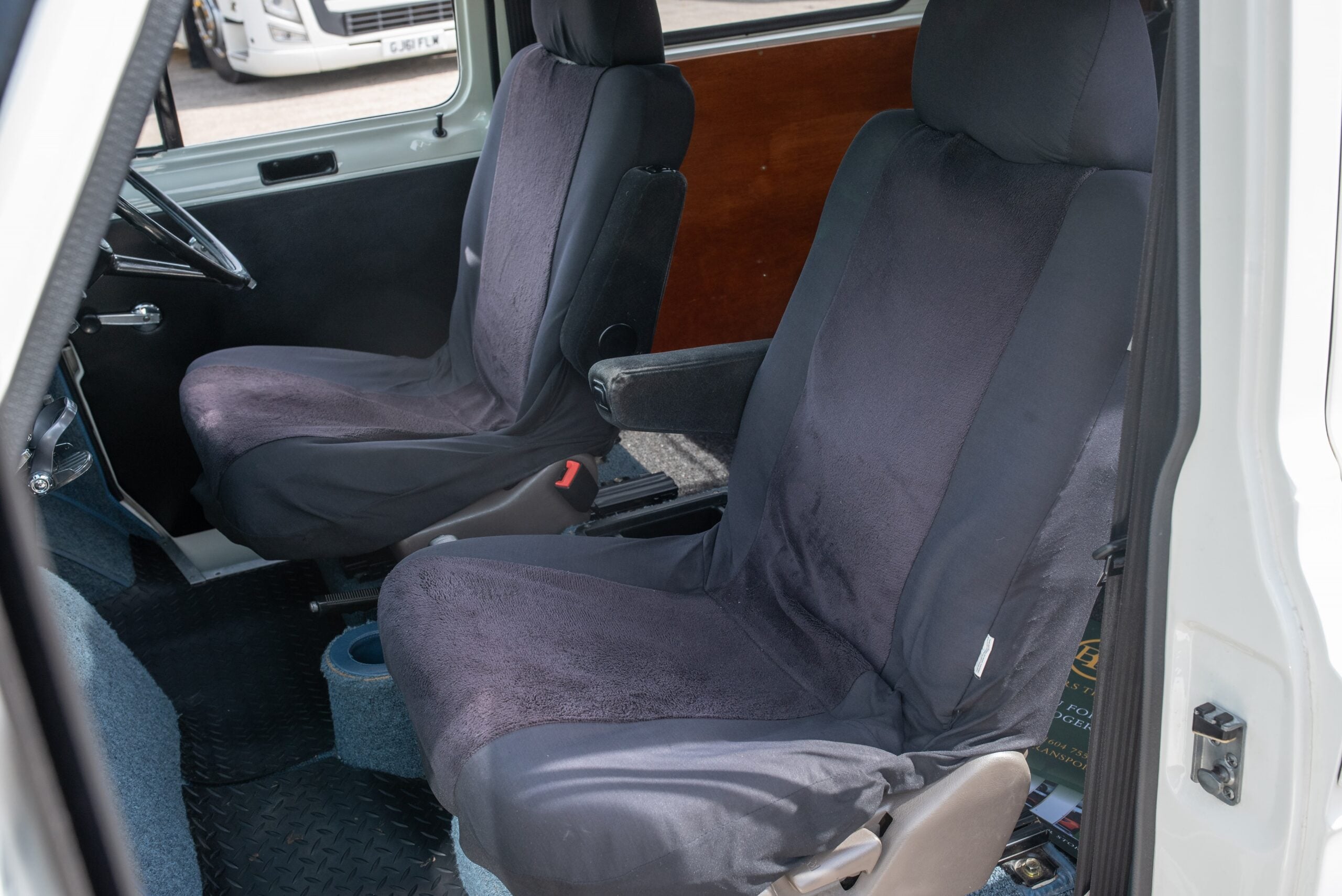
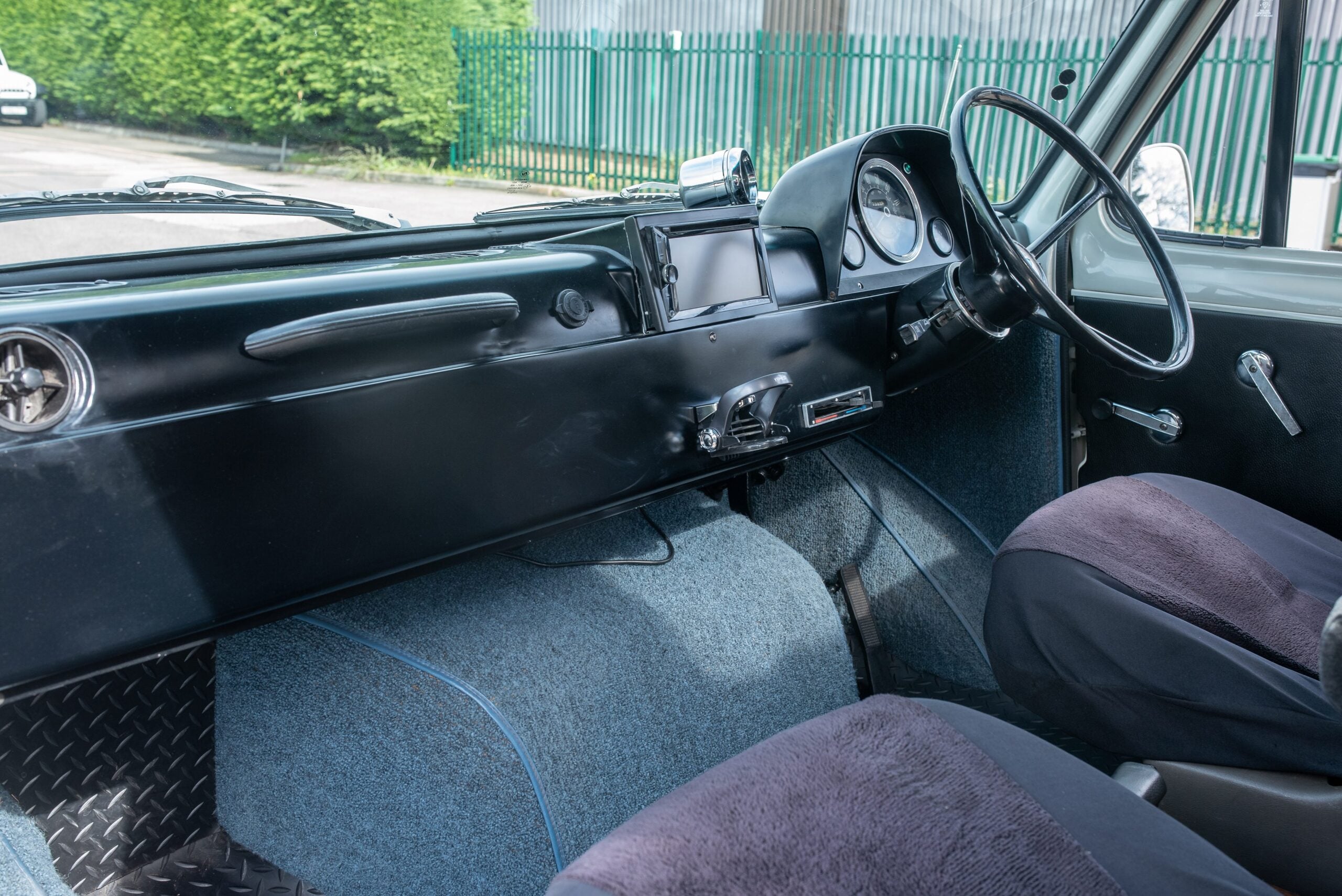
The interior has been fully sound-proofed and fitted with LED lighting, a stereo system with a reversing camera, and two permanently sealed sunroofs. Due to its intended role as a rally service van, the cargo area now has built-in wheel and tire racks designed to be removable in around 15 minutes for alternative use. Additional motorsport design touches include built-in jump start leads at the rear, a tow bar, and a removable kill switch mounted inside the driver’s door.
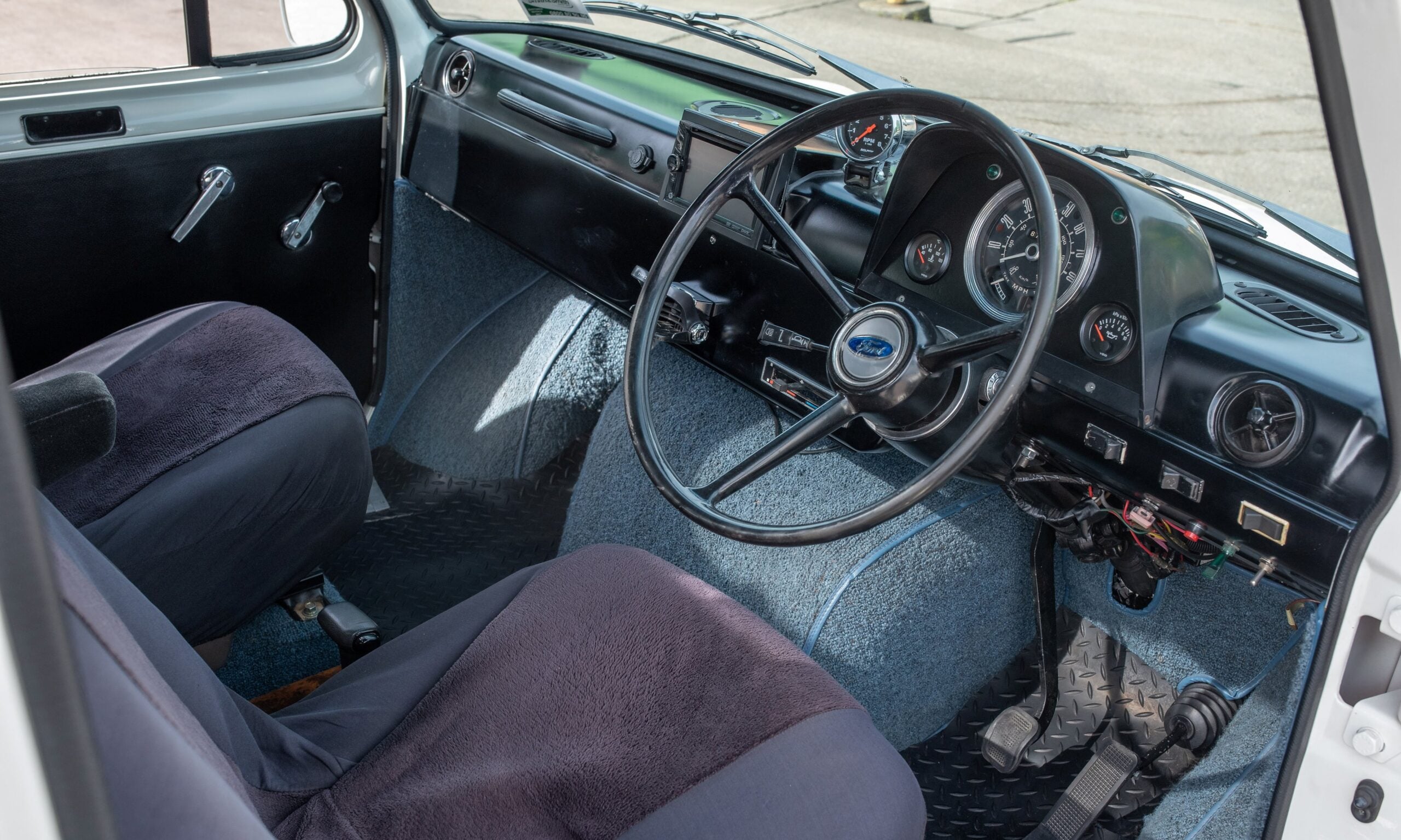
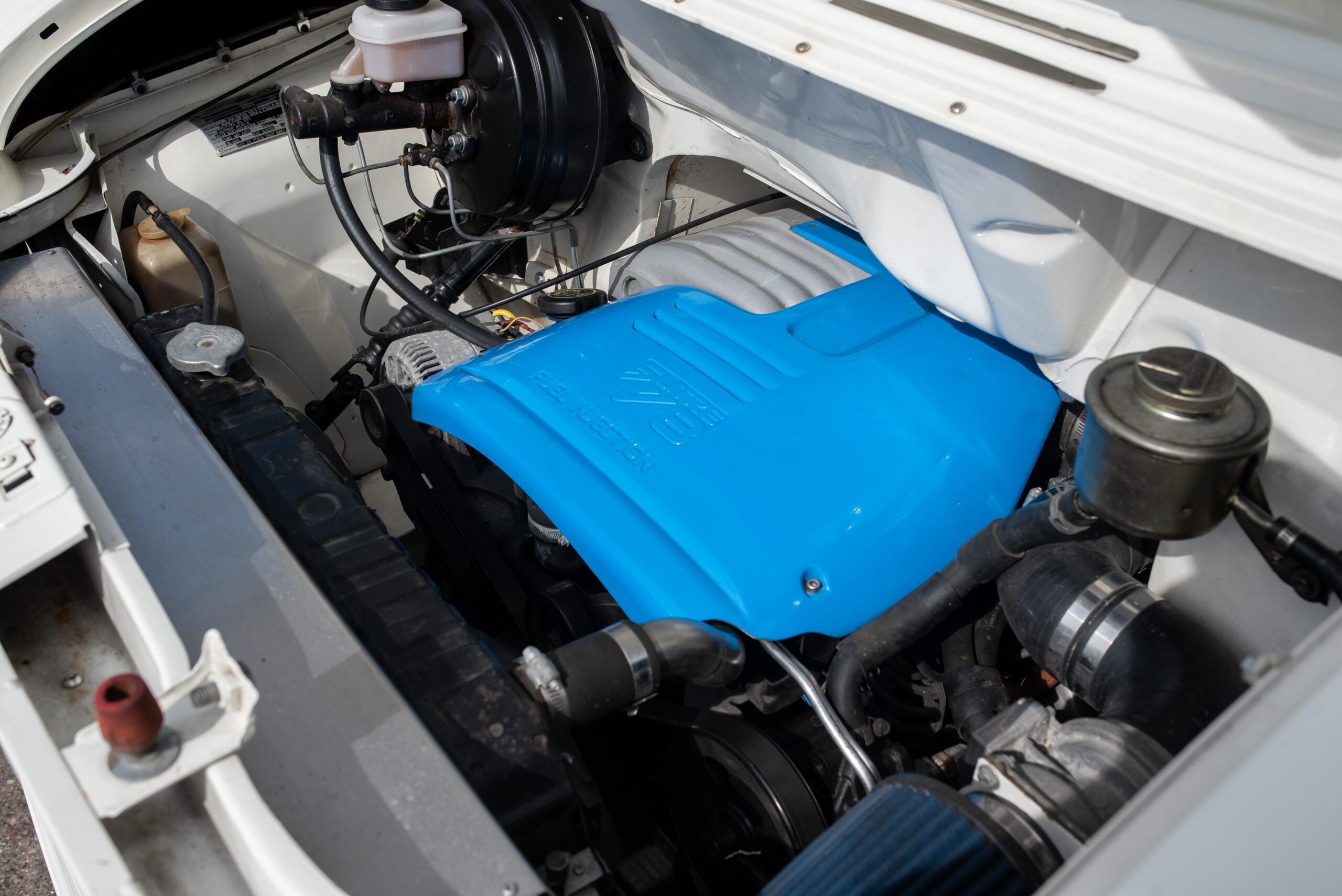
The current owner commissioned a ground-up restoration of the van by ALLTRA NZ, a race and rally preparation company, at a reported cost of £90,000 ($122,607 USD). The centerpiece of the project is a 5.0 liter fuel-injected V8, mated to a new transmission, the van also now has power steering and a Ford 9-inch differential running a 3.5:1 ratio.
The van was fully certified in New Zealand for all modifications, with the certification plate mounted in the engine bay alongside the original Ford Motor Company plate.
The van is now due to roll across the auction block with Historics Auctioneers on the 16th of May with a price guide of £24,000 – £28,000 ($33,000 – $38,000 USD). You can visit the listing here if you’d like to read more about it or register to bid.
Images courtesy of Historics Auctioneers

Articles that Ben Branch has written have been covered on CNN, Popular Mechanics, Smithsonian Magazine, Road & Track Magazine, the official Pinterest blog, the official eBay Motors blog, BuzzFeed, Autoweek Magazine, Wired Magazine, Autoblog, Gear Patrol, Jalopnik, The Verge, and many more.
Silodrome was founded by Ben back in 2010, in the years since the site has grown to become a world leader in the alternative and vintage motoring sector, with well over a million monthly readers from around the world and many hundreds of thousands of followers on social media.