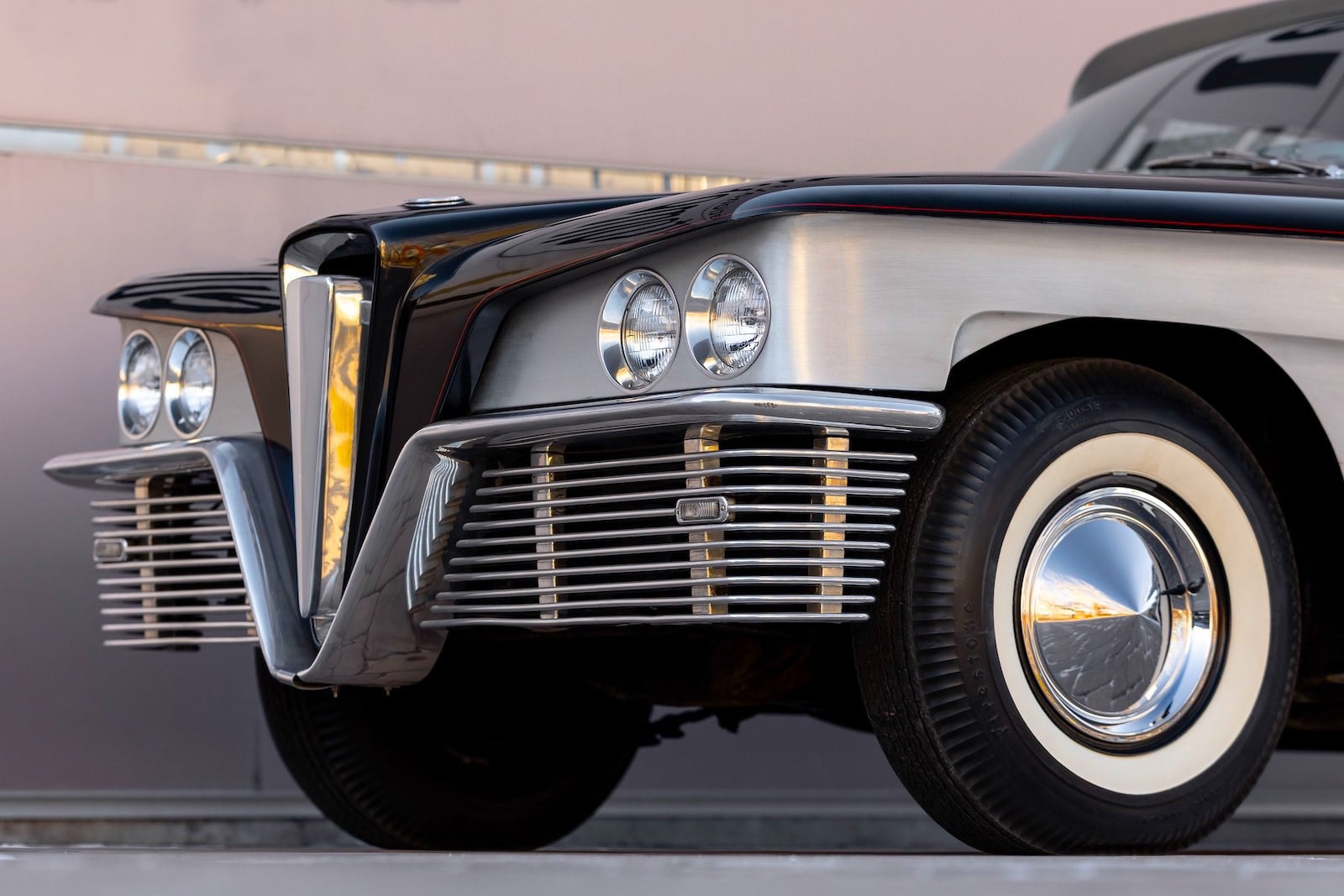
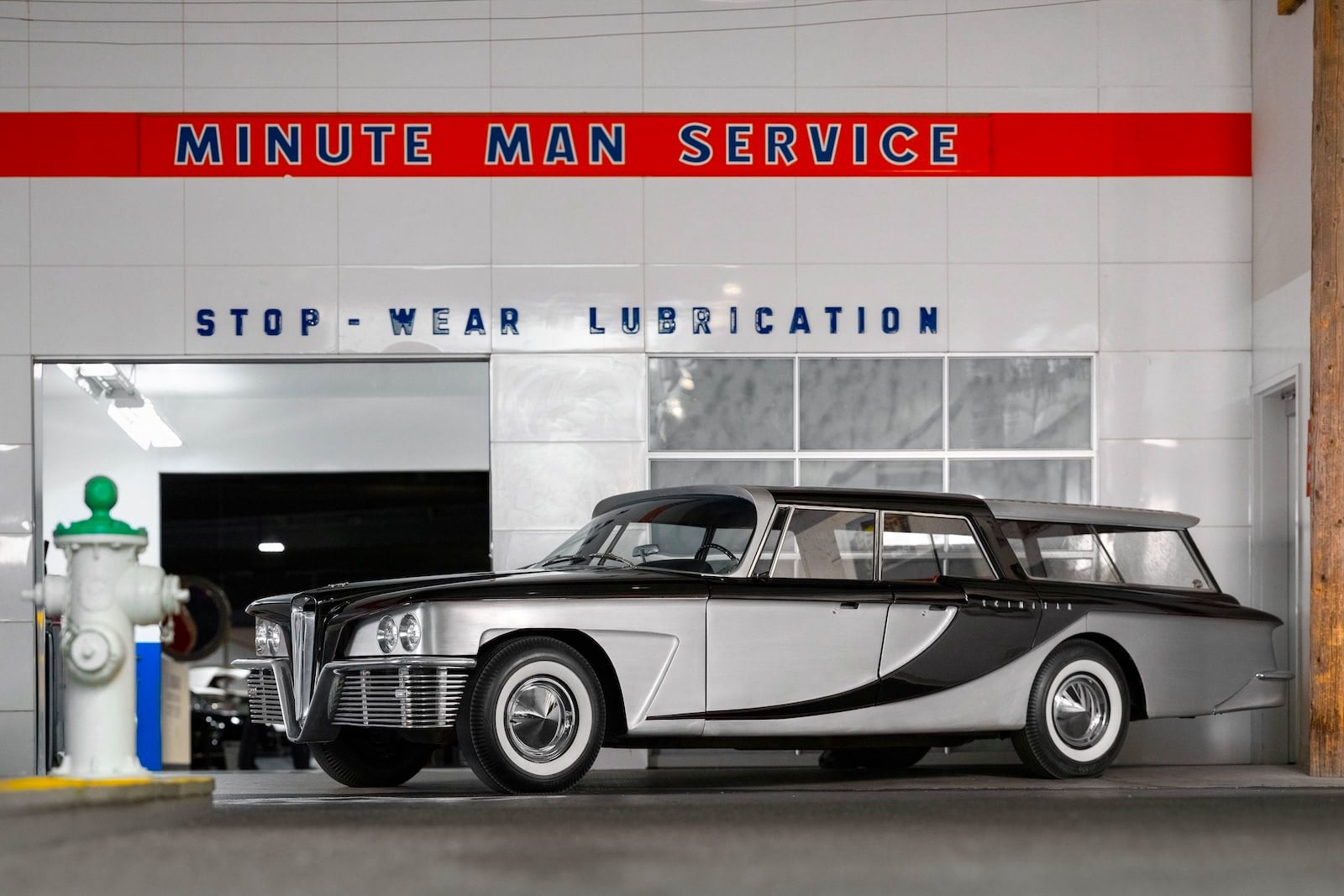
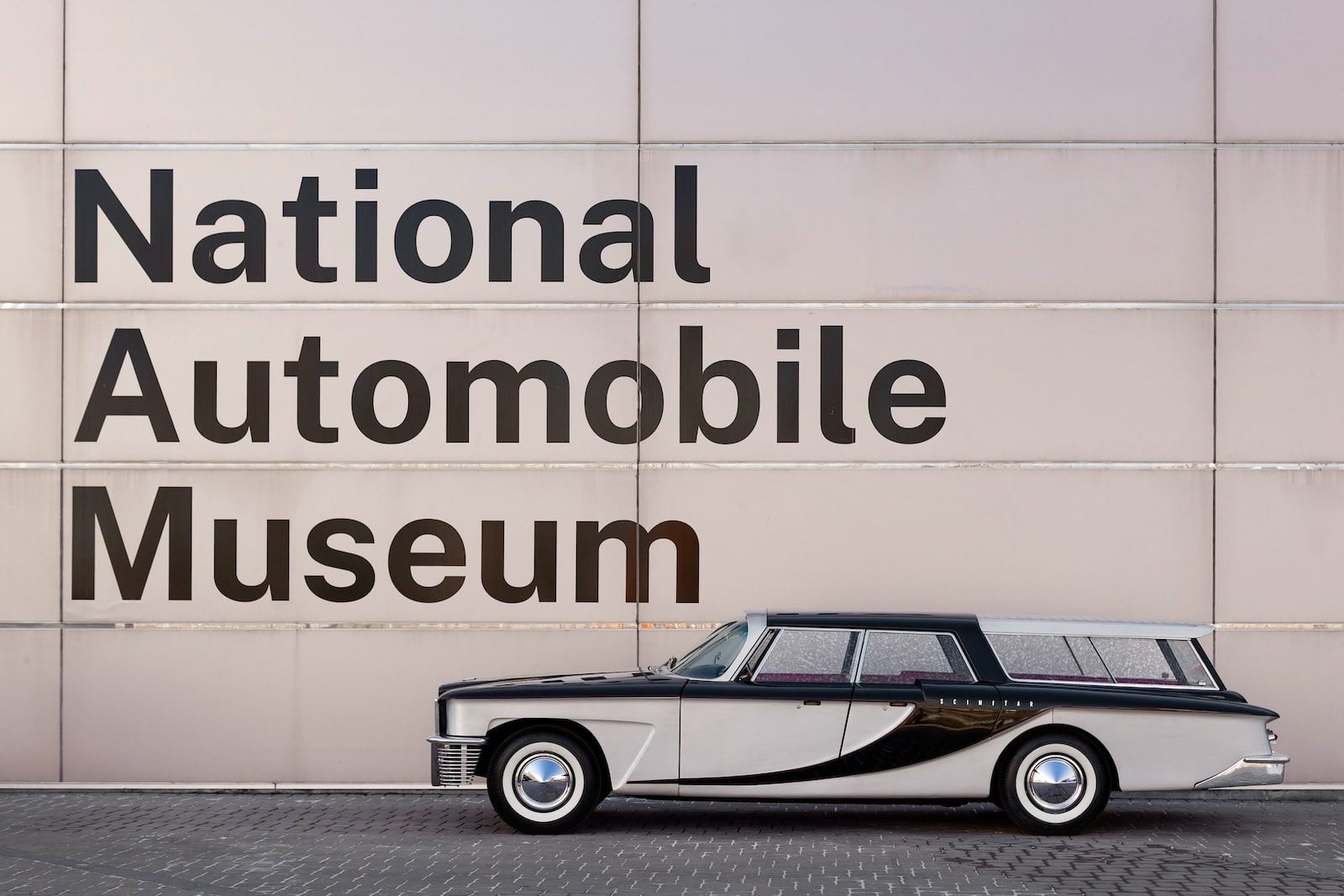
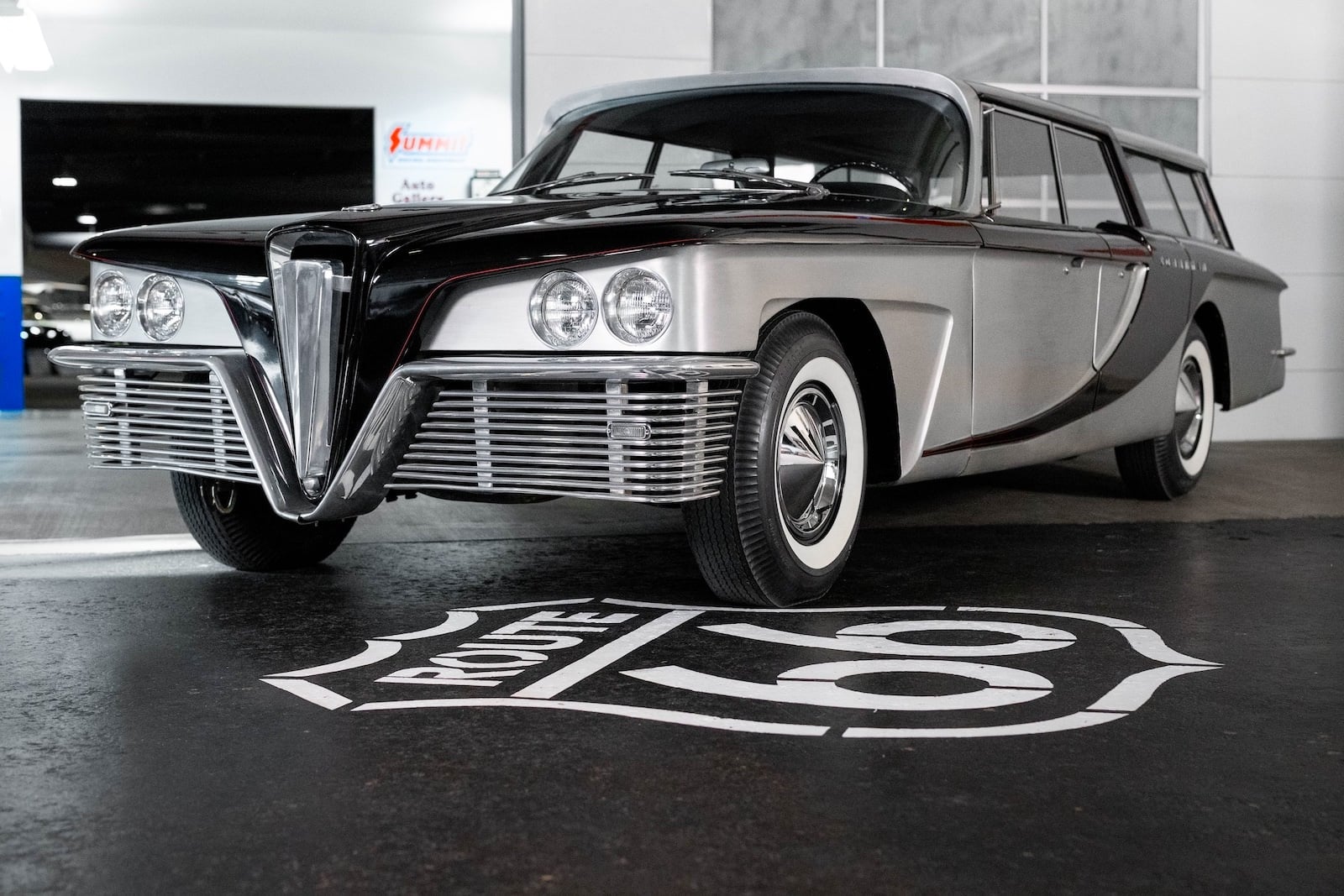
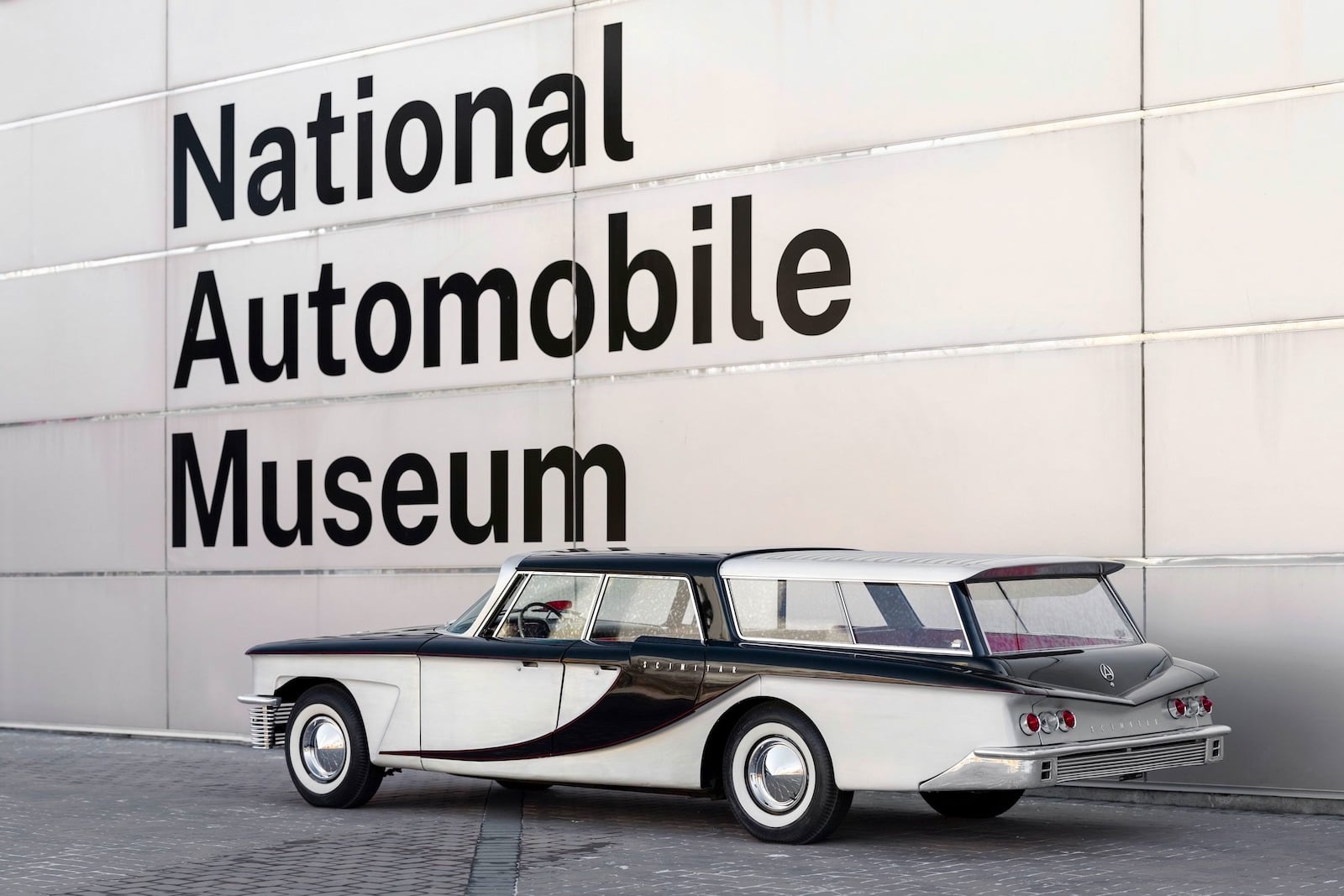
This is the 1959 Scimitar EX All-Purpose Sedan, it’s a show car from the drawing board of legendary American industrial designer Brooks Stevens that was built over in Germany by Karosseriewerk Reutter.
Three cars were built as part of the Scimitar Project, the All-Purpose Sedan (shown here), the two-door Hardtop Convertible, and the four-door Town Car Phaeton. They were commissioned to showcase the use of aluminum in automotive construction, and bankrolled by a major mining conglomerate.
Fast Facts: The Scimitar EX All-Purpose Sedan
- The 1959 Scimitar EX All-Purpose Sedan is one of three show cars designed by Brooks Stevens for the Olin Mathieson Chemical Corporation, built to showcase aluminum’s potential in automotive construction. The bodies were made by Karosseriewerk Reutter in Stuttgart, the same German coachbuilder that made Porsche 356 bodies.
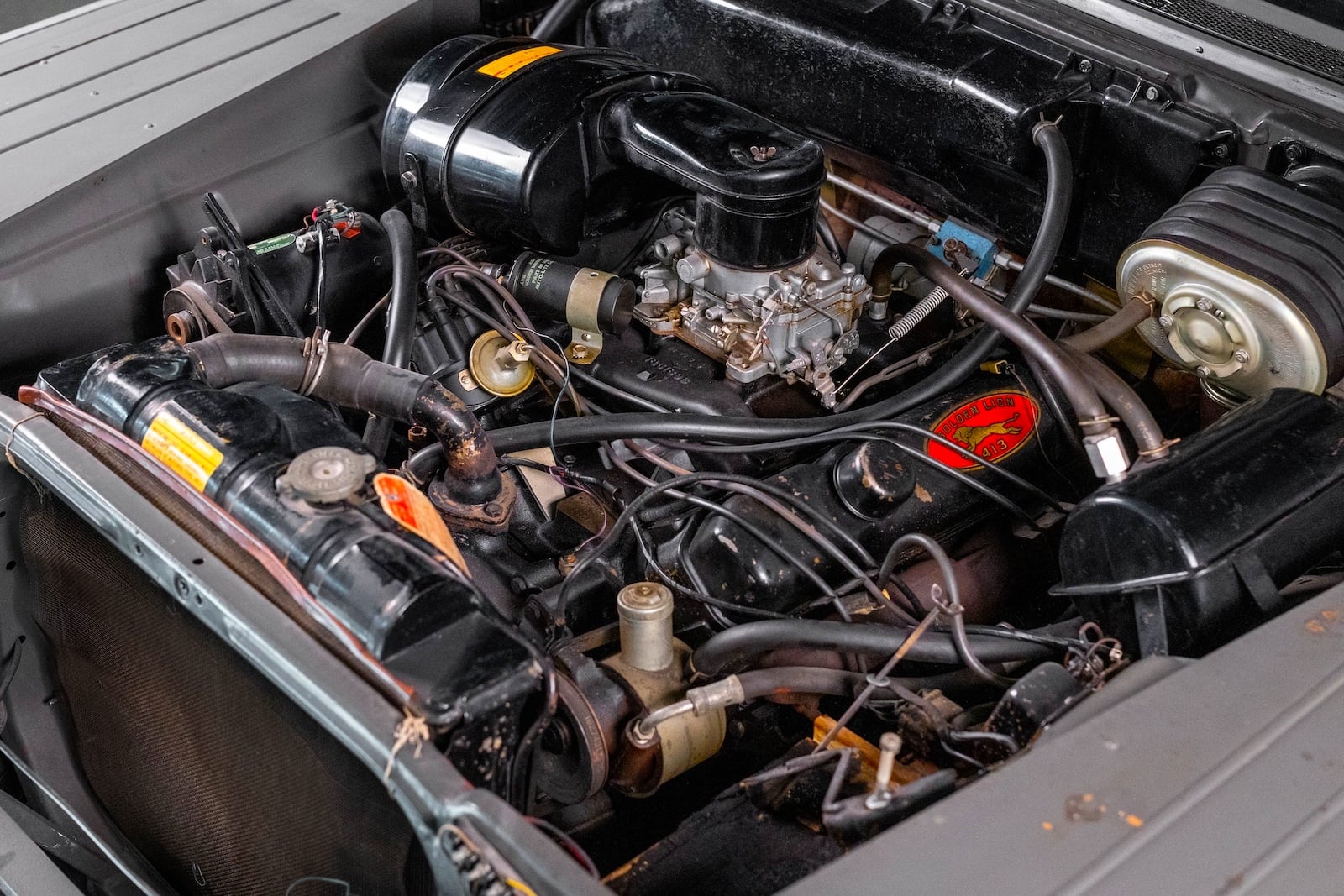
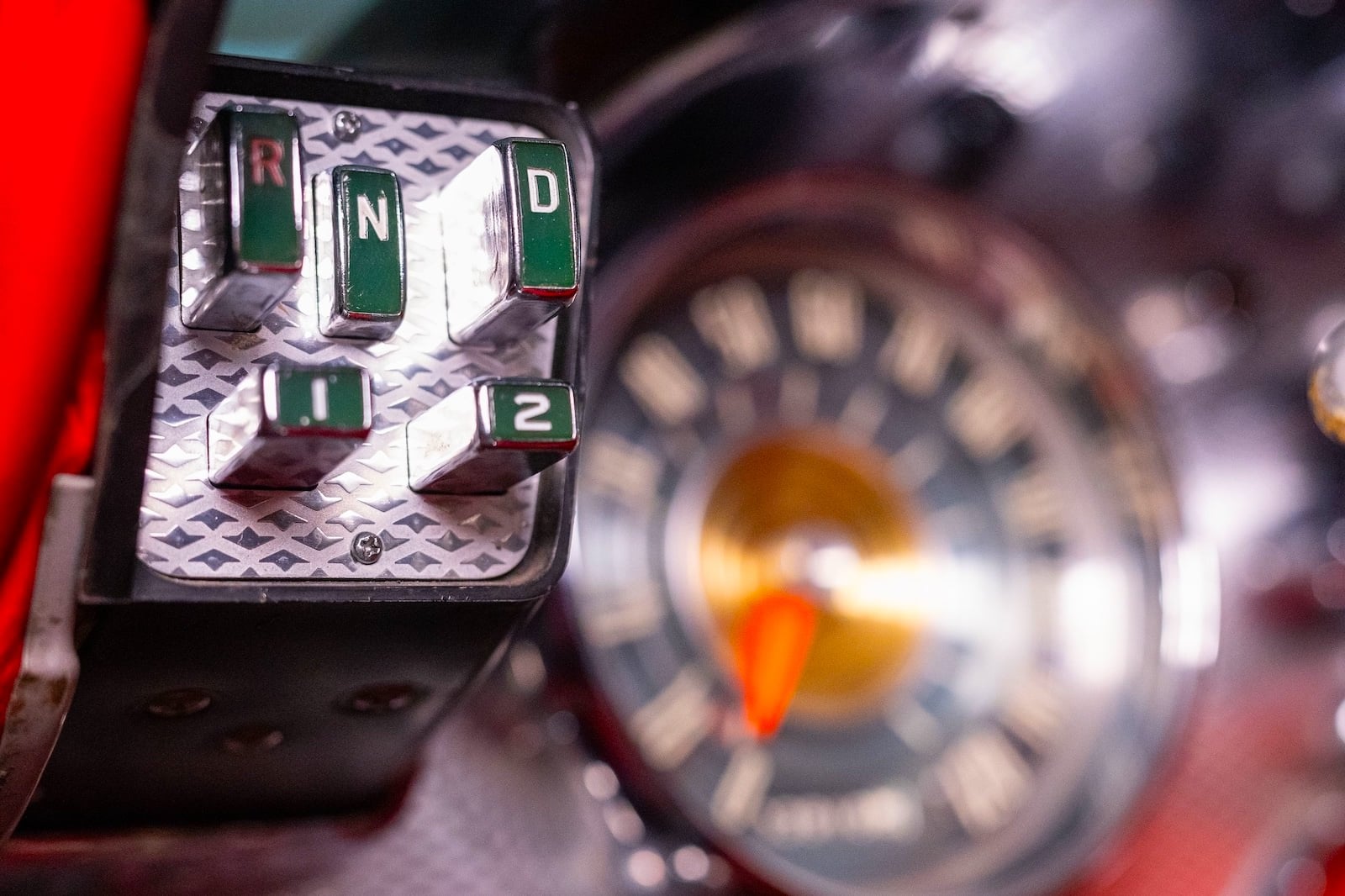
- All three Scimitars were built on the 1959 Chrysler New Yorker platform, powered by a 413 cubic inch V8 producing 350 bhp and mated to a TorqueFlite 3-speed automatic. The design mixed anodized brushed aluminum in corrosion-prone areas with conventional steel panels elsewhere.
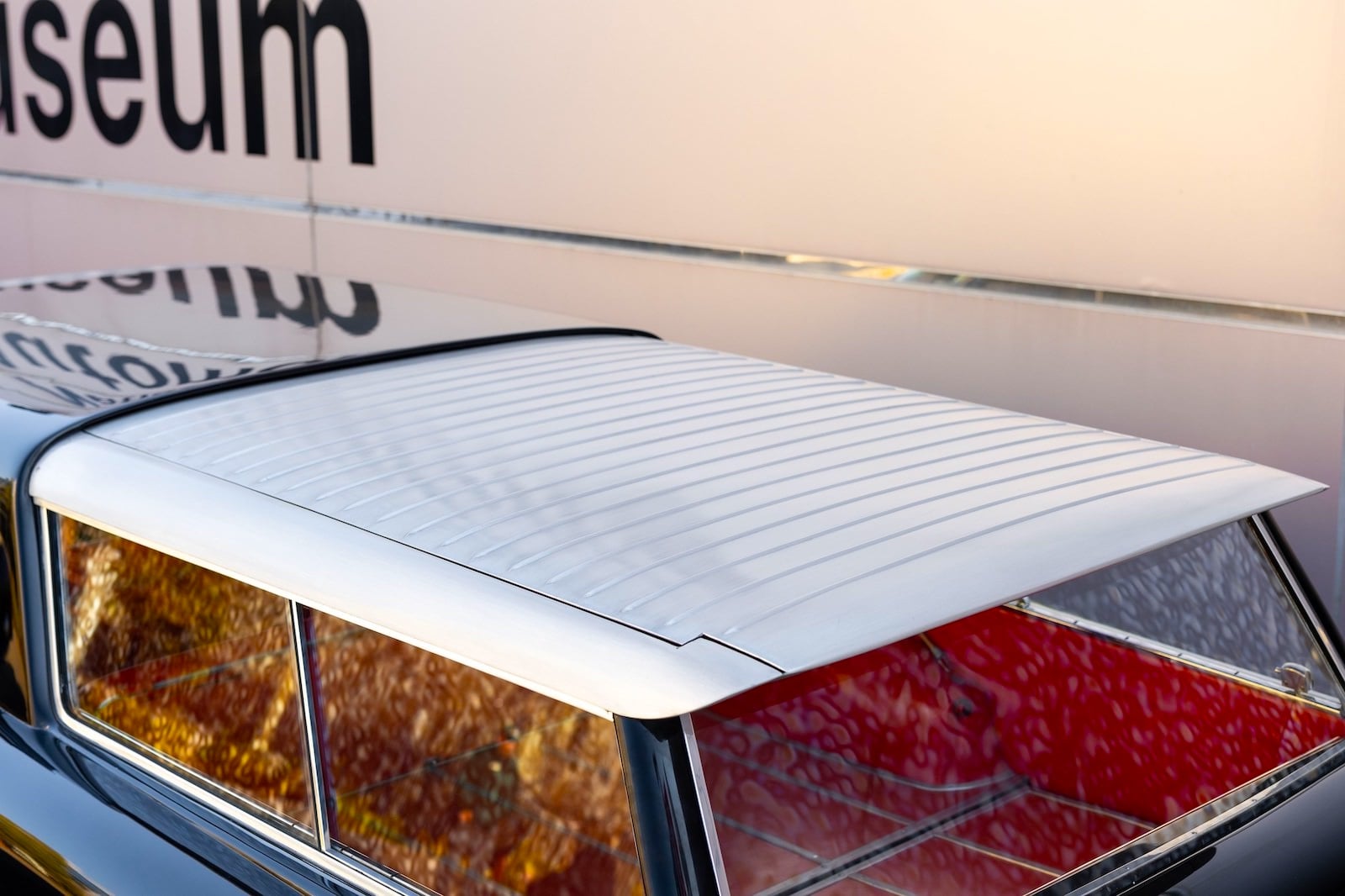
- The All-Purpose Sedan’s signature feature was its sliding rear roof panel, which opened the cargo area for hauling tall objects. Stevens later adapted this concept for the production Studebaker Wagonaire in 1963, and GM revisited the idea decades later with the 2004 GMC Envoy XUV.
- The car debuted at the 1959 Geneva Motor Show before touring shows across Europe and the United States. It was acquired by Bill Harrah’s collection in 1965 and has resided at the National Automobile Museum in Reno ever since. It’s now being offered for sale through Bonhams.
History Speedrun: The Scimitar Project
It’s undeniable that the late 1950s were a golden age for American concept cars, it was an era when dreamers with sketchpads and corporate backers with deep pockets produced some of the most imaginative cars ever built.
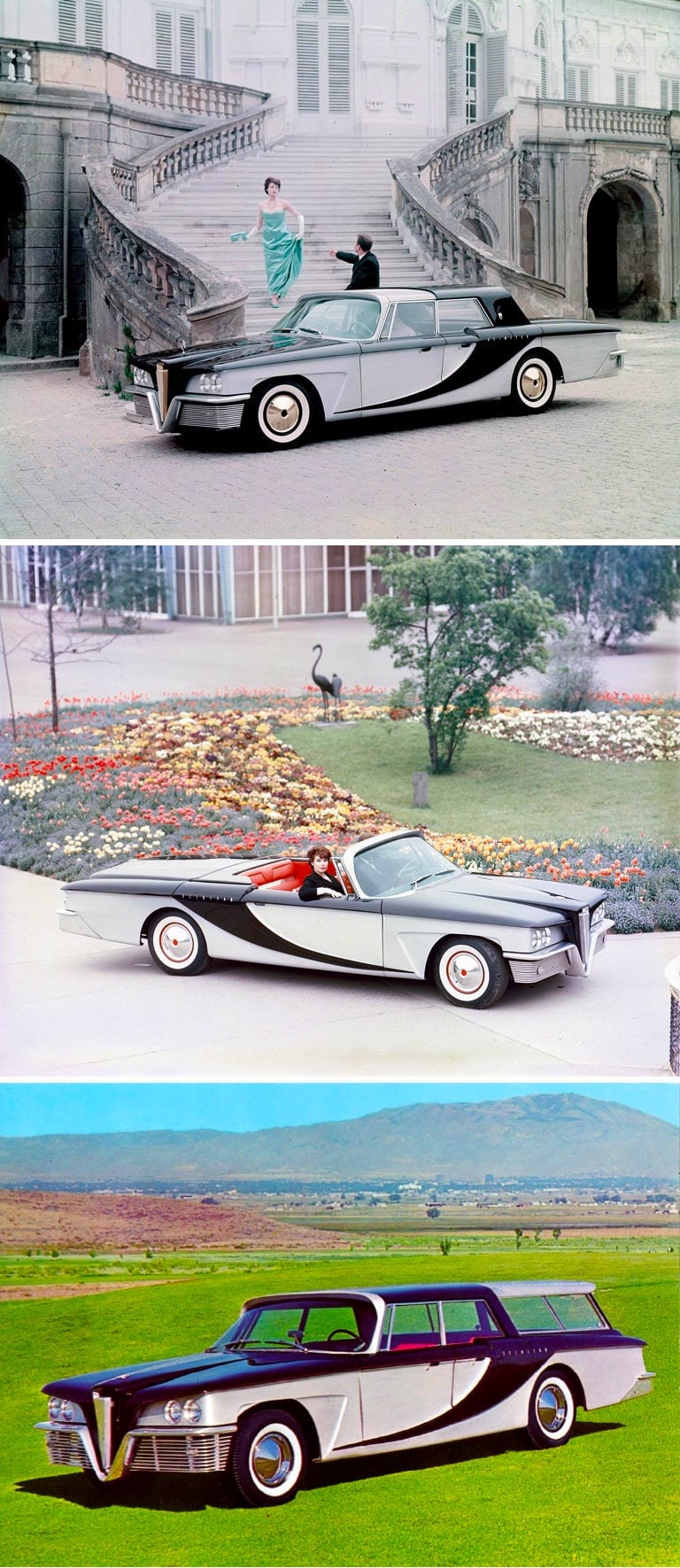
 Three cars were built as part of the Scimitar Project – the four-door Town Car Phaeton (top), the two-door Hardtop Convertible (middle), and the All-Purpose Sedan (bottom). Images courtesy of the Brooks Stevens Estate.
Among the most unusual of these 1950s concept vehicles was a trio of show cars called the Scimitars, designed by the prolific Milwaukee-based industrial designer Brooks Stevens and bankrolled not by a Detroit automaker but by the Olin Mathieson Chemical Corporation, a mining and chemical conglomerate that had entered the aluminum business in a big way through its Olin Aluminum interests during the mid-1950s.
Of the three, the All-Purpose Sedan was arguably the most forward-thinking – a sliding-roof station wagon concept that anticipated ideas still being explored decades later.
The Scimitar project grew out of a friendship between Stevens and Thomas S. Nicholson, chairman of Olin Mathieson. Olin had made a major push into aluminum production during 1956 and 1957, and Nicholson saw a vast untapped market in the automotive industry.
Car bodies of the era were built almost entirely from steel, a material that was particularly vulnerable to the salt, slush, and snow that ravaged vehicles across the northern United States every winter. Aluminum didn’t rust, and Nicholson believed the Scimitars could serve as rolling proof-of-concept vehicles for the material’s potential in automotive applications.
Stevens was an inspired choice for the job. Born in Milwaukee in 1911, he had contracted polio as a child but channeled his convalescence into a passion for drawing that would define his entire adult life. By the late 1950s he was already one of the most prolific industrial designers in the country, with a portfolio that included work on the Willys Jeepster, the Harley-Davidson Hydra-Glide, the Studebaker Gran Turismo Hawk, the Jeep Wagoneer, and the Oscar Mayer Wienermobile.
He was also no stranger to concept cars, having designed the Cadillac-based Die Valkyrie show car of 1954 with its signature V-shaped front bumper, as well as retractable hardtop designs for the Paxton Phoenix and the Gaylord.
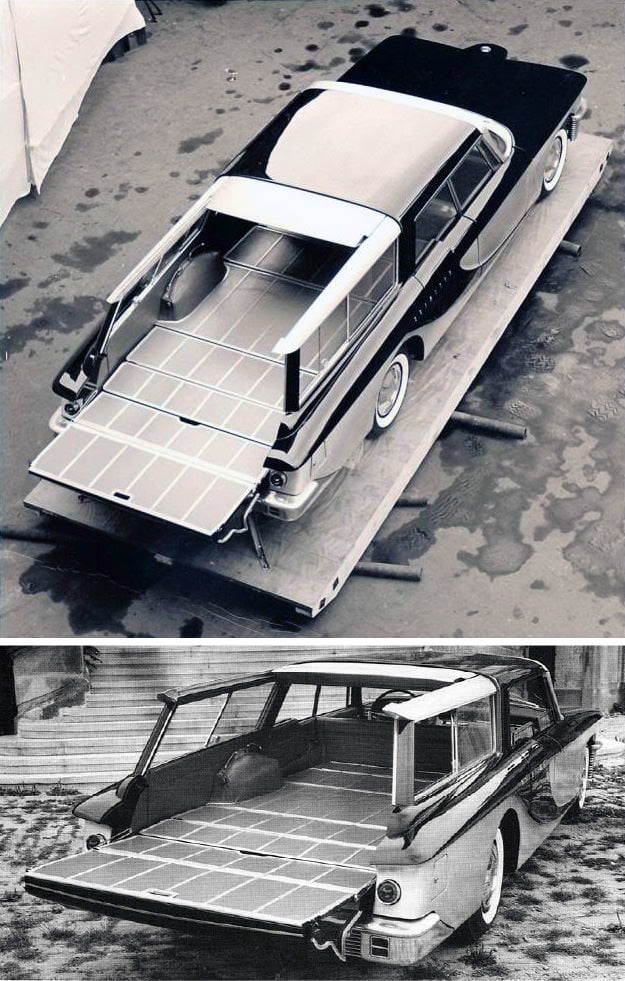
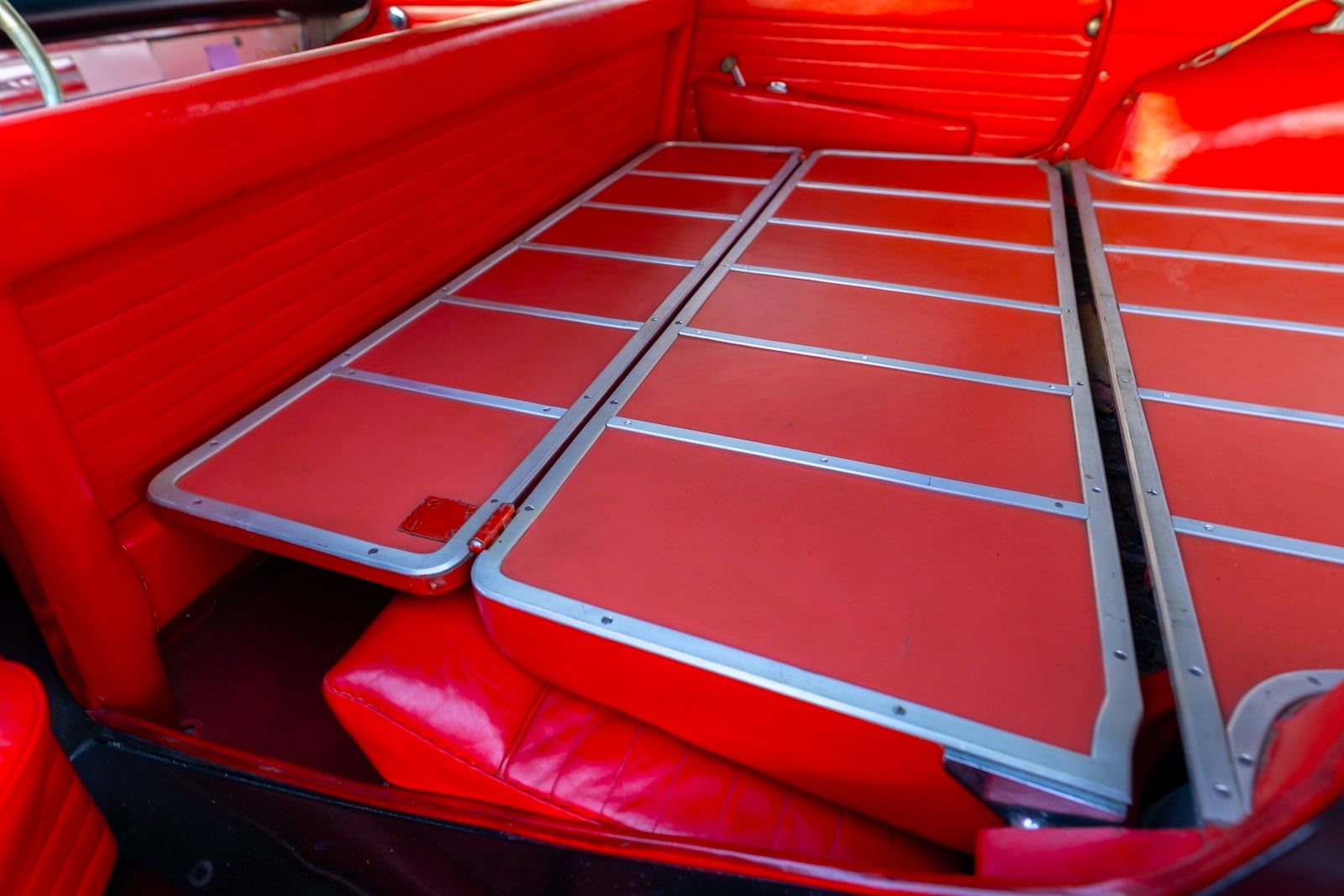
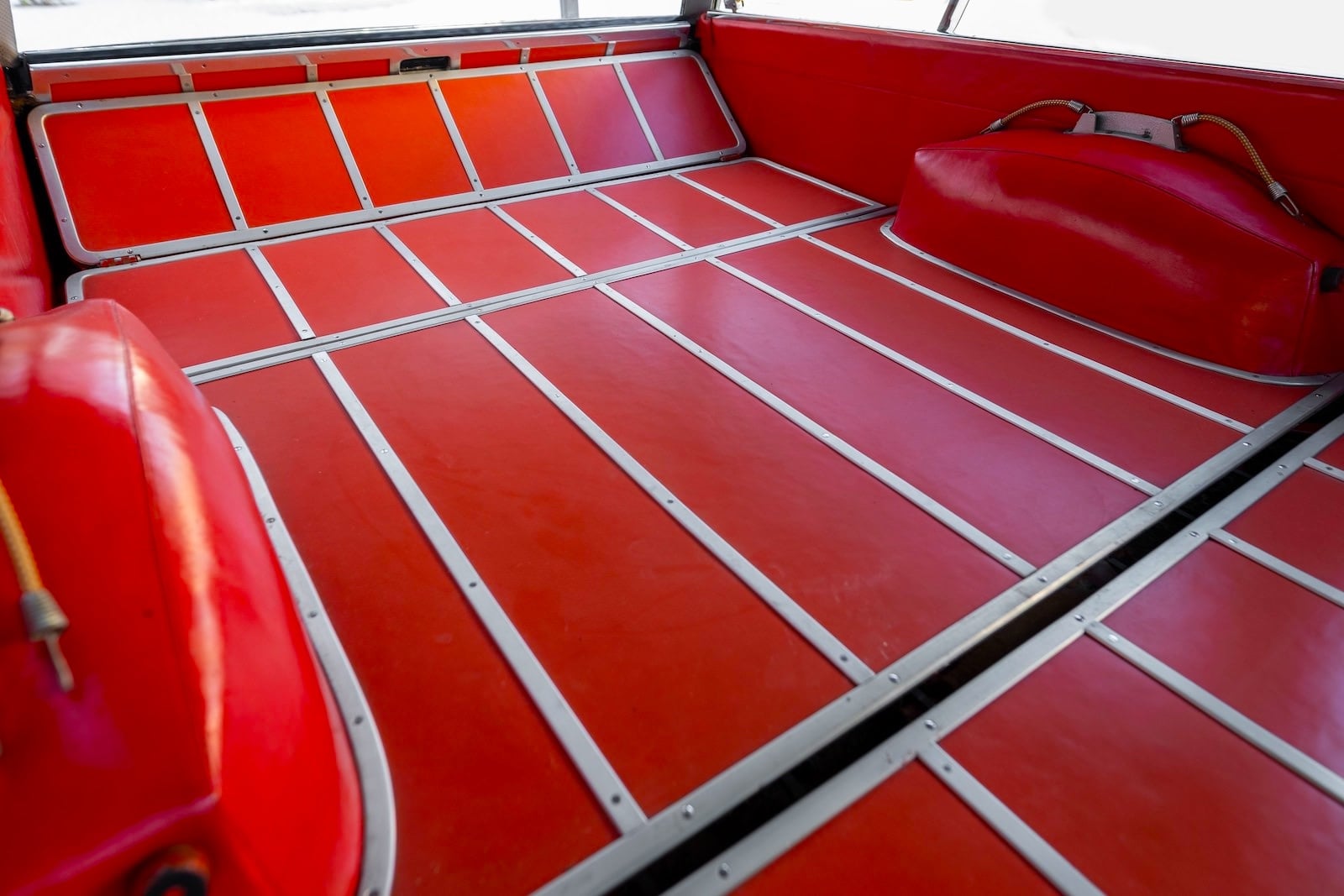
The All-Purpose Sedan’s most recognizable feature was its retractable rear roof panel, which slid forward to open the cargo area to the sky. With the roof withdrawn, the wagon could haul tall objects that would never fit in a conventional station wagon, while with it closed the car functioned as a fully enclosed family hauler. Images courtesy of the Brooks Stevens Estate.
The Scimitar Project – Styling
For the Scimitar project, Stevens designed three distinct body styles built from a common design language – a two-door Hardtop Convertible with a fully retractable metal roof, a four-door Town Car Phaeton that could be configured as a formal sedan, an open-front town car, or a fully open phaeton, and the All-Purpose Sedan, a pillarless station wagon with a sliding rear roof panel.
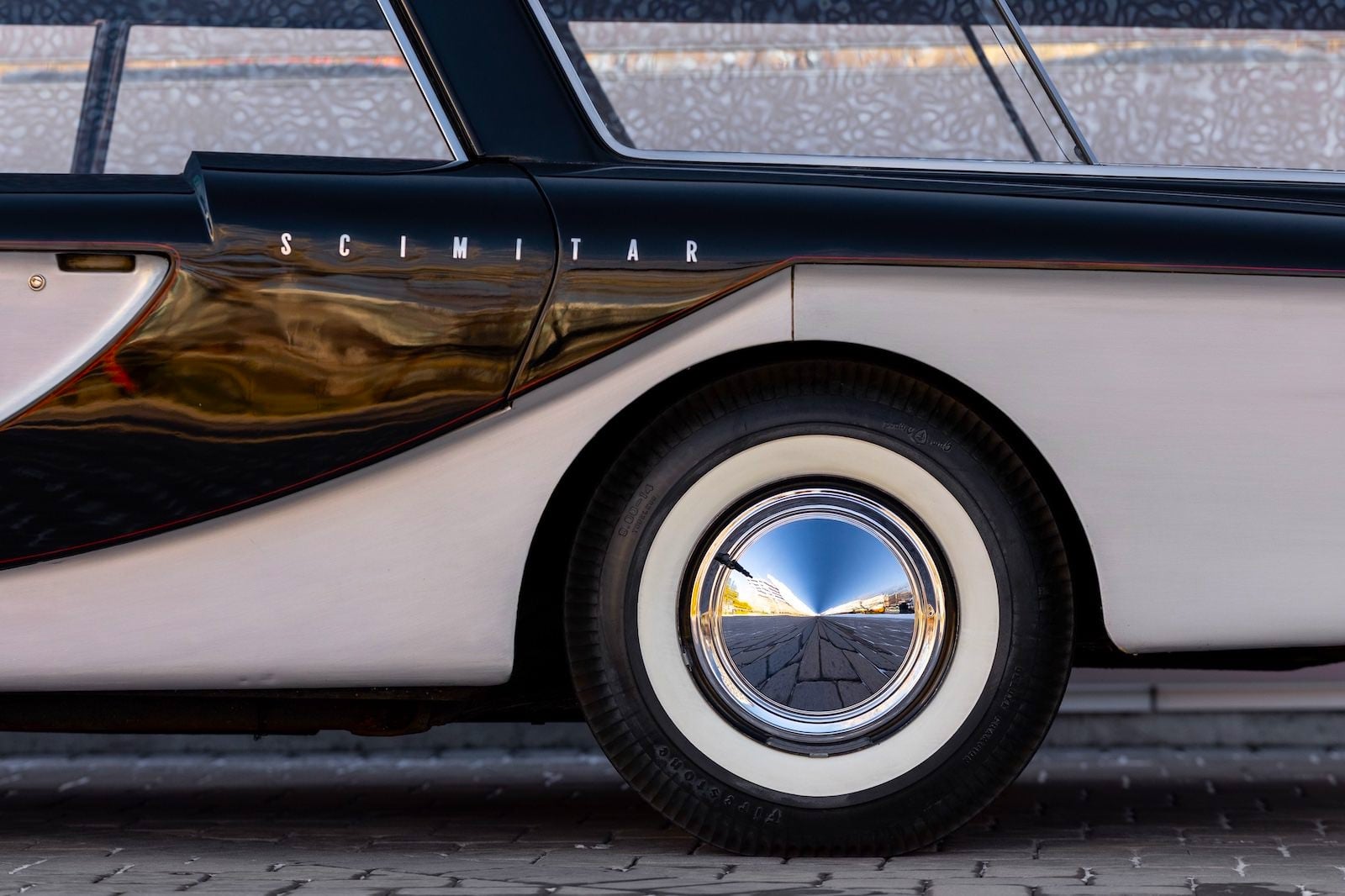
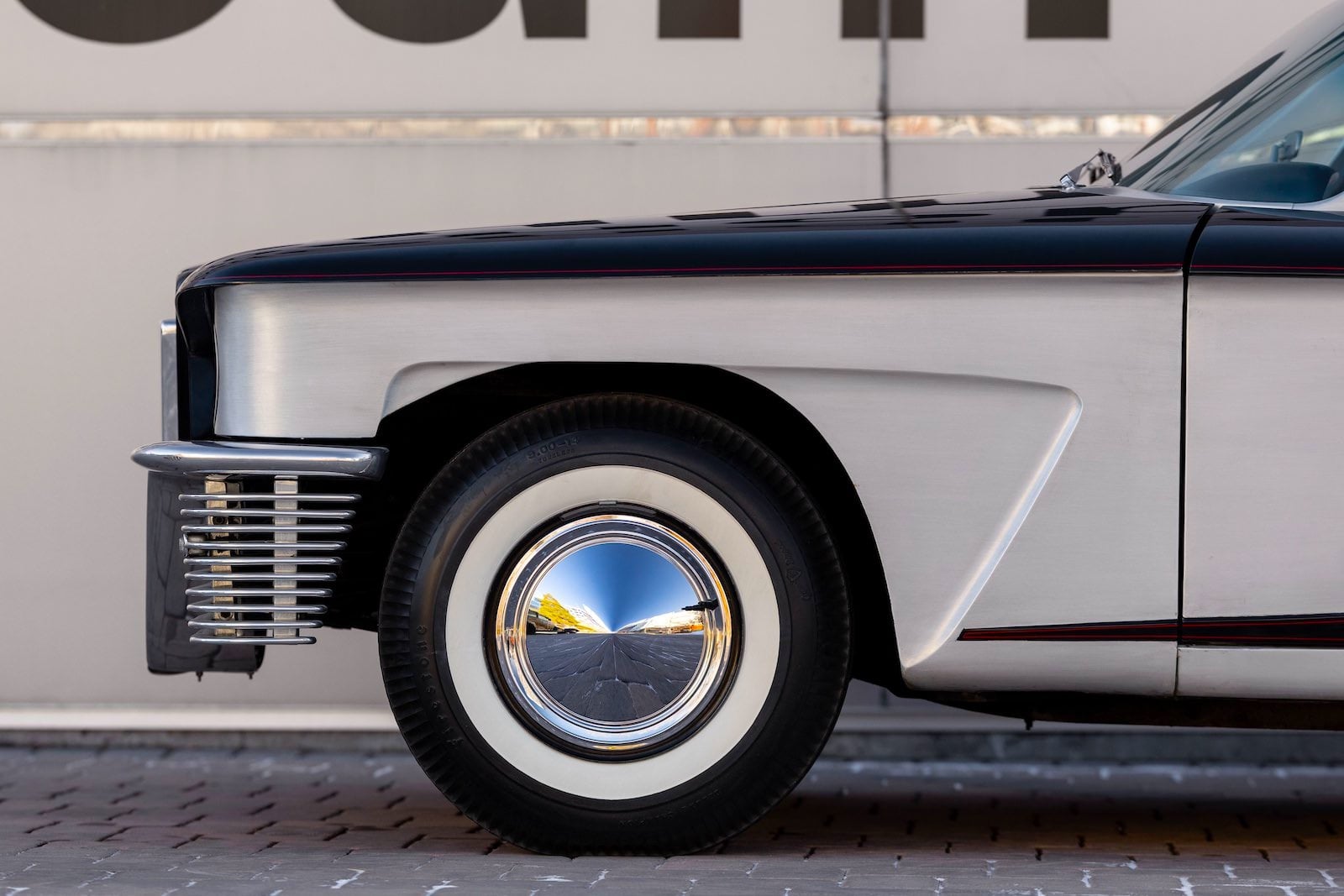
All three shared the same signature front-end styling with a prominent V-shaped aluminum grille that doubled as a bumper, a motif evolved from Stevens’ earlier Valkyrie concept. The upswept black steel side panels flanked by brushed aluminum fenders gave rise to the series’ name – Stevens mentioned in a 1992 interview with Hemmings Special Interest Automobiles that the sweep of the body panel resembled the curved blade of a Turkish scimitar sword.
The Scimitar Project – Engineering
For the mechanical underpinnings, Stevens used Chrysler’s 1959 New Yorker platform through his friend Virgil Exner, then head of design at Chrysler. The New Yorker provided a solid 127 inch wheelbase chassis powered by a 413 cubic inch V8 producing 350 bhp, mated to Chrysler’s excellent TorqueFlite 3-speed automatic transmission.
The front suspension used longitudinal torsion bars with an independent setup, while a live rear axle on leaf springs handled springing duties out back. Four-wheel power-assisted hydraulic drum brakes brought the big cars to a stop. Interestingly, 1959 was the final year Chrysler used traditional body-on-frame construction for its full-size cars before switching to unibody, making the Scimitars the last period-produced coachbuilt cars built on a Chrysler chassis.
The bodies were built by Karosseriewerk Reutter in Stuttgart, Germany, a coachbuilder best known for making the steel bodies of the Porsche 356 series and even the early 901/911 prototypes. Reutter had extensive experience working with both steel and aluminum, and making one-off cars, which may be why they were chosen for this project.
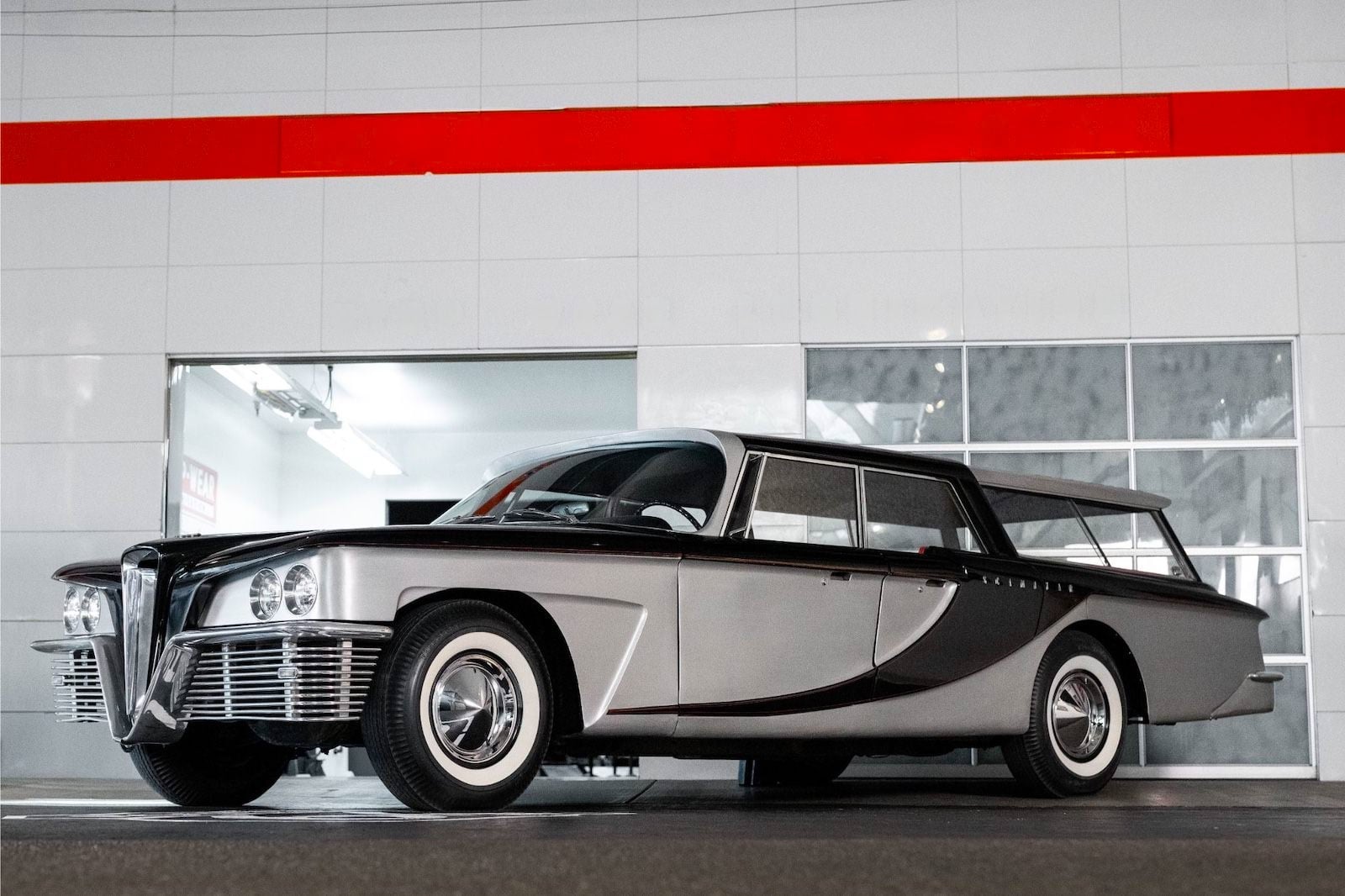
This is the 1959 Scimitar EX All-Purpose Sedan, it’s an incredible show car from the drawing board of legendary American industrial designer Brooks Stevens and built over in Germany by Karosseriewerk Reutter.
The Scimitars were built to Reutter’s famously high standards, with a level of fit and finish that belied their show car origins. The design used a mix of materials, with anodized brushed aluminum employed in the areas most prone to corrosion – places like fenders, bumpers, grilles, wheel covers, and trim – while conventional steel was used where corrosion was less of a concern (and of course for the Chrysler chassis). Everything that appeared silver was aluminum, the contrasting dark panels were steel.
The All-Purpose Sedan And Its Influence
The All-Purpose Sedan’s most recognizable feature was its retractable rear roof panel, which slid forward to open the cargo area to the sky. With the roof withdrawn, the wagon could haul tall objects that would never fit in a conventional station wagon, while with it closed the car functioned as a fully enclosed family hauler.
Stevens would later adapt this very concept for the production Studebaker Wagonaire, introduced for the 1963 model year. The Wagonaire’s sliding roof brought the idea to roughly 12,000 buyers over its four-year production run, though it was plagued by water leaks that the Scimitar’s show-car existence had never needed to worry about. Decades later, GM revisited a similar concept with the 2004 GMC Envoy XUV.
The three Scimitars debuted together at the Geneva Motor Show in March of 1959, where they drew considerable attention from the crowds, they then toured auto shows across Europe before returning to the United States for another circuit of appearances that included stops in Chicago, California, New York, and Miami.
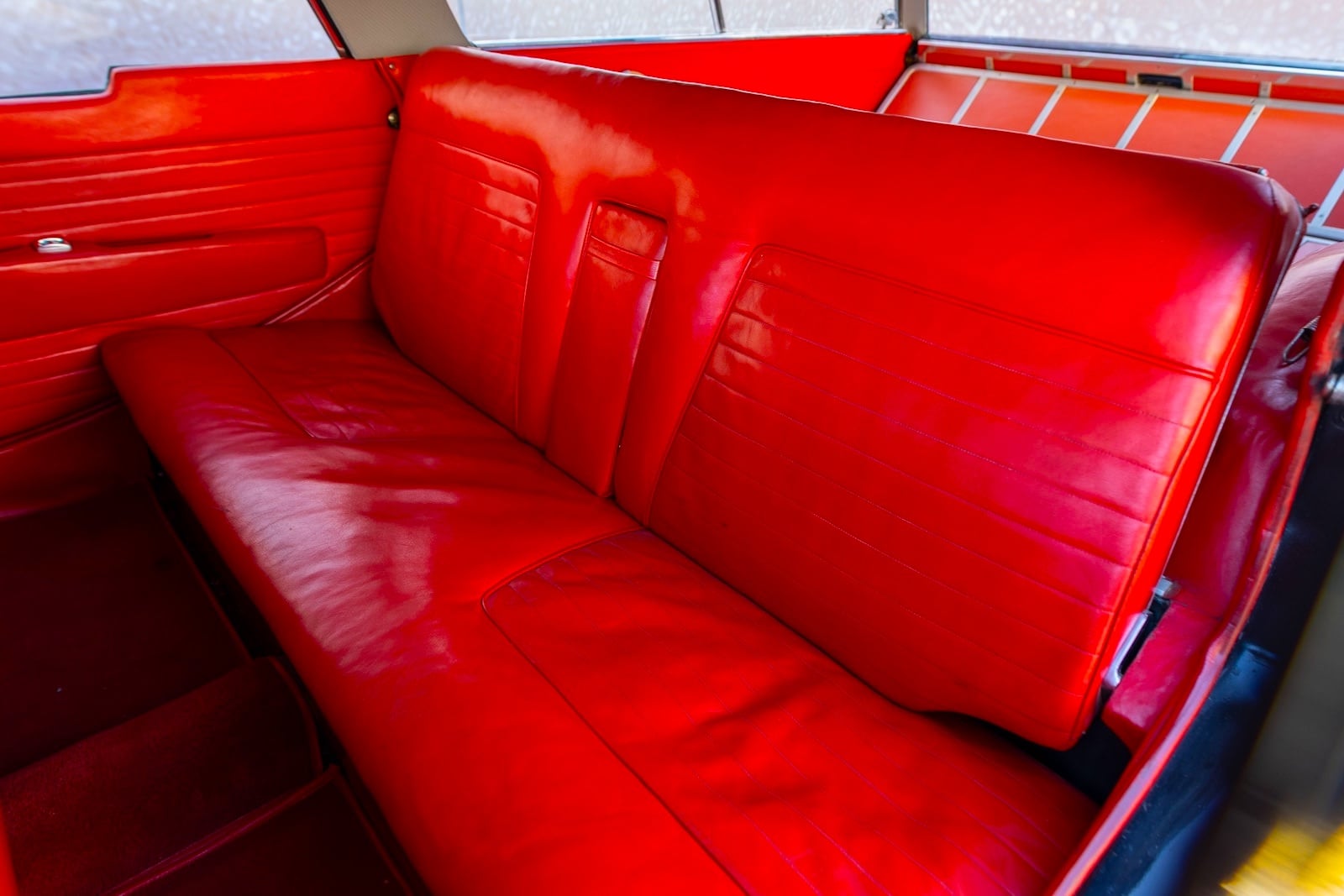
The cars borrowed a few recognizable production parts, the dashboard was pure 1959 Chrysler, and the six round taillights were sourced from the 1958 Chevrolet Impala, but the overall effect was unmistakably original.
The All-Purpose Sedan was eventually bought by Bill Harrah’s legendary automobile collection in 1965, purchased from a Paul Stock in Cody, Wyoming, with just 3,910 miles on the odometer. It remains at the collection’s successor institution, the National Automobile Museum in Reno, Nevada, where it’s one of the more unusual vehicles in an already extraordinary inventory.
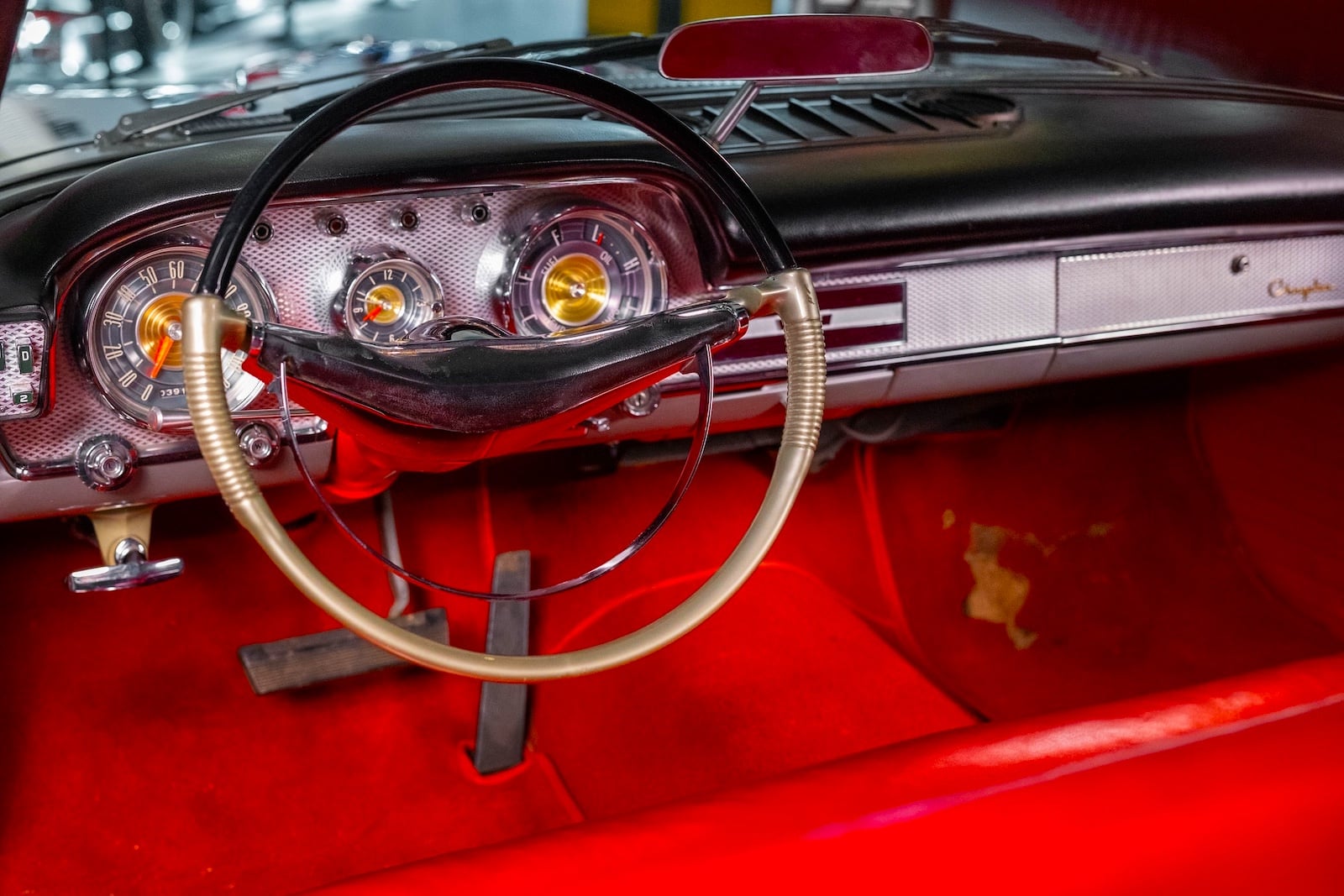
The cars borrowed a few recognizable production parts, the dashboard was pure 1959 Chrysler, and the six round taillights were sourced from the 1958 Chevrolet Impala, but the overall effect was unmistakably original.
Remarkably, all three Scimitars survive today, the Hardtop Convertible and the Town Car Phaeton are held in private collections, and the full trio was reunited for display at the Amelia Island Concours d’Elegance in 2020.
The 1959 Scimitar EX All-Purpose Sedan is now being offered for sale out of the museum where it has been held for so many years. It’s due to roll across the auction block with Bonhams on the 13th of June, if you’d like to read more or register to bid you can visit the listing here.
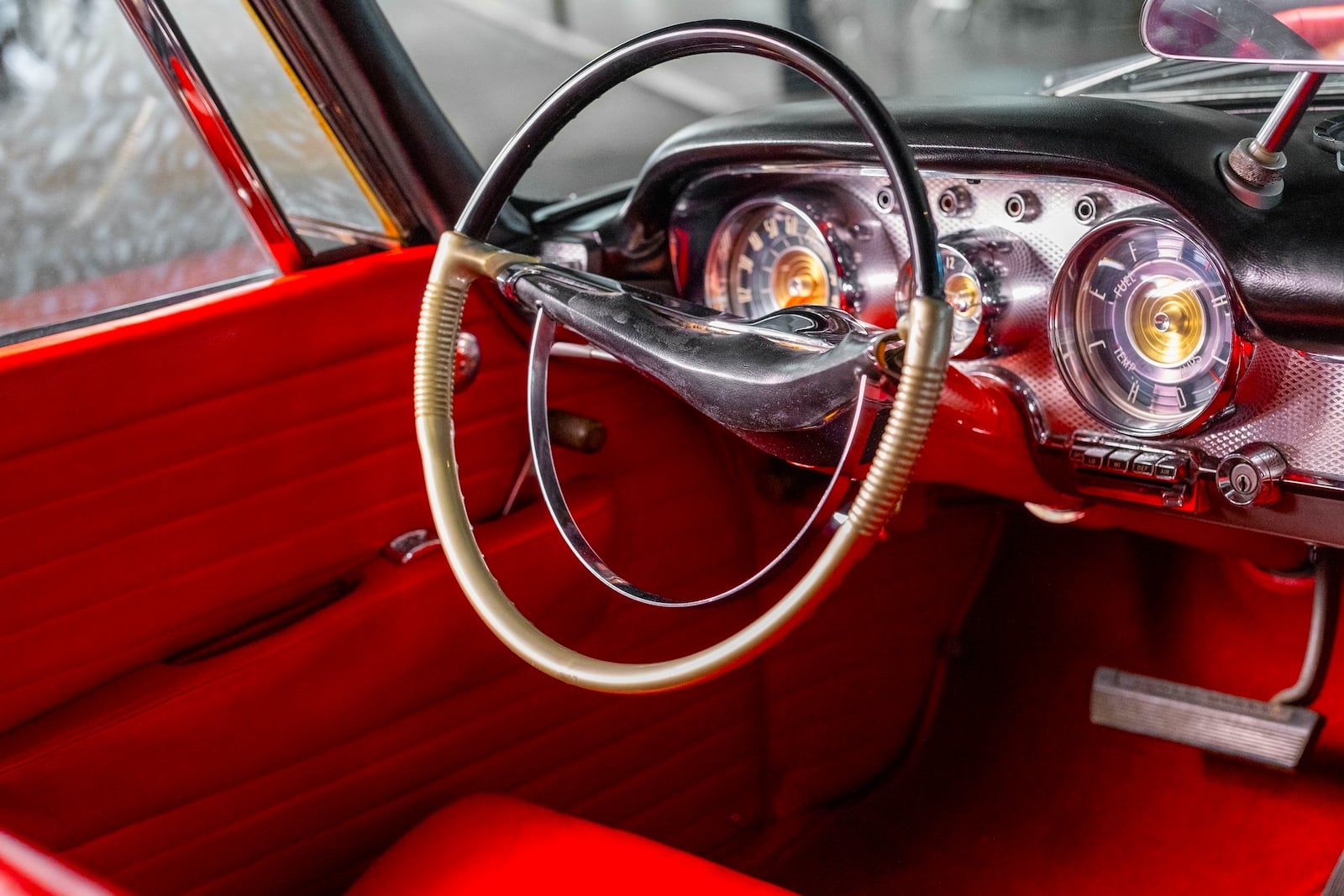
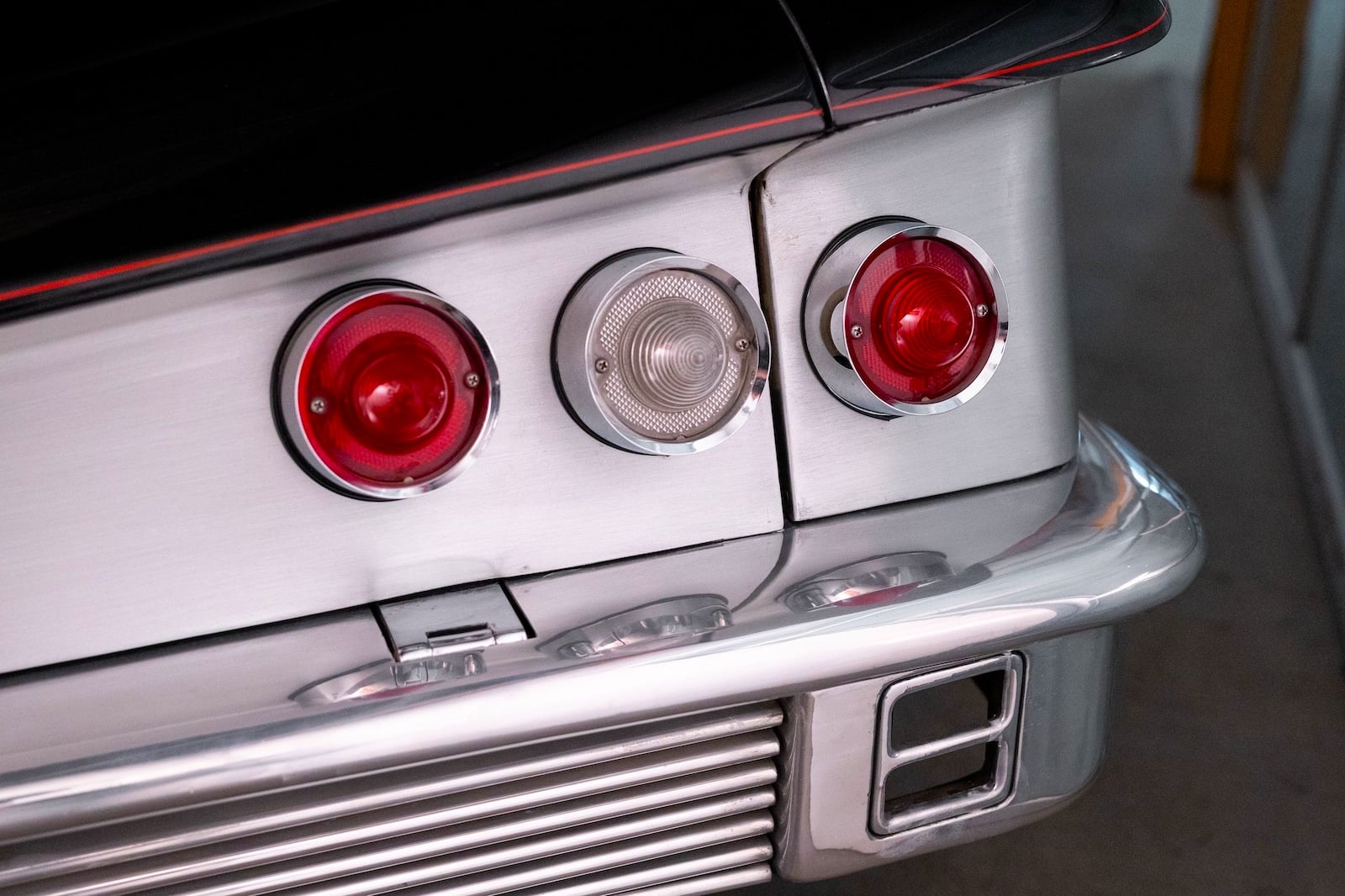
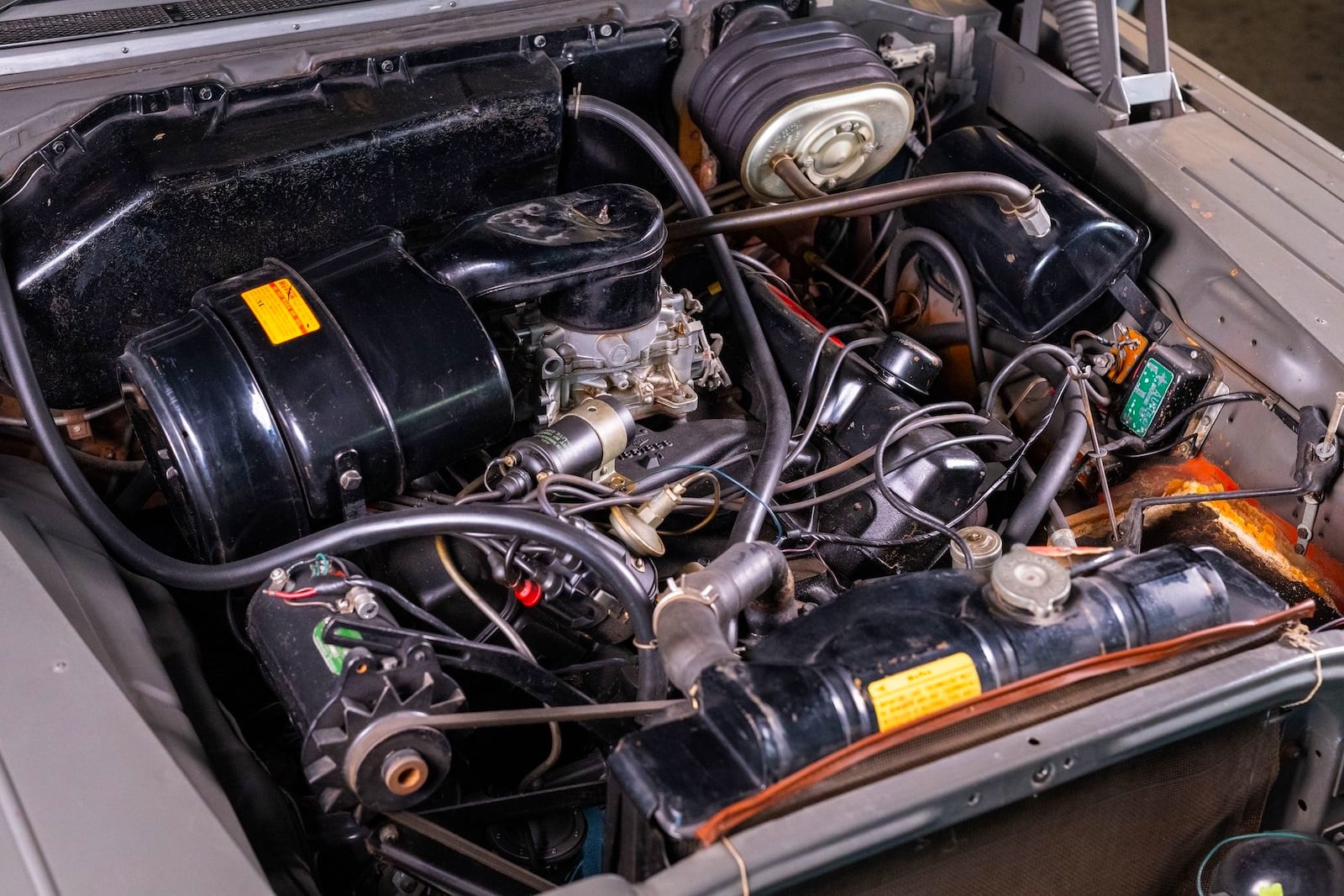
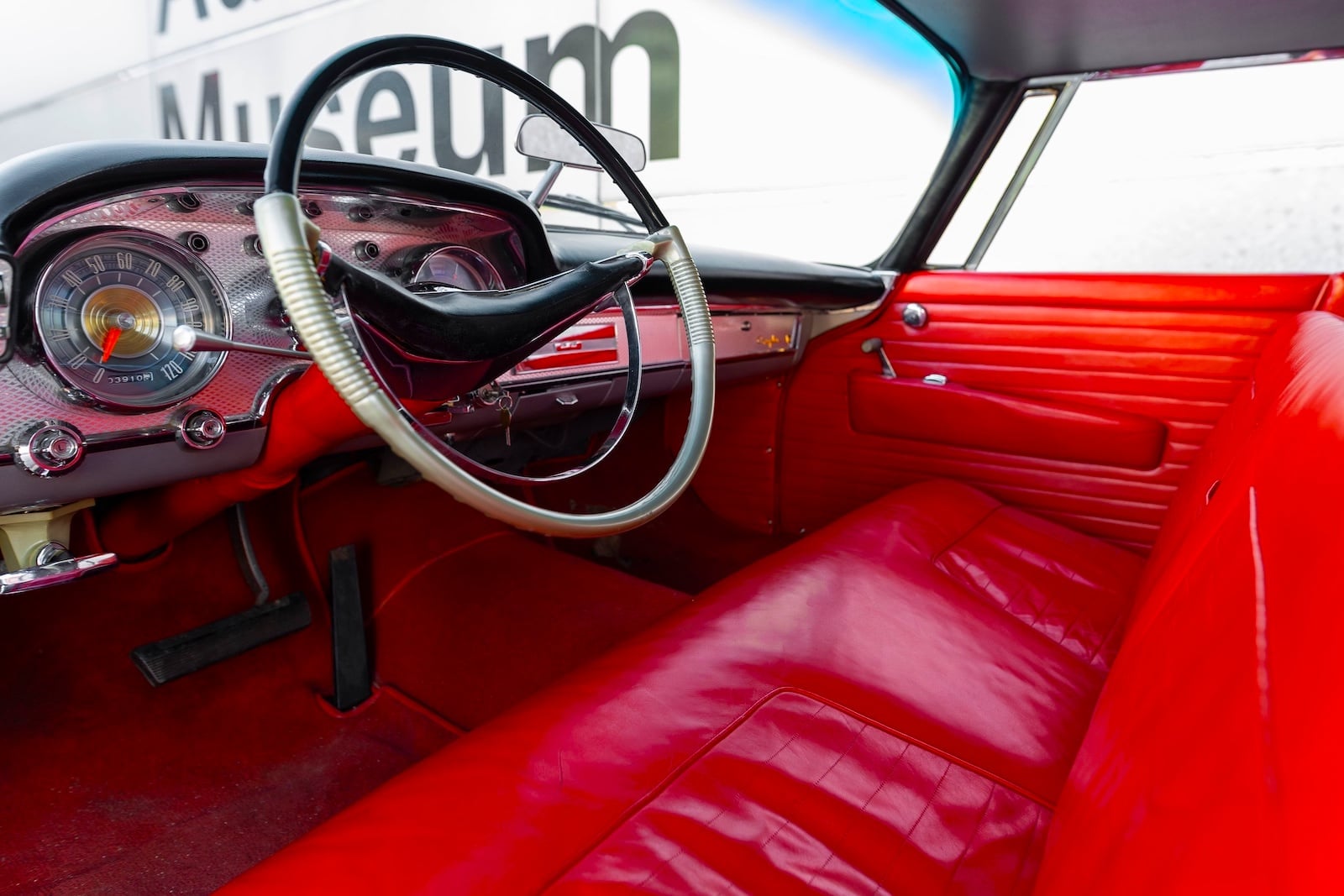
Images courtesy of Bonhams

Articles that Ben Branch has written have been covered on CNN, Popular Mechanics, Smithsonian Magazine, Road & Track Magazine, the official Pinterest blog, the official eBay Motors blog, BuzzFeed, Autoweek Magazine, Wired Magazine, Autoblog, Gear Patrol, Jalopnik, The Verge, and many more.
Silodrome was founded by Ben back in 2010, in the years since the site has grown to become a world leader in the alternative and vintage motoring sector, with well over a million monthly readers from around the world and many hundreds of thousands of followers on social media.