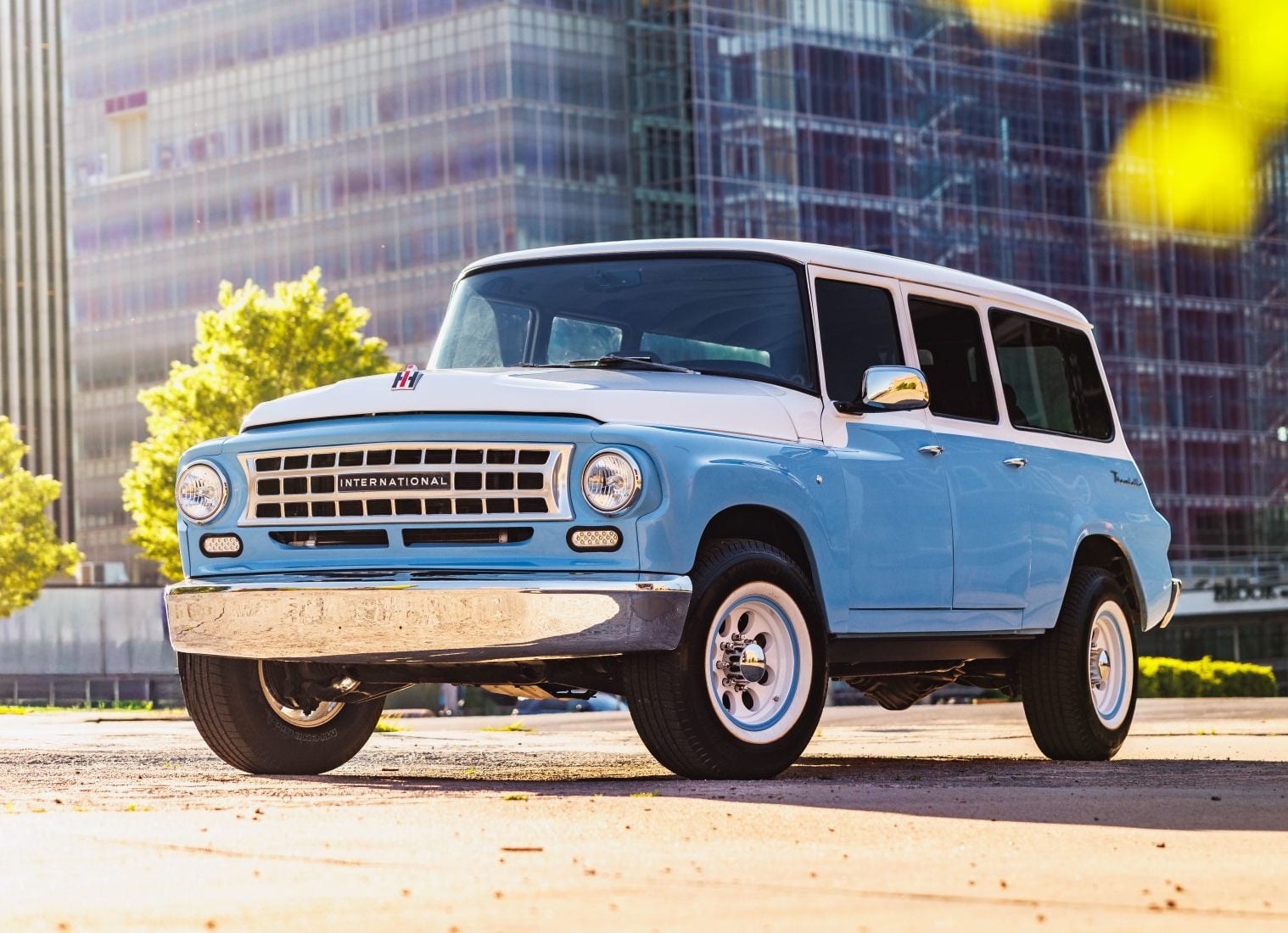
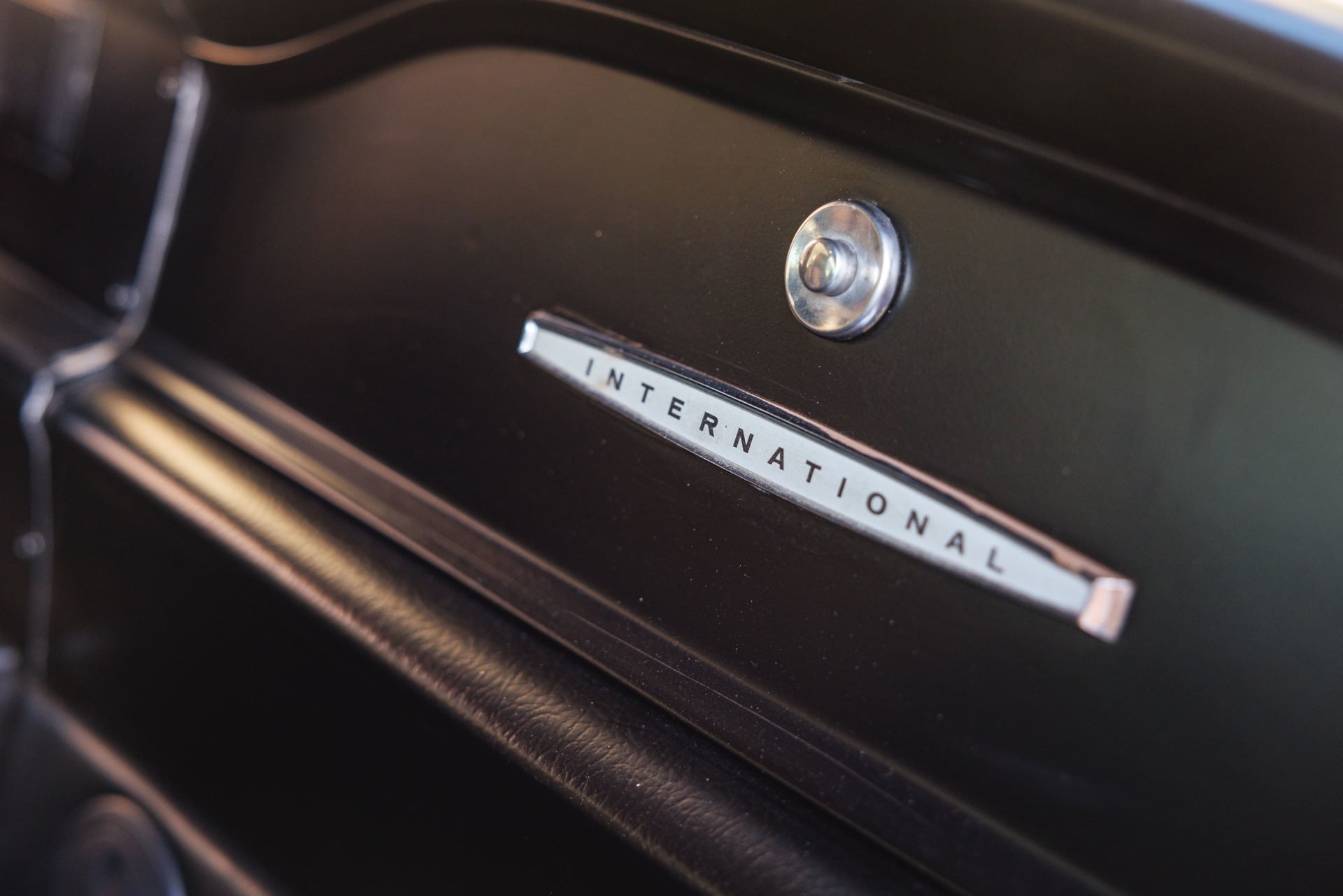
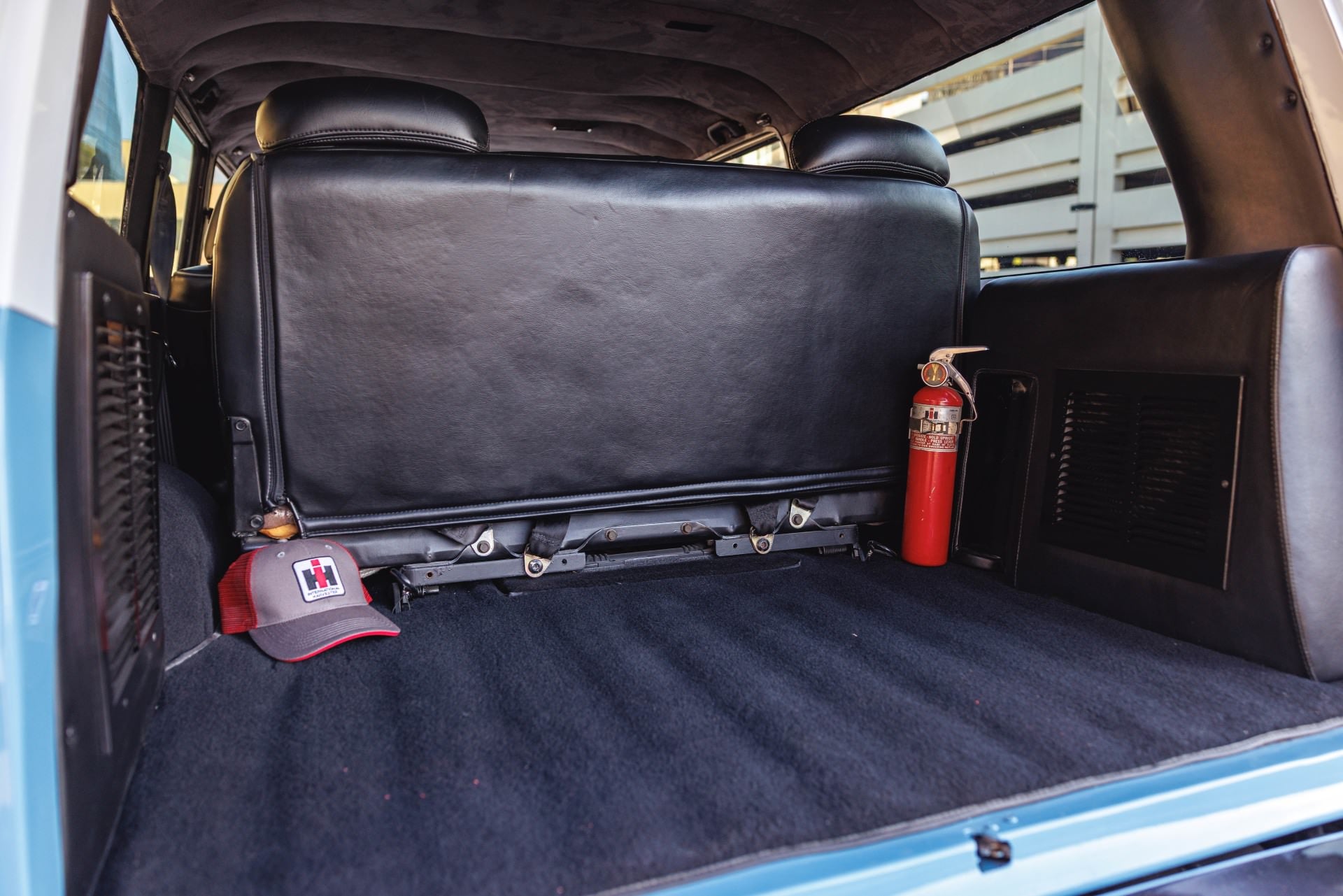
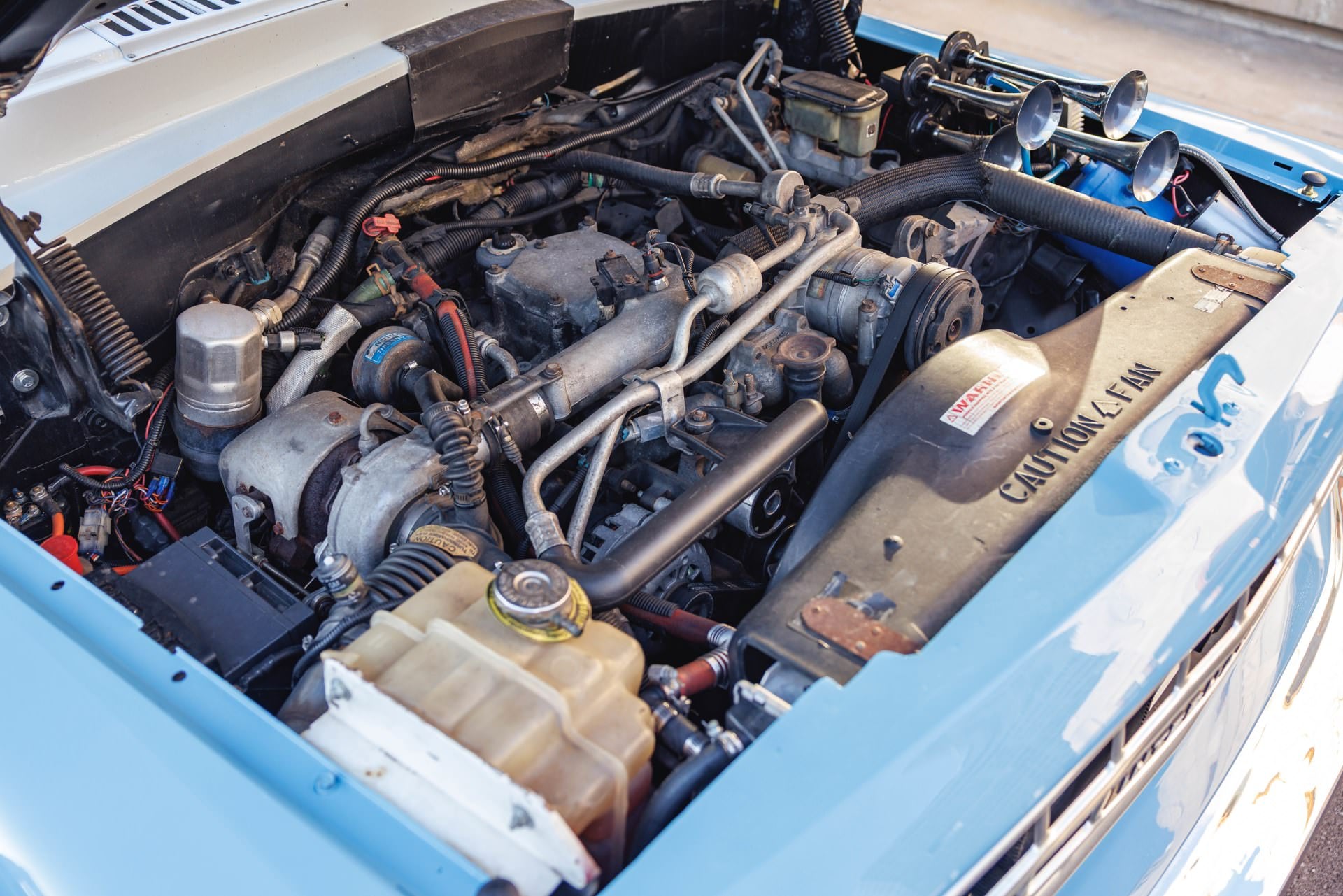
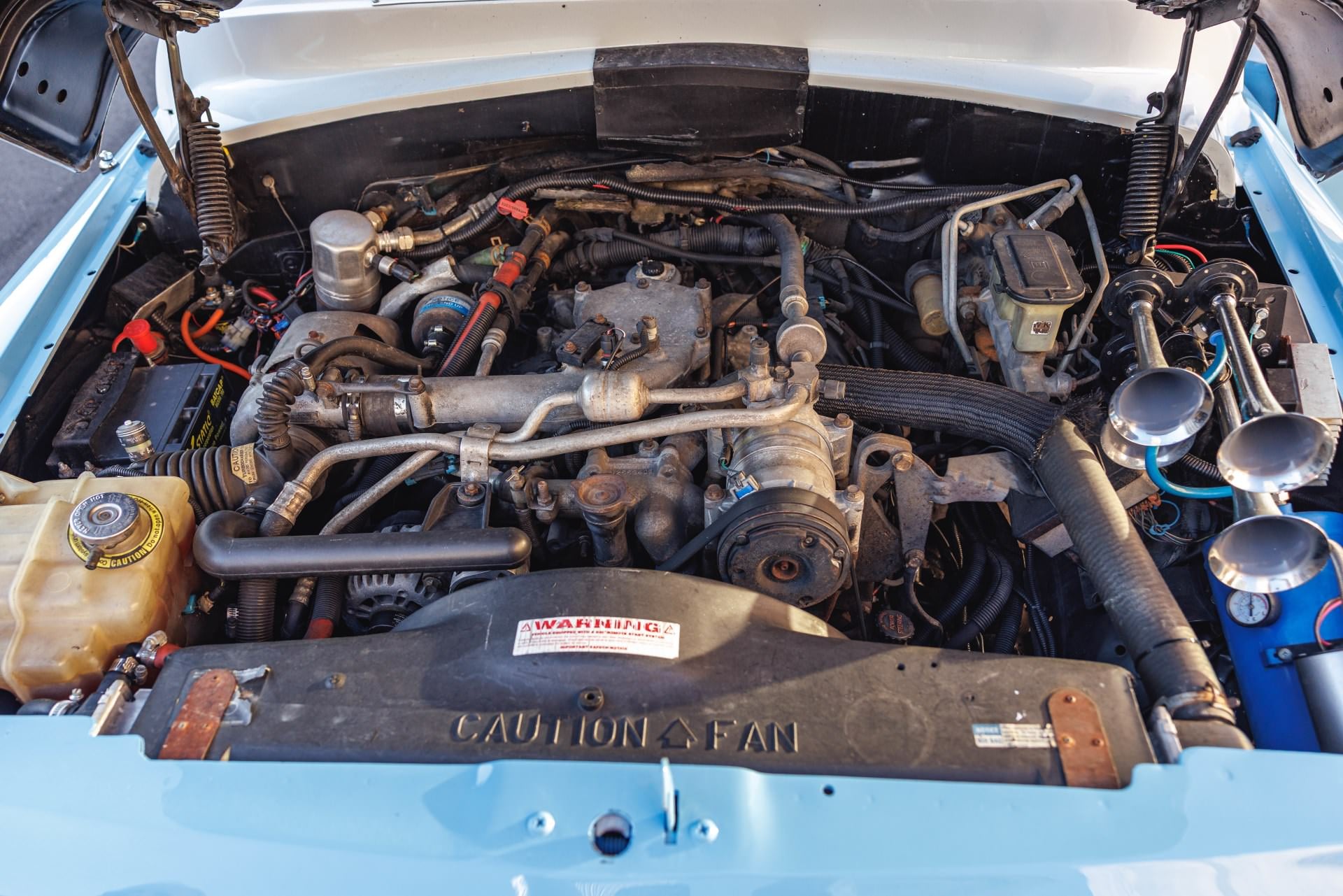
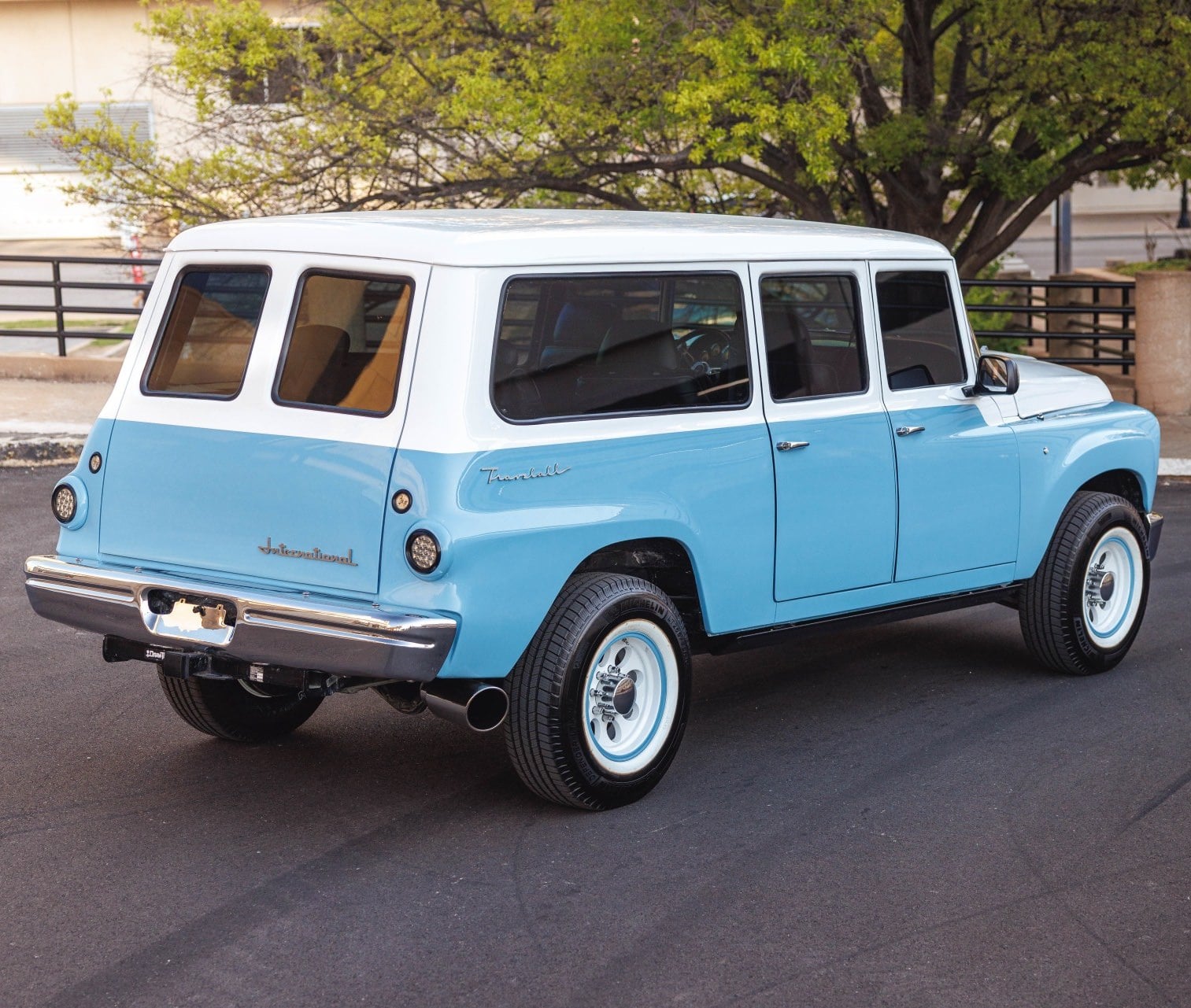
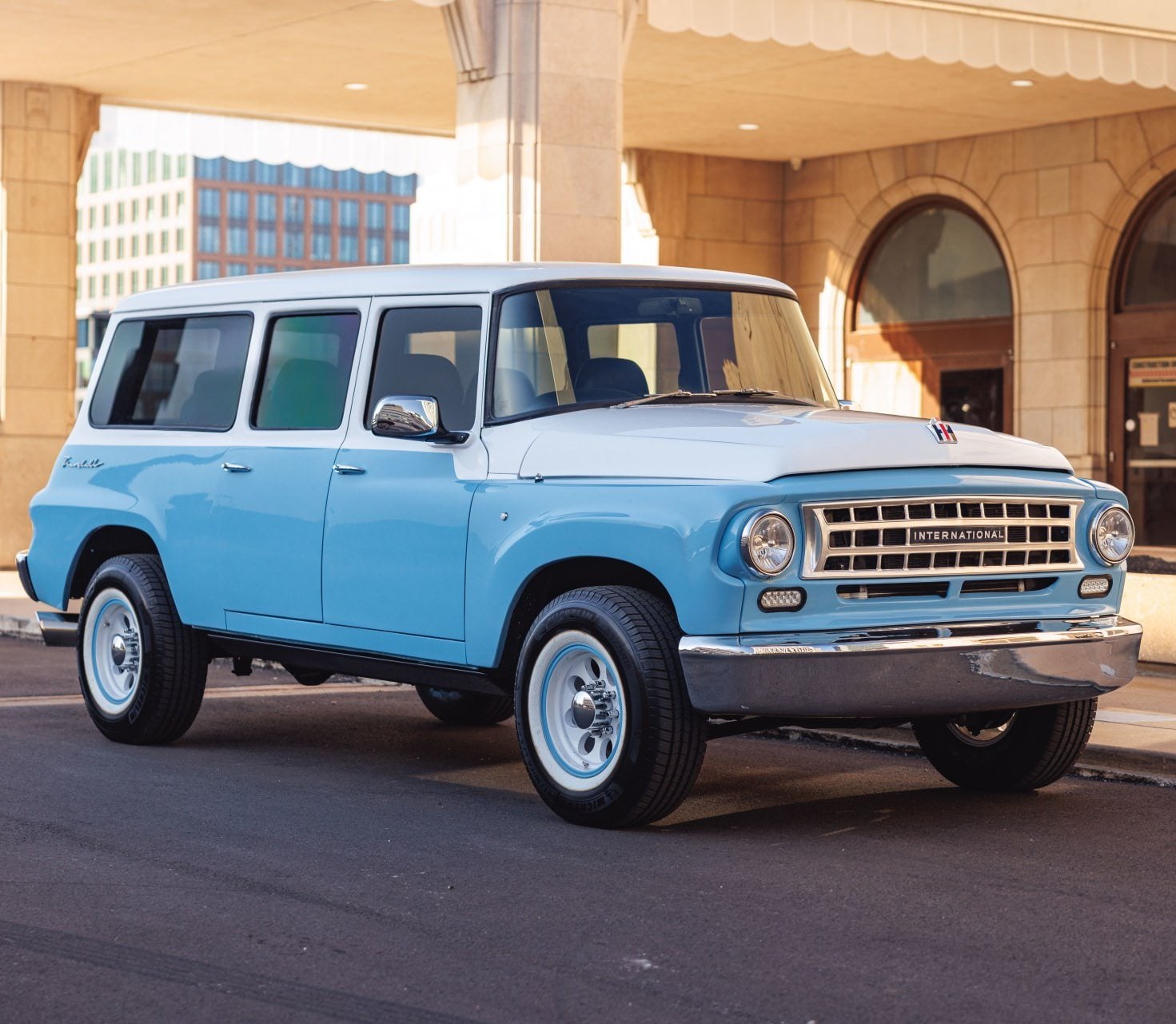
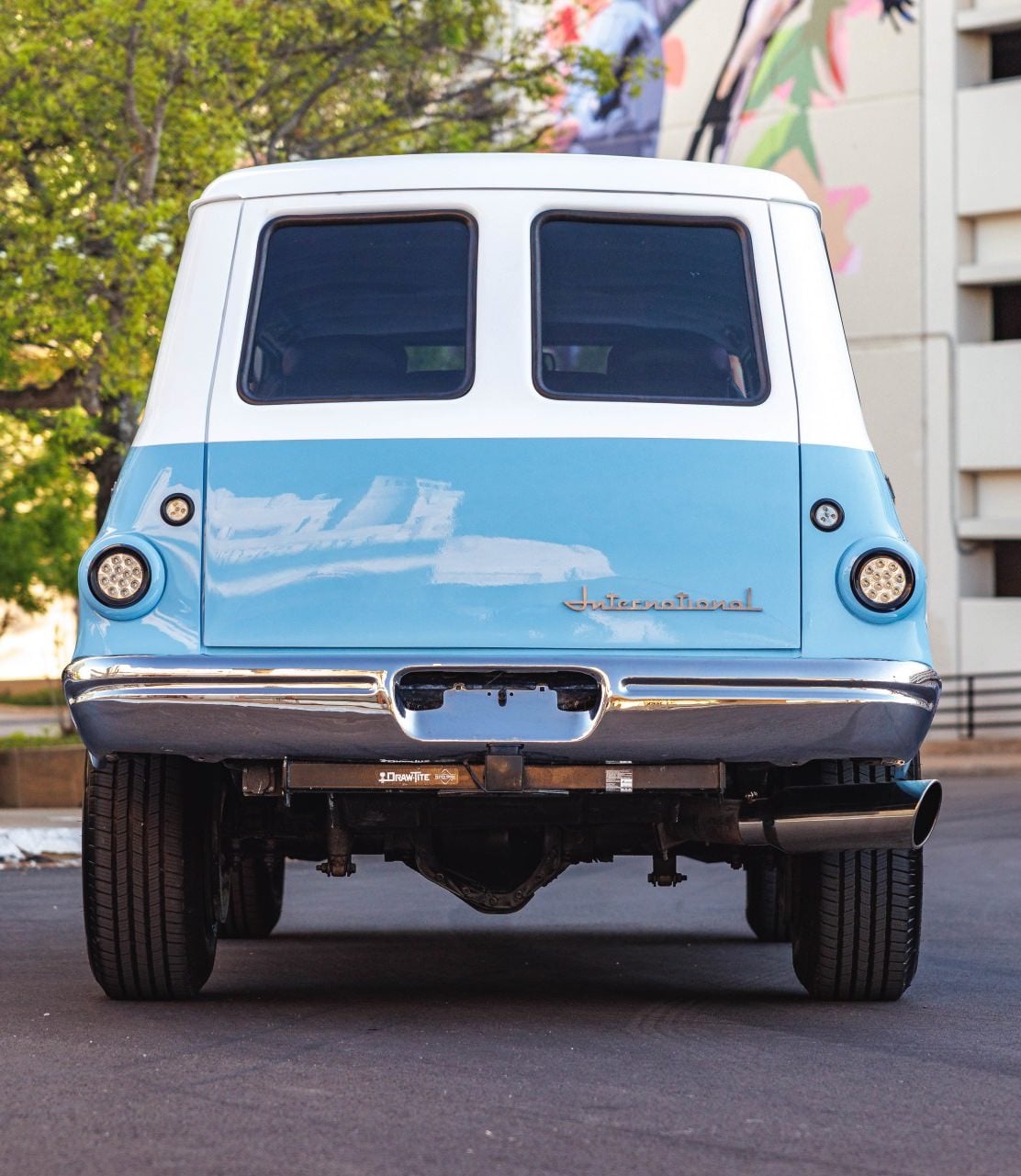
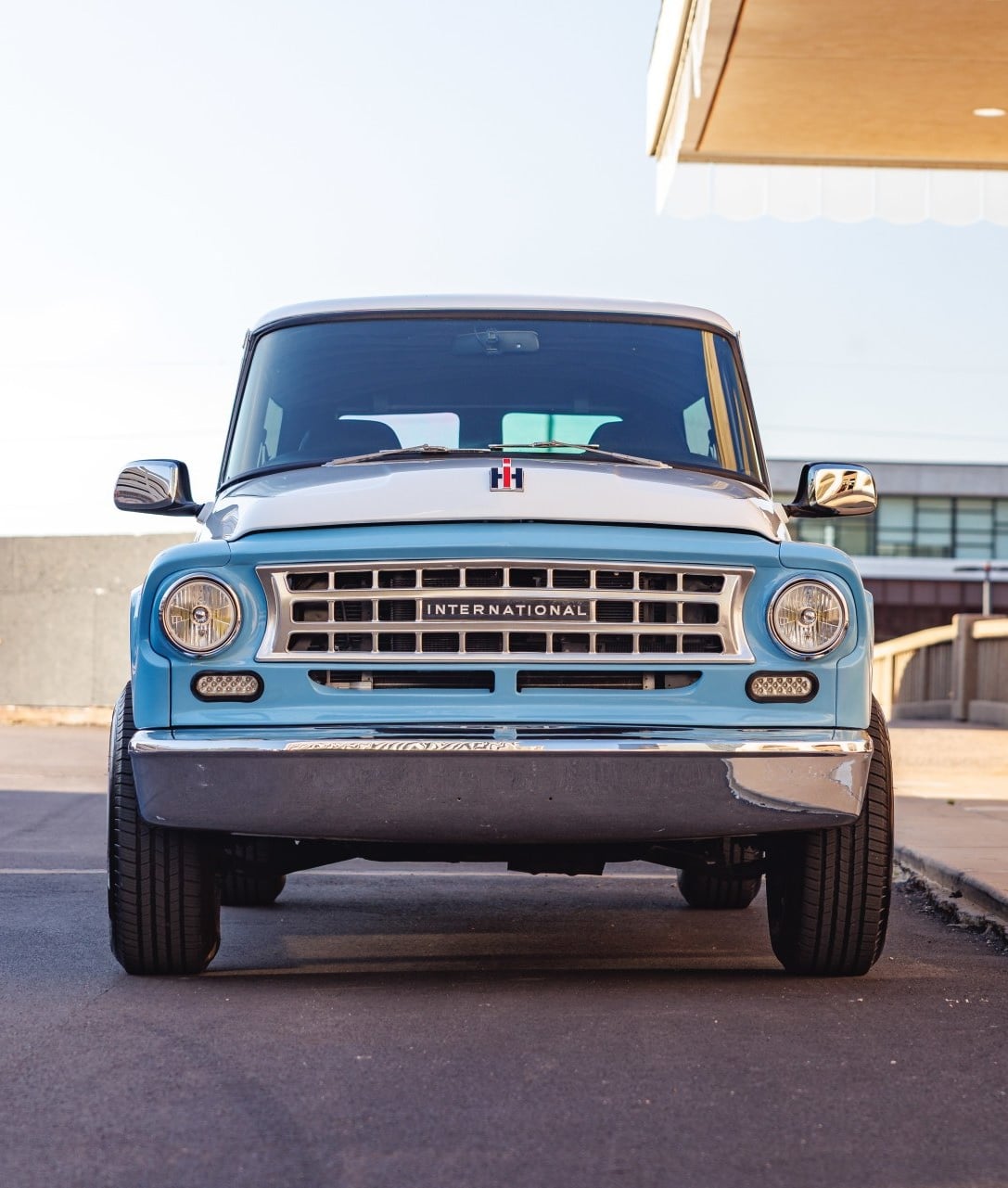
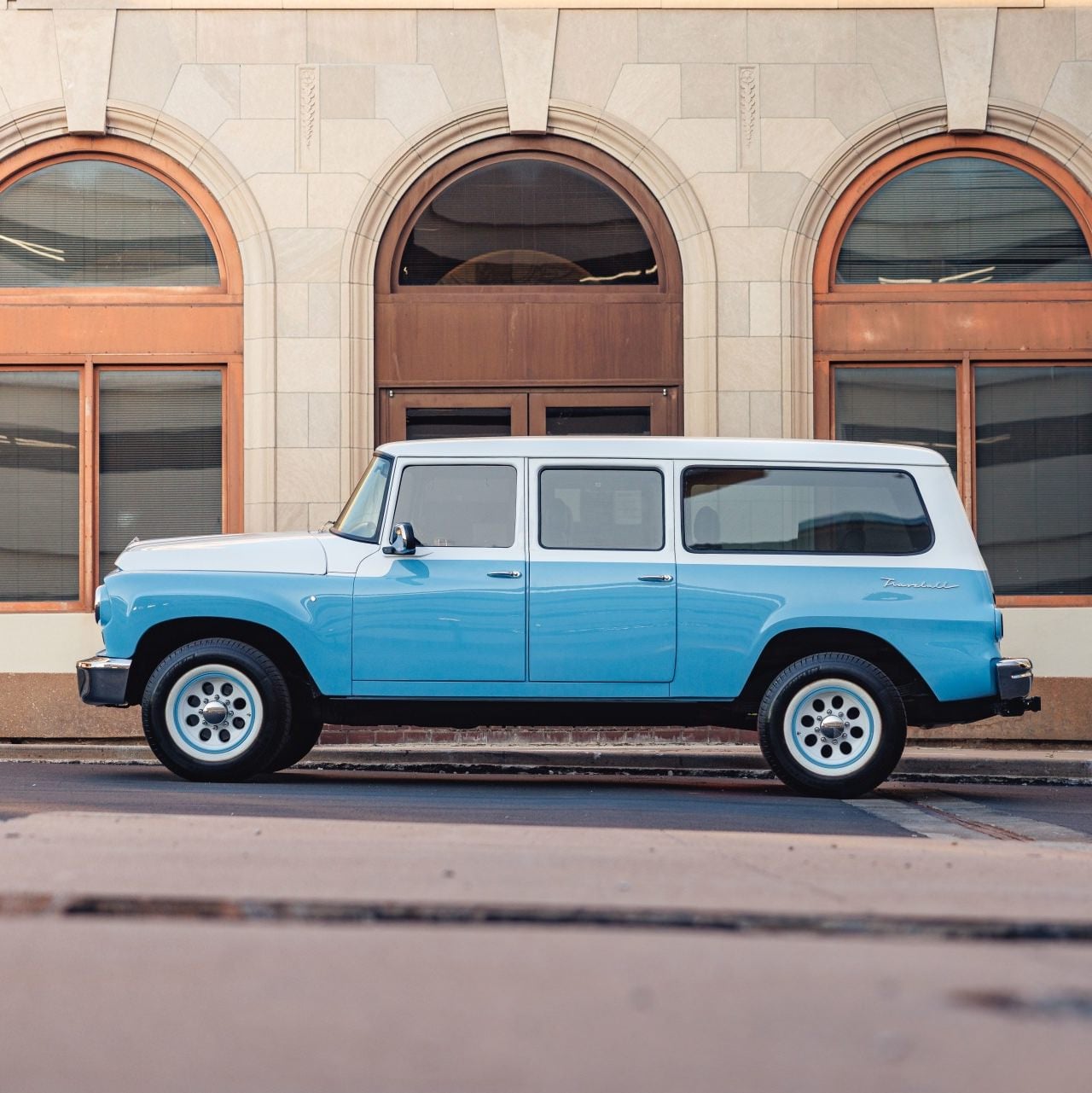
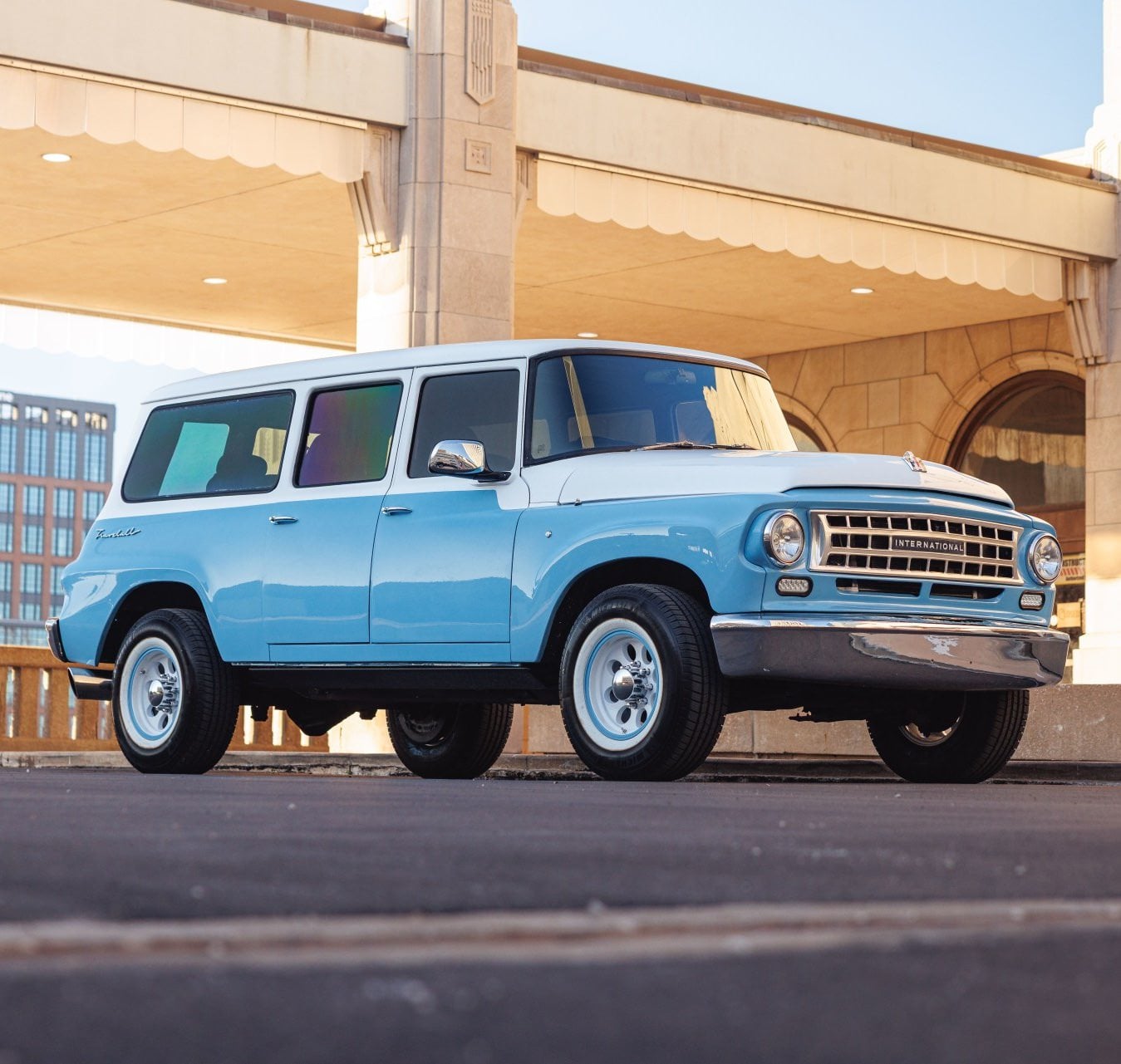
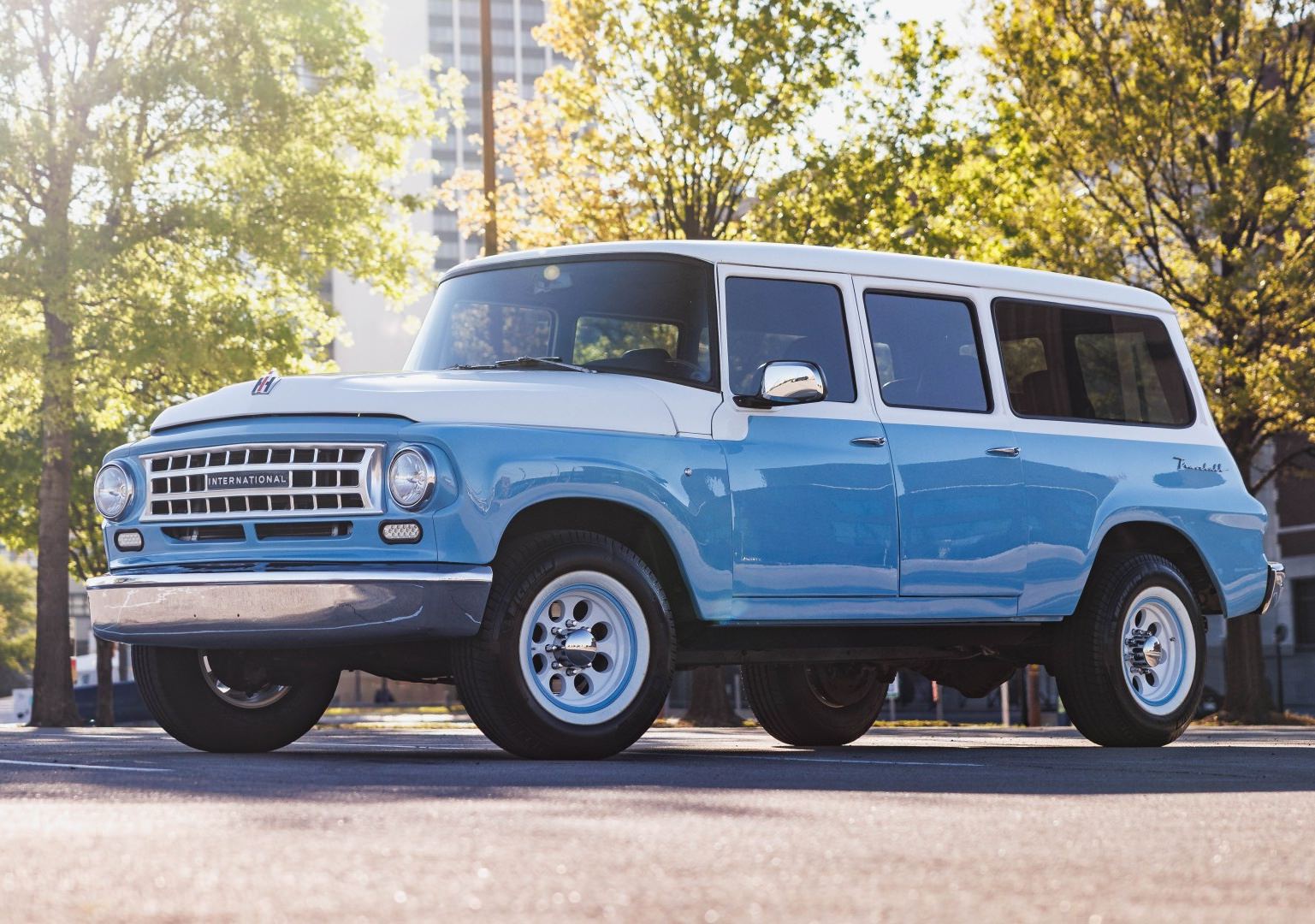
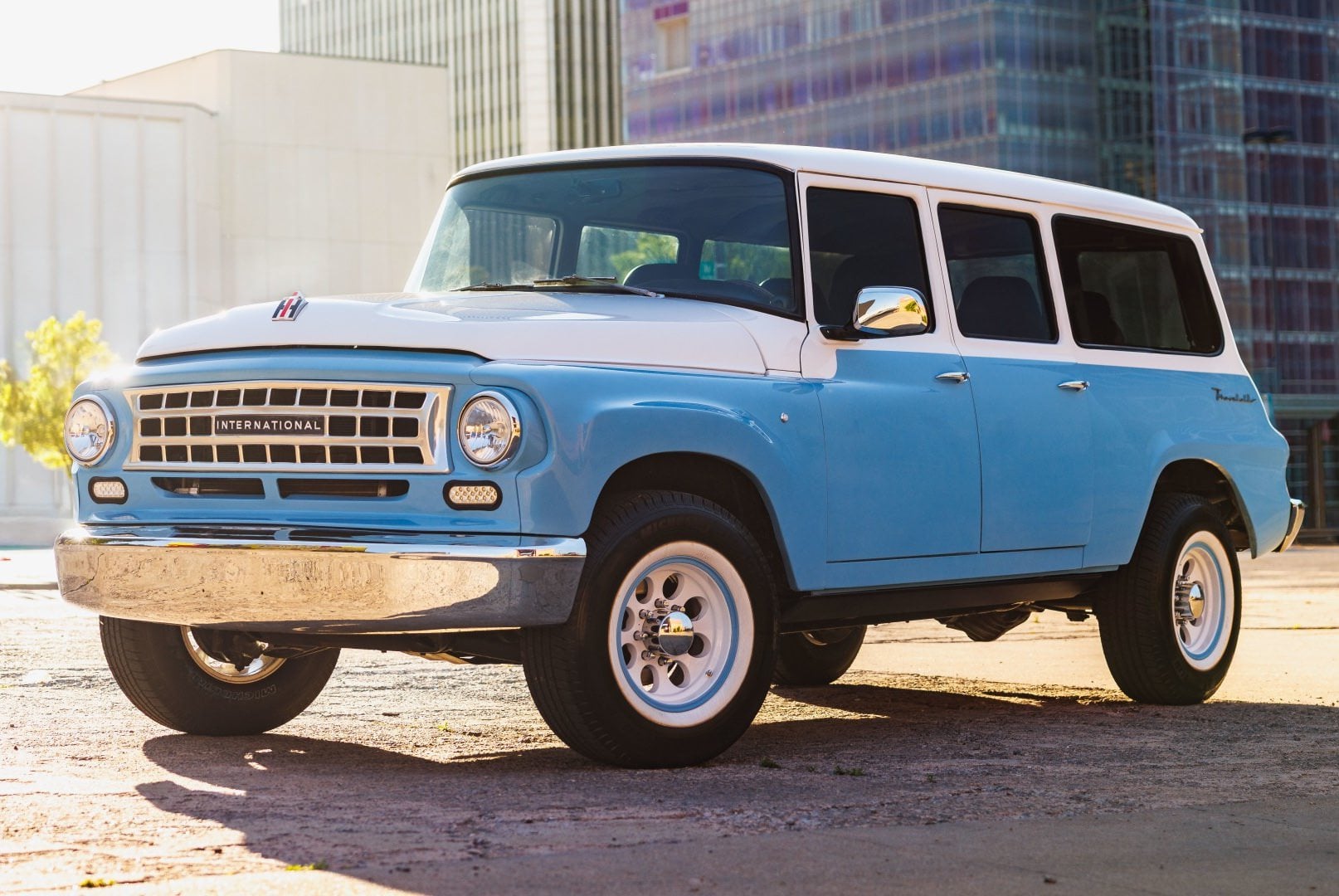
This is a 1964 International Travelall that has been completely rebuilt, it now rides on a K2500 Chevrolet Suburban 4×4 chassis, it’s powered by a 6.5 liter turbo diesel V8, and it’s been given a full luxury fit out.
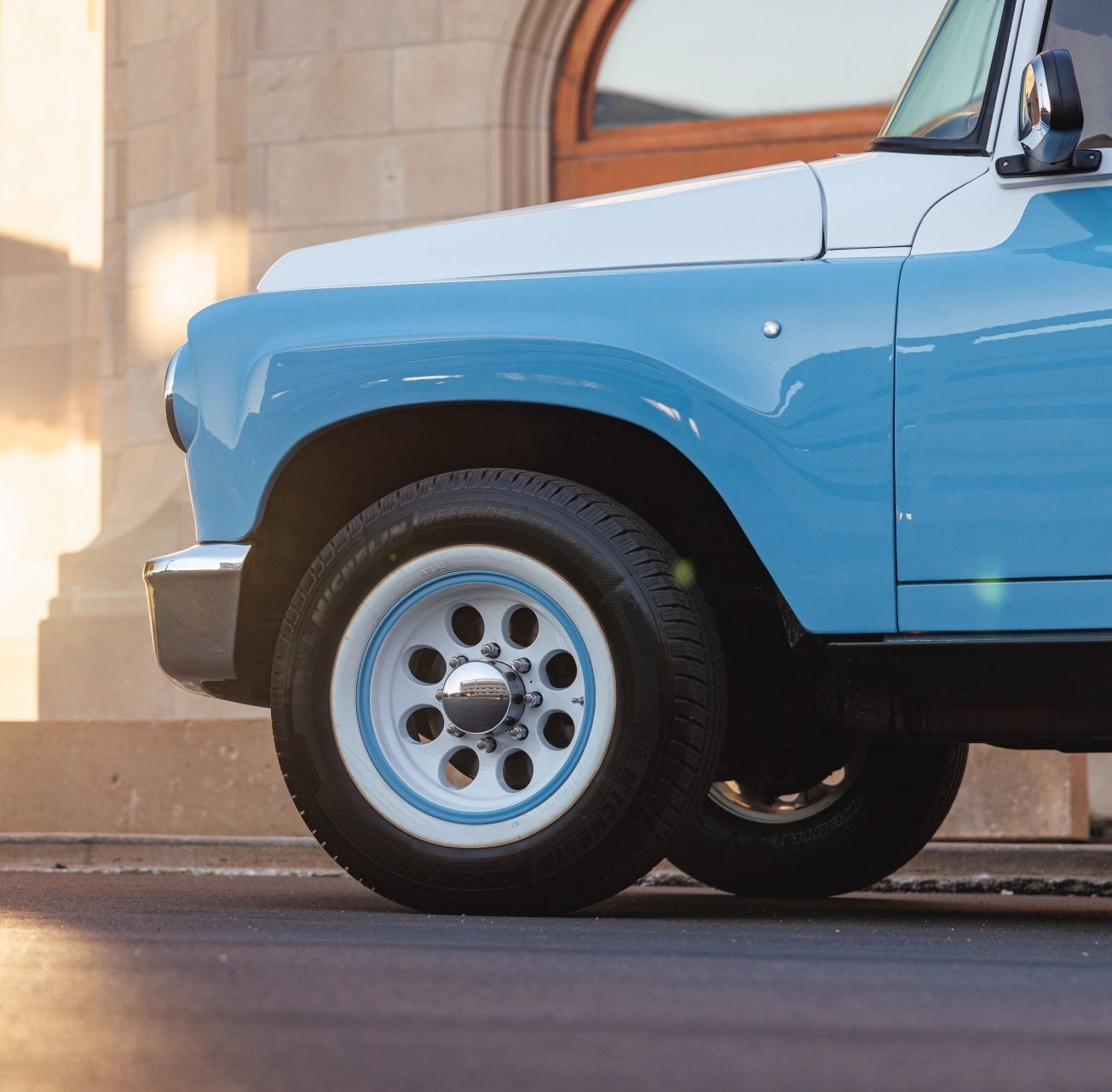
The quality of this build is self-evident (see the full gallery of images below), it remains true to the styling of the 1964 Travelall but updates the underpinnings and interior to modern standards, making it a much easier truck to daily than the one it started out as.
Fast Facts: A 1964 International Travelall Custom
- This is a 1964 International Travelall that has been completely rebuilt on a 1997 K2500 Chevrolet Suburban 4×4 chassis, powered by a 6.5 liter turbo diesel V8. It goes far beyond a simple body swap, with concept-car-level fit and finish throughout the entire vehicle.
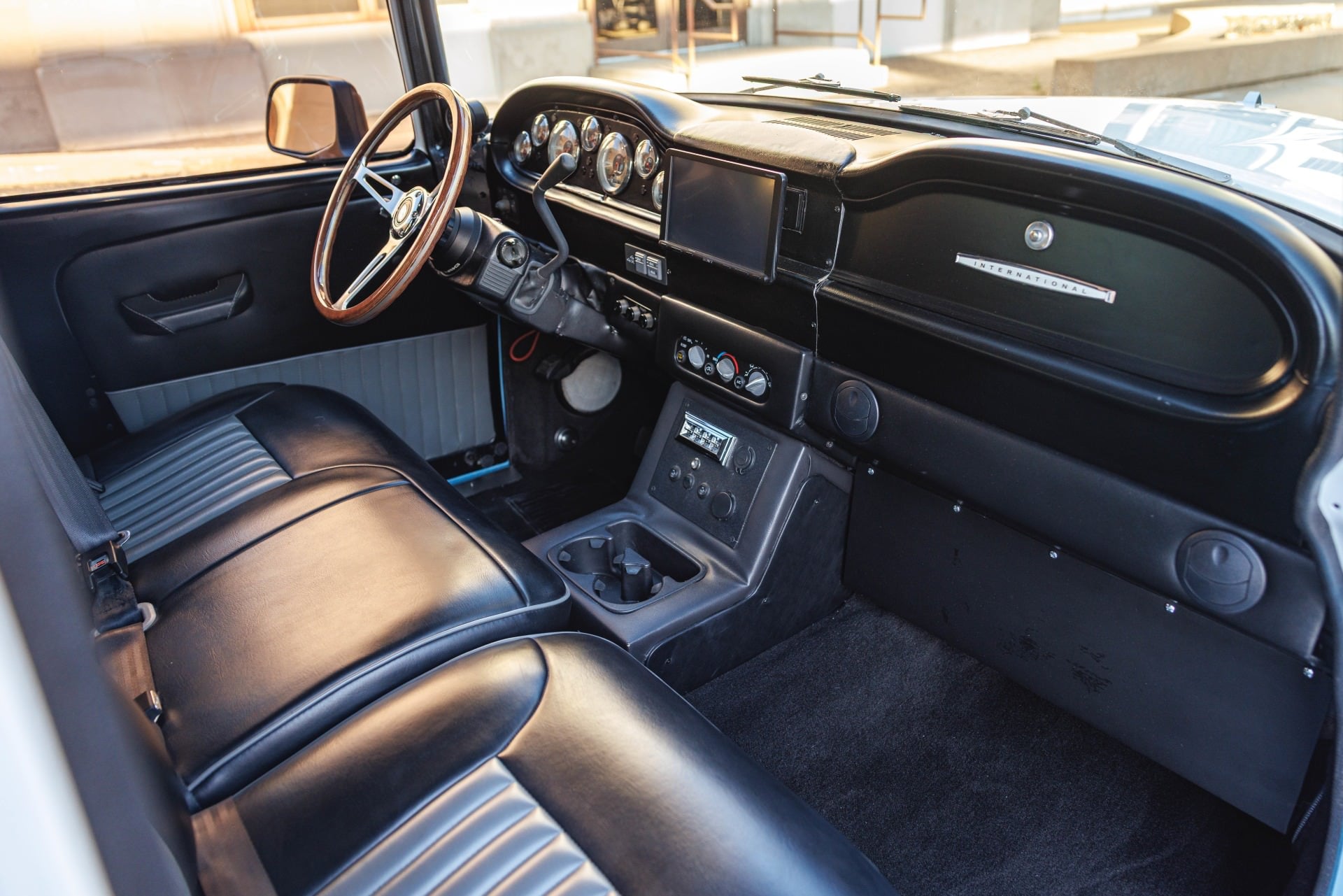
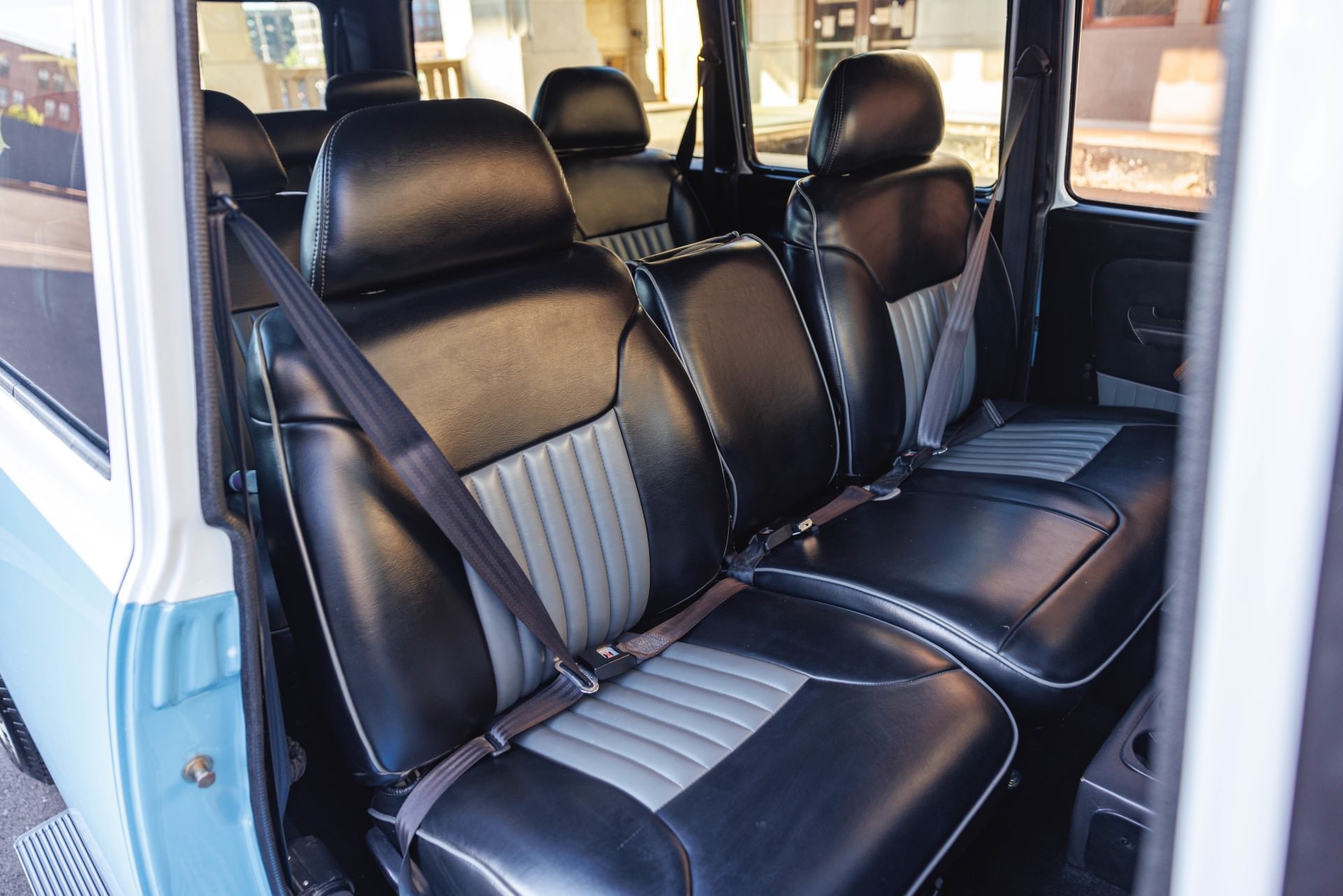
- The cabin has been fully redone with a luxury specification that includes power steering, power brakes, dual air conditioning, heated front bench seating, heated second-row captain’s chairs, and an alarm system, making it a far more comfortable and livable daily driver than the original.
- The build stays true to the exterior styling of the 1964 Travelall while modernizing everything underneath, effectively creating a contemporary interpretation of the classic IH wagon that predates Scout Motors’ own upcoming Traveler SUV, which is widely seen as a spiritual successor to the Travelall name.
- This custom Travelall is heading to auction with Mecum in June. The listing highlights the quality of the engineering and bodywork, positioning it as a rare opportunity to own a modernized version of one of America’s earliest full-size SUVs, now with genuinely usable modern underpinnings.
History Speedrun: The International Travelall
International Harvester introduced the Travelall model in 1953 as a metal-bodied station wagon built on the company’s R-Series light truck chassis. It wasn’t the first truck-based wagon, the Chevrolet Suburban had existed since 1935 after all, but it arrived at a time when the market for tough, multi-passenger utility vehicles was still a niche that most Detroit automakers were happy to ignore in favor of vehicles that sold in much higher numbers. There was still no indication that the SUV would become the dominant vehicle category in future decades.
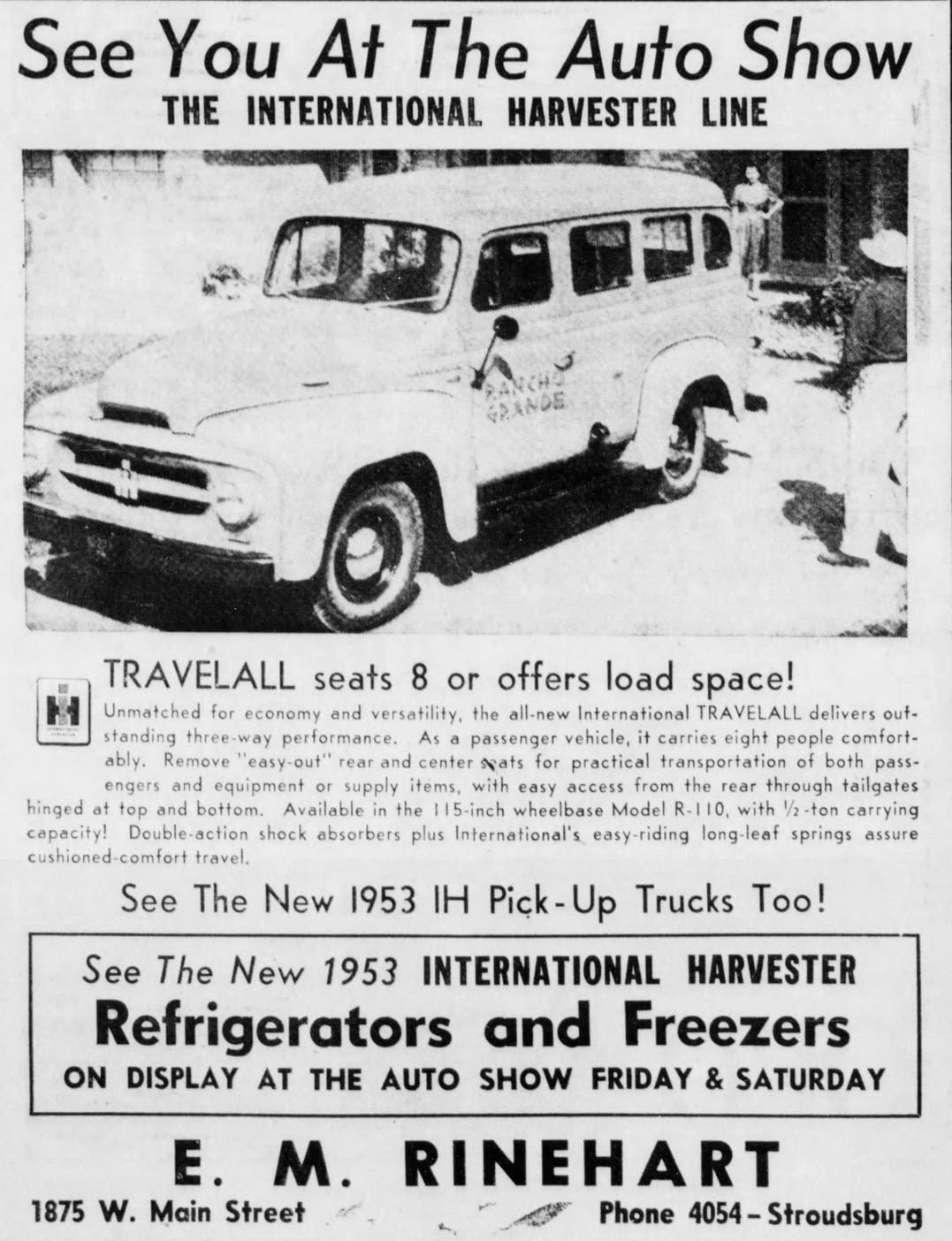
 The first-generation Travelall was relatively straightforward in concept, essentially it was a windowed R-110 panel truck fitted with two or three rows of seats, riding on a 115-inch wheelbase and powered by a 220 cubic-inch “Silver Diamond” inline-six rated at 100 bhp. Image courtesy of International Harvester.
Over the 22 years and four generations that followed, the Travelall model family would pioneer features that helped define the full-size SUV sector, even as the company that built it struggled to capitalize on the rapidly growing market it helped create.
The Travelall Arrives
The first-generation Travelall was relatively straightforward in concept, essentially it was a windowed R-110 panel truck fitted with two or three rows of seats, riding on a 115-inch wheelbase and powered by a 220 cubic-inch “Silver Diamond” inline-six rated at 100 bhp.
Rear cargo access came via side-opening barn-style doors, with a wagon-style tailgate offered as an option. Like the two-door station wagons of the era, rear passengers entered by flipping up the front seat on the passenger side.
For the 1956 model year, the R-Series Travelall gave way to the S-Series, and the Travelall was offered in standard S-110 and heavy-duty S-120 configurations. The S-120 became available with factory four-wheel drive for 1956 – this made the Travelall one of the first full-size truck-based passenger wagons offered with 4×4 from the factory and not as an aftermarket conversion. The Chevy Suburban got its own 4×4 option the following year, in 1957.
The Second-Gen Series Appears
The second generation arrived in late-1957 with the A-Series trucks, these were marketed under the “Anniversary” banner to mark 50 years of International Harvester truck production. The most significant change was the addition of a third passenger door on the curb side of the body, this dramatically improved rear-seat access and made things a whole lot more convenient when using it as a family transporter.
A driver-side rear door wasn’t feasible at the time, because the fuel filler was located on that side, and moving that would have required too much new engineering work for the time being. Power came from IH’s Silver Diamond inline-six family, including both the 220 and 240 cubic inch versions, with output varying by engine and state of tune.
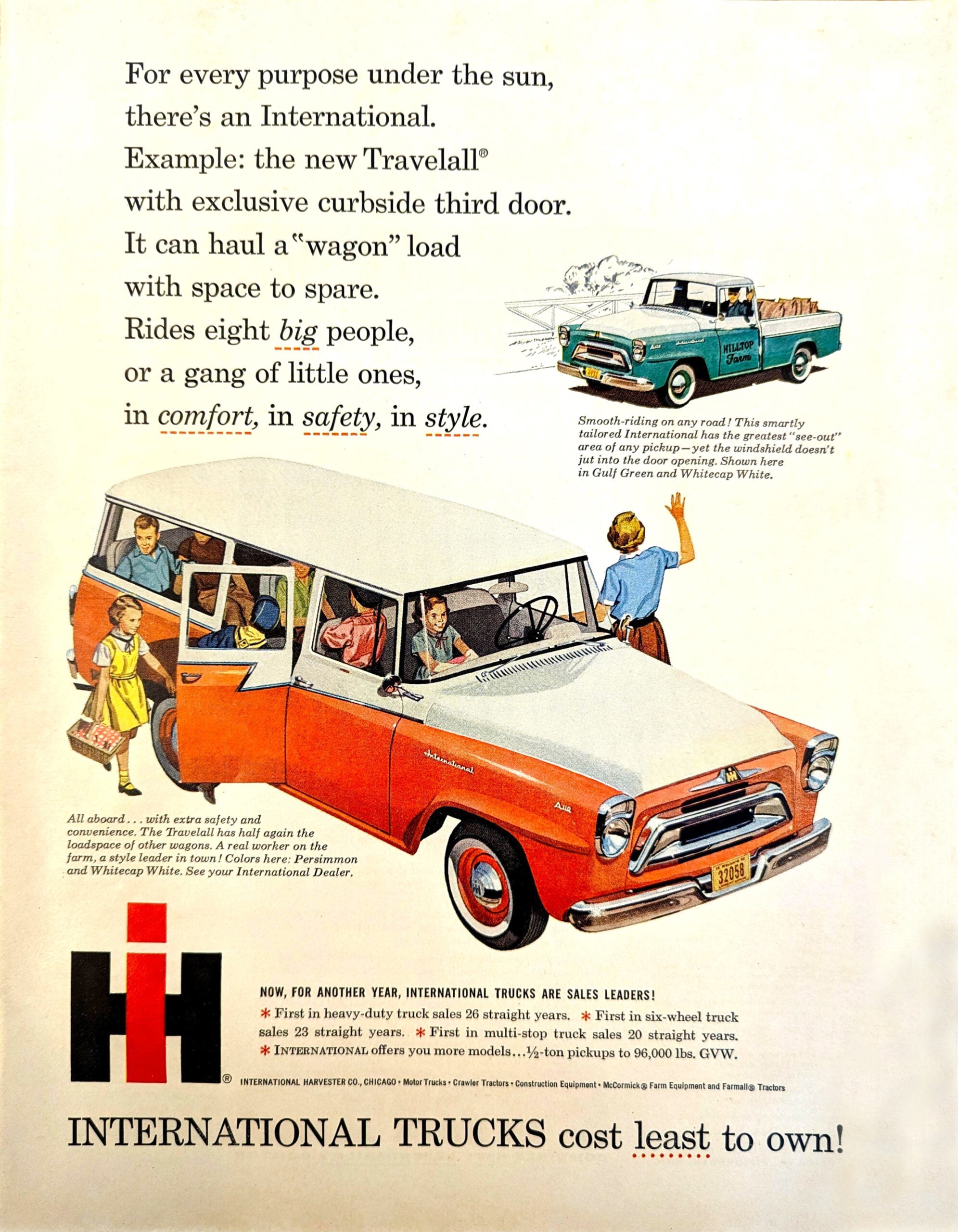
In 1959, the A-Series became the B-Series, bringing a facelift along with (for the first time in the Travelall line) the availability of V8 engine options, power steering, and power brakes. These were critical steps toward making the Travelall more palatable to non-commercial buyers who were accustomed to the refinements of passenger cars. Image courtesy of International Harvester.
In 1959, the A-Series became the B-Series, bringing a facelift along with (for the first time in the Travelall line) the availability of V8 engine options, power steering, and power brakes. These were critical steps toward making the Travelall more palatable to non-commercial buyers who were accustomed to the refinements of passenger cars.
The Third-Generation Travelall
The third-gen Travelall, launched in April of 1961 alongside the new C-Series trucks, represented what was the Travelall’s most significant mechanical overhaul up until that point in time. An entirely new chassis introduced independent front suspension using torsion bars, which lowered the body by four inches and delivered a much more car-like ride.
The wheelbase grew to 119 inches as the front axle was moved forward, and the Travelall finally got its fourth passenger door – a full 12 years before the Suburban would follow suit, and two full years ahead of the Jeep Wagoneer. It’s probably worth noting that many point to the Wagoneer as being the first SUV, but I’m sure the International Harvester engineers from the early 1960s would like a word about that.
The C-Series also brought the new four-door Travelette, this was an evolution of IH’s 1957 three-door crew-cab pickup and the first factory-produced four-door crew-cab pickup of its kind in the US, another major first for the company. The third generation evolved through C-Series and D-Series designations from 1961 to 1968, with annual grille and headlight changes differentiating model years while the fundamentals remained much the same.
Engine options did expand steadily, and a rare D301 diesel was available as an unadvertised special order from 1963 to 1968.
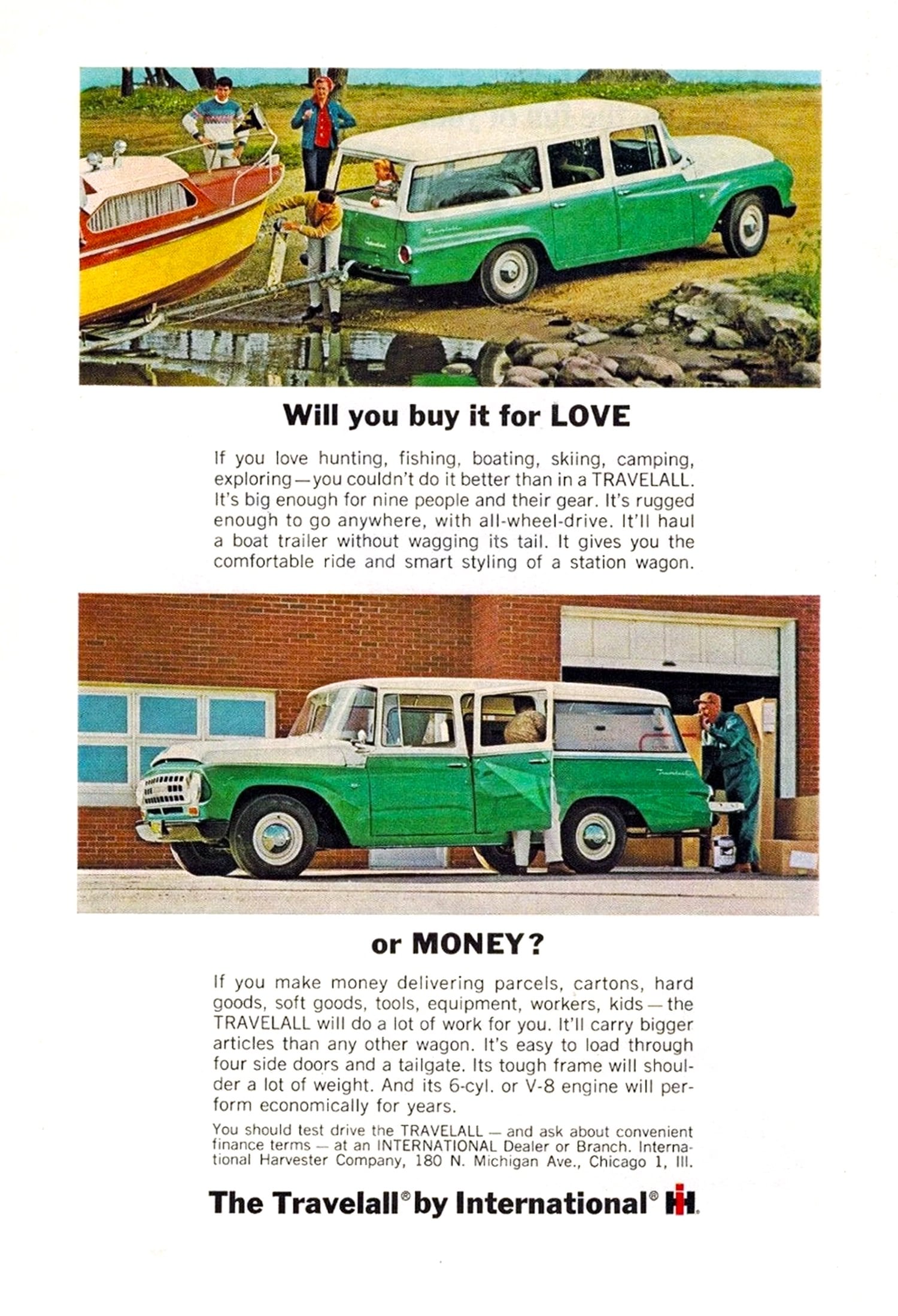
The third-gen Travelall, launched in April of 1961 alongside the new C-Series trucks, represented what was the Travelall’s most significant mechanical overhaul up until that point in time. An entirely new chassis introduced independent front suspension using torsion bars, which lowered the body by four inches and delivered a much more car-like ride. Image courtesy of International Harvester.
The Fourth + Final Model
The fourth and final generation of the Travelall made its debut in early 1969, wearing restyled sheetmetal designed by IH styling director Ted Ornas, it gave the new model a cleaner, more angular look echoing the smaller Scout and helping to bring the company’s styling language together.
For the first time, the Travelall was treated as a standalone model line rather than simply a wagon variant of the pickup. Engine options included an AMC-sourced 232 cubic inch inline-six as the base powerplant (this was dropped after 1971 due to poor sales), and IH’s own 304, 345, and 392 cubic inch V8s.
When IH experienced a shortage of its 392 V8 in 1973/1974, an AMC 401 cubic inch V8 was substituted, it was marketed as the V-400 as these models are hugely desirable today. Transmission choices ranged from 3-, 4-, and 5-speed manuals to 3-speed automatics, including Borg-Warner units (and from 1972, Chrysler TorqueFlite 727 automatics).
In late 1971 the Travelall became one of the first American light trucks to offer an anti-lock braking system (ABS), the Bendix Adaptive Braking System, which operated on the rear wheels only – though the expensive option was rarely chosen by buyers. A short-lived variant called the Wagonmaster appeared for the 1973 and 1974 model years, removing the rear roof section to create an integrated pickup bed aimed at fifth-wheel trailer owners, but it sold poorly and was withdrawn after 1974.
Throughout its life the Travelall competed in a small but rapidly growing market, the Chevrolet Suburban was its primary rival, though the Suburban lacked four doors until 1973 and didn’t offer 4×4 until 1957. The Jeep Wagoneer, introduced in 1963, was smaller and more car-like.
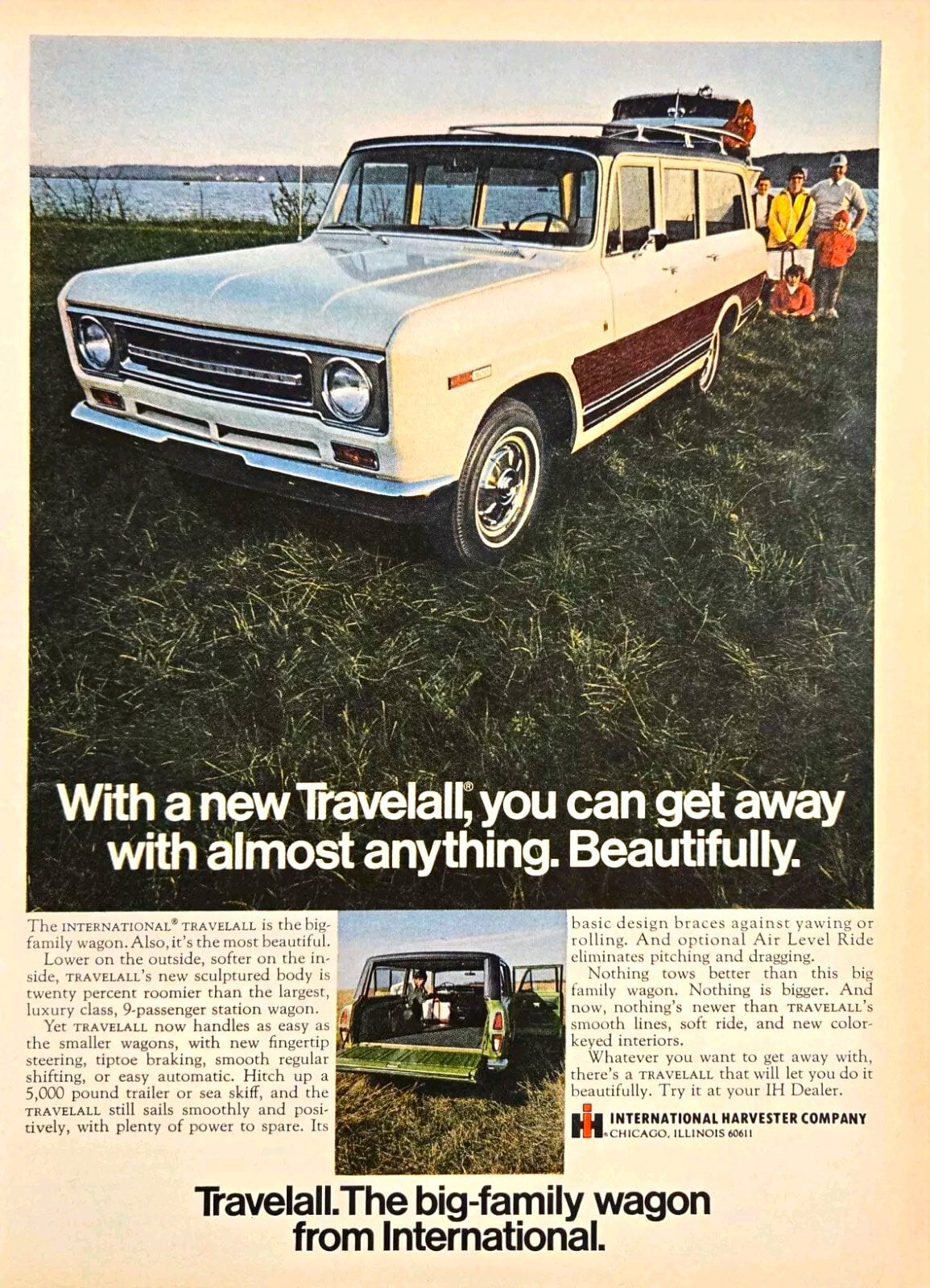
The fourth and final generation of the Travelall made its debut in early 1969, wearing restyled sheetmetal designed by IH styling director Ted Ornas, it gave the new model a cleaner, more angular look echoing the smaller Scout and helping to bring the company’s styling language together. Image courtesy of International Harvester.
Any automotive historian will tell you that the Travelall’s real competitive weakness was never the vehicles themselves but the network behind them. IH’s dealers were oriented toward commercial trucks and farm equipment, concentrated in rural areas rather than the suburban markets where demand for family utility vehicles was growing fastest.
Despite consistently high owner loyalty and satisfaction ratings, IH’s light truck market share had fallen to just 4.1% nationwide by 1969.
Ultimately, the end came swiftly. The 1973 Oil Crisis completely devastated sales of the fuel-thirsty Travelall, which averaged just 10-12 mpg. In the same year, GM gave the Suburban its long-awaited fourth door, neutralizing the Travelall’s primary advantage.
The End (And A New Beginning)
On May the 5th, 1975, International Harvester officially discontinued its entire Light Line, including the Travelall, pickup trucks, and Travelette crew cabs. Only the Scout II survived, remaining in production through 1980 before IH exited the consumer vehicle market entirely.
Though this seemed like the end, and I guess it was for a few decades, International’s consumer vehicle story wasn’t yet done. Scout Motors was founded in 2022 by Volkswagen AG, which had obtained the Scout trademarks after buying International Motors a year earlier.
The new company is due to release two new all-electric models starting in 2027 with the Scout Terra, a full-size pickup truck, followed by the Scout Traveler a year later – this one will be a full-size SUV.
The name of the Traveler is widely believed to be a nod to the original Travelall, and it’ll be offered in the same four-door-station-wagon body style.
The International Travelall Custom Shown Here
In some respects, the vehicle you see here beat the newly formed Scout Motors to the post with a new, more modern version of the Travelall. Instead of an electric drivetrain, which will likely grate on a few brand purists, this one is powered by a hefty 6.5 liter turbo diesel V8 and it’s based on a K2500 Chevrolet Suburban 4×4 chassis from 1997.
It’s far more than a simple body swap however, it’s clear that a huge amount of skilled engineering went into this build, and the overall fit-and-finish appears to be official concept car quality.
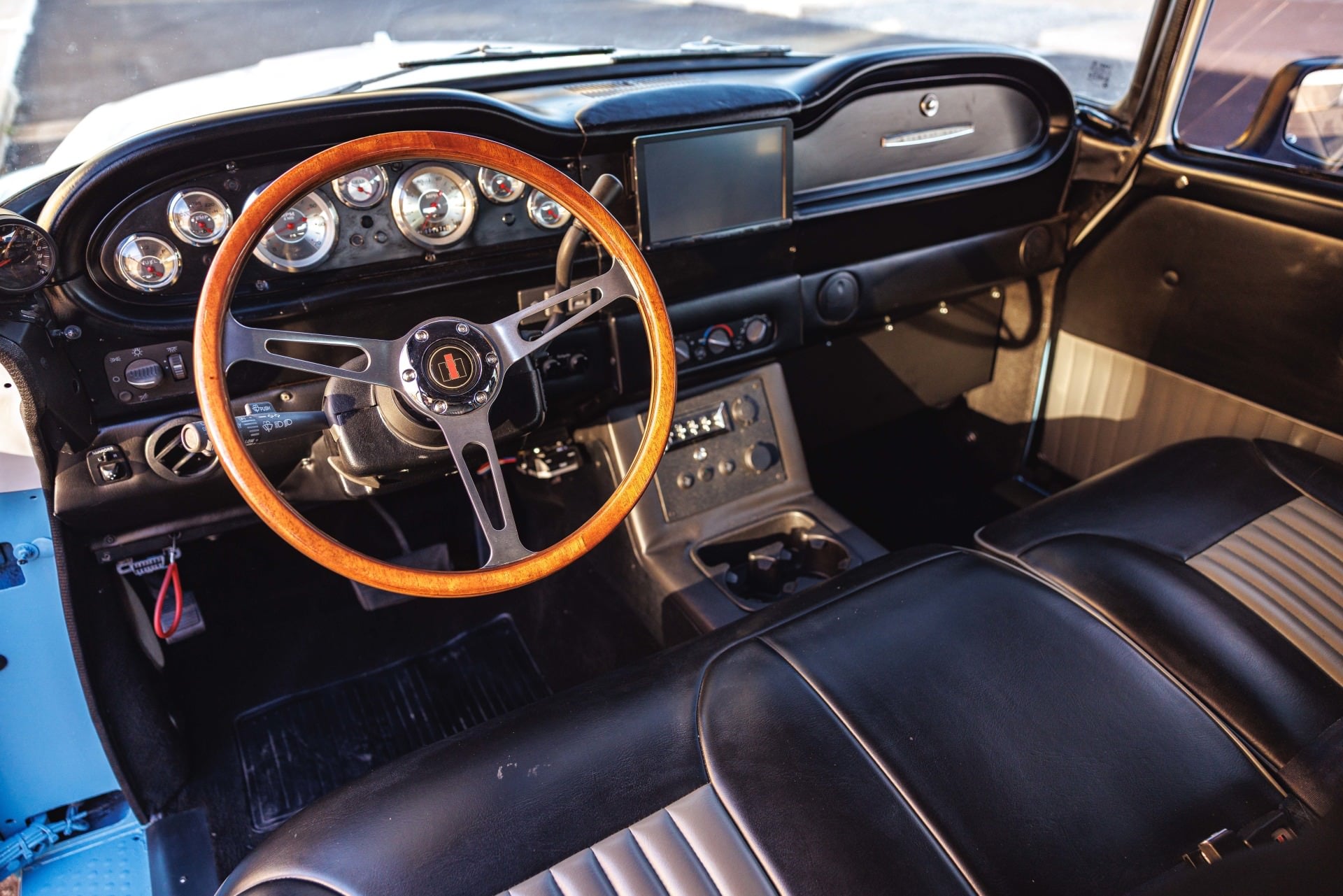
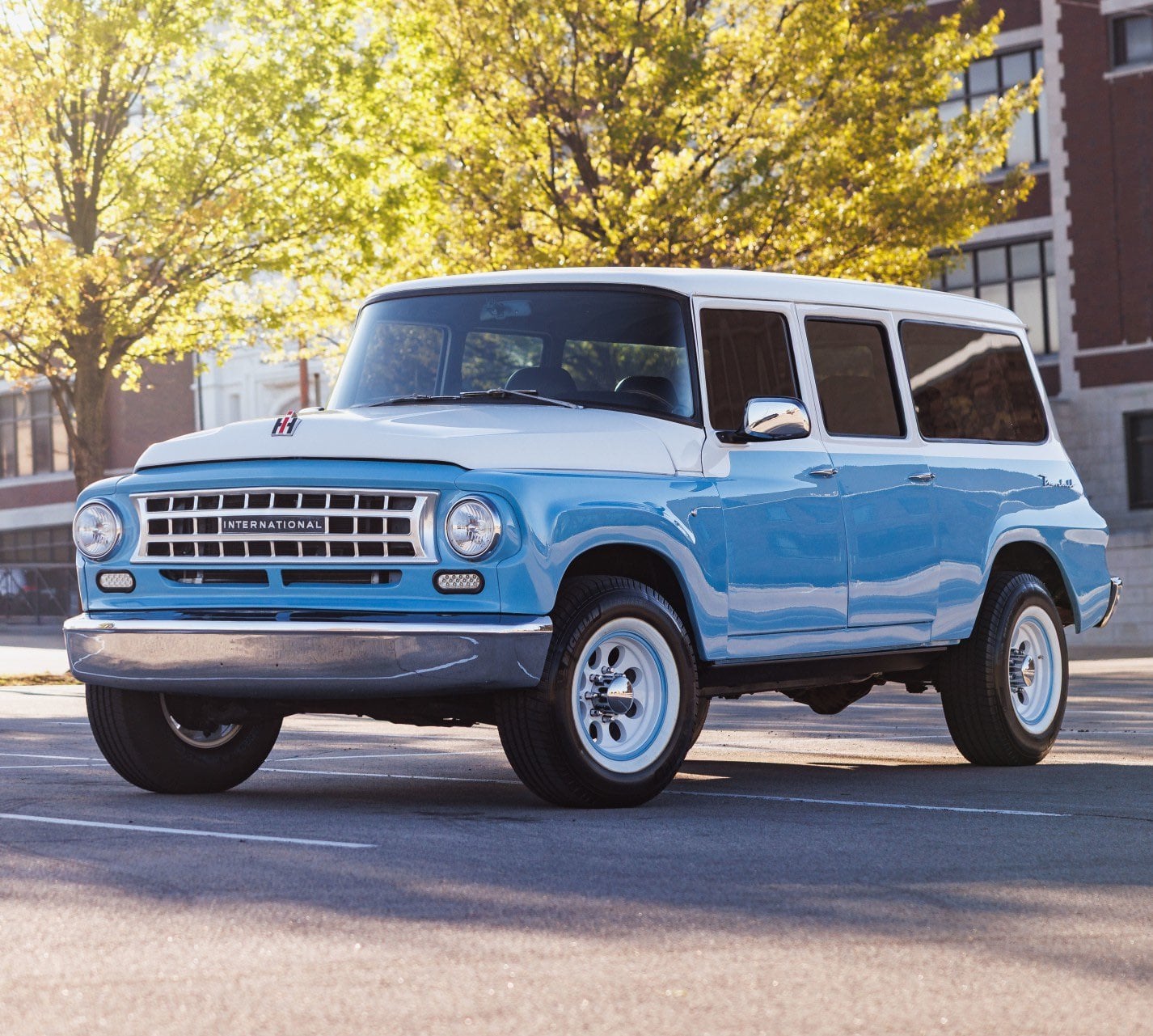
In some respects, the vehicle you see here beat the newly formed Scout Motors to the post with a new, more modern version of the Travelall. Instead of an electric drivetrain, which will likely grate on a few brand purists, this one is powered by a hefty 6.5 liter turbo diesel V8 and it’s based on a K2500 Chevrolet Suburban 4×4 chassis from 1997.
That Suburban running gear gives this Travelall a much better ride, and the interior has been fully redone to match, it now has power steering, power brakes, dual air-conditioning, heated front bench and second row captain’s chairs, alarm system, and quite a bit more.
This unusual Travelall custom is now due to roll across the auction block with Mecum in June, you can visit the listing here if you’d like to read more about it or register to bid.
Images courtesy of Mecum

Articles that Ben Branch has written have been covered on CNN, Popular Mechanics, Smithsonian Magazine, Road & Track Magazine, the official Pinterest blog, the official eBay Motors blog, BuzzFeed, Autoweek Magazine, Wired Magazine, Autoblog, Gear Patrol, Jalopnik, The Verge, and many more.
Silodrome was founded by Ben back in 2010, in the years since the site has grown to become a world leader in the alternative and vintage motoring sector, with well over a million monthly readers from around the world and many hundreds of thousands of followers on social media.