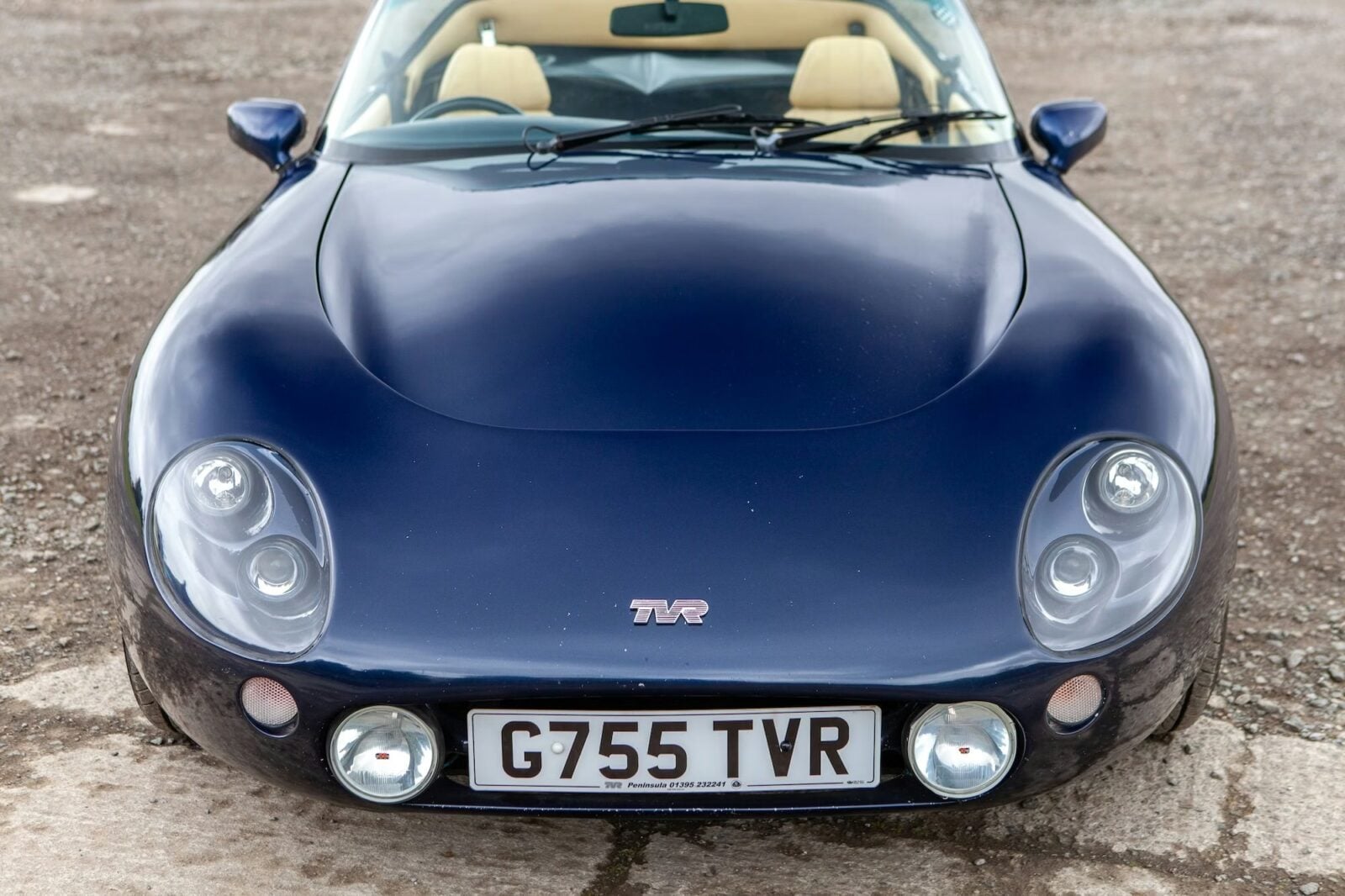
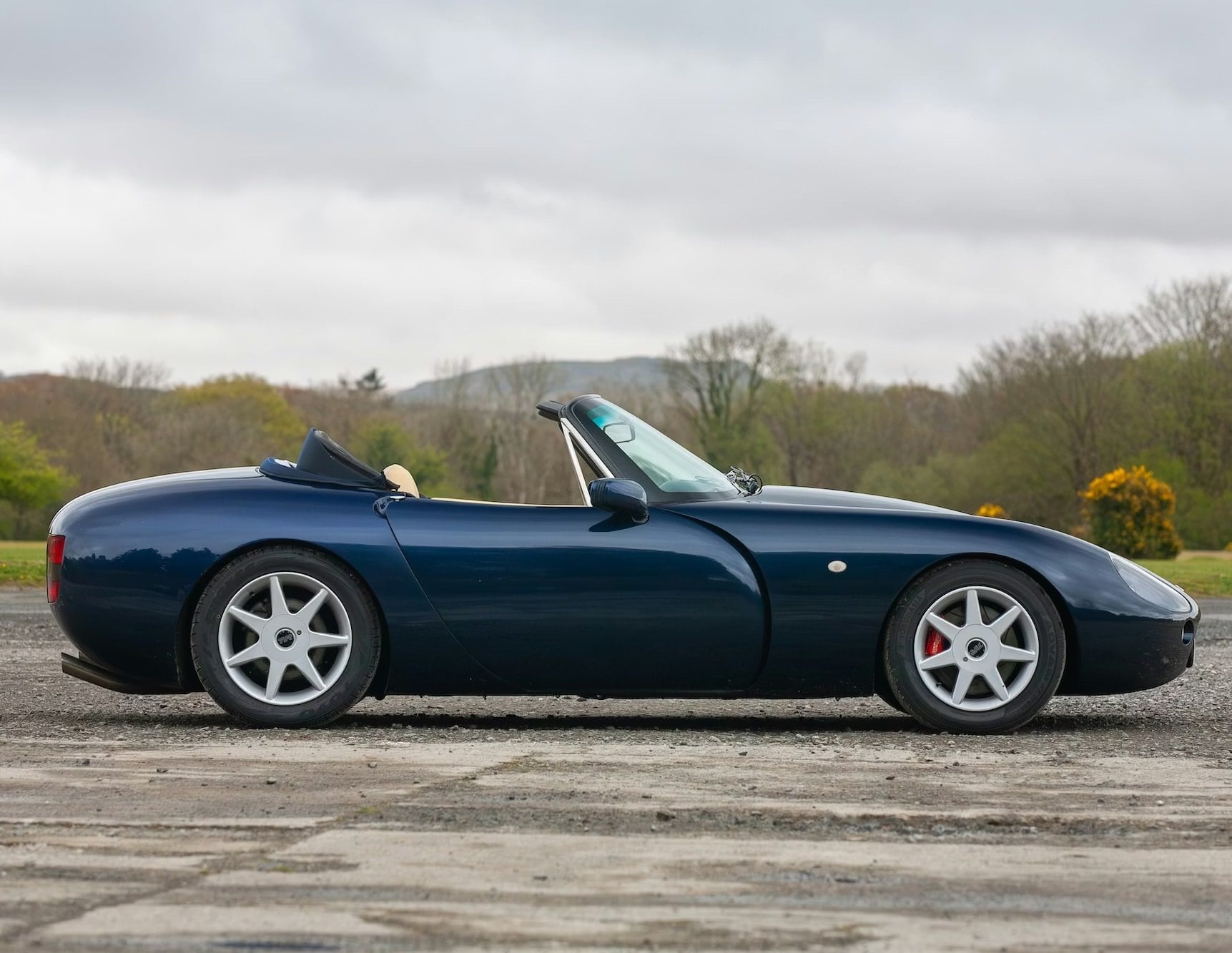
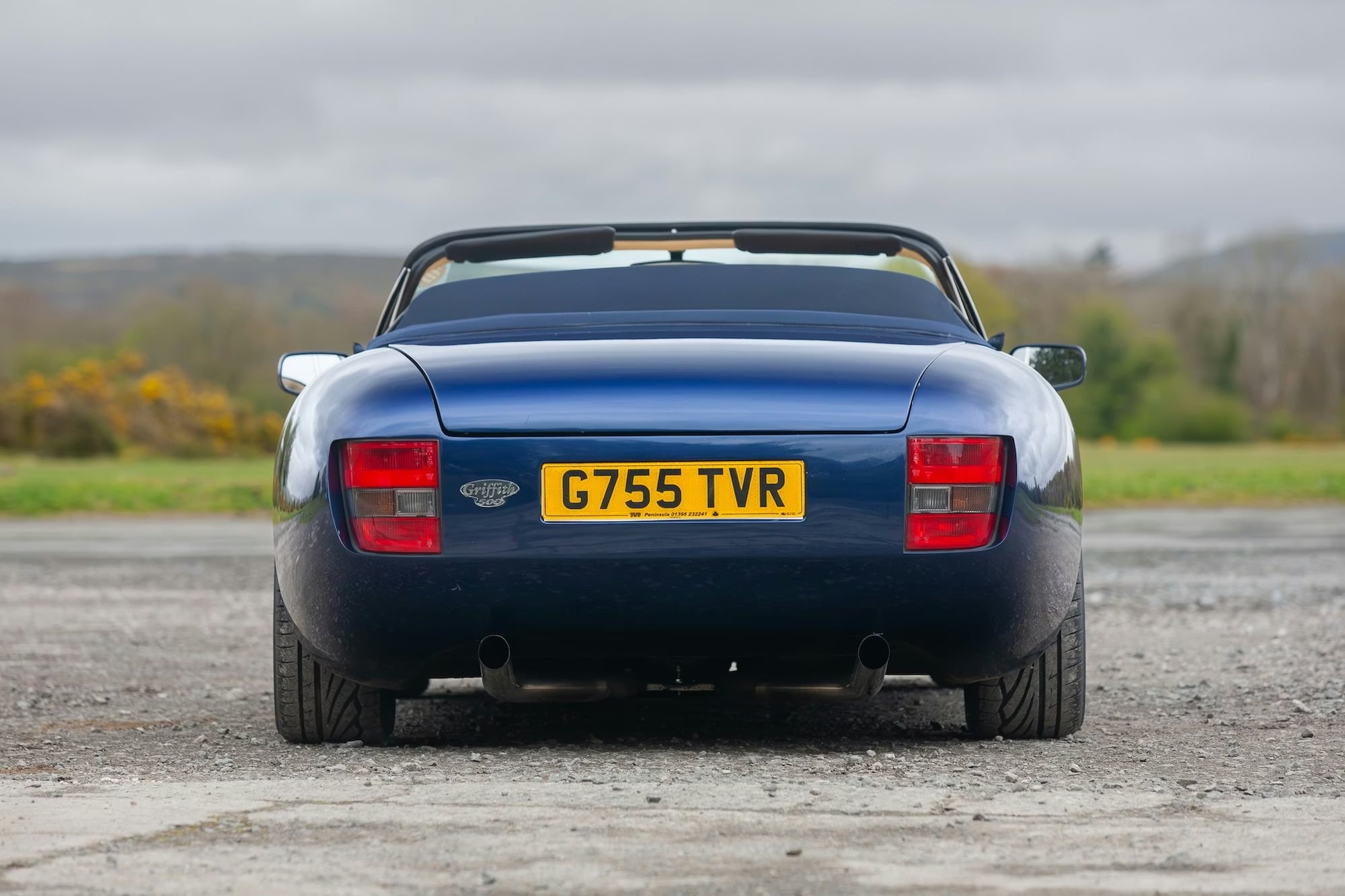
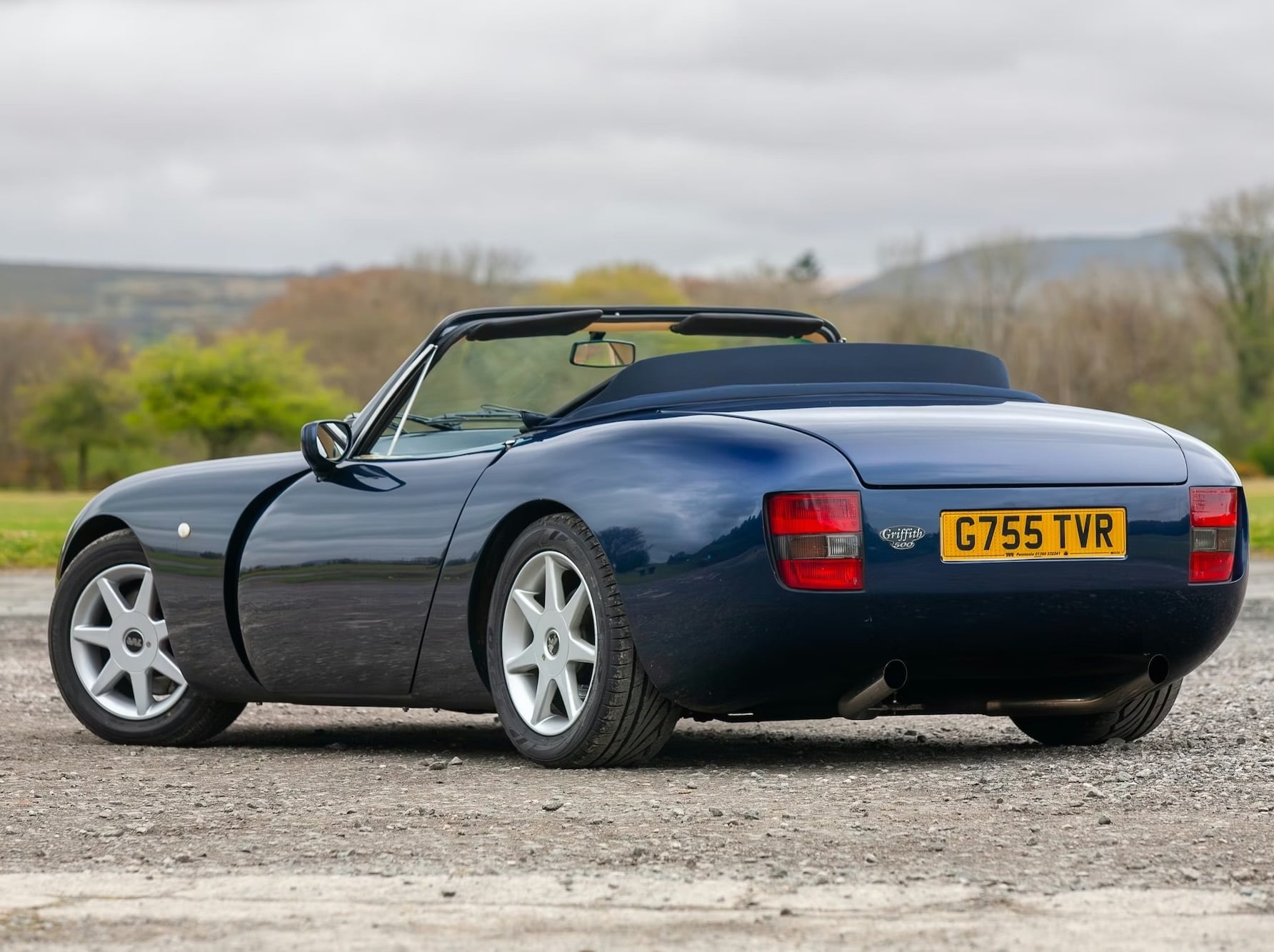
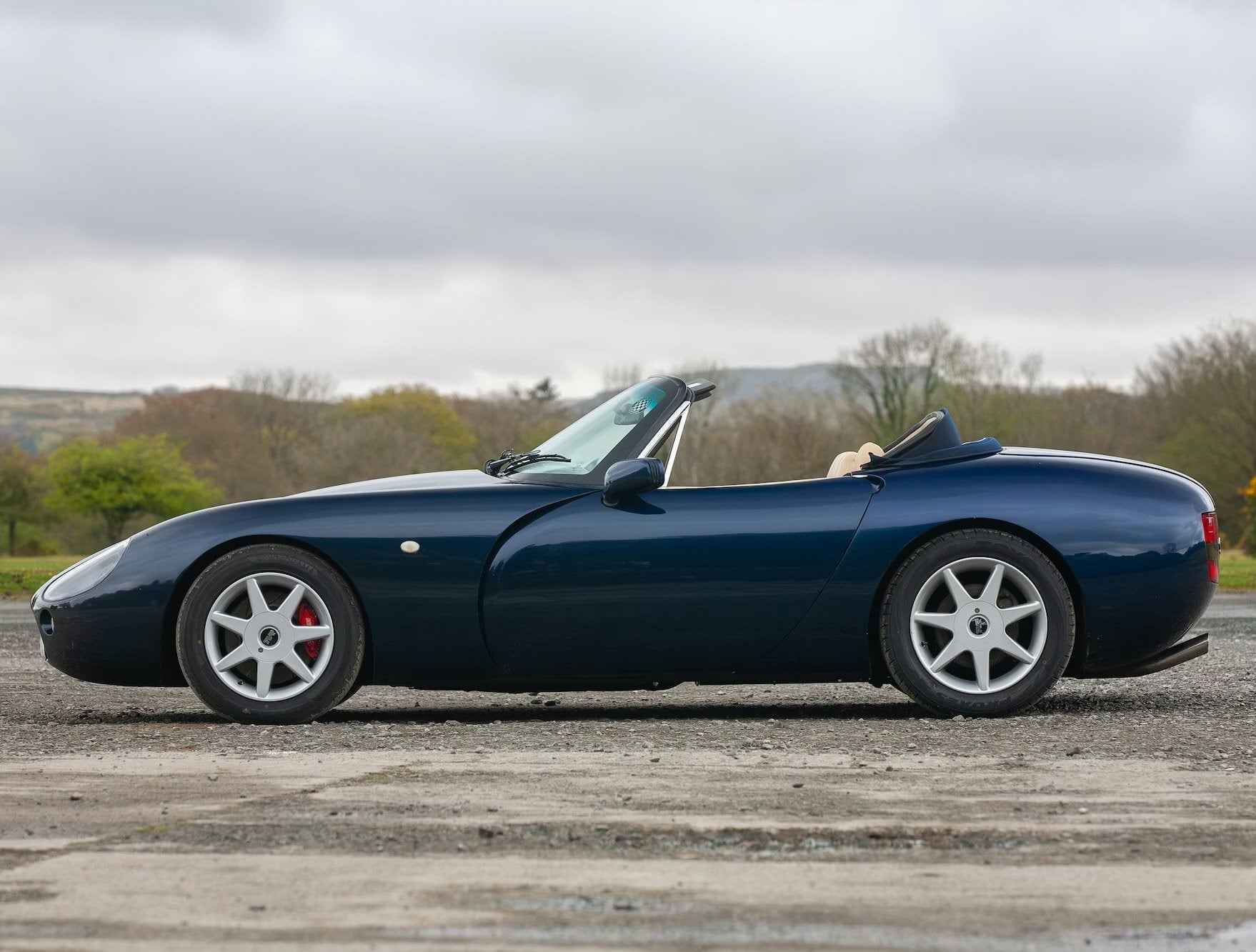
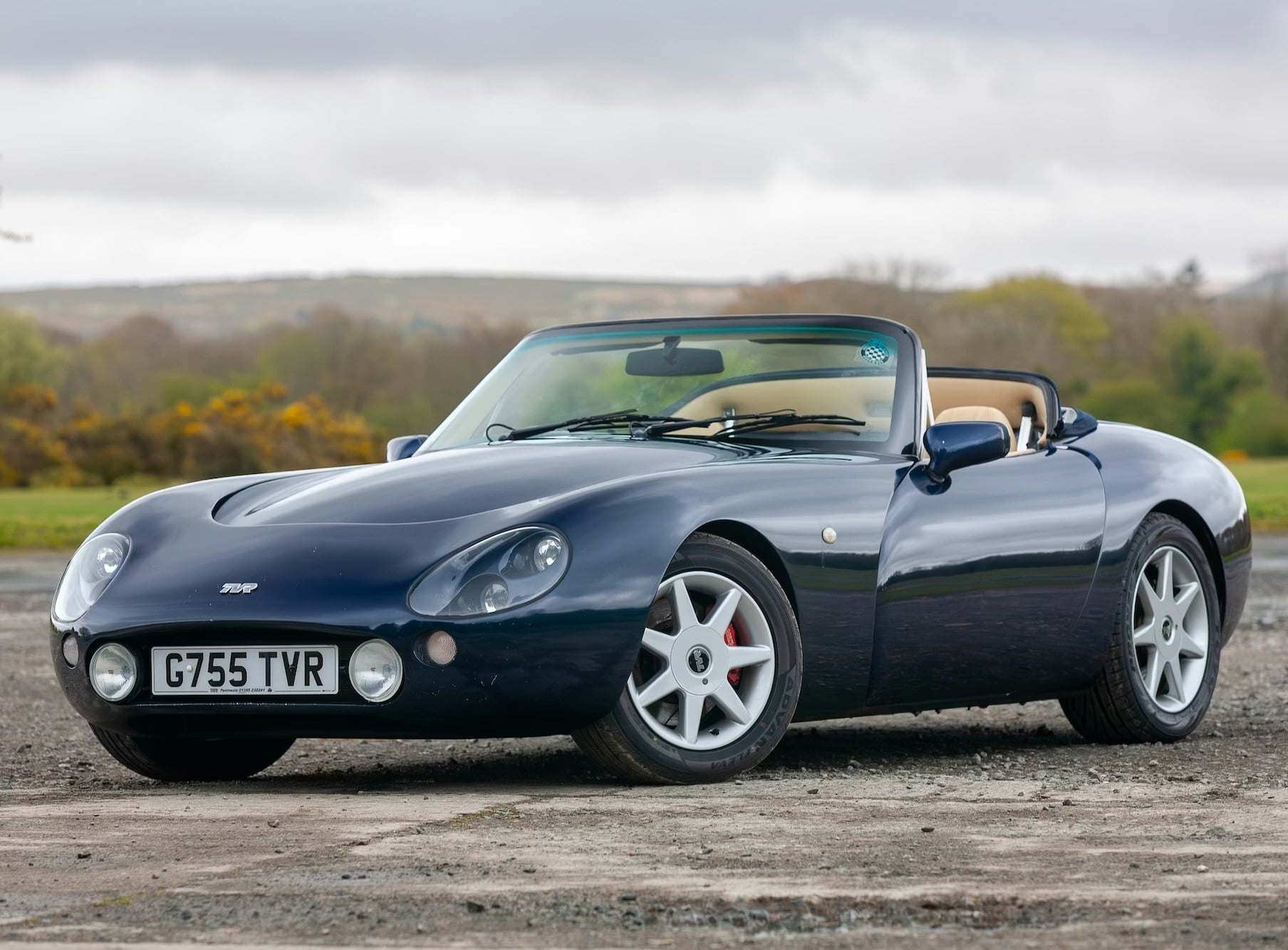
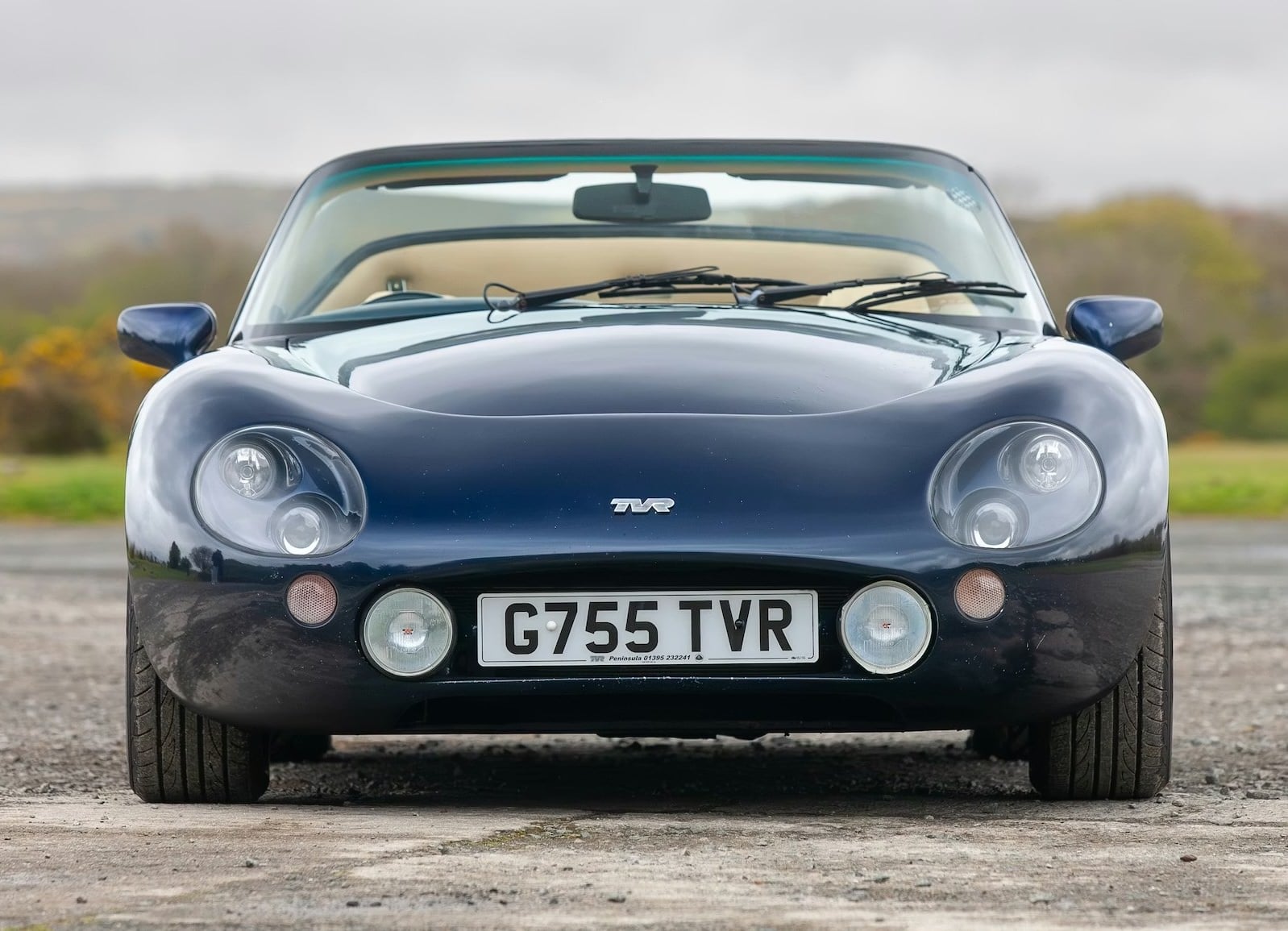
This is a 1996 TVR Griffith 500 HC, an icon of 1990s British sports cars powered by a firebreathing 5.0 liter V8, earning it the nickname the “British Bulldog” in enthusiast circles.
TVR has long been known for their wild sports cars, but the Griffith took things up a notch – offering a low curb weight of just 1,060 kgs (2,337 lbs) and as much as 340 bhp, depending on variant.
Fast Facts: The TVR Griffith 500 HC
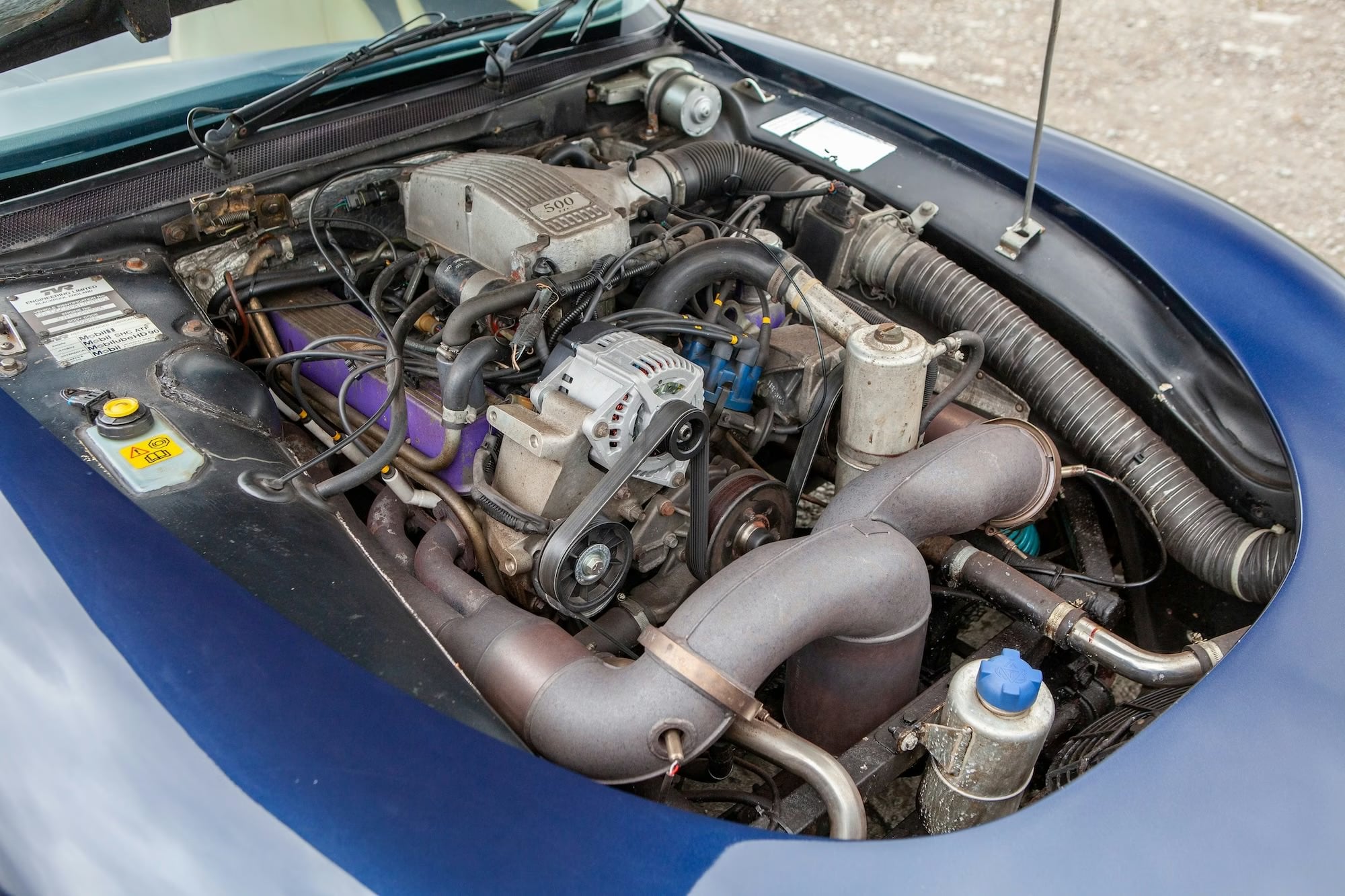
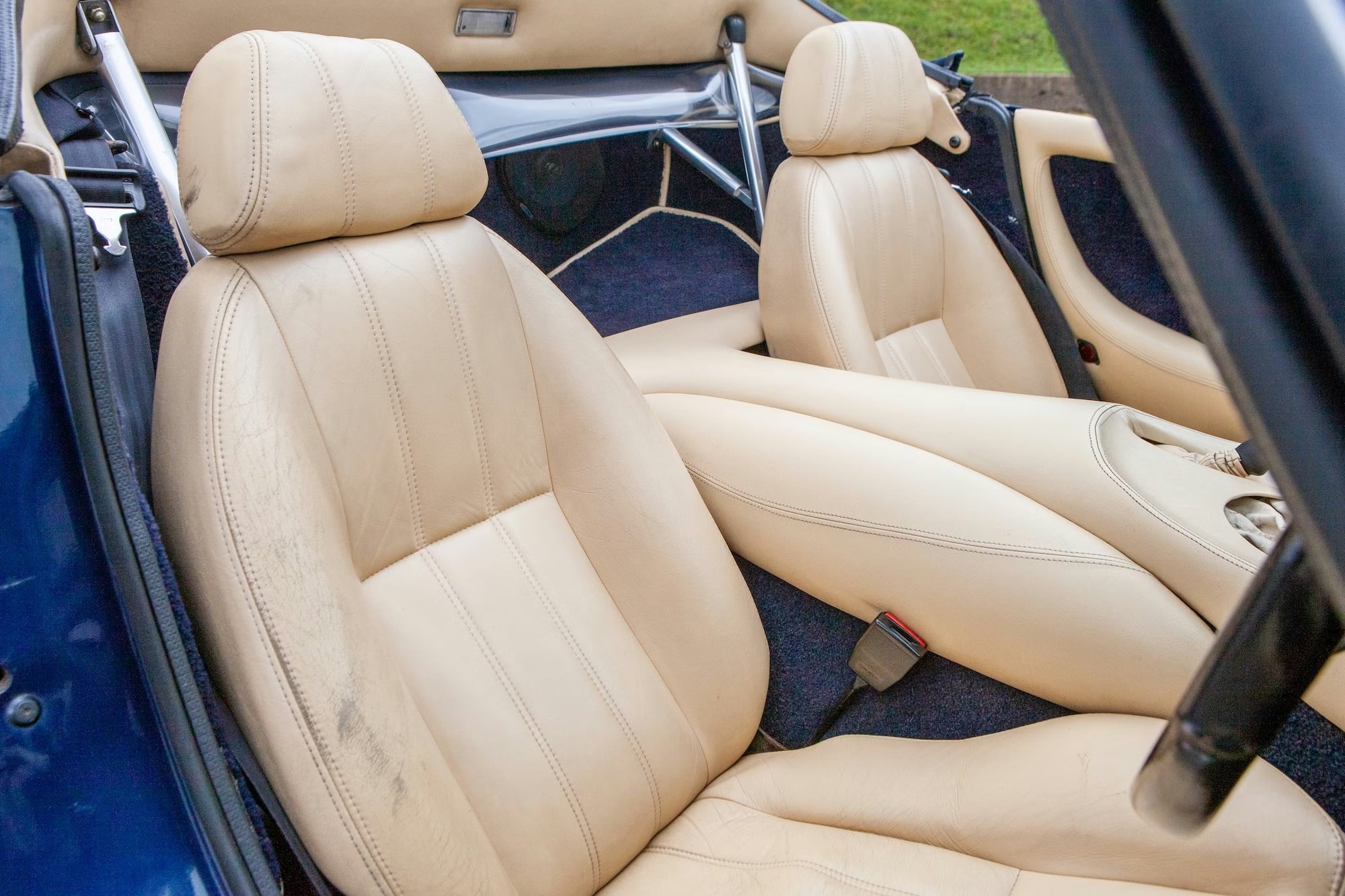
- This is a 1996 TVR Griffith 500 HC, a flagship example of TVR’s lightweight 1990s roadster finished in metallic Starmist Blue over Magnolia leather with navy blue carpeting. It’s powered by a 5.0 liter naturally aspirated Serpentine “high compression” Rover-derived V8 producing 340 bhp, driving the rear wheels through a Borg-Warner T5 5-speed manual gearbox.
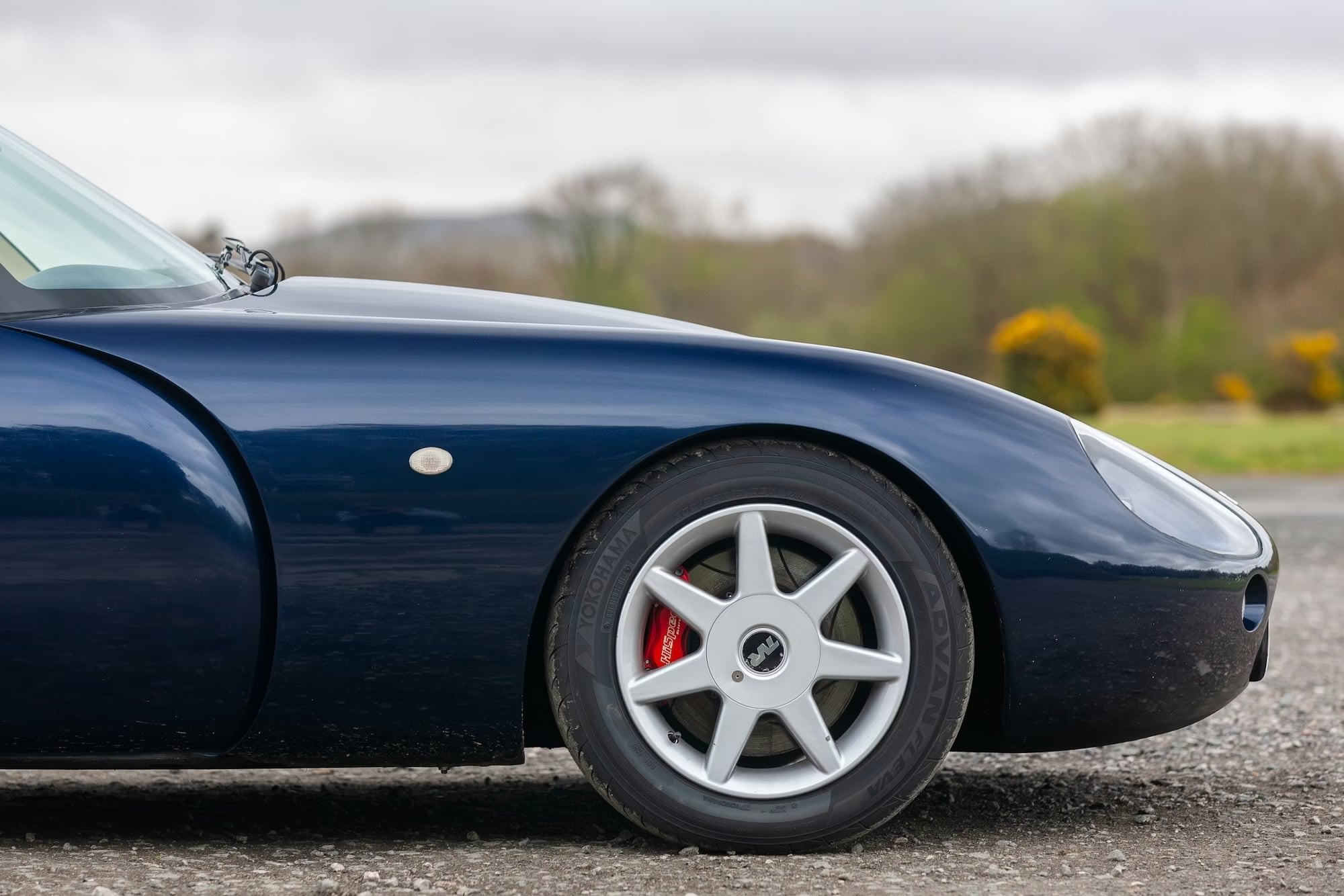
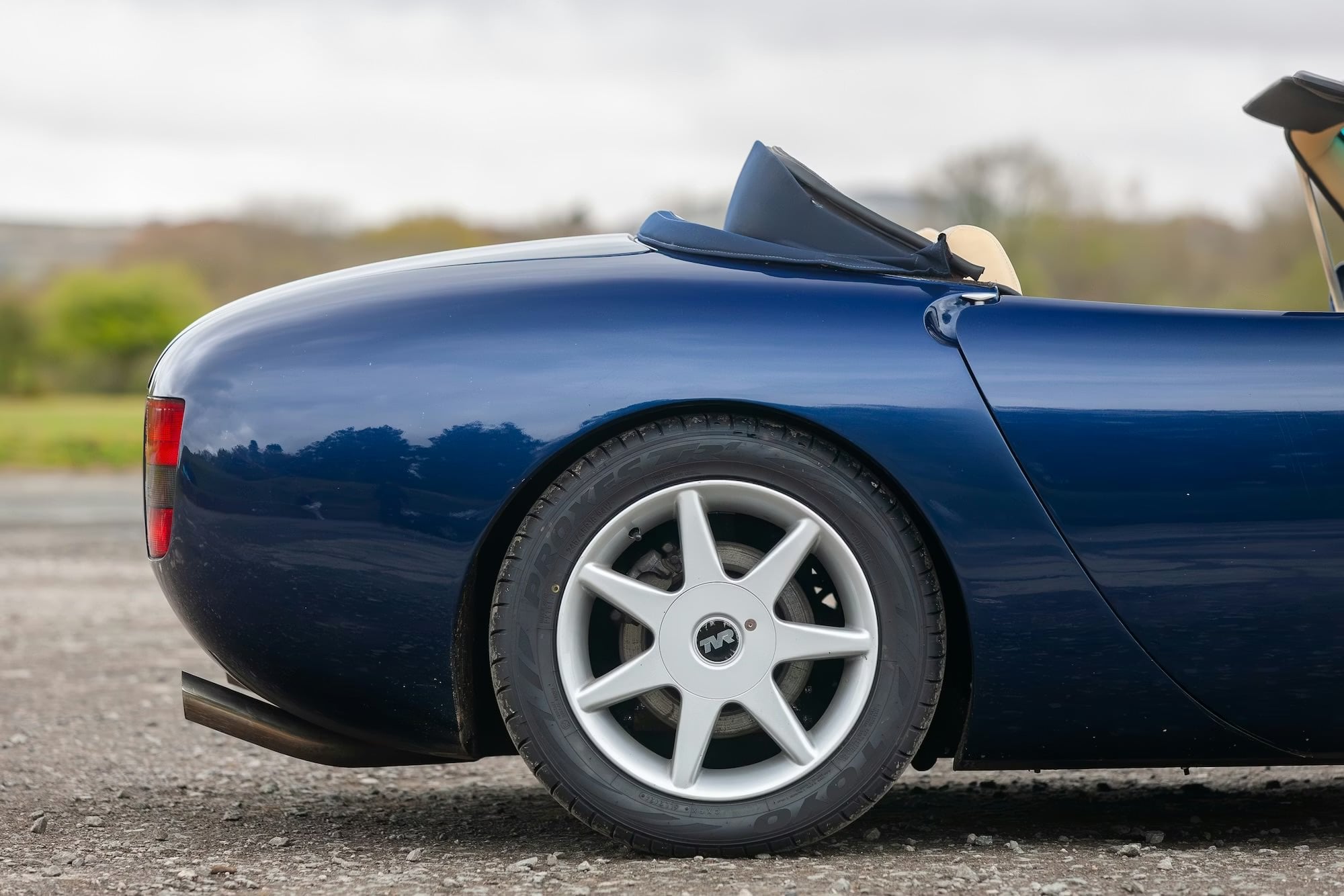
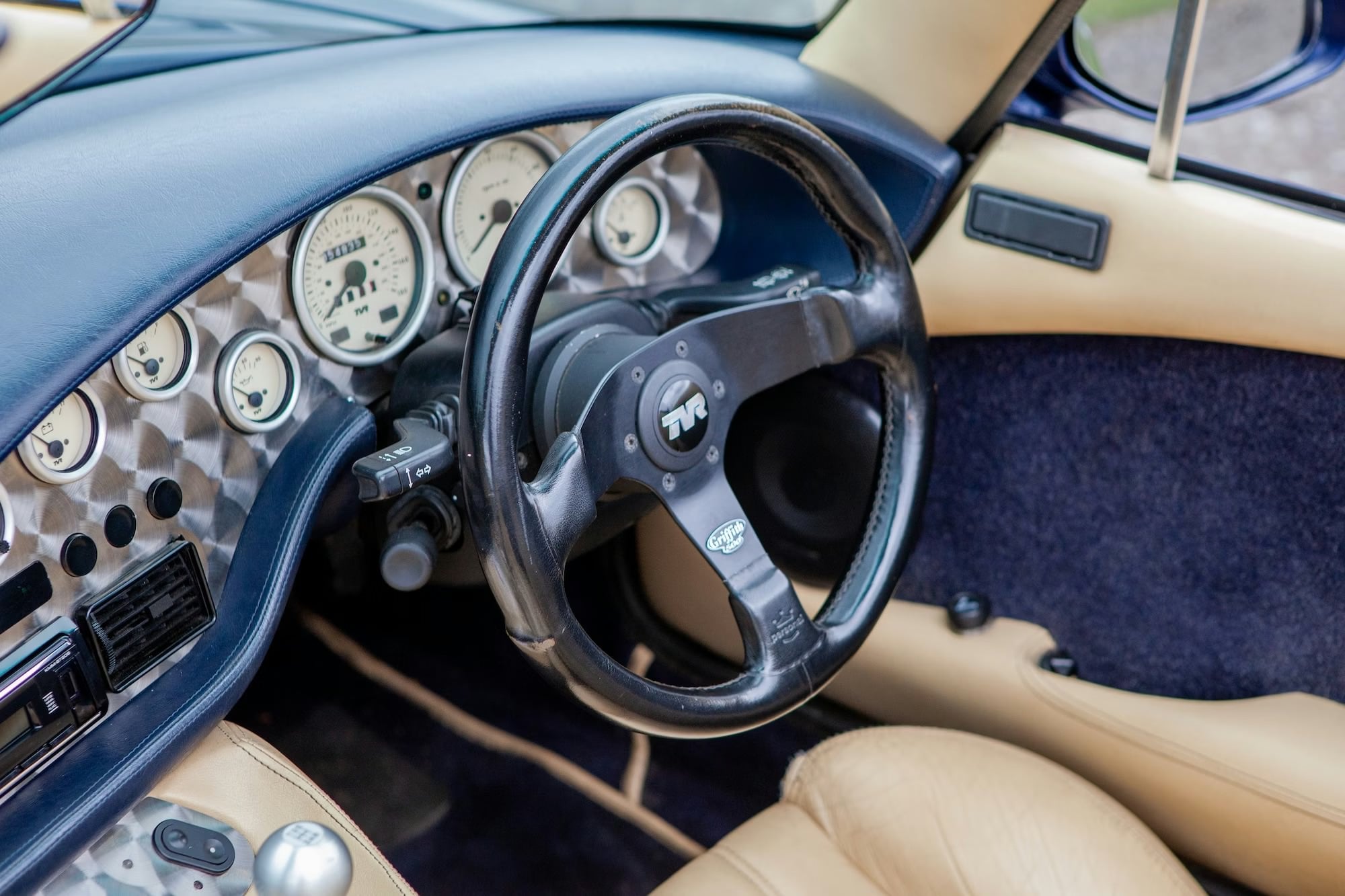
- Notable upgrades carried out under the current owner’s 21-year tenure include Nitron shock absorbers with new coilovers, HiSpec Motorsport front brake discs and calipers, an alloy radiator, a stainless-steel dashboard, a Kenwood Bluetooth head unit with four Alpine speakers, and four new tires fitted in January 2025. The car rides on staggered 15-inch front and 16-inch rear alloy wheels.
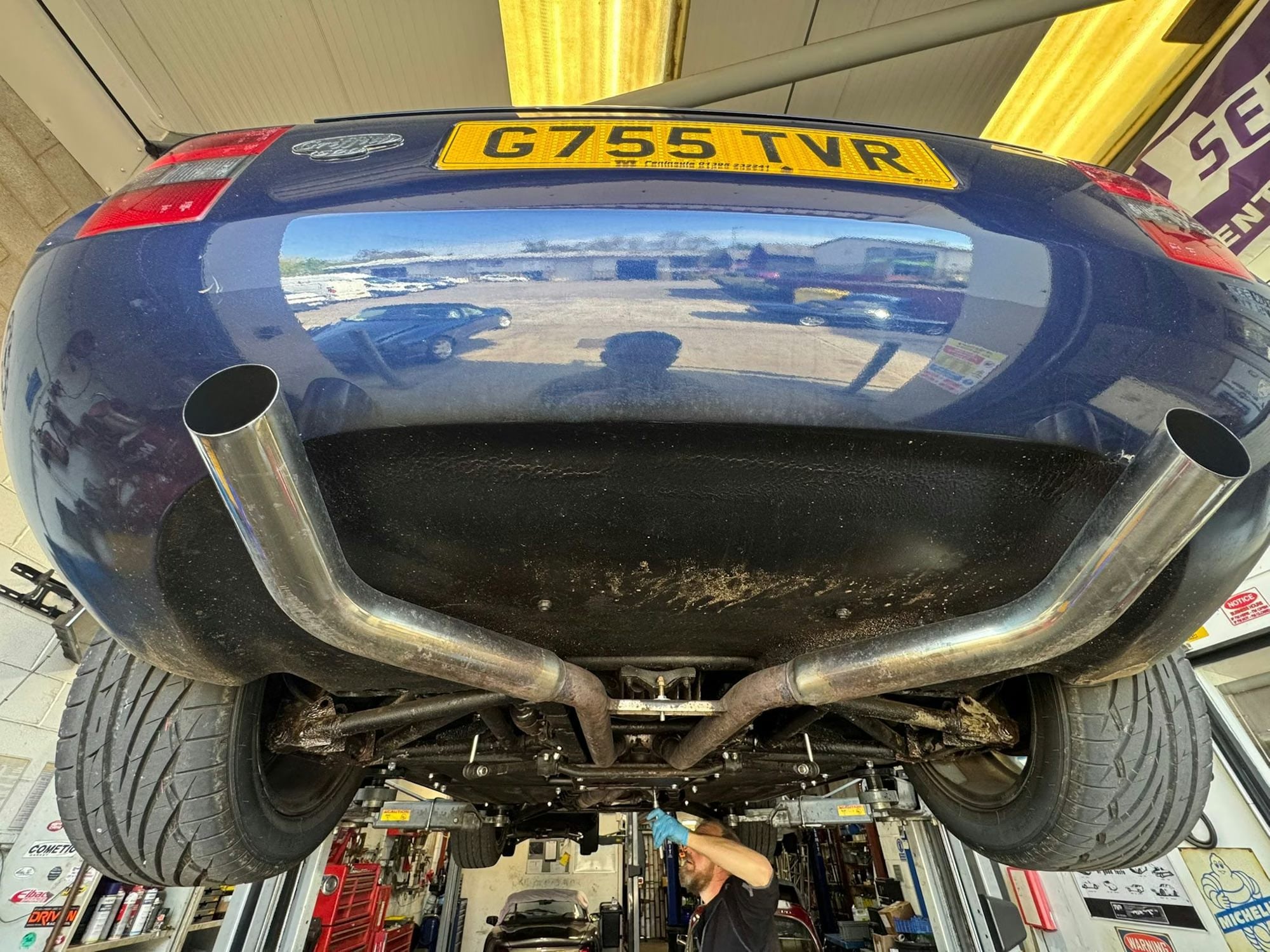
- The service history is extensive and well-documented, with specialist maintenance carried out by Peninsula TVR and TVRSSW. The most recent work in May of 2026 at 55,141 miles included a replacement water pump, alternator belt, and fresh brake and clutch fluid. A comprehensive service by TVRSSW in October of 2023 covered new fuel hoses, a fuel pump, drive belt, outrigger replacement, and anti-roll bar drop links.
- The seller notes fair paintwork and minor interior trim wear. The alarm and immobiliser system was removed after it disabled the ignition. The most recent MOT test on 20 April 2026 at 54,928 miles resulted in a first-time pass with no advisories. The car is offered from Devon with its original handbook, a large document file, and two keys.
History Speedrun: The TVR Griffith
By the end of the 1980s, TVR was a company in need of a reinvention of sorts. The angular, wedge-shaped cars that had defined the Blackpool firm’s lineup since the 1970s were looking increasingly dated, and owner Peter Wheeler knew that an all-new model was going to be essential if TVR was to survive, let alone compete, in the rapidly approaching new decade of the 1990s.
Above Video: This is the original Top Gear segment on the TVR Griffith 500, hosted by Tiff Needell.
The small-volume British sports car industry of the early-90s was crowded with manufacturers all dipping into the same well, using versions of the venerable all-aluminum Rover V8 engine to power lightweight fiberglass-bodied two-seaters. Morgan, Marcos, Ginetta, Westfield, and even Rover Group itself were all at it.
If TVR wanted to stand apart from the pack, and hold its own, it needed more than just a fire-breathing engine. It needed a new car that felt like it belonged in the future rather than the past.
That car they came up with was the Griffith, it was a rare case of a company building exactly the right car, at exactly the right time. The Griffith was named as a deliberate homage to TVR’s 1960s-era Griffith 200 and 400, these were V8 bruisers developed in collaboration with American dealer Jack Griffith, the new car was developed as an entirely in-house effort.
The styling was handled by Damian McTaggart, though it was very much a team effort involving Wheeler himself and engineer John Ravenscroft. The interior, with its sculpted dashboard, TVR-branded dials, and bespoke aluminum switchgear, was the work of Nick Coughlan.
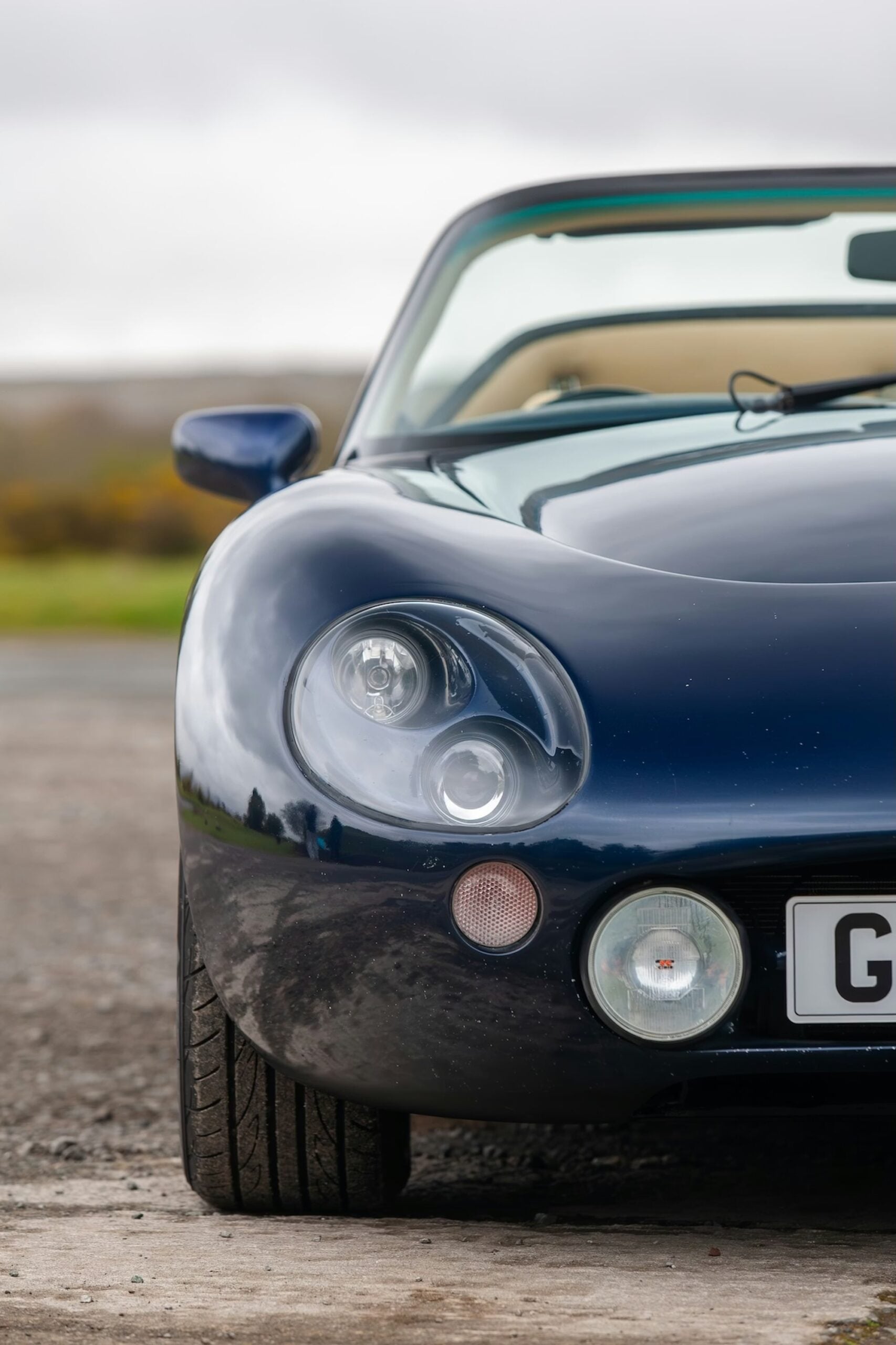
The result was a car that looked like nothing else TVR had built before, it had sweeping curves, a curvaceous tail, a long hood, and no bumpers whatsoever. When it was unveiled at the 1990 Birmingham Motor Show, it caused an absolute sensation. Orders were reportedly being taken on the show stand at a rate of one every eight minutes on average over the course of the weekend.
The Chassis Swap
The Griffith show car used a chassis derived from TVR’s existing V8S, but it quickly became clear that it wasn’t up to the job for use on the production car. Wheeler had plans for significantly more powerful Griffiths in the future, and the V8S platform couldn’t handle the forces involved.
The solution was to adopt a shortened and stiffened version of the tubular steel backbone chassis from TVR’s Tuscan racing program, trimmed by two inches and offering considerably more rigidity than the V8S unit.
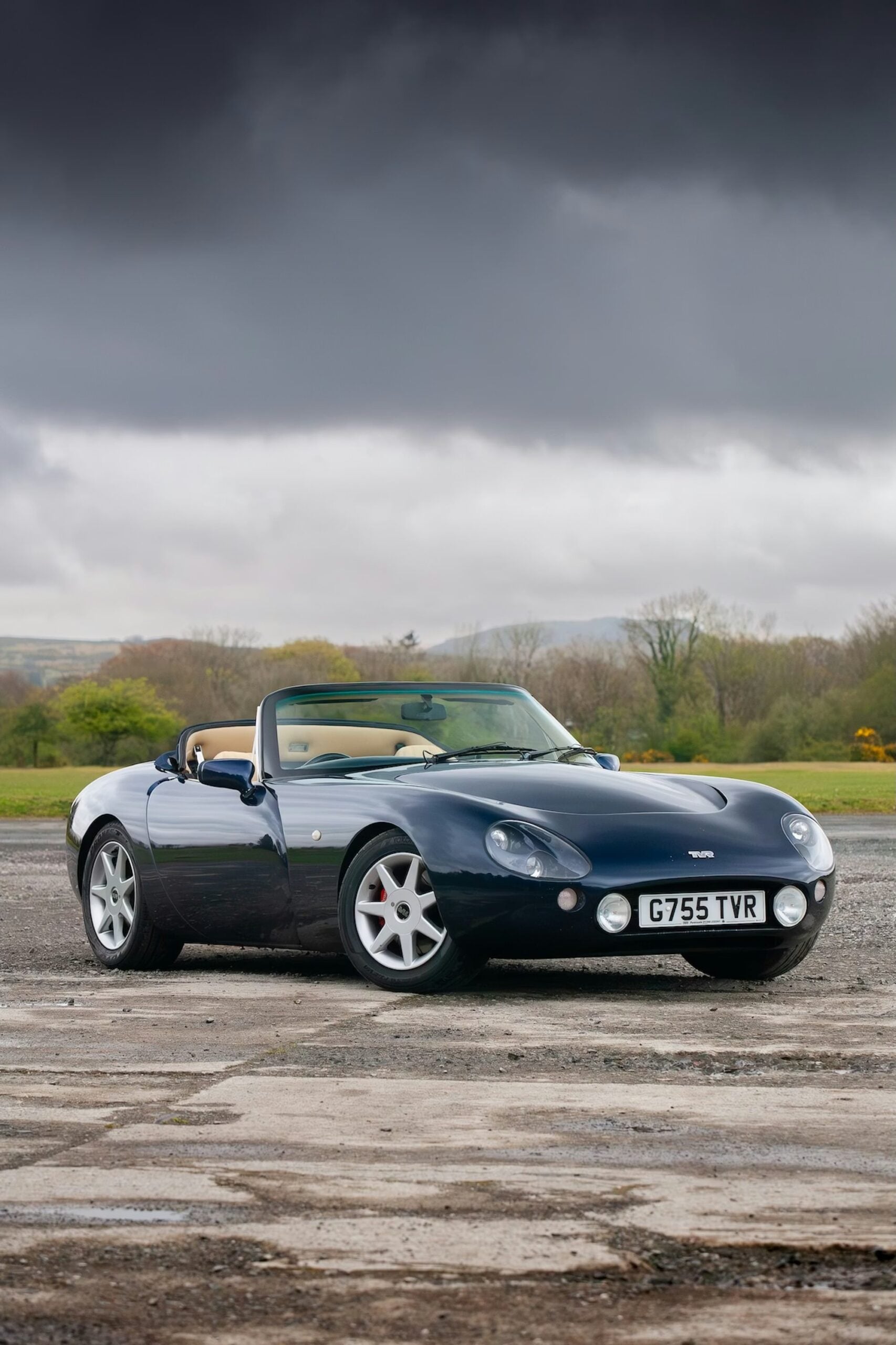
 This is a 1996 TVR Griffith 500 HC, an icon of 1990s British sports cars powered by a firebreathing 5.0 liter V8, earning it the nickname the “British Bulldog” in enthusiast circles.
This chassis was paired with fully independent double-wishbone suspension at all four corners, rear-wheel drive through a limited-slip differential, and disc brakes all around – in true TVR style with no ABS, no traction control, and no electronic safety nets of any kind. The body was hand-laid fiberglass, helping to keep the curb weight down to 1,060 kgs (2,337 lbs).
The Griffith Enters Production
Production began in 1991, with first customer deliveries following in early 1992. The initial model was the Griffith 4.0 (also referred to as the Griffith 400), powered by a TVR-tuned 4.0 liter Rover V8 producing 240 bhp and 270 lb ft of torque, mated to a 5-speed manual gearbox.
At a launch price of around £24,800, it was roughly £3,000 less than TVR’s outgoing 400SE, and thanks to its featherweight construction, it could dispatch 0 to 60 mph in approximately 4.7 seconds – that was on par with the Ferrari 348 of the time.
A 4.3 liter variant producing 280 bhp followed in 1992, along with a handful of rare Big Valve (BV) conversions. A small number of 4.5 liter cars were also produced, believed to total only 10 to 12 units before attention shifted to a larger displacement engine still.
The Griffith’s impact was immediate, it accounted for 73% of TVR’s 1992 production output, with around 602 cars built that year. Perhaps unsurprisingly, it killed off demand for the older wedge-shaped models almost overnight. Late 1992 brought a temporary halt to production as the factory pivoted to fulfill export orders and begin building the Chimaera, a mechanically similar but softer, more grand-touring-oriented sibling that would go on to become TVR’s best-selling model of the time.
The AJP8 Engine + Al Melling
TVR had originally planned to relaunch the Griffith with the company’s own AJP8 V8 engine, this was a 4.2 liter flat-plane-crank V8 developed for TVR by Al Melling, a race engine specialist who had previously worked on Formula 1 projects for Lamborghini, Lola, Leyton House, and Benetton.
Above Video: This is the 1998 MotorWeek segment on the TVR Griffith 500.
The AJP8 engine fell behind schedule, though it’s worth noting that it wasn’t actually Melling’s fault. The pragmatic solution arrived in August of 1993 in the form of the Griffith 500, fitted with a TVR-developed 5.0 liter version of the Rover V8 producing 340 bhp and 350 lb ft of torque, mated to a 5-speed manual gearbox, with later cars using the Borg-Warner T5 unit.
Performance was genuinely startling for the era – the 0 to 62 mph dash could be done in 4.1 seconds, with a claimed top speed of 169 mph. Autocar magazine famously accused it of having too much power. The AJP8, meanwhile, found its way into the Tuscan race cars from 1995 onward and eventually into the road-going Cerbera – but never into the Griffith.
A mild facelift later in the 500’s run saw the driving lamps integrated into the air intake recess and a switch to OZ wheels. Power steering was added as an option, and chassis rust protection was improved over the production run.
The Griffith’s Competitors
The Griffith’s closest competitors were an eclectic group. The Porsche 911 was the aspirational target, the car TVR explicitly aimed to challenge at a fraction of the price while offering more speed. Among the British cottage industry, the Marcos Mantara offered a similar formula of Rover V8, fiberglass body, and tubular chassis, but at lower power levels and with far smaller production numbers.
The MG RV8 and Morgan Plus 8 were period alternatives, though both were more nostalgic in character. The Ginetta G33 competed in the same group tests. The Lotus Elan and later the Elise offered lightweight British sports car thrills from a different philosophical angle, prioritizing handling finesse over V8 brute force.
Total Griffith production is difficult to pin down precisely, as TVR amalgamated chassis numbers across the Griffith, Chimaera, and Cerbera lines and famously kept imperfect records. Estimates from good sources range from 2,265 to 2,445 examples, though TVR’s own factory production records from 1997 to 2002 alone account for 886 Griffiths in that period.
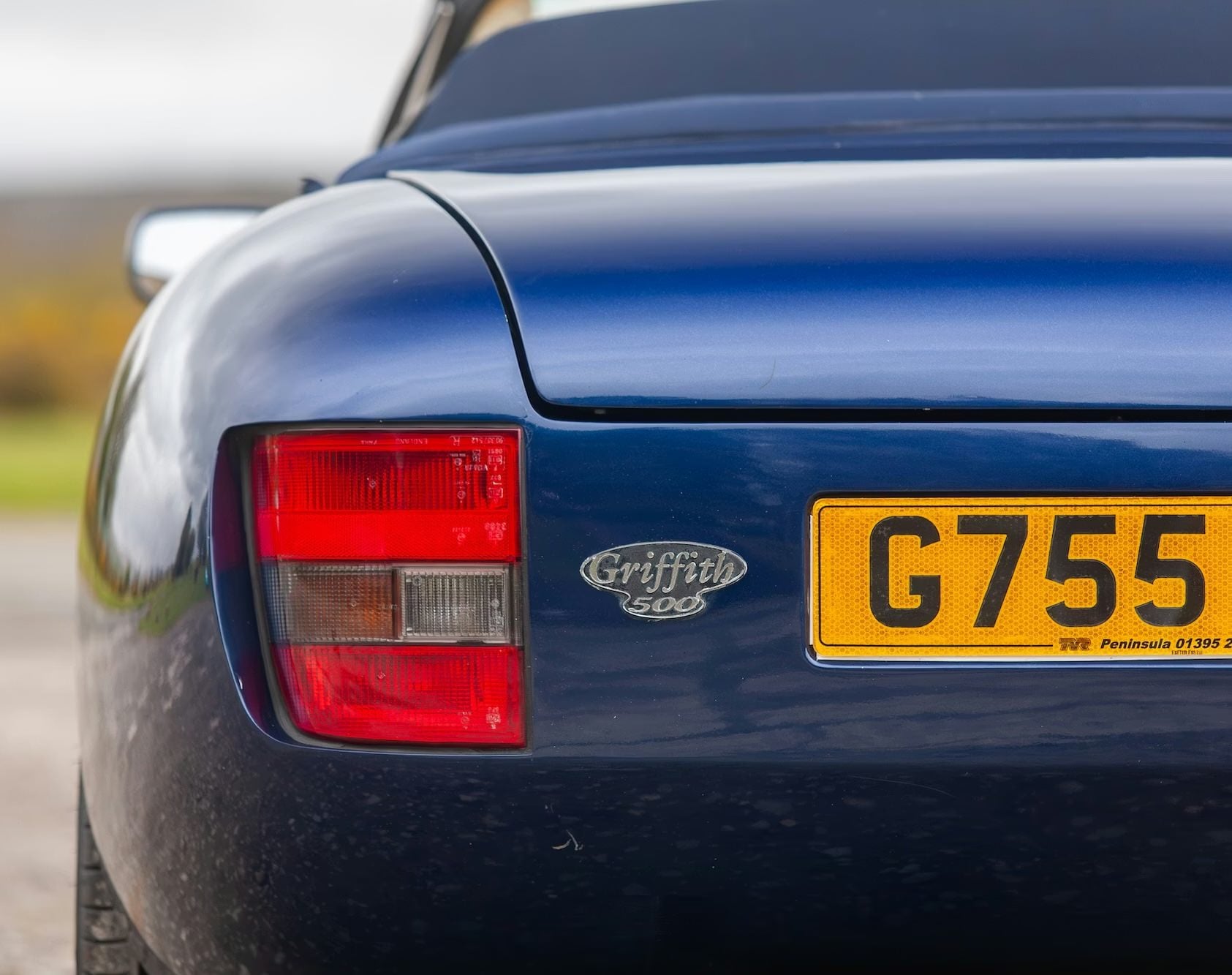
Around 2000 to 2001, TVR announced the end of the Griffith line with a final limited run of 100 Special Edition (SE) cars, sometimes referred to as the 500SE. These had a hybrid interior blending the Chimaera dashboard with Cerbera seats, revised rear lights, updated door mirrors, clear indicator lenses, and each carried a numbered plaque in the glovebox. The last SEs were built between 2000 and 2002, with the final cars registered in 2003.
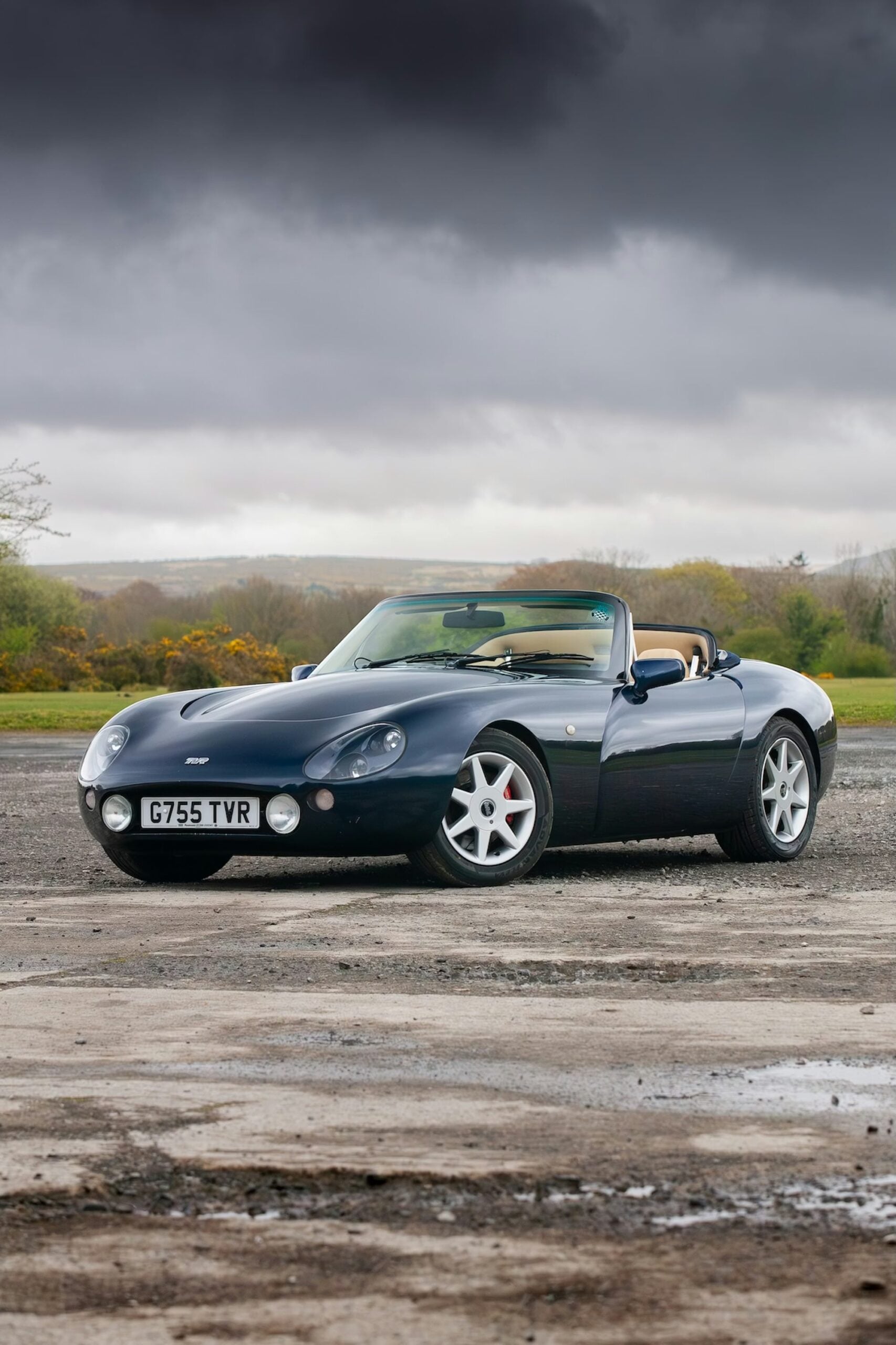
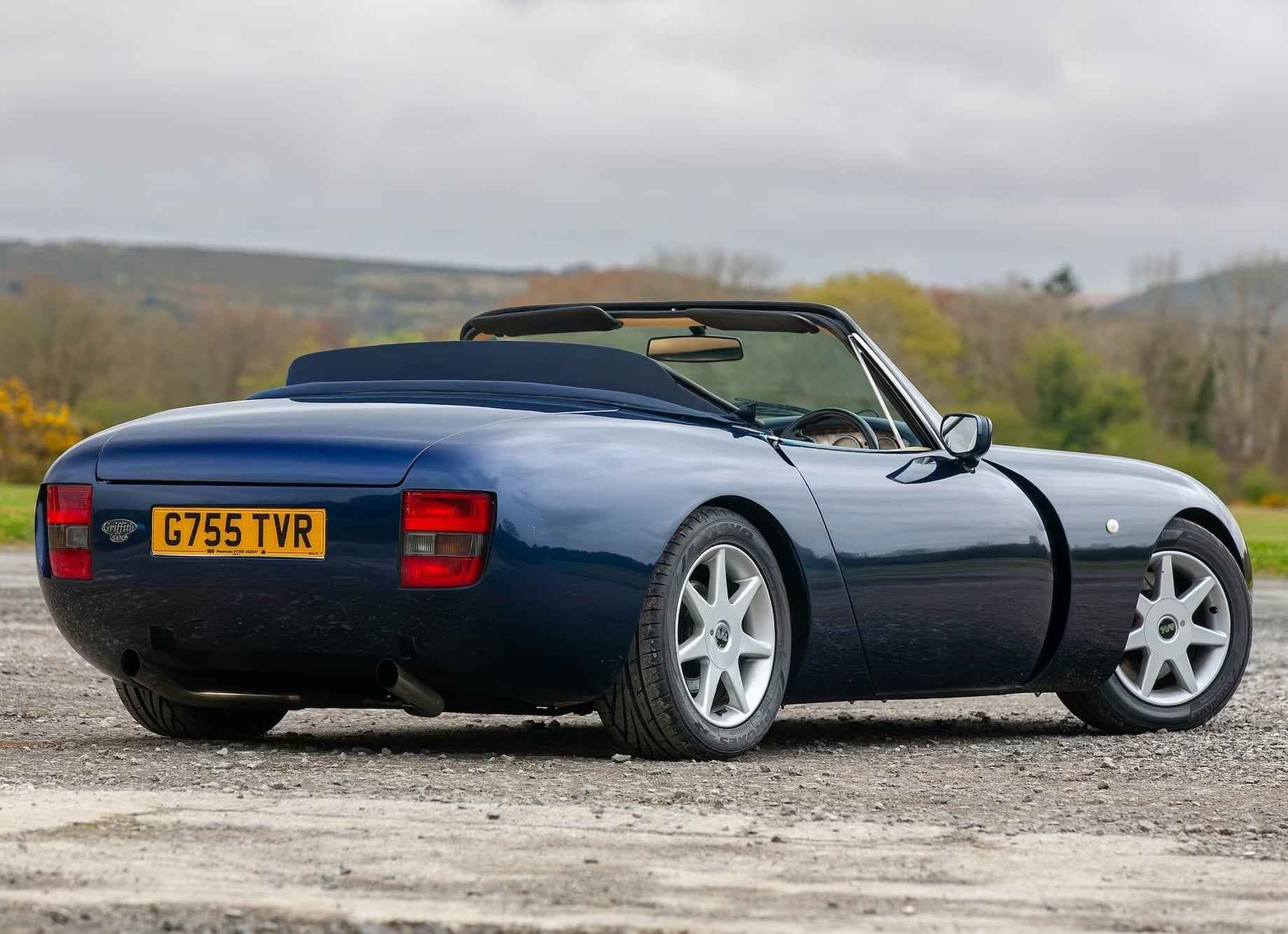
This 1996 TVR Griffith 500 HC is a long-term-ownership example of TVR’s flagship lightweight roadster from the ’90s, finished in metallic Starmist Blue over Magnolia leather with navy blue carpeting.
The New Griffith
In September of 2017, to mark TVR’s 70th anniversary, the company unveiled a new-generation Griffith at the Goodwood Revival. Engineered by Gordon Murray Design using the firm’s lightweight iStream carbon-composite and aluminum chassis technology, and powered by a Cosworth-tuned 5.0 liter Ford Coyote V8 producing 500 bhp through a 6-speed Tremec manual gearbox, the new car promised a top speed of over 200 mph, 0 to 60 mph in under 4.0 seconds, and a curb weight of just 1,250 kgs.
A combination of funding shortfalls, the COVID-19 pandemic, and damage to planned production facilities (including the loss of a Welsh Government-backed factory site in Ebbw Vale) stalled the project indefinitely. As of 2026, TVR had been acquired by Charge Holdings, which has announced plans to finally bring the Griffith to production.
The 1996 TVR Griffith 500 HC Shown Here
This is a 1996 TVR Griffith 500 HC, it’s a long-term-ownership example of TVR’s flagship lightweight roadster from the ’90s, finished in metallic Starmist Blue over Magnolia leather with navy blue carpeting. It’s powered by the correct 5.0 liter naturally aspirated Serpentine “high compression” Rover-derived V8 producing 340 bhp, driving the rear wheels through a replacement Borg-Warner T5 5-speed manual gearbox fitted in 2004.
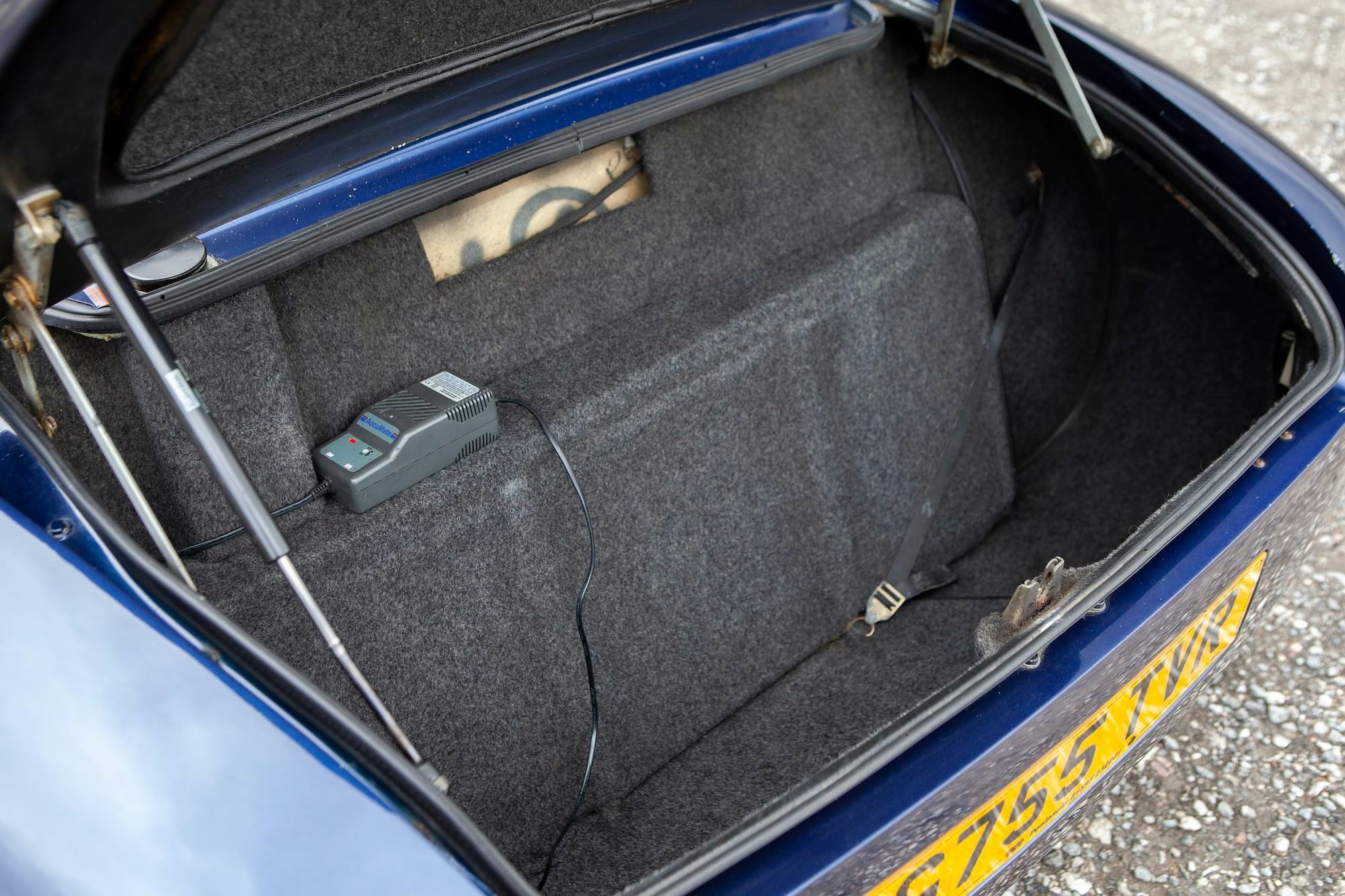
The car rides on staggered 15-inch front and 16-inch rear alloy wheels, with four new tires fitted in January of 2025. Notable upgrades carried out under the seller’s ownership include Nitron shock absorbers with new coilovers, HiSpec Motorsport front brake discs and calipers, an alloy radiator, a stainless-steel dashboard, and a Kenwood head unit with Bluetooth and four Alpine speakers. An integrated Accumate battery conditioner and Leven alloy gear knob and control buttons have also been fitted.
The service history is extensive and well-documented, the most recent work in May of 2026 included a replacement water pump, alternator belt, and fresh brake and clutch fluid. In October of 2023, TVRSSW carried out a comprehensive service that included new fuel hoses, a fuel pump, drive belt, outrigger replacement, and anti-roll bar drop links.
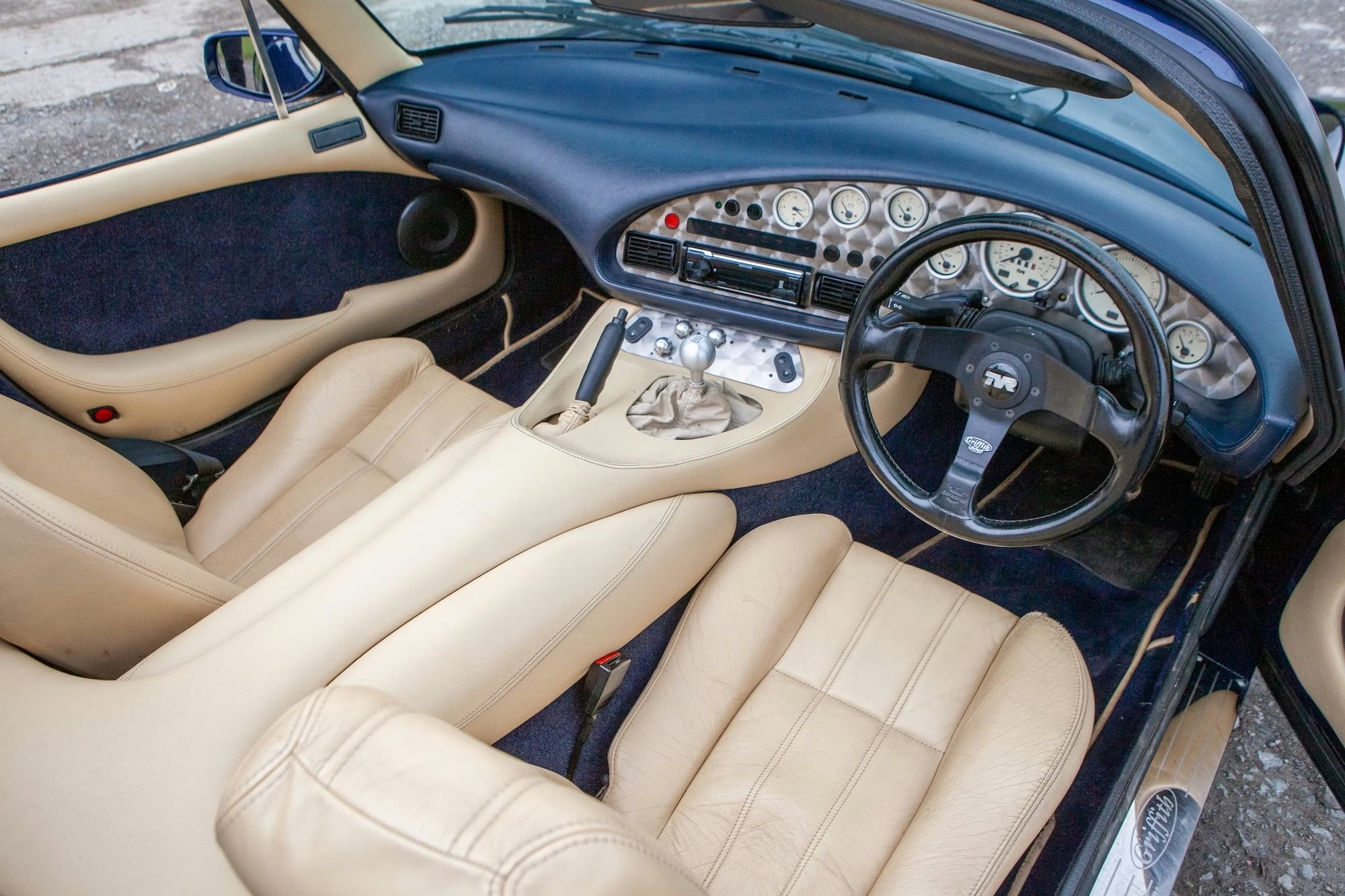
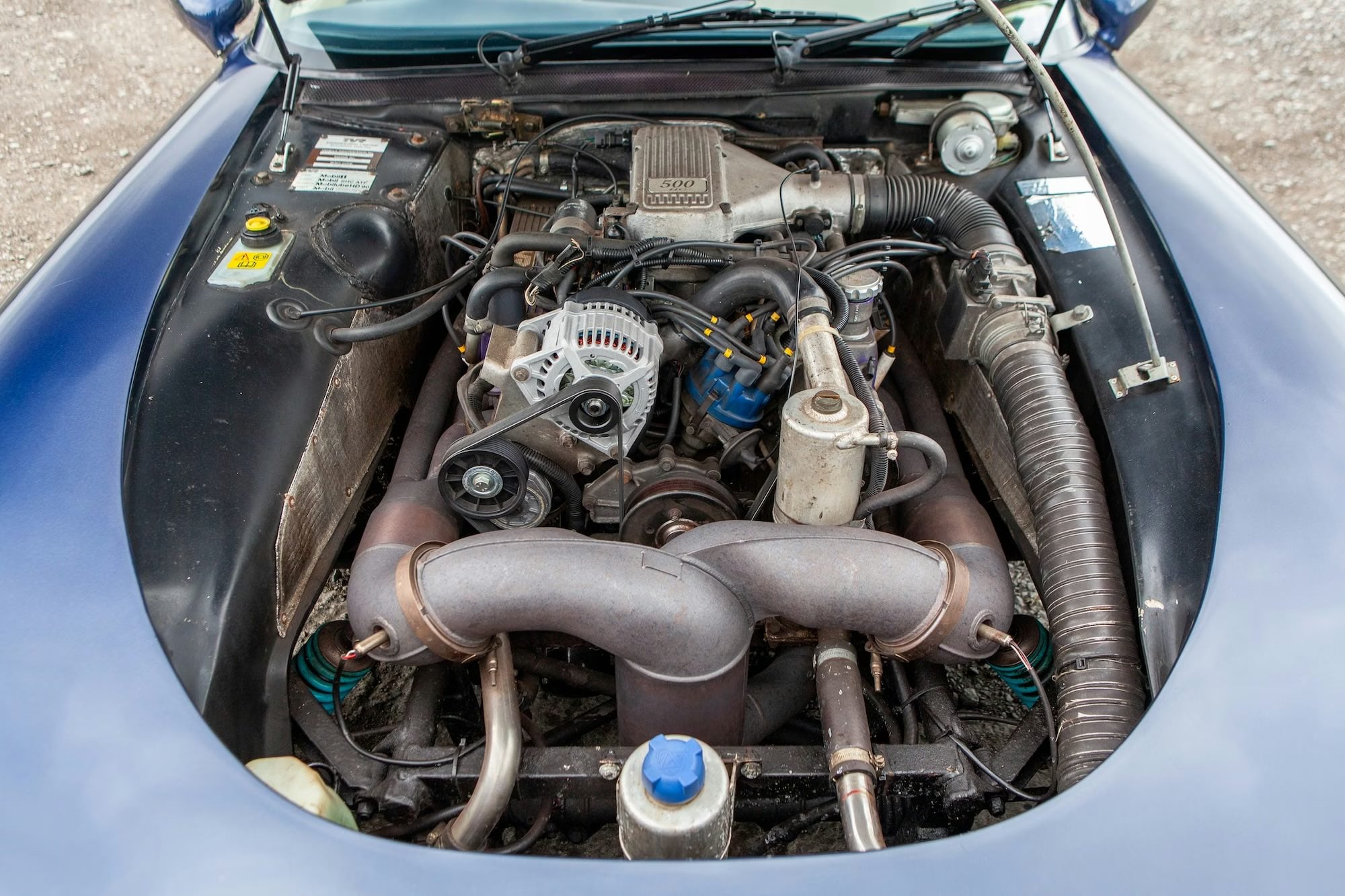
This TVR Griffith 500 is powered by the correct 5.0 liter naturally aspirated Serpentine “high compression” Rover-derived V8 producing 340 bhp, driving the rear wheels through a replacement Borg-Warner T5 5-speed manual gearbox fitted in 2004.
The seller notes the paintwork is in fair condition with minor wear to the interior trim. The most recent MOT test, carried out on the 20th of April 2026 at 54,928 miles, resulted in a first-time pass with no advisories.
It’s now being offered for sale out of Devon, United Kingdom with the original handbook, a large collection of documents and invoices, and two keys. If you’d like to read more or register to bid you can visit the listing here.
Images courtesy of Collecting Cars + TVR

Articles that Ben Branch has written have been covered on CNN, Popular Mechanics, Smithsonian Magazine, Road & Track Magazine, the official Pinterest blog, the official eBay Motors blog, BuzzFeed, Autoweek Magazine, Wired Magazine, Autoblog, Gear Patrol, Jalopnik, The Verge, and many more.
Silodrome was founded by Ben back in 2010, in the years since the site has grown to become a world leader in the alternative and vintage motoring sector, with well over a million monthly readers from around the world and many hundreds of thousands of followers on social media.