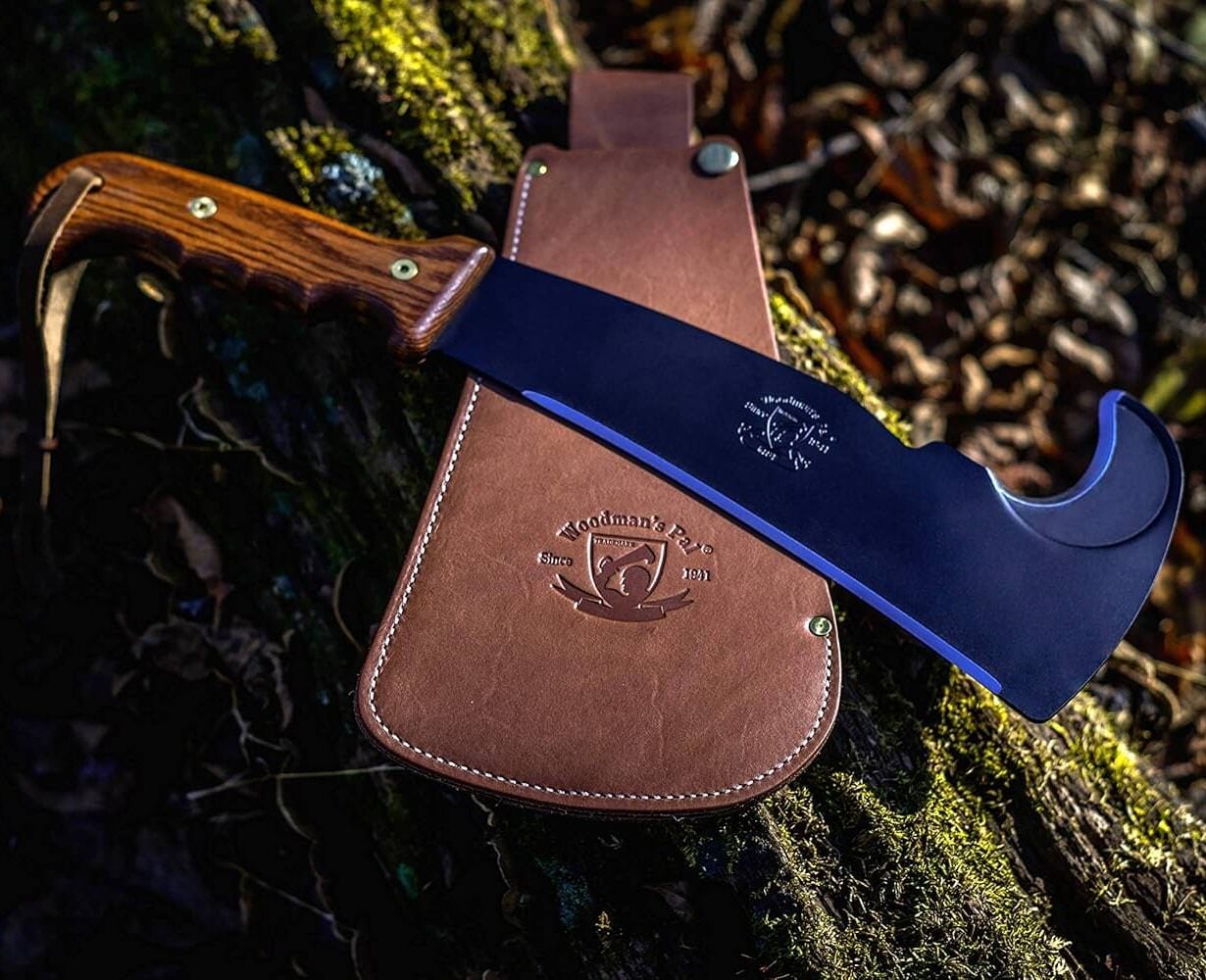
The Woodmans Pal is a clever American tool that combines the features of a machete, an axe, a billhook, and a pruning knife. It was invented during WWII, used extensively by the US military, and it remains in production in the USA today.
There aren’t many tools like this, that have been used by the military both as a tool and as a weapon, and very few (if any) remain in production with an essentially unchanged design.
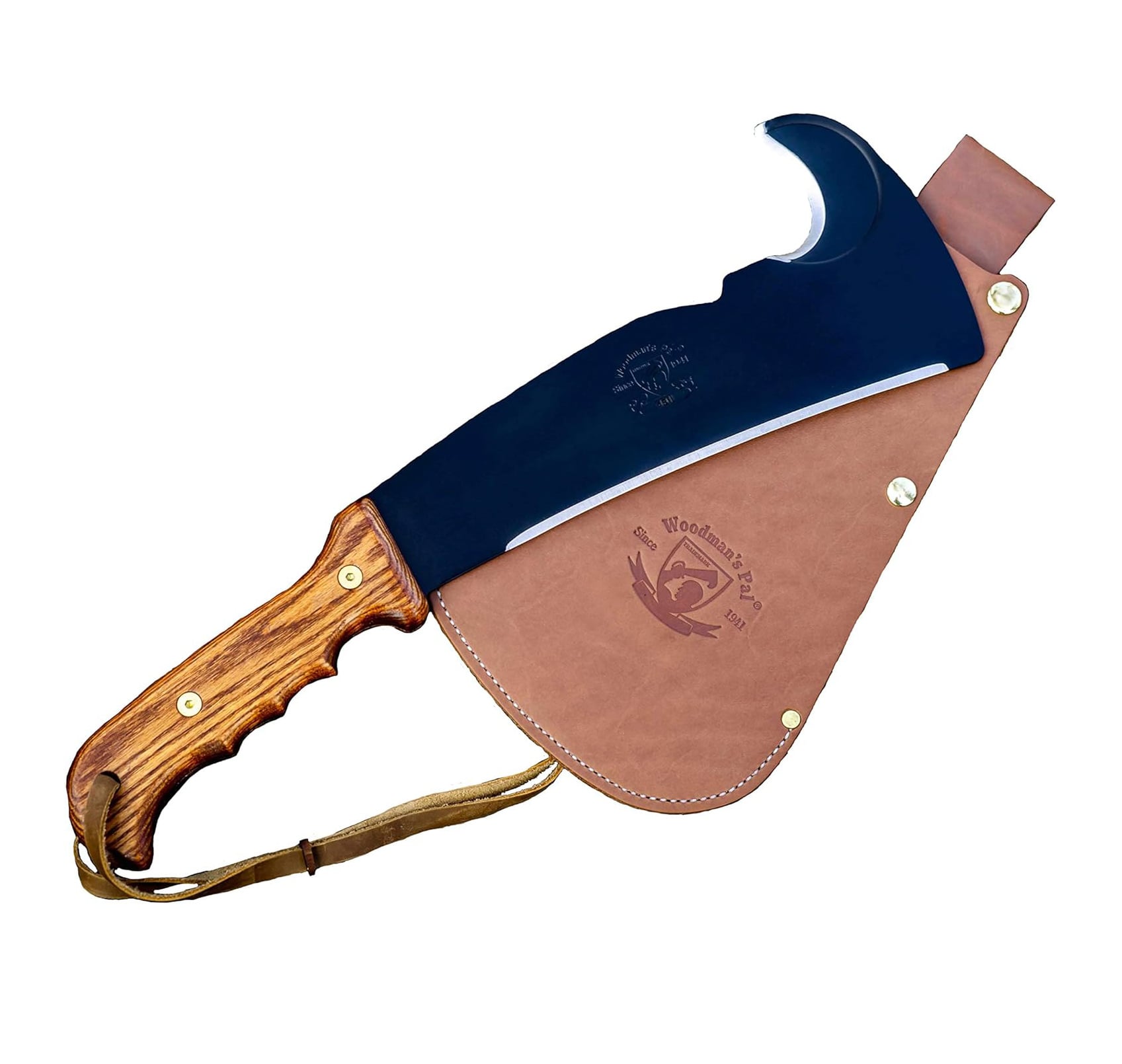
 The Woodmans Pal is a clever American tool that combines the features of a machete, an axe, a billhook, and a pruning knife. It was invented during WWII, used extensively by the US military, and it remains in production in the USA today.
History Speedrun: The Woodmans Pal
The Woodman’s Pal is a hybrid device that combines the features of a small axe, a machete, a billhook, and a pruning knife – all in a single tool. It was introduced in 1941 by Frederick Ehrsam, a Swiss-born artist and engineer who ran the Victor Tool Company in Reading, Pennsylvania, and it’s still made in Pennsylvania today.
The design was quickly adopted by the US military as the “LC-14-B” and remained in various parts of the American military inventory from the Second World War right the way through to the Gulf War.
Ehrsam’s goal was to create a single tool that could clear brush like a machete, chop like a hatchet, and cut vines and briars like a sickle, without the weight or bulk of having to carry all three. The result was a forward-weighted blade with a concave/convex-ground axe edge and a chisel-sharp hooked point at the tip.
In use, the hook catches vines and cuts them cleanly, and also pulls the cut brush aside rather than letting it fall back into the working line. Overall length is about 16.5 inches, which Ehrsam chose so the tool would roughly match the length of the human forearm from elbow to knuckles.
Ehrsam filed for a US patent on December the 11th, 1942, and patent 2,335,497 was granted the following year on November the 30th, 1943, listing him as inventor and Victor Tool Co. as the manufacturer.
Blade materials have been relatively consistent over the tool’s production life – modern blades use 1075 high-carbon spring steel, 1/8 of an inch thick and hardened to Rockwell C47, a compromise chosen to hold an edge without becoming brittle enough to chip in cold weather and hard use.
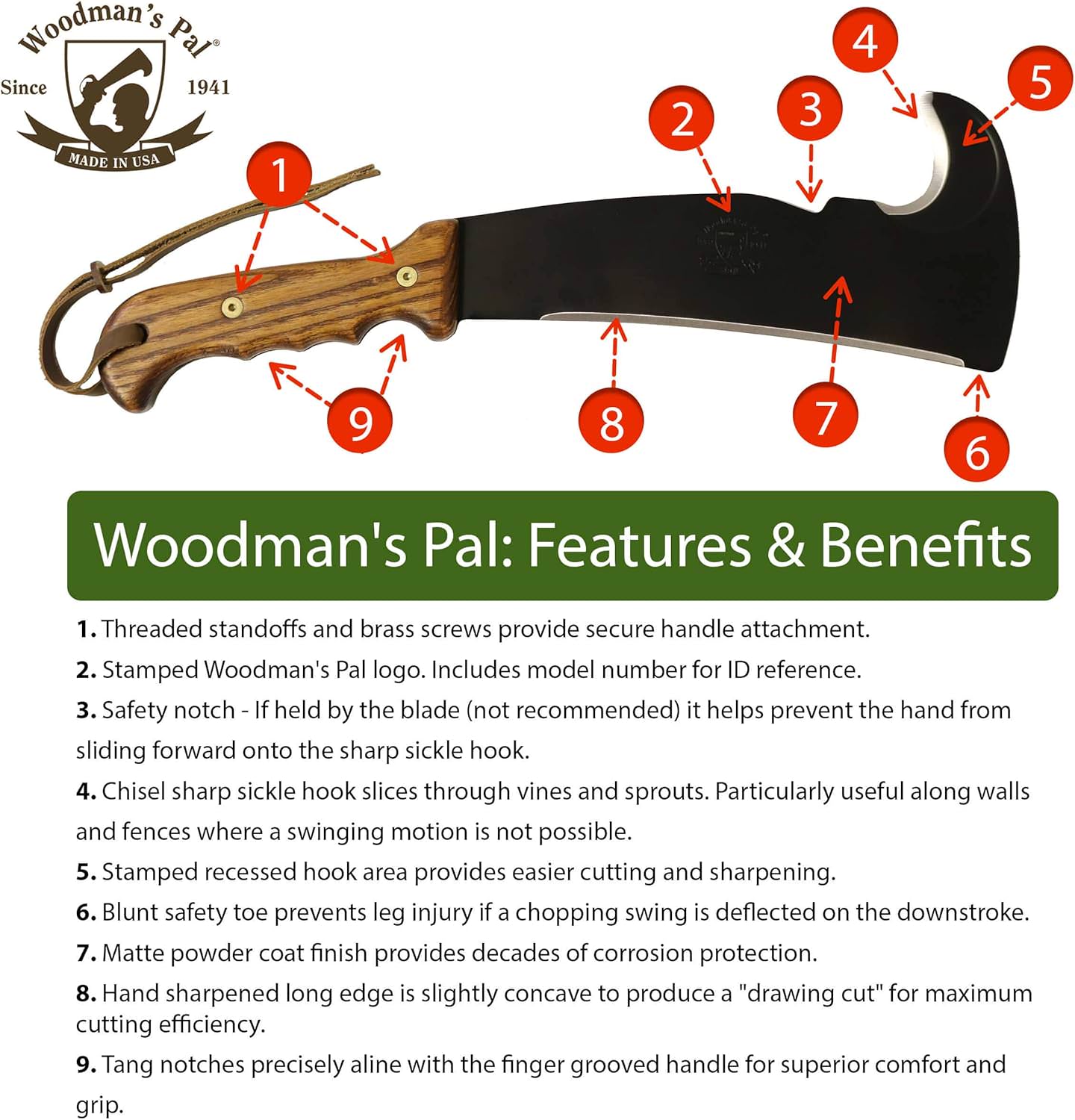
The design was quickly adopted by the US military as the “LC-14-B” and remained in various parts of the American military inventory from the Second World War right the way through to the Gulf War. Image courtesy of Woodsman’s Pal.
Military Service + LC-14-B
Civilian sales to foresters, surveyors, farmers, and land-clearing crews came first, but the US Army began buying the tool almost immediately. In military service it was designated “Knife LC-14-B” and was manufactured under contract for the Army by Victor Tool of Reading.
Initial issue went to the US Army Signal Corps for clearing lines through jungle and dense growth, and the tool was later issued to GIs and Marines in the Pacific Theater during WWII as both a work tool and a close-quarters weapon.
Wartime examples had a 12 inch blackened blade, a stacked leather washer handle, and a painted steel D-guard stamped LC-14-B on the reverse. Complete wartime sets could include a cotton duck sheath with a zippered side, an M1910 hook for the pistol belt, a round sharpening stone, and explanatory booklets written by Ehrsam himself, covering care and sharpening and fighting techniques.
By the end of the Korean War, the Army had bought more than 250,000 examples. In the Vietnam era, a related Woodman’s Pal-pattern survival tool was issued in aircrew and helicopter crew survival kits as the Type IV Survival Axe, specification MIL-S-8642C. S
The kit itself was updated for the aircrew role, with a nylon sheath, a burning-glass lens for fire-starting, a chained sharpening stone, and olive-drab nylon tie cord. Pilots used to joke that pulling the tool out of the kit generally meant the day had already gone very, very wrong. It remained in the inventory right through till Operation Desert Storm.
The trademark and manufacturing rights changed hands several times over the decades – Skyline Toolworks bought the trademark from Survival Equipment Company in 1995 and licensed production to Pro Tool Industries of Pottstown, Pennsylvania, in 1999.
Pro Tool ran the line for close to two decades before closing in early 2018, pressured in part by cheap imported knock-offs sold at lower prices. Skyline Toolworks brought production back in-house afterward and continues to build the tool in Pennsylvania using American 1075 spring steel, American ash for the wood-handled models, and hand-stitched leather sheaths.
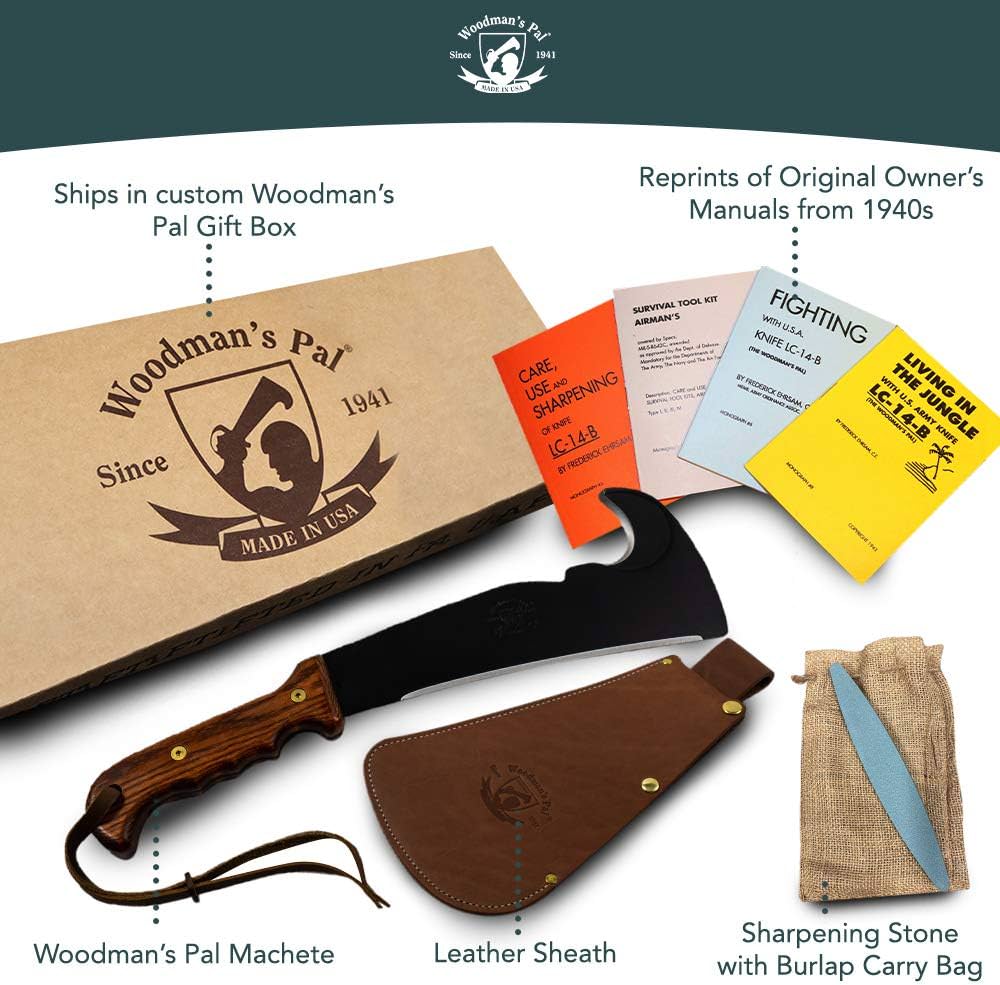
Civilian sales to foresters, surveyors, farmers, and land-clearing crews came first, but the US Army began buying the tool almost immediately. In military service it was designated “Knife LC-14-B” and was manufactured under contract for the Army by Victor Tool of Reading. Image courtesy of Woodman’s Pal.
More than 80 years after its introduction, the Woodman’s Pal is one of the very few American-made edged tools whose military-spec design and civilian version are effectively the same object, still made by hand in the state where it was first invented.
The Woodman’s Pal is now available to buy direct from the official Woodman’s Pal Amazon store here, and you can choose between either a leather or steel handle depending on your preference.
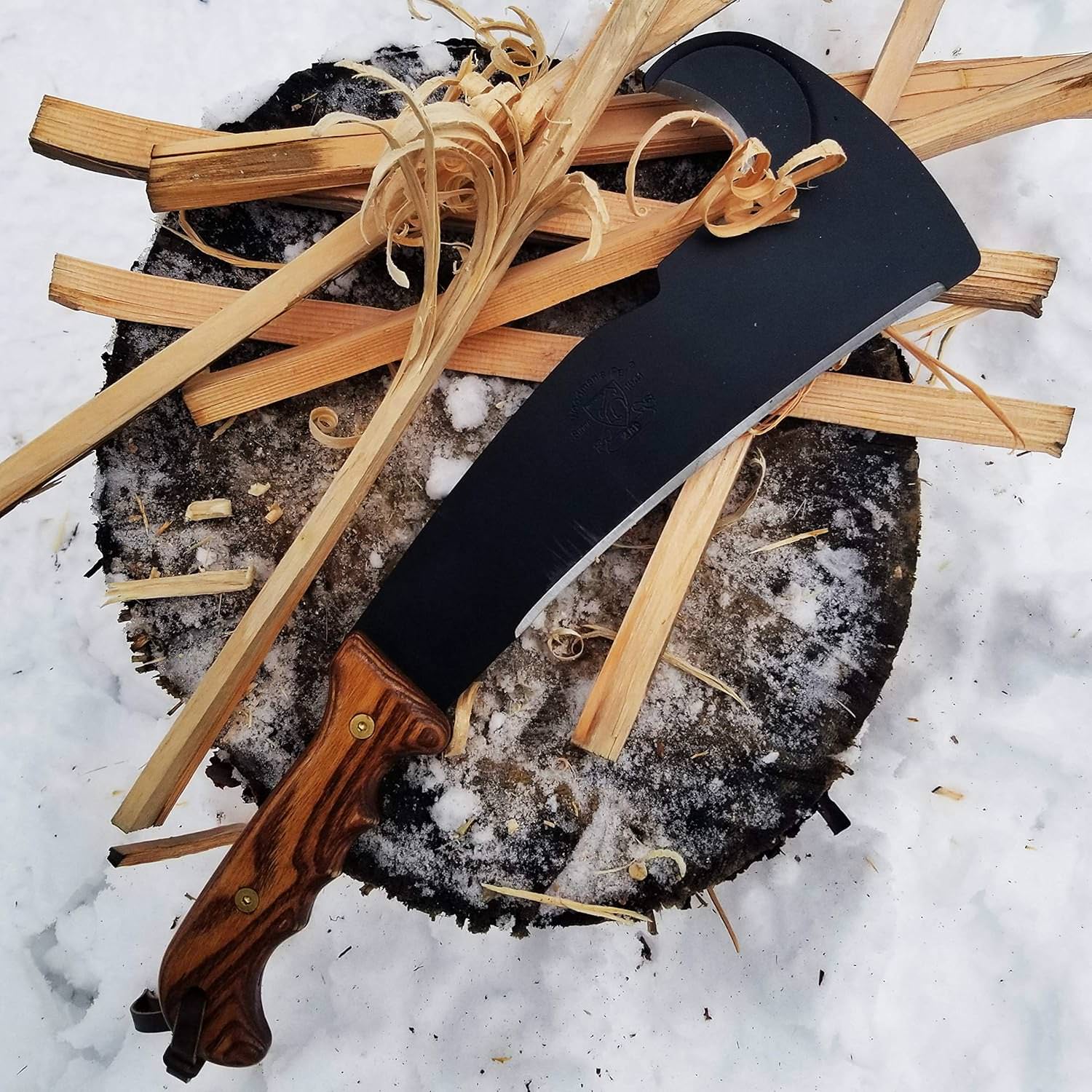
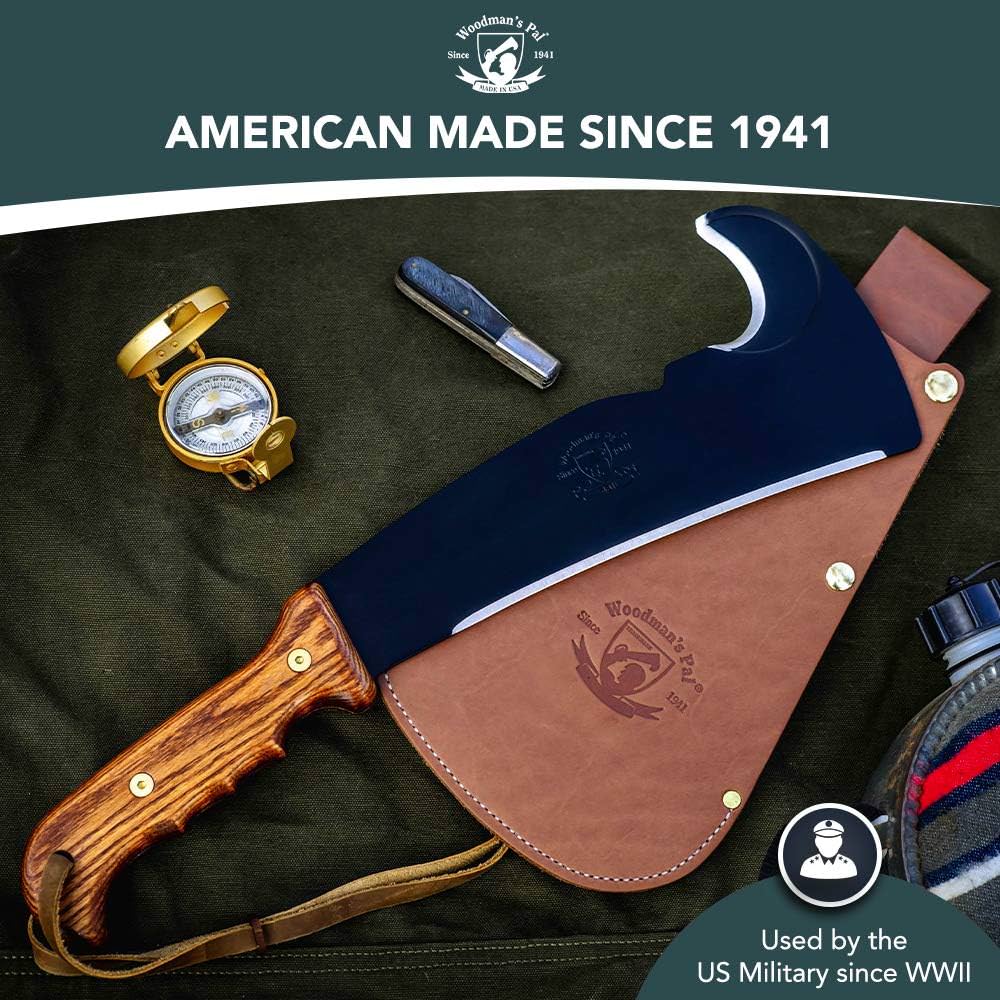

Images courtesy of Woodsman’s Pal

Articles that Ben Branch has written have been covered on CNN, Popular Mechanics, Smithsonian Magazine, Road & Track Magazine, the official Pinterest blog, the official eBay Motors blog, BuzzFeed, Autoweek Magazine, Wired Magazine, Autoblog, Gear Patrol, Jalopnik, The Verge, and many more.
Silodrome was founded by Ben back in 2010, in the years since the site has grown to become a world leader in the alternative and vintage motoring sector, with well over a million monthly readers from around the world and many hundreds of thousands of followers on social media.