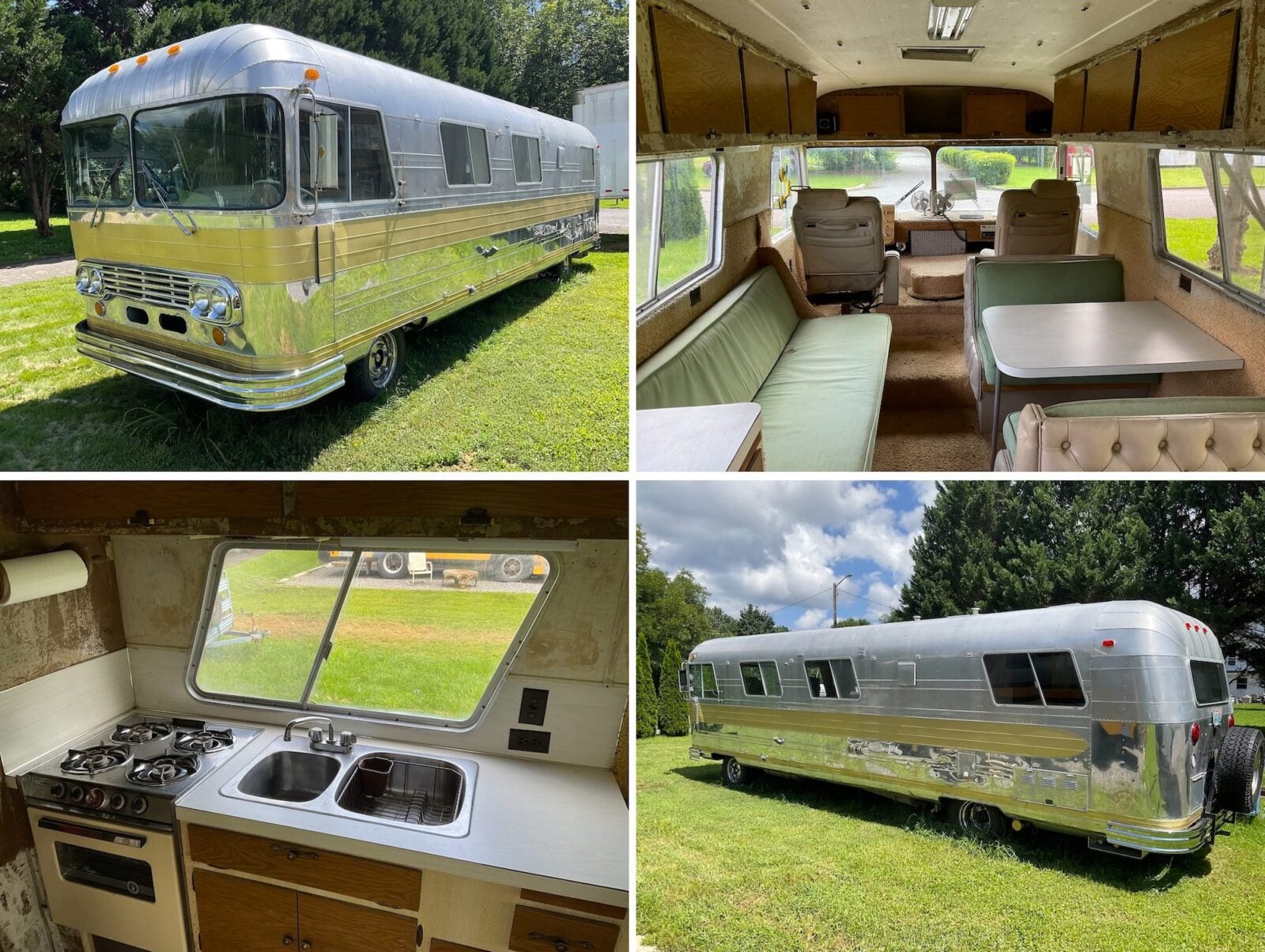
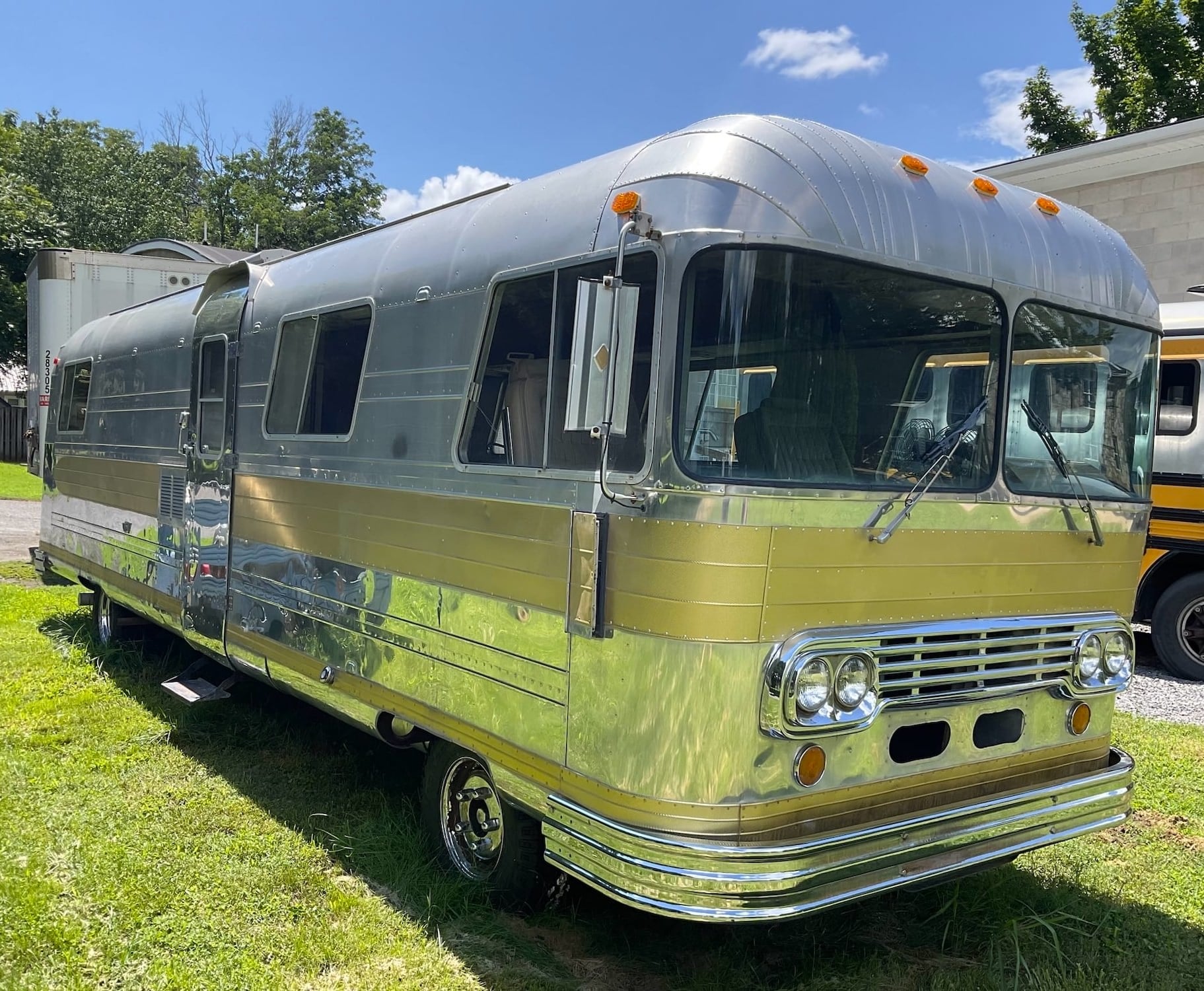
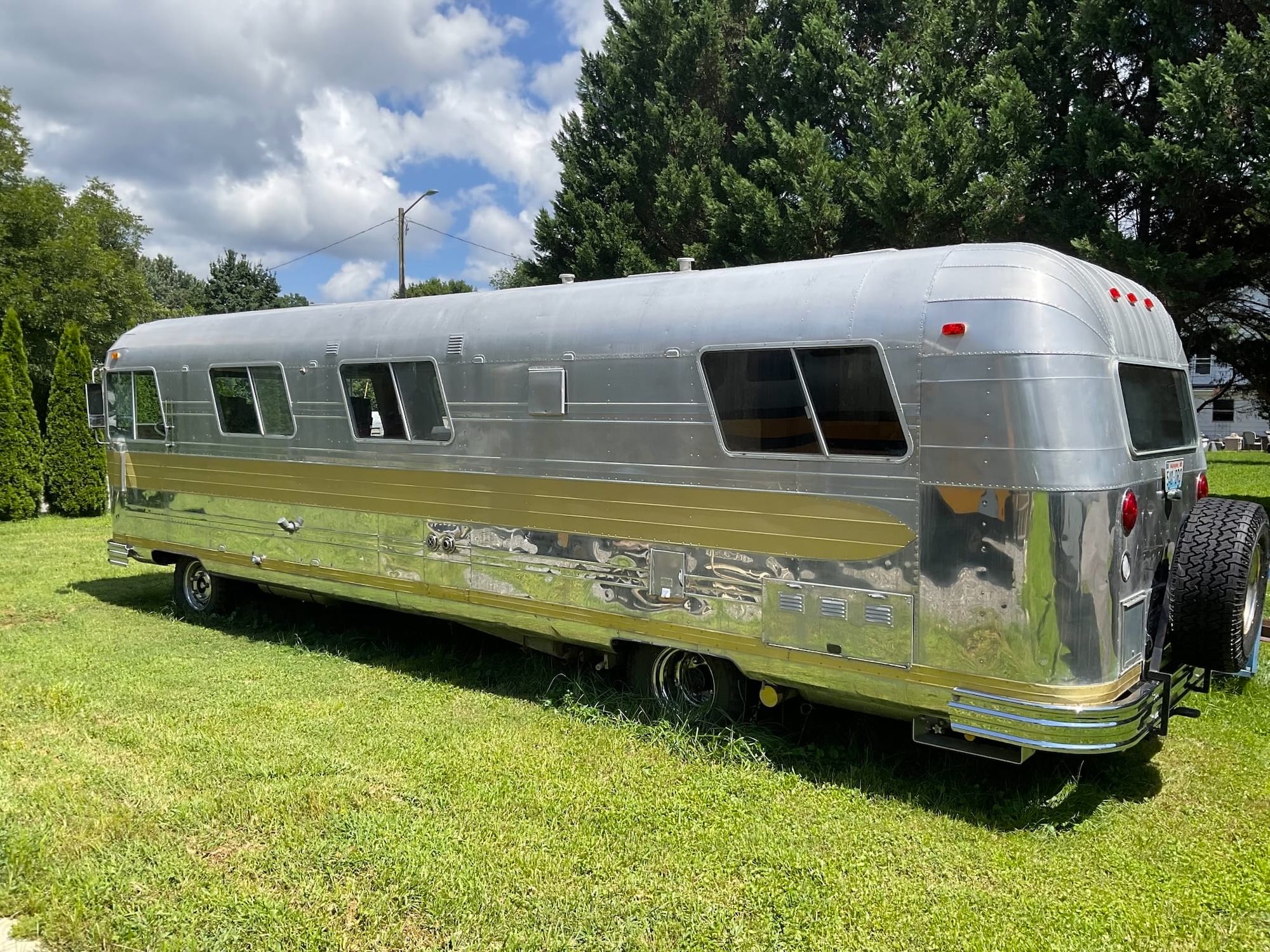
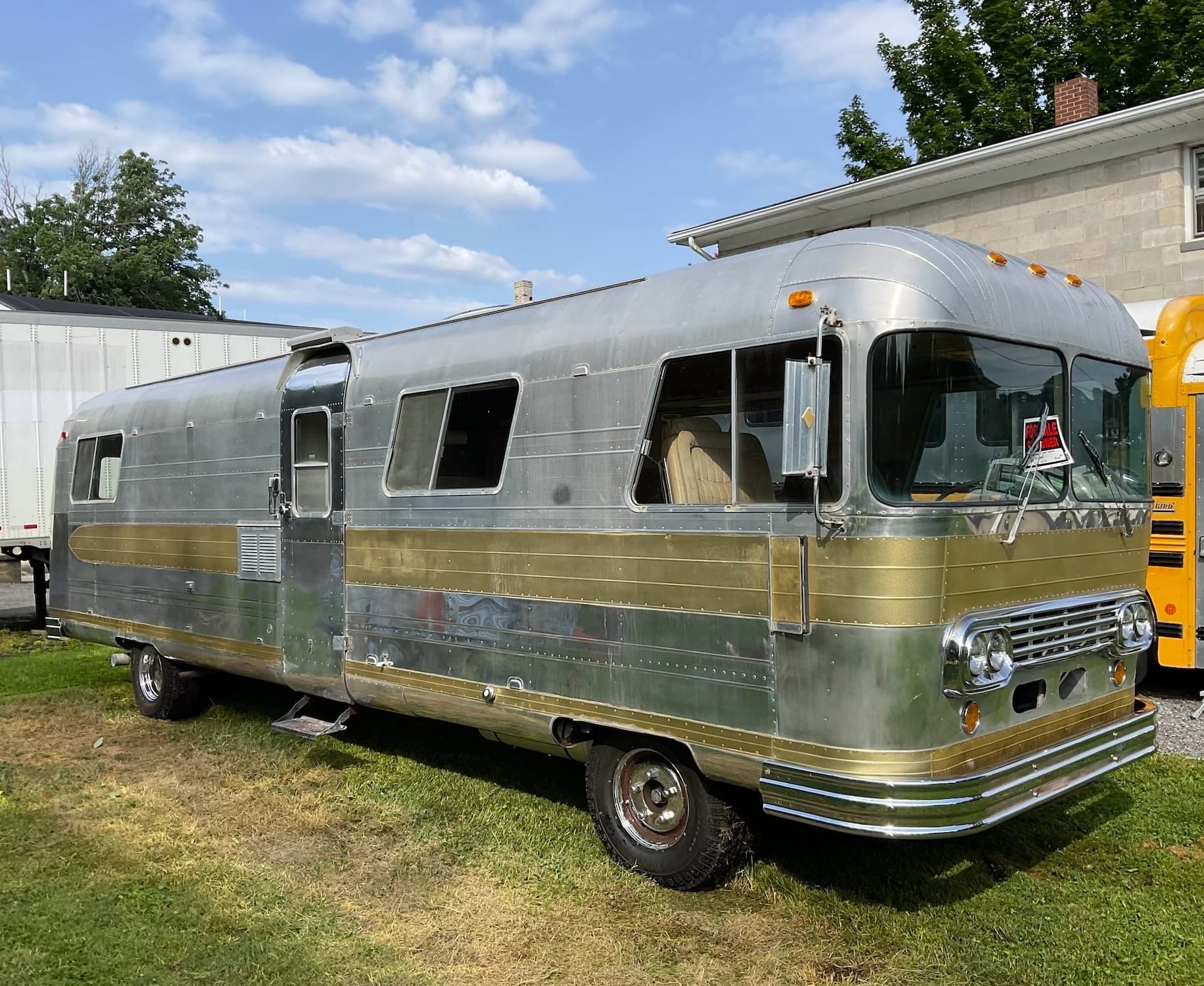
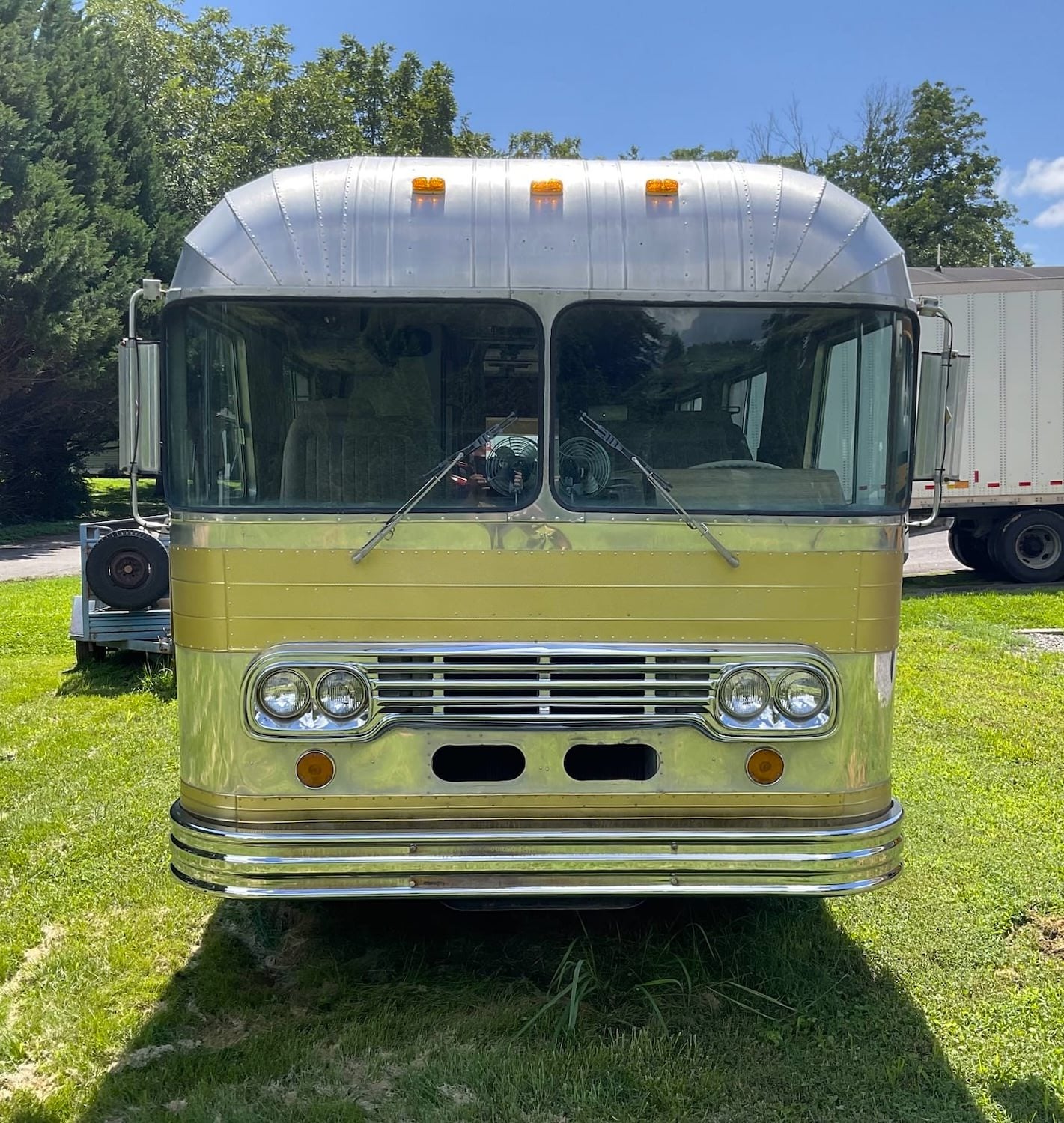
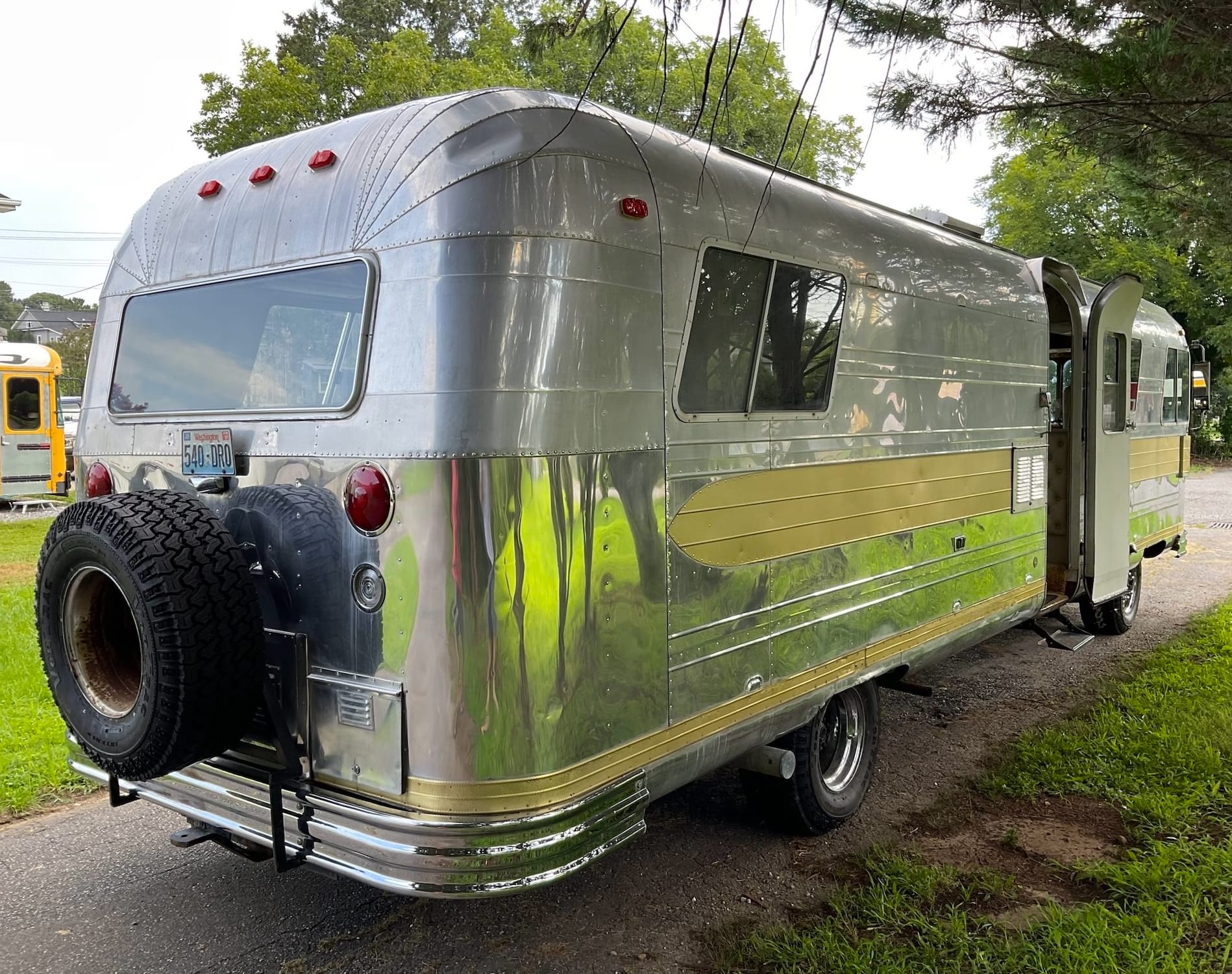
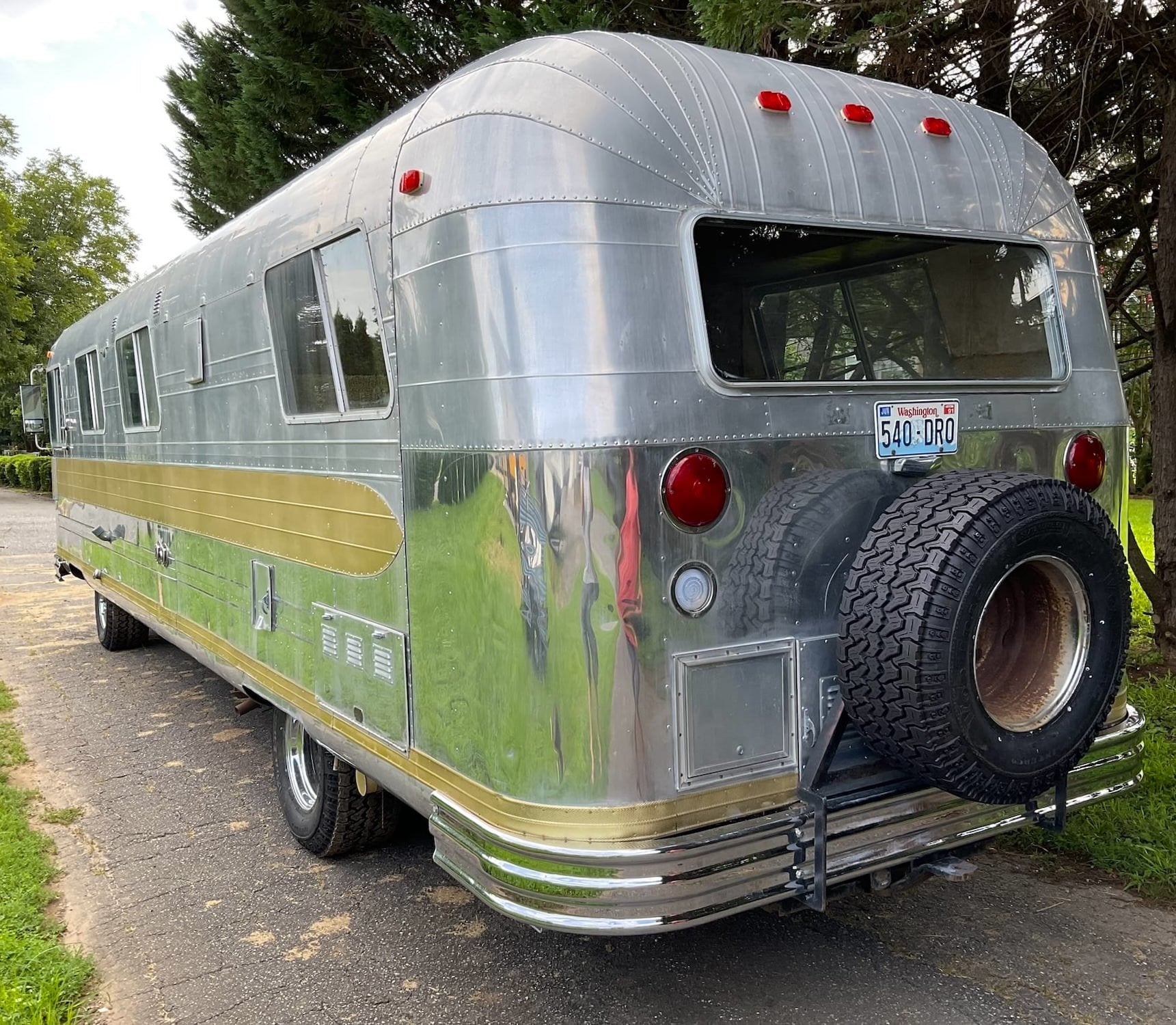
This is a 1966 Streamline Travel Home, a rare aluminum-bodied RV that appears to remain in largely original condition throughout. It’s based on a Ford chassis and powered by a big block Ford 428 FE V8.
Streamline built both RVs and travel trailers, and while they never achieved the same fame as Airstream or Winnebago, they were a major player in the industry for many years, and their gleaming aluminum creations are now considered highly-collectible in the vintage motorhome community.
 Streamline models carried aristocratic names, like the Prince, Duke, Duchess, Countess, Empress, Regency, and Imperial. Patterson implemented two ideas his old partners had rejected – a third, central frame rail, and cabinetry built from riveted aluminum frames rather than wood to save weight. Image courtesy of the Streamline Trailer Company.
History Speedrun: The Streamline Trailer Company
The Streamline Trailer Company of El Monte, California, built riveted aluminum travel trailers for 17 years and they made motorhomes too, but for far less time. In 1967 the company sold its Travel Home division to an Oklahoma concrete-block manufacturer named L.K. Newell, whose firm is still building coaches in the confusingly named town of Miami, Oklahoma. The travel trailer business that remained under Streamline ownership was gone by early 1974.
From Silver Streak To Streamline
Streamline’s founder, James Victor “Pat” Patterson, had worked for the Curtis Wright Company, the Los Angeles-area travel trailer builder where Wally Byam designed the Curtis Wright Clipper in late 1946 before leaving to restart his earlier (and much more enduring) company, Airstream.
When Curtis Wright closed up shop in April of 1949, Patterson, Kenny Neptune, and Frank Polito bought the rights to the Clipper travel trailer design, and formed the Silver Streak Trailer Company in El Monte, just five miles from the old plant. In 1957 Neptune and Polito bought Patterson out, and Patterson and Harry Lovett founded the Streamline Trailer Manufacturing Company. Streamline advertisements were running by March of that same year.
Perhaps unsurprisingly, the trailers from Streamline looked a lot like their cousins from Silver Streak and Airstream – with rounded, riveted aluminum shells, though Streamline’s trailers were distinguished by gold anodized trim that owners now use to pick one out at a distance.
Streamline models carried aristocratic names, like the Prince, Duke, Duchess, Countess, Empress, Regency, and Imperial. Owners’ accounts collected by Tin Can Tourists credit Patterson with two ideas his old partners had rejected – a third, central frame rail, and cabinetry built from riveted aluminum frames rather than wood to save weight.
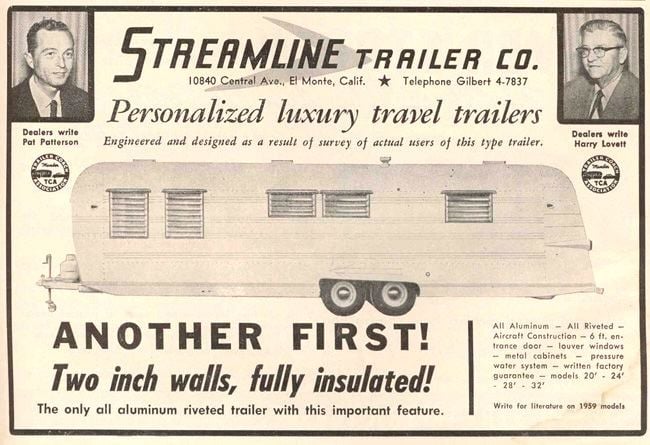
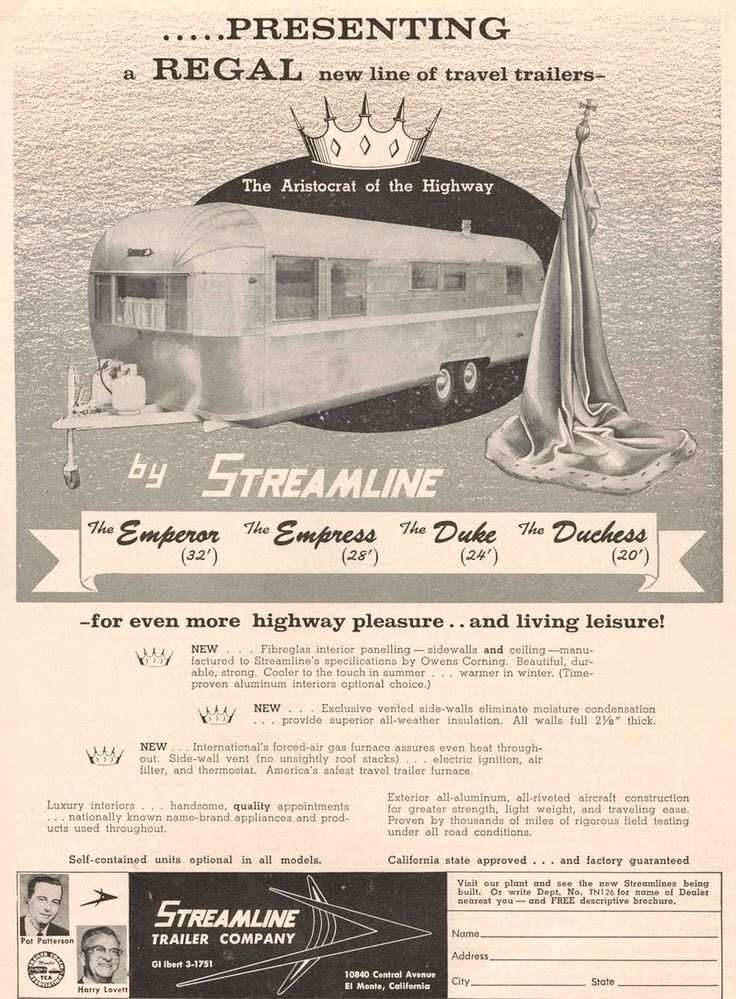
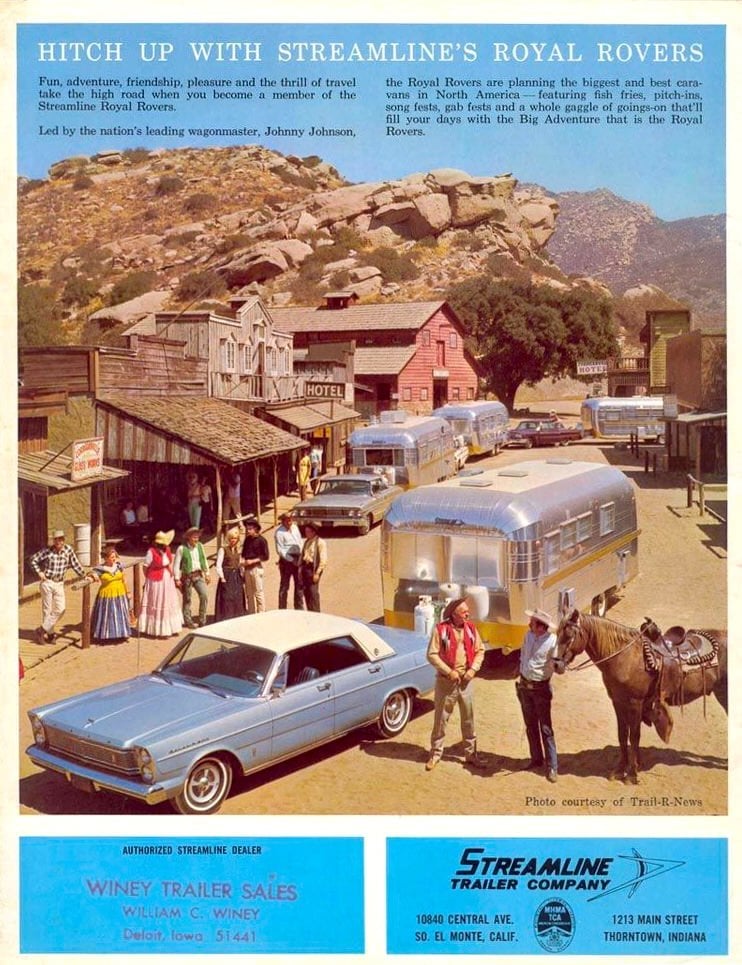
Streamline eventually ran two factories, one in El Monte and one in Indiana, and from the early 1960s it sponsored an owners’ club, the Streamline Royal Rovers, which organized caravans within the United States and into neighboring Canada and Mexico. Image courtesy of the Streamline Trailer Company.
Streamline eventually ran two factories, one in El Monte and one in Indiana, and from the early 1960s it sponsored an owners’ club, the Streamline Royal Rovers, which organized caravans within the United States and into neighboring Canada and Mexico. The Royal Rovers’ official history site records about 1,450 members and 21 chapters by 1972 and 1973, when Streamline had 43 dealers across the country.
The Travel Home Makes Its Debut
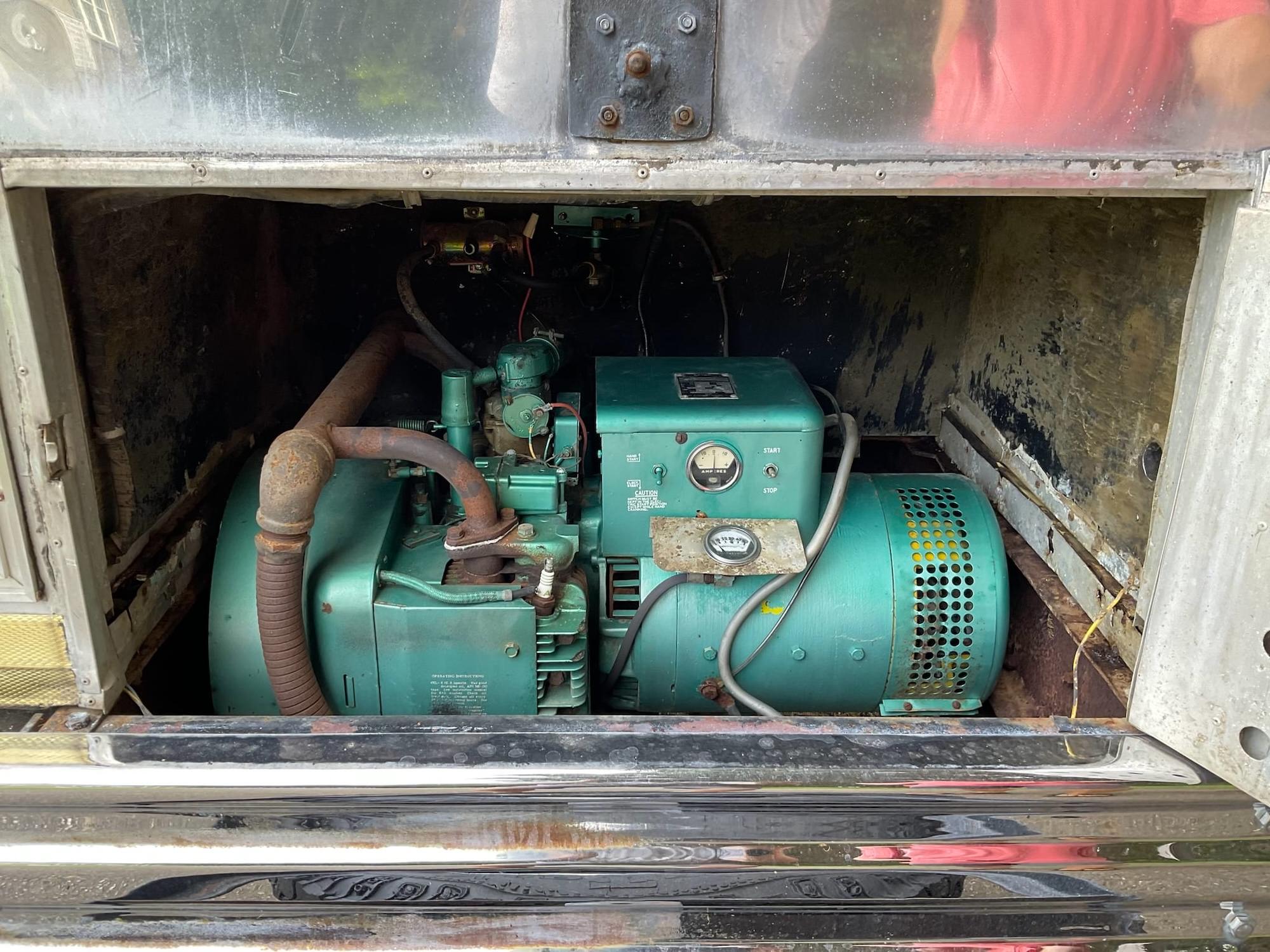
The Travel Home arrived in the mid-1960s – it put the trailer body, aluminum skin, and gold trim onto what Newell later described as a conventional one-ton Ford chassis, with a gasoline V8 up front. A common model size was the 30-footer on a 193-inch Ford wheelbase, with a 330 cubic inch (5.4 liter) Ford V8, a 3-speed Cruise-O-Matic, twin 30-gallon fuel tanks, a 35-gallon holding tank, a tub and shower, forced-air heating and air conditioning, and a 3,500 watt onboard generator.
Several floor plans were offered, including the Vista Deck version had an open rear porch, but sadly they didn’t sell very well. Karl Blade, who took over Newell in 1979, later said that the motorhomes were not big sellers for Streamline, and marque experts have estimated of total production run to roughly 70 to 80 units.
The buyer, L.K. Newell, made his money in concrete blocks and residential air-conditioning in Miami, Oklahoma. In 1967 he traveled to El Monte to collect a new Travel Home, spent two weeks with it, and came back with a list of complaints.
The Newell company history records the owner’s reply: “If you’re so damned smart, why don’t you buy the motorhome operation from me?” A deal was struck the same day. Newell shipped the tooling, parts, and two or three unfinished shells to Oklahoma and completed his first coach there that year. His first priority was getting rid of the Ford front-engine chassis. Newell introduced a rear-engine coach in 1971 and a rear-engine diesel in 1972, then sold the firm in 1973 as his health began to fail.
The trailer company ultimately outlasted its motorhome by six years. It built a new factory in Chino, California, and sold out to Guerdon Industries, a mobile-home group that operated 57 plants at its peak. Guerdon shut Streamline down after the 1973 Oil Crisis as a tax write-off, and an attempt by members to buy the manufacturing rights fell through.
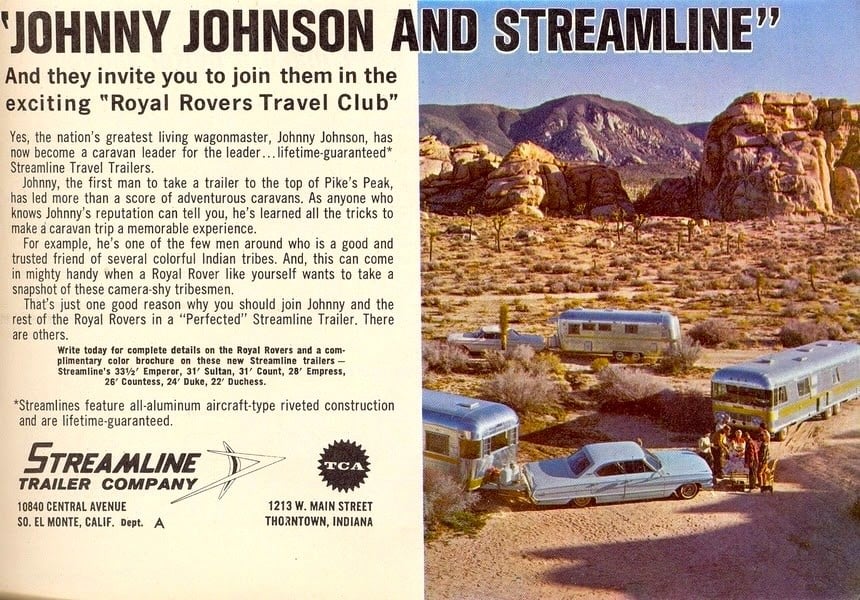
Perhaps unsurprisingly, the trailers from Streamline looked a lot like their cousins from Silver Streak and Airstream – with rounded, riveted aluminum shells, though Streamline’s trailers were distinguished by gold anodized trim that owners now use to pick one out at a distance. Image courtesy of the Streamline Trailer Company.
Production ended in early 1974. Silver Streak, the company Patterson had left, kept building in El Monte and later Chino until 1997. Newell Coach still builds its chassis and bodies from the ground up in Miami, Oklahoma, at a rate of about 26 units a year.
The 1966 Streamline 30′ Travel Home Shown Here
This is a 1966 Streamline Travel Home, it’s a 30 foot aluminum-bodied motorcoach that was built on a Ford chassis by the Streamline Trailer Company of El Monte, California. It reportedly spent its early years in California and Arizona with its first owner before moving to Washington in 1990, where it eventually sat off the road for more than 20 years.
The seller bought it from the original owner’s son and moved it to North Carolina in 2024 for recommissioning – the odometer currently shows ~58,000 miles.
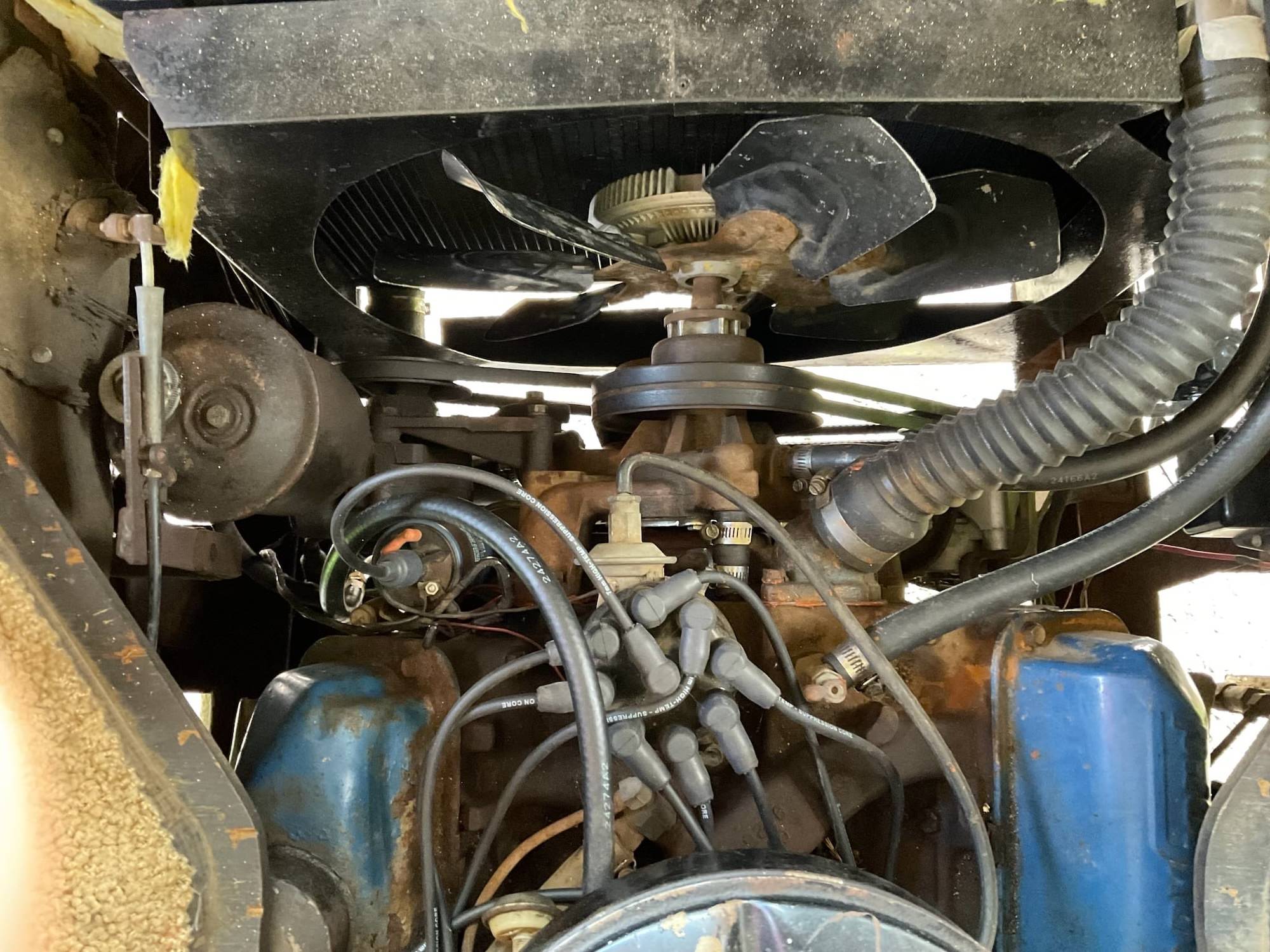
It’s powered by a Ford FE 428 V8 paired with a 3-speed FMX automatic transmission and a Rockwell rear axle with 5.29:1 gearing. Considerable mechanical work has been carried out since 2024, including carburetor repairs, a re-cored radiator, rebuilt starter and alternator, new water and fuel pumps, replacement fuel tanks, new ignition components, and some brake work. The FMX transmission was also rebuilt, while the wheel cylinders were replaced and the brake booster and master cylinder rebuilt.
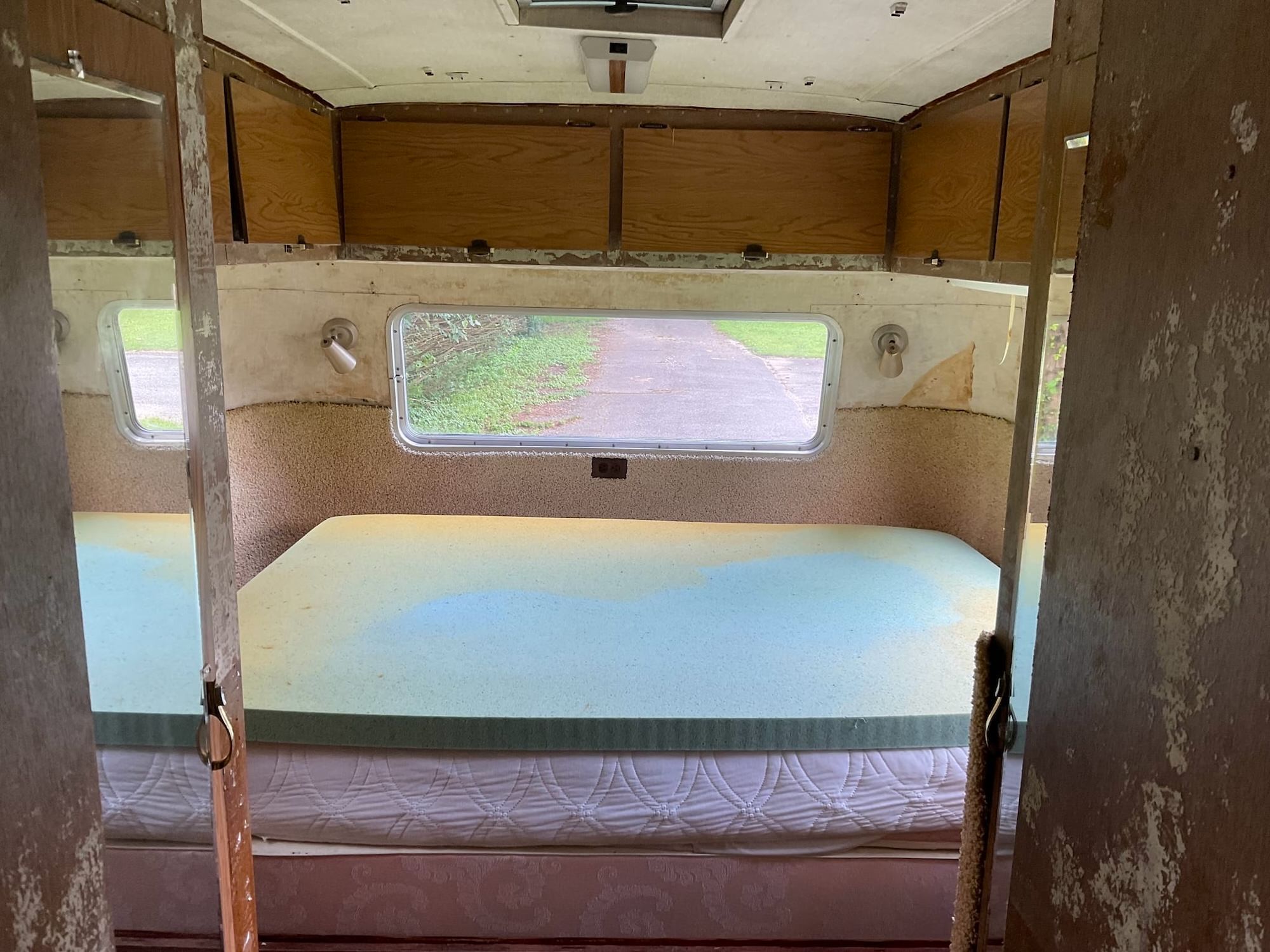
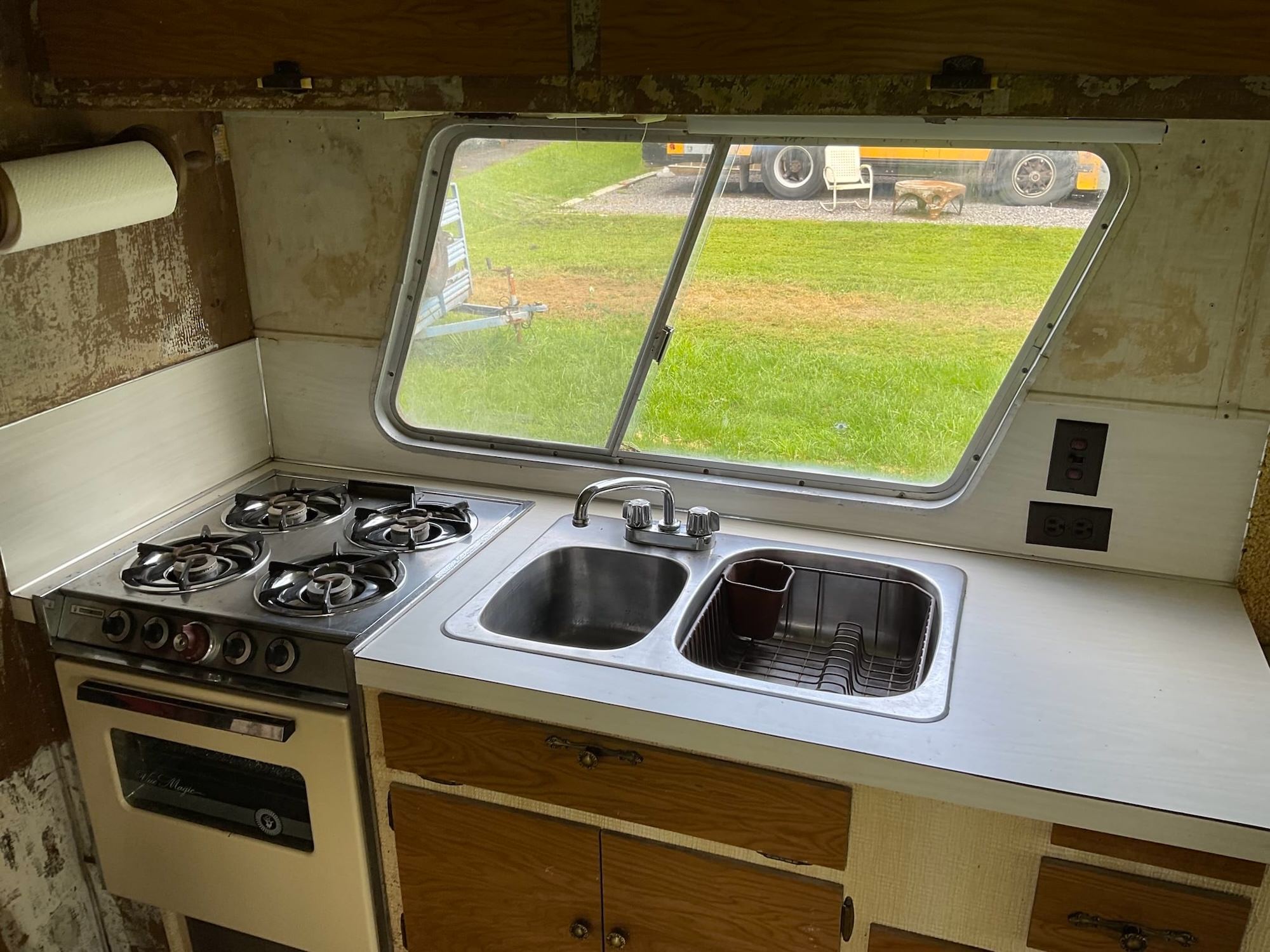
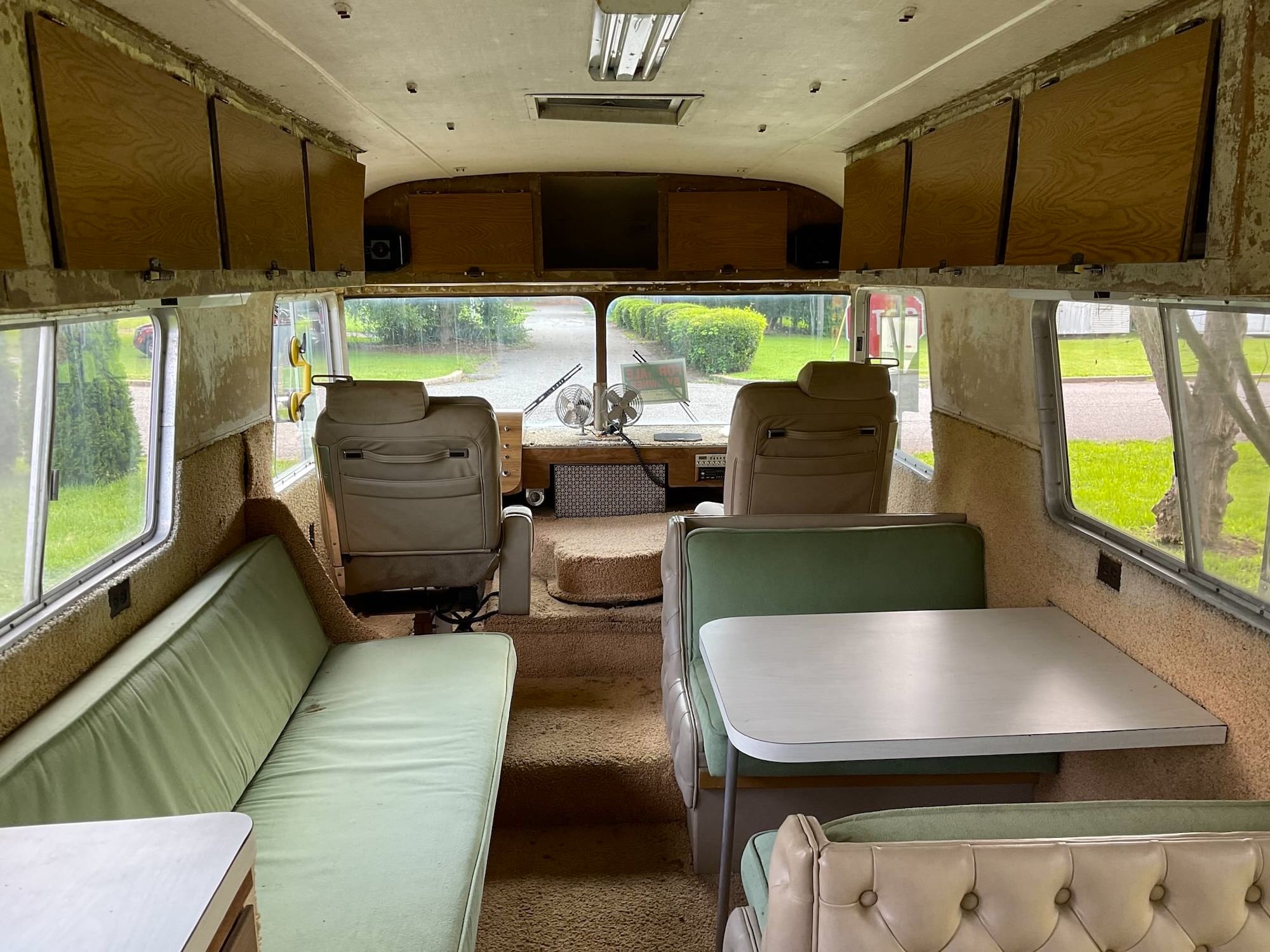
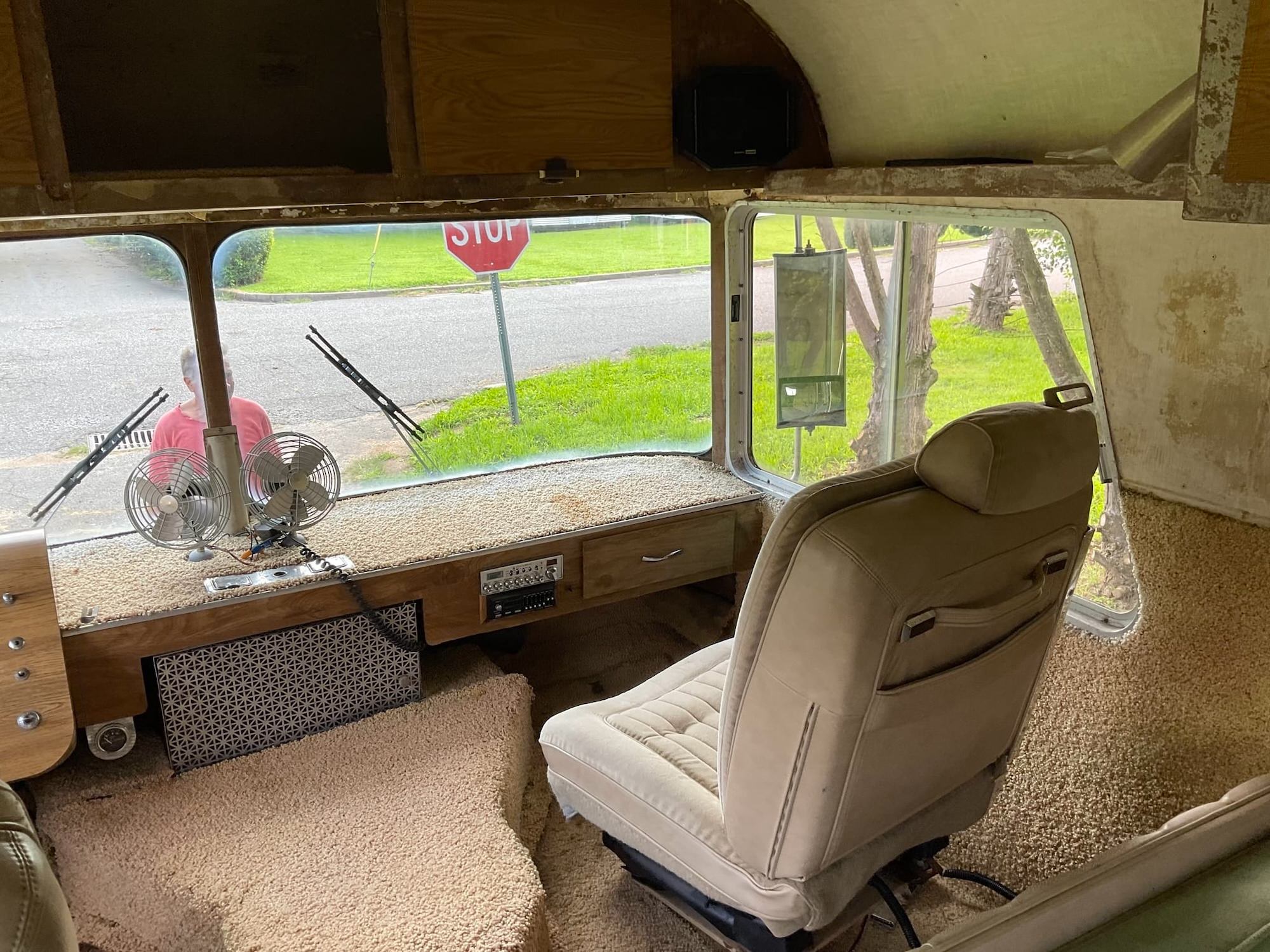
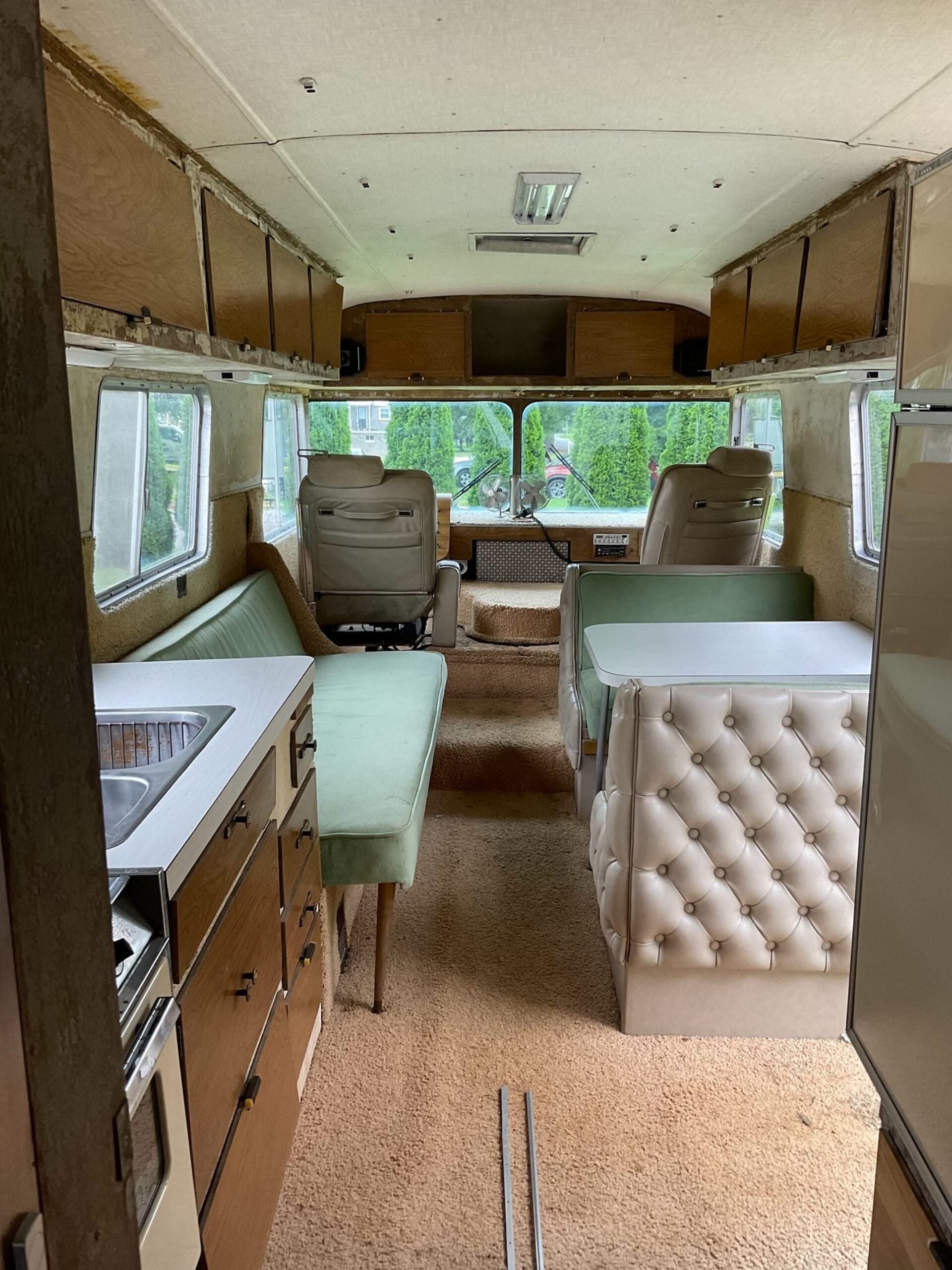
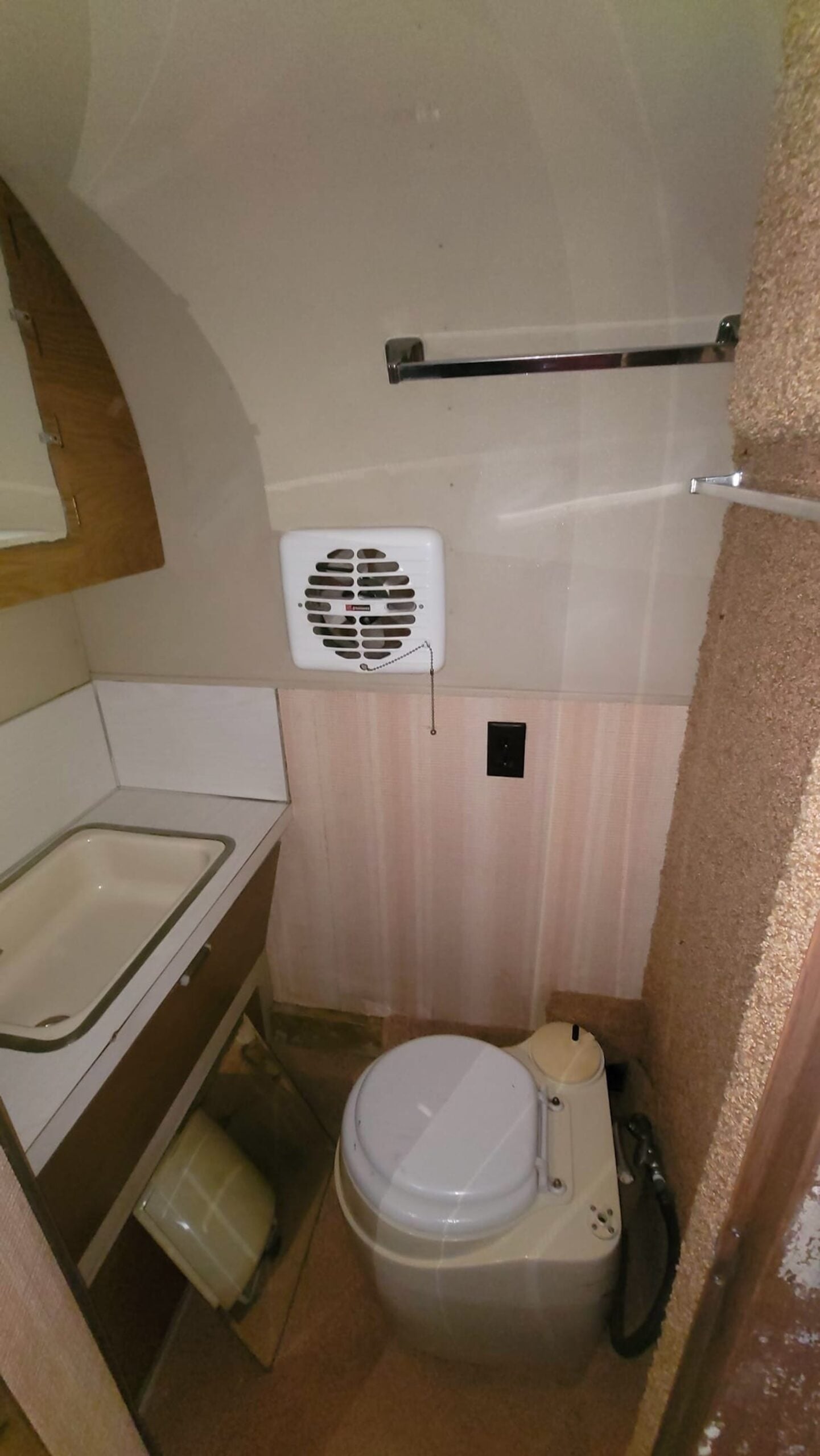
Inside, the largely period-original cabin has a convertible sofa, a booth dinette, a rear bed, a kitchenette, a bathroom, twin front captain’s chairs, a CB radio, and a Sanyo cassette stereo. The kitchen has a Magic Chef oven and four-burner cooktop, double sink, and electric/propane refrigerator, while the bathroom has a toilet, sink, and combined shower and tub.
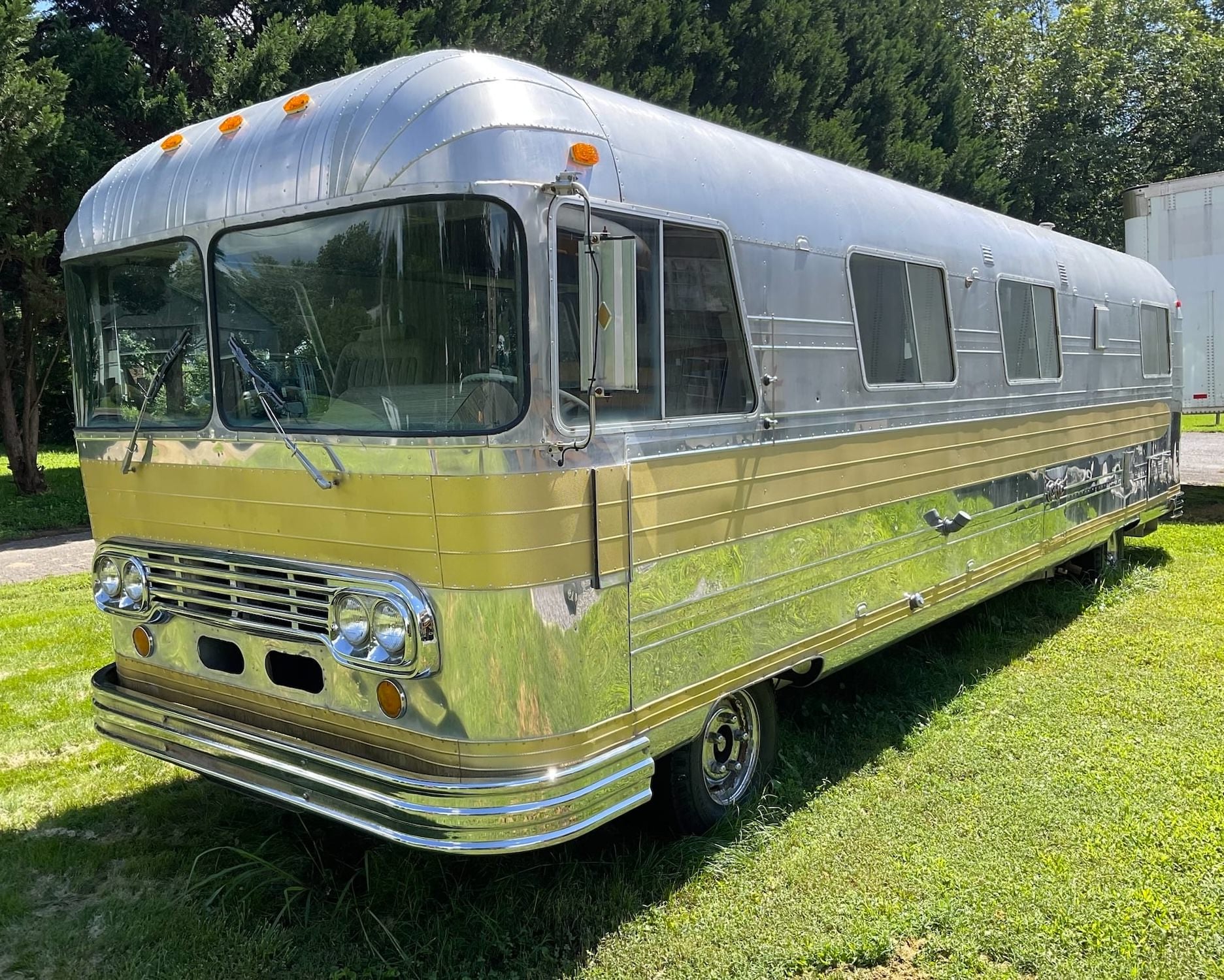
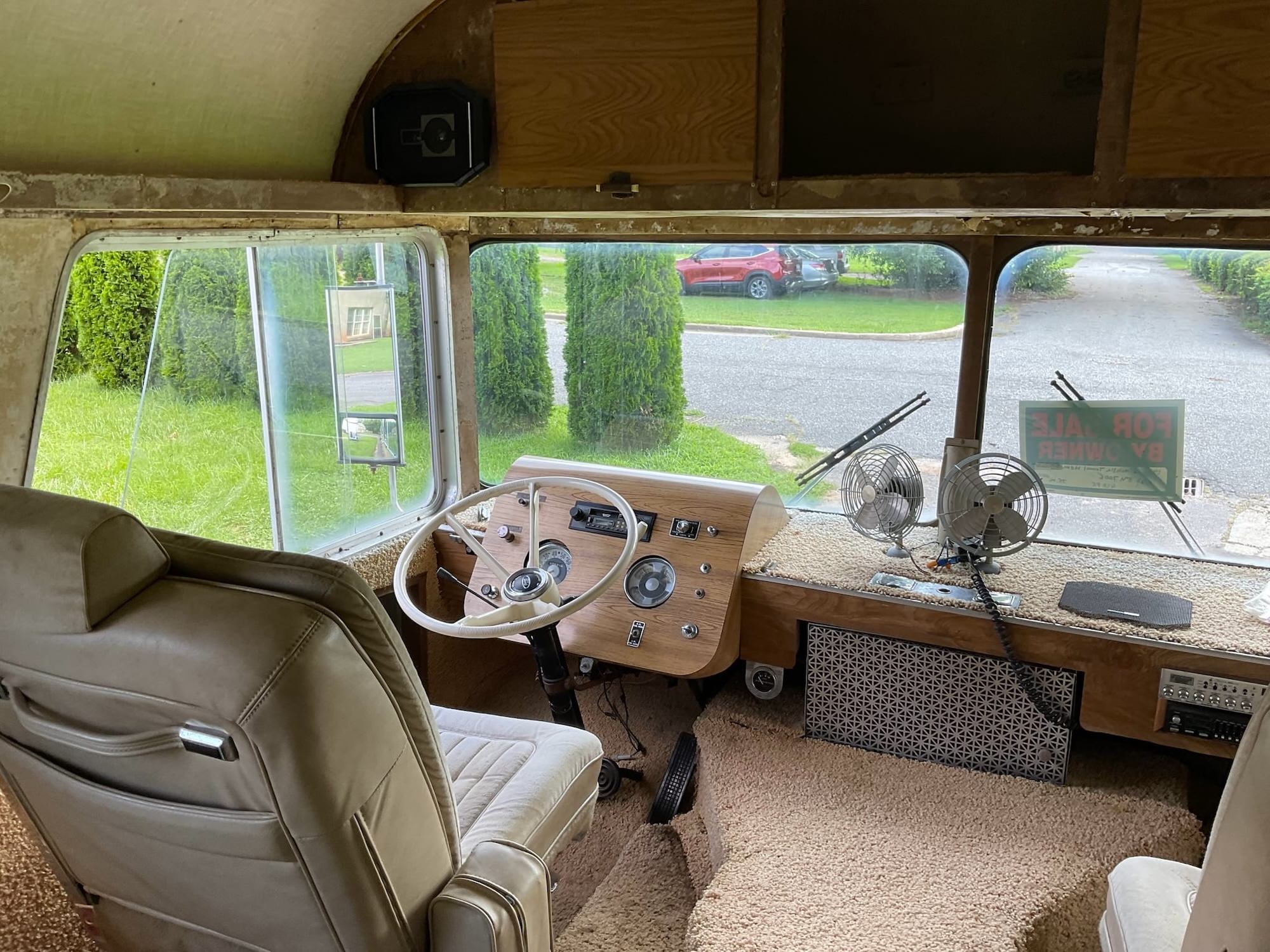
This is a 1966 Streamline Travel Home, it’s a 30 foot aluminum-bodied motorcoach that was built on a Ford chassis by the Streamline Trailer Company of El Monte, California. It reportedly spent its early years in California and Arizona with its first owner before moving to Washington in 1990, where it eventually sat off the road for more than 20 years.
While it does appear usable, it’s clear that the interior could do with a significant refresh, and it would probably be fair to call it a rolling restoration rather than a turnkey RV that wants for nothing.
It’s now being offered for sale out of Morganton, North Carolina with a clean North Carolina title, and you can visit the listing here if you’d like to read more about it or register to bid.
Images courtesy of Bring a Trailer

Articles that Ben Branch has written have been covered on CNN, Popular Mechanics, Smithsonian Magazine, Road & Track Magazine, the official Pinterest blog, the official eBay Motors blog, BuzzFeed, Autoweek Magazine, Wired Magazine, Autoblog, Gear Patrol, Jalopnik, The Verge, and many more.
Silodrome was founded by Ben back in 2010, in the years since the site has grown to become a world leader in the alternative and vintage motoring sector, with well over a million monthly readers from around the world and many hundreds of thousands of followers on social media.