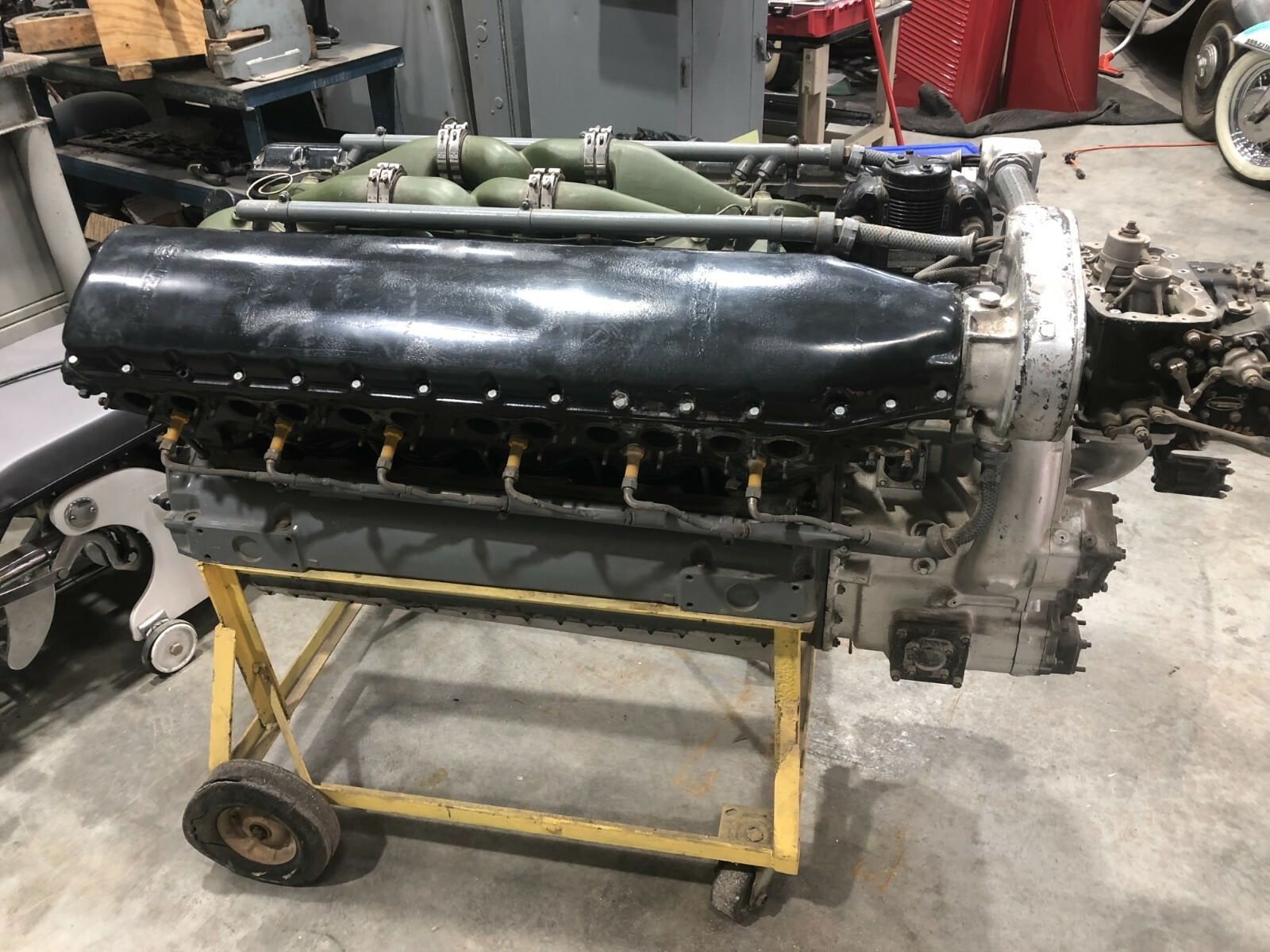
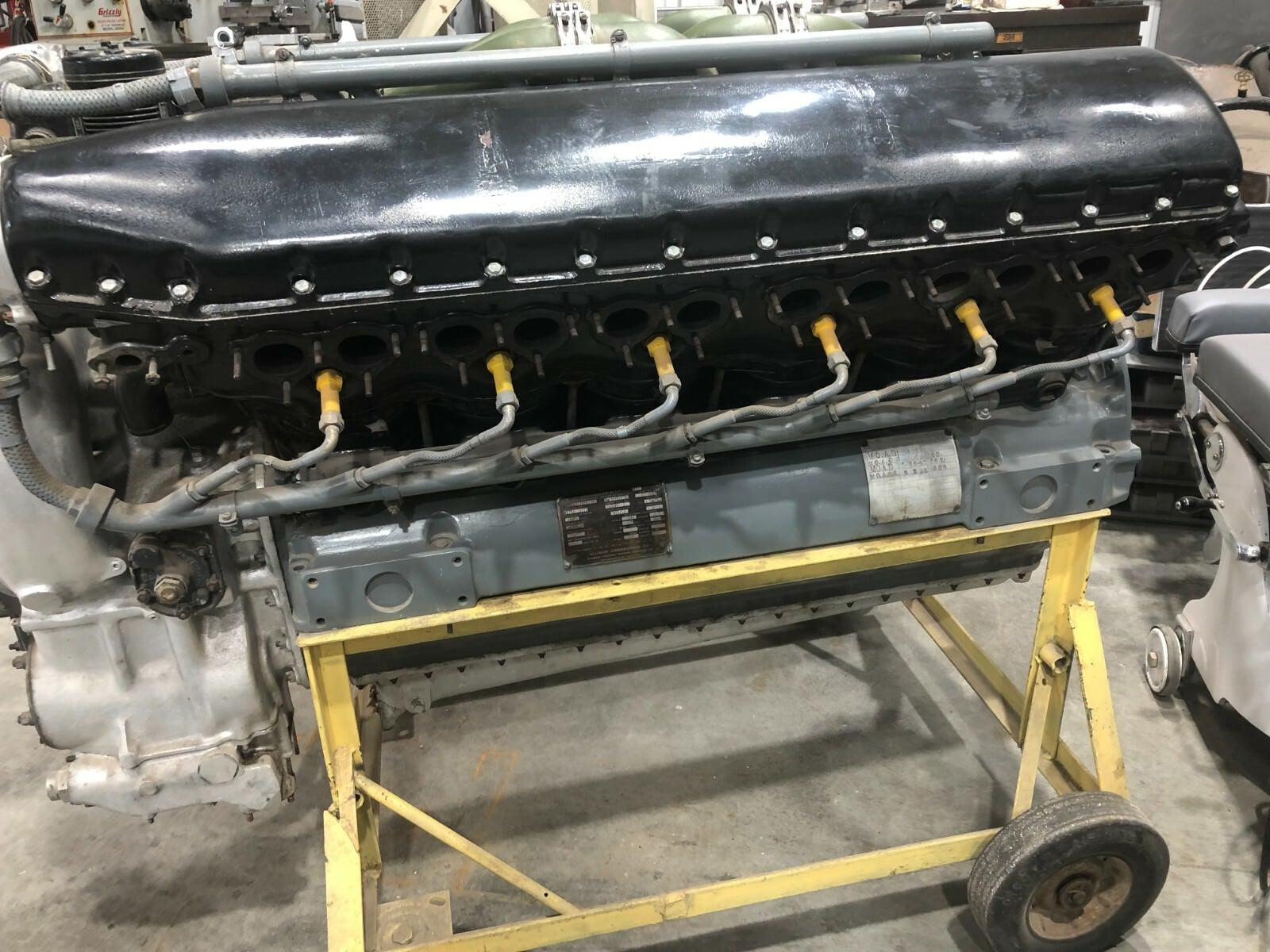
This is an Allison V1710-35 V12 aero engine, it’s capable of 1,150 bhp in stock form, or quite a bit more with modifications, and this one is being sold in rebuilt condition with zero hours since the rebuild was completed.
The V1710 was one of the most important liquid-cooled Allied aircraft engines of the Second World War, it’s always lived in the shadow of the Merlin V12 in some respects, it powered a slew of major US aircraft and it was used extensively in every major theatre of the conflict.
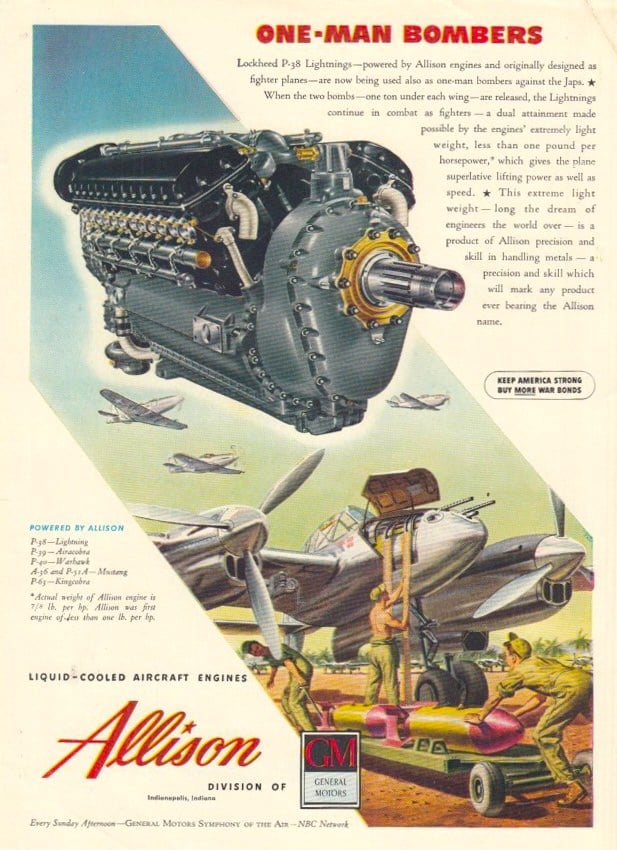
 The V1710 was one of the most important liquid-cooled Allied aircraft engines of the Second World War, it’s always lived in the shadow of the Merlin V12 in some respects, but it powered a slew of major US aircraft and it was used extensively in every major theatre of the conflict. Image courtesy of Allison.
History Speedrun: The Allison V-1710 V12 Engine
Allison built just over 70,000 V-1710 V12 engines between 1931 and 1948, interestingly, it was the only American-designed liquid-cooled engine to see combat service in the Second World War. It powered the Lockheed P-38, the Bell P-39 and P-63, the Curtiss P-40, the early North American Mustangs and, later, the F-82E, F, and G versions of the Twin Mustang.
The company that built the V-1710 V12 had started out as a race shop. James A. Allison, a co-founder of the Indianapolis Motor Speedway, set up the Indianapolis Speedway Team Company in 1915 to build and maintain cars for the 500, and after the First World War the company made its name rebuilding Liberty V12 aircraft engines.
General Motors bought the company in 1929, by which time chief engineer Norman Gilman had already begun work on a glycol-cooled V12 intended to grow into a 1,000 bhp engine. His argument was that a liquid-cooled engine could be buried inside a fuselage where a radial could not, cutting drag at high speed.
The U.S. Navy placed the first order for the engine, in mid-1930, for a 750 bhp version. It’s worth noting that at the time, 750 bhp was an incredible amount of power.
The engine was delivered in March of 1932, it was accepted that September after a 50 hour test run, and the U.S. Army followed with an order of its own. A reversible airship version of the engine, able to go from full power ahead to full power astern in just 8 seconds, was cancelled when the USS Macon “flying aircraft carrier” was damaged in a storm and crashed off California’s Big Sur coast in 1935.
The Army’s C-series engine first flew in a Consolidated XA-11A on December the 14th, 1936. In 1937 it passed the 150 hour type test at 1,000 bhp, which the Aircraft Engine Historical Society recorded as the first time any engine had done so at that rating – a huge milestone.
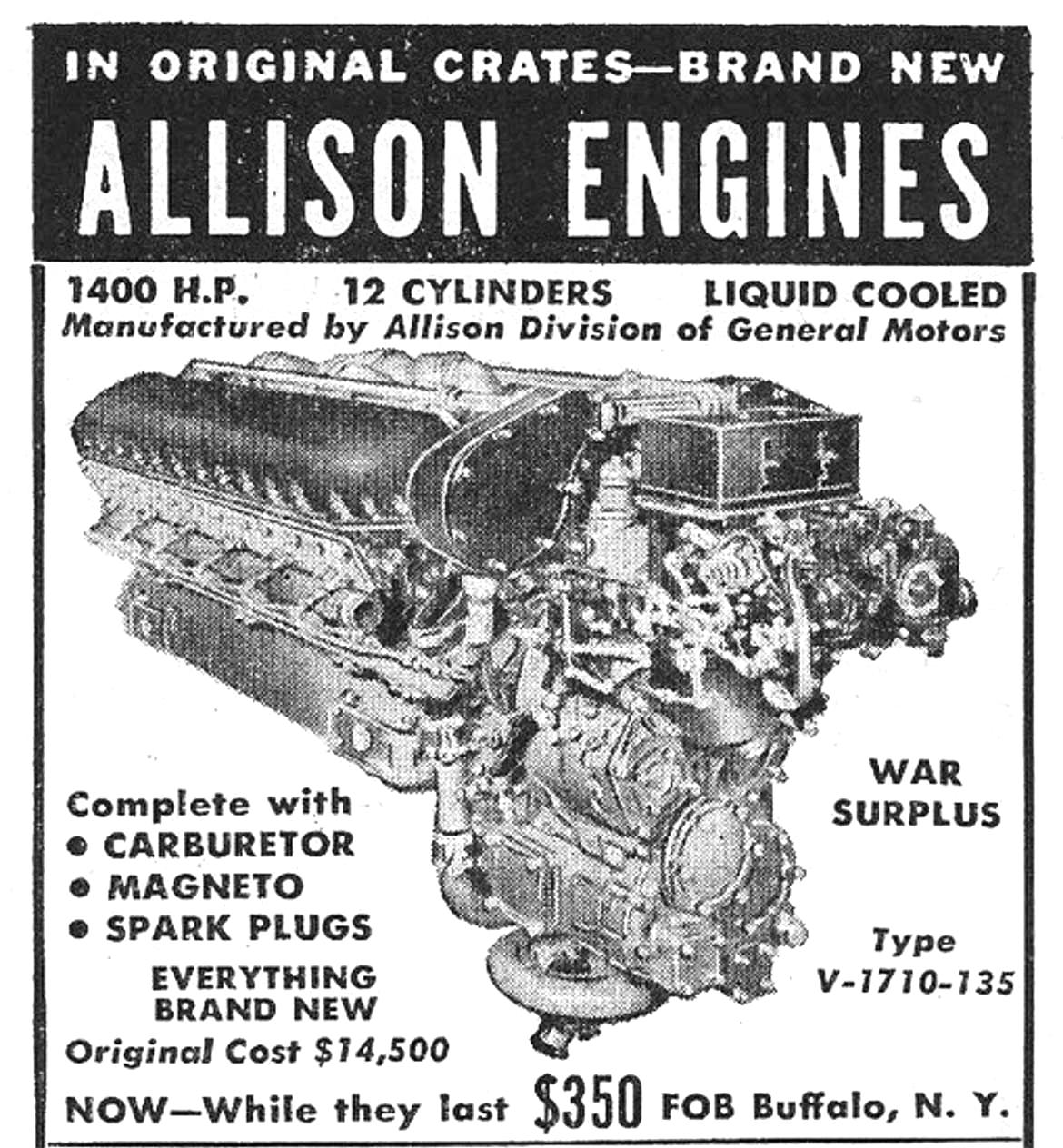
After the war 250 F-82E, F, and G Twin Mustangs took Allisons. Thousands of surplus engines went to drag racers, tractor pullers, and unlimited hydroplanes, where the Allison was the engine of choice for many years after production had ended. Image courtesy of Allison.
A V12 That Was Modular By Design
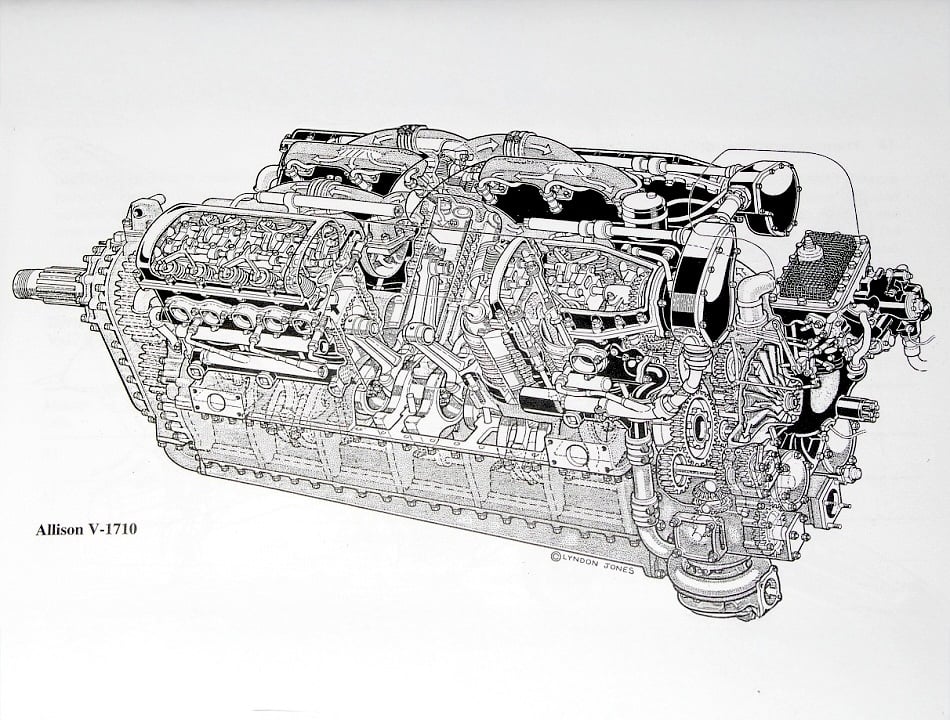
The Allison V-1710 was a 60º V12 with a bore of 5.5 inches and a stroke of 6.0 inches, for 1,710 cubic inches (28.0 liters) of total displacement. Each bank had a single overhead camshaft working four valves per cylinder, and most wartime production engines ran a 6.65:1 compression ratio. The P-38G’s V-1710-51 weighed 1,345 lbs and cost the government $19,000 apiece.
What really distinguished the engine from its competition was how it was assembled. One power section (the crankcase, crankshaft, pistons, cylinder blocks, valve gear) could take different nose cases – a long reduction-gear housing on the C-series, a compact spur gear on the F-series, or an extension shaft on the E-series that placed the engine behind the pilot in the P-39 and P-63 and left room for a 37mm cannon firing through the propeller hub.
Supercharger drive ratios were changed to suit the intended operating altitude of the aircraft. Turning the crankshaft end-for-end and adding an idler gear produced a left-hand engine for the P-38’s opposite nacelle, the Lightning’s right-hand 51 and left-hand 55 differed only in the direction the propeller shaft turned.
The Supercharger/Turbocharger Question
The Army specified a single-stage, single-speed mechanical supercharger and intended to add a General Electric turbocharger wherever altitude performance was needed. The turbocharged Curtiss XP-37 grew an enormously long nose to house the plumbing, it proved unreliable, and the turbocharger was dropped from the P-39 during development.
As a result of this, the P-40 and P-39 went to war with engines that lost power rapidly above roughly 15,000 feet, and they did their fighting in North Africa, the Pacific, and with the Soviet air force rather than at altitude over Germany. The twin-engined P-38, whose nacelles had room for the turbochargers and their ducting, was the one V-1710 fighter to go to war with the Luftwaffe in significant numbers.
The first P-51 Mustangs, built to a British order after North American declined to build the P-40 under license, used the Allison V12 too. The airframe was fast enough at low level that the British had the engine replaced with a two-stage supercharged Merlin V12, and the P-51B soon followed.
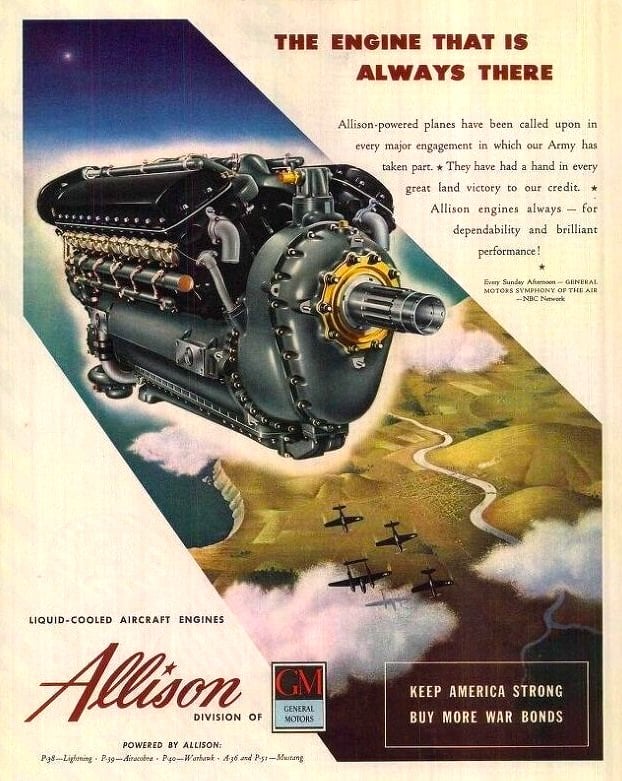
Allison built just over 70,000 V-1710 V12 engines between 1931 and 1948, interestingly, it was the only American-designed liquid-cooled engine to see combat service in the Second World War. It powered the Lockheed P-38, the Bell P-39 and P-63, the Curtiss P-40, the early North American Mustangs and, later, the F-82E, F, and G versions of the Twin Mustang. Image courtesy of Allison.
Allison V-1710 Variants + Power
Quoted power outputs rose steadily through the war – the V-1710-33 in the early P-40 had a take-off rating of 1,040 bhp at 2,800 rpm, the P-40E’s engine was good for 1,150 bhp. The P-39Q’s V-1710-85 was rated at 1,200 bhp with a maximum of 1,325 bhp, and the P-38G’s -51 had the same 1,325 bhp maximum. The P-38L’s -111 and -113 were rated at 1,475 bhp each, and the P-63E’s V-1710-109 at 1,425 bhp for take-off.
From 1943 Allison added an auxiliary supercharger stage to some engines. These went into the P-63 and, once the war was over, the G-series for the F-82, with a war emergency rating of 2,250 bhp at 3,200 rpm on water-methanol injection. The V-1710-127, a turbo-compound engine that fed exhaust-turbine power back into the crankshaft, carried a war emergency rating of 3,090 bhp. It was intended for the XP-63H, which never flew.
The F-series was the volume production engine – roughly 47,700 of them were shipped, versus about 19,000 E-series, 2,580 C-series, and 763 G-series. Allison employed 600 people in 1939 but they had 23,019 on the payroll by 1943, an astonishing pace of growth that was almost entirely down to demand from the conflict.
The 50,000th engine was delivered in March of 1944, and the division won the Army-Navy “E” award four times. By January 1941 the national press was already describing the V-1710 as the engine on which the Army had placed its biggest bet.
After the war 250 F-82E, F, and G Twin Mustangs took Allisons. Thousands of surplus engines went to drag racers, tractor pullers, and unlimited hydroplanes, where the Allison was the engine of choice for many years after production had ended.
On June the 26th, 1950, Stan Sayres drove the Allison-powered Slo-mo-shun IV over a measured mile on Lake Washington at 160.323 mph, beating the world water speed record Malcolm Campbell had set in 1939.
The Allison V1710-35 V12 Shown Here
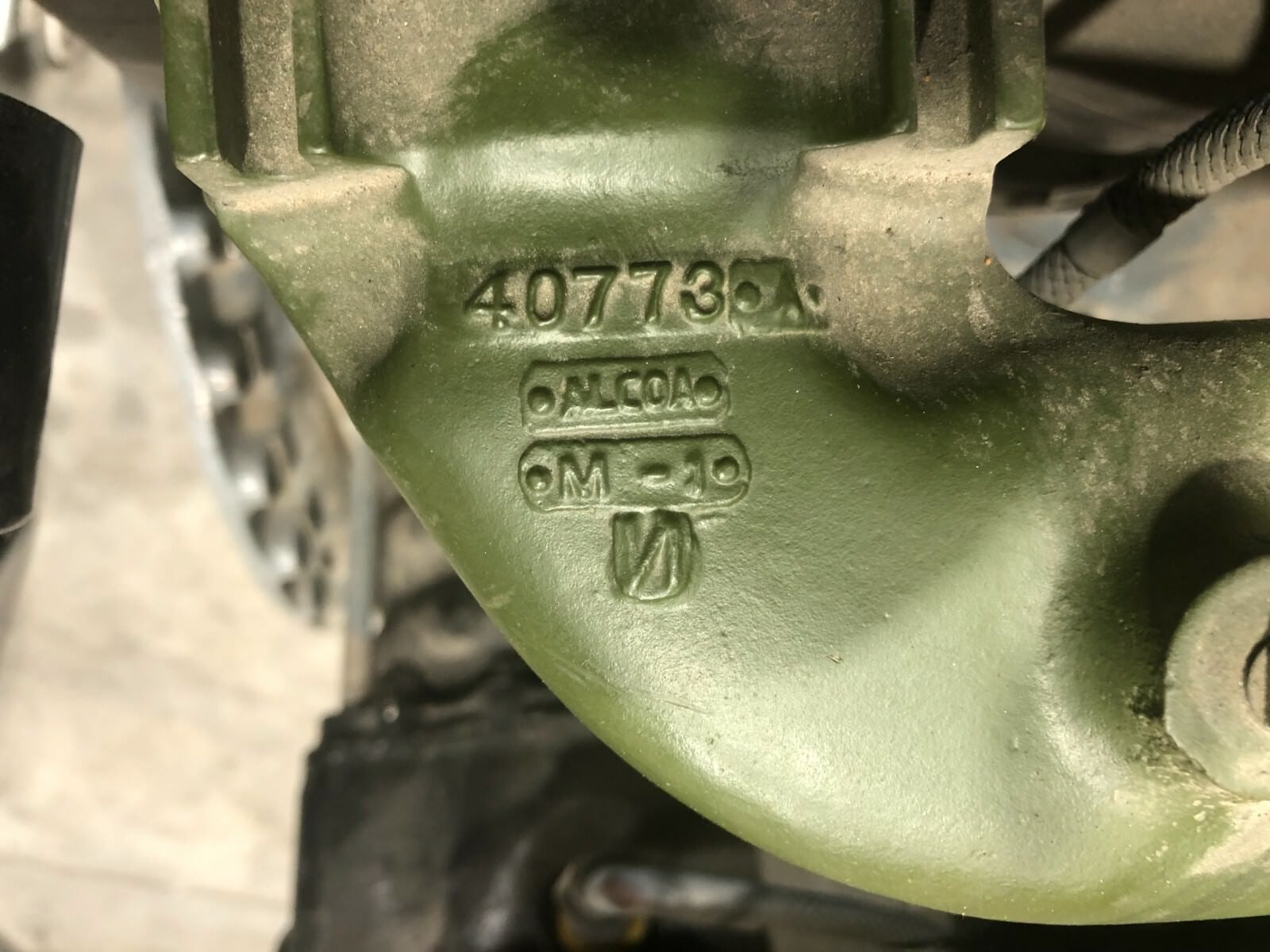
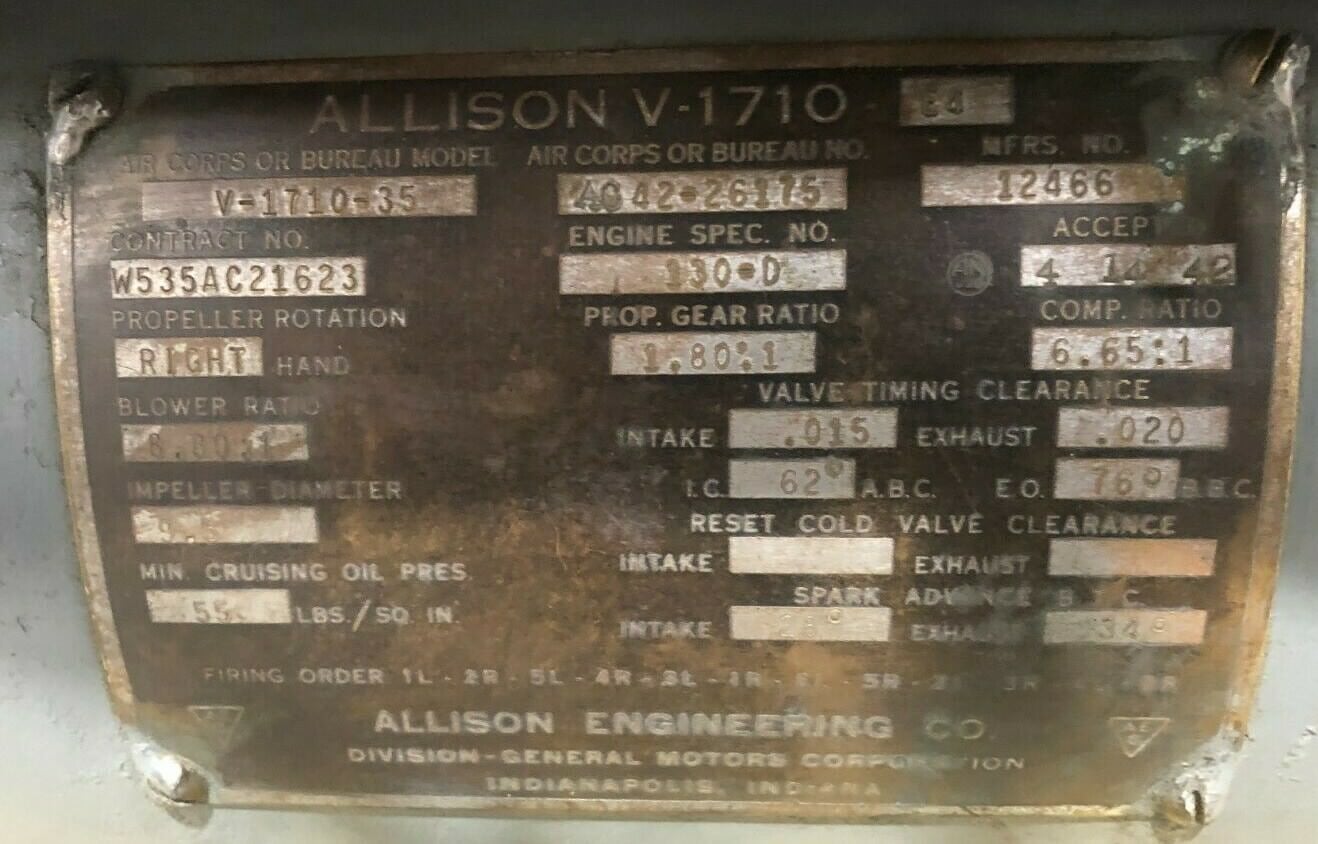
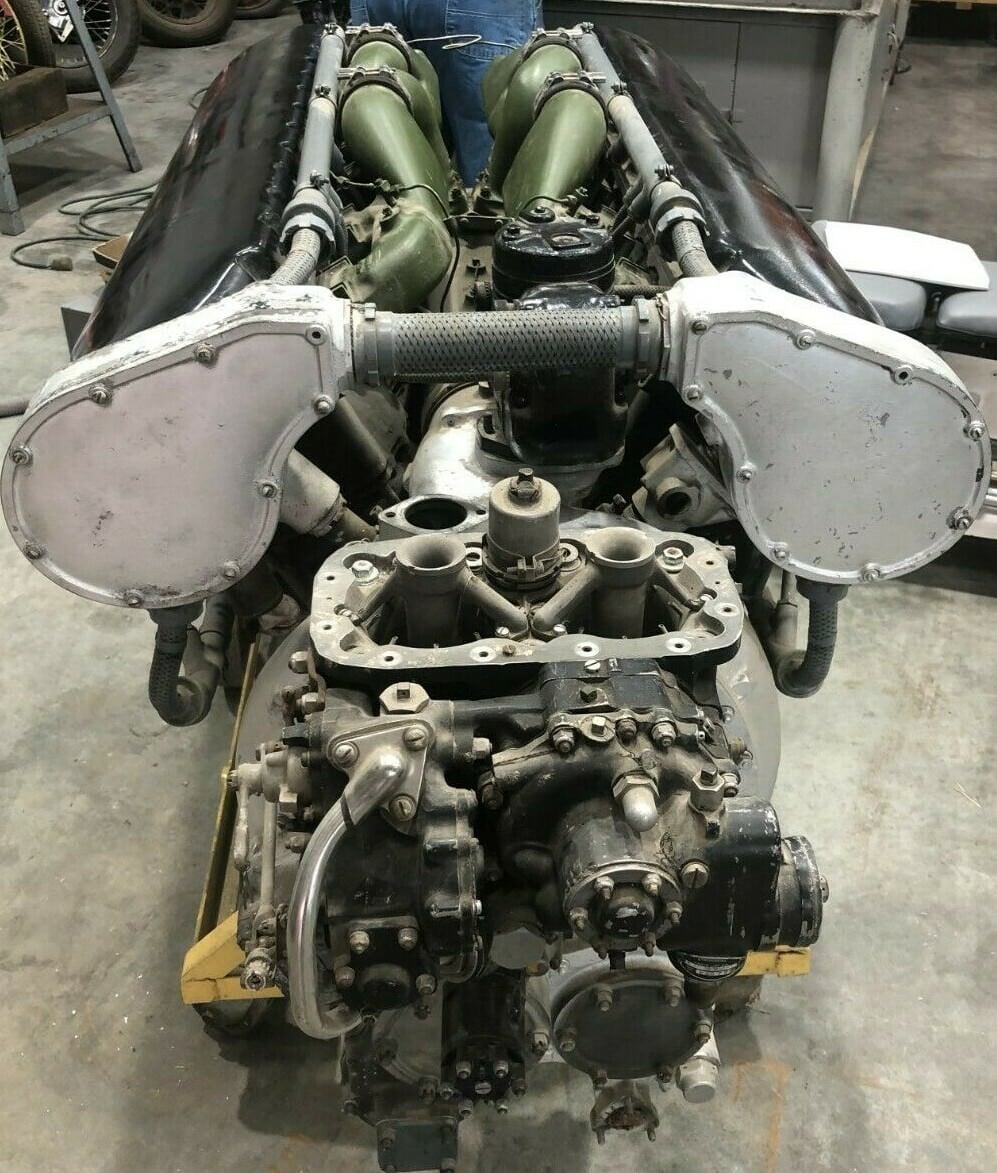
We actually don’t have a huge amount of additional information about this Allison V1710-35 V12, all we know is that it’s being offered for sale by Hall Industrial Services, and it’s listed as having 0 hours on it since it was rebuilt.
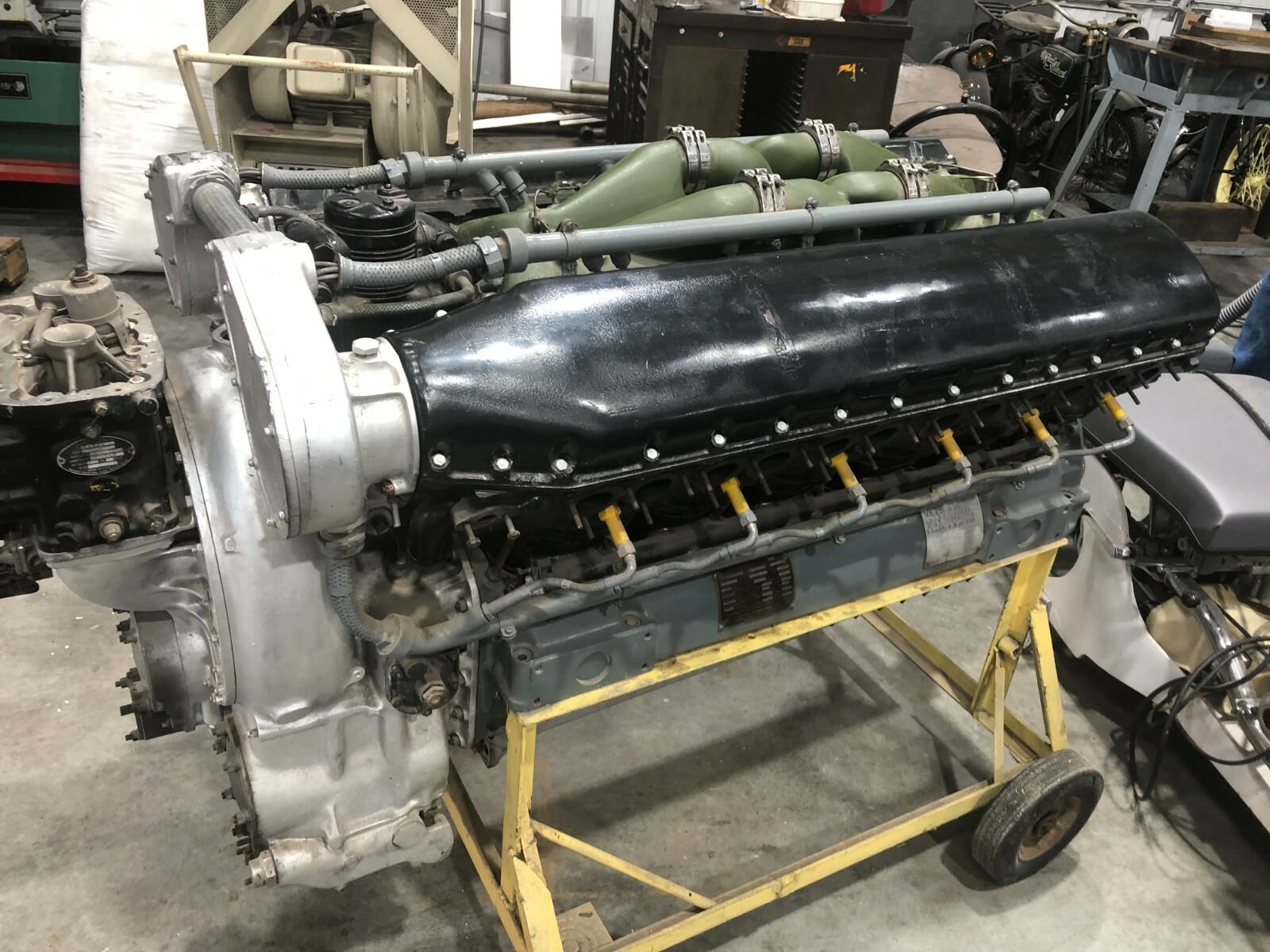
This is an Allison V1710-35 V12 aero engine, it’s capable of 1,150 bhp in stock condition and quite a bit more with modifications, and this one is being sold in rebuilt condition with zero hours since the rebuild was completed.
The V1710-35 is capable of 1,150 bhp in standard factory configuration from its 28 liter displacement. Modified versions of the engine were used in various forms of motorsport over the years, typically producing as much as 2-3 times that power rating.
This engine is now being offered for sale on eBay out of Wichita, Kansas with a Buy It Now price of $49,500 USD or best offer. If you’d like to read more about it or register to bid you can visit the listing here.
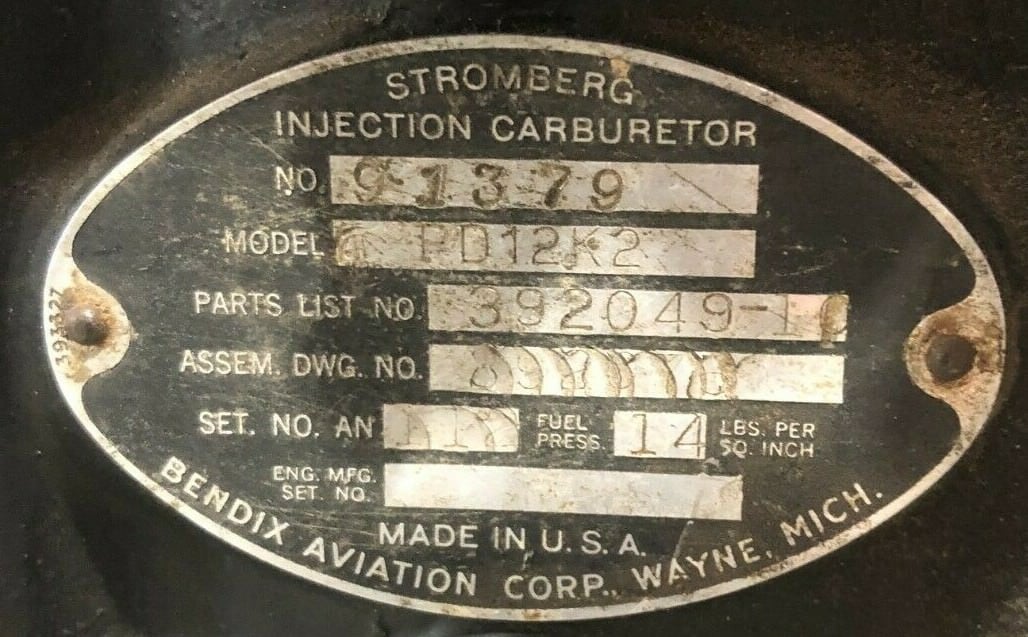
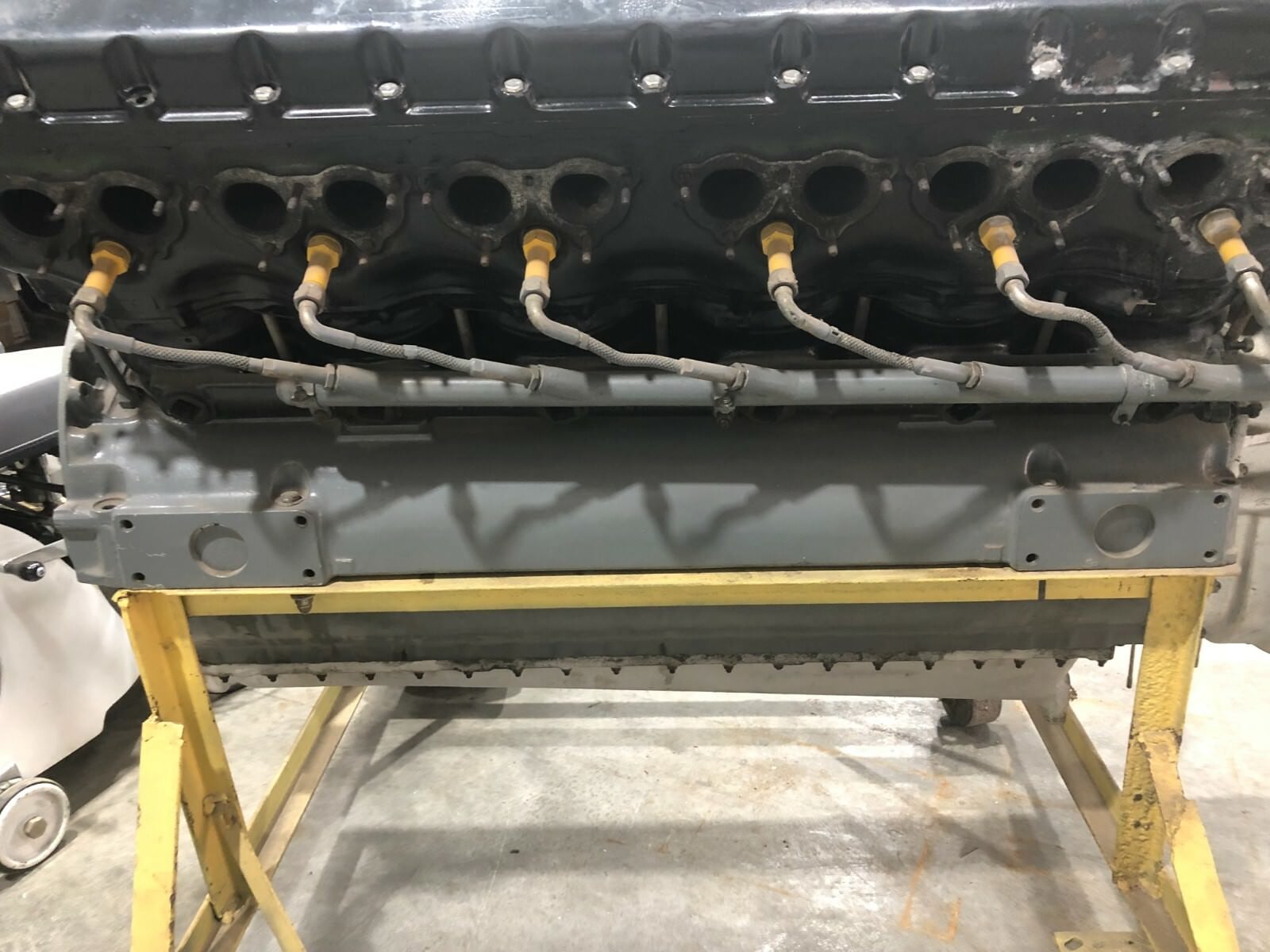
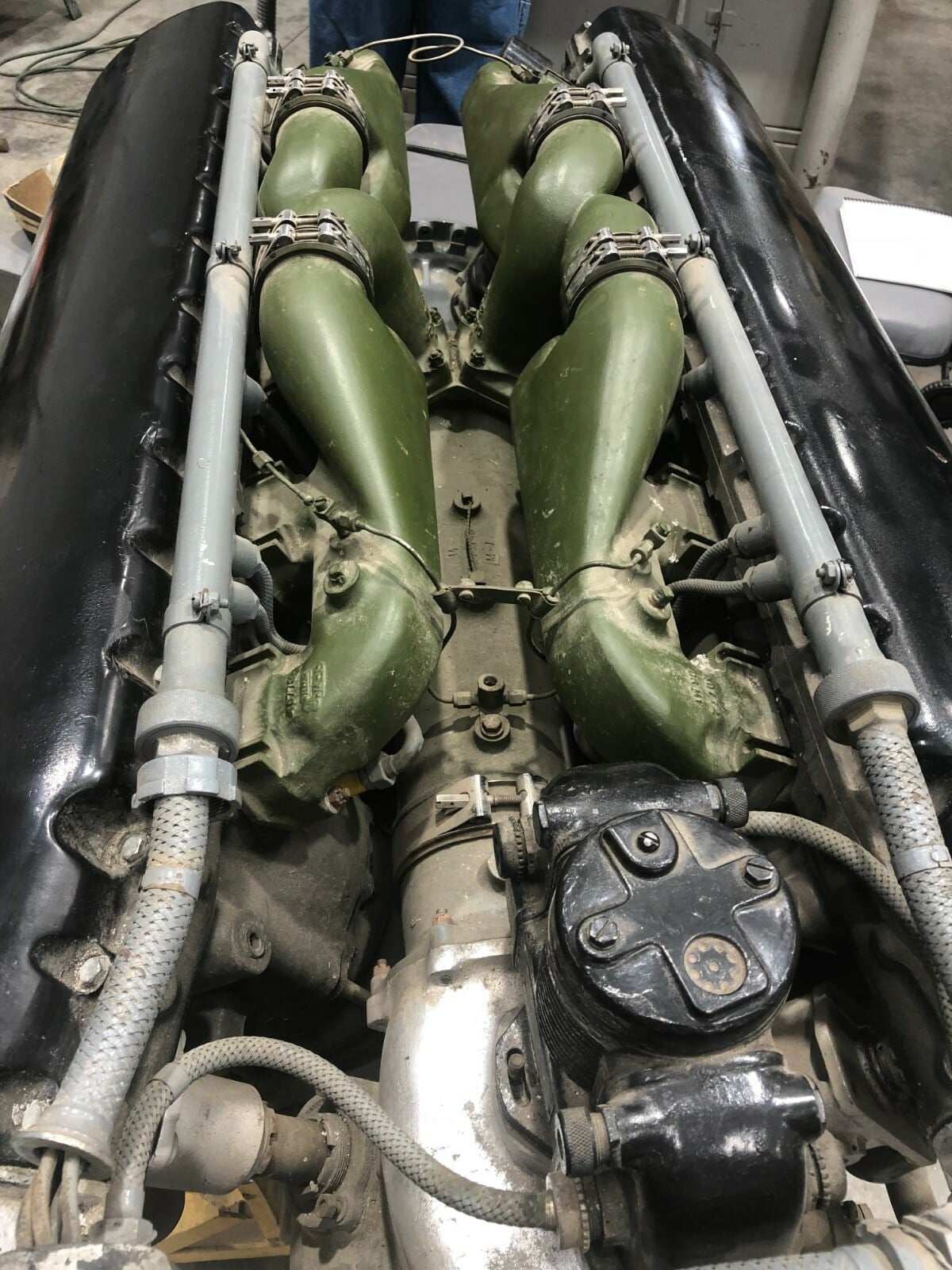
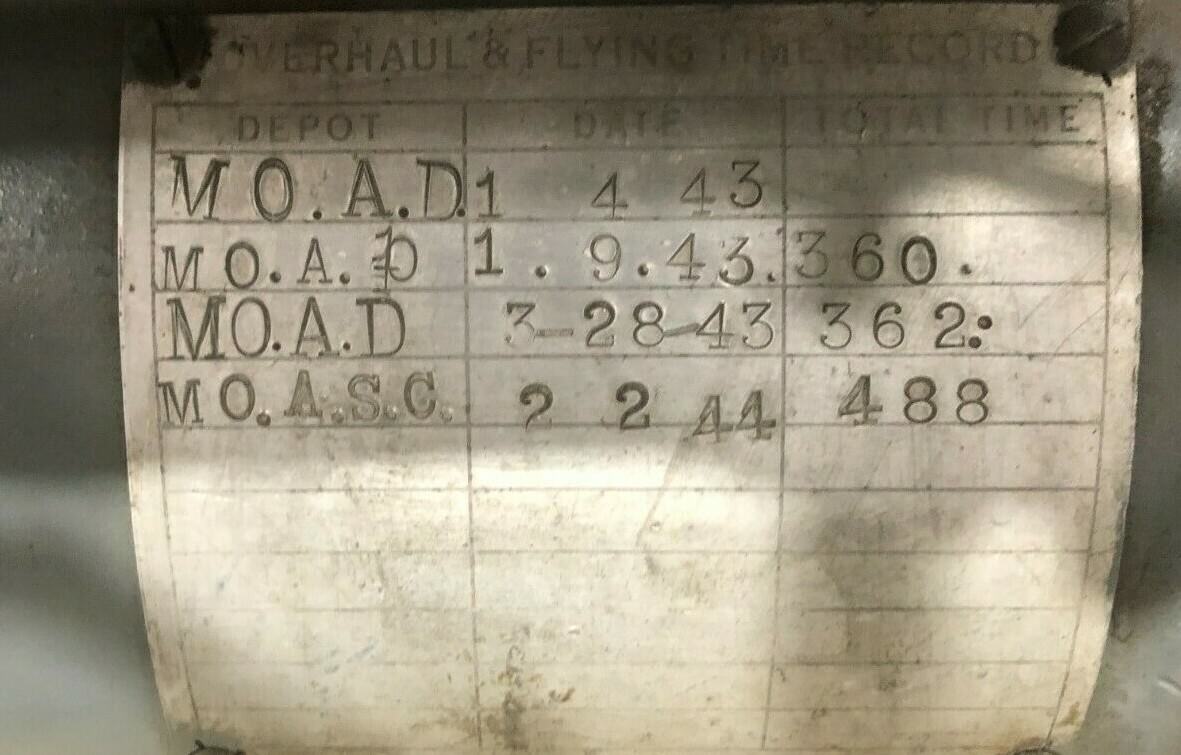
Images courtesy of Hall Industrial Services + Allison
Articles that Ben Branch has written have been covered on CNN, Popular Mechanics, Smithsonian Magazine, Road & Track Magazine, the official Pinterest blog, the official eBay Motors blog, BuzzFeed, Autoweek Magazine, Wired Magazine, Autoblog, Gear Patrol, Jalopnik, The Verge, and many more.
Silodrome was founded by Ben back in 2010, in the years since the site has grown to become a world leader in the alternative and vintage motoring sector, with well over a million monthly readers from around the world and many hundreds of thousands of followers on social media.