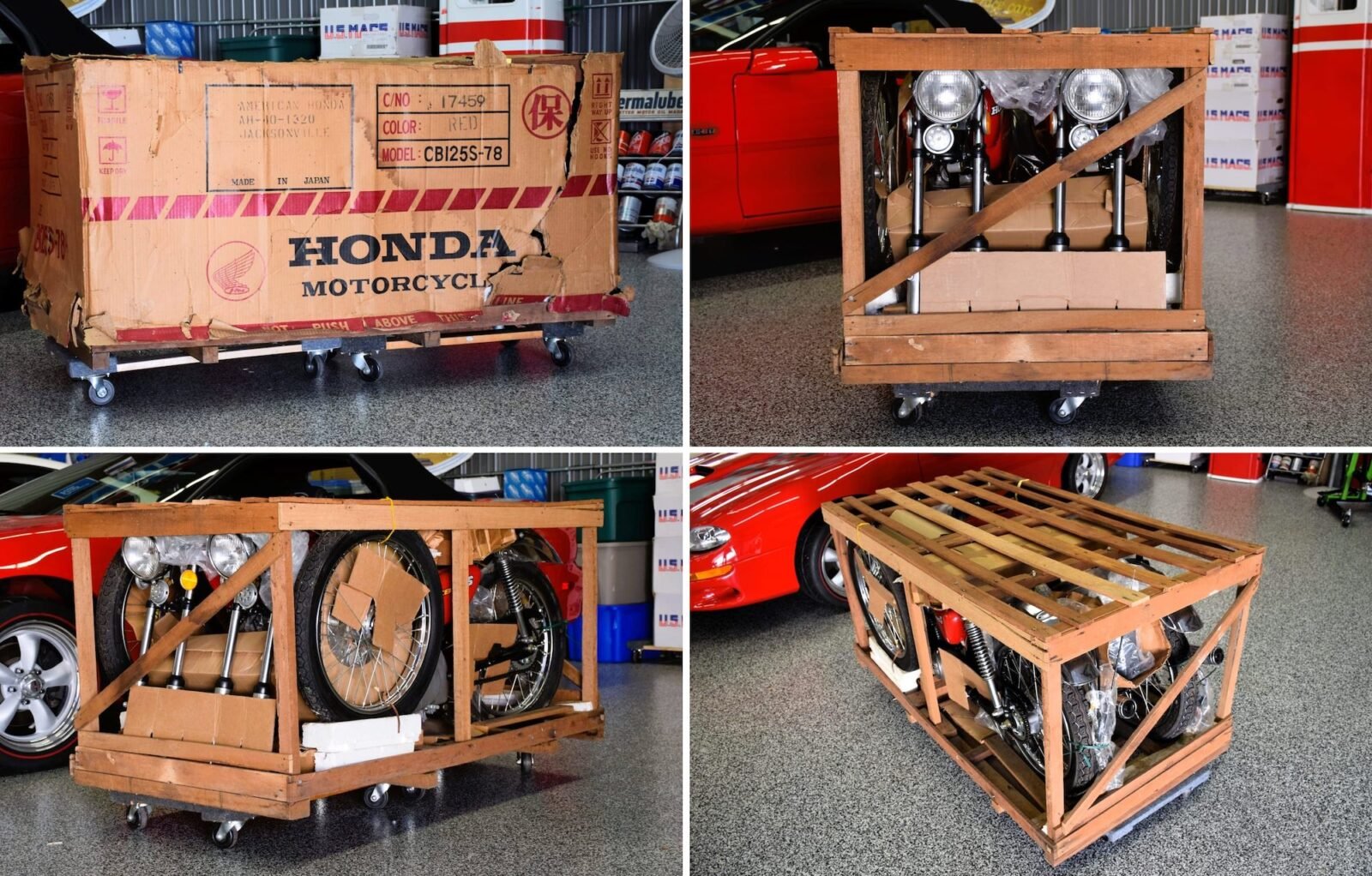
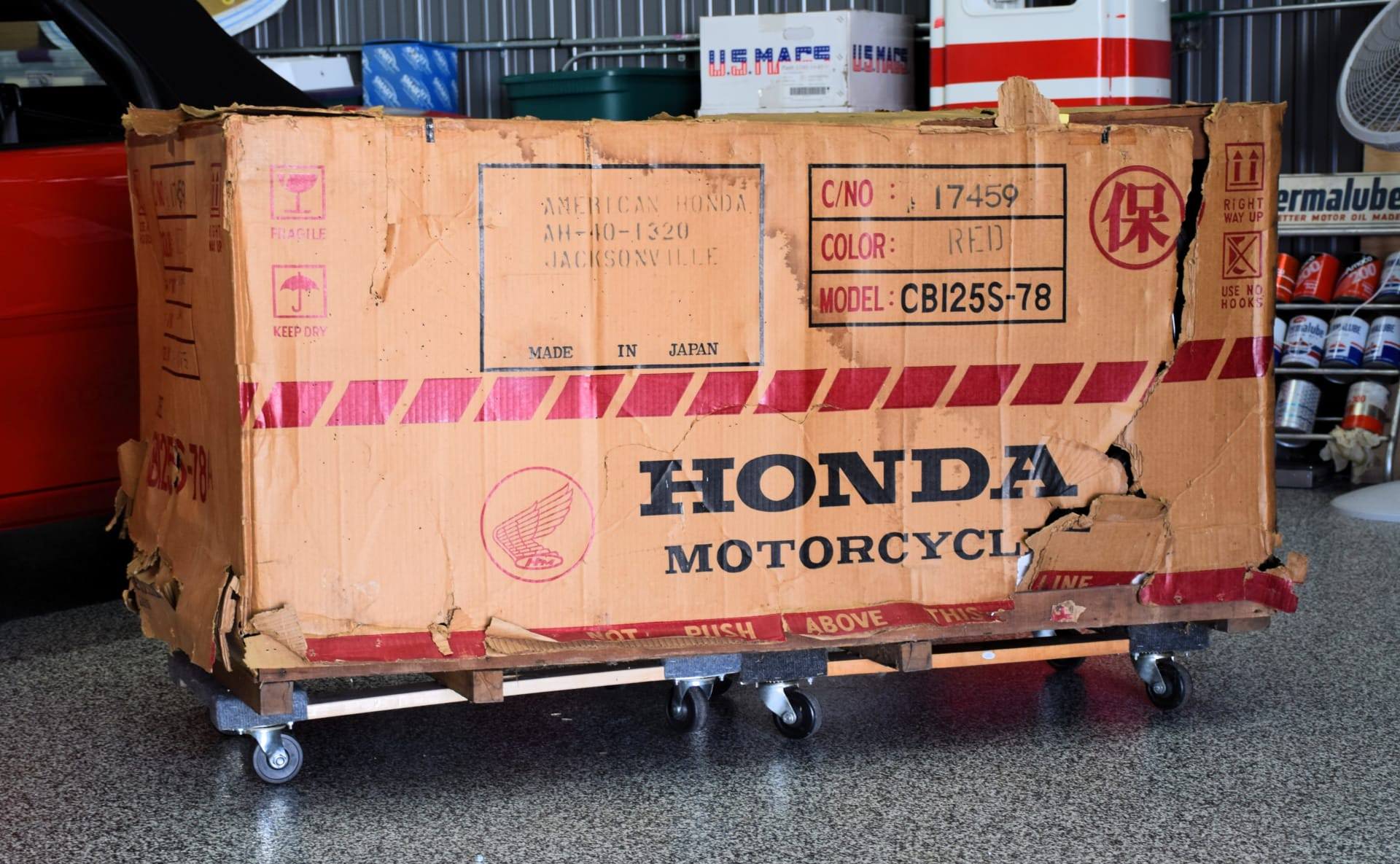
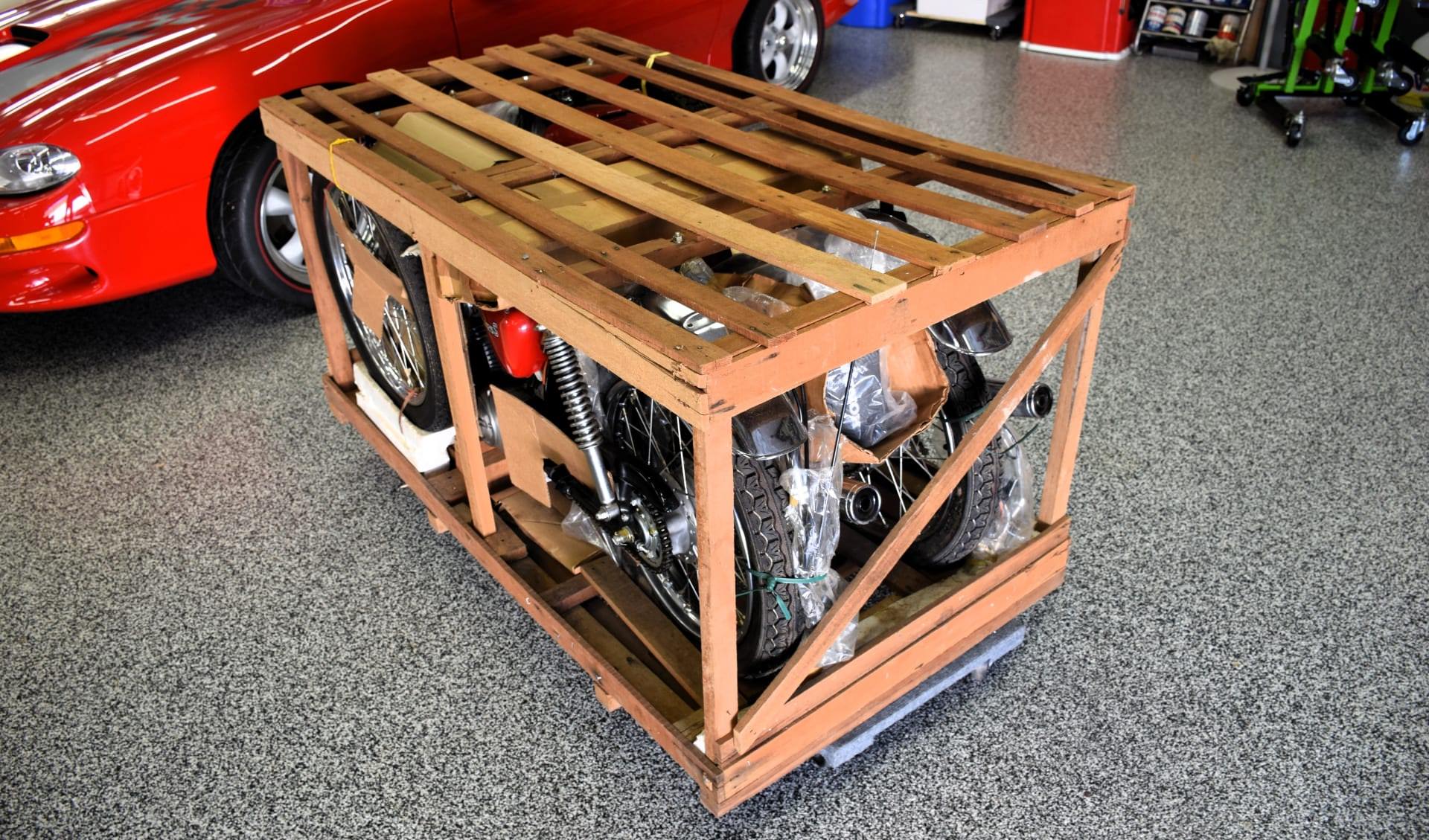
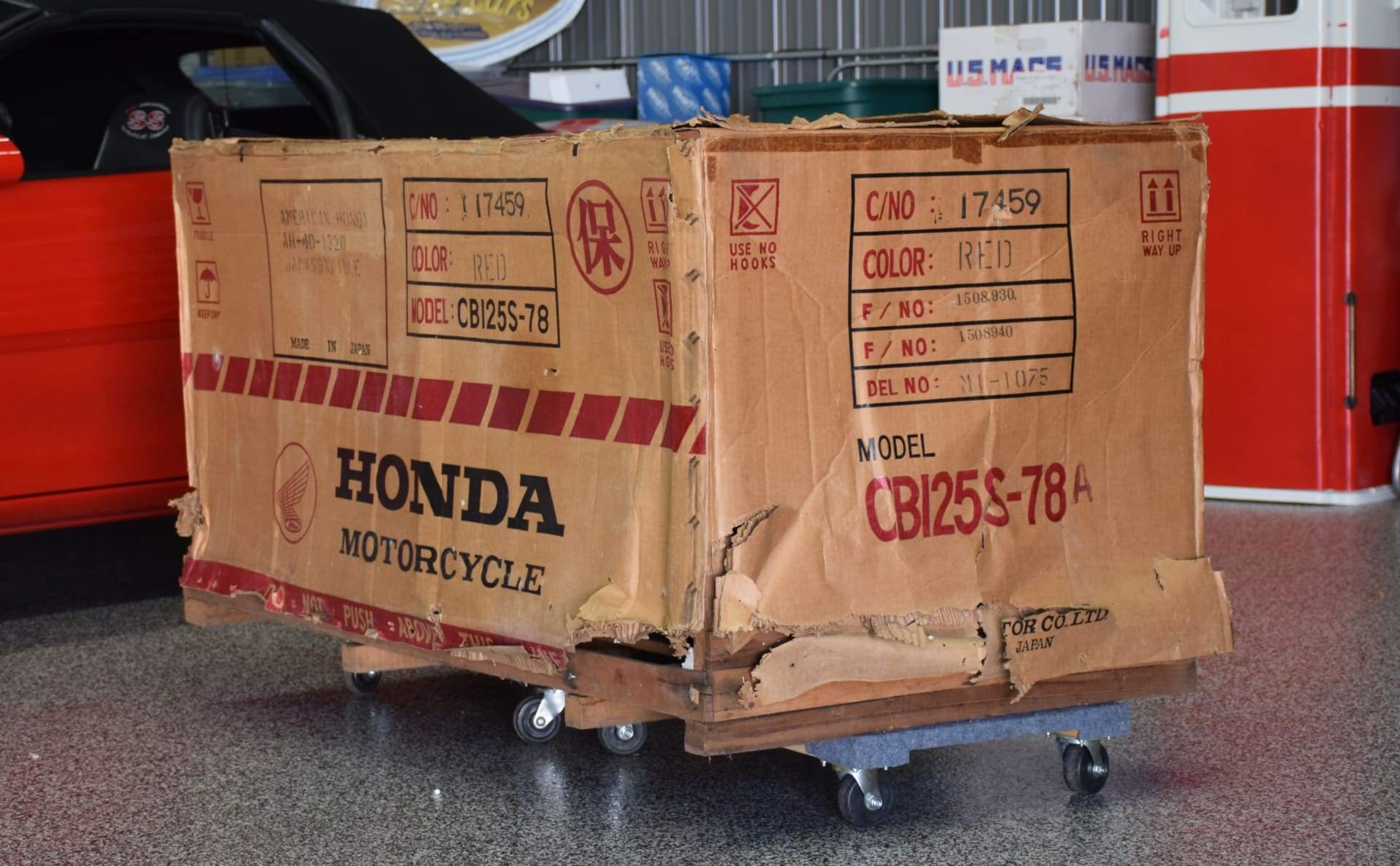
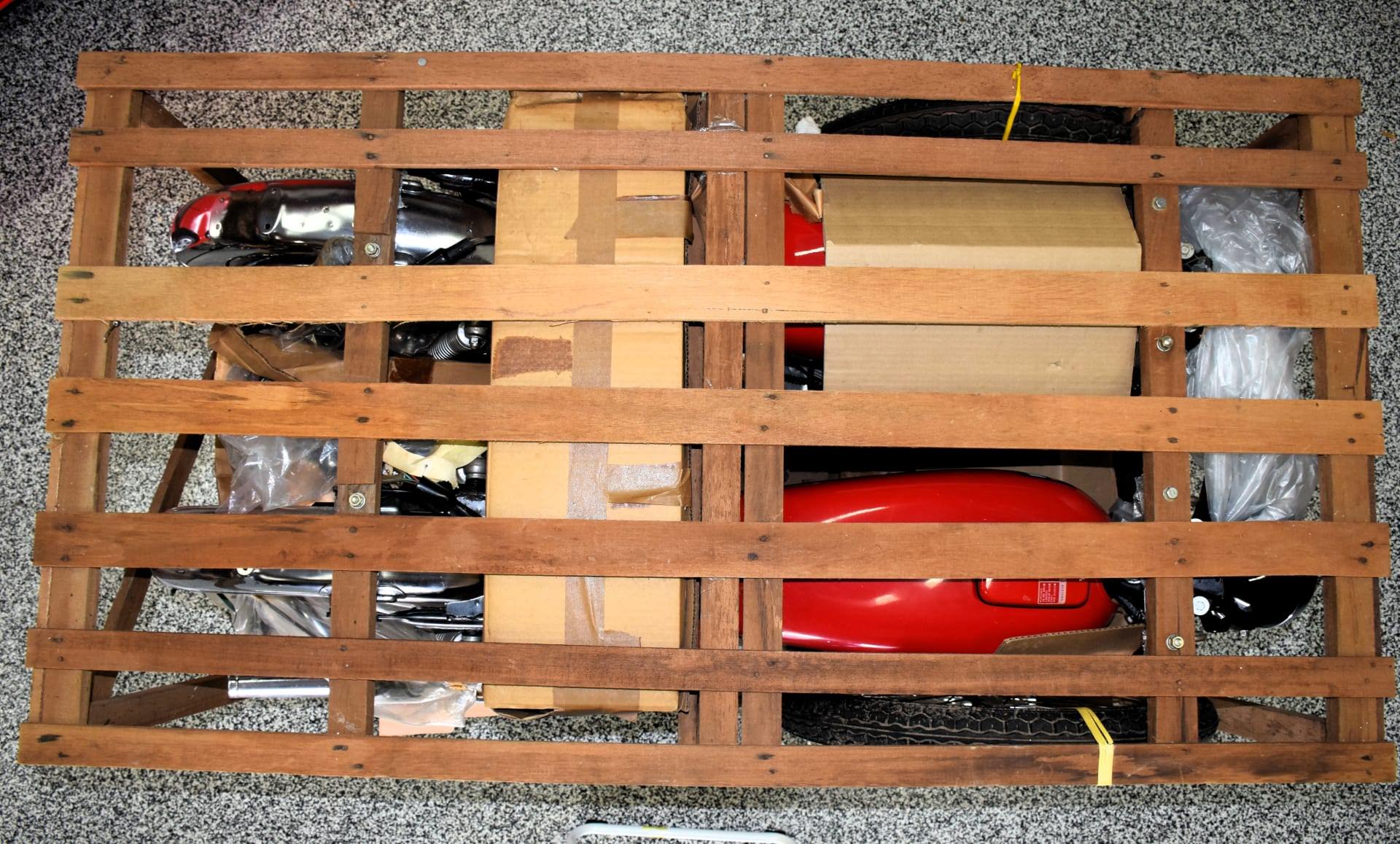
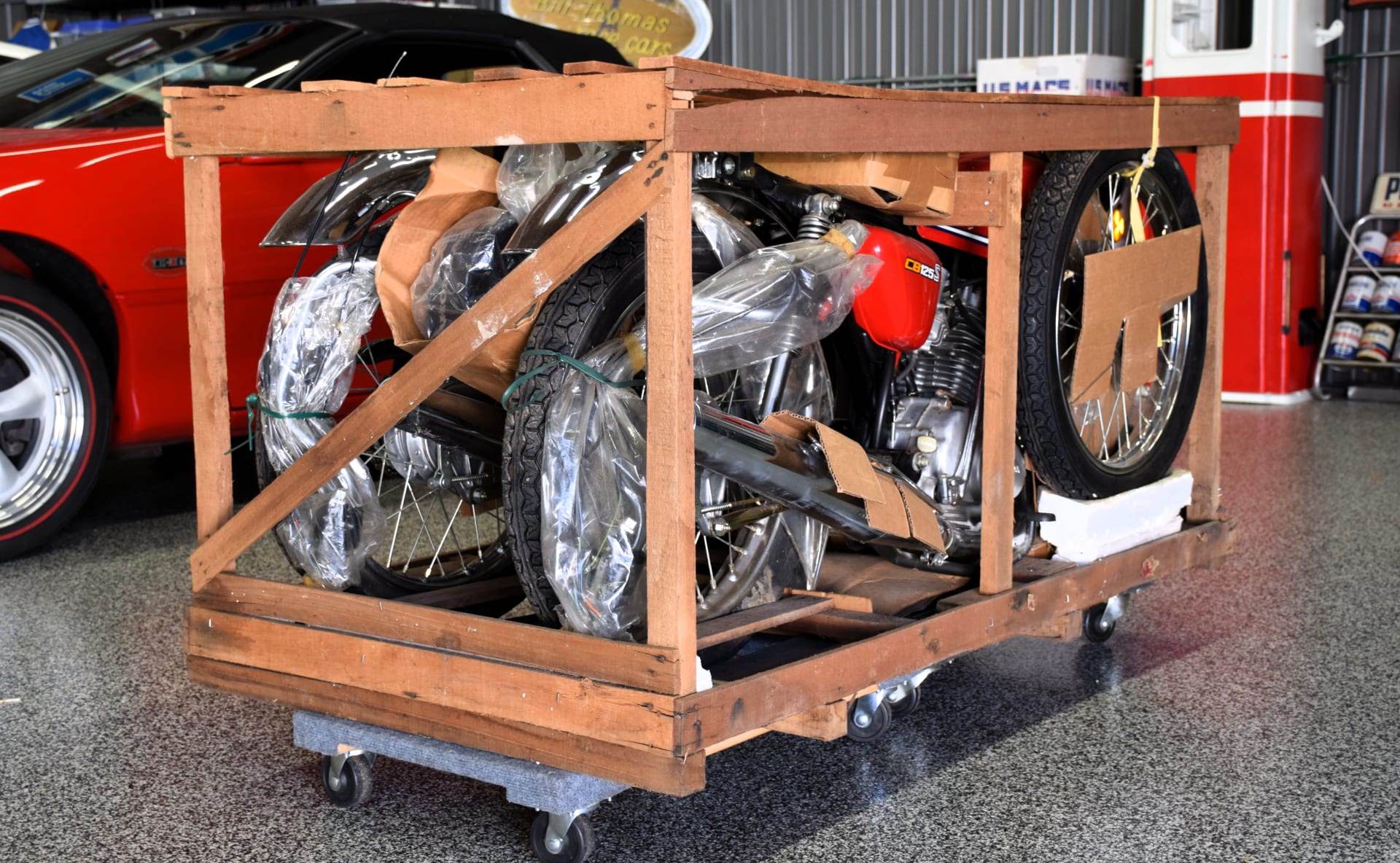
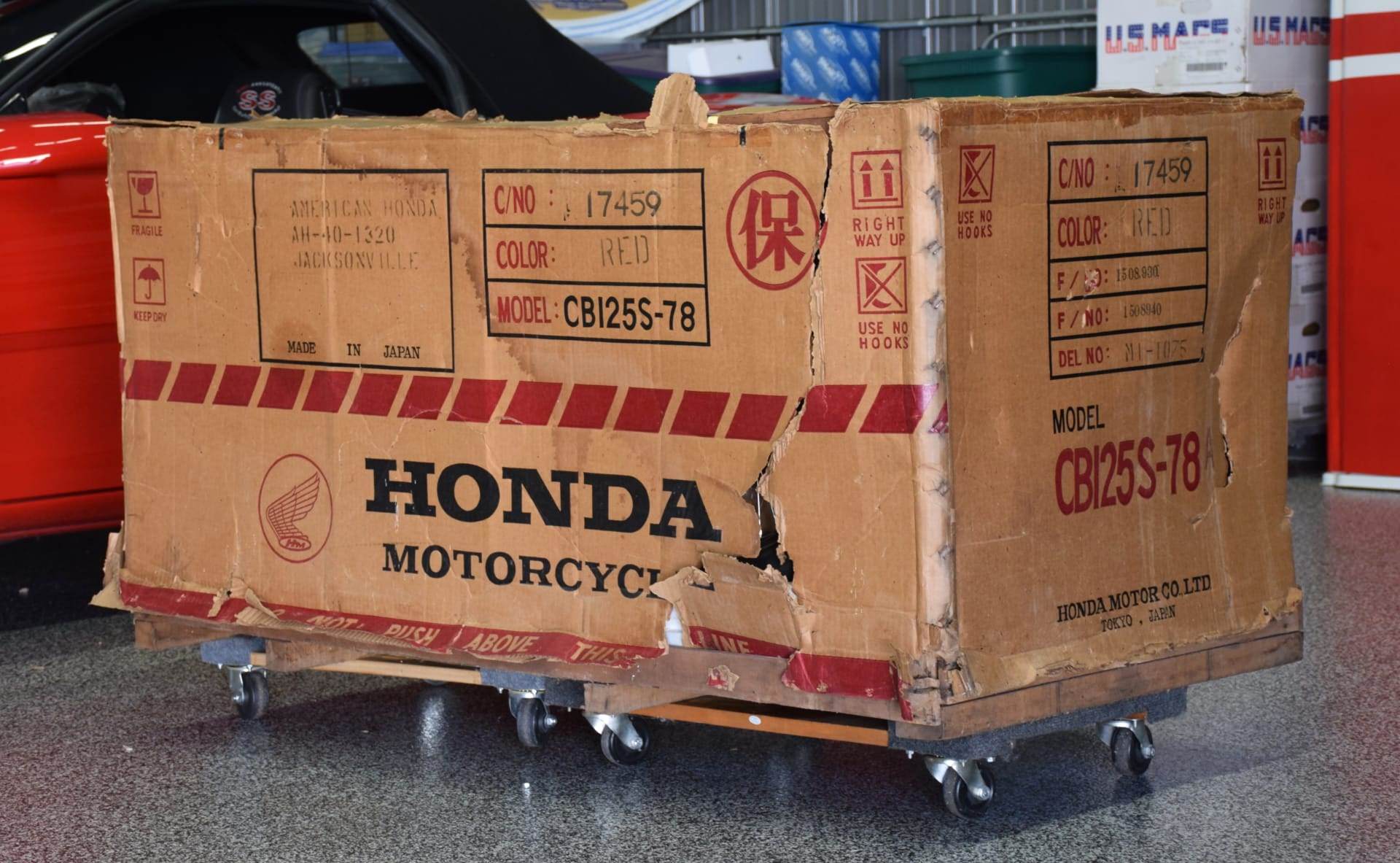
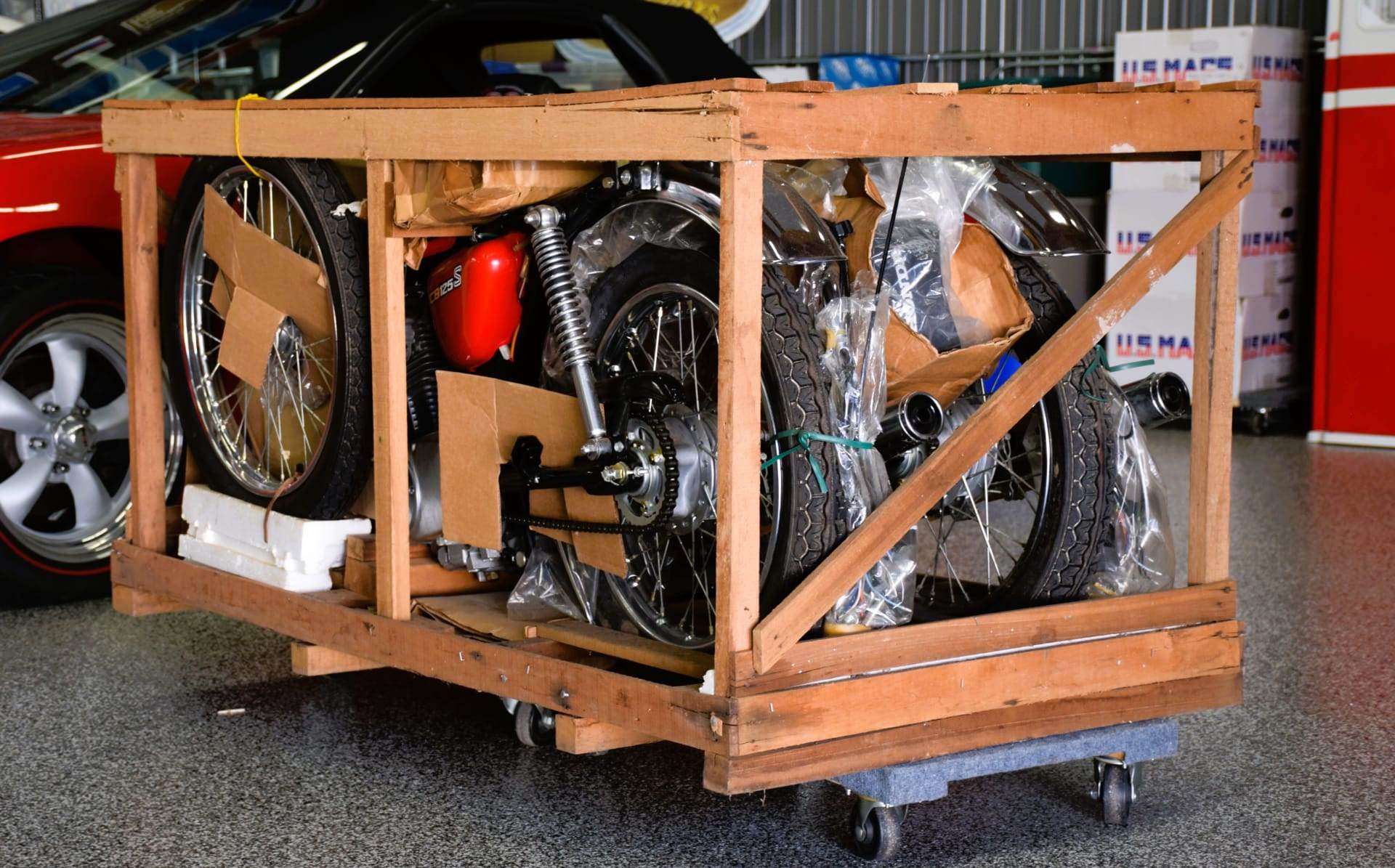
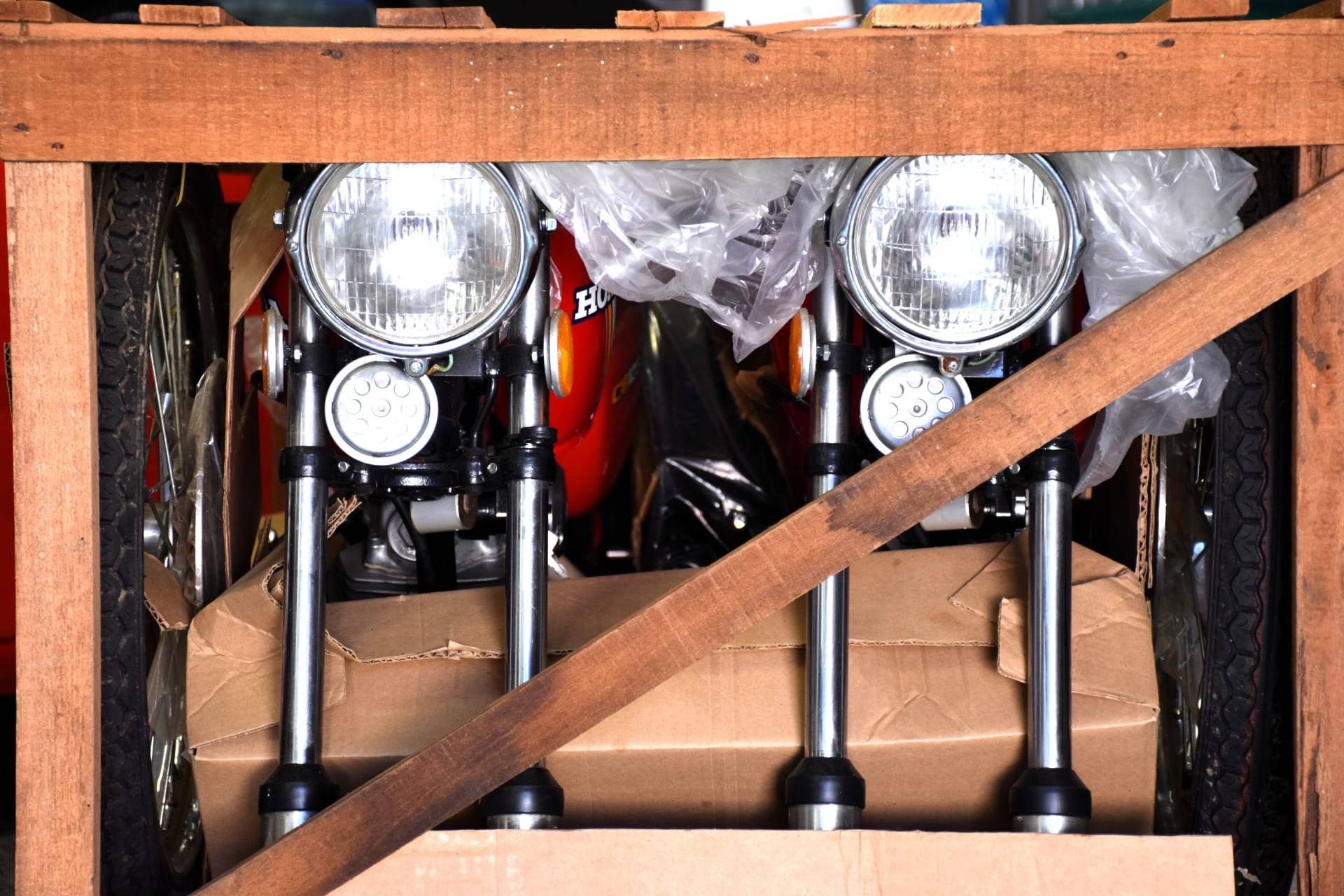
This is a matching pair of identical 1978 Honda motorcycles that have remained in their factory crate since they were brand new – for over 47 years and counting.
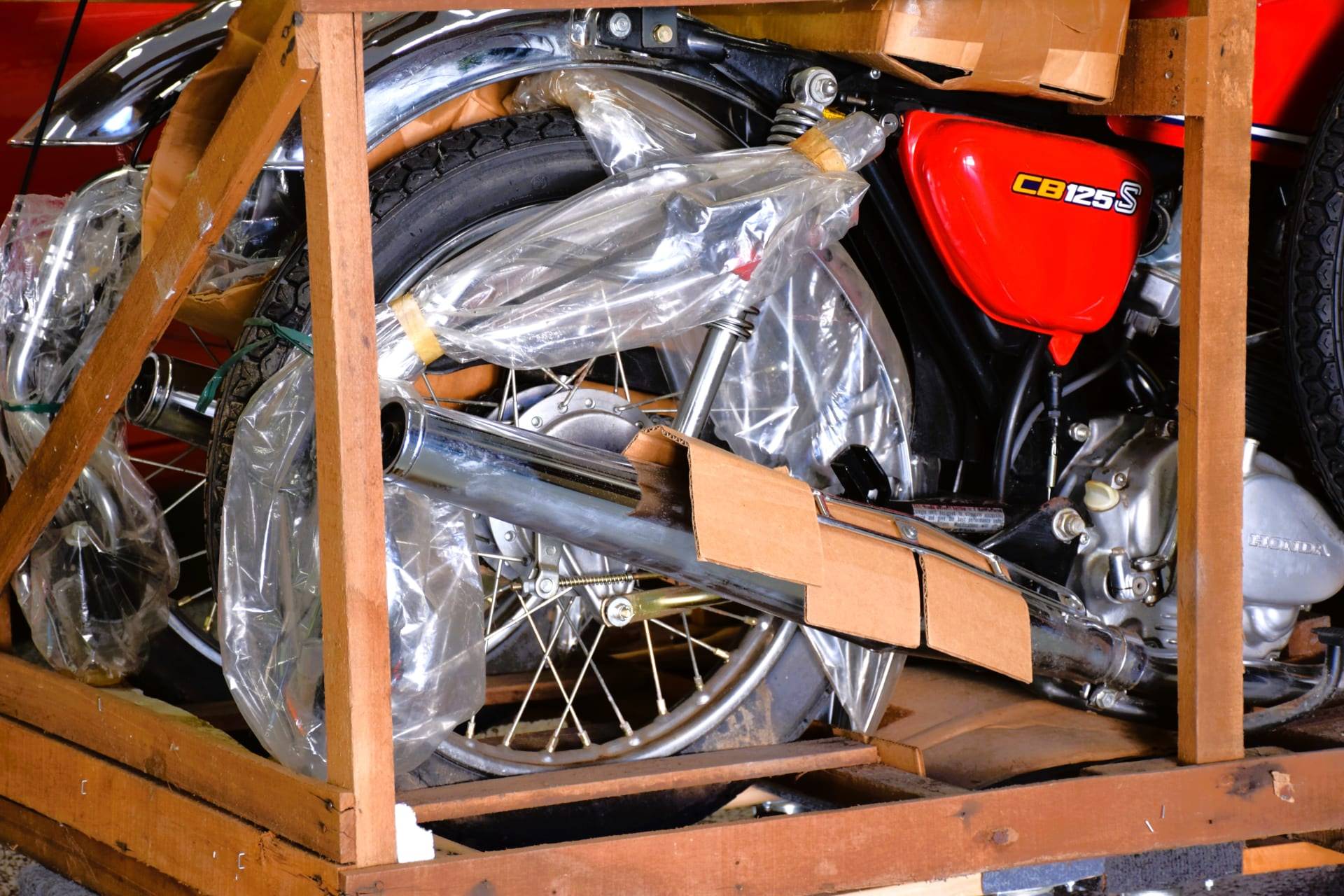
They are both 1978 Honda CB125 S motorcycles finished in red and they have never been assembled, ridden or removed from their crate. They’re now being offered for sale as a pair, and it’ll be up to the new owner whether they take them out and ride them or preserve them like this.
Fast Facts: A Pair Of 1978 Honda CB125 S Motorcycles
- This offering consists of two identical 1978 Honda CB125 S motorcycles that have remained sealed in their original factory crate since new. Neither bike has ever been assembled, started, or ridden. They are being sold together as a single matched pair, leaving preservation or use entirely up to the buyer.
- The Honda CB125 was introduced in 1971 as a four-stroke alternative to the dominant two-stroke 125cc motorcycles of the time. It was designed to mirror the layout and manners of Honda’s larger CB models while remaining affordable, reliable, and accessible for new riders across global markets.
- By 1978, the CB125S was firmly established as an entry-level commuter and training motorcycle. It used a 124cc air-cooled SOHC single producing roughly 13 to 14 bhp, paired with a 5-speed gearbox. Conventional suspension, front disc braking, and its low curb weight made it easy and confidence-inspiring to ride.
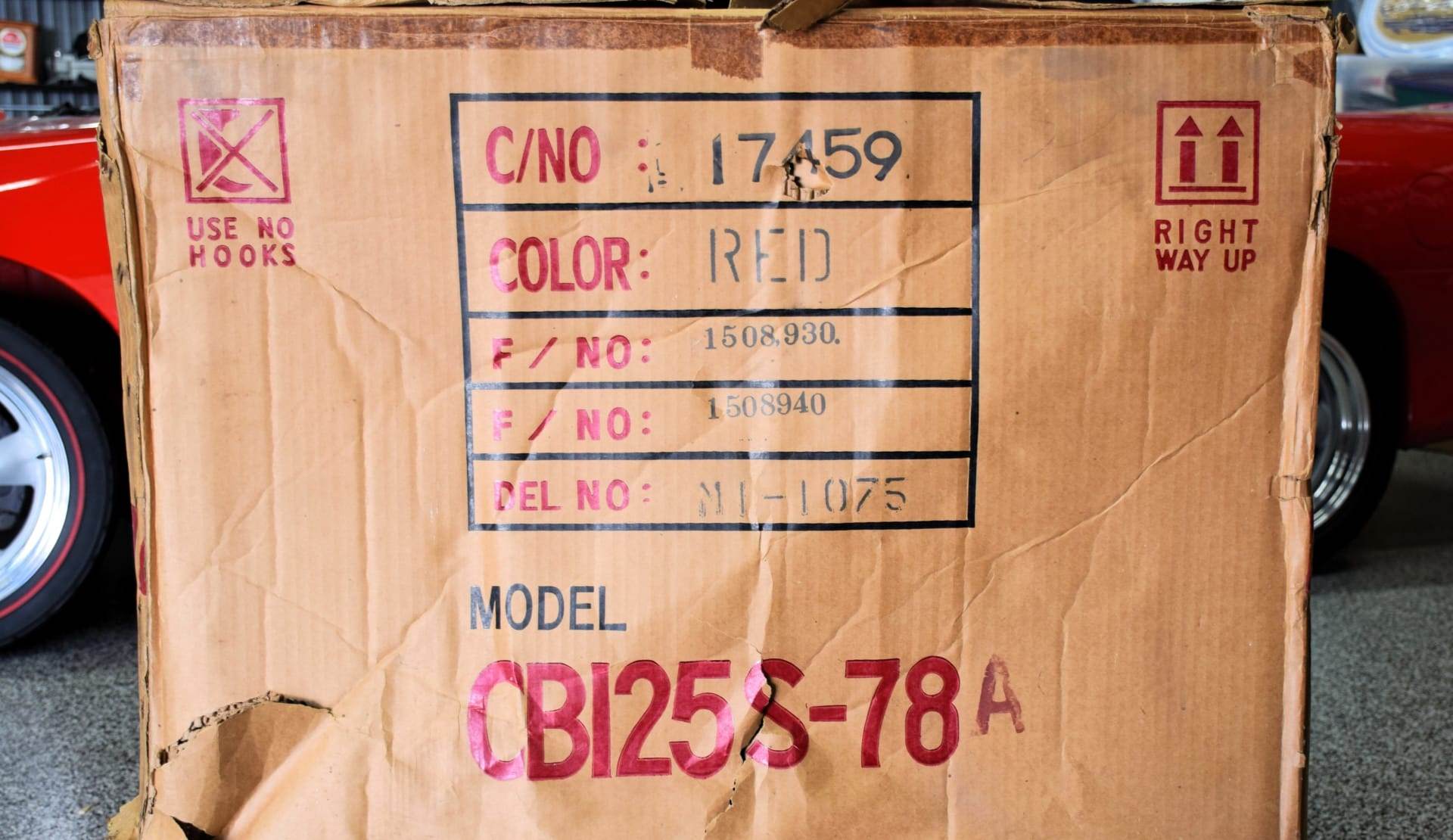
- The two motorcycles shown in this article retain their original frame numbers and identities, allowing potential road registration depending on local regulations. Finished in red, they represent extremely rare new old stock examples. The pair is scheduled to be auctioned together by Mecum in Las Vegas in 2026 as Lot R519.
History Speedrun: The Honda CB125
The Honda CB125 was introduced in 1971, conceived as a lightweight, four-stroke alternative to the smoky two-strokes that dominated the 125cc class at the time. Honda’s goal was straightforward – to offer a small-capacity road bike that reflected the brand’s larger CB models (CB750 and CB550) in layout, design, and road manners, while remaining accessible to new riders and being economical to own.
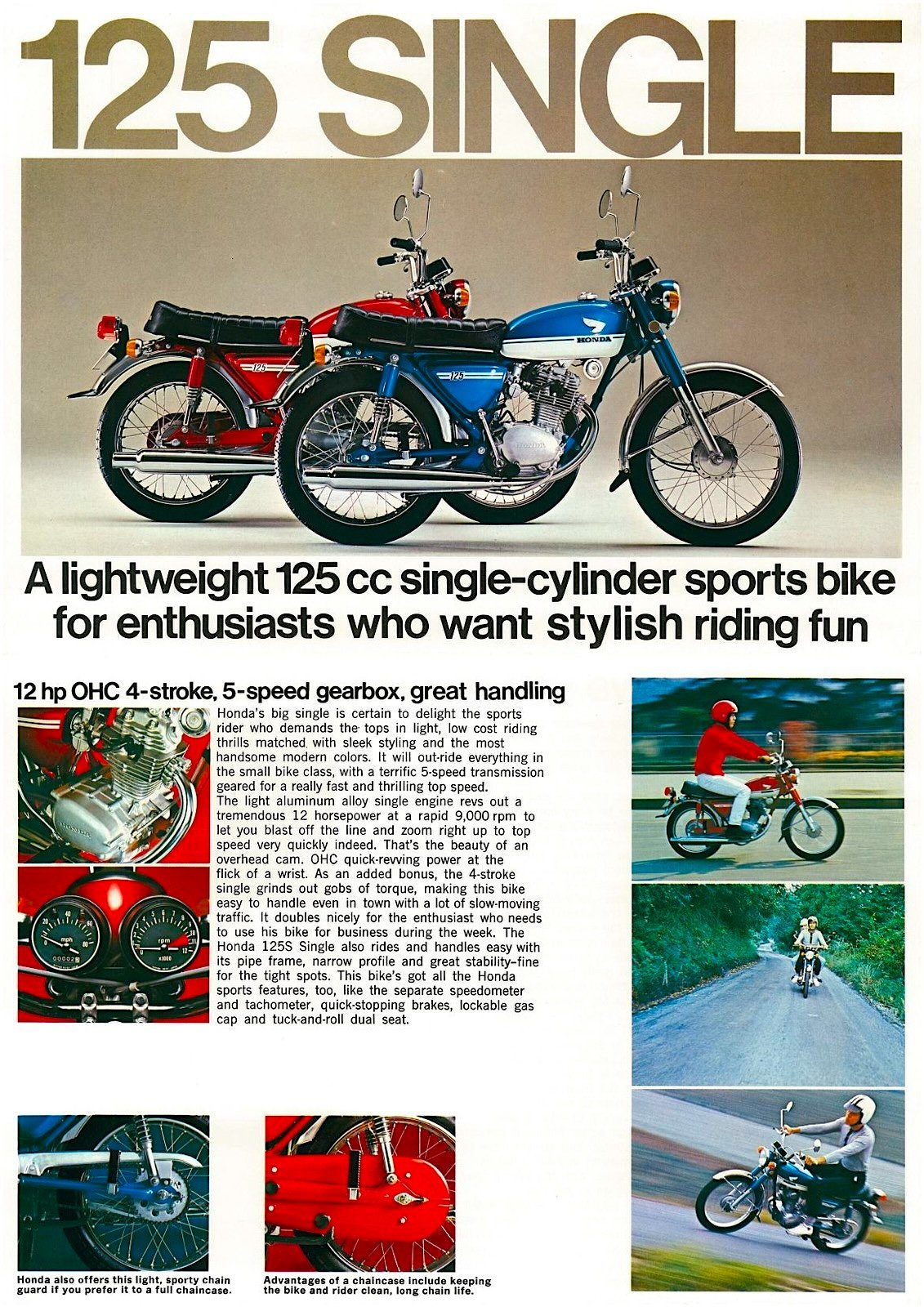
 The Honda CB125 was introduced in 1971, conceived as a lightweight, four-stroke alternative to the smoky two-strokes that dominated the 125cc class at the time. Image courtesy of Honda.
By the late 1970s, this formula had proven itself, and the CB125 had become a familiar sight in markets ranging from North America to Europe and Australia.
By the time the more sporting 1978 CB125S arrived, the model was well into its stride. In the United States it was sold as the CB125S, while European markets used CB125S or CB125J designations (depending on year and specification).
Regardless of badge variances, the bike was always positioned as an entry-level commuter and training motorcycle ideal for first time riders, sitting below Honda’s twin-cylinder CB200 and CB250 while offering a more “grown-up” alternative to step-throughs like the Honda Super Cub and small-displacement trail-focused small bikes.
Mechanically, the CB125 of this generation used an air-cooled, four-stroke, single-cylinder engine with a single overhead cam. Displacement was 124cc, fed by a single Keihin carburetor. Output hovered around 13 to 14 bhp depending on market and emissions equipment, with peak power arriving high in the rev range.
A 5-speed manual gearbox drove the rear wheel via chain, and the top speed is typically quoted in the mid-70 mph range under ideal conditions and rider weight , though real-world cruising was obviously more comfortable at lower speeds.
The chassis followed conventional practice at the time, with a tubular steel frame and telescopic front forks with twin rear shock absorbers. By the mid-1970s, a front disc brake had become standard equipment, paired with a rear drum, a notable upgrade over earlier small-capacity machines that relied on drums at both ends. It has wire-spoked wheels front and rear, an upright riding position, a flat seat, and well thought-out ergonomics that made it easy to live with for most riders.
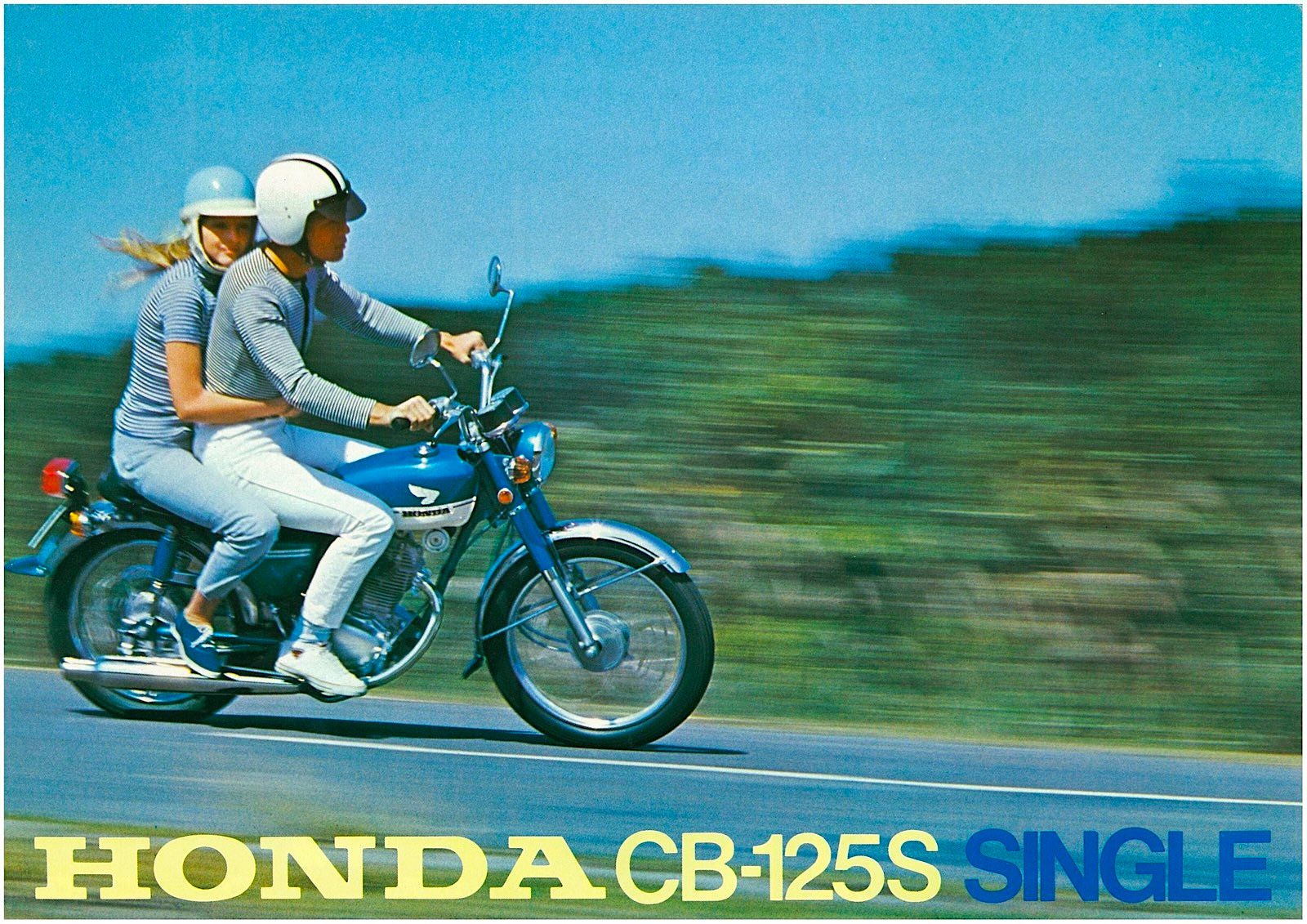
The Honda CB125 used an air-cooled, four-stroke, single-cylinder engine with a single overhead cam. Displacement was 124cc, fed by a single Keihin carburetor, and output hovered around 13 to 14 bhp. Image courtesy of Honda.
The wet weight sat just under 300 lbs (136 kgs), resulting in the bike having sharp, light handling, and easy maneuverability even for smaller riders.
Sales figures for the CB125 were never headline-grabbing, but they were consistently healthy, certainly healthy enough to keep it in production. It was produced from 1971 through to 1985 in various forms, it sold in good numbers globally, particularly in Europe where licensing restrictions and local conditions favored smaller machines.
One thing that did have an impact on sales figures was the fact that many CB125 owners didn’t keep their motorcycles for very long. The model was seen as an ideal first bike, so many would buy one and ride it for a year or so before selling it to buy a larger capacity motorcycle, often a CB550 or CB750.
The Pair Of 1978 Honda CB125 S Motorcycles Shown Here
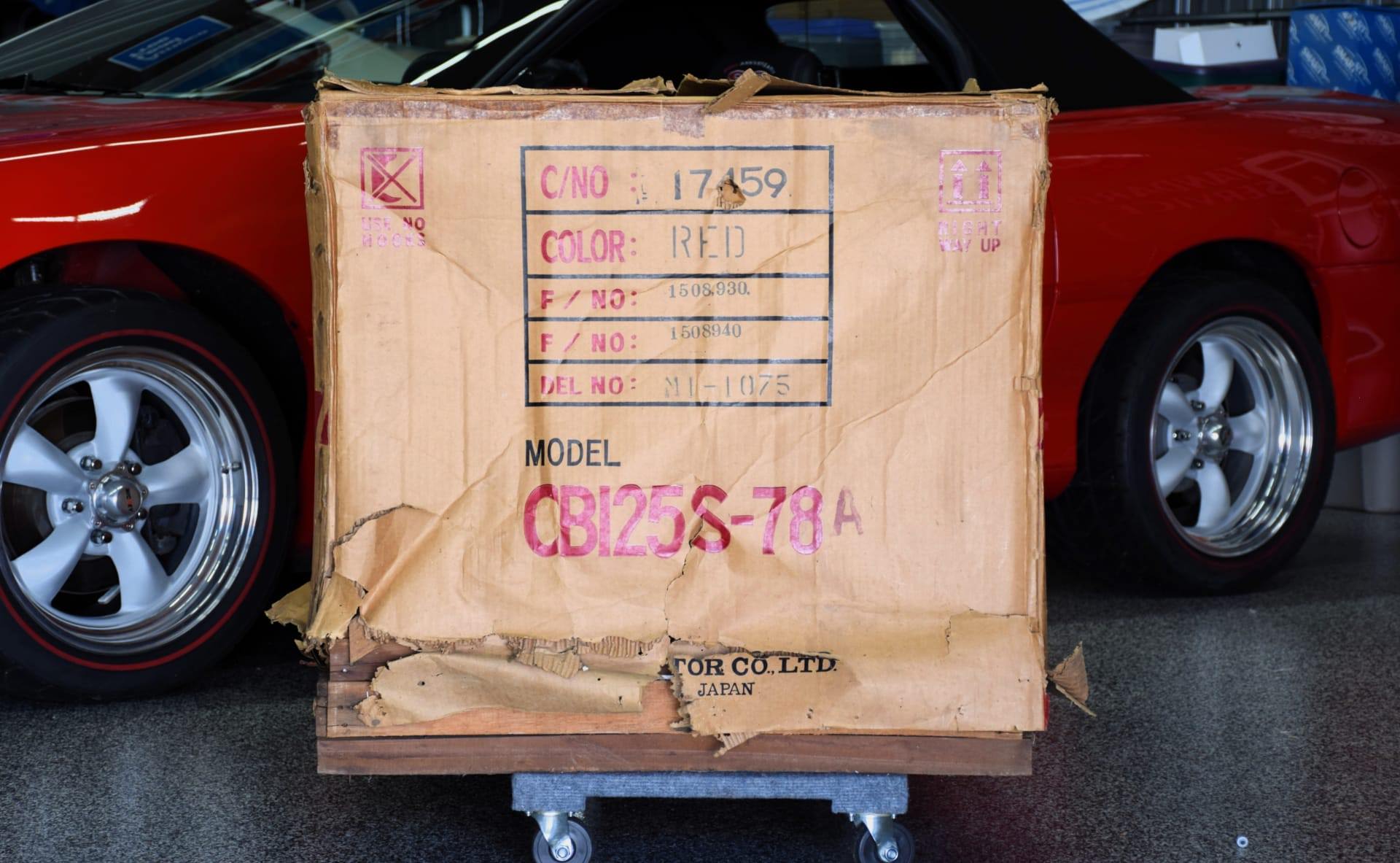
This is an unusual pair offering of two 1978 Honda CB125 S motorcycles, sold together as a single lot. Both bikes remain in their original factory crate – they’re unassembled, new old stock examples and they might be the last of their kind in the world.
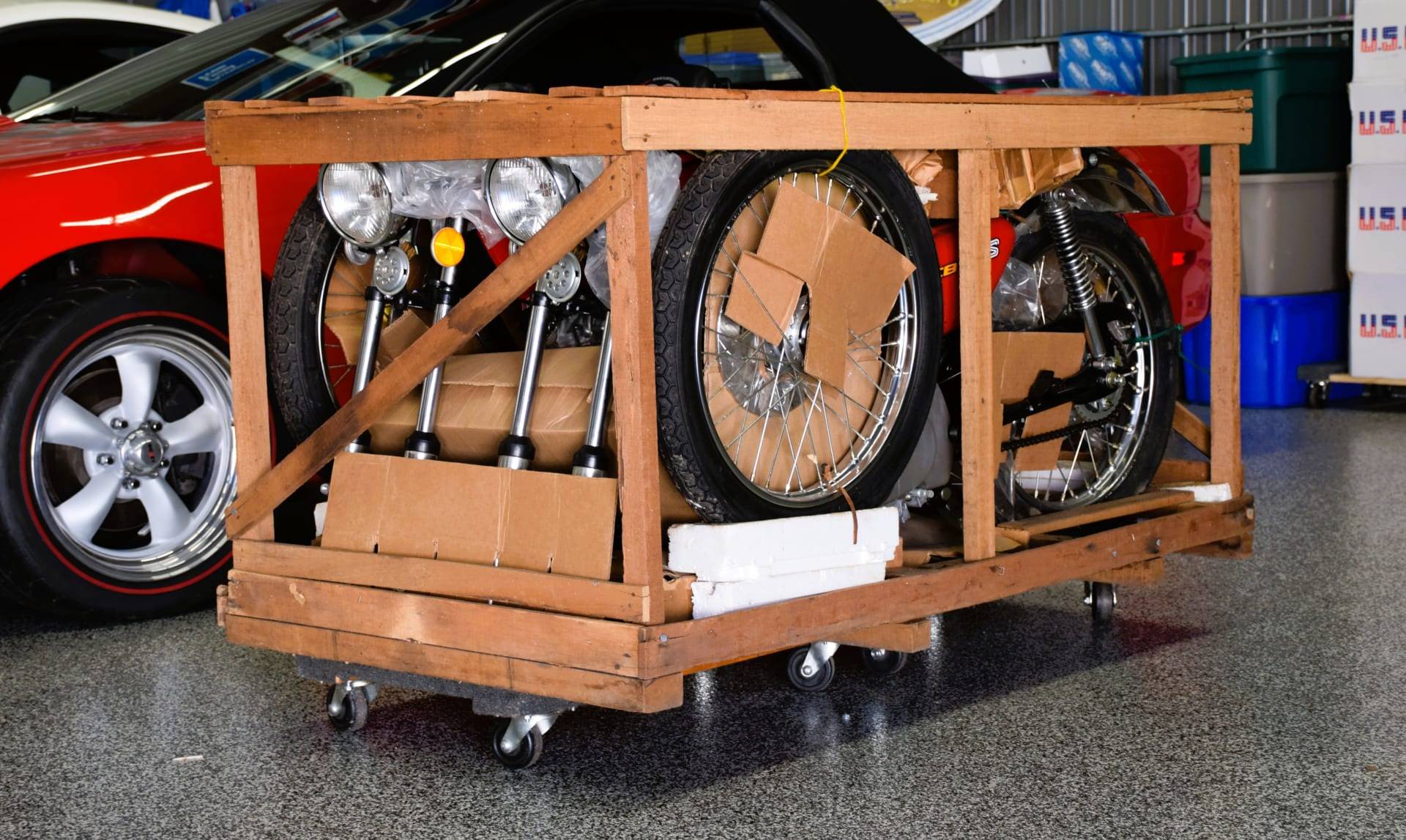
This is a matching pair of identical 1978 Honda motorcycles that have remained in their factory crate since they were brand new – for over 47 years and counting.
The bikes are finished in red and are powered by Honda’s familiar 124cc air-cooled, four-stroke single-cylinder engine, paired with a 5-speed manual transmission. The frame numbers are – CB125S-1508930 and CB125S-1508940 – and both motorcycles keep their original identities, so they can be road registered if the new owner wants, based on local laws and regulations.
The pair is scheduled to cross the auction block with Mecum in Las Vegas in 2026, cataloged as Lot R519. You can visit the listing here if you’d like to read more or register to bid.

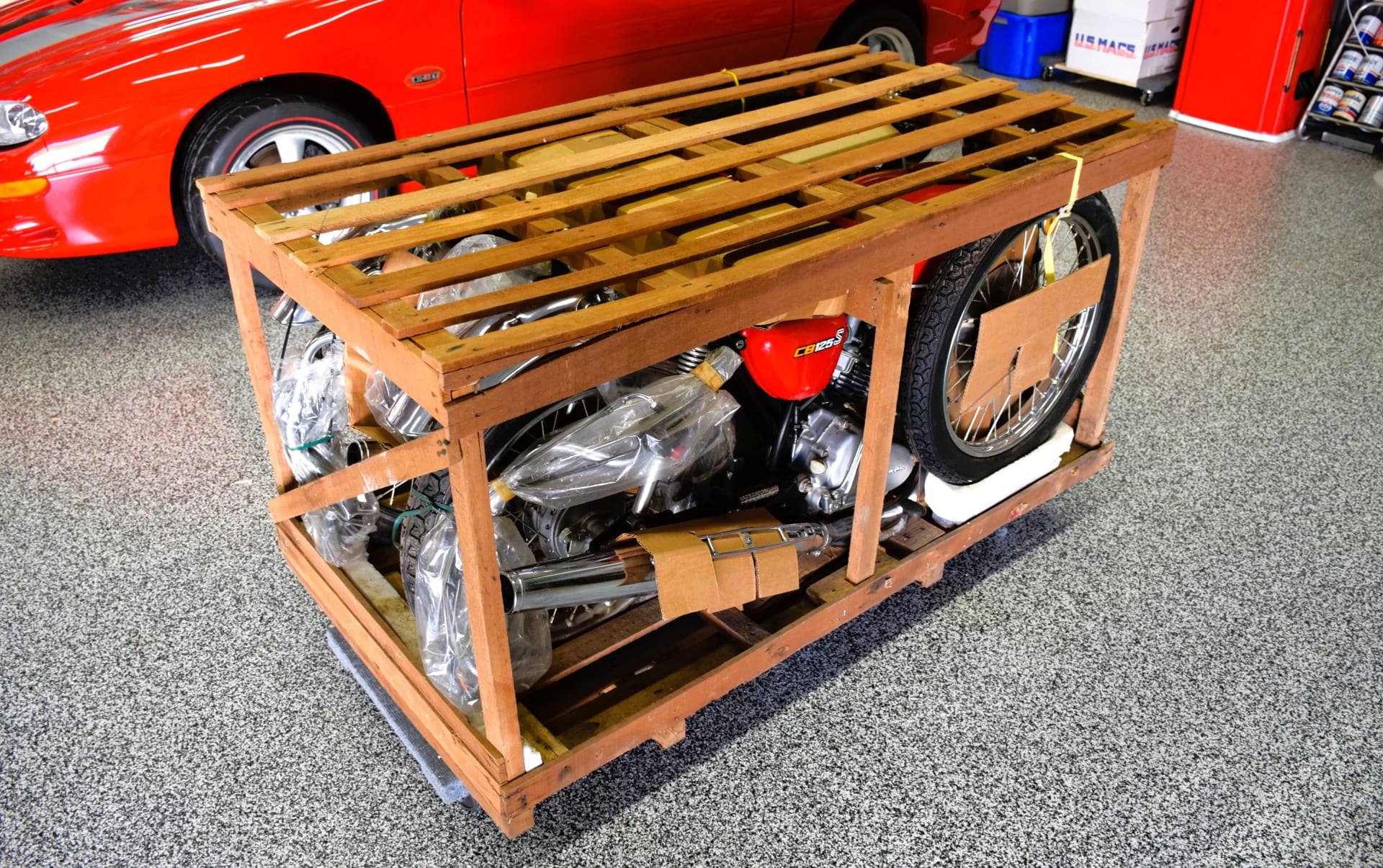
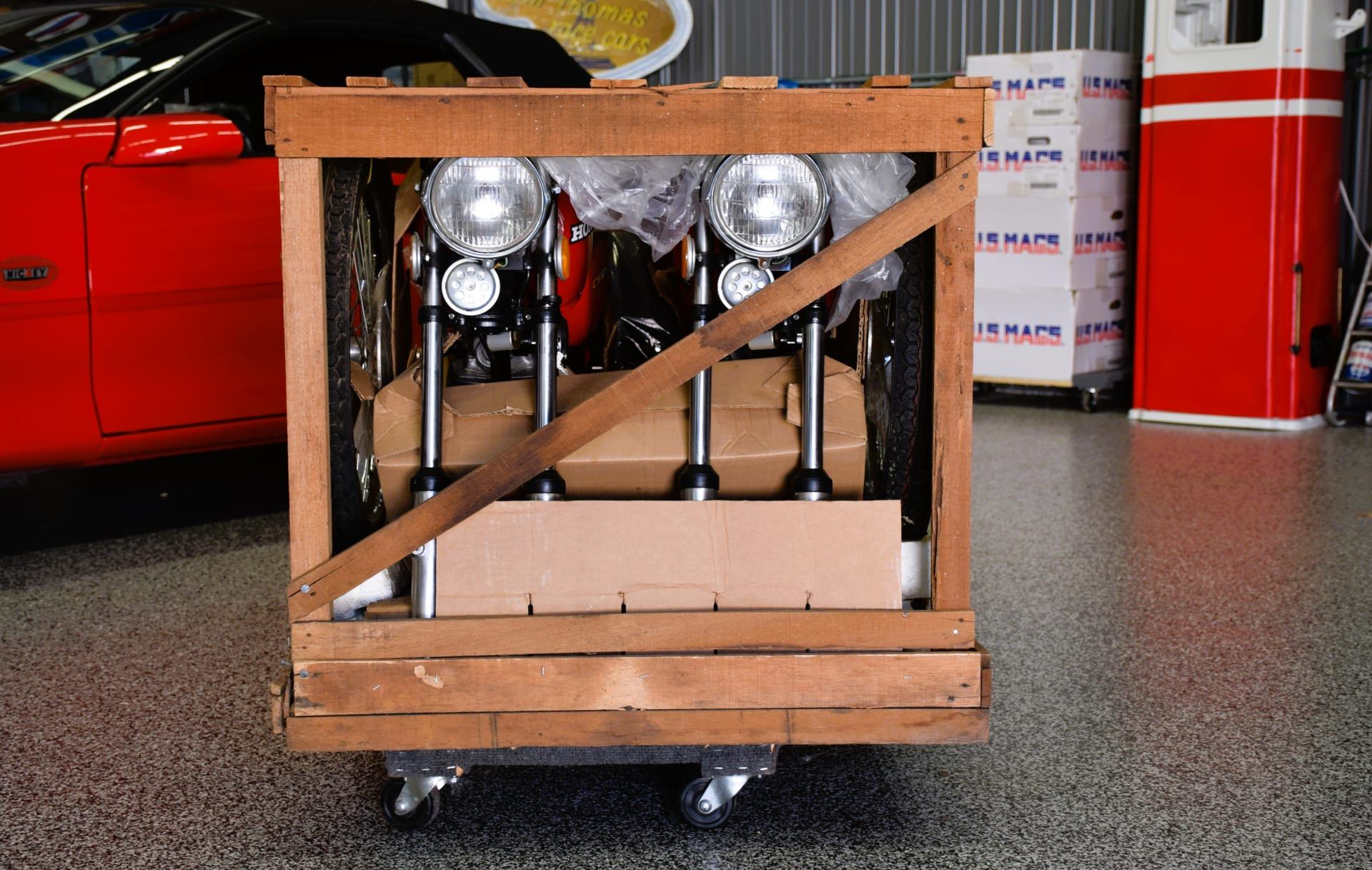
Images courtesy of Mecum + Honda

Articles that Ben Branch has written have been covered on CNN, Popular Mechanics, Smithsonian Magazine, Road & Track Magazine, the official Pinterest blog, the official eBay Motors blog, BuzzFeed, Autoweek Magazine, Wired Magazine, Autoblog, Gear Patrol, Jalopnik, The Verge, and many more.
Silodrome was founded by Ben back in 2010, in the years since the site has grown to become a world leader in the alternative and vintage motoring sector, with well over a million monthly readers from around the world and many hundreds of thousands of followers on social media.