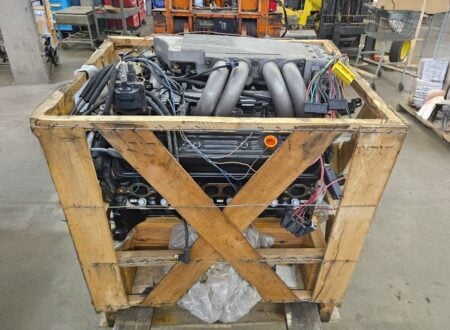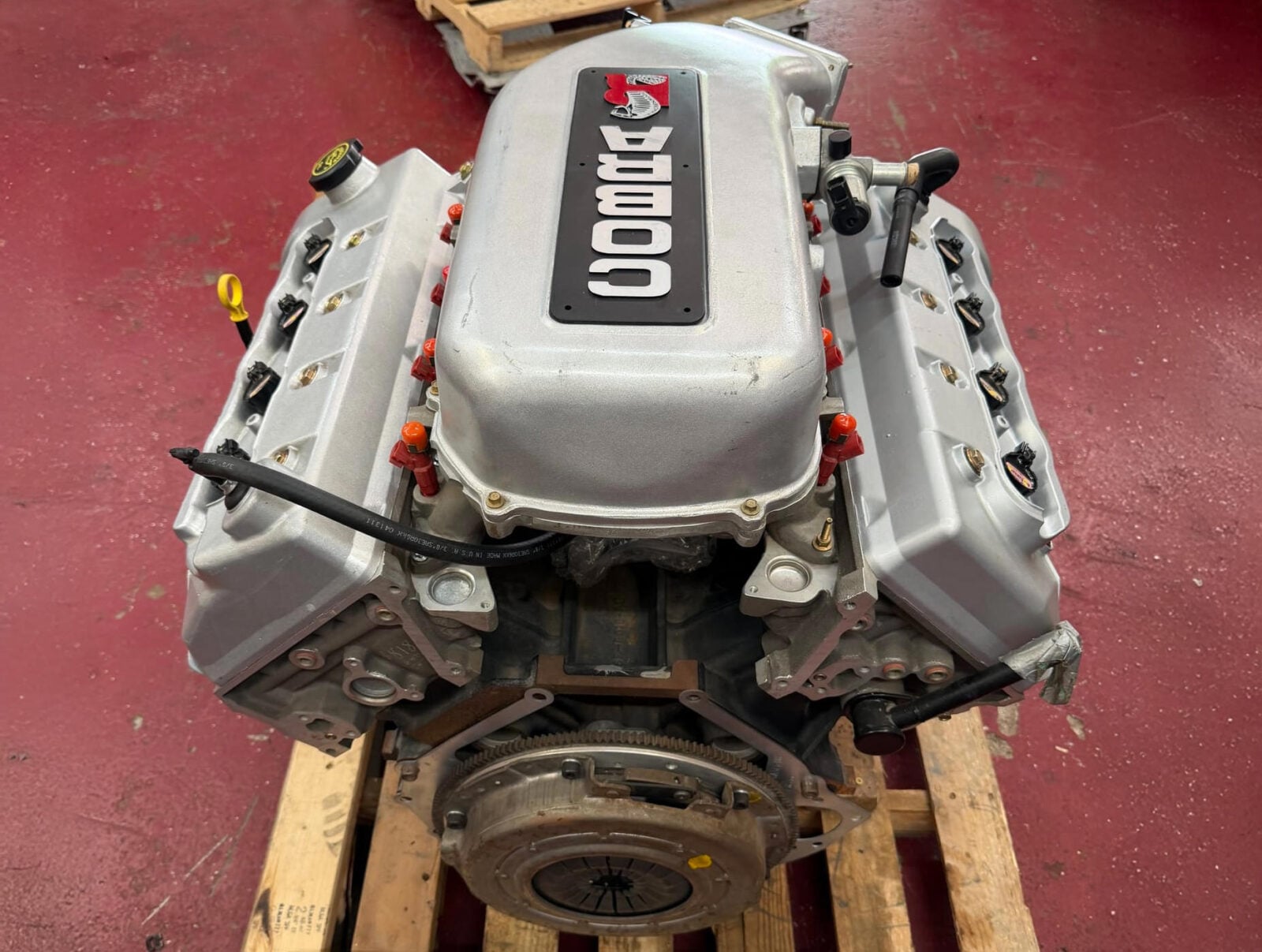
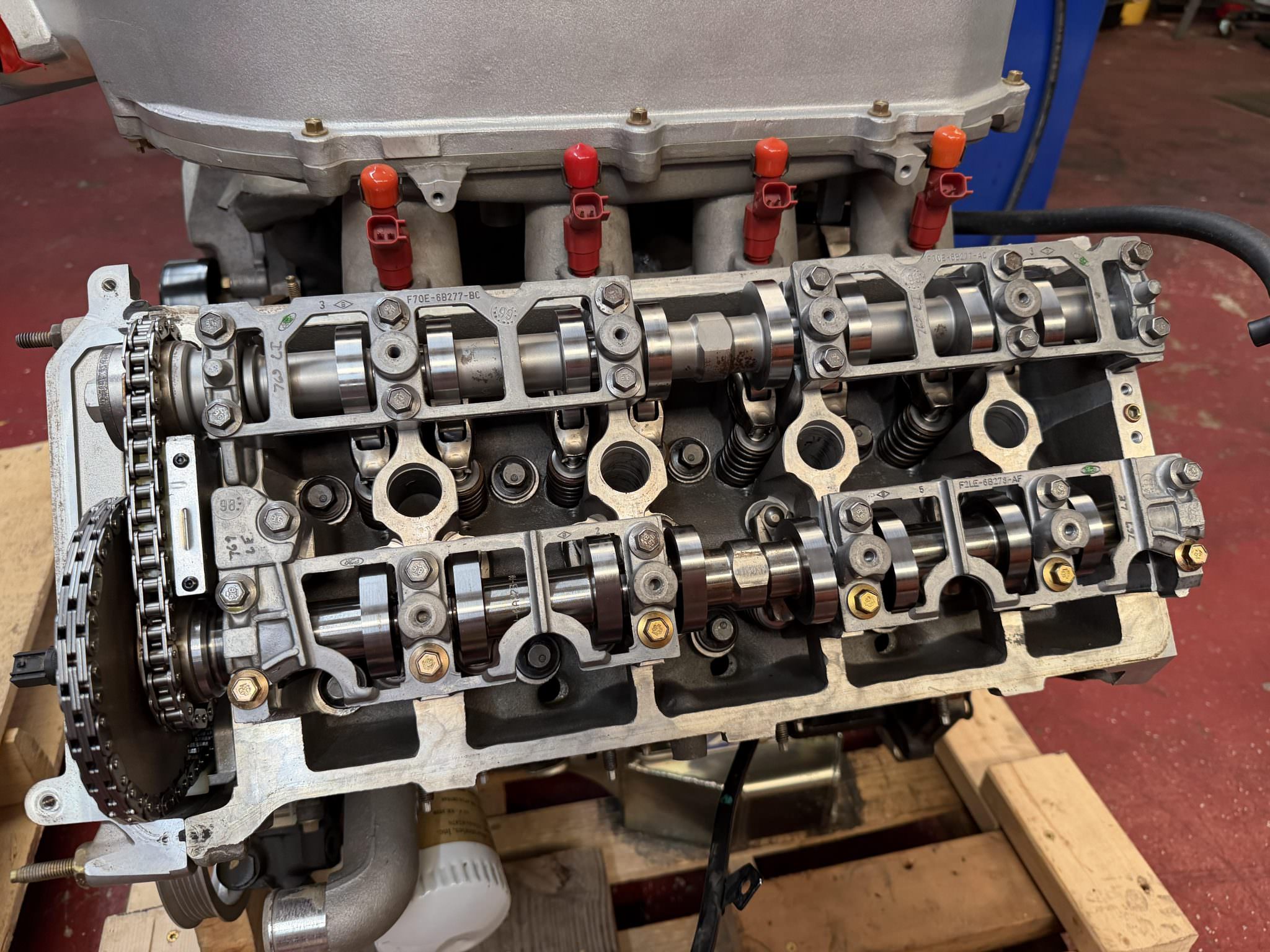
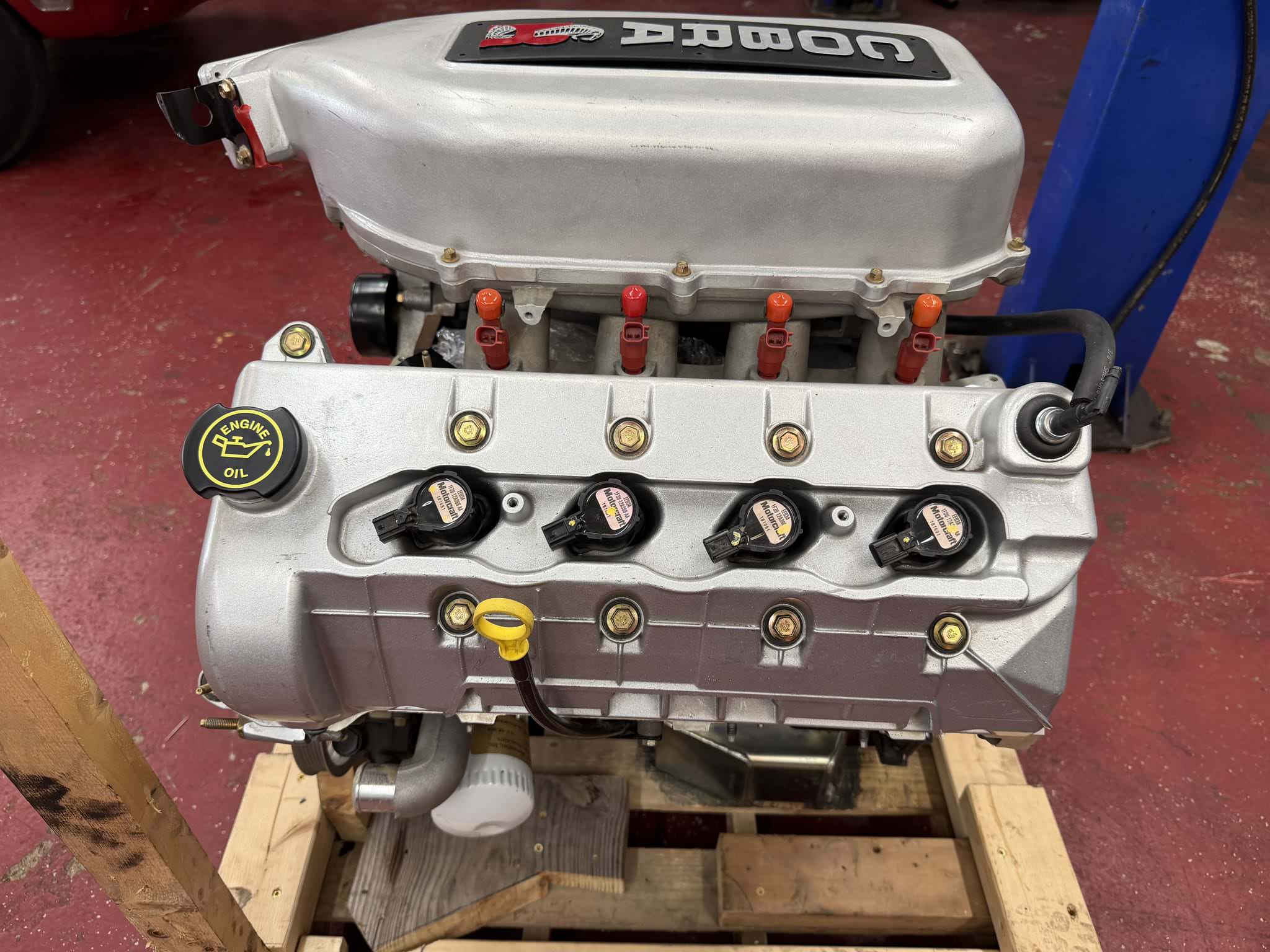
This is a rare Ford SVT Mustang Cobra R V8 engine that remains in completely unused condition – it’s still bolted down to the pallet it was on when it left the Ford factory 26 years ago.
Just 300 examples of the SVT Mustang Cobra R production car were built, along with a few additional engines to be used as spares in case any of the cars grenaded their V8s.
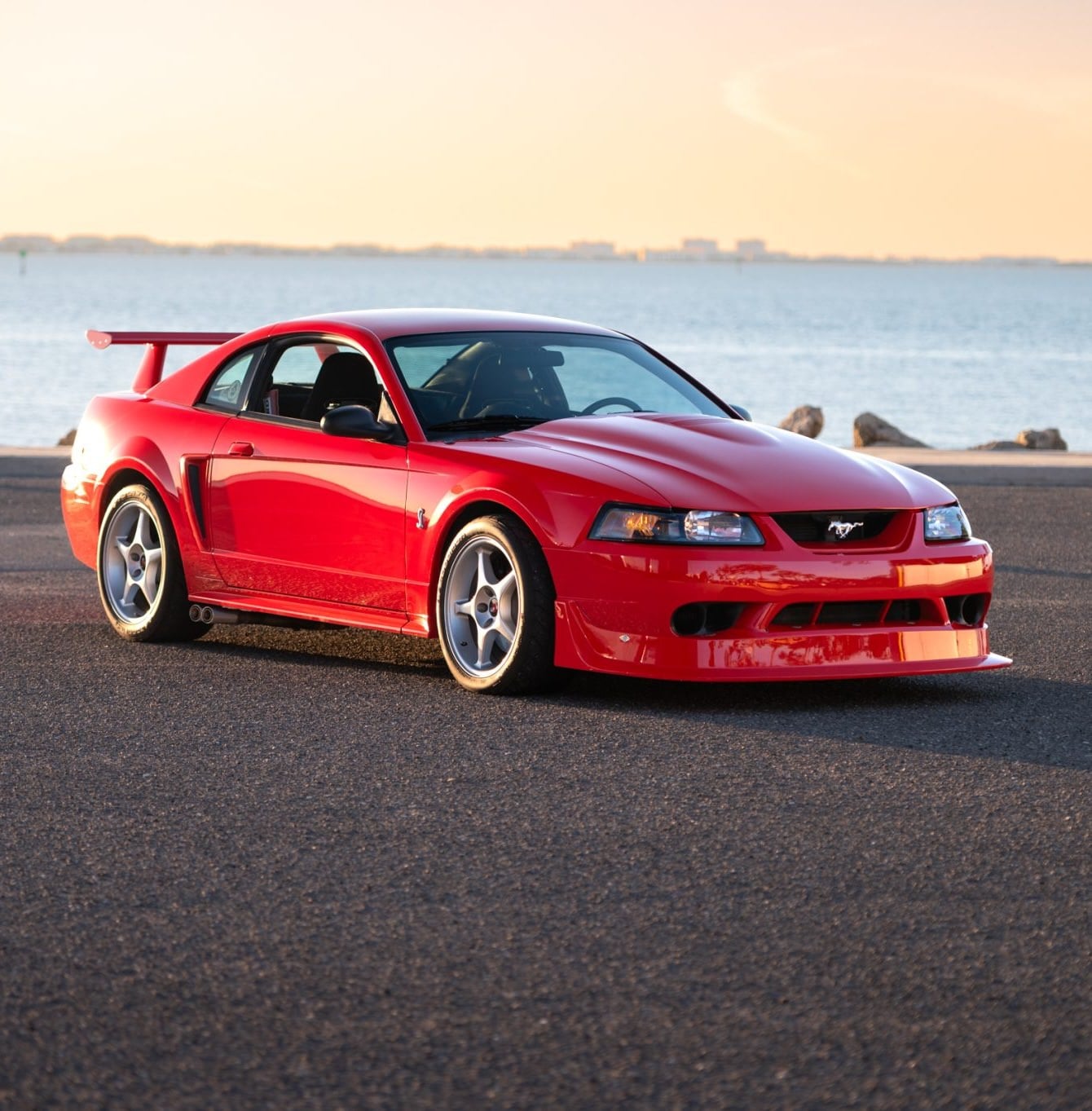
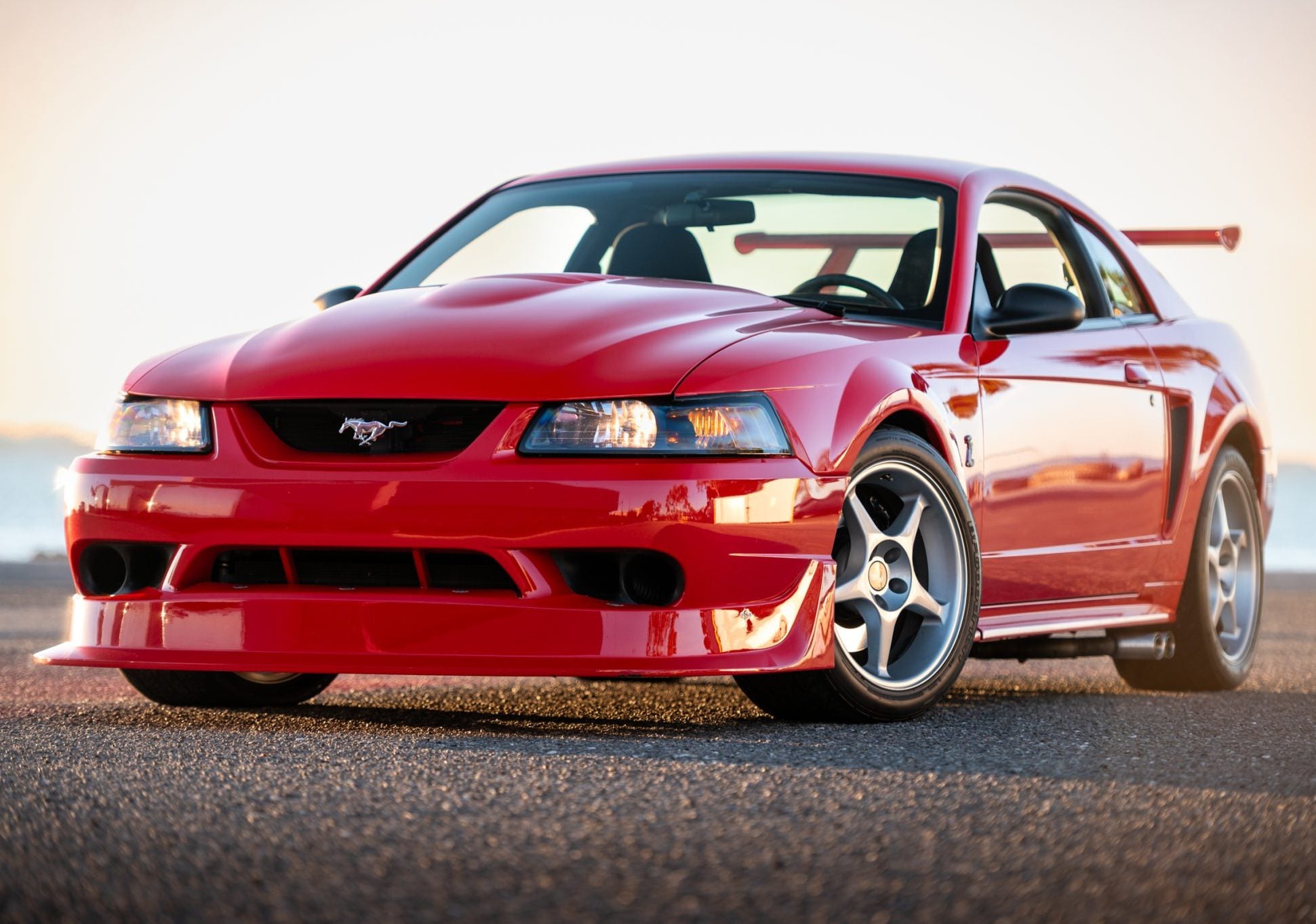
 The Ford SVT Mustang Cobra R was released in 2000 in an extremely limited production run of just 300 cars. Today they’re among the most highly sought after Mustangs from the era. Image courtesy of Bring a Trailer.
History Speedrun: The Ford Modular V8
Ford’s V8s had been pushrod designs for their entire history (with a couple of notable exceptions) when the company committed to replacing them with a more advanced OHC design, and by 1987 it had reportedly invested nearly $4 billion USD into the new engine’s design – that was in addition to retooling its tractor plant at Romeo, Michigan, to actually build it en masse.
The engine family that resulted from all of this has been called the Modular V8 since 1990, and to be perfectly honest, the name has misled people ever since. It doesn’t describe interchangeable parts – instead it describes the tooling and casting stations at Romeo and Windsor, laid out so the plants could switch between engine configurations quickly on the same lines. The factory was modular, not the engine.
The program started as an instruction from the top – direct from Donald Petersen, then Ford’s Chief Executive. He had asked senior engineer Jim Clarke to build a V8 that beat every Ford V8 before it on power, efficiency, emissions, and smoothness. No biggie. Clarke’s engineers studied what the Europeans and Japanese were doing and set the reliability target that it must need no major servicing before it hits 100,000 miles.
What they developed was a 90º V8 with a 3.552 inch bore and a 3.543 inch stroke, near enough to square, chosen for noise and vibration behavior more so than for breathing. A chain-driven overhead camshaft per bank ran roller finger followers. The block was deep-skirt cast iron with cross-bolted mains, the heads were aluminum, and the accessories bolted directly to the casting instead of hanging off brackets. The bore spacing was set at 3.937 inches, and every V8 in the family would keep it from then on out.
The Modular V8 Enters Production
The first Modular V8 engine went into the 1991 Lincoln Town Car, making 190 bhp. That looks a little underwhelming, but against the 5.0 liter pushrod V8 it replaced it was 20 lbs lighter, a second and a half quicker to 60 mph, and more economical – all with less displacement.
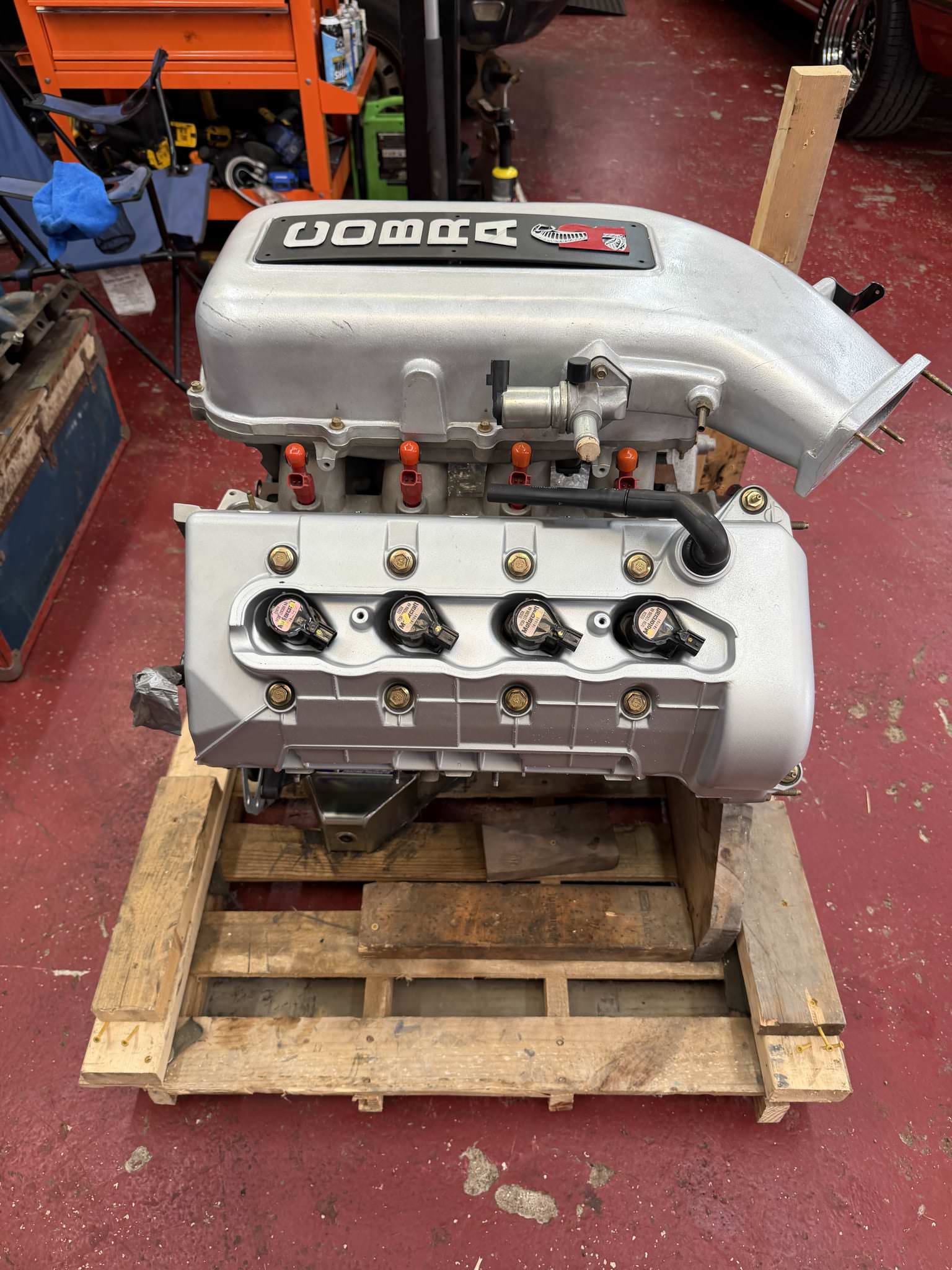
This is a rare Ford SVT Mustang Cobra R V8 engine that remains in completely unused condition – it’s still bolted down to the pallet it was on when it left the Ford factory 26 years ago.
The four cam engine branch (DOHC per bank) arrived in 1993 in the Lincoln Mark VIII, and it was a very different proposition – it had an all-aluminum block cast in Italy by Fiat’s Teksid subsidiary, four valves per cylinder, 280 bhp at 5,500 rpm and 285 lb ft at 4,500 rpm, with 290 bhp in LSC trim with a dual exhaust.
Lincoln badged it InTech from 1995, then the Mustang finally got it in 1996, in the SVT Cobra it was good for 305 bhp, and from that year Romeo built Cobra engines by hand on a separate line – two people to an engine, each pair signing their work at the end.
Ford trucks got their own version of the Modular V8 in 1997, when the 5.4 liter replaced the 5.8 liter Windsor in the F-Series under the new Triton name. The bore stayed at 3.552 inches, so the extra displacement came entirely from a 4.165 inch stroke and a block deck raised from 8.937 to 10.079 inches. The 6.8 liter V10 followed the same year on the same bore and stroke, replacing the earlier big block pushrod V8s in Ford’s larger trucks.
Ward’s put various members of the family on its 10 Best Engines list repeatedly across the following two decades – the engineering behind them was remarkably solid given the increased complexity compared to the earlier pushrod V8s.
The SVT Cobra R 5.4
The most interesting naturally-aspirated engine the Modular family had produced so far was developed as a comeback kid in a manner of speaking. The 1999 SVT Cobra was advertised at 320 hp, some owners put their cars on dynos, and the number didn’t survive contact with objective reality – some crankshaft estimates came back near 285 bhp.
Ford halted sales on August the 6th, 1999 and canceled the 2000 Cobra outright. In some accounts, the company traced the power deficit to an intake manifold manufacturing fault worth a few horsepower, a compression issue worth one, and muffler restrictions imposed by the independent rear suspension worth another few ponies.’
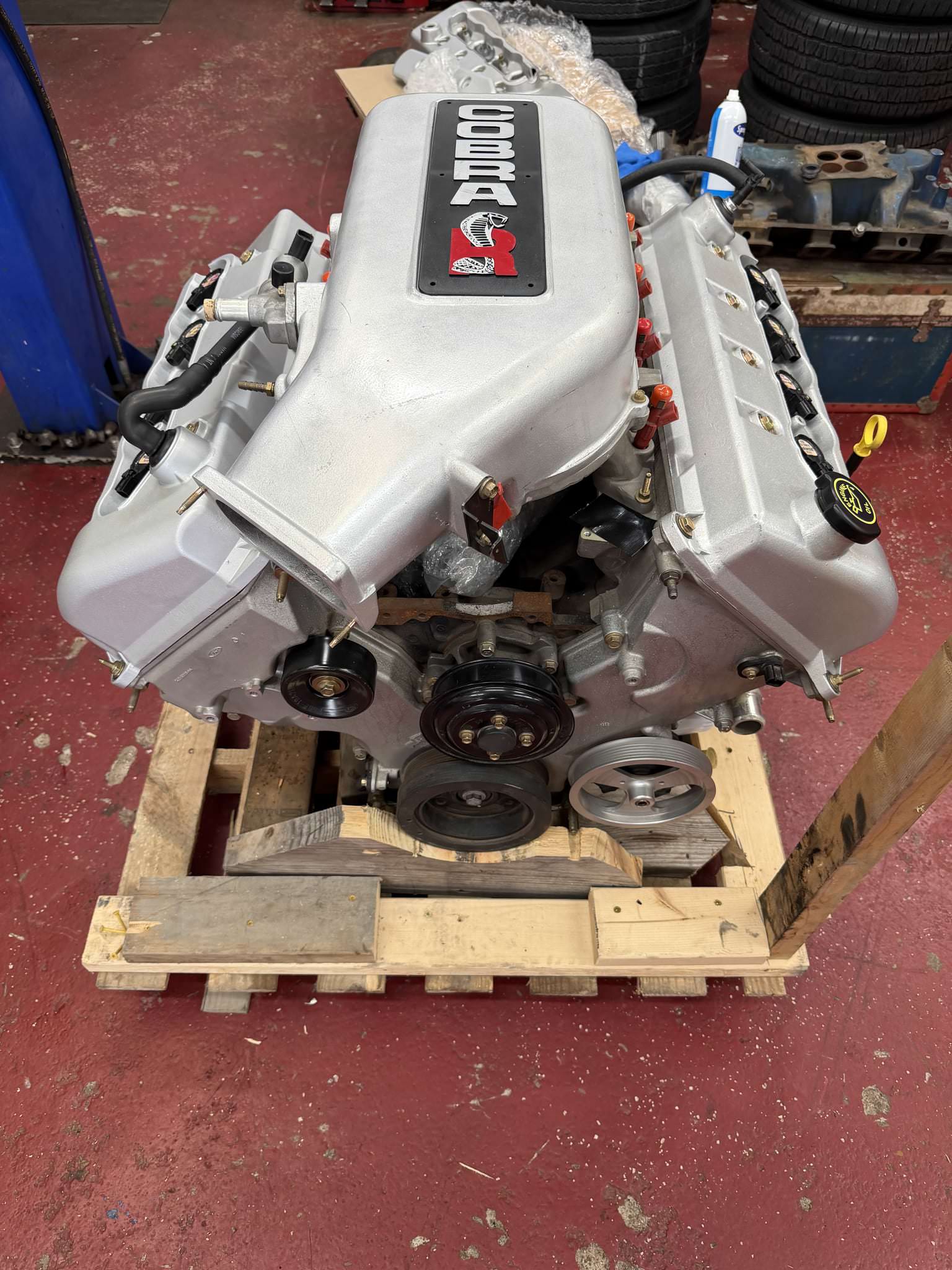
Just 300 examples of the SVT Mustang Cobra R production car were built, along with a few additional engines to be used as spares in case any of the cars grenaded their V8s.
Two projects were developed in the standard Cobra’s place – one was the FR500 concept car, and the other was 300 examples of the Cobra R.
SVT didn’t design a new engine block for the Cobra R, the 5.4 block had appeared in 1999 in the Lincoln Navigator as the InTech, rated at 300 bhp, and the Cobra R took this as its foundation, along with the forged steel crankshaft.
A 4.165 inch stroke turning 6,250 rpm gives a piston speed of around 4,340 feet per minute – to put that into context – the 4.6 liter Cobra engine at its own 6,000 rpm peak was running about 3,540. Ed Olin of Ford’s Advanced Powertrain Engineering Department, the development engineer on the program, compared the reciprocating loads to the Formula 1 engines of the time.
The original engine’s powdered-metal connecting rods were never going to survive, and so they were replaced with Carrillo steel forged units. The forged piston was based on the one used in the supercharged 5.4 Lightning, strengthened through the walls and pin bosses and given a raised flat top that lifted compression to 9.6:1. A stronger piston pin and a new harmonic damper were also added to the mix.
The SVT began with DOHC head castings developed for Ford’s Rough Riders off-road truck racing program, but then abandoned them. As Olin put it in SVT’s launch material, “because of tooling limitations, we had to design new heads for the Cobra R.” The replacements were closer relatives of the 4.6 Cobra head, reworked on both sides with reshaped ports, redesigned valve heads and an exhaust valve 2mm larger than the 4.6 unit – worth around 25% more peak airflow.
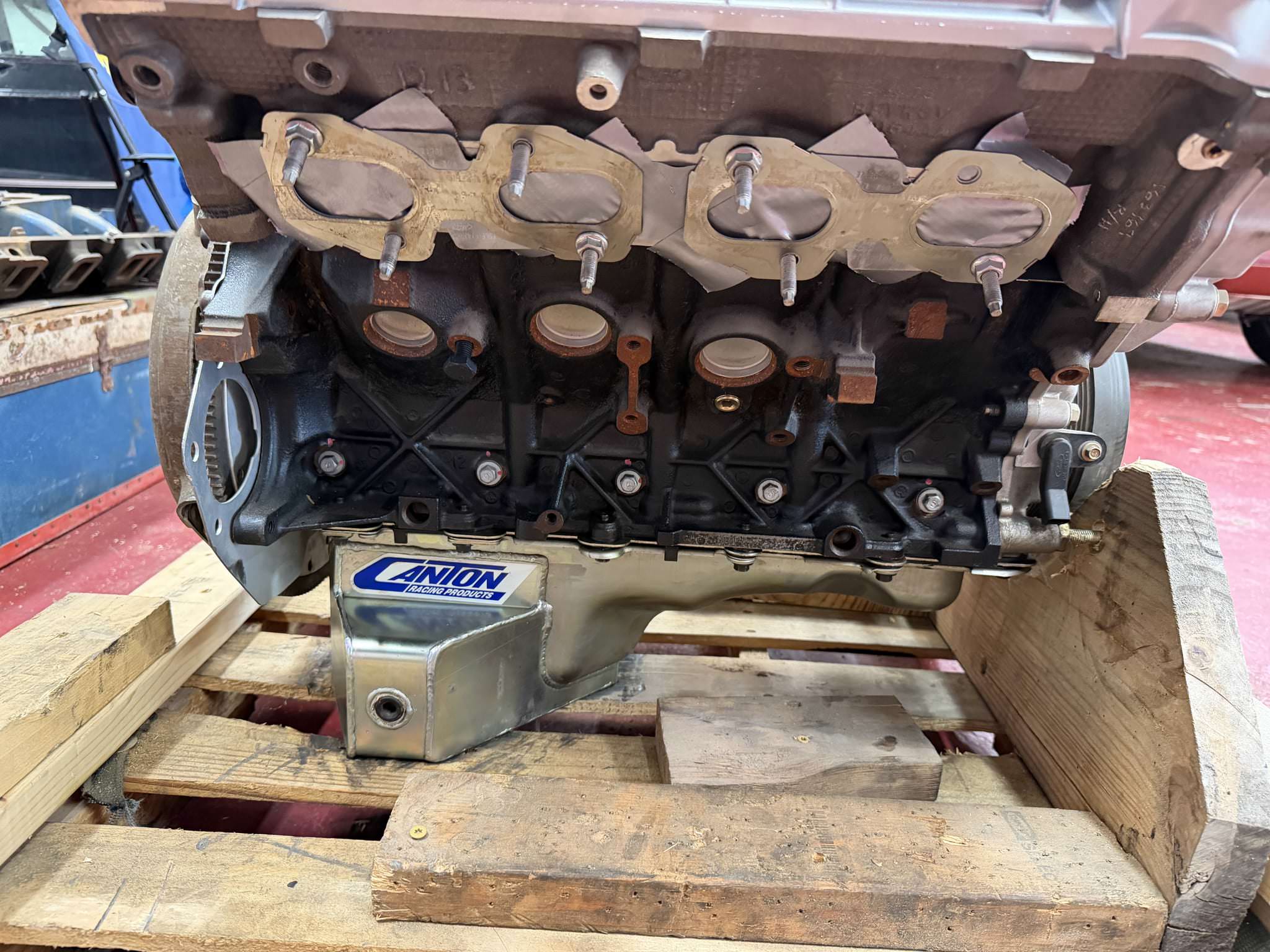
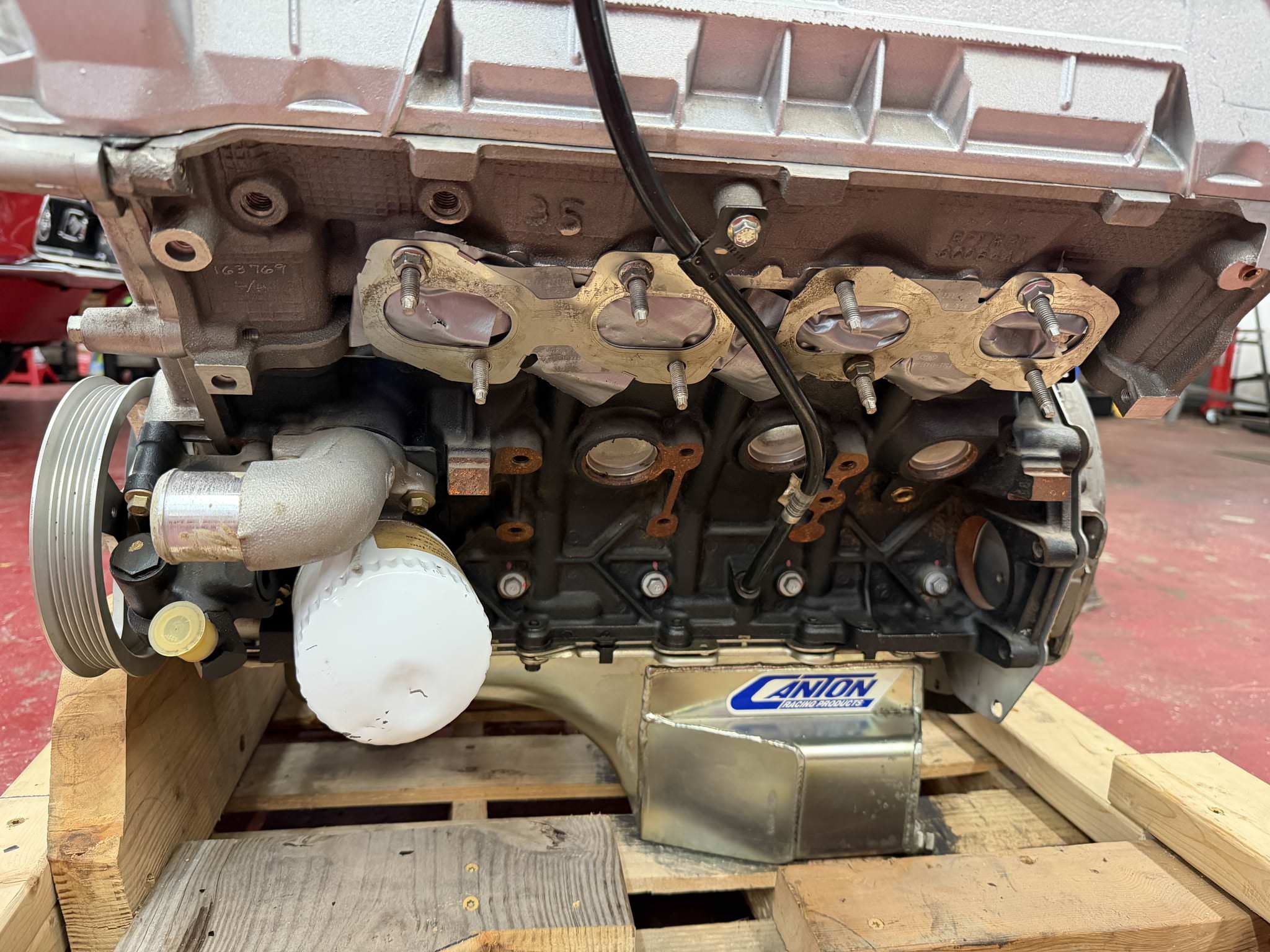
Above them sat an aluminum intake manifold unique to the engine, fed by a single 80mm throttle body. Underneath, a Canton Racing Products pan added some capacity and cut windage, the synthetic oil cooled by an air-to-oil exchanger behind the front fascia. Short-tube headers fed a Bassani X-pipe with catalytic converters, then Borla mufflers and side exits. Ford’s own summary called the result “street-legal, EPA certified, and very drivable for its high power output.”
The rating was 385 bhp and 385 lb ft. Unlike with the earlier engine, independent chassis-dyno testing has returned figures at the wheels unusually close to the 385 bhp crankshaft rating, which suggests Ford’s estimate was well and truly on the conservative side – powertrain losses would normally cut the number by around 15% or almost 60 bhp.
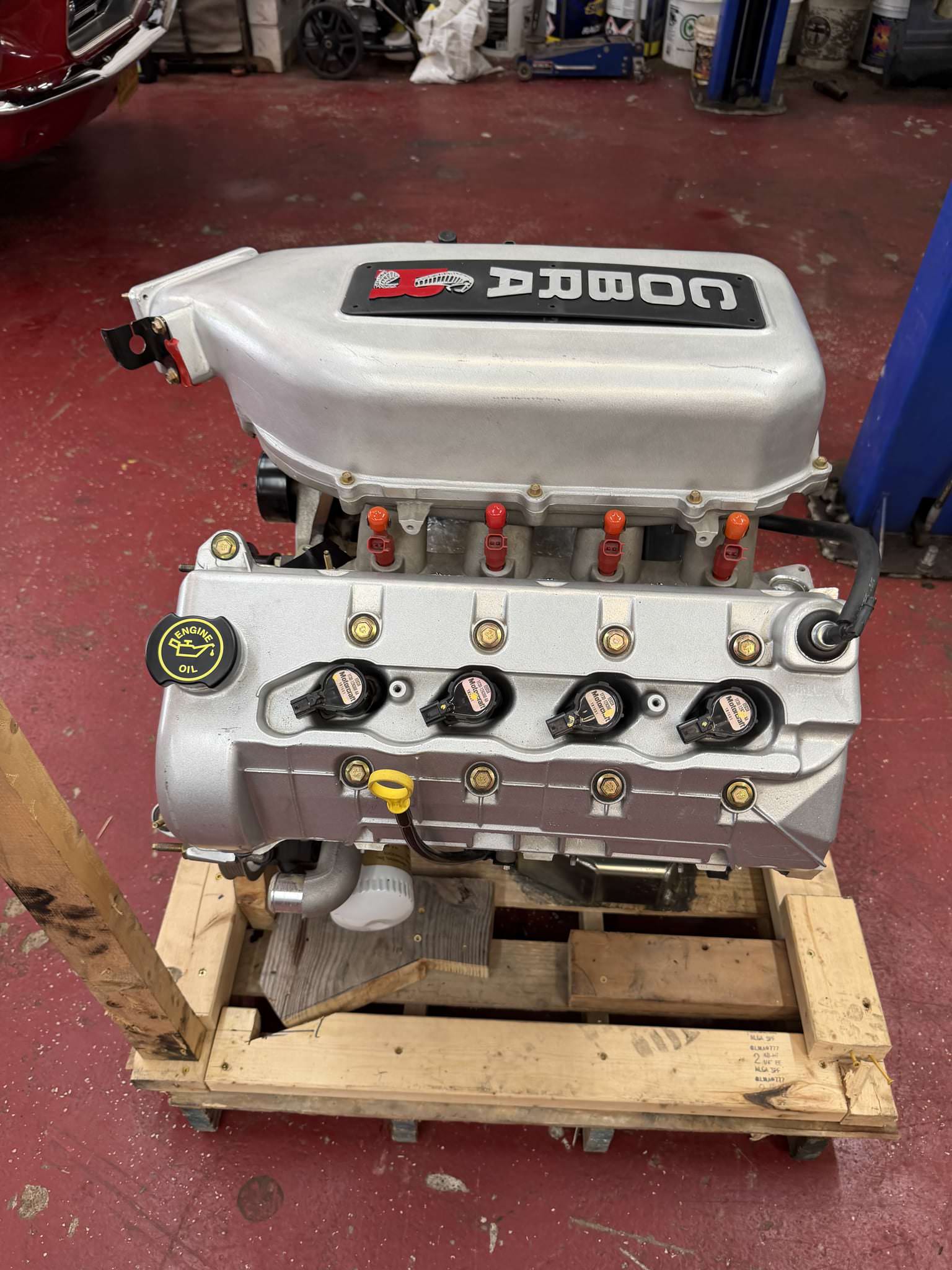
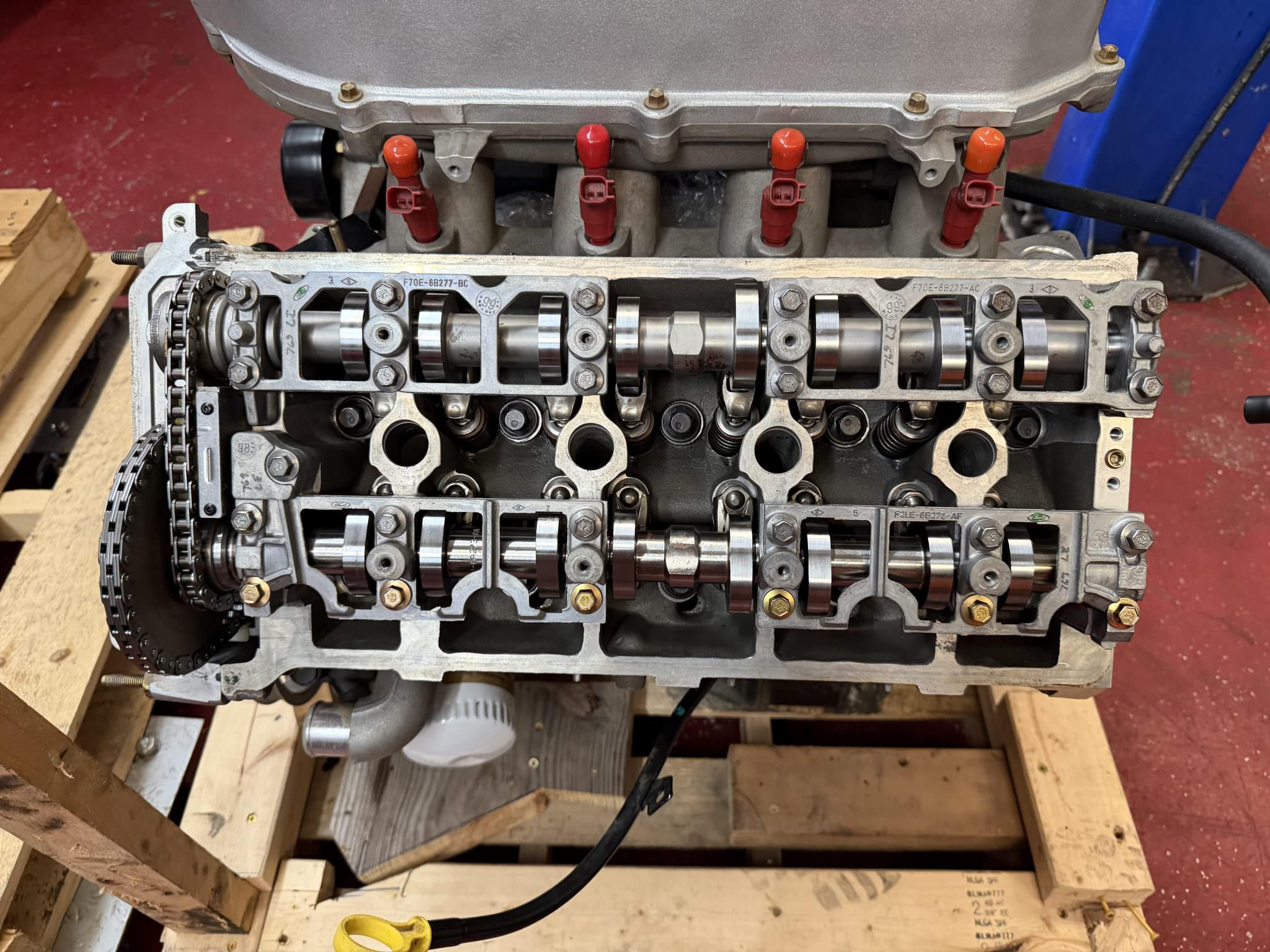
Factory rated at 385 bhp at 5,700 rpm and 385 lb ft of torque at 4,500 rpm, the engine uses a cast-iron block with aluminum cylinder heads, double overhead camshafts, and four valves per cylinder.
After what had just happened with the 1999 Cobra, Ford understating the figure was the only sensible move available, and it looks like they opted for it.
The Descendants Of The Cobra R V8
The Ford GT supercar of 2005 took the Cobra R cylinder head, improved it, and bolted it to an all-aluminum dry-sump 5.4 with a Lysholm supercharger, twin injectors per cylinder and oil squirters under the piston skirts, rated at 550 bhp. The Shelby GT500 of 2007 used the same castings as the Ford GT, separated only by some minor machining.
Ford Australia took the four-valve 5.4 elsewhere entirely, announcing its own Boss version in 2002 for the BA Falcon XR8. The Boss 260 made 260 kW and 500 Nm, which converts to 349 bhp and 369 lb ft – the Boss 290 that followed in the FPV Falcon GT made 290 kW and 520 Nm, or 389 bhp and 384 lb ft.
The SVT Cobra R V8 Crate Engine Shown Here
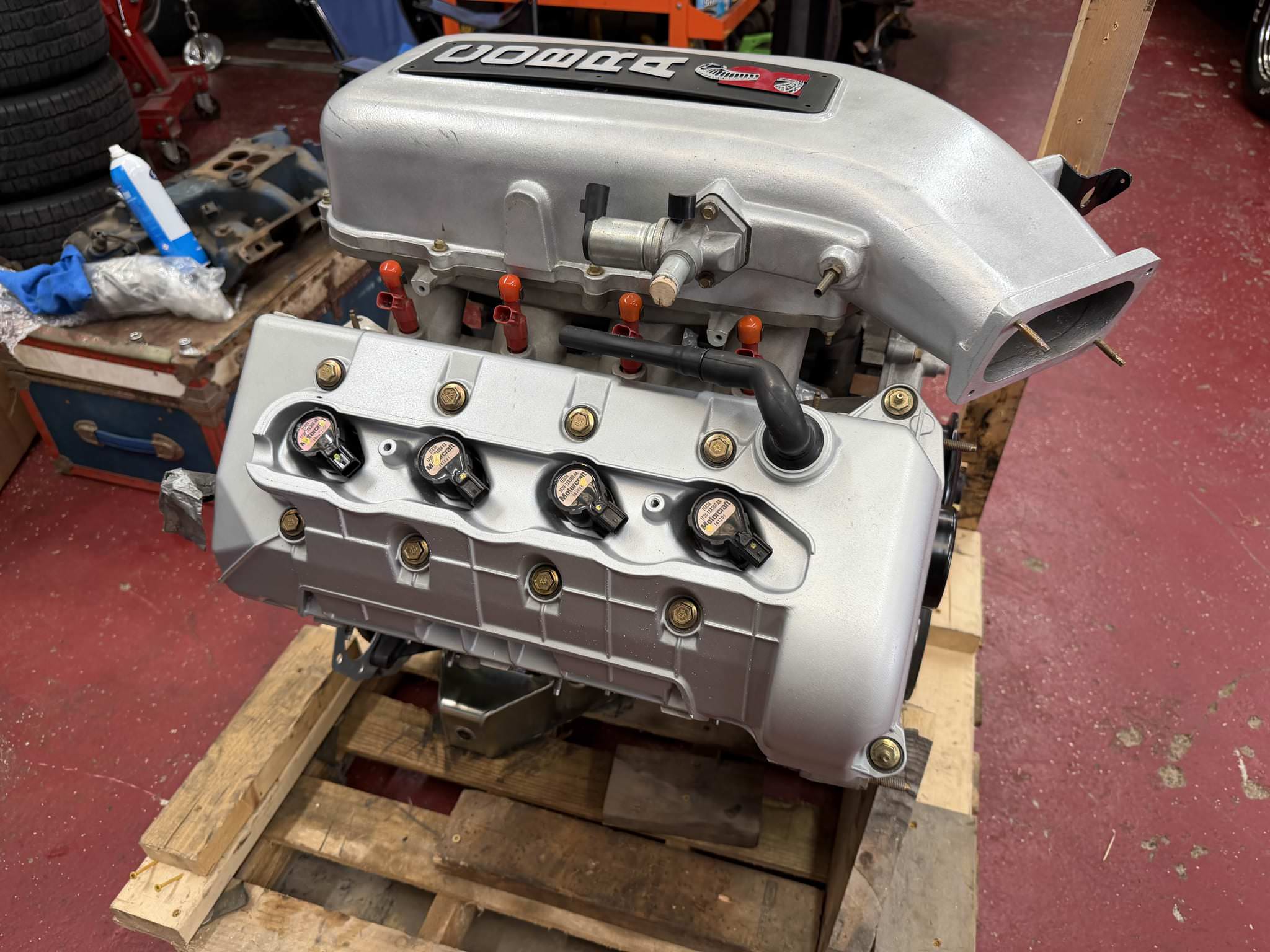
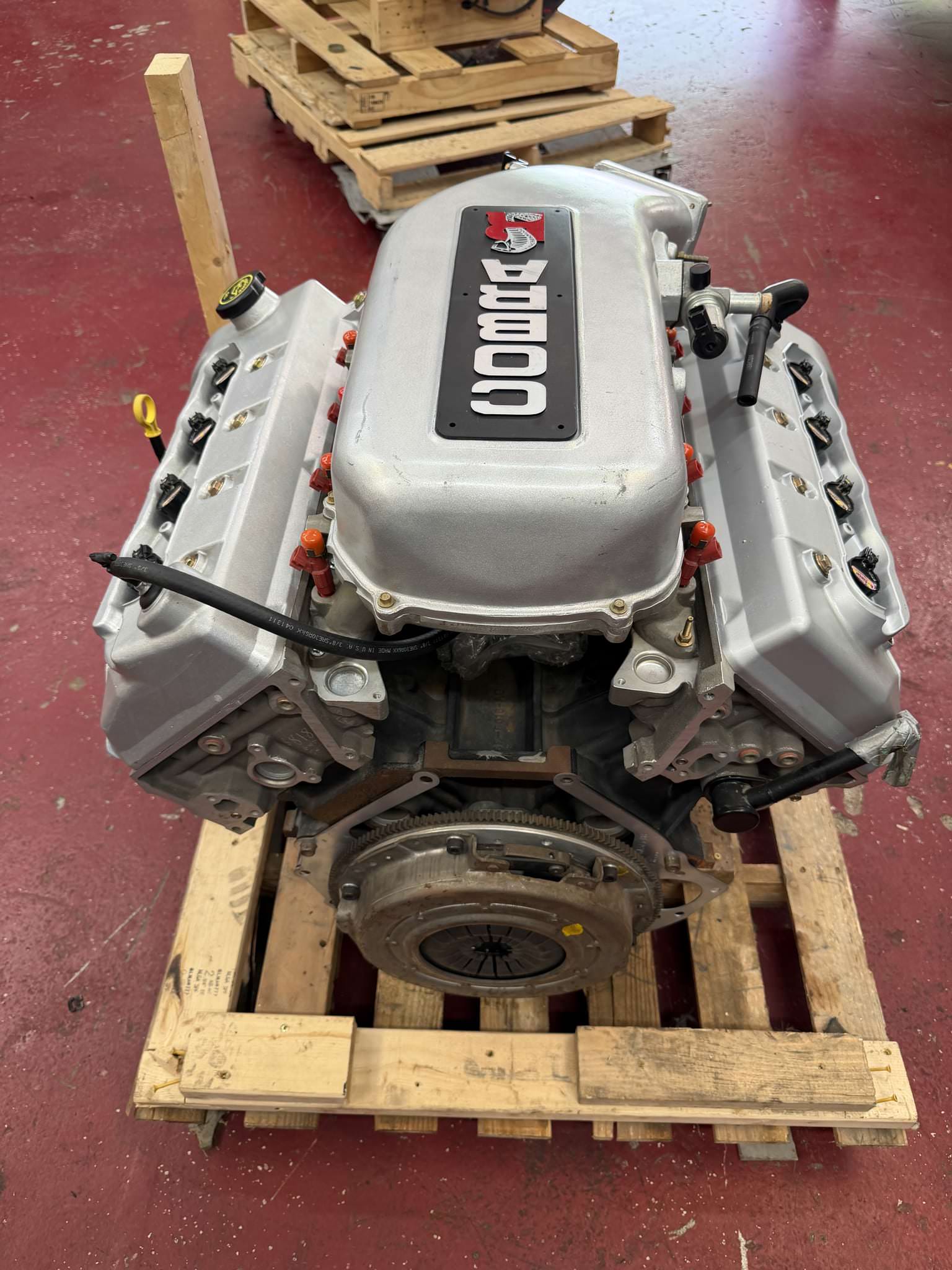
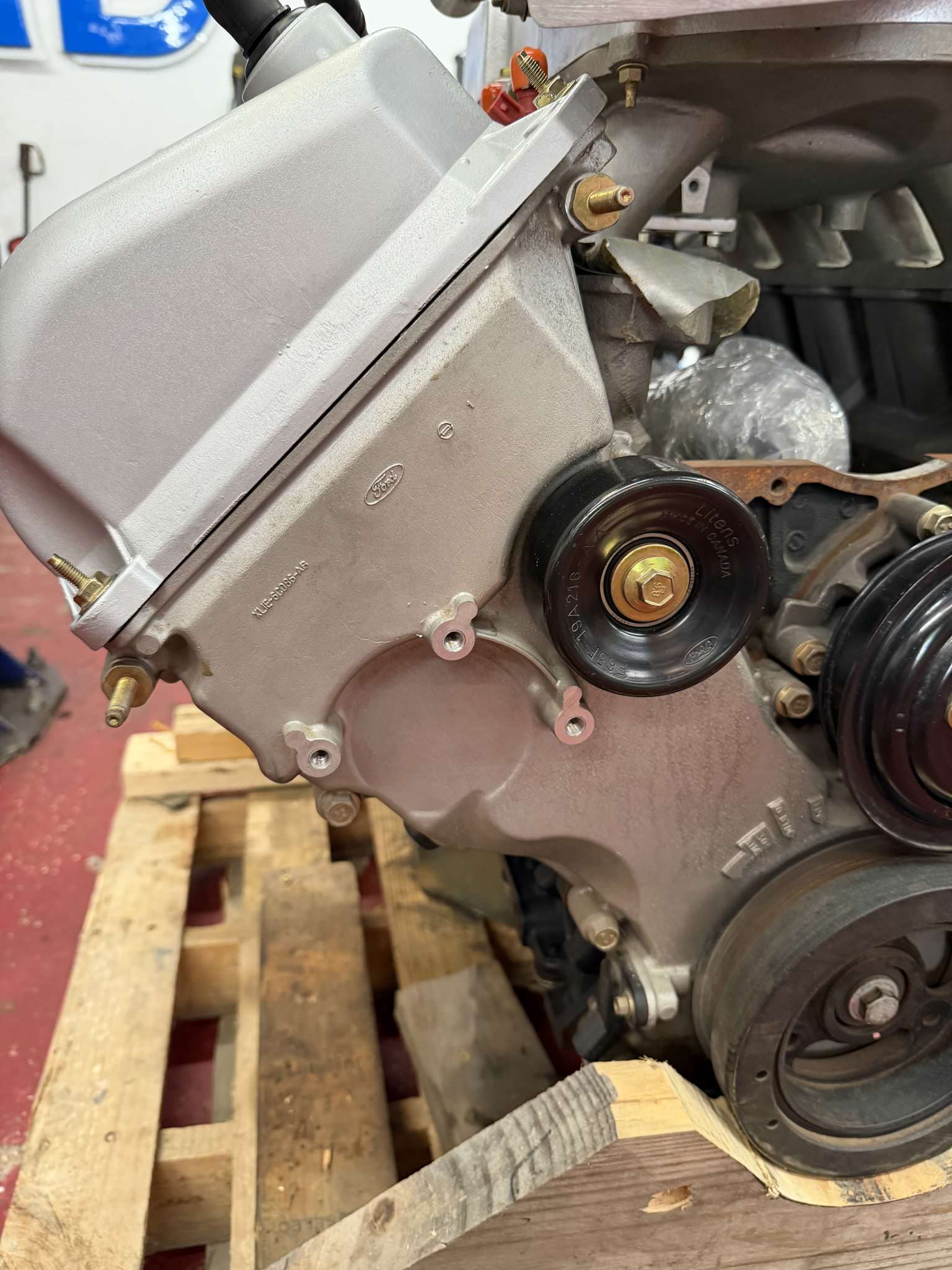
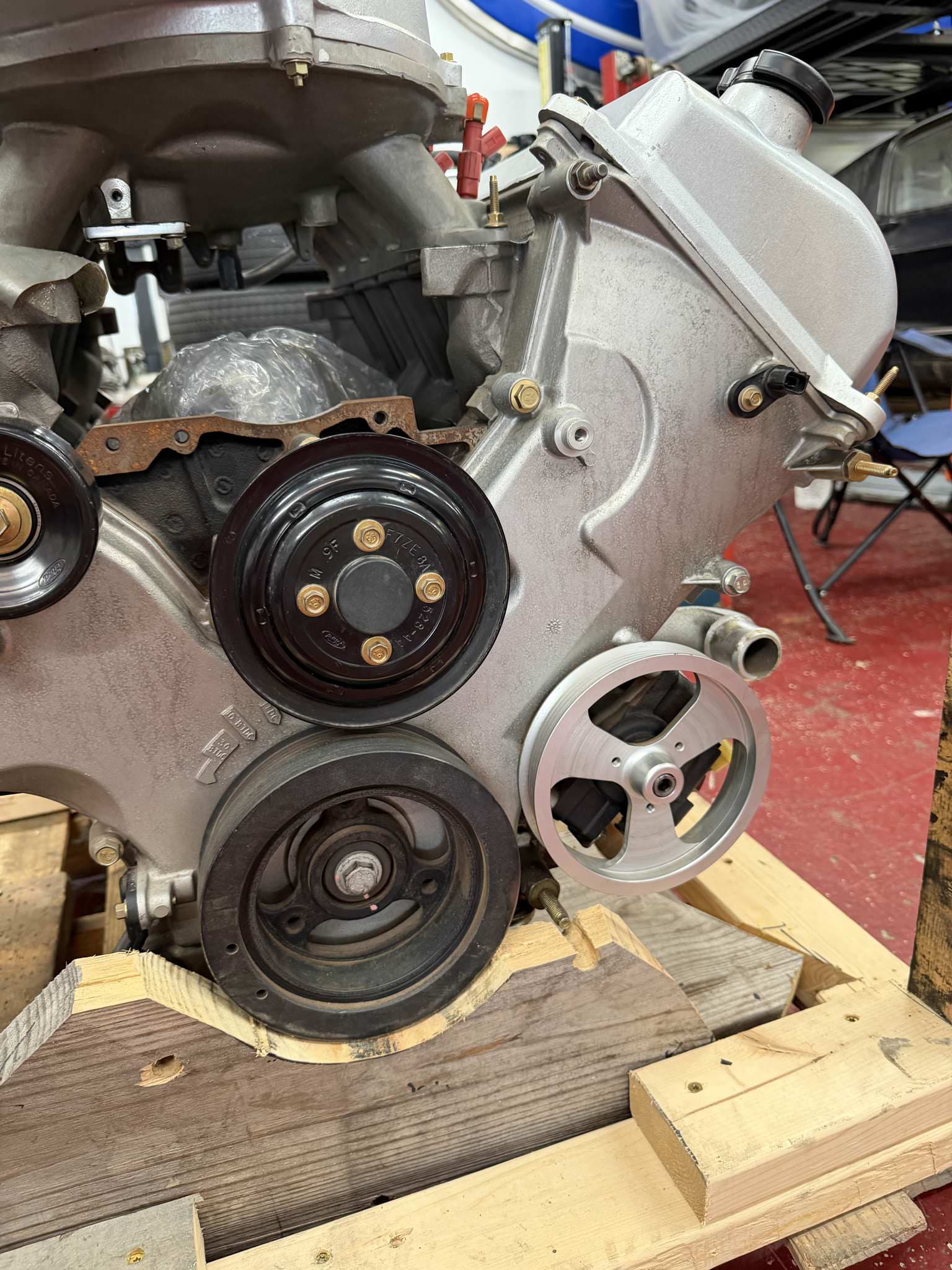
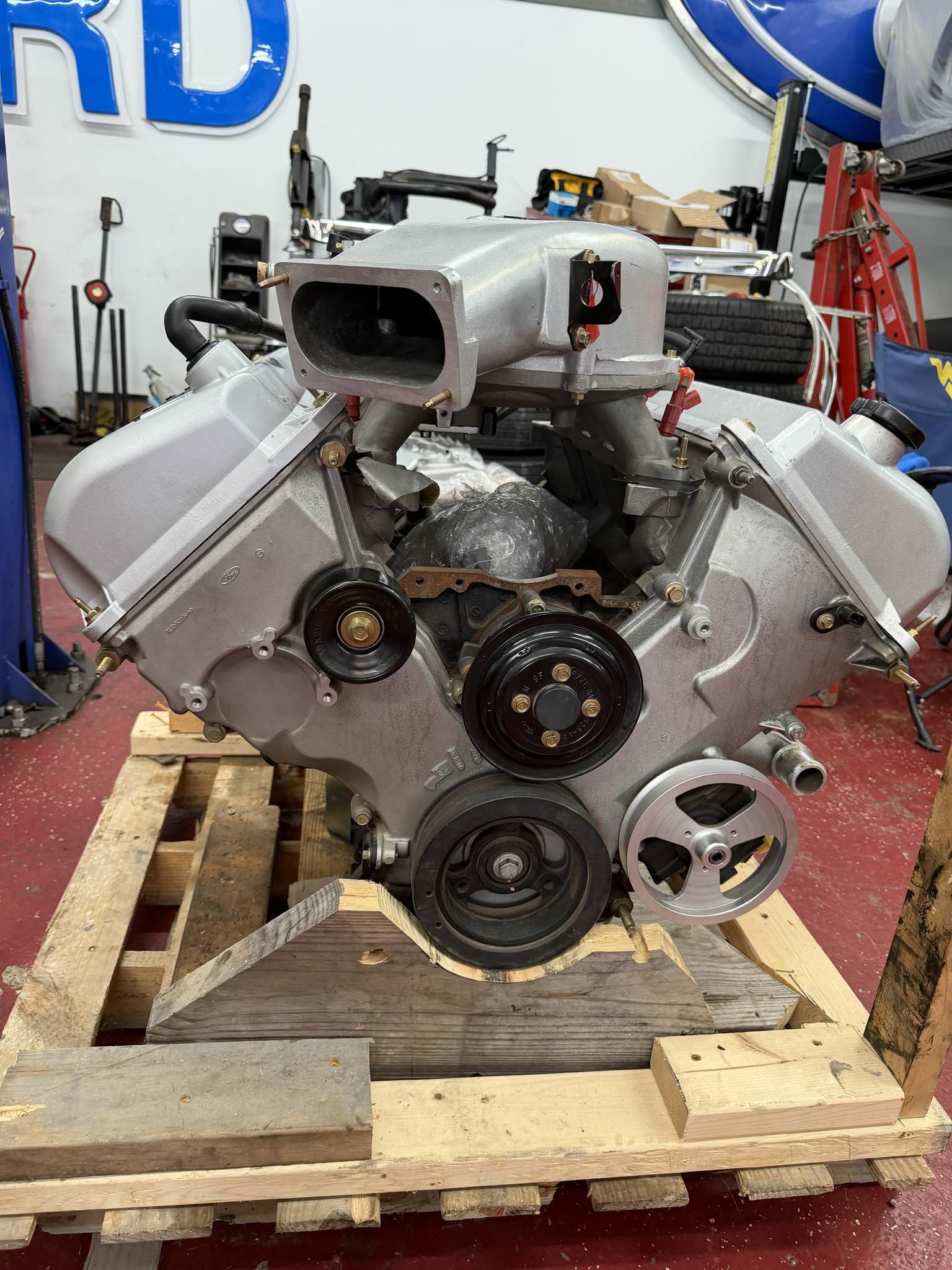
This is an unused 5.4 liter V8 that was built for the limited-production 2000 Ford SVT Mustang Cobra R – it remains bolted to its original factory shipping pallet and it’s never been used. It’s not known how many unused original Cobra R engines there are left in the world but it must be only a handful – only 300 examples of the car itself were made.
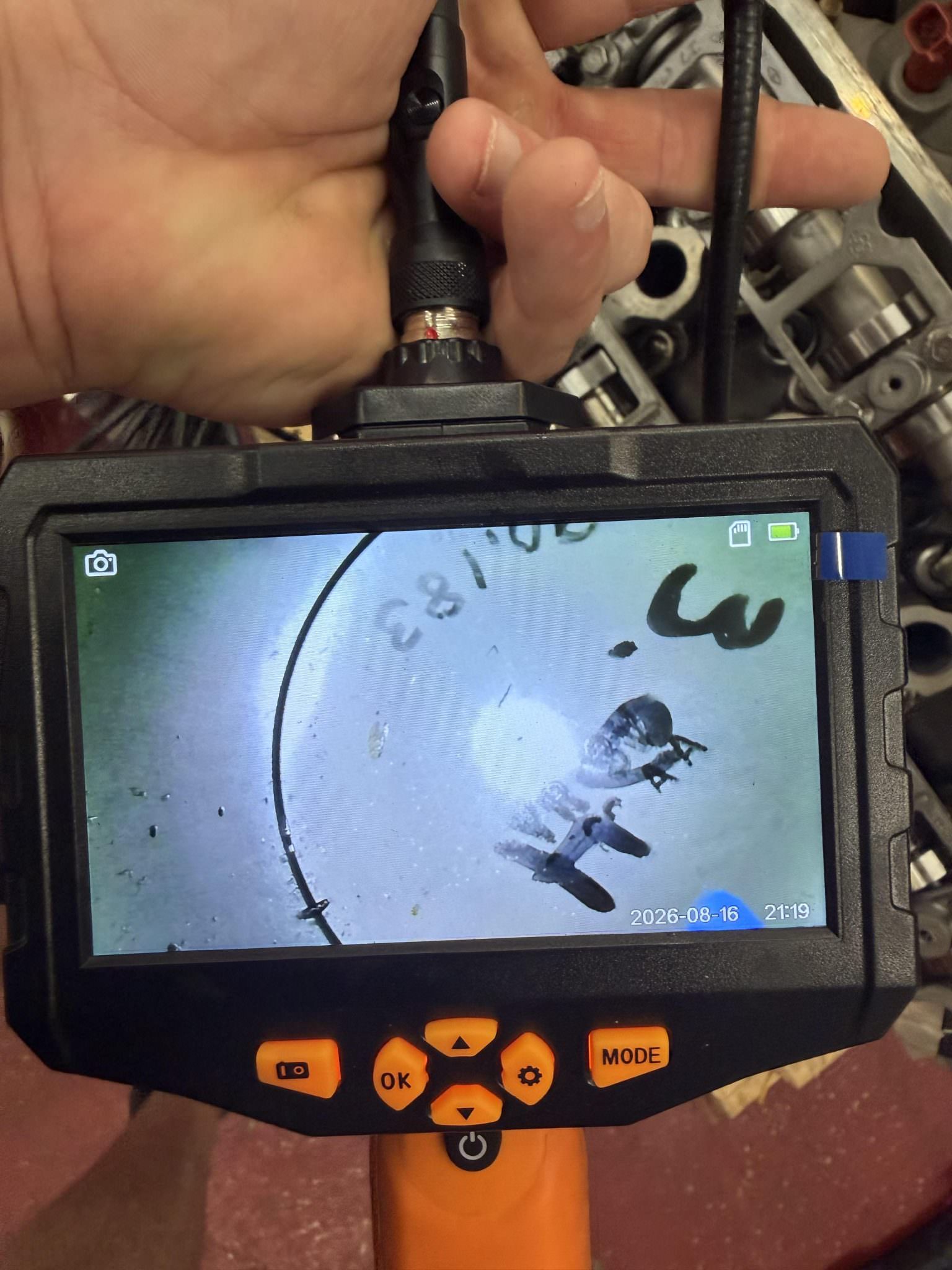
Factory rated at 385 bhp at 5,700 rpm and 385 lb ft of torque at 4,500 rpm, the engine uses a cast-iron block with aluminum cylinder heads, double overhead camshafts, and four valves per cylinder. Cobra R identification numbers appear on the intake plenum, and the complete engine stamping is documented in the listing photographs.
It’s not known how many unused original Cobra R engines there are left in the world but it must be only a handful – only 300 examples of the car itself were made.
The engine is fitted with an aluminum Canton Racing Products oil pan along with alternator and power-steering pulleys and a dipstick.
It’s now being offered for sale out of Beckley, West Virginia with no reserve, and you can visit the listing here if you’d like to read more about it or register to bid.
Images courtesy of Bring a Trailer

Articles that Ben Branch has written have been covered on CNN, Popular Mechanics, Smithsonian Magazine, Road & Track Magazine, the official Pinterest blog, the official eBay Motors blog, BuzzFeed, Autoweek Magazine, Wired Magazine, Autoblog, Gear Patrol, Jalopnik, The Verge, and many more.
Silodrome was founded by Ben back in 2010, in the years since the site has grown to become a world leader in the alternative and vintage motoring sector, with well over a million monthly readers from around the world and many hundreds of thousands of followers on social media.