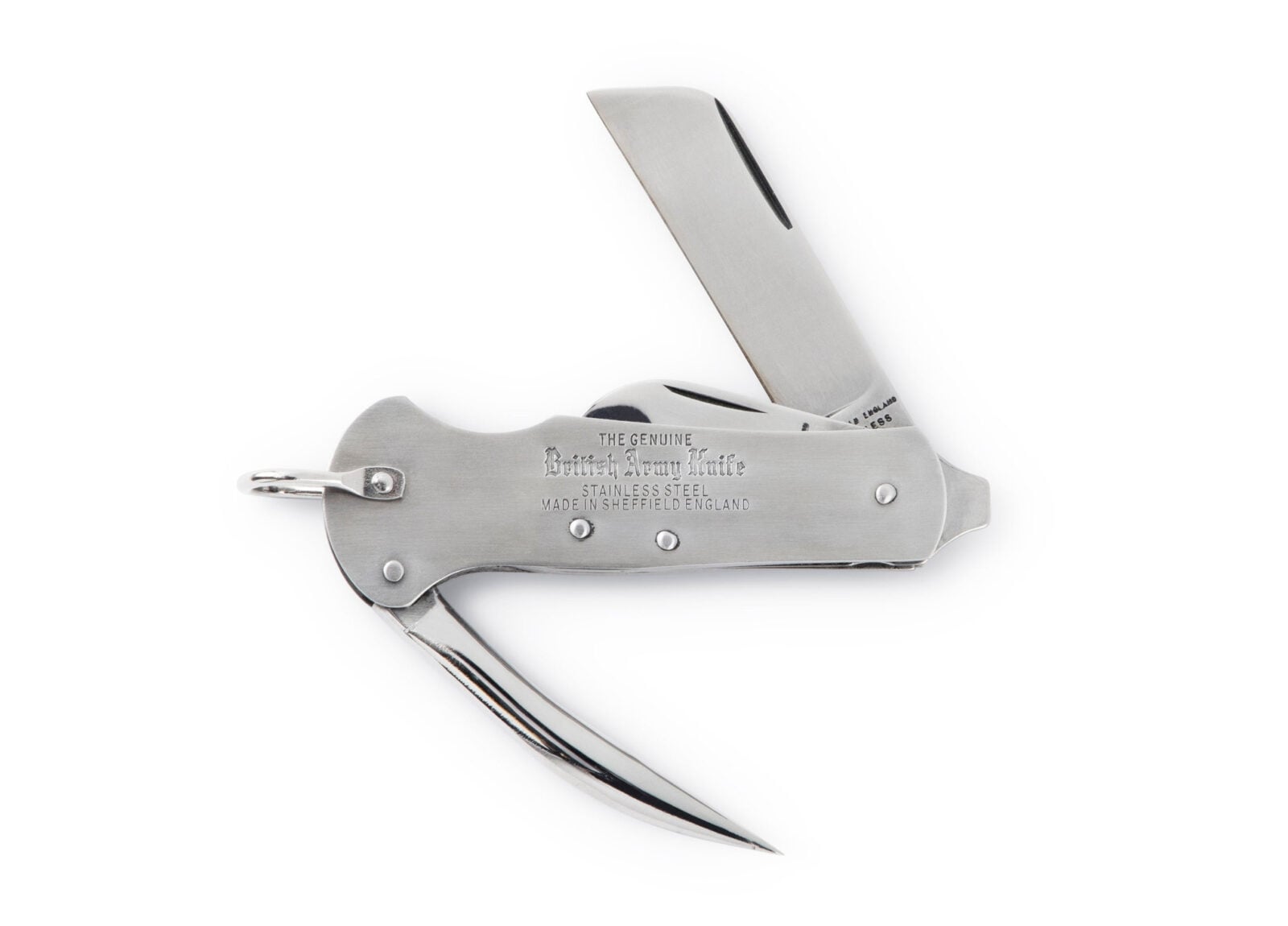
The British Army Knife is a steel folding knife and an early multi-tool with its origins dating back to the mid-1800s. Countless examples have been issued to military personnel, and these knives have seen service in both World Wars and many other major conflicts.
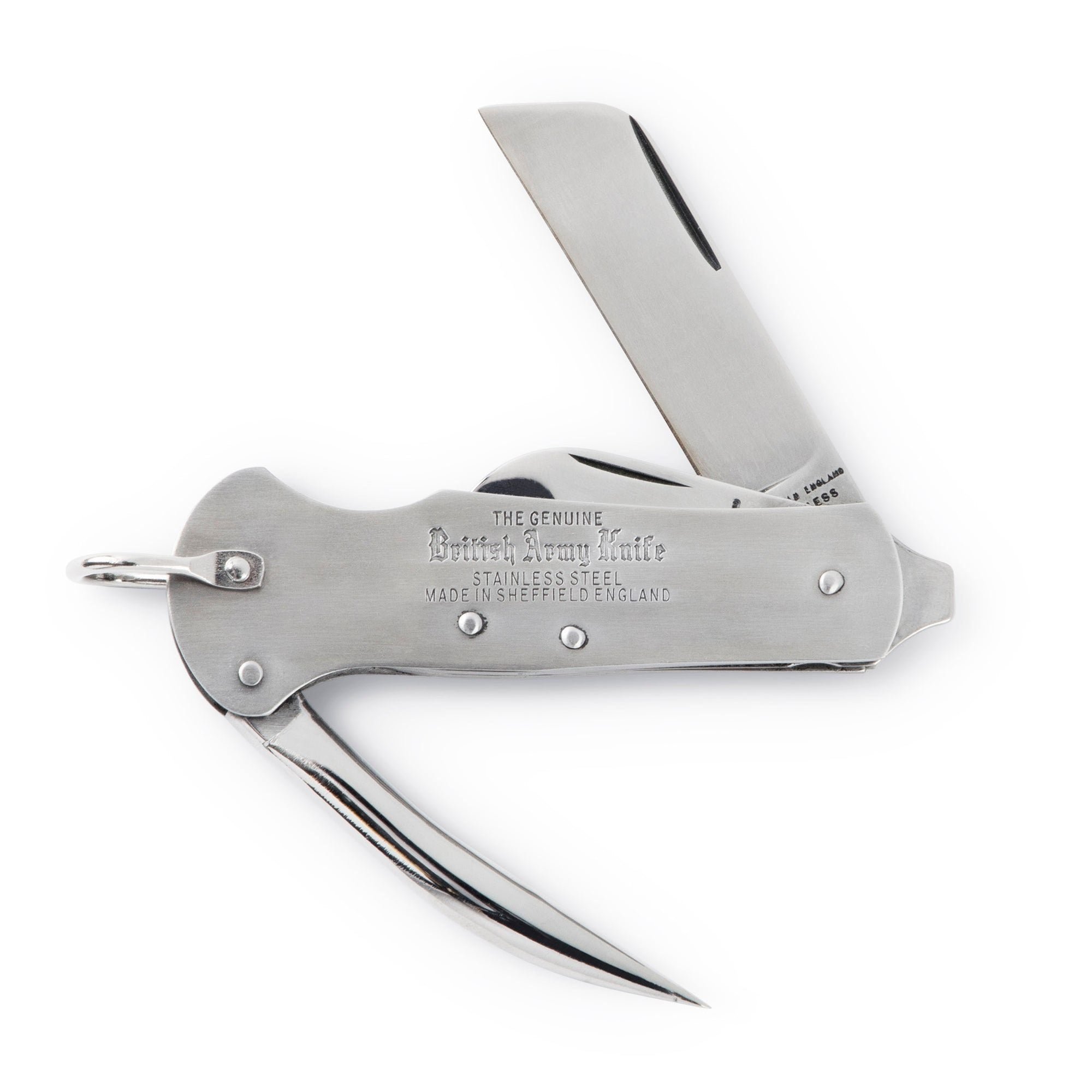
Remarkably, it’s still possible to buy a genuine British Army Knife made to the original specifications in Sheffield, England by the original manufacturer. Each comes with a knife, a can opener, a marlinspike, and a flat head screwdriver/prybar.
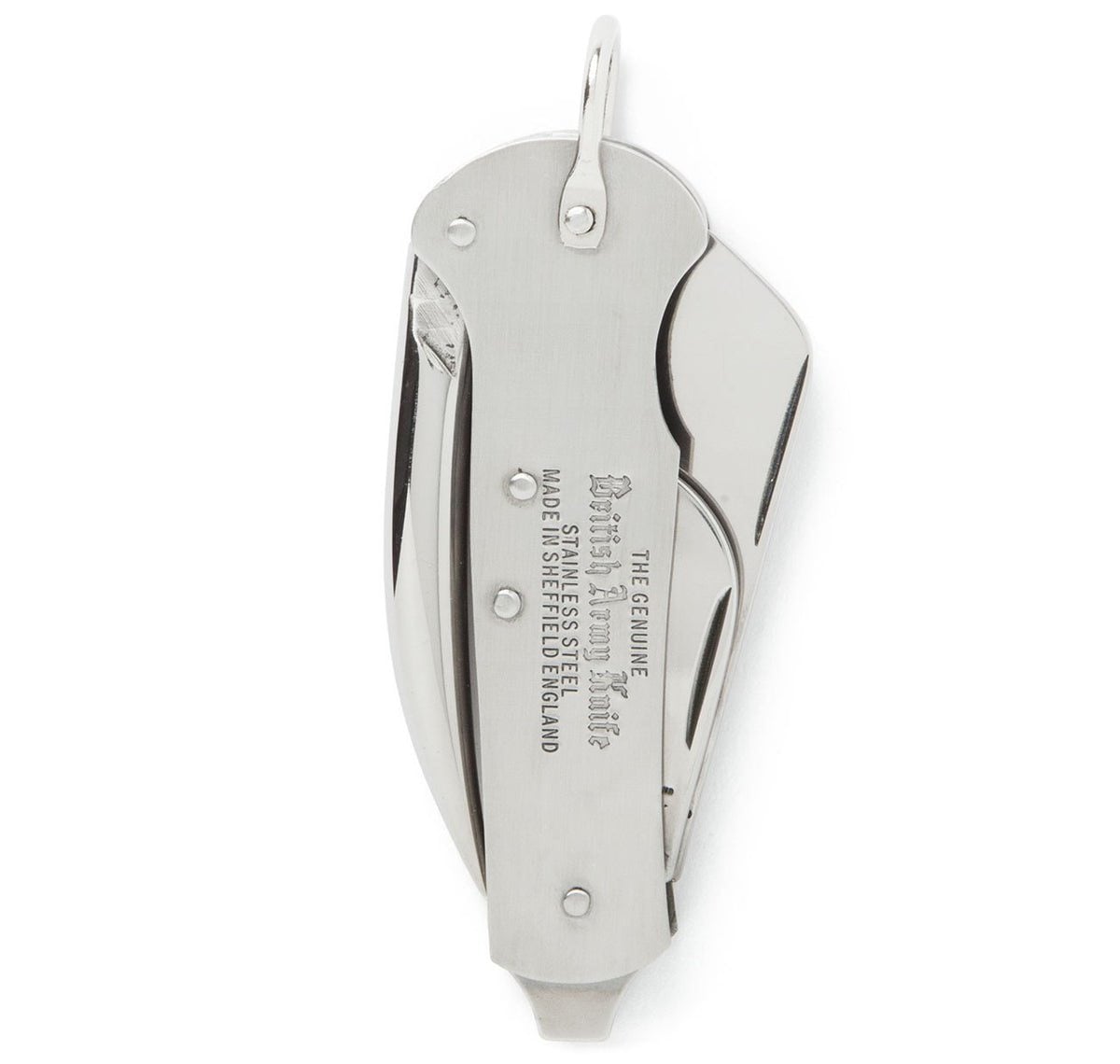
 The British Army Knife is a steel folding knife and an early multi-tool with its origins dating back to the mid-1800s. Countless examples have been issued to troops, and these knives have seen service in both World Wars and many other major conflicts.
History Speedrun: The Genuine British Army Knife
The Sheffield Genuine British Army Knife, more commonly known as the clasp knife or jack knife, is one of the longest-serving military utility tools in the world. The design has been in production since the mid-1800s and the British Army formally standardized its clasp knife specification in 1905 under Pattern 6353, then revised it slightly in 1913.
This British Army specification laid out very precise requirements for the blade, tin opener, marlinspike, handle scales, and shackle – all to be made by cutlers bearing their maker’s name on the tangs. Periodic updates followed over the decades, introducing new tools, different materials, and changes to overall size, but the fundamental design philosophy has always remained the same.
The Imperial War Museums have a number of examples of the British Army Knife in their collection. One 1938-produced clasp knife follows the 1913 standard pattern and has a marlinspike, a can-opening blade, and a main knife blade, with checkered black scales made from Bexoid (an early celluloid-based plastic) which replaced the checkered horn handles of earlier specification knives.
One wartime example made by Sheffield firm F. Greaves & Sons shows that some versions were produced without a marlinspike to simplify manufacturing during the war and reduce metal usage, for those who were unlikely to need the spike for its primary purpose – loosening tight knots, often on ships.
The town of Sheffield on England was always the heart of production. Manufacturers who produced knives for the military included Atkinson Brothers, Sheffield Steel Products, Wade & Butcher, H.M. Slater, Clarks & Son, J. Allen & Sons, and Harrison Bros and Howson, among many others.
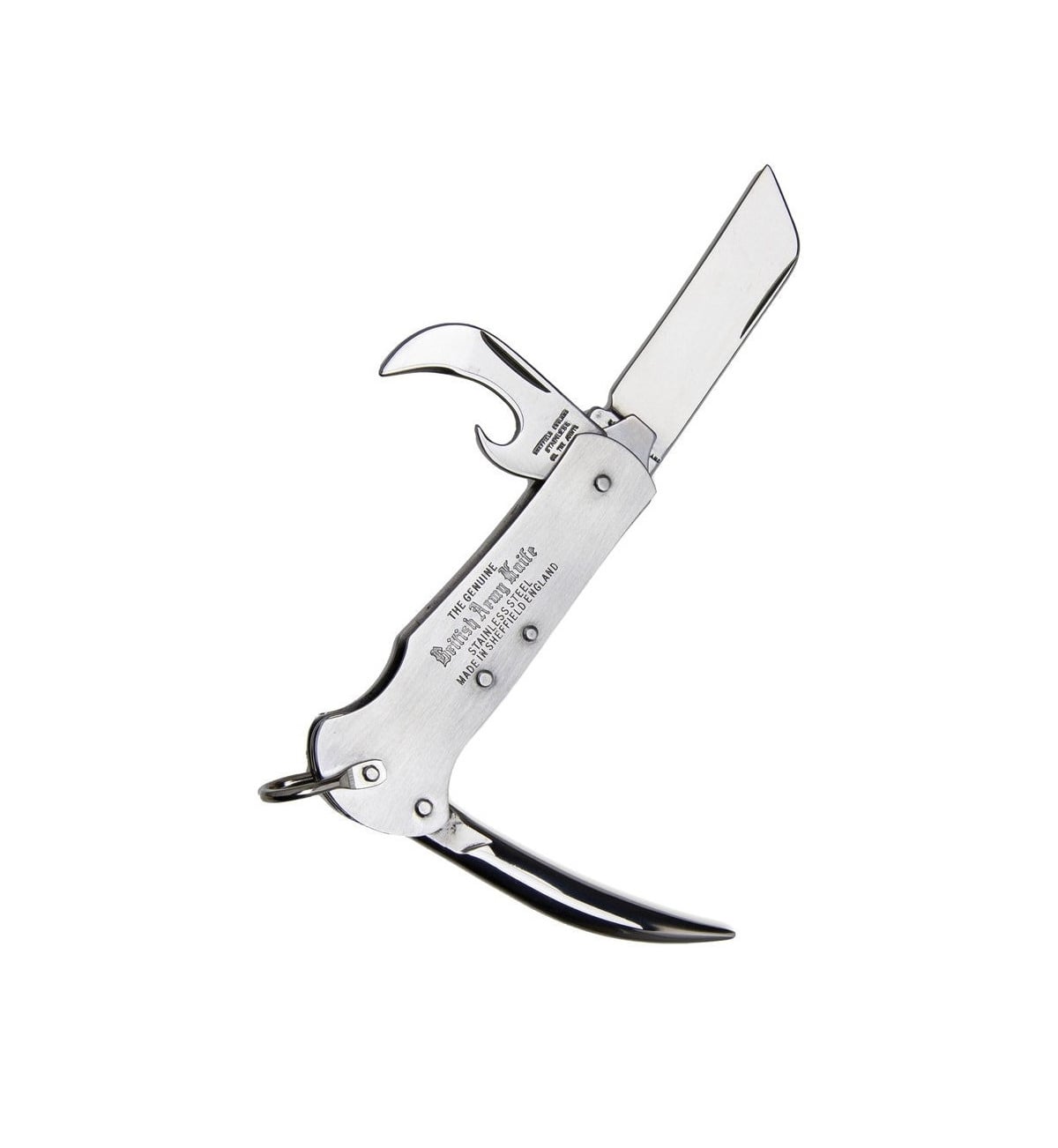
The name most associated with the modern version is Joseph Rodgers, one of Sheffield’s most historic cutlery firms. Joseph Rodgers has produced clasp knives of this type since the mid-1800s, and the design has changed little because it remains so widely loved as an effective and practical working knife.
The name most associated with the modern version is Joseph Rodgers, one of Sheffield’s most historic cutlery firms. Joseph Rodgers has produced clasp knives of this type since the mid-1800s, and the design has changed little because it remains so widely loved as an effective and practical working knife.
The tin opener design underwent relatively significant changes in 1939 and again in 1952, with a bottle opener added around 1944-45 on some models, just in time for the celebratory bottles of wine enjoyed by many at the end of WWII.
The transition from Bexoid-scaled handles to all-stainless-steel construction was gradual rather than a single post-war switch. George Ibberson was already producing stainless-steel-scaled knives during the war itself, and by 1953 the all-stainless design had become the standard that evolved into the modern NATO-pattern knife.
Though far less famous internationally than the Swiss Army Knife, the British Army Knife is by far the older design and may have even influenced the Swiss knife. Joseph Rodgers has been producing folding knives of this type in Sheffield since before the mid-1800s, while the first Swiss Army Knives were not delivered until 1891.
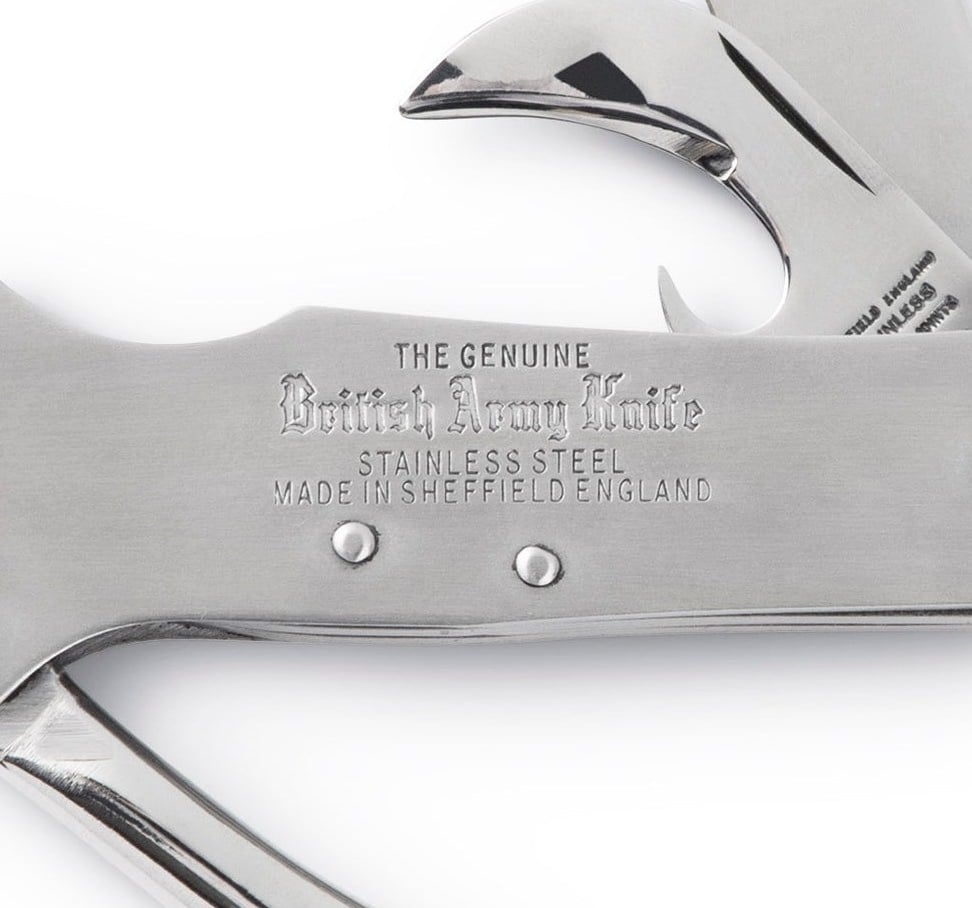
The modern version is manufactured to Ministry of Defence requirements and carries the NATO Stock Number NSN 7340-99-975-7403. The standard configuration today includes a sheepsfoot blade, a can opener, a flathead screwdriver/prybar, and a marlinspike. Amazingly it’s still purchased by the British Army today.
The modern version is manufactured to Ministry of Defence requirements and carries the NATO Stock Number NSN 7340-99-975-7403. The standard configuration today includes a sheepsfoot blade, a can opener, a flathead screwdriver/prybar, and a marlinspike. Amazingly it’s still purchased by the British Army today.
If you’d like to add a genuine British Army Knife to your collection or EDC kit they’re still available brand new from a limited number of retailers, including here from Heinnie Haynes.
Images courtesy of Joseph Rodgers

Articles that Ben Branch has written have been covered on CNN, Popular Mechanics, Smithsonian Magazine, Road & Track Magazine, the official Pinterest blog, the official eBay Motors blog, BuzzFeed, Autoweek Magazine, Wired Magazine, Autoblog, Gear Patrol, Jalopnik, The Verge, and many more.
Silodrome was founded by Ben back in 2010, in the years since the site has grown to become a world leader in the alternative and vintage motoring sector, with well over a million monthly readers from around the world and many hundreds of thousands of followers on social media.