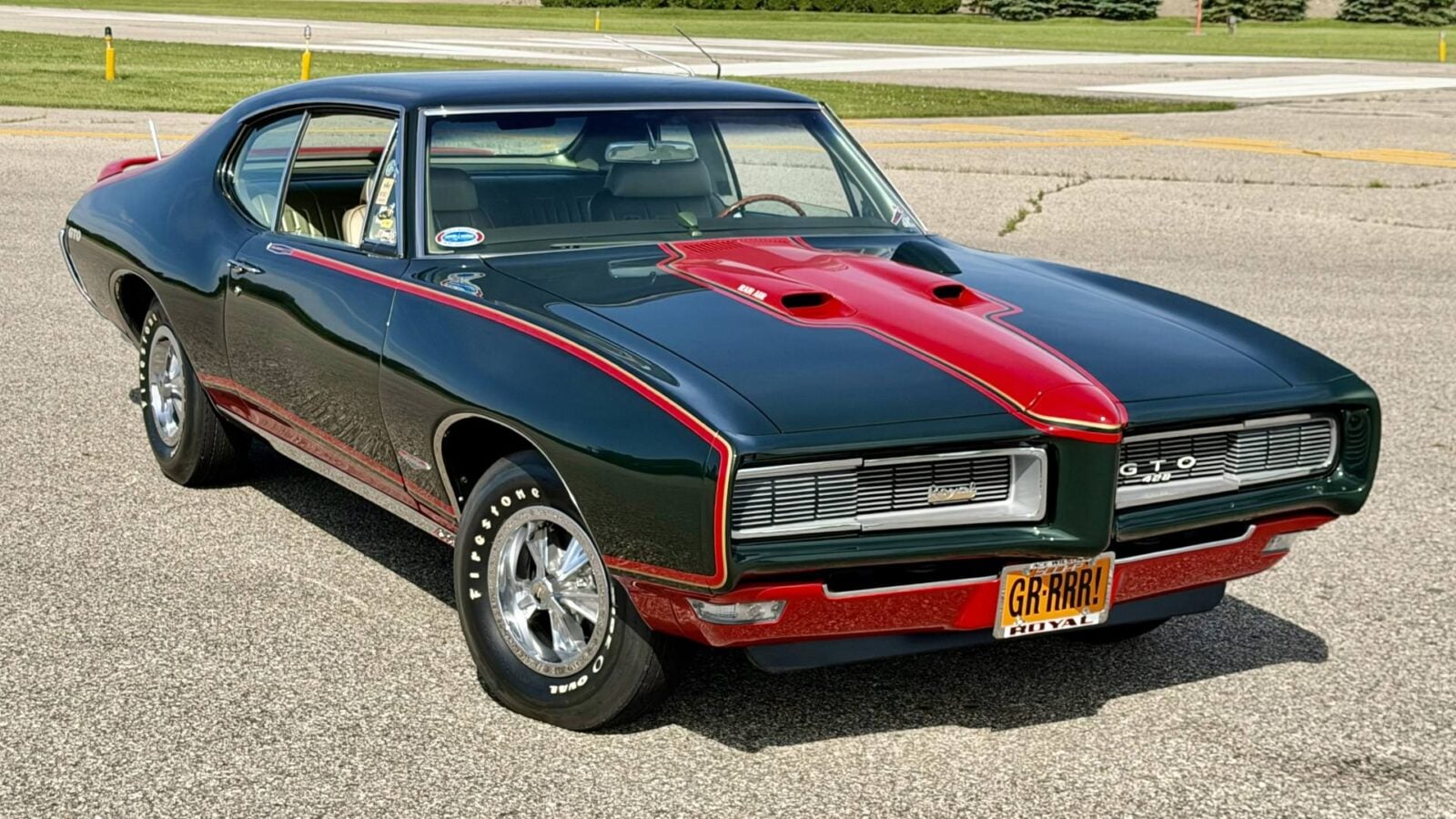
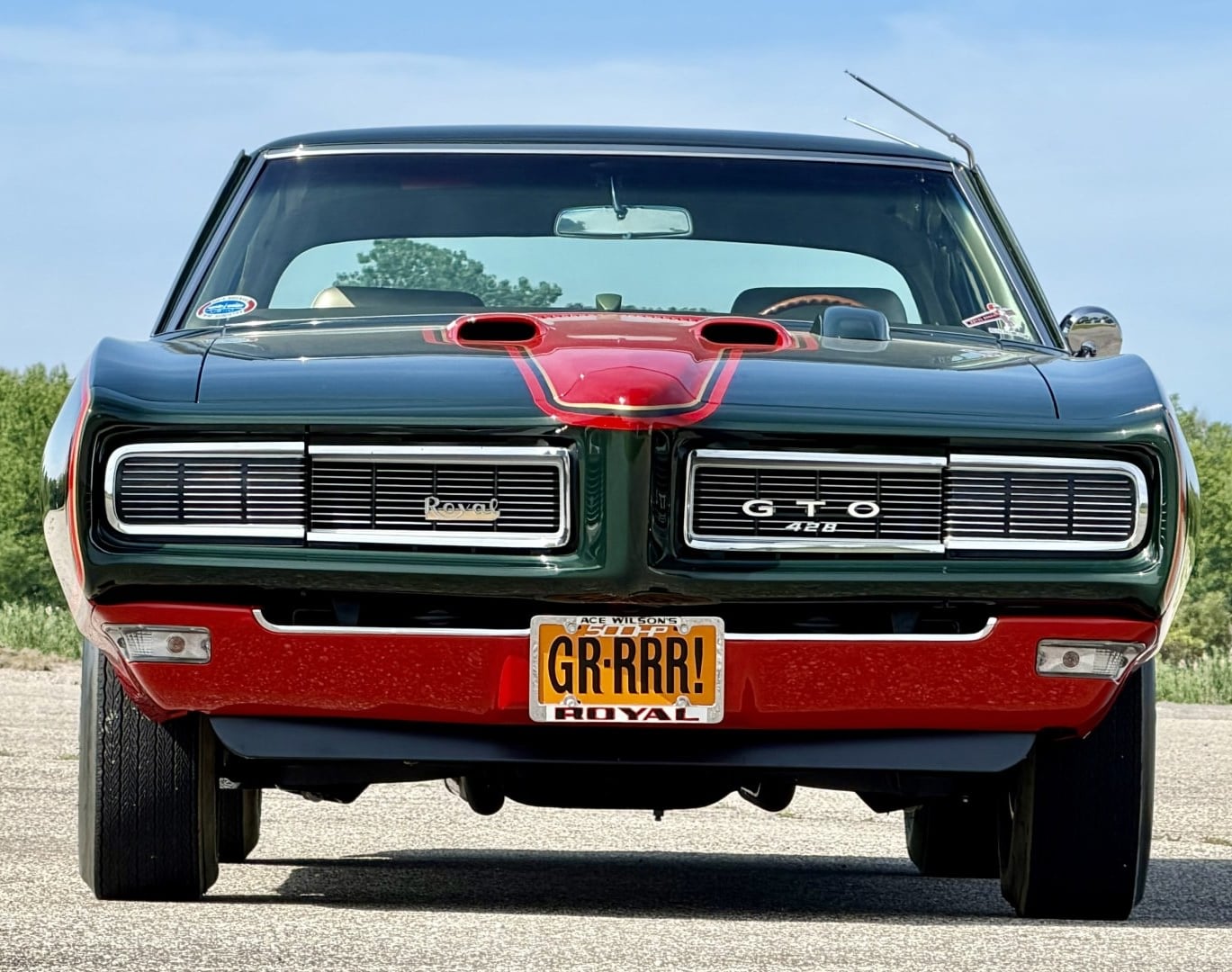
This is an original Pontiac GTO from 1968 with the rare “Royal Bobcat” 428 performance package installed in-period by Royal Pontiac of Royal Oak, Michigan.
The Royal Bobcat package went above and beyond anything offered by the factory at the time, offering a larger and more powerful V8 sourced from elsewhere in the Pontiac family tree. Exactly how many of these were made isn’t known, but well-documented examples like this are now highly sought after.
Fast Facts: The Royal Bobcat Pontiac GTO
- The Royal Bobcat 428 was Royal Pontiac’s answer to GM’s 400 cubic inch limit on intermediate cars. Owner Ace Wilson Jr.’s Royal Oak, Michigan dealership pulled 428 V8s from full-size Pontiacs and dropped them into GTOs, with mechanic Milt Schornack and Dave Warren preparing the engines and the rest of the car.
- The $650 conversion went far beyond a simple engine swap. Schornack’s crew reworked the top end, valve gear, ignition, and carburetion using Royal’s signature Bobcat package, which included thinner head gaskets, a Quadrajet re-jet, a distributor recurve kit, and other tuning tweaks. The resulting engines were said to be good for over 425 bhp.
- Car and Driver magazine tested a Bobcat 428 in February of 1968 and recorded 0 to 60 in 5.2 seconds and a 13.8 second quarter mile at 104 mph, numbers that put a mid-size Pontiac into Hemi Charger and 427 Corvette territory. For comparison a stock Ram Air 400 GTO ran the quarter in 14.53 seconds.
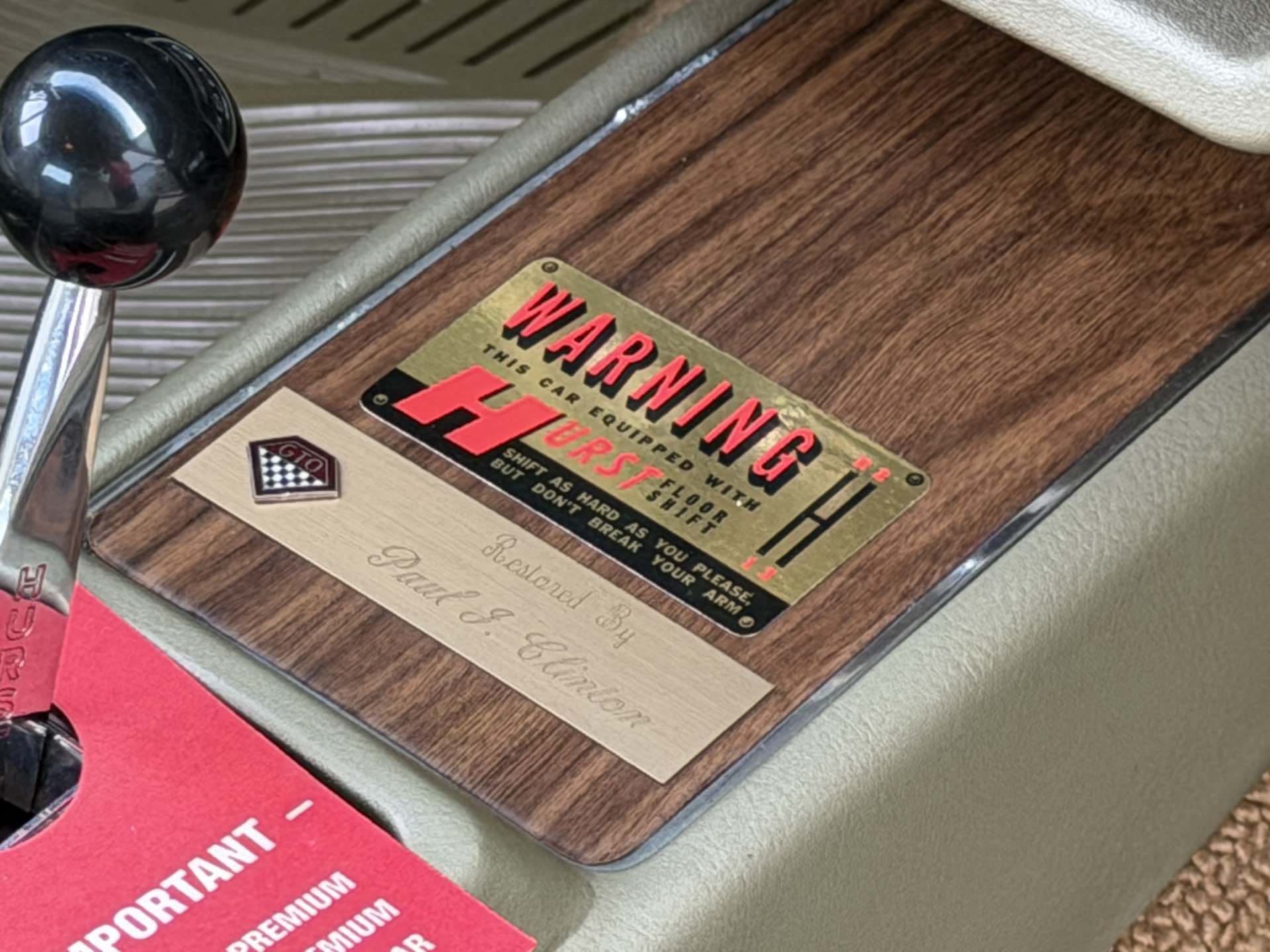
- The featured car is a documented two-owner Royal Bobcat 428 finished in Verdoro Green and Red over Ivy Gold, with a 428, automatic transmission, Ram Air, and 35 factory and dealer options including a Sony Micro TV, GM trunk-mounted air compressor, and Hurst Dual-Gate shifter.
History Speedrun: The Pontiac GTO “Royal Bobcat”
In February of 1968, Car and Driver magazine clocked a Pontiac GTO from 0 to 60 mph in 5.2 seconds and through the quarter mile in 13.8 seconds at 104 mph. Those numbers were blistering, they were more likely to belong to a Hemi Charger or a 427 Corvette, not to a mid-size Pontiac.
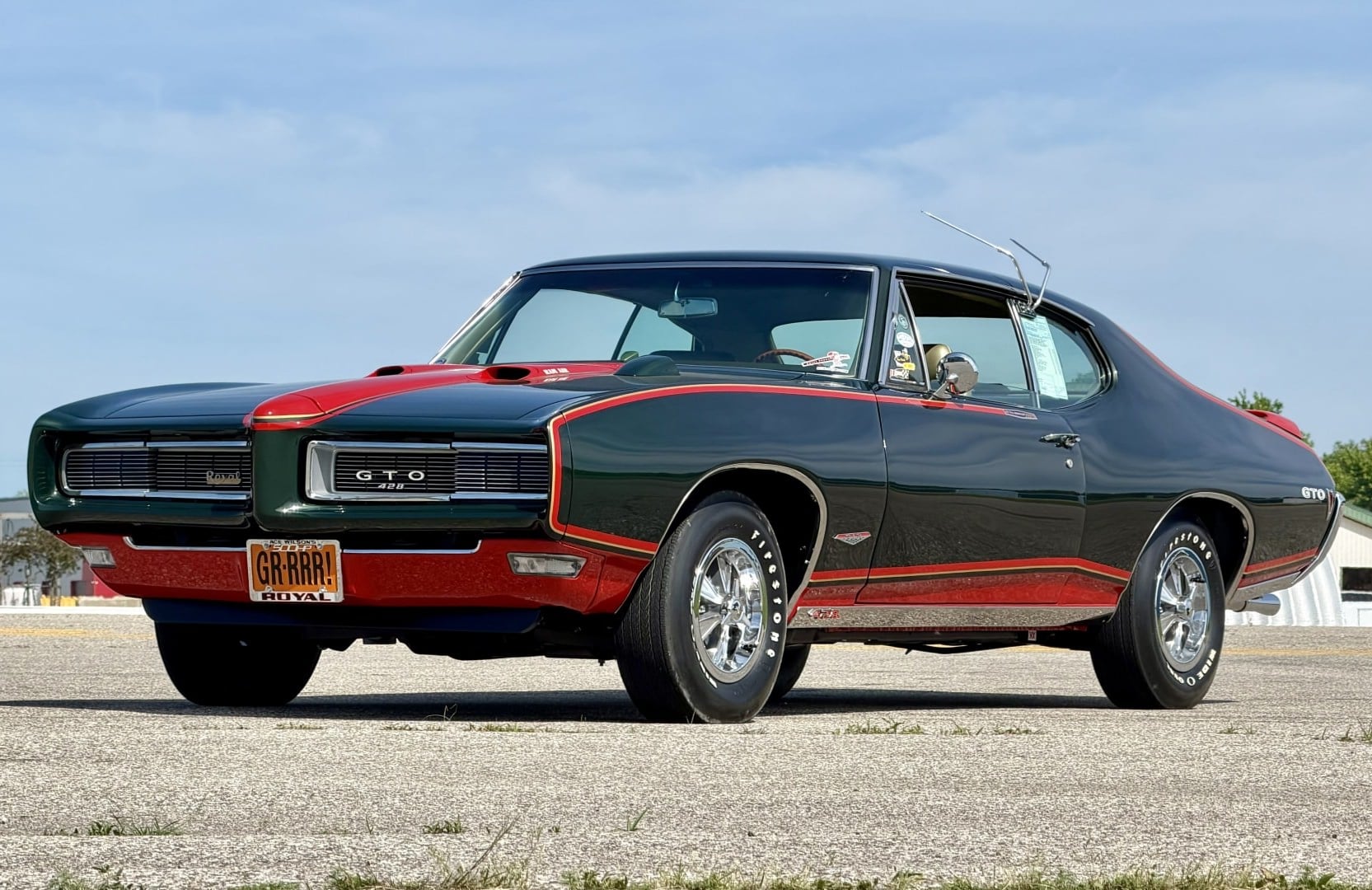
 This is an original Pontiac GTO from 1968 with the rare “Royal Bobcat” 428 performance package installed in-period by Royal Pontiac of Royal Oak, Michigan.
The reason for this impressive turn of speed was that this particular GTO didn’t have the standard 400 cubic inch V8 under the hood – it was powered by a 428 sourced from a Bonneville and worked over by a Detroit-area dealership that had spent most of the decade making Pontiacs faster than the manufacturers’ rule book would ever allow.
The dealership in question was Royal Pontiac of Royal Oak, Michigan, the car was a Royal Bobcat 428, and it would become a legend in its own lifetime.
To understand why a dealer-installed engine swap was even a thing in 1968, you have to go back in time five years to early 1963, when General Motors ordered every division out of factory racing – and to a separate corporate displacement ceiling that capped engines in intermediate cars at 400 cubic inches.
The rule applied across Chevrolet, Buick, Oldsmobile, and Pontiac, meaning the GTO, Chevelle SS, GS400, and 4-4-2 were all stuck at the same displacement just as Mopar was unleashing the 426 Hemi and the 440 Magnum on the streets. For a division that had built its identity on speed under John DeLorean and Jim Wangers, this was a problem with no easy factory-approved solution. So Pontiac (very discreetly) outsourced it.
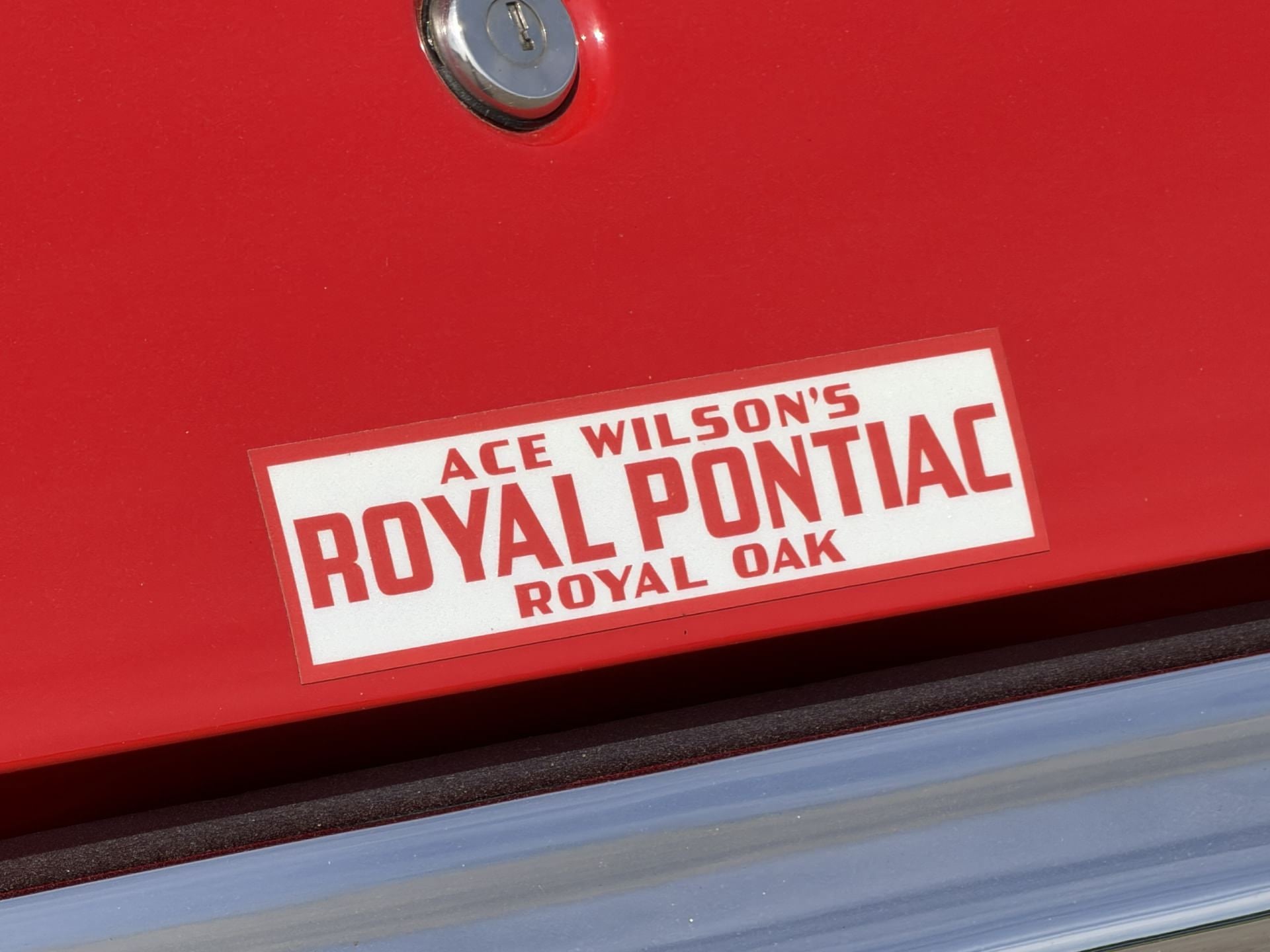
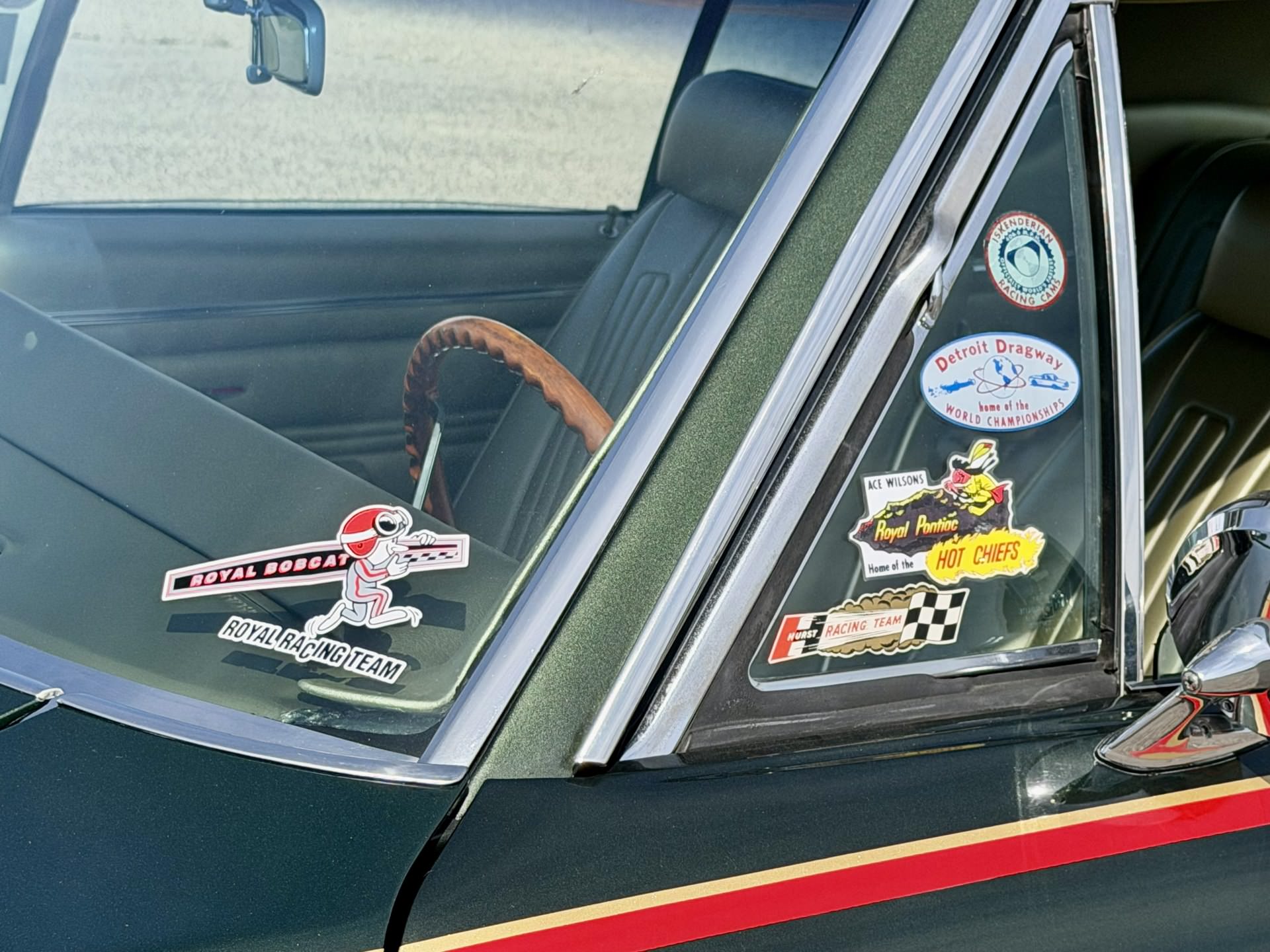
Royal Pontiac had been Pontiac’s unofficial performance arm since the late 1950s, when owner Ace Wilson Jr. began campaigning a tri-power Catalina at the drag strip and stocking factory racing parts in the service department. Royal’s race cars were a major force at the 1960 NHRA Nationals, and after GM’s racing pullout in 1963, Royal became the de facto factory team.
Pontiac specialist Milt Schornack (joined later by Dave Warren) led the wrenching. DeLorean made sure that many of the most important GTO press cars were often routed through Royal Oak first, including the famous “ringer” 1964 GTO that Car and Driver compared to a Ferrari 250 GTO. That car was running a 421 V8 from a full-size Catalina.
By the time the 1968 Pontiac GTO arrived on the scene, the formula was well established – Pontiac had completely redesigned the A-body that year, giving the GTO a curvaceous semi-fastback shape on a shortened 112 inch wheelbase, the new color-matched Endura urethane front bumper, optional hidden headlights, and dual hood scoops.
It won Motor Trend’s “Car of the Year” award and sold 87,684 examples (77,704 hardtops and 9,980 convertibles), making it the high-watermark of the second generation. The standard 400 cubic inch V8 was good for 350 bhp, with the Ram Air II option introduced mid-year. They were quick cars by any measure, but for customers who wanted more, Royal had an answer.
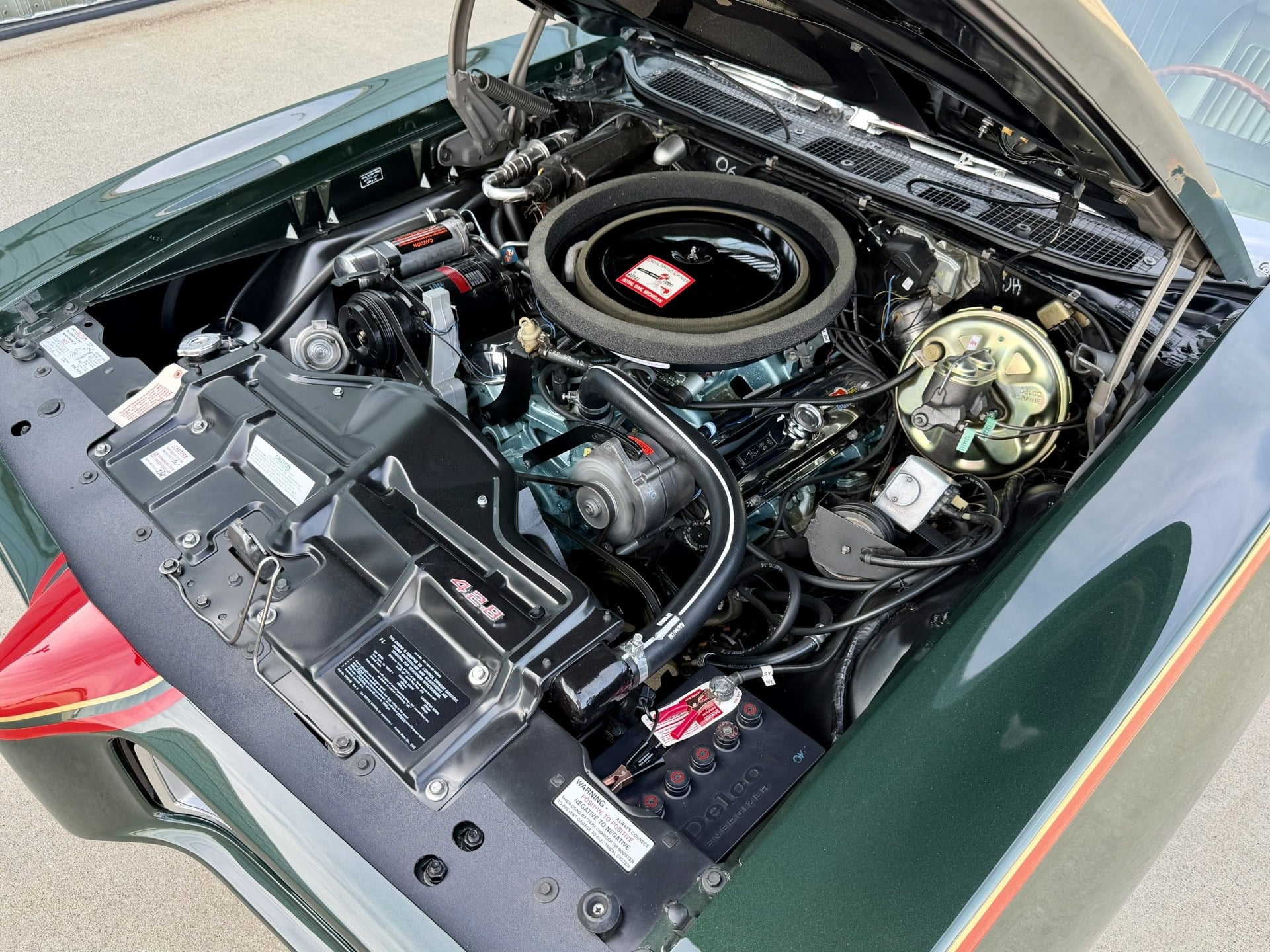
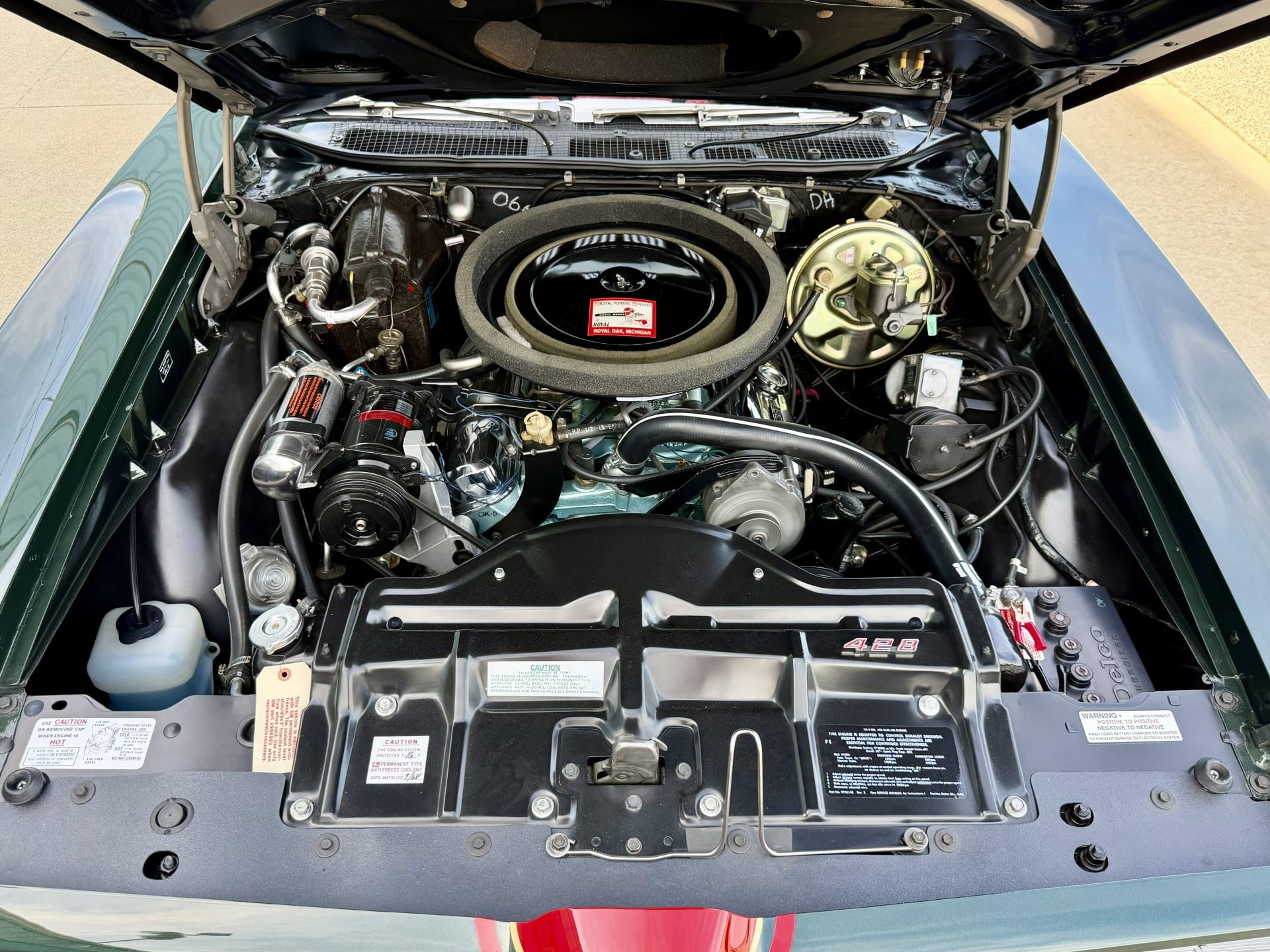
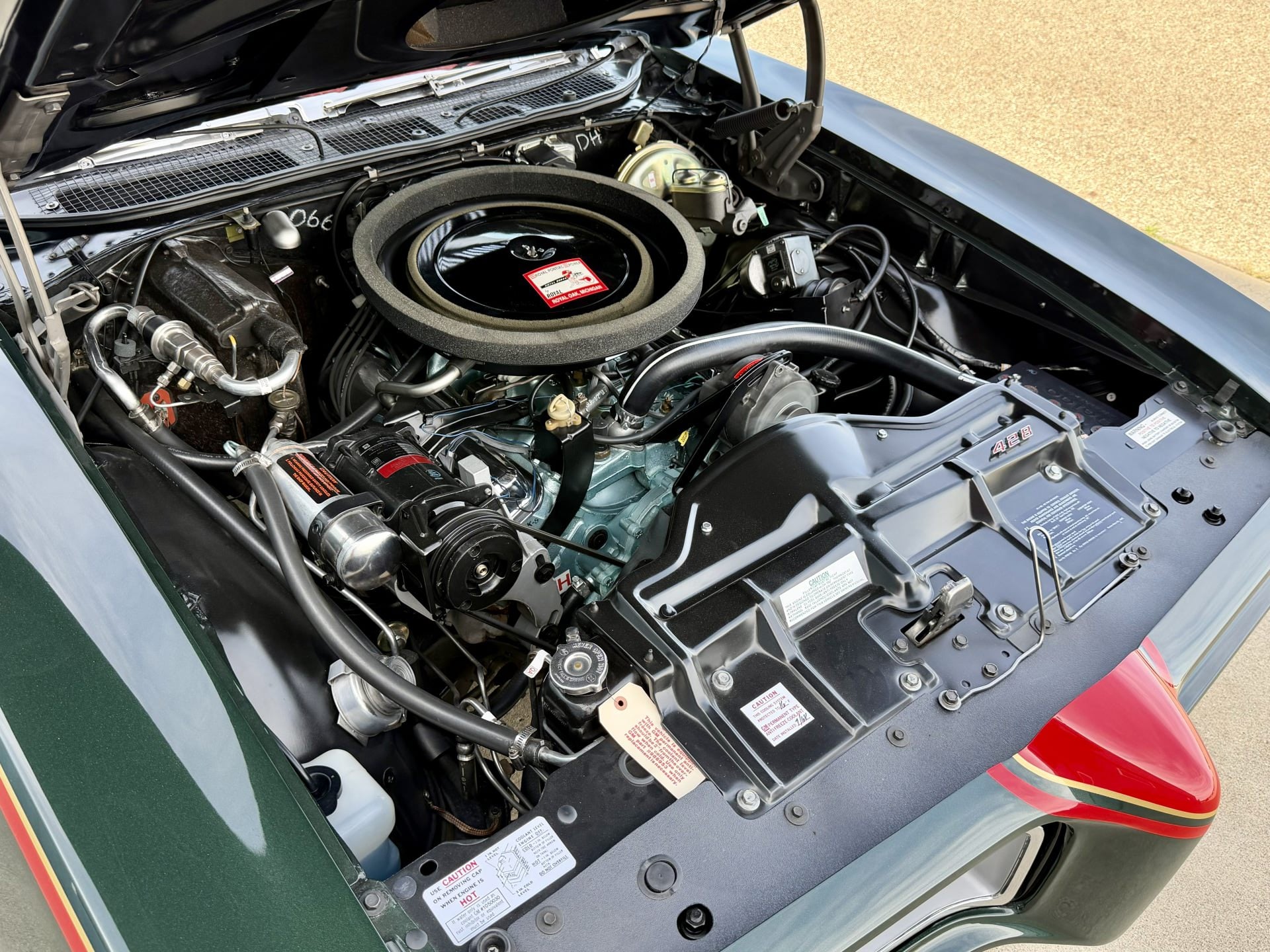
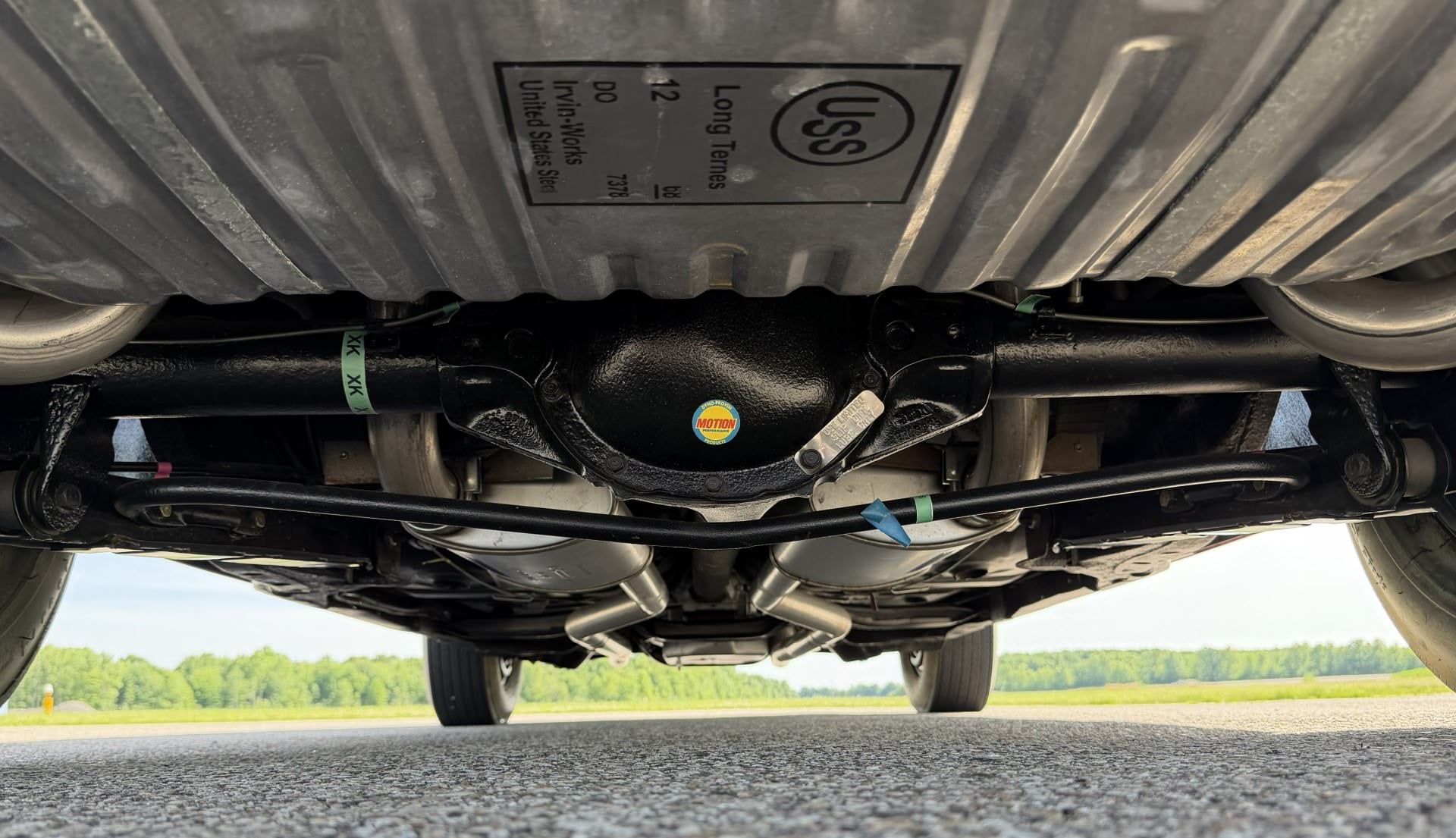
Power comes from the 428 cubic inch V8 fed by Ram Air induction and backed by an automatic transmission with a Hurst Dual-Gate shifter, sending power through a Safe-T-Track differential on a 3.23-ratio 10-bolt rear axle. Chrome Hurst wheels and Firestone Wide Oval tires complete the package, with a rear deck spoiler and hideaway headlights.
The Royal Bobcat 428 conversion ran $650 USD in 1968 (that’s roughly $6,000 USD in today’s money) and dropped a Pontiac 428 in place of the factory 400. The donor came from the full-size Pontiac line, where the 428 was offered in two factory tunes that year – a 375 bhp four-barrel and a 390 bhp HO unit with 465 lb ft of torque at 3,400 rpm.
Because all of Pontiac’s V8s shared the same external architecture, the swap was nearly invisible to anyone glancing under the hood. Royal didn’t just bolt the engine in, either. Schornack’s crew prepared the top end, valve gear, ignition, and carburetion as part of the swap, and the resulting package was said to be good for more than 425 bhp.
That package was the standard Bobcat option, which could also be ordered separately as a mail-order kit through Royal’s parts department. The kit included thinner head gaskets (around 0.022 to 0.025 inches less than stock, to raise compression a little), a re-jetting package for the Rochester Quadrajet, a distributor recurve kit with Mallory points, an advance stop with lighter weights and springs, rocker arm locking nuts, a blocked heat-riser gasket, and a set of Bobcat emblems.
Royal sold more than 1,000 of these kits in 1966 alone. On a 428 equipped car, the heads were shaved further, ignition timing was advanced, and the engine could pull cleanly to around 5,700 rpm.
The Car and Driver test mentioned higher up showed just how much of a difference these changes made. Their February 1968 example, fitted with a Turbo-Hydramatic and 3.55 rear gears, ran 0 to 60 in 5.2 seconds, 0 to 100 in 12.9 seconds, and the quarter mile in 13.8 seconds at 104 mph.
For comparison, Car Life tested a stock Ram Air 400 GTO with a 4-speed and 3.90 gears and recorded 6.6 seconds to 60 mph and a 14.53 second quarter at 99.7 mph. The Bobcat 428 wasn’t dramatically quicker off the line, but it pulled harder mid-range and ran further into the top end. Car and Driver called it “a fine, exciting car for either touring or tooting around in traffic,” though it does seem like they might have been underselling things a little.
Exactly how many 1968 Bobcat 428 GTOs left Royal Oak is unknown, the dealership didn’t keep very precise records, and many cars were one-off builds tailored to customer requests. The most thoroughly documented survivor is the “BossMan” GTO, ordered new through Royal by Mike Rutherford with the help of drag racing legend Arnie Beswick, who had connections inside both Royal and Pontiac.
Schornack and Warren installed the 428, paired it with a pre-production set of Ram Air II cylinder heads supplied by Beswick, and finished it with custom-fabricated headers. The car appeared on the March 1968 cover of Popular Hot Rodding and stayed with Rutherford until 1999.
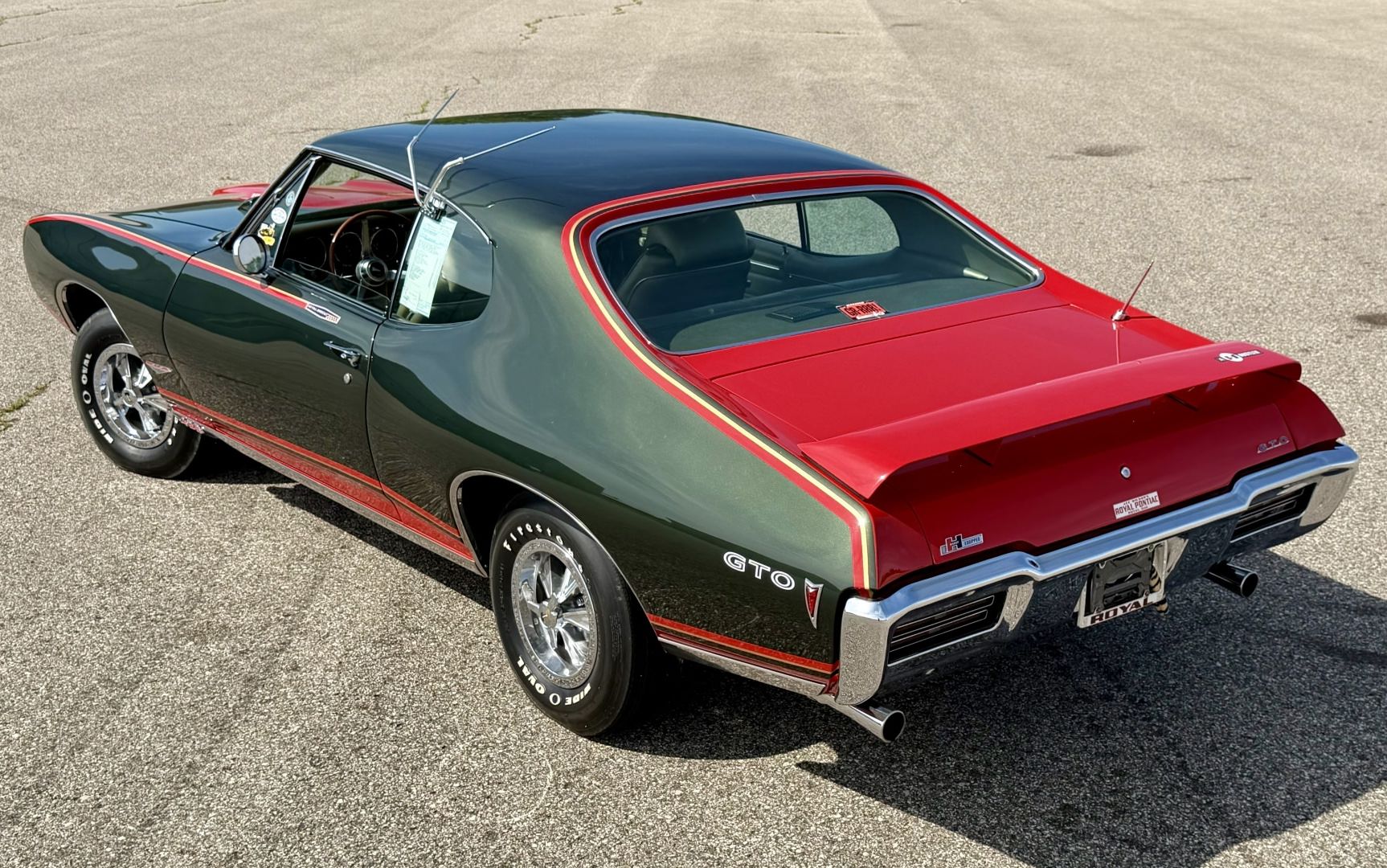
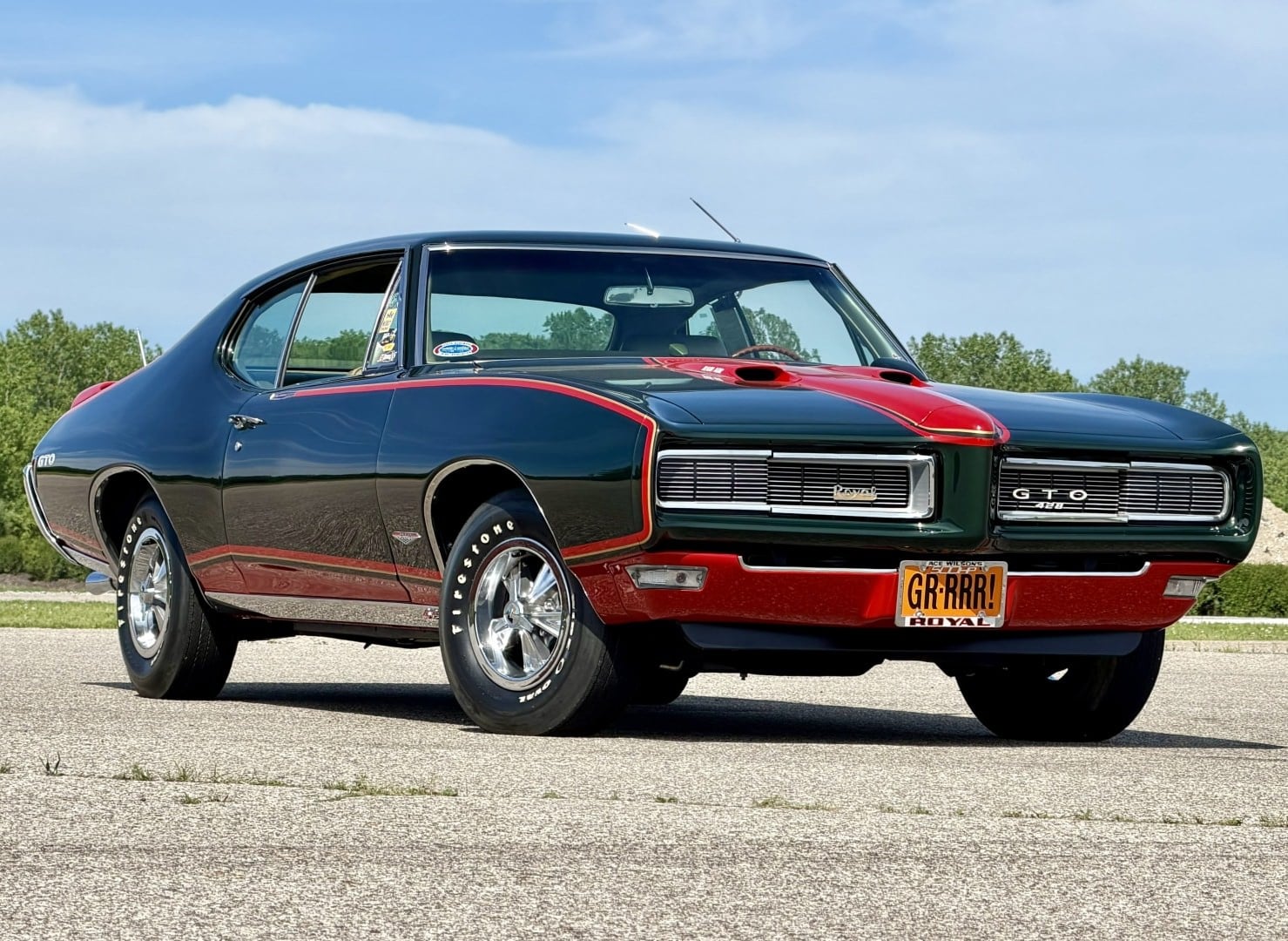
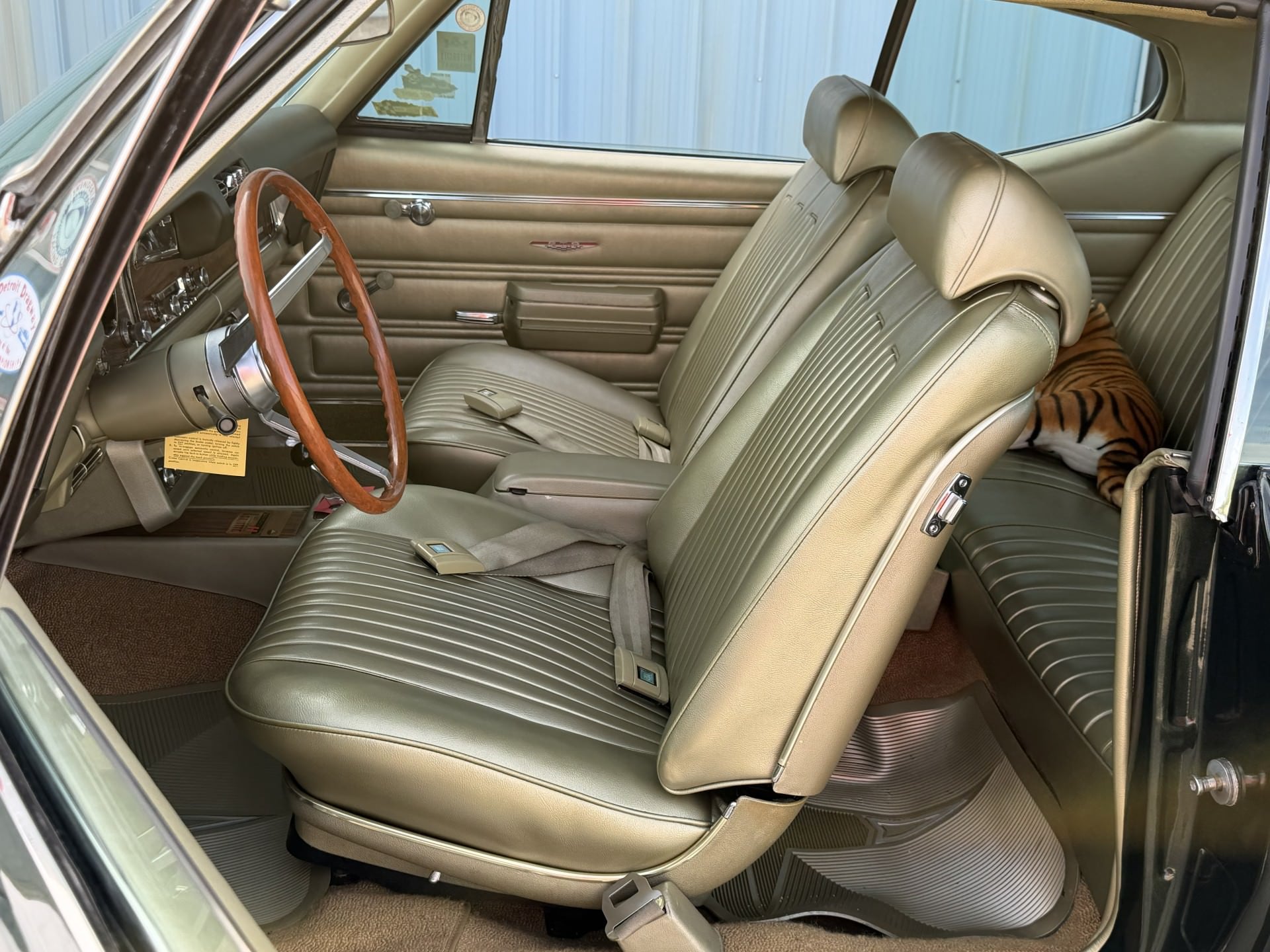
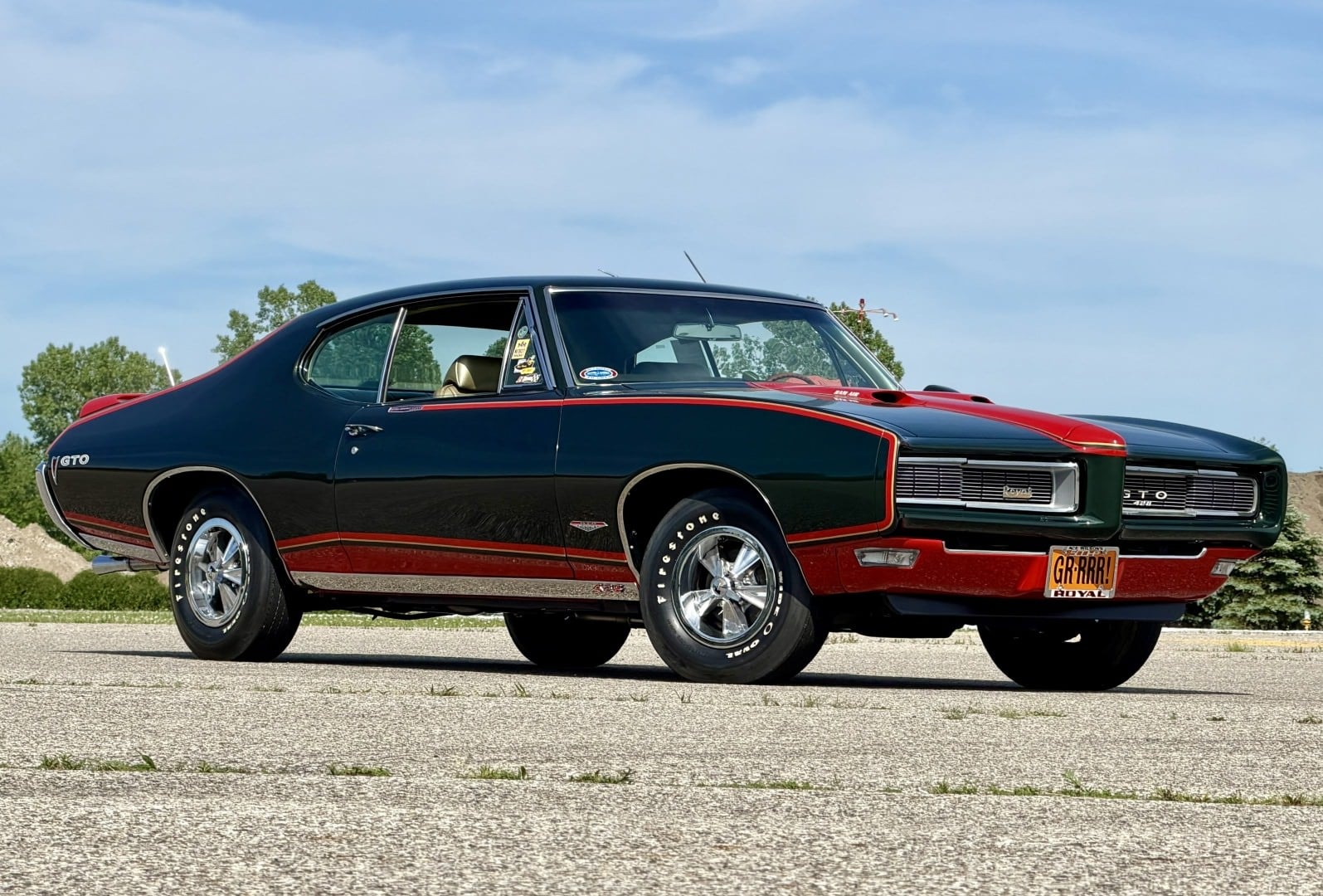
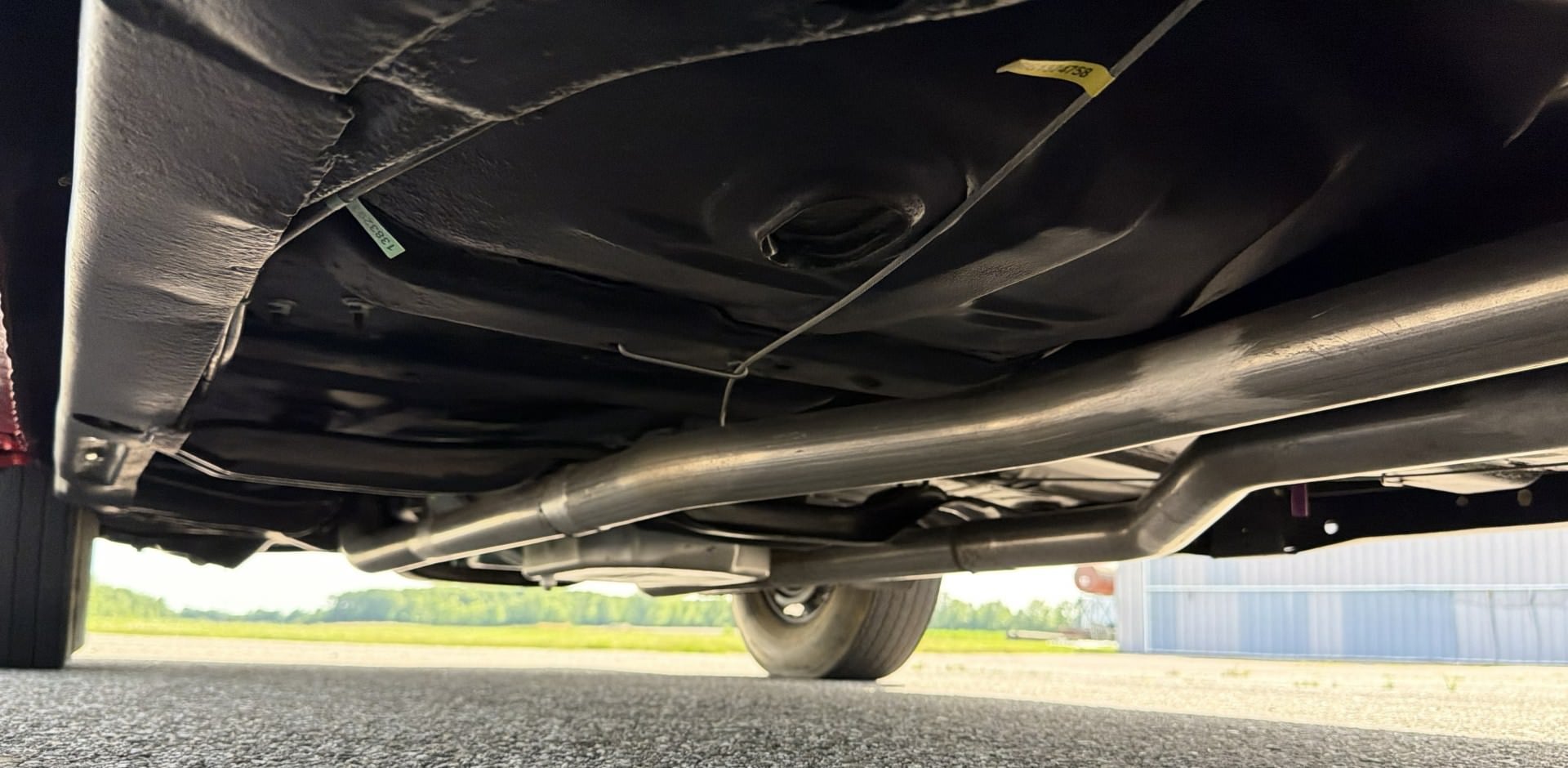
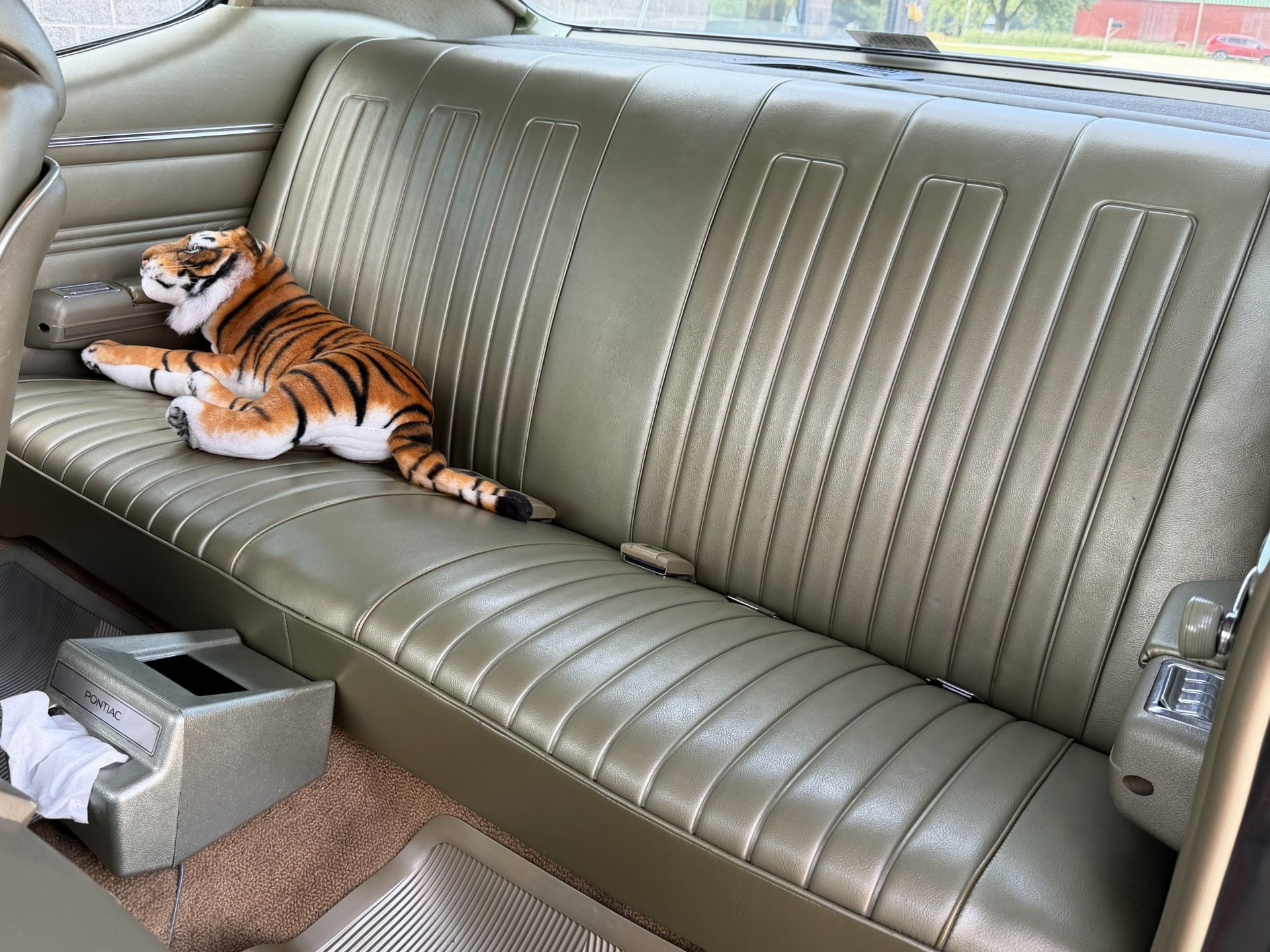
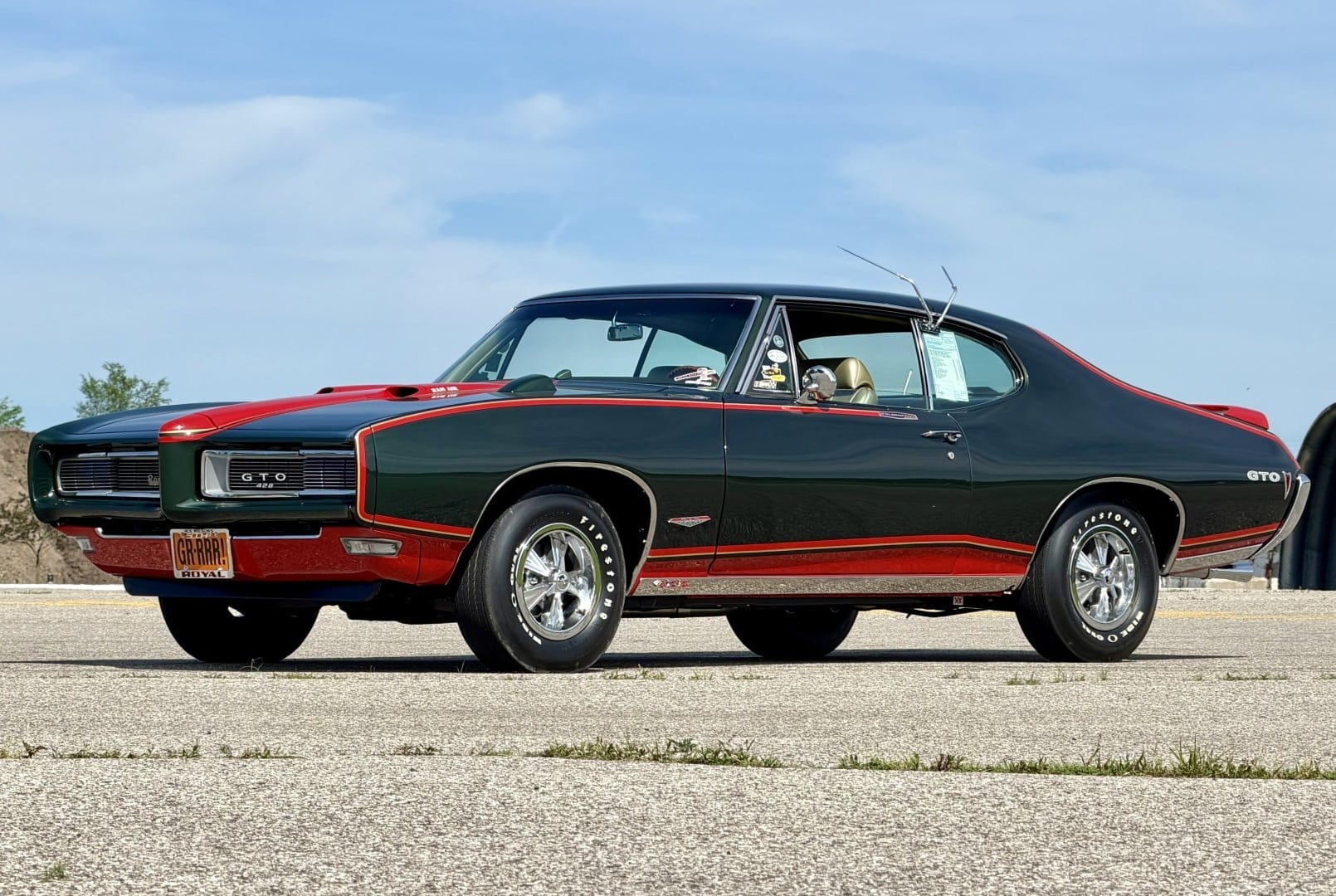
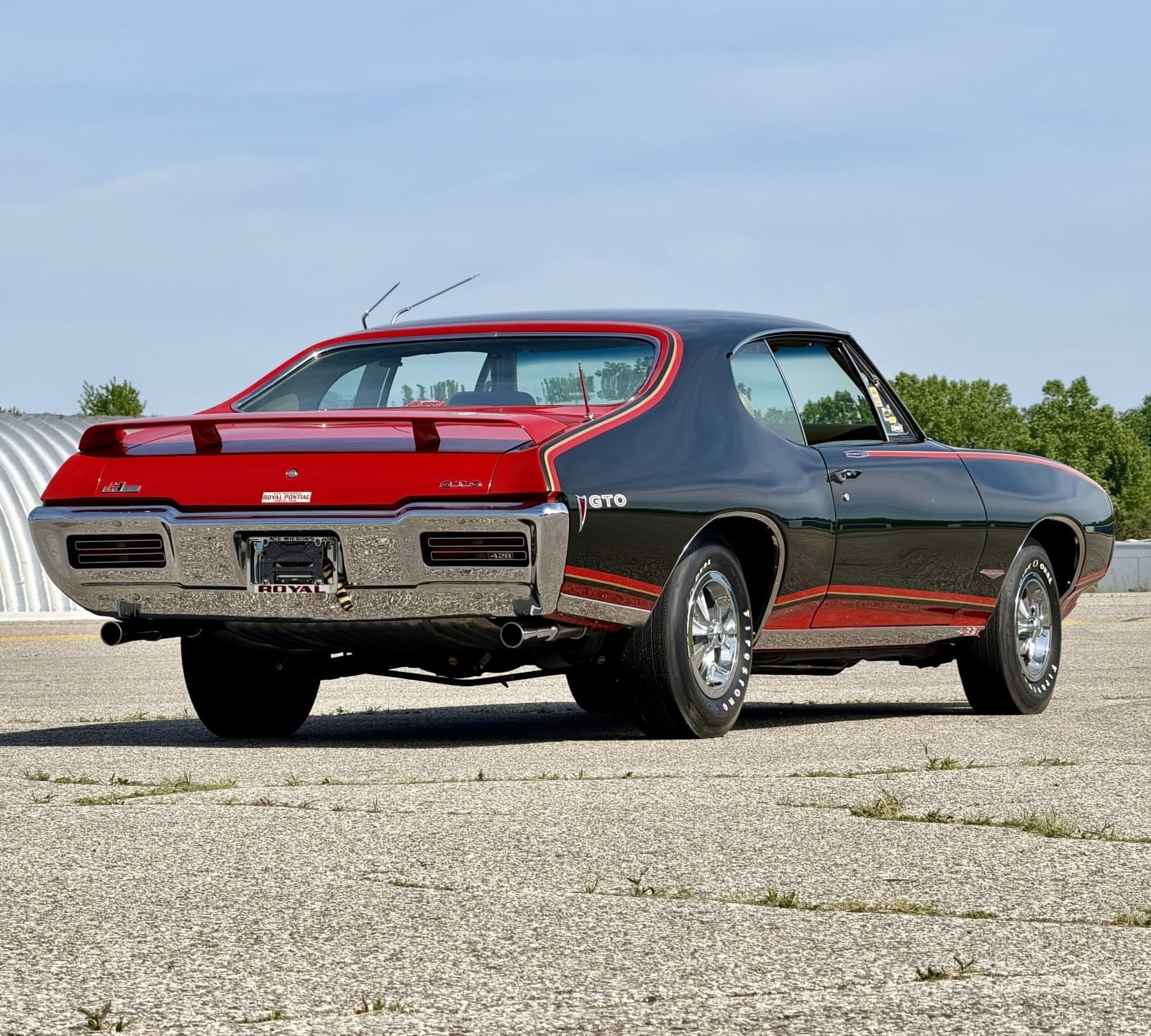
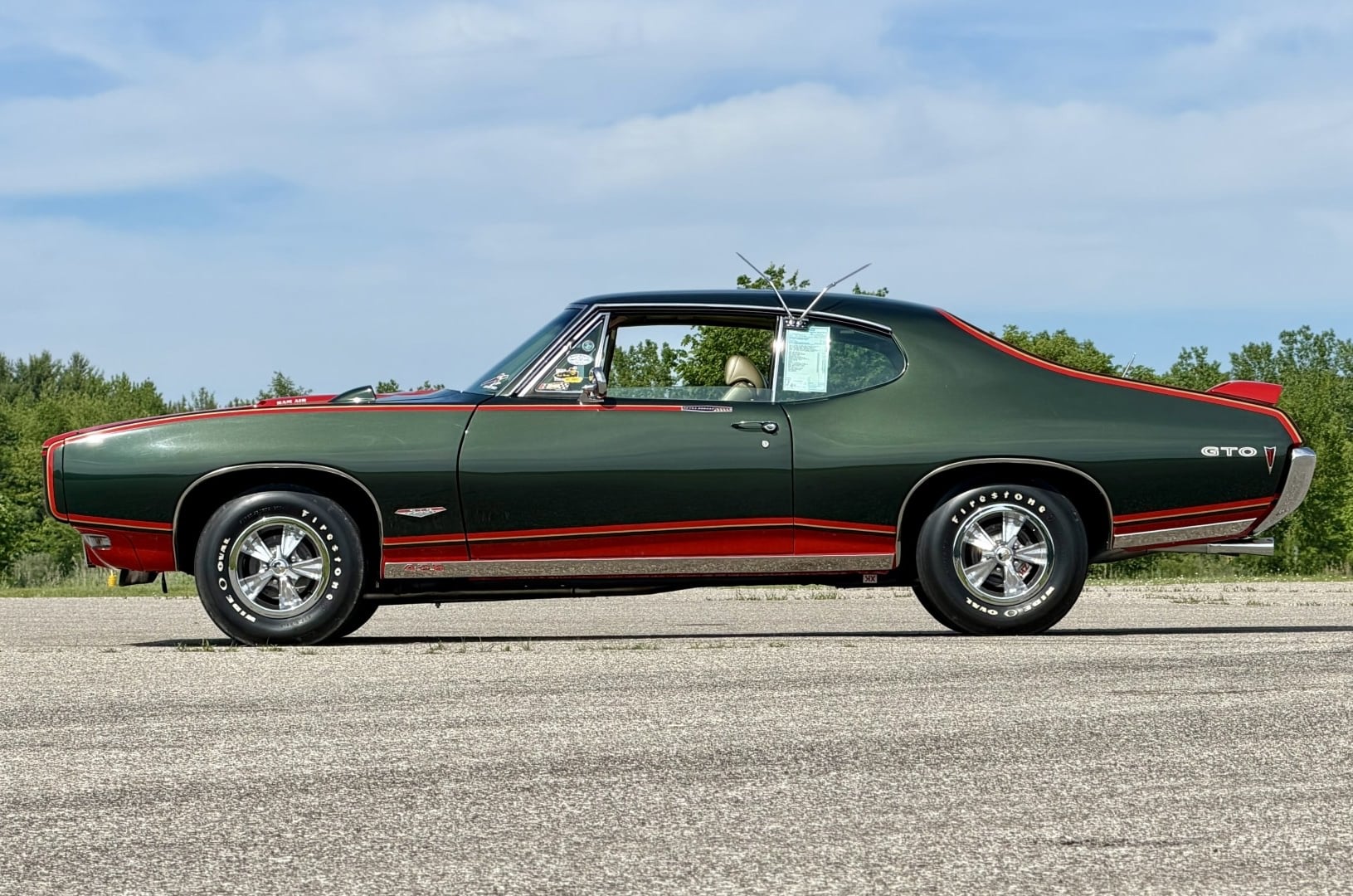
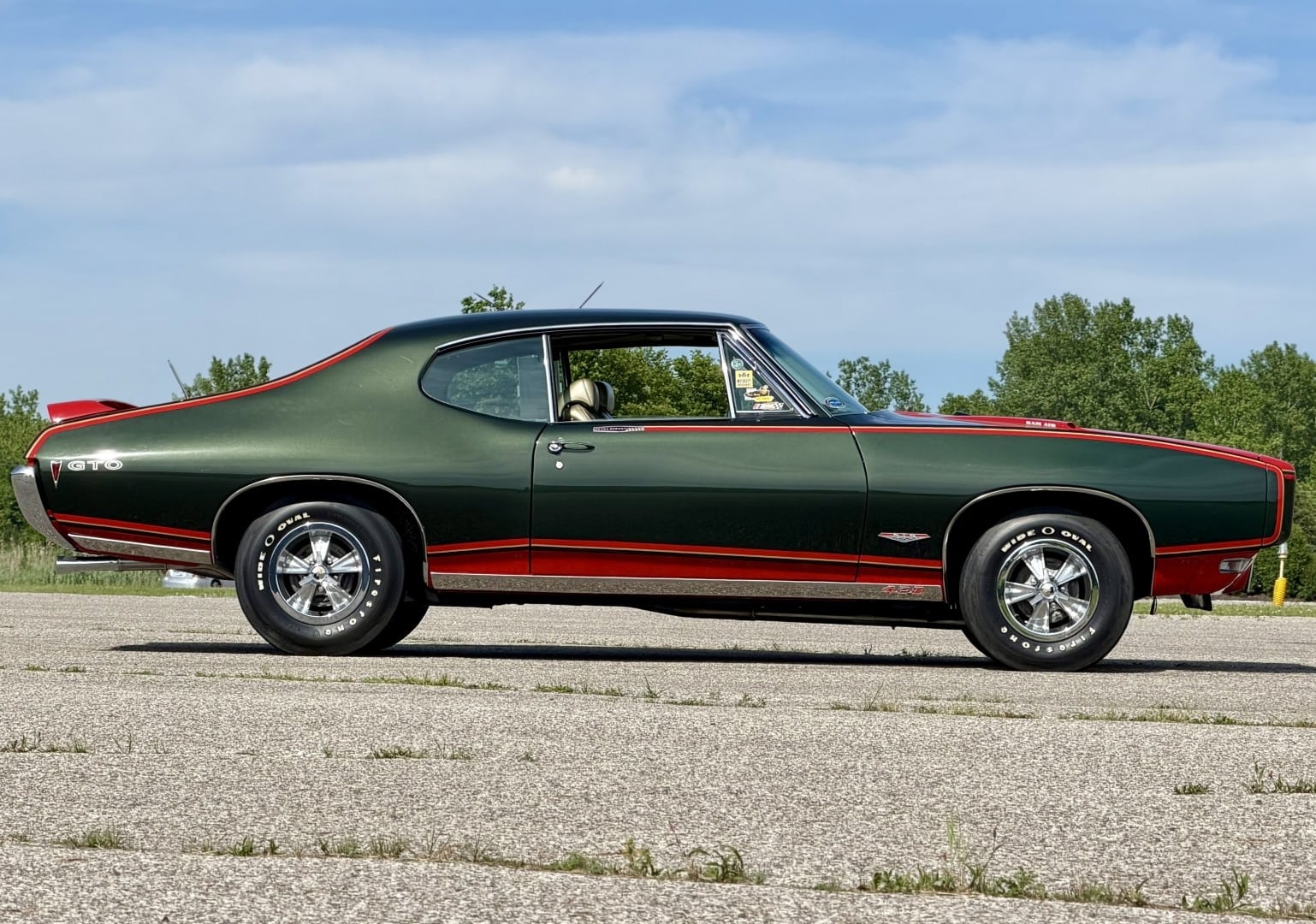
This 1968 Pontiac GTO is a documented Royal Bobcat 428, finished in a unique Verdoro Green and Red two-tone exterior over an Ivy Gold interior. It has been the subject of a concours-style restoration carried out with close attention to factory details, using OEM and NOS parts throughout.
GM finally lifted the 400 cubic inch displacement ceiling for 1970, and the GTO got its own factory 455. By then the muscle car era was already winding down under the weight of insurance surcharges and looming emissions rules. Ace Wilson sold the Royal Racing Team to John DeLorean’s brother George in 1970, and the dealership itself in 1974.
The Royal Bobcat 428 GTO never existed as a factory model, but for a brief moment in 1968 it was arguably the quickest brand new A-body anyone could buy – assuming you knew where to go and who to talk to, that is.
The 1968 Pontiac GTO Royal Bobcat Shown Here
This 1968 Pontiac GTO is a documented Royal Bobcat 428, finished in a unique Verdoro Green and Red two-tone exterior over an Ivy Gold interior. It has been the subject of a concours-style restoration carried out with close attention to factory details, using OEM and NOS parts throughout.
Power comes from the 428 cubic inch V8 fed by Ram Air induction and backed by an automatic transmission with a Hurst Dual-Gate shifter, sending power through a Safe-T-Track differential on a 3.23-ratio 10-bolt rear axle. Chrome Hurst wheels and Firestone Wide Oval tires complete the package, with a rear deck spoiler and hideaway headlights.
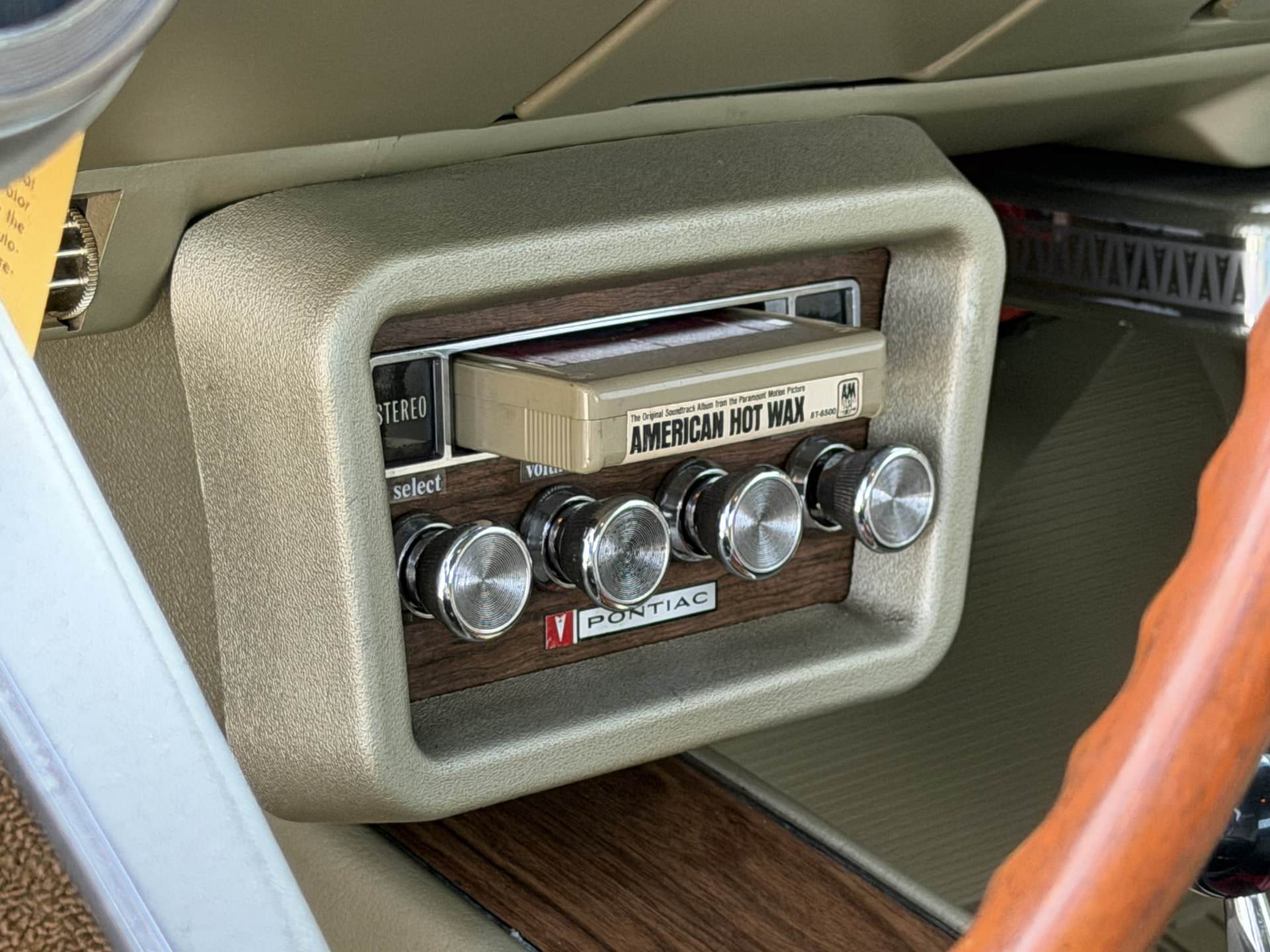
The car has a remarkable list of 35 factory and dealer-installed options – inside there are bucket seats with headrests, a power driver’s seat, center console, Rallye gauge package with hood-mounted tachometer and clock, factory air conditioning, cruise control, an AM/FM radio with reverb unit, an 8-track tape player, and speaker covers.
Comfort and convenience extras include a power trunk release, electric rear window defogger, remote driver’s mirror, tinted glass, power steering, power brakes, power antenna, instant air package, tissue dispenser, GM compass, GM rubber floor mats, vanity mirrors, courtesy lamps, and reel-out under-hood and trunk lamps.
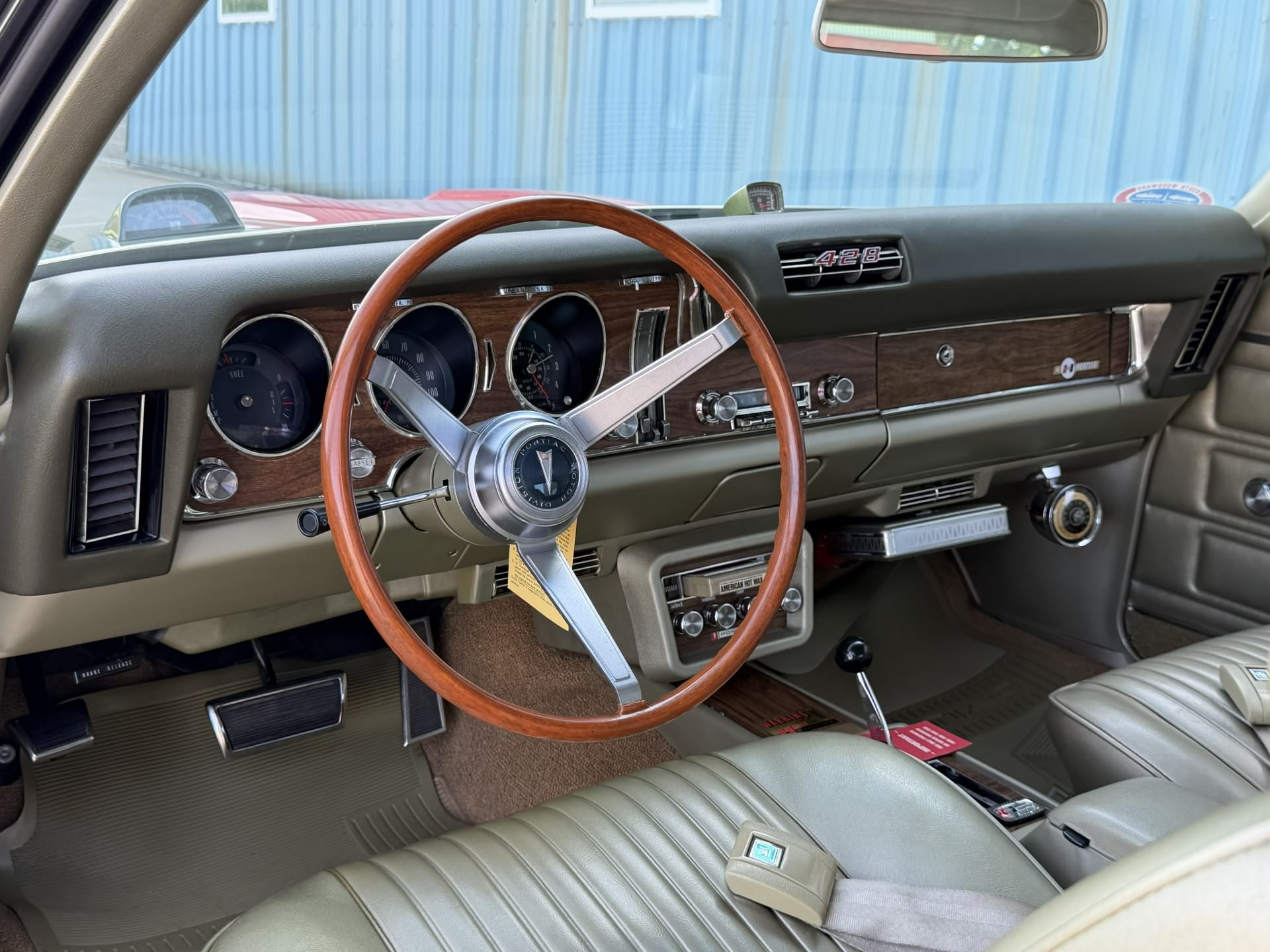
The Royal Bobcat package went above and beyond anything offered by the factory at the time, offering a larger and far more powerful V8 sourced from elsewhere in the Pontiac family tree. Exactly how many of these were made isn’t known, but well-documented examples like this are now highly sought after.
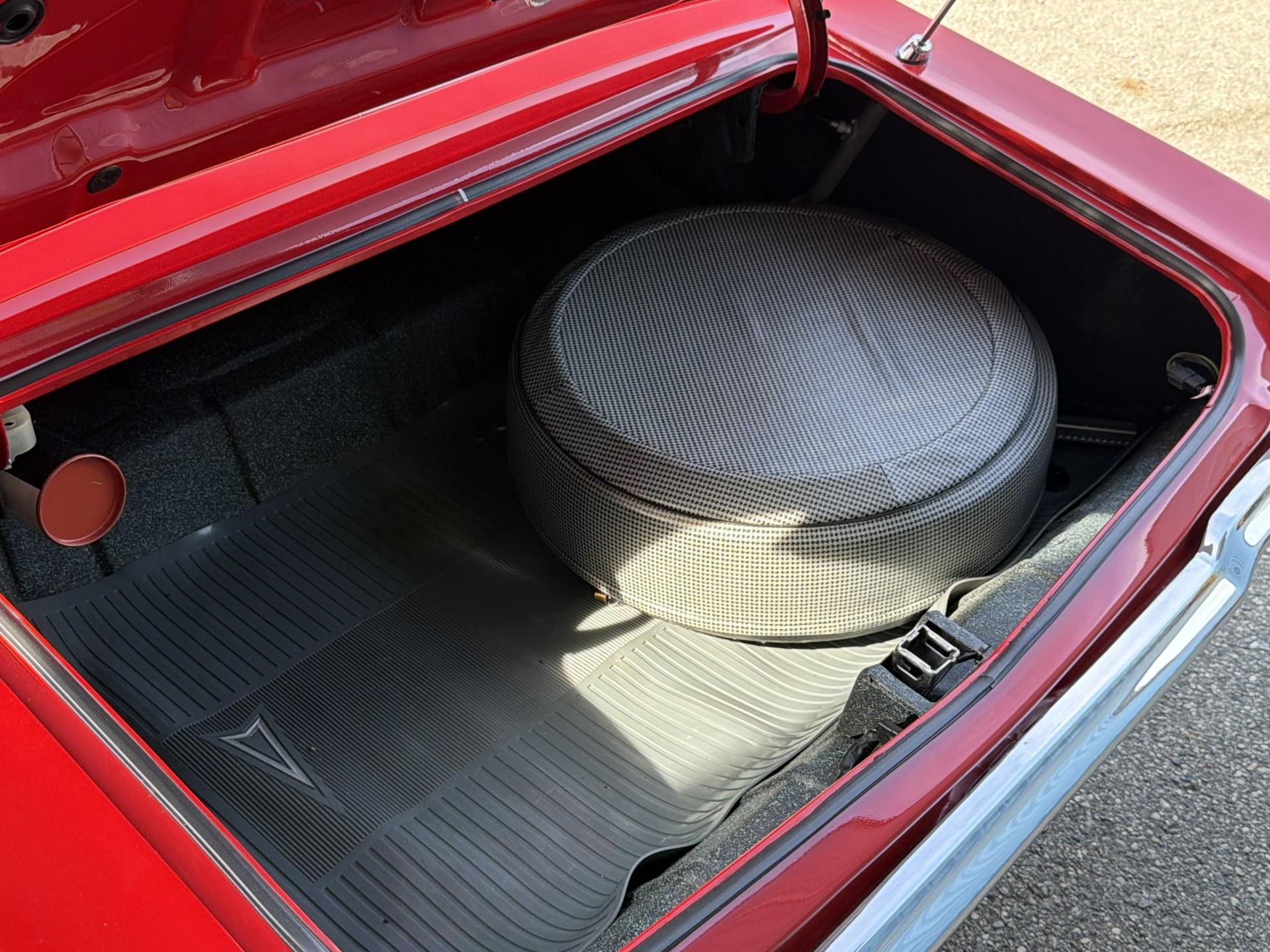
One of the more unusual touches is a Sony “Micro TV,” still unused and complete with its original case, instructions, plug-in, and a removable antenna mounted to the rear quarter window. The trunk also houses a GM mini air compressor, originally intended for inflating tires at the track. A dual exhaust system with extensions rounds out the equipment list.
The car is a two-owner example with known history, and it comes with an extensive file of maintenance receipts dating back to new, along with the original owner’s manual, accompanying books, and service manual. It’s now due to roll across the auction block with Mecum in late July, and you can visit the listing here.
Images courtesy of Mecum

Articles that Ben Branch has written have been covered on CNN, Popular Mechanics, Smithsonian Magazine, Road & Track Magazine, the official Pinterest blog, the official eBay Motors blog, BuzzFeed, Autoweek Magazine, Wired Magazine, Autoblog, Gear Patrol, Jalopnik, The Verge, and many more.
Silodrome was founded by Ben back in 2010, in the years since the site has grown to become a world leader in the alternative and vintage motoring sector, with well over a million monthly readers from around the world and many hundreds of thousands of followers on social media.