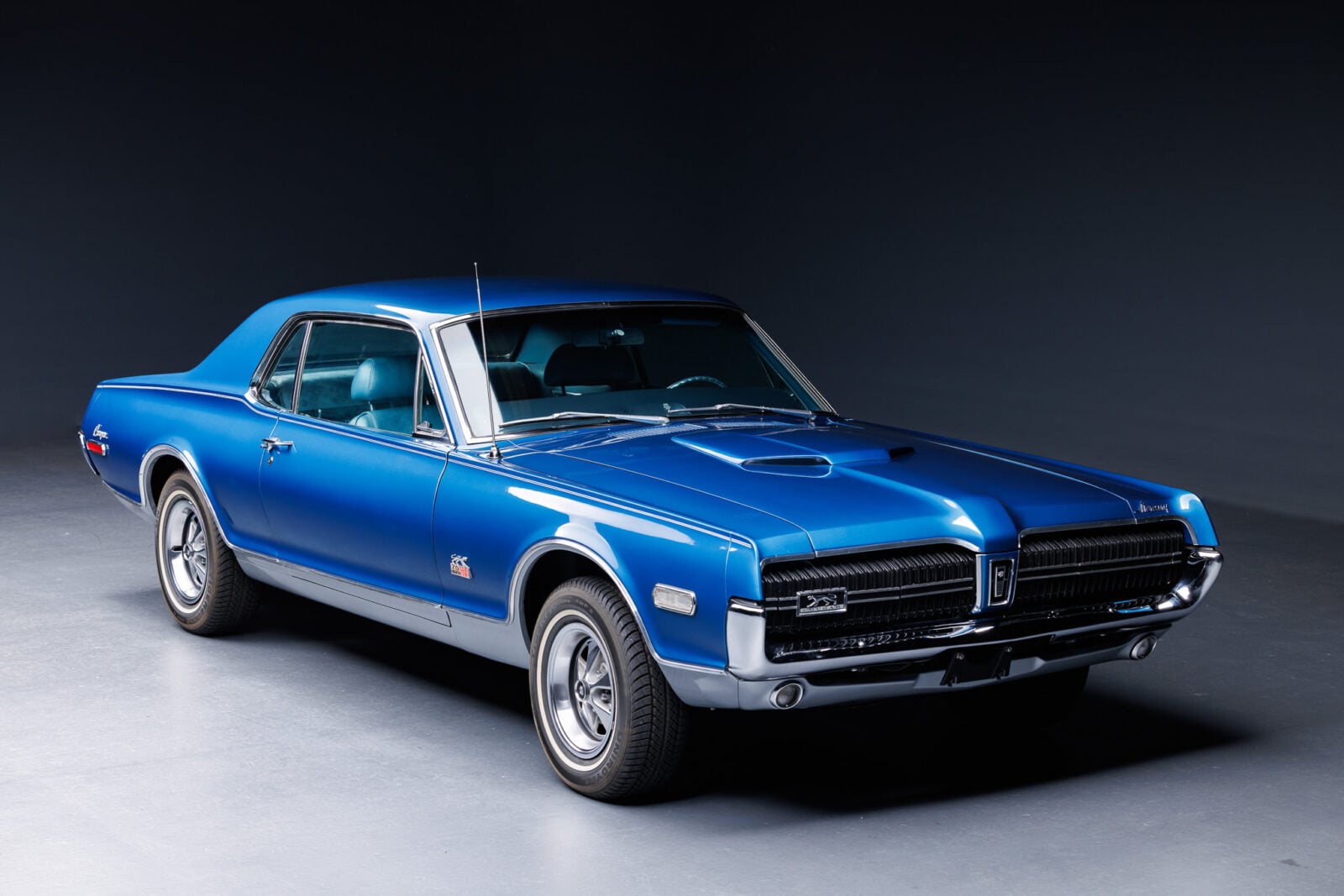
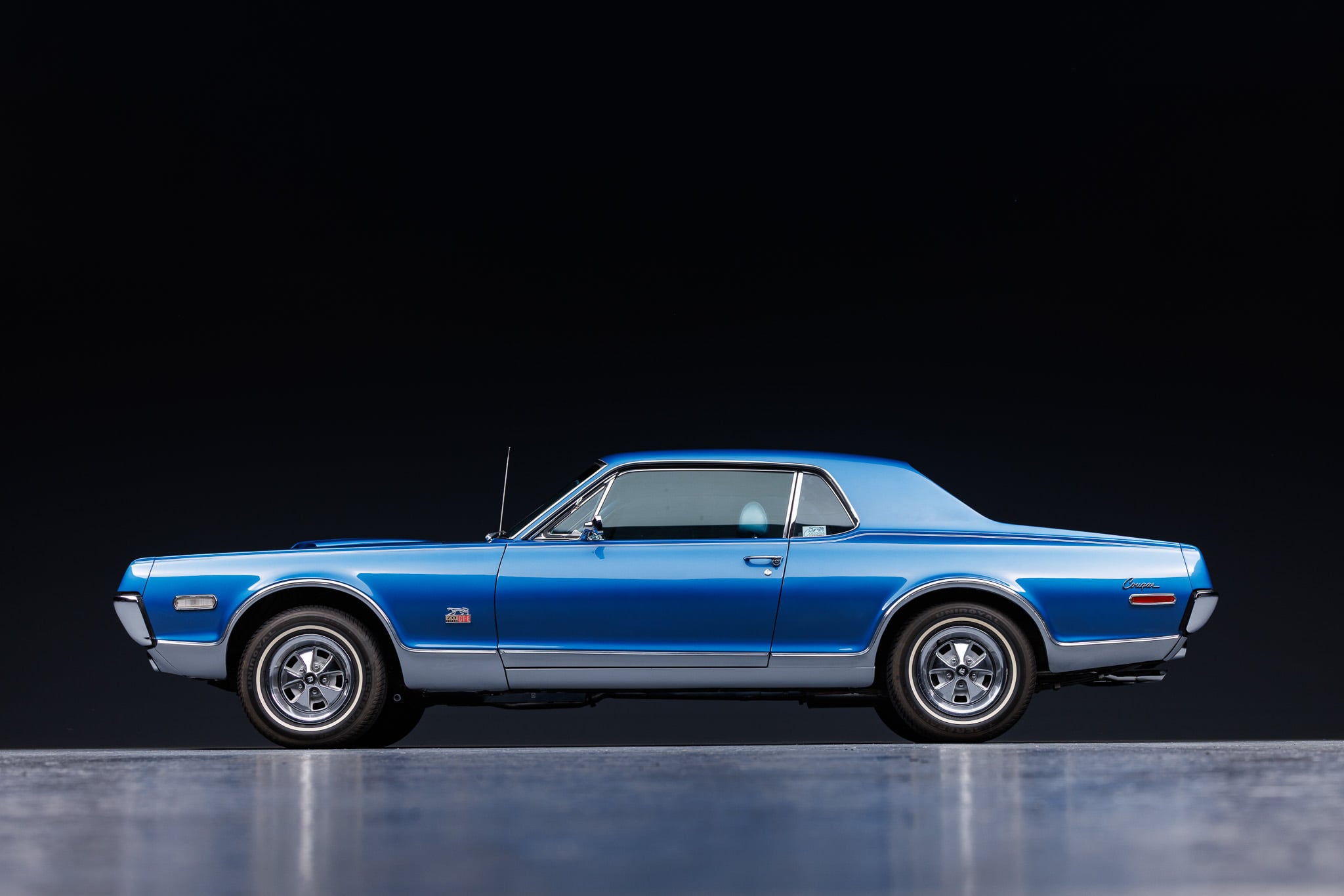
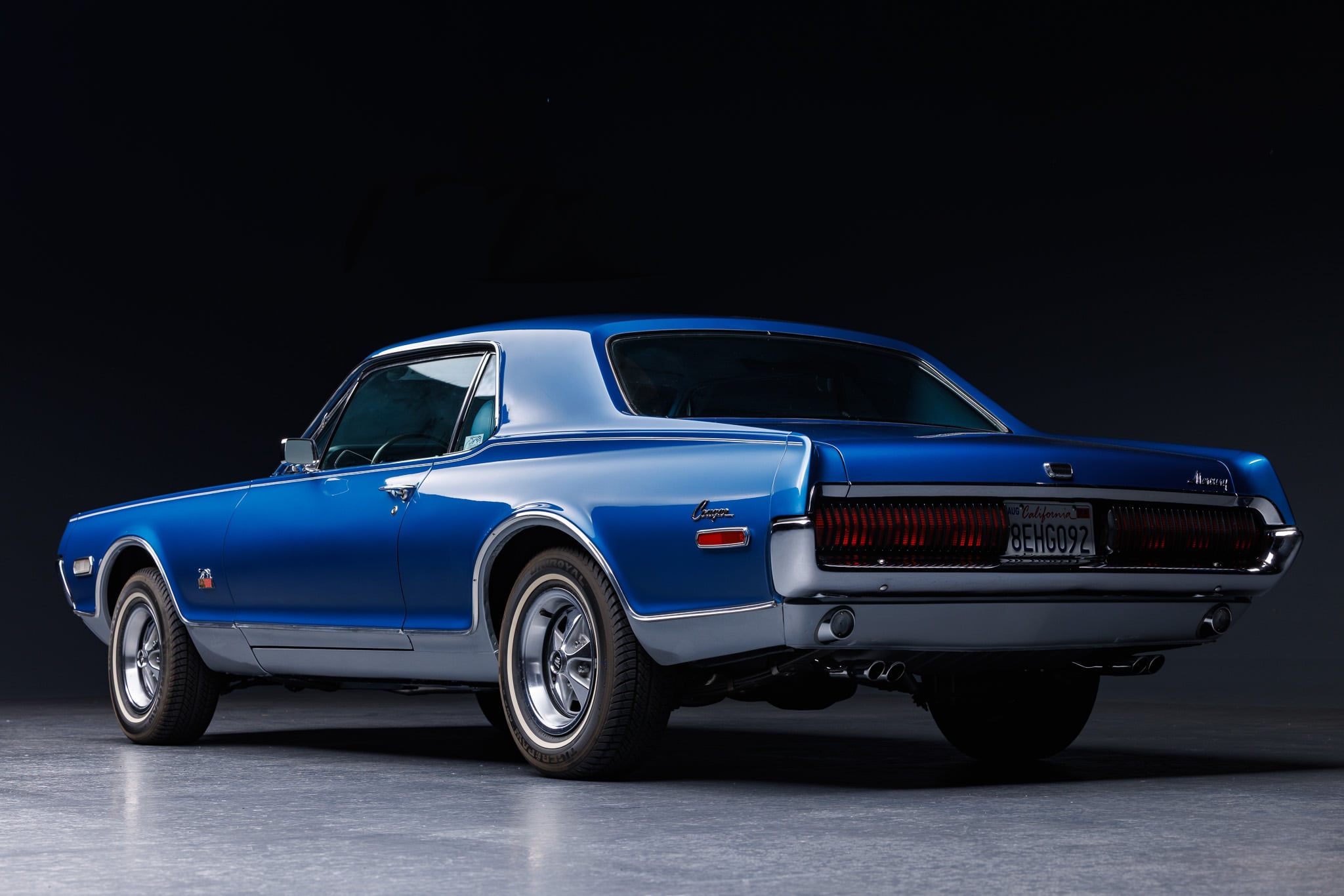
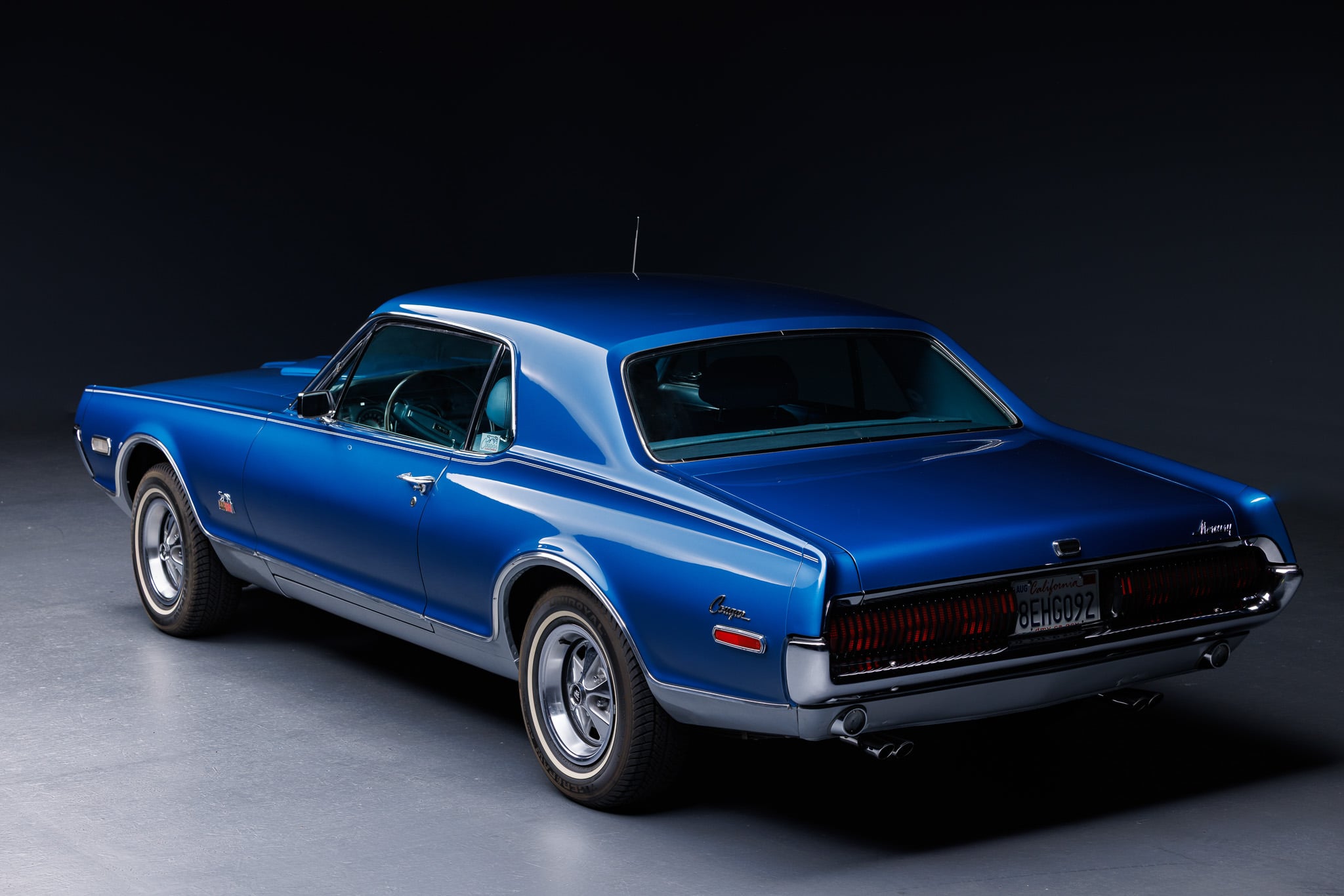
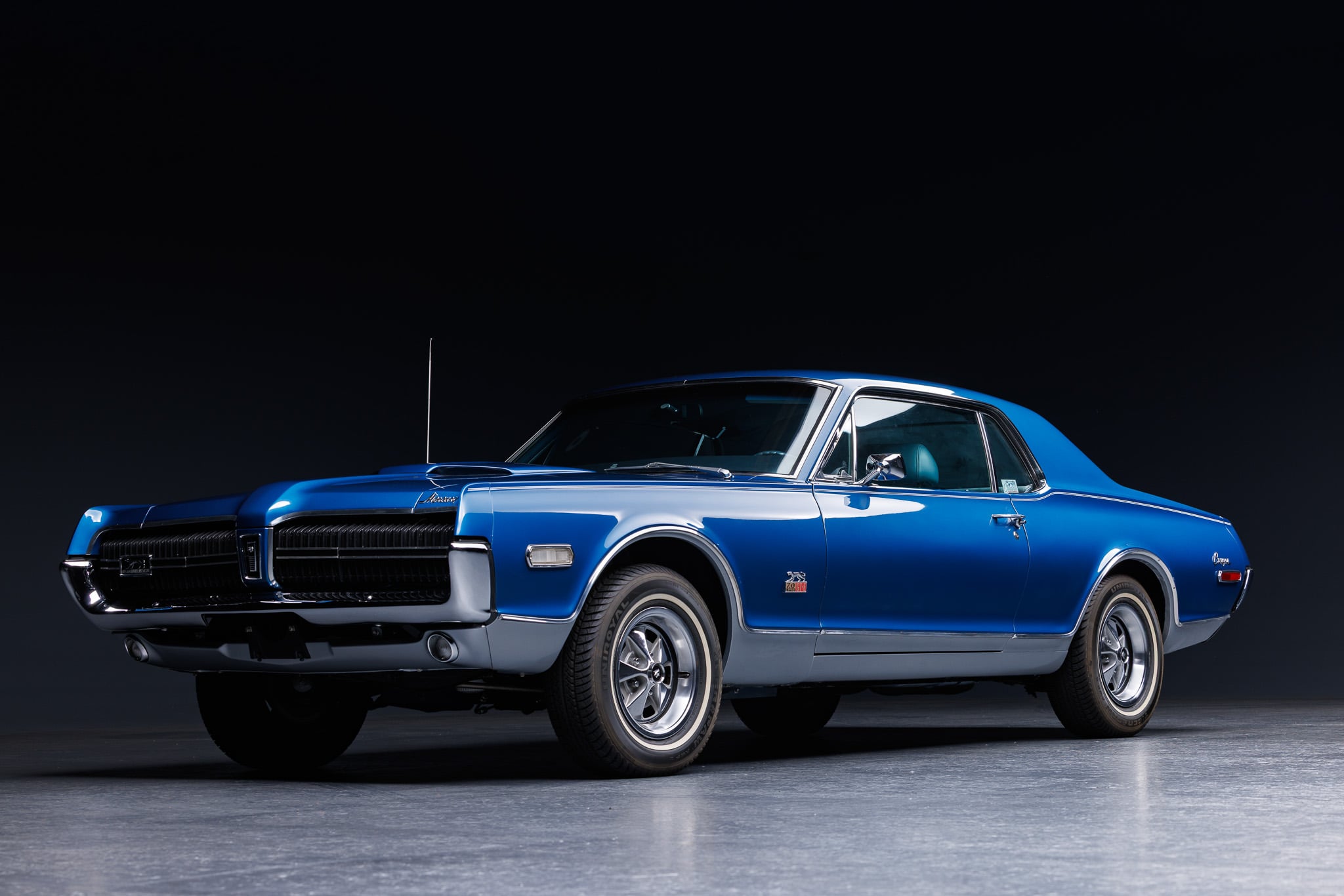
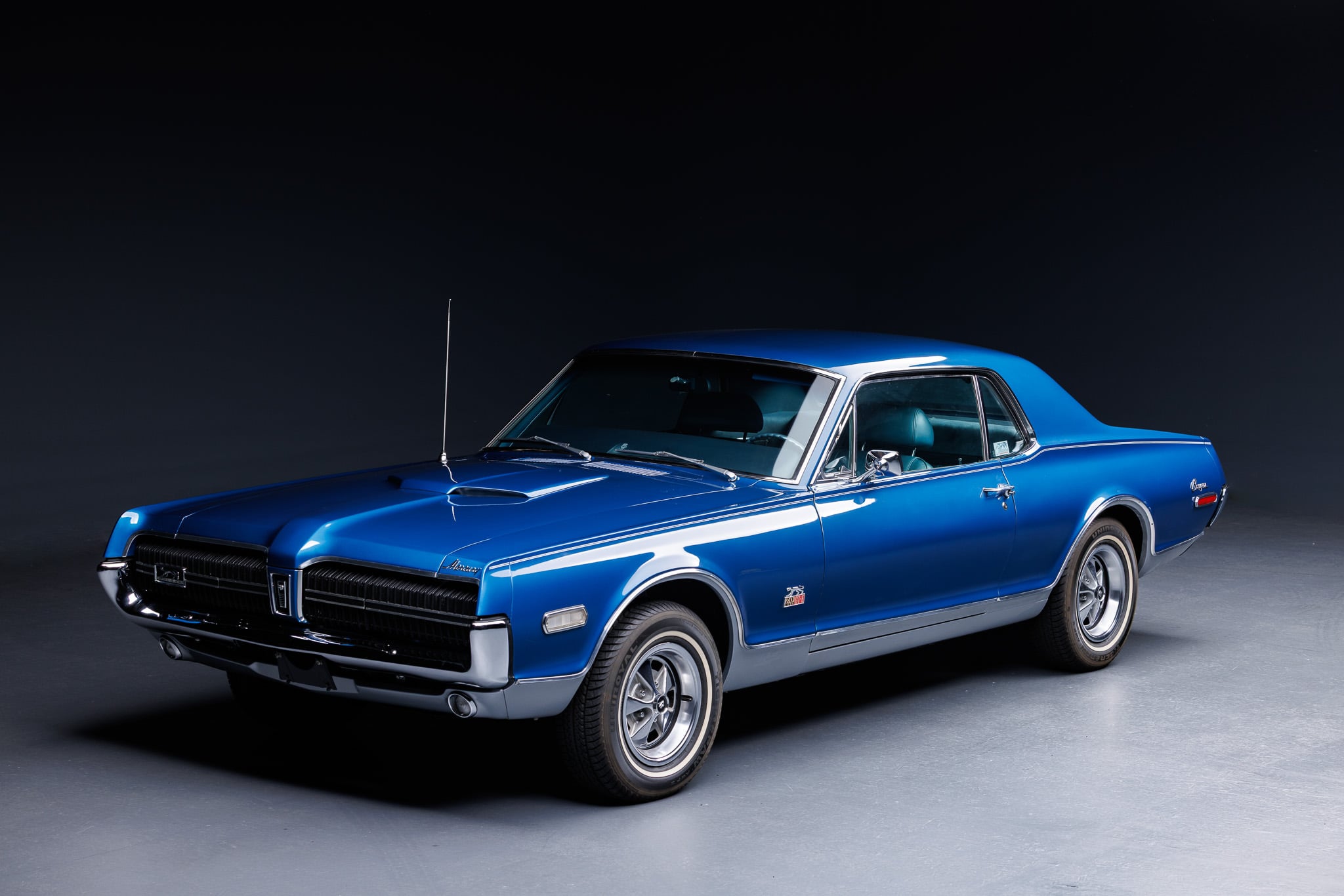
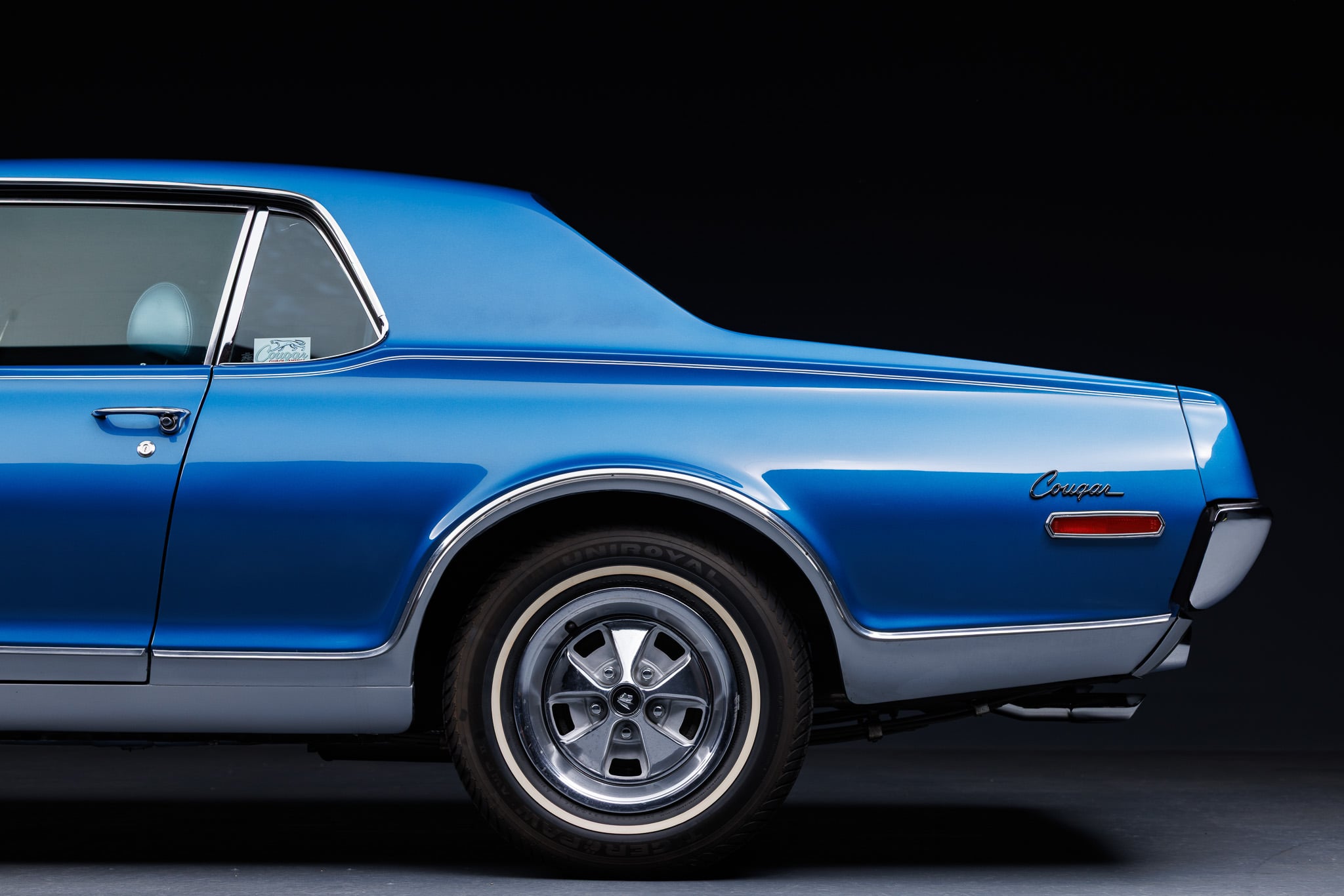
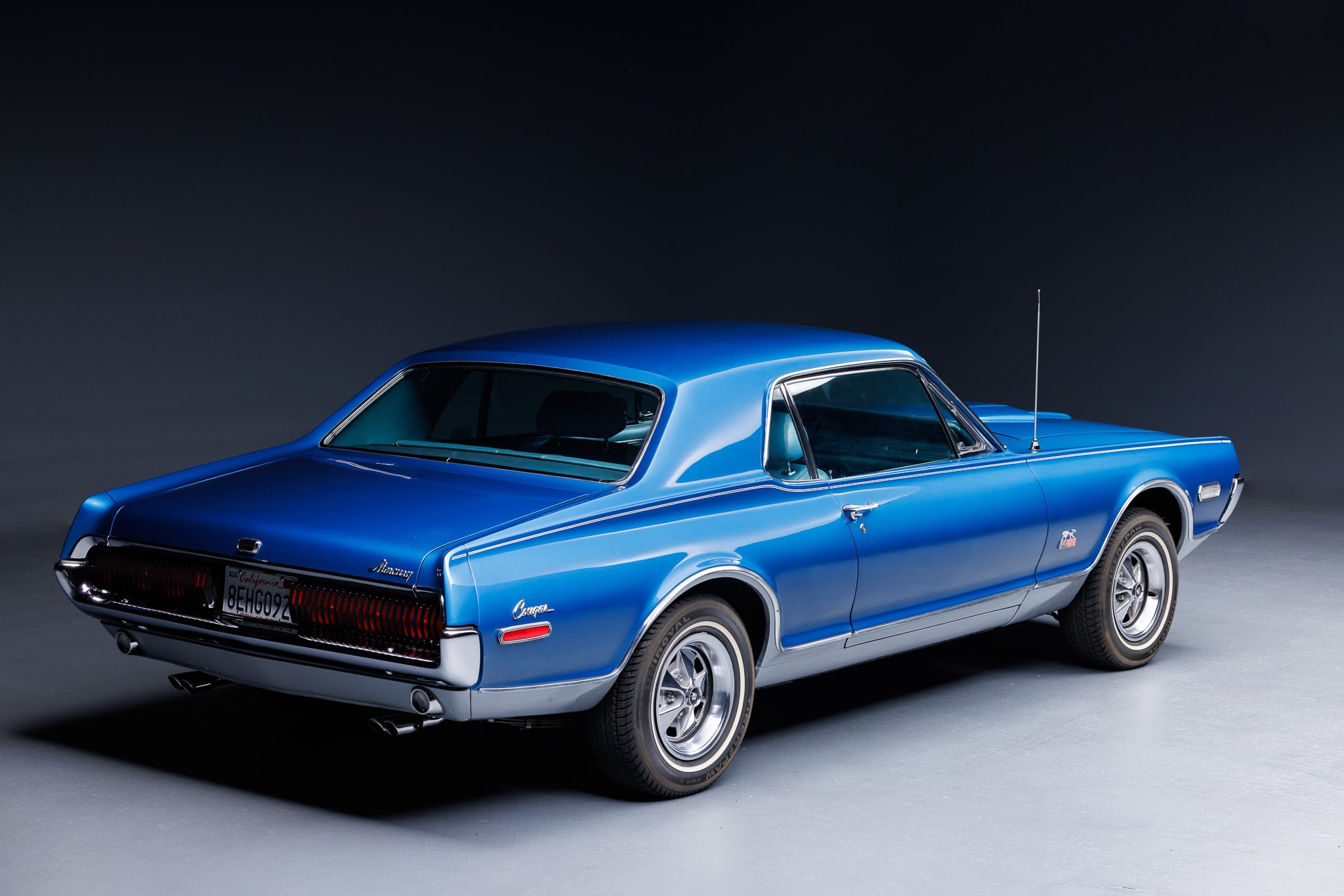
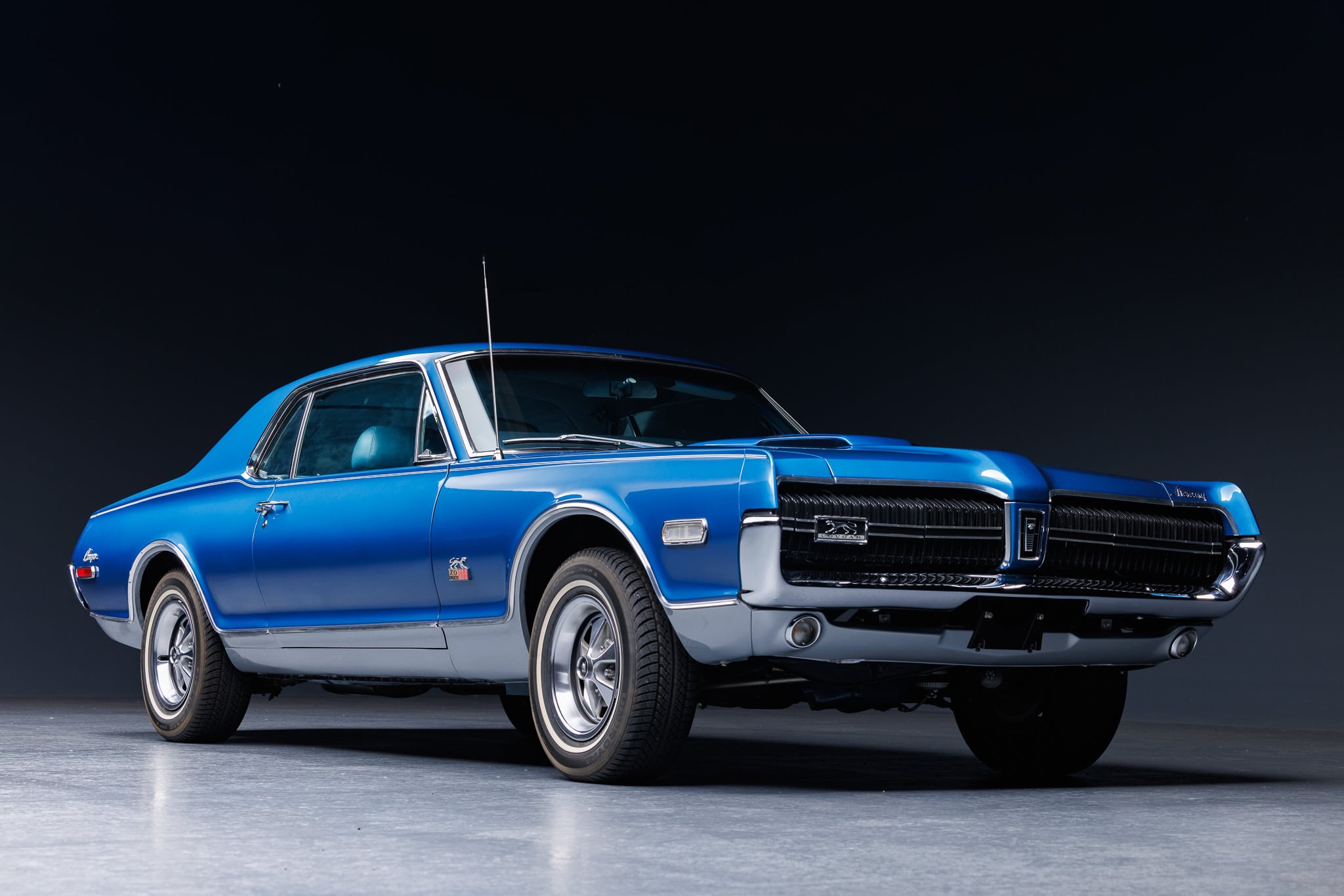
This is a restored 1968 Mercury Cougar GT-E, it was factory-fitted with the W-code 427 cubic inch (7.0 liter) V8, and it was given a twin-scoop hood, silver-gray paintwork, heavy-duty suspension, power front disc brakes, and power steering – all part of the GT-E package.
With 390 bhp and 460 lb ft of torque, the Cougar GT-E was a muscle car more than capable of holding its own against its more famous rivals. Just a few hundred of them were made, and today they’re largely forgotten outside of vintage Mercury and Ford circles.
Fast Facts: The 7.0 Liter 1968 Mercury Cougar GT-E
- The 1968 Mercury Cougar 7-Litre GT-E was a mid-year performance and trim package built around Ford’s 427 cubic inch FE-series V8. Just 394 examples were made before the package was retired at year’s end, making it both the rarest first-generation Cougar and the last Ford production car fitted with a 427.
- Mercury launched the Cougar on September the 30th, 1966 as a 1967 model, positioned between the Mustang and Thunderbird with a 3-inch longer wheelbase, hidden headlights, and a V8-only lineup. It won Motor Trend Car of the Year for 1967 and ended its debut year with 150,893 sold.
- The GT-E’s 427 was rated at 390 bhp and 460 lb ft, paired only with a C6 automatic. In spring 1968 it was replaced by the 428 Cobra Jet Ram Air at 340 bhp, which added a functional hood scoop and an optional 4-speed manual.
- The car featured here is one of the 357 W-code 427 examples, finished in Nordic Blue Poly over Light Blue Laredo buckets. First delivered in Virginia Beach and restored 15 to 20 years ago by Carlton Wright, it’s been used primarily for display under current ownership since 2018, showing 23,000 miles.
History Speedrun: The 1968 Mercury Cougar GT-E
The 1968 Mercury Cougar 7-Litre GT-E was a mid-year performance and trim package built around Ford’s 427 cubic inch FE-series V8. Just 394 were built before the package was retired at the end of the model year, making it both the rarest and most powerful version of the first-generation Cougar, it was also the last Ford production car to leave the factory with a 427 under the hood.
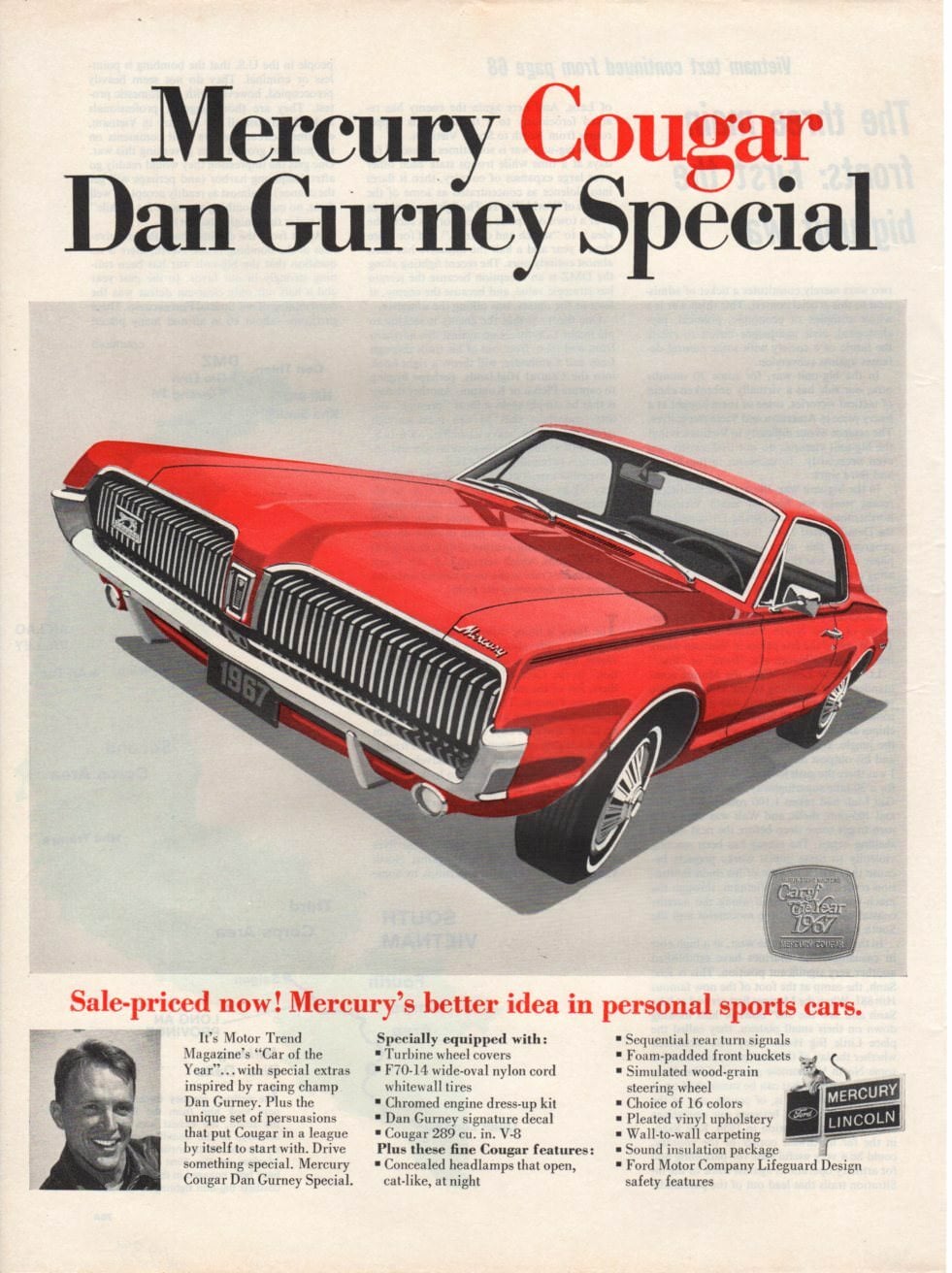
 Mercury had launched the car on September the 30th, 1966 as a 1967 model after Lincoln-Mercury’s styling team had spent years lobbying Ford for its own version of the Mustang. There were a number of special editions, including the popular Dan Gurney Special shown here. Image courtesy of Ford.
The Cougar nameplate itself was not quite two years old when the GT-E appeared. Mercury had launched the car on September the 30th, 1966 as a 1967 model after Lincoln-Mercury’s styling team had spent years lobbying Ford for its own version of the best-selling Mustang.
The Cougar was internally designated T-7 and was built on a chassis derived from the 1967 update of the Mustang, but with a wheelbase stretched 3 inches to 111 inches, with almost no shared sheet metal. Lincoln-Mercury positioned the new model between the Mustang and the Thunderbird, marketing it as a more grown-up pony car – hidden headlights actuated by vacuum motors, a split “electric shaver” grille, sequential rear turn signals carried over from the Thunderbird, and a V8-only engine lineup.
The public reception for the new model was much better than anticipated – Mercury had expected 85,000 first-year sales and ended 1967 with 150,893 sold, the model accounting for almost 40% of Lincoln-Mercury division sales volume. Lincoln-Mercury had been right to launch the project to build their own version of the pony car.
Motor Trend named the Cougar its 1967 Car of the Year, it would be the first (and only) Mercury to receive the award. The standard 1967 lineup centered on the 289 V8 in two and four-barrel forms, with the 390 “Marauder” four-barrel V8 making 320 bhp as the top option in the Cougar GT package.
A more upscale XR-7 trim, with leather, additional gauges, and a wood-rimmed steering wheel, arrived as a mid-year addition. Bud Moore campaigned Cougars in the 1967 Trans-Am Series with Dan Gurney, Parnelli Jones, Peter Revson, David Pearson, and Ed Leslie sharing driving duties, and the team lost the championship to the factory Mustangs – but by only two points.
The GT-E Cougar Arrives
For 1968, Mercury reworked the Cougar’s engine offerings, the 302 V8 initially replaced the 289 in two and four-barrel forms to meet federal emissions rules, though a lower-compression 289 returned later in the model year. The 390 was offered as a 280 bhp “Marauder 390P” two-barrel for non-GT cars, and at mid-year the GT-E arrived above all of that.
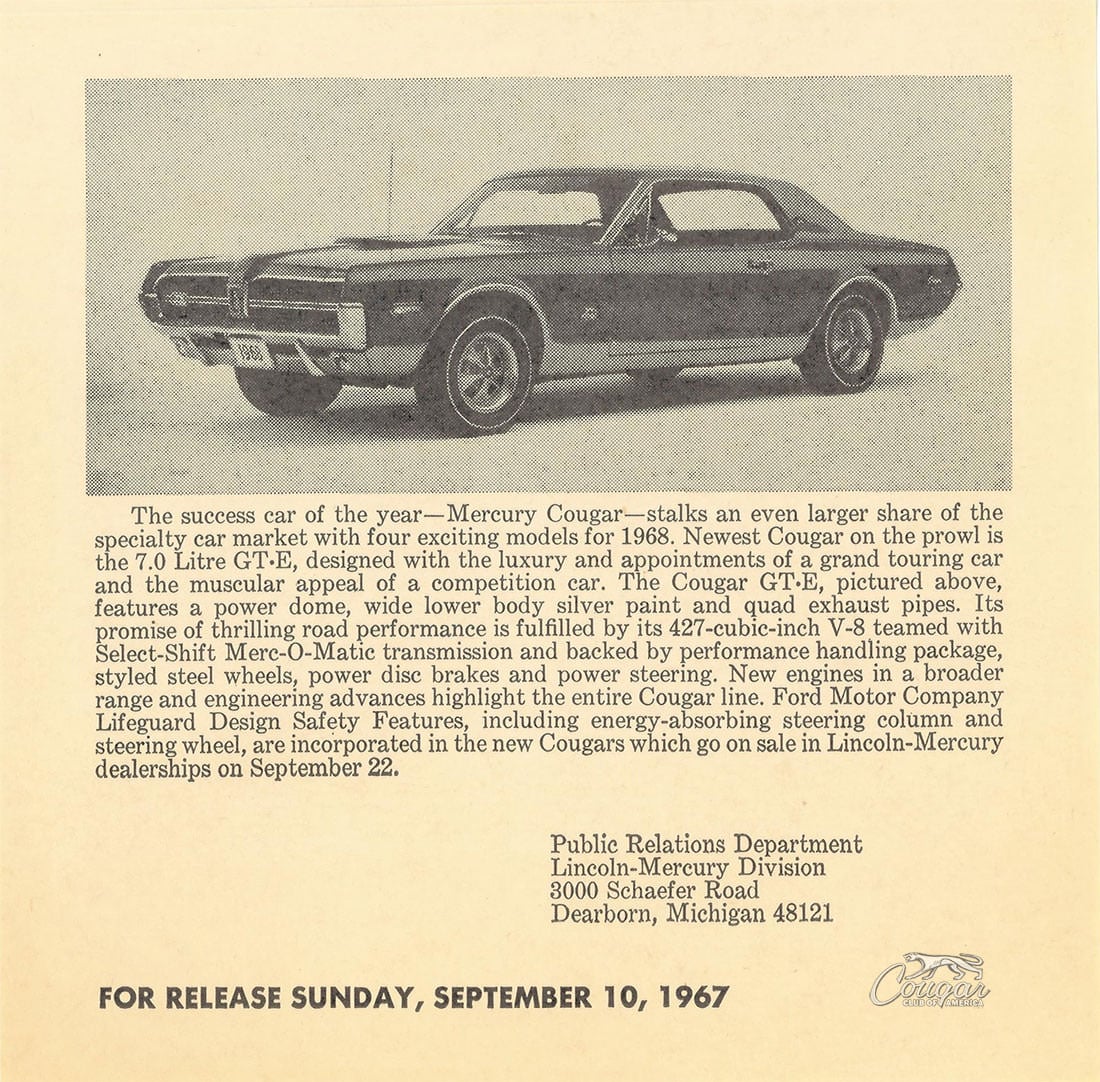
The 1968 Mercury Cougar 7-Litre GT-E was a mid-year performance and trim package built around Ford’s 427 cubic inch FE-series V8. Just 394 were built before the package was retired at the end of the model year, making it both the rarest and most powerful version of the first-generation Cougar, and the last Ford production car to leave the factory with a 427 under the hood. Image courtesy of Ford.
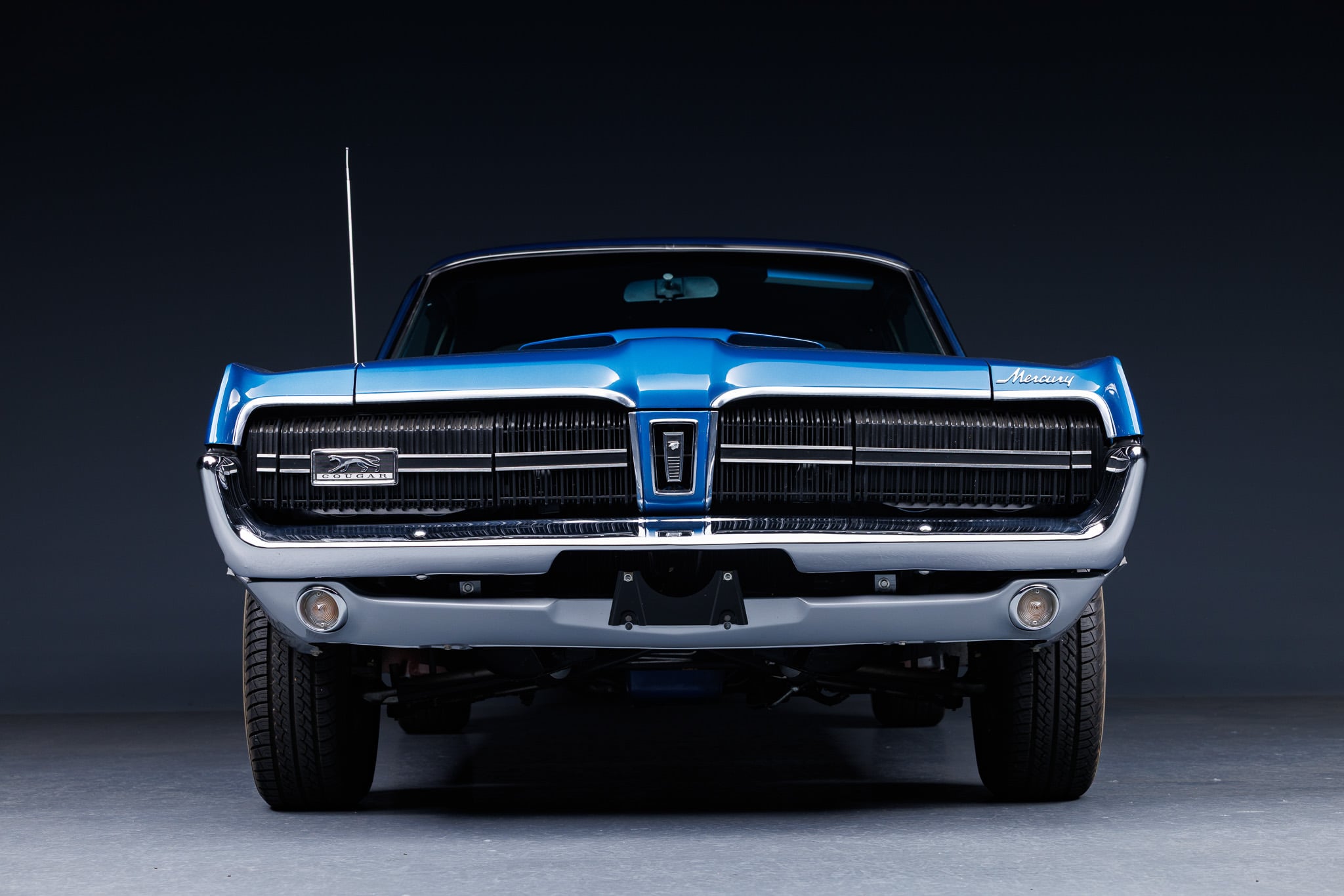
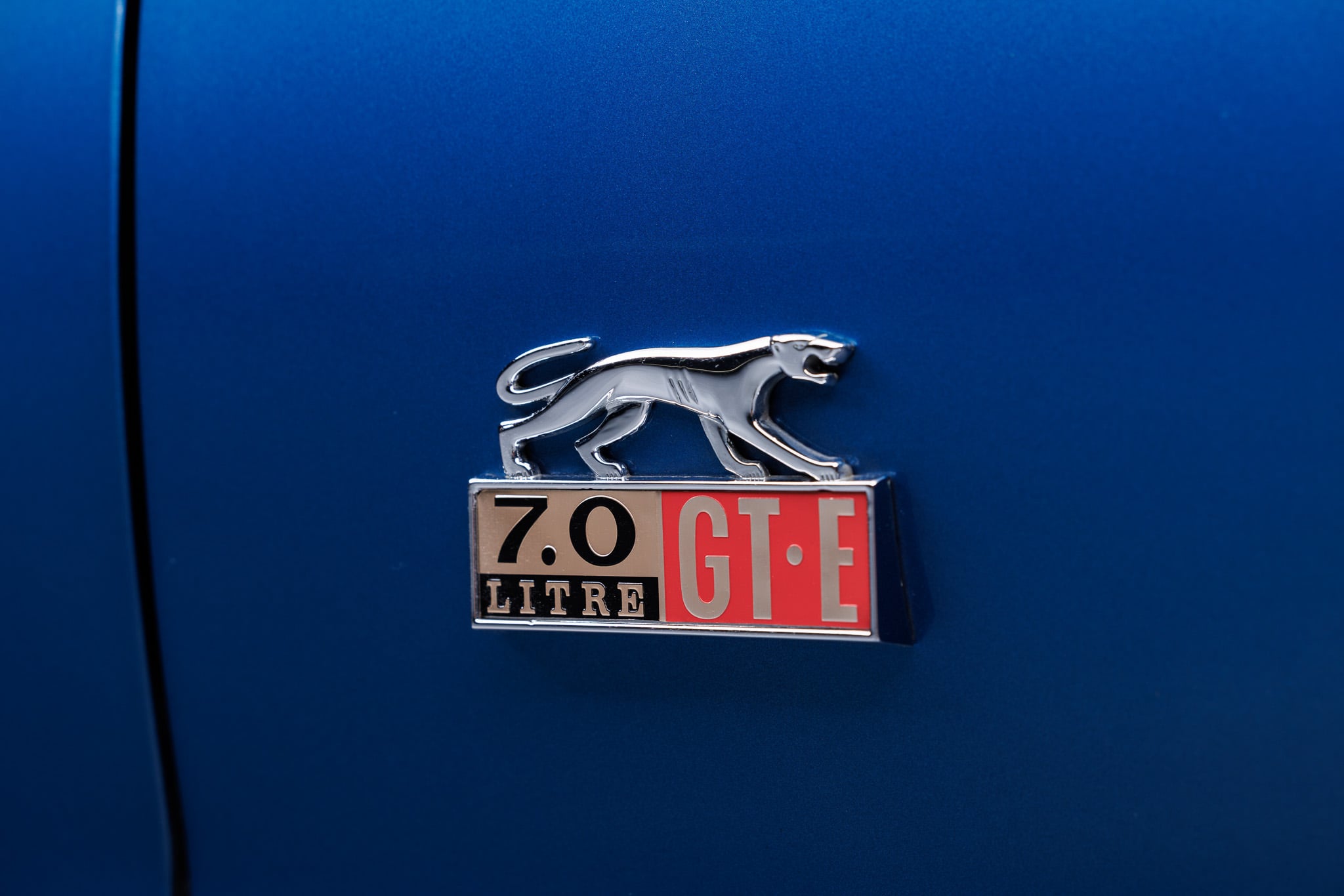
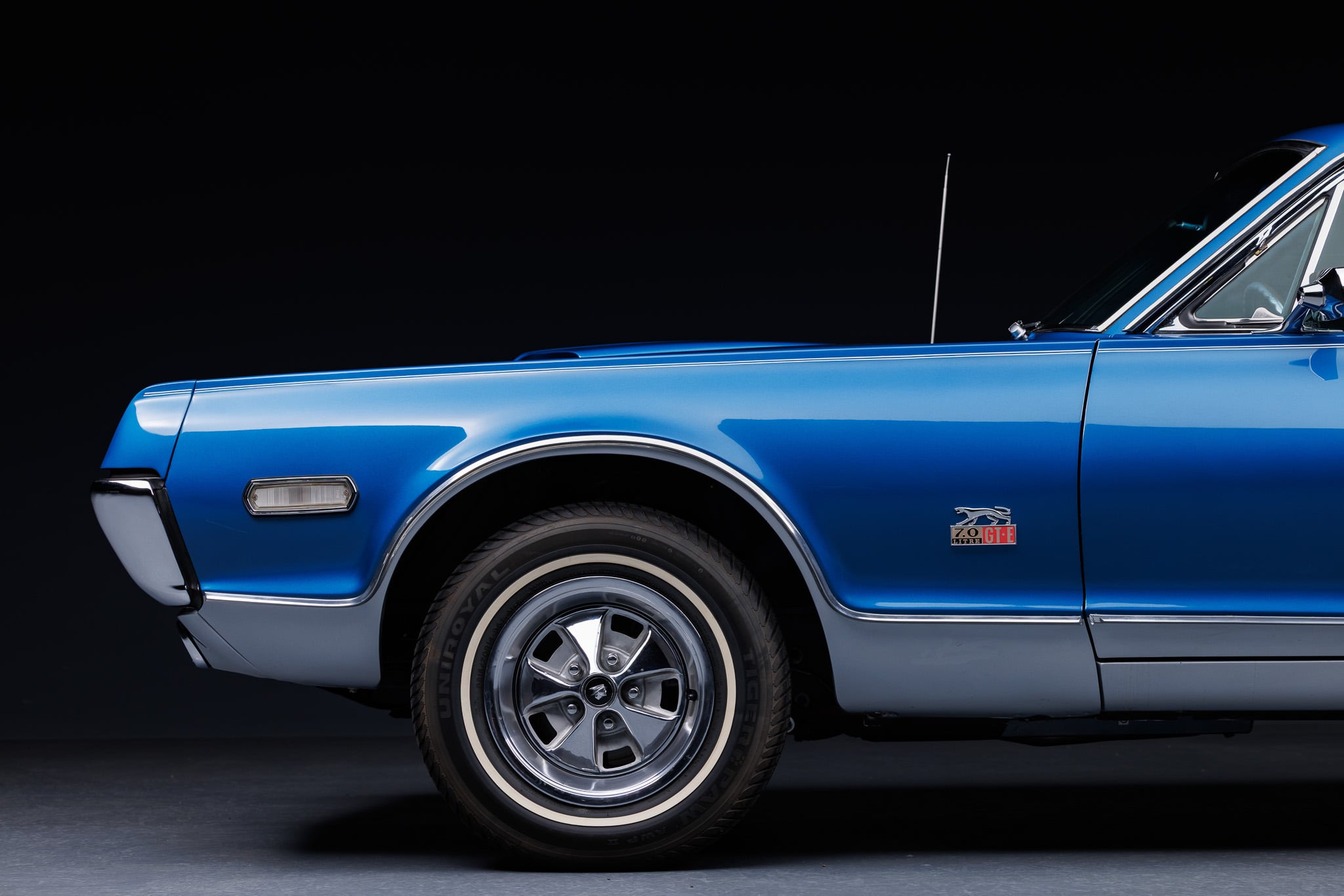
Listed as an option on both the standard Cougar and the XR-7, the GT-E offered some unique cosmetic and mechanical equipment – a redesigned grille with a brushed-aluminum horizontal trim bar and black center strip, side-body trim, argent lower body paint delineated by chrome, quad exhaust outlets, styled steel wheels, a power-dome hood with simulated scoops, and “7.0 Litre GT-E” badging on the front fenders. Power steering and power front disc brakes were both standard.
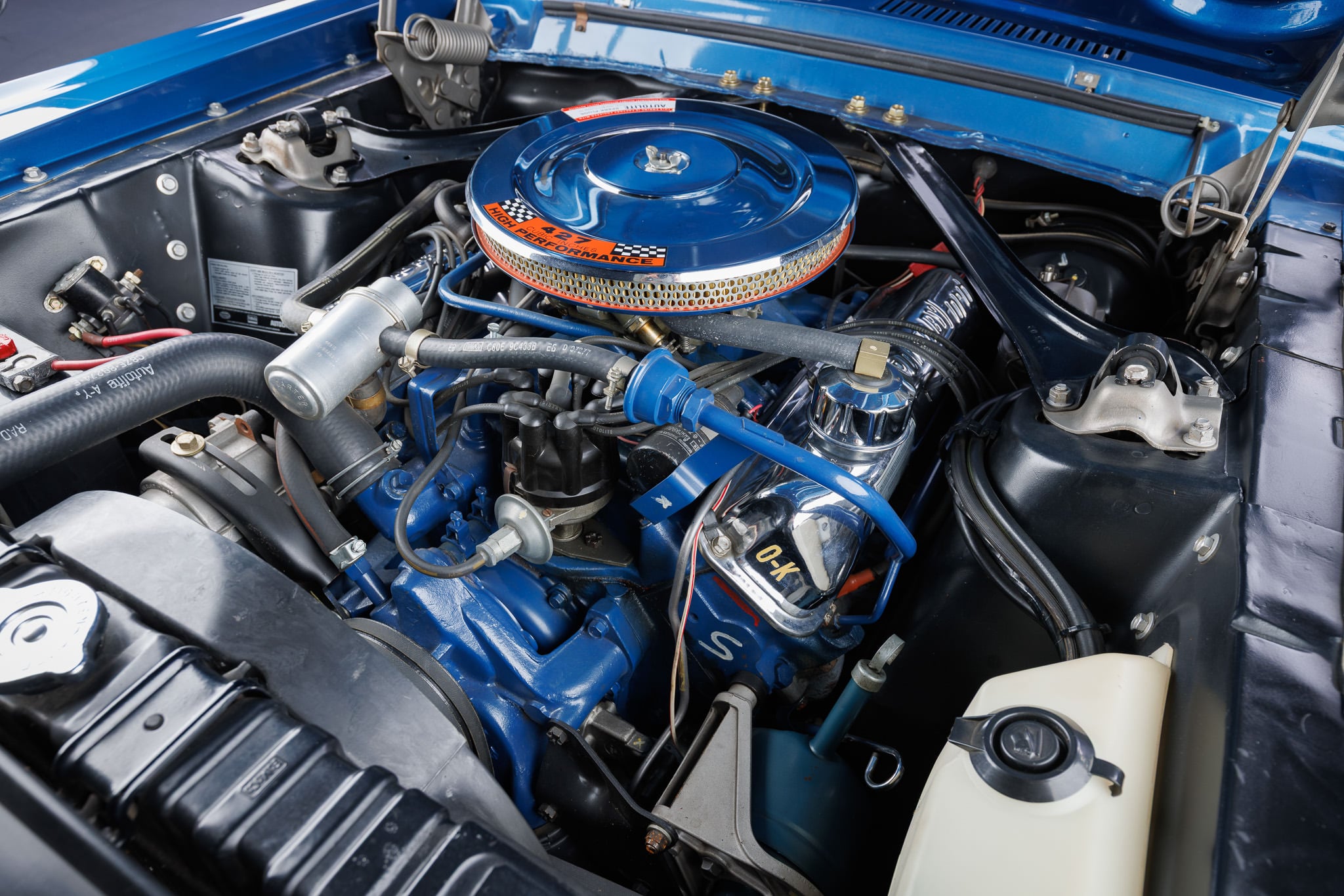
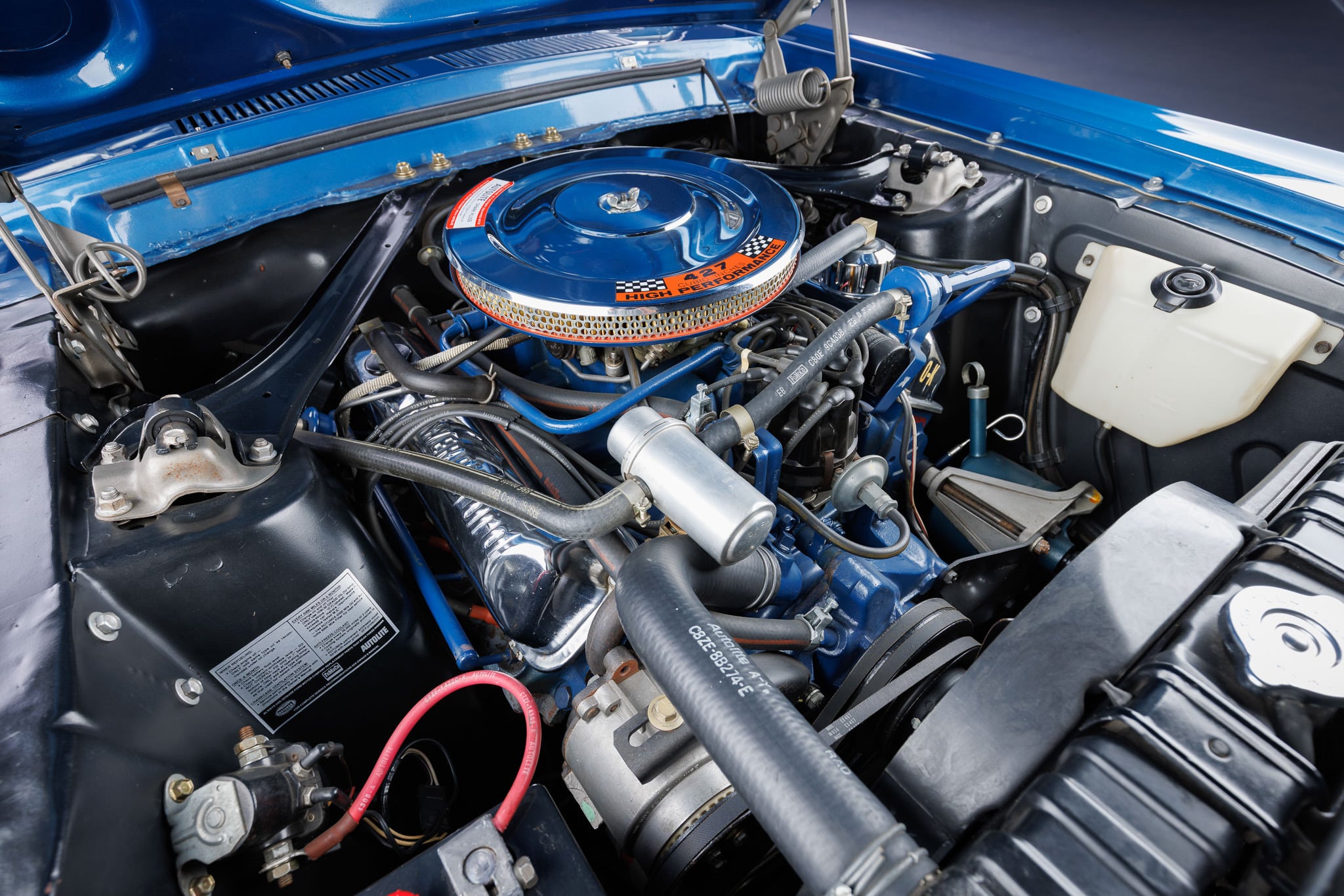
The early GT-E used Ford’s 427 (7.0 liter) FE-series big block V8, the same engine family that had powered the Le Mans-winning GT40 Mk II, the 427 Cobra, and Ford’s NASCAR Galaxies. The version installed in the Cougar had been adapted for street use, with a hydraulic-lifter camshaft replacing the solid-lifter setup of earlier 427s. It was rated at 390 bhp at 5,600 rpm and 460 lb ft at 3,200 rpm, with a 10.9:1 compression ratio and a single Holley four-barrel.
The package was appealing but pricey, the GT-E option alone cost $1,311, more than the Chrysler Hemi engine option on a Mopar, and pushed a 427-equipped XR-7 GT-E to $4,542, comparable to a base Thunderbird. The 427 could be ordered only with the C6 3-speed automatic transmission. Air conditioning and cruise control were unavailable because of tight engine-bay packaging.
The 428 Cobra Jet Ram Air Takes Over
The 427 had a short run in the Cougar, Ford was already winding down the engine, which was expensive to build and increasingly difficult to certify under tightening emissions standards. In the spring of 1968, the 427 was replaced in the GT-E by the 428 Cobra Jet Ram Air, rated at 340 bhp in the GT-E and widely considered to be underrated.
With the 428 CJ came a functional hood scoop in place of the simulated one, and the option of a 4-speed manual transmission. Production figures listed by the GT-E Registry from F-L-M/Marti records show 357 cars built with the 427 and 37 with the 428 Cobra Jet, for a total of 394 GT-Es across both standard and XR-7 trims. Only three of the 428 CJ cars left the factory with the 4-speed.
Ultimately, the GT-E package wasn’t renewed for 1969. Mercury launched the Cougar Eliminator alongside the Boss 302 Mustang as its new performance variant, with the 428 Cobra Jet sitting near the top of the option list. The first-generation Cougar finished its run in 1970 with the 390 dropped, the 351 Cleveland 4V added, and the 428 Cobra Jet still available.
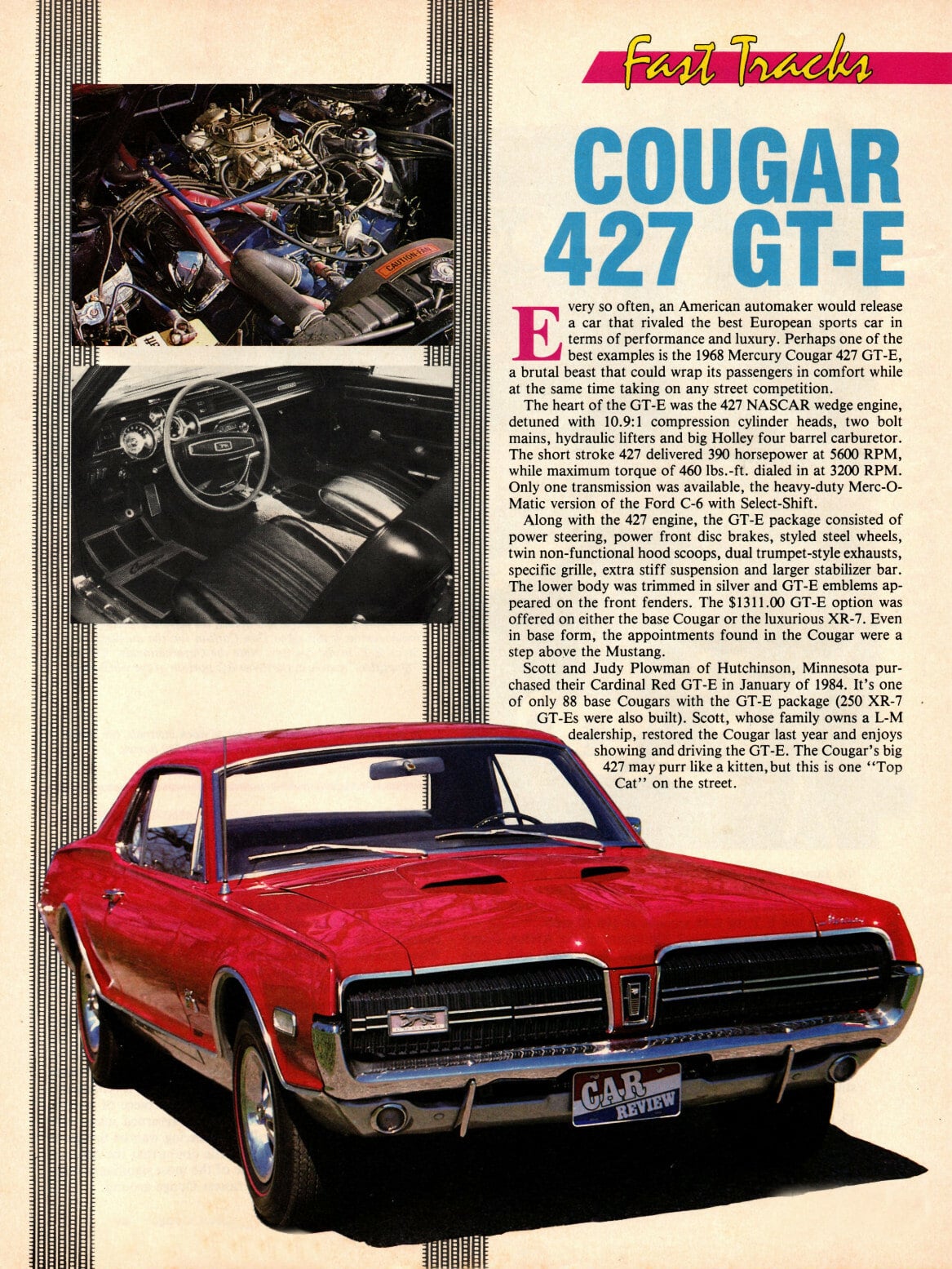
Listed as an option on both the standard Cougar and the XR-7, the GT-E carried unique cosmetic and mechanical equipment – a redesigned grille with a brushed-aluminum horizontal trim bar and black center strip, side-body trim, argent lower body paint delineated by chrome, quad exhaust outlets, styled steel wheels, a power-dome hood with simulated scoops, and “7.0 Litre GT-E” badging on the front fenders. Power steering and power front disc brakes were standard. Image courtesy of Ford.
For 1971, both the Cougar and Mustang moved onto a new, larger platform for the second generation, after which the Cougar’s identity began to drift. For 1974, the Cougar split from the Mustang and moved to the Torino/Montego/Elite intermediate platform, taking on a Thunderbird-like personal-luxury role it largely followed through 1997, before a final 1999 to 2002 sport-compact hatchback generation.
Across 34 model years and eight generations (the line skipped 1998), 2,972,784 Cougars were built, making it the bestselling Mercury nameplate in history.
The 1968 Mercury Cougar GT-E Shown Here
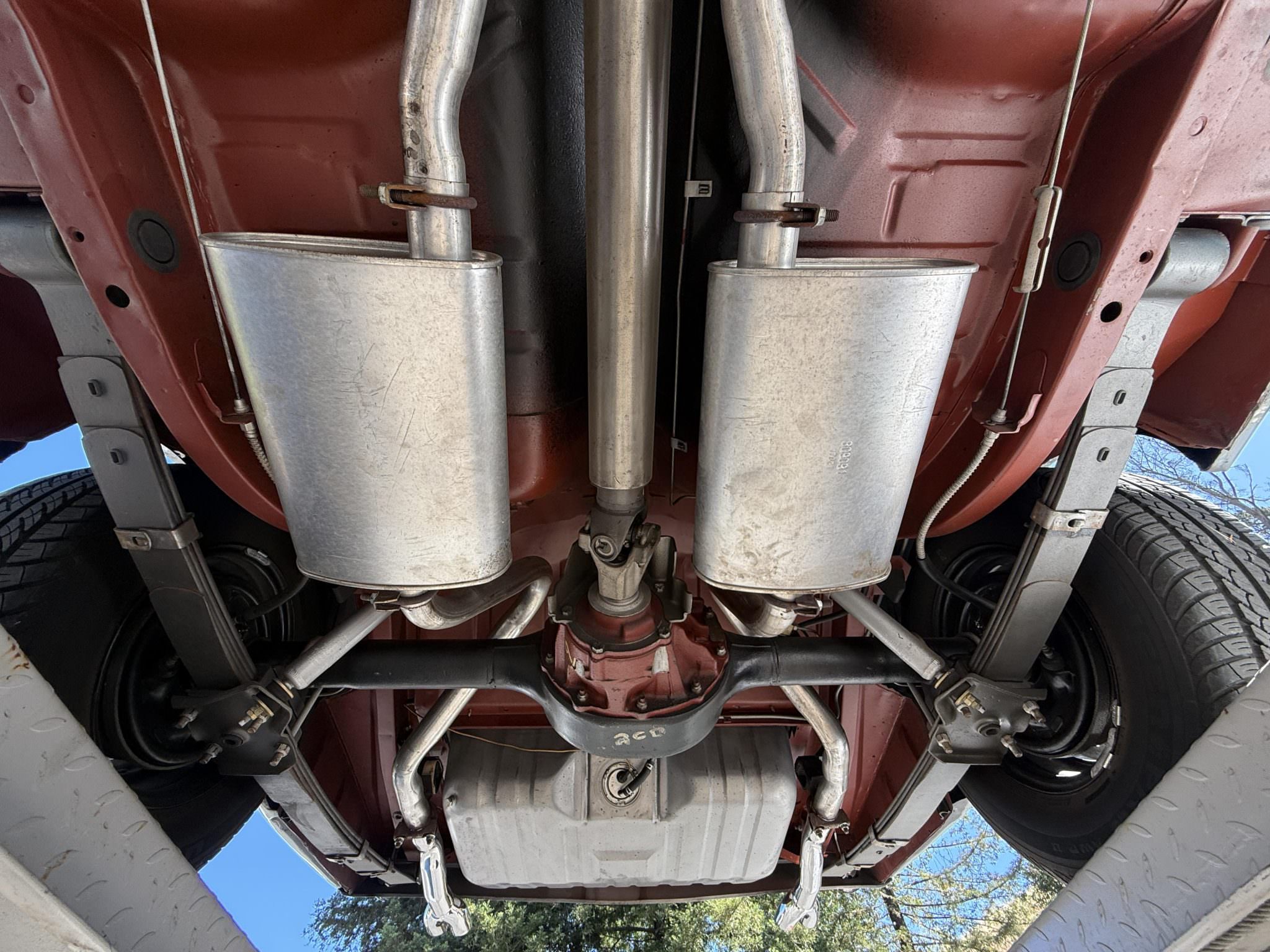
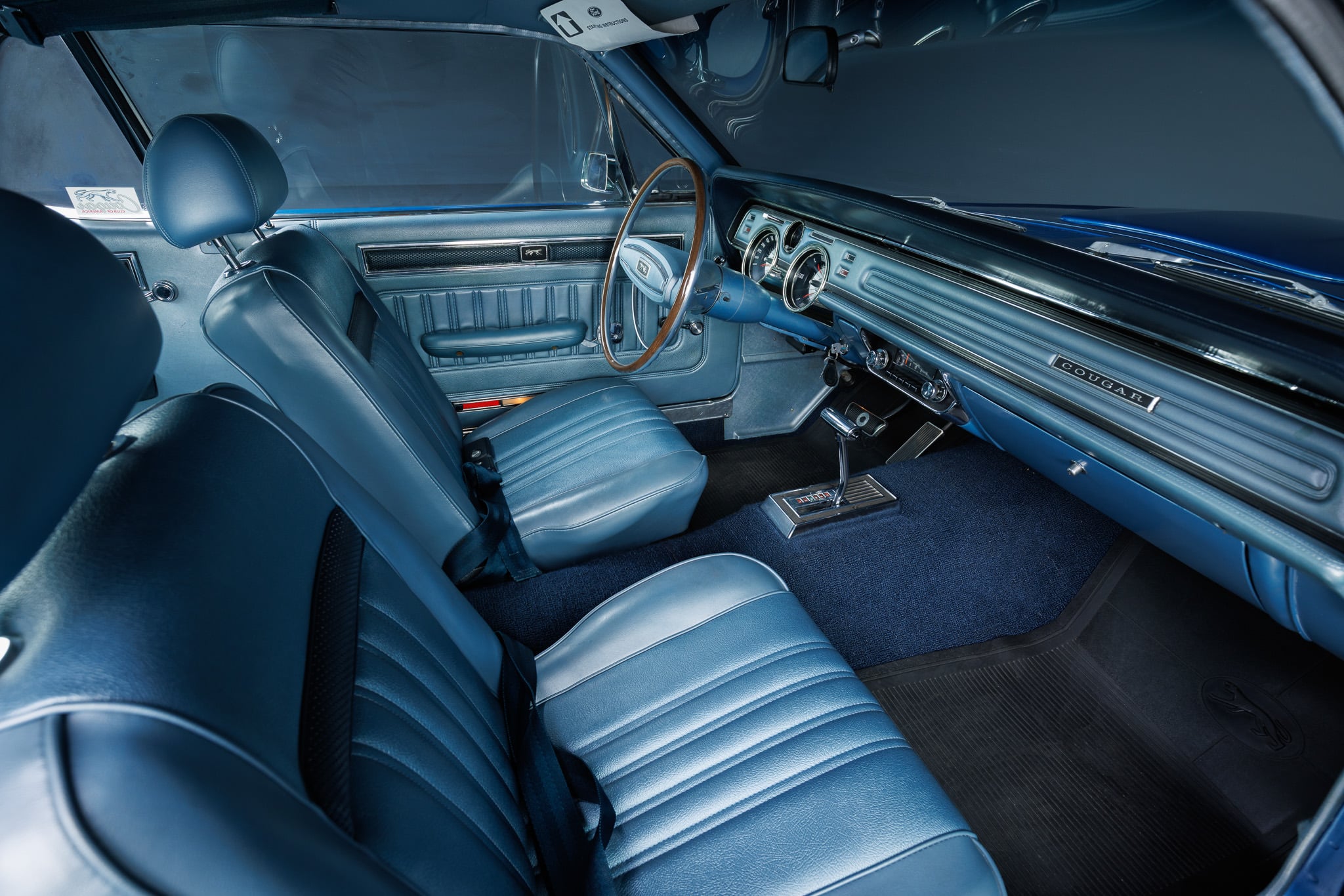
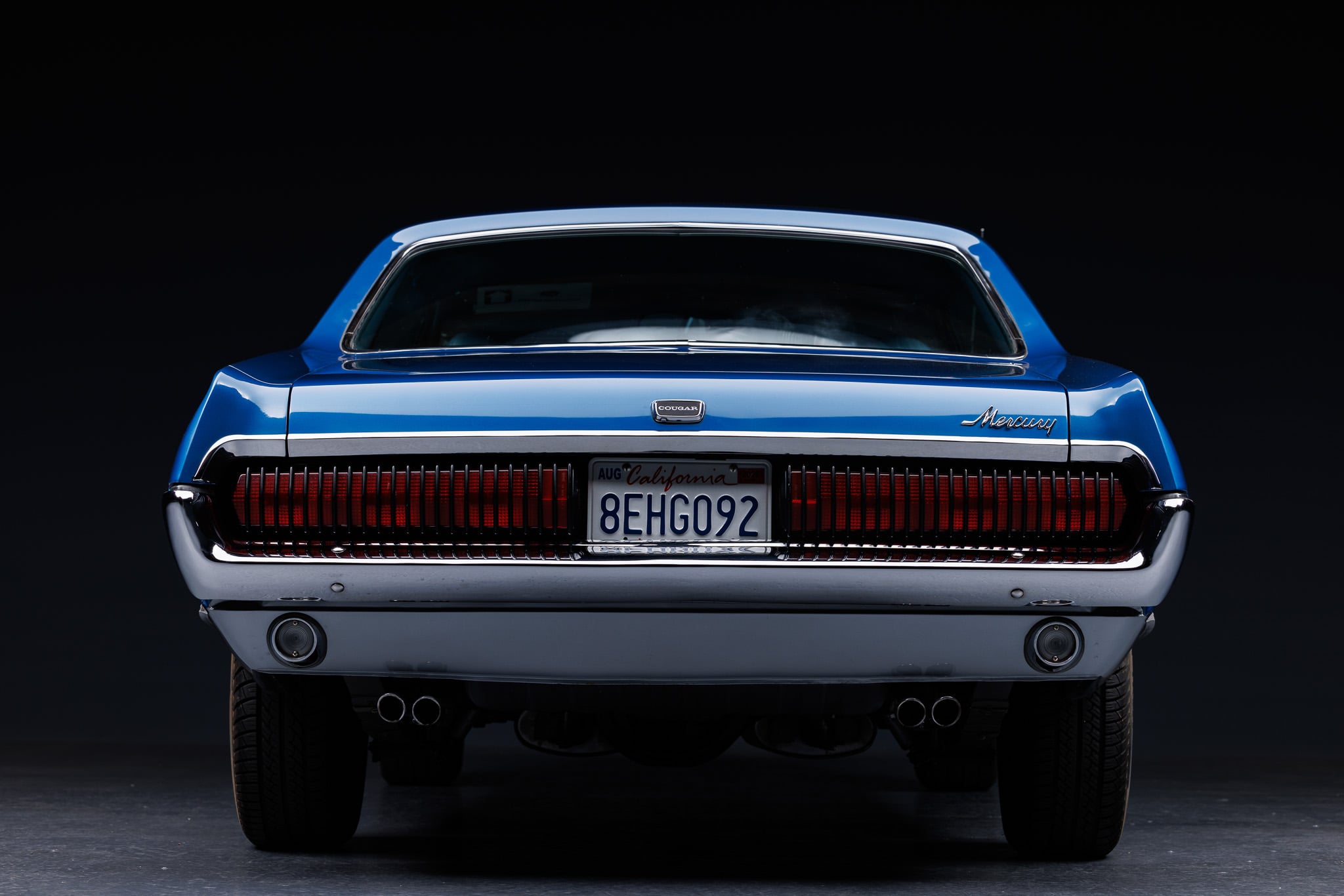
This 1968 Mercury Cougar is one of 394 built with the GT-E package and one of the 357 equipped with the W-code 427 V8, the engine that, together with the twin-scoop hood, revised grille and taillight treatments, silver-gray lower accents, quad exhaust outlets, and “7-Litre GT-E” badging, defined the option package.
Standard GT-E equipment also included heavy-duty suspension with stiffer springs and a larger front sway bar, power-assisted steering, power-assisted front disc brakes, chromed 14-inch styled-steel wheels, and a Merc-O-Matic 3-speed automatic transmission.
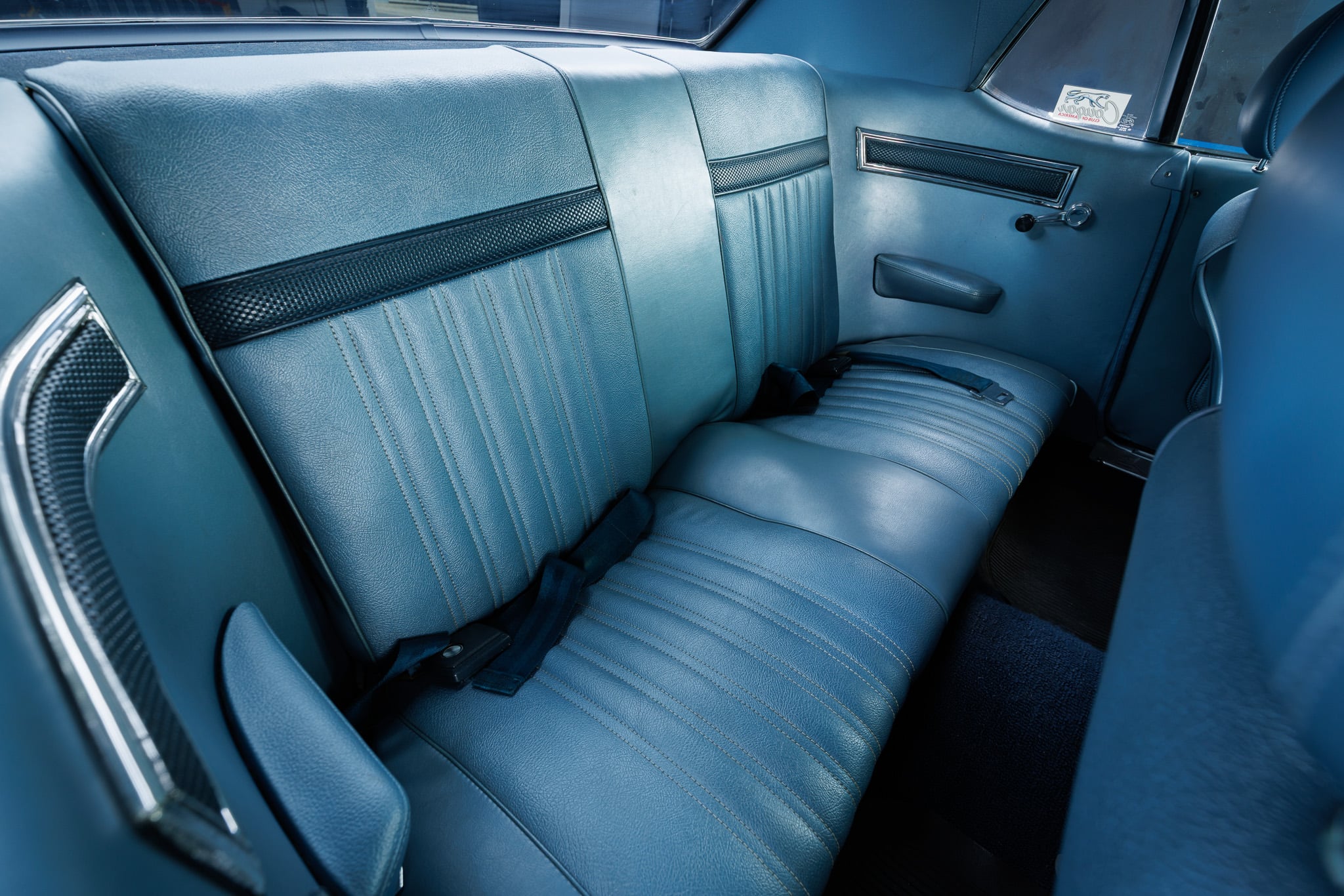
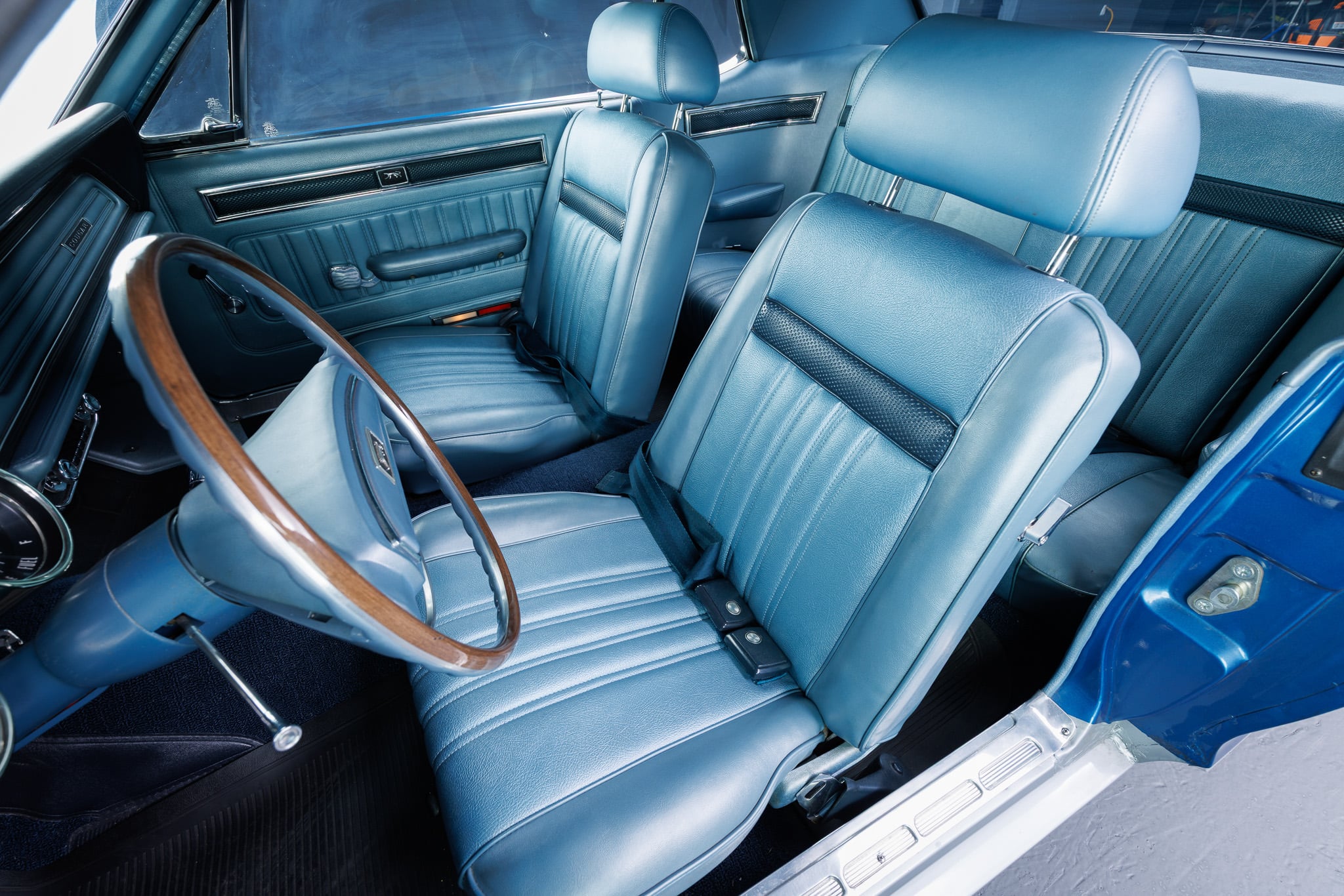
The car was finished from the factory in Nordic Blue Poly over Light Blue Laredo bucket seats, with front headrests, an AM radio, a remote-operated left mirror, the Decor Group, and tinted glass. It was first delivered in Virginia Beach and was restored 15 to 20 years ago by Carlton Wright, according to the seller.
The current owner acquired it in 2018 and has used it primarily for display, adding roughly 500 miles since the restoration was completed and about 100 of those under his ownership. The five-digit odometer shows 23,000 miles.
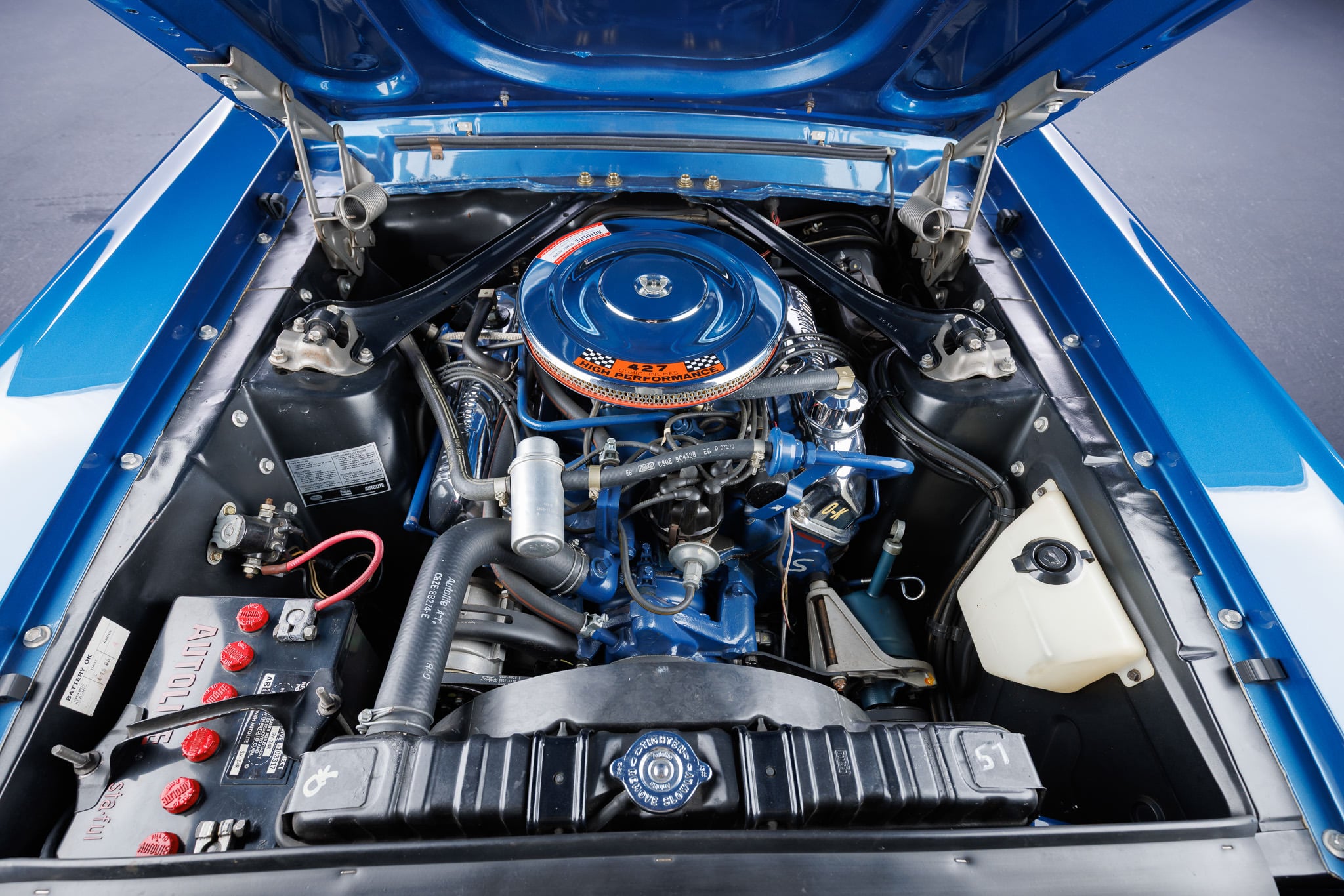
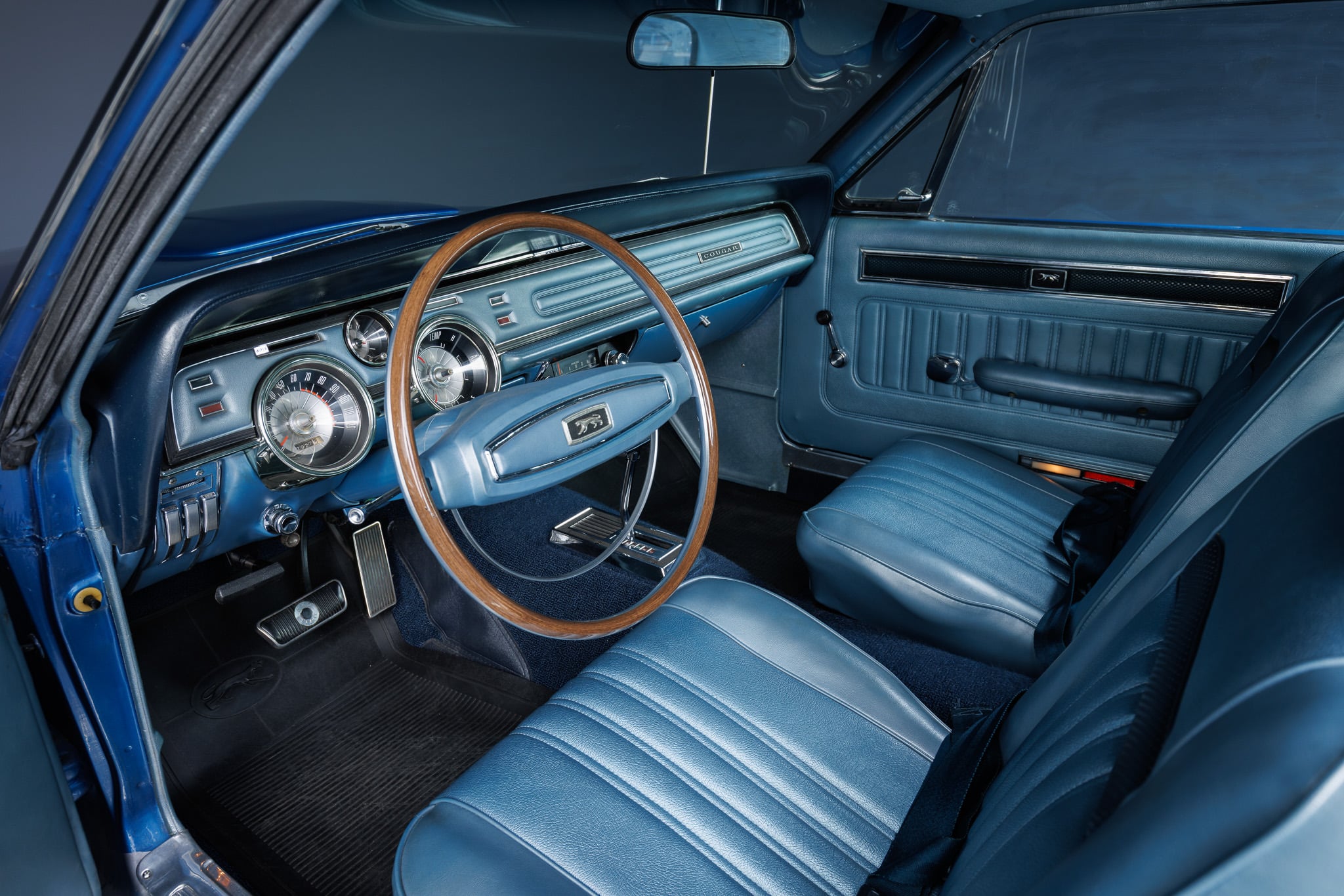
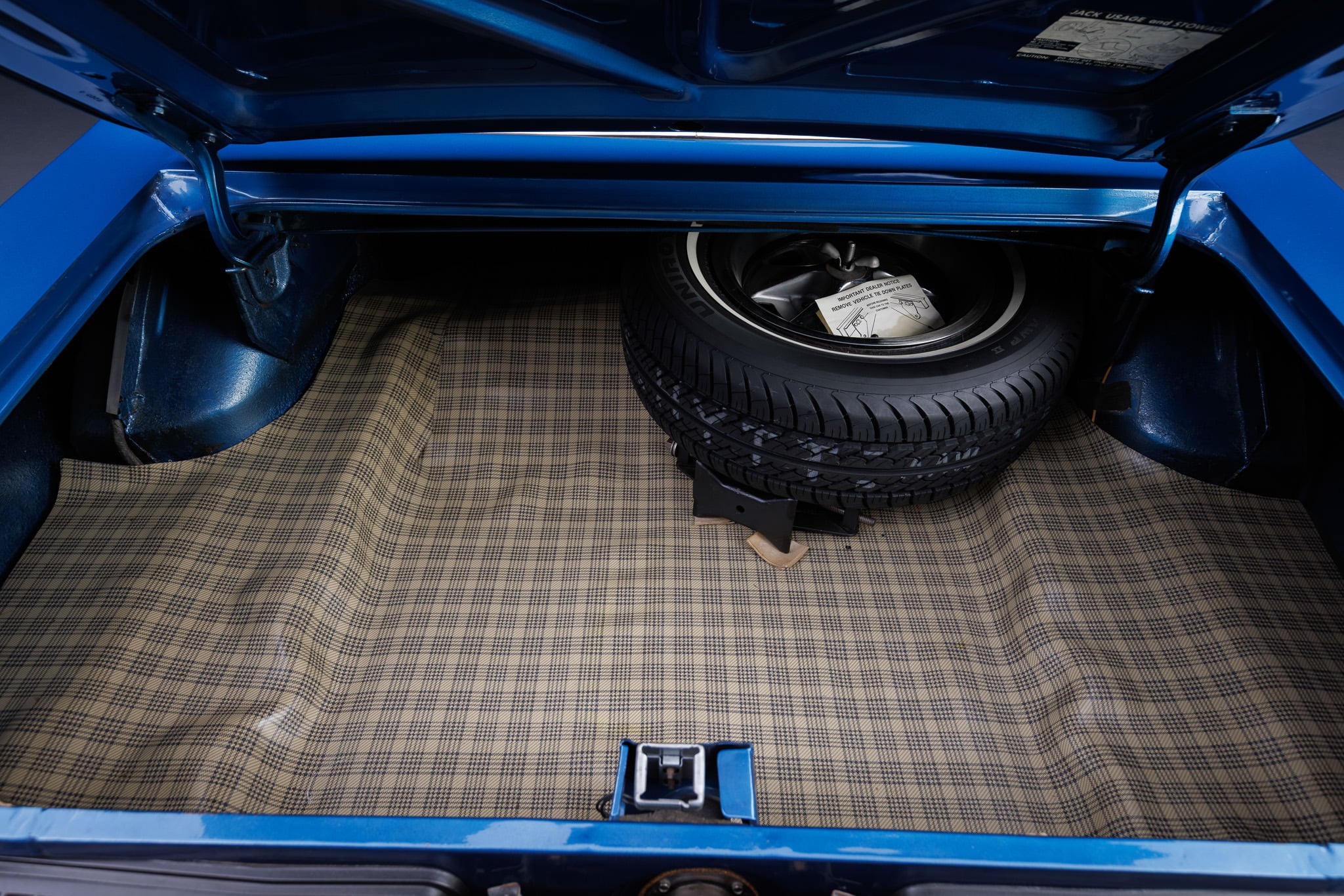
This is a restored 1968 Mercury Cougar GT-E, it was factory-fitted with the W-code 427 cubic inch (7.0 liter) V8, and it was given a twin-scoop hood, silver-gray, heavy-duty suspension, power front disc brakes, and power steering – all part of the GT-E package.
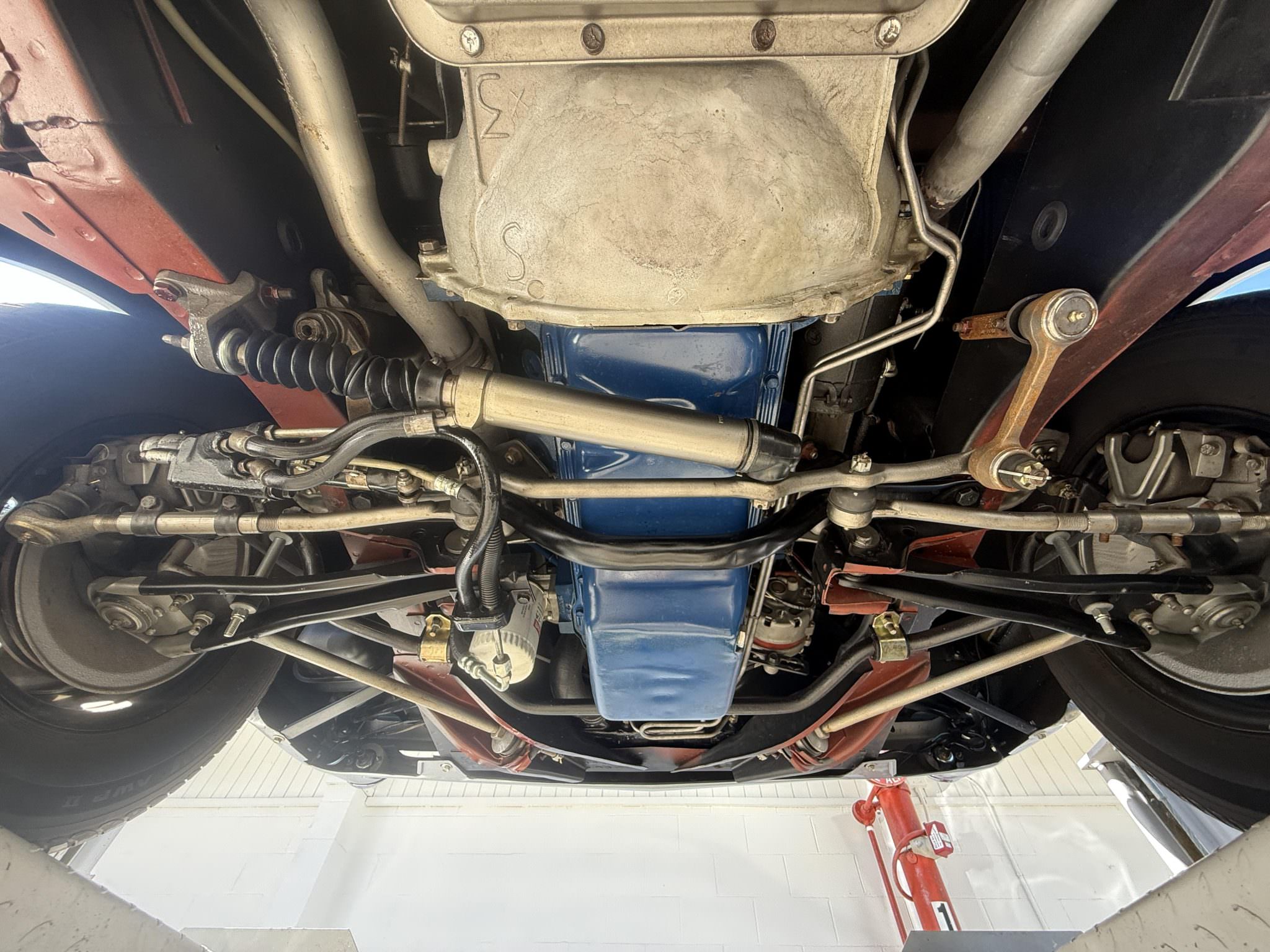
The W-code 427 was a hydraulic-lifter version of Ford’s FE-series big block, factory-rated at 390 bhp with 10.9:1 compression and a four-barrel carburetor. Per the seller, the engine and transmission were both replaced during the refurbishment, with castings E1 and J23 visible on the unit now fitted.
The car is now being offered for sale out of San Ramon, California with a Deluxe Marti Report and a clean California title. If you’d like to read more about it or register to bid you can visit the listing here.
Images courtesy of Bring a Trailer

Articles that Ben Branch has written have been covered on CNN, Popular Mechanics, Smithsonian Magazine, Road & Track Magazine, the official Pinterest blog, the official eBay Motors blog, BuzzFeed, Autoweek Magazine, Wired Magazine, Autoblog, Gear Patrol, Jalopnik, The Verge, and many more.
Silodrome was founded by Ben back in 2010, in the years since the site has grown to become a world leader in the alternative and vintage motoring sector, with well over a million monthly readers from around the world and many hundreds of thousands of followers on social media.