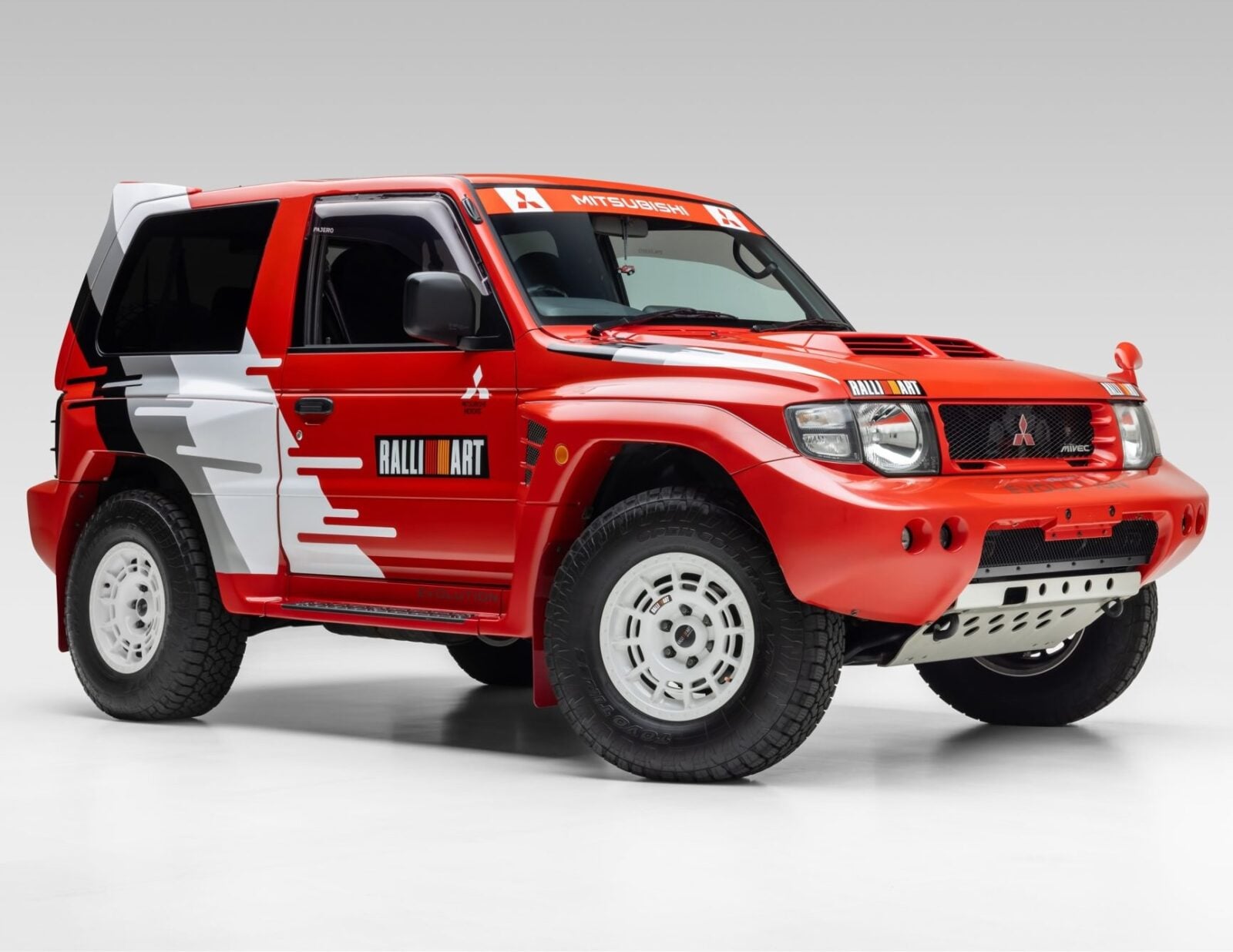
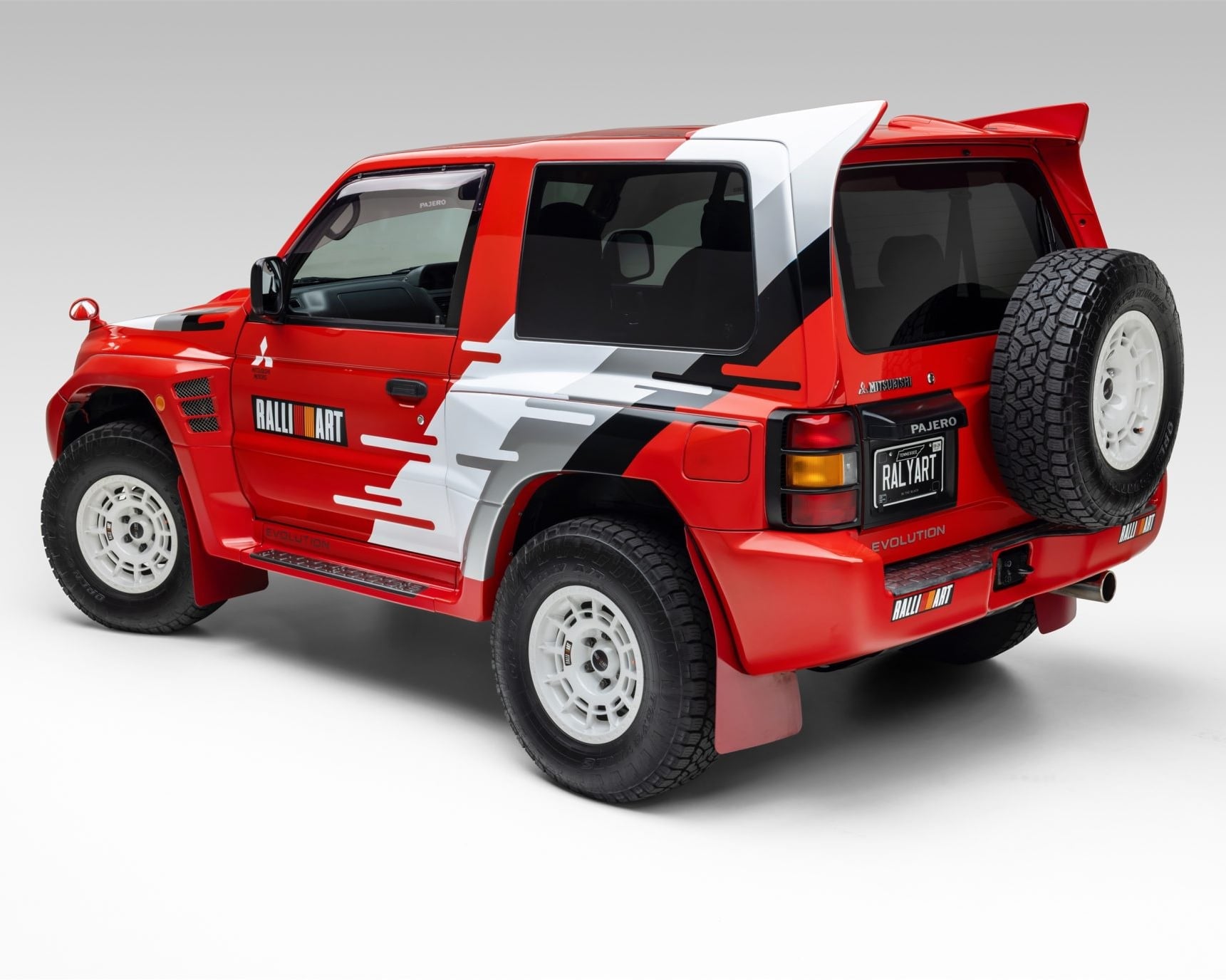
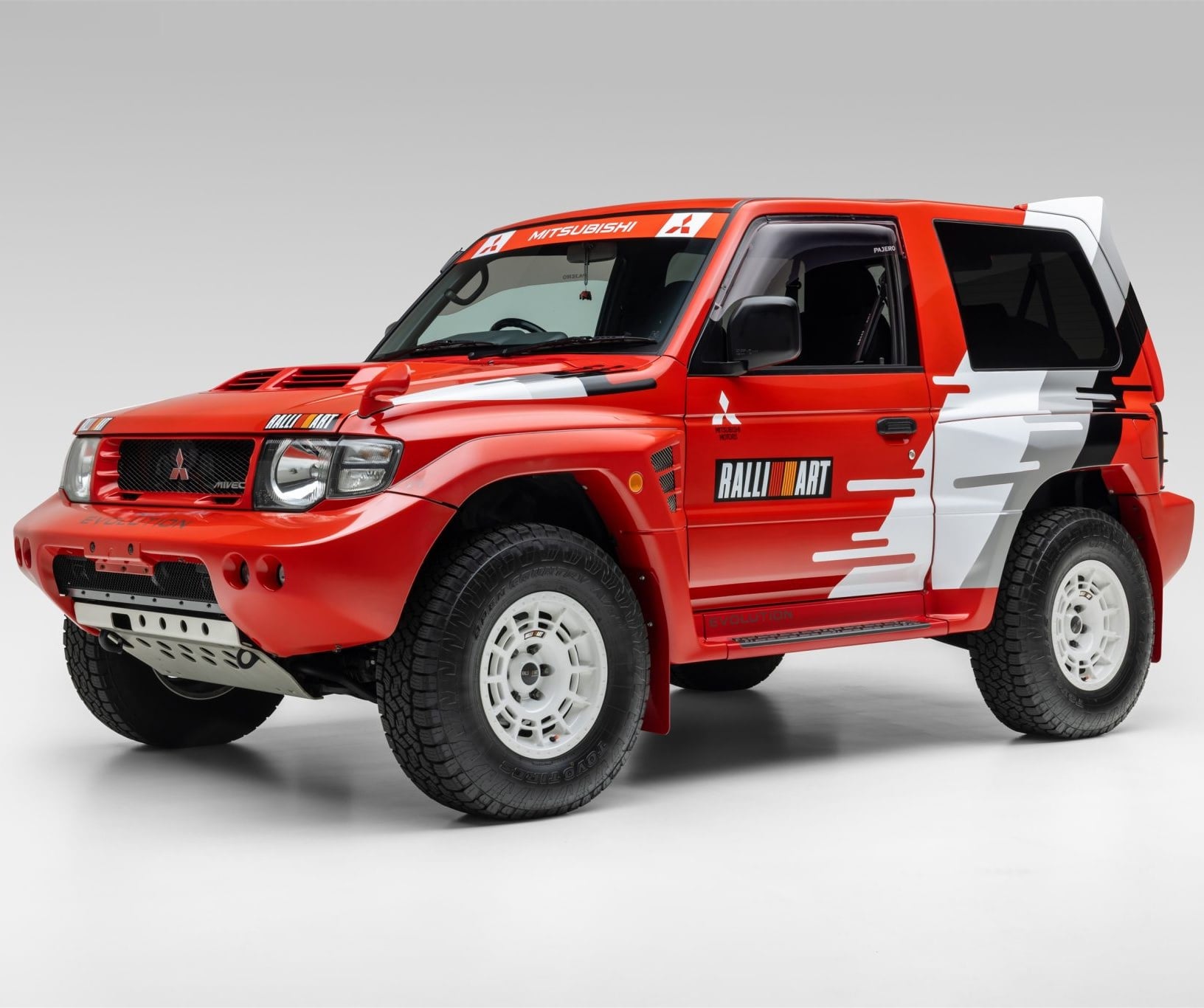
This is an original 1998 Mitsubishi Pajero Evolution, it’s one of 2,500 that were made. All were sold in the Japanese market to homologate the vehicle for the Dakar, and they became eligible to import into the USA in 2022.
In a way, it’s surprising that the Pajero Evolution isn’t quite a bit more famous than it actually is. It’s a 1990s homologation special with serious performance chops, incredible styling, limited production, and true JDM legend status.
Fast Facts: The Mitsubishi Pajero Evolution
- The Mitsubishi Pajero Evolution (V55W) was a short-wheelbase, wide-body homologation special built only in Japan between October 1997 and 1999 with 2,500 produced. It existed to qualify Mitsubishi’s Dakar race car for the production-based class after manufacturer prototypes were excluded from the works-team prototype class for 1997.
- The road car kept the second-gen Pajero’s ladder-frame platform but swapped torsion-bar front and live-axle rear for double-wishbone front and bespoke multi-link independent rear suspension, branded ARMIE. The drivetrain used Super Select 4WD with a locking center differential, dual-range transfer case, and rear hybrid limited-slip differential.
- Power came from a 3.5 liter 24 valve DOHC V6 with MIVEC variable valve timing, a dual-plenum intake, hollow intake valves, sodium-filled exhausts, and titanium spring retainers, producing 276 bhp at 6,500 rpm and 257 lb ft at 3,000 rpm. Buyers chose between a 5-speed manual or INVECS-II 5-speed automatic.
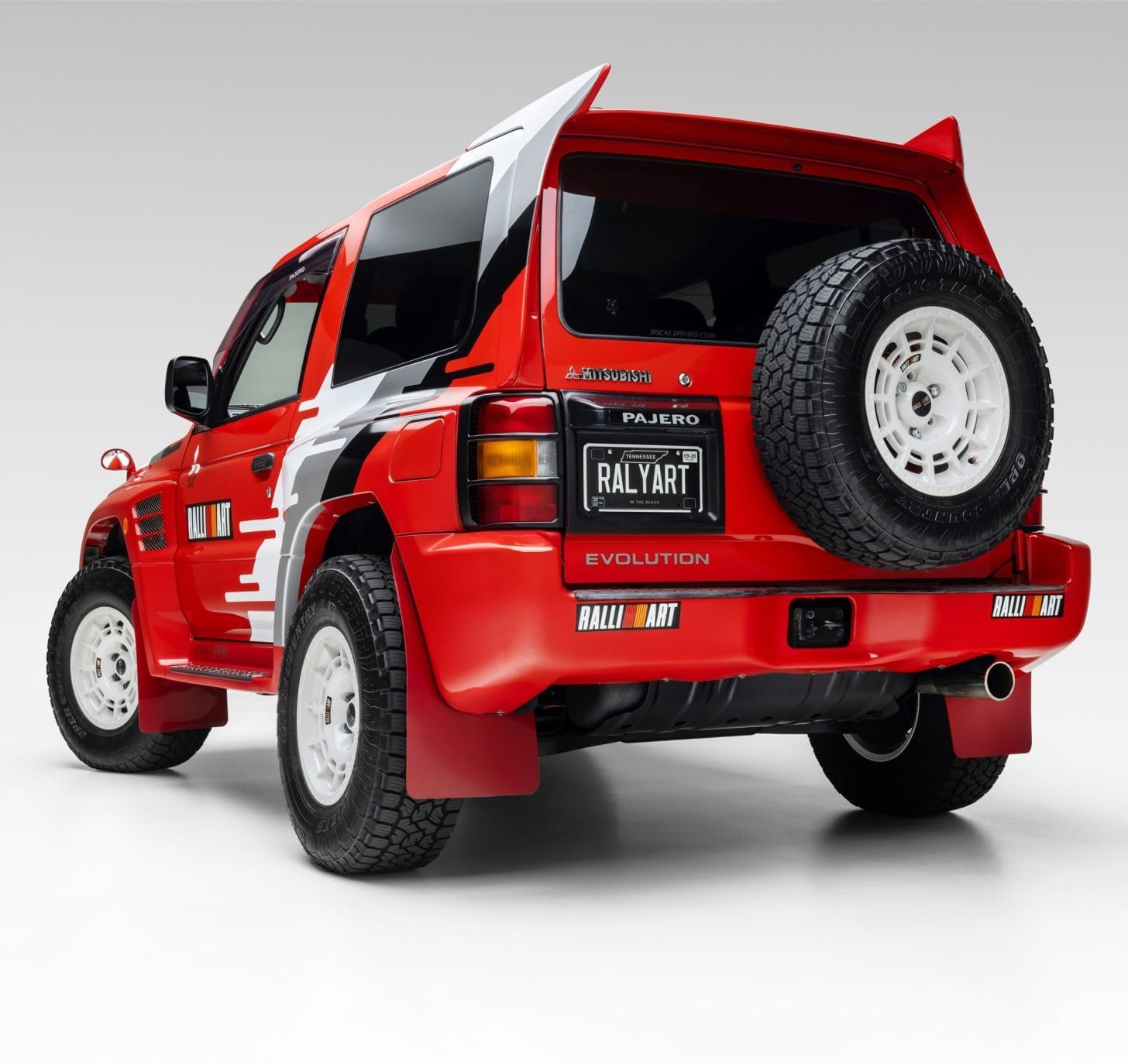
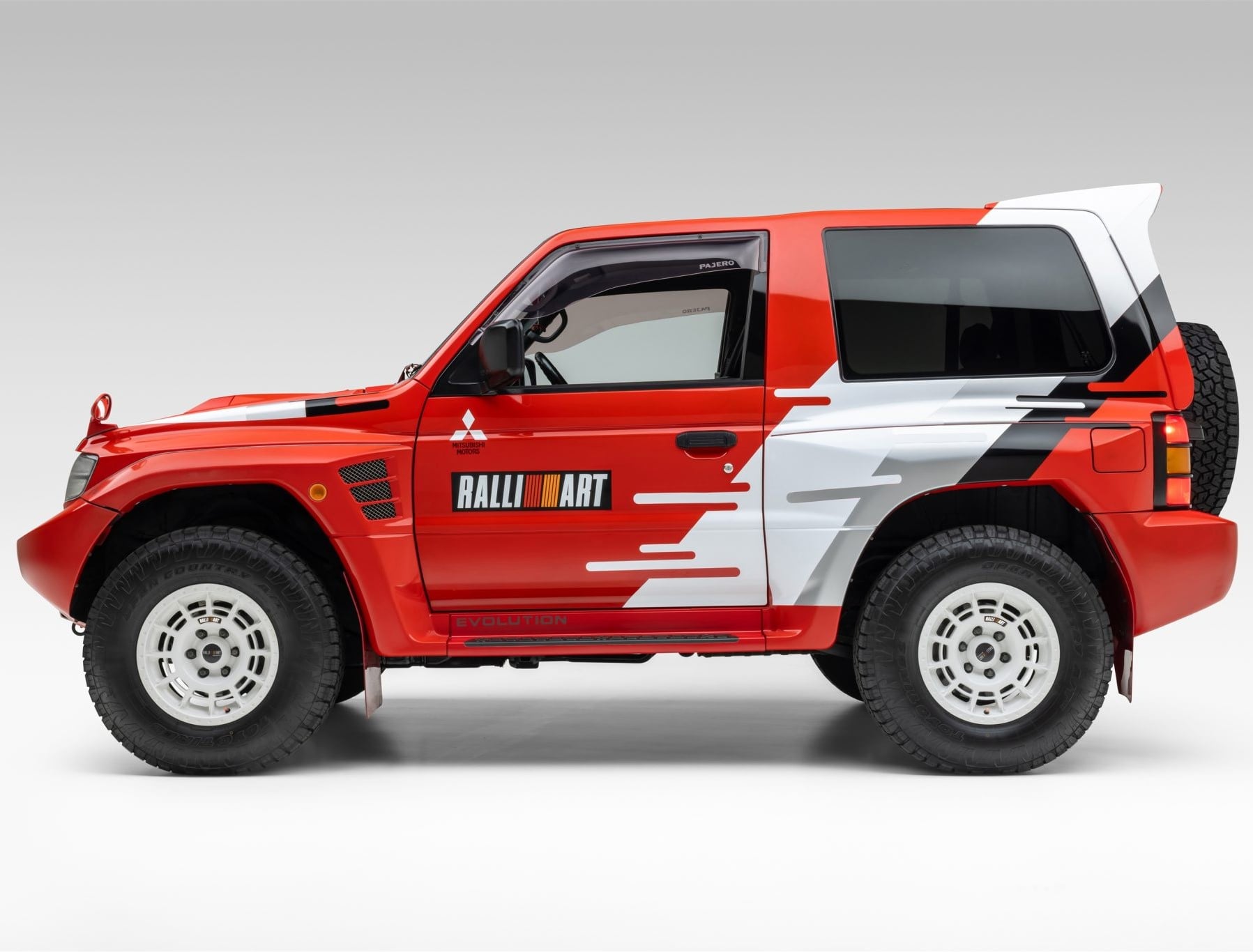
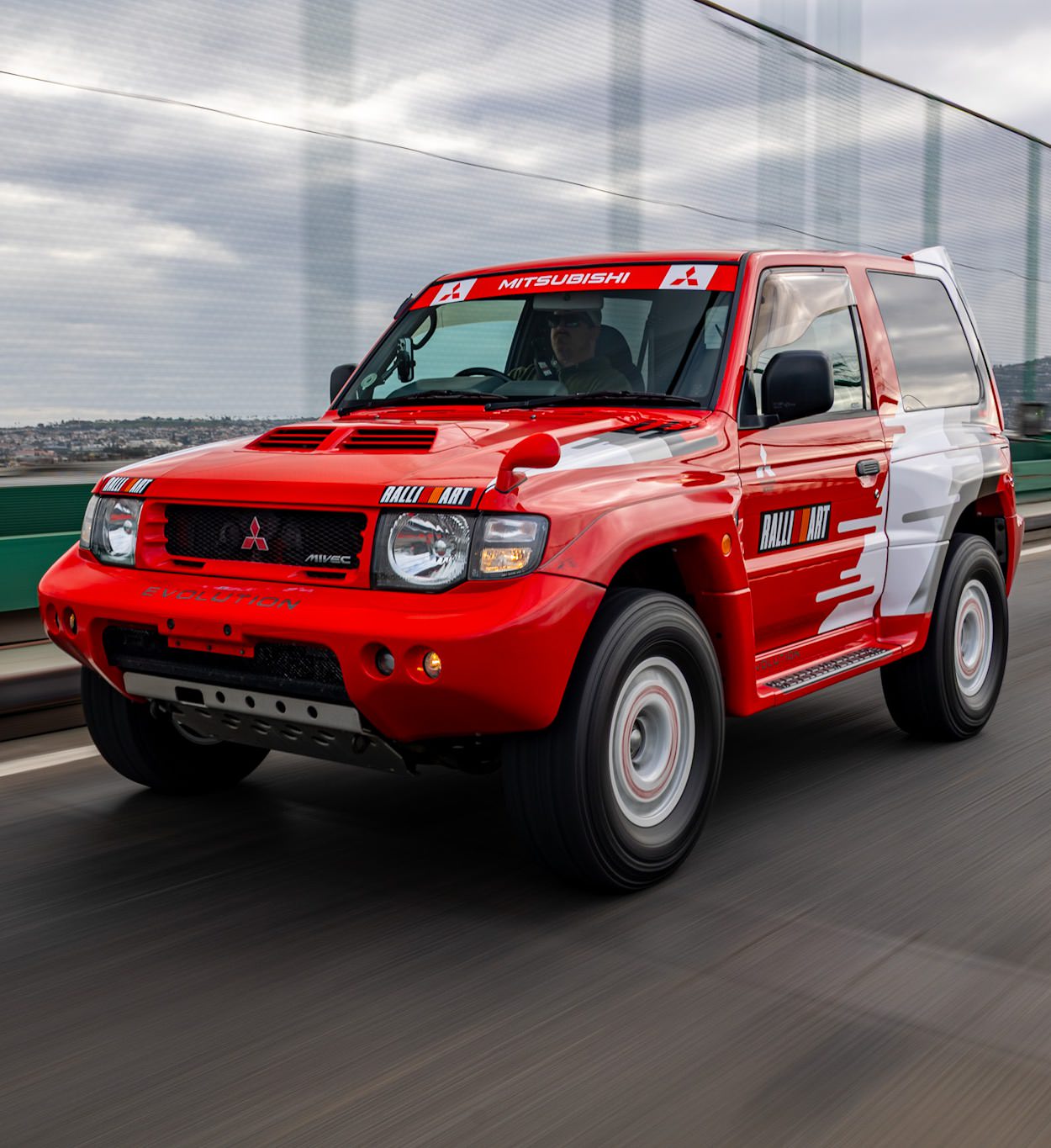
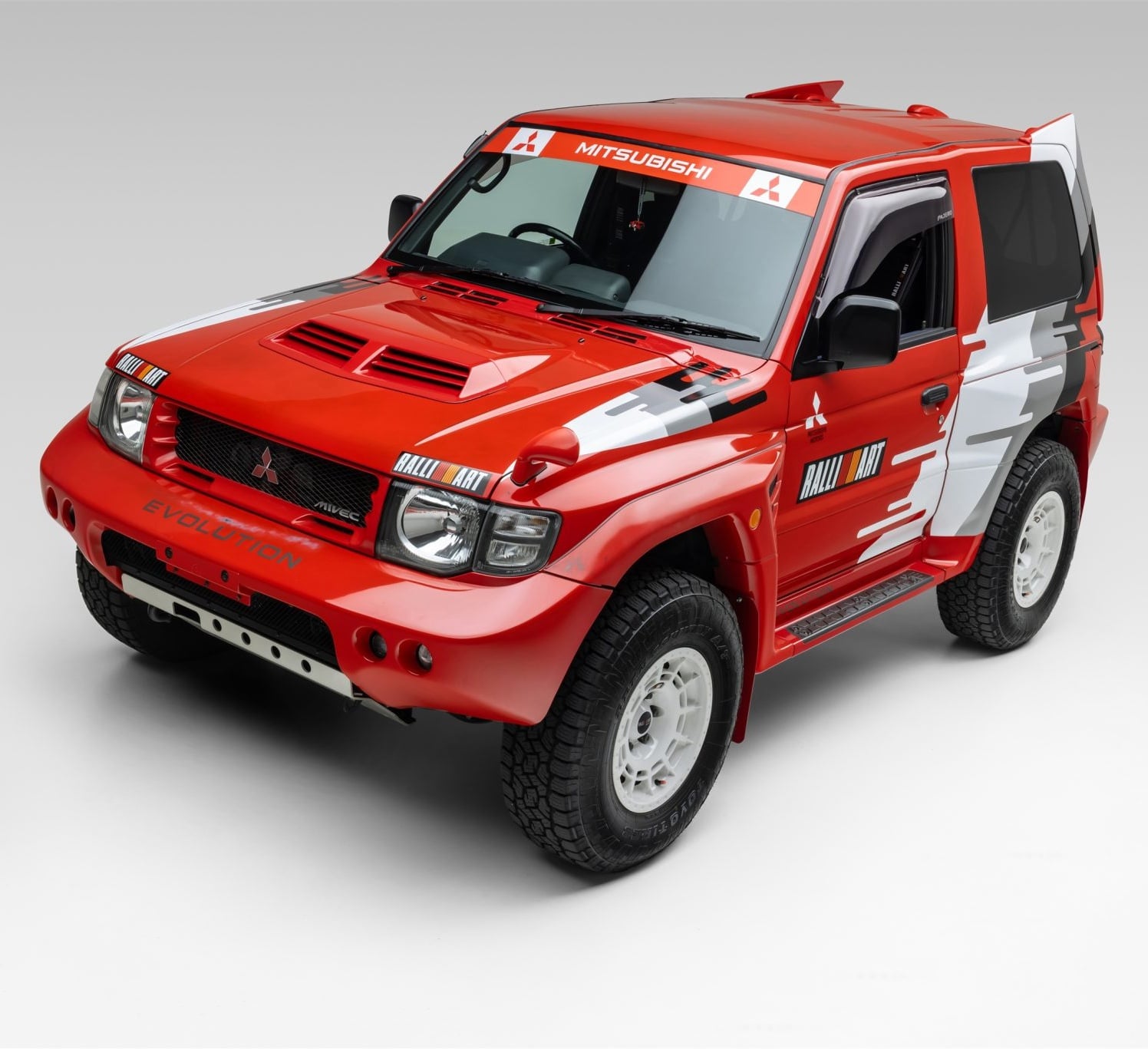
- The featured 1998 example wears Passion Red paint with fresh Ralliart livery, white 16-inch Ralliart wheels on Toyo Open Country tires, and the factory Evolution aero package. It shows roughly 77,000 miles, has had extensive recent mechanical and cosmetic refurbishment, and is being offered for sale from Huntington Beach, California.
History Speedrun: The Mitsubishi Pajero Evolution
The Mitsubishi Pajero Evolution was a short-wheelbase, wide-body version of the Pajero built in limited numbers between October of 1997 and 1999 for a single purpose – to homologate Mitsubishi’s Dakar Rally car for the production-based class. It was sold only in Japan, in numbers (most agree it was around 2,500, though some say a little higher). It’s come to be regarded as one of the most desirable and capable factory-built off-roaders of the 1990s.
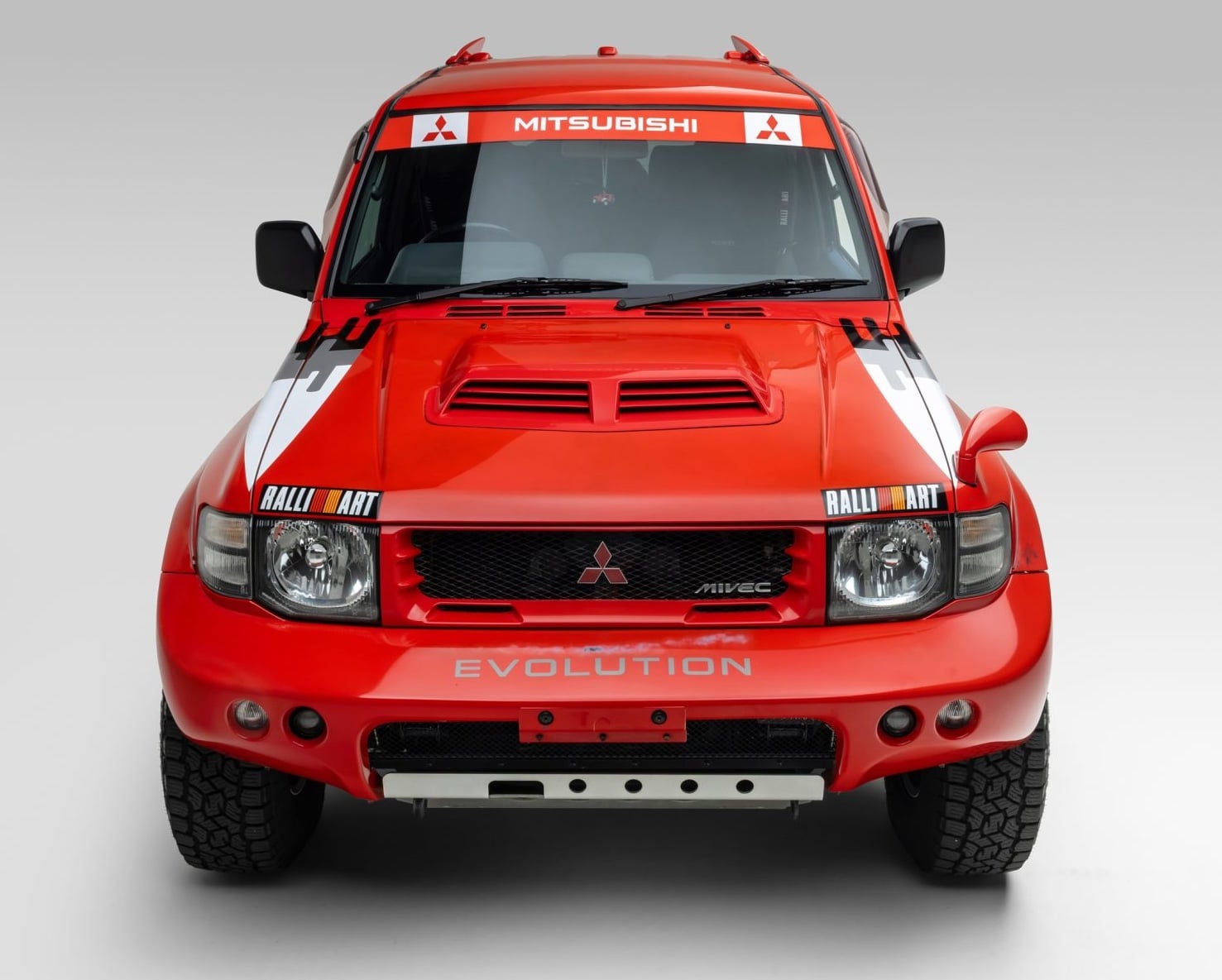
 This is an original 1998 Mitsubishi Pajero Evolution, it’s one of 2,500 that were made. All were sold in the Japanese market only to homologate the vehicle for the Dakar, and they became eligible to import into the USA in 2022.
By the mid-1990s, Mitsubishi already had a long and successful history in the Dakar. The company had entered the Paris-Dakar for the first time in 1983 and taken its first overall victory in 1985 with Patrick Zaniroli at the wheel. Additional wins followed in 1992 with Hubert Auriol and 1993 with Bruno Saby, before Citroën interrupted the run from 1994 to 1996.
When the Dakar’s regulations were rewritten ahead of the 1997 event, manufacturer prototypes were no longer permitted in the works-team prototype class, and the production-based class became the key route for factory entries.
Cars eligible for this class had to be derived from a road-going model built in a minimum quantity, with race-spec modifications limited largely to roll cages, harnesses, fuel cells, and navigation equipment. To stretch what was possible inside those rules, Mitsubishi needed a road car that already included the parts the rally team wanted to use in the race.
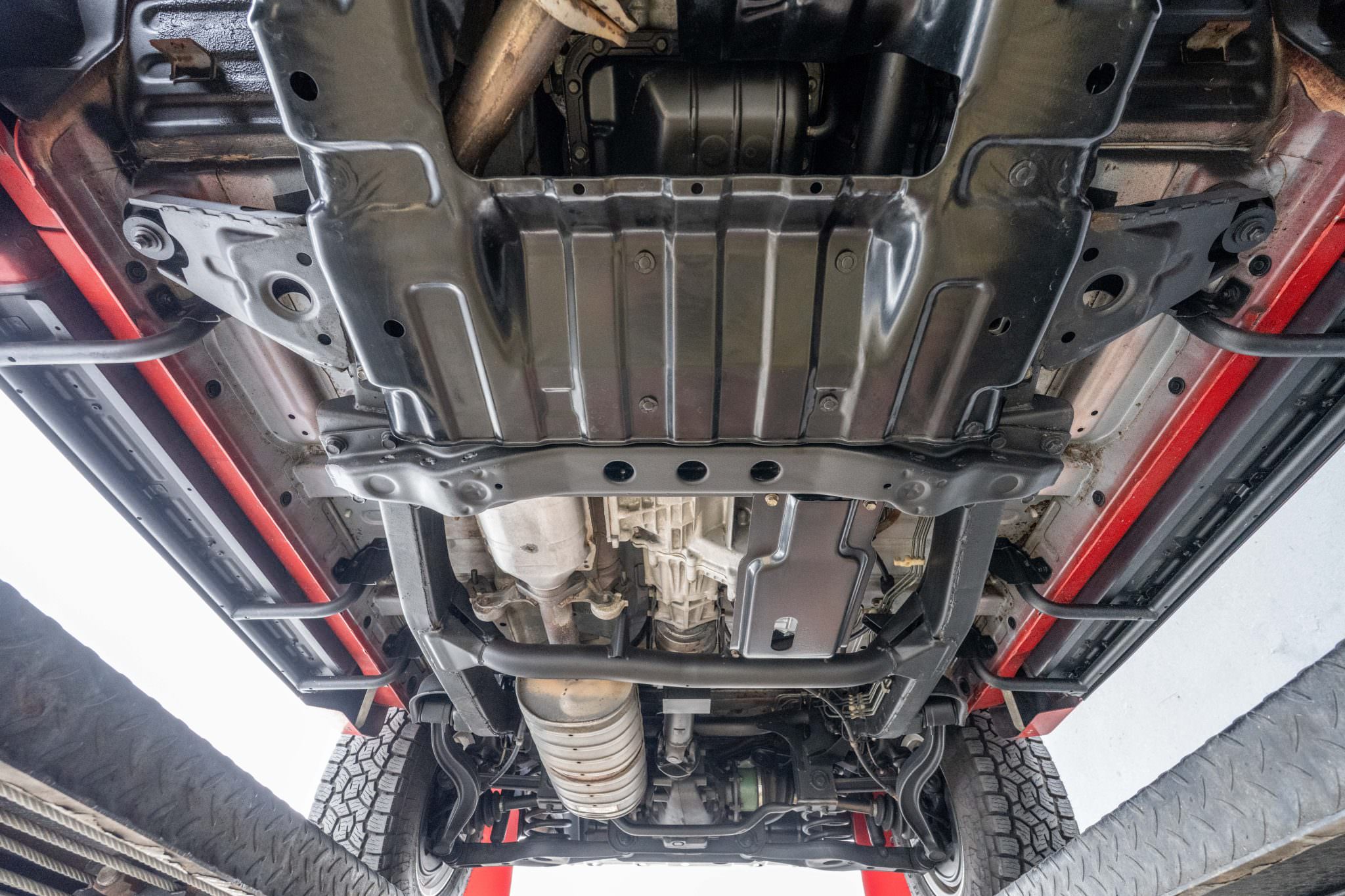
That road car was the Pajero Evolution, internally designated V55W, it used the second-generation short-wheelbase Pajero’s ladder-frame platform as its platform and changed almost everything else. The frame and body were reinforced for additional rigidity. The standard Pajero’s torsion-bar front and live-axle rear were discarded entirely.
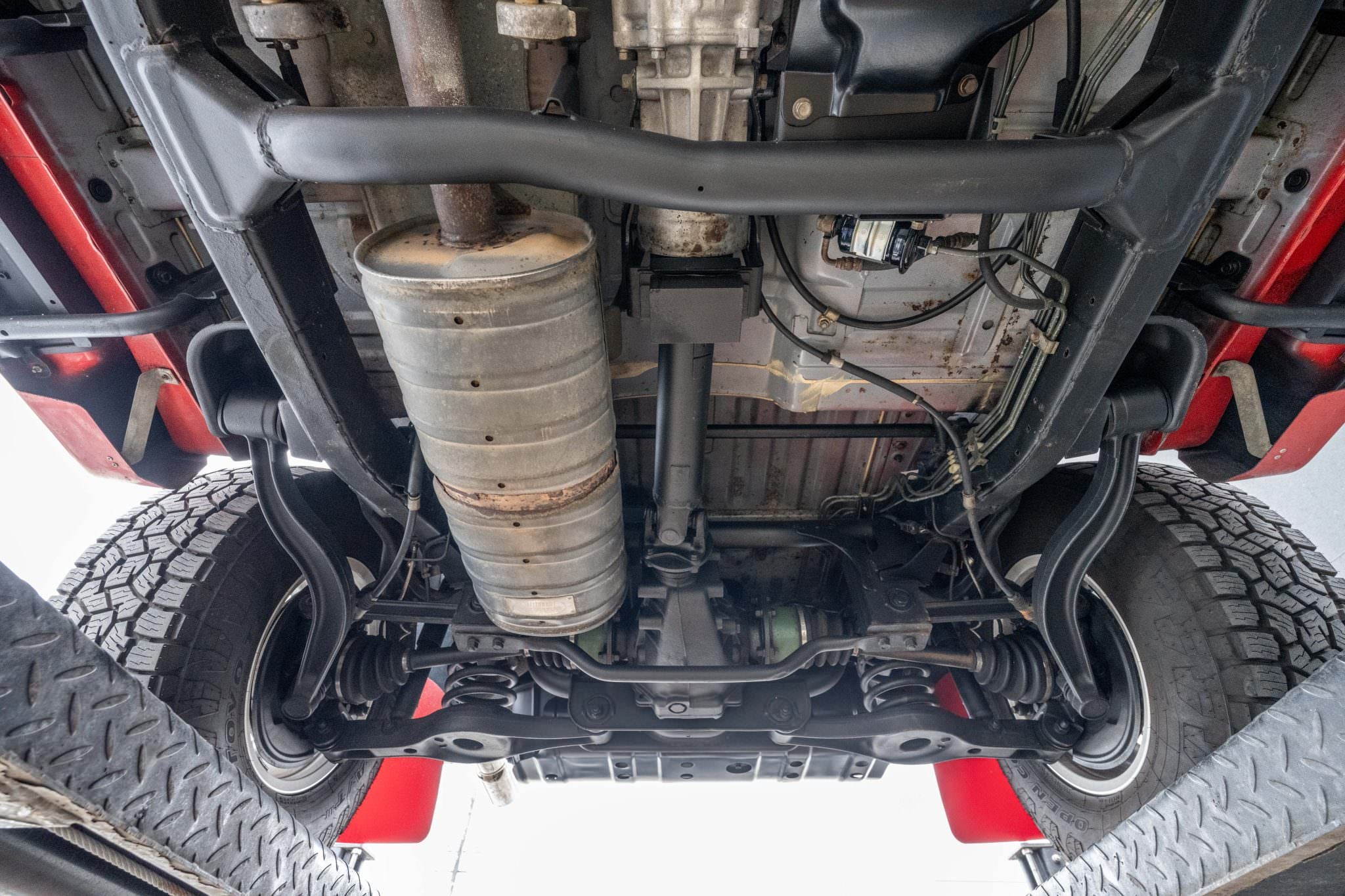
In their place, Mitsubishi fitted a double-bone front end with coil springs and a bespoke multi-link independent rear, both derived from suspension work originally developed for the prototype rally cars. The system was branded ARMIE (All-Road Multi-link Independent suspension for Evolution), and it provided 240mm of travel at the front and 270mm at the rear.
Track was widened by 125mm at the front and 110mm at the rear. The drivetrain was Mitsubishi’s Super Select 4WD system, with a locking center differential, a dual-range transfer case, and a rear hybrid limited-slip differential combining a helical gear set and viscous coupling. Standard wheels were 16-inch alloys carrying 265/70R16 tires.
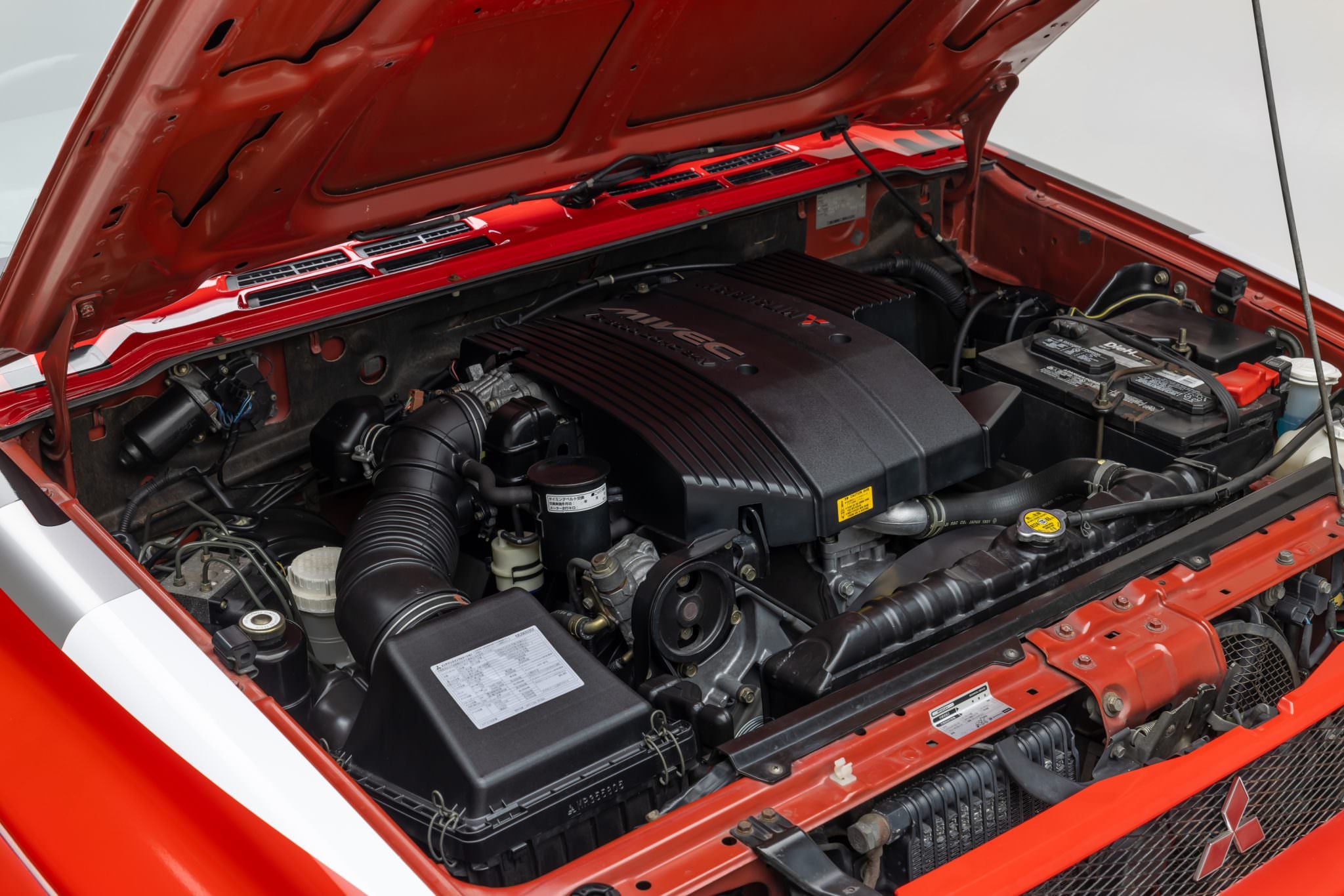
The engine was the 6G74, a 3.5 liter 24-valve DOHC V6 that was heavily reworked for Evolution duty. It used MIVEC, Mitsubishi’s variable valve timing system, together with a dual-plenum variable intake, hollow intake valves, sodium-filled exhaust valves, and titanium valve spring retainers, allowing a 7,000 rpm redline.
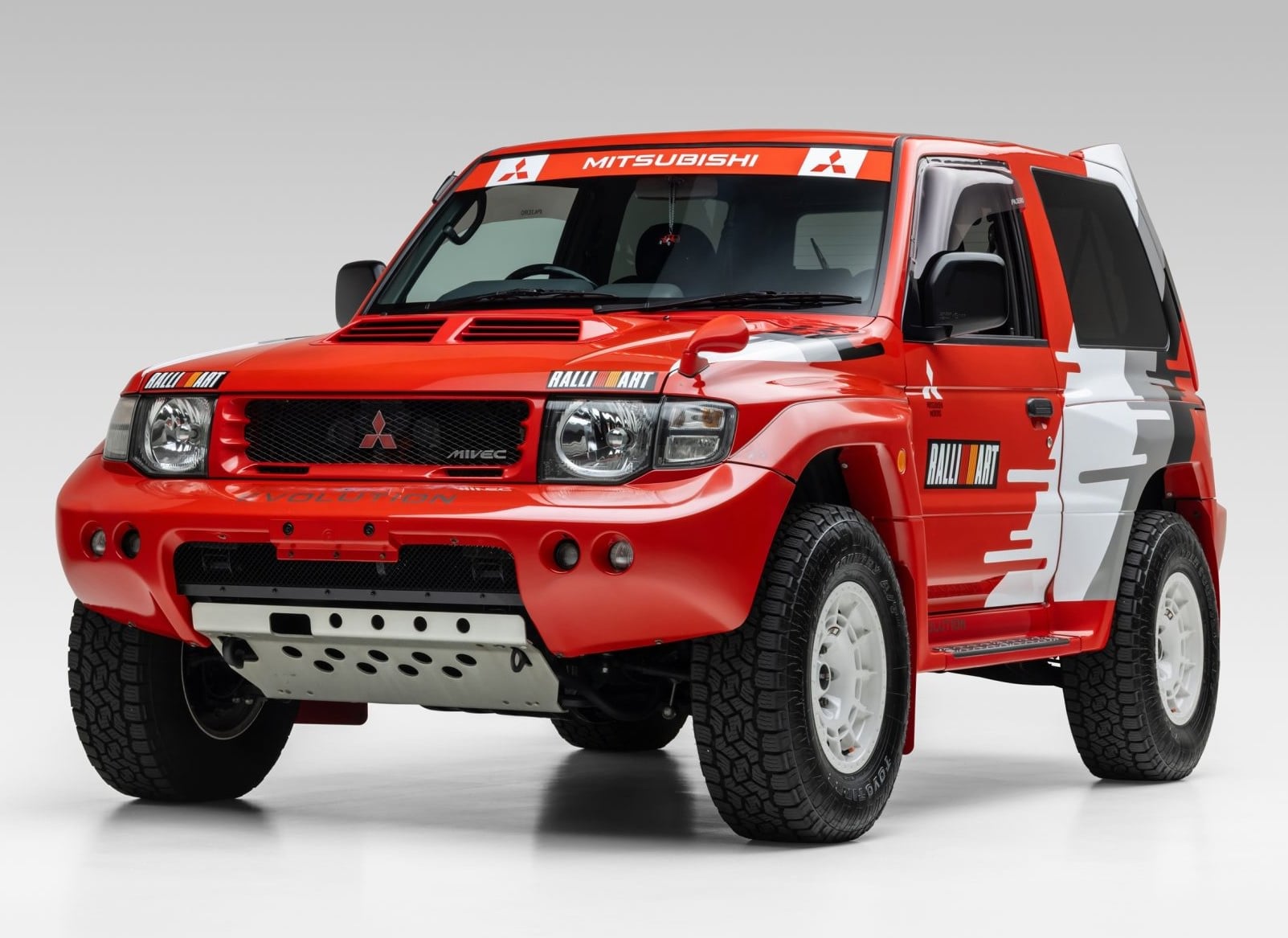
In a way, it’s surprising that the Pajero Evolution isn’t quite a bit more famous than it actually is. It’s a 1990s homologation special with serious performance chops, incredible styling, limited production, and true JDM legend status.
Output was 276 bhp at 6,500 rpm and 257 lb ft of torque at 3,000 rpm, the horsepower figure was carefully kept inline with the Japanese industry’s voluntary 280 PS ceiling of the era. Drivers had a choice between a 5-speed manual and a 5-speed automatic with a manual-shift mode, branded INVECS-II. The automatic accounted for the vast majority of production.
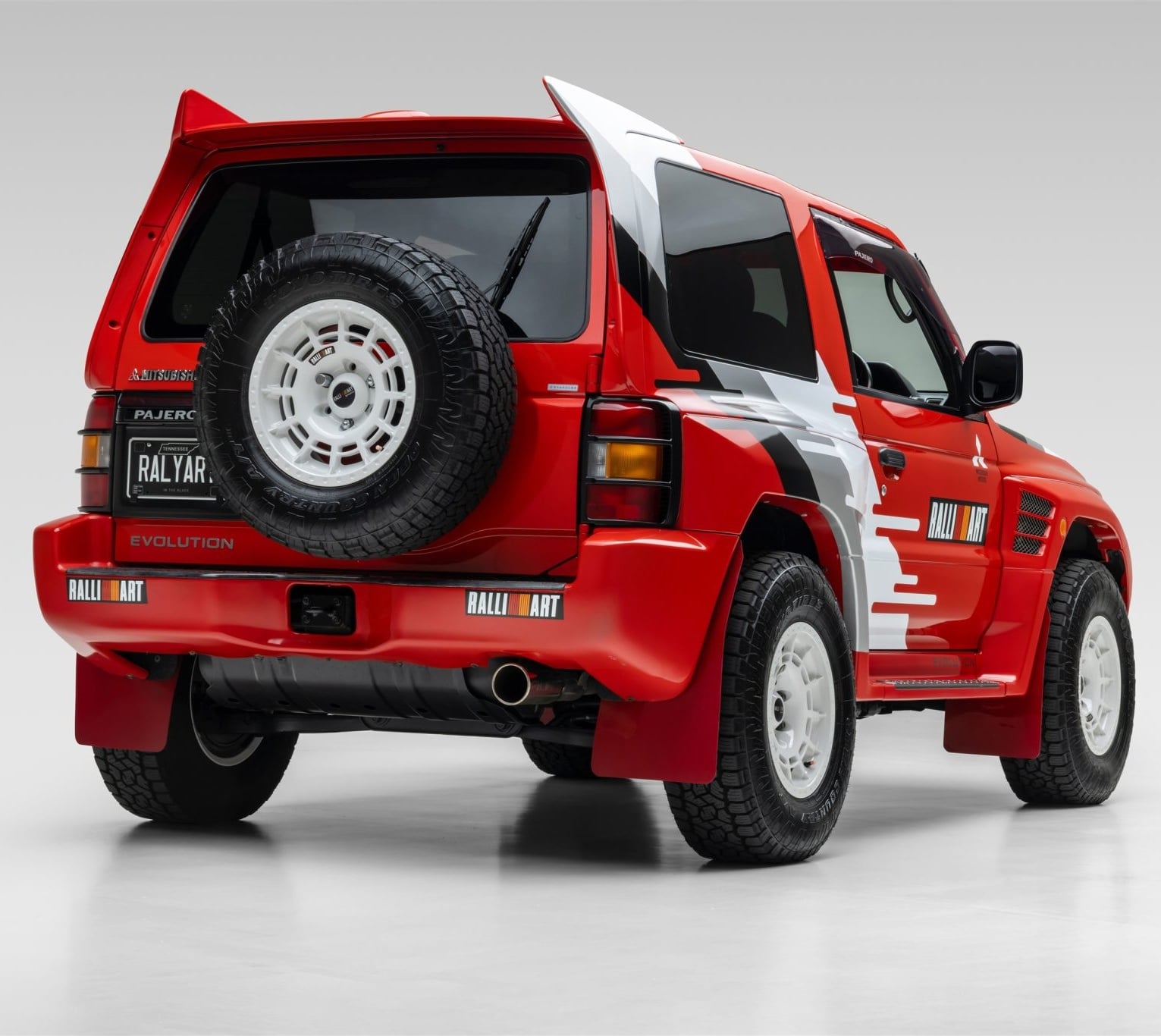
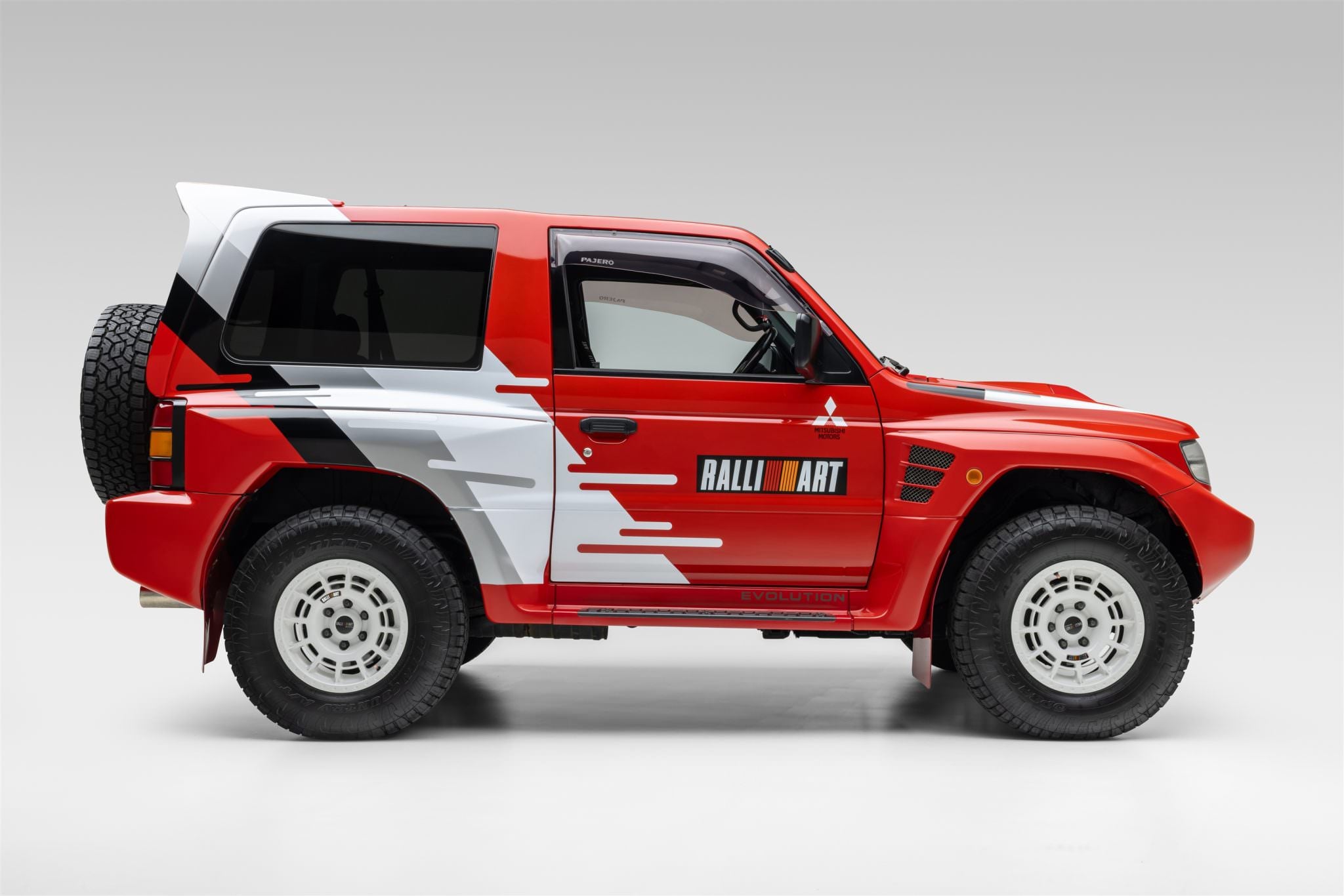
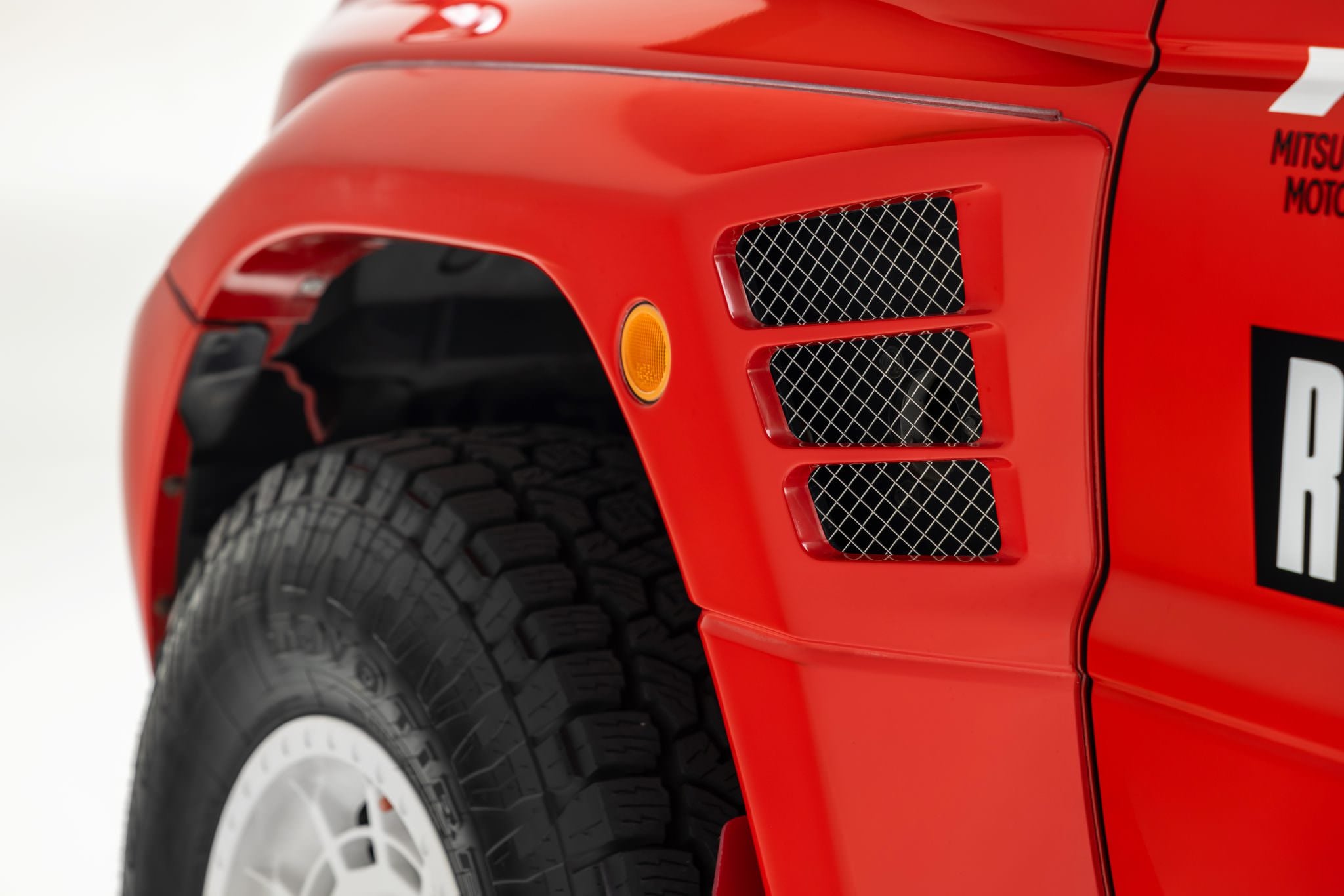
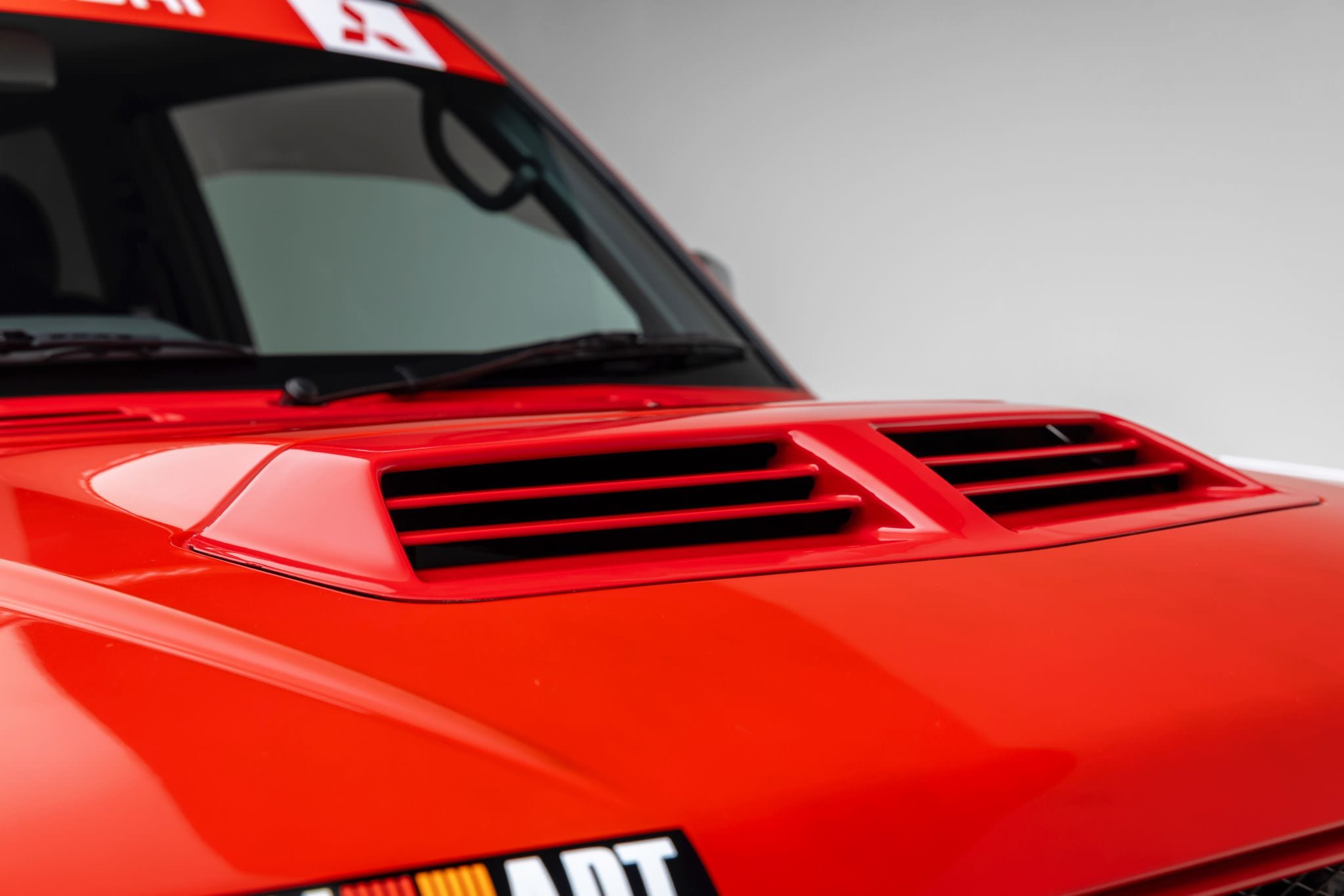
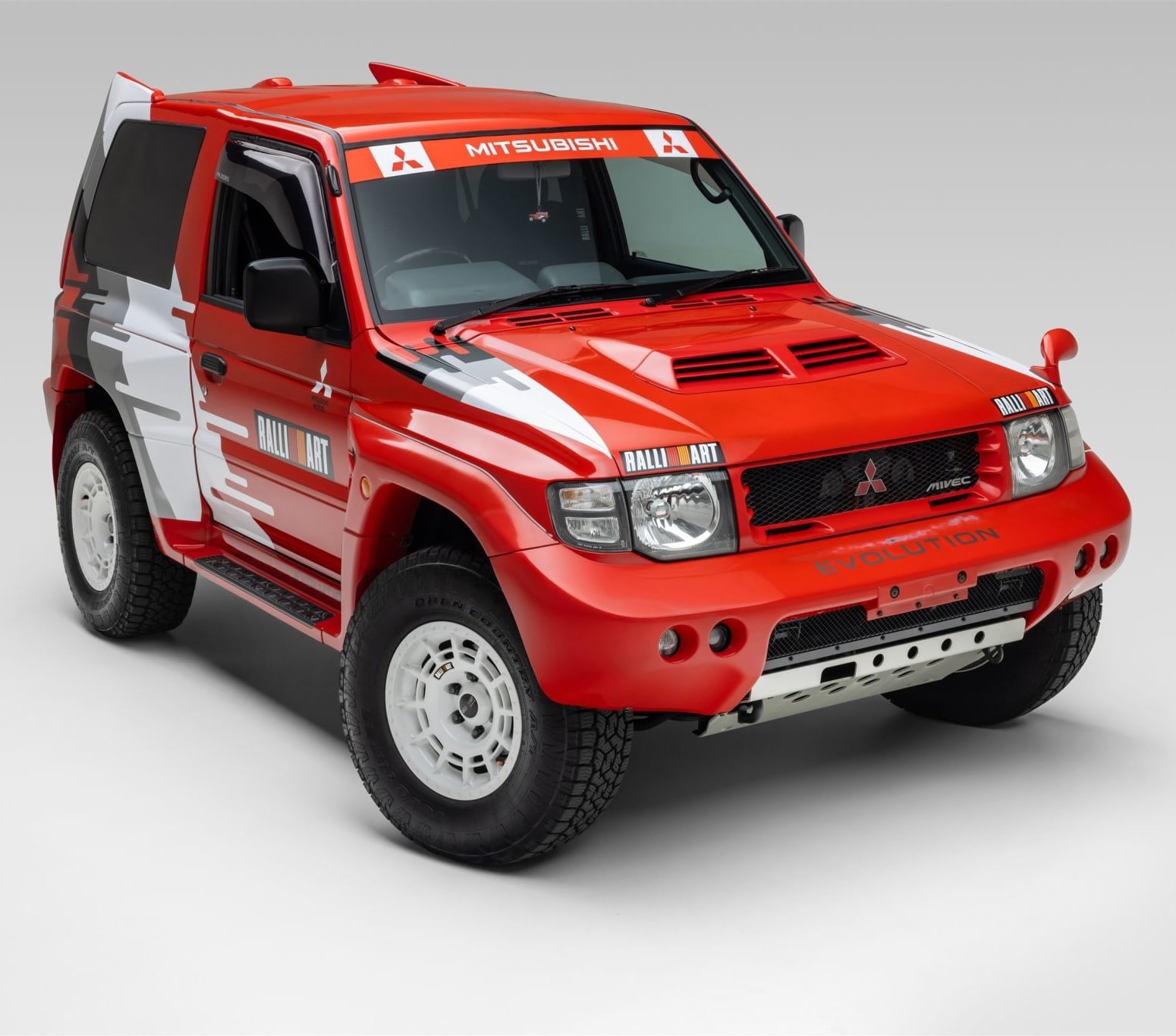
The bodywork included bolt-on plastic fender flares to accommodate the wider track width. Deep plastic bumpers were shaped to improve approach and departure angles, and the aluminum hood carried a functional scoop for cool airflow.
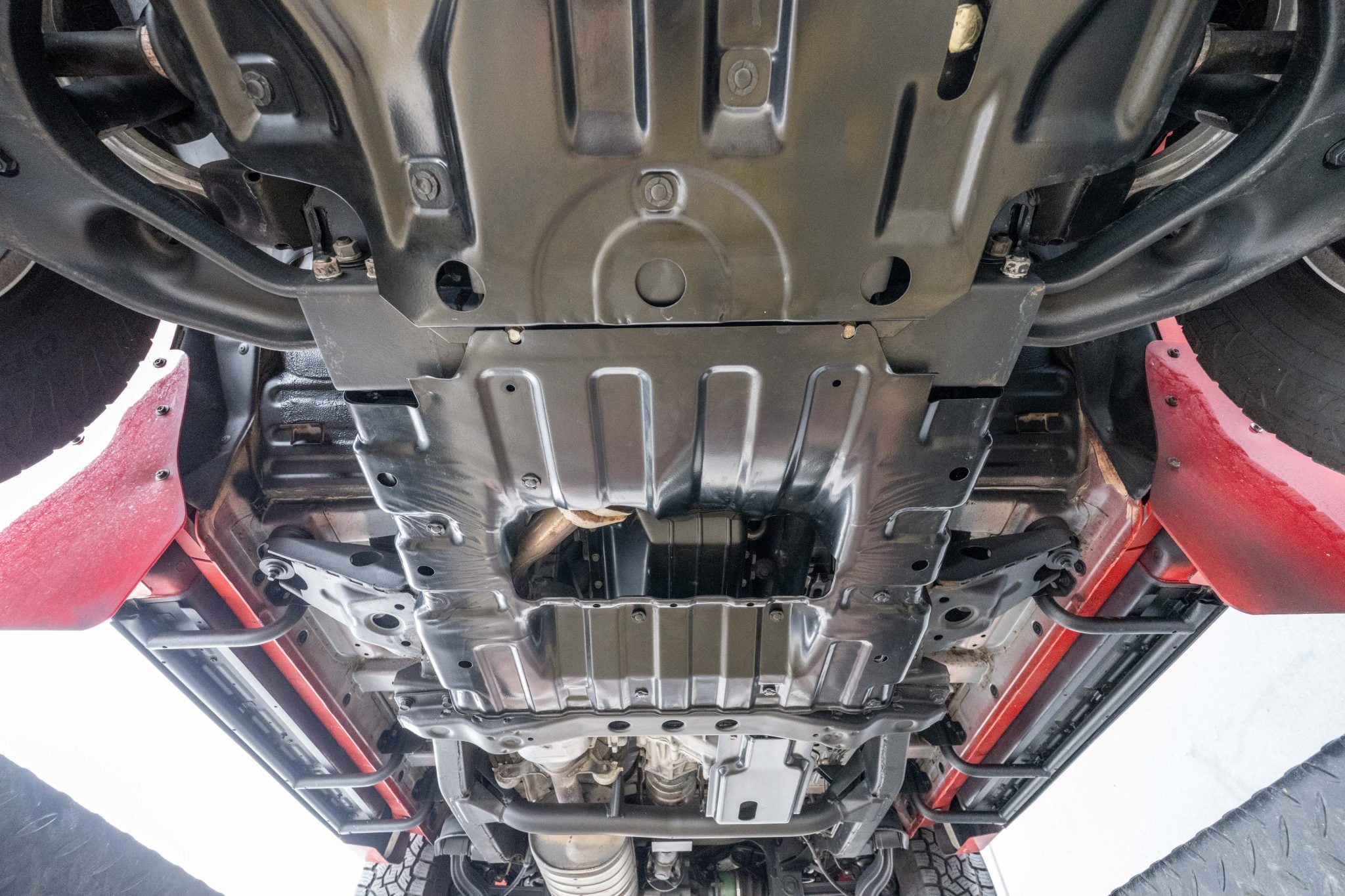
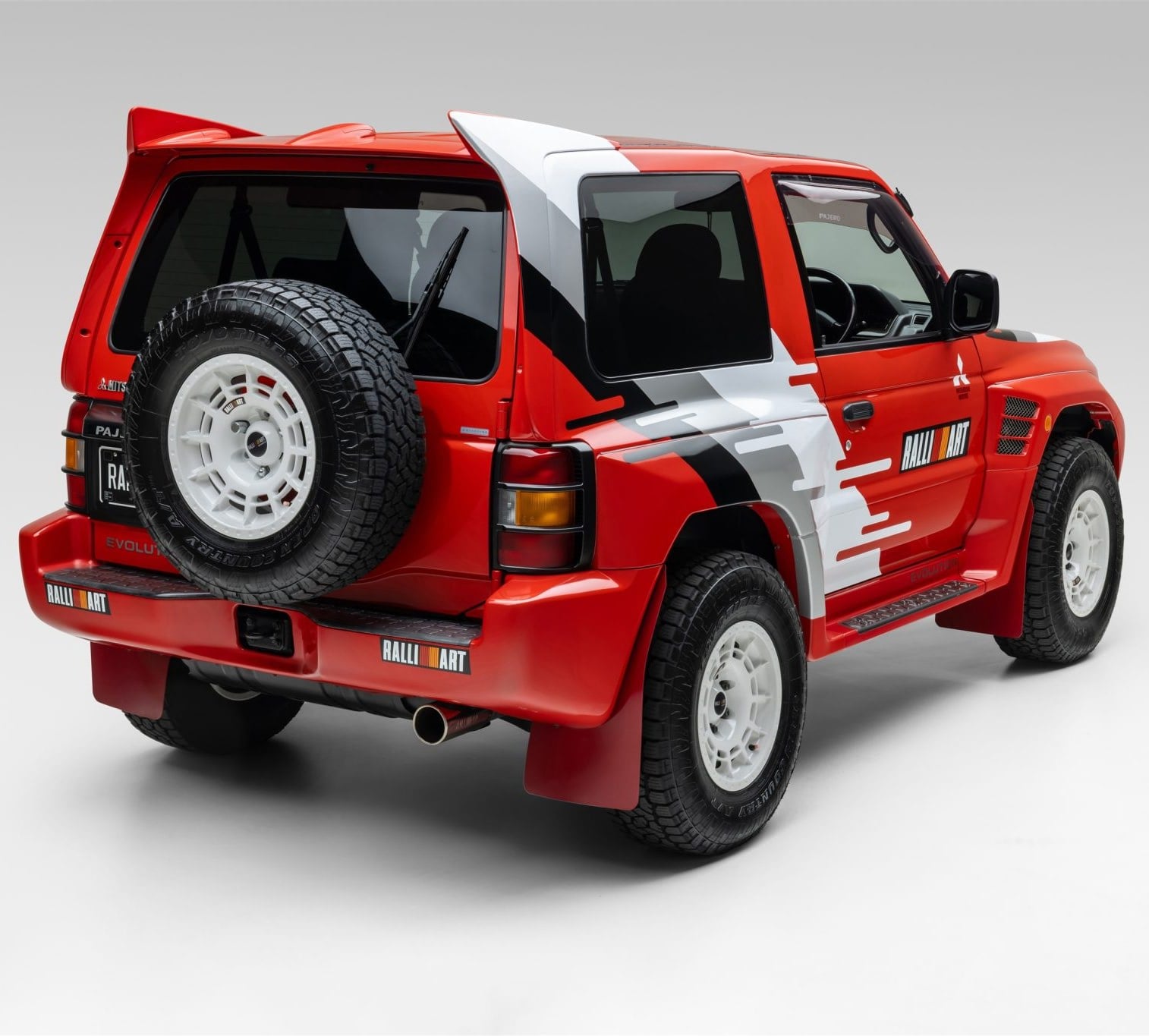
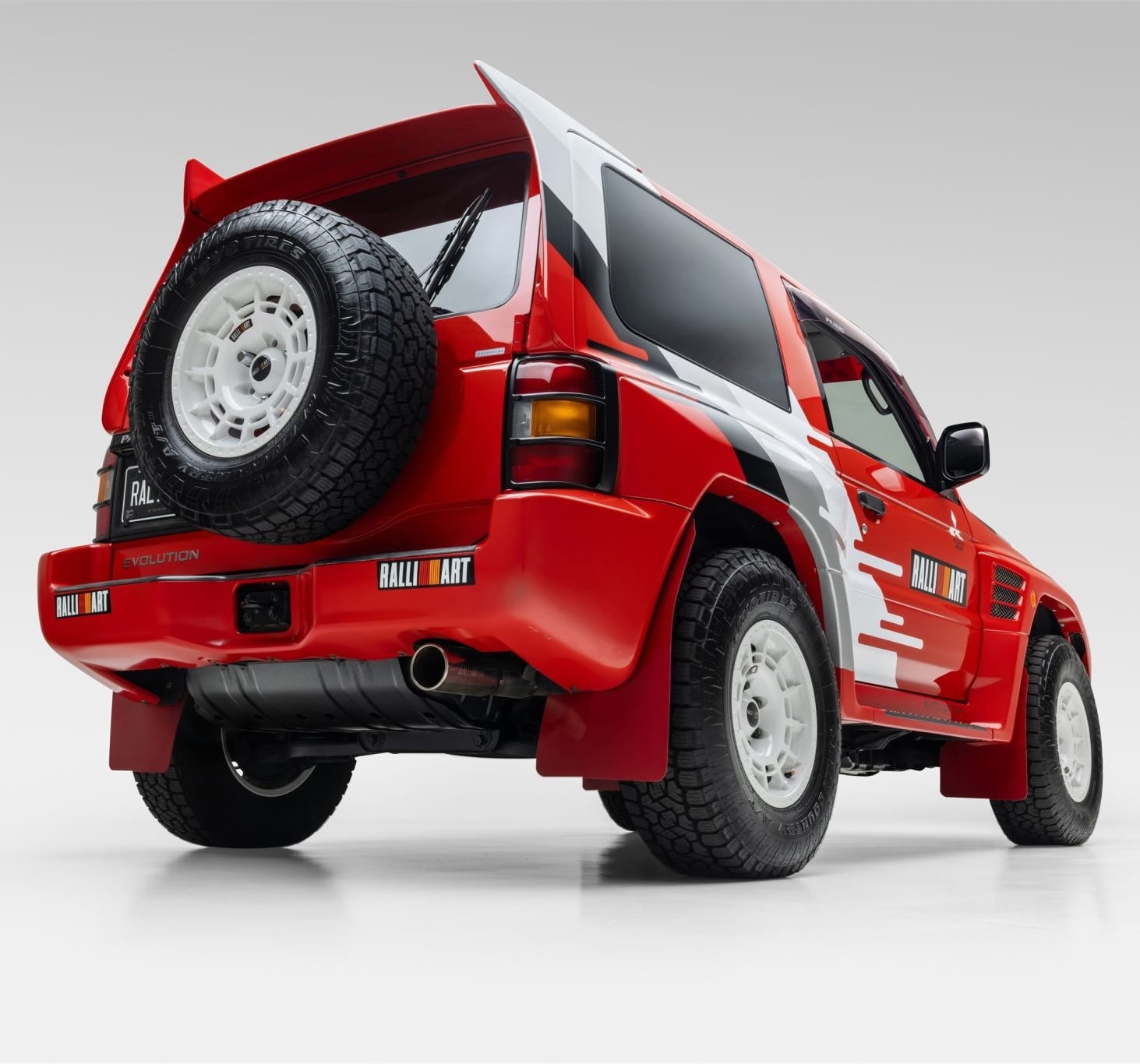
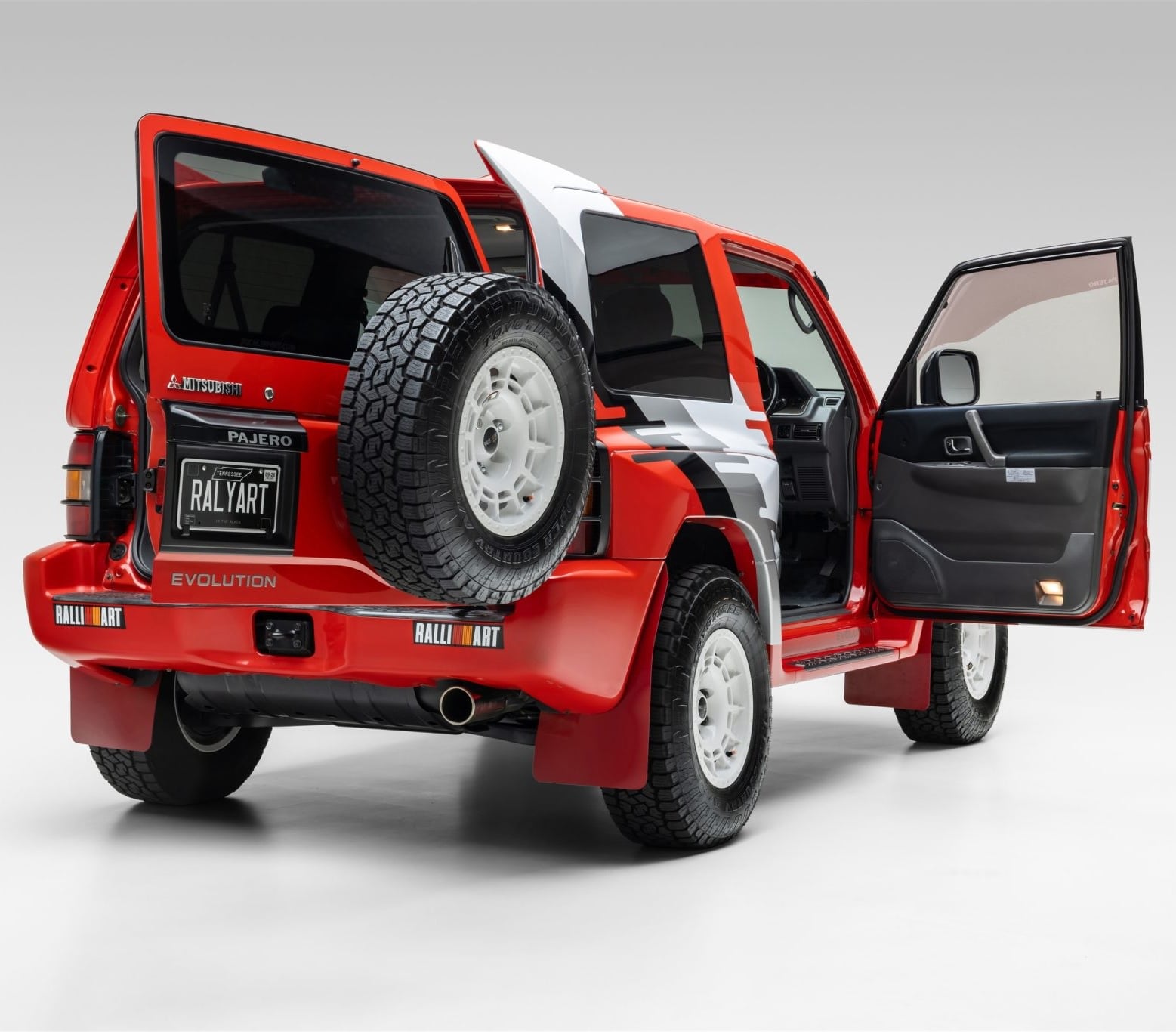
Fin-like spoilers rose from the C-pillars, with a larger spoiler wrapping across the back of the roof. Skid plates protected the underside. The headlights and taillights, however, were lifted straight from the standard Pajero.
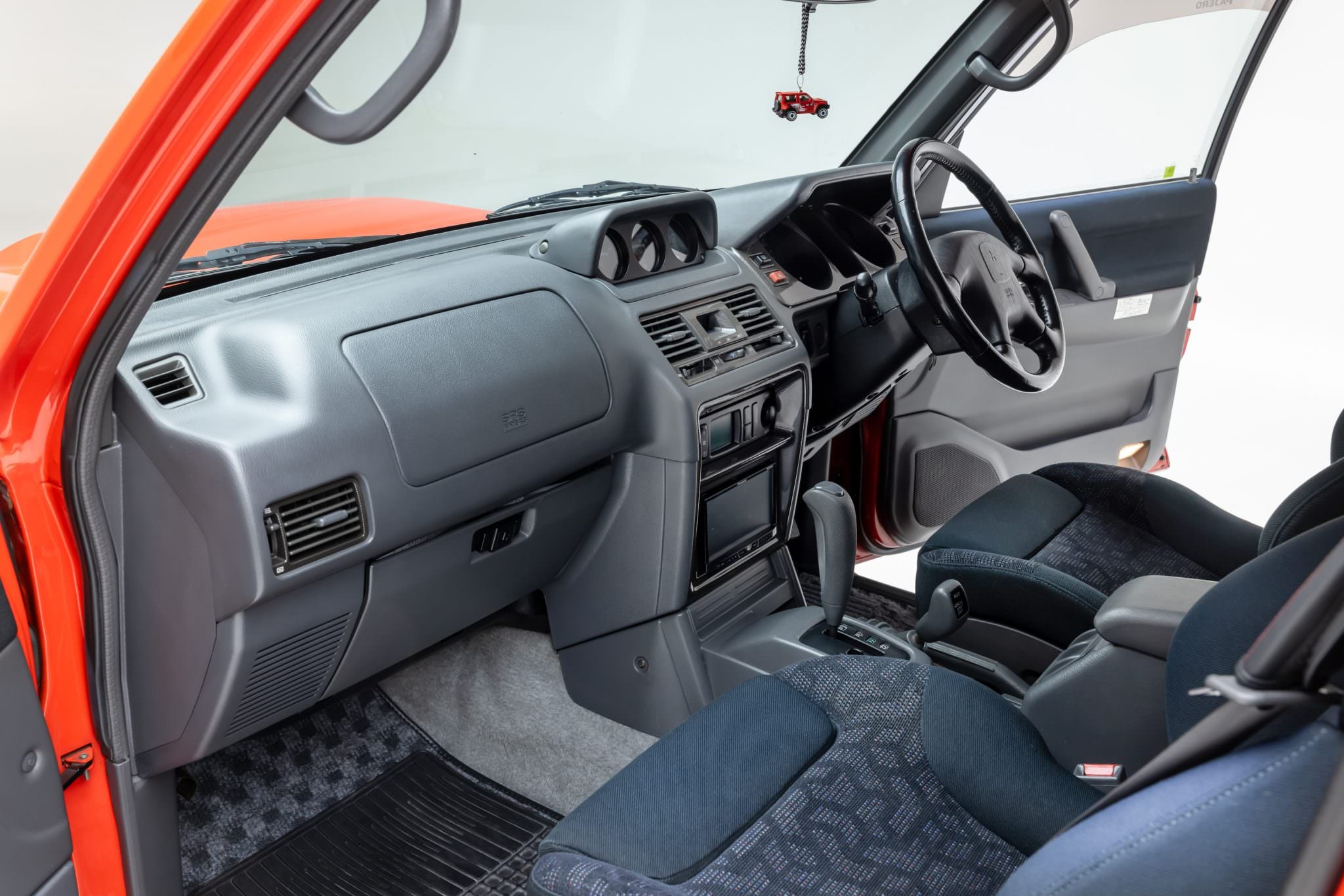
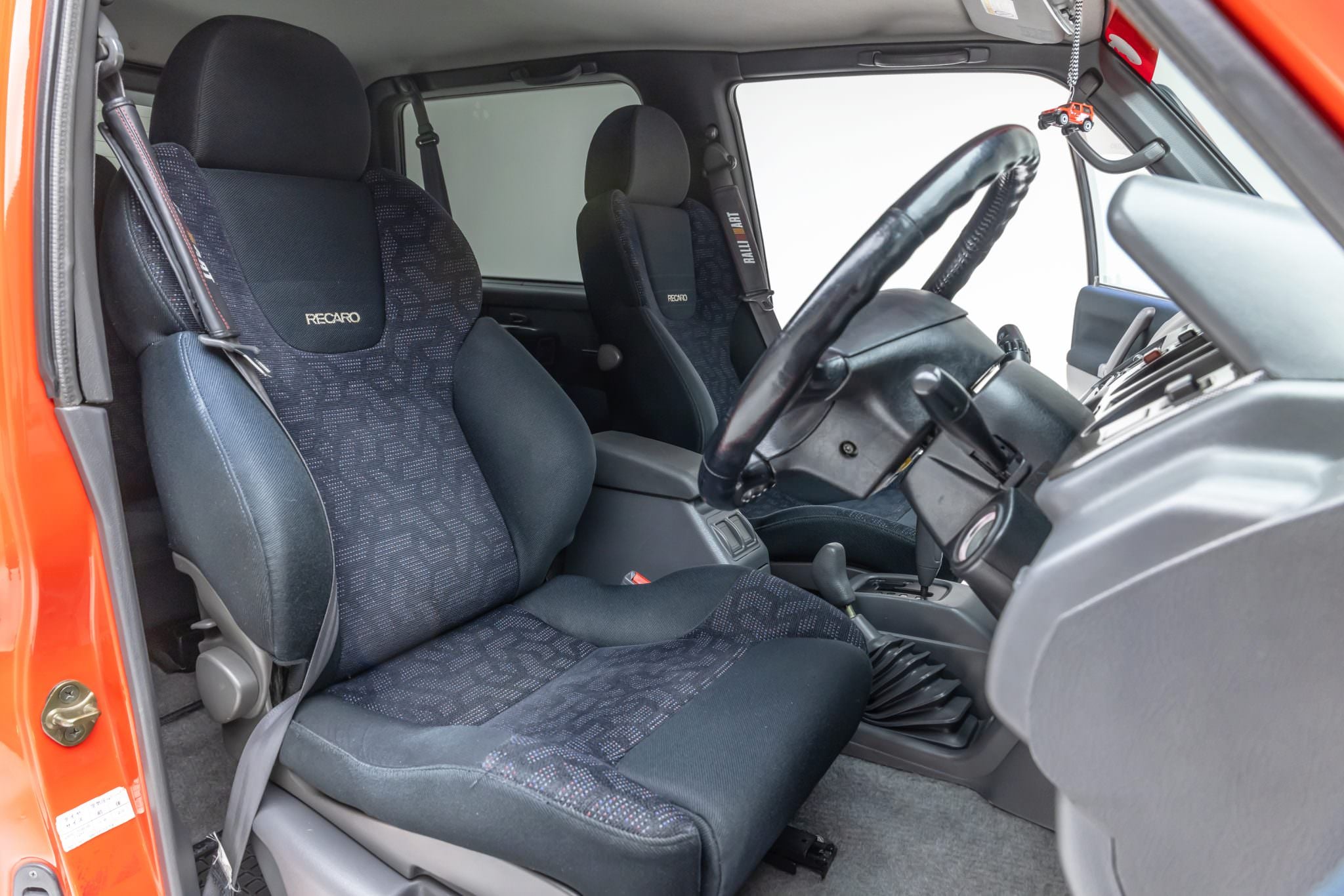
Inside, Mitsubishi was similarly economical – the dashboard, switchgear, and most trim were carried over from the donor model, with the obvious additions of Recaro front sport seats, a leather-wrapped wheel, with some Evolution-specific elements added throughout.
The rally program the Evolution was built for delivered results immediately – in the 1998 Paris-Granada-Dakar, Frenchman Jean-Pierre Fontenay won outright with co-driver Gilles Picard, with Kenjiro Shinozuka and Bruno Saby following in their own factory Pajero Evolutions and Hiroshi Masuoka fourth in a Mitsubishi Challenger. The four Mitsubishi team cars took 15 of the 16 special stages, sweeping the top four positions overall and the same in the non-modified production car class.
Road-legal Evolution production ended in 1999. The car was a Japanese-market exclusive and was never officially sold in the United States, where the related left-hand-drive Montero continued without the desirable homologation bits.
Since the 25-year US import window opened in 2022, examples have begun arriving in the country as private grey market imports, and they have become much sought after at JDM specialist auctions. Among rally-bred homologation specials, the Pajero Evolution sits in a tiny niche category, with no direct equivalent from Toyota, Nissan, or other period competitors.
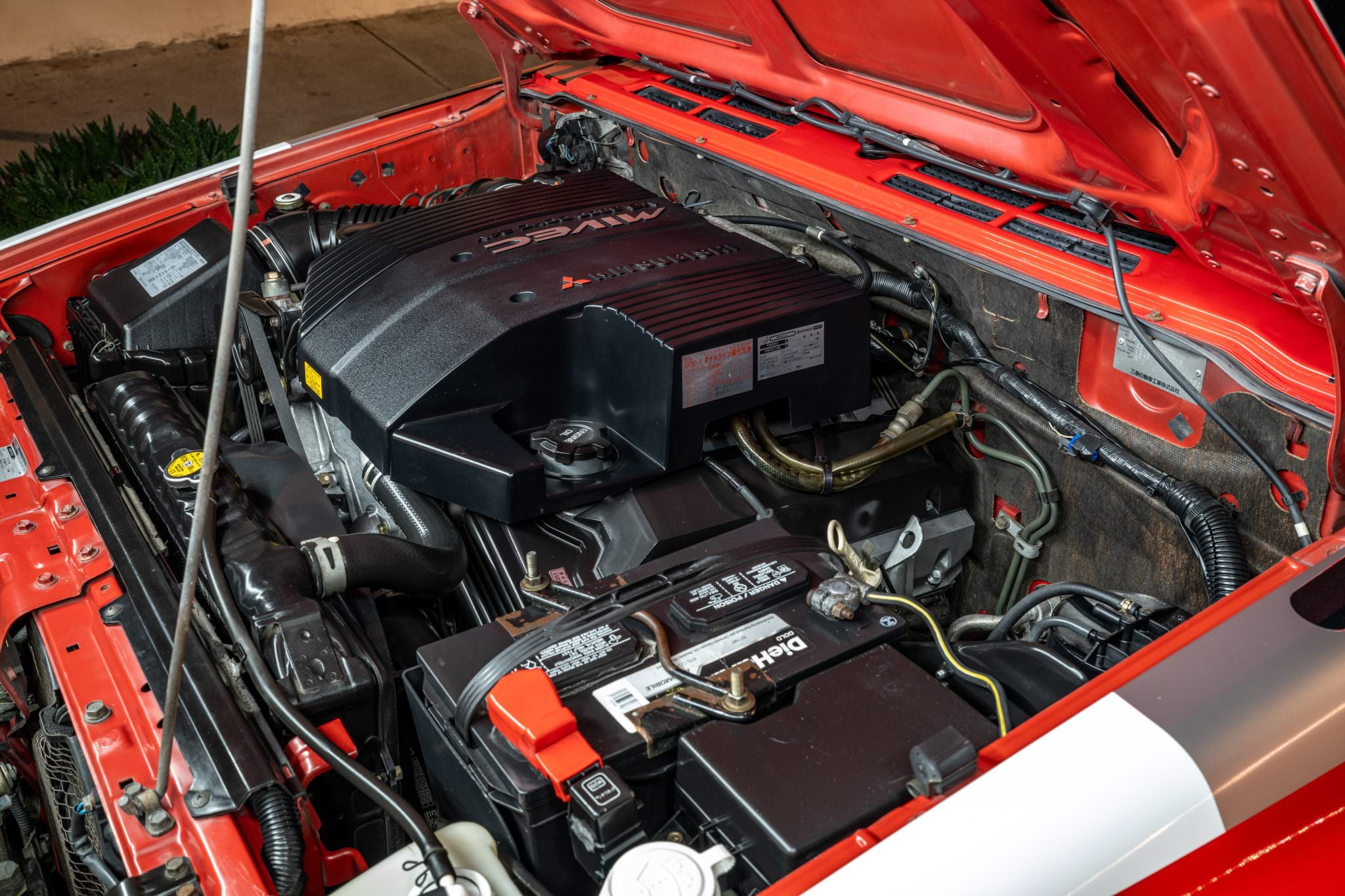
The engine was the 6G74, a 3.5 liter 24-valve DOHC V6 that was heavily reworked for Evolution duty. It used MIVEC, Mitsubishi’s variable valve timing system, together with a dual-plenum variable intake, hollow intake valves, sodium-filled exhaust valves, and titanium valve spring retainers, allowing a 7,000 rpm redline.
The 1998 Mitsubishi Pajero Evolution Shown Here
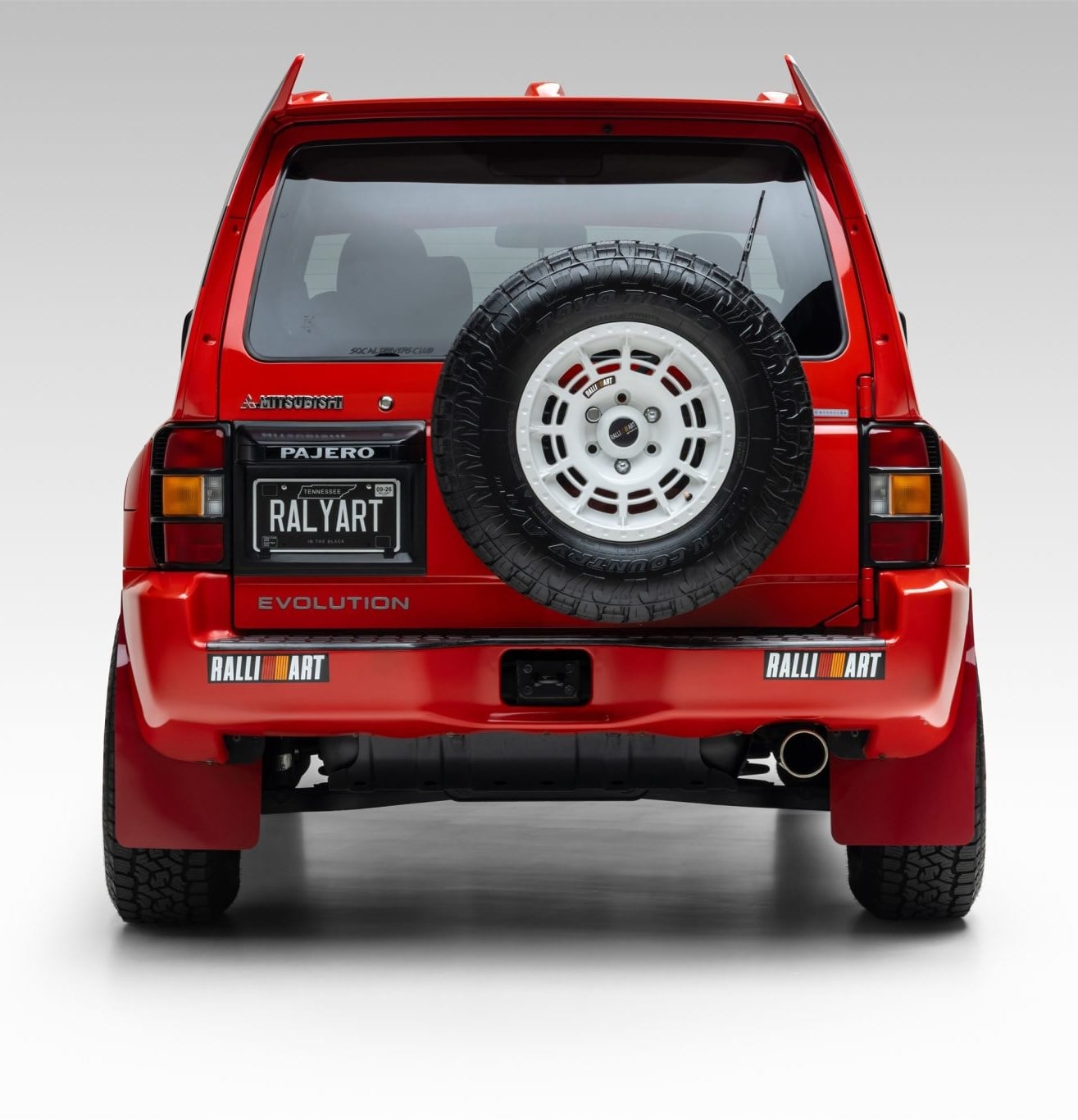
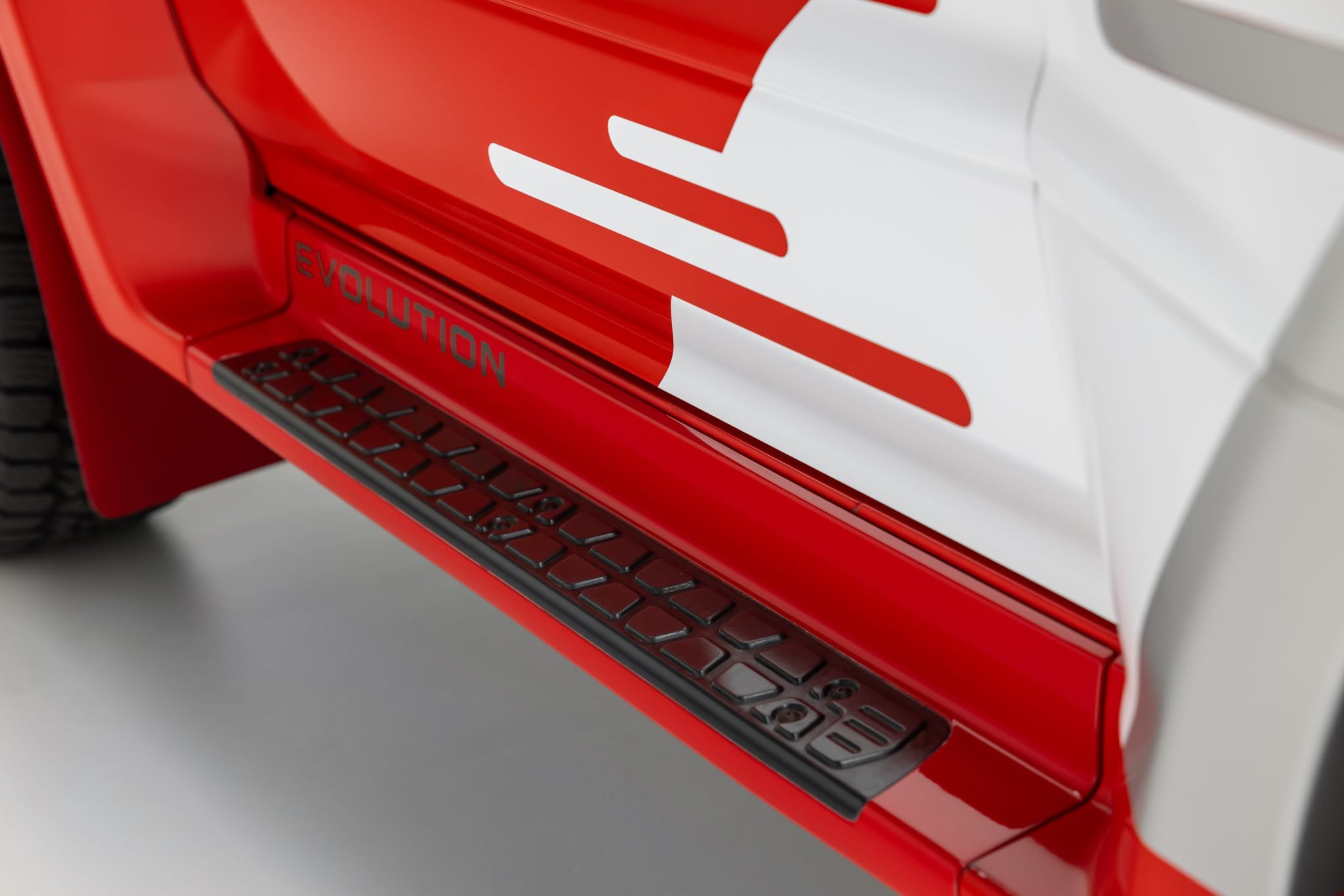
This Pajero Evolution is finished in Passion Red (R71) with freshly applied Ralliart livery and wears the factory Evolution aero package, including the model-specific front bumper cover, quad fog lights, front cooling ducts, flared fenders, hood scoops, side steps, a fender-mounted blind-spot mirror, red mud flaps, tinted vent shades, power-adjustable mirrors, and a Ralliart-branded exhaust finisher.
White-painted 16 inch Ralliart wheels were shod with Toyo Open Country AT III tires in 2025, with a matching spare on the tailgate. The emblems, drip moldings, and tailgate weatherstripping were replaced under current ownership, and a ceramic coating was applied to the painted surfaces, decals, glass, and wheels in 2025.
The 3.5 liter 6G74 V6 is factory-rated at 276 bhp and 256 lb ft of torque, with MIVEC variable valve timing, and is fitted with a Ralliart exhaust system. Under current ownership the engine bay was laser and dry-ice cleaned and the radiator was re-cored.
Replaced parts include the timing belt, tensioner, and idler bearing, the water pump, crankshaft and camshaft seals, valve cover gaskets, ignition coils, wires, and spark plugs, the air filter, fuel filter, fuel injector O-rings, PCV valve, knock sensor, and ignition failure sensor, and various additional seals and gaskets.
The most recent oil change was performed in March of 2026. Power is routed to the rear or all four wheels through a 5-speed automatic transmission, a dual-range transfer case, a locking center differential, and limited-slip front and rear differentials, with the transmission, transfer case, and differential fluids changed in 2025 and the transmission gear selector control unit replaced the same year.
Additional work under current ownership included a brake-fluid flush and replacement of the idler arm, inner and outer tie rod ends, upper and lower ball joints, front sway bar bushings, brake lines, brake rotors, and brake pads, with antilock braking acting on four-wheel discs.
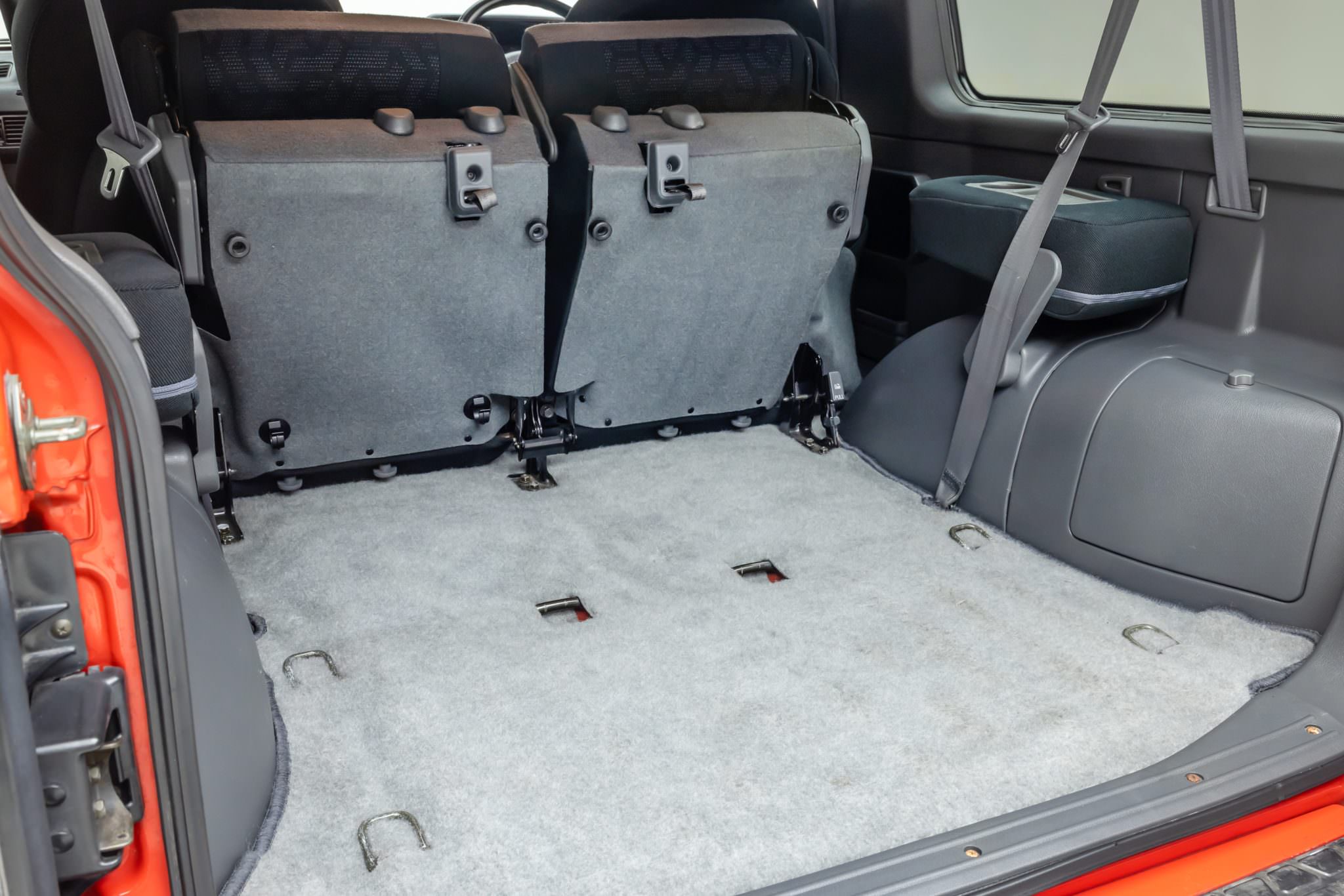
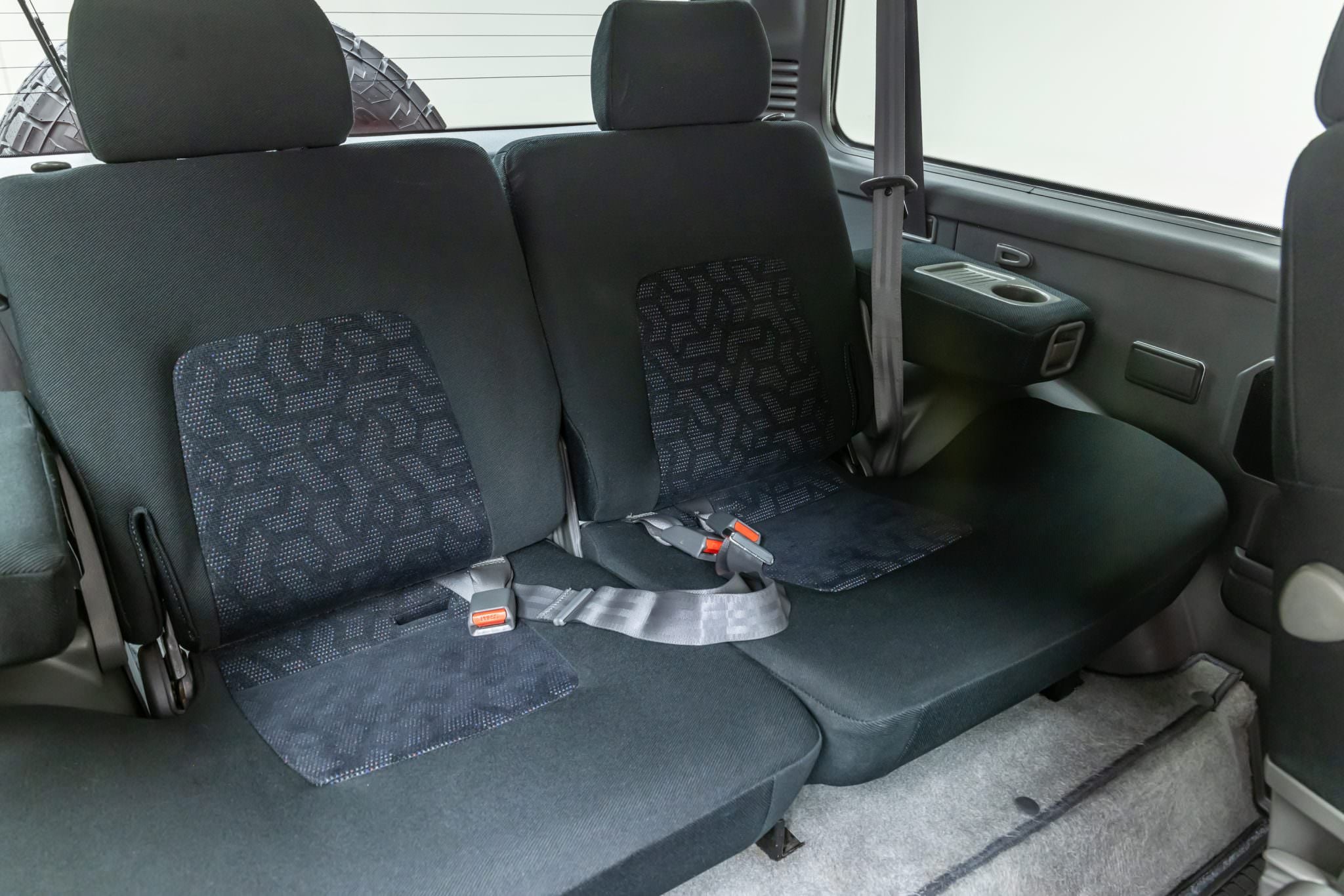
The bolstered Recaro front seats and split-folding rear bench are trimmed in black cloth with patterned inserts. Equipment includes automatic climate control, cruise control, power windows, and a Pioneer touchscreen infotainment system with Bluetooth. The leather-wrapped airbag steering wheel frames a 180 km/h speedometer and 9,000 rpm tachometer, with compass, voltage, and oil-pressure readouts in a pod atop the dashboard.
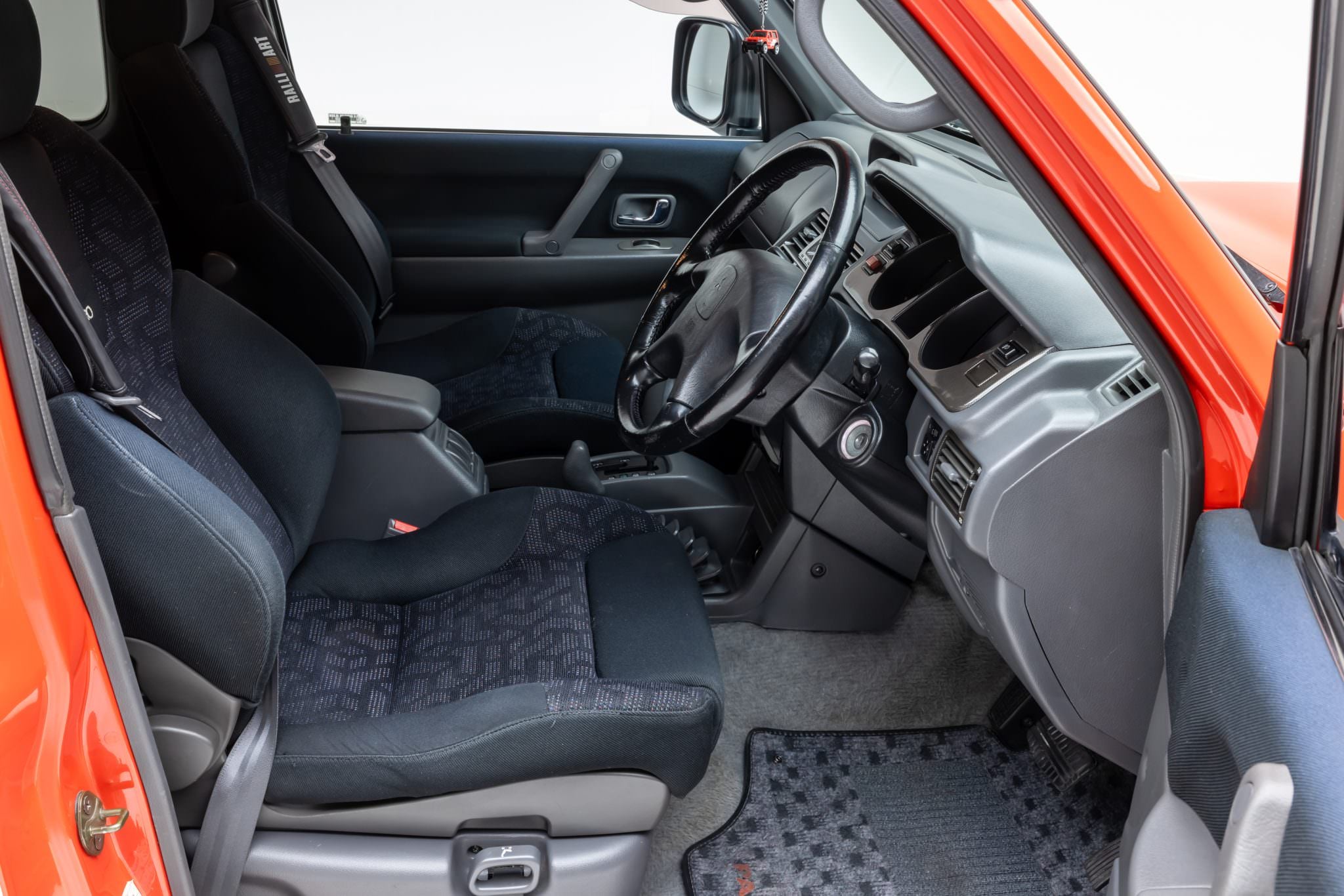
Inside, the dashboard, switchgear, and most trim were carried over from the donor model, with the obvious additions of Recaro front sport seats, a leather-wrapped wheel, with some Evolution-specific elements added throughout.
The six-digit odometer reads 124,000 kms, or about 77,000 miles, with approximately 11,000 kms added under current ownership.
The car is now being offered for sale out of Huntington Beach, California with spare wheels and parts, parts and service invoices, and a clean Tennessee title in the seller’s name. If you’d like to read more or register to bid you can visit the listing here.
Images courtesy of Bring a Trailer

Articles that Ben Branch has written have been covered on CNN, Popular Mechanics, Smithsonian Magazine, Road & Track Magazine, the official Pinterest blog, the official eBay Motors blog, BuzzFeed, Autoweek Magazine, Wired Magazine, Autoblog, Gear Patrol, Jalopnik, The Verge, and many more.
Silodrome was founded by Ben back in 2010, in the years since the site has grown to become a world leader in the alternative and vintage motoring sector, with well over a million monthly readers from around the world and many hundreds of thousands of followers on social media.