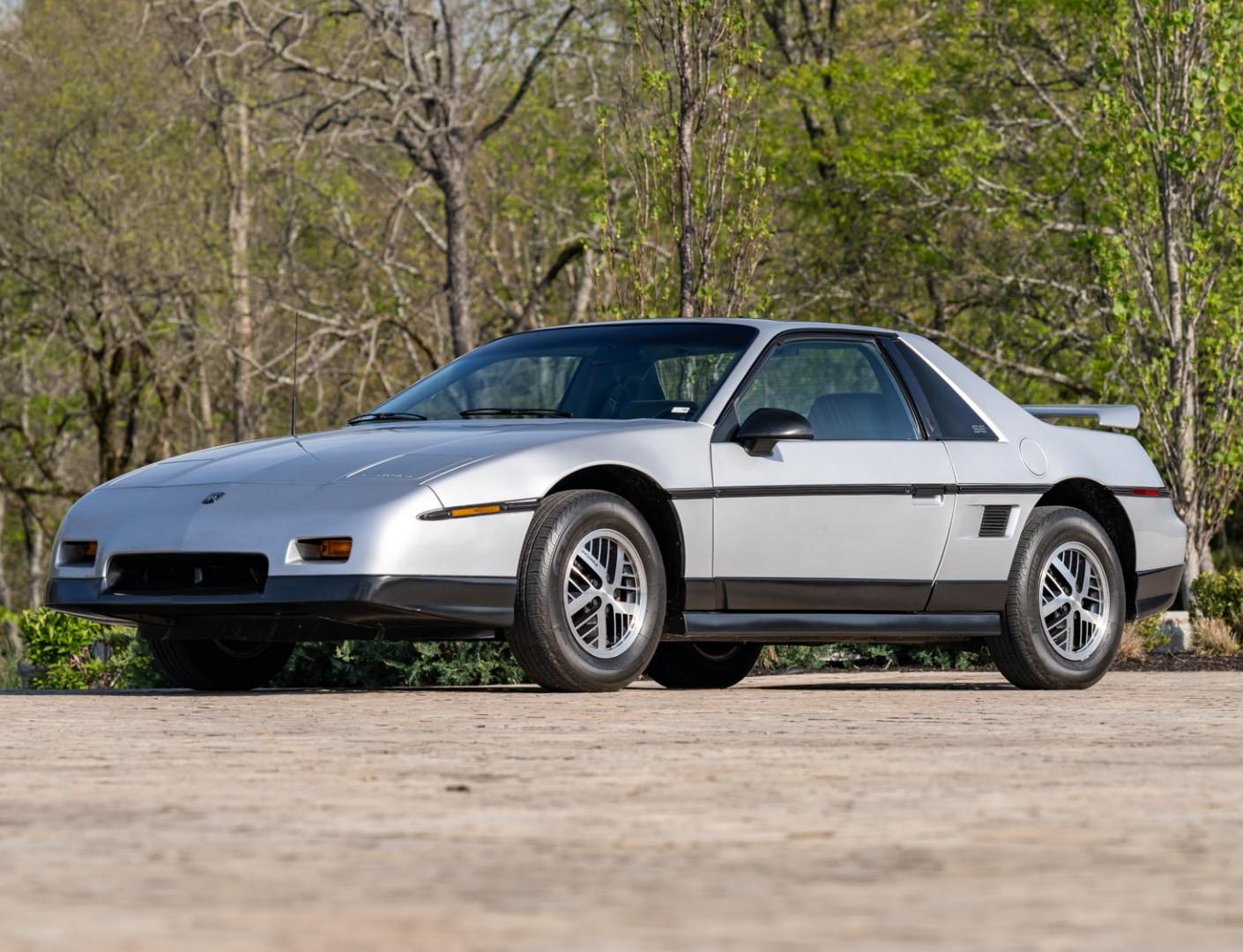
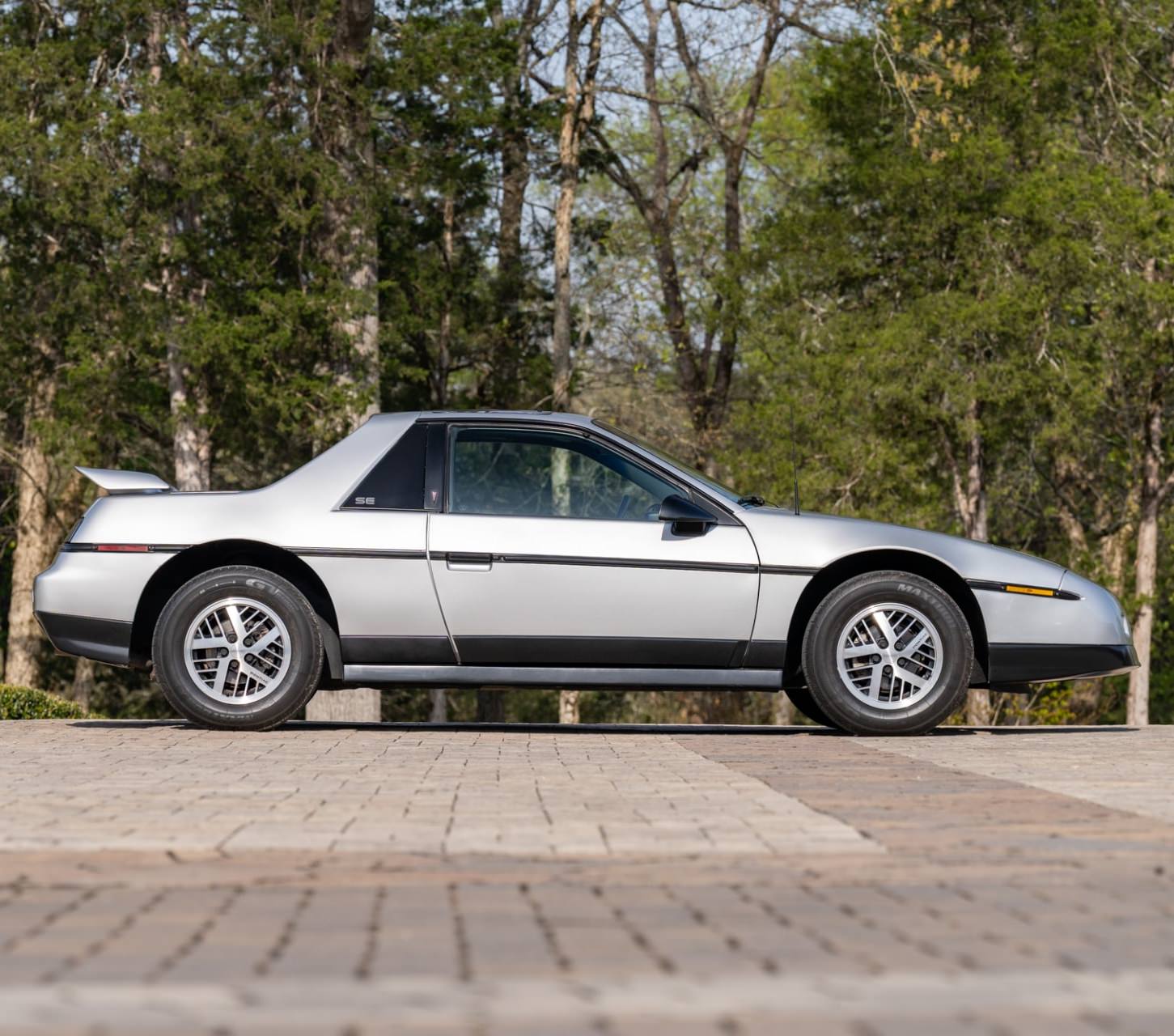
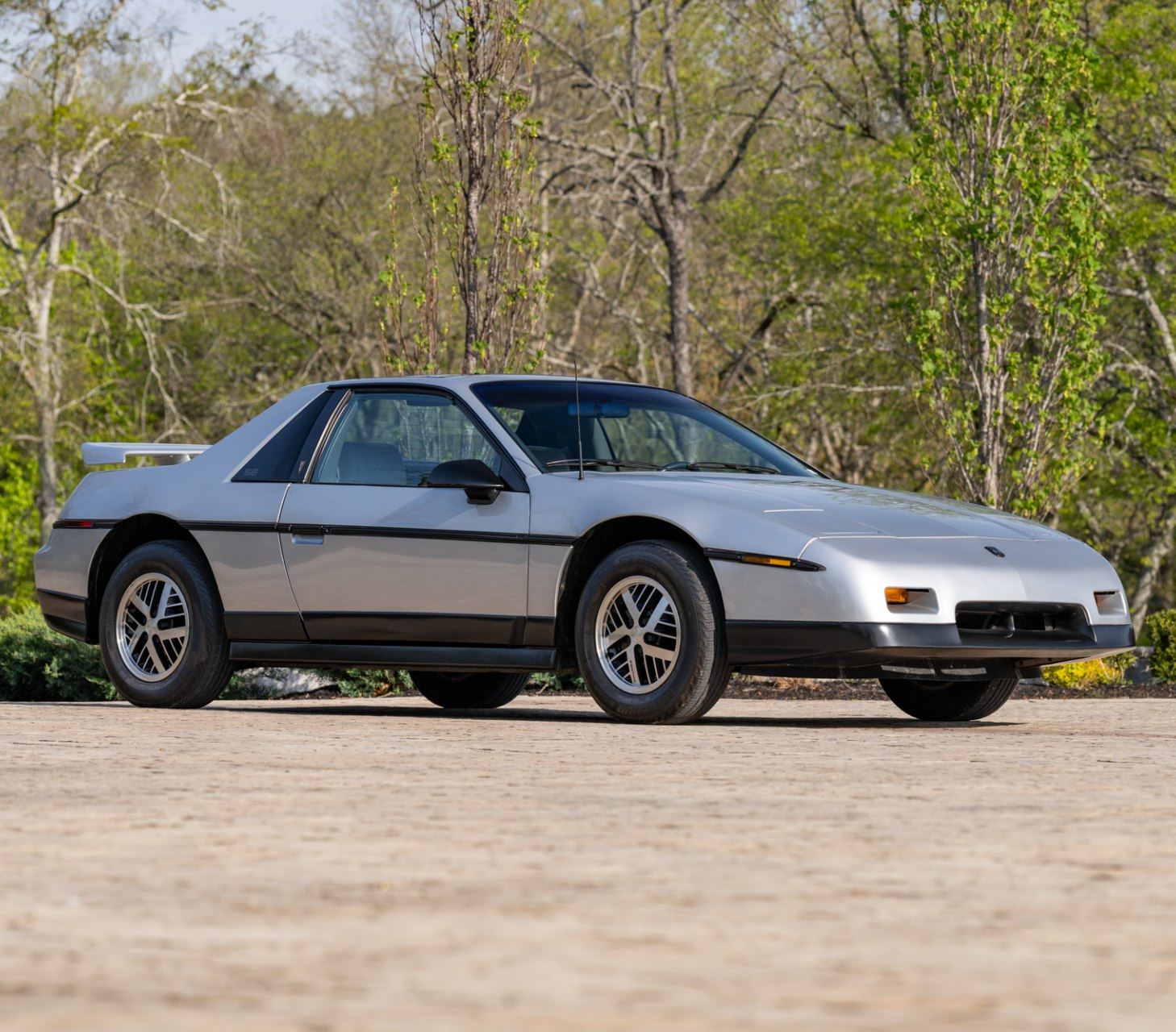
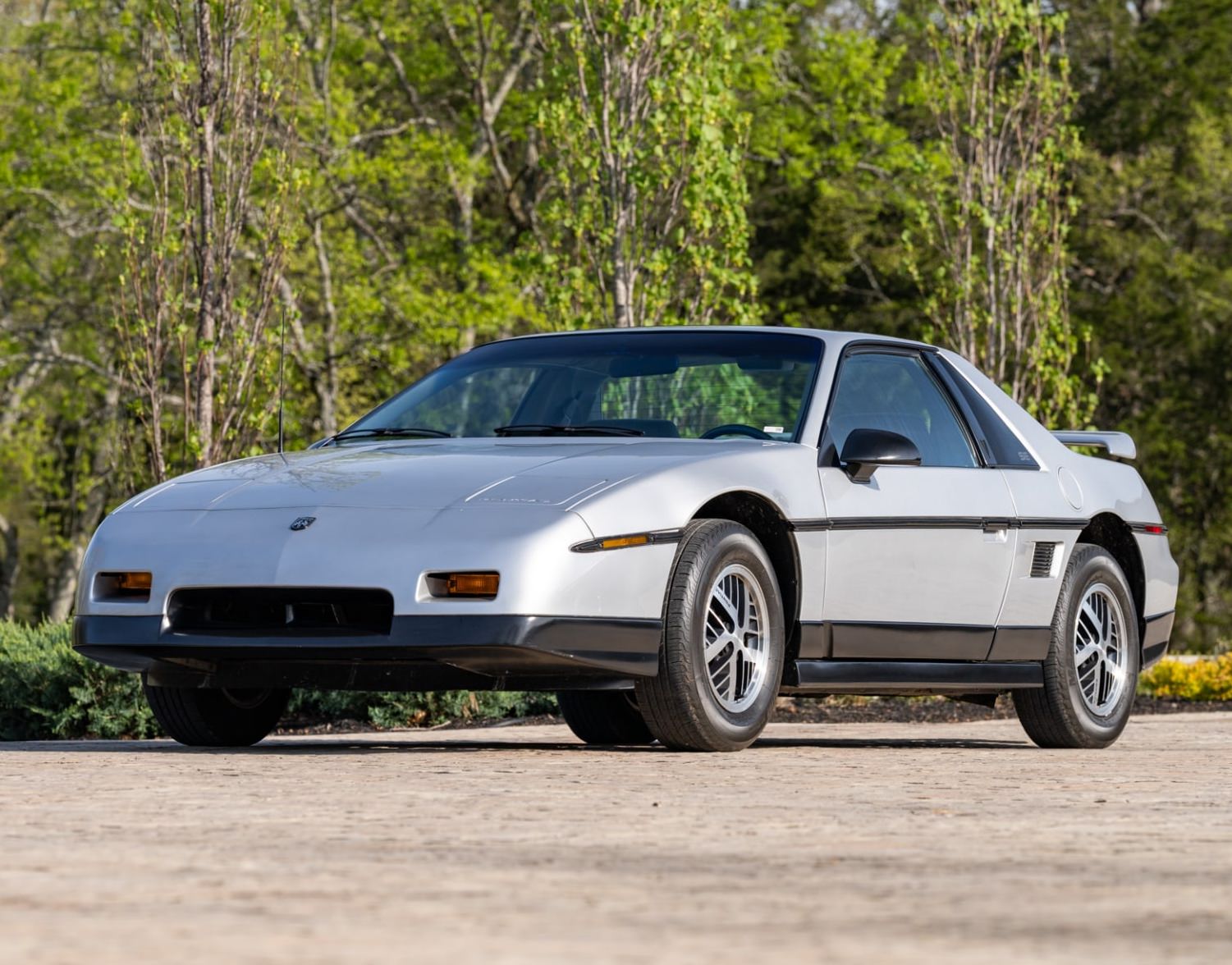
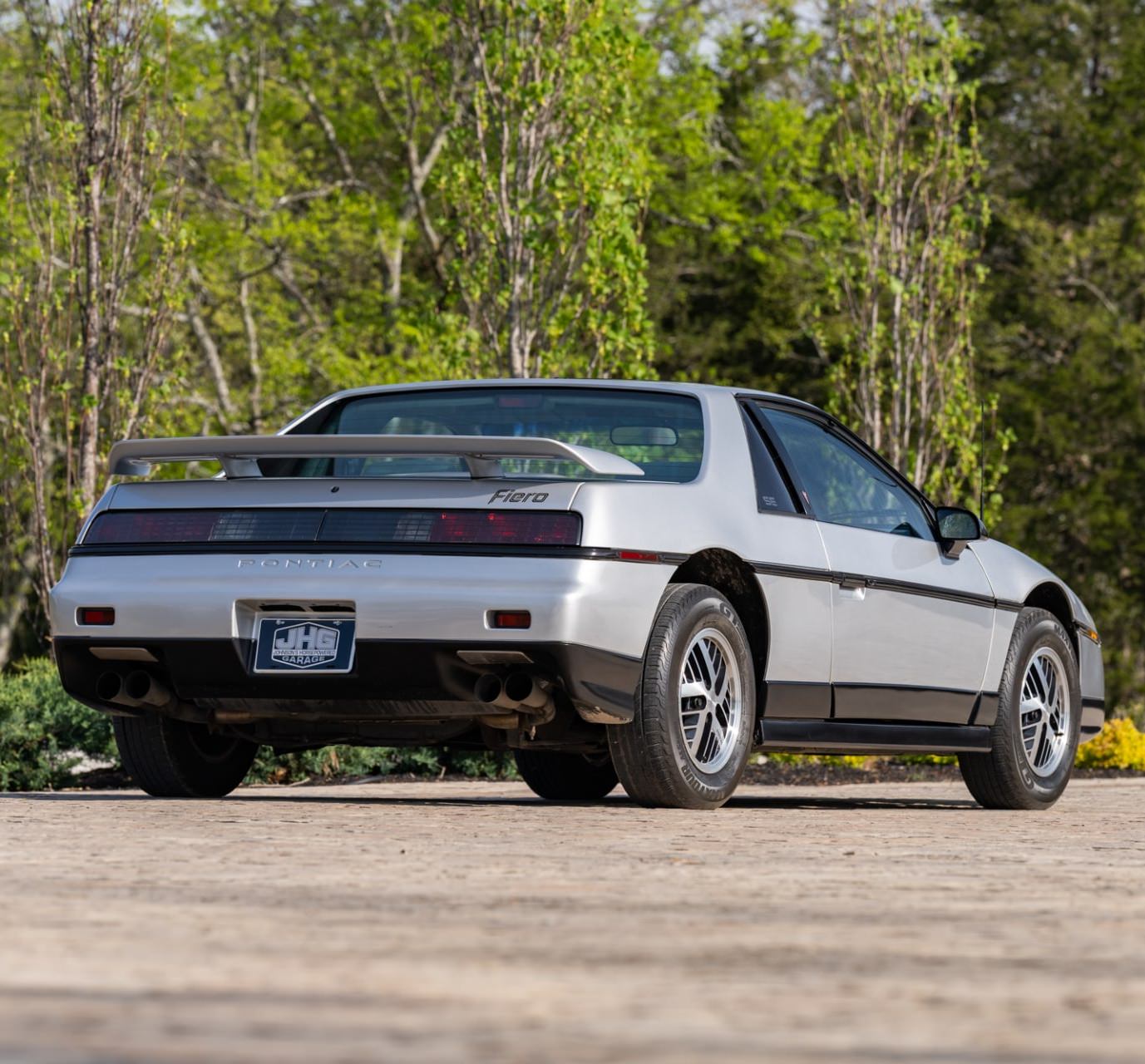
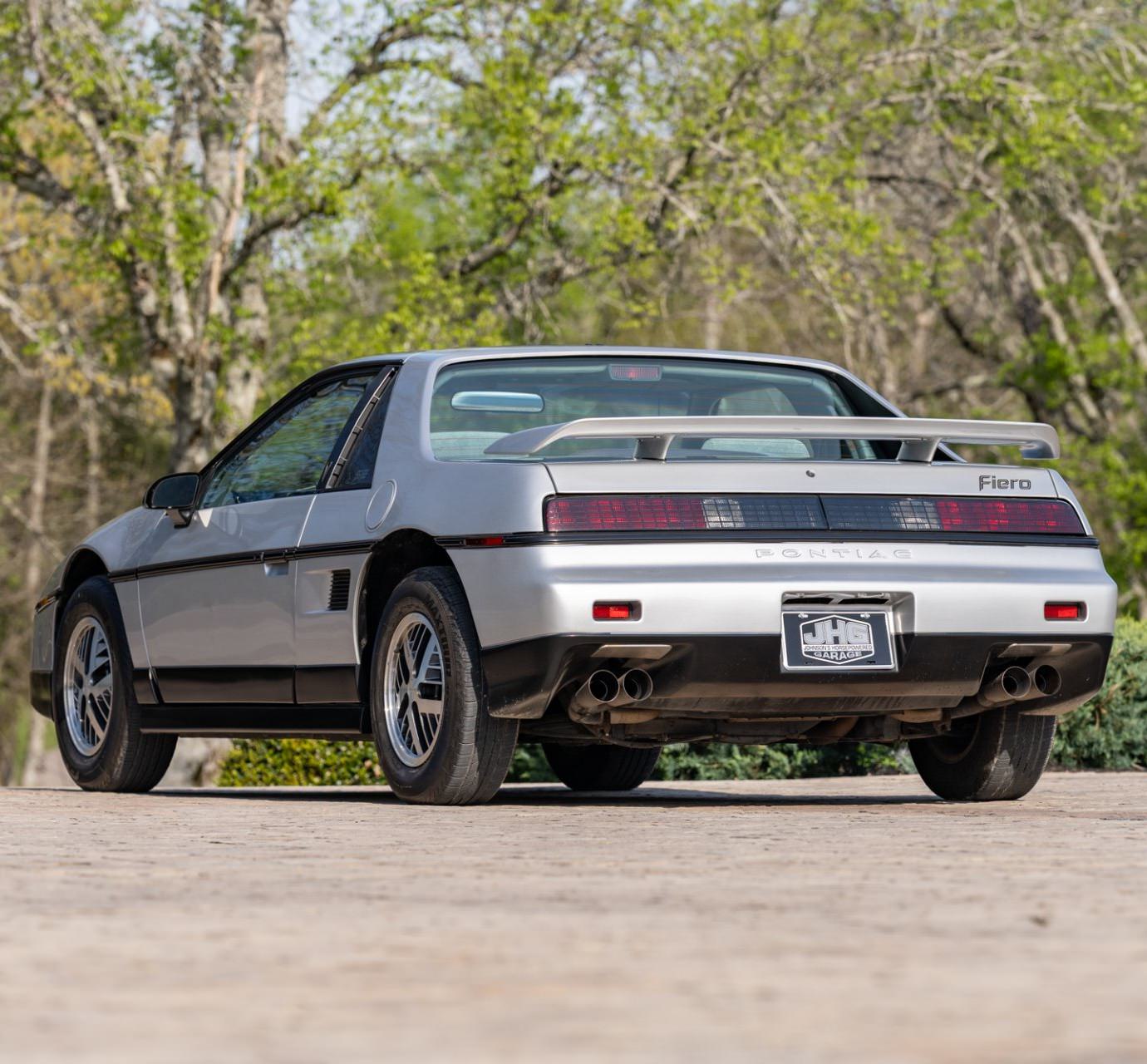
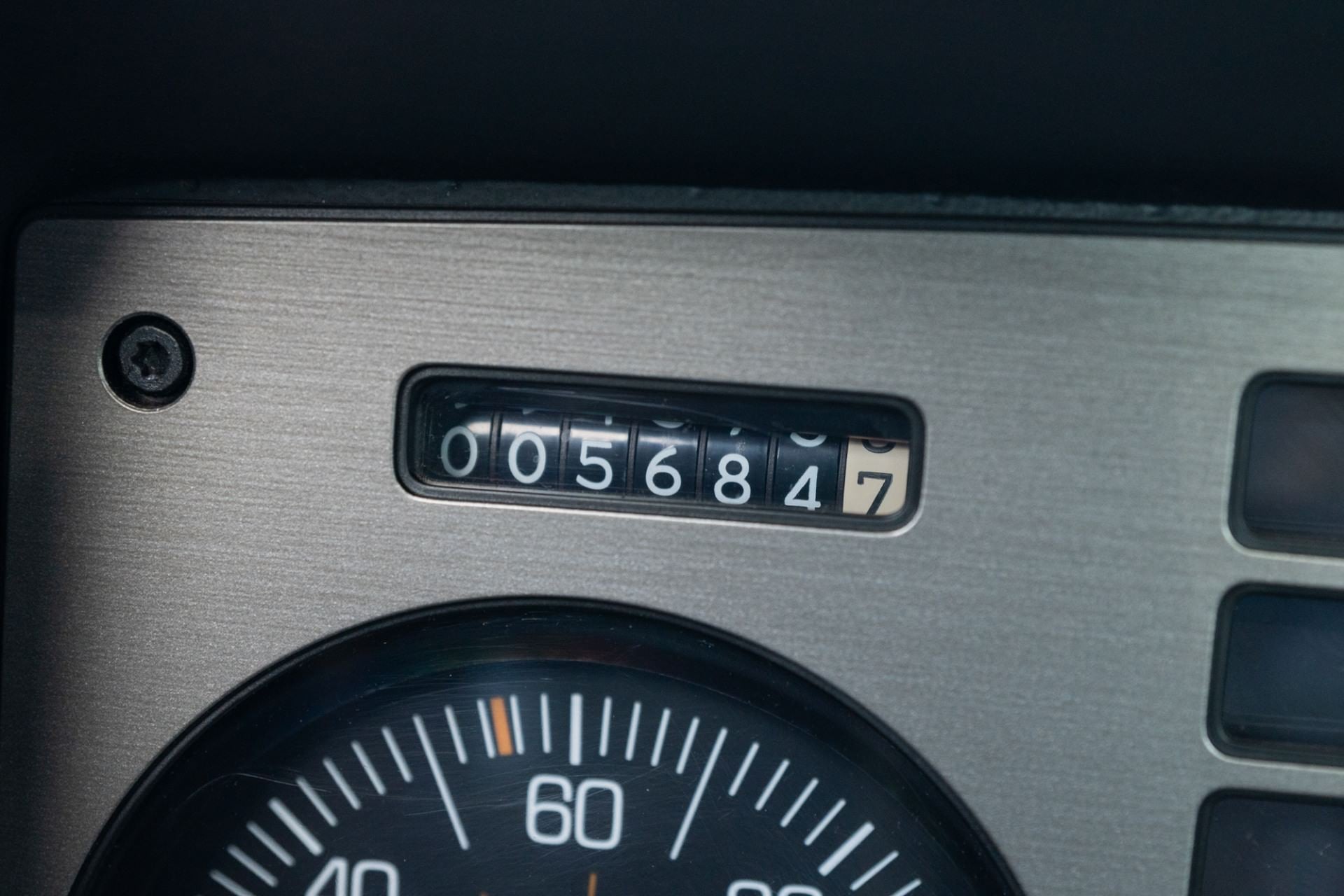
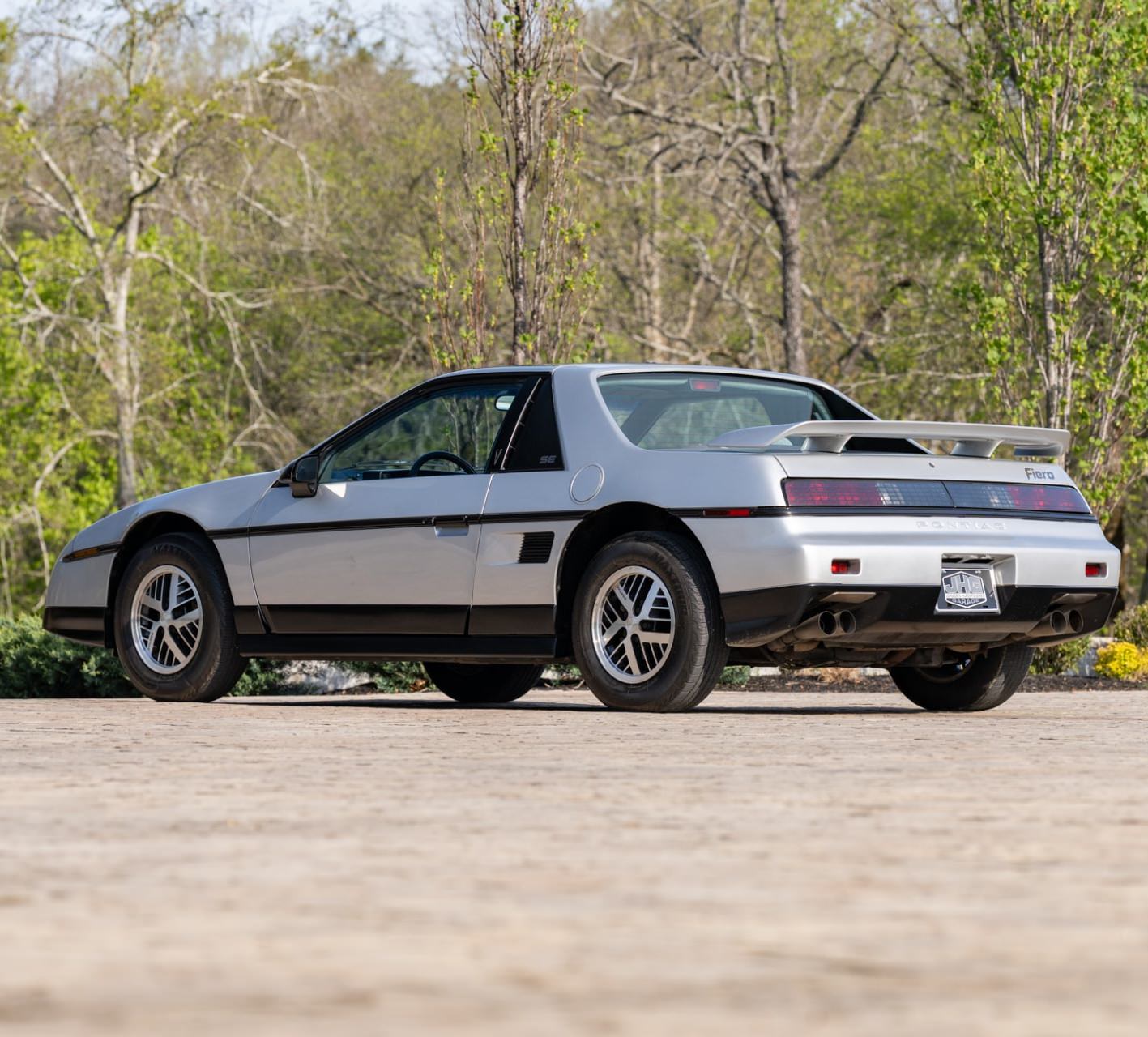
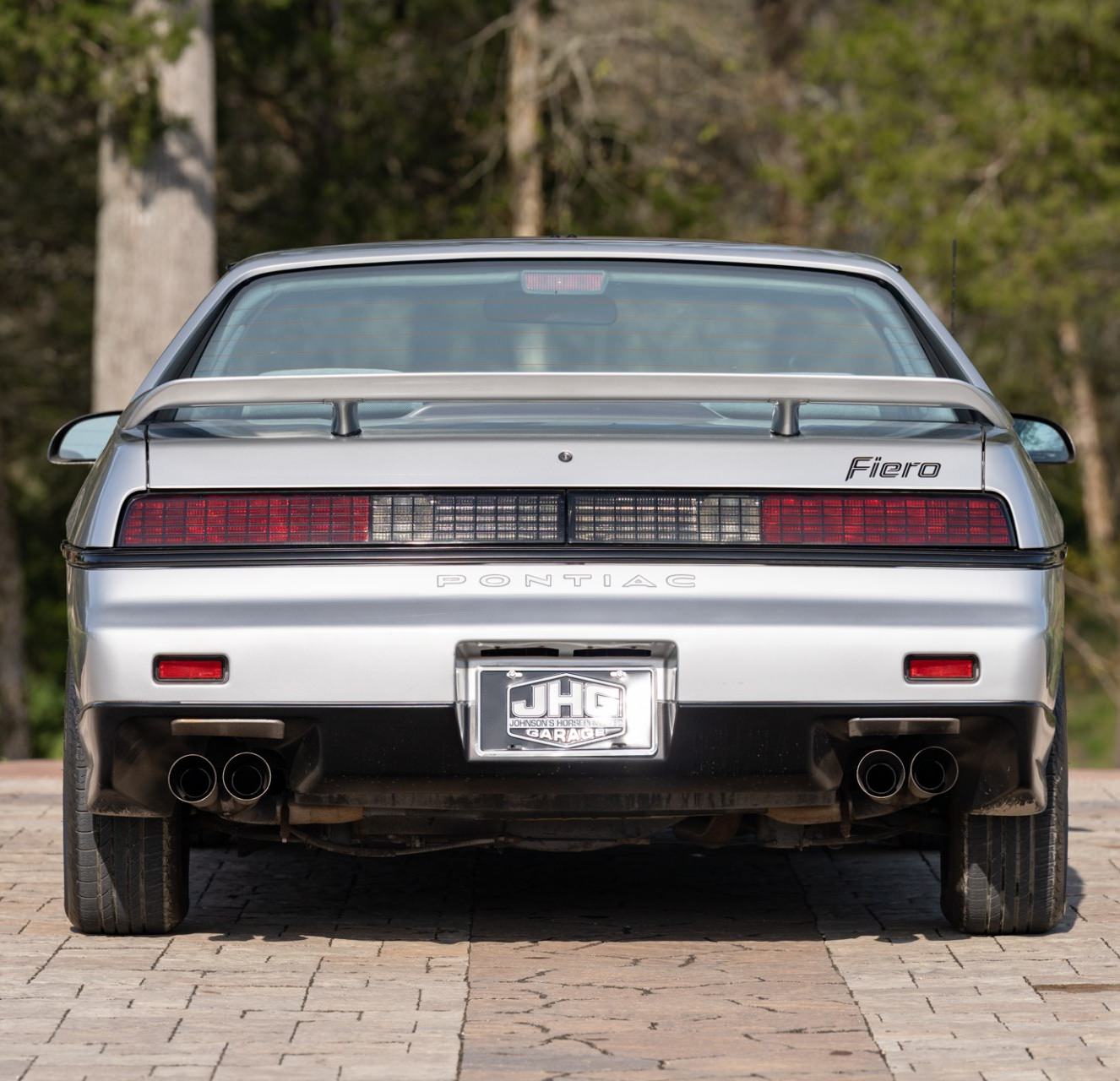
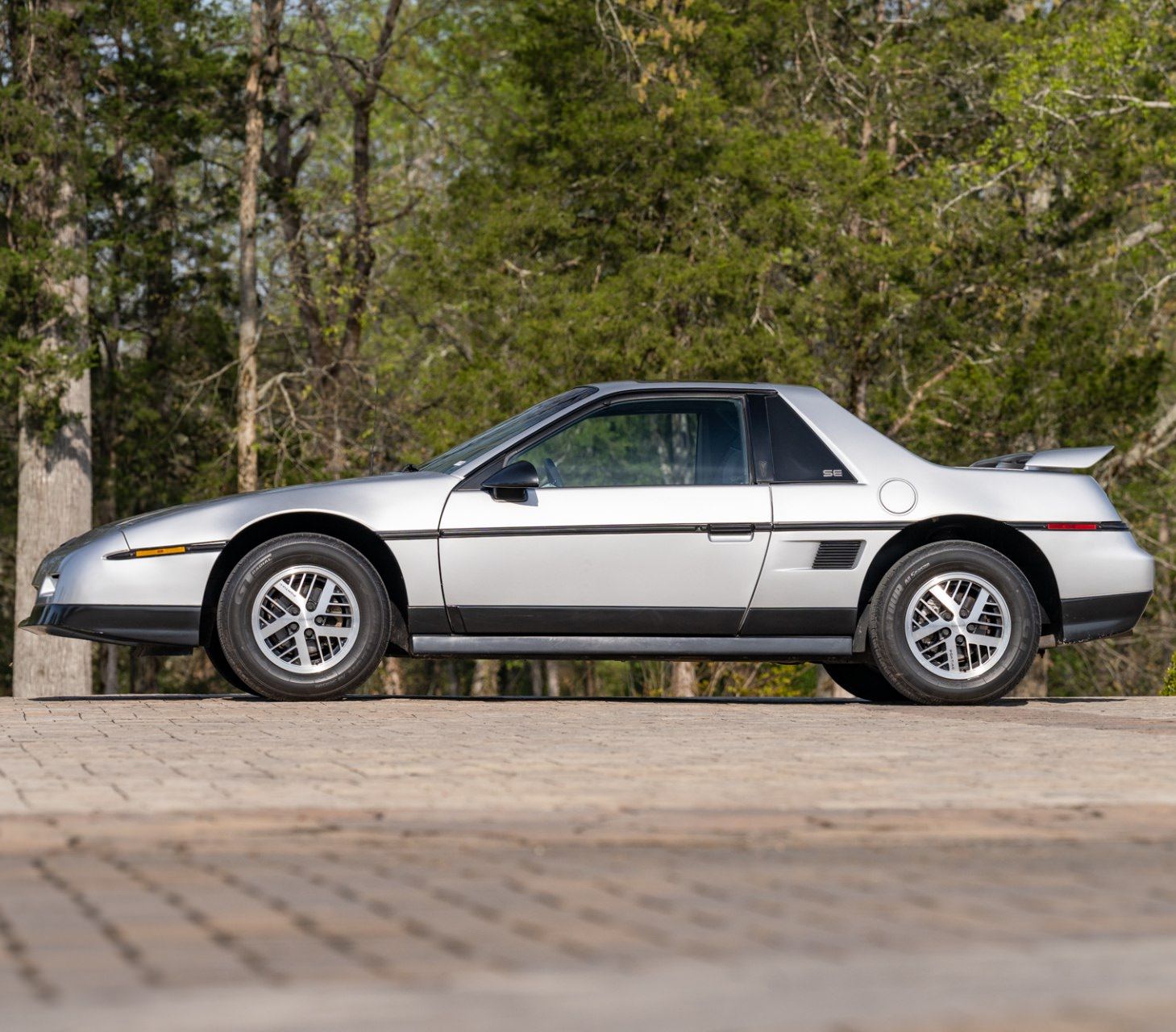
This is a 1987 Pontiac Fiero SE that has covered just 5,684 miles since new, and it’s now being offered for sale in remarkable time-capsule-like condition.
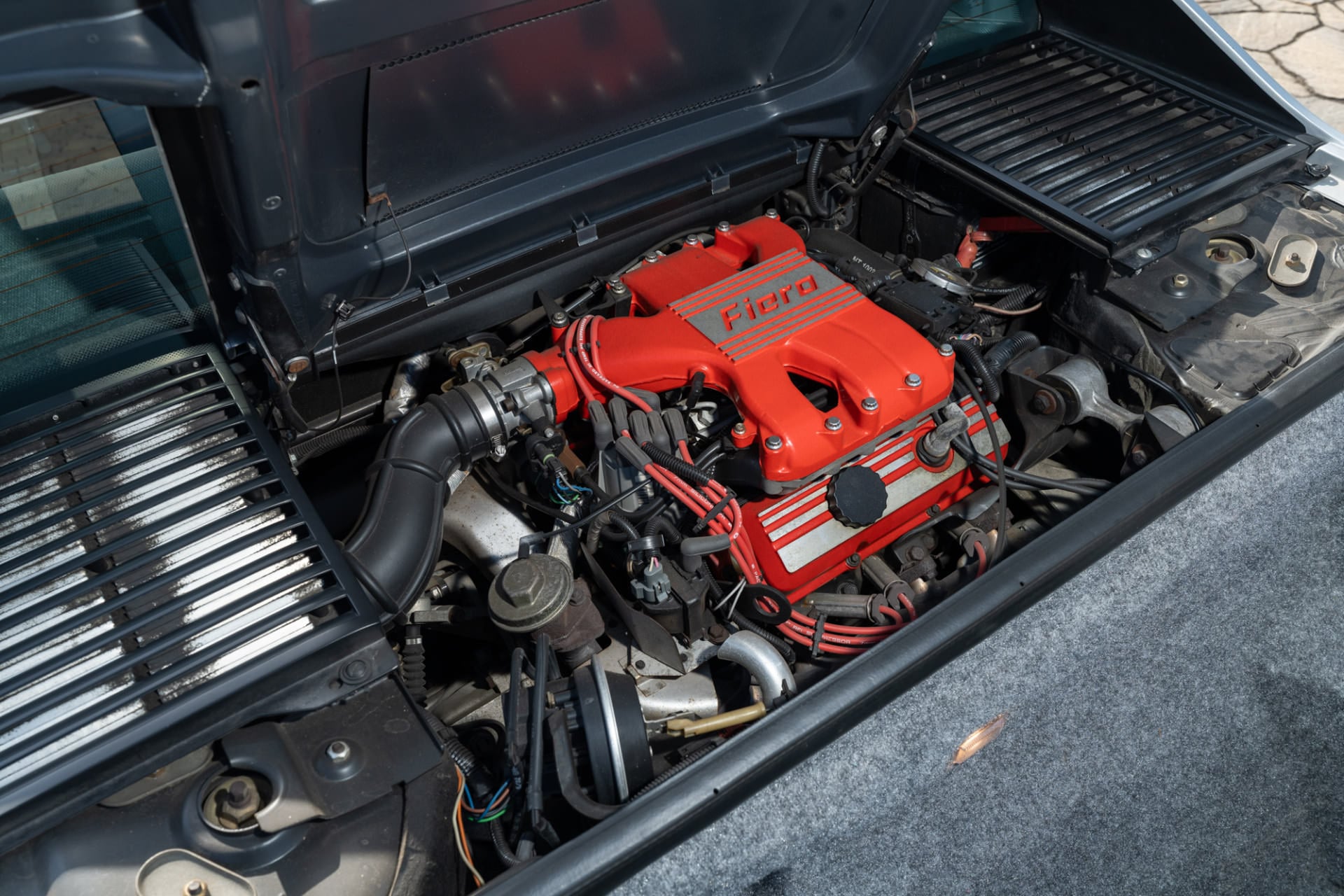
The Fiero SE came from the factory with the more desirable (and powerful) 2.9 liter V6 and the 5-speed manual. This was the model best-suited to enthusiast drivers who wanted a sports car that was also highway capable.
Fast Facts: A 1987 Pontiac Fiero SE
- The Pontiac Fiero was the first mass-produced, rear-mid-engine car built by an American manufacturer. It was pitched to GM management as a fuel-efficient commuter, internally designated the P-car, and was built at the Baldwin Avenue plant in Pontiac, Michigan from August 1983 through August 1988.
- The Fiero used a steel spaceframe chassis with bolt-on composite body panels and a transversely-mounted mid-engine layout. Budget constraints meant parts-bin suspension and the underpowered Iron Duke four-cylinder at launch, though a 2.8 liter V6, fastback body, and fully redesigned suspension arrived in later model years.
- Engine fires linked to weak connecting rods, low oil levels, and tight engine bay packaging plagued the 1984 models, and GM’s delayed recall in late 1987 did lasting reputational damage. Declining production and mounting per-unit losses on base models led GM to cancel the program after just five model years and 370,168 cars.
- This 1987 Fiero SE is a low-mile notchback with just 5,684 miles on the odometer, finished in silver over gray. It’s powered by the 2.8-liter V6 with the 5-speed manual, presented in highly original unrestored condition, and is due to cross the block with Mecum in late September.
History Speedrun: The Pontiac Fiero
The Pontiac Fiero was the first mass-produced, rear-mid-engine car ever built by an American manufacturer, but despite this it was sold to General Motors’ corporate management as a fuel-efficient sporty commuter. It was one of the most structurally innovative production cars of the 1980s, and yet it became synonymous in the public imagination with engine fires. By the time Pontiac’s engineers had finally turned it into the car they’d always wanted it to be, GM pulled the plug and killed the project entirely.
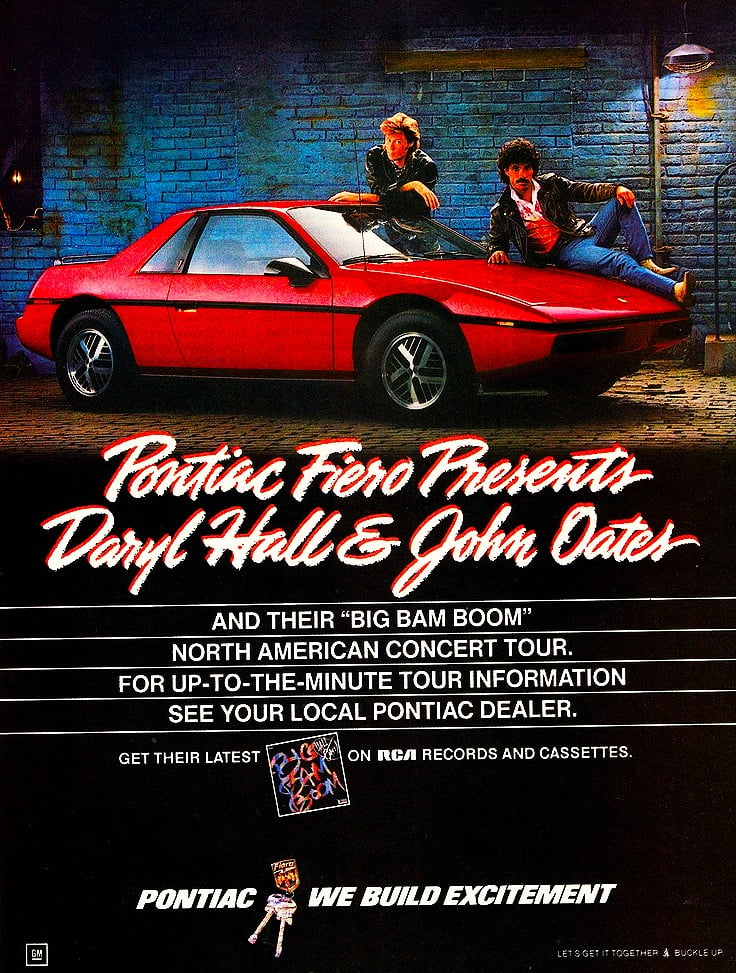
 The 1984 Fiero launched exclusively as a notchback coupe powered by the 92 bhp Iron Duke four-cylinder. Despite its low power output, the car still managed to generate enormous excitement. Image courtesy of General Motors.
The Origins Of The P-Car Program
The Fiero’s origins actually go all the way back to the late 1970s, when young Pontiac engineers saw the dual 1970s energy crises as a bit of an opportunity. They wanted a two-seat sports car with a mid-engine layout and a V6, but GM’s upper management would never greenlight something that might step on the Corvette’s toes. So the team pitched it as an economical “commuter car” (internally designated the P-car) that just happened to have two seats and an engine behind the driver.
Pontiac assigned oversight of the project to Hulki Aldikacti, a Turkish-born engineer with over two decades at GM. Engineering development was handled by Entech, an outside Detroit firm, this was unusual for a GM project. Styling evolved under Ron Hill in Advanced Design III, then was finalized by John Schinella in Pontiac’s Exterior Studio II. The name “Fiero” (Italian for “proud” or “fierce”) was selected from a shortlist that included Pegasus, Sprint, Sunfire, and Schinella’s own suggestion of Fiamma.
William Hoglund, who took over as Pontiac’s general manager in 1980 and became the Fiero’s most critical champion, ultimately let the hourly workers at the factory cast the deciding vote.
The development budget from design through plant retooling was approximately $400 million, a fraction of what GM typically spent bringing a new model to production. That budget forced serious compromises. Aldikacti’s dream of an aluminum-block V6 was shelved immediately – the cost of a new engine alone would have exceeded the car’s entire development allocation.
Instead, the team was stuck with GM’s existing 2.5 liter “Iron Duke” inline four-cylinder, an engine better known for its longevity than its performance. Suspension parts were scavenged from the GM parts bin, with front suspension from the Chevette platform, and the rear suspension and drivetrain from the Citation/Phoenix X-body.
The Fiero’s structure was unlike anything else in GM’s lineup – rather than a conventional unibody design, it used a steel spaceframe, this was a rigid skeletal chassis onto which non-structural Enduraflex composite body panels were bolted. The mid-mounted engine sat transversely behind the two-seat cabin, driving the rear wheels.
Hoglund secured final production approval by promising GM brass that Pontiac could sell 100,000 units a year – this was a target many at the division knew was unrealistic, but one that crucially kept the program alive. He negotiated the reopening of a plant on Baldwin Avenue in Pontiac, Michigan, to build the car, and production began in August of 1983.
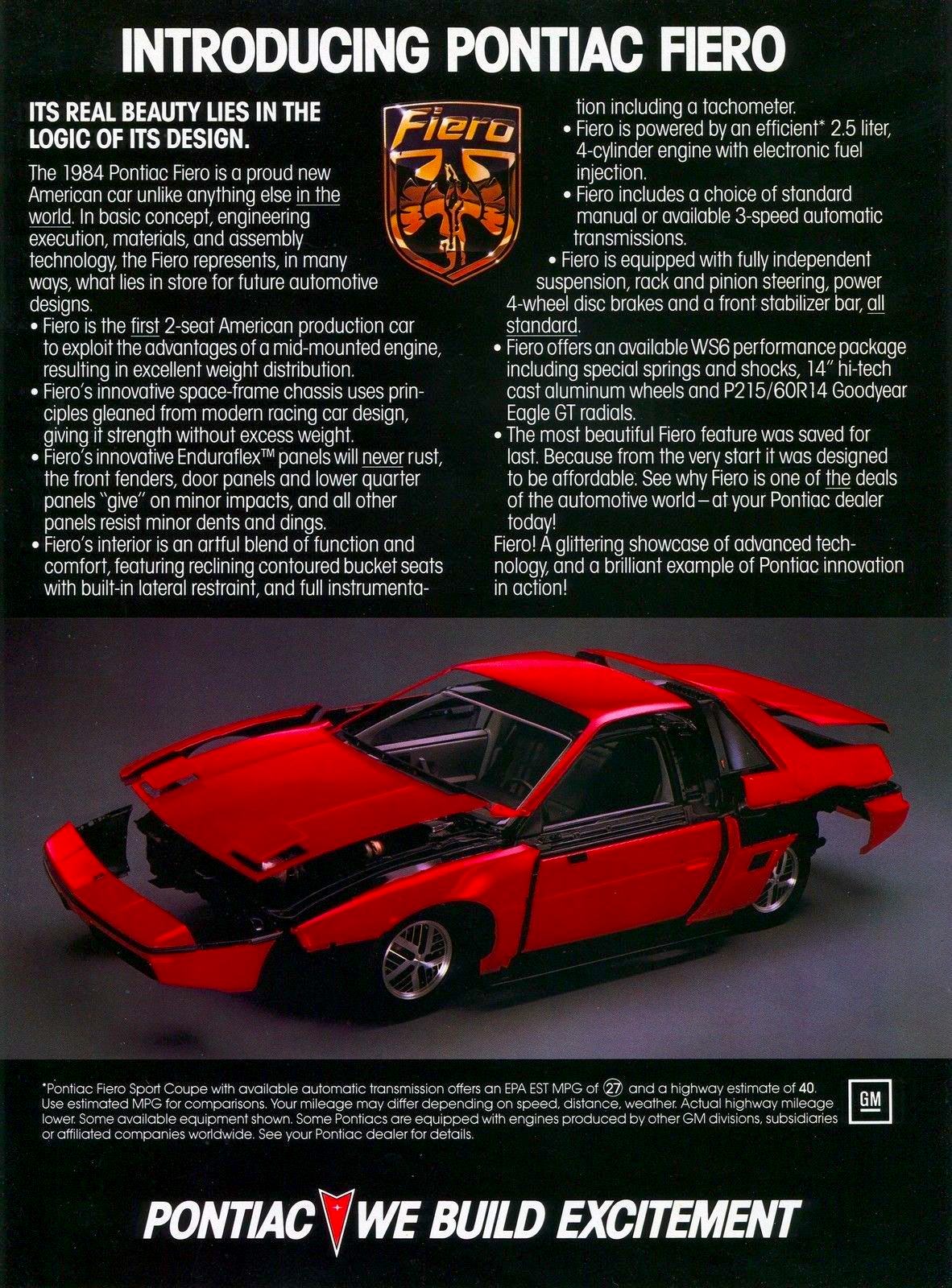
The Fiero’s structure was unlike anything else in GM’s lineup – rather than a conventional unibody design, it used a steel spaceframe, this was a rigid skeletal chassis onto which non-structural Enduraflex composite body panels were bolted. The mid-mounted engine sat transversely behind the two-seat cabin, driving the rear wheels. Image courtesy of General Motors.
The Primary Fiero Variants
The 1984 Fiero launched exclusively as a notchback coupe powered by the 92 bhp Iron Duke four-cylinder. Despite its low power output, the car still managed to generate enormous excitement. It was chosen as the official pace car for the 1984 Indianapolis 500, and Pontiac built approximately 2,000 Indy Pace Car Edition replicas with distinctive white-and-silver livery.
The Fiero 2M4 (two-seat, mid-engine, four-cylinder) landed on Car and Driver’s Ten Best list that year, and demand was so strong that Pontiac ran three shifts at the Baldwin Avenue plant and still couldn’t keep up. First-year production hit 136,840 units. Hoglund had kept his promise, surpassed it even, but things would later take a somewhat fiery turn for the worse.
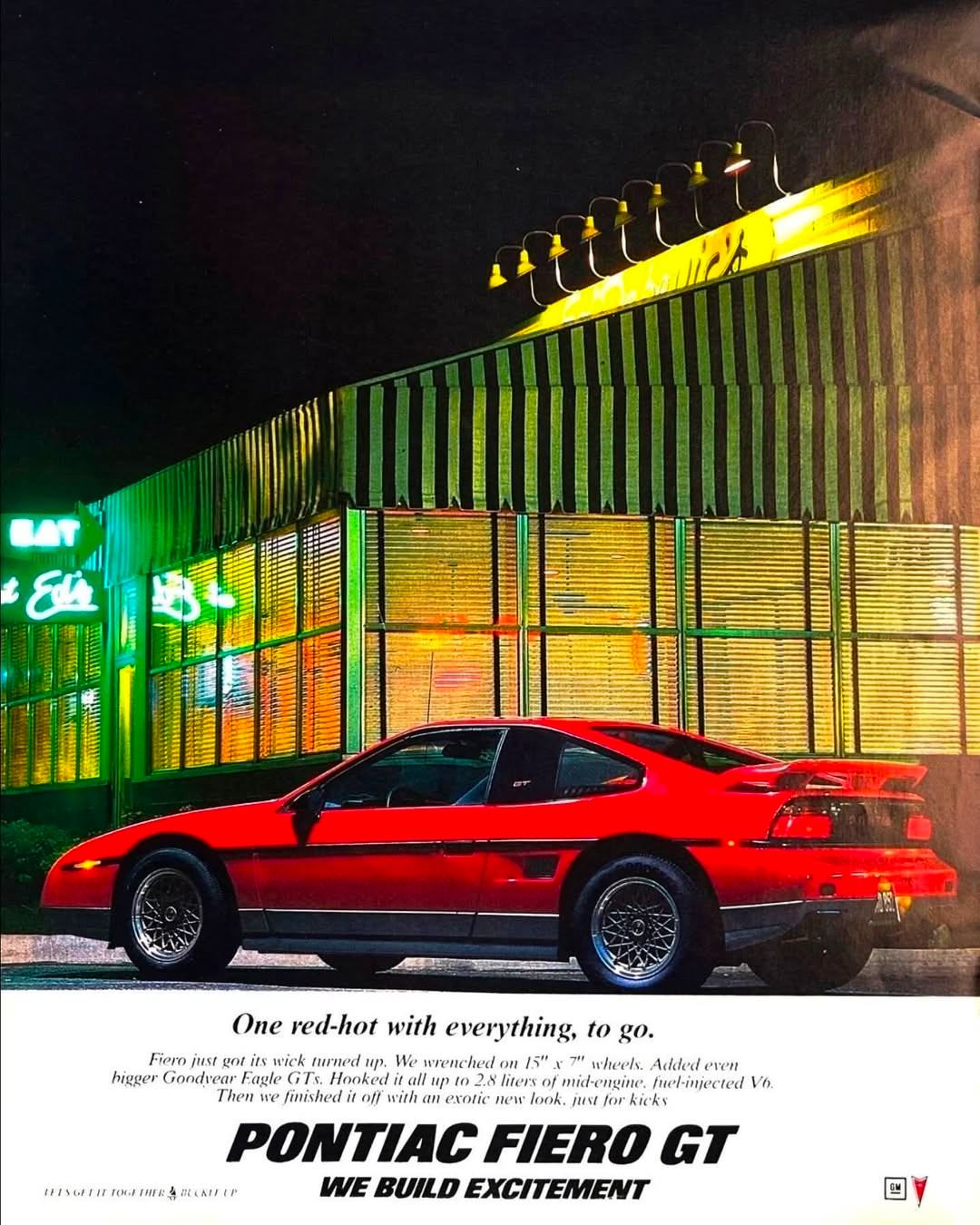
For 1985, Pontiac introduced the GT model powered by a 2.8 liter V6 producing 140 bhp, that was roughly a 50% increase over the base four banger. The GT also received upgraded suspension tuning and wider tires. Production dipped to 76,371 units as the initial novelty around the model faded.
The 1986 model year brought the fastback body style that many people most closely associate with the Fiero, giving the GT a dramatically more aggressive silhouette that was sometimes mistaken for some kind of Corvette at a glance. A 5-speed Getrag 282 manual transmission became available for V6 models, and production ticked back up to 83,974 units.
By 1987, though, the Fiero’s reputation was being severely damaged by constant reports of engine fires. Production fell to 46,581 units, and a cloud hung over the nameplate that no amount of incremental improvement could easily dispel.
The 1988 model year represented what the Fiero should have been from the start. Pontiac finally installed the completely redesigned suspension with new geometry, revised steering, and upgraded brakes with two-piece calipers, that Aldikacti’s team had originally conceived during the car’s development but couldn’t afford to include at launch.
A new Formula model combined the base notchback body with the GT’s V6 drivetrain and upgraded suspension, creating what many consider the best-driving Fiero variant. Power steering was also developed during the 1988 run, though only a handful of cars were built with it before the axe fell. Production that final year totaled just 26,402 units.
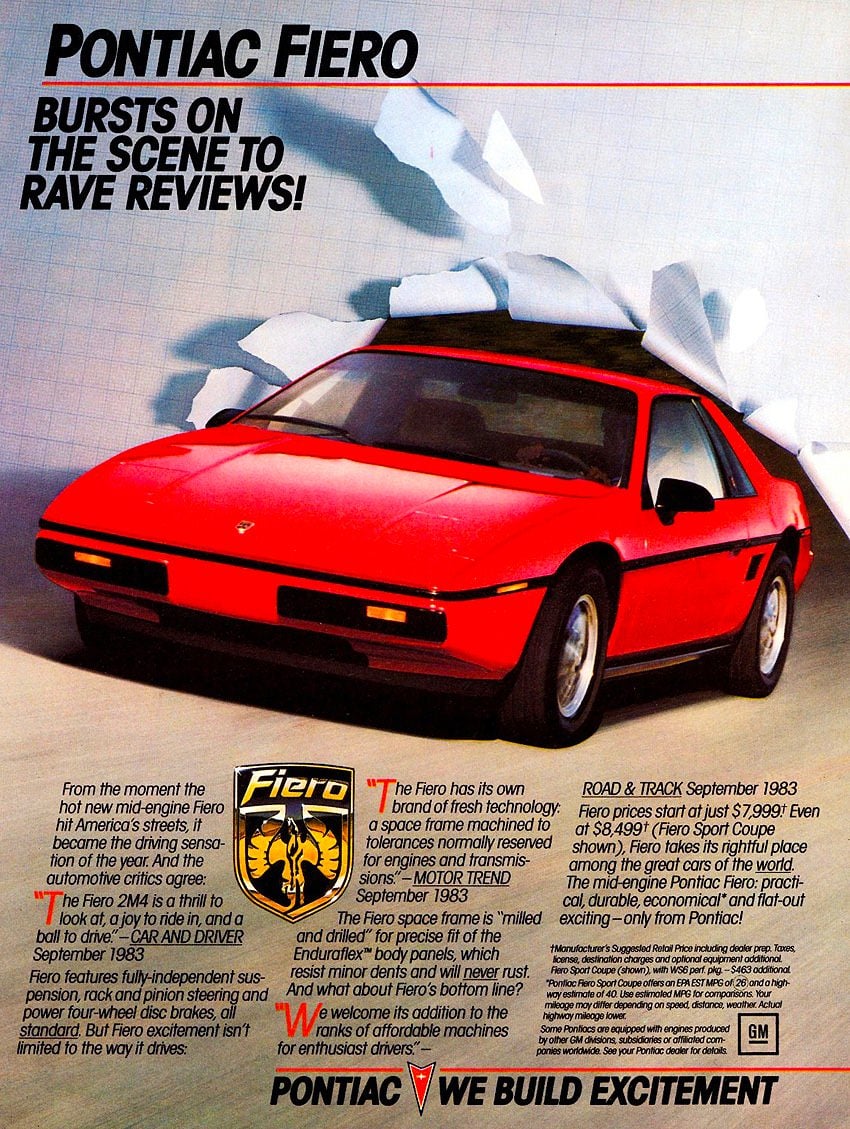
The Fiero landed on Car and Driver’s Ten Best list that year, and demand was so strong that Pontiac ran three shifts at the Baldwin Avenue plant and still couldn’t keep up. First-year production hit 136,840 units. Image courtesy of General Motors.
Across all five model years, a total of 370,168 Fieros were built before the last car rolled off the Baldwin Avenue line on August the 16th, 1988.
The Fire Problem + Market Reception
The engine fire issue centered on the 1984 model year’s Iron Duke engine installation. Low oil levels, which were compounded by oil-capacity and dipstick confusion and a batch of weakly cast connecting rods from GM’s Saginaw foundry, created a dangerous combination in the Fiero’s tightly packaged engine bay.
When a compromised connecting rod failed, it could punch through the block, dumping oil onto the hot exhaust manifold or catalytic converter. Oil and coolant leaks from other sources and a wiring harness routed above the exhaust added additional risk. Between 260 and 300 fires were reported, with ten injuries but no fatalities. GM was far too slow to act, not issuing a formal recall of all 1984 models until late 1987, by which point the reputational damage was unsalvageable.
The recall’s timing was devastating. J. Michael Losh, who had replaced Hoglund as Pontiac’s general manager, ordered a financial review that revealed Pontiac was losing over $2,000 on each base-model Fiero sold. The more expensive GT and Formula trims remained profitable, but with the recall dropping demand through the floor and the planned GM-80 replacement platform having been canceled due to cost overruns, Losh decided to end the program once and for all.
The Fiero’s cancellation is one of those decisions that gets more painful in hindsight. The 1988 cars were genuinely excellent handlers, and Pontiac had reportedly built at least one prototype 1989 model powered by a turbocharged V6, with further development including Quad 4 and DOHC V6 options under consideration before the program was killed.
The 1988 GT and Formula models are now the most sought-after among collectors, and the Fiero’s composite-over-spaceframe construction has made it one of the most popular platforms in the kit car world, its bolt-on body panels can be swapped entirely without compromising the structure underneath, making it a favorite canvas for replica builders who want their own “Lamborghini” or “Ferrari” on a budget.
By 1988 the Fiero had the ability to become America’s favorite affordable sports car, but the weight of budget-conscious engineering decisions from earlier in the decade ultimately dragged it under.
The 1987 Pontiac Fiero SE Shown Here
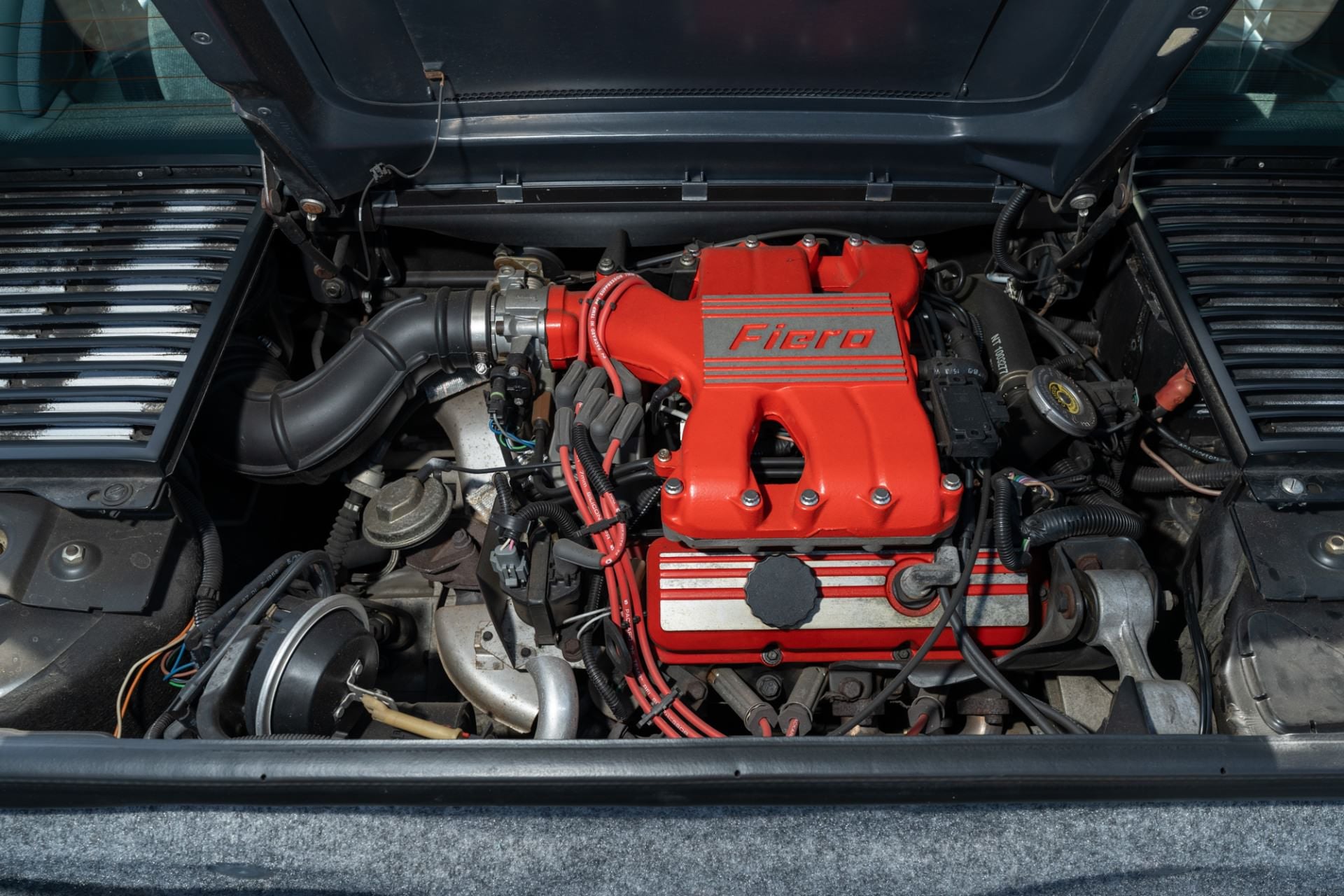
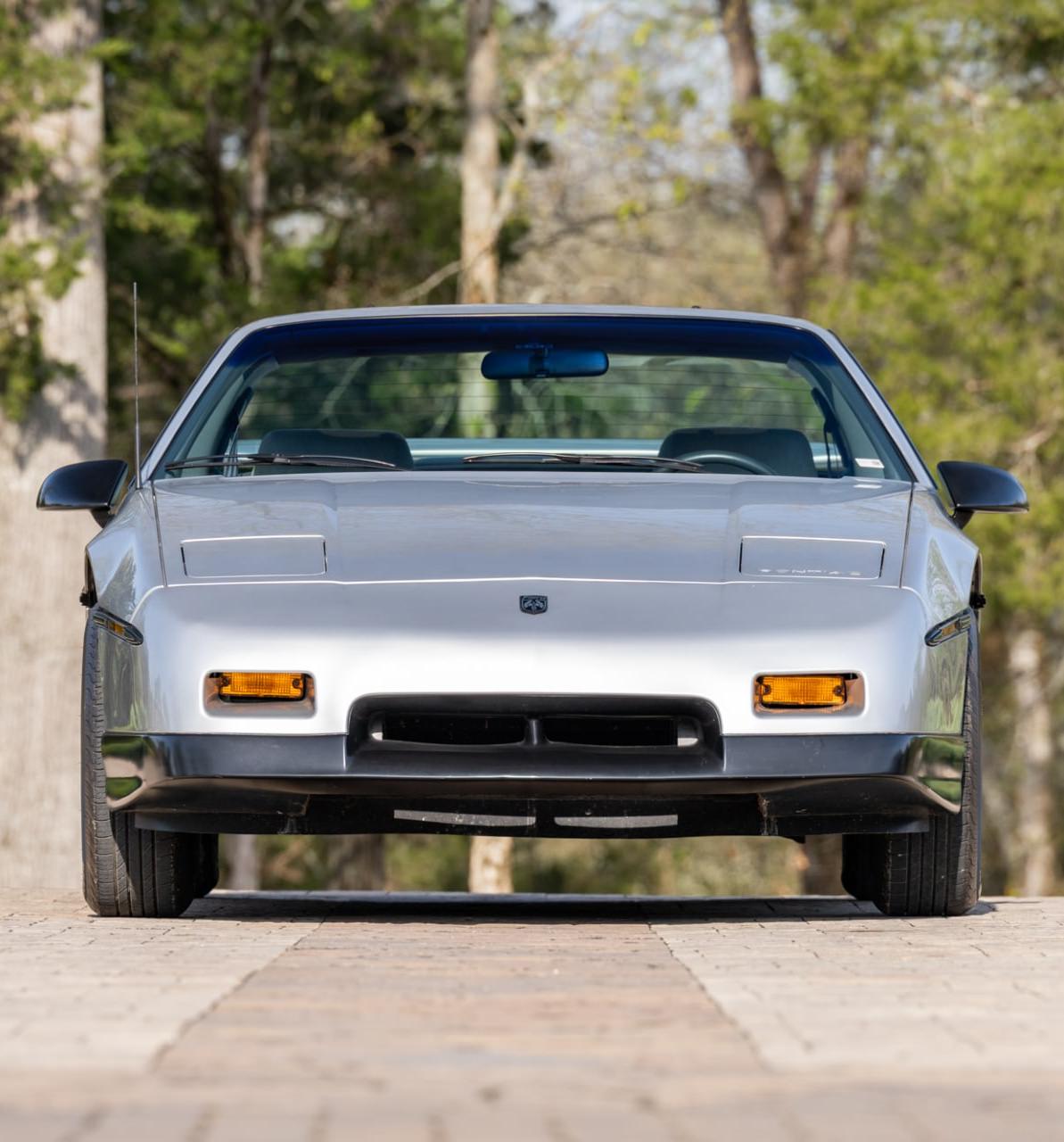
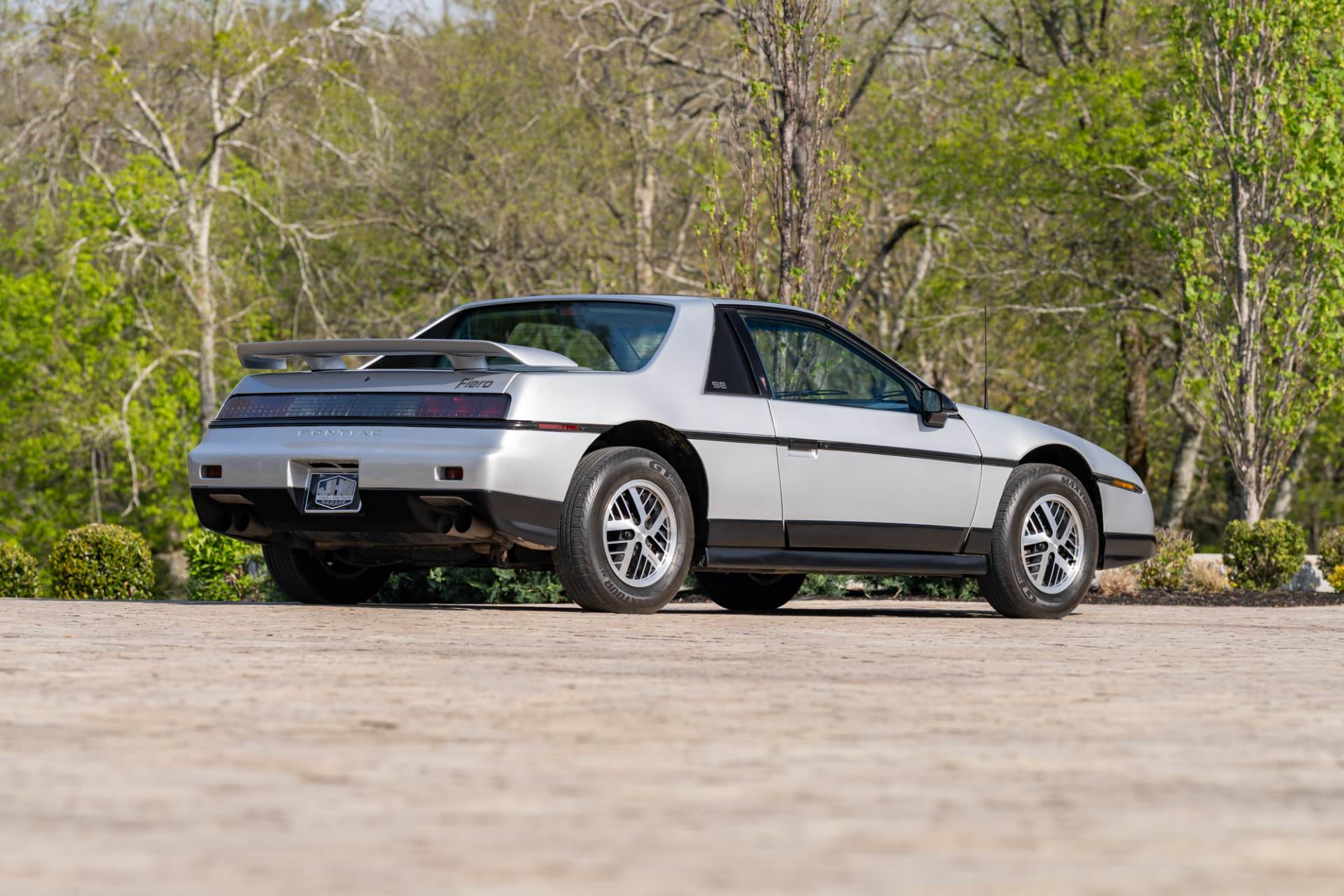
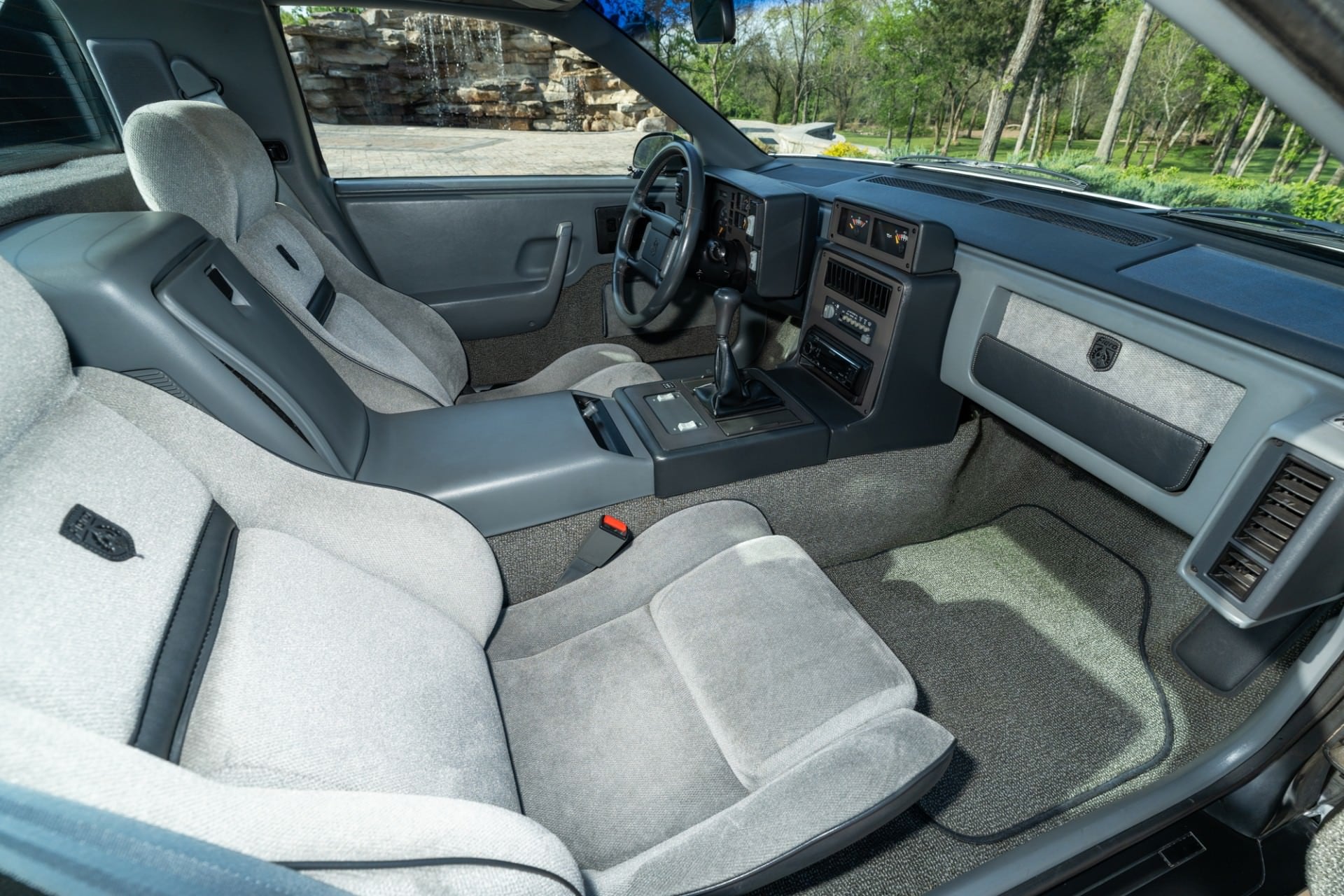
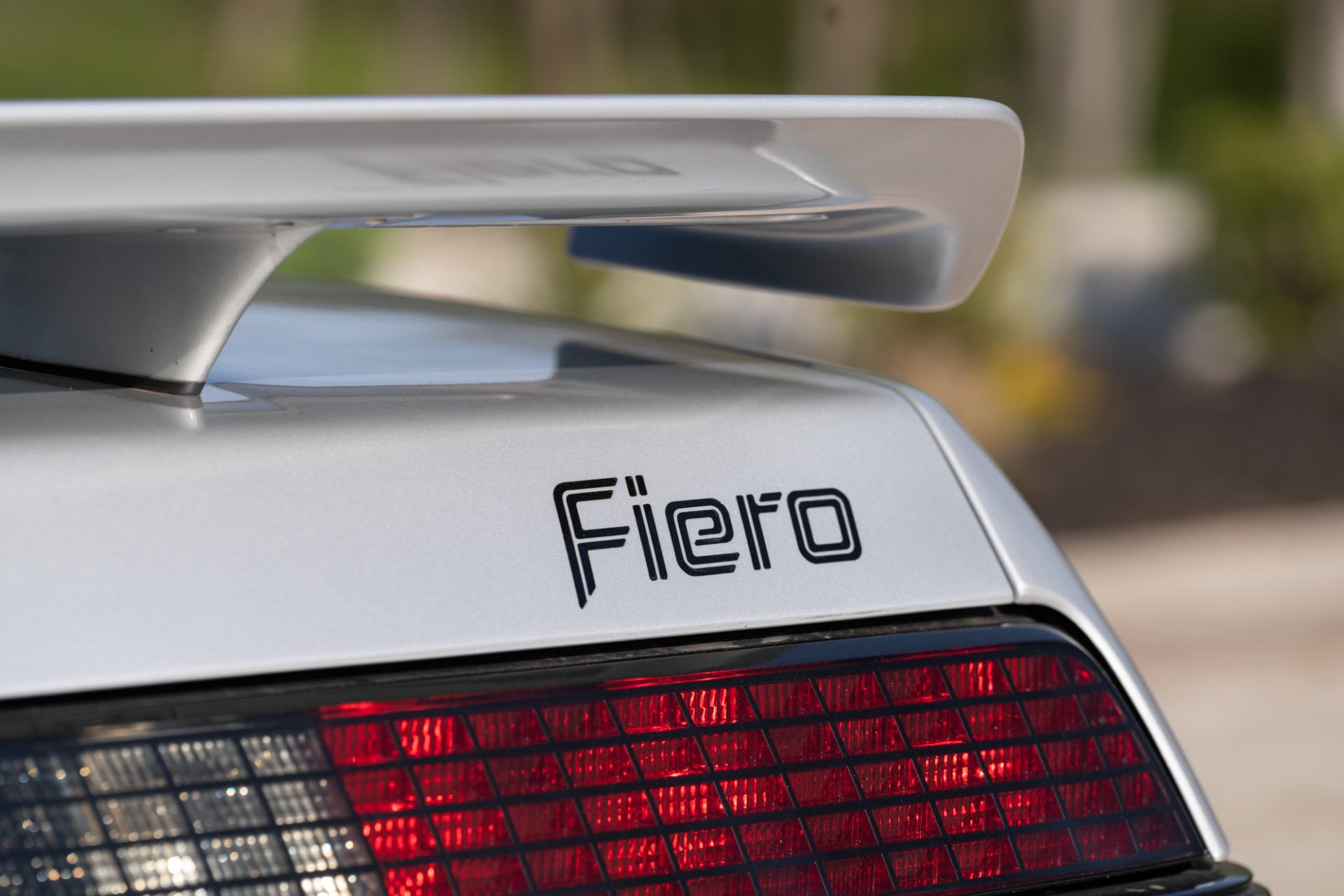
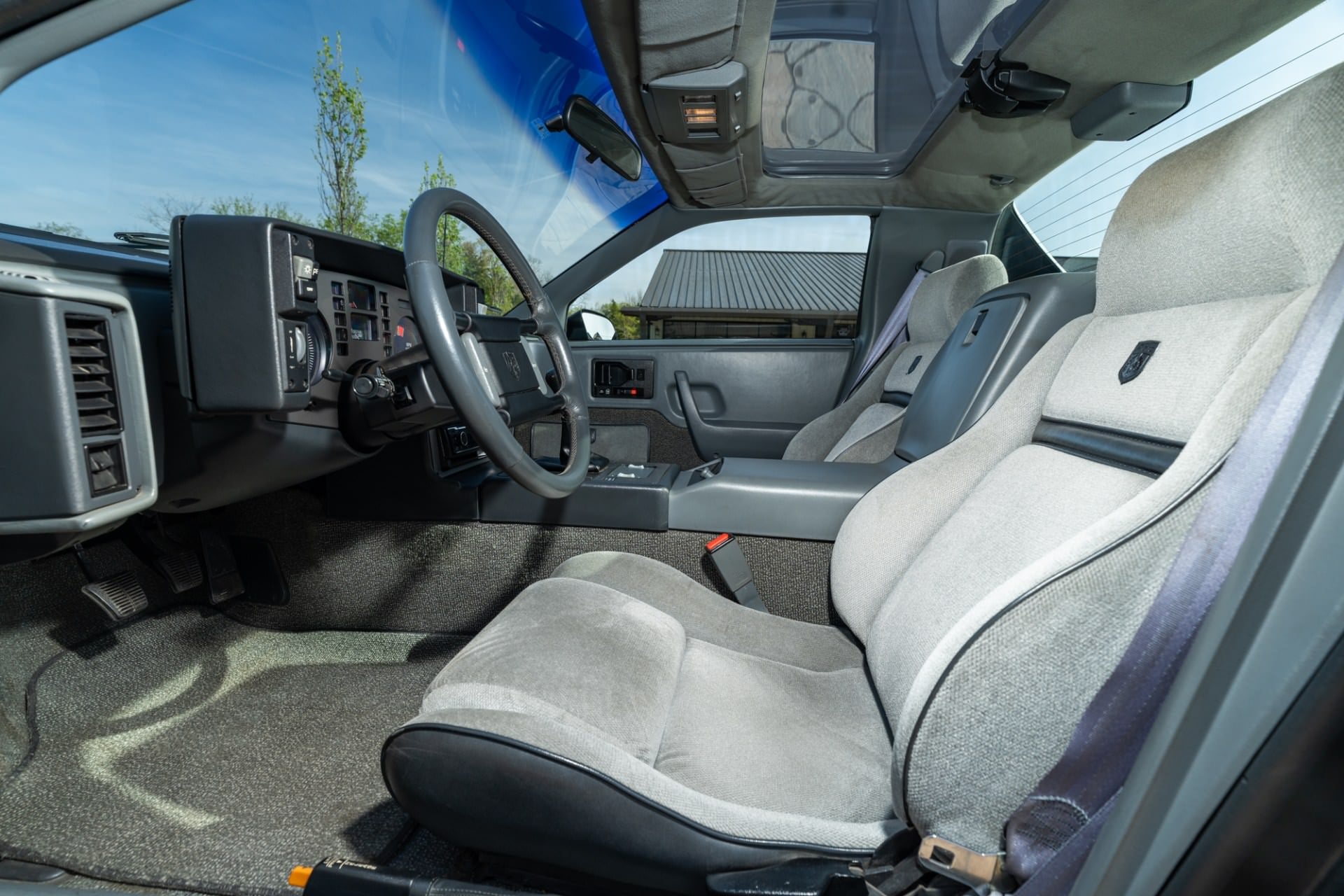
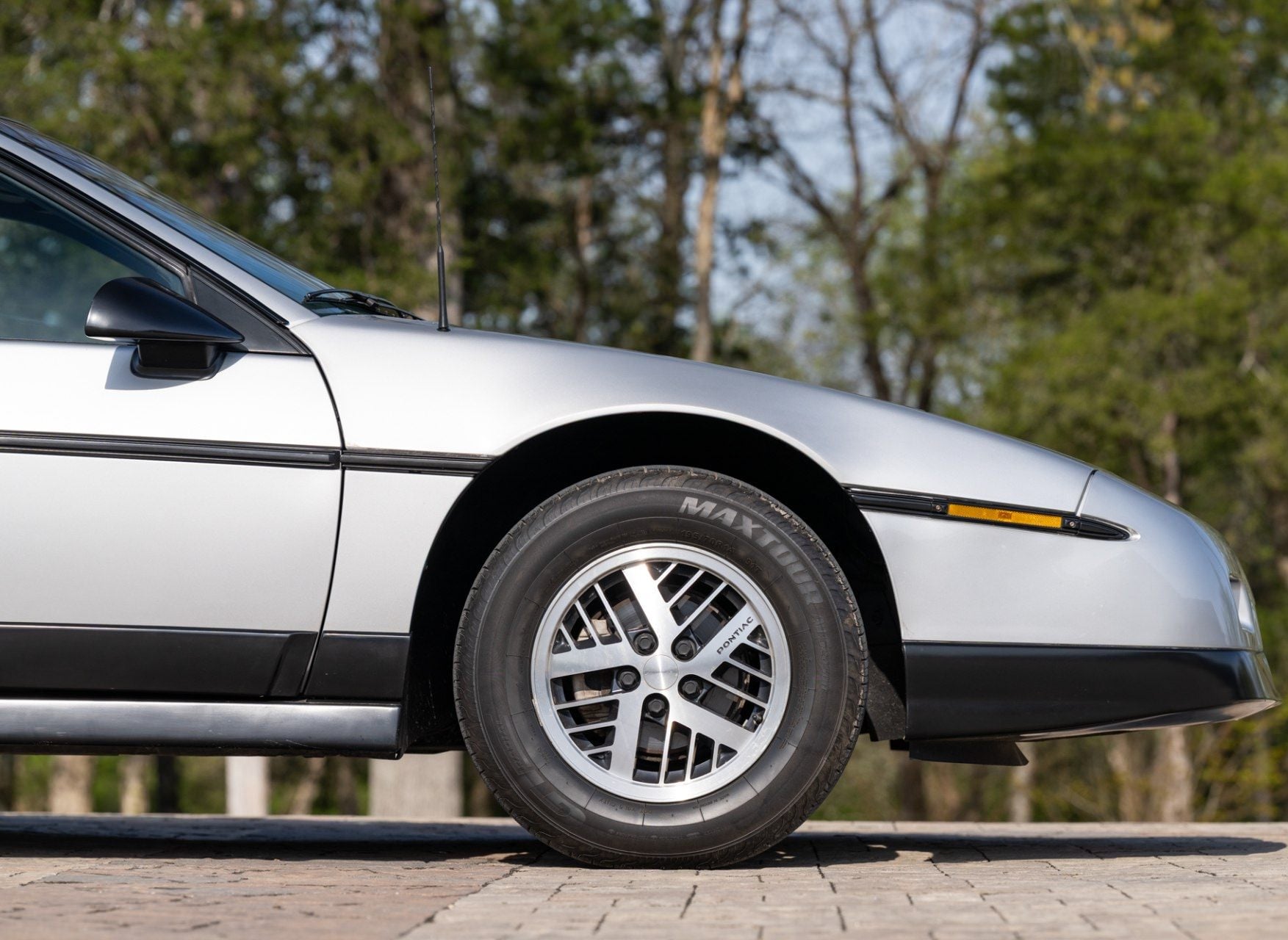
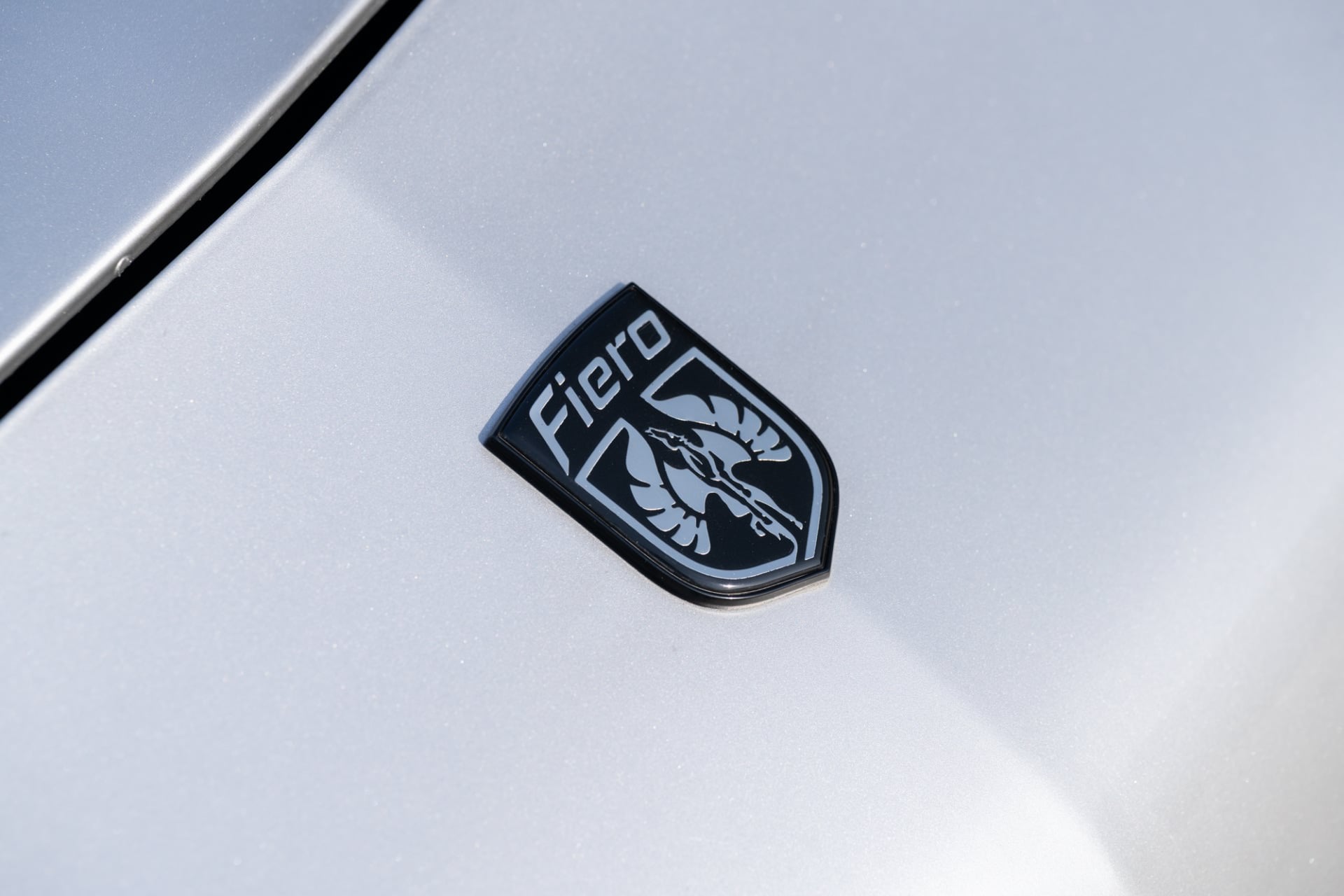
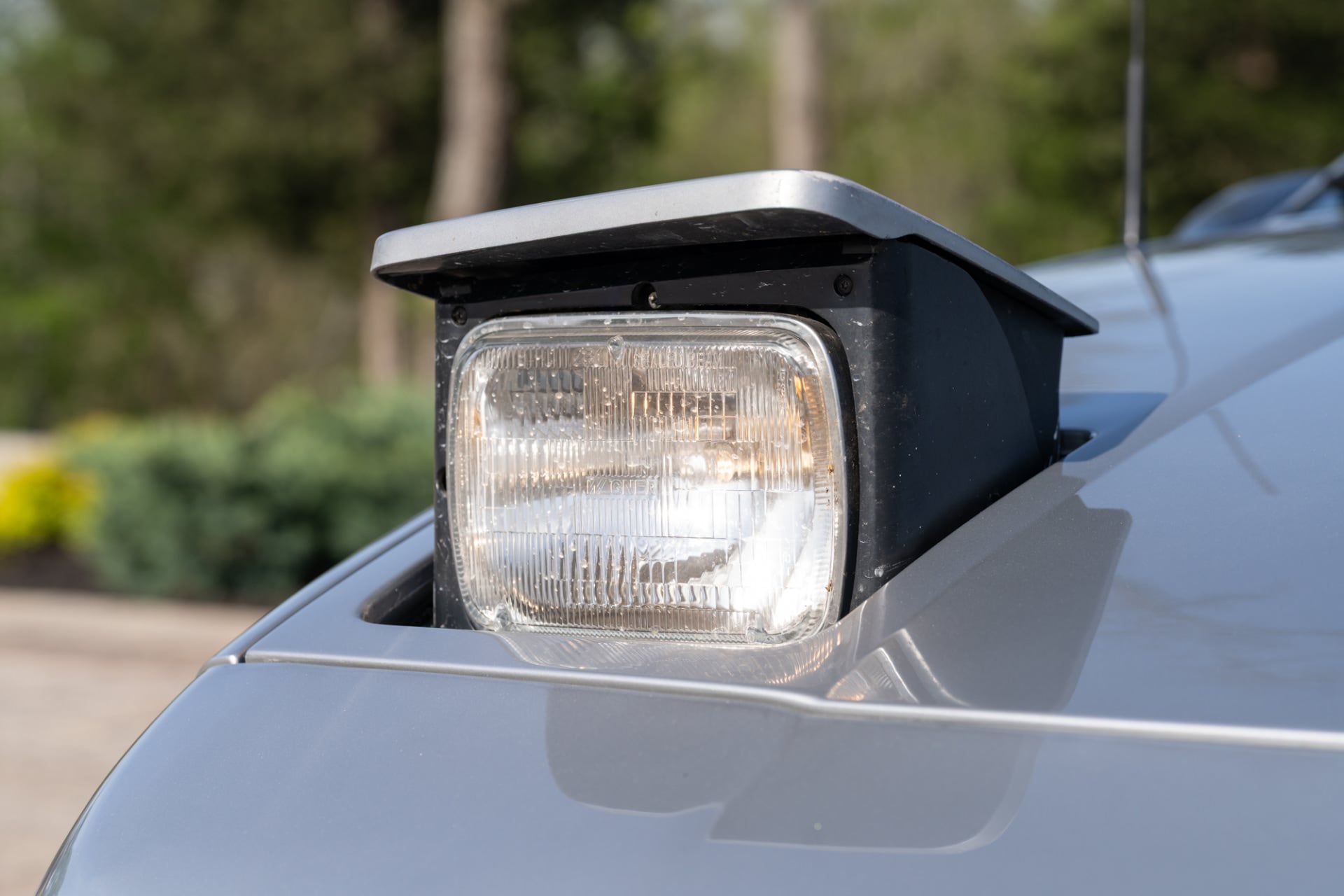
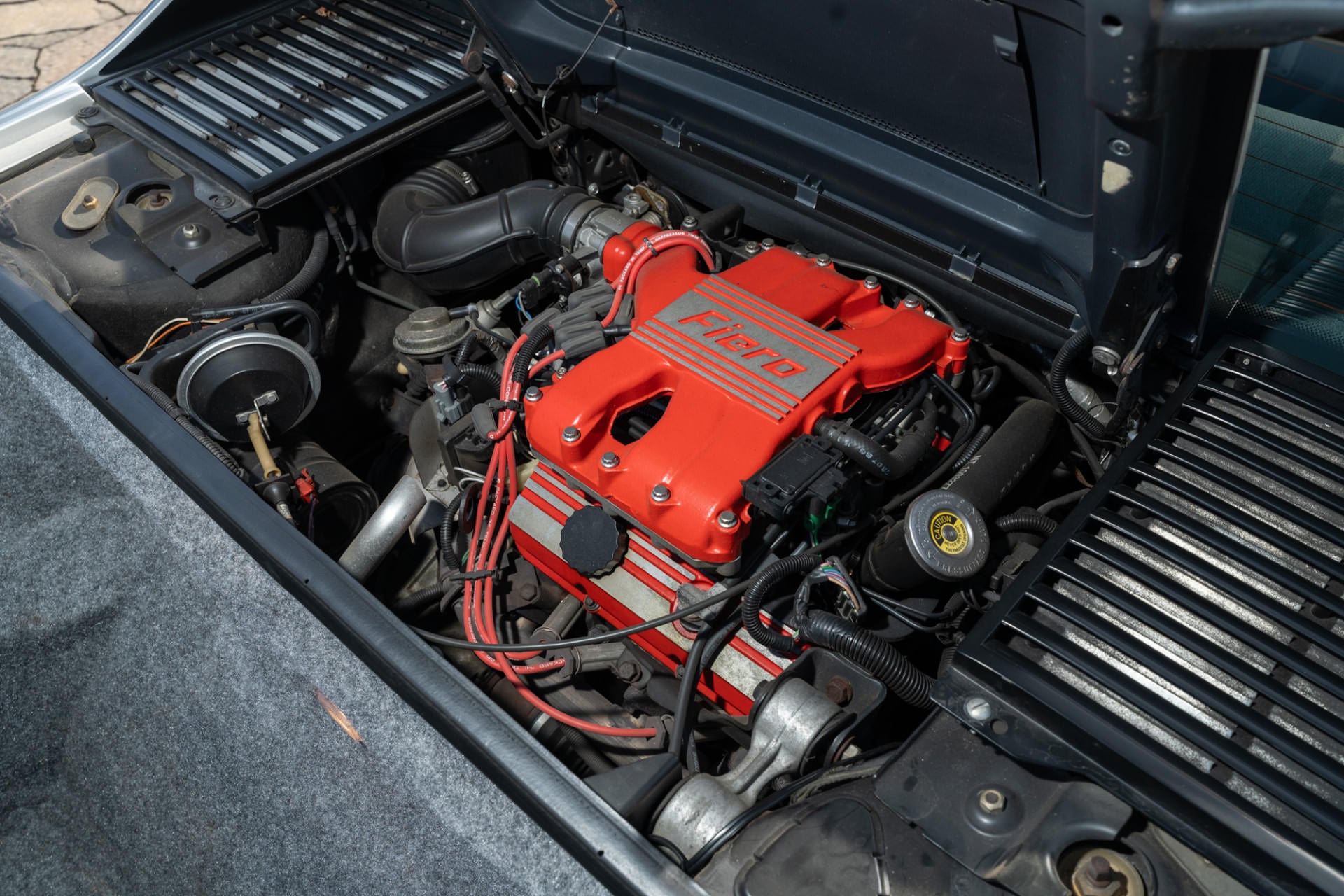
This 1987 Pontiac Fiero SE is a notchback model finished in silver over a gray interior, showing just 5,684 miles on the odometer since new. It’s presented in unrestored, highly original condition throughout and it’s powered by the 2.8 liter V6 paired with a 5-speed manual transmission – this was the drivetrain combination most enthusiasts consider the one to have.
The SE occupied the middle ground in the Fiero lineup, slotting in above the base model with upgraded interior trim, better instrumentation, and additional standard equipment, but keeping the original notchback roofline rather than the fastback body introduced on the GT.
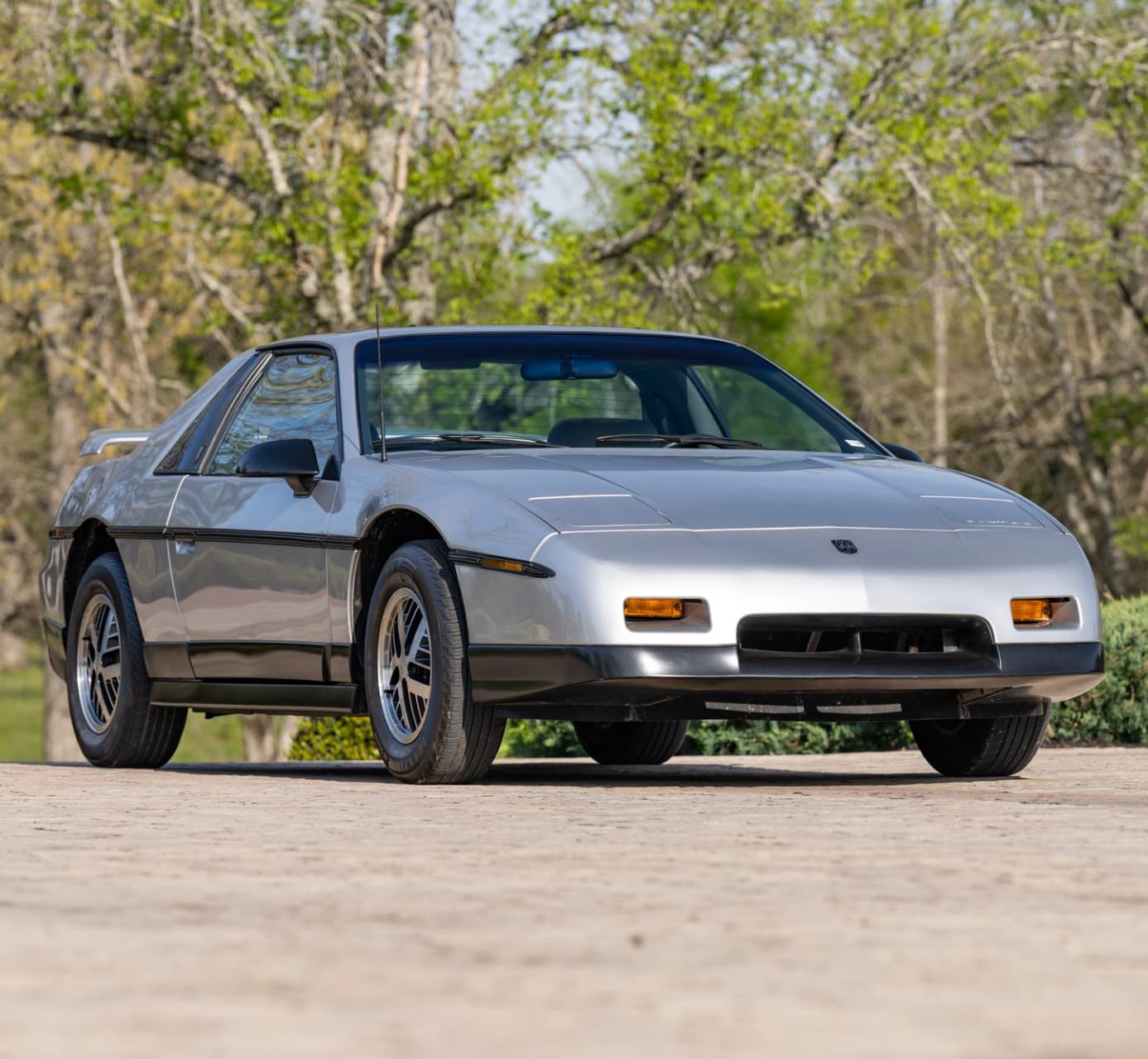
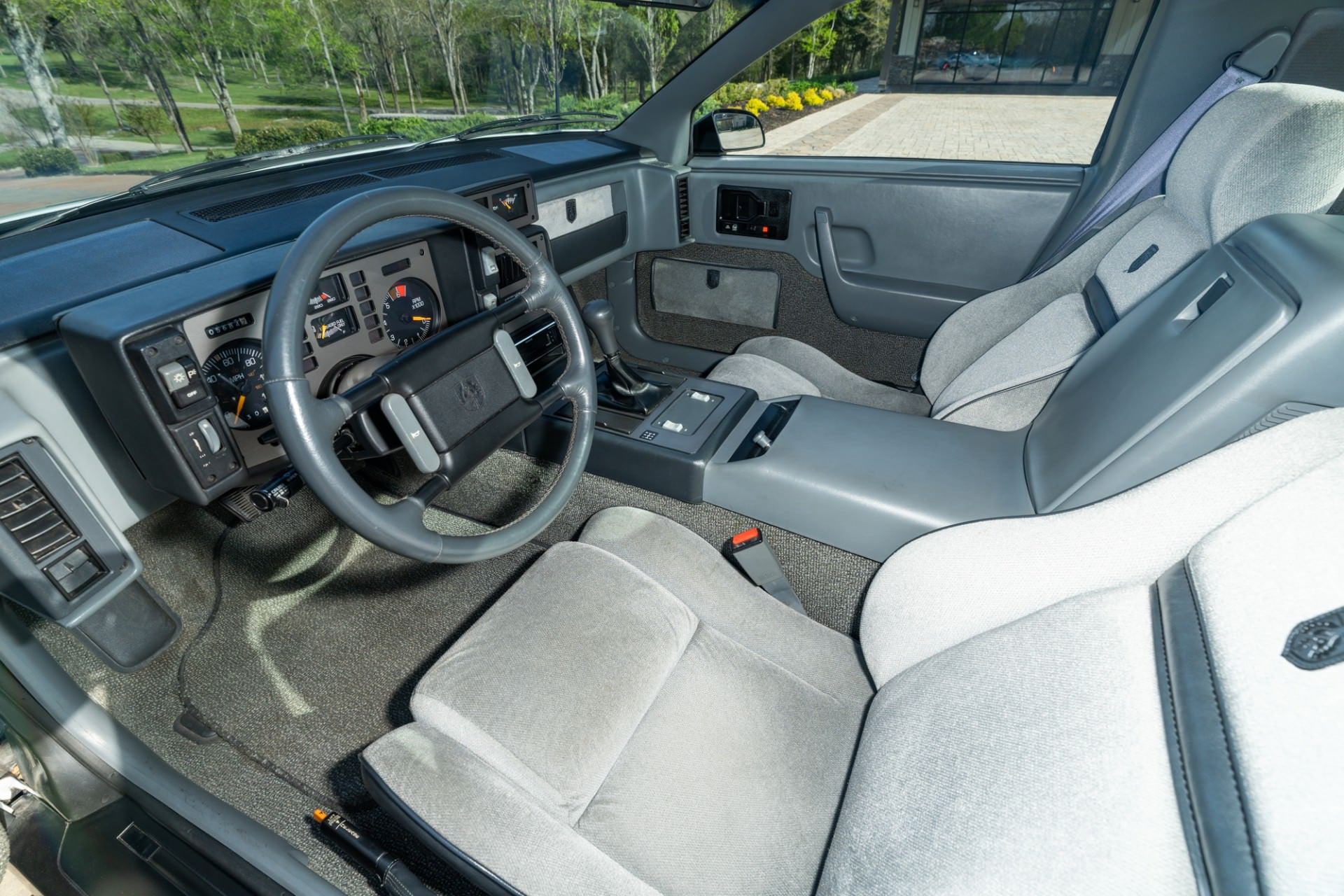
This 1987 Pontiac Fiero SE is a notchback model finished in silver over a gray interior, showing just 5,684 miles on the odometer since new. It’s presented in unrestored, highly original condition throughout and it’s powered by the 2.8 liter V6 paired with a 5-speed manual transmission – this was the drivetrain combination most enthusiasts consider the one to have.
Equipped with the V6 and the 5-speed manual, the SE offered a distinctly different character from the more common and lower powered four-cylinder base cars. It was more responsive, better suited to highway cruising, and considerably more engaging to drive.
This Fiero SE is now due to roll across the auction block with Mecum in late-September. You can visit the listing here if you’d like to read more about it or register to bid.
Images courtesy of Mecum

Articles that Ben Branch has written have been covered on CNN, Popular Mechanics, Smithsonian Magazine, Road & Track Magazine, the official Pinterest blog, the official eBay Motors blog, BuzzFeed, Autoweek Magazine, Wired Magazine, Autoblog, Gear Patrol, Jalopnik, The Verge, and many more.
Silodrome was founded by Ben back in 2010, in the years since the site has grown to become a world leader in the alternative and vintage motoring sector, with well over a million monthly readers from around the world and many hundreds of thousands of followers on social media.