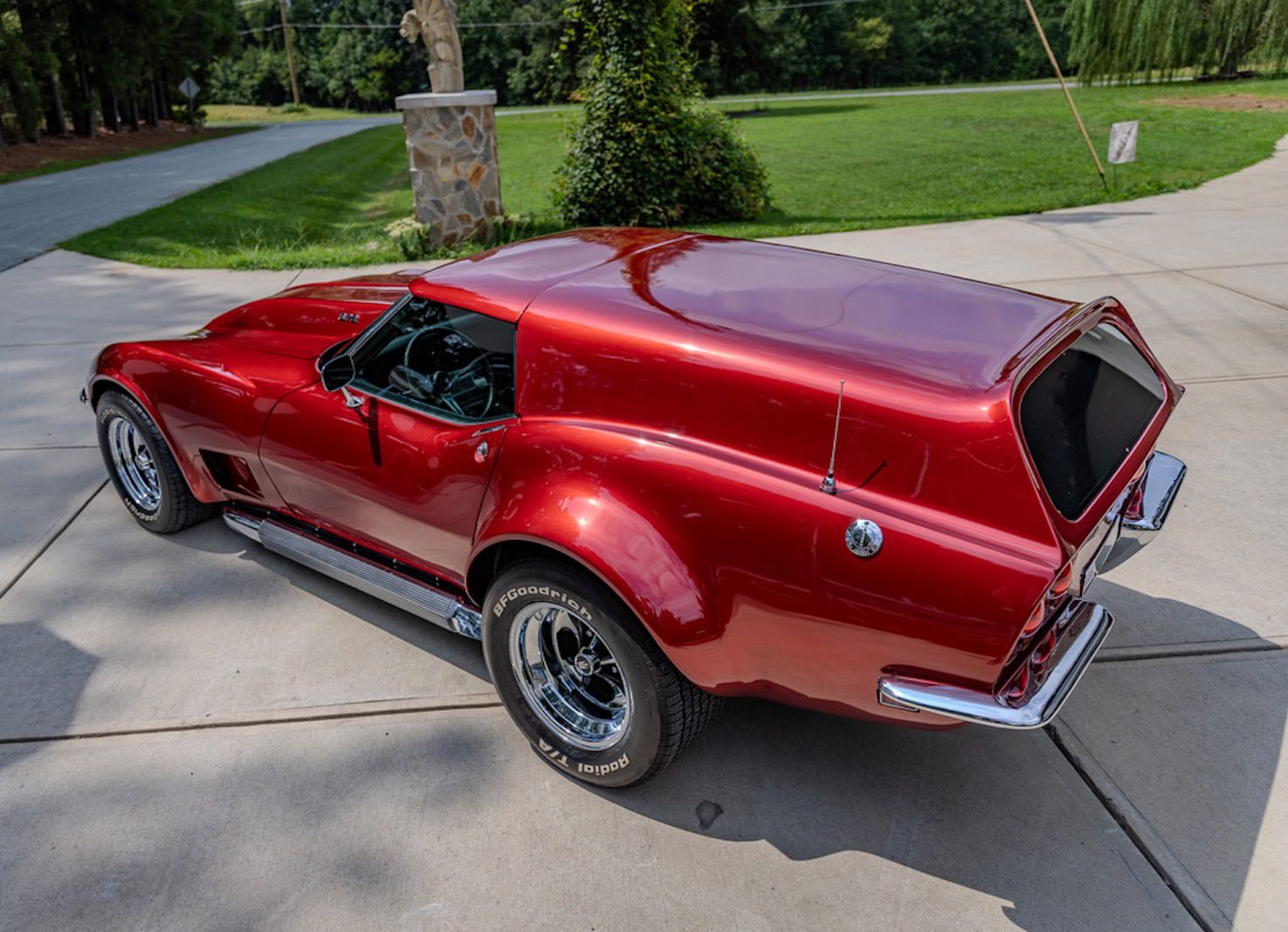
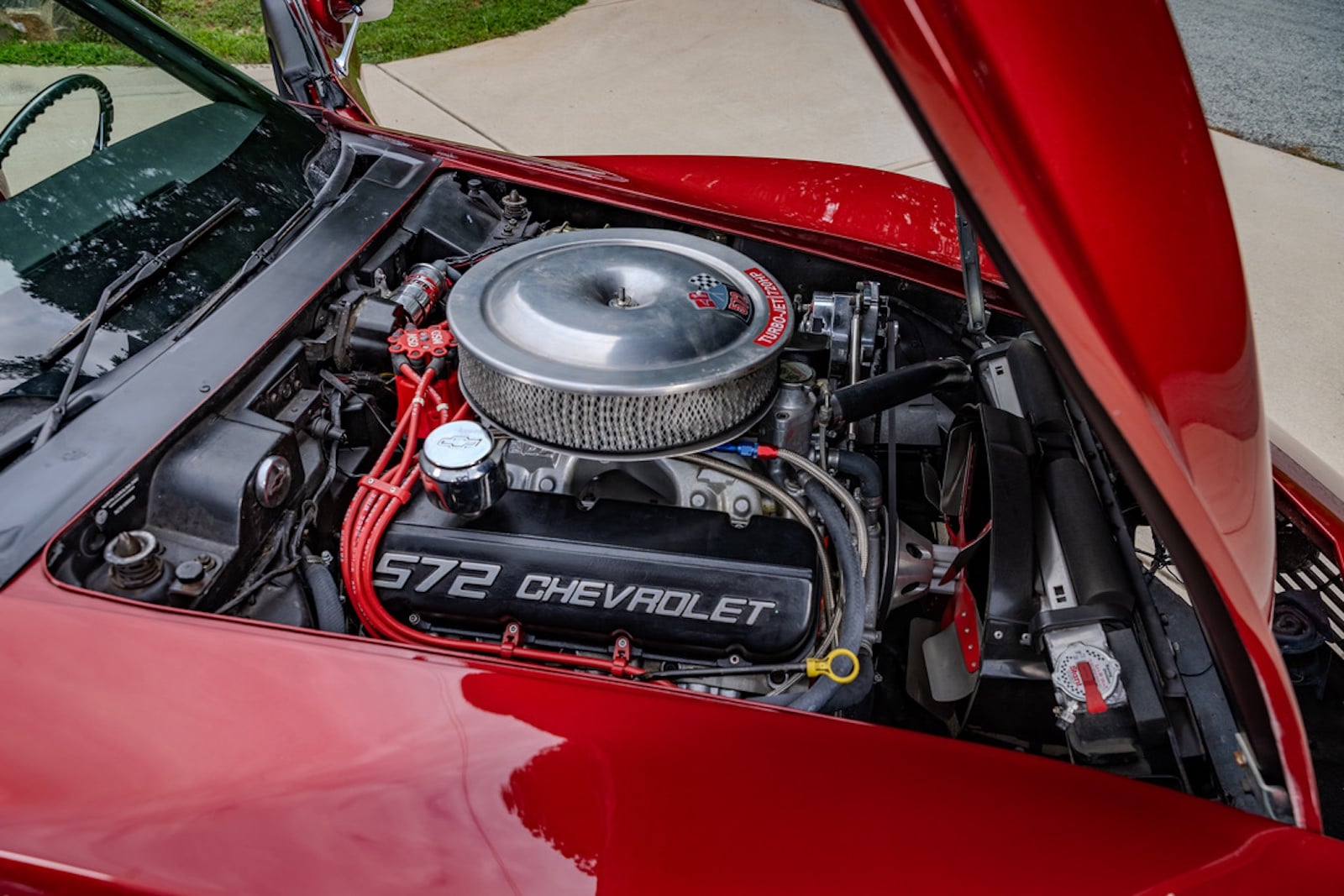
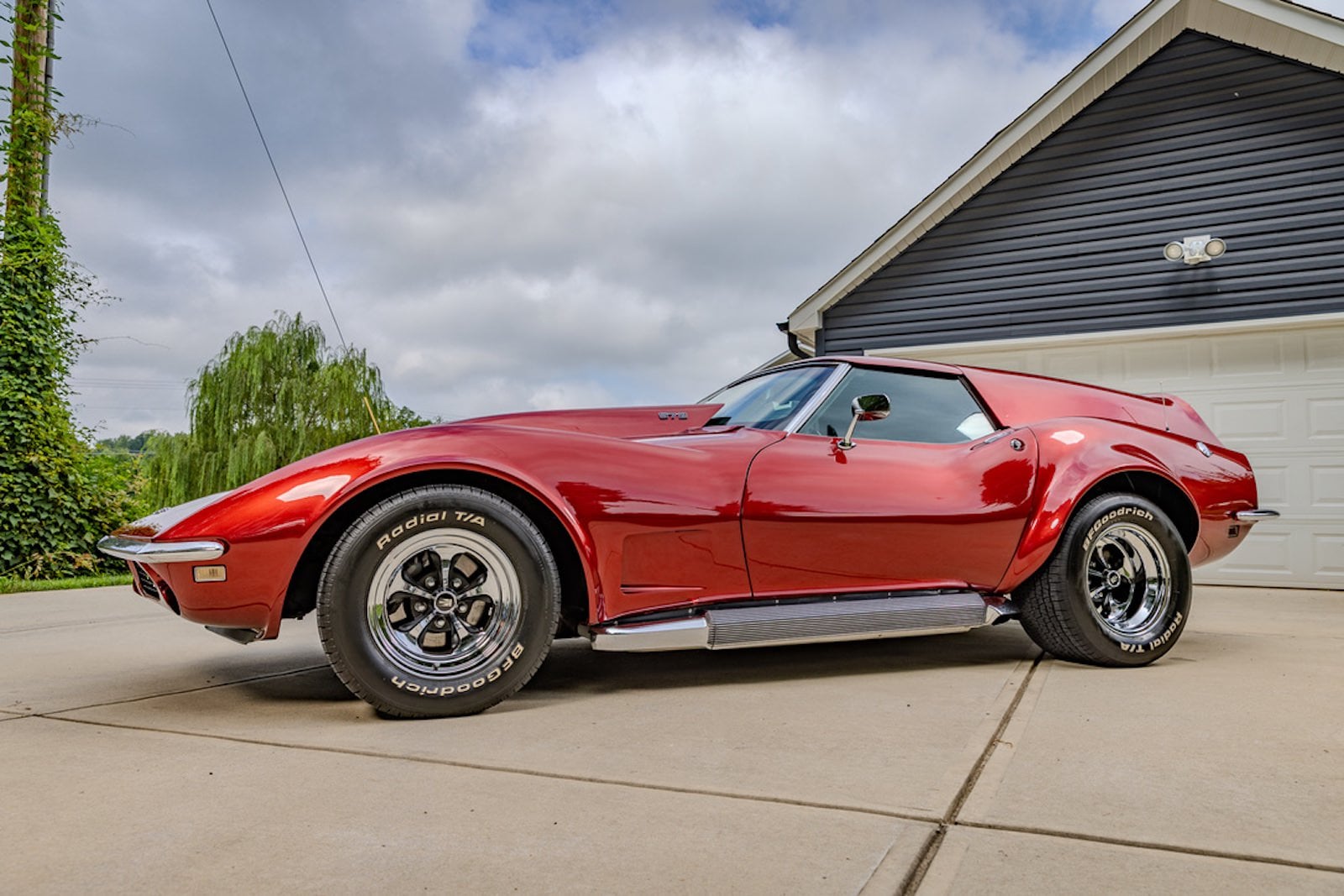
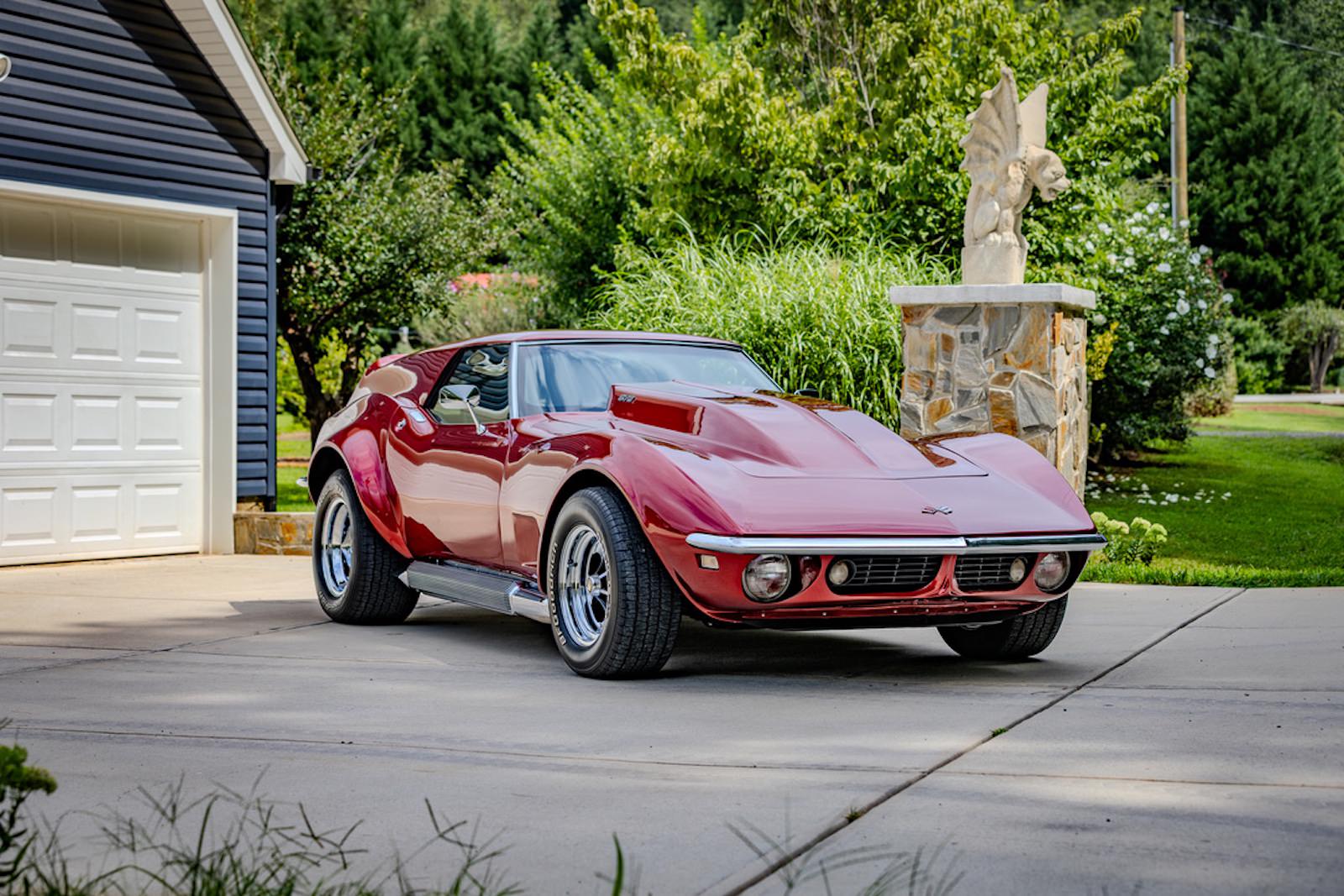
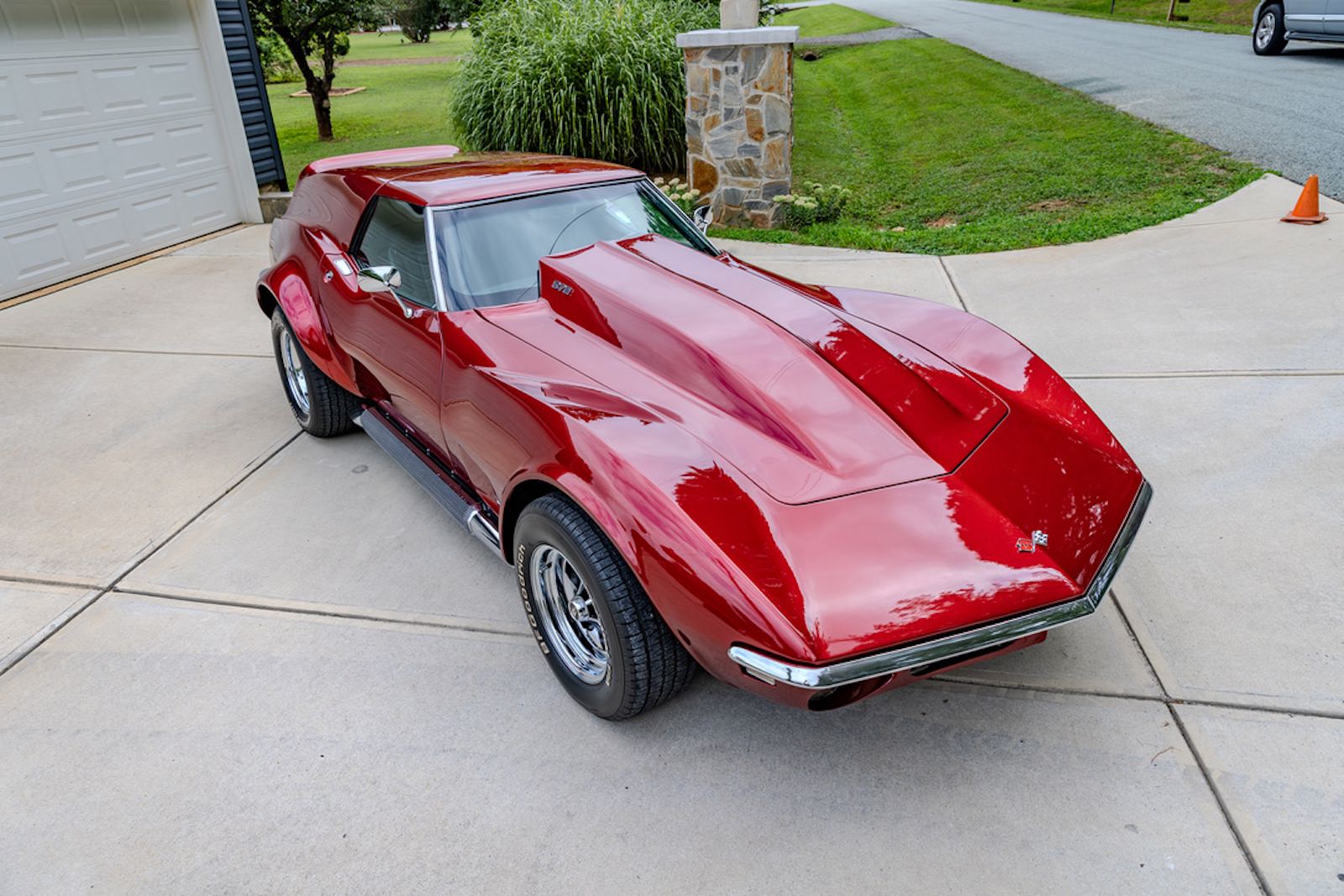
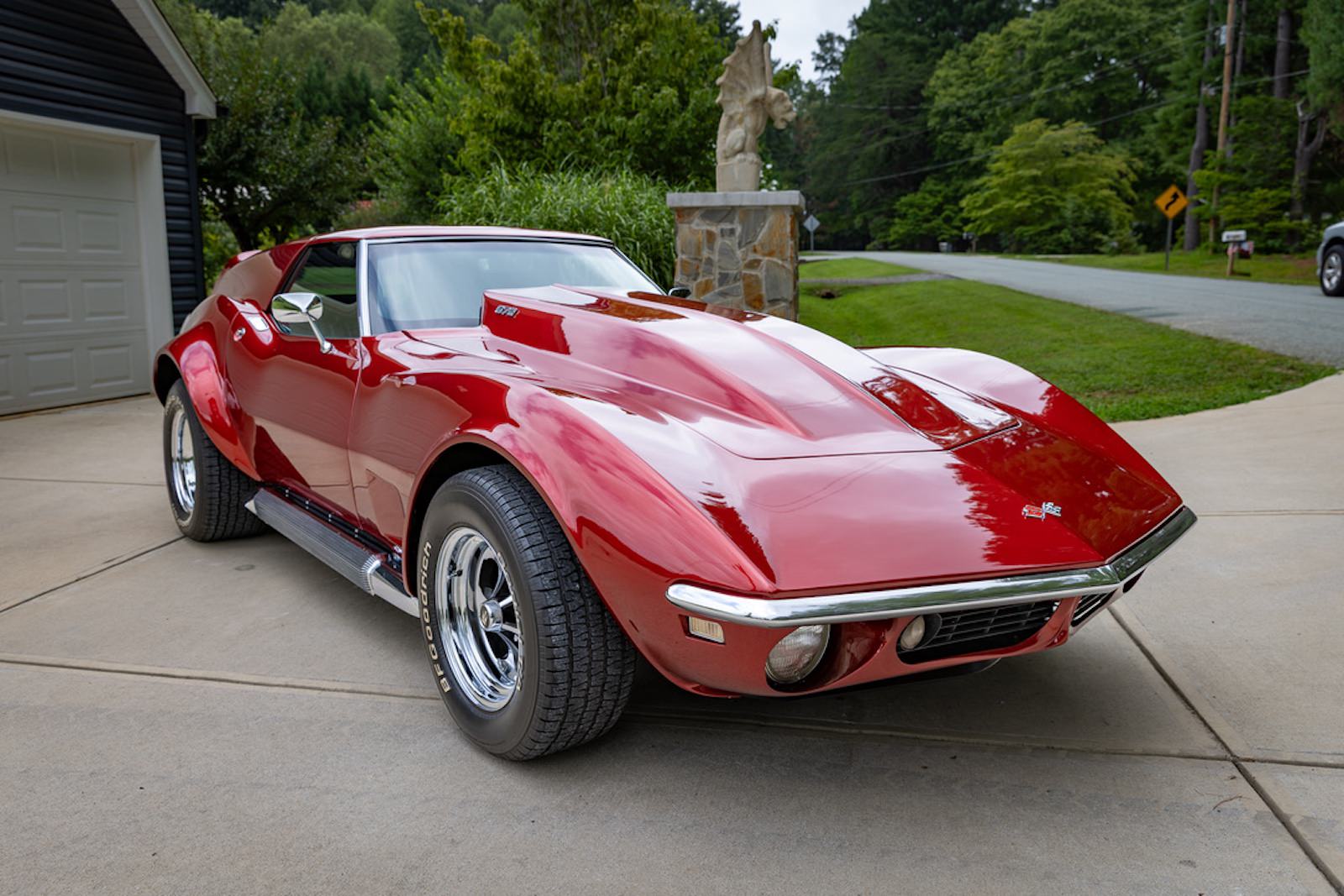
This is a 1968 C3 Chevrolet Corvette that now benefits from a few upgrades – the most significant of which is the 572 cubic inch (9.4 liter) ZZ 572 V8 under the hood, and the Sportwagon roof conversion, which makes the car surprisingly practical.
This engine is factory rated at 621 bhp at 5,400 rpm and 645 lb ft of torque at 4,200 rpm, a blistering amount of power regardless of which decade the car is from, and it does benefit from a slew of upgrades to the suspension, brakes, and driveline to better handle it.
Fast Facts: A 1968 Chevrolet Corvette “Sportwagon”
- The Corvette Sportwagon idea began back in 1971 when Motown drummer Uriel Jones asked customizer Chuck Miller to make his 1968 Corvette more practical for carrying his drum kit around town. Miller and designer Harry Bentley Bradley created a fiberglass shooting-brake conversion, and Jones’ finished “Drum Buggy” won at the Detroit Autorama.
- National publicity led Miller to offer Sportwagon conversions as completed cars and kits. Ralph Eckler later produced higher-quality molds and sold the kit through his catalog, which is why many C3 Corvette wagons became known as Eckler’s Wagons. Later versions were given opening rear hatches which made them even more practical.
- John Greenwood’s firm redesigned the Sportwagon in 1976 to better suit later plastic-bumper C3 Corvettes. The revised body followed the T-top roofline and incorporated a lifting rear hatch. Production numbers were very low, with surviving estimates suggesting roughly 15 to 25 Greenwood-style wagons and period conversions.
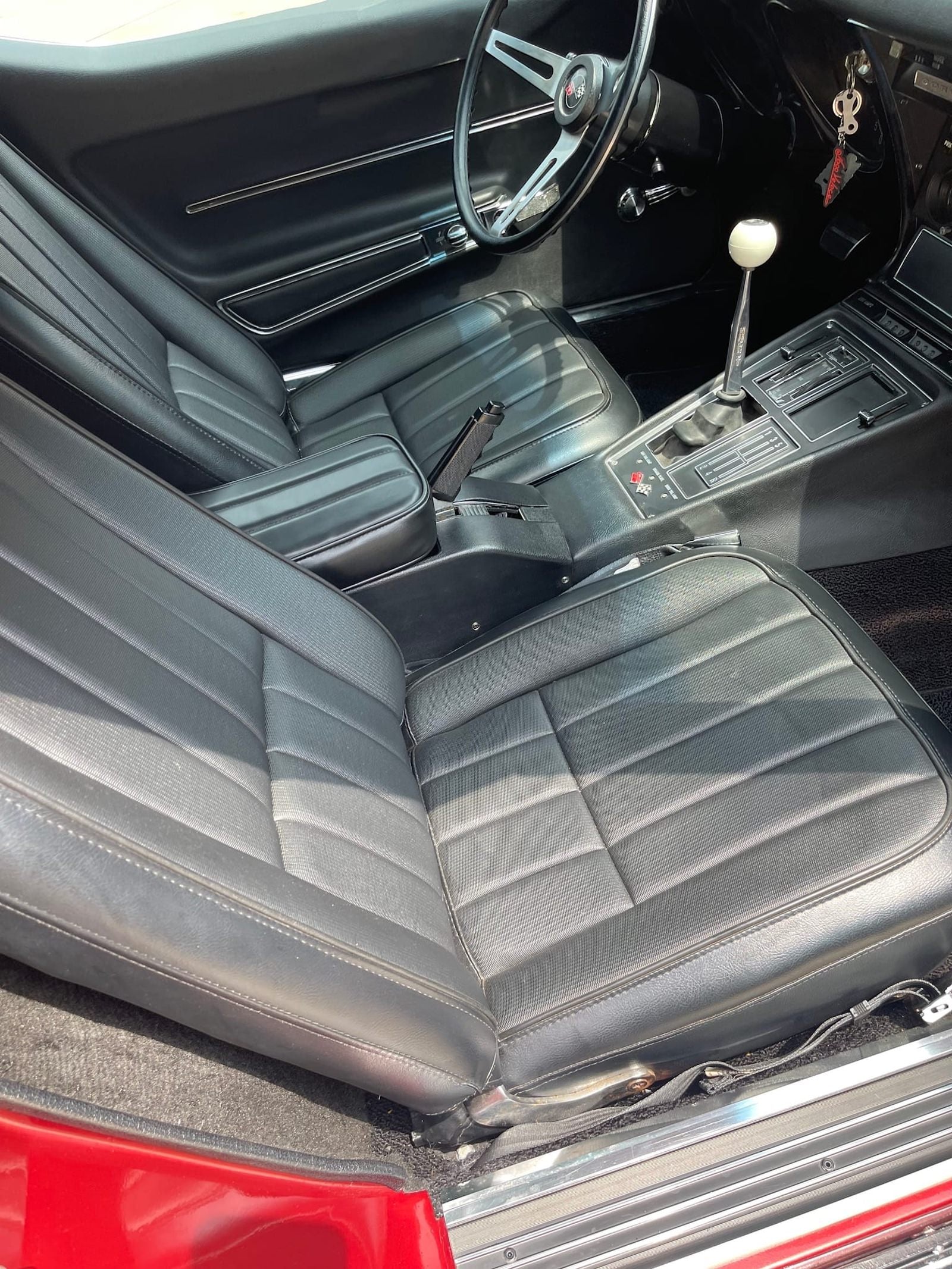
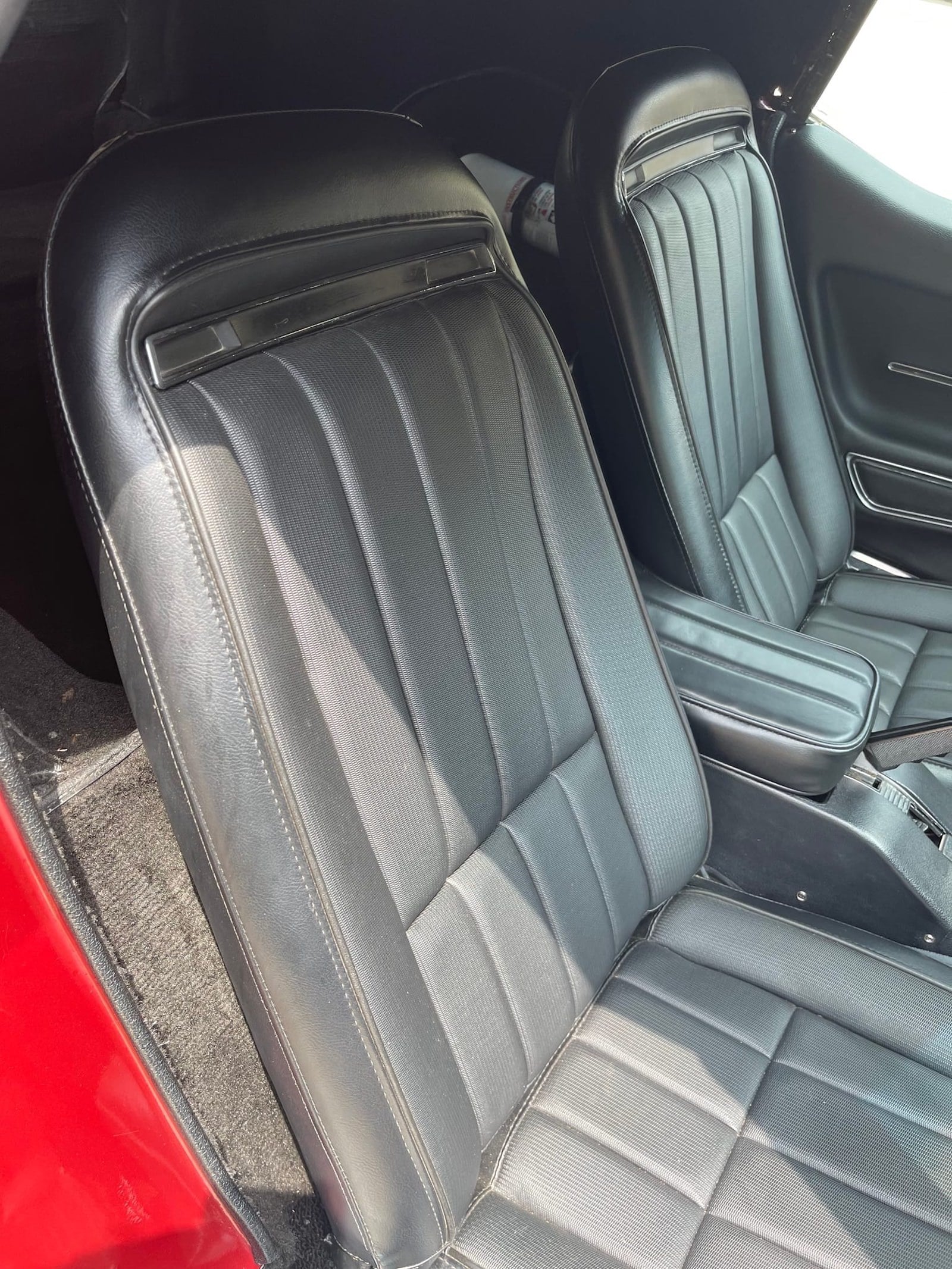
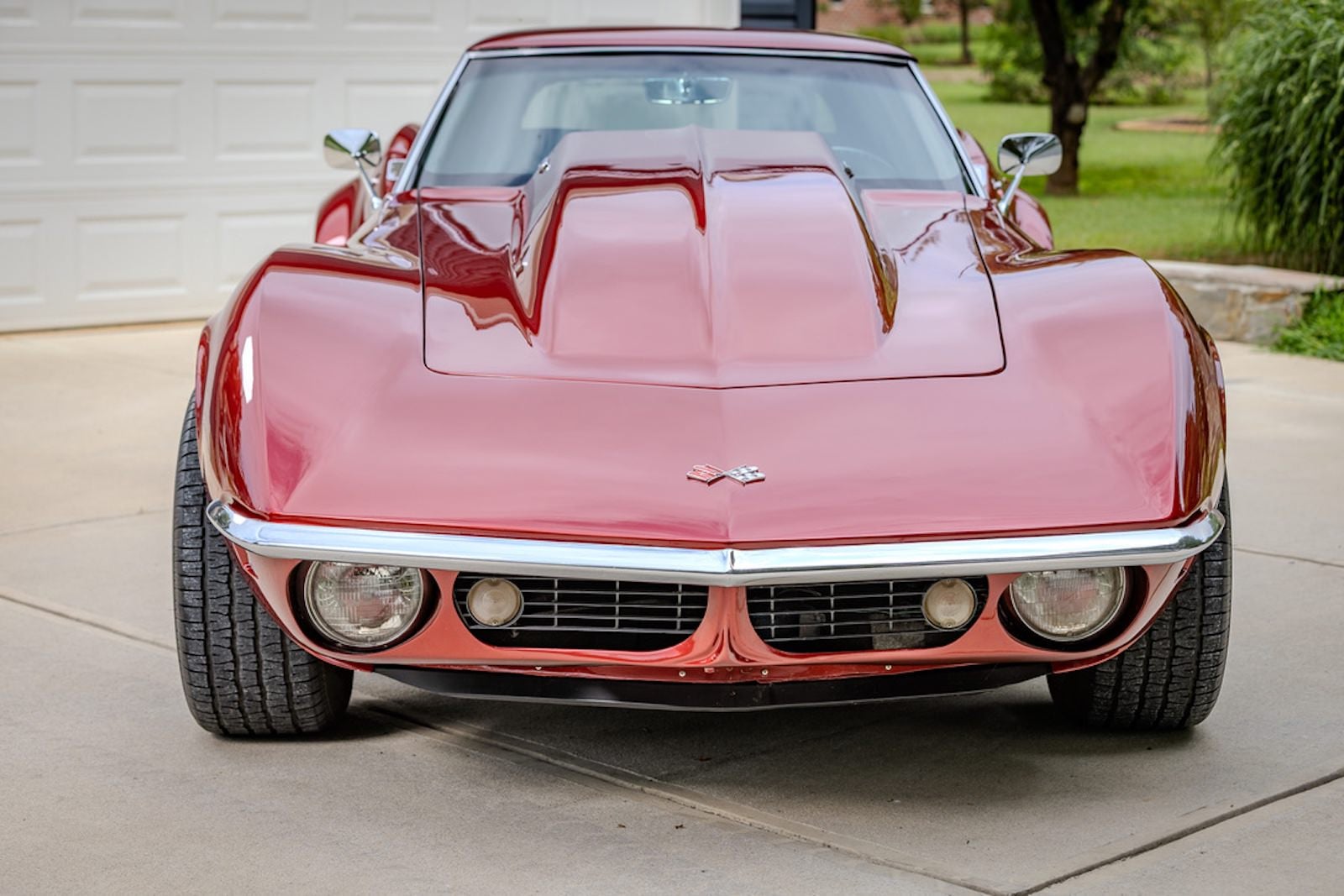
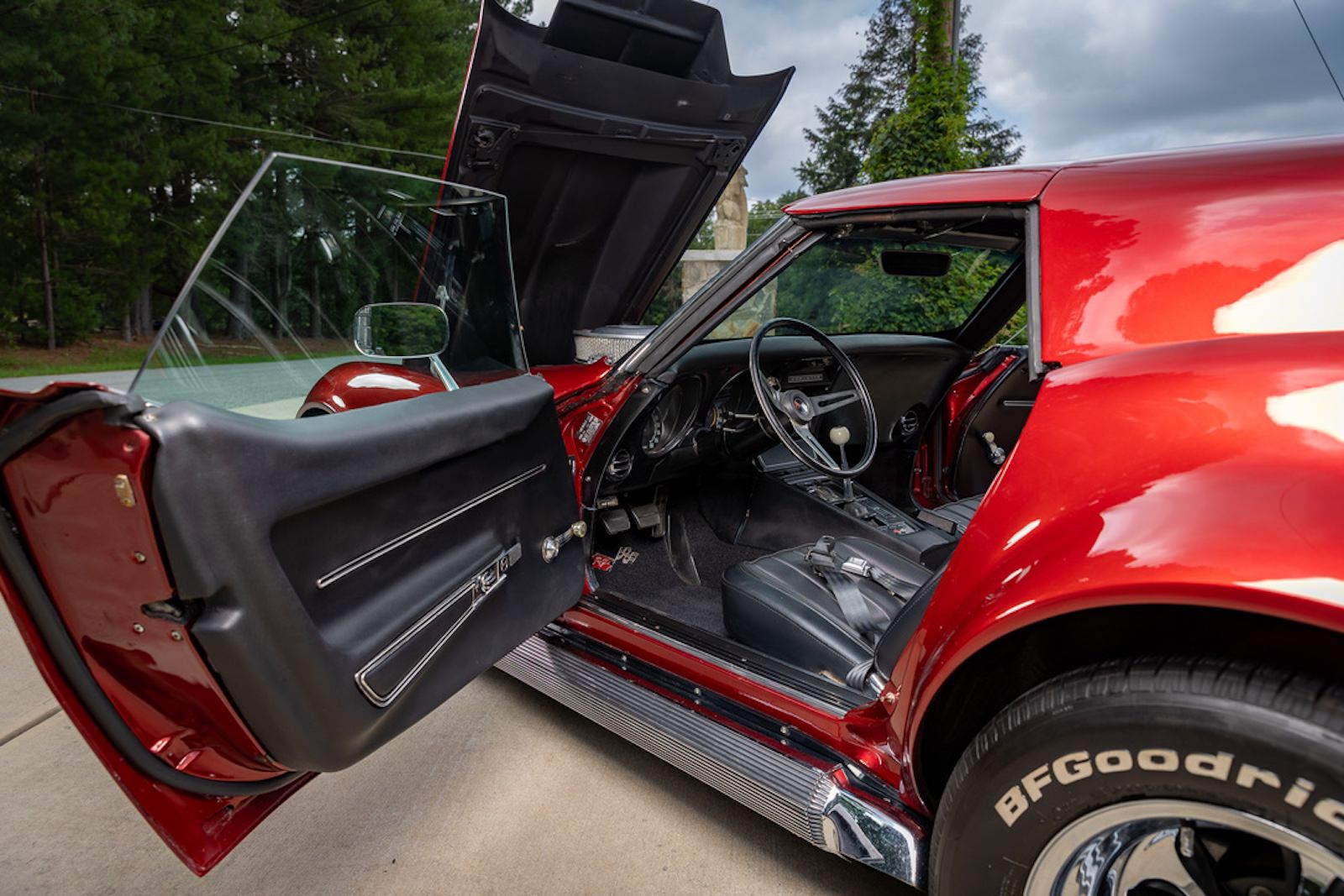
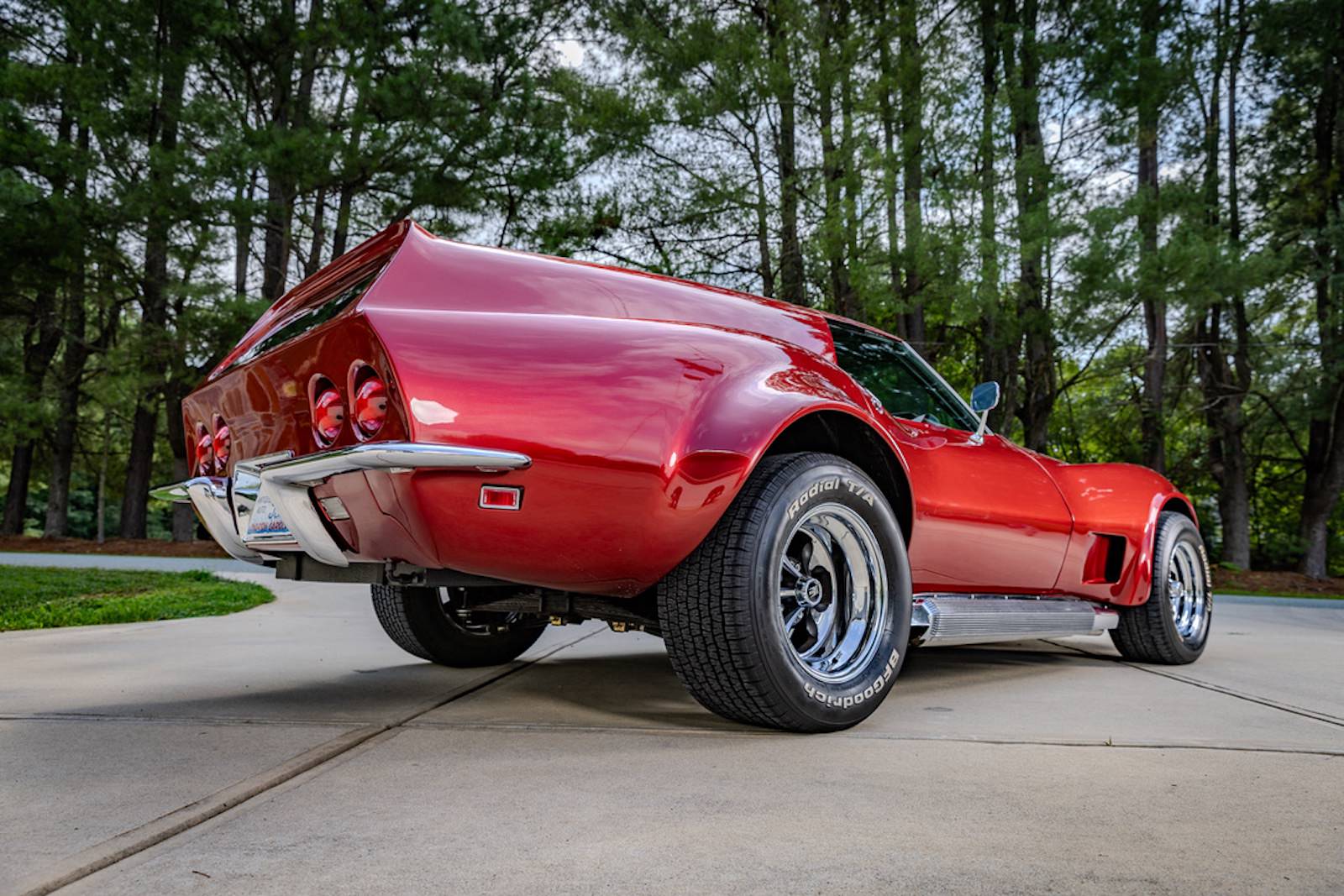
- The 1968 Corvette you see here started out as a convertible and now has an Eckler’s-style Sportwagon roof, flared rear fenders, fixed headlights, Keystone wheels, and side exhausts. Its 572 cubic inch ZZ572 V8 drives through a Richmond 5-speed manual, it has four-wheel disc brakes and a slew of mechanical upgrades.
History Speedrun: The Chevrolet Corvette Sportwagon
Funnily enough, the Chevrolet Corvette Sportwagon owes its existence to a drummer named Uriel Jones, he was a percussionist with the Funk Brothers, Motown’s in-house studio band, and he owned a 1968 Corvette convertible that spent most of its time parked because his drum kit wouldn’t fit in it.
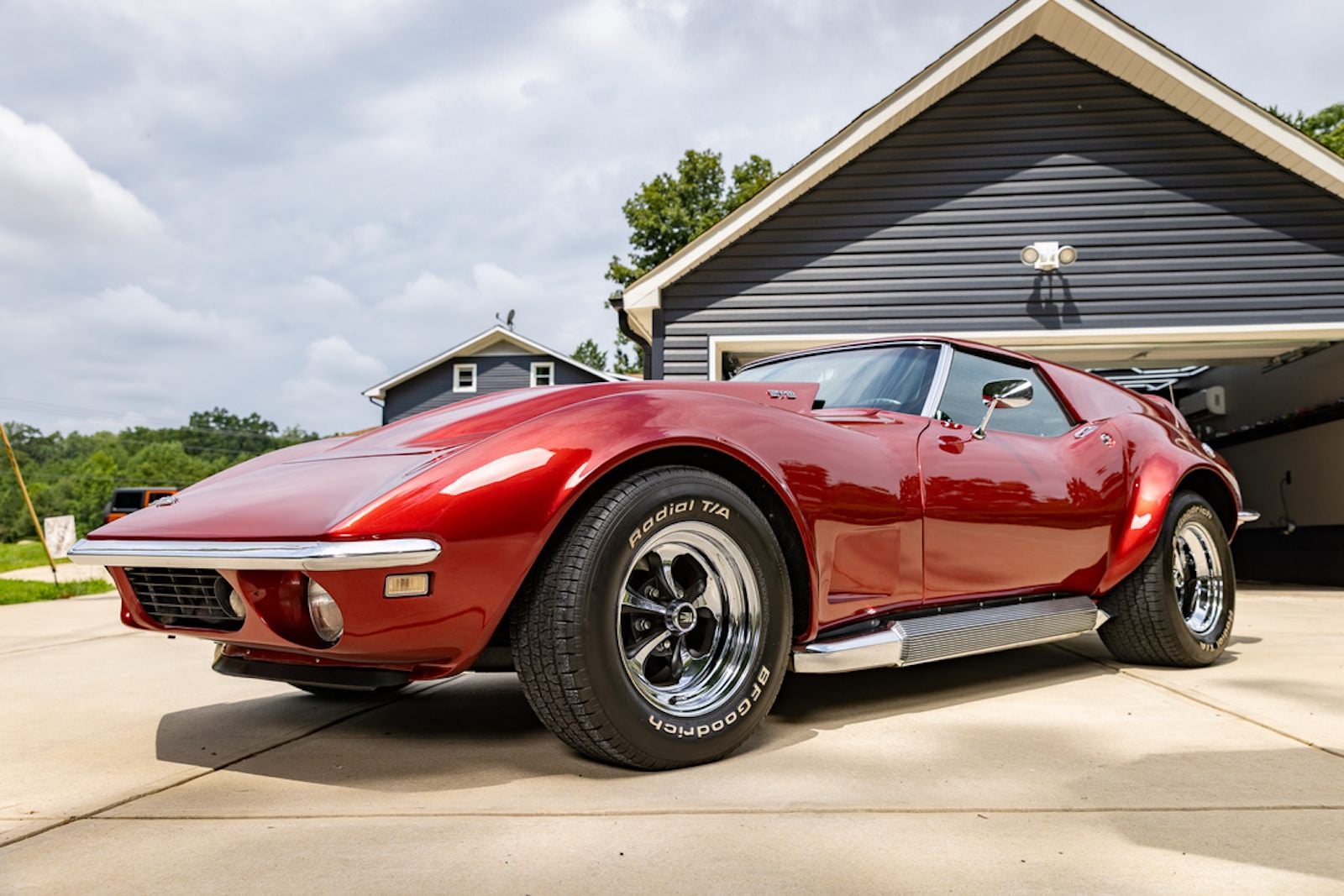
 This is a 1968 C3 Chevrolet Corvette that now benefits from a few upgrades – the most significant of which is the 572 cubic inch (9.4 liter) ZZ 572 V8 under the hood, and the Sportwagon roof conversion, which makes the car surprisingly practical.
In early 1971 Jones asked Chuck Miller, who ran the Detroit-area shop Styline Customs, whether anything could be done. Miller’s unconventional answer was to turn the car into a station wagon, or a shooting brake to use an older term for a two-door car with a wagon rear-end.
Shooting brakes had been invented over in England before the Second World War, they were exclusively owned by the wealthy, who used them on hunting trips as they allowed all the guns to be laid out in the rear, along with ammunition, sherry, and sandwiches of course.
The main problem with the project to make Jones’ C3 a little more capable of hauling drums was baked into the structure of the car. Introduced for the 1968 model year, the C3 had no opening trunk lid, and cargo had to be fed in behind the seats through the doors. Chevrolet’s own remedy for this was a dealer-accessory rear-deck luggage rack.
A larger wraparound rear window arrived on the coupe in 1978, but it remained fixed in place, and a factory lifting glass hatch didn’t appear until the 1982 Collector Edition.
Miller had already won the prestigious Ridler Award at the 1968 Detroit Autorama with his Fire Truck Engine Co. No. 13 show car. For the Corvette wagon he turned to Harry Bentley Bradley, an industrial designer who’d spent four years in the GM styling department before becoming one of the principal designers of Mattel’s original Hot Wheels line.
The team at Styline Customs shaped a clay model, pulled plaster molds from it, and laid up the fiberglass panels by hand. Jones’ finished car, nicknamed the “Drum Buggy,” took first place at the Detroit Autorama and was featured in the July 1972 issue of Car and Driver magazine.
All of this publicity resulted in a lot of people realizing they wanted one too, orders followed, and Miller offered the conversion either as a turnkey car or as a kit containing the roof section, a floor extension, Plexiglas windows, and stainless trim.
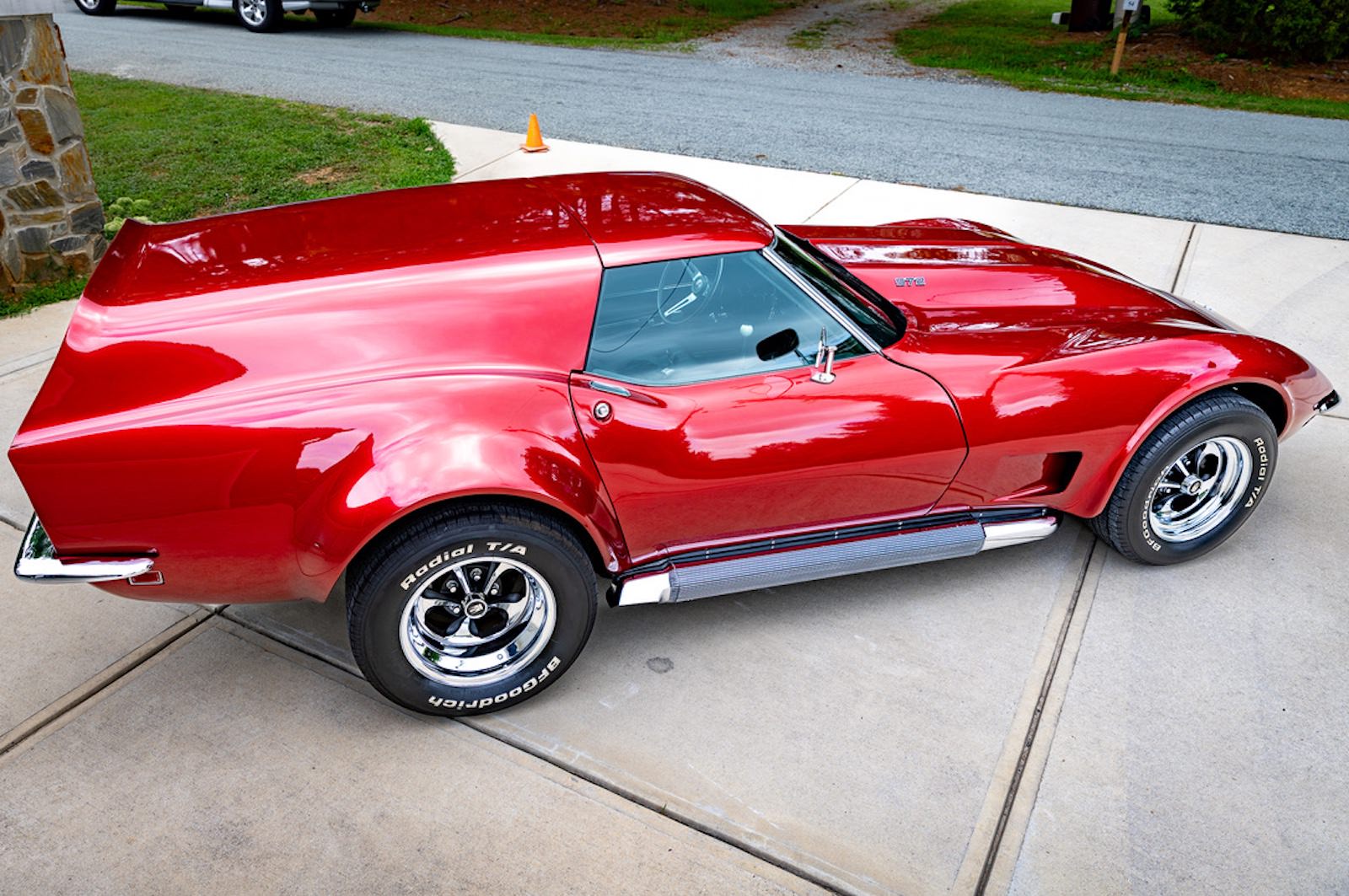
The Corvette Sportwagon began in 1971 when Motown drummer Uriel Jones asked customizer Chuck Miller to make his 1968 Corvette more practical for carrying his drum kit. Miller and designer Harry Bentley Bradley created a fiberglass shooting-brake conversion, and Jones’ finished “Drum Buggy” won at the Detroit Autorama.
The installation process was not trivial in the slightest, the standard C3 fuel tank sat upright behind the cabin, so it had to be relocated down into the spare-tire carrier area – it was recommended that a Mustang tank be used for cars with side pipes and a narrower Vega-type tank for under-car exhausts, with the filler moved behind the license plate.
Miller later estimated that he built 10 to 12 wagons for customers and several more for himself, and he sold kits in far greater numbers. To meet demand he struck a deal with Ralph Eckler, whose company made production-grade molds from Miller’s coupe conversion, supplied parts exclusively to Miller for a year, then added the kit to its own catalog.
Eckler’s reach was such that C3 wagons are still widely called “Eckler’s Wagons.” The early cars kept a fixed rear window, so cargo still went in through the doors. A version without side glass was sold as the Panelwagon, while later Miller builds had an opening glass hatch and side windows that curved up onto the roof. He called those “Vista Cruisers,” after the Oldsmobile.
The Greenwood Redesign
Miller’s design suited the Kamm-tail cars of 1968 to 1973, which kept their chrome rear bumpers to the last, but it sat awkwardly on the urethane rear end introduced in 1974. In 1976 the operation of Corvette racer and constructor John Greenwood redesigned the wagon for these later cars. The new roofline continued the slope and curvature of the T-tops, the tail angle matched the new bumper, and a proper lifting hatch finally allowed loading from the rear.
The prototype debuted at the 1976 SEMA Show in Anaheim and drew enough orders that kits went into production through Eckler’s and American Custom Industries. Official kits carried a Greenwood logo etched into the rear glass and an emblem on the B-pillar.
Greenwood International built somewhere around 43 custom street Corvettes across five body styles between 1975 and 1981, but only one documented Sportwagon appears to have been completed by Greenwood itself.
Aside from that prototype, estimates seem to generally place the number of Greenwood-style Sportwagons and period kit conversions at roughly 15 to 25, although surviving records aren’t complete (or particularly reliable).
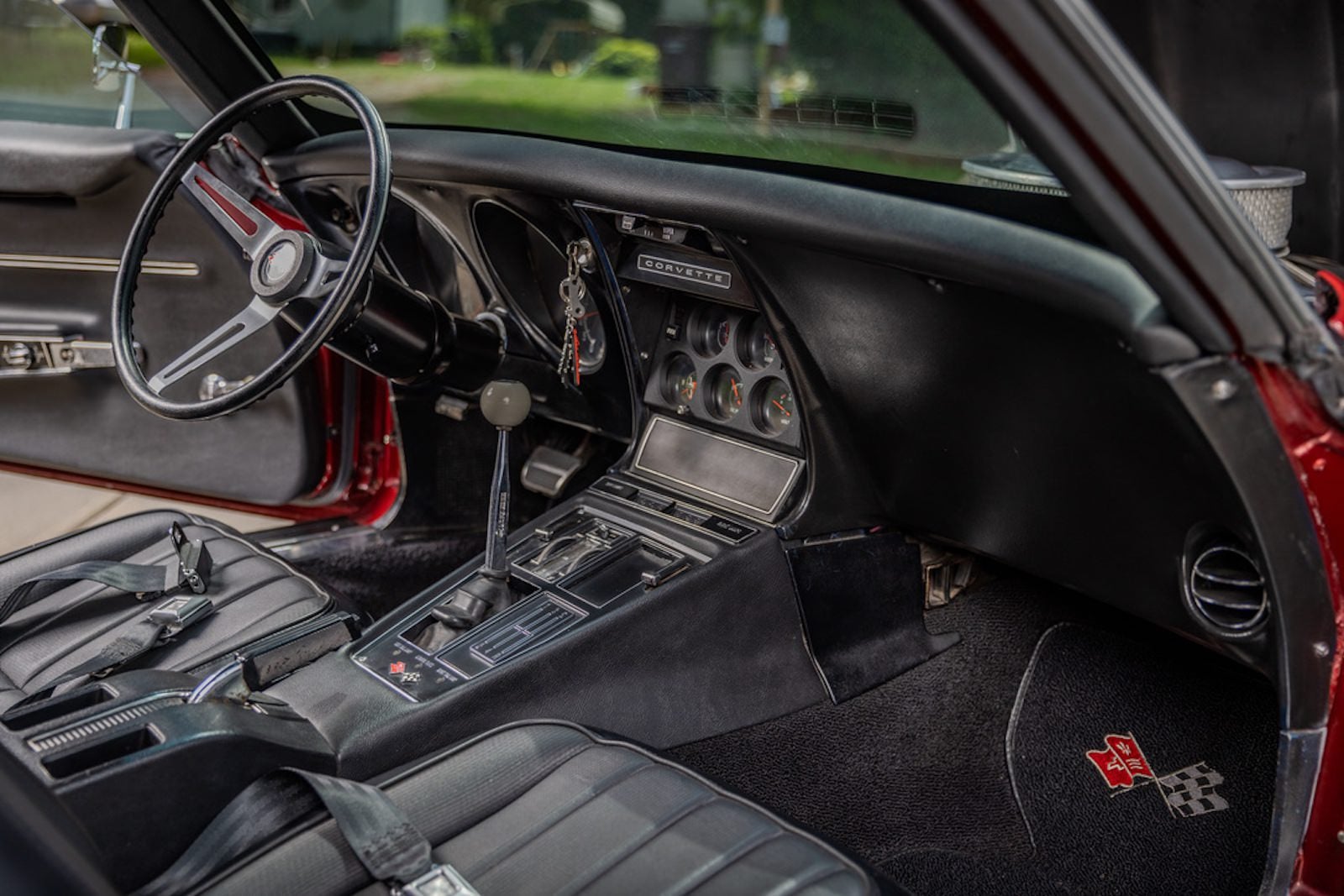
Work under current ownership is said to have included fitting a tilt steering column, rebuilding the carburetor, adjusting the valves, repairing oil leaks, replacing the spark plugs and thermostat, changing fluids, and attending to the rear suspension.
Surviving Sportwagons
Completed Sportwagons surface for sale only occasionally, and they always draw a lot more attention than a standard C3. Miller’s own 1971 car has had the strangest afterlife of all: still wearing its original Coffee Brown and Ginger Honey two-tone paint, it was exported to Europe in 2002, spent time in New Zealand, crossed an auction block in Norway in 2022, and had resurfaced in the United States by late 2024.
The Sportwagon idea itself never quite died out, Callaway revived it for the C7 with the AeroWagen, a conversion first proposed in 2013 that replaced the stock rear hatch with a one-piece carbon-fiber shooting-brake hatch, keeping the factory hinges and latches.
A Motown drummer in the early 1970s was still having an impact on automotive design almost 40 years later, all because he couldn’t haul his kit with his car.
The 1968 Chevrolet Corvette “Sportwagon” Shown Here
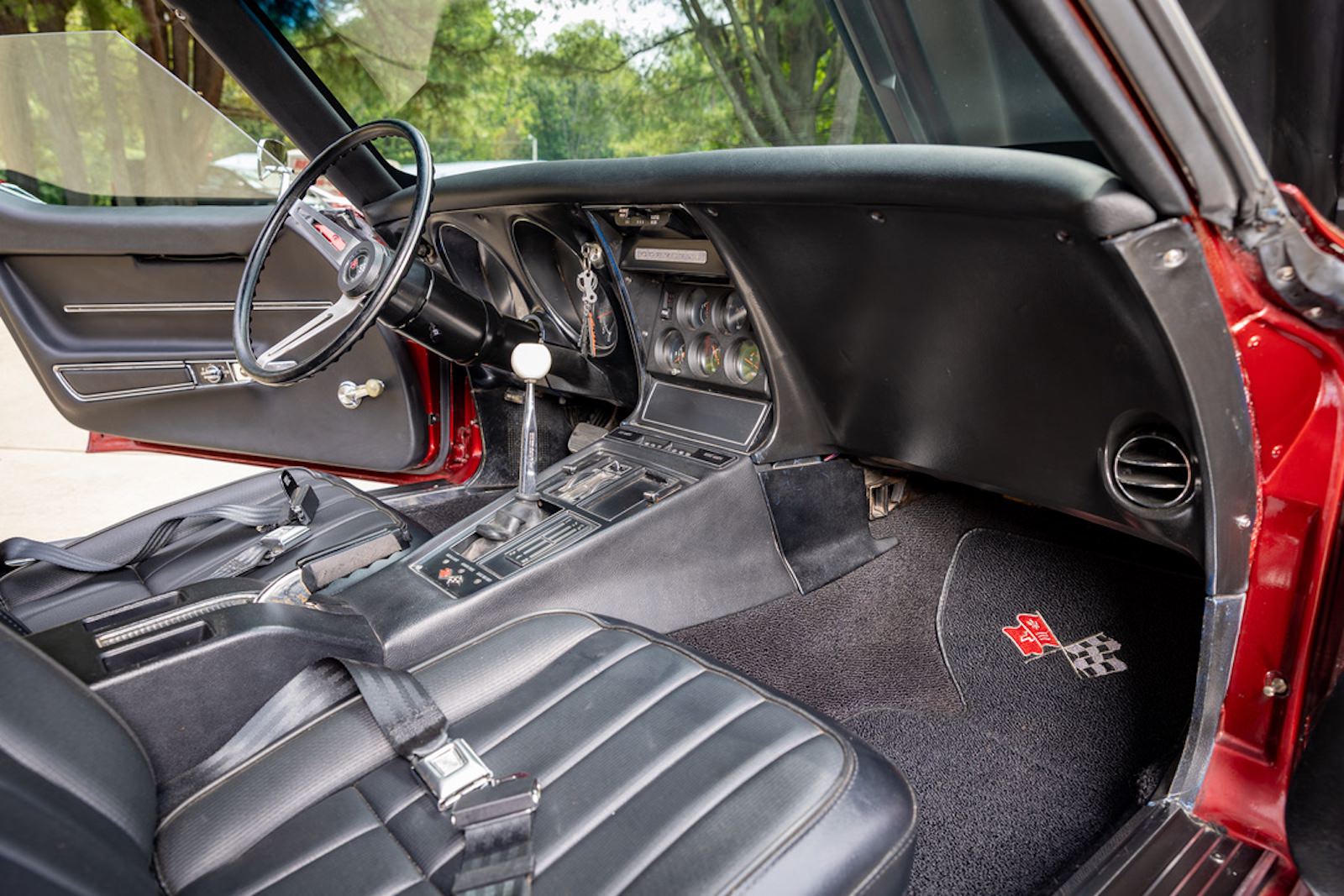
This 1968 Chevrolet Corvette started life as a convertible before being extensively modified under previous ownership into a Sportwagon-style shooting brake. The conversion used an Eckler’s-sourced roof with a removable roof panel, and the body was further altered with rear fender flares, a high-rise cowl-induction hood, shaved pop-up headlight openings, and fixed headlights mounted beneath the front bumper.
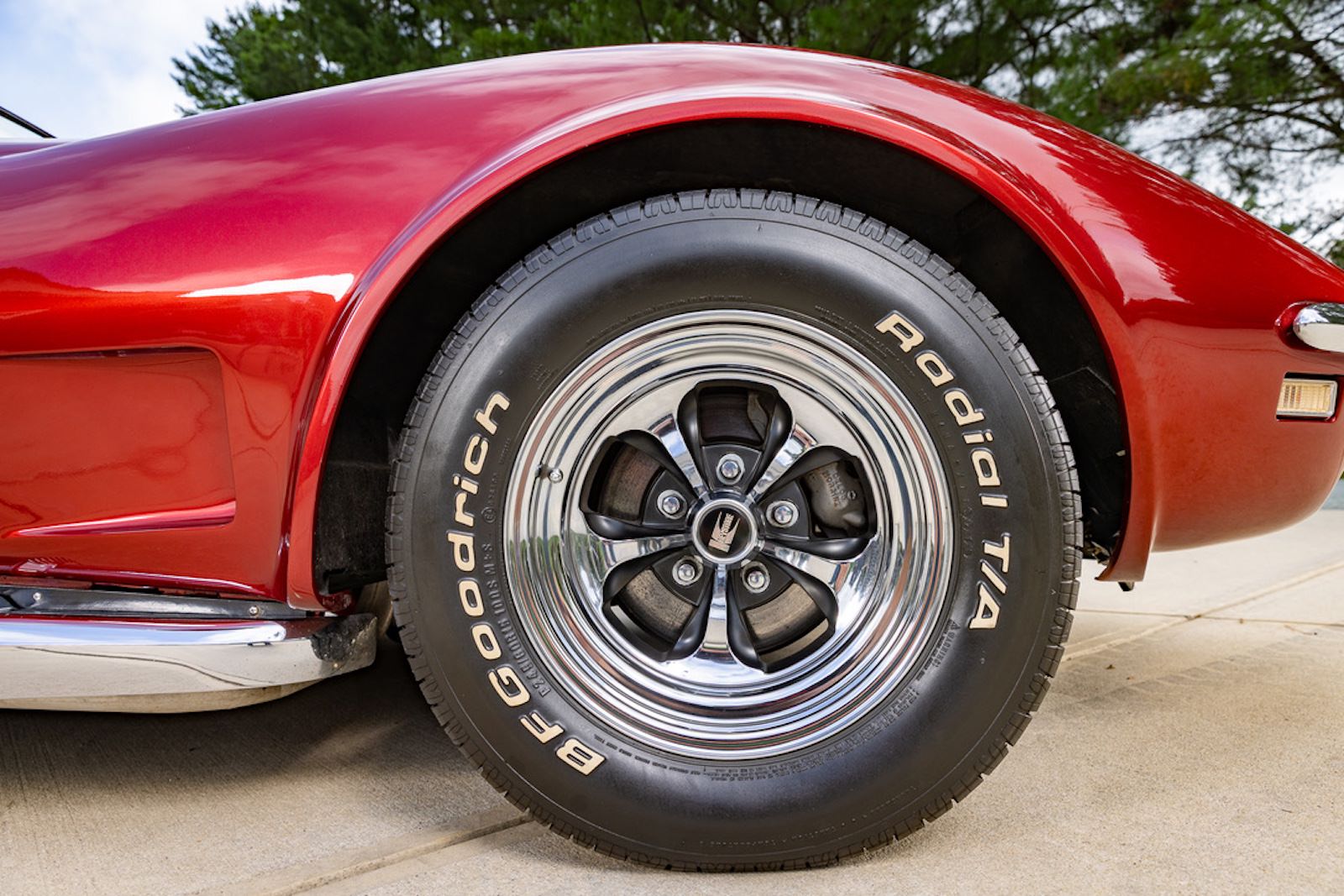
The car now has side-exit exhausts with chrome covers, Keystone 15-inch wheels, push-button door handles, and 572 badging.
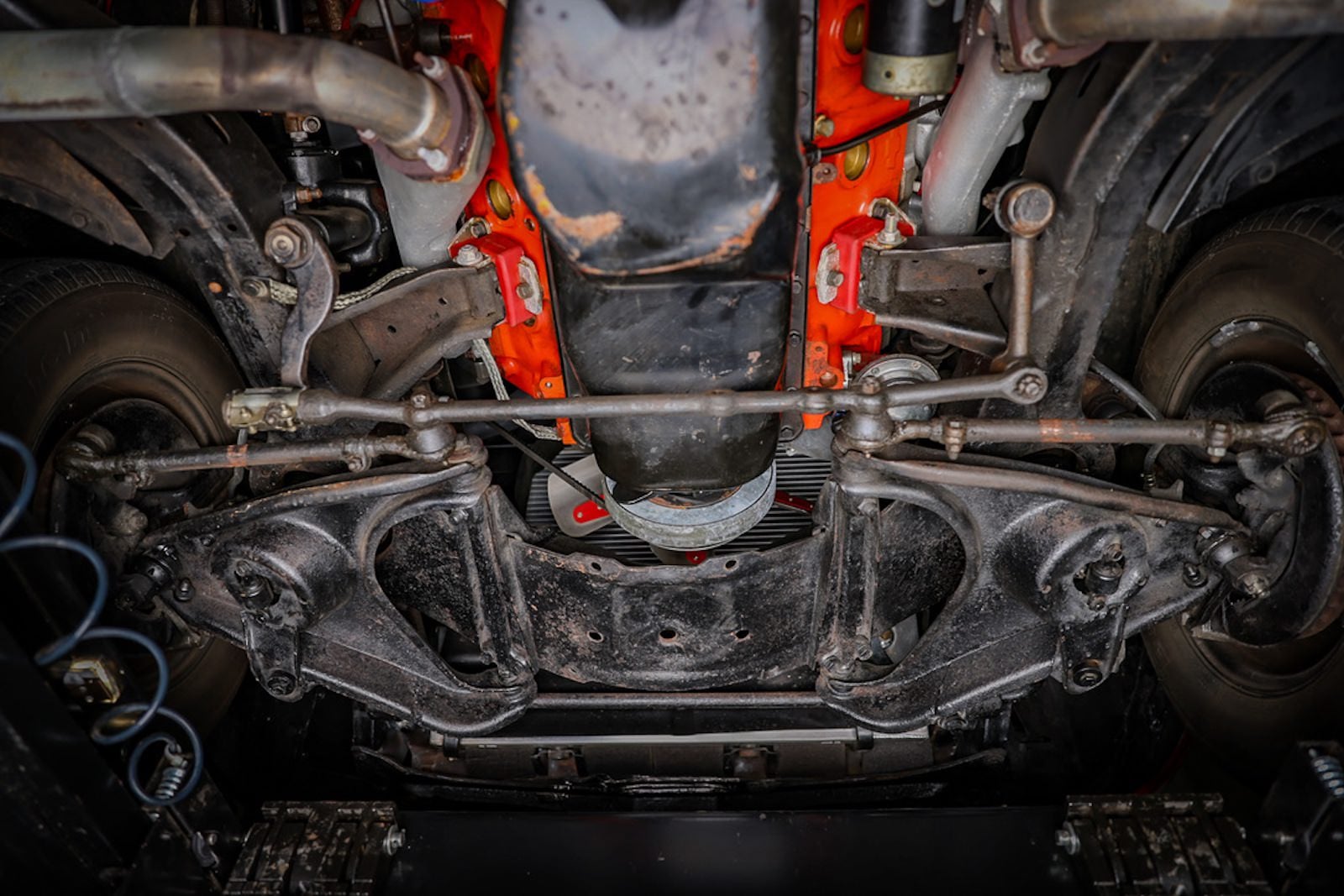
The reason for that 572 badging lies under the hood. The car is now powered by a 572 cubic inch Chevrolet ZZ572 V8 that was rebuilt in 2013. It’s topped with an aluminum single-plane intake, 1,150 cfm Dominator carburetor, an MSD ignition, and side-exit dual exhausts.
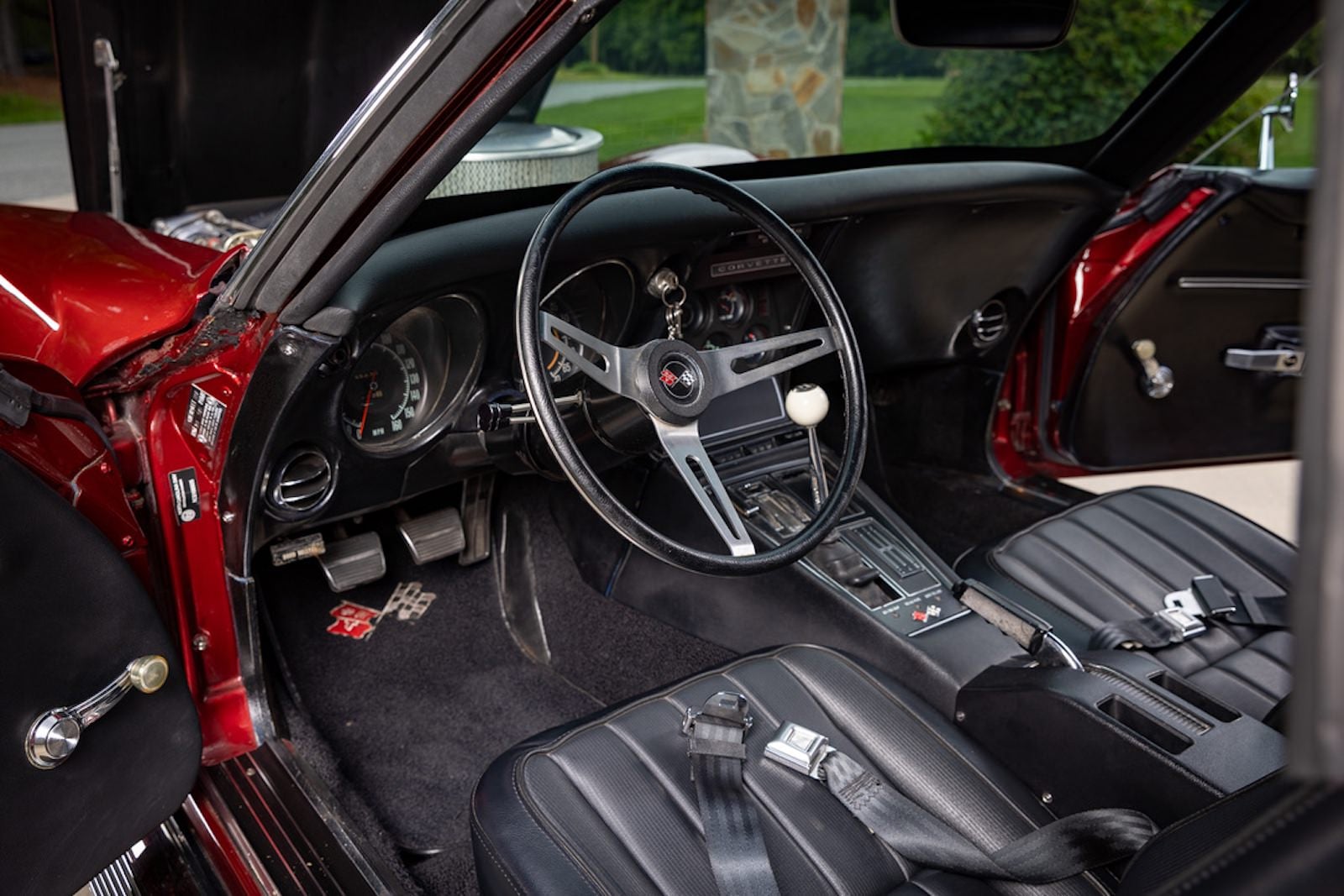
Drive is sent back through a Hurst-shifted Richmond Gear 5-speed manual transmission, a Ram Powergrip HD clutch, and a Positraction diff. The car also has four-wheel disc brakes, with suspension work since 2022 including replacement sway-bar end links and bushings.
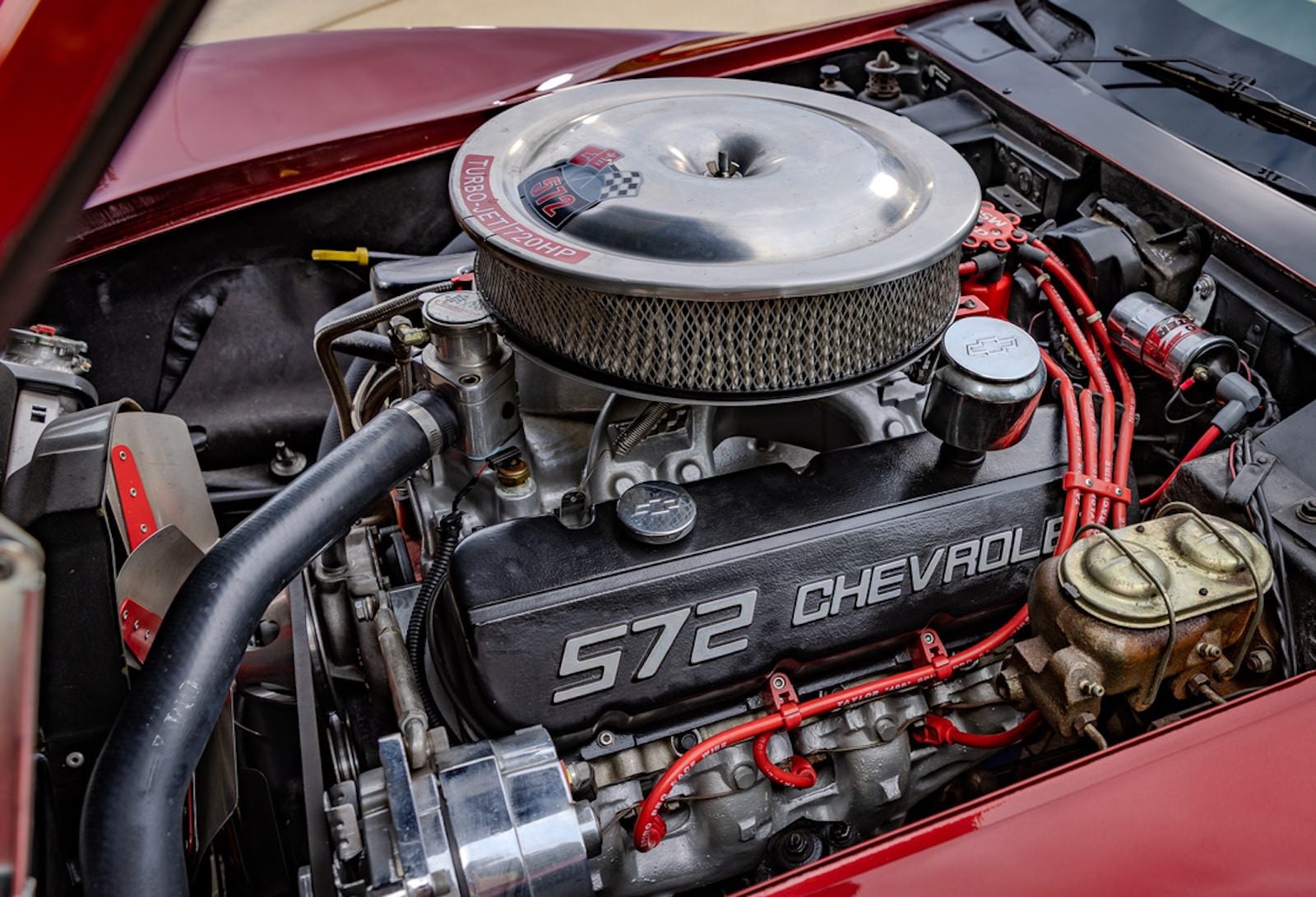
This engine is factory rated at 621 bhp at 5,400 rpm and 645 lb ft of torque at 4,200 rpm, an absolutely blistering amount of power regardless of which decade the car is from, and it does benefit from a slew of upgrades to the suspension, brakes, and driveline to better handle it.
Work under current ownership is said to have included fitting a tilt steering column, rebuilding the carburetor, adjusting the valves, repairing oil leaks, replacing the spark plugs and thermostat, changing fluids, and attending to the rear suspension.
It’s now being offered for sale out of Timberlake, North Carolina with build records, parts literature, period publications, and a clean North Carolina title. If you’d like to read more or place a bid you can visit the listing here.
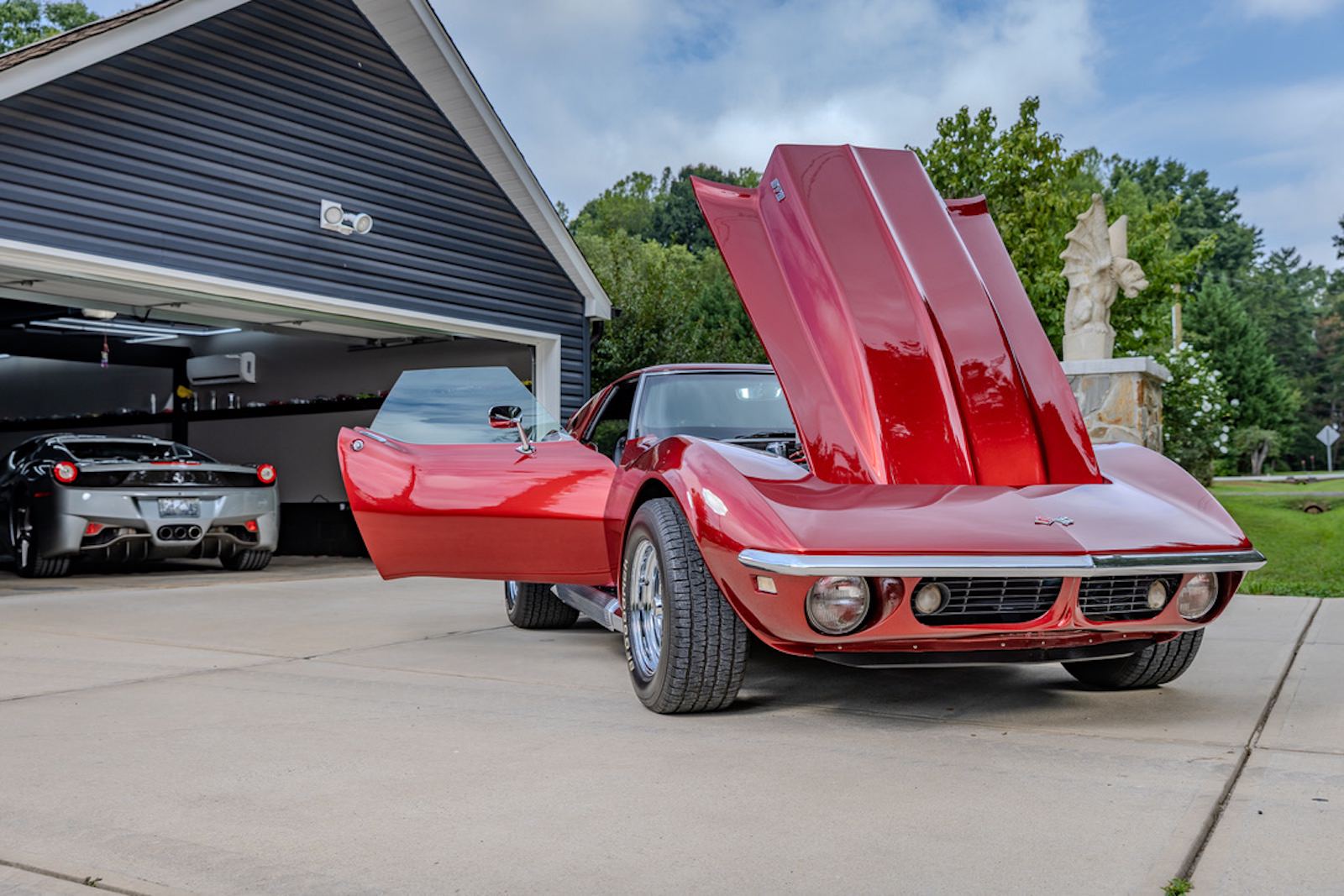
Images courtesy of Bring a Trailer

Articles that Ben Branch has written have been covered on CNN, Popular Mechanics, Smithsonian Magazine, Road & Track Magazine, the official Pinterest blog, the official eBay Motors blog, BuzzFeed, Autoweek Magazine, Wired Magazine, Autoblog, Gear Patrol, Jalopnik, The Verge, and many more.
Silodrome was founded by Ben back in 2010, in the years since the site has grown to become a world leader in the alternative and vintage motoring sector, with well over a million monthly readers from around the world and many hundreds of thousands of followers on social media.