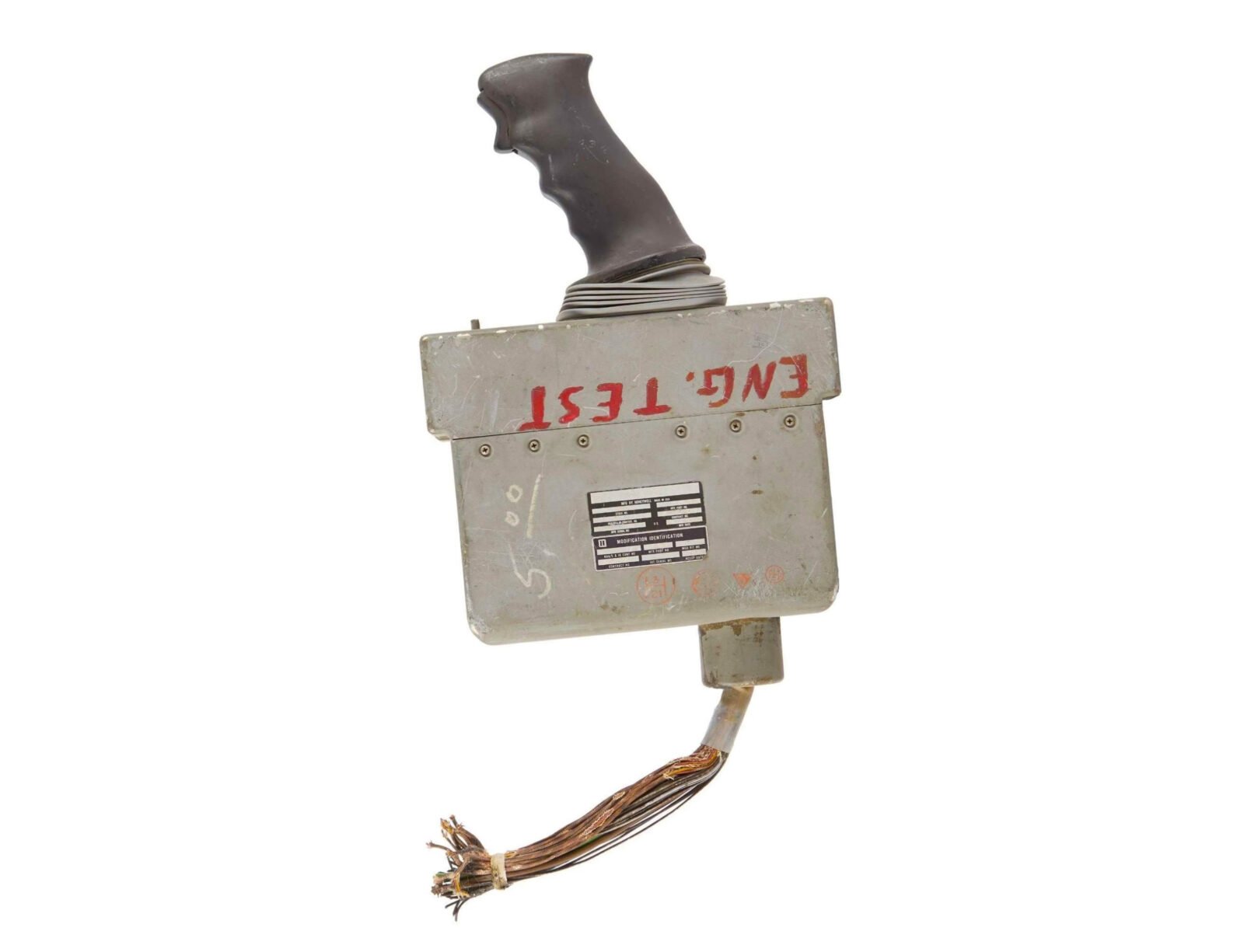
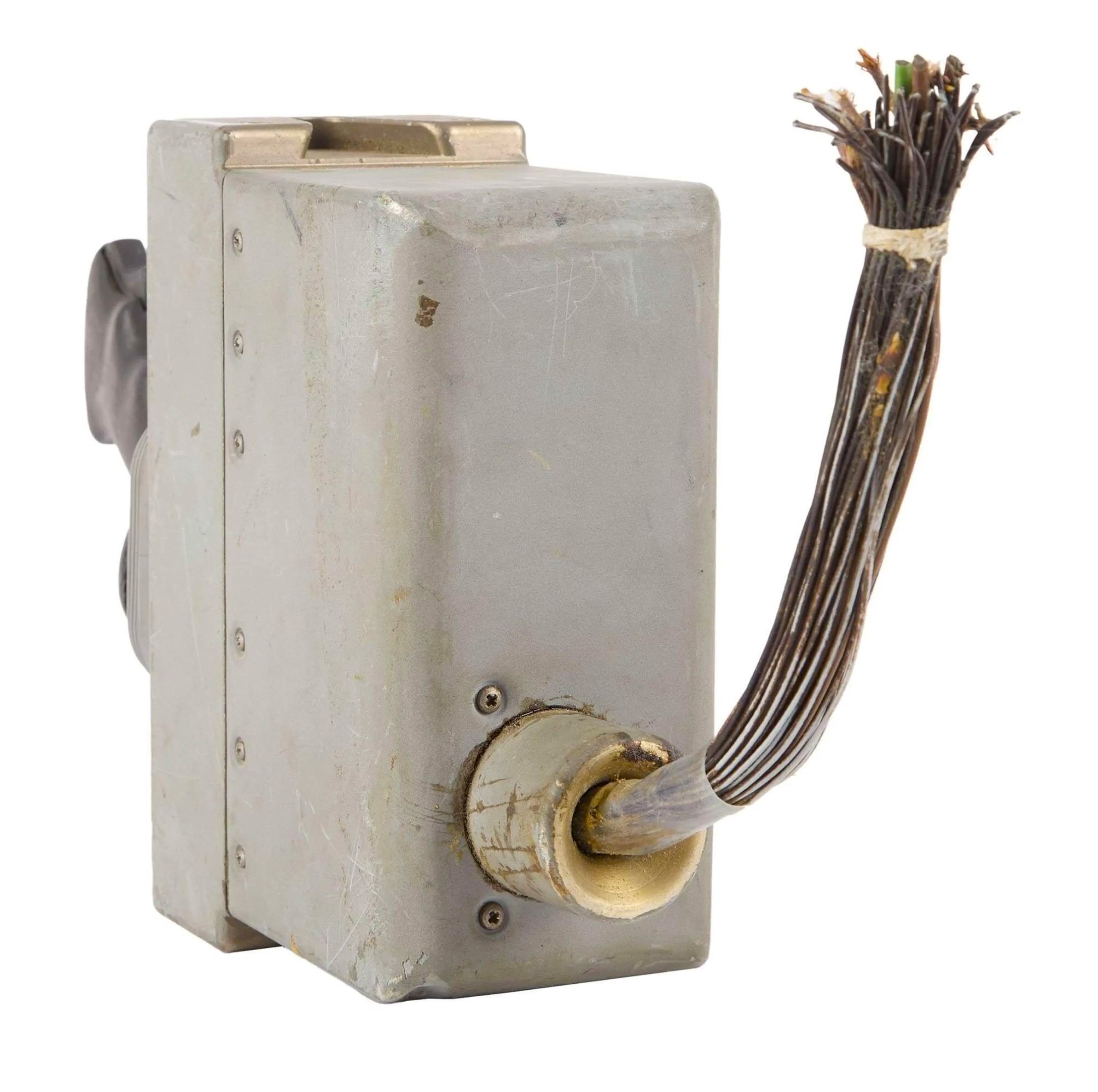
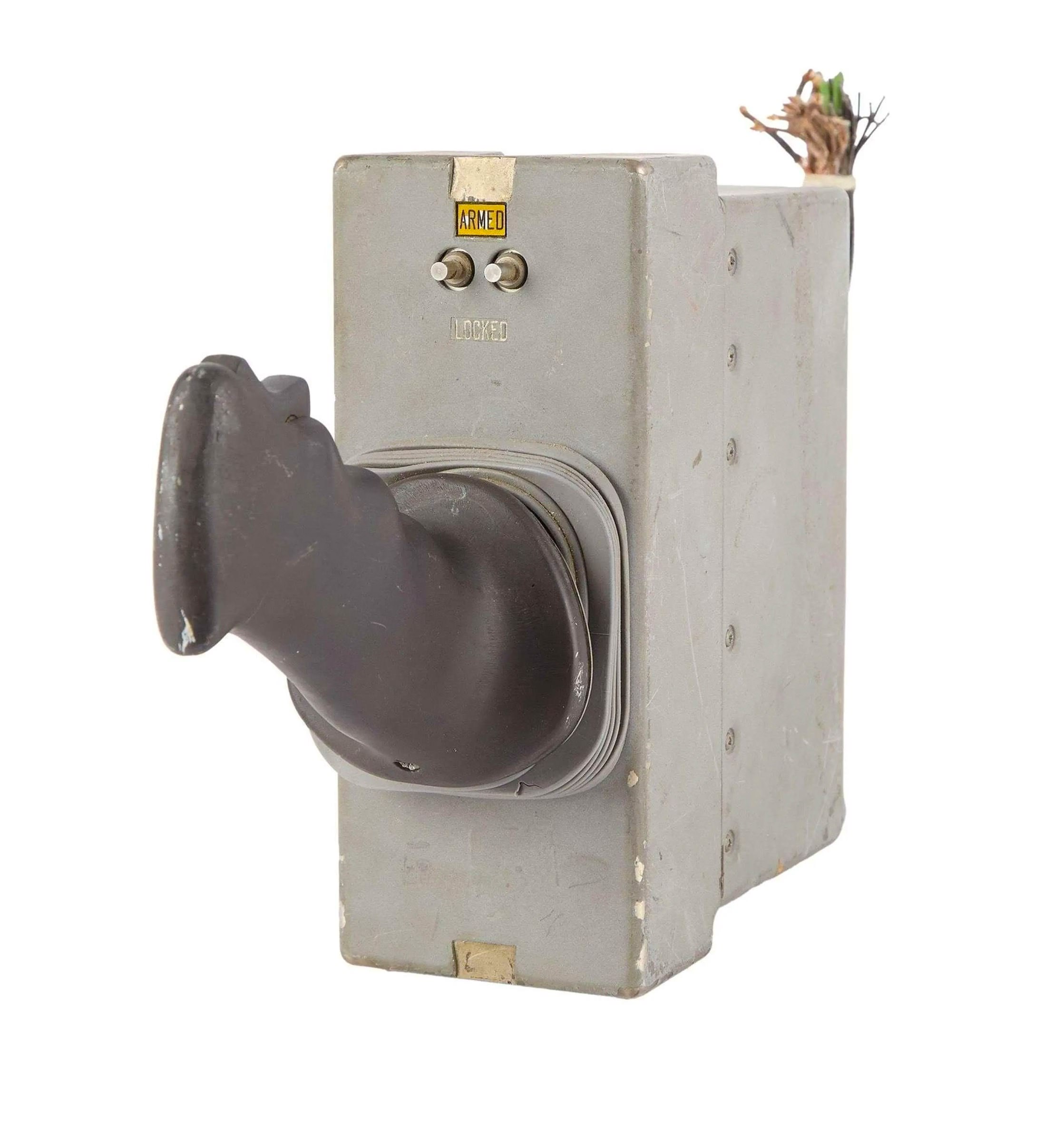
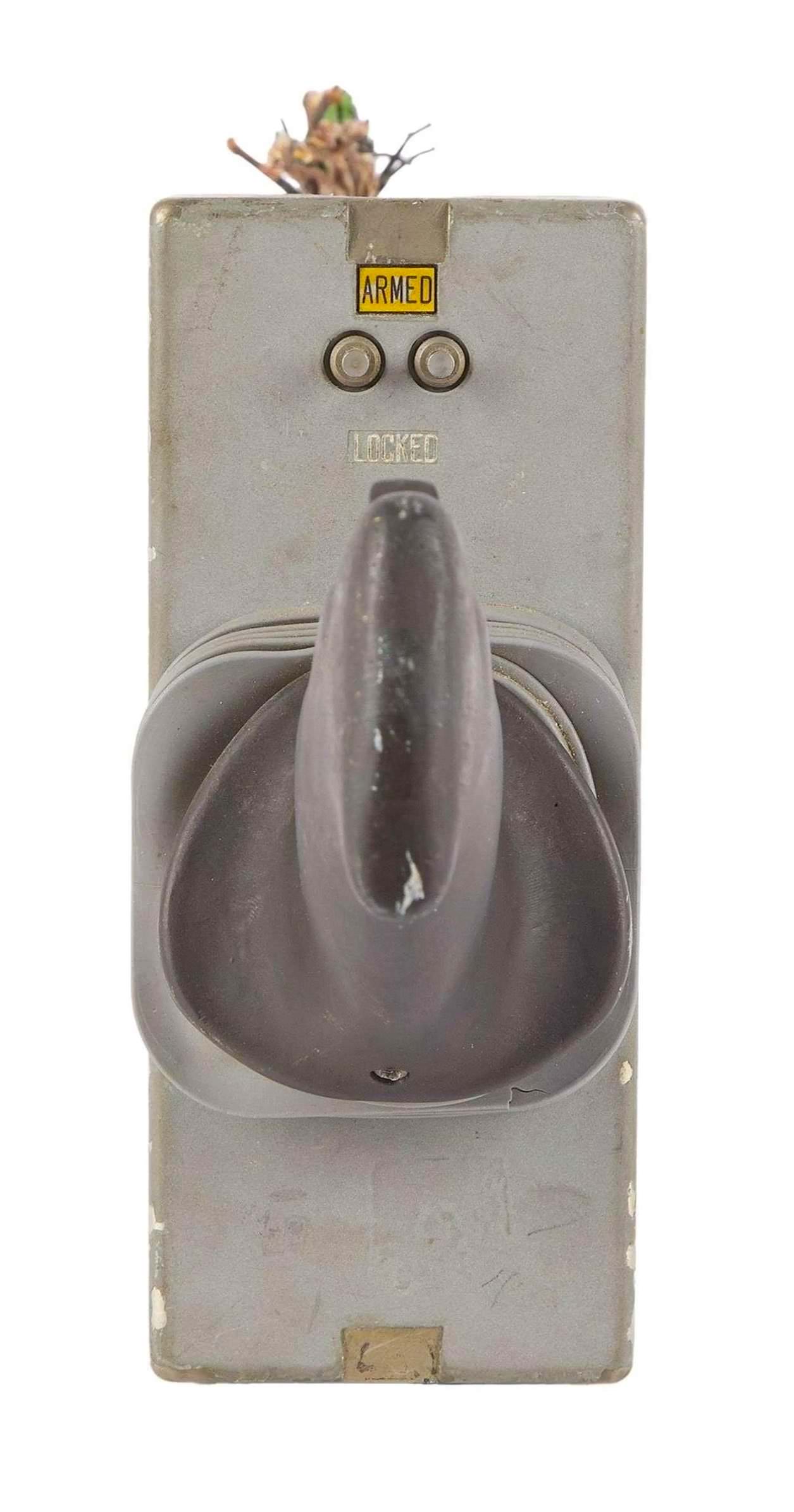
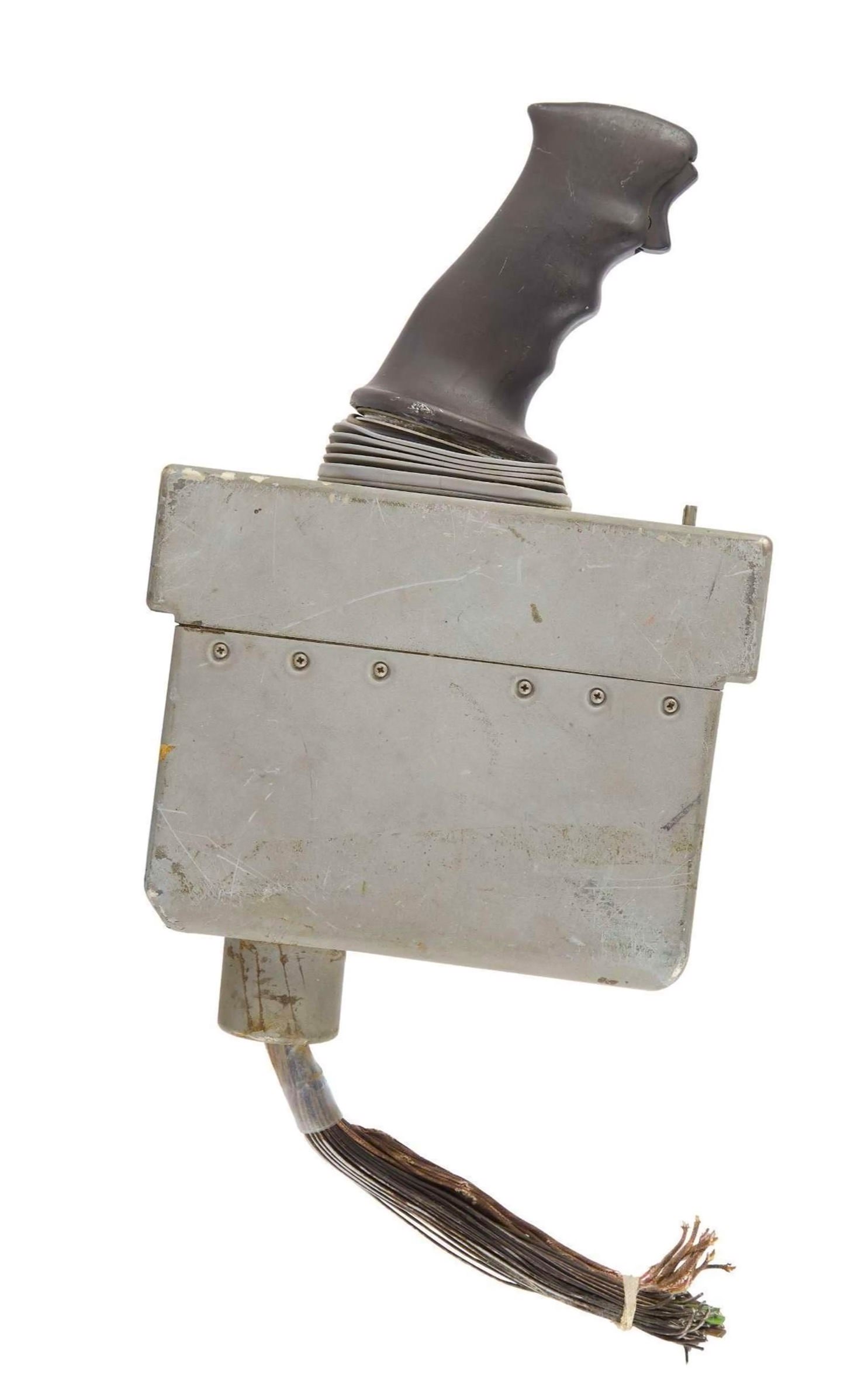
This is an original NASA Apollo Program Command Module control stick from 1966, it allowed the astronauts to control pitch, roll, and yaw by sending commands to the RCS thrusters.
Control sticks like this were used during space flight for major mission milestones, like docking, lunar orbit insertion, and re-entry into the Earth’s atmosphere. It’s rare that original Apollo program parts like this come up for sale, particularly an early engineering prototype from just three months before the tragedy of Apollo I.
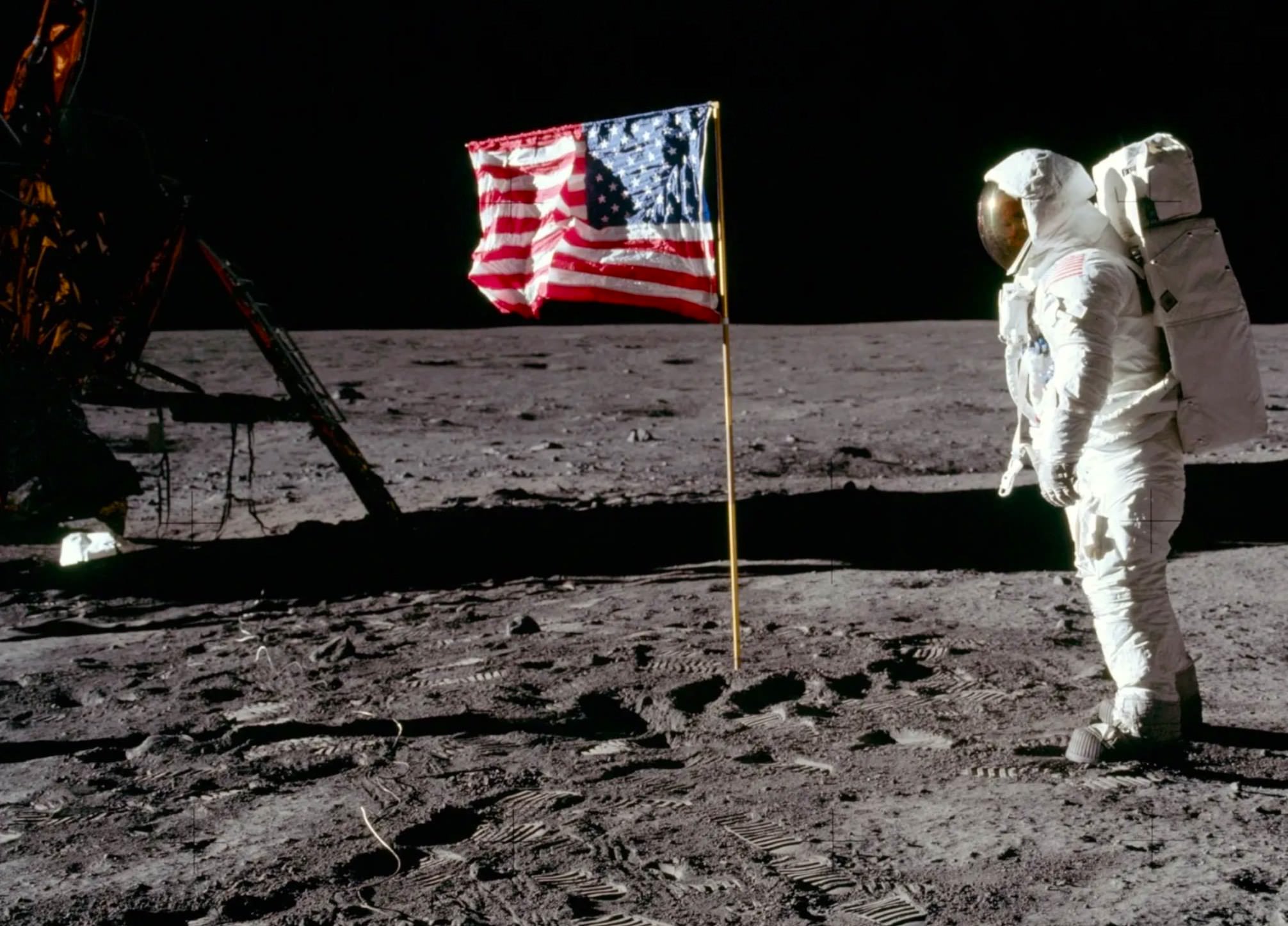
 This is astronaut Buzz Aldrin on the Moon during the Apollo 11 mission facing a US flag in July of 1969. Image courtesy of NASA.
History Speedrun: The NASA Apollo Missions
NASA’s Apollo program ran for a decade from 1962 to 1972, it was the United States’ first effort to land astronauts on the Moon and return them to Earth. Across 11 crewed missions, the program achieved six lunar landings, developed the Saturn V heavy lift rocket, set the standard for deep-space navigation and lunar orbit rendezvous, and on top of all that, the missions returned hundreds of kilograms of lunar material for scientific study.
The entire Apollo Program nearly ended before it began due to the tragedy of Apollo I. On January the 27th, 1967, astronauts Virgil “Gus” Grissom, Edward White, and Roger Chaffee were conducting a pre-launch “plugs-out” test inside the command module at Cape Kennedy when a fire broke out in the cabin.
The spacecraft was pressurized with pure oxygen, and the combination of flammable materials and the inward-opening hatch both contributed to the disaster. Investigators highlighted the inward-opening hatch and pressurized pure oxygen in the cabin as major impediments to escape. All three astronauts were killed and the program was paused for nearly two years while a full redesign and safety reviews were implemented.
Crewed flights resumed with Apollo 7, launched on October the 11th, 1968, which successfully tested the redesigned command and service module in Earth orbit. In December of 1968, Apollo 8 became the first crewed mission to leave Earth orbit, the first to orbit the Moon, and the first to witness Earth rising above the lunar horizon. Apollo 10, launched in May 1969, conducted a full rehearsal for landing – descending to within 15 kilometers of the lunar surface.
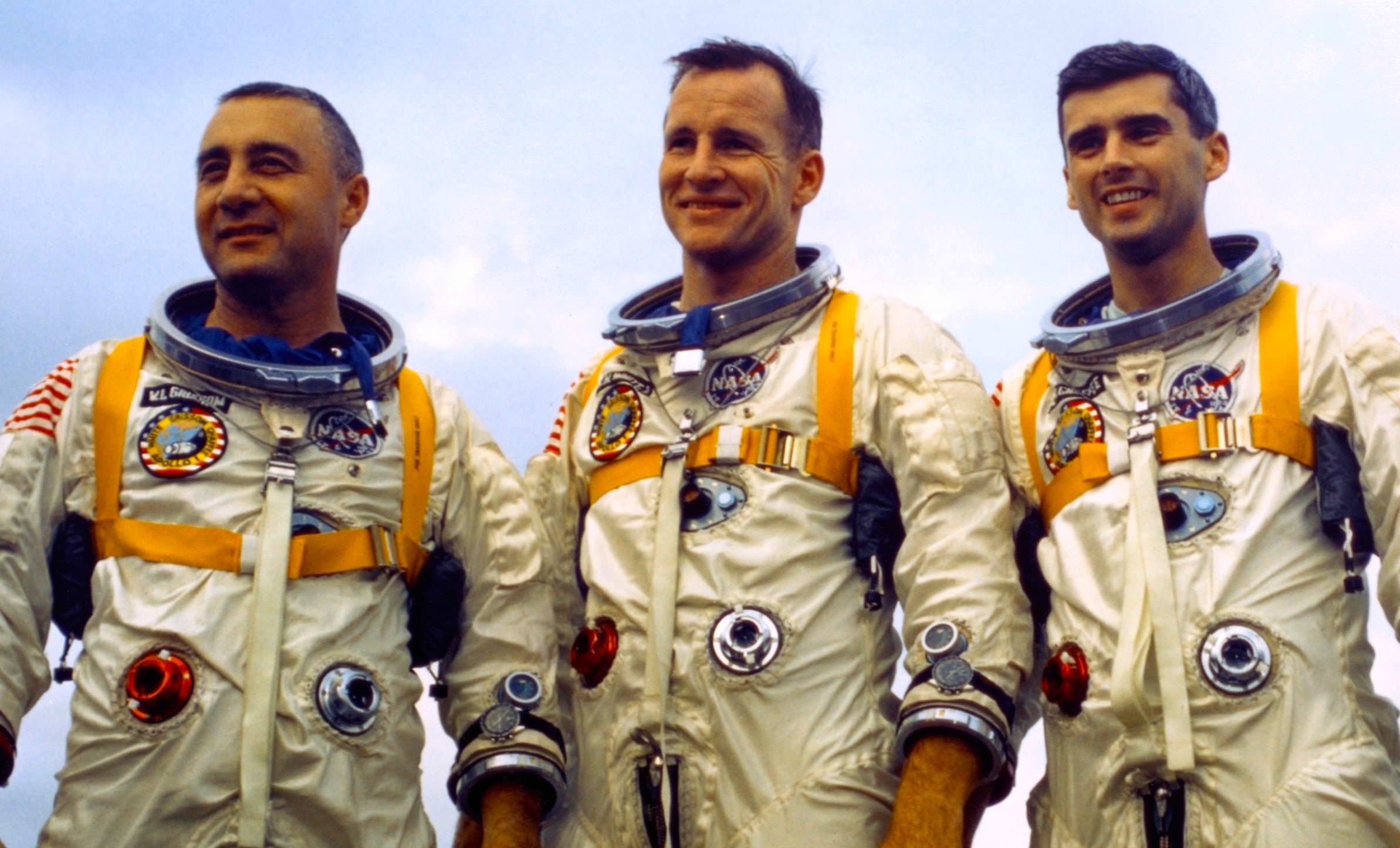
Here we see the Apollo 1 crew, from left to right: Virgil “Gus” Grissom, Edward White, and Roger Chaffee. Image courtesy of NASA.
The most famous mission was Apollo 11, it launched on July the 16th, 1969, then on July the 20th, Neil Armstrong and Buzz Aldrin landed in the Sea of Tranquility, becoming the first humans to walk on the Moon. Four more successful landing missions followed with Apollo 12 (1969), Apollo 14 (1971), Apollo 15 (1971), Apollo 16 (1972), and Apollo 17 (1972).
Perhaps ironically, the second most famous Apollo mission, Apollo 13, never landed on the Moon. It launched on April the 11th, 1970 but suffered an oxygen tank explosion en route to the Moon. The landing was aborted, but careful systems management and use of the lunar module as a lifeboat brought the crew safely back to Earth on April the 17th, 1970.
By the time Apollo 17 concluded in December 1972, Apollo had landed 12 astronauts on the lunar surface and established the fundamental operational template for all subsequent human deep-space missions. NASA is now due to launch the Artemis II mission to the Moon on April the 1st this year, though this will be a flyby mission in preparation for Artemis III, which is due to land humans on the Moon in mid-2027.
The NASA Command Module Control Stick Shown Here
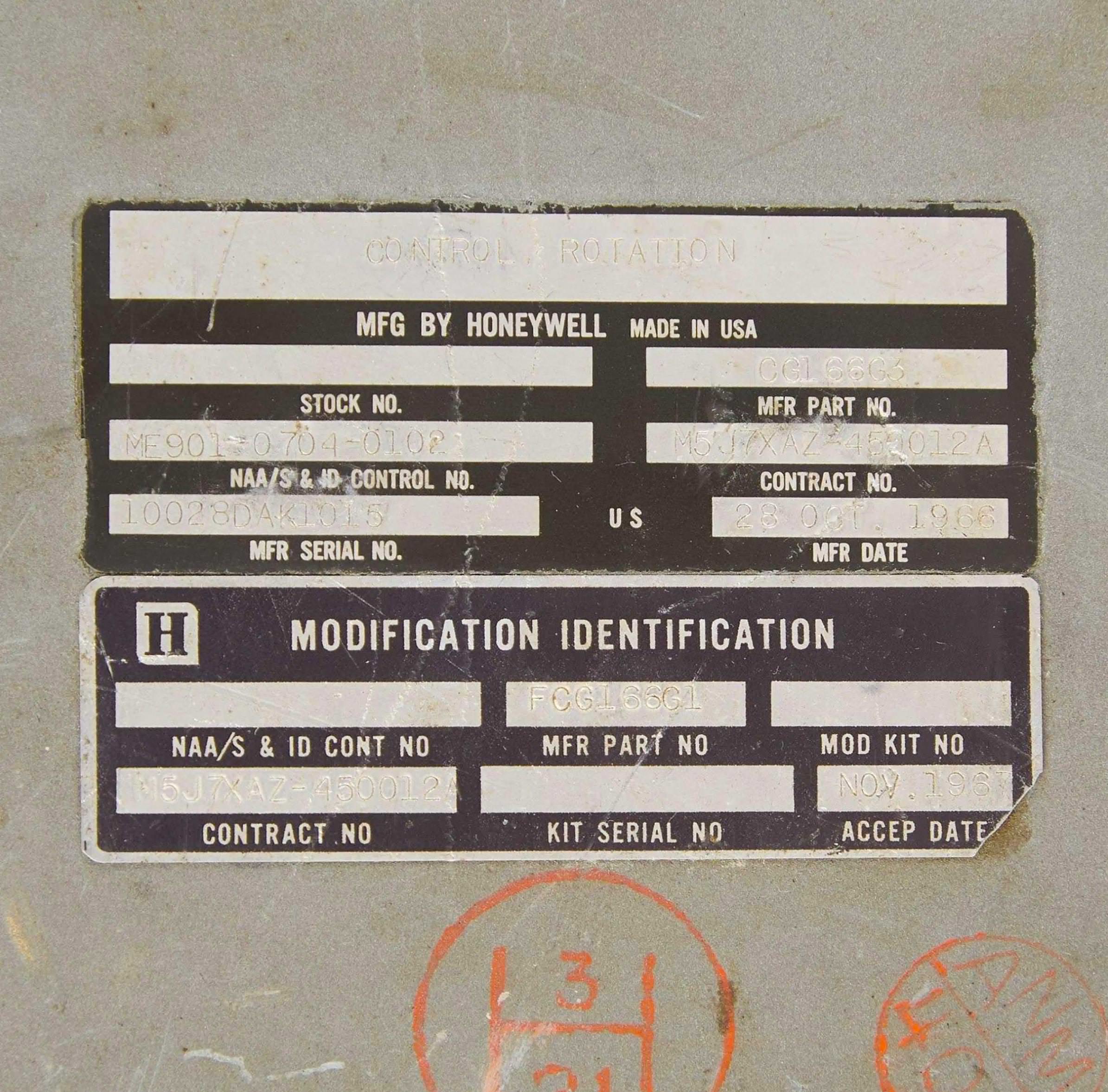
The NASA Apollo Program Command Module control stick shown here is an original engineering test unit that was built on October the 28th, 1966 – that’s just three months before the tragic events of the Apollo I launchpad fire.
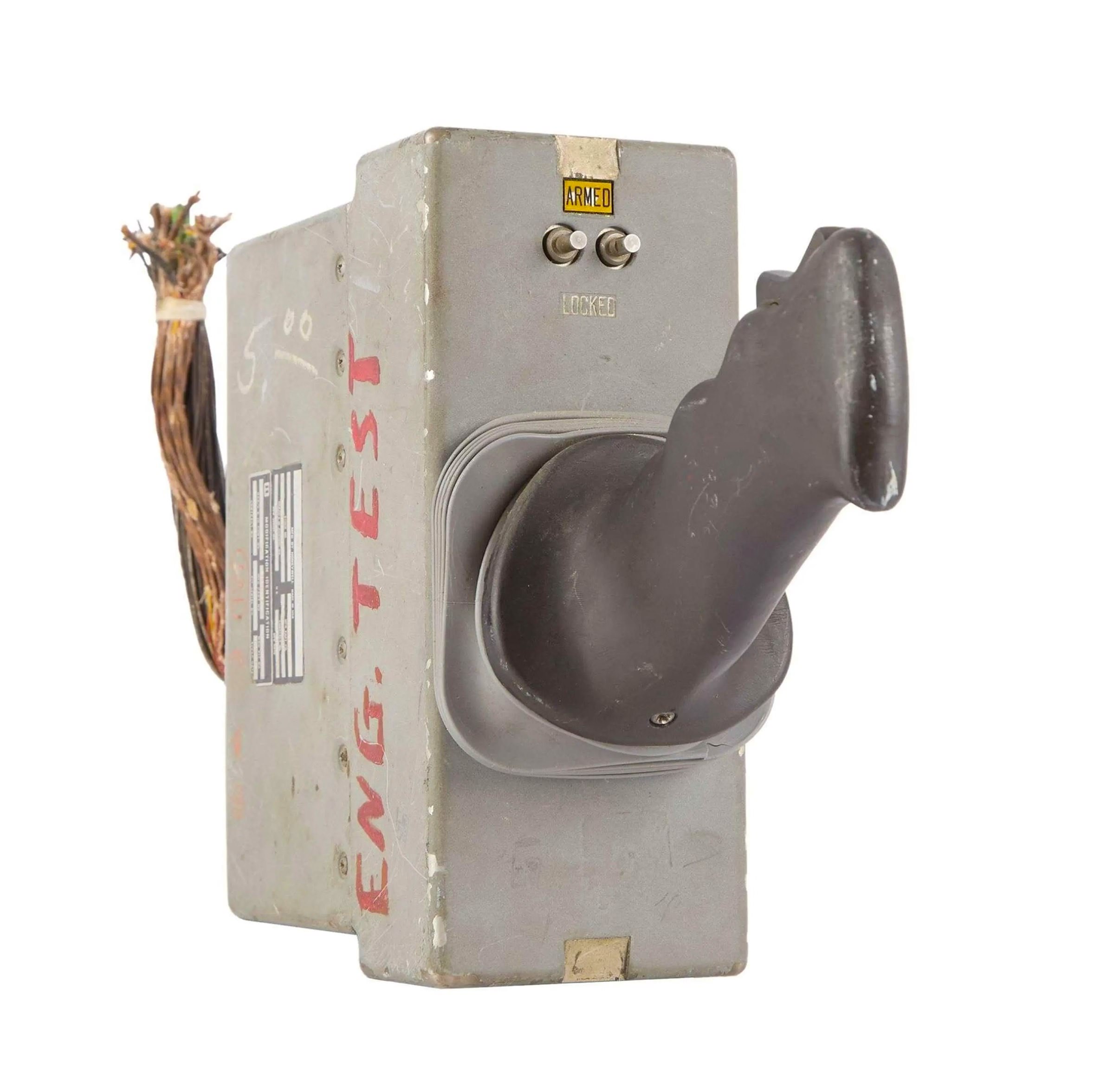
This unit has a trigger switch on the control column for activating the headset microphone. The stick itself controlled the spacecraft’s attitude (pitch, roll, and yaw) by sending commands to the RCS thrusters.
This unit has a trigger switch on the control column for activating the headset microphone. The stick itself controlled the spacecraft’s attitude (pitch, roll, and yaw) by sending commands to the RCS thrusters. It was designed to be used during docking, lunar orbit insertion, and re-entry into the Earth’s atmosphere.
This unit is now being offered for sale in an online auction by Julien’s with a price guide of $4,000 – $6,000 USD, and bidding is sitting at $1,000 USD at the time of writing. If you’d like to read more about it or register to bid you can visit the listing here.
Images courtesy of Julien’s

Articles that Ben Branch has written have been covered on CNN, Popular Mechanics, Smithsonian Magazine, Road & Track Magazine, the official Pinterest blog, the official eBay Motors blog, BuzzFeed, Autoweek Magazine, Wired Magazine, Autoblog, Gear Patrol, Jalopnik, The Verge, and many more.
Silodrome was founded by Ben back in 2010, in the years since the site has grown to become a world leader in the alternative and vintage motoring sector, with well over a million monthly readers from around the world and many hundreds of thousands of followers on social media.