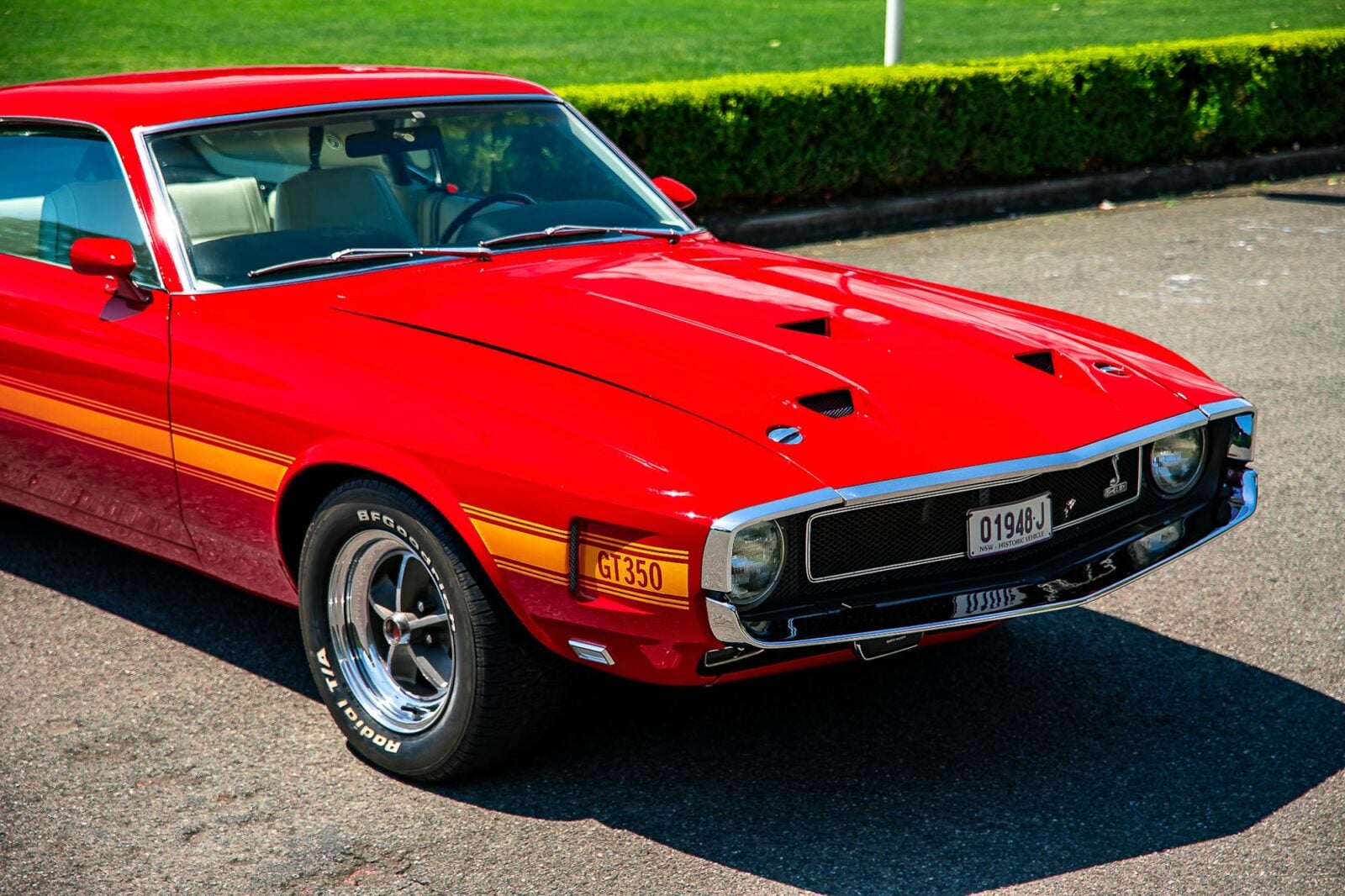
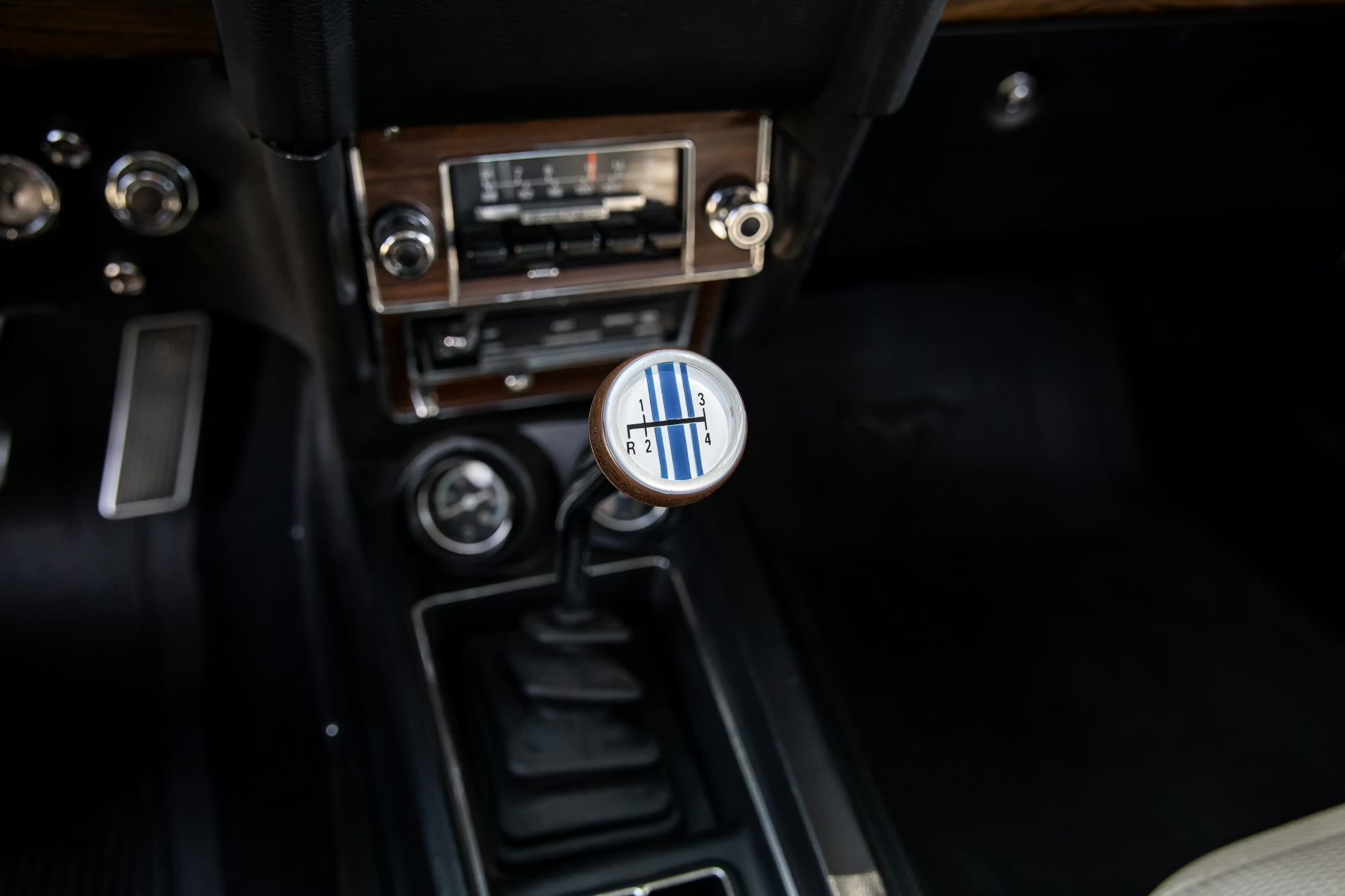
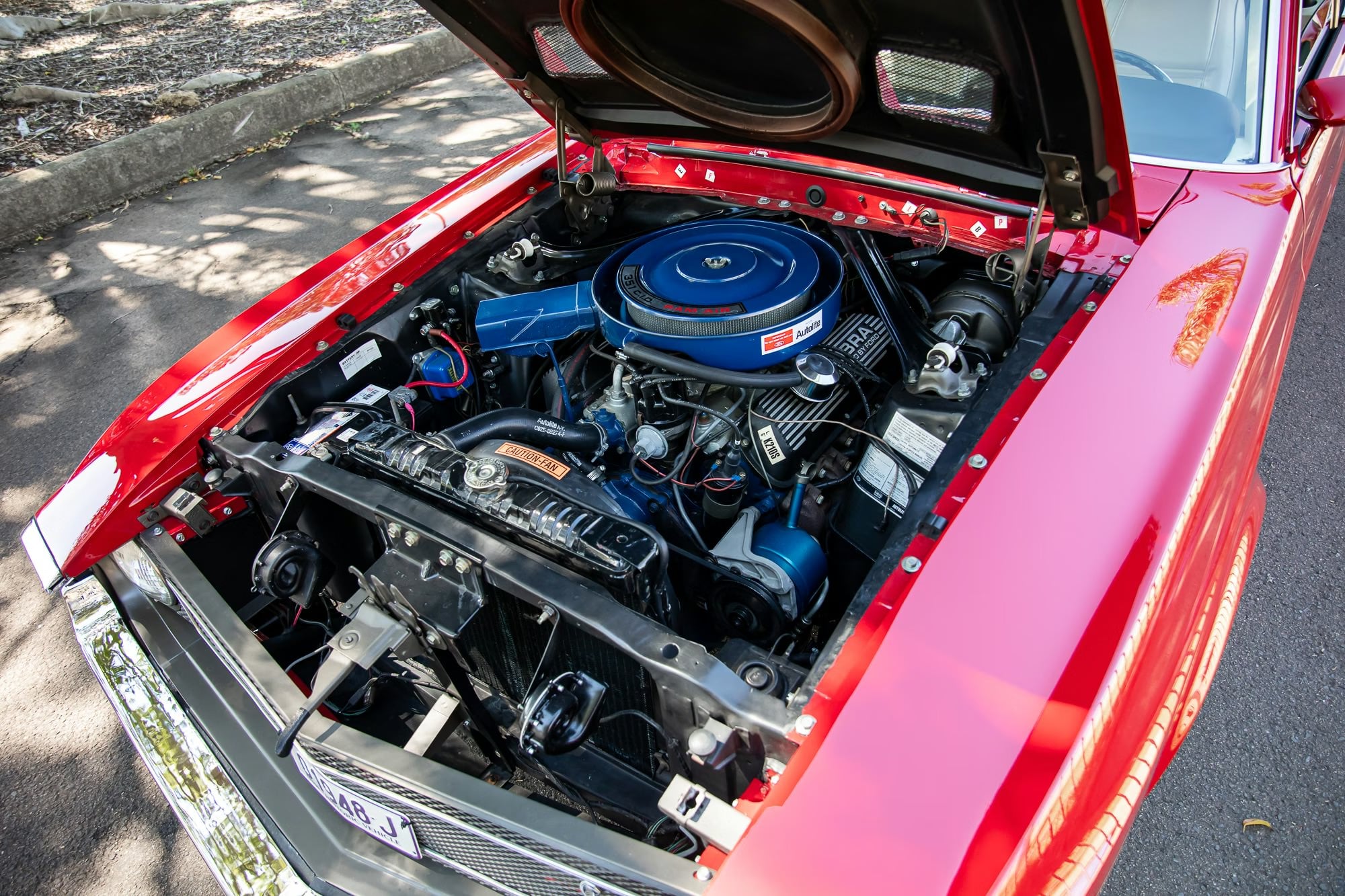
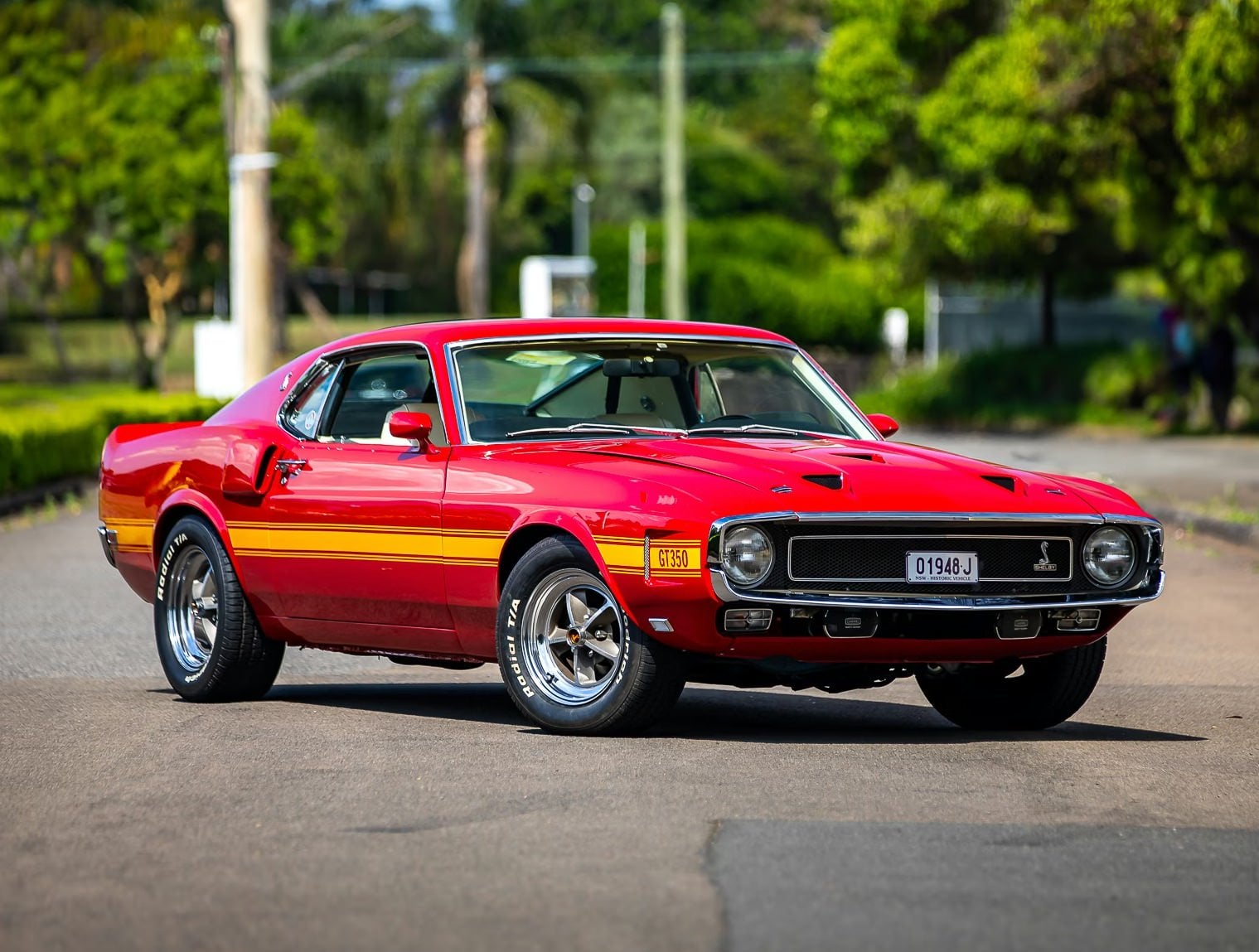
This is an original 1969 Shelby Mustang GT350 powered by its numbers-matching 351 Windsor V8, sending power to the rear wheels through a close-ratio “Toploader” 4-speed manual transmission.
The factory-rated 290 bhp is sent back to a Ford 9 inch rear end with a Traction-Lok limited-slip differential running rebuilt 3.25 gears. The significant styling change that took place between 1968/1969 hasn’t always been popular with enthusiasts, but these 1969 Shelbys are only getting cooler with age.
Fast Facts: The 1969 Shelby Mustang GT350
- Carroll Shelby was a Texas-born racing driver who won Le Mans in 1959 before a heart condition forced his retirement. He founded Shelby American in 1962, creating the Cobra and further developing the Ford GT40, before transforming the Ford Mustang into the GT350 – a barely civilized street-legal racer that dominated SCCA B/Production from 1965 to 1967.
- The 1969 GT350 was the most radical visual departure in the Shelby Mustang’s five-year run, featuring full fiberglass front fenders, a hood with three recessed NACA ducts, a shortened Kamm-style rear end with an integrated spoiler, and sequential taillights using 1965 Thunderbird bezels – a design that shared almost nothing with the standard Mustang beneath it.
- Under the hood sat Ford’s 351 cubic inch Windsor V8, rated at 290 bhp and 385 lb ft of torque, paired with either a 4-speed Toploader manual or a 3-speed Cruise-O-Matic automatic. Just 821 fastbacks and 139 convertibles were built as 1969 models, with 789 unsold cars later re-VINed and sold as 1970s.
- This particular GT350 was assembled at Dearborn on January the 13th, 1969, and originally sold through Sexton Ford in Moline, Illinois. It retains its numbers-matching 351W and 4-speed Toploader, has been resprayed in Candy Apple Red, and comes accompanied by its original Ford build sheet, a Deluxe Marti Report, and a Shelby owner’s manual.
History Speedrun: The Shelby Mustang GT350
Carroll Shelby was born in Leesburg, Texas, in 1923. He was the son of a rural mail carrier and he suffered from a hereditary heart valve defect from childhood, it was a condition that would, somewhat paradoxically, propel him toward greatness. After serving as a flight instructor in the Army Air Corps during World War II, Shelby tried chicken farming. When his second flock was wiped out by limberneck disease and he went bankrupt, he turned to the only other thing he knew he was good at – going fast.
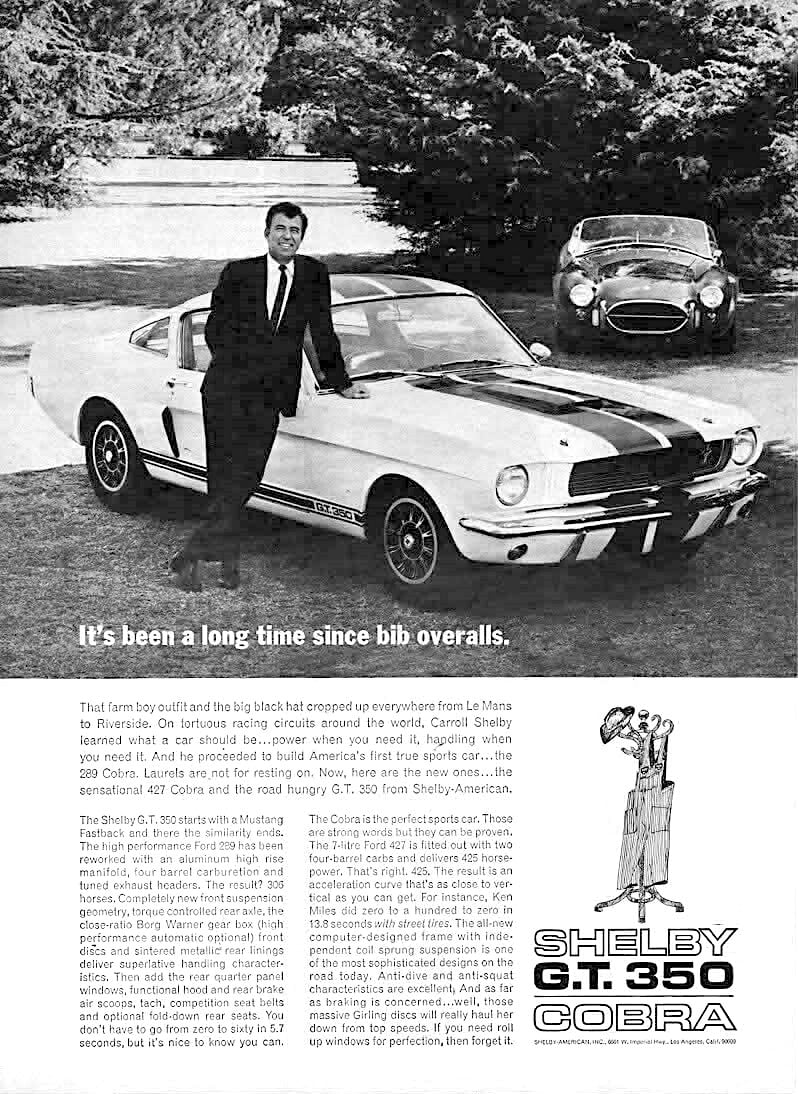
 Shelby took white Mustang fastbacks powered by the high-performance 289 cubic inch K-Code V8, rated at 271 bhp from the factory, and applied his extensive racing expertise to create the Shelby Cobra. Image courtesy of Shelby American.
Shelby’s racing career began in 1952, when he won his first road race at Norman, Oklahoma, in a friend’s MG TC. He won again later the same day against much faster Jaguar XK120s.
Within a few years he was piloting Ferraris and Maseratis for international factory teams, earning back-to-back Sports Illustrated “Driver of the Year” honors in 1956 and 1957. His crowning moment behind the wheel came in June of 1959, when he and co-driver Roy Salvadori won the 24 Hours of Le Mans in an Aston Martin DBR1.
Despite all of his success, or perhaps because of it, his heart condition was worsening. By 1960 he was racing with nitroglycerin tablets dissolving under his tongue to manage his intense chest pain. He finished fifth in his final race that year, the Los Angeles Times-Mirror Grand Prix, but the result was enough to clinch the USAC driving championship on overall season points. He retired from the cockpit with a career record of 50 wins from 148 starts – many of these in top flight competition against many of the best drivers in the world.
Unable to race, Shelby made what would be an industry-changing decision. He pivoted to building his own high-performance cars. He founded Shelby American in 1962, and his first creation, the Shelby Cobra, married a lightweight British AC Ace chassis with a Ford V8. The Cobra basically rewrote the rules of American sports car racing and it forced competitors to significantly up their game.
By 1965, the Shelby Cobra Daytona Coupe had won the FIA Grand Touring World Championship. At the same time, Shelby was developing the Ford GT40 for Ford’s Le Mans campaign, a project that had been underway since mid-1963 and which he took full operational control of in late 1964.
But it would be the project he began alongside the GT40, transforming the Ford Mustang, that would arguably become his most famous creation, leaving a lasting mark on American car culture.
Building A Better Mustang
When Ford launched the Mustang in April of 1964, it was an instant sensation – but it wasn’t a race car. Ford wanted to homologate the Mustang for SCCA B/Production racing, believing that beating Chevrolet’s Corvette on track would give the pony car serious credibility among the car buying public.
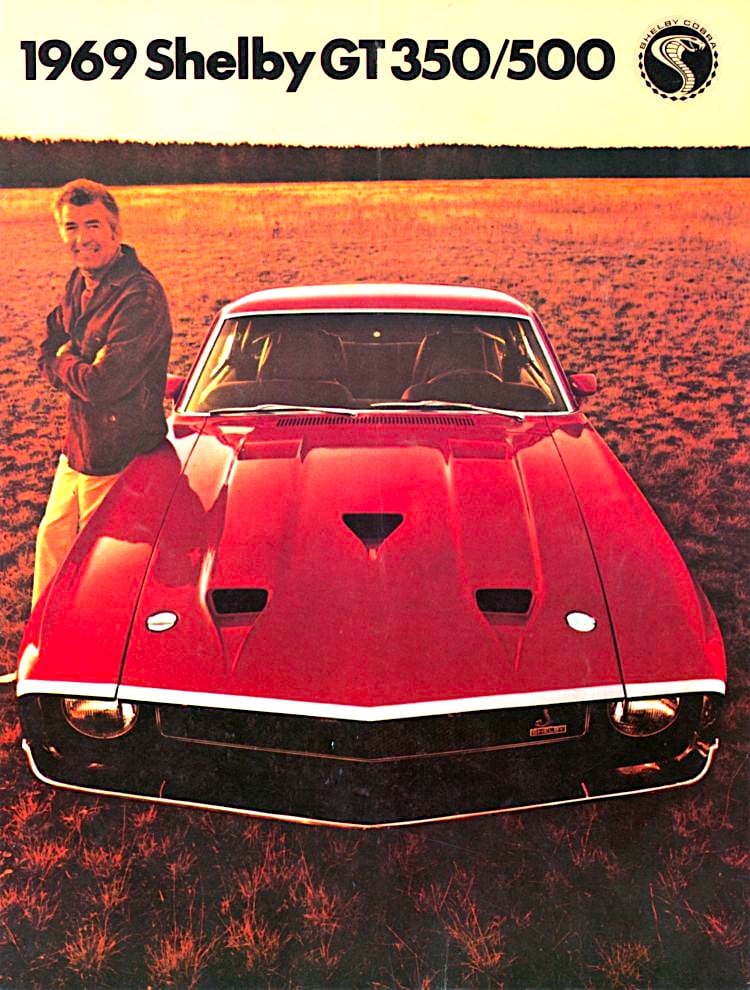
The 1969 model year brought the most radical visual departure yet – where all previous Shelby Mustangs had used the stock Mustang’s steel fenders with added fiberglass trim, the 1969 car replaced the front fenders entirely with molded fiberglass units. This was a first for the program, intended to reduce front-end weight. Image courtesy of Shelby American.
They turned to the one man who had already conclusively proven he could transform Ford cars into world-beating race winners – a former chicken farmer from Texas.
Shelby took white Mustang fastbacks powered by the high-performance 289 cubic inch K-Code V8, rated at 271 bhp from the factory, and applied his extensive racing expertise – working alongside his team they added a high-rise aluminum intake manifold, a Holley four-barrel carburetor, tubular exhaust headers, lowered front suspension, heavy-duty Galaxie rear axles, Koni shock absorbers, and a Detroit Locker limited-slip differential.
The rear seats were pulled out and replaced with a fiberglass shelf to qualify the car as a two-seater under SCCA rules. Output rose to 306 bhp and 329 lb ft of torque. When it came time to name the car, Shelby, who was frustrated by Ford’s corporate deliberations over options like “Cobra-Mustang” and, incredibly, “Skunk,” asked his engineer Phil Remington how far it was between their race shop and production shop.
Remington replied “about three hundred and fifty feet.” Shelby reportedly said: “That’s what we’ll call it — GT350.”
The 1965 GT350 was a barely civilized street-legal race car, and it dominated SCCA B/Production for three straight years, winning the Championship in 1965, 1966, and 1967 in no uncertain terms.
As production volume of the cars grew, they became progressively more comfortable, heavier, and more luxurious, with more of a focus on being grand tourers rather than race cars. By 1968, manufacturing had shifted from Shelby’s California operation to A.O. Smith’s facility in Michigan, and Ford had assumed control of design, engineering, and marketing. Carroll Shelby’s name was still on the car, but his personal touch was far less pronounced.
The 1969 Shelby GT350: End Of An Era
The 1969 model year brought the most radical visual departure yet – where all previous Shelby Mustangs had used the stock Mustang’s steel fenders with added fiberglass trim, the 1969 car replaced the front fenders entirely with molded fiberglass units. This was a first for the program, intended to reduce front-end weight.
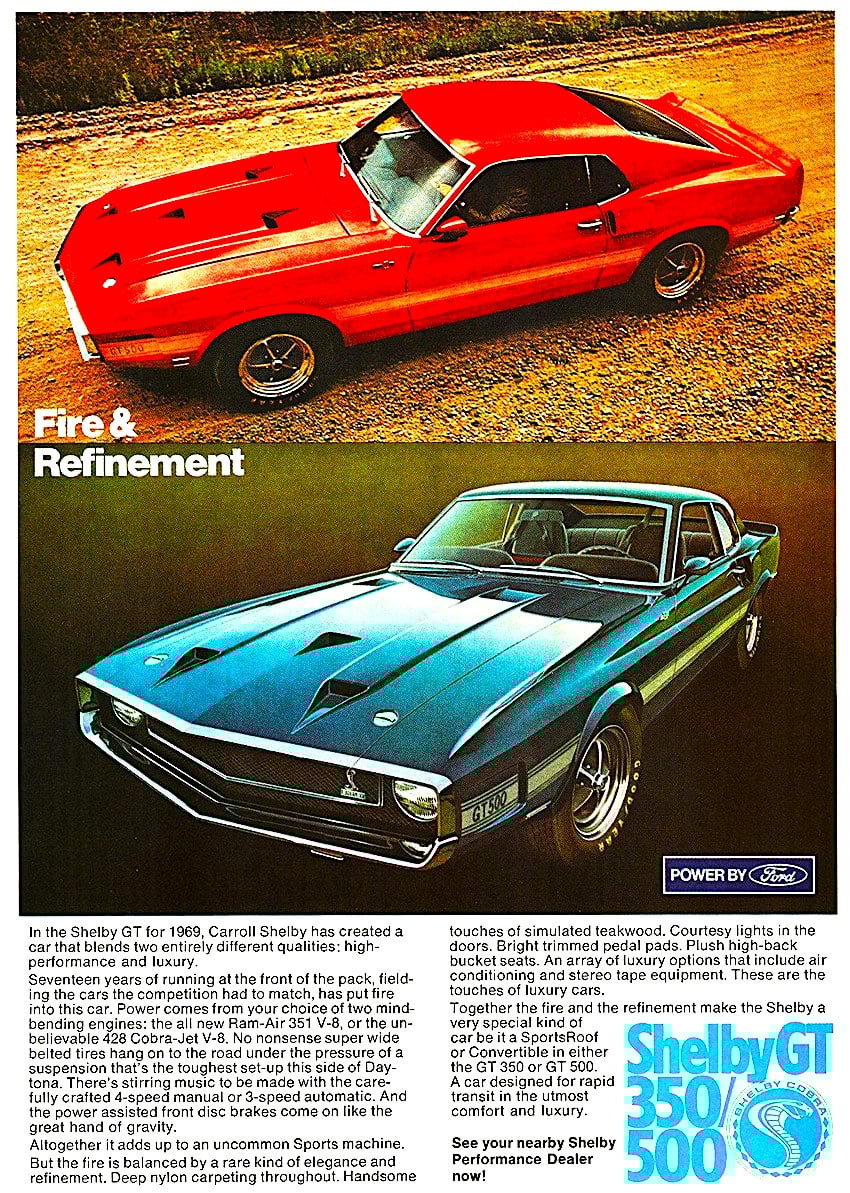
Under the hood, the 1969 GT350 received a significant displacement jump over its predecessor. In place of the 302 used in 1968, it was fitted with Ford’s new 351 cubic inch Windsor V8, built at Ford’s engine plant in Windsor, Ontario. Image courtesy of Shelby American.
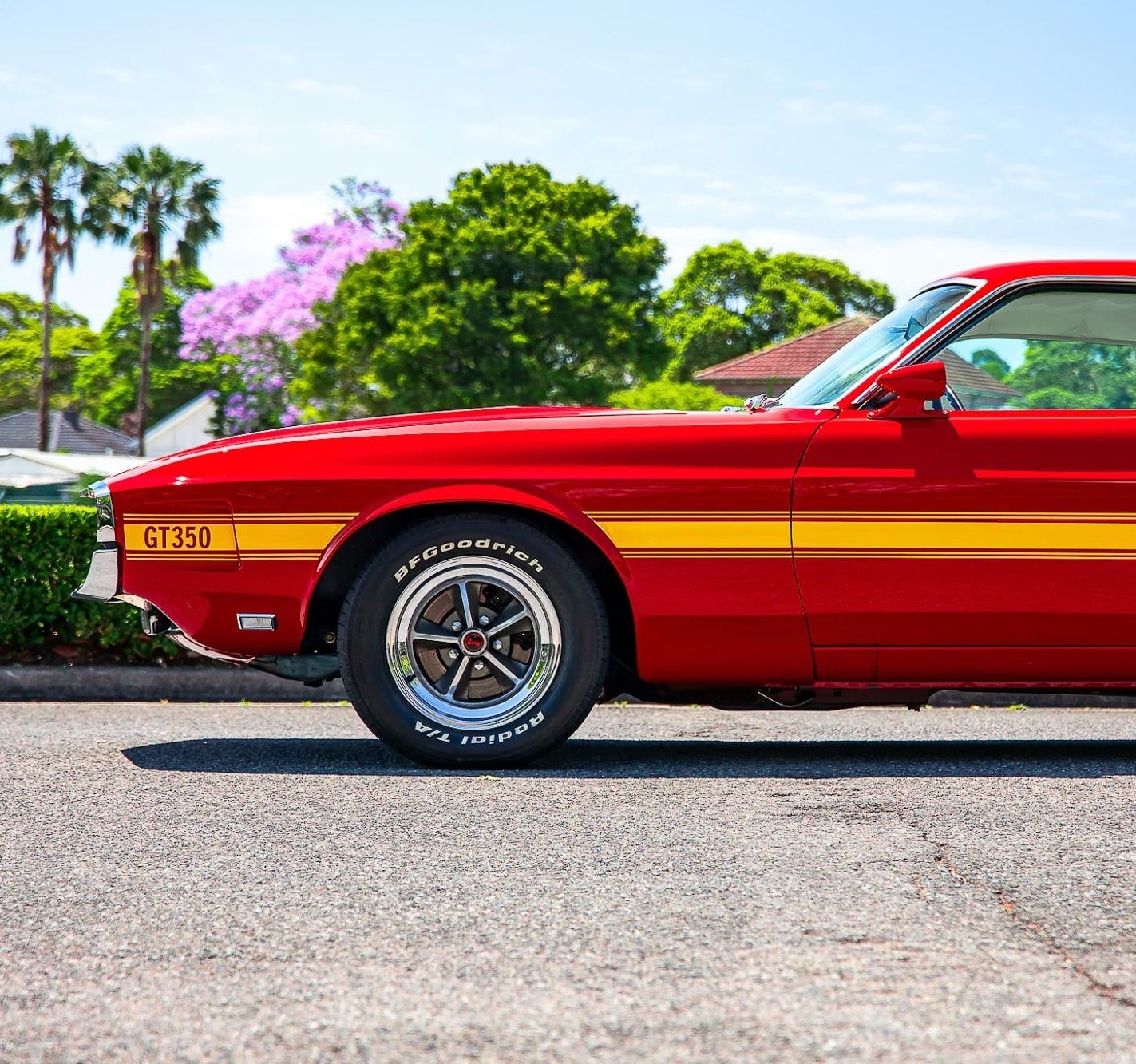
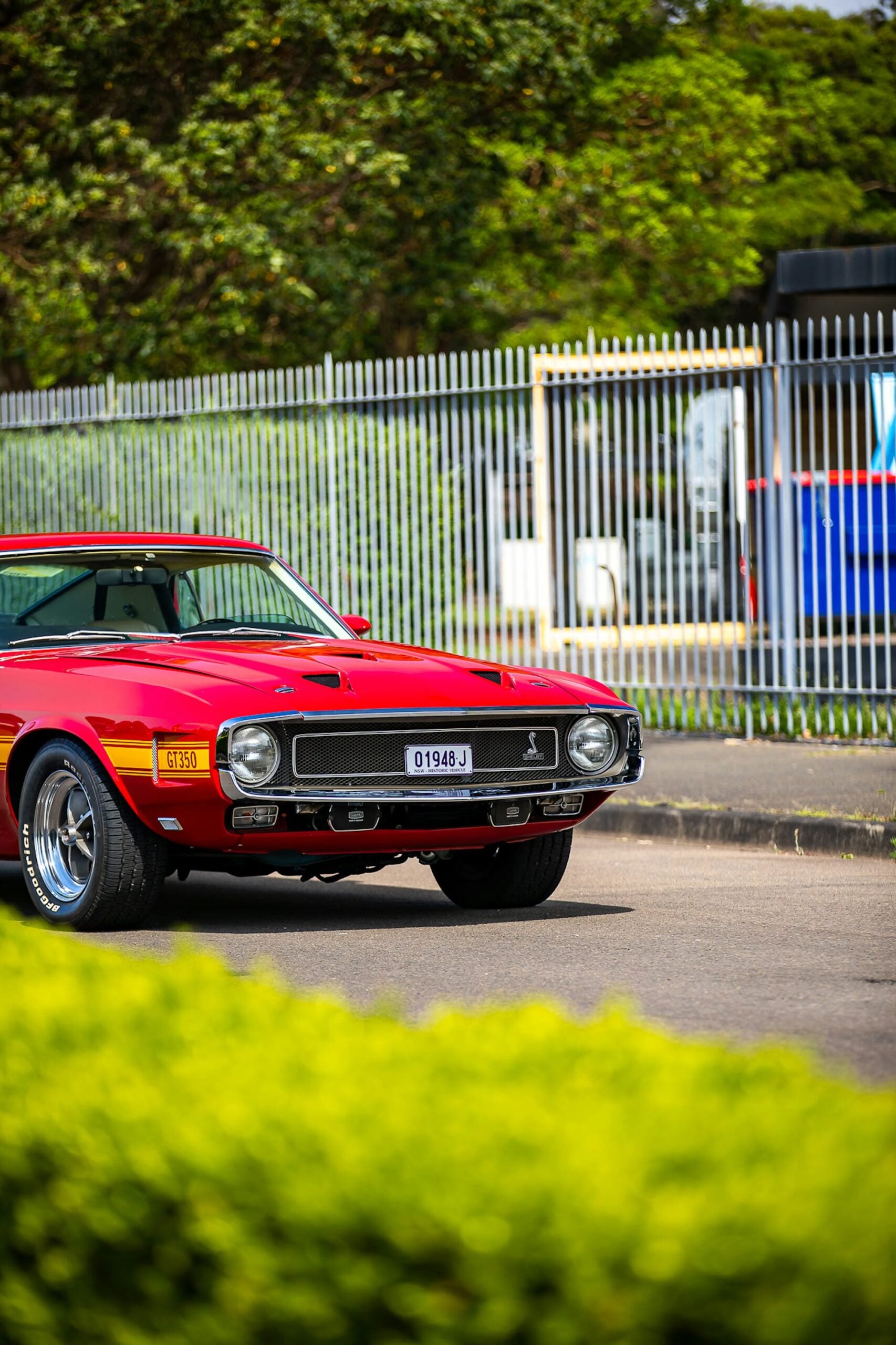
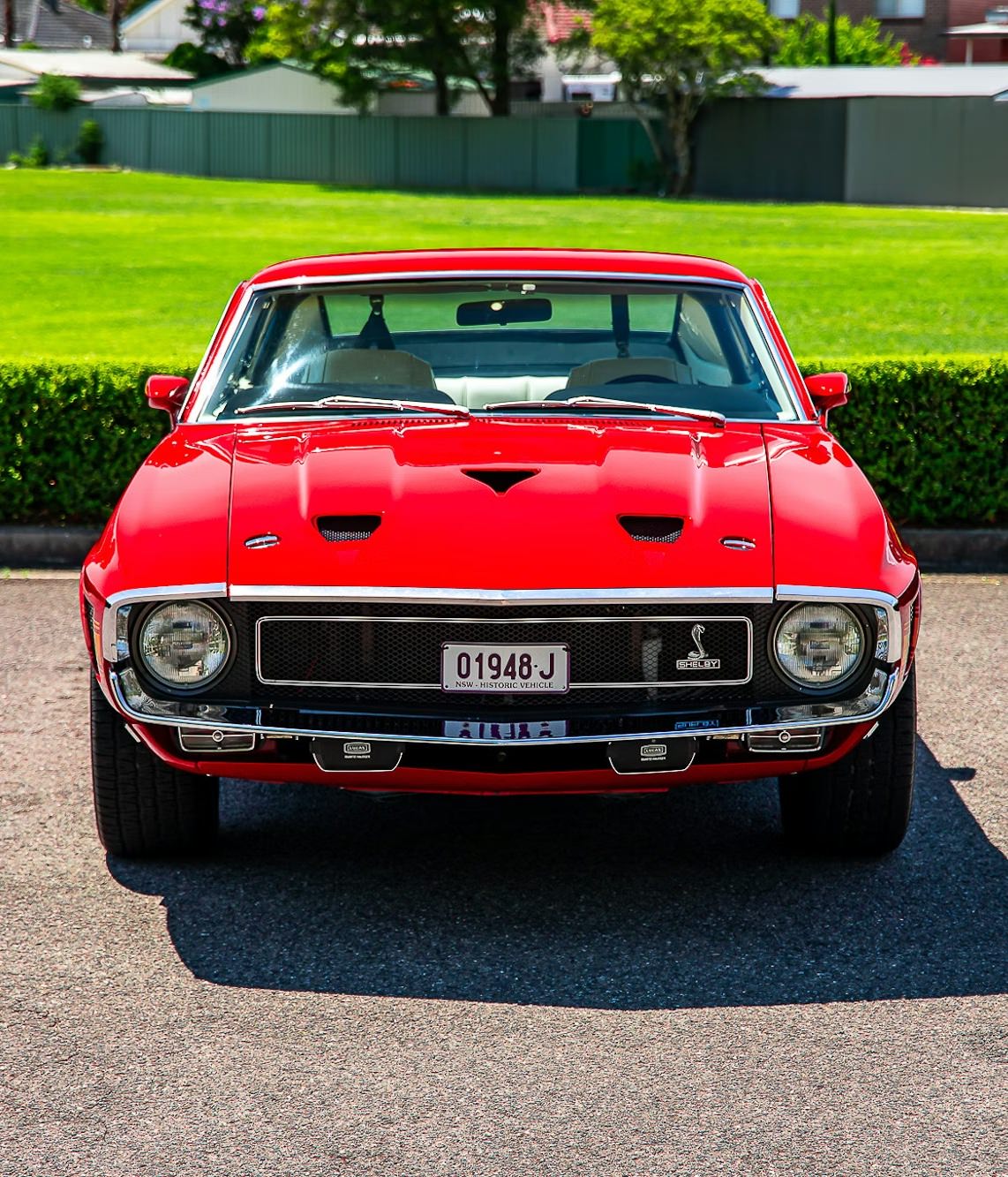
A new fiberglass hood featured three NACA ducts recessed into the surface in a triangular arrangement, replacing the protruding twin-nostril scoops of the 1968 car. The flush-mounted NACA ducts were both more aerodynamically efficient and quieter at speed, and fed cool air to the engine bay with the center duct channeling air directly to the carburetor via a (functional) Ram Air induction system.
Lucas driving lights were relocated beneath a wrap-around front bumper, though the bumper was little more than chrome trim set ahead of the grille.The grille also received a small off-center Cobra snake medallion, and the car had semi-functional brake-cooling scoops molded into each front fender ahead of the wheel wells.
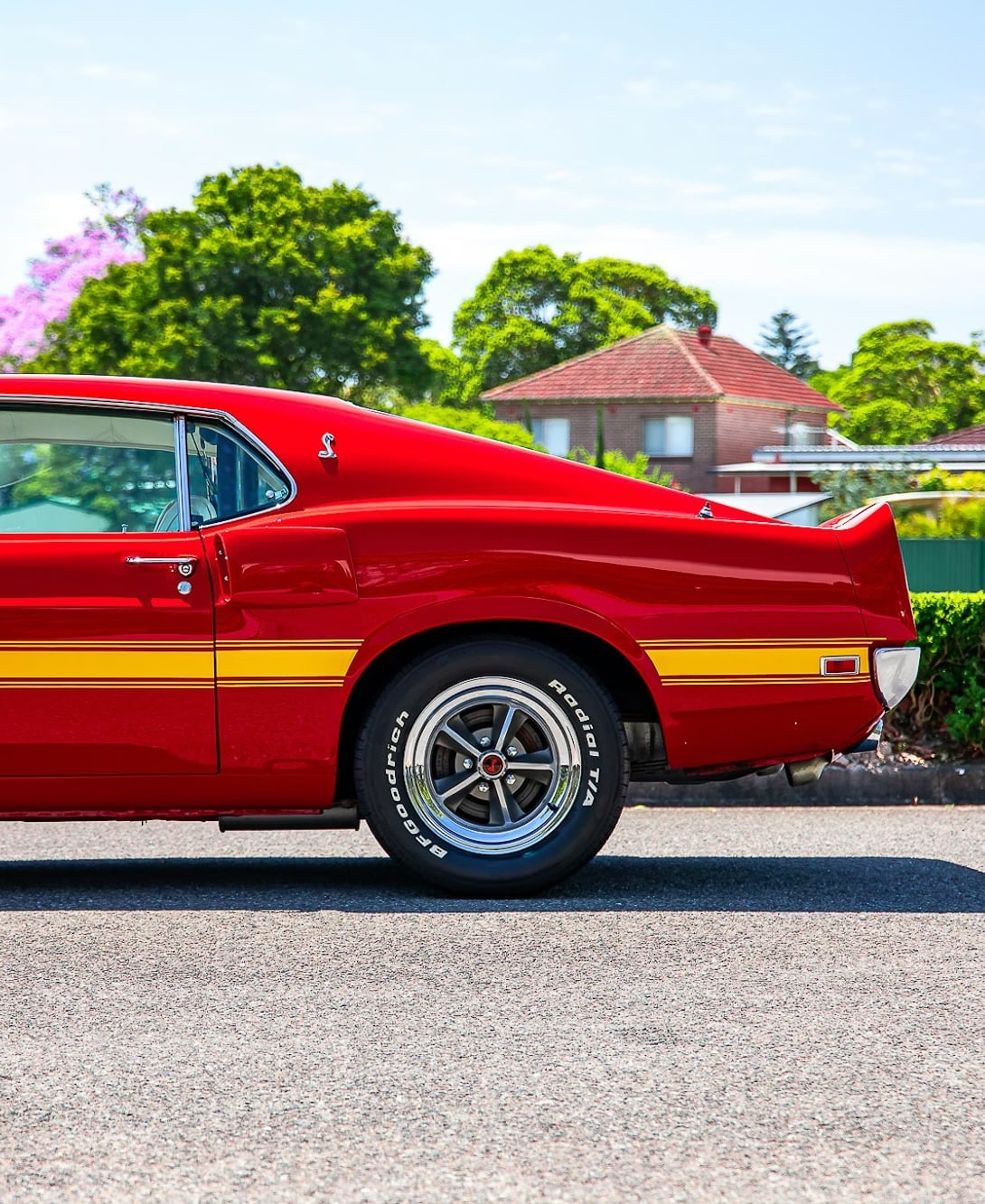
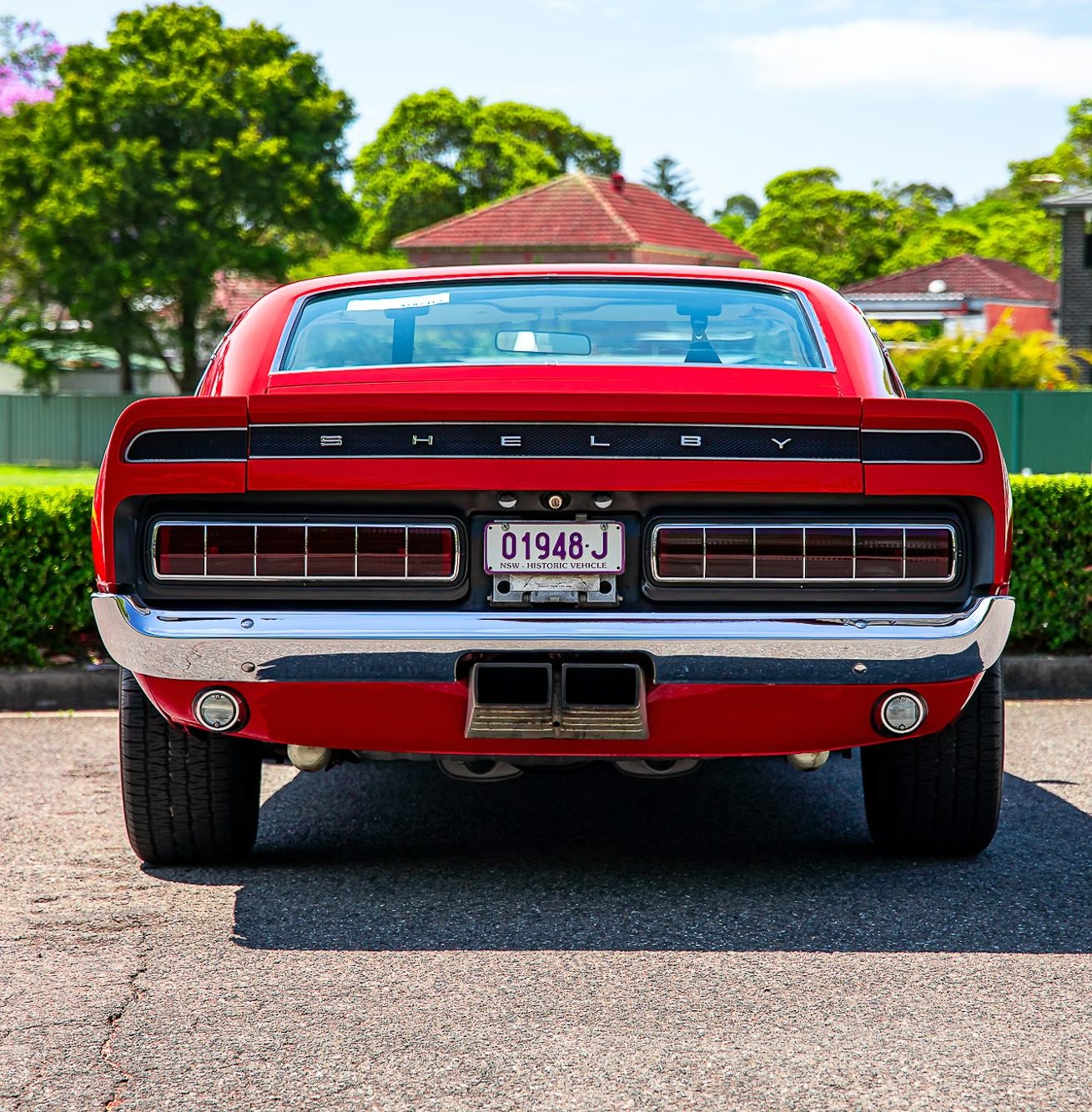
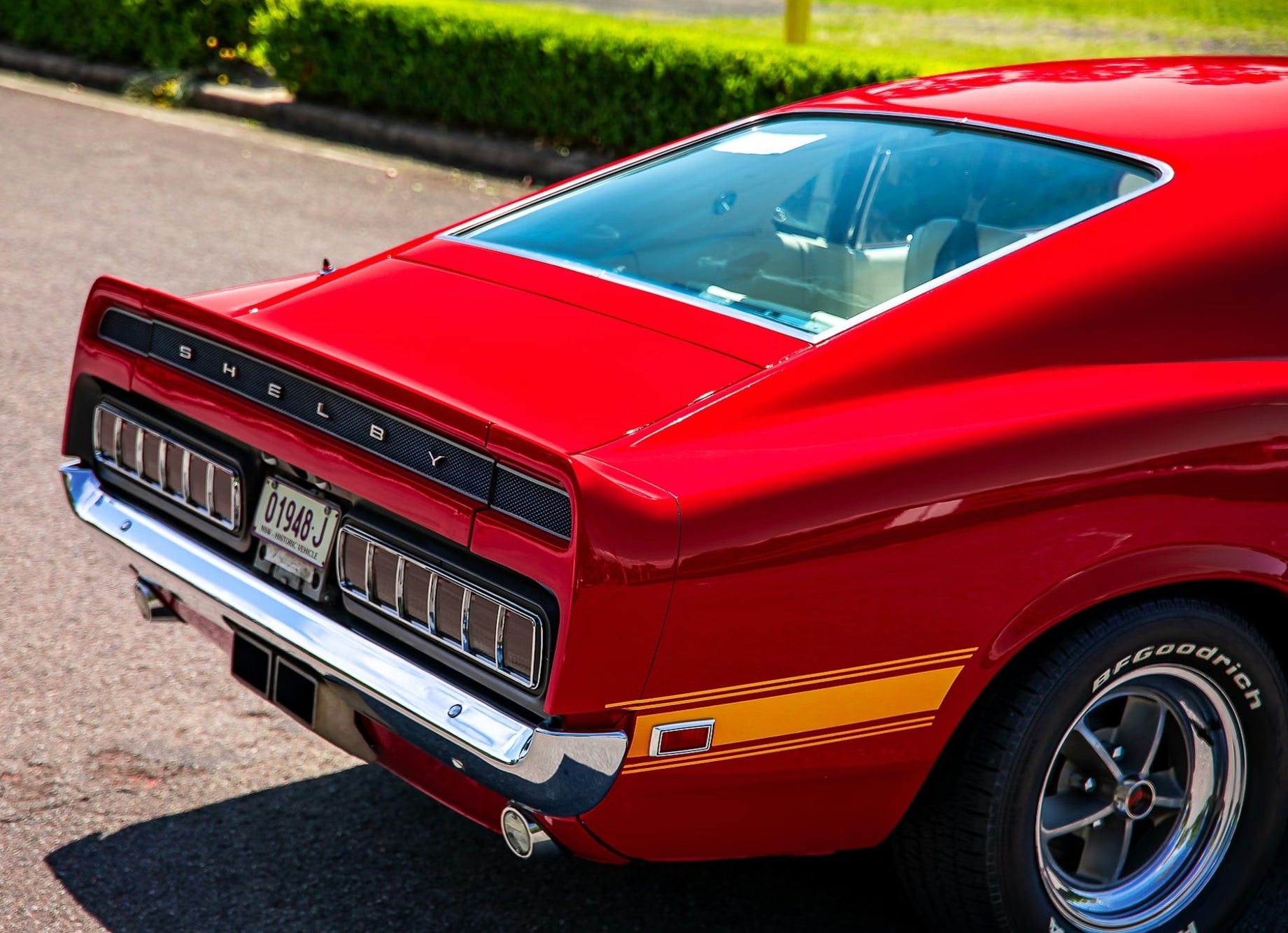
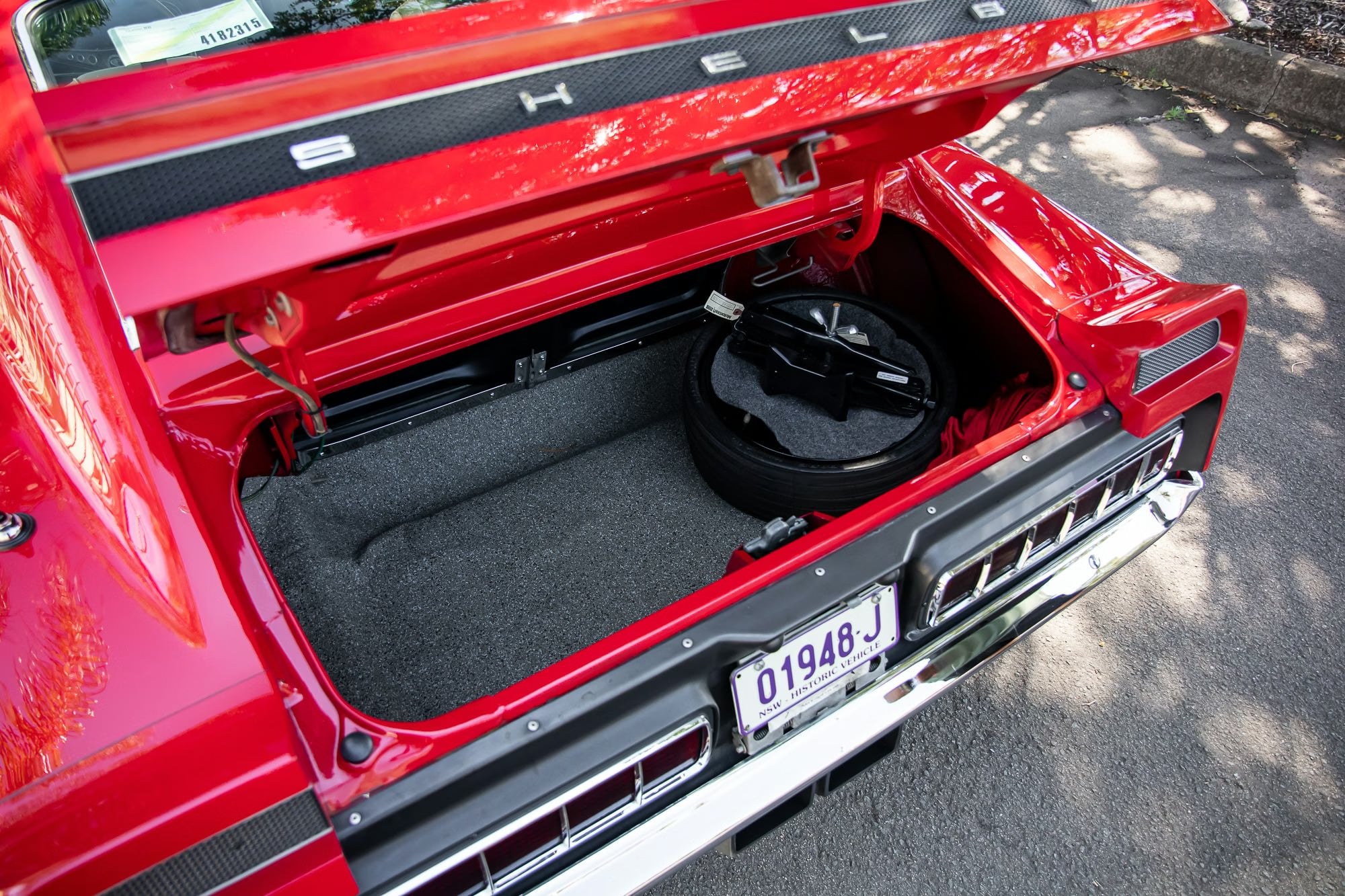
At the back, the trunk lid and tail panel were shortened, giving the car a more abrupt, Kamm-style rear end. A pronounced integrated spoiler sat atop the truncated deck, and 1965 Thunderbird taillight bezels were integrated into the fiberglass tail panel with sequential turn signals. A distinctive cast-aluminum exhaust collector merged the twin tailpipes into a single center-exit outlet beneath the rear bumper.
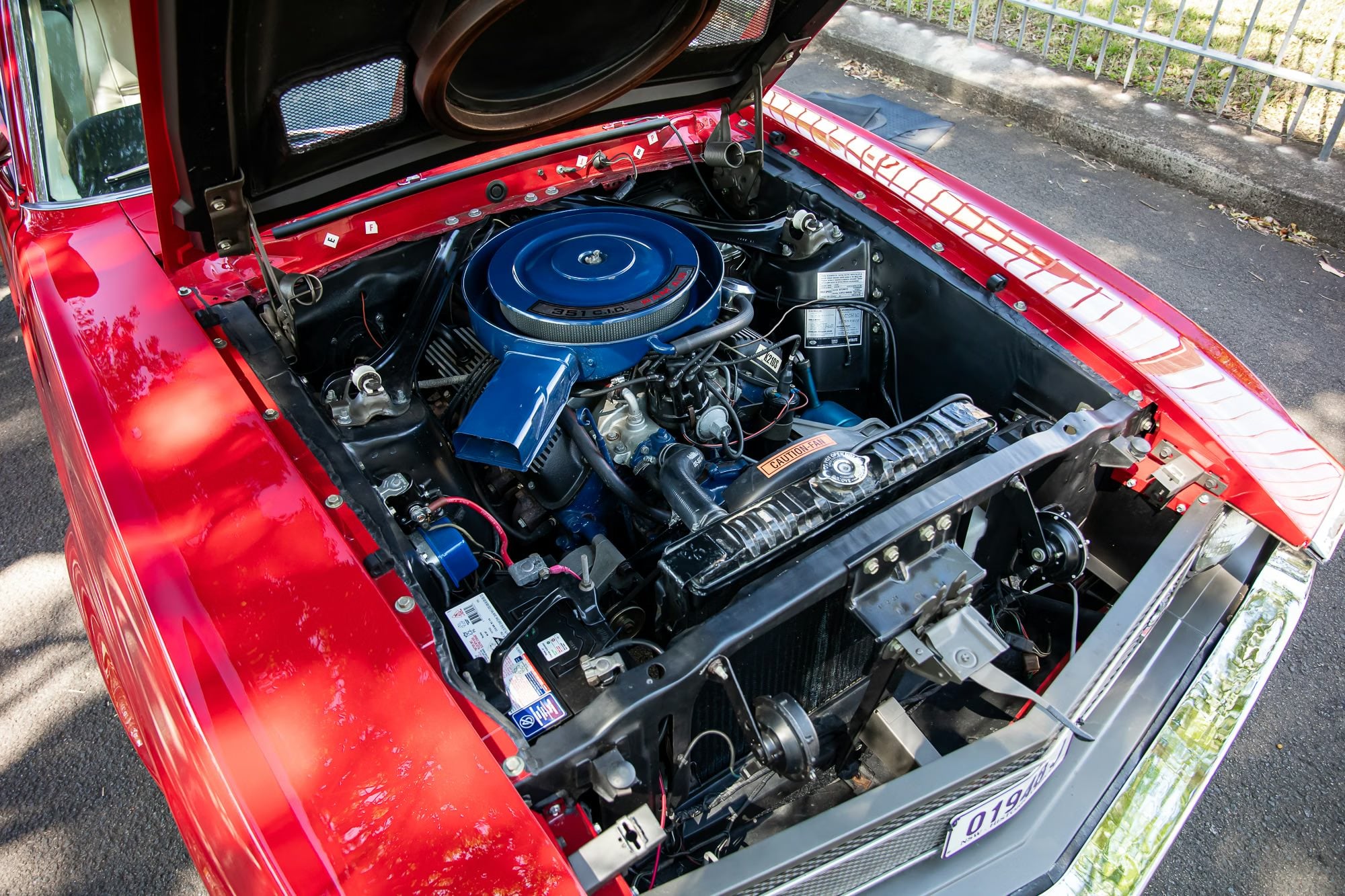
Under the hood, the 1969 GT350 received a significant displacement jump over its predecessor. In place of the 302 used in 1968, it was fitted with Ford’s new 351 cubic inch Windsor V8, built at Ford’s engine plant in Windsor, Ontario.
Fitted with a high-performance aluminum intake manifold, finned aluminum Cobra valve covers, and a 470 cfm Autolite four-barrel carburetor, the 351W was rated at 290 bhp at 4,800 rpm and 385 lb ft of torque at 3,400 rpm. Buyers could choose between a 4-speed Toploader manual and the FMX Cruise-O-Matic 3-speed automatic, with a Traction-Lok limited-slip differential available.
The chassis featured independent coil-spring front suspension with uprated springs and sway bar, a Hotchkiss-drive variable-rate semi-elliptical leaf spring rear setup, and Gabriel adjustable shock absorbers at all four corners. The GT350 rode on Goodyear F60-15 Polyglas GT tires fitted to 15 x 7 inch five-spoke Shelby-specific wheels.
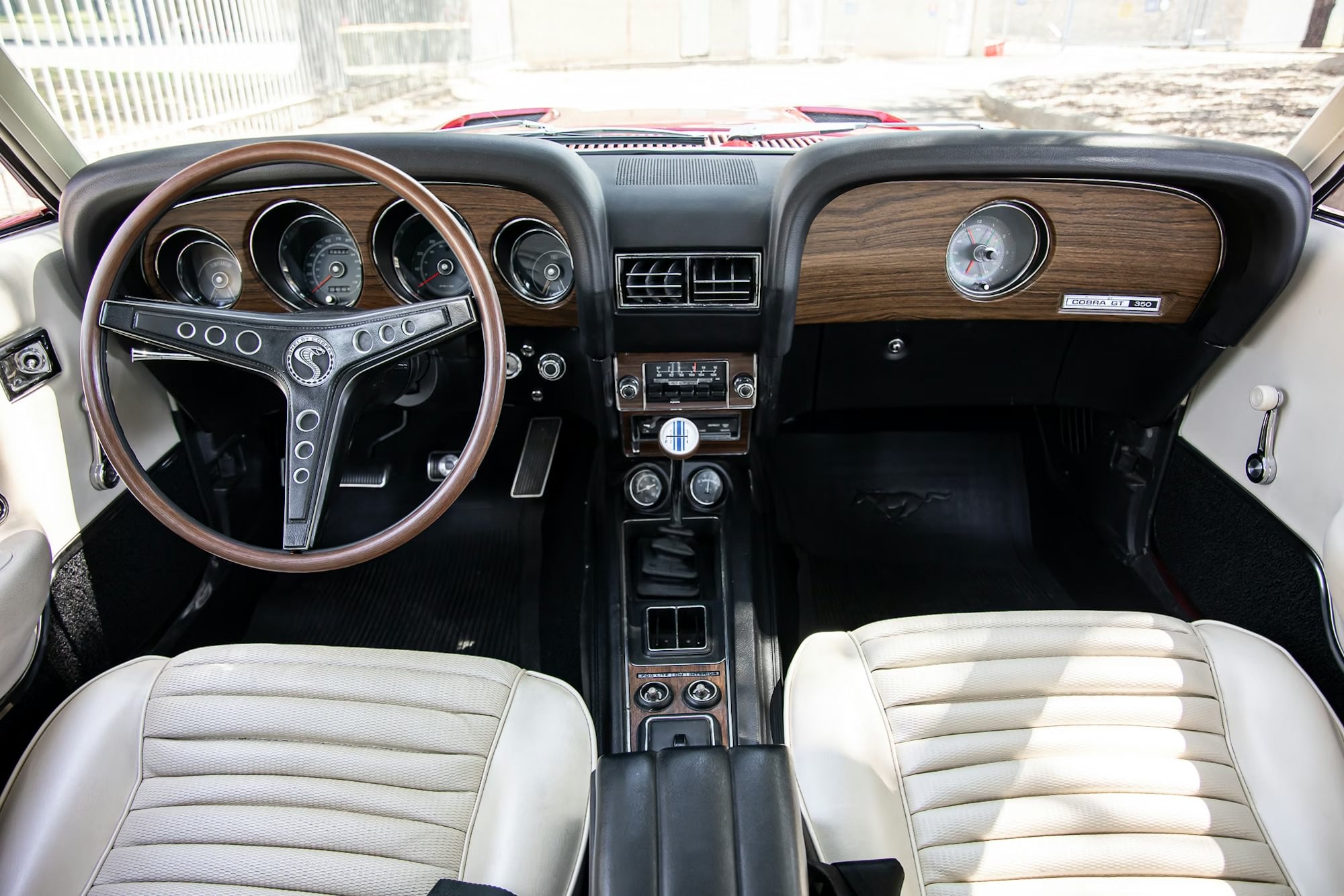
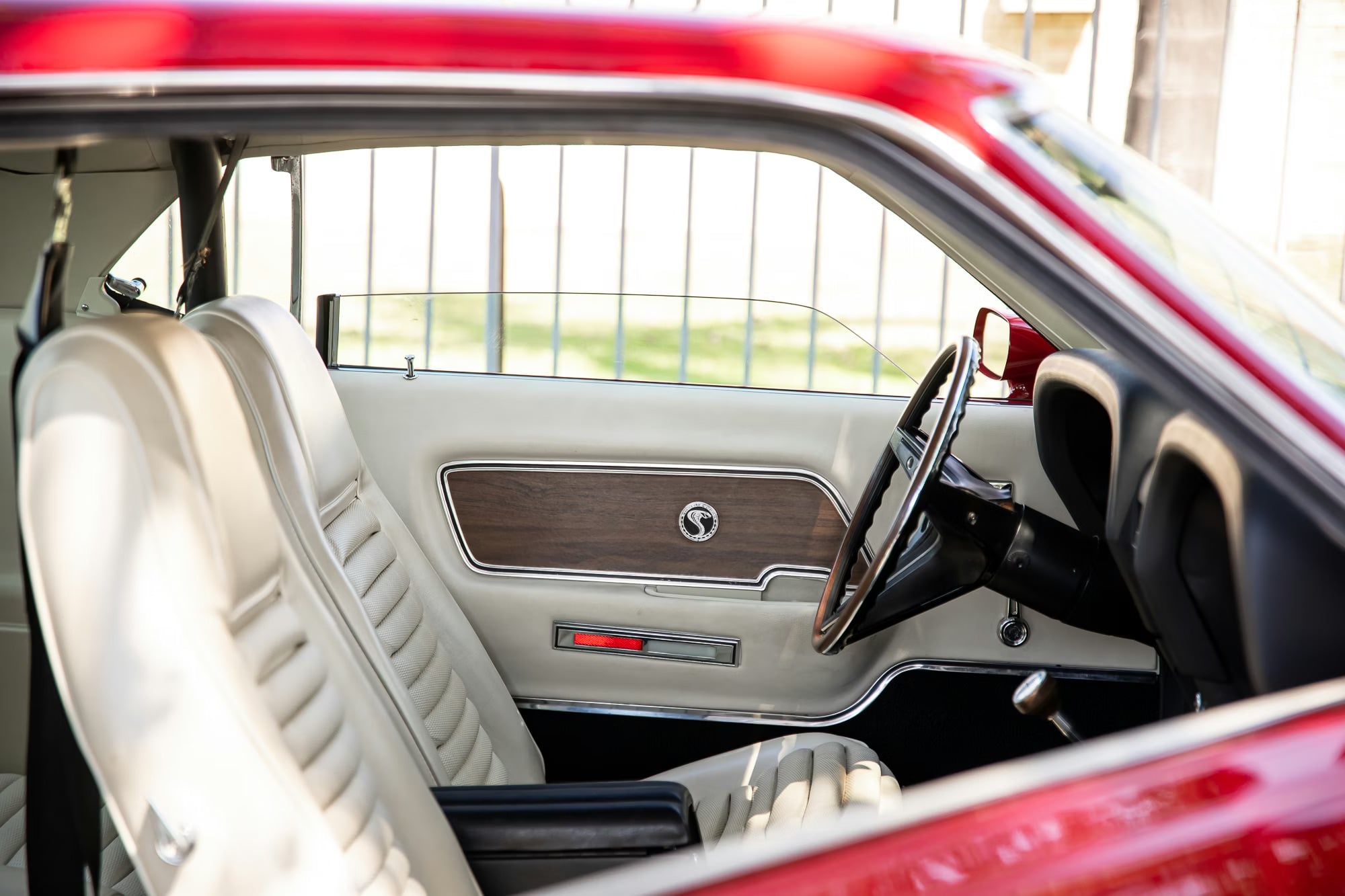
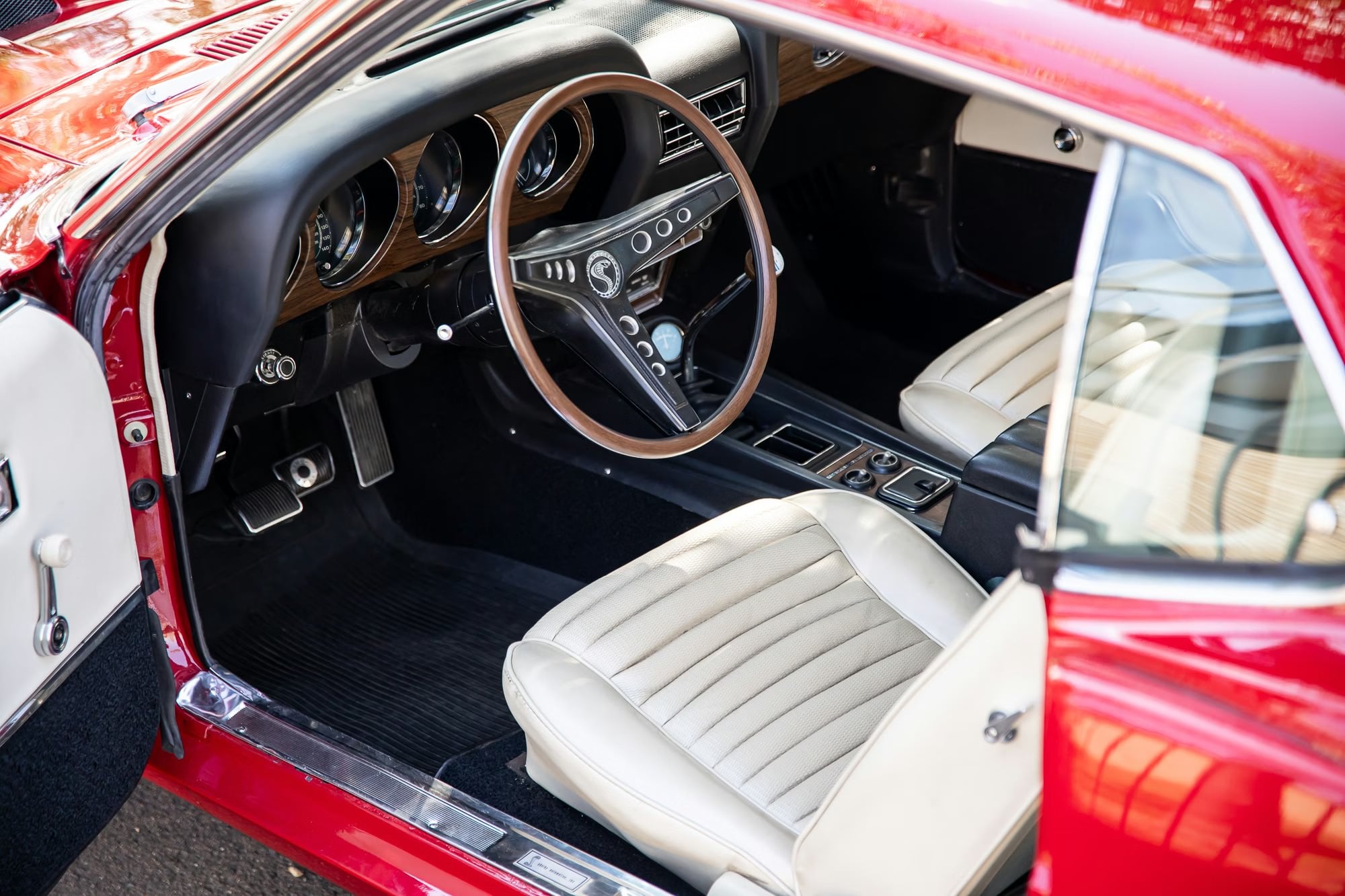
Inside, the car had high-back bucket seats, a (perhaps slightly optimistic) 8,000 rpm tachometer, a 140 mph speedometer, and woodgrain trim that gave the cabin a touch of upmarket GT car character. The options list included air conditioning, an AM/FM stereo, an 8-track tape player, a tilt steering wheel, tinted glass, and power everything.
The 1969 GT350 was offered as both a SportsRoof (fastback) and a convertible, in a color palette that ranged from Wimbledon White and Black Jade to Grabber Orange and Grabber Yellow. According to production figures compiled from Ford records by the Shelby American Automobile Club, just 821 fastbacks and 139 convertibles were built as 1969 models – the convertible ranking as one of the rarest Shelby variants ever produced.
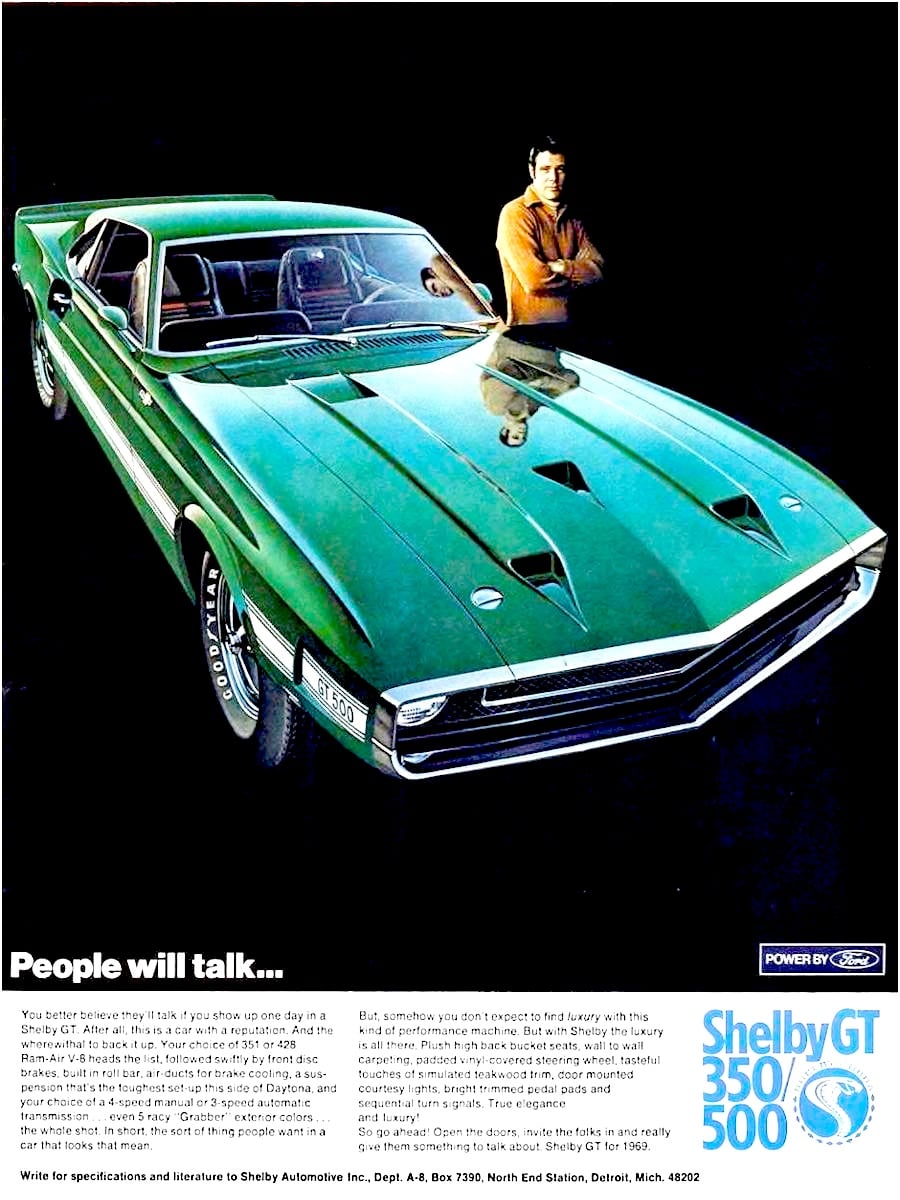
The 1969 GT350 was offered as both a SportsRoof (fastback) and a convertible, in a color palette that ranged from Wimbledon White and Black Jade to Grabber Orange and Grabber Yellow. Image courtesy of Shelby American.
Across both GT350 and GT500 models, total 1969 production reached 2,362 units. 789 unsold 1969 cars were later re-VINed (under close FBI supervision) and sold as 1970 models with minimal cosmetic changes – a front chin spoiler and two black hood stripes – bringing the combined 1969 to 1970 total to around 3,150.
The 1969 Shelby Mustang GT350 Shown Here
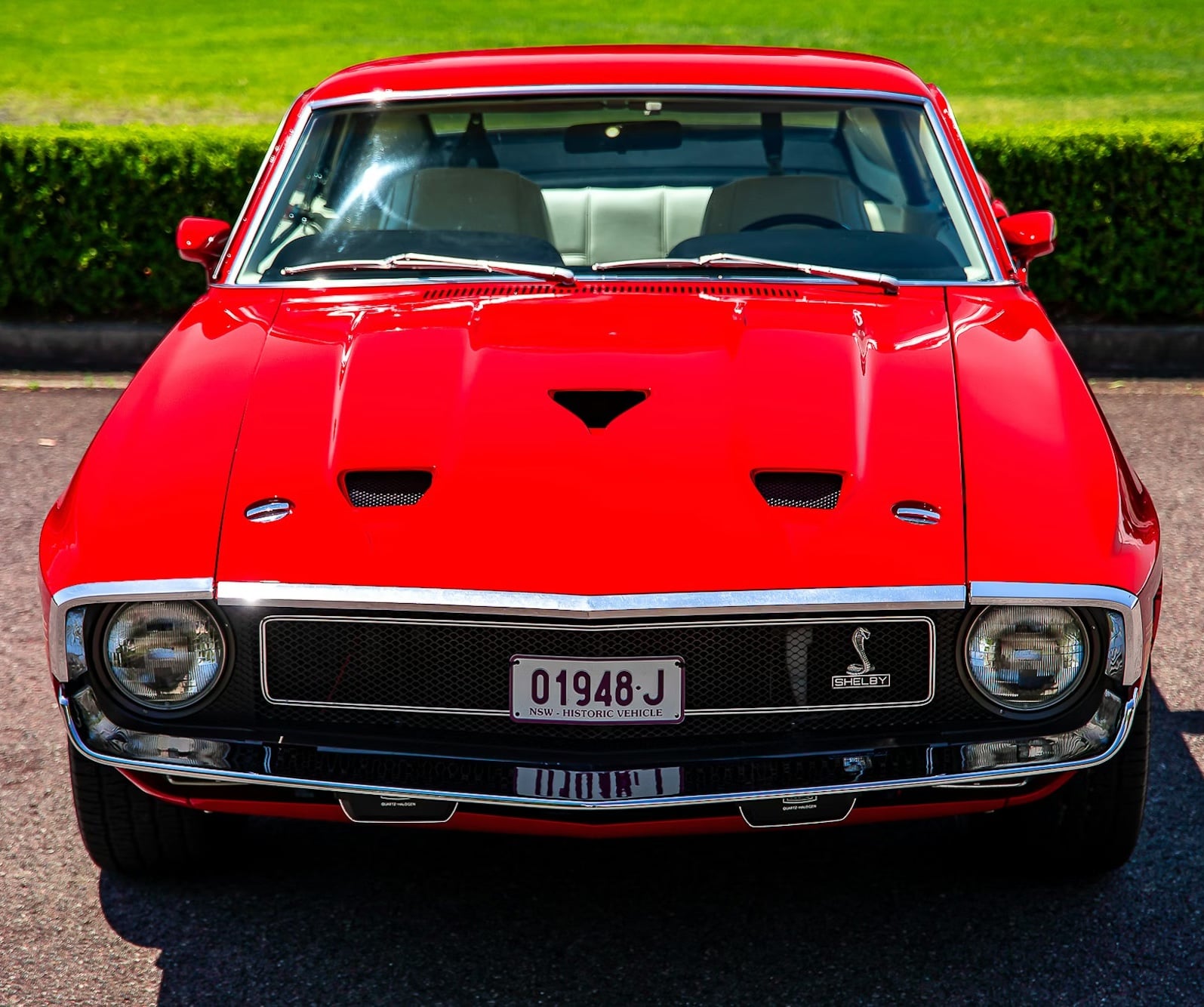
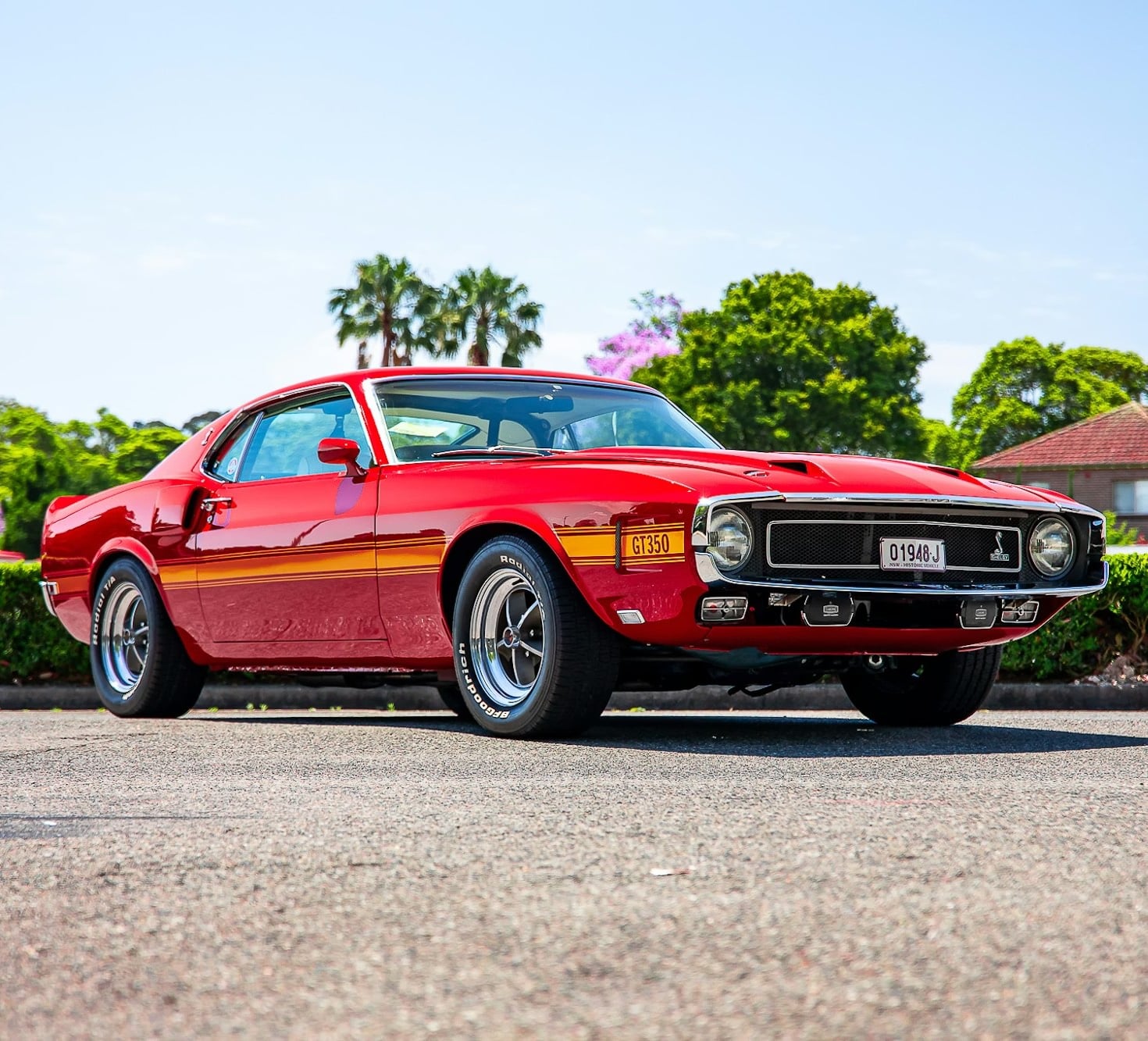
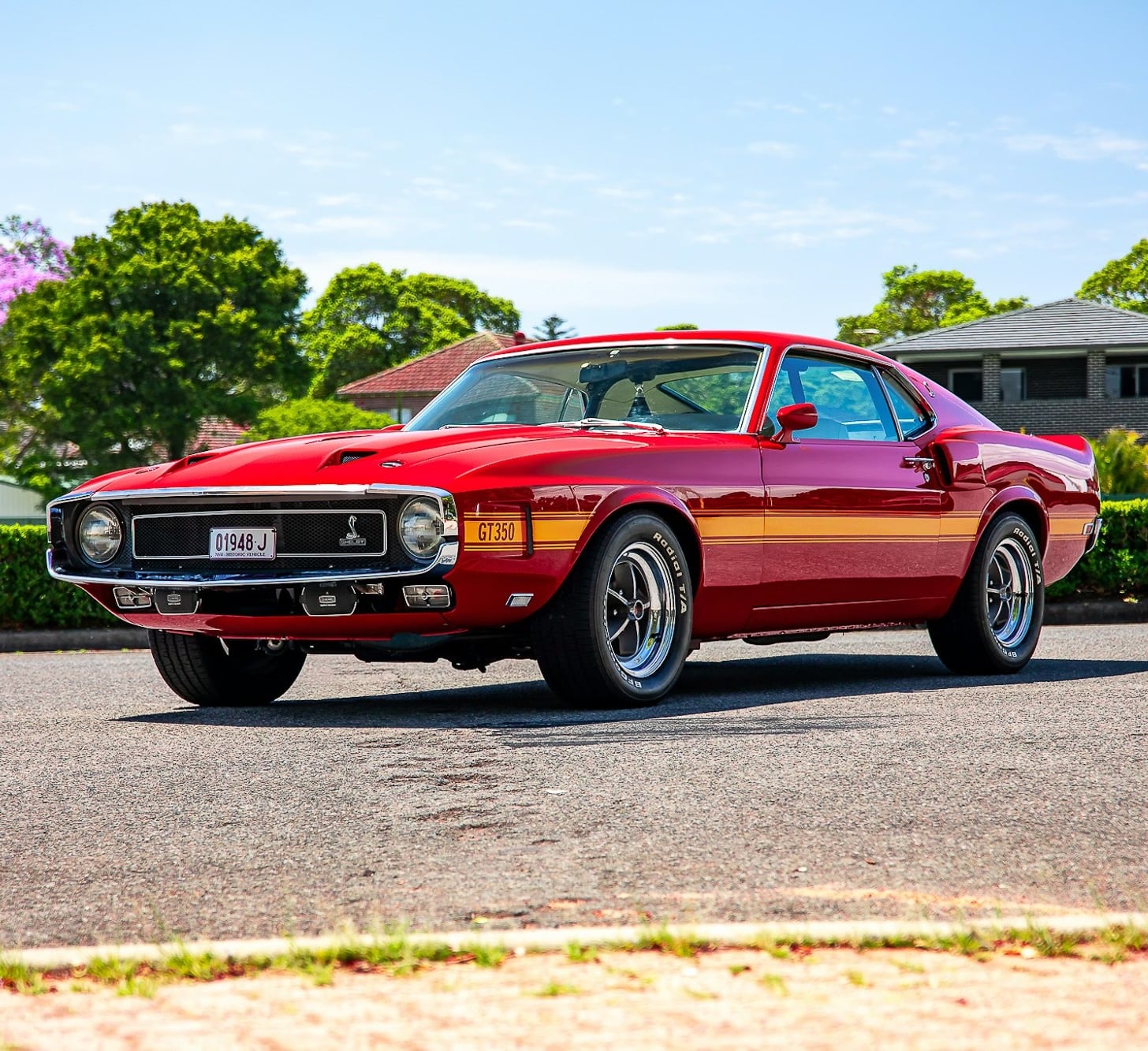
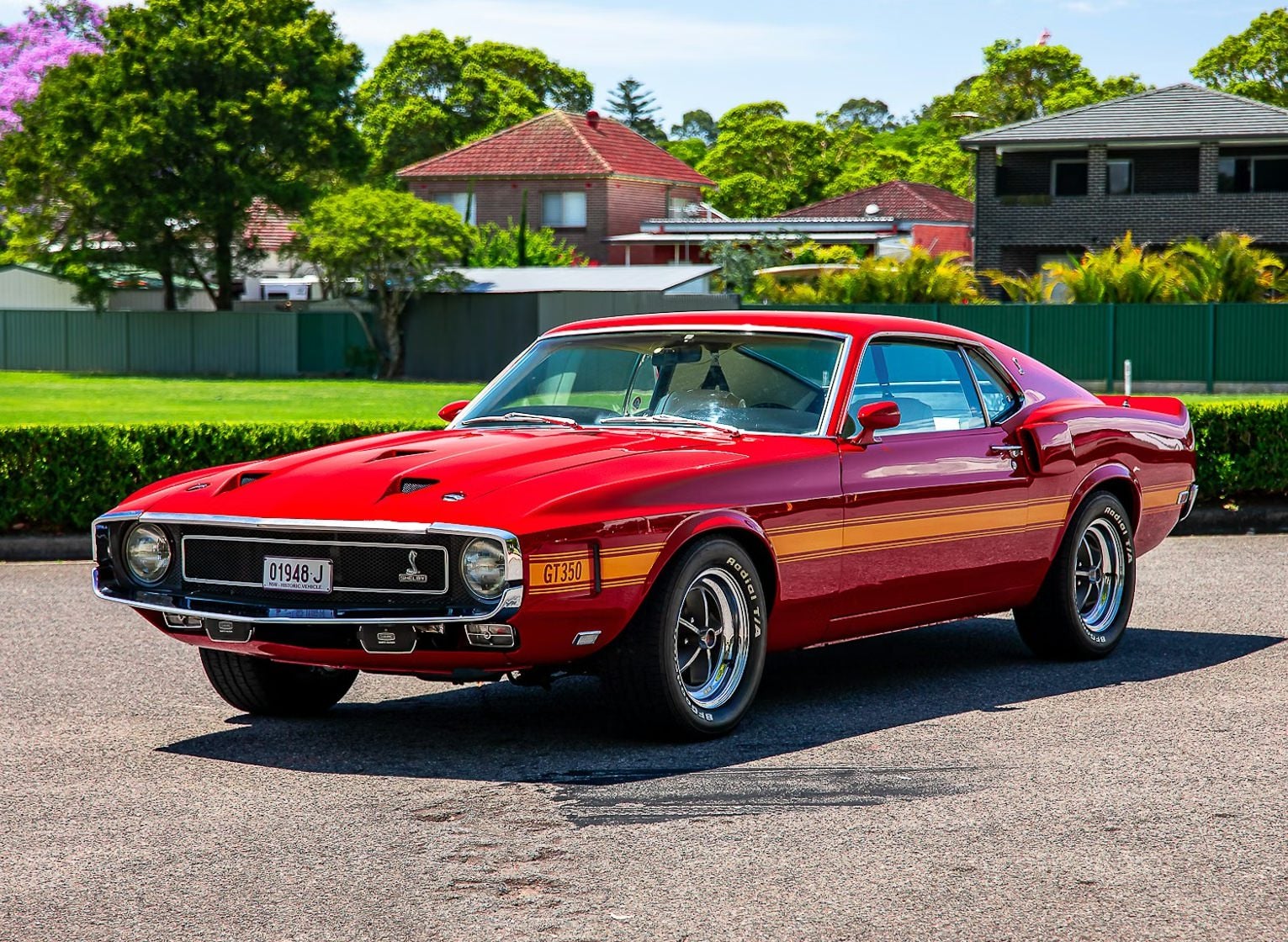
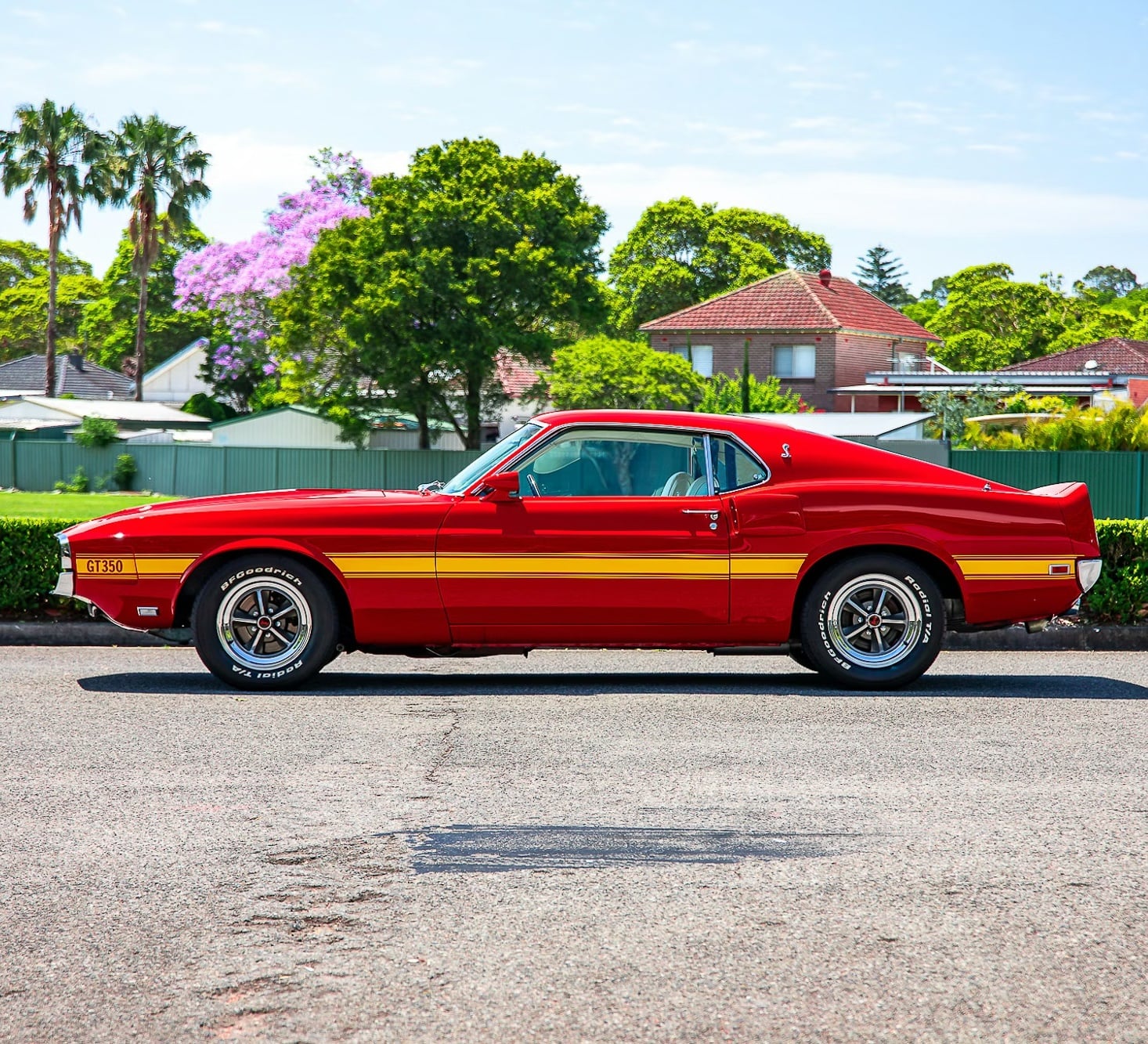
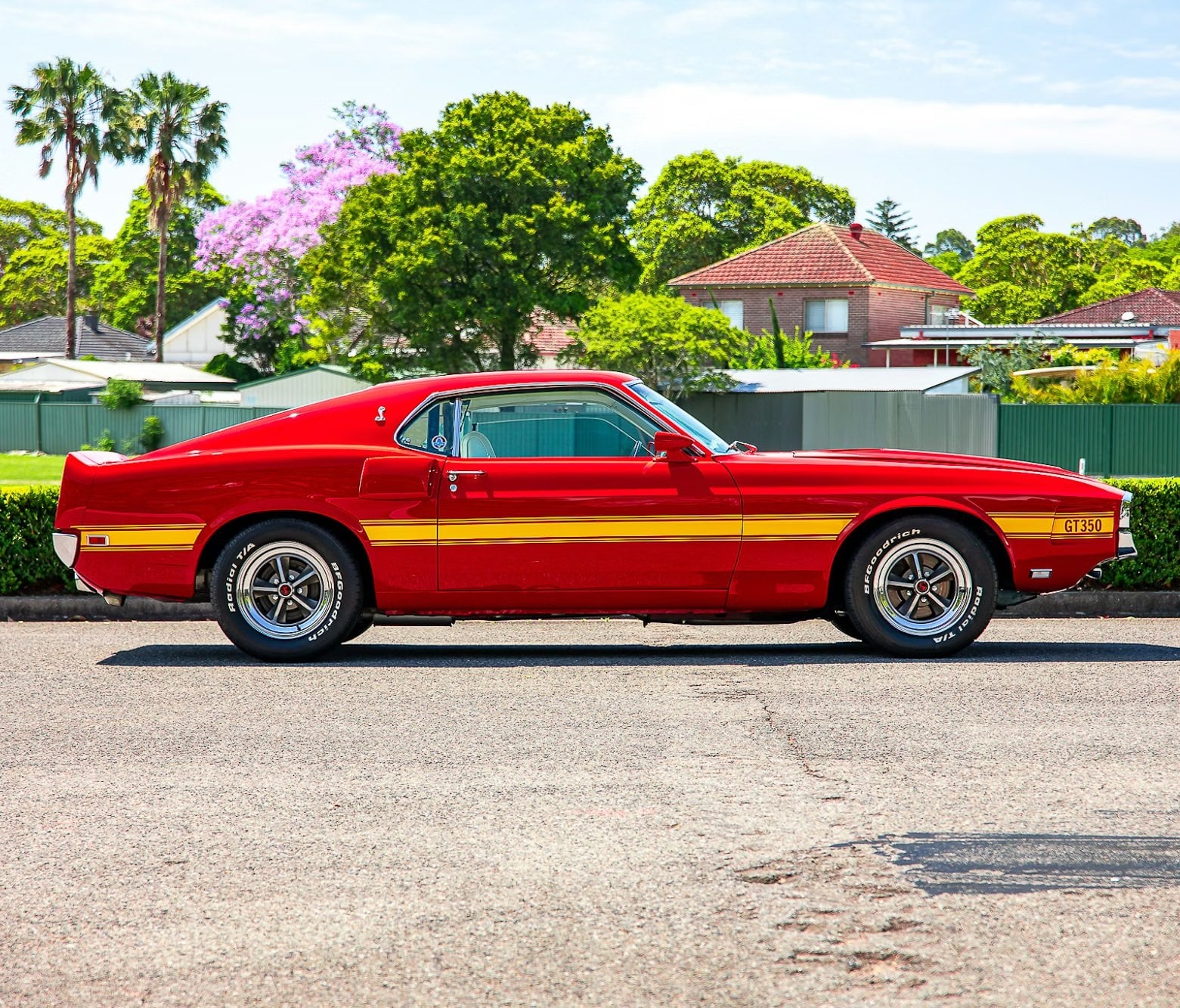
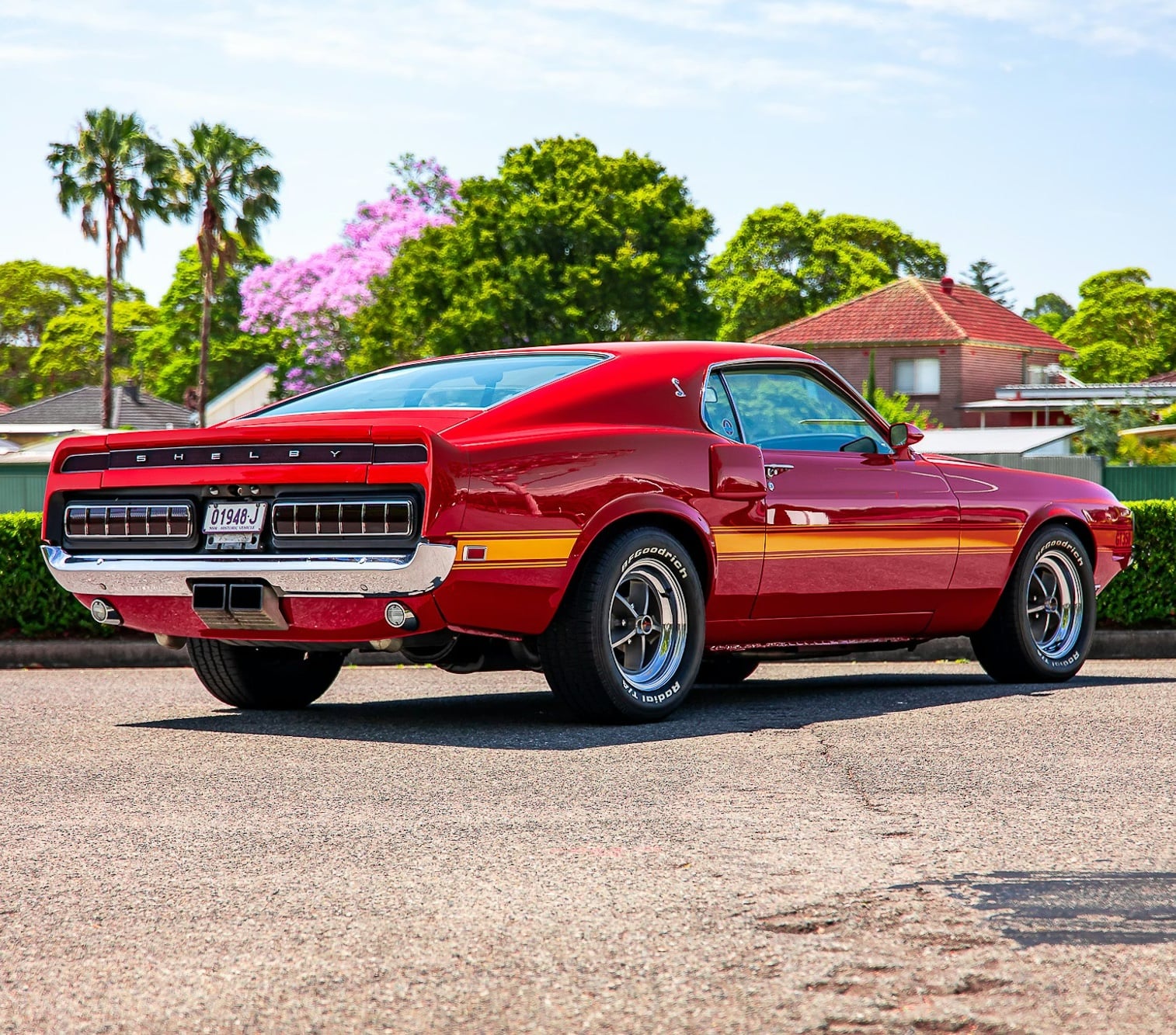
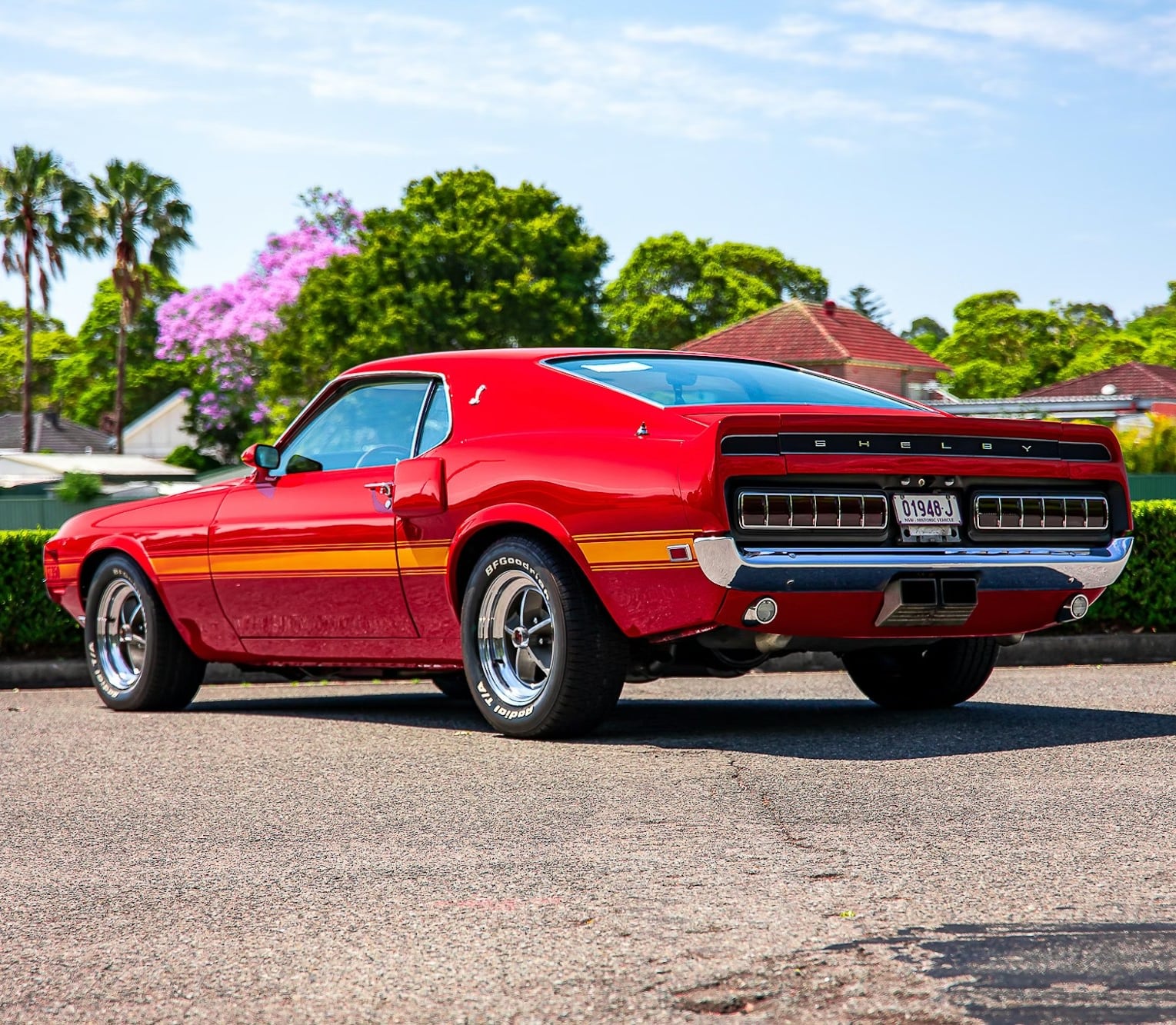
The car you see here is a 1969 Shelby Mustang GT350 still fitted with its matching-numbers 351 Windsor V8 and its factory-fitted 4-speed Toploader gearbox. This GT350 was assembled at Ford’s Dearborn, Michigan plant on January the 13th, 1969, according to the original Ford Motor Company build sheet and a Deluxe Marti Auto Works Report that accompany the car.
It was originally sold through Sexton Ford in Moline, Illinois. The odometer reads 86,577 miles, though the seller notes that this figure is not warranted. The engine remains fitted with the GT350-exclusive aluminum Shelby intake manifold and a Holley four-barrel carburetor, and power is sent back to a Ford 9 inch rear end with a Traction-Lok limited-slip differential running rebuilt 3.25 gears.
The car also features a functional Ram Air hood, Autolite ignition, and Autolite coolant hoses. The exterior has been resprayed in Candy Apple Red with yellow side stripes and GT350 decals, and the car rides on 15 inch five-spoke alloy wheels with aluminum center sections and polished edges, wearing BF Goodrich Radial T/A tires.
Inside, the white Deluxe Clarion Knit vinyl interior has been refurbished, with high-back bucket seats, restored gauges, re-chromed trim, and wood inlays on the dashboard and door cards. Factory options on this example included the Sport Deck rear seat, power front disc brakes, a tilt-away steering wheel, power ventilation, and an AM radio.
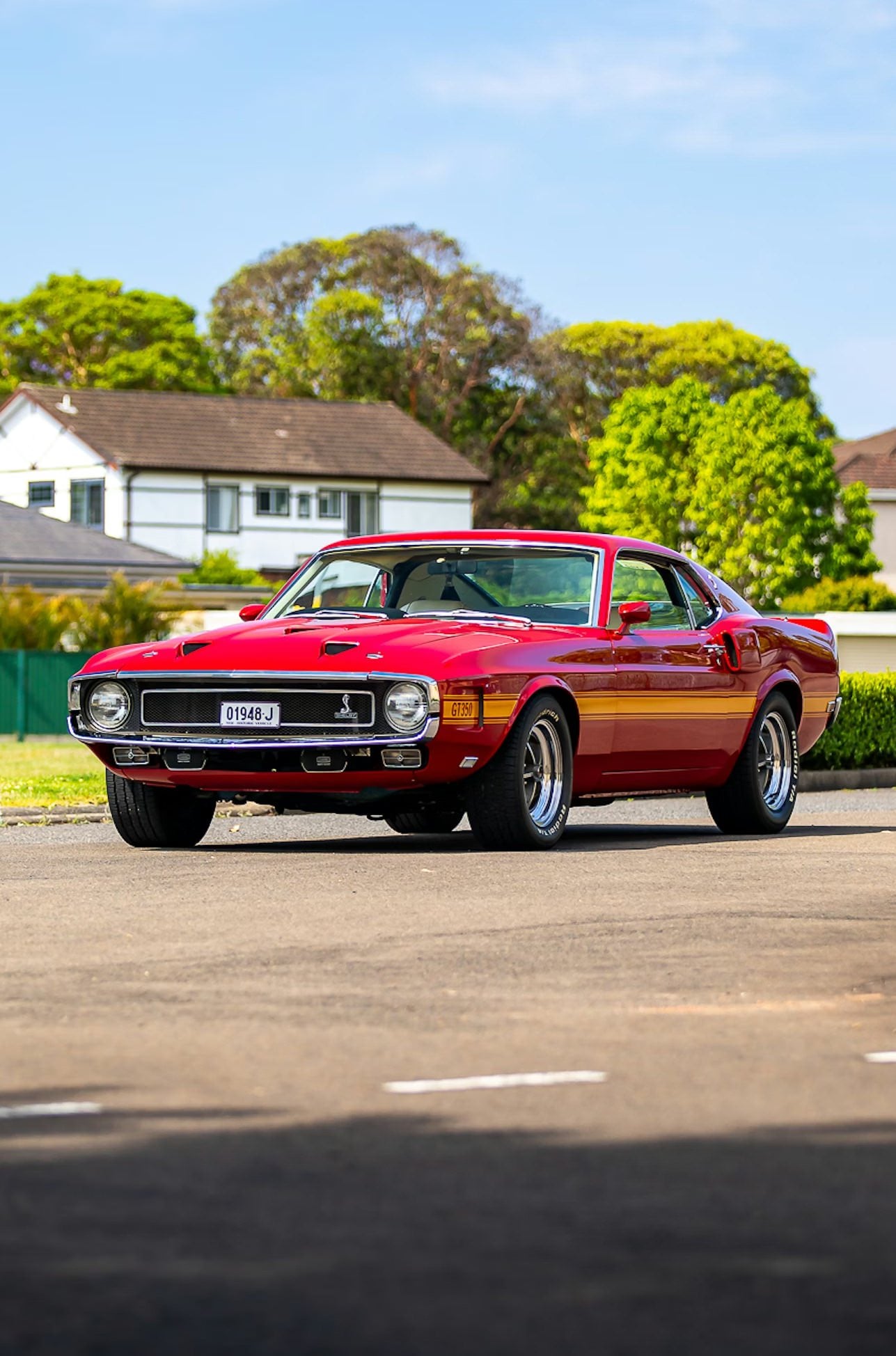
The car you see here is a 1969 Shelby Mustang GT350 still fitted with its matching-numbers 351 Windsor V8 and its factory-fitted 4-speed Toploader gearbox.
The car reportedly underwent restorative maintenance in 2012, and additional work has included rebuilt suspension, a stainless steel fuel tank, and a modern exhaust system with Flowmaster dual-chamber mufflers replacing the original setup.
The car is now being offered for sale out of Canterbury, NSW, Australia on Collecting Cars, and you can visit the listing here if you’d like to read more about it or register to bid.
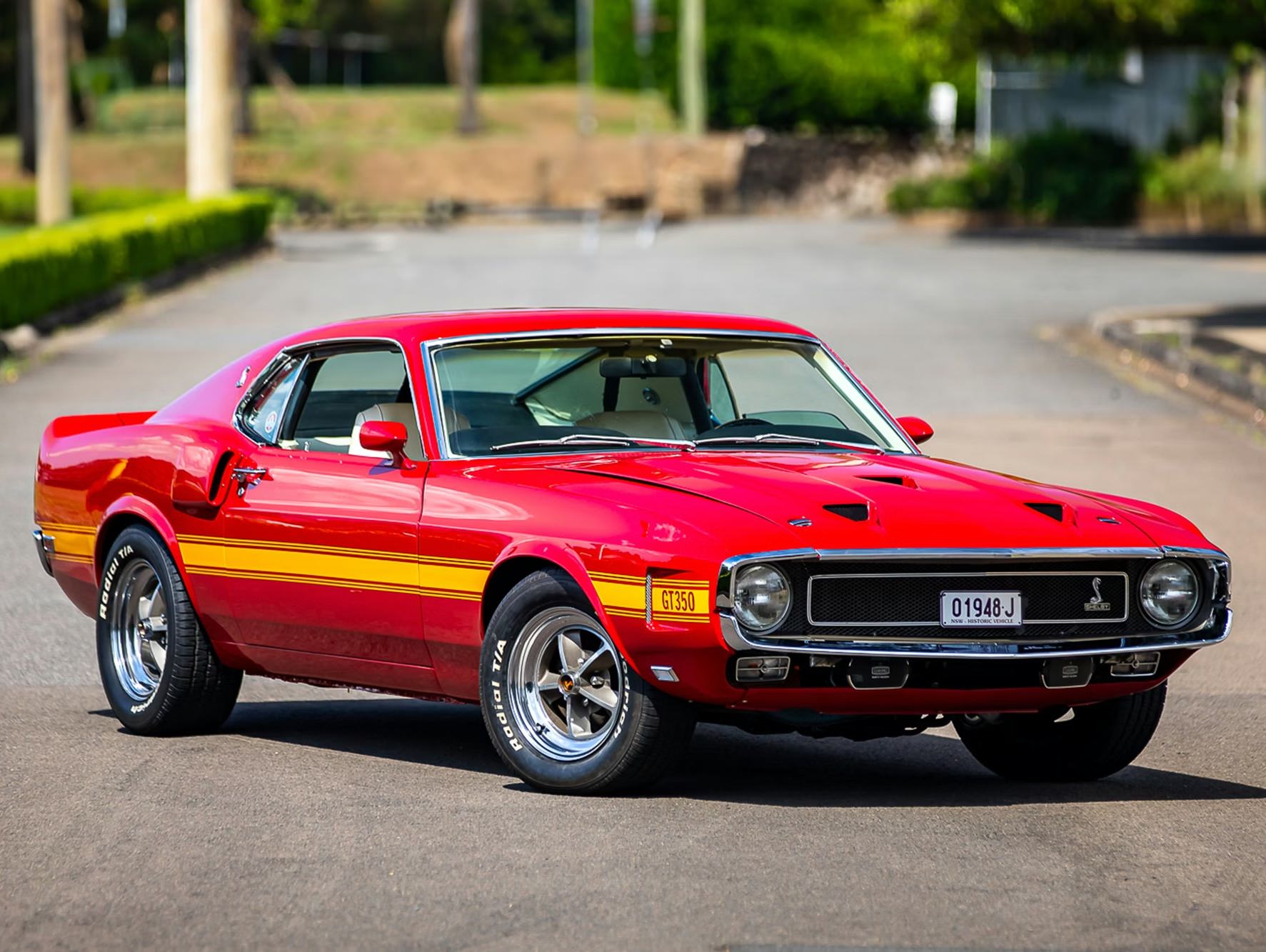
Images courtesy of Collecting Cars + Ford

Articles that Ben Branch has written have been covered on CNN, Popular Mechanics, Smithsonian Magazine, Road & Track Magazine, the official Pinterest blog, the official eBay Motors blog, BuzzFeed, Autoweek Magazine, Wired Magazine, Autoblog, Gear Patrol, Jalopnik, The Verge, and many more.
Silodrome was founded by Ben back in 2010, in the years since the site has grown to become a world leader in the alternative and vintage motoring sector, with well over a million monthly readers from around the world and many hundreds of thousands of followers on social media.