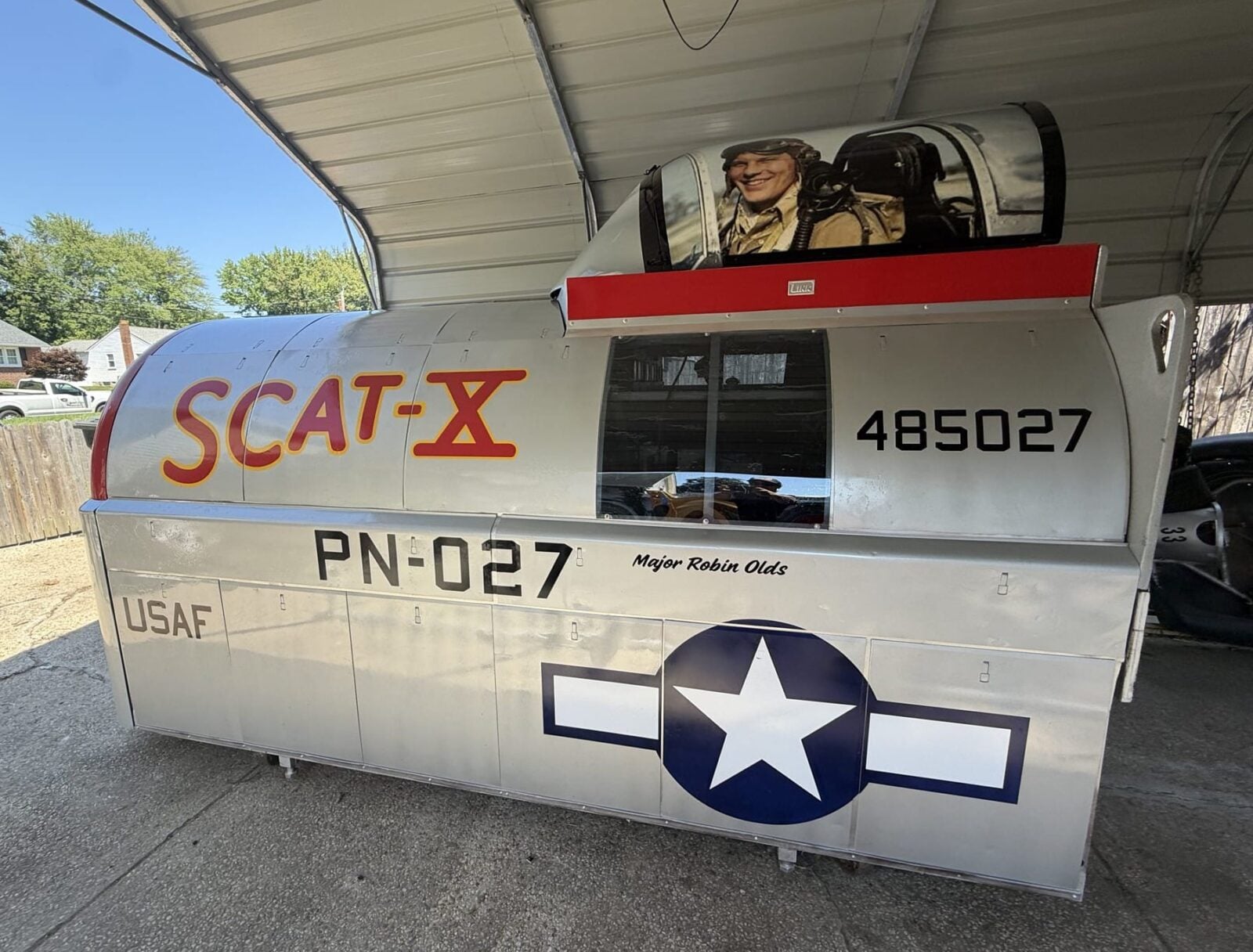
This is a Link Aviation Devices C-11B Instrument Flight Simulator from the 1950s, it has no screens at all, just manual controls and analog gauges – or “steam gauges” as many modern pilots call them.
Flight simulators like this were typically called flight trainers in-period, and many tens of thousands of WWII pilots were trained on them, they were still in use during the Korean War, and some nations were using versions of them right though to the 1990s.
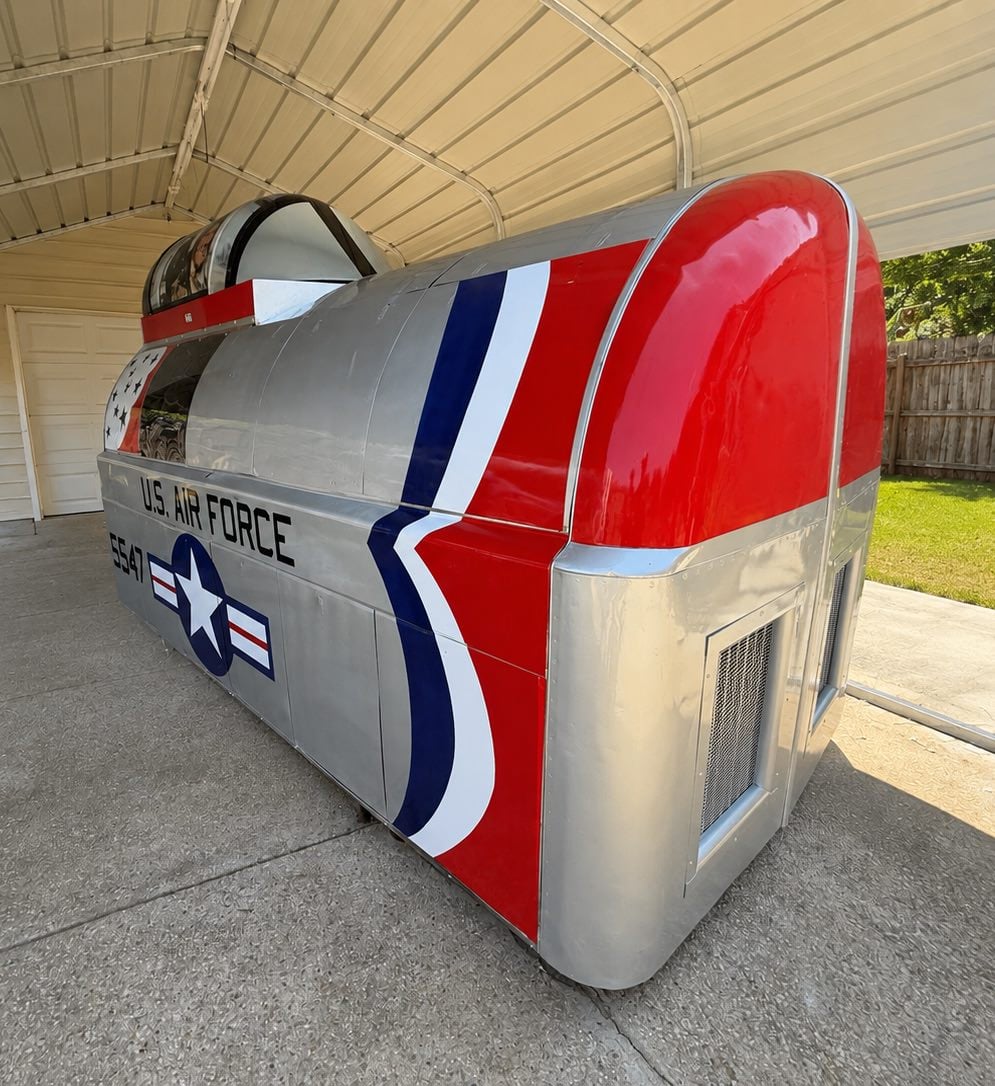
 This is a Link Aviation Devices C-11B Instrument Flight Simulator from the 1950s, it has no screens at all, just manual controls and analog gauges – or steam gauges as many modern pilots call them.
Jet Instrument Simulator On Vacuum Tubes
The Taiwanese (Republic of China) Air Force didn’t retire its Link C-11B simulators until February of 1993. By then, the trainer was 40 years old and still doing its arithmetic the way it always had – with 265 vacuum tubes running the flight, engine, and radio-navigation systems. The air force museum in Kaohsiung that now displays it describes the machine as suitable for instrument training in any subsonic jet fighter, with behavior closest to the Lockheed T-33 Shooting Star.
That’s a remarkably long service life for a device built teach pilots to fly a jet on instruments, without actually putting him in one, and without computers to make it all work.
From Bellows To Tubes
Link Aviation Devices had been building propeller-era simulators since 1929, when Edwin Link built his first trainer in Binghamton, New York, using pumps, valves, and bellows – all borrowed from his father’s Link Piano and Organ Company. It was quite the contraption.
The WWII-era standard model flight simulator, or flight trainer as it was known then, was the AN-T-18. The Army-Navy Trainer Model 18, which was the machine tens of thousands of pilots knew as the “Blue Box.” It was designed to teach instrument-only flying, with a removable opaque canopy that shut the student in with nothing visible to them but the instrument panel, and by mid-WWII this simulator was standard equipment at Allied air training schools on both sides of the Atlantic.
This simulator, or trainer, was essentially a wooden fuselage on a giant universal joint that tipped it in pitch and roll by four sets of bellows and swung in yaw by a ten-bellows turning motor derived from player-piano mechanisms. Its airspeed, altitude, and climb instruments were negative-pressure gauges fed by a vacuum pump, and the instructor sat outside at a map table watching a motorized ink marker called the crab plot the student’s track. It was an astonishingly clever system considering the basic technologies it was built around.
Link Aviation Devices built more than 10,000 of them during the war, and the company claimed it turned one out every 45 minutes when production was at its peak.
Flight simulators like this were typically called flight trainers at the time, and many tens of thousands of WWII pilots were trained on them, they were still in use during the Korean War, and some nations were using versions of them right though to the 1990s.
Jet aircraft eventually exposed the limits of the analog approach. As speeds, altitudes, fuel behavior, and control response all shifted, modeling them called for more computation than bellows and needle valves could realistically provide.
The Link C-11B Flight Trainer
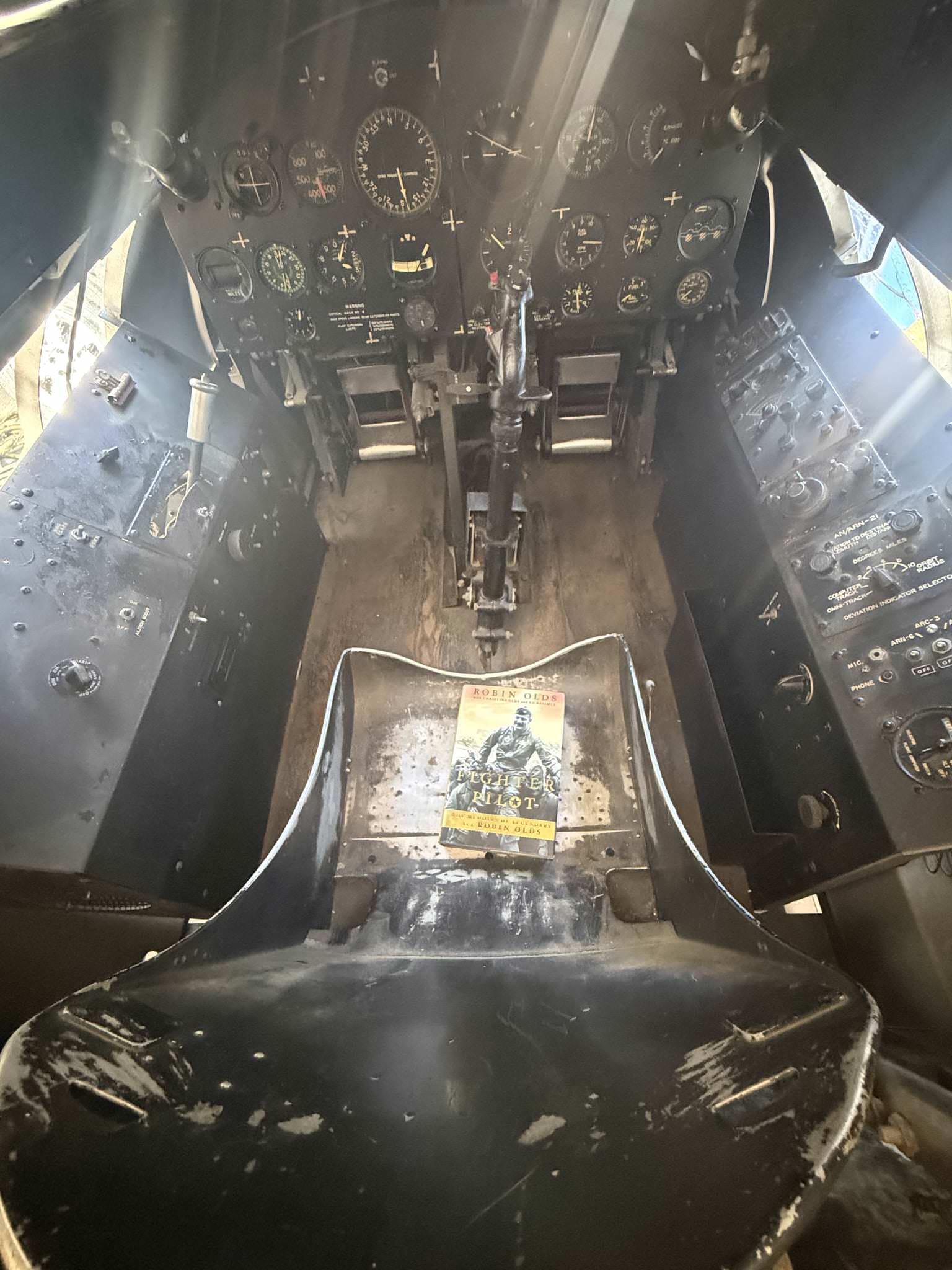
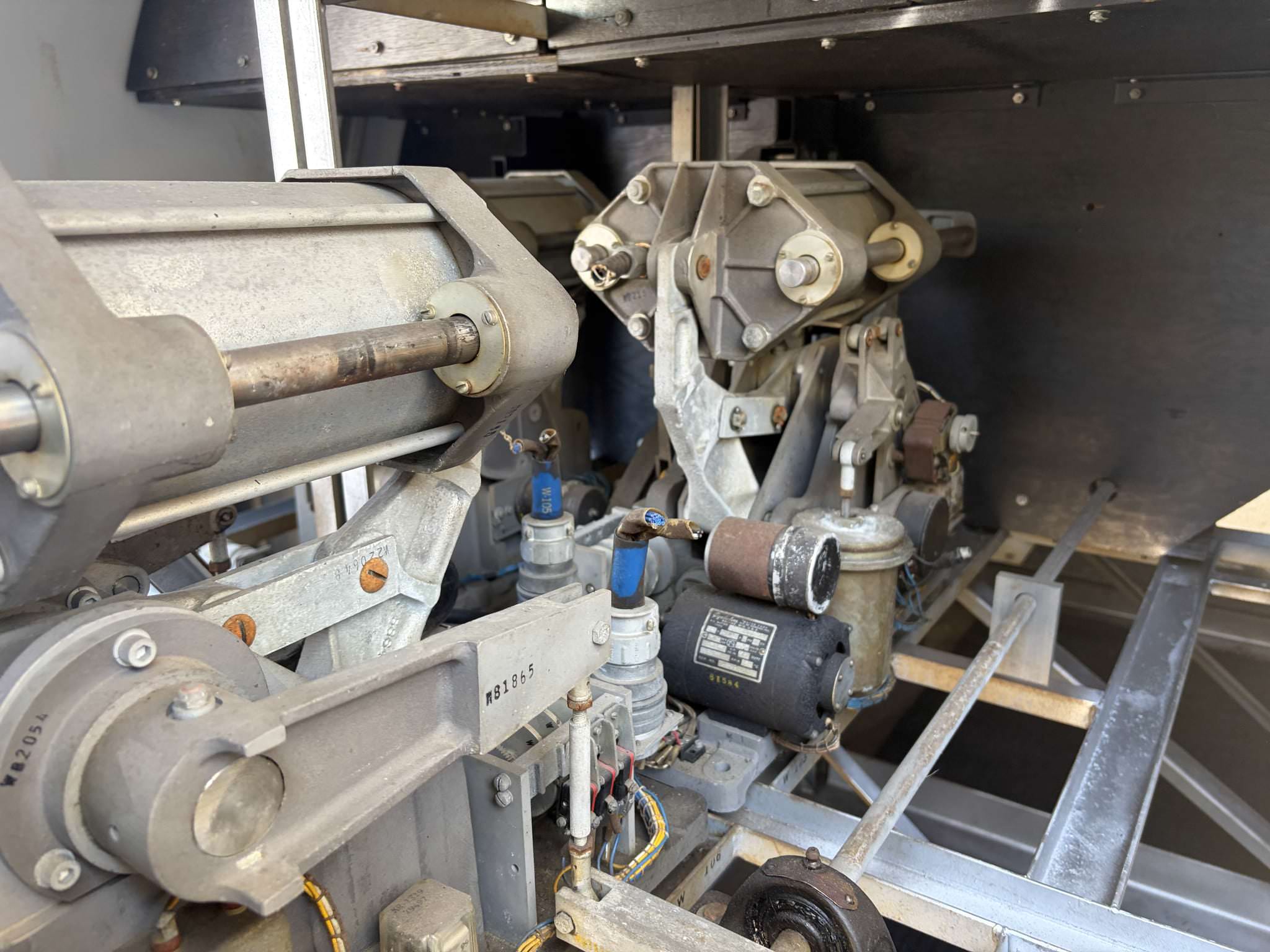
The C-11B model was Link Aviation Devices’ first jet instrument trainer, it was built around an electronic analog computer that the Tennessee Museum of Aviation (which has one n display) dates to 1948. The cockpit of the C-11B Trainer is essentially a mock-up of the F-80A aircraft, the panel had a Type ID-249 course indicator, a Type ID-250 radio magnetic indicator, a distance measuring indicator, a B-1 attitude gyro and a Zero Reader flight director, with AN/ARN-21 radio controls on the right shelf.
The stick and rudder pedals were connected to pneumatic cylinders whose pressure was set by the dynamic pressure factor – a function of airspeed and air density. The controls stiffened as the simulated aircraft went faster, realism came through the pilot’s hands rather than through movement of the box – early Link trainers had moved in bank, pitch, spin, turn, and yaw, but once electronic simulators arrived after the war the consensus was that motion cueing was unnecessary. That said, it would make a major comeback once digital computer simulators arrived.
General Precision Equipment Corporation bought Link Aviation Devices in 1954, but by then the successor technologies were already in development. The Air Force and Navy had funded work at the University of Pennsylvania’s Moore School from 1950, found that no digital computer adequate for flight simulation existed, and they commissioned designs for one.
In September 1968, LCDR Charles J. Sweeney converted a C-11B at the Naval Postgraduate School into a variable-stability simulator. The frame, cockpit, controls, pneumatic system, and instruments stayed in place. The original aerodynamic and engine computers came out, a new instrument-drive system went in, and a hybrid computer took over the equations of motion, reprogrammable, he wrote, to almost any single-engine jet.
The cockpit Link had built around an F-80A was still useful almost 20 years later.
The Link C-11B Flight Simulator Shown Here
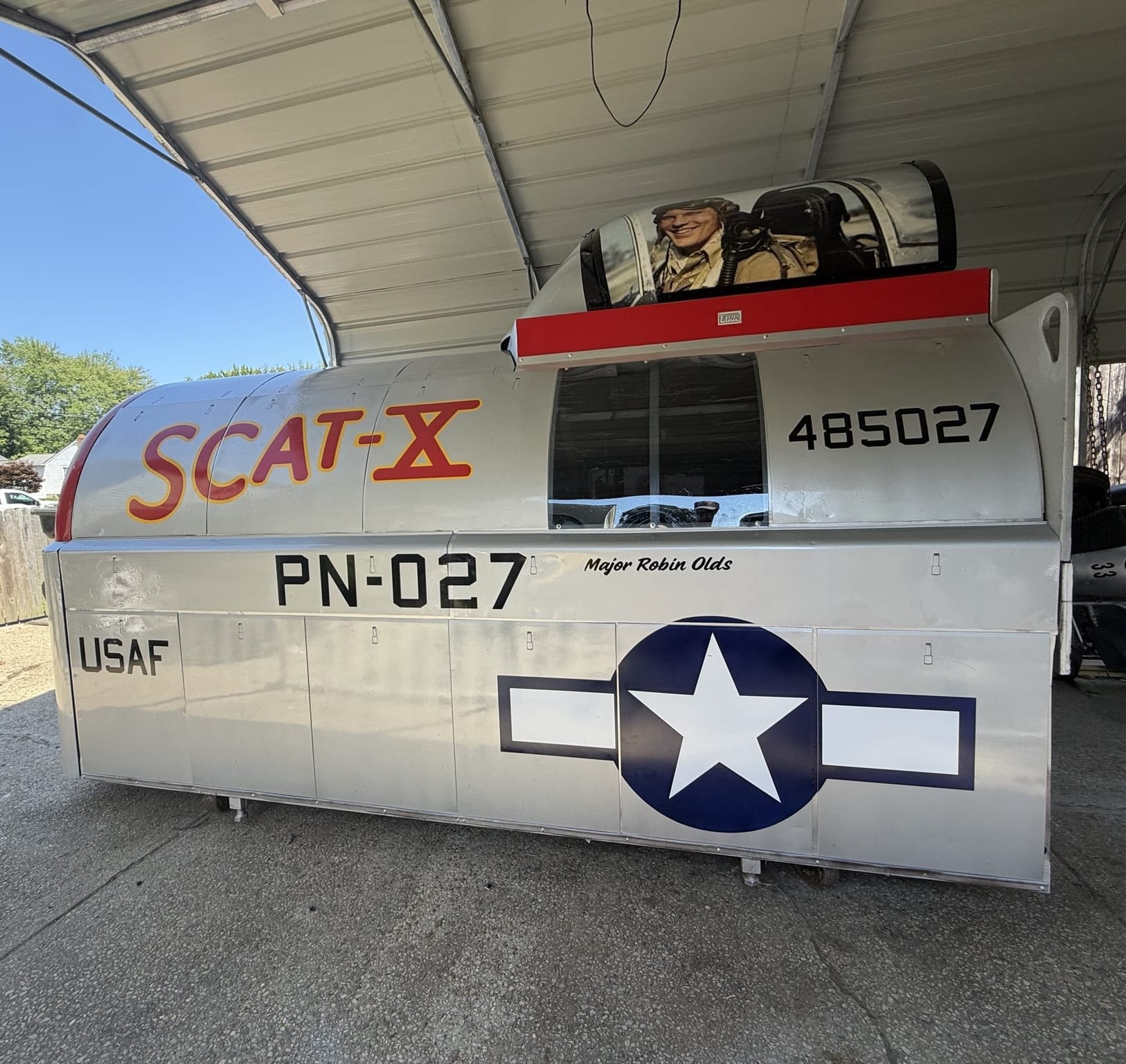
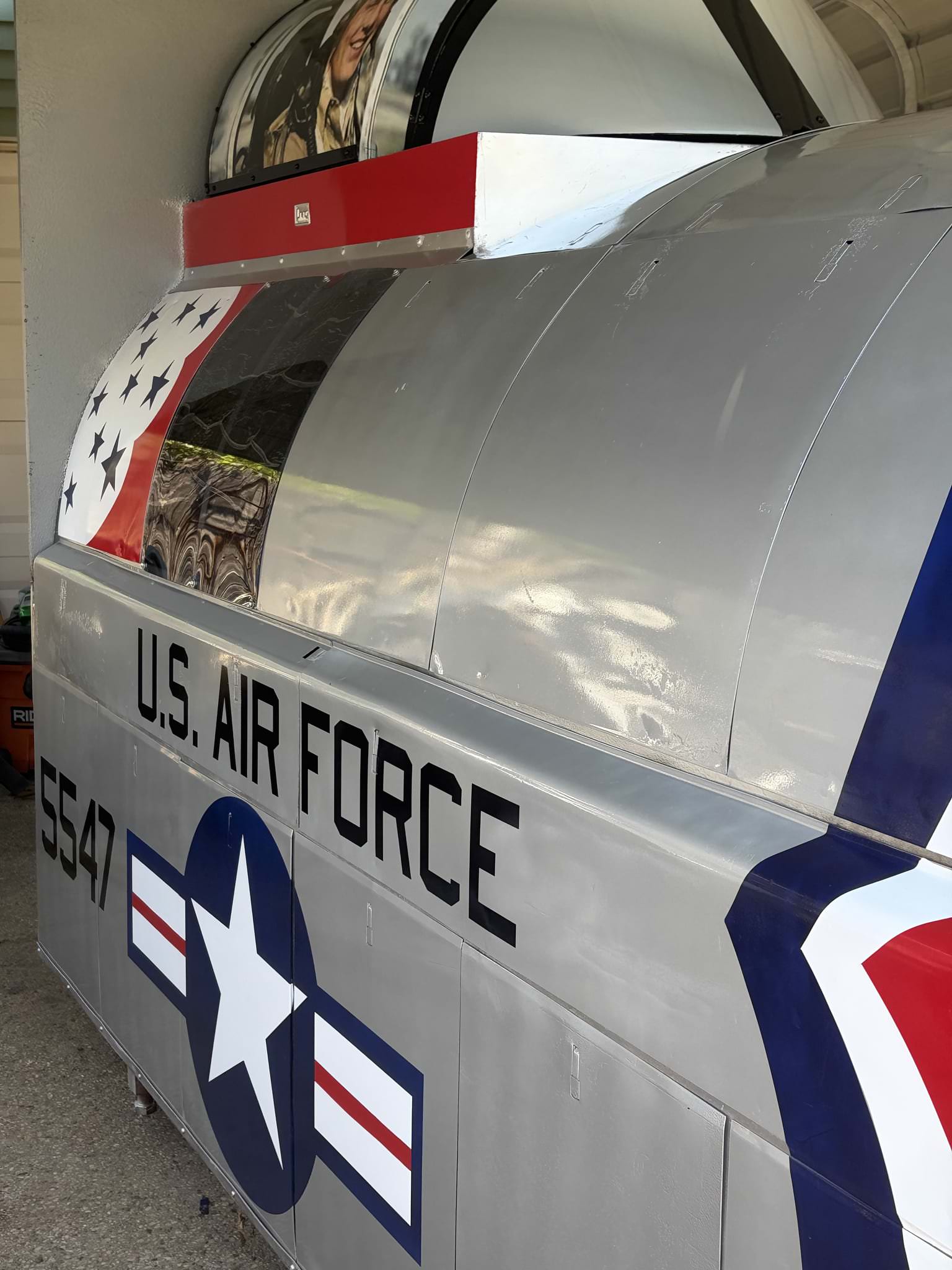
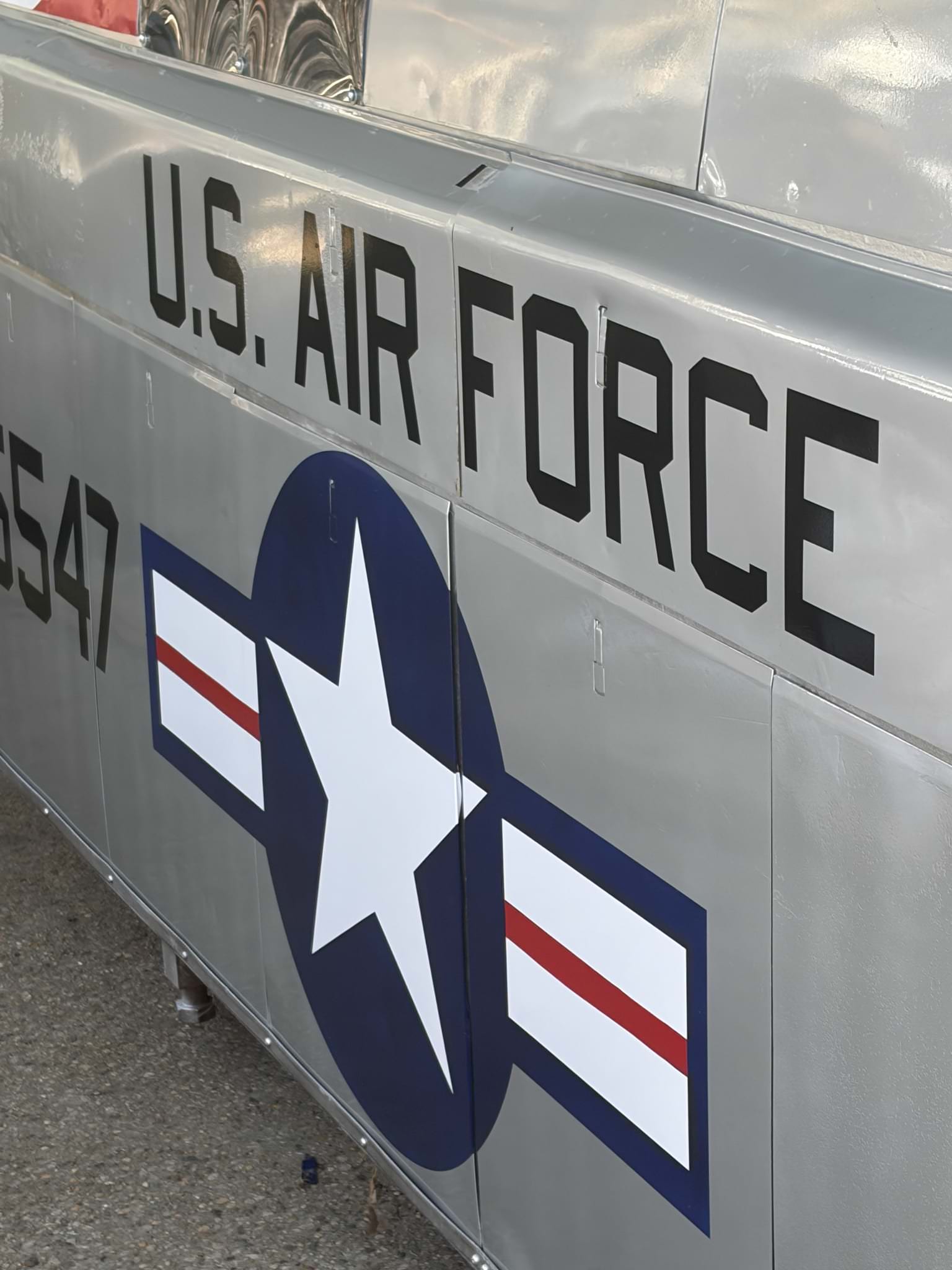
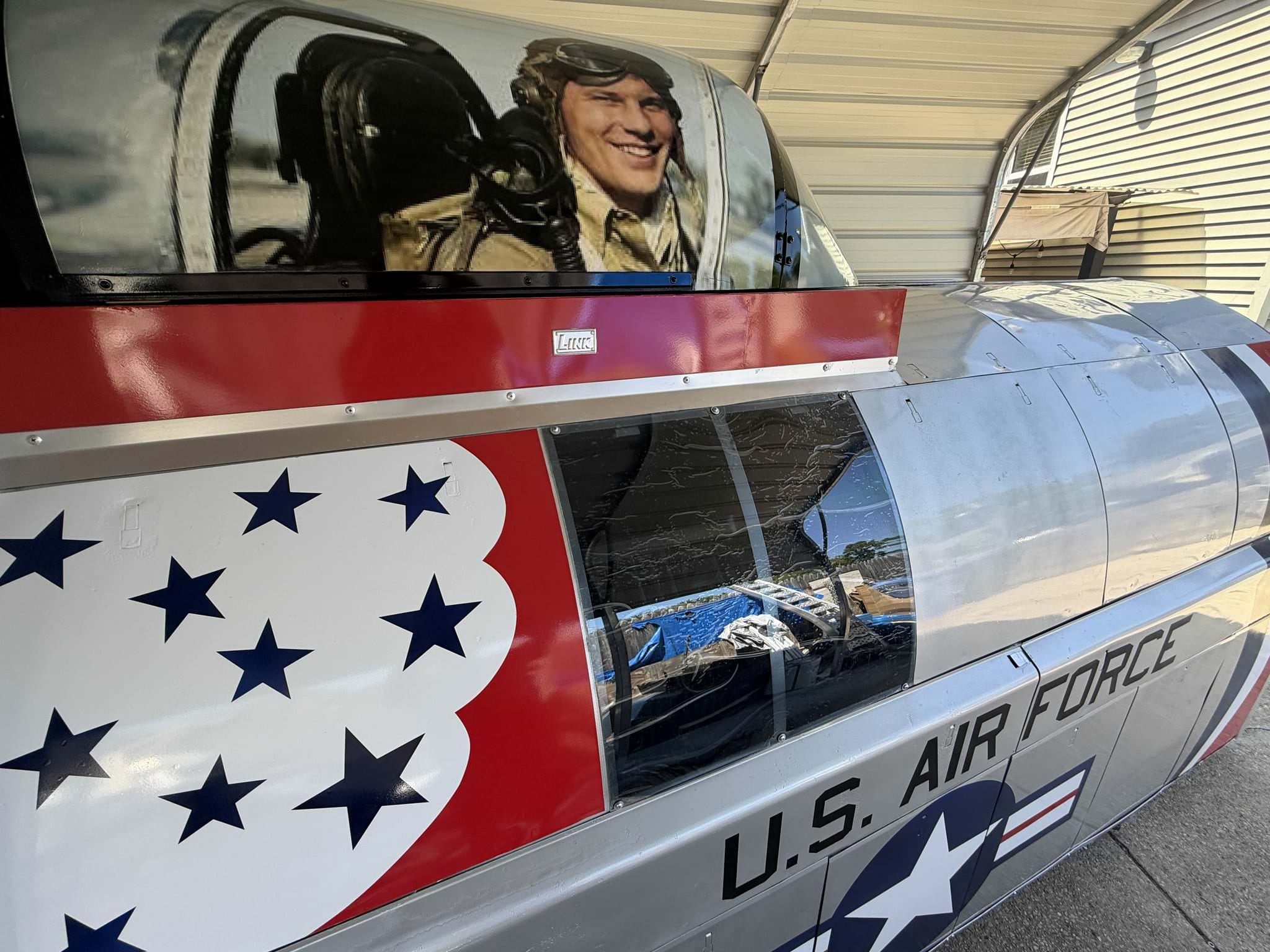
This Link Aviation Devices C-11B analog jet instrument flight simulator was built in the 1950s and has since been converted into a static display, commemorating Brigadier General Robin Olds and his Lockheed P-80A Shooting Star. Its removable exterior panels were refinished with “SCAT X” markings, “U.S. Air Force” lettering, “Major Robin Olds” script, and other period-correct details.
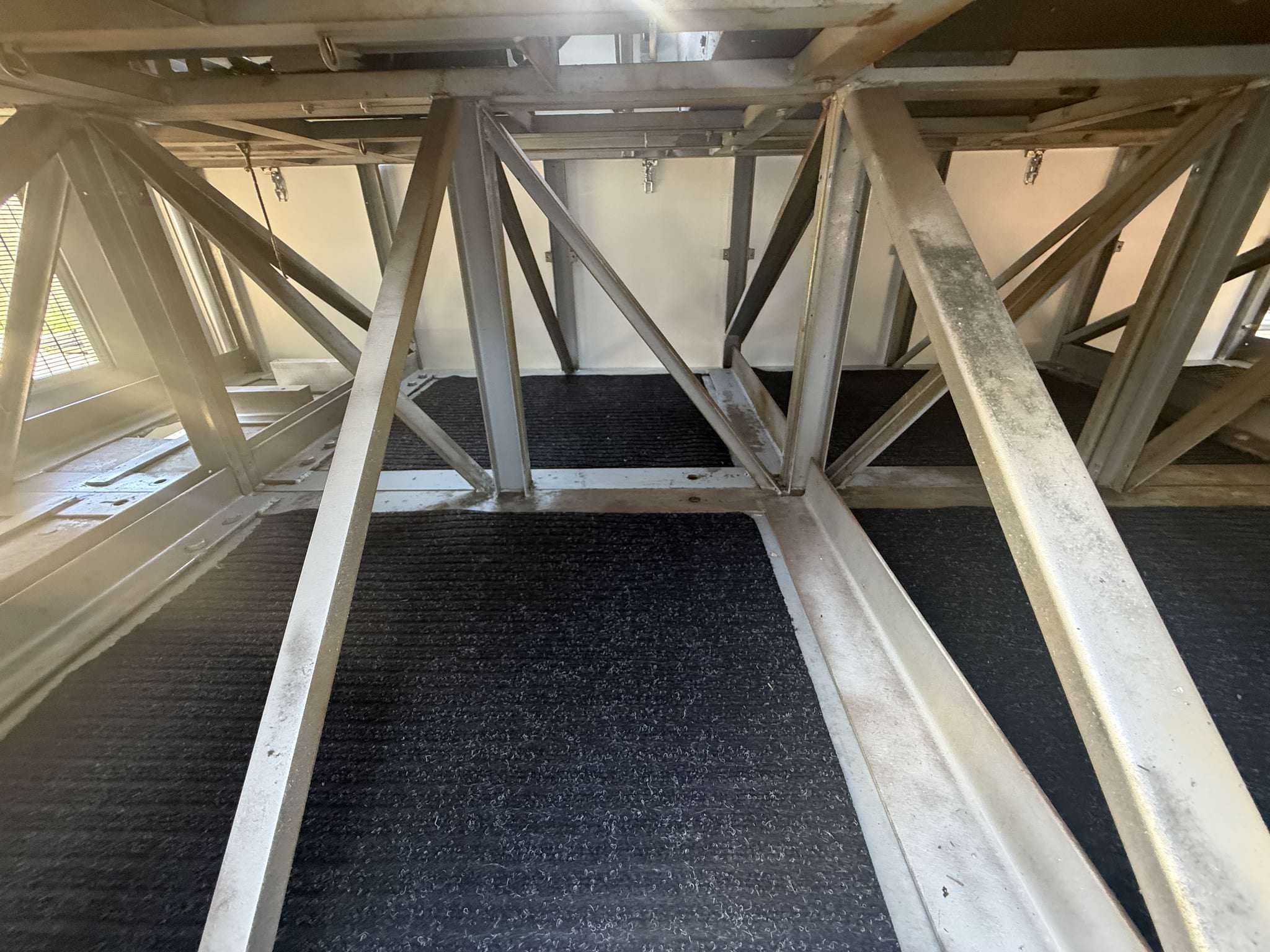
The simulator measures in at 10 feet long, 5 feet wide, and 7 feet tall, and it rolls on casters for easier positioning. The structure can be separated lengthwise into two sections to pass through doorways, while the canopy is removable and can still slide open for cockpit access.
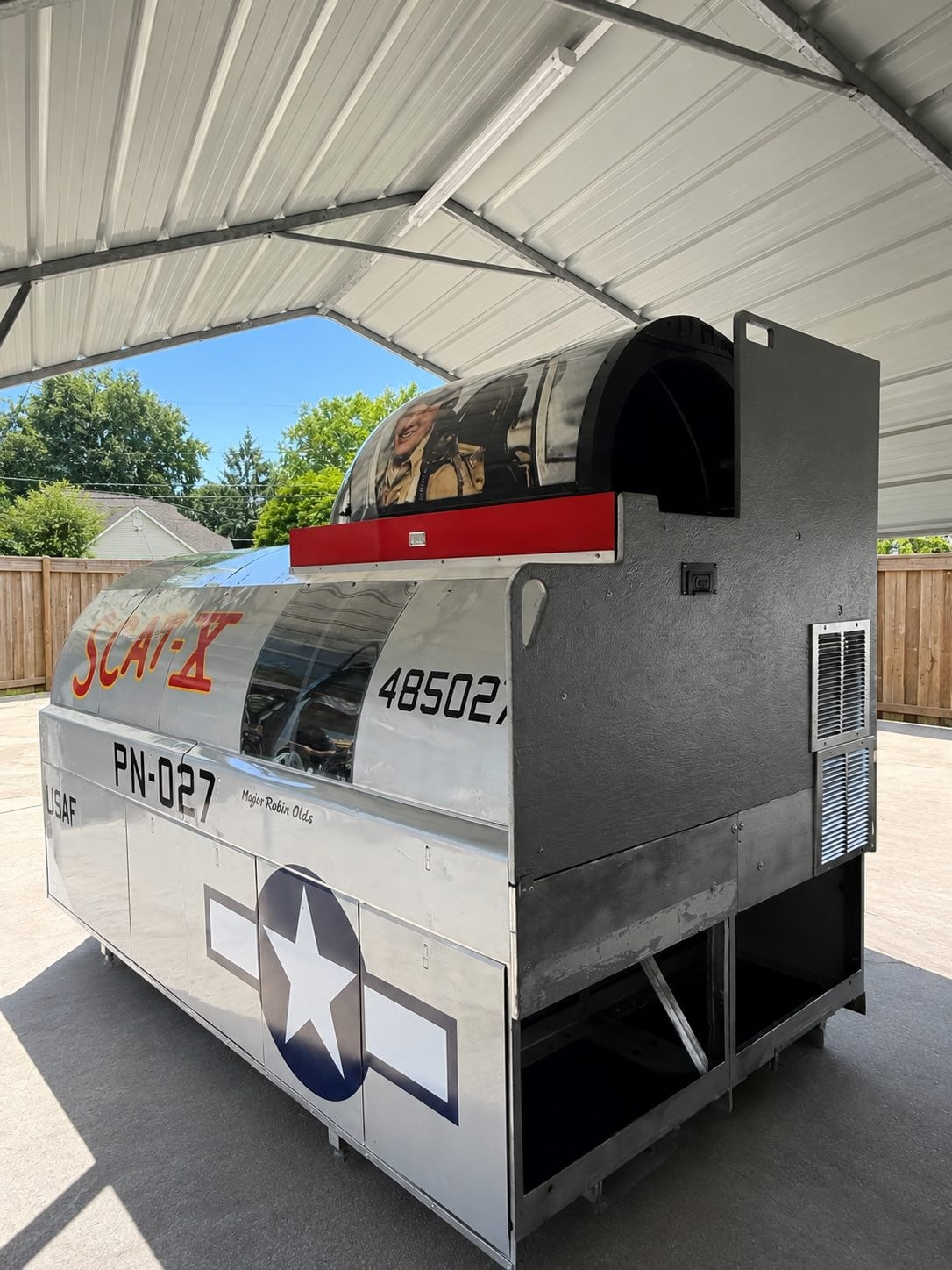
This simulator measures in at 10 feet long, 5 feet wide, and 7 feet tall, and it rolls on casters for easier positioning. The structure can be separated lengthwise into two sections to pass through doorways, while the canopy is removable and can still slide open for cockpit access.
Inside, the cockpit still has its instrument panel, inoperative gauges, and a resistance-based joystick, although some parts have been removed to reduce weight and the simulator itself is no longer functional.
A pilot decal has also been added to the canopy, and the display is being offered for sale at no reserve out of Deptford, New Jersey here, along with a copy of Fighter Pilot: The Memoirs of Legendary Ace Robin Olds.
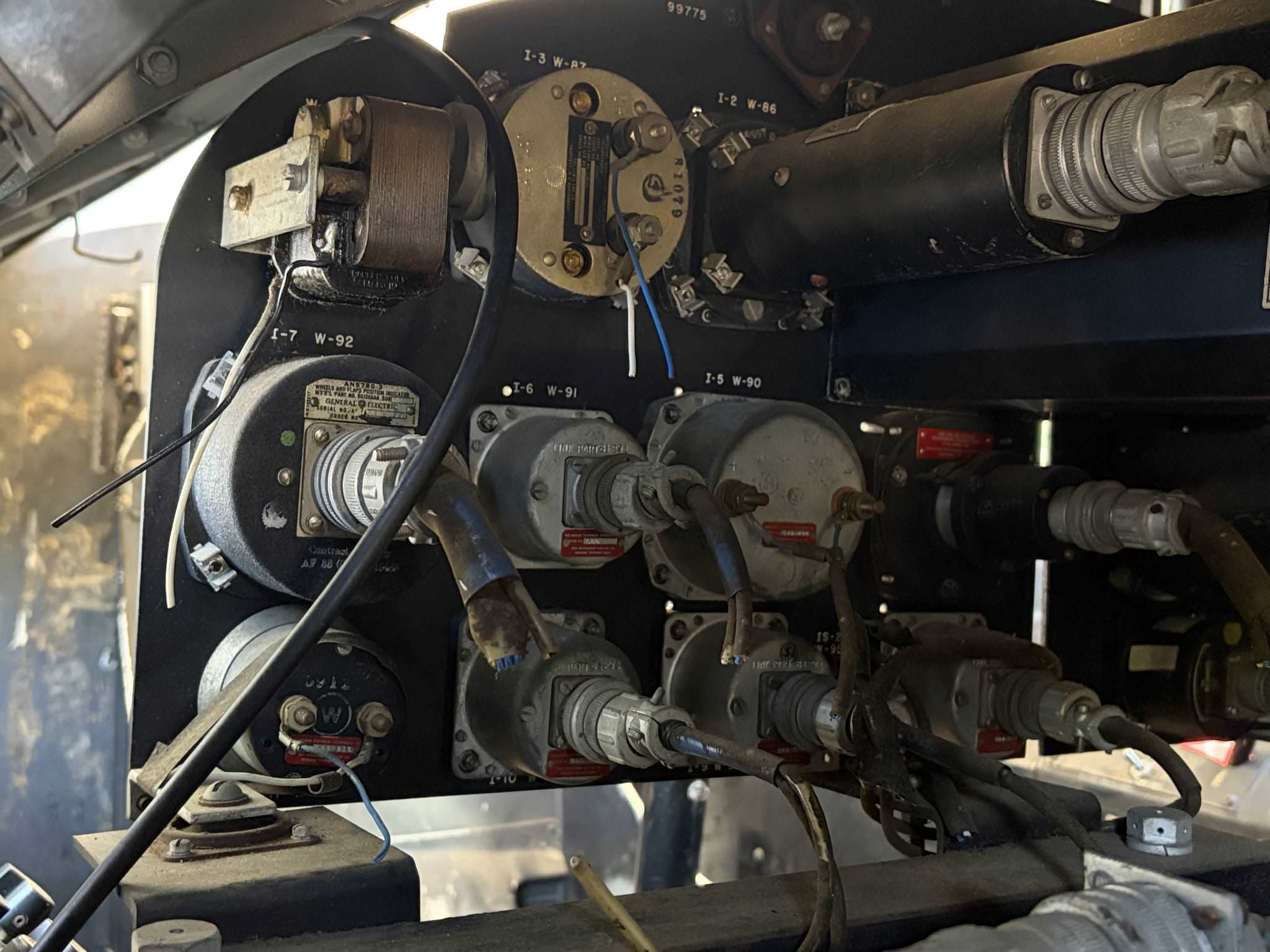
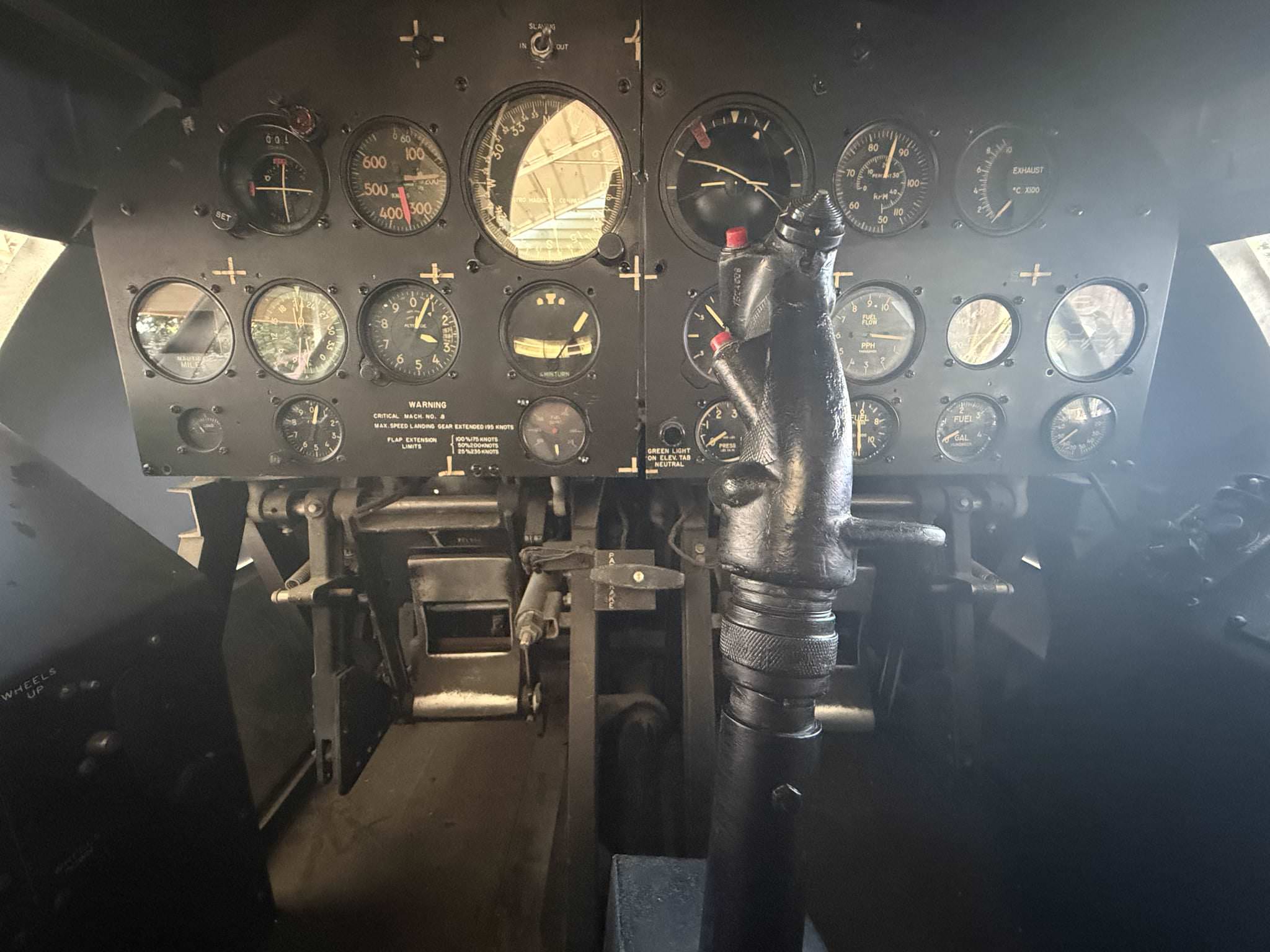
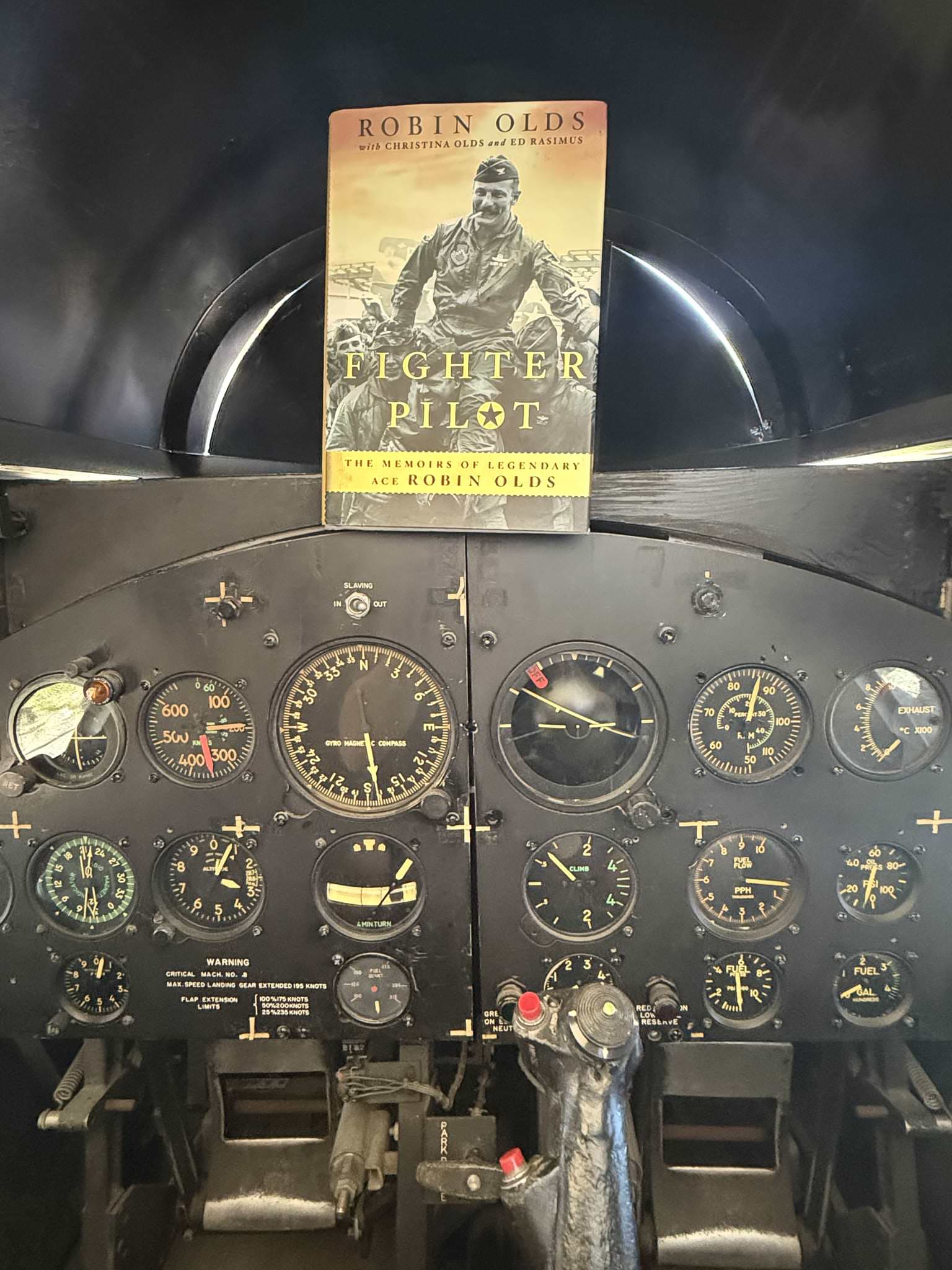
Images courtesy of Bring a Trailer

Articles that Ben Branch has written have been covered on CNN, Popular Mechanics, Smithsonian Magazine, Road & Track Magazine, the official Pinterest blog, the official eBay Motors blog, BuzzFeed, Autoweek Magazine, Wired Magazine, Autoblog, Gear Patrol, Jalopnik, The Verge, and many more.
Silodrome was founded by Ben back in 2010, in the years since the site has grown to become a world leader in the alternative and vintage motoring sector, with well over a million monthly readers from around the world and many hundreds of thousands of followers on social media.