The Honda EZ90 Cub was developed to be, just about, the easiest motorcycle in the world to ride. It was aimed squarely at first time riders, and intended to be as family-friendly as possible.
The EZ90 had a throttle and brakes, but no clutch or gear shifter, and because it was an off-road only motorcycle you could ride it without a license – just so long as you stayed off the black stuff of course.
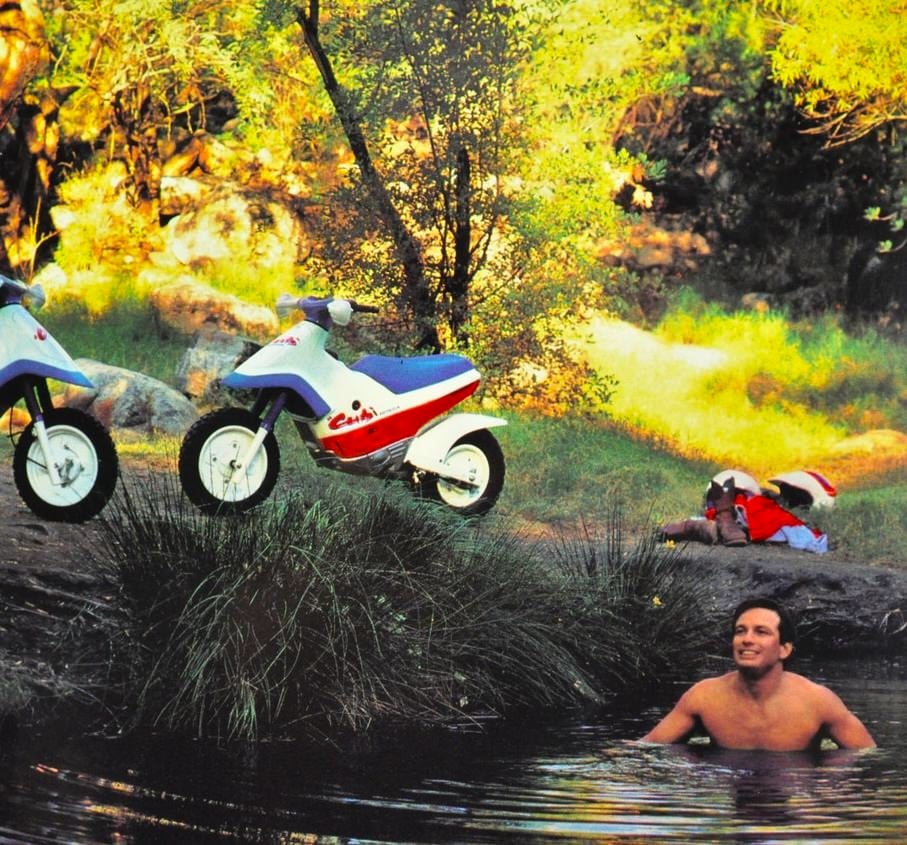
 The Honda EZ90 Cub was developed to be, just about, the easiest motorcycle in the world to ride. It was aimed squarely at first time riders, and intended to be as family friendly as possible. Image courtesy of Honda.
History Speedrun: The Honda EZ90 Cub
Honda announced the EZ-9 in 1990, with a relatively low domestic sales target of just 500 units a year. It went on sale in September, with no clutch lever, no gearshift, and no way to register it for the road. Honda sold it strictly as an off-road machine that could not be given a number plate or ridden on public roads – which, in Japan, also meant riding one required no license.
Honda’s internal development documents were unusually direct about the problem the EZ-9 was designed to solve – the company had realized that the appeal of off-road riding was essentially invisible to people outside the world of motorcycling, and that the entry point likely ran through families already doing other outdoor sports.
Reaching people without licenses or riding experience meant the entry point had to be a license-free, off-road-only machine. Honda marketing executives settled on three keywords that would govern everything after – “Looks Friendly, Easy to Ride, Fun to Ride.”
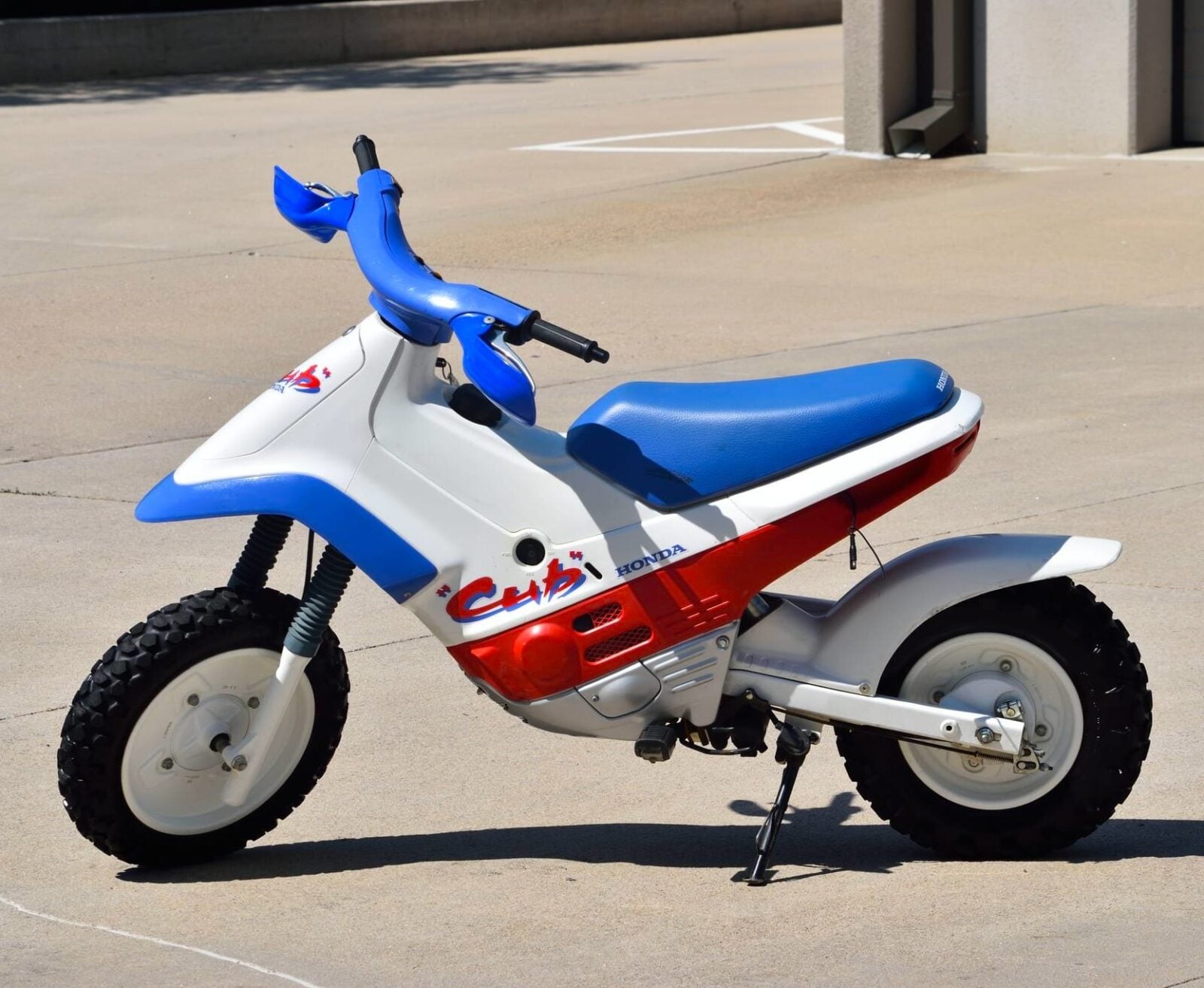
The concept had appeared as the EZ-90 at the 1989 Tokyo Motor Show. Honda’s designers worked through different design directions running from BMX bikes to scooters, before settling on what the company called “sports goods” styling, on the reasoning that a mechanical look would put families off. Engine, exhaust, chain, fuel tank and oil tank all disappeared under smooth, fully enclosed plastic bodywork. It almost looked like a 1:1 scale Fisher Price toy.
Honda stylists shaped this bodywork enclosure to make it less likely to catch branches on a trail, and split the panels into separate sections so a light fall meant replacing a piece or two rather than the whole lot of it.
Engineering Around The Bodywork
Under the distinctive plastic covers sat the HE06E – this was an air-cooled two-stroke single of 90cc, with a bore x stroke of 48.0 x 49.6mm, dimensions it shared with the HF05E unit from the earlier 1988 Honda Lead 90 scooter. Honda rated it at 7.7 bhp at 6,250 rpm and 6.7 lb ft at 5,500 rpm, and it was fed by a PB11 carburetor with oil injection paired with a CDI magneto ignition.
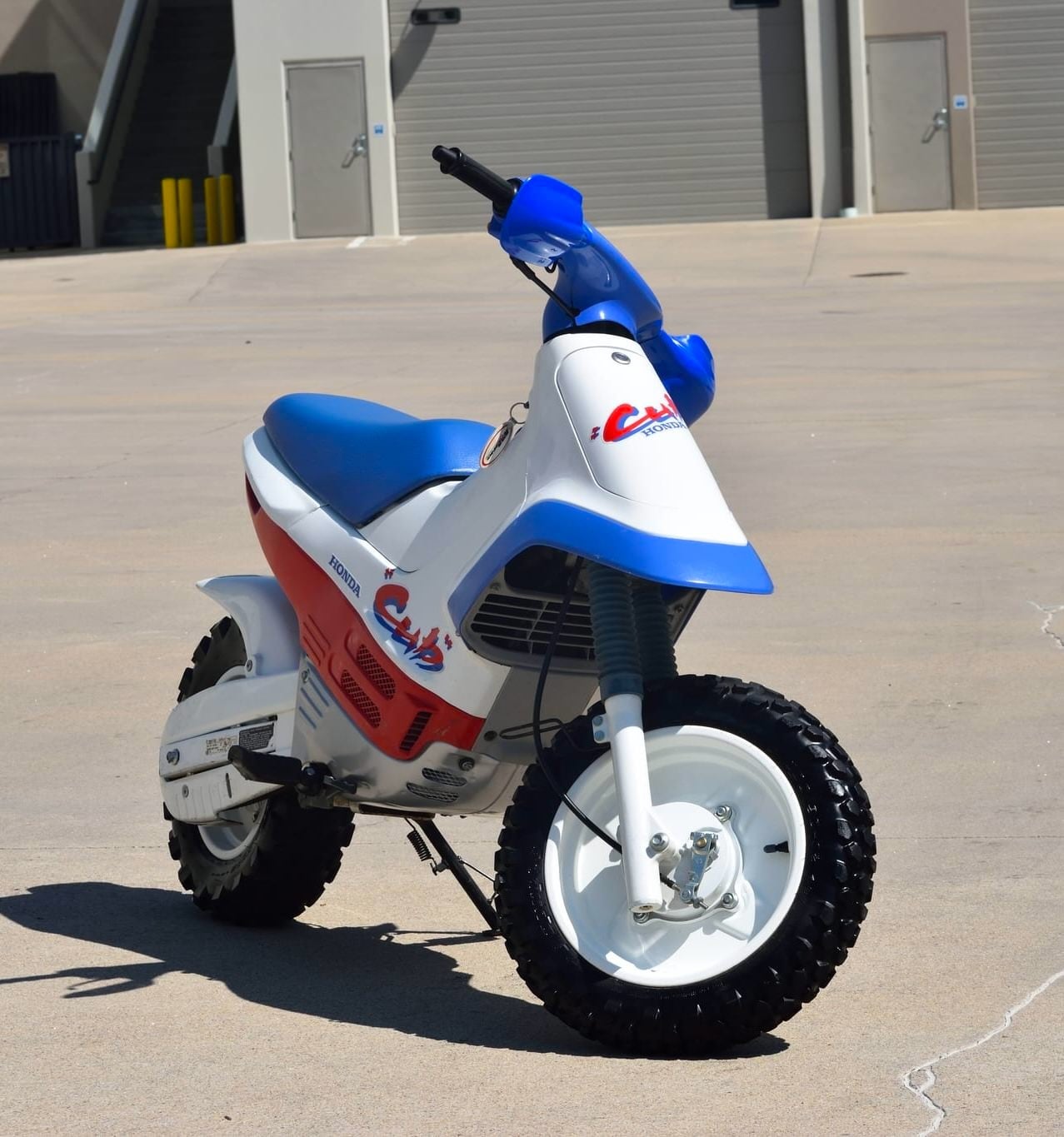
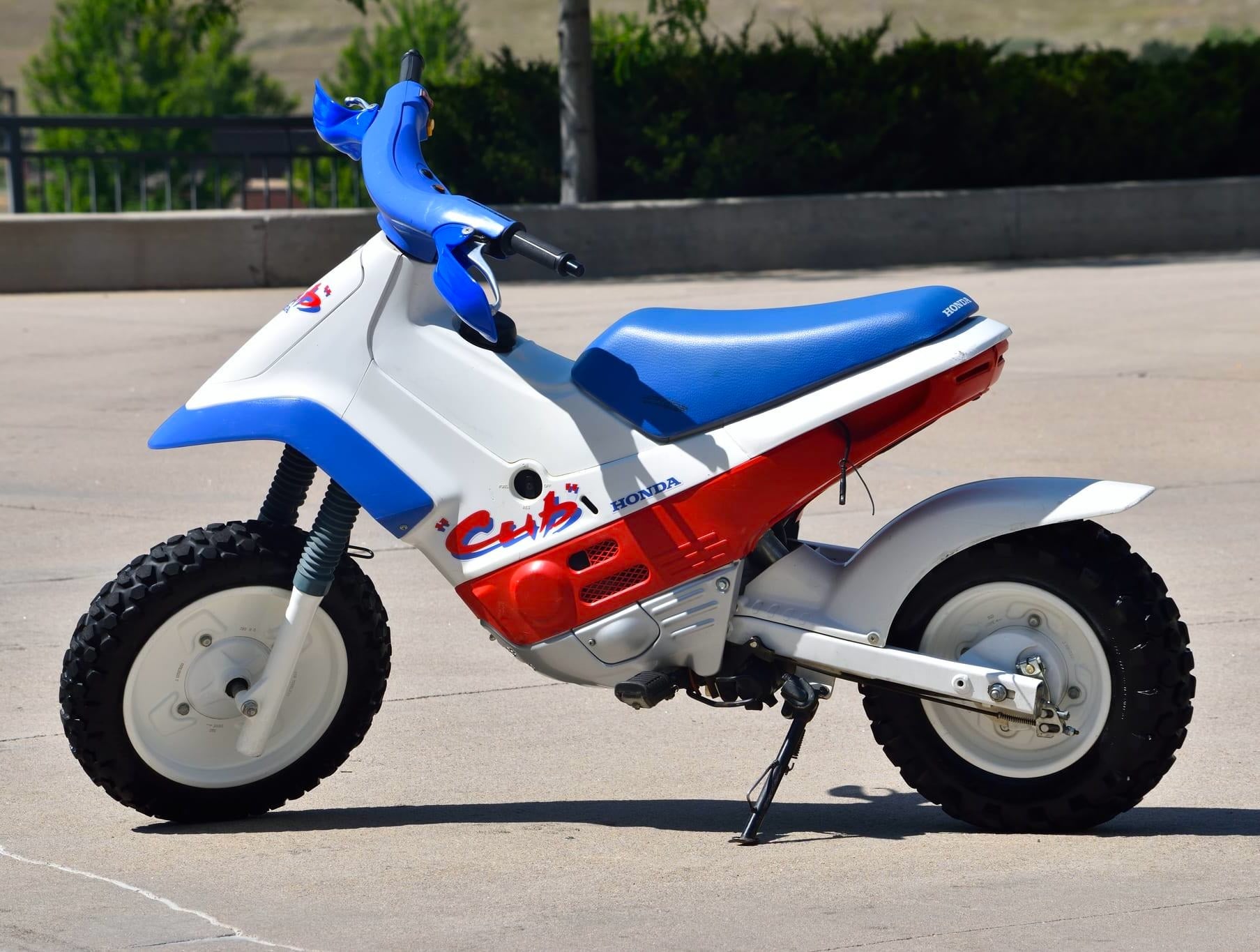
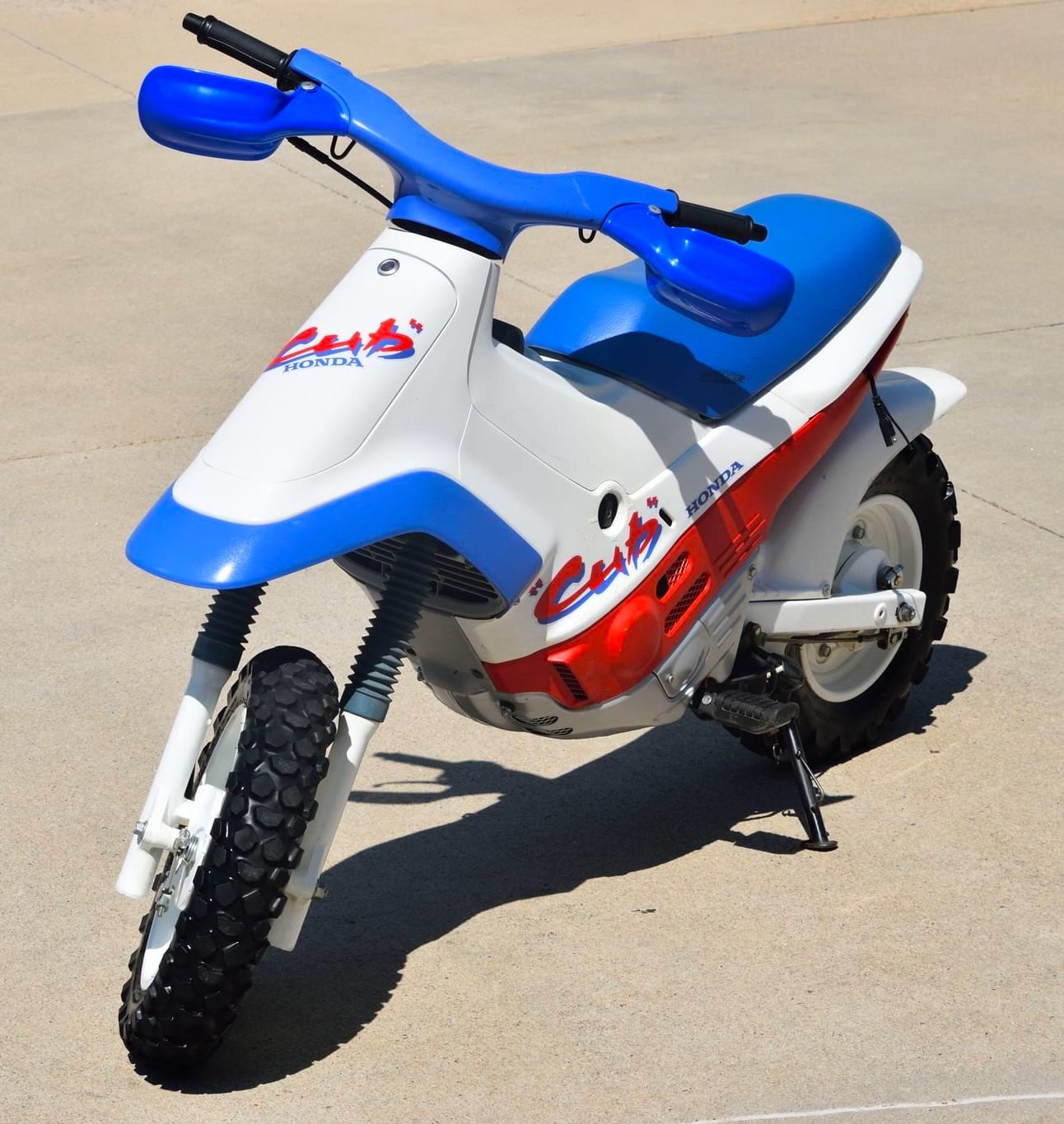
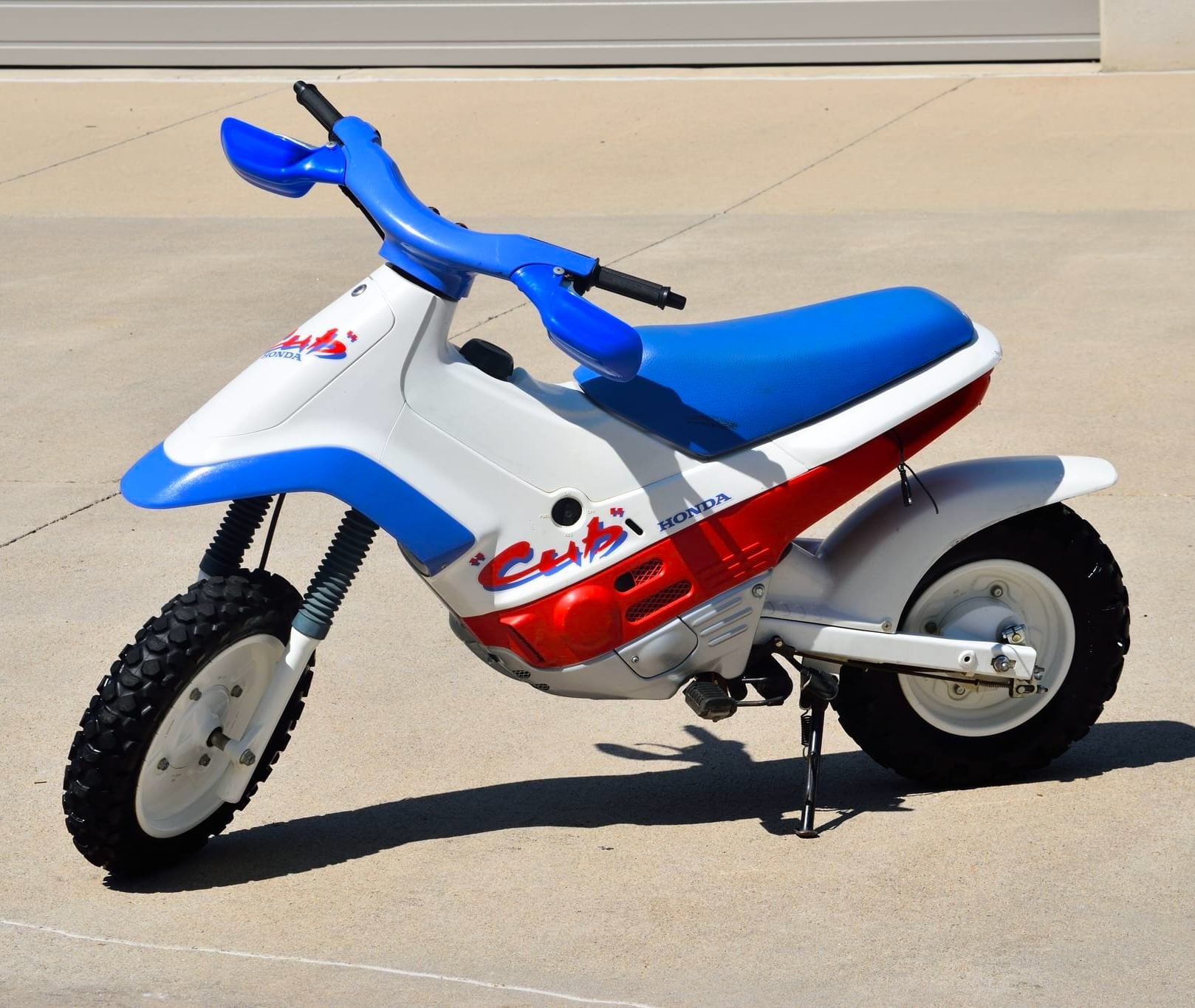
This is an original 1991 Honda EZ90 Cub, said to have stayed with its first owner until 2011 when the current seller picked it up.
An electric starter was standard to make living with the little bike as easy as possible, it was backed up with a kickstarter, and drive ran through a dry multi-plate centrifugal clutch to a fully enclosed chain.
The rear drum brake could be worked by a hand lever or a foot pedal, so people used to bicycles and people used to motorcycles both found something familiar. The starter inhibitor switch triggered on lever reaction force rather than lever travel, which allowed a wider adjustment range and it also worked for small hands. That’s why the two levers on the bike don’t match.
Suspension travel was 100mm front and 110mm rear, the rear damper was cleverly hidden inside the bodywork rather than absent, as a good deal of later listings claimed! The ground clearance was 210mm, the seat height 750mm, and the curb weight was just 85 kgs or 187 lbs.
Due to the off-road nature of the bike, the tires were fat, knobbly, and tubeless – measuring in at 100/90-12 up front and 130/90-10 in the rear.
The Ez Snow + The American Cub
A tracked version followed the wheeled version, it was called the “EZ SNOW” and it appeared at the 29th Tokyo Motor Show, then went on sale on December the 16th, 1991, its front wheel replaced by a steered aluminum ski and its rear by a nylon-rubber track belt that was 290mm wide. Honda planned to make just 120 a year.
North America got the EZ90 for model years 1991 through to 1996, badged the Cub EZ90, and still offered as off-road only. The color scheme lost its blue for 1993 and ran red and white to the end – production stopped after 1996 due to low demand.
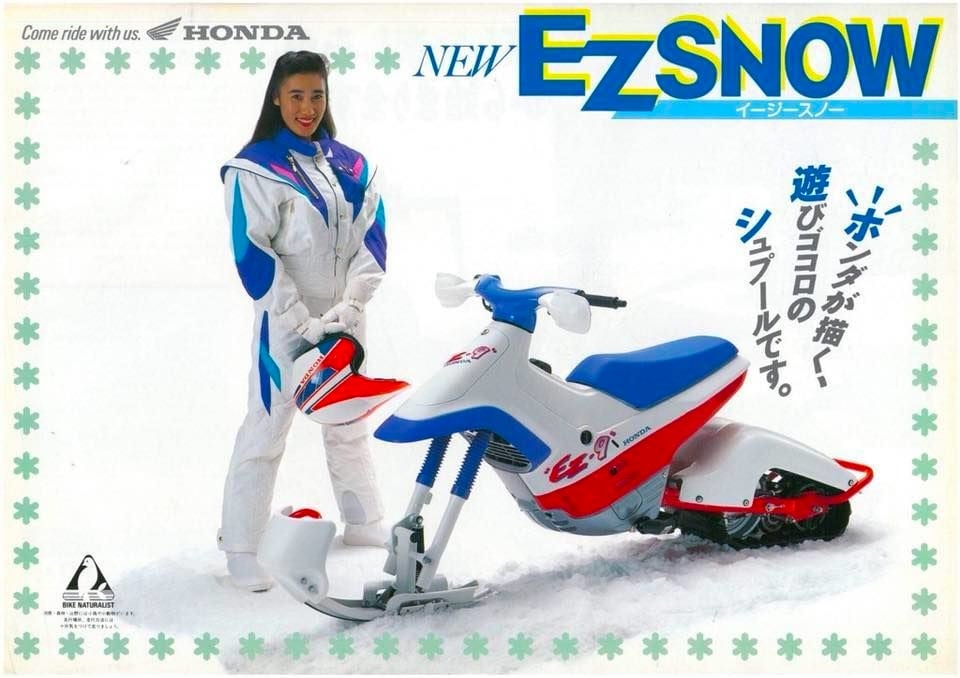
The tracked version was called the “EZ SNOW” and it appeared at the 29th Tokyo Motor Show, then went on sale on December the 16th, 1991, its front wheel replaced by a steered aluminum ski and its rear by a nylon-rubber track belt. Image courtesy of Honda.
Ultimately the EZ90 was a fascinating look at what would happen if a major motorcycle manufacturer spent the time and money necessary to develop a beginner’s motorcycle that asked almost nothing of a first time rider – they just had to be able to balance and manage the throttle and brake.
The 1991 Honda EZ90 Cub Shown Here
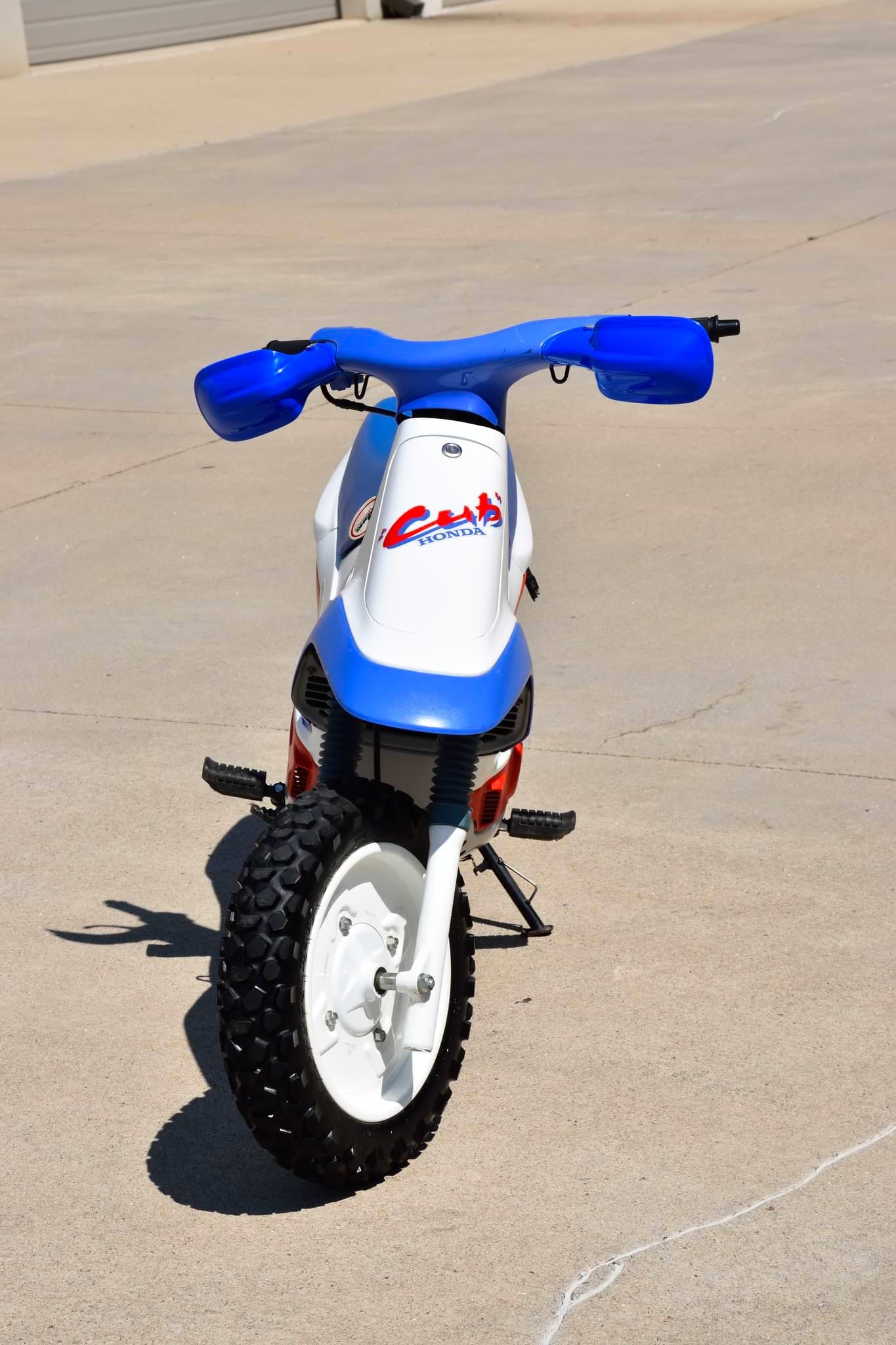
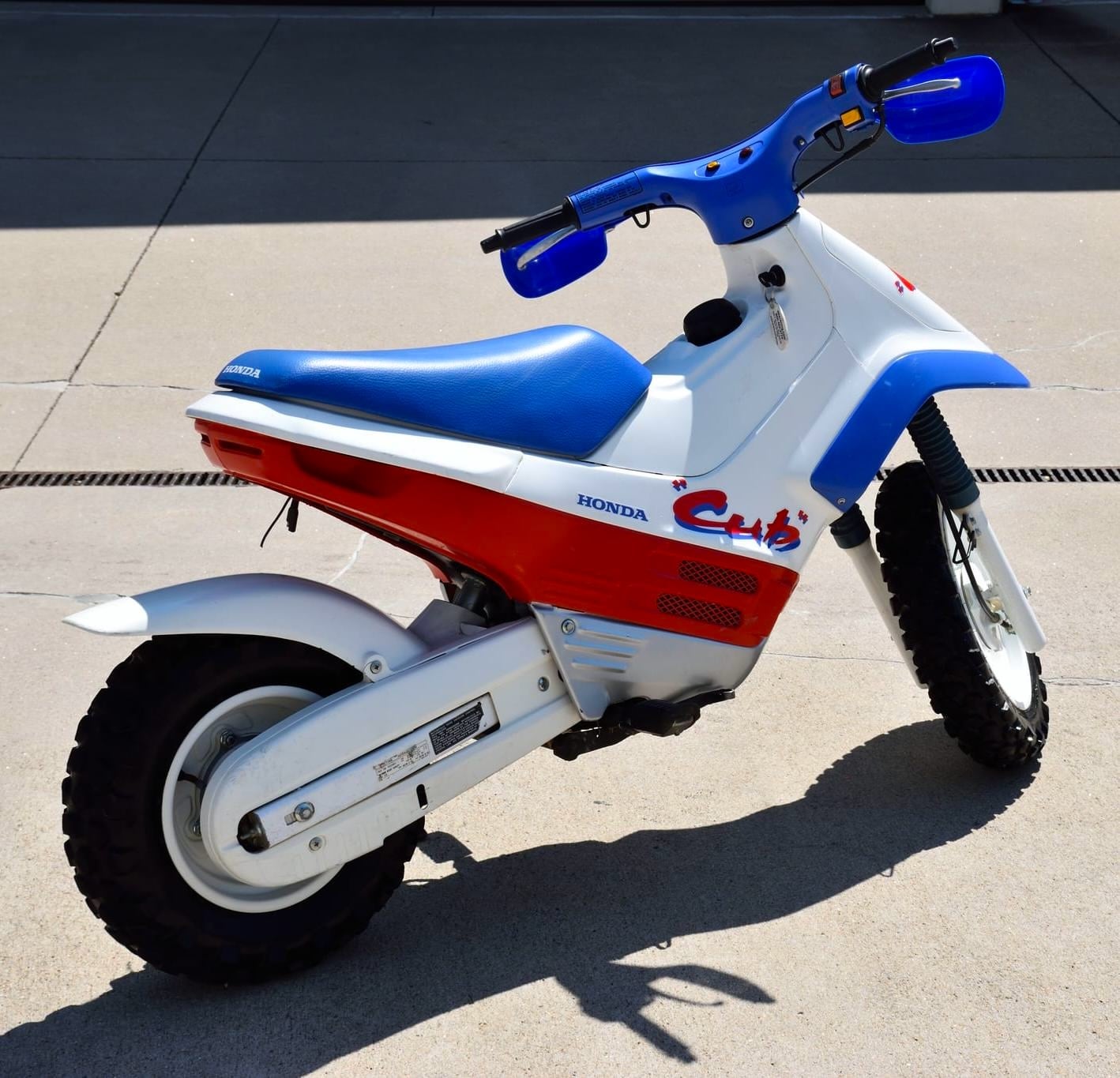
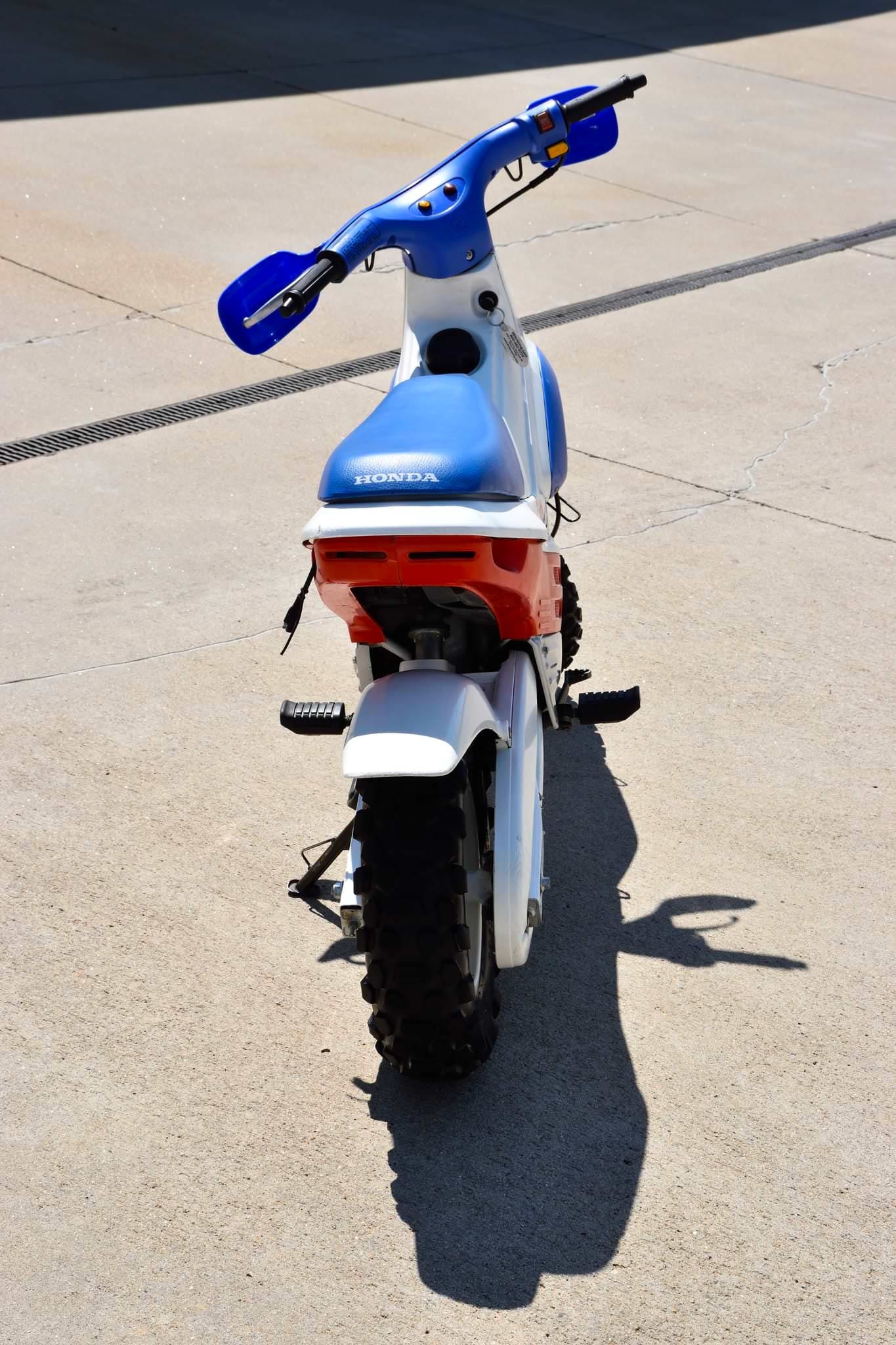
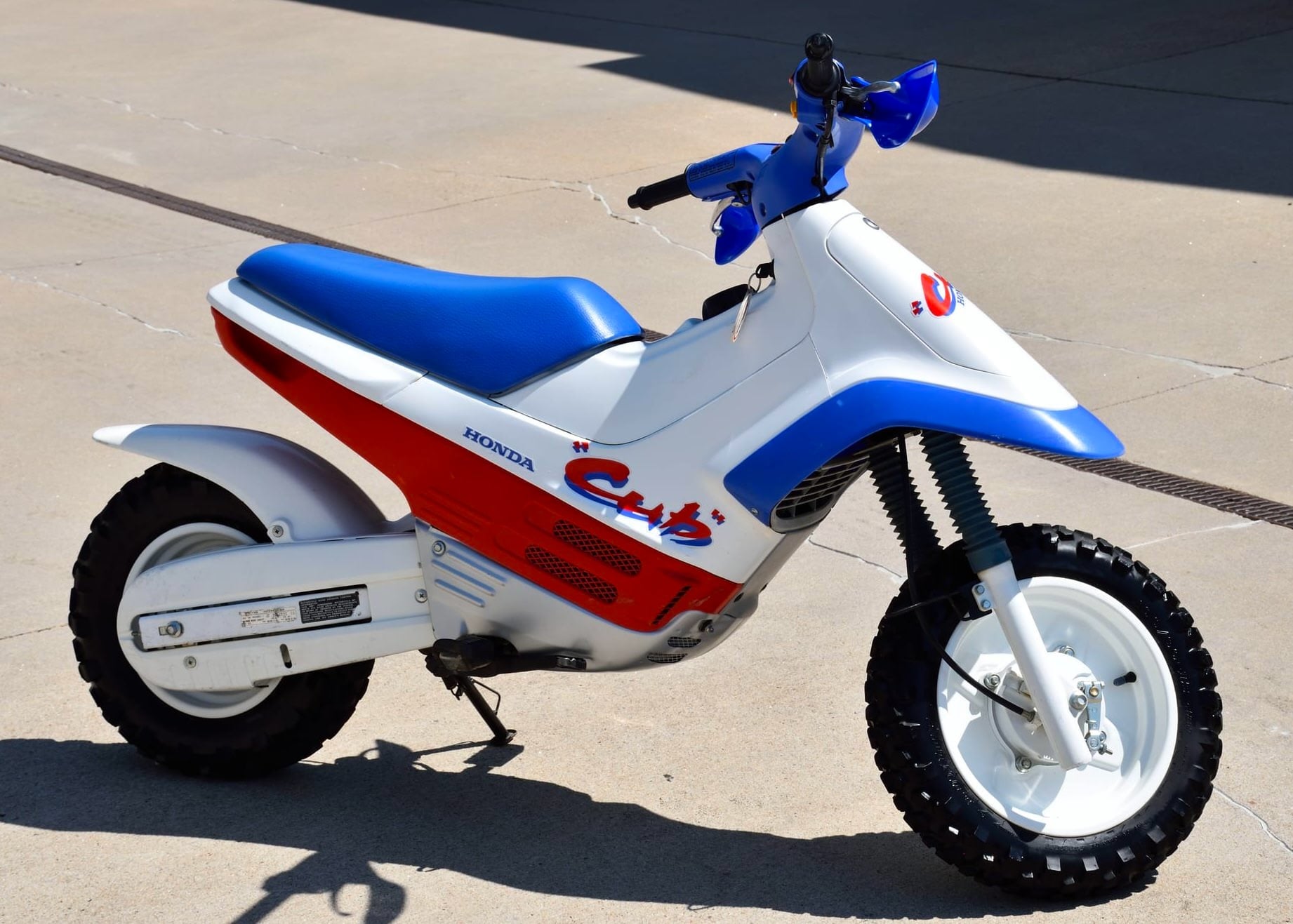
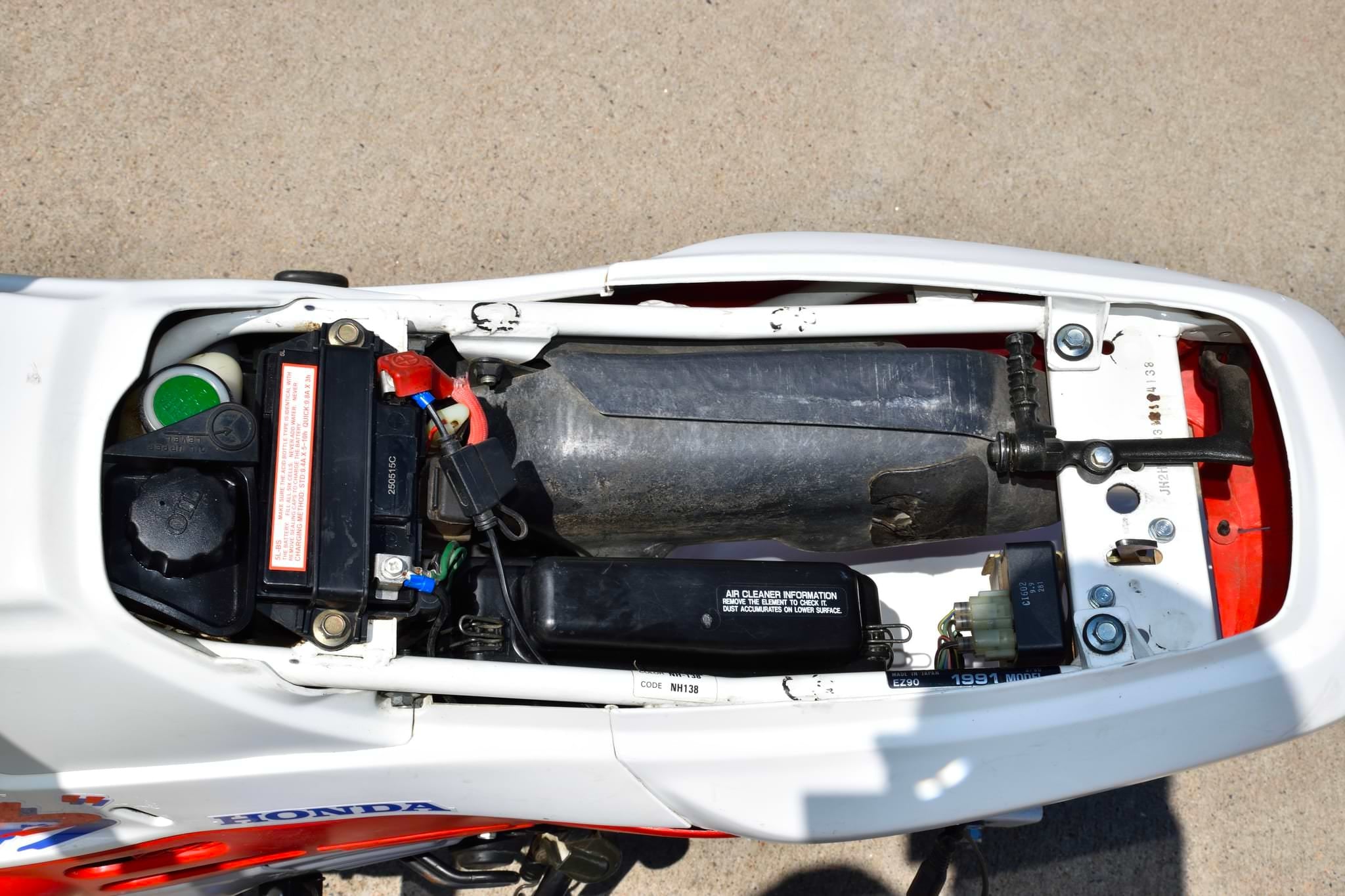
This is an original 1991 Honda EZ90 Cub, said to have stayed with its first owner until 2011 when the current seller picked it up. Mechanically it’s powered by a 90cc two-stroke Honda single with oil injection, an electric start and an automatic choke, driving the rear wheel through a variable-ratio automatic transmission and an enclosed chain.
The bodywork is finished in white, red, and blue composite panels with matching graphics that fully shroud the engine and frame, with an integrated front fender, a 0.95 gallon tank, a blue vinyl solo seat, blue hand guards and a lockable storage compartment in the nose.
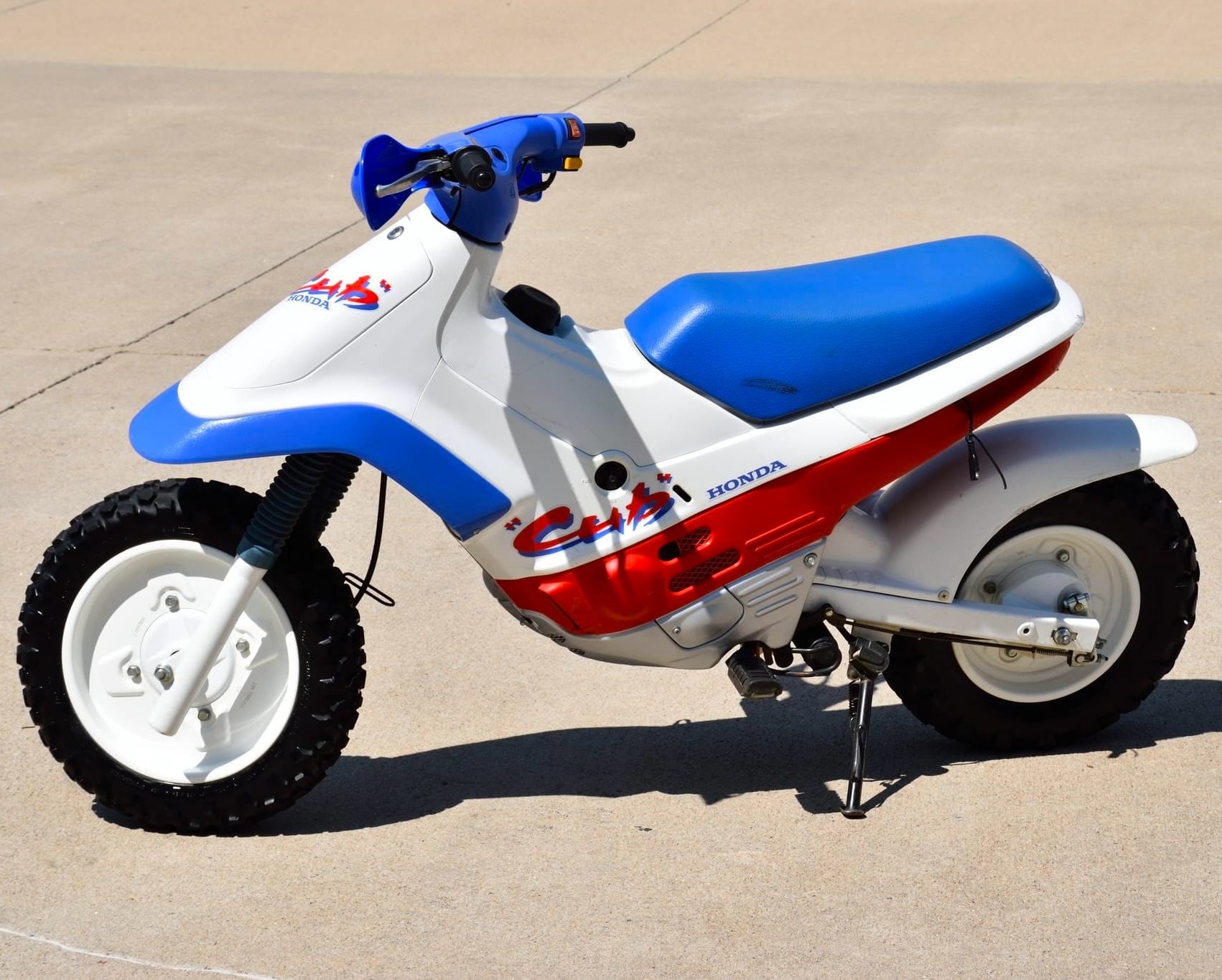
The EZ90 had a throttle and brakes, but no clutch or gear shifter, and because it was an off-road only motorcycle you could ride it without a license – just so long as you stayed off the black stuff.
Suspension is a leading-axle telescopic fork with blue gaiters and a hidden monoshock on the swingarm, as noted above, and braking is via drums front and rear, on white 12 inch front and 10 inch rear steel wheels with knobby tires. The handlebar shroud carries the starter button, an ignition cutoff, and warning lights for the side stand and for low oil.
It’s now being offered for sale out of Littleton, Colorado with a tool kit, service manual, owner’s manual and a battery maintainer pigtail. You can visit the listing here if you’d like to read more or register to bid.
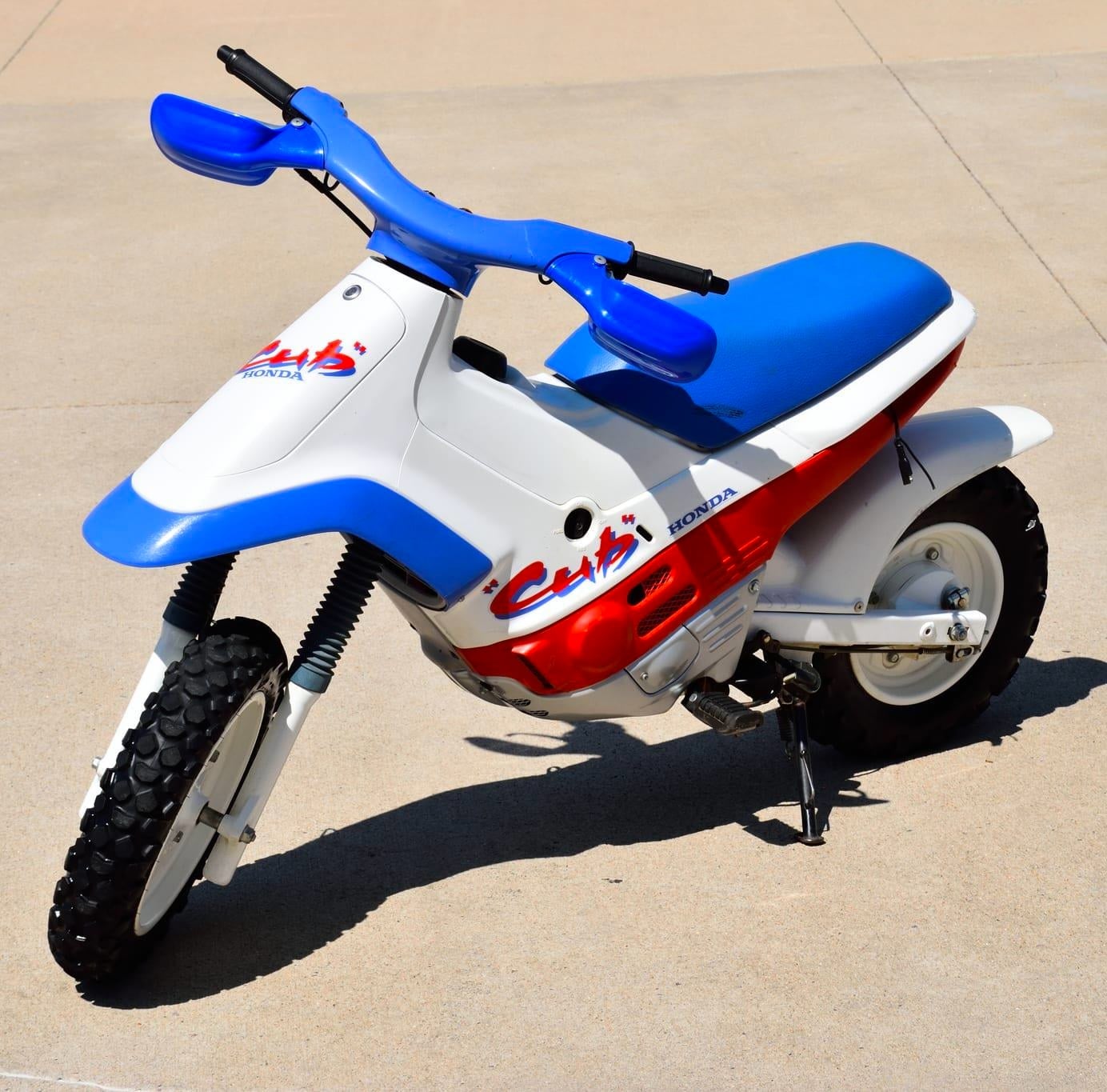
Images courtesy of Bring a Trailer

Articles that Ben Branch has written have been covered on CNN, Popular Mechanics, Smithsonian Magazine, Road & Track Magazine, the official Pinterest blog, the official eBay Motors blog, BuzzFeed, Autoweek Magazine, Wired Magazine, Autoblog, Gear Patrol, Jalopnik, The Verge, and many more.
Silodrome was founded by Ben back in 2010, in the years since the site has grown to become a world leader in the alternative and vintage motoring sector, with well over a million monthly readers from around the world and many hundreds of thousands of followers on social media.