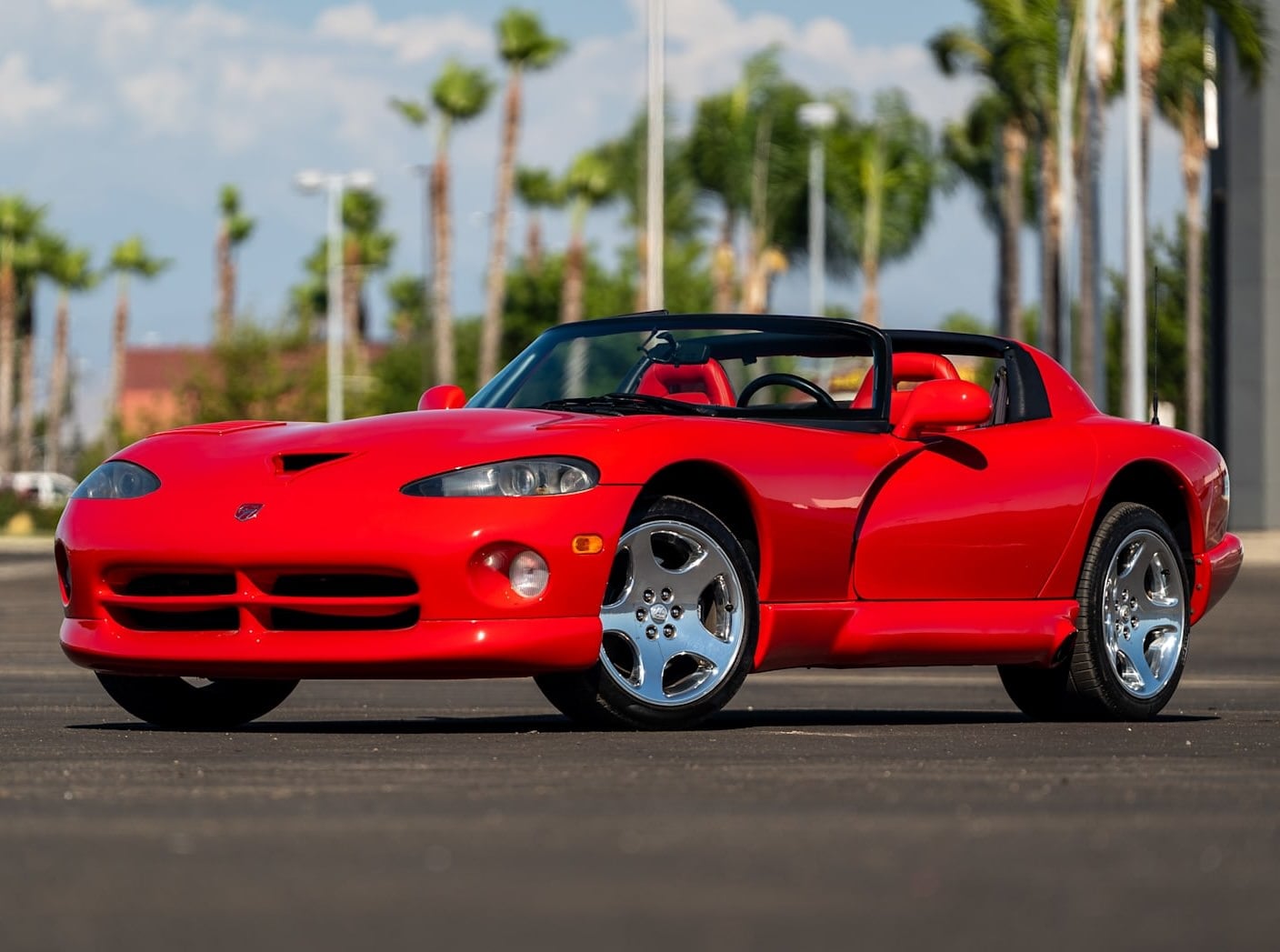
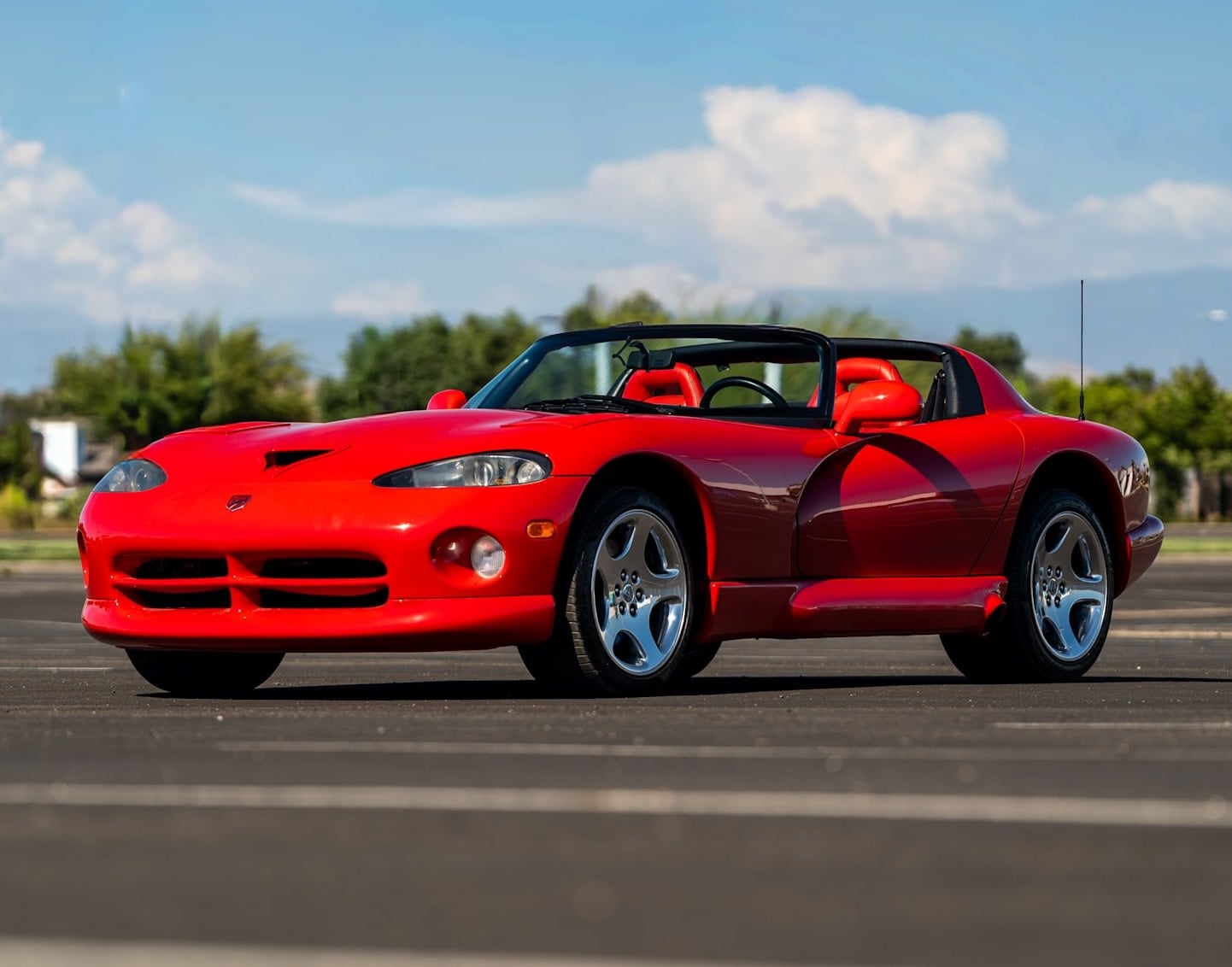
This is the 1993 Dodge Viper RT/10 that was driven by Pamela Anderson for years on the American TV series V.I.P. from 1998 to 2002.
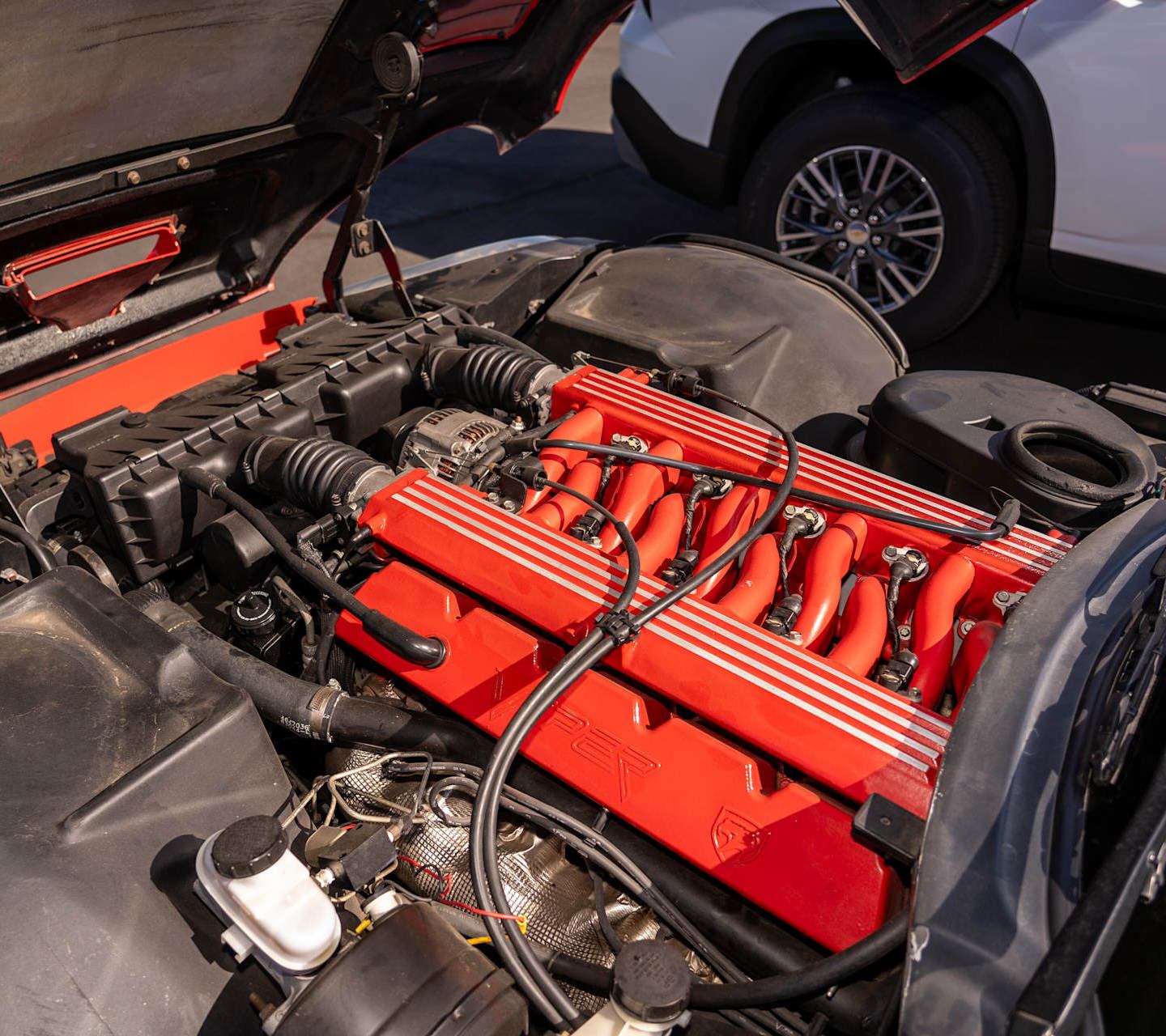
The Viper powered by the 8.0 liter V10 putting out 400 bhp and 465 lb ft of torque through the 6-speed manual box, and it comes with a bill sale from Sony Pictures, as well as the Johnny Lightning die cast model of the car.
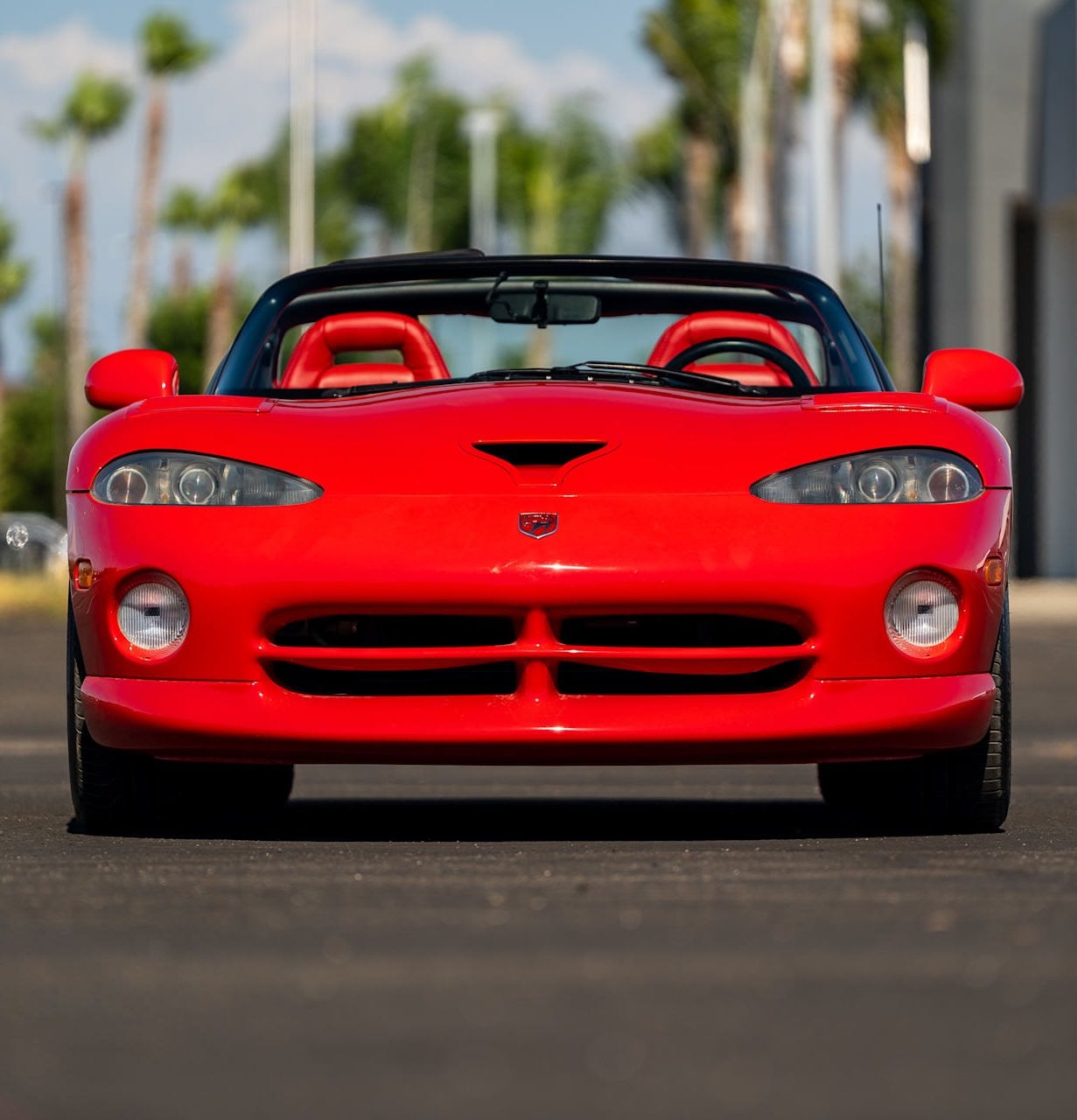
 This is the 1993 Dodge Viper RT/10 that was driven by Pamela Anderson for years on the American TV series V.I.P. from 1998 to 2002.
History Speedrun: The Dodge Viper RT/10
Dodge built the Viper between 1992 and 2017, with two pauses in production along the way, but (thankfully) they never seriously altered the recipe – it was always powdered a front-mounted, naturally-aspirated V10 mated to a 6-speed manual, with a rear-wheel drive layout, two seats, and no pretense of being anything other than a slightly unhinged muscle car.
Across the five generations of the Viper, power output climbed from 400 bhp to 645 bhp and displacement grew from 8.0 liters to 8.4.
The Viper: A Modern Cobra
The Viper project began in 1988 at Chrysler’s Advanced Design Studios, when company president Bob Lutz suggested to design chief Tom Gale that Chrysler build a modern-day Shelby Cobra. Gale’s studio produced a clay model, and with engineering chief François Castaing on board, the three pushed a running show car onto the stand at the Detroit auto show in January of 1989.
The public reaction was overwhelming, and more than enough to justify a production run. Roy Sjoberg, formerly of the Corvette engineering team at General Motors, was appointed chief engineer of the small hand-picked group that became known as “Team Viper.”
The Carroll Shelby Connection
Shelby’s relationship with Chrysler predated the Viper by a few years. At Lee Iacocca’s request he began contracting with the company in late 1982, producing the Dodge Shelby Charger, the Omni GLH and a run of other modified Dodges through the decade. When the Viper program started he came in as a performance consultant, sitting on the project’s technical policy committee alongside Lutz, Gale, and Castaing. Their meetings must have been quite something to behold.
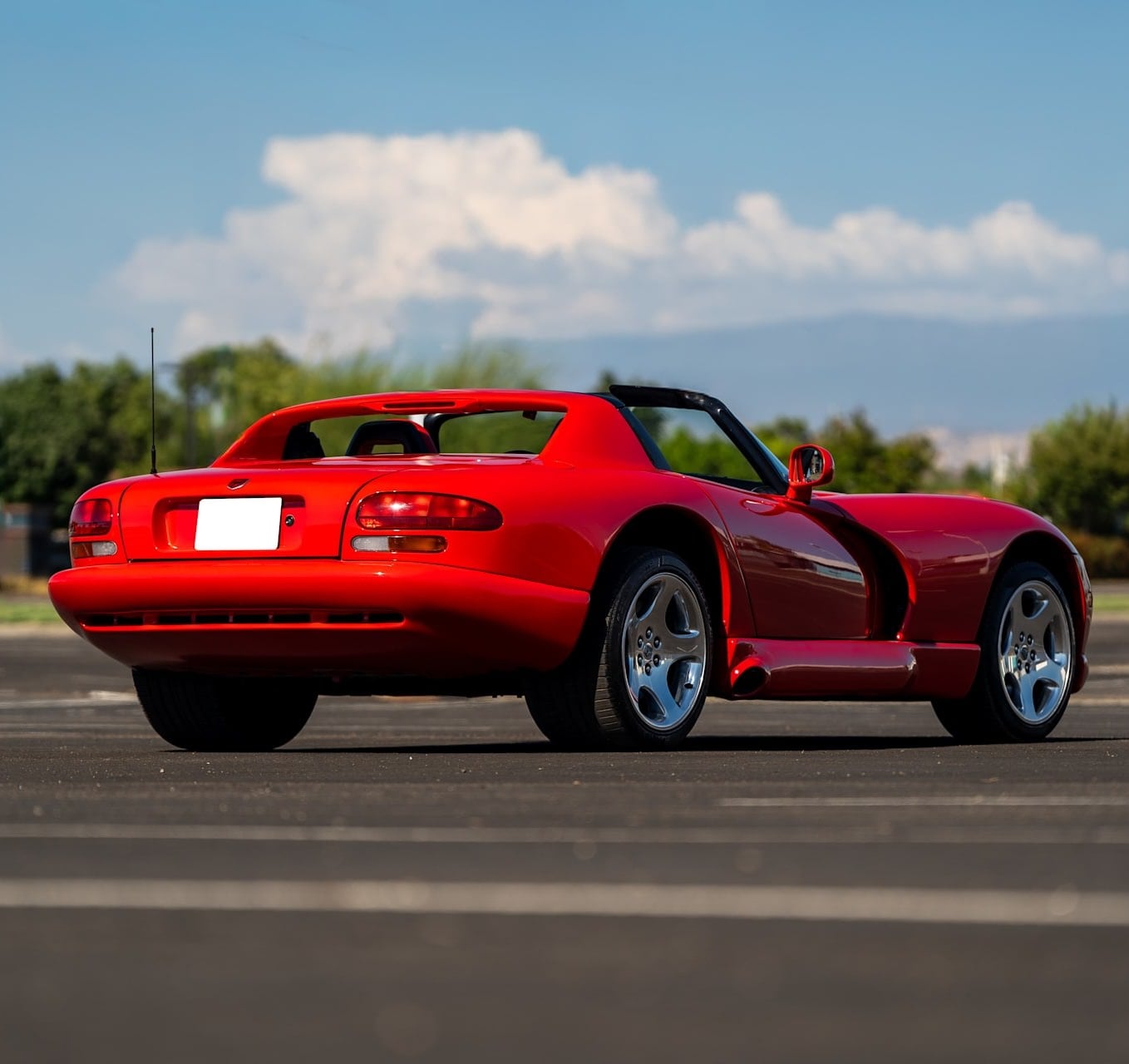
This Viper is the manual-transmission version with the 6-speed box, and it’s powered by the 8.0 liter V10 putting out 400 bhp and 465 lb ft of torque. It comes with a bill sale from Sony Pictures, as well as the Johnny Lightning die cast model of the car.
Shelby’s heart condition worsened during the Viper’s development which limited his direct involvement in the proceedings, he received a transplant on June the 7th, 1990.
He recovered well enough to take on one of the most visible jobs in the program – driving a pre-production RT/10 as pace car for the 75th Indianapolis 500 in May of 1991. Dodge had originally intended to use the Stealth, but that car was built in Japan by Mitsubishi and the United Auto Workers objected, perhaps understandably. The Viper prototype went in its place – it was a huge publicity coup for Team Viper.
Ten Cylinders – Not Eight
The V10 came out of Chrysler’s LA V8 family, prototyped as a Magnum 5.9 with two extra cylinders and a longer stroke. Chrysler owned Lamborghini at the time, and the Italian firm developed the aluminum block castings that replaced the iron truck unit. The finished engine displaced 7,990cc, or 488 cubic inches, with pushrods, two valves per cylinder and a 90º vee angle.
The first RT/10s reached customers in January of ’92, with the engine rated at 400 bhp at 4,600 rpm. Period specs claim 450 lb ft of torque at 3,600 rpm, though 465 lb ft appears in a number of later sources, and it’s not clear which number is accurate.
The car around it was deliberately simple, it had no exterior door handles, no side windows, no anti-lock brakes, no traction control, and it had side-exit exhausts that scorched the sills. The base price was ~$50,000. Just 285 were built for 1992, all in Viper Red over gray, followed by 1,043 in 1993, 3,083 in 1994 and 1,577 in 1995. These were low sales numbers of course, but the vehicle was working wonders as the new Dodge halo car.
The Viper GTS And The Racing Program
The Viper GTS arrived mid-1996 with a double-bubble roof, a ducktail spoiler and launch cars in blue with white stripes – Dodge claimed more than 90% of its parts were new. Power rose to 450 bhp and 490 lb ft, and the GTS became the first Viper with airbags, along with air conditioning and power windows as standard.
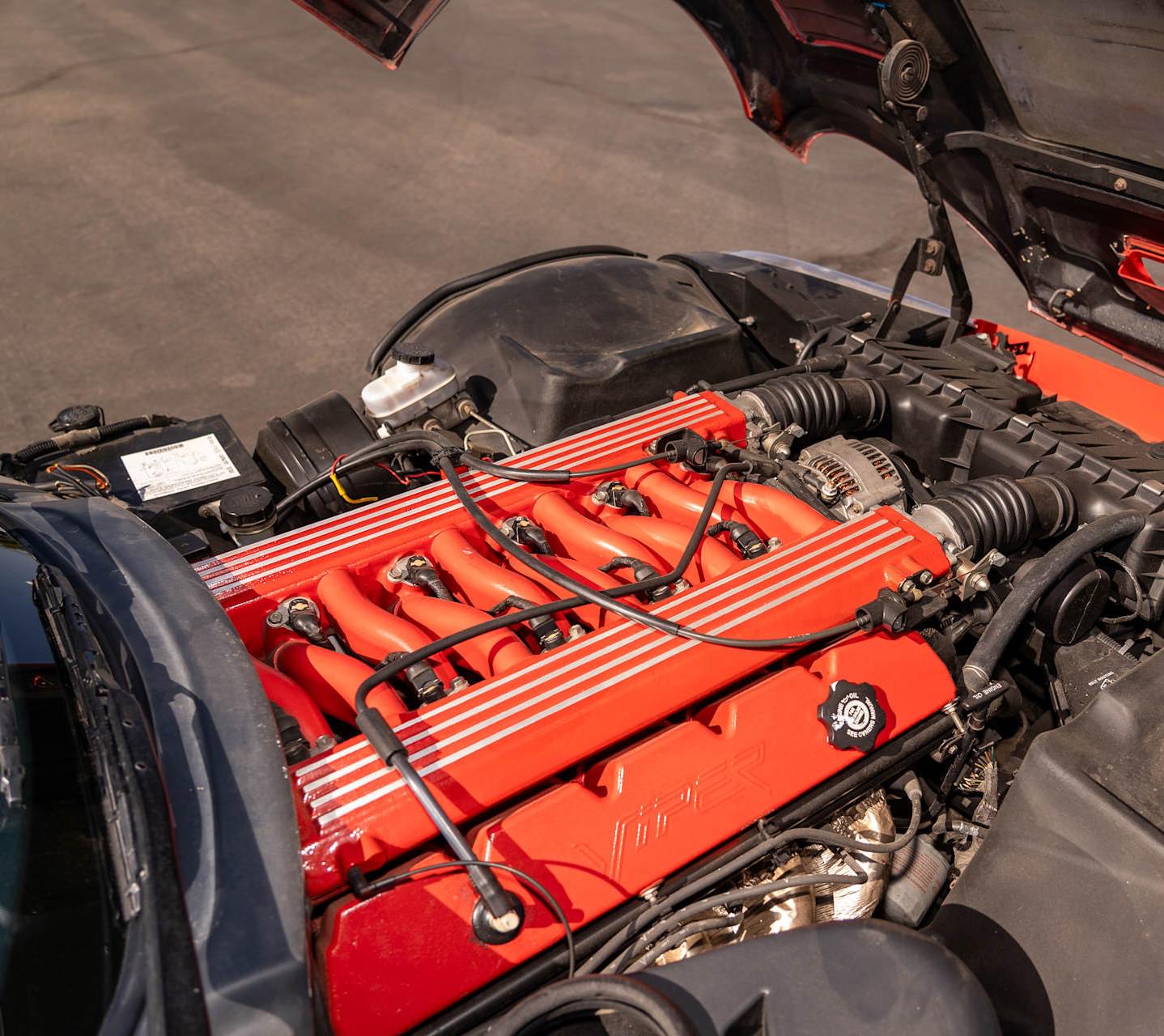
Across the five generations of the Viper, power output climbed from 400 bhp to 645 bhp and displacement grew from 8.0 liters to 8.4.
The roadster had already gone to 415 bhp for 1996, when its side pipes gave way to a rear-exit system, and it caught up fully for 1997, taking the GTS engine along with airbags and power windows. The ACR, or American Club Racer, appeared in 1999 with 460 bhp and a stripped, track-focused spec sheet.
The GTS gave Dodge a proper race car version of the Viper, it was developed with Reynard in Britain and run by Oreca in France, the Viper GTS-R took the FIA GT Championship in its class in 1997, 1998 and 1999, then again in privateer hands in 2001 and 2002.
It won its class at Le Mans three years running, in 1998, 1999 and 2000 – in 1999 Vipers filled the top six places in the GTS class. It took the ALMS GTS championship in 1999 and 2000, and a Zakspeed-run car won the Nürburgring 24 Hours outright in 1999.
The high point came in February of 2000, when the No. 91 Oreca car of Olivier Beretta, Karl Wendlinger and Dominique Dupuy won the Rolex 24 at Daytona outright, beating the leading Corvette C5-R by 30.879 seconds.
The Viper SRT-10 + After
The 2003 Viper SRT-10 replaced both the earlier models. Osamu Shikado’s new bodywork was sharper and more angular, and arguably more modern, the wheelbase grew 2.6 inches to 98.8 inches, and the V10 was bored and stroked to 8.3 liters, or 505 cubic inches, for 500 bhp and 525 lb ft. The engine tipped the scales at ~500 lbs and the chassis shed roughly 80 lbs overall. A tin-top coupe returned for 2006 with 510 bhp, and there was no 2007 model year.
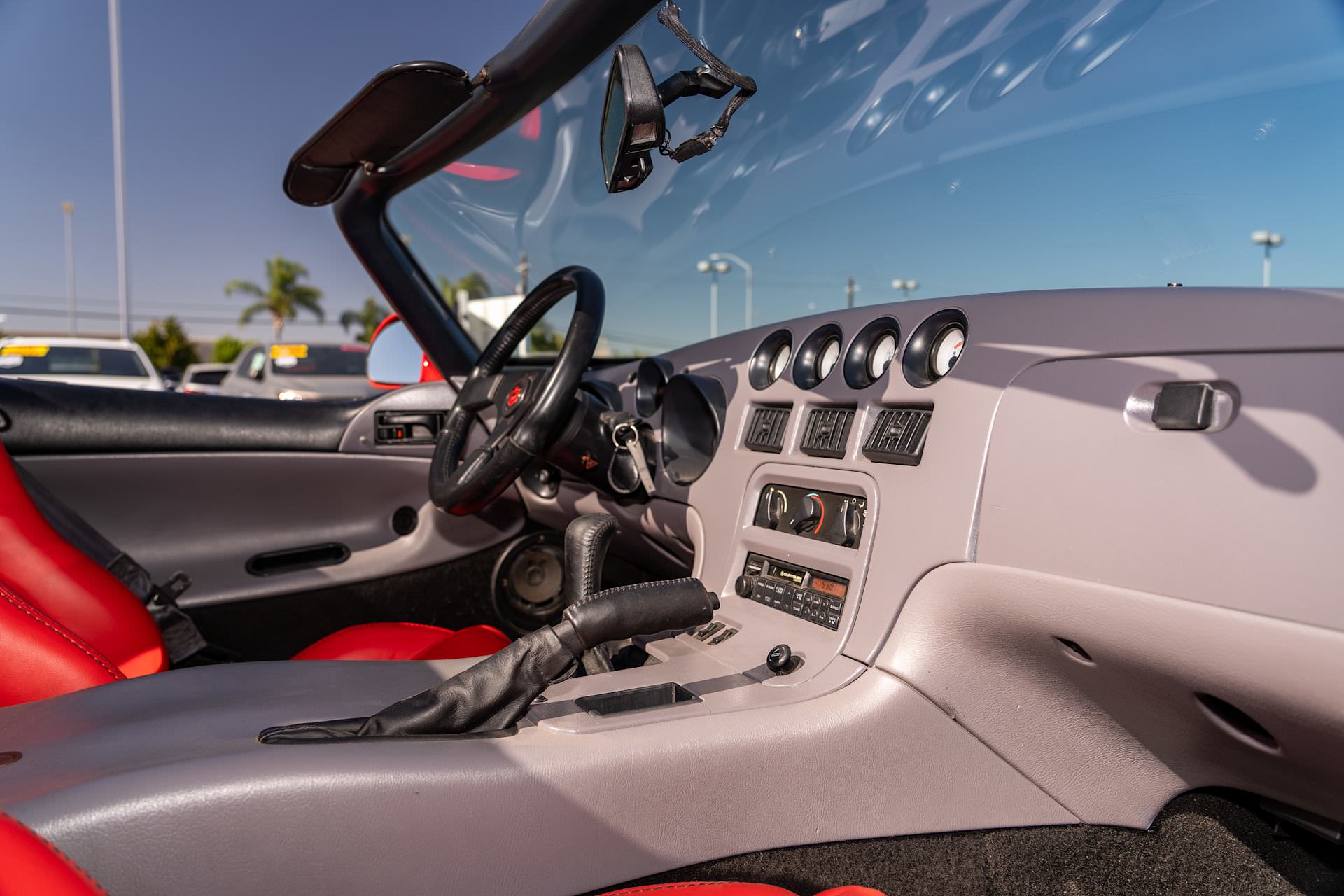
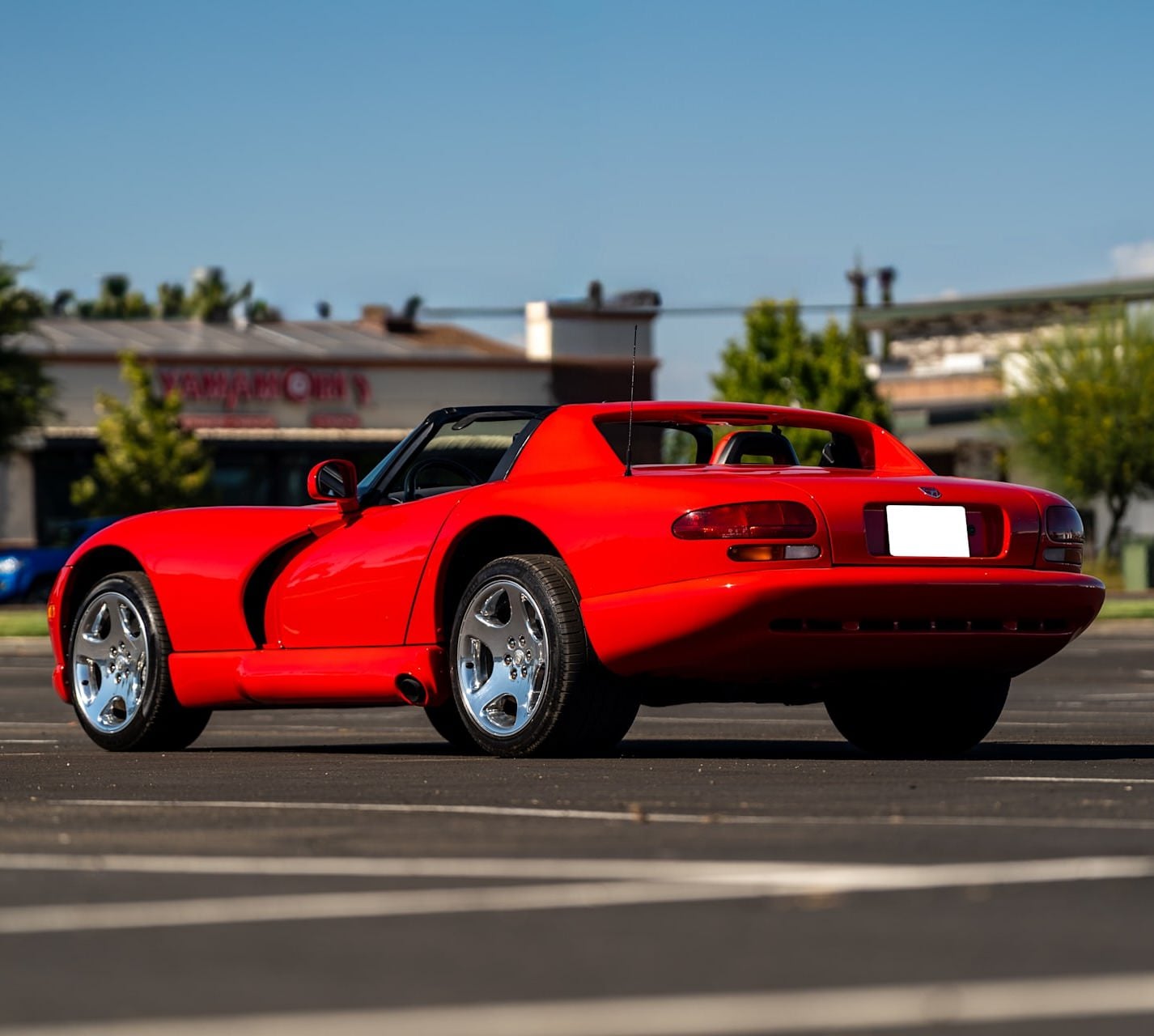
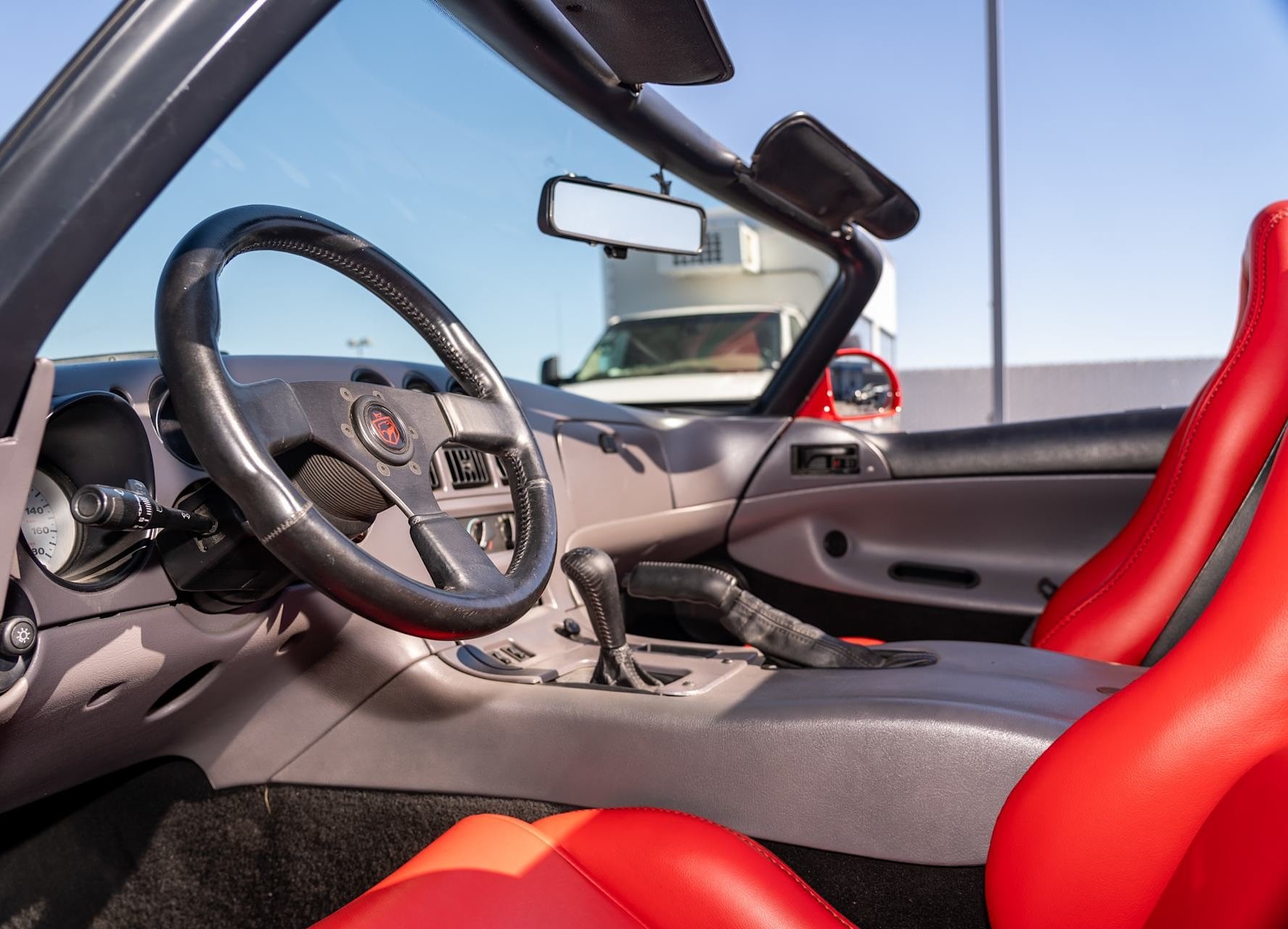
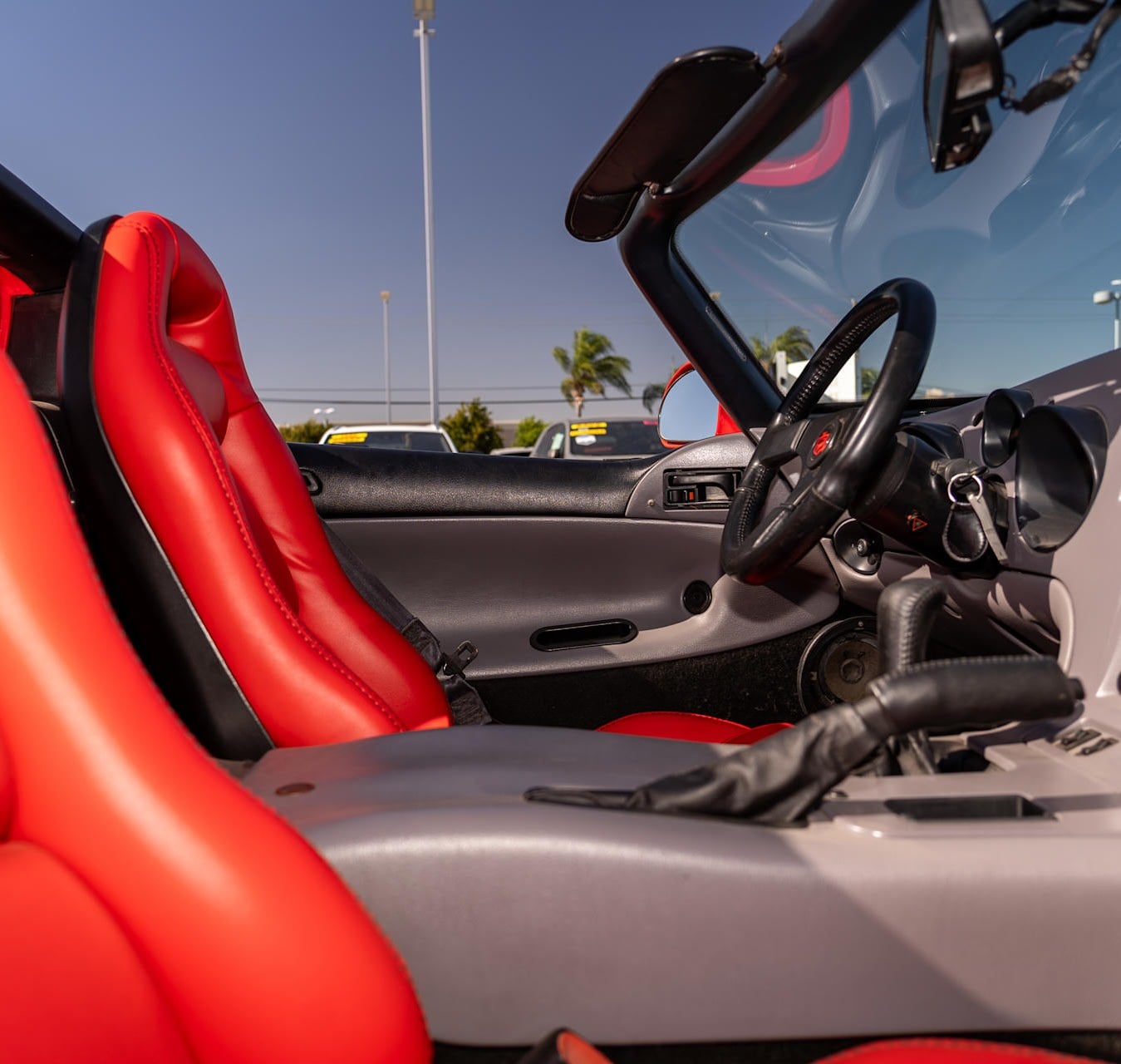
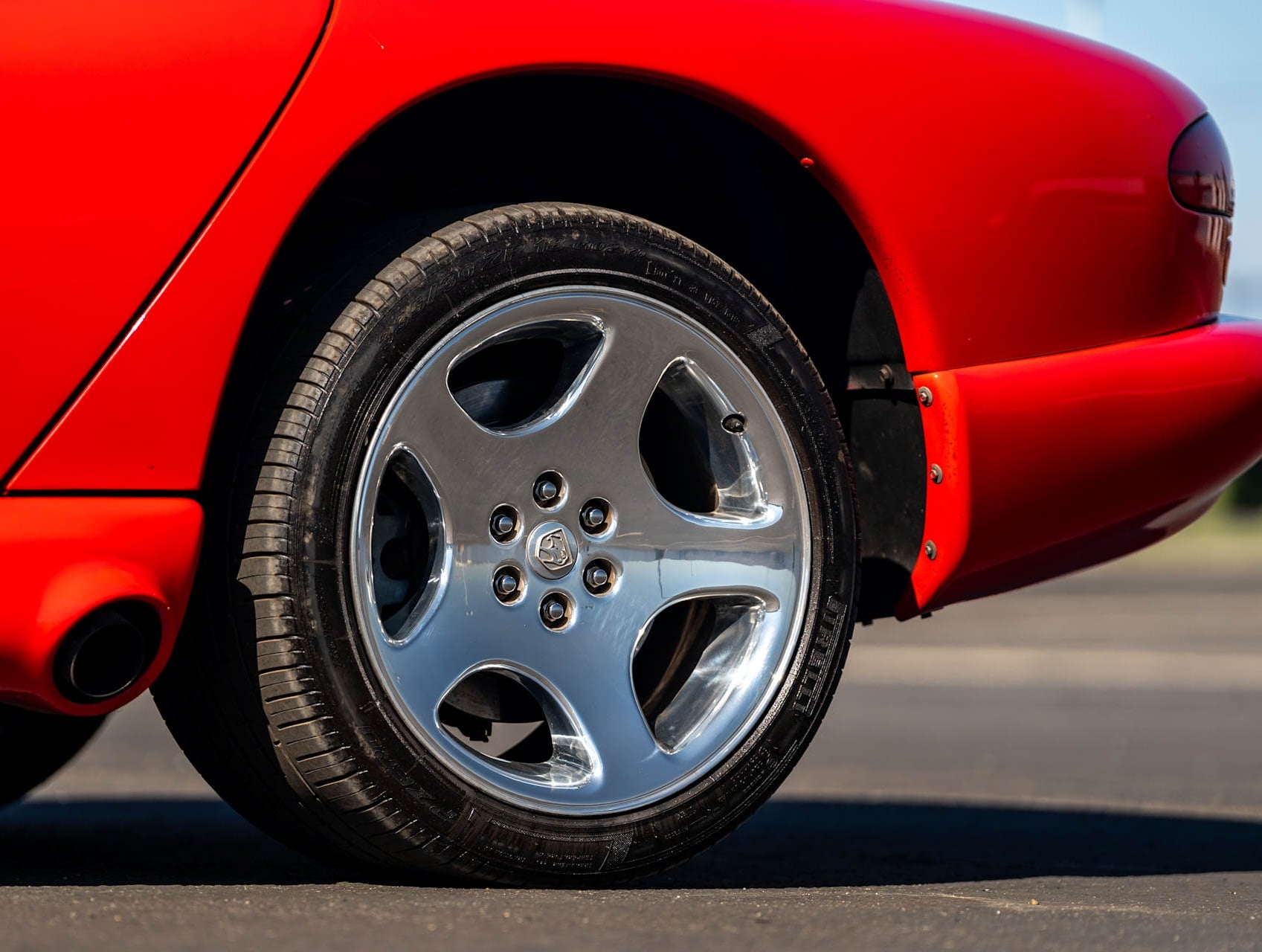
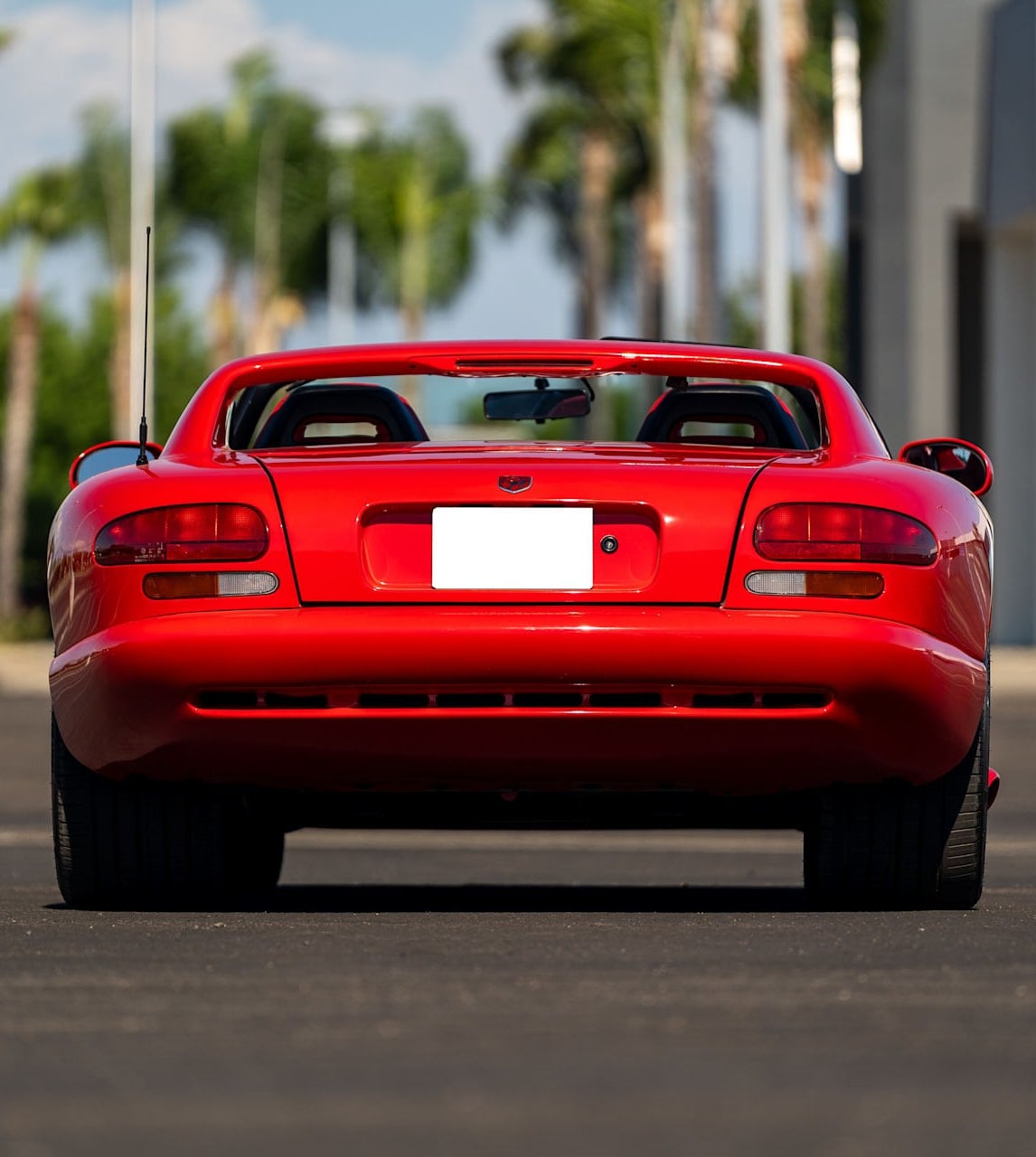
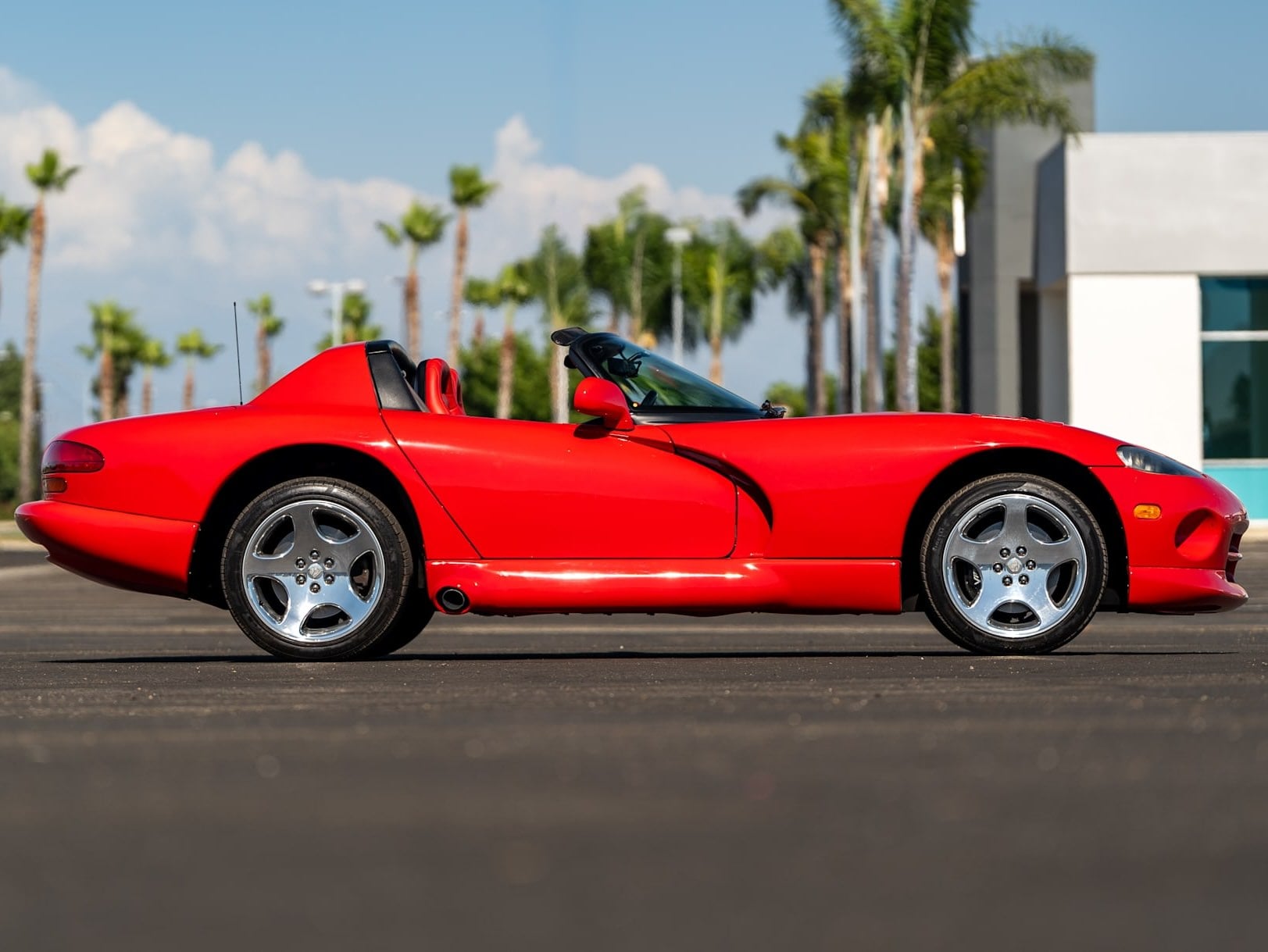
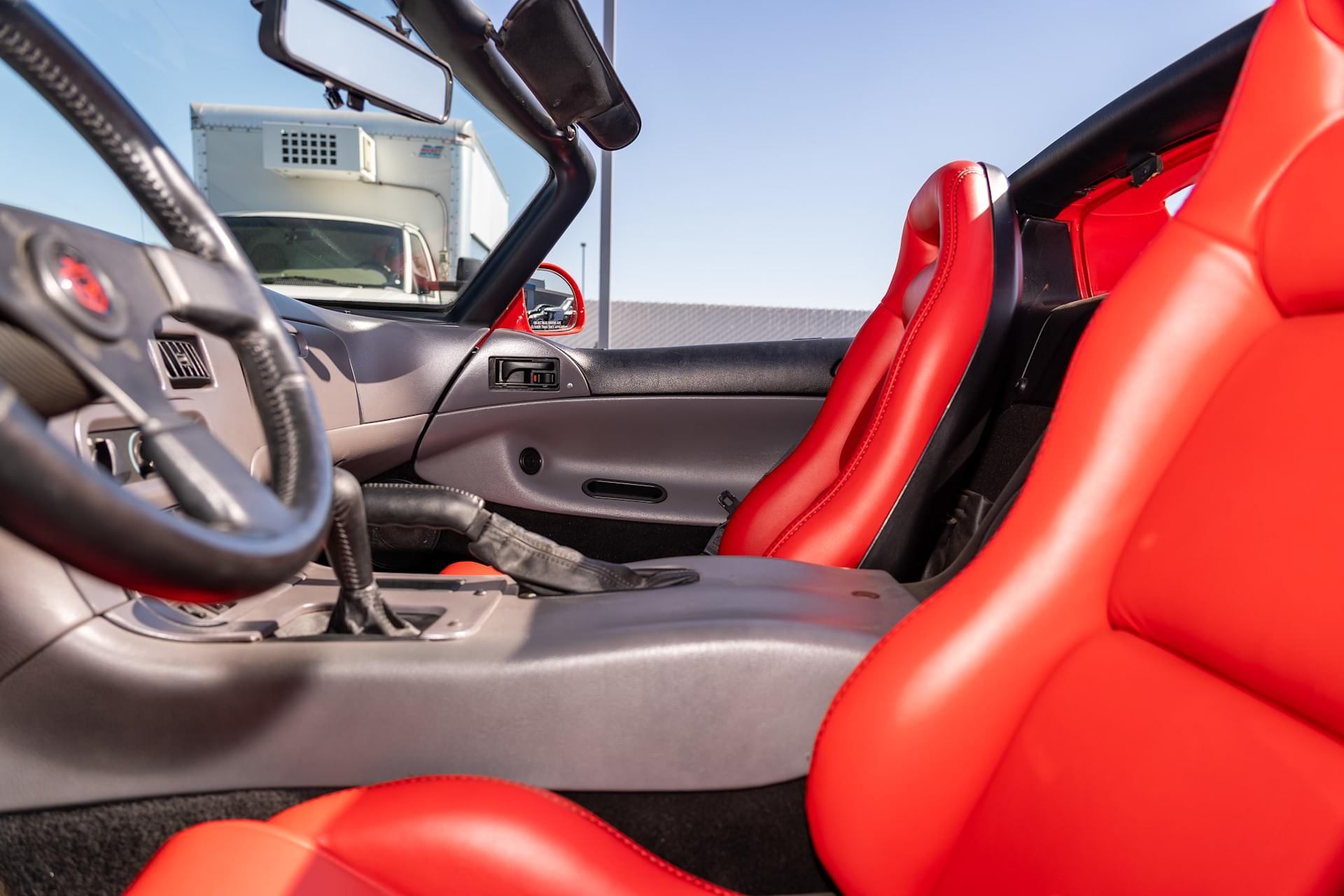
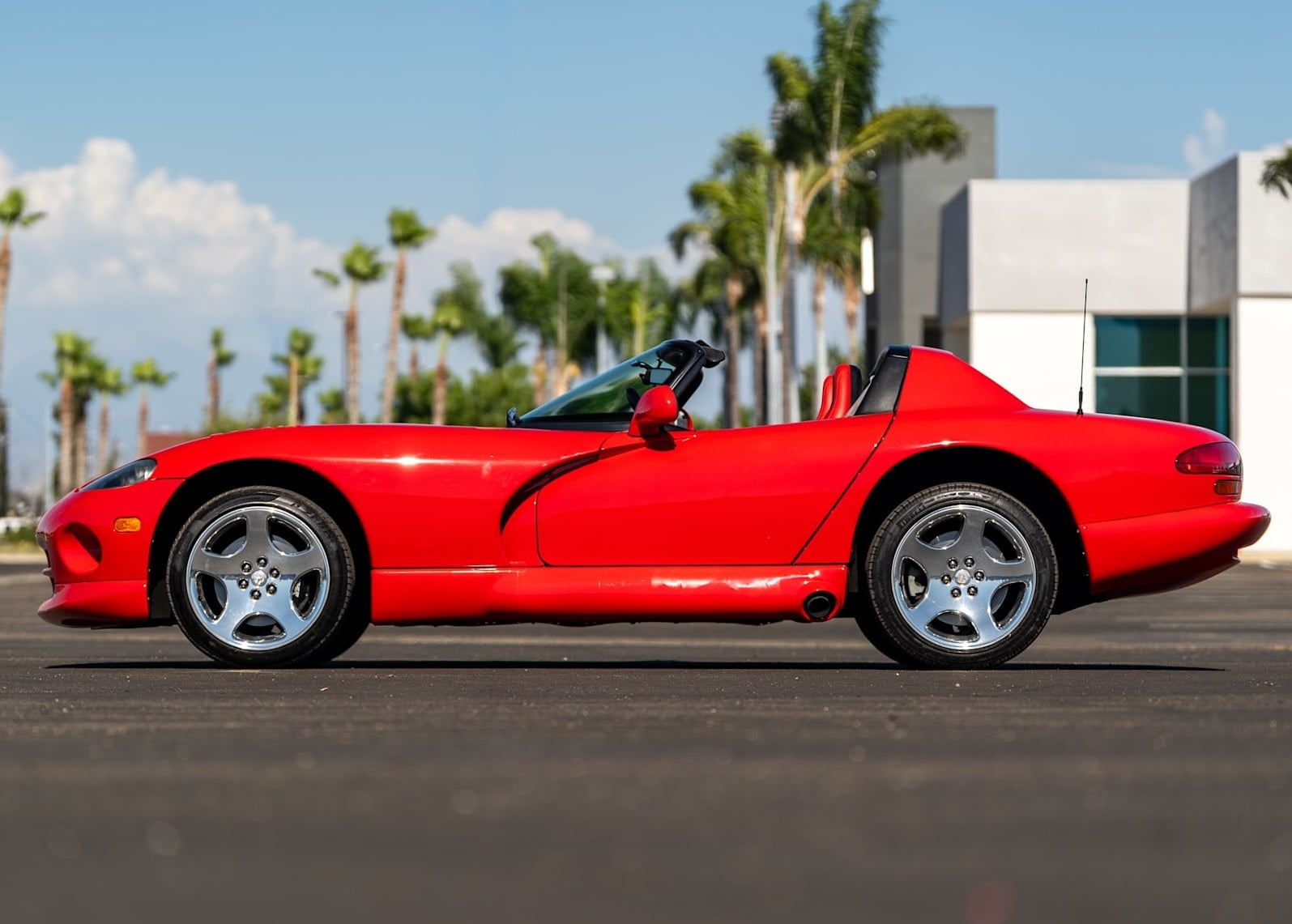
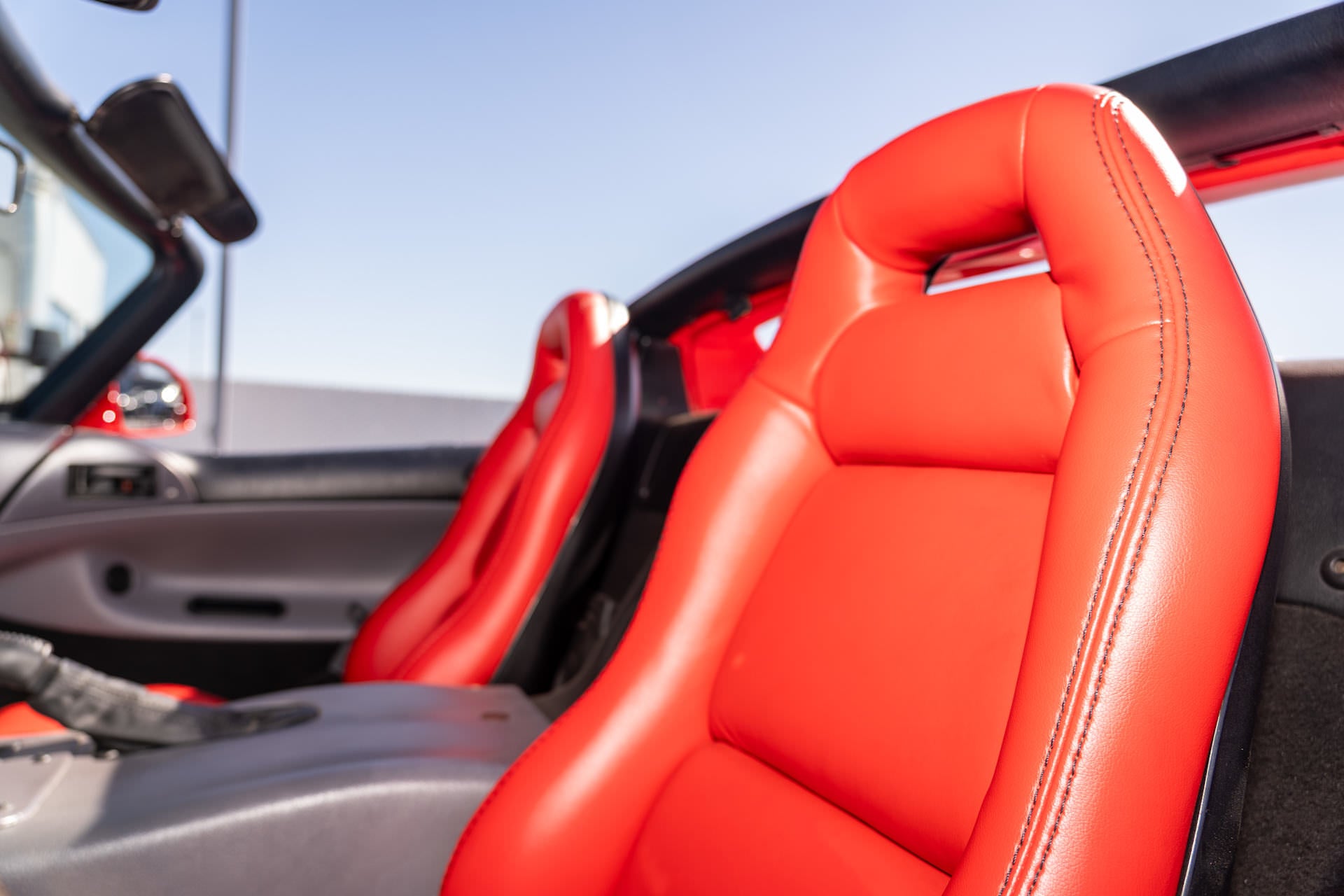
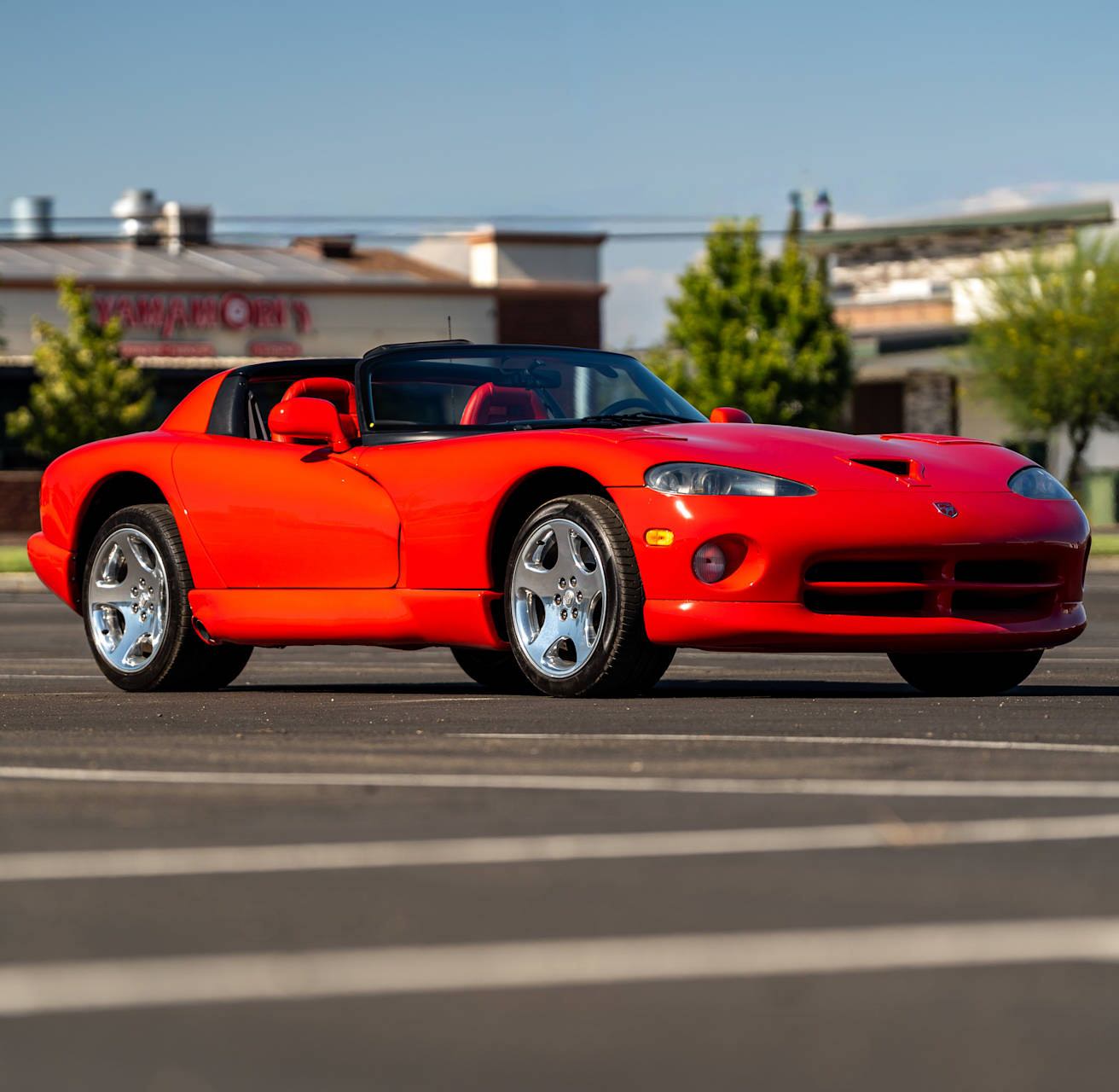
The car is finished in Viper Red over a Red and Gray interior, it rides on the correct polished alloy wheels, it has a removable soft top, and it comes with two files full of service records. It’s also noted has having updated exhaust shields and a clean CarFax.
For 2008, working with McLaren Performance Technologies and Ricardo, SRT opened the bore a further millimeter to reach 8.4 liters and reworked the heads with CNC-shaped combustion chambers, larger valves and variable exhaust-valve timing. Output reached 600 bhp and 560 lb ft of torque. The ACR version lapped the Nürburgring Nordschleife in 7:22.1, and a revised car returned in 2011 to record 7:12.13, these were blisteringly quick numbers for the time.
Production stopped again after 2010, then resumed for 2013 with the SRT Viper, shown at the New York Auto Show in April of 2012. The chassis was claimed to be 50% stiffer, the body used carbon fiber and aluminum, and stability and traction control finally arrived. The 8.4 liter V10 made 640 bhp and 600 lb ft, rising to 645 bhp for 2015, and Dodge claimed no other naturally aspirated engine currently in production made more torque.
The ACR came back too – the 2016 car set 13 SCCA-certified lap records at American circuits, and in 2017 a group of 378 enthusiasts funded a privately organized Nürburgring attempt (without FCA’s backing), where a GTS-R Commemorative Edition ACR recorded 7:01.3, just a whisker off the landmark 7 minute mark.
The End Of The Viper
The last Dodge Viper was built at the Conner Avenue plant in Detroit on August the 16th, 2017, and the factory closed at the end of that month. Ralph Gilles said the immediate obstacle was a new federal ejection-mitigation requirement.
Total production across all five generations is usually put at somewhere between 30,000 and 32,000 cars, every one assembled by hand.
The 1993 Dodge Viper RT/10 Shown Here
The car you see here is a Viper you may have seen before, if you caught any episodes of the American TV series V.I.P. which aired from 1998 to 2002 starring Pamela Anderson as Vallery Irons. Anderson drove this car in the series, all eight liters and six manual gears, and it’s now being offered for sale.
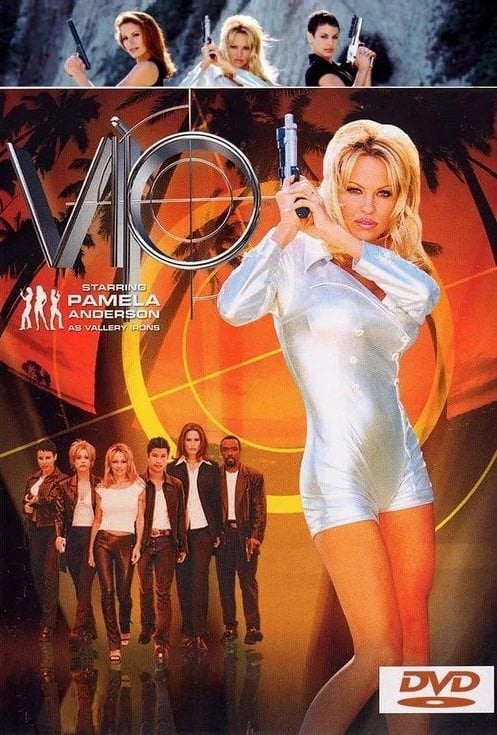
The car you see here is a Viper you may have seen before, if you caught any episodes of the American TV series V.I.P. which aired from 1998 to 2002 starring Pamela Anderson as Vallery Irons. Anderson drove the car in the series, all eight liters and six manual gears, and it’s now being offered for sale. Image courtesy of Paramount Pictures.
The car is finished in Viper Red over a Red and Gray interior, it rides on the correct polished alloy wheels, it has a removable soft top, and it comes with two files full of service records. It’s also noted has having updated exhaust shields and a clean CarFax.
It also comes with a bill sale from Sony Pictures and a Johnny Lightning-produced die-cast model. It’s now due to roll across the auction block with Mecum in mid-August, and you can visit the listing here if you’d like to read more about it or register to bid.
Images courtesy of Mecum

Articles that Ben Branch has written have been covered on CNN, Popular Mechanics, Smithsonian Magazine, Road & Track Magazine, the official Pinterest blog, the official eBay Motors blog, BuzzFeed, Autoweek Magazine, Wired Magazine, Autoblog, Gear Patrol, Jalopnik, The Verge, and many more.
Silodrome was founded by Ben back in 2010, in the years since the site has grown to become a world leader in the alternative and vintage motoring sector, with well over a million monthly readers from around the world and many hundreds of thousands of followers on social media.