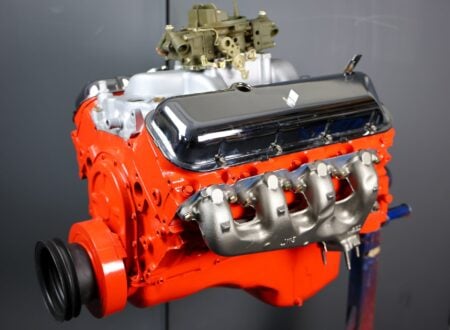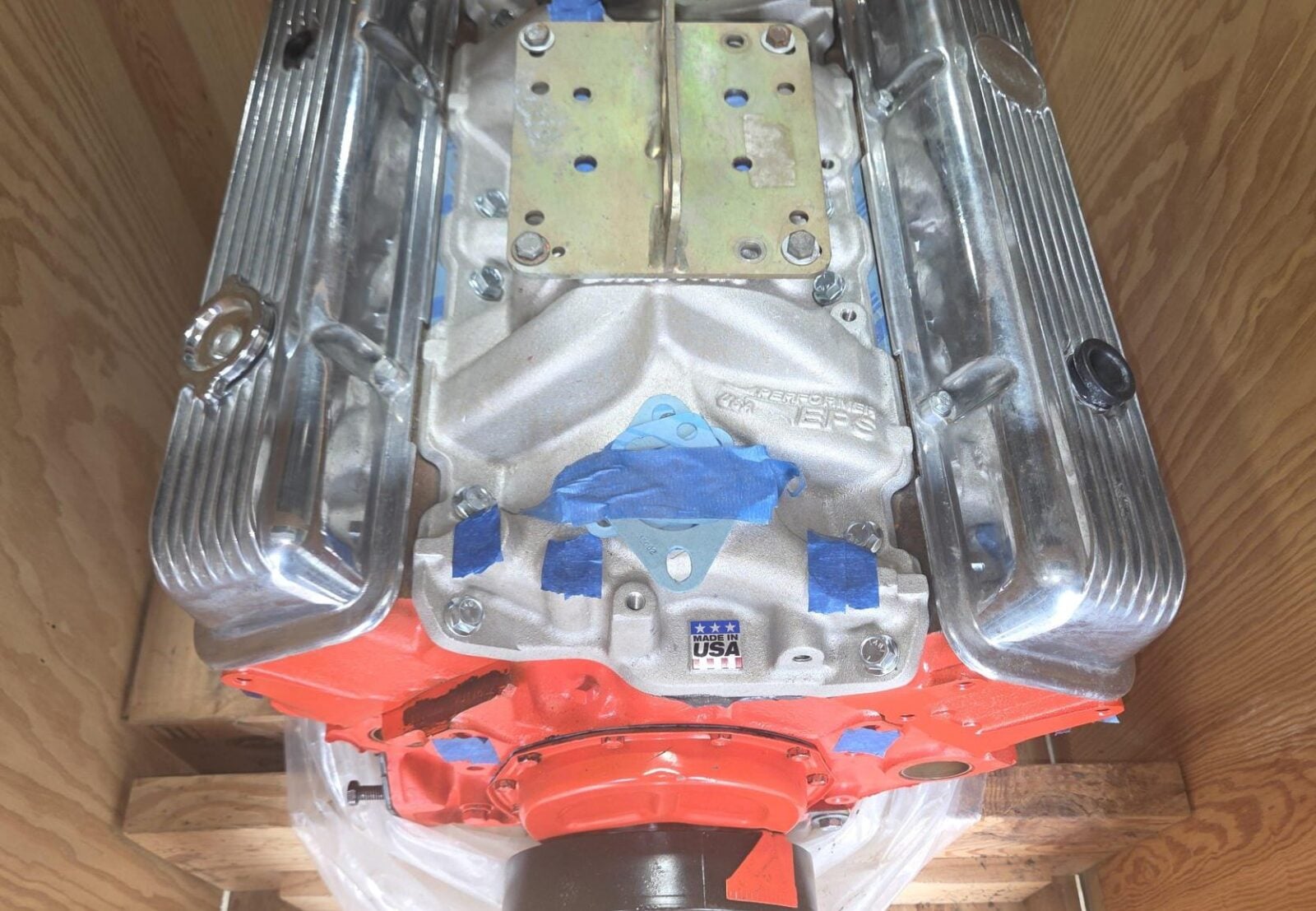
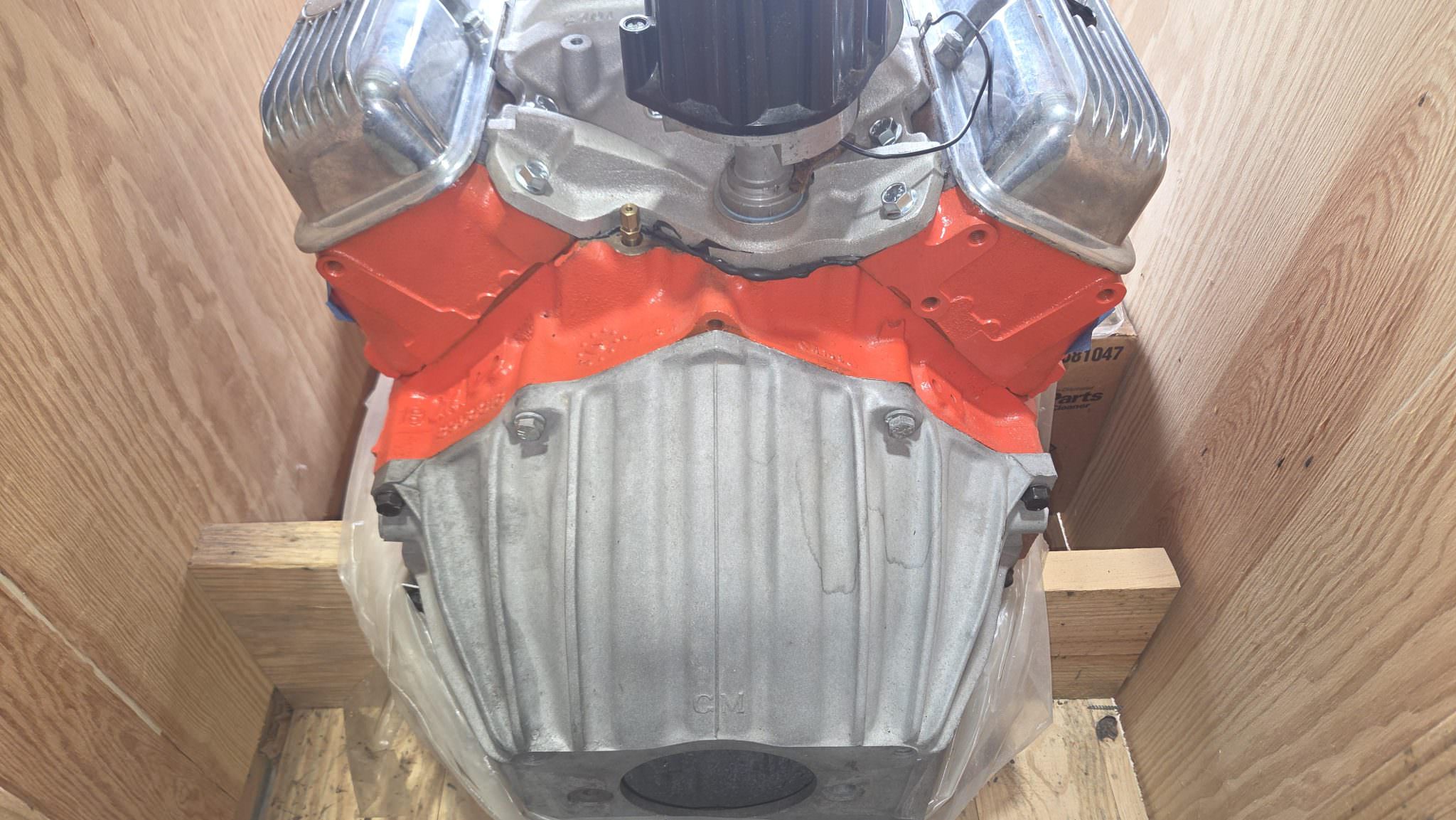
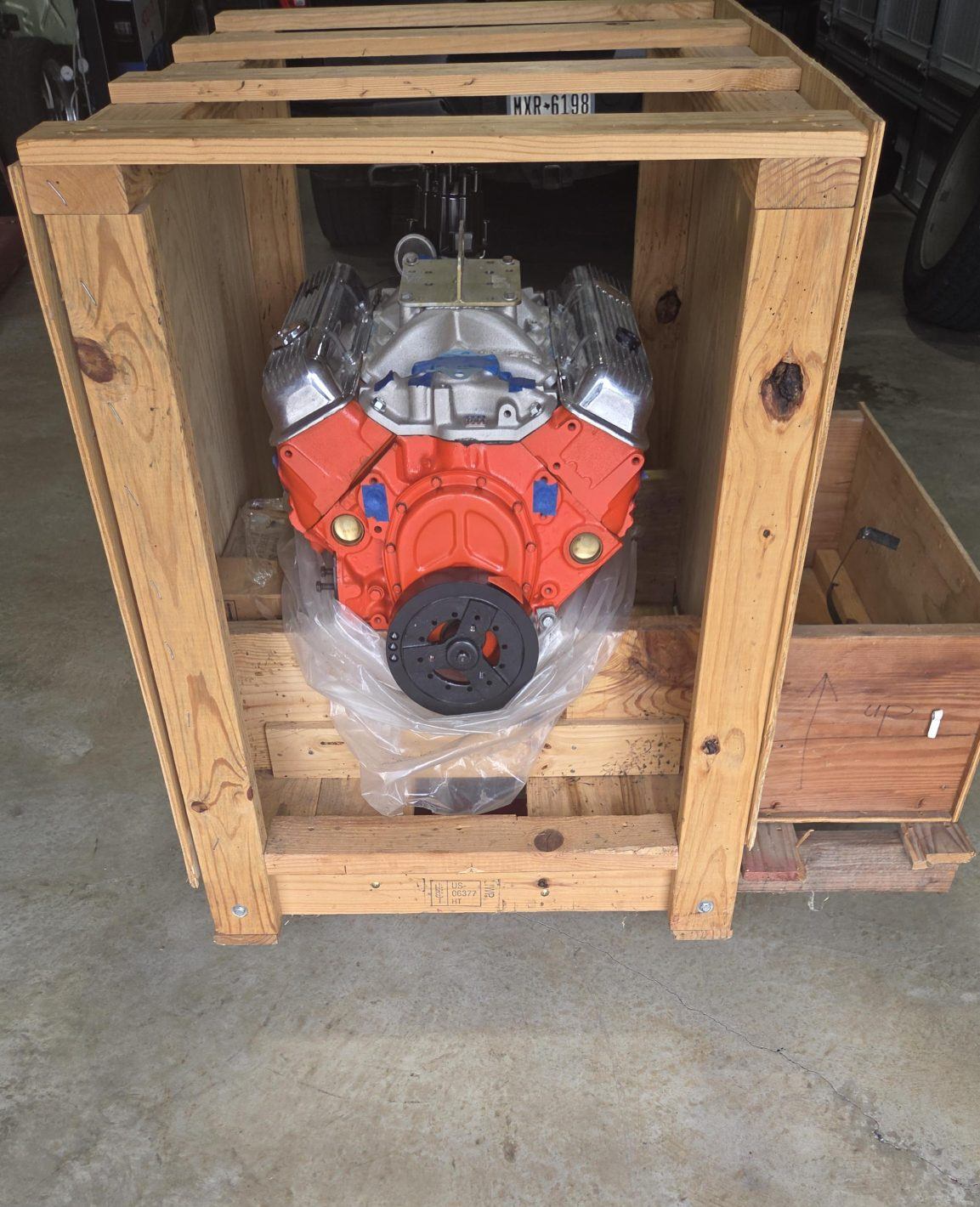
This is a rebuilt Chevrolet DZ 302 V8, an engine developed in the late 1960s for Trans Am racing, it’s now even professionally rebuilt and crated up ready for a new owner – and it’s being offered for sale out of Allen, Texas.
These engines were officially rated at 290 bhp by Chevrolet, but period (and later) dyno tests show that the official numbers were significantly understated – power figures as high as 375 bhp have been recorded. Remarkable numbers for a naturally-aspirated pushrod 5.0 liter from the late 1960s.
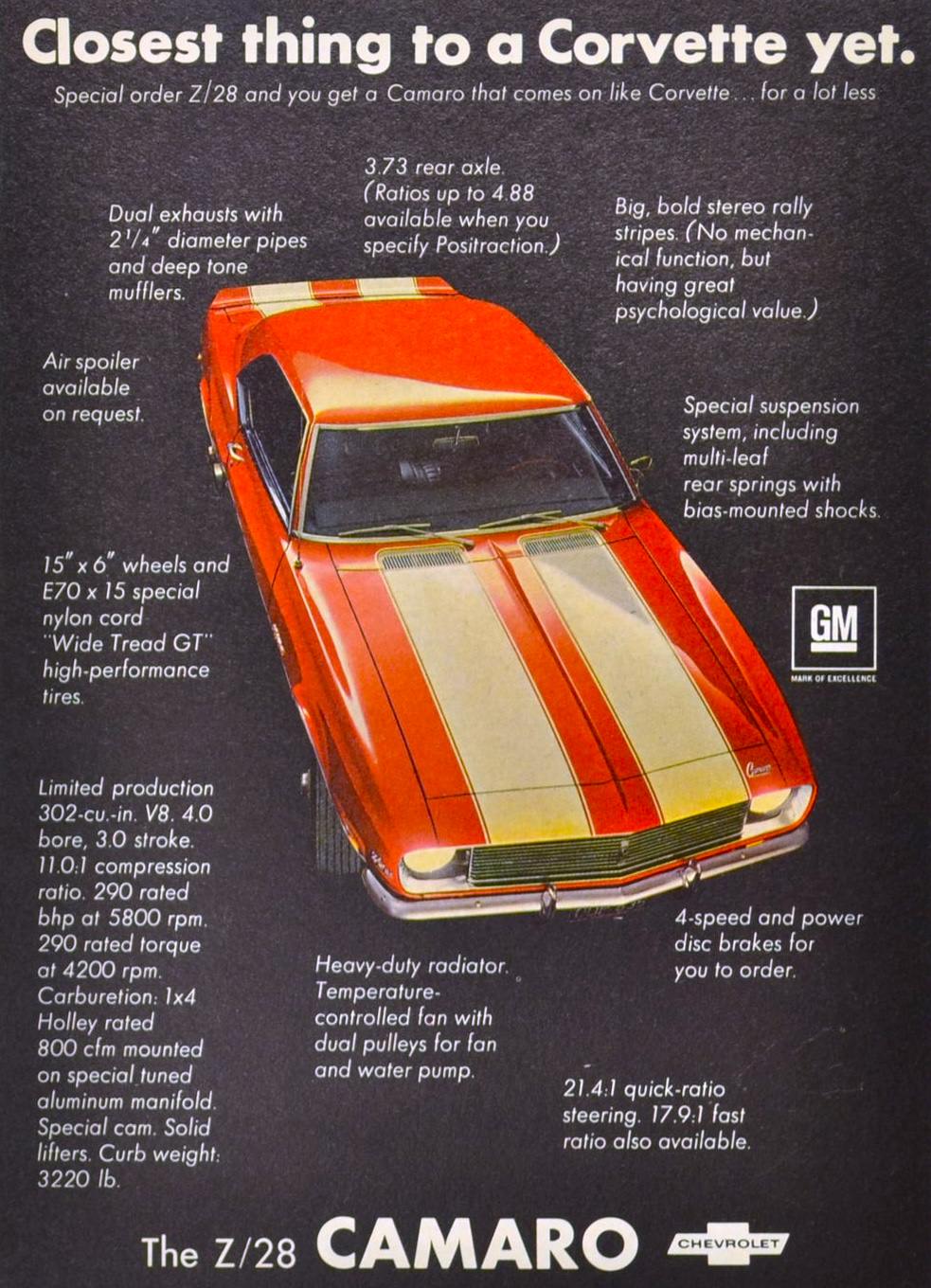
 When the SCCA launched its Trans-American Sedan Championship (better known simply as “Trans-Am”) in 1966, the rulebook capped engine displacement at 5.0 liters or 305 cubic inches. Ford already had a 302 cubic inch V8 in its lineup, but Chevrolet didn’t, and this could have posed a significant problem. Image courtesy of General Motors.
History Speedrun: The Chevrolet DZ 302 V8
When the SCCA launched its Trans-American Sedan Championship (better known simply as “Trans-Am”) in 1966, the rulebook capped engine displacement at 5.0 liters or 305 cubic inches. Ford already had a 302 cubic inch V8 in its lineup, but Chevrolet didn’t, and this could have posed a significant problem.
Chevrolet’s existing small blocks were the 283 and the 327, with nothing in between. Chevrolet performance engineer Vince Piggins recognised that mating the 4.00 inch bore of the 327 block with the 3.00 inch stroke crankshaft from the 283 would yield a displacement of 302.4 cubic inches – comfortably under the SCCA limit, and ideally suited to road racing.
Piggins had already secured approval from Chevrolet executives to develop a Trans-Am ready version of the new-for-1967 Camaro, and the hybrid small-block would be its centerpiece.
The 302 Makes Its Official Debut
The resulting engine first appeared in the 1967 Camaro Z/28, an option package designated RPO Z28 – the alphanumeric code from which the car took its name. It was fitted exclusively to the first-generation Z/28 across its three-year production run (1967 to 1969) and it was never offered in any other Chevrolet model.
The engine suffix code stamped on the block pad was MO for 1967 and 1968 cars (MP for California-spec engines with the Air Injection Reactor emissions system in 1967), changing to DZ for 1969 – the code that gave the engine the name by which it’s best known today.
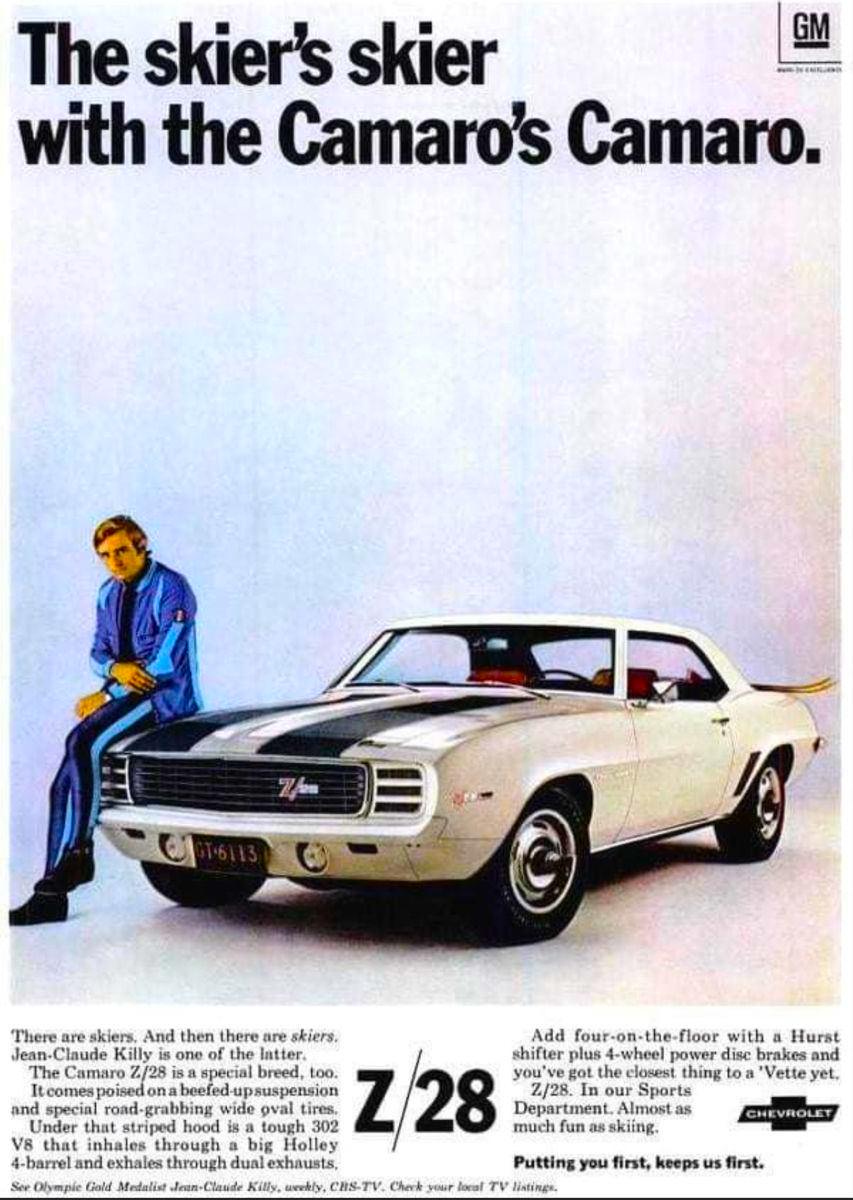
The late-1960s Camaro Z/28 was one of the fastest cars in its class, with performance that rivaled many big block V8s without the penalty of a heavy nose. Image courtesy of General Motors.
DZ 302 V8: Specifications + Design
The 302’s oversquare design (a large bore relative to its short stroke) allowed it to rev freely into territory that most contemporary American pushrod V8s couldn’t even think about. The 1967 engine used a small-journal block with 2.30 inch mains and two-bolt main bearing caps. For 1968, Chevrolet moved to a large-journal block with 2.45 inch mains, improving high-RPM durability, though it kept the two-bolt caps.
The 1969 DZ engine went further still, with a four-bolt main bearing cap block – the only factory 302 to receive this upgrade. Throughout all three years, the rotating assembly consisted of a forged-steel crankshaft and forged-steel connecting rods (shot-peened from 1968 onward for improved fatigue resistance), turning forged pistons with floating wrist pins and an 11.0:1 compression ratio.
It was also fitted with a specially baffled oil pan to prevent the high-volume oil pump from being starved during hard cornering, braking, and acceleration.
The cylinder heads were Chevrolet’s high-flow “Fuelie” castings – large-port iron heads with 2.02 inch intake and 1.60 inch exhaust valves, optimized for breathing at high RPM, somewhat at the expense of low-RPM torque. The camshaft was a solid-lifter grind known as the “30-30,” named for its 0.030 inch hot lash setting on both intake and exhaust.
This cam had first appeared in the 365 bhp L76 and 375 bhp L84 fuel-injected Corvette 327s of 1964/1965, and was a more aggressive replacement for the earlier “Duntov” (097) cam, though the two are often conflated. It delivered 0.485 inches of valve lift and its long-duration profile gave the 302 its characteristic mechanical clatter at idle and fierce top-end pull.
Induction was handled by an aluminum high-rise dual-plane intake manifold topped with a 780 CFM Holley four-barrel carburetor – this remained standard across all three production years. For 1969, buyers could opt for a cross-ram intake fitted with twin 600 CFM Holley four-barrels, sold as an over-the-counter service part rather than a factory-installed option, an exotic-looking setup originally conceived for racing homologation.
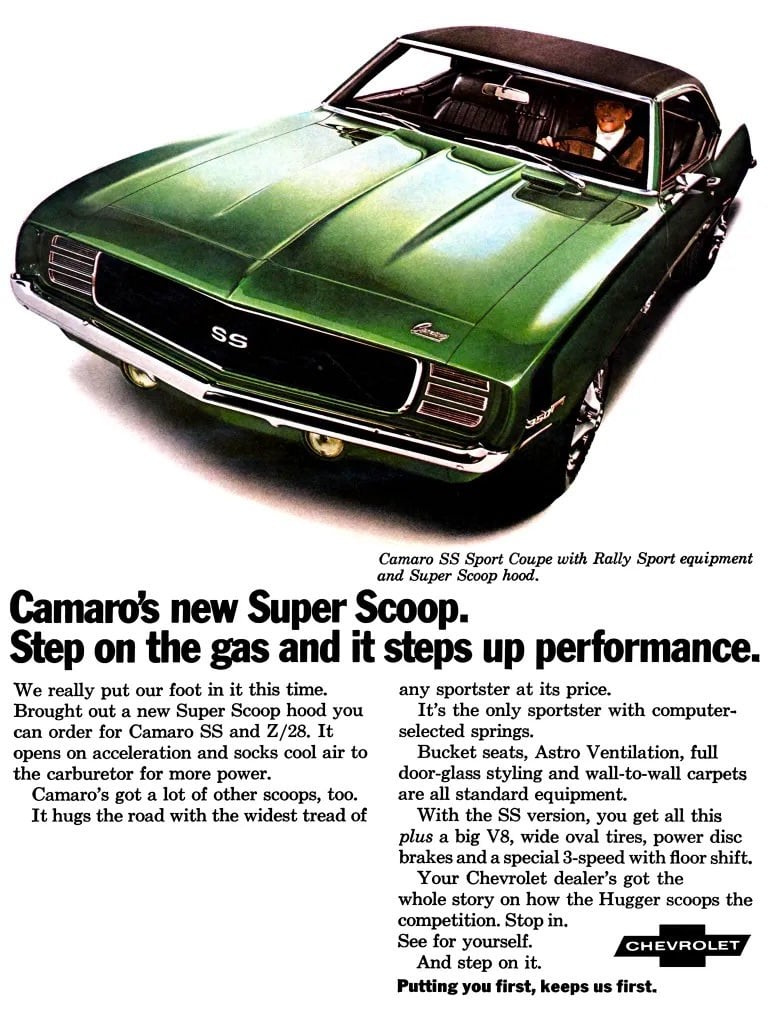
An optional cowl-induction hood, new for 1969, drew cooler air from the base of the windshield via a flap that opened at approximately 80% throttle. Image courtesy of General Motors.
An optional cowl-induction hood, new for 1969, drew cooler air from the base of the windshield via a flap that opened at approximately 80% throttle.
Power Output – Official vs Real World
Chevrolet officially rated the 302 at 290 bhp at 5,800 RPM and 290 lb ft of torque at 4,200 RPM – a deliberately conservative figure designed to keep the advertised output below one horsepower per cubic inch, which helped reduce insurance premiums for younger buyers and avoided unwanted scrutiny in racing classification.
Independent dyno testing has consistently shown the engine was substantially underrated. A recent factory-spec comparison by engine builder Richard Holdener recorded 357 bhp at 6,700 RPM and 333 lb ft at 4,300 RPM using a 750 CFM carburetor and dyno headers, while period insiders cited figures in the 375 bhp range at 6,800 RPM with the correct 780 CFM Holley. The engine was capable of sustained operation well beyond 7,000 RPM, as astonishing figure for a pushrod V8.
The 302 was paired exclusively with a close-ratio Muncie 4-speed manual transmission – typically the M21, with the heavy-duty M22 “Rock Crusher” available from 1968 onward for solid-lifter-equipped cars – feeding a 12-bolt rear axle. Standard gearing was 3.73:1, with ratios from 3.55 to 4.56 available. A Hurst shifter became standard for 1969.
The Camaro Z/28 On Track
On the track, this engine configuration proved devastating. Mark Donohue, driving Sunoco-liveried Z/28 Camaros prepared by Roger Penske’s team (self-styled “Team Unfair Advantage”) won 10 of 13 Trans-Am races in 1968 and took the series again in 1969, delivering back-to-back Manufacturer’s Championships for Chevrolet.
On the track, this engine configuration proved devastating. Mark Donohue, driving Sunoco-liveried Z/28 Camaros prepared by Roger Penske’s team (self-styled “Team Unfair Advantage”) won 10 of 13 Trans-Am races in 1968 and took the series again in 1969, delivering back-to-back Manufacturer’s Championships for Chevrolet.
Ford did not field a direct competitor until the Boss 302 Mustang arrived for 1969, by which point Chevrolet had already built an enormous sales and racing advantage. Z/28 production numbers showed the car’s popularity – from just 602 units in 1967 to 7,199 in 1968 and 20,302 in 1969 – outnumbering Boss 302 sales by roughly 12 to 1.
Sadly, 302 didn’t survive the transition to the second-generation Camaro. For 1970, the Z/28 received the 350 cubic inch LT-1 – a more powerful engine on paper, but one that lacked the short-stroke, high-winding character that had defined the original. The DZ 302’s three-year production run was over, but its reputation as one of Chevrolet’s finest small-blocks has only grown in the decades since it left production.
The 1969 Camaro Z/28 DZ 302 V8 Shown Here
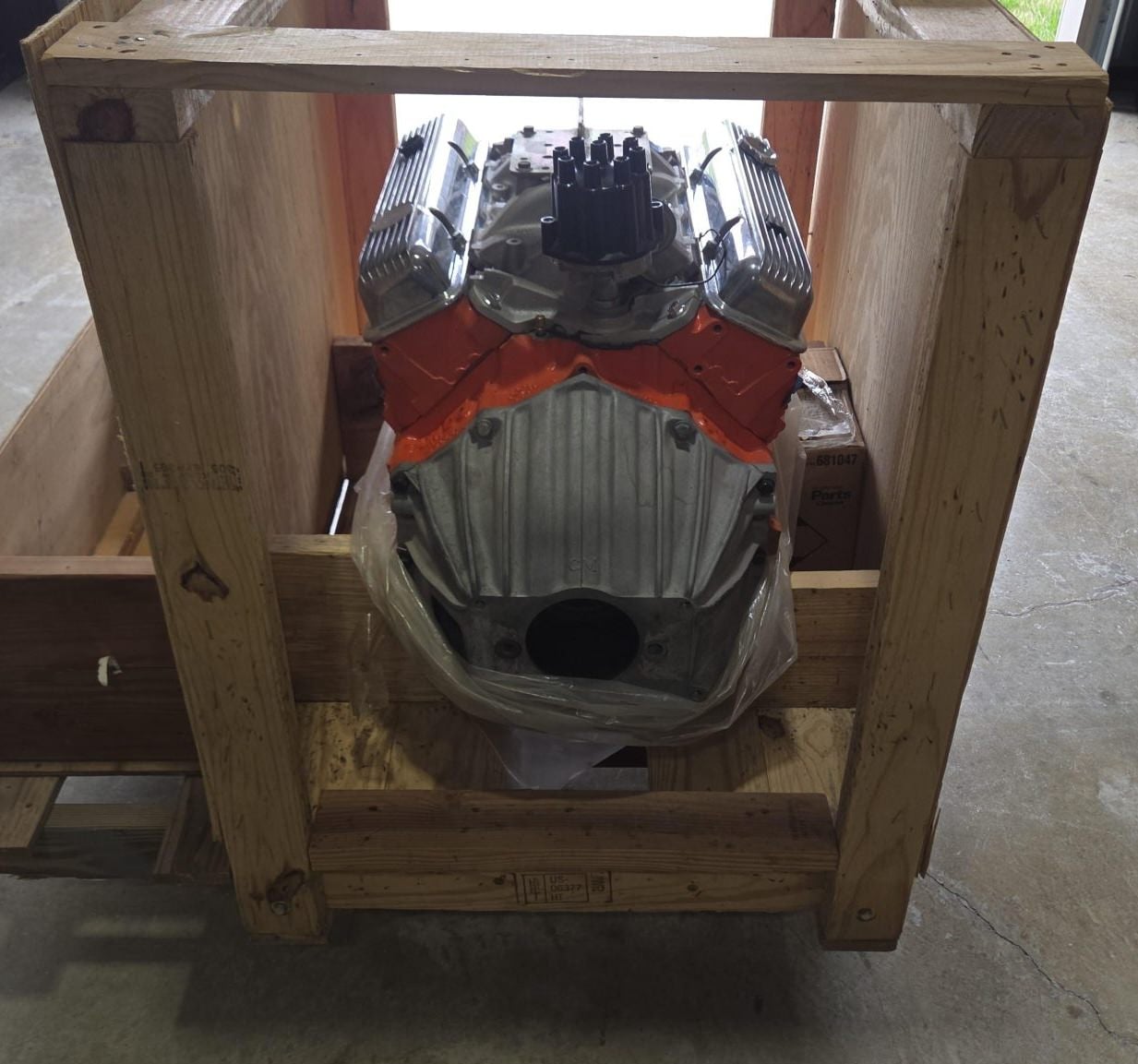
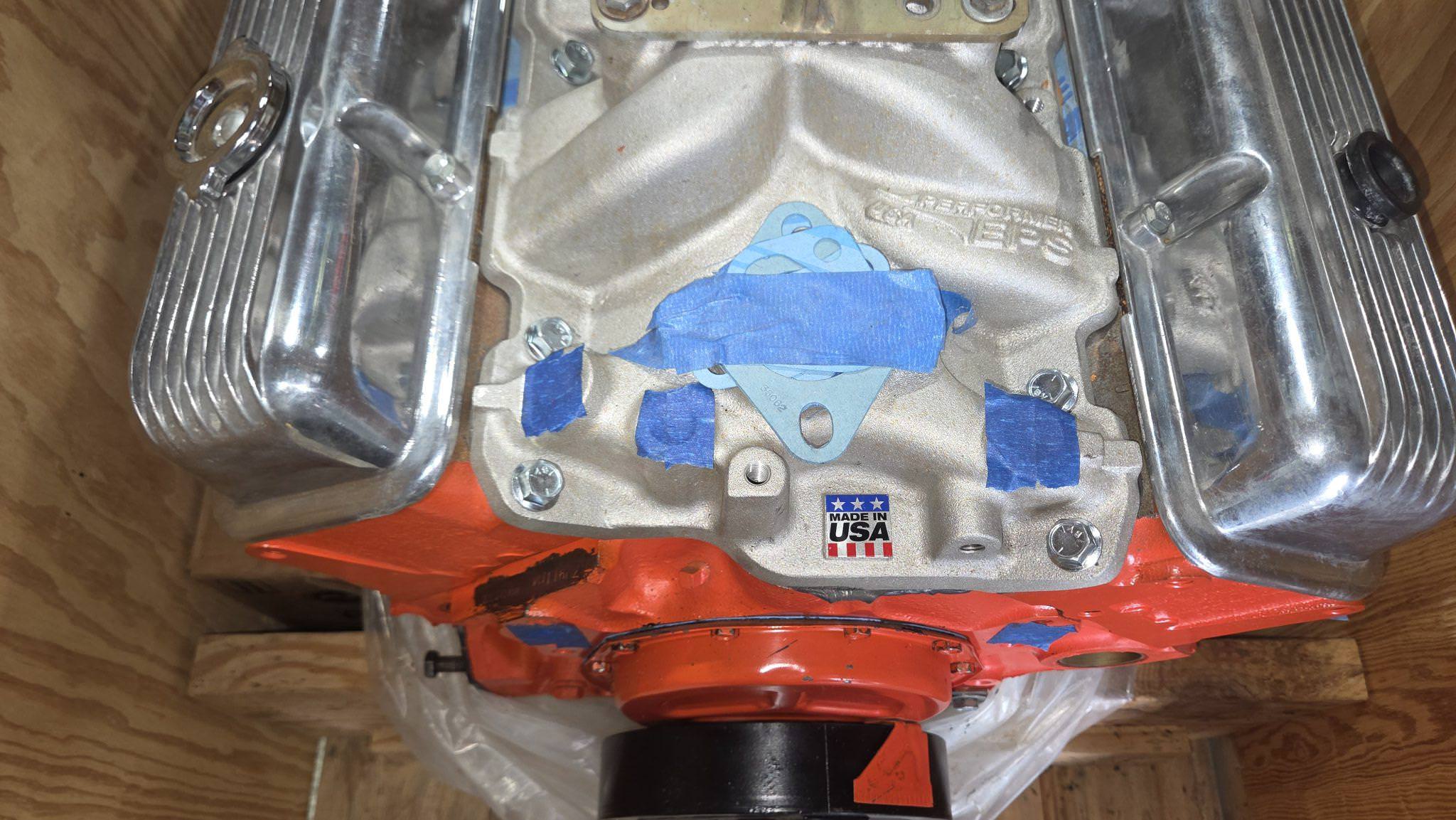
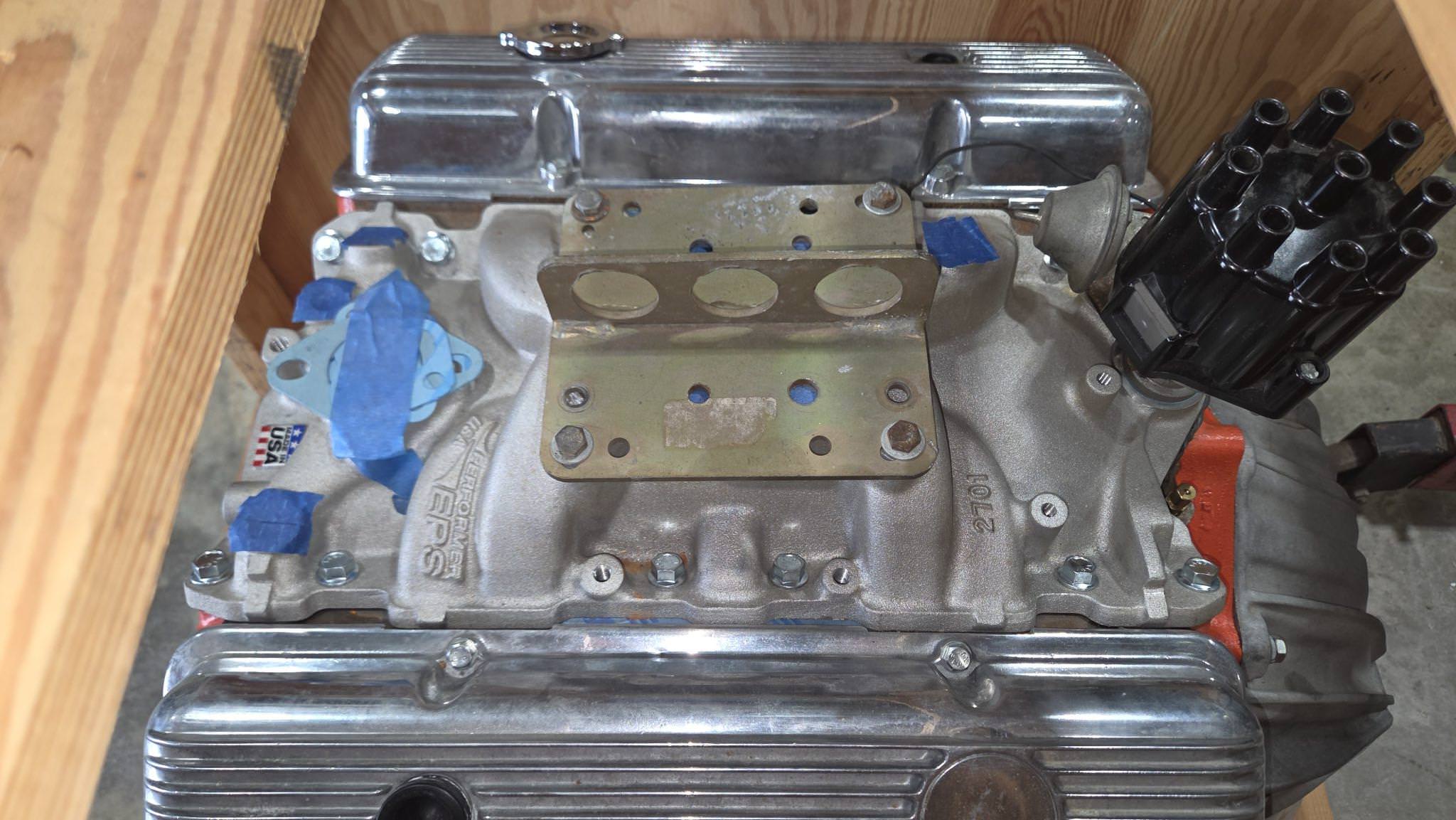
The Chevrolet DZ 302 V8 shown here is a rebuilt original that was fitted to a 1969 Camaro Z/28. It was rebuilt in 2018/2019 by Clovis Automotive Machine Shop, whose records now accompany the sale. It was bought by the current seller in 2023 as a spare and has been in storage since.
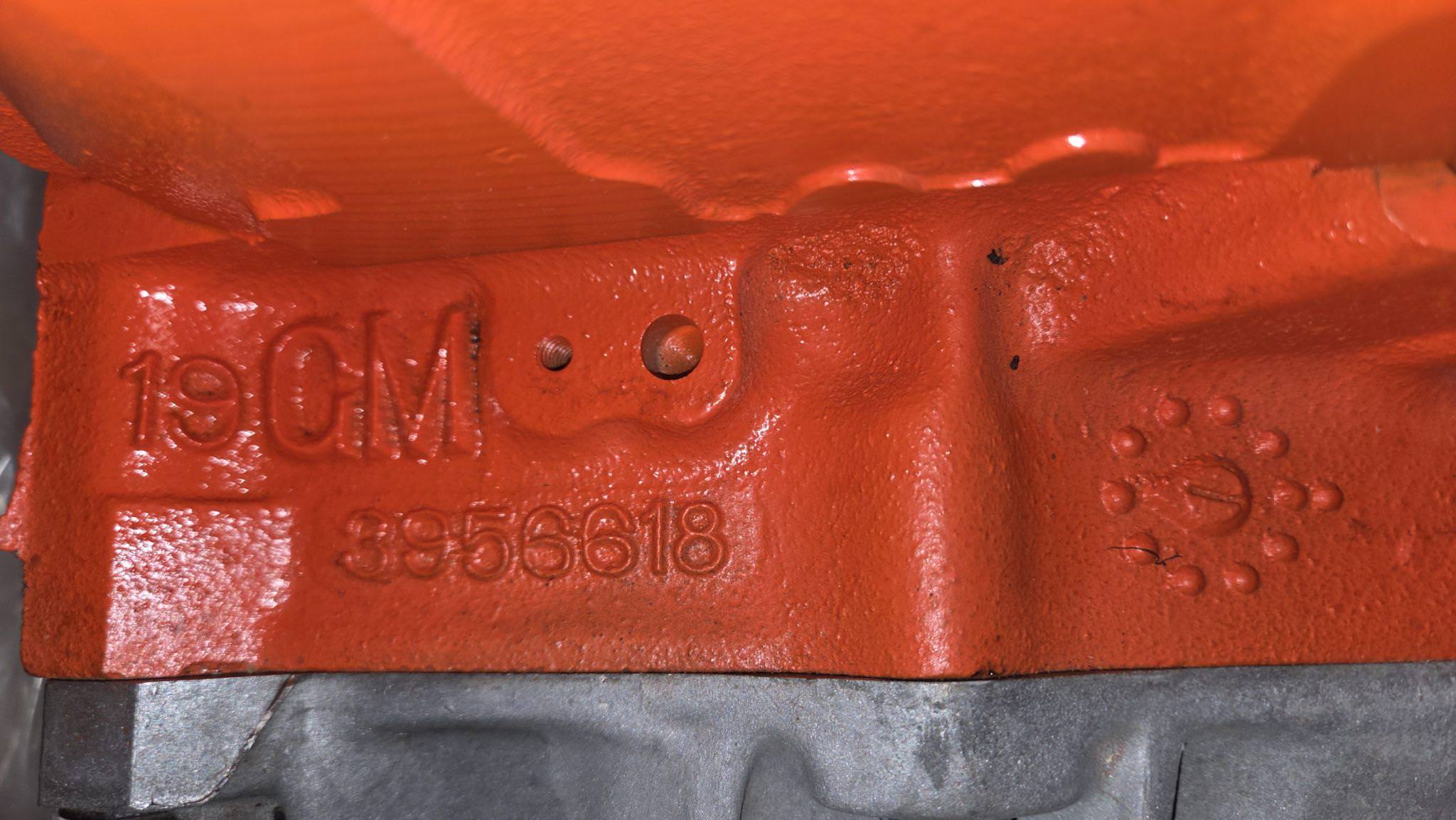
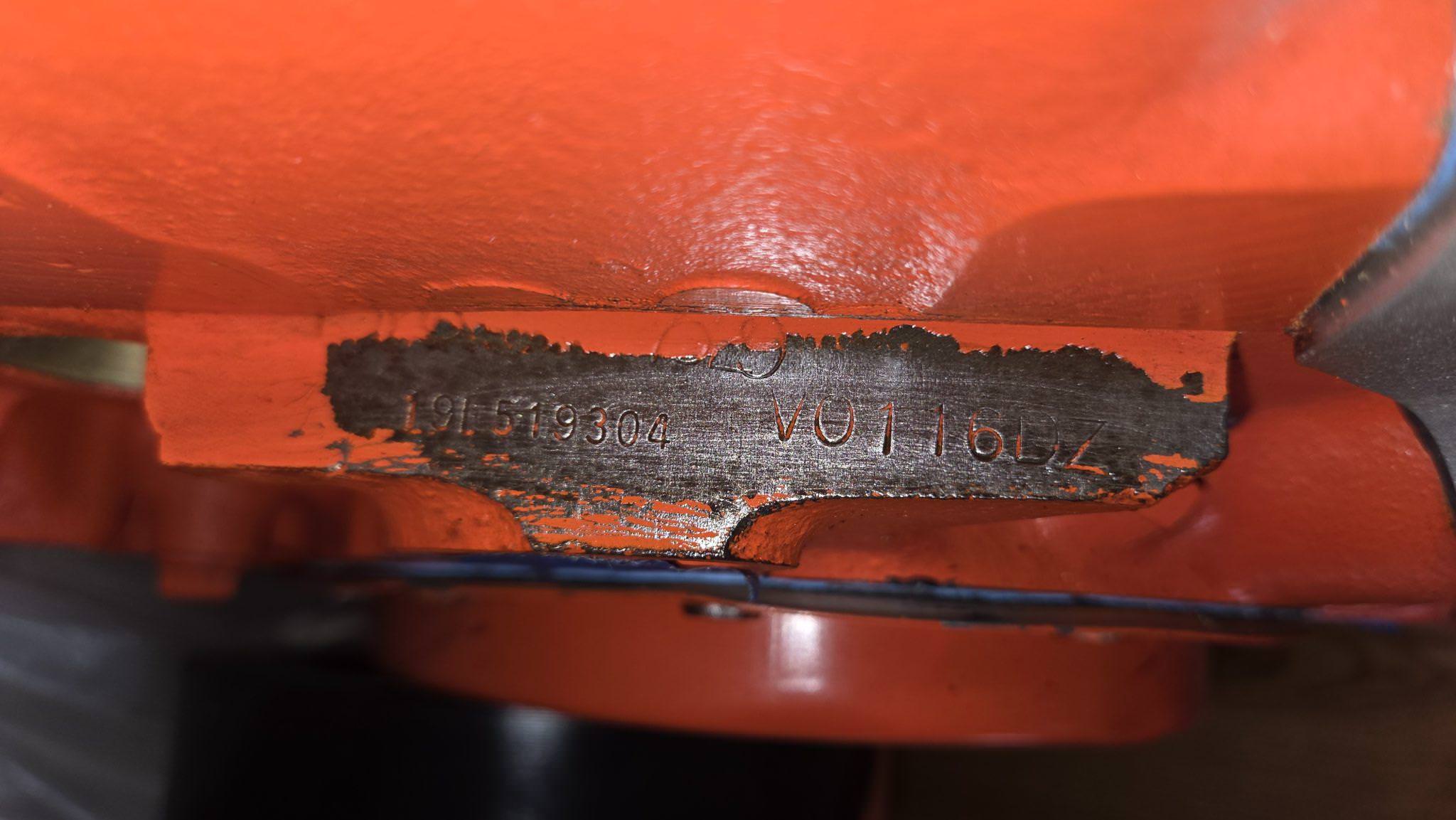
The block carries casting number 3956618 and the engine pad is stamped V01165DZ, consistent with a 1969 Z/28. The engine has been bored 0.040 inches over its original specification and is fitted with 186 cylinder heads and an 8 inch harmonic balancer.
The intake manifold is an Edelbrock Performer EPS rather than a period-correct Winters aluminum high-rise, and the distributor is a modern unit. Finned aluminum valve covers complete the top end.
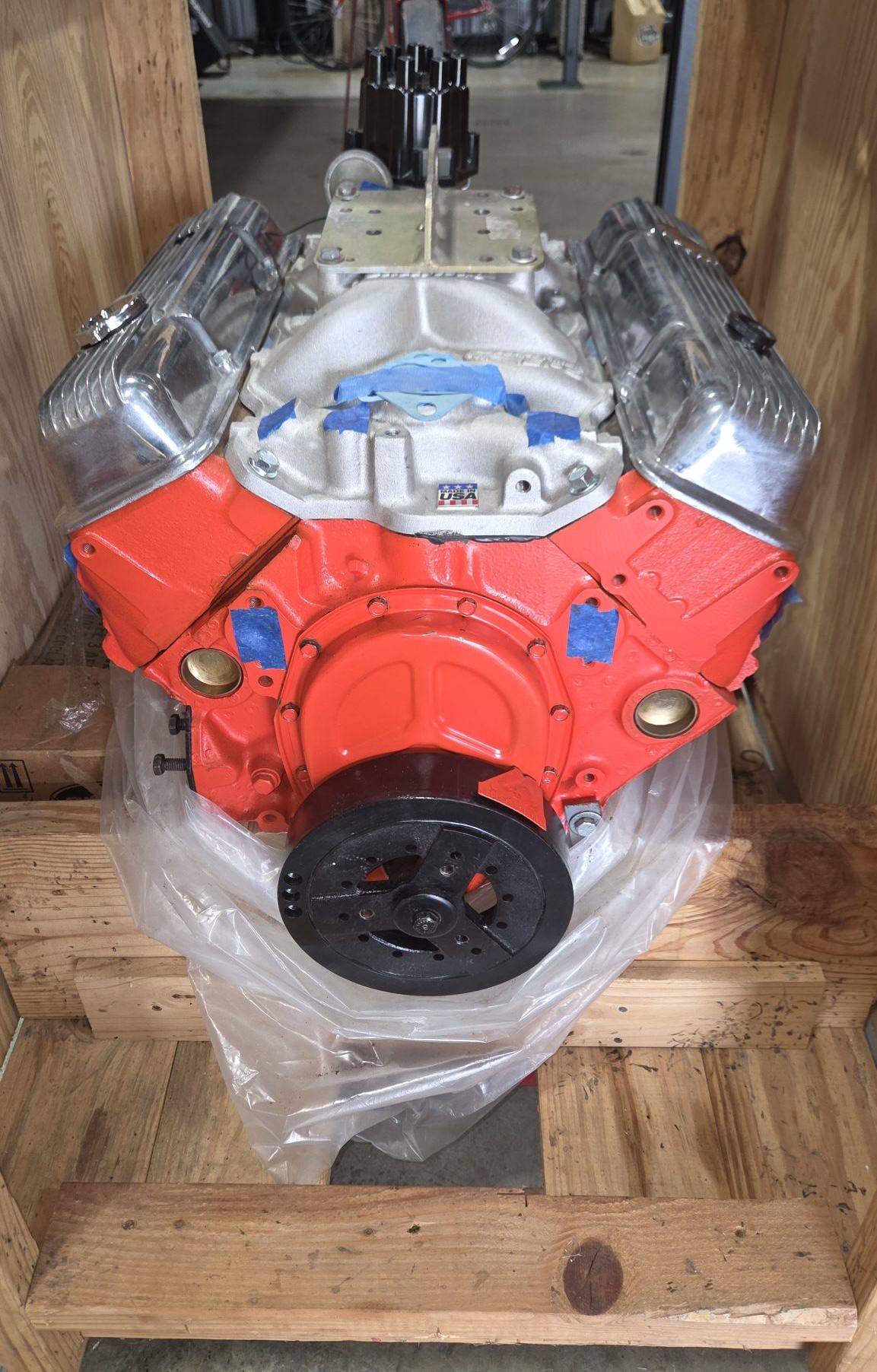
The Chevrolet DZ 302 V8 shown here is a rebuilt original that was fitted to a 1969 Camaro Z/28. It was rebuilt in 2018/2019 by Clovis Automotive Machine Shop, whose records now accompany the sale. It was bought by the current seller in 2023 as a spare and has been in storage since.
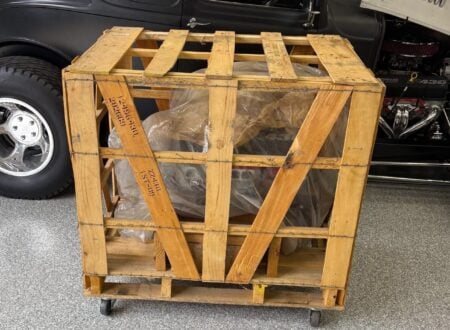
The engine is now being sold as a standalone unit in a crate as numbers-identifiable DZ 302 suitable as a running spare or the basis of a Z/28 rebuild. Documentation from the machine shop covering the rebuild work is included.
It’s now offered for sale at no reserve out of Allen, Texas on Bring a Trailer, and you can visit the listing here if you’d like to read more about it or register to bid.
Images courtesy of Bring a Trailer + General Motors

Articles that Ben Branch has written have been covered on CNN, Popular Mechanics, Smithsonian Magazine, Road & Track Magazine, the official Pinterest blog, the official eBay Motors blog, BuzzFeed, Autoweek Magazine, Wired Magazine, Autoblog, Gear Patrol, Jalopnik, The Verge, and many more.
Silodrome was founded by Ben back in 2010, in the years since the site has grown to become a world leader in the alternative and vintage motoring sector, with well over a million monthly readers from around the world and many hundreds of thousands of followers on social media.