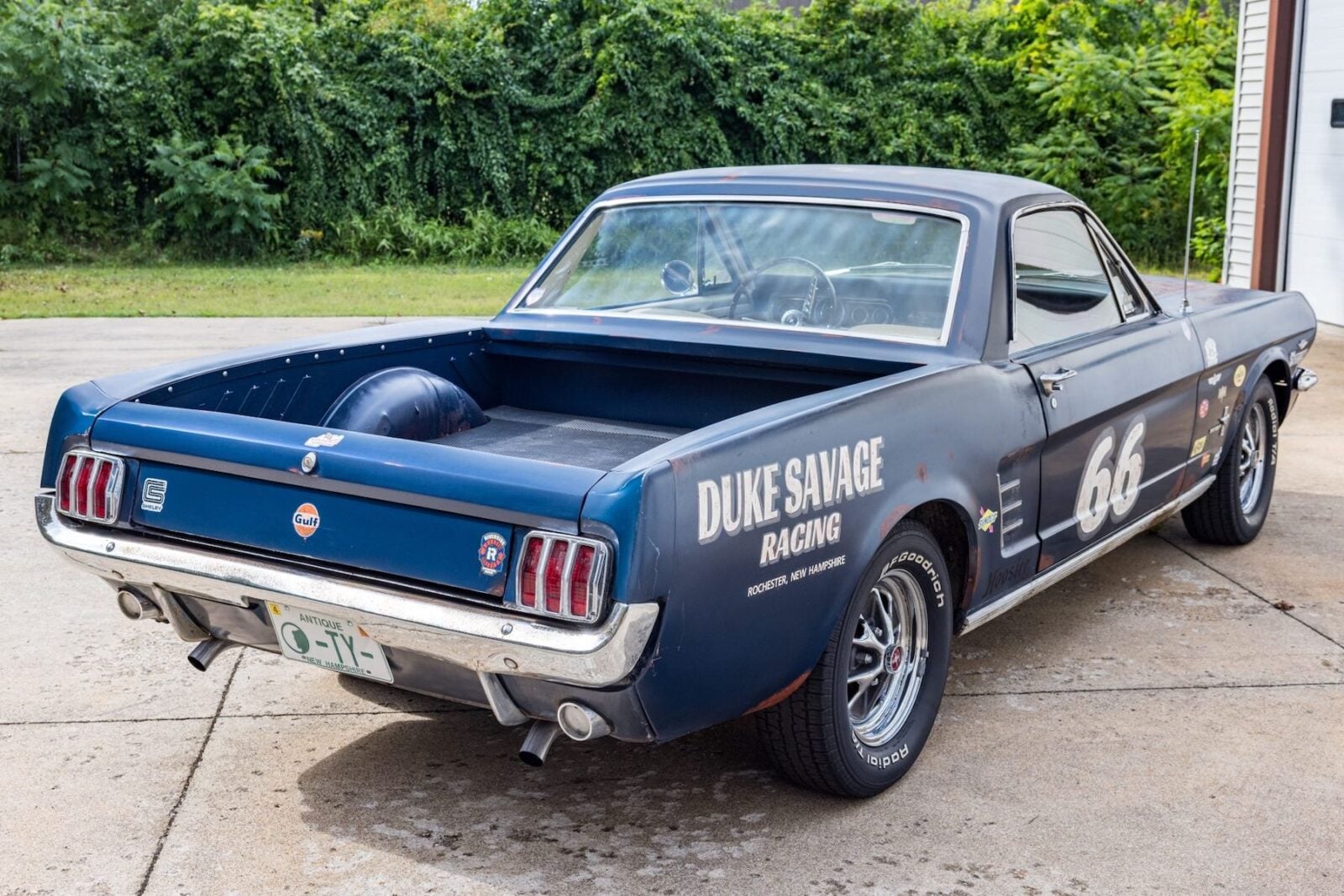
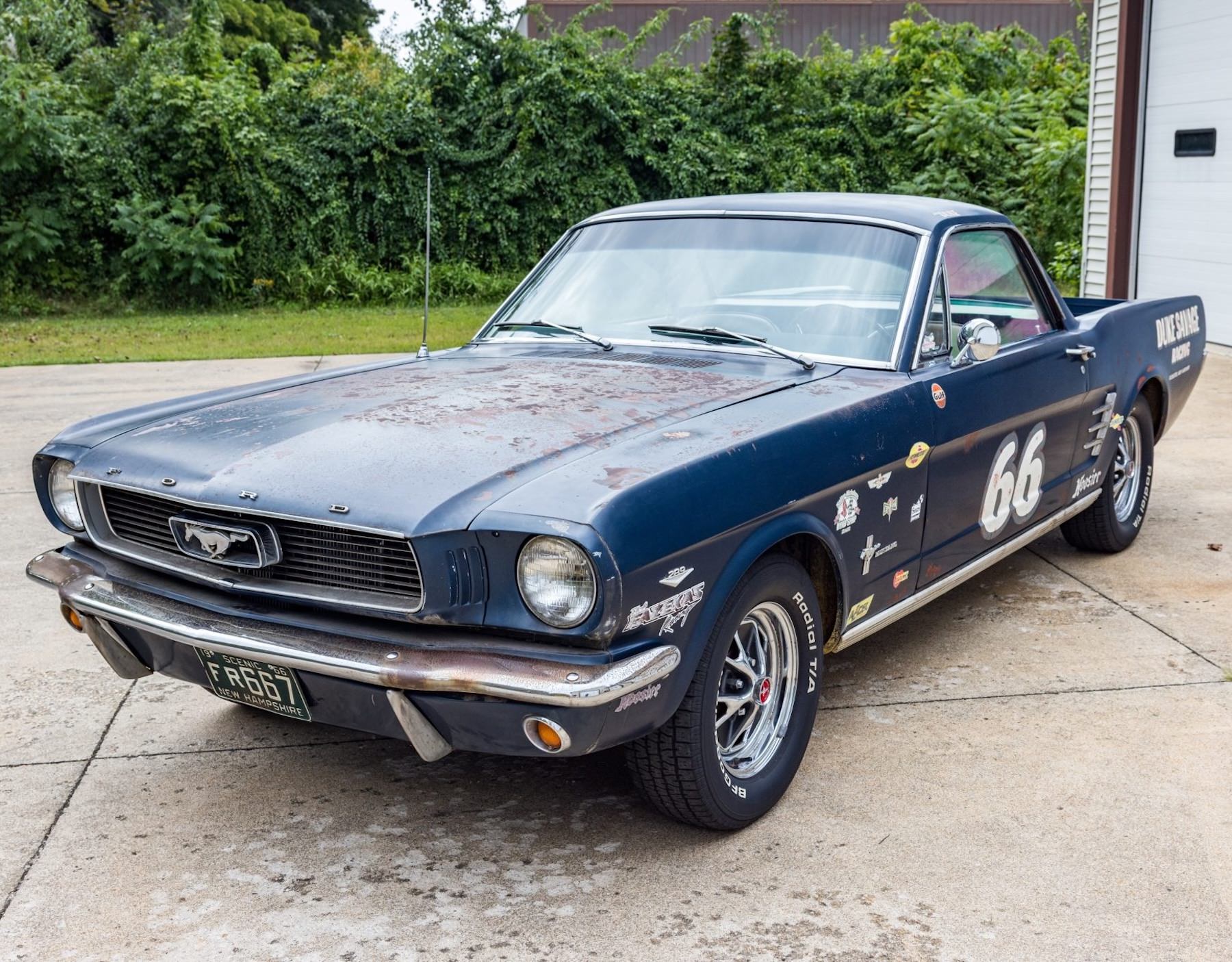
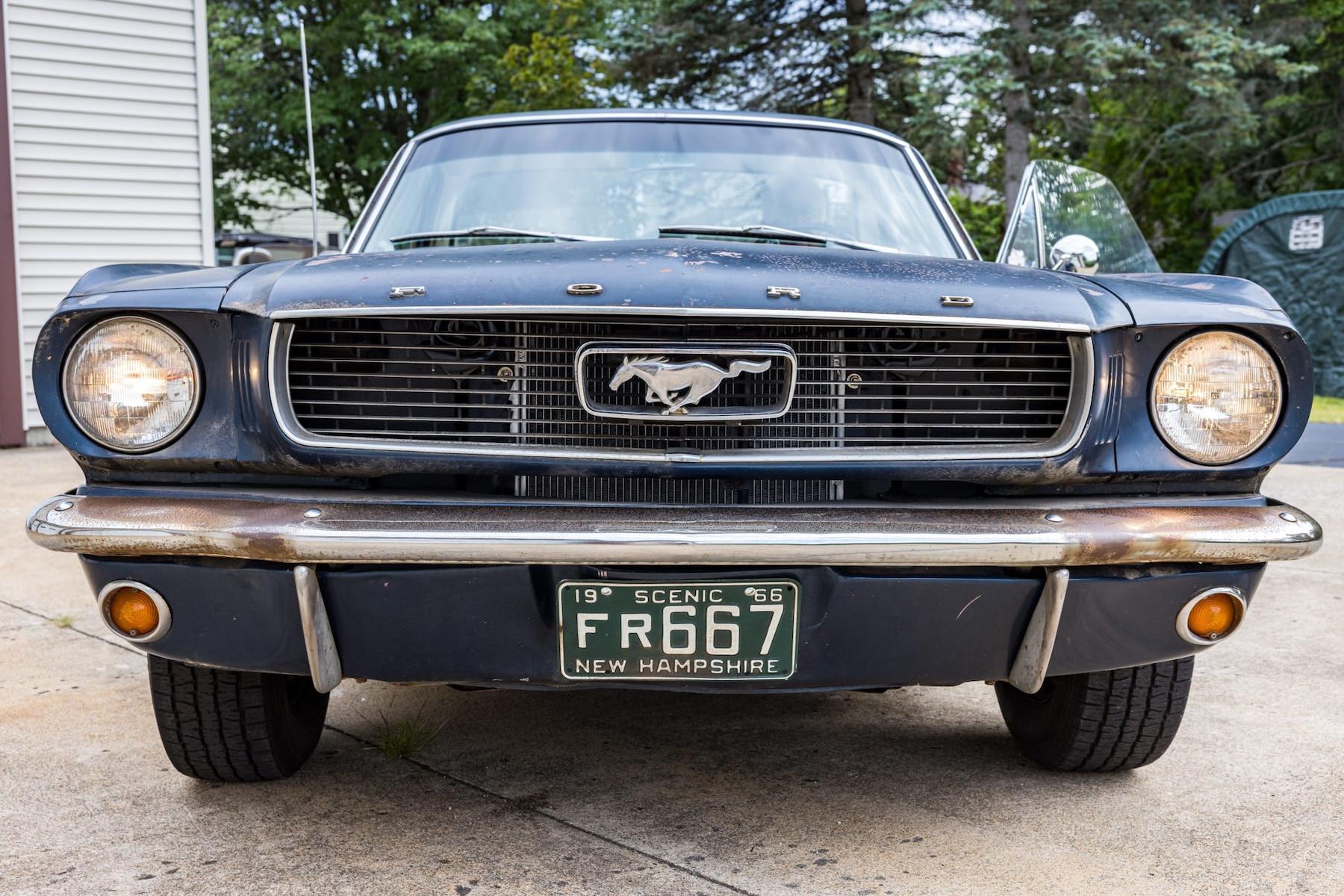
This is a 1966 Ford Mustang “Mustero” pickup conversion that was completed in 2024. A number of these have been built over the years, combining the Mustang’s looks with the Ranchero’s practicality.
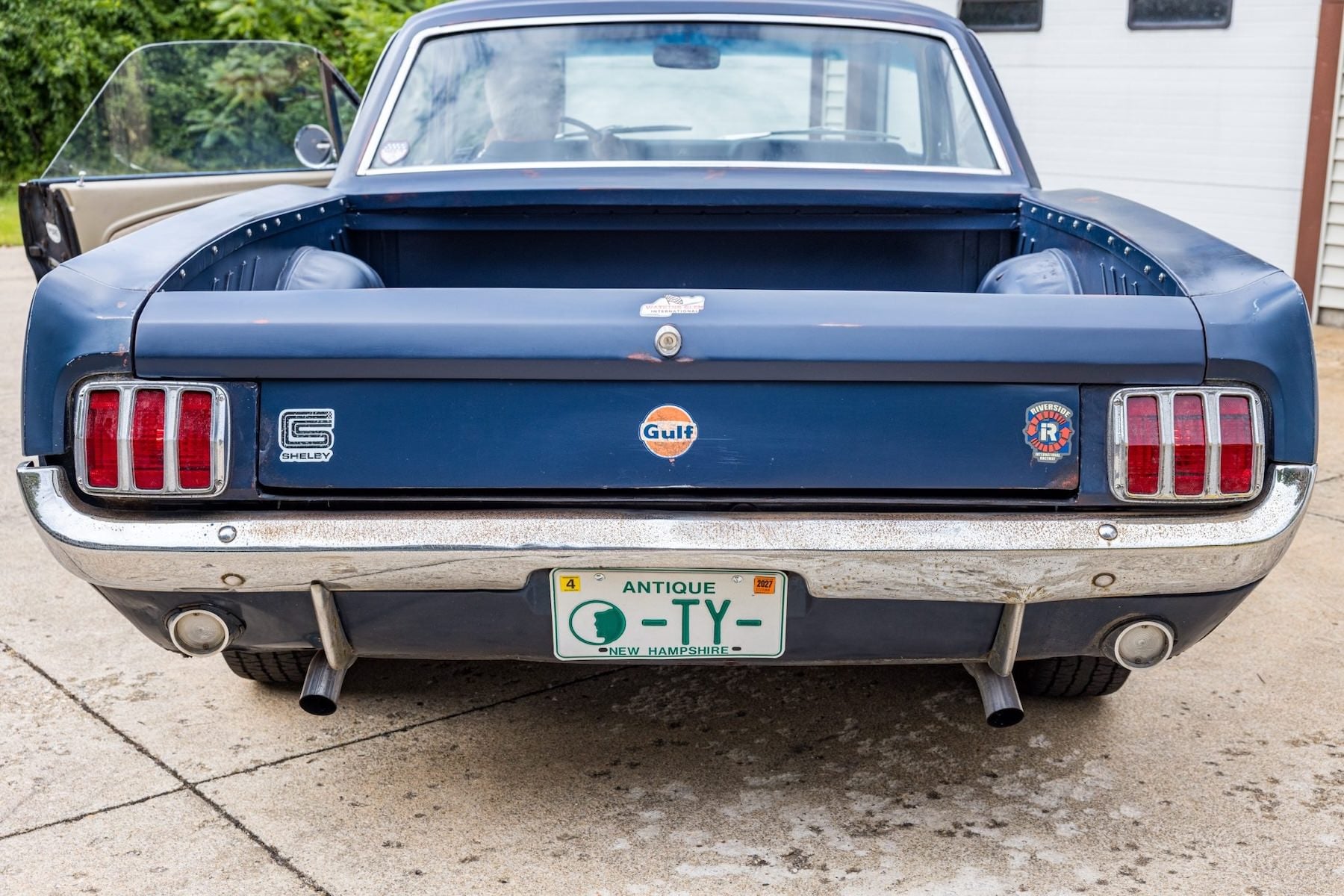
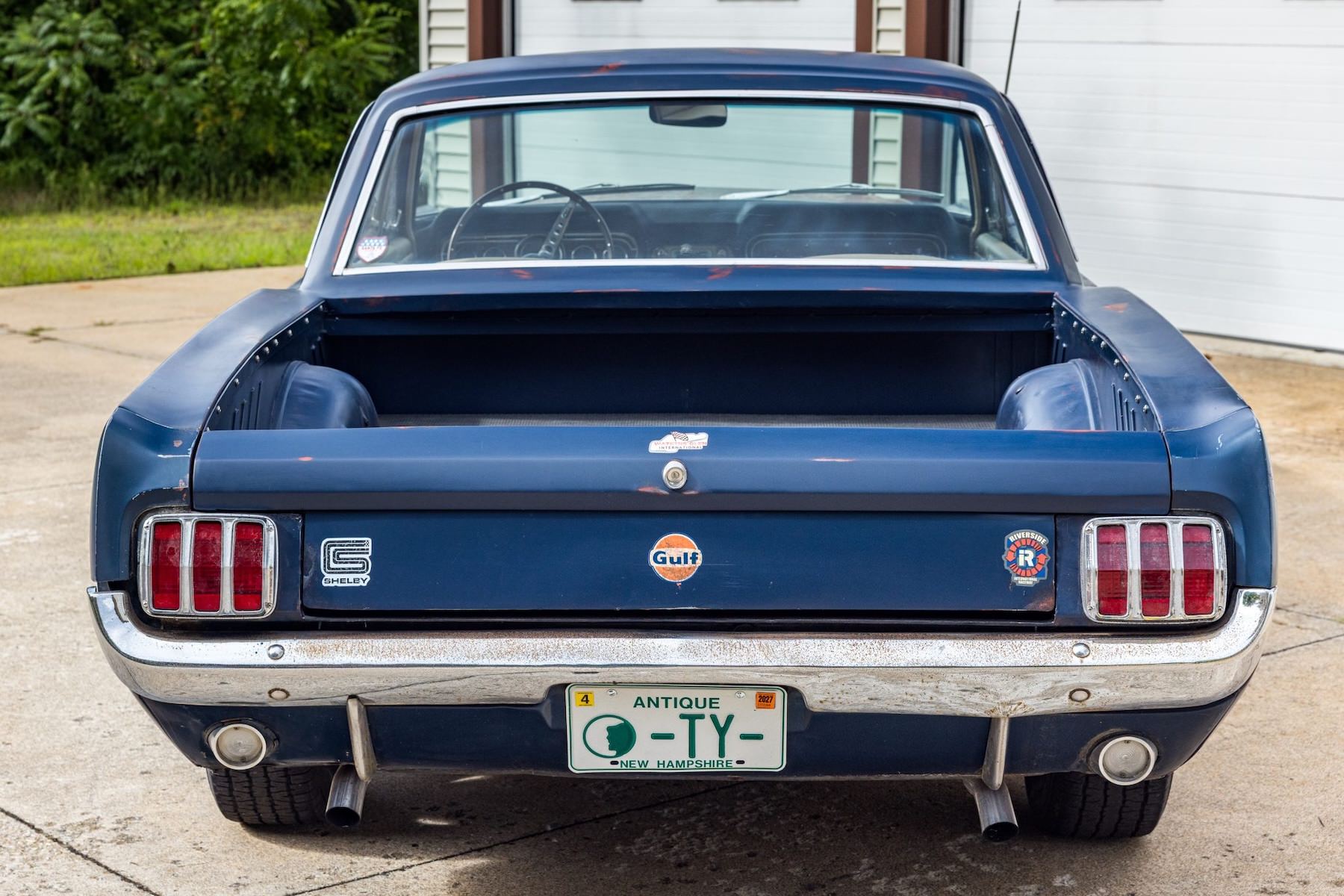
Unlike the original Musteros built in Beverly Hills in the early 1980s, this one has a fully-functional tailgate, making that cargo bay far easier to use. It’s powered by a 302 V8 mated to a 3-speed automatic transmission, and it benefits from recent servicing work and maintenance.
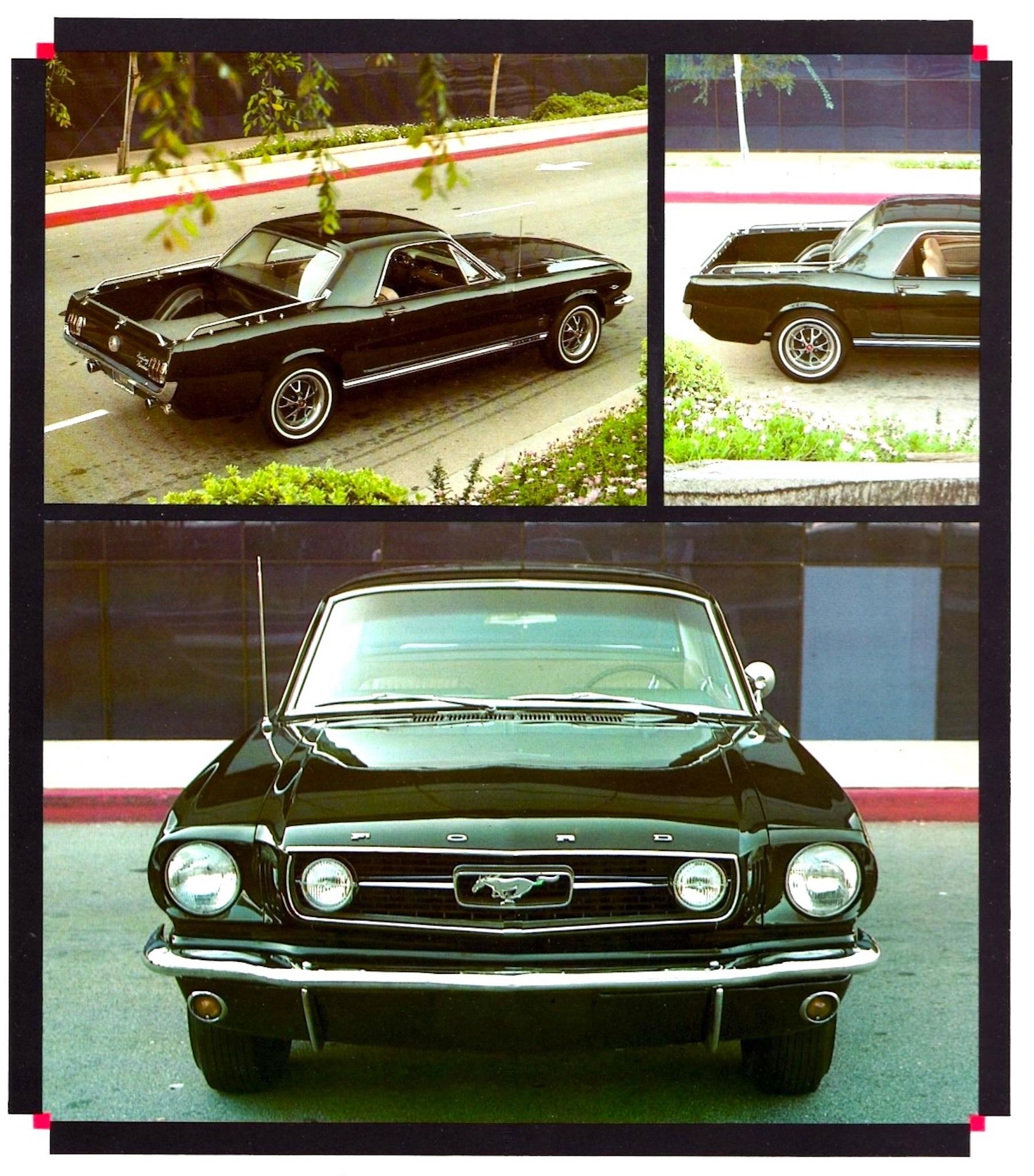
 This is page one of the original Beverly Hills Mustang brochure for their “Mustang Ranchero,” showing the first prototype car throughout. Image courtesy of Beverly Hills Mustang Ltd.
History Speedrun: The Ford Mustang “Mustero”
In 1980, a Mustang restoration shop at 9280 Alden Drive in Beverly Hills, California, cut the roofs off a handful of rebuilt 1965 and 1966 Mustangs and turned them into utility pickups. The shop, Beverly Hills Mustang Ltd, called the result the “Mustang Ranchero.” Collectors would later call it the Mustero, for obvious reasons, and for the past 20 years nearly every single account of it has put the creation of the car in the wrong decade.
The most common form of the story, and the one we went with when we last wrote about a Mustero, goes like this – in 1966, a dealership called Beverly Hills Ford obtained Ford’s approval to build 50 Mustang pickups, charged $6,500 for the conversion alone, and shipped 35 of them to Europe. Dozens of websites have run this story with near-identical wording, all sourcing from one another.
None of them are able to cite a source from 1966, because none exists. The earliest identifiable source for the story is a German enthusiast site where a Swiss owner summarized a company brochure and wrote that “back in 1965/66” the shop had converted a maximum of 50 cars. The 1965/66 was the model year of the donor cars, but it was misread as a build date, and the rest of the story went off the rails from that point onwards.
It seems that the impetus to build the Mustang Ranchero in 1980 might have been down to the fact that the Ford Ranchero left production in 1979 due to low sales. The Ranchero was a cult classic coupe utility that had been in production from 1957 to the end of the 1970s across seven generations, all based on the platform of another Ford production car that ran alongside it.
Beverly Hills Mustang Ltd
Beverly Hills Mustang was founded in 1979 by J. Brunk, according to his son, who bought the business from him in ’86. It restored early Mustangs and sold parts, and in 1980 it took on a job that it’s now far better known for – working with Carroll Shelby’s team, the shop built the GT350 convertible continuation series, planned as 12 cars. They were all built on rust-free 1966 Mustang convertibles stripped to the shell, rebuilt to GT350 specification with 289 engines, and assigned Shelby American serial numbers SFM6S2381 through to SFM6S2392.
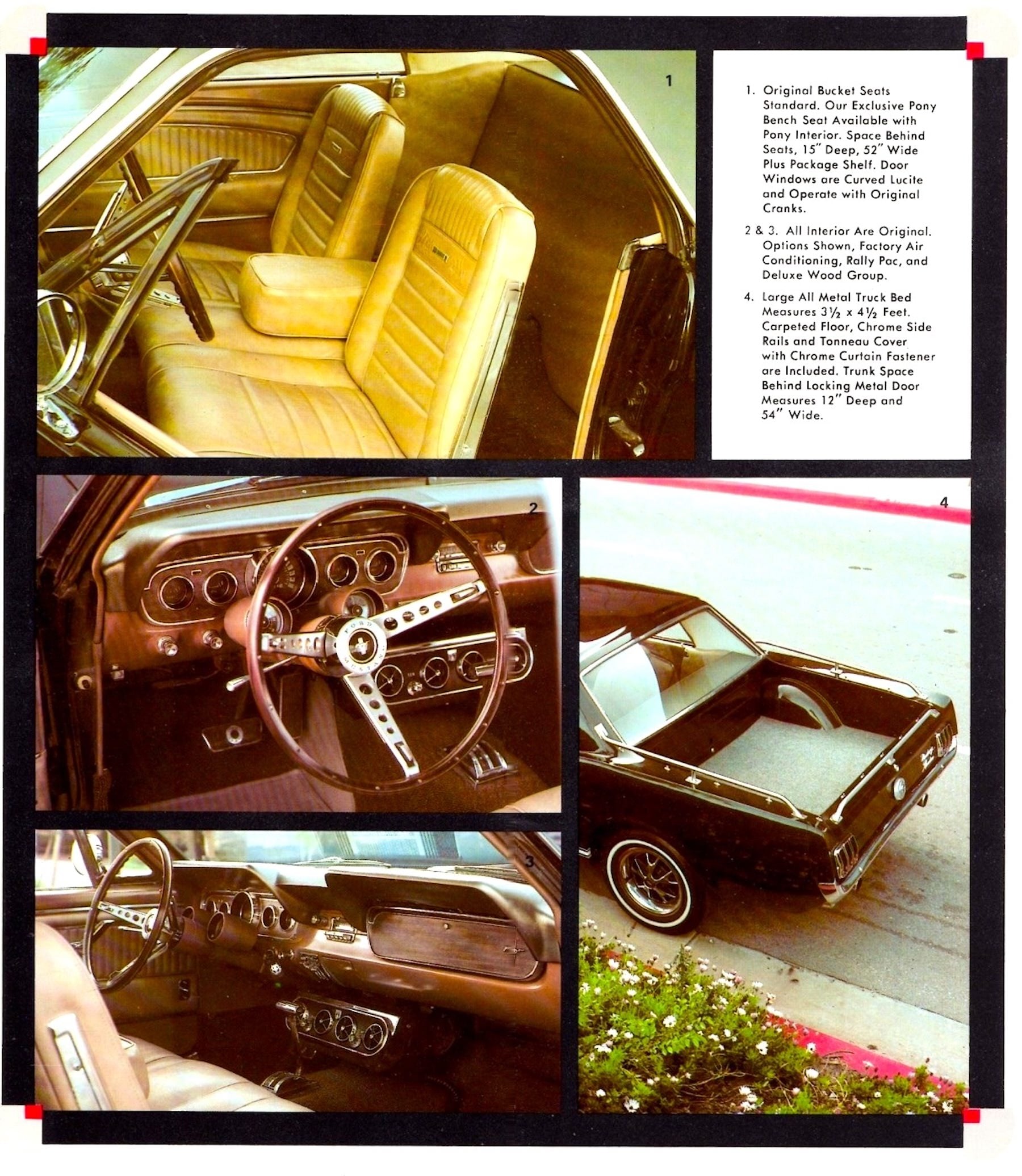
This is page two of the Mustang Ranchero brochure, it notes that the truck bed is all metal (rather than fiberglass) for carrying cargo. Image courtesy of Beverly Hills Mustang Ltd.
The Mustang Ranchero was a side project of the same period. Andy Hill, who says he was hired at the start of 1980 specifically to build them, said the prototype was sold to its first owner later that same year. Ed Sherwood, who worked in the body shop for a few months, wrote in 2003 that the cars were built from completely restored 1965 and 1966 Mustangs, and that all of the ones he saw had 289 engines.
The Long-Lost Brochure
There is a long-lost Beverly Hills Mustang brochure from 1981 that describes the car as the “65/66 Mustang Ranchero,” saying it was built from a California rust-free coupe with every mechanical and trim component new or rebuilt, and it sold as a complete car – $6,500 USD with a 289 V8, automatic transmission, and power steering, delivery in eight weeks, in the buyer’s choice of any 1965 or 1966 factory color.
A 4-speed manual transmission added $250 USD, front disc brakes $400 USD, factory air conditioning $600 USD. The shop’s own Pony bench seat, which the brochure calls exclusive, was $450 USD. The $6,500 USD was for the whole car, not a conversion charge with the buyer providing a car – in 2026 dollars it sounds like the bargain of the century.
Truth be told, the conversion was more of a surgery than a Shelby-style rebuild. The rear seat and the section of roof directly above it was cut out, and the remaining roof was brought back to meet the rear window frame, so the car kept its Mustang glass and its rear quarter panels. The bed measured three and a half by four and a half feet, carpeted, with chrome side rails and a tonneau cover, and a 12 inch deep locking compartment behind it where the trunk had been.
The brochure is clear that the bodywork was all metal, “No Fiberglass!” That said, Sherwood, in his 2003 account, remembered molding fiberglass beds in the body shop, so it’s possible that things changed over the production run. Using fiberglass rather than shaped steel would certainly have simplified things.
The tail panel, taillights, and bumper stayed put, which left no way to fit a tailgate. Shortening the roof changed the shape of the door openings, and the shop fitted curved Lucite side windows that worked on the original cranks. Hill says the prototype had Masonite inner bed walls, a GT exhaust, fog lights, and a parchment pony interior.
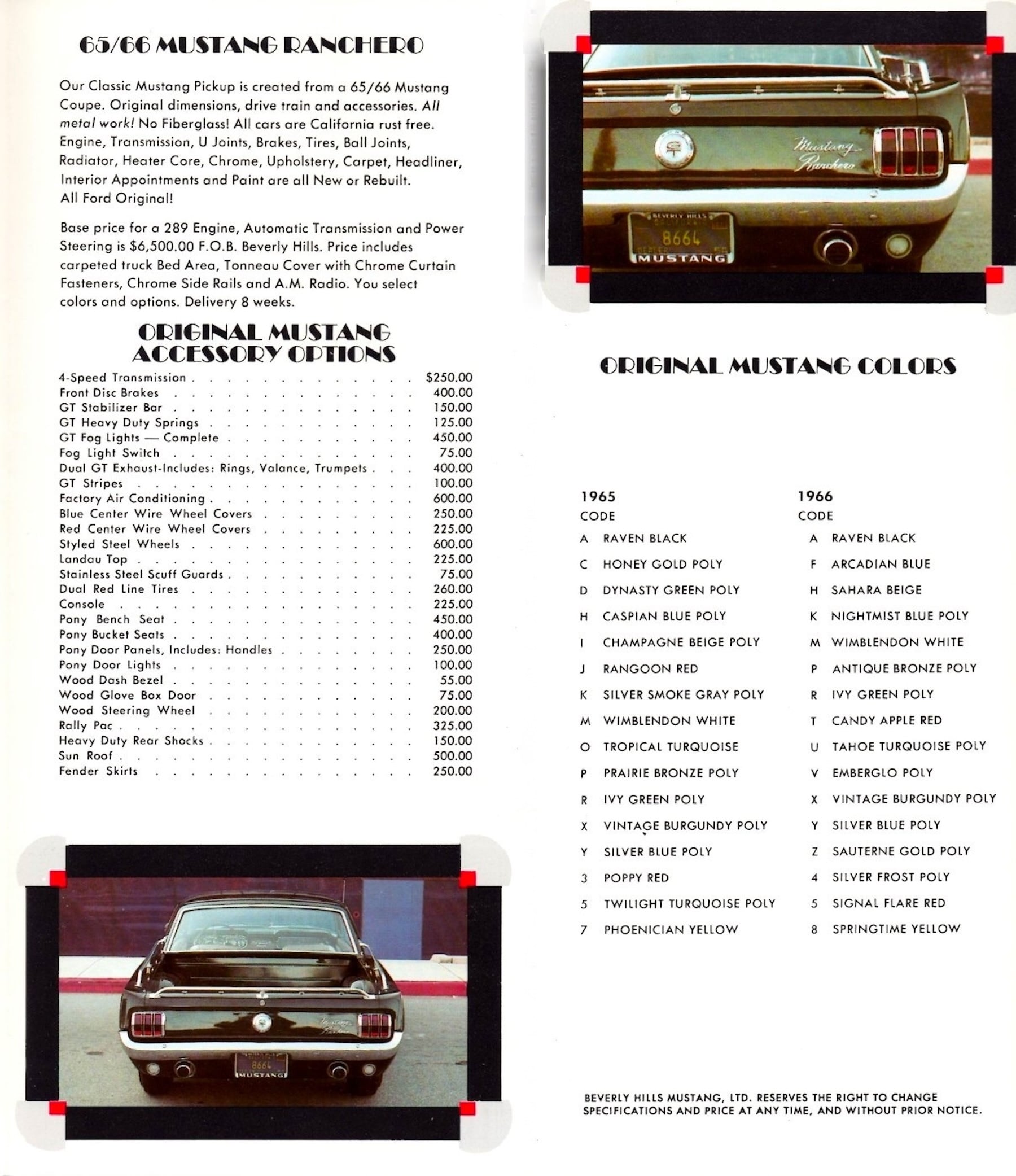
This is page three of the Mustang Ranchero brochure, and as you can see, the list of optional extras was surprisingly large. Image courtesy of Beverly Hills Mustang Ltd.
The Mystery Of The Final Production Number
Sherwood recalled Harry Morgan of MASH* asking questions about one of the trucks while his own 1967 Mustang was in for trim work. Whether Morgan bought one, Sherwood didn’t know, but it’s an interesting little aside.
The people who built the cars all agree that total production volume was a small number, certainly nowhere near the 50 that has been claimed by some. Sherwood remembered three or four during his time. Brunk’s son says four or five. Hill says he built every one but the prototype and gives the same range.
It’s not known how many original cars have survived, but interestingly, there are now far more Musteros in the world than were built by Beverly Hills Mustang. A significant number of cars have been converted, some better than others, and many of them even have functioning tailgates.
The 1966 Ford Mustang “Mustero” Shown Here
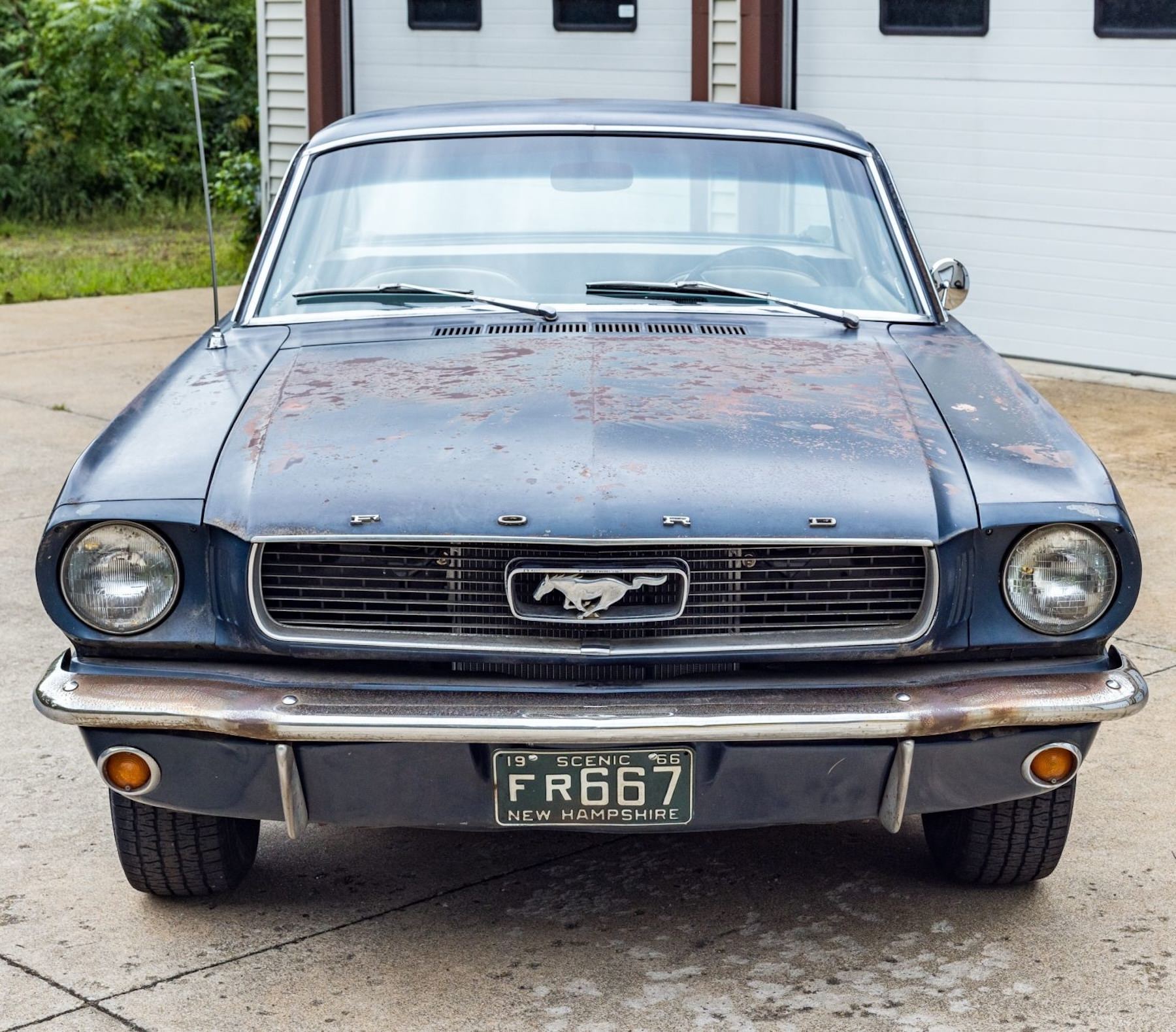
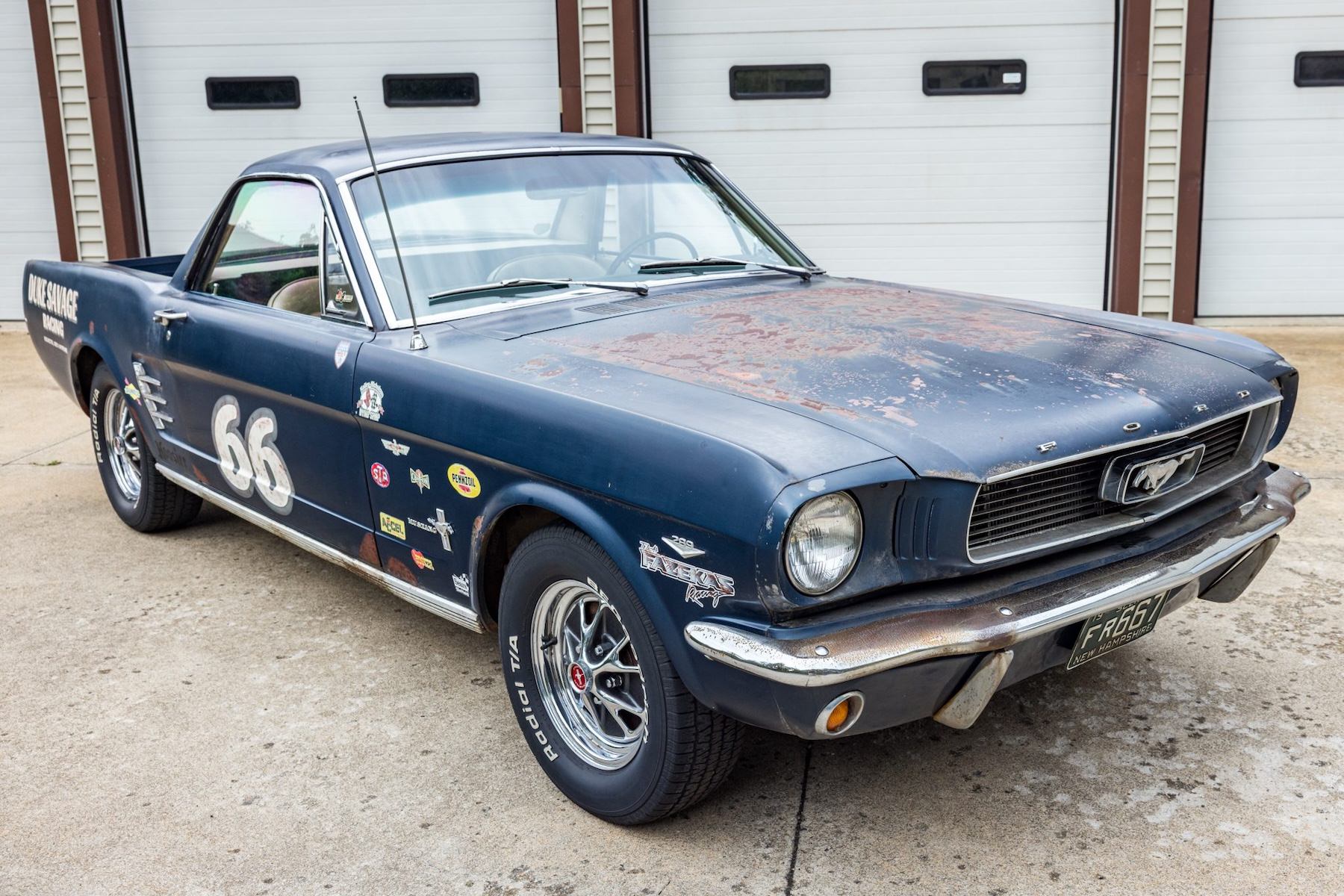
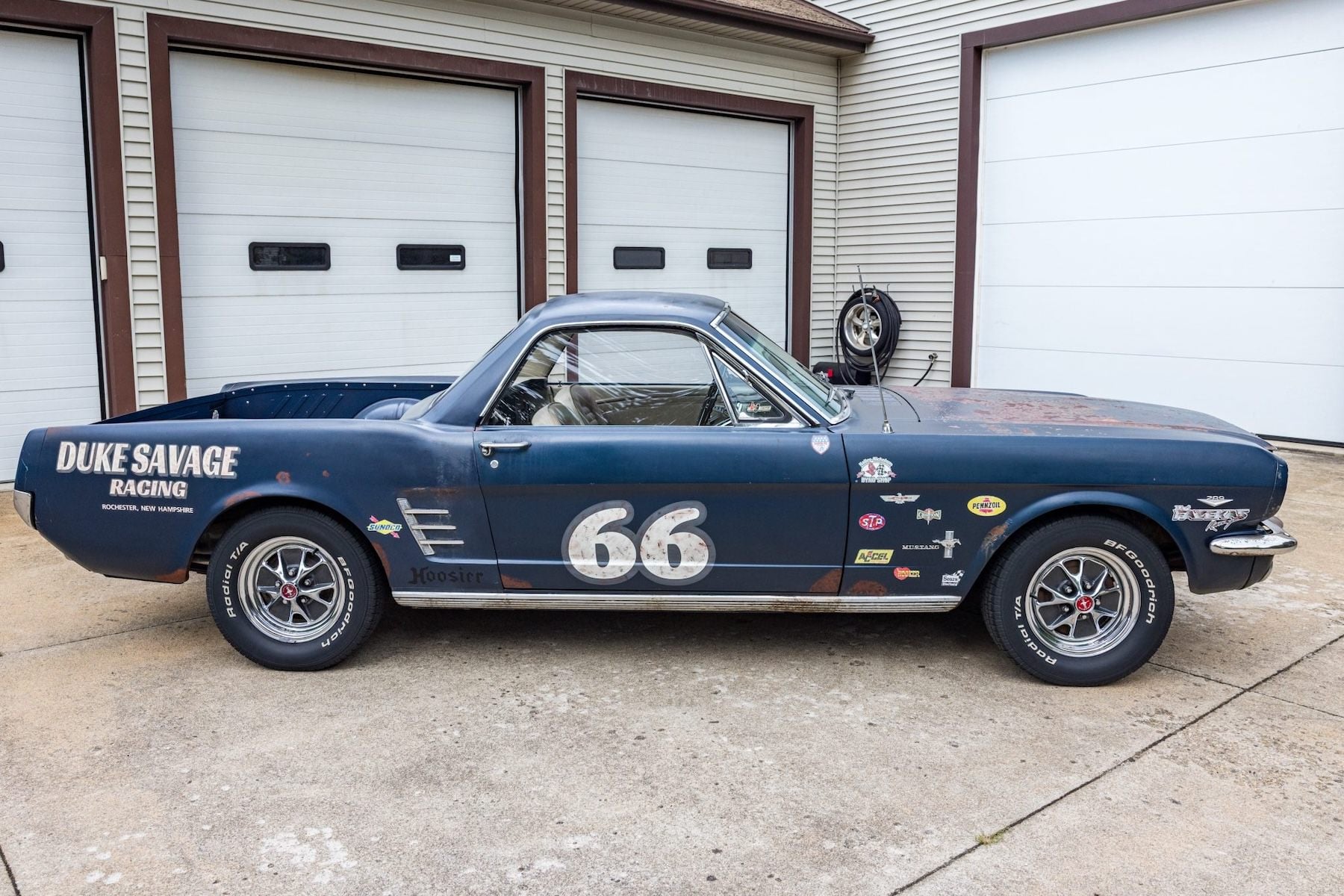
The car you see here is not one of the originals built by Beverly Hills Mustang, it started life as a regular coupe before being converted into a custom pickup utility after the current owner (and now seller) bought it a couple of years ago in 2024.
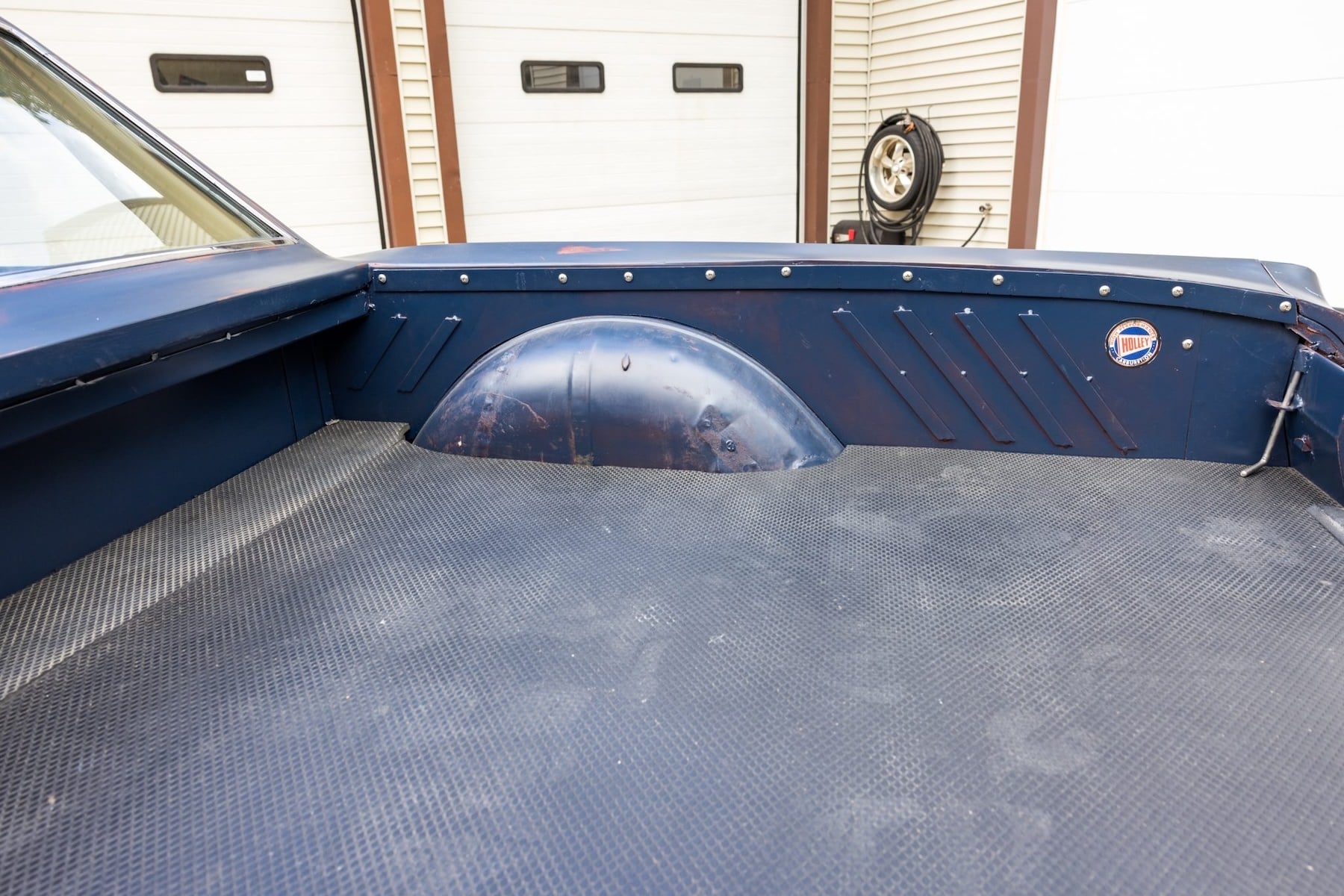
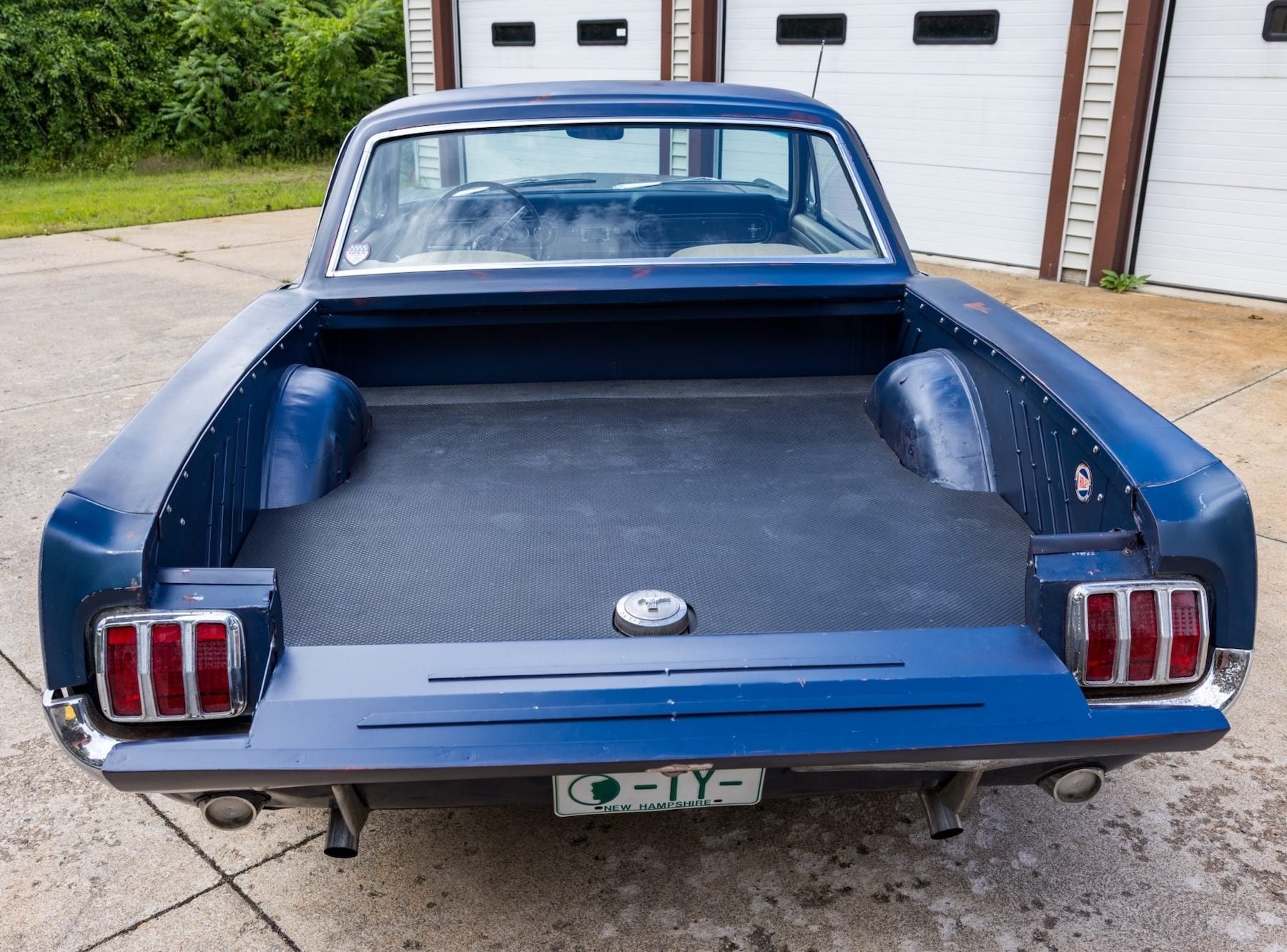
The build was directly inspired by the Mustang-based “Mustero” pickups from Beverly Hills, and it reportedly involved more than 2,000 hours of labor. The roof was shortened, the rear pillars narrowed, and the original rear window frame was welded into the reshaped cab.
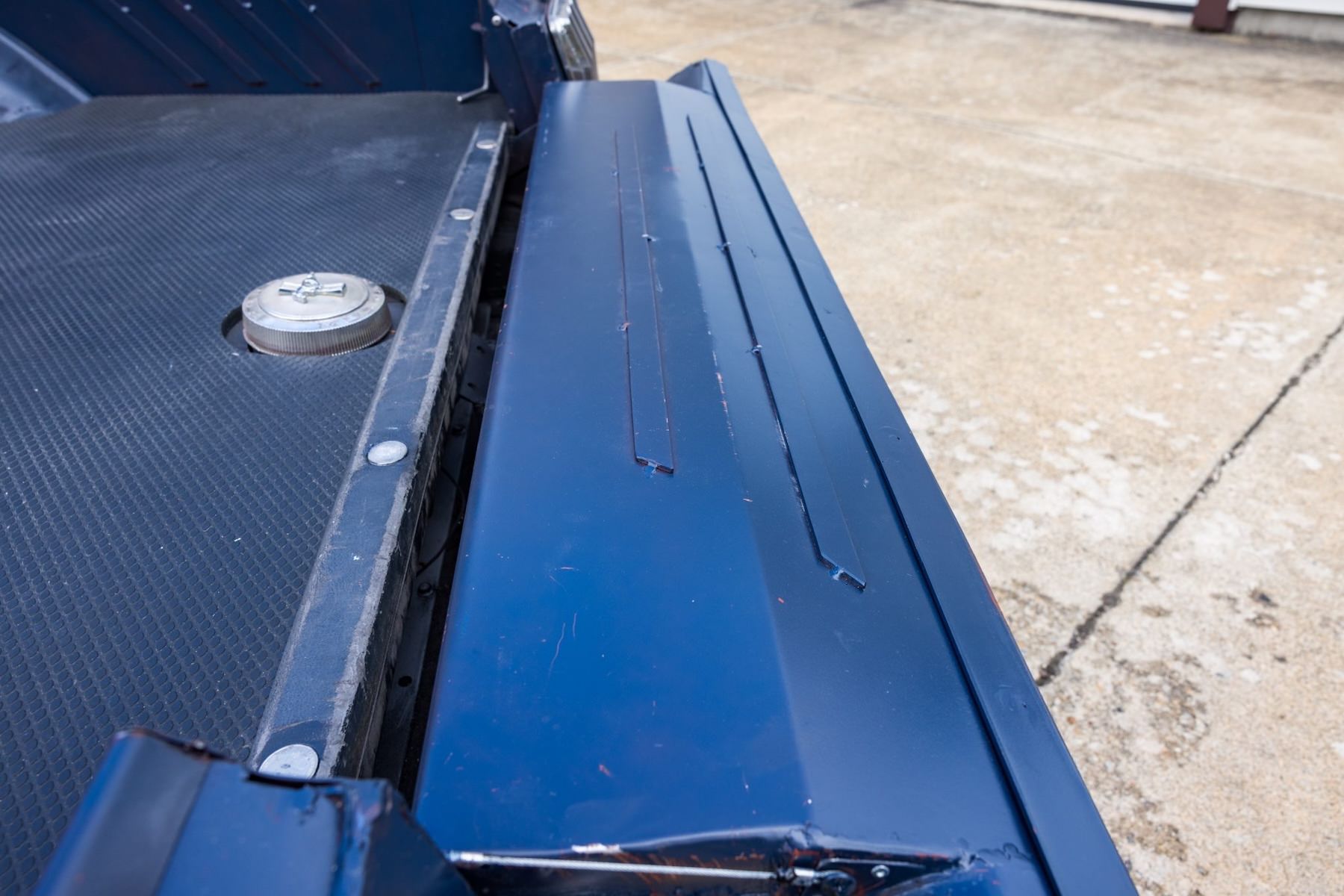
At the back, sections of the original tail panel were repurposed to form a hinged tailgate, while a fabricated steel cargo bed was installed and the fuel filler relocated into the bed floor. Some sections of the lower quarter panels were also replaced during the fabrication work.
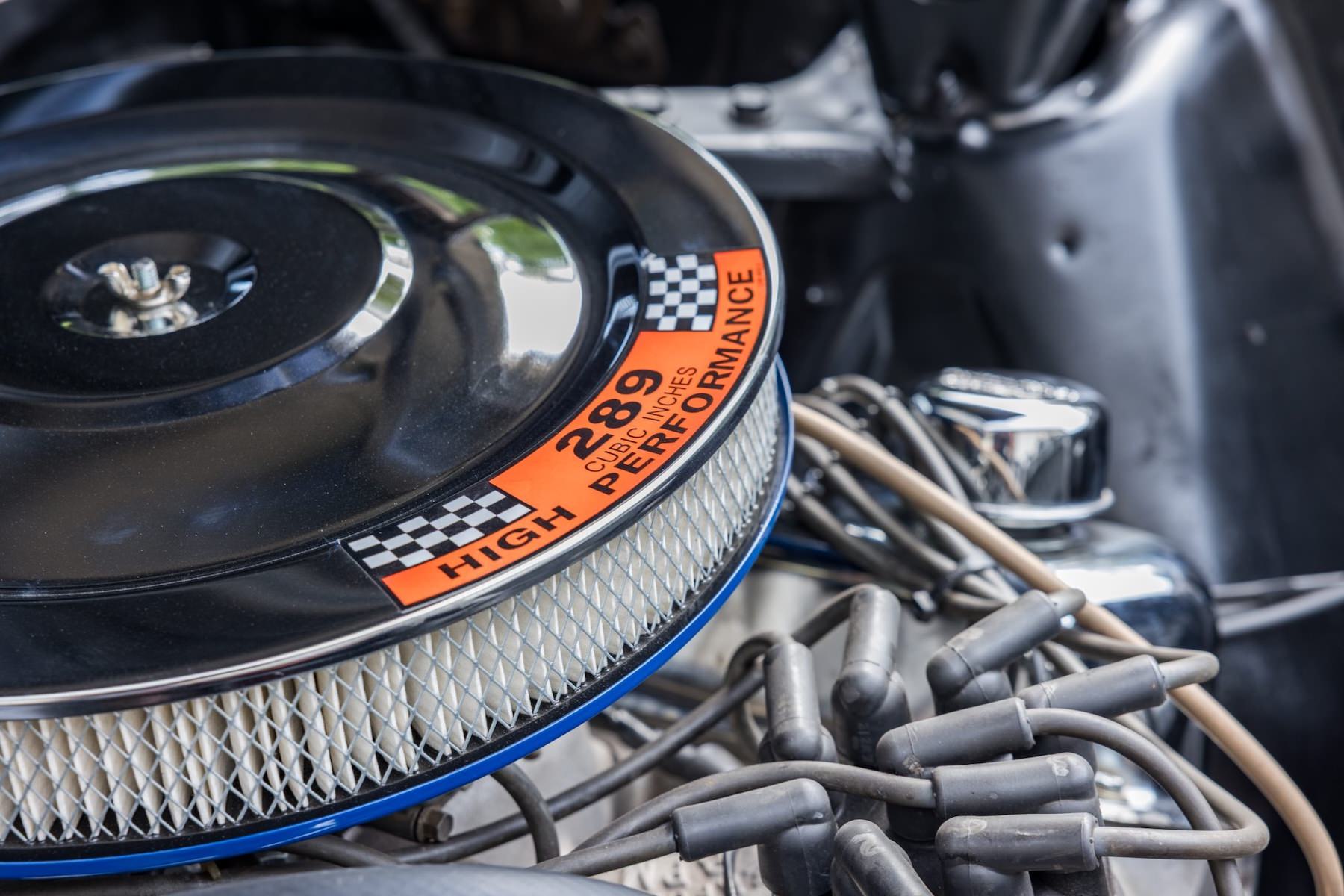
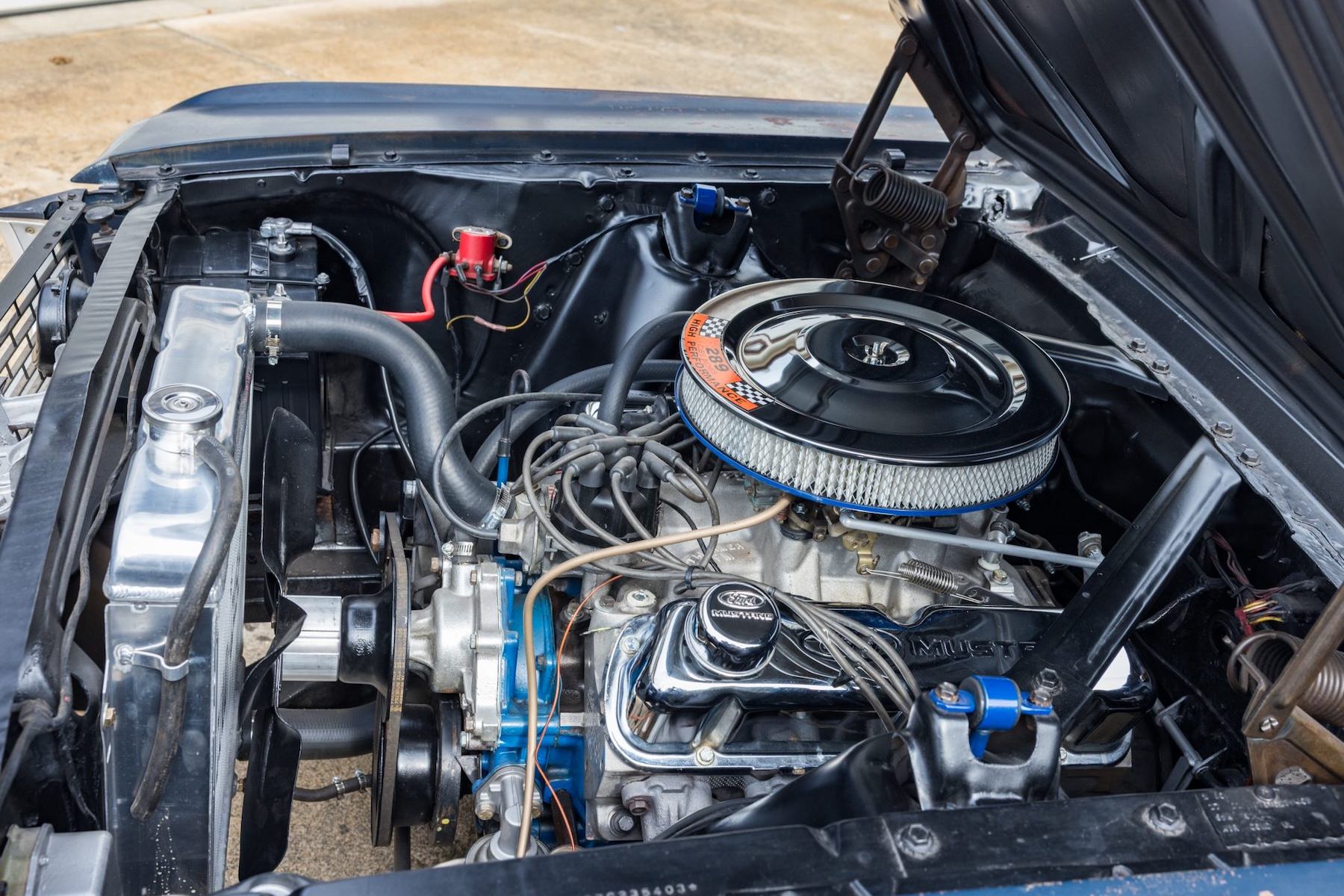
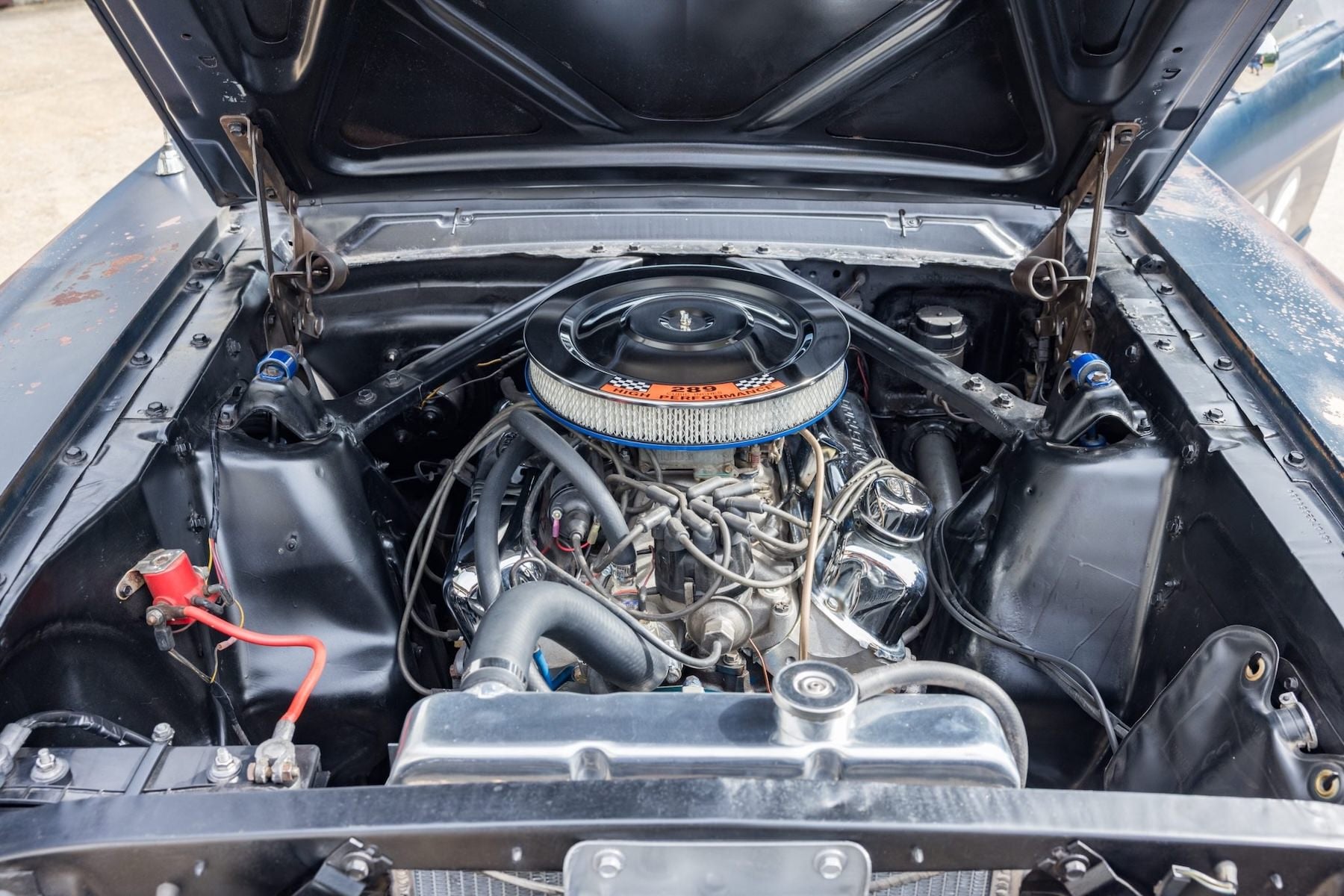
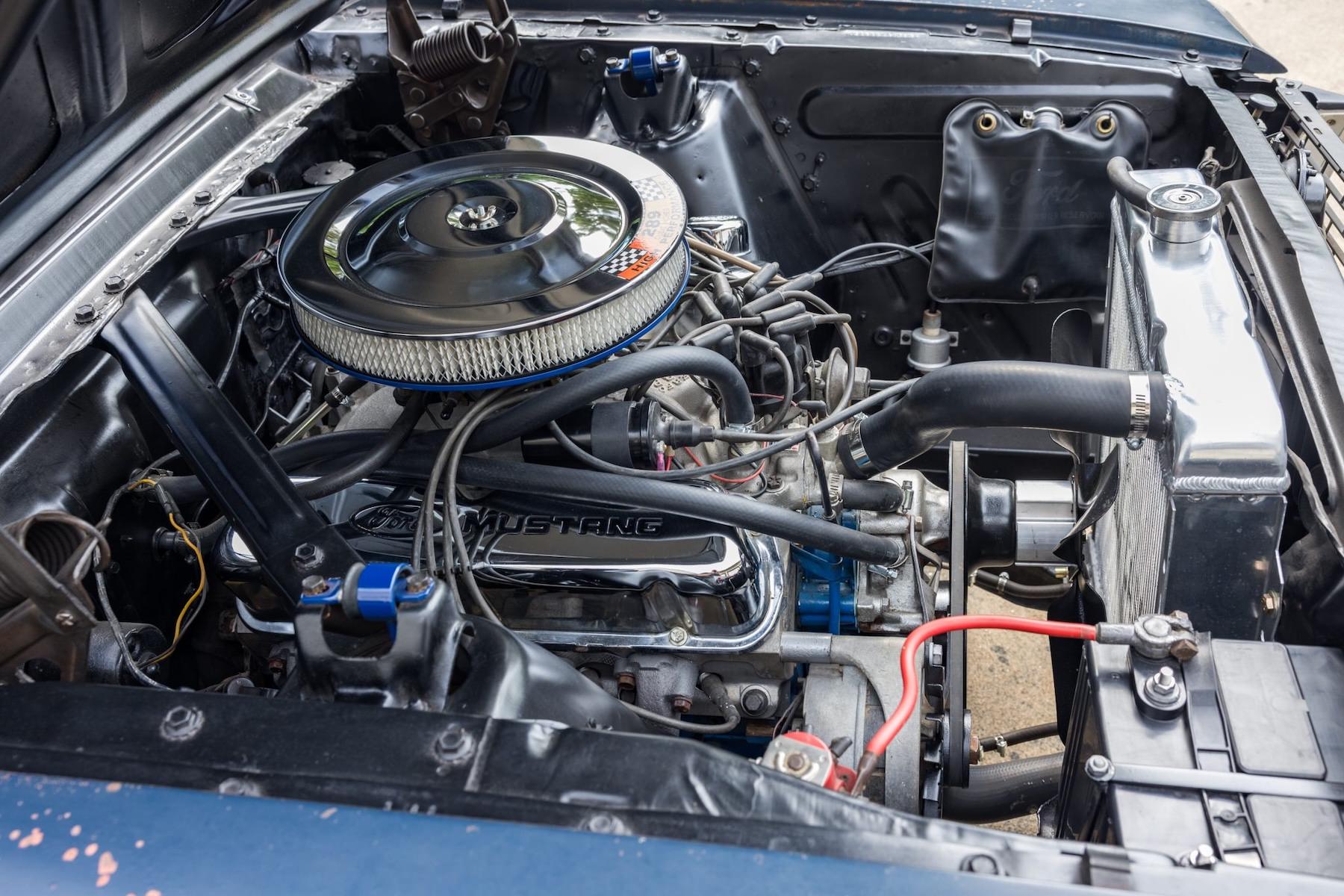
The mechanical work continued into 2025, when the 302 cubic inch Windsor V8 was rebuilt with Edelbrock E-Street aluminum cylinder heads and a Performer RPM intake manifold. Its Holley carburetor was rebuilt at the same time, and the car received a Cold Case aluminum radiator, replacement fuel tank and sending unit, plus a dual exhaust system with Xlerator mufflers.
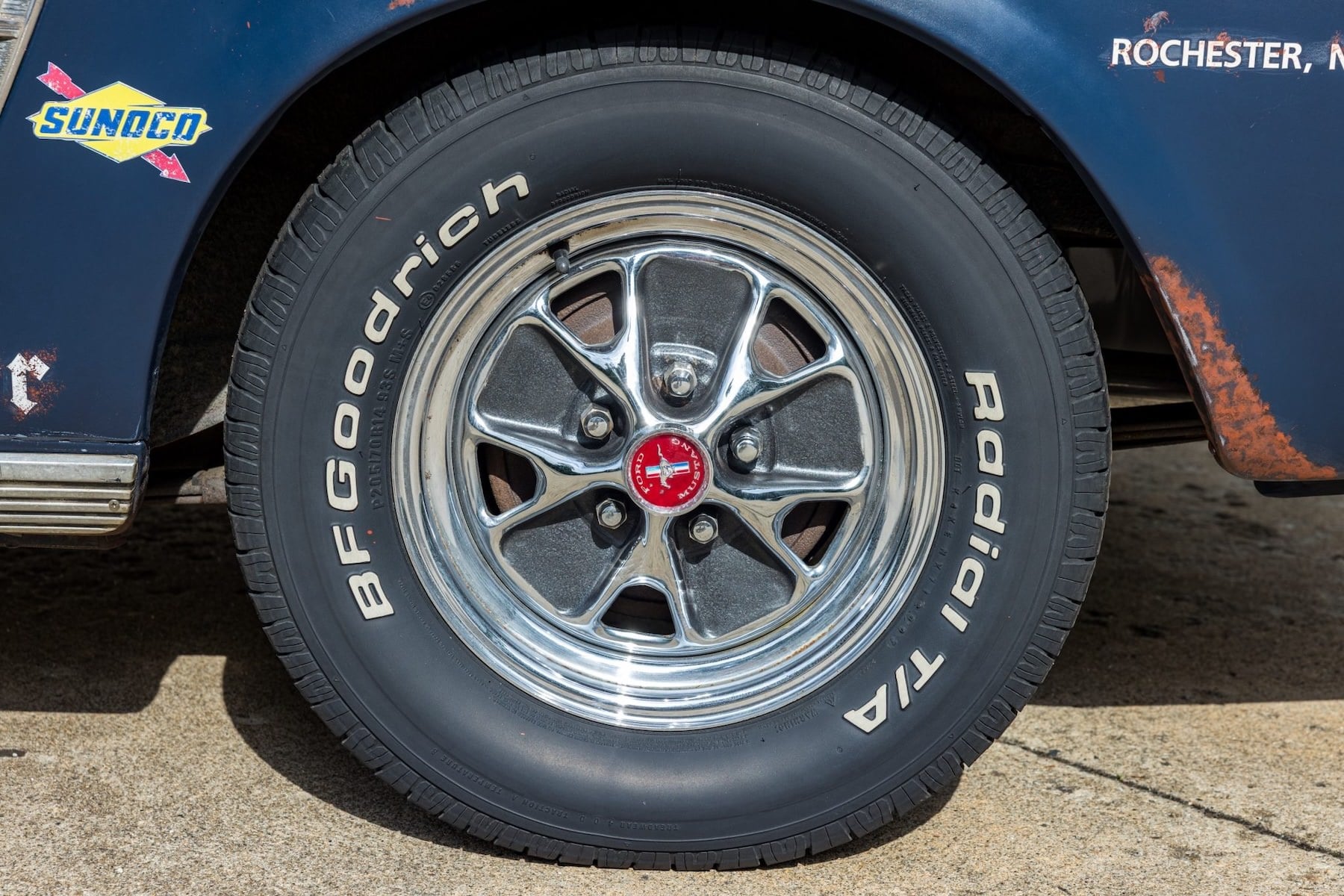
Power is sent to the rear wheels through a C-4 3-speed automatic transmission, the shock absorbers were replaced and the drum brakes overhauled, while 14 inch styled-steel wheels are shod with BFGoodrich Radial T/A tires.
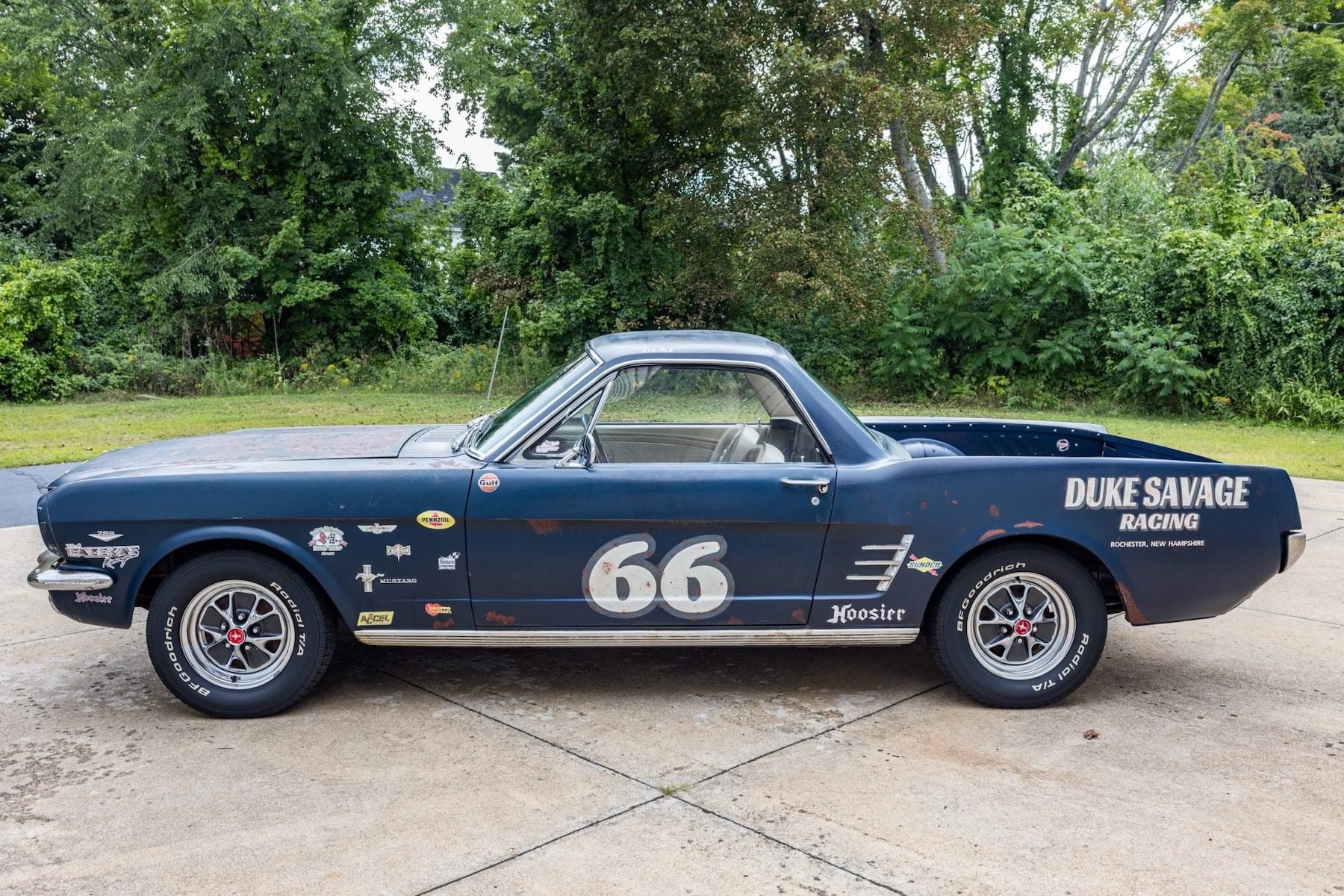
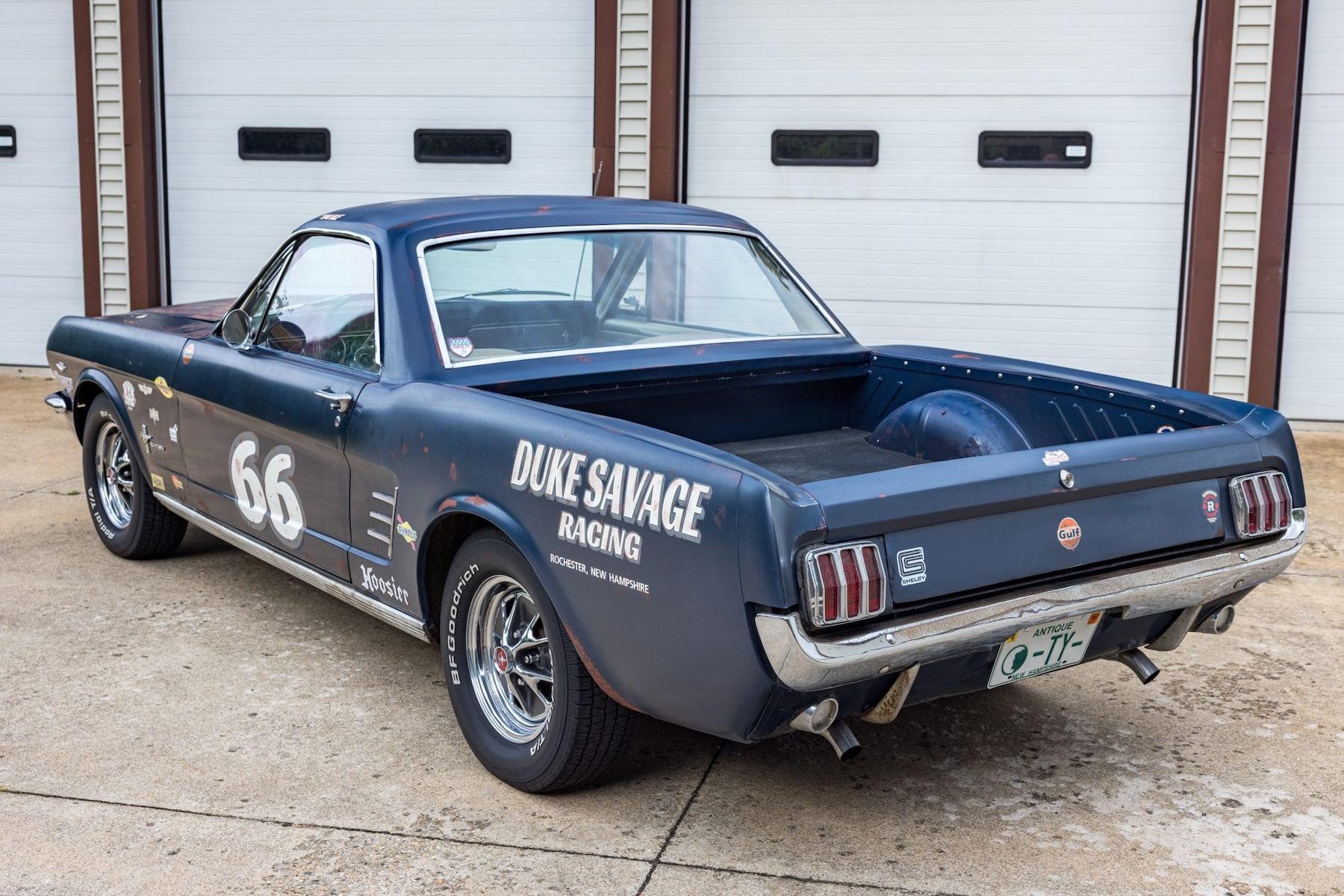
The car you see here is not one of the originals built by Beverly Hills Mustang, it started life as a regular coupe before being converted into a custom pickup utility after the current owner (and now seller) bought it a couple of years ago in 2024.
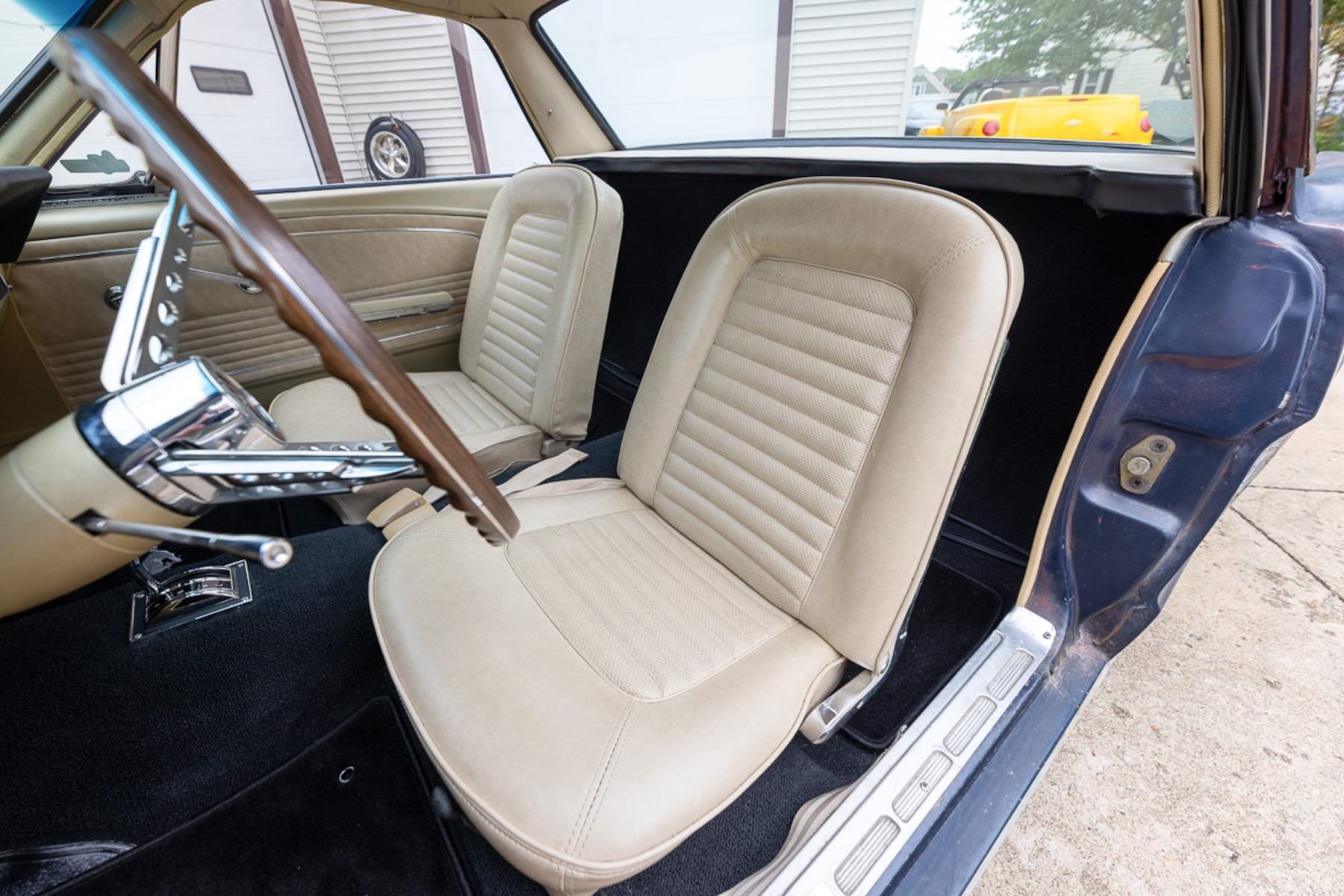
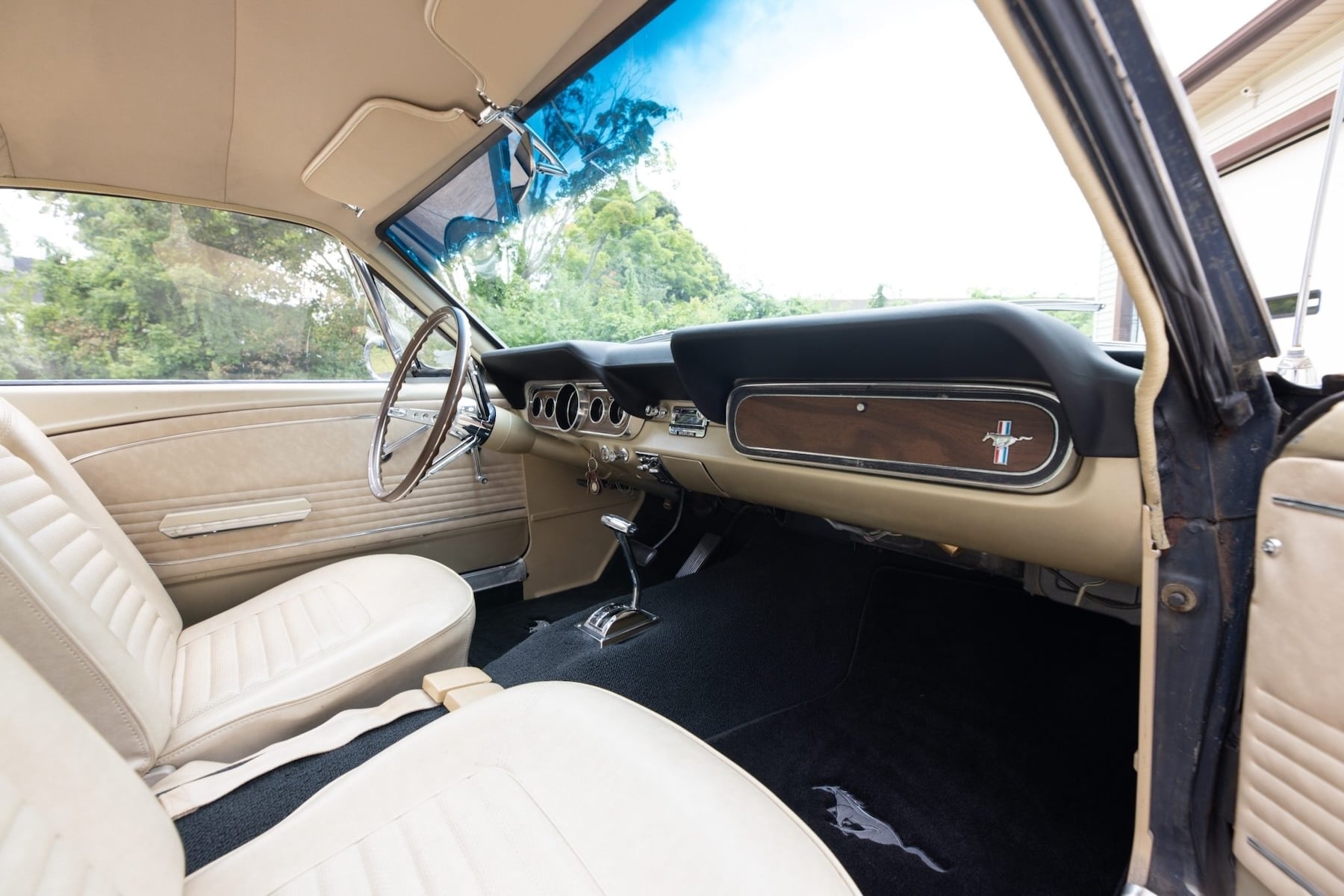
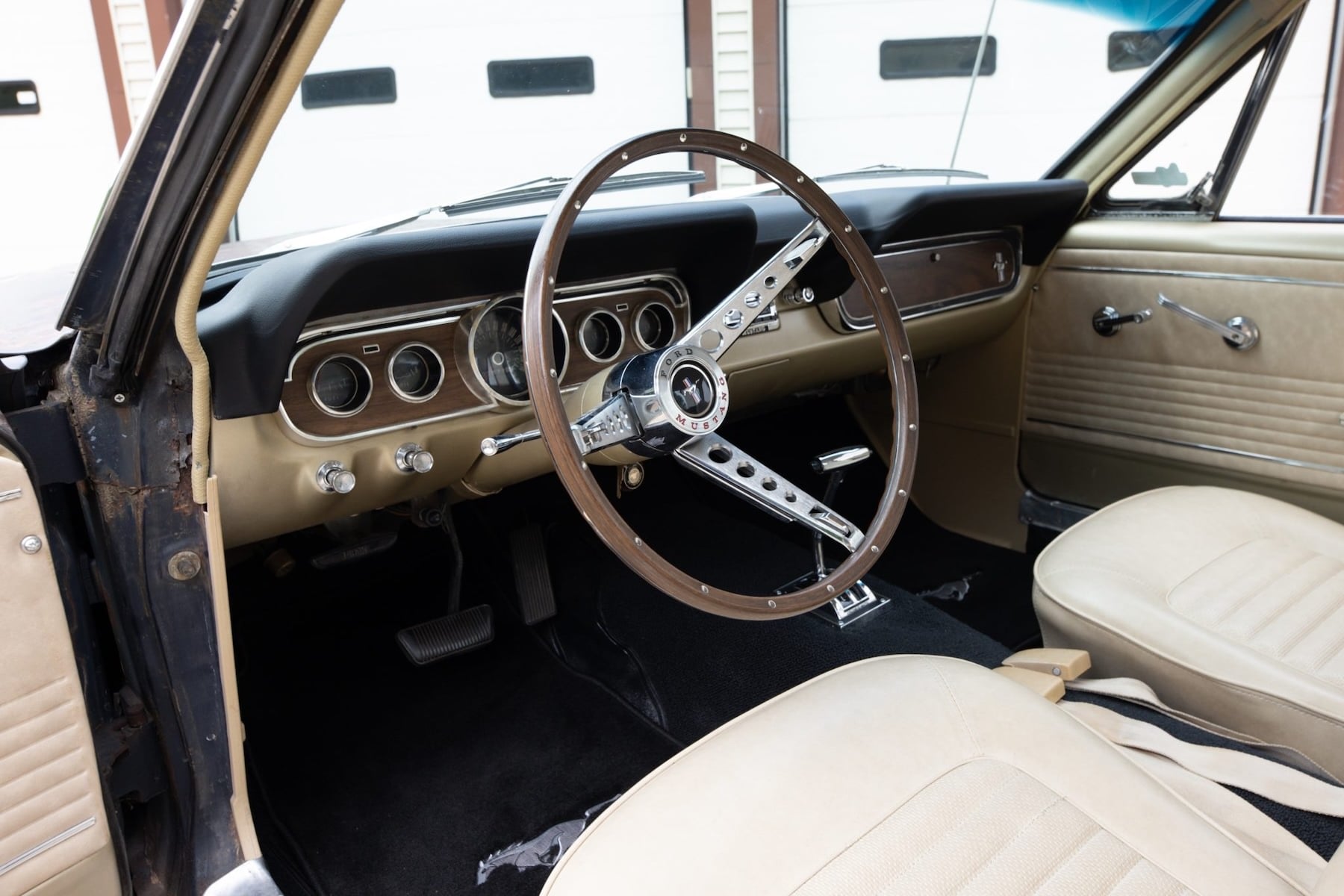
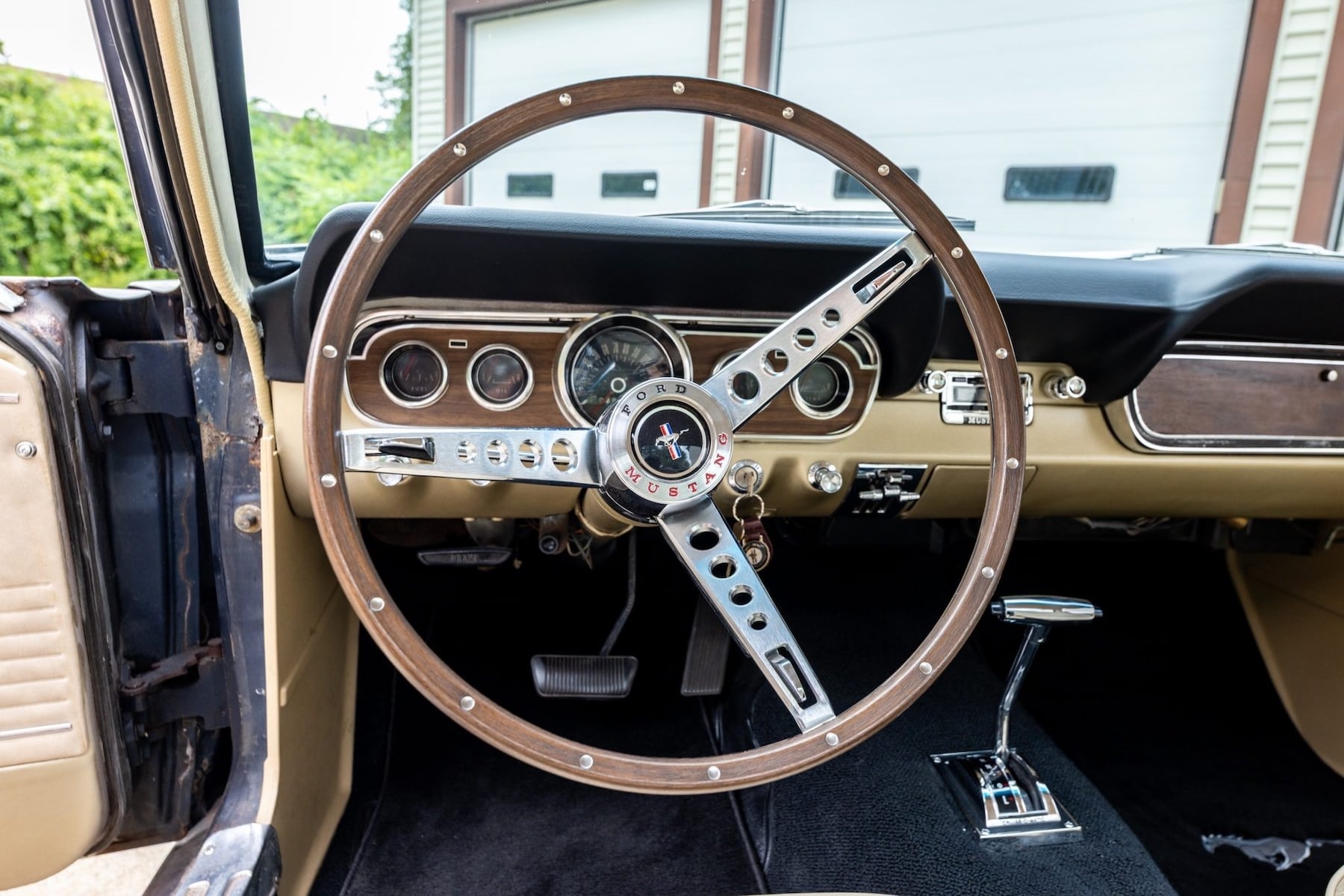
Inside, the bucket seats and door panels were retrimmed in Parchment vinyl, with black carpeting, woodgrain dashboard trim, a woodgrain-rimmed steering wheel, and a retro-style digital media receiver. Lexan door windows are also fitted.
It’s now being offered for sale at no reserve out of Rochester, New Hampshire, with recent service records and a New Hampshire registration, which identifies it as a two-door sedan despite its pickup conversion. If you’d like to read more about it or register to bid, you can visit the listing here.
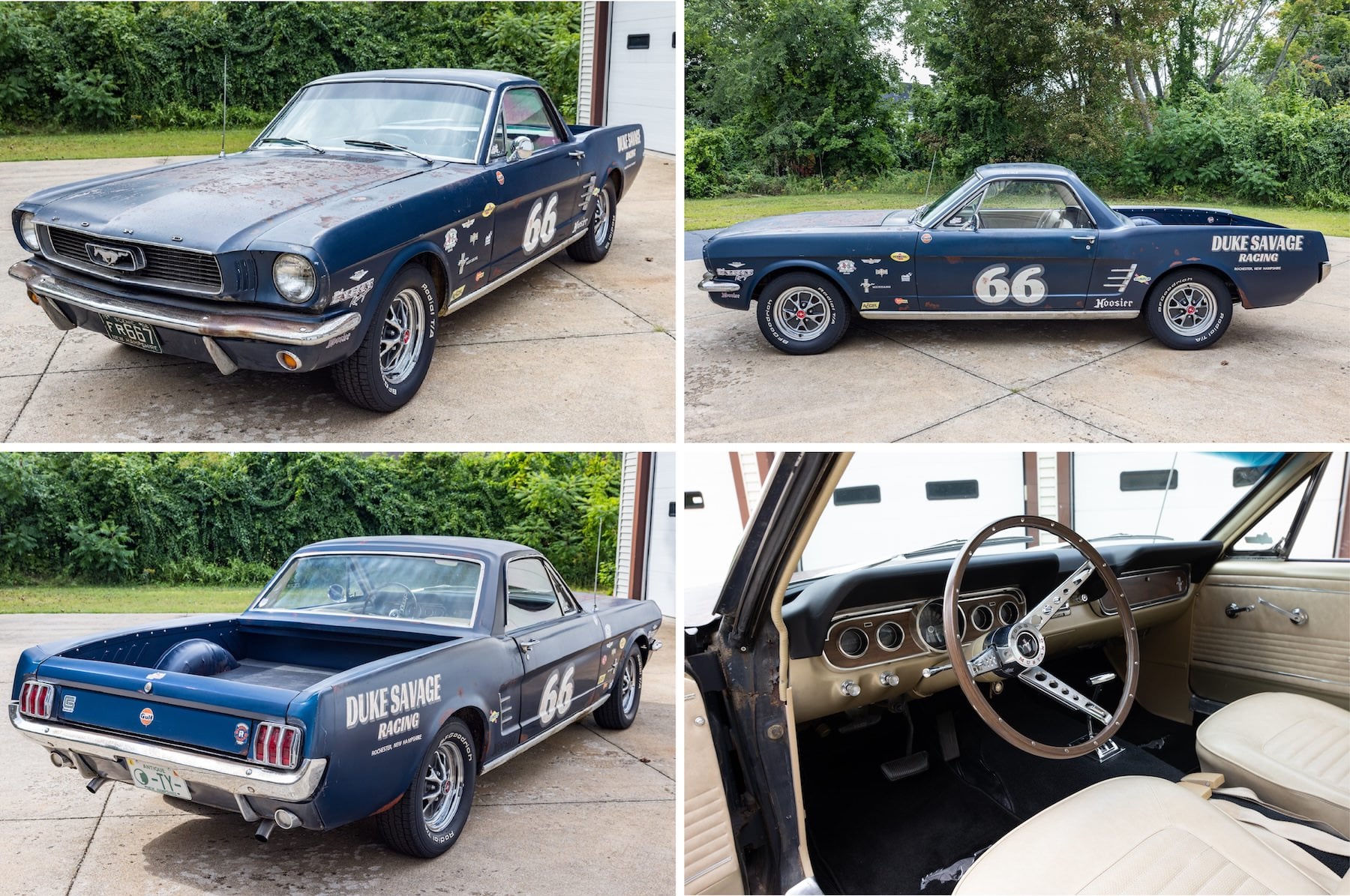
Images courtesy of Bring a Trailer

Articles that Ben Branch has written have been covered on CNN, Popular Mechanics, Smithsonian Magazine, Road & Track Magazine, the official Pinterest blog, the official eBay Motors blog, BuzzFeed, Autoweek Magazine, Wired Magazine, Autoblog, Gear Patrol, Jalopnik, The Verge, and many more.
Silodrome was founded by Ben back in 2010, in the years since the site has grown to become a world leader in the alternative and vintage motoring sector, with well over a million monthly readers from around the world and many hundreds of thousands of followers on social media.