* Editor’s Note: This piece was updated with corrected information on August the 29th, 2026. The earlier version repeated the often mis-cited history of the first Musteros, however we have some new information, and as such, corrections were made.
This is a recreation of the rare Ford Mustang Mustero, a pickup conversion of the wildly popular Mustang pony car that was built in small numbers by a California Mustang restoration shop. Only a handful are believed to have been made, and fewer still have been accounted for today.
The Mustang Mustero was built by Beverly Hills Mustang Ltd, a Mustang restoration and parts business in Beverly Hills, California, with a shortened roofline and a pickup bed rear. The shop’s own name for the conversion was the “Mustang Ranchero,” a reference to the Mustang and the earlier Ranchero – Ford’s original ute-style pickup. “Mustero” is the name that has stuck in the collector world.
Fast Facts – The Ford Mustang Mustero
- Around 1980, Beverly Hills Mustang Ltd. developed the Mustang Mustero, seeing a gap in Ford’s lineup for a utility pickup sports car. It was an independent conversion of restored 1965 and 1966 Mustang coupes – it was never a Ford-approved or Ford-licensed vehicle.
- The idea was influenced by the Ford Ranchero, an automobile-based utility pickup that was moderately successful from its debut in 1957 through its discontinuation in 1979. The Ranchero had evolved over its lifespan from a utilitarian vehicle to one offering more luxury and higher performance, which likely inspired the notion of this Mustang-based utility vehicle.
- The Mustang and the second-generation Ranchero shared the Ford Falcon platform, so the two were already close relatives under the skin.
- The Mustang Mustero conversion was intricate and costly, involving significant structural changes like relocating pillars and removing rear seats to accommodate the pickup bed. The shop’s 1981 brochure offered the conversion, but according to the people who built them only 4 to 6 were ever completed.
How The Ford Mustang Mustero Came To Be
Around 1980 a plan was hatched at Beverly Hills Mustang Ltd., a Mustang restoration shop and parts supplier at 9280 Alden Drive in Beverly Hills, to create a car they felt was missing from the Ford official line up. This new car would be a Mustang pickup, a ute as the Australians would call it, and rather than starting from new cars the shop built them from fully restored 1965 and 1966 Mustang coupes.

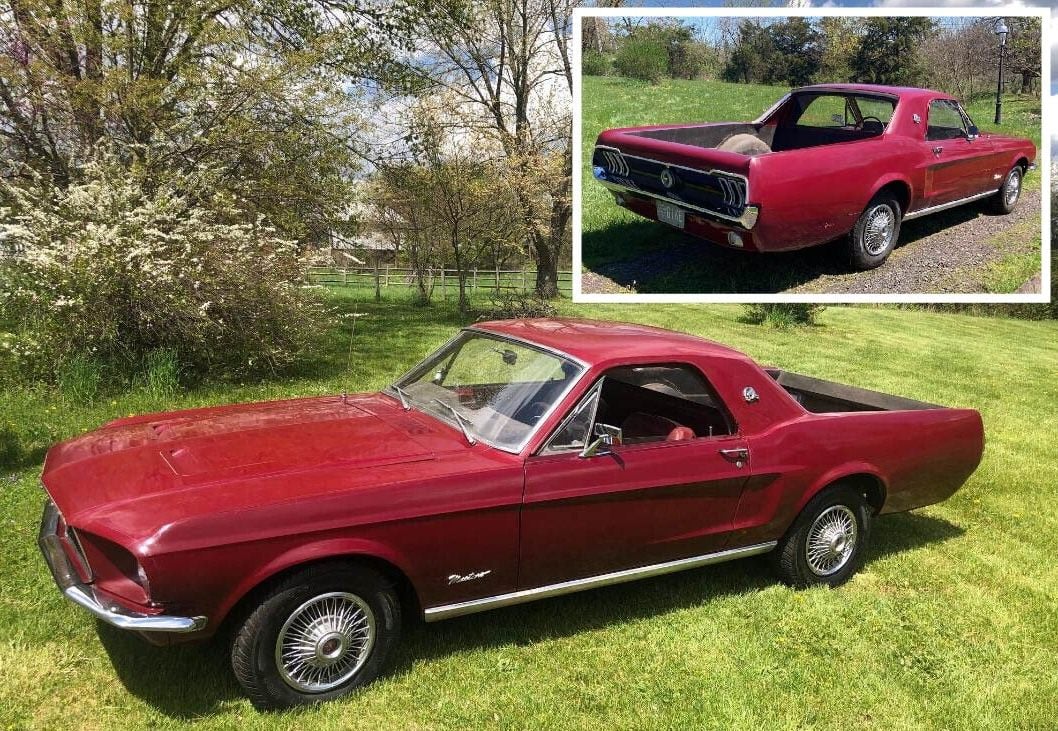
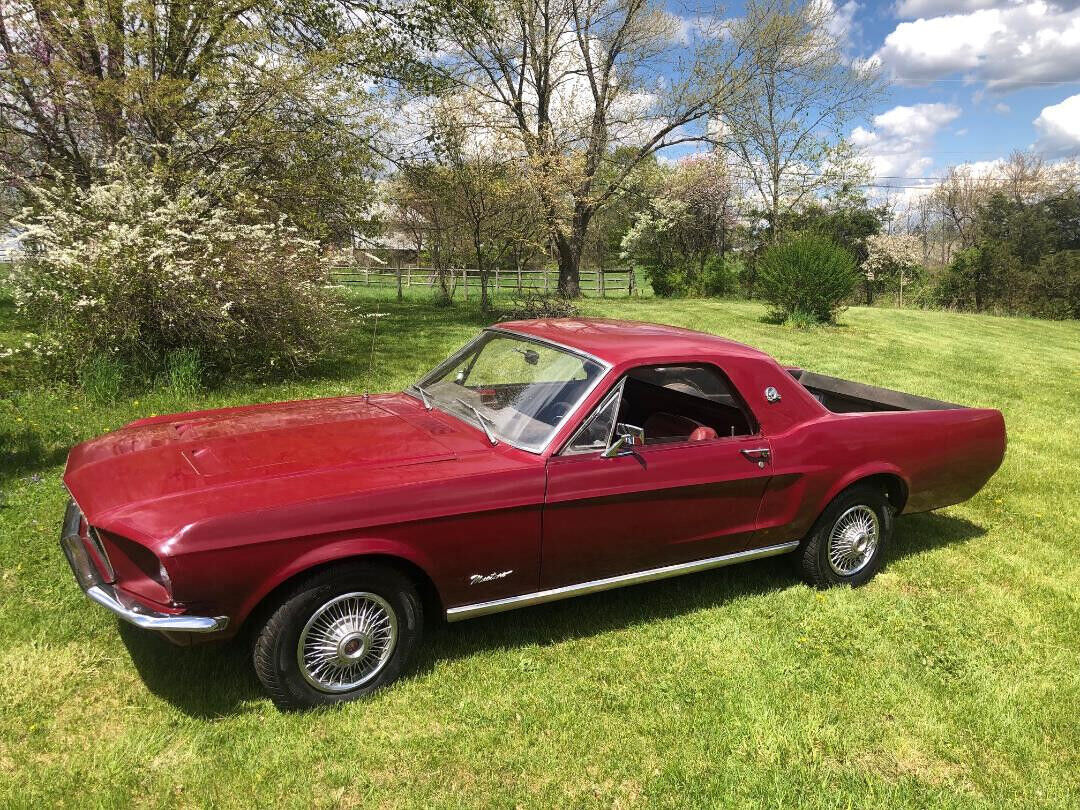
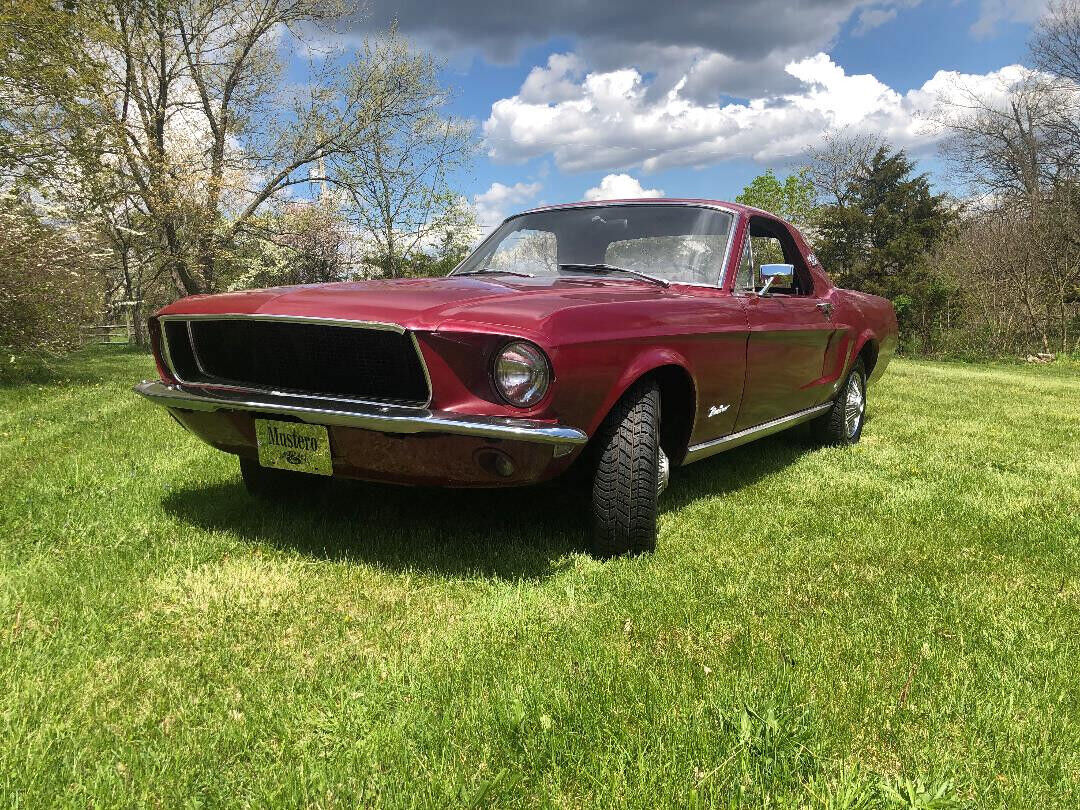
 From the front this Mustero recreation could be mistaken for a standard Ford Mustang, but that all changes once you see the side profile.
Ford had entered the automobile-based utility pickup market previously, with the Ford Ranchero production vehicle that debuted in 1957 based on the newly introduced full-sized Ford platform. The Ranchero would never be a major sales hit for Ford, but the numbers were good enough to keep it in production over seven generations until 1979.
Initially the Ranchero had been relatively utilitarian, but as new generations were introduced it became more luxurious, and higher-performance versions were released – all of which are highly collectible today.
The second generation Ranchero was based on the Ford Falcon platform, as was the Mustang of the same era, and it seems to have been this shared platform that sparked the idea of a new kind of Ford pickup – with all the practicality of the pickup bed in the rear, as well as the Mustang’s sports car DNA.
Beverly Hills Mustang was no backyard operation. In 1980 to 1982 the same shop, under its president J. Brunk, worked with Carroll Shelby’s team to build the 12 Shelby GT350 convertible “continuation” cars, taking rust-free 1966 Mustang convertibles down to bare shells and rebuilding them to GT350 specification. The Mustang Ranchero project ran alongside this work, and the man hired to build them says the shop’s own prototype was sold in 1980.
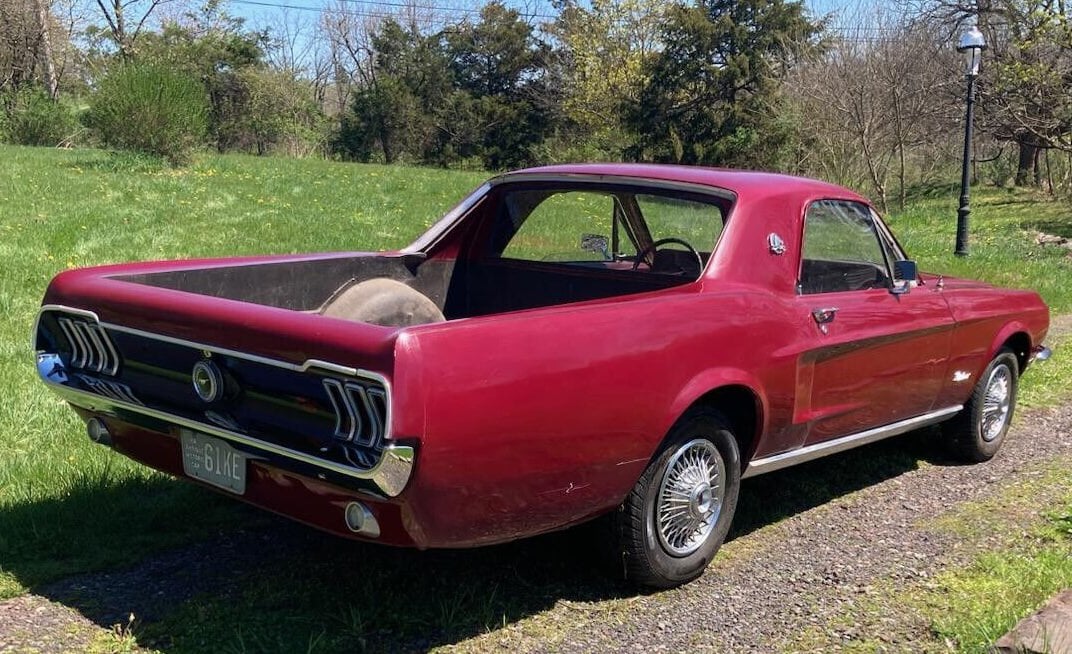
The Mustero build process was complex and costly, requiring far more major changes to the car than a Shelby conversion. The Mustero had the rear section of its roof removed, the C-pillar was moved forward to replace the B-pillar, and the newly shrunk cabin had the rear seats removed to make way for a fiberglass pickup bed that the shop molded in-house. Reshaping the roofline changed the contour of the door openings, and the cars were fitted with custom-made Lexan side windows as a result.
The rear end of the Mustang remained in place with the taillights and bumper, which meant that no fold-down tailgate was possible. This does make loading and unloading the bed a little more challenging than a standard pickup, as loads have to go in over the sides or rear.
The known examples are all hardtop coupes rather than fastbacks, and they were built on whatever donor car came to hand: some carried the 200 cubic inch (3.3 liter) Thriftpower inline six, others the 289 cubic inch (4.7 liter) Windsor V8.

The rear of this car has been extended slightly but it still has the Mustang rear end with the lights and bumper in place.
There’s no record of whether additional suspension work was done to the Mustero, it would make sense that the rear leaf springs would be swapped out with stiffer replacements to better carry loads, but we’ve been unable to confirm if this took place.
The popularity of the Mustero was somewhat limited, likely due to the price. The shop’s brochure is reported to have priced the conversion at around $6,500 USD on top of the car itself, at a time when a very good original Mustang could be bought for a fraction of that.
The number produced has been widely cited as 50 for decades, but that figure appears to have been the shop’s planned run rather than a count of cars built. According to the men who built them, only four to six were completed. Examples have since turned up in Switzerland, the United Kingdom, and South Africa, and at least two were imported into Australia by a collector around 2013.
How many have survived to the current day is openly debated, and because the conversion has been copied by home builders many times over the years, the handful of original Beverly Hills Mustang cars are now hard to tell apart from later tributes.
The 1968 Mustang Mustero Recreation Shown Here
The vehicle you see here is currently being offered for sale on eBay out of Perkasie, Pennsylvania with a Buy It Now price of $18,000 USD. This is far less than the typical asking price of a Mustero as this car is not one of the Beverly Hills Mustang originals, but rather it’s a recreation based on a 1968 Mustang.
The story behind its creation is included below from the eBay listing:
“Fifteen years ago, my daughter and I took this tribute Mustero on as a “father-daughter” bonding project. It had been used on and off over the years (including in her wedding), and has been in the garage 99% of the time, but now is the time for it to move this vehicle to have a lucky new owner.”

Apart from the fact that there’s now no rear seat the interior of this homemade Mustero keeps almost all the original Mustang parts.
“I’ve done many Mustang projects over the years, professionally, and as a hobbyist, including having a Mustang in Hot Rod Magazine (August 1979), so rest assured this is not a hack job. The bed metalwork is totally professional, and it is coated with the expensive rubberized bed liner. The hood is the highly desired turn signal type, The vehicle started out as a solid car throughout, and if there is any rust it will be very minor.”
If you’d like to read more about this car or make him an offer you can visit the eBay listing here.




Images courtesy of eBay Motors

Articles that Ben Branch has written have been covered on CNN, Popular Mechanics, Smithsonian Magazine, Road & Track Magazine, the official Pinterest blog, the official eBay Motors blog, BuzzFeed, Autoweek Magazine, Wired Magazine, Autoblog, Gear Patrol, Jalopnik, The Verge, and many more.
Silodrome was founded by Ben back in 2010, in the years since the site has grown to become a world leader in the alternative and vintage motoring sector, with well over a million monthly readers from around the world and many hundreds of thousands of followers on social media.