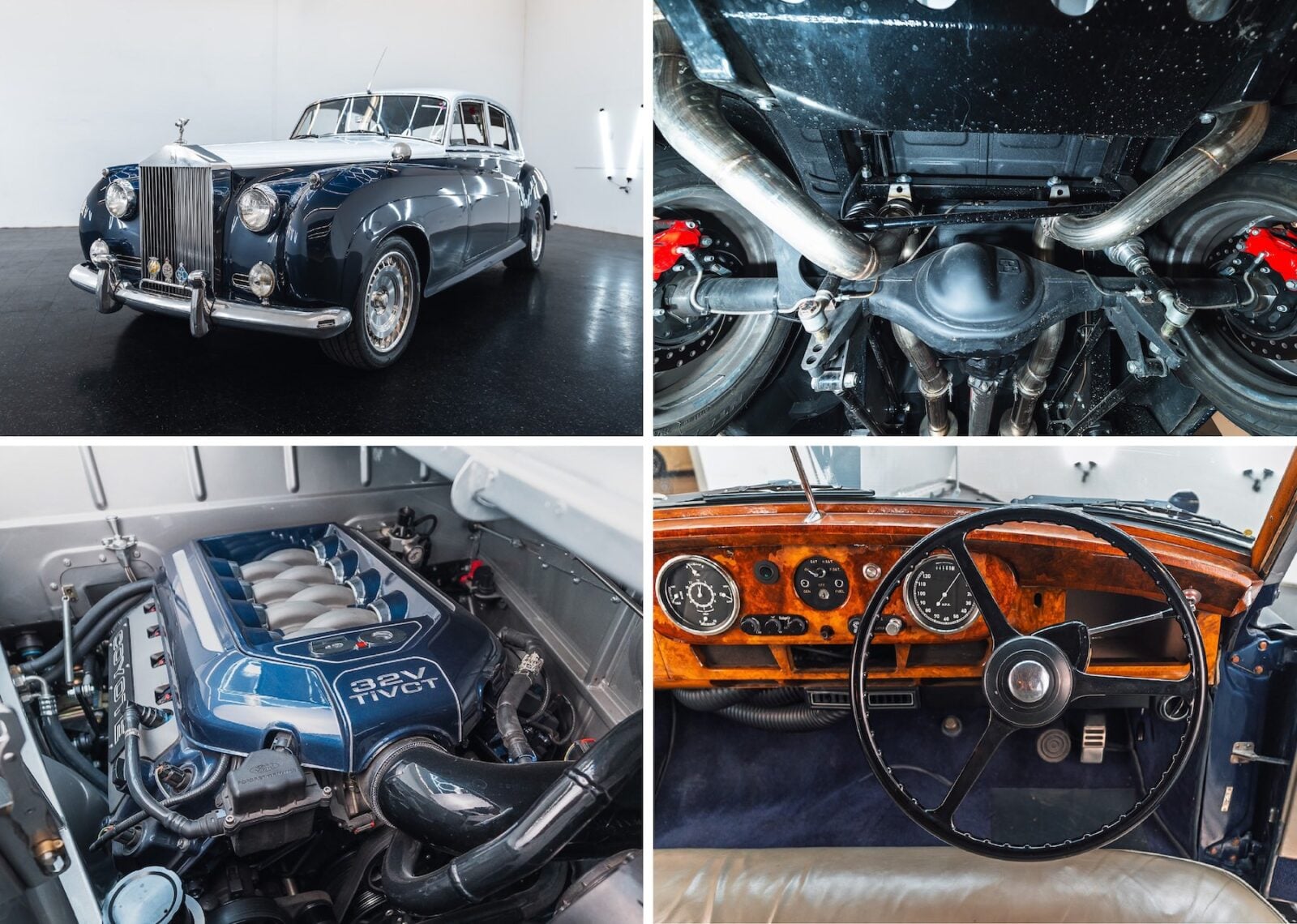
This is a 1957 Rolls-Royce Silver Cloud that’s been built into a Coyote V8-powered sleeper. The build involved a lot more than just an engine swap however, the car now rides on front and rear coilovers and it has a custom-built chassis.
The first-gen Coyote makes around 420 bhp and 390 lb ft, far more than the original engine, as a result the car has been fitted with four-wheel Wilwood disc brakes, completely new front and rear suspension, as well as new wheels shod with modern tires.
Fast Facts: A Coyote V8-Swapped Rolls-Royce Silver Cloud
- This 1957 Rolls-Royce Silver Cloud has been completely rebuilt into a Coyote V8-powered sleeper, with its original body mounted on a newly fabricated steel box-section chassis. The build combines classic Rolls-Royce styling with modern performance underpinnings, including adjustable coilovers, rack-and-pinion steering, Wilwood disc brakes, and forged 18 inch wheels.
- Power comes from a Gen 1 5.0 liter Ford Coyote V8 producing 420 bhp and 390 lb ft. It has a custom intake, four-into-one headers, MagnaFlow exhaust, and Digipower cutouts, sending power through a Ford 6R80 6-speed automatic transmission to a Quick Performance rear end.
- The Silver Cloud originally represented the final generation of mainstream separate-chassis Rolls-Royces, remaining in production from 1955 to 1966. Early cars used a 4.9 liter inline-six before the Silver Cloud II introduced the aluminum 6.2 liter L-series V8 in 1959, followed by the updated Silver Cloud III in 1962.
- Inside, the right-hand-drive cabin has traditional gray leather and burl woodwork while now gaining Vintage Air climate control, push-button ignition, drive-by-wire throttle, and Classic Instruments gauges. The completed car has covered 482 miles since the build was completed and is now offered from Houston, Texas, with a Spirit of Ecstasy mascot and Texas title.
History Speedrun: The Rolls-Royce Silver Cloud
The Rolls-Royce Silver Cloud was built at the Crewe factory from 1955 to 1966, it was the last mainstream Rolls-Royce built on a separate chassis, and the last offered both as a complete factory-bodied car, and as a rolling chassis for bespoke coachwork. In many respects it was the last of the original Rollers, before the unit-construction cars arrived on the scene and changed everything.
 The Rolls-Royce Silver Cloud was built at the Crewe factory from 1955 to 1966, it was the last mainstream Rolls-Royce built on a separate chassis, and the last offered both as a complete factory-bodied car, and as a rolling chassis for bespoke coachwork. Image courtesy of Rolls-Royce.
The Silver Cloud replaced the Silver Dawn, it had been a strong seller but it was built on design principles first laid down in the late 1930s, before the Second World Era, a problem Rolls-Royce’s own design team had recognized as early as 1947.
The styling of the Rolls-Royce-built body came from John Blatchley, a former Gurney Nutting man who had been recruited into Ivan Evernden’s styling department – the Bentley S1 was essentially the same car except for its radiator shell and badging.
Underneath Blatchley’s body sat a welded box-section steel frame, the standard four-door body was stamped out by the Pressed Steel Company, with aluminum used for the doors, bonnet, and boot lid. The front suspension was independent with coils and wishbones, and in the rear you’d find a leaf-sprung live axle. The 11-inch hydraulic drum brakes were assisted by the traditional Rolls-Royce mechanical servo.
An automatic gearbox came standard on the Silver Cloud, a first for Rolls-Royce, and a sign of things to come, the company would soon stop offering manual-transmission cars altogether. Both power steering and air conditioning joined the options list in 1956, and a long-wheelbase chassis arrived in 1957, stretched four inches to 127 inches total.
The first series of cars were powered by the final 4,887cc version of the postwar inline-six. Rolls-Royce declined (as always) to publish an official horsepower figure, describing the power only as adequate, though a top speed of 106 mph was possible – a very quick top end for the time. So perhaps the definition of the word “adequate” was beginning to stretch just a little, the car weighed close to 4,650 lbs, and the six was obviously quite capable to get it over the ton.
The Silver Cloud II landed in 1959 with the 6,230cc all-aluminum L-series V8, this was an in-house design with a short-stroke, oversquare layout that drew on the company’s earlier V12 aero-engine experience. Rolls-Royce had built both the Merlin and Griffon V12 aircraft engines during WWII after all, and the Merlin has been called “the engine that won the war.”
Chief Engineer Harry Grylls had stipulated that the engine have bearing surfaces large enough to permit a 20% increase in power and torque over the production lifetime, a sign of the development margin engineered into a motor whose derivatives would remain in production into the following century.
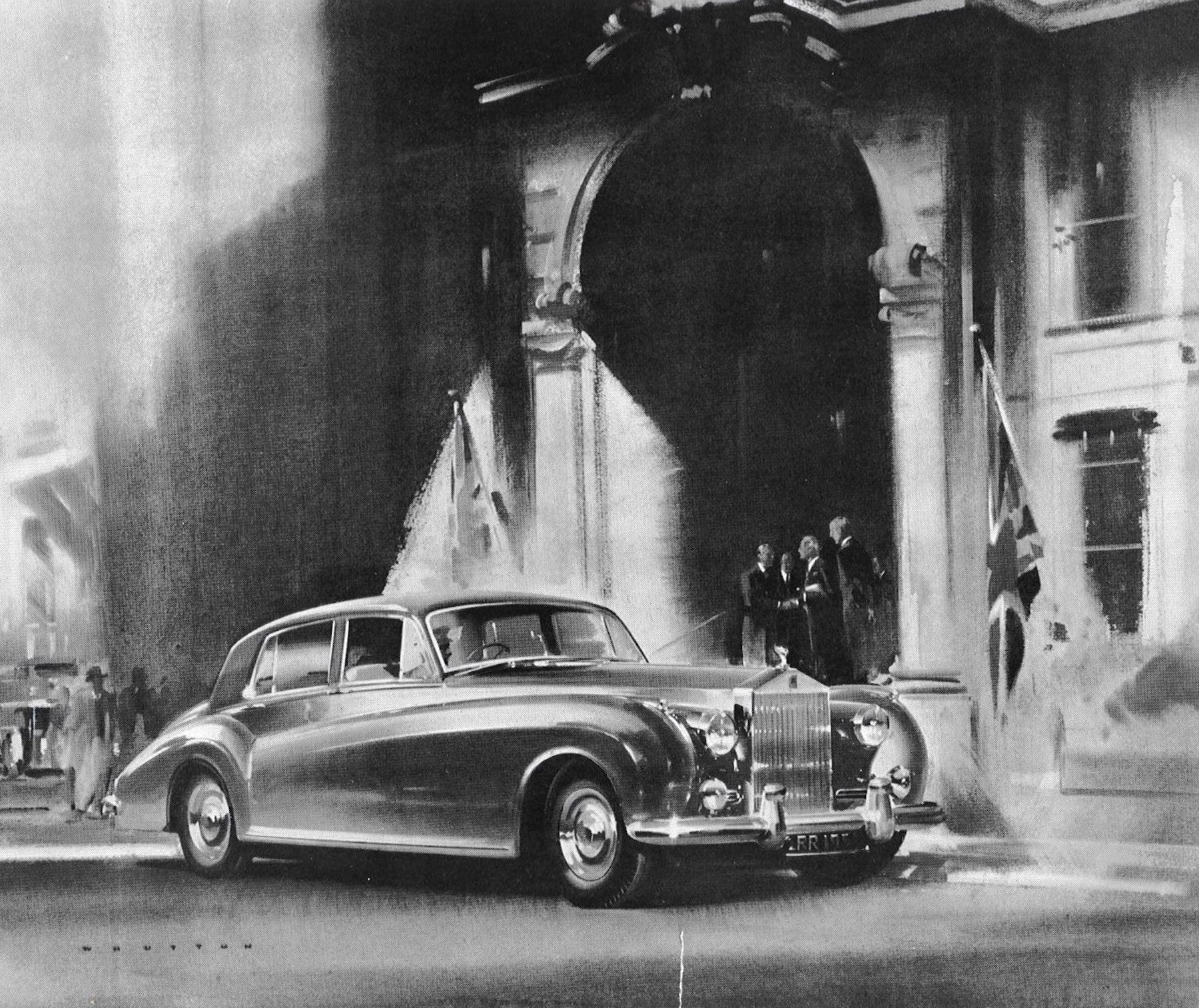
The styling of the Rolls-Royce-built body came from John Blatchley, a former Gurney Nutting man who had been recruited into Ivan Evernden’s styling department – the Bentley S1 was essentially the same car except for its radiator shell and badging. Image courtesy of Rolls-Royce.
The V8 format itself was chosen with an eye on the United States, by far Crewe’s most important export market at the time (and still today). The factory still refused to quote a power figure, but The Motor’s road test in May 1960 recorded 0 to 60 mph in 10.9 seconds and a measured maximum of 104.7 mph.
The Silver Cloud III appeared at the Paris Salon in October of 1962. The compression ratio rose to 9:1, with an 8:1 option for markets without access to reliable premium fuel, and two-inch SU carburetors replaced the previous 1.75-inch units. Quad headlights (the first on a factory-bodied Rolls-Royce) sat beneath a lowered hood and radiator shell, the bumpers shrank, and the cabin now had separate front seats and more legroom – a nod to the growing number of owners driving themselves.
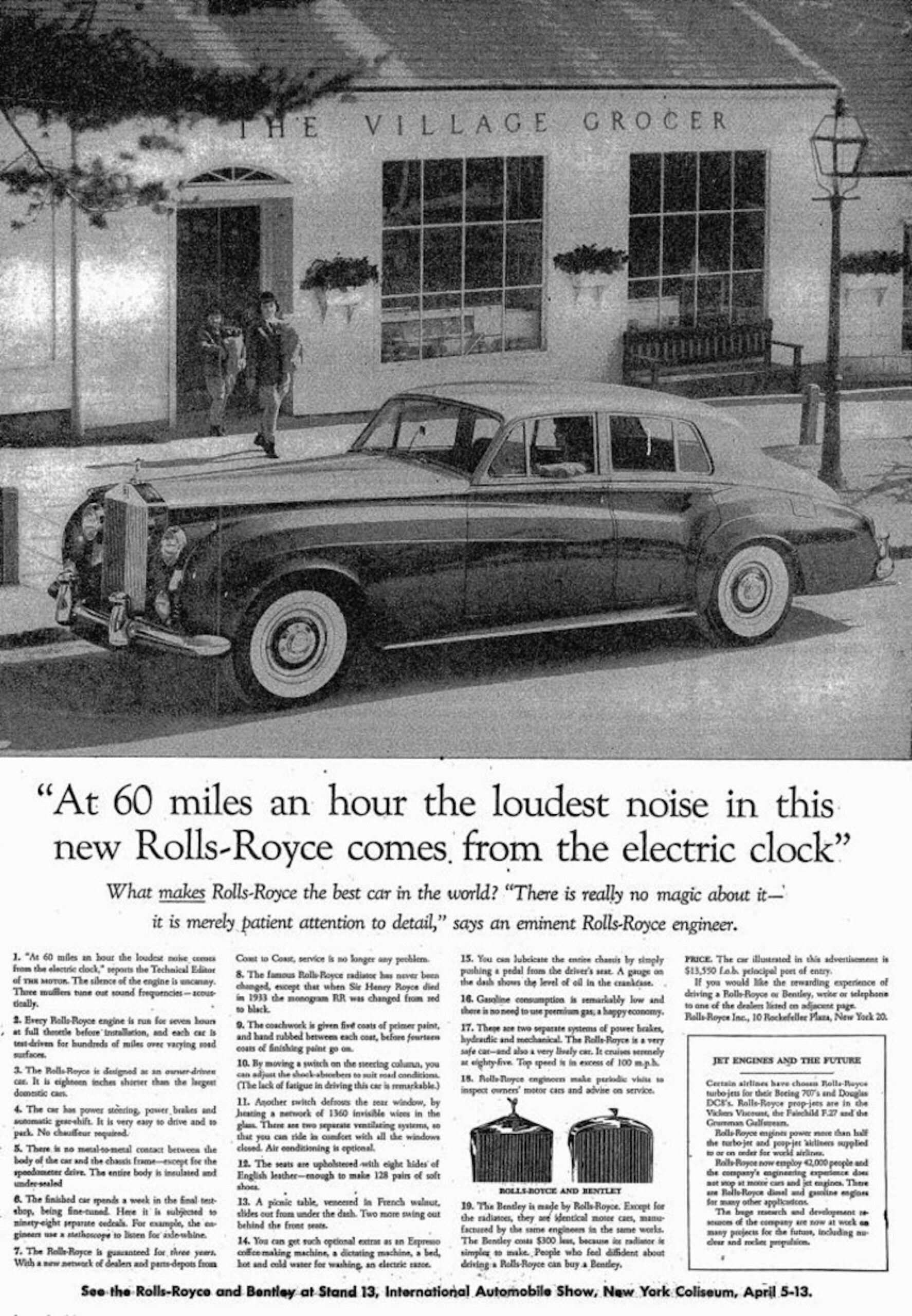
Period advertising claimed the loudest noise in the car at 60 mph came from the electric clock. The monocoque Silver Shadow took over the Crewe production lines in 1965, and the last Cloud chassis was completed in March of 1966.
The Rolls-Royce Silver Cloud Sleeper Shown Here
This 1957 Rolls-Royce Silver Cloud was bought by its current owner in 2019 and then rebuilt into a heavily-modified restomod/sleeper. The original body was mounted on a newly fabricated steel box-section chassis and refinished in GM Silver Ice Metallic and Dark Ming Blue.
The new chassis has Mustang II-style independent front suspension, a four-link rear with Panhard rod, adjustable coilovers at all four corners, Flaming River power rack-and-pinion steering, and Wilwood disc brakes with six-piston front and four-piston rear calipers. It rides on staggered 18-inch US Mags forged wheels with a matching set of four Nitto NT555 G2 tires.
Under the hood, or “bonnet” for the purists, is a Gen 1 5.0 liter Ford Coyote V8 fitted with a custom aluminum cold-air intake, CVF serpentine accessory drive, four-into-one headers, and a dual exhaust with MagnaFlow mufflers and Digipower cutouts.
This version of the Coyote makes 420 bhp and 390 lb ft of torque in stock trim, and it drives the rear wheels through a 6R80 6-speed automatic, a custom driveshaft, and a Quick Performance rear end.
Other mods include an aluminum radiator with electric fan, a custom 18 gallon fuel tank beneath a fabricated trunk floor, an E-Stopp electronic parking brake, underbody coating, and a custom Rolls-Royce-branded front skidplate.
The right-hand-drive cabin is trimmed in gray leather with burl woodwork and replacement blue carpeting. Modern additions include Vintage Air climate control, push-button ignition, a drive-by-wire throttle, Classic Instruments gauges, and Pioneer speakers – although no head unit is currently fitted.
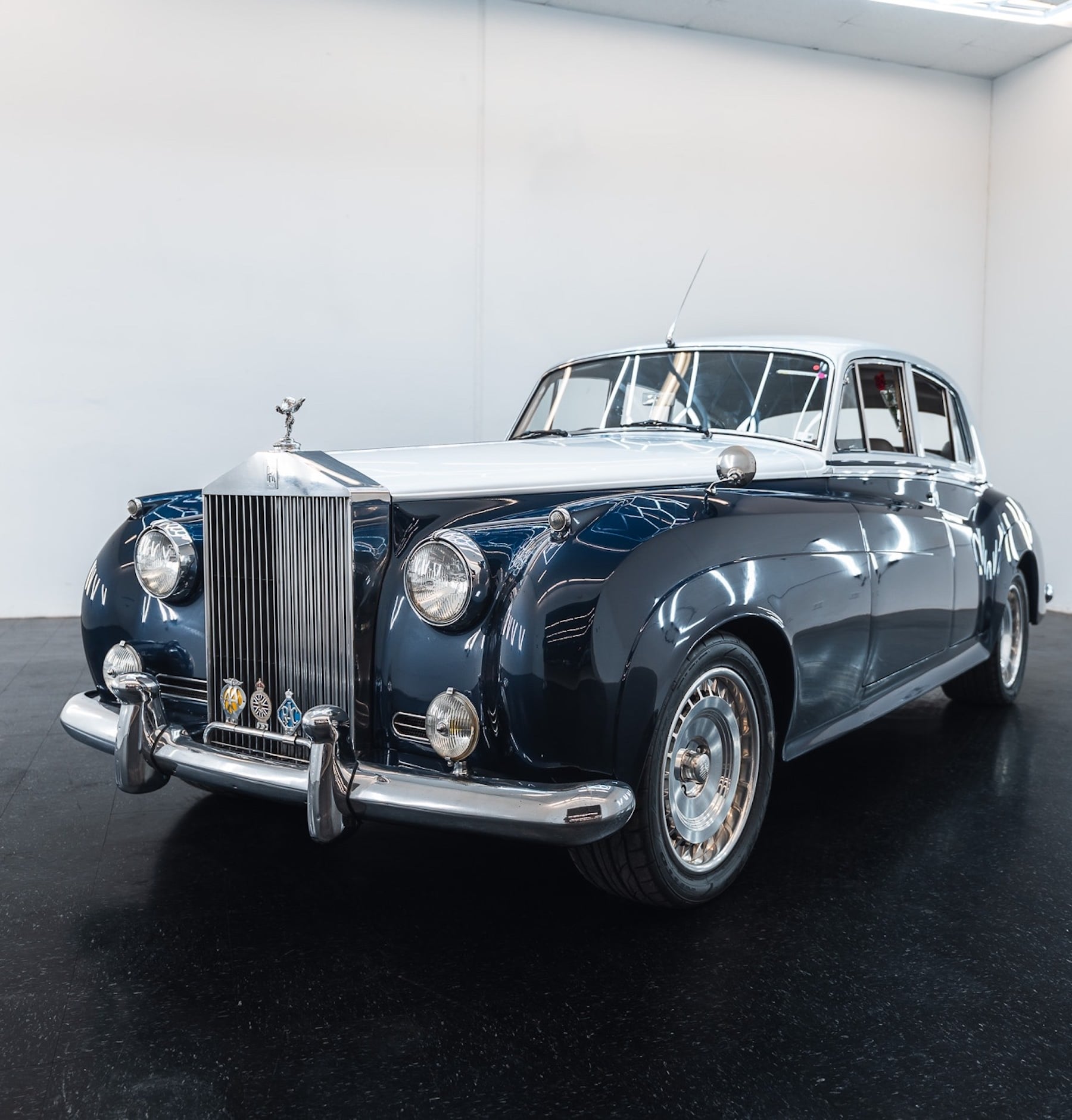
This is a 1957 Rolls-Royce Silver Cloud that’s been built into a Coyote V8-powered sleeper. This build involves a lot more than just an engine swap however, the car now rides on front and rear coilovers and it has a custom-built chassis.
The odometer shows 482 miles, the distance covered since completion of the build, and the listing notes a tear in the rear seat, some general interior wear, and a broken left-rear ashtray.
It’s now being offered for sale out of Houston, Texas with a Spirit of Ecstasy statue and a Texas title. If you’d like to read more about it or place a bid you can visit the listing here.
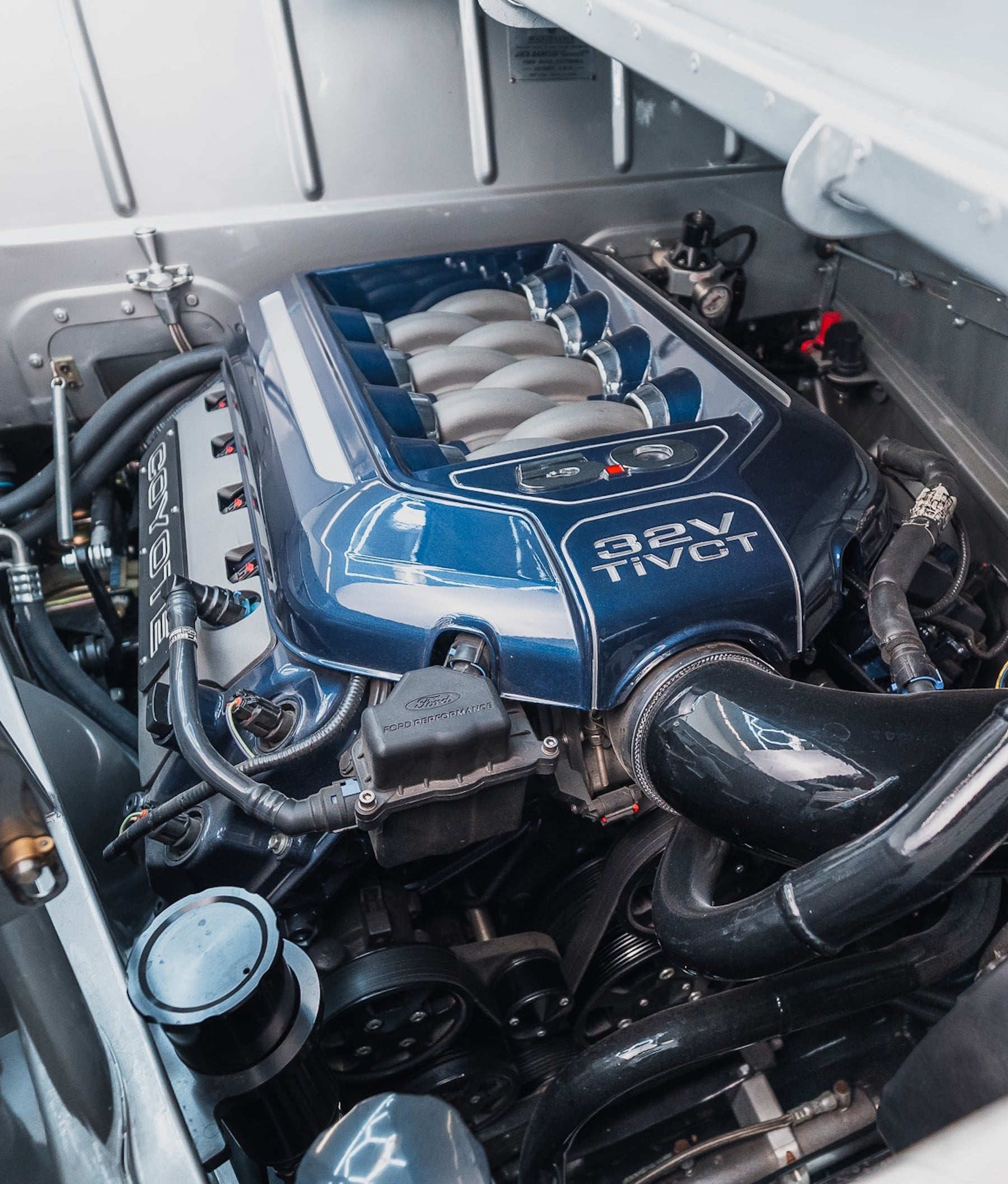
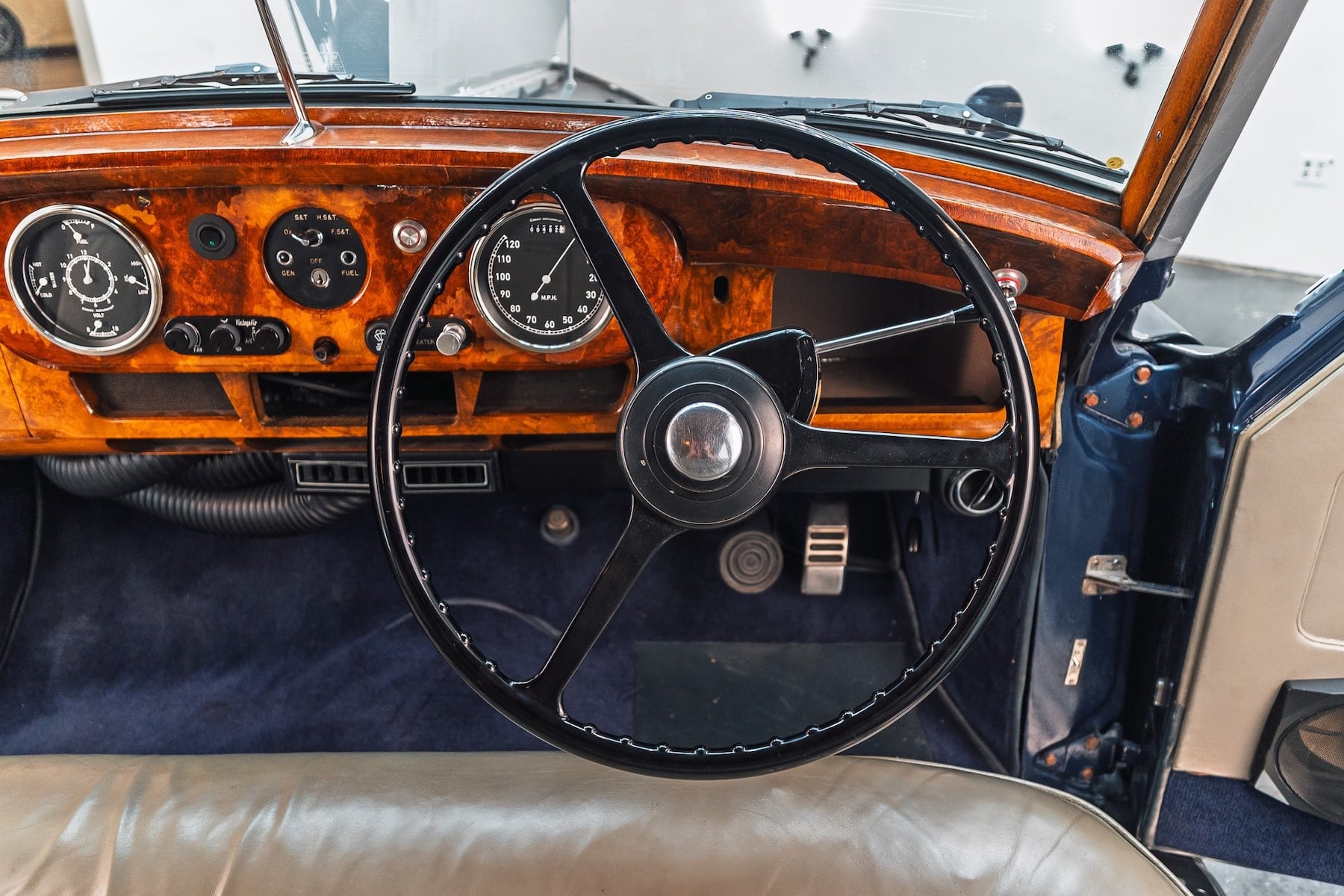
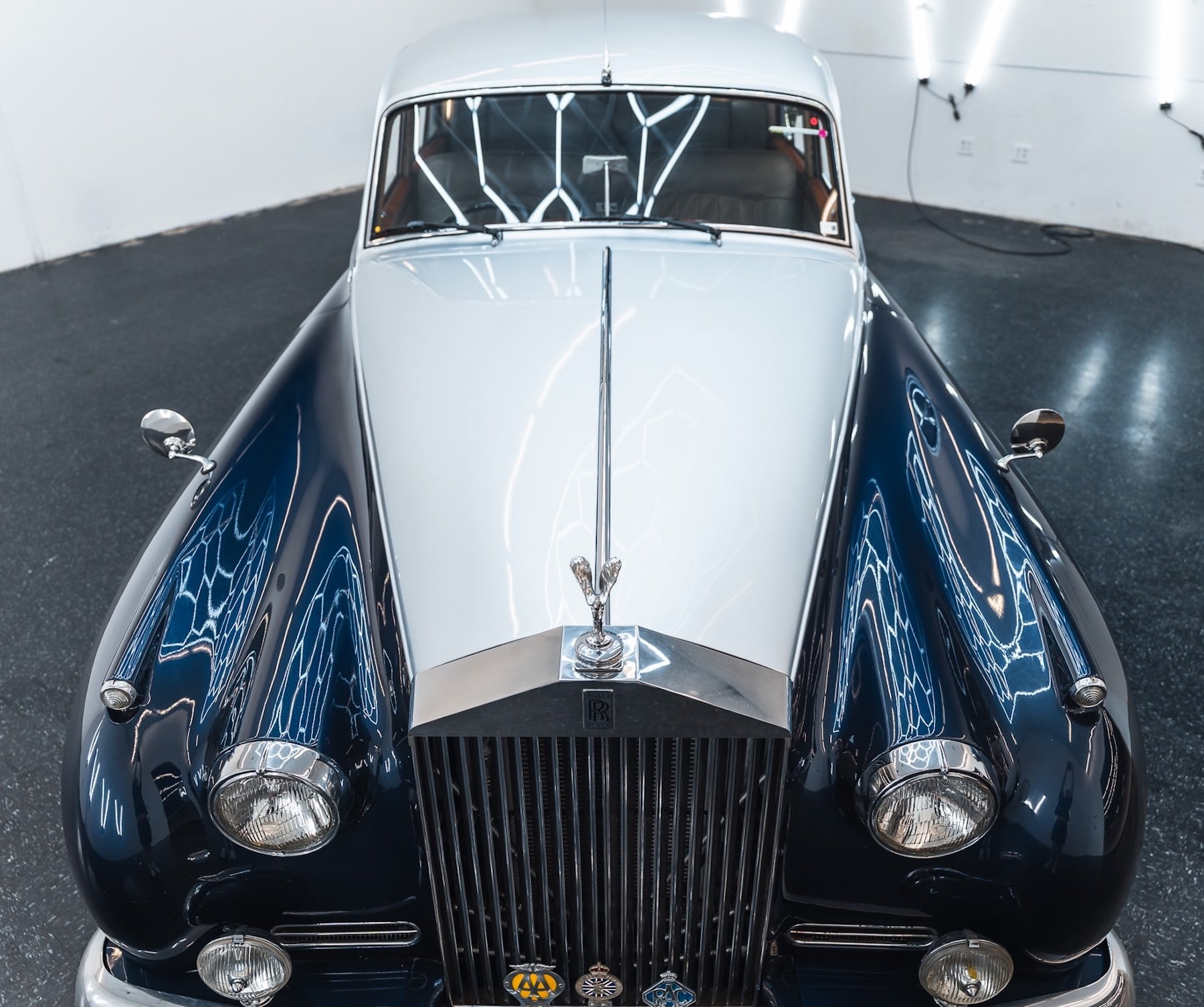
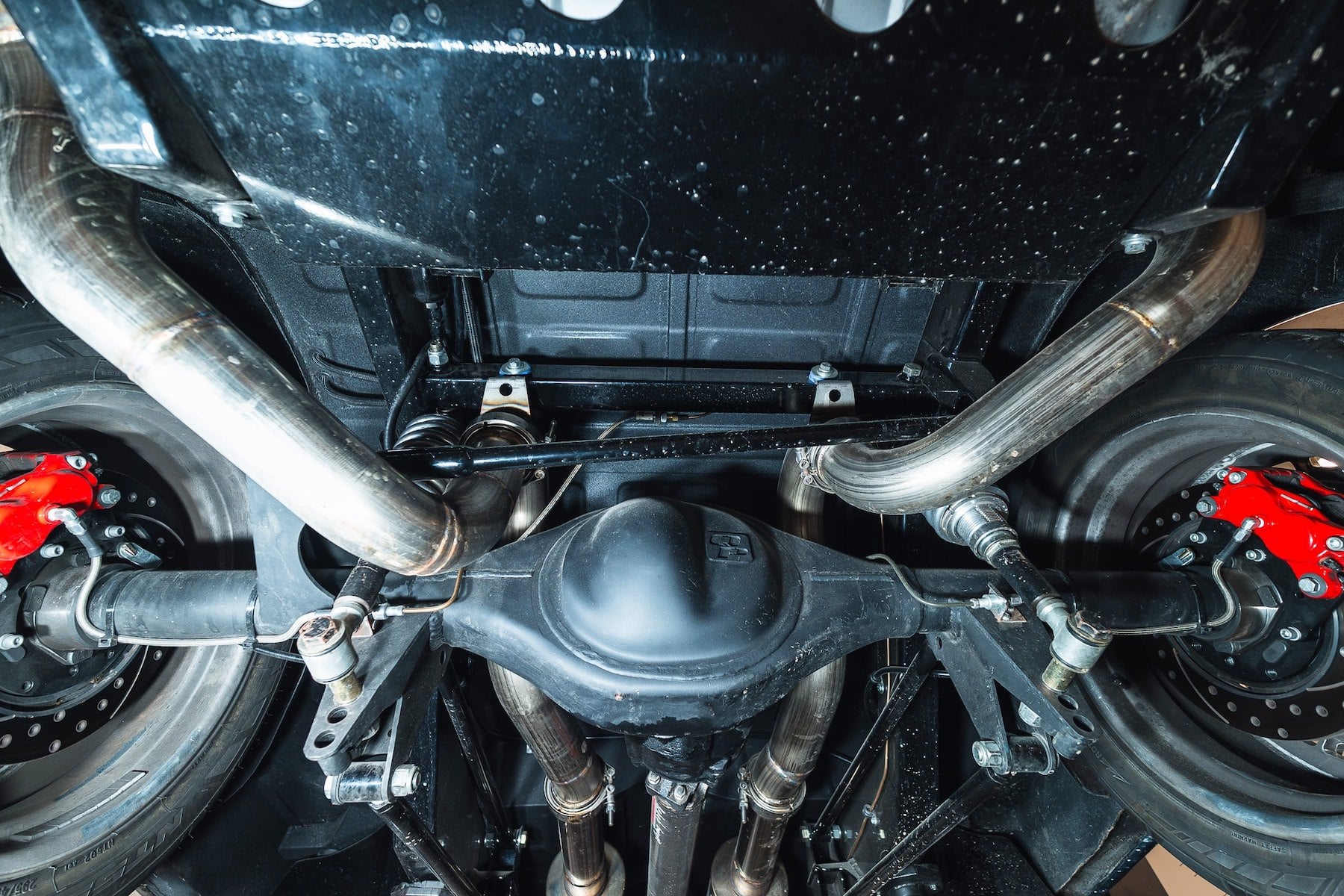
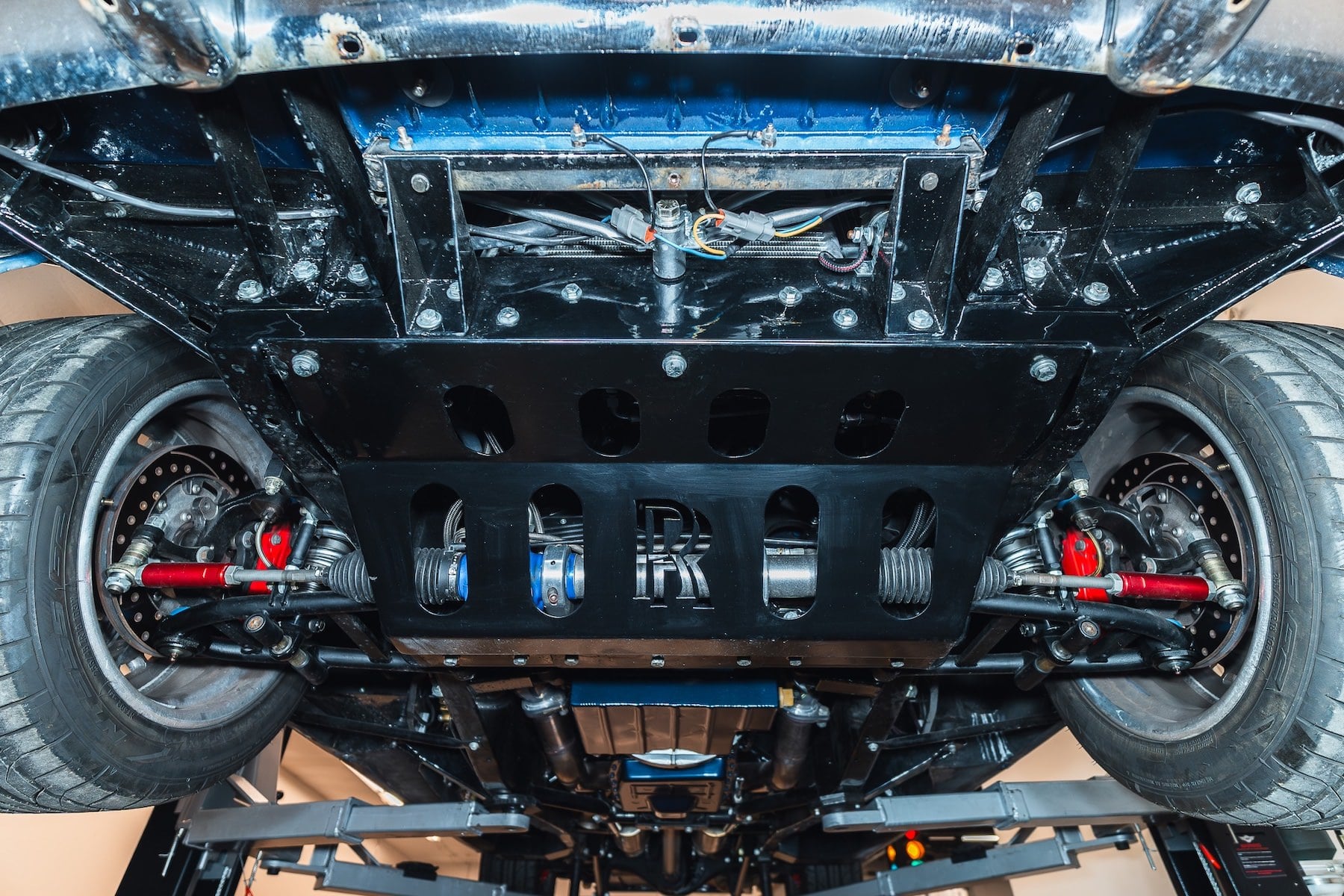
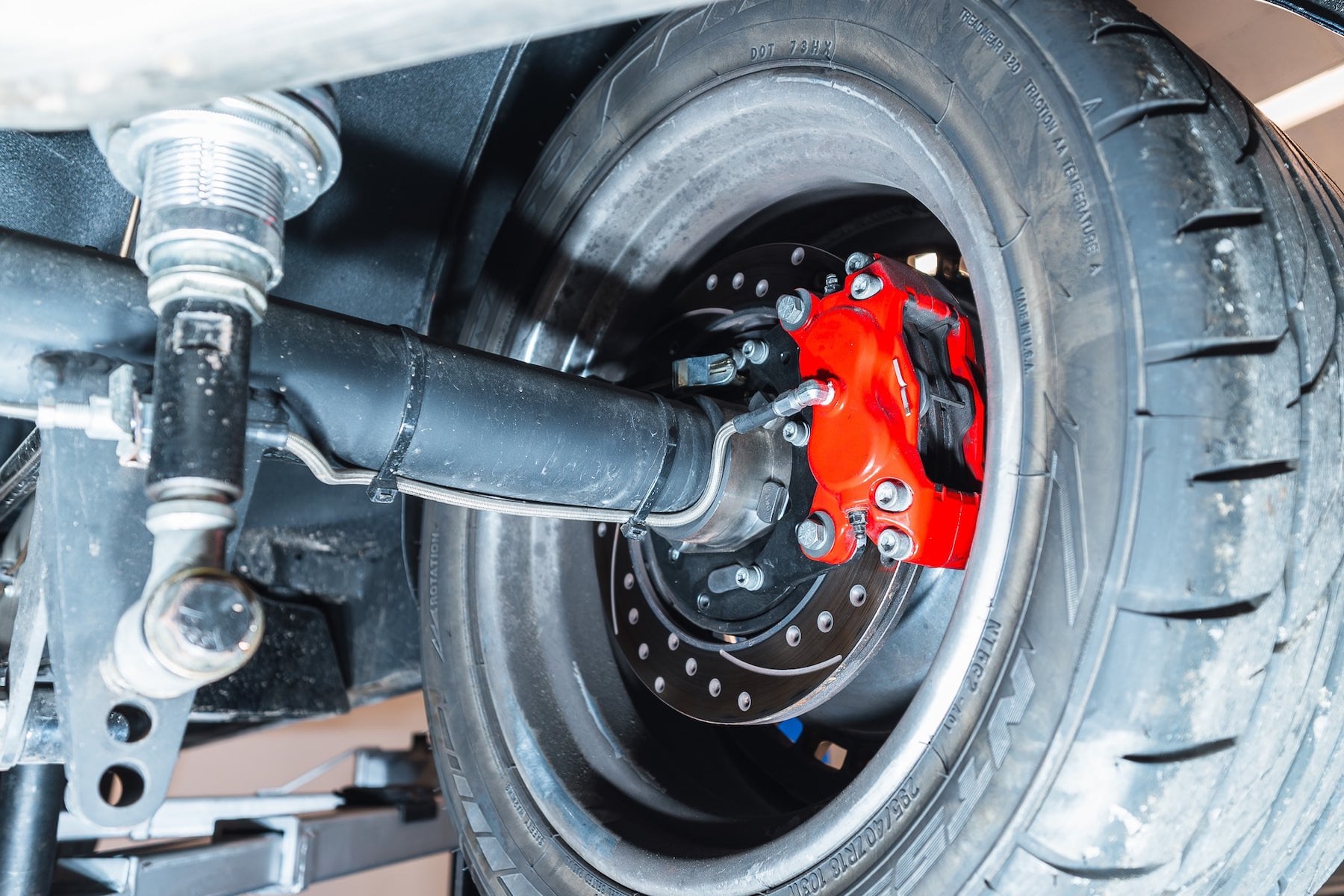
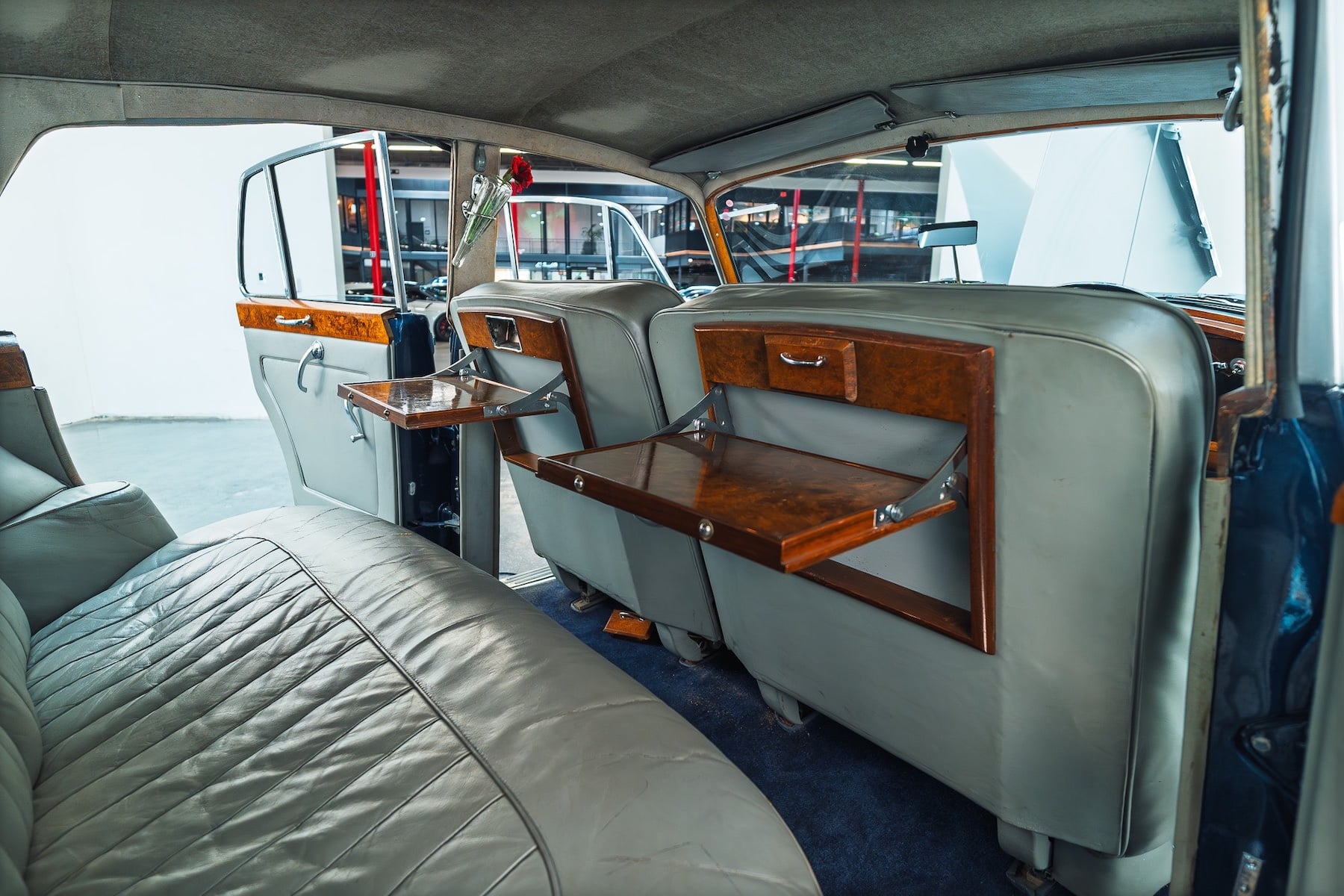
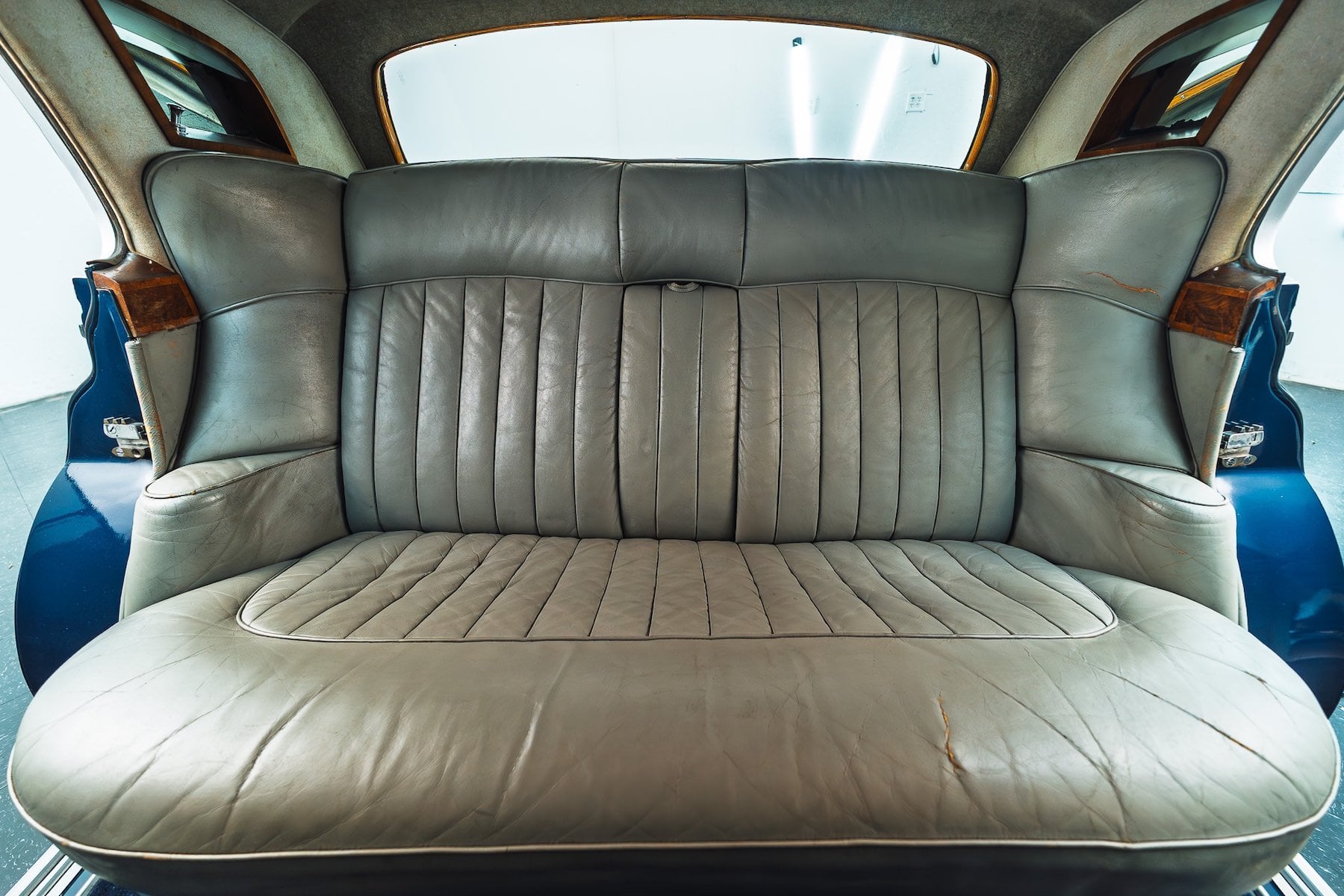
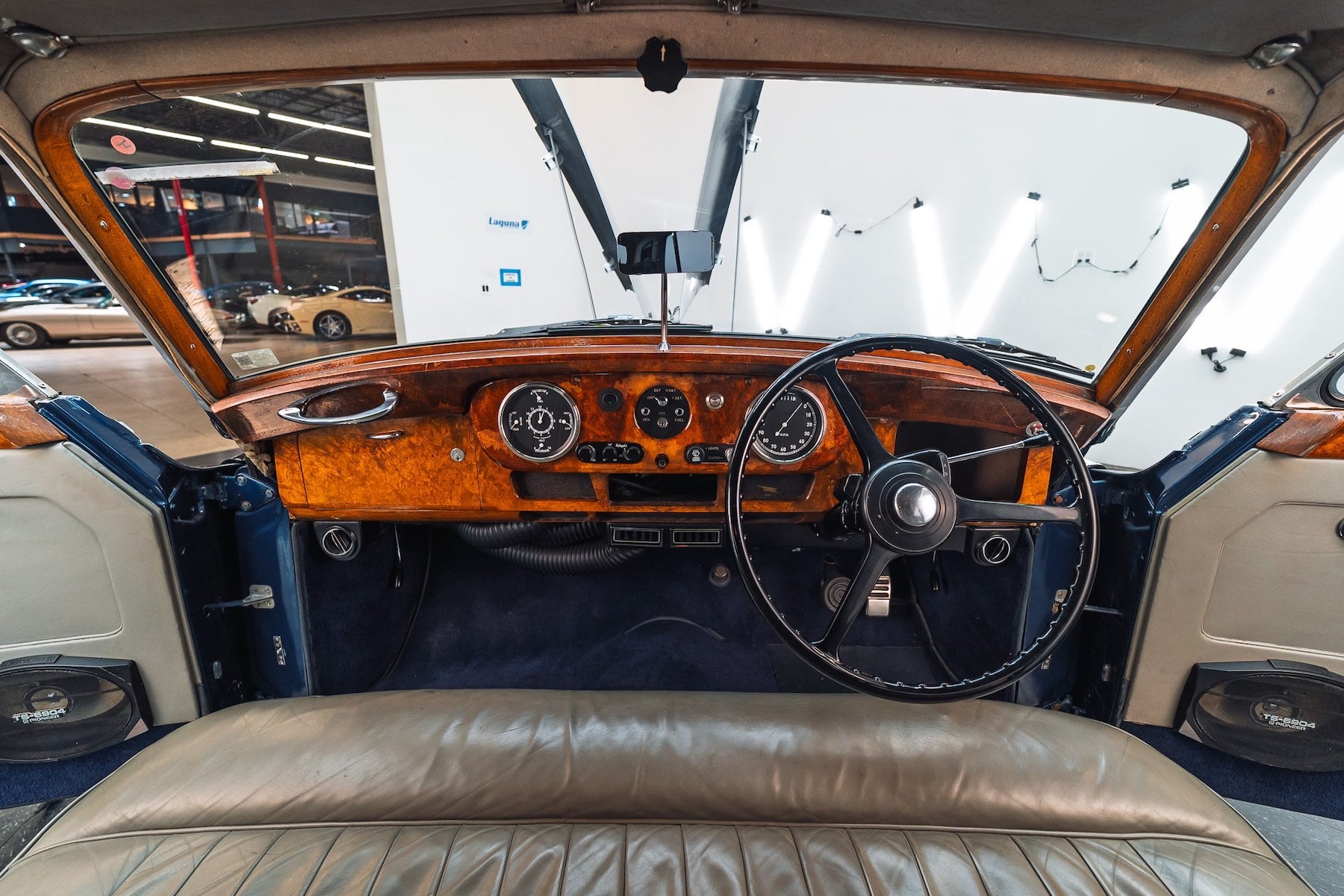
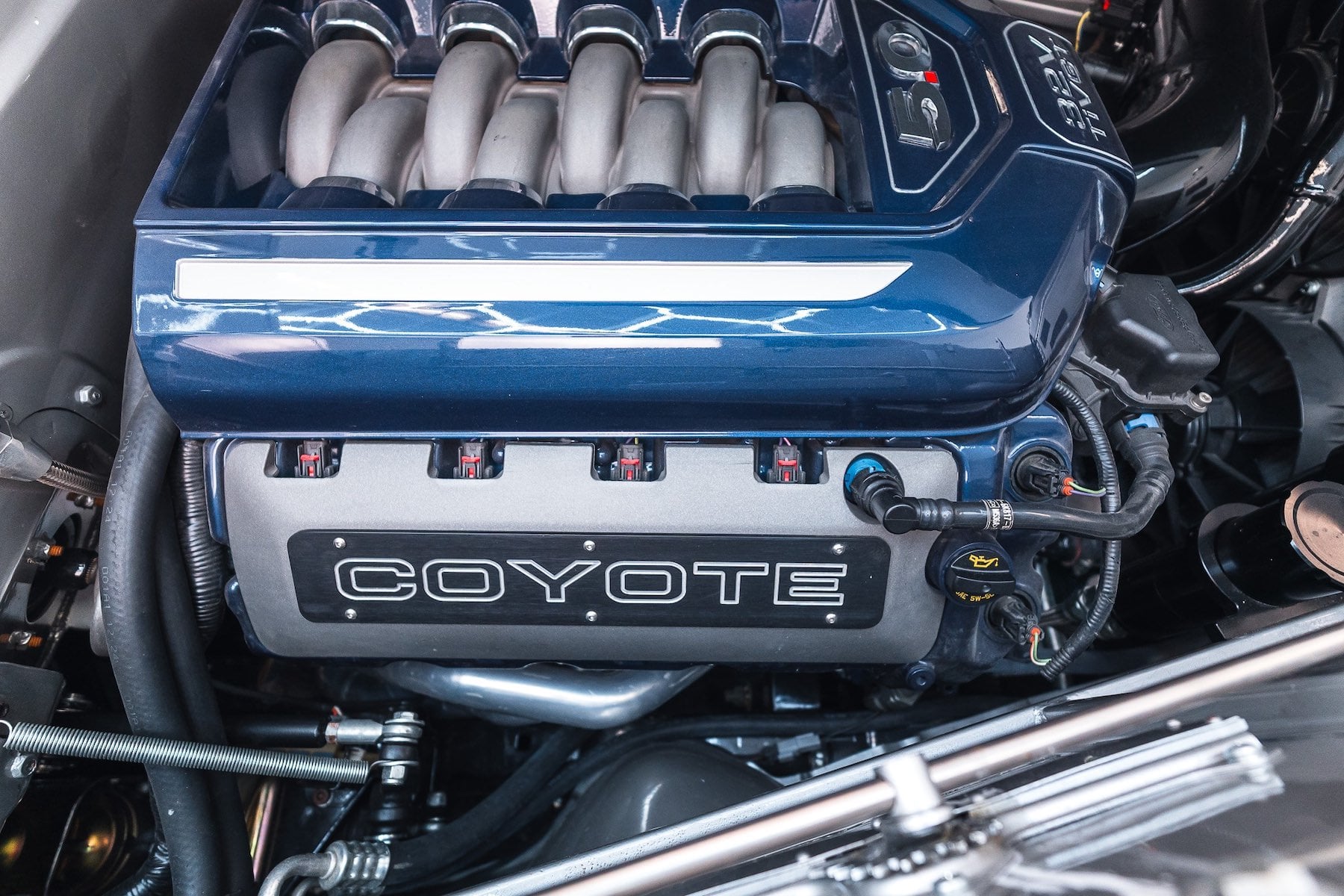
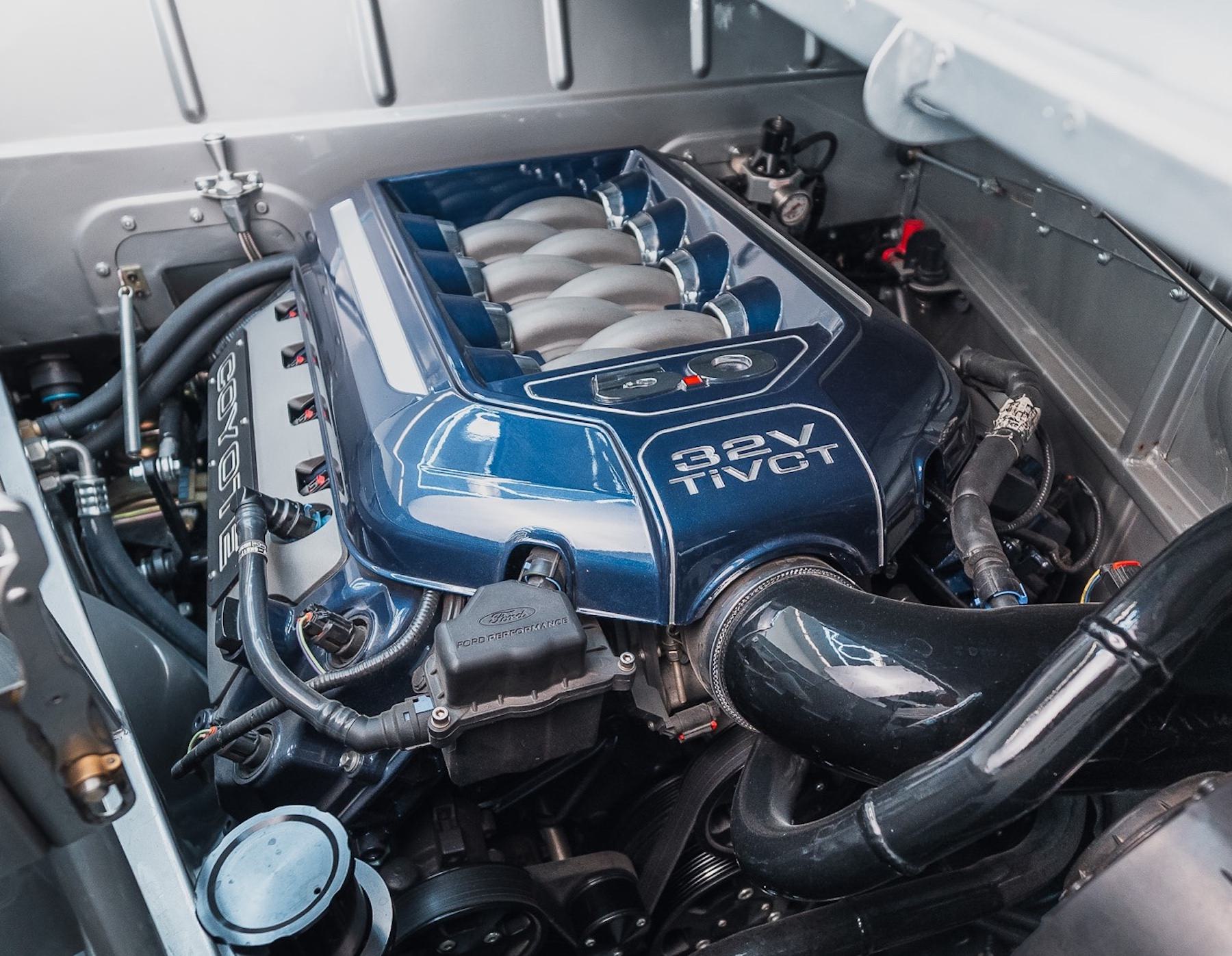
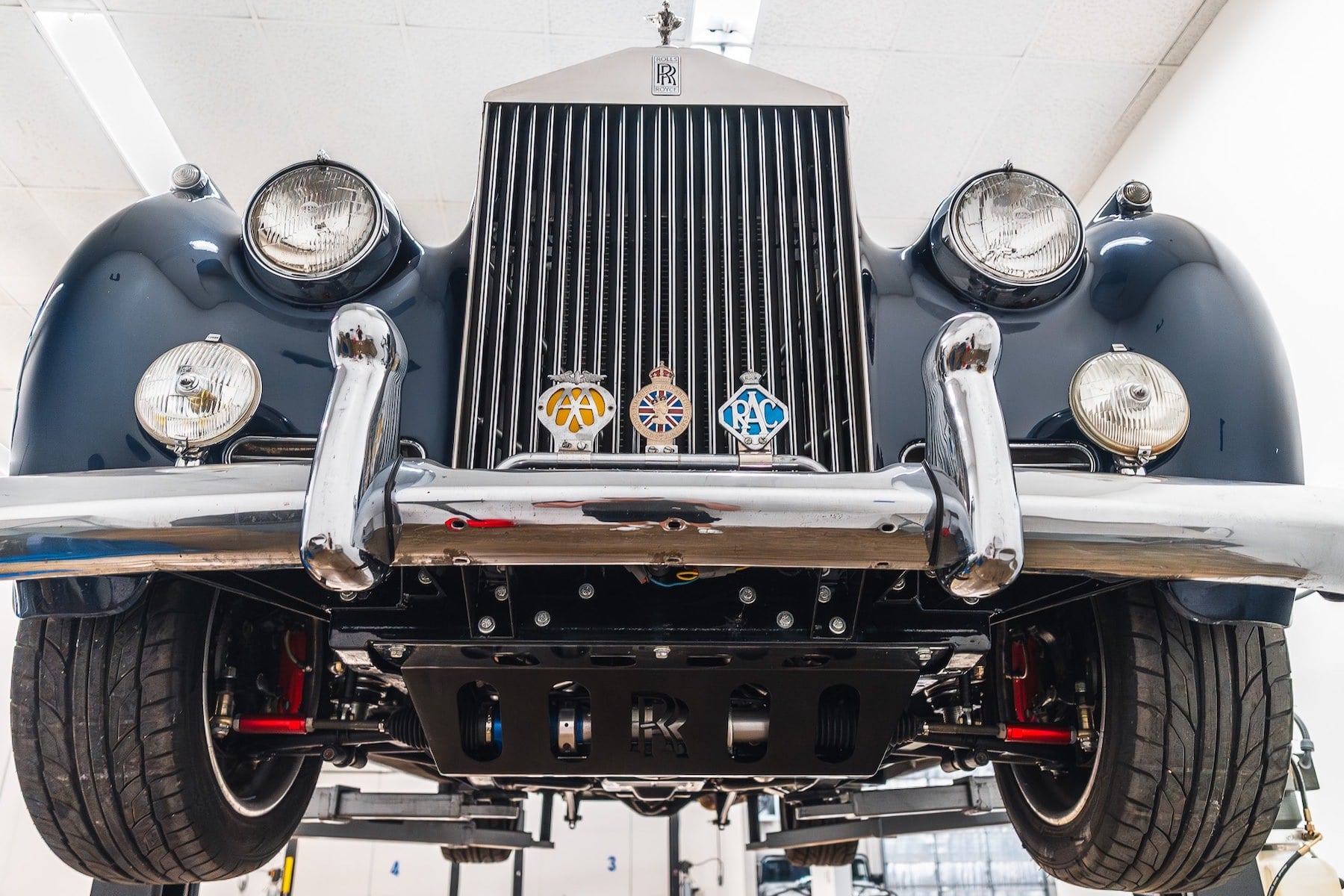
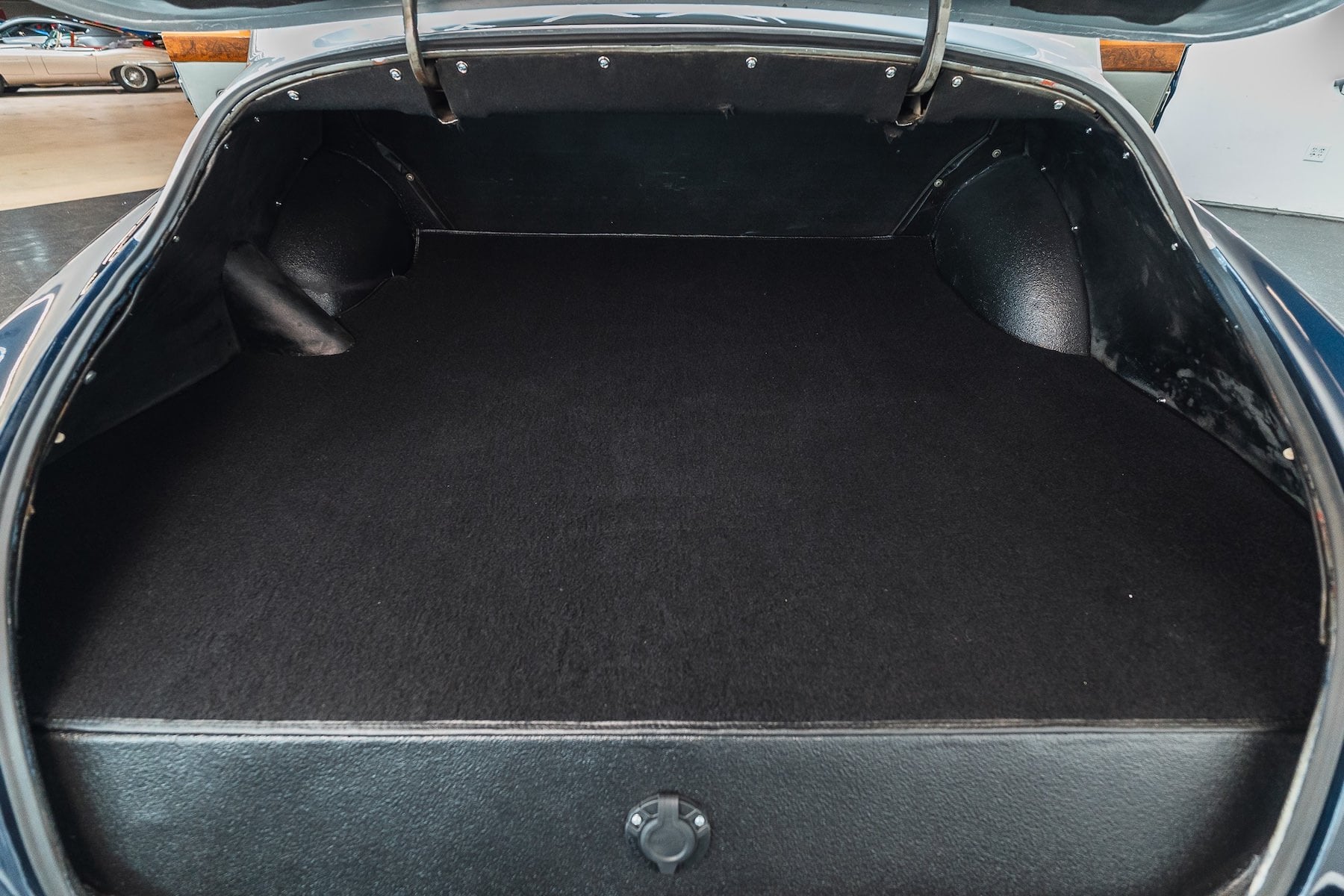
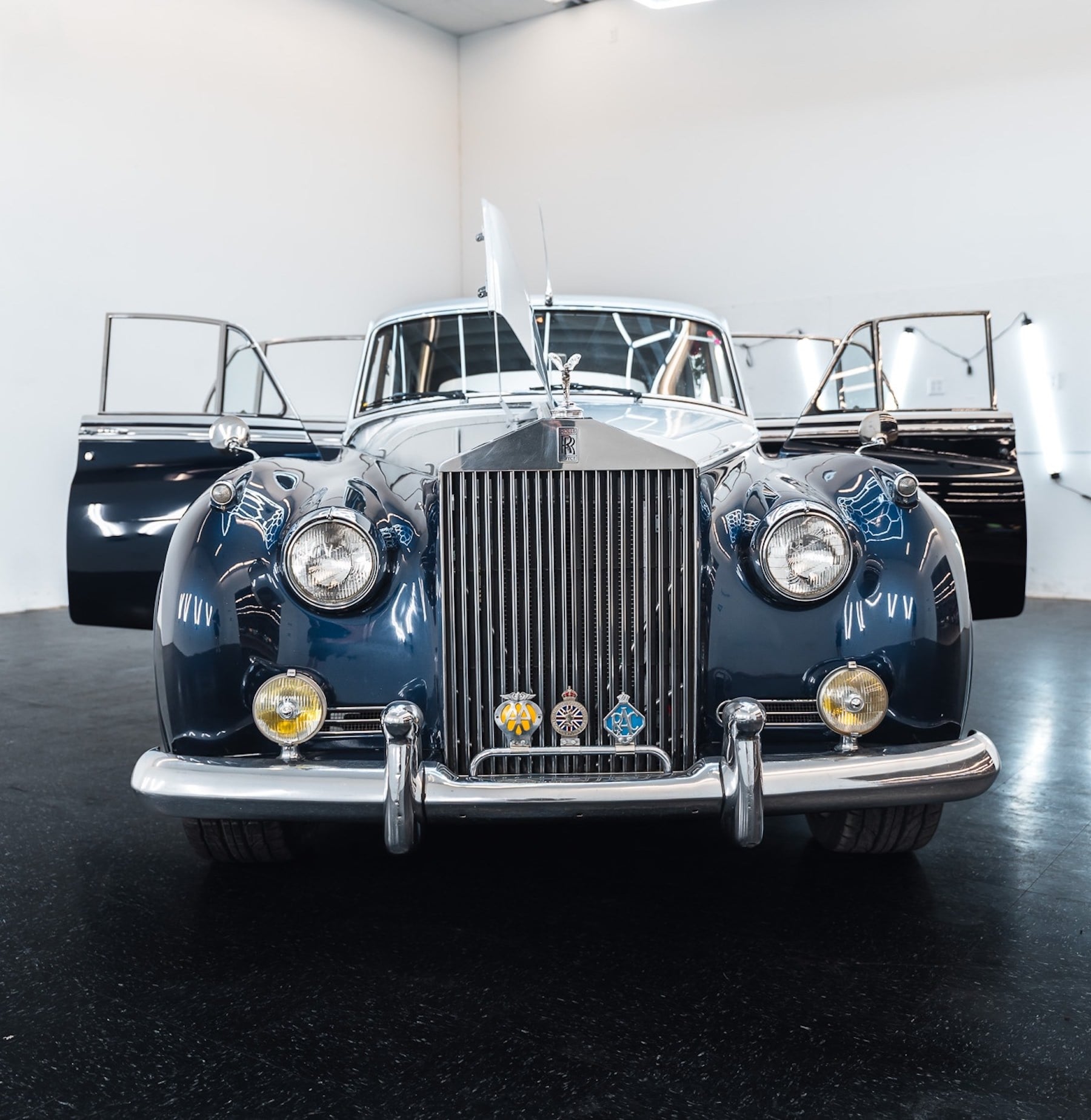
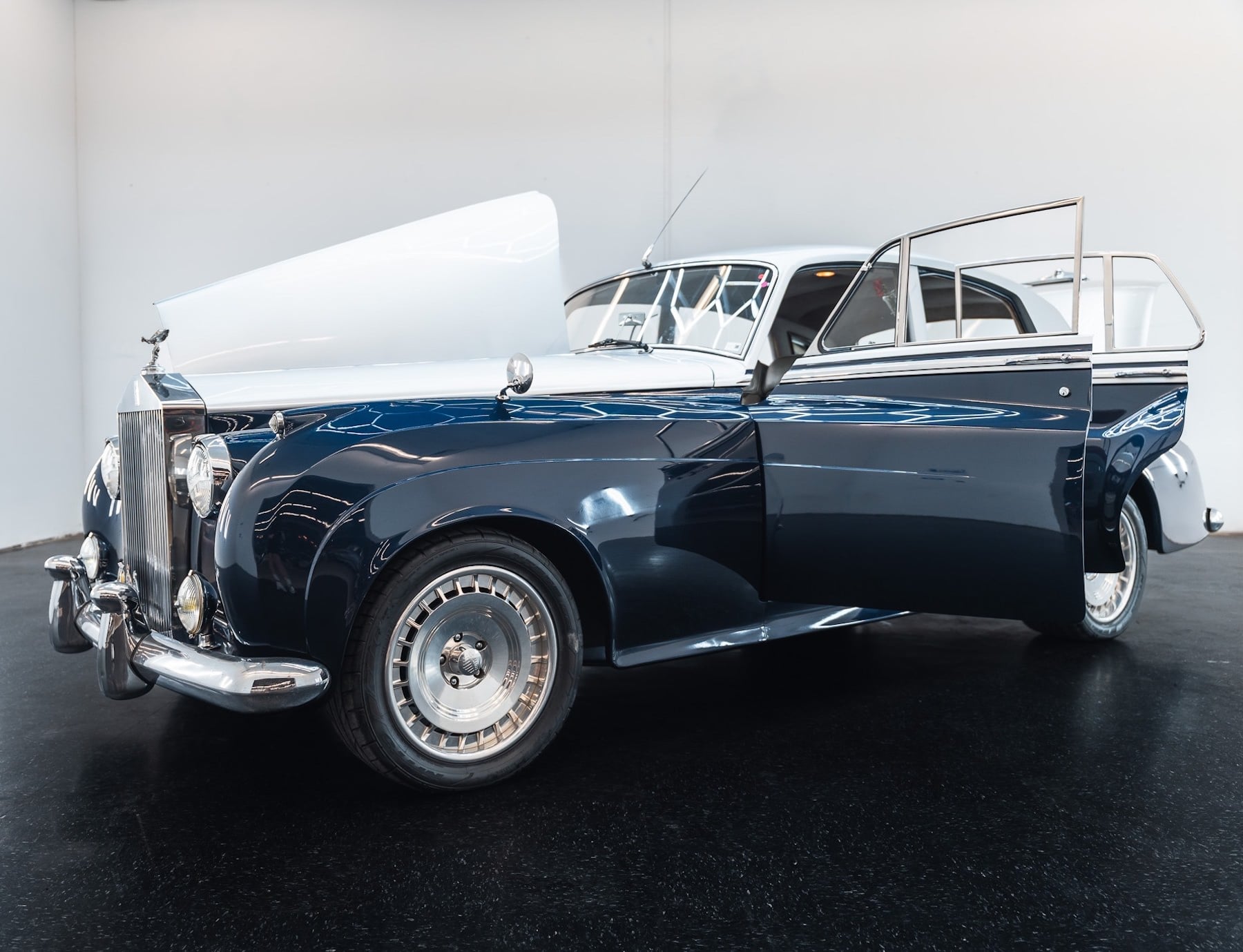
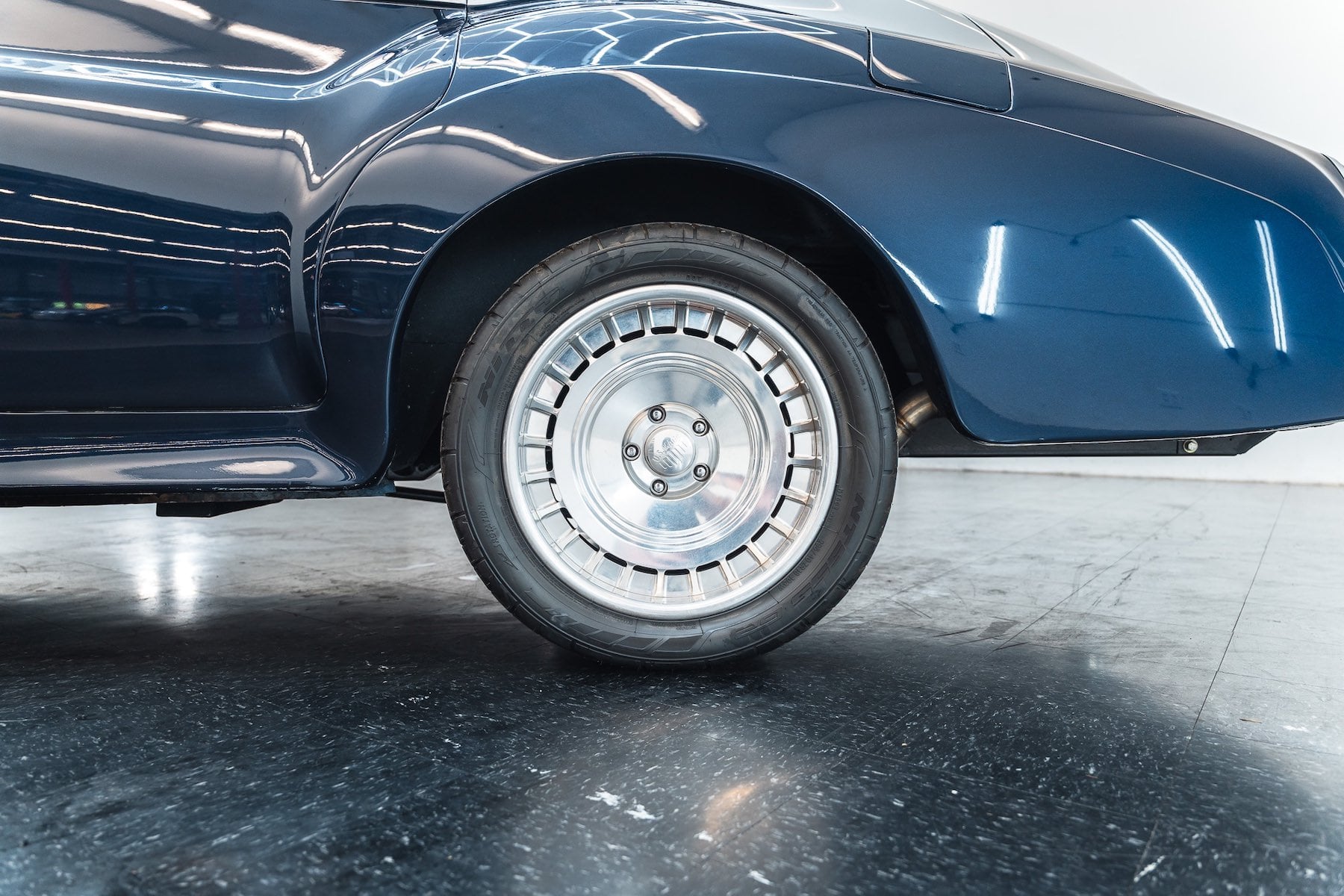
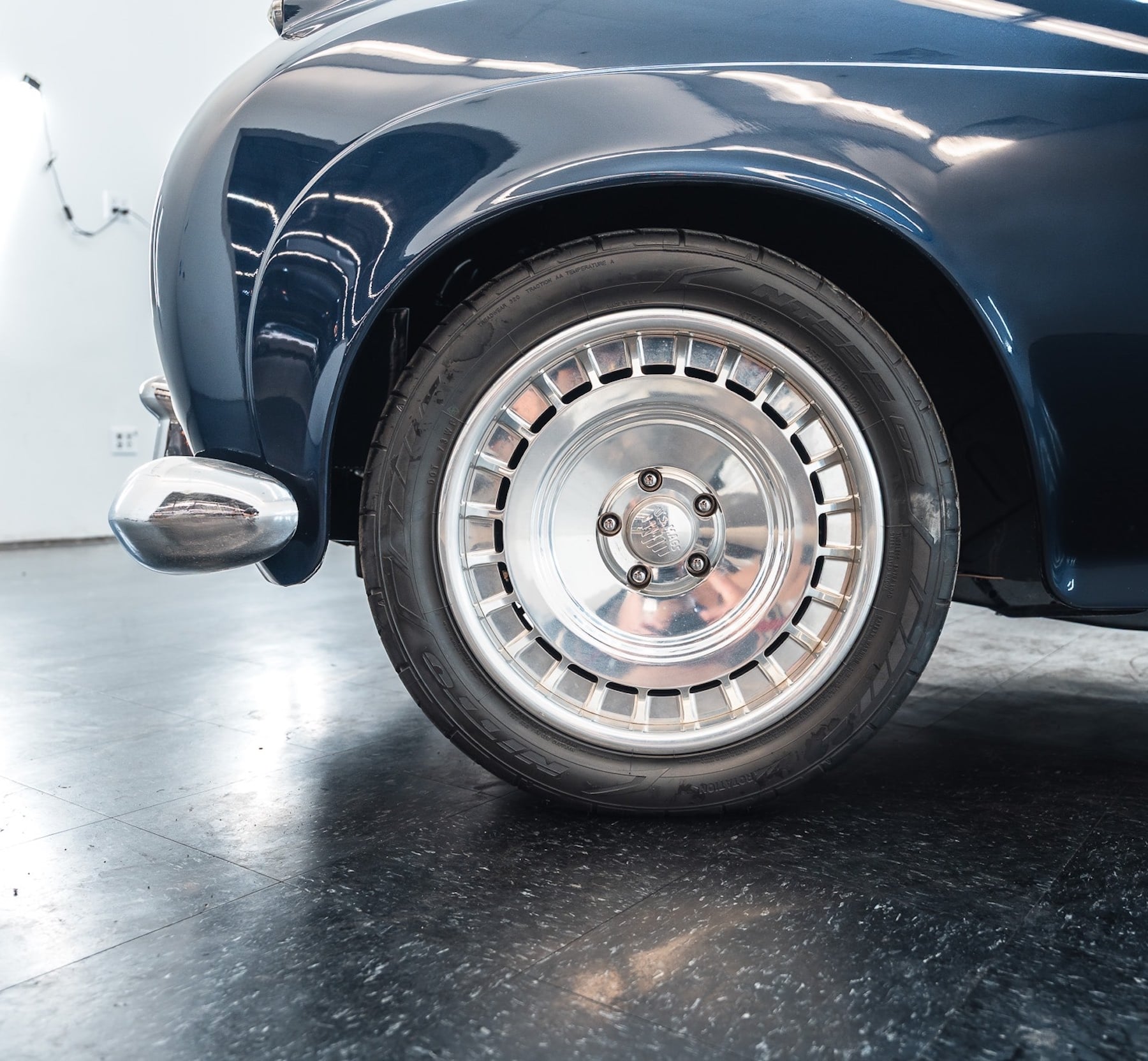
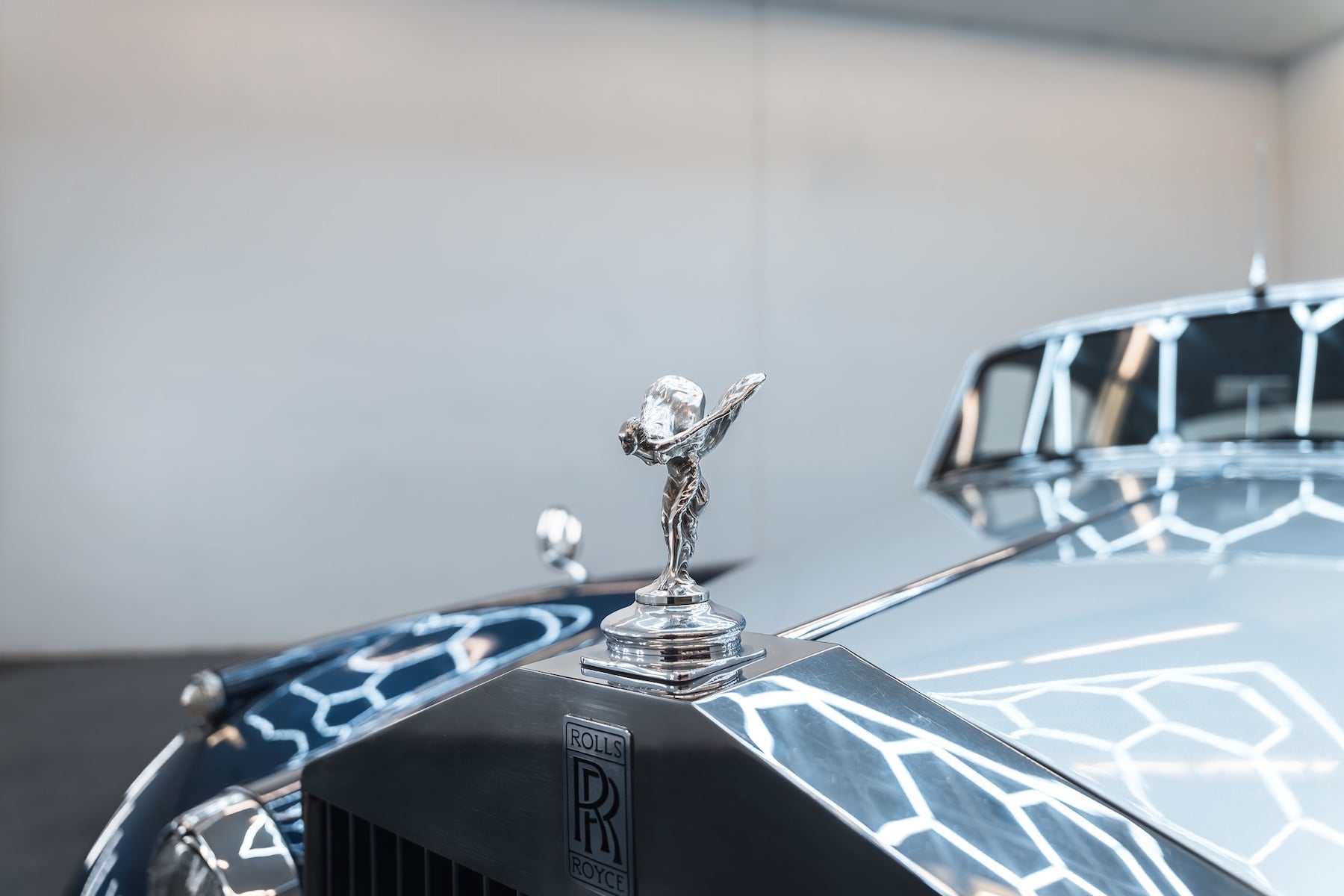
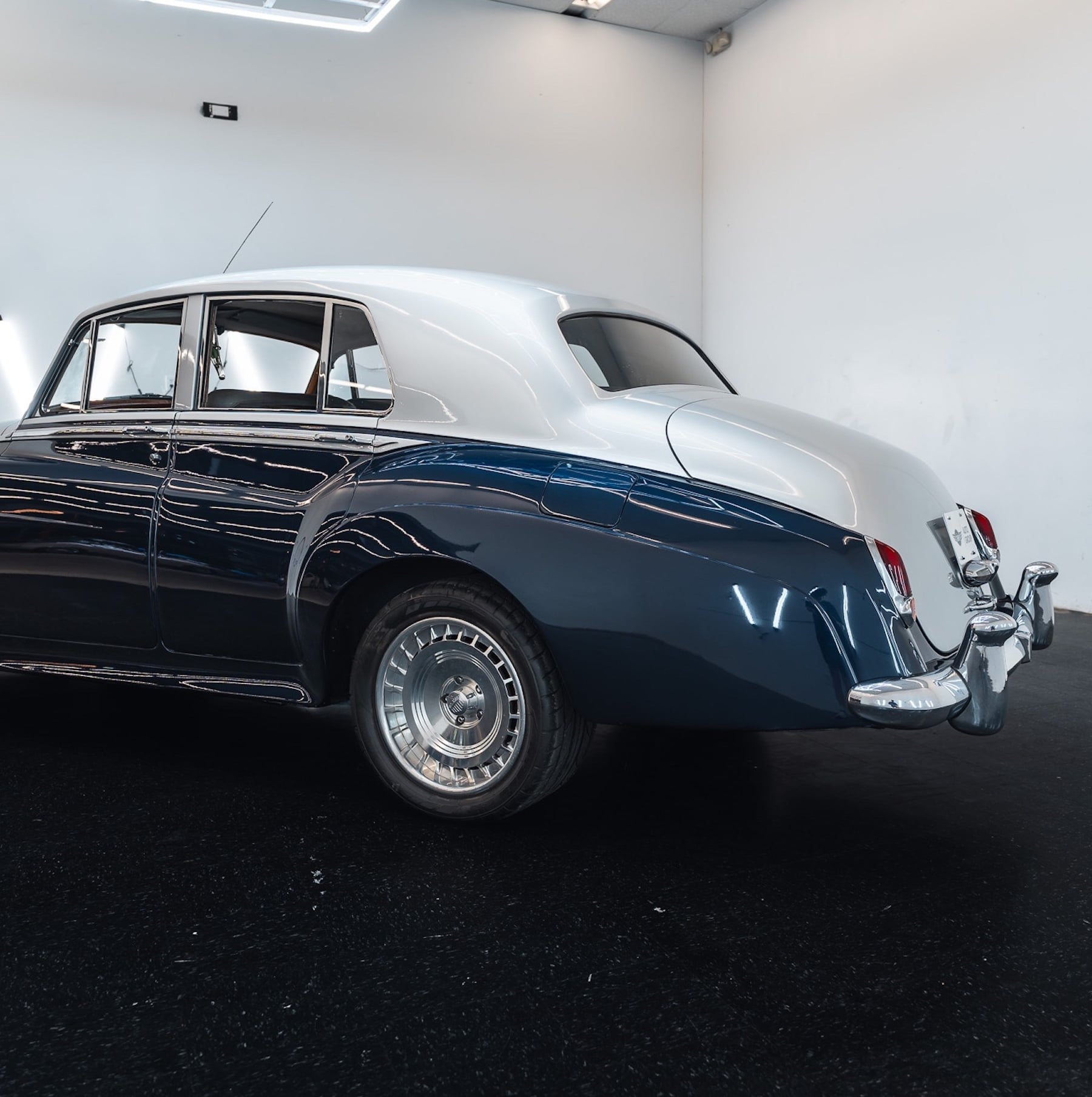
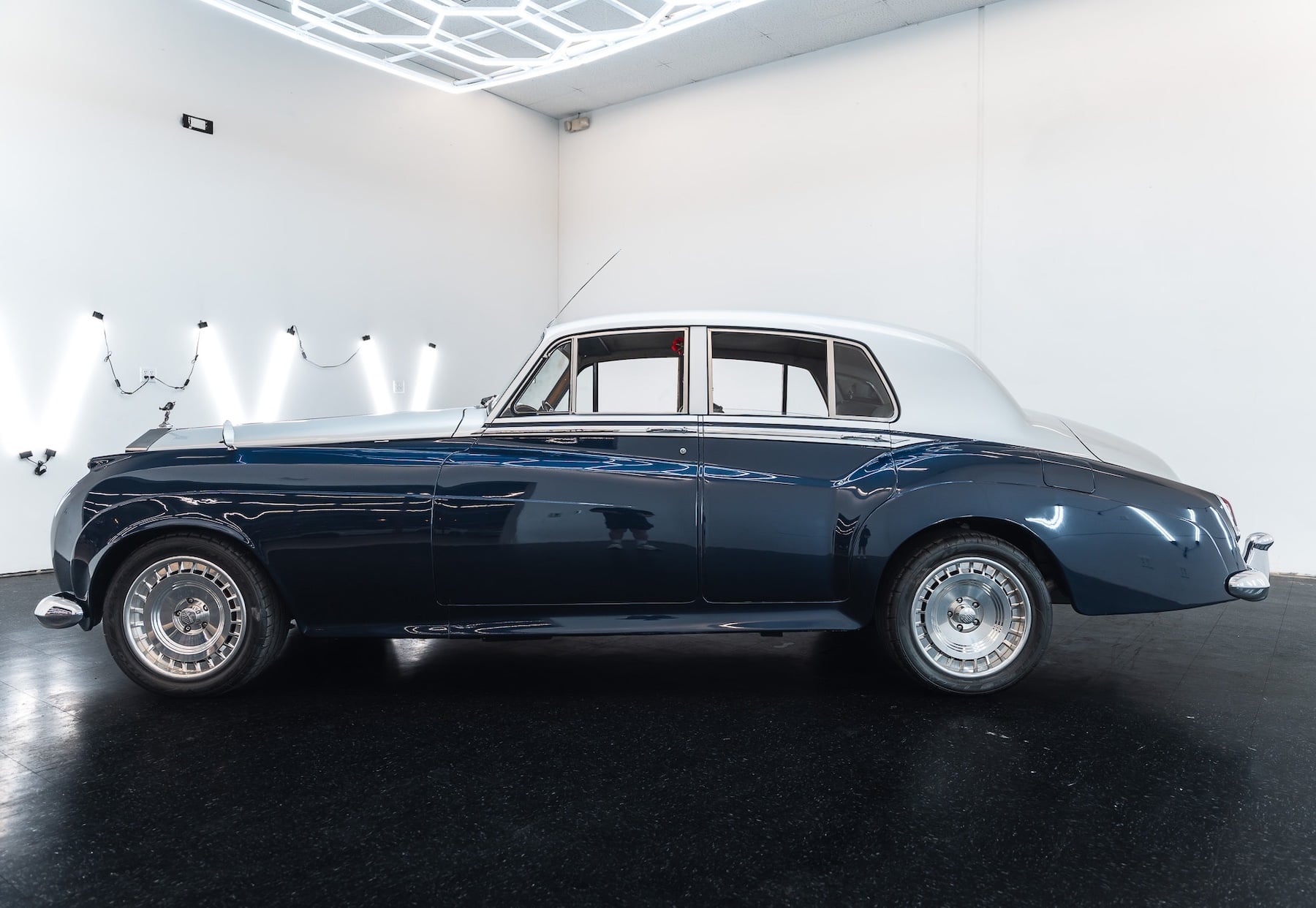
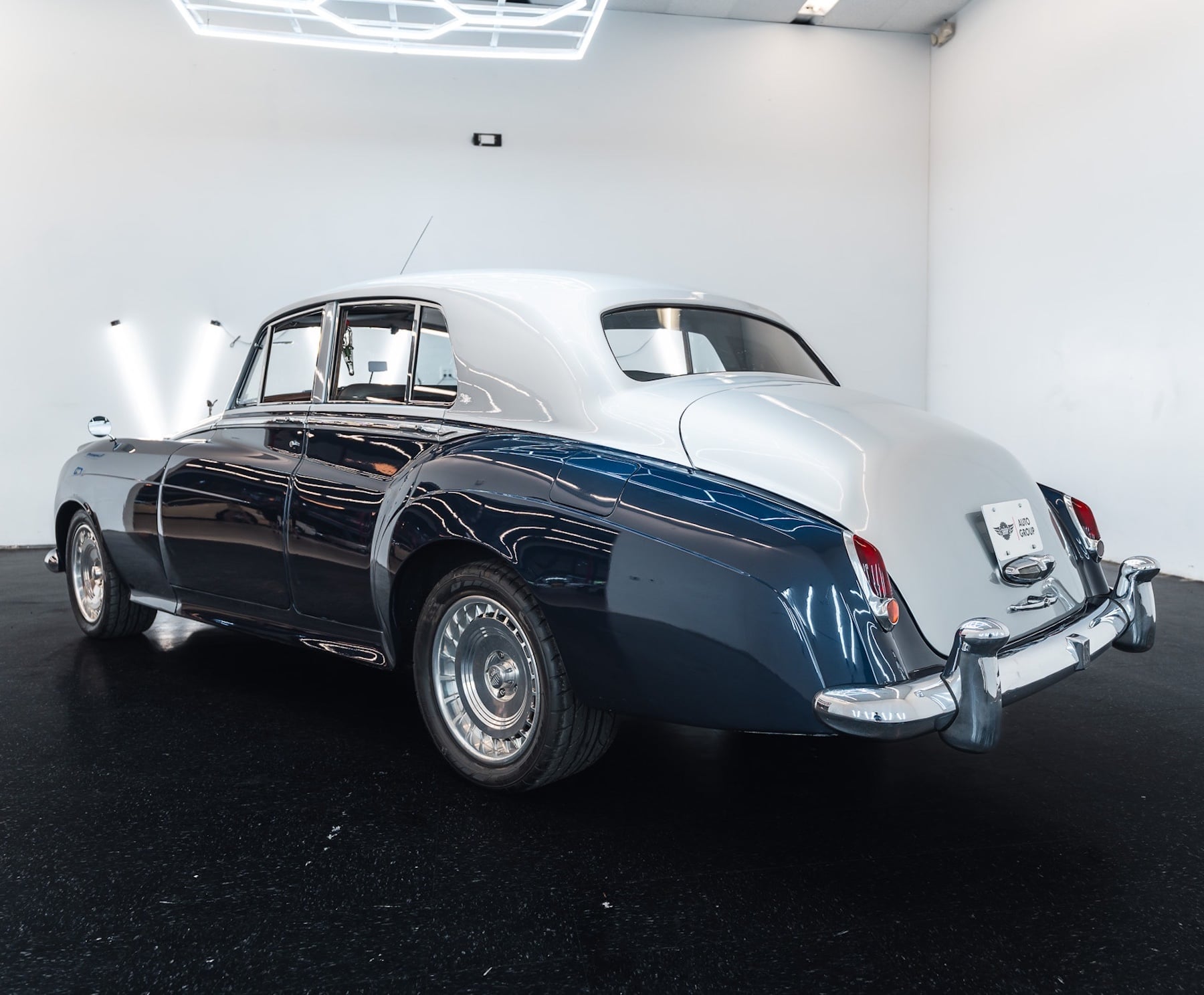
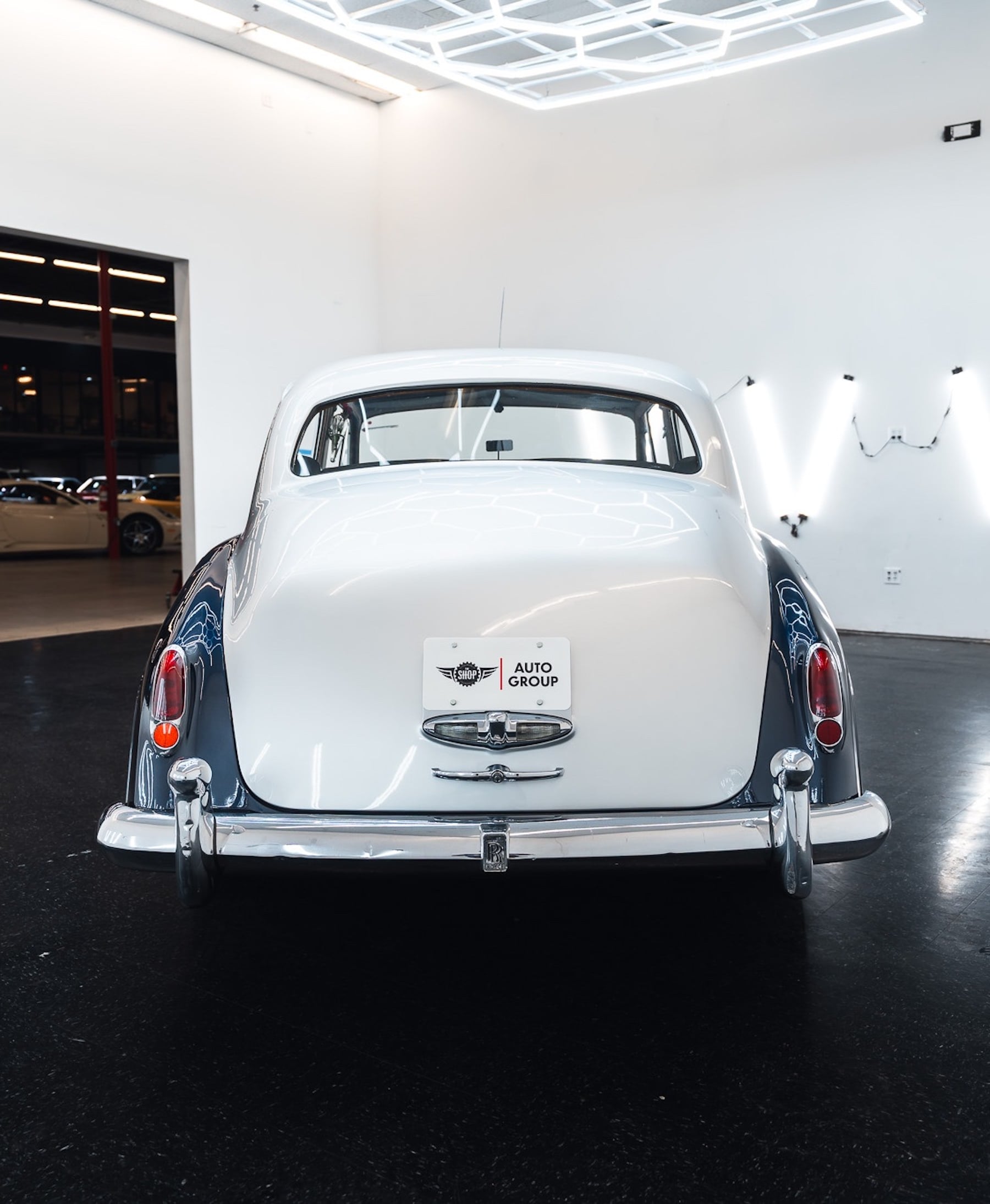
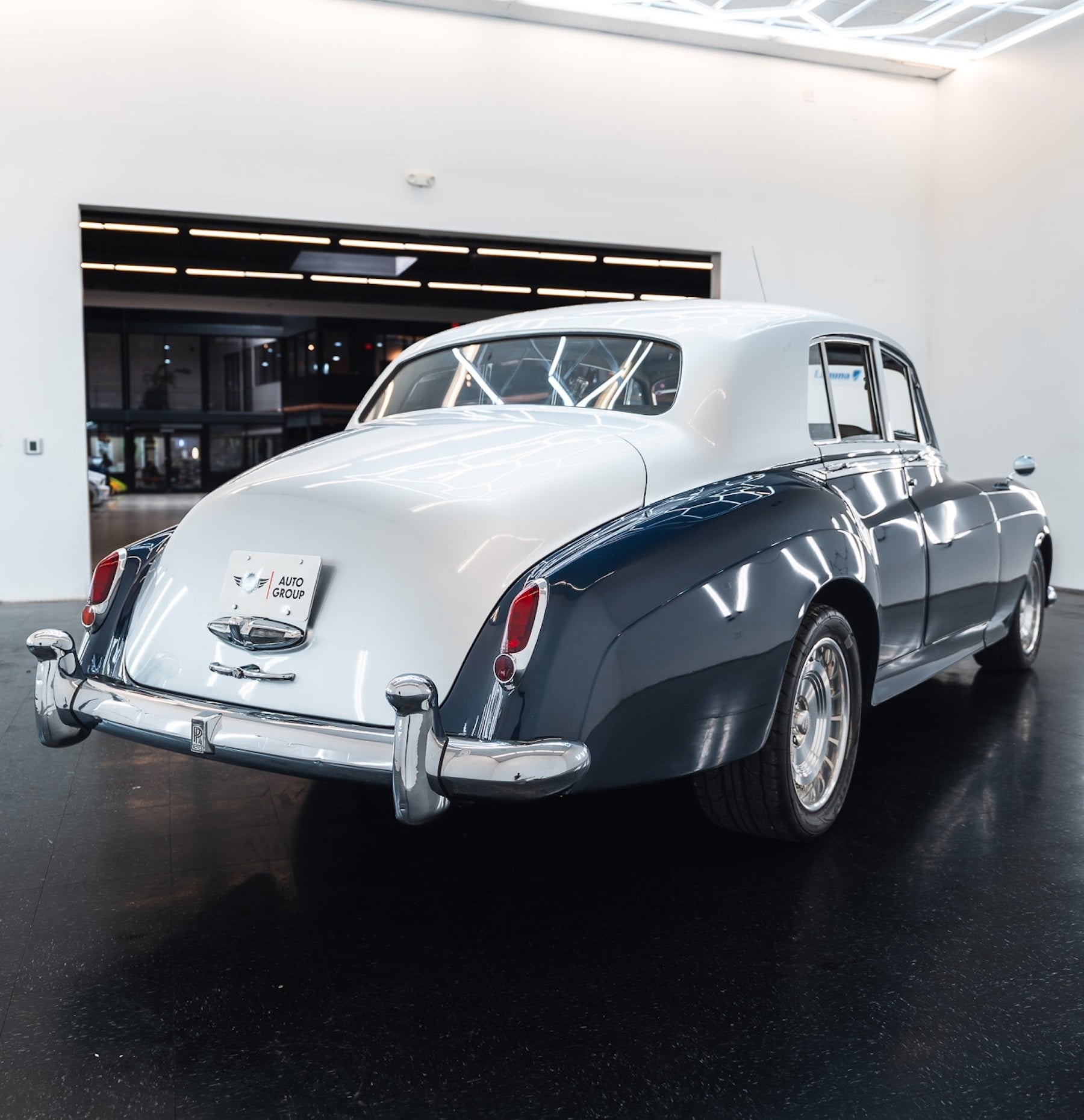
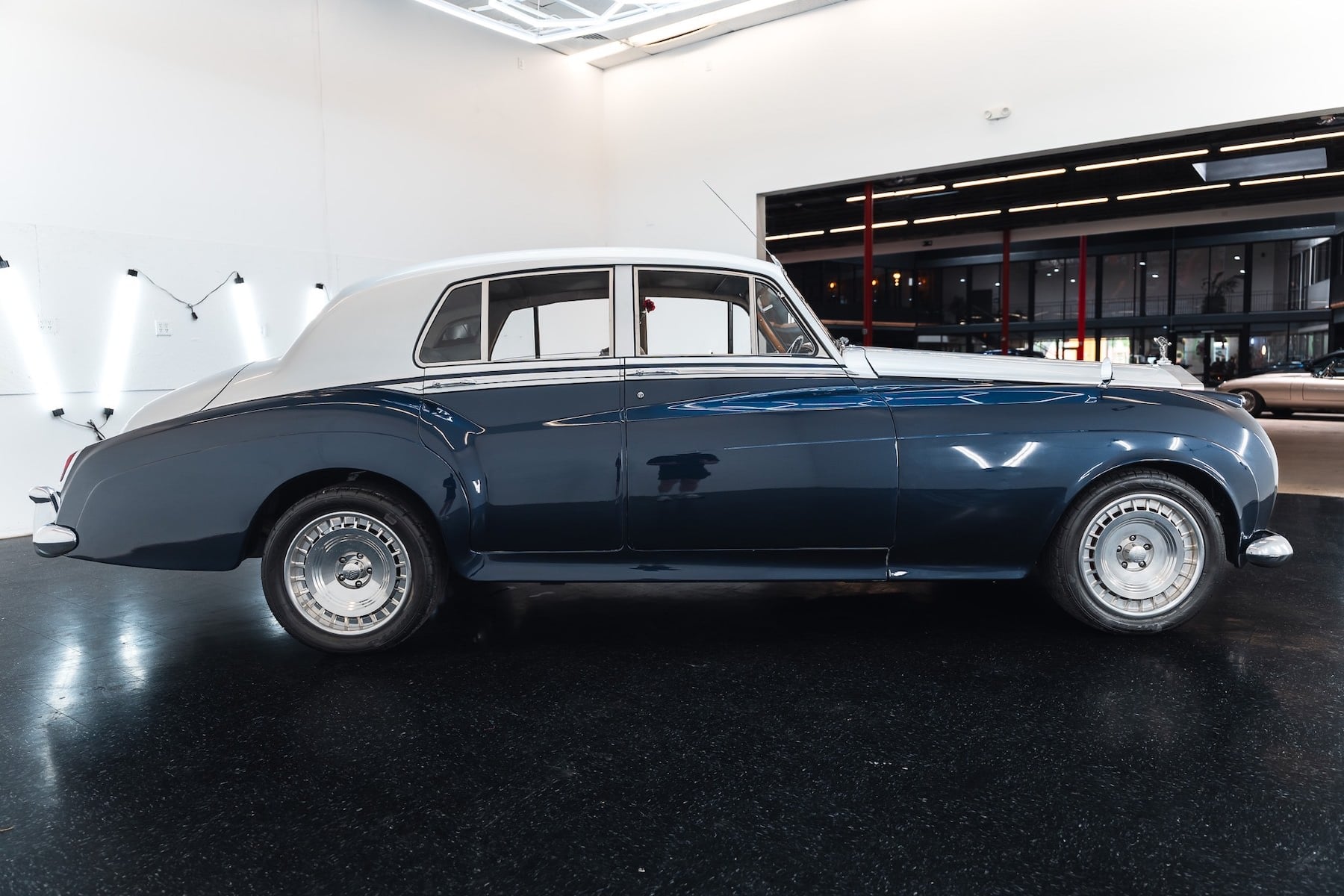
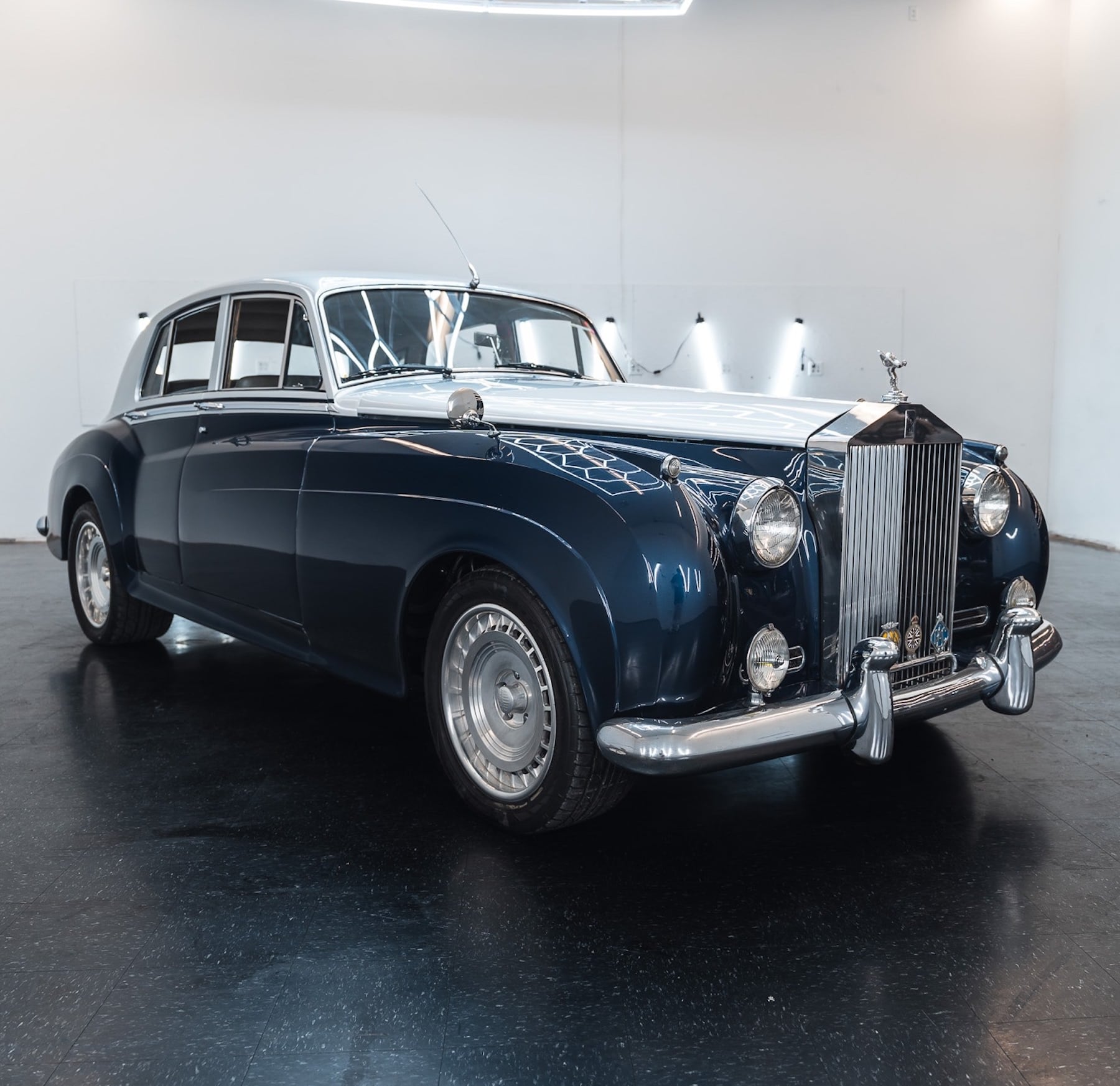
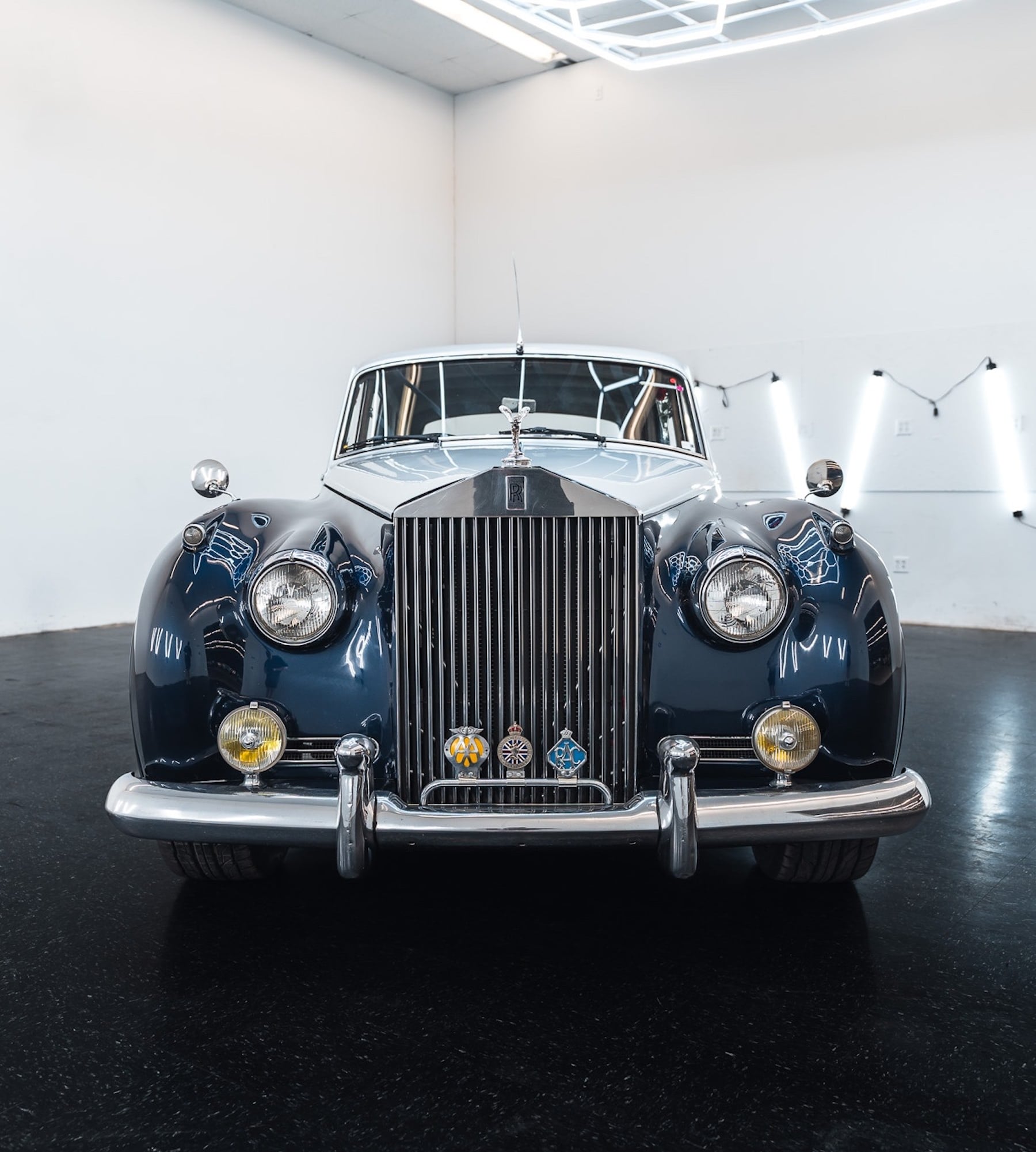
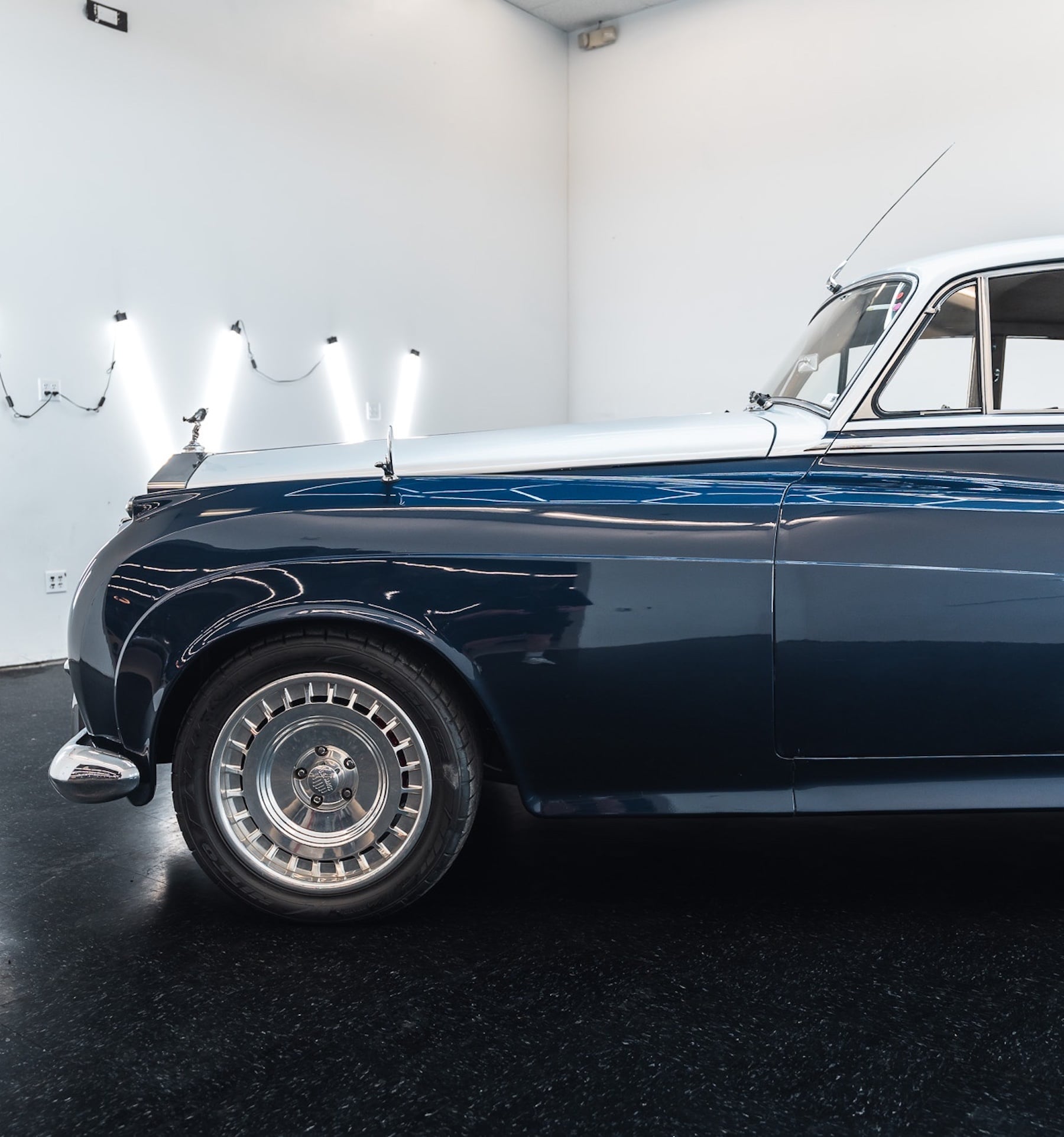
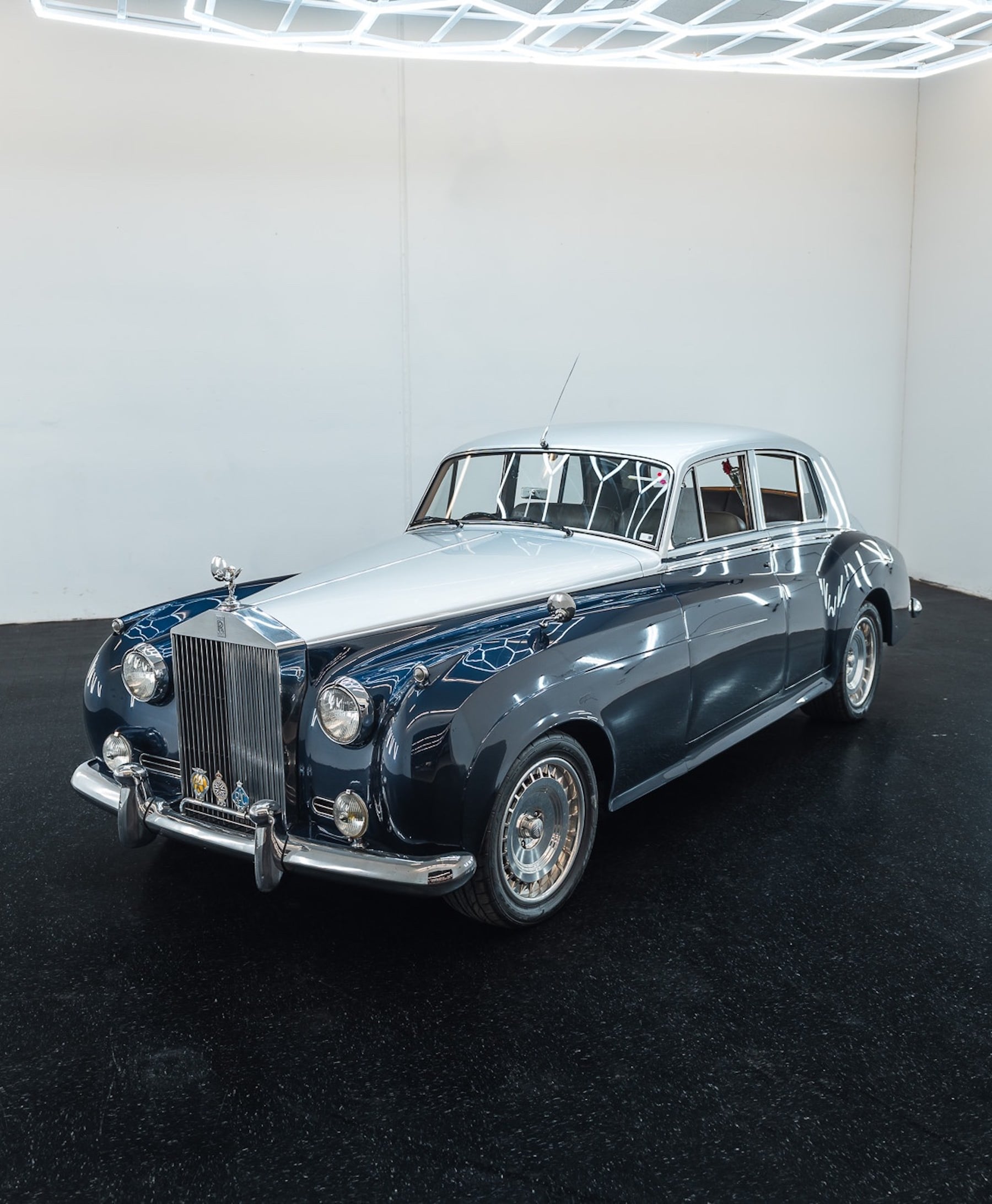
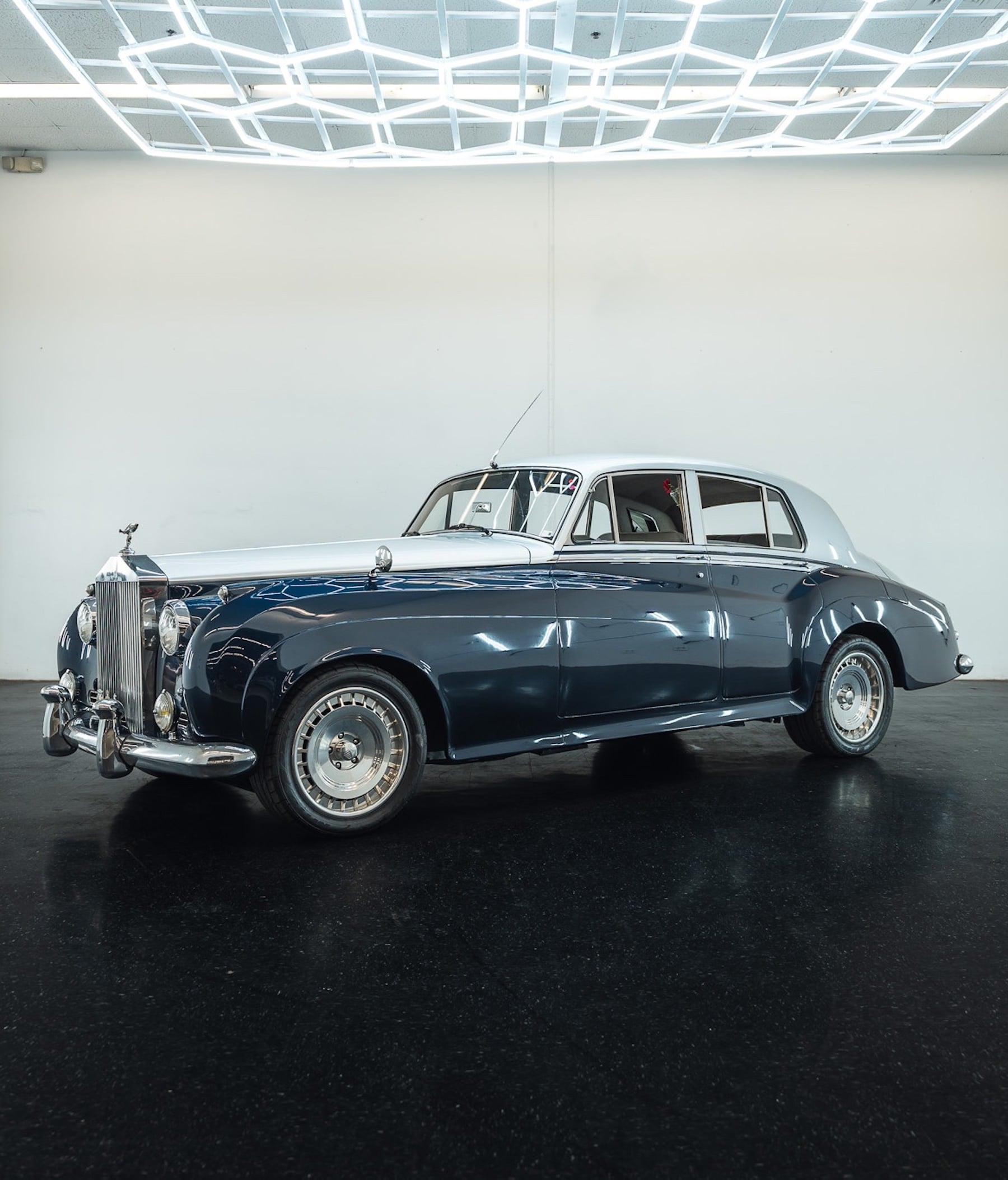
Image courtesy of Bring a Trailer
Articles that Ben Branch has written have been covered on CNN, Popular Mechanics, Smithsonian Magazine, Road & Track Magazine, the official Pinterest blog, the official eBay Motors blog, BuzzFeed, Autoweek Magazine, Wired Magazine, Autoblog, Gear Patrol, Jalopnik, The Verge, and many more.
Silodrome was founded by Ben back in 2010, in the years since the site has grown to become a world leader in the alternative and vintage motoring sector, with well over a million monthly readers from around the world and many hundreds of thousands of followers on social media.