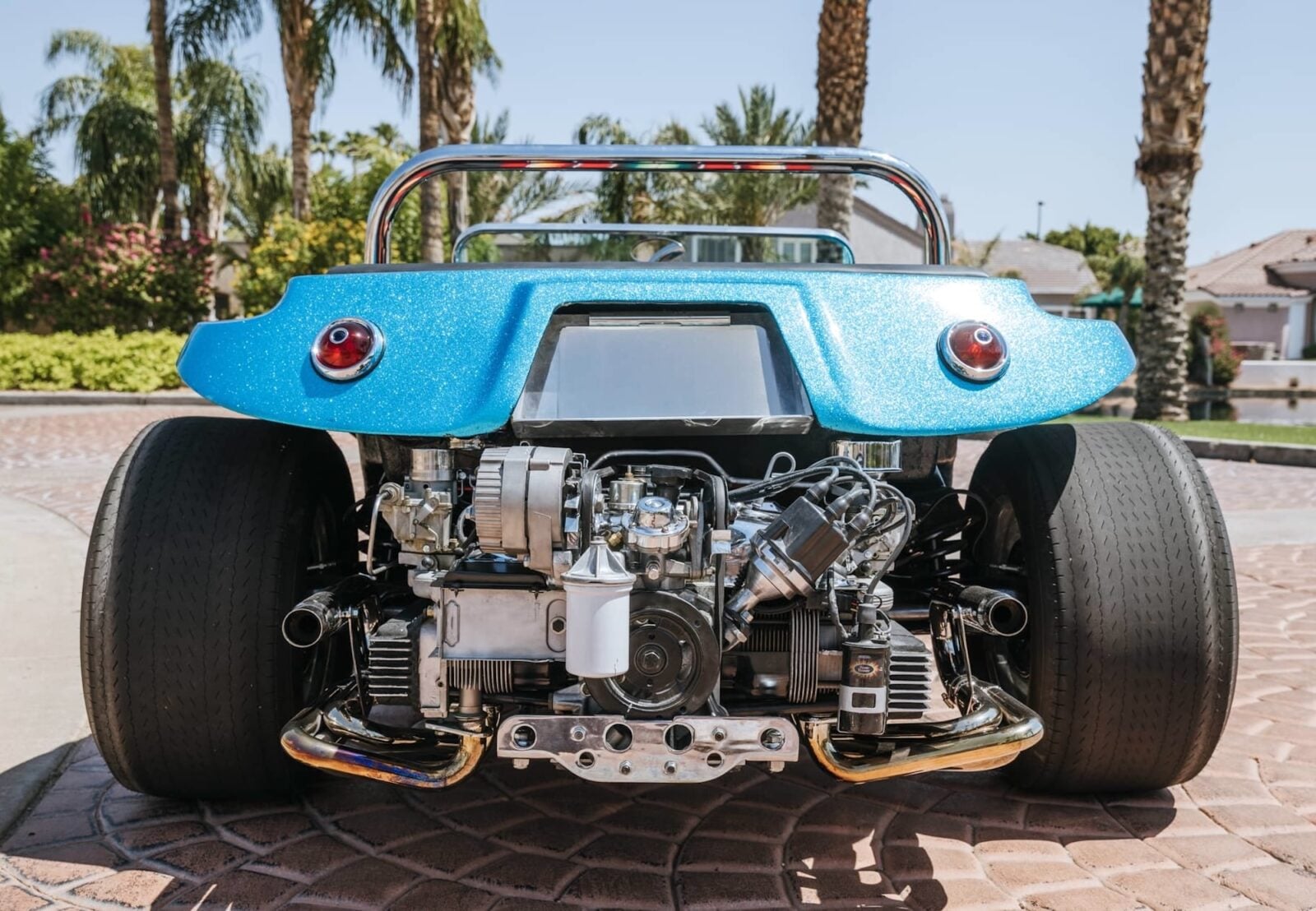
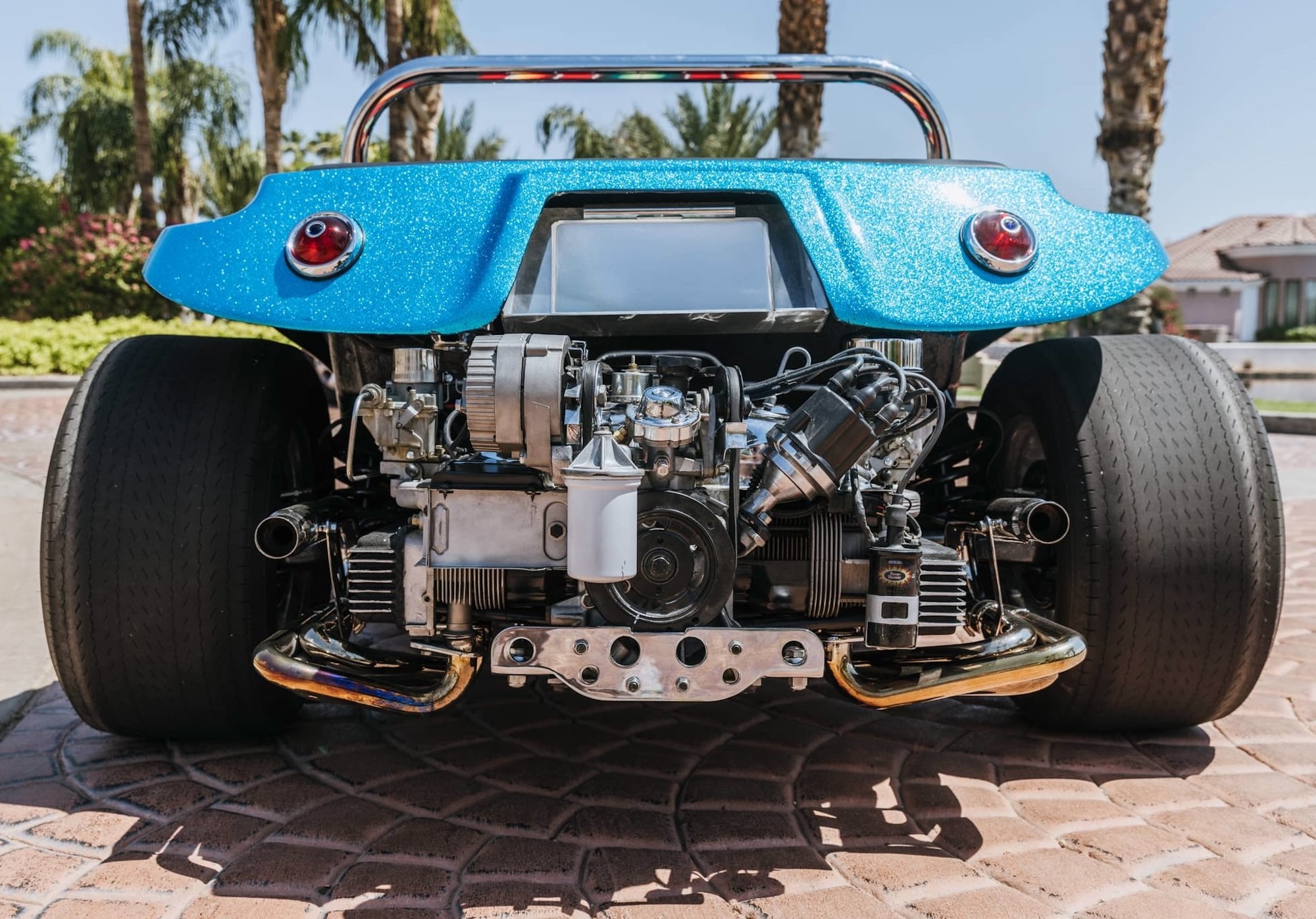
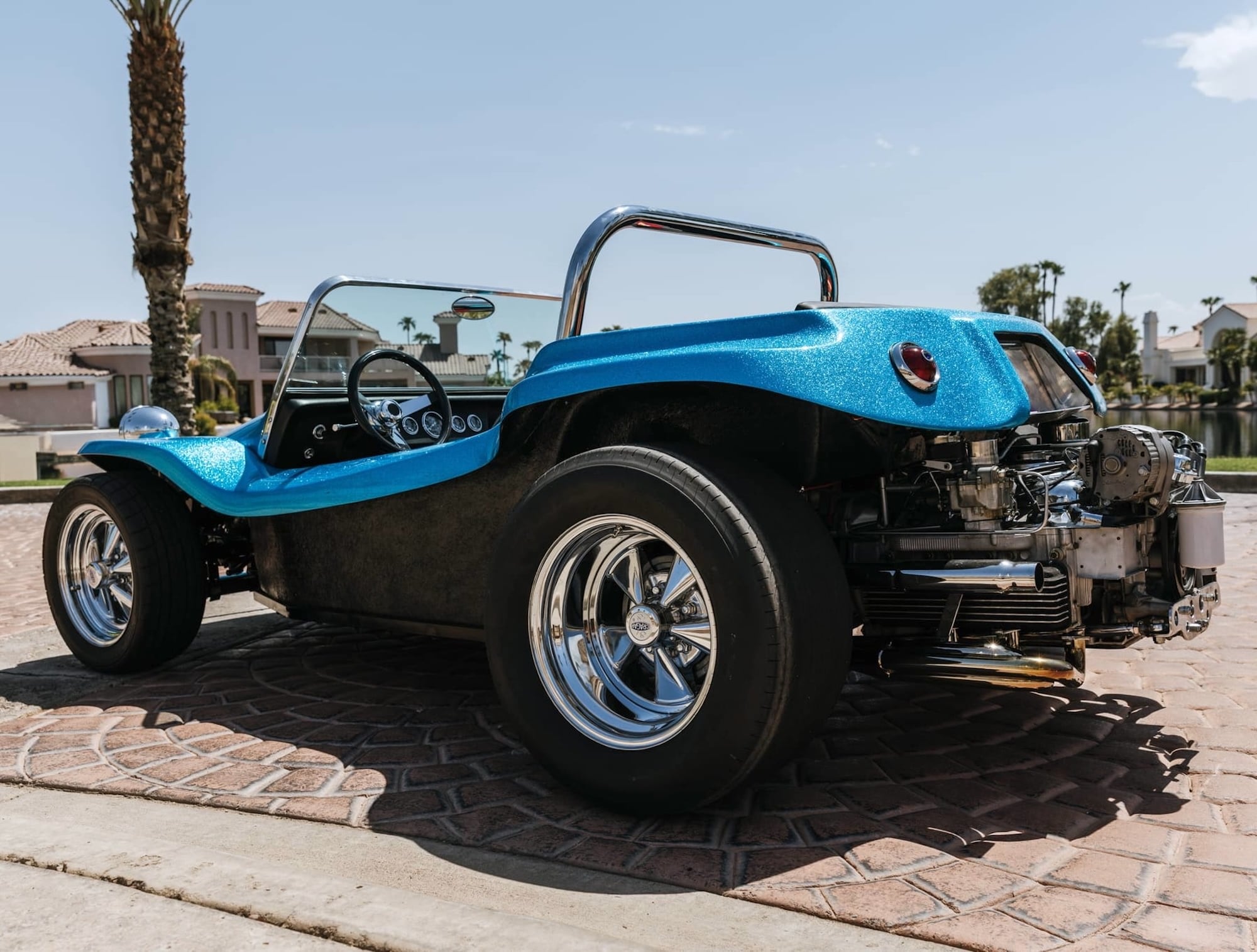
This is a Meyers Manx dune buggy, powered by a 2.7 liter air-cooled flat-six out of a Chevrolet Corvair, rather than the more common 1.6 liter flat-four out of a Beetle.
The factory-stock Corvair engine was capable of up to 140 bhp and 180 lb ft of torque in non-turbocharged form, considerably more than the 1.6 liter VW engine, which was making around 57 bhp and 81 lb ft on a good day. As a result, Corvair-powered Manx buggies can offer acceleration fast enough to embarrass many sports cars and terrify many owners.
Fast Facts: A Corvair Flat-Six Powered Meyers Manx
- The Meyers Manx grew from Bruce Meyers’ background in engineering, surfing, and fiberglass boatbuilding in 1960s Southern California. After an ambitious fiberglass monocoque prototype proved difficult to mass-produce, he developed a simpler design using a shortened Volkswagen Beetle floorpan with a lightweight fiberglass body bolted on top.
- The Beetle-based design kept the donor car’s suspension, brakes, steering, transmission, and engine, making the Manx affordable and easy to build. Meyers named it after the tailless Manx cat, due to the buggy’s bobtail design. More than 6,000 kits were ultimately sold by B. F. Meyers & Co.
- The Manx gained major publicity when Bruce Meyers and Ted Mangels drove one from Tijuana to La Paz in 34 hours and 45 minutes, beating the previous motorcycle record by more than five hours. A Corvair-powered Manx later gained fame when Steve McQueen drove one in “The Thomas Crown Affair.”
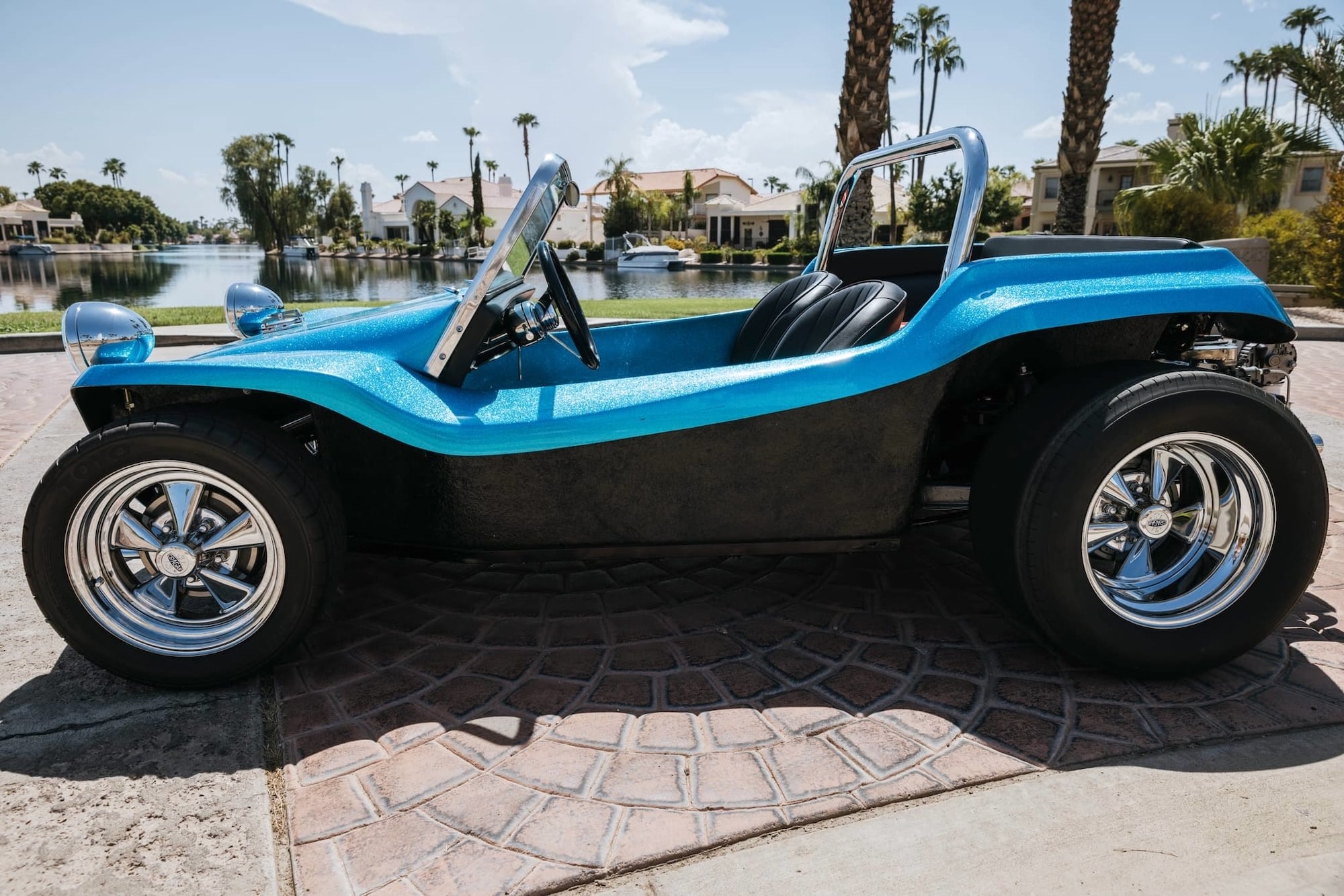
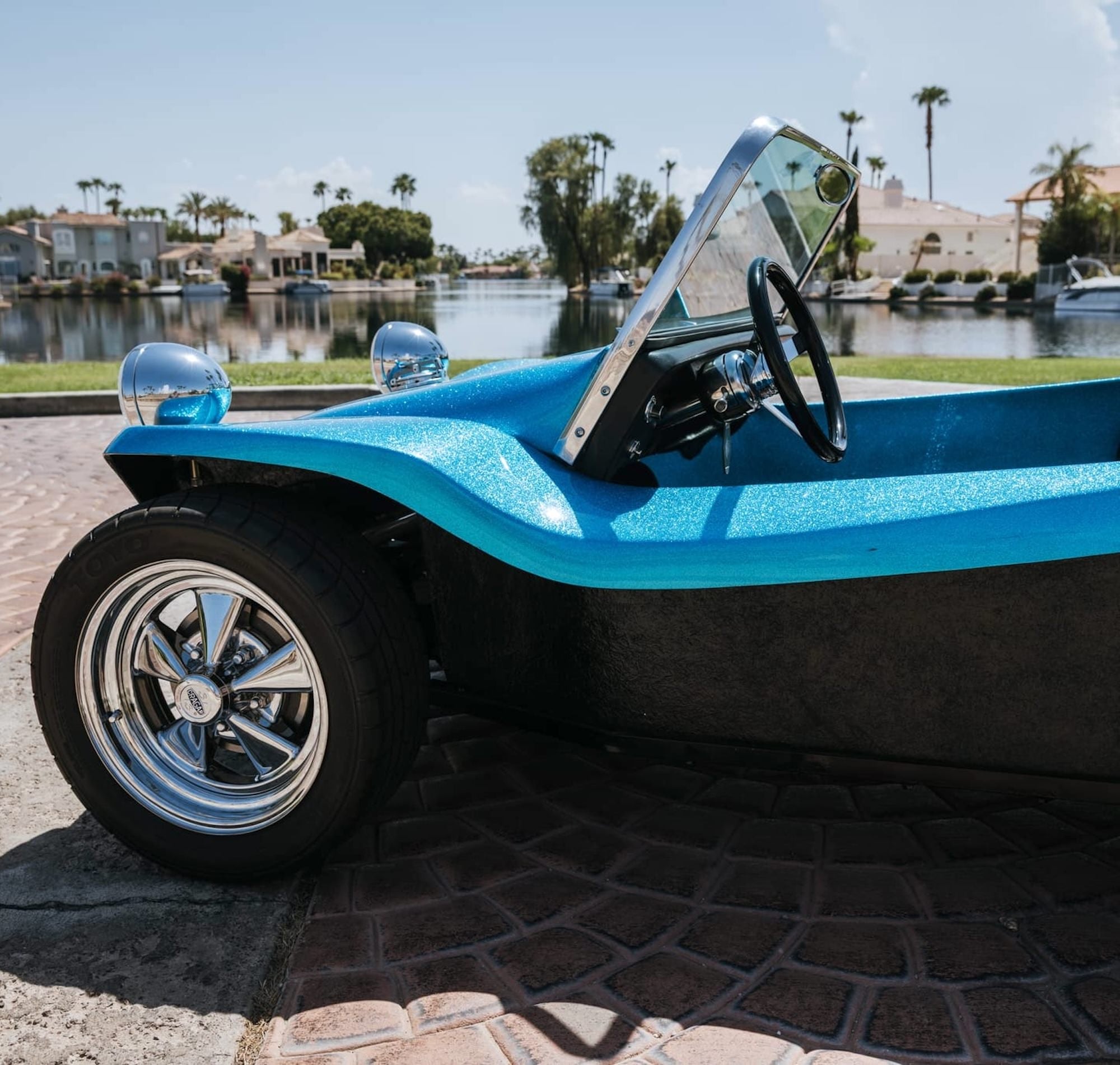
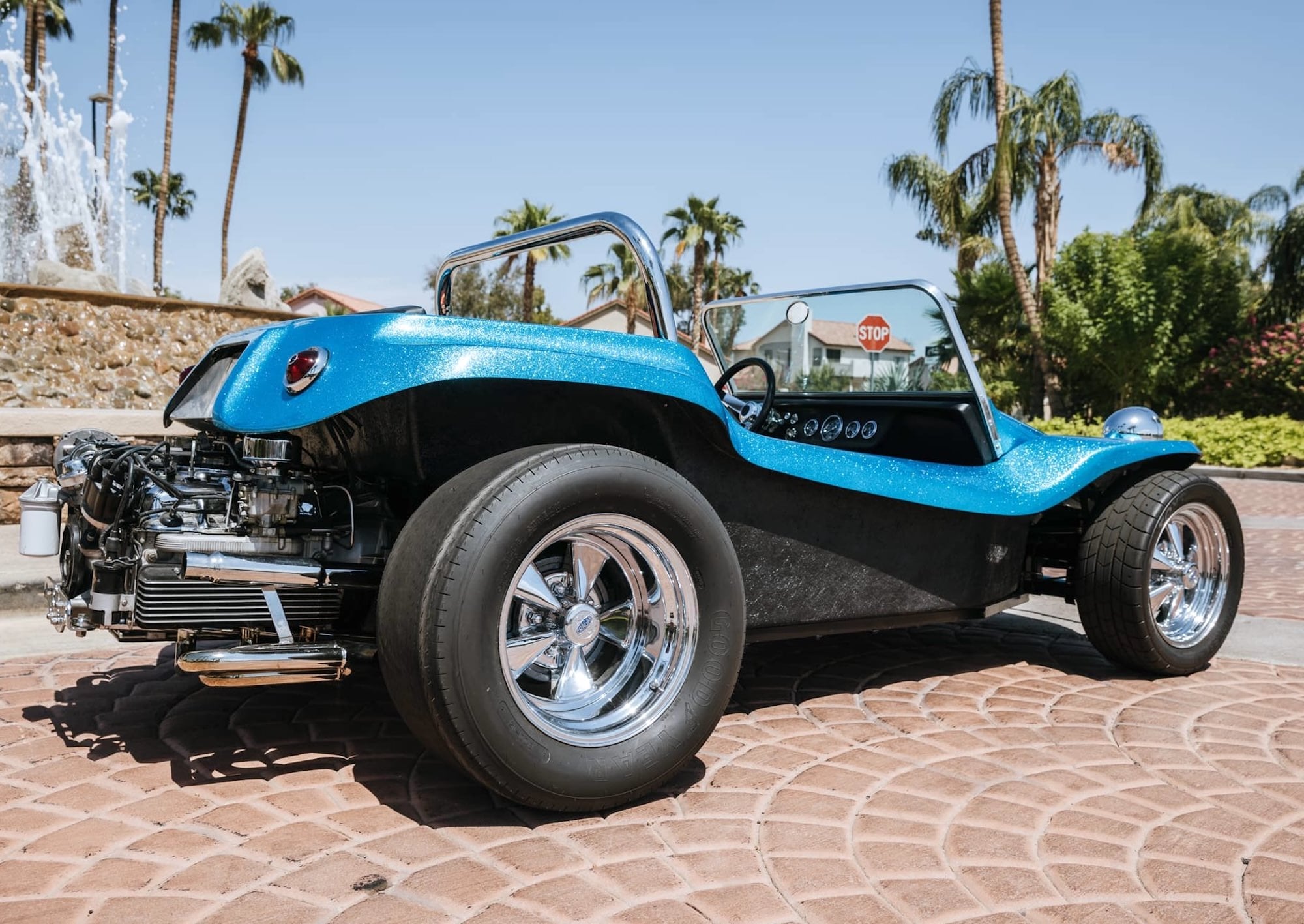
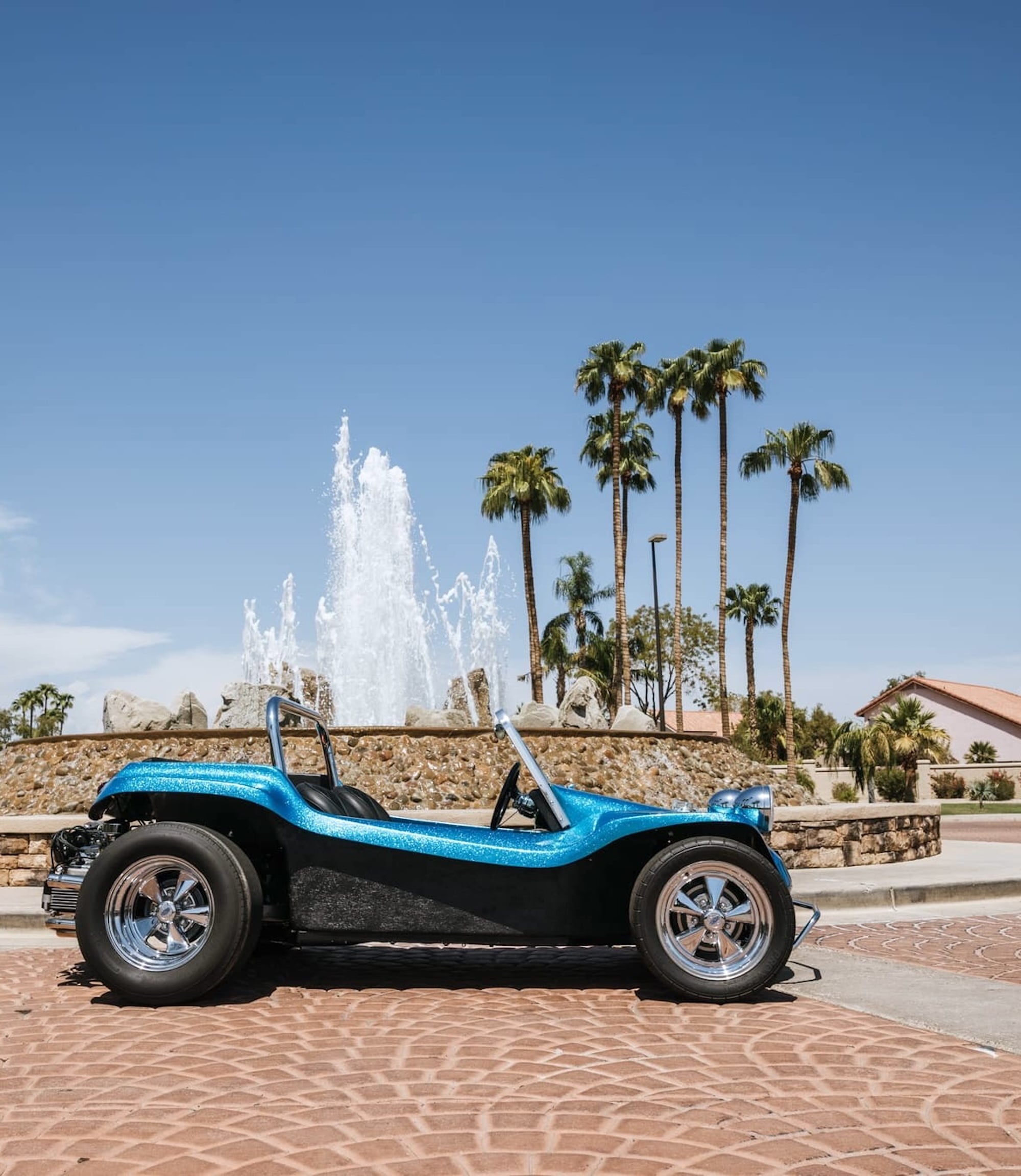
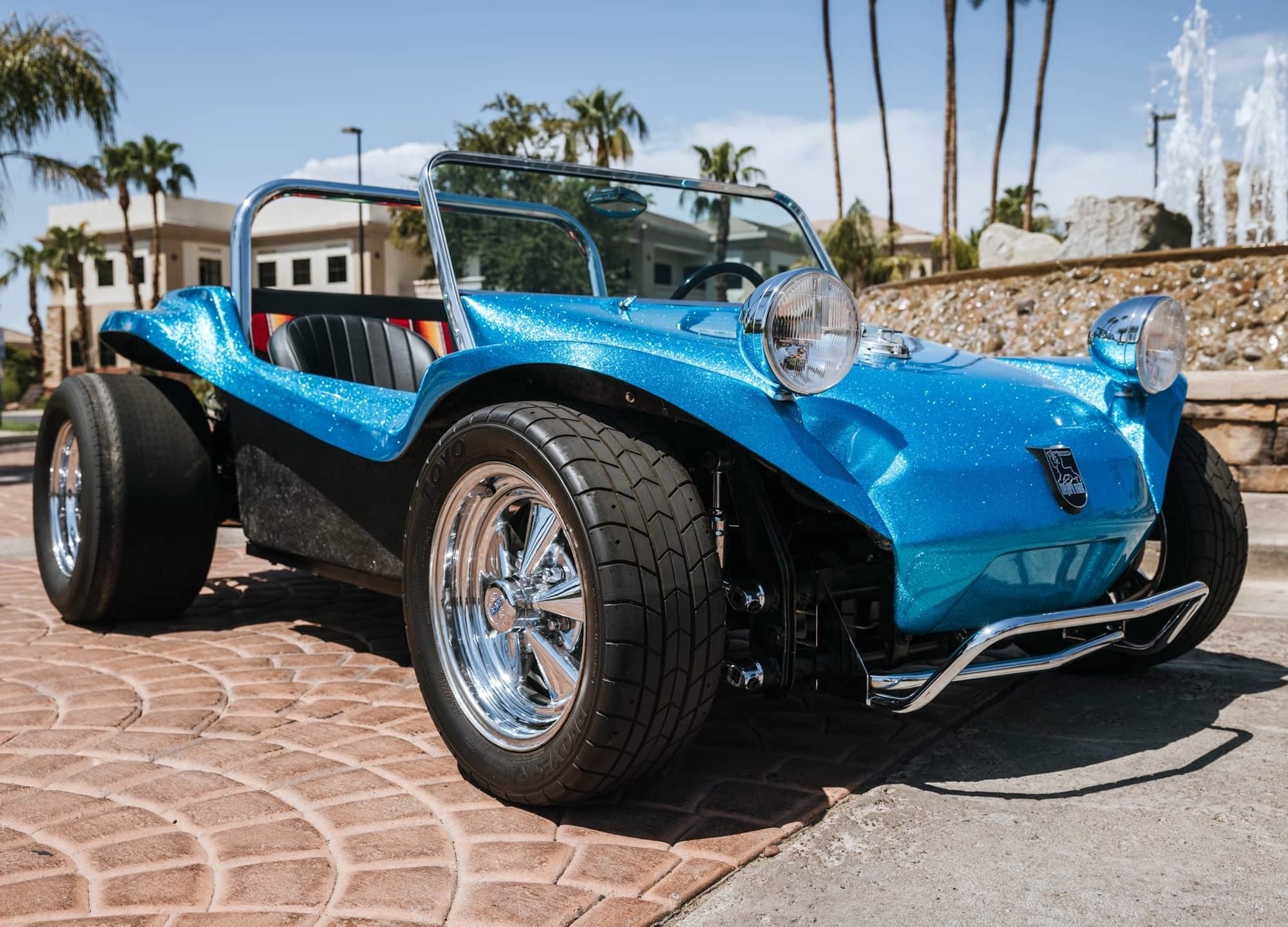
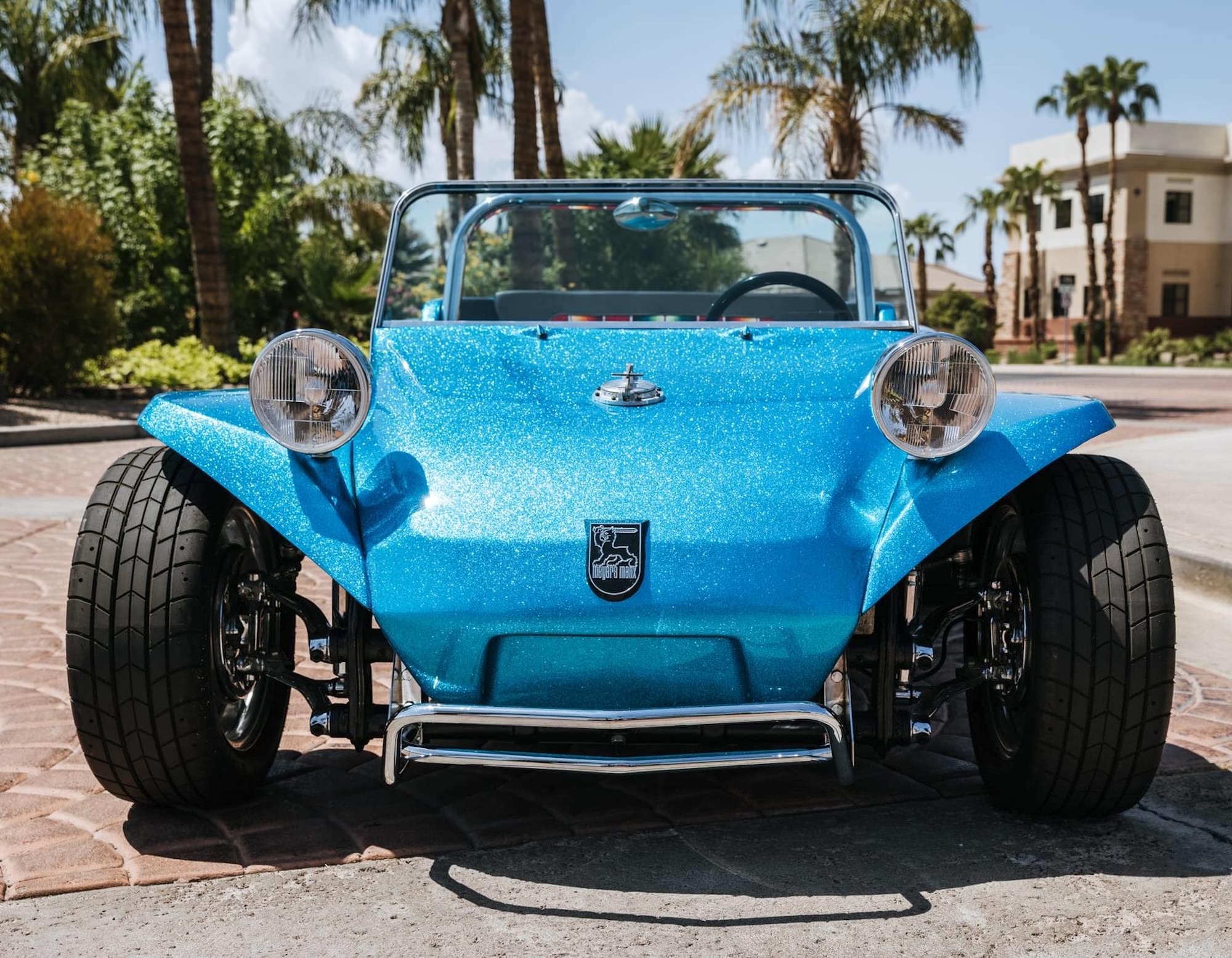
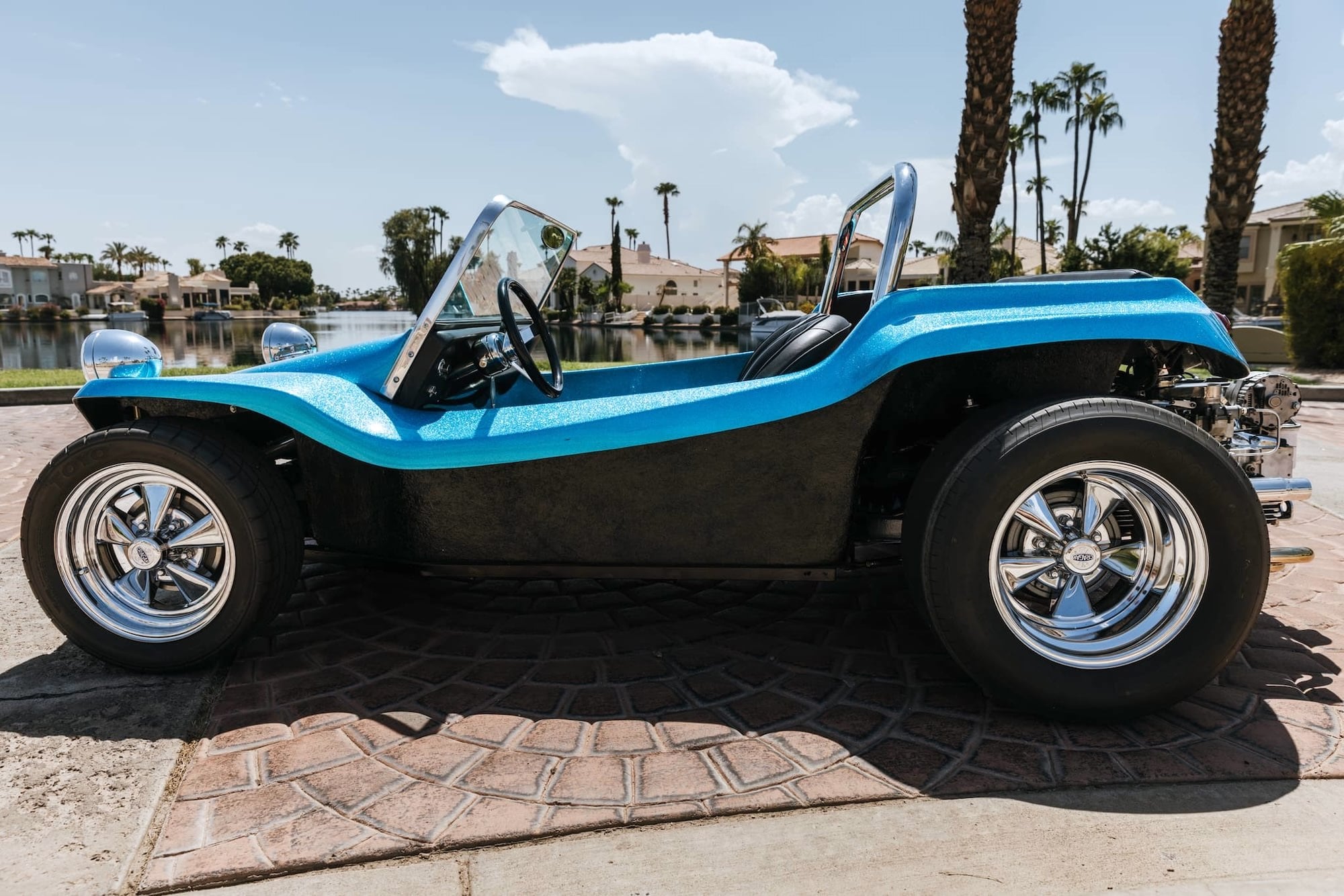
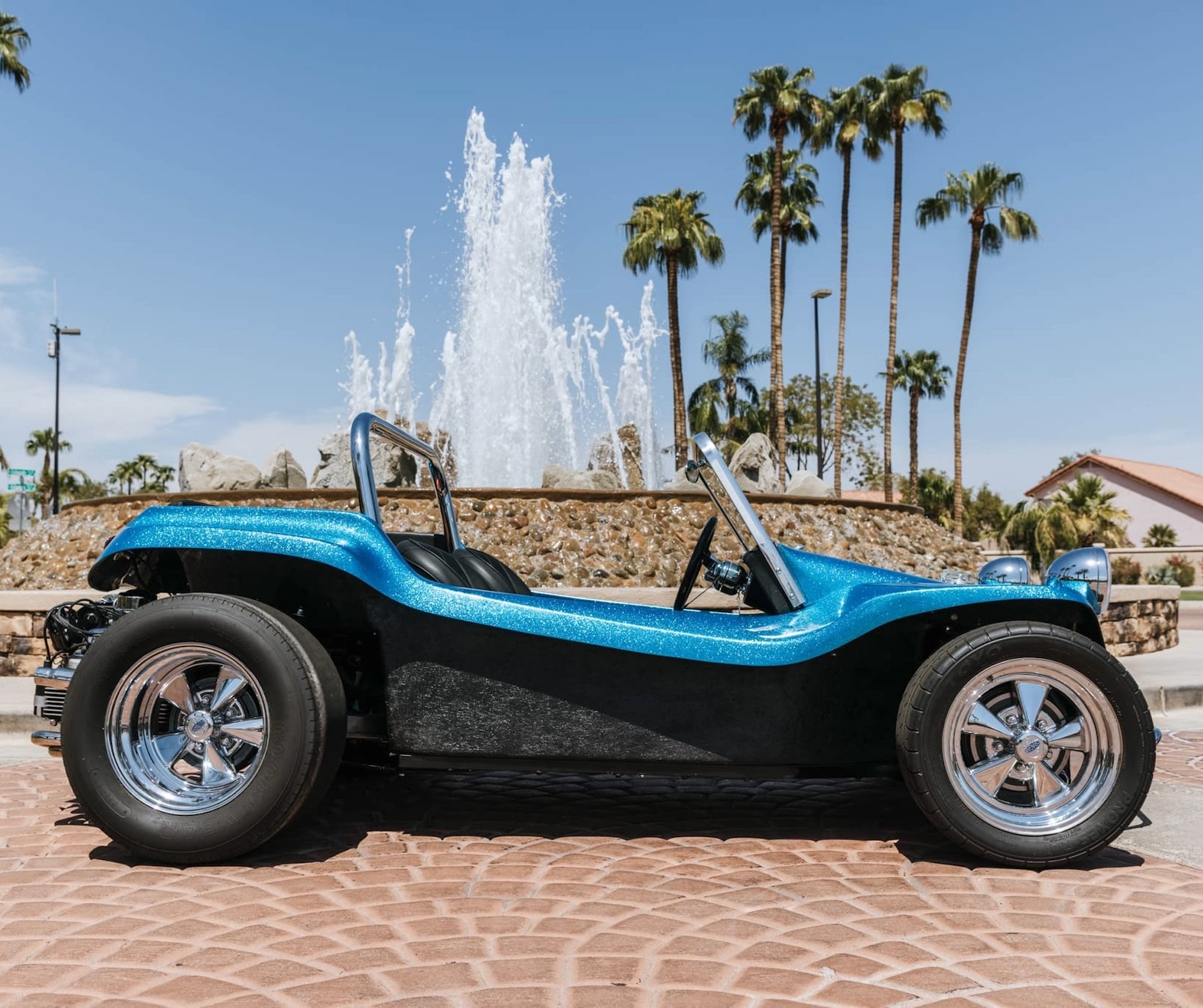
- The example shown here has an original Meyers Manx fiberglass body on a Con-Ferr chassis, powered by a 164 cubic inch Chevrolet Corvair flat-six and 2-speed Powerglide transaxle. Previously refurbished, it had an engine overhaul, blue metalflake repaint, refinished chrome, Cragar wheels, bucket seats, and a chrome roll bar.
History Speedrun: The Meyers Manx
It almost seems like Bruce Meyers was destined to transform the world of beach buggies. As an engineer, a surfer, and a fiberglass yacht builder he had a unique set of abilities, and he was in the right place at the right time – Southern California in the early 1960s.
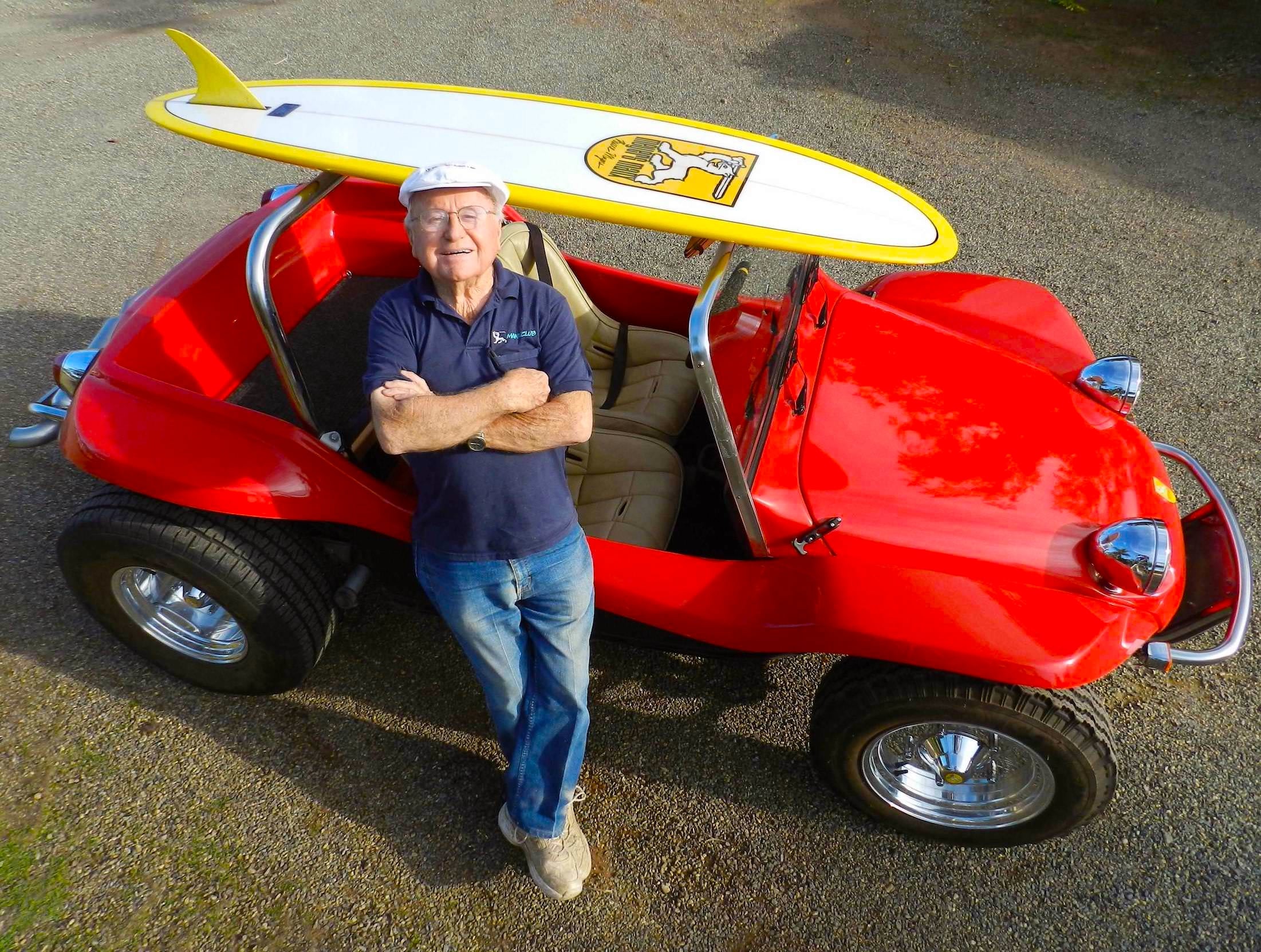
 It almost seems like Bruce Meyers was destined to transform the world of beach buggies. As an engineer, a surfer, and a fiberglass yacht builder he had a unique set of abilities, and he was in the right place at the right time – Southern California in the early 1960s. Image courtesy of Meyers Manx.
As a surfer it’s no surprise that Meyers had an interest in beach buggies, as they allowed quick and easy access to otherwise inaccessible breaks. The primitive nature of the buggies being built at the time, the late 1950s and early 1960s, must have rankled his inner-engineer and so he set out to build something better.
His first design was a masterpiece, but it proved too complex to be reliably mass-produced. It had a fiberglass body that acted as a monocoque structure, with the engine and front/rear suspension bolted directly onto it.
It was almost certainly one of the first composite monocoque tubs ever used in an automotive application, predating the same technique being used by many supercar makers by ~40 years.
For his second design Meyers opted for a simplicity-first approach. He took a VW Beetle floorpan and cut it down to shorten the wheelbase. He then developed a fiberglass tub-style body that bolted on top.
This design proved ideal as it used the Beetle suspension, brakes, engine, steering, and transmission – all of which remained attached to its original fixing points. Beetles were a cheap and easy to source donor at the time, and they could be modified with uprated suspension, improved engines, and larger wheels/tires for use in dunes and on beaches.
The Origins Of The Name “Manx”
Bruce Meyers opted to call his creation the Meyers Manx, named for the Manx cat which is known for its lack of a tail – in reference to the bobtail design of the buggy. Once the design was productionized it was offered for sale as a kit and it proved immediately popular.
Above Video: This full length documentary tells the story of the most famous Beach Buggy of them all, the Meyers Manx.
In order to prove the durability of the design, Bruce Meyers partnered with Ted Mangels to attempt the impossible – to break the 1,000 mile time record between Tijuana and La Paz that had been set by off-road racing legend Dave Ekins and Billy Robertson Jr. in 1962 on motorcycles.
Meyers and Mangels were followed by a journalist from Road & Track magazine to witness their feat, and they drove a specially prepared Meyers Manx. Remarkably the two men achieved their goal, setting a time of 34:45 and beating the old record by over five hours.
The media coverage following the Tijuana to La Paz run significantly boosted the profile of B. F. Meyers & Co. and it did no harm to sales – the company would sell over 6,000 of their kits.
Perhaps the most famous Manx of all was the highly-modified example powered by a Corvair engine that was driven by Steve McQueen in the 1968 film The Thomas Crown Affair alongside Faye Dunaway.
Interestingly the company was brought back in the year 2000 and it recently announced that it’s going to be producing a line of 100% electric, road-legal beach buggies strongly influenced by the original Bruce Meyers design.
The Corvair Flat-Six Powered Meyers Manx Shown Here
This is an original Meyers Manx dune buggy, it combines a classic fiberglass Manx body with a Con-Ferr chassis and a rear-mounted 164 cubic inch (2.7 liter) air-cooled flat-six sourced from a 1965 Chevrolet Corvair. Power is sent to the rear wheels through a 2-speed Powerglide automatic transaxle.
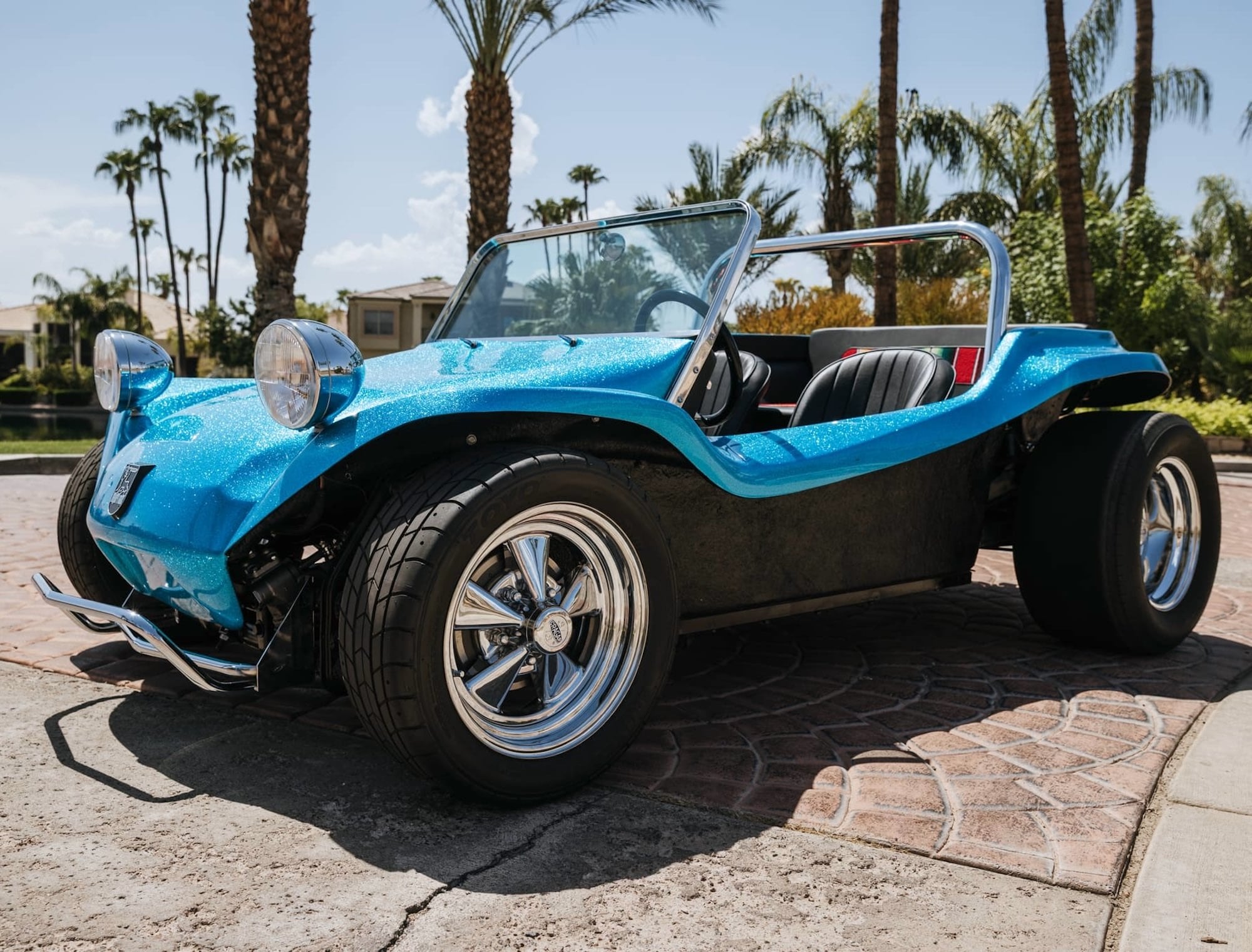
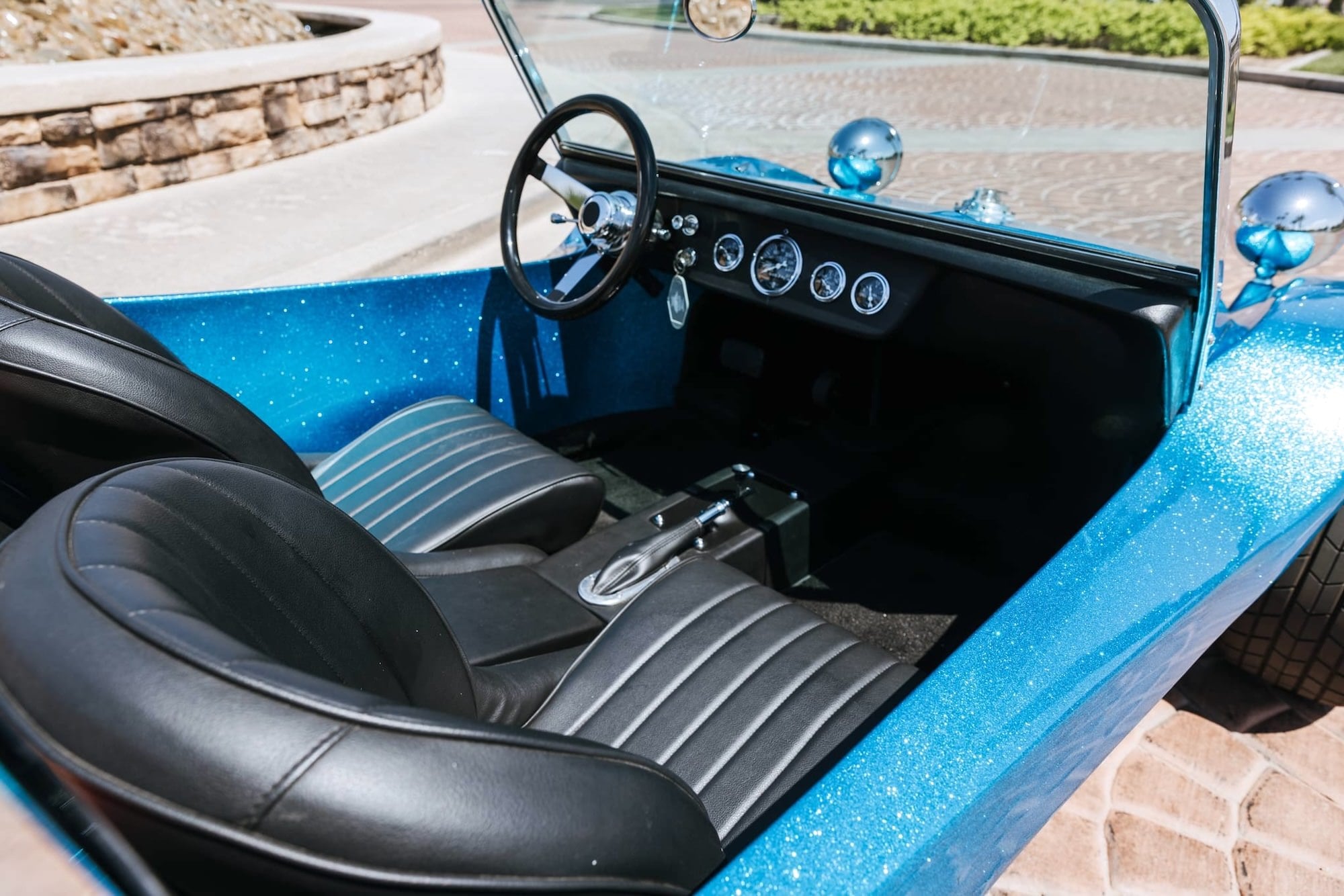
This is an original Meyers Manx dune buggy, it combines a classic fiberglass Manx body with a Con-Ferr chassis and a rear-mounted 164 cubic inch (2.7 liter) air-cooled flat-six sourced from a 1965 Chevrolet Corvair. Power is sent to the rear wheels through a 2-speed Powerglide automatic transaxle.
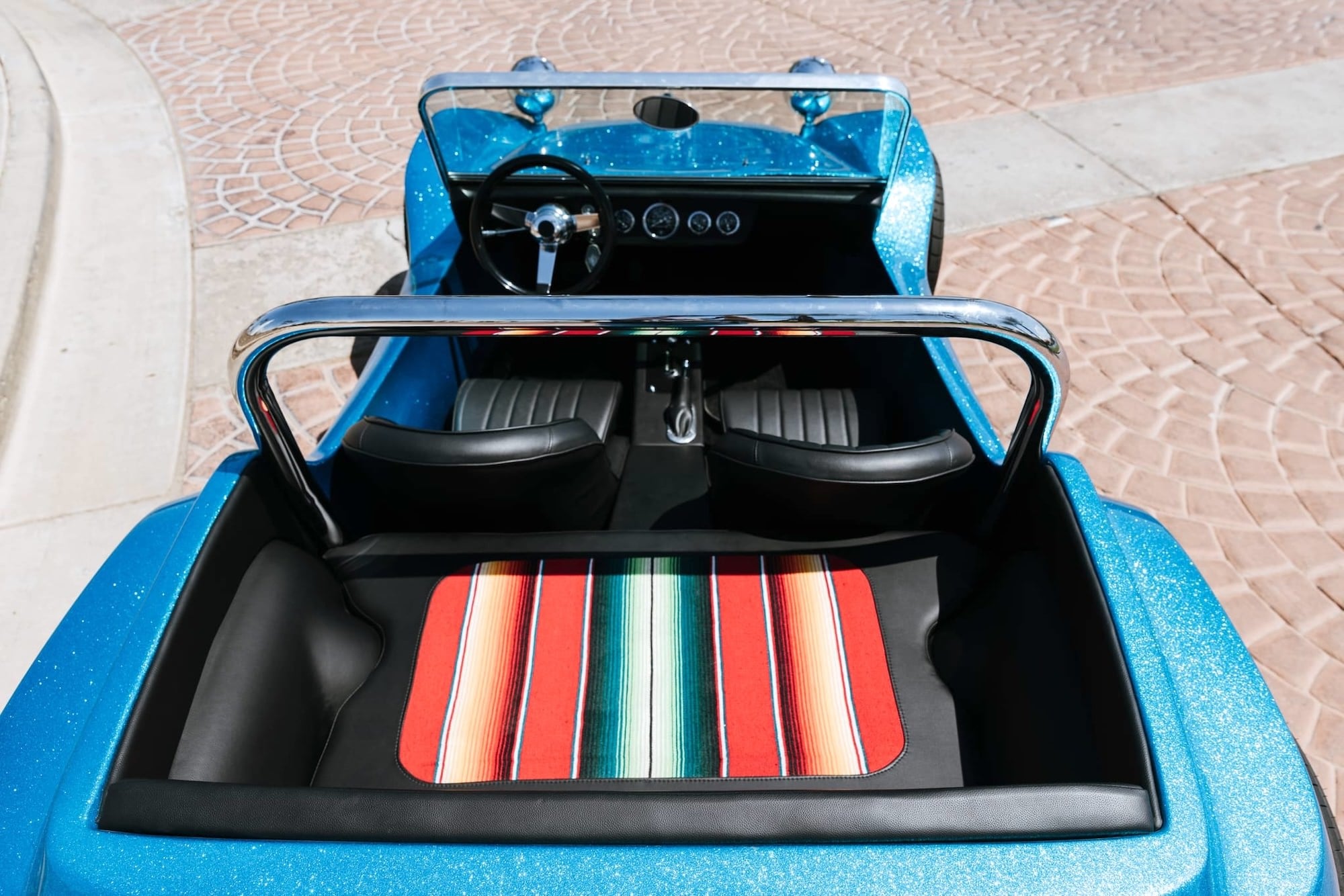
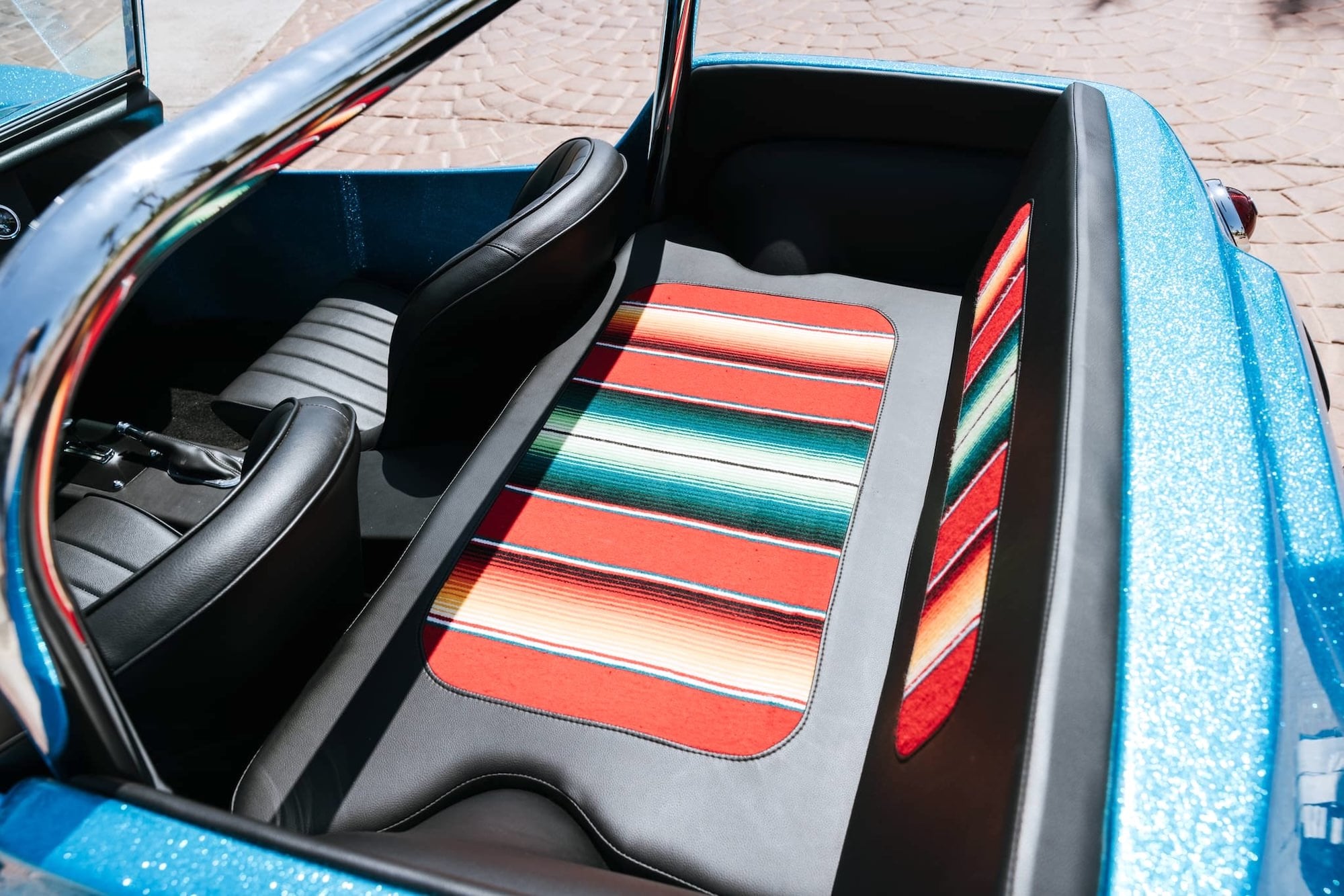
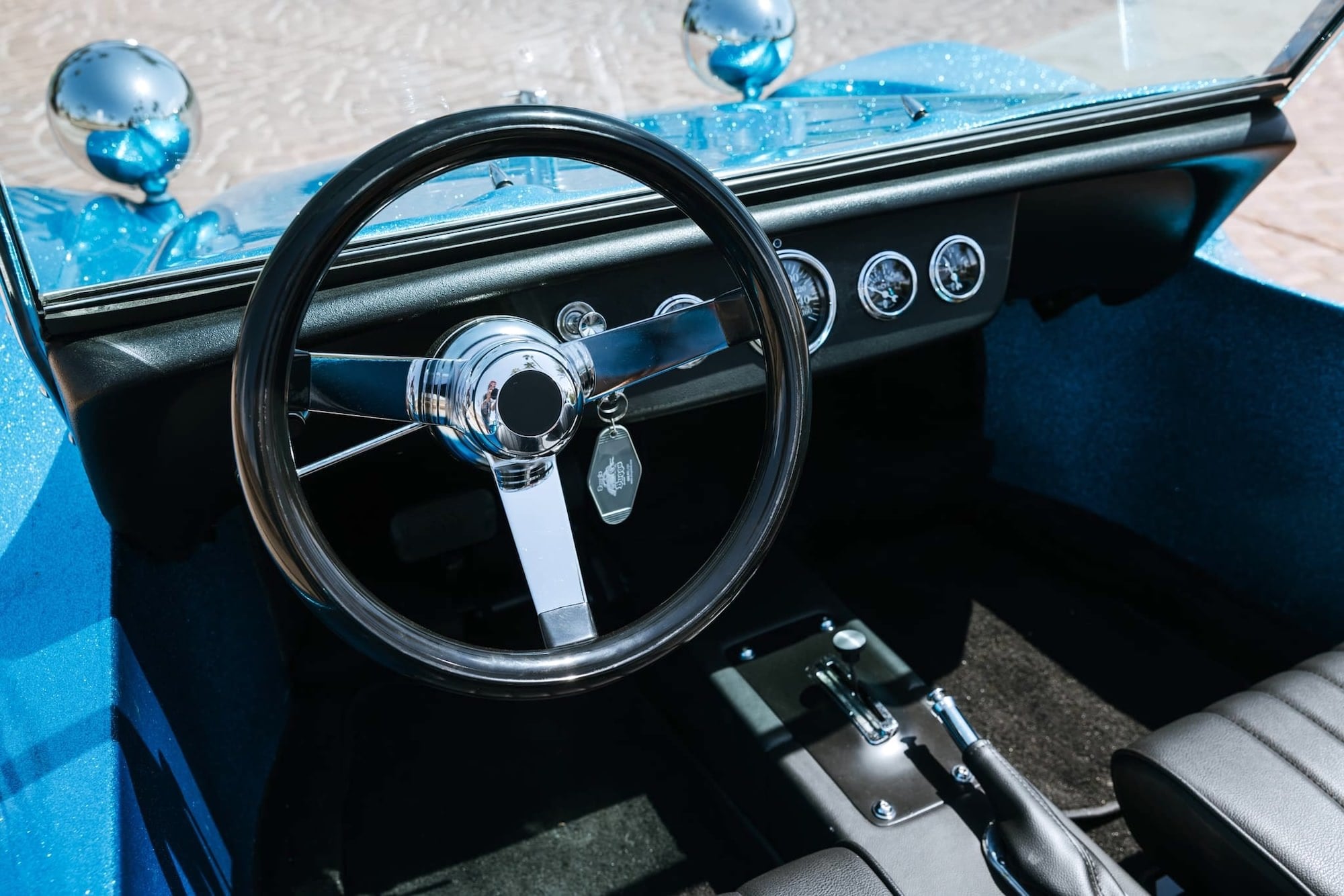
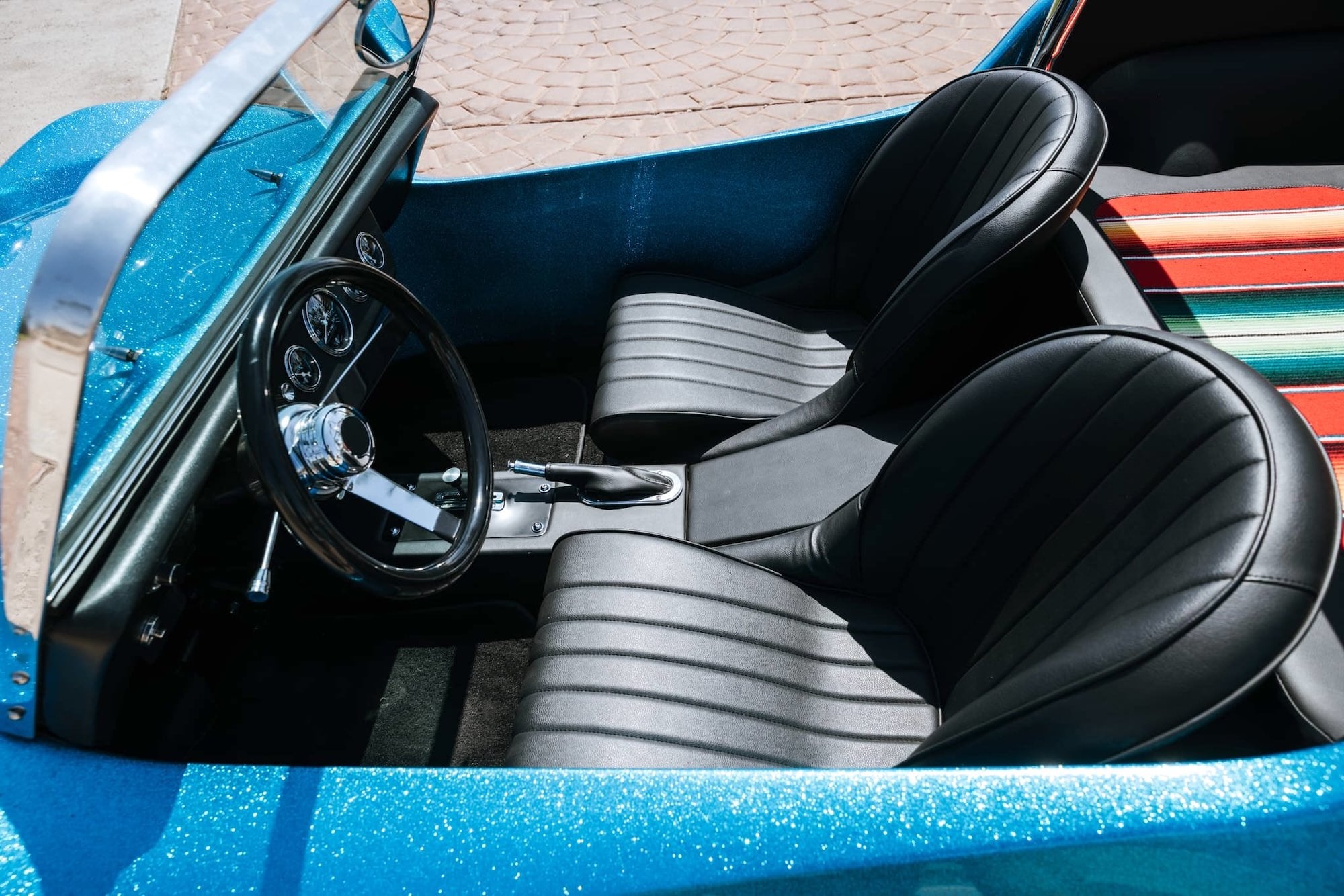
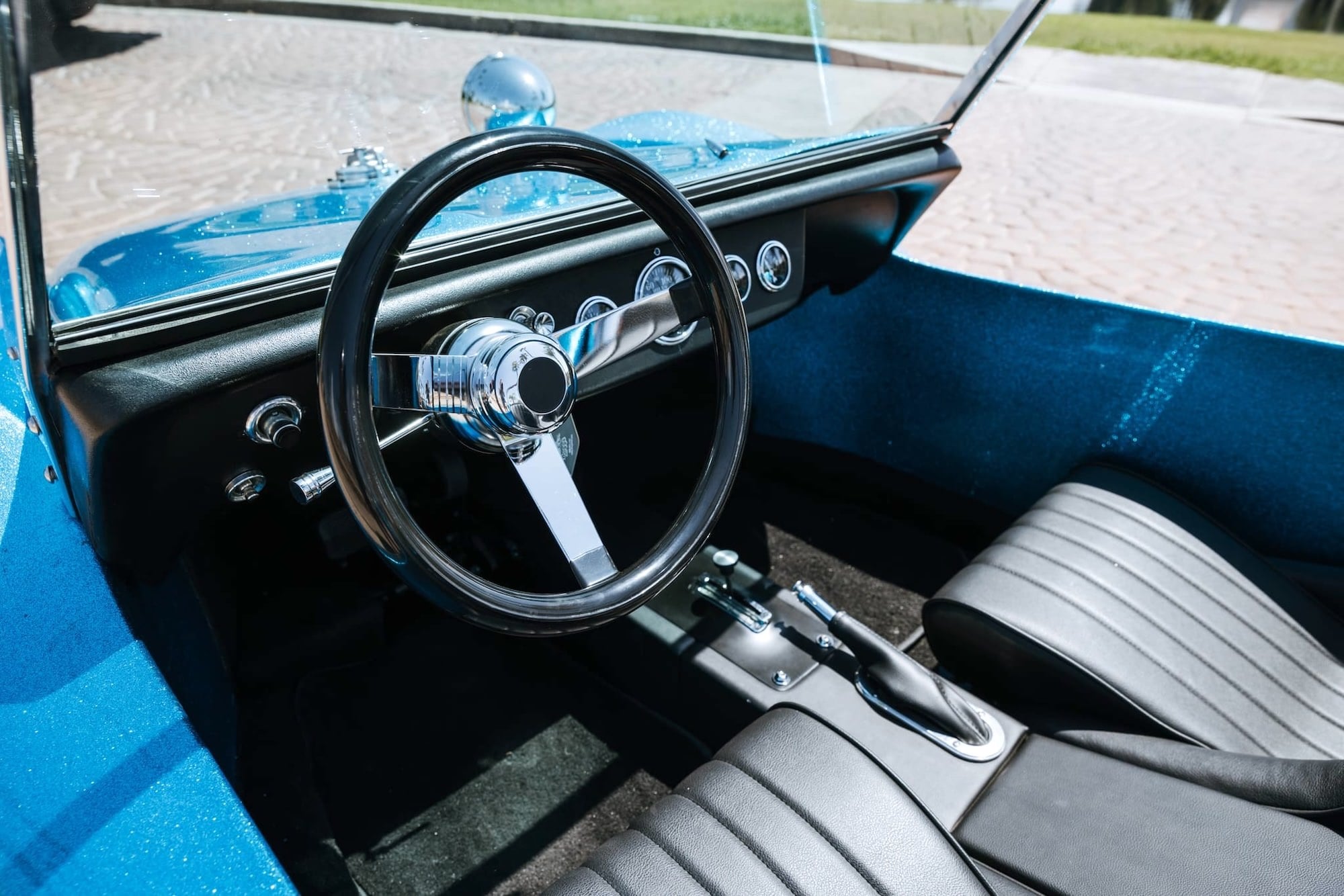
The buggy was given a refurb under previous ownership, with work including an engine overhaul, a repaint in blue metalflake, and refinishing of the chrome. It rides on staggered 15-inch Cragar wheels with drum brakes at all four corners, and the cabin is fitted with black vinyl bucket seats, black carpeting, a chrome roll bar, and centrally mounted instrumentation.
It’s accompanied by a Meyers Manx Certificate of Authenticity identifying Registry Authentication Number 1604 and serial number CV1276926S. It’s titled in Arizona as a 1965 Chevrolet Corvair, and the odometer shows 23 miles. If you’d like to read more or place a bid you can visit the listing here.
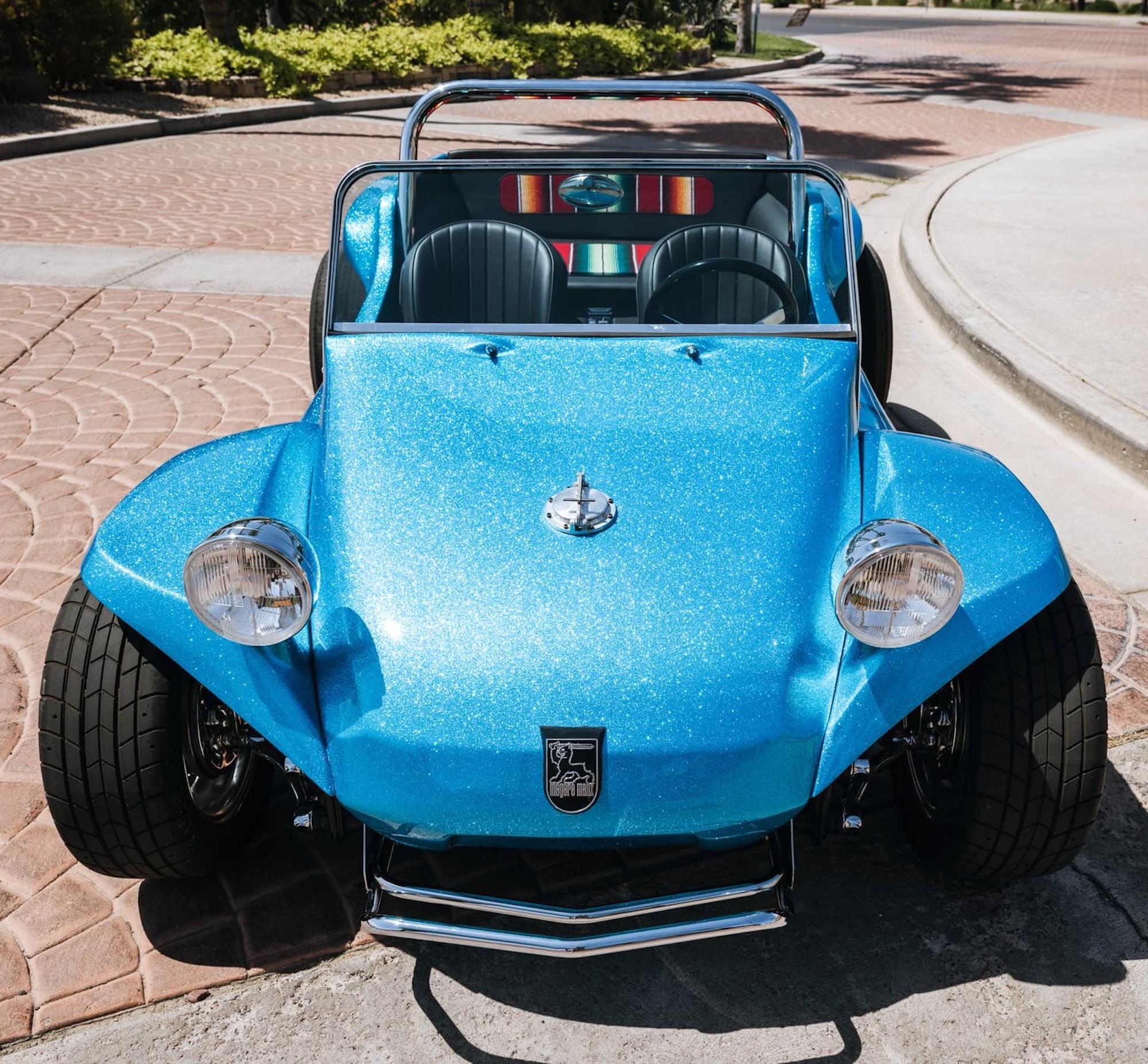
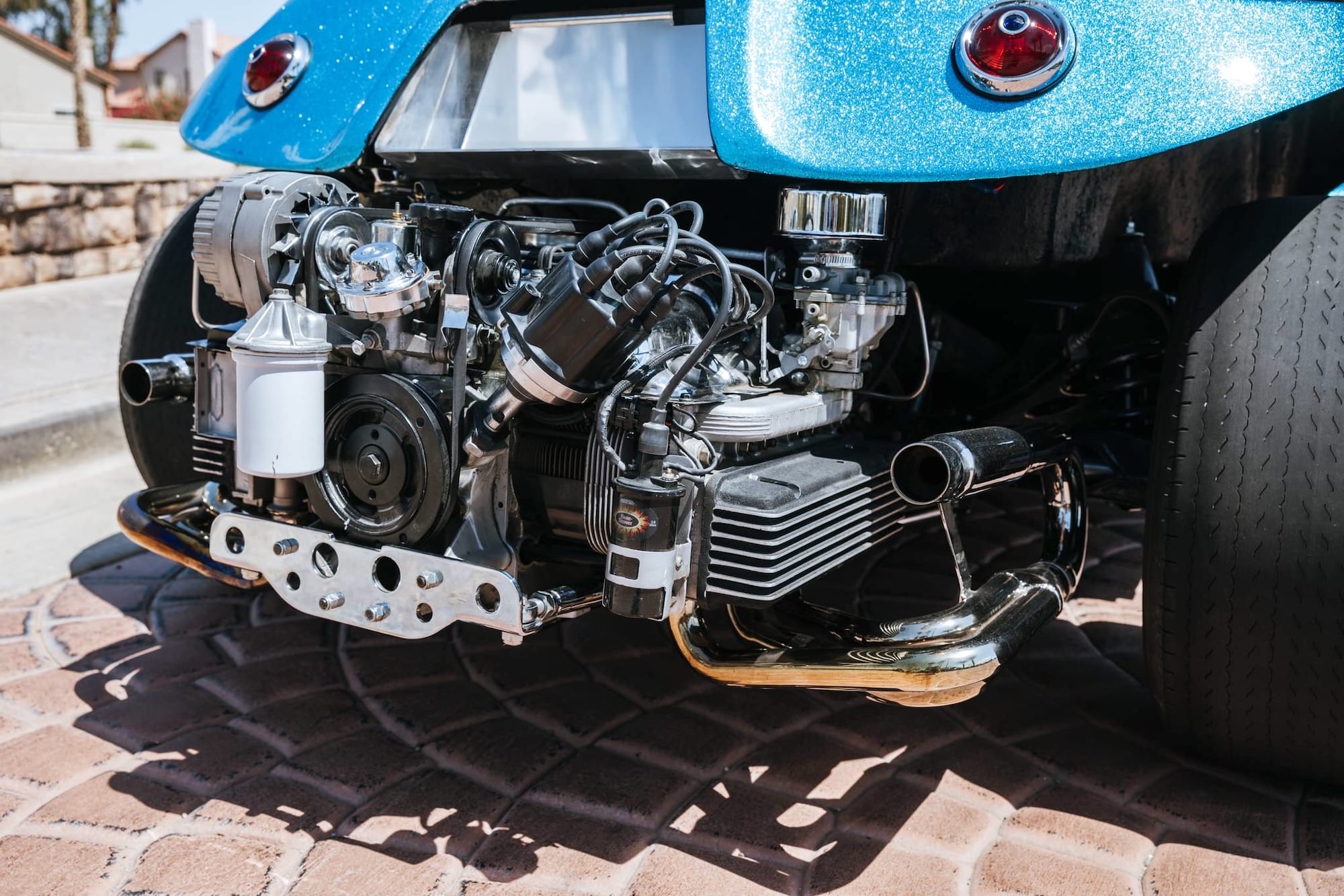
Images provided by Bring a Trailer

Articles that Ben Branch has written have been covered on CNN, Popular Mechanics, Smithsonian Magazine, Road & Track Magazine, the official Pinterest blog, the official eBay Motors blog, BuzzFeed, Autoweek Magazine, Wired Magazine, Autoblog, Gear Patrol, Jalopnik, The Verge, and many more.
Silodrome was founded by Ben back in 2010, in the years since the site has grown to become a world leader in the alternative and vintage motoring sector, with well over a million monthly readers from around the world and many hundreds of thousands of followers on social media.