This is the flat-12 engine from a Ferrari Testarossa, the later 512 TR variant, that was replaced under warranty due to a cracked crankcase that resulted in a coolant leak.
The Testarossa remains one of the most iconic supercars of all time, but despite this they typically still remain relatively affordable by supercar standards – largely because so many were made – 9,939 across all three variants.
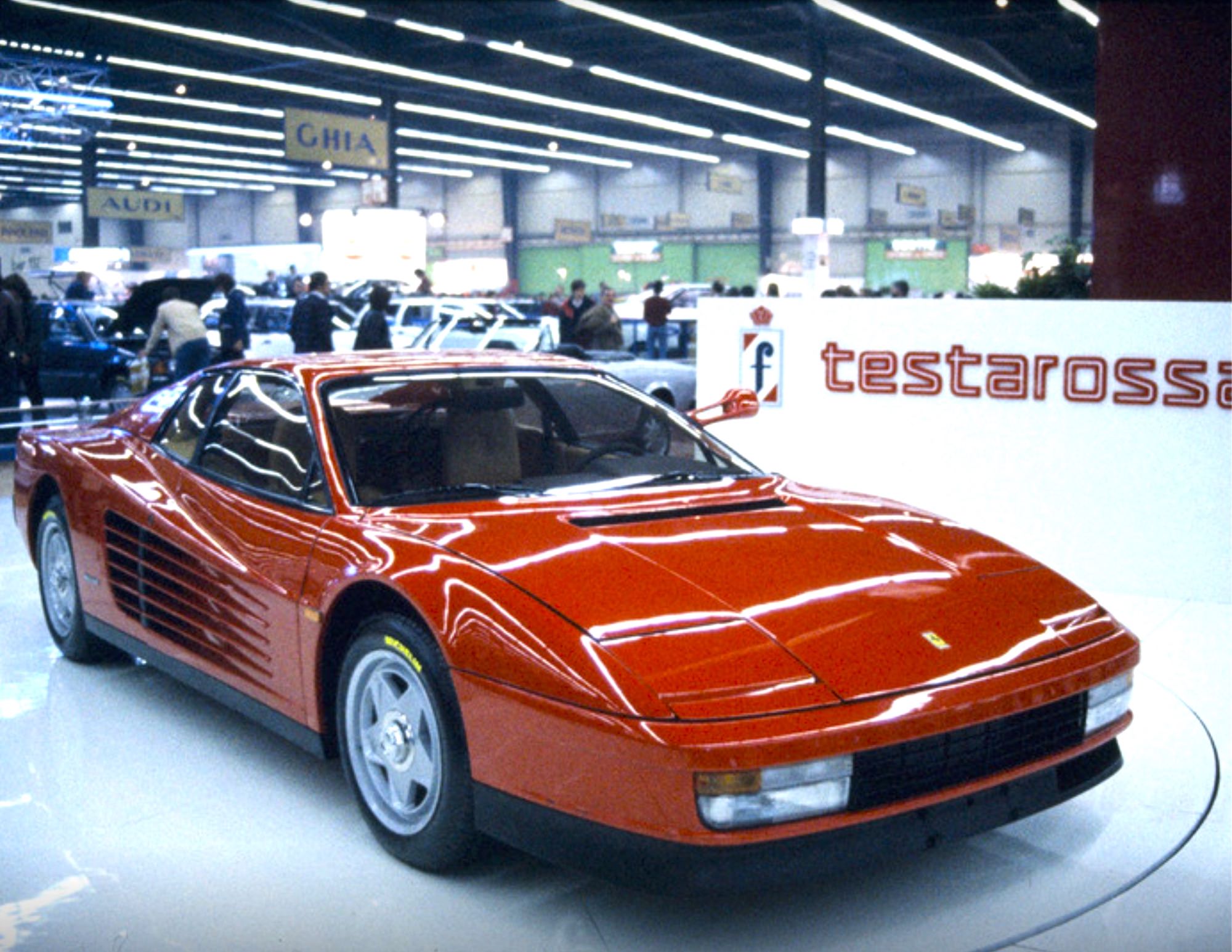
 The Testarossa remains one of the most iconic supercars of all time, but despite this they typically still remain relatively affordable by supercar standards – largely because so many were made, 9,939 across all three variants. Image courtesy of Ferrari.
History Speedrun: The Ferrari Testarossa Engine
The extraordinary engine that sat behind the seats of the Ferrari Testarossa was not, strictly speaking, a boxer. Its 12 cylinders lay in two flat, opposed banks, but each opposing pair of connecting rods shared one crankpin, as with Ferrari’s V12s. That makes it a 180º V12 according to Ferrari, and Mauro Forghieri, whose racing engines it descended from, famously said in period: “Please, don’t call it boxer.”
Of course, most today call it a flat-12 to avoid getting into debates about engine architectures, but you’ll find most Ferrari purists still call it a 180º V12 out of respect for Forghieri.
This engine layout didn’t start in Ferrari’s road cars, a 3.0 liter flat-12 arrived in the 312 B Ferrari Formula 1 car for the 1970 season, where its low height kept the center of gravity down in the chassis. This F1 engine had also been designed by Forghieri.
Ferrari brought the layout to the road in the mid-engined 365 GT4 BB, shown at Turin in 1971 and built from June of 1973 as the company’s first mid-engined 12-cylinder road car. This was after years of engineers trying to talk Enzo Ferrari into the idea – he was famously uncertain about the ability of the average Ferrari customer to handle the markedly different front/rear weight distribution of the layout.
Its engine, the Tipo F102 A, matched the 4.4 liter displacement of the front-mounted V12 in the Daytona it replaced, and the “365” was the capacity of one cylinder in cubic centimeters, and toothed belts drove its four camshafts. The 512 BB of 1976 enlarged the engine to 4.9 liters on an 82 mm bore and 78 mm stroke, and the 512 BBi added Bosch K-Jetronic fuel injection in 1981.
Ferrari unveiled the Testarossa at the Lido in Paris on the eve of the October 1984 motor show there. It caused an absolute sensation. Its wedge profile and wild side strakes captured the imagination of petrolheads around the world, and it remains one of the most iconic automotive shapes of the 1980s, and of the 20th century as a whole.
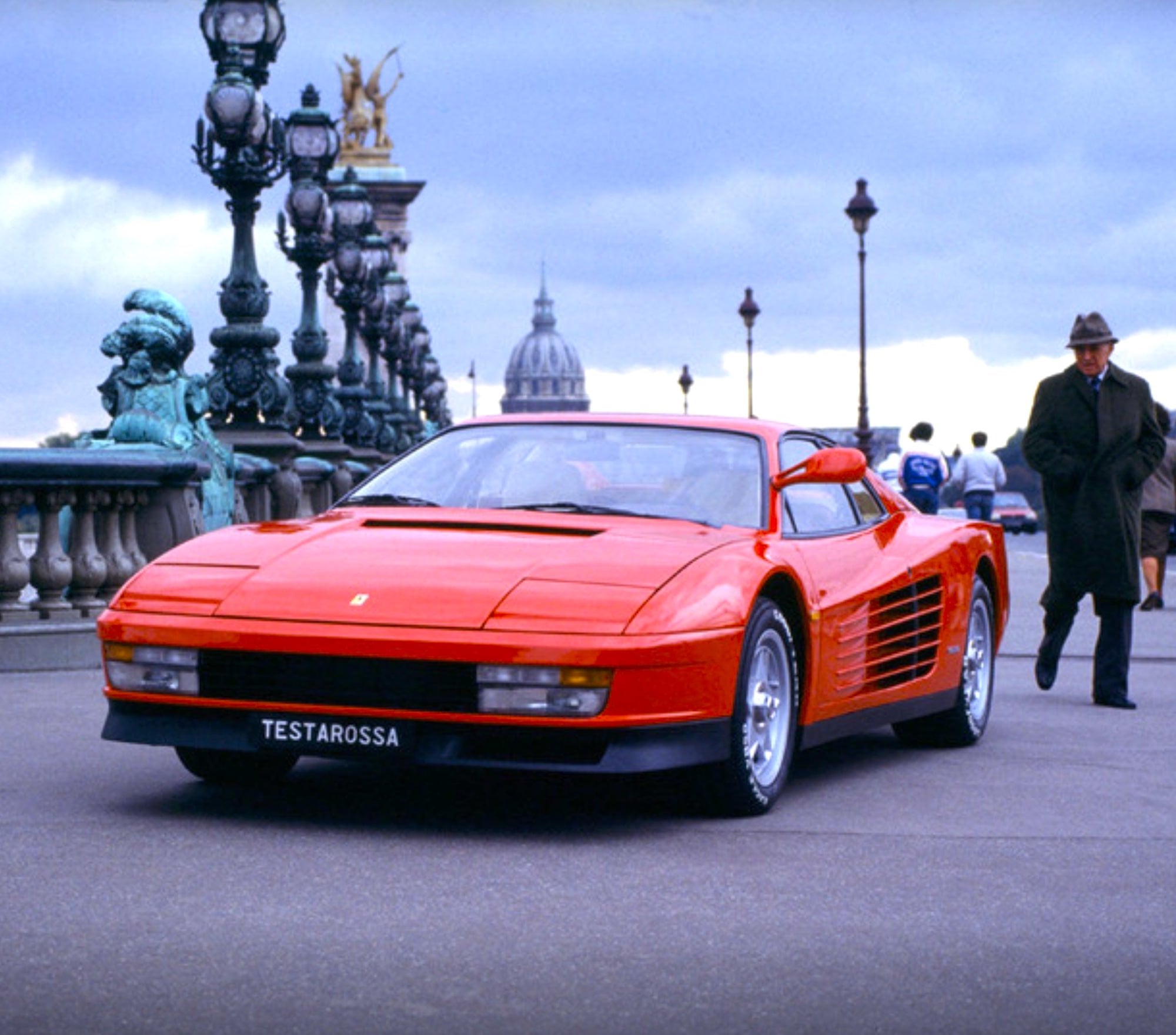
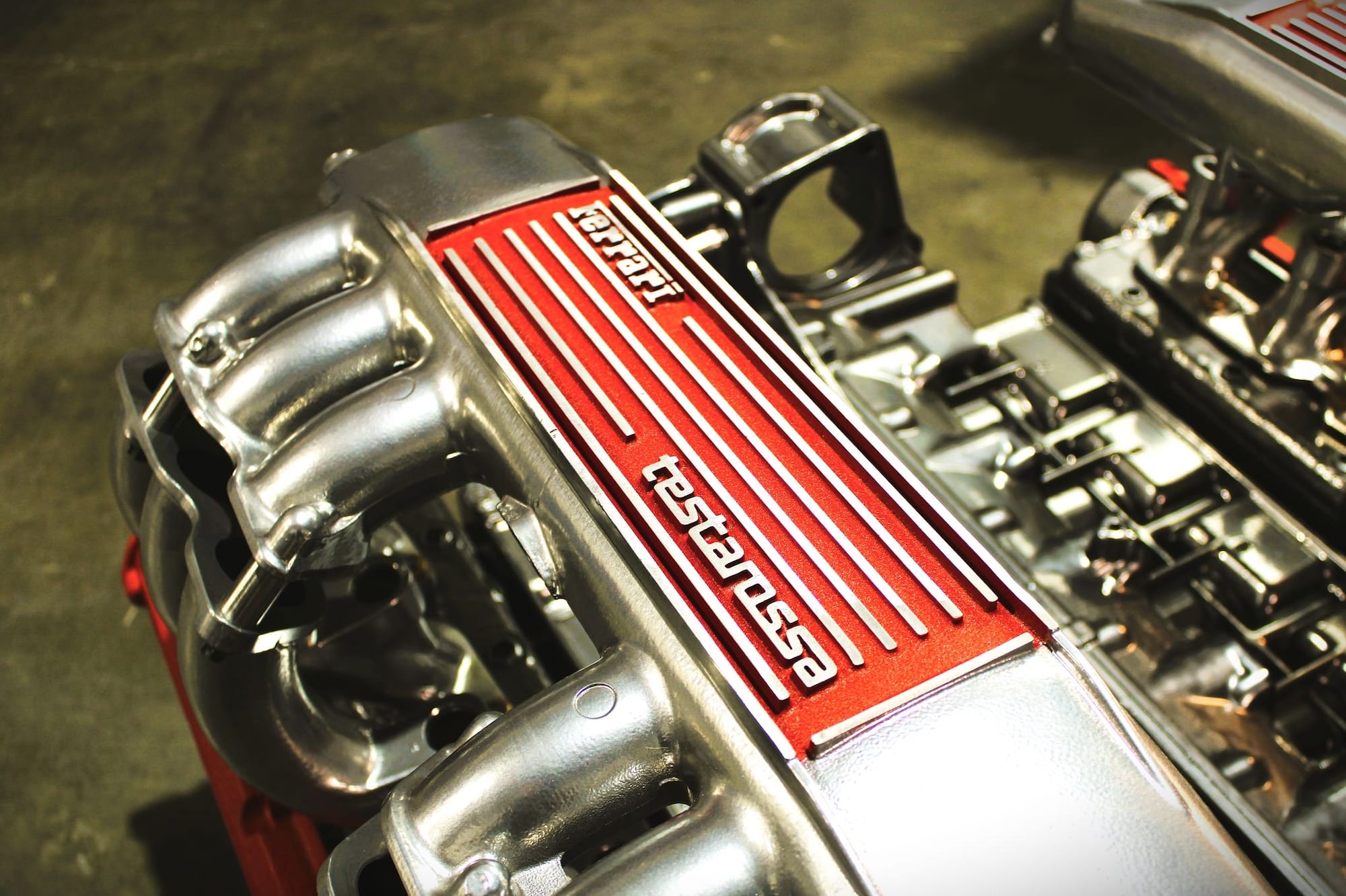
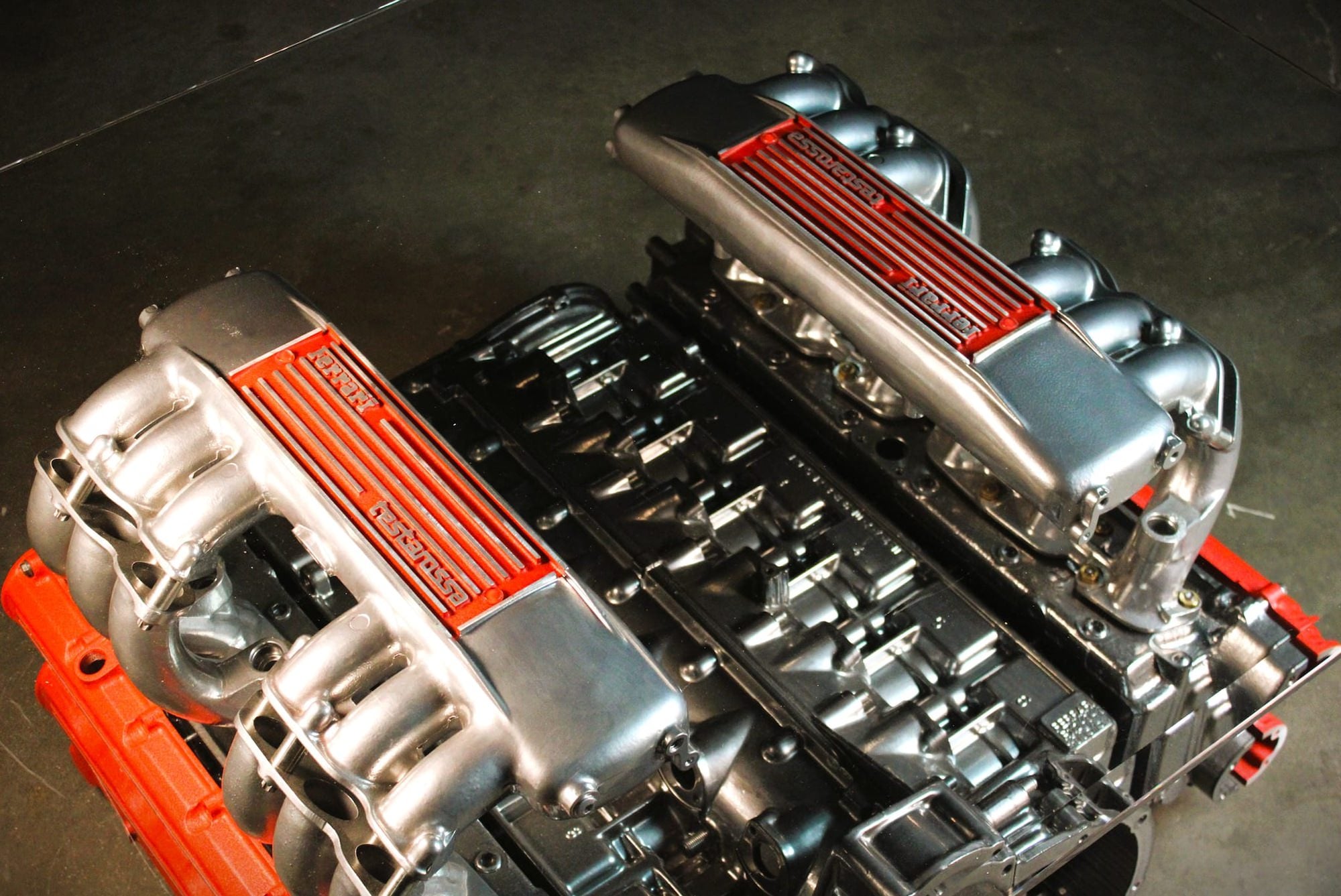
The Testarossa name, Italian for “red head,” came from the red cam covers, a nod to the Testa Rossa sports racers of the 1950s. Image courtesy of Ferrari.
The Testarossa’s engine kept the displacement of the earlier BB flat-12, but was updated by Ferrari’s engine department under Nicola Materazzi as the Tipo F113 A, it was the first flat-12 in a Ferrari road car with four valves per cylinder.
Belt-driven twin camshafts on each bank still worked the valves, 48 in all. The dry-sump engine was mounted longitudinally inline with the 5-speed manual gearbox, as you might expect, there was no automatic option offered. European cars used Bosch K-Jetronic injection at launch, while those for North America and Japan had KE-Jetronic and catalytic converters.
In European form the engine made 385 bhp at 6,300 rpm and 361 lb ft at 4,500 rpm, dizzying numbers by the standards of the time. Ferrari had never certified or sold the 512 BB for the US market, an issue that cost the company significant revenue, and so the Testarossa was designed to meet American rules from the outset, and it became Ferrari’s first 12-cylinder car for that market in a decade.
In order to keep the engine cool, Ferrari moved the radiators from the nose to either side of the engine, so hot coolant lines no longer ran under the cabin and heated it. The name, Italian for “red head,” came from the red cam covers, a nod to the Testa Rossa sports racers of the 1950s. The covers sit deep in the engine bay, though, and are hard to see without getting under the car.
The updated model, the 512 TR, was built from 1991 to 1994, and it received new pistons that raised compression from 9.3:1 to 10.0:1, it had re-profiled camshafts, and Bosch Motronic M2.7 engine management.
Output rose to 422 bhp at 6,750 rpm and 362 lb ft at 5,500 rpm, and the engine and gearbox were mounted 30 mm (1.2 inches) lower for better handling. The F512 M, presented in Paris in the autumn of 1994, was given a lightened crankshaft, titanium connecting rods, 10.4:1 compression and a stainless steel exhaust with lower back pressure, for 434 bhp at 6,750 rpm and 369 lb ft at 5,500 rpm.
Ferrari built 501 F512 Ms. Production ended in 1996, and the 550 Maranello that replaced it put a V12 back in the nose just like the old days. A decision that divided the automotive community.
The Ferrari Testarossa Engine Coffee Table Shown Here
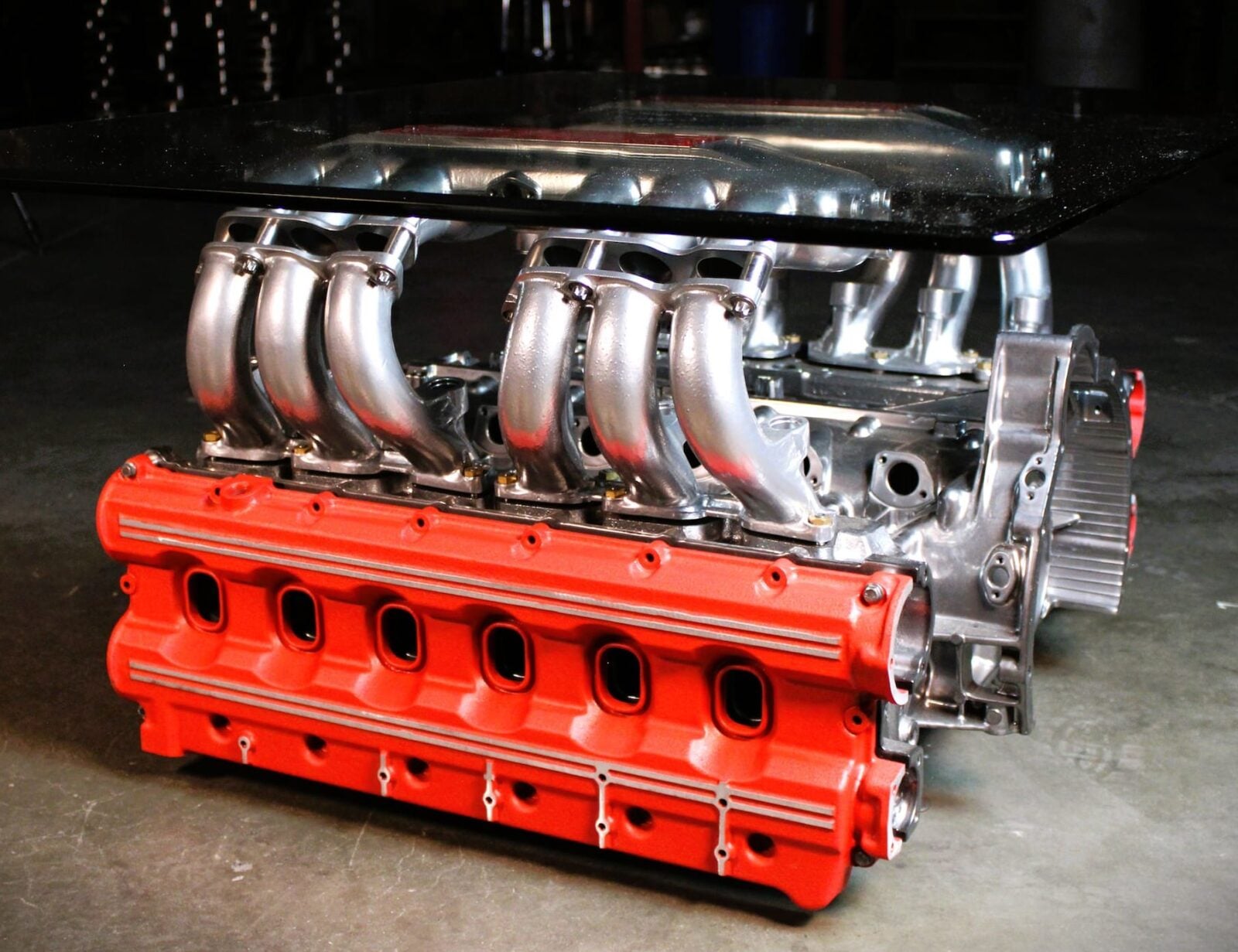
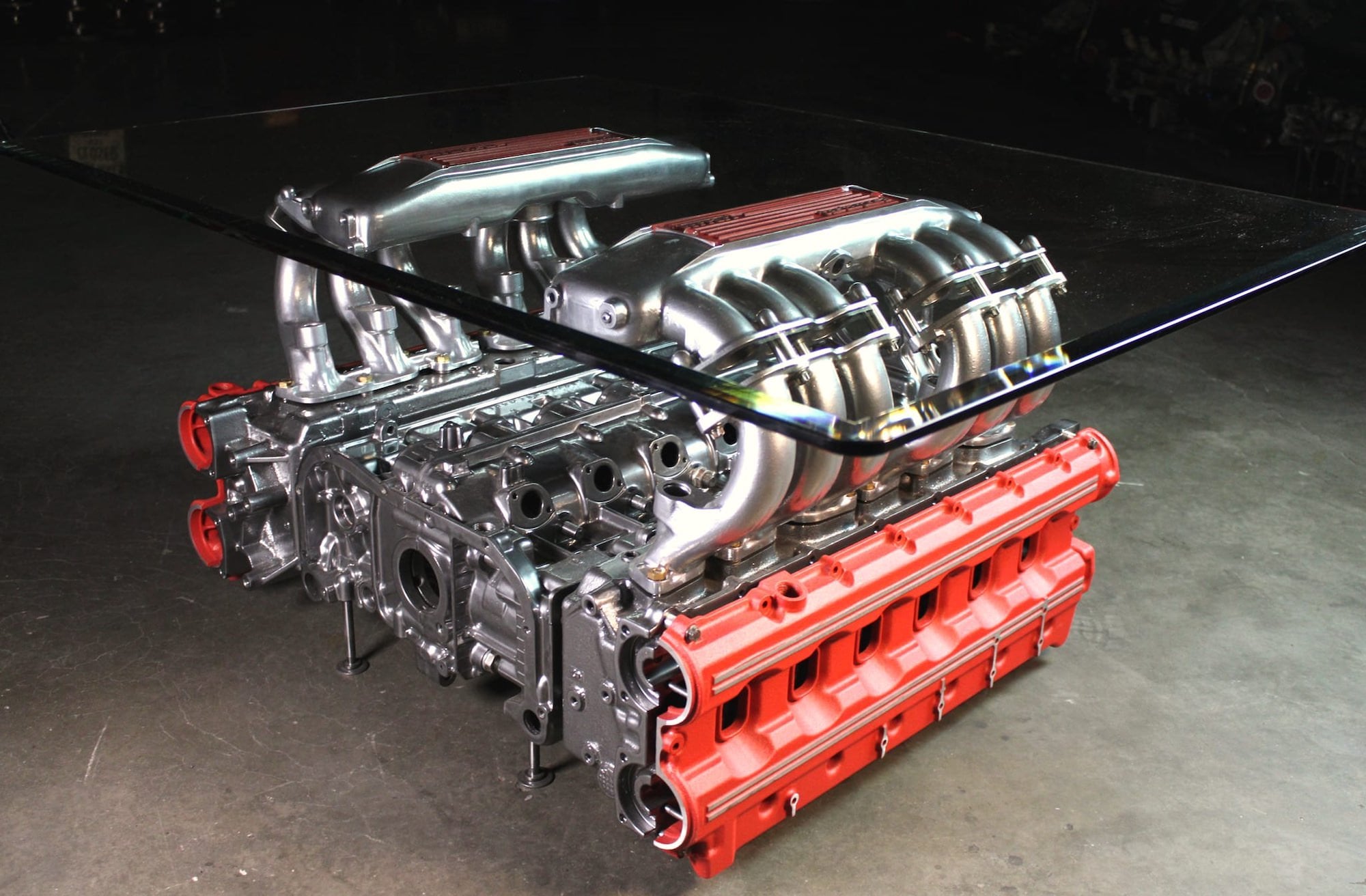
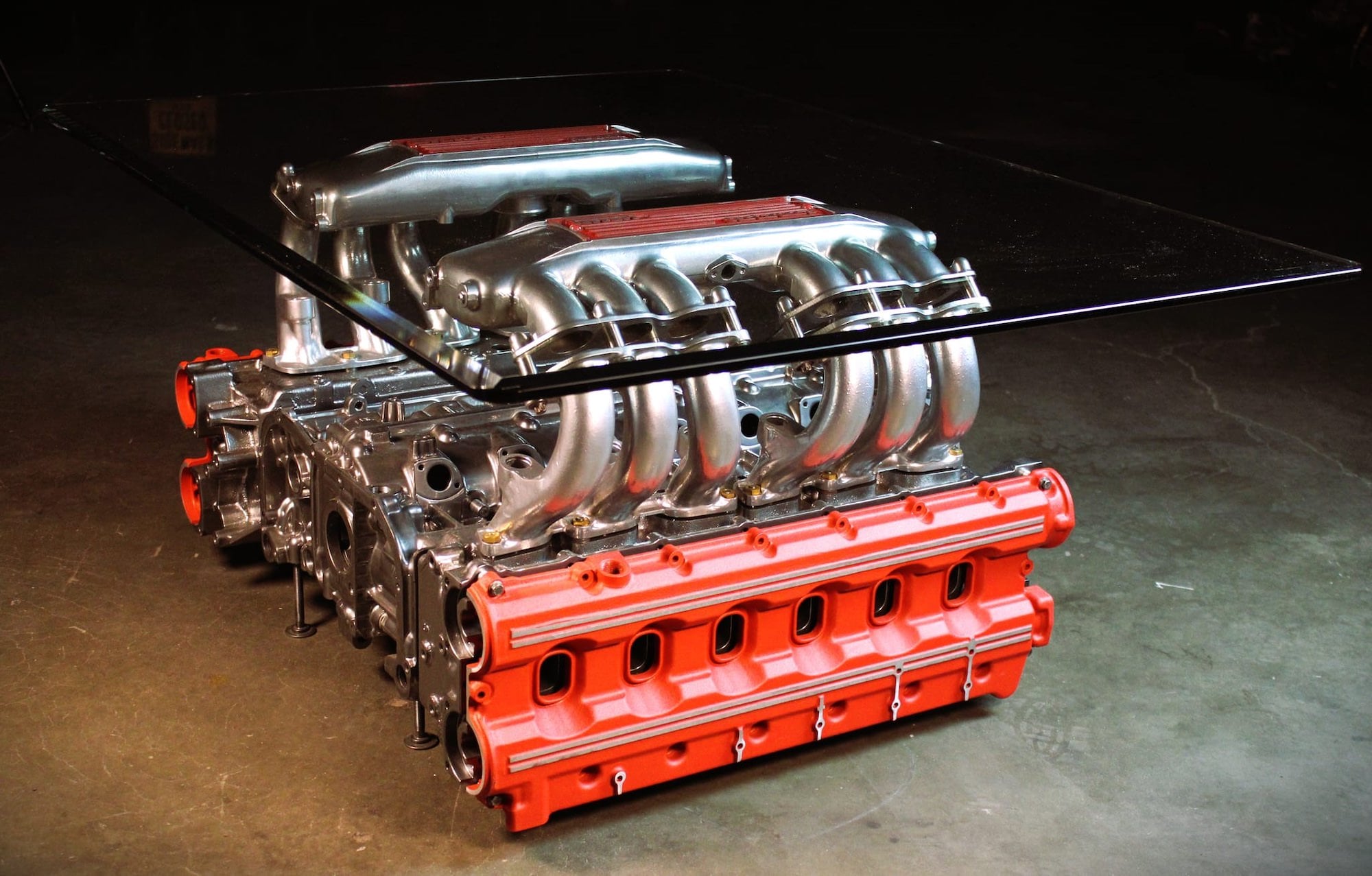
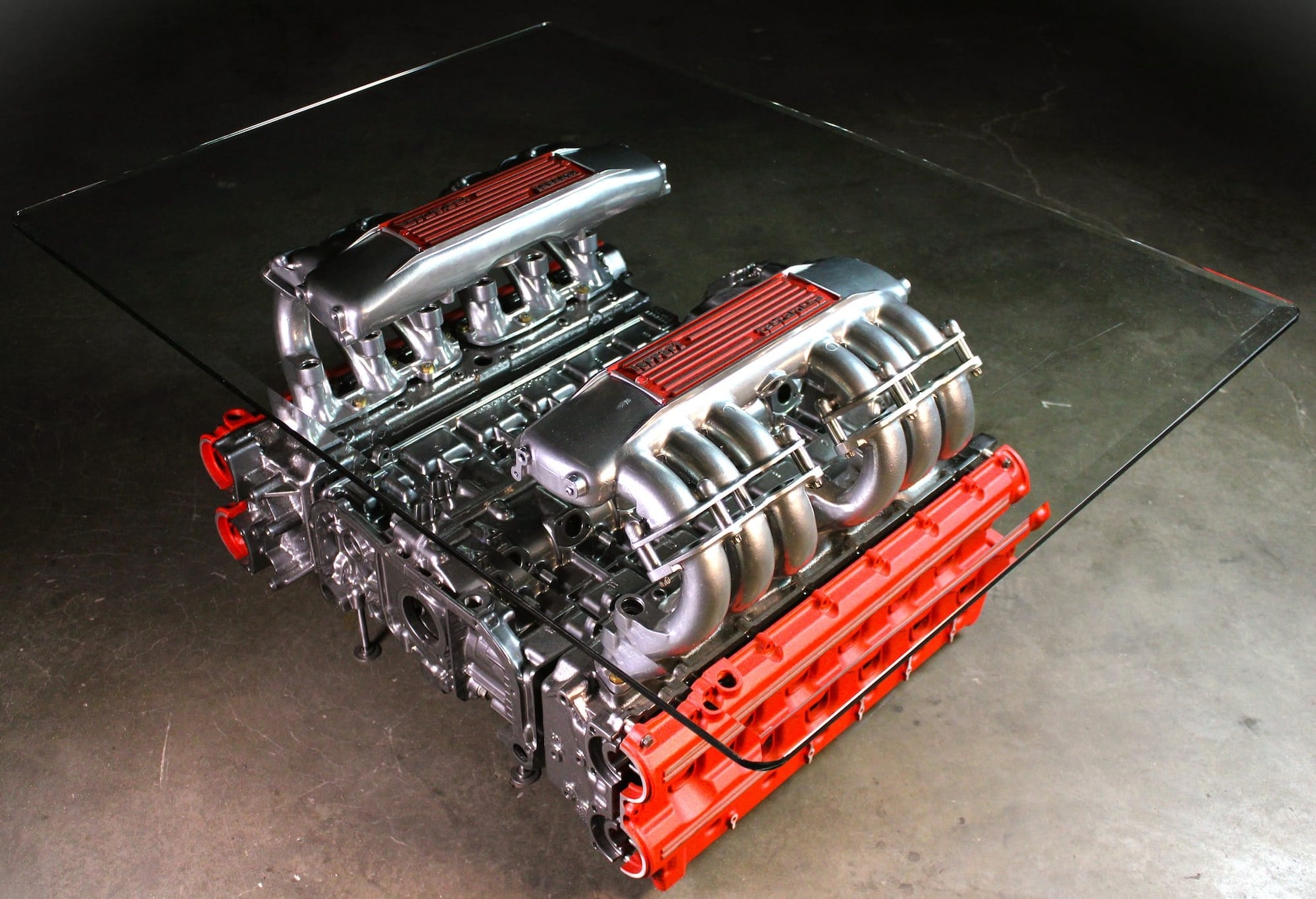
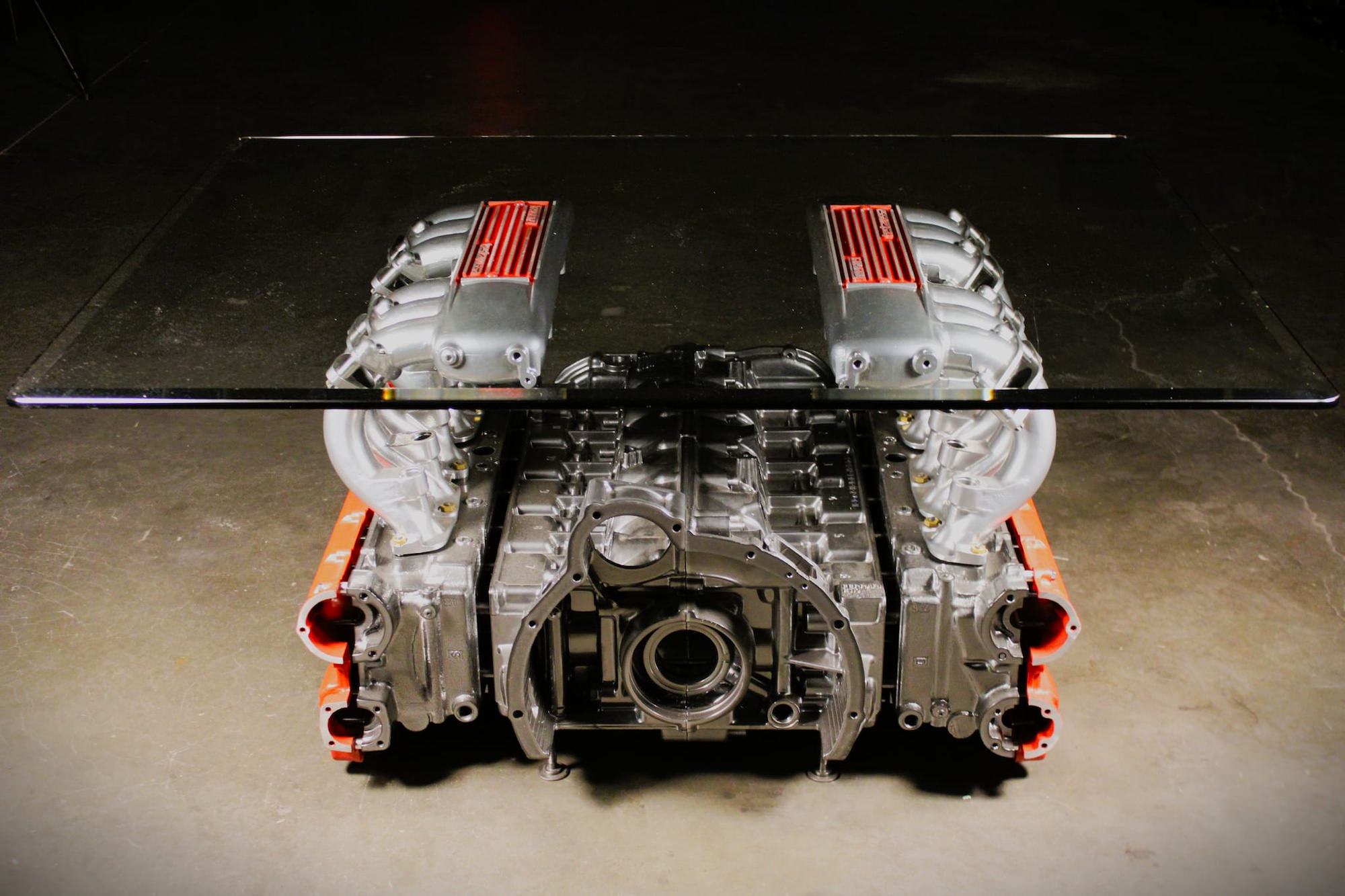
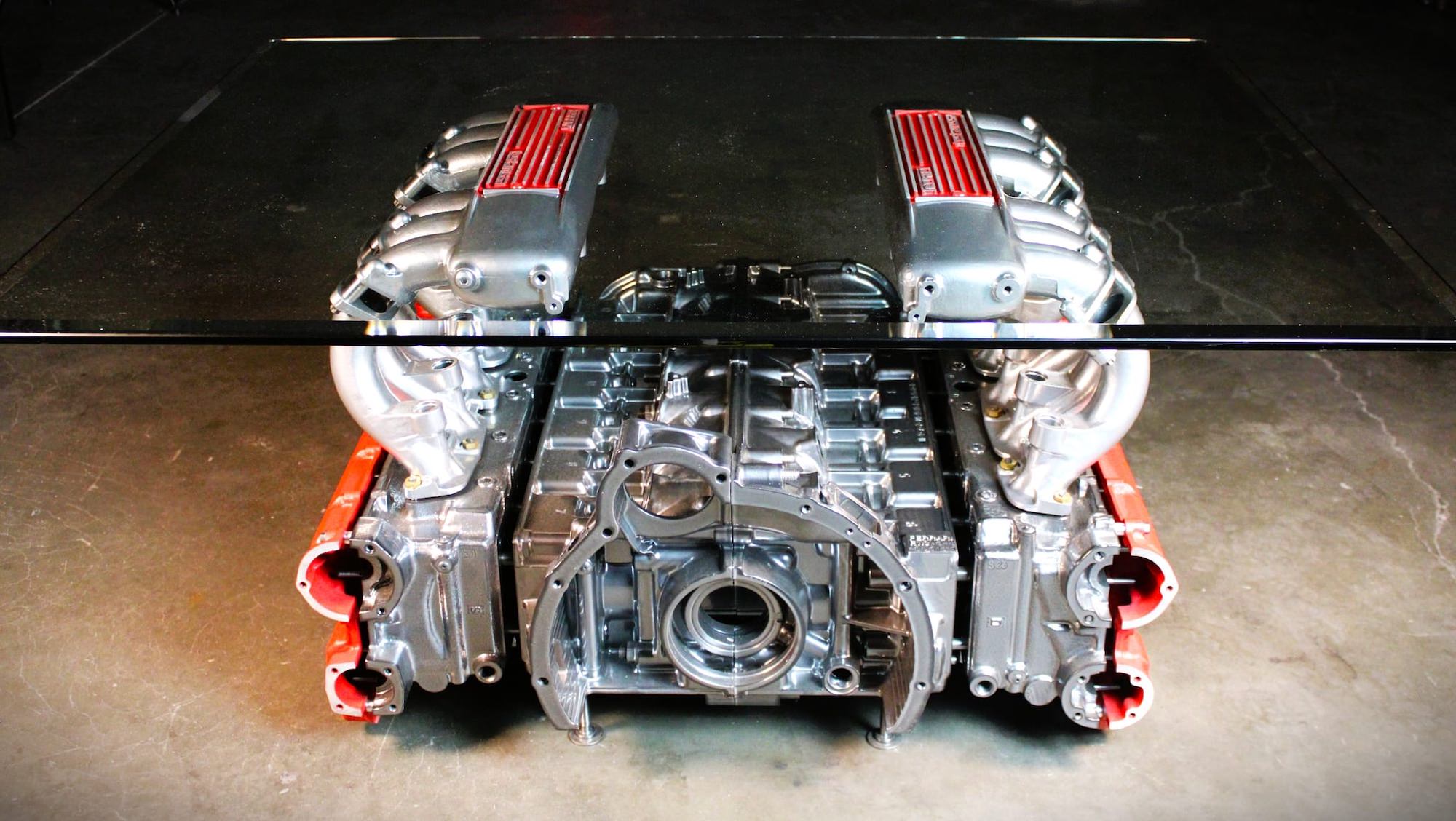
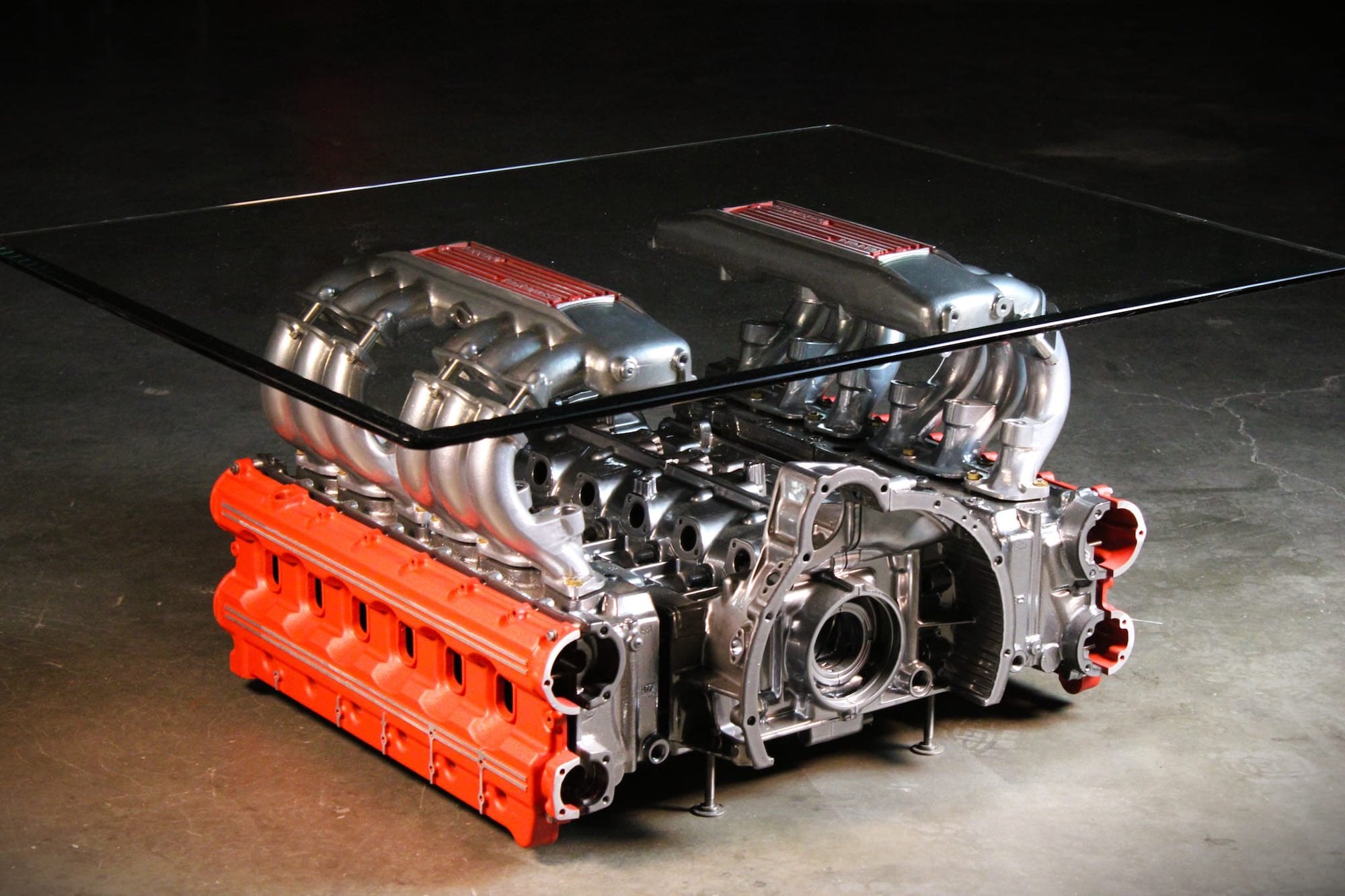
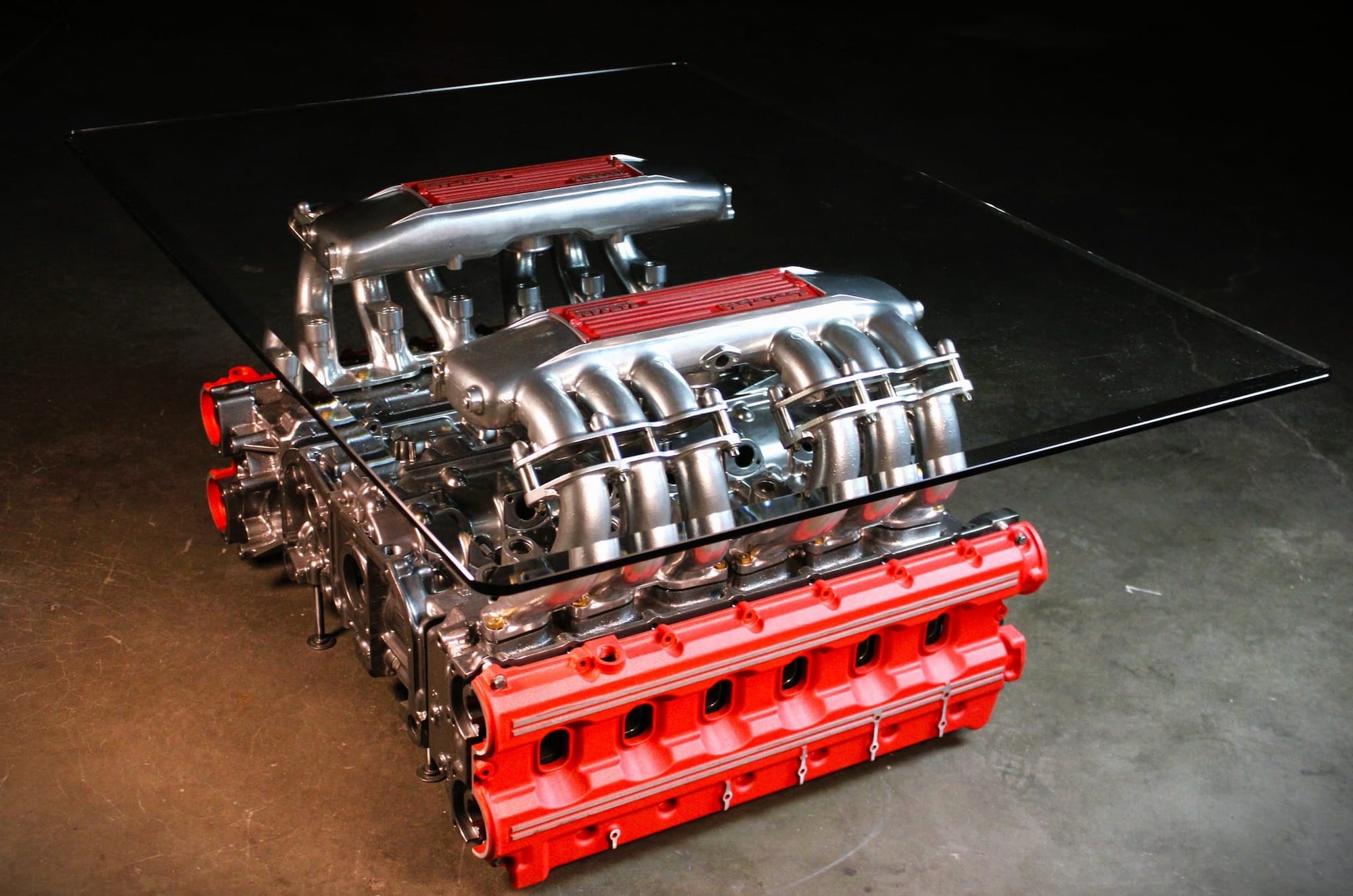
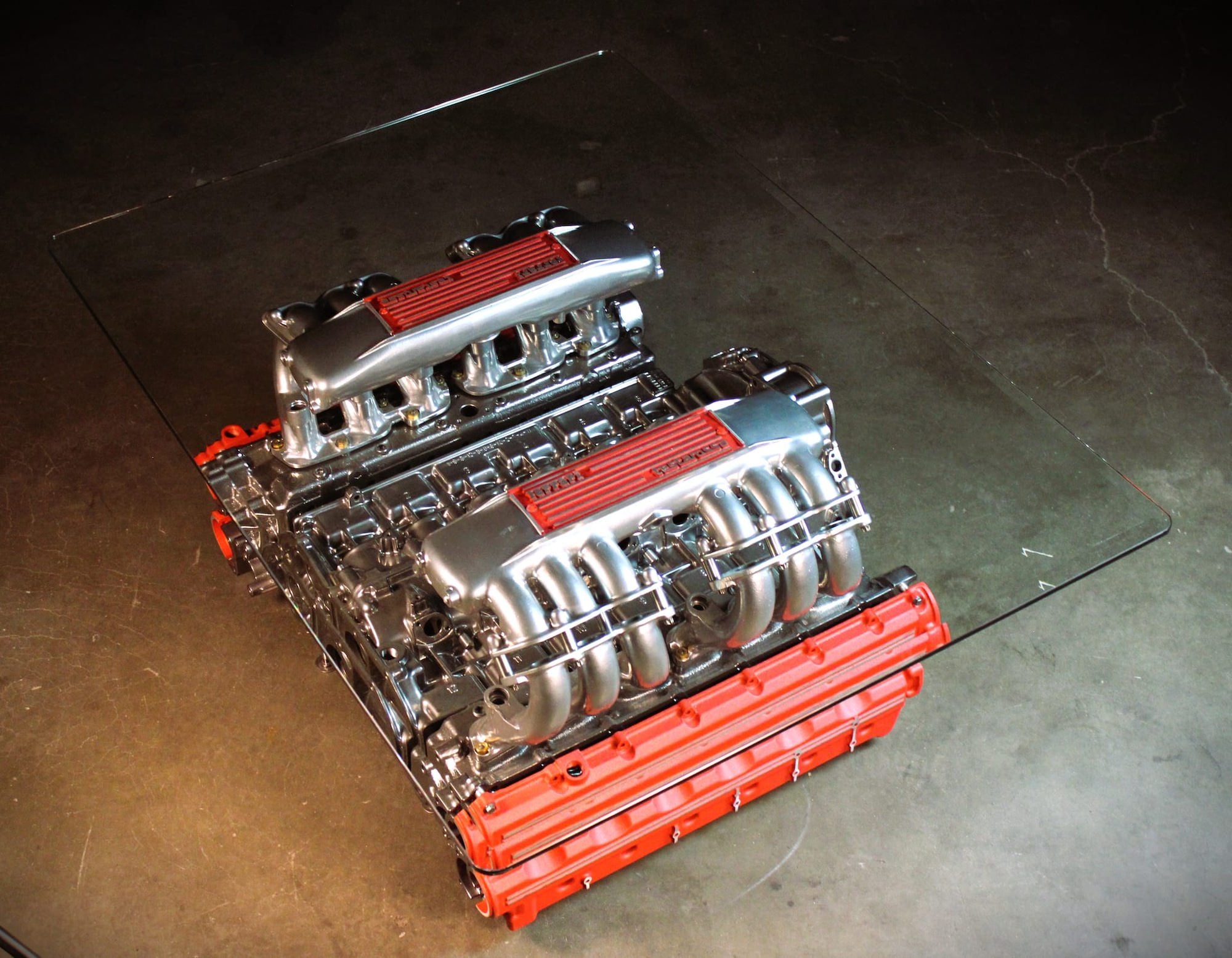
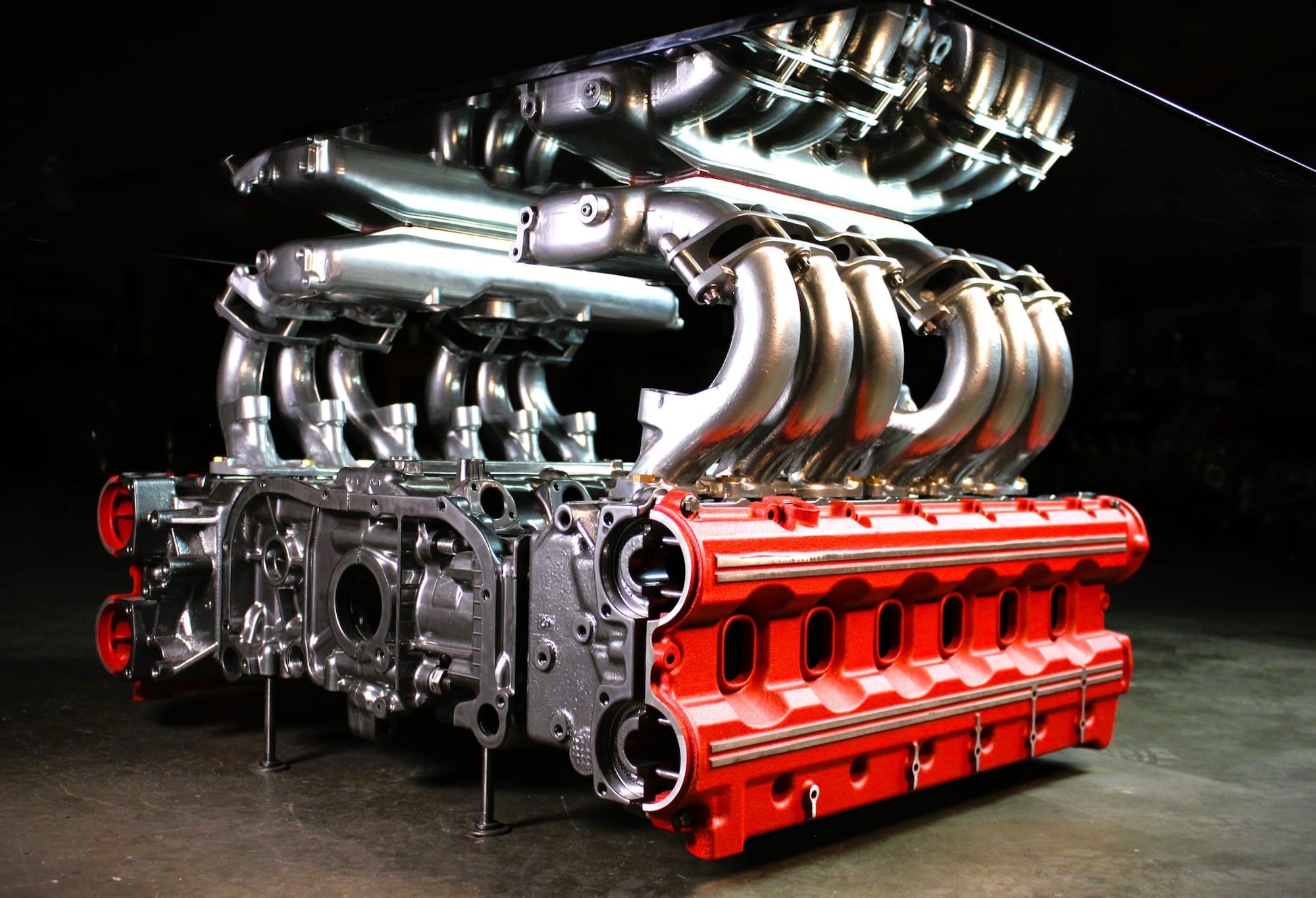
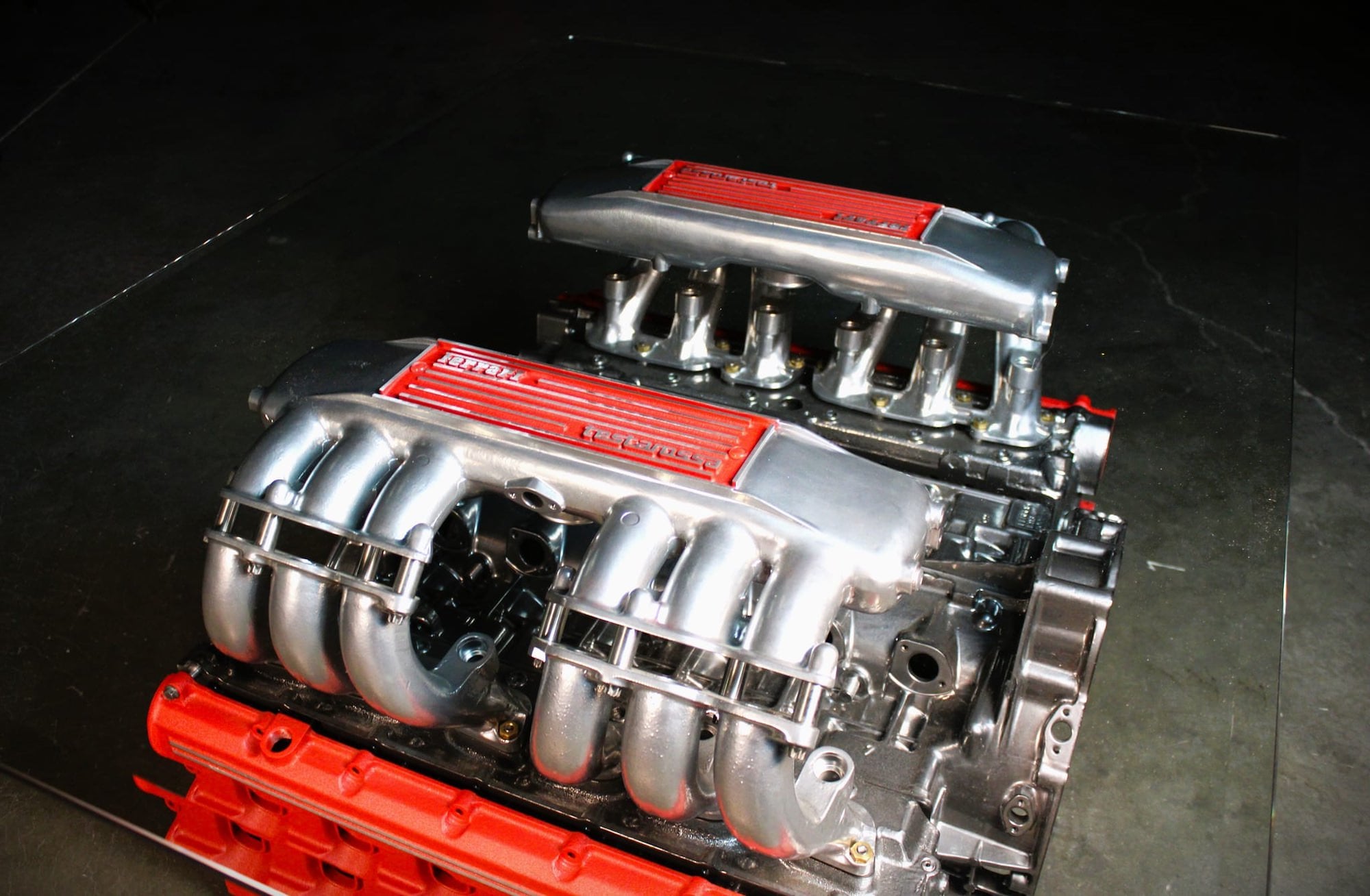
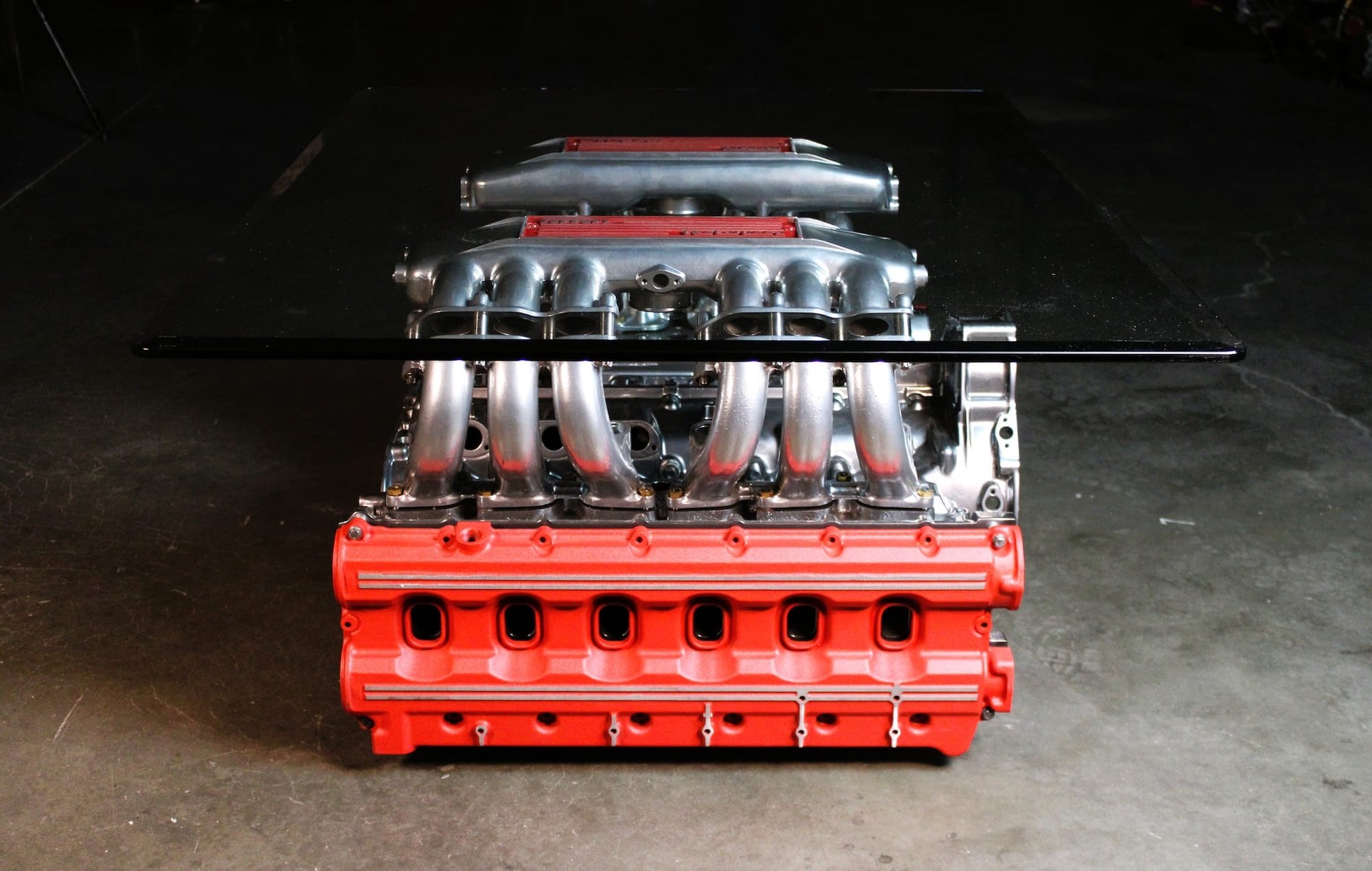
This is a custom-made coffee table named Cuore Aperto, it’s Italian for “Open Heart,” and it was built using a genuine flat-12 sourced from a Ferrari Testarossa.
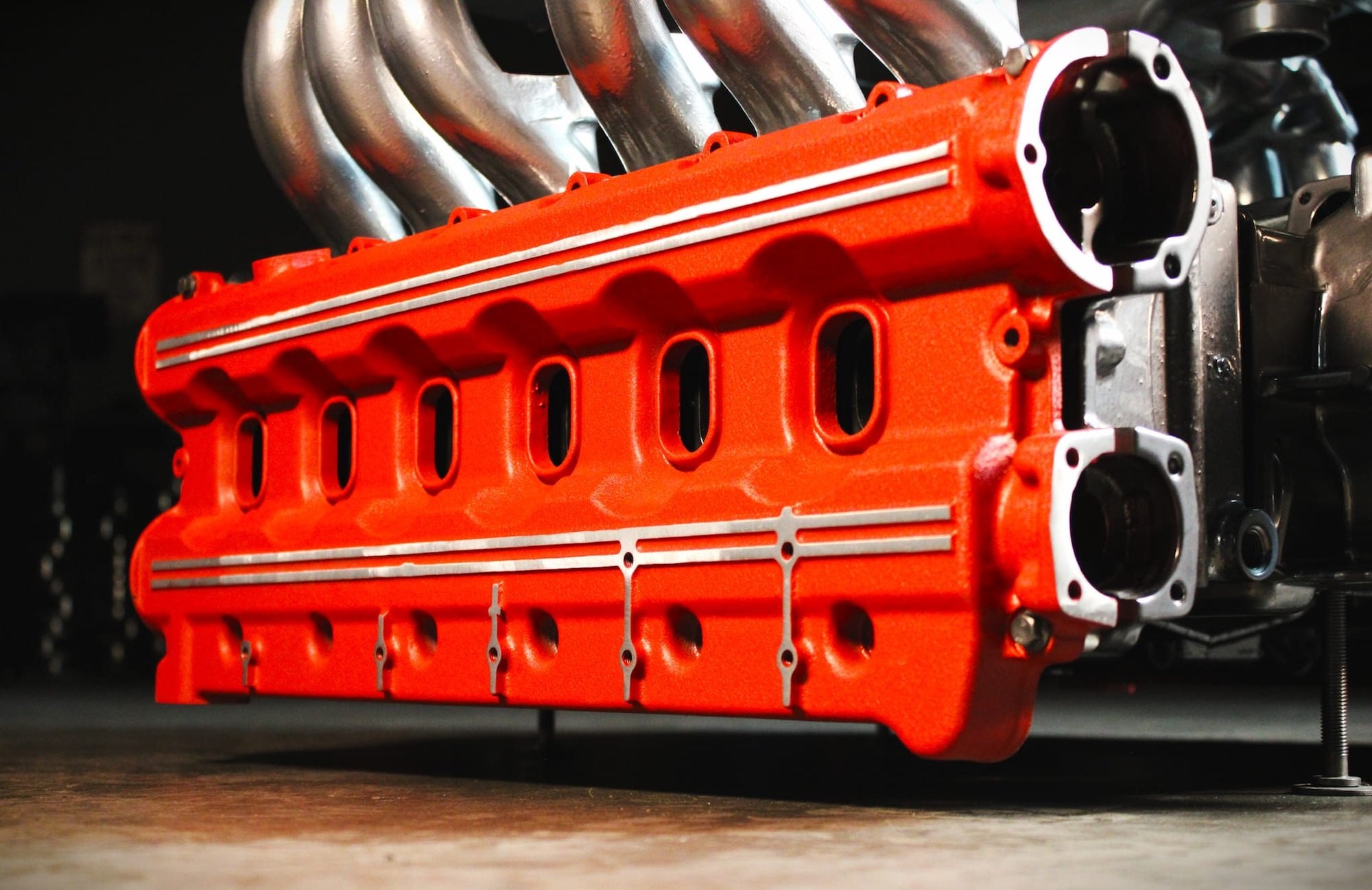
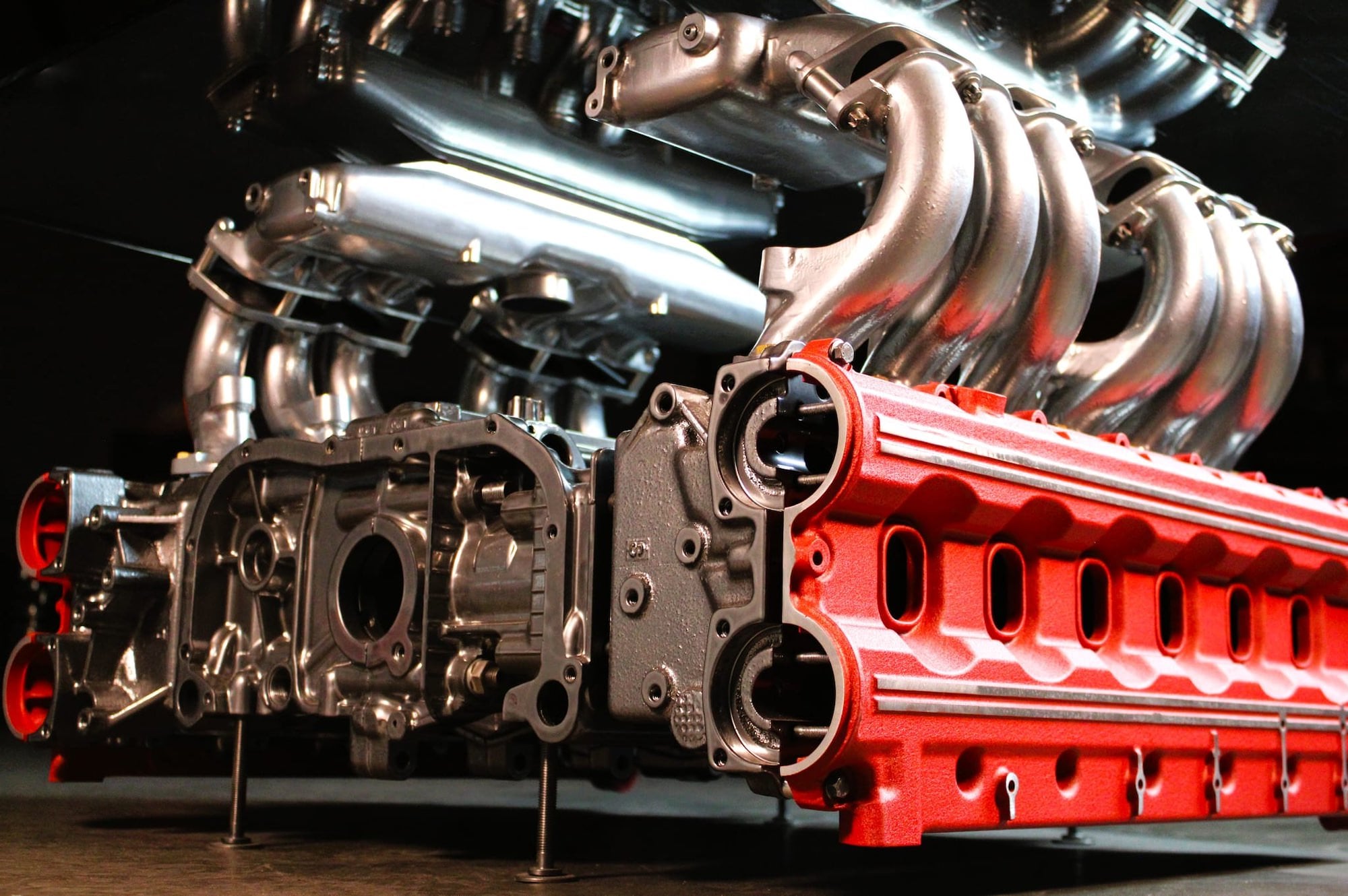
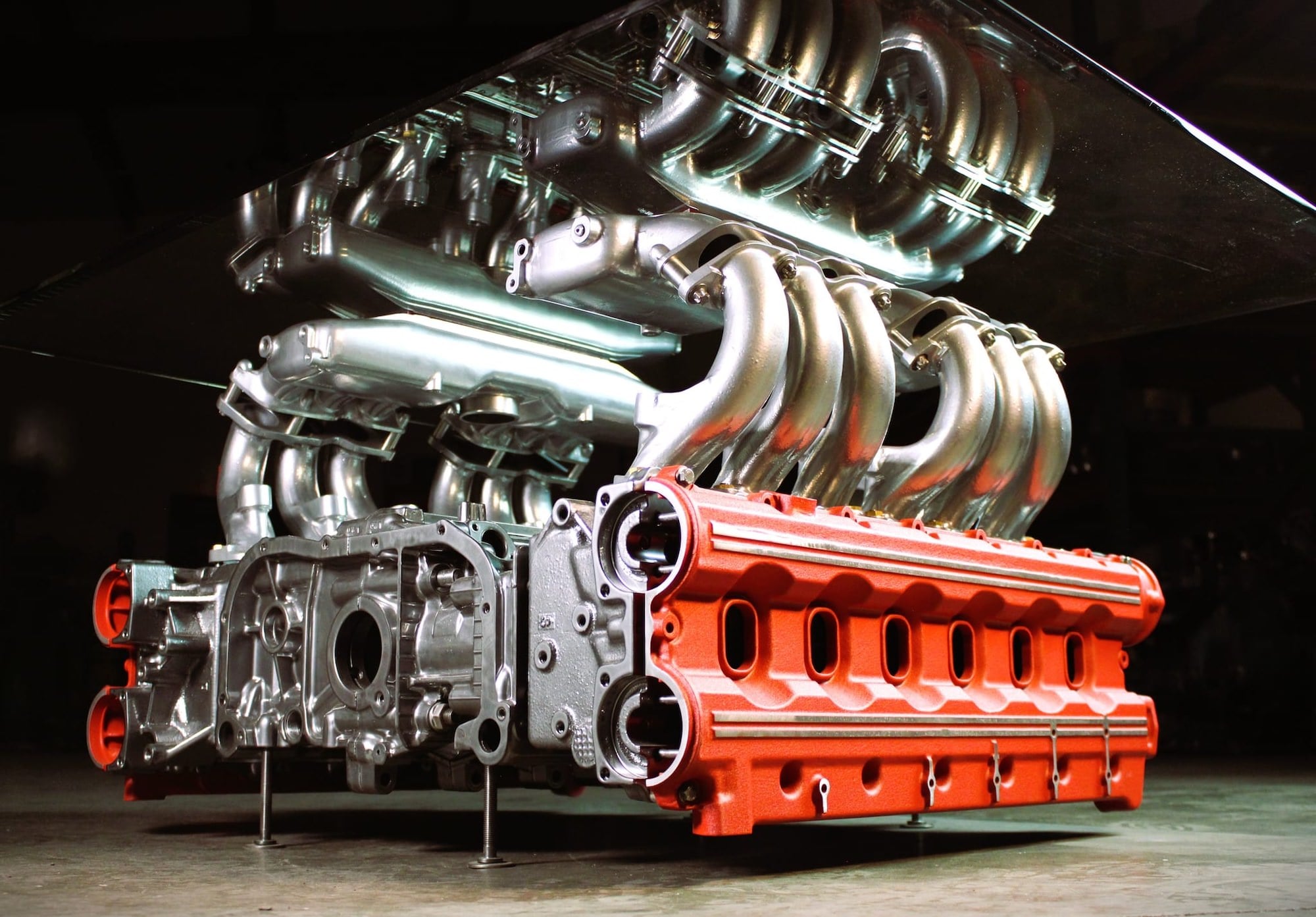
The crankcases, cylinder heads, and intake manifolds were refinished in a mix of tri-tone chrome-effect powder coating and Ferrari-style red crinkle finish, then arranged in an exploded-view configuration that exposes the major parts from several angles, right through the glass tabletop.
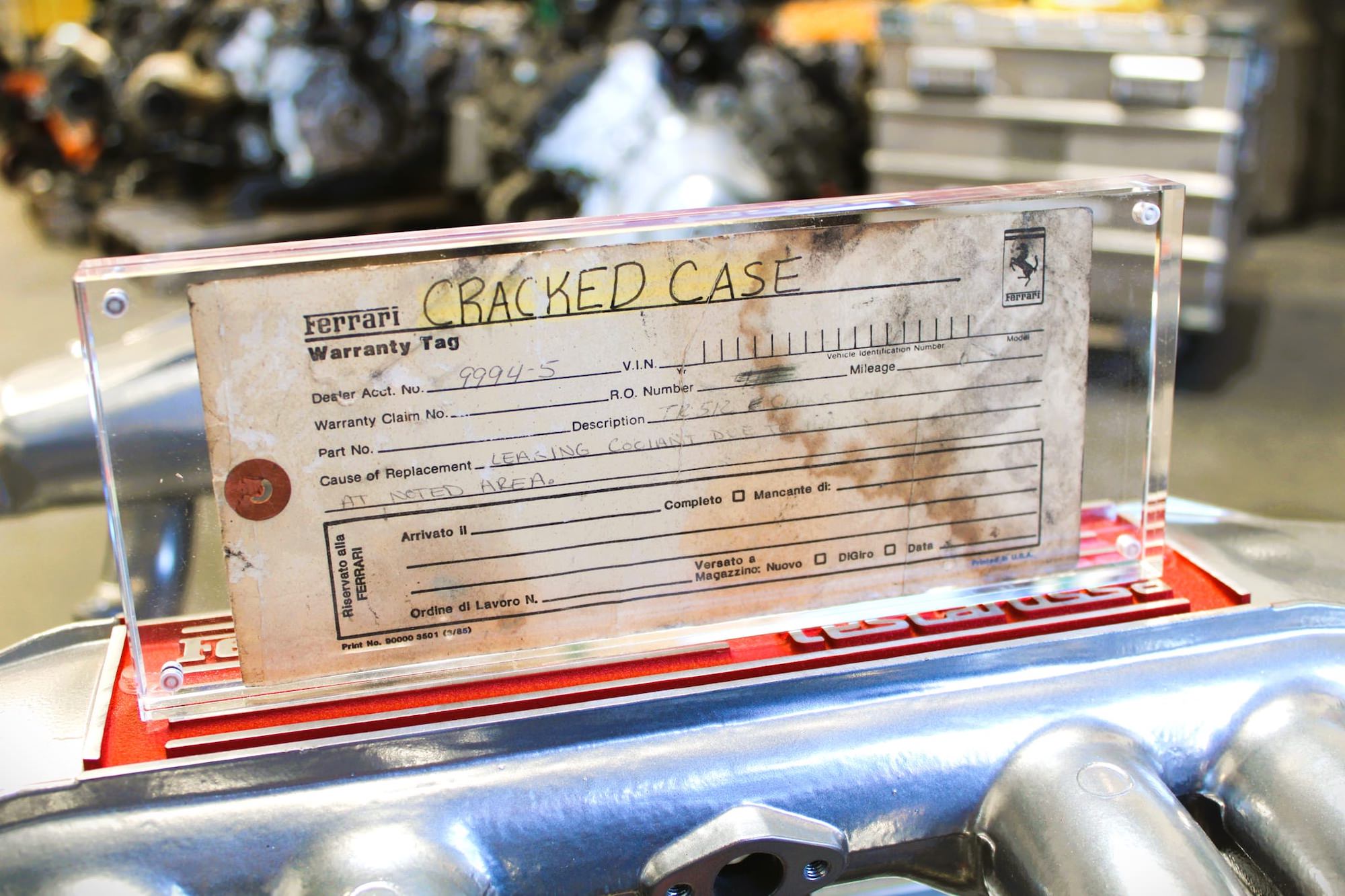
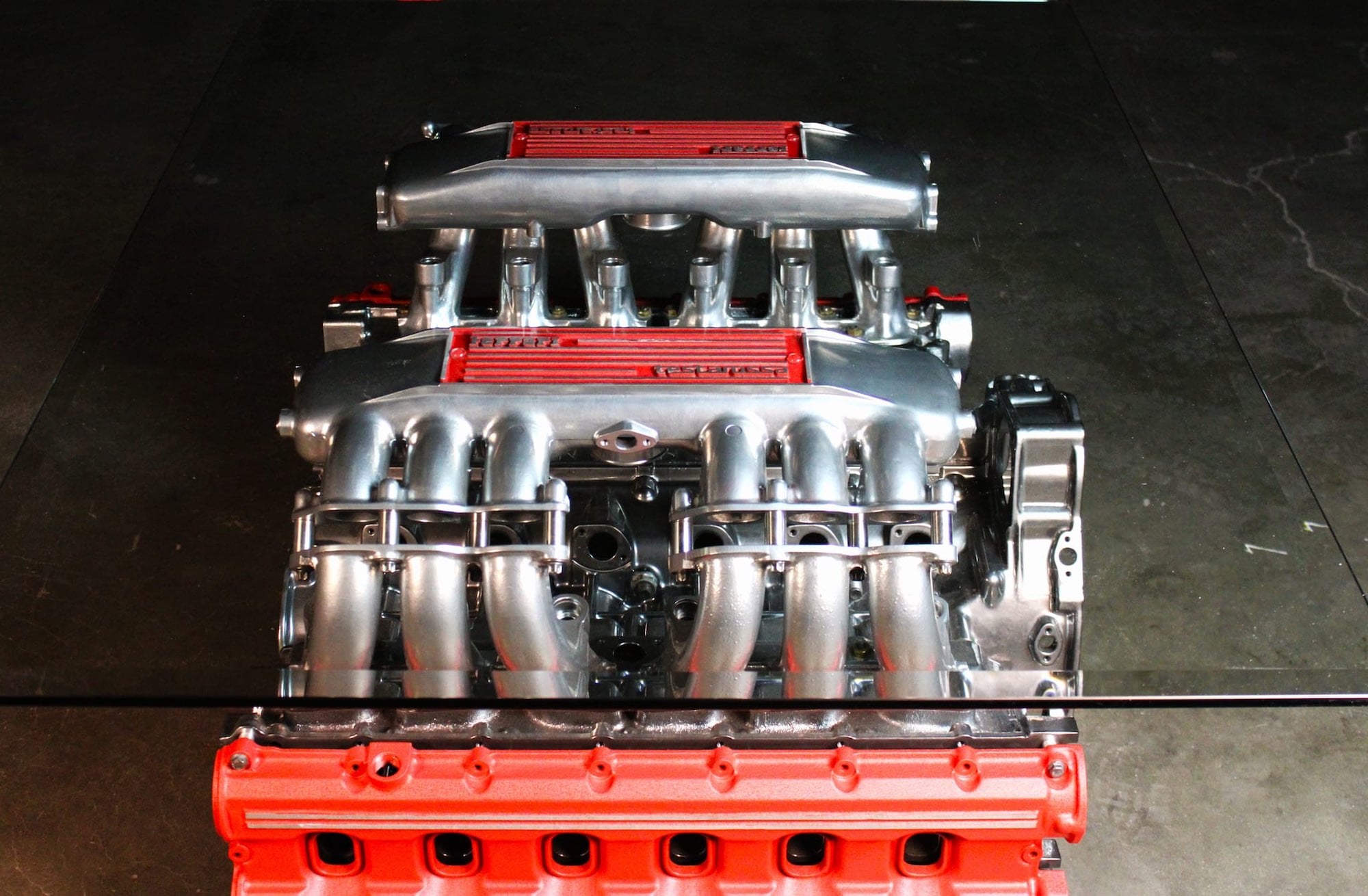
The engine was turned into a coffee table as it was a warranty return to Ferrari, there is an internal crack leaking coolant, however it doesn’t appear to be visible from the outside.
The intake manifolds support a 48-by-36-inch glass top that sits 20.5 inches above the floor, and adjustable feet are fitted beneath the engine assembly. The engine was turned into a coffee table as it was a warranty return to Ferrari, there is an internal crack leaking coolant, however it doesn’t appear to be visible from the outside.
The table is now being offered for sale at no reserve by Ben’s Automotive Decor out of Atascadero, California, and it comes with a Ferrari warranty tag displayed in an acrylic frame. If you’d like to read more or place a bid you can visit the listing here.
Images courtesy of Bring a Trailer + Ferrari

Articles that Ben Branch has written have been covered on CNN, Popular Mechanics, Smithsonian Magazine, Road & Track Magazine, the official Pinterest blog, the official eBay Motors blog, BuzzFeed, Autoweek Magazine, Wired Magazine, Autoblog, Gear Patrol, Jalopnik, The Verge, and many more.
Silodrome was founded by Ben back in 2010, in the years since the site has grown to become a world leader in the alternative and vintage motoring sector, with well over a million monthly readers from around the world and many hundreds of thousands of followers on social media.