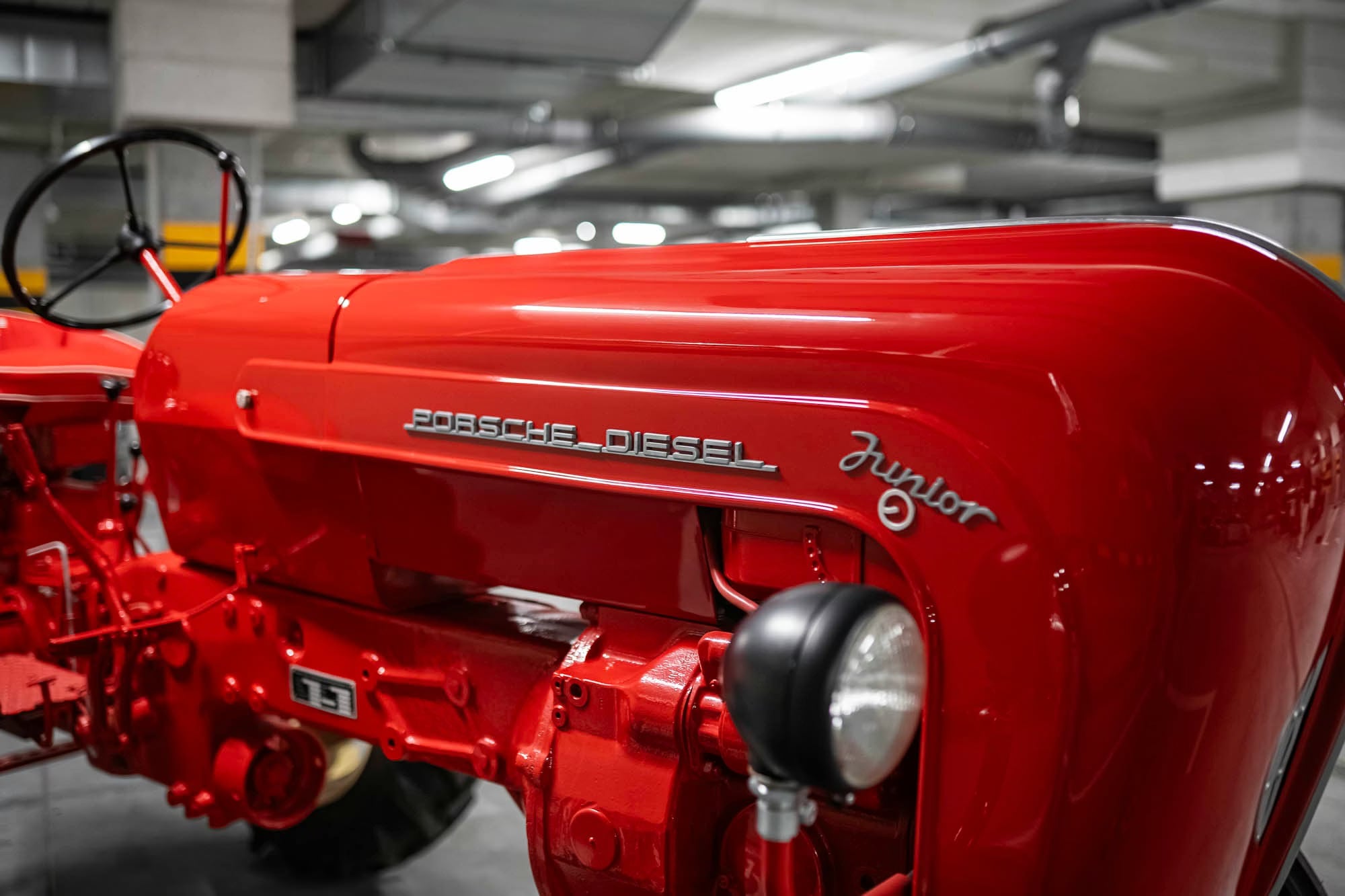
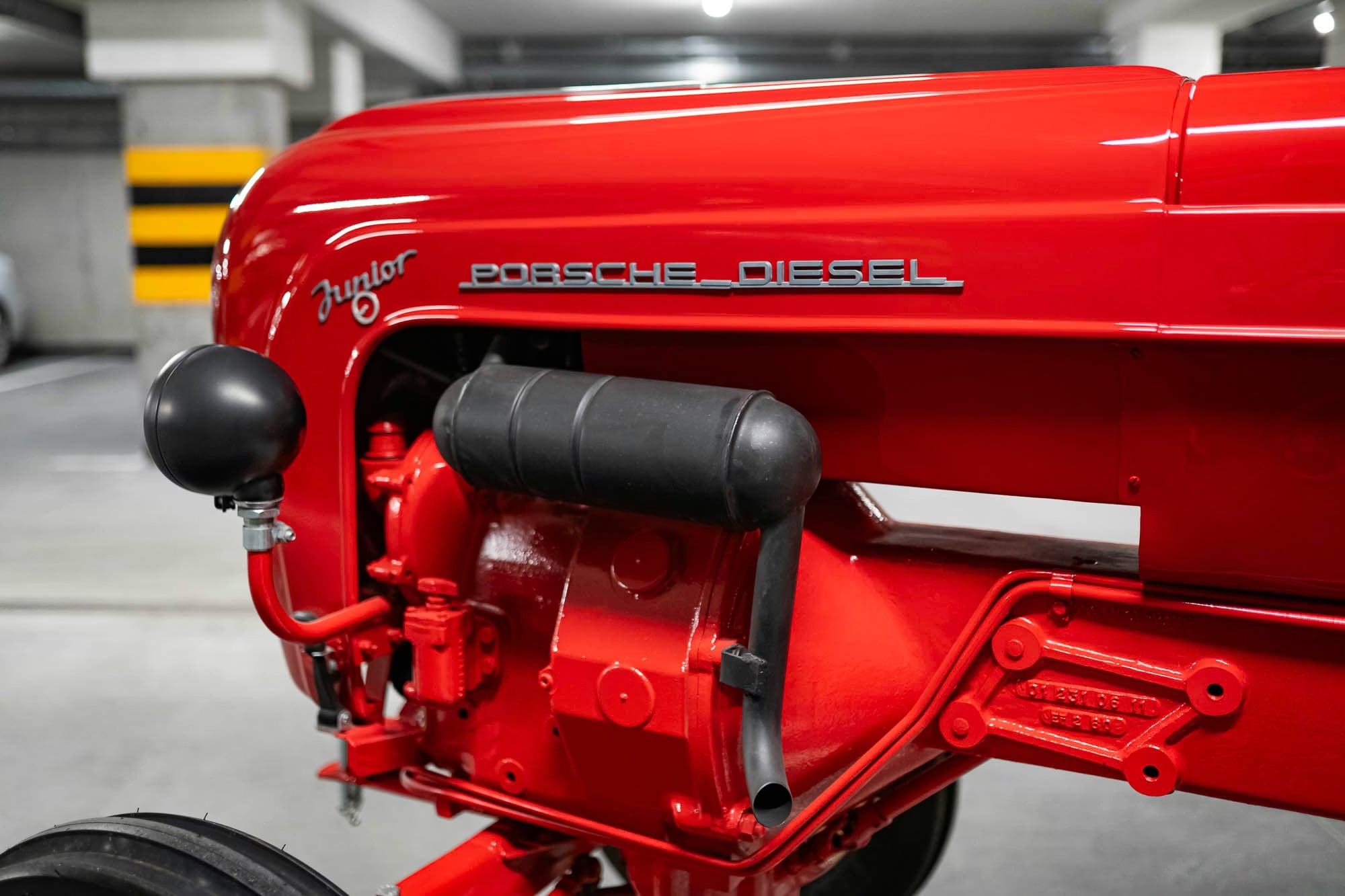
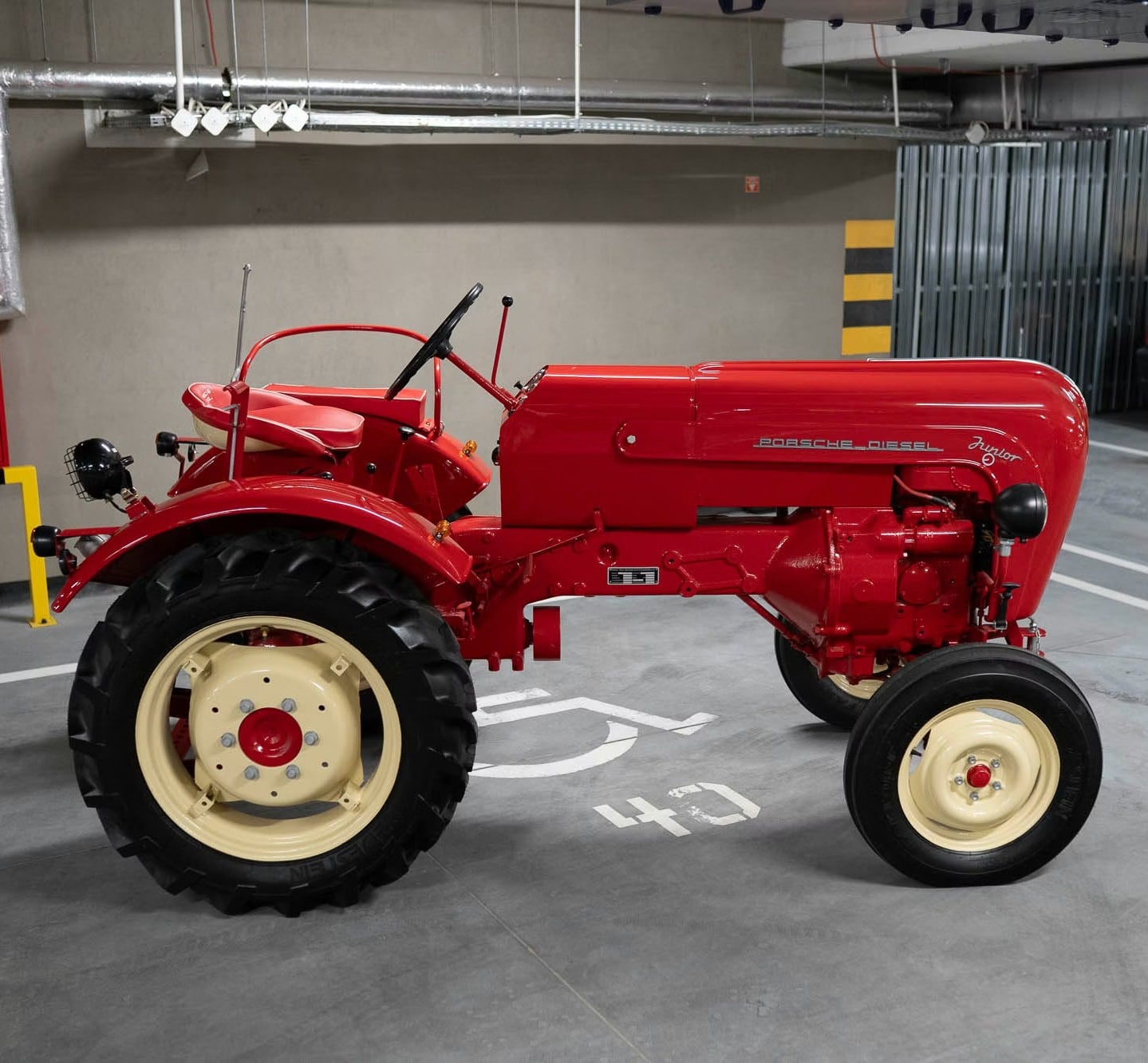
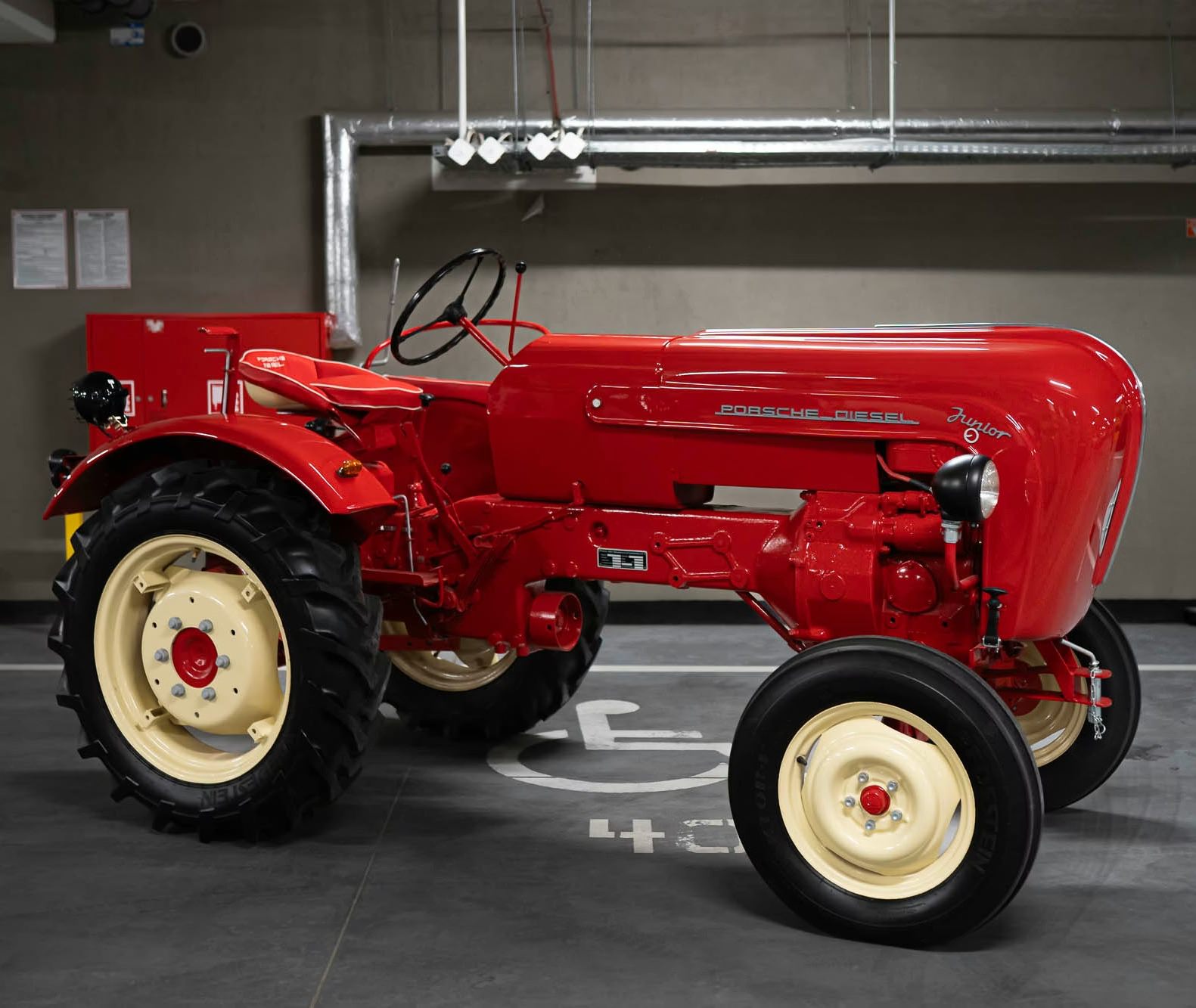
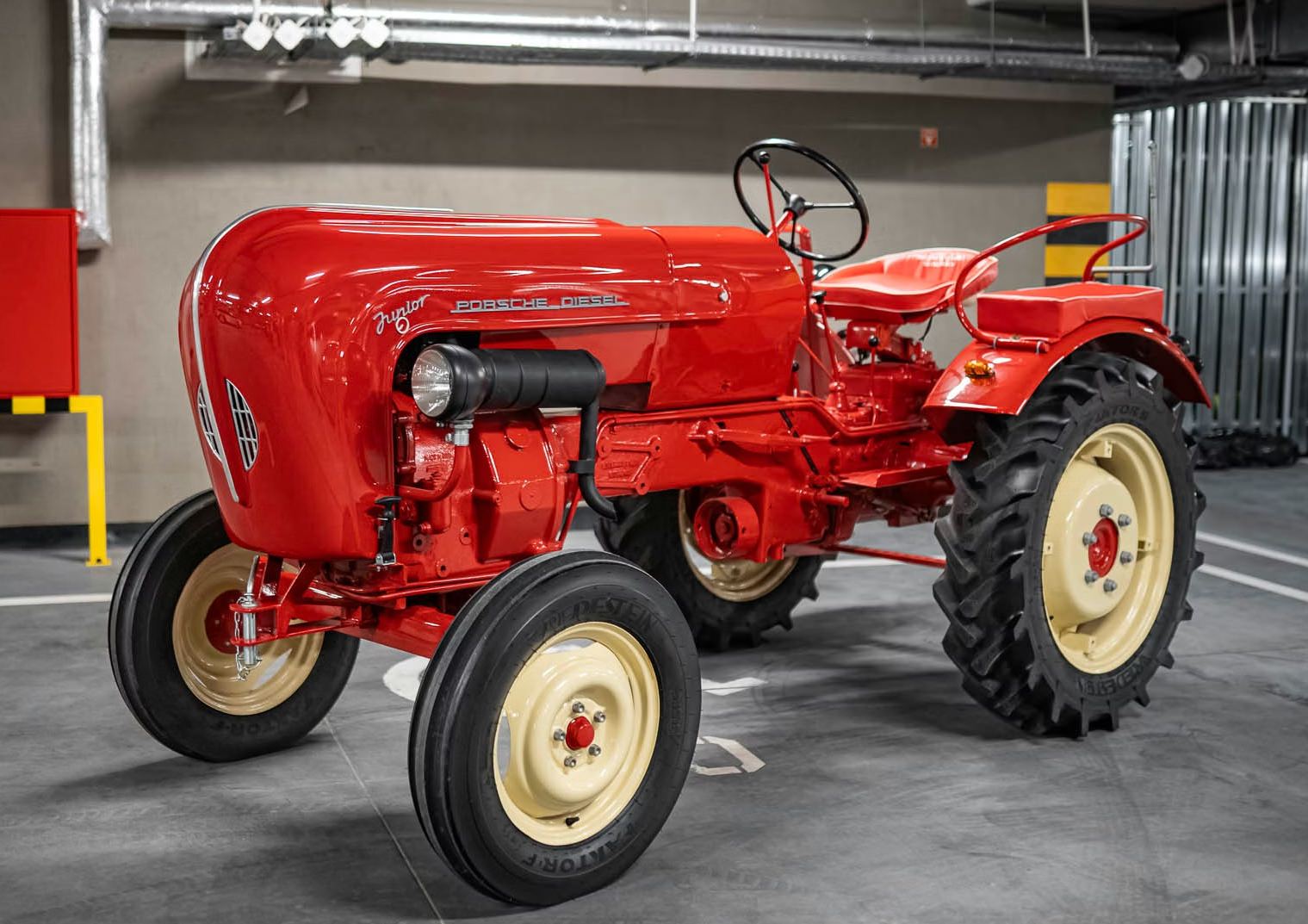
This is a Porsche-Diesel Junior 108 from 1961, it benefits from an extensive restoration, and it’s being offered for sale in original condition throughout.
The Junior 108 tractor is powered by a famously-reliable 882cc naturally aspirated single-cylinder diesel engine, sending power back through a 3-speed manual transmission and a dual-range transfer case to the rear wheels. These early Porsche tractors are now hugely collectible, but they typically sell for considerably less than an air-cooled 911 from the same decade.
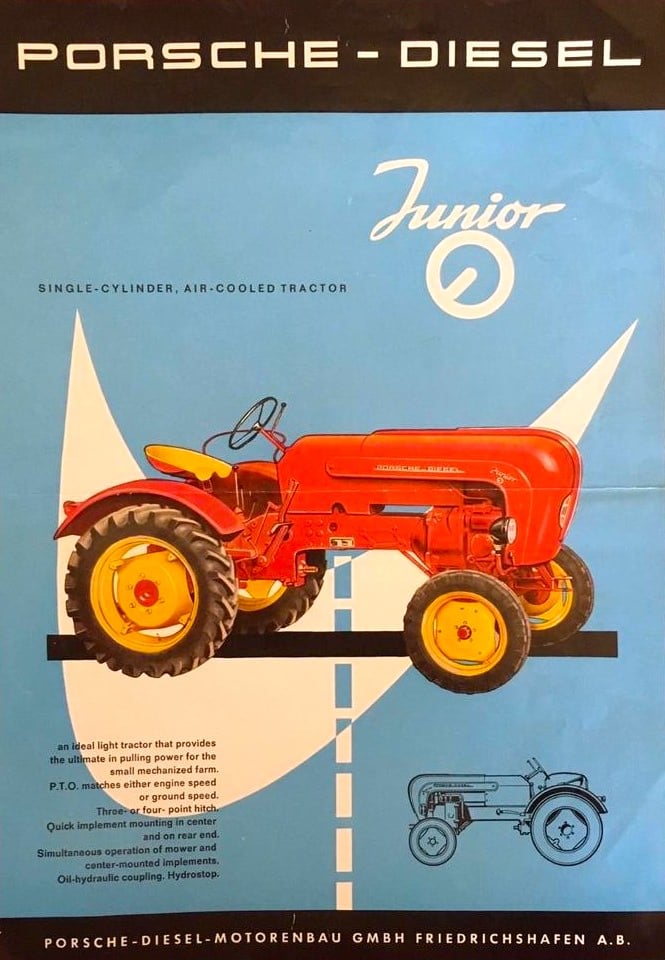
 The Junior 108 tractor is powered by a famously-reliable 882cc naturally aspirated single-cylinder diesel engine, sending power back through a 3-speed manual transmission and a dual-range transfer case to the rear wheels. These early Porsche tractors are now hugely collectible, and they typically sell for considerably less than an air-cooled 911 from the same decade.Image courtesy of Mannesmann AG.
History Speedrun: Porsche-Diesel Tractors
Long before Porsche became known for its tail-happy sports cars, the company’s founder was designing agricultural machines for the far less glamorous world of German farmers. Ferdinand Porsche had been designing vehicles since the turn of the century – from pioneering electric cars at Lohner-Werke to touring and racing machines at Austro-Daimler – and his experience with tractor-type vehicles dated all the way back to World War I, when he developed artillery tractors and military haulers at Austro-Daimler.
After setting up his own design office in Stuttgart in 1930, Porsche’s focus turned to passenger and racing cars, but conversations with Adolf Hitler kept circling back to Germany’s need for an affordable, mass-produced agricultural tractor – a Volksschlepper, or “people’s tractor,” to complement the Volkswagen, or “people’s car.”
The story of the origin of the Beetle is one of the most told and best-known in automotive history, so we won’t repeat it all here. For the sake of this story, the important note is that the Volkswagen was developed alongside a simple tractor that was designed to do for farmers what the Beetle would do for everyday citizens.
In 1937, the German Labour Front formally commissioned Porsche to develop a small tractor. Chief engineer Karl Rabe assigned the project the internal designation Type 110, and by 1938 the team had built the first prototype, it was a compact machine powered by an air-cooled V-twin engine.
From the very beginning, Porsche incorporated a hydraulic coupling between the engine and transmission, and it became a defining feature of the Porsche tractor line, standard on most models throughout production (though not universally fitted across every variant). His engineers famously believed that farmers could not be trusted to operate a conventional clutch without damaging it, so the coupling was designed to eliminate the problem entirely.
They may have been onto something here, as at this time many farmers still used horses, and had limited hands-on experience with the finer points of clutch pedal operation.
The outbreak of World War II halted tractor development as attention shifted to the war effort, and after the war, German authorities ruled that only companies that had manufactured tractors before the conflict could resume production. Since Porsche had only built prototypes, the company was forced to license its designs.
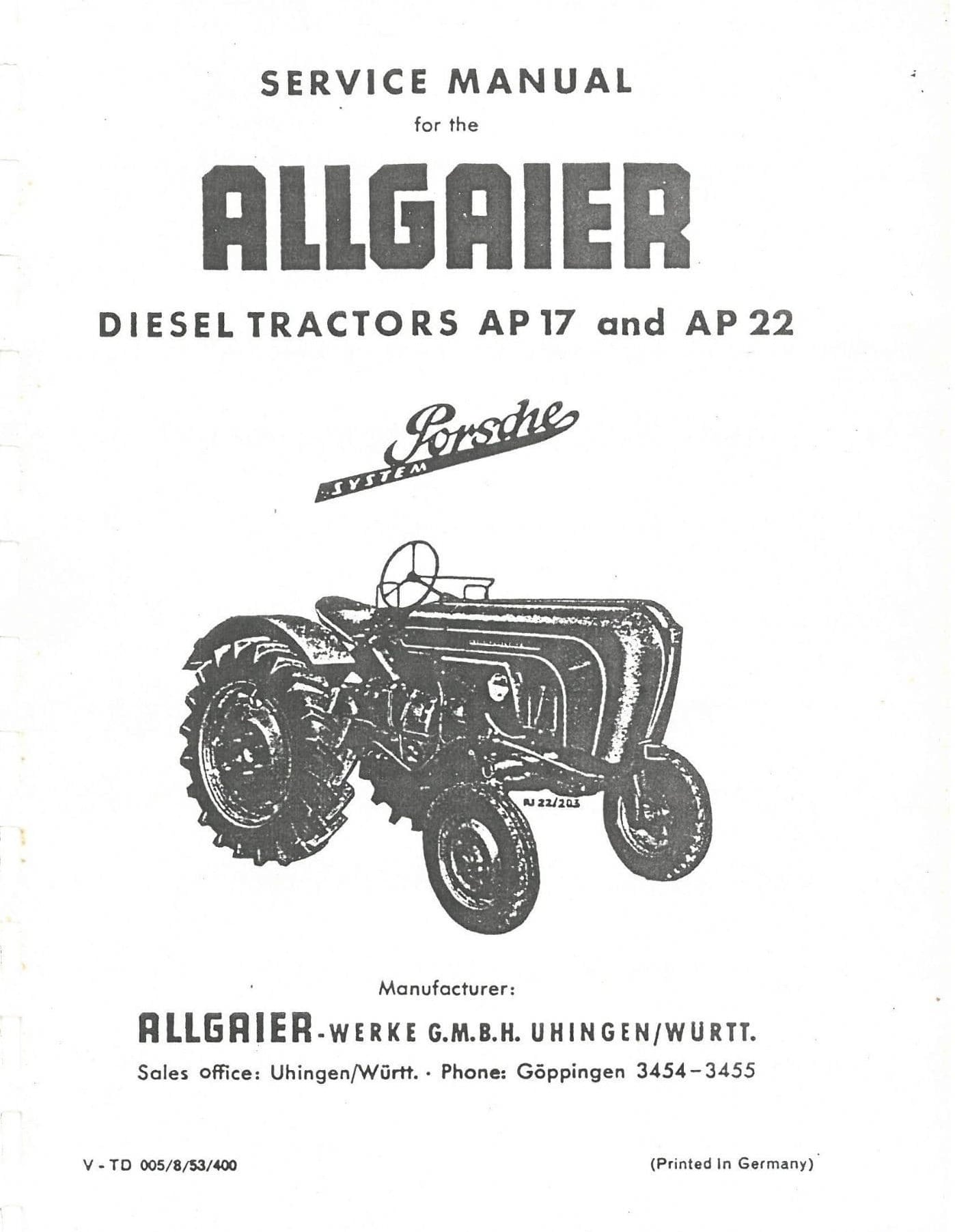
In 1949, Porsche signed agreements with the German company Allgaier GmbH and the Austrian company Hofherr Schrantz, who began building tractors under the “Allgaier – System Porsche” name. Image courtesy of Allgaier.
Production Begins With Allgaier
In 1949, Porsche signed agreements with the German company Allgaier GmbH and the Austrian company Hofherr Schrantz, who began building tractors under the “Allgaier – System Porsche” name.
The first major public debut came at the 1950 German Agricultural Exhibition in Frankfurt, where the Allgaier AP 17 (powered by Porsche’s two-cylinder, air-cooled diesel engine) drew over 15,000 orders within its first three days on display. An astonishing figure for a tractor at the time.
The Shift To Mannesmann And The “Red Nose”
By the mid-1950s, Allgaier was struggling financially due to increasingly stiff competition, and in 1956 the industrial conglomerate Mannesmann AG stepped in. Mannesmann bought the engine and tractor design licenses, rebuilt the old Zeppelin factory in Friedrichshafen-Manzell on the shores of Lake Constance, and set up Porsche-Diesel Motorenbau GmbH as a dedicated manufacturing division.
The tractors were repainted from the earlier Allgaier green into the now-iconic bright red with cream wheels – they were affectionally nicknamed the “red noses.”
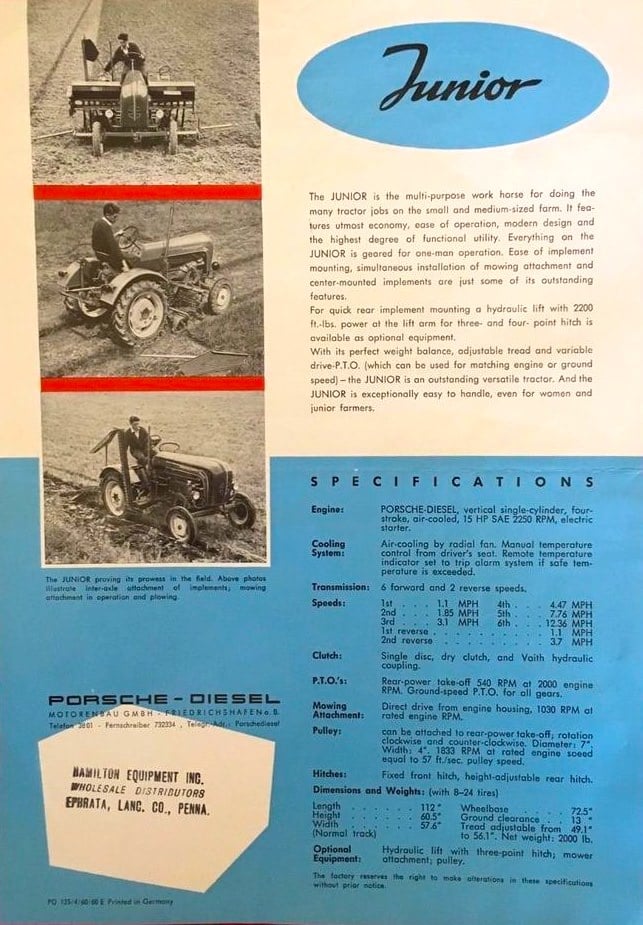
The 1956 product lineup consisted of four models all built around Porsche’s modular, air-cooled diesel engine design, where each cylinder was individually removable for maintenance – the Junior (14 bhp, single-cylinder), Standard (25 bhp, two-cylinder), Super (38 bhp, three-cylinder), and Master (50 bhp, four-cylinder).
Special variants were also developed, including a narrow-tread vineyard tractor and a gasoline-powered model built for coffee plantations in Brazil. By the late 1950s, the factory was turning out as many as 80 tractors a day, and Porsche-Diesel had climbed to the second-largest tractor manufacturer in Germany.
By the mid-1950s, Allgaier was struggling financially due to increasingly stiff competition, and in 1956 the industrial conglomerate Mannesmann AG stepped in. Mannesmann bought the engine and tractor design licenses, rebuilt the old Zeppelin factory in Friedrichshafen-Manzell on the shores of Lake Constance, and set up Porsche-Diesel Motorenbau GmbH as a dedicated manufacturing division. Image courtesy of Mannesmann AG.
Production continued until the end of 1963, when Mannesmann discontinued the line amid rising competition and the need to repurpose the factory for MTU-Daimler’s NATO tank engine production. Over the course of production, 120,000 to 125,000 Porsche-Diesel tractors were built across all models.
The Porsche-Diesel Junior 108
The Junior 108 was the smallest, most affordable, and by far the best-selling model in the Porsche-Diesel range. It was powered by an air-cooled, single-cylinder diesel engine displacing 822cc, with Bosch fuel injection. The engine was good for 14 bhp, with later versions from 1959 onward rated slightly higher at 15 bhp.
Despite the low horsepower, the engine made ample torque for everyday slow-moving farming work and out quickly earned a reputation for exceptional reliability.
Power was sent through a 6-speed ZF manual transmission – this was a notable feature given that Porsche’s road cars would not receive 6-speed gearboxes for decades, but it’s worth nothing that six is the total number of ratios when you include reverse and the dual-range transfer case – so essentially the 108 had three forward and one reverse gear, multiplied by two by the transfer case into six forward and two reverse.
The hydraulic coupling allowed clutchless gear changes on the move, and first gear served as a very (very, very) slow creep gear for delicate operations.
The Junior 108 was available in several sub-variants, including the 108S vineyard model, which had an adjustable track width that could narrow to just 66 cm to fit between rows of grapevines. At $1,750 new in the United States (versus $3,600 for the three-cylinder Super) the Junior was positioned squarely as the entry-level workhorse of the range.
Above Video: This is the footage of the most recent Porsche-Diesel Junior 108 race at Laguna Seca in California.
Only around 1,000 Porsche-Diesel tractors of all models were sold in North America through the American Porsche-Diesel Corporation in Easton, Pennsylvania, as domestically built tractors were significantly cheaper and better known.
Today, the Junior 108 is the most commonly seen Porsche tractor at auction and in collections. Concours-restored examples regularly appear at RM Sotheby’s, Bonhams, and on other sales platforms, and they’ve even competed in a dedicated racing class at the Porsche Club of America’s Rennsport Reunion at Laguna Seca!
The 1961 Porsche-Diesel Junior 108 Shown Here
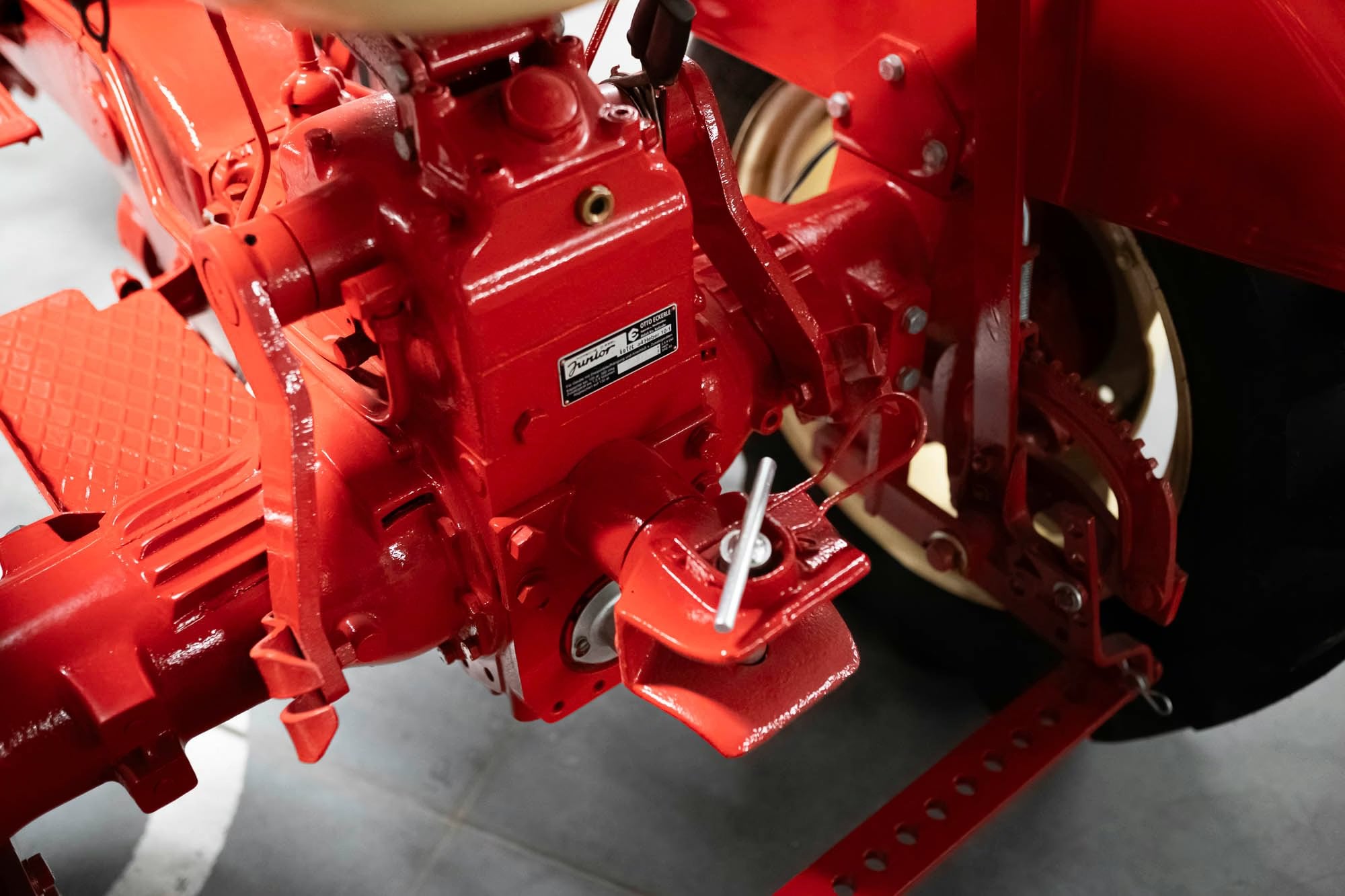
This is a Porsche-Diesel Junior 108 from 1961, it’s a single-cylinder tractor from the smallest and most popular end of the Porsche-Diesel range, shown here following what’s described as a comprehensive nut-and-bolt restoration. Originally a German-market example, it’s now located in Poland with its third owner, who has owned it for five years.
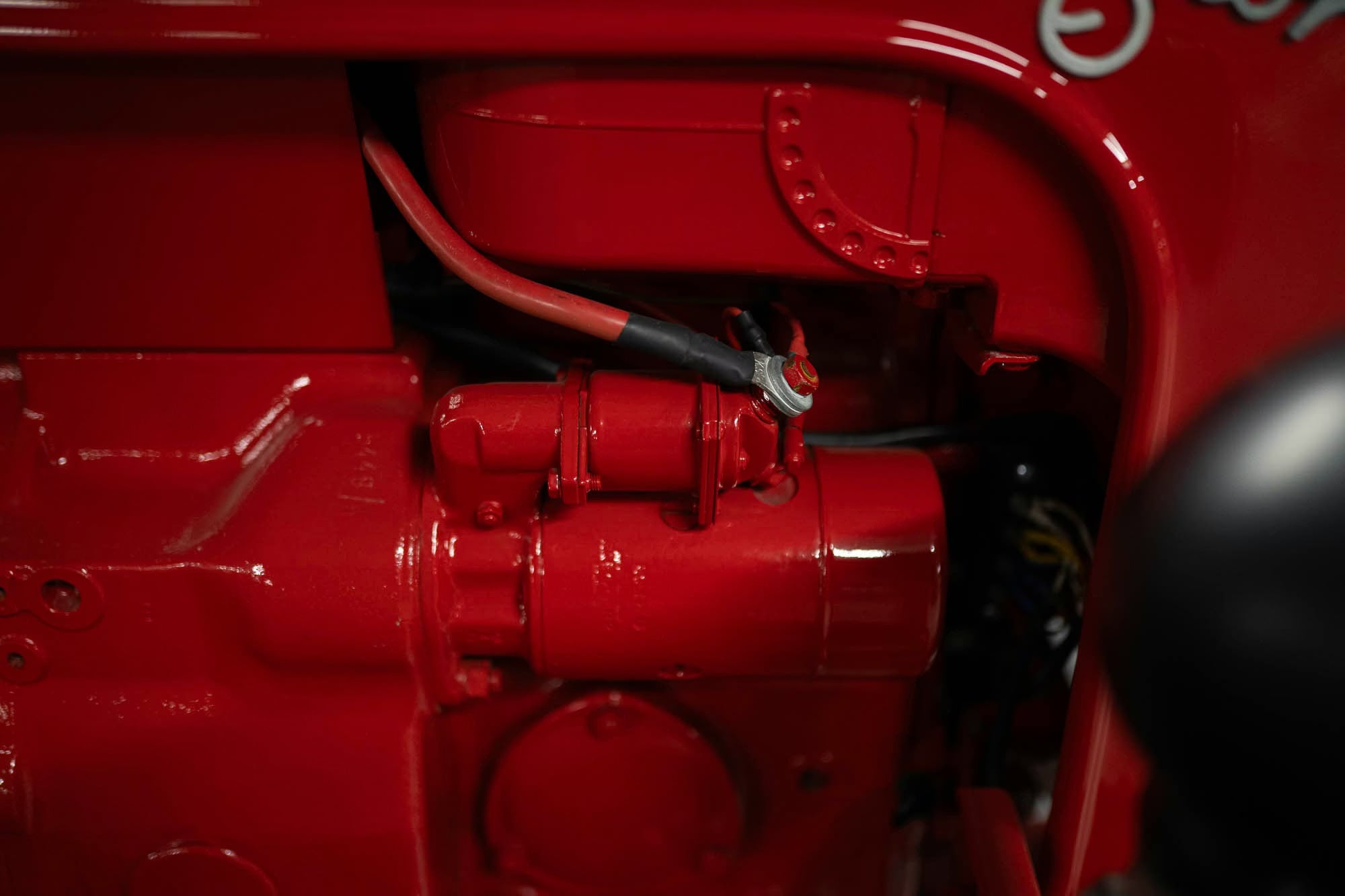
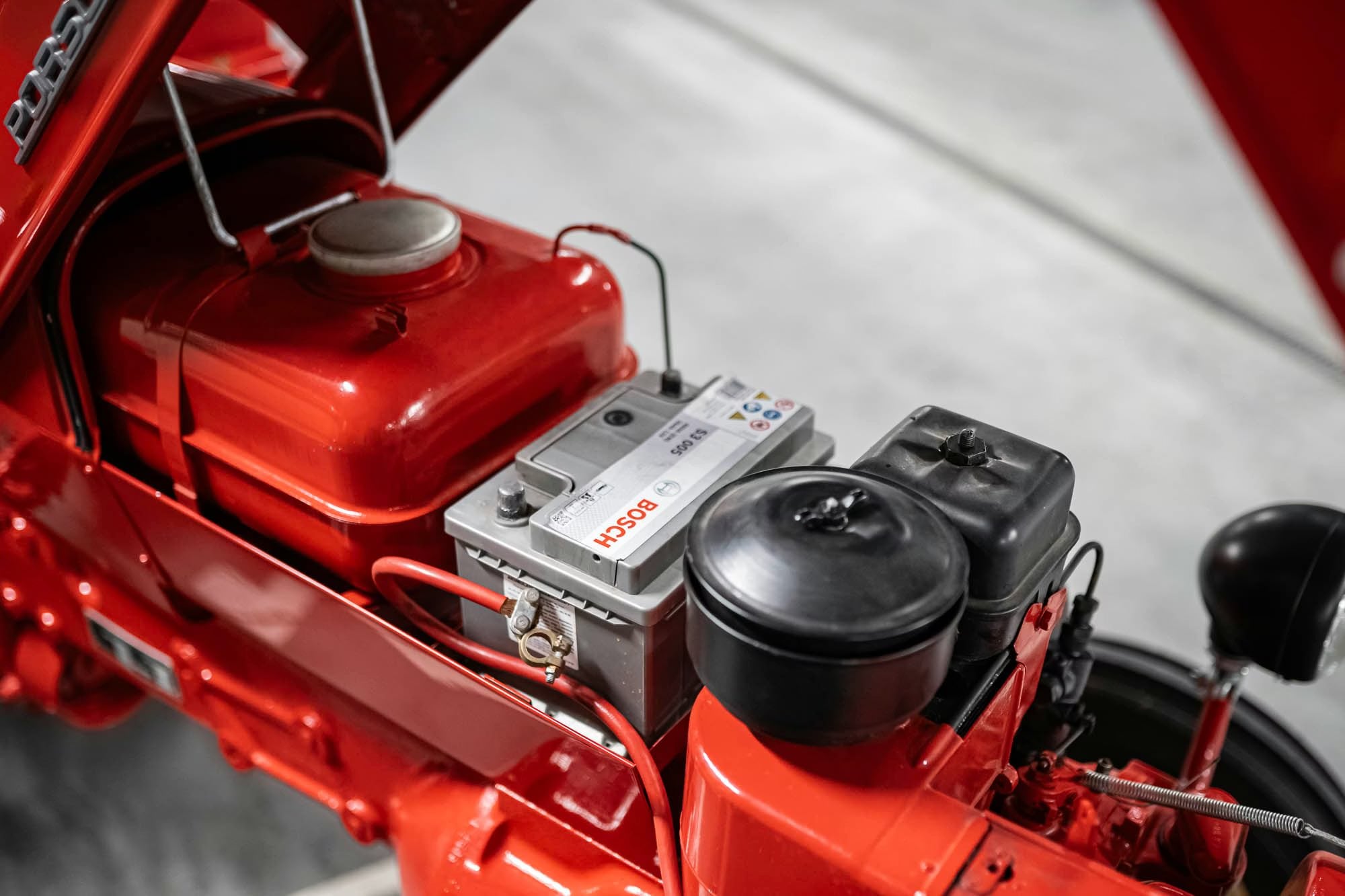
The tractor has not been used since the restoration was completed and has been kept in a private collection. Power comes from an 882cc naturally aspirated single-cylinder diesel engine, driving through a 3-speed manual transmission and dual-range transfer case to the rear wheels, and the last recorded maintenance was carried out in April of 2026.
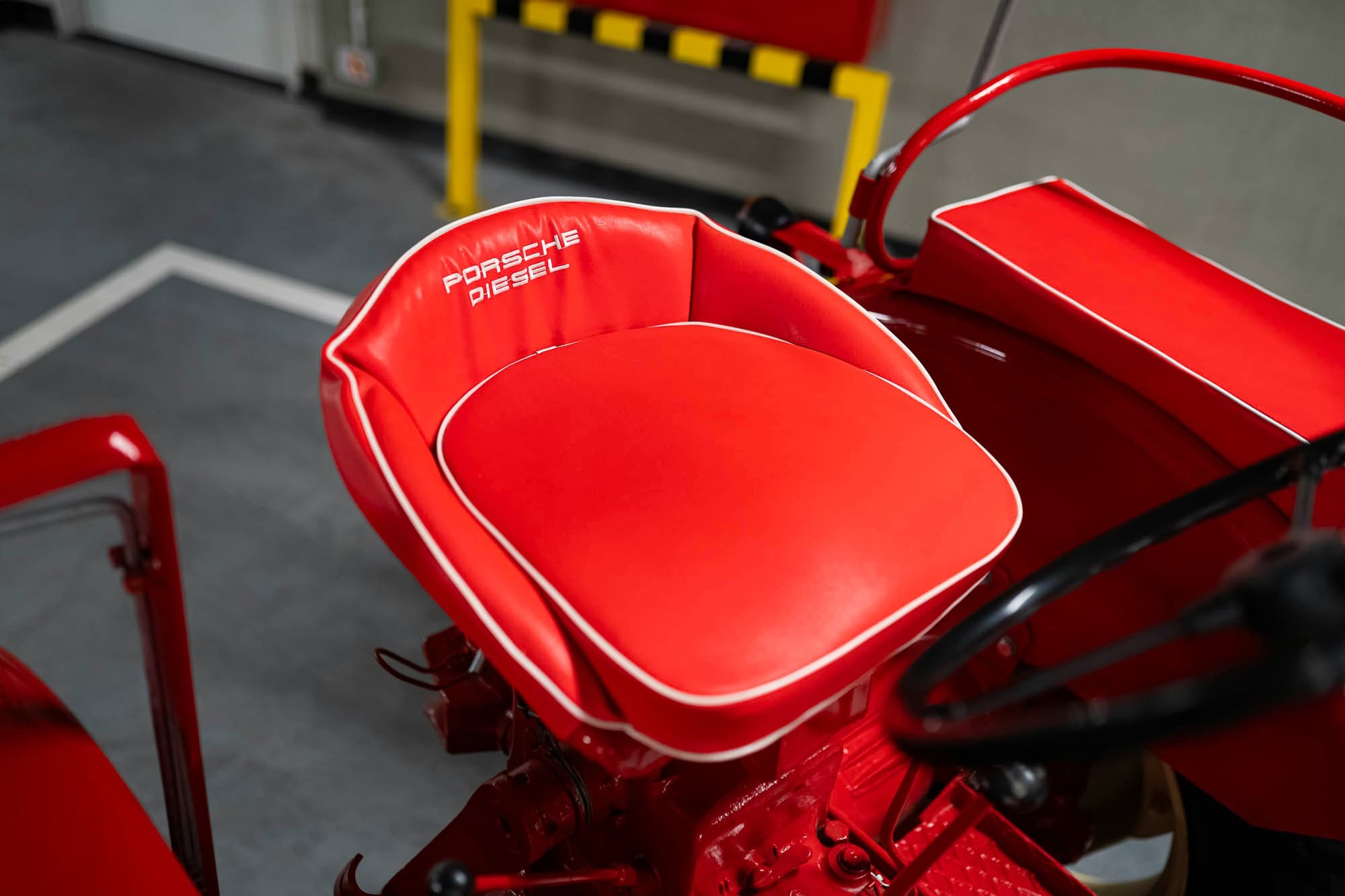
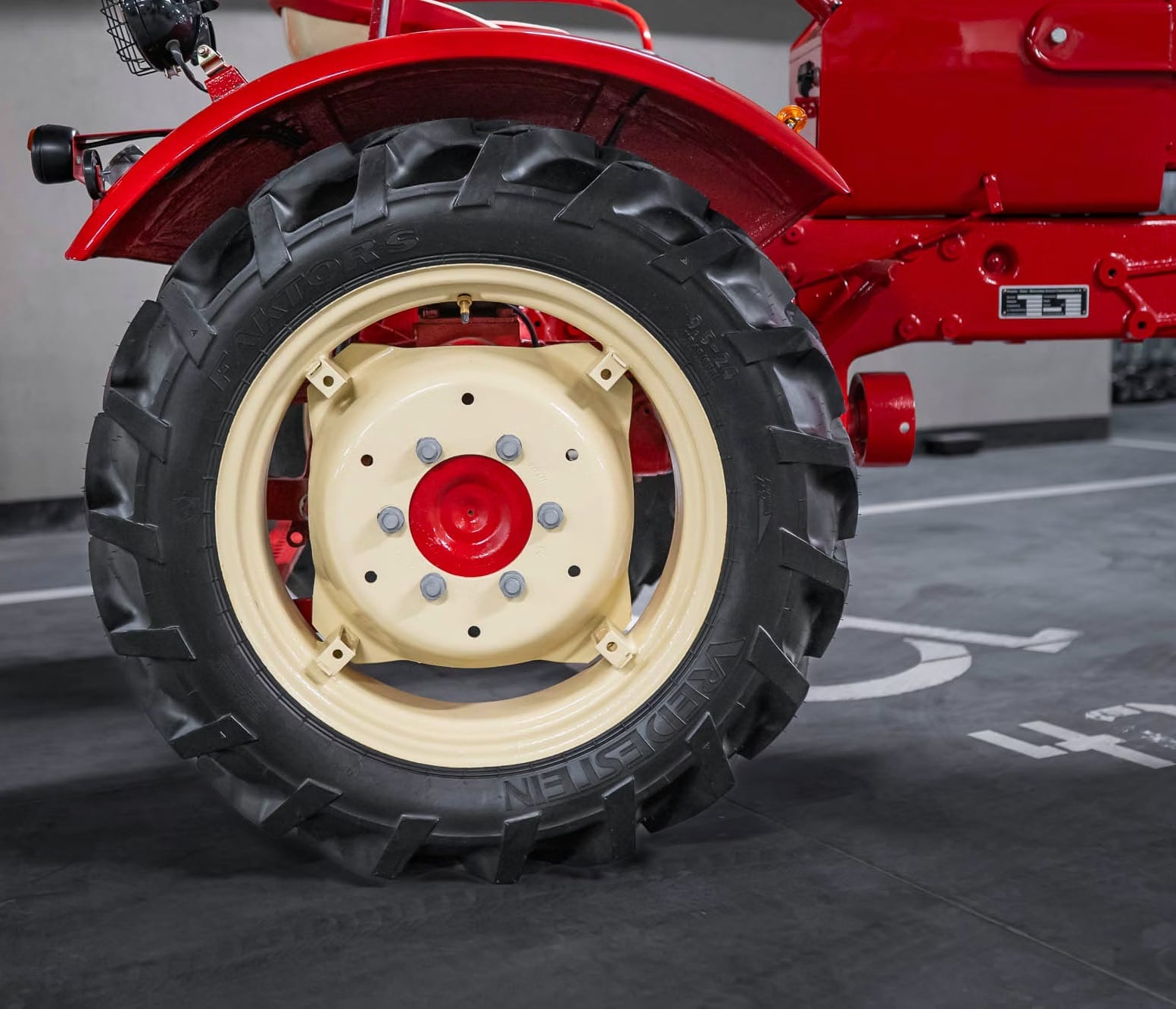
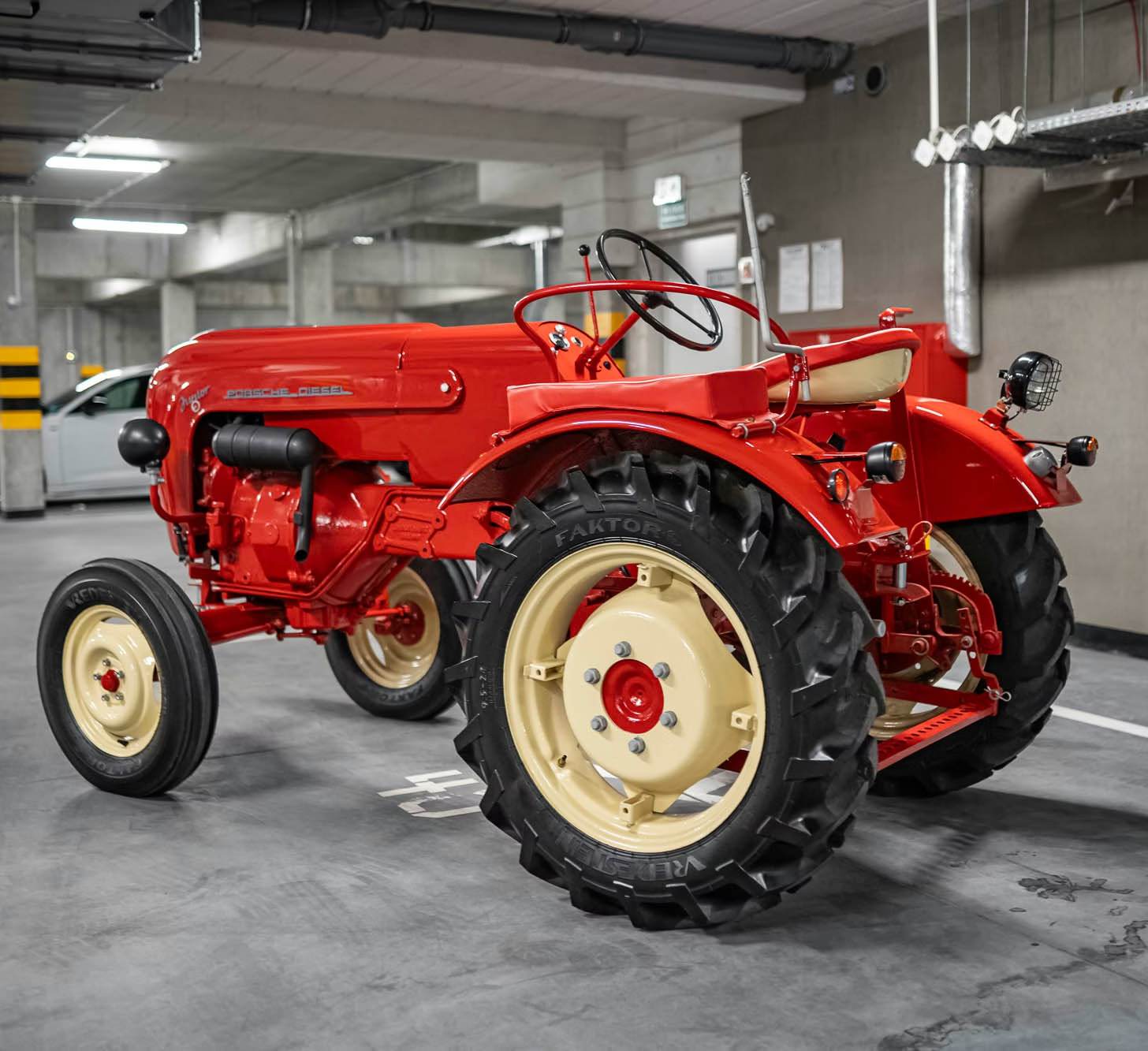
The tractor is finished in the classic Porsche-Diesel livery of vibrant red bodywork with cream-finished steel wheels, 16 inch fronts and 24 inch rears, shod with Vredestein Faktor-F and Faktor-S tires respectively. The seat has a cream base with red vinyl-trimmed cushioning, contrasting white piping, and embroidered “Porsche Diesel” lettering, and it’s described as having been retrimmed during the restoration.
This is a Porsche-Diesel Junior 108 from 1961, it’s a single-cylinder tractor from the smallest and most popular end of the Porsche-Diesel range, shown here following what’s described as a comprehensive nut-and-bolt restoration. Originally a German-market example, it’s now located in Poland with its third owner, who has owned it for five years.
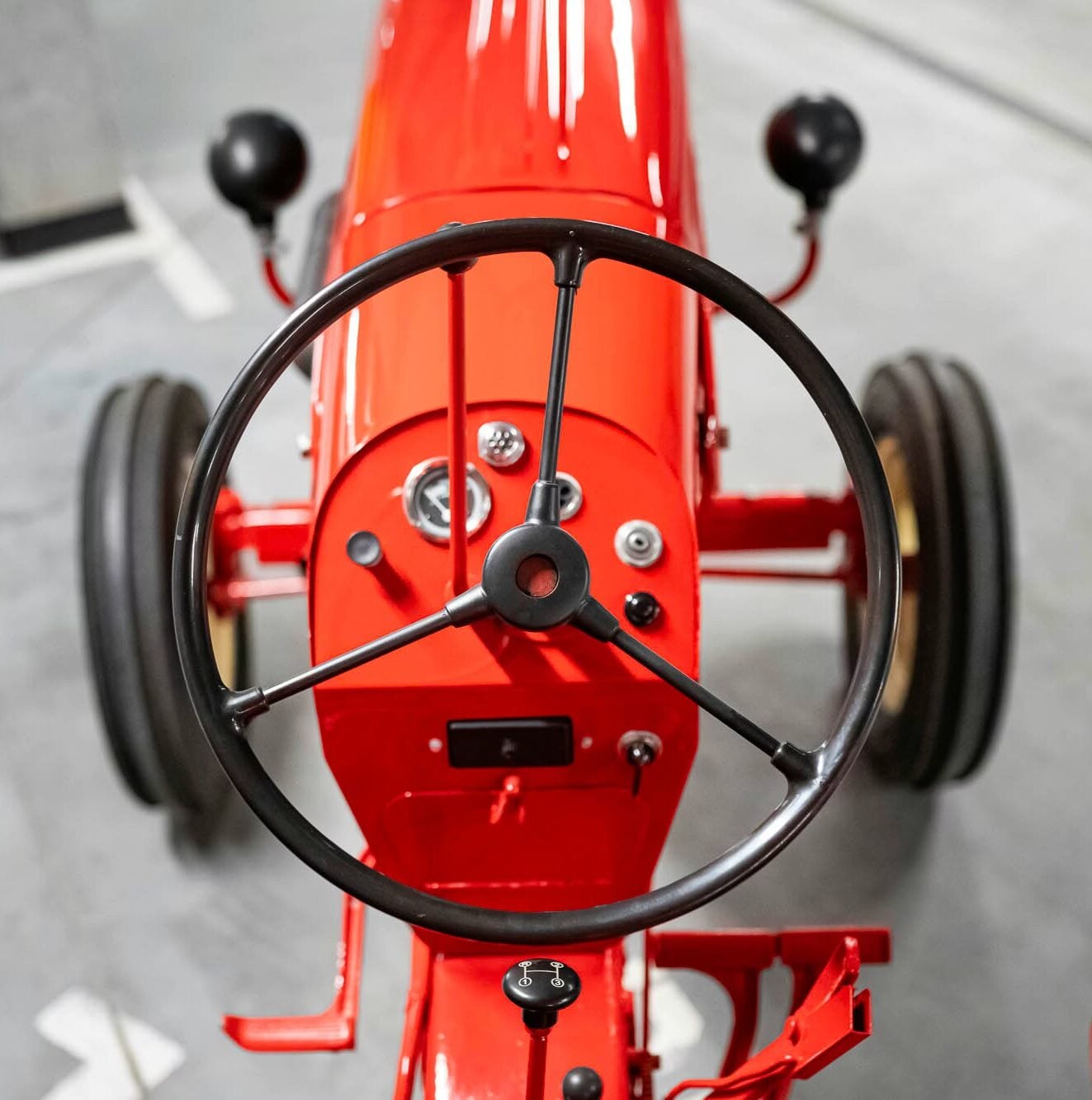
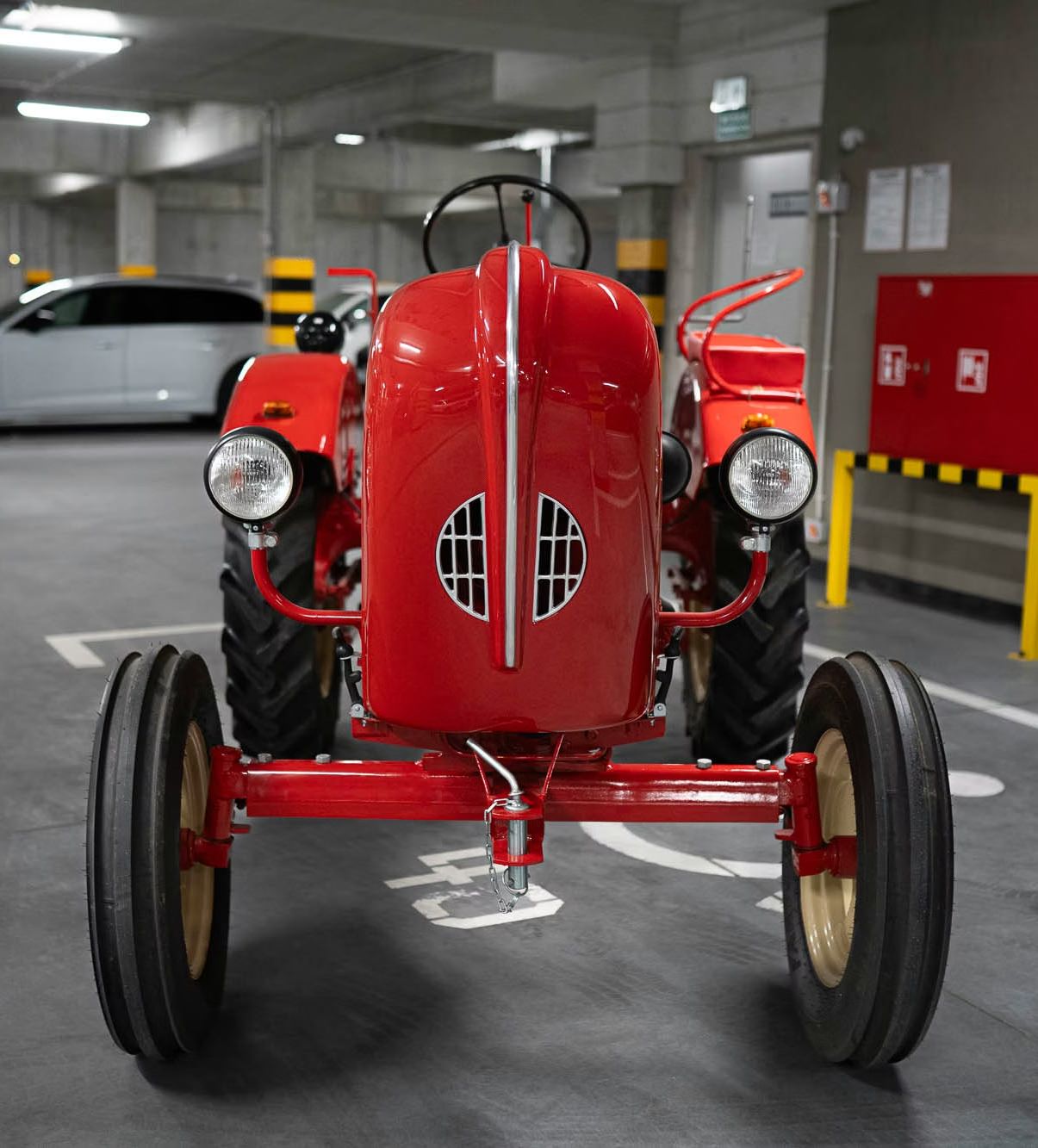
Equipment includes stalk-mounted headlights, a rear work light with a protective grille, a three-spoke steering wheel, a temperature gauge, exposed mechanical controls, and a rear fender-mounted side seat. The tractor is accompanied by a single ignition key.
This Junior 108 is now being offered for sale on Collecting Cars out of Gdynia, Poland and you can visit the listing here if you’d like to read more about it or register to bid.
Images courtesy of Collecting Cars

Articles that Ben Branch has written have been covered on CNN, Popular Mechanics, Smithsonian Magazine, Road & Track Magazine, the official Pinterest blog, the official eBay Motors blog, BuzzFeed, Autoweek Magazine, Wired Magazine, Autoblog, Gear Patrol, Jalopnik, The Verge, and many more.
Silodrome was founded by Ben back in 2010, in the years since the site has grown to become a world leader in the alternative and vintage motoring sector, with well over a million monthly readers from around the world and many hundreds of thousands of followers on social media.