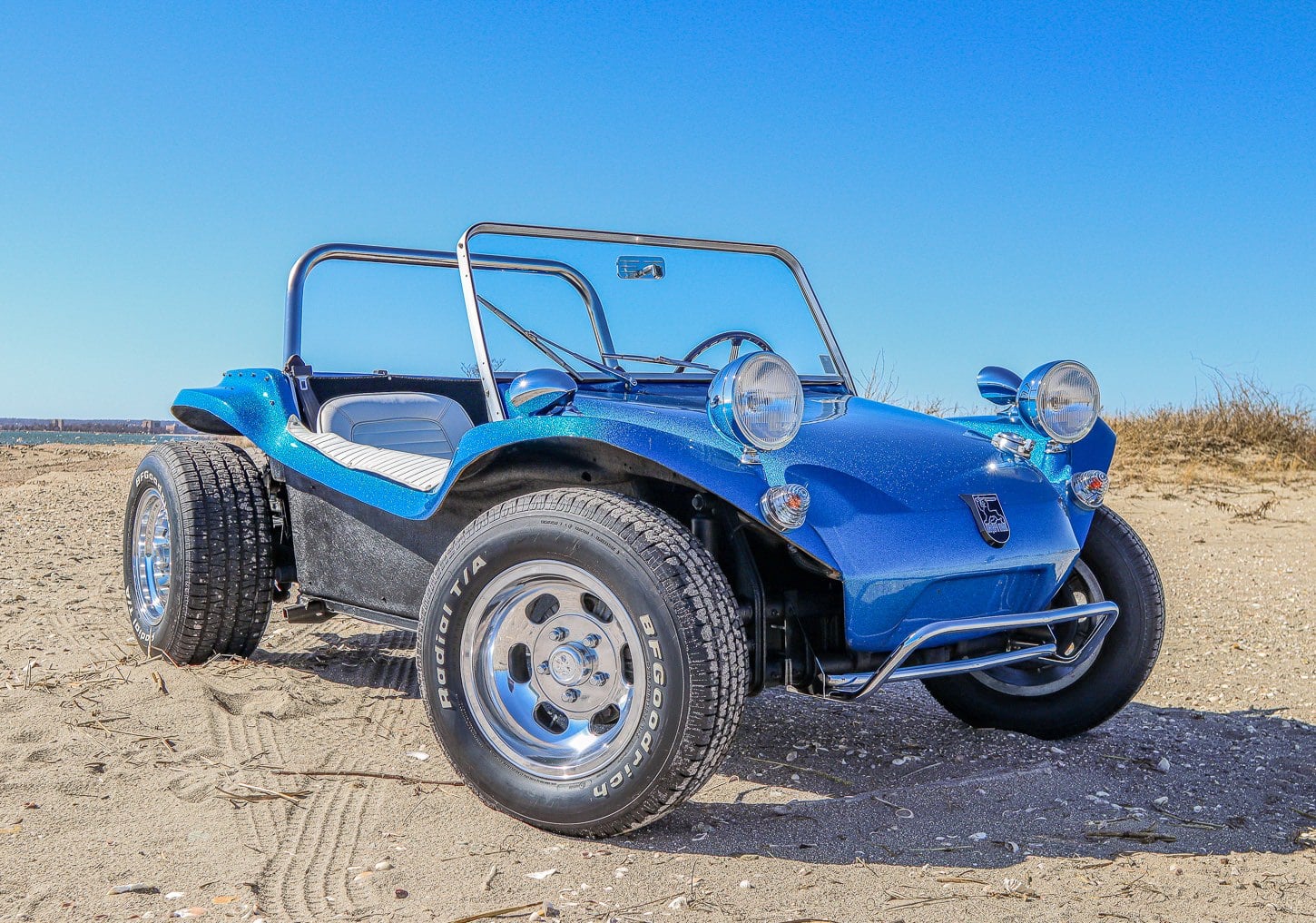
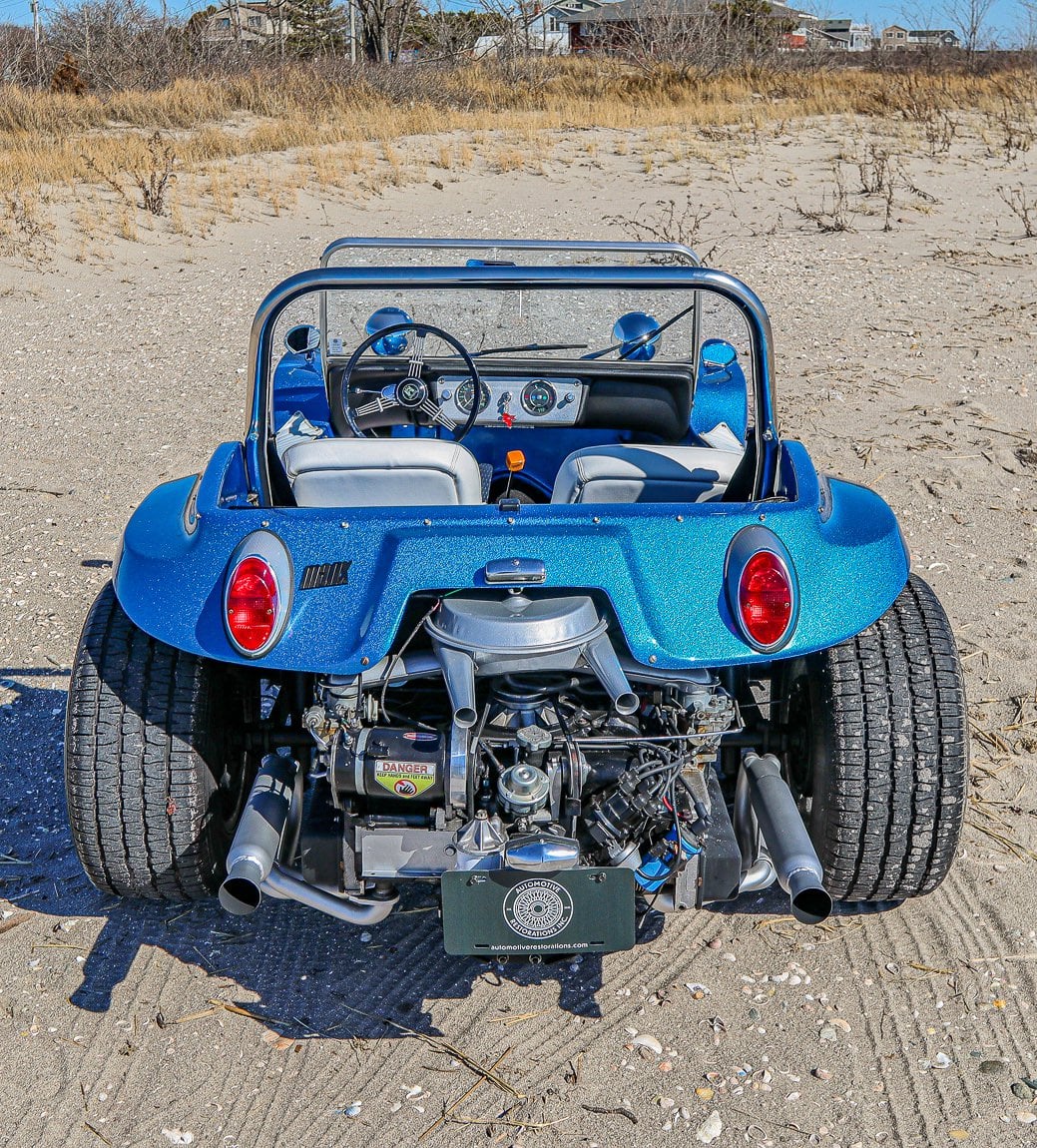
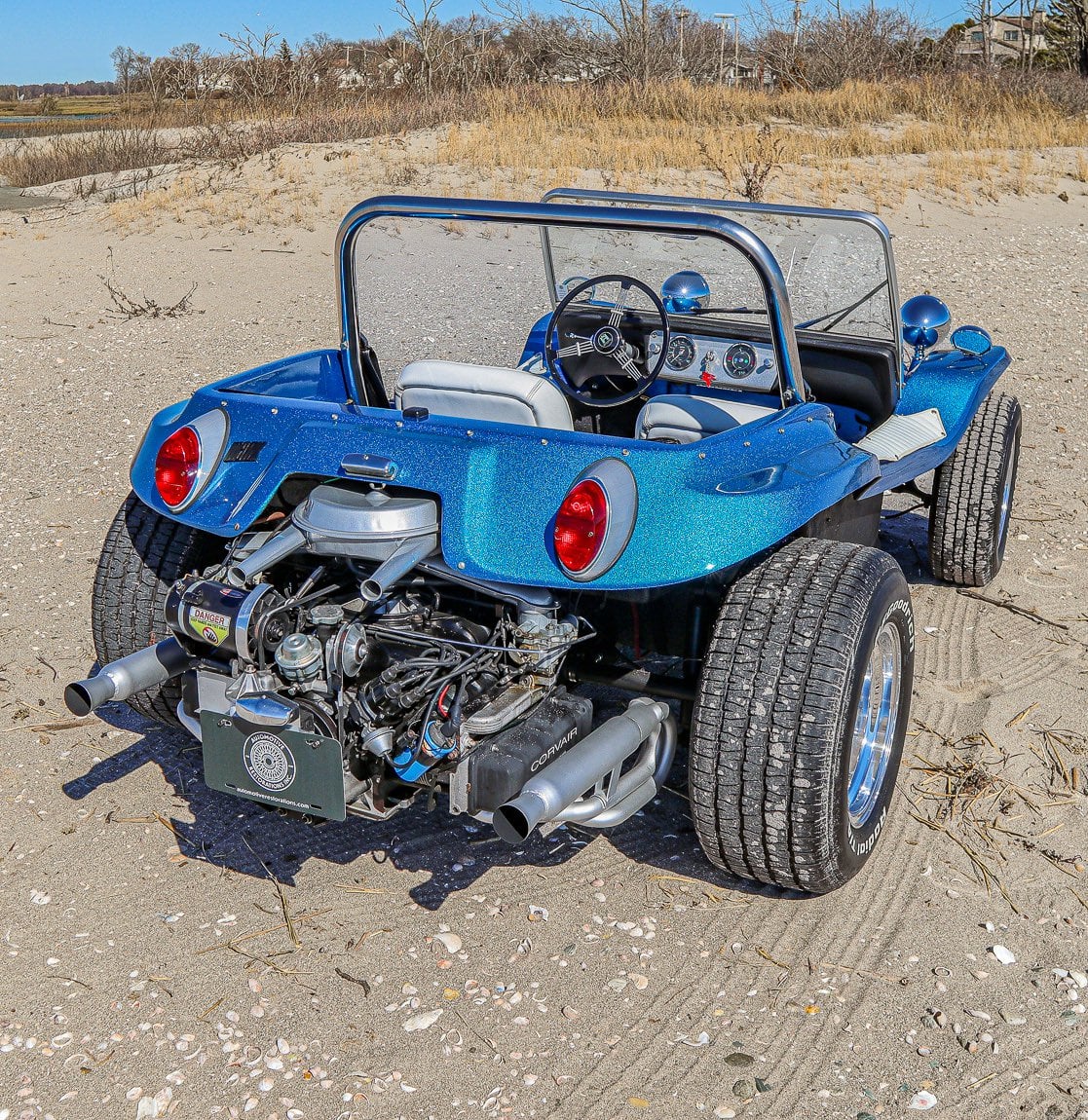
This is a Meyers Manx dune buggy that’s powered by a Chevrolet Corvair flat-six, an air-cooled engine with a displacement of 2.7 liters, offering a whole lot more power than the VW Beetle flat-four that typically powers these 1960s off-road icons.
The most famous Corvair-powered Meyers Manx was the custom version built for the 1968 film The Thomas Crown Affair, starring Steve McQueen and Faye Dunaway. McQueen had the car built to his own specifications, and we wrote about it here when it came up for sale a few years ago.
Fast Facts: A Corvair-Powered Meyers Manx
- Bruce Meyers, an engineer, surfer, and fiberglass yacht builder, created the Meyers Manx in early 1960s Southern California. After his complex monocoque first design proved difficult to mass-produce, he developed a simpler fiberglass tub that bolted onto a shortened VW Beetle floorpan, retaining all of the Beetle’s mechanical running gear.
- The Manx name was inspired by the tailless Manx cat, referencing the buggy’s bobtail design. Bruce Meyers and Ted Mangels proved the design’s toughness by breaking the Tijuana-to-La Paz time record in 1962, beating the previous motorcycle-set record by over five hours and generating significant media coverage that helped drive over 6,000 kit sales.
- Perhaps the most famous Manx was the Corvair-powered example built to Steve McQueen’s specifications for the 1968 film “The Thomas Crown Affair,” co-starring Faye Dunaway. The company was revived in 2000 and has recently announced a line of 100% electric, road-legal beach buggies influenced by the original Bruce Meyers design.
- This particular Manx is powered by a Corvair-sourced 164 cubic inch flat-six with twin Rochester carburetors, paired with a 4-speed manual transaxle on VW Beetle underpinnings. Over $17,000 in servicing was completed in 2021, and it’s now offered for sale on Bring a Trailer out of Connecticut with a Florida title.
History Speedrun: The Meyers Manx
It almost seems like Bruce Meyers was destined to transform the world of beach buggies. As an engineer, a surfer, and a fiberglass yacht builder he had a unique set of abilities, and he was in the right place at the right time – Southern California in the early 1960s.
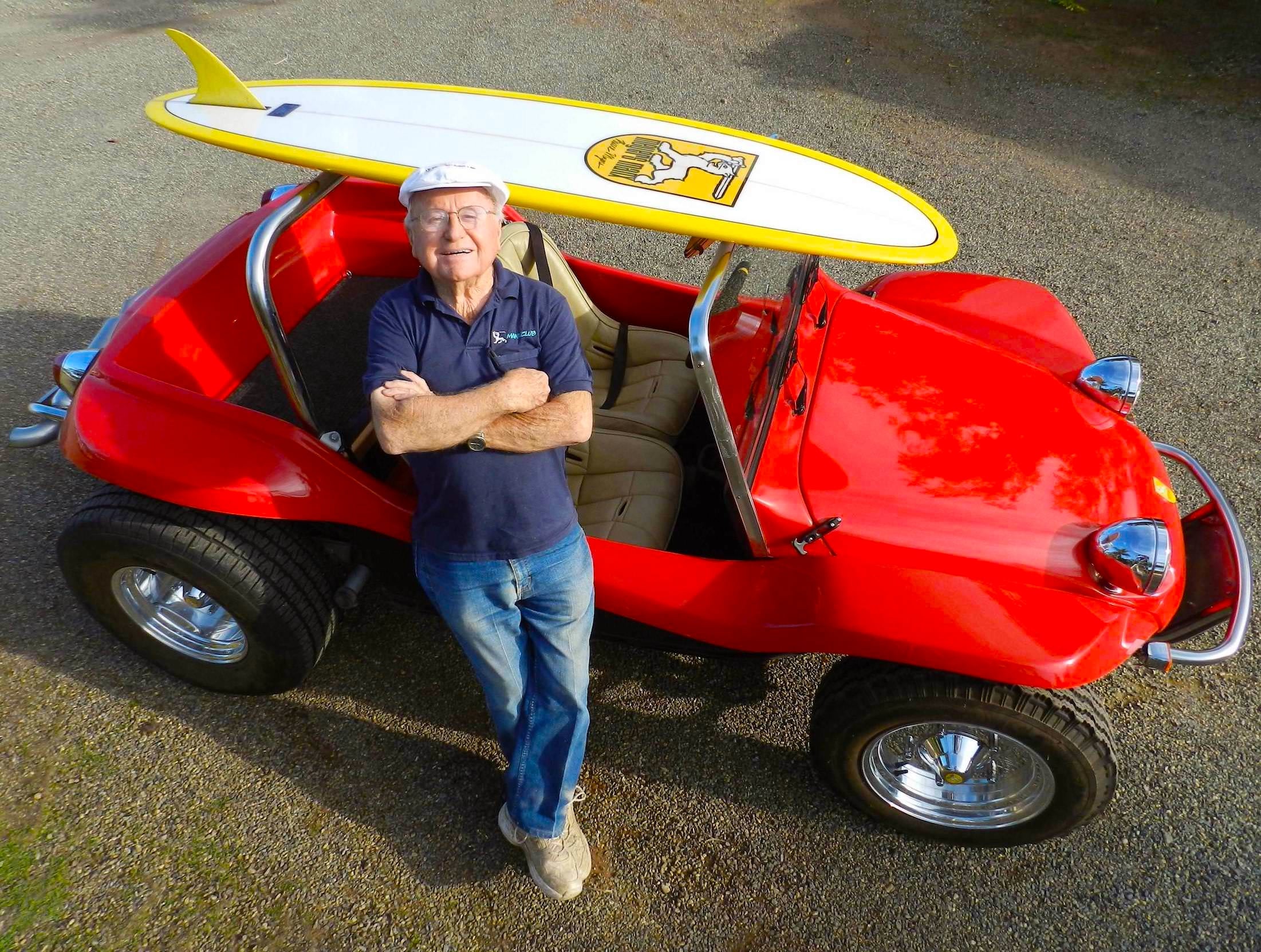
 It almost seems like Bruce Meyers was destined to transform the world of beach buggies. As an engineer, a surfer, and a fiberglass yacht builder he had a unique set of abilities, and he was in the right place at the right time – Southern California in the early 1960s. Image courtesy of Meyers Manx.
As a surfer it’s no surprise that Meyers had an interest in beach buggies, as they allowed quick and easy access to otherwise inaccessible breaks. The primitive nature of the buggies being built at the time, the late 1950s and early 1960s, must have rankled his inner-engineer and so he set out to build something better.
His first design was a masterpiece, but it proved too complex to be reliably mass-produced. It had a fiberglass body that acted as a monocoque structure, with the engine and front/rear suspension bolted directly onto it.
It was almost certainly one of the first composite monocoque tubs ever used in an automotive application, predating the same technique being used by many supercar makers by ~40 years.
For his second design Meyers opted for a simplicity-first approach. He took a VW Beetle floorpan and cut it down to shorten the wheelbase. He then developed a fiberglass tub-style body that bolted on top.
This design proved ideal as it used the Beetle suspension, brakes, engine, steering, and transmission – all of which remained attached to its original fixing points. Beetles were a cheap and easy to source donor at the time, and they could be modified with uprated suspension, improved engines, and larger wheels/tires for use in dunes and on beaches.
The Origins Of The Name “Manx”
Bruce Meyers opted to call his creation the Meyers Manx, named for the Manx cat which is known for its lack of a tail – in reference to the bobtail design of the buggy. Once the design was productionized it was offered for sale as a kit and it proved immediately popular.
Above Video: This full length documentary tells the story of the most famous Beach Buggy of them all, the Meyers Manx.
In order to prove the durability of the design Bruce Meyers partnered with Ted Mangels to attempt the impossible – to break the 1,000 mile time record between Tijuana and La Paz that had been set by off-road racing legend Dave Ekins and Billy Robertson Jr. in 1962 on motorcycles.
Meyers and Mangels were followed by a journalist from Road & Track magazine to witness their feat, and they drove a specially prepared Meyers Manx. Remarkably the two men achieved their goal, setting a time of 34:45 and beating the old record by over five hours.
The media coverage following the Tijuana to La Paz run significantly boosted the profile of B. F. Meyers & Co. and it did no harm to sales – the company would sell over 6,000 of their kits.
Perhaps the most famous Manx of all was the highly-modified example powered by a Corvair engine that was driven by Steve McQueen in the 1968 film The Thomas Crown Affair alongside Faye Dunaway.
Interestingly the company was brought back in the year 2000 and it recently announced that it’s going to be producing a line of 100% electric, road-legal beach buggies strongly influenced by the original Bruce Meyers design.
The Corvair-Powered Meyers Manx Shown Here
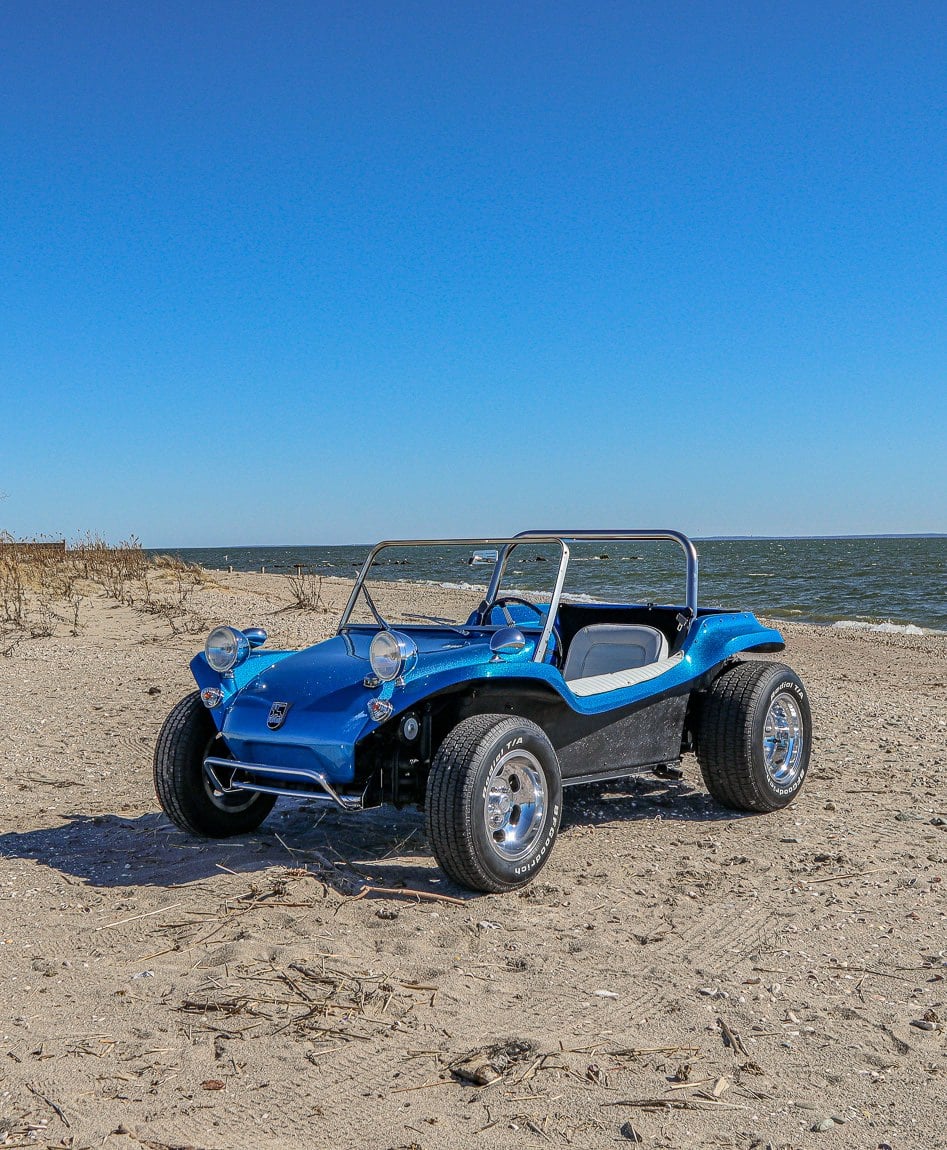
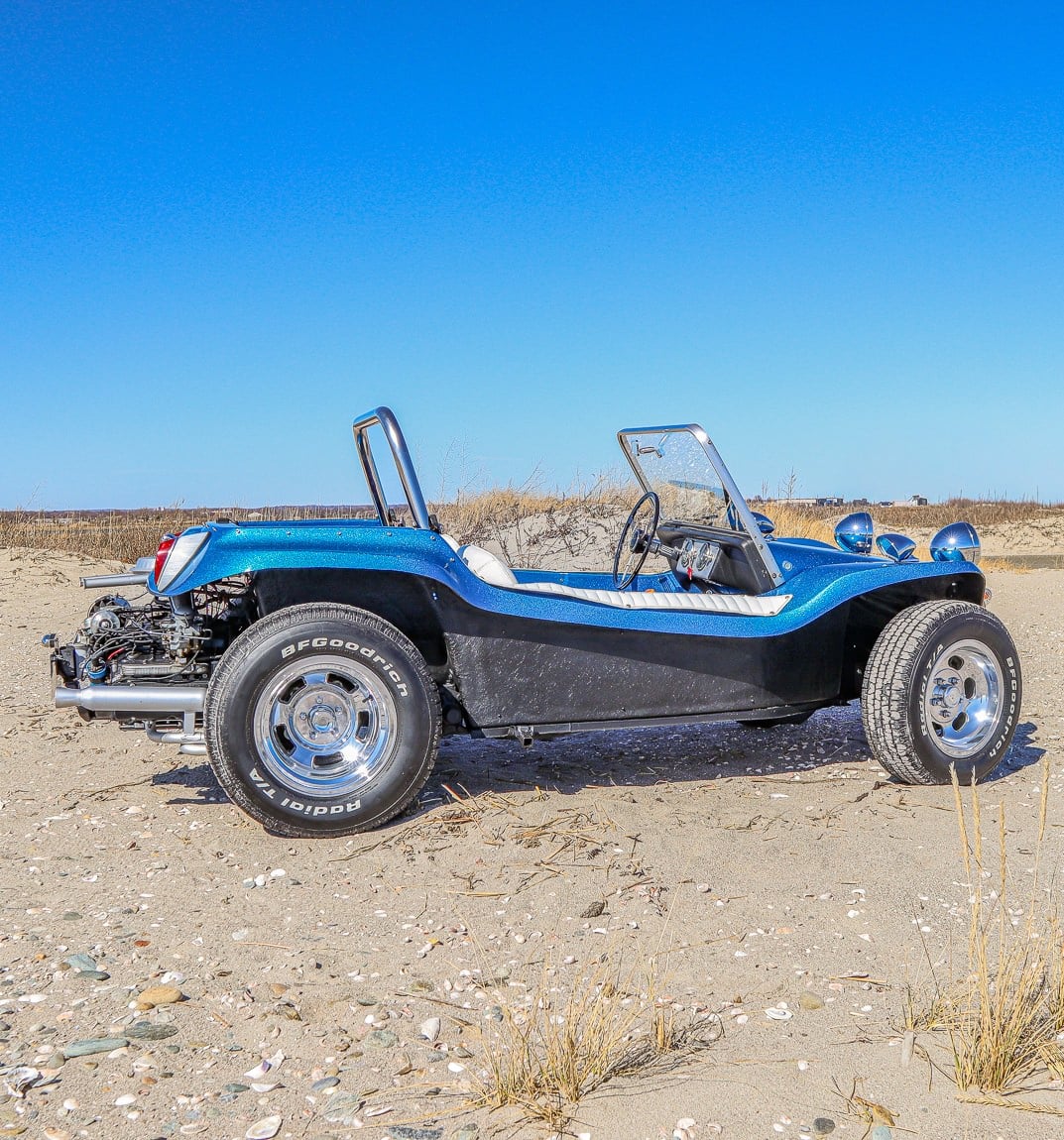
This is a Meyers Manx dune buggy that’s powered by a Chevy Corvair-sourced air-cooled 164 cubic inch (2.7 liters) flat-six paired with a 4-speed manual transaxle, all mounted on Volkswagen Beetle underpinnings.
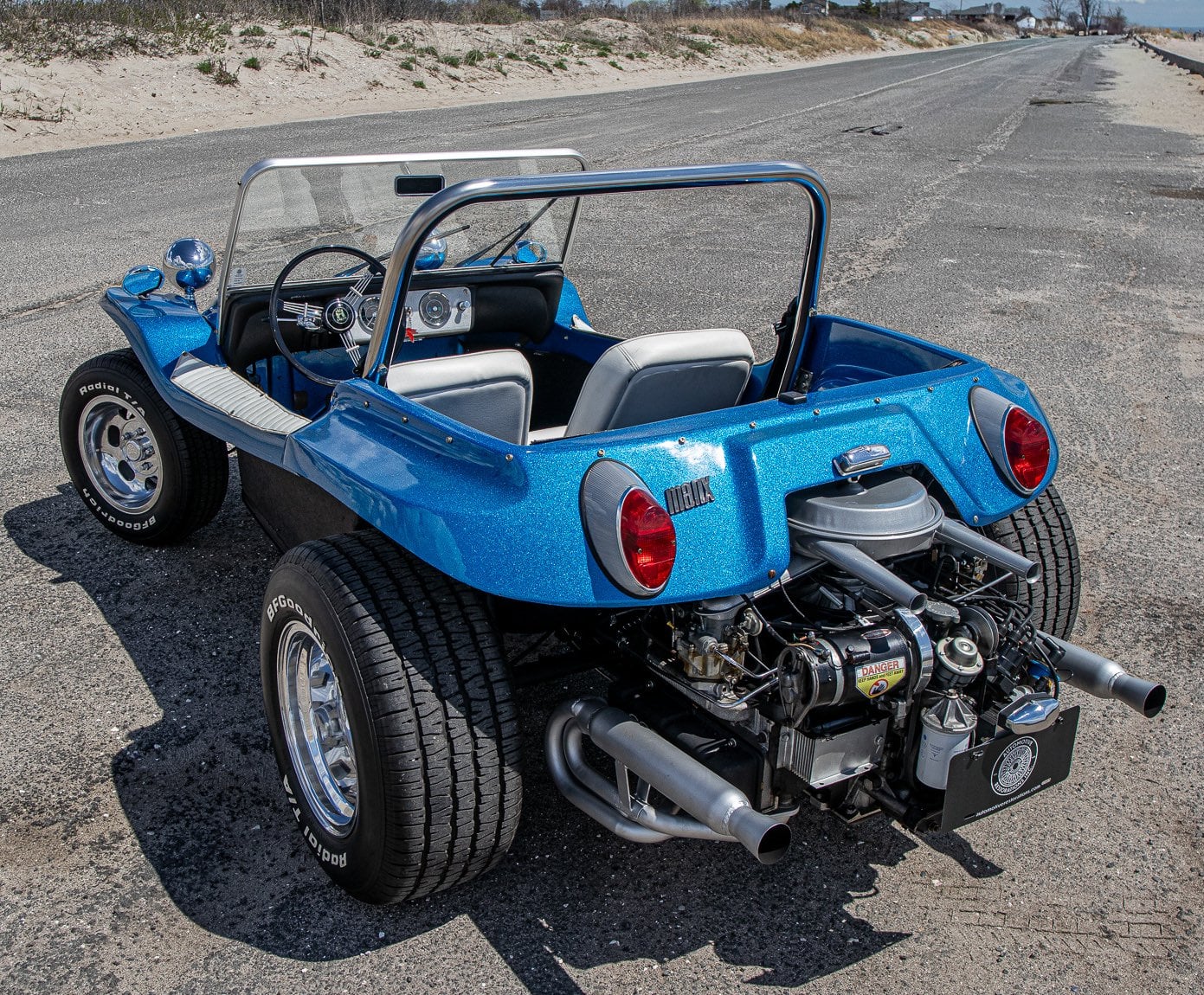
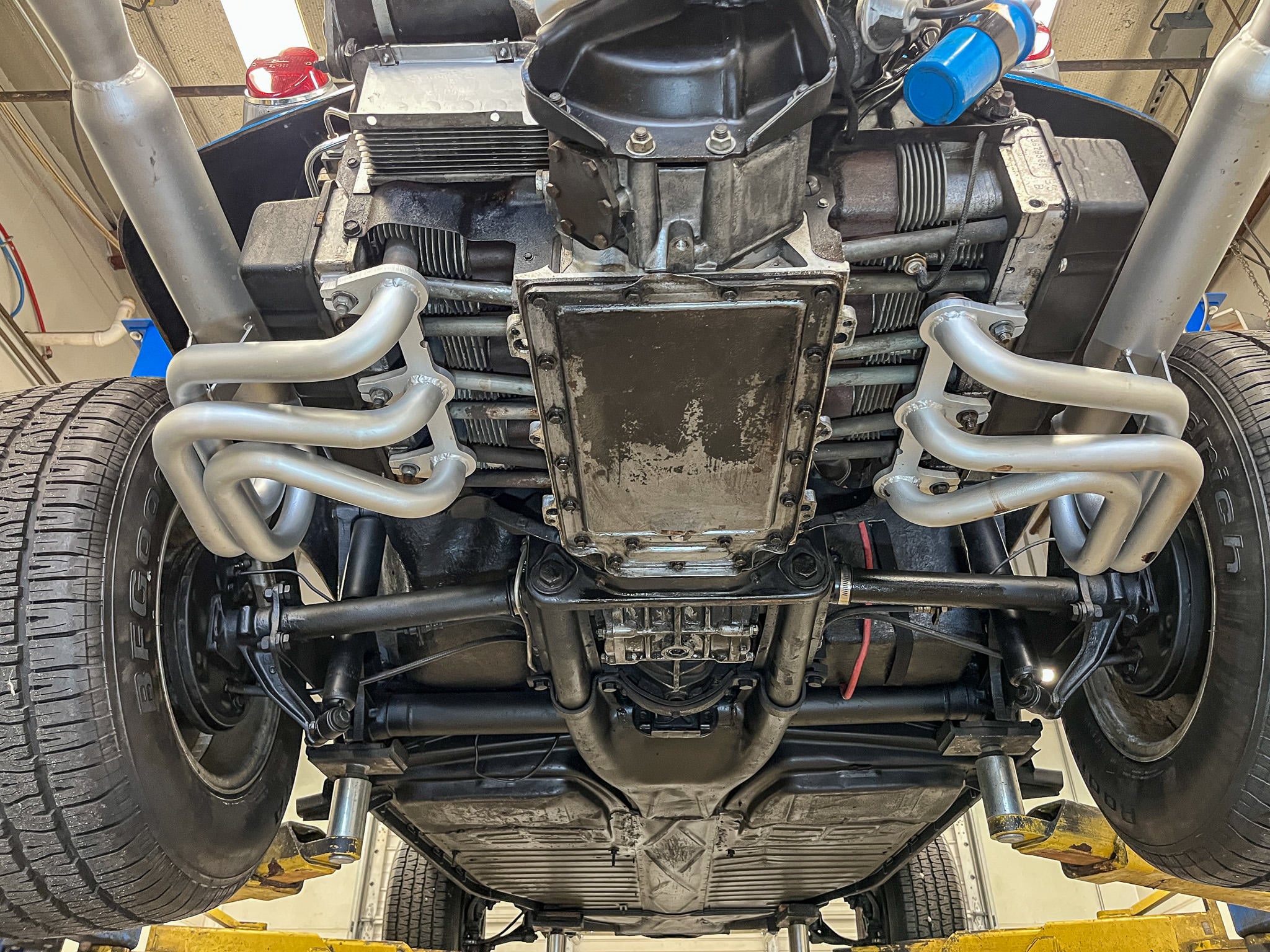
This is a Meyers Manx dune buggy that’s powered by a Chevrolet Corvair flat-six, an air-cooled engine with a displacement of 2.7 liters, offering a whole lot more power than the VW Beetle flat-four that typically powers these 1960s off-road icons.
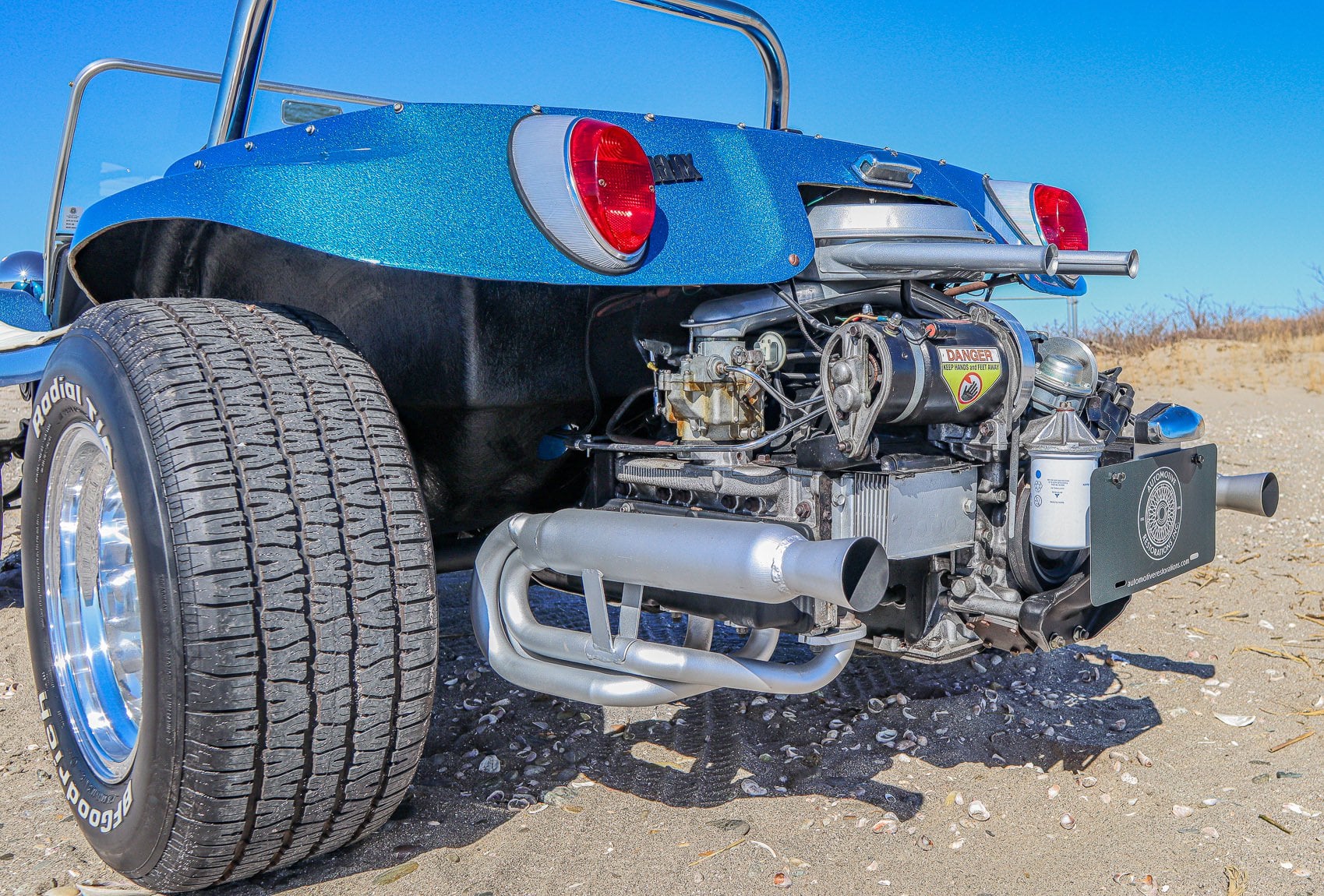
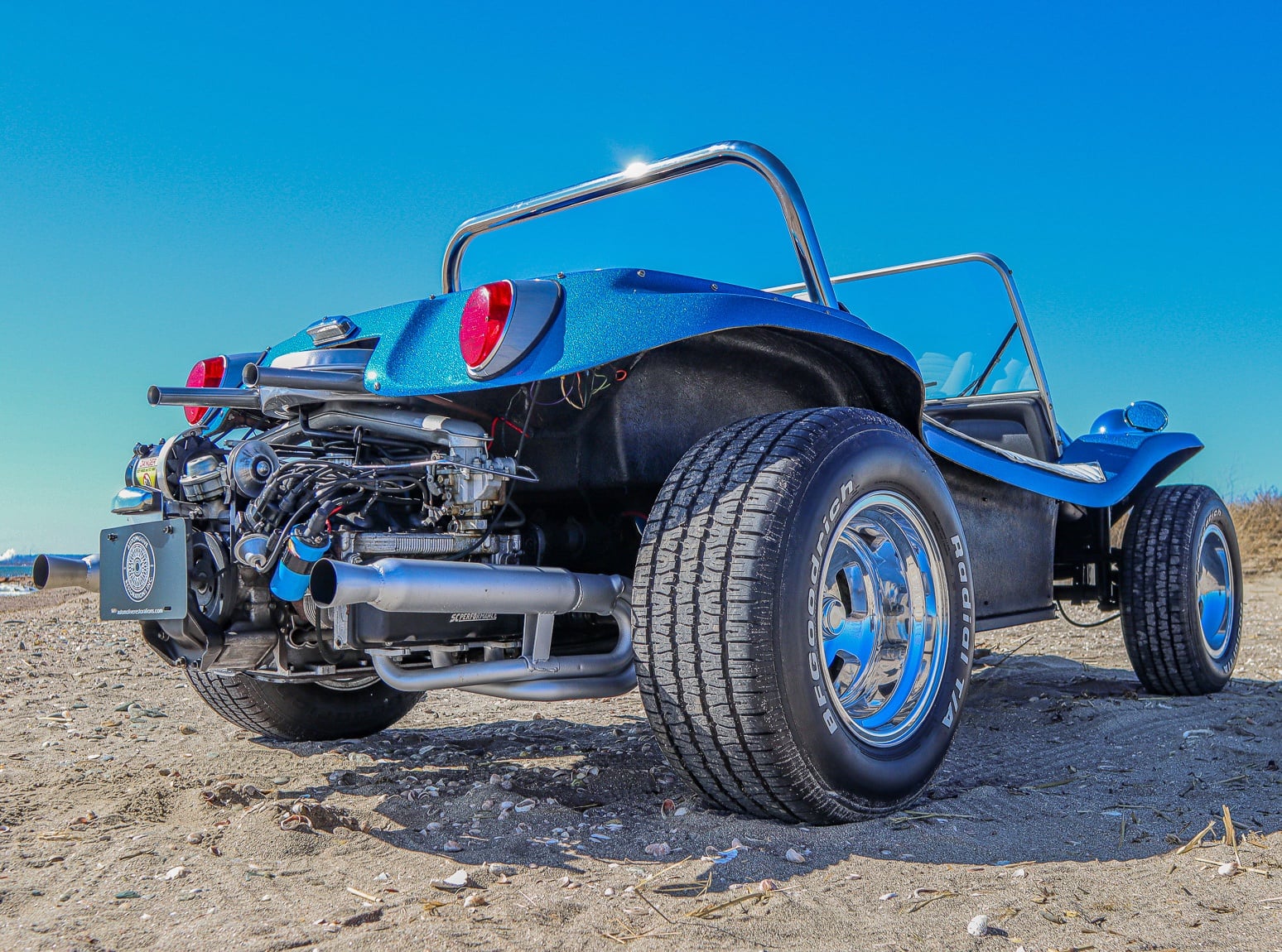
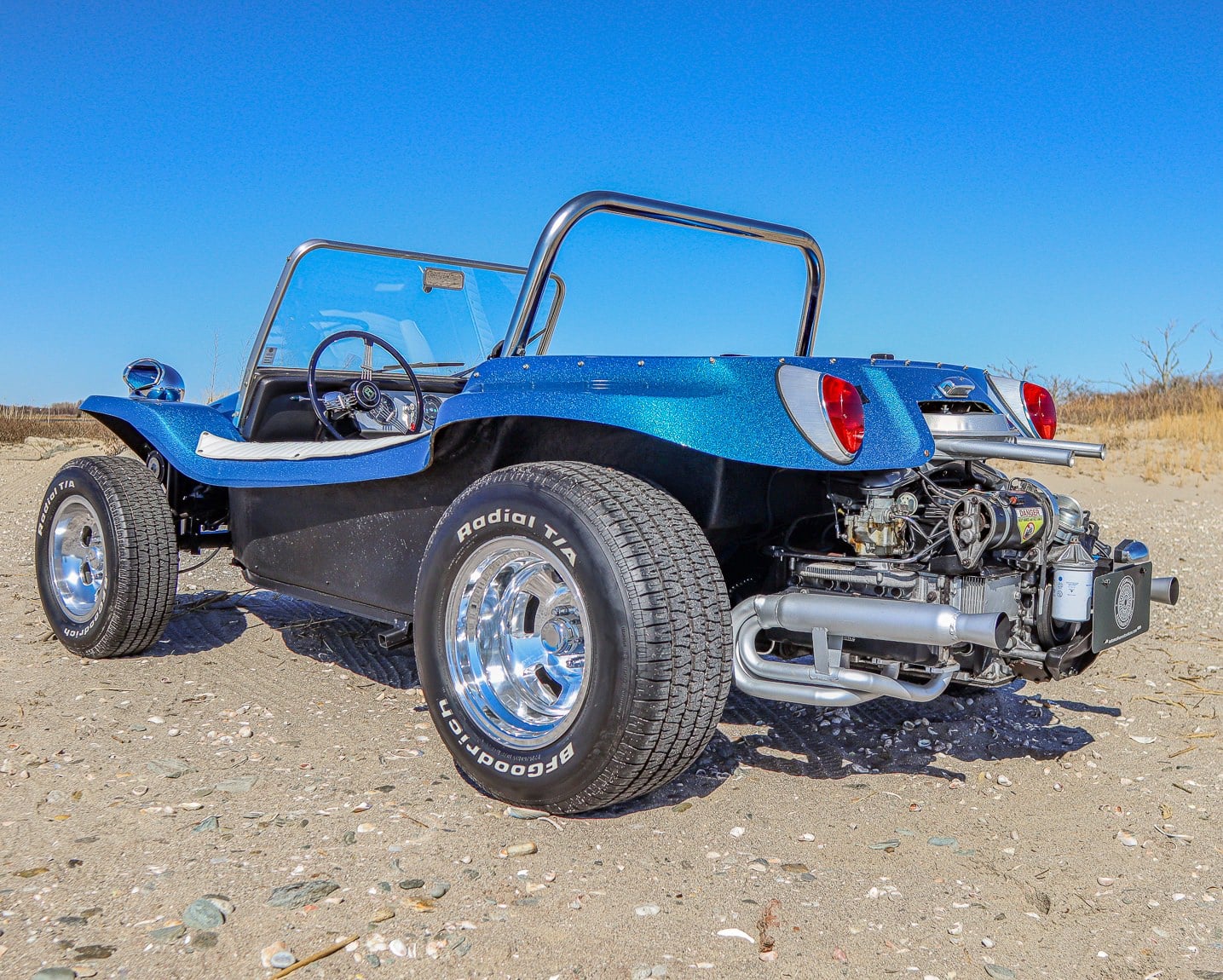
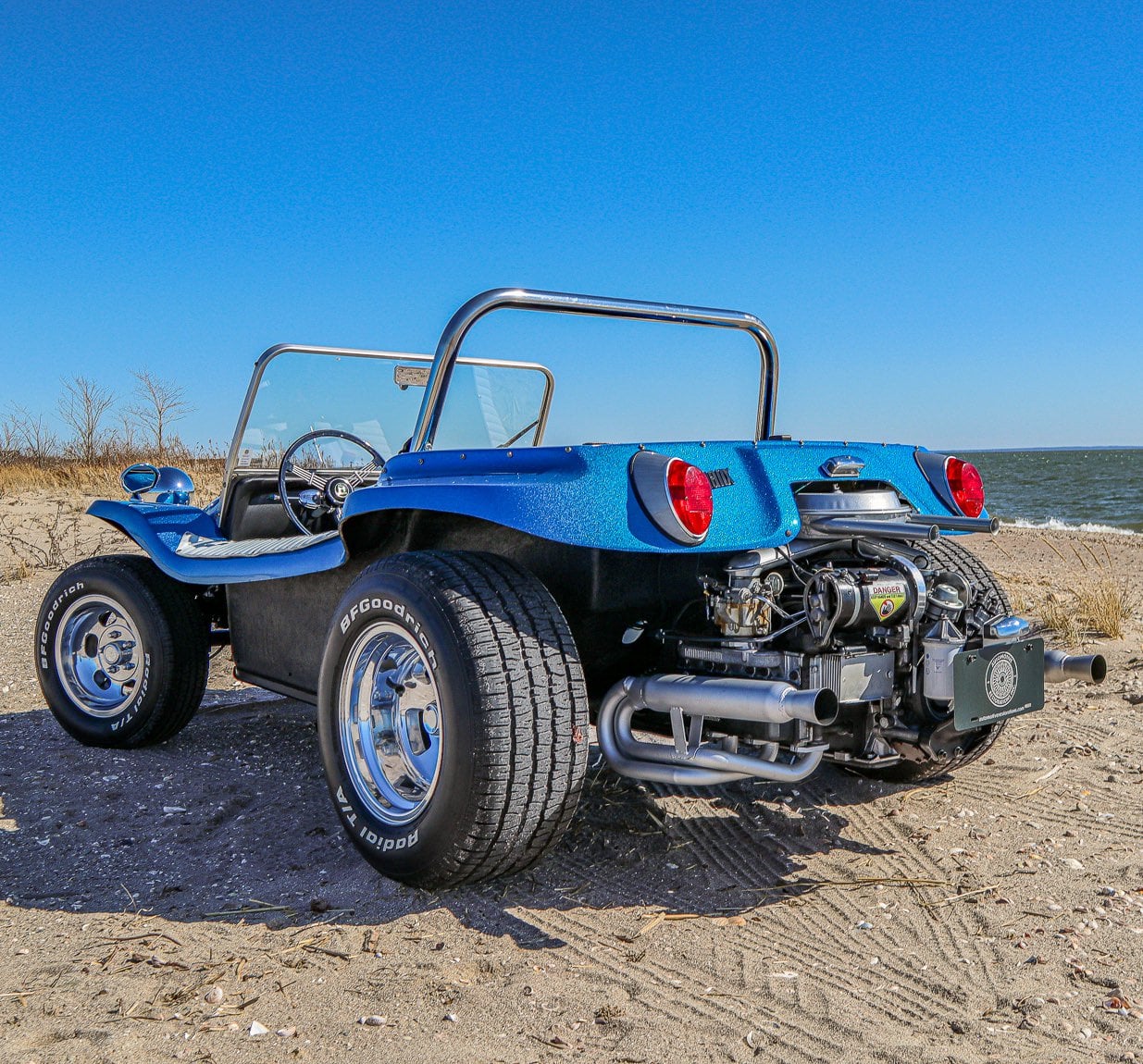
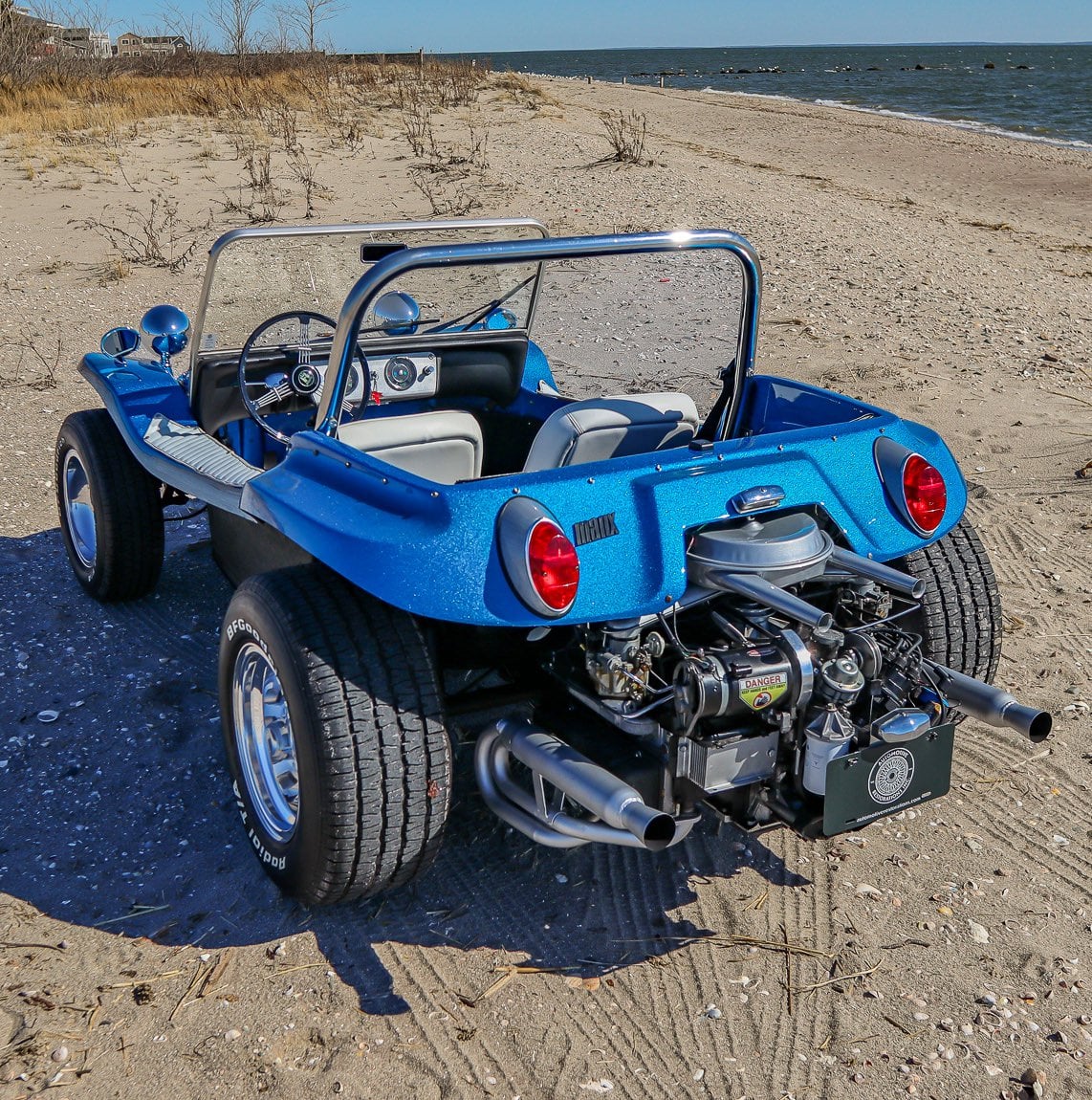
The flat-six breathes through a pair of Rochester H-style carburetors and a dual snorkel air cleaner, and the exhaust exits through Jet Hot-coated headers with integrated glasspack mufflers.
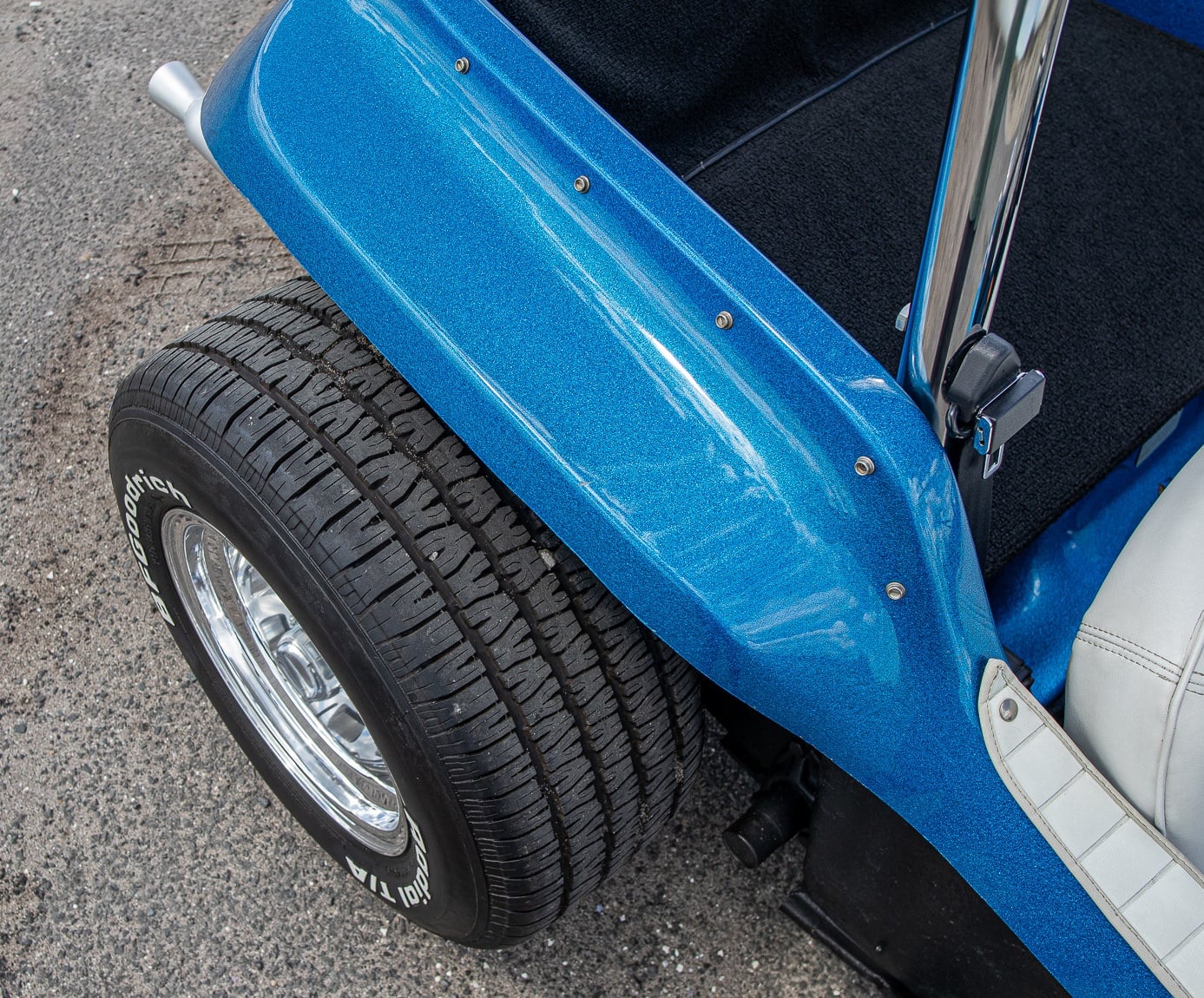
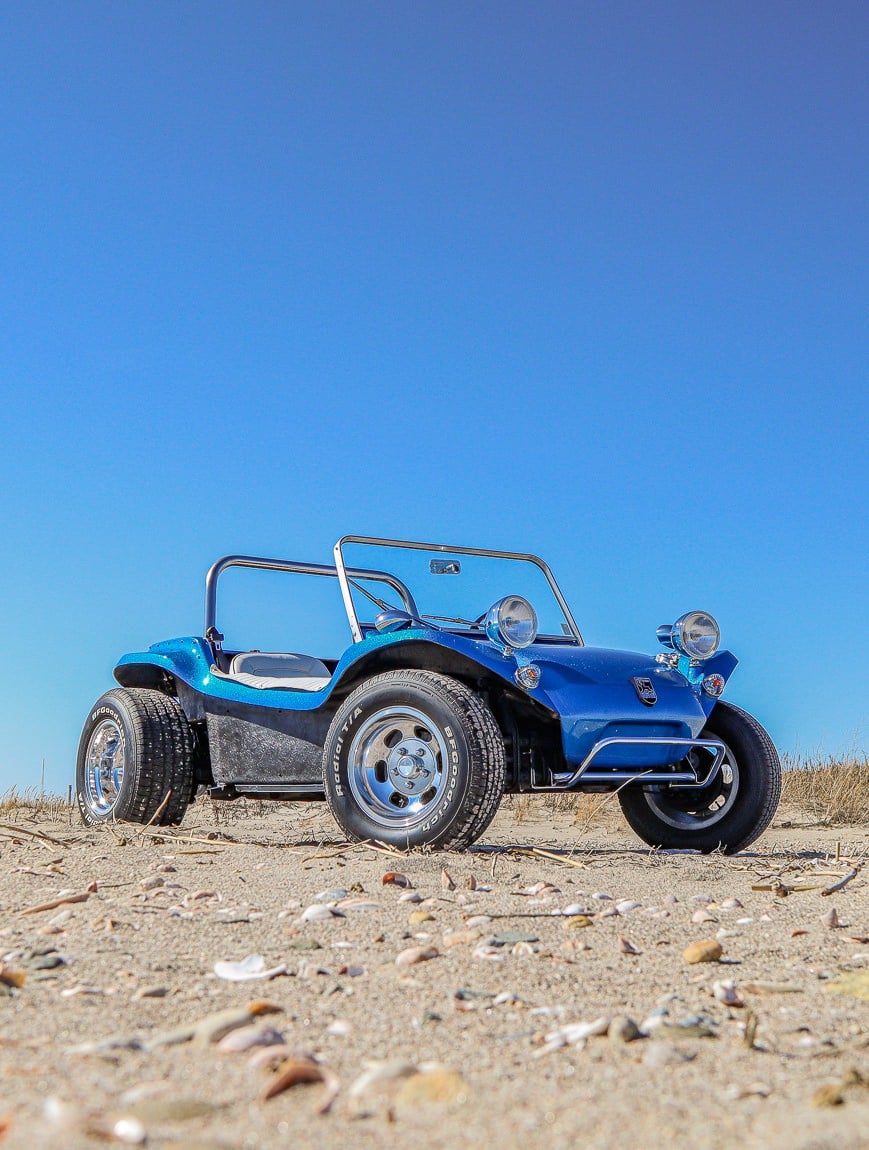
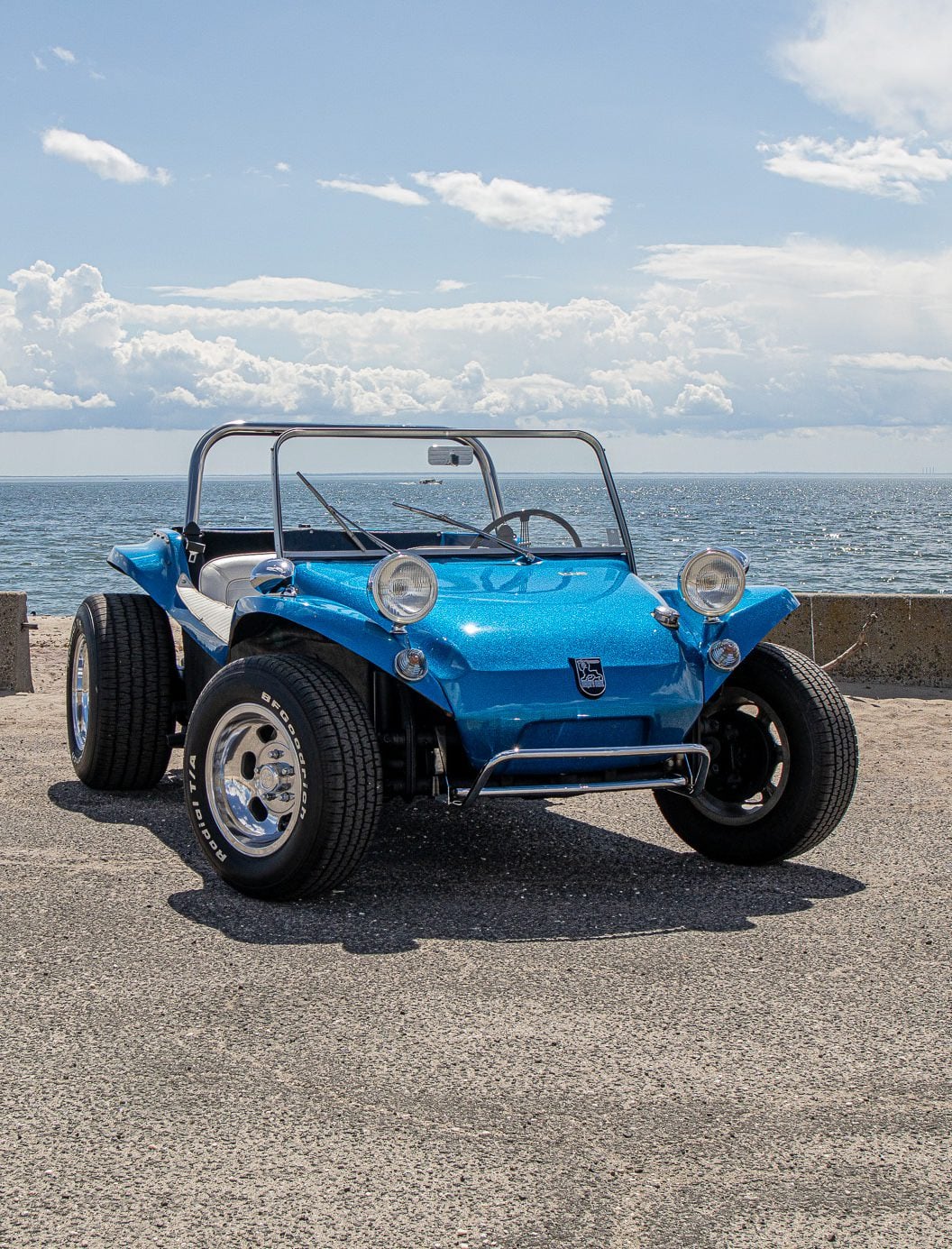
This Manx rides on chrome 14 inch front and 15 inch rear slotted wheels shod with staggered-width BFGoodrich Radial T/A white-letter tires, with drum brakes at all four corners. A stainless-steel roll bar was installed as part of the 2021 refurbishment.
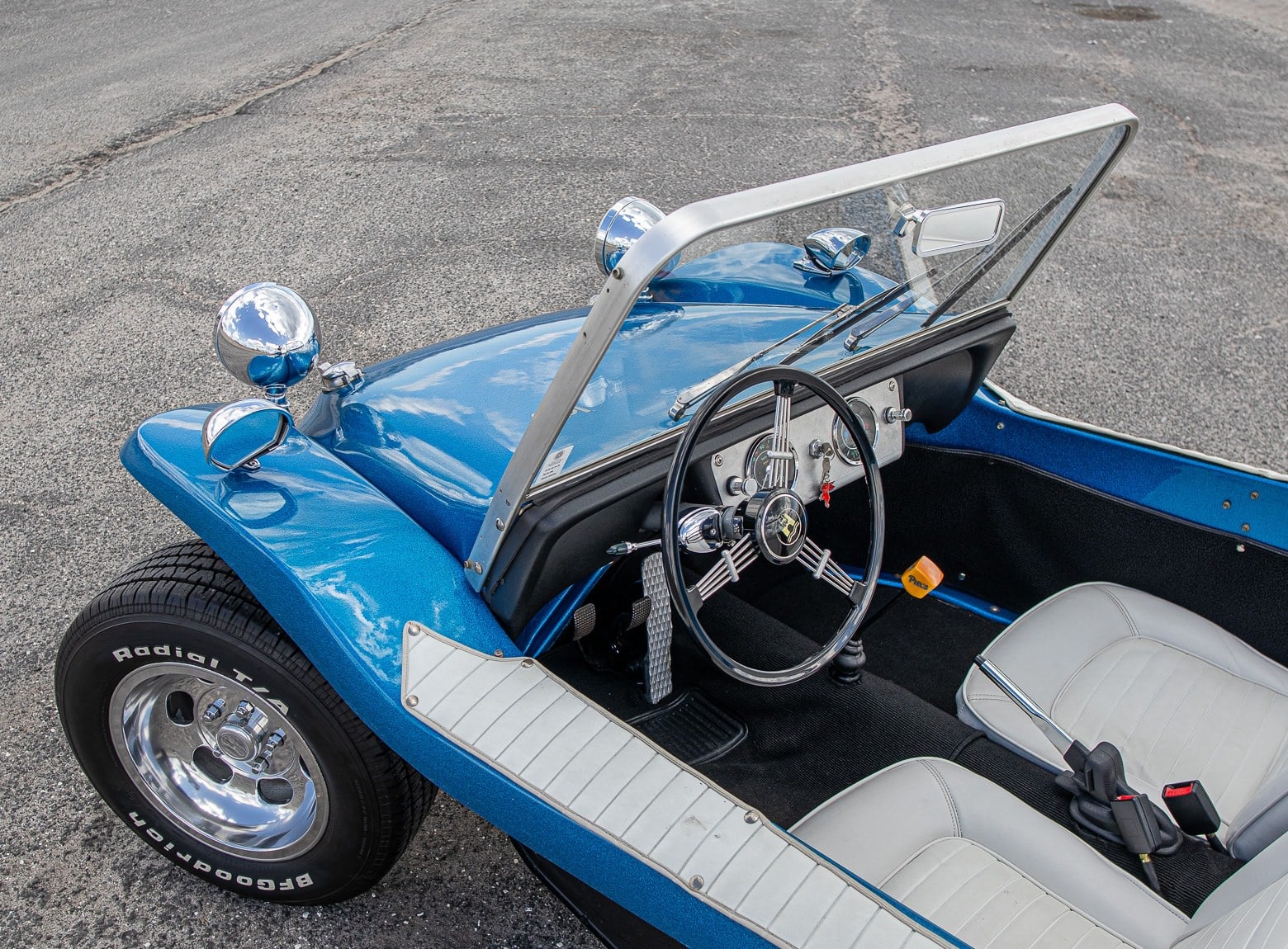
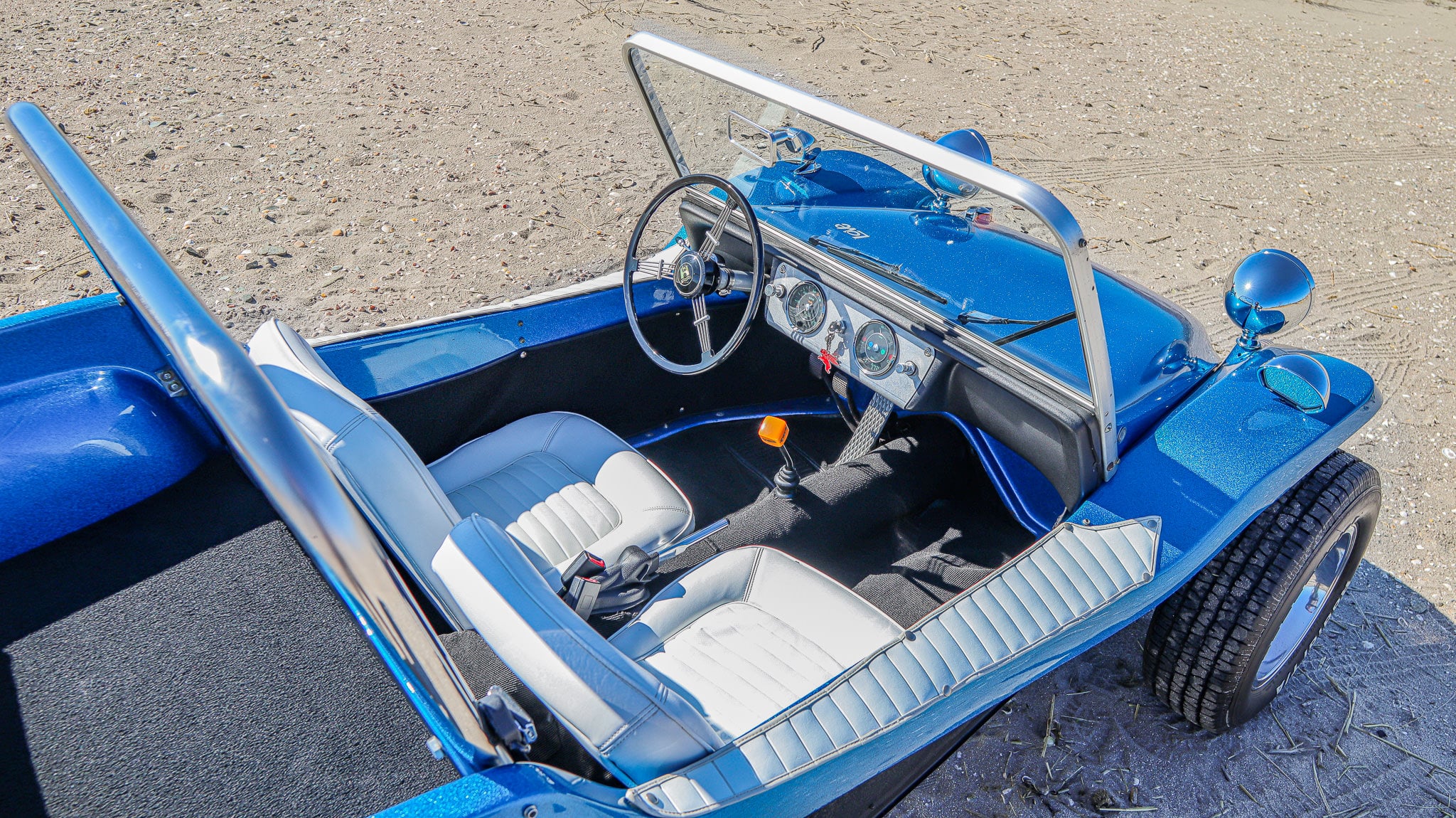
The fiberglass body is finished in blue metalflake and it has a chrome nudge bar up front, fender-mounted mirrors, white vinyl sill protectors, Beetle-style taillights, chrome headlight buckets, windshield wipers, and “Love” script on the front bodywork.
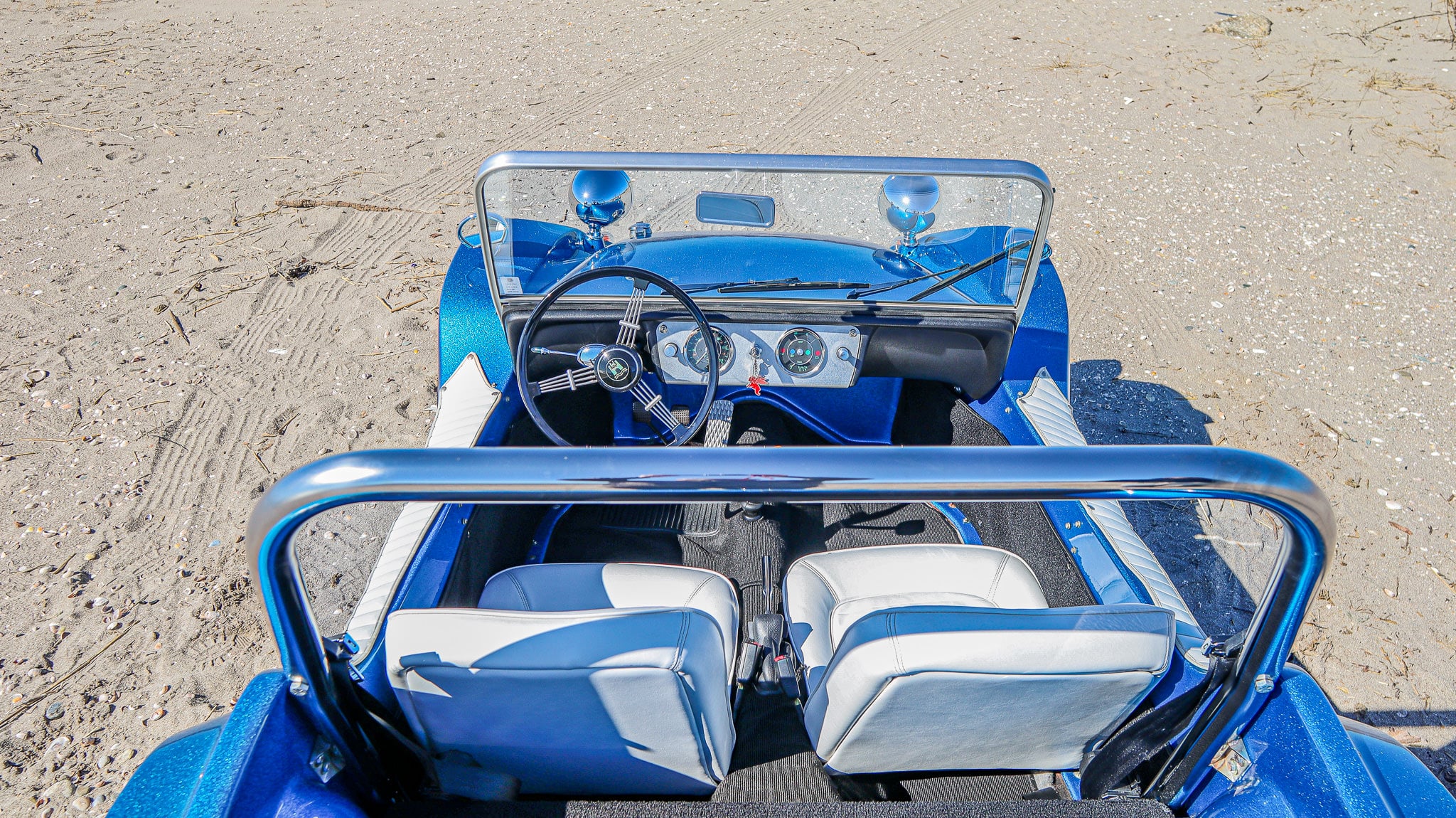
The interior is fitted with white vinyl seat covers, a banjo-style steering wheel wearing a Wolfsburg crest, and a centrally mounted instrument panel with green-font VDO instrumentation that includes a GPS speedometer and a combination gauge. The dashboard and carpets were replaced in 2021, and the digital odometer shows approximately 1,400 miles, around 500 of which were added under current ownership.
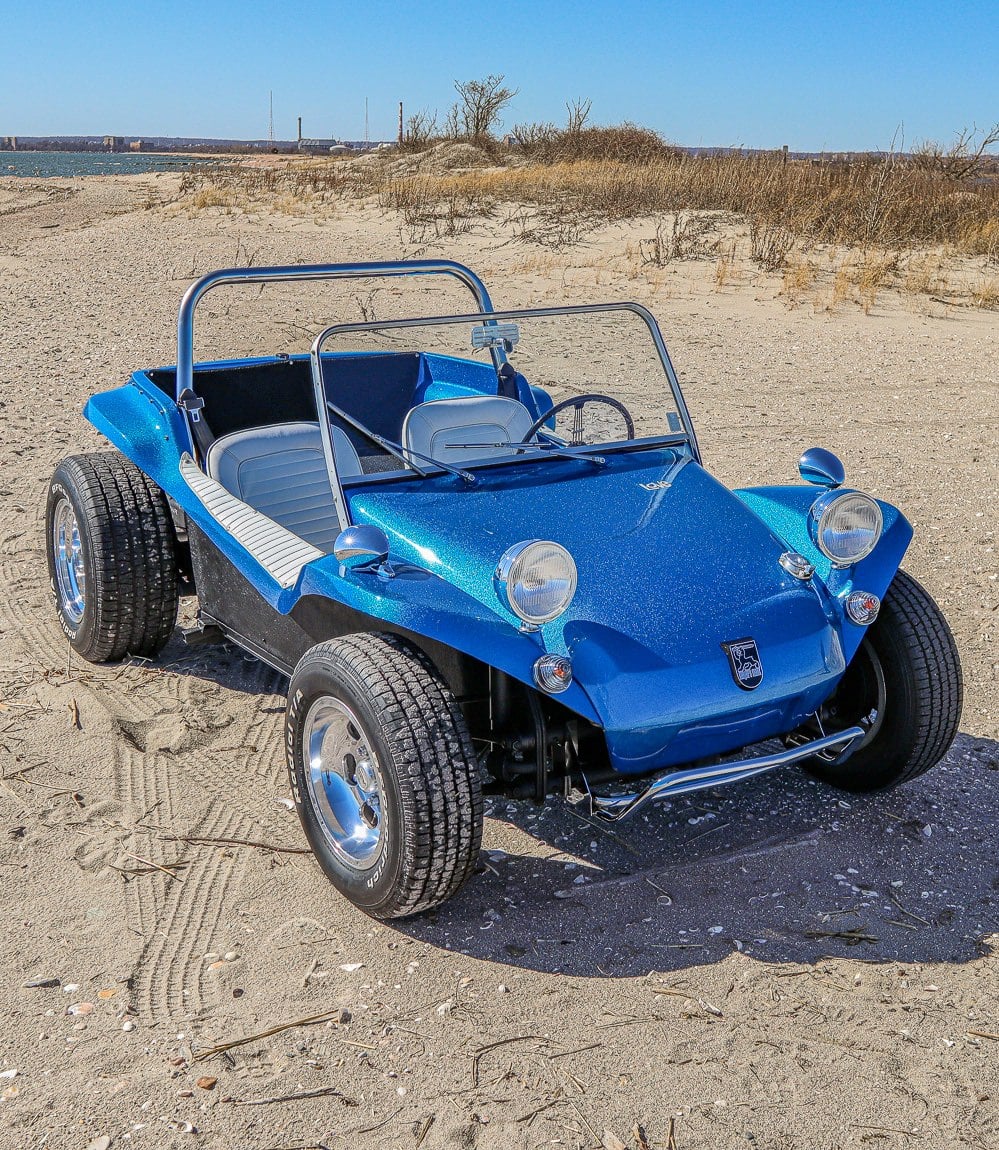
The fiberglass body is finished in blue metalflake and it has a chrome nudge bar up front, fender-mounted mirrors, white vinyl sill protectors, Beetle-style taillights, chrome headlight buckets, windshield wipers, and “Love” script on the front bodywork.
Over $17,000 USD in servicing work was completed in 2021, including overhauling the brake and fuel systems, replacing the front kingpins and associated bushings, repainting the spindles, replacing the clutch kit and swing-axle boots, fitting a new ignition switch and engine seals, replacing the engine belt, tuning the carburetors, completing fluid services, replacing the turn signal switch, and installing new shifter bushings.
This Meyers Manx was bought by the current owner in 2022, and it’s now offered for sale on a Bring a Trailer out of Connecticut with a Florida title in the name of the owner’s LLC. If you’d like to read more or place a bid you can visit the listing here.
Images courtesy of Bring a Trailer

Articles that Ben Branch has written have been covered on CNN, Popular Mechanics, Smithsonian Magazine, Road & Track Magazine, the official Pinterest blog, the official eBay Motors blog, BuzzFeed, Autoweek Magazine, Wired Magazine, Autoblog, Gear Patrol, Jalopnik, The Verge, and many more.
Silodrome was founded by Ben back in 2010, in the years since the site has grown to become a world leader in the alternative and vintage motoring sector, with well over a million monthly readers from around the world and many hundreds of thousands of followers on social media.