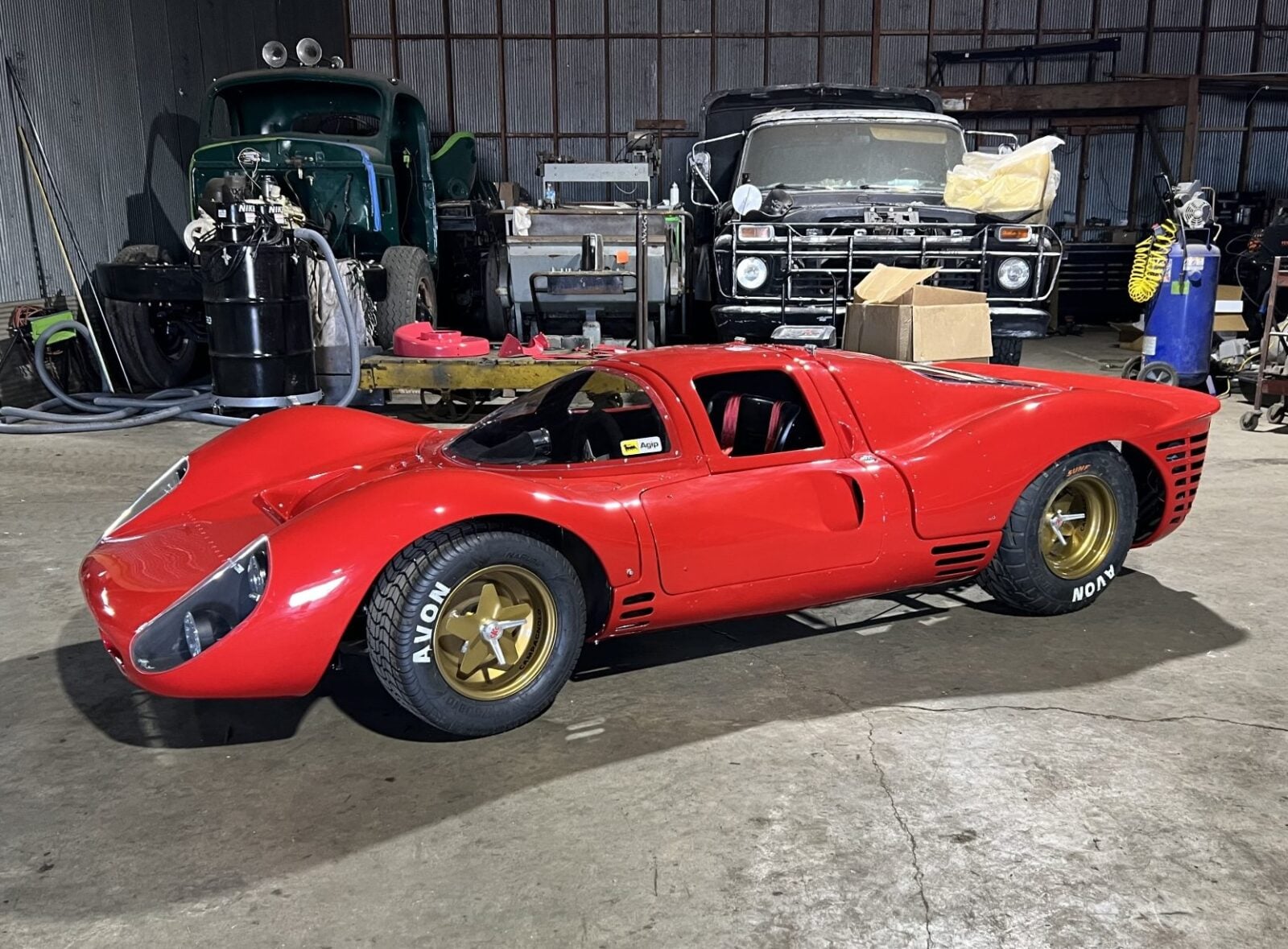
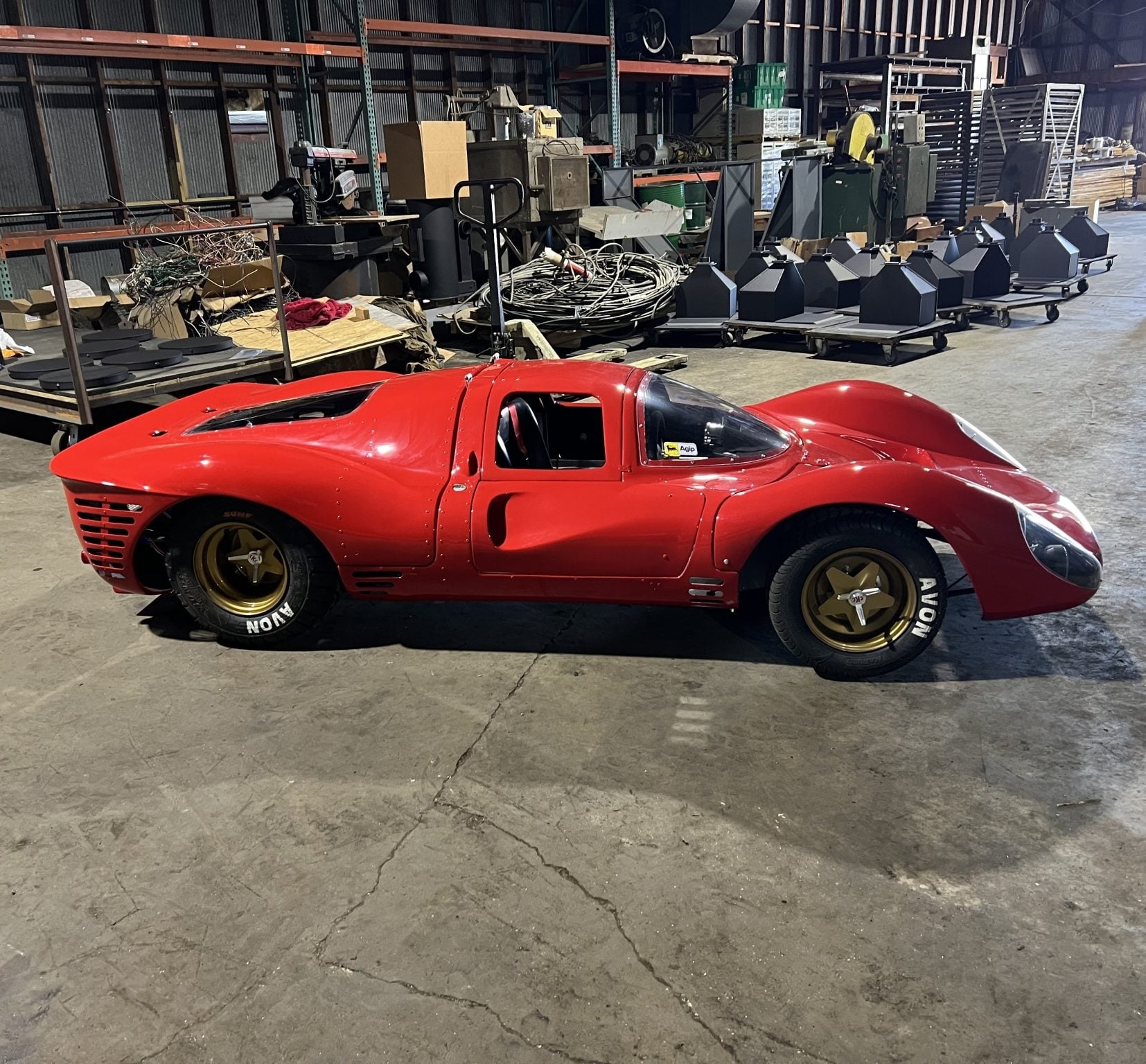
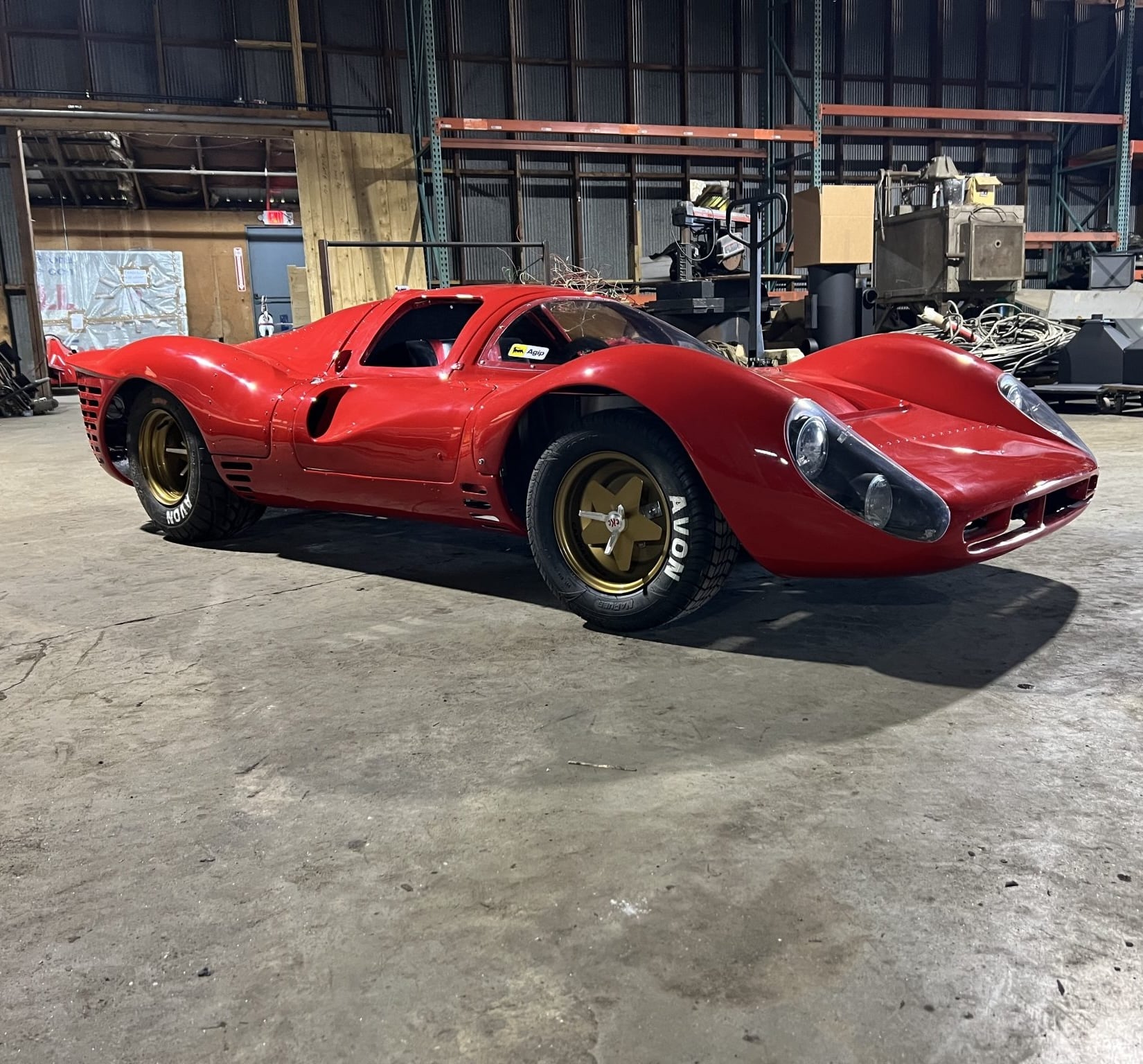
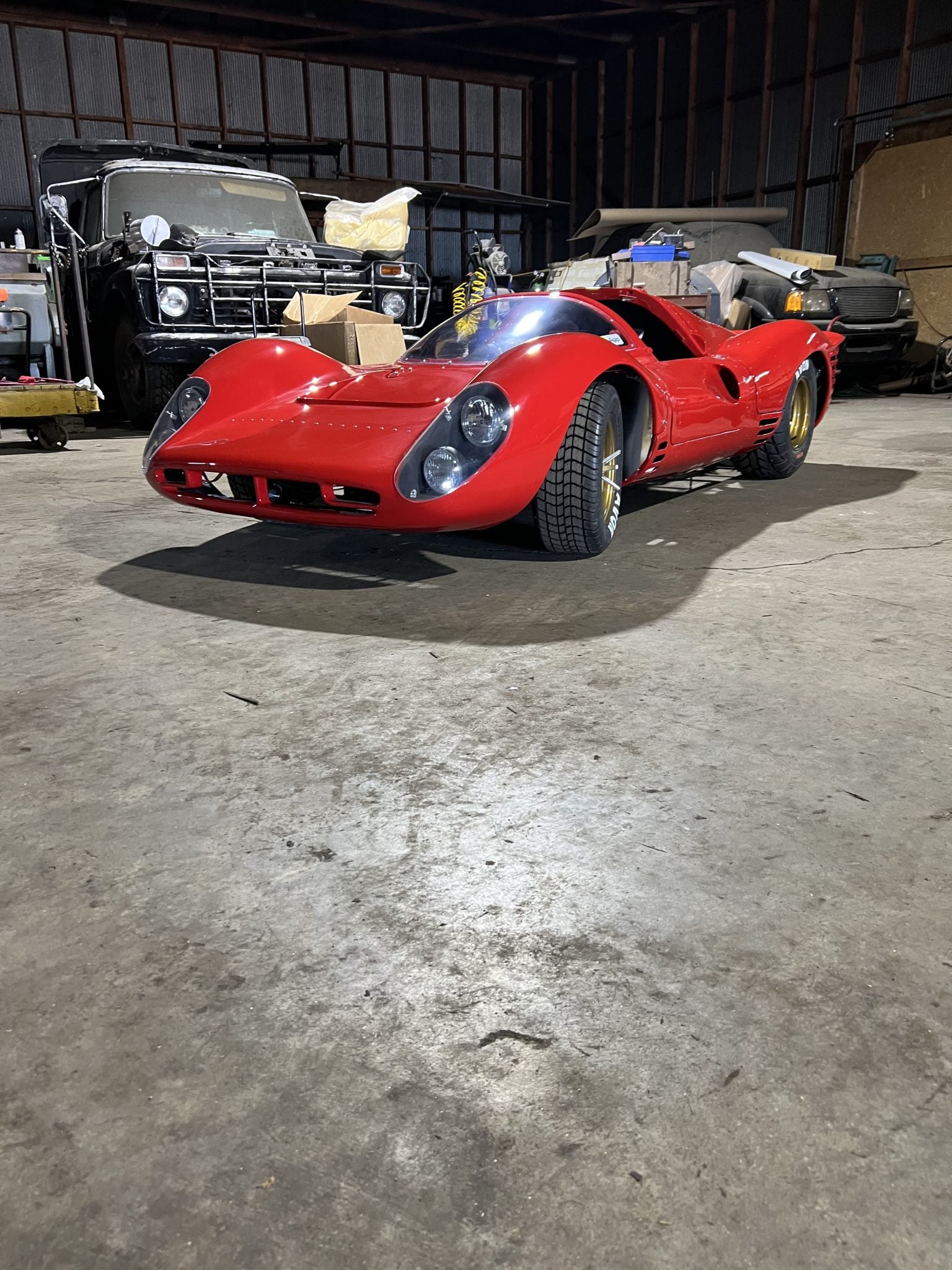
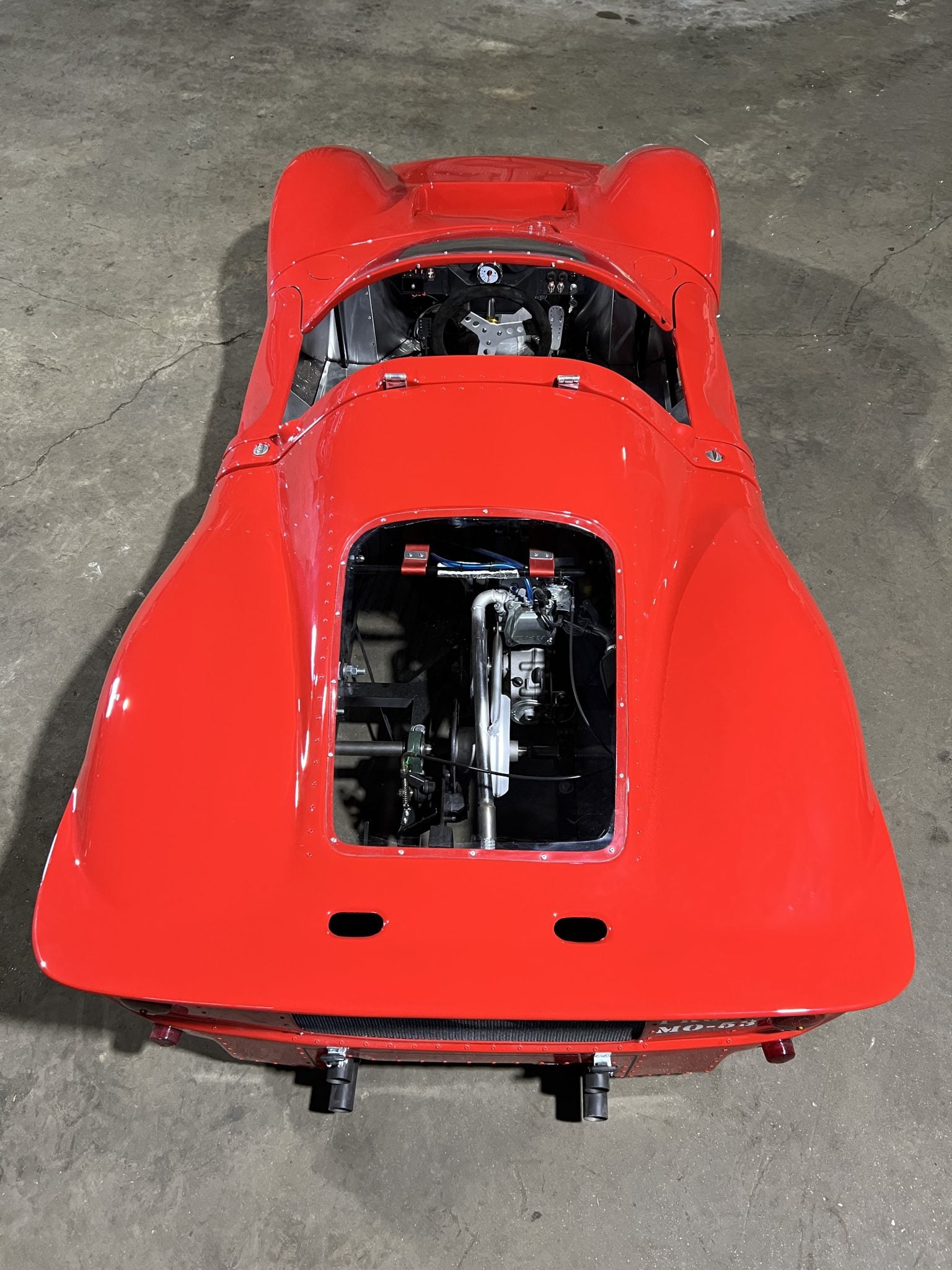
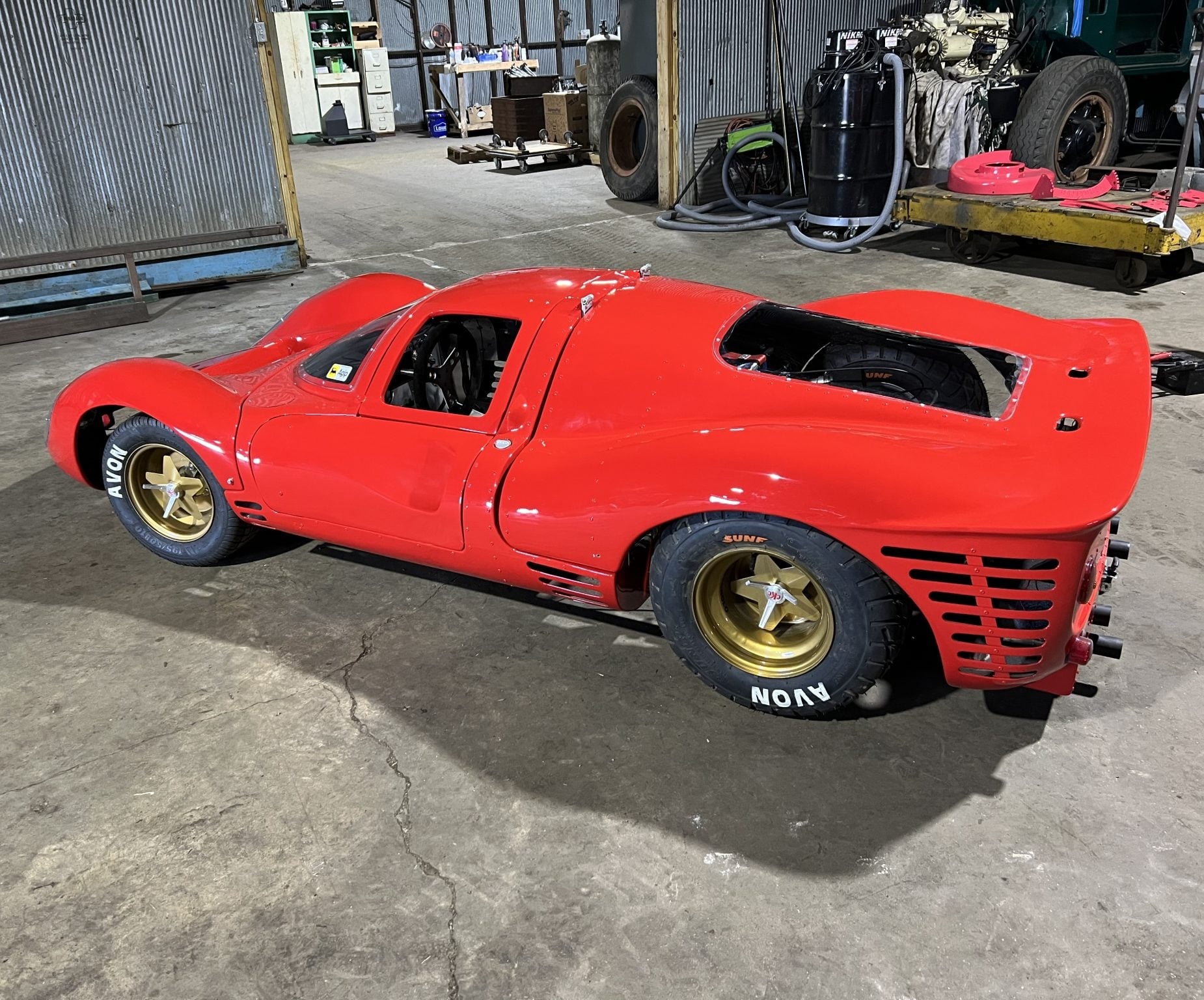
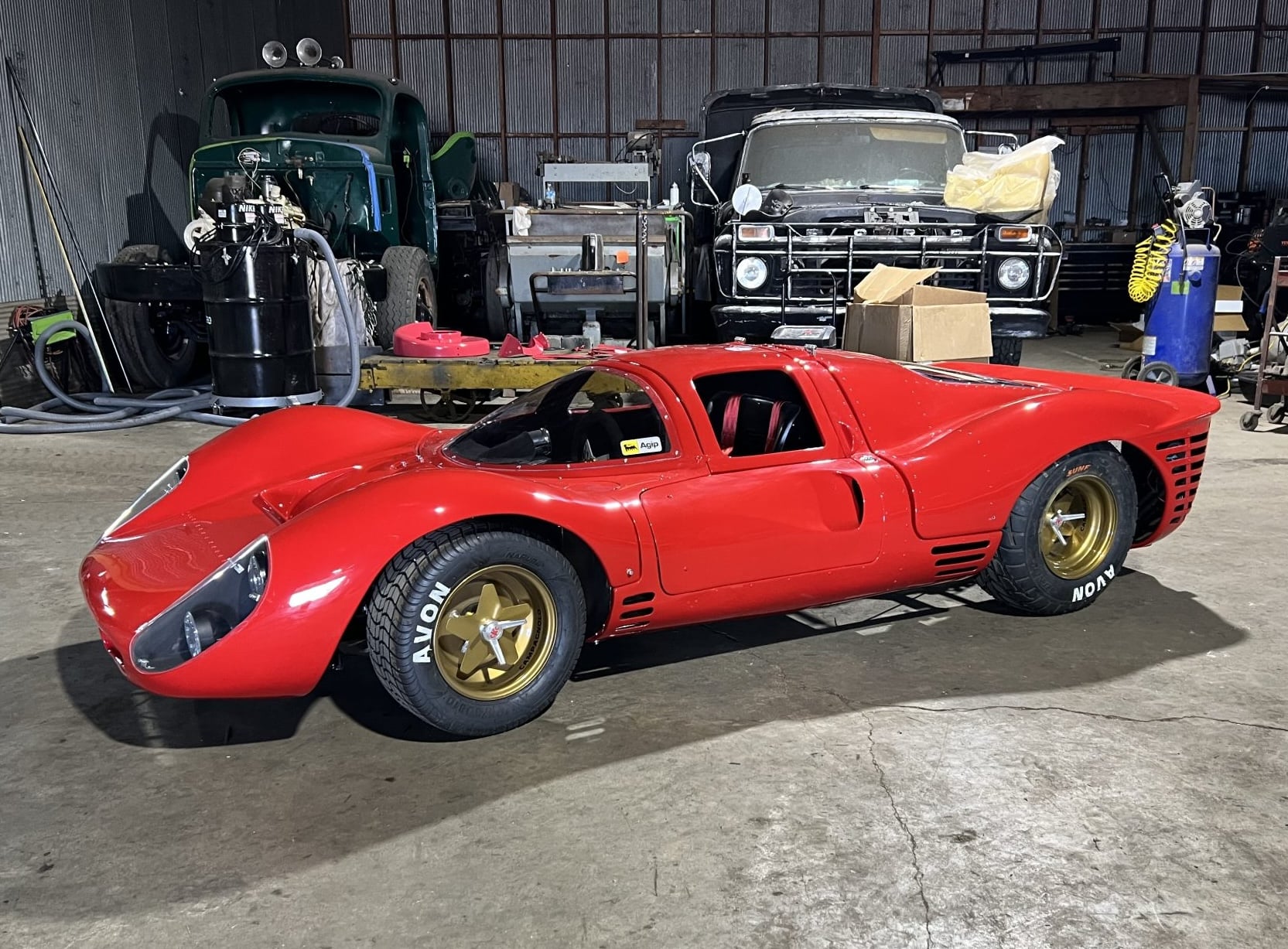
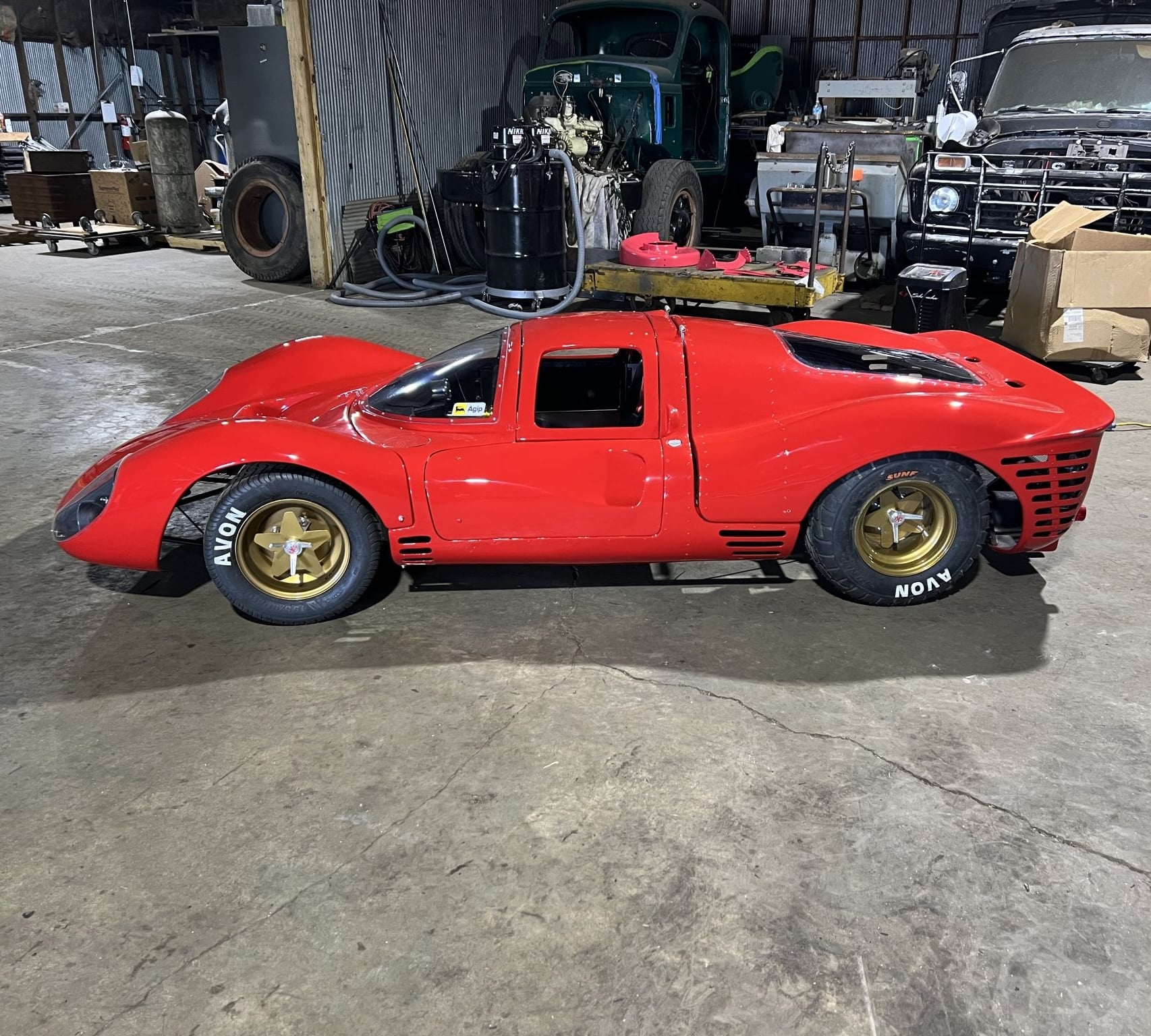
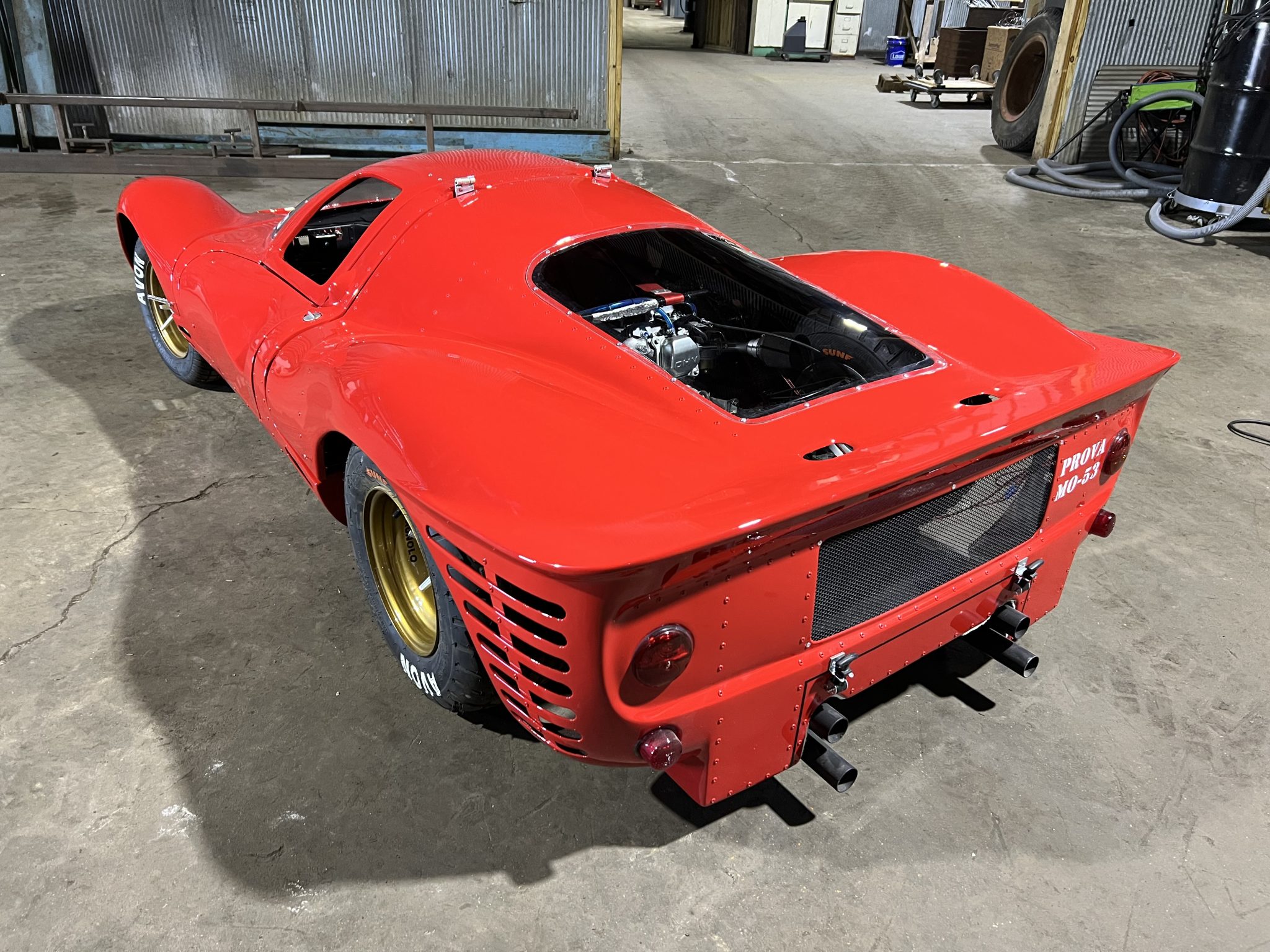
This is a Ferrari 330 P4-style go kart built by the CyclekART Company of Biburg, Germany with a box-section tubular steel chassis, a 200cc rear-mounted engine, and a lightweight fiberglass body.
The 330 P4 is one of the most beloved racing prototypes ever made by Ferrari, and many consider it to be one of the most beautiful cars of the period. Only four were ever made, and they’re perhaps best-remembered for their 1-2-3 finish at the 1967 24 Hours of Daytona (along with a 412 P).
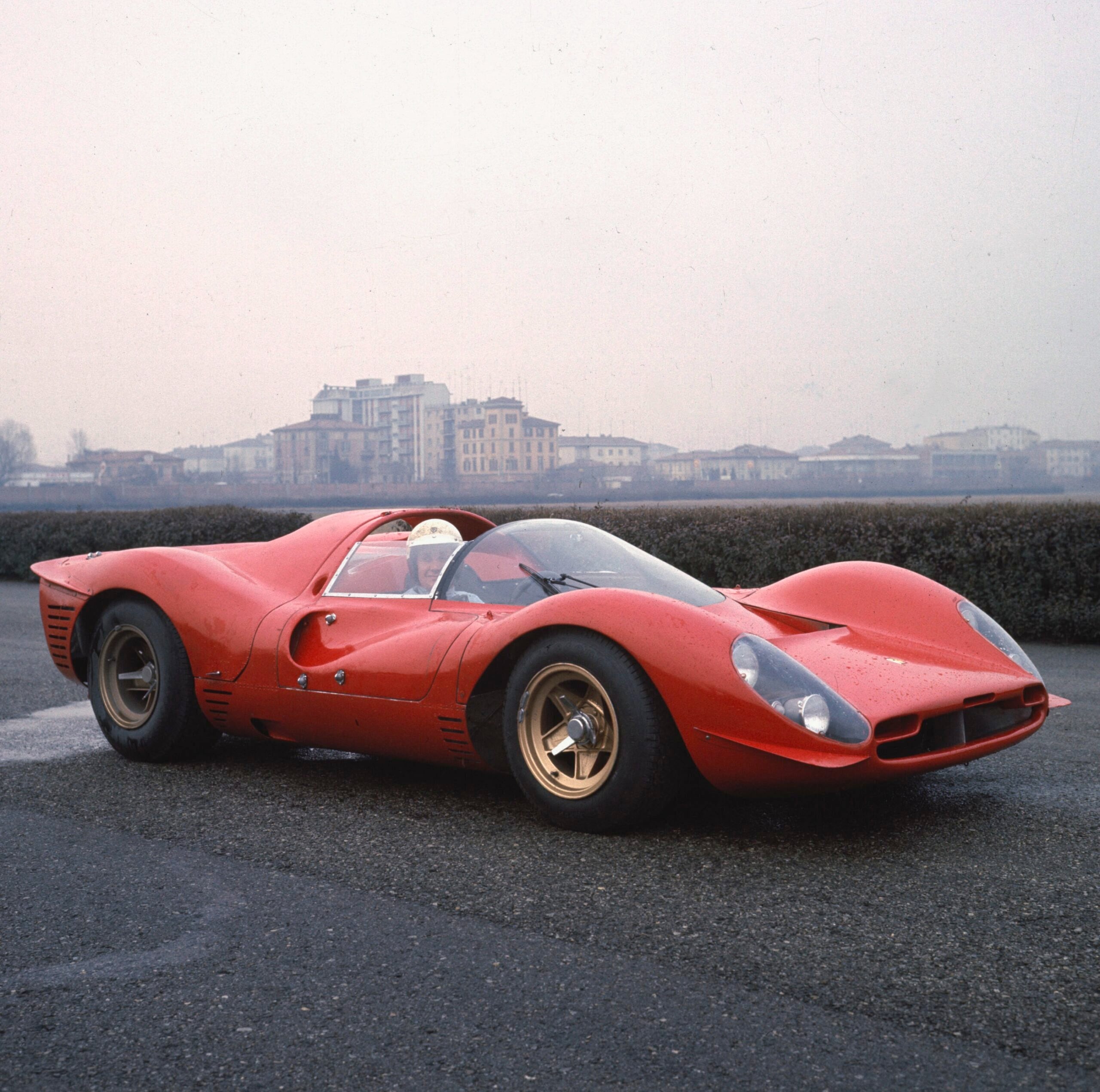
 The 330 P4 is one of the most beloved racing prototypes ever made by Ferrari, and many consider it to be one of the most beautiful cars of the period. Only four were ever made, and they’re perhaps best-remembered for their 1-2-3 finish at the 1967 24 Hours of Daytona (along with a 412 P). Image provided by Ferrari.
History Speedrun: The Ferrari 330 P4
The Ferrari 330 P4 was developed as a direct answer to the bloody nose it had received at the 1966 24 Hours of Le Mans where the Anglo-American Ford GT40 took a clean sweep of the podium and left the Ferrari’s in the dust. Enzo Ferrari needed a car capable of striking back, and the result was the 330 P4.
The Ferrari 330 P4 was the final (and most refined) evolution of Ferrari’s 4.0 liter 330 P-series sports racing prototypes, themselves part of the rear-mid-engined P-series lineage that began with the 250 P back in 1963.
Development of the 330 P4 was led by Technical Director Mauro Forghieri, who was given extensive autonomy by Enzo Ferrari to pursue the project. The engine was radically redesigned by Franco Rocchi, who introduced a new three-valve cylinder head (two inlet, one exhaust) modeled after those used in Ferrari’s Formula 1 cars.
The body shape evolved from the P3 and the design is generally credited to Piero Drogo and Ferrari’s in-house racing department under Forghieri. The car was built around a tubular steel chassis with lightweight aluminum-alloy bodywork (with some fiberglass sections), with the chassis slightly shorter than the outgoing 330 P3’s.
The beating heart of the P4 was its Tipo 237 V12, a 60º 3,967 cc (4.0 liter) unit fed by Lucas mechanical fuel injection with twin-spark ignition. It produced 450 bhp, at 8,200 rpm – 30 bhp more than the P3. Power was sent to the rear wheels through a new Ferrari-built 5-speed manual gearbox, replacing the unreliable ZF unit used previously. The car rode on cast magnesium Campagnolo wheels shod with Firestone tires, it weighed 1,746 lbs (792 kgs), and could reach a top speed of 199 mph.
Front and rear suspension was all independent, with unequal-length wishbones, coil springs, telescopic dampers, and anti-roll bars. The car had unassisted rack and pinion steering (as you might have expected) with four-wheel ventilated disc brakes.
The P4 made an unforgettable debut at the 1967 24 Hours of Daytona, where Ferrari staged a 1-2-3 finish with chassis 0846, 0856, and 0844 – two P4-spec cars and a 412 P. The result became known as “The Revenge of Il Commendatore,” and Enzo Ferrari reportedly kept a photograph of the moment at hand until his death.
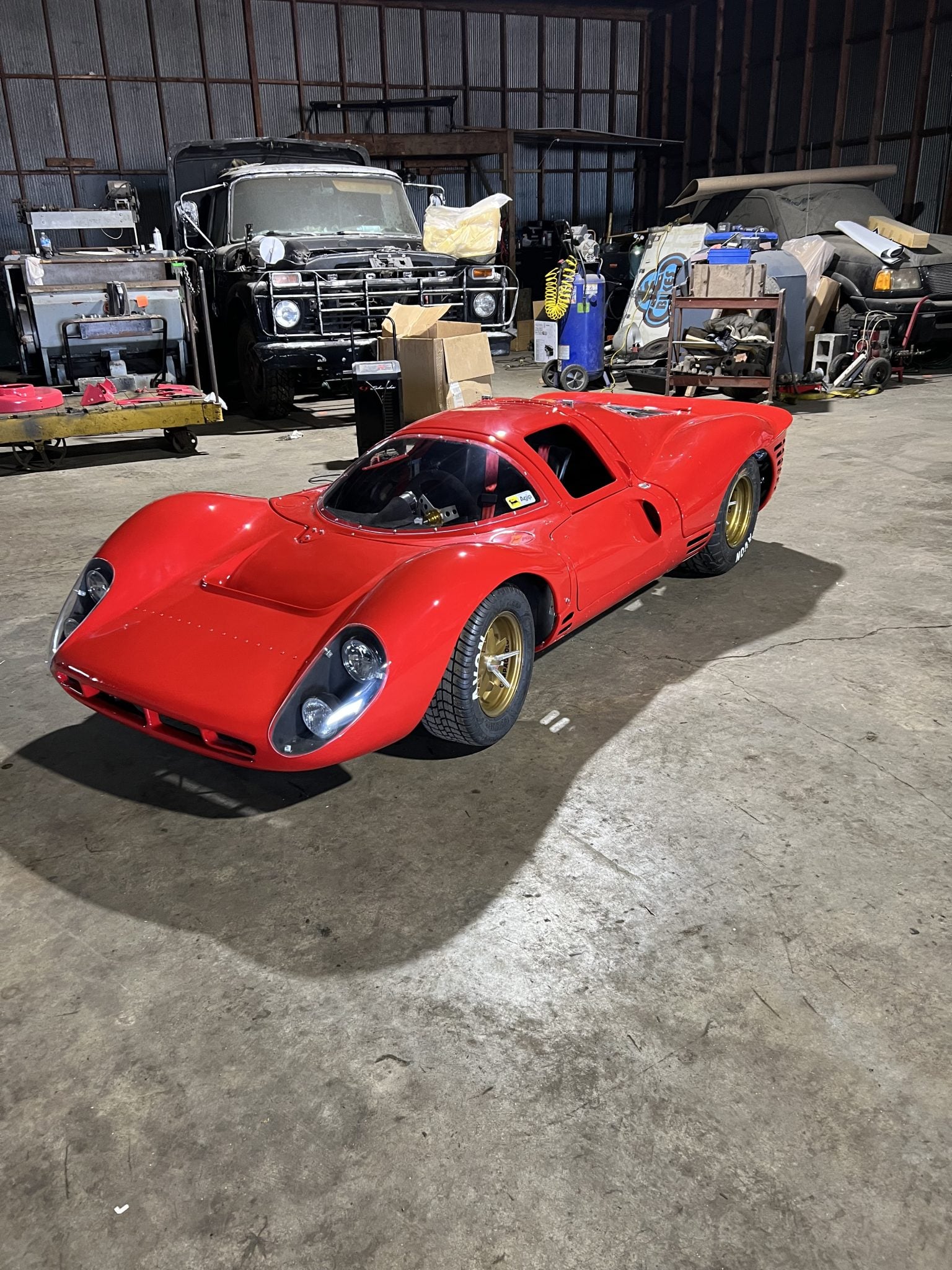
This is a Ferrari 330 P4-style go kart built by the CyclekART Company of Biburg, Germany with a box-section tubular steel chassis, a 200cc rear-mounted engine, and a lightweight fiberglass body.
The P4 also won the 1000 km of Monza that season. At Le Mans, the GT40 Mk IV prevailed, but chassis 0858 (driven by Ludovico Scarfiotti and Mike Parkes) took a hard-fought second place and a class win. By the end of the 1967 season, Ferrari had won the International Championship for Sports-Prototypes over 2.0 liters, with Ford finishing third.
Only four P4-engined cars were ever built – three new P4 chassis (0856, 0858, 0860) and the converted P3/P4 (0846). Ferrari records indicate that 0846 was scrapped after it was badly damaged by fire at Le Mans. Of the three new P4 chassis, 0856 is generally regarded as the only substantially original surviving P4, 0858 and 0860 were converted by Ferrari into 350 Can-Am cars and later re-bodied and restored in P4 form.
The Ferrari 330 P4-Style Go Kart Shown Here
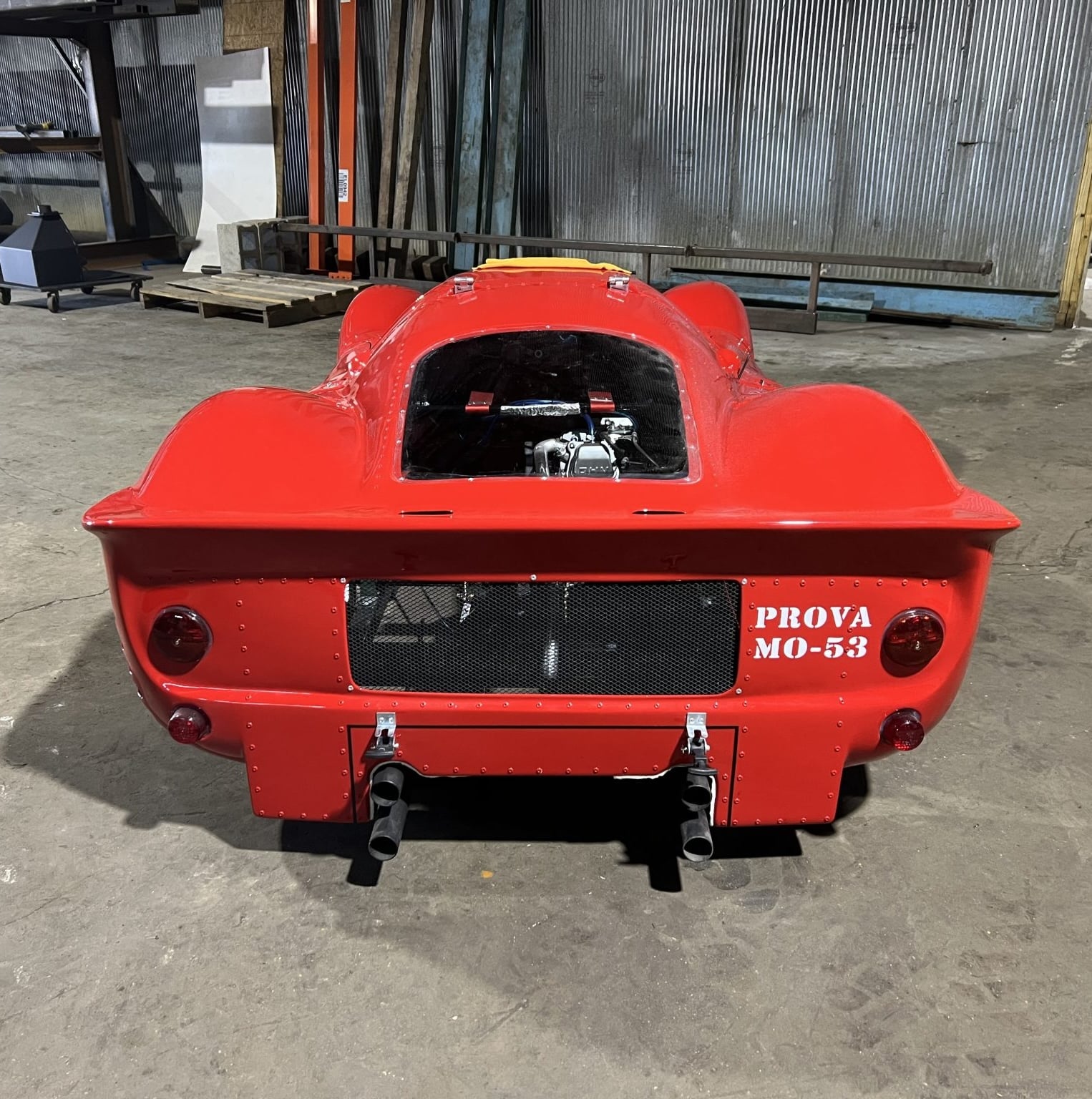
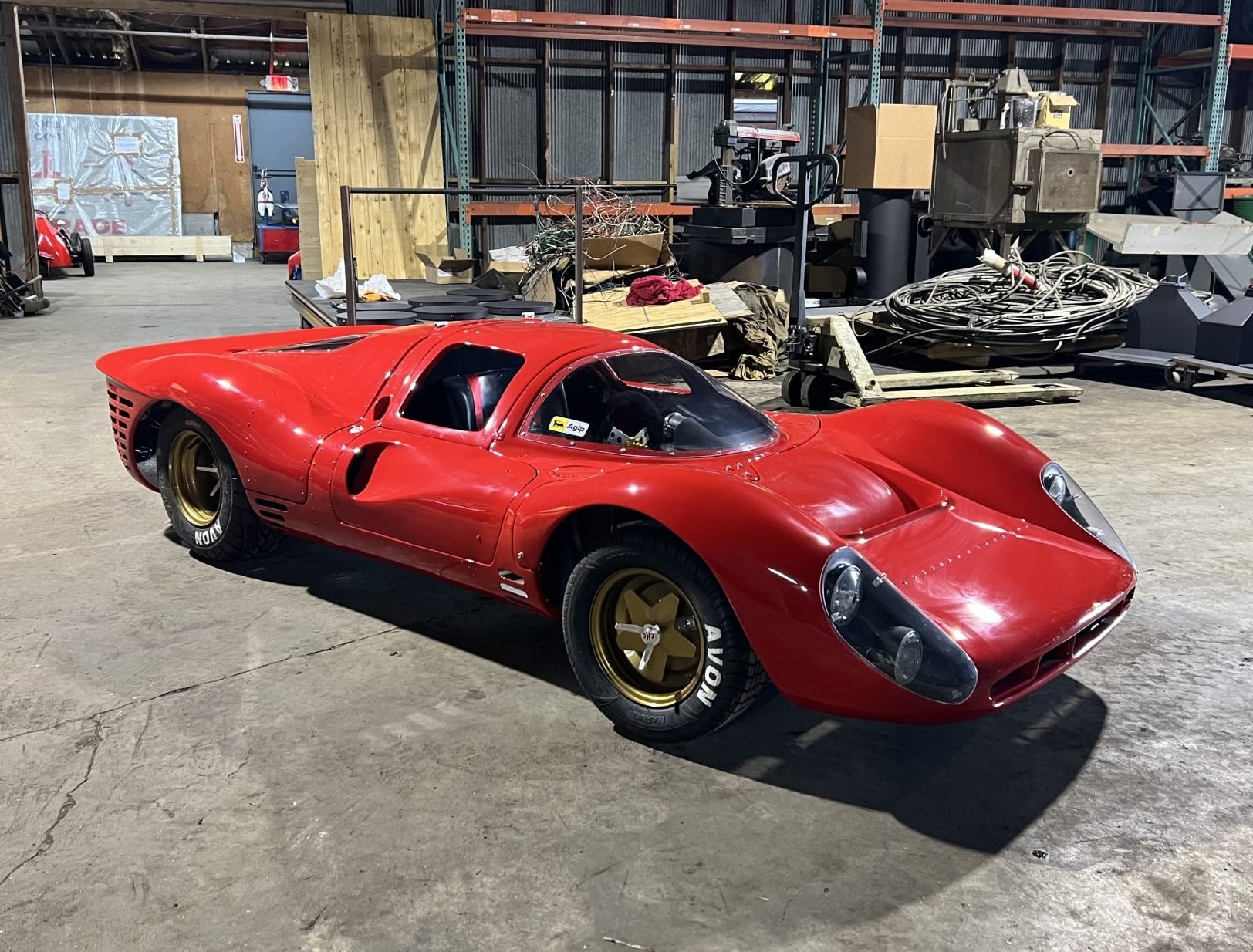
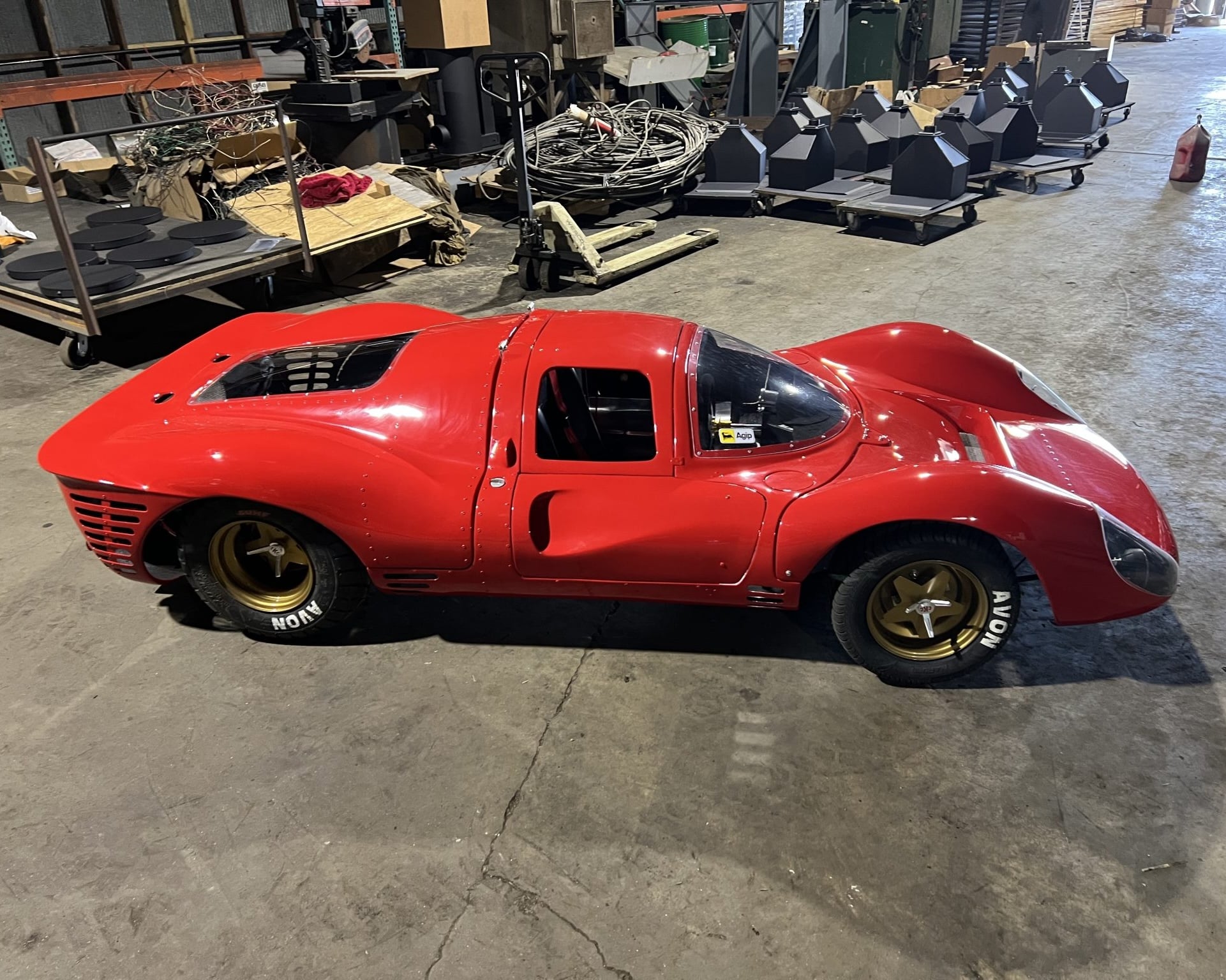
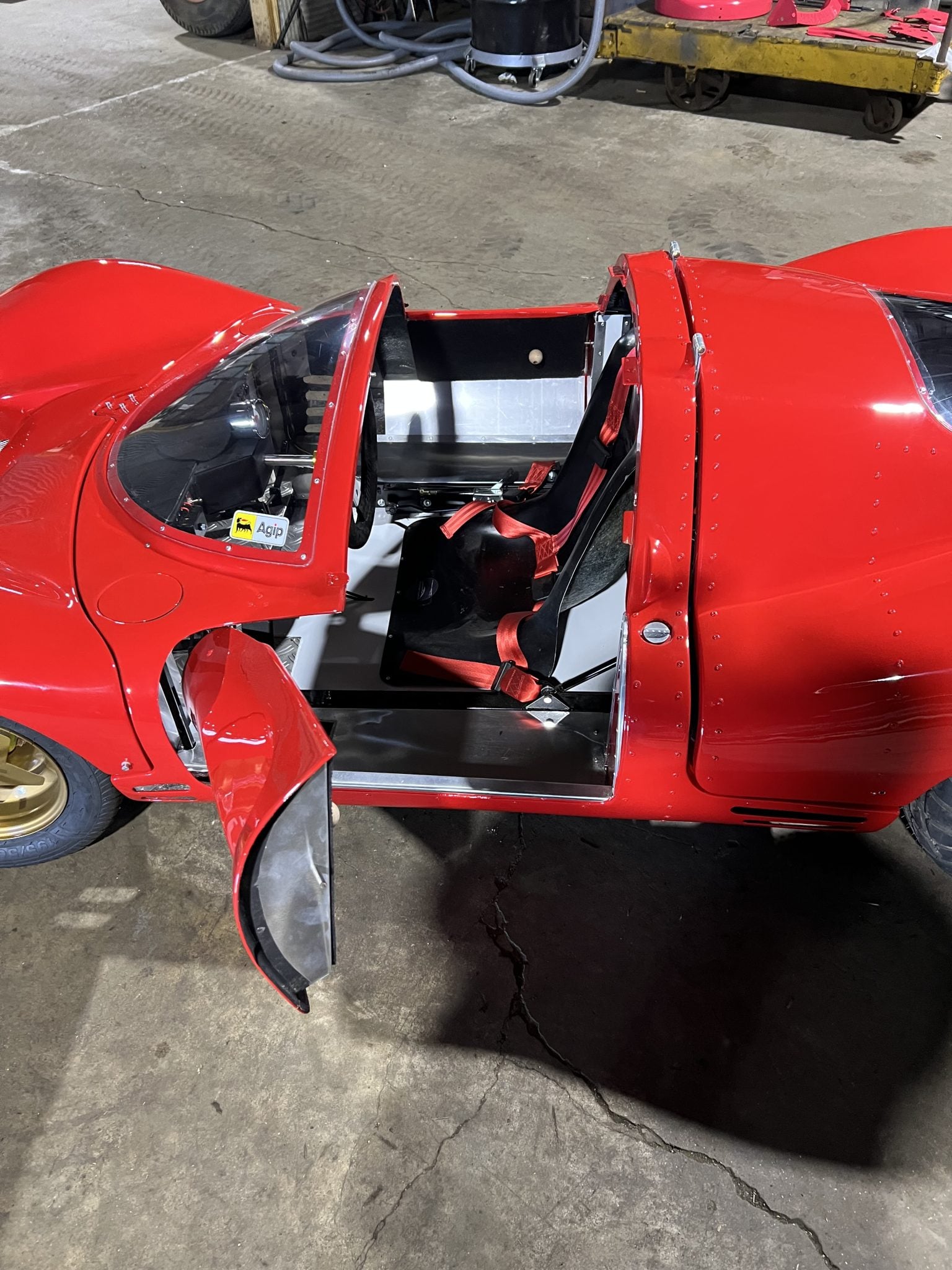
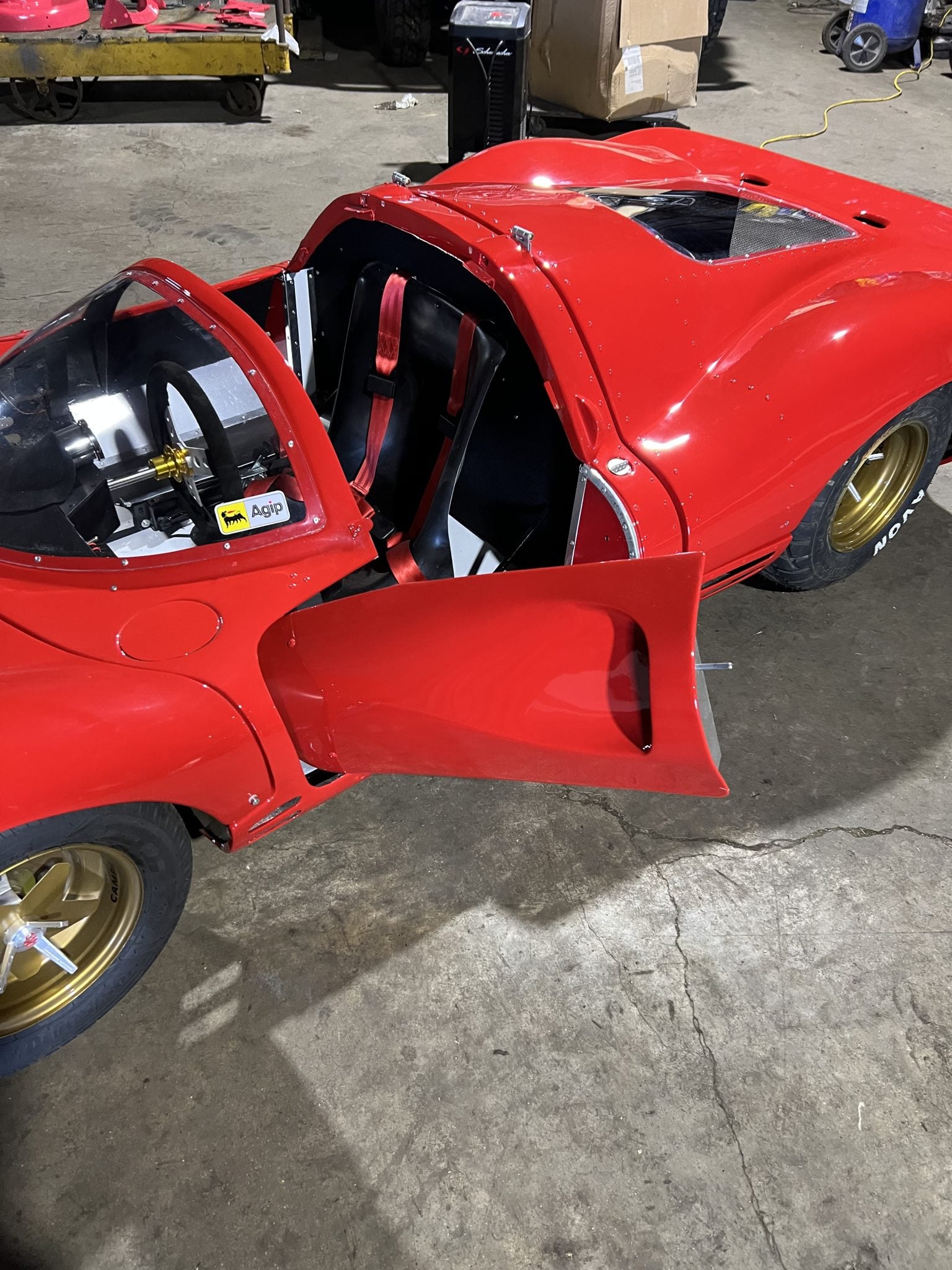
This Ferrari P4-style go-kart is the third of three examples built by the CyclekART Company of Biburg, Germany, with 70% scale fiberglass bodywork created by mini-car builder Guy Chappaz. The red body replicates the details of the original P4 remarkably well, with covered headlights, taillights, air vents, front and rear windows, opening doors, a removable roof panel, removable front and rear body panels, and a painted “Prova MO-53” rear license plate.
A stamped CyclekART Company plate riveted to the bodywork identifies it as the third of three Guy Chappaz editions produced. Power comes from a 200cc OHV four-stroke single said to be rated at 6.5 bhp, it’s also been fitted with a performance air filter and an electric starter.
An automatic gearbox with neutral and reverse sends power to the chain-driven rear axle, and an extended tube connects to quad exhaust outlets. An aluminum fuel tank sits on the left side, secured in place by a leather strap.
The kart rolls on gold-finished four-lug steel wheels with faux spokes and silver knock-off spinners, shod with 195/50B10 NaRubb bias-ply tires at the front and 20×10-10 Sunf tires at the rear, (the seller notes that one rear tire is mounted backward). “Avon” is painted onto the tire sidewalls. Braking is handled by dual cross-drilled disc brakes on the rear axle, and the suspension uses coil-overs front and back.
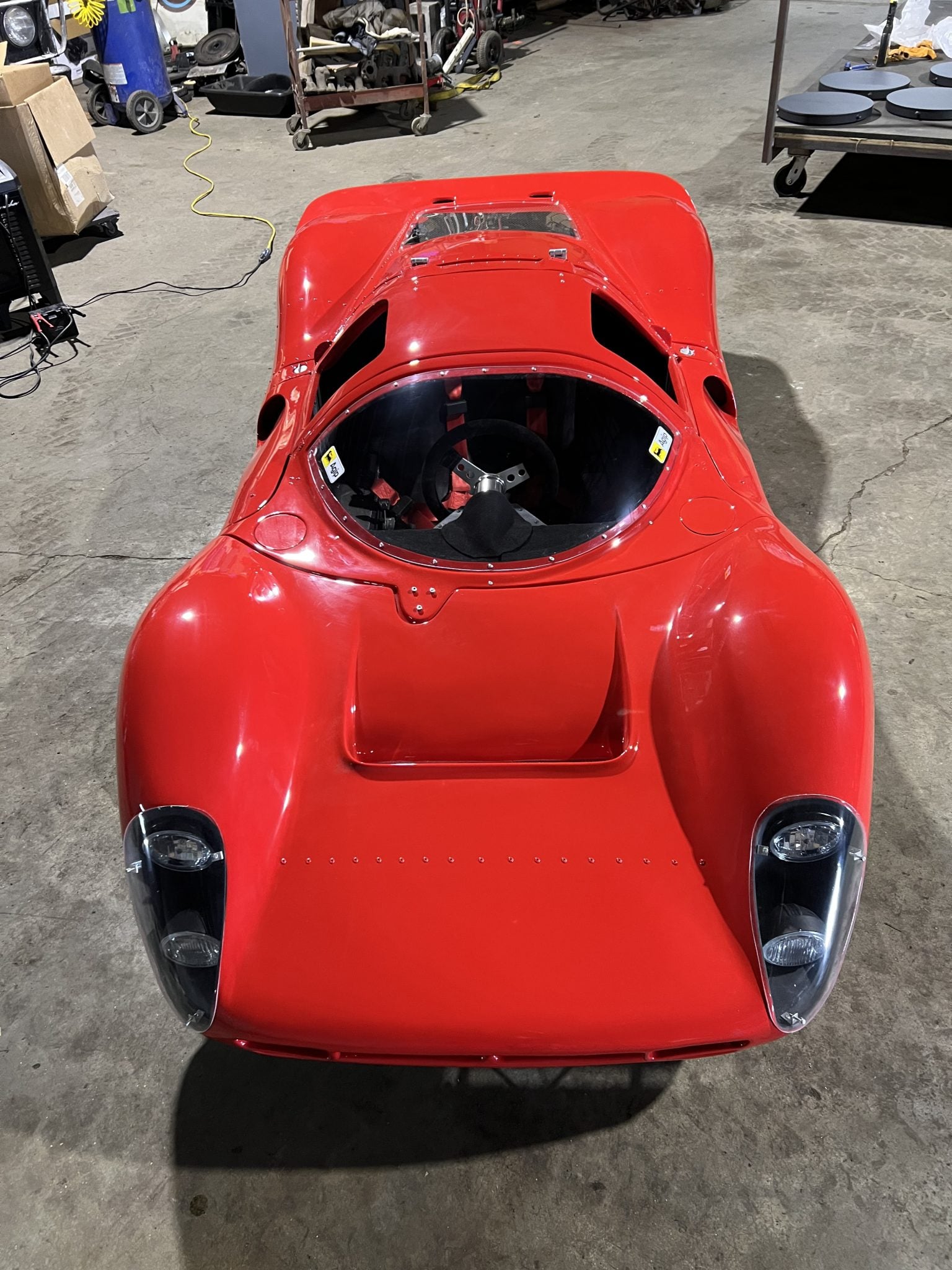
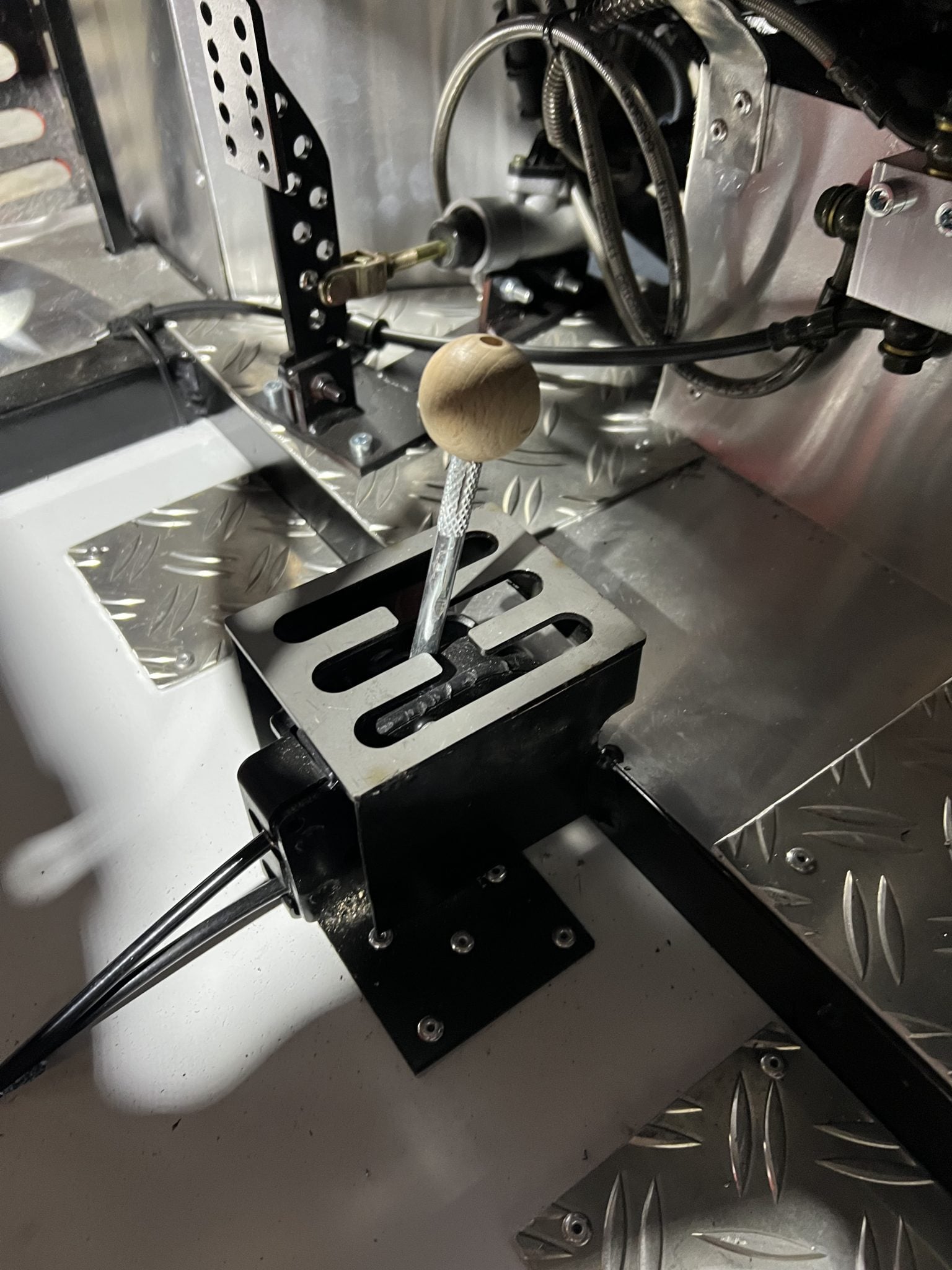
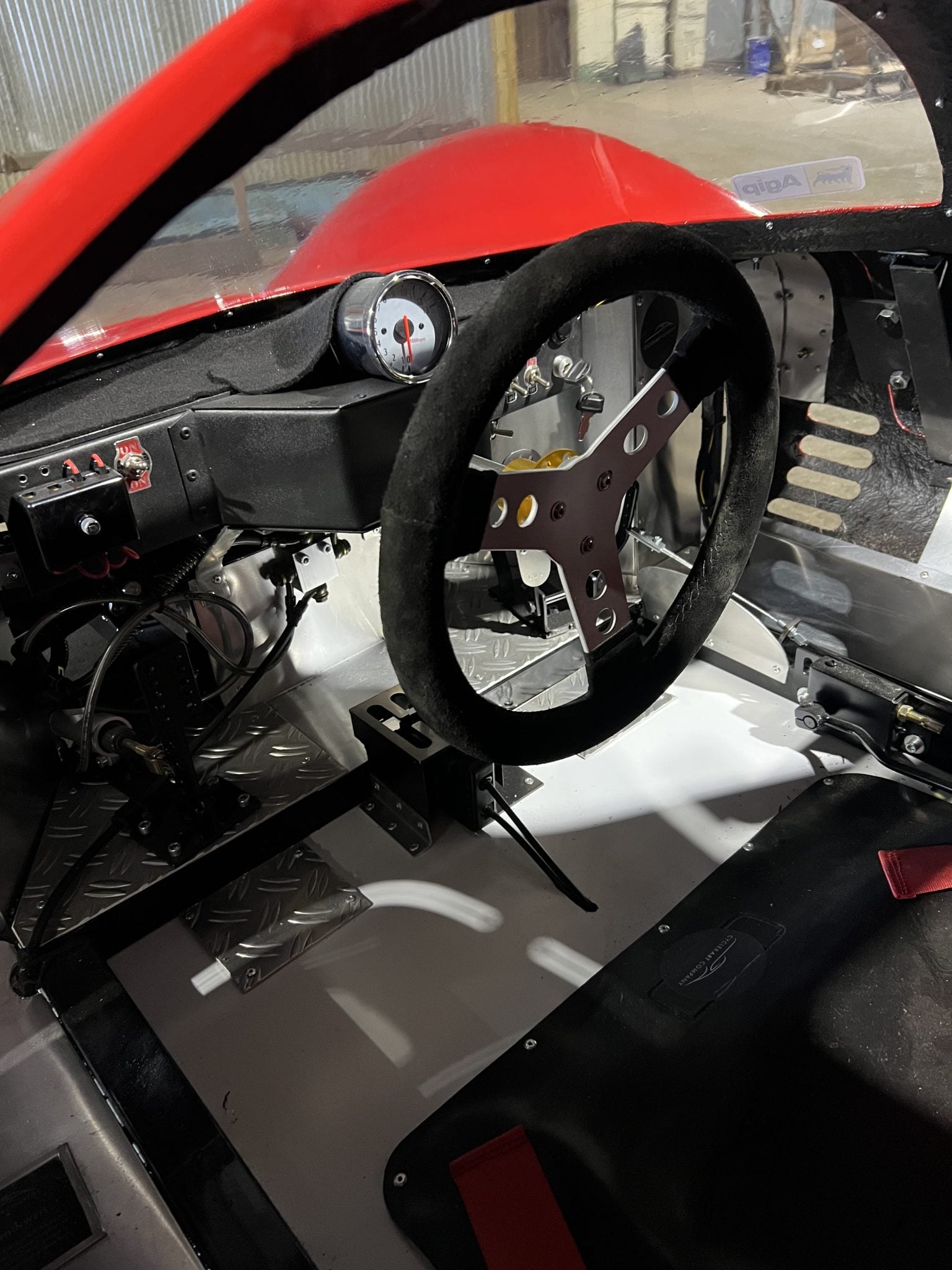
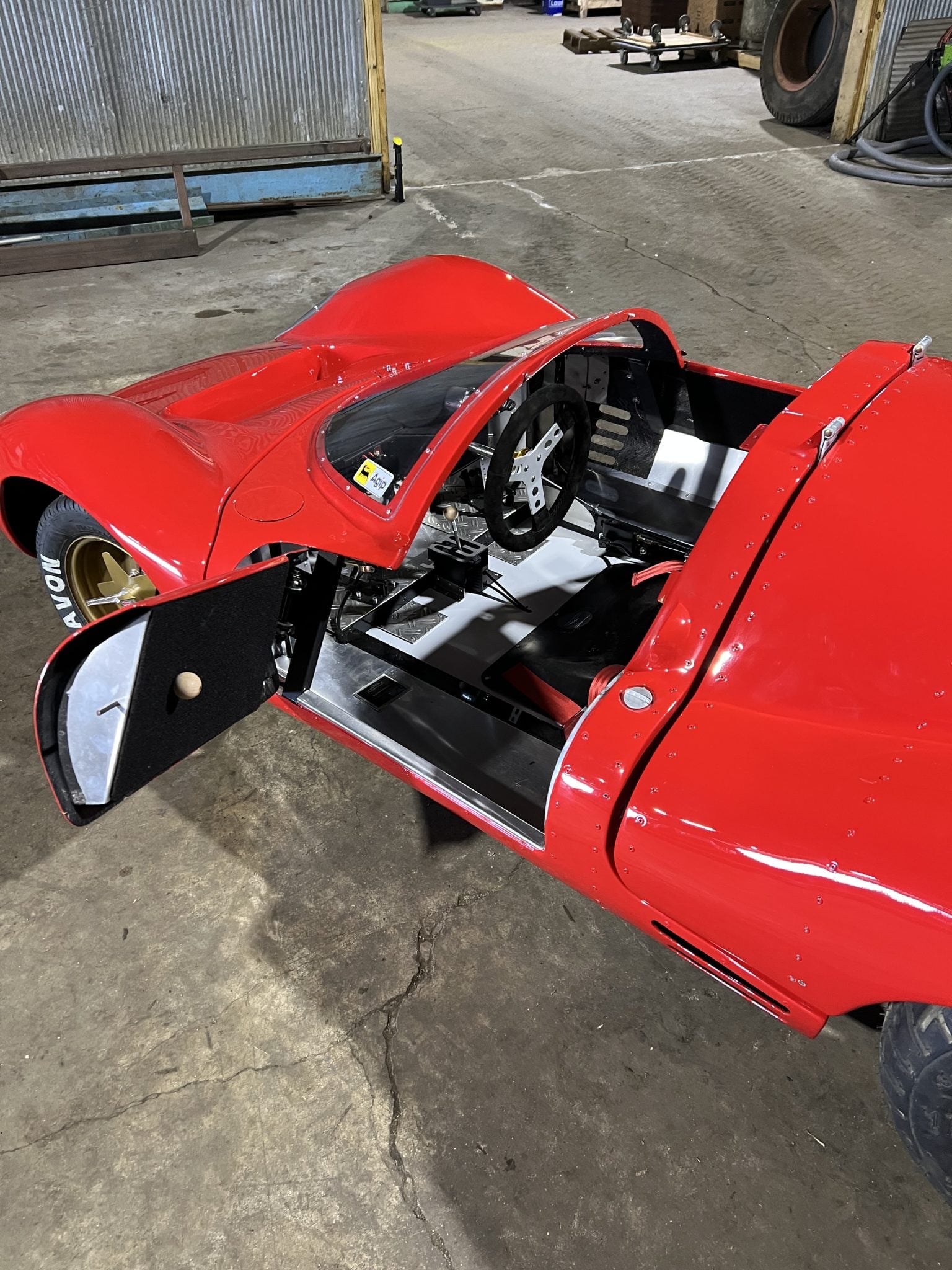
The cockpit is accessed via the opening doors and removable roof panel and houses a single bucket seat with red seat belts, a three-spoke steering wheel on a quick-release hub, drilled foot pedals, a floor-mounted choke lever, a handbrake, and a gated shifter topped with a wood knob.
The cockpit is accessed via the opening doors and removable roof panel and houses a single bucket seat with red seat belts, a three-spoke steering wheel on a quick-release hub, drilled foot pedals, a floor-mounted choke lever, a handbrake, and a gated shifter topped with a wood knob.
Aluminum panels line the doors and sills, with white protective film covering the aluminum floor. The dash has a centrally mounted tachometer, a starter key, and push-button and toggle switches for the exterior lights.
This unusual go kart is now being offered for sale out of Bourbon, Missouri on Bring a Trailer. If you’d like to read more or place a bid you can visit the listing here.
Images courtesy of Bring a Trailer + Ferrari

Articles that Ben Branch has written have been covered on CNN, Popular Mechanics, Smithsonian Magazine, Road & Track Magazine, the official Pinterest blog, the official eBay Motors blog, BuzzFeed, Autoweek Magazine, Wired Magazine, Autoblog, Gear Patrol, Jalopnik, The Verge, and many more.
Silodrome was founded by Ben back in 2010, in the years since the site has grown to become a world leader in the alternative and vintage motoring sector, with well over a million monthly readers from around the world and many hundreds of thousands of followers on social media.