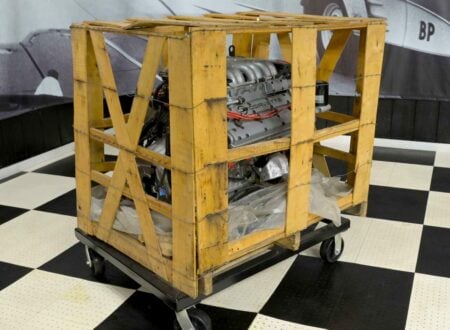
This is an L88 “Counter Exchange Engine” that was delivered new to a Chevrolet dealership in 1969, likely intended for a Corvette. It was never used, and it’s now being offered for sale as a rare piece of American motoring history.
The L88 was a 427 V8 engine option for the Corvette that was just about as close to a full race engine as you could get. The option was offered to homologate the L88 engine for competition in SCCA A-Production and FIA GT racing.
 This is an L88 “Counter Exchange Engine” that was delivered new to a Chevrolet dealership in 1969, likely intended for a Corvette. It was never used, and it’s now being offered for sale as a rare piece of American motoring history.
History Speedrun: The Chevrolet L88 V8
It’s probably safe to say that the Chevrolet L88 is one of the most celebrated engines in American automotive history (though the Ford guys might disagree), it was a 427 cubic inch big block V8 that had to carefully balance being both production car motor and full-blown race engine.
The L88 was offered as a Regular Production Option (RPO) on the Corvette from 1967 through to 1969, it was devised by GM engineers who found some creative ways to put competition hardware into customers’ hands during a time when the General Motors officially forbade factory involvement in motorsport. Though there were plenty of workarounds.
Perhaps unsurprisingly, the L88’s was developed thanks to Zora Arkus-Duntov, the Belgian-born engineer widely regarded as the godfather of the Corvette. Duntov had been pushing Chevrolet’s performance envelope since joining the company in 1953, and by the mid-1960s he was determined to give privateer racers a Corvette that could compete straight off the showroom floor with the best that was rolling out of Italy, Britain, and Germany.
Arkus-Duntov was joined in the effort by Vince Piggins, Chevrolet’s head of product promotions and a crucial figure in the brand’s covert racing support network, along with engineers Bill Howell and Gib Hufstader. Together, they developed the L88 as a race-ready evolution of the existing L72 427, taking the Mark IV big block architecture and pushing it to its absolute limits.
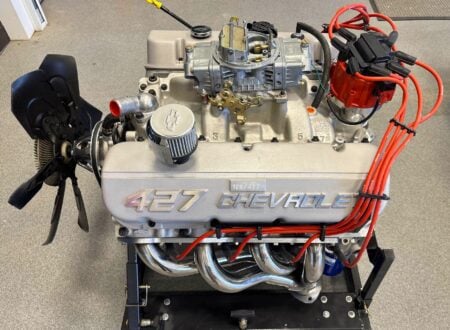
The resulting engine was extraordinary by any standard of the time, it was built around a cast iron block with four-bolt mains, it had a forged steel cross-drilled crankshaft, forged 4340 steel connecting rods, and forged aluminum pistons delivering a compression ratio of 12.5:1 – demanding a minimum of 103 octane racing fuel.
The aluminum cylinder heads saved roughly 70 lbs over iron equivalents and had 2.19 inch intake valves, while a race-specification mechanical flat-tappet camshaft with 0.562/0.584 inch lift gave the engine a famously rough idle but tremendous high-RPM power. Fuel was delivered through a Holley 850 cfm four-barrel carburetor.
Officially, Chevrolet rated the L88 at 430 bhp, this was 5 bhp less than the L71 427 that sat below it in the option sheet. This was a deliberate deception designed to discourage casual buyers from ordering an engine option that required racing fuel and came stripped of comfort features like air conditioning, a heater (in 1967), and a radio. The true output was widely believed to be well in excess of 500 bhp, with most period estimates centering around 550 bhp, with higher figures achievable in full race tune.
It’s probably safe to say that the Chevrolet L88 is one of the most celebrated engines in American automotive history (though the Ford guys might disagree), it was a 427 cubic inch big block V8 that had to carefully balance being both production car motor and full-blown race engine.
The L88 was offered exclusively on the Corvette, spanning the final year of the C2 and the first two years of the C3. Production was deliberately limited, just 20 cars were built in 1967, 80 in 1968, and 116 in 1969, for a total of 216. Mandatory equipment included the Muncie M22 “Rock Crusher” 4-speed transmission, heavy-duty J56 disc brakes, F41 performance suspension, Positraction rear differential, and a special cowl-induction hood.
On the track, the L88 delivered exactly what Duntov had envisioned when he came up with the concept. The engine made its competition debut at the 1967 12 Hours of Sebring in the Sunray DX Motorsports Corvette, where Don Yenko and Dave Morgan drove it to a GT class victory and tenth overall.
At the 1967 24 Hours of Le Mans, Dick Guldstrand, Bob Bondurant, and Don Yenko campaigned the Dana Chevrolet L88 entry (the only mid-year Corvette ever to race at Le Mans) recording 171.5 mph on the Mulsanne straight and leading the GT class before a wrist pin failure ended their run just shy of the halfway mark.
The L88 also spawned the even rarer ZL1 of 1969, which paired its aluminum heads and competition internals with an all-aluminum block originally developed for Can-Am racing. Tightening emissions regulations and the mandated shift to lower-octane fuels brought the L88’s run to an end after 1969, but its three-year production window was enough to forever establish its reputation as (perhaps) the closest thing to a factory race engine ever offered in an American production car.
The L88 Counter Exchange Engine Shown Here
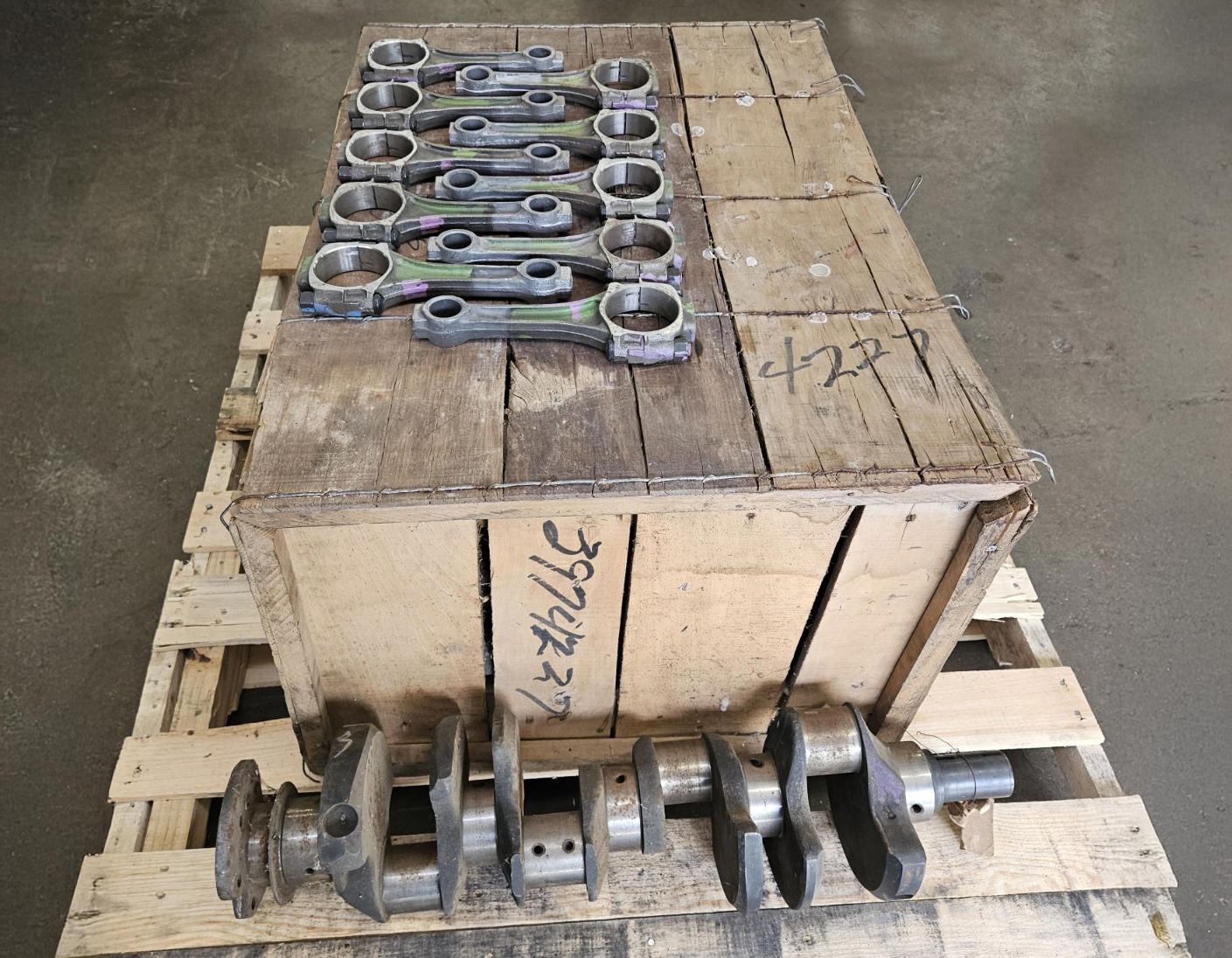
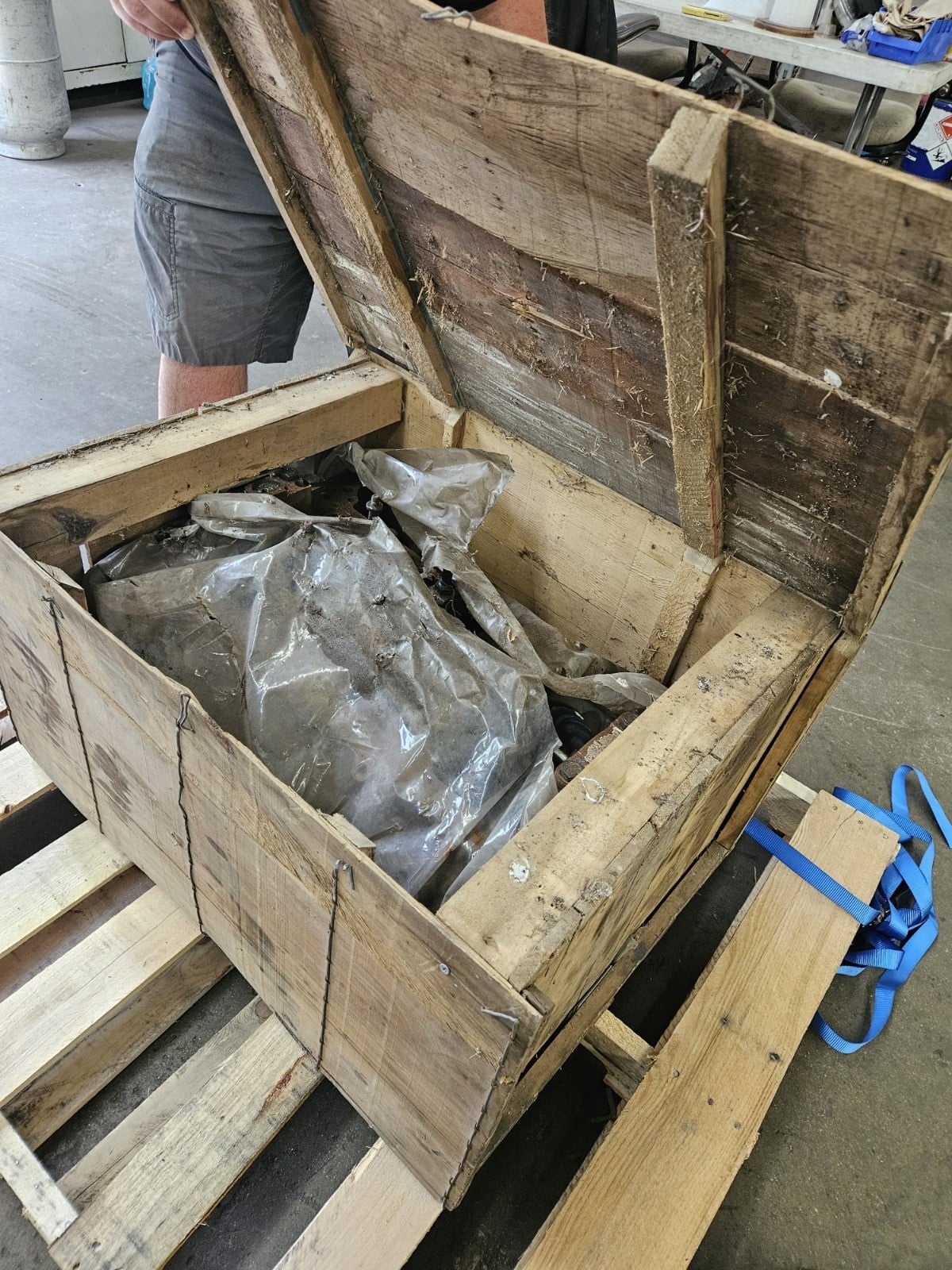
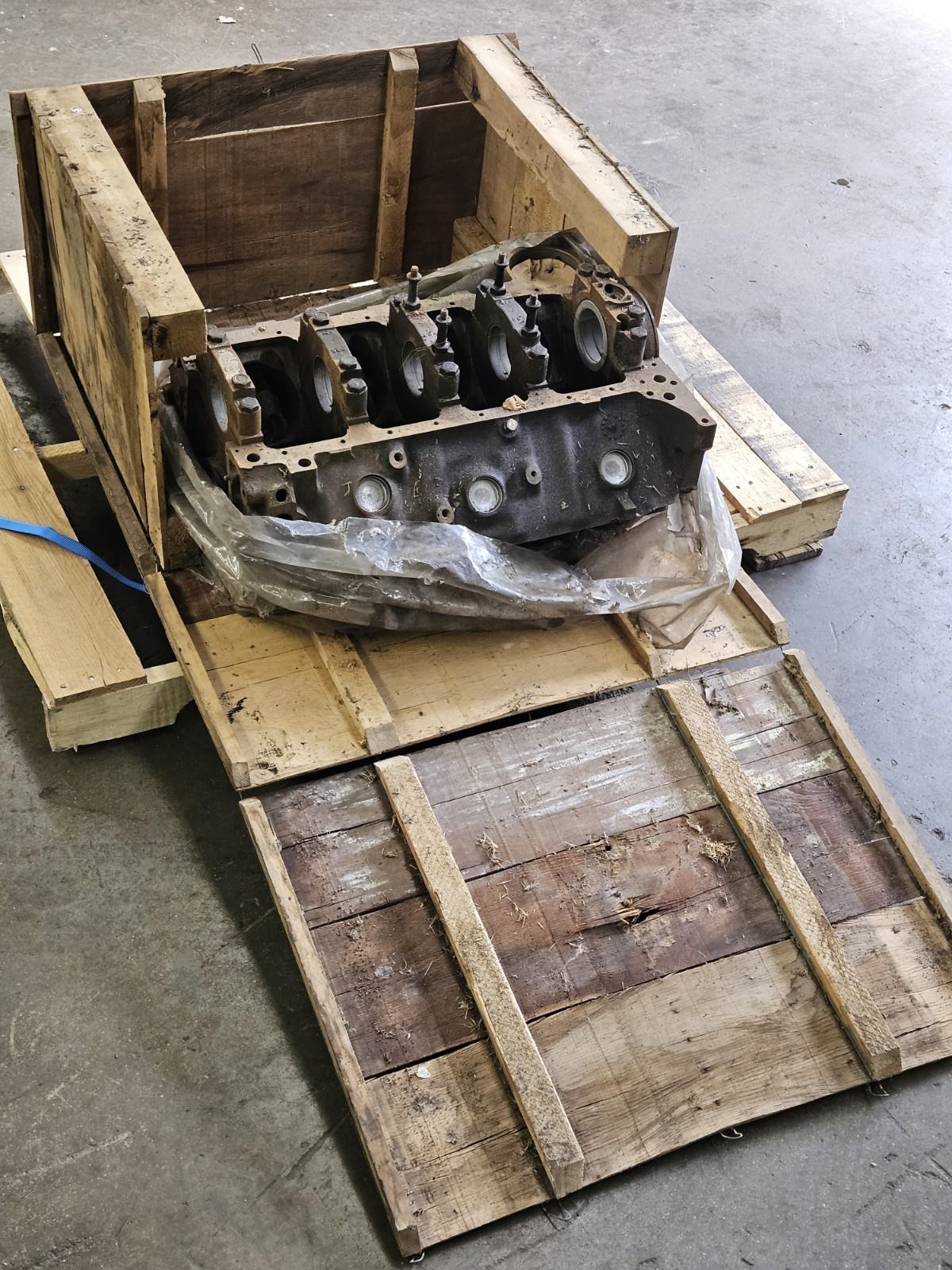
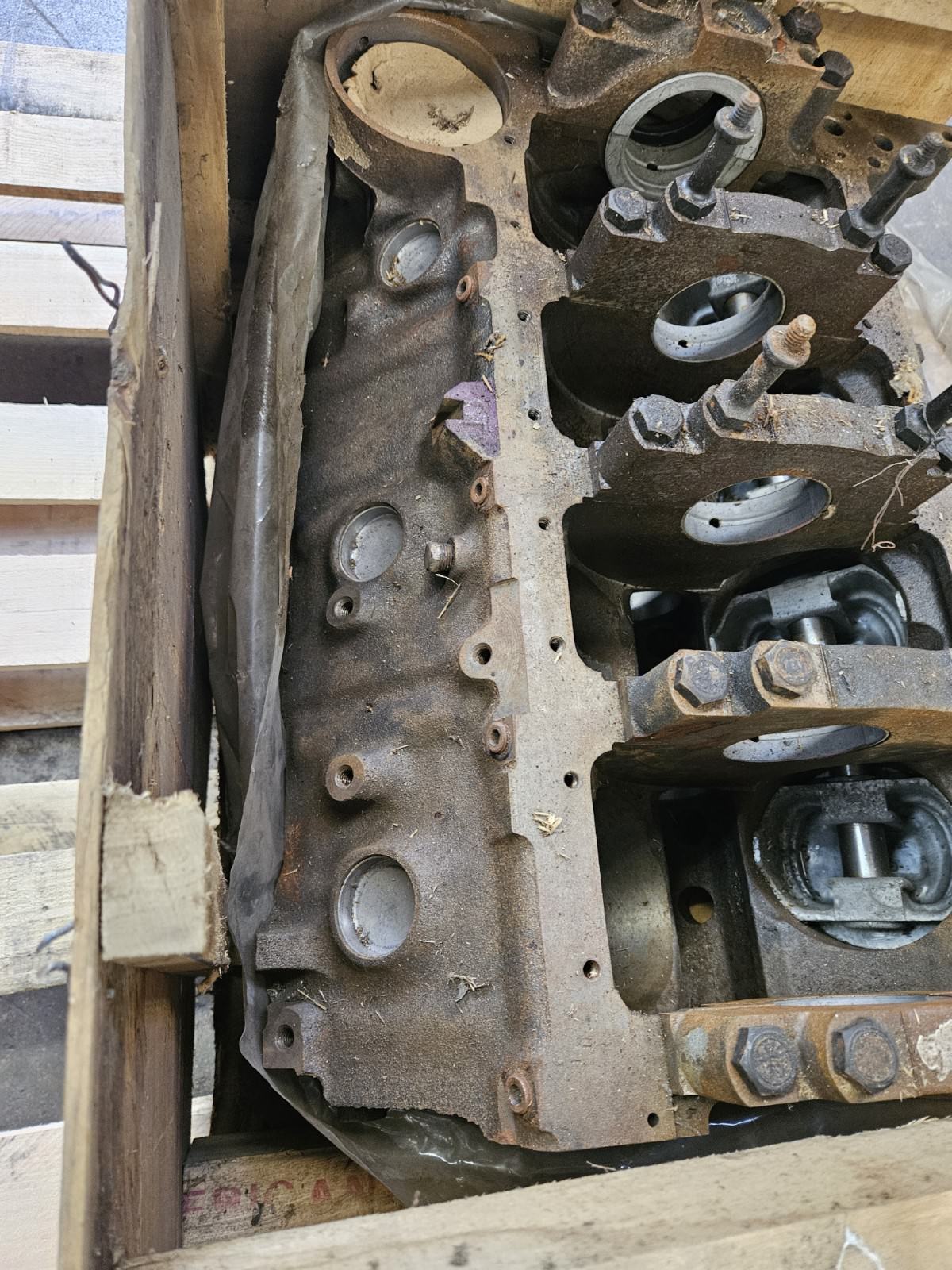
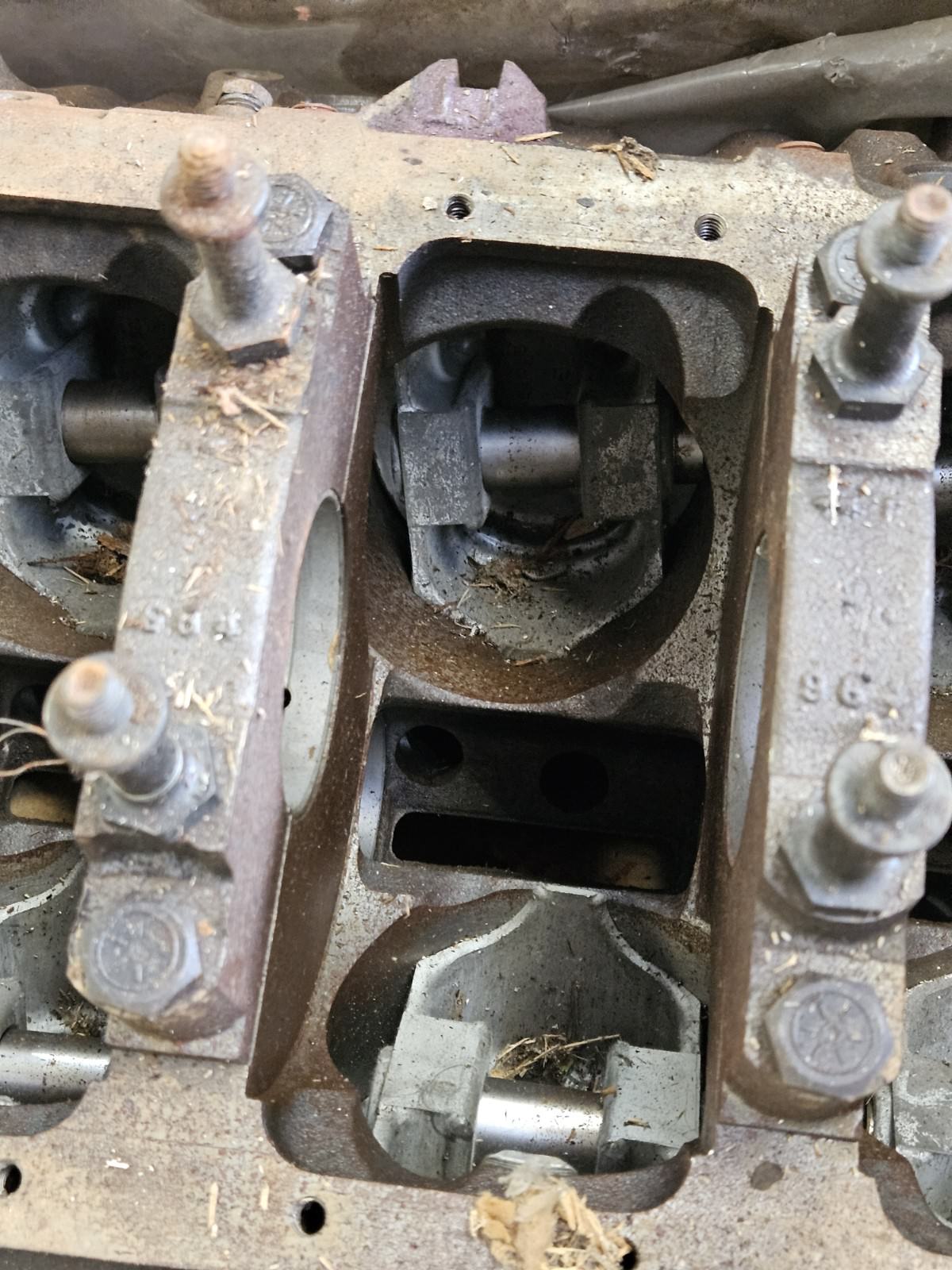
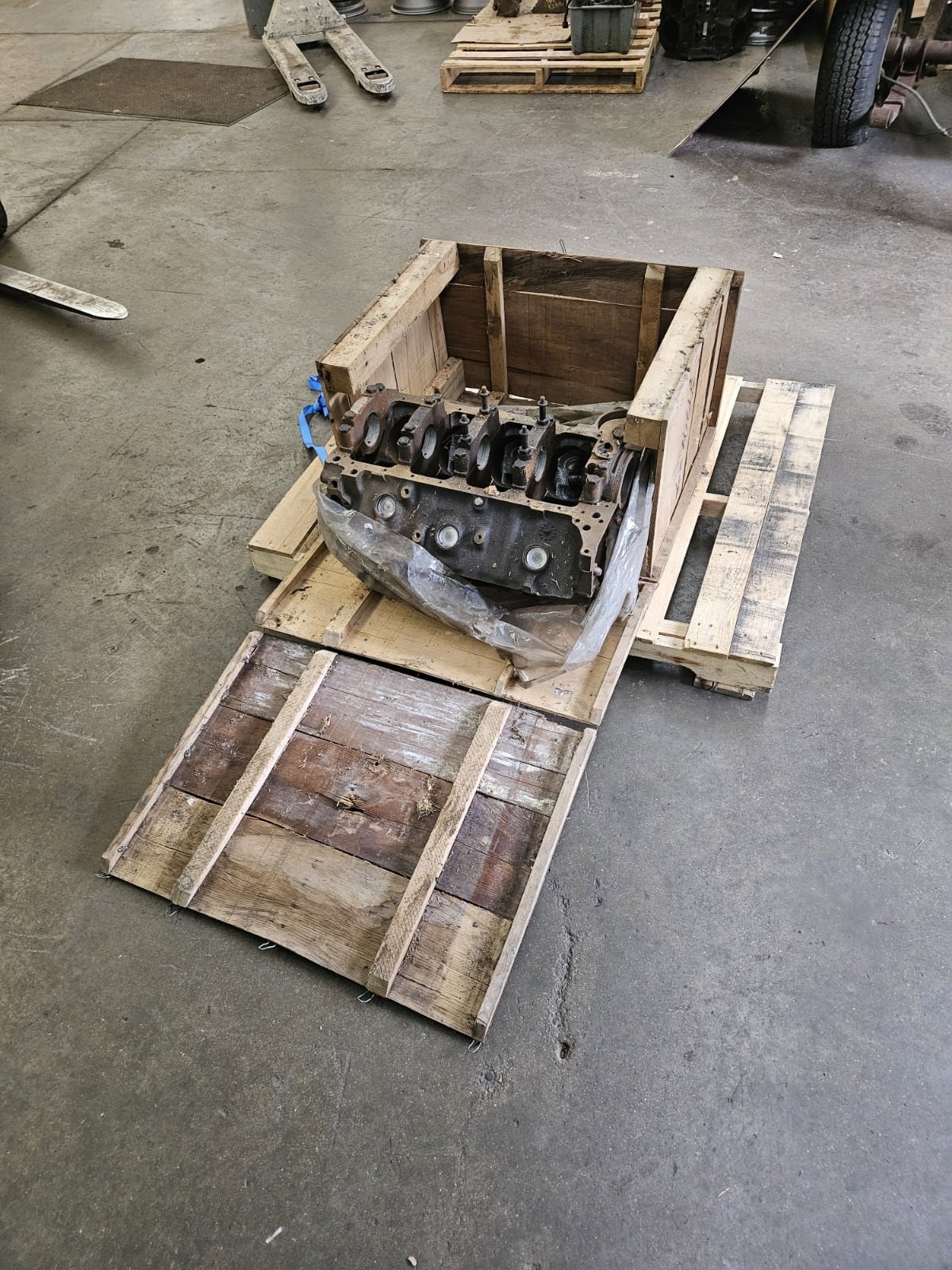
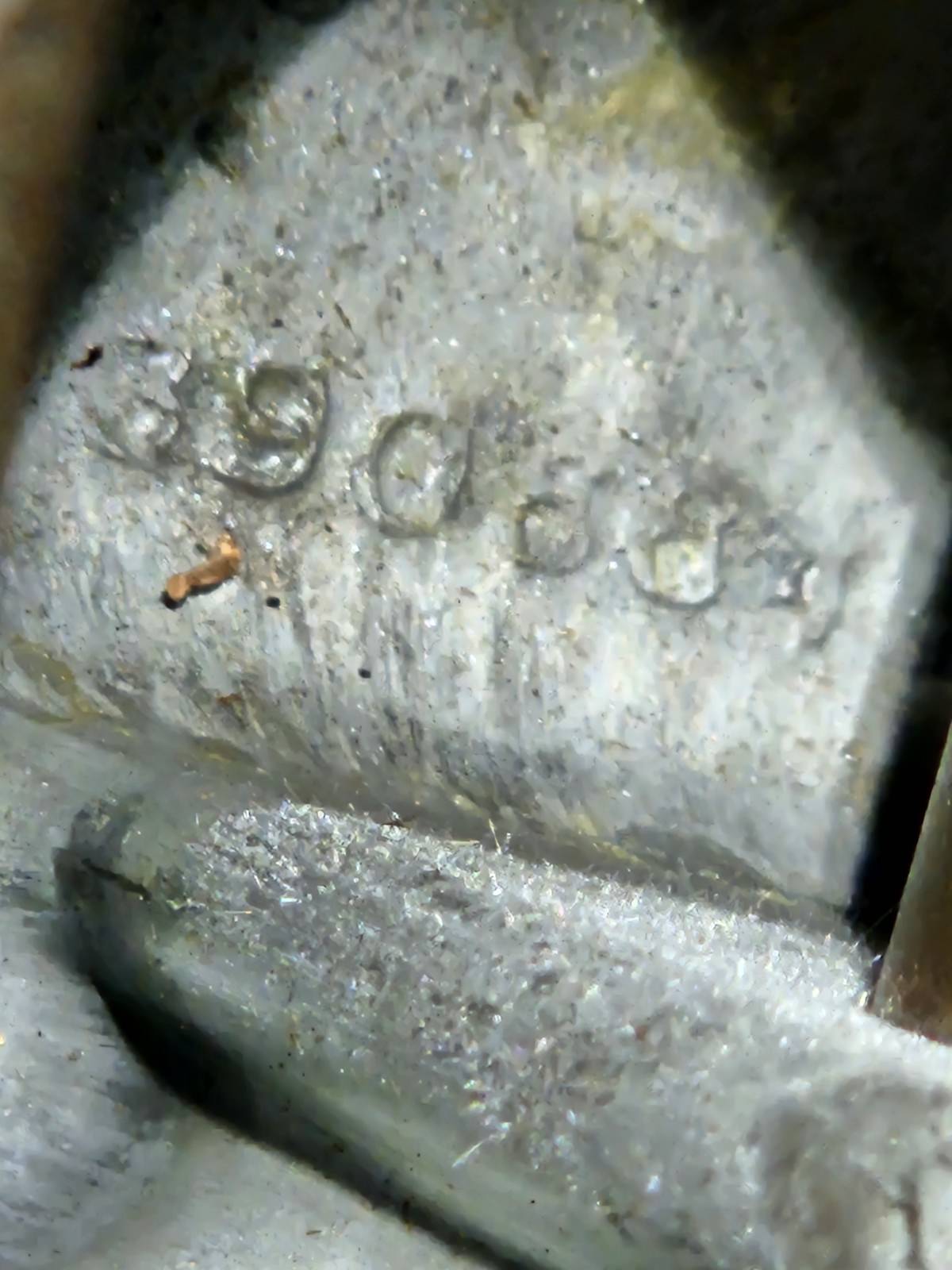
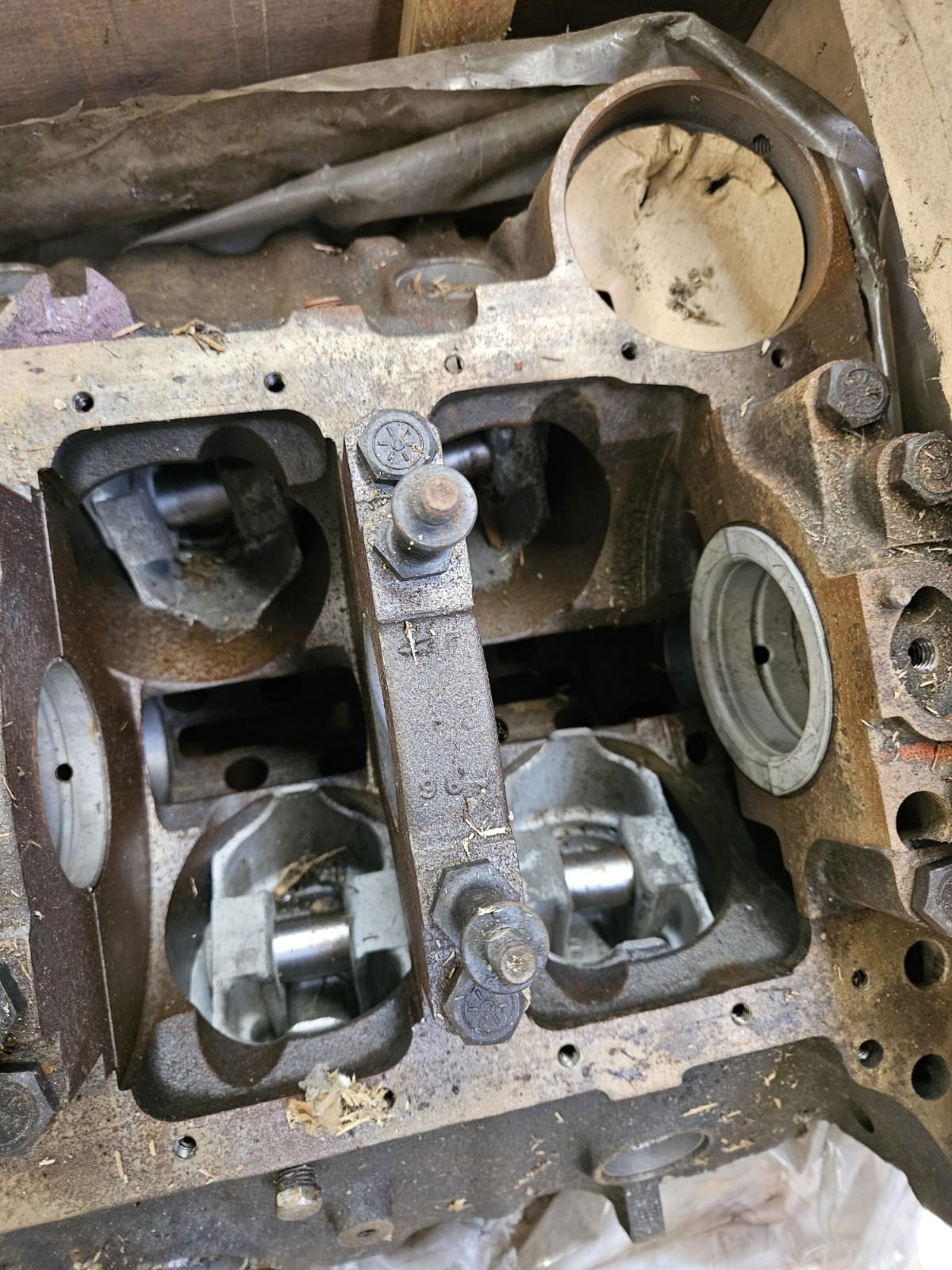
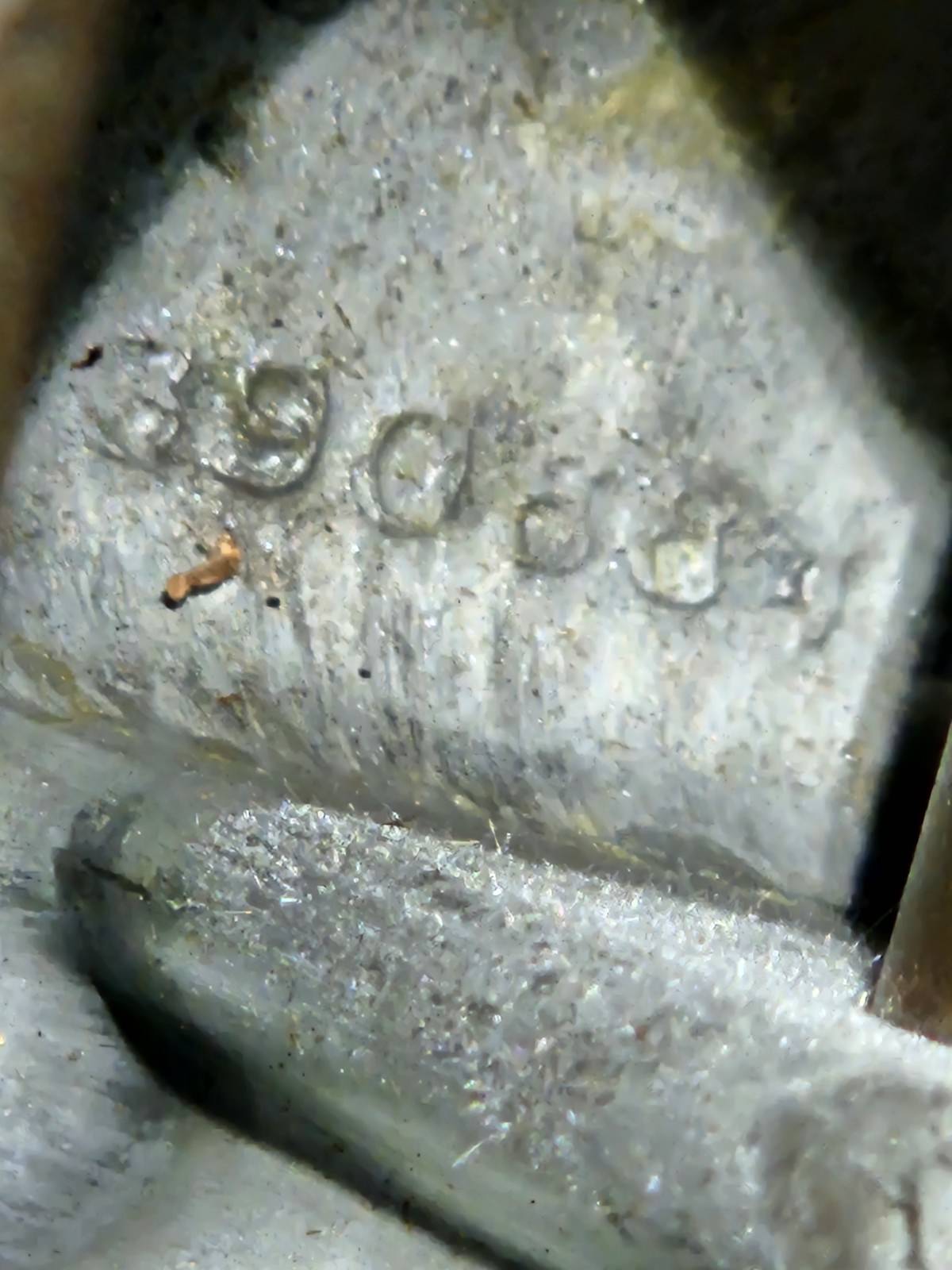
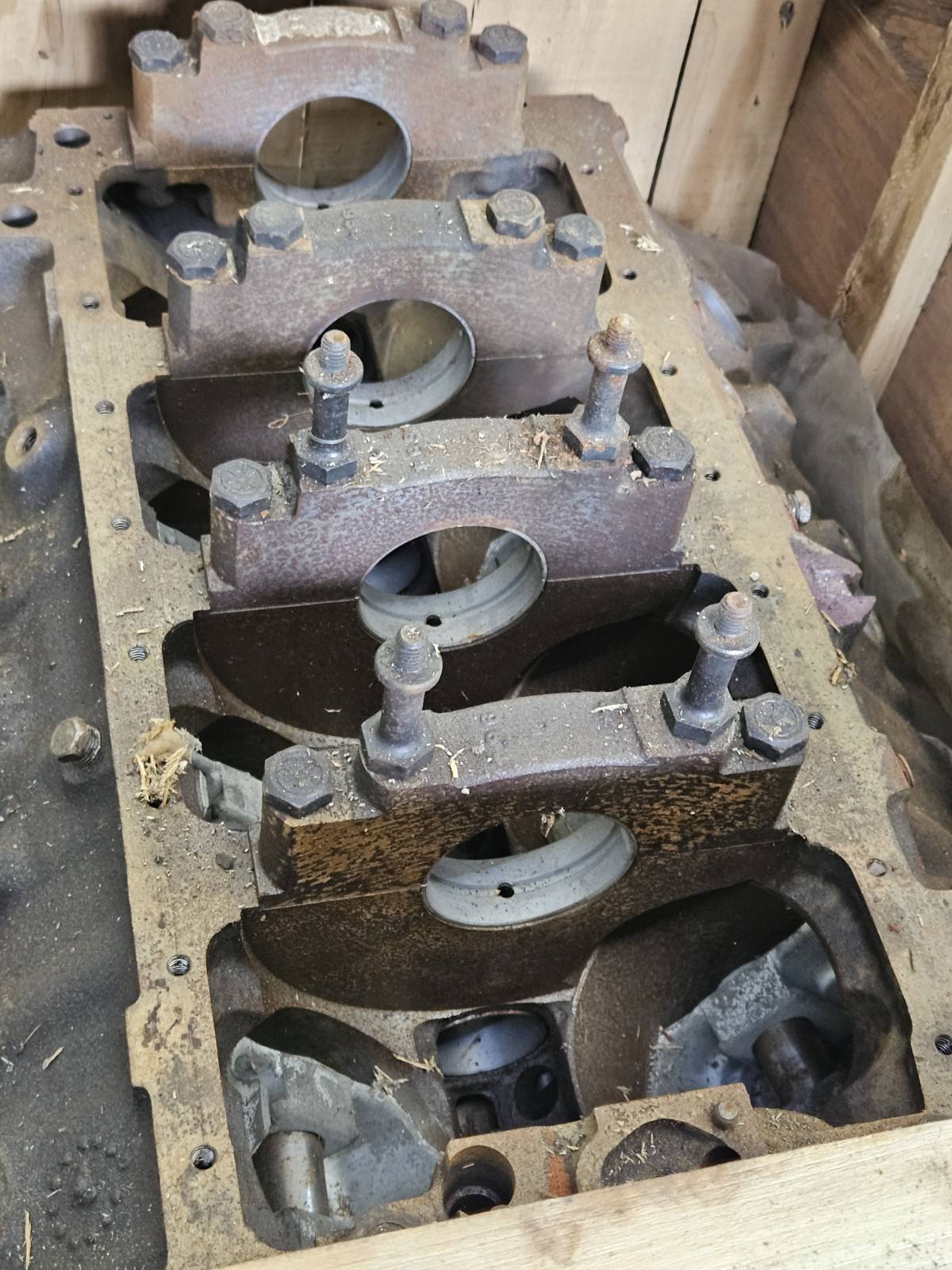
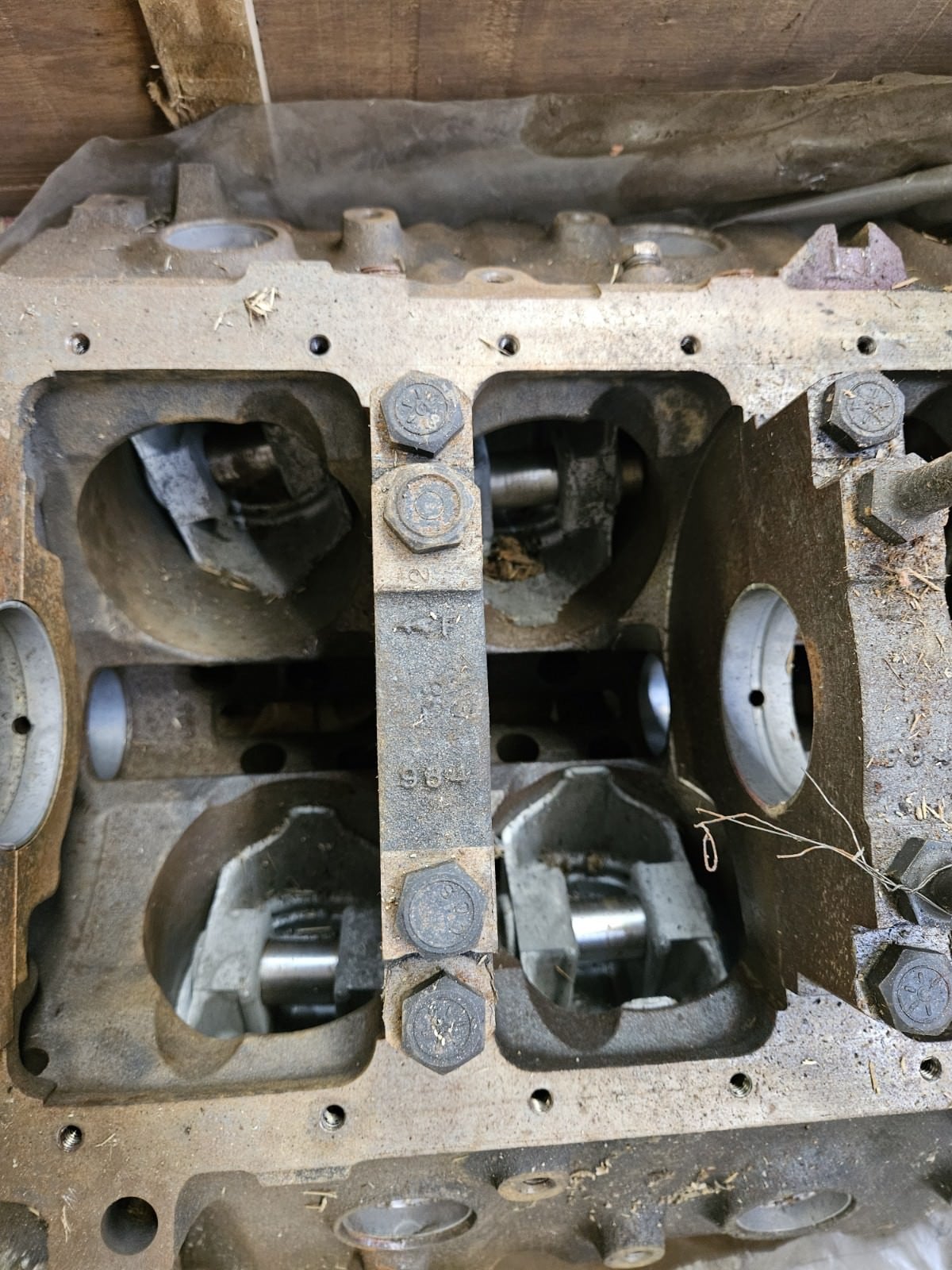
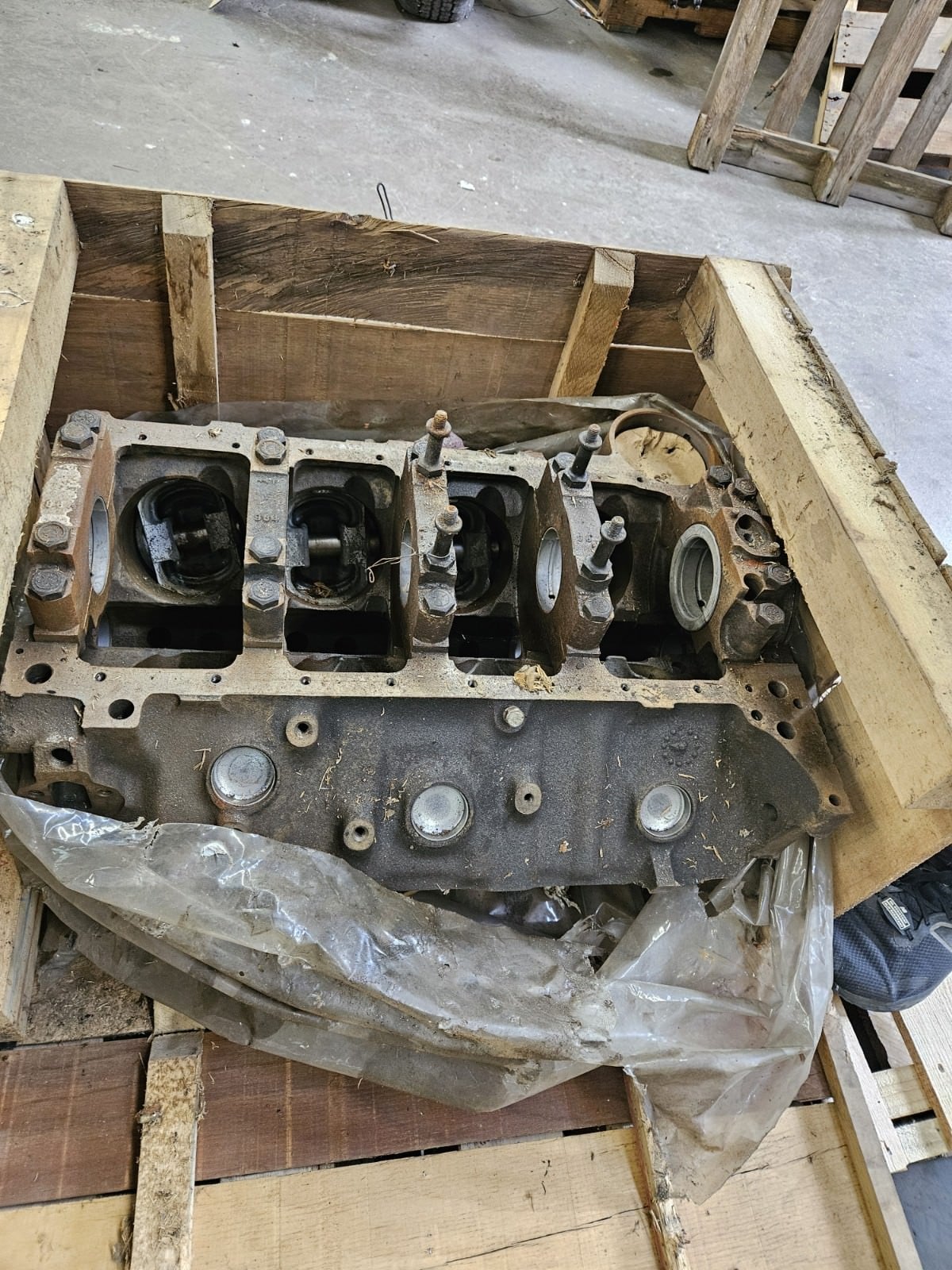
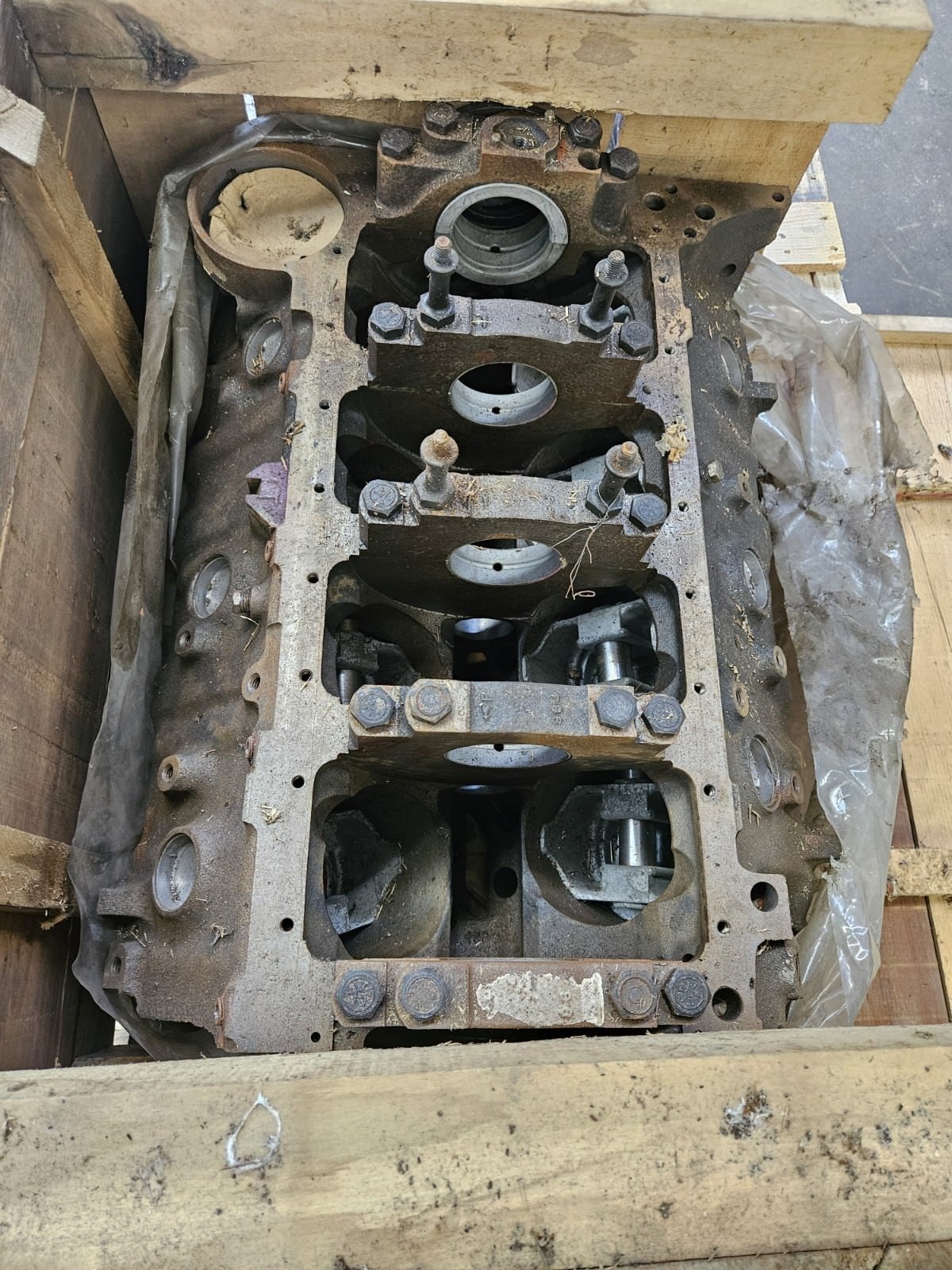
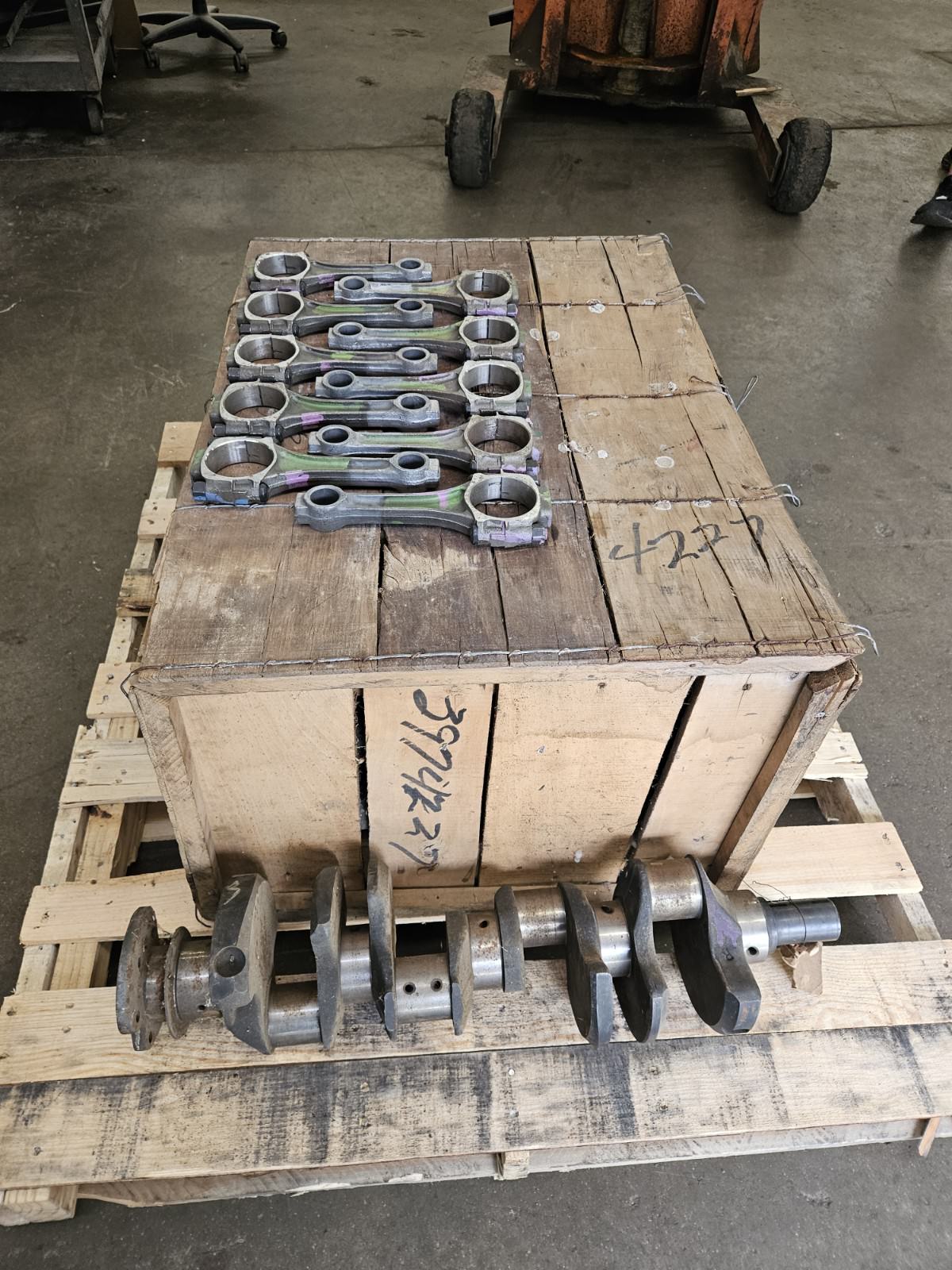
The decades old wooden crate you see here contains what’s described as an L88 “Counter Exchange Engine,” it could be ordered through Chevrolet dealerships and it typically consisted of a block with pistons and rings pre-fitted.
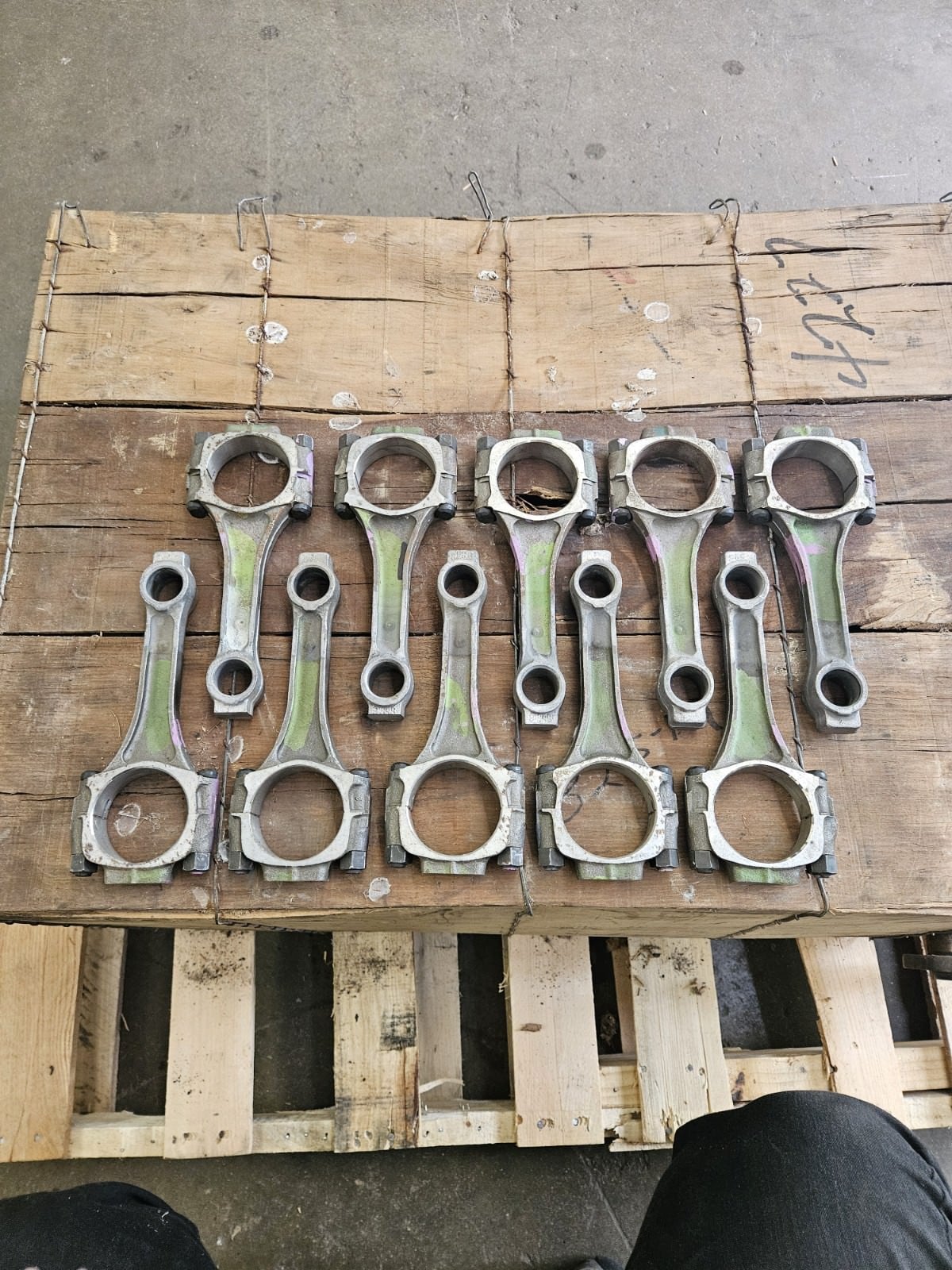
It was presumably intended for people who had an L88-powered Corvette with a cracked or otherwise damaged block, and it would allow them to swap over all the other parts needed to get it running again. This one also comes with a 427 crankshaft and a set of 10 green-striped GM 7/16″ “dimple” connecting rods.
The decades old wooden crate you see here contains what’s described as an L88 “Counter Exchange Engine,” it could be ordered through Chevrolet dealerships and it typically consisted of a block with pistons and rings pre-fitted.
As is always the case, it’s important to do your own research on unusual historic items like this to ensure they’re authentic, particularly given the value of original L88 engine blocks in the classic Corvette community.
This L88 Counter Exchange Engine is now being offered for sale on eBay out of Cincinnati, Ohio with a Buy It Now price of $17,995 USD. If you’d like to read more about it or enquire about buying it you can visit the listing here.
Images courtesy of Howard’s Classic Car Parts + General Motors

Articles that Ben Branch has written have been covered on CNN, Popular Mechanics, Smithsonian Magazine, Road & Track Magazine, the official Pinterest blog, the official eBay Motors blog, BuzzFeed, Autoweek Magazine, Wired Magazine, Autoblog, Gear Patrol, Jalopnik, The Verge, and many more.
Silodrome was founded by Ben back in 2010, in the years since the site has grown to become a world leader in the alternative and vintage motoring sector, with well over a million monthly readers from around the world and many hundreds of thousands of followers on social media.