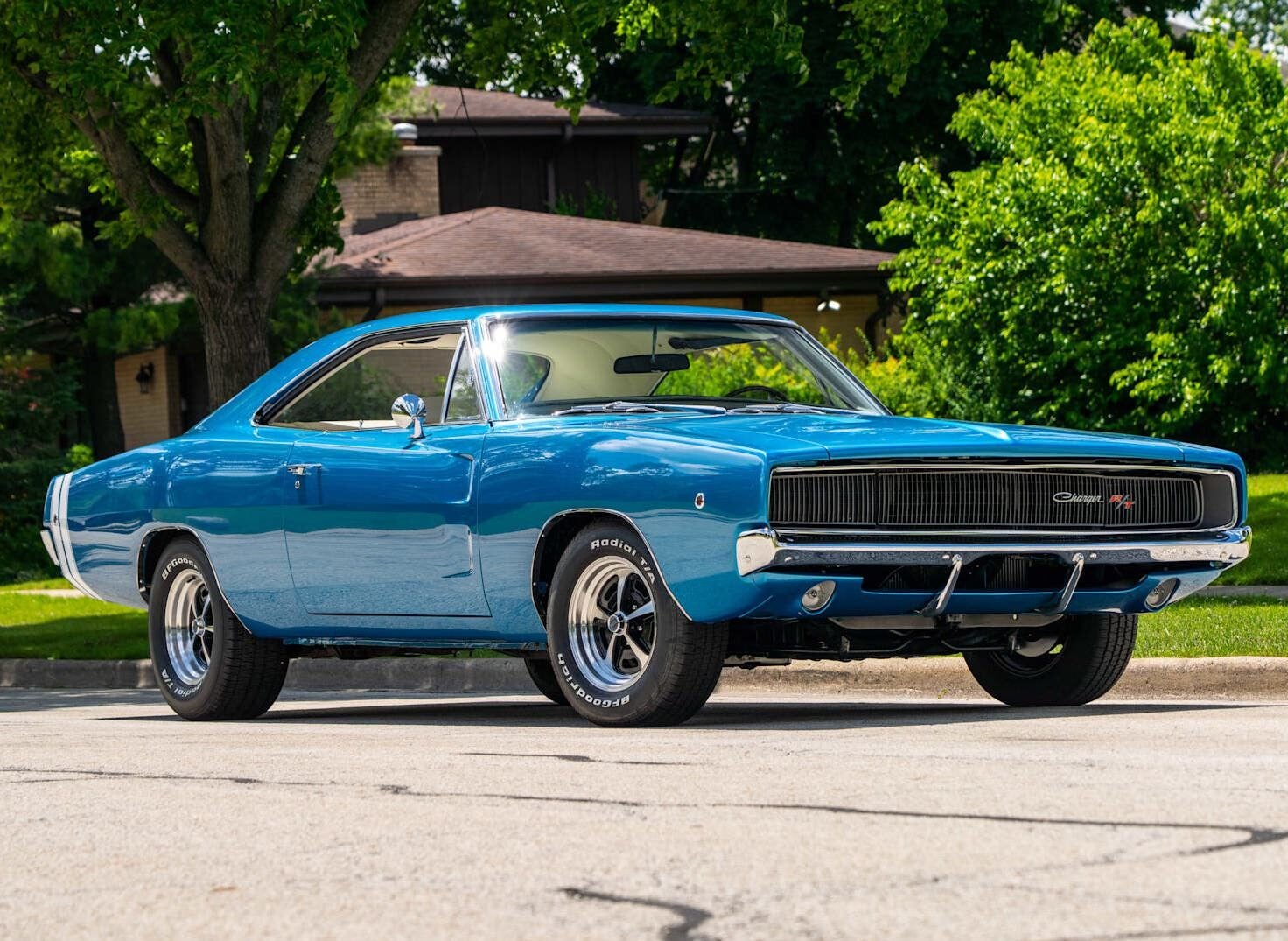
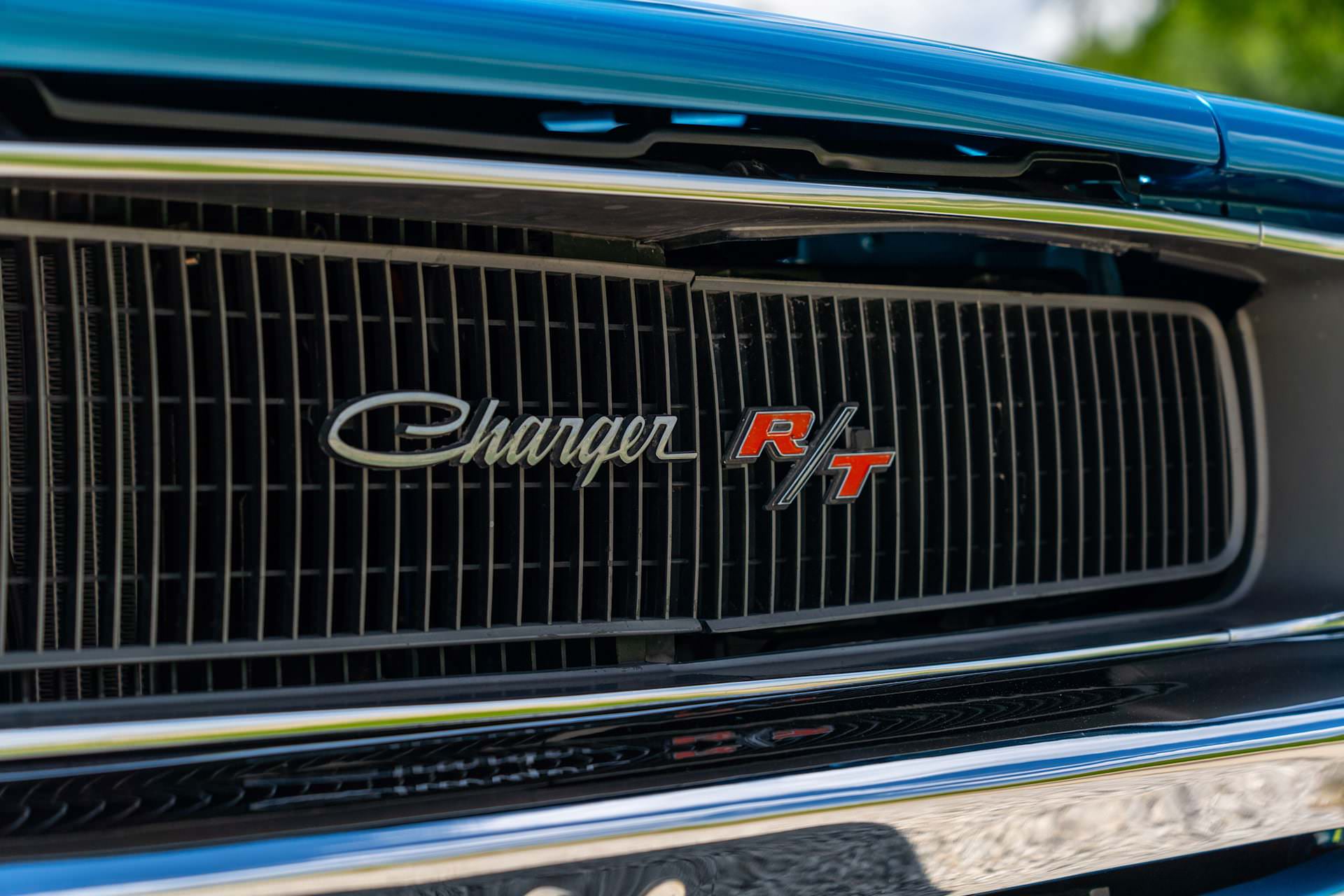
This is an original 1968 Dodge Charger R/T, it was factory-fitted with the largest engine the model could be ordered with – the 440 cubic inch (7.2 liter) Magnum V8 producing 375 bhp and a jaw-dropping 480 lb ft of torque.
The big block-equipped Chargers were among the most iconic of the muscle cars from the late 1960s, the golden age of the muscle car species. In fact, the chase car in the 1968 Steve McQueen film Bullitt was a Dodge Charger R/T 440 Magnum.
Fast Facts: The 1968 Dodge Charger R/T
- The 1968 Dodge Charger R/T was one of the defining machines of the original muscle car era. Its standard 440 cubic inch, 7.2 liter Magnum V8 produced 375 bhp and a hefty 480 lb ft of torque, and it appeared in Steve McQueen’s 1968 film “Bullitt” in one of the most famous car chase scenes in cinema history.
- Dodge introduced the Charger in 1966 as an upscale fastback GT based on Chrysler’s B platform, but sales remained relatively modest through to 1967. A dramatic 1968 redesign brought Coke-bottle styling, hidden headlights, flying-buttress rooflines, and cleaner detailing, helping annual sales surge from 15,788 units in 1967 to a far healthier 96,100 in 1968.
- The performance-focused R/T package included the 440 Magnum V8, heavy-duty brakes, stiffer suspension, dual exhausts, Red Line tires, and distinctive striping. A 3-speed TorqueFlite automatic came standard, while a 4-speed manual was optional. Approximately 20,057 R/Ts were produced, with most receiving the 440 rather than the rarer 426 Hemi.
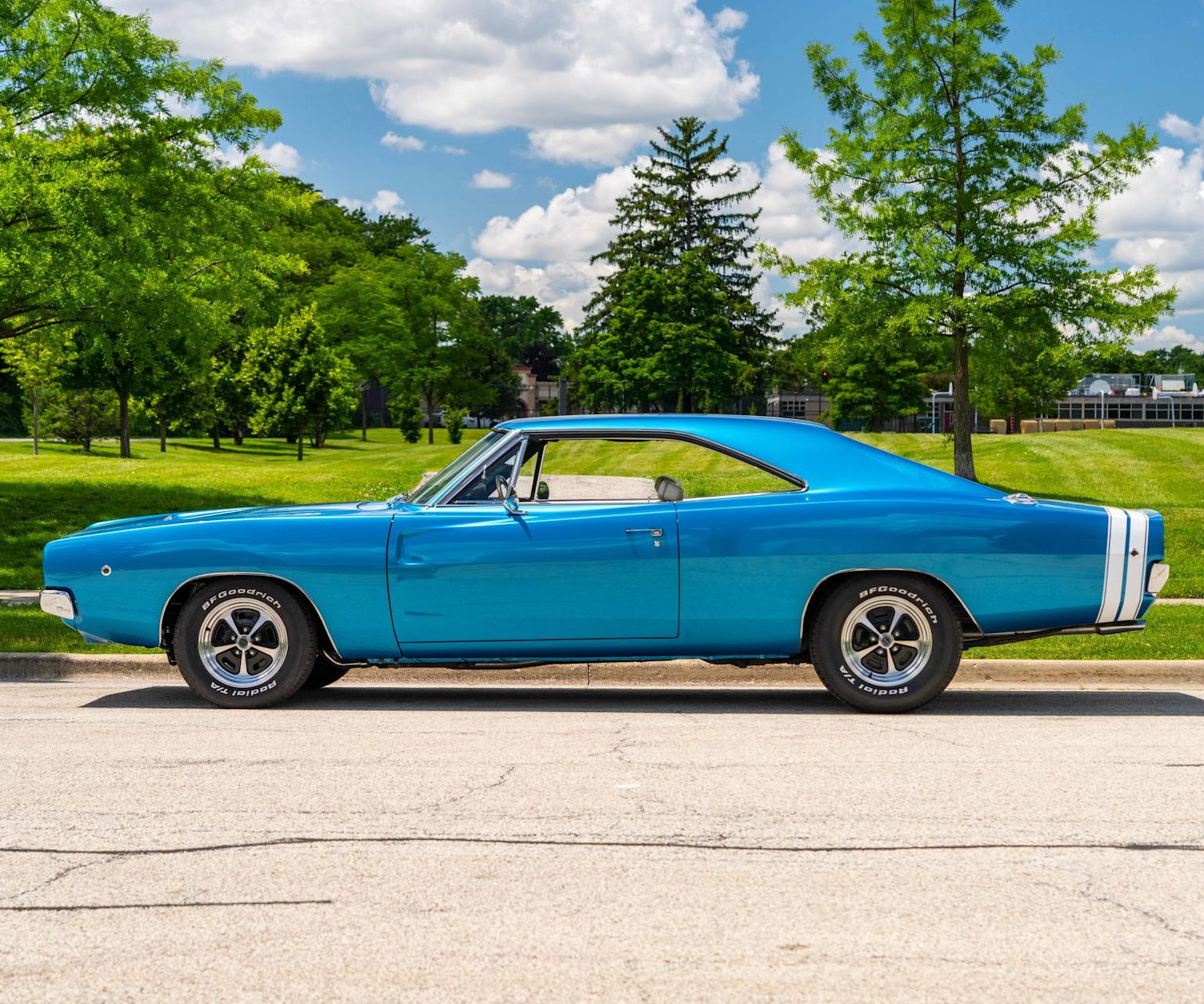
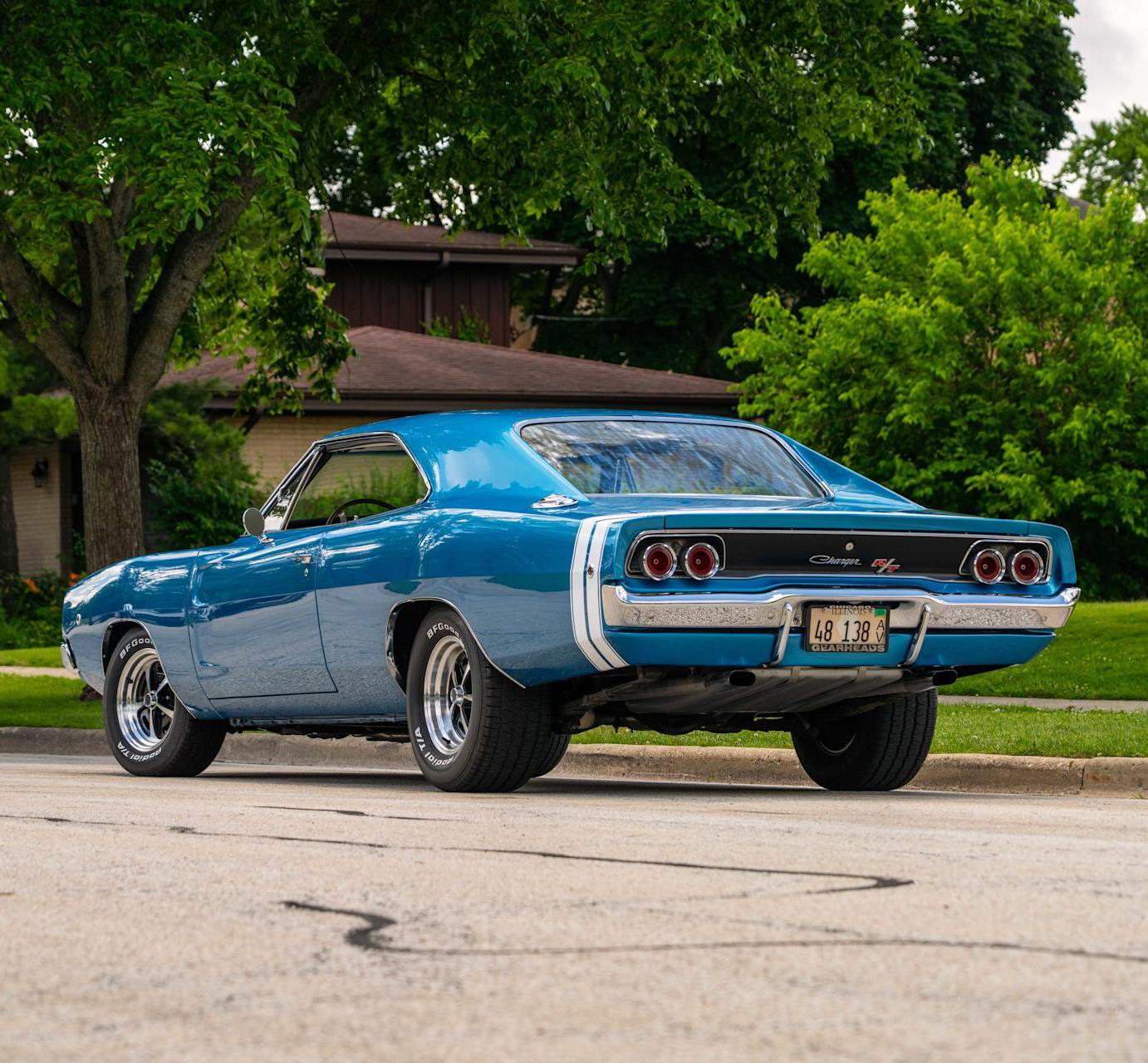
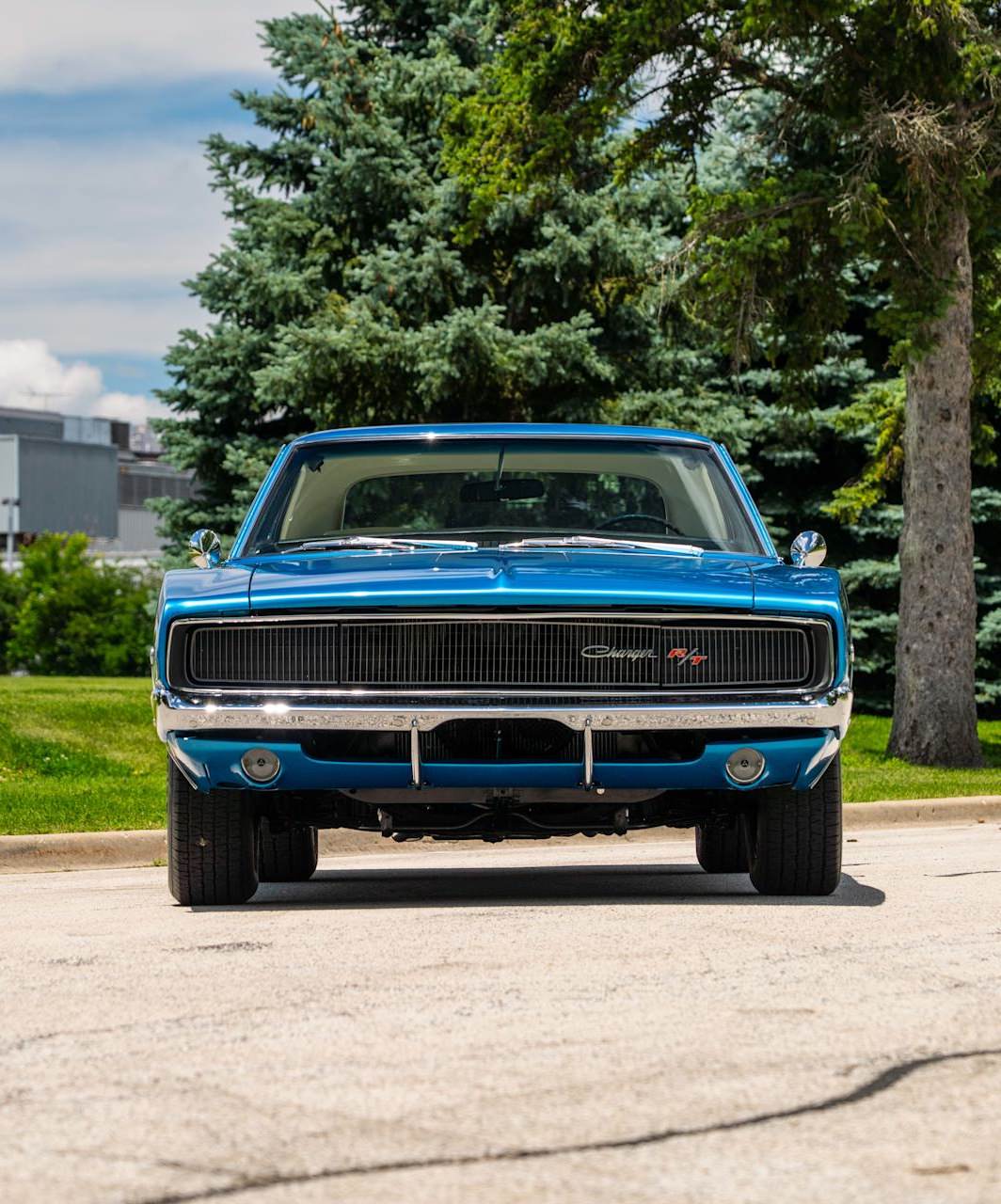
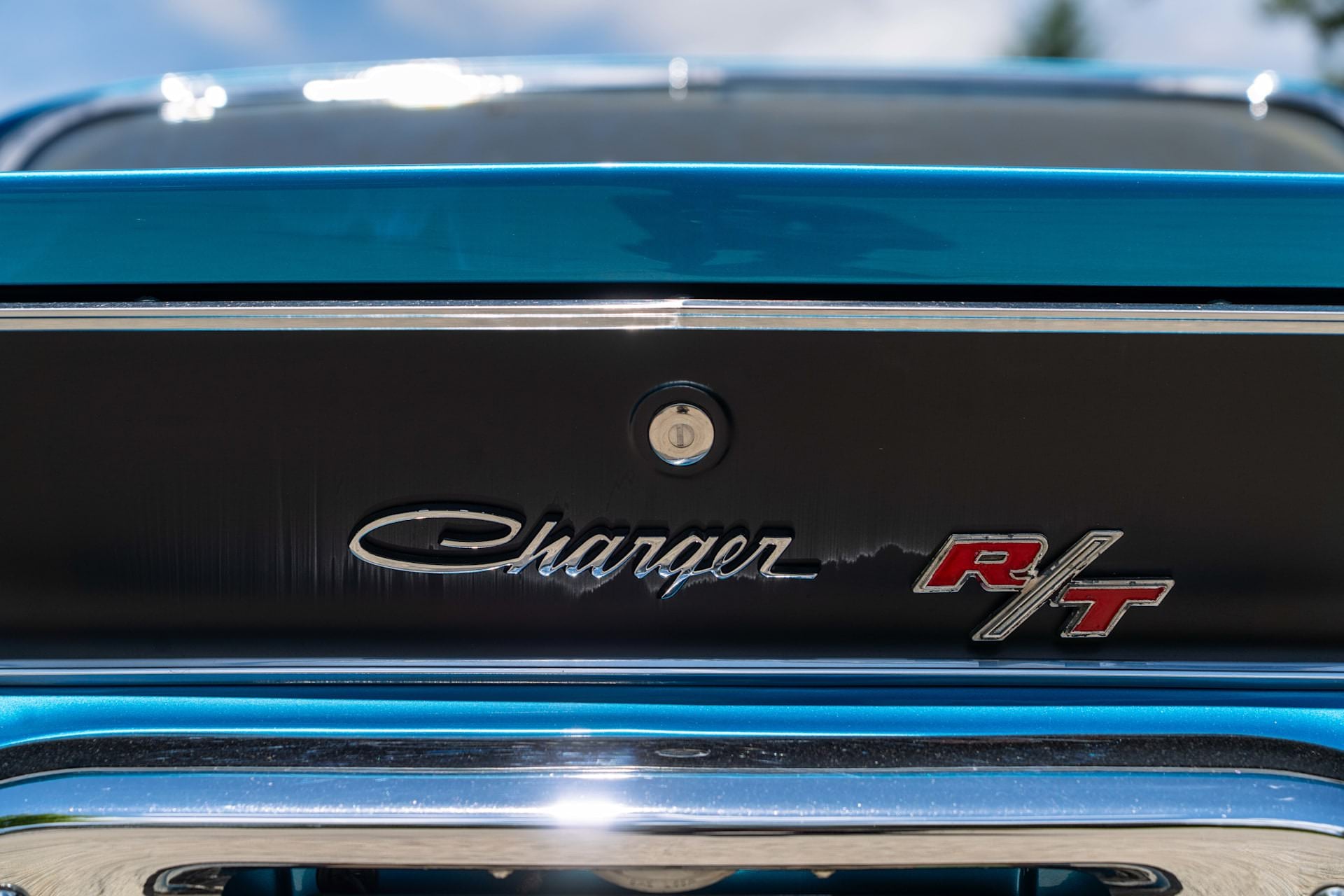
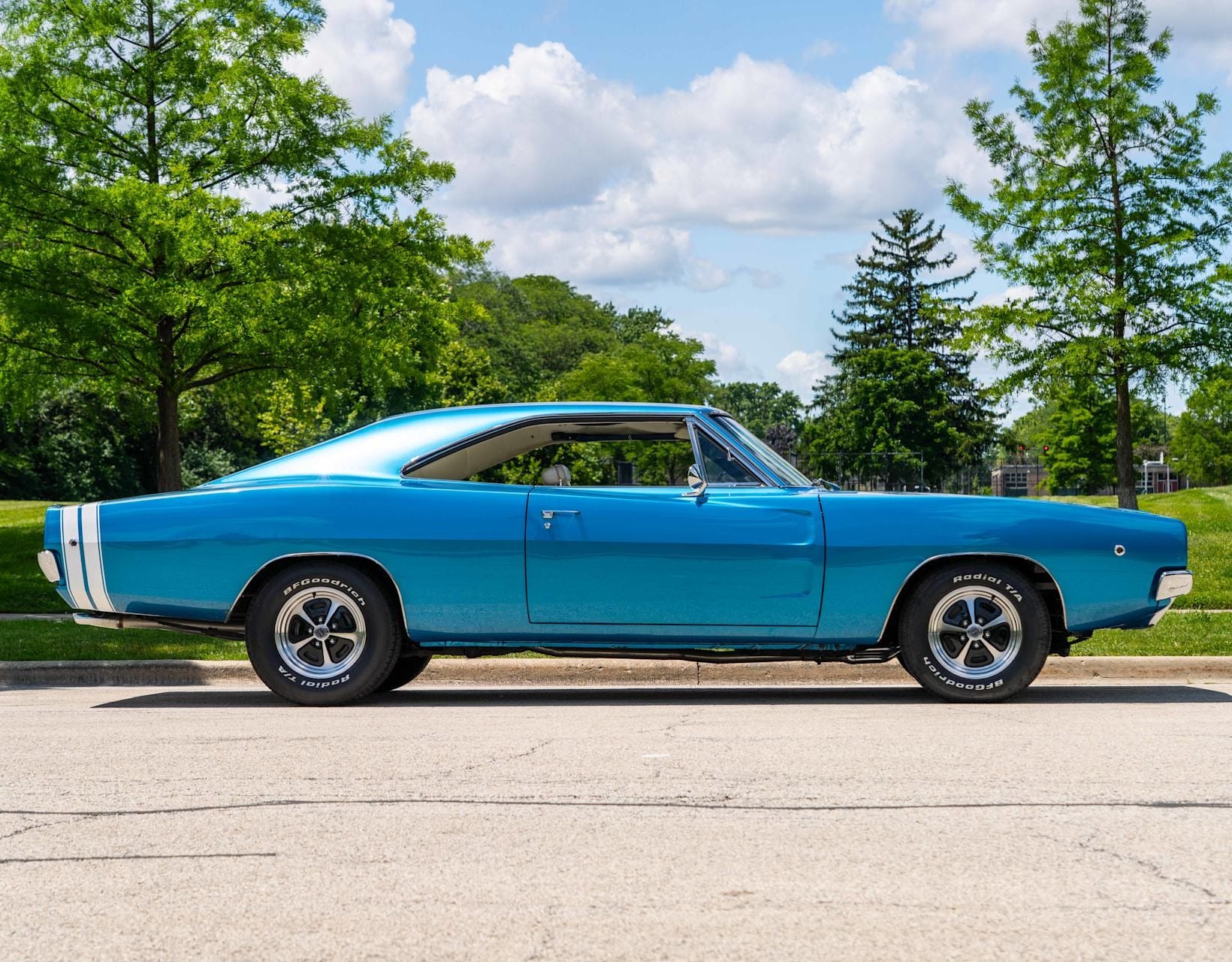
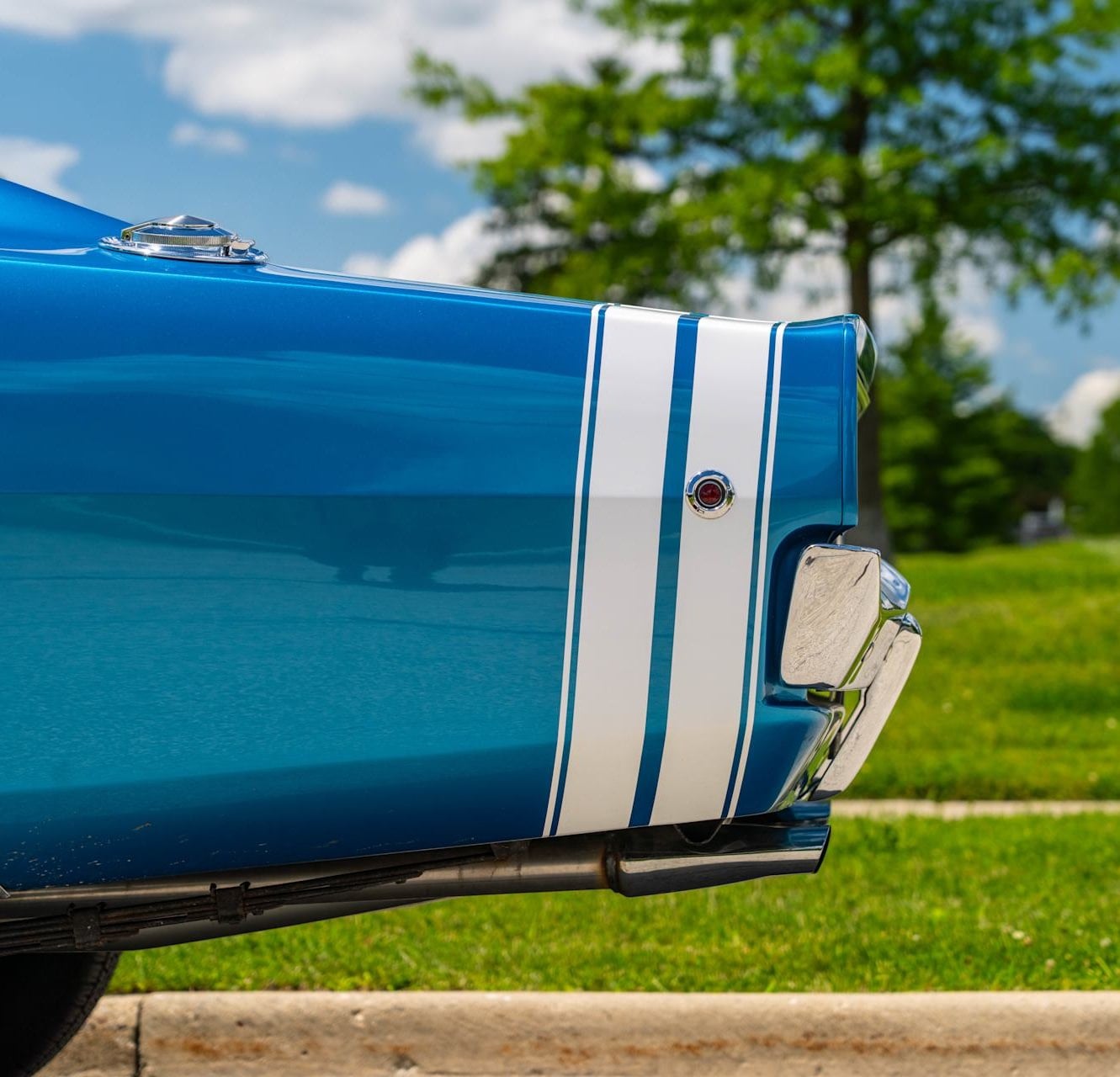
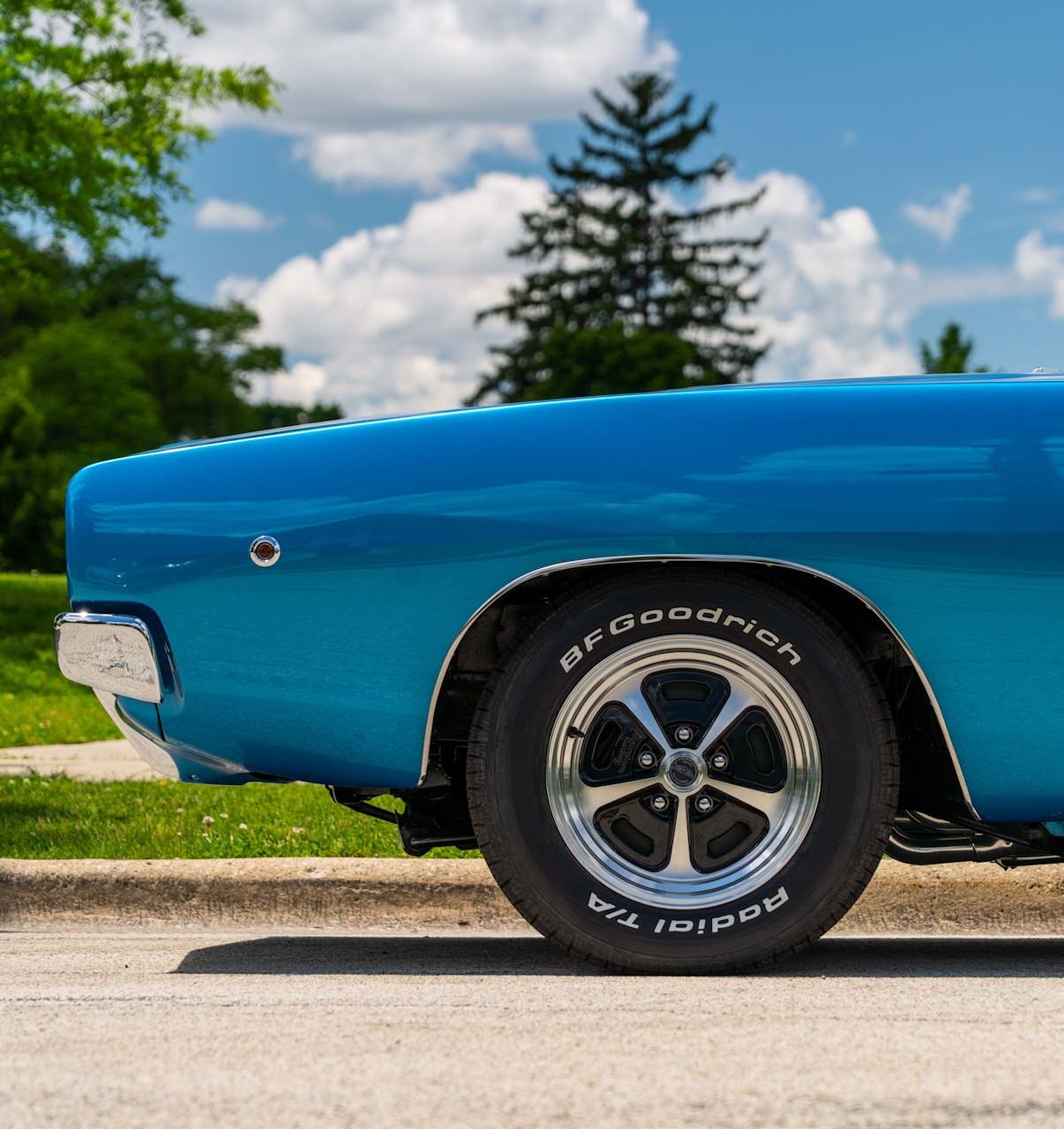
- The Charger shown here is a genuine XS-code R/T finished in fresh B5 Blue with a white tail stripe. It keeps its 440 Magnum V8 and automatic transmission but adds headers, upgraded cooling, digital gauges, Bluetooth, Magnum 500 wheels, and BFGoodrich tires.
History Speedrun: The Dodge Charger
The Dodge Charger arrived midway through the 1966 model year as a fastback coupe built on the Chrysler B platform, sharing its underpinnings with the Dodge Coronet. Designed by Carl “Cam” Cameron, it was carefully positioned not as a direct pony car rival for the Mustang, but as a larger, more upscale sporting GT car aimed at a segment that included contemporaries like the Ford Thunderbird and Oldsmobile Toronado.
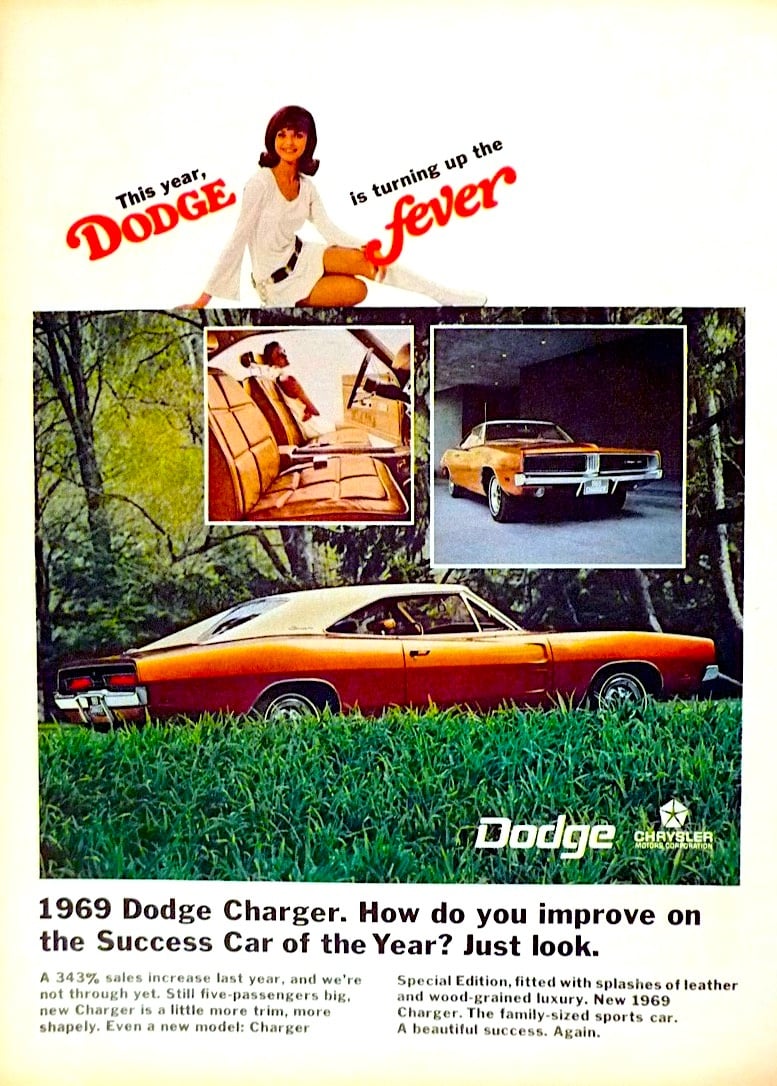
 The second-generation Charger, introduced for 1968, changed the car’s trajectory entirely. The redesign brought Coke-bottle body contours, a flying buttress roof with a recessed rear window, hidden headlights behind a full-width grille, and minimal chrome. Image courtesy of Stellantis.
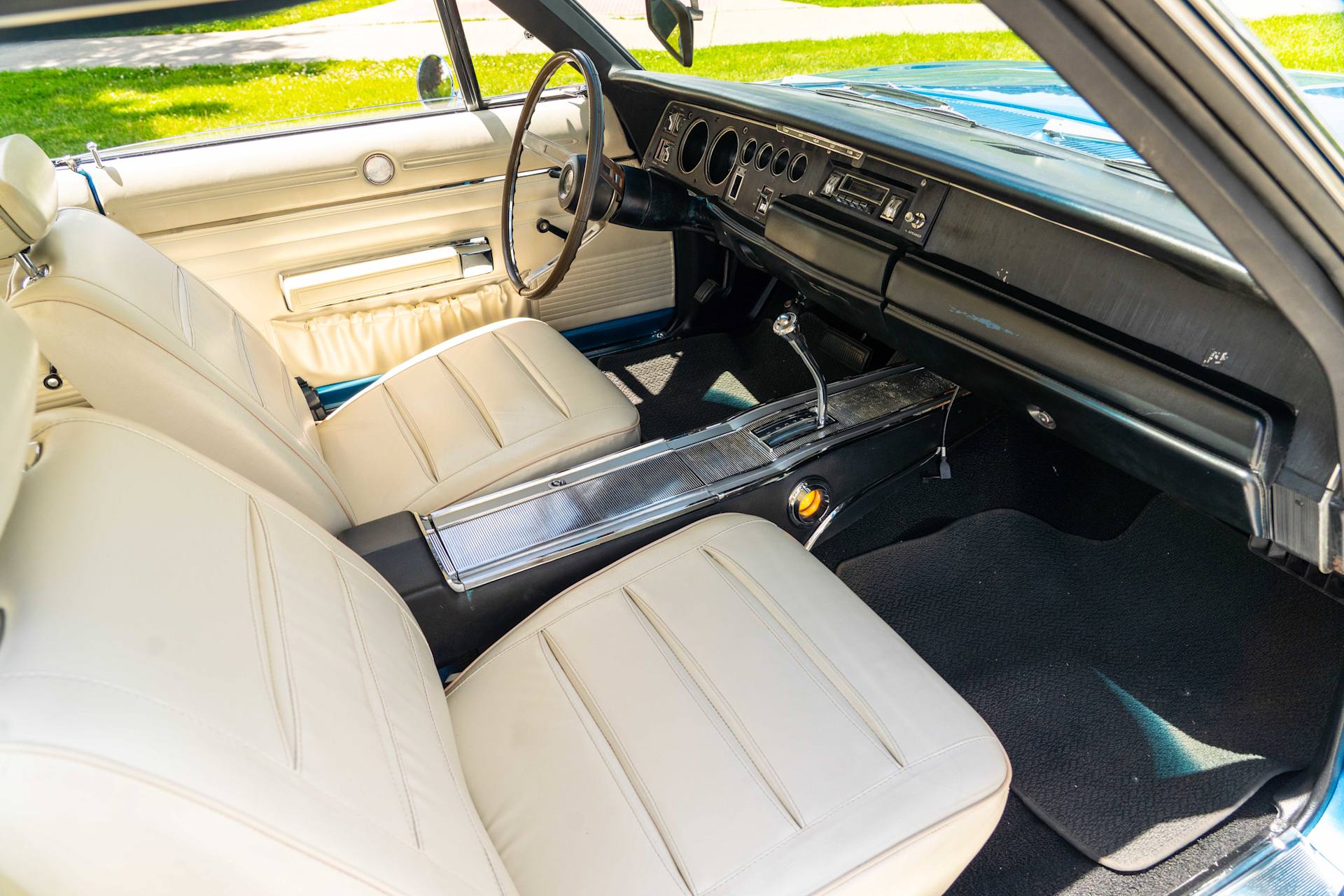
The Charger’s interior was distinctive by the standards of its time, with four bucket seats, a full-length center console, and race-inspired instrumentation. Engine options ran from the 318 cubic inch V8 up to the 426 Hemi. Despite its striking looks, first-year production of 37,344 examples was modest, and sales dropped to just 15,788 in 1967.
The Second-Gen Charger – A Game-Changer
The second-generation Charger, introduced for 1968, changed the car’s trajectory entirely. The redesign brought Coke-bottle body contours, a flying buttress roof with a recessed rear window, hidden headlights behind a full-width grille, and minimal chrome.
The public responded immediately and sales surged to 96,100 examples in 1968, just over six times the 1967 total. The car’s cultural profile was significantly boosted by its starring role as the “villain’s car” in the 1968 Steve McQueen film Bullitt, which helped forever establish the second-gen Charger as an American icon.
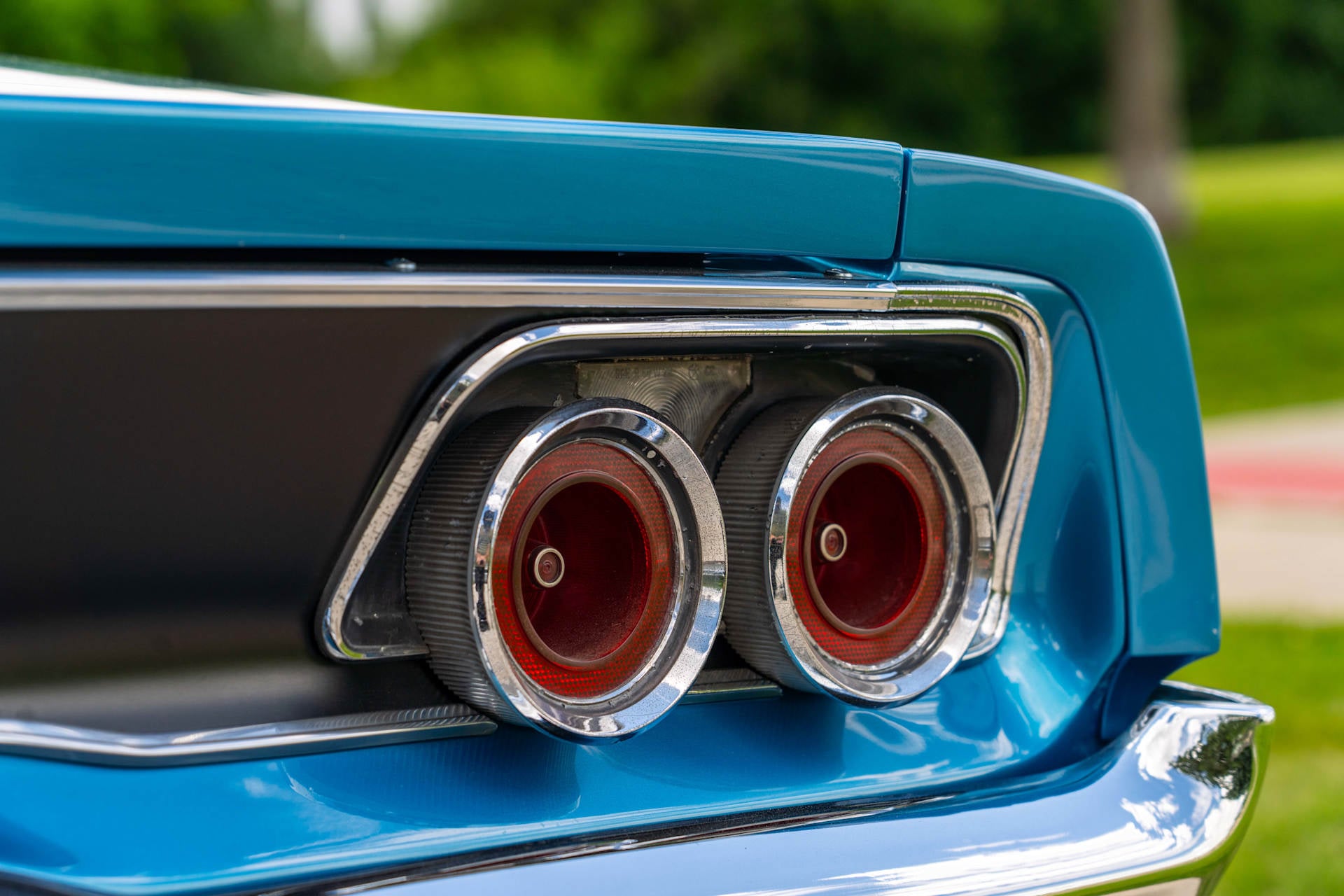
For 1969, the second-generation body carried over with some subtle revisions, it had a new divided grille and horizontal taillights, both designed by Harvey J. Winn, along with a revised bumblebee stripe. The lineup expanded to include the base Charger, the luxury-oriented Special Edition (SE), the high-performance R/T, and two NASCAR homologation specials, the Charger 500 and the wild, winged Charger Daytona.
The R/T – Road/Track
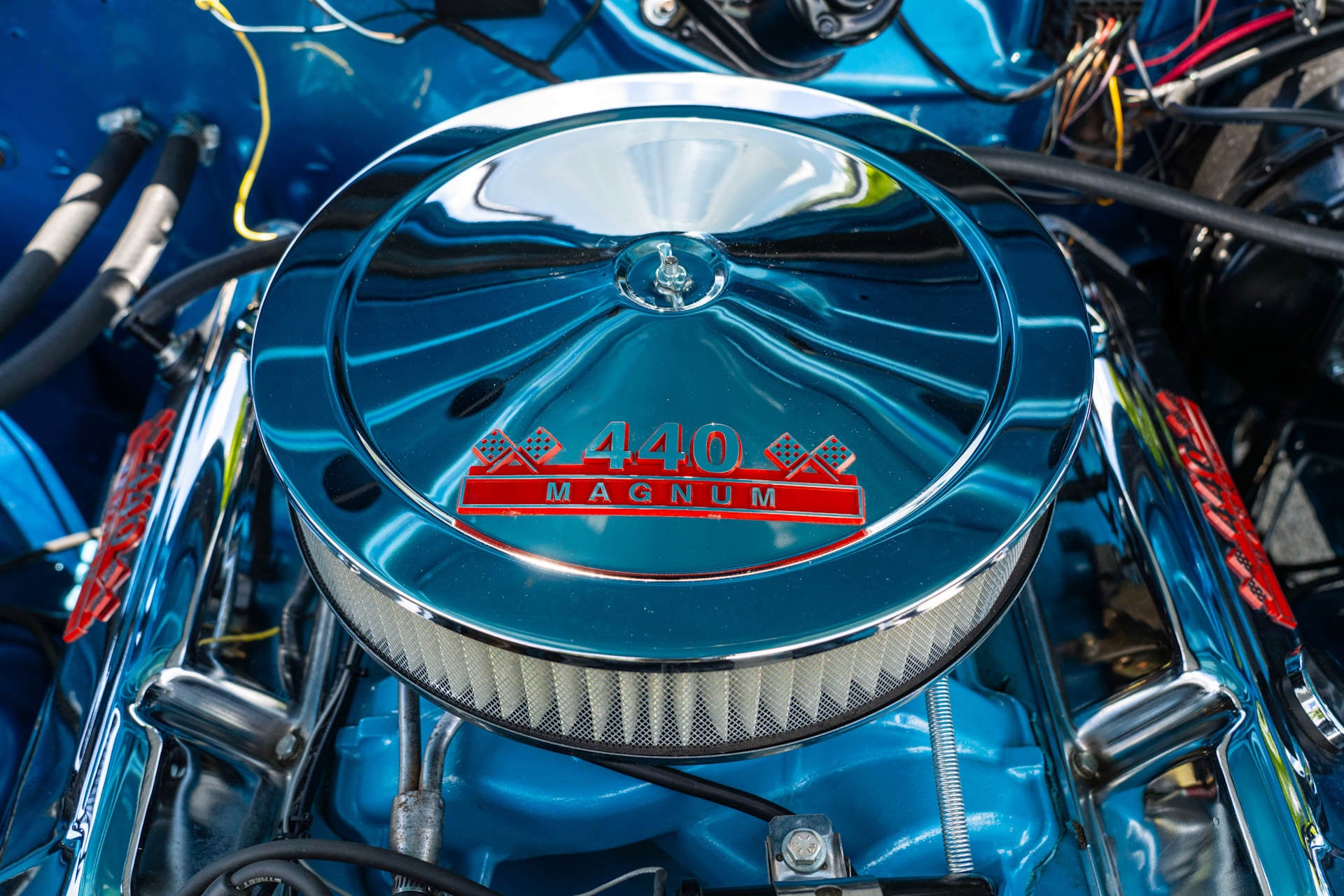
The R/T, standing for Road/Track, was the performance flagship of the main Charger line. It came standard with the 440 Magnum V8, a 440 cubic inch engine with a single four-barrel carburetor producing 375 bhp at 4,600 rpm and 480 lb ft of torque at 3,200 rpm.
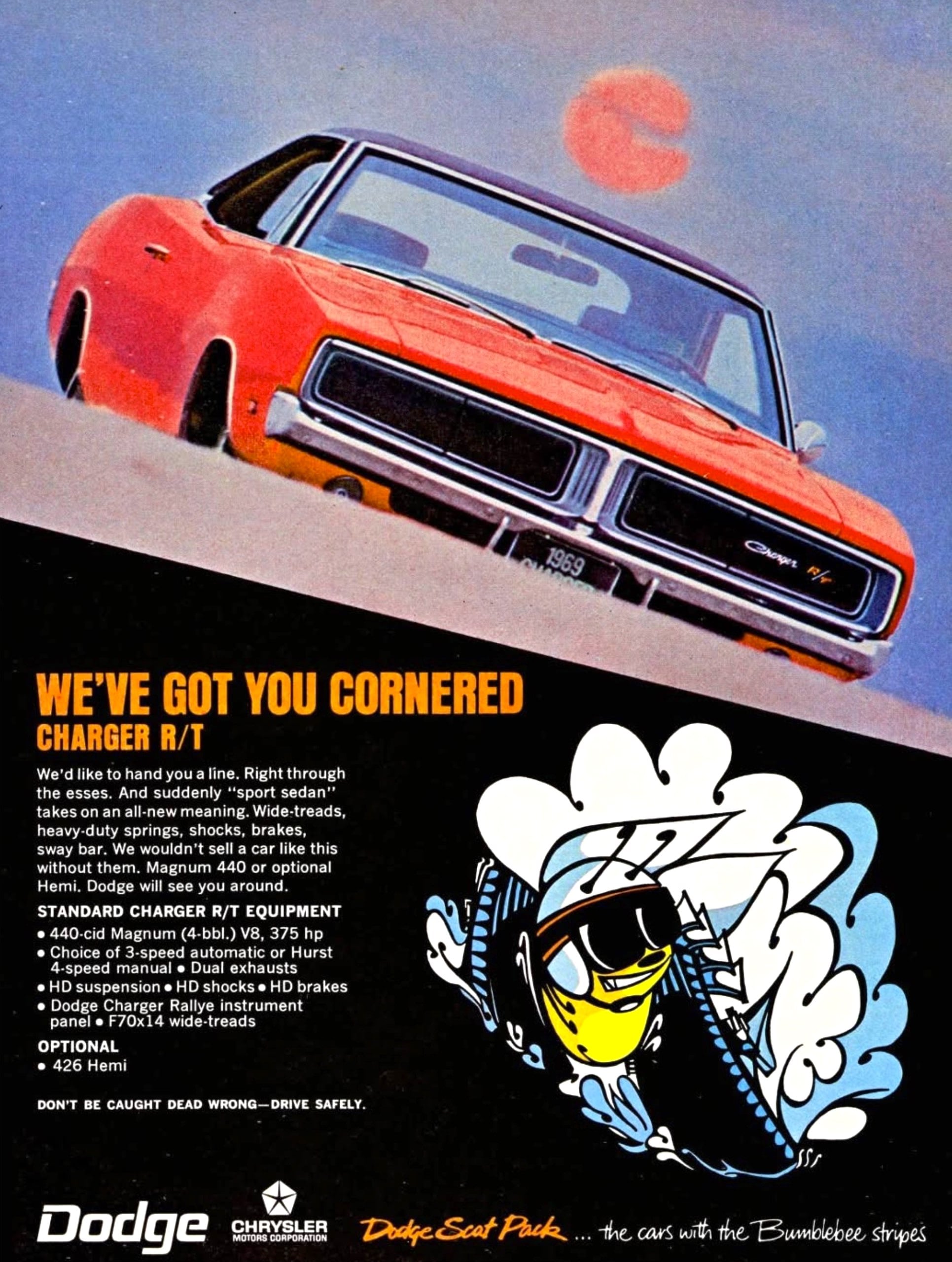
The R/T, standing for Road/Track, was the performance flagship of the main Charger line. It came standard with the 440 Magnum V8, a 440 cubic inch engine with a single four-barrel carburetor producing 375 bhp at 4,600 rpm and 480 lb ft of torque at 3,200 rpm. Image courtesy of Stellantis.
The R/T package also included heavy-duty brakes, a performance handling package with stiffer front torsion bars and rear leaf springs, dual exhausts with chrome tips, F70-14 Red Line tires, and the bumblebee stripe. The transmission was a 3-speed TorqueFlite automatic as standard, with a 4-speed manual and Hurst shifter available as an option – the base price was $3,575.
Rarity + Production Numbers
Though there is some variance between sources, total R/T production hit around 20,057 examples, of which 18,344 were equipped with the 440 Magnum and 432 with the 426 Hemi.
The 1968 Dodge Charger R/T Shown Here
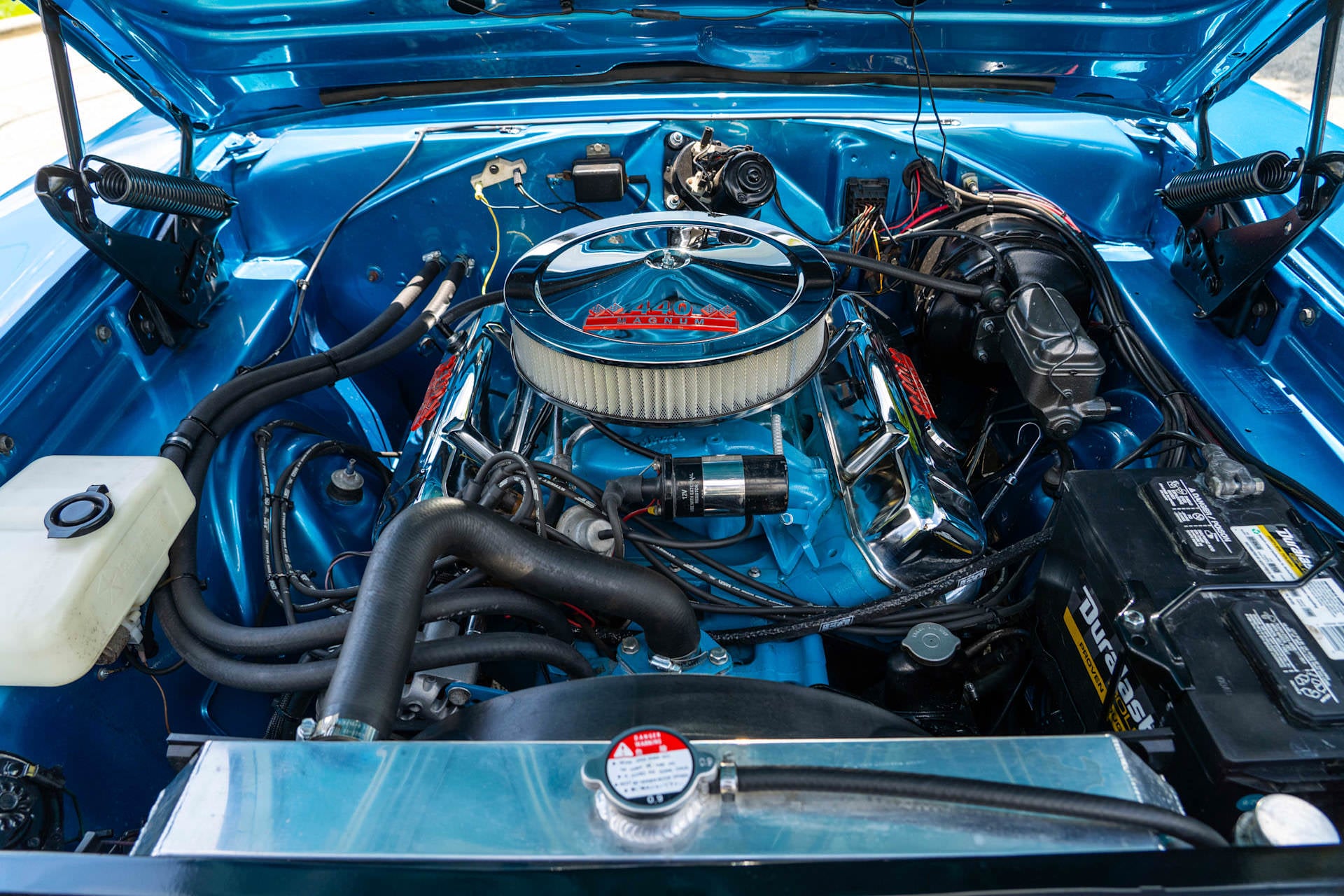
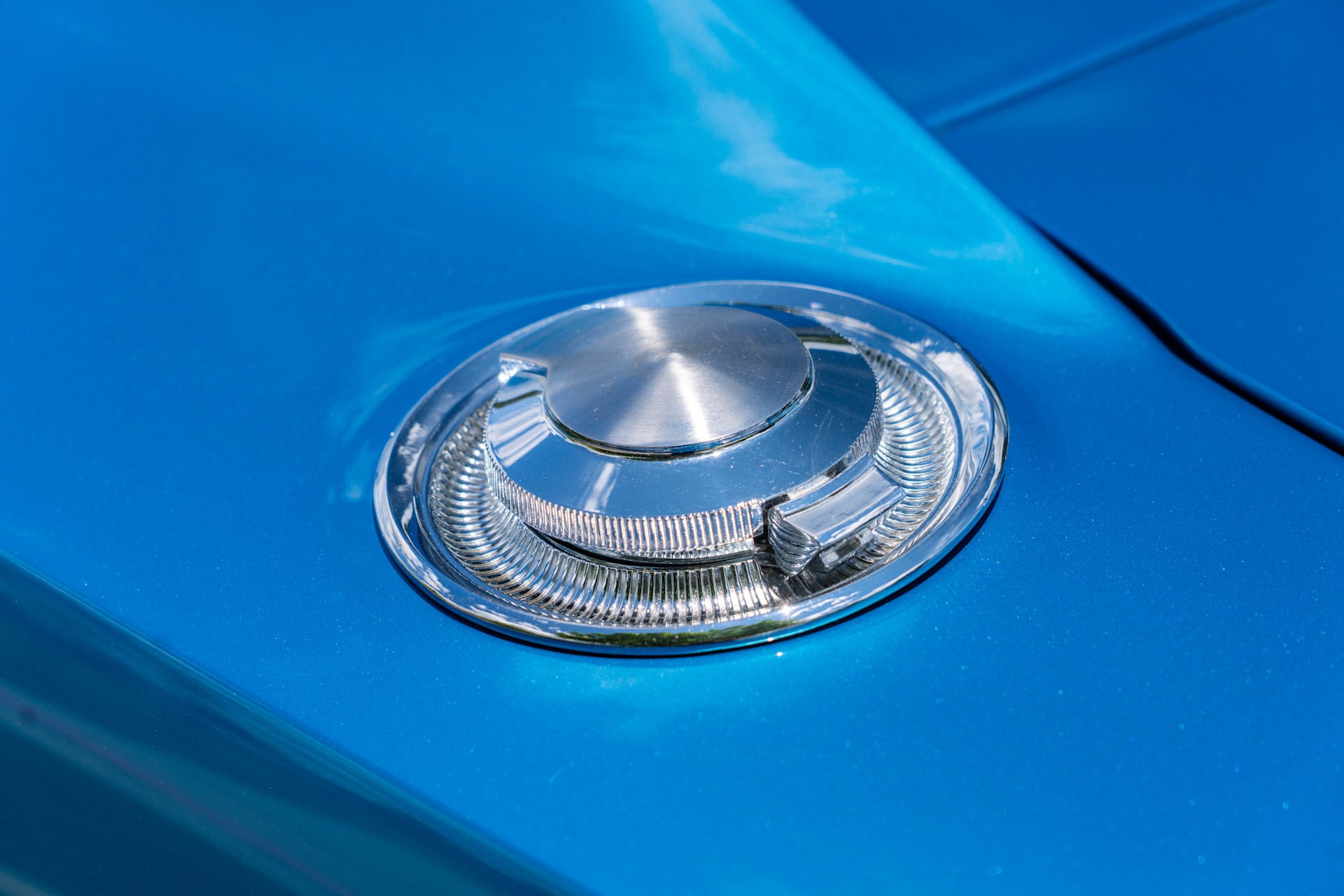
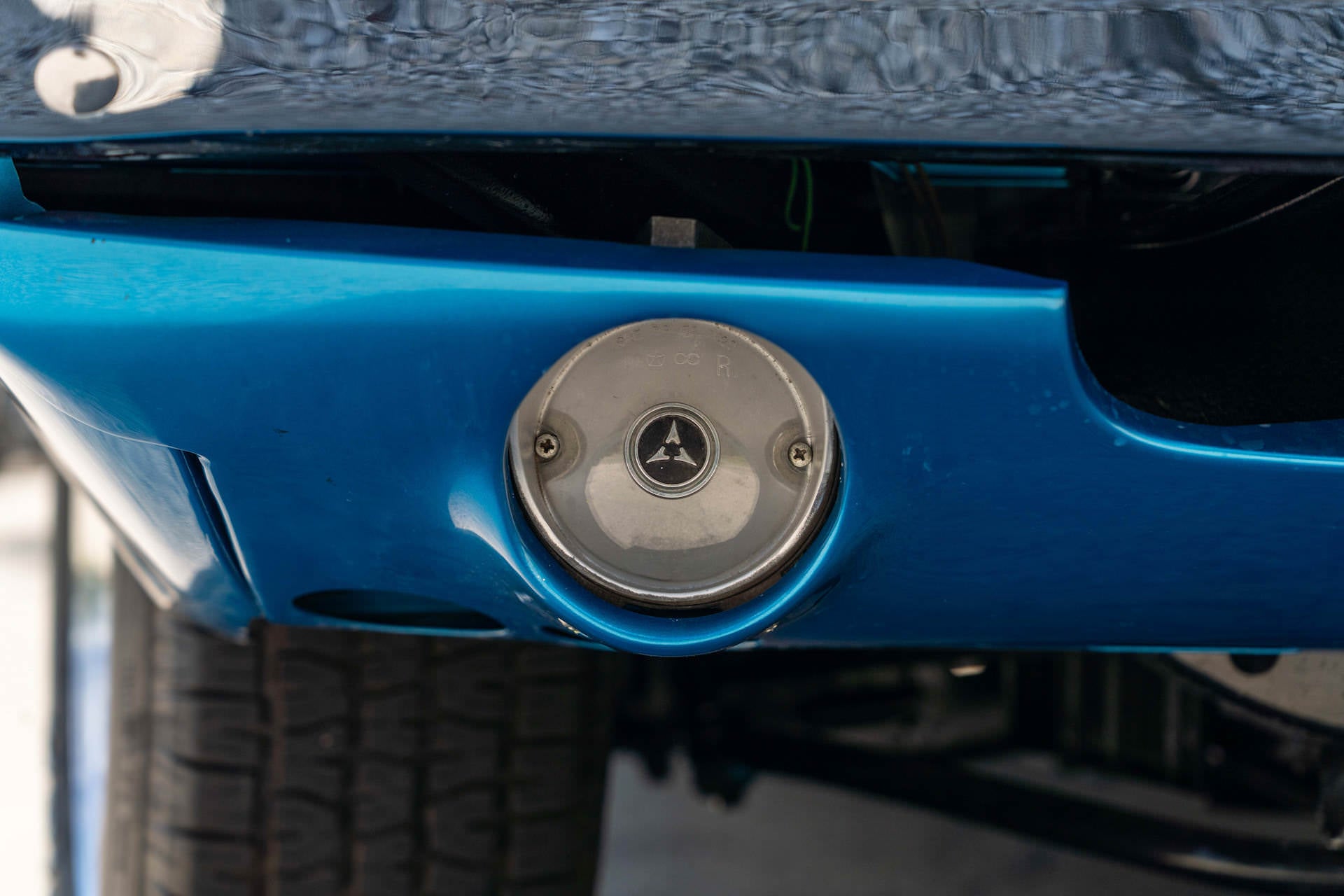
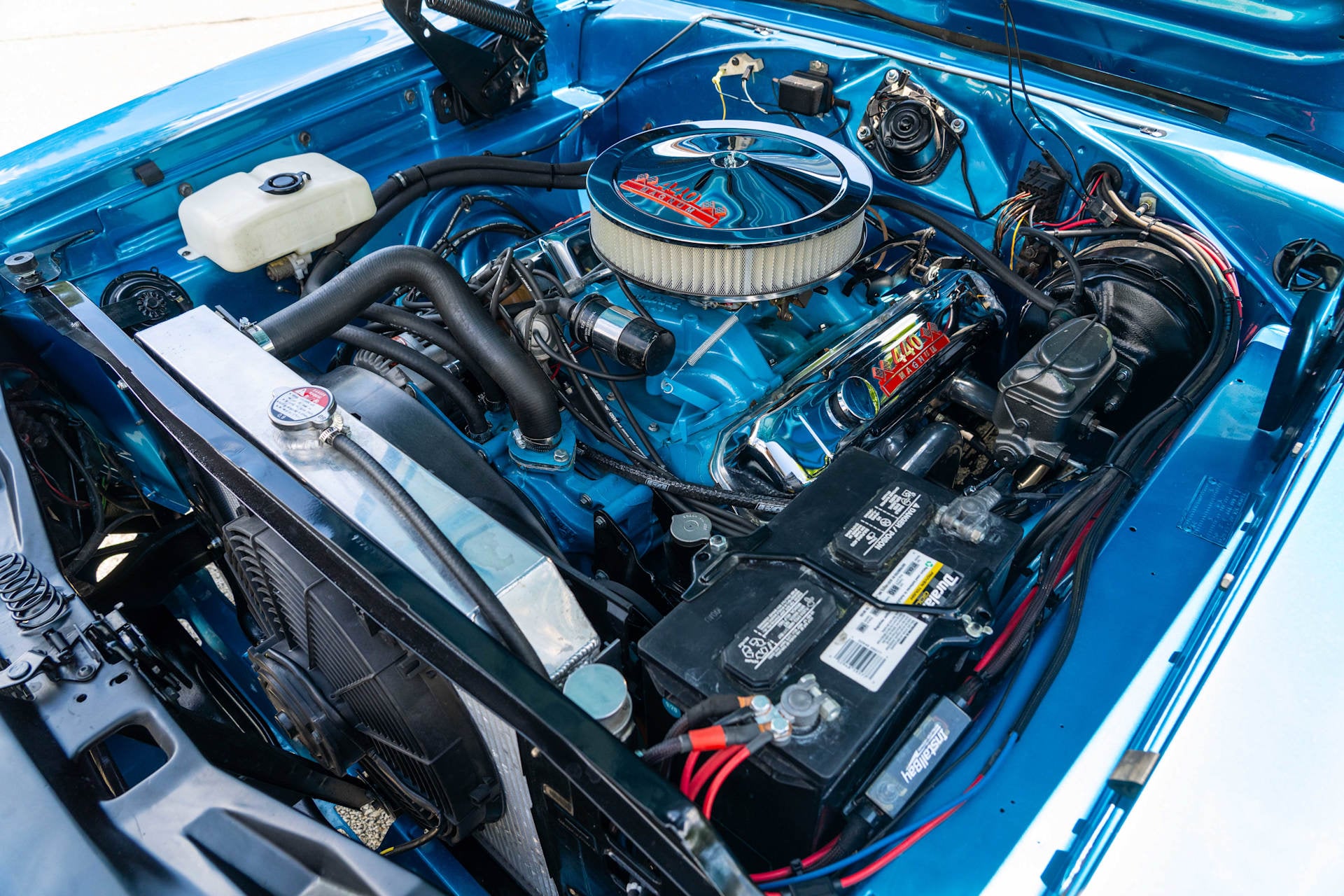
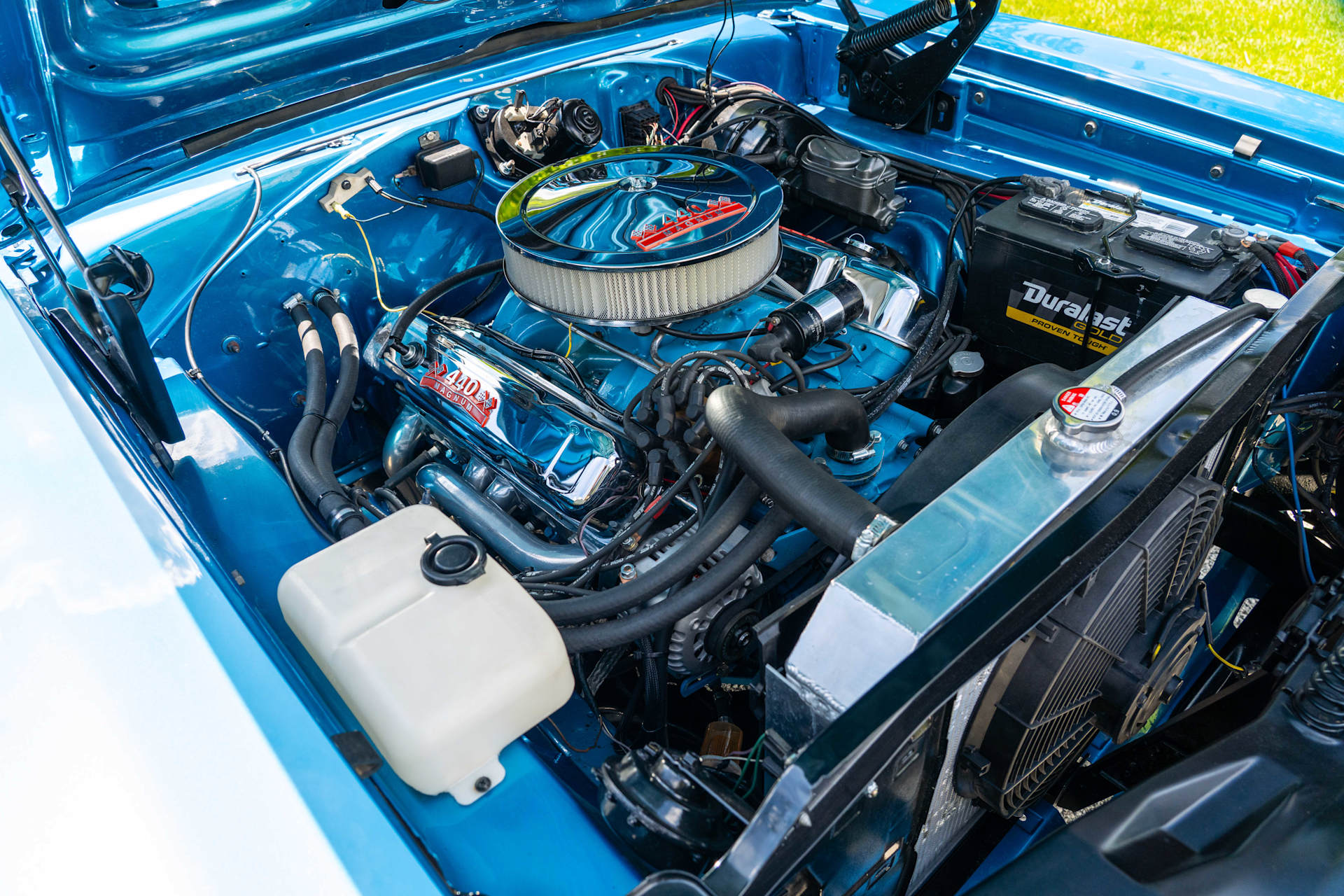
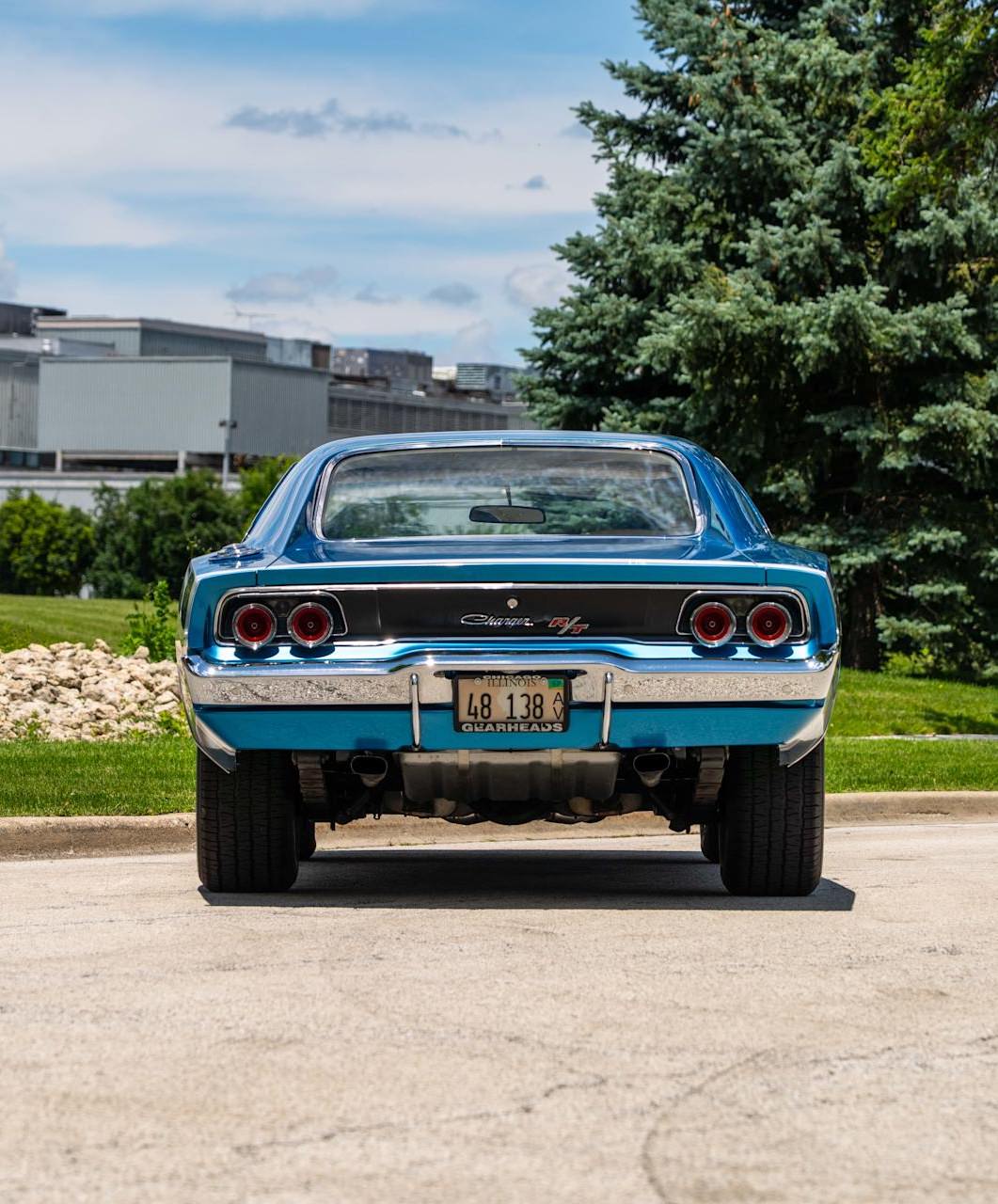
The 1968 Dodge Charger R/T shown here is a factory XS-code car, meaning the VIN identifies it as a genuine R/T rather than a clone or replica. Power comes from a 440 cubic inch Magnum V8 dressed with chrome valve covers and a chrome air cleaner wearing 440 Magnum badges, breathing through aftermarket headers and paired with an automatic transmission.
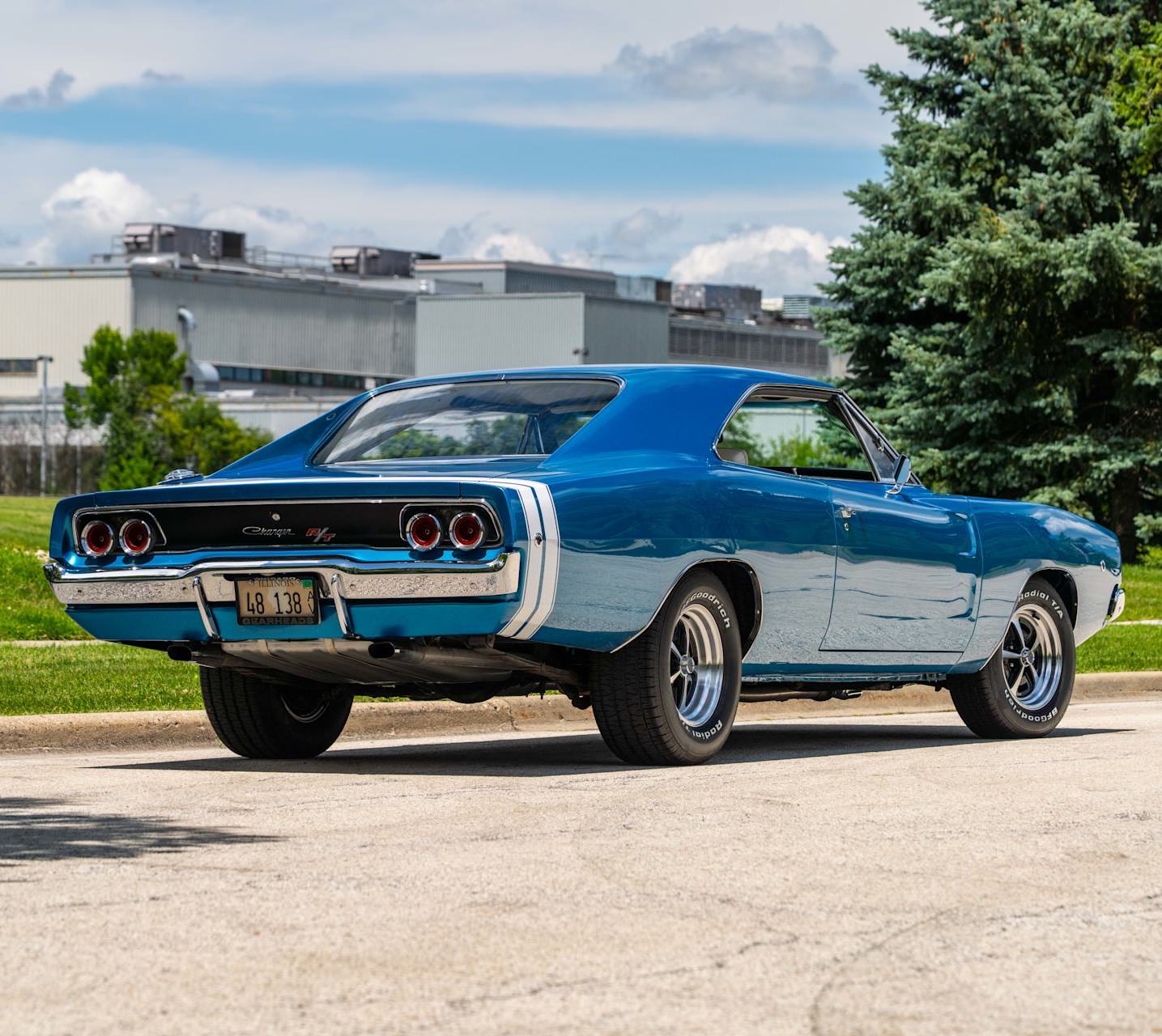
Power steering and power brakes are fitted, and cooling has been upgraded with an aluminum radiator and electric fan. The car has a fresh coat of B5 Blue paint set off by a white tail stripe, with hideaway headlights, wheel arch moldings, hood-mounted turn signals, and front and rear bumper guards completing the exterior.
It rolls on American Racing Magnum 500 wheels shod with new BFGoodrich Radial T/A tires – an unbeatable muscle car wheel and tire combination if ever there was one.
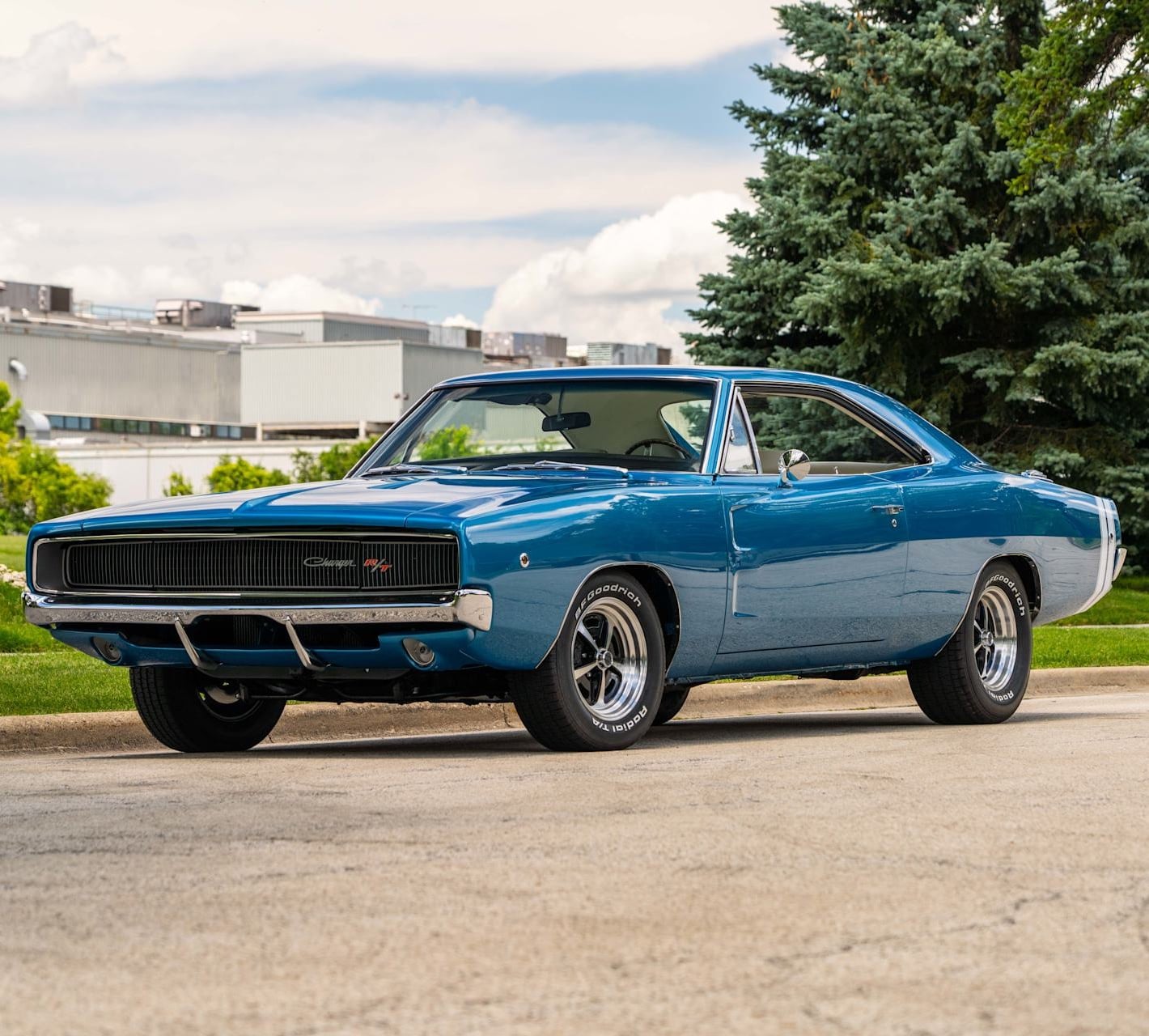
This is an original 1968 Dodge Charger R/T, it was factory-fitted with the largest engine the model could be ordered with – the 440 cubic inch (7.2 liter) Magnum V8 producing 375 bhp and a jaw-dropping 480 lb ft of torque.
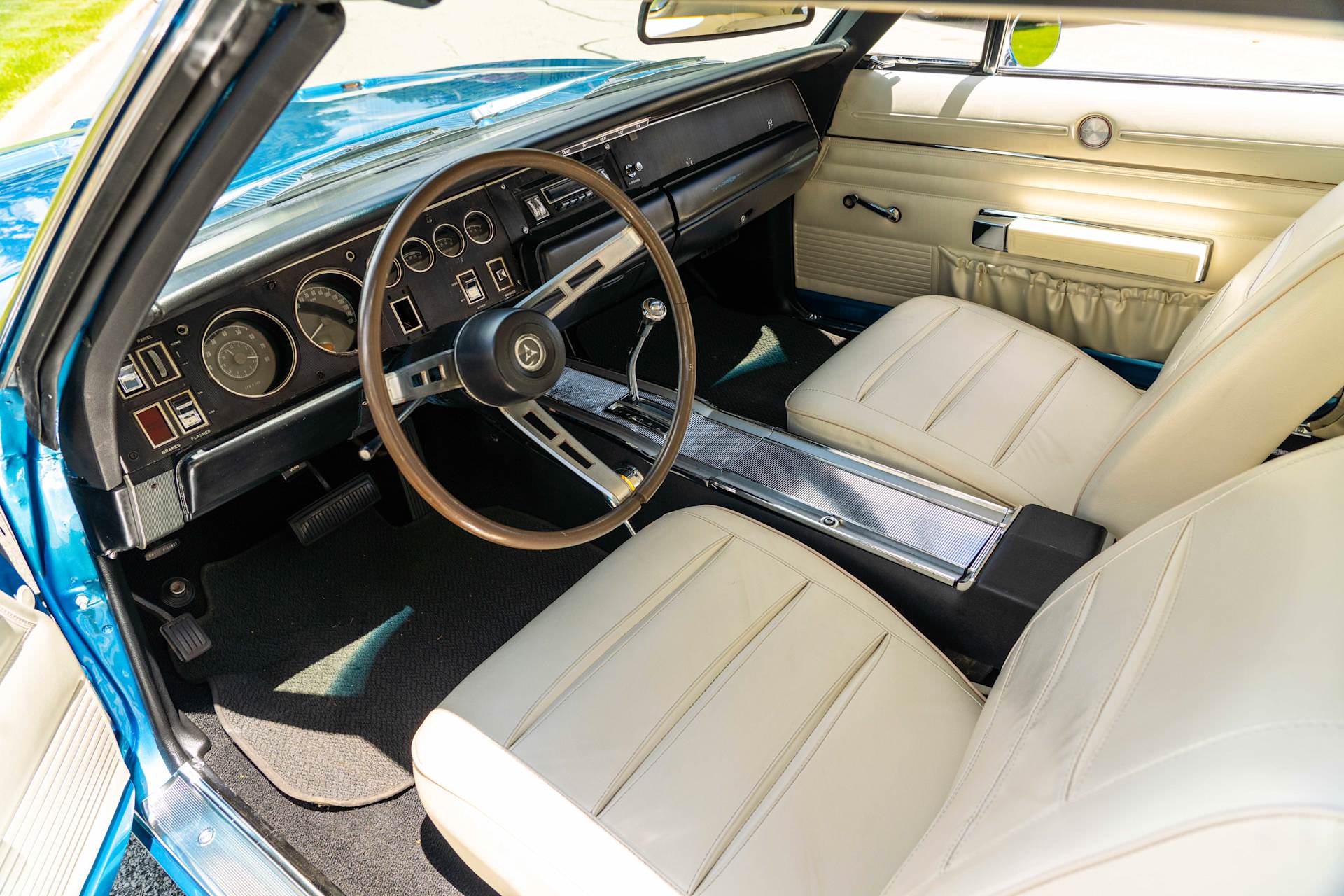
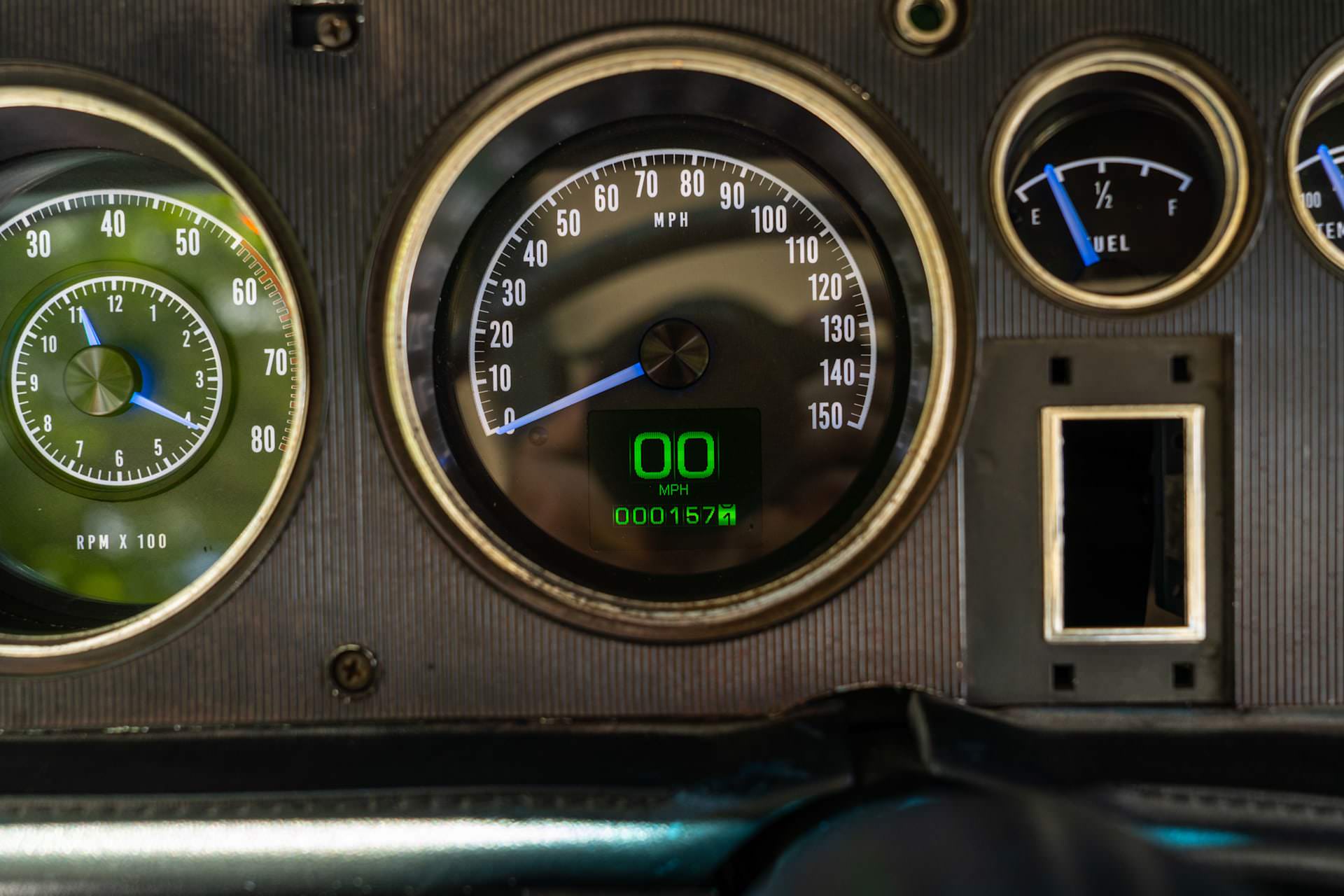
Inside, the cabin has bucket seats with a center console, along with a few modern additions like digital gauges in place of the factory instruments and Bluetooth connectivity.
It’s now due to roll across the block with Mecum in late-September, and you can visit the listing here if you’d like to read more about it or register to bid.
Images courtesy of Mecum + Chrysler

Articles that Ben Branch has written have been covered on CNN, Popular Mechanics, Smithsonian Magazine, Road & Track Magazine, the official Pinterest blog, the official eBay Motors blog, BuzzFeed, Autoweek Magazine, Wired Magazine, Autoblog, Gear Patrol, Jalopnik, The Verge, and many more.
Silodrome was founded by Ben back in 2010, in the years since the site has grown to become a world leader in the alternative and vintage motoring sector, with well over a million monthly readers from around the world and many hundreds of thousands of followers on social media.