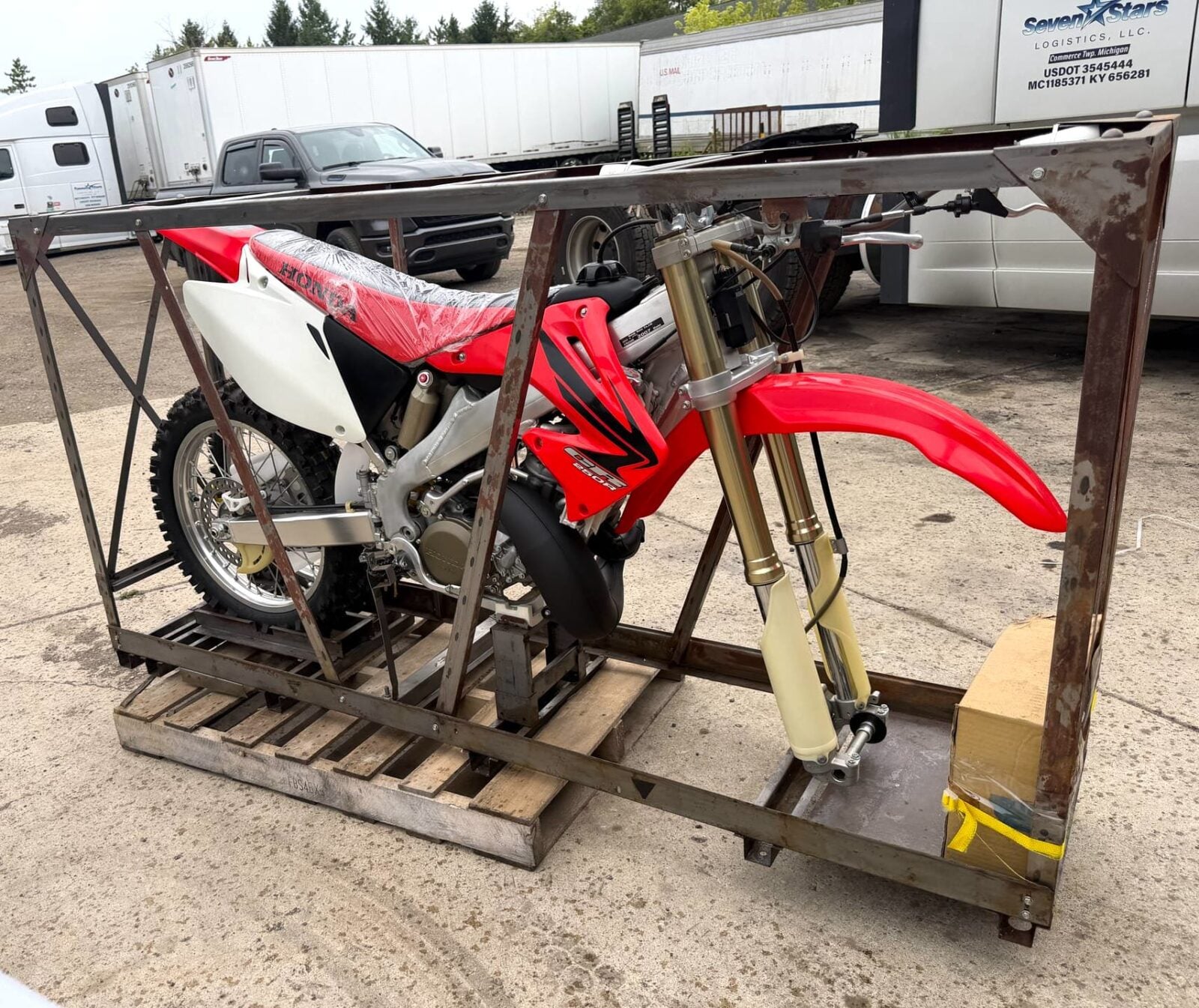
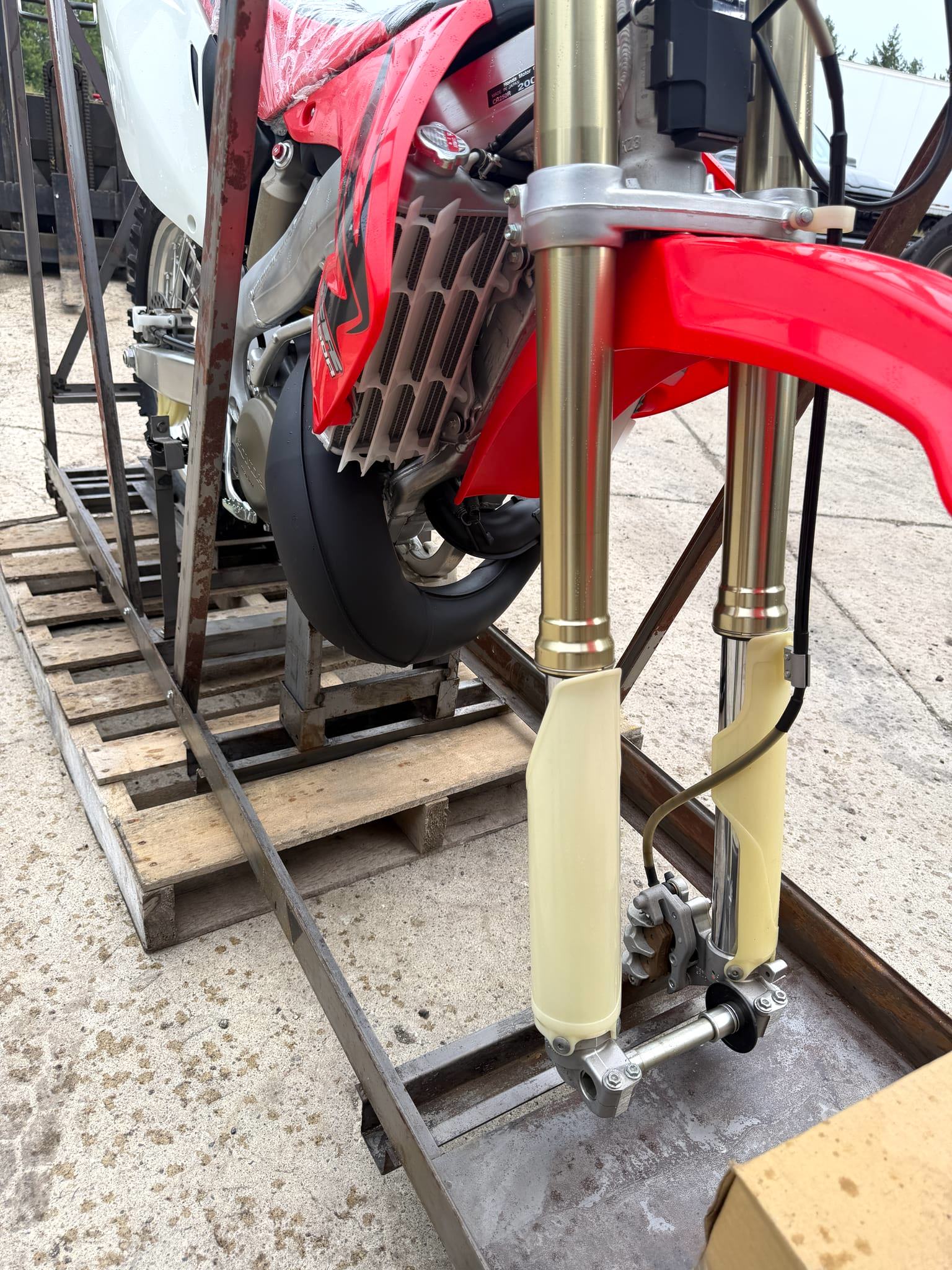
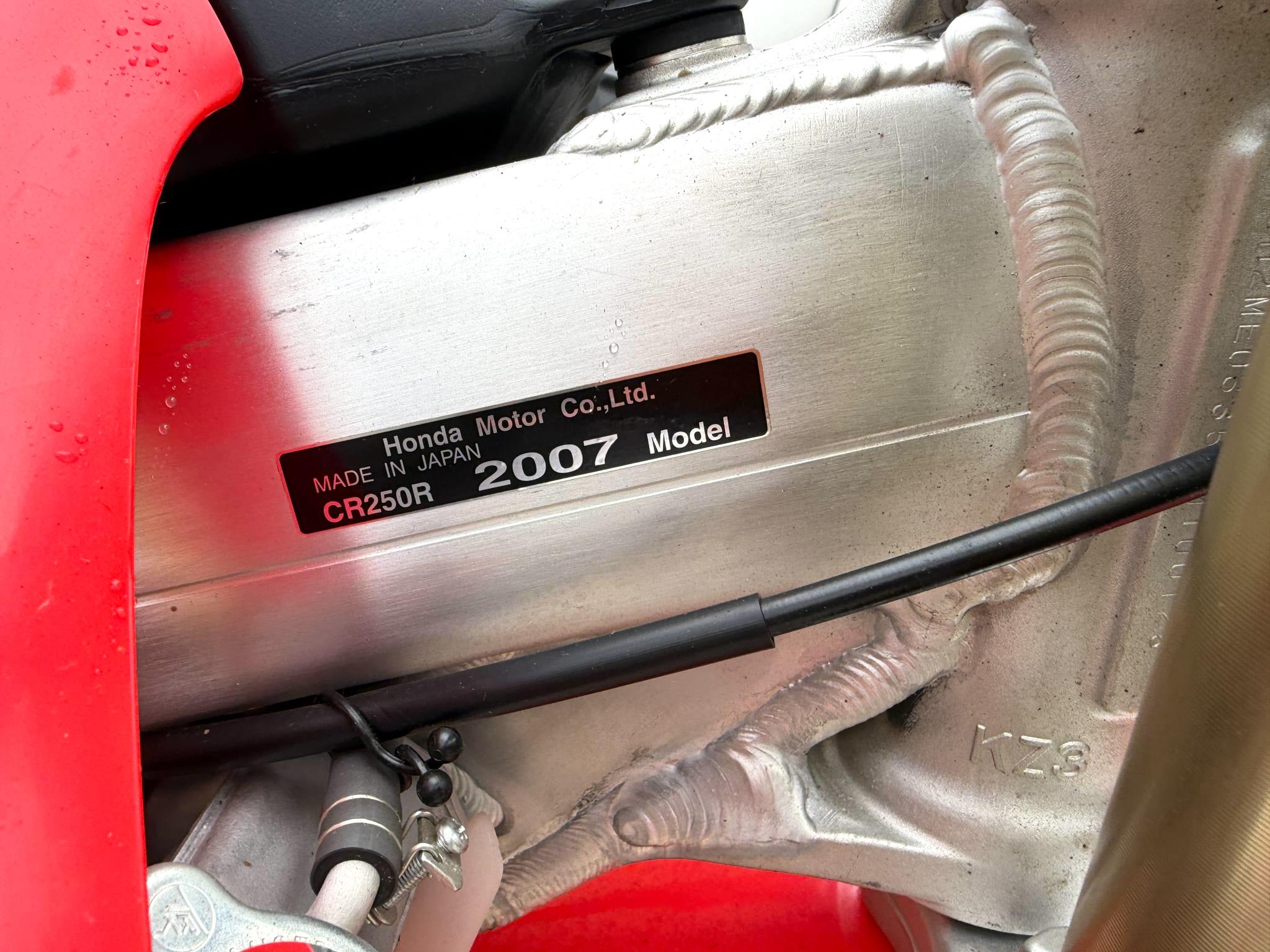
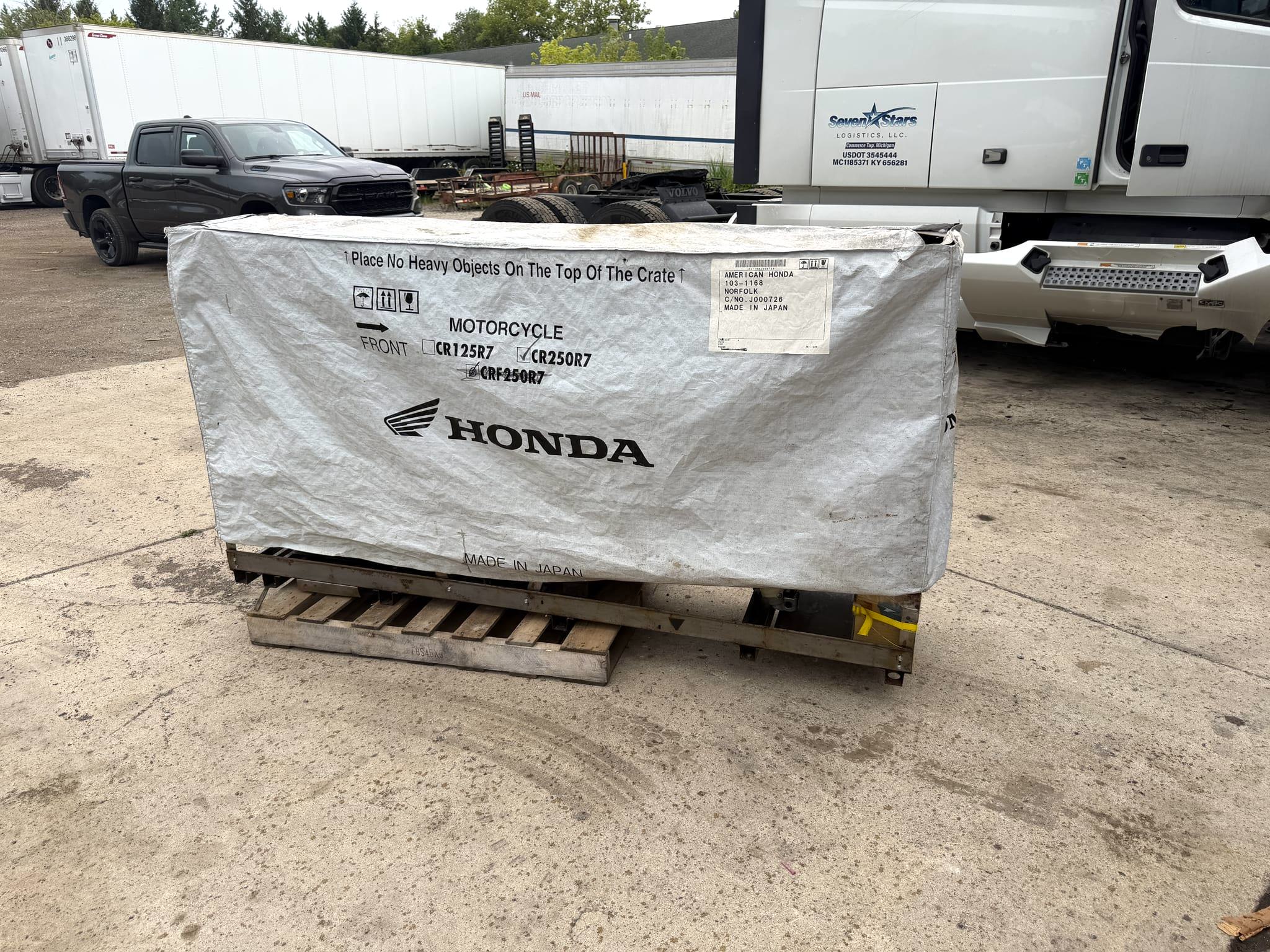
Despite the fact that it’s almost 20 years old, this is an essentially brand new 2007 Honda CR250R – it’s never been taken out of its factory crate or started, and it remains in a state of suspended animation.
The CR250R is a motorcycle that became a legend in its own lifetime, it powered riders to countless wins, and good secondhand examples are still sought after today, as production officially ended in 2007.
Fast Facts: A Factory Crated 2007 Honda CR250R
- Honda’s 250cc two-stroke motocross line began with the 1973 CR250M Elsinore, developed after the success of rival Japanese two-strokes. Its lightweight construction and reliable 29 bhp engine made an immediate impact, with Gary Jones winning the 1973 AMA 250 National Championship. The CR250M lineage eventually took 12 premier-class outdoor national titles.
- Renamed the CR250R in 1978, the bike was given reed-valve induction and its distinctive “Red Rocket” appearance. Further upgrades would include liquid cooling and Pro-Link rear suspension in 1981, a hydraulic front disc brake and exhaust-valve technology in 1984, and an aluminum frame in 1997. Honda ended CR250R production after 2007.
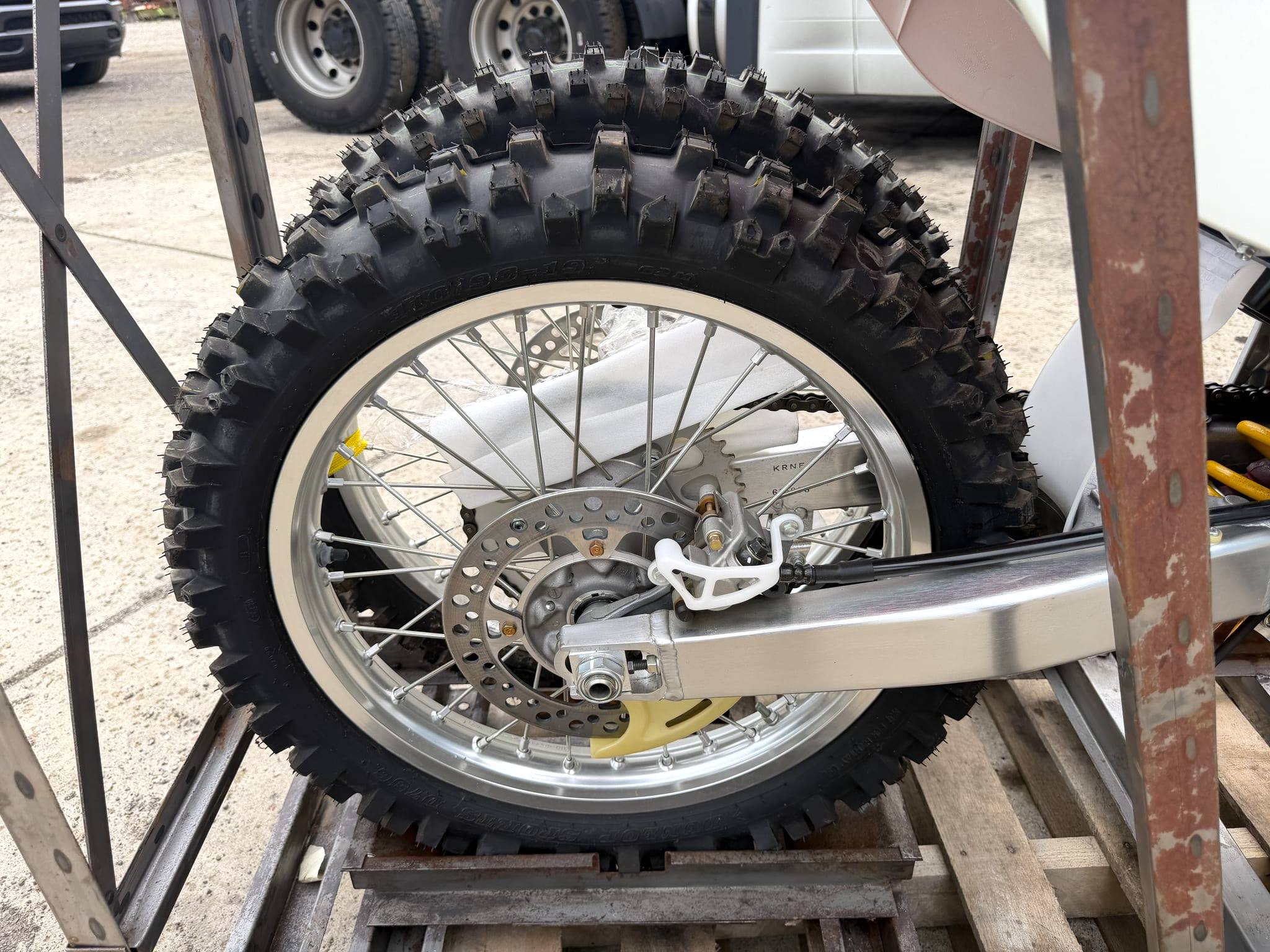
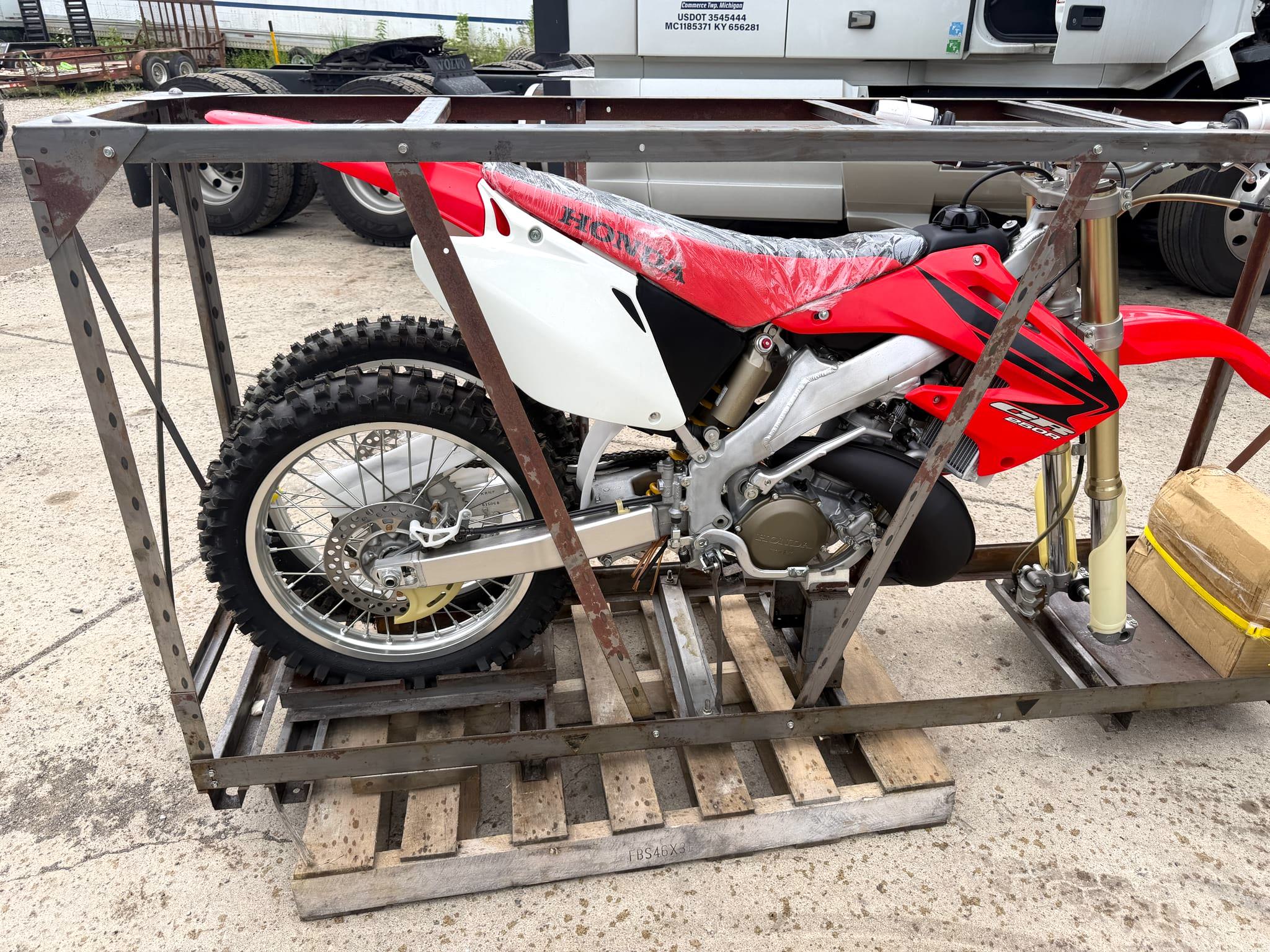
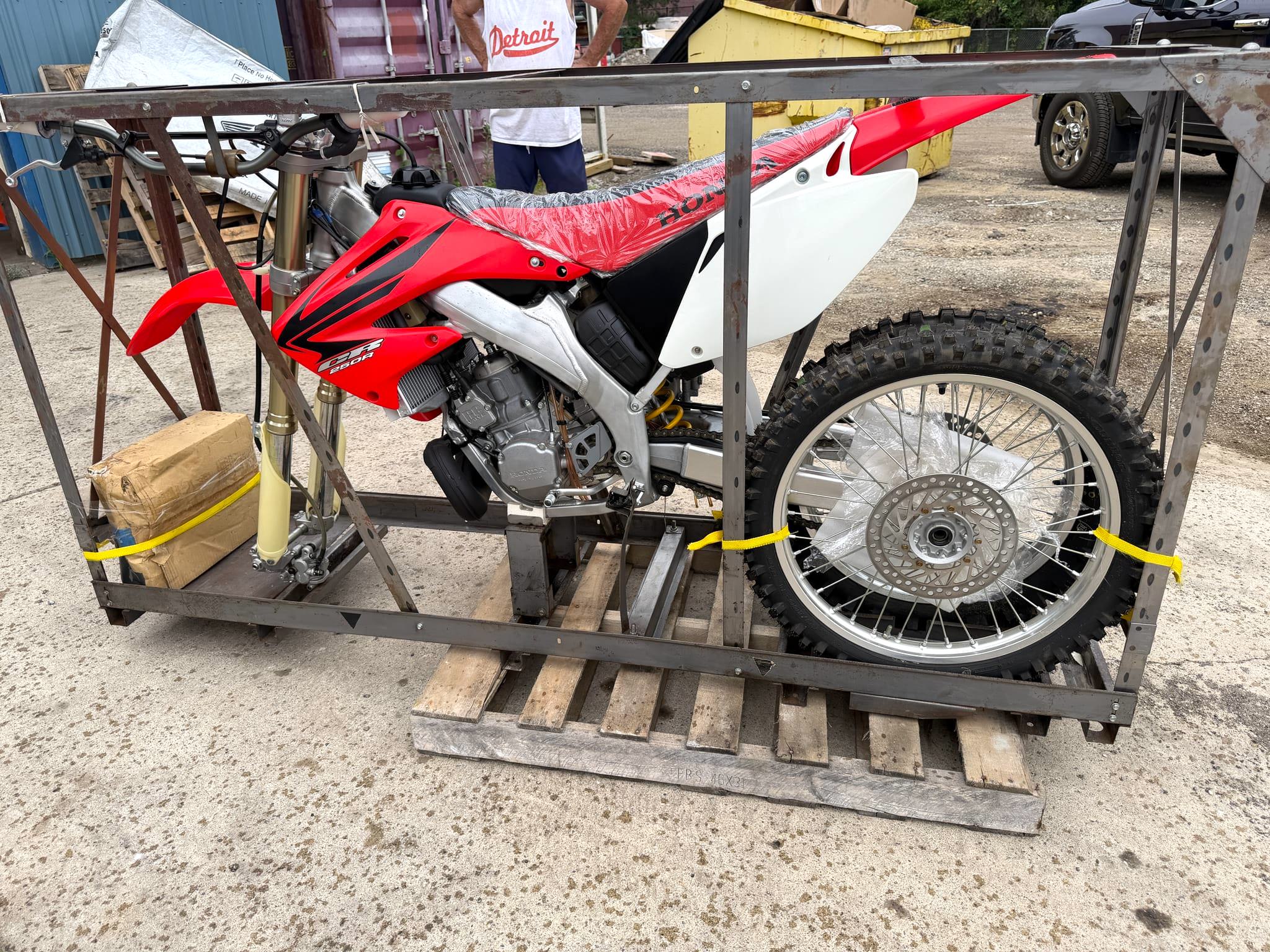
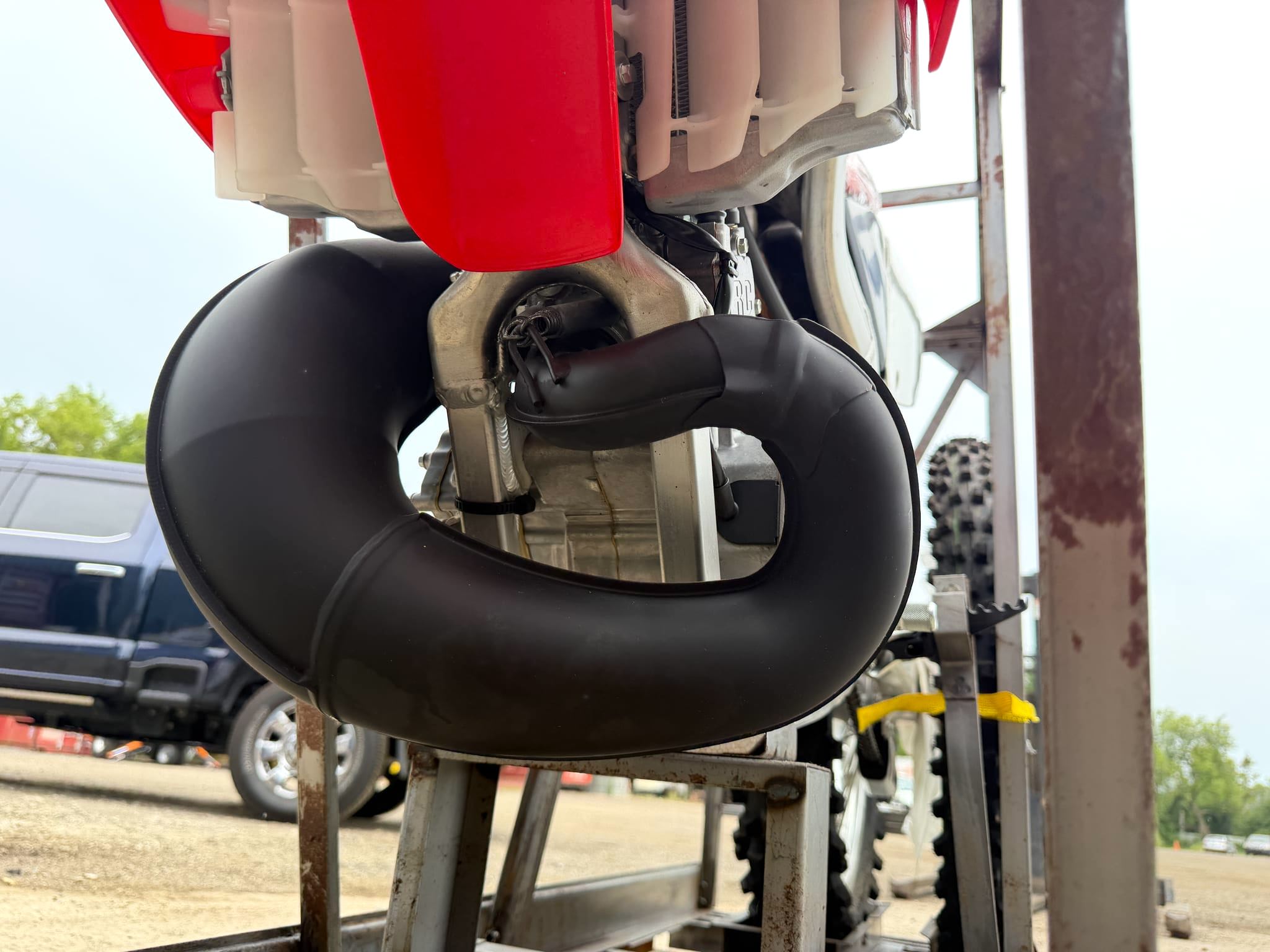
- The 2007 Honda CR250R shown here was delivered new to a dealership in Jacksonville, North Carolina, but was never removed from its factory shipping crate, assembled, or ridden. Finished in red and white, it remains in its original shipping condition and comes with a Honda-branded protective cover.
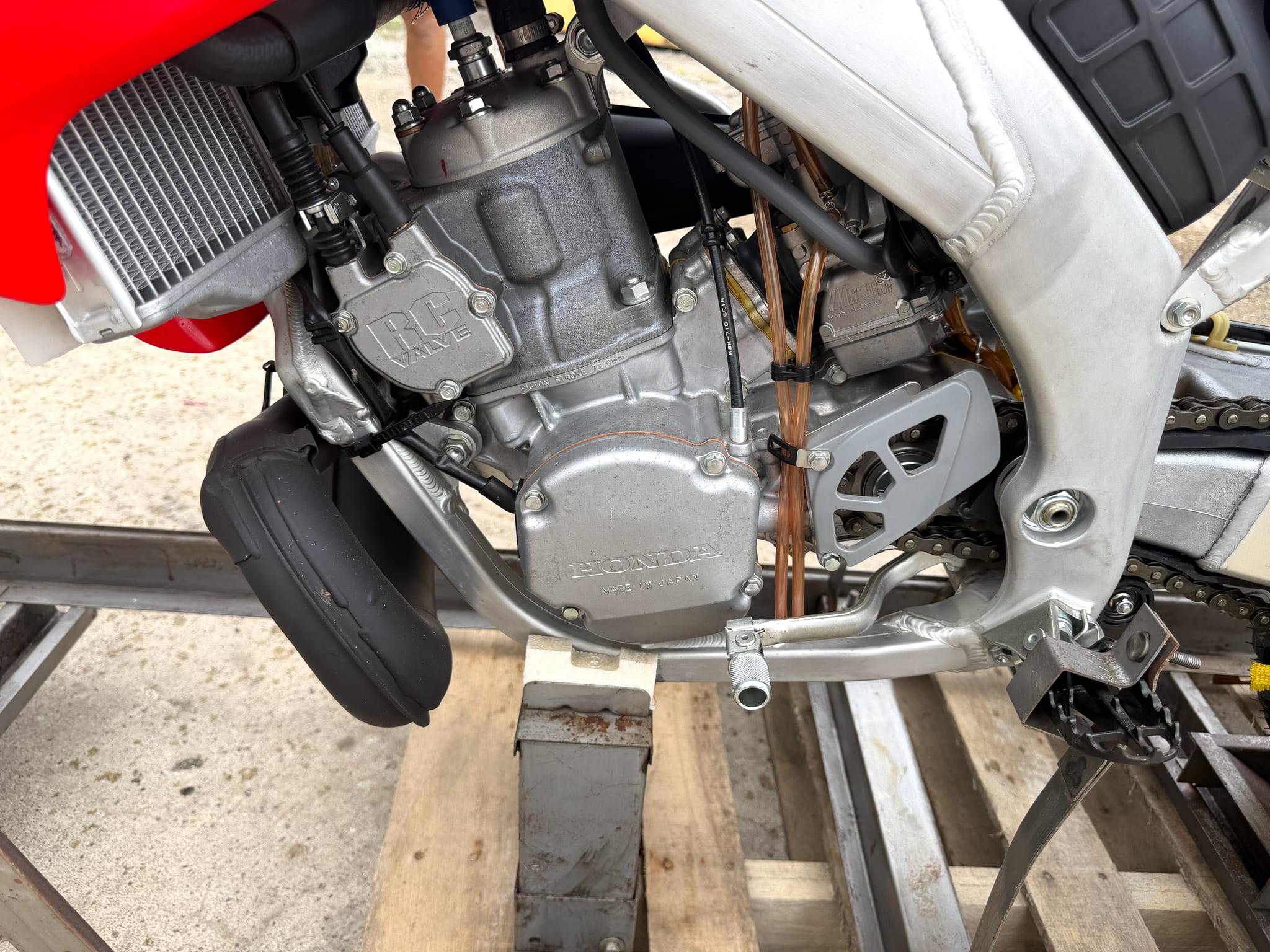
- It has a liquid-cooled 249cc two-stroke single, Mikuni carburetor, electronic power valve, 5-speed gearbox, aluminum frame, Showa suspension, Pro-Link rear linkage, and front and rear disc brakes. Its wheels measure 21 inches at the front and 19 inches at the rear. The motorcycle is being offered for sale without reserve out of Michigan.
History Speedrun: The Honda CR250R
A good argument could be made that the Honda CR250R and its predecessors are among the most important motocross motorcycles ever built.
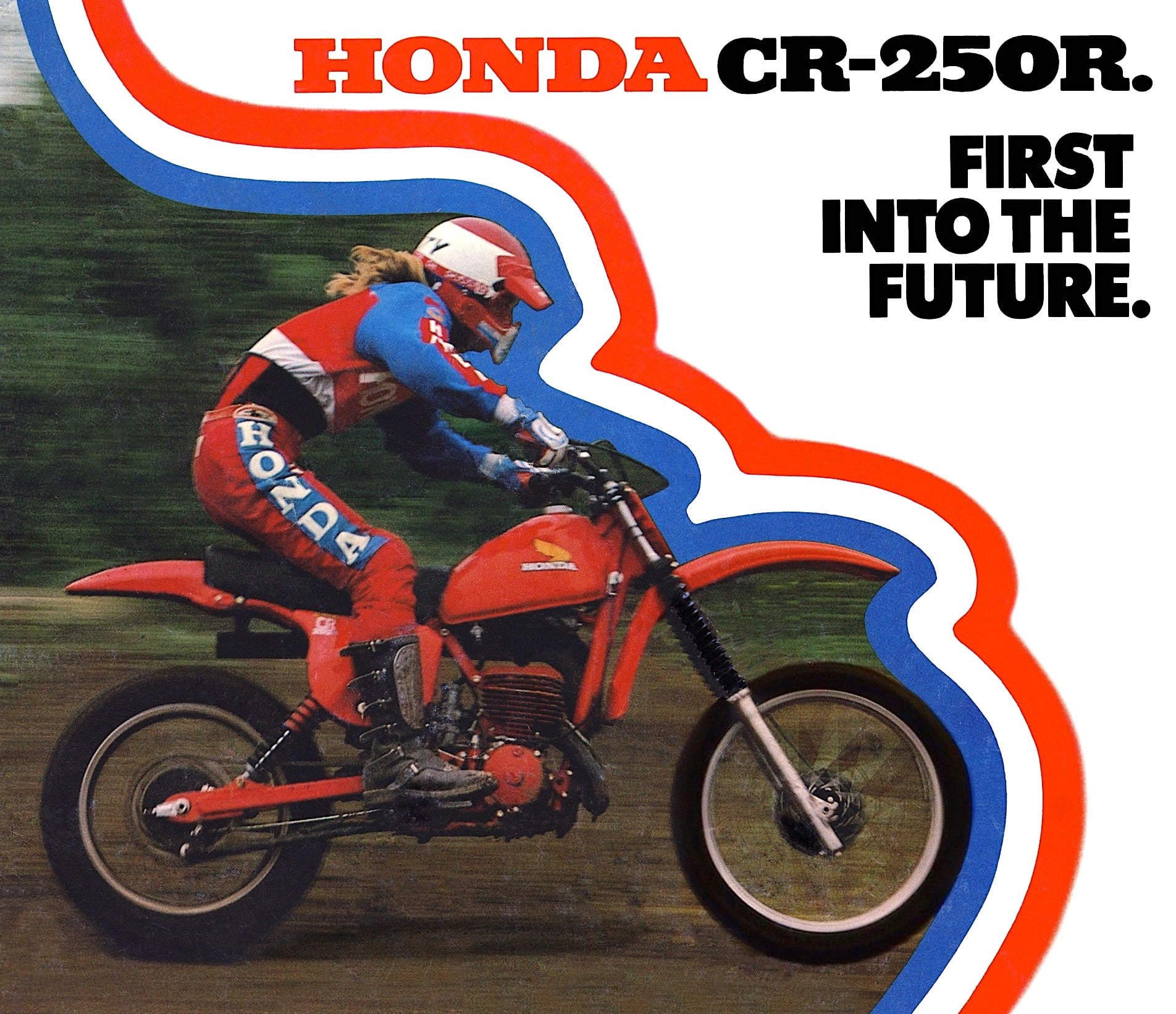
 A good argument could be made that the Honda CR250R and its predecessors are among the most important motocross motorcycles ever built. Image courtesy of Honda.
Across its Honda 250 two-stroke motocross lineage, from the original CR250M Elsinore and RC250 works bikes through to the production CR250R, Honda took 12 AMA premier-class outdoor national championships between 1973 and 2003, with riders like Gary Jones, Rick Johnson, Jeremy McGrath, and Ricky Carmichael piloting their bikes to victory.
Early on, Honda founder Soichiro Honda had publicly declared that his company would never build a two-stroke motorcycle, but the emergence of domestic motocross racing in Japan from 1967 onward (largely dominated by two-strokes from Suzuki and Yamaha) forced his hand. Honda engineers began developing two-stroke prototypes, testing a 250cc machine in Japan in 1971 and then in California in 1972.
The result of all this was the now-legendary CR250M Elsinore, which quietly arrived in dealer showrooms in early 1973. Named after the famous Elsinore Grand Prix off-road race in Lake Elsinore, California (the same event featured in Bruce Brown’s 1971 documentary On Any Sunday) it was the lightest production motocrosser in the world.
Its 248cc air-cooled, piston-port, single-cylinder two-stroke produced 29 bhp at 7,500 rpm, and the engine cases used magnesium alloy to save weight. Honda hired reigning AMA 250 National Champion Gary Jones to race the bike, and he won the 1973 title aboard a production-based Elsinore, establishing its reputation immediately.

Across its Honda 250 two-stroke motocross lineage, from the original CR250M Elsinore and RC250 works bikes through to the production CR250R, Honda took 12 AMA premier-class outdoor national championships between 1973 and 2003, with riders like Gary Jones, Rick Johnson, Jeremy McGrath, and Ricky Carmichael piloting their bikes to victory. Image courtesy of Honda.
The CR250M was offered largely unchanged through till 1975, allowing Honda’s Japanese competitors to catch up. Soichiro’s company’s response came in 1978 with a ground-up redesign that was directly inspired by the RC500 Type II works race bike.
Renamed the Honda CR250R (the “R” standing for “Replica”) it had a Euro-style engine layout with the output shaft on the right, a six-petal reed-valve induction system fed by a 36mm Keihin carburetor, and a chrome-bore cylinder. Everything was painted fire-engine red, earning the bike its long-lived “Red Rocket” nickname.
The early 1980s brought two new innovations to the line that would later be considered landmarks – in 1981, the CR250R became the first water-cooled 250cc production motocross bike, and it debuted Honda’s Pro-Link single-shock rear suspension.
By 1984, a hydraulic front disc brake and the ATAC exhaust valve had arrived, and the bike settled into the form it would take for years, with a slower series of improvements and iterations thereafter.
The golden era came in the late 1980s through the 1990s, with a major chassis and engine overhaul in 1987, an inverted Showa fork from 1989 onwards, and an all-new aluminum frame in 1997.
With the motocross world shifting decisively toward 450cc four-strokes, Honda announced the end of two-stroke production after 2007, marking the end of CR250R production and forever closing one of the greatest model series in the history of the sport.

The now-legendary Honda CR250M Elsinore arrived in dealer showrooms in early 1973. Named after the famous Elsinore Grand Prix off-road race in Lake Elsinore, California (the same event featured in Bruce Brown’s 1971 documentary On Any Sunday) it was the lightest production motocrosser in the world. Image courtesy of Honda.
The Factory-Crated 2007 Honda CR250R Shown Here
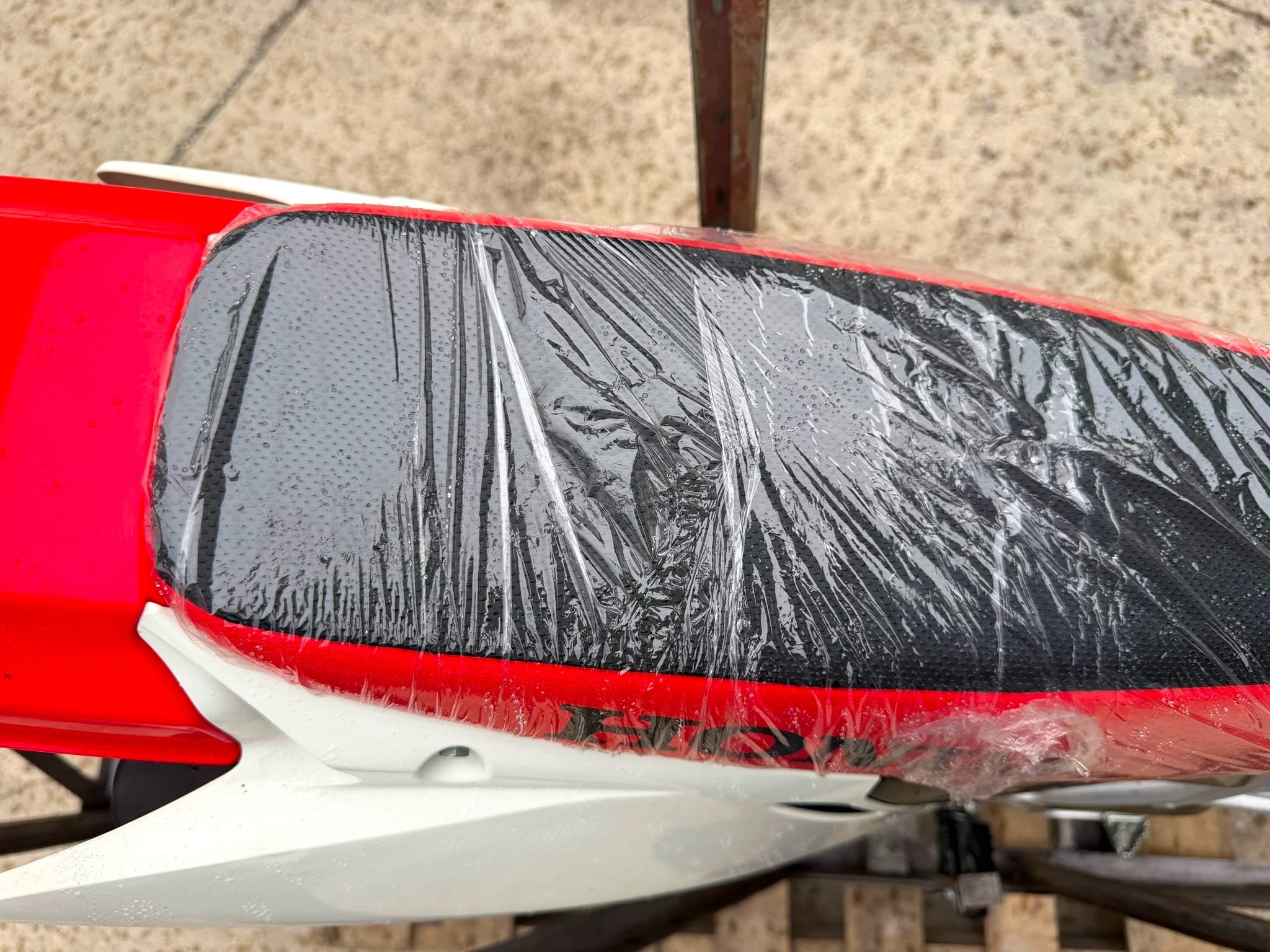
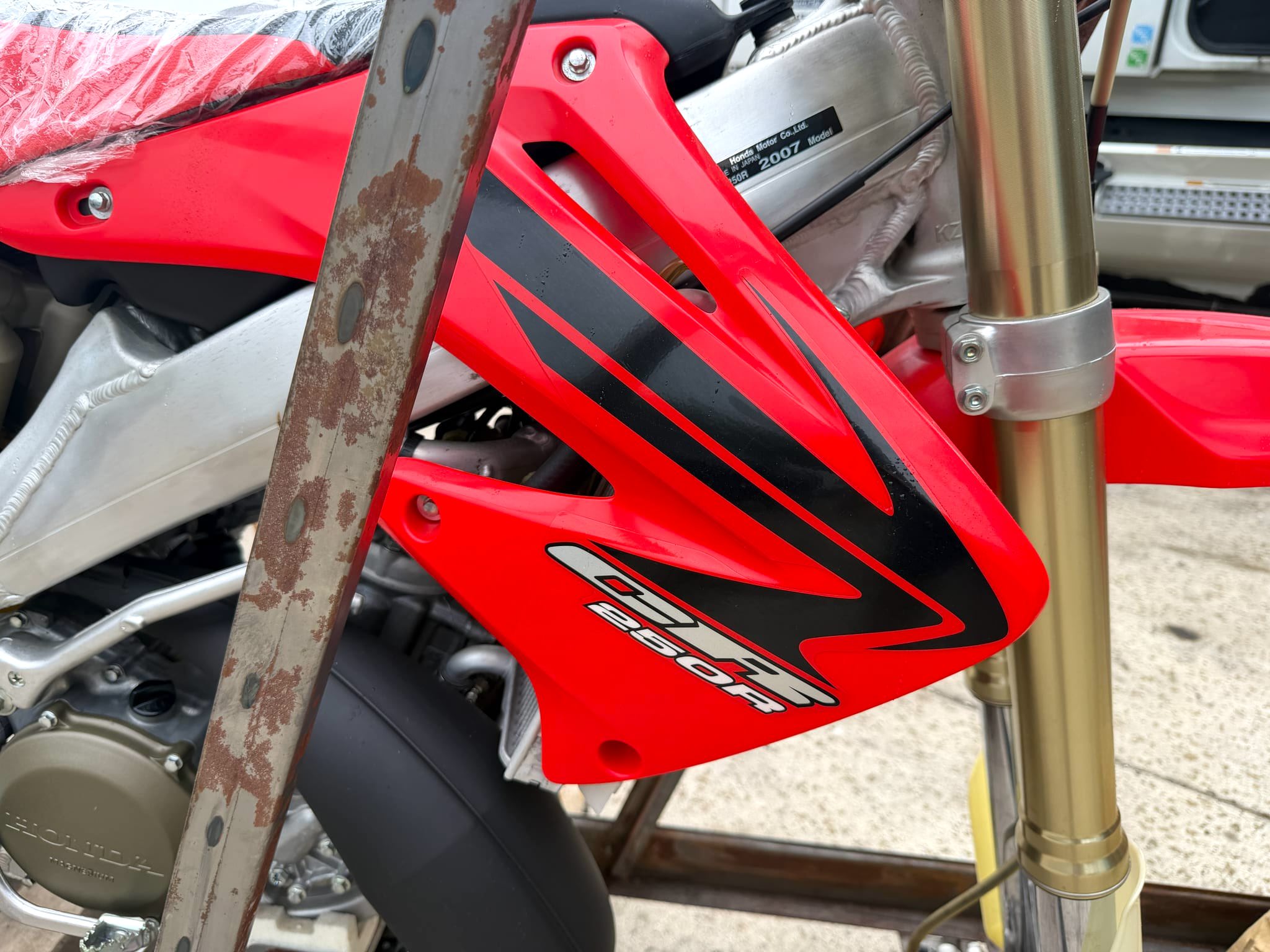
This 2007 Honda CR250R is an unused example that was delivered new to a Honda dealership in Jacksonville, North Carolina, and never uncrated, assembled, or ridden. Finished in Honda’s traditional red and white color scheme with black, yellow, and silver accents, it’s accompanied by a Honda-branded shipping cover.
As you might expect, power comes from a liquid-cooled 249cc two-stroke single-cylinder engine, equipped with a Mikuni TMX flat-slide carburetor with throttle position sensor, electronic ignition, an electronic power valve, and an expansion-chamber exhaust.
The engine is started by a conventional kick starter and sends power to the rear wheel through a multi-plate wet clutch, 5-speed transmission, and chain drive. The CR250R has an aluminum frame, inverted Showa cartridge forks, and a Showa rear monoshock connected to a Pro-Link swingarm and linkage.
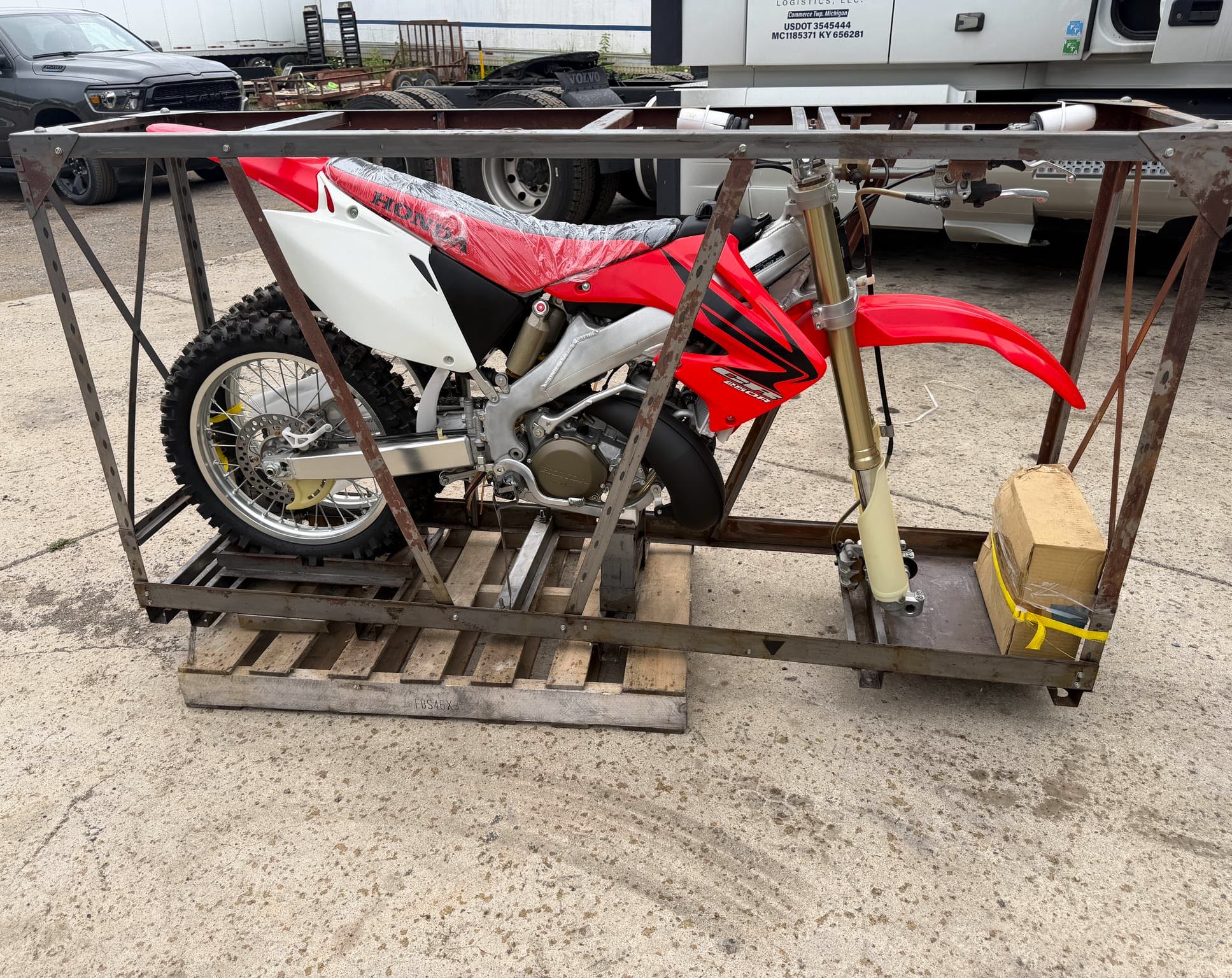
This 2007 Honda CR250R is an unused example that was delivered new to a Honda dealership in Jacksonville, North Carolina, and never uncrated, assembled, or ridden.
It rides on 21 inch front and 19 inch rear wire-spoke wheels fitted with Dunlop knobby tires, with disc brakes at both ends. it also has a two-gallon fuel tank, cross-braced handlebars, high-mounted fenders, serrated foot pegs, and a black and red solo seat.
This now represents an unusual opportunity to buy a late-production CR250R in its original shipping condition. It’s now being offered for sale at no reserve out of Michigan with a bill of sale. If you’d like to read more about it or register to bid you can visit the listing here.
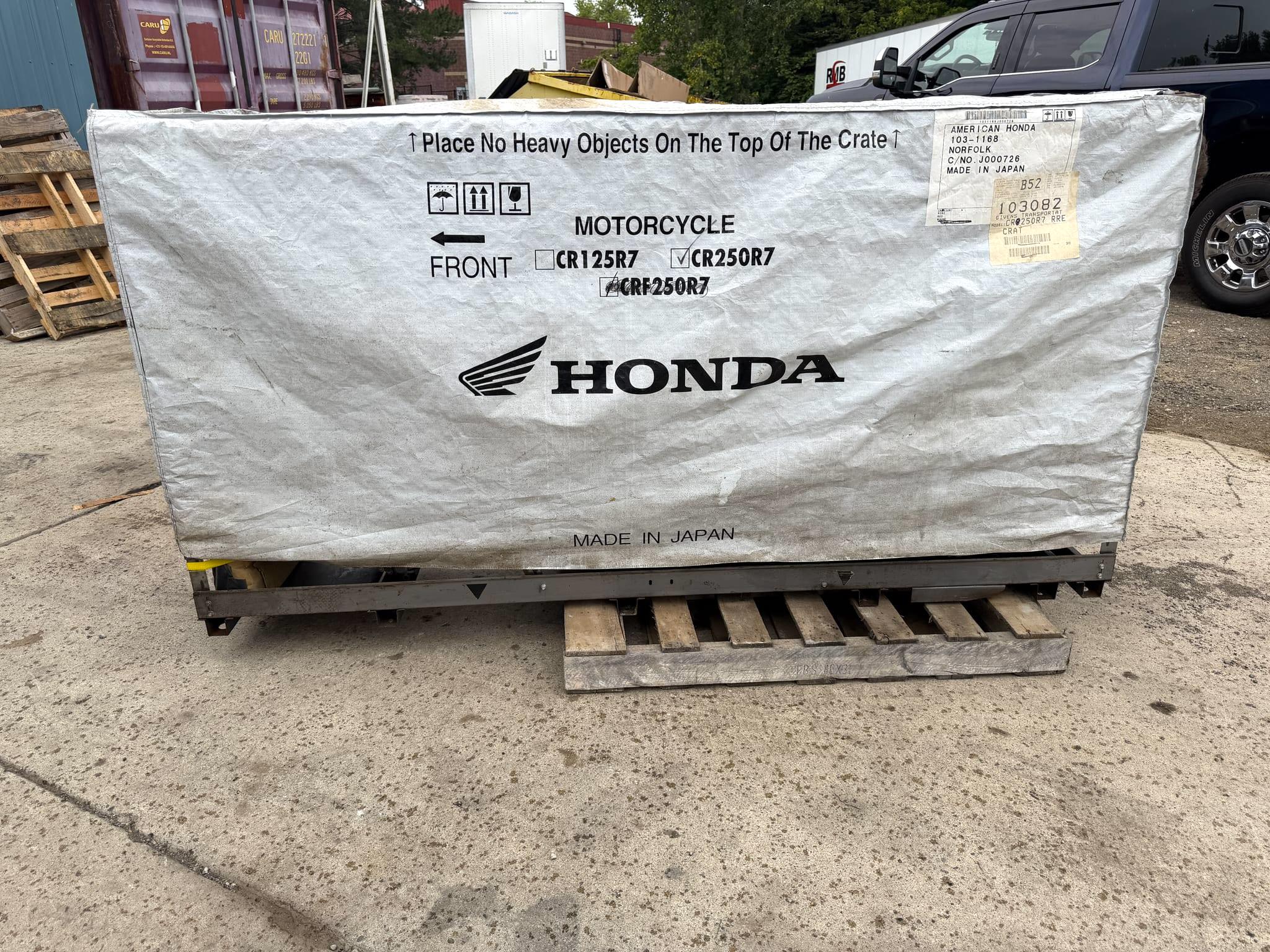
Images courtesy of Bring a Trailer

Articles that Ben Branch has written have been covered on CNN, Popular Mechanics, Smithsonian Magazine, Road & Track Magazine, the official Pinterest blog, the official eBay Motors blog, BuzzFeed, Autoweek Magazine, Wired Magazine, Autoblog, Gear Patrol, Jalopnik, The Verge, and many more.
Silodrome was founded by Ben back in 2010, in the years since the site has grown to become a world leader in the alternative and vintage motoring sector, with well over a million monthly readers from around the world and many hundreds of thousands of followers on social media.