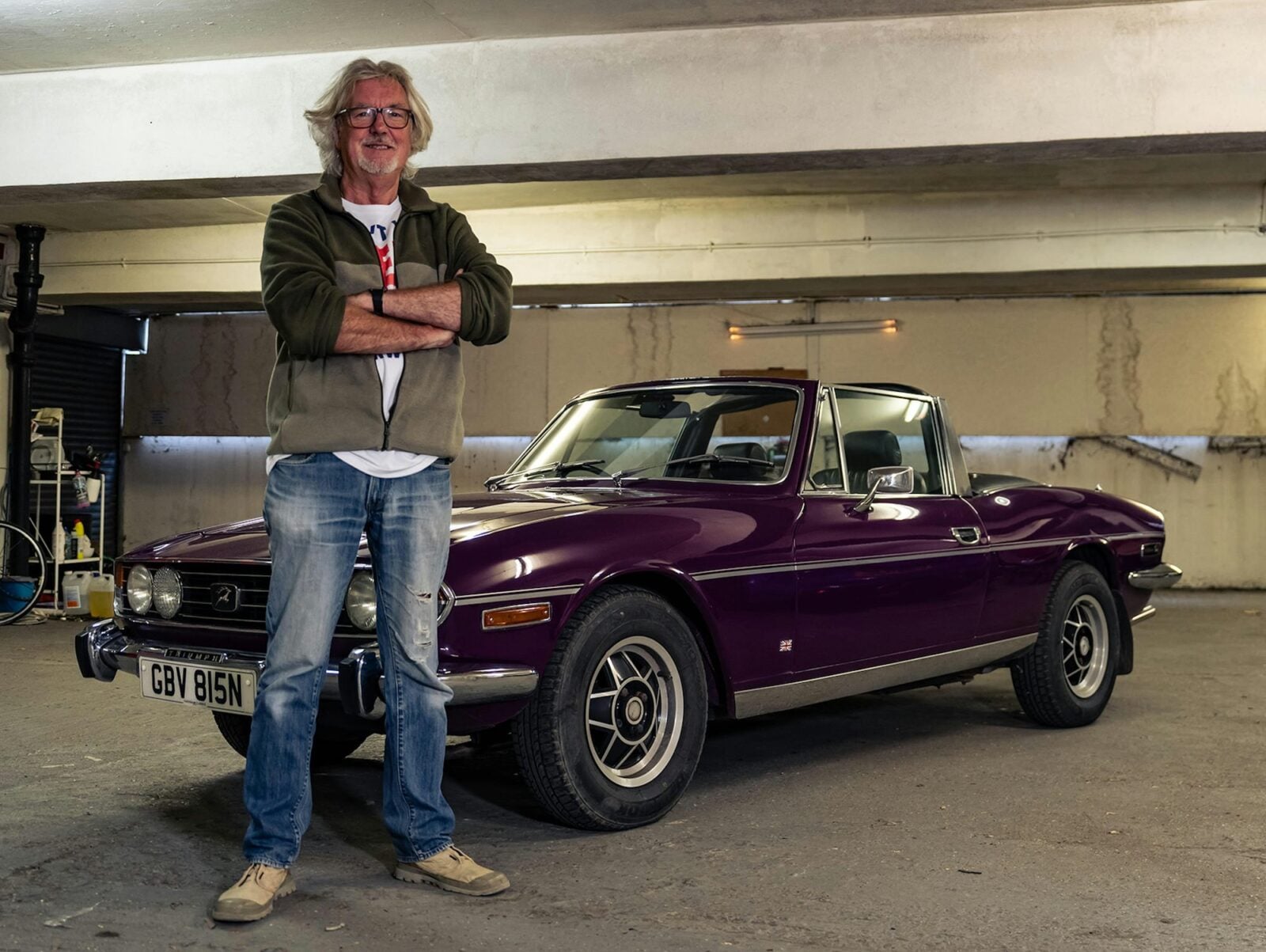
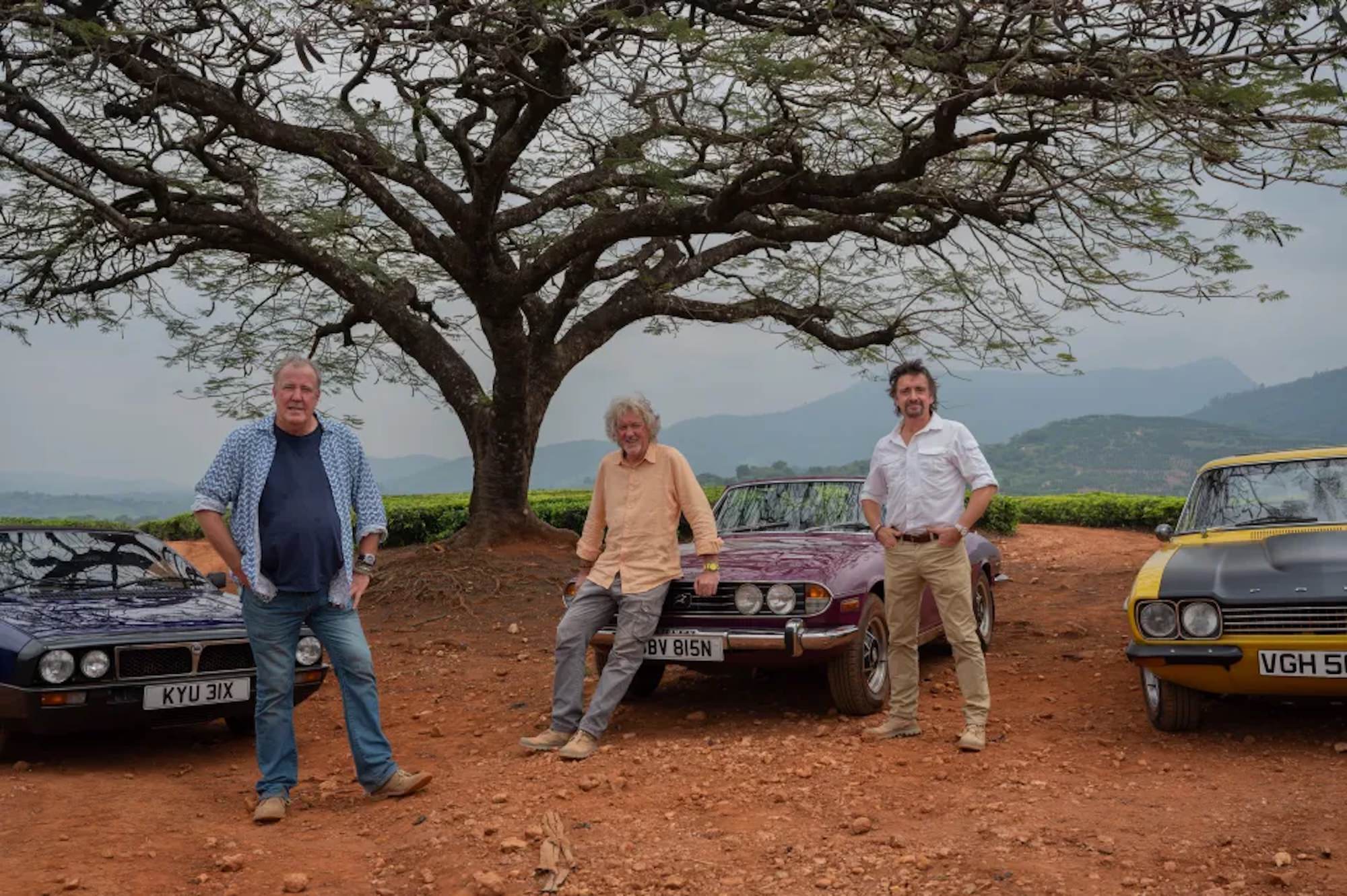
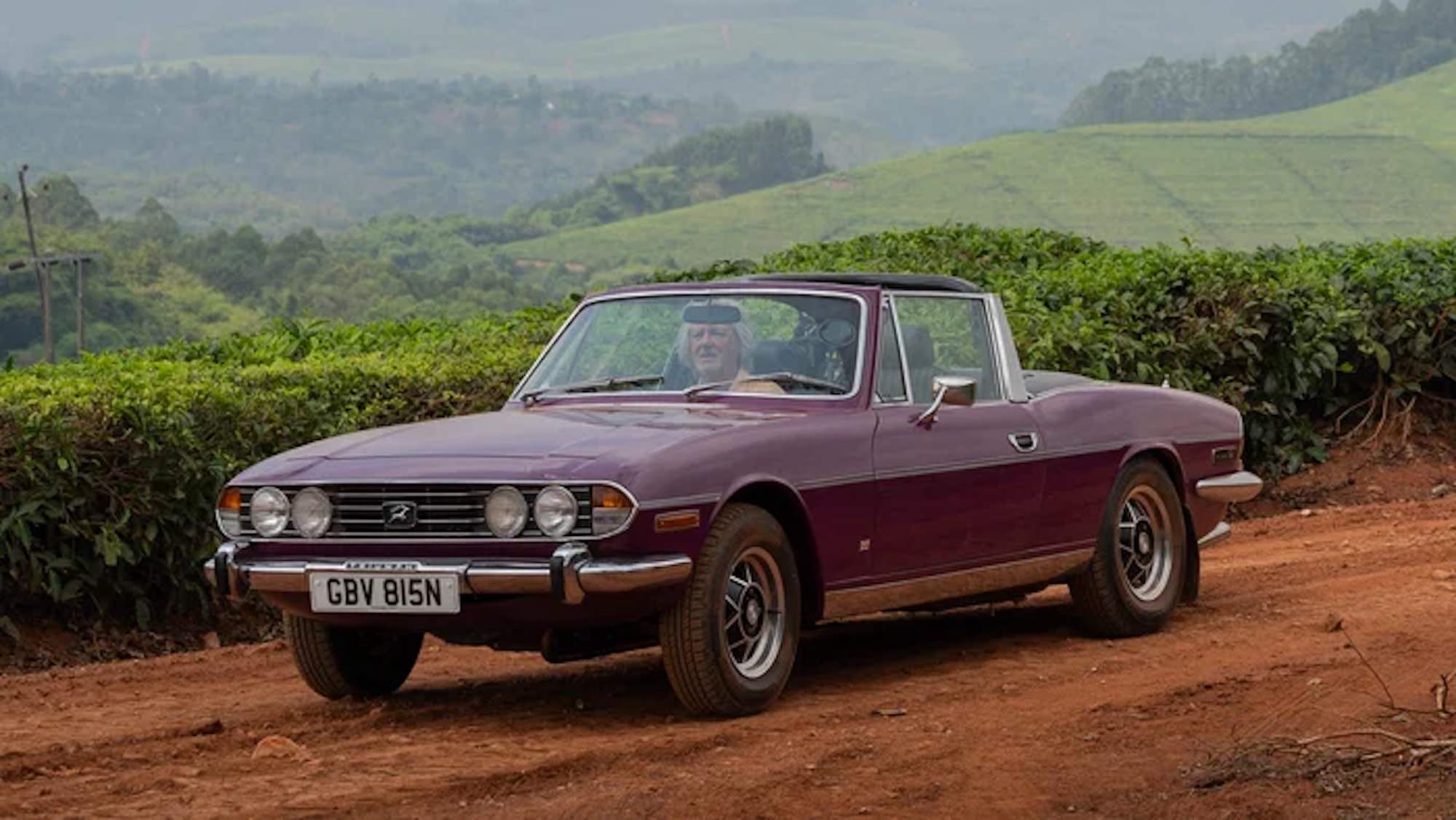
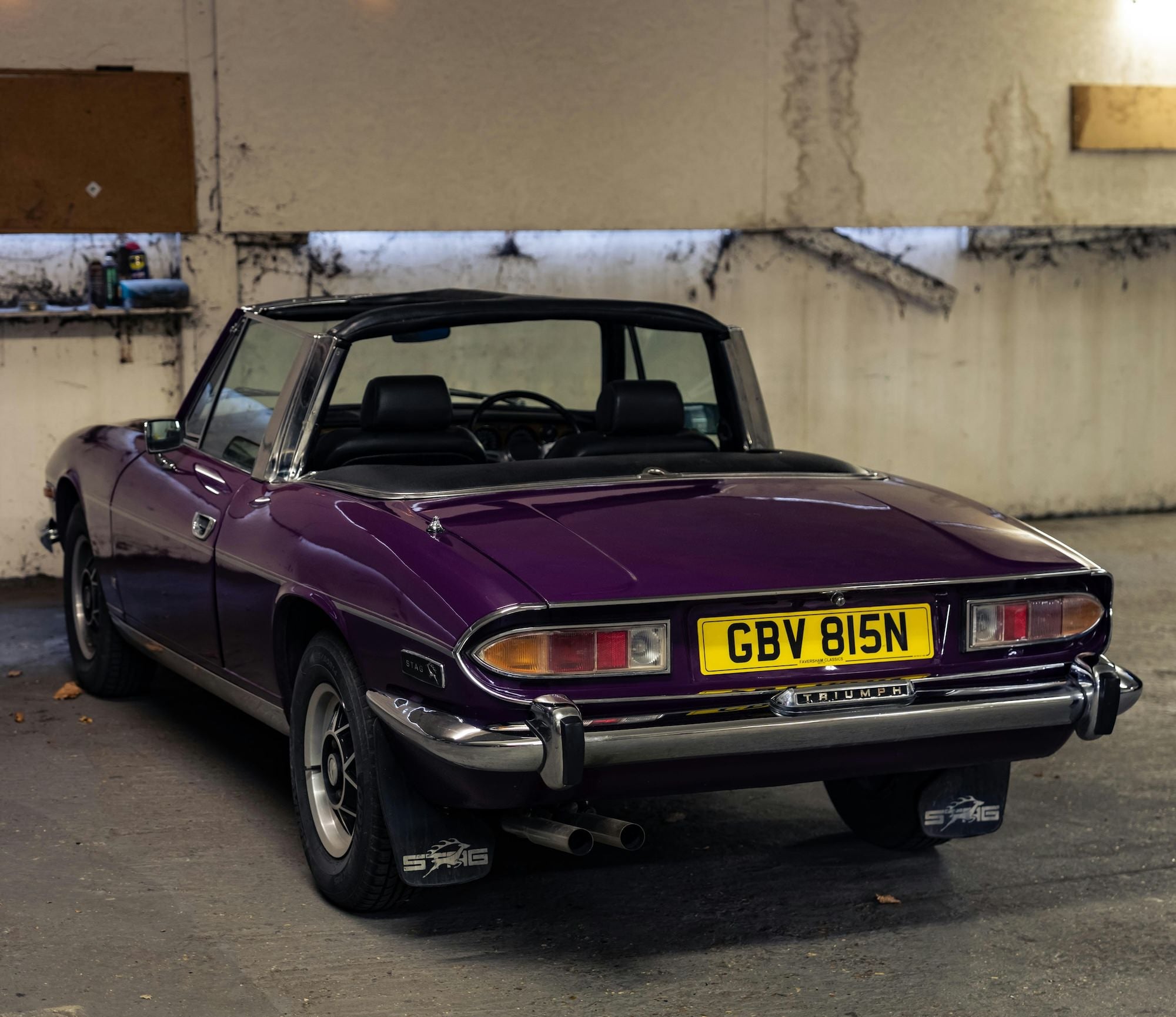
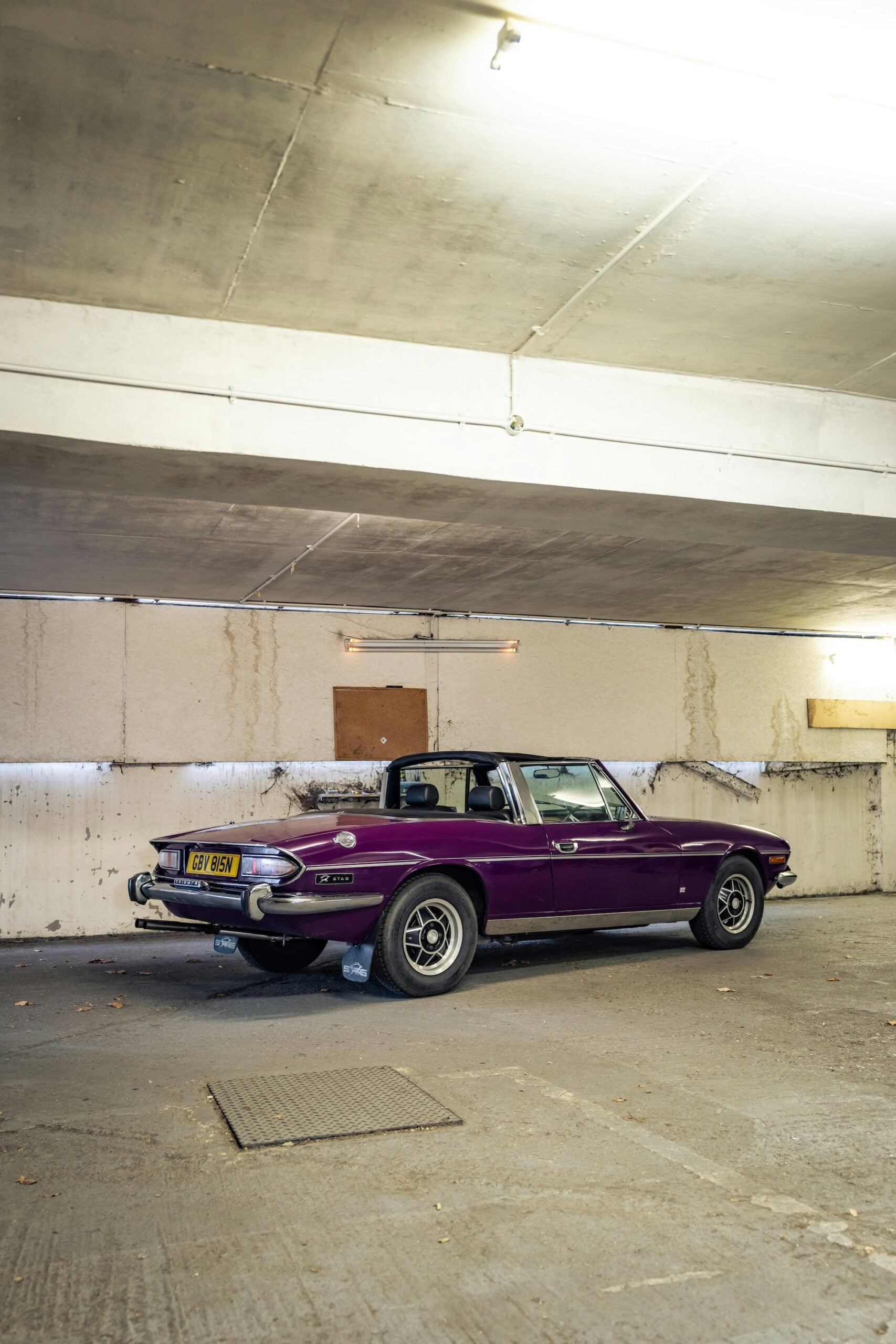
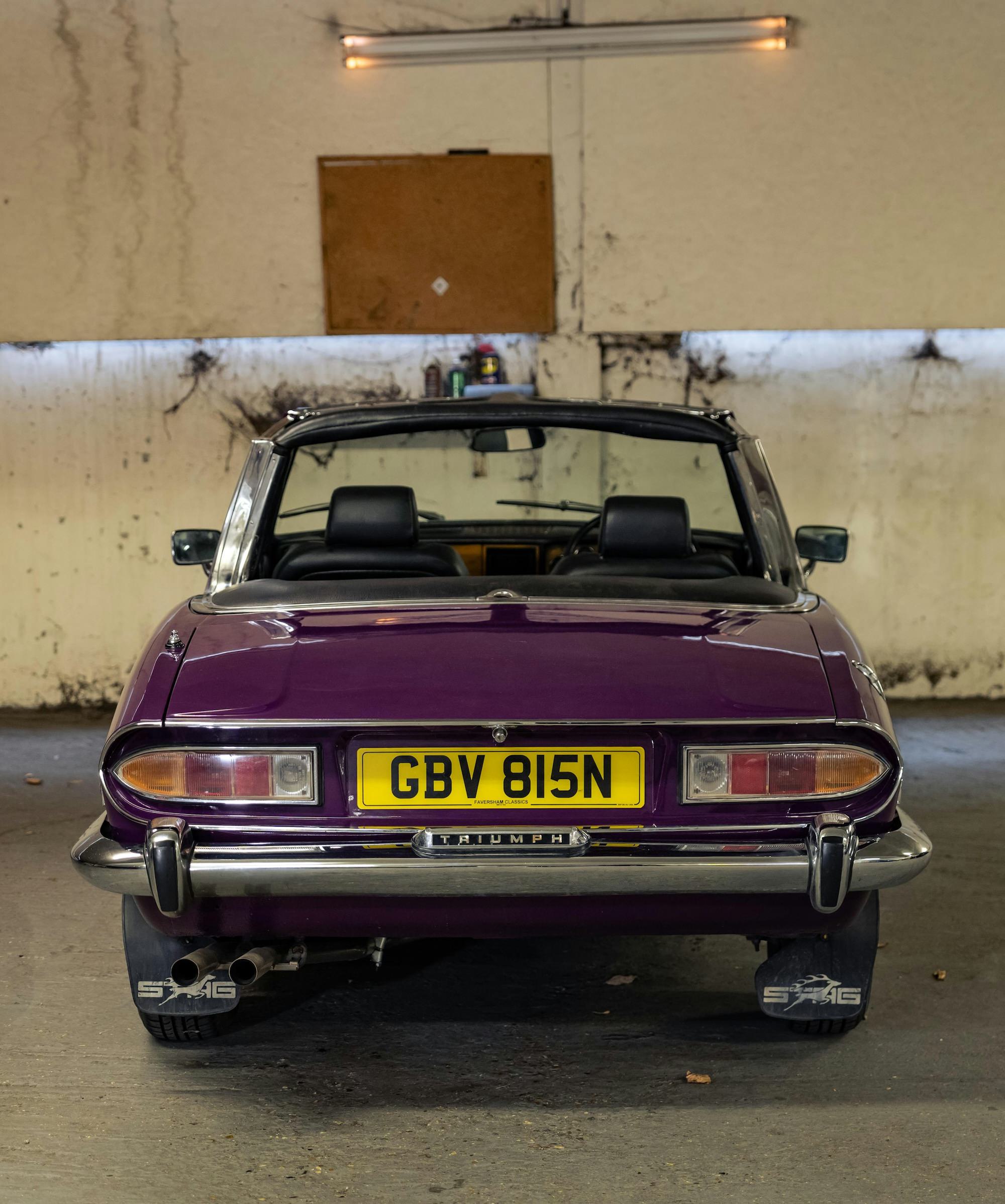
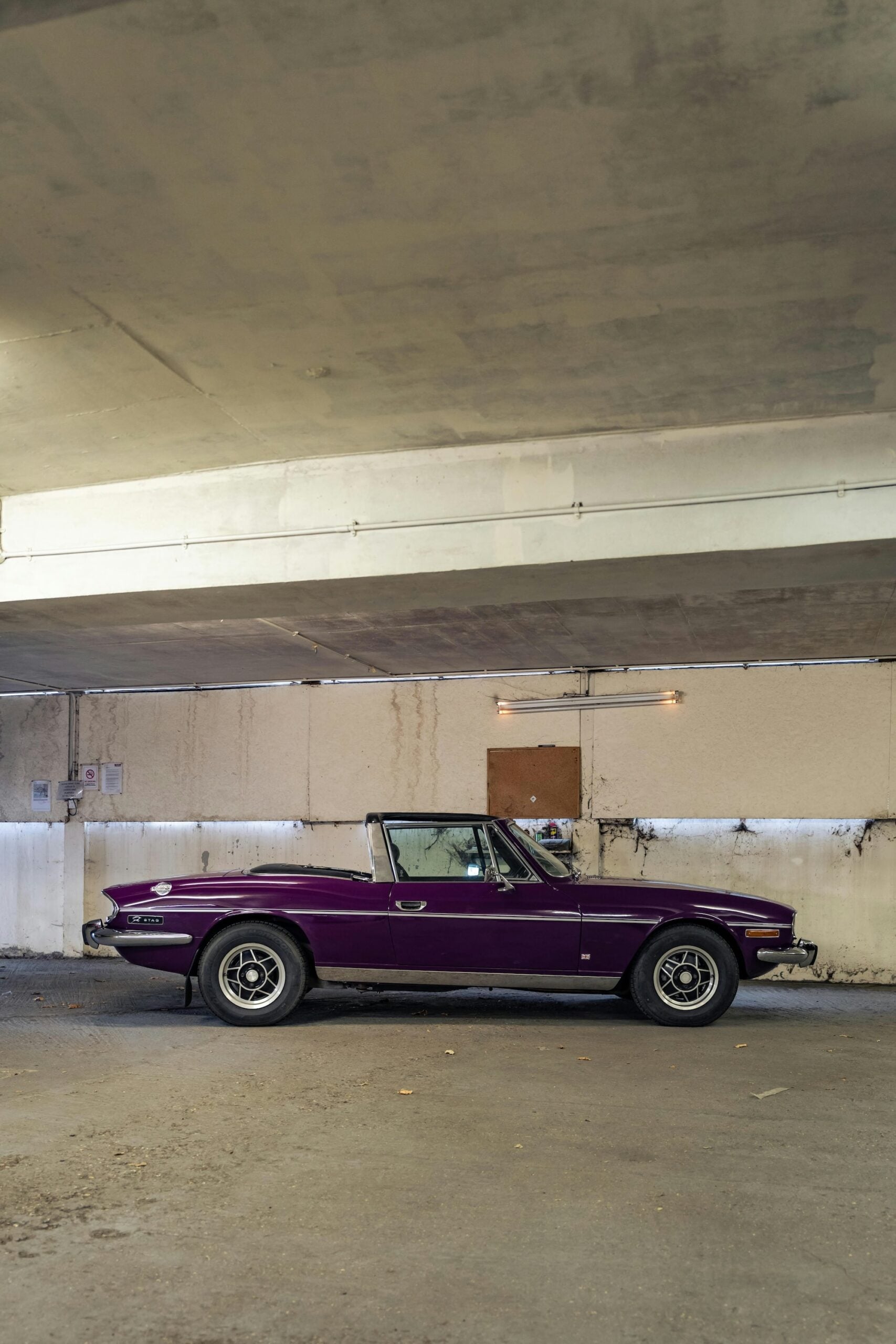
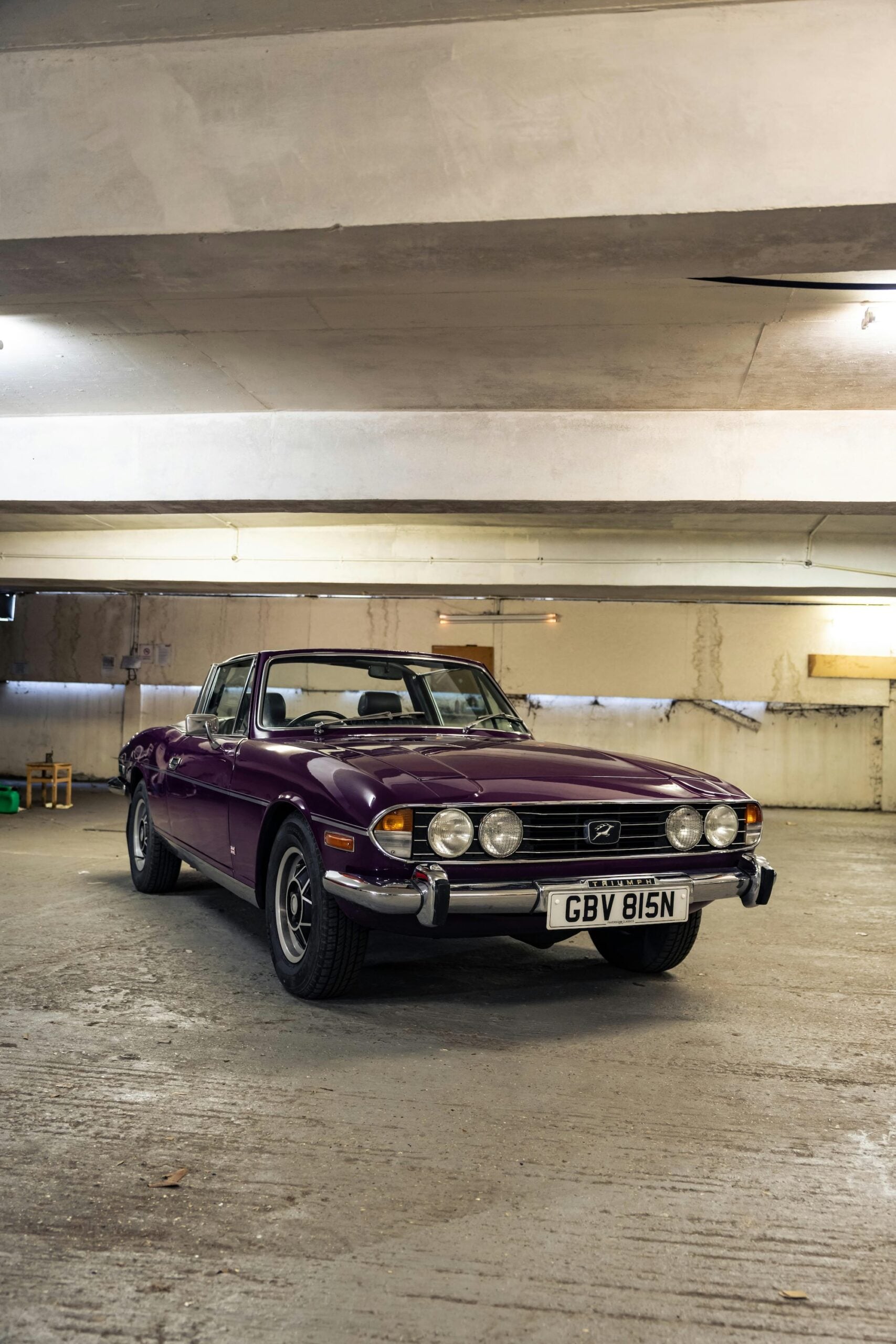
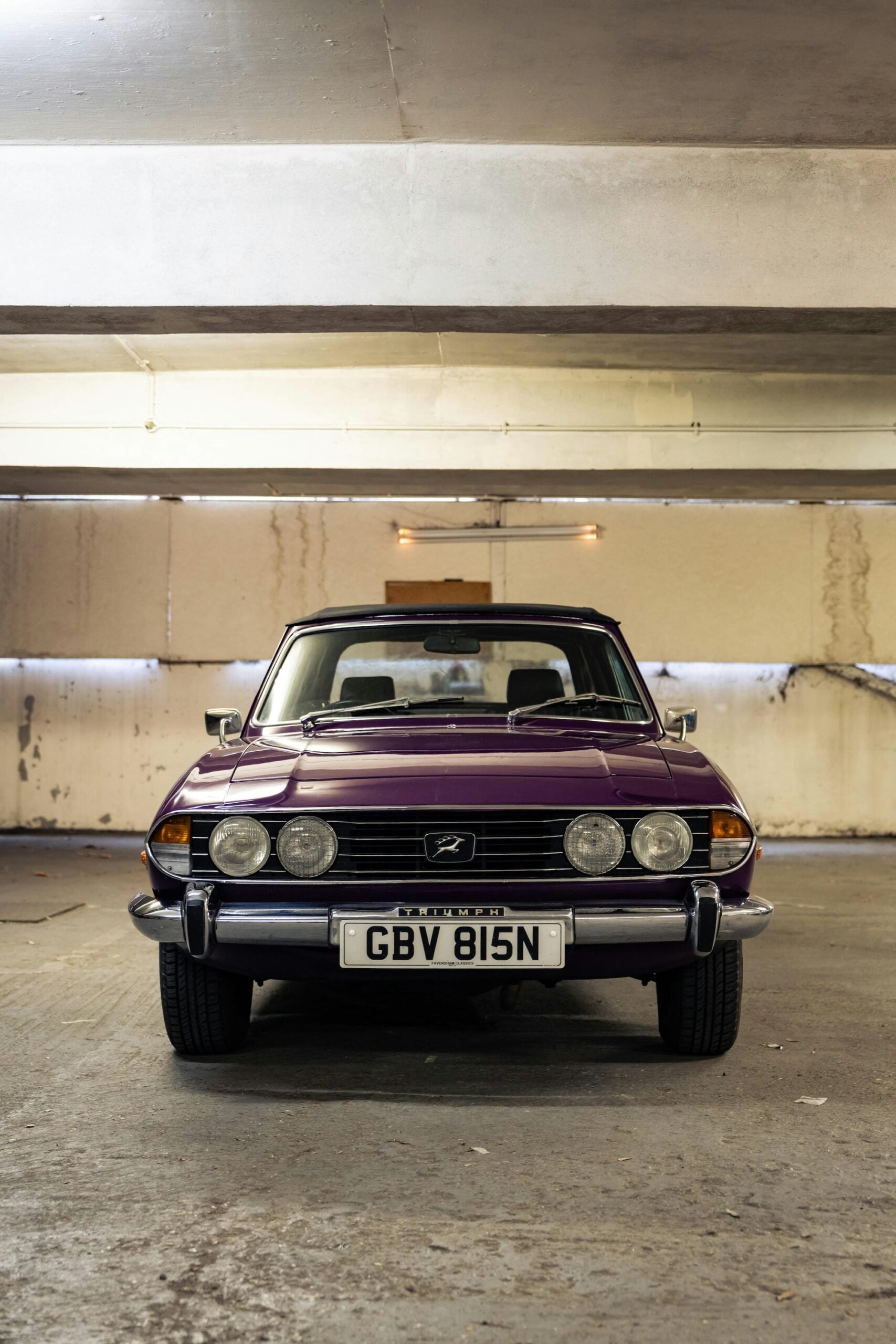
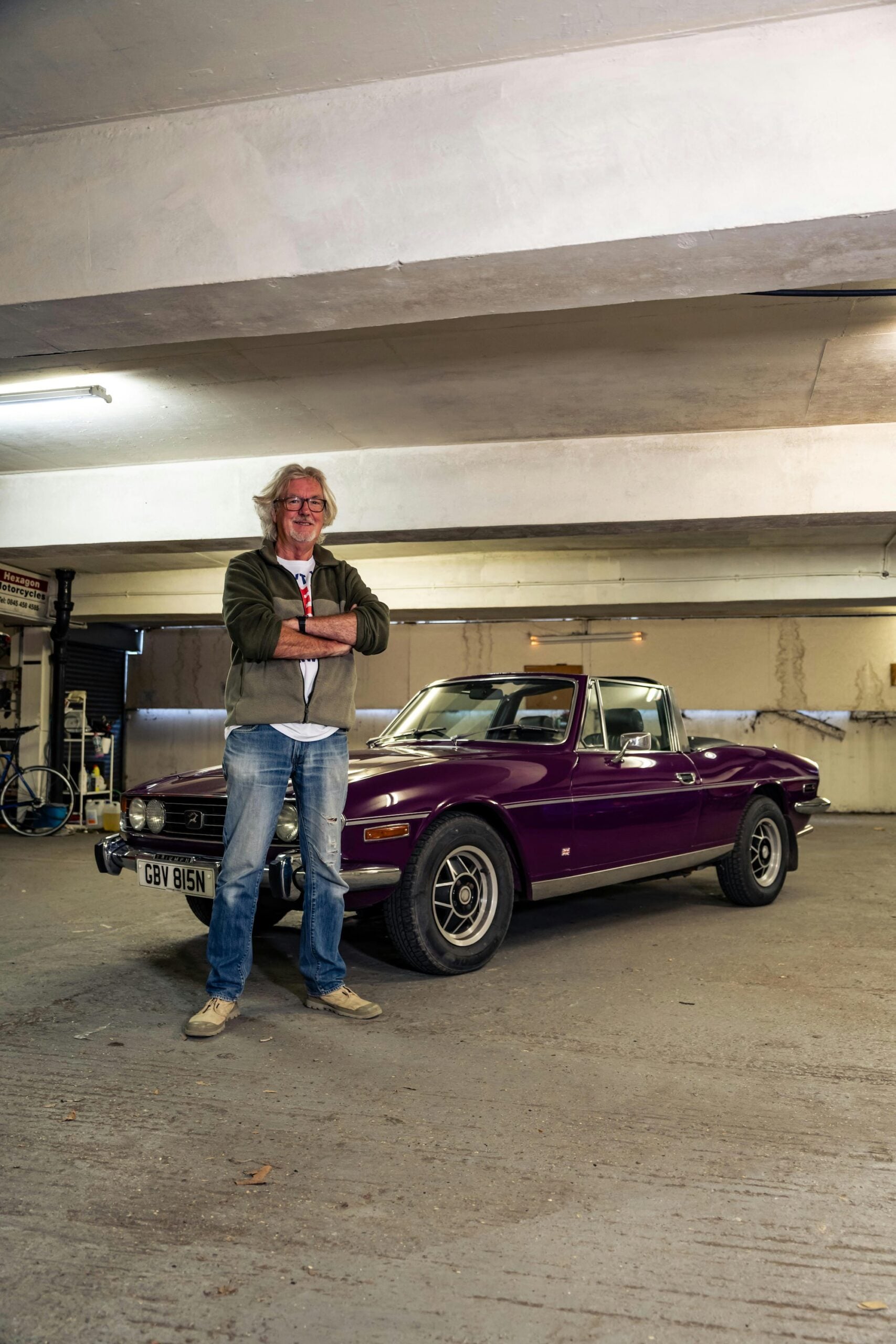
This is the 1974 Triumph Stag MkII owned by James May, and used by him in the finale of The Grand Tour in an episode titled One for the Road.
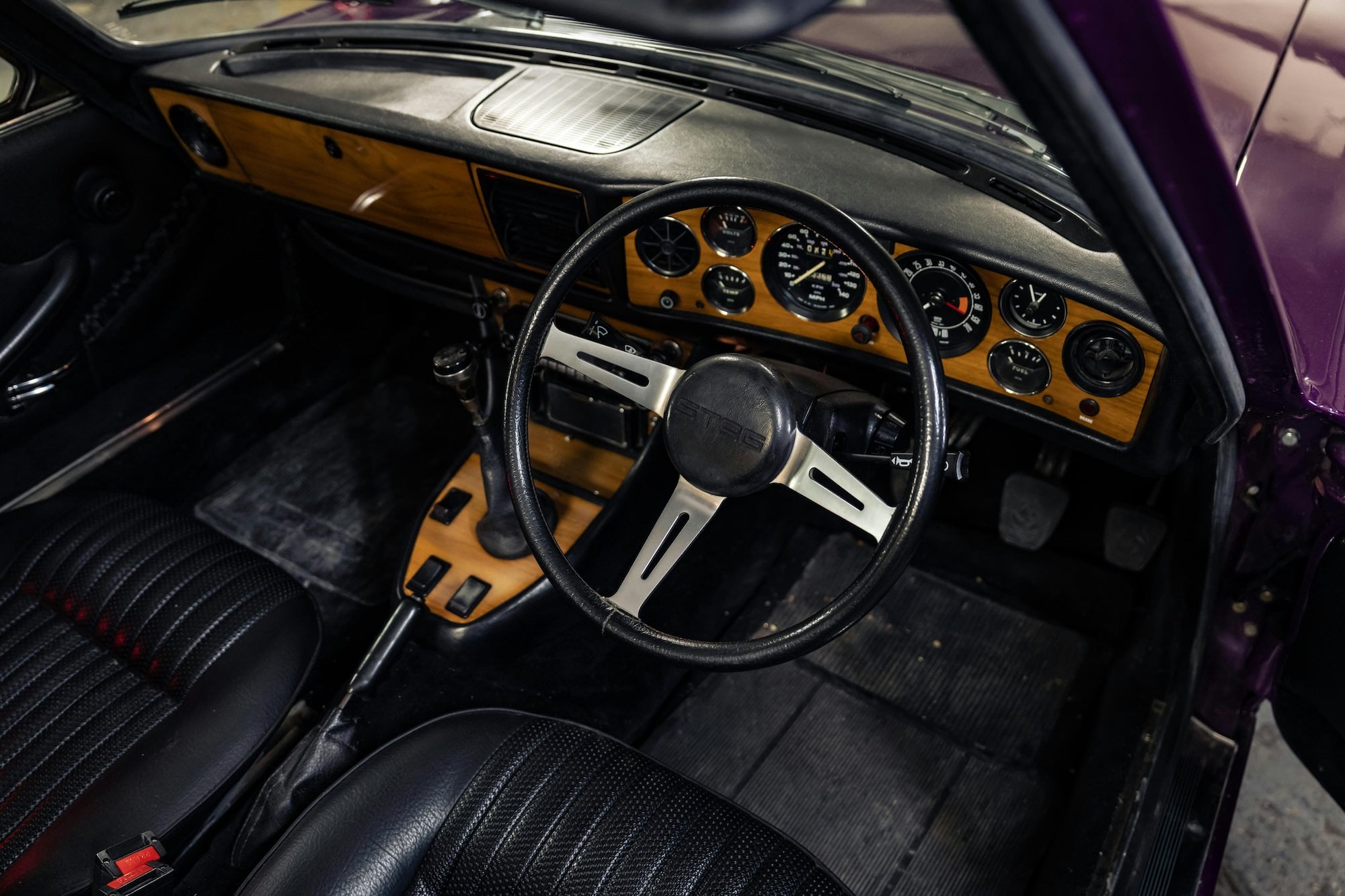
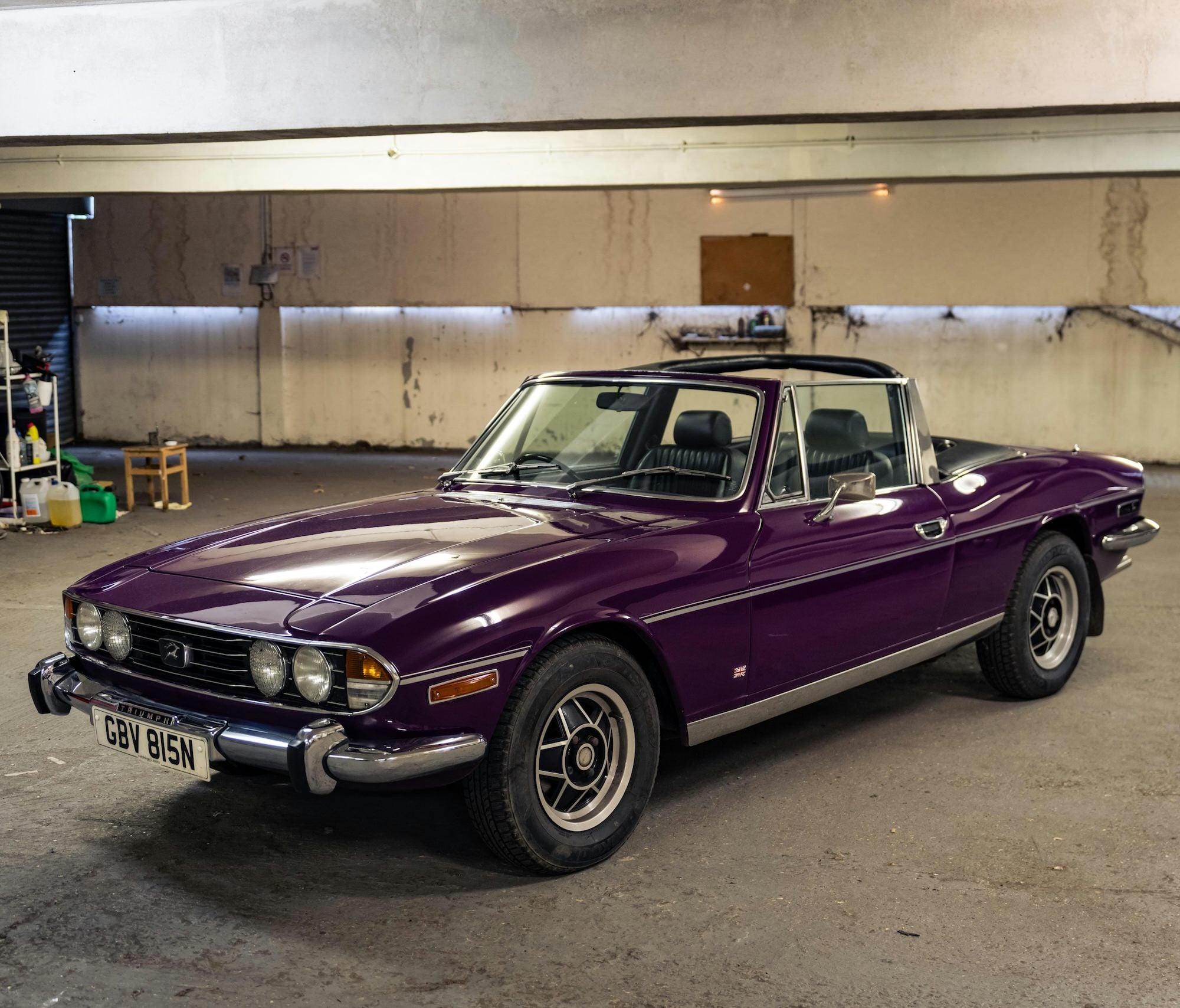
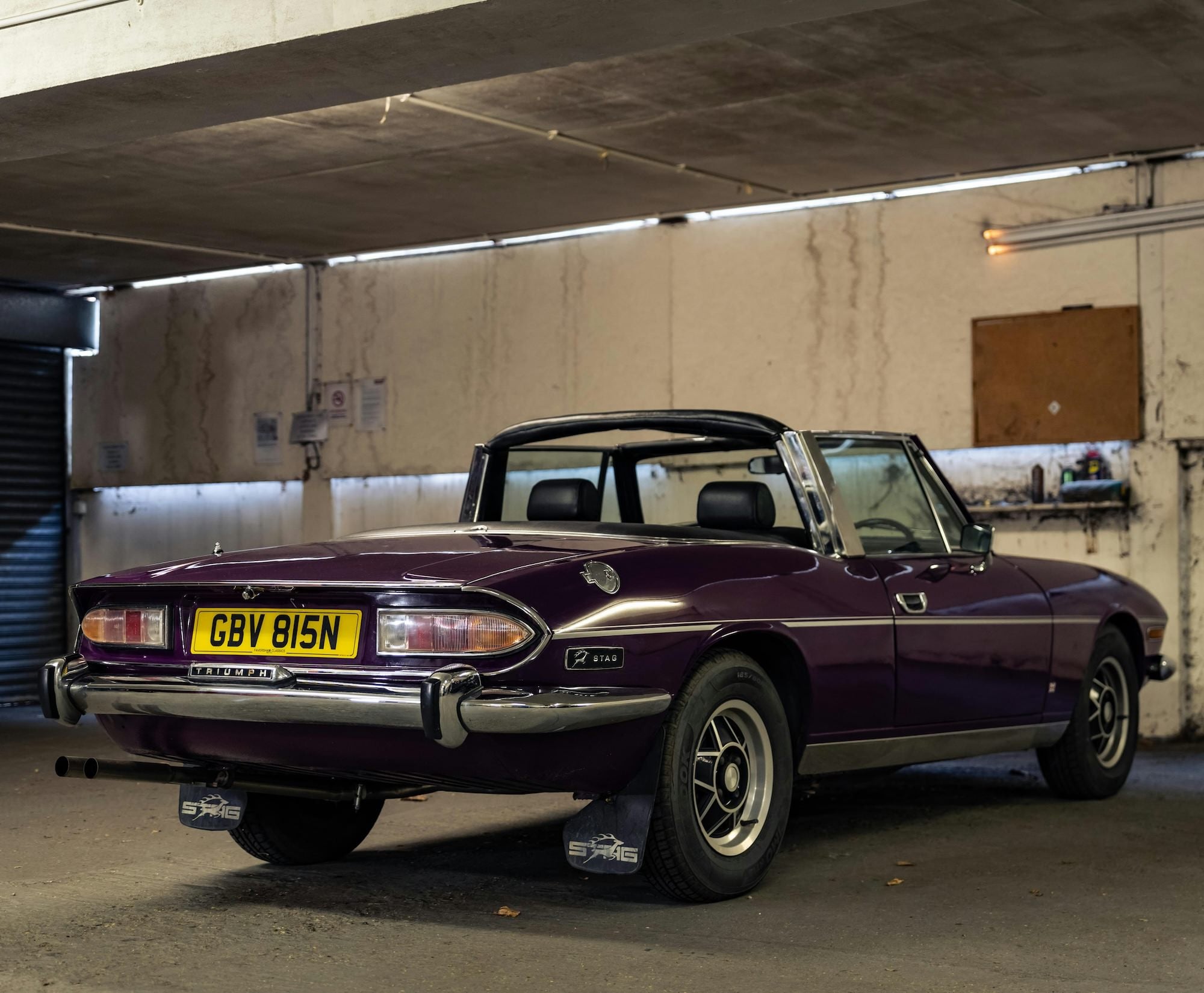
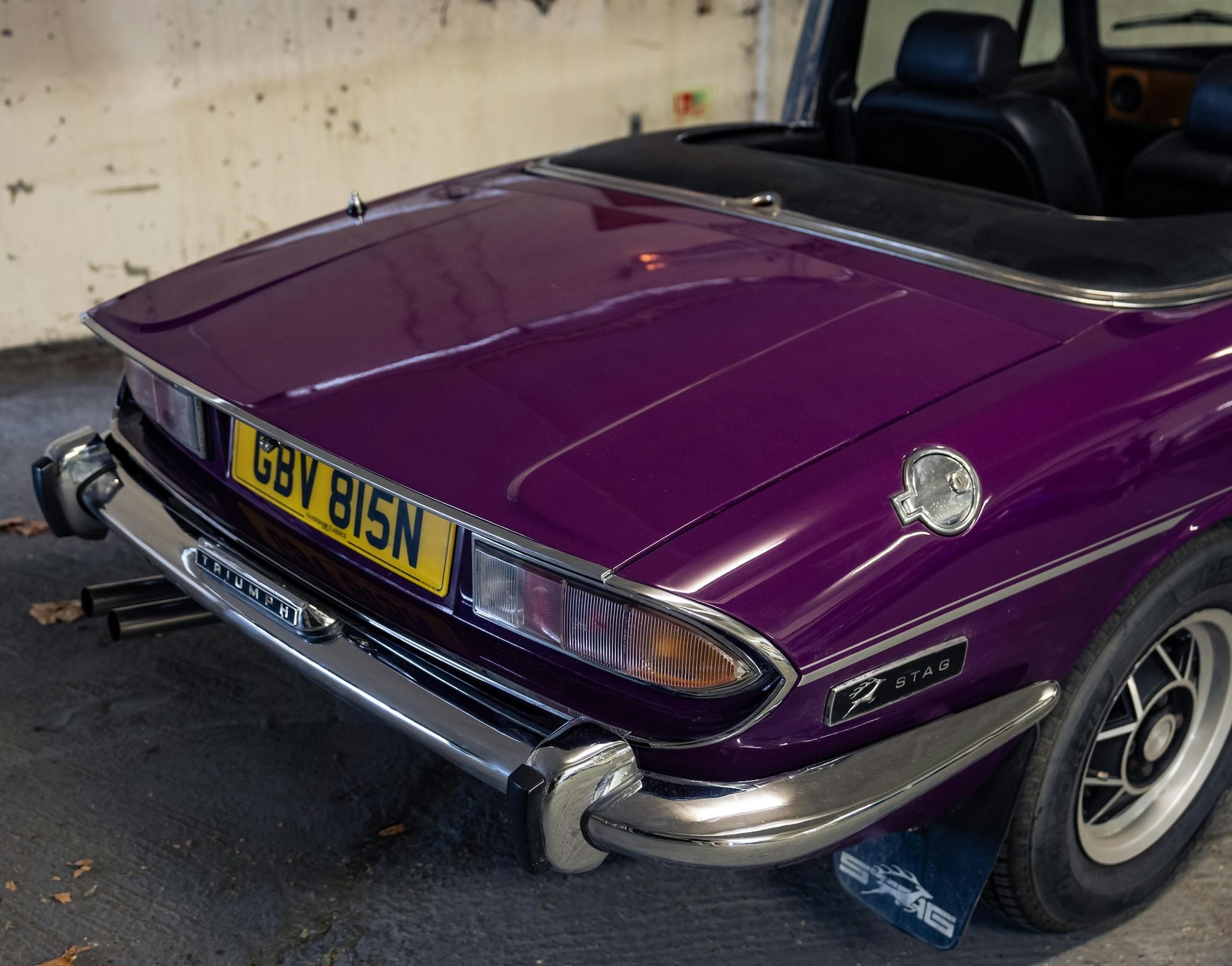
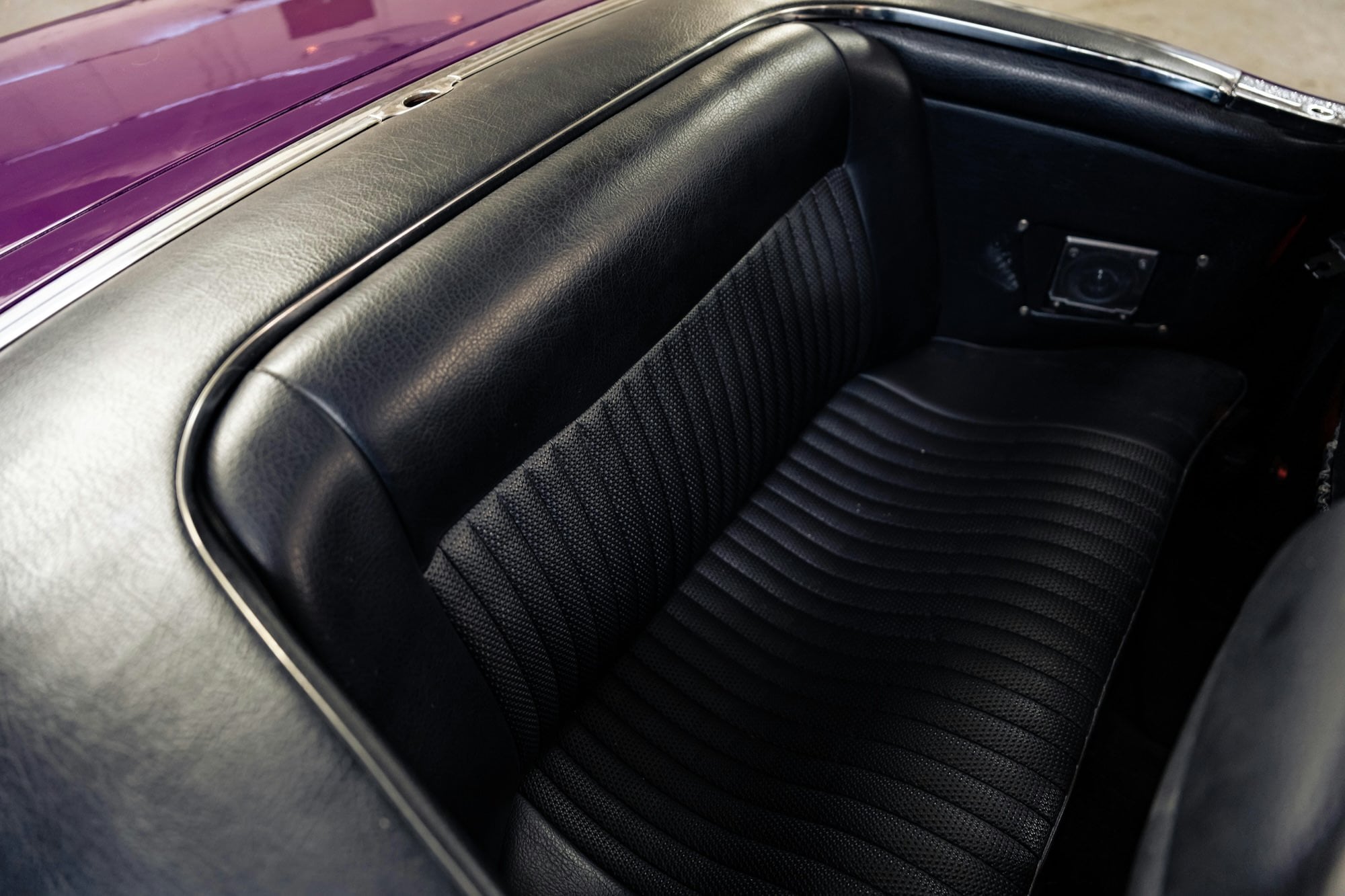
This Stag has reportedly been restored twice, it keeps its correct 3.0 Triumph V8 paired with the 4-speed manual gearbox – the enthusiast’s choice. It’s finished in Magenta with a black vinyl interior and wood veneer dashboard trim, and it’s being sold directly from May’s ownership.
Fast Facts: James May’s Triumph Stag
- The Triumph Stag was built from 1970 to 1977, with 25,939 examples built in total. The car was developed from a Giovanni Michelotti-designed Triumph 2000 concept, the four-seat convertible with distinctive styling, a T-shaped roll hoop, and a purpose-built 3.0 liter V8. It was intended to appeal particularly to American buyers seeking a British luxury sports tourer.
- The Stag’s 3.0 liter V8 produced 145 bhp and was paired with either a 4-speed manual or 3-speed automatic transmission. Unfortunately, cooling system problems, head gasket failures, and unreliable timing chains severely damaged its reputation. Despite these shortcomings, the Stag developed a cult following, and modern aftermarket solutions have addressed its mechanical foibles.
- Triumph introduced the updated Stag MkII in early-1973, with revised pistons, combustion chambers, and cosmetic changes. American sales ended after the 1973 model year, with just 2,871 cars sold through US distributors. Production ceased in 1977, but the Stag remains a popular British classic, with thousands surviving in the UK.
- This 1974 Triumph Stag MkII belongs to James May and appeared in “The Grand Tour” finale, “One for the Road.” Finished in Magenta with black vinyl upholstery, it keeps its original-specification Triumph V8 and manual gearbox. Reportedly restored twice, it shows 83,368 miles, and it’s now being offered for sale directly from May’s ownership.
History Speedrun: The Triumph Stag
Triumph sold the Stag from 1970 to 1977 and built 25,939 of them. Every one of them was a four-seat convertible with a roll hoop over the cabin, and all of them left the factory with a 3.0 liter V8 that no other production car ever used. Probably for good reason. The Stag is one of the most controversial British cars of its time, but its fans are among the most dedicated (and occasionally rabid) that you’ll ever meet.
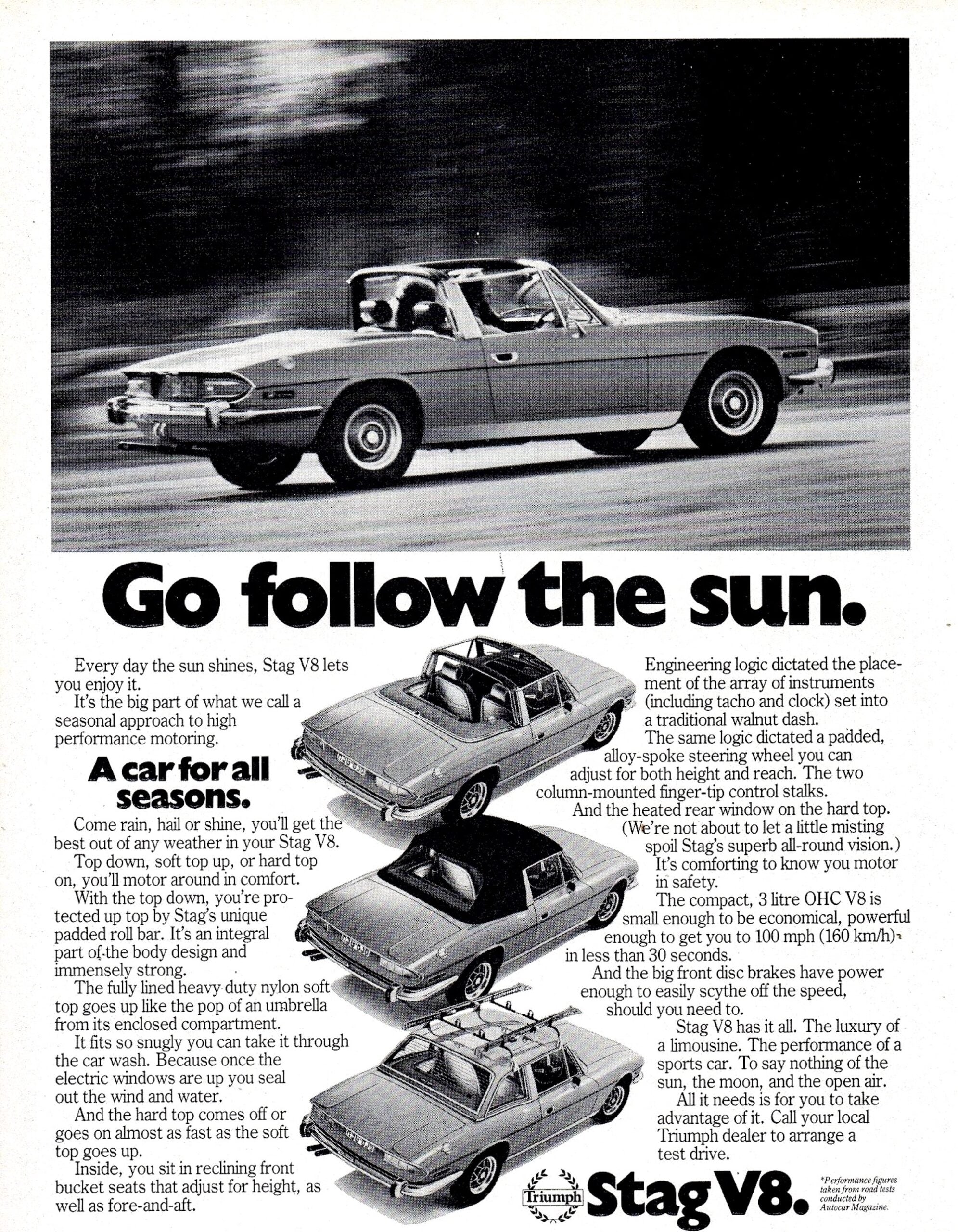
 Triumph sold the Stag from 1970 to 1977 and built 25,939 of them. Every one was a four-seat convertible with a roll hoop over the cabin, and every one left the factory with a 3.0 liter V8 that no other production car ever used. Image courtesy of Triumph.
From A Michelotti Show Car To Production
In 1965 Giovanni Michelotti, who had styled the Triumph 2000 saloon car (and almost every Triumph of the 1960s and early 1970s), and knew Triumph engineering director Harry Webster from his days as chief stylist at Vignale, asked for a car he could rework into a showpiece for the 1966 Geneva Motor Show.
Webster obliged, and sent over a 1964 2000 that had served as a support car for Triumph’s Spitfire team at the 24 Hours of Le Mans in 1965 – his one condition was that Triumph got first dibs on the resulting car design.
Michelotti’s show car never actually reached the Geneva show. Webster liked the open-top four-seater so much that in the summer of 1966 it was collected from Turin and driven cross-country back to Coventry. Getting a lot of curious looks en route no doubt.
Underneath, the car was still a Triumph 2000, with the saloon cars suspension and drivetrain on a shortened floorpan, and its project code name, Stag, became the official model name of the final production car.
Triumph’s engineers added the T-shaped roll hoop to stiffen the open body against scuttle shake. It was also a preemptive move to meet US DOT safety legislation, as rumors were rife that convertibles would be outlawed, and the United States was a crucial market for the British automaker. This is also why the Porsche 911 Targa was developed.
The design work that went into the Stag found its way back into the Triumph saloon cars too – because the Stag ran late, the face-lifted Triumph 2000, wearing the Stag’s nose and tail, landed in showrooms about eight months before the car that had inspired it.
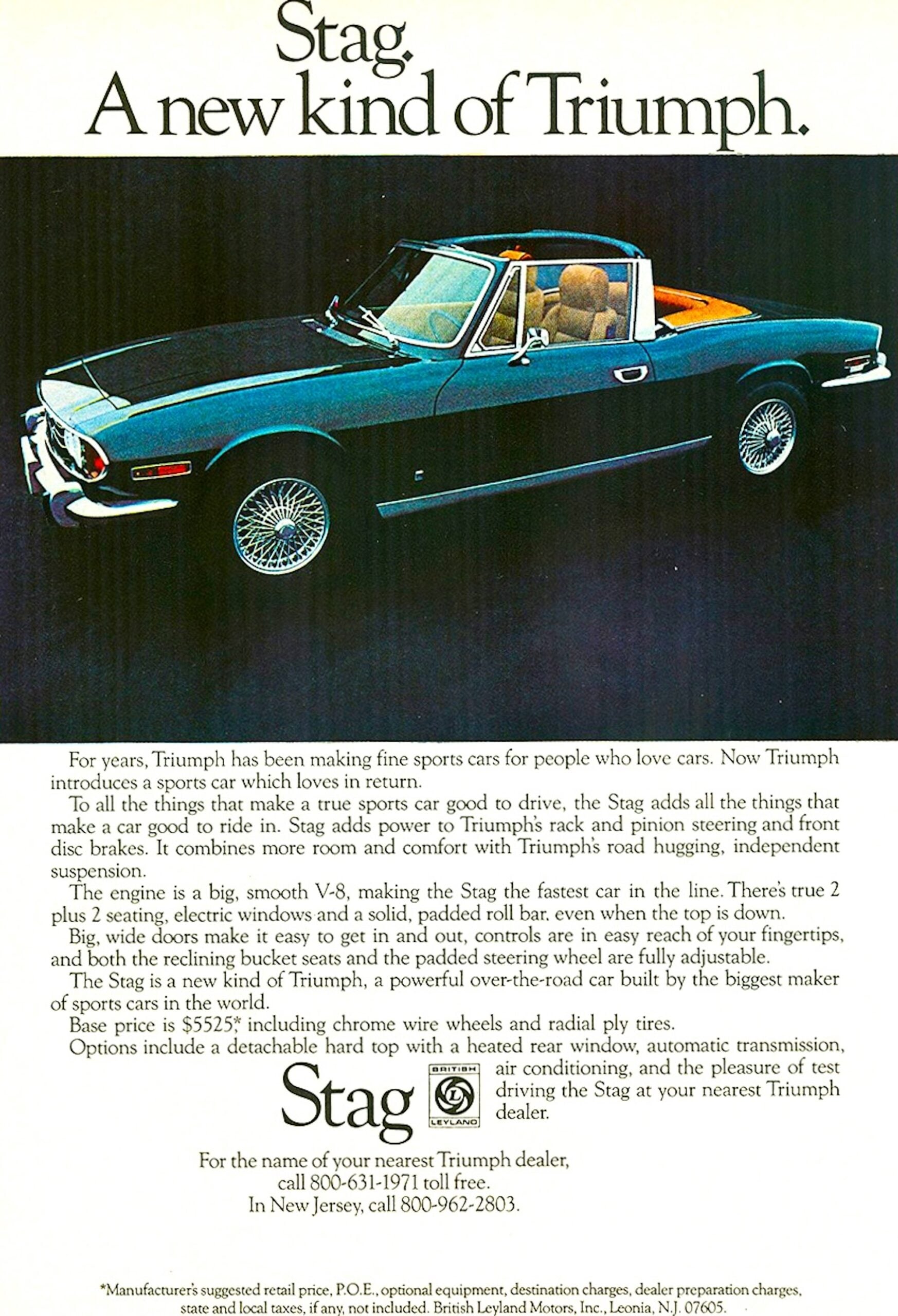
The Stag is one of the most controversial British cars of its time, but its fans are among the most dedicated (and occasionally rabid) that you’ll ever meet. Image courtesy of Triumph.
Triumph’s Troublesome V8
Early Stag prototypes used Triumph’s six, but Webster wanted something new and more appealing to Americans – they would develop a modern overhead cam 2.5 liter fuel-injected V8 built on the same tooling as the slant-four Triumph was producing for the Saab 99.
After the 1968 merger that formed British Leyland, Webster moved to Austin-Morris and Spen King arrived from Rover. King enlarged the V8 to 3.0 liters (2,997cc) and swapped the injection for twin Zenith-Stromberg carburetors.
The obvious alternative engine was Rover’s aluminum V8. An essentially bulletproof pushrod engine with a displacement of 3.5 liters that was based on the earlier Buick 215. Supply concerns soon ruled it out, British Leyland simply couldn’t build enough Rover engines for the cars that needed it without expanding production. Funnily enough, the Rover V8 has long been the most popular engine swap into the Triumph Stag.
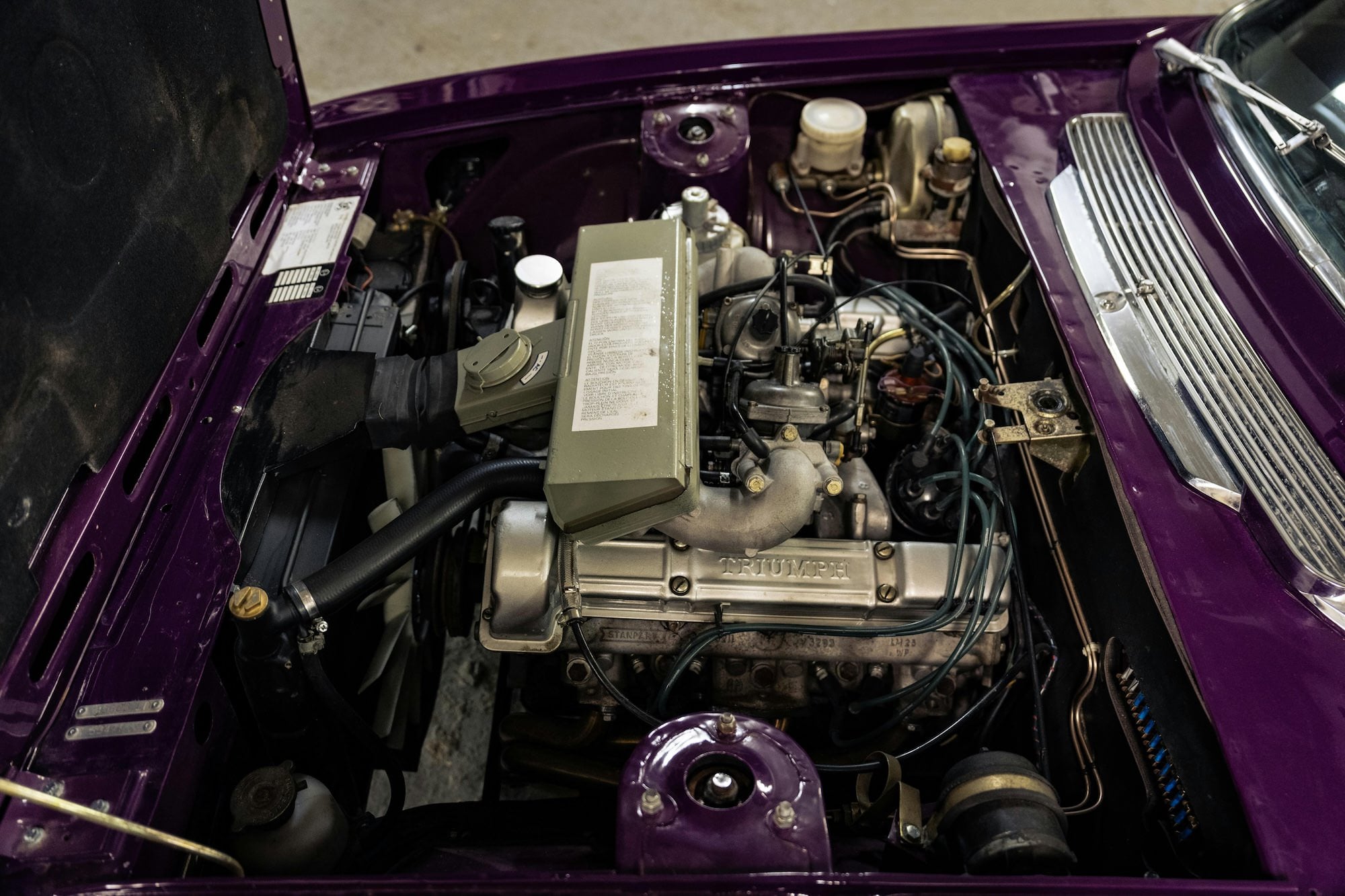
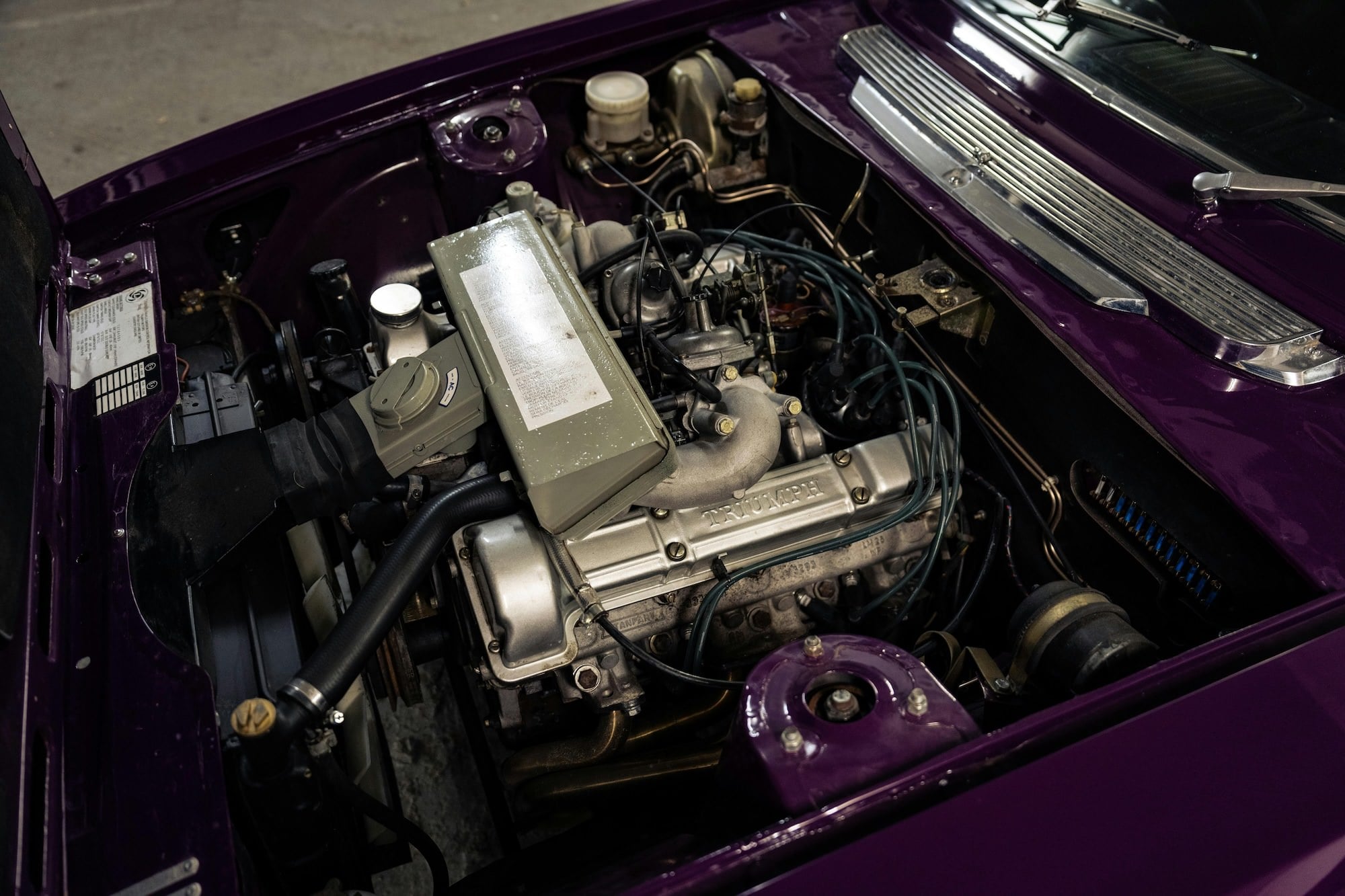
The finished Triumph V8 had an iron block, a pair of aluminum heads, a single chain-driven camshaft per bank, and in launch form, it made 145 bhp at 5,500 rpm and 170 lb ft of torque at 3,500 rpm. It sat in a unit-construction steel body with MacPherson struts up front, semi-trailing arms at the rear, coil springs at all four corners, servo-assisted front discs and rear drums, and power rack-and-pinion steering.
Buyers could choose from a 4-speed manual with optional Laycock overdrive or a Borg-Warner 3-speed automatic. Fortunately, most did the right thing and opted for the stick.
The Stag went on sale in Britain on June the 9th, 1970, roughly two years behind schedule, and cost £1,995 17s 6d (about $4,800 USD) including purchase tax. That works out to approximately $41,700 USD in 2026 dollars.
The iron block and aluminum heads needed corrosion-inhibiting antifreeze year round, something owners and dealers often didn’t adhere to. As a result, corrosion could silt up the waterways and radiator, the engine would overheat, and the head gasket would fail. The water pump sat high in the engine’s V, so even a small loss of coolant could upset circulation with catastrophic consequences.
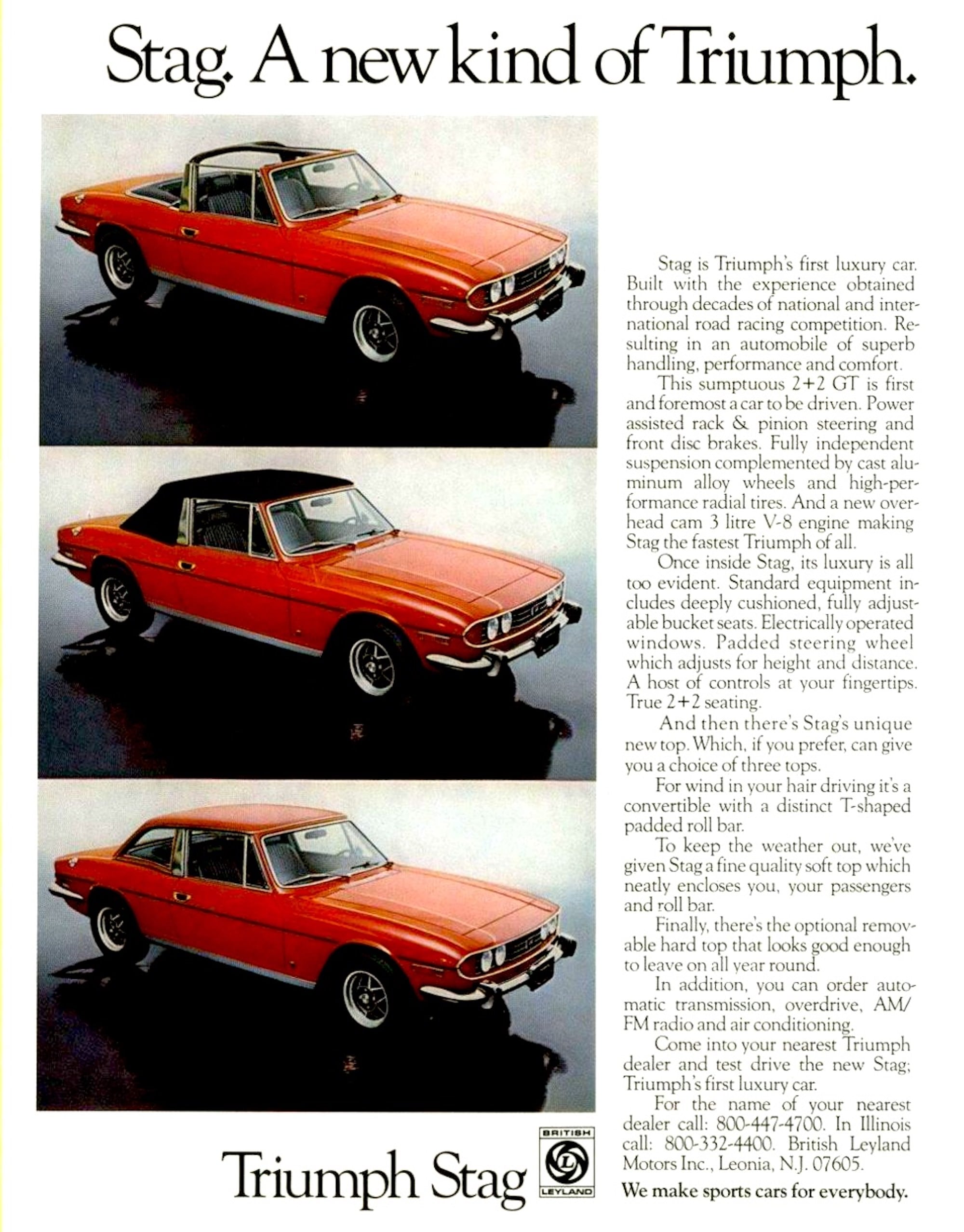
The Stag remains a genuine cult classic today, beloved by its owners, and the foibles of its V8 have long since been solved by the aftermarket. Image courtesy of Triumph.
The long single-row timing chains were prone to stretching, some even failing inside 25,000 miles, and a chain that jumped let valves meet pistons, grenading the engine and making one of the single worst sounds you can hear when out for a spirited pootle through the B-roads.
Quality control at Triumph contributed to additional issues, including casting sand left inside engine blocks. Some journalists took to calling the car the “Triumph Snag.”
Triumph had projected 12,000 sales a year for the Stag. But in the best year, 1973, they managed only about 5,500. Warranty claims, the rapidly spreading reputation, and the poor sales that followed undermined the Stag in America, its main target market.
Triumph withdrew it in the US at the end of the 1973 model year, the American distributor sold 2,871 in all, the last of them from remaining stock as late as 1975.
The Mk I + Mk II Stags
Triumph never officially used Mark numbers, enthusiasts would later split the cars at the 1973 model year into Mk I and Mk II. For the 1972 model year, tighter emissions rules brought US cars lower compression and a rating of 127 bhp at 6,000 rpm. Mk I running changes elsewhere included a revised cooling system in early 1972 and standard overdrive on manual cars from October that same year.
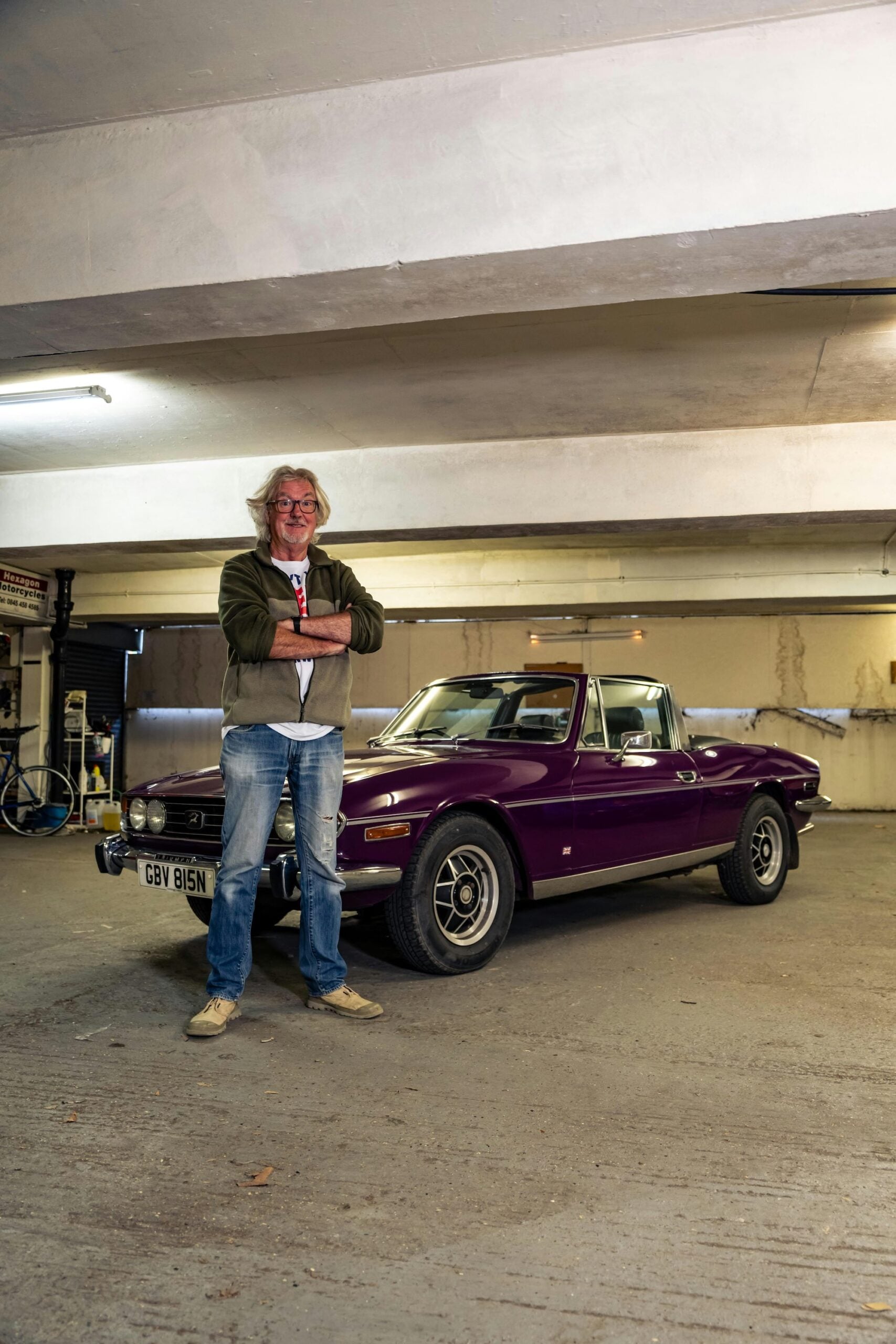
This is the 1974 Triumph Stag MkII owned by James May, and used by him in the finale of “The Grand Tour” in an episode titled “One for the Road.”
The Mk II arrived in February of 1973 with domed pistons and reshaped combustion chambers for higher compression, plus matte-black sills and tail panel, twin coachlines and black badges. From October of 1975 the tail panel went back to body color, stainless covers went over the sills and alloy wheels became standard. A Borg-Warner Type 65 automatic replaced the Type 35 later in 1976, and production ended in mid-1977.
The Survivors
Approximately 8,400 Stags were still registered in the UK, taxed or declared off the road, by the end of 2022. The car remains a genuine cult classic today, beloved by its owners, and the foibles of its V8 have long since been solved by the aftermarket. The last Stag ever built is on display at the British Motor Museum at Gaydon, England.
The James May-Owned Triumph Stag Shown Here
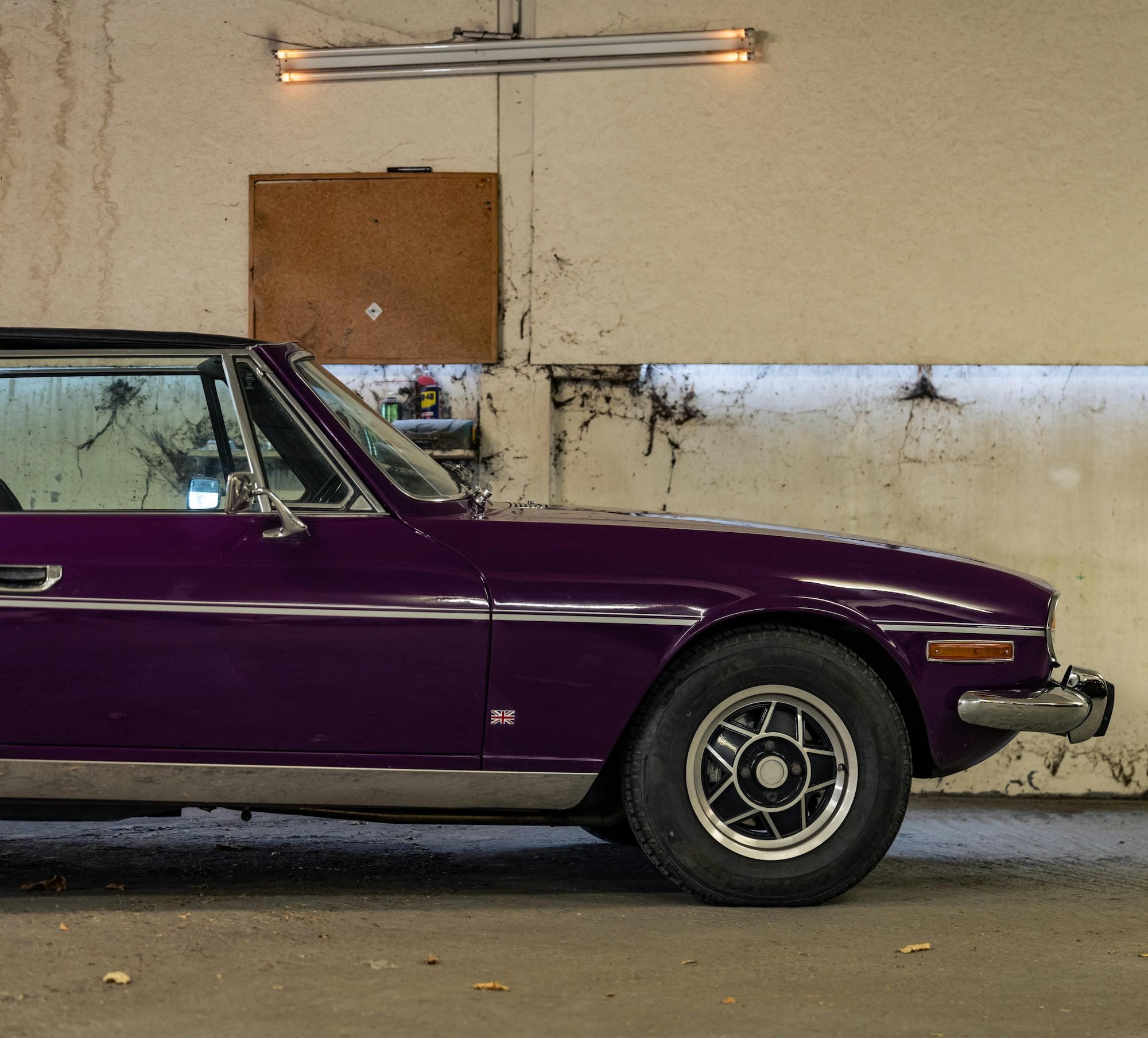
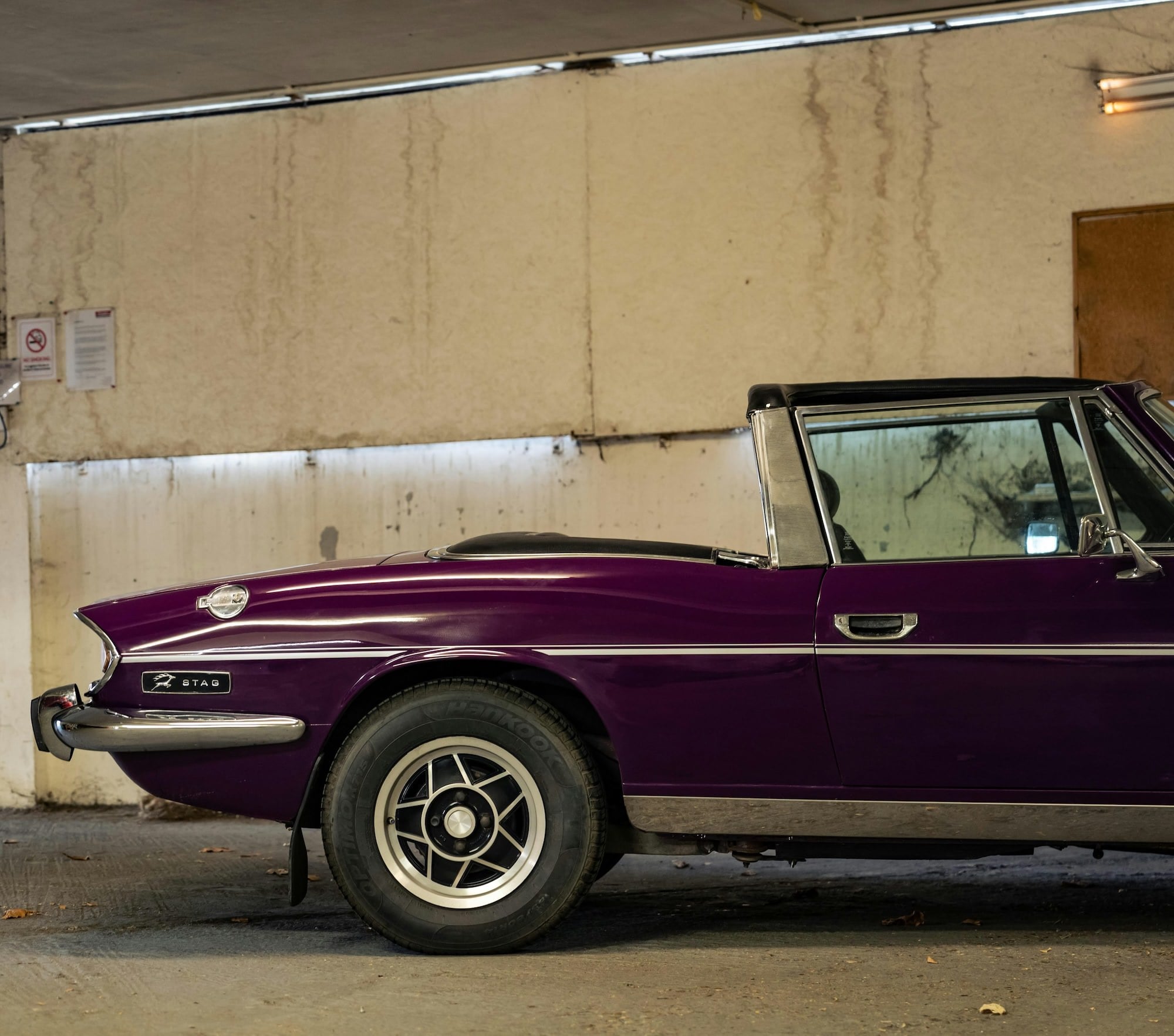
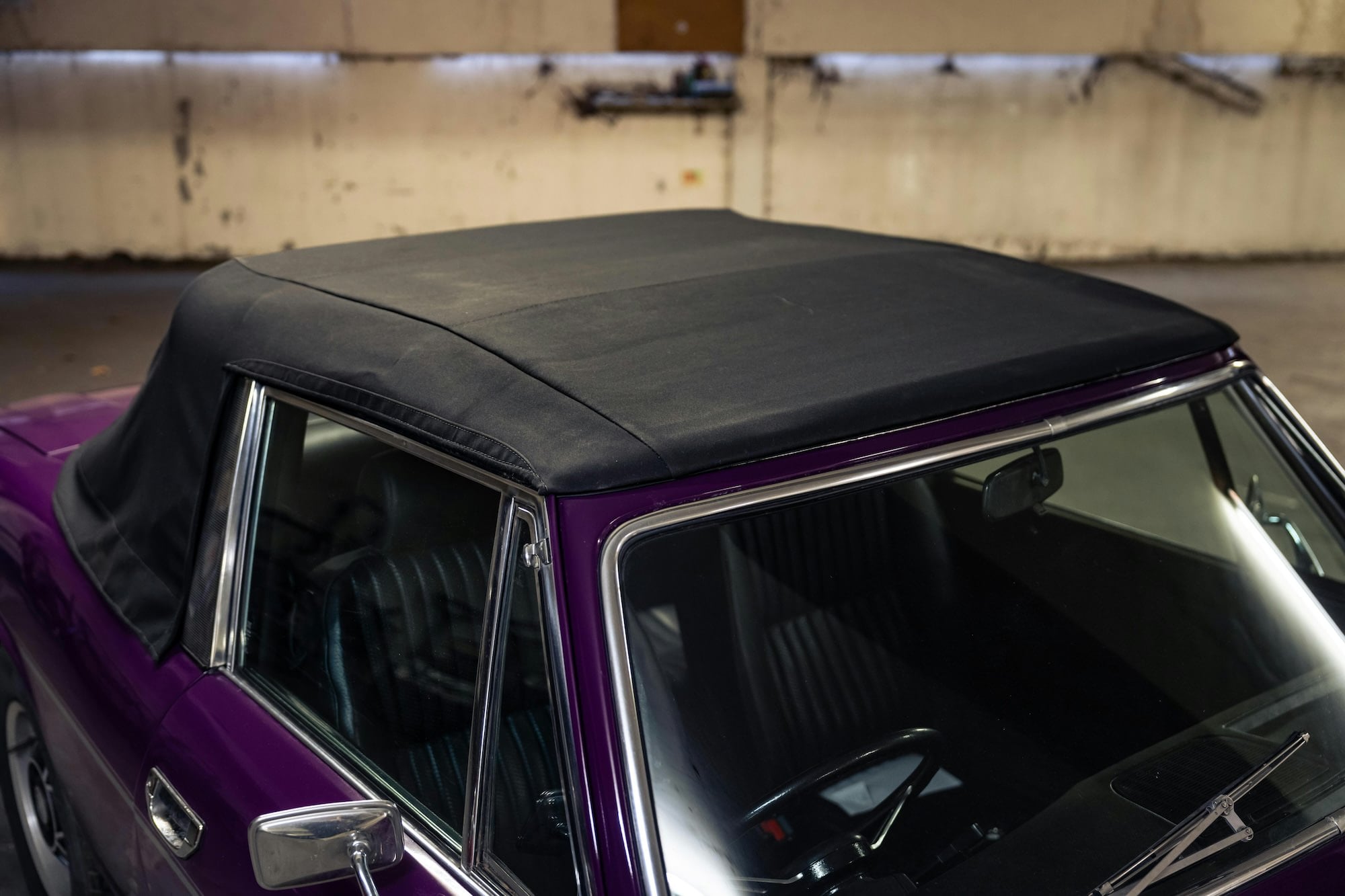
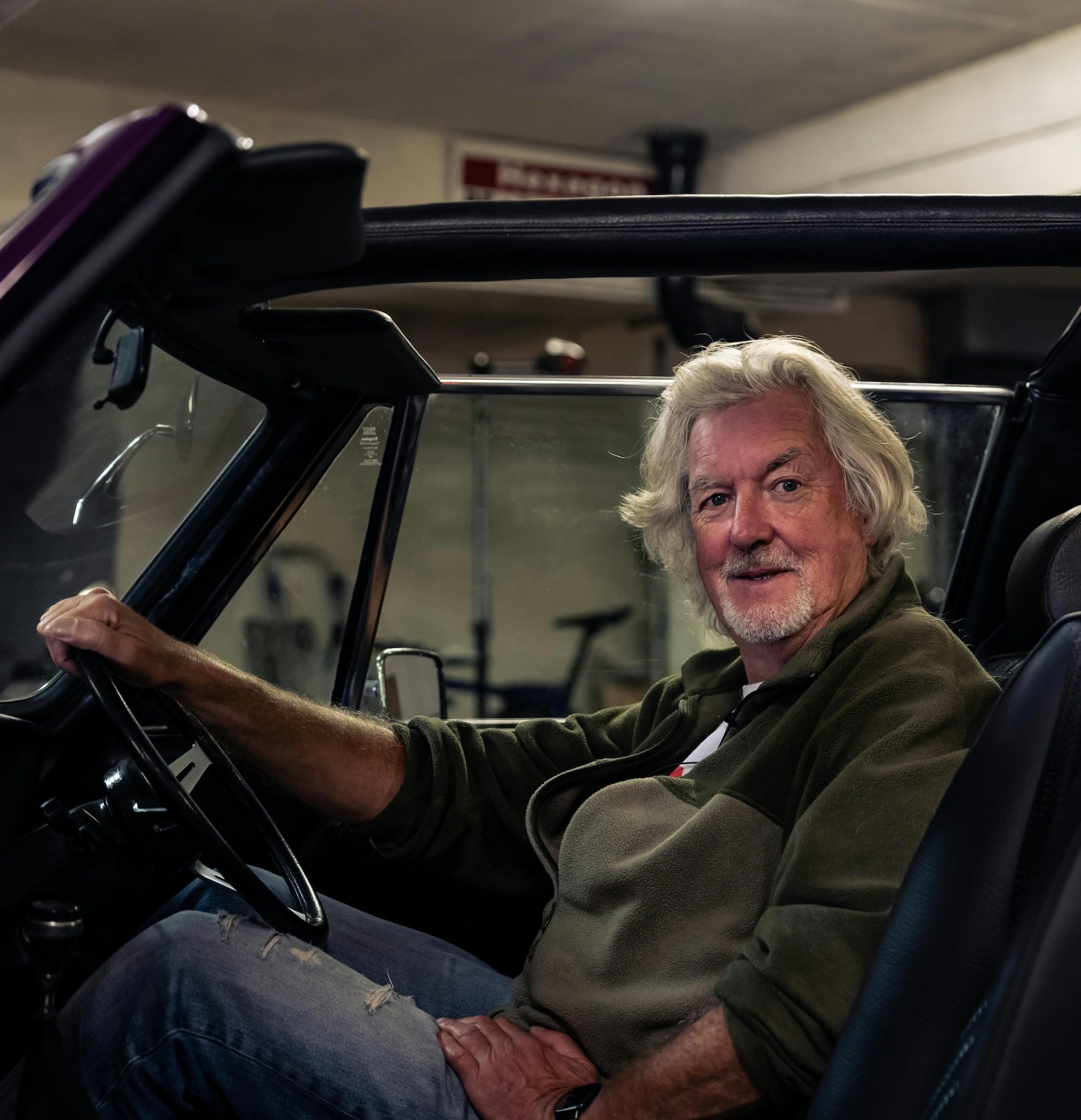
This 1974 Triumph Stag MkII has been owned by well-known motoring journalist and television presenter James May for nearly three years, and appeared in the final episode of The Grand Tour, titled One for the Road. The car was first registered in October of 1974, it’s finished in Magenta with a black vinyl interior, wood veneer dashboard trim, and chrome exterior detailing.
Power comes from the correct 3.0 liter Triumph V8, which drives the rear wheels through a 4-speed manual box.
Unusually, this Stag has reportedly undergone two restorations in its life, the most recent commissioned by its previous owner and involving substantial work on the engine, gearbox, and suspension. Its Magenta paintwork is understood to have been applied by The Smallest Cog, the restoration workshop featured in Richard Hammond’s Workshop.
The car rides on 14-inch five-spoke alloy wheels fitted with Hankook Optimo tires, and it keeps its Smiths instrumentation, three-spoke steering wheel, and Kienzle clock. A retro-style Bluetooth stereo has also been fitted.
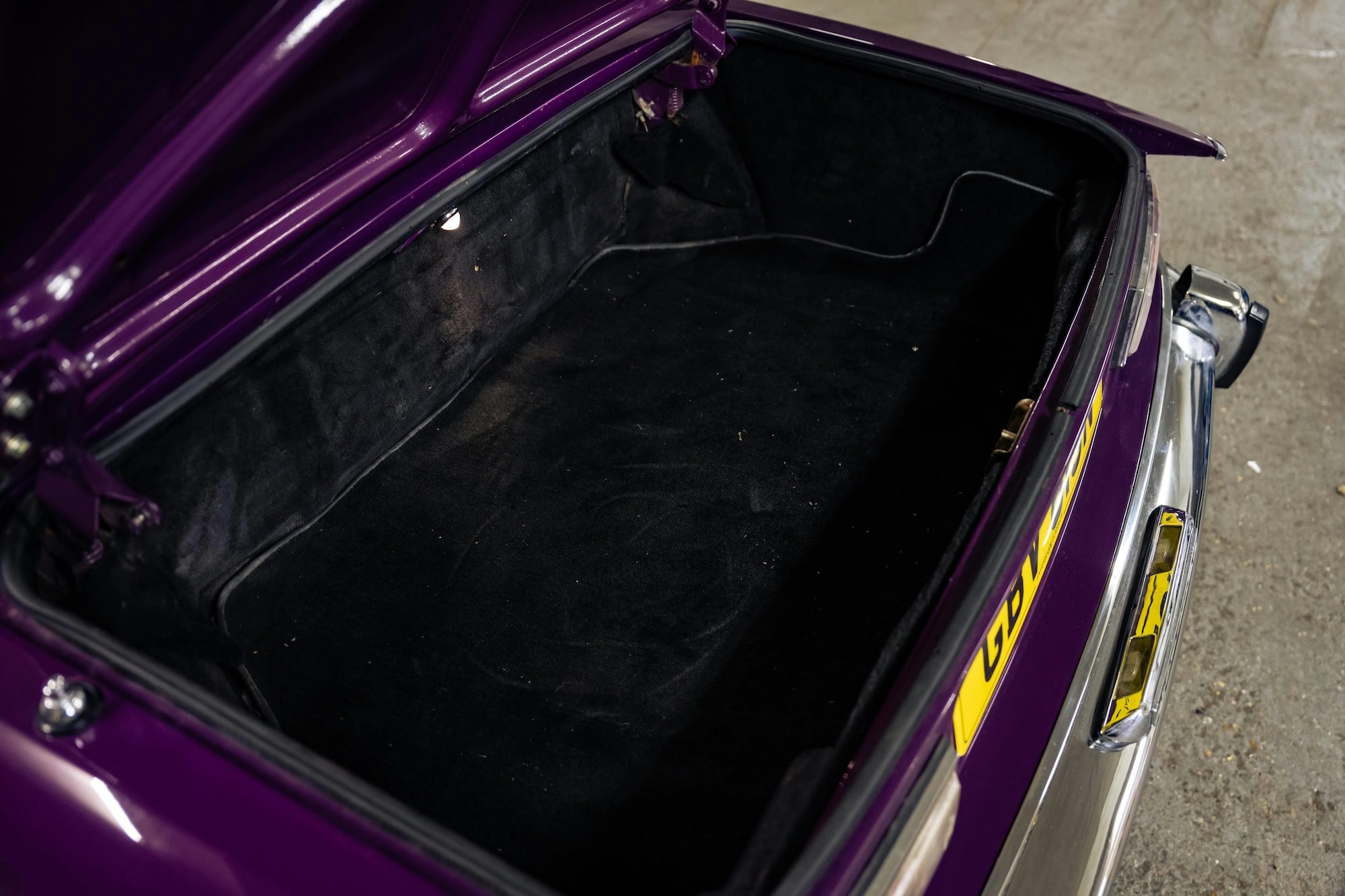
The Stag is described as being in generally good condition, although some panel alignment could be improved, the chrome has minor pitting, and the interior shows age-related wear. Some dashboard illumination bulbs also need replacing.
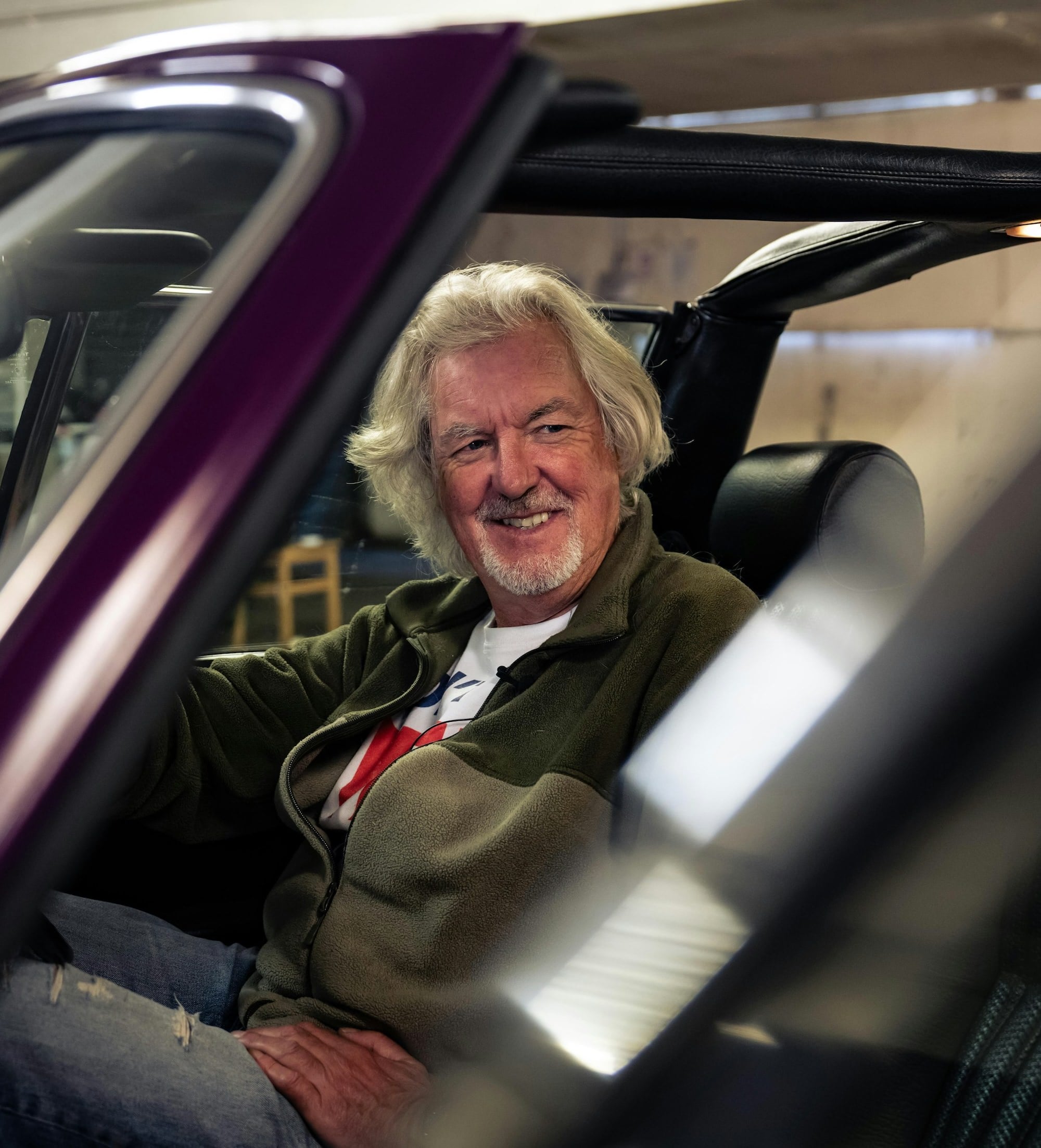
This 1974 Triumph Stag MkII has been owned by well-known motoring journalist and television presenter James May for nearly three years, and appeared in the final episode of “The Grand Tour,” titled “One for the Road.”
The odometer is displaying 83,368 miles, though the mileage is not warranted, and the last recorded service took place in mid-2025 at 83,100 miles. The car is offered with an ignition key and leftover paint from The Smallest Cog’s repaint.
It’s now being offered for sale out of London, England direct from James May’s ownership, and you can visit the listing here if you’d like to read more about it or register to bid.
Images courtesy of Collecting Cars + Triumph

Articles that Ben Branch has written have been covered on CNN, Popular Mechanics, Smithsonian Magazine, Road & Track Magazine, the official Pinterest blog, the official eBay Motors blog, BuzzFeed, Autoweek Magazine, Wired Magazine, Autoblog, Gear Patrol, Jalopnik, The Verge, and many more.
Silodrome was founded by Ben back in 2010, in the years since the site has grown to become a world leader in the alternative and vintage motoring sector, with well over a million monthly readers from around the world and many hundreds of thousands of followers on social media.