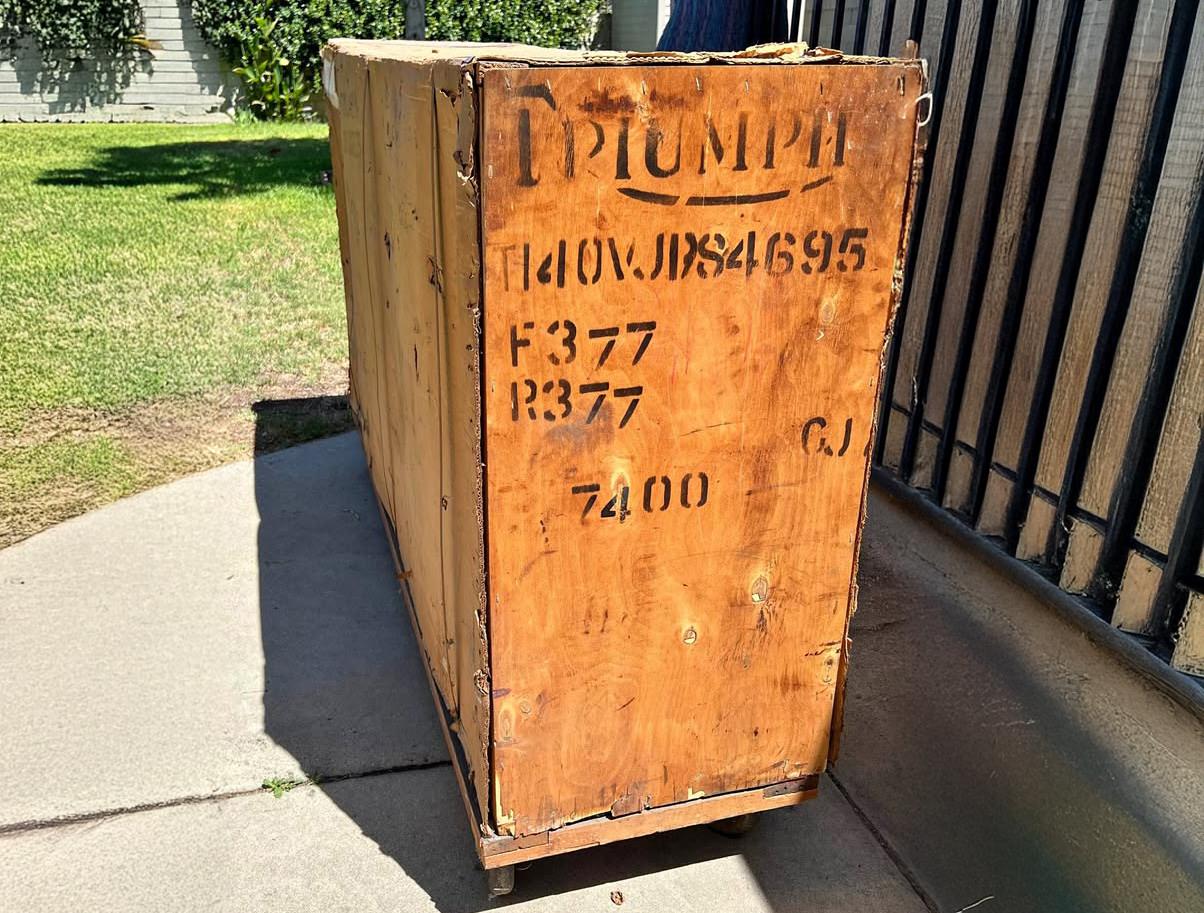
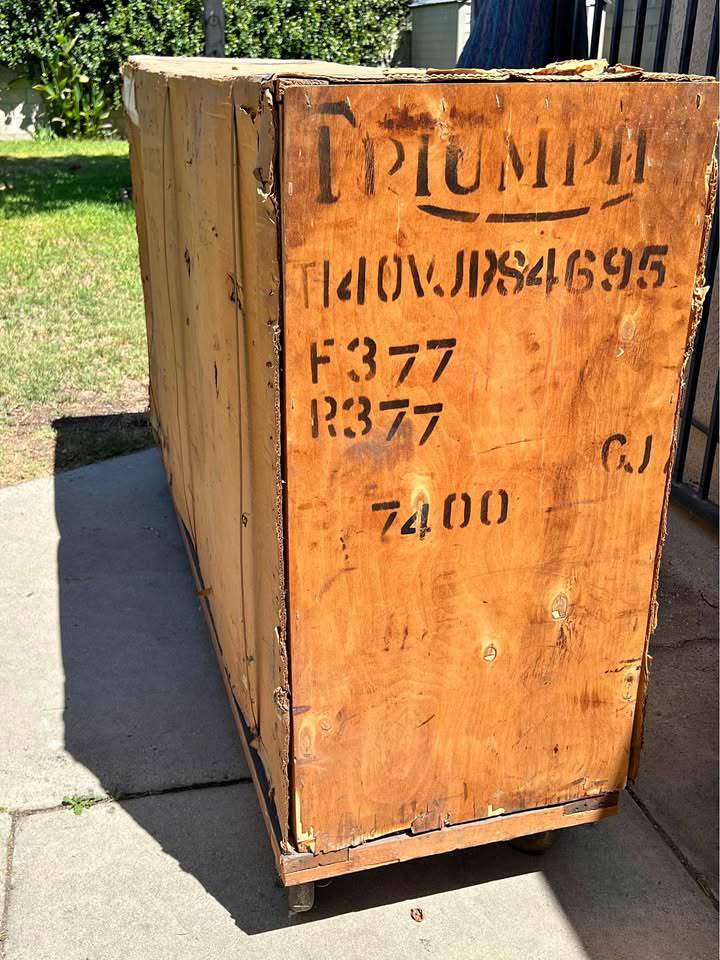
This is a 1977 Triumph Bonneville “Silver Jubilee” edition that was delivered new to a motorcycle dealership in Los Angeles, California and then never uncrated, started, or ridden.
It’s now being offered for sale, still in its factory crate, with the original literature supplied by Triumph in-period. Untouched bikes like this that are still crated are always of interest to collectors, and this one has been tucked away with the original dealer for almost half a century and counting.
Fast Facts: A Crated Triumph Bonneville Silver Jubilee
- The Triumph Bonneville Silver Jubilee was introduced in 1977 to commemorate Queen Elizabeth II’s 25 years on the throne. It arrived during a financially difficult period for Triumph’s worker-run Meriden factory, which had reopened in 1975 following an 18-month occupation and later received government-backed financial assistance through the General Electric Company.
- Based on the standard T140V Bonneville, the Silver Jubilee had distinctive silver paint with red and blue detailing, a blue seat, additional chrome trim, and a certificate of authenticity. Mechanically, it kept the 744cc air-cooled parallel-twin, twin Amal carburetors, 5-speed transmission, oil-in-frame chassis, and front and rear disc brakes.
- Triumph produced 2,400 Silver Jubilee motorcycles, including 1,000 for the United States, 1,000 for Britain, and 400 for other export markets. American examples had higher handlebars, smaller fuel tanks, and “One of a Thousand” side panel markings. Sales were reportedly slow in America, with some remaining unsold into the 1980s.
- This particular 1977 Silver Jubilee was delivered new to a Los Angeles motorcycle dealership and reportedly remains with its original dealer principal. It’s never been removed from its factory shipping crate, started, registered, or ridden, and keeps its original factory literature. Showing zero miles, it is now offered for sale in North Hollywood, California.
History Speedrun: The Triumph Bonneville Silver Jubilee
On the 14th of September 1973, Dennis Poore, the Managing Director of Norton Villiers Triumph, told the workforce at Triumph’s Meriden factory near Coventry that the plant would be closing down. The workers chained the gates and occupied it in protest – 18 months of blockade and negotiation with a sympathetic Labour government followed, and on the 10th of March 1975 the Meriden Motorcycle Co-Operative began operations, concentrating on manufacturing the 750 Triumph twins.
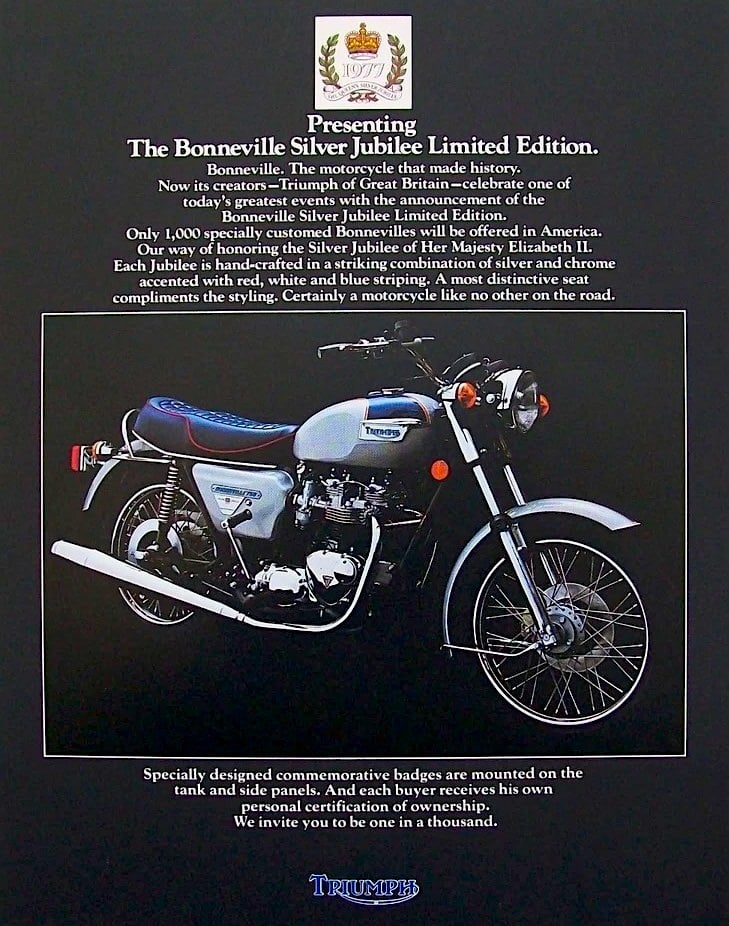
 In 1977 Britain was marking Queen Elizabeth II’s Silver Jubilee, her 25th year on the throne, and Triumph built a special Bonneville for it. Image courtesy of Triumph Motorcycles.
The co-op’s finances stayed precarious, to say the least, and on the 7th of February 1977 the government announced a rescue in which the General Electric Company would make up to £1 million (about $1.7 million USD) available, taking over motorcycles until they were sold and providing management and marketing help. Lord Stokes, the former British Leyland chairman, joined as a consultant on North American and international sales.
In 1977 Britain was marking Queen Elizabeth II’s Silver Jubilee, her 25th year on the throne, and Meriden built a special Bonneville for it. Accounts differ on whose idea it was. Highly-regarded motorcycle historian Ian Falloon credits Stokes, who also obtained Buckingham Palace’s approval. John Rosamond, the co-op’s last chairman, credited GEC, which wanted to clear a stockpile of unsold bikes, with the co-op drawing down GEC finance as each one sold.
The Jubilee was essentially a standard T140V Bonneville with a finish to suit the occasion – silver paint lined in red and blue, a blue seat, with red piping, chrome-plated primary and timing covers, fork covers, and taillight housing, lined wheel rims and Dunlop K91 Red Arrow tires. Frame and engine numbers kept the T140V prefix and were given an additional J suffix, and the model was designated T140J. Each bike also came with a certificate of authenticity.
Apart from Girling rear shocks, the Jubilee was mechanically standard for the time. The engine was the 750cc (actually 744cc) air-cooled parallel twin, with a 360º crankshaft, a 76mm bore and 82mm stroke, two pushrod-operated valves per cylinder from gear-driven camshafts, two 30 mm Amal Concentric carburetors and a kickstarter only.
A triplex chain drive took drive to the wet multiplate clutch and a 5-speed gearbox with a left-foot shift, and a chain final drive turned the rear wheel. The welded tubular steel frame held the engine oil in its large-diameter backbone tube, a layout Triumph had introduced in 1971. Suspension was by telescopic fork up front and a swingarm out the back, with a single hydraulic disc brake at each end. It was good for about 110 mph, proven in period testing.
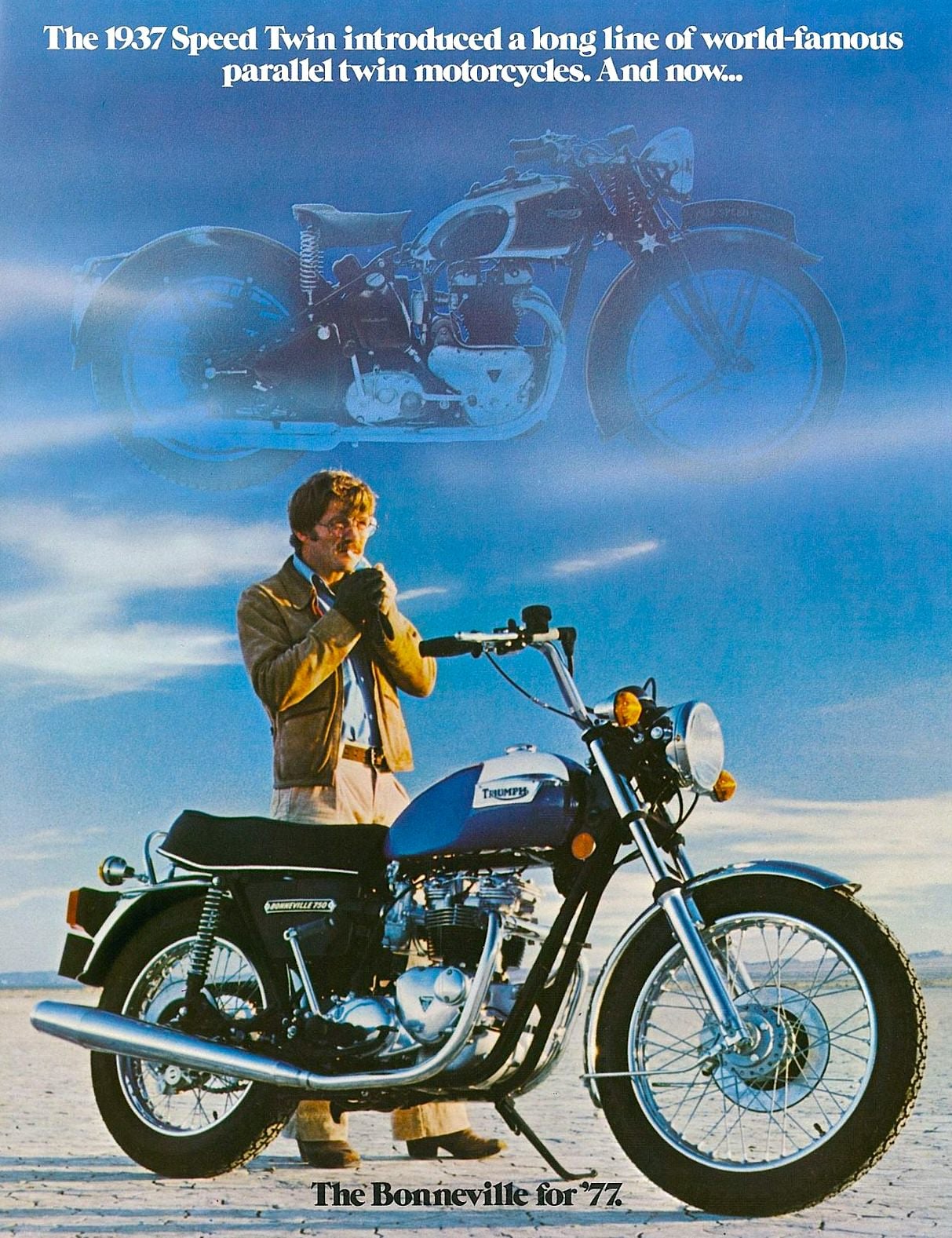
The Silver Jubilee Bonneville was essentially a standard T140V Bonneville with a finish to suit the occasion – silver paint lined in red and blue, a blue seat, with red piping, chrome-plated primary and timing covers, fork covers, and taillight housing, lined wheel rims and Dunlop K91 Red Arrow tires. Image courtesy of Triumph Motorcycles.
The 1,000 bikes that were built for the American market had higher bars and the small teardrop tank, as was the fashion at the time, and their side panels read “One of a Thousand.” The 1,000 British machines, with the larger tank, read “Limited Edition.” A final 400 for other export markets were badged “Limited International Edition,” bringing the total to 2,400.
In Britain the Jubilee cost £1,149 (about $2,000 USD at the time or $11,200 USD today), against £1,012 (about $1,770 USD at the time or $9,800 USD today) for a standard Bonneville.
Falloon noted that the American allocation sold very slowly, with Jubilees still sitting in US showrooms well into the 1980s, while buyers elsewhere treated them as investments and stored many with little or no use. Some even ended up stored in their factory crates for decades in the hopes their values would rise.
The co-op’s 1977 optimism didn’t last long – a weakening dollar was partly to blame for a slump in American sales, and Triumph’s Meriden operation closed in mid-1983.
The Factory-Crated 1977 Triumph Bonneville Shown Here
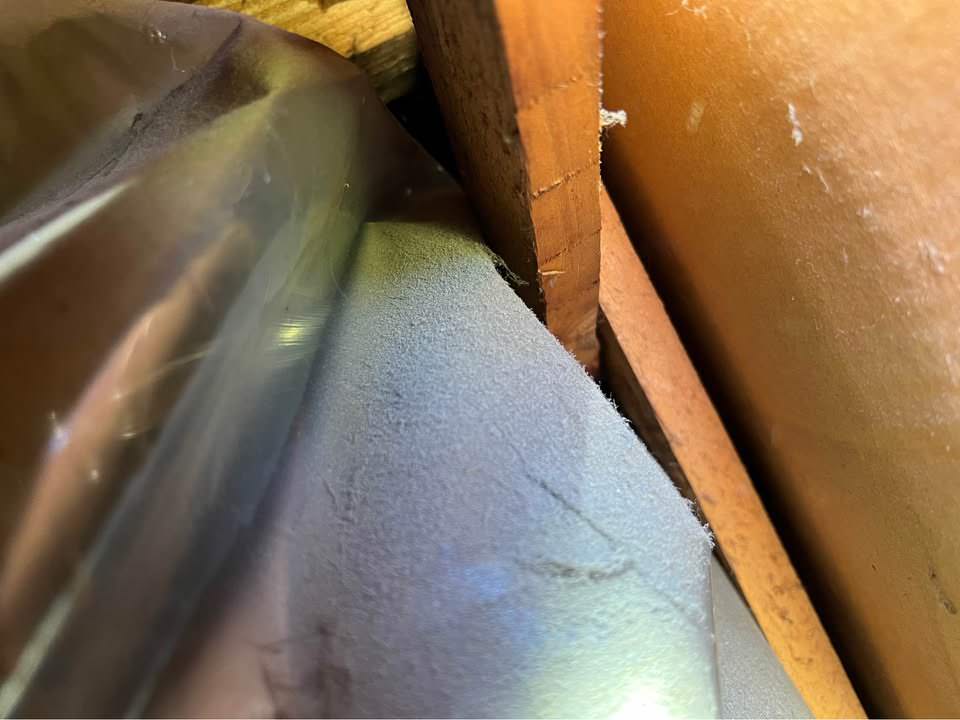
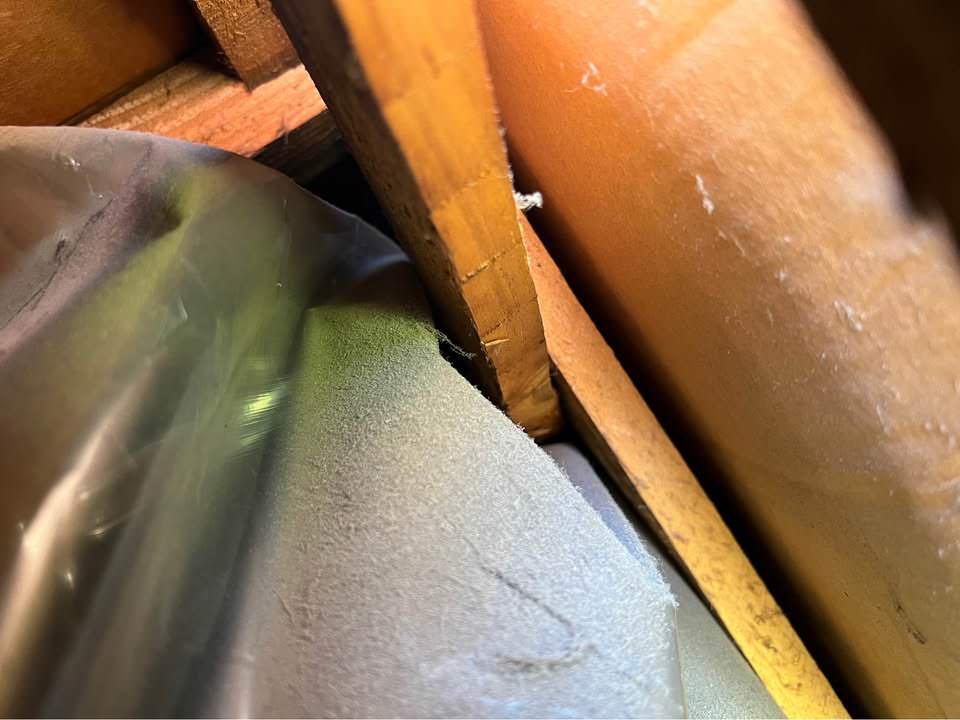
This 1977 Triumph Bonneville Silver Jubilee is an exceptionally well-preserved example that’s still in its original factory shipping crate, having never been assembled for road use, registered, or ridden. The seller states that the motorcycle has 0 miles from new.
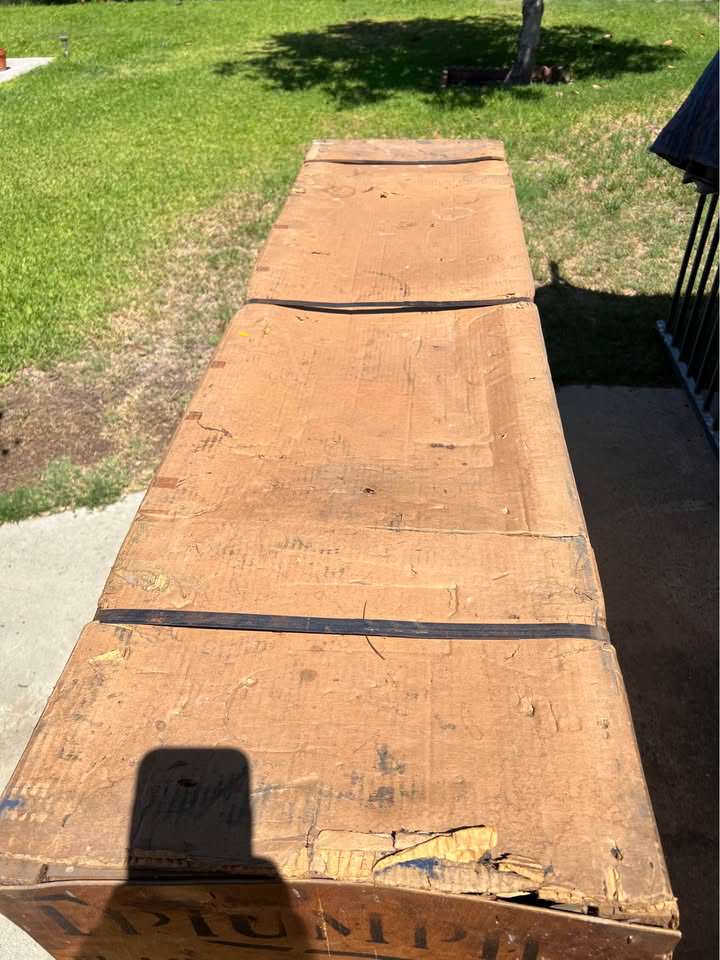
This is a 1977 Triumph Bonneville “Silver Jubilee” edition that was delivered new to a motorcycle dealership in Los Angeles, California and then never uncrated, started, or ridden.
This Bonneville is reportedly still owned by the original dealer principal, who has kept it since it was delivered to the dealership in 1977. It has therefore remained under the same ownership for nearly 50 years, making it an unusual survivor from the period.
The sale also includes the original literature supplied by the Triumph factory. It’s now being offered out of North Hollywood, California on Facebook Marketplace and you can visit the listing here if you’d like to read more or make an offer.
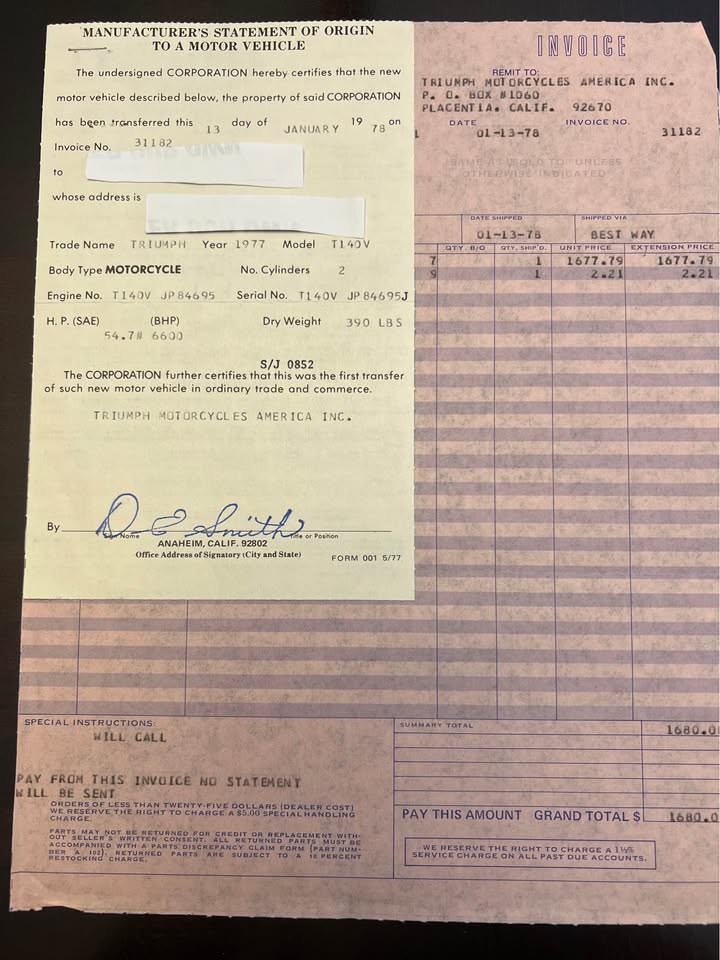
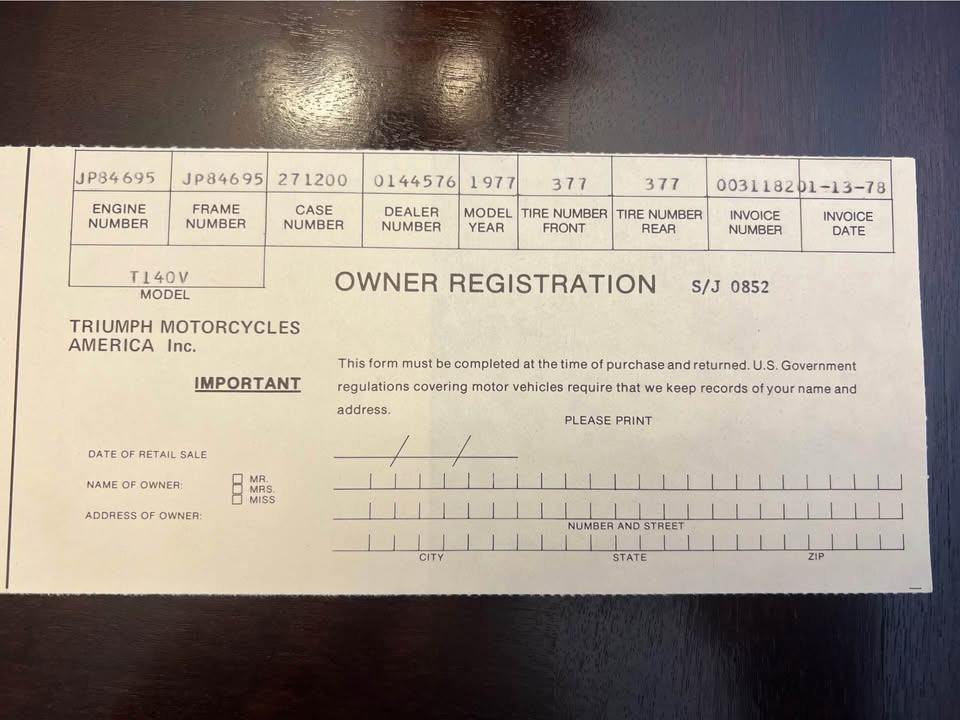
Images courtesy of Bring a Trailer + Triumph

Articles that Ben Branch has written have been covered on CNN, Popular Mechanics, Smithsonian Magazine, Road & Track Magazine, the official Pinterest blog, the official eBay Motors blog, BuzzFeed, Autoweek Magazine, Wired Magazine, Autoblog, Gear Patrol, Jalopnik, The Verge, and many more.
Silodrome was founded by Ben back in 2010, in the years since the site has grown to become a world leader in the alternative and vintage motoring sector, with well over a million monthly readers from around the world and many hundreds of thousands of followers on social media.