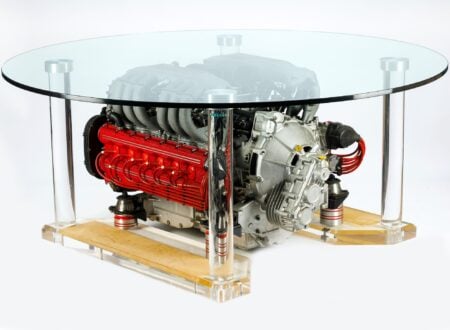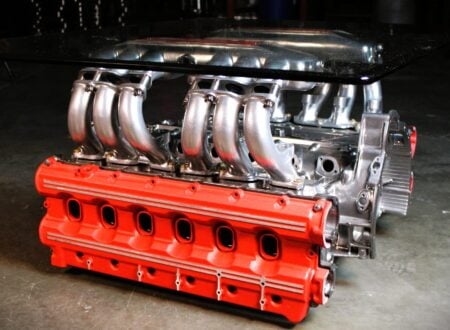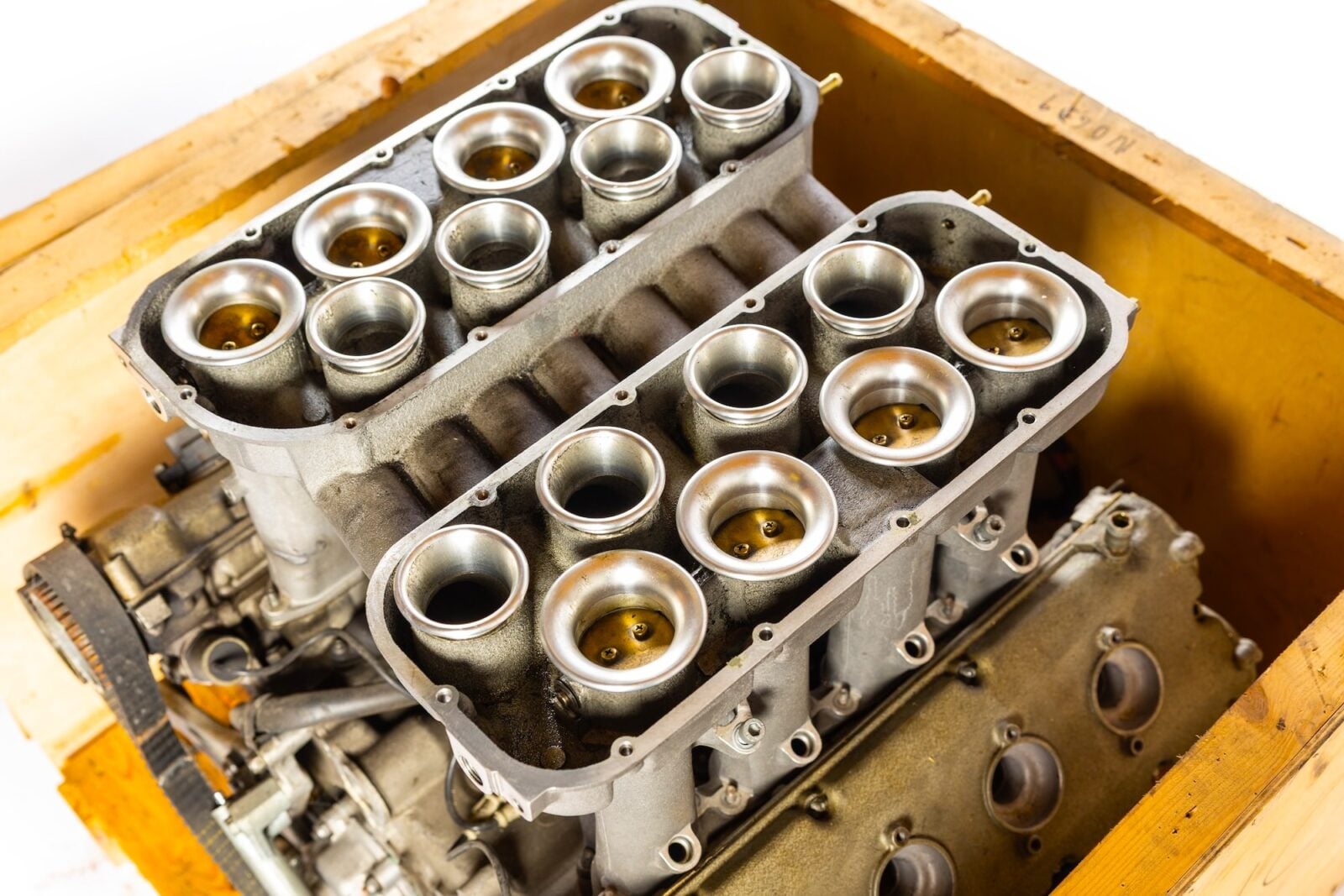
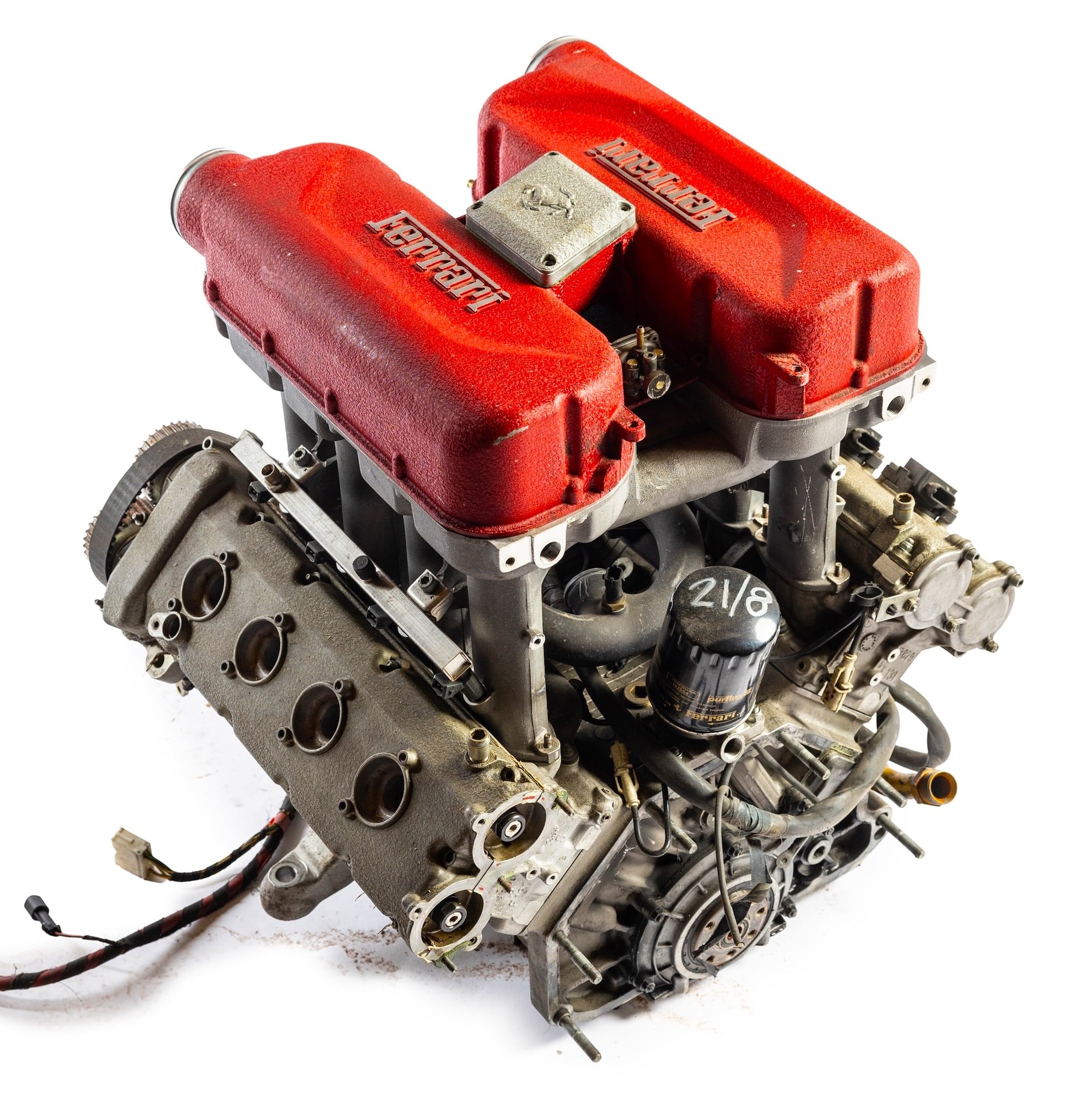
This is a Ferrari 360 Modena V8 engine, an original Tipo F131, it’s capable of 395 bhp and 275 lb ft of torque when it’s fitted to a car and plumbed in.
The 360 Modena was the first new Ferrari for the new millennium, it had cutting edge styling by the standards of the time, and unusually for an exotic car, it had been designed with ease of maintenance as a front-of-mind concern – helping to make them a little more affordable to own.
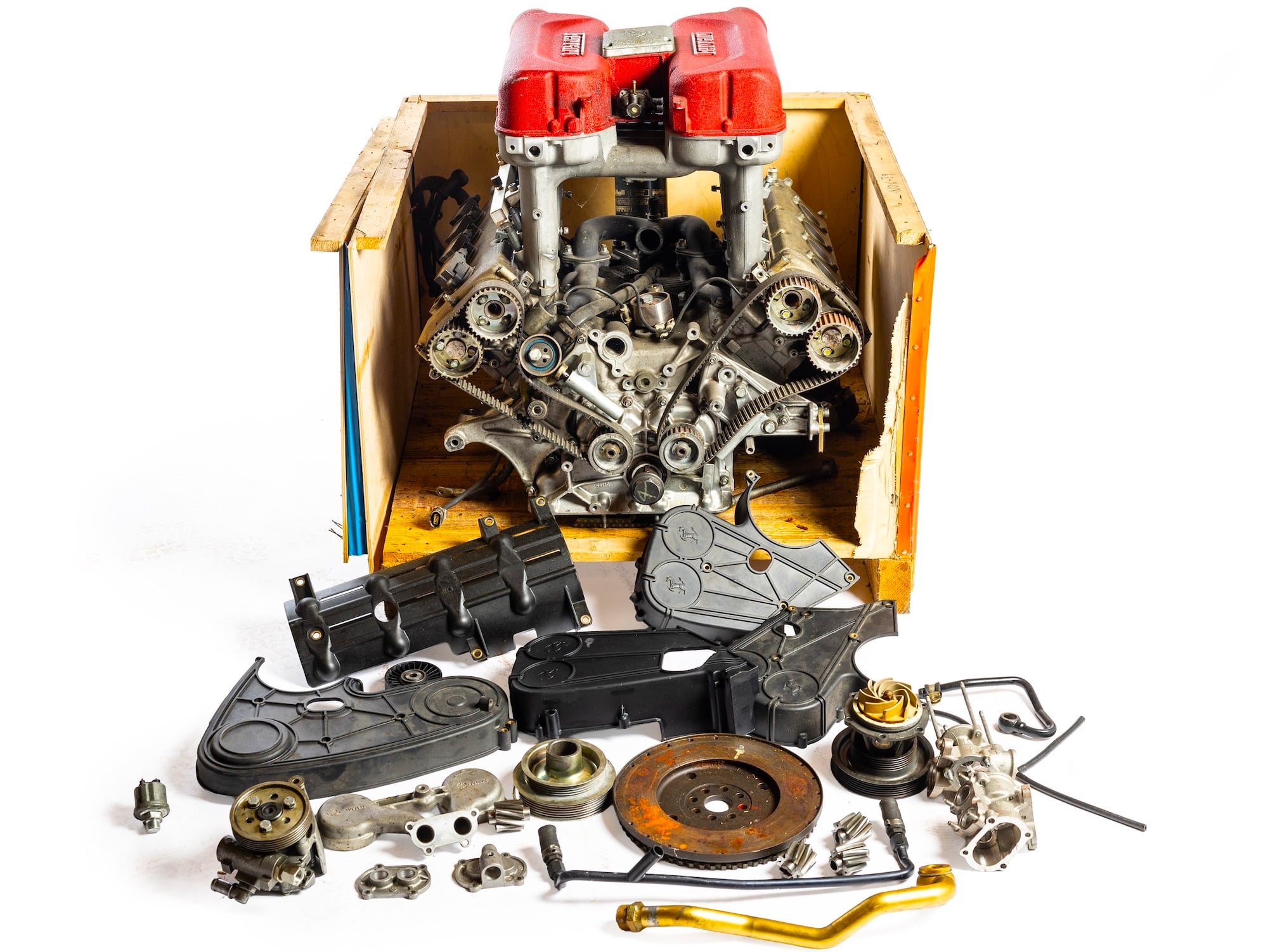
 This is a Ferrari 360 Modena V8 engine, an original Tipo F131, it’s capable of 395 bhp and 275 lb ft of torque when it’s fitted to a car and plumbed in.
History Speedrun: The Ferrari 360 Modena V8 Engine
The V8 that powered the Ferrari 360 Modena was an evolution of the earlier Ferrari F355’s engine, it wasn’t a clean-sheet design. Both were 90º V8s with five valves per cylinder, titanium connecting rods, and dry-sump lubrication. Ferrari kept the 85 mm bore and lengthened the stroke from 77 to 79 mm, as a result displacement grew from 3.5 to 3.6 liters and gave the car its name – 3.6 liters, hence “360.”
Named the Tipo F131, Ferrari presented the updated engine in the back of the 360 Modena at the Geneva Motor Show in March of 1999. Versions of the F131 went on to power the Spider, the Challenge Stradale, and a series of factory-built racing cars.
The block and cylinder heads in the F131 are aluminum alloy, with Nikasil-coated steel liners. A one-piece steel crankshaft sits in plain bearings, and the titanium rods measure 137 mm between centers.
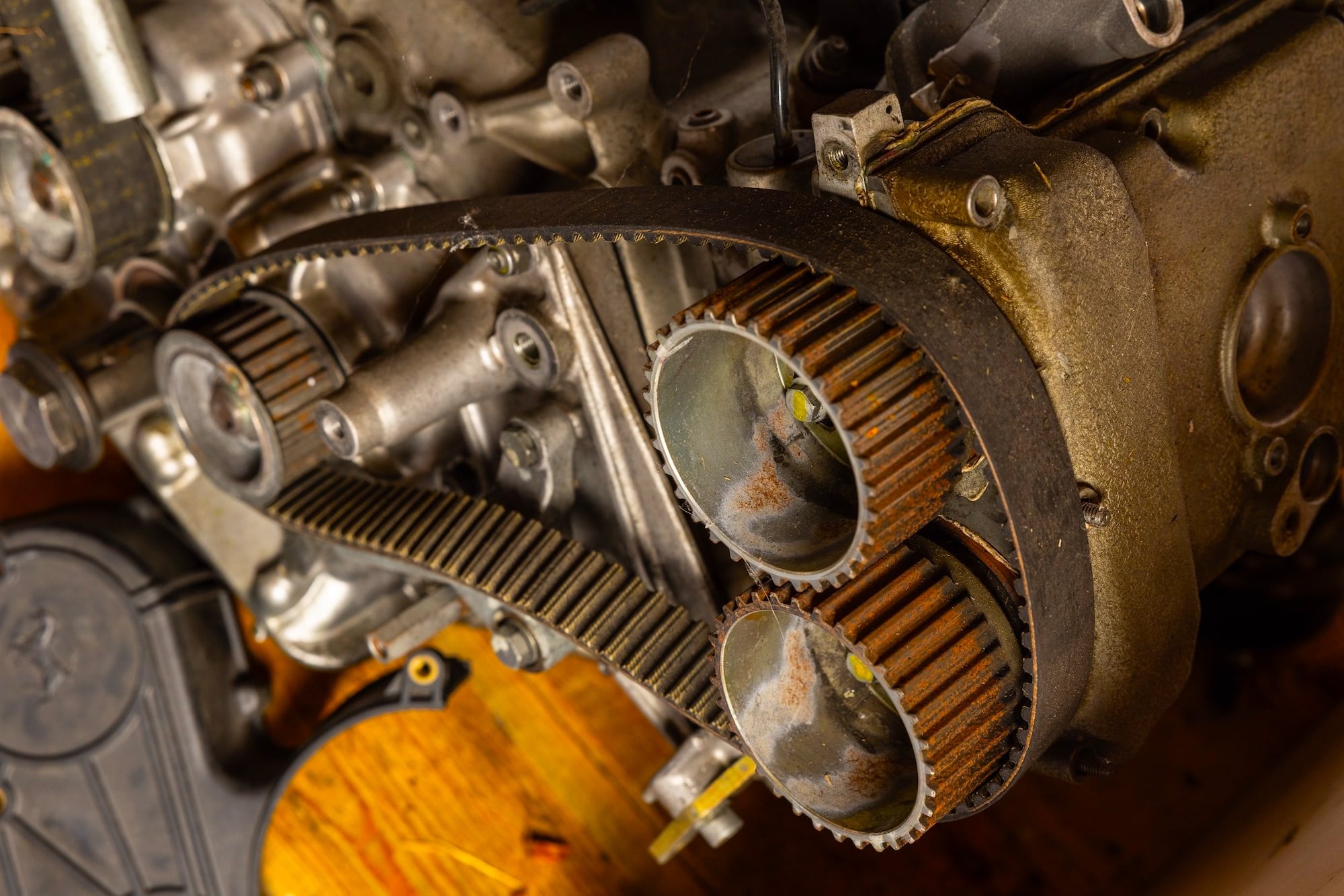
Toothed belts drive four overhead camshafts, which work three intake and two exhaust valves per cylinder through hydraulic tappets, and the exhaust camshafts have variable timing. Bosch Motronic ME 7.3 engine management, split across two control units, handles injection and ignition, and the throttle was drive-by-wire.
On an 11.0:1 compression ratio, the F131 made 395 bhp at 8,500 rpm and 275 lb ft at 4,750 rpm, Ferrari quoted the power at 400 metric horsepower. That works out to about 110 hp per liter, against 375 hp from the earlier F355.
When compared to many (if not most) earlier Ferraris, the 360 Modena was developed from the start to be easier to maintain. The engine was installed longitudinally in the car, and as a result, mechanics could now replace the timing belts with the engine in place – a job that meant removing the F355’s V8 entirely, which resulted in hefty bills.
The 360 Modena was the first new Ferrari for the new millennium, it had cutting edge styling by the standards of the time, and unusually for an exotic car, it had been designed with ease of maintenance as a front-of-mind concern – helping to make them a little more affordable to own.
Ferrari recommended timing belt replacements every three years, so simplifying the job and reducing its cost actually had a noticeable impact on ownership costs over time. The F131 drove the rear wheels through either a 6-speed manual gearbox or Ferrari’s (controversial) electrohydraulic F1 transmission, then a limited-slip differential and out to the wheels.
The car rose on double wishbones with coil springs at each corner, it stopped thanks to 330mm vented Brembo discs, turned via power-assisted rack-and-pinion steering, and it had a glass engine cover to put the red crackle-finish cam covers on display for passersby.
Ferrari built more than 16,000 360 Modenas and Spiders. The Frank Stephenson-designed Ferrari F430 replaced the Modena in 2004, and the F430 Spider followed at the Geneva Motor Show in March of 2005. Both used an all-new 4.3 liter V8, the F136, developed jointly with Maserati. That made the F131 the last of a family of Ferrari V8s that began with the Dino 308 GT4 all the way back in 1973.
The Ferrari 360 Modena V8 Engine Shown Here
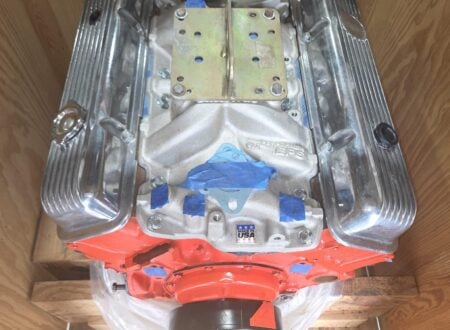
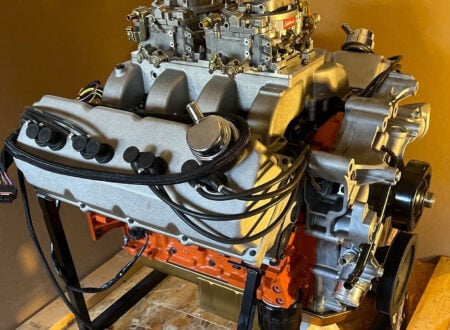
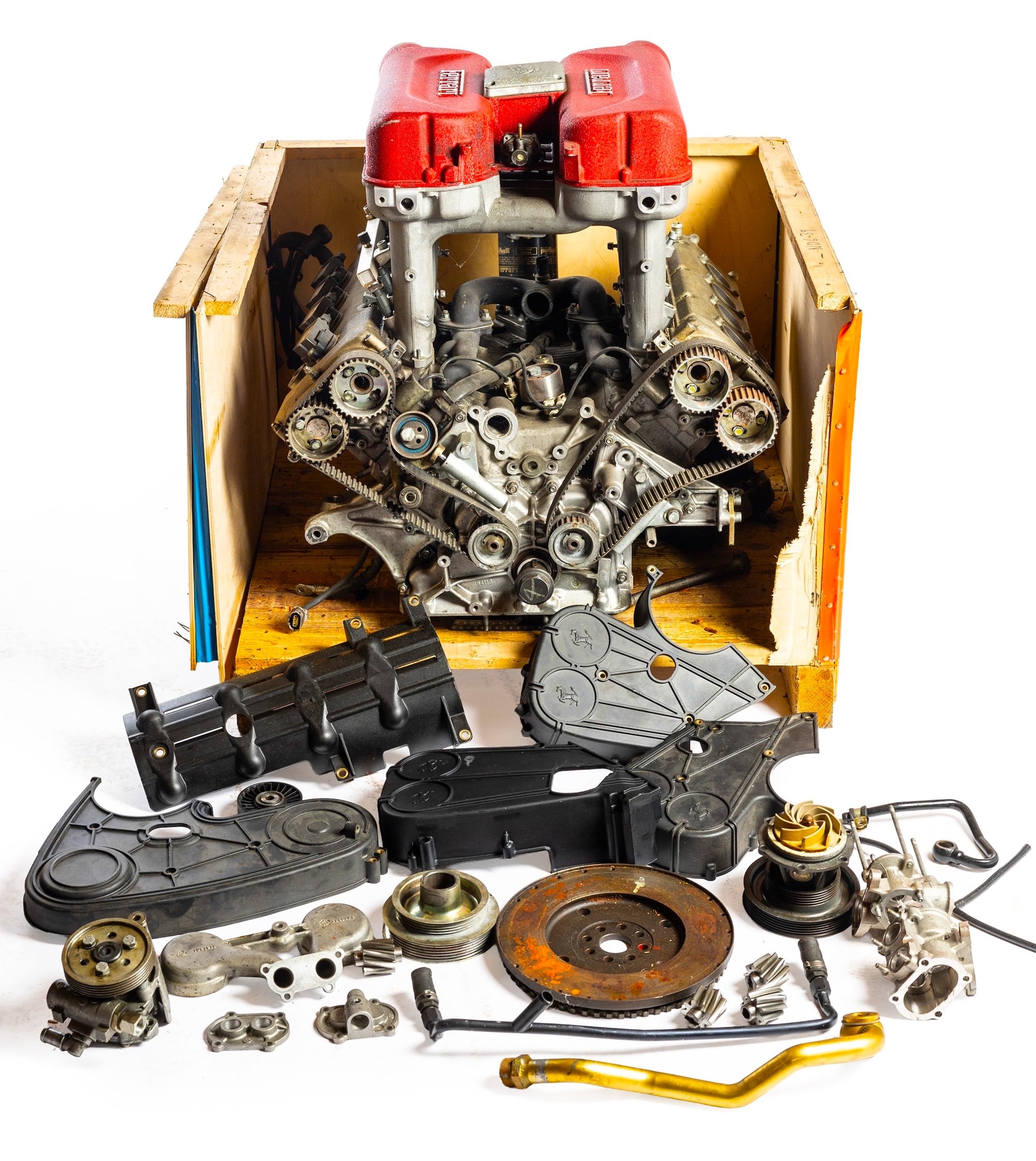
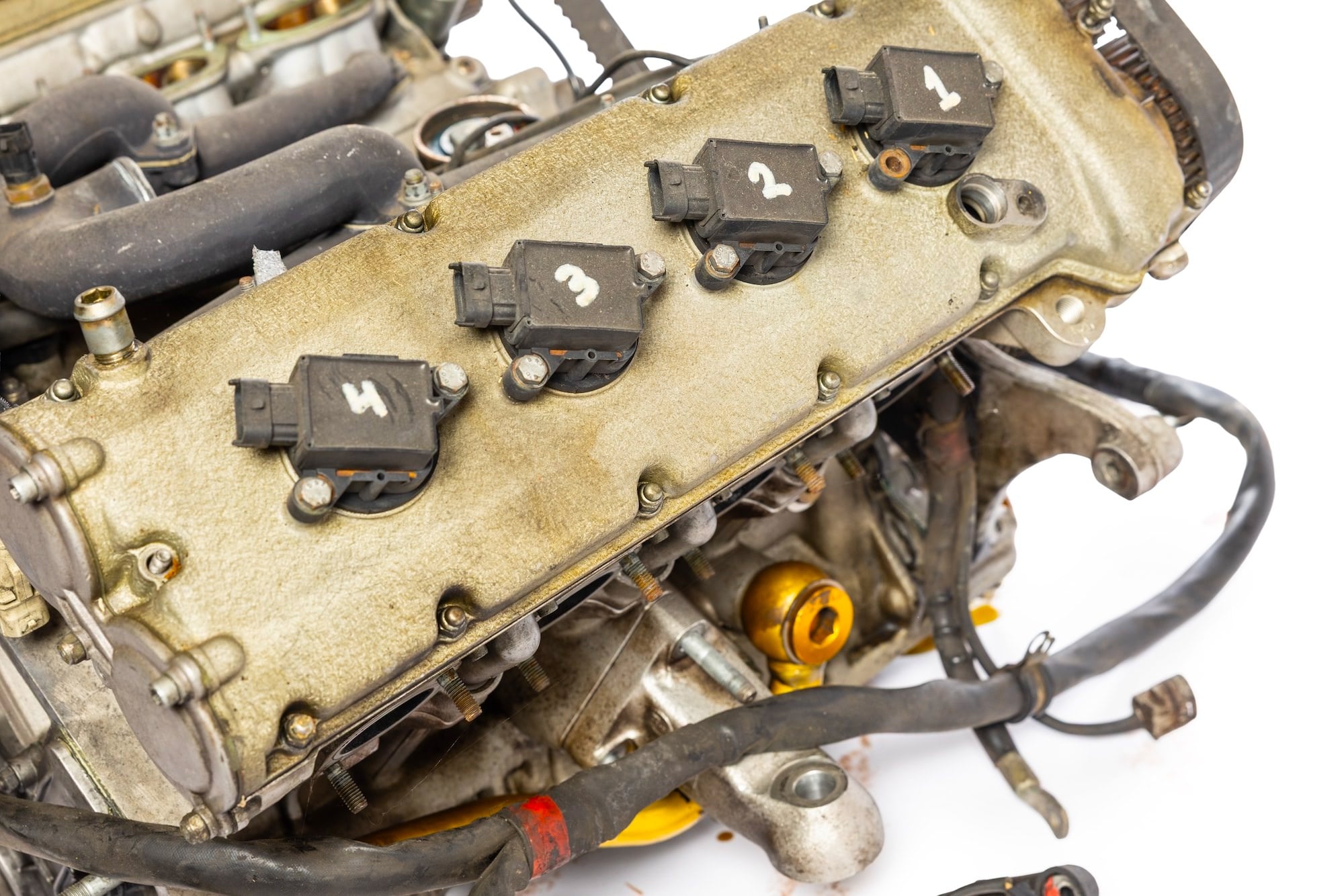
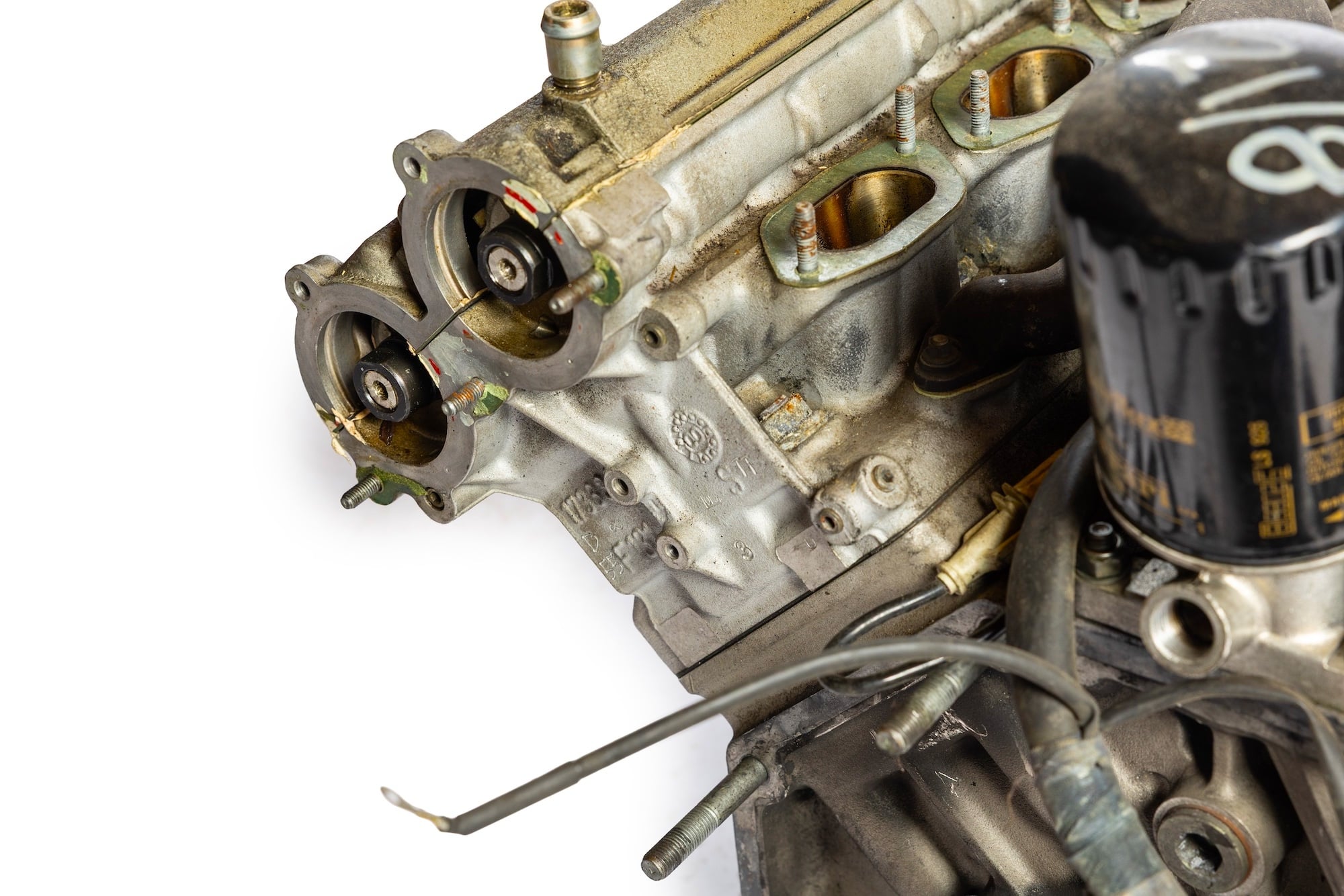
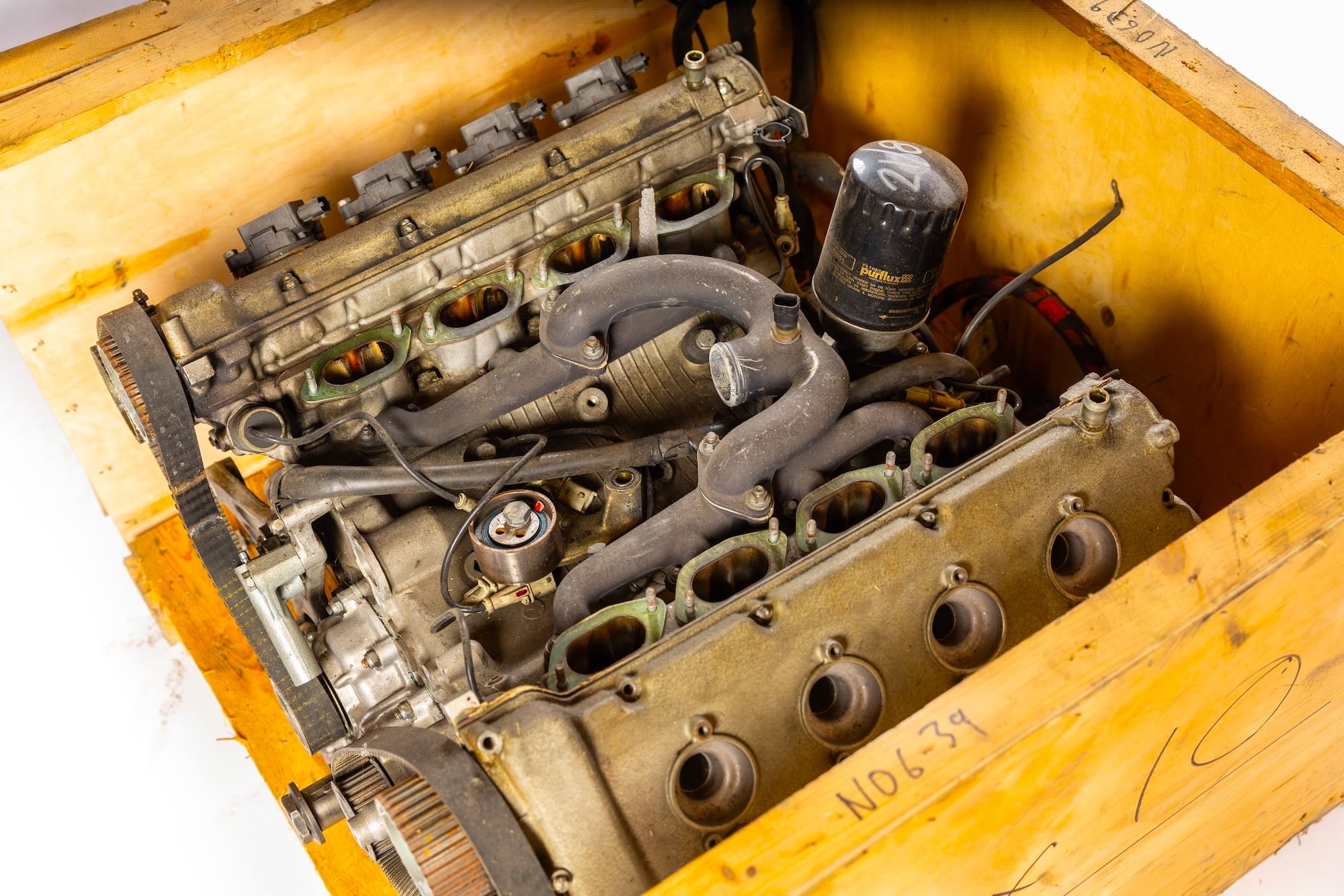
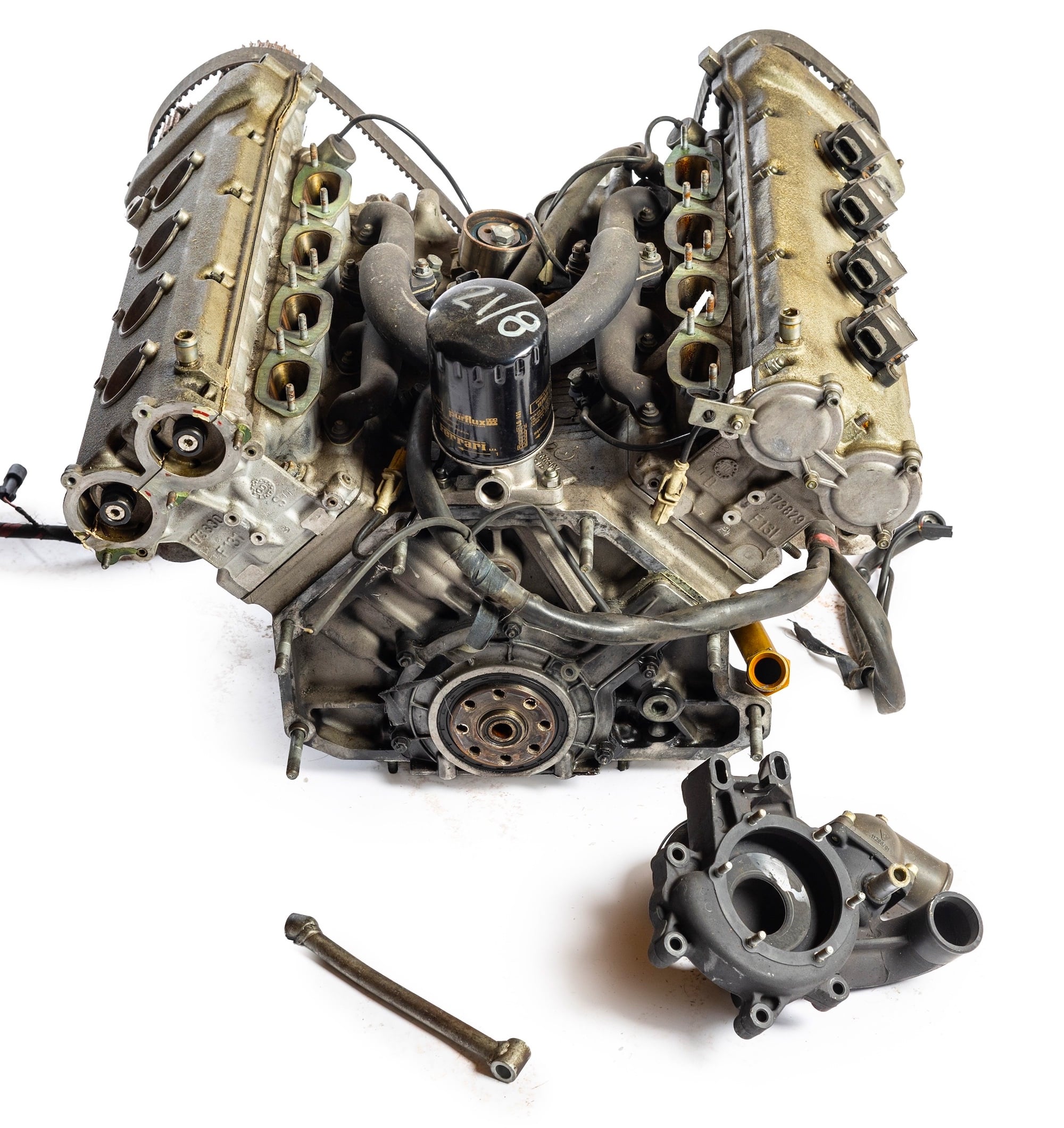
The engine you see here is a crated, used Tipo F131 Ferrari 360 Modena V8 that appears to be either complete or largely complete, with the block, heads, intake, flywheel, and more all present and accounted for.
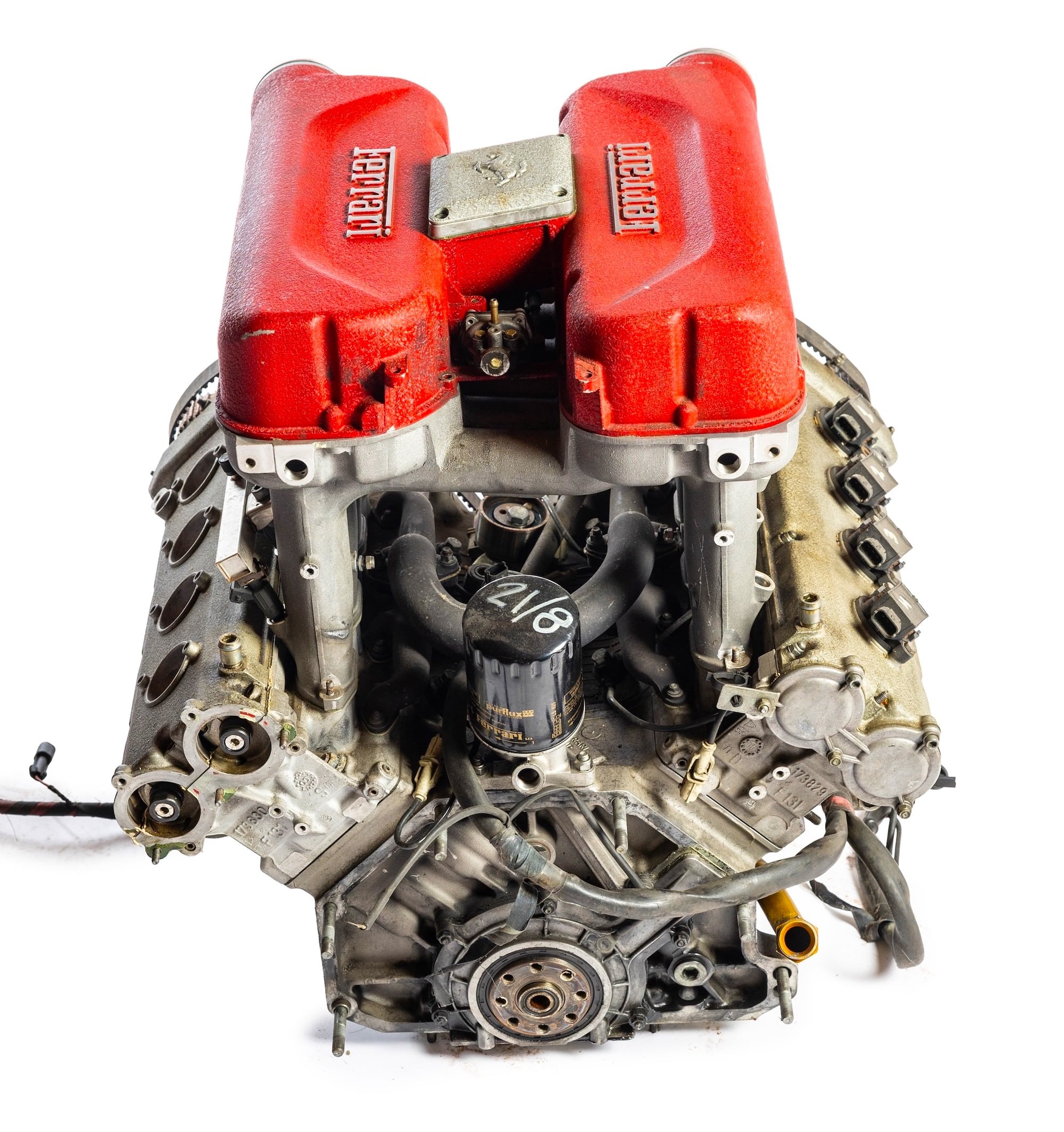
The engine you see here is a crated, used Tipo F131 Ferrari 360 Modena V8 that appears to be either complete or largely complete, with the block, heads, intake, flywheel, and more all present and accounted for.
The history of this engine isn’t listed in any detail, and so any prospective buyer would be wise to budget for a full rebuild by a marque specialist before even thinking about bolting it into a car. It’ll likely sell to a 360 Modena owner who wants a spare engine, but there’s also a chance it might fit in your Miata.
It’s now due to roll across the auction block with RM Sotheby’s later in October, and you can visit the listing here if you’d like to read more about it or register to bid.
Images courtesy of RM Sotheby’s

Articles that Ben Branch has written have been covered on CNN, Popular Mechanics, Smithsonian Magazine, Road & Track Magazine, the official Pinterest blog, the official eBay Motors blog, BuzzFeed, Autoweek Magazine, Wired Magazine, Autoblog, Gear Patrol, Jalopnik, The Verge, and many more.
Silodrome was founded by Ben back in 2010, in the years since the site has grown to become a world leader in the alternative and vintage motoring sector, with well over a million monthly readers from around the world and many hundreds of thousands of followers on social media.