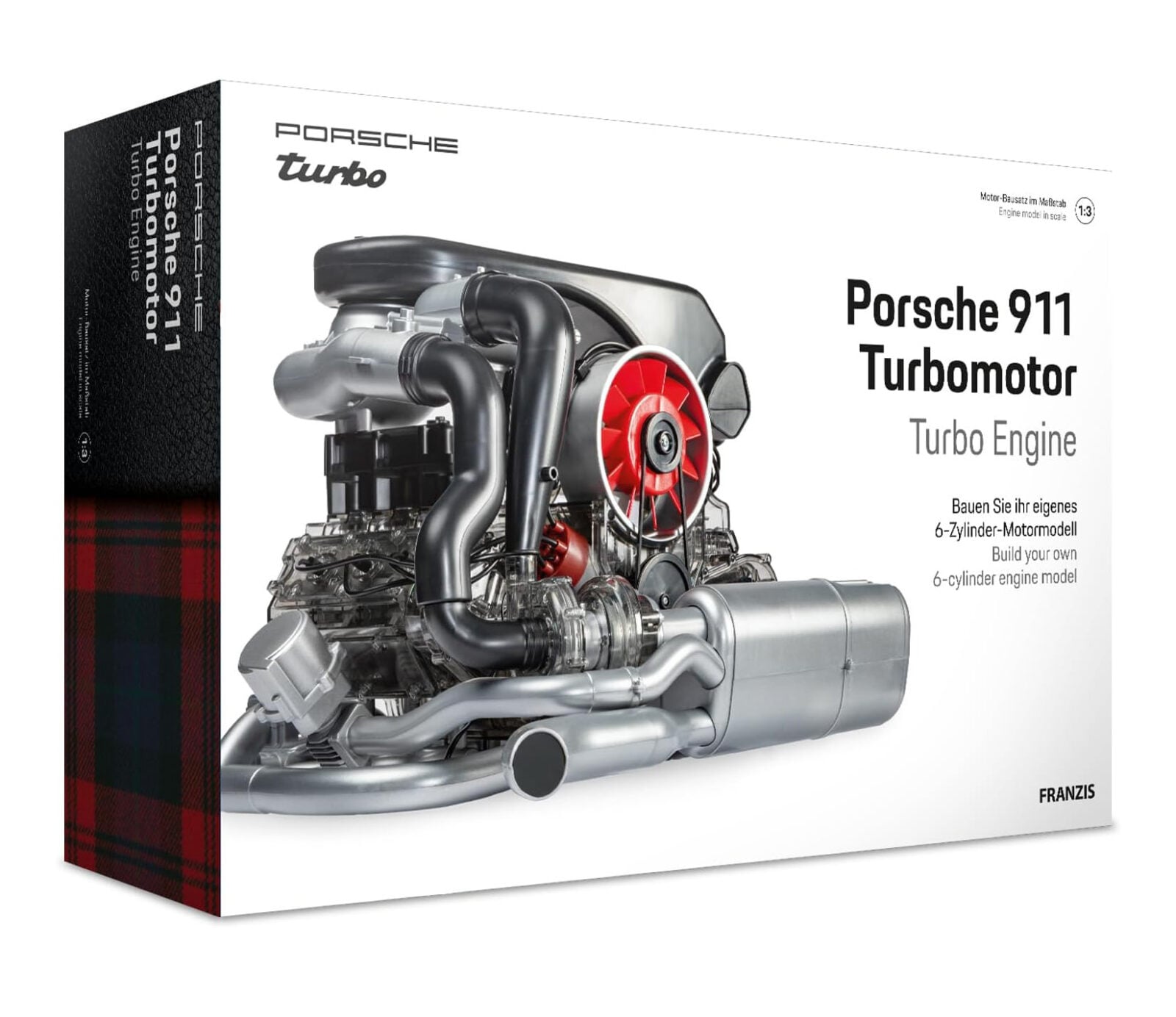
This is an officially licensed Porsche 911 Turbo (930) engine kit, produced to 1:3rd scale, and designed using the original engineering drawings from the company archives over at Porsche.
This kit is a fantastic hands-on learning experience – both for those who know their way around an engine, and for those who can’t tell you the difference between a carburetor and a catalytic converter.
 Franzis is a German publishing house near Munich that’s built a sideline in officially licensed working engine models, with a range that includes the naturally aspirated 911 flat-six, the Ford Mustang 289 V8, and various other Porsche, BMW, and VW engines.
The Porsche 911 Turbo Engine
When Porsche presented its gleaming new 911 Turbo model at the Paris Motor Show in October of 1974, turbocharging was still relatively rare in road cars – it was much more closely associated with racing. Porsche had spent 1972 and 1973 dominating the Can-Am series with the turbocharged 917/10 and 917/30. The road car’s engine, internally designated Type 930/50, was based on the 3.0 liter flat-six of the Carrera RS 3.0, turbocharged using the hard-fought lessons from the racing program.
The engine’s architecture followed the by-then well established 911 practice – it was an air-cooled flat-six with a single overhead camshaft per bank, two valves per cylinder, and dry-sump lubrication. Displacement was 2,994cc from a bore and stroke of 95 mm x 70 mm, with an aluminum crankcase, forged alloy pistons, and Nikasil-coated cylinders.
A single KKK 3 LDZ turbocharger ran 0.8 bar of boost through Bosch K-Jetronic fuel injection, with compression lowered to 6.5:1 to keep the engine from blowing itself to pieces. Output was 256 bhp at 5,500 rpm and 253 lb ft of torque at 4,000 rpm, compared with 207 bhp and 188 lb ft from the contemporary Carrera 2.7. The horsepower increase was significant, the torque increase more so.
Porsche built the car to homologate it for Group 4 racing, the executives initially doubted it would even sell the required 400 examples. As it turns out, they had wildly underestimated demand, and the 400 car requirement was met by the end of 1975, the 911 Turbo received FIA Group 4 homologation for the 1976 season, and 2,850 had rolled off the assembly line by the time production of the 3.0 liter car ended in 1977.
For the 1978 model year, displacement grew to 3,299cc (3.3 liters) and an air-to-air intercooler was mounted under the rear spoiler. Output rose to 296 bhp and 304 lb ft. The 3.3 liter intercooled configuration remained the basis of the 930 Turbo right the way through to the end of production in 1989.
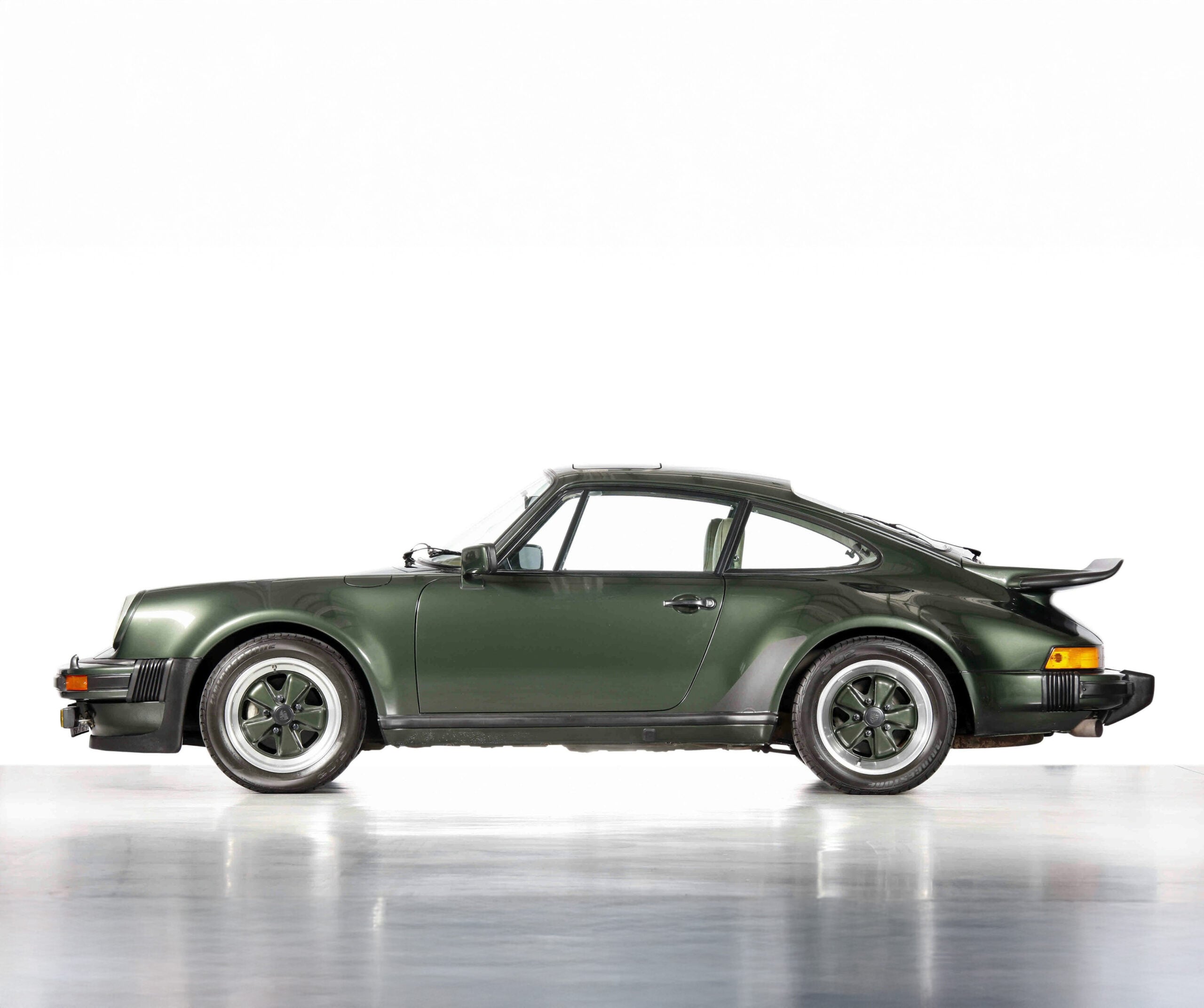
Porsche built the 911 Turbo to homologate it for Group 4 racing, the executives initially doubted it would even sell the required 400 examples. As it turns out, they had wildly underestimated demand, and the 400 car requirement was met by the end of 1975, the 911 Turbo received FIA Group 4 homologation for the 1976 season, and 2,850 had rolled off the assembly line by the time production of the 3.0 liter car ended in 1977. Image supplied by Porsche AG.
A 1:3 Scale Turbo Flat-Six You Assemble Yourself
Franzis is a German publishing house near Munich that’s built a sideline in officially licensed working engine models, with a range that includes the naturally aspirated 911 flat-six, the Ford Mustang 289 V8, and various other Porsche, BMW, and VW engines.
The Porsche 911 Turbo kit arrived in 2024, it was developed from original drawings held in the Porsche company archive, and it’s officially licensed by Porsche – making it a must-have item both for current Porsche owners and aspiring owners.
The kit builds a 1:3 scale model of the turbocharged flat-six, assembled from 200 parts that screw and plug together – no gluing or painting is required, the necessary tools are included, and Franzis gives an assembly time of three to four hours.
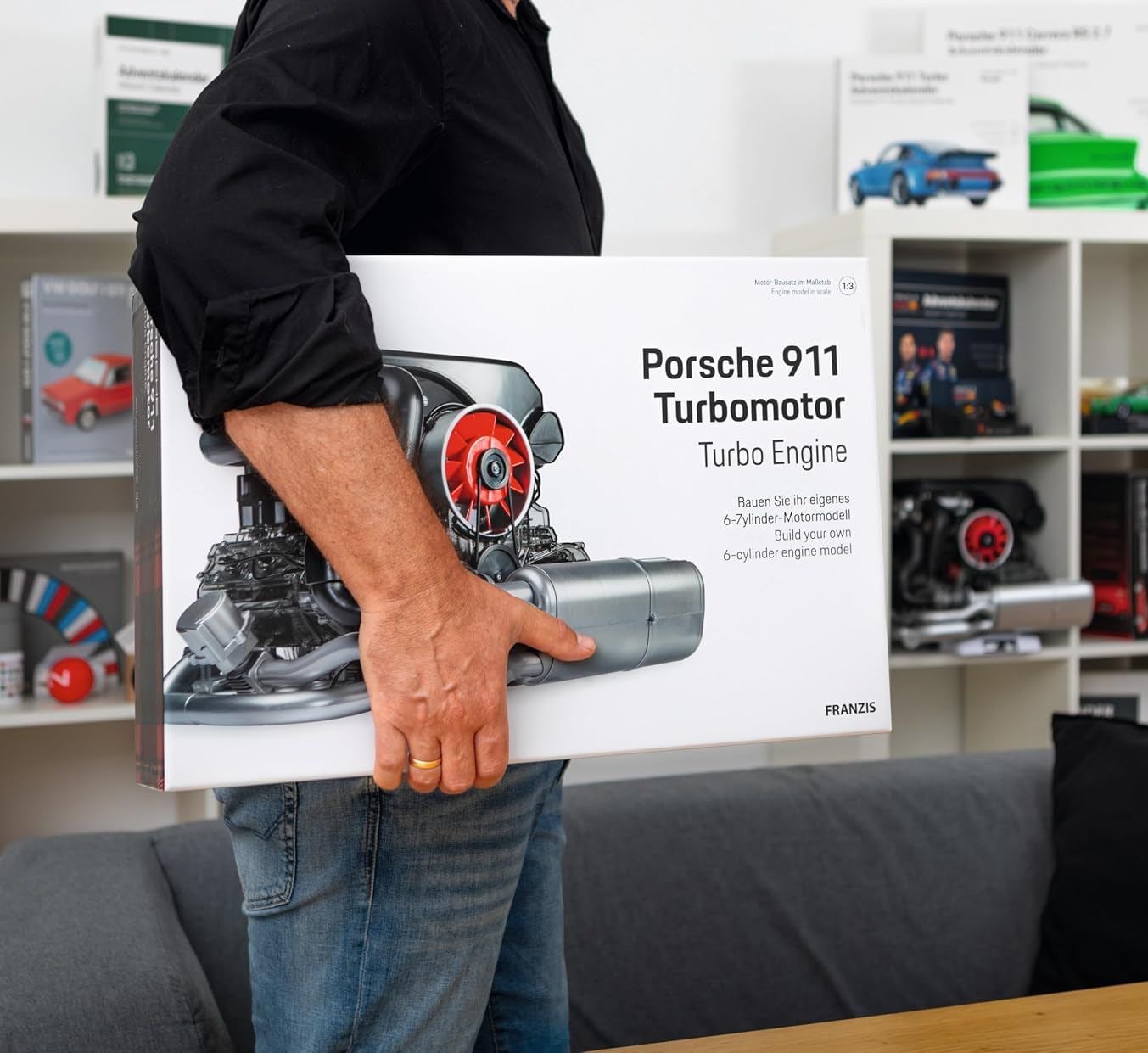
The finished model measures in at 13.8″ x 11.8″ x 11.8″, and a display pedestal comes in the box. It makes an excellent addition to any garage (or living room) shelf.
The crankcase of the engine is transparent, so once the electric motor is running the crankshaft, connecting rods, pistons, and valves can all be watched working together just like they do in the real engine.
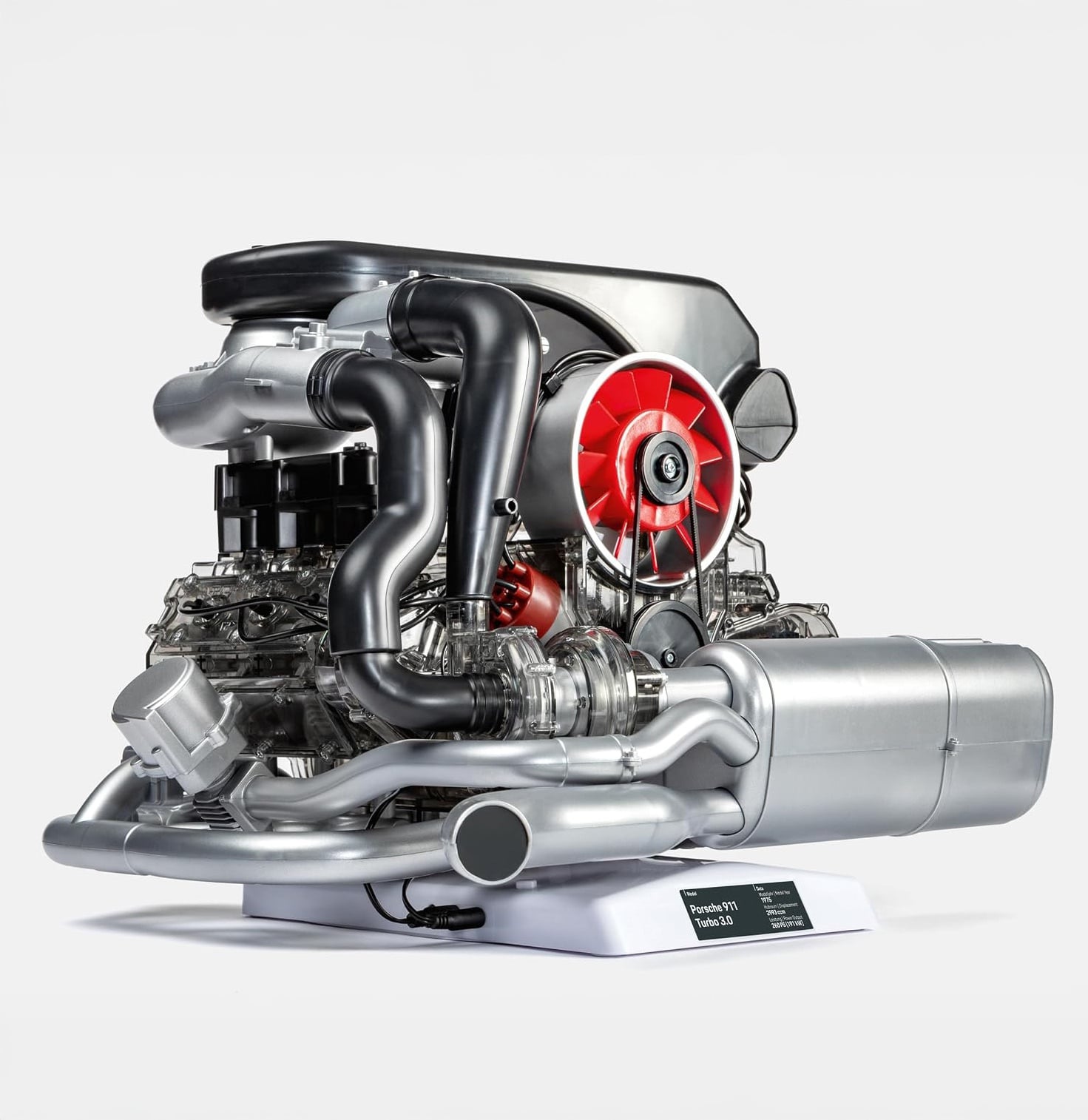
This is an officially licensed Porsche 911 Turbo (930) engine kit, produced to 1:3rd scale, and designed using the original engineering drawings from the company archives over at Porsche.
The external turbo plumbing that sets this engine apart from its naturally aspirated siblings is reproduced around the case. LEDs simulate spark plugs firing through a working distributor, the cooling fan spins, and an integrated sound module supplies the engine sound – with an audio output for external speakers.
The kit is now available to buy direct from the official Franzis Amazon store here, and each one comes with a 90 page companion book covering the development history of the 911 Turbo, illustrated with photographs, drawings, and posters from the Porsche archive.
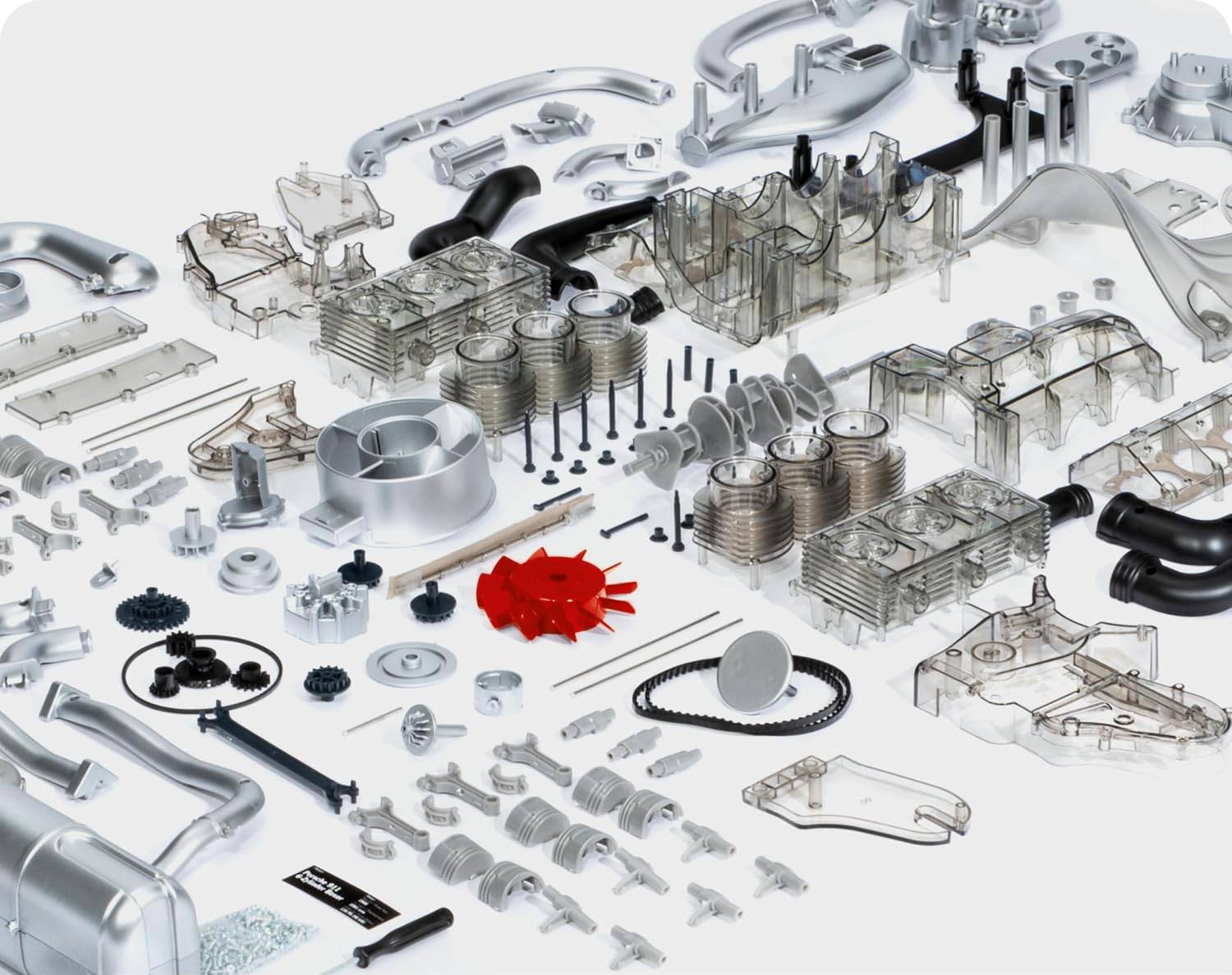
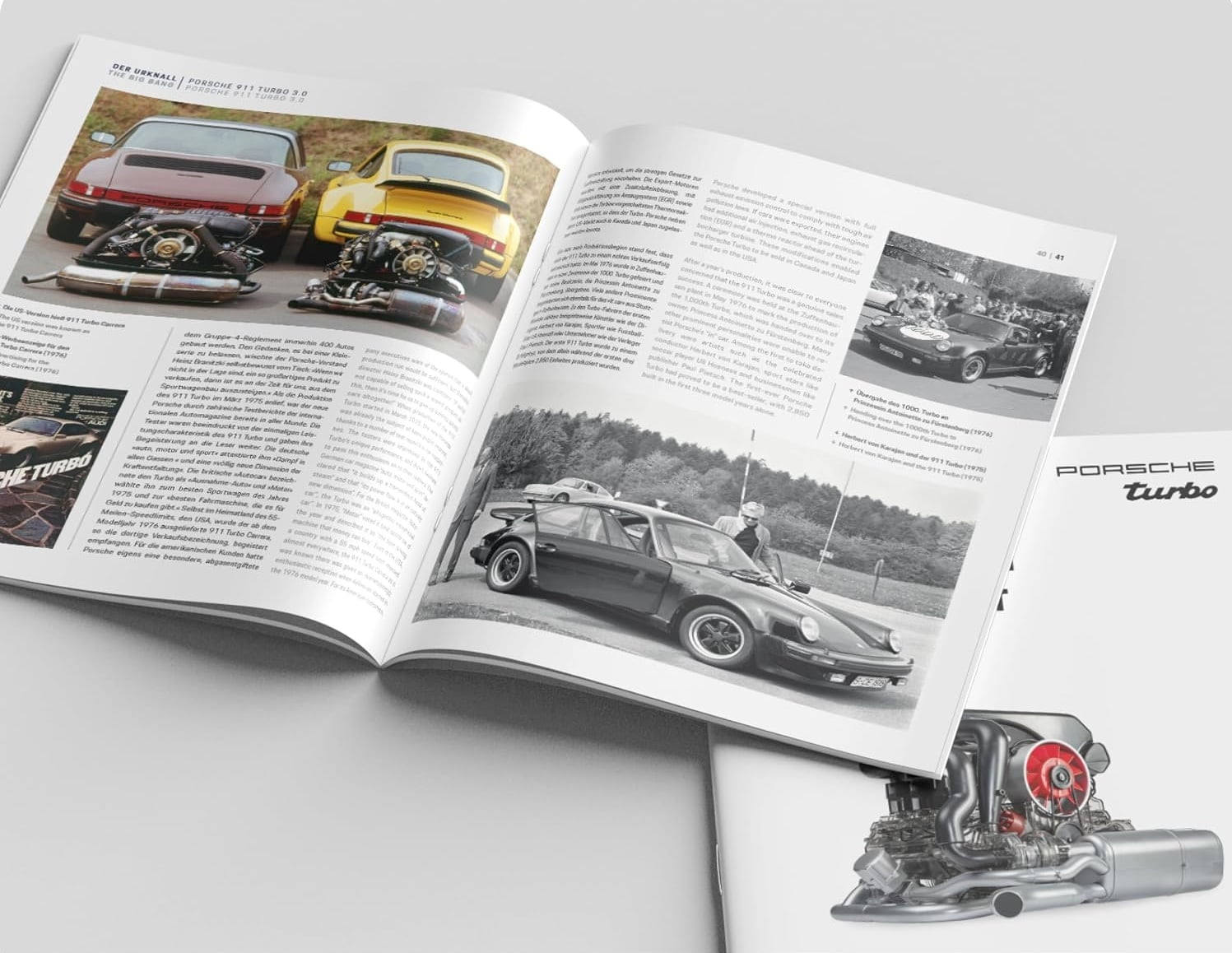
Images courtesy of Franzis + Porsche

Articles that Ben Branch has written have been covered on CNN, Popular Mechanics, Smithsonian Magazine, Road & Track Magazine, the official Pinterest blog, the official eBay Motors blog, BuzzFeed, Autoweek Magazine, Wired Magazine, Autoblog, Gear Patrol, Jalopnik, The Verge, and many more.
Silodrome was founded by Ben back in 2010, in the years since the site has grown to become a world leader in the alternative and vintage motoring sector, with well over a million monthly readers from around the world and many hundreds of thousands of followers on social media.