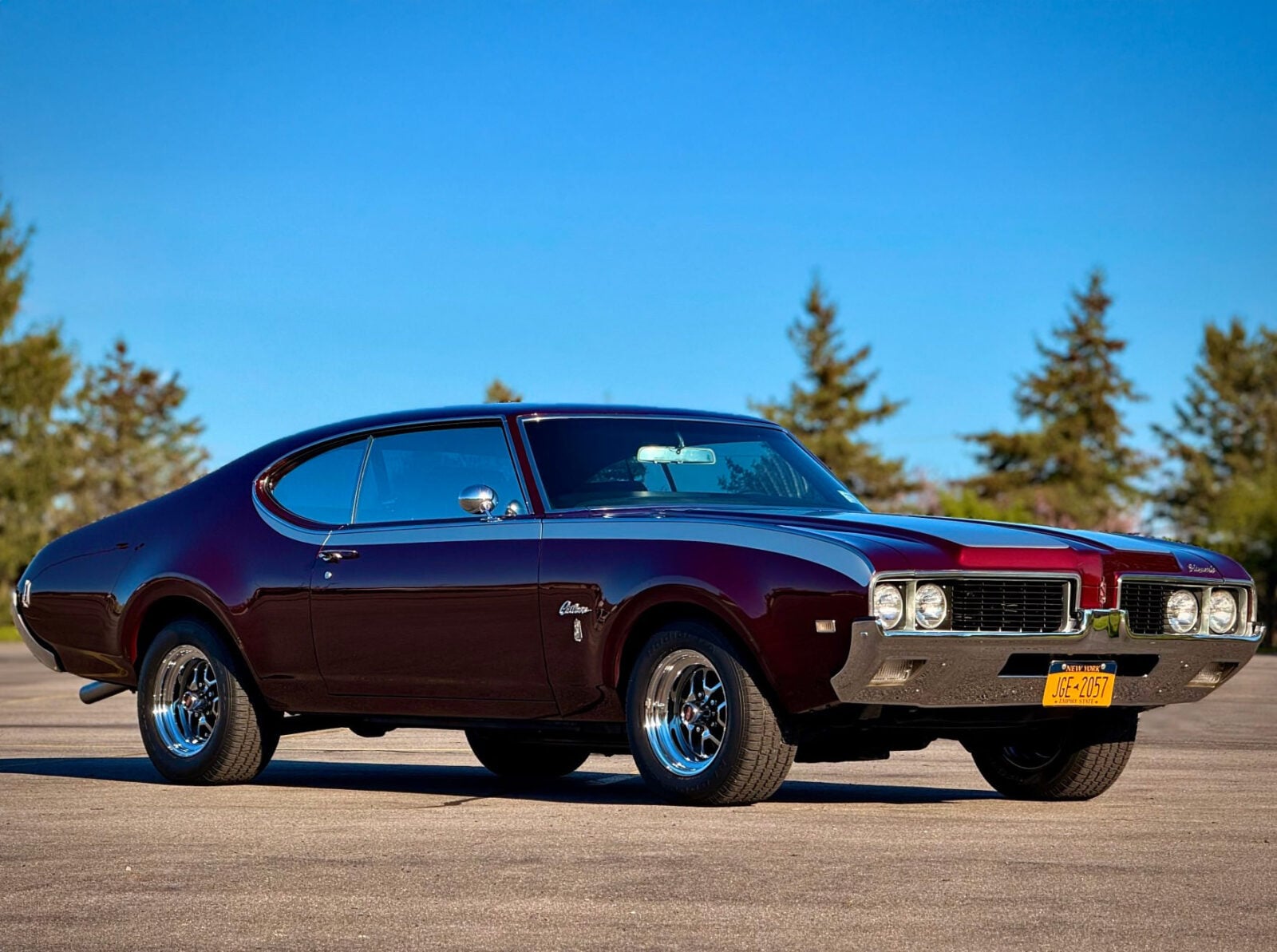
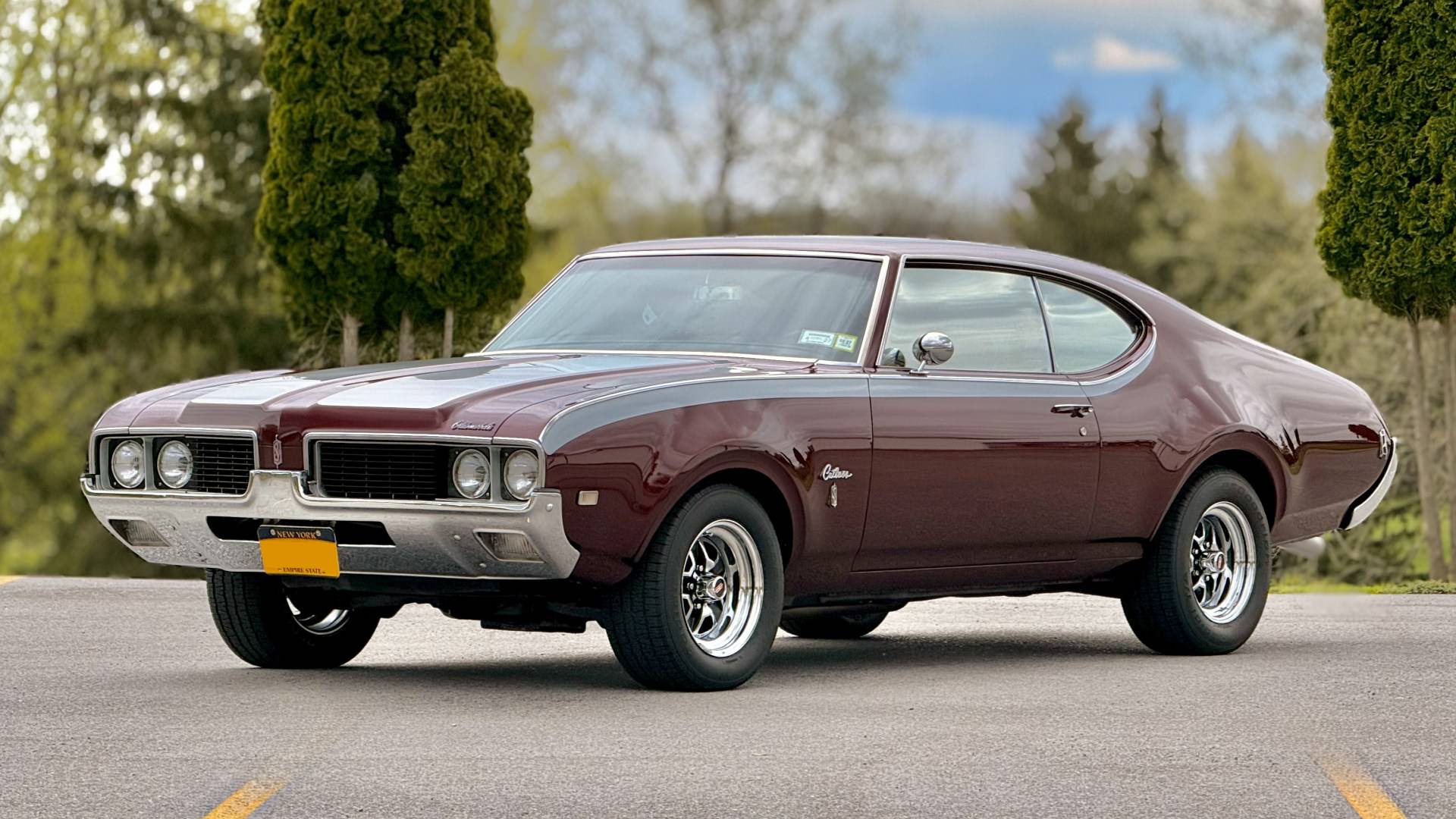
This is a 1969 Oldsmobile Cutlass Supreme that benefits from a slew of discrete upgrades including the fitment of a modified 455 cubic inch Oldsmobile big block V8, a Turbo 400 transmission, and uprated suspension.
The Cutlass Supreme is one of the icons of the American muscle car’s golden era, and it’s hard to argue that it doesn’t have the coolest model name of any American car of the time. Perhaps even of all time.
Fast Facts: The 1969 Oldsmobile Cutlass Supreme
- This 1969 Oldsmobile Cutlass Supreme is a second-generation example that’s been significantly upgraded from stock with the fitment of a modified 455 cubic inch Oldsmobile big block V8 bored .060 over and equipped with Mondello Performance camshaft and pushrods, an Edelbrock Torker intake, and a 750 CFM four-barrel carburetor.
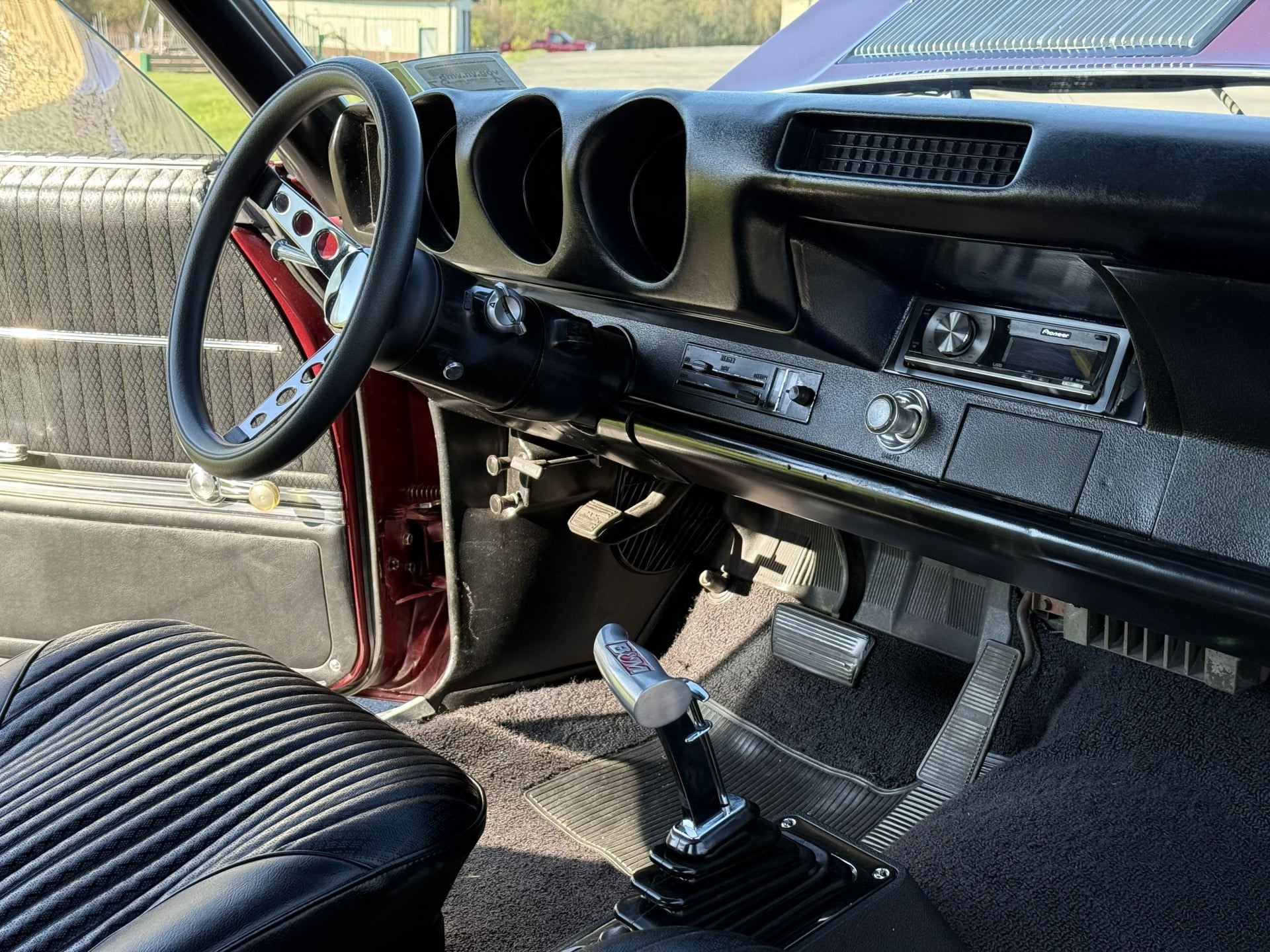
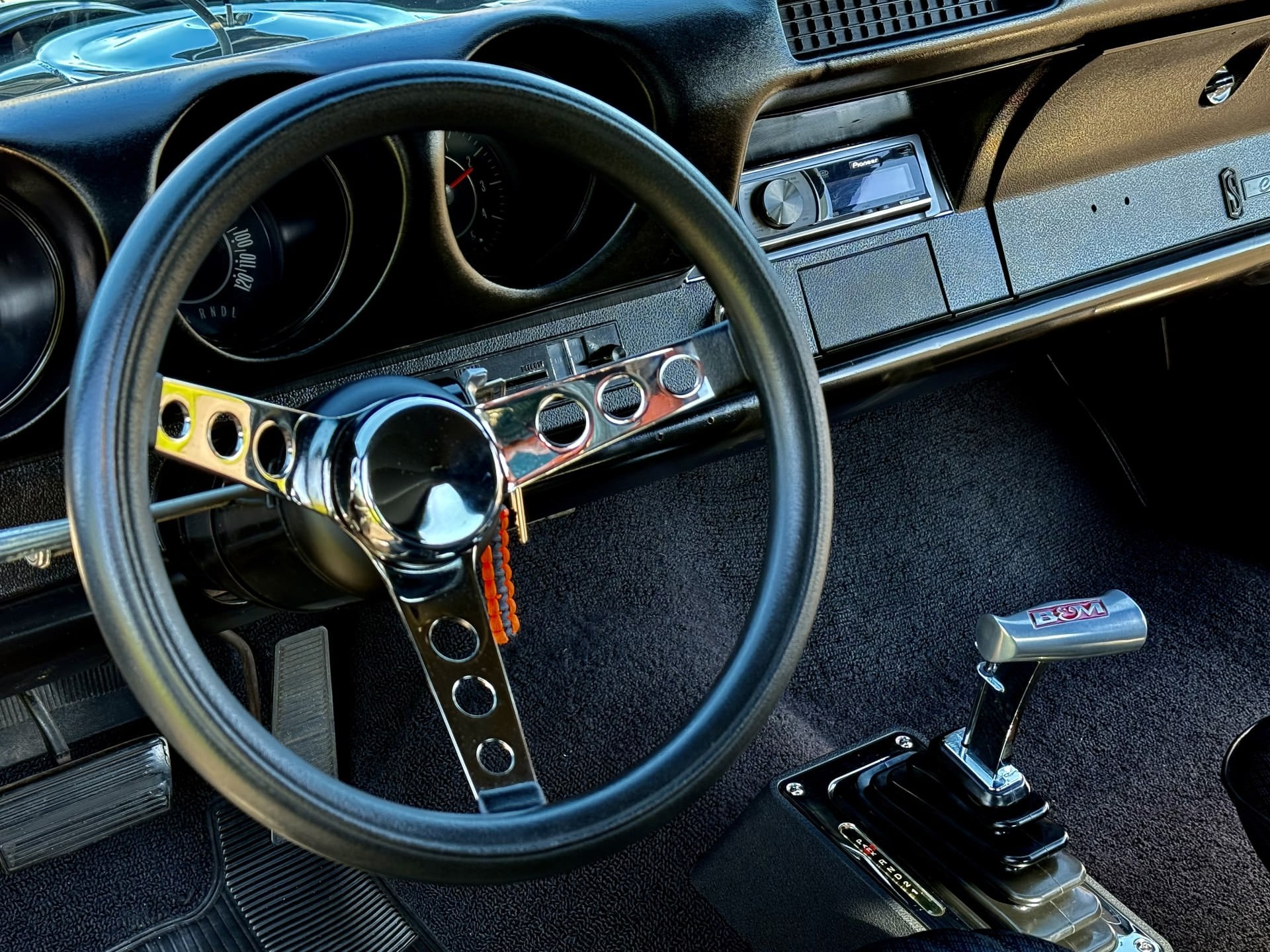
- The drivetrain pairs a Turbo 400 3-speed automatic transmission with a B&M shift kit and Mega shifter to a GM 12-bolt rear end running 4.10 Richmond gearing. An aftermarket transmission cooler and rear suspension air bags have also been added, and exhaust exits through a header-back 3-inch Flowmaster dual system with DeltaFlow mufflers.
- The Cutlass Supreme nameplate ran from the 1966 model year through 1997 across five generations, beginning as a trim package before becoming its own model series. The Supreme was the top-selling individual model within the broader Cutlass line, which became America’s best-selling car in 1976 and helped Oldsmobile break one million units sold.
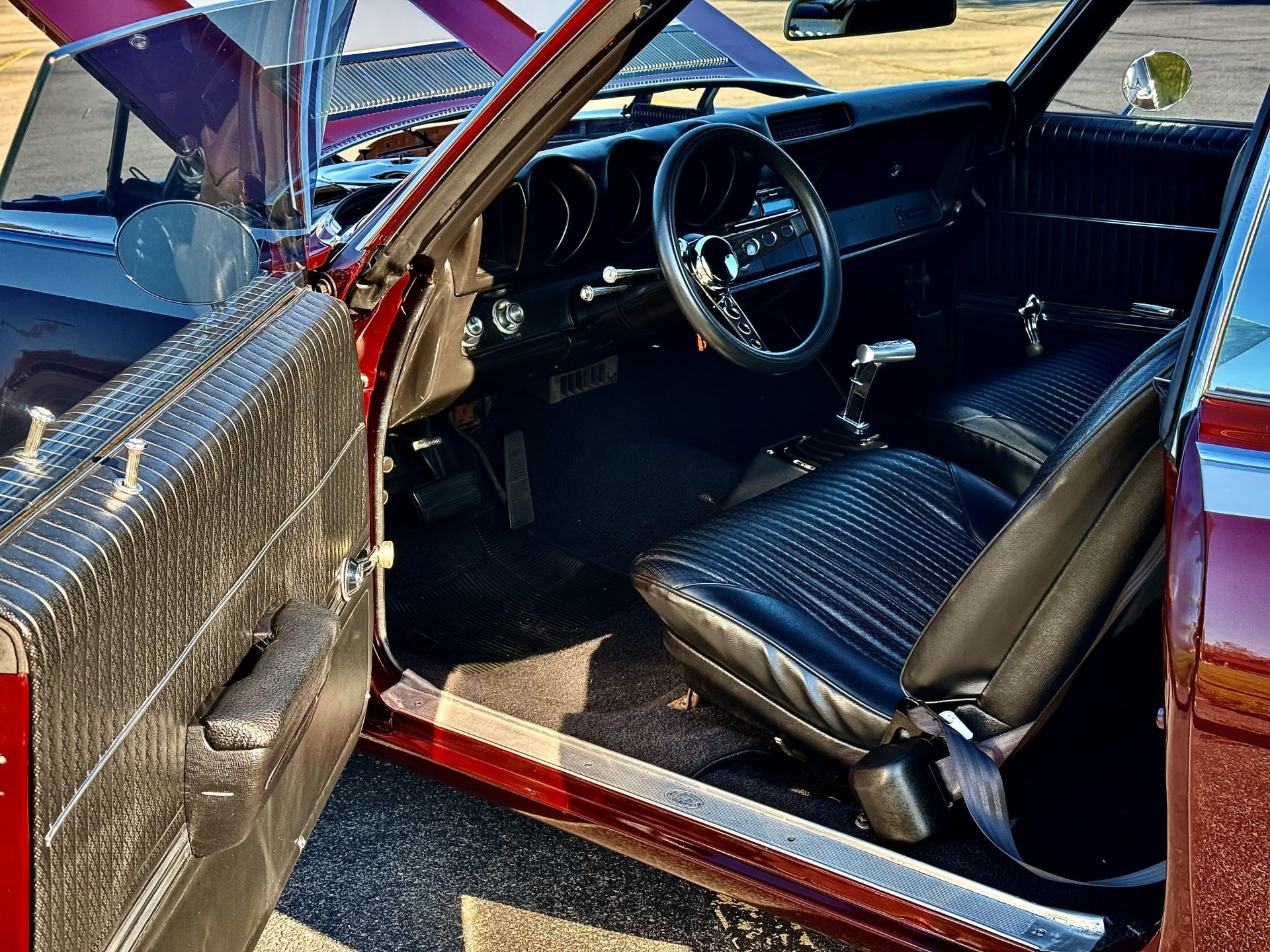
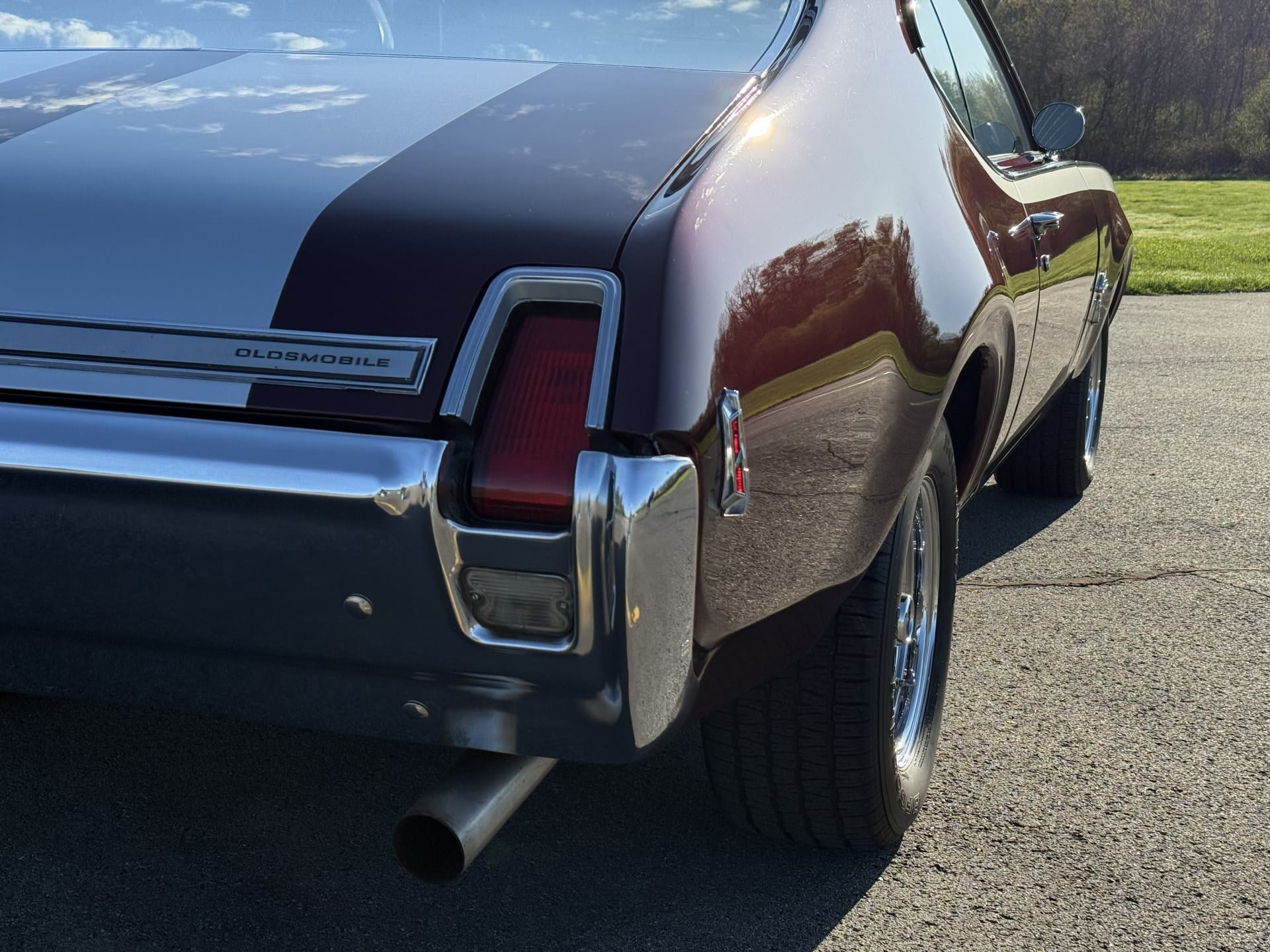
- The exterior wears DuPont U-Tech poly base Dark Garnet Red Pearl paint with Ice Silver stripes, and the interior has been updated with aftermarket three-point front seat belts, rear lap belts, and a Pioneer radio receiver with two rear Kenwood speakers. The car is due to cross the block with Mecum in late July.
History Speedrun: The Oldsmobile Cutlass Supreme
There aren’t many nameplates in American automotive history that can claim a trajectory quite like the Oldsmobile Cutlass Supreme. It started out as little more than a slightly fancier interior option on an existing mid-sizer, it spent a few years as a muscle-era darling with serious V8 credentials, and then, somewhat improbably, became the top-selling individual model within the Cutlass line, which itself grew into the best-selling car in the entire United States. That wildly unpredictable character arc played out across five generations from the 1966 model year through 1997, and it’s a story worth knowing.
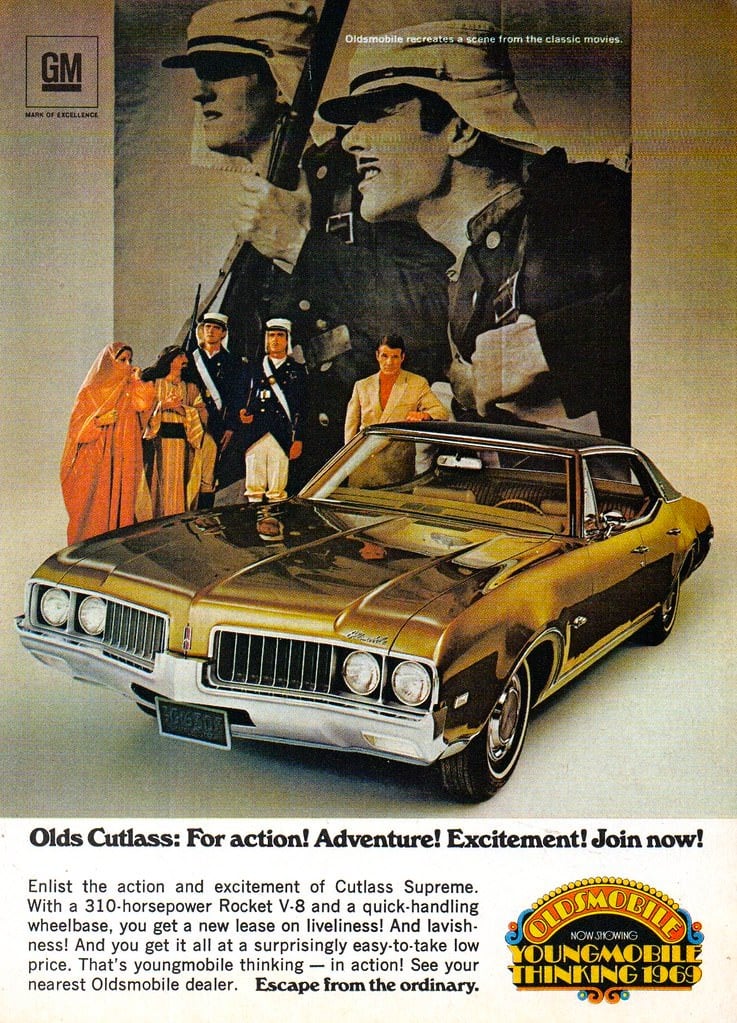
 Here we see the 1969 Oldsmobile Cutlass Supreme Sport Sedan. Image courtesy of General Motors.
The First Generation
The Cutlass Supreme name first appeared for the 1966 model year, but calling it a “model” at that point would be generous. It was just a trim level really, specifically, it denoted GM’s new intermediate four-door hardtop sedan body style (marketed as the Holiday Sedan) dressed up with more plush interior.
That meant a notchback bench seat with a fold-down armrest, full wheel covers, deluxe door panels, and tasteful little “CS” emblems on the rear C-pillars and trunk lid. It was a step above the midline F-85 Deluxe in ambition and appointments, though it shared the same underpinnings.
Things got a whole lot more interesting for 1967, when Oldsmobile expanded the Supreme into a full model series. Suddenly buyers could choose from a two-door hardtop coupe (the Holiday Coupe), a two-door pillared coupe (Sport Coupe), a four-door pillared sedan (Town Sedan), and a convertible.
Interiors were notably more luxurious than lesser F-85 and Cutlass models, think cloth or “Morocceen” vinyl bench seats in the sedans and all-vinyl Strato bucket seats in the coupes and convertibles. This was heady stuff by the standards of the late 1960s.
Under the hood, the standard engine for both years was Oldsmobile’s 330 cubic inch “Ultra High Compression” Jetfire Rocket V8, rated at 320 bhp with a four-barrel carburetor. Transmission choices included a column-shifted 3-speed manual, a floor-mounted 4-speed manual with a Hurst shifter, or a 2-speed Jetaway automatic.
Crucially, for 1967, the high-performance 4-4-2 package, with its throaty 400 cubic inch 350 bhp V8, was available on three Cutlass Supreme body styles – the Sport Coupe, Holiday Coupe, and convertible. There was also a “Turnpike Cruiser” option that paired a two-barrel version of the 400 cubic inch V8, rated at 300 bhp, with a lower rear axle ratio and the Turbo-Hydramatic automatic for more relaxed highway cruising. Truth be told, there weren’t many American cars in production at the time that could match it for long-distance driving comfort.
The Second Generation
For 1968, GM completely restyled its intermediate lineup, and the Cutlass Supreme benefited enormously. Wheelbases were shortened to 112 inches for two-door models and stretched to 116 inches for four-doors. The Supreme was now the top-line Oldsmobile intermediate, pared down to two and four-door hardtops.
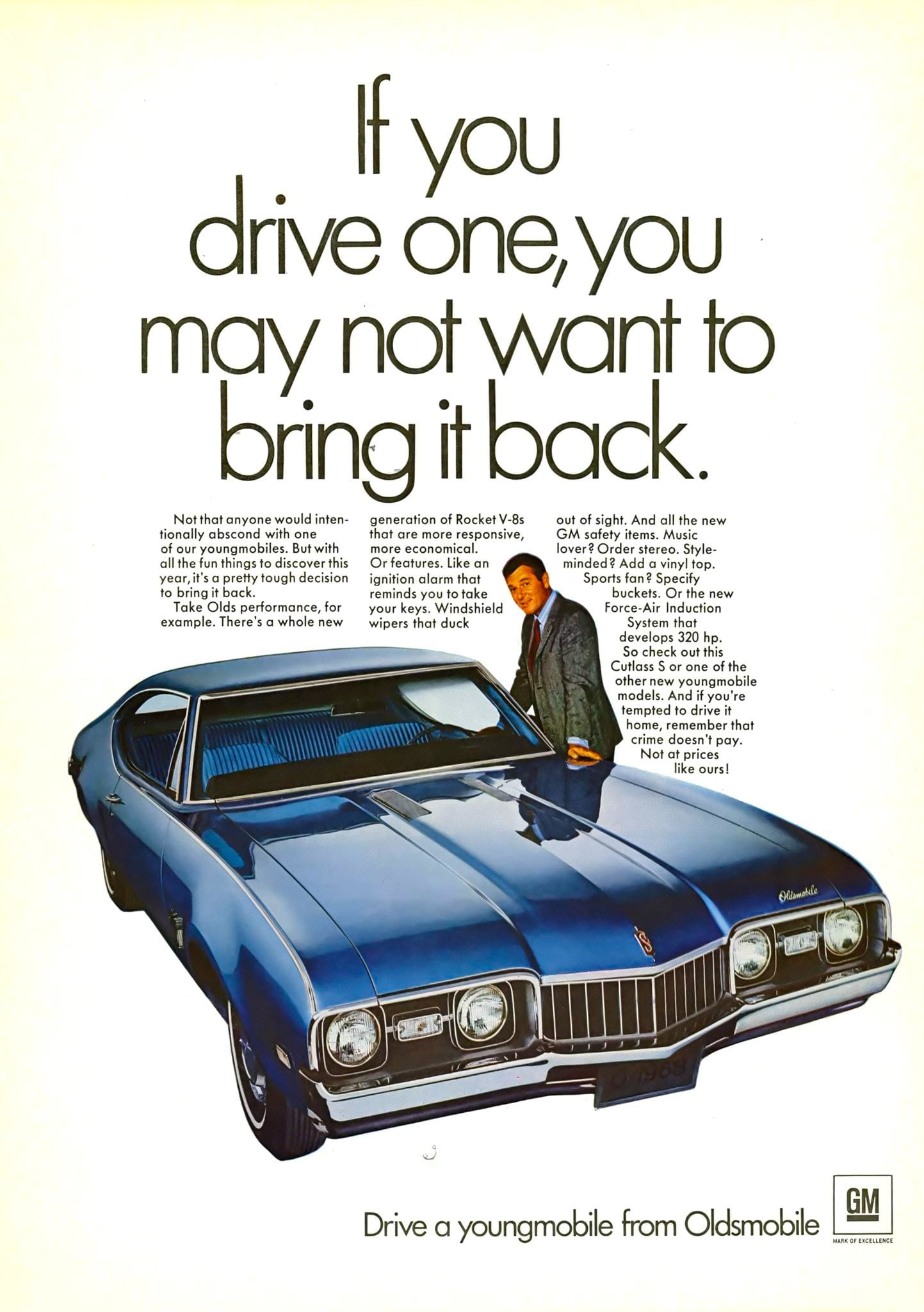
For 1968, GM completely restyled its intermediate lineup, and the Cutlass Supreme benefited enormously. Wheelbases were shortened to 112 inches for two-door models and stretched to 116 inches for four-doors. The Supreme was now the top-line Oldsmobile intermediate, pared down to two and four-door hardtops. Image courtesy of General Motors.
The convertible migrated to the lower-priced Cutlass “S” line, which also became the basis for the 4-4-2 muscle car as a standalone model. The standard V8 grew from 330 to 350 cubic inches, now producing 310 bhp.
The 1969 models received a tasteful facelift consisting of a new split grille, vertical taillights, with the same mechanical offerings as 1968. A 3-speed Turbo-Hydramatic 350 replaced the old 2-speed Jetaway automatic on the options list, and federally mandated headrests became standard. All in all they were relatively minor changes, but marque experts can spot them at 20 paces.
In 1970 Oldsmobile repositioned the car as its answer to the burgeoning personal luxury market that the Pontiac Grand Prix and Chevrolet Monte Carlo were carving out. The two-door hardtop received a distinctive new notchback roofline, setting it apart from the fastback styling used on lesser Cutlass coupes.
Unlike the Grand Prix and Monte Carlo, which rode on longer wheelbases with wholly separate bodies, the Supreme shared its 112-inch wheelbase and front and rear body panels with the standard Cutlass line, but it looked and felt meaningfully different inside. Buyers could choose a Custom Sport notchback bench seat or Strato bucket seats, with the option of a center console and a Hurst Dual-Gate shifter for the Turbo-Hydramatic.
For 1970 and 1971, the available SX option package brought genuine muscle car hardware to the Supreme. It included various versions of the big 455 cubic inch Rocket V8 borrowed from the 4-4-2, along with cutout rear bumper exhaust trumpets, rallye suspension, and distinctive SX badging. The W31 option, available on Supreme coupes only in 1968, added a high-lift cam to the 350 for sharper performance.
The 1972 Hurst/Olds (based on the Supreme two-door hardtop and convertible) was powered by the 455 Rocket with a Turbo 400 and Hurst Dual-Gate shifter, it served as the Indianapolis 500 Pace Car that year.
1972 marked the end of the Supreme convertible (until its return in 1990). In its farewell year, the Supreme ragtop was the best-selling convertible in America, moving 11,571 units – that was roughly 16% of the entire U.S. convertible market, outselling even the Eldorado and the Corvette.
Today, second-generation Cutlass Supremes are the ones that draw the most collector interest. They share many parts with the highly sought-after 4-4-2, reproduction parts support is excellent, and the styling has aged remarkably well. They’re also commonly targeted for engine swaps, often with the 455 cubic inch Rocket V8.
The 455 cubic inch Oldsmobile big block V8 in this car now runs TRW flat top pistons, updated C heads with hardened valve seats and a three-angle valve job, a Mondello Performance JM2022 camshaft with Mondello adjustable pushrods, an Edelbrock Torker intake manifold, and a 750 CFM four-barrel carburetor fed by a custom aftermarket ram air system.
The Third Generation
GM’s 1973 redesign introduced “Colonnade” styling, this consisted of fixed center pillars which replaced the pillarless hardtop look as proposed rollover standards scared automakers away from the older design. Despite some initial controversy over this, the new Cutlass Supreme proved massively popular.
Its coupe had a unique roofline with vertical opera windows, and the Cutlass line soon became Oldsmobile’s biggest seller, accounting for 43% of the division’s total volume by 1974. A 1976 facelift with quad rectangular headlights and a waterfall grille boosted sales further still, and the Cutlass line became America’s best-selling car that year – with the Supreme two-door coupe as its most popular single model – helping Oldsmobile become the only marque besides Ford and Chevrolet to break one million units sold.
In 1977, GM cranked out over 632,000 Cutlasses. Those are staggering numbers for any nameplate, let alone one from Oldsmobile. There can be no denying the fact that the Cutlass Supreme was living up to its name.
The Later Generations
The fourth gen brought GM’s downsizing wave to the Cutlass Supreme. It shrank but stayed rear-wheel drive thankfully), and special editions like the Hurst/Olds continued to keep enthusiasts engaged to some degree.
The 1981 restyle introduced a “shovel-nose” front header panel and a higher rear deck that reduced aerodynamic drag by 15%, and the body went on to compete in NASCAR – though sadly without the success of its Buick Regal sibling.
The fifth and final generation made the leap to front-wheel drive on GM’s W-body platform, sharing its 107.5 inch wheelbase with the Pontiac Grand Prix, Buick Regal, and Chevrolet Lumina. It became the poster child for Oldsmobile’s “This is not your father’s Oldsmobile” campaign. Perhaps the biggest problem with this slogan is that your father’s Oldsmobile was both faster and more powerful, as well as better looking.
The drivetrain uses a Turbo 400 3-speed automatic transmission equipped with a B&M shift kit and Mega shifter, along with an aftermarket transmission cooler. Out back is a GM 12-bolt rear end fitted with 4.10 Richmond gears, and the rear suspension now includes air bags.
The 1988 model was chosen to pace the Indianapolis 500 with Chuck Yeager behind the wheel, and Oldsmobile contracted Cars and Concepts of Brighton, Michigan to hand-build just 50 convertible pace car replicas – each of which is credited with the first application of a head-up display in an American production vehicle, developed by Hughes Electronics. Most were later recalled and returned to GM, leaving fewer than 10 in private hands today.
A production convertible returned in 1990 for the first time since 1972, and the W-body Supreme proved surprisingly competitive in NASCAR, notching 13 victories between 1989 and 1992 before Oldsmobile exited racing.
The line was gradually pared back through the mid-1990s, and the last Cutlass Supreme rolled off the assembly line on April the 24th, 1997. Its replacement, the Oldsmobile Intrigue, arrived for 1998, but it couldn’t hold a candle to the Supreme, and it left production in 2002.
The 1969 Oldsmobile Cutlass Supreme Shown Here
This is a 1969 Cutlass Supreme that’s now powered by a modified 455 cubic inch Oldsmobile big block V8 that’s been bored .060 over and fitted with a serious suite of performance upgrades.
The engine now runs TRW flat top pistons, updated C heads with hardened valve seats and a three-angle valve job, a Mondello Performance JM2022 camshaft with Mondello adjustable pushrods, an Edelbrock Torker intake manifold, and a 750 CFM four-barrel carburetor fed by a custom aftermarket ram air system.
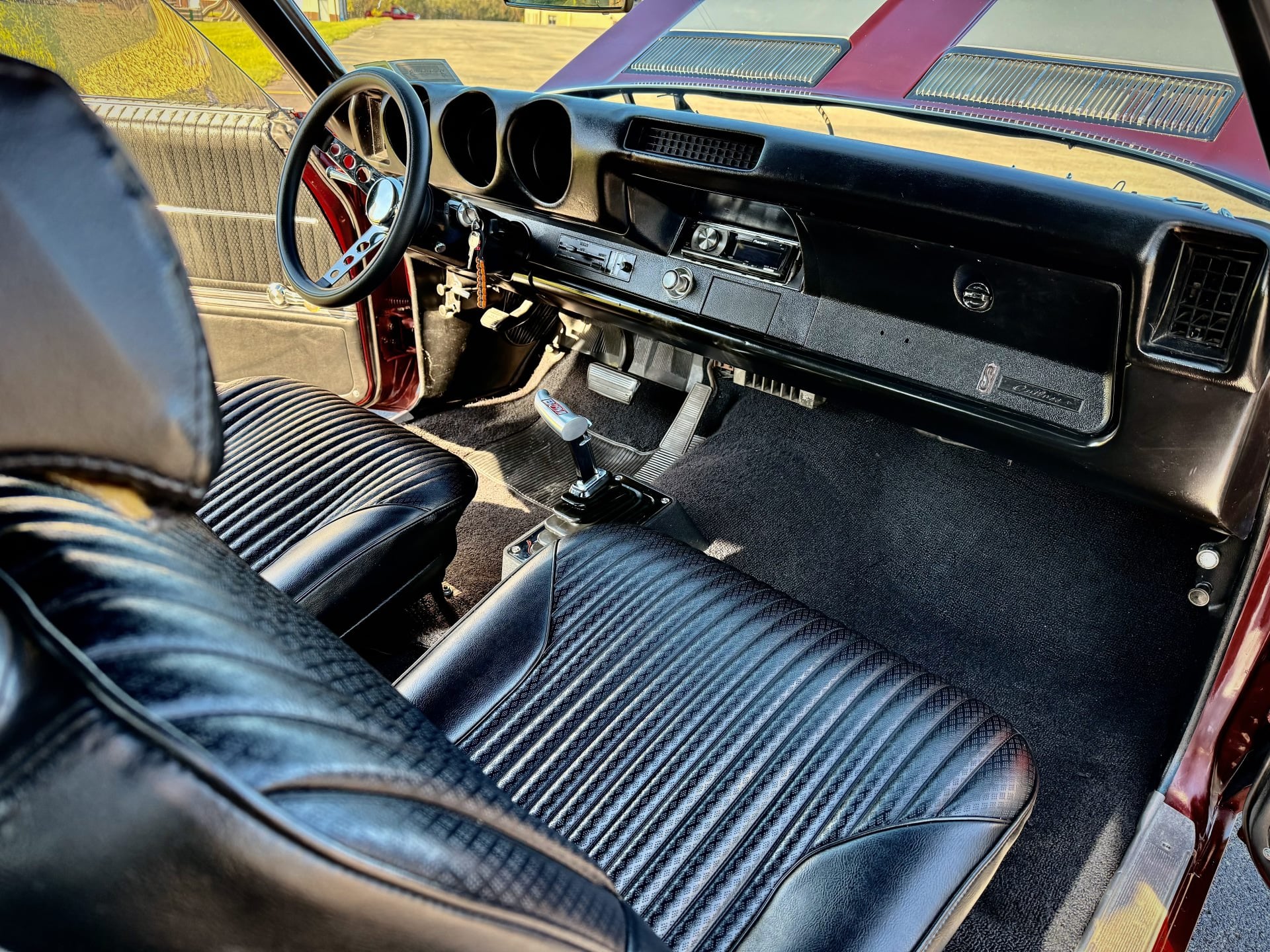
Ignition is handled by an HEI distributor, and oiling has been upgraded with an 8-quart oil pan, a high-volume oil pump, and an upper-end oil restriction kit. Cooling is managed by an electric fan, and spent gases exit through a header-back 3-inch Flowmaster dual exhaust system with DeltaFlow mufflers.
The drivetrain uses a Turbo 400 3-speed automatic transmission equipped with a B&M shift kit and Mega shifter, along with an aftermarket transmission cooler. Out back is a GM 12-bolt rear end fitted with 4.10 Richmond gears, and the rear suspension now includes air bags.
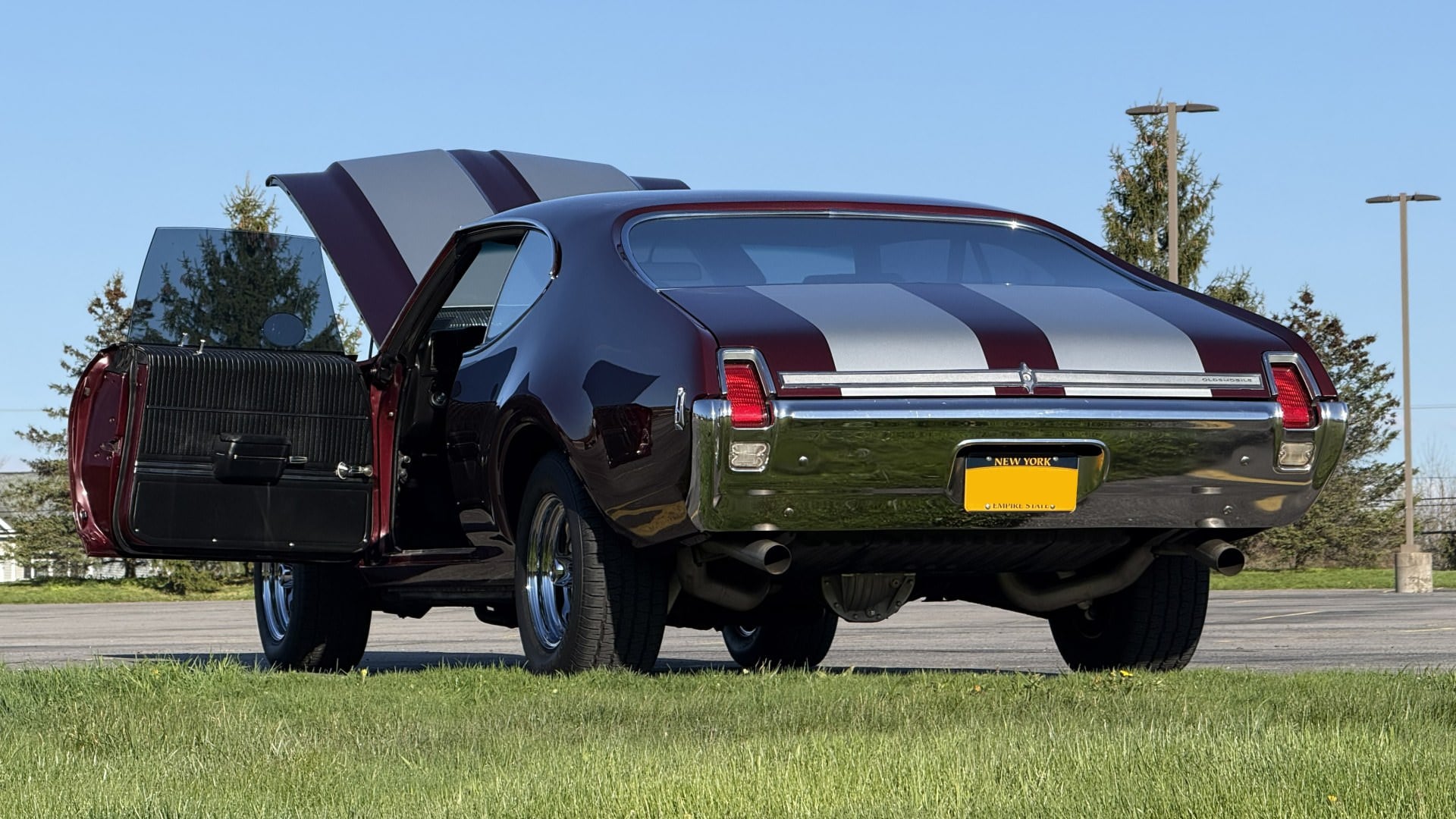
This is a 1969 Oldsmobile Cutlass Supreme that now benefits from a slew of discrete upgrades including the fitment of a modified 455 cubic inch Oldsmobile big block V8, a Turbo 400 transmission, and uprated suspension.
The exterior is finished in DuPont U-Tech poly base Dark Garnet Red Pearl with Ice Silver stripes. Inside, the car has been fitted with aftermarket three-point front seat belts and rear lap belts, along with a Pioneer radio receiver paired with two rear Kenwood speakers.
It’s now due to roll across the auction block with Mecum in late July and you can visit the listing here if you’d like to read more about it or register to bid.
Images courtesy of Mecum

Articles that Ben Branch has written have been covered on CNN, Popular Mechanics, Smithsonian Magazine, Road & Track Magazine, the official Pinterest blog, the official eBay Motors blog, BuzzFeed, Autoweek Magazine, Wired Magazine, Autoblog, Gear Patrol, Jalopnik, The Verge, and many more.
Silodrome was founded by Ben back in 2010, in the years since the site has grown to become a world leader in the alternative and vintage motoring sector, with well over a million monthly readers from around the world and many hundreds of thousands of followers on social media.