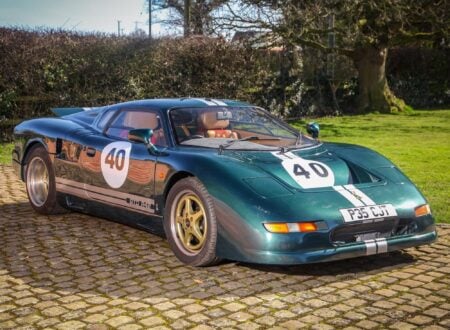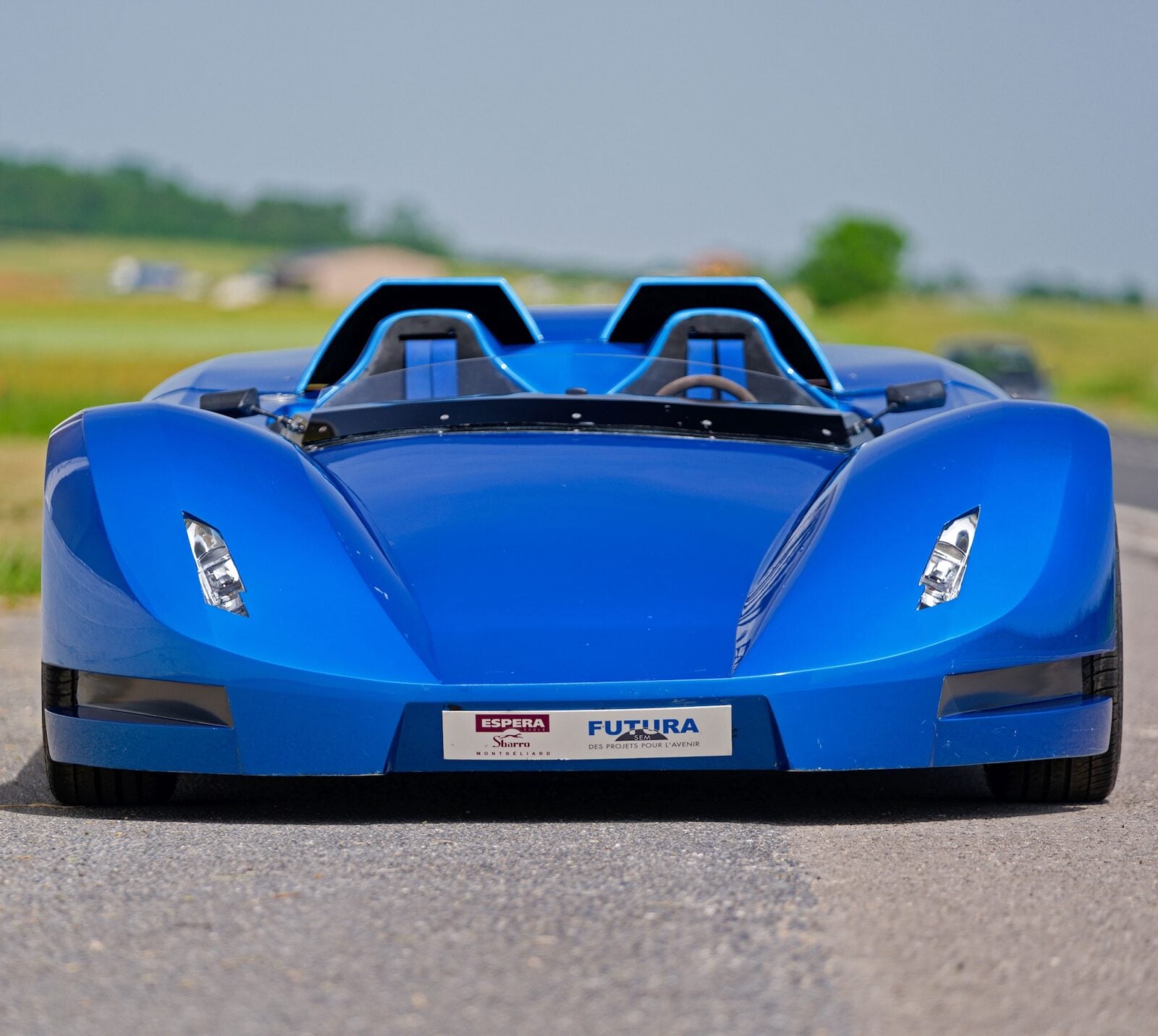
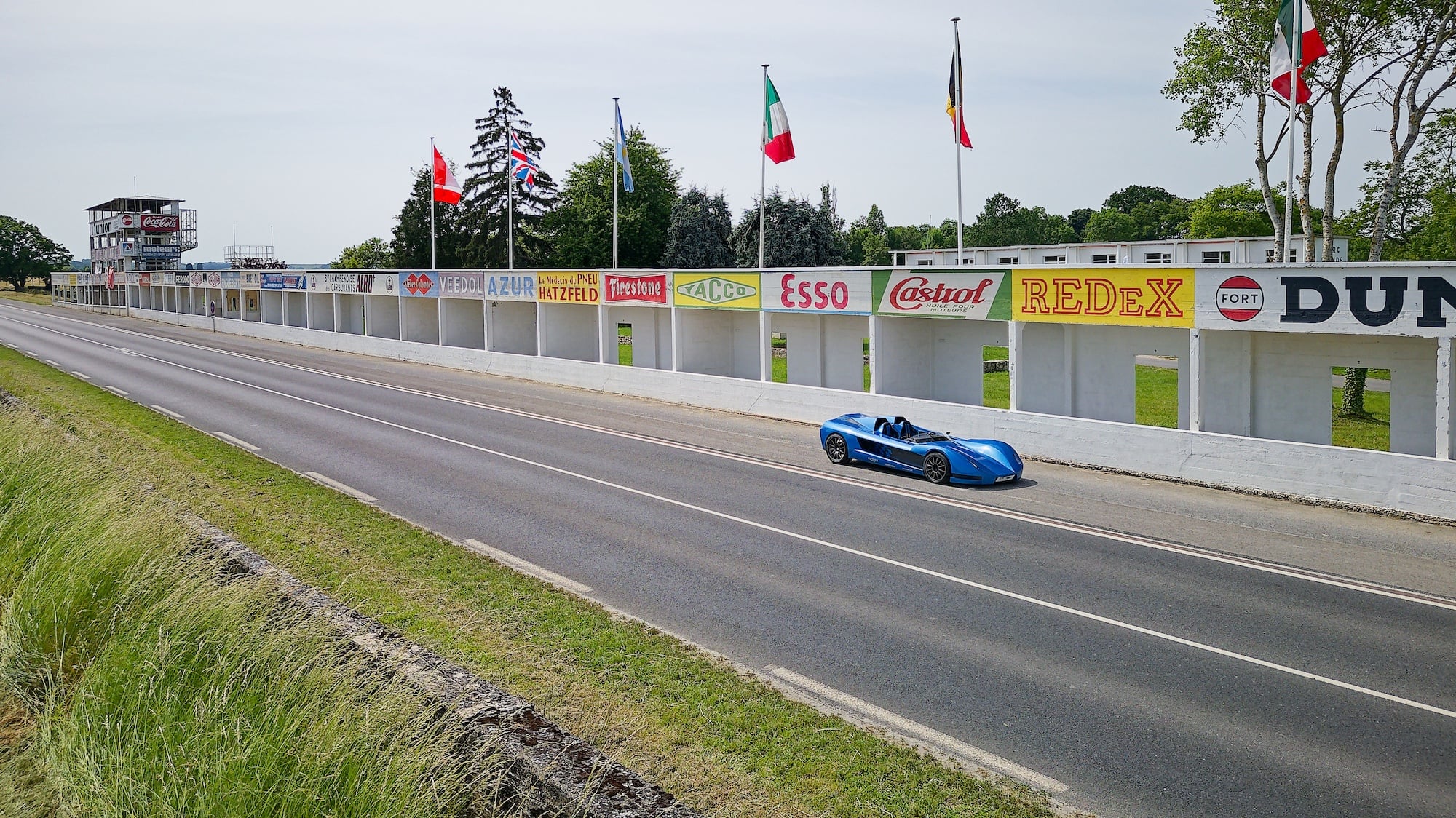
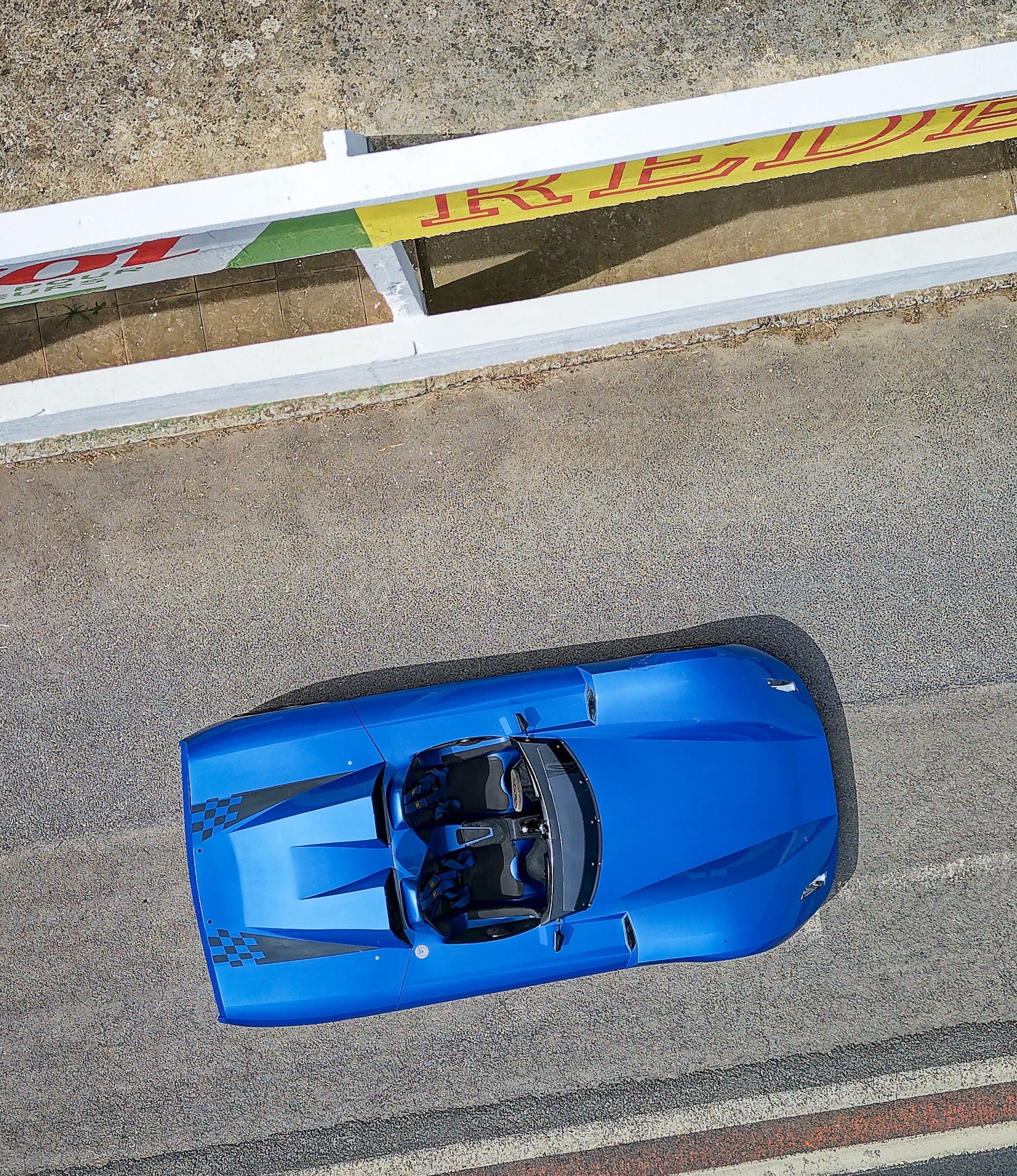
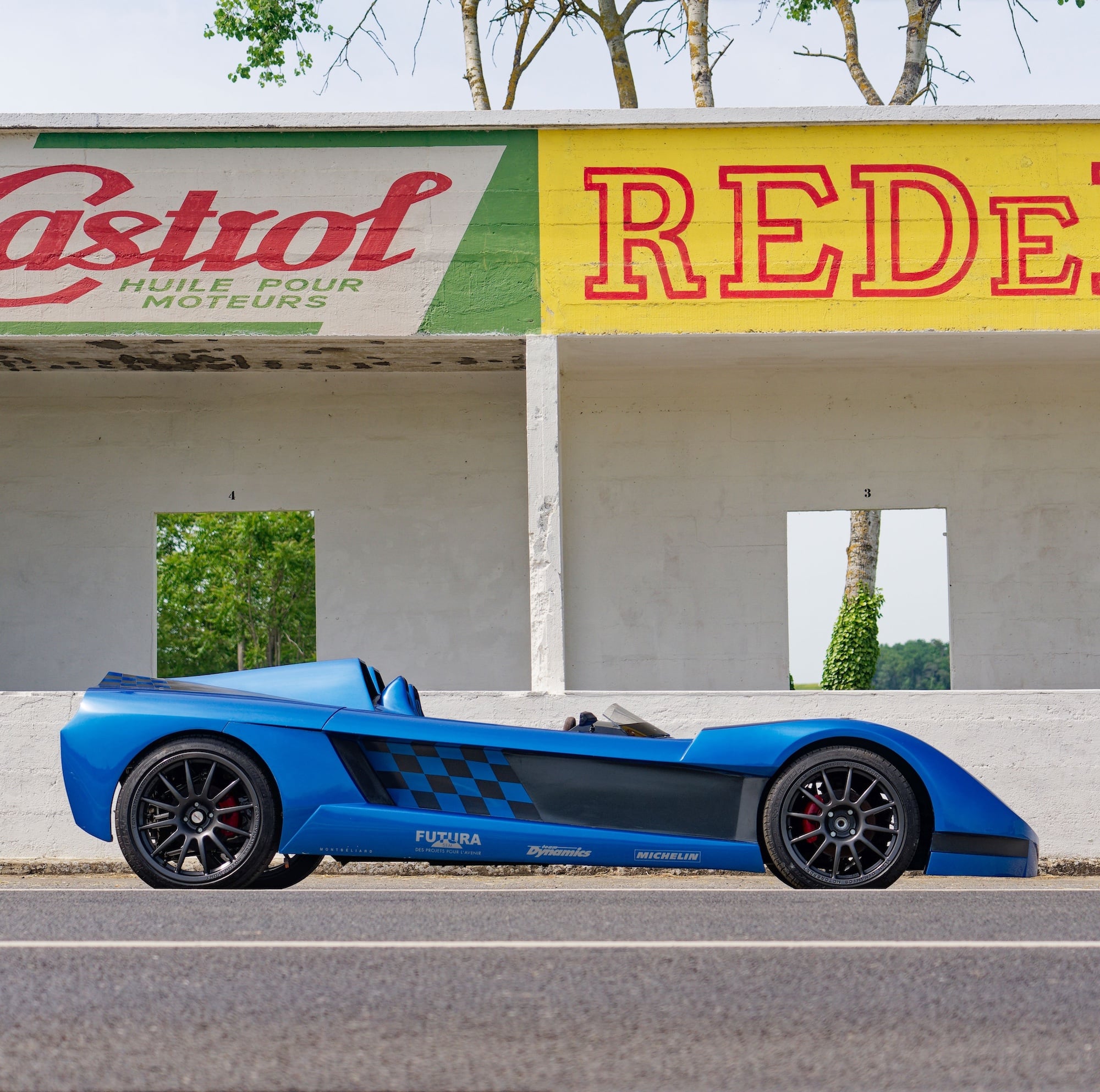
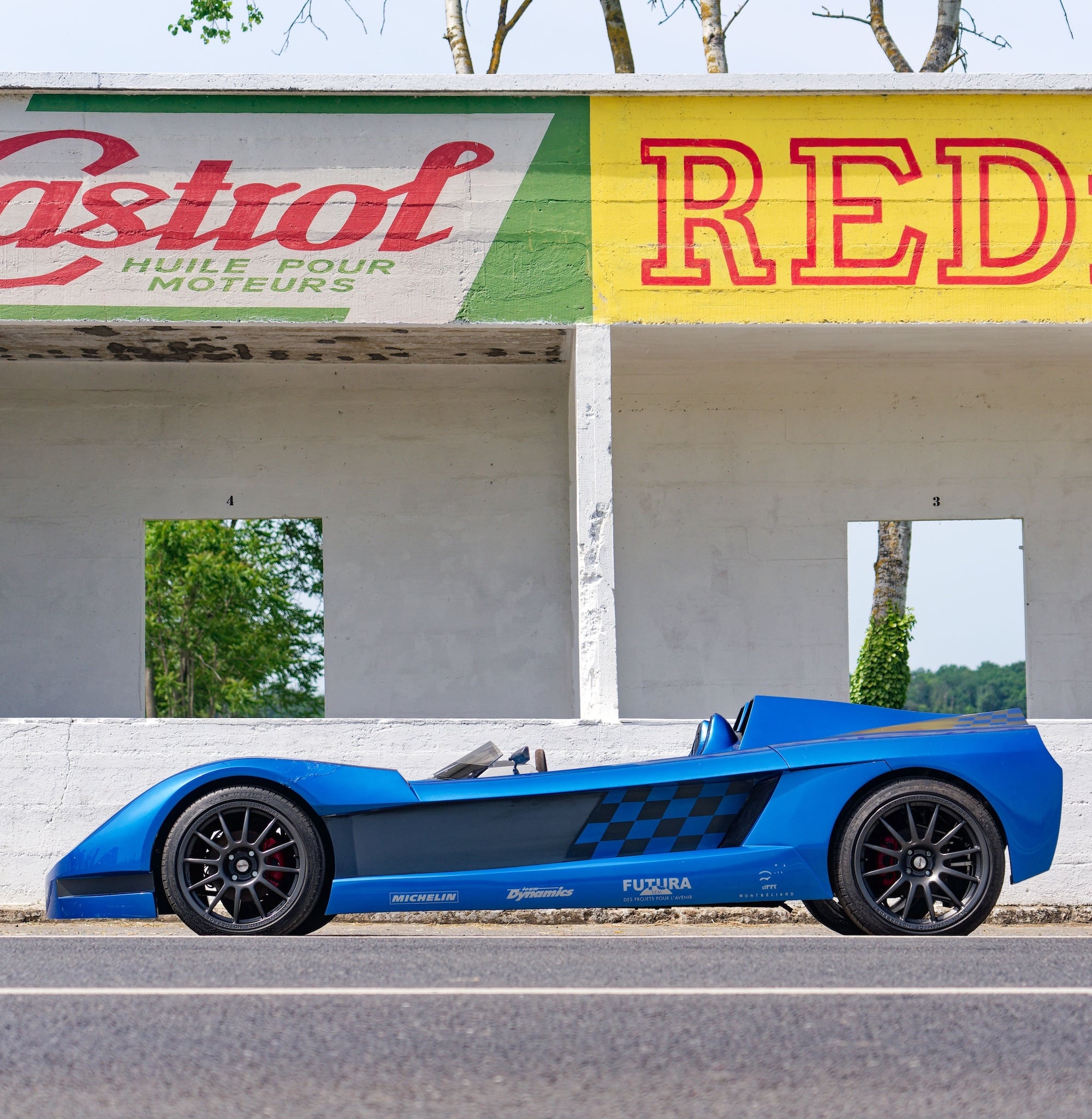
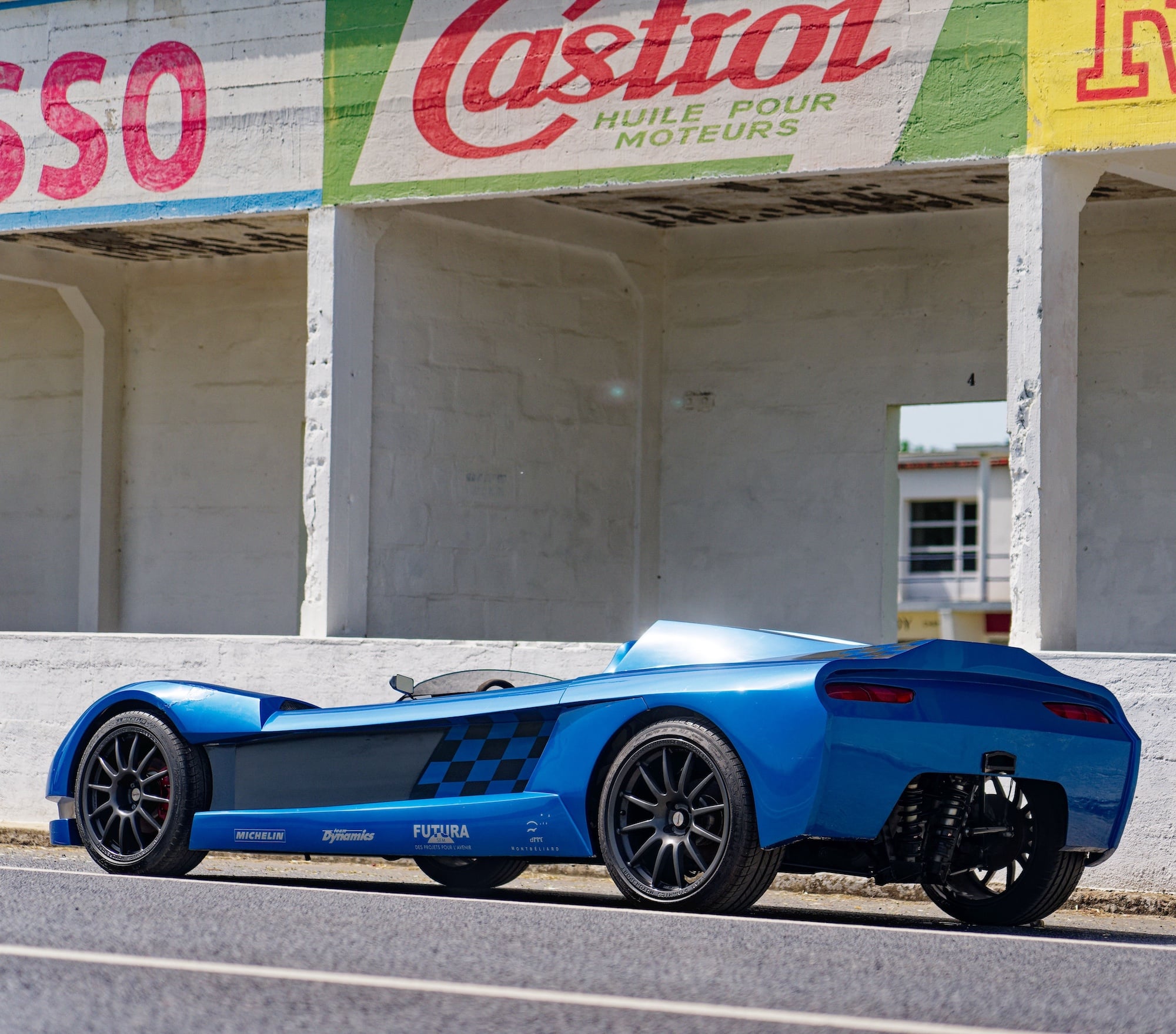
This is the 2008 Espera Sbarro Katana, it’s a one-off sports car powered by a mid-mounted Honda VTEC, with a completely bespoke lightweight body.
The Katana was shown at both the Geneva and Paris Motor Shows in 2008 where it attracted a huge amount of attention. It’s now being offered with a guide price that starts at €30,000, which is around $34,000 USD.
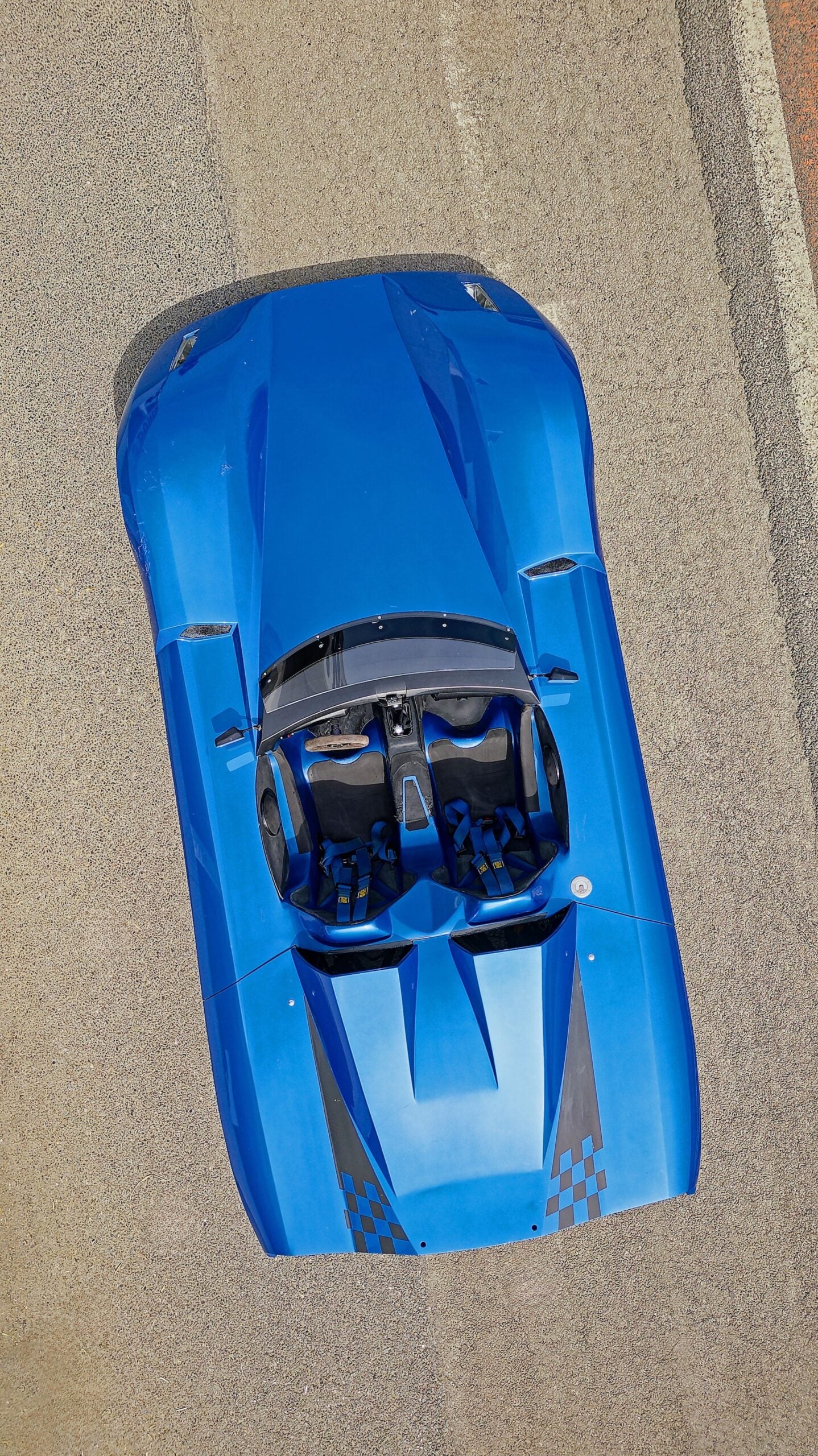
 This is the 2008 Espera Sbarro Katana, it’s a one-off sports car powered by a mid-mounted Honda VTEC, with a completely bespoke lightweight body.
History Speedrun: The Espera Sbarro Katana
Built in roughly two months by automotive design students in eastern France, the 2008 Espera Sbarro Katana is a fully-functional, mid-engined two-seater with a Honda VTEC engine and a multimedia dashboard, and the entire thing came out of a school program that gives its students a single academic year to take a vehicle from a sketch to a driving prototype.
The school was École Espera Sbarro Montbéliard, named for Franco Sbarro, the Italian-born Swiss designer who has been one of the more interesting figures in European custom automotive design since the late 1960s. Born in 1939 in southern Italy, Sbarro moved to Switzerland at 18 and worked as a mechanic in Neuchâtel before catching on with Georges Filipinetti, the Swiss Ferrari importer who ran the Scuderia Filipinetti racing team.
By the mid-1960s, Sbarro was chief mechanic at Filipinetti, looking after AC Cobras, a Ferrari 330 P3, and Ford GT40s. In 1968 he struck out on his own, founding the Atelier de Construction Automobile (ACA). Its first car was the Dominique III, and Sbarro soon began building replicas of European classics like the BMW 328 and the Lola T70.
By the 1980s, his Geneva show stand had become one of the highlights of the motor show circuit. Wildly imaginative one-offs poured out of his workshop – the Super Twelve, a hot hatch powered by two Kawasaki six-cylinder motorcycle engines bolted together to make a straight-twelve – the Super Eight, built on Ferrari 308 GT4 mechanicals – and the wedge-shaped Challenge series, which dispensed with conventional mirrors in favor of a reversing camera years before it became normalized.
He also developed unusual inventions like the orbital (hubless) wheel and the Dual Frame chassis. Eventually, Sbarro decided to pass his approach on to the next generation: a design and fabrication school where students don’t just sketch concepts, they actually build them.
The school’s French branch operated in Pontarlier until 2007, when it relocated to Montbéliard in partnership with the Sem Futura development company. At the time, the program took students through about 1,500 hours of instruction over 10 months, covering everything from design and aerodynamics to body construction and chassis fabrication. The end deliverable was one or more running prototypes, often shown at Geneva and other major European shows.
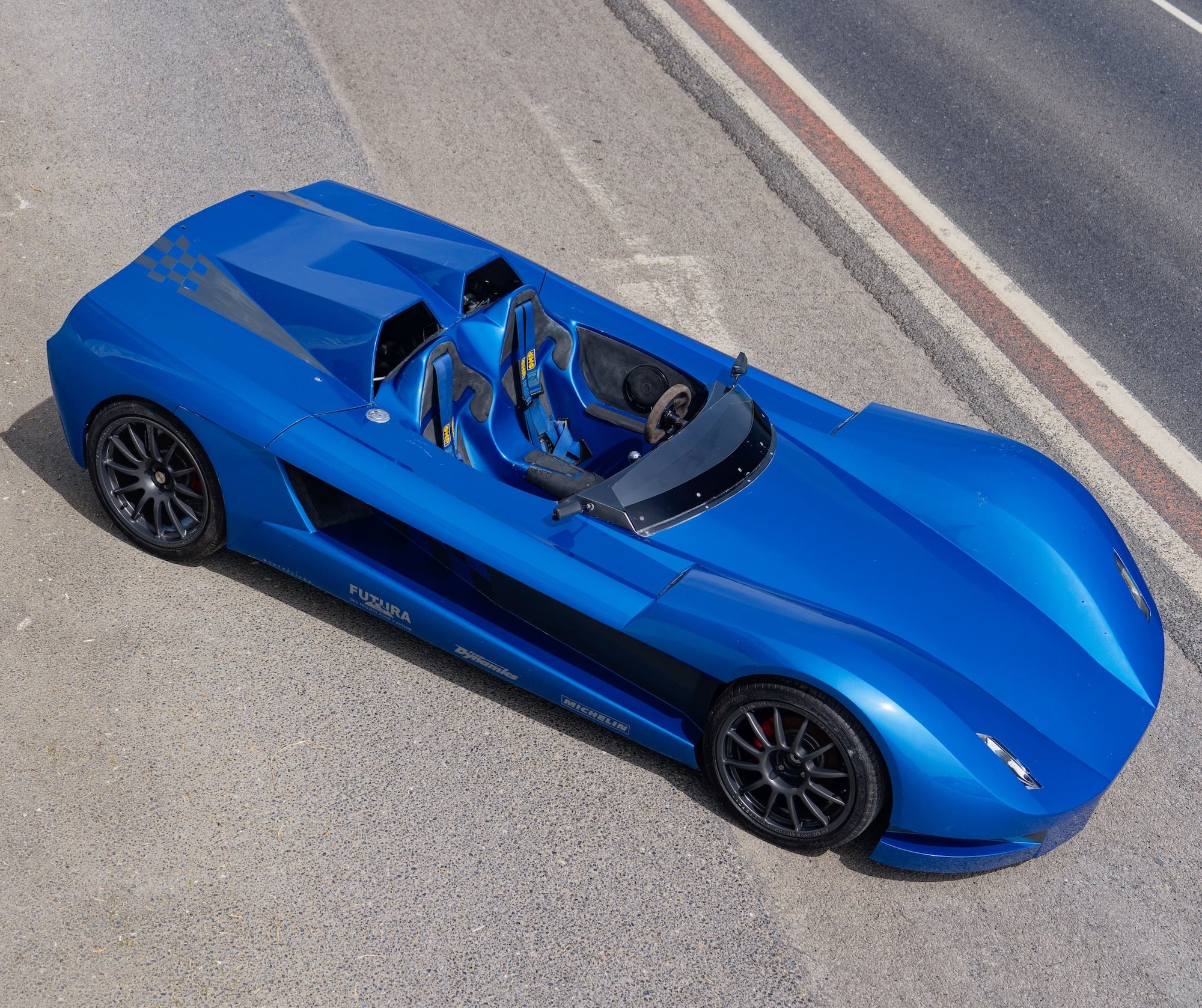
The Katana was shown at both the Geneva and Paris Motor Shows in 2008 where it attracted a huge amount of attention. It’s now being offered with a guide price that starts at €30,000, which is around $34,000 USD.
The 2007 to 2008 class (the first based at the new Montbéliard campus) produced four student prototypes that year – the Genesis, Nemesis, Mulsanne, and Katana. The Katana is the most unusual of the bunch, it was built on a compressed schedule with a corporate partner riding shotgun.
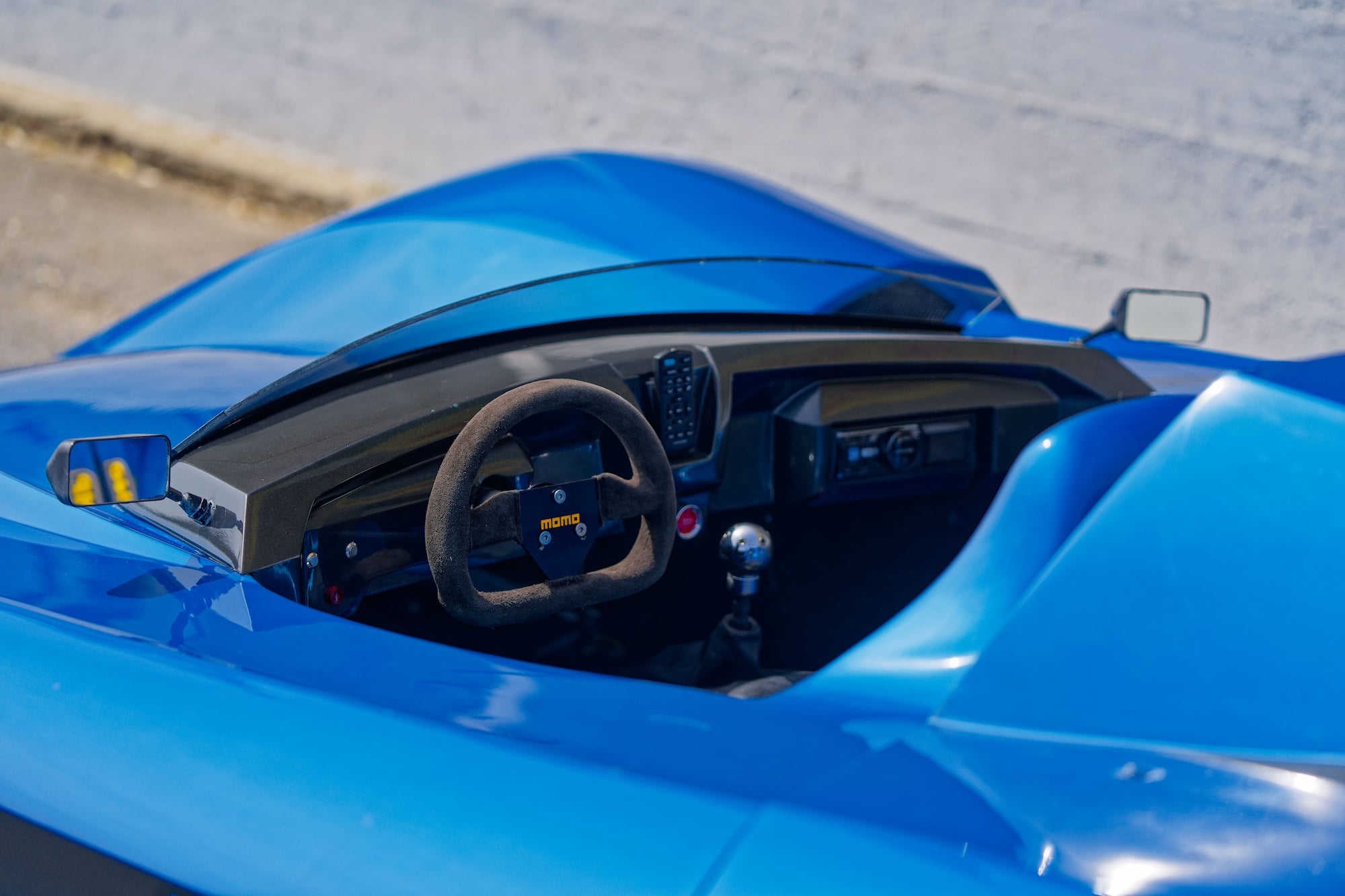
That corporate partner was Orange, a French telecommunications giant, which commissioned the Katana with one specific requirement – the dashboard had to integrate a smartphone and accommodate a Parrot RK 8200 Bluetooth hands-free car kit.
By 2008 standards, this was actually pretty cutting-edge. The original iPhone had been on the market for just over a year, Bluetooth phone integration was still a luxury-car feature, and CarPlay and Android Auto were still many years away – Apple announced CarPlay in 2014, and the first production Android Auto vehicle didn’t arrive until 2015. Orange wanted the Katana to be a rolling concept of where in-car communications technology was heading, and the Espera students did an excellent job of delivering it.
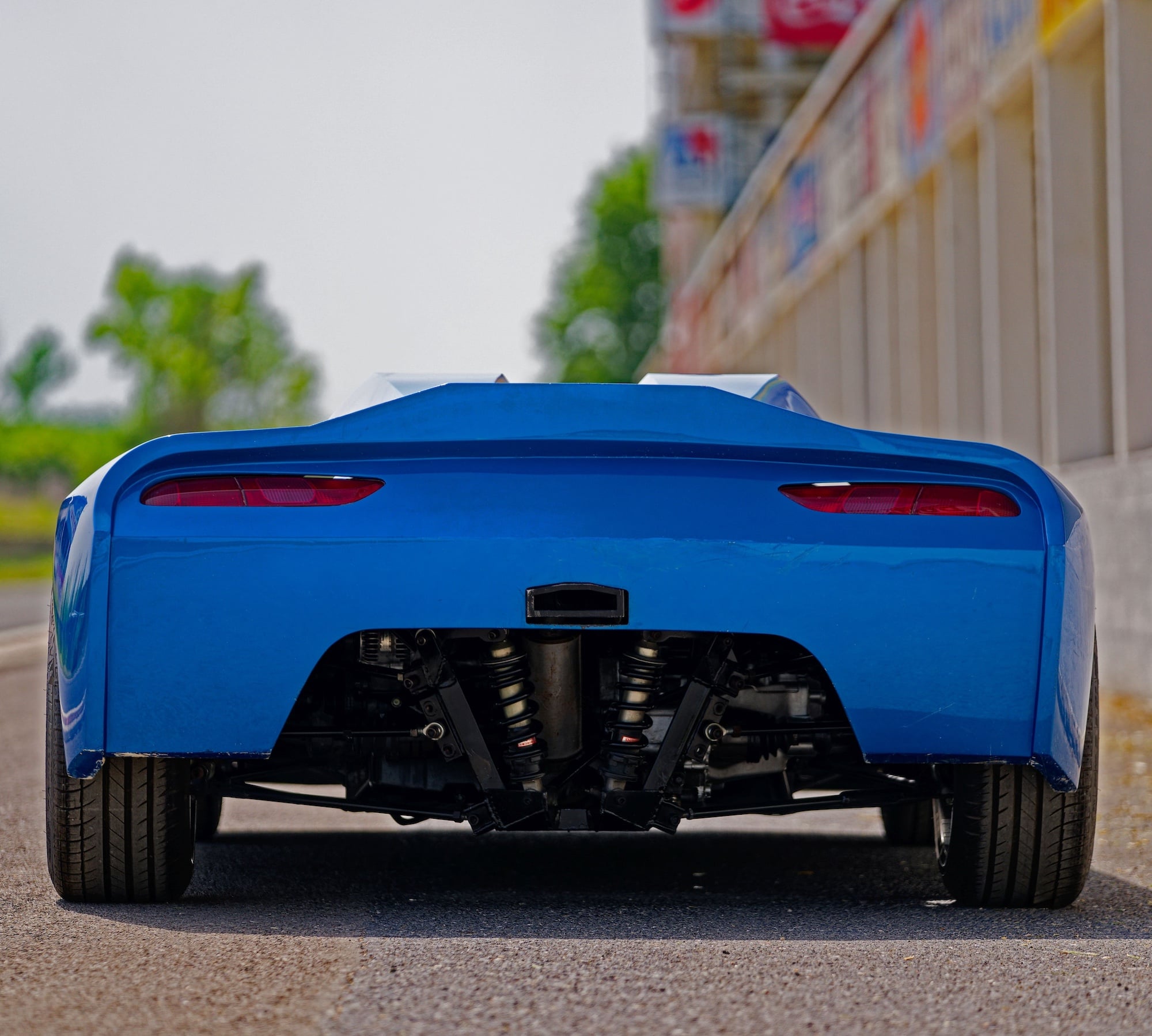
The Katana is built around Sbarro’s Dual Frame chassis, this was a frame Franco Sbarro introduced in 1991 that splits a car into two structurally distinct modules. The first is a tubular central-spine assembly that carries the engine, gearbox, suspension, and all the dynamic mechanical parts.
The second is the composite-body, which sits on top of the mechanical module and is connected to it through six pneumatic spheres. The setup is intended to let the body float independently of the chassis on adjustable air pressure, eliminating pitch under braking and roll in corners as felt by the driver and passenger. It’s also light – per Sbarro’s figures, the mechanical module weighs somewhere in the region of 500 kgs, with the bare composite shell adding only about 150 kgs to the total.
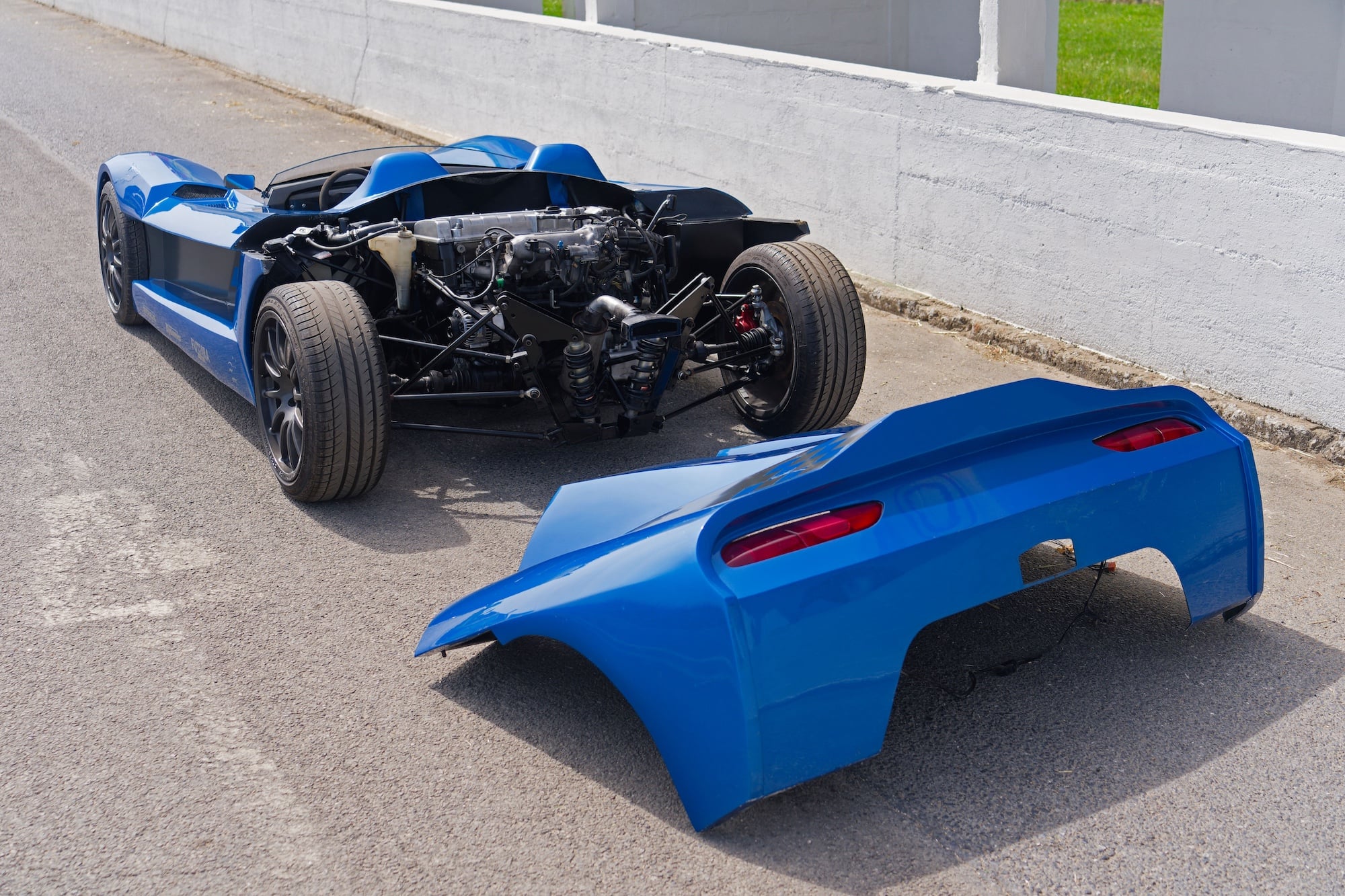
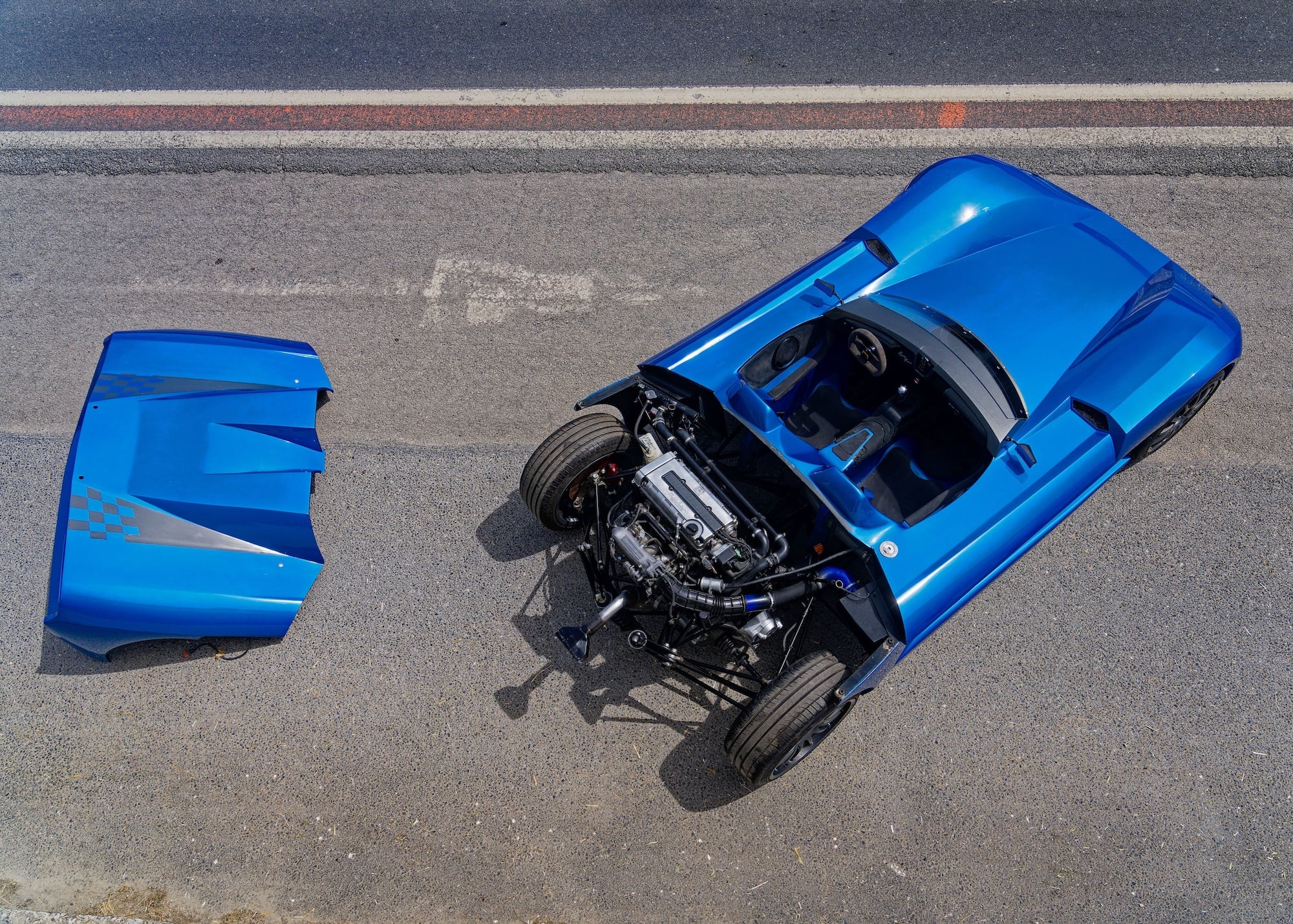
For the Katana, the engine sits transversely behind the seats. It’s a 1.6 liter Honda DOHC VTEC four-cylinder lifted from a Civic, rated at 160 bhp. The B16 is one of the more celebrated naturally-aspirated production engines of the 1990s – it revs to about 8,200 rpm, produces 100 bhp per liter, and belongs to the line that introduced VTEC variable valve timing to the world in 1989, first appearing in the Integra XSi before reaching the Civic and CR-X later that same year.
Drive in the Katana goes to the rear wheels through a manual gearbox. The entire rear bodywork can be unbolted and lifted off for access to the engine, a useful feature given the Katana was intended to be driven and demonstrated, not just stared at on auto show platforms.
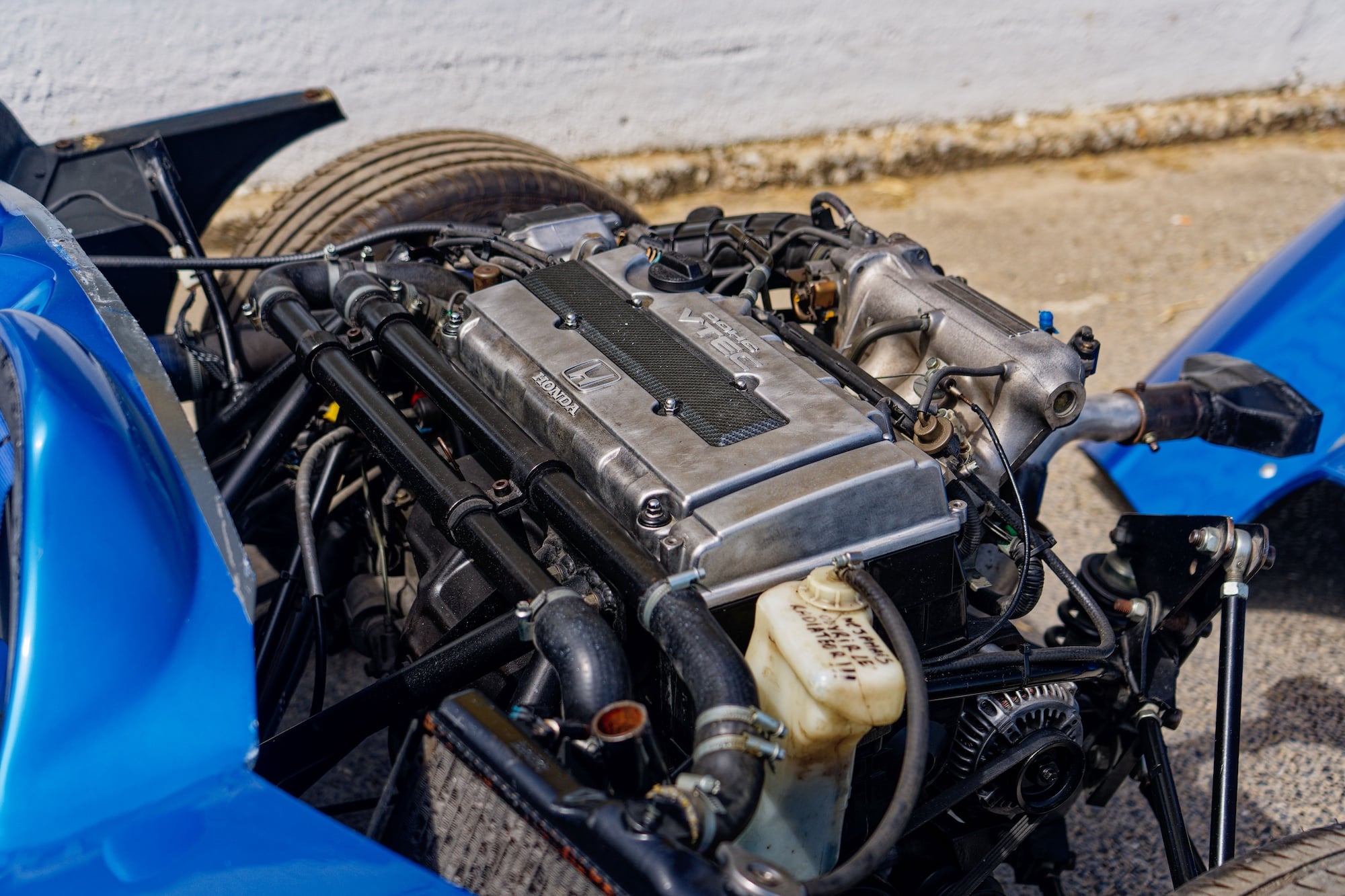
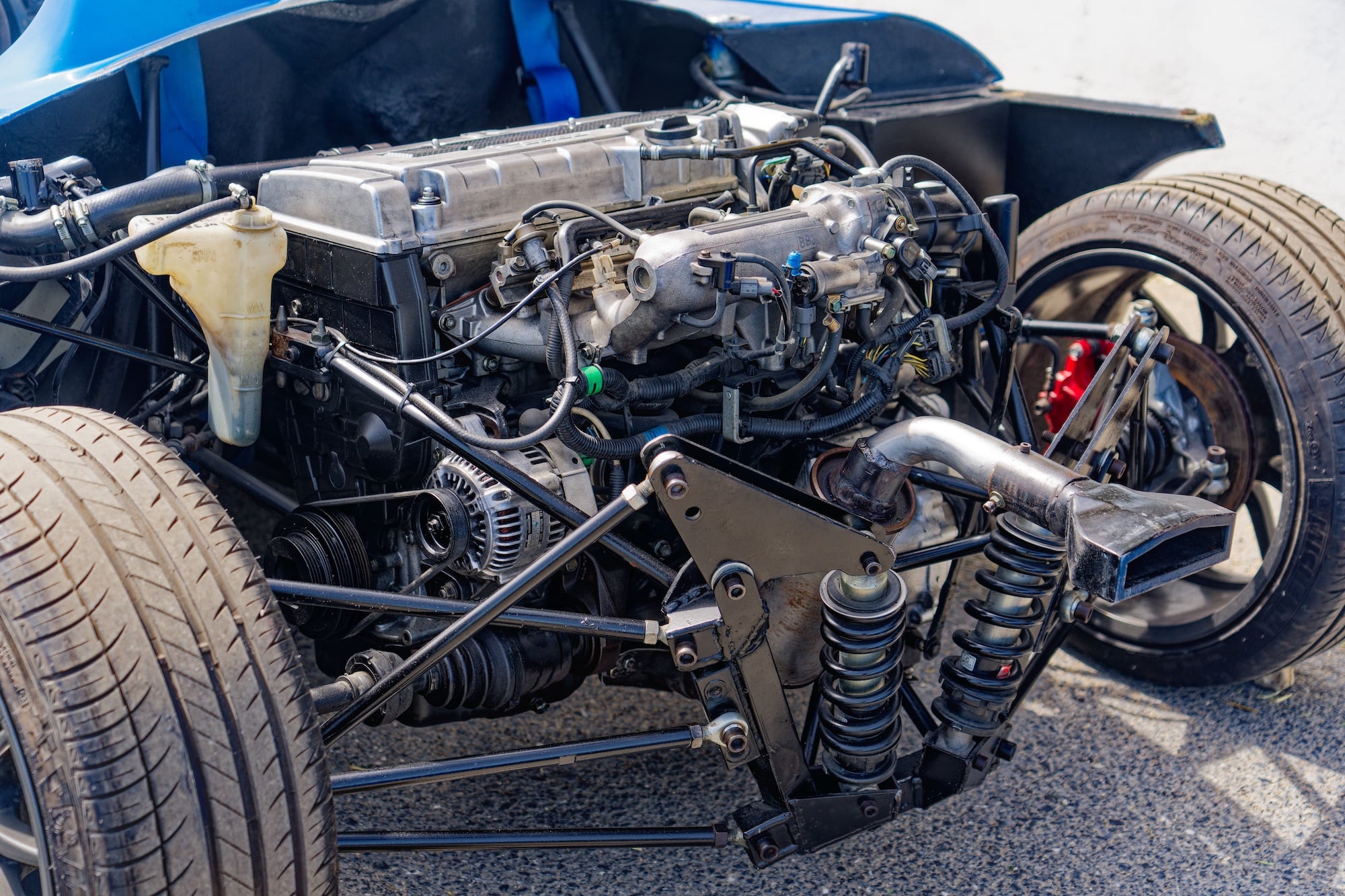
Drive in the Katana goes to the rear wheels through a manual gearbox. The entire rear bodywork can be unbolted and lifted off for access to the engine, a useful feature given the Katana was intended to be driven and would thus need maintenance.
The Katana appeared at both the 2008 Geneva and Paris Motor Shows. The Paris appearance is the better documented of the two, the car was shown at the Mondial de l’Automobile, which ran from October the 4th to the 19th at the Porte de Versailles.
It sat on Orange’s stand rather than the school’s, so that visitors could see the multimedia integration up close. The school’s own 100 square meter Paris stand (Espera Sbarro’s first ever at the Mondial) was given over to the Mulsanne (a separate 2.0 liter PSA turbo-powered prototype evoking a Le Mans car) and the Pendolauto four-wheeled motorcycle.
According to research compiled by Sbarro historian Philippe Calvet, there was at least one moment of student-built drama in the run-up to the show – the front right wheel was damaged shortly before opening day, and the Team Dynamic crew rebuilt a replacement on short notice.
The Katana stayed in school hands until the summer of 2011, when it was sold to a private owner in Paris. A subsequent owner bought it in 2019 with the goal of getting it road-registered in France, but the homologation effort didn’t succeed. Concept cars built without crash certification, regulatory lighting, or compliance paperwork are very difficult to register retrospectively.
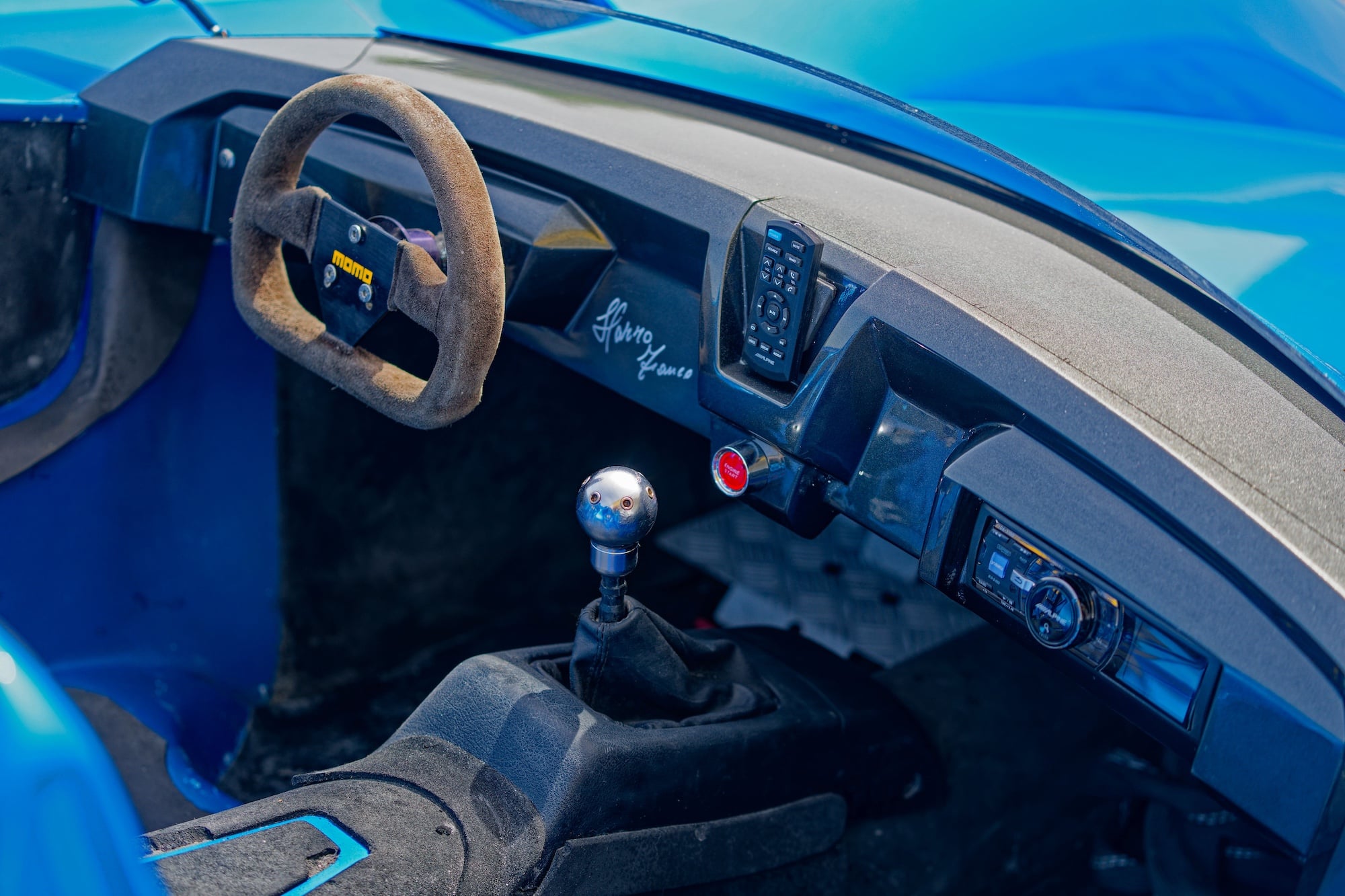
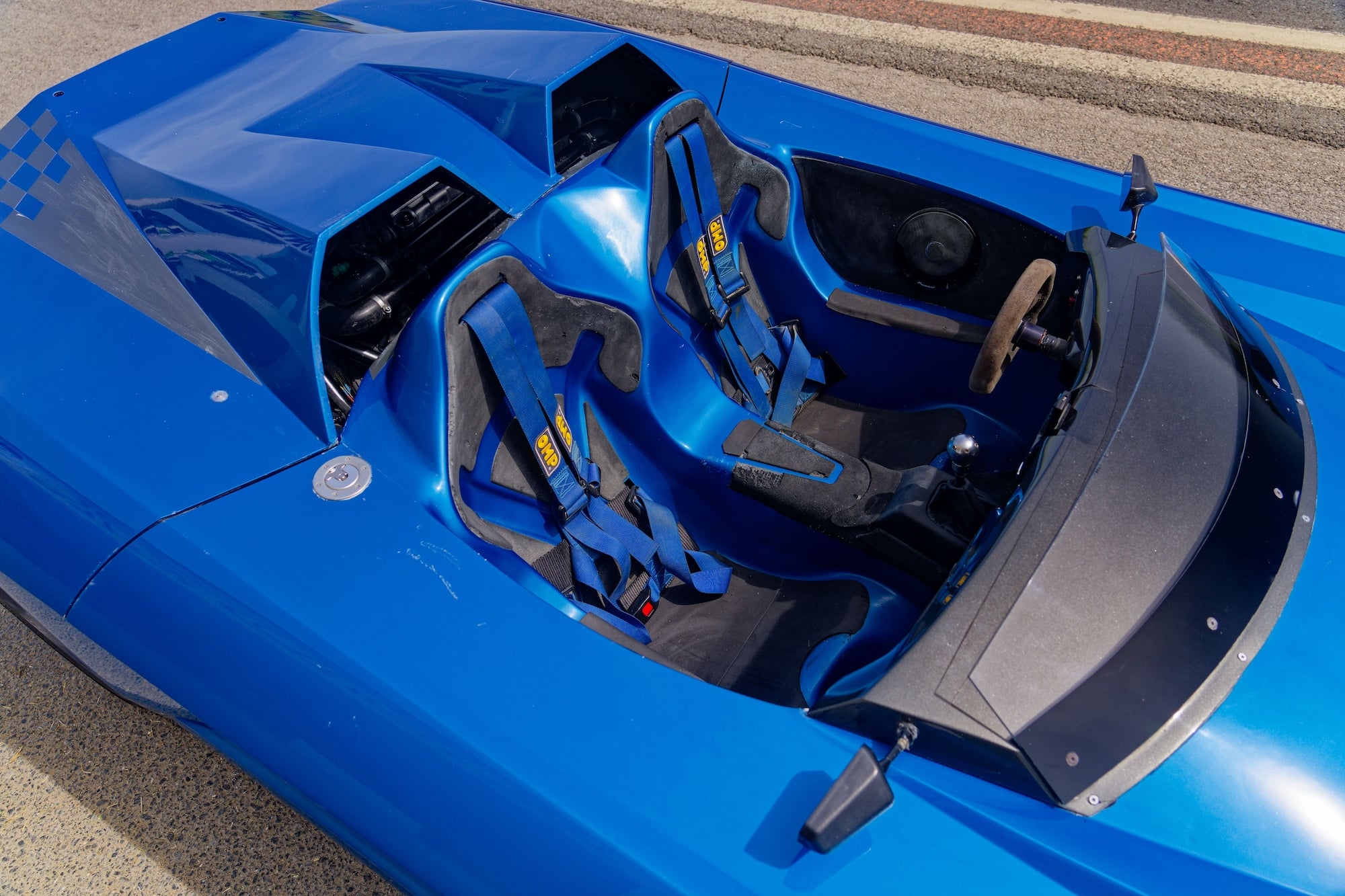
Built in roughly two months by automotive design students in eastern France, the 2008 Espera Sbarro Katana is a fully-functional, mid-engined two-seater with a Honda VTEC engine and a multimedia dashboard, and the entire thing came out of a school program that gives its students a single academic year to take a vehicle from a sketch to a driving prototype.
The Katana is now consigned to Artcurial’s Le Mans Classic Legend sale as lot 123, with a €30,000 to €50,000 estimate and no reserve. It’s reported to be unrestored and original throughout, with an engine that will need recommissioning and brakes that need overhauling – fair enough really, for a 17 year old concept car that’s been static for most of its life.
If you’d like to read more about it or register to bid you can visit the listing here, it could potentially make for a fascinating track day car once it’s been fettled.
Images courtesy of Artcurial

Articles that Ben Branch has written have been covered on CNN, Popular Mechanics, Smithsonian Magazine, Road & Track Magazine, the official Pinterest blog, the official eBay Motors blog, BuzzFeed, Autoweek Magazine, Wired Magazine, Autoblog, Gear Patrol, Jalopnik, The Verge, and many more.
Silodrome was founded by Ben back in 2010, in the years since the site has grown to become a world leader in the alternative and vintage motoring sector, with well over a million monthly readers from around the world and many hundreds of thousands of followers on social media.