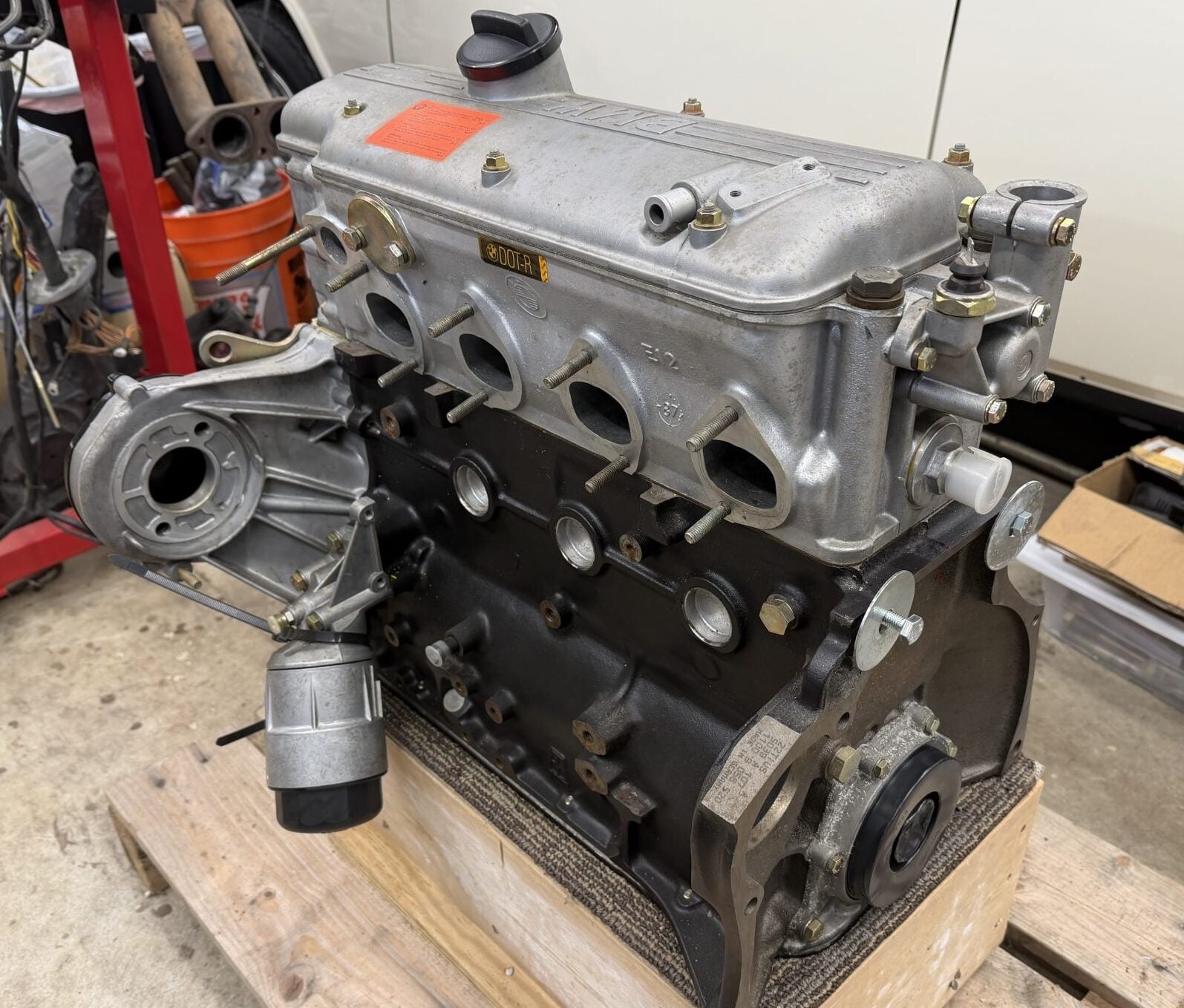
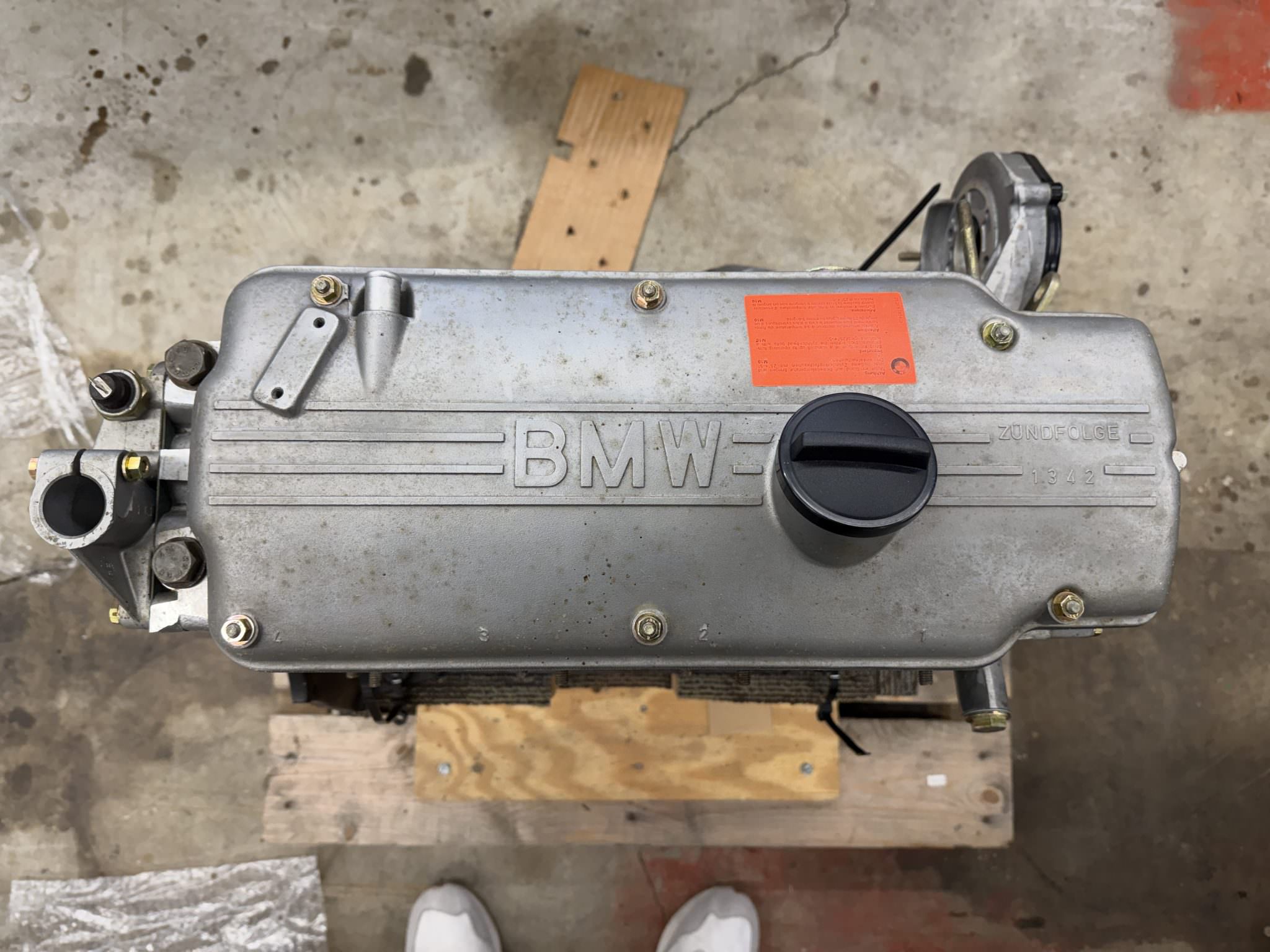
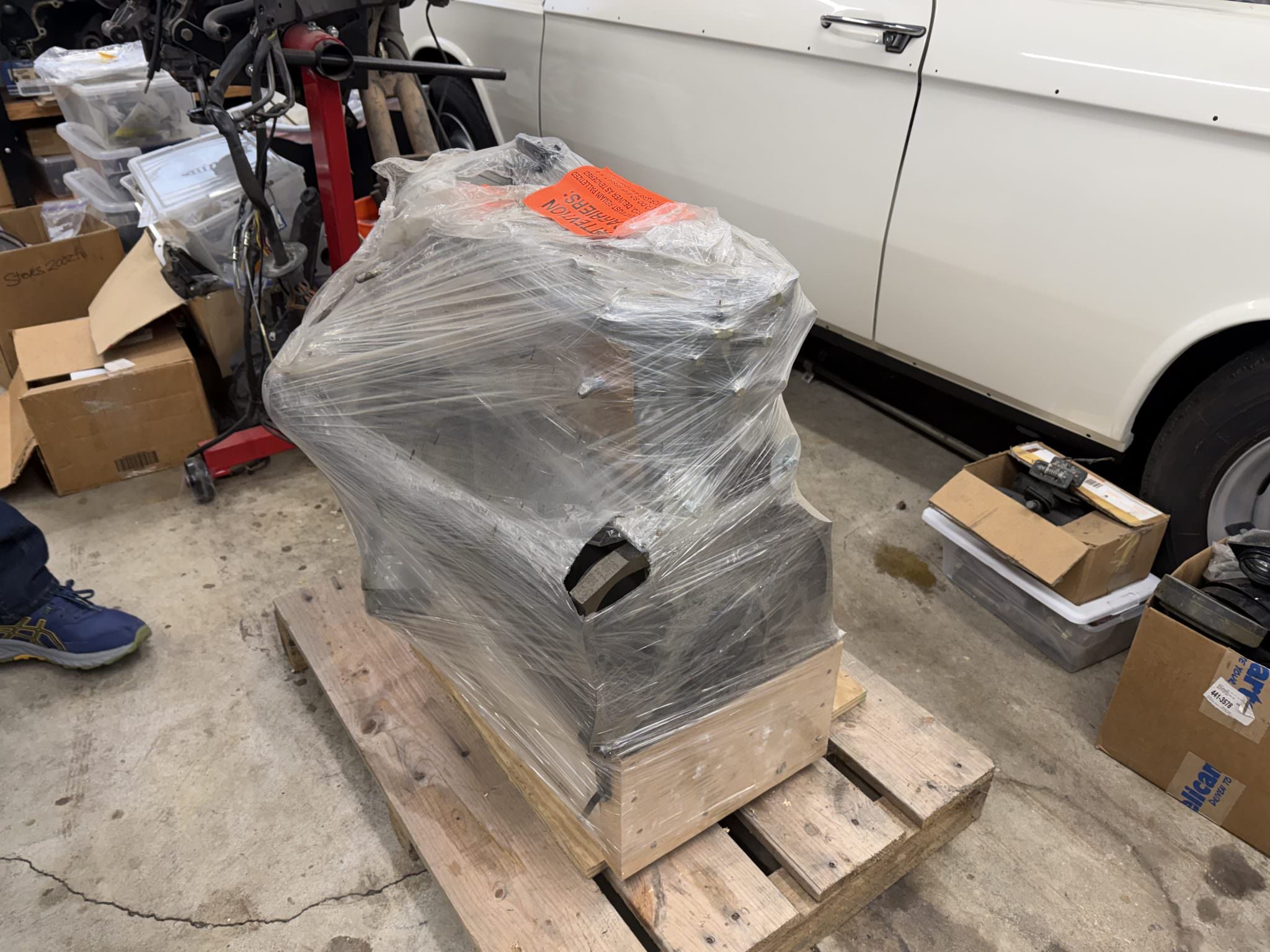
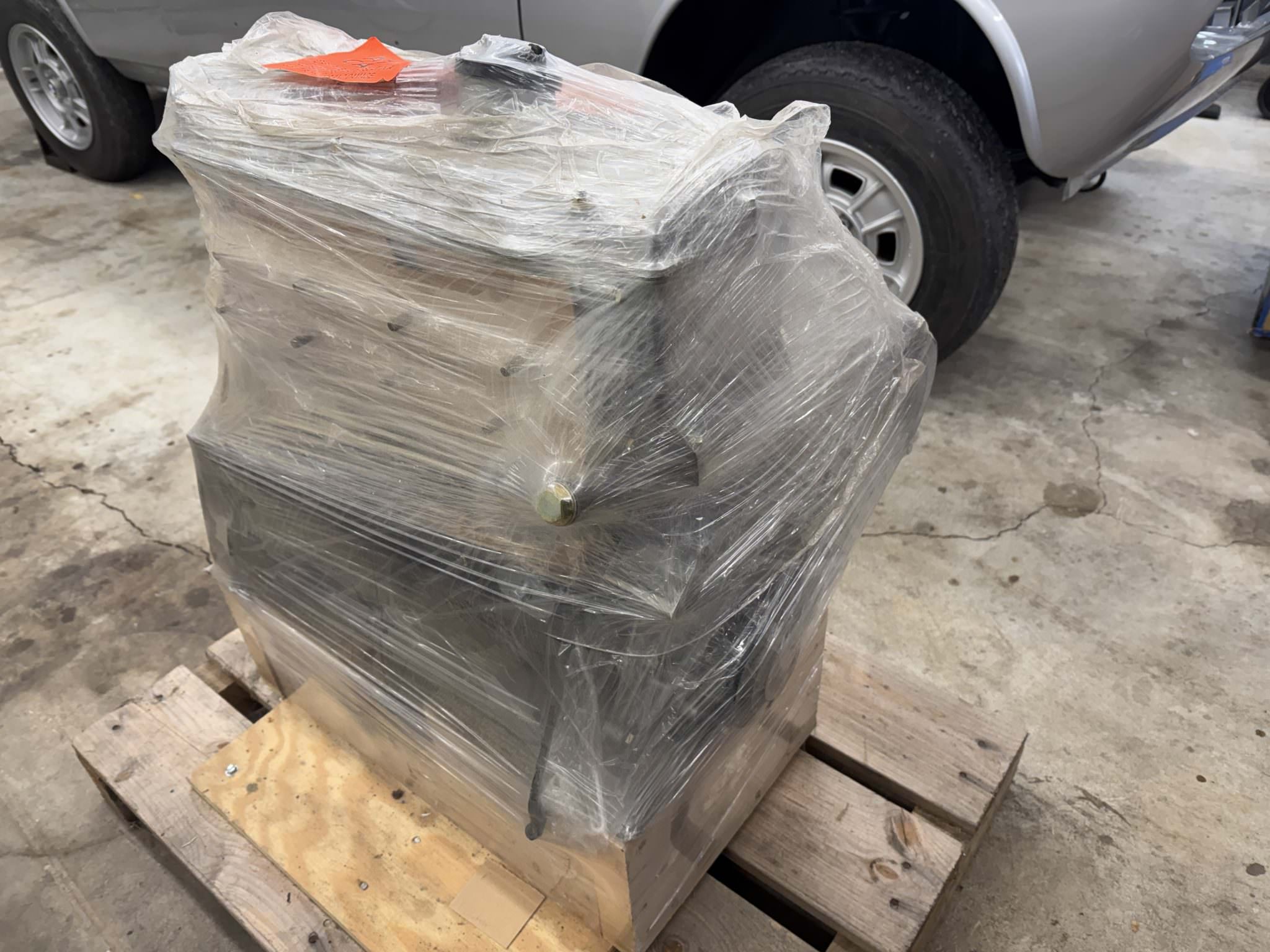
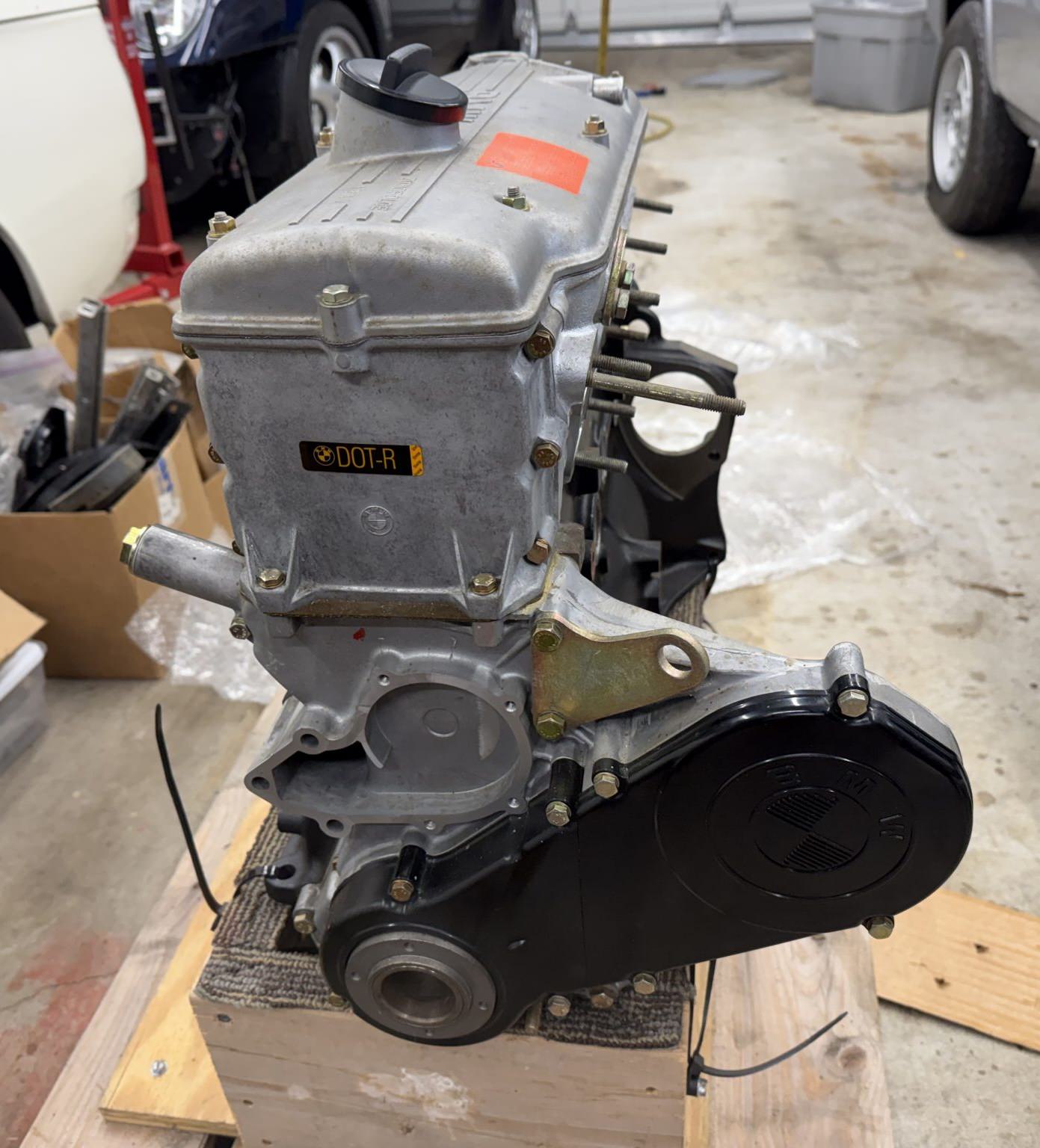
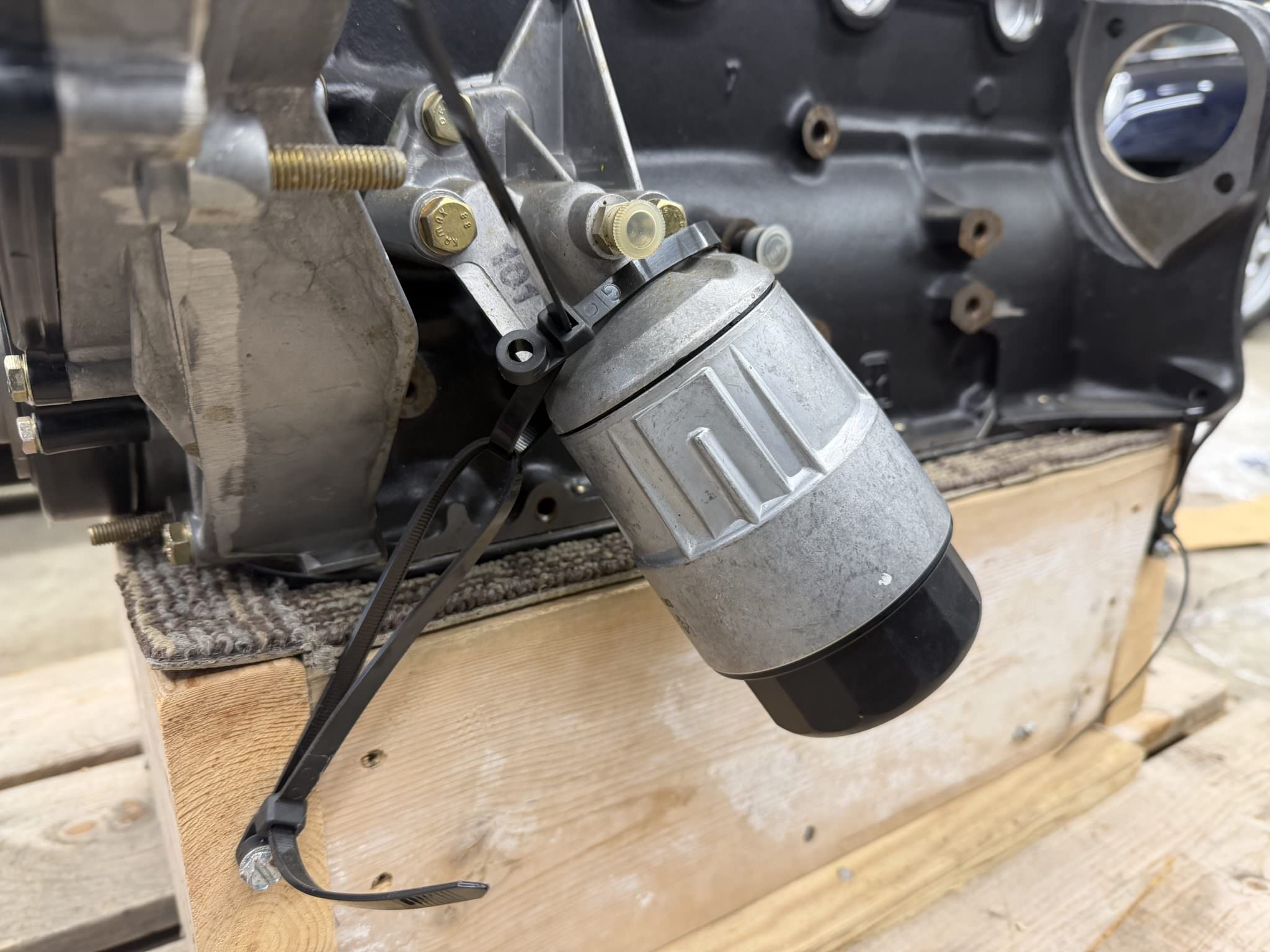
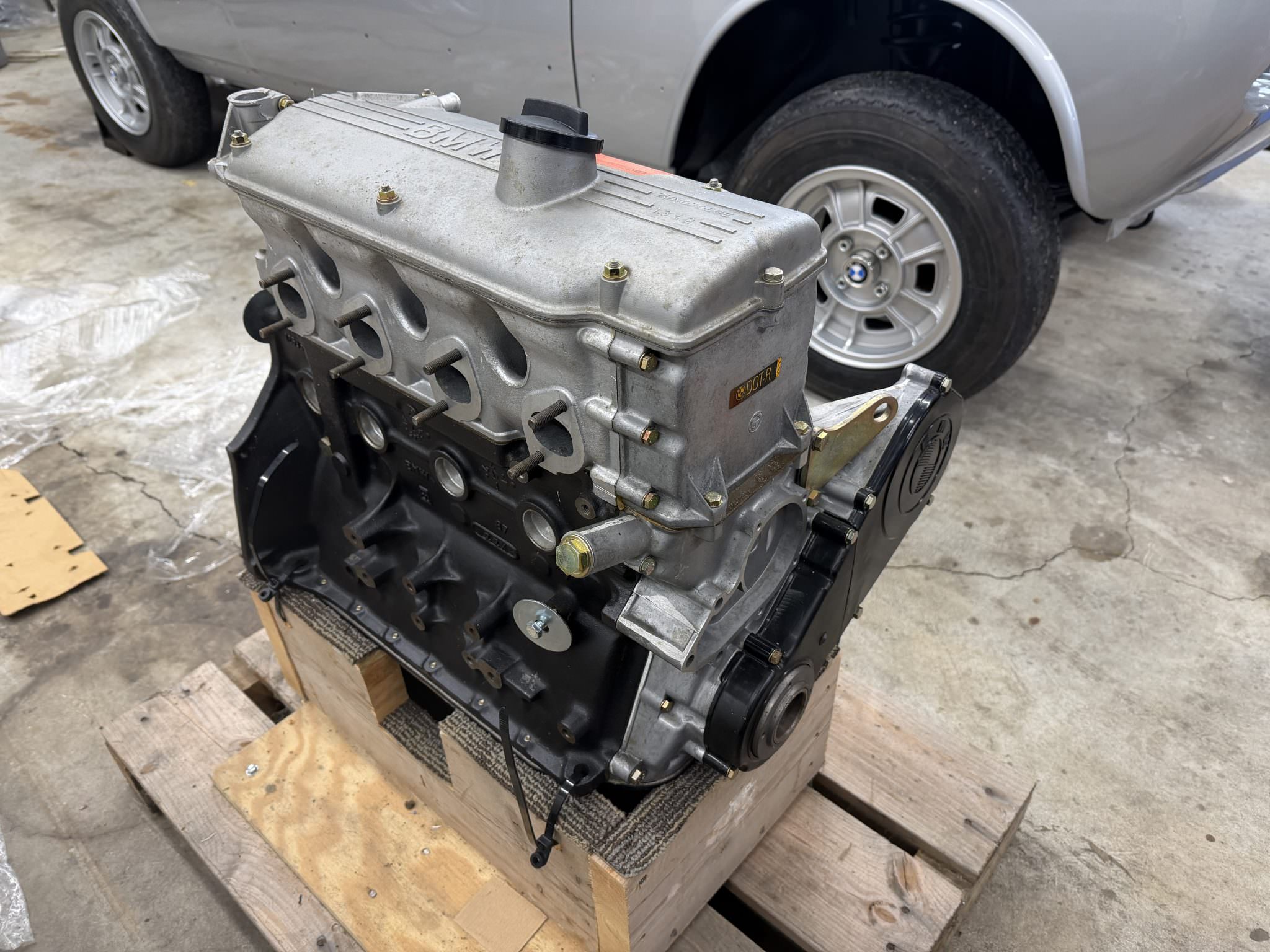
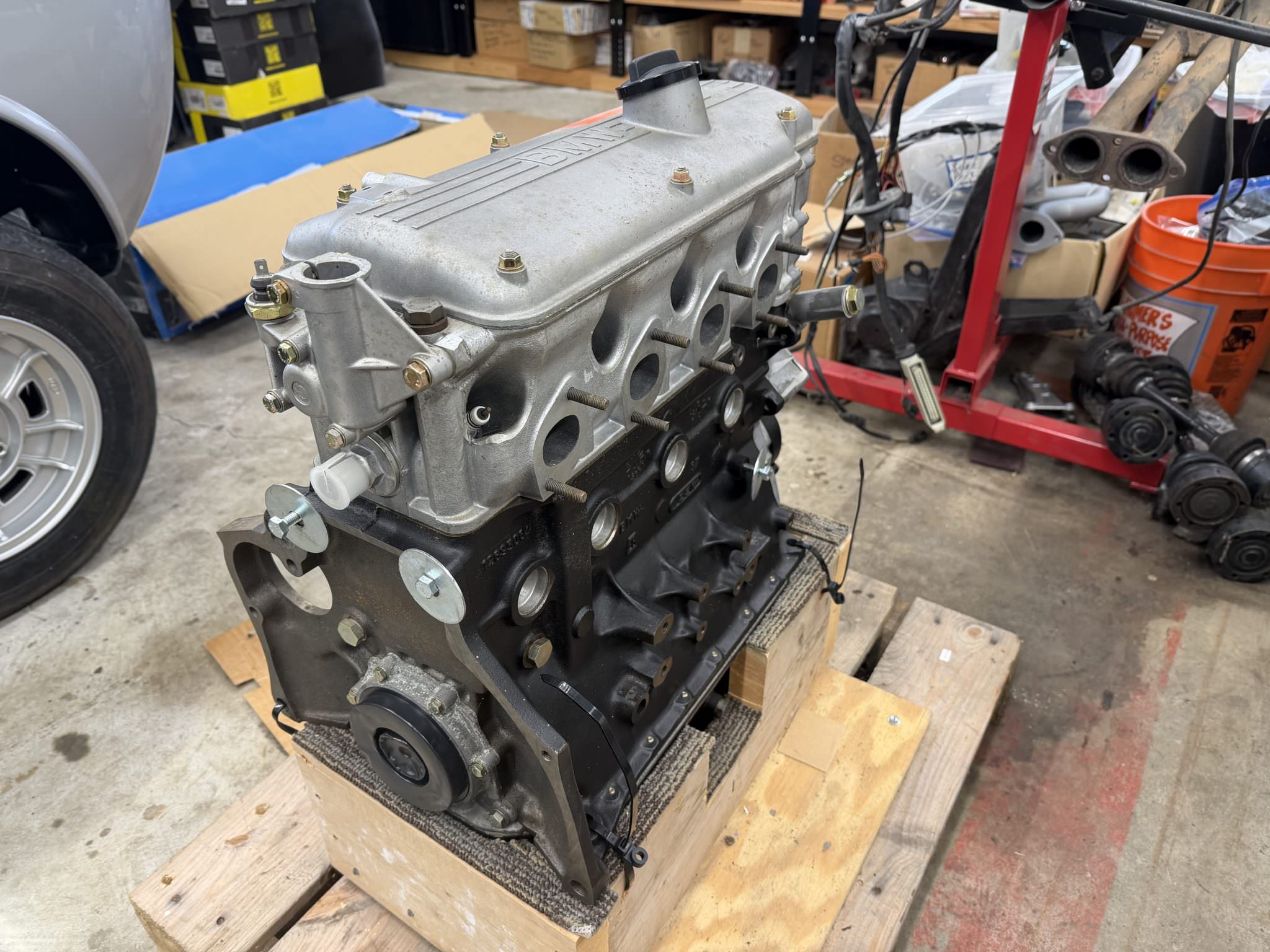
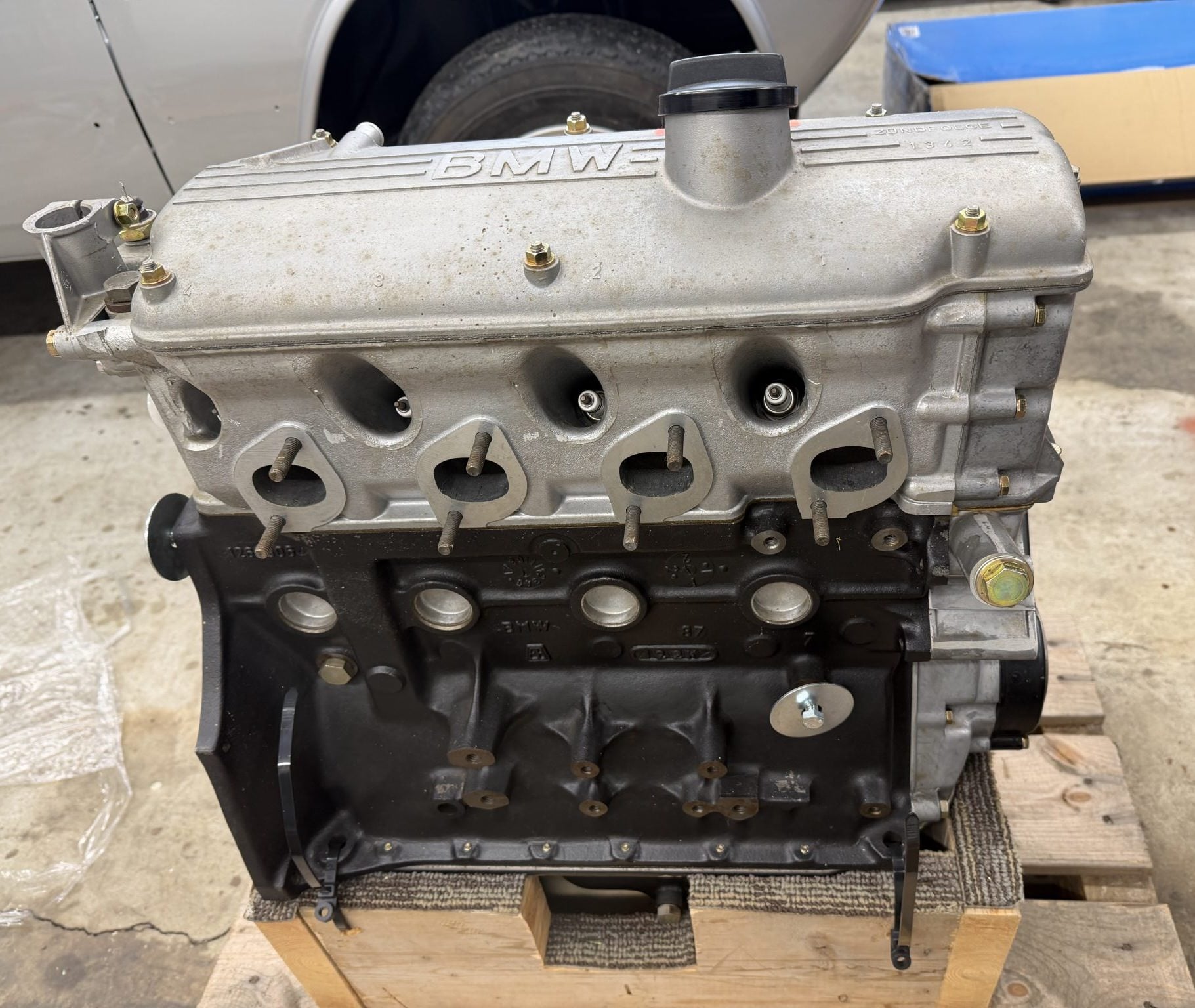
This is a BMW M10 long block crate engine that is said to have been bought from an East Coast BMW dealer as a replacement for a BMW 2002Tii. The engine was never used, and it now remains in new-old-stock condition on its original shipping pallet.
It’s unlikely that there are more than a handful of unused M10 crate engines left in the world, so this example is likely to attract plenty of attention. It’s being offered for sale out of Seattle, Washington, and the plastic wrapping was removed to photograph the engine for sale.
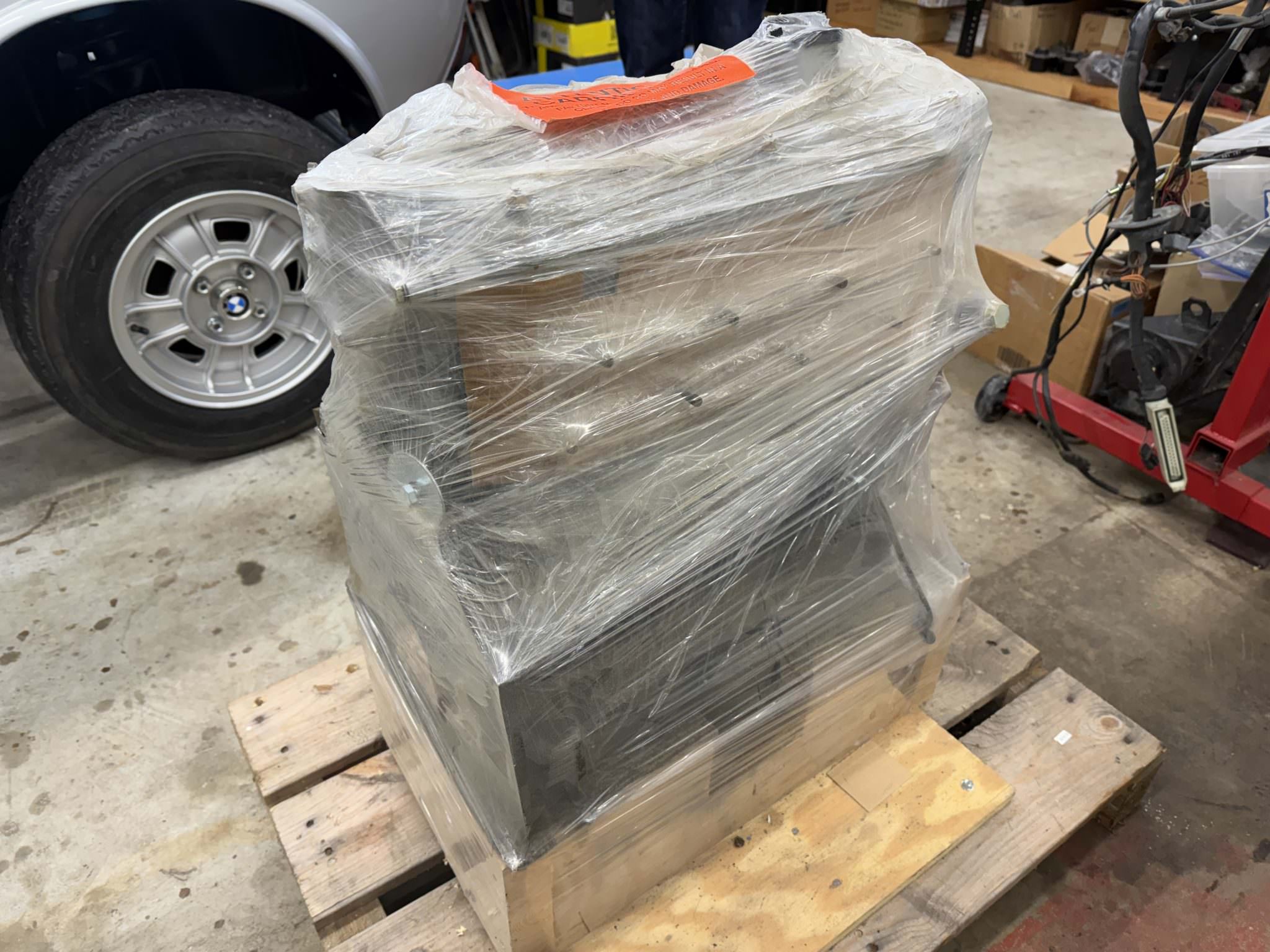
 This is a BMW M10 long block crate engine that is said to have been bought from an East Coast BMW dealer as a replacement for a BMW 2002Tii. The engine was never used, and it now remains in new-old-stock condition on its original shipping pallet.
History Speedrun: The BMW M10
In 1959 a BMW engineer named Alex von Falkenhausen was handed an assignment and politely ignored it. The brief was a 1.3 liter four-cylinder for the company’s planned new family of mid-sized sedans. Von Falkenhausen, a former motorcycle racer, ex-Formula 2 constructor, and by then BMW’s head of engine development, felt the displacement was too small for the future the company needed.
Instead of designing a 1.3 liter mill, he counter-proposed a 1.5 liter design with the architecture to grow to 2.0 liters, and through sheer personal stubbornness he got the board to agree. The engine he developed, eventually codenamed the M10, would stay in production for 26 years, power more than 3.5 million BMWs, and form the basis of a Formula 1 engine claimed to make as much as 1,400 bhp.
It’s almost certainly fair to call it the most consequential four-cylinder in the company’s history.
The M10 debuted in the 1962 BMW 1500, the first car in BMW’s Neue Klasse – this was the “New Class” range that pulled the company back from the brink after Herbert Quandt’s 1959 rescue. The engineering was conservative in some ways and unusually ambitious in others – Von Falkenhausen specified a cast iron block for stiffness and longevity, paired with an aluminum alloy head with hemispherical combustion chambers and two valves per cylinder operated by a chain-driven single overhead camshaft.
Underneath sat a forged steel crankshaft riding in five main bearings – perhaps overkill for a sedan engine in the early 1960s, but it turned out to be essential for the high-power, high-rpm life the engine would go on to live. The bore was deliberately larger than the stroke to make room for large valves and to encourage breathing at higher engine speeds.
In its original 1,499 cc form the M10 made 80 bhp, which was respectable for a 1.5 liter sedan engine in 1962. Over the next two decades BMW would bore and stroke the M10 into a family of variants from 1,573 cc all the way up to 1,990 cc, with carburetion ranging from single Solex units to twin Webers and fuel injection systems from Kugelfischer mechanical to Bosch L-Jetronic electronic.
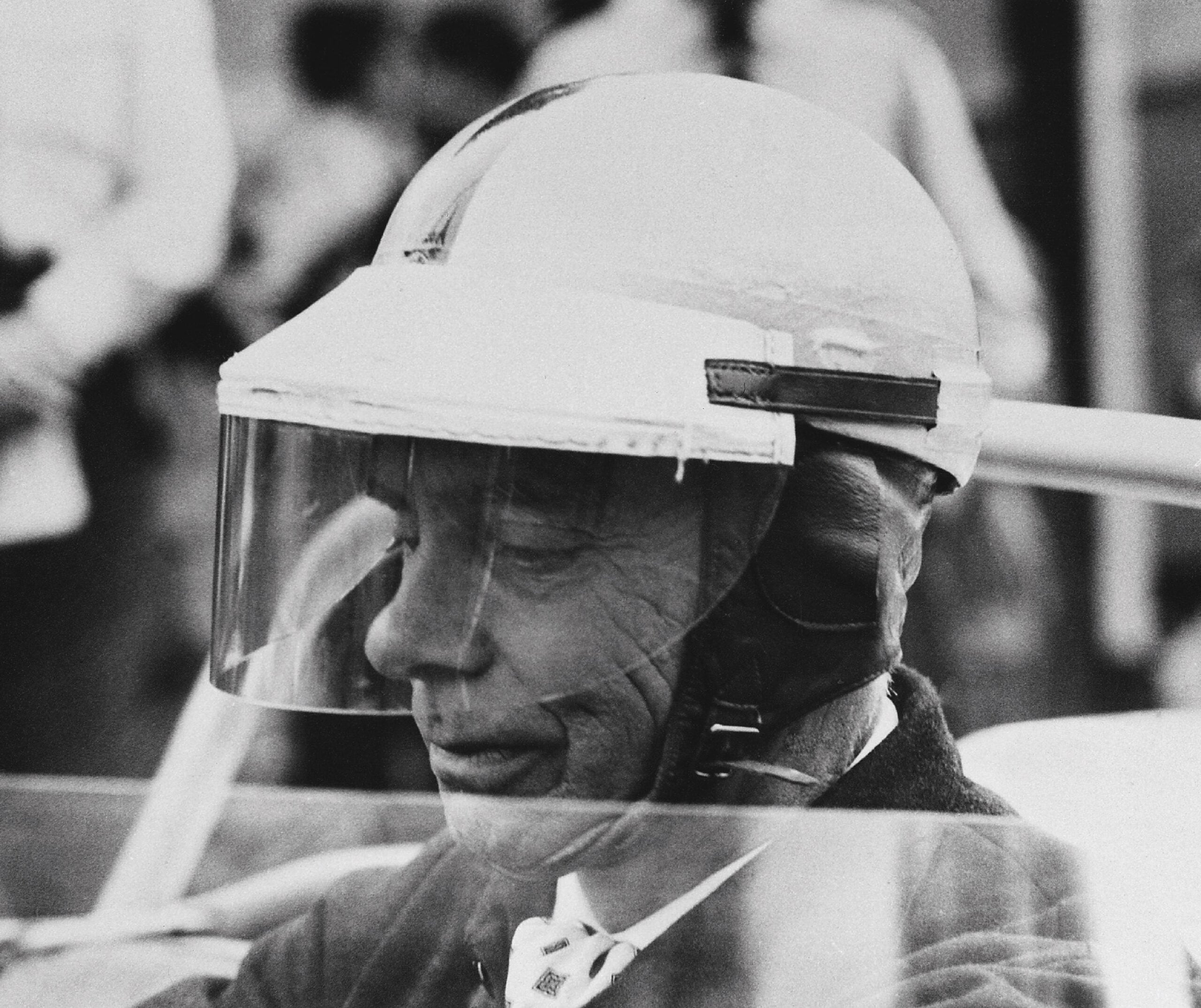
Here we see legendary BMW engineer (and keen racing driver) Alex von Falkenhausen, ready to race. Image provided courtesy of BMW.
The M10’s Production Car Family
The list of cars the M10 powered reads like a tour through BMW’s modern foundation – the New Class 1500, 1600, 1800, and 2000 sedans and their hotter ti, tii, and tiSA variants. The 2000 C and 2000 CS coupes, the entire 02 Series from the 1502 up through the cult-classic 2002 and the fuel-injected 2002 tii, the first 5 Series E12 in 518 and 520 form; the first 3 Series E21 from the 315 up through the US market 320i, and the E30 3 Series and E28 5 Series, where it soldiered on alongside newer engines until being phased out in 1988.
The most famous road-going application was the 1973 BMW 2002 Turbo. Built around the 2.0 liter M15 fuel-injected unit from the 2002 Tii (recoded M31 in turbo form) it added a KKK turbocharger running 0.55 bar of boost, with the compression dropped from 9.5:1 to 6.9:1 to keep detonation at bay.
The result was 170 bhp at 5,800 rpm and 177 lb ft of torque, enough to push the 2,400 lb coupe to 130 mph. It was the first turbocharged production car built in Europe, and it had the misfortune of being launched at the Frankfurt Motor Show in September of 1973 – mere weeks before the OPEC oil embargo hit. Just 1,672 were built before BMW pulled the plug in 1975.
The M10 Goes Racing (And Beats The World)
Perhaps a little unexpectedly, the M10’s racing career was even more remarkable than its production car career. In 1972 BMW’s competition director Jochen Neerpasch agreed to supply March Engineering with a BMW M12-series Formula 2 engine in exchange for March committing to buy 50 units.
The engine used the M10 block topped with a new four-valve, twin-cam cylinder head, displacing 1,991 cc and making 300 bhp in naturally aspirated form. In its debut season in 1973, the March 732-BMW won 11 of 17 European Formula 2 races and took the championship with Jean-Pierre Jarier. Between 1973 and 1984 BMW-powered cars won six European Formula 2 titles. But this was merely the beginning.
The Formula 1 program came out of that touring car and Formula 2 success. Under engineer Paul Rosche, BMW developed the M12/13 – this was a 1,499 cc turbocharged single-KKK-turbo four, built around a production M10 block that had reportedly been seasoned in road cars before being reinforced and rebuilt for racing.
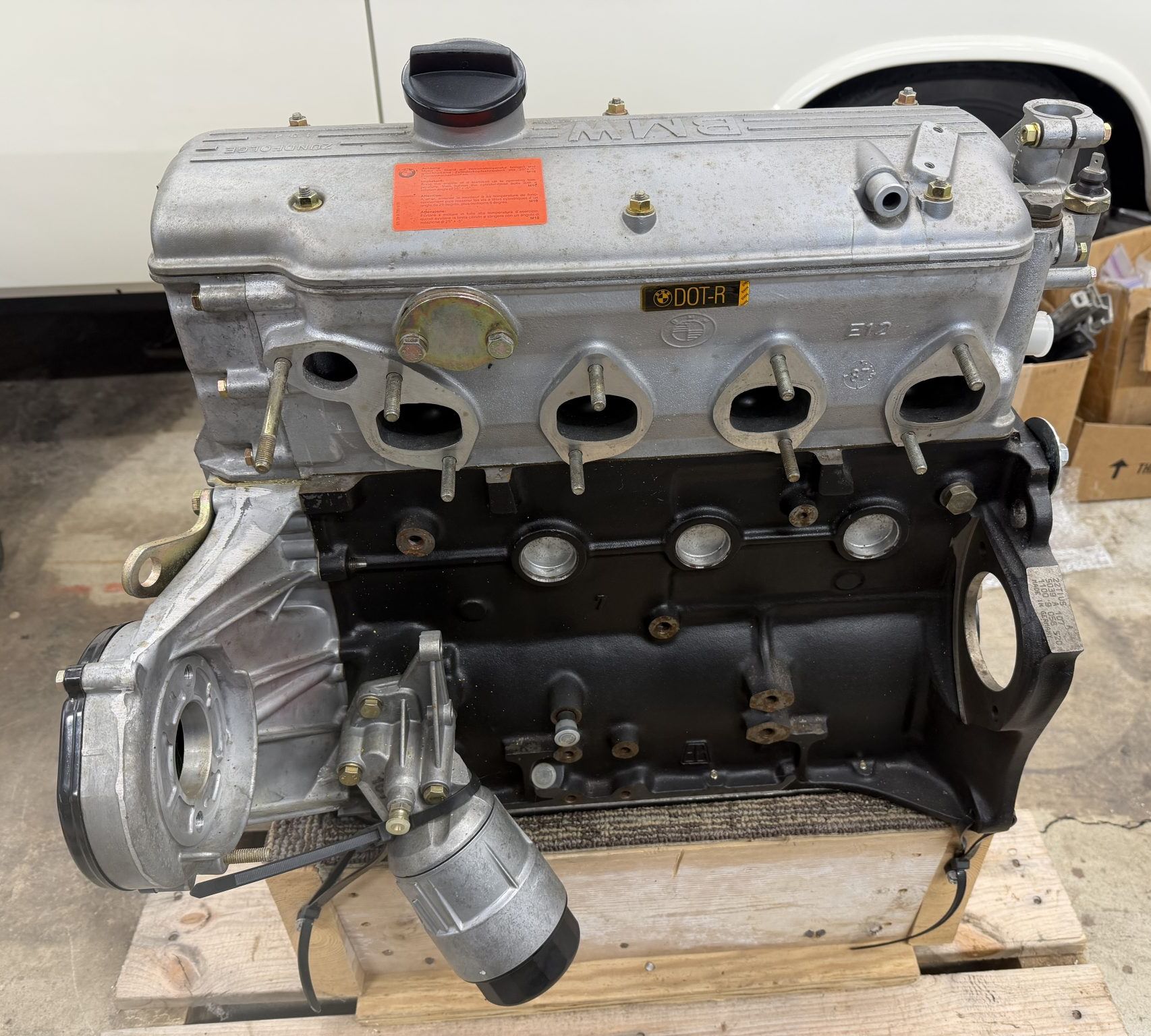
This 2.0 liter BMW M10 inline-four is being offered at no reserve – it’s a bare long block with no external accessories, manifolds, or wiring fitted.
After 1981 testing, the engine made its Formula 1 race debut with Brabham at the 1982 South African Grand Prix, scored its first win at the 1982 Canadian Grand Prix with Nelson Piquet, and in 1983 (installed in Gordon Murray’s wedge-shaped Brabham BT52) it carried Piquet to the World Championship. The M12/13 produced 640 bhp in race trim and around 850 bhp for qualifying that season. It was the first turbocharged engine ever to win the Formula 1 Drivers’ title.
Though that may have sounded like the crescendo, the performance of the humble little four pot kept climbing. By 1986 the upgraded M12/13/1 was claimed to produce 1,400 bhp in qualifying trim at 11,000 rpm, this was an expert estimate, as BMW’s own dynamometer maxed out at 1,280 bhp. If that figure was accurate, it remains the most powerful Formula 1 engine ever raced.
BMW announced its withdrawal at the end of 1986 but continued to supply Brabham in 1987, the engine also lived on as the Megatron in Arrows from 1987 to 1988 and Ligier in 1987.
That an iron-block, SOHC sedan engine designed in the late 1950s could end up winning a Formula 1 World Championship more than two decades later says everything about how well von Falkenhausen designed it, and just how flexible that design turned out to be when it had a Formula 1 budget thrown at it.
The BMW M10 Long Block Crate Engine Shown Here
This 2.0 liter BMW M10 inline-four is being offered at no reserve – it’s a bare long block with no external accessories, manifolds, or wiring fitted.
The engine is said to have been bought over a decade ago from a fellow member of the 2002FAQ forum. At the time of that purchase, the seller was told the long block had originally been bought from an East Coast BMW dealer as a service replacement unit for a BMW 2002Tii.
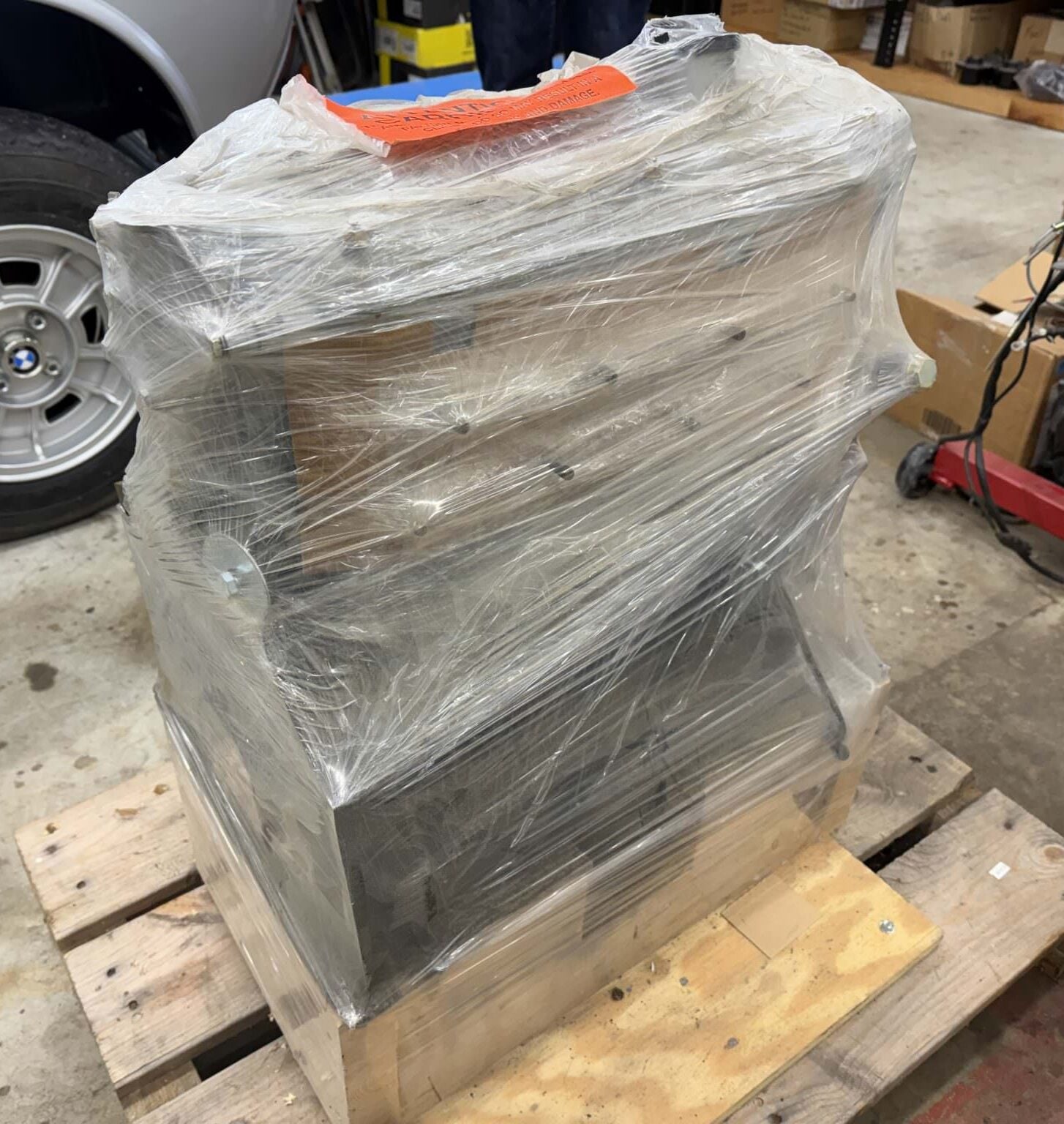
The engine is said to have been bought over a decade ago from a fellow member of the 2002FAQ forum. At the time of that purchase, the seller was told the long block had originally been bought from an East Coast BMW dealer as a service replacement unit for a BMW 2002Tii.
Throughout the seller’s ownership, the engine has remained wrapped on a wooden pallet. The wrapping was only recently removed in order to photograph the long block for this sale.
It’s now being offered for sale out of Seattle, Washington on Bring a Trailer and you can visit the listing here if you’d like to read more about it or register to bid.
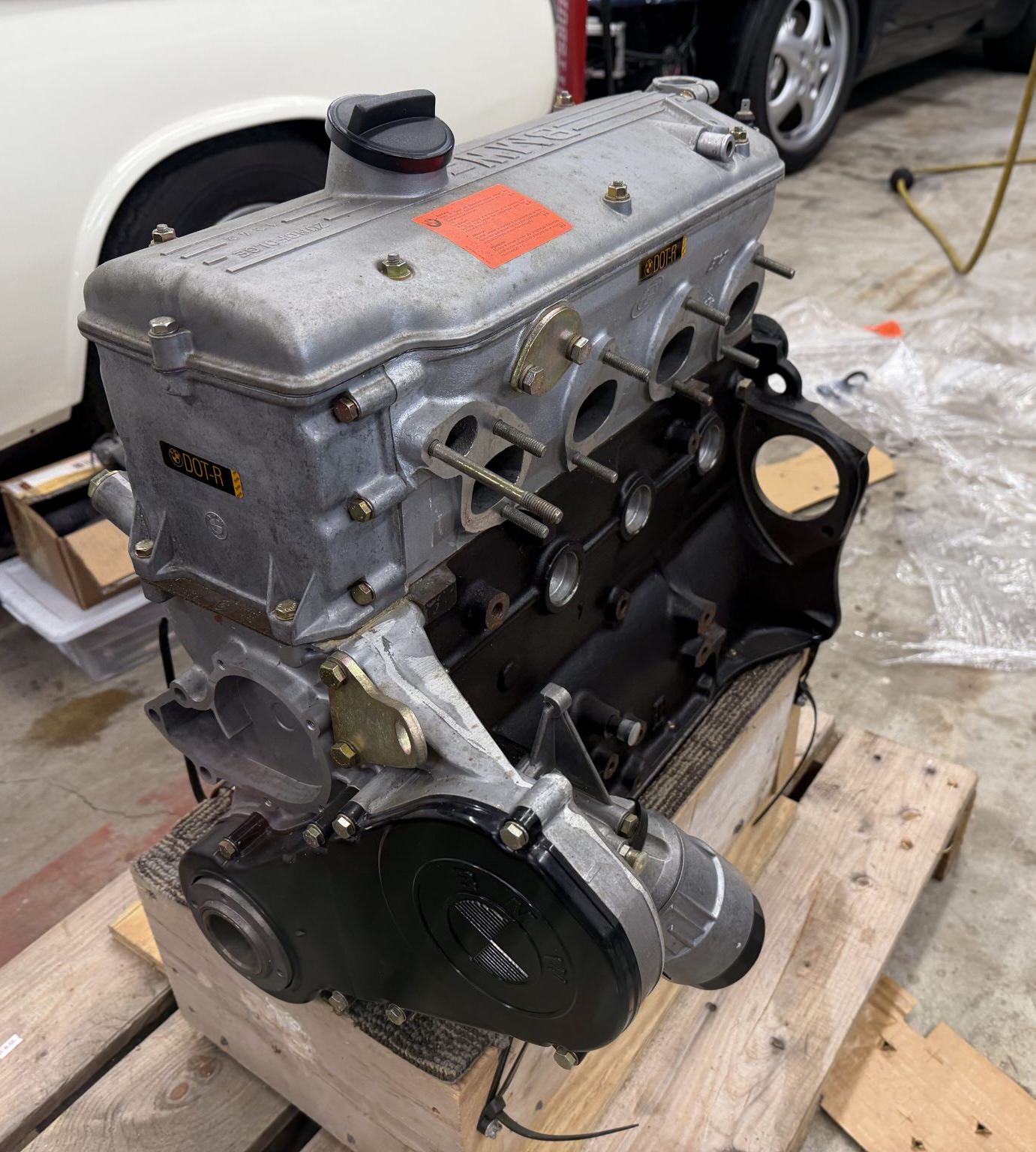
It’s unlikely that there are more than a handful of unused M10 crate engines left in the world, so this example is likely to attract plenty of attention. It’s being offered for sale out of Seattle, Washington, and the plastic wrapping was removed to photograph the engine for sale.
Images courtesy of Bring a Trailer + BMW

Articles that Ben Branch has written have been covered on CNN, Popular Mechanics, Smithsonian Magazine, Road & Track Magazine, the official Pinterest blog, the official eBay Motors blog, BuzzFeed, Autoweek Magazine, Wired Magazine, Autoblog, Gear Patrol, Jalopnik, The Verge, and many more.
Silodrome was founded by Ben back in 2010, in the years since the site has grown to become a world leader in the alternative and vintage motoring sector, with well over a million monthly readers from around the world and many hundreds of thousands of followers on social media.