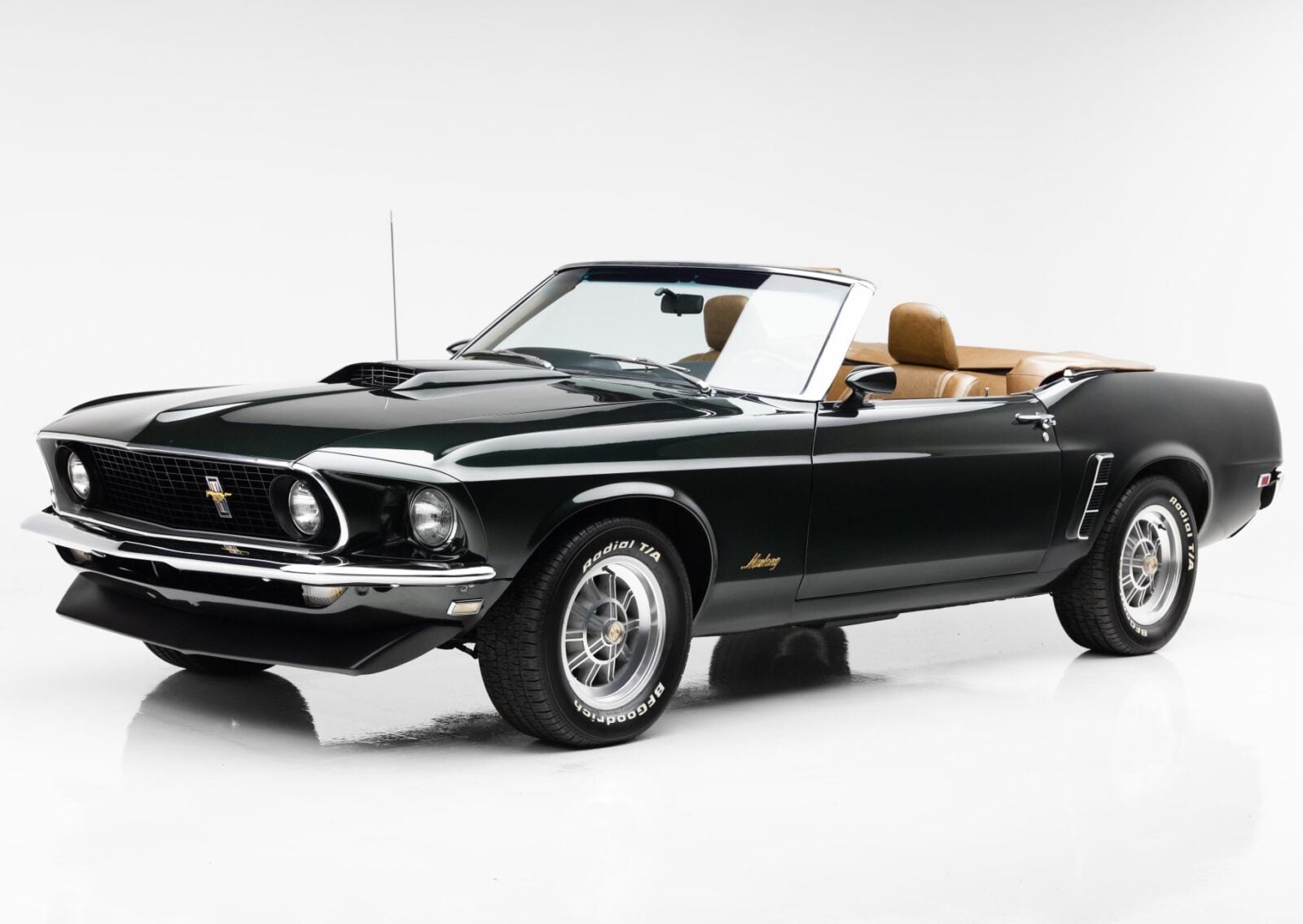
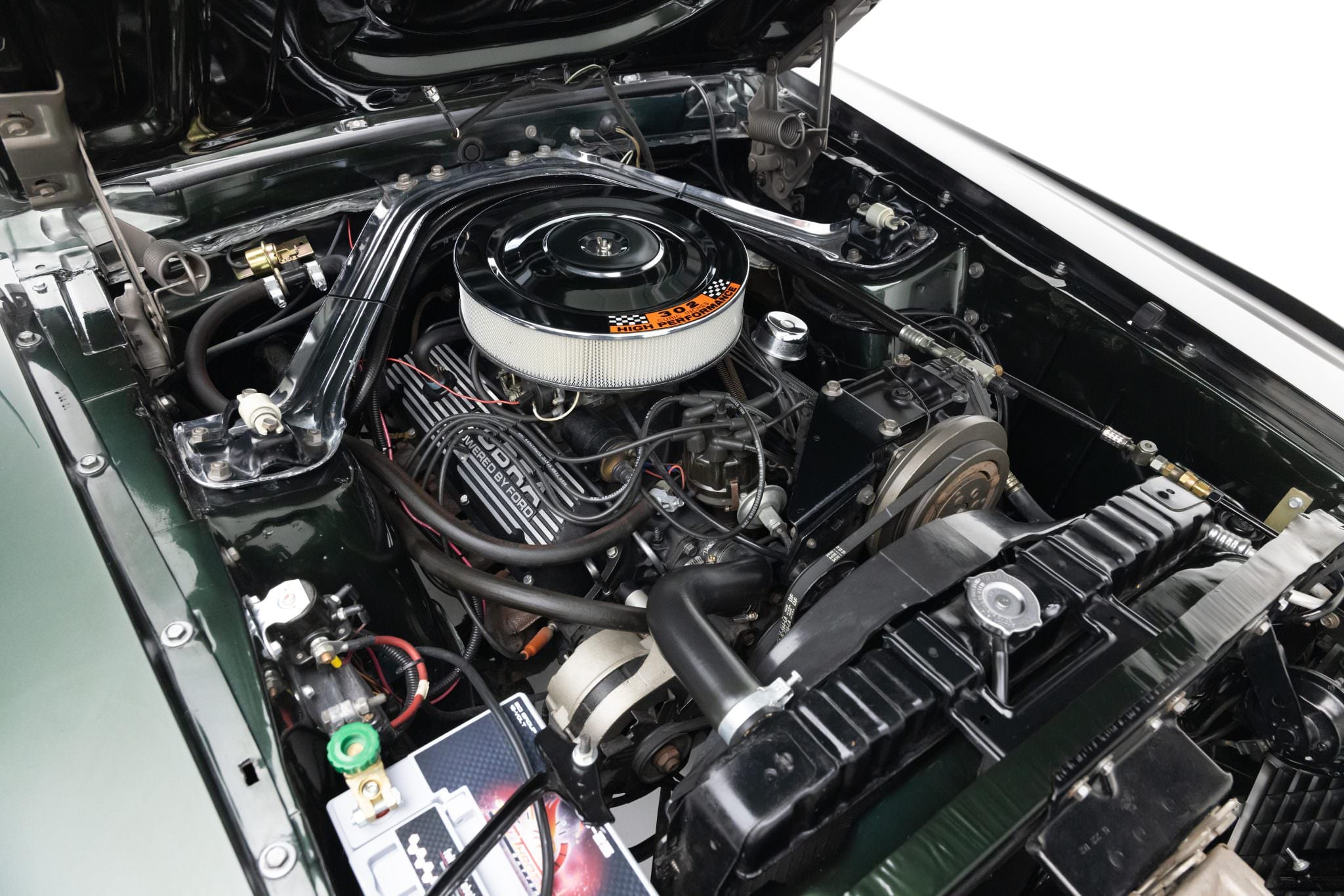
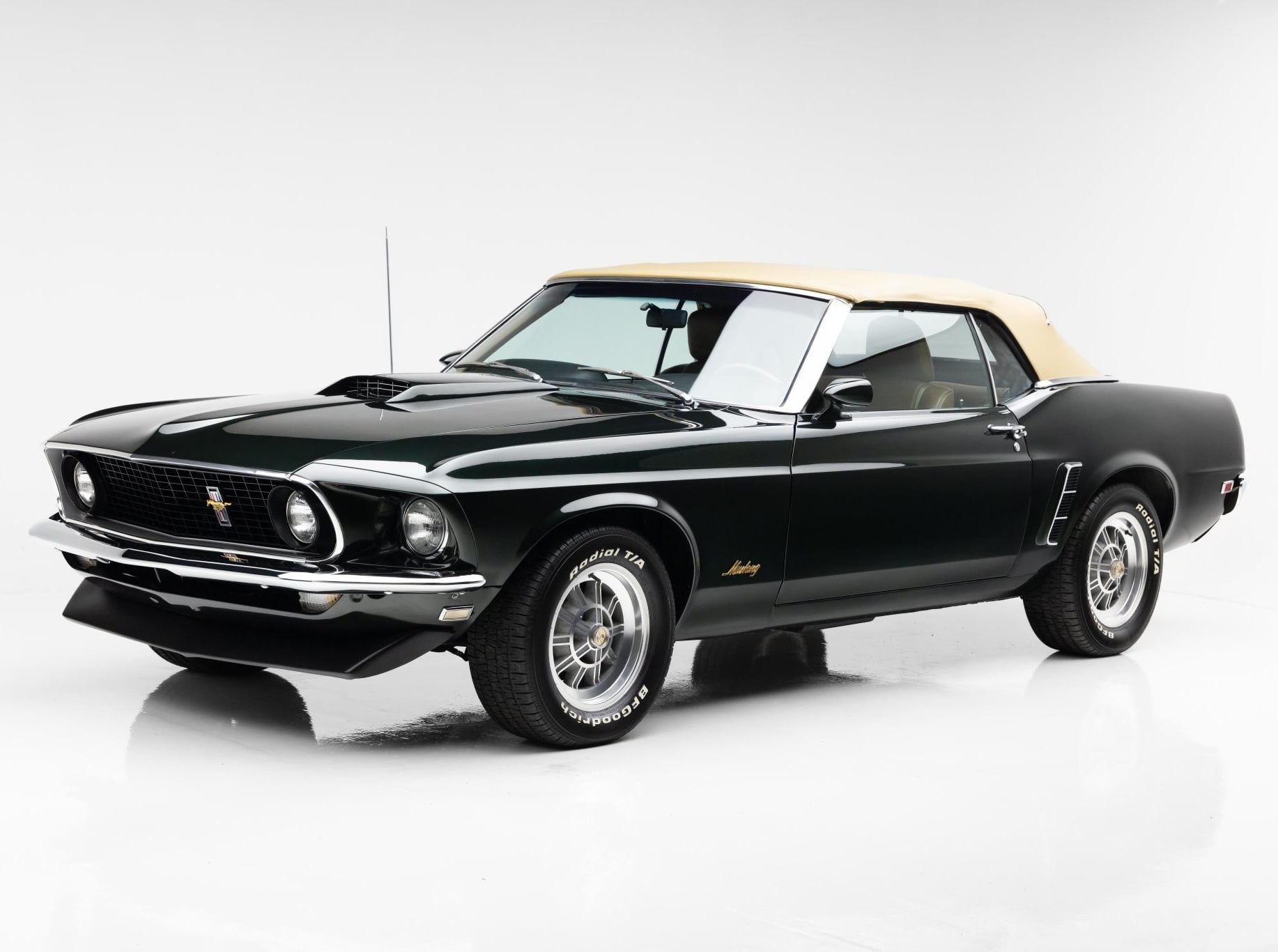
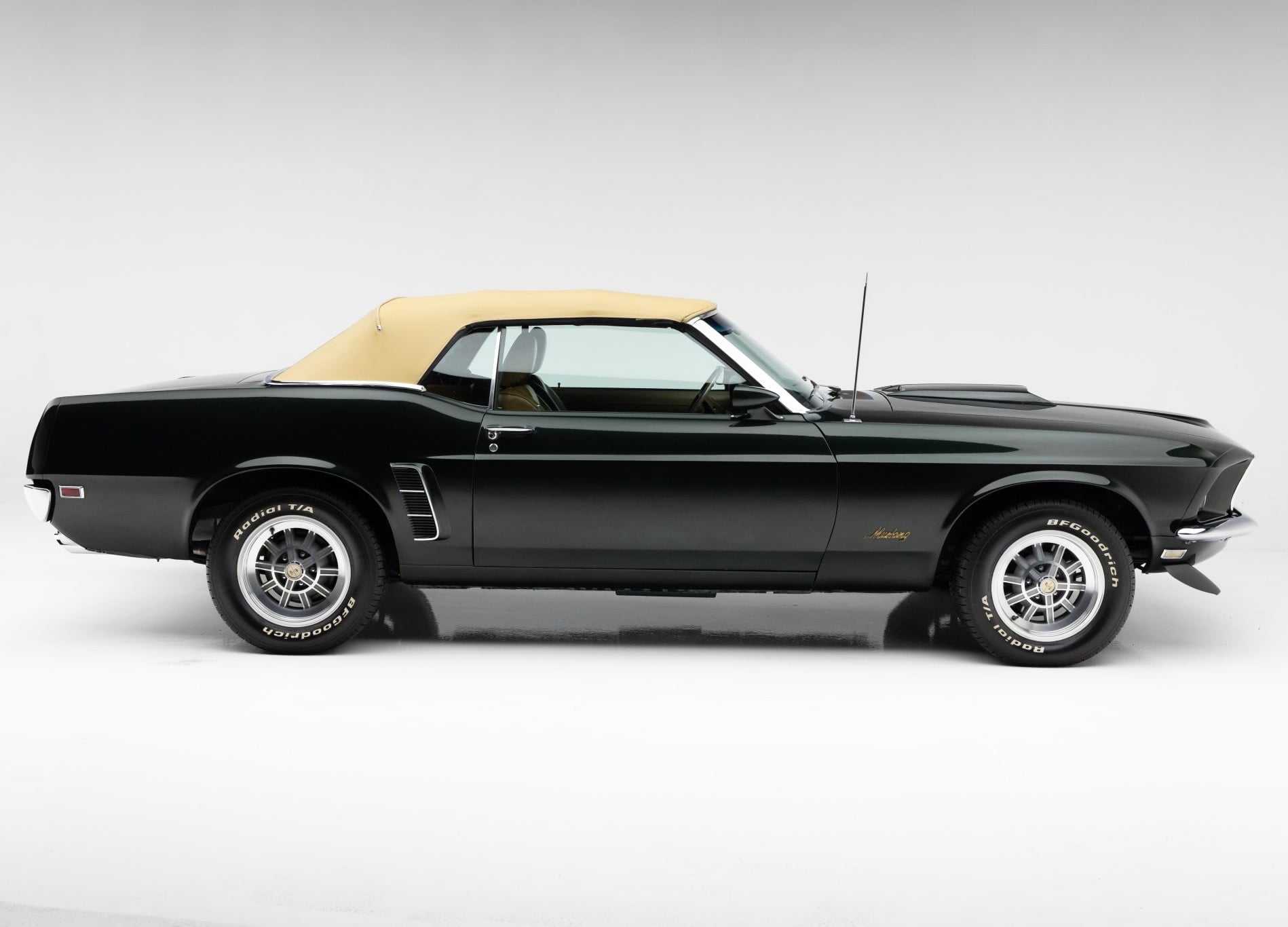
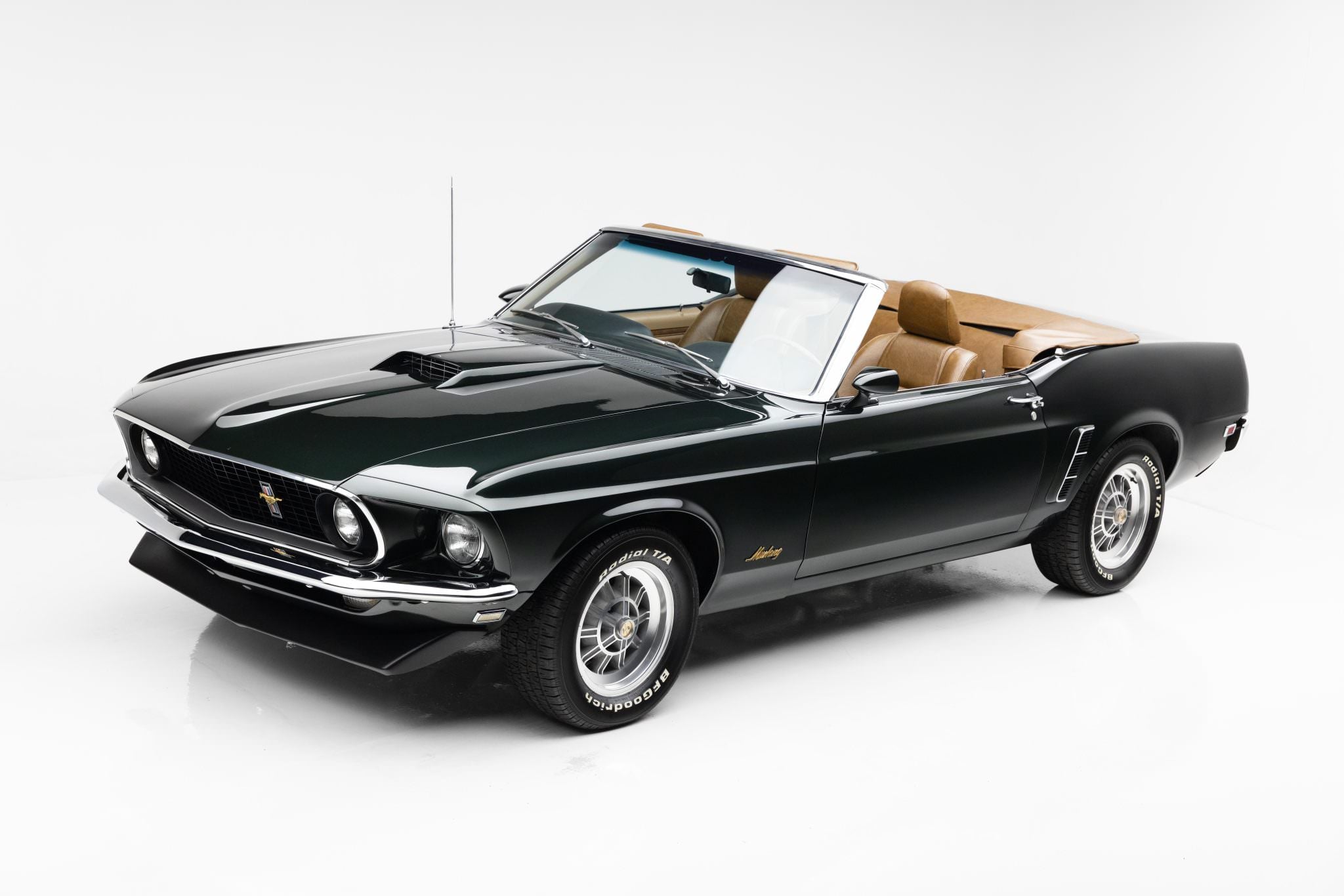
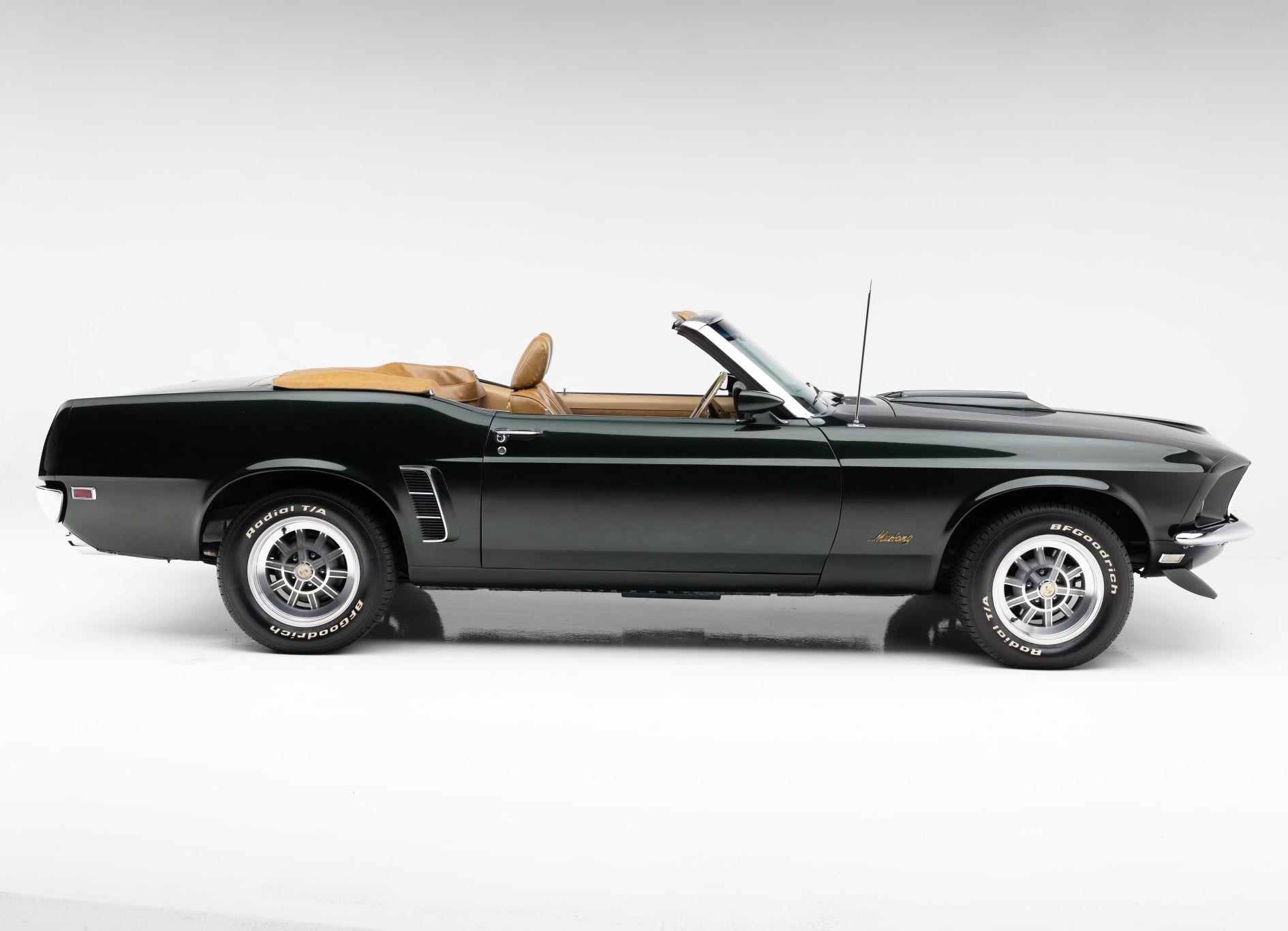
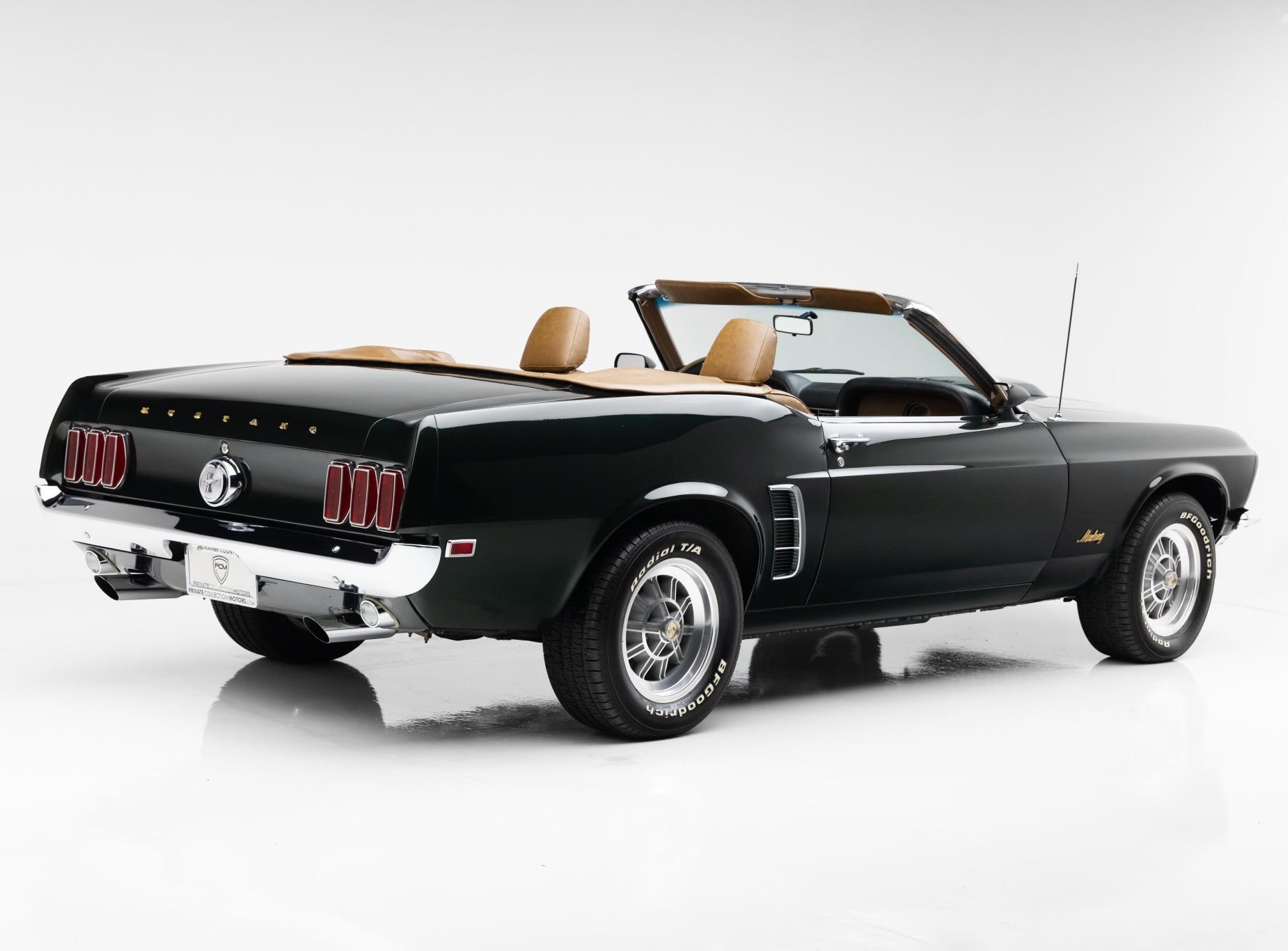
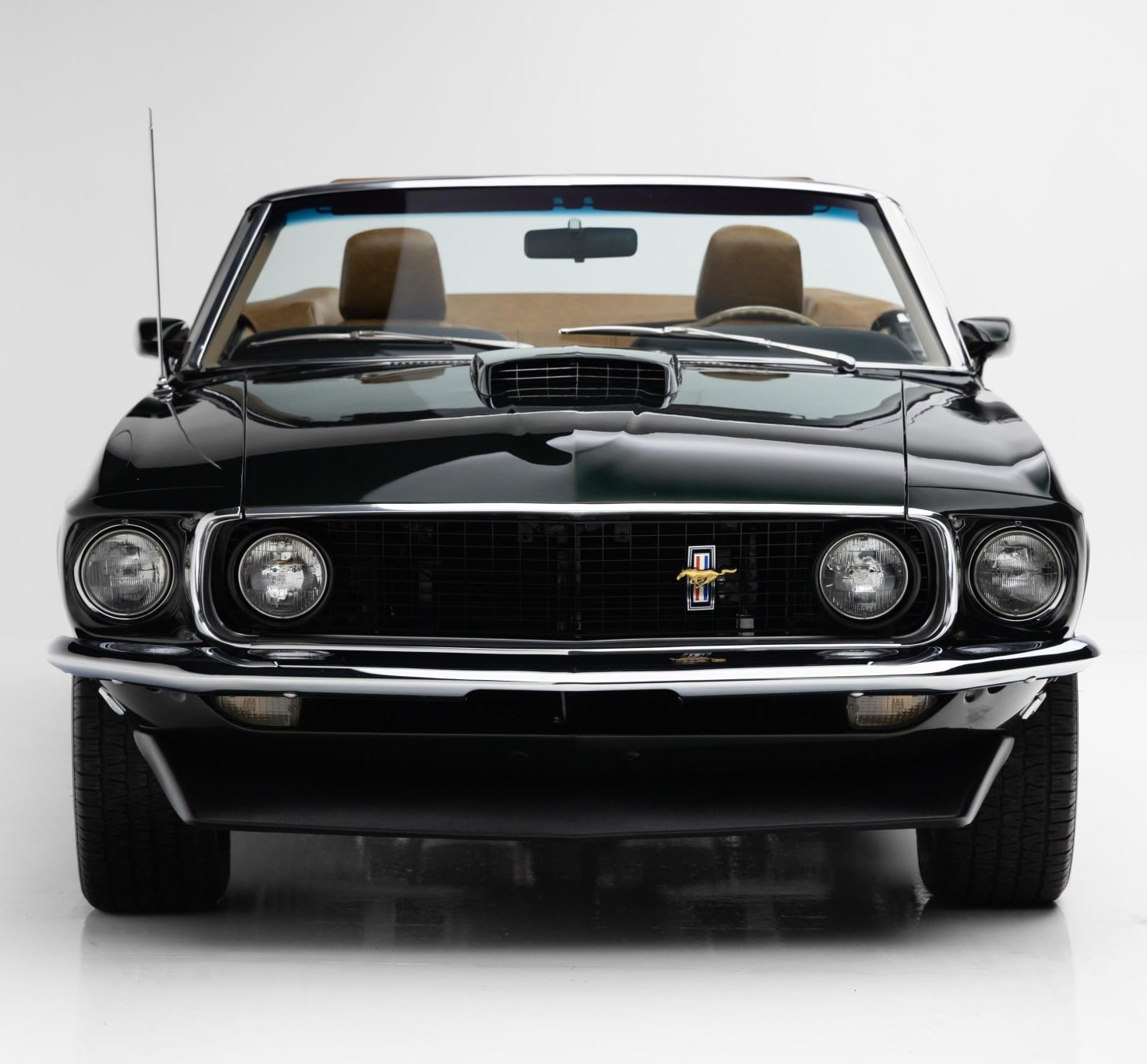
This is a 1969 Ford Mustang Convertible that is now powered by a more modern fuel-injected 5.0 liter V8 said to be sourced from a 1988 Mustang.
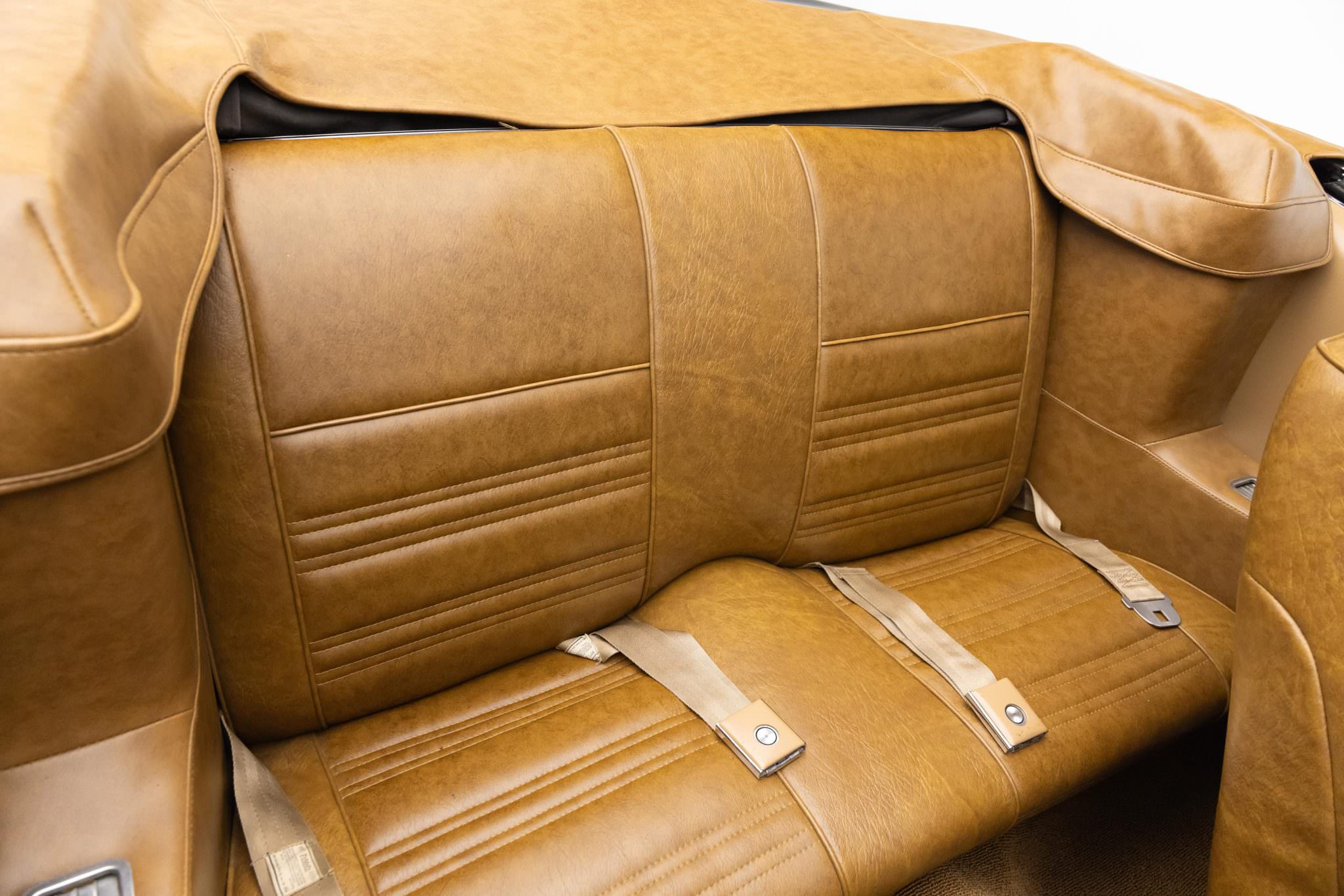
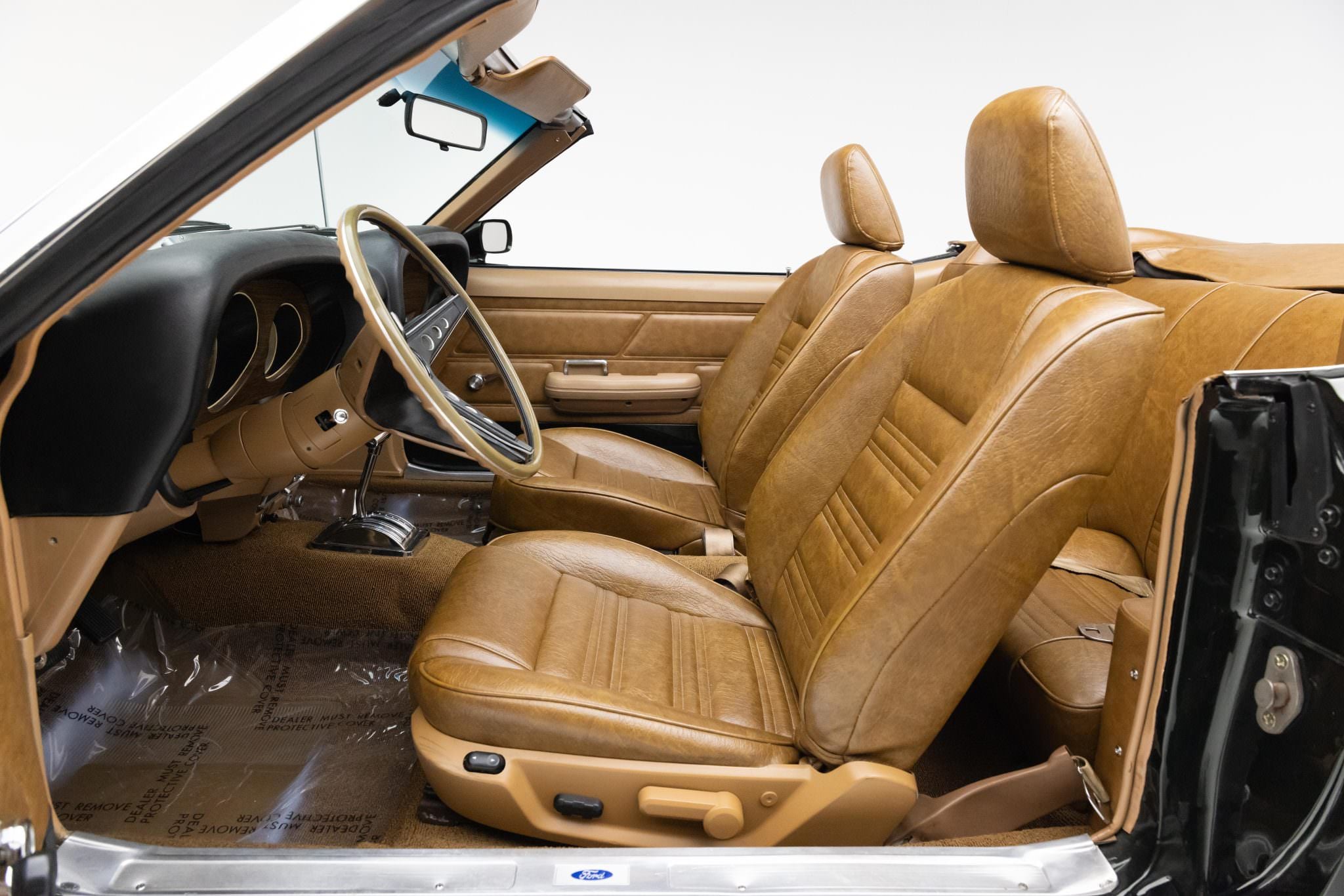
The car is fitted with power steering, a power driver’s seat, air conditioning, and a vintage-look radio linked to a Kenwood CD changer. It was repainted in Infinity Cypress Pearl some years ago, and it was given a new tan soft top and a saddle interior.
Fast Facts: 5.0 V8 Swapped 1969 Ford Mustang
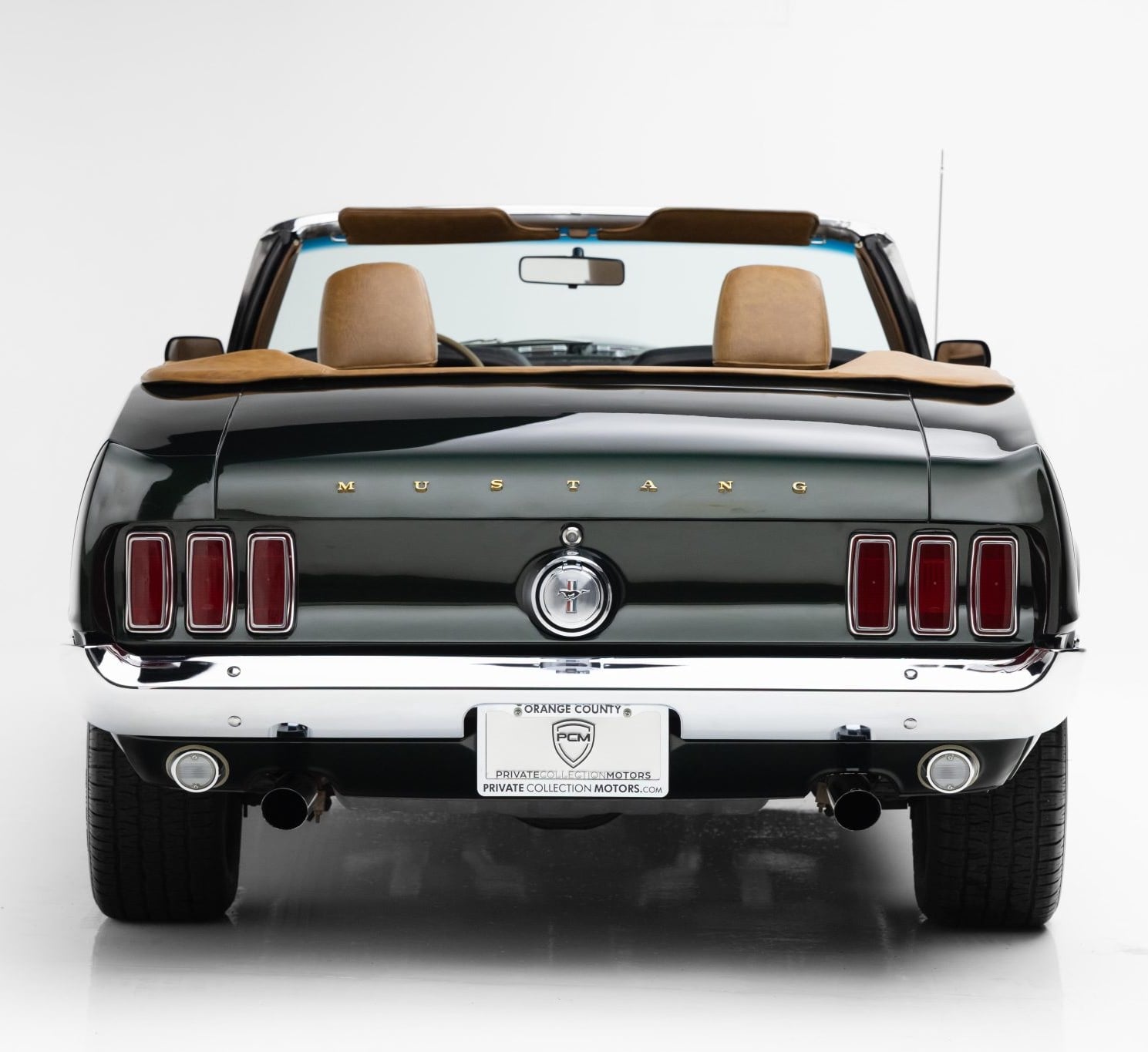
- This is a 1969 Ford Mustang convertible that was rebuilt and customized by a previous owner through Matthew’s Mustangs in Rose Bud, Arkansas. It was chemically stripped and repainted Infinity Cypress Pearl approximately 30 years ago, and fitted with a tan soft top, saddle interior, and Shelby-style alloy wheels.
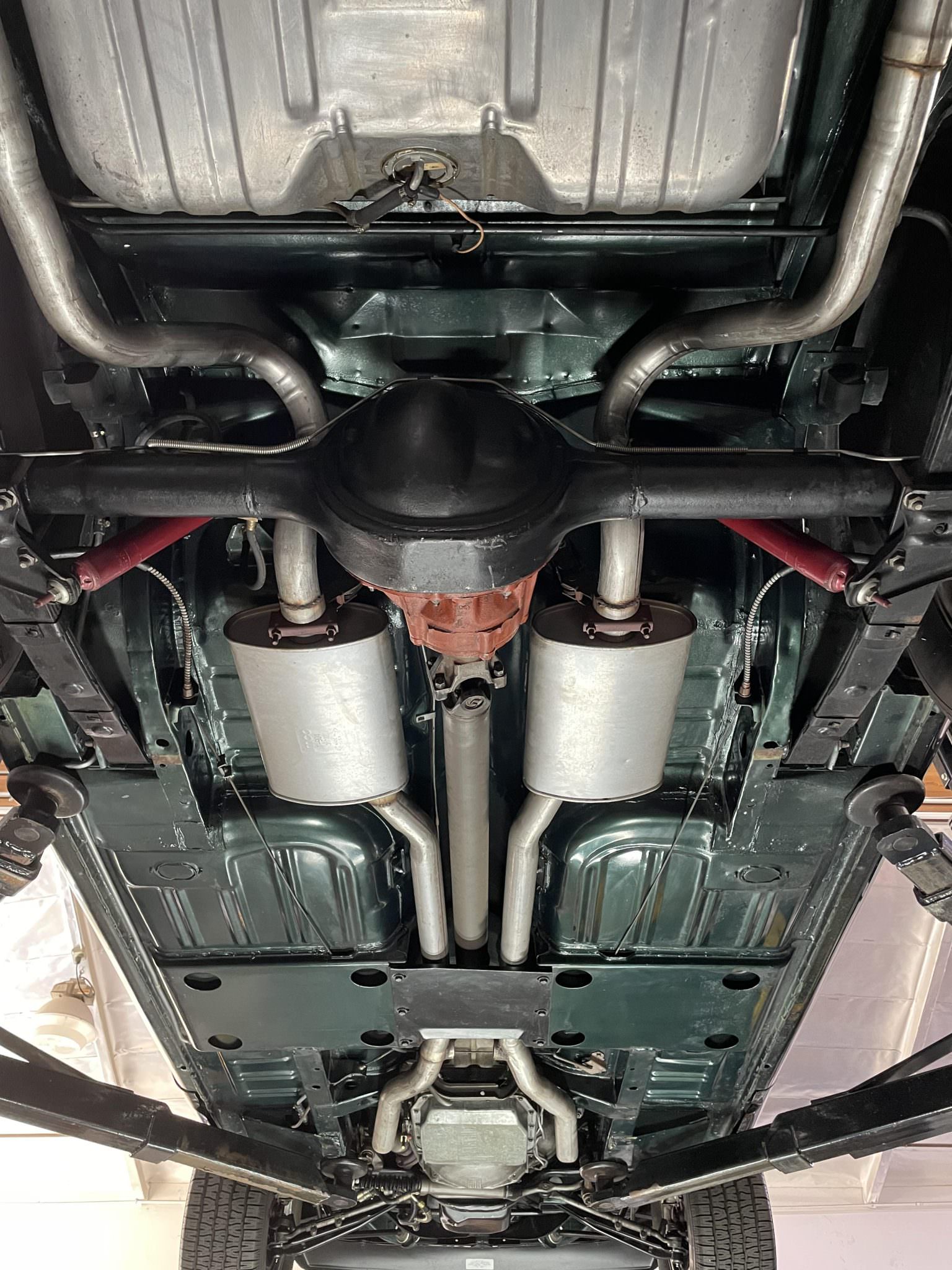
- The original engine was replaced with a 5.0 liter V8 and 4-speed automatic transmission reportedly sourced from a 1988 Mustang. The engine was rebuilt with a mild camshaft and Cobra-script valve covers, and power is sent to the rear wheels through a dual exhaust system and a Ford 9-inch rear axle.
- The interior features a power-adjustable driver’s seat reportedly from a 2005 Mustang GT, air conditioning, a retro-look radio linked to a Kenwood CD changer, and a 120 mph speedometer. Mach 1-style sway bars and front disc brakes were added. The five-digit odometer shows roughly 6,000 miles, though total mileage is unknown.
- The car was bought by the selling dealer in 2025 and it’s now being offered out of Costa Mesa, California with the owner’s manual, a removed pair of speakers, and a clean Arkansas title.
History Speedrun: The First-Gen Ford Mustang
The Ford Mustang made its public debut on April the 17th, 1964 at the New York World’s Fair. The American car market would never be the same again. Lee Iacocca had pushed hard for a stylish, affordable, youth-oriented sports car that could be marketed to almost everyone – young men chasing V8 power, young women drawn to convertibles in appealing colors, and families adding a second car to the mix.
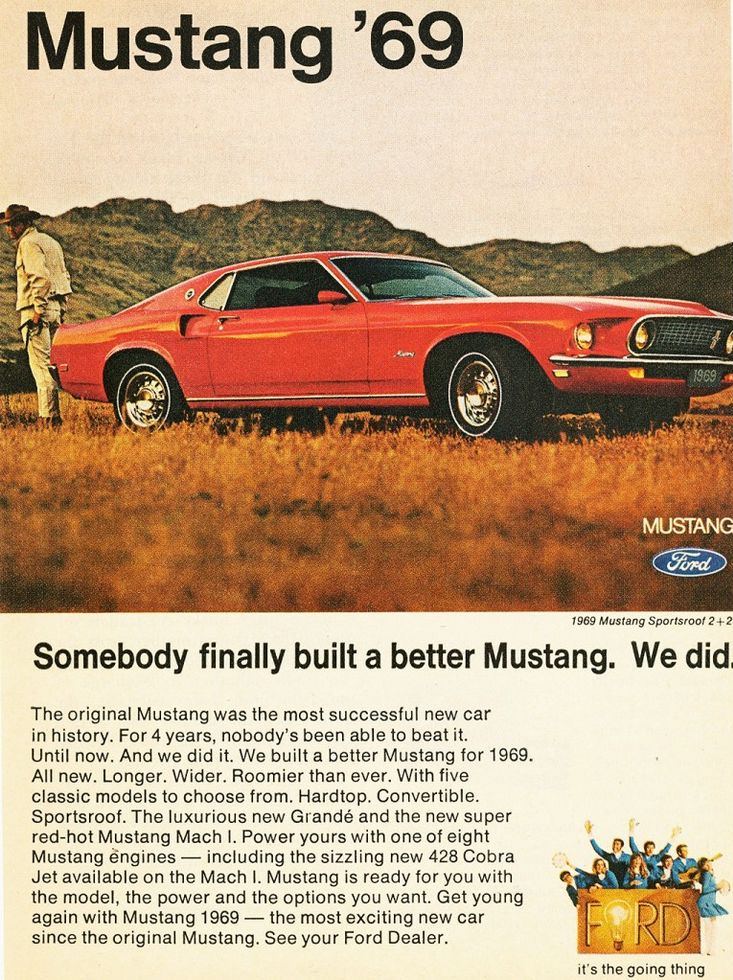
 One of the Mustang’s high-water marks came in 1969. This would be the final year with styling that closely resembled the early cars, but perhaps taken up a notch and it was now able to accommodate just about any Ford V8 you wanted under the hood. Image courtesy of Ford.
The Mustang was famously built on the existing Ford Falcon platform, drawing heavily from the Falcon and Fairlane parts bins for its chassis, suspension, and brakes, but it looked like it cost far more than its base price of $2,368 USD – that’s just $25,224 USD in 2026 money.
Ford had predicted annual sales of around 100,000 units, but this proved to be one of the great underestimations of demand in automotive history. Dealers took over 22,000 orders on the first day alone, and the company surpassed that 100,000 target in under four months. Ford celebrated production of the one-millionth Mustang on March the 2nd, 1966 – that was less than two years after launch. Few competitors came close to matching that breakneck sales pace.
The earliest cars, often called the “1964½” models despite being officially designated as 1965 Mustangs, were offered as hardtop coupes or convertibles, with the fastback body style arriving in late summer of 1964 as part of the regular 1965 model year lineup. The fastback body style would arguably go on to define the Mustang more than any other, but the convertibles always remained popular.
The base engine was a 170 cubic inch inline-six, but the car’s real character was defined by its V8 engine options, which topped out with the K-code 289 cubic inch “Hi-Po” producing 271 bhp – this was fitted to fewer than 1% of early Mustangs and they remain hugely collectible today as a result.
Ford gave Carroll Shelby a brief in August of 1964 to transform the Mustang into an SCCA B Production racer, and the result was the legendary Shelby GT350.
The Mustang single-handedly created the “pony car” segment, a category literally named after it, and triggered a wave of competitors including the Chevrolet Camaro, Pontiac Firebird, AMC Javelin, Dodge Challenger, and others.
The first-gen Mustang went through four distinct evolutions – the 1965–1966 cars were the smallest and lightest, and 1966 remains the best-selling model year. The 1967 to 1968 redesign added roughly two inches in length and 2.7 inches in width to accommodate big block V8s, starting with the 390 cubic inch FE and later the 428 Cobra Jet.
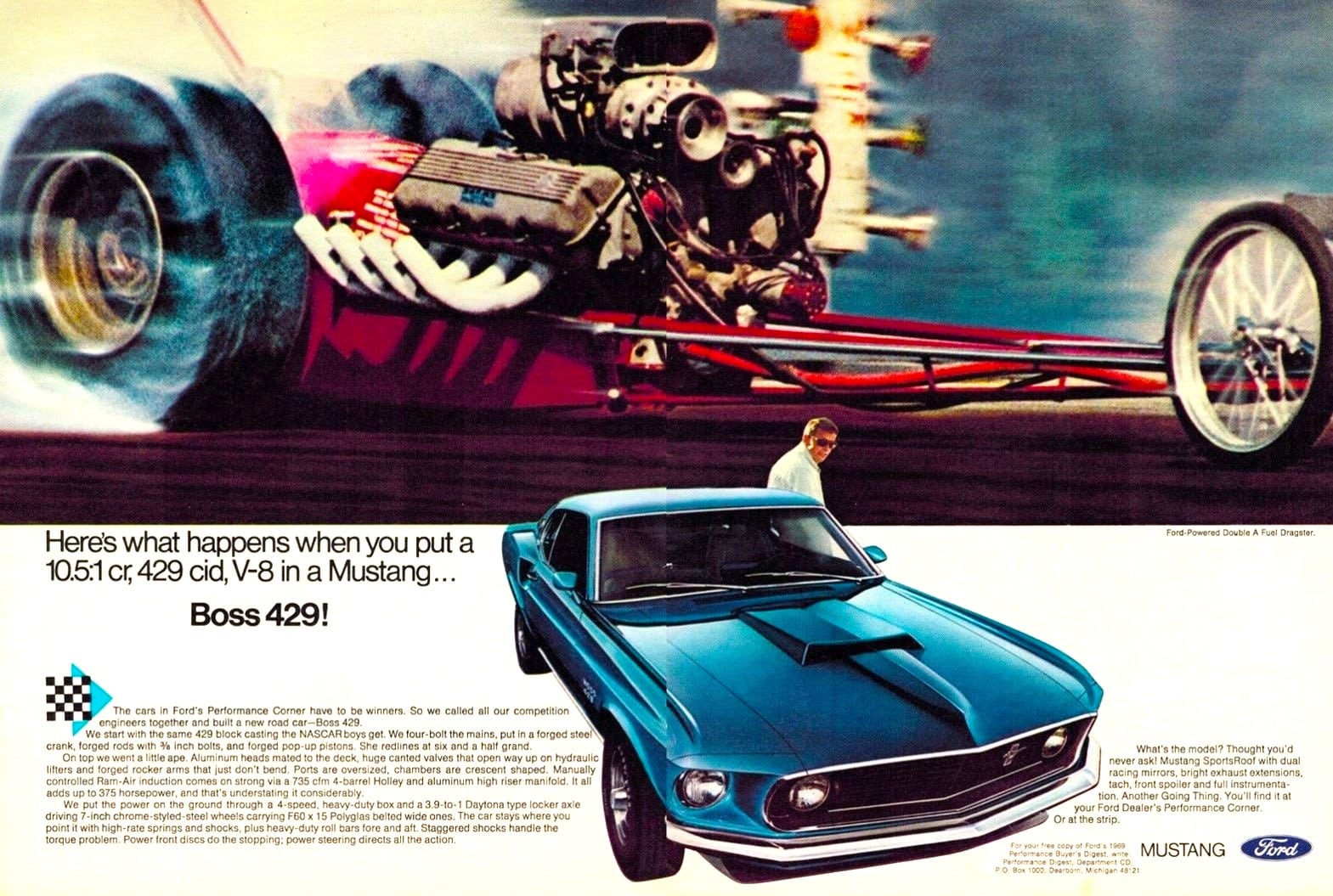
Engine options for 1969 ran from the standard 351 Windsor up through the 428 Cobra Jet and Super Cobra Jet, the latter rated at 335 bhp and 440 lb ft of torque. Image courtesy of Ford.
These were the cars immortalized by Steve McQueen in the 1968 film Bullitt. By 1971 to 1973, the Mustang had grown substantially larger and heavier, and tightening emissions regulations steadily eroded performance until the first generation series officially ended in 1973.
The 1969 Ford Mustang Arrives
One of the Mustang’s high-water marks came in 1969. This would be the final year with styling that closely resembled the early cars, but perhaps taken up a notch and it was now able to accommodate just about any Ford V8 you wanted under the hood.
The 1969 restyle added approximately 3.8 inches to the body’s overall length while the wheelbase held at 108 inches, and the car sat roughly 1.5 inches lower than before. Quad headlights appeared for the first and only time on a standard production Mustang, the fastback was rebranded as the “SportsRoof,” and Ford offered what it described as a “steed for every need” philosophy with no less than 11 different powertrain combinations.
Total production for 1969 was 299,824 examples across three body styles – hardtop coupe, convertible, and SportsRoof. What helped make the year remarkable was the depth of its performance lineup. A number of distinct factory performance models were available, including the Mach 1, Boss 302, Boss 429, Shelby GT350, Shelby GT500, and the outgoing GT model.
The 1969 Mustang Variants
The Mach 1 was the top performer by sales volume, it was offered only as a SportsRoof, and it came with a matte black hood, hood pins, hood scoop, competition suspension, some additional decals, and an upgraded interior at a modest price premium over the base V8 fastback.
Engine options ran from the standard 351 Windsor up through the 428 Cobra Jet and Super Cobra Jet, the latter rated at 335 bhp and 440 lb ft of torque. Ford sold 72,458 Mach 1s in 1969 – so many that it effectively killed the Mustang GT, which managed only around 5,000 sales before being discontinued after 1969. The GT badge wouldn’t return on a production Mustang until 1982.
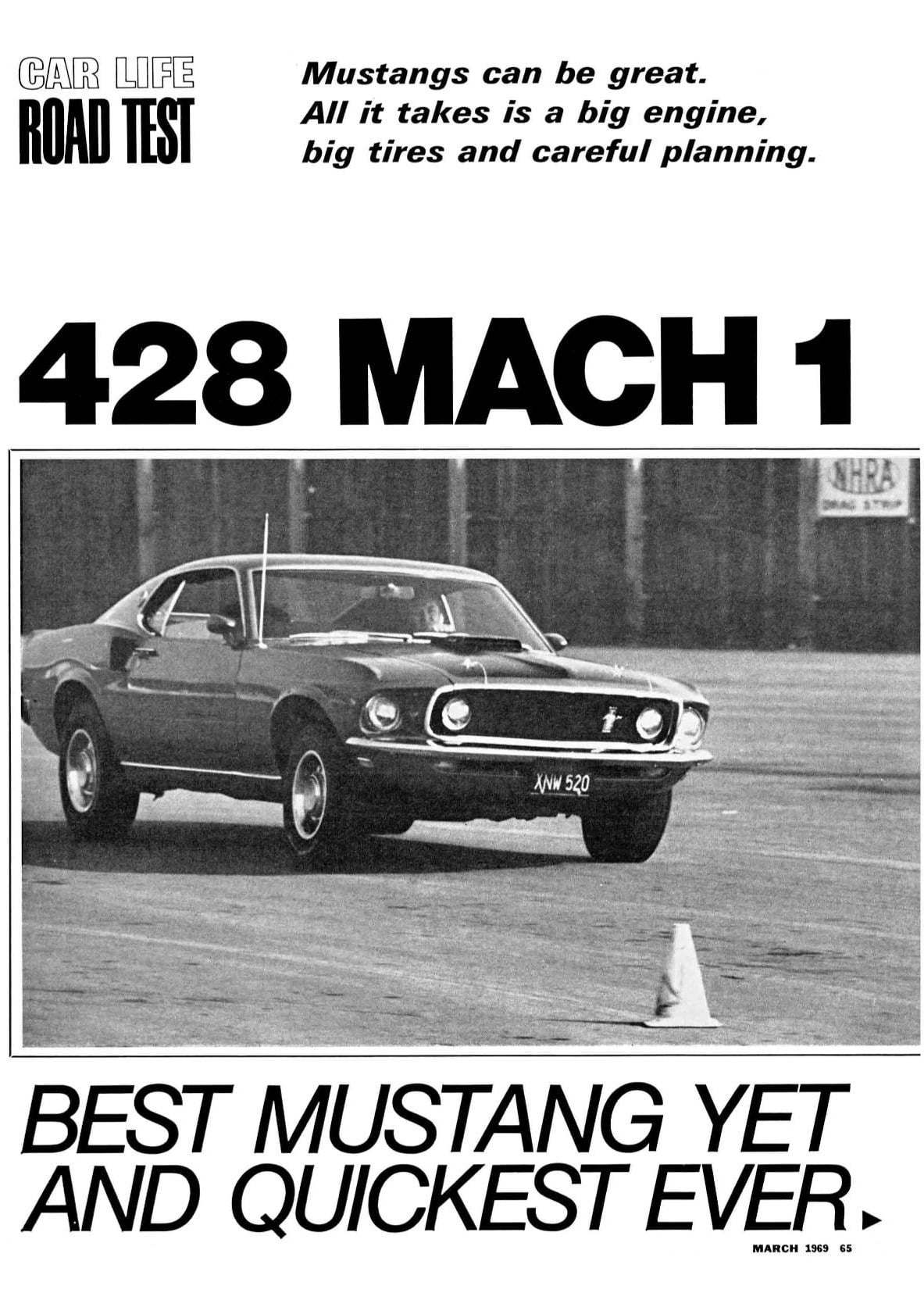
Ford sold 72,458 Mach 1s in 1969 – so many that it effectively killed the Mustang GT, which managed only around 5,000 sales before being discontinued after 1969. The GT badge wouldn’t return on a production Mustang until 1982. Image courtesy of Ford.
The Boss 302 was a purpose-built Trans-Am homologation car, the brainchild of Ford president Bunkie Knudsen and designer Larry Shinoda, both former GM men. Its specially prepared 302 cubic inch V8, had large-port Cleveland-style heads on a Windsor block and was officially rated at 290 bhp, though it was widely believed to produce more.
Just 1,628 were built for 1969, and race-prepped versions generated an estimated 450 bhp. The Boss 302 won the Trans-Am championship in 1970 under Bud Moore, driven by Parnelli Jones and George Follmer.
The Boss 429 was the most powerful Mustang Ford had ever built, it was created to homologate a new semi-hemispherical headed 429 cubic inch V8 for NASCAR, the engine was so large that Kar Kraft of Brighton, Michigan had to widen the shock towers, and shorten the upper control arms – they also relocated the battery to the trunk to help with weight distribution.
Official power was rated at 375 bhp, though actual output was believed to be closer to 500 bhp. Ford built approximately 859 Boss 429 Mustangs for 1969, with some production summaries listing 869 when two Boss 429 Cougars and related accounting differences are included. At nearly $5,000 each they went for nearly double the sticker price of a base Mustang.
The Shelby GT350 and GT500 continued for 1969 with extensively revised bodywork, though Carroll Shelby’s relationship with Ford was coming to an end. After this model year, 789 unsold Shelby Mustangs were re-serialized with 1970 VINs and sold off, but no new Shelby Mustangs were produced for 1970. Rounding out the lineup was the Grande, a luxury-oriented hardtop with upgraded interior trim, available for just $231 over the base coupe. Ford sold 22,182 of them, not bad numbers for a luxury package.
The 1969 Mustang was perhaps the last great flourish of the original car’s performance era. The forces of emissions regulations, climbing insurance costs, and fuel economy concerns were already gathering. But for one last model year, Ford offered a Mustang for every kind of buyer – be it performance, economy, or luxury.
The 1969 Ford Mustang Convertible Shown Here
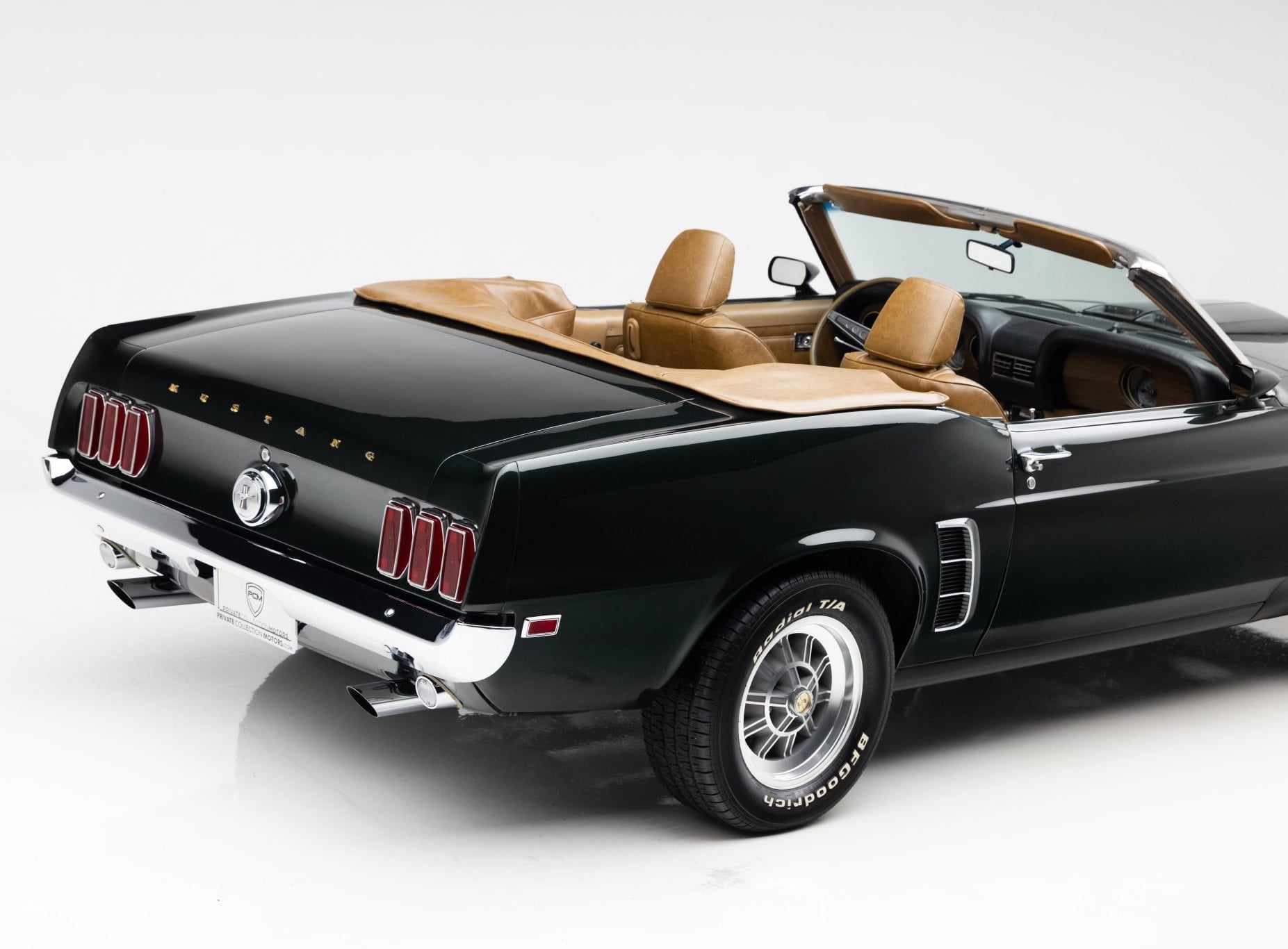
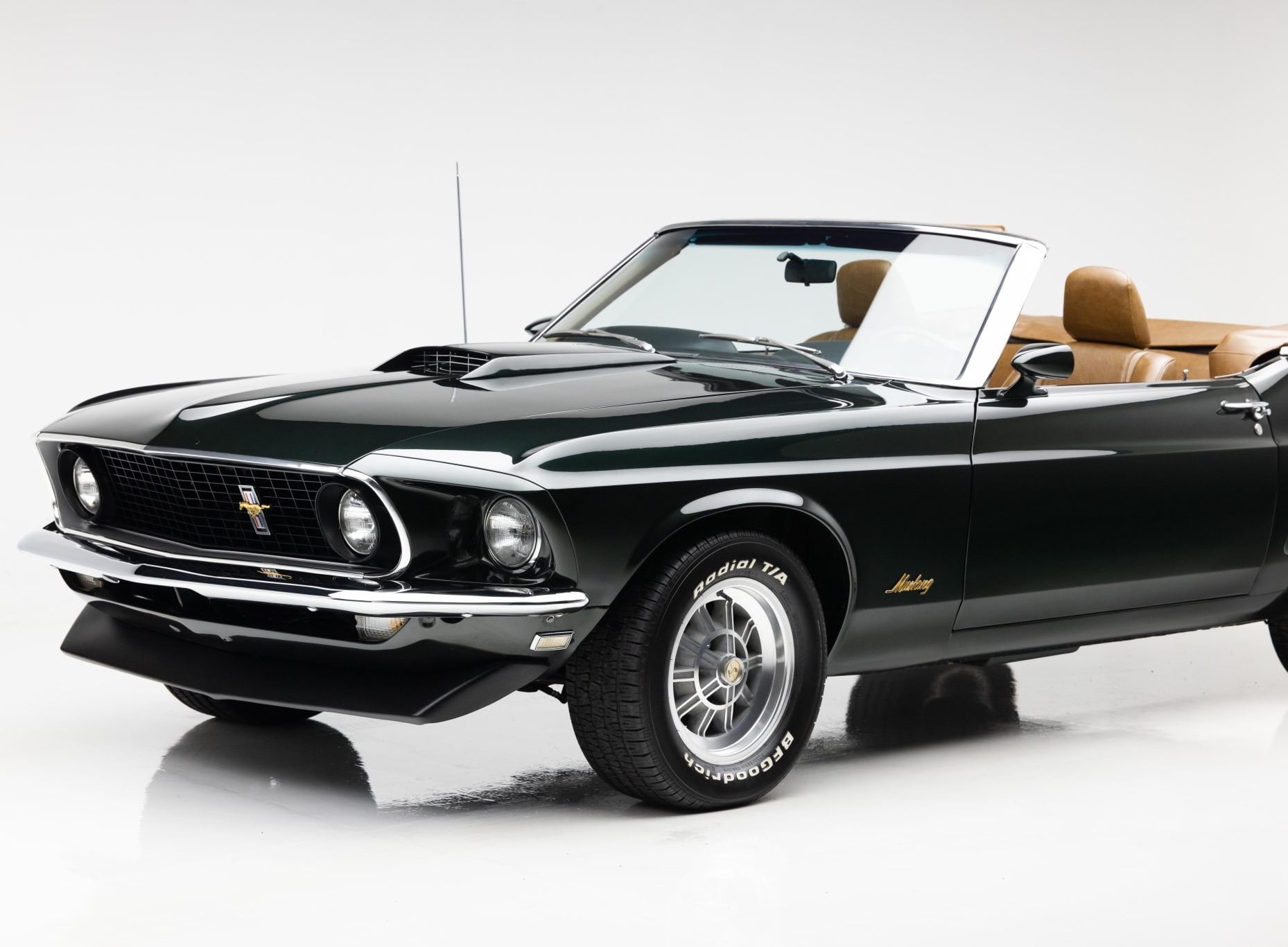
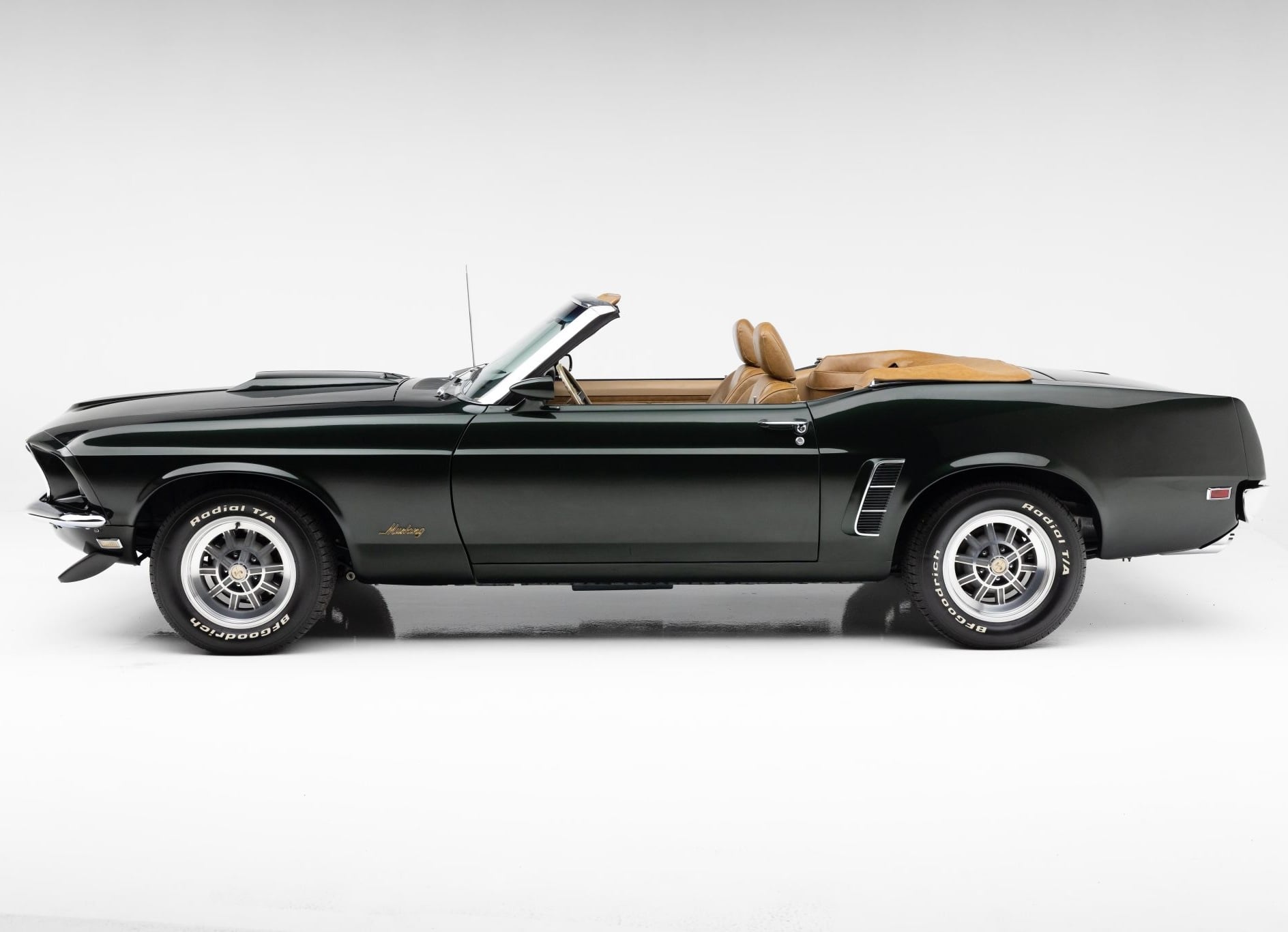
The 1969 Ford Mustang convertible shown here was rebuilt and customized by its previous owner, who reportedly commissioned Matthew’s Mustangs in Rose Bud, Arkansas to perform the work. The exterior was chemically stripped and repainted Infinity Cypress Pearl, a dark metallic green, approximately 30 years ago.
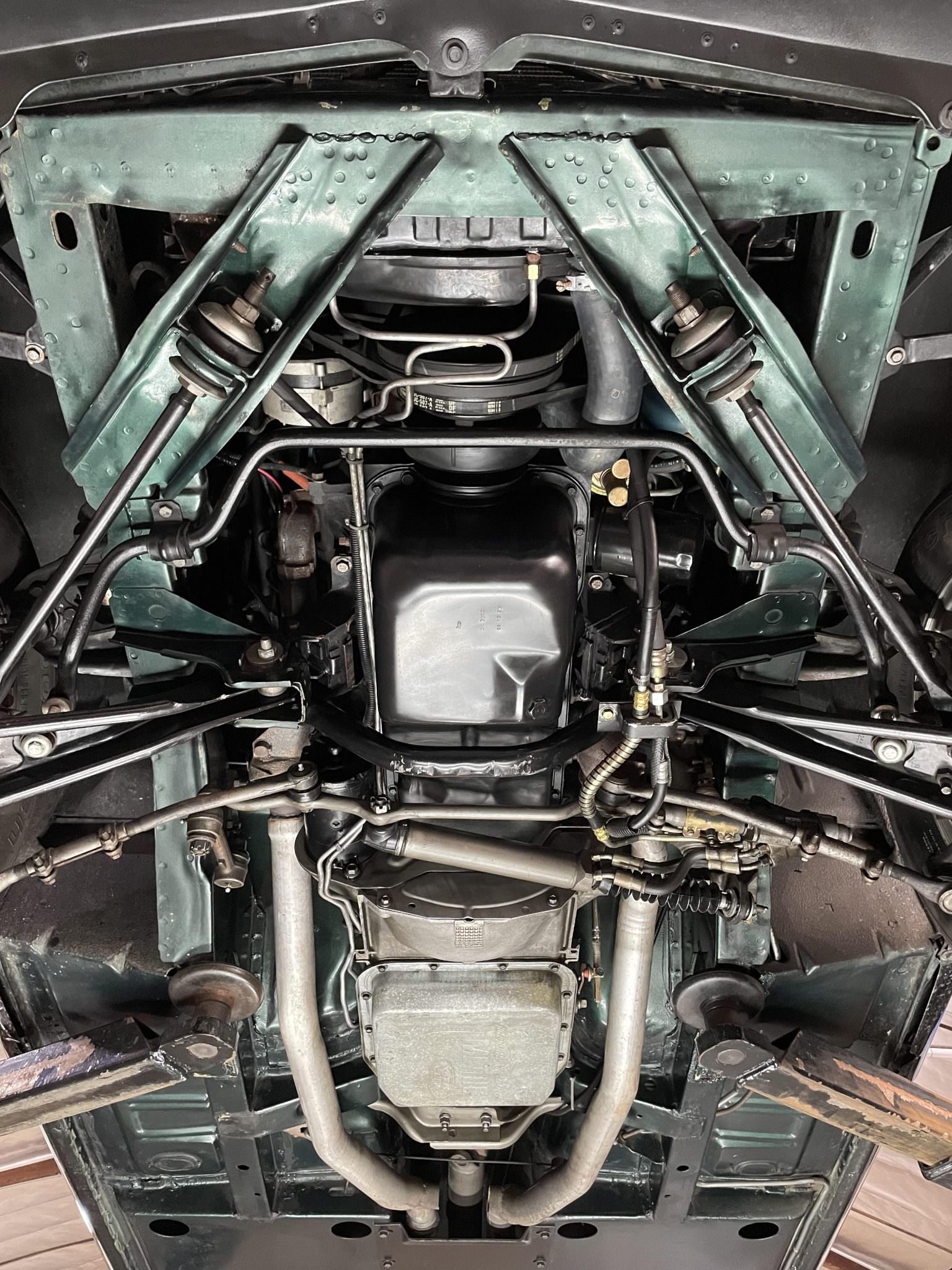
A tan soft top was fitted along with a hood scoop and front lip spoiler, and the car rides on 15 inch Shelby-style alloy wheels wrapped in BFGoodrich tires. Mach 1-style sway bars were added, and front disc brakes were installed.
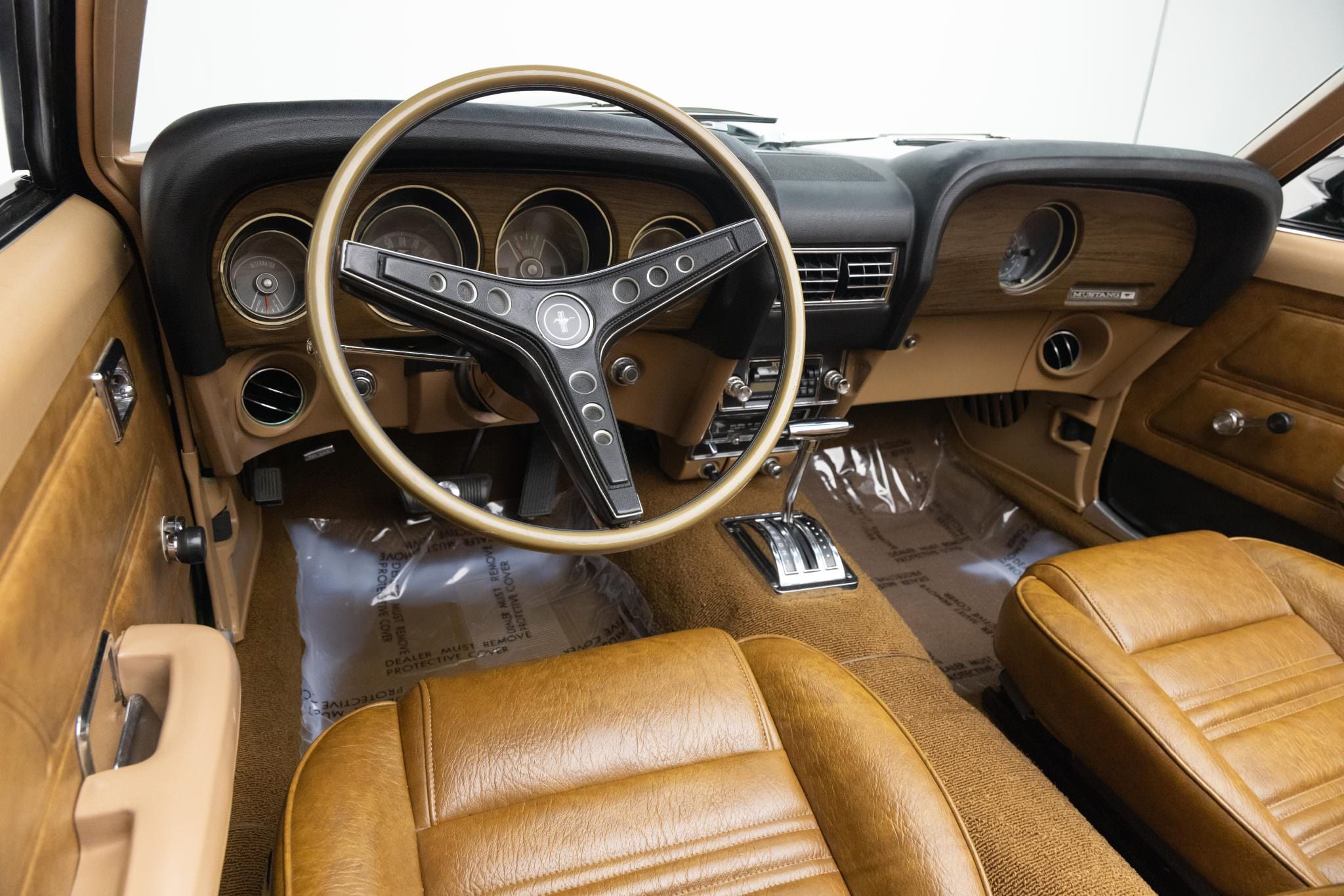
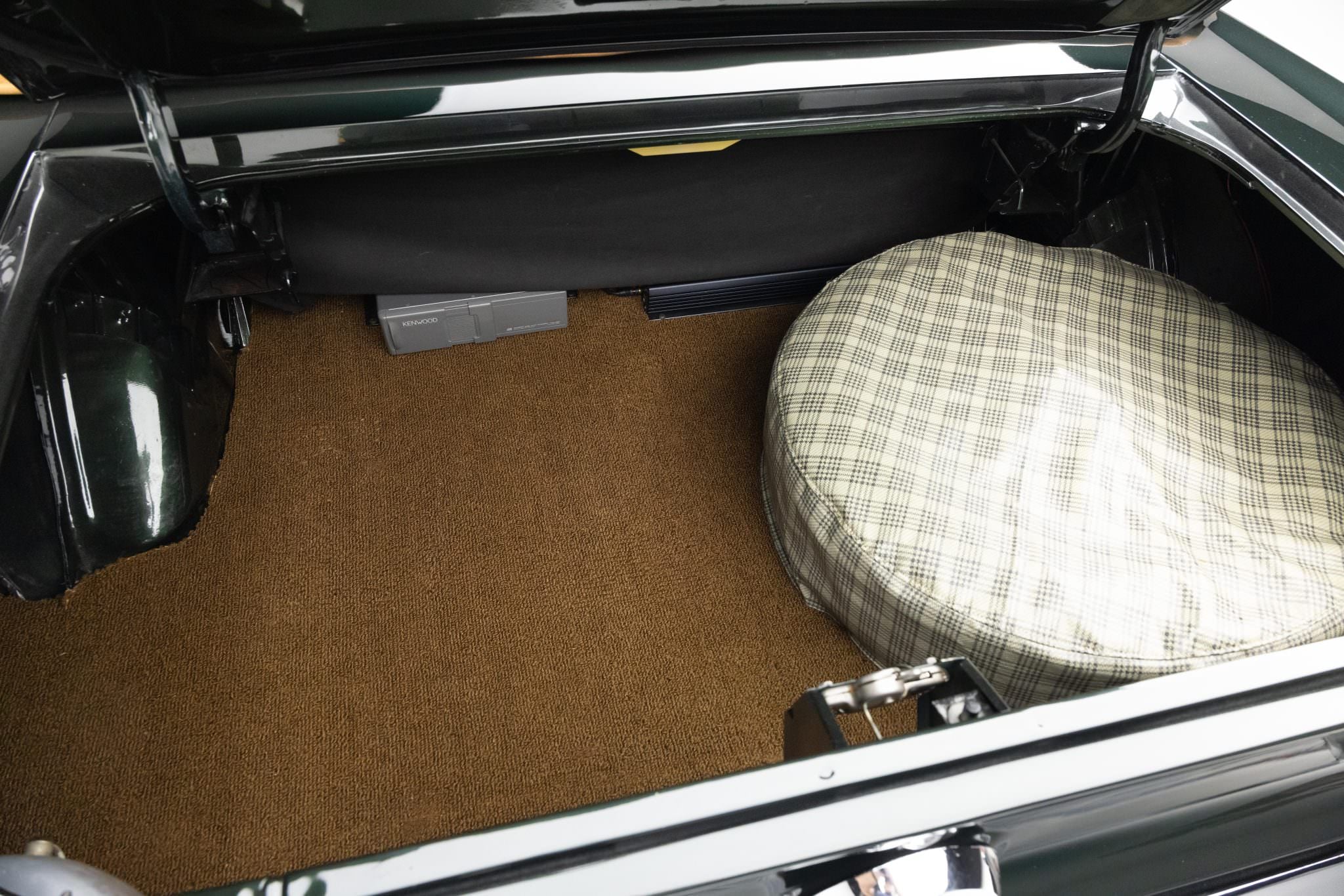
The interior was reupholstered in saddle and has a power-adjustable driver’s seat reportedly sourced from a 2005 Mustang GT. The car has air conditioning, and a retro-look radio is linked to a Kenwood CD changer mounted in the trunk. The steering wheel frames a 120 mph speedometer and auxiliary gauges. The five-digit odometer shows approximately 6,000 miles, though total mileage is unknown.
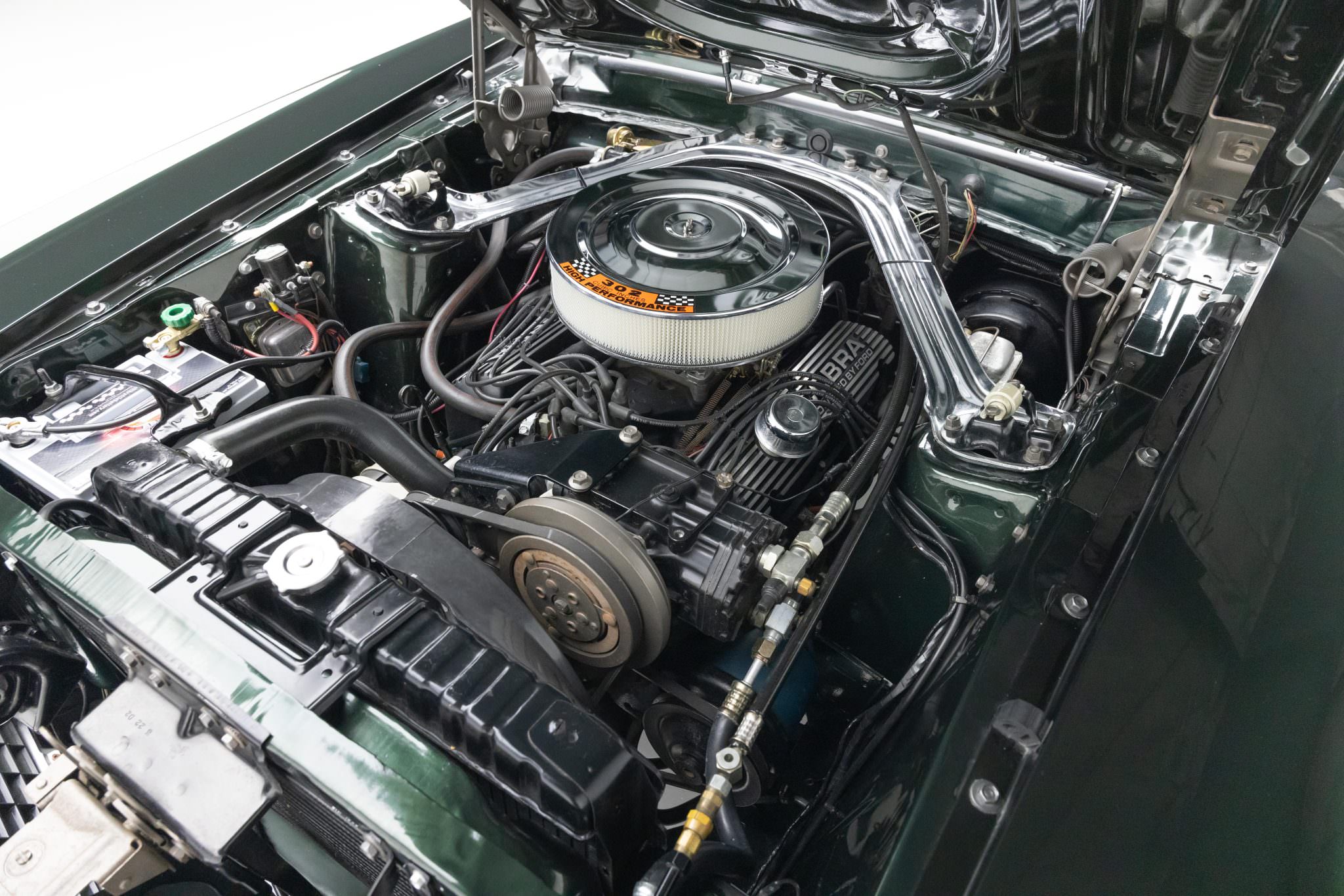
Power comes from a 5.0 liter V8 paired with a 4-speed automatic transmission, both were reportedly sourced from a 1988 Mustang. The engine was rebuilt with a mild camshaft and is topped by Cobra-script valve covers. A dual exhaust system was fitted, and power is sent to the rear wheels through a Ford 9-inch rear axle.
Power comes from a 5.0 liter V8 paired with a 4-speed automatic transmission, both were reportedly sourced from a 1988 Mustang. The engine was rebuilt with a mild camshaft and is topped by Cobra-script valve covers. A dual exhaust system was fitted, and power is sent to the rear wheels through a Ford 9-inch rear axle.
This car was acquired by the selling dealer in 2025, and it’s now being offered out of Costa Mesa, California with the owner’s manual, a removed pair of speakers, and a clean Arkansas title. If you’d like to read more about the car or place a bid you can visit the listing here.
Images courtesy of Ford + Bring a Trailer

Articles that Ben Branch has written have been covered on CNN, Popular Mechanics, Smithsonian Magazine, Road & Track Magazine, the official Pinterest blog, the official eBay Motors blog, BuzzFeed, Autoweek Magazine, Wired Magazine, Autoblog, Gear Patrol, Jalopnik, The Verge, and many more.
Silodrome was founded by Ben back in 2010, in the years since the site has grown to become a world leader in the alternative and vintage motoring sector, with well over a million monthly readers from around the world and many hundreds of thousands of followers on social media.