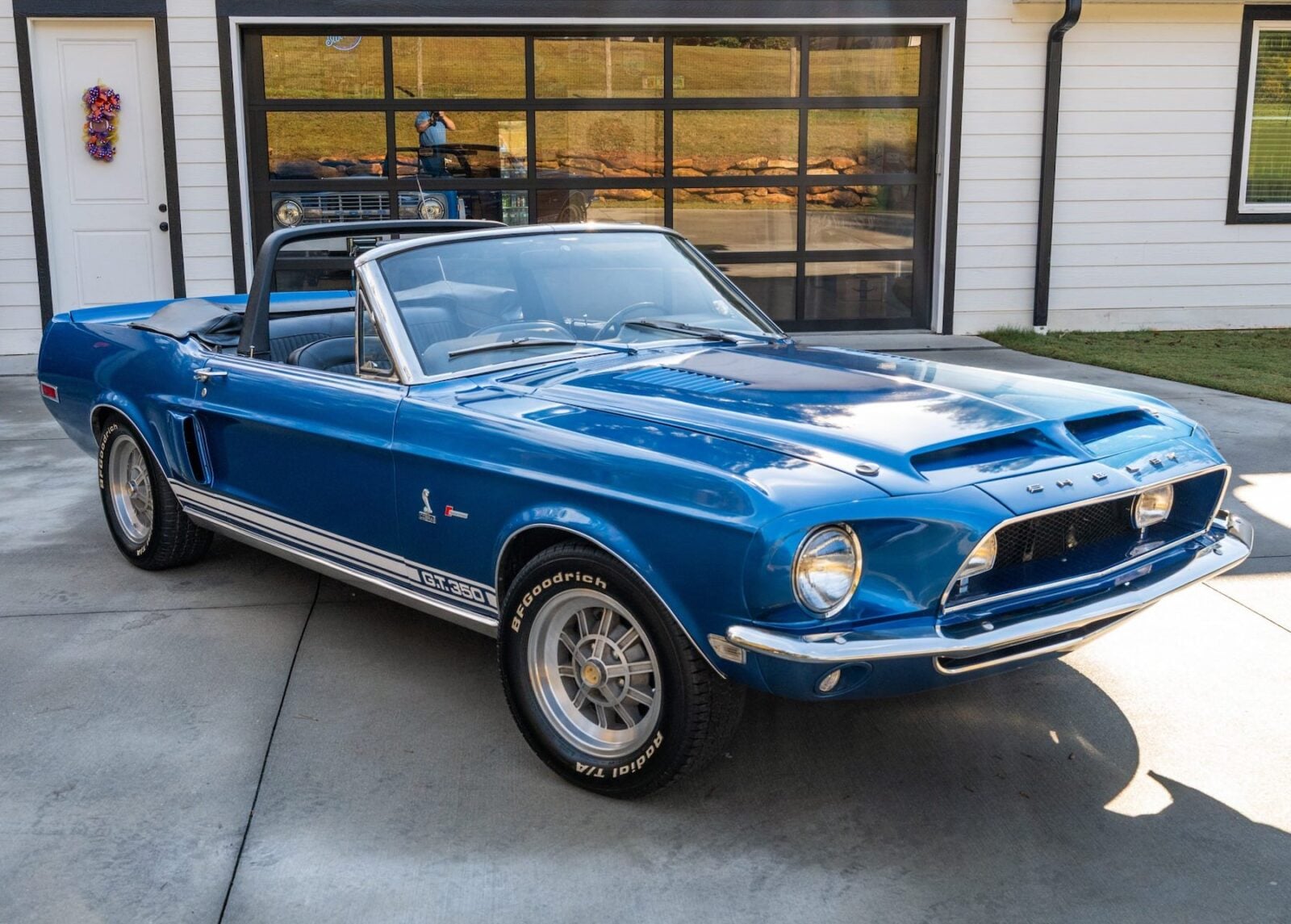
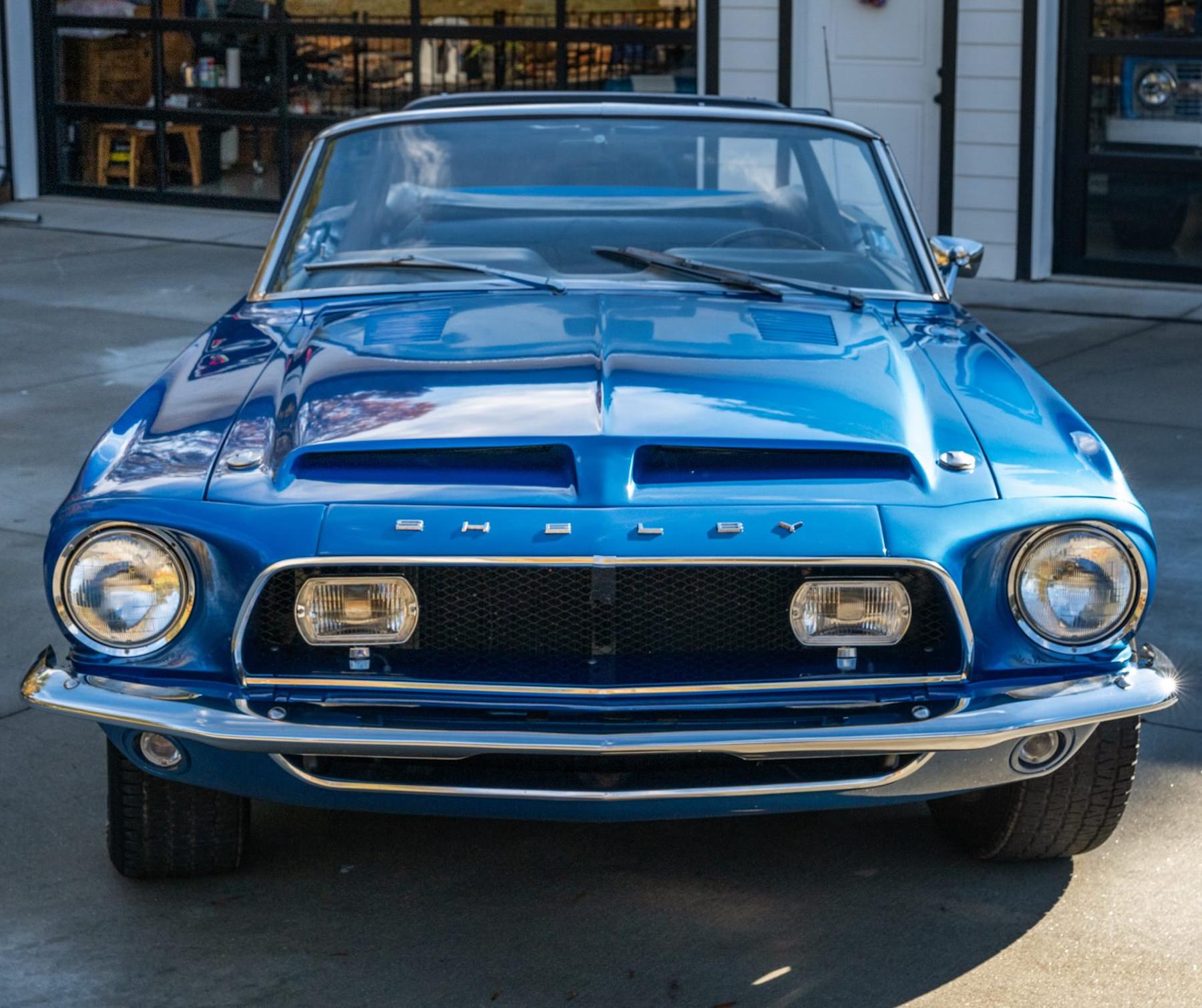
This is a 1968 Shelby Mustang GT350 that now benefits from a number of upgrades, the most significant of which are the fitment of a Paxton supercharger, and a 5-speed manual transmission.
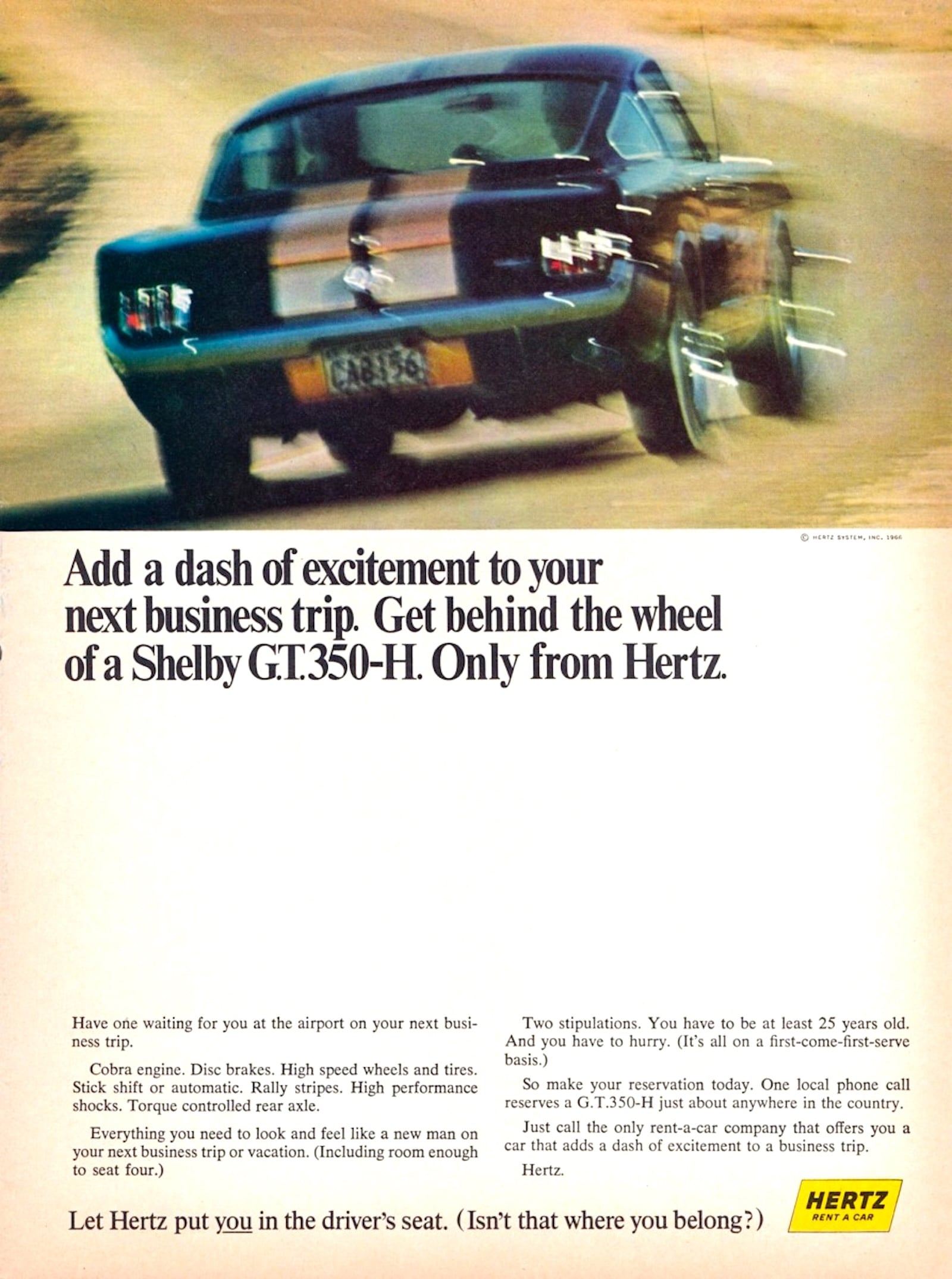
The original 1960s-era Shelby Mustangs are now among the most collectible American coupes of their time, the GT350 won the SCCA B-Production Championship three times on the trot between 1965 and 1967, and rental car company Hertz even offered them as part of their “Rent a Racer” promotion.
Fast Facts: A Supercharged 1968 Shelby GT350
- The Shelby Mustang GT350 was developed in 1964 after Ford approached Carroll Shelby about preparing the Mustang for SCCA B-Production racing. Chuck Cantwell led engineering, Ken Miles handled development driving, and Peter Brock designed the stripes. The first GT350 debuted in January of 1965, beginning one of Ford’s most celebrated performance car programs.
- The original GT350 had a modified 289 cubic inch V8 producing up to 306 bhp, upgraded suspension, improved brakes, and quicker steering. The competition-focused GT350R proved successful, and GT350 drivers won three consecutive SCCA B-Production National Championships from 1965 to 1967. The model became increasingly road-oriented as production continued.
- The GT350 gained an optional automatic transmission option and a fold-down rear seat in 1966, when Hertz also bought 1,001 examples for its famous rental fleet. A larger Mustang body followed in 1967, and the 1968 model introduced convertible availability, a 250 bhp 302 cubic inch V8, and assembly by A.O. Smith in Michigan.
- The 1968 Shelby GT350 convertible shown here is one of 404 built that year. Restored in 2020, it keeps its Acapulco Blue finish and white convertible top. Following its acquisition in 2026, it received a Paxton supercharger and T-5 5-speed manual transmission. The sale includes removed factory parts, ownership documentation, and a Deluxe Marti Report.
History Speedrun: The Shelby Mustang GT350
The SCCA (Sports Car Club of America) wouldn’t accept the Ford Mustang for its B-Production class in 1964, because the class was for two-seat sports cars, and the Mustang had four seats. Ford’s Lee Iacocca turned to Carroll Shelby, the two men already knew each other well, largely because Shelby’s Cobras already used Ford V8s.
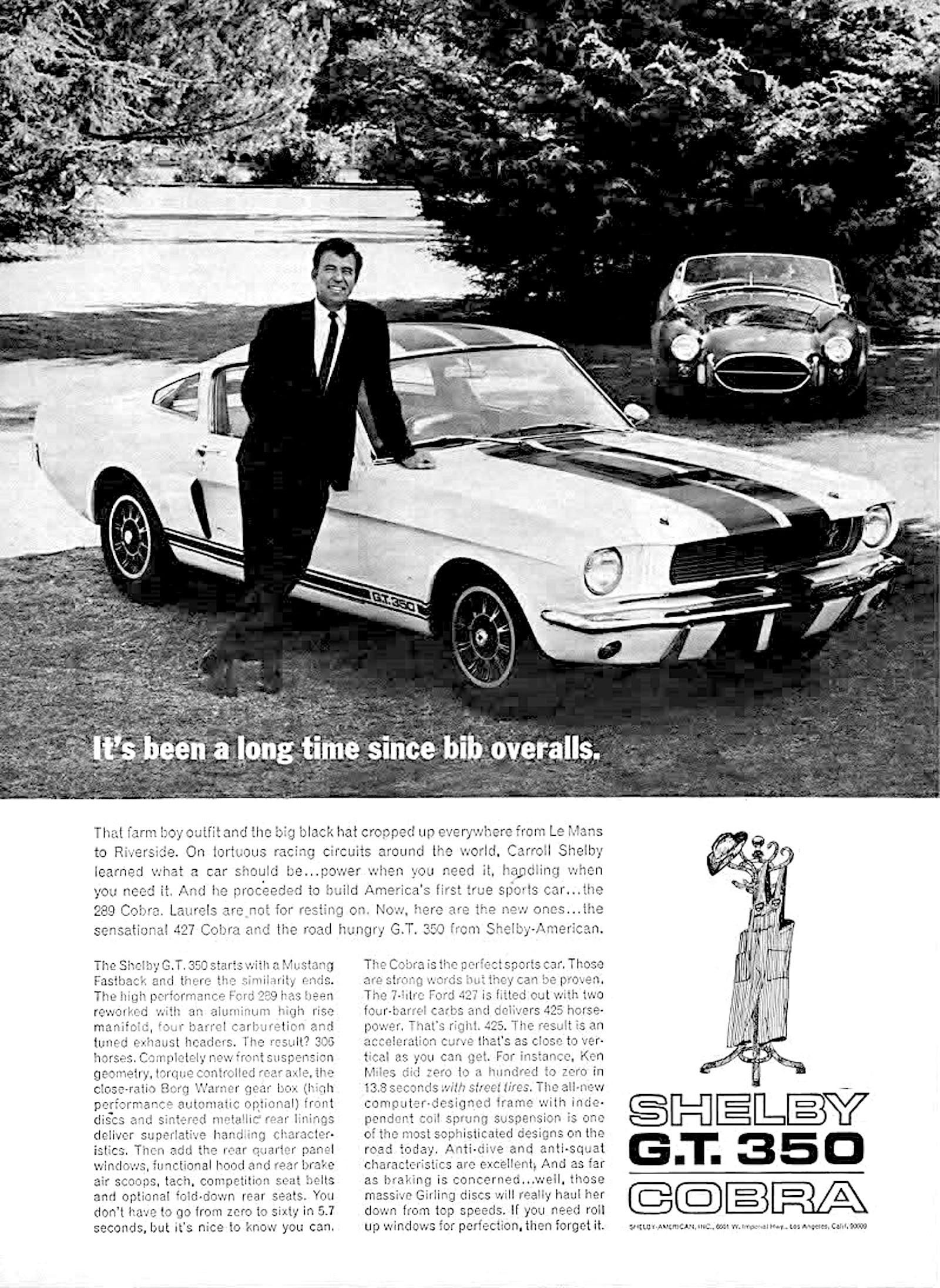
 Ford’s Lee Iacocca turned to Carroll Shelby for the Mustang project, the two men already knew each other well, largely because Shelby’s Cobras already used Ford V8s. Image courtesy of Shelby American.
Shelby asked the SCCA’s John Bishop what it would take to get the Mustang into B-Production racing, and was told that removing the rear seat and building 100 homologation cars would do the trick. Ford gave the go-ahead in mid-1964. No one knew it at the time, but this series of events was just about to result in the creation of one of the most famous Fords of all time.
Shelby was reluctant to take on the Mustang project, at the end of the day it seems like he took it on as a favor to Iacocca, to whom he owned a great deal. Shelby Project Engineer Chuck Cantwell ran the engineering, Ken Miles did the development driving, and Peter Brock came up with the stripes. The name is said to come from the 350 feet between Shelby’s race and production shops.
Ford’s San Jose plant shipped 110 partly finished Wimbledon White fastbacks to Shelby’s shop in Venice, California, in the last week of 1964. The car was shown to the press at Riverside on January the 27th, 1965, and production then moved to a larger site at Los Angeles International Airport that was better able to handle the required production volume.
Each car kept the Mustang’s steel unibody and its K-code 289 cubic inch (4.7 liter) pushrod V8. Shelby added an aluminum high-rise intake, a 715 cfm Holley four-barrel carburetor, and Tri-Y headers with side-exit exhausts, and advertised 306 bhp at 6,000 rpm and 329 lb ft, up from 271 bhp on the stock Mustang. An aluminum-cased Borg-Warner T-10 close-ratio 4-speed drove a 9-inch live axle with a Detroit Locker differential, hung on leaf springs and located with traction bars.
Up front, Ford engineer Klaus Arning lowered the upper control arm pivots by one inch to keep the tires more upright in corners. The anti-roll bar grew in thickness from 0.84 to 1 inch, and Koni dampers were fitted at all four corners. The Mustang’s Kelsey-Hayes front discs stayed, paired with wider 10 x 2.5 inch rear drums from Ford’s full-size cars and metallic linings. Longer pitman and idler arms quickened the recirculating-ball steering. A fiberglass shelf carrying the spare replaced the rear seat – in-keeping with that SCCA rule about two seats.
The street car cost $4,547 USD and weighed ~2,800 lbs. A period road test recorded 0 to 60 mph in 6.8 seconds and the quarter mile in 14.7 seconds at 90 mph. The $5,995 USD GT350R added a roll bar, plexiglass windows, a 34-gallon fuel tank, and a blueprinted engine of roughly 350 bhp. Shelby built 562 cars for 1965, just 36 of them were R-models.
The GT350’s first race win came on February the 14th, 1965, when Miles won in the B-Production class in R-model 5R002 at Green Valley Raceway, Texas. GT350 drivers went on to win three consecutive SCCA B-Production National Championships, in 1965, 1966, and 1967. Jerry Titus took the 1965 title, Walt Hane the 1966 title, and Freddy van Beuren the 1967 title, each of them winning the B-Production race at the season-ending American Road Race of Champions.
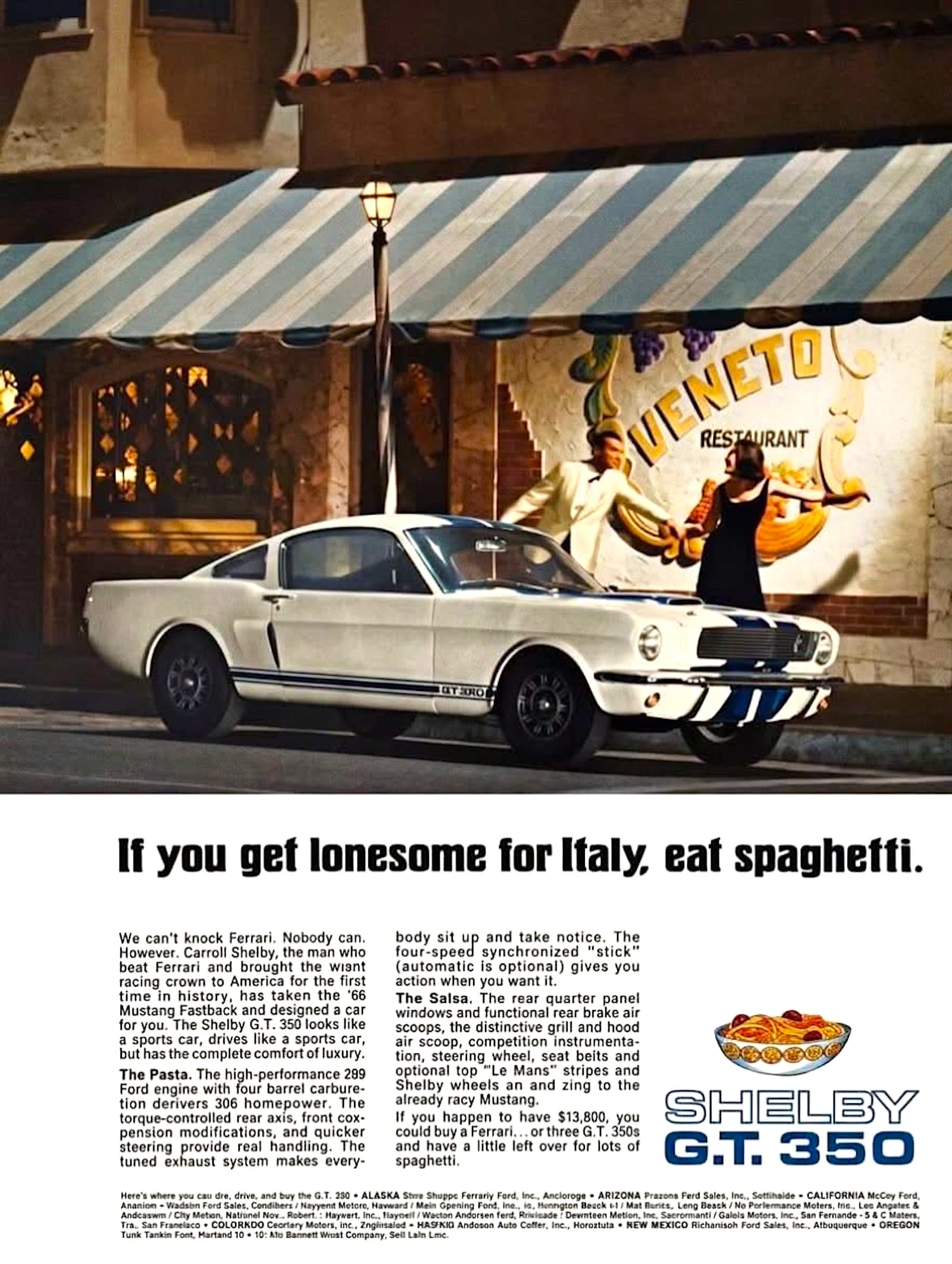
Each Shelby GT350 kept the Mustang’s steel unibody and its K-code 289 cubic inch (4.7 liter) pushrod V8. Shelby added an aluminum high-rise intake, a 715 cfm Holley four-barrel carburetor, and Tri-Y headers with side-exit exhausts, and advertised 306 bhp at 6,000 rpm and 329 lb ft, up from 271 bhp on the stock Mustang. Image courtesy of Shelby American.
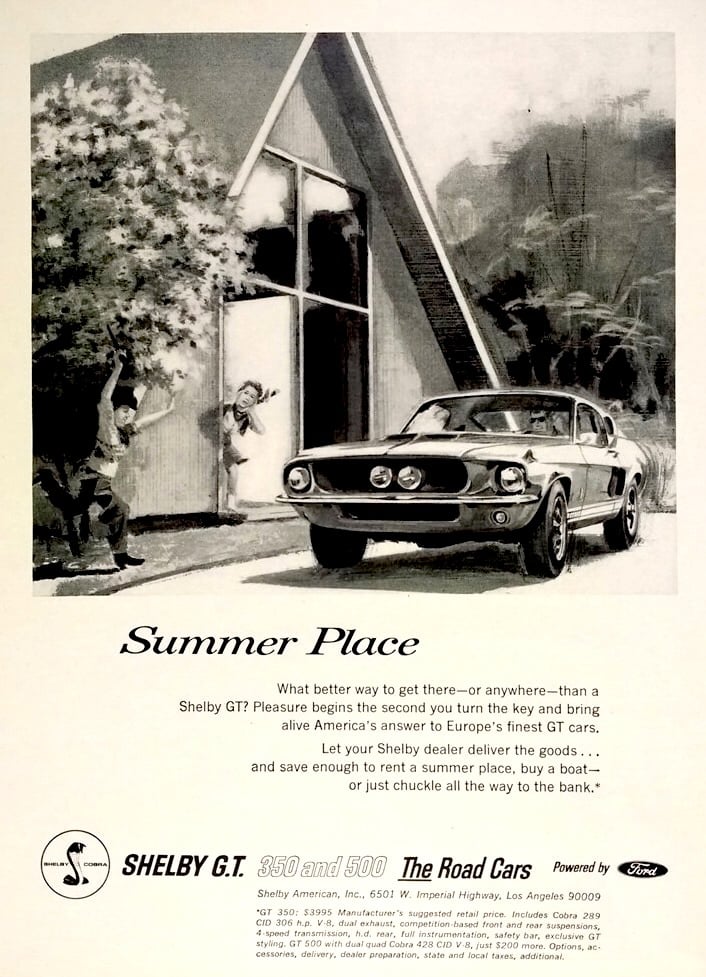
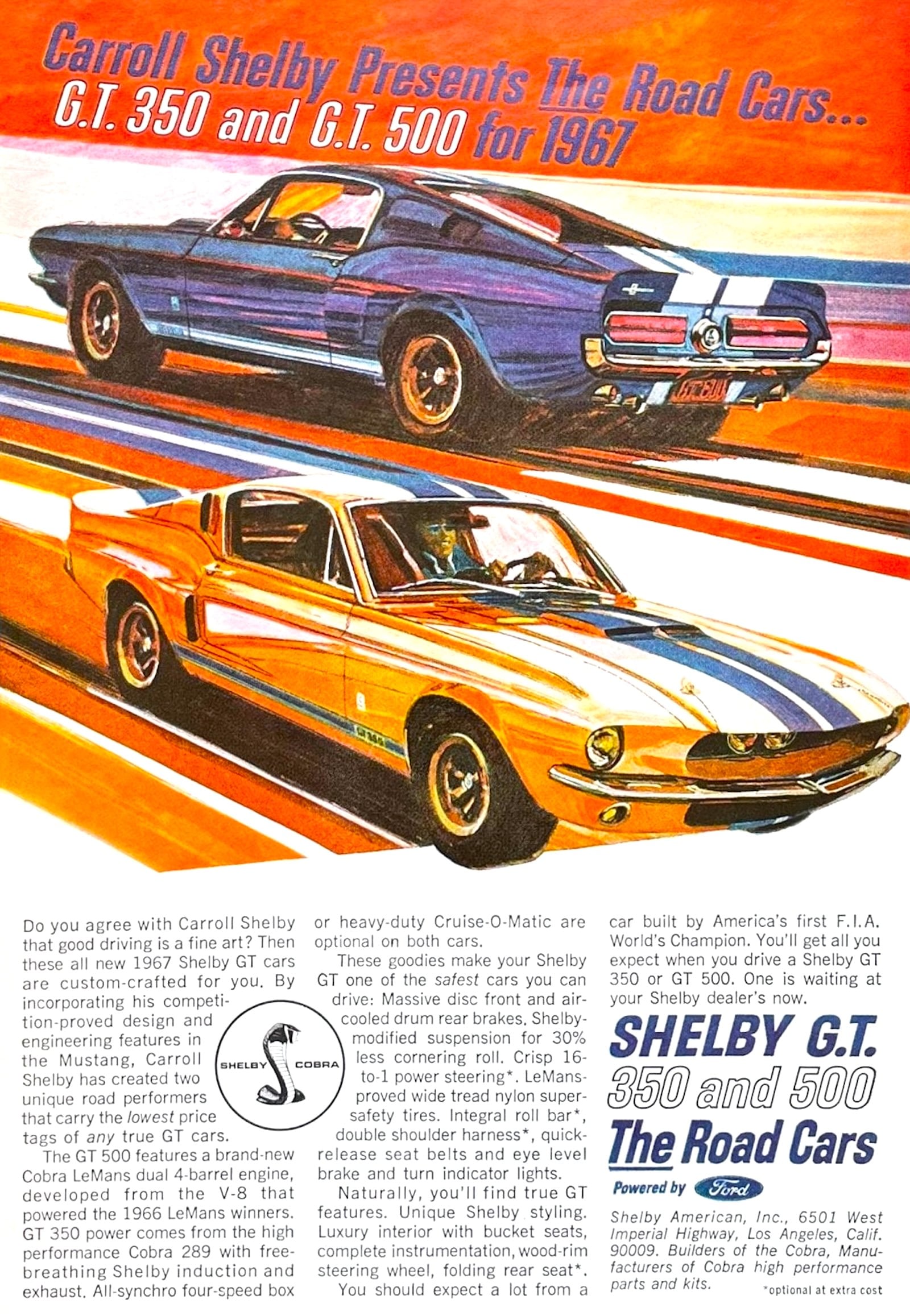
The 1966 GT350 was given a fold down rear seat, more colors, and an optional automatic transmission. Shelby built 2,378 cars, including 1,001 GT350H units for Hertz, which rented them for $17 USD a day and 17 cents a mile. The 1967 model took the larger new Mustang body with a fiberglass nose, and 1,175 were built alongside the new GT500.
For 1968 assembly moved to A.O. Smith in Ionia, Michigan, a convertible arrived, and the engine became a 250 bhp 302 cubic inch (4.9 liter) V8. The 1969 car used a 290 bhp 351 cubic inch (5.8 liter) Windsor V8. Shelby ended his agreement with Ford that summer, and the last unsold cars were renumbered as 1970 models.
Ford revived the name for the 2015 to 2020 Shelby GT350, with a 5.2 liter flat-plane-crank V8 making 526 bhp and 429 lb ft of torque – 24,211 were built, including the GT350R models. Shelby American announced its own GT350 in January of 2025 as a planned run of 562 cars, with a 480 bhp V8 or an optional supercharged 810 bhp version. In July of 2020, Miles’ 5R002 sold at Mecum’s Indianapolis auction for $3.85 million USD, at the time it was the highest price paid for a Mustang at public auction.
The Supercharged 1968 Shelby GT350 Shown Here
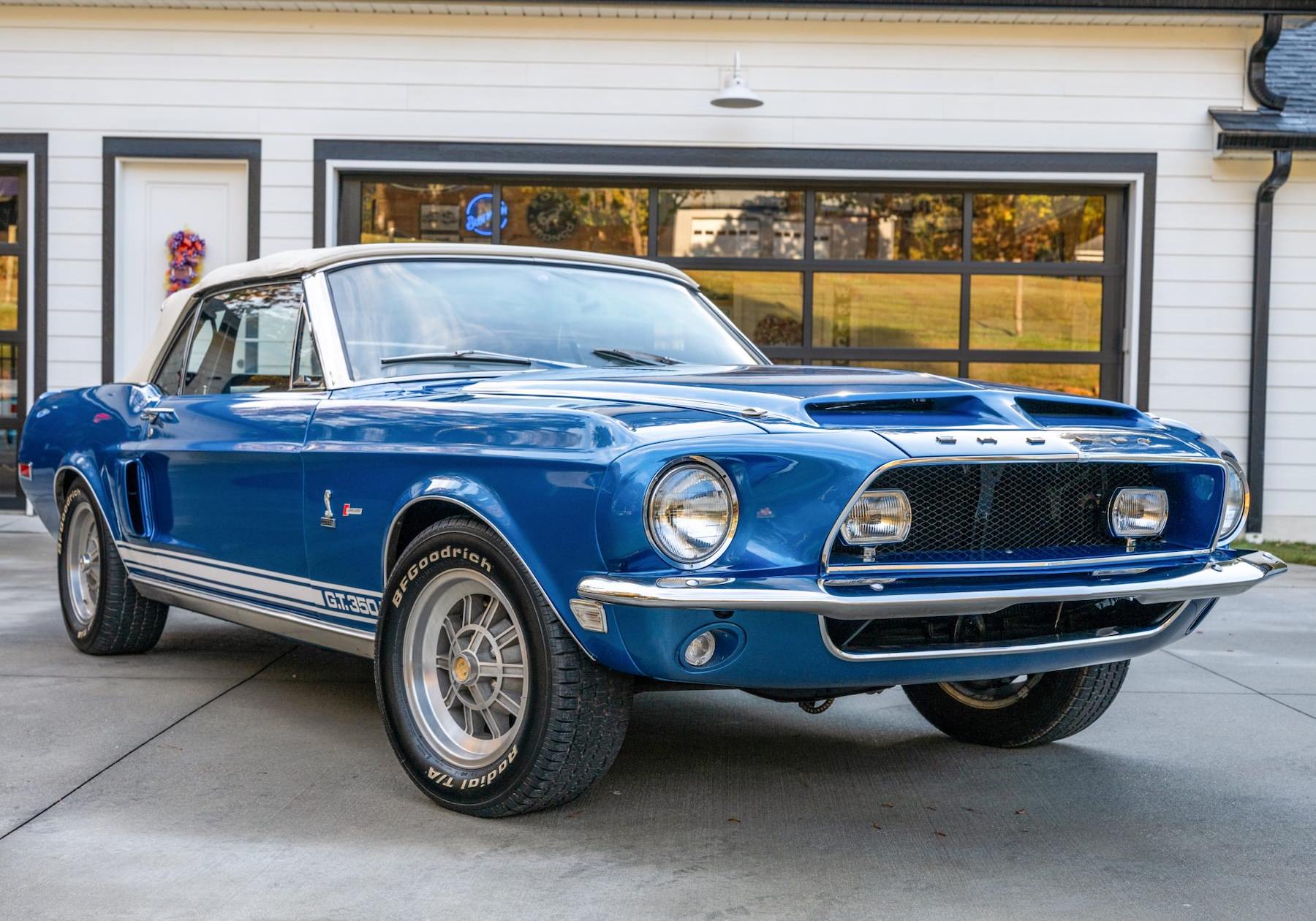
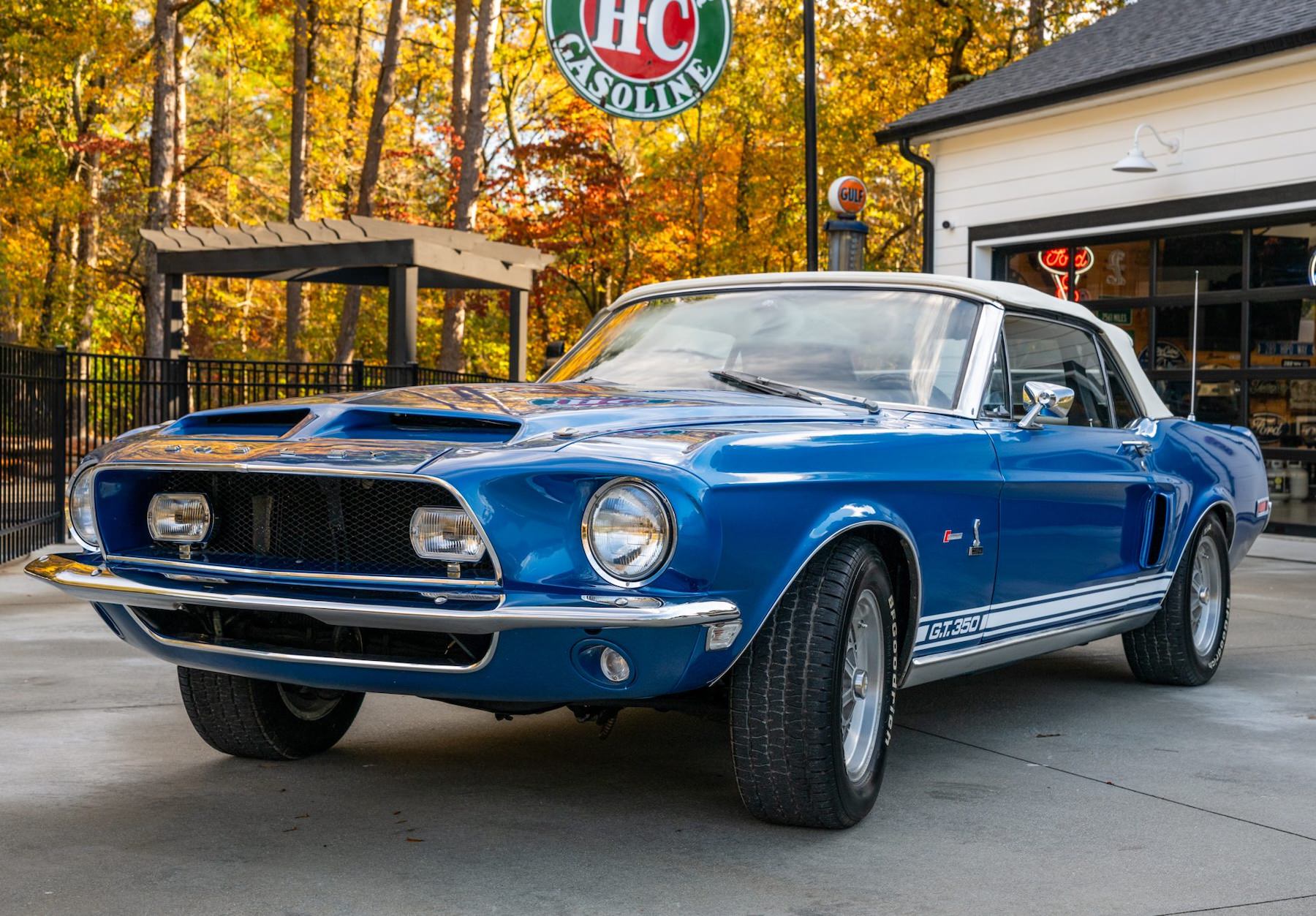
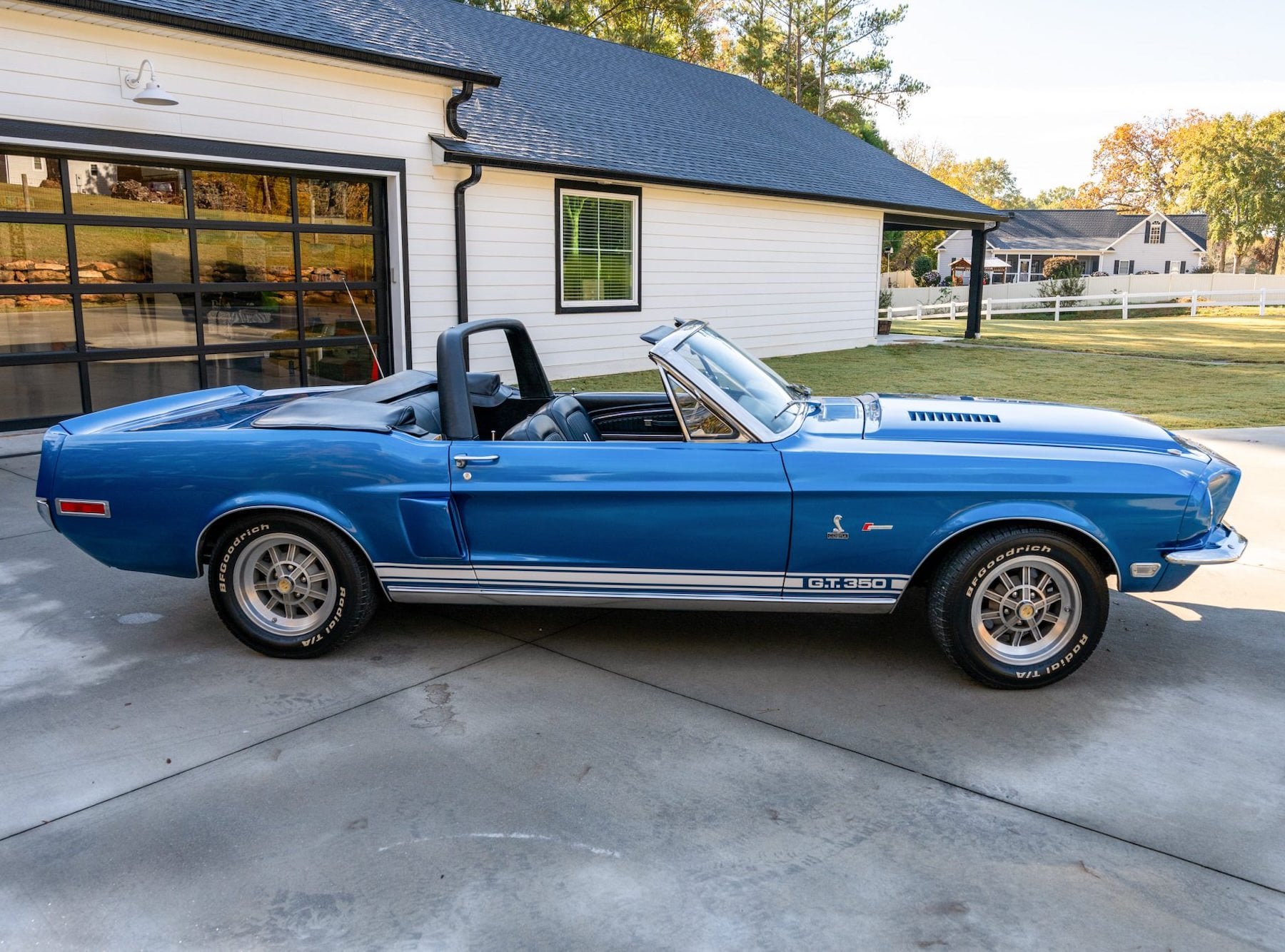
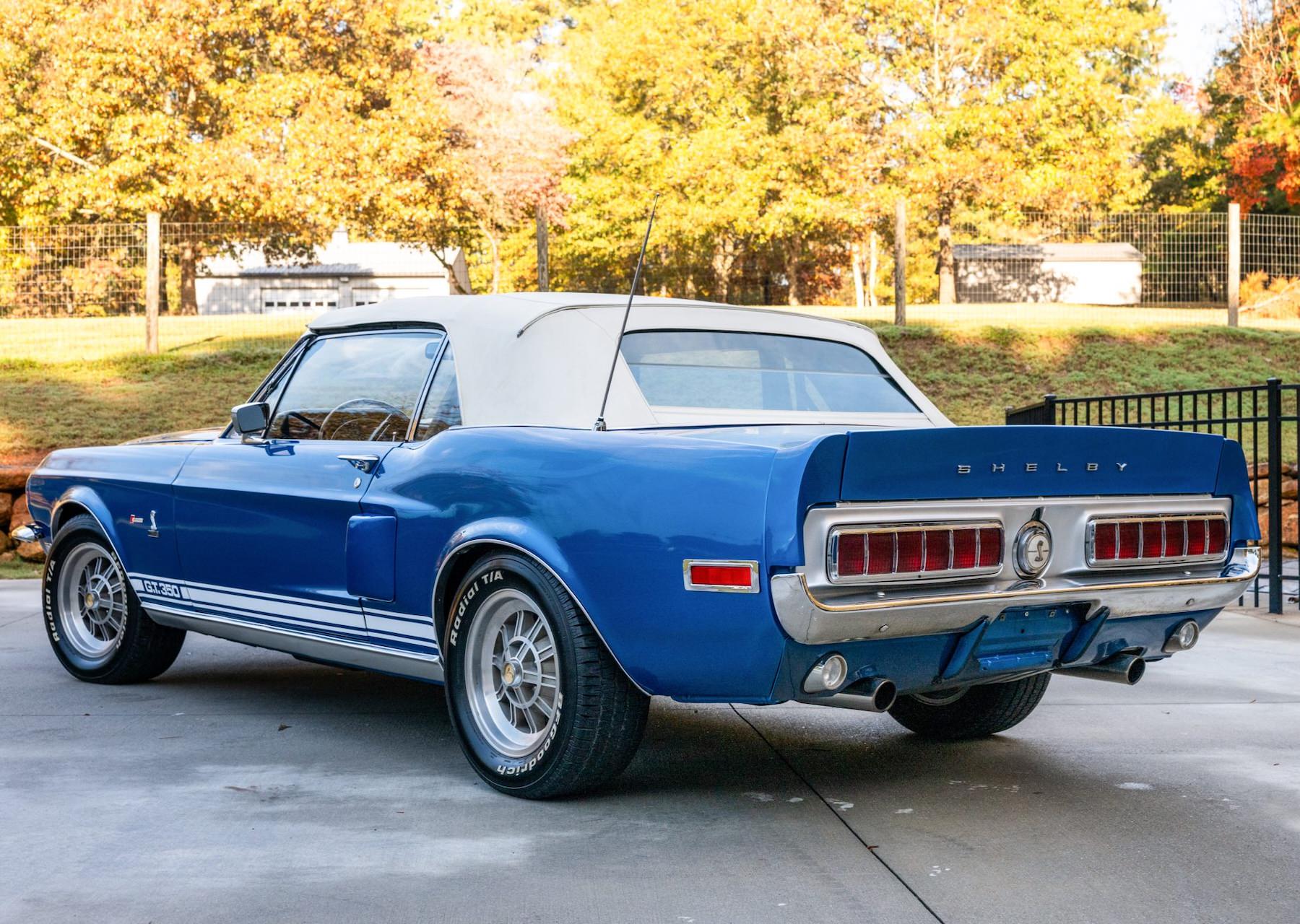
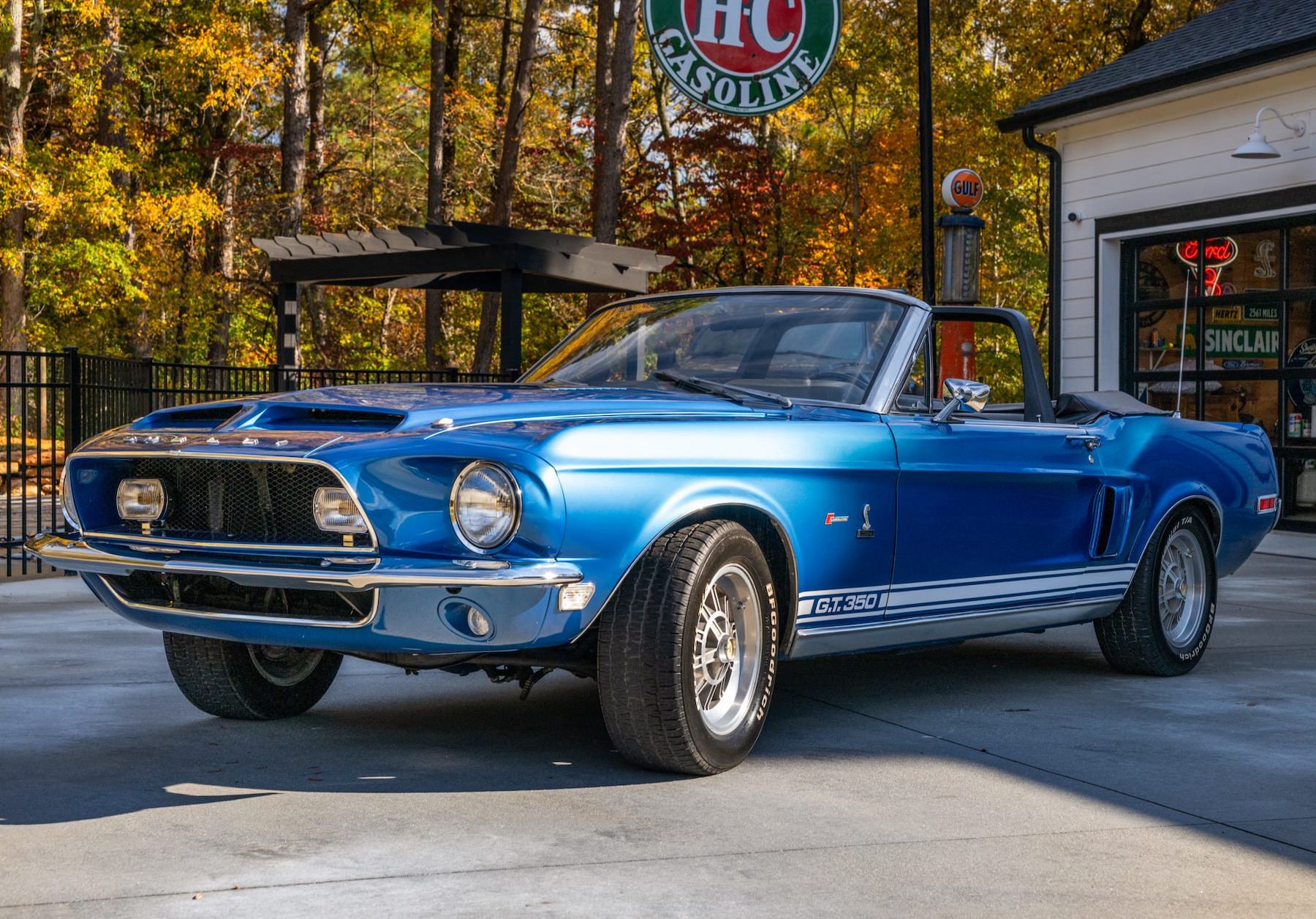
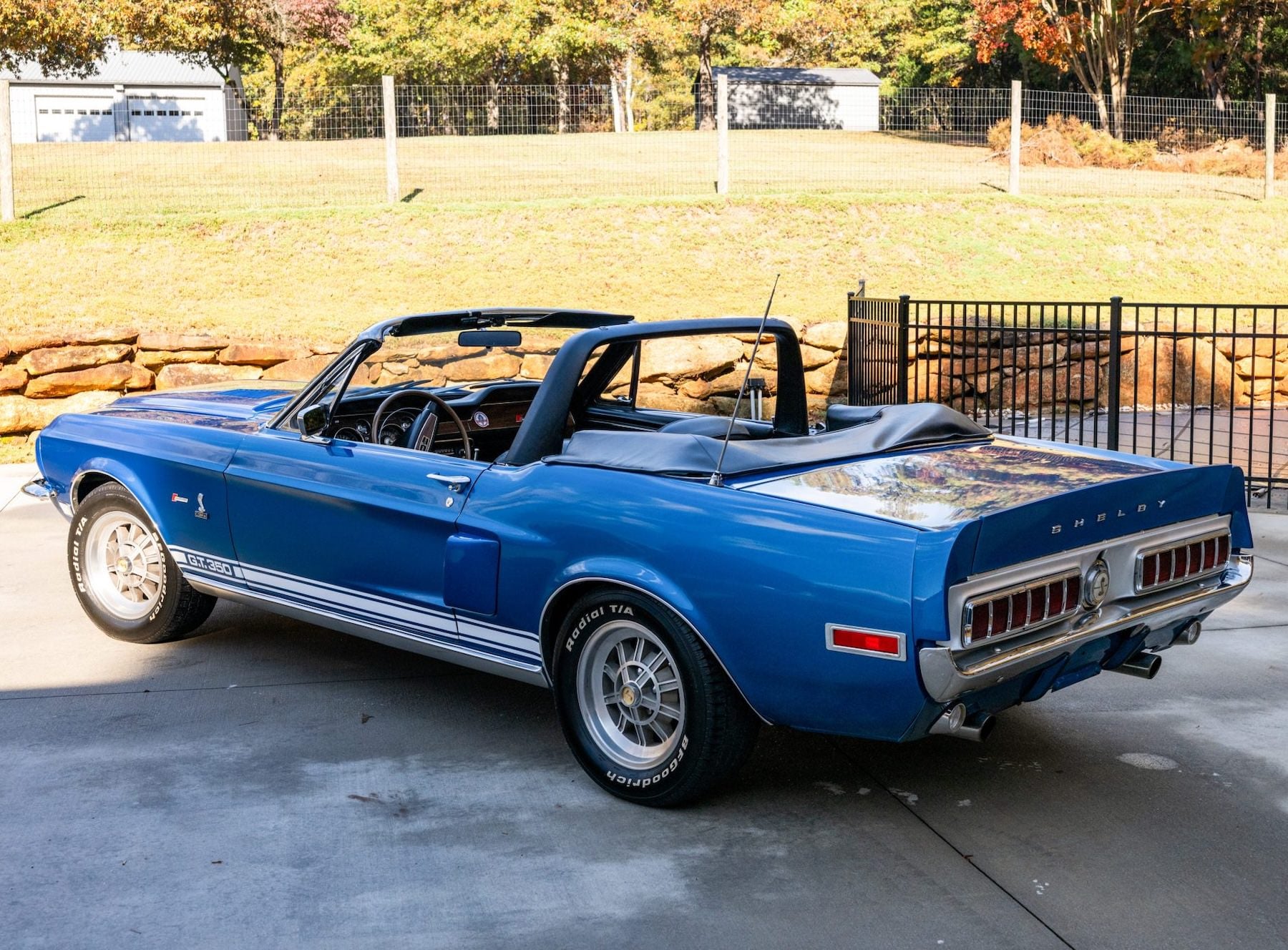
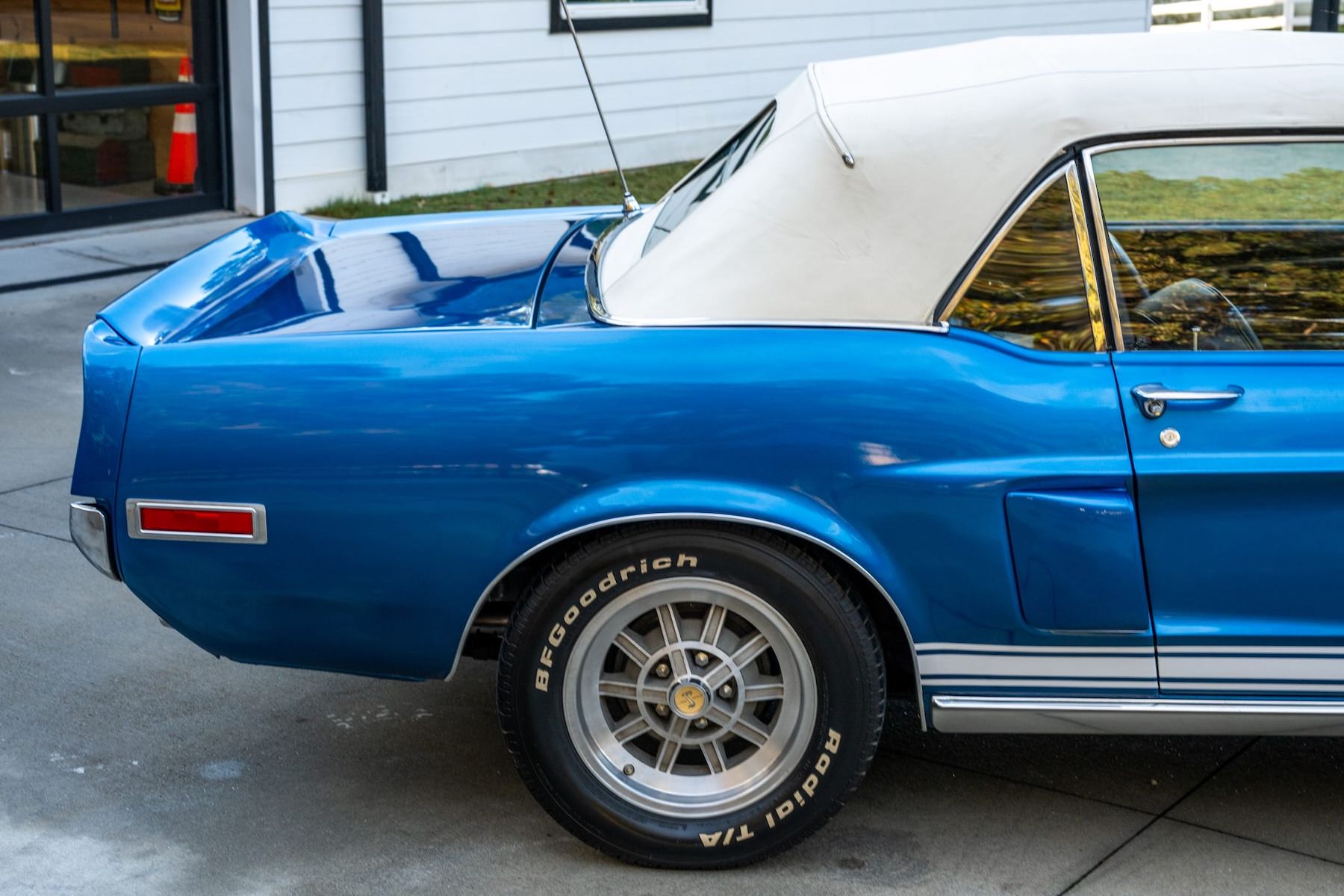
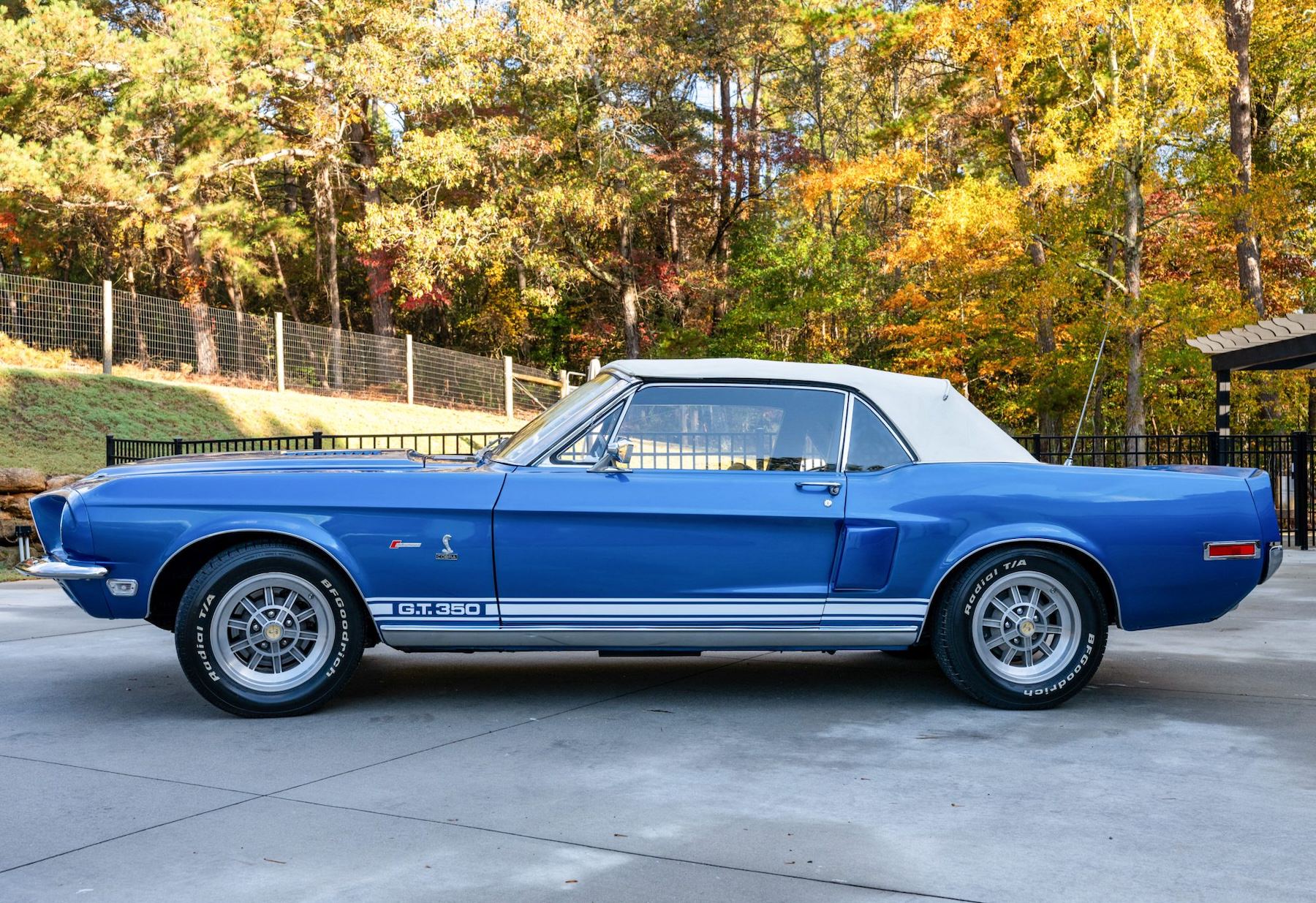
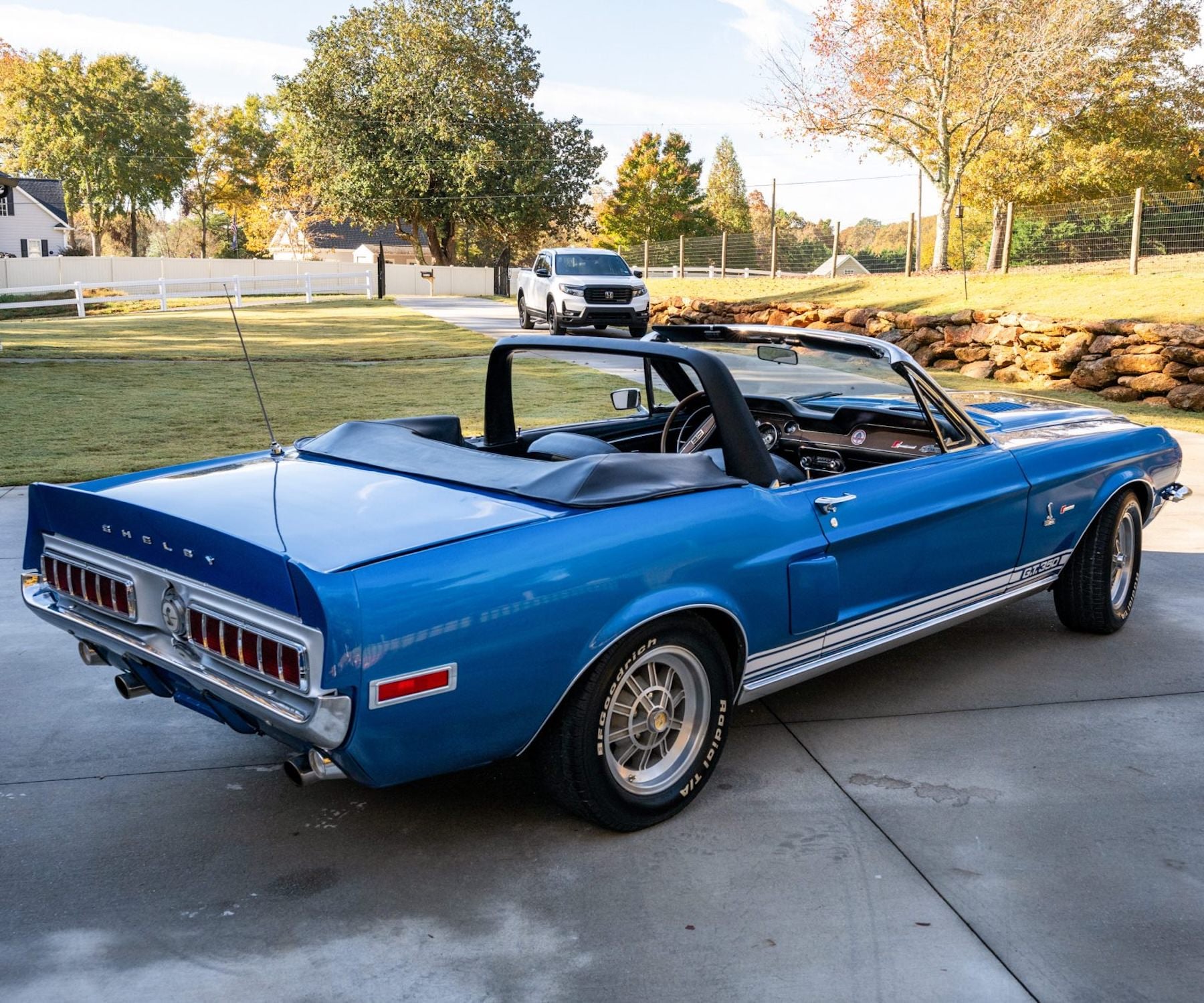
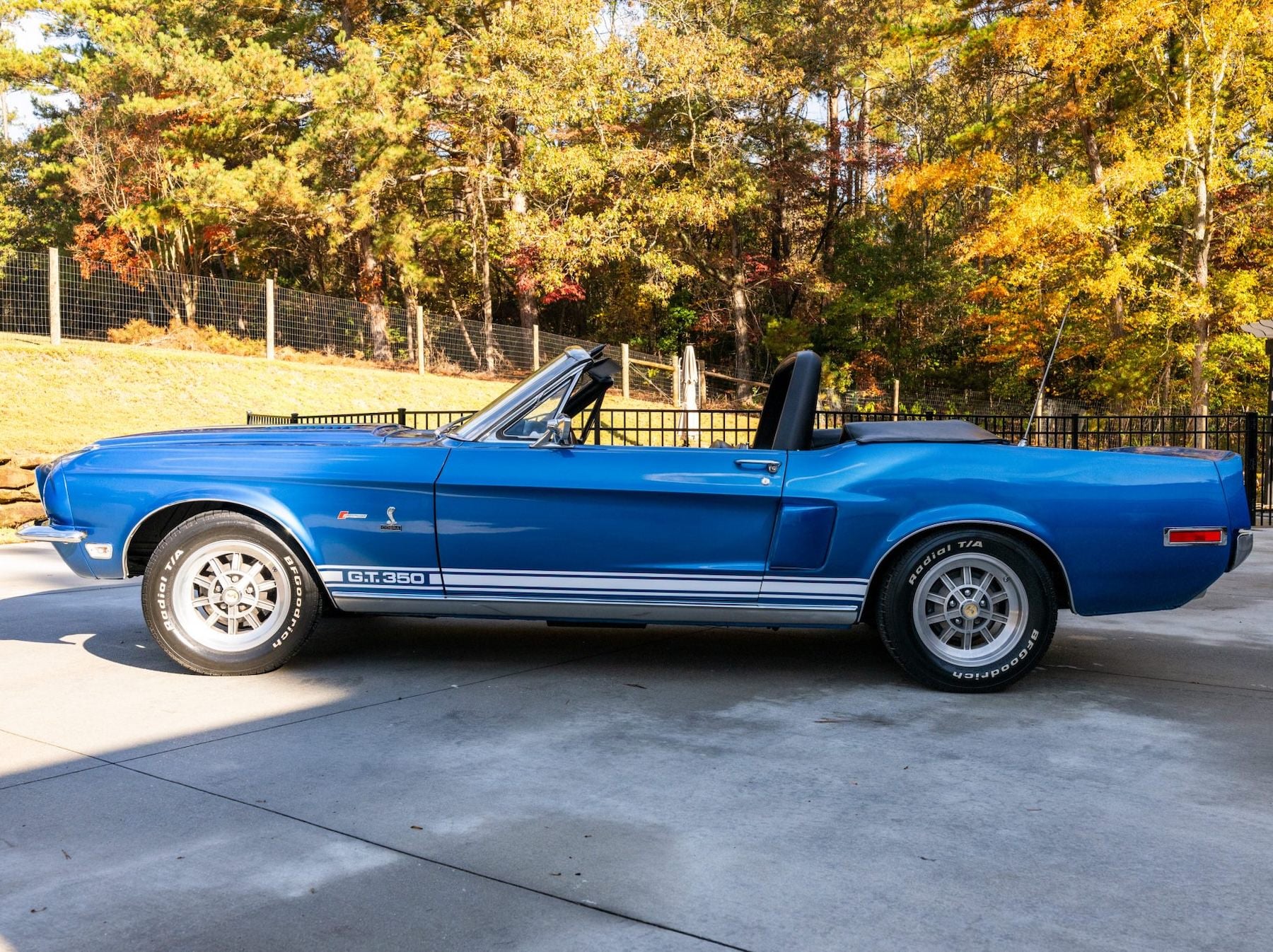
This is an original 1968 Shelby Mustang GT350 convertible, it’s one of 404 examples built for the model year. It was restored in 2020 and is finished in Acapulco Blue with a power-operated white convertible top, which was replaced during the restoration.
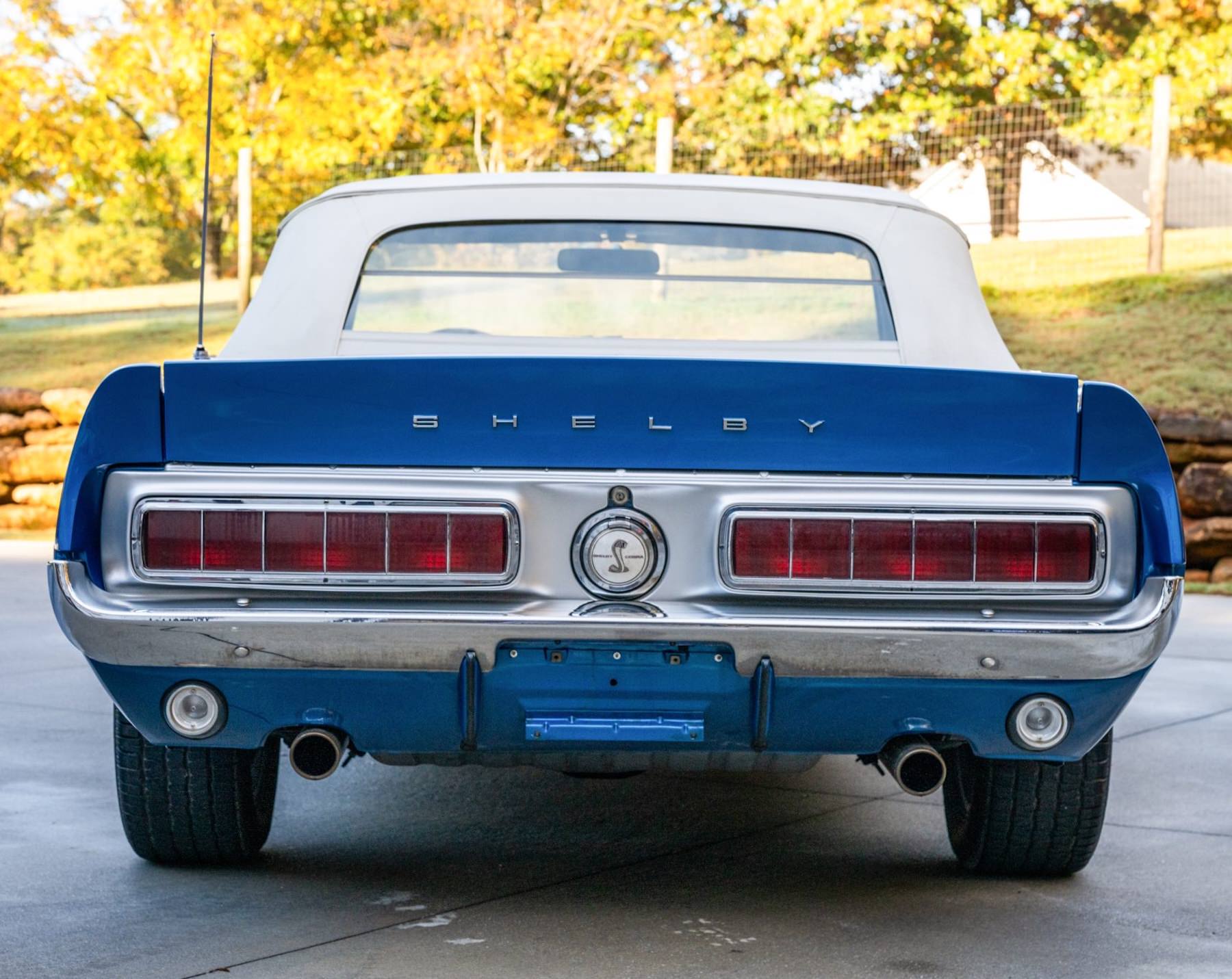
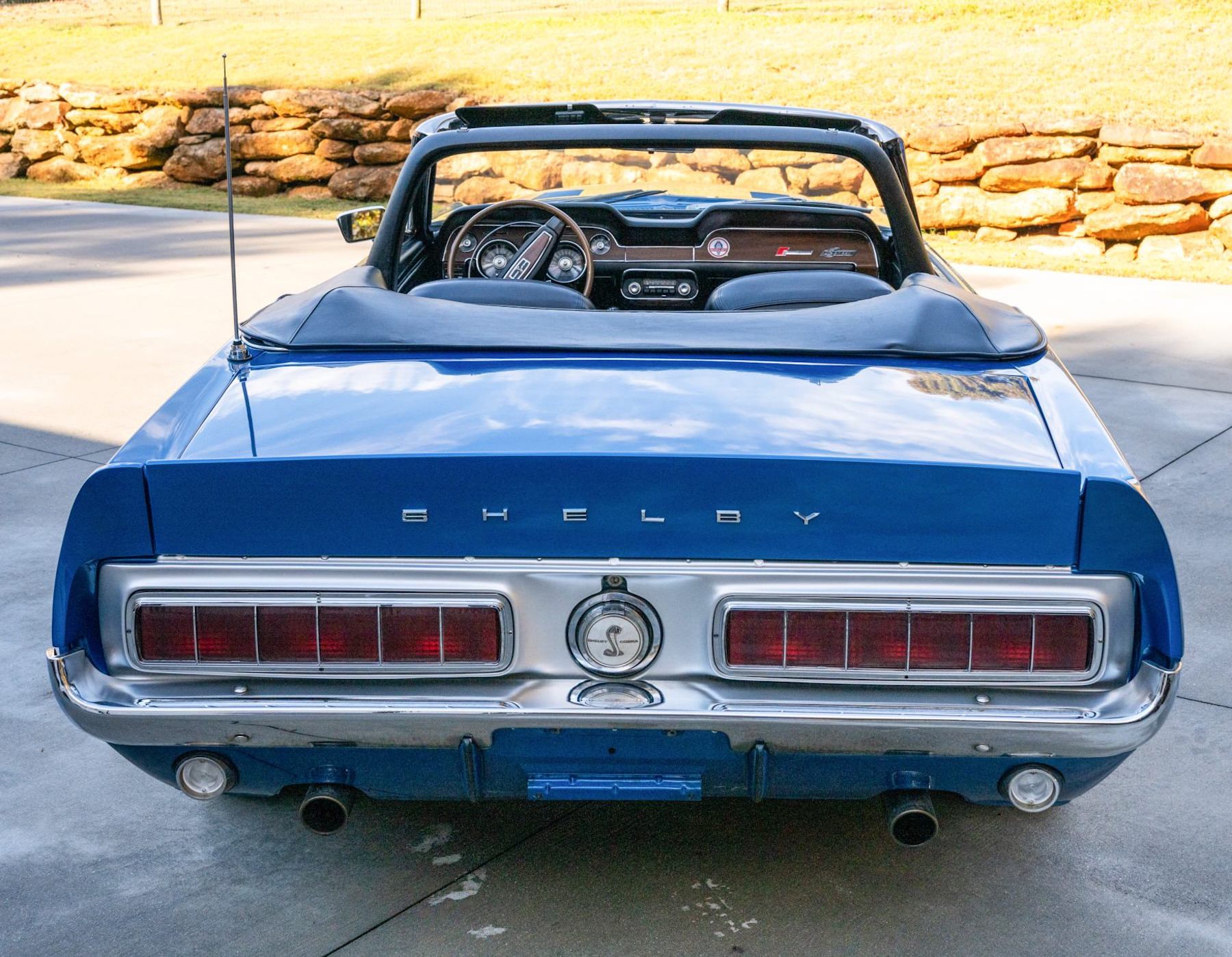
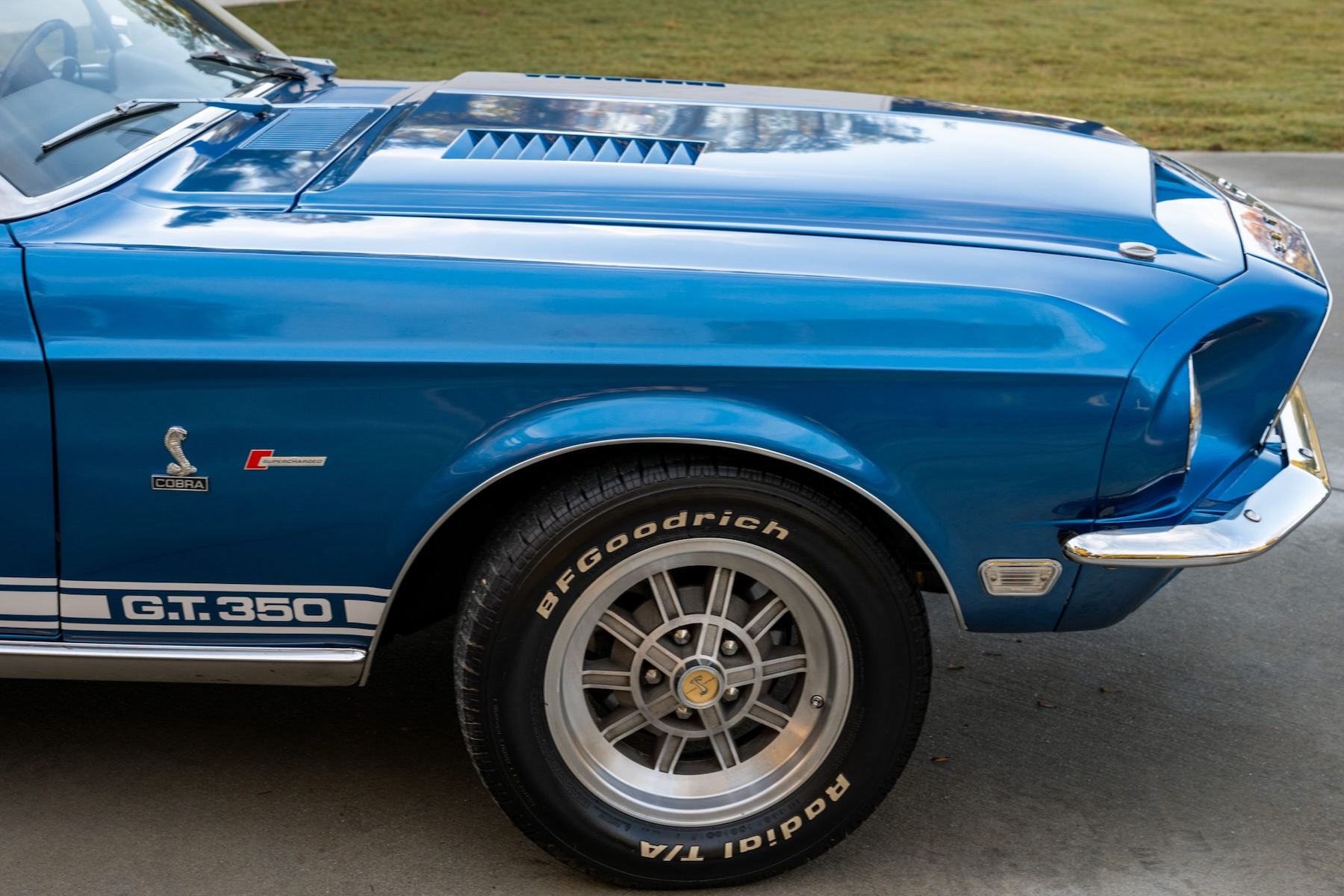
The car keeps its classic Shelby bodywork, including a fiberglass hood with functional dual scoops and hood pins, a ducktail rear spoiler, extended fenders, and quarter-panel air scoops. It rides on 15 inch 10-spoke aluminum wheels with BFGoodrich tires, and it has power steering and power-assisted front disc brakes.
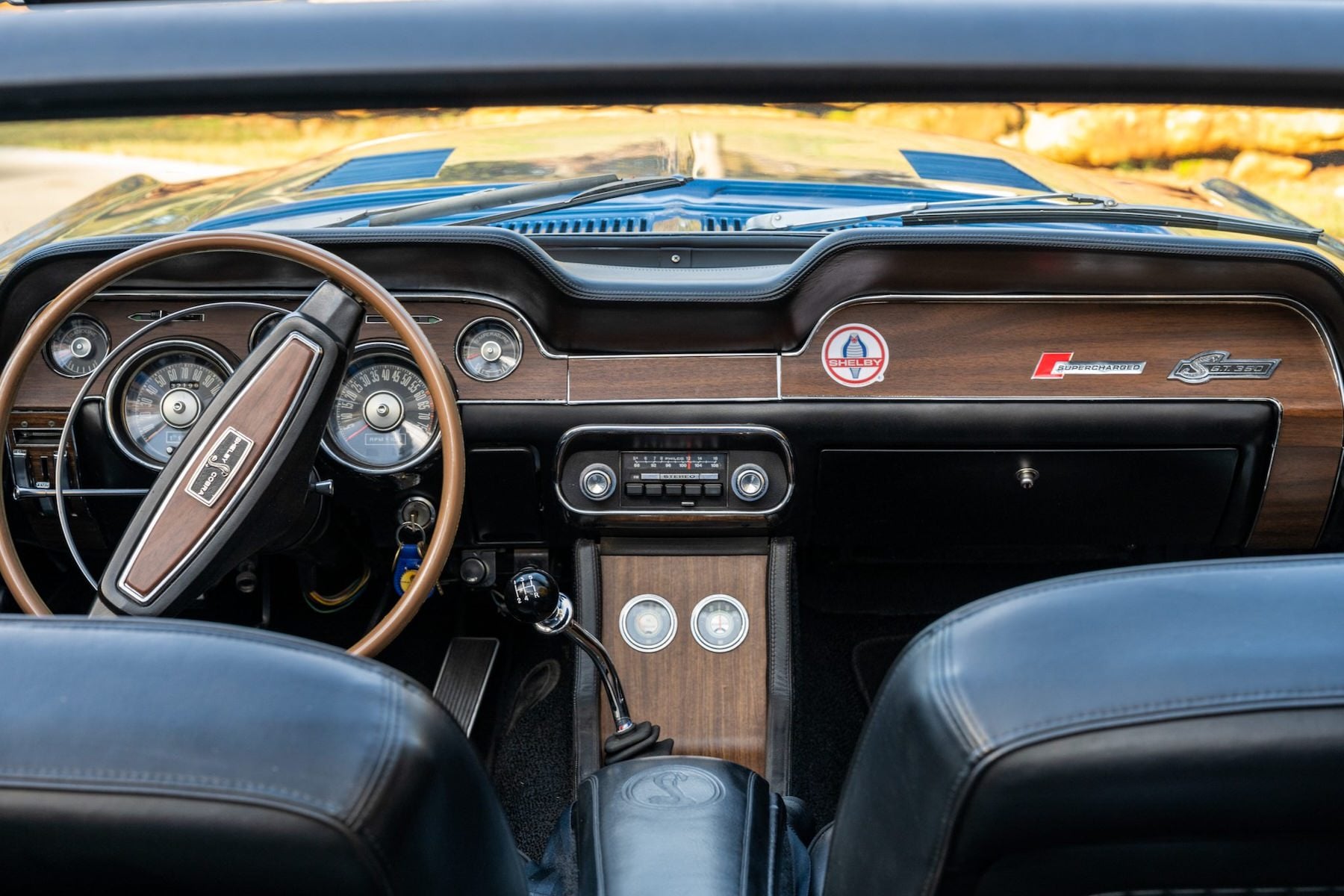
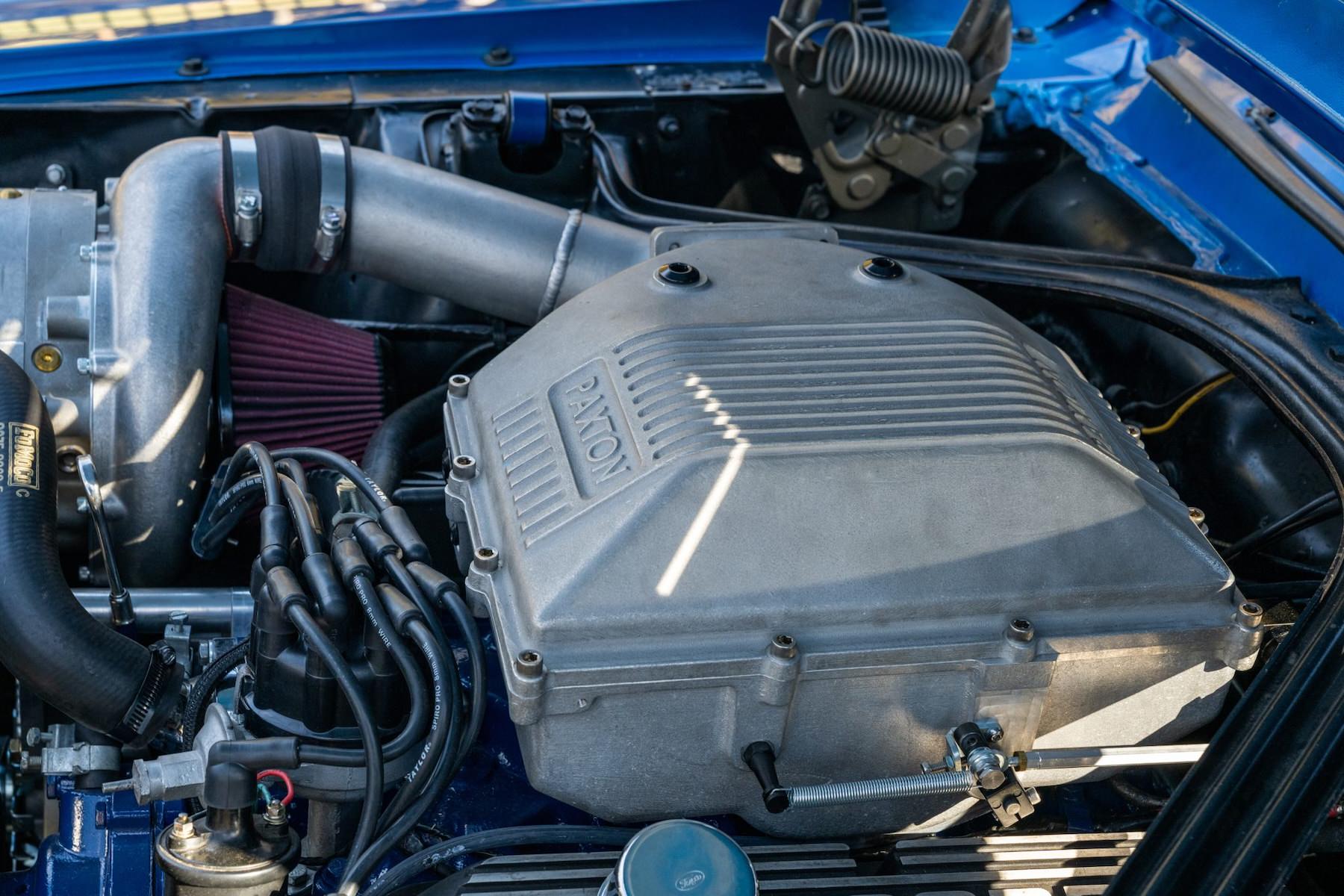
Power comes from a 302 cubic inch (4.9 liter) V8, which has been fitted with a Paxton centrifugal supercharger. The seller bought the car in 2026, installed the supercharger, and replaced the original C4 3-speed automatic transmission with a T-5 5-speed manual.
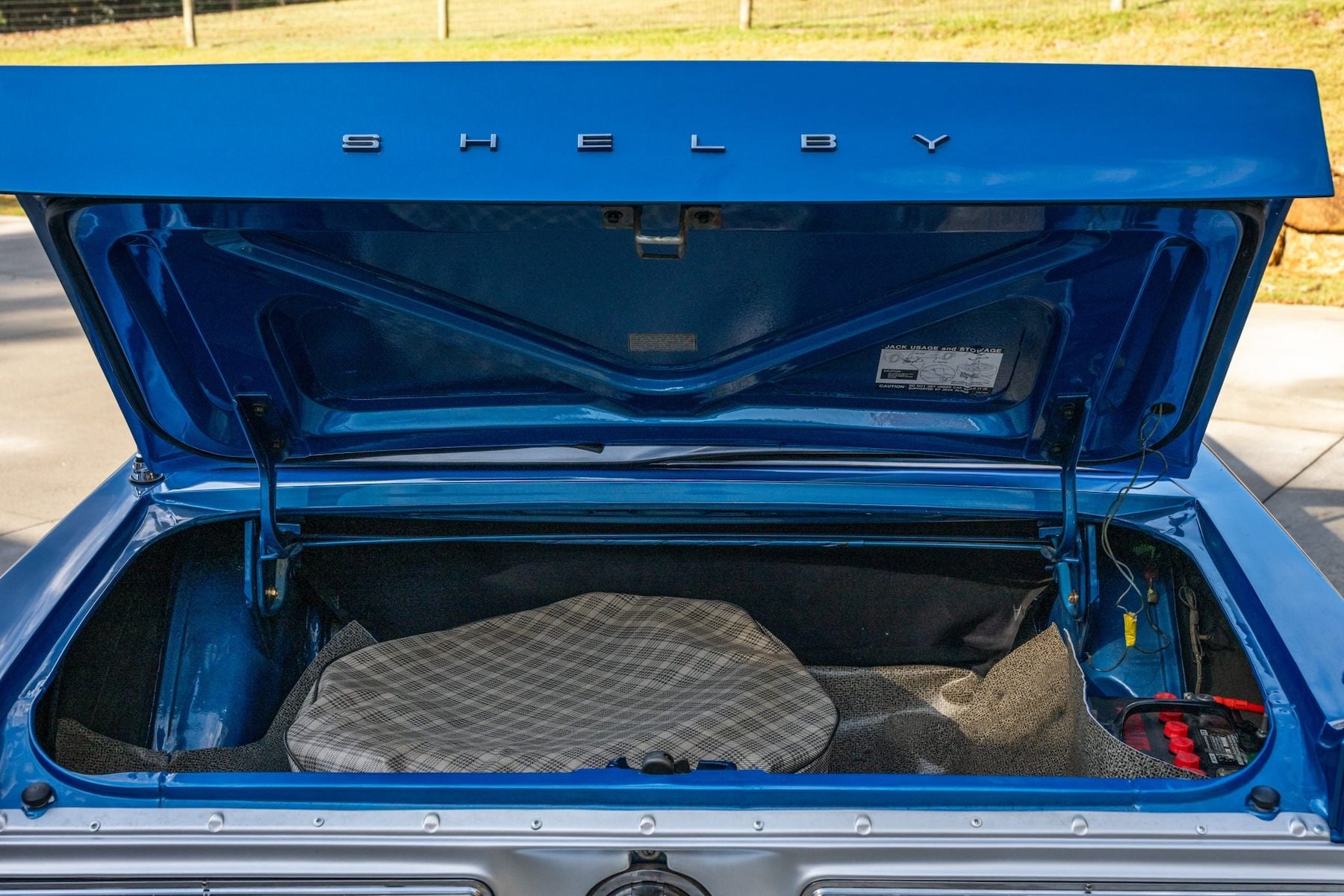
Additional modifications include a dual exhaust system with Flowmaster mufflers and a crossover pipe, along with a battery relocated to the trunk. The removed automatic transmission, bellhousing, exhaust manifolds, shifter, and other original parts are included in the sale.
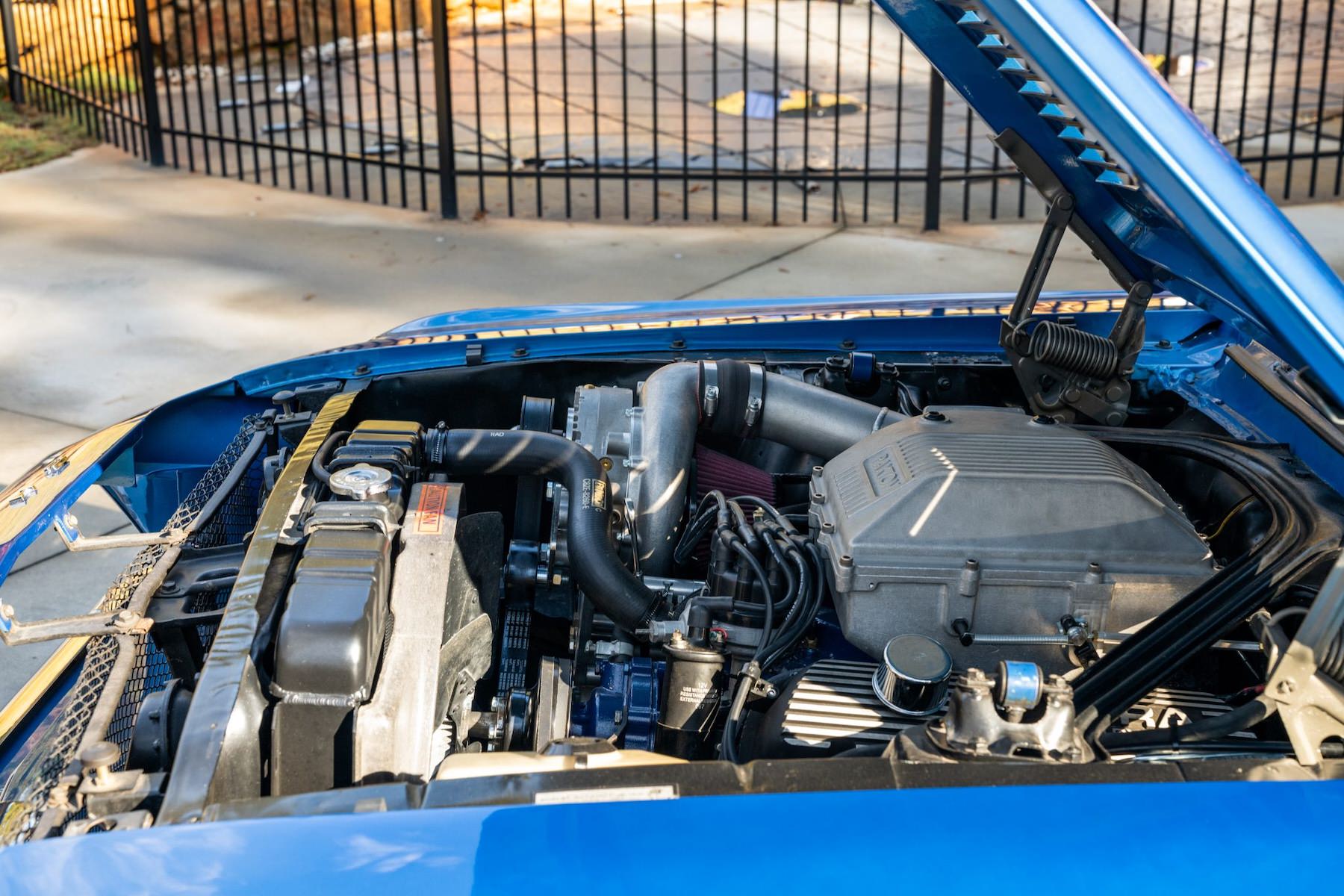
Power comes from a 302 cubic inch (4.9 liter) V8, which has been fitted with a Paxton centrifugal supercharger. The seller bought the car in 2026, installed the supercharger, and replaced the original C4 3-speed automatic transmission with a T-5 5-speed manual.
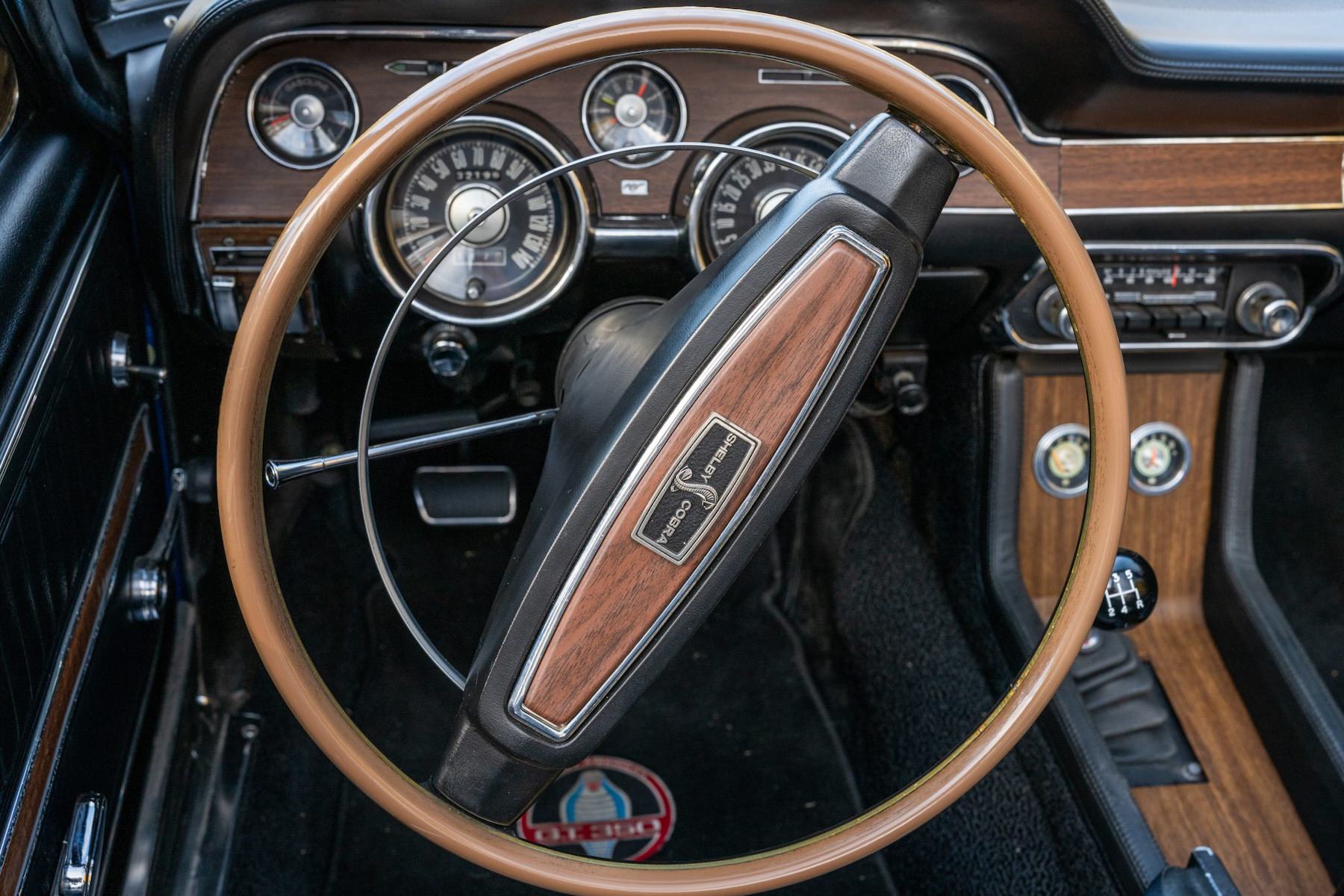
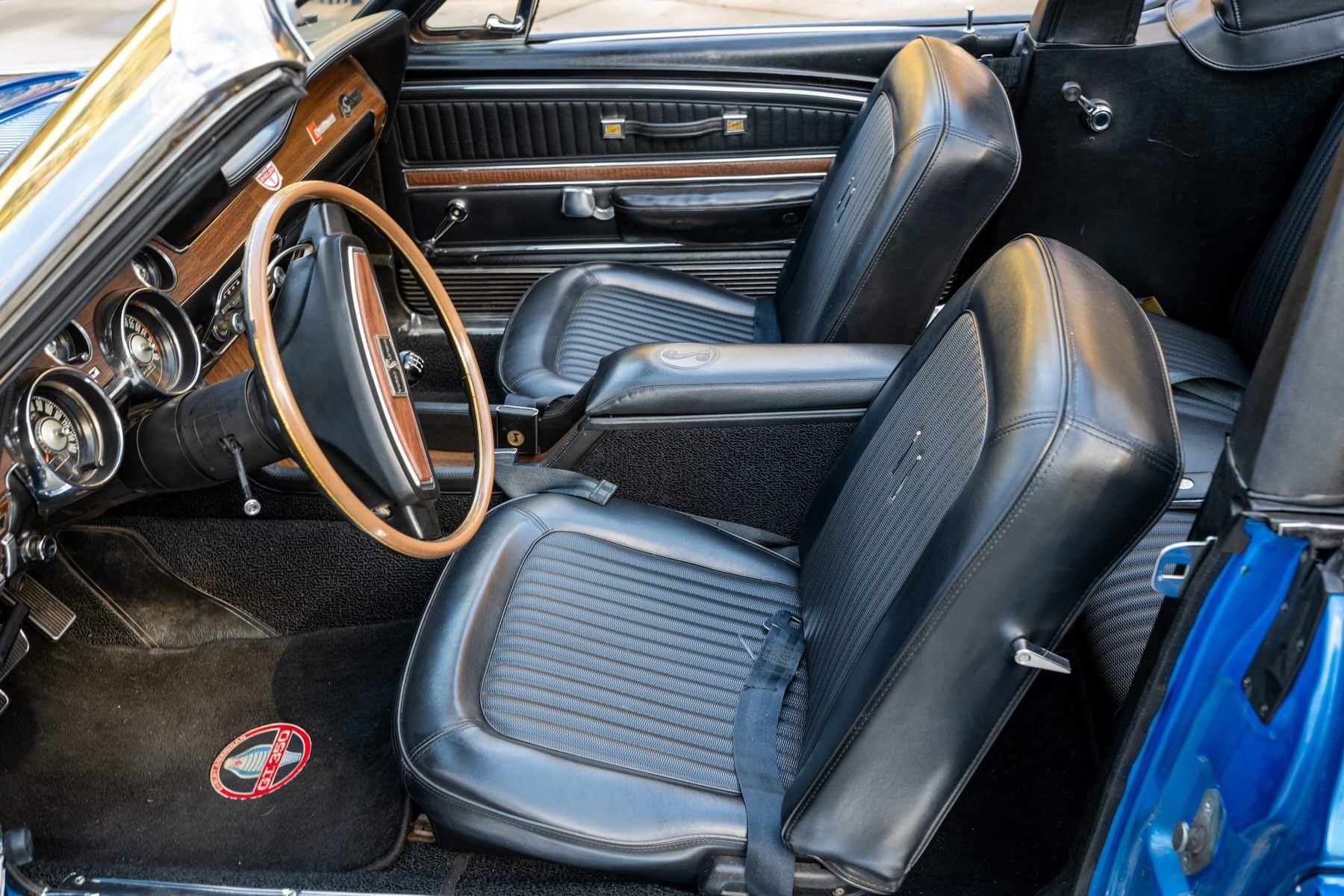
Inside, the GT350 has the factory Interior Décor Group, which added woodgrain trim to the dashboard and door panels, along with the Visibility Group, which provided additional interior lighting. Other equipment includes a Tilt-Away steering column, an 8,000 rpm tachometer, Stewart-Warner auxiliary gauges, a retrofitted AM/FM stereo, and Cobra-branded floor mats.
The car is now being offered for sale out of Easley, South Carolina with its removed factory parts, a Deluxe Marti Report documenting its original specifications, ownership paperwork, and a South Carolina title in the seller’s name. If you’d like to read more or register to bid, you can visit the listing here.
Images courtesy of Bring a Trailer + Shelby American + the Ford Motor Company

Articles that Ben Branch has written have been covered on CNN, Popular Mechanics, Smithsonian Magazine, Road & Track Magazine, the official Pinterest blog, the official eBay Motors blog, BuzzFeed, Autoweek Magazine, Wired Magazine, Autoblog, Gear Patrol, Jalopnik, The Verge, and many more.
Silodrome was founded by Ben back in 2010, in the years since the site has grown to become a world leader in the alternative and vintage motoring sector, with well over a million monthly readers from around the world and many hundreds of thousands of followers on social media.