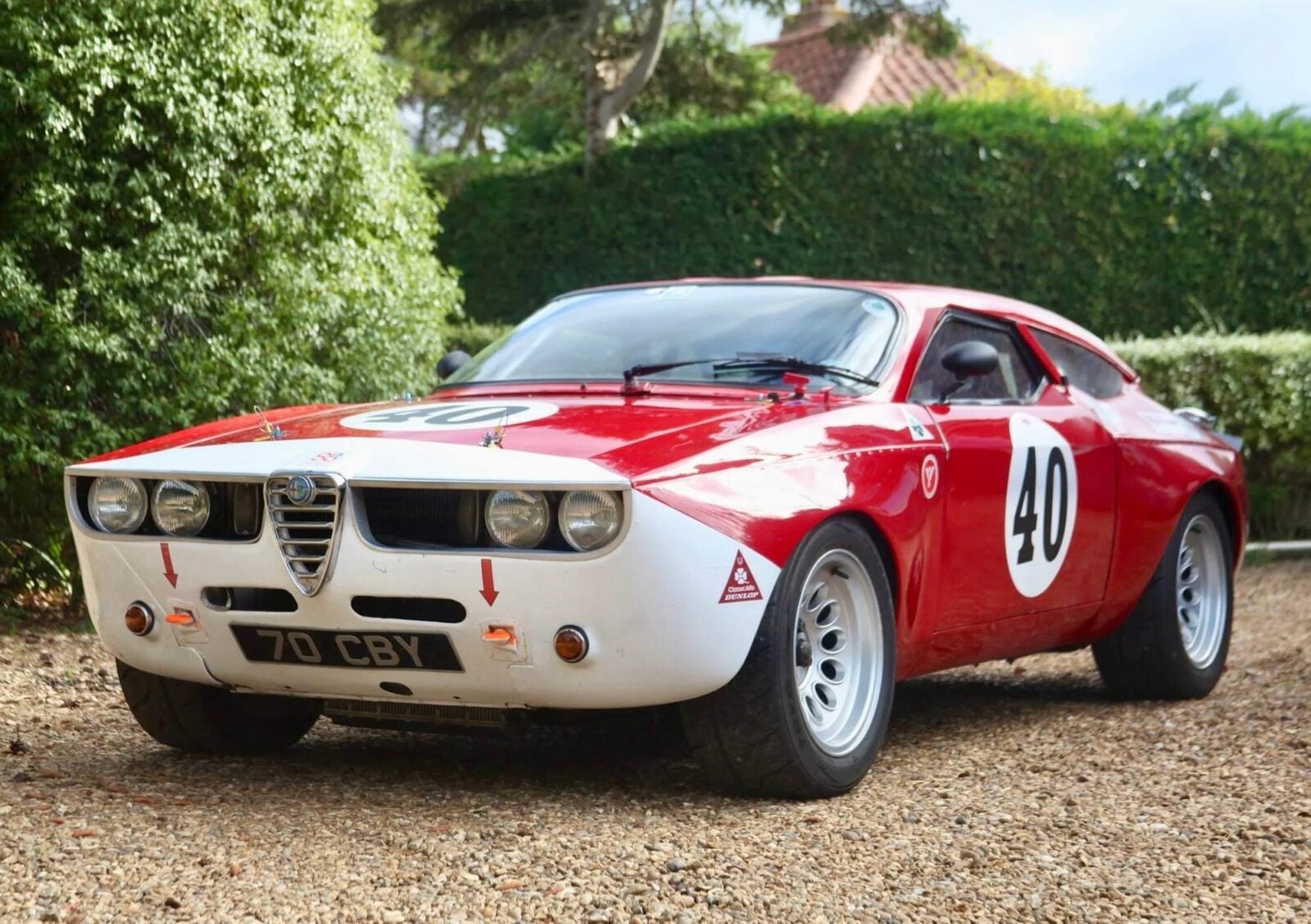
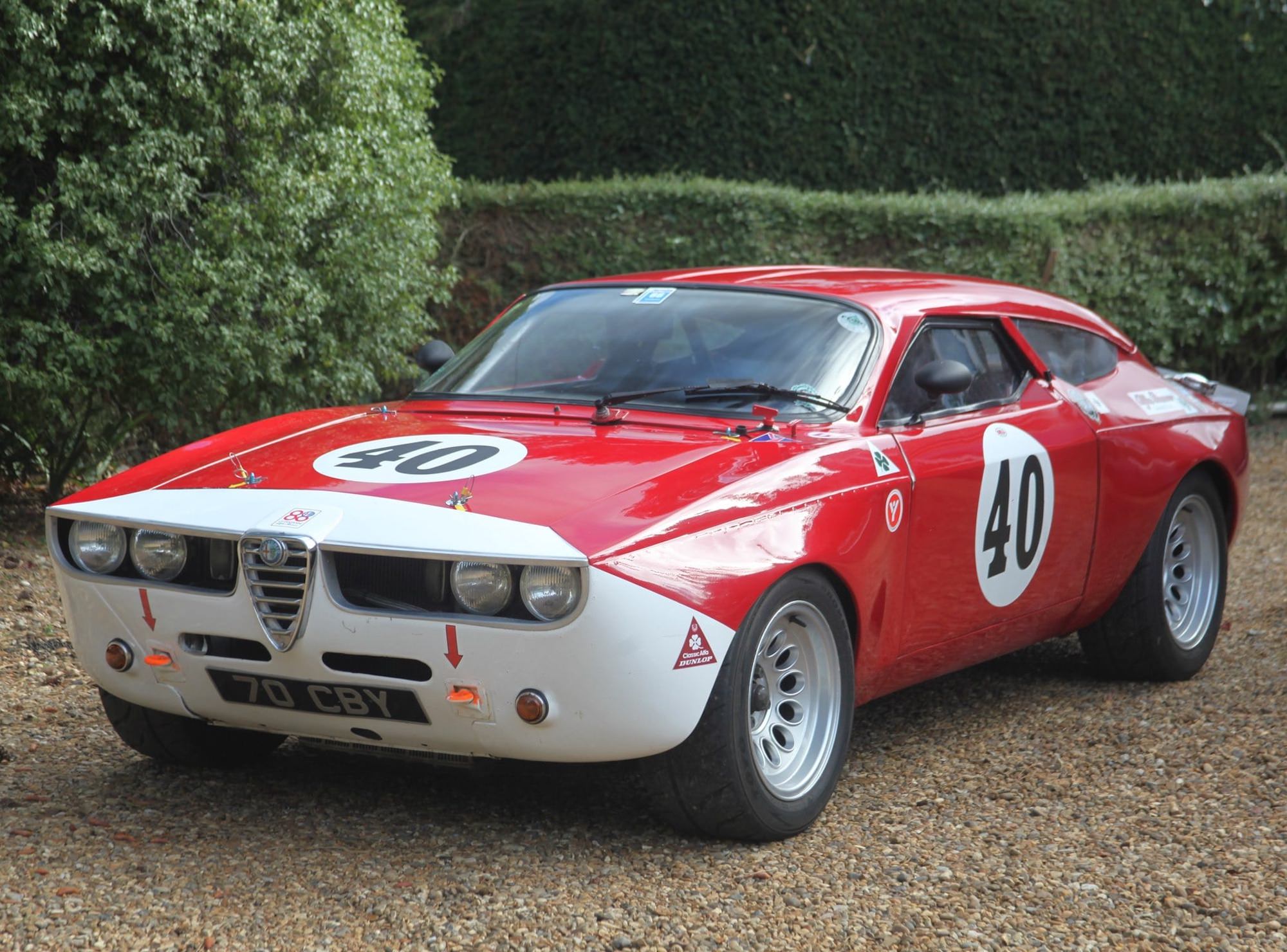
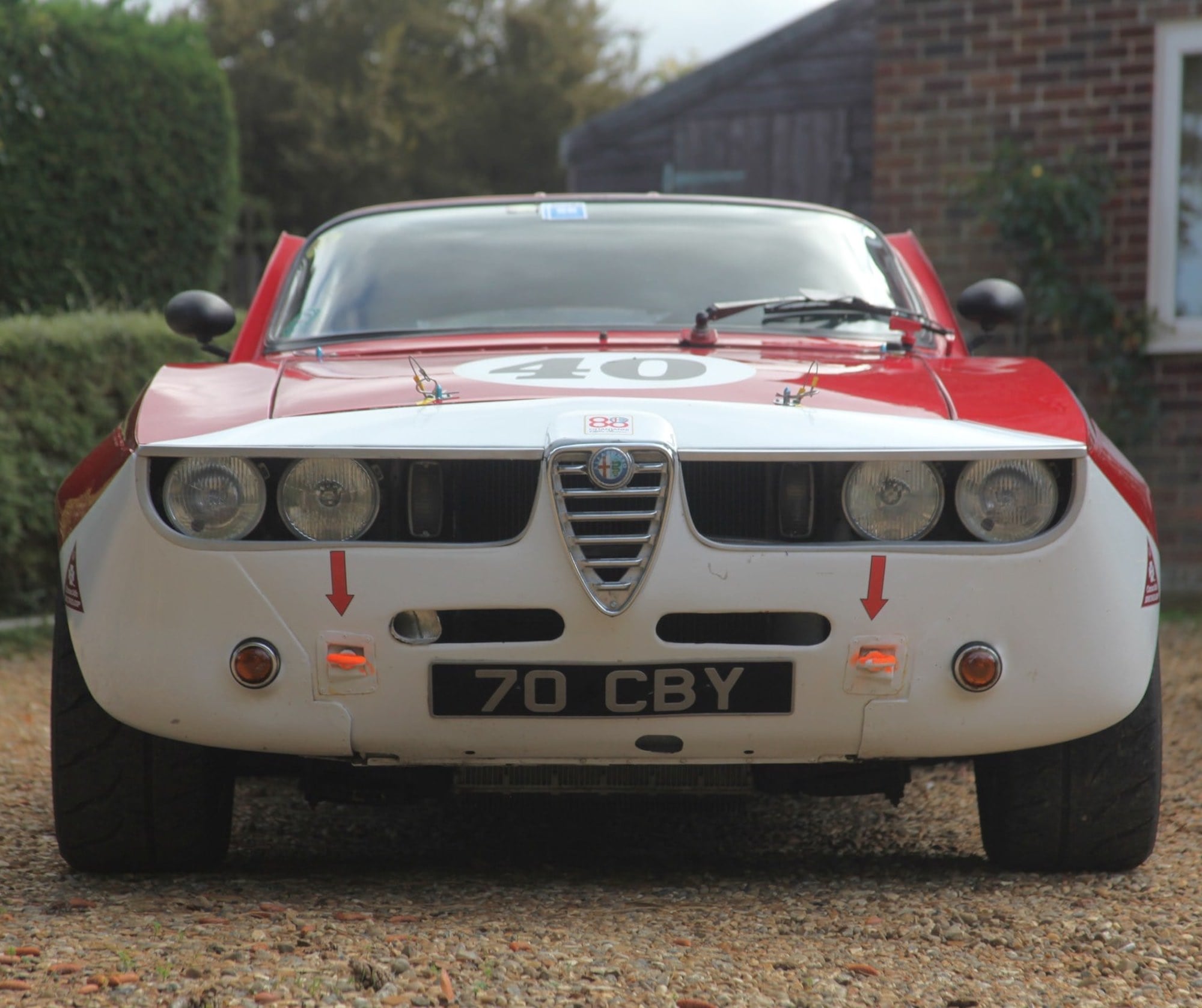
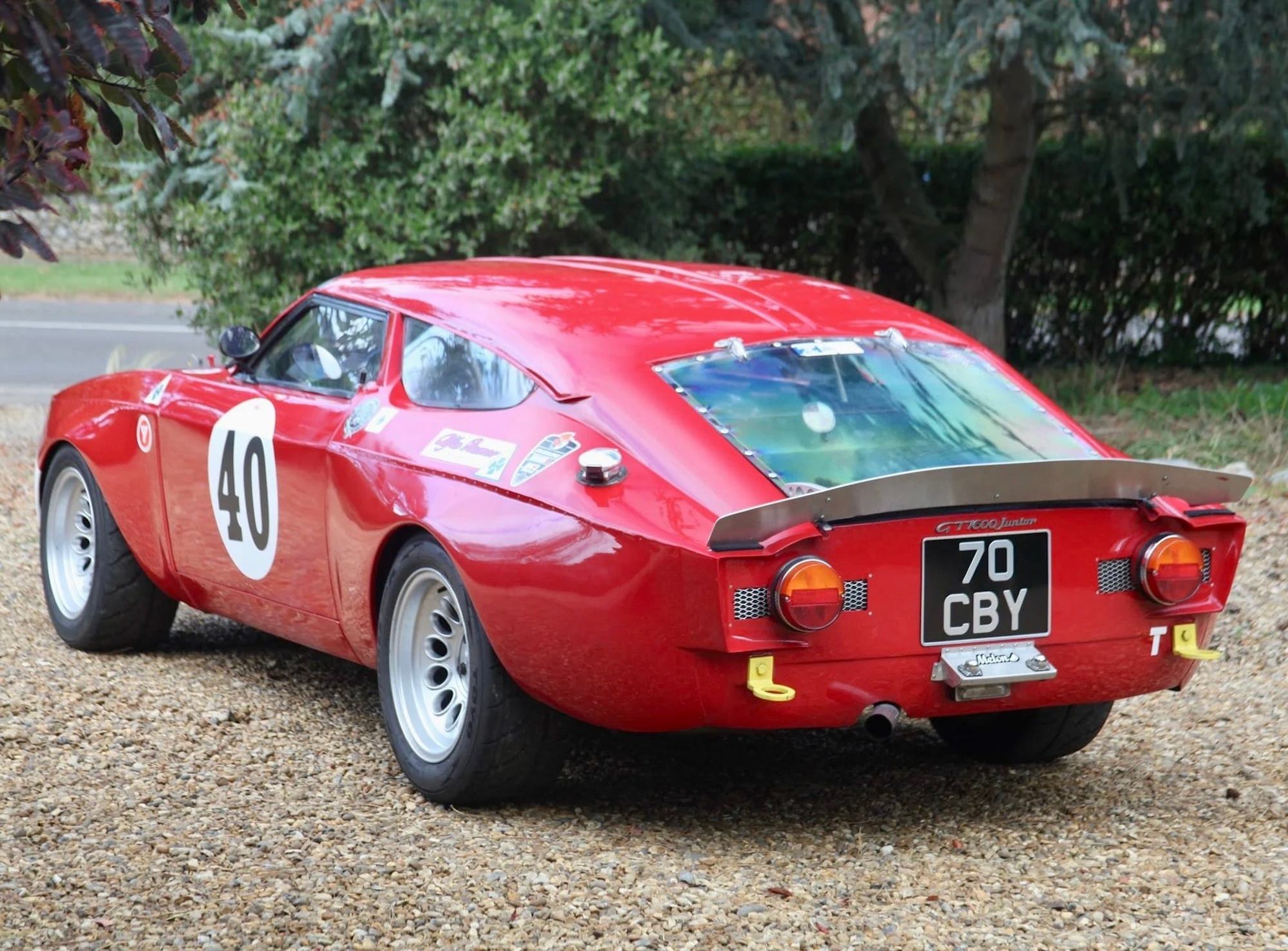
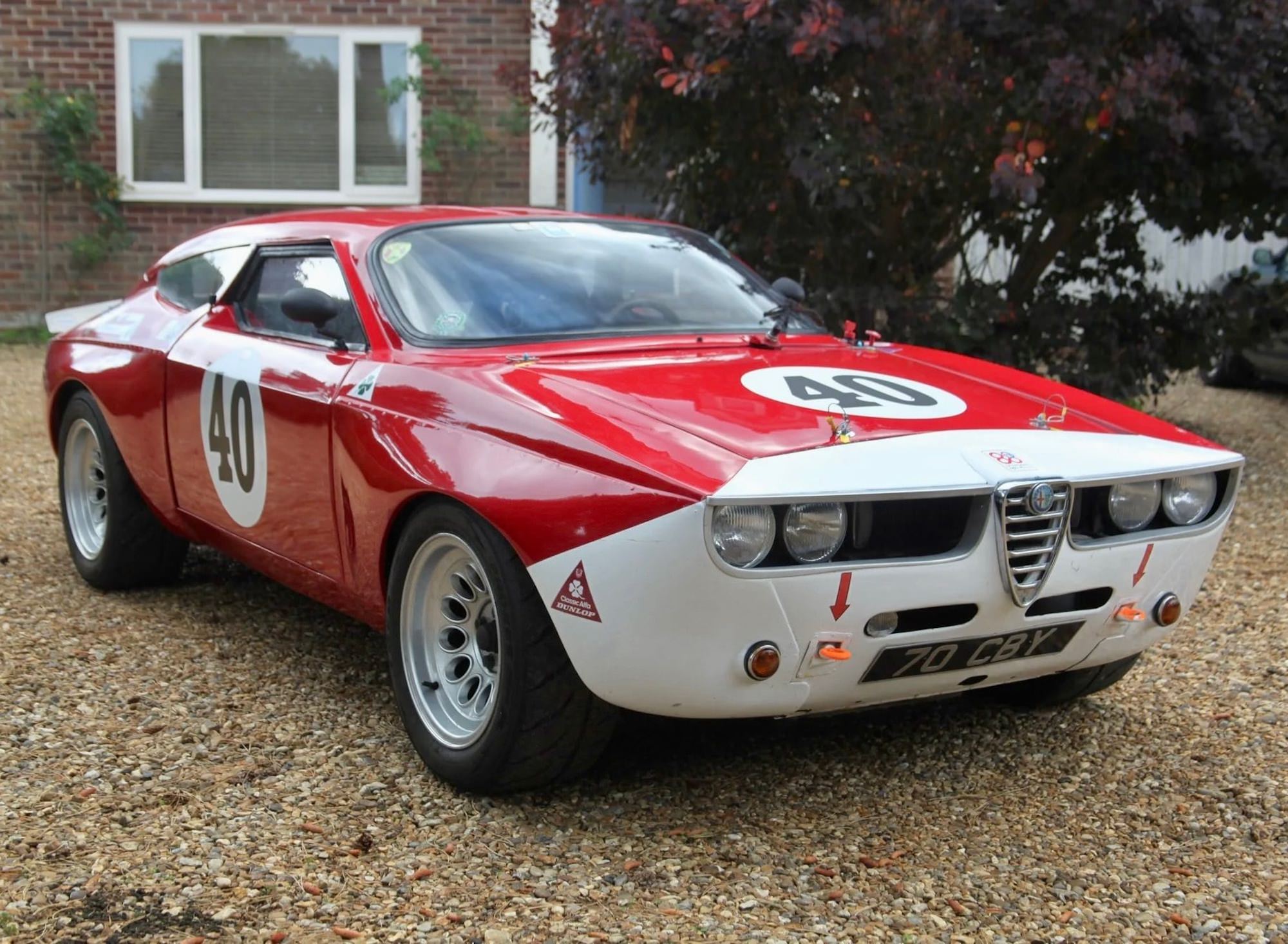
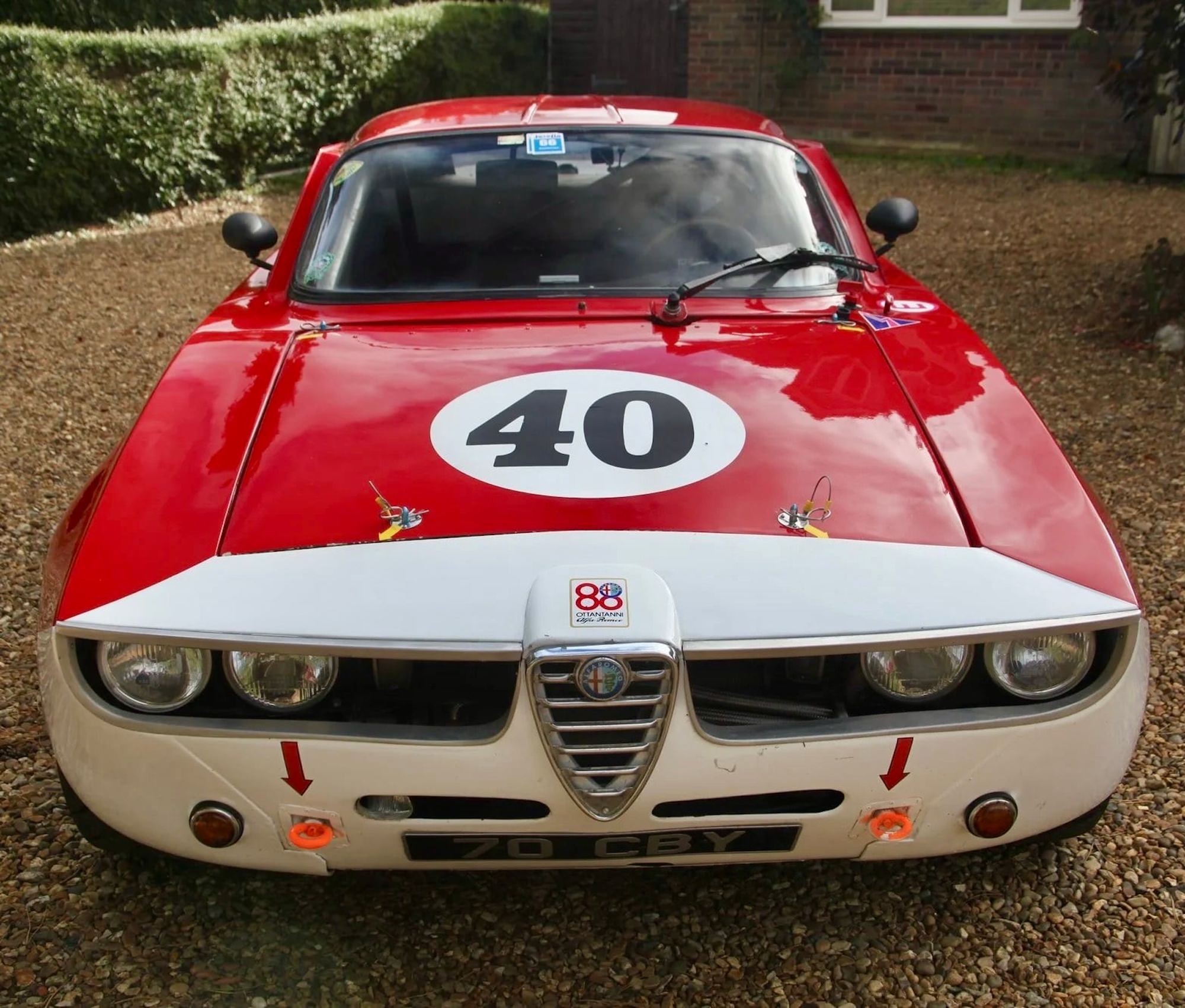
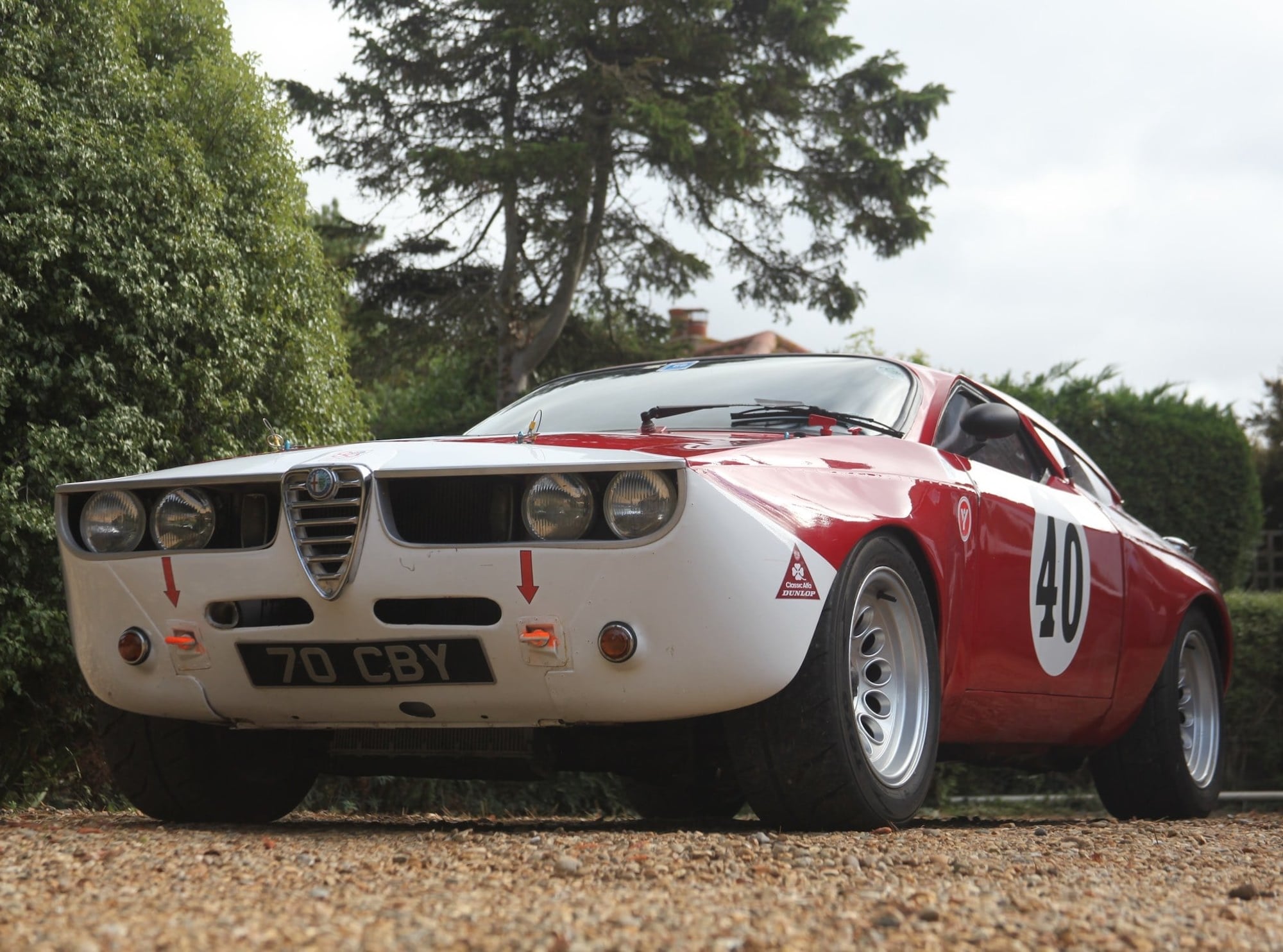
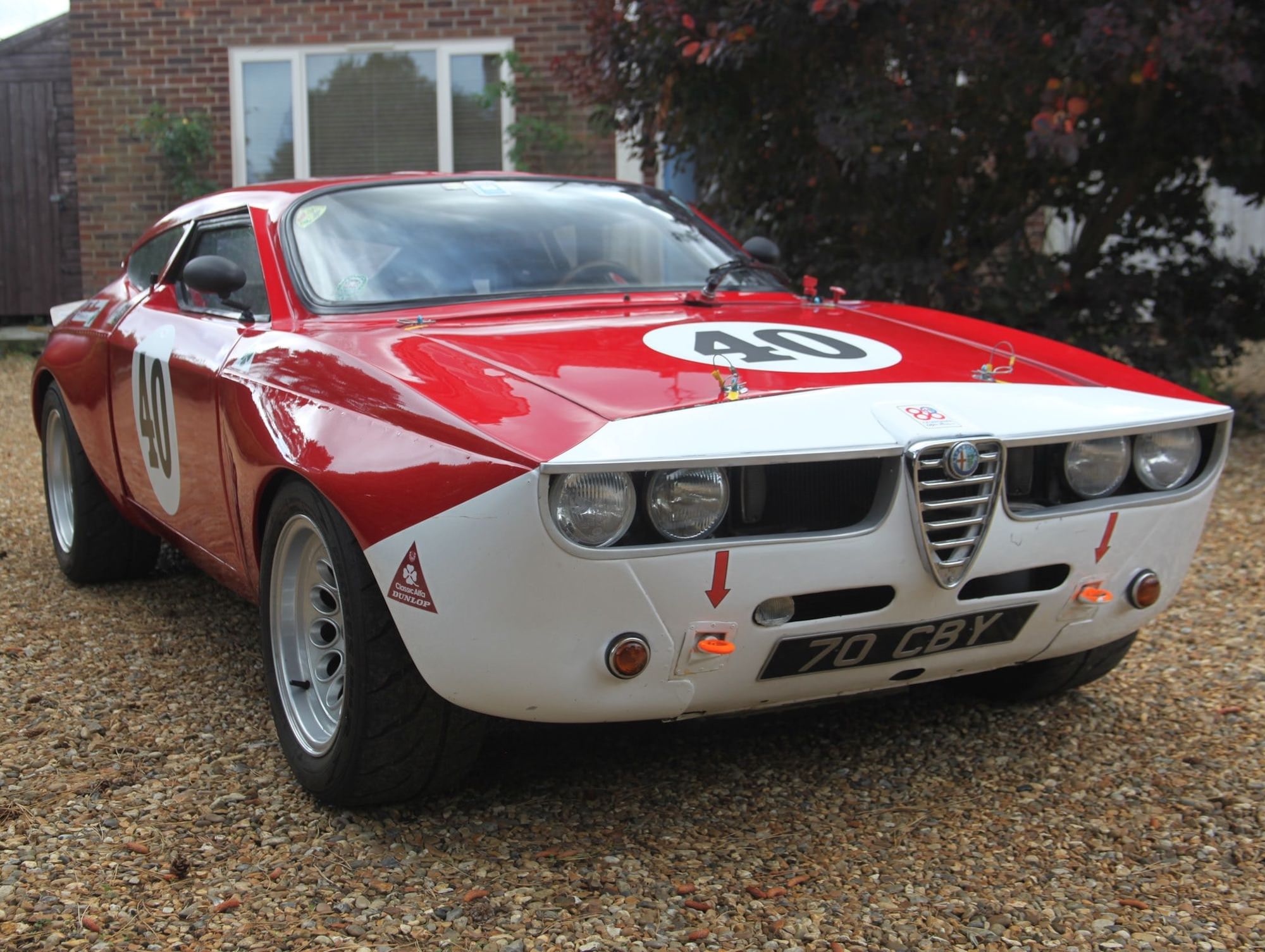
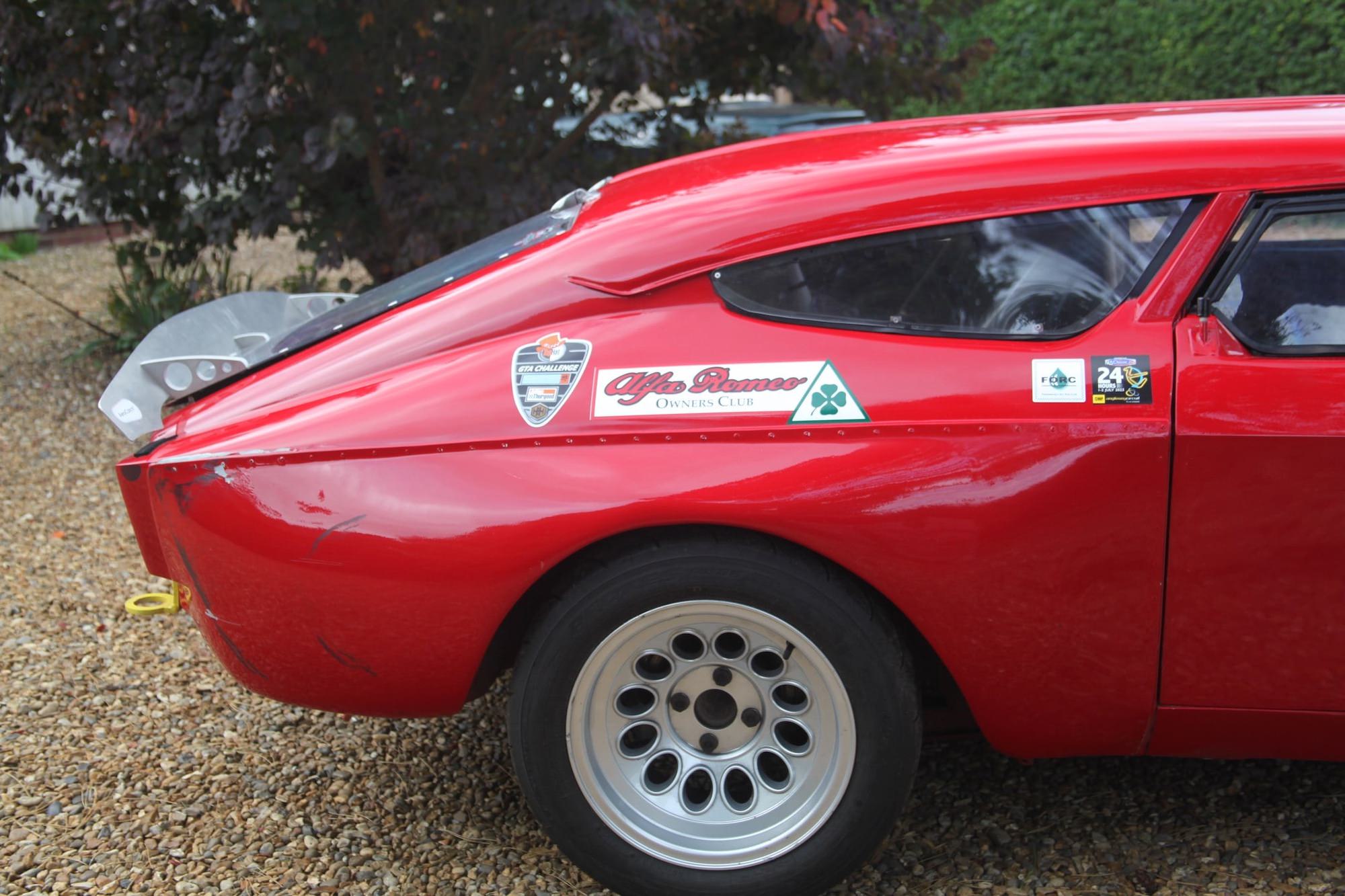
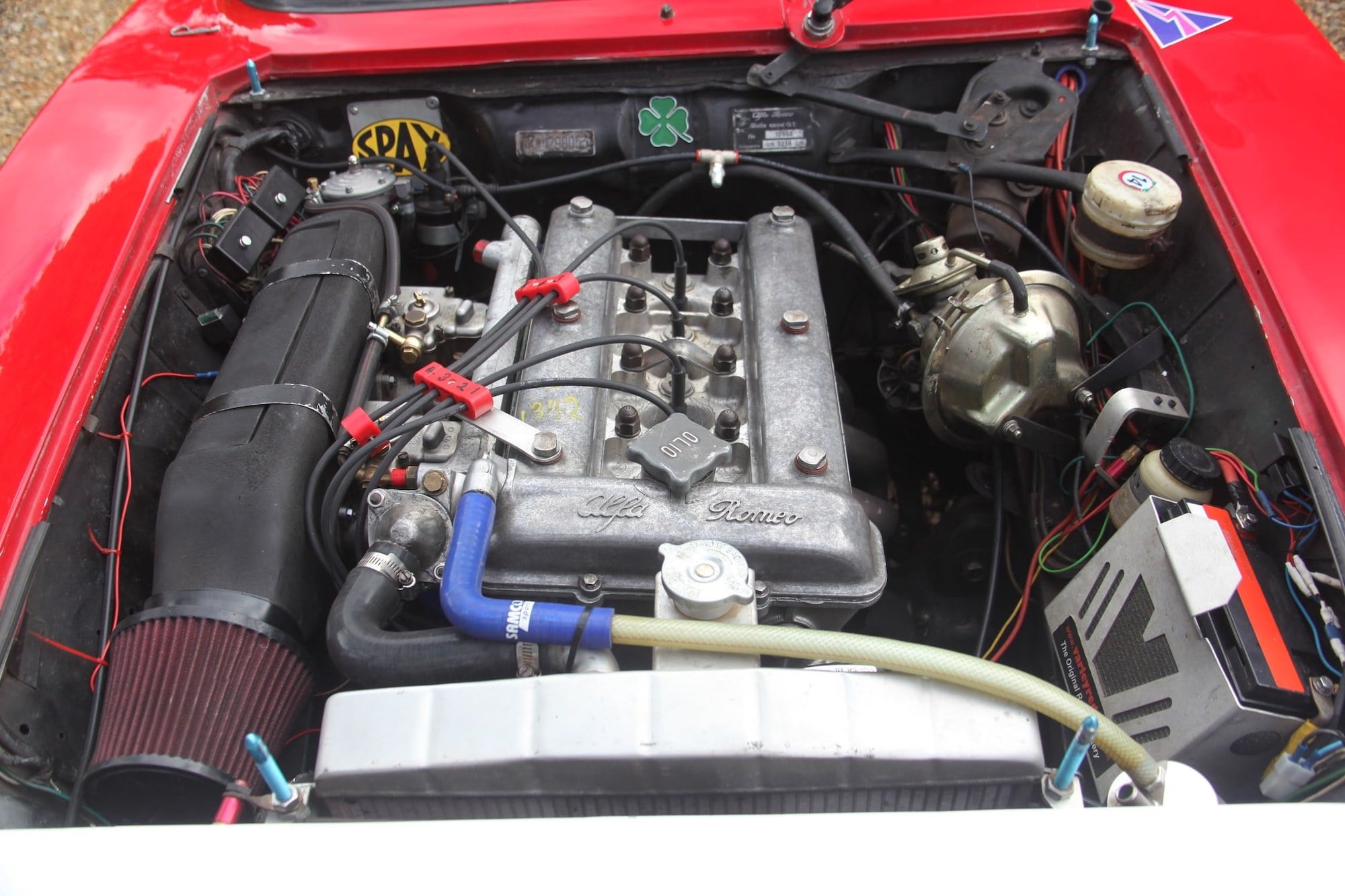
This is the 1967 Alfa Romeo Giulia Low Drag, it’s the only one ever made, and it was built from a 1967 Alfa Romeo 1300GT in period. It’s now powered by a 180 bhp 2.0 liter twin-cam Nord engine.
Despite its aggressive and clearly race-focused appearance, this Alfa is 100% road legal and currently registered in the UK. As its auction listing notes, it can be driven to a circuit, raced hard, and then driven home again.
Fast Facts: The Alfa Romeo Giulia Low Drag
- The Alfa Romeo Giulia debuted in 1962 as a technologically advanced sports sedan, powered by an all-aluminum twin-cam engine, with a 5-speed manual gearbox, and wind-tunnel-developed bodywork. Its platform underpinned a wide range of coupes, spiders, and competition cars, establishing the Giulia family as one of Alfa Romeo’s most celebrated model lines ever.
- The Giulia family achieved considerable motorsport success throughout the 1960s, particularly with the lightweight GTA and Zagato-bodied TZ. These competition models took class victories at Sebring, Le Mans, and the Nürburgring, while Andrea de Adamich won consecutive European Touring Car Championship division titles in 1966 and 1967 piloting a GTA.
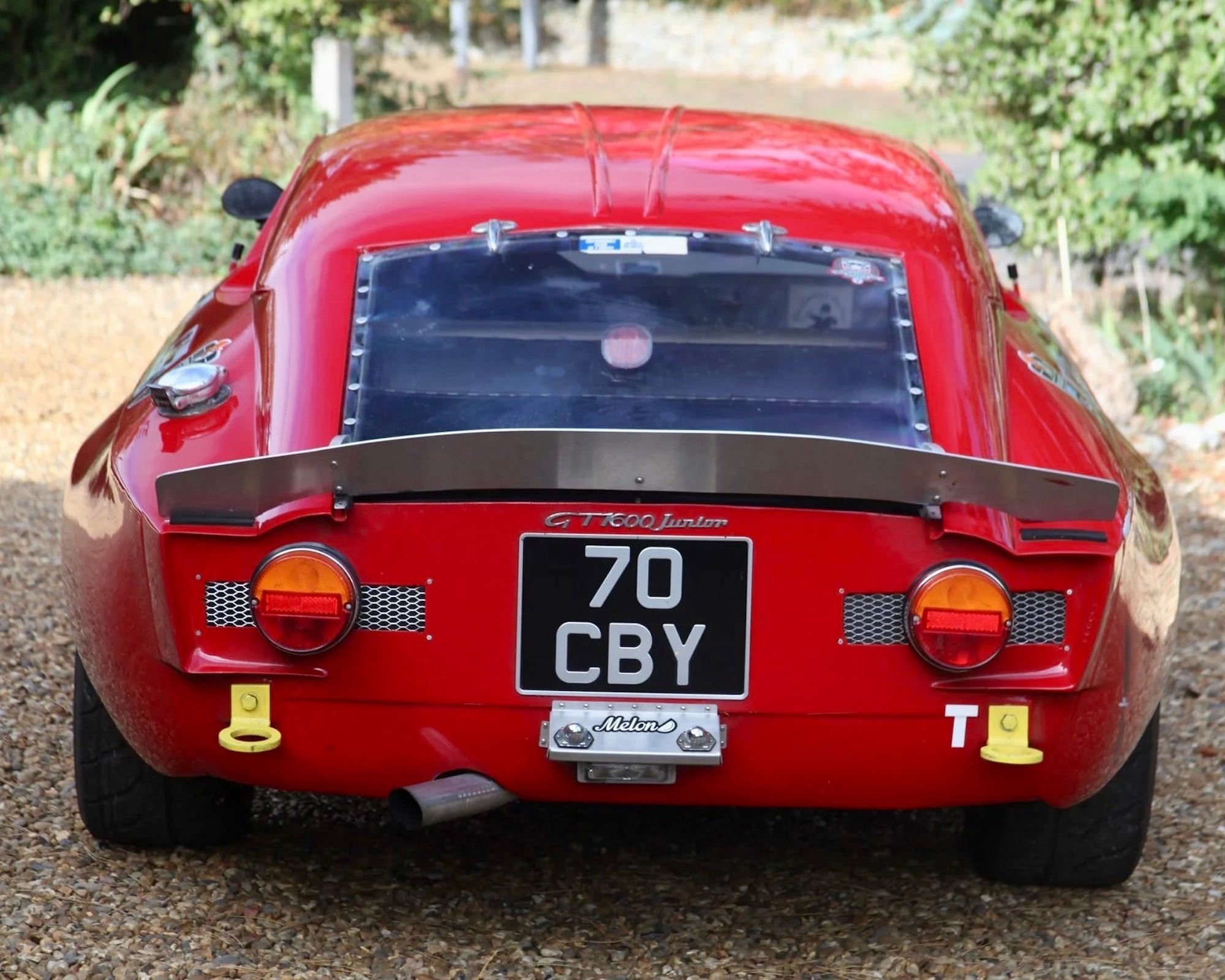
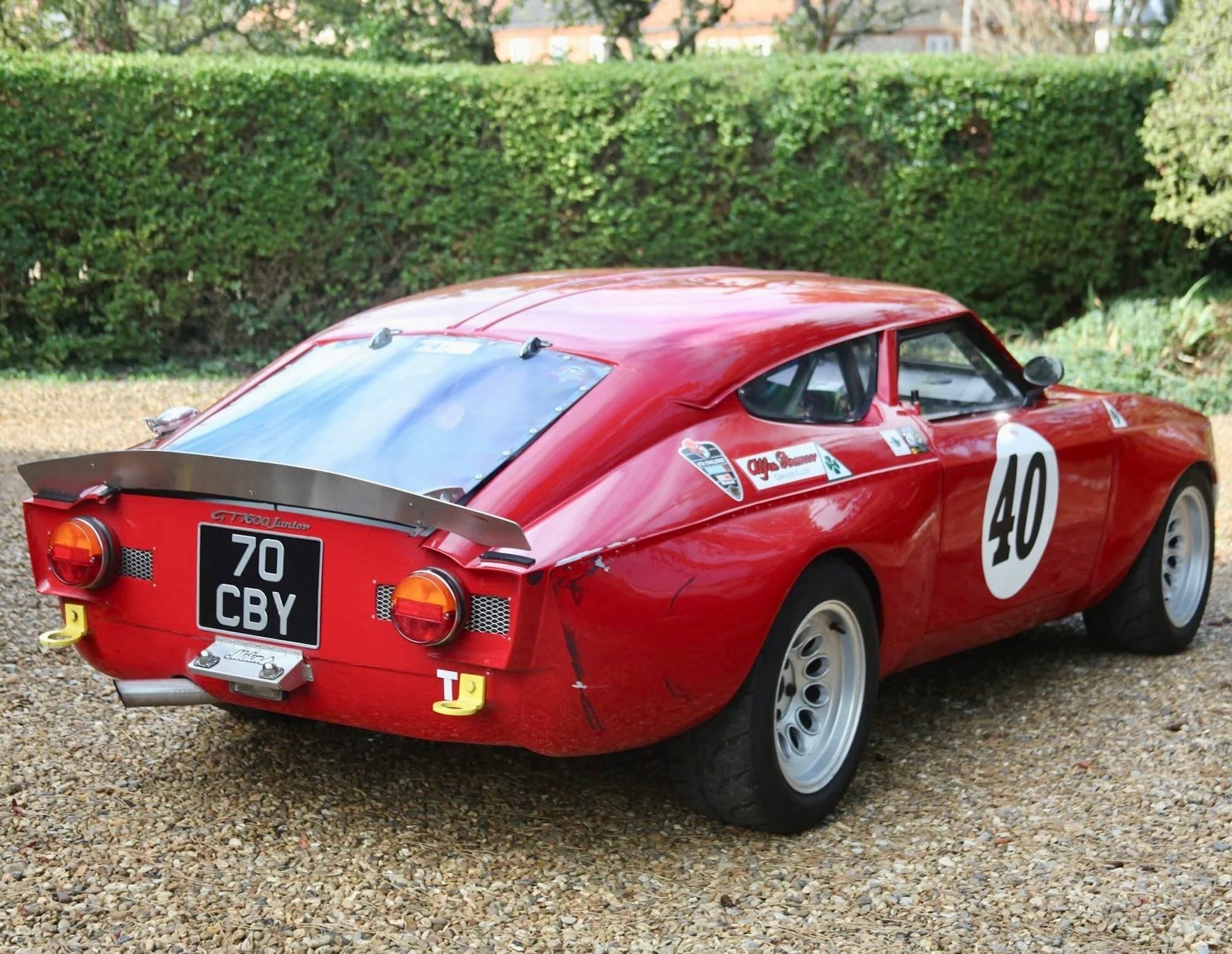
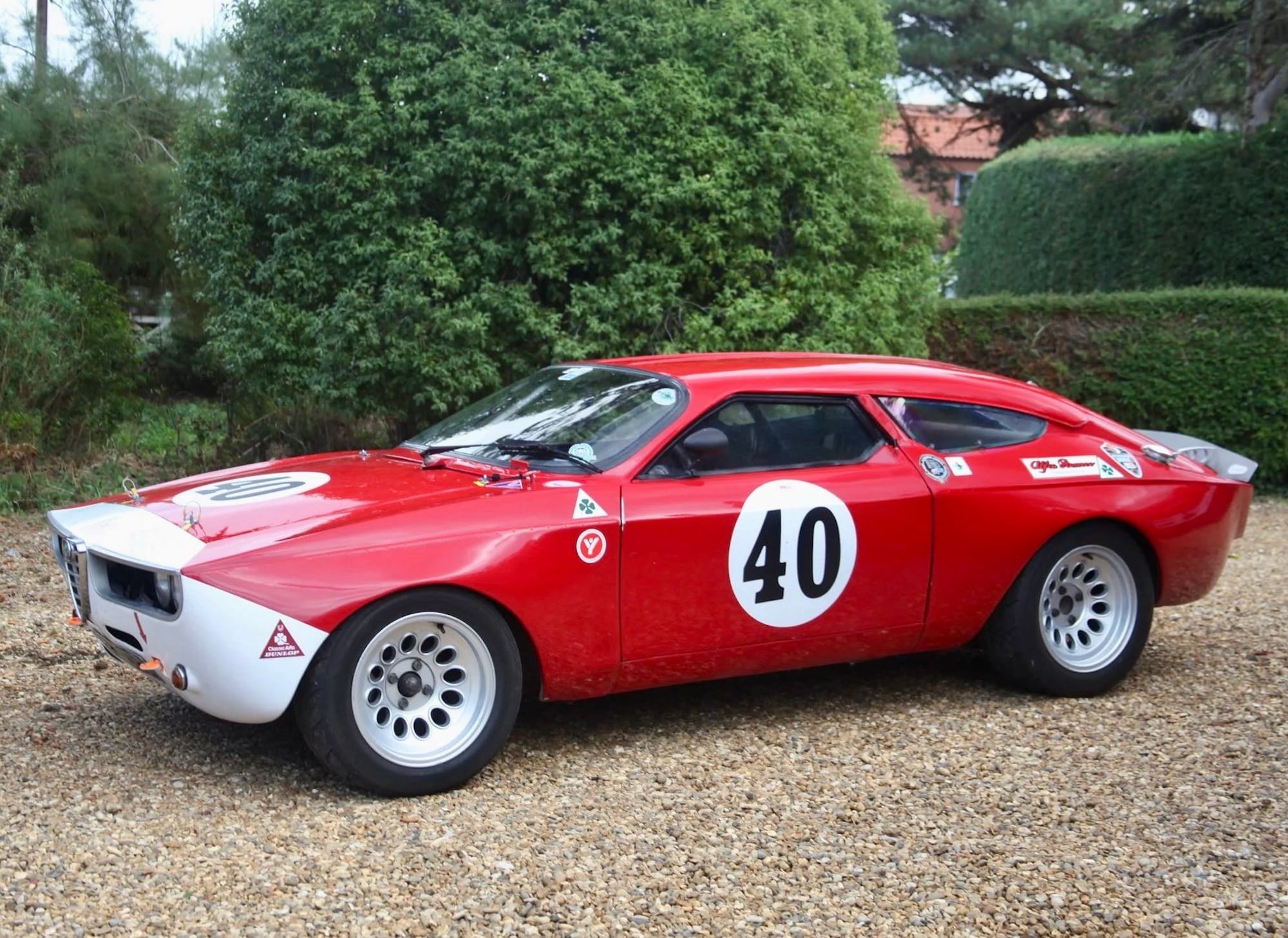
- This one-of-a-kind 1967 Alfa Romeo Giulia Low Drag began life as a 1300 GT before receiving lightweight aluminum coachwork following accident damage early in its life. Nicknamed the “Red Submarine,” it has distinctive aerodynamic styling, a Kamm-style tail, and has appeared in Auto Italia and Classic Cars magazines.
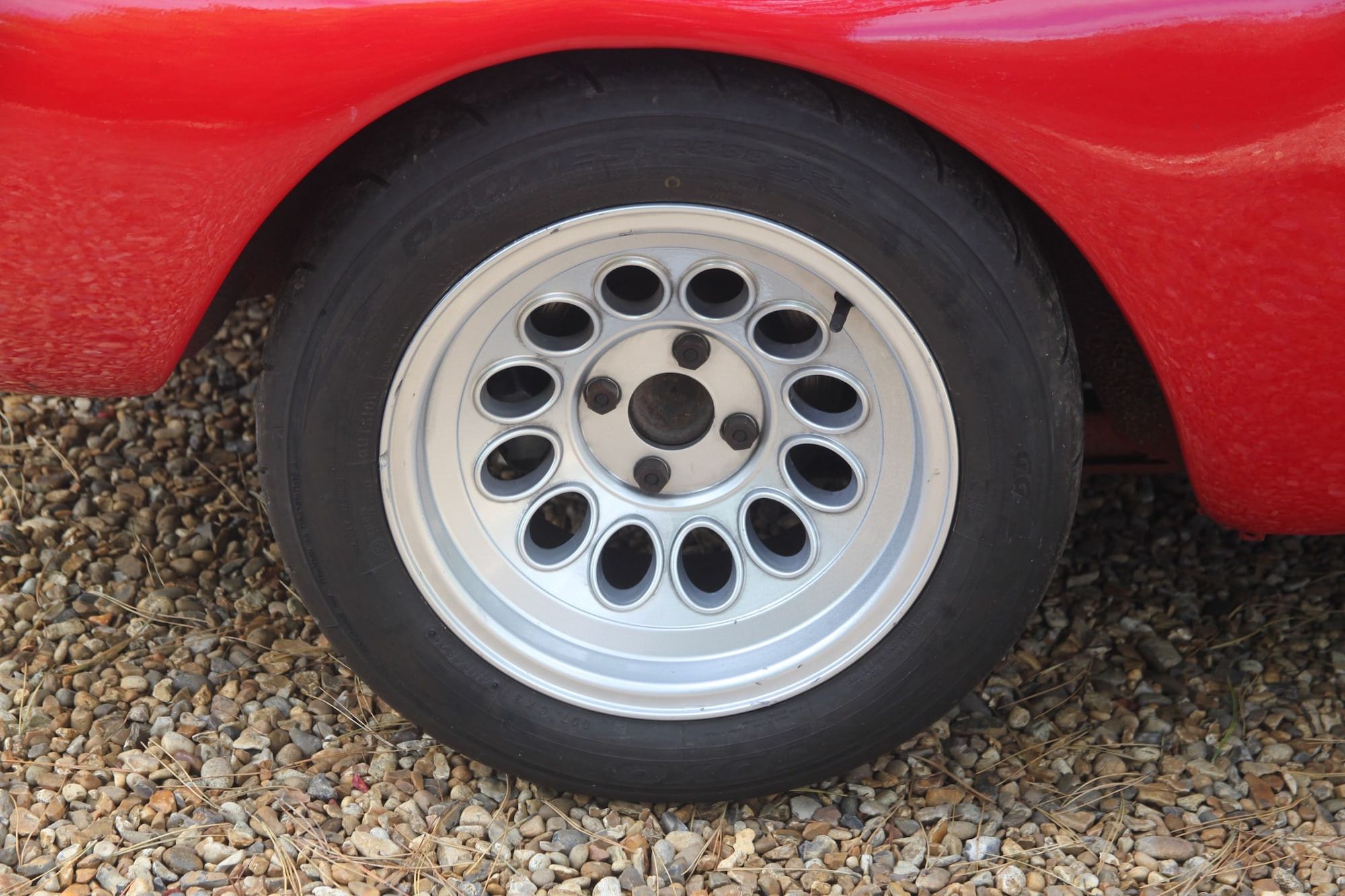
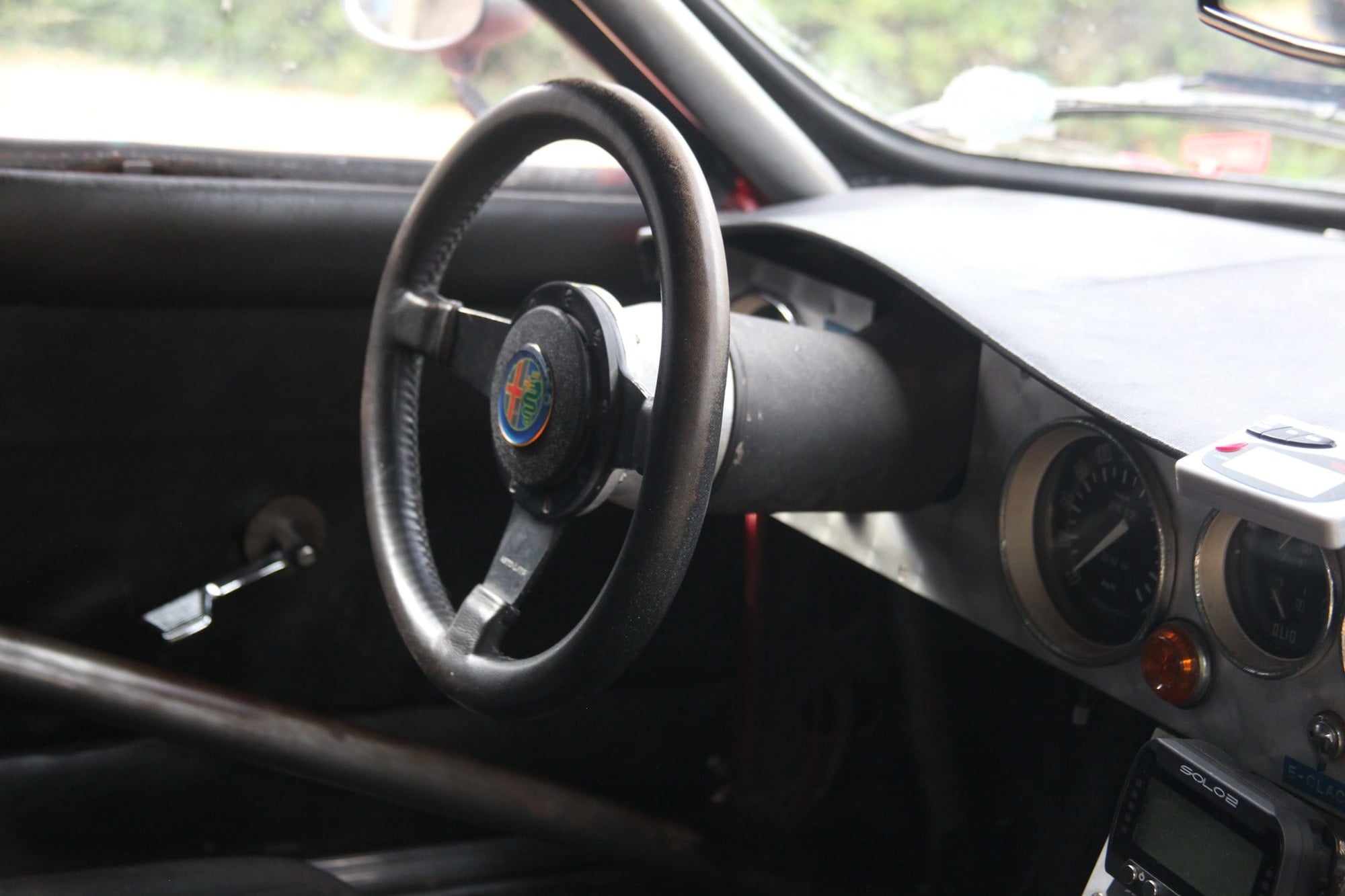
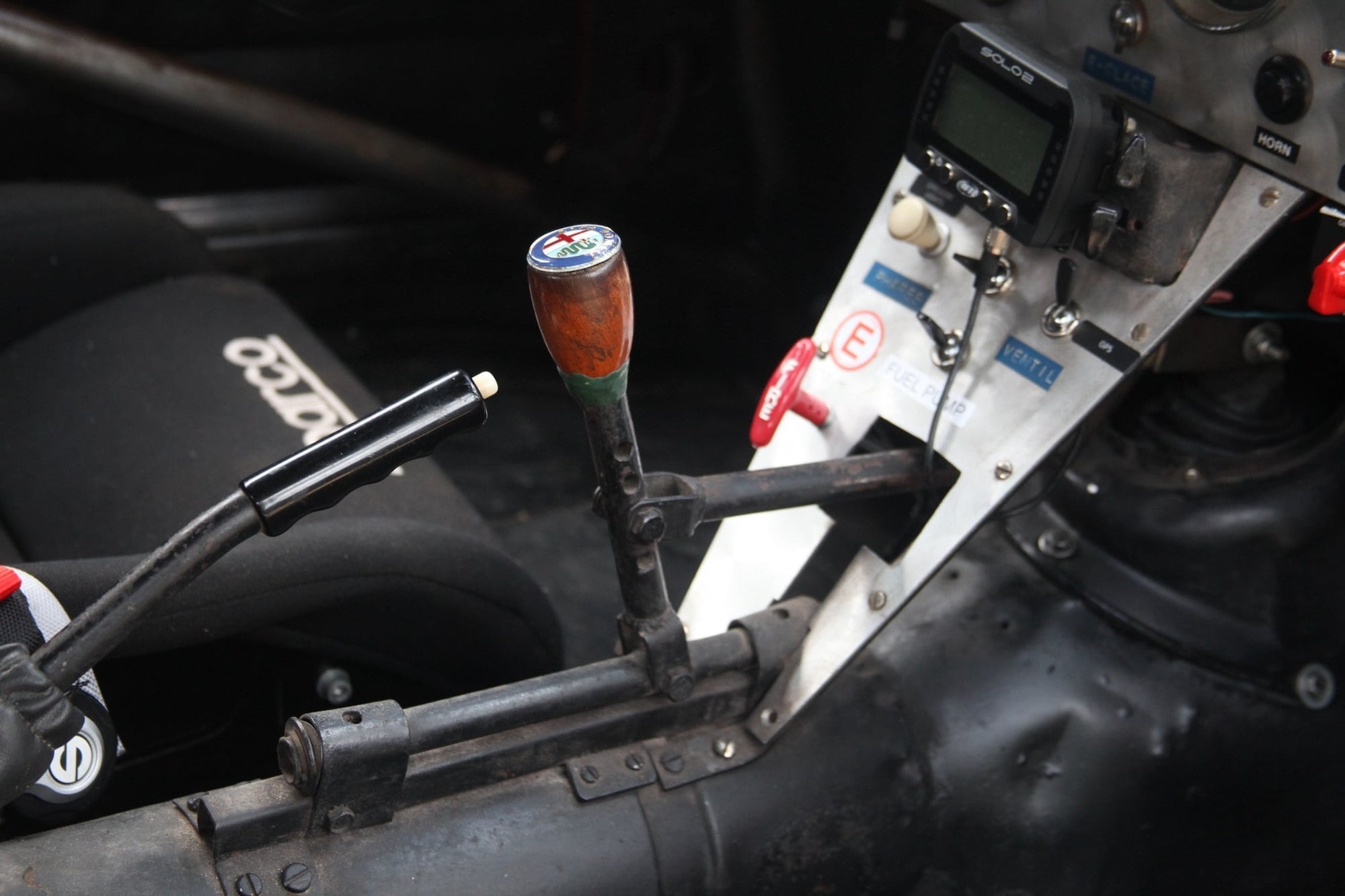
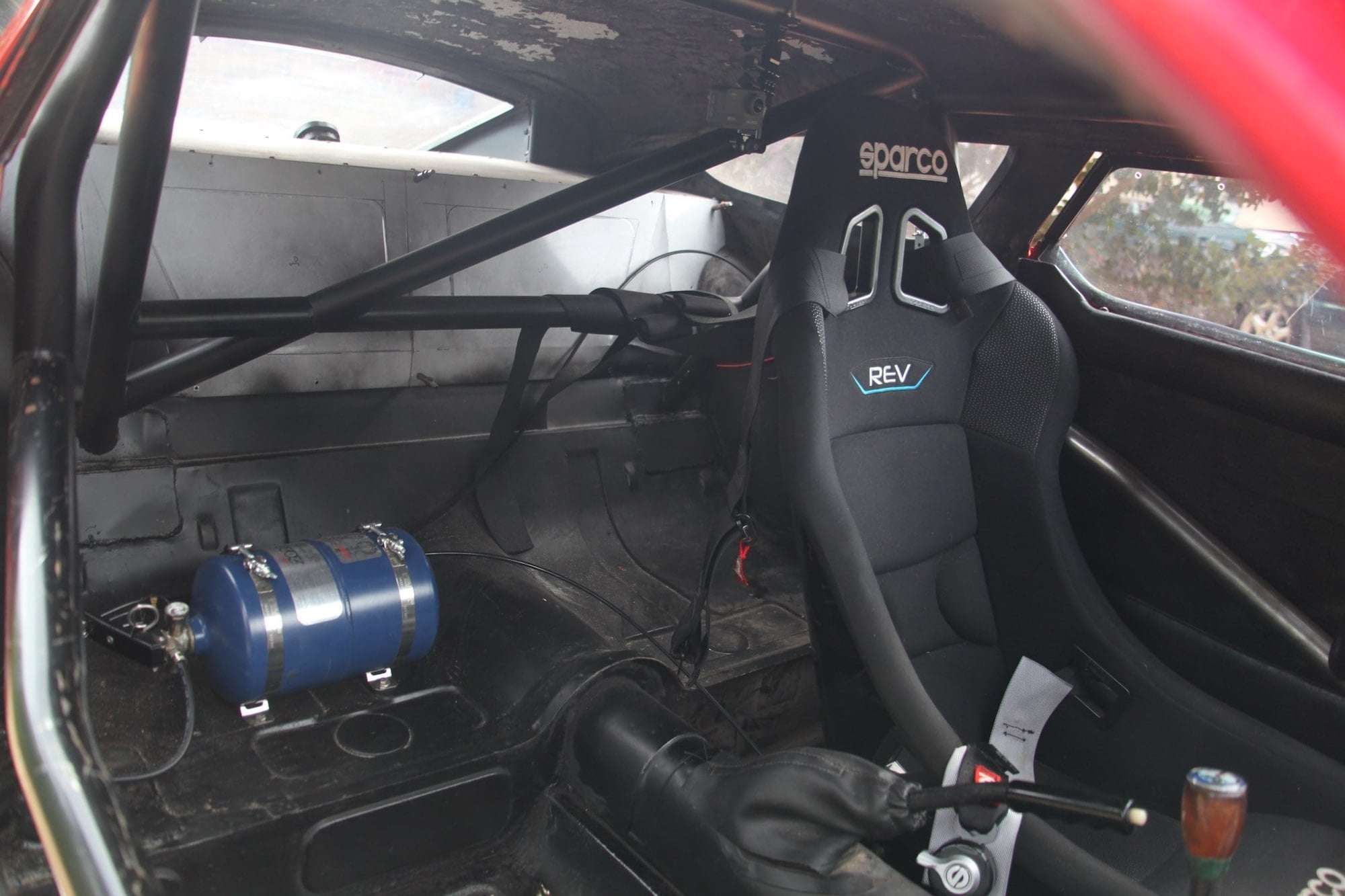
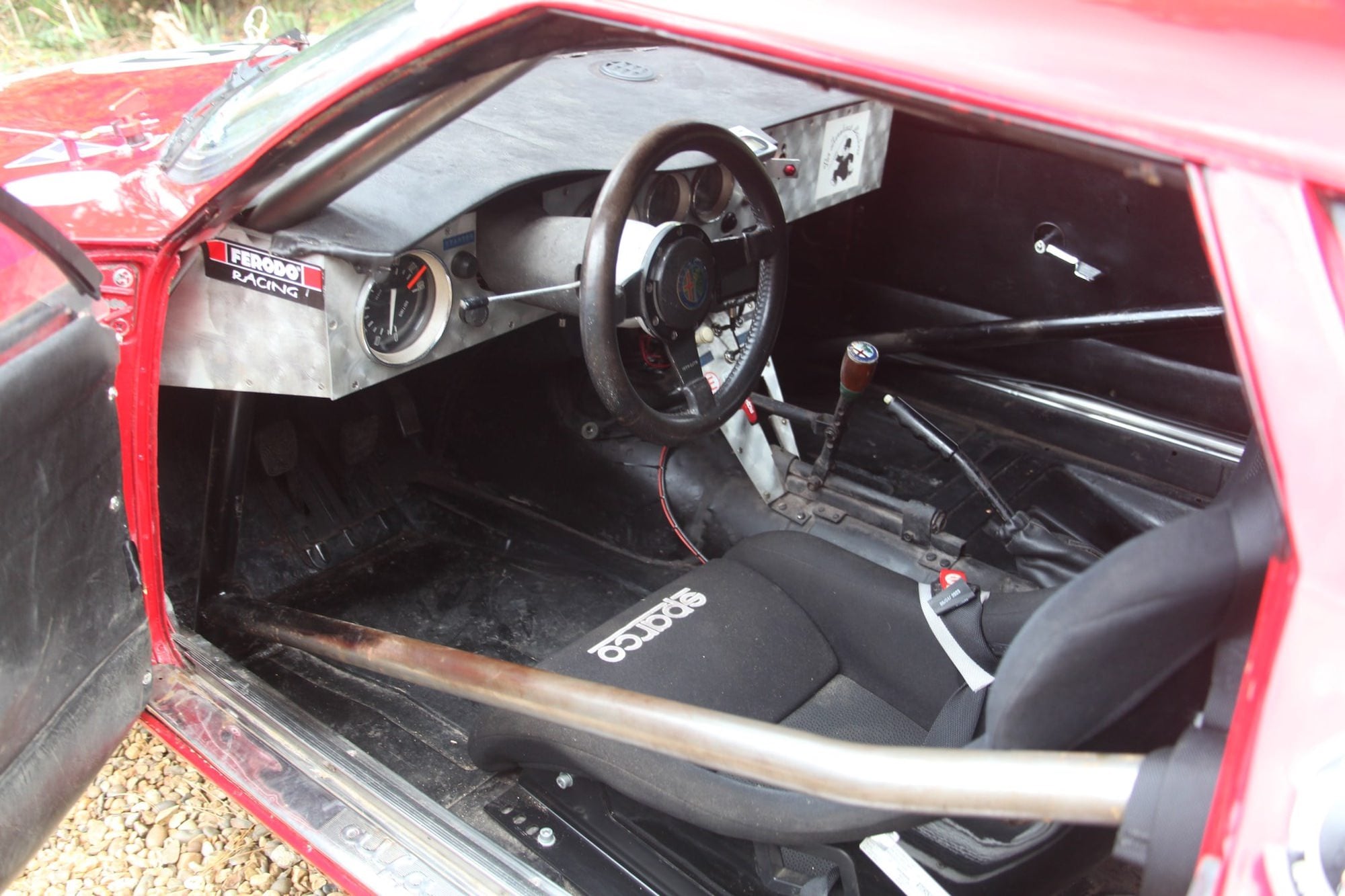
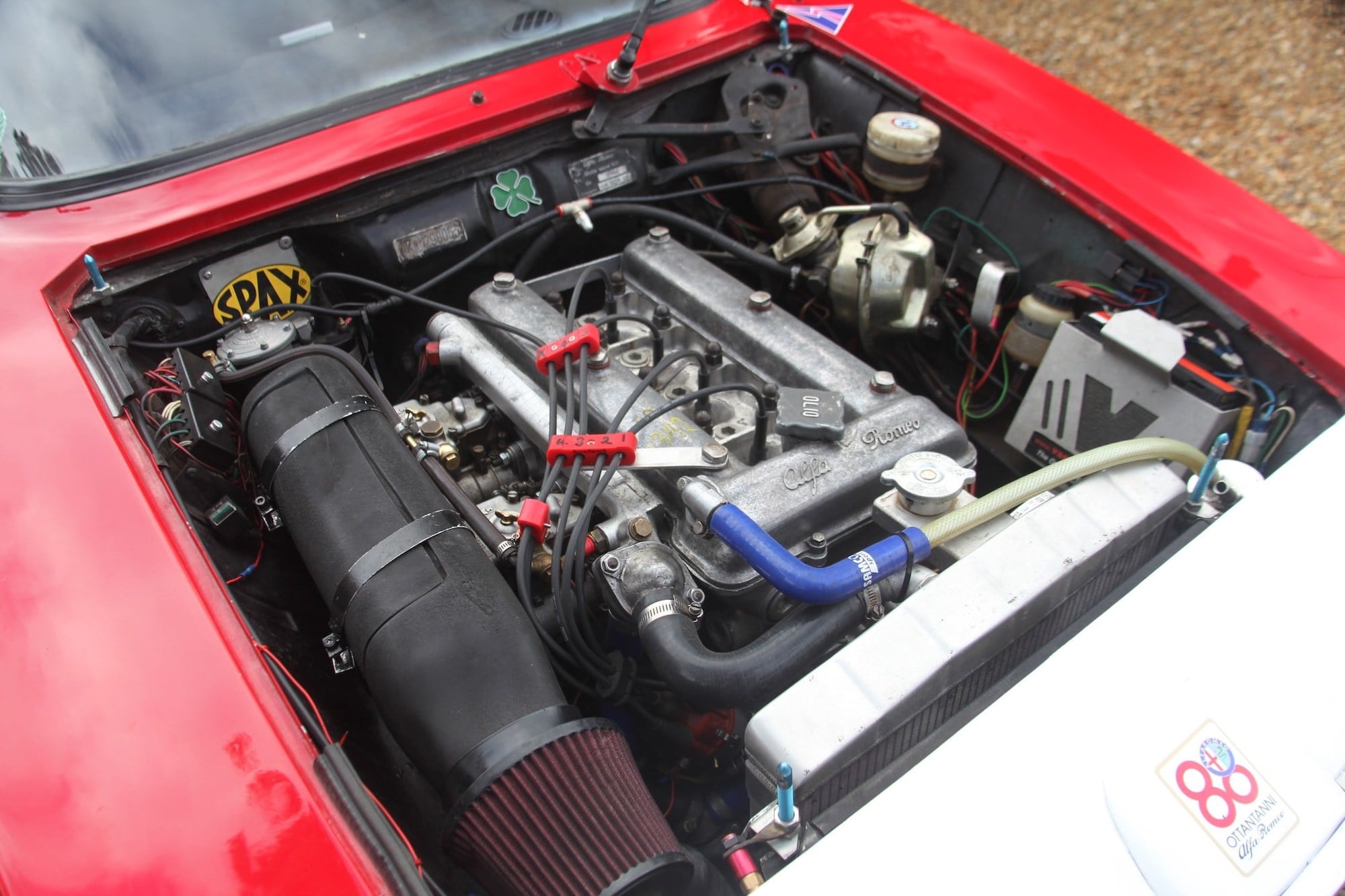
- The car now runs a modified 1,962cc Nord twin-cam engine producing a claimed 180 bhp, paired with a 5-speed manual gearbox. It has a roll cage, racing interior, and deep-dish alloy wheels. Previously registered in Belgium, it has undergone a decade of development and is now offered for sale with UK road registration.
History Speedrun: The Alfa Romeo Giulia
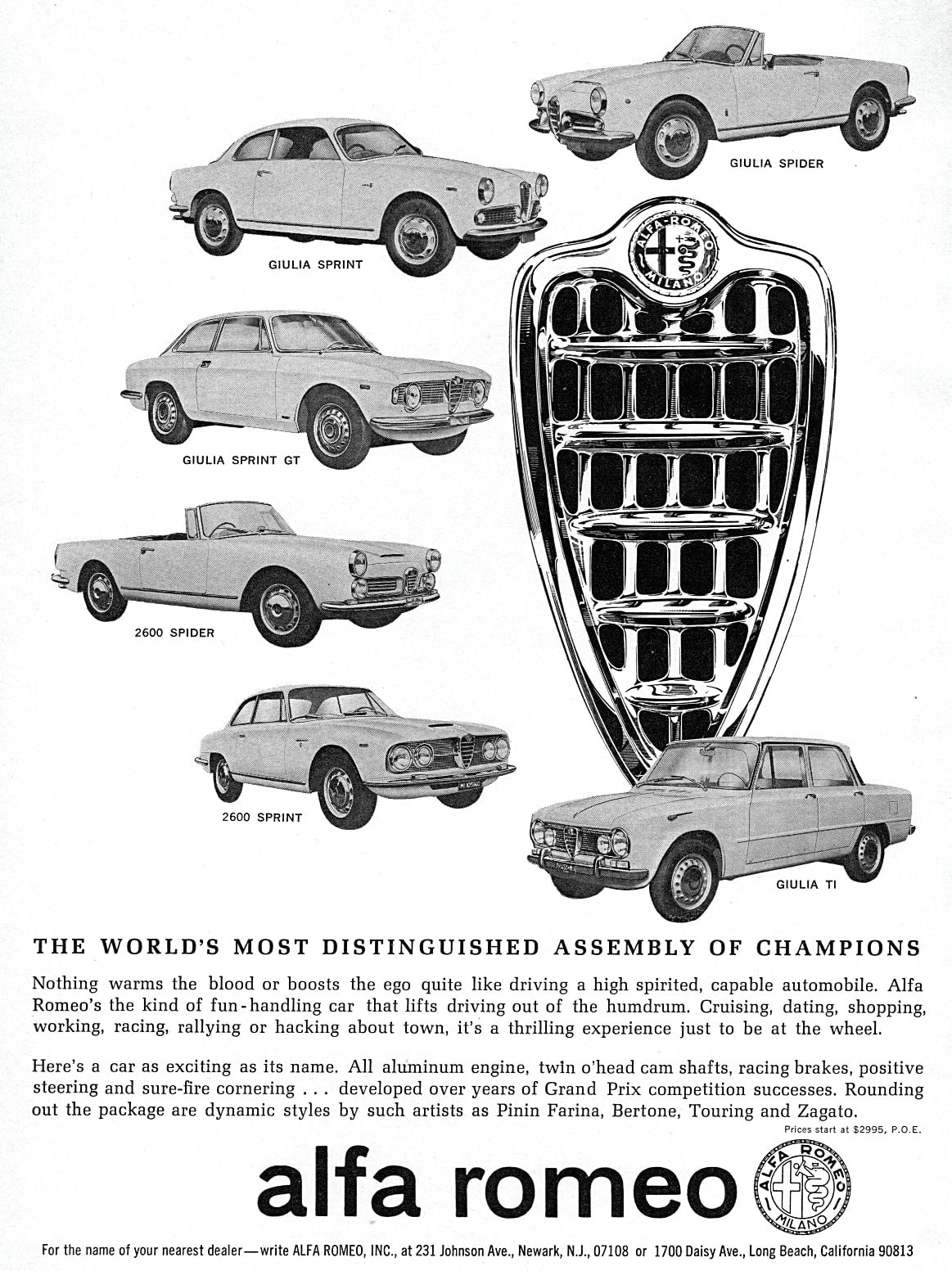
Alfa Romeo first showed the Giulia to the press at the Monza circuit on June the 27th, 1962 as the Giulia TI model. It was a square-edged four-door with a column gearshift and bench seats front and rear, approved to carry up to six. Under the hood sat an all-alloy, twin-cam, cross-flow four-pot driving a 5-speed gearbox, an advanced drivetrain by the standards of the time, when iron blocks and non-crossflow heads still ruled the roads, typically with pushrods and very modest redlines.
 Alfa Romeo first showed the Giulia to the press at the Monza circuit on June the 27th, 1962 as the Giulia TI model. It was a square-edged four-door with a column gearshift and bench seats front and rear, approved to carry up to six. Image courtesy of Alfa Romeo.
The Giulia was developed as the Alfa Romeo Giulietta’s successor, it stayed in production until 1978, and its platform would ultimately be used on a family of coupes, spiders, and some rather successful racing cars.
The Development Of The Giulia
The Giulia came from the engineering team led by Orazio Satta Puliga, with Giuseppe Busso, Ivo Colucci, and Giuseppe Scarnati among its members. By 1959 they had built a squarer prototype with American-style fins, which were all the rage at the time. Alfa shelved it after its engineers saw similar styling on rival cars at that year’s London Motor Show, and only the engine would be carried over into the new design.
The replacement was shaped in the wind tunnel, and as a result, it had a raked windshield, along with creases running along the flanks and a cut-off Kamm-tail rear end that helped give the body a drag coefficient that Alfa quoted as 0.34 – the company advertised the car as “designed by the wind.”
The steel unibody structure was laid out with front and rear sections intended to absorb crash energy around a reinforced passenger cell. Much like the engine under the hood, the Giulia was an advanced design by the standards of its era.
Alfa planned to build the Giulia at its new factory at Arese, north of Milan, but construction ran late, so the first cars came off the lines at the old Portello works.
Engine, Drivetrain, + Running Gear
The Giulia’s engine was a 1.6 liter (1,570 cc) inline four with an aluminum block and head, two overhead camshafts driven by a duplex chain, and two valves per cylinder. In the TI version it breathed through a single twin-choke Solex carburetor and made 91 bhp. Drive went to the rear wheels through a 5-speed manual gearbox.
Under the hood of Alfa’s Giulia sat an all-alloy, twin-cam, cross-flow four-pot driving a 5-speed gearbox, an advanced drivetrain by the standards of the time, when iron blocks and non-crossflow heads still ruled the roads, typically with pushrods and very modest redlines. Image courtesy of Alfa Romeo.
Front suspension was independent, with wishbones, coil springs, and an anti-roll bar. At the rear, a live axle on coil springs was located by trailing arms and a T-shaped upper reaction member. Early sedans used a Burman recirculating-ball steering box.
The first cars had drum brakes all round, with three-shoe drums at the front. From September of 1963 Alfa offered four-wheel discs, first as an option and then as standard across the range – four-wheel disc brakes were still a novelty at the time, particularly on affordable four-door sedans.
Variants + Production
The Giulia TI Super was presented at Monza in 1963 as a homologation special. It had two Weber 45 DCOE carburetors and it was good for 111 bhp, it had a floor shift, bucket seats, magnesium-alloy wheels, plexiglass rear windows, and it weighed roughly 100 kgs less than the TI.
The more affordable Giulia 1300 with single headlights, a 4-speed gearbox and the 1.3 liter engine followed in 1964. The Giulia Super arrived at the 1965 Geneva show with twin Weber 40 carburetors and 97 bhp.
The 1974 Nuova Super brought a flat trunk lid without the central crease that had marked the tail since 1962, and a Perkins diesel joined the range in 1976 offering a fuel-efficient if uninspiring engine right into the midst of the 1970s and sandwiched between two oil crises.
The Giulia Family
The Giulia Sprint and Spider of 1962, and the Sprint Speciale of 1963 were Giulietta bodies with the new 1.6 liter engine. The first 105-series coupe was the Sprint GT, styled by the legendary Giorgetto Giugiaro at Bertone and shown in 1963, first at Arese and then at the Frankfurt Motor Show.
The Giulia model family enjoyed a slew of racing successes, Fernand Masoero and Jean Maurin drove a TI Super to fifth overall on the 1963 Tour de France Automobile, helping to put the then-new series on the map. Image courtesy of Alfa Romeo.
In 1965 Alfa unveiled the GTA, the A standing for alleggerita, or lightened. Aluminum replaced several steel panels, the side and rear windows were plexiglass, and a twin-plug cylinder head with two Weber 45 carburetors gave the road car 113 bhp. Dry weight fell from more than 900 kgs for the GT to 745 kgs. Alfa says 500 were built between 1965 and 1969, and almost all went to Autodelta or private race preparers. Today, it’s one of the most desirable Alfas of the period.
The TZ, for Tubolare Zagato, put the Giulia engine and other running gear on a tubular steel spaceframe built by SAI Ambrosini, under an aluminum body by Zagato, and added independent rear suspension with inboard rear disc brakes. Delta, the Udine firm founded by Carlo Chiti and Lodovico Chizzola in 1963 and renamed Autodelta in 1964, assembled the cars. Only about 112 were built and today they’re considered royalty by the Alfisti.
Racing The Giulia
The Giulia model family enjoyed a slew of racing successes, Fernand Masoero and Jean Maurin drove a TI Super to fifth overall on the 1963 Tour de France Automobile, helping to put the then-new series on the map.
At the Coppa FISA at Monza in late-1963, TZs finished 1st to 4th in their class, with Lorenzo Bandini 2nd overall. In 1964 TZs won their class at the Sebring 12 Hours, the Nürburgring 1000 km, and the Le Mans 24 Hours. Roberto Bussinello and Nino Todaro took one to 3rd overall on that year’s Targa Florio, behind two Porsche 904s no less.
The GTA took over from 1965 onwards, Alfa recorded more than 200 GTA victories in the 1966 season alone, by works and private entrants. Andrea de Adamich won Division 2 of the European Touring Car Championship in a GTA in 1966 and again in 1967.
The 1967 Alfa Romeo Giulia Low Drag Shown Here
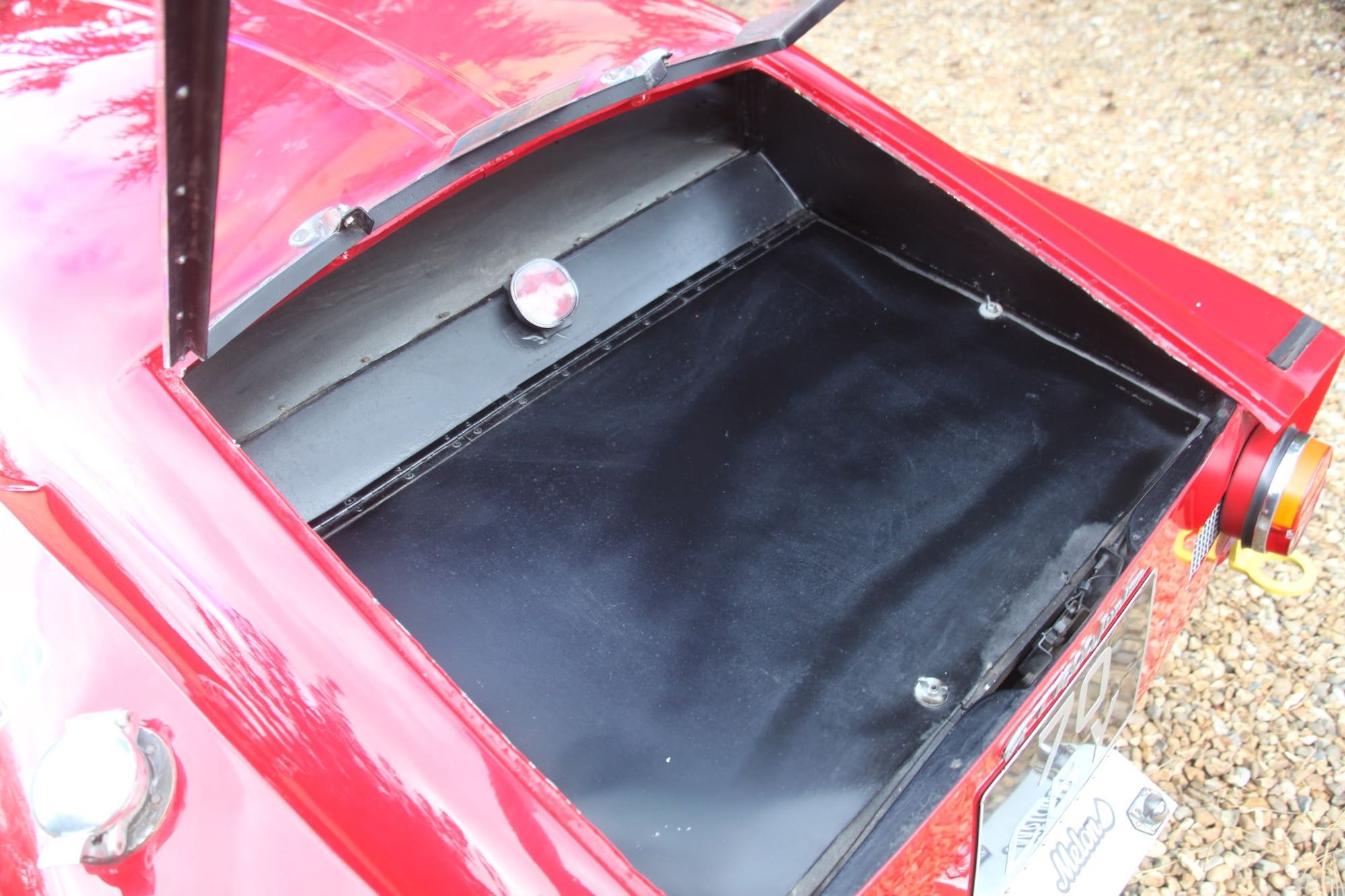
This one-of-a-kind Alfa Romeo Giulia race car began life as a standard 1967 Alfa Romeo Giulia 1300 GT before being rebodied with lightweight aluminum coachwork following accident damage early in its life. Known as the “Red Submarine,” it has a distinctive low-drag fastback body with a Kamm-style tail, and has appeared in both Auto Italia and Classic Cars magazines.
Power now comes from a heavily-modified 1,962cc Alfa Romeo Nord twin-cam four-cylinder engine producing a claimed 180 bhp, paired with a 5-speed manual transmission. The car has deep-dish alloy wheels, a bespoke roll cage, and a stripped racing interior with period-correct instruments. Despite its race-oriented spec sheet, it’s 100% road legal and is currently registered in the UK.
The current owner bought the car in Belgium 10 years ago and has spent the intervening years refining its bodywork and mechanical underpinnings, focusing on competition use rather than a conventional cosmetic restoration. The seller describes it as exceptionally quick and stable on track, while still suitable for road use.
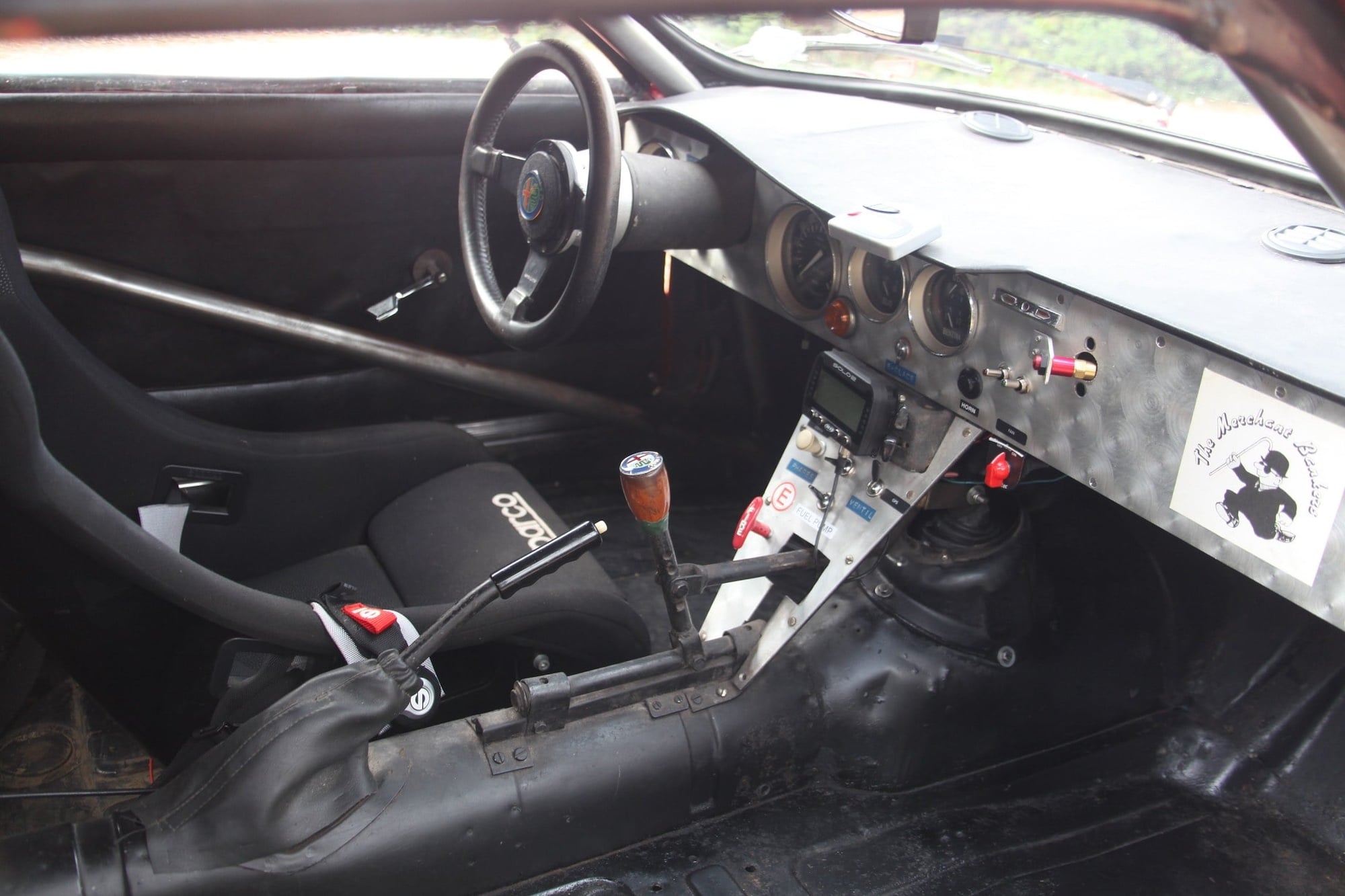
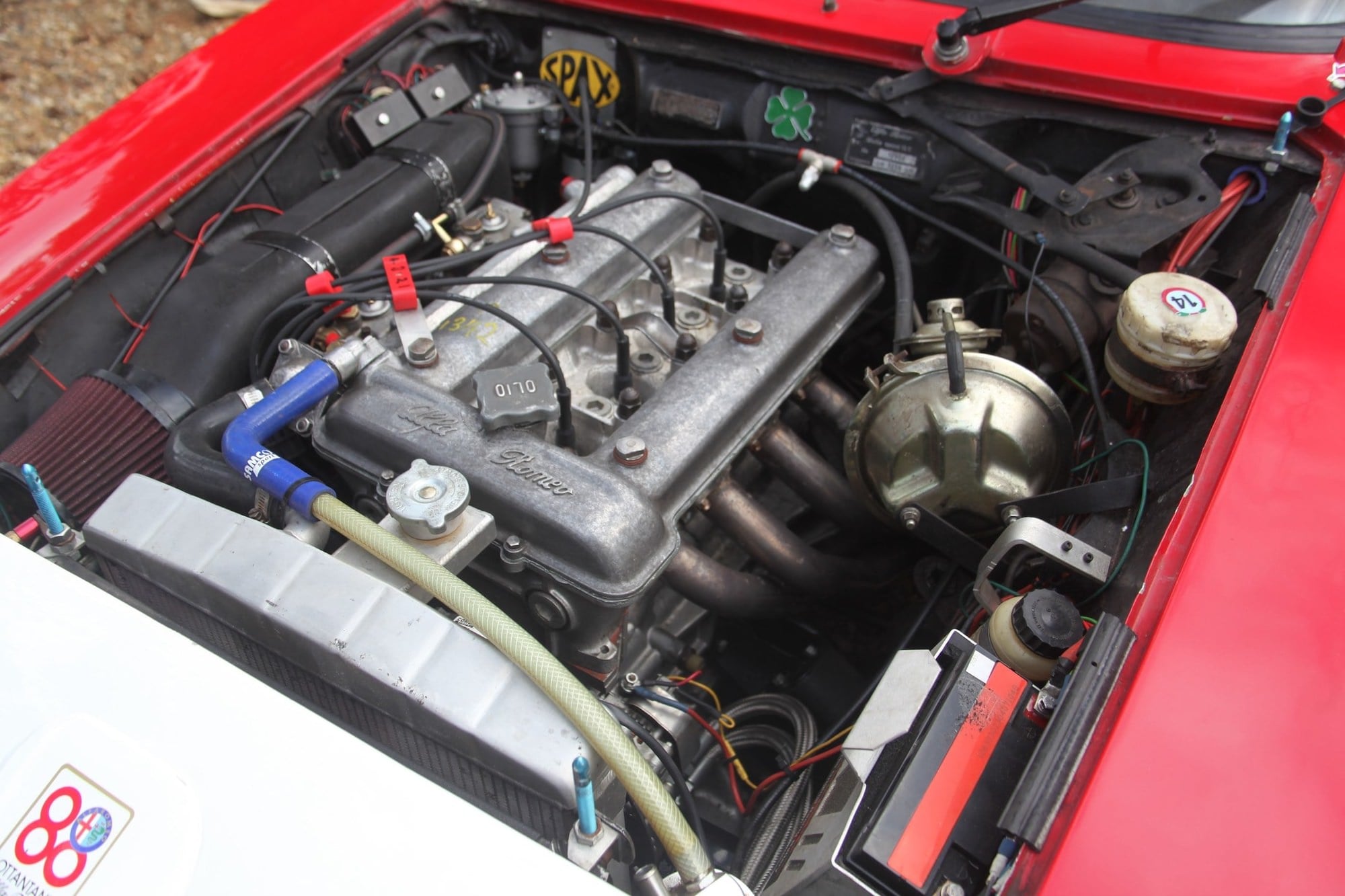
This one-of-a-kind Alfa Romeo Giulia race car began life as a standard 1967 Alfa Romeo Giulia 1300 GT before being rebodied with lightweight aluminum coachwork following accident damage early in its life. Known as the “Red Submarine,” it has a distinctive low-drag fastback body with a Kamm-style tail, and has appeared in both Auto Italia and Classic Cars magazines.
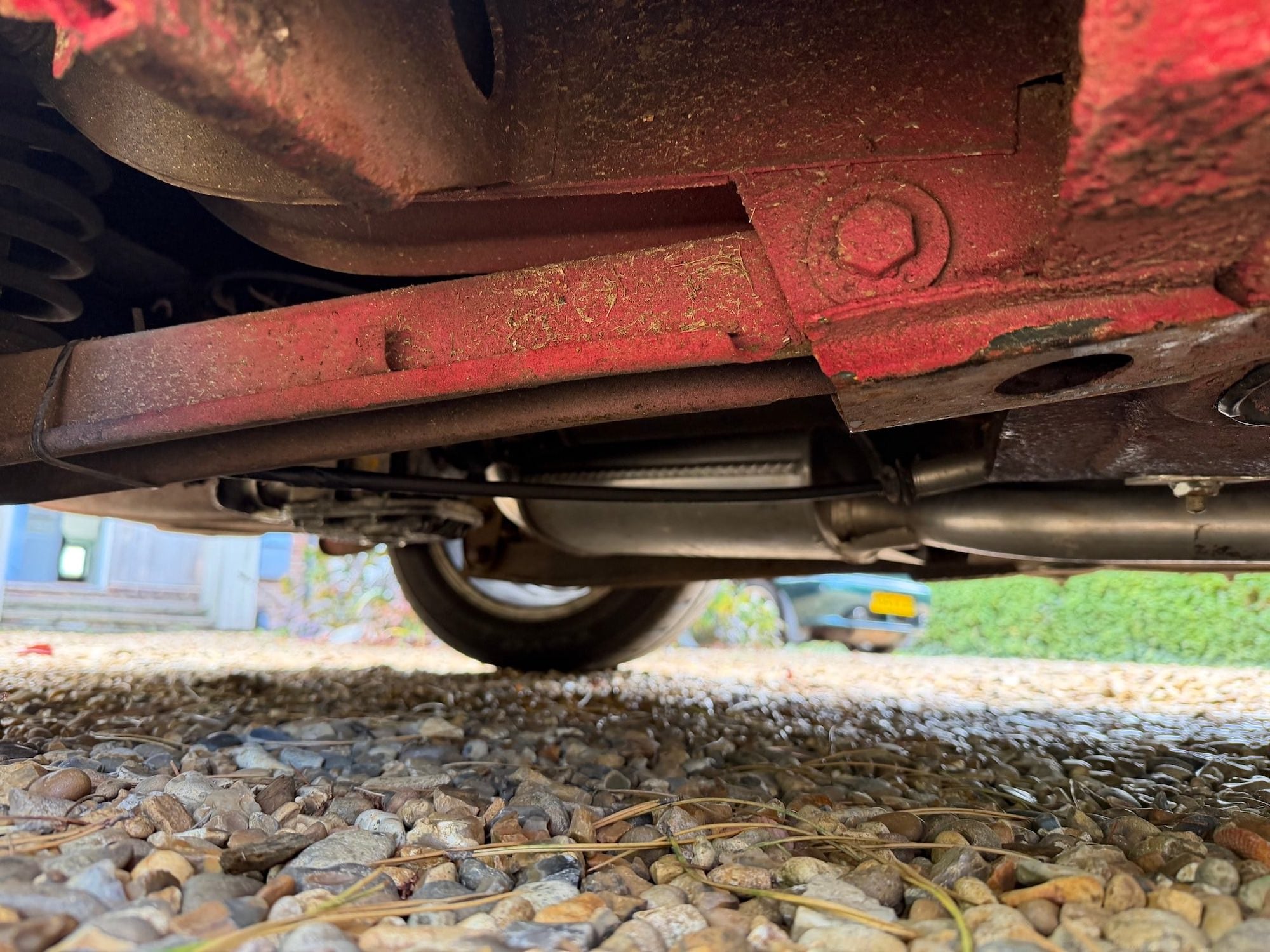
The seller reports that the floorpan, underbody, and structure are free from rust, and that all electrical systems work as they should. The odometer currently indicates 28,320 kilometers (17,597 miles), although the actual mileage is believed to be higher.
The car is now being offered for sale with UK registration documents (V5C) and is listed as MOT and road tax exempt. If you’d like to read more about it or register to bid, you can visit the listing here.
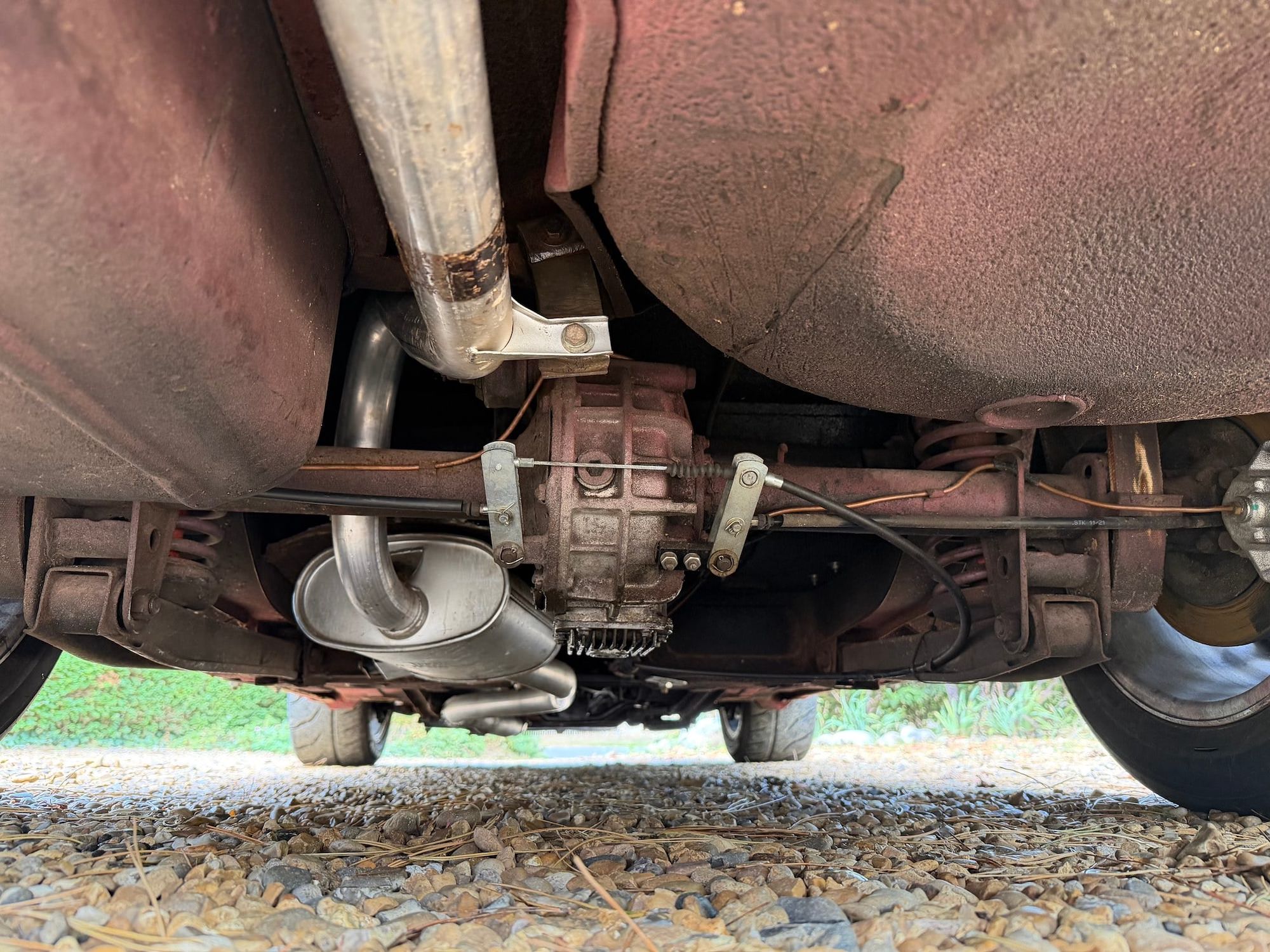
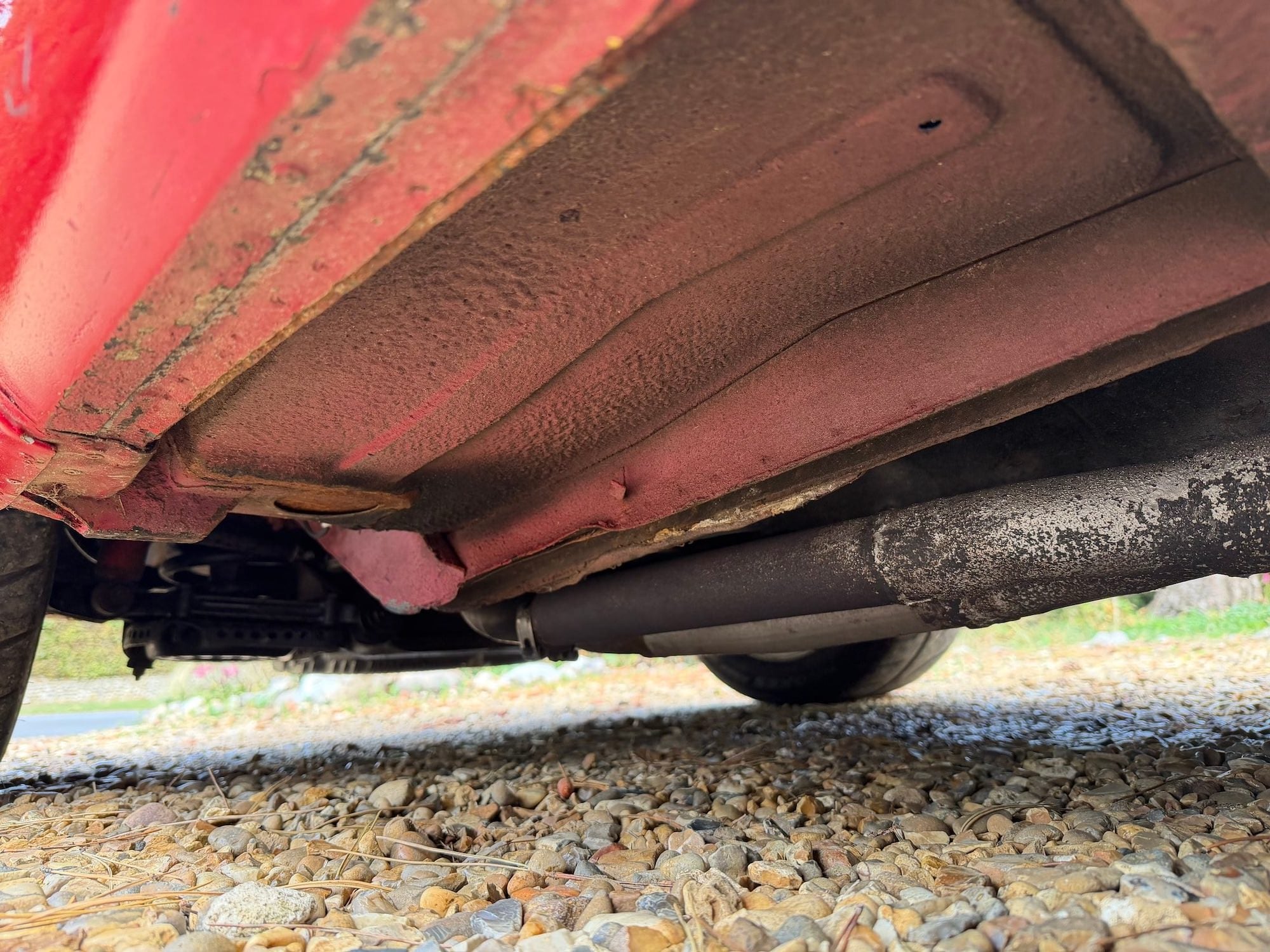
Images courtesy of Car & Classic

Articles that Ben Branch has written have been covered on CNN, Popular Mechanics, Smithsonian Magazine, Road & Track Magazine, the official Pinterest blog, the official eBay Motors blog, BuzzFeed, Autoweek Magazine, Wired Magazine, Autoblog, Gear Patrol, Jalopnik, The Verge, and many more.
Silodrome was founded by Ben back in 2010, in the years since the site has grown to become a world leader in the alternative and vintage motoring sector, with well over a million monthly readers from around the world and many hundreds of thousands of followers on social media.