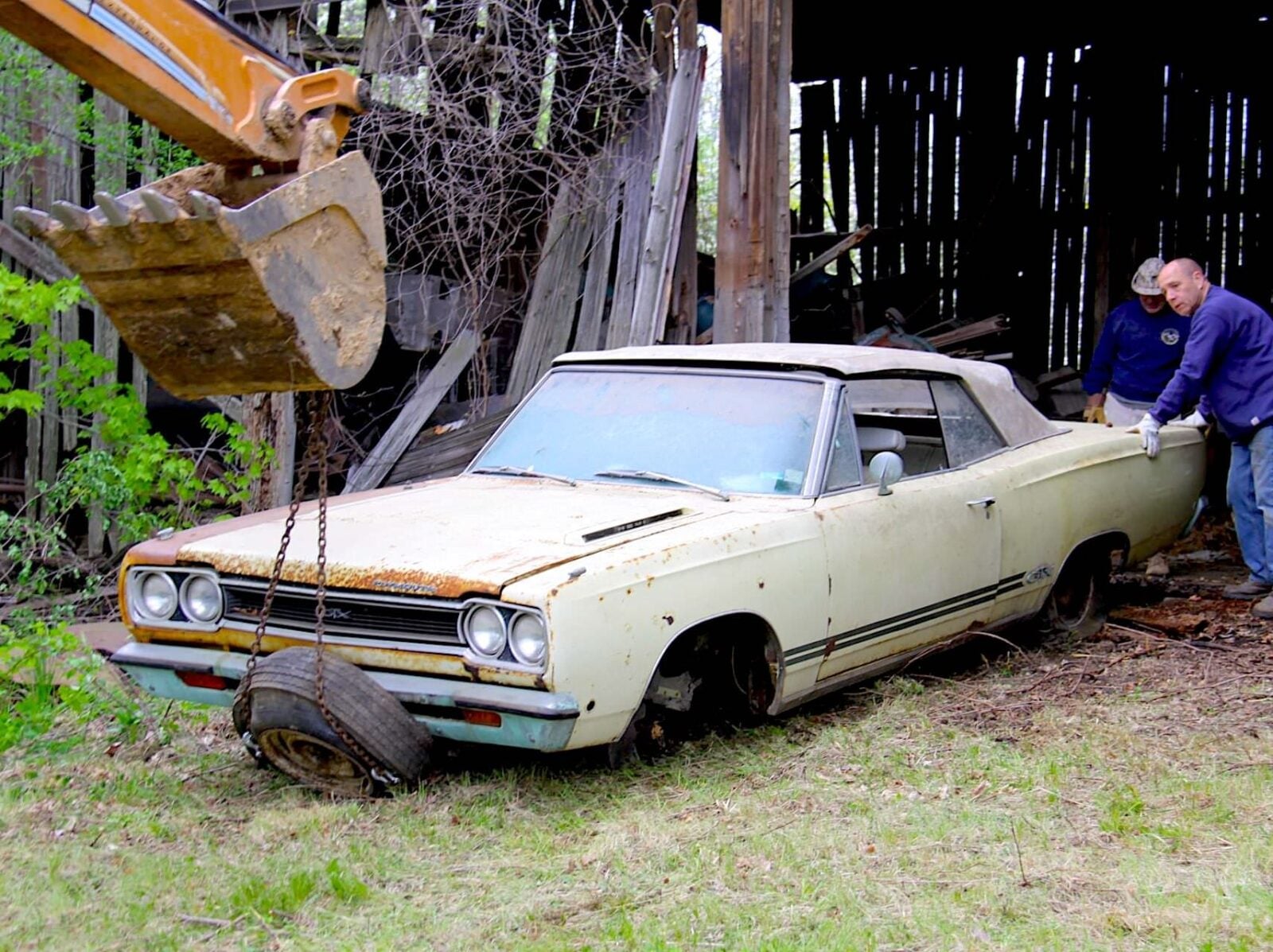
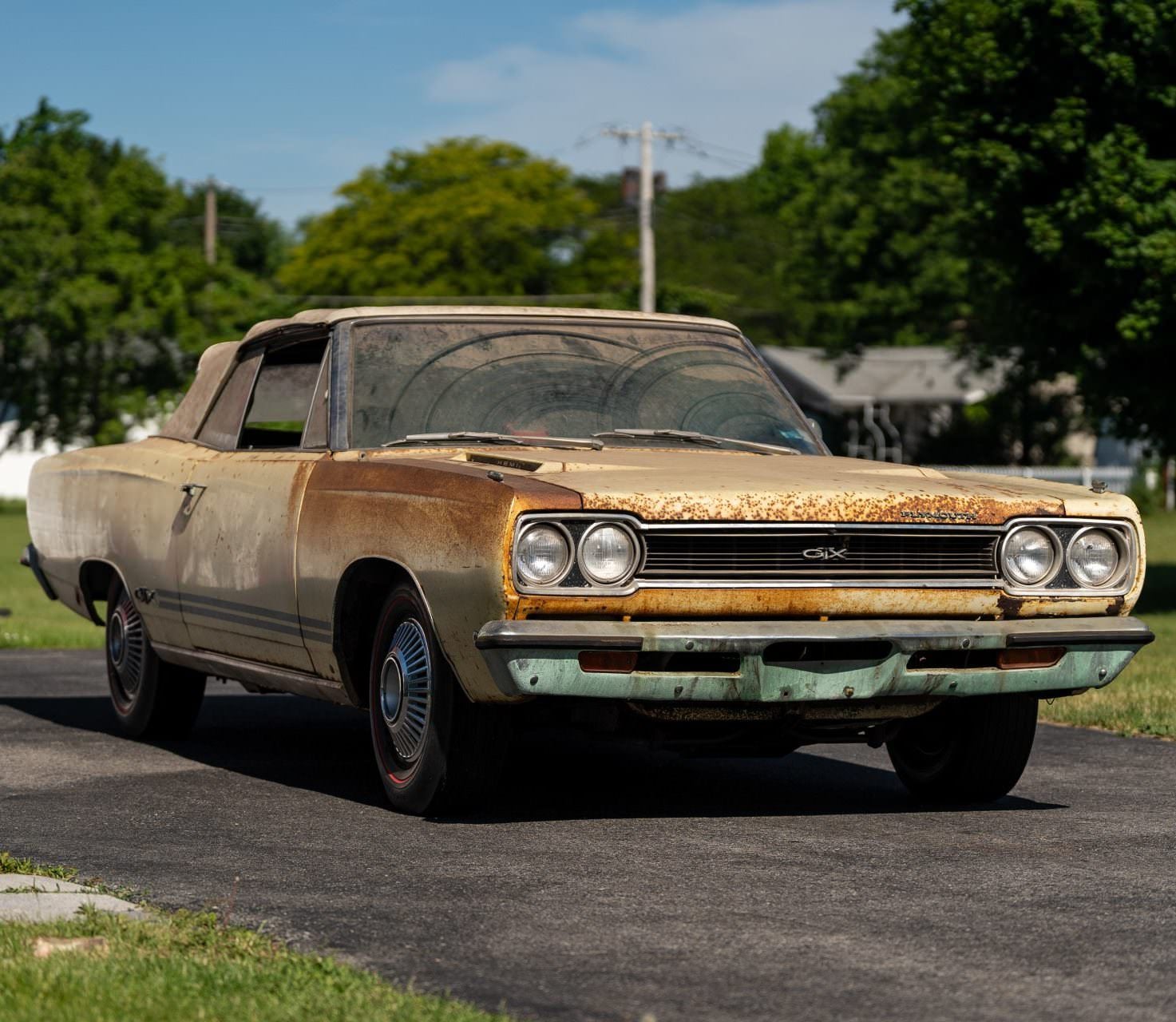
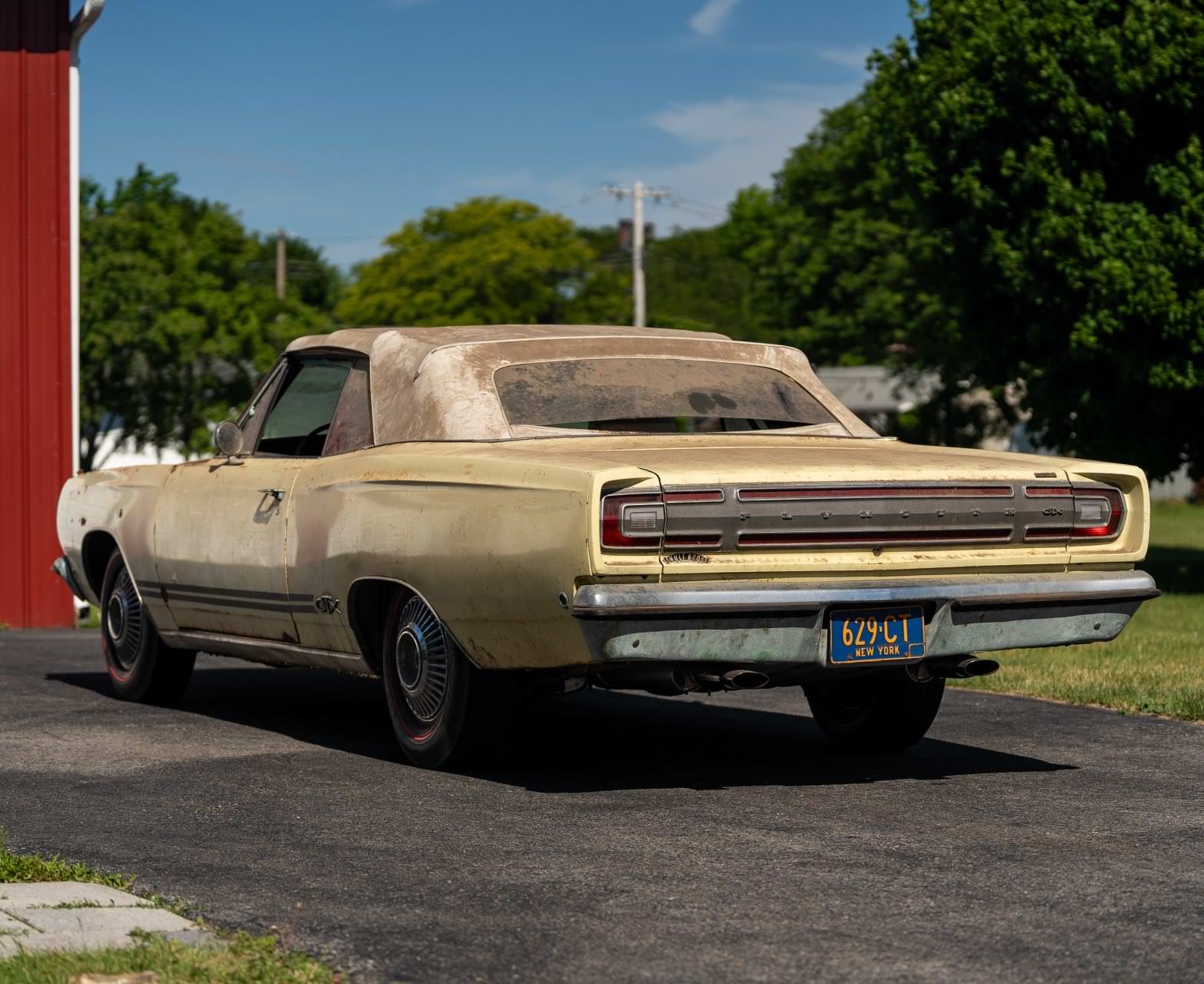
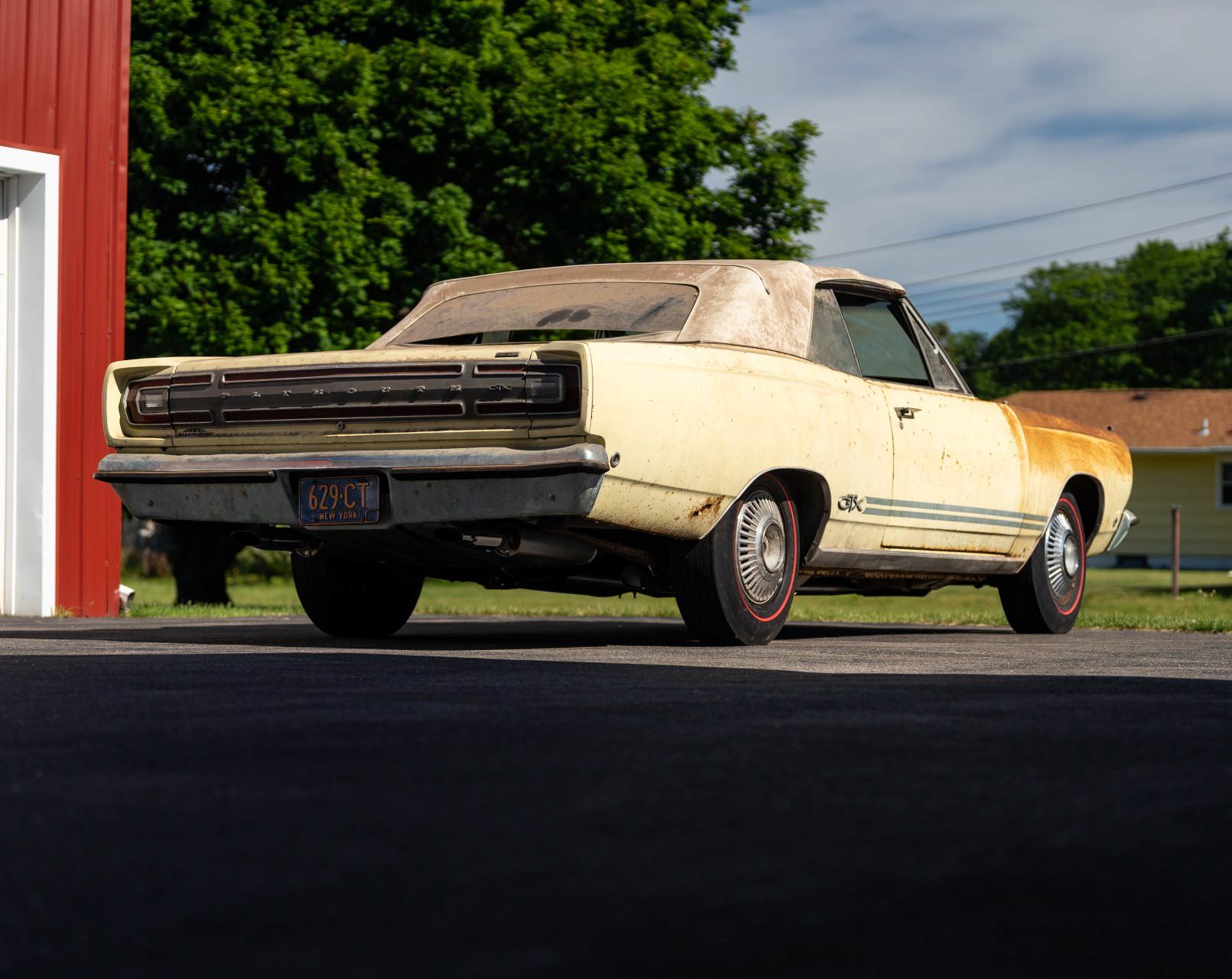
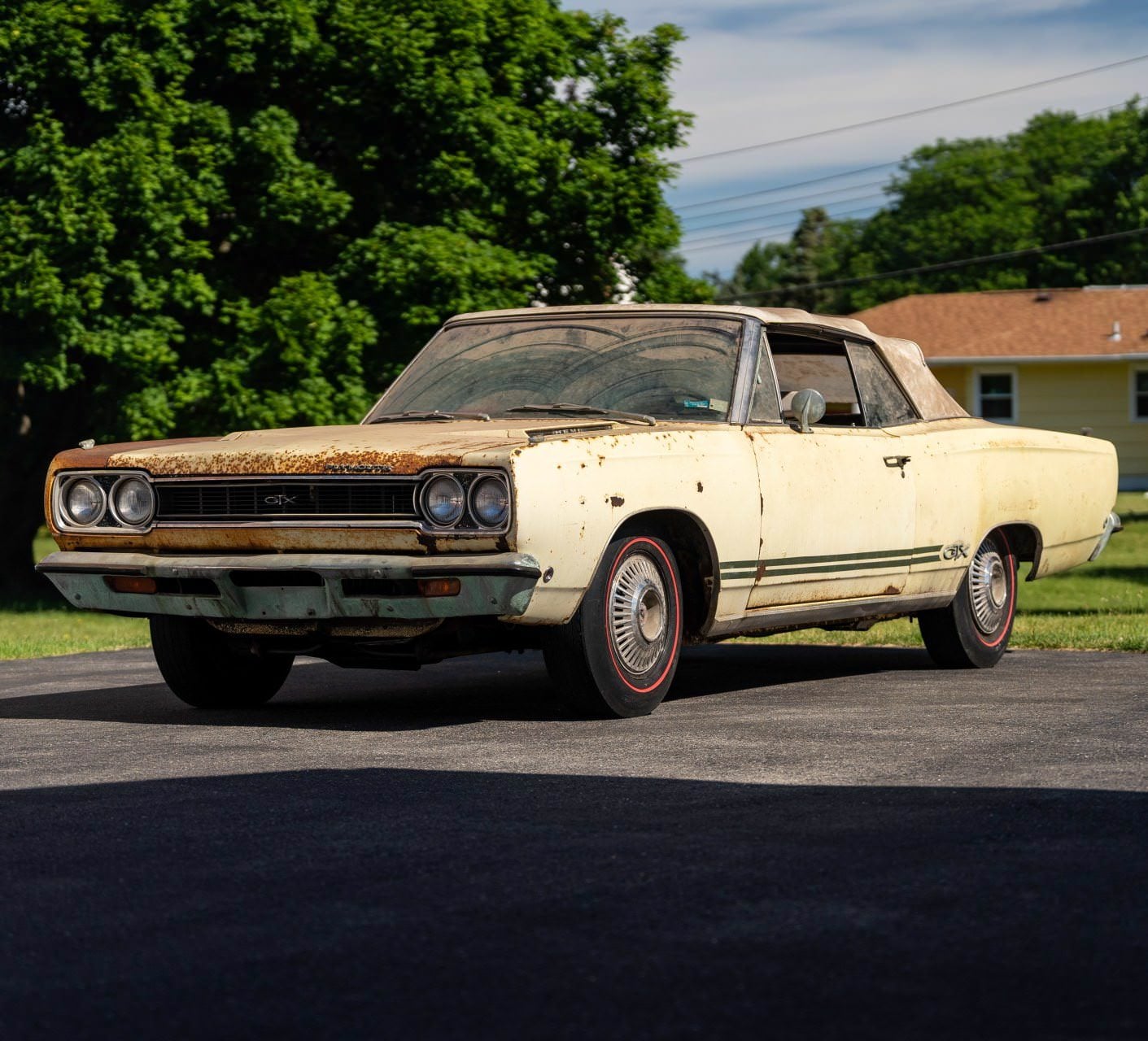
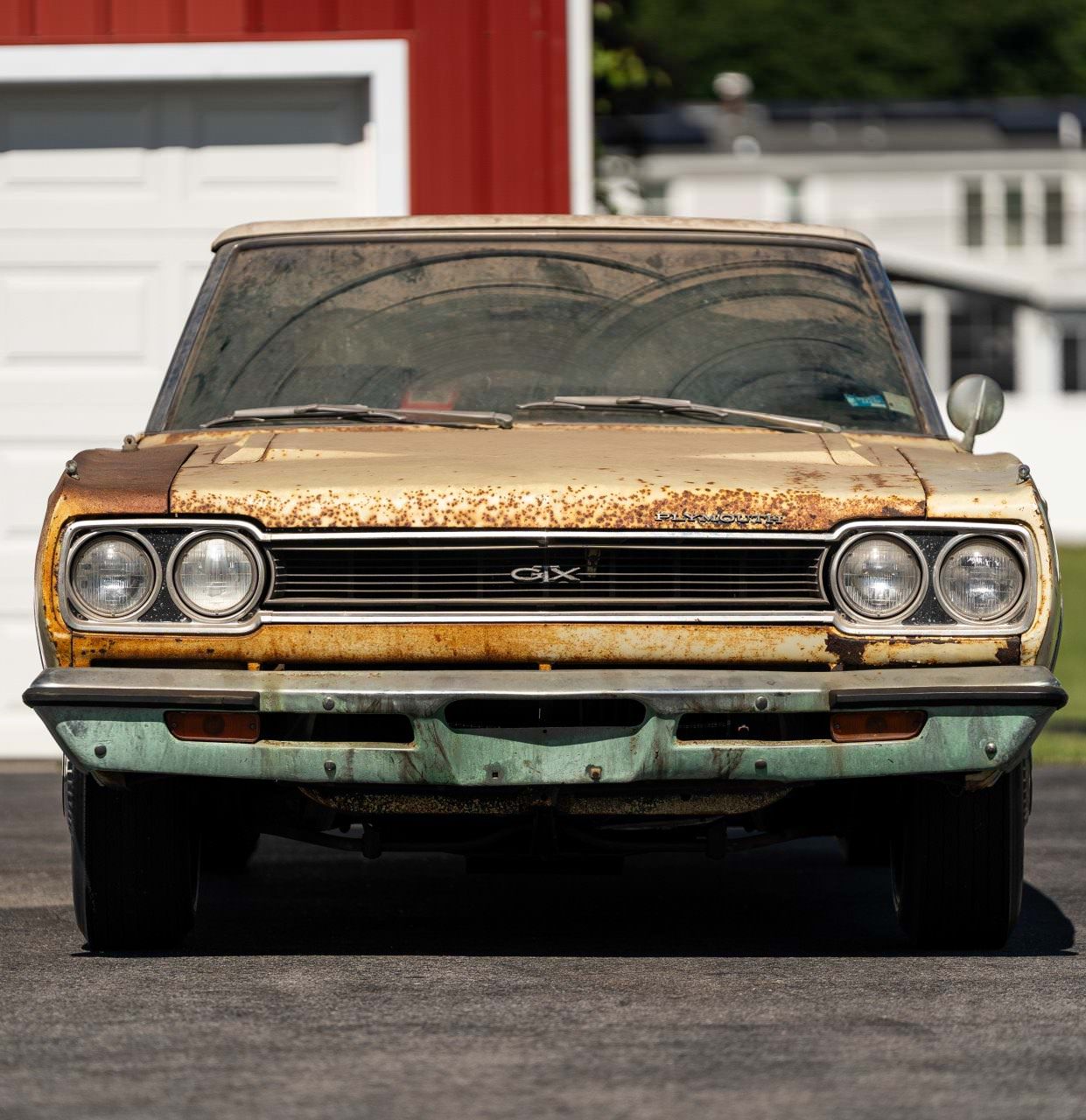
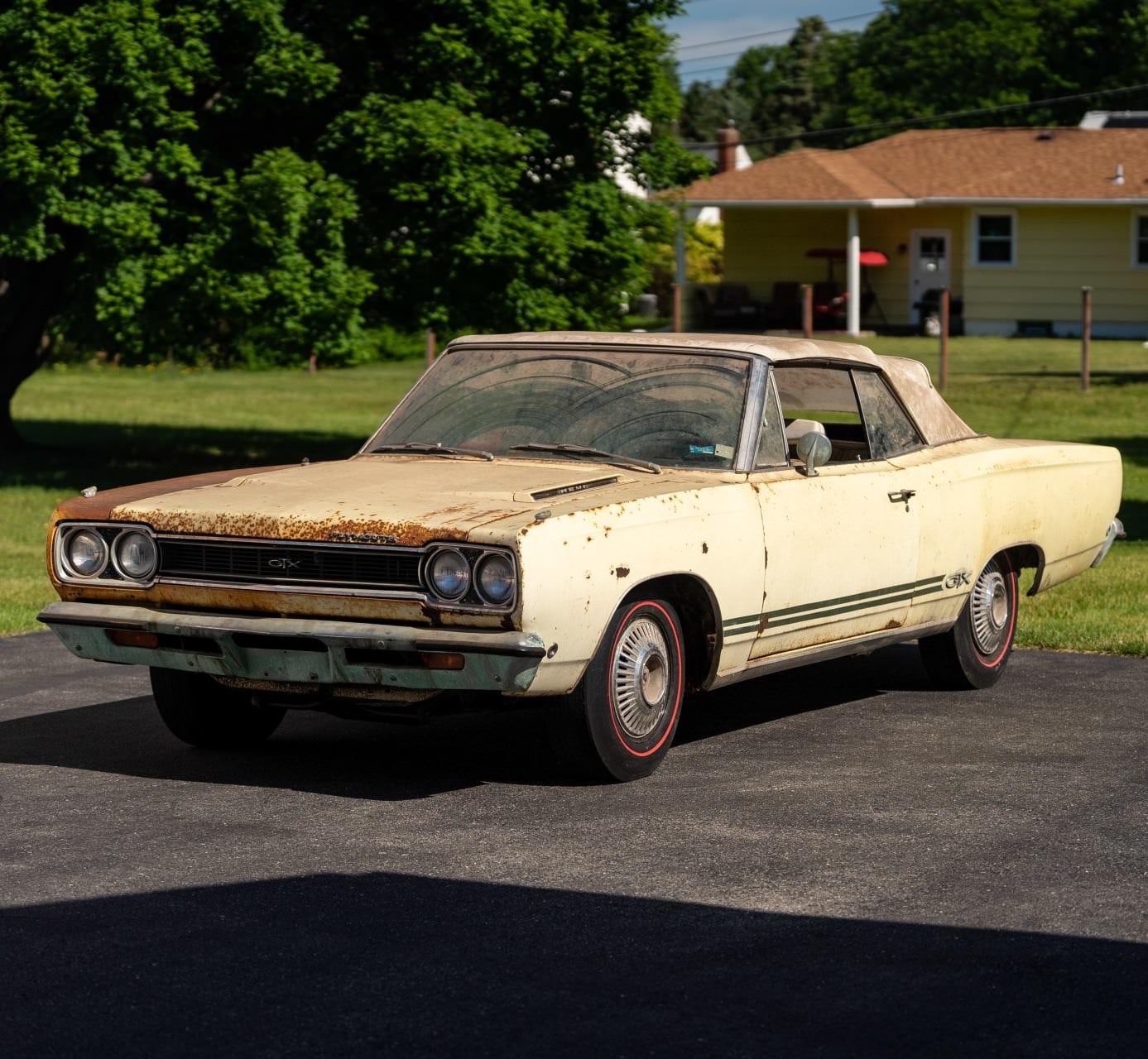
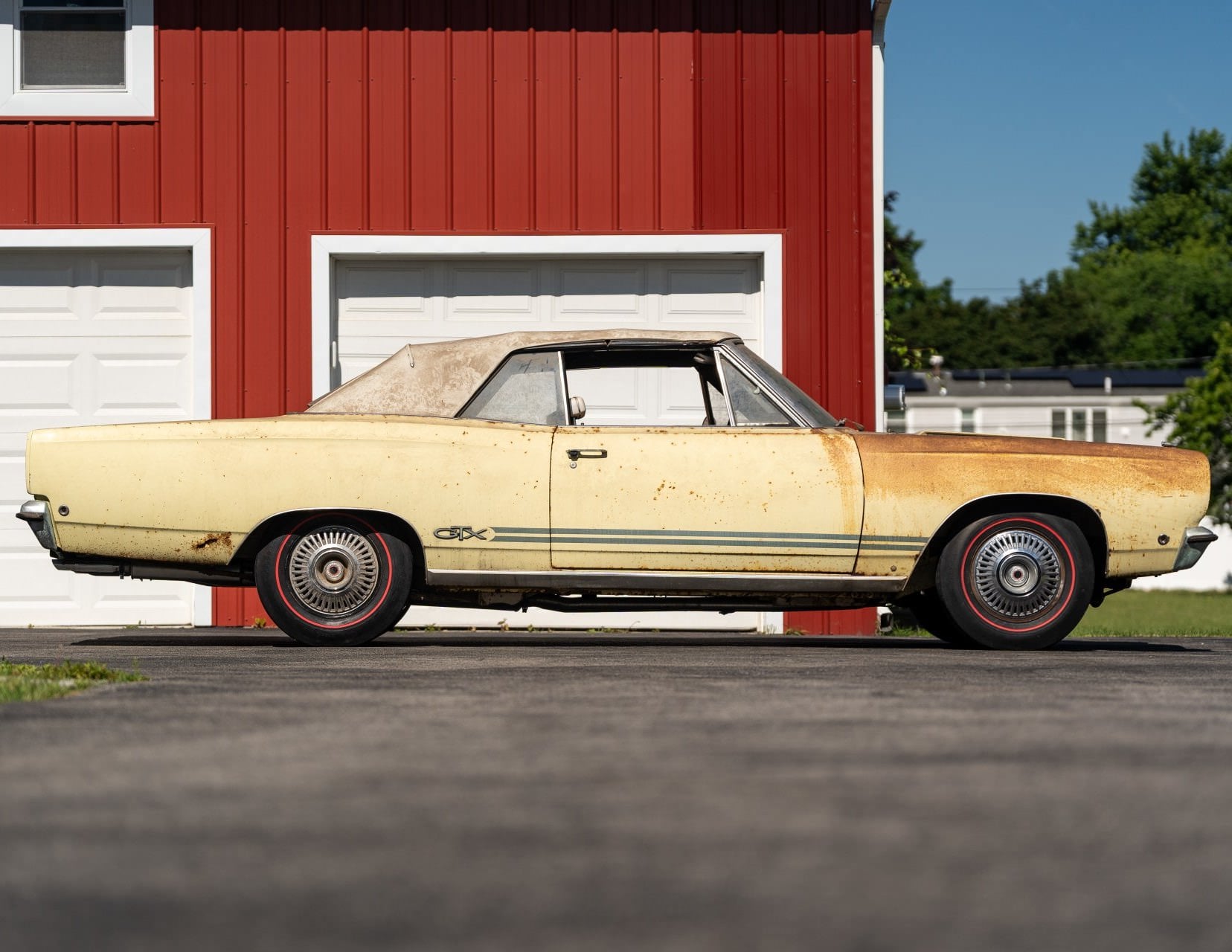
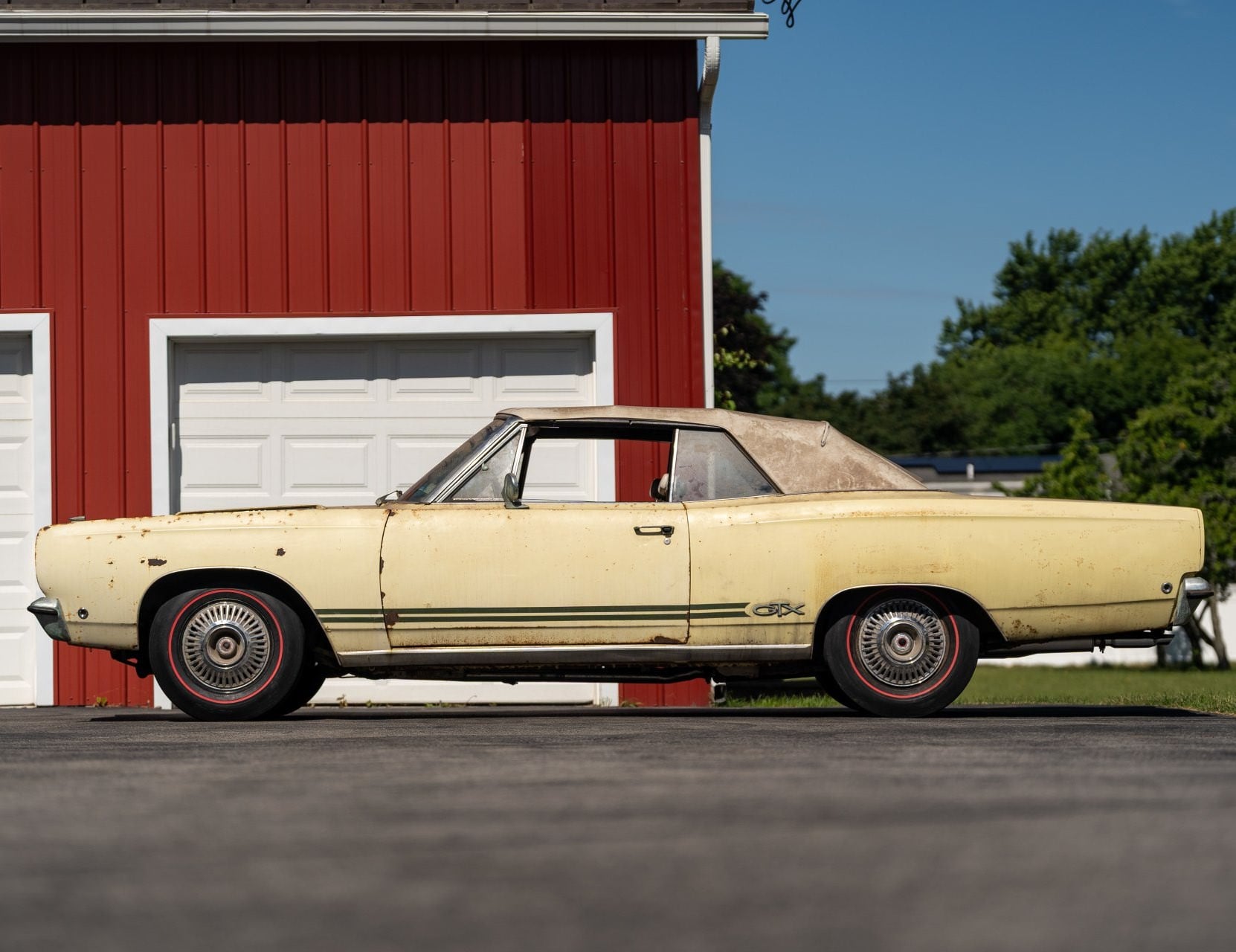
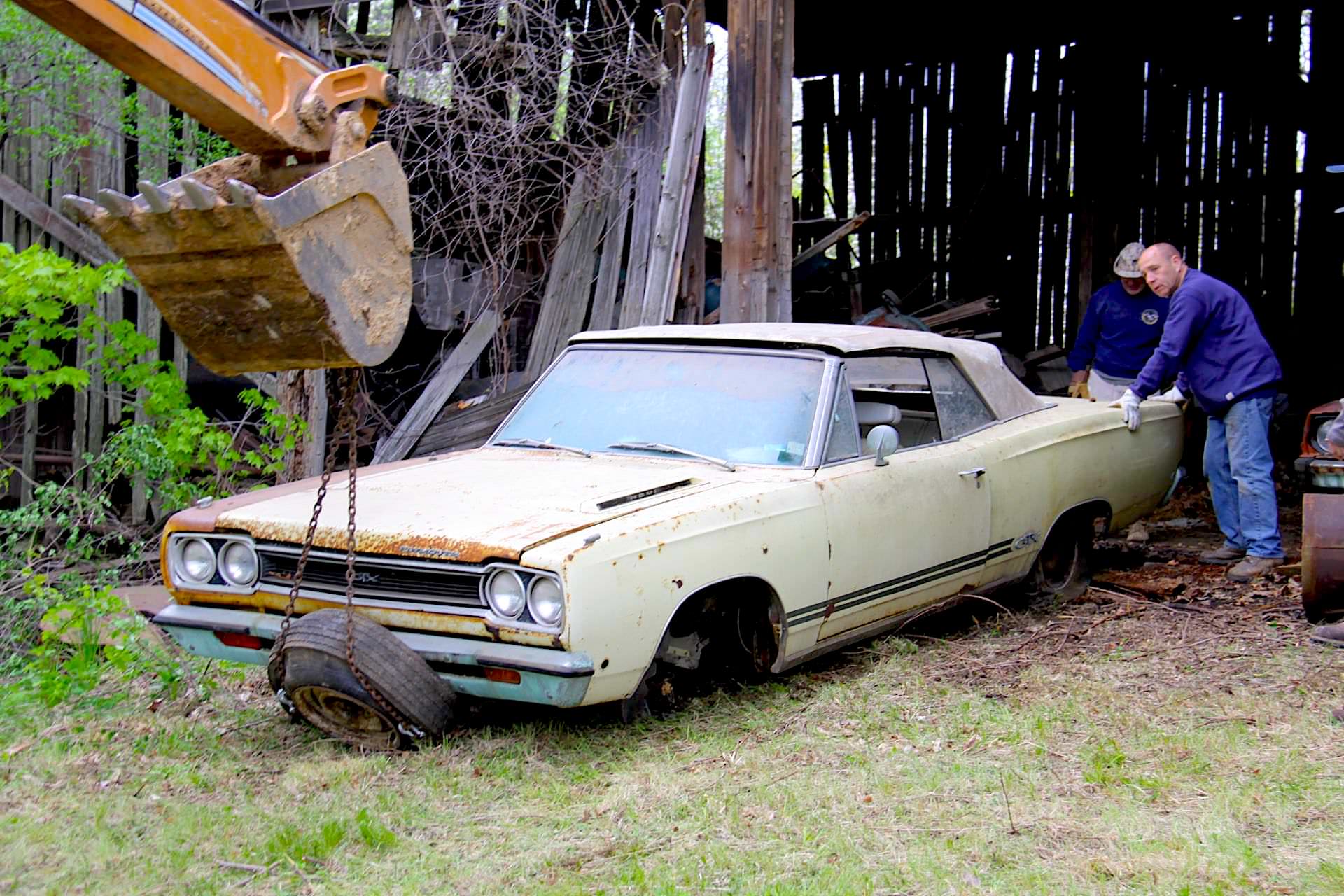
This is a 1968 Plymouth Hemi GTX convertible that’s said to have been parked up in a barn in Scottsville, upstate New York where it remained undisturbed for over 50 years – since the early 1970s.
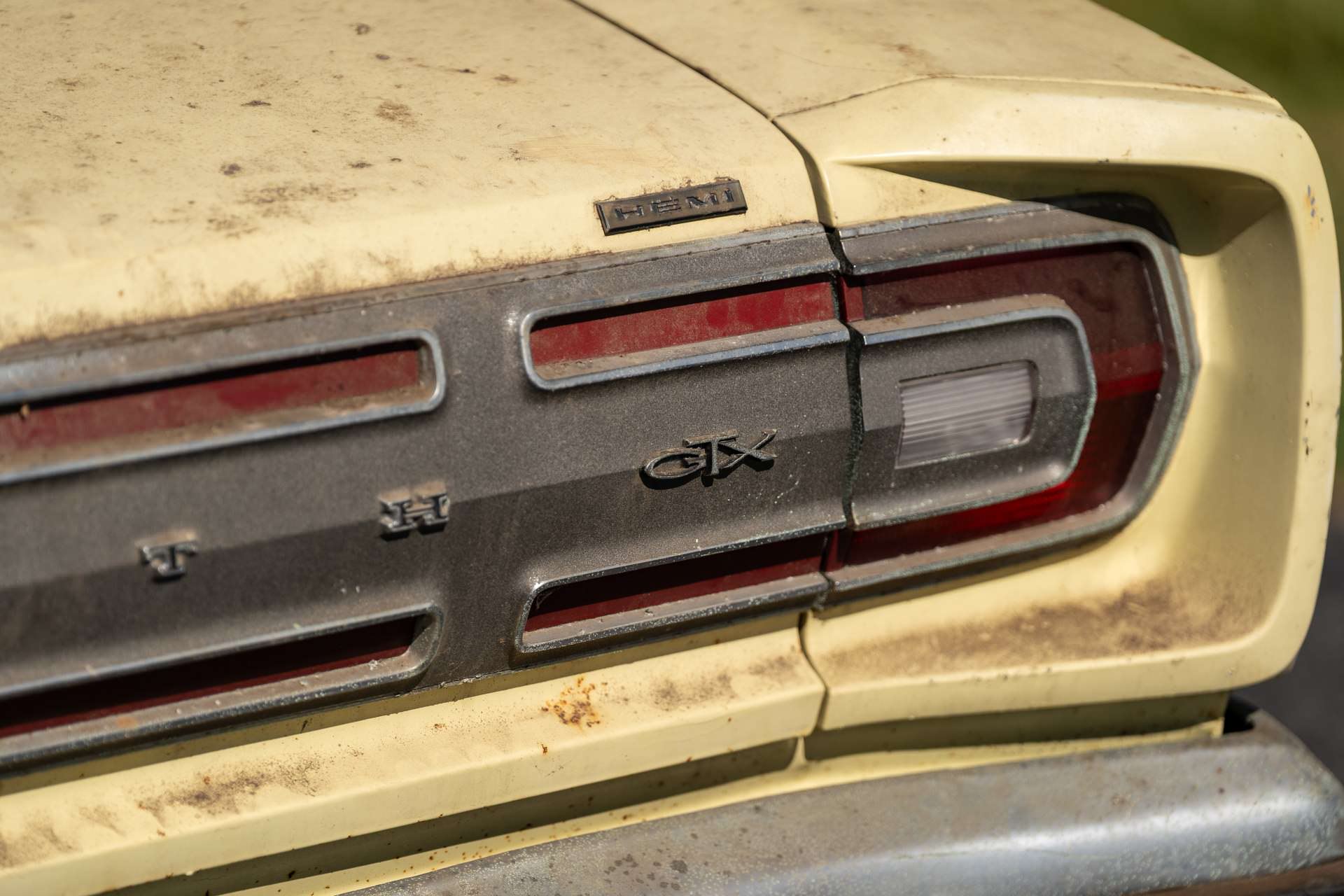
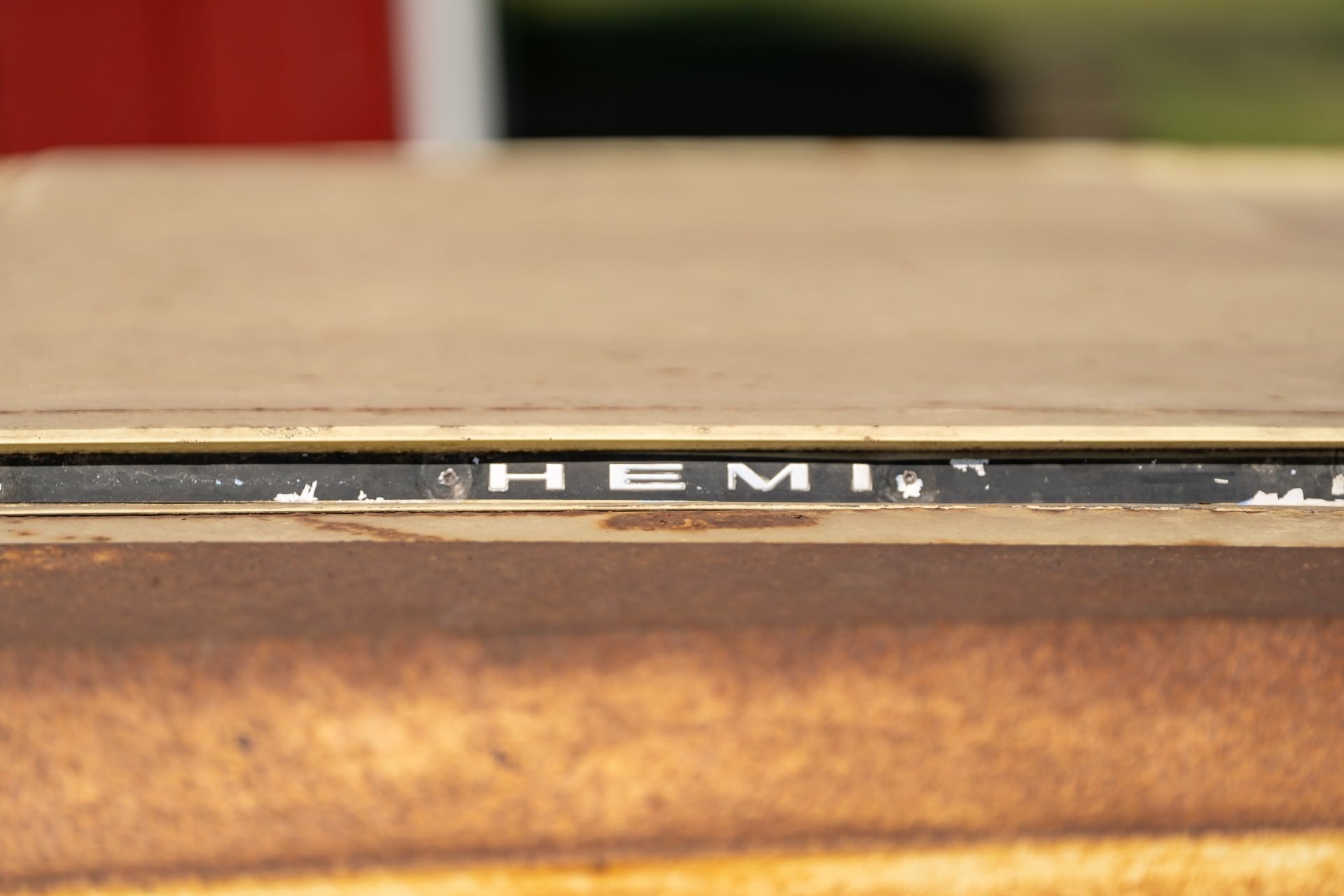
The GTX was powered by the 426 cubic inch 425 bhp Hemi V8 and it was known for dominating drag strips in its time. Just 24 Hemi convertible automatics were made in 1968, and up until recently this one was believed to be lost to time.
Fast Facts: The 1968 Plymouth Hemi GTX Convertible
- Plymouth introduced the GTX in 1967 as a top-trim Belvedere aimed at buyers who wanted a slightly more refined midsize muscle car. For 1968 it became a standalone model on the redesigned “Coke bottle” B-body, sitting above the budget Road Runner and marketed as Plymouth’s “gentleman’s muscle car.”
- The standard engine was the 375 bhp 440 Super Commando V8, with the 426 Hemi a $604.75 option rated at 425 bhp and 490 lb ft of torque. A Hemi GTX could run the quarter-mile in 14.0 seconds flat at slightly over 96 mph in stock trim.
- Of the ~18,000 GTXs built in 1968, only 1,026 were convertibles, and just 36 of those received the Hemi. Among the 36 Hemi convertibles, 24 had the TorqueFlite automatic and 12 had the 4-speed manual, making them among the rarest production muscle cars of the year.
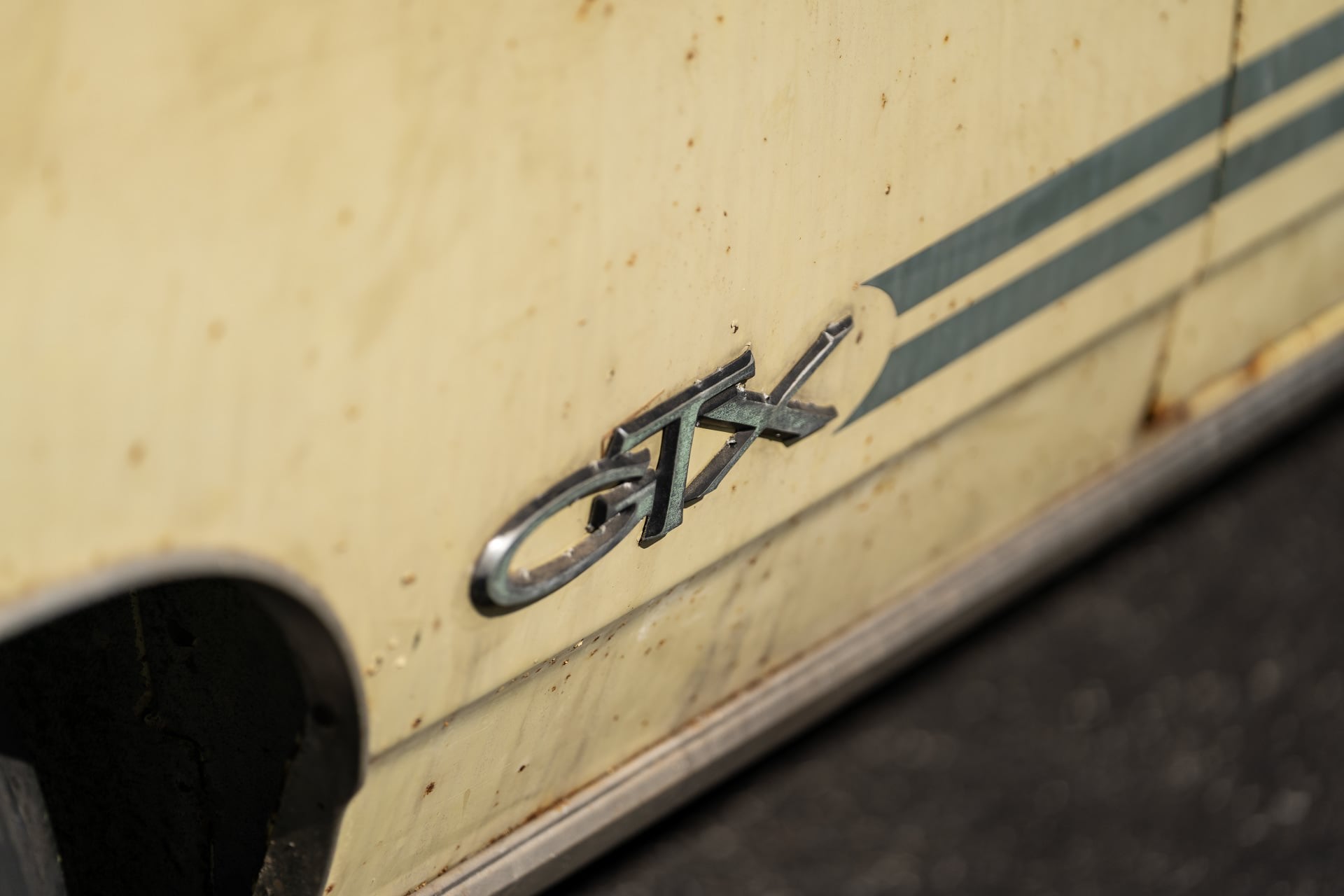
- This barn-find example is one of the 24 Hemi convertible automatics, parked in upstate New York in the early 1970s and bought from the estate of Ed Bransfield in 2017. It retains its matching-numbers Hemi and TorqueFlite, wears Sunfire Yellow with green stripes, and heads to Mecum in late July.
History Speedrun: The Plymouth Hemi GTX
Plymouth introduced the GTX in 1967 as a top-trim performance version of the Belvedere, aimed at buyers who wanted a midsize muscle car with carpeting, brightwork, and bucket seats rather than the stripped-down format that would soon come to define the genre.
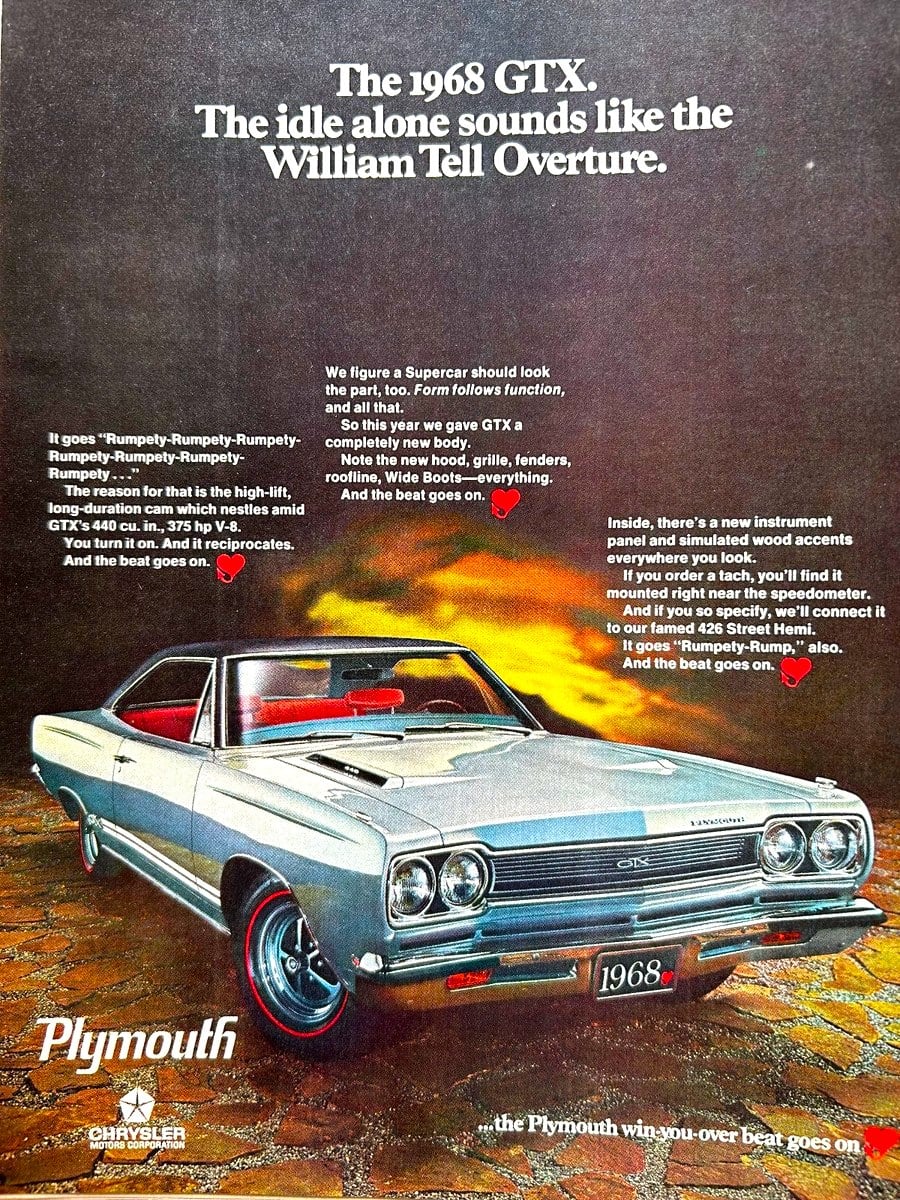
 Plymouth introduced the GTX in 1967 as a top-trim performance version of the Belvedere, aimed at buyers who wanted a midsize muscle car with carpeting, brightwork, and bucket seats rather than the stripped-down format that would soon come to define the genre. Image courtesy of Plymouth.
For 1968 the GTX became a standalone model rather than a trim level, gaining a new “Coke bottle” body profile shared with the redesigned Chrysler B-body line. It was Plymouth’s most expensive intermediate, marketed as “the gentleman’s muscle car.” Buyers who wanted maximum performance could opt for the 426 Hemi V8 in place of the standard 440.
Of the 1,026 GTX convertibles built that year, just 36 left the factory with a Hemi under the hood, making the Hemi GTX convertible one of the rarest production muscle cars of the 1968 model year.
By 1968 the muscle car market had matured, the Pontiac GTO was in its fifth model year, the Chevelle SS 396 was selling in volume, and Chrysler had repositioned its B-body intermediates to compete more directly.
Plymouth’s GTX had launched a year earlier as a high-trim Belvedere with two engines, the 440 Super Commando standard and the 426 Hemi optional. The formula worked well enough that Plymouth shipped just under 12,700 Belvedere GTXs in 1967, and the division promoted the model to standalone status for 1968 while adding the budget-priced Road Runner below it on the same B-body platform.
Where the Road Runner deleted equipment to chase the youth market, the GTX kept carpet, bright trim, simulated hood scoops, dual horizontal body stripes, and the upscale Sport Satellite interior with bucket seats, a blackout hood treatment was also available as an option.
The 1968 redesign replaced the squared-off 1966 to 1967 B-body with smoother flanks, narrower mid-sections, and flaring fenders – what the industry would come to call “Coke bottle styling” after its similarity to the curves down the side of the popular cola’s glass bottle.
Plymouth and Dodge cars shared the platform and glasshouse but used different sheet metal. The GTX rode on a 116 inch wheelbase with a unibody chassis, torsion-bar front suspension, and leaf springs at the rear.
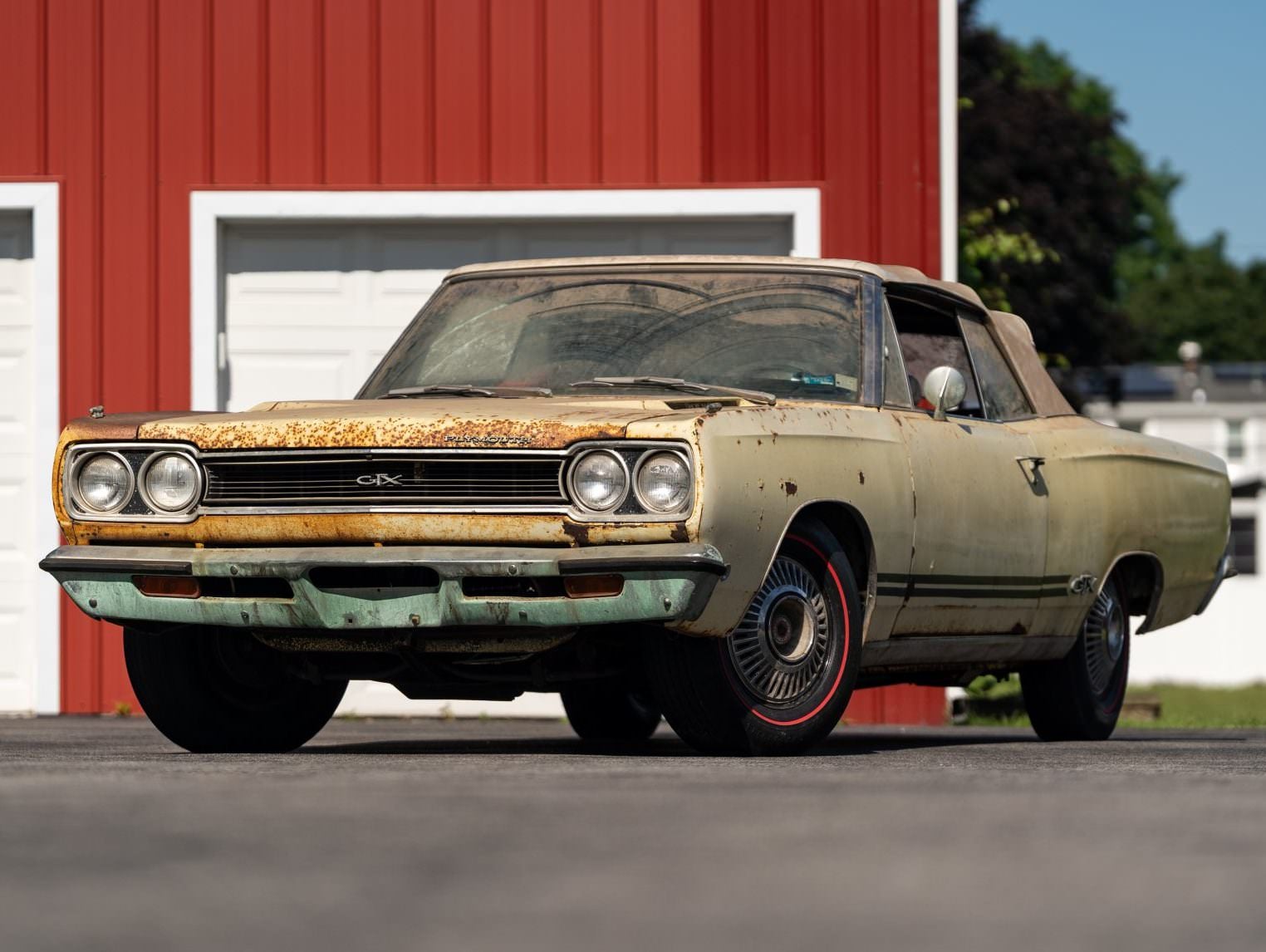
This is a 1968 Plymouth Hemi GTX convertible that’s said to have been parked up in a barn in Scottsville, upstate New York where it remained undisturbed for over 50 years -since the early 1970s.
Heavy-duty suspension was standard, with stiffer springs and shocks tuned for the weight of the big-block engines. The TorqueFlite 3-speed automatic was standard equipment on the GTX, while the A-833 4-speed manual was offered as a no-cost option. Dual exhaust, heavy-duty drum brakes, and Red Streak tires were also part of the base package, with front disc brakes offered as an option.
The standard 440 cubic inch “Super Commando” RB V8 used a single Carter four-barrel carburetor and was rated at 375 bhp and 480 lb ft of torque. The optional 426 Hemi was a heavier-breathing engine developed for NASCAR in 1964 and detuned for street use beginning in 1966. It used hemispherical combustion chambers fed by twin Carter AFB four-barrel carburetors on an inline intake manifold, with a 4.25 inch bore and 3.75 inch stroke.
The factory rating of the Hemi was 425 bhp at 5,000 rpm and 490 lb ft of torque at 4,000 rpm, with a compression ratio of 10.25:1 and solid lifters. For 1968 the Hemi received a revised camshaft with longer duration and higher lift than the 1966/1967 grind, helping to sharpen throttle response slightly and aid in high-rpm breathing. The Hemi option added $604.75 to the price of the GTX – that’s $5,826 in 2026 dollars.
Hemis came with mandatory heavy-duty drivetrain upgrades, including, on most 4-speed cars, a Dana 60 rear axle. Buyers could specify rear gear ratios that ranged from mild highway gearing to a 4.10:1 ratio aimed squarely at the 1/4 mile.
The performance of the Hemi GTX was at the front edge of what American production cars were capable of in 1968. A Hemi-powered GTX could clear the standing quarter-mile in 14.0 seconds flat at slightly over 96 mph in stock trim.
The convertible body cost a tenth or two on the strip compared with the hardtop, but the difference was small enough that a good driver could typically make up the difference.
The 440 was easier to live with and less tuning-sensitive than the Hemi, with excellent low-end torque and a single four-barrel carburetor that needed less attention than the Hemi’s twin AFBs. Car Life magazine road-tested both engines for its February 1968 issue and concluded that, with the 440, the GTX offered as much performance per dollar as anything else on the market at the time. It just lacked the “Hemi” name bragging rights.
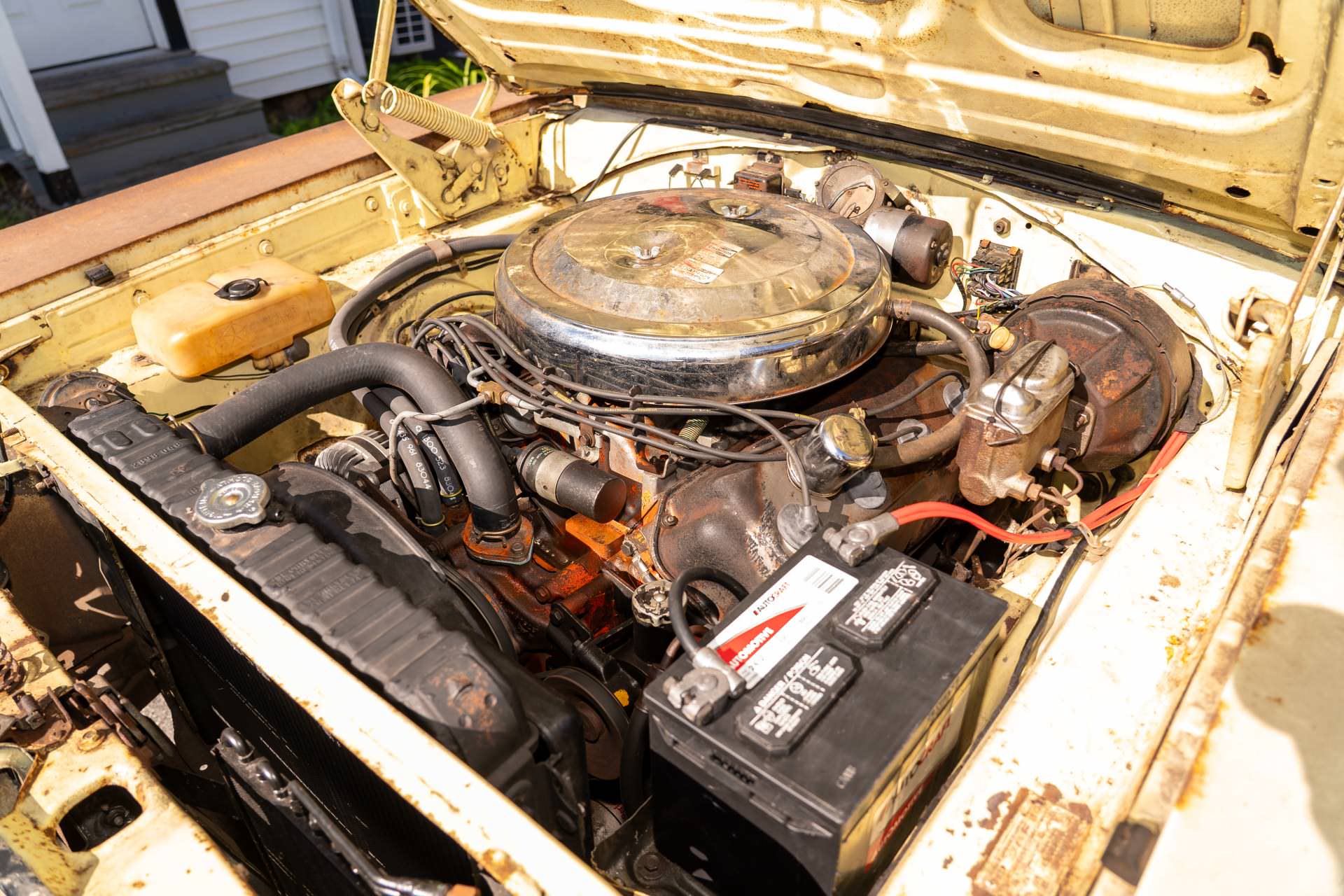
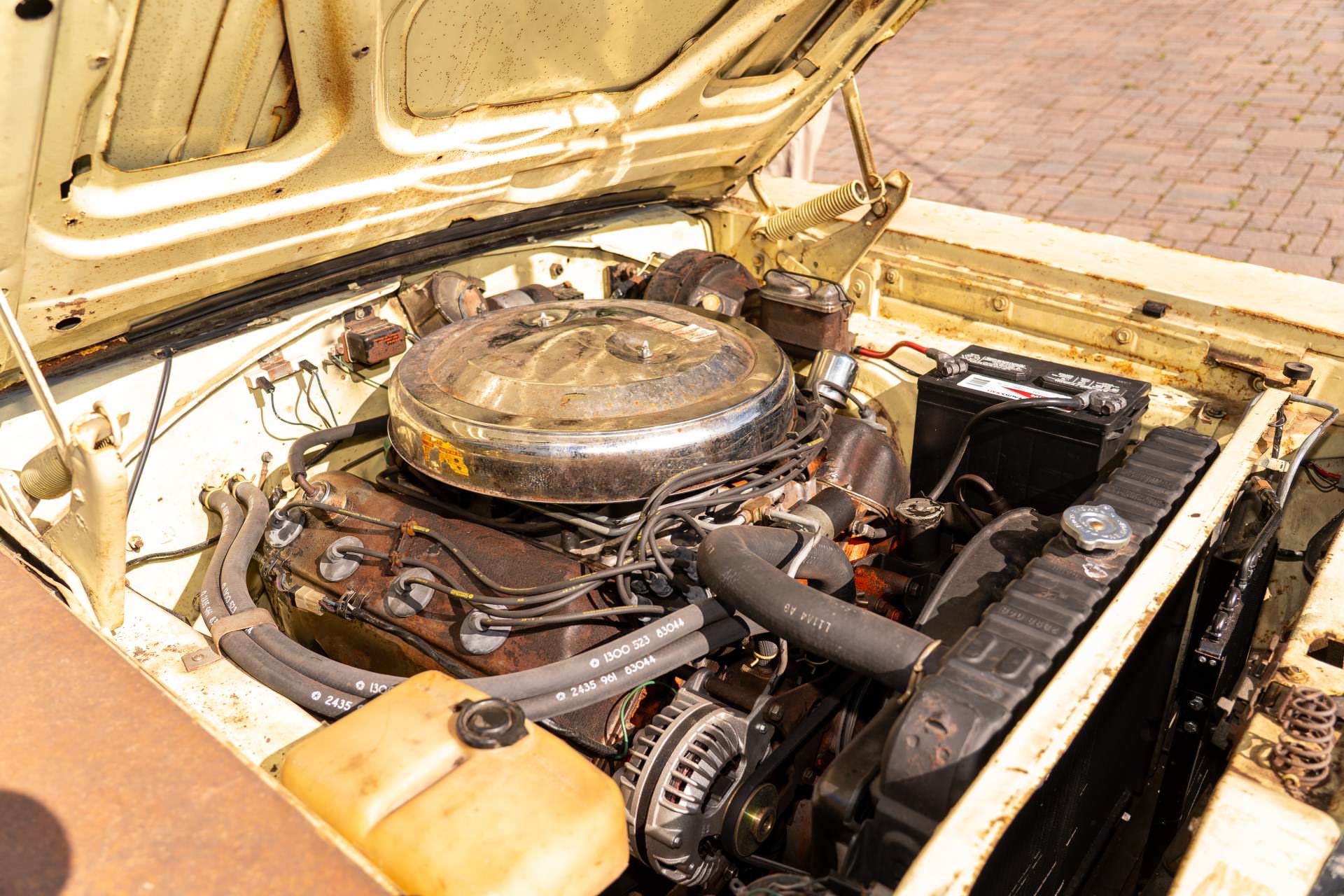
Importantly, this car keeps its matching-numbers 426/425 bhp Hemi V8 and matching-numbers TorqueFlite automatic transmission. The Hemi has been rebuilt, one of the original carburetors had gone missing at some point, and when Ed was asked about it, he reportedly said it was on a shelf in his closet, which is exactly where it was found.
Sources differ on the exact 1968 hardtop production figure but it’s between 17,000+ and 18,000+, with 1,026 convertibles, interestingly, all seem to agree that exactly 1,026 convertibles were built 1968 was the best-selling year the model would ever record, the convertible’s lower share of production was actually a sign of a deeper market trend – American convertible sales had been declining steadily through the decade, and the new Road Runner was introduced as a pillared coupe, with a hardtop added later in the model year.
The Hemi option on the GTX was actually not that popular, only around 2.5% of total production. Plymouth shipped 410 Hemi hardtops and 36 Hemi convertibles. Among the 36 convertibles, 24 were ordered with the TorqueFlite and 12 with the 4-speed manual.
The Hemi’s high price, combined with rapidly rising insurance surcharges on high-performance cars, kept most buyers ticking the box for the 440.
The GTX remained in production until 1971 with a couple of mild restyles in 1969 and 1970, a new fuselage body for 1971, and the addition of the 440 Six Barrel in 1970 as a mid-tier option between the standard 440 and the Hemi.
Sales declined rapidly as insurance premiums and emissions regulations weighed on muscle car buyers, and the GTX was dropped as a standalone model after 1971, surviving only as a trim package on the Road Runner through till the mid-1970s.
The 1968 Plymouth Hemi GTX Shown Here
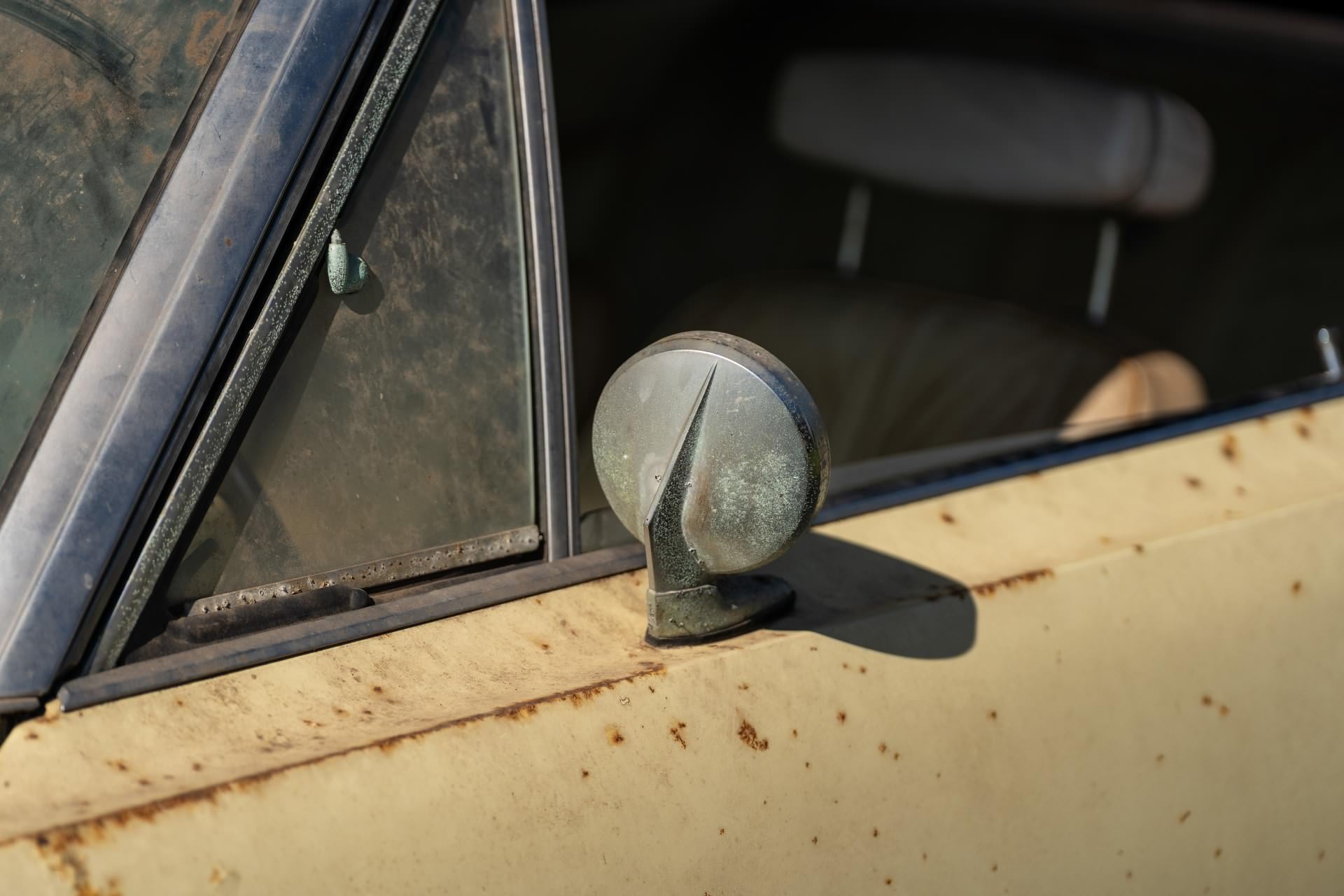
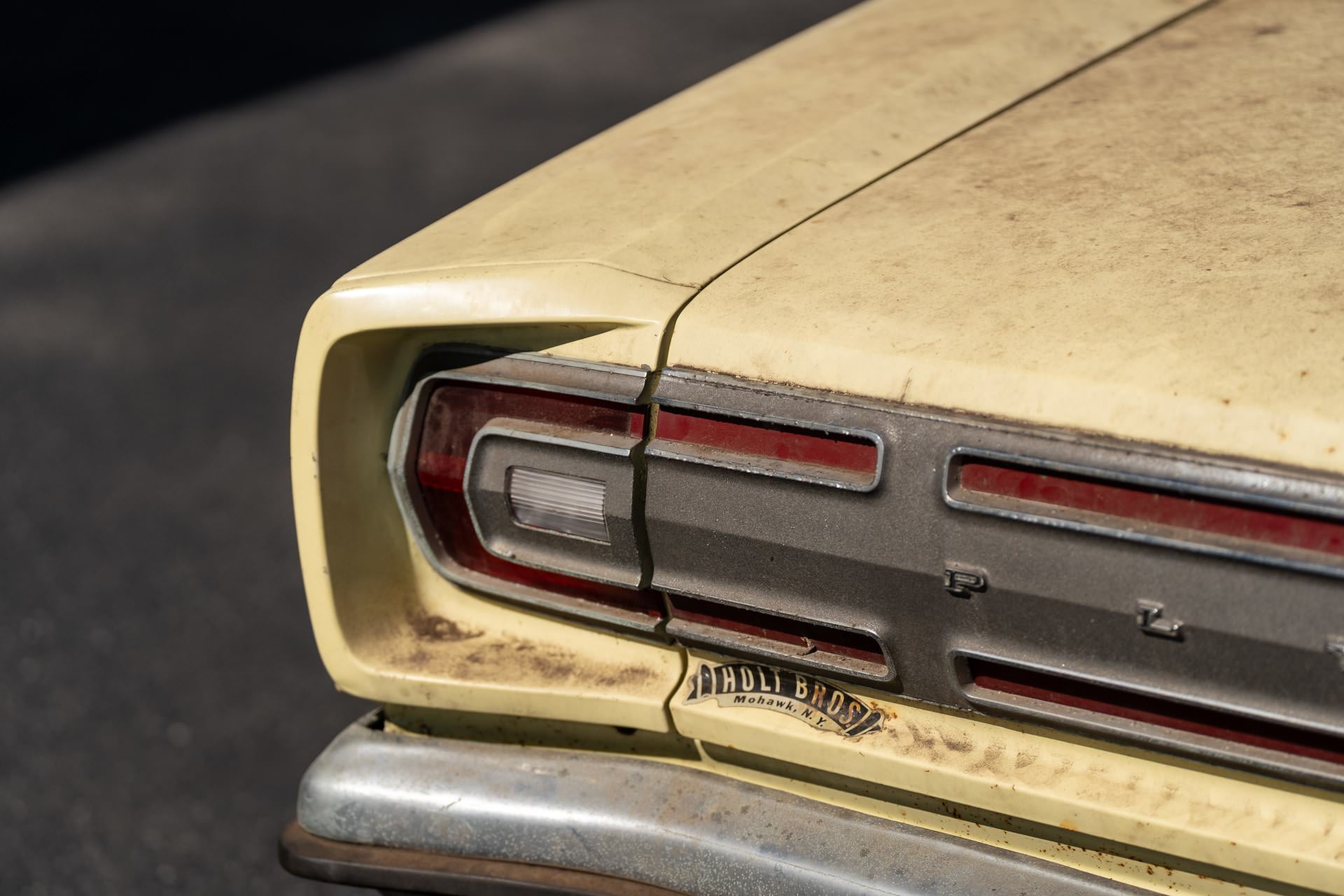
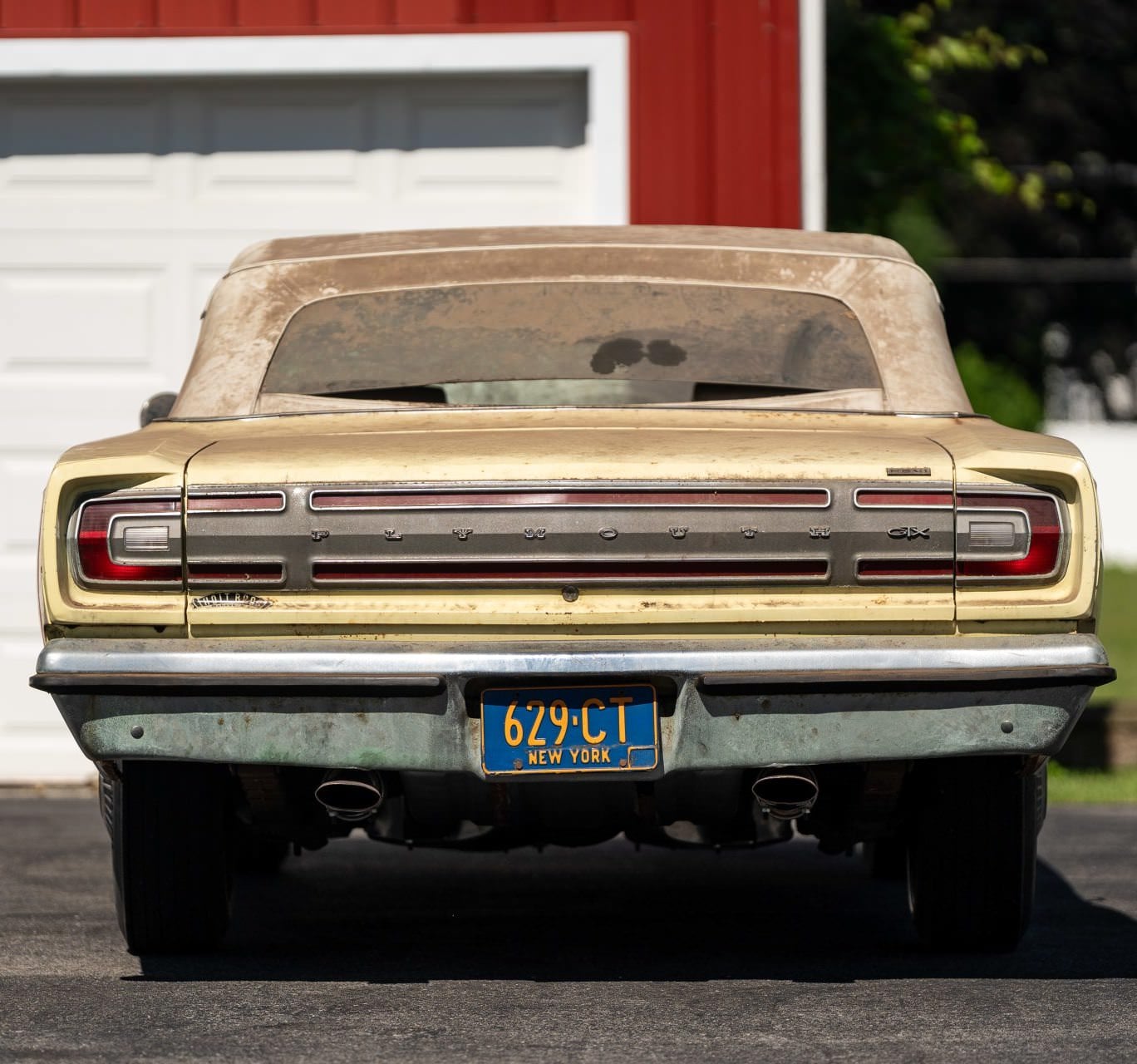
This is a barn find 1968 Plymouth Hemi GTX Convertible discovered in an old barn in Scottsville, upstate New York, where it had been parked in the early 1970s by Edward Bransfield, owner of Ed’s Garage.
The car was bought from his estate in 2017 with 34,326 miles showing on the odometer, and it has been driven just three miles since, with the current reading now at 34,329 miles. It’s one of 24 late-model Hemi convertible automatics built in 1968 and it’s documented with a Dave Wise report.
Importantly, it keeps its matching-numbers 426/425 bhp Hemi V8 and matching-numbers TorqueFlite automatic transmission. The Hemi has been rebuilt, one of the original carburetors had gone missing at some point, and when Ed was asked about it, he reportedly said it was on a shelf in his closet, which is exactly where it was found.
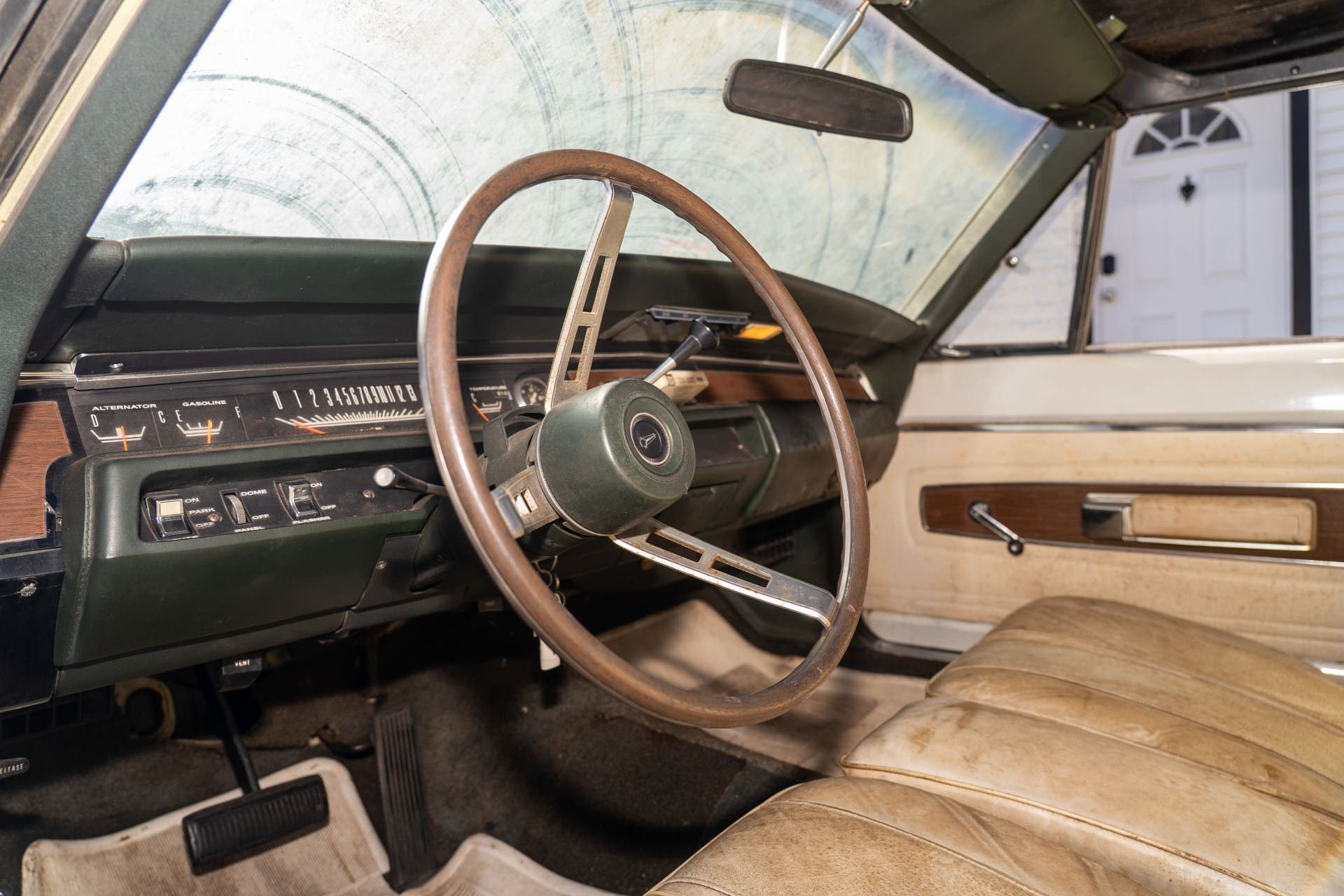
This is a barn find 1968 Plymouth Hemi GTX Convertible discovered in an old barn in Scottsville, upstate New York, where it had been parked in the early 1970s by Edward Bransfield, owner of Ed’s Garage.
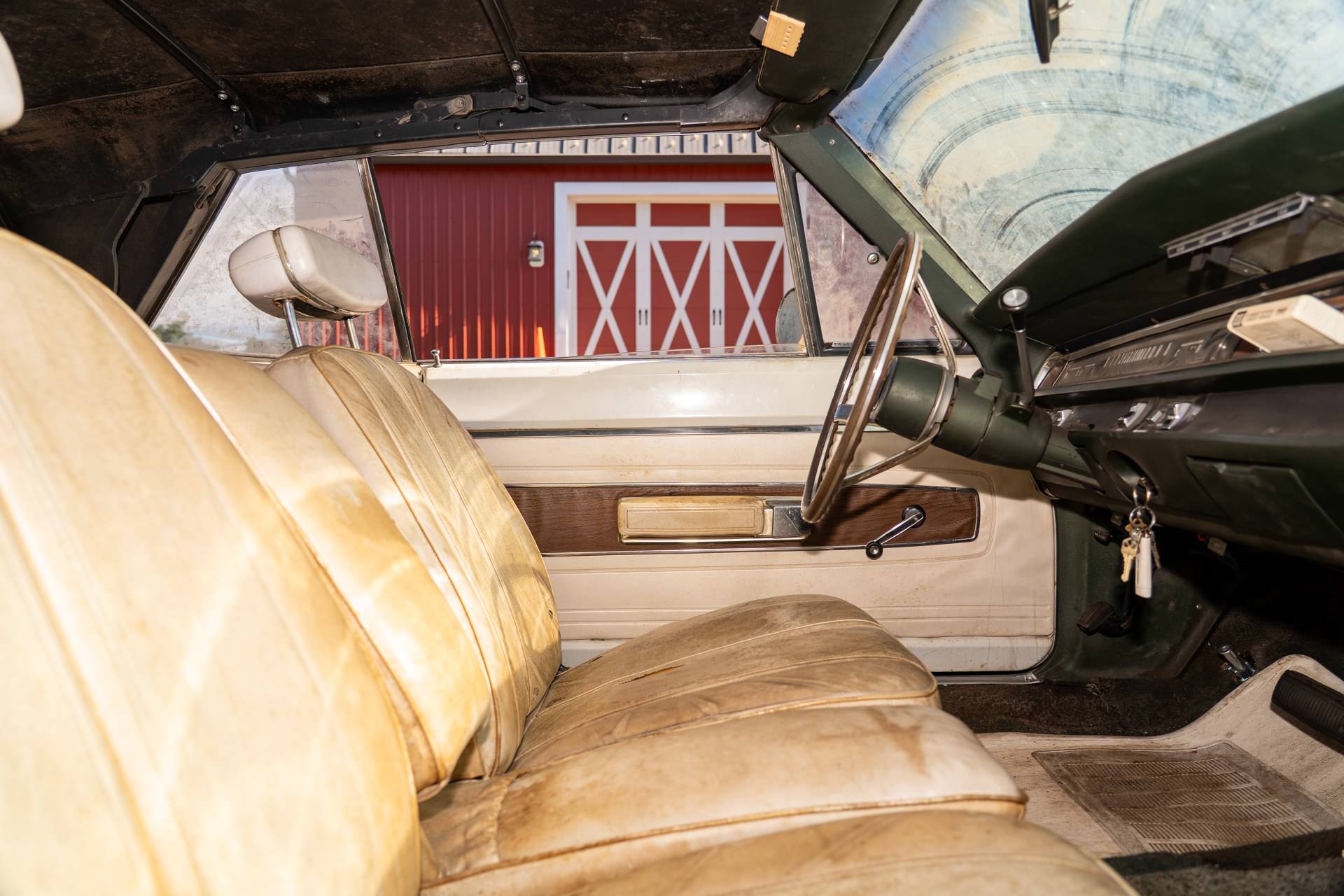
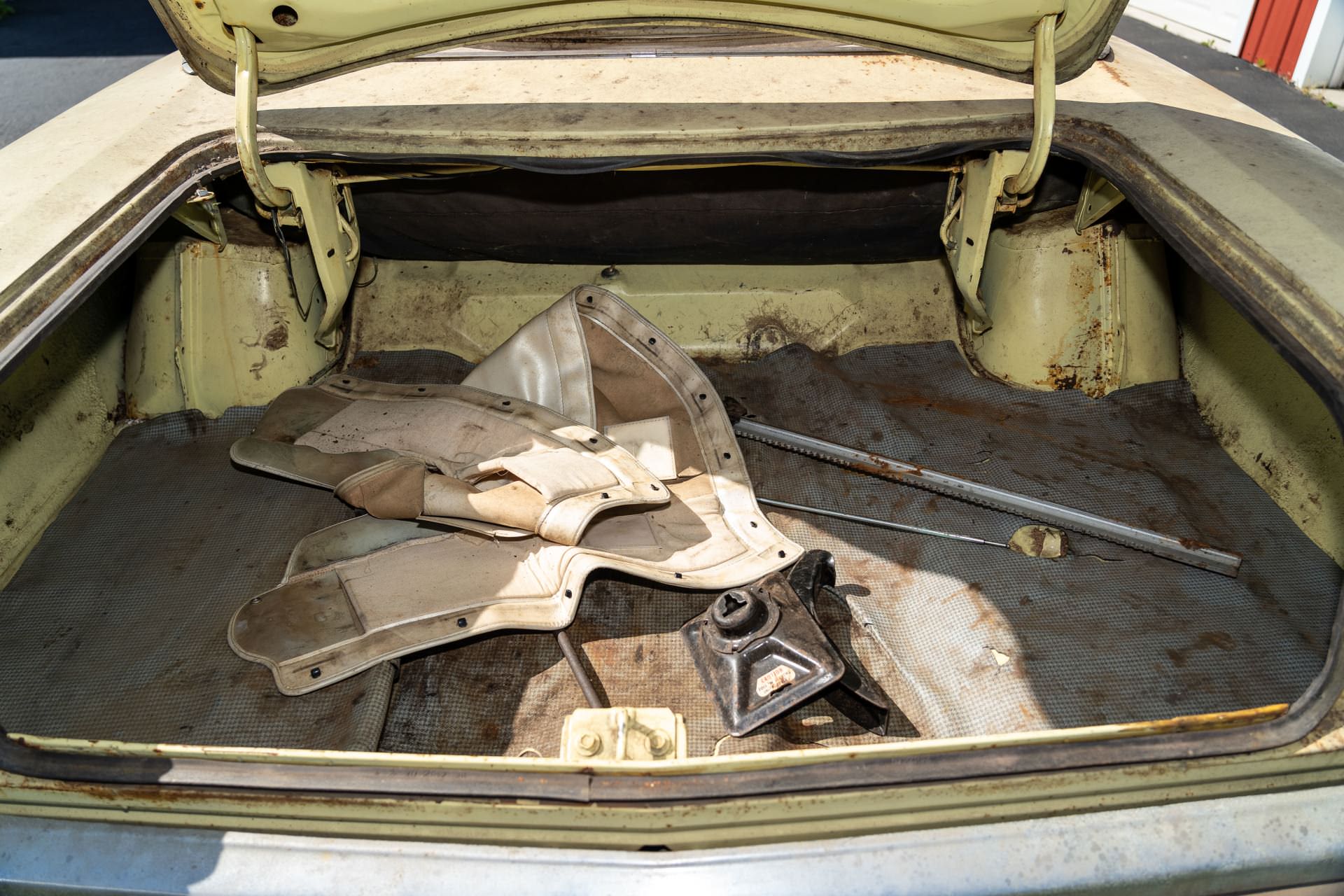
Mechanical recommissioning included new brake lines, calipers, wheel cylinders, and a new master cylinder, though the original brake shoes are still in place. A new fuel tank, new distributor, new alternator, and new exhaust have been fitted, the original radiator has been recored, and the car rides on Redline tires. A new convertible top, seat covers, door panels, and carpet are included in the sale.
The car is now due to roll across the block with Mecum in late July and you can visit the listing here if you’d like to read more about it or register to bid.


Images courtesy of Mecum

Articles that Ben Branch has written have been covered on CNN, Popular Mechanics, Smithsonian Magazine, Road & Track Magazine, the official Pinterest blog, the official eBay Motors blog, BuzzFeed, Autoweek Magazine, Wired Magazine, Autoblog, Gear Patrol, Jalopnik, The Verge, and many more.
Silodrome was founded by Ben back in 2010, in the years since the site has grown to become a world leader in the alternative and vintage motoring sector, with well over a million monthly readers from around the world and many hundreds of thousands of followers on social media.