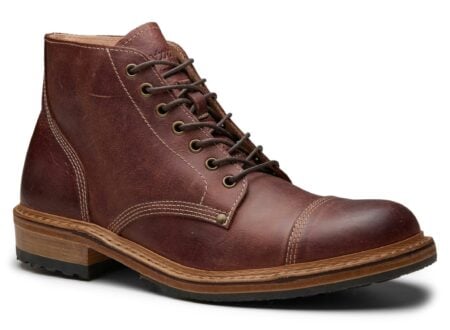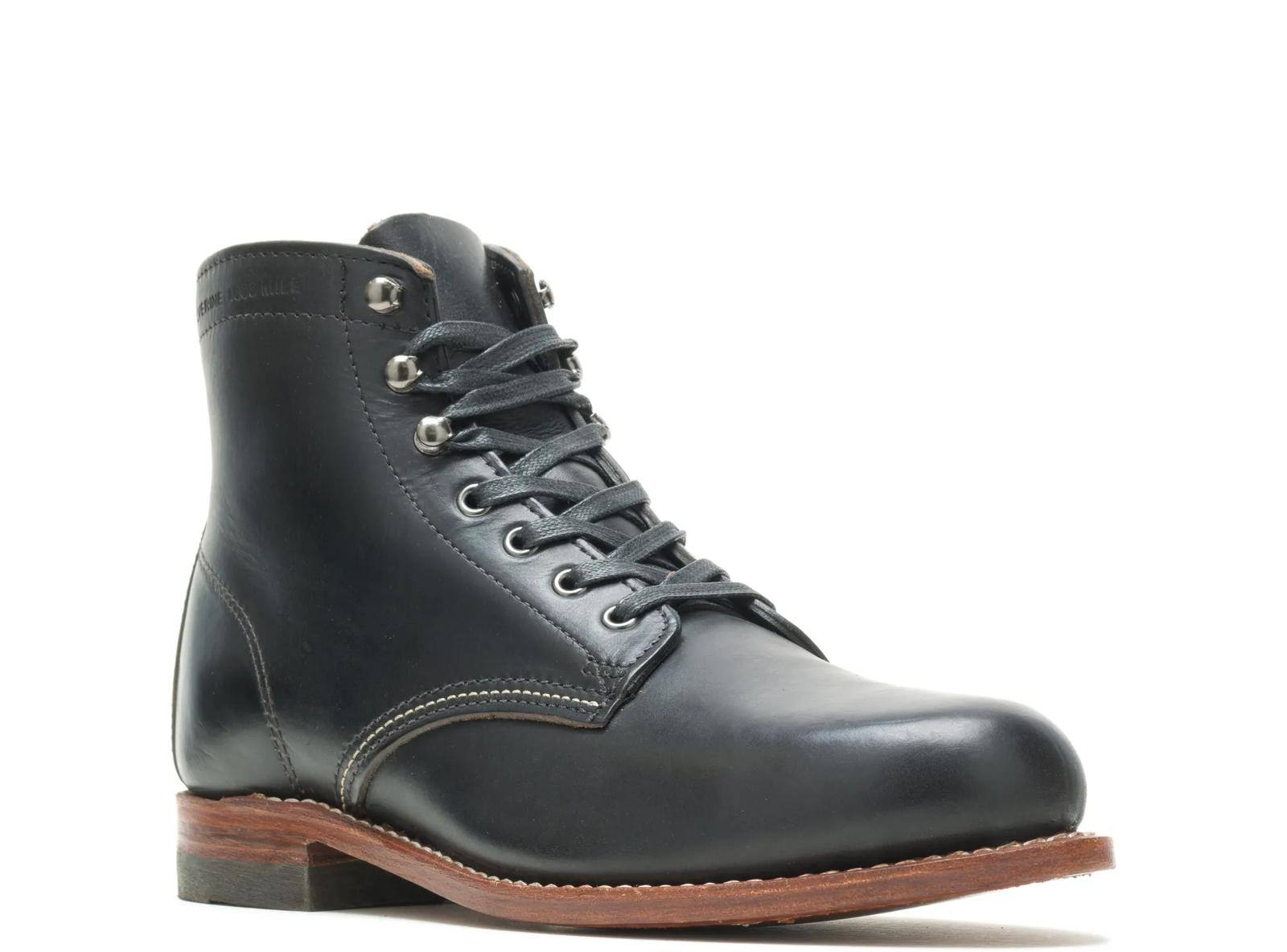
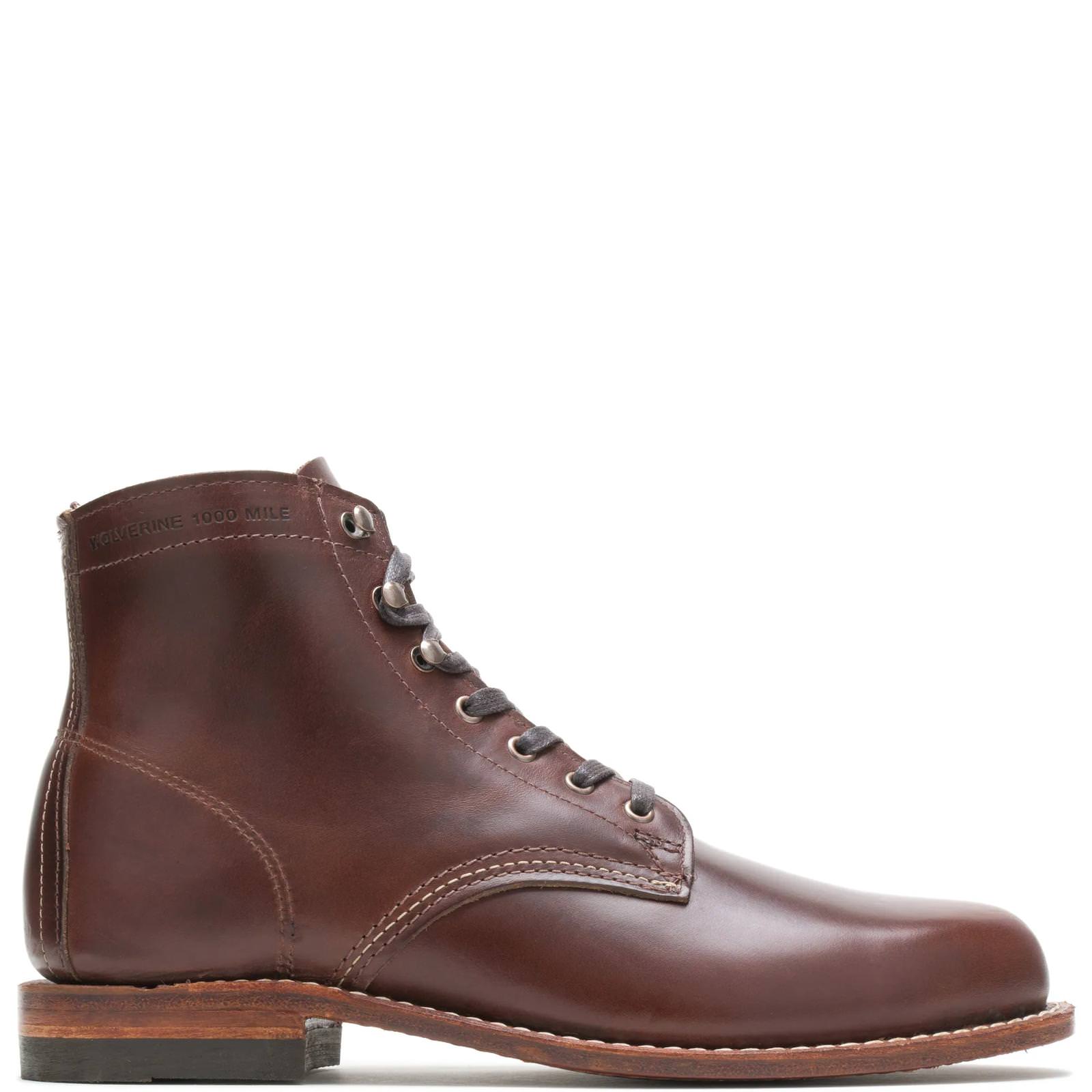
This is the Wolverine 1000 Mile Boot, it’s the original plain-toe variant, the one that closely matches the original 1000 Mile Boot that the company debuted well over 100 years ago.
This boot design was famously developed to be so tough it could last for 1000 miles, though many owners found it could last significantly longer as the design is resoleable when the original sole wears through. These are the kind of boots many of our grandparents (and great-grandparents) wore on farms or in factories back in the day, and this modern version is still made in the USA.

 In 1914 the Wolverine name went onto shoes for the first time, and the company introduced the “1000 Mile Shoe.” The name meant the boots were capable of at least a thousand miles of wear, an unusually high-milage for a boot at the time, but many owners soon found that their boots would last far longer. Image courtesy of the Wolverine Shoe & Tanning Corp.
History Speedrun: The Wolverine 1000 Mile Boot
The company we now know as Wolverine started out back in 1883 as the Hirth-Krause Company, a Grand Rapids leather wholesaler set up by G.A. Krause and his uncle, Fred Hirth. It sold soles, lacing and buttonhooks, and bought finished shoes to resell.
Over the next 20 years Krause slowly built the rest of a shoe business around it, it grew so much that in 1901 he bought and expanded the Rogue River Electric Light and Power Company, using it to bring electricity to Rockford, Michigan for the first time.
In 1903 he opened a factory in Rockford under his eldest son Otto and used the electricity that was now being enjoyed by the whole town to run the new plant – it was soon making 300 pairs a day. In 1908 he and his younger son Victor started the Wolverine Tanning Company to supply it with high quality leather. This was textbook vertical integration long before there was an official term for it.
In 1909 Victor traveled to Milwaukee to study a chrome tanning and retanning process developed by the tanner John Pfingsten, and by 1914 his own experiments had made shell horsehide workable. That hide, cut from the horse’s rear end, was cheap and hard-wearing but had until then been too stiff for footwear. Wolverine soon dropped cowhide in favor of it, due to its toughness and hardwearing nature.
In 1914 the Wolverine name went onto shoes for the first time, and the company introduced the “1000 Mile Shoe.” The name meant the boots were capable of at least a thousand miles of wear, an unusually high-milage for a boot at the time, but many owners soon found that their boots would last far longer.
The boots soon became a fixture of rural and small-town America, and the company credits the 1,000 Mile with lifting earnings almost 700% between 1916 and 1923. In 1921 the shoe and tanning operations merged as the Wolverine Shoe and Tanning Corporation.
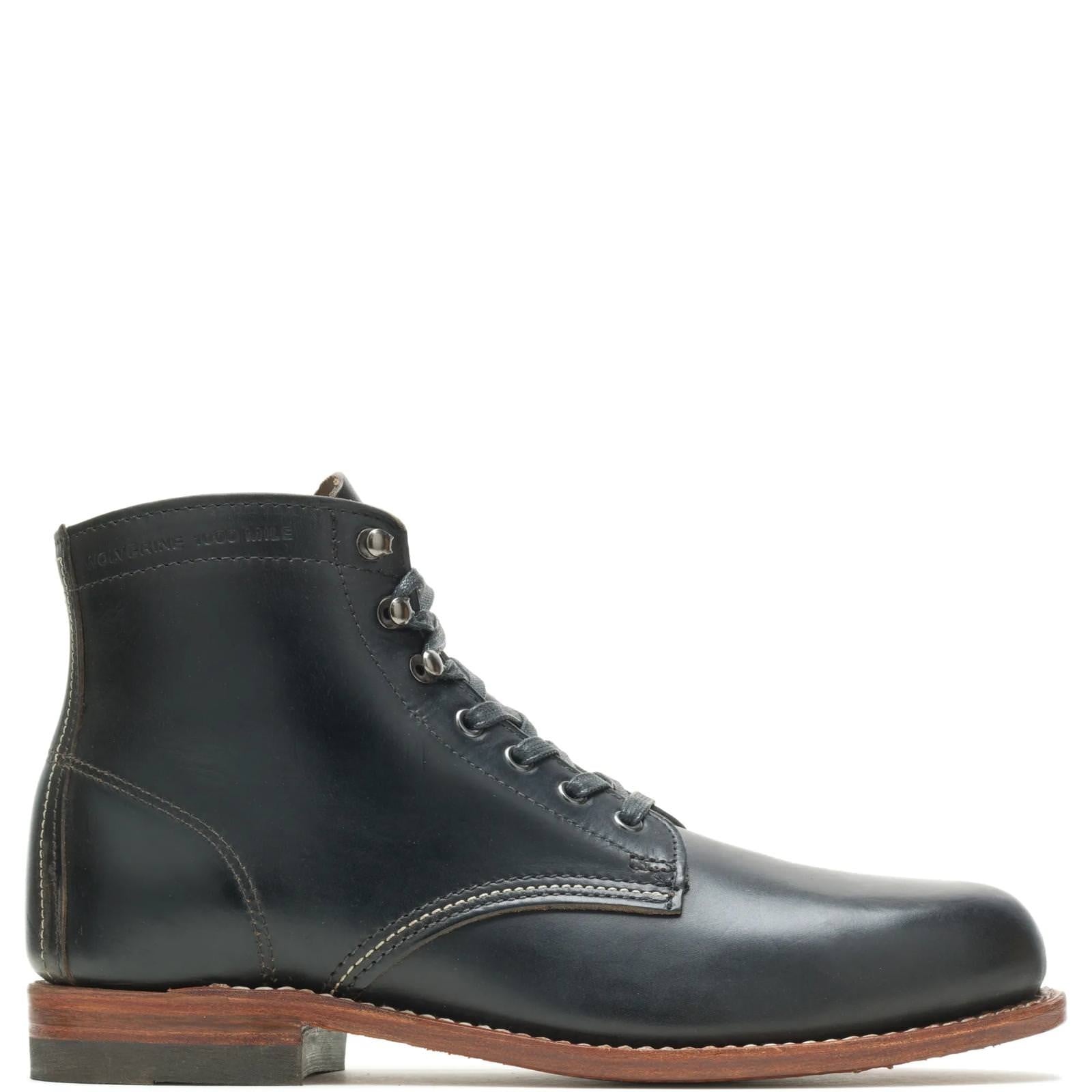
This is the Wolverine 1000 Mile Boot, it’s the original plain-toe variant, the one that closely matches the original 1000 Mile Boots that the company debuted well over 100 years ago.
As the automobile came and largely replaced working horses the source of horsehide began to dry up, the Second World War came and went, and demand for traditional leather boots began to decline as new footwear trends took over.
The 1000 Mile made a comeback for fall of 2009, aimed at the market that had developed for American heritage clothing, footwear, and gear that was still made in the United States using traditional methods and materials.
The Wolverine 1000 Mile Original Boot
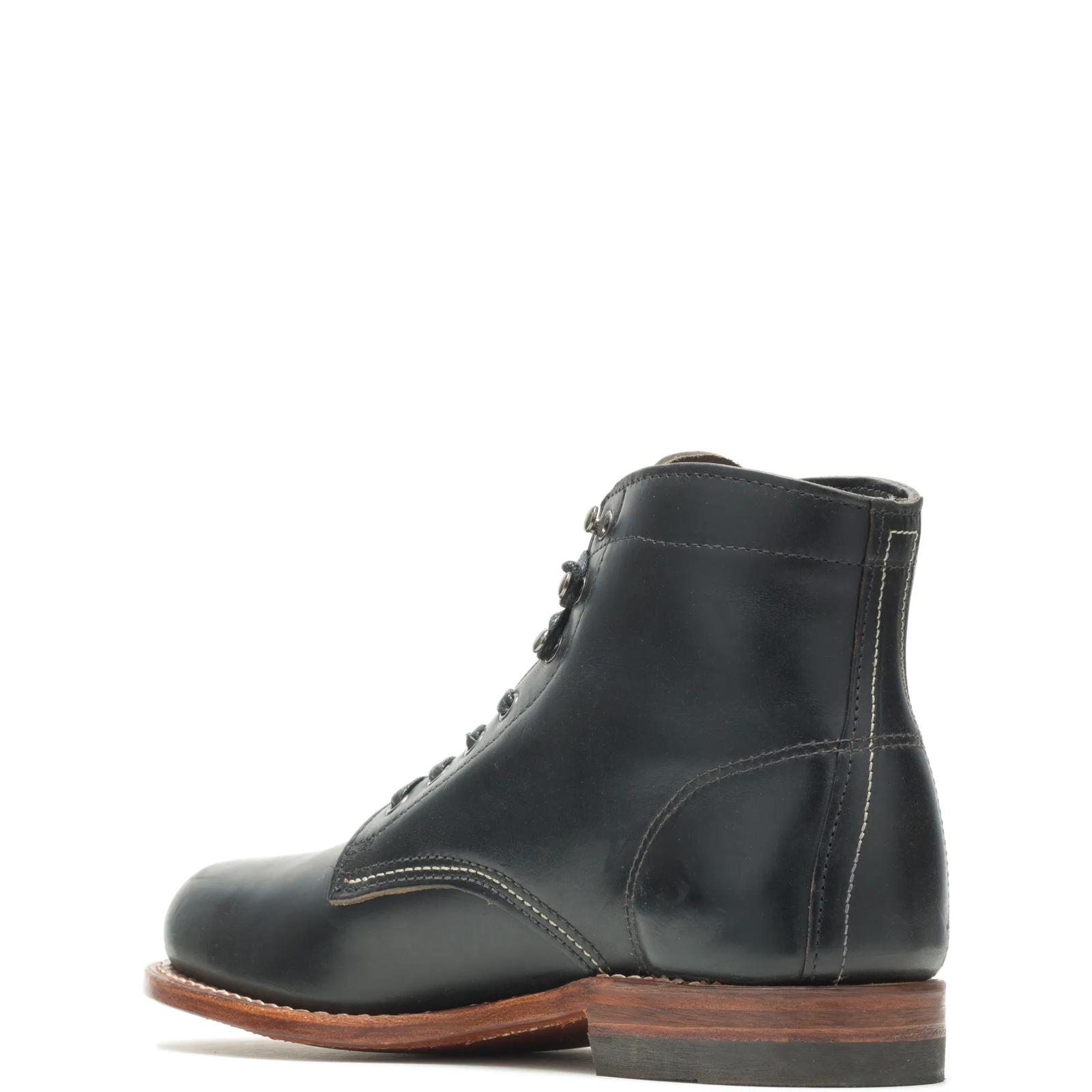
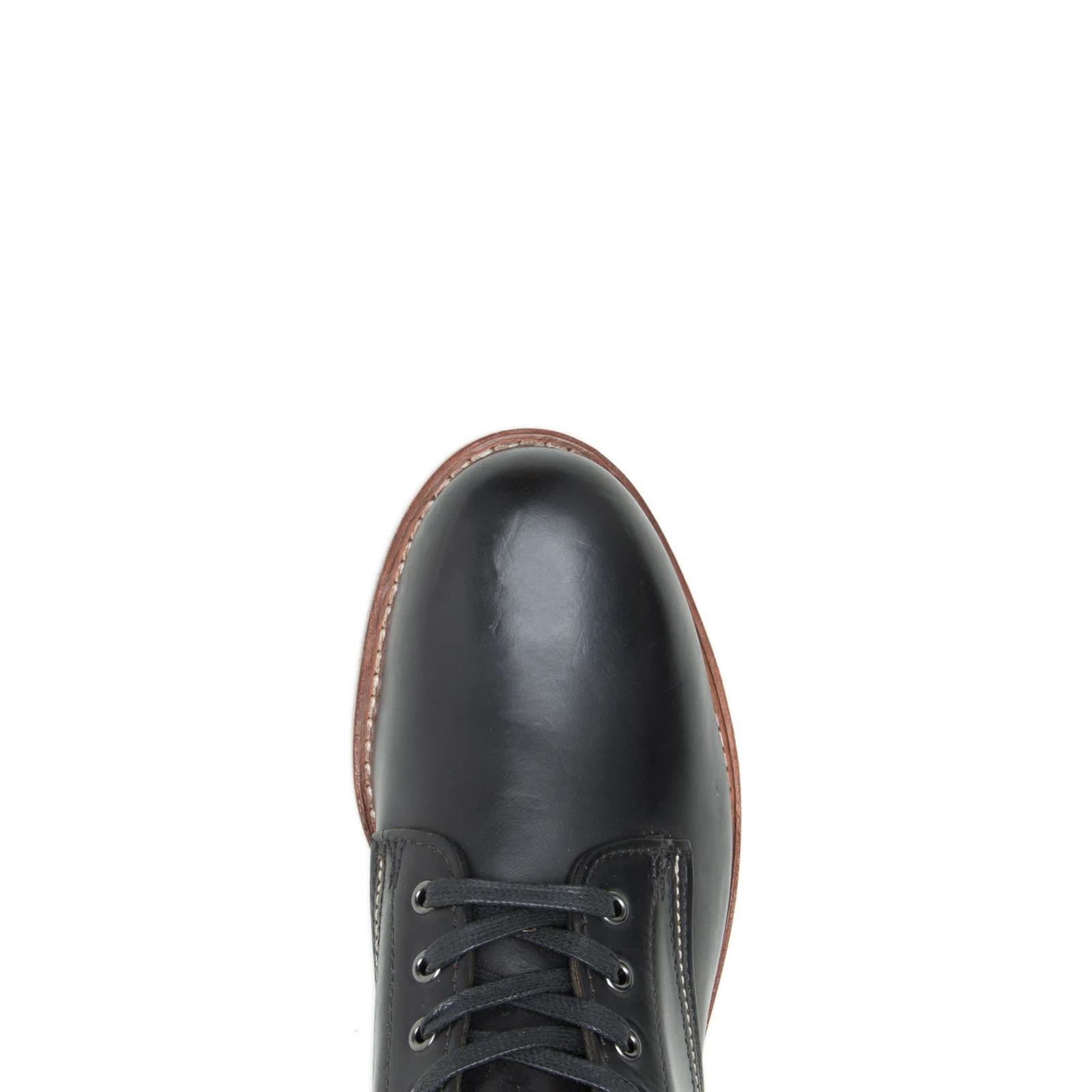
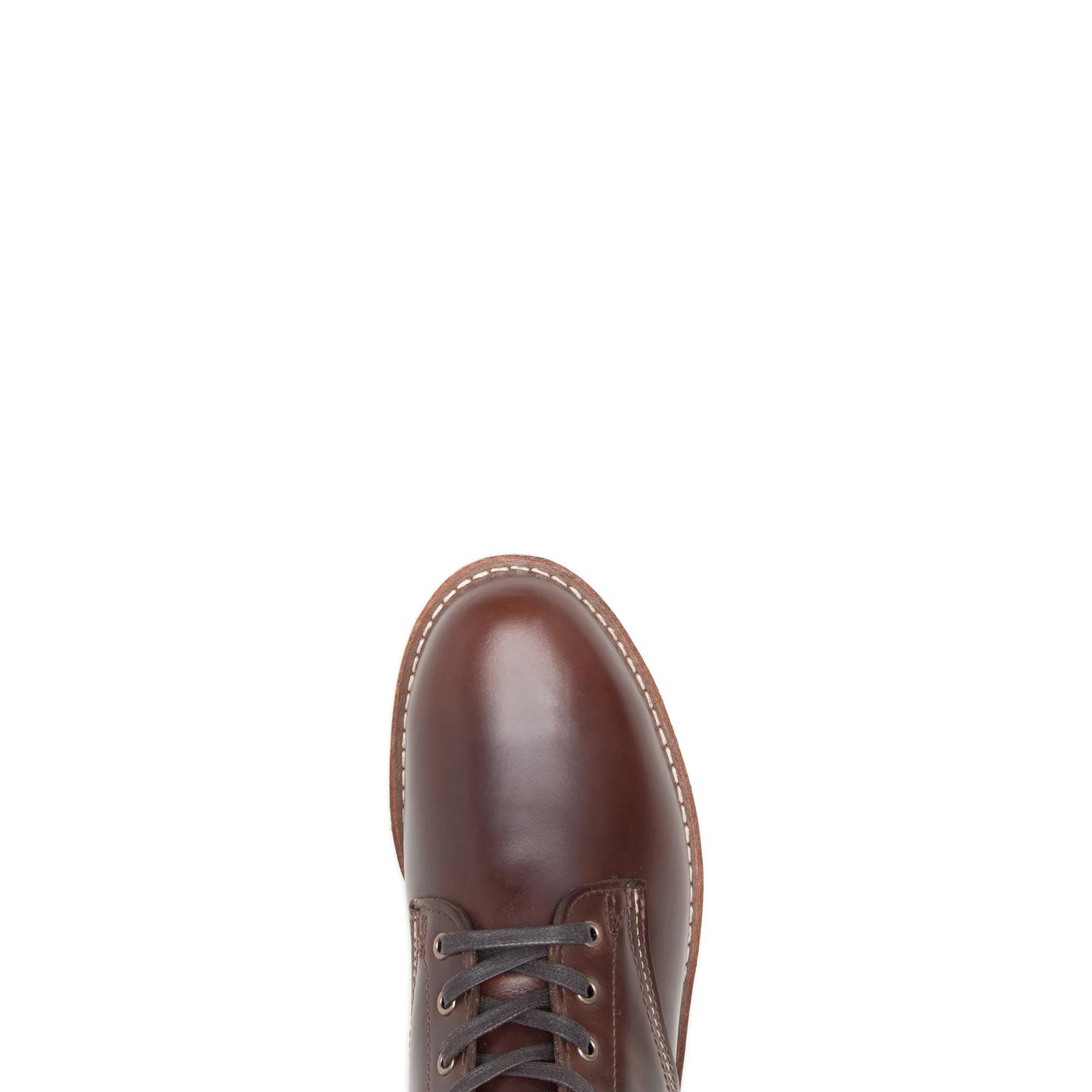
This is the Wolverine 1000 Mile Plain-Toe Original Boot, it’s one of the most traditional specifications in the current Wolverine range, a boot design that wouldn’t look a whisker out of place at the turn of the last century.
It uses the simple plain-toe pattern, with an unlined black Horween Chromexcel leather upper and flat waxed cotton laces. The result is a fairly restrained colorway, with the black leather carrying most of the visual character rather than contrasting panels or decorative stitching.
The Chromexcel leather comes from Horween Leather Company in Chicago, Illinois. It’s Horween’s well-known combination-tanned, hot-stuffed pull-up leather, impregnated with oils, waxes, and greases during production. That gives it a supple feel and allows creases, scuffs, and areas of flex to develop unique visible variations as the boots are worn.
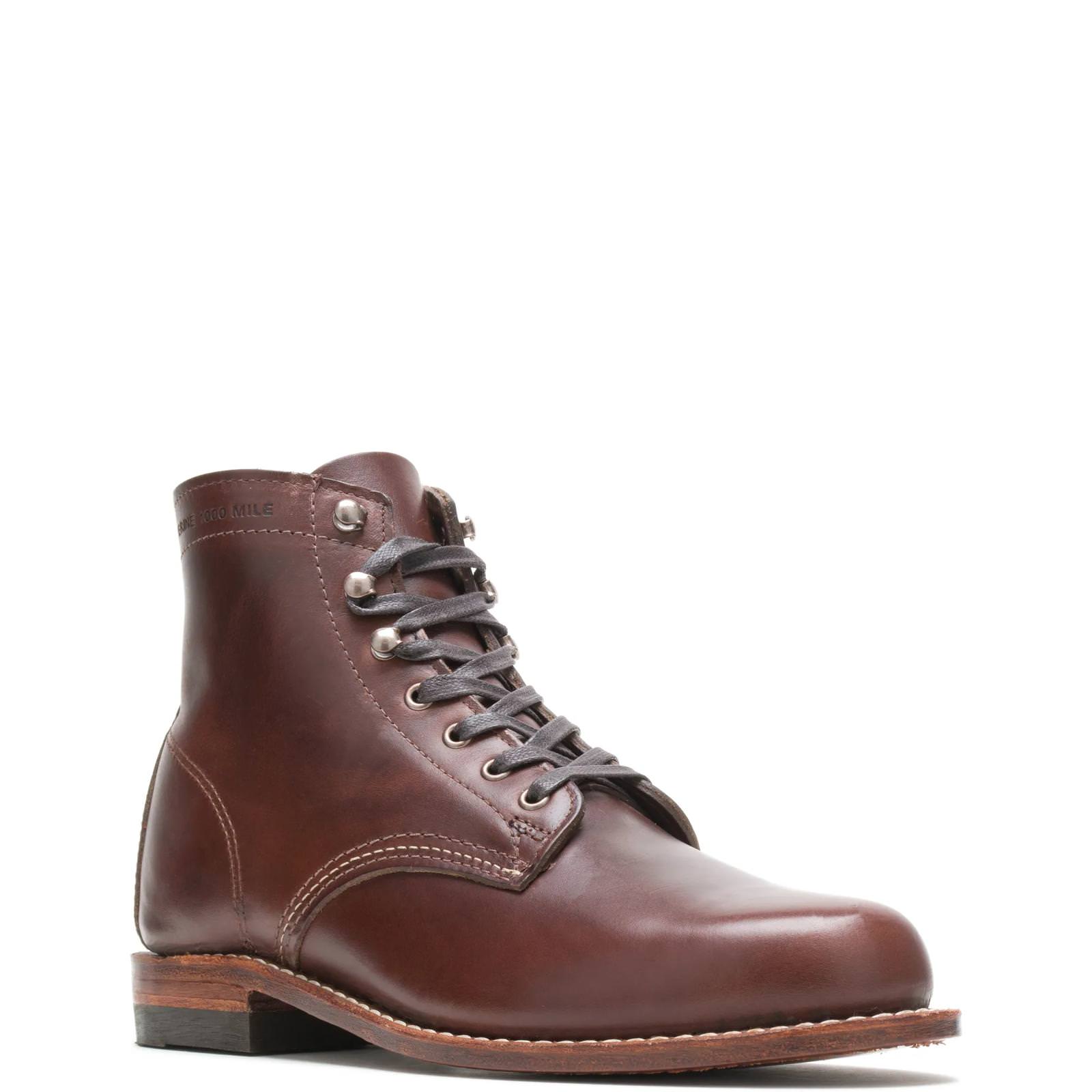
The Chromexcel leather comes from Horween Leather Company in Chicago, Illinois. It’s Horween’s well-known combination-tanned, hot-stuffed pull-up leather, impregnated with oils, waxes, and greases during production. That gives it a supple feel and allows creases, scuffs, and areas of flex to develop unique visible variations as the boots are worn.
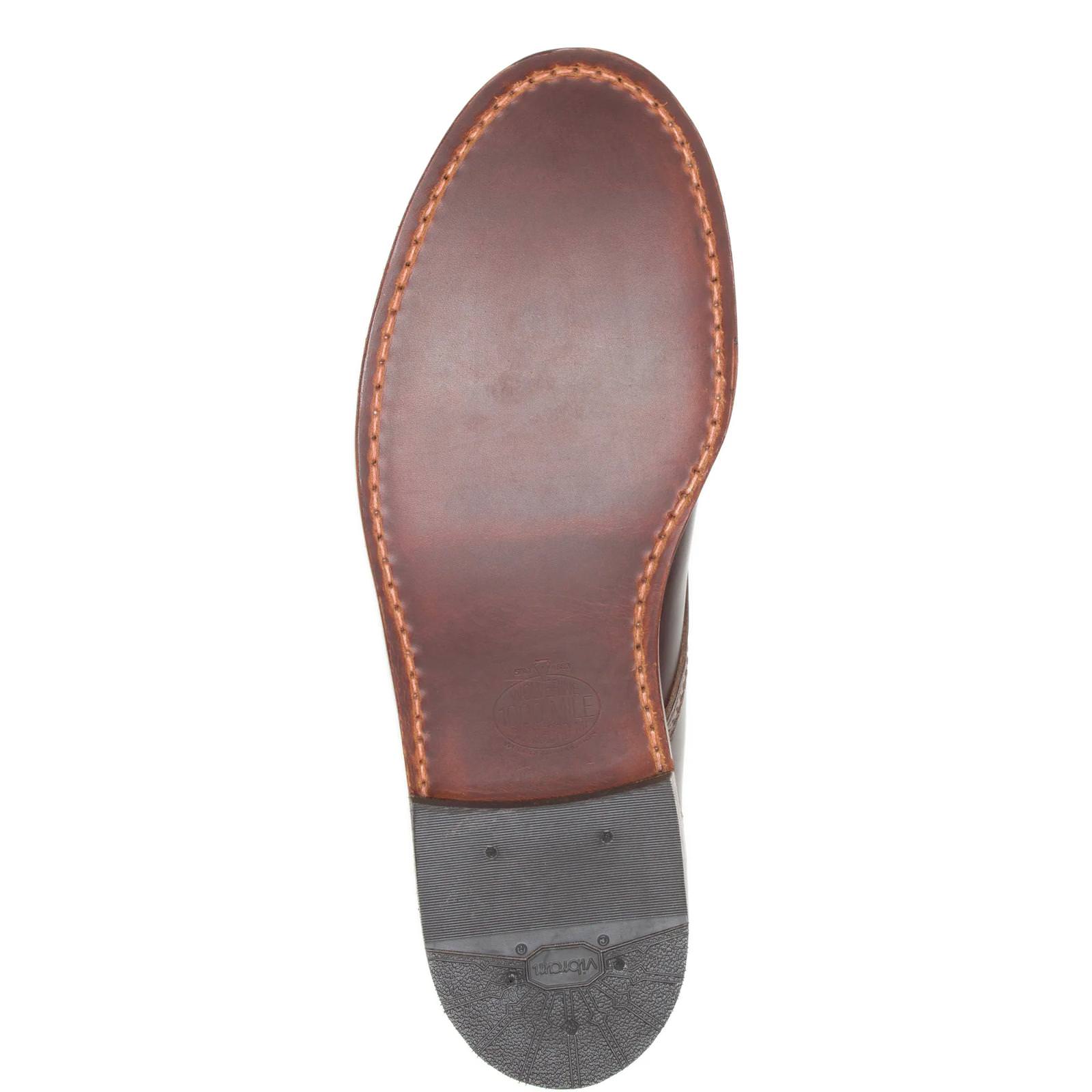
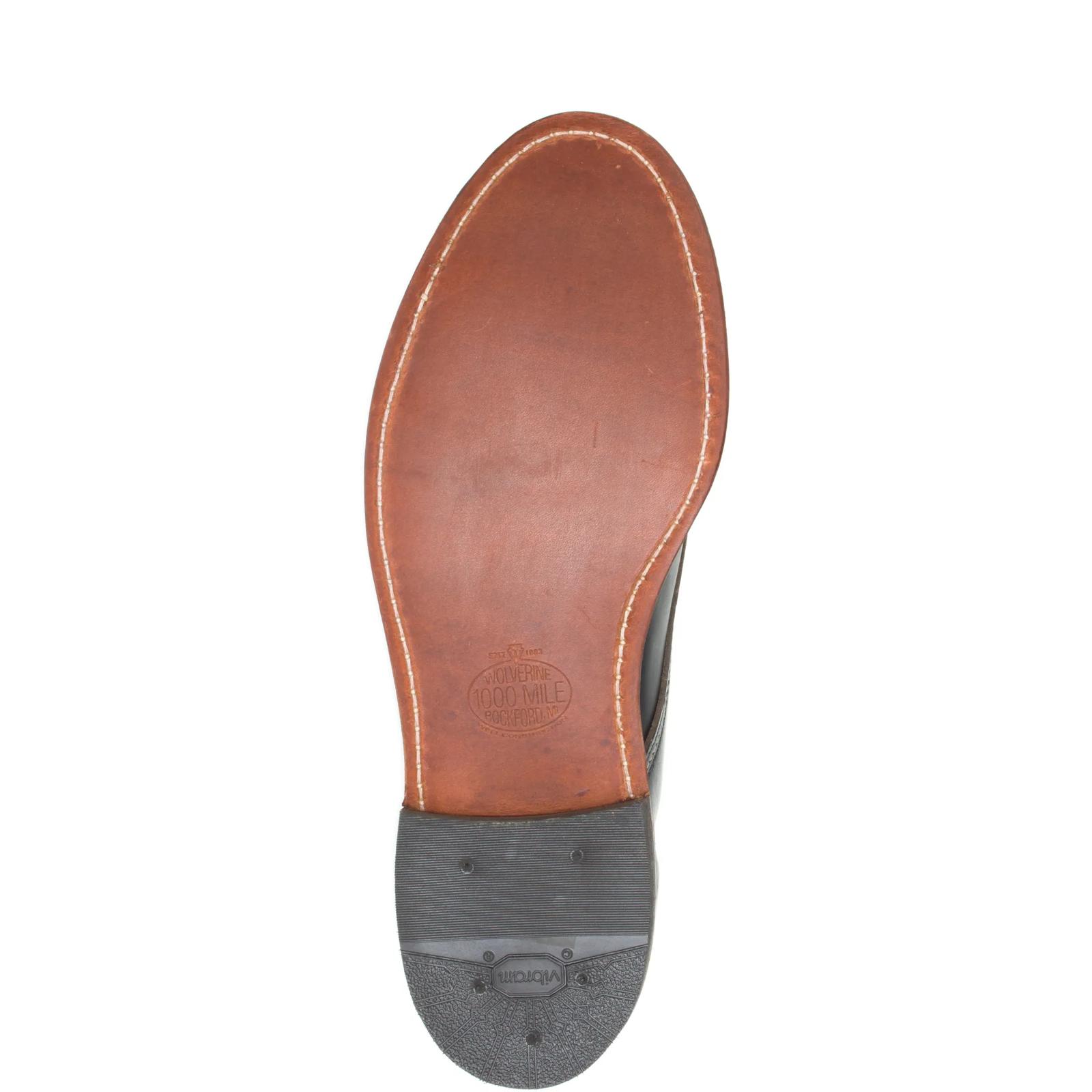
Wolverine uses a traditional leather outsole with a Vibram heel, joined to the upper with Goodyear welt construction, so the boot can be resoled. The heel is sourced from Williamsport, Pennsylvania, while the waxed cotton laces come from Landrum, South Carolina.
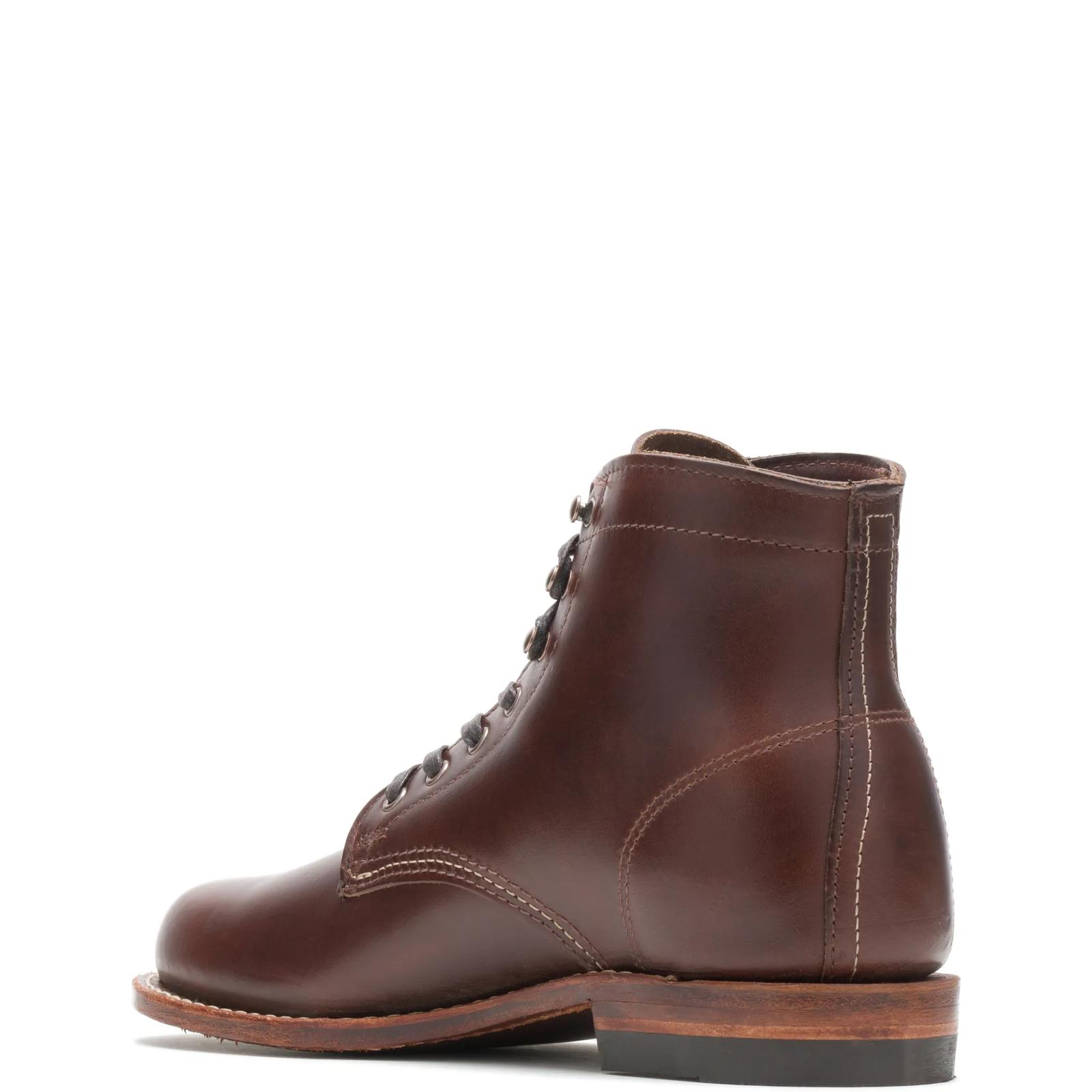
Each pair of these boots are handmade in the USA, and they’re offered in both black and brown colorways on the official Wolverine store here.
Images courtesy of Wolverine

Articles that Ben Branch has written have been covered on CNN, Popular Mechanics, Smithsonian Magazine, Road & Track Magazine, the official Pinterest blog, the official eBay Motors blog, BuzzFeed, Autoweek Magazine, Wired Magazine, Autoblog, Gear Patrol, Jalopnik, The Verge, and many more.
Silodrome was founded by Ben back in 2010, in the years since the site has grown to become a world leader in the alternative and vintage motoring sector, with well over a million monthly readers from around the world and many hundreds of thousands of followers on social media.